
Would you like to save this?
The bell above the door hadn’t worked in years. Didn’t matter. Lou already knew you were there from the sound of your engine. That was the whole point of the neighborhood mechanic shop in the 1960s: someone who knew your car, knew your dad’s car, and could tell from three bays away what was wrong before you finished parking. What follows is a list of things that lived inside those shops. Most of them are completely gone now. All of them will feel familiar.
31. The Hand-Lettered Labor Rate Sign Taped to the Wall Behind the Cash Drawer
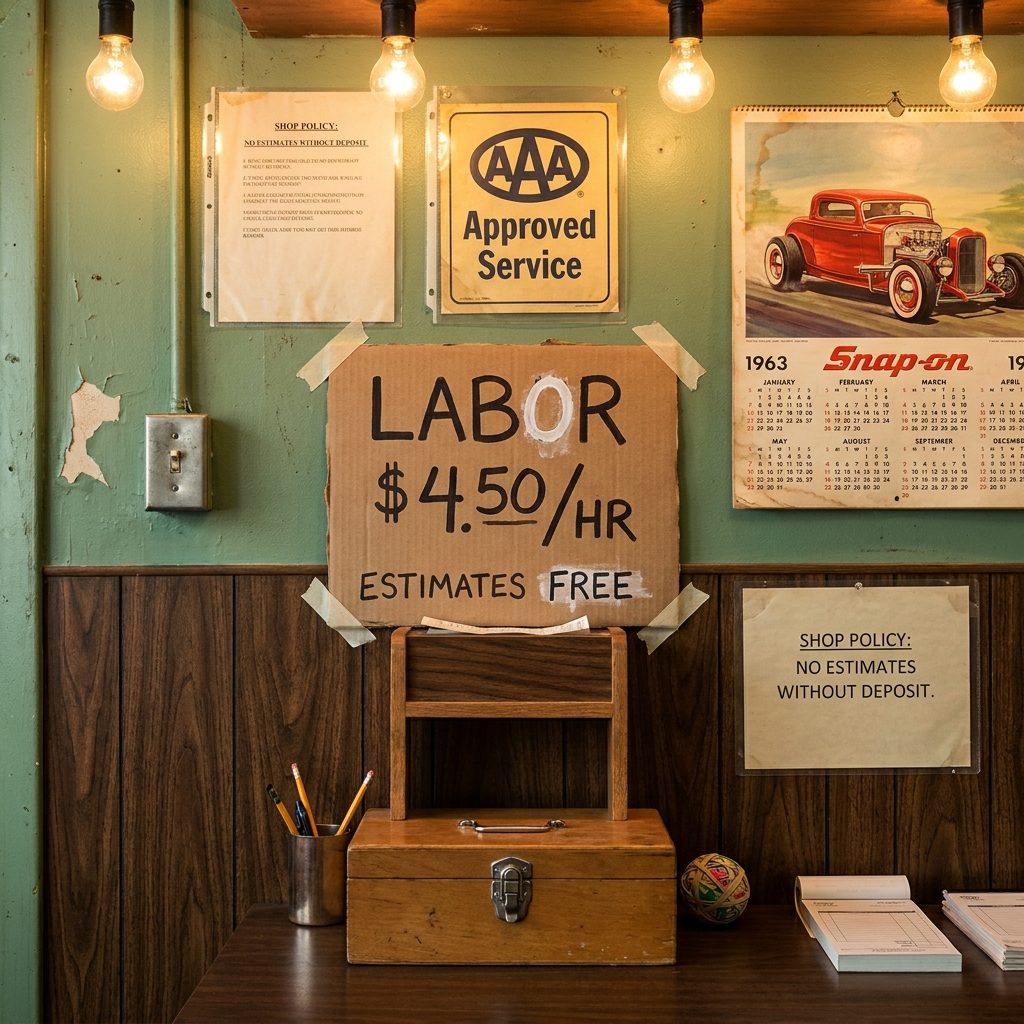
Four dollars and fifty cents an hour. In marker. On cardboard. And that was after the 1964 price increase that caused some grumbling around the neighborhood. The sign wasn’t printed, it was written by the shop owner himself, probably on a Tuesday afternoon when the old number felt embarrassing to keep displaying. If the rate went up again, he’d make a new sign.
No disclaimers, no fine print, no asterisks pointing to a separate diagnostic fee schedule. You brought your car in, the man fixed it, and when you came to pick it up he told you what it cost and you paid it. The sign was almost beside the point.
30. The Creeper With the Wooden Platform and the Four Rusted Swivel Wheels That Squeaked
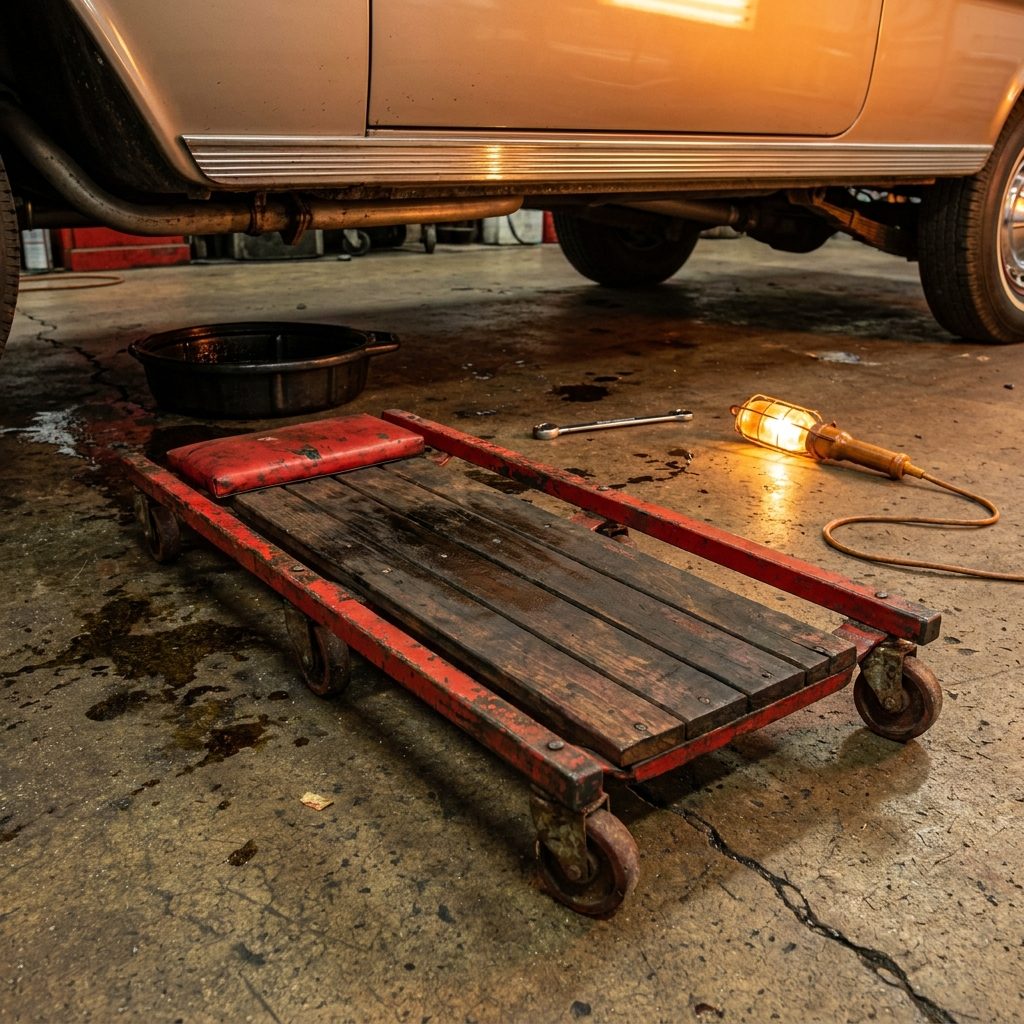
The squeak started about halfway under the car and announced to everyone in the shop exactly where you were and what you were doing. Some shops had the newer all-metal creepers by the mid-60s, but most neighborhood operations were still rolling the wooden ones, the platform worn smooth and dark from years of contact, the casters so stiff on their axles that steering required a boot against the frame rail.
You learned to love the low angle. The whole underside of an American car from down there looked like a different machine. Every mechanic had strong opinions about which brands of creeper rolled right and which ones fought you sideways every time you tried to move.
29. The Timing Light Hanging on Its Own Peg, Cord Wound Neatly Around the Handle
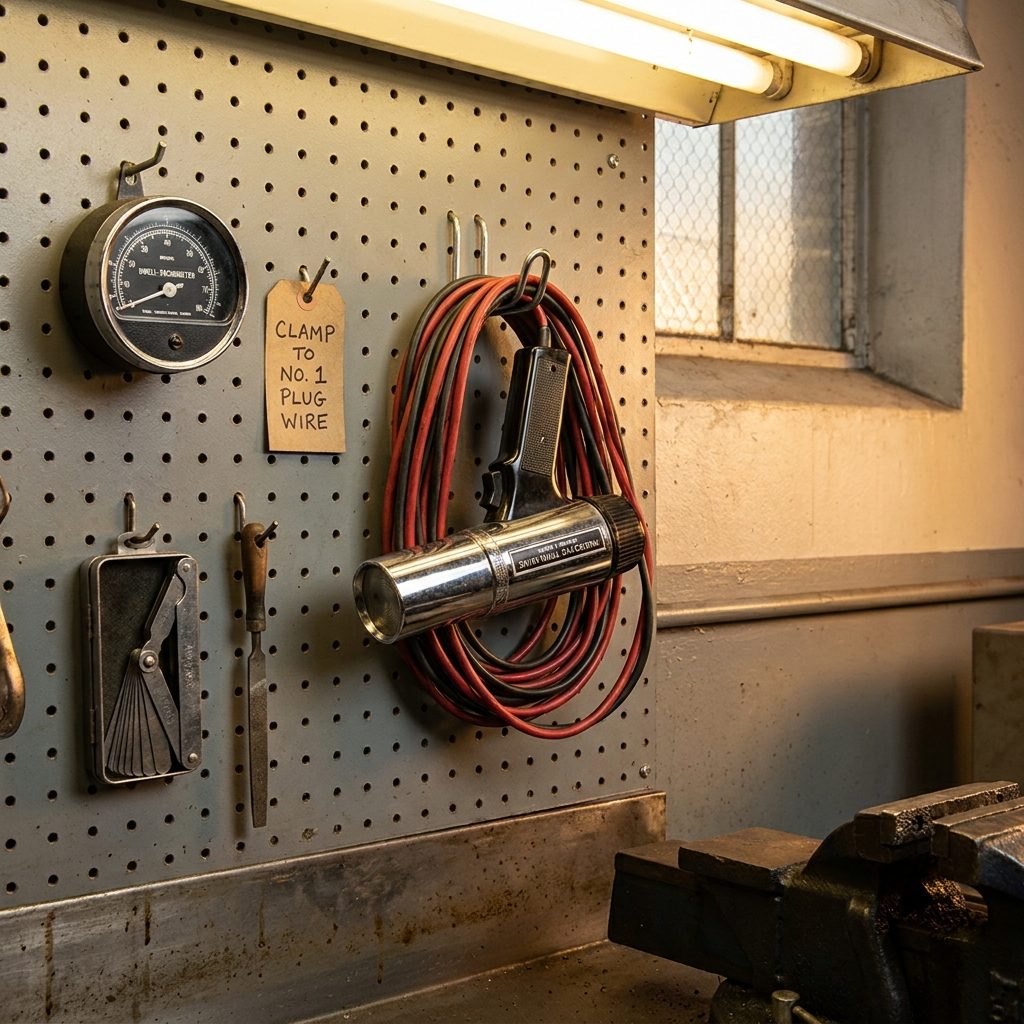
Setting ignition timing in the 1960s meant clamping the inductive pickup onto the number-one plug wire, aiming the strobe at the timing marks on the harmonic balancer, and watching the light freeze the rotation long enough to read the degree mark. The timing light was the most satisfying tool in the shop to use, point, pull the trigger, and suddenly you could see something spinning at engine speed as if it were standing still.
Most mechanics had a strong preference for brand. The Sun brand and the Sears Craftsman units were common. A worn-out timing light with a weak strobe was useless, so a good one stayed on its own peg and didn’t migrate to the apprentice’s toolbox.
28. The Stack of Old License Plates Nailed to the Cinderblock Wall as Decoration
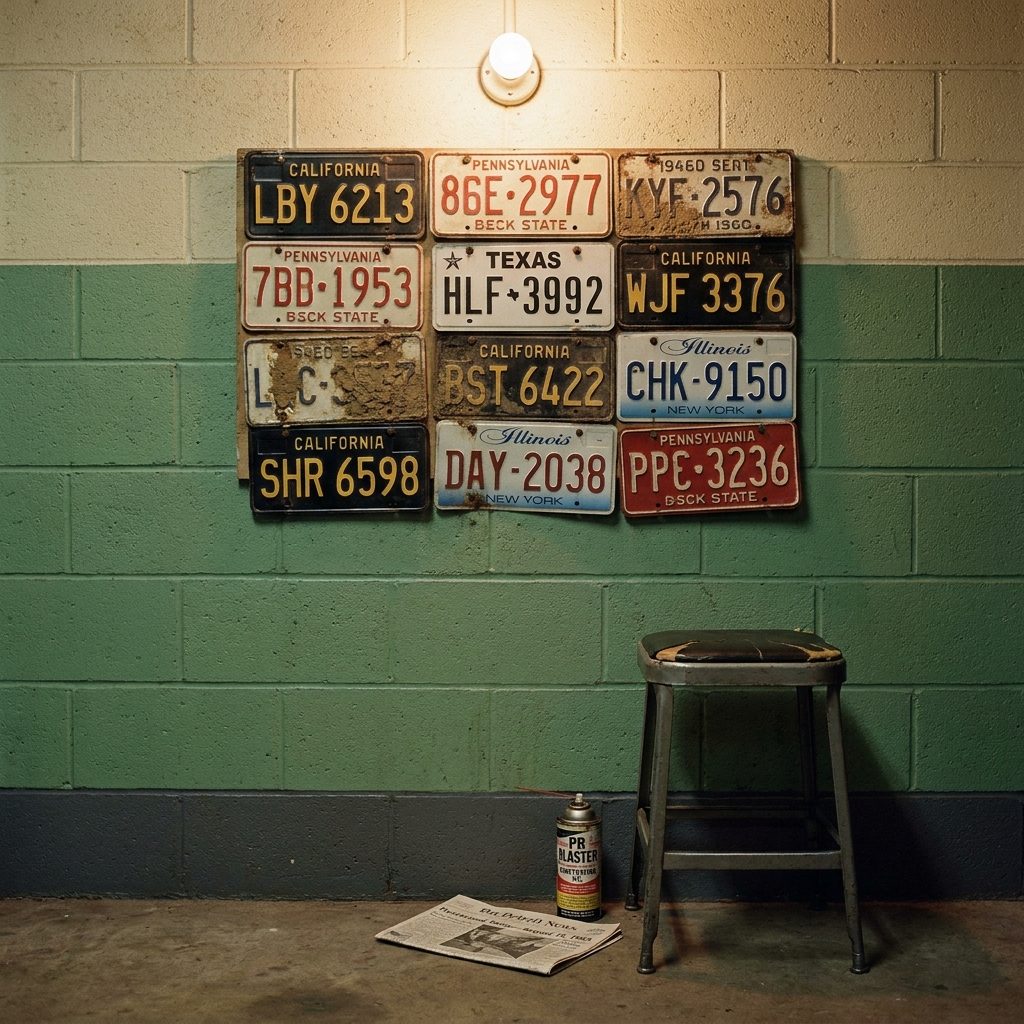
Nobody decided to start a collection. The plates just accumulated. A car came in for scrap, or a customer swapped to the new year’s plate and left the old one behind, and rather than throw it out the owner banged a nail through it. Ten years later there was a wall. The plates had no order, states mixed up, years out of sequence, a 1954 Illinois next to a 1961 California next to something unreadable under a coat of road grime.
27. The Hand-Pumped Grease Gun Hung Beside the Lube Bay, Fitting Still Capped With a Rag
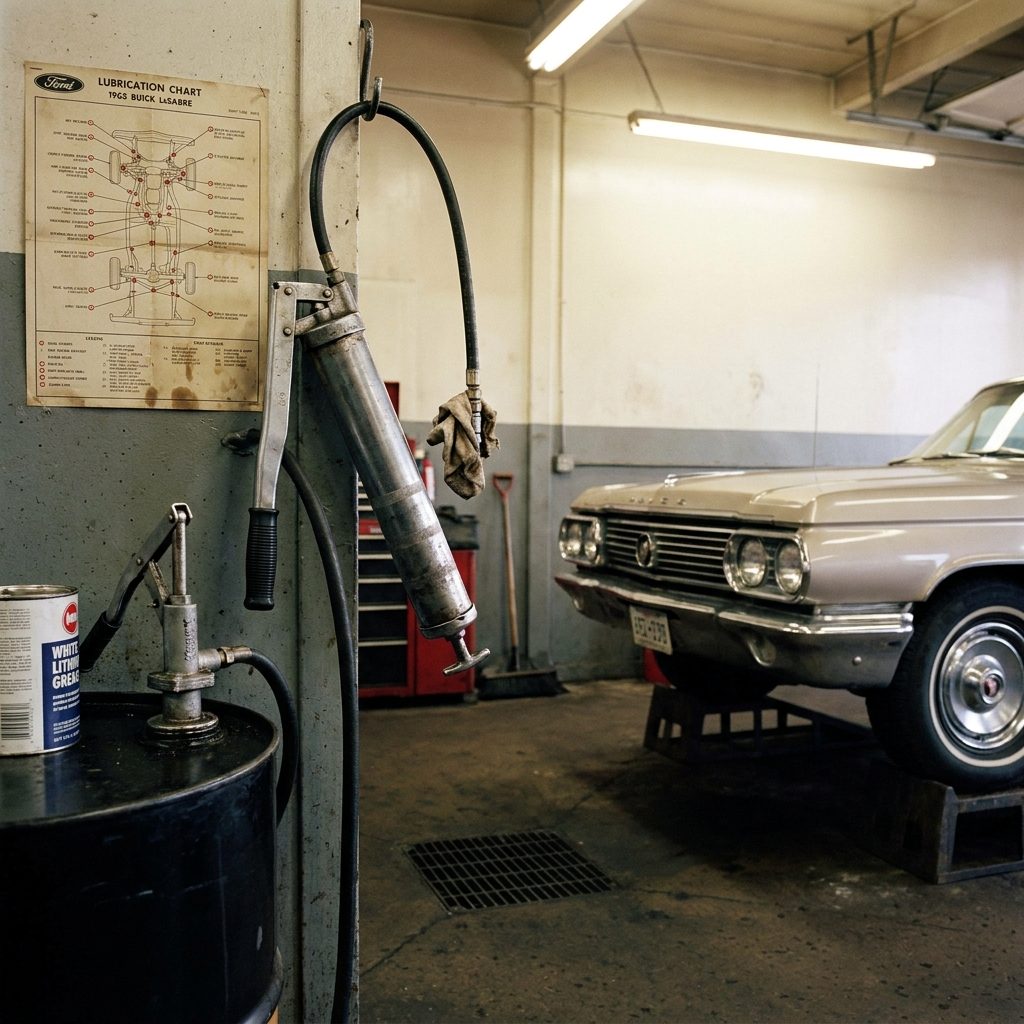
Chassis lubrication was a scheduled service, and in the 1960s every American car had a roadmap of grease fittings, ball joints, tie-rod ends, upper and lower control arms, idler arms, that needed a shot of grease every 1,000 miles or so. The grease gun was as fundamental to a lube bay as a drain plug. The lever-action type required real effort: load the cartridge, prime the barrel, and pump steadily until you felt resistance or saw the old grease purge from the boot.
Ball joints on 1960s American cars were generous about this. They’d tell you when they were full. When sealed, lifetime-lubricated suspension components arrived in the 1970s and 80s, the grease gun slowly migrated to the back of the shelf. Most shops kept one anyway, out of habit.
26. The Arc-Welder in the Corner With a Chipped Yellow Case and a Curtain on a Wire
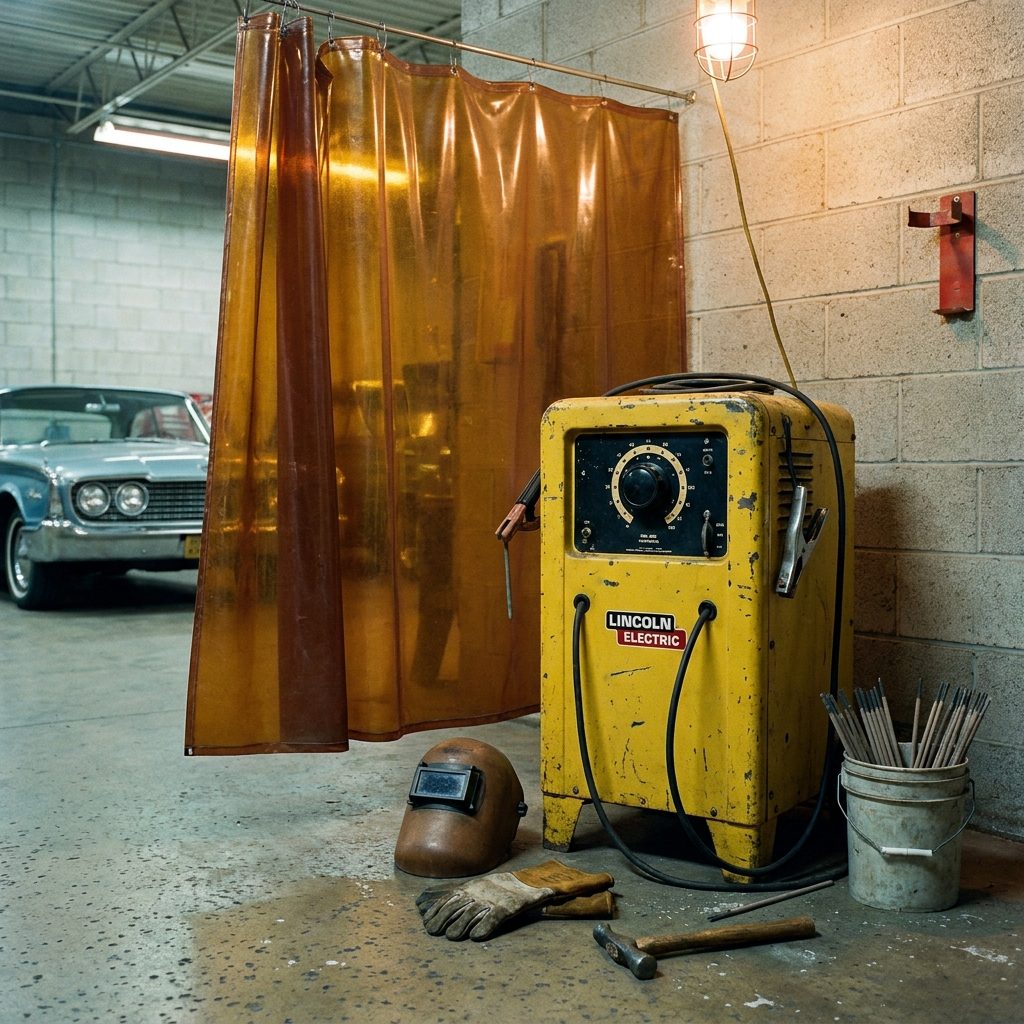
The neighborhood mechanic who could weld was a different class of operator. Most shops had at least a stick welder in the corner, not for show, but because exhaust flanges cracked, frame brackets rusted through, and body patches needed to be tacked in place before the Bondo went on. The curtain on the wire wasn’t optional: the arc flash from even a brief strike could ruin the vision of anyone who glanced over at the wrong moment.
Welding was the skill that sorted the shops. A man who could run a clean bead on a rusted exhaust manifold without warping it earned a reputation that spread through the neighborhood by word of mouth. His bay stayed busy.
25. The Glass Jar of Penny Candy on the Counter Next to the Cash Register
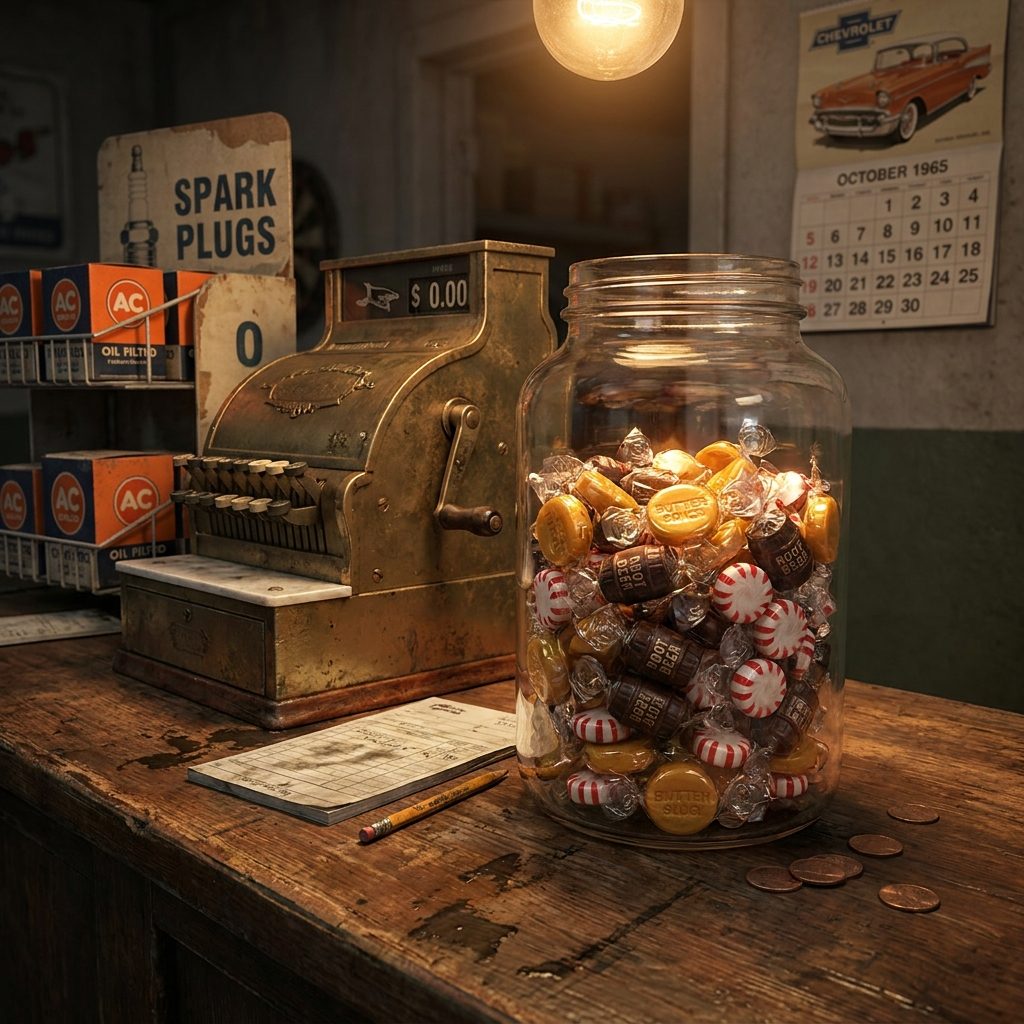
Nobody charged for the candy. The jar just sat there, lid half off, and if you were a kid who came in with your dad while his car was on the lift, the mechanic would nod toward it. Help yourself. Root beer barrels and butterscotch discs, mostly — sometimes peppermints so old they’d fused together into a single sticky mass at the bottom.
It never ran out. Nobody ever saw it get refilled. The jar simply existed, the way the coffee pot existed, as part of the shop’s permanent furniture.
24. The Girlie Calendar From the Auto-Parts Distributor Hung on the Back Wall Where Customers Couldn’t Quite See It
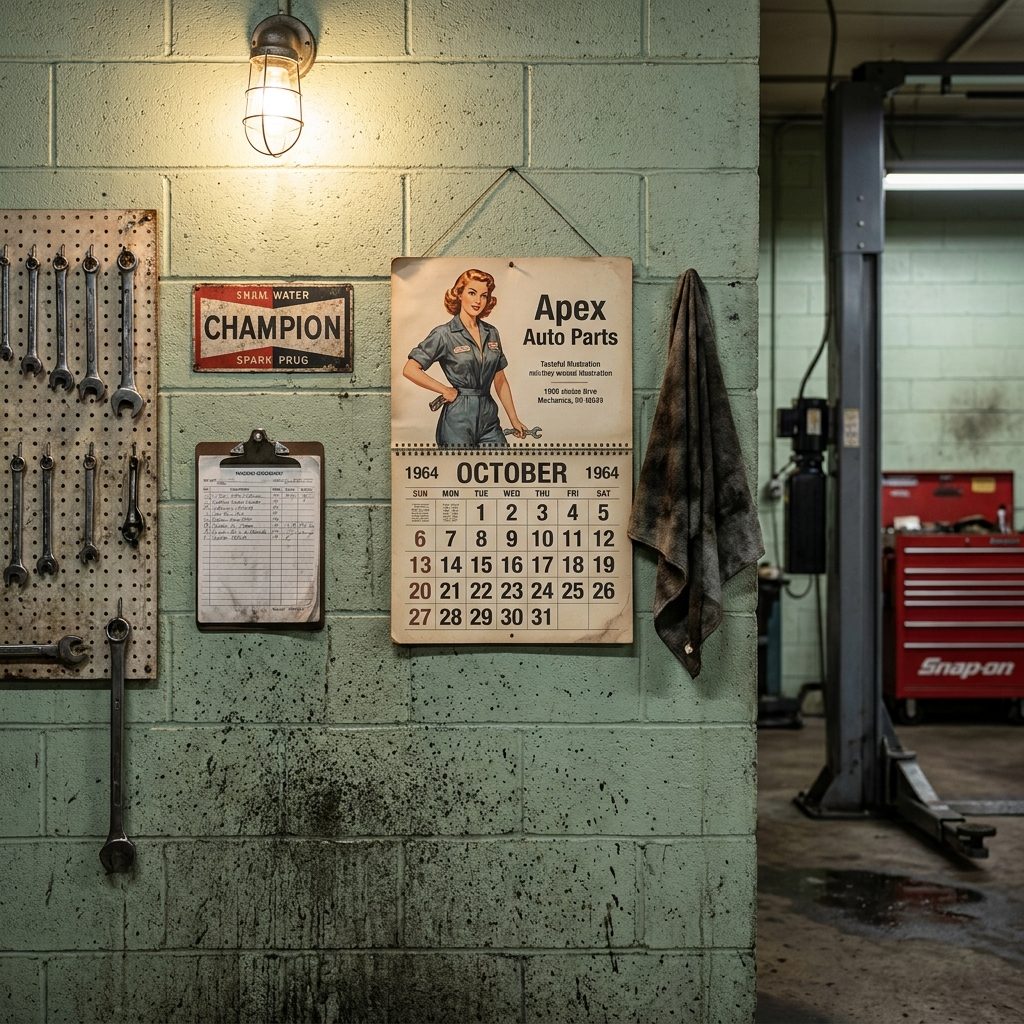
Snap-On, Champion, Wynn’s, Pennzoil — every parts distributor sent one. The mechanic hung it where he could see it from under the lift but where Mrs. Henderson wouldn’t notice when she came in about her Rambler’s transmission. Always eleven months behind because nobody remembered to tear off the pages.
The illustrations had a specific mid-century flavor. Bright colors, impossible proportions, a woman in mechanic’s coveralls who had clearly never touched a wrench. It served two purposes: decoration, and keeping rough track of which month the inspection stickers expired.
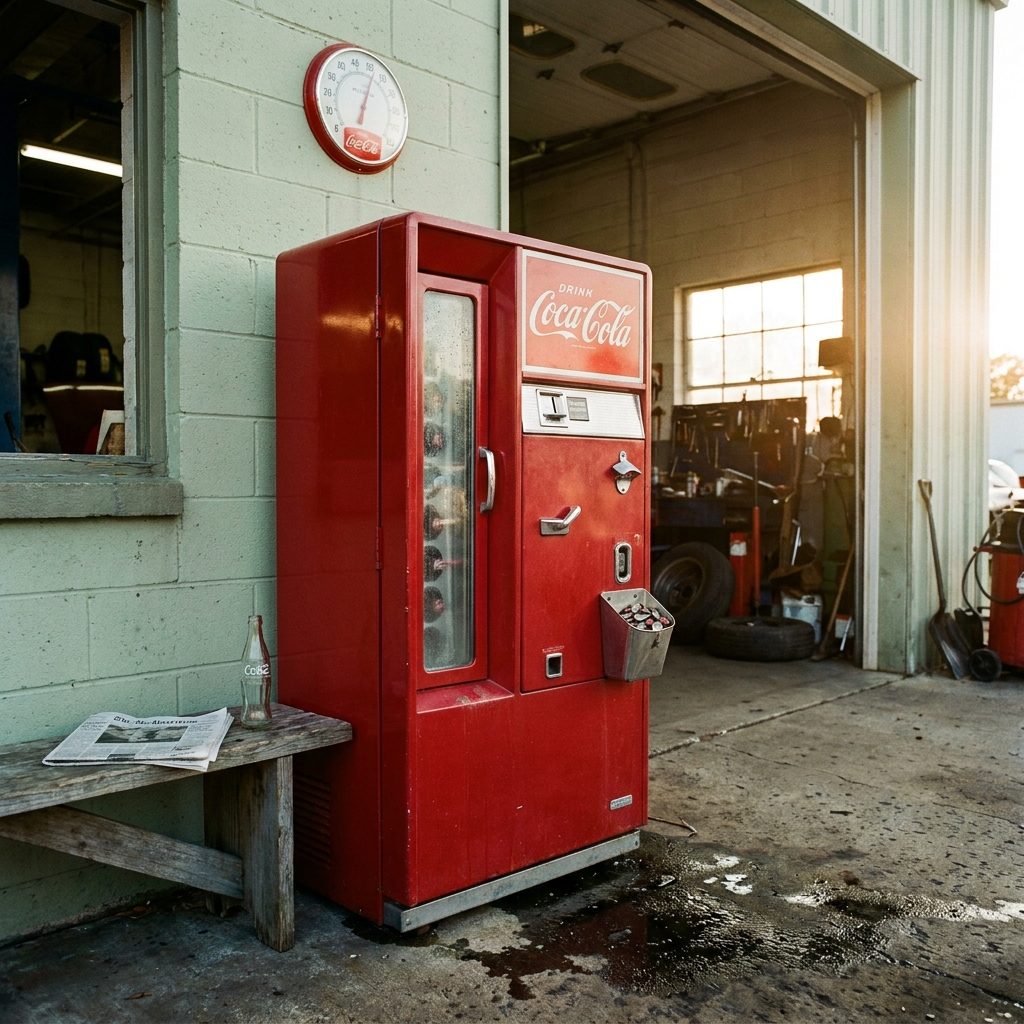
23. The Coke Machine That Took a Dime and Dispensed a Bottle You Had to Open on the Side of the Machine
Would you like to save this?
A dime. You put it in, pulled the chrome handle, and a green glass bottle dropped into the chute with a heavy clunk. Then you popped the cap on the opener bolted to the side of the machine, and it fell into a little metal box that nobody ever emptied until caps were spilling onto the floor.
The Coke came out cold enough to hurt your teeth. Every bottle was six and a half ounces — which felt like exactly the right amount, though I couldn’t tell you why. You drank it standing there because the bottle didn’t leave the shop. Empties went back in the wooden crate by the door.
22. The Hydraulic Floor Jack With the Chipped Red Paint and the Handle That Took Two Men to Pump
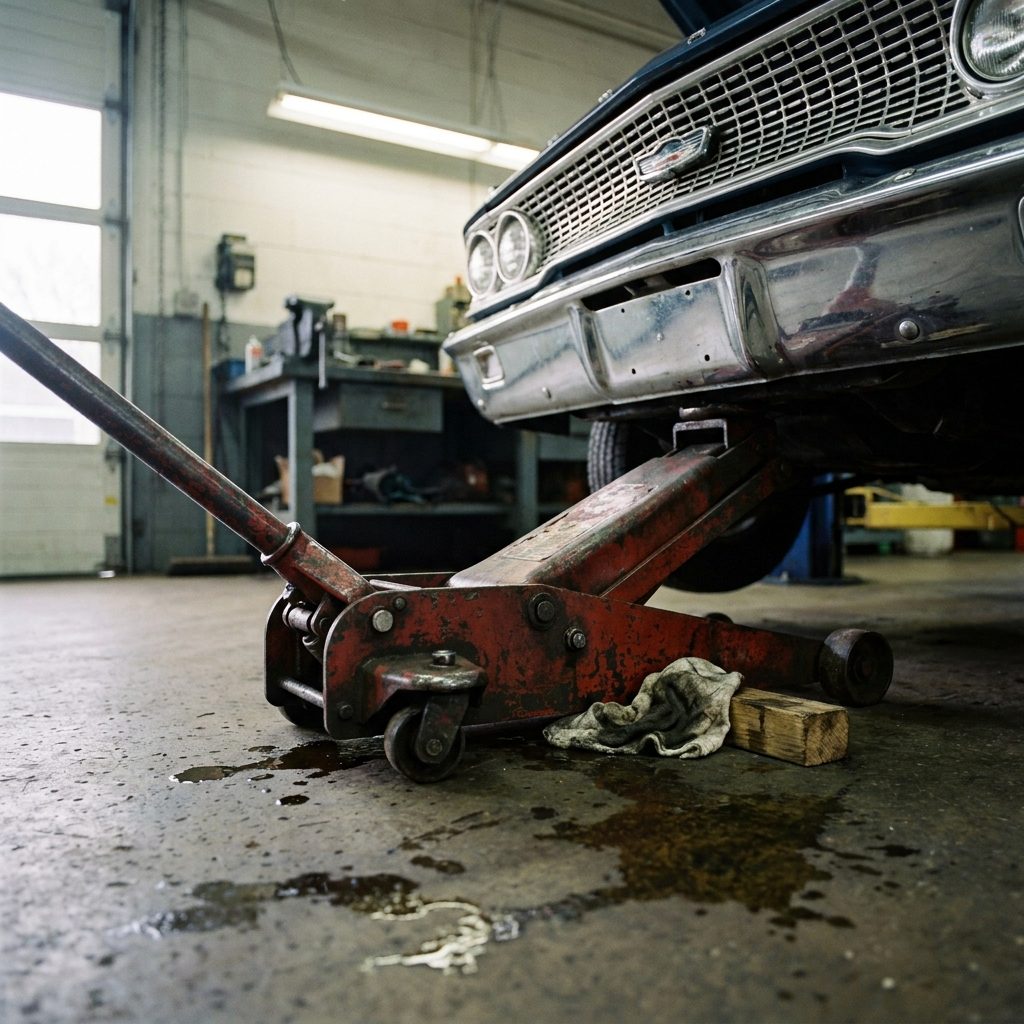
Fifty pounds of cast steel and a slow leak somewhere in the hydraulic cylinder that everybody knew about and nobody fixed. You pumped the handle — an inch. Pumped again — another inch. By the time the car sat high enough for a jack stand, your arms were done for the morning.
21. The Coffee Can of Used Motor Oil Sitting by the Back Door That Never Got Taken to the Dump
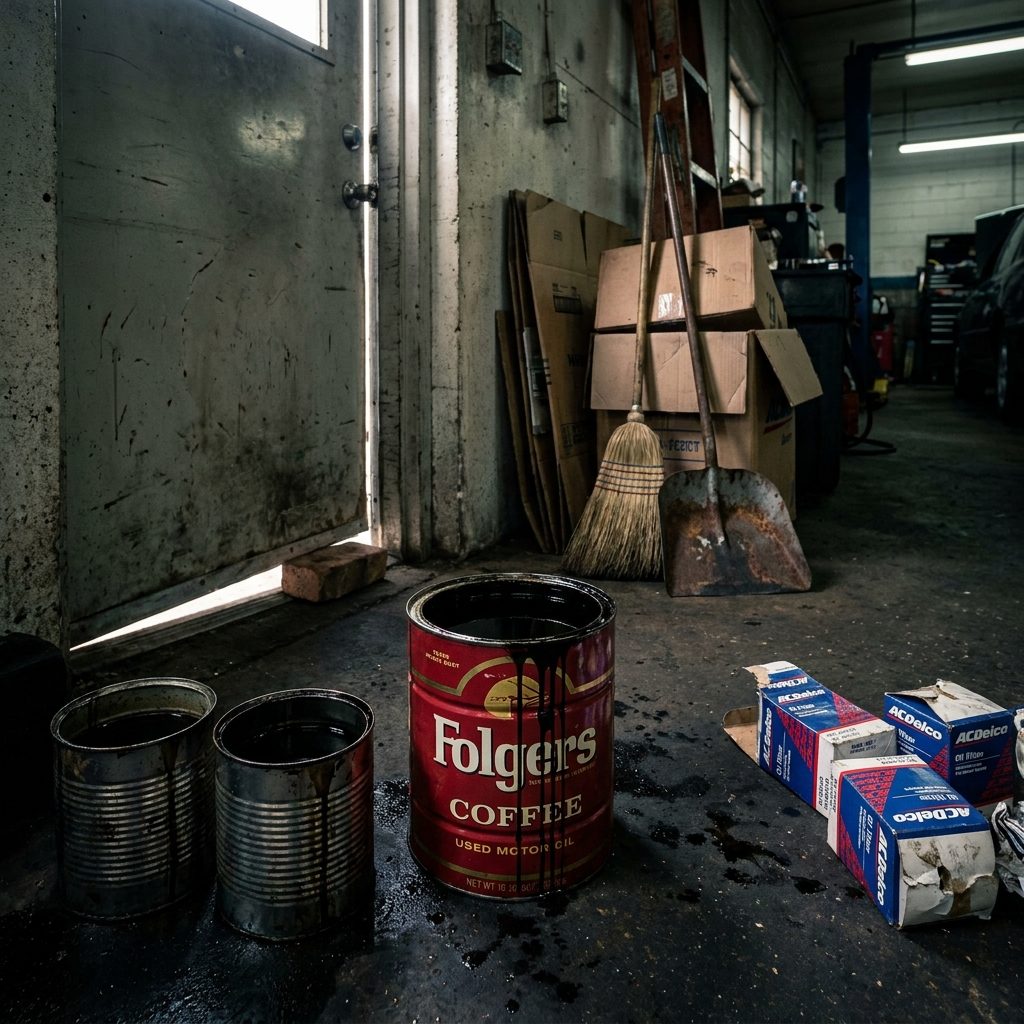
Folgers, usually. Sometimes Maxwell House. Every oil change added another quart to the can by the back door, and when it got full, someone set a fresh one next to it. The first can stayed.
Where did the oil go? Into the ground, mostly. Onto the gravel out back to keep the dust down. Nobody wrung their hands about it — the environmental regulations that would turn used oil into a bureaucratic headache were still years off. In 1965, a coffee can by the back door was the entire disposal infrastructure, and that was considered perfectly adequate.
20. The Paper Parts Catalog the Size of a Cinderblock Sitting Open on the Counter
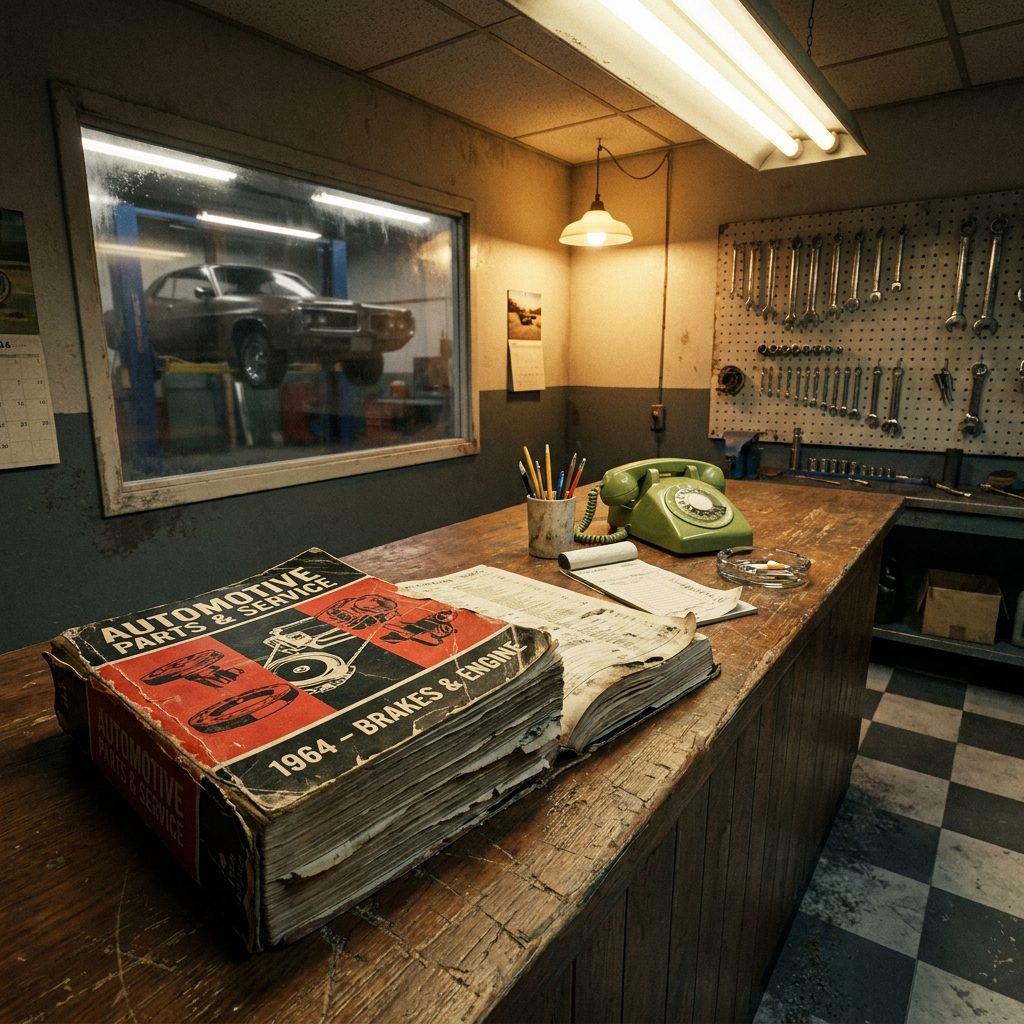
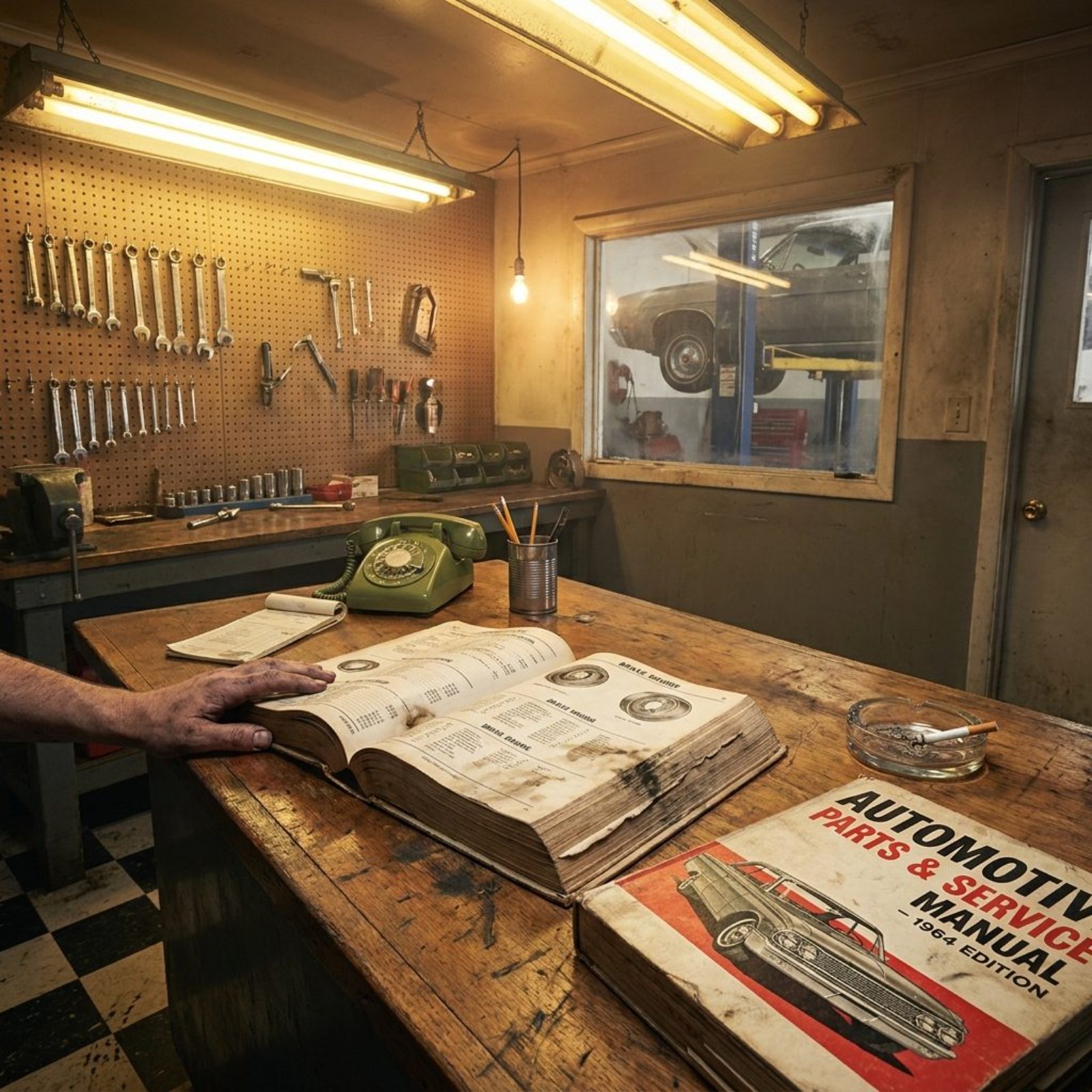
Every part number for every American car Detroit had ever built, organized into a book so heavy it left an indent in the countertop. The parts counter guy knew it by feel, he’d flip to the right section without looking, trailing his finger down columns of numbers until he found the one he needed. Cross-reference tabs were dog-eared. Half the pages had handwritten notes in the margins from the last time someone needed that same obscure bracket.
The catalog was updated once a year, which meant the 1962 edition was still handling 1964 requests with a supplemental stapled to the back. Nobody threw the old ones out. They stacked up on a shelf behind the counter like annual reports nobody had time to read.
19. The Cigarette Machine Bolted to the Wall in the Waiting Area
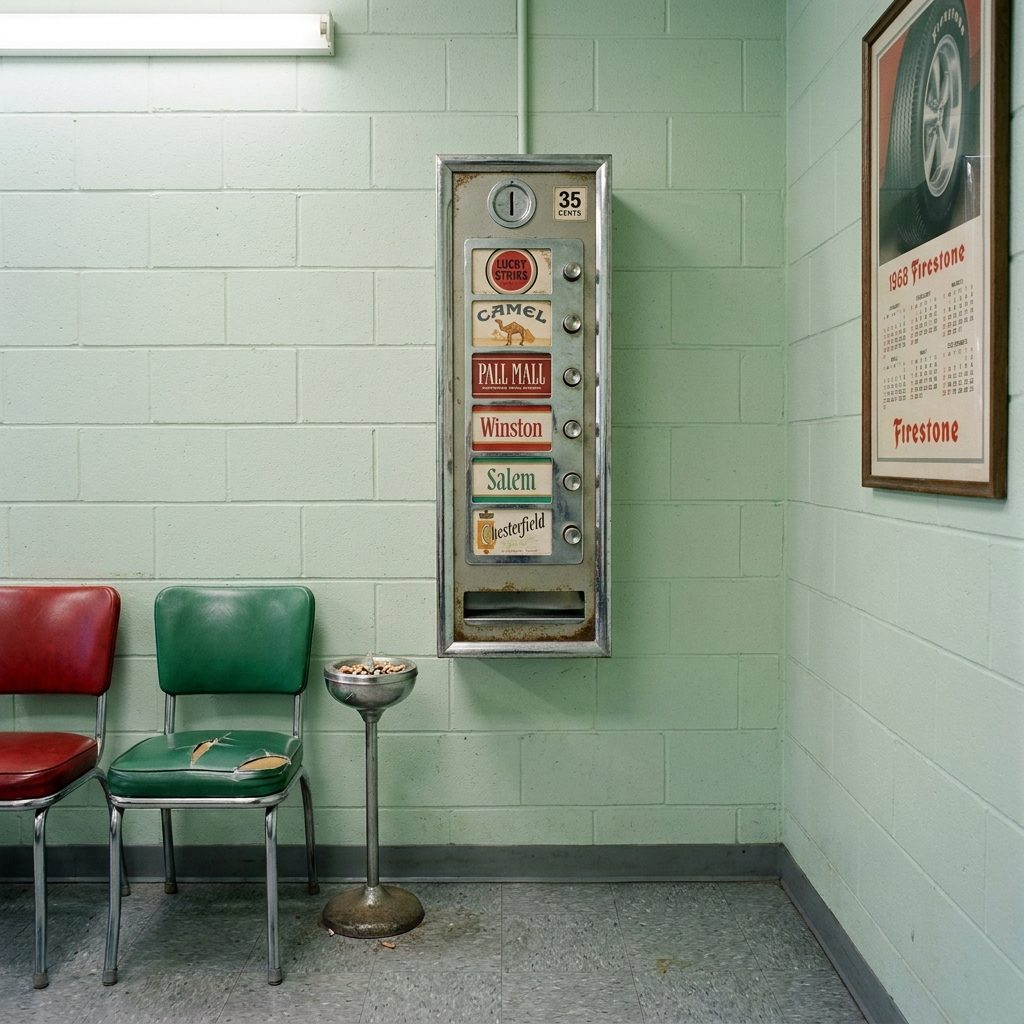
Thirty-five cents for a pack of Luckies. Pull the chrome knob, hear it thud into the tray. No ID check. No questions. The machine was indifferent to whoever was feeding it coins.
Not that it mattered — the entire shop already smelled like cigarettes. The mechanic smoked under the hood, the customer smoked while he waited, and the ashtray stand between the two vinyl chairs was half full at all times, a kind of permanent archaeological deposit that never got scraped down to the actual glass.
Cities started banning those machines in the 1990s, and they vanished almost overnight. But for decades, a cigarette machine in a waiting area was as unremarkable as a doorknob.
18. The Dwell Meter Hanging From a Nail Above the Workbench, Still in Its Original Box
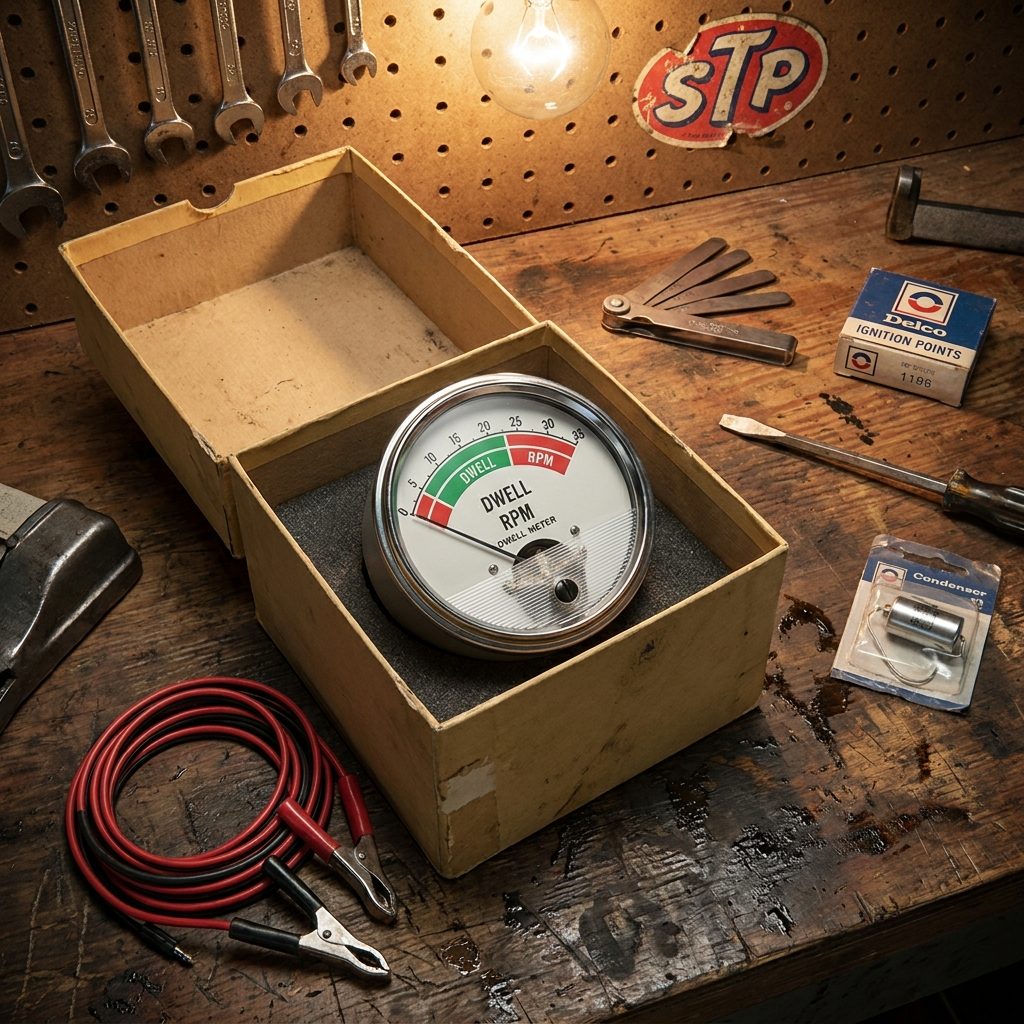
If you don’t know what a dwell meter measured, you probably never set ignition points. And if you never set ignition points, you missed one of the quiet satisfactions of 1960s engine work — dialing in exactly how many degrees the distributor points stayed closed during each revolution, watching the needle drift into the green zone, knowing the engine would idle right because you put it there with a feeler gauge and patience.
Every car had points back then. Every tune-up meant adjusting them. The dwell meter was as essential as the timing light, and became equally useless once electronic ignition arrived in the mid-1970s.
17. The Air Hose Coiled on a Reel Above the Bay Door That Hissed Like a Snake When You Pulled It
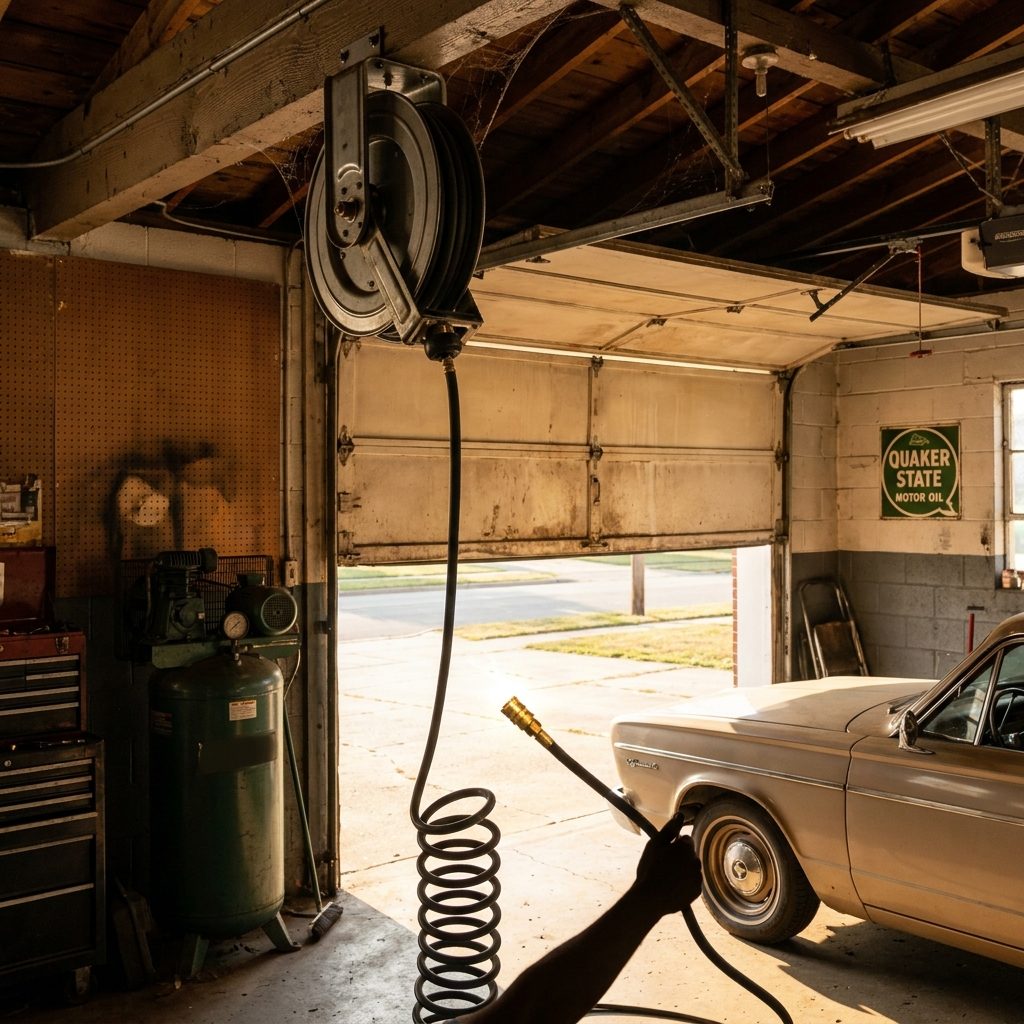
You grabbed the brass fitting and walked, and the reel let out hose with a stuttering hiss, fighting you the whole way. Let go and it retracted with enough violence to take skin off your knuckles if you forgot to step clear. Zero safety features. Zero sympathy.
That hose ran everything — impact wrenches, tire chucks, blow guns for cleaning parts. The compressor in the corner kicked on every few minutes with a shudder that rattled the windows, built pressure until the gauge read full, then shut off with a hard clunk. On, off, on, off, all day long. You stopped hearing it after a while, the same way you stop hearing a clock tick. But a visitor noticed immediately.
16. The Wooden Pegboard Wall of Keys for Every Regular Customer’s Car
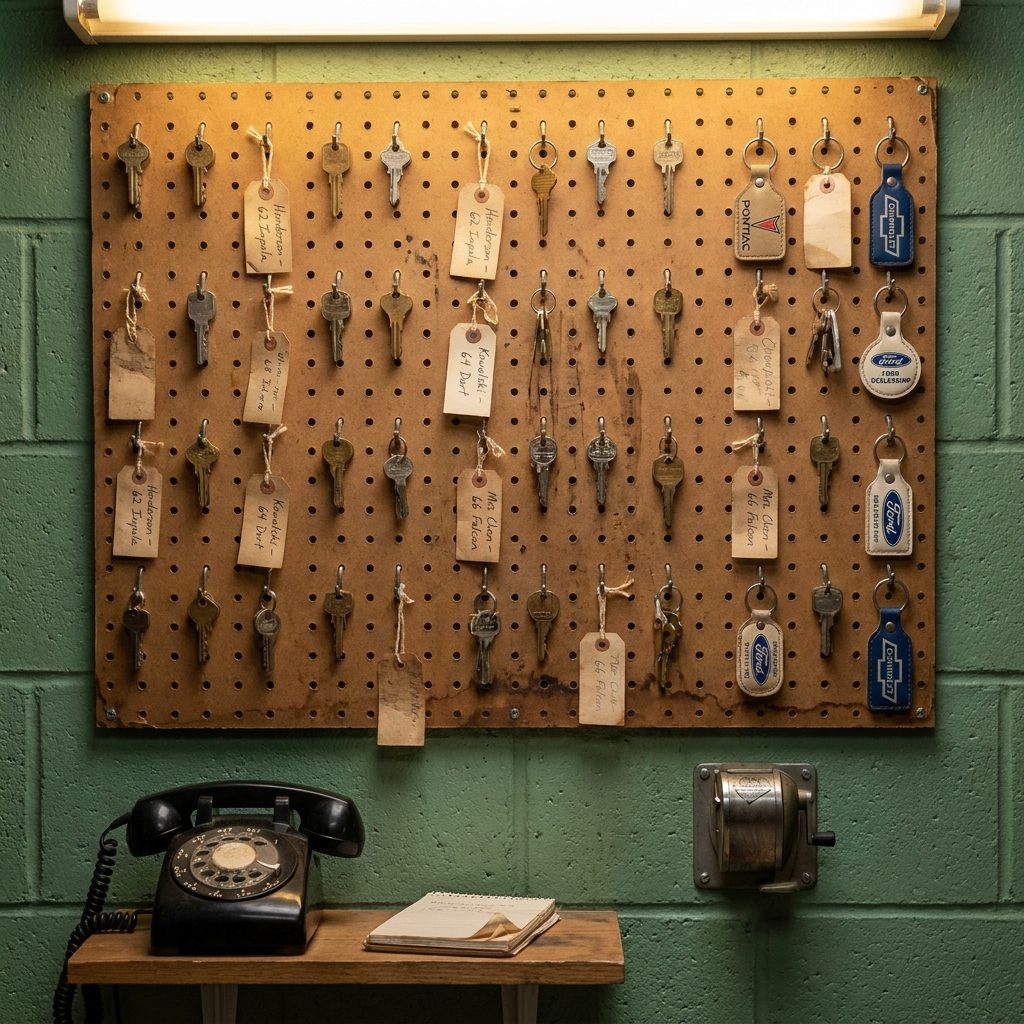
The mechanic had your spare key. Just sit with that for a second. A copy of your car key, hanging on a hook on his wall, your name written on a cardboard tag in his handwriting. Neither of you gave it a second thought.
Mrs. Henderson could call on a Tuesday morning and say the Rambler was acting up, and Charlie would walk to her house after lunch, drive it back to the shop, fix whatever was wrong, and park it in her driveway before dinner. She’d find the bill in the mailbox. That was the arrangement — had been for years. The key wall made the logistics possible. Something harder to name made it ordinary.
15. The Cardboard Sun Visor Advertising the Shop’s Phone Number That Every Customer Got For Free
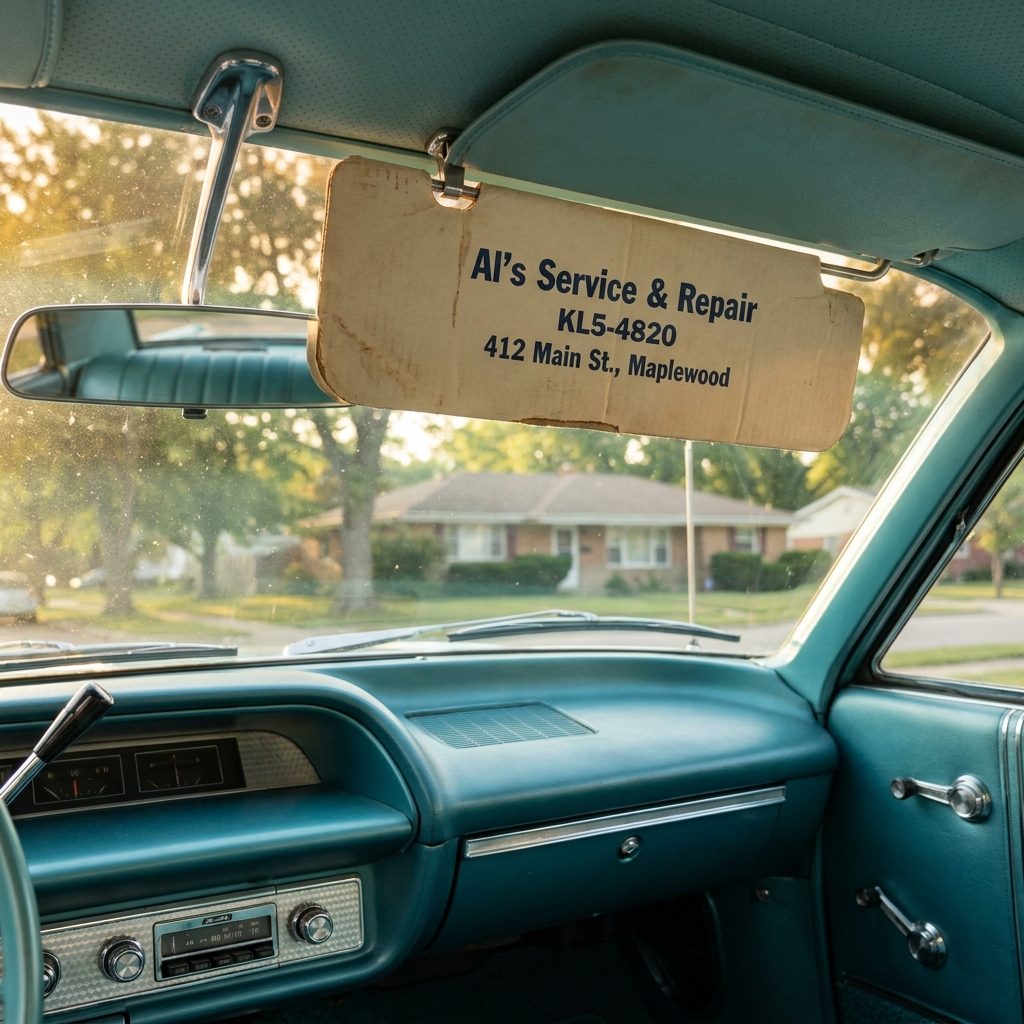
Free advertising that actually worked, and brilliantly simple. The shop gave you a cardboard sun visor with the phone number printed on it, you clipped it to your factory visor, and every time the afternoon sun hit your eyes you saw Al’s number staring back at you. You never threw it away because it blocked glare. You never forgot the number because it ambushed you daily for years.
14. The Bell That Rang When a Car Rolled Over the Rubber Air Hose at the Front Apron
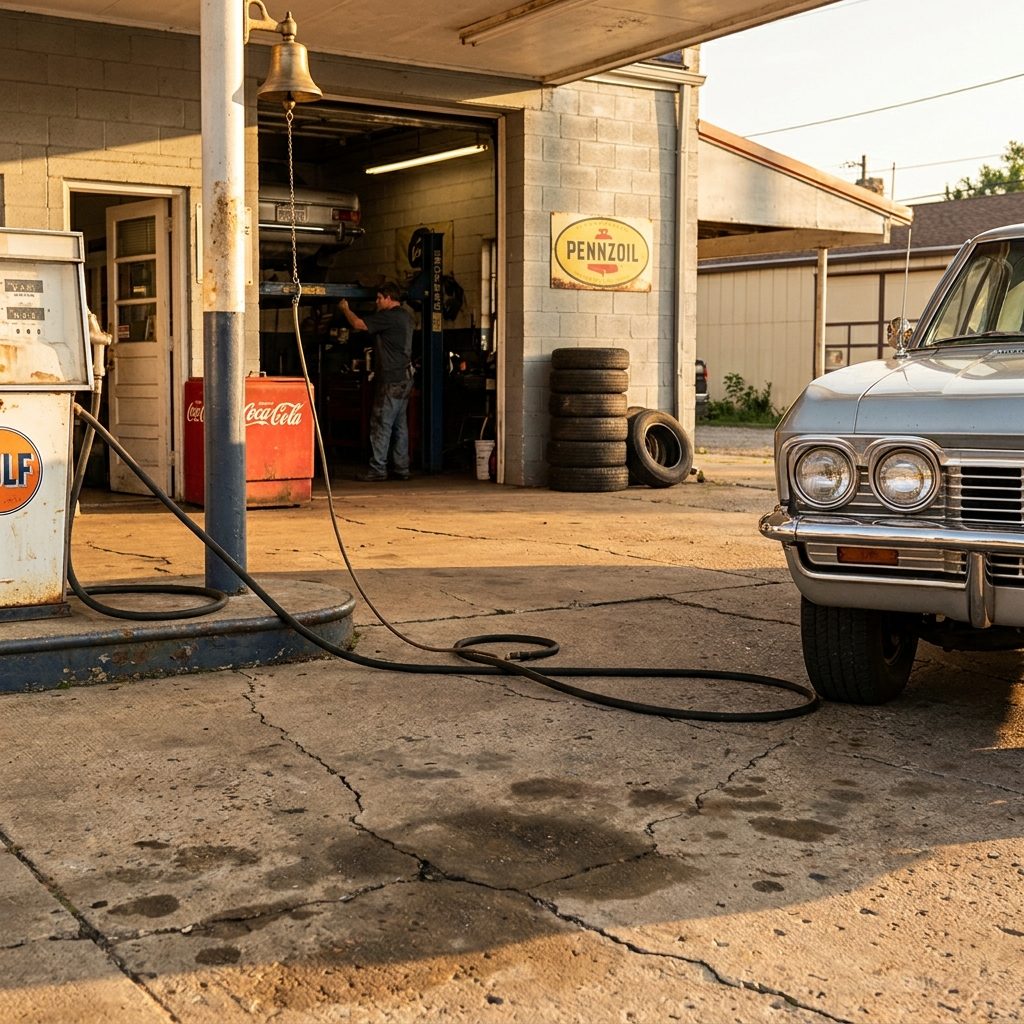
Two dings. That’s what you heard. The first when the front tire crossed. The second a beat later from the rear. Before anyone looked up, before anyone wiped their hands, the shop already knew a car had pulled in.
The mechanic would come out still holding whatever wrench he’d been using, squinting into the sun, and you’d tell him what was wrong while he was already looking under the hood. No appointment. No computer check-in screen. Just a rubber hose, a bell, and a man who walked out to meet you.
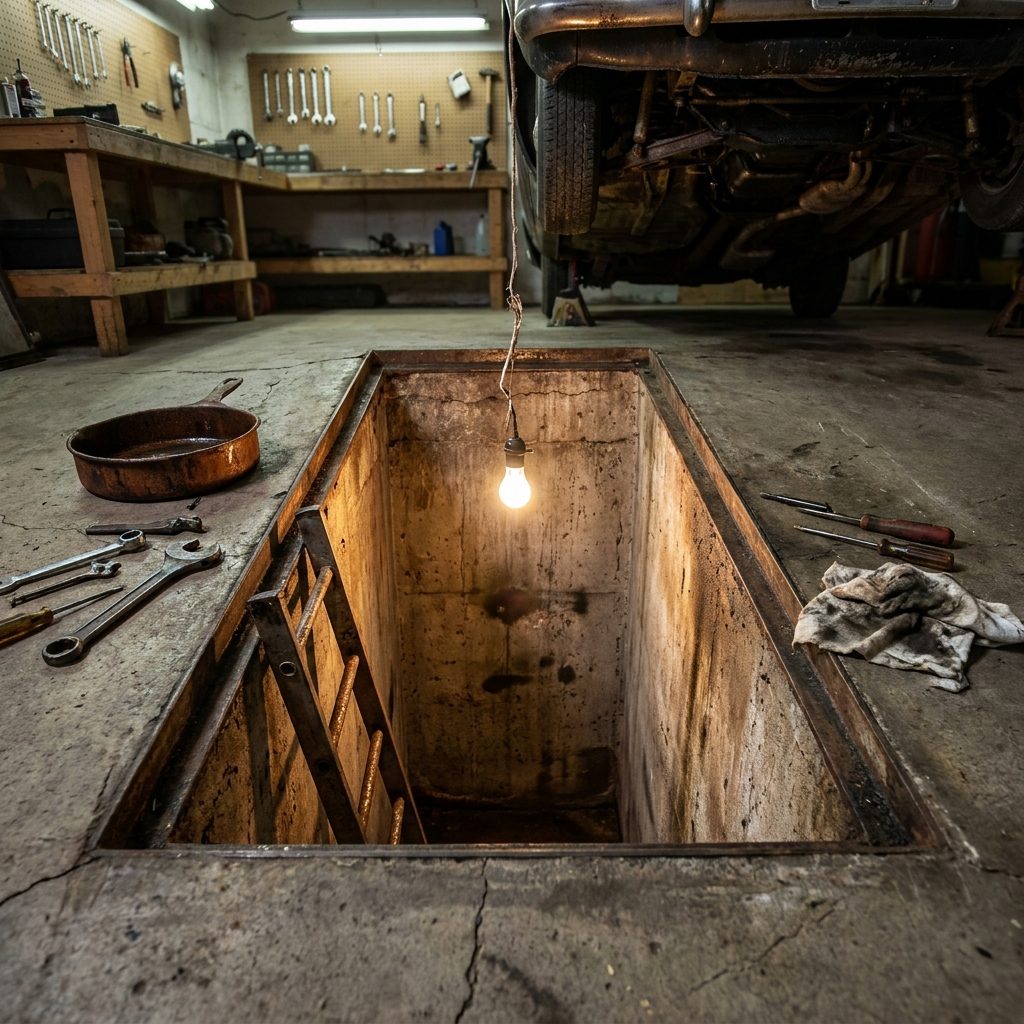
13. The Pit, Dug Right Into the Concrete Floor, Where the Mechanic Stood Under Your Car
Would you like to save this?
Before every shop had a hydraulic lift, plenty of them had a hole in the floor. Literally. A rectangular pit, maybe three feet wide, dug into the concrete so the mechanic could walk down a few steps and stand directly under the car at chest height.
No lift arms. No hydraulic pump. Just a man standing in a trench, looking up at your oil pan the way a dentist looks up at your teeth. It was effective and slightly terrifying. If you were a kid, you stood at the edge and peered down like it was a well.
OSHA had thoughts about these pits eventually. Liability insurance had bigger thoughts. By the mid-1970s most shops had filled them in and bolted a two-post lift to the slab. But the outline of the old pit, faintly visible under fresh concrete, stayed there for decades in some shops. A ghost of a simpler mechanical age, right under your feet.
12. The Glass-Topped Oil Display Rack With a Row of Quart Cans Standing at Attention Like Soldiers
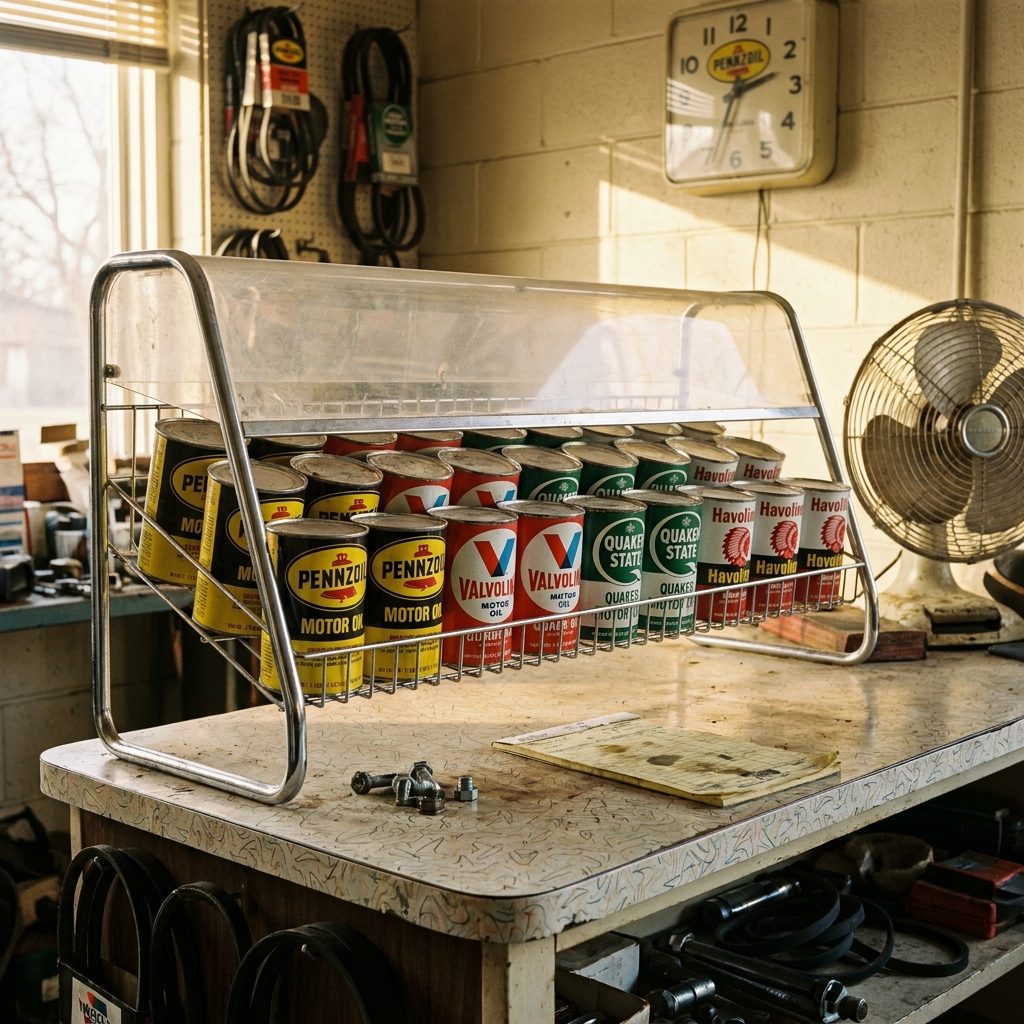
Pennzoil in the yellow can. Quaker State in the green. Valvoline in red. They stood in a chrome wire rack near the counter, and you could read the viscosity numbers on every one: 10W-30, 10W-40, straight 30-weight for the old flatheads that still ran on single-grade.
The mechanic didn’t ask you what oil you wanted. He already knew. He knew your car took five quarts and he knew which brand your dad preferred, because your dad had been coming here since 1957. He’d pull four cans off the rack, punch the tops with a church-key opener, and pour them in a way that looked casual but never spilled a drop. The fifth can he’d hold up and show you the level on the dipstick to prove you needed it.
11. The Clipboard Hung on the Wall With Every Car’s Service History Written in Pencil
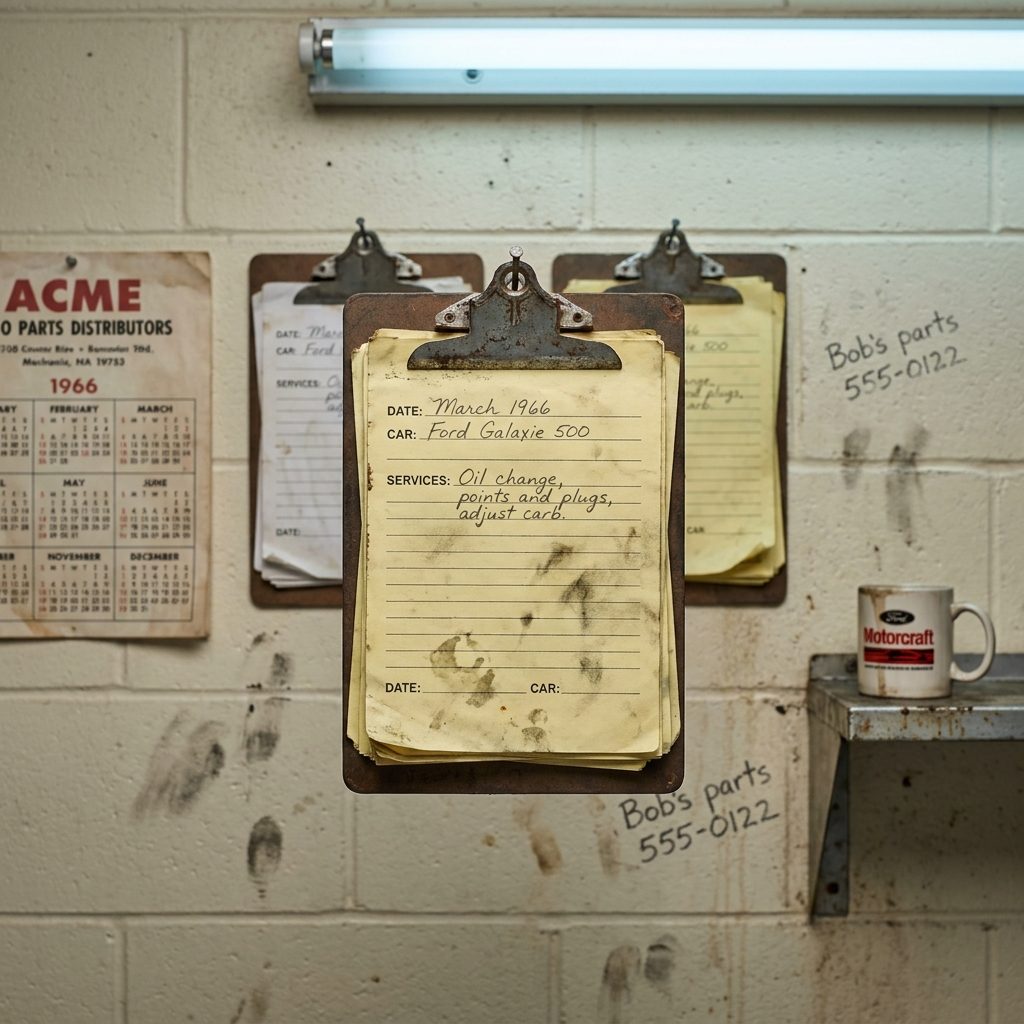
No computer. No database. Just a clipboard, a pencil, and a man’s memory.
Every regular customer had a card or a sheet. Date, mileage, what was done. Brake shoes replaced at 42,000. Points and condenser at 38,000. Radiator hose, upper, July of ’64. It was written in pencil because pencil didn’t smear when your hands were greasy, and it didn’t run when the clipboard got rained on.
10. The Flat-Repair Tub Full of Water Where the Mechanic Dunked Inner Tubes to Find the Leak
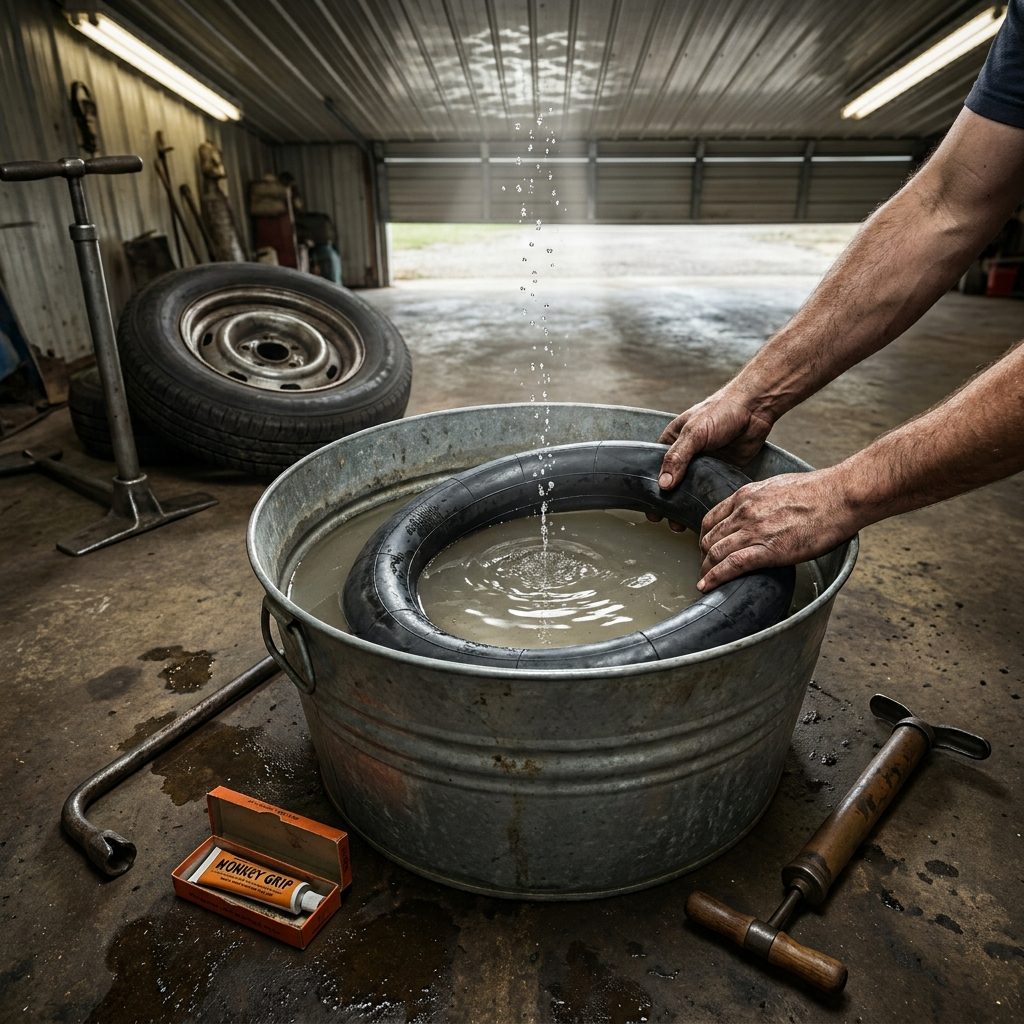
Bubbles. That’s all you were looking for. Tiny, persistent bubbles rising from a pinhole you couldn’t see with your eyes or feel with your fingertip.
The tub was nothing special. Galvanized steel, the kind you’d water livestock from. The mechanic would inflate the inner tube just enough to hold shape, then slowly rotate it through the water, section by section, watching the surface like a man reading a river. When the bubbles appeared, he’d mark the spot with a grease pencil, dry the rubber, rough it up with a little square of sandpaper from the patch kit, spread the cement, wait for it to get tacky, press the patch, and roll it flat with the back of a screwdriver handle.
Tubeless tires killed this ritual. By the late 1960s most passenger cars ran tubeless, and the dunk test moved to spraying soapy water on the mounted tire instead. But if you’re over sixty, you remember watching those bubbles rise.
9. The Parts Washer With the Solvent Basin and the Stiff-Bristle Brush on a Flexible Arm
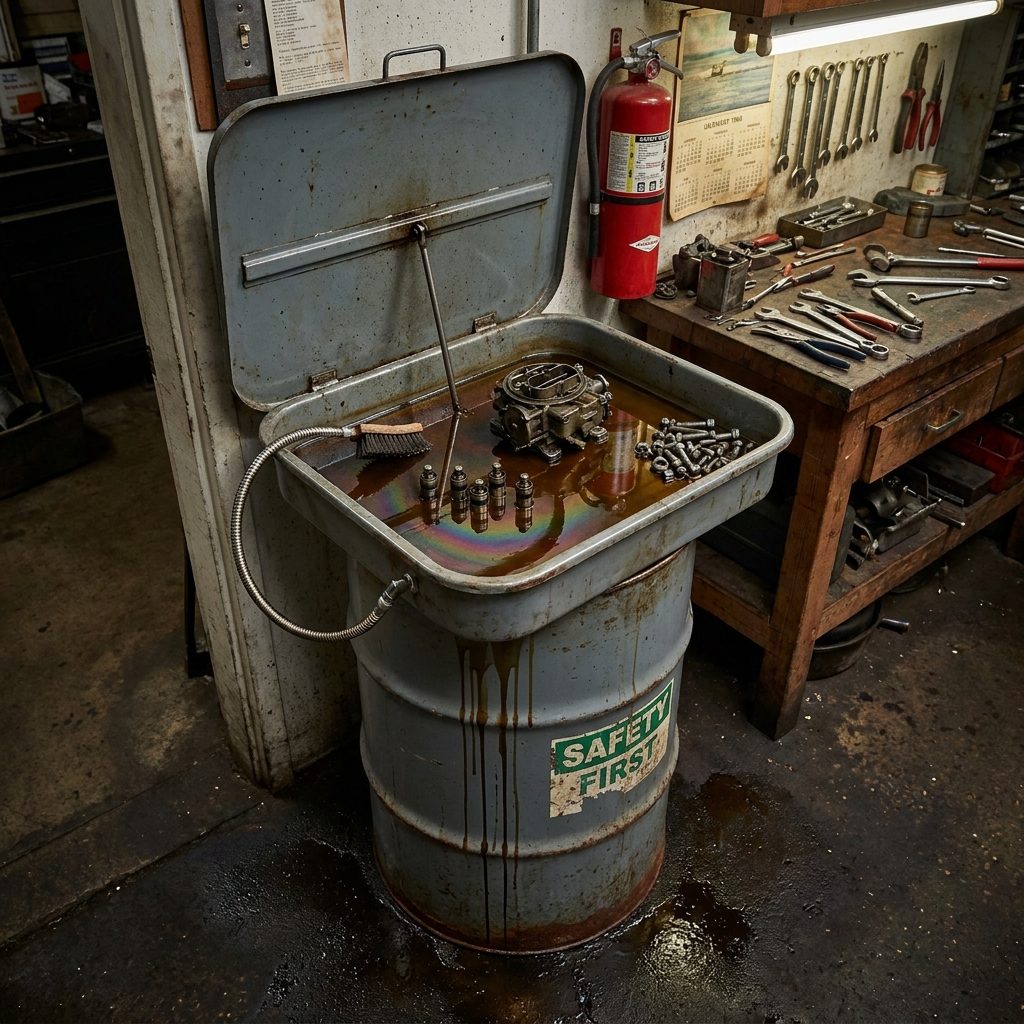
The smell hit you from ten feet away. Sharp, chemical, not quite gasoline but close enough that your mother would have had something to say about it.
Every shop had one. A steel drum with a basin on top, filled with mineral spirits or whatever solvent the parts supplier was moving that month. You’d drop a carburetor in there, work it over with the brush, and watch thirty years of varnish and carbon dissolve into the bath. The brush bristles were always half-gone, splayed out like a bad haircut, but they worked.
8. The Valve-Grinding Compound in the Little Tin With the Two Lids, Coarse on One Side and Fine on the Other
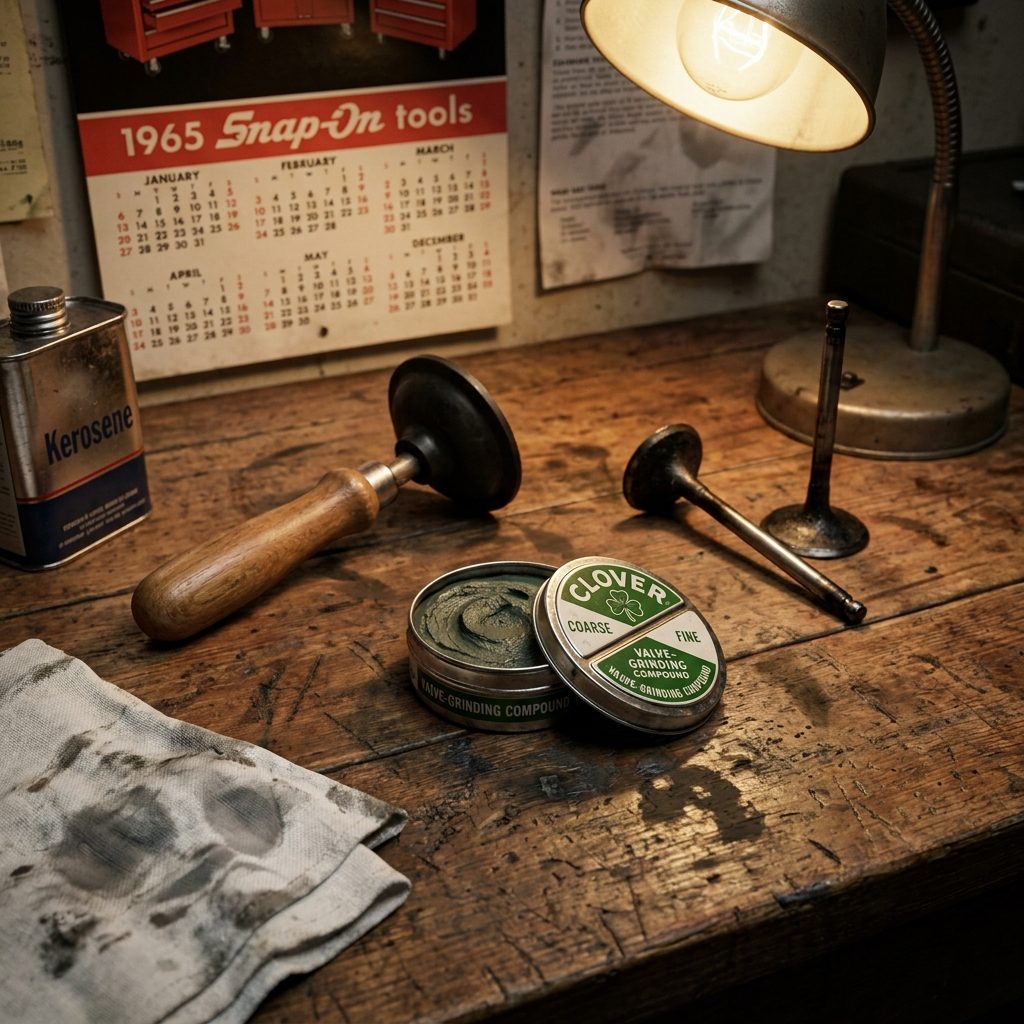
Two lids on one tin, each hiding a different grit. Coarse on the left, fine on the right, or maybe it was the other way around. You learned which was which by feel.
Valve jobs were common work in the 1960s. Engines burned leaded gas, carbon built up on valve seats, and compression dropped. The fix was hands-on: pull the head, pop the valves, smear compound on the seat, stick the lapping tool’s suction cup to the valve face, and spin it between your palms like you were trying to start a fire. Back and forth, back and forth, until the seat showed a clean, even ring of contact.
7. The Sun-Faded Cardboard Sign in the Window That Said ‘STATE INSPECTION’ With the Year Sticker Peeling Off
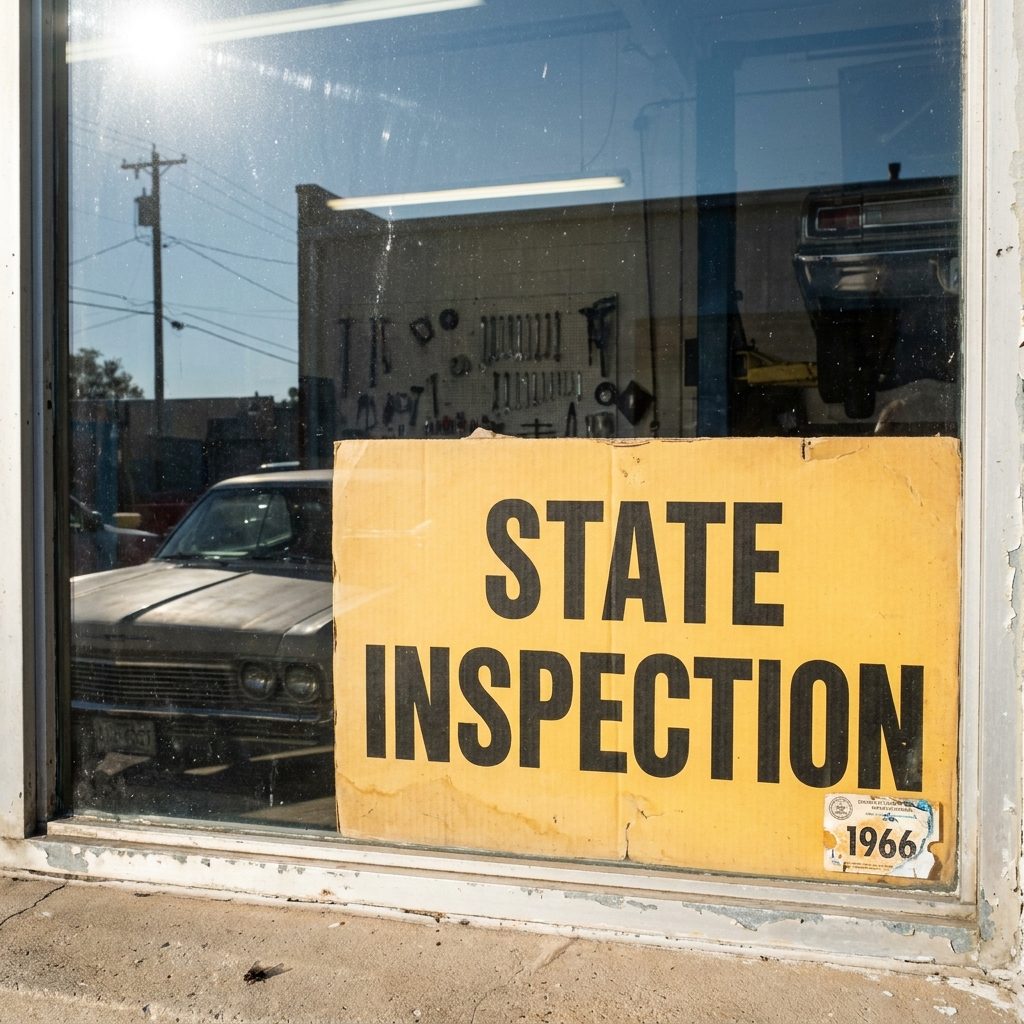
That sign never came down. January through December, it sat in the window, bleached by summer, fogged by winter, doing its one job: telling the neighborhood this was a place that could put a sticker on your windshield.
State inspection was a different animal then. The mechanic looked at your brakes, your lights, your tires, your exhaust, and he used his own judgment. No electronic scanner. No emissions analyzer plugged into an OBD port that didn’t exist yet. He crawled under the car, he looked, he listened, he bounced the suspension by leaning on the fender. If something was marginal, he’d tell you. And he might pass you anyway if he knew you’d be back next week to fix it. Try that at a chain inspection station now.
6. The Can of Hand Cleaner, Orange and Gritty, Sitting on the Edge of a Utility Sink With No Hot Water
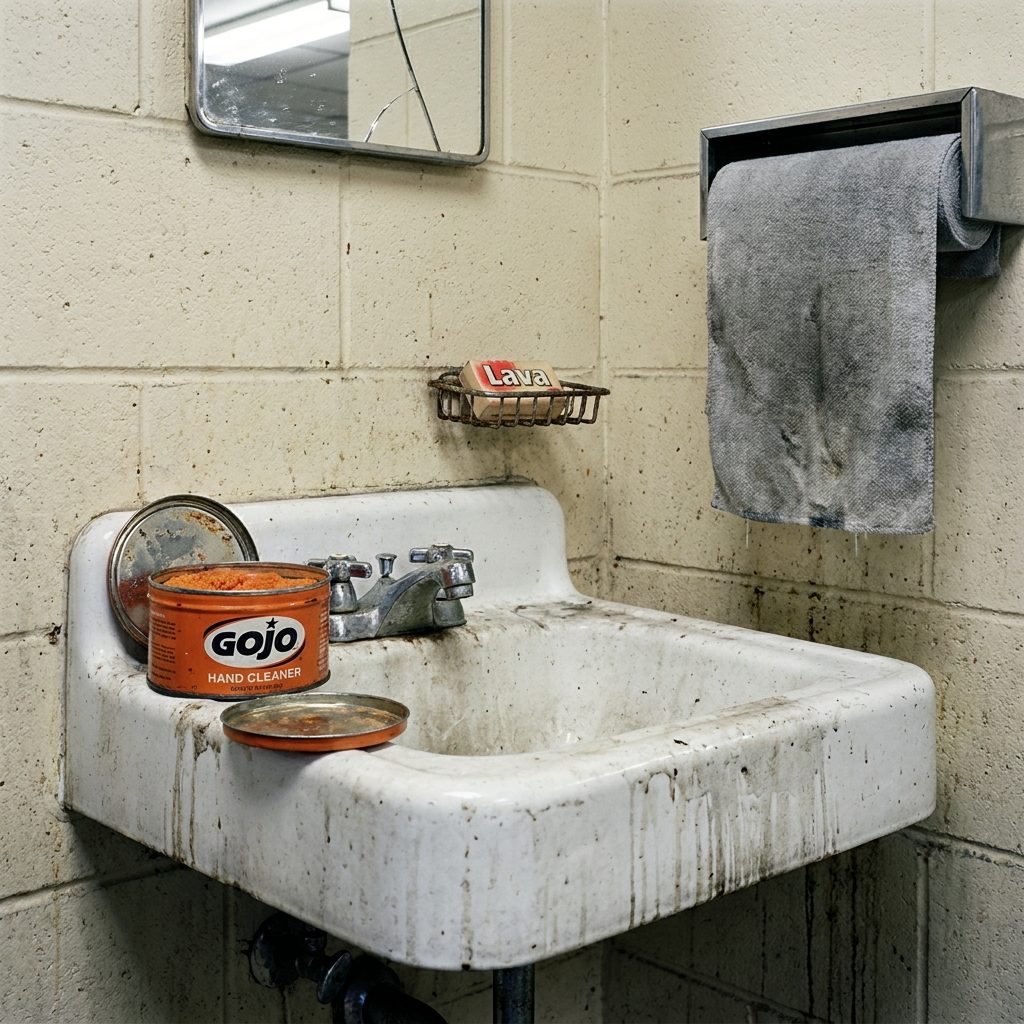
Cold water only. Always cold water.
You’d scoop a glob of that orange grit out of the tin, work it into your palms, and scrub until your hands turned the color of a sunset. The pumice in it did what soap couldn’t: cut through axle grease, brake dust, and the specific black film that lived under your fingernails for the entire decade of the 1960s if you worked on cars for a living.
The roller towel next to the sink was a closed loop of fabric that hadn’t been white since the Eisenhower administration. You’d pull down a fresh section and it would be slightly less gray than the section before it. Your hands were never fully clean. They were just less dirty. And that was fine. Clean hands meant you hadn’t done anything useful yet.
5. The Customer’s Kid Sitting on an Upturned Five-Gallon Bucket in the Bay, Watching Everything and Touching Nothing
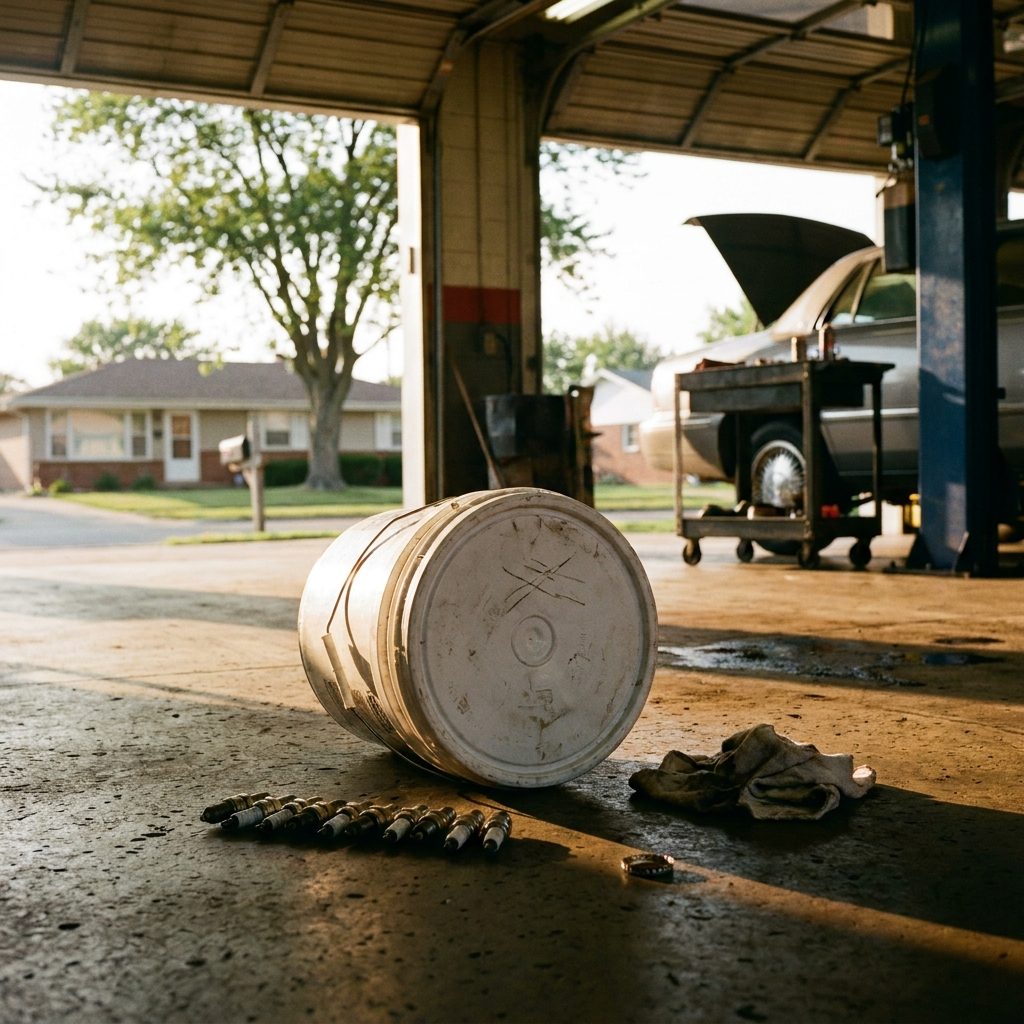
You sat where they told you to sit. You didn’t move. You didn’t ask questions more than twice. And you watched a man take an engine apart with the same focus other kids reserved for Saturday morning cartoons.
The five-gallon bucket was your seat. Sometimes a stack of old tires. The shop smelled like solvent and cigarettes and coffee that had been on the burner since dawn, and none of it bothered you because you were inside the machine. You were seeing how things worked. The mechanic might hand you a bolt to hold. That bolt was the most important object in the world for the next forty-five minutes.
Your mother came back, the car was done, and you left without saying anything about it. But the next time something rattled under the hood at home, you had a theory.
4. The Tube Tester at the Front of the Shop Where You Could Diagnose Your Own TV on the Way to Pick Up Your Car
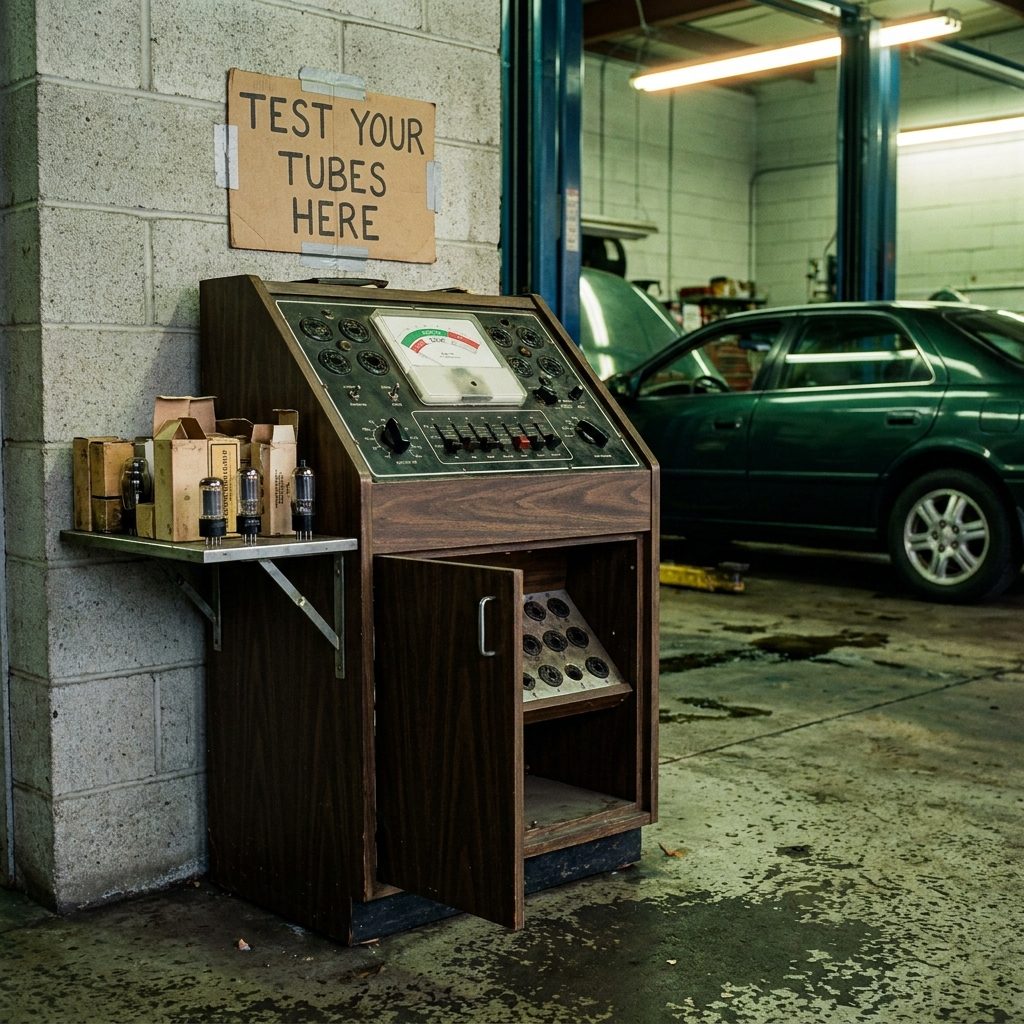
Half the shops in town had one of these standing near the entrance — just there, like a pay phone or a gumball machine, something nobody questioned. You’d pull a vacuum tube out of your television set at home, drive over to the mechanic’s, and test it yourself on the big upright cabinet with the analog meter swinging between GOOD and BAD. No ambiguity. The needle told you everything.
The mechanic didn’t run it for you. You stood there doing it yourself while waiting on your oil change, and if the tube was shot you bought a replacement from the little drawer underneath, drove home, and fixed your own TV before dinner. Had nothing to do with cars. But it said something real about what a neighborhood shop was — a place that solved problems generally, not just automotive ones, because the guy who owned it figured if you were already standing there, why not?
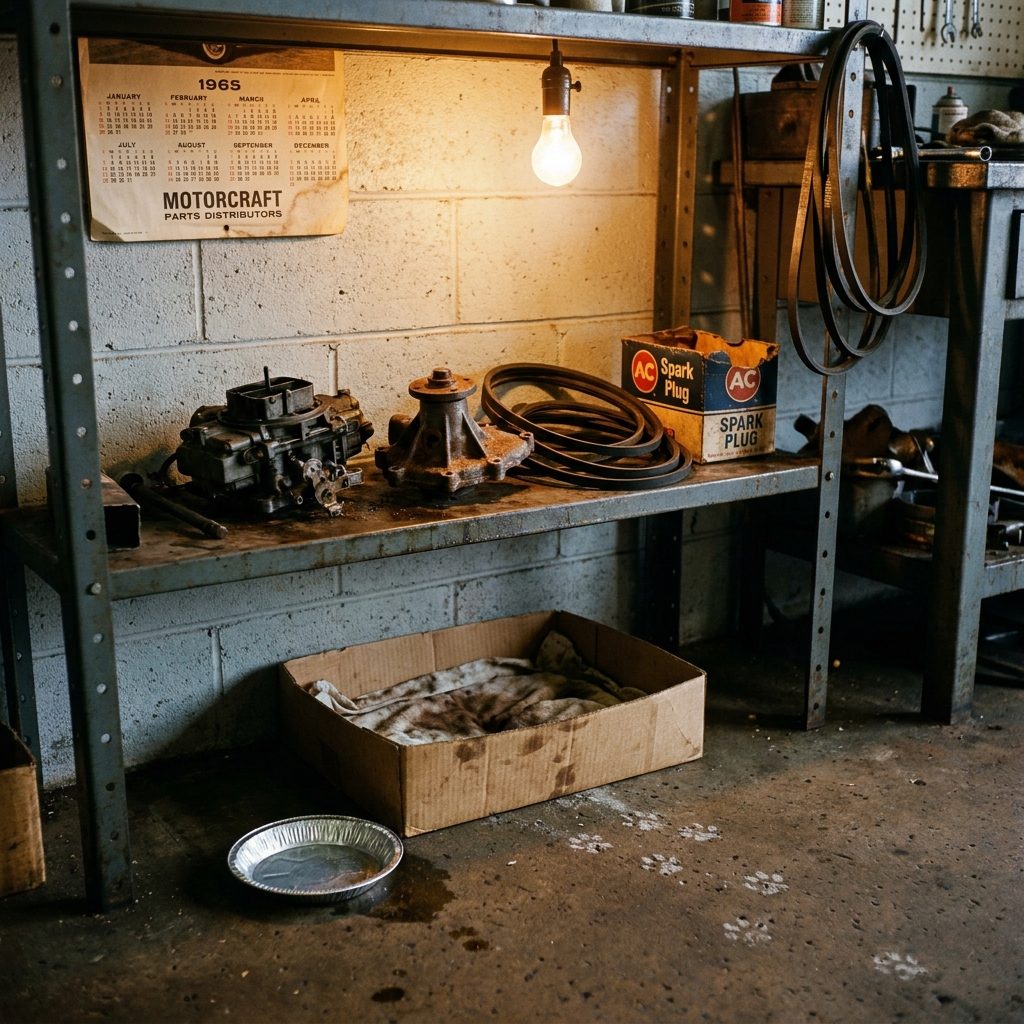
3. The Stray Cat That Lived Under the Parts Shelf and Belonged to Nobody and Everybody
Would you like to save this?
Every shop had one. A gray tabby, usually, or a calico with a torn ear that showed up one winter when somebody put out a pie tin of water and half a sandwich. That was the adoption ceremony — its entirety.
It slept on a rag under the parts shelf, ignored customers with a contempt that felt earned, and occasionally walked across the hood of a car on the lift like it had personally reviewed the service manual and found it lacking. Nobody called it by the same name twice. One guy said “Grease,” another said “that damn cat,” the owner’s wife called it Whiskers on the phone once. Ownership was never discussed because discussing it would have meant accepting responsibility, and the beauty of the arrangement was that nobody had to. The cat ate. The cat stayed. Mice didn’t.
2. The Exhaust Pipe Bender Bolted to the Floor in the Back Bay, Curved Like a Piece of Industrial Sculpture
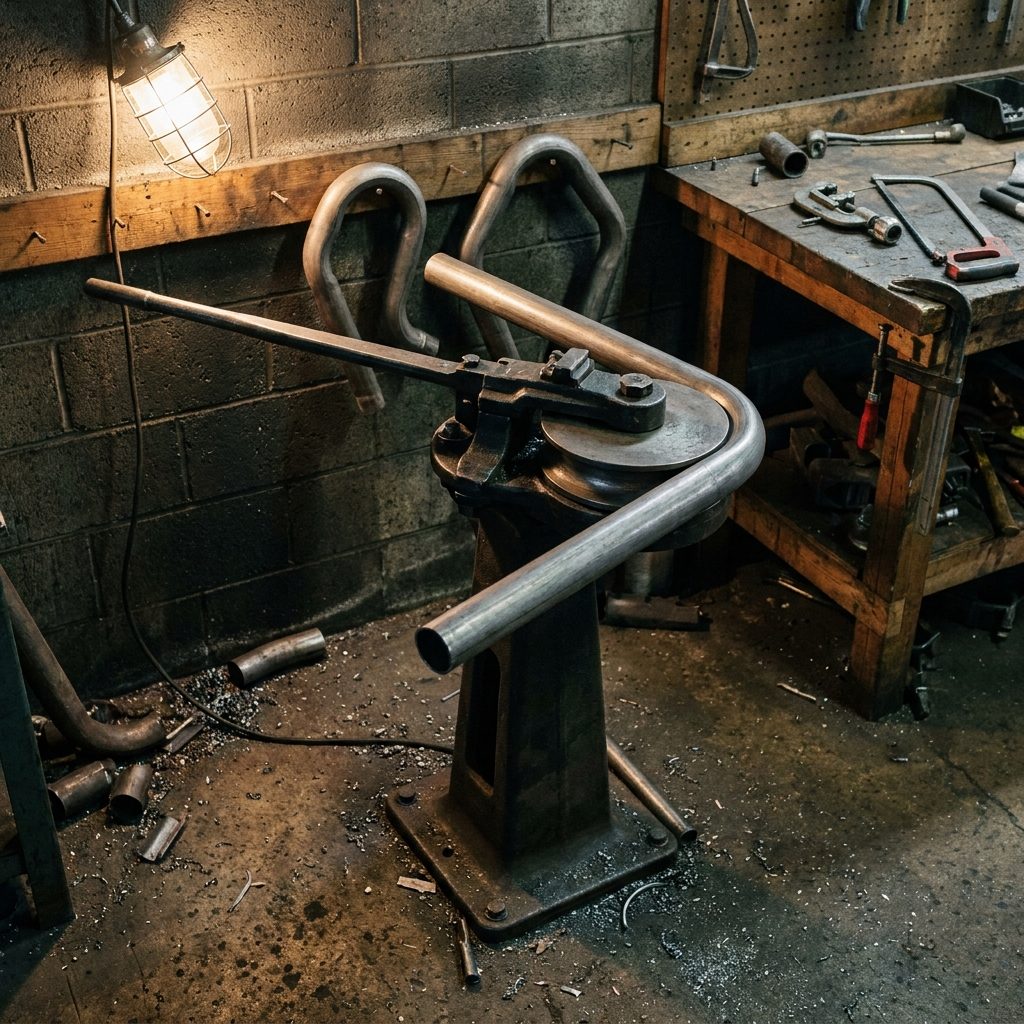
Custom exhaust work meant the mechanic walked to the back bay and bent the pipe himself. No ordering from a catalog. No three-day wait. He fed a length of raw steel into the jaws, cranked the lever, and shaped it to fit your car’s undercarriage by feel and memory — memory of every undercarriage he’d crawled under for twenty years. Fifteen minutes later you had a tailpipe that fit like factory because the man who made it had done your neighbor’s last week and your father’s before that.
There was something almost sculptural about watching it happen, the slow arc of steel bending under force, though nobody in the shop would have used that word.
1. The Rotation of Loaner Cars That Were All Somebody’s Old Trade-In Nobody Wanted to Buy
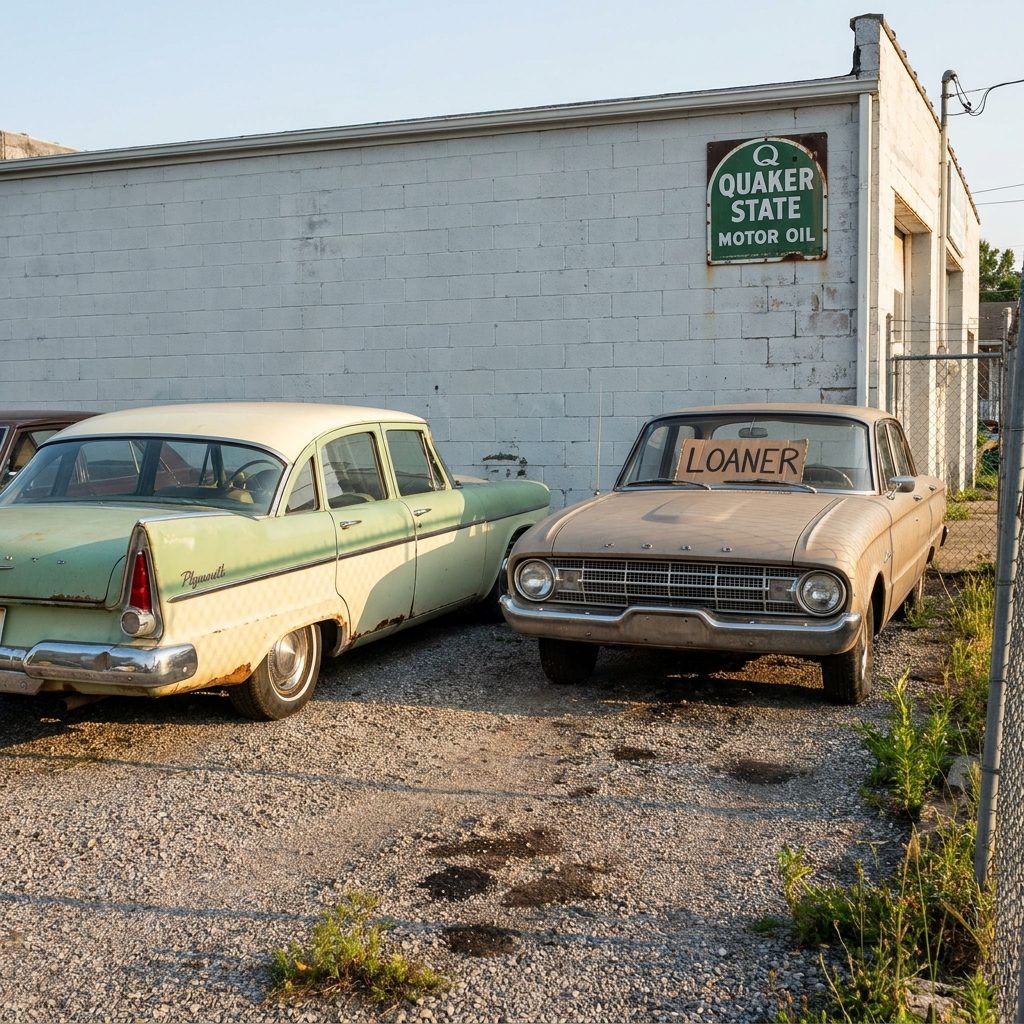
The loaner fleet — if you could call two unwanted trade-ins a fleet — was whatever had sat on the side lot so long the price taped to the windshield curled up, yellowed, and blew into the weeds. A ’57 Plymouth with a dent in the quarter panel. A Falcon that smelled faintly like someone else’s decade.
Keys lived on a ring in the top desk drawer. You got one if your repair was going to take more than a day. No paperwork. No deposit. A handshake, and the understanding you’d bring it back with gas in it. The loaner ran rough, pulled slightly left, and the radio caught one station — AM country, whether you wanted it or not. But it got you to work and back, which was all anybody expected from the deal.