
Would you like to save this?
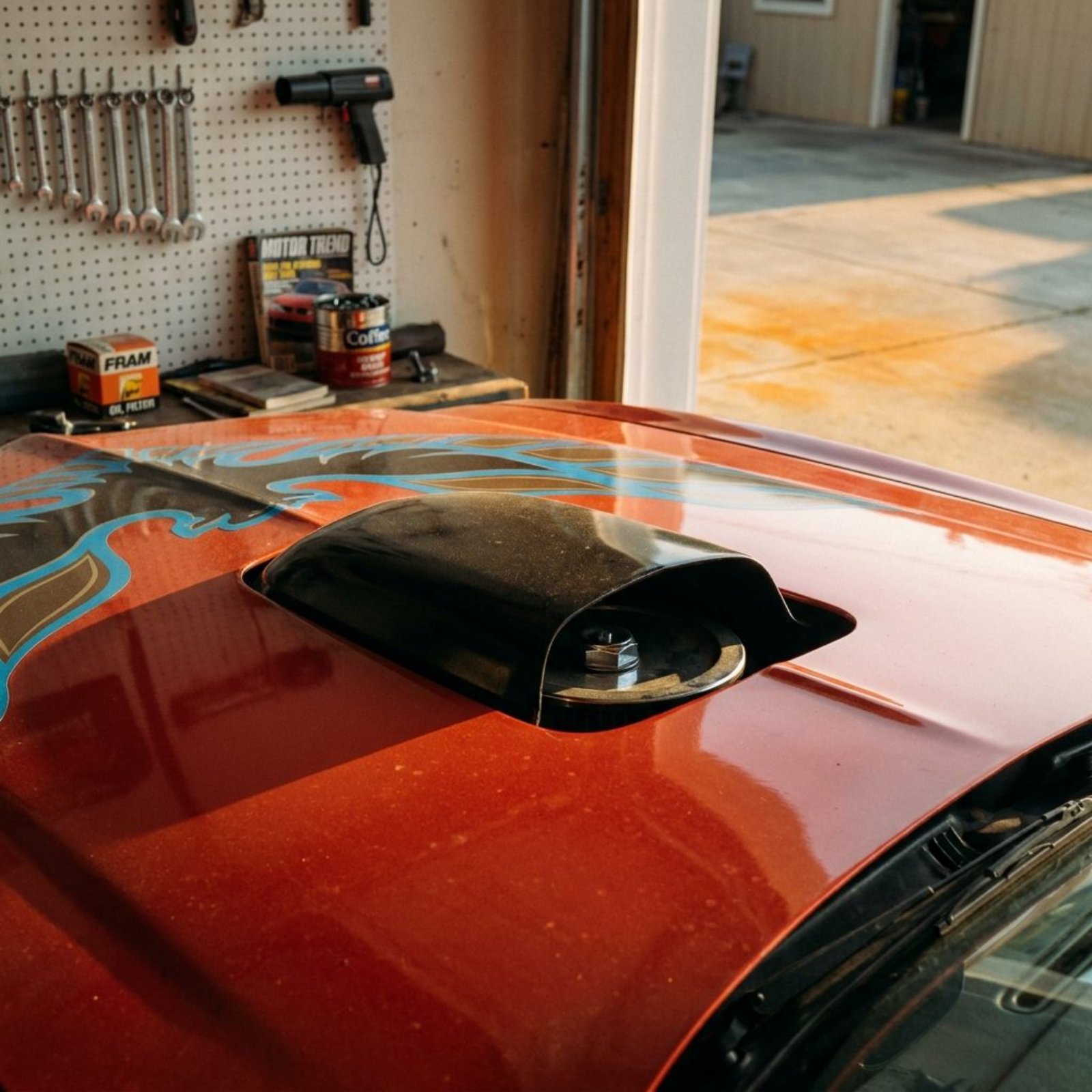
The Firebird decal covered the entire hood. Not a stripe, not a badge — the whole hood. Gold, black, and slightly terrifying, staring back like the car had something to prove.
Pontiac built plenty of cars in the 1970s, but only one of them could make a sixteen-year-old stop breathing in a used-car lot on a Tuesday afternoon. These are the reasons the Trans Am hit that hard.
19. The Way It Sounded on a Cold Morning Before the Choke Let Go
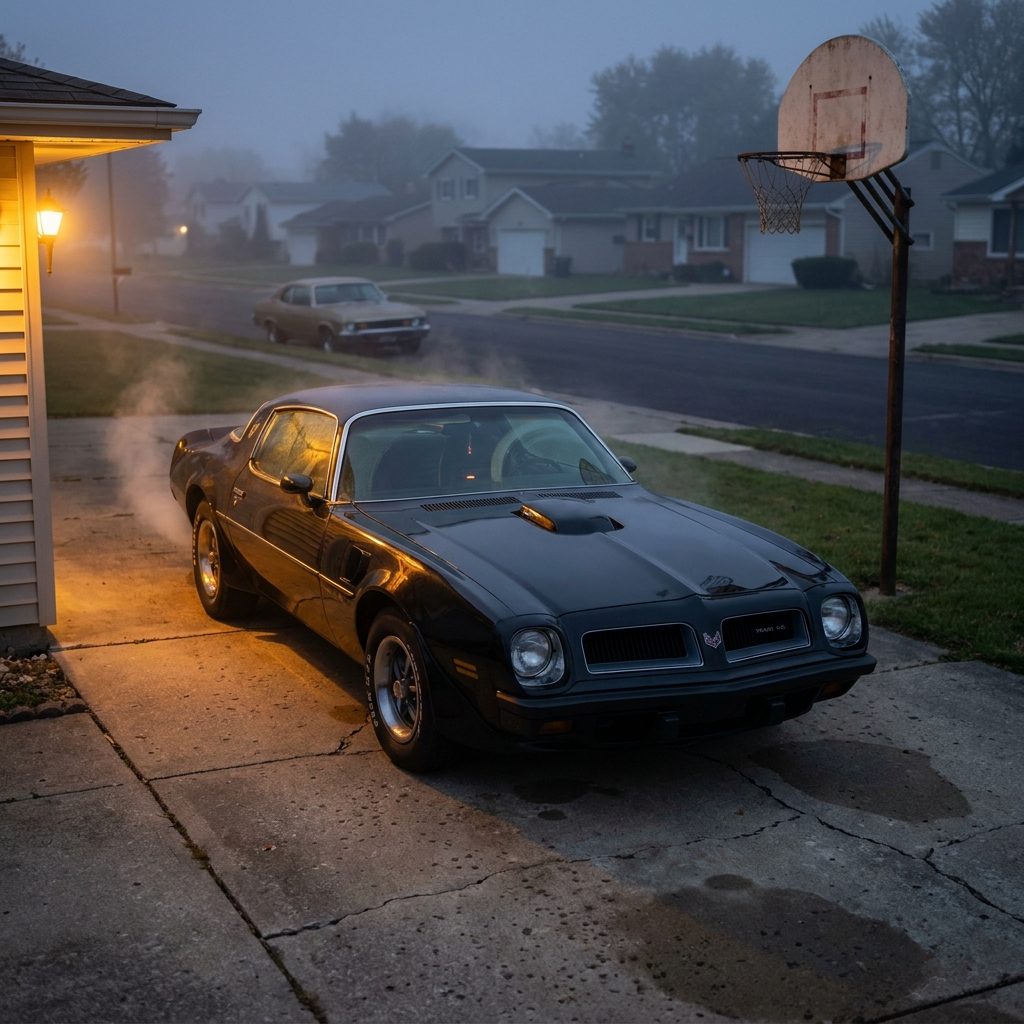
Cold-start on a big-block Trans Am was its own ritual, and anyone who owned one remembers it down to the sequence. Foot off the gas, pump the throttle twice, turn the key. The 455 would lurch, catch, and settle into a fast idle that shook the mirrors and rattled the dash vents while the choke plate held the mixture rich. The exhaust note at cold idle was rough and lopey, nowhere near the smooth idle it would find ten minutes later.
You sat there in the driveway, sometimes in a coat over pajamas, waiting for the temperature gauge to move off the peg. The neighbors definitely heard it. The whole street heard it. And there was absolutely nothing you could do about that, because this was simply what the car required.
18. The Firebird Decal on the Hood: Too Big, Too Gold, Completely Perfect
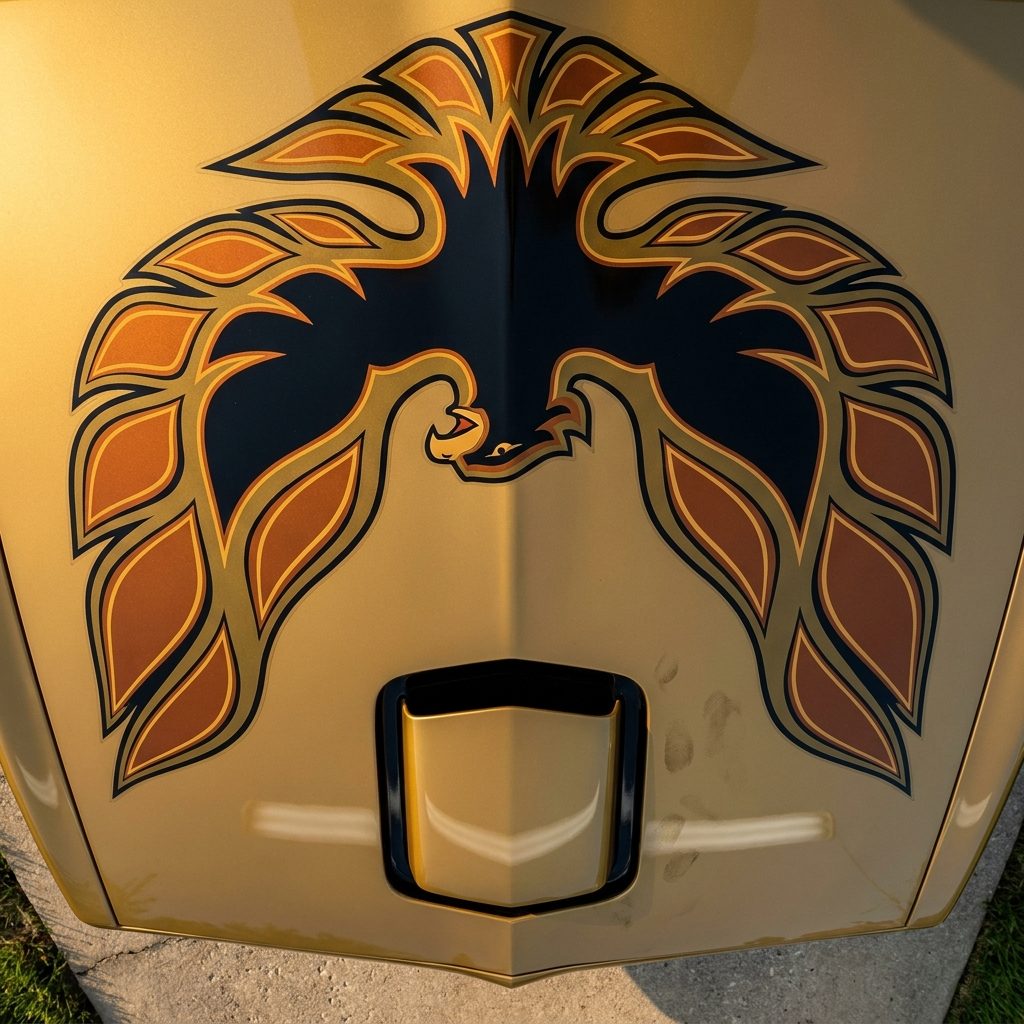
The Screaming Chicken. That’s what everyone called it, and Pontiac’s designers knew exactly what they were doing when they stretched that gold Firebird graphic across the entire hood of the 1976-and-later Trans Am. It was enormous. It was unapologetic. On the gold or black cars especially, it announced the vehicle from two blocks away, before you heard the engine and before you saw the shaker scoop.
Teenagers in 1978 did not find this excessive. The decal was the point. The Trans Am was already the car of Burt Reynolds and Smokey and the Bandit, and the hood bird was the visual period on that sentence. Years later, adults who bought these cars new will quietly admit they originally thought the decal was too much. Almost none of them deleted the option.
17. The T-Top Roof That Turned Every Highway Into a Convertible Without the Commitment
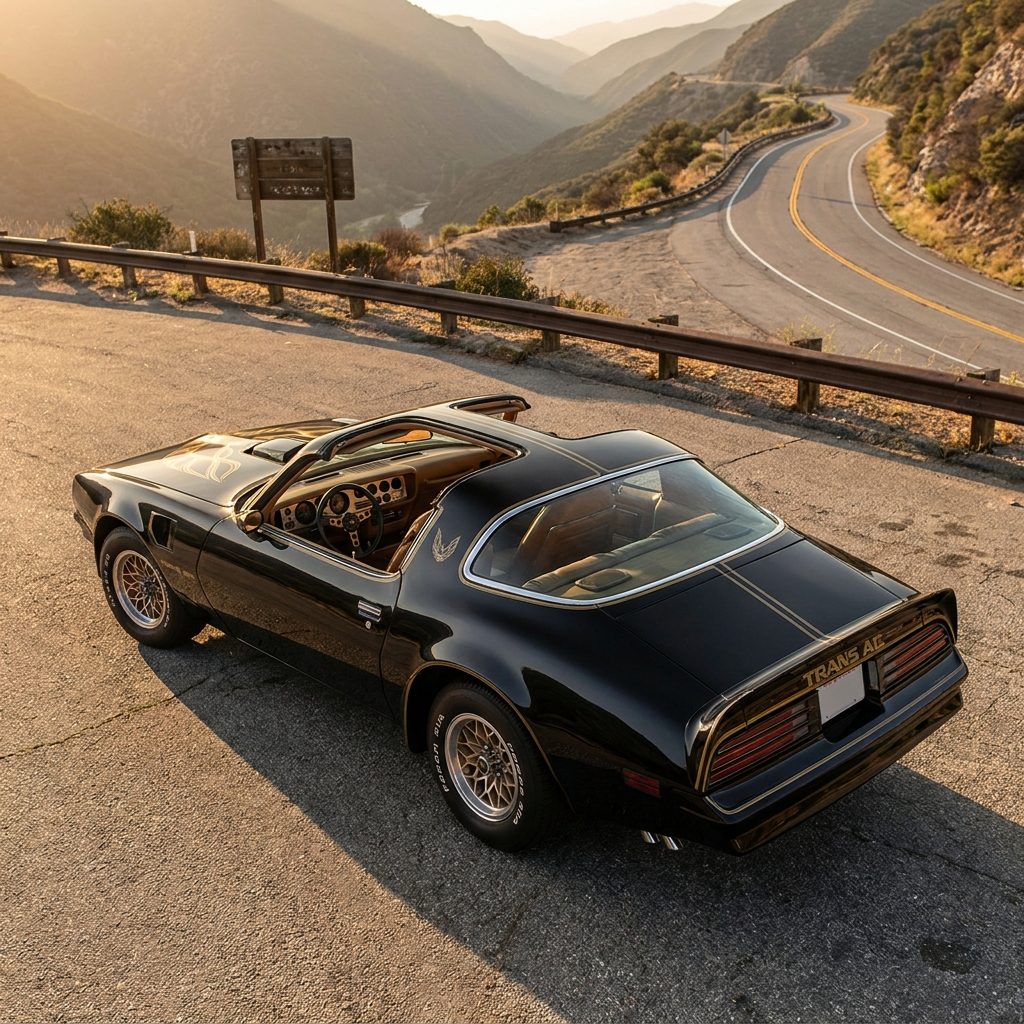
Wind without the worry. Two smoked-glass panels popped out and stowed behind the seats, and suddenly you had sky overhead and structural rigidity underneath. A convertible leaked and flexed. The T-top just opened up.
They rattled at speed — everyone knew it. The weatherstripping never quite sealed right after a couple of years, and you’d find a damp headliner after a thunderstorm if you forgot to check the seals. Nobody cared. That sound of wind rushing through the open channel at 65 mph on a county road in July was worth every drip, every rattle, every bit of road noise that snuck past the rubber gaskets.
GM didn’t invent the T-top, but the Trans Am made it iconic. By 1978 you almost couldn’t picture one without it.
16. The 400 and 455 V8s That Turned Gasoline Into Thunder
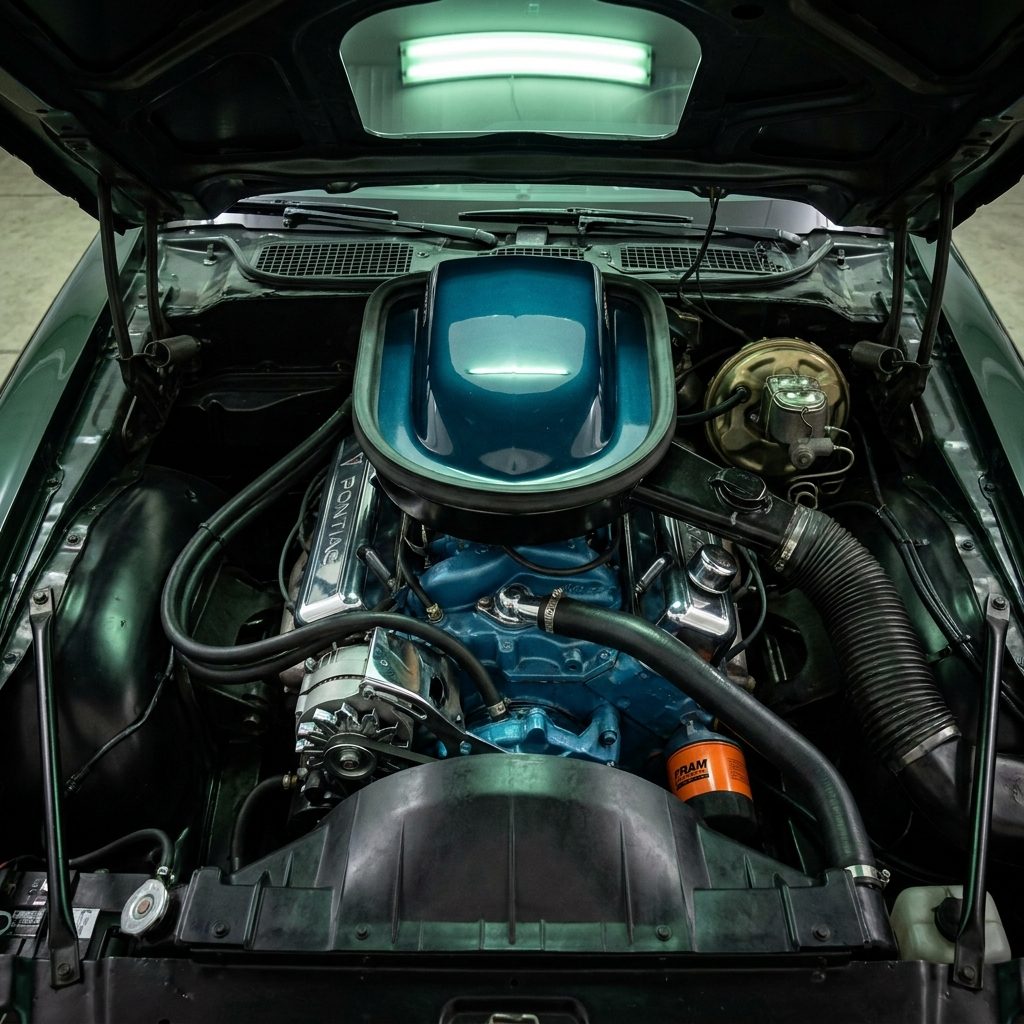
On paper, the Pontiac 455 Super Duty’s horsepower figure doesn’t sound outrageous by modern standards. But torque told the real story — these engines made their power low and heavy, like a freight train pulling away from a yard. You didn’t wind them up. You opened the throttle and held on.
The 400 was the more common mill. It ran in Trans Ams from 1970 through 1979, getting progressively strangled by emissions equipment as the decade ground on. Even in its later, smogged-down form, though, it had a voice. That Pontiac exhaust note — deeper and more guttural than a Chevy small-block — was unmistakable from two streets away. People heard it before they saw it. And they looked.
15. The Bandit Effect: How One Movie Made Every Kid in America Want the Same Car
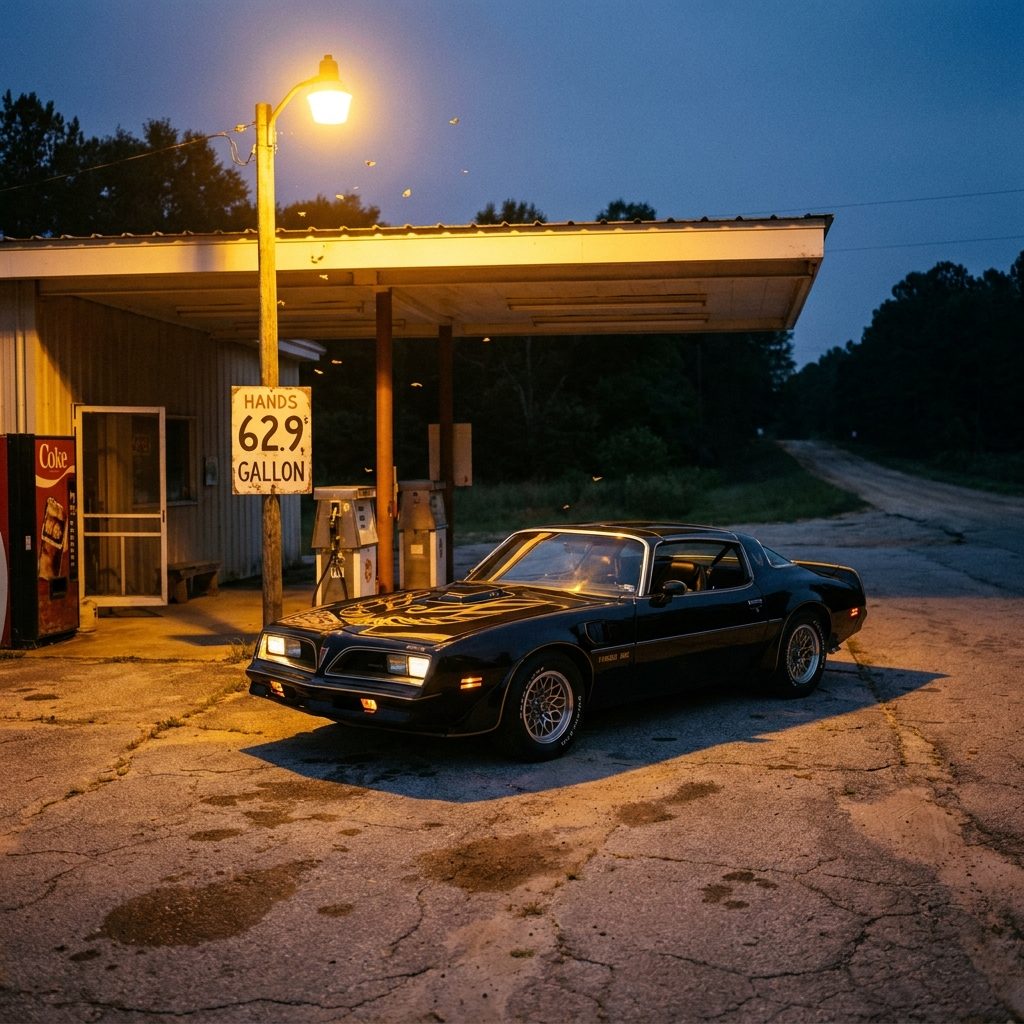
Smokey and the Bandit came out in the summer of 1977, and Pontiac dealerships were not ready.
Trans Am sales surged. The Special Edition package — black with gold trim — became the car every teenager taped to a bedroom wall and every adult secretly priced out on a Saturday afternoon. Burt Reynolds didn’t just drive the car. He wore it. The way he popped that T-top out, dropped into the seat, and lit up the rear tires might be the most effective automobile commercial ever filmed, and Pontiac didn’t pay a dime for the placement.
For kids who were twelve or thirteen in 1977, that car wasn’t aspirational. It was a promise. Someday. Somehow.
14. The Honeycomb Wheels That Looked Like They Were Designed by Someone Who Actually Cared
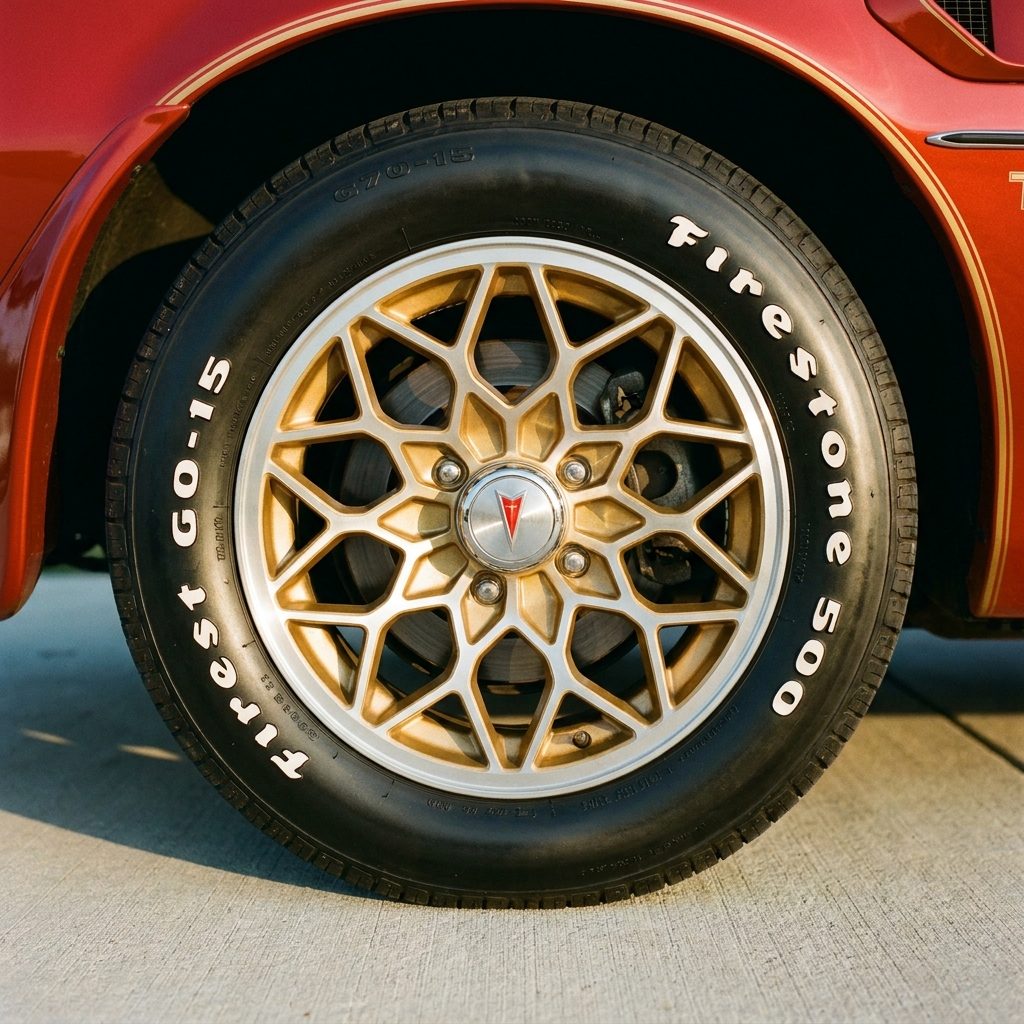
Most factory wheels in the 1970s looked like afterthoughts — stamped steel with a dog-dish hubcap, or maybe a cheap full cover that popped off the first time you hit a pothole. The Pontiac honeycomb was different. The repeating hexagonal pattern had a geometric precision that made the car look resolved, finished, in a way that rally wheels and slotted mags never quite managed.
Gold finish on the Special Edition cars was the high-water mark. Gold honeycomb on a black car. That combination had no business looking as good as it did, and yet there it was, rolling down every main street in America by 1978. Nobody talked about wheel design back then — you just noticed when something looked right. And this looked right.
13. The Formula Steering Wheel That Put Your Hands Where a Driver’s Hands Belonged
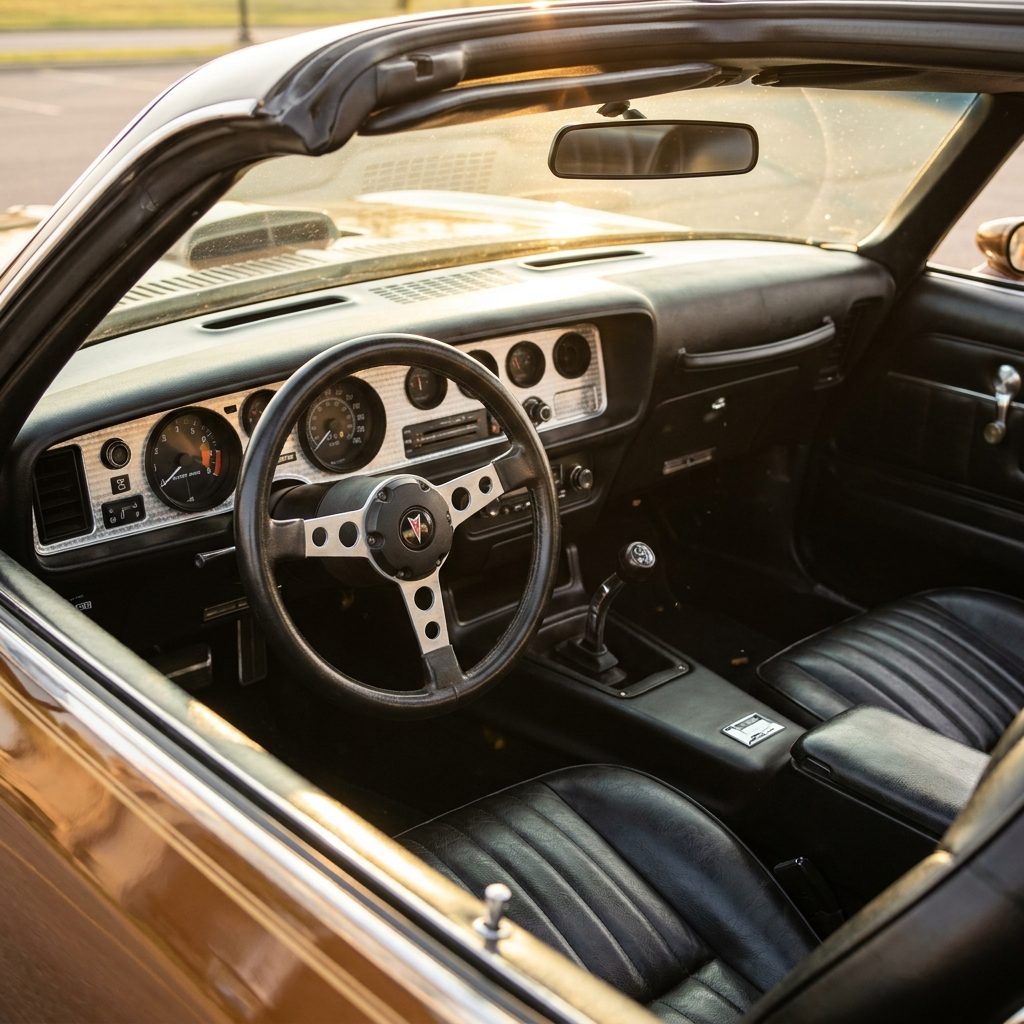
Thick rim. Three spokes. Just enough dish to clear your knees. The Formula steering wheel felt like it belonged in something costing three times as much — you wrapped your hands around it and your grip naturally fell at ten and two, and suddenly the car felt smaller and more serious than it looked from the outside.
Compare that to what most American cars offered in the seventies: a steering wheel the diameter of a dinner plate, thin-rimmed and vaguely apologetic. This one said pay attention.
12. The Hurst Pistol-Grip Shifter That Made Every Gear Change an Event
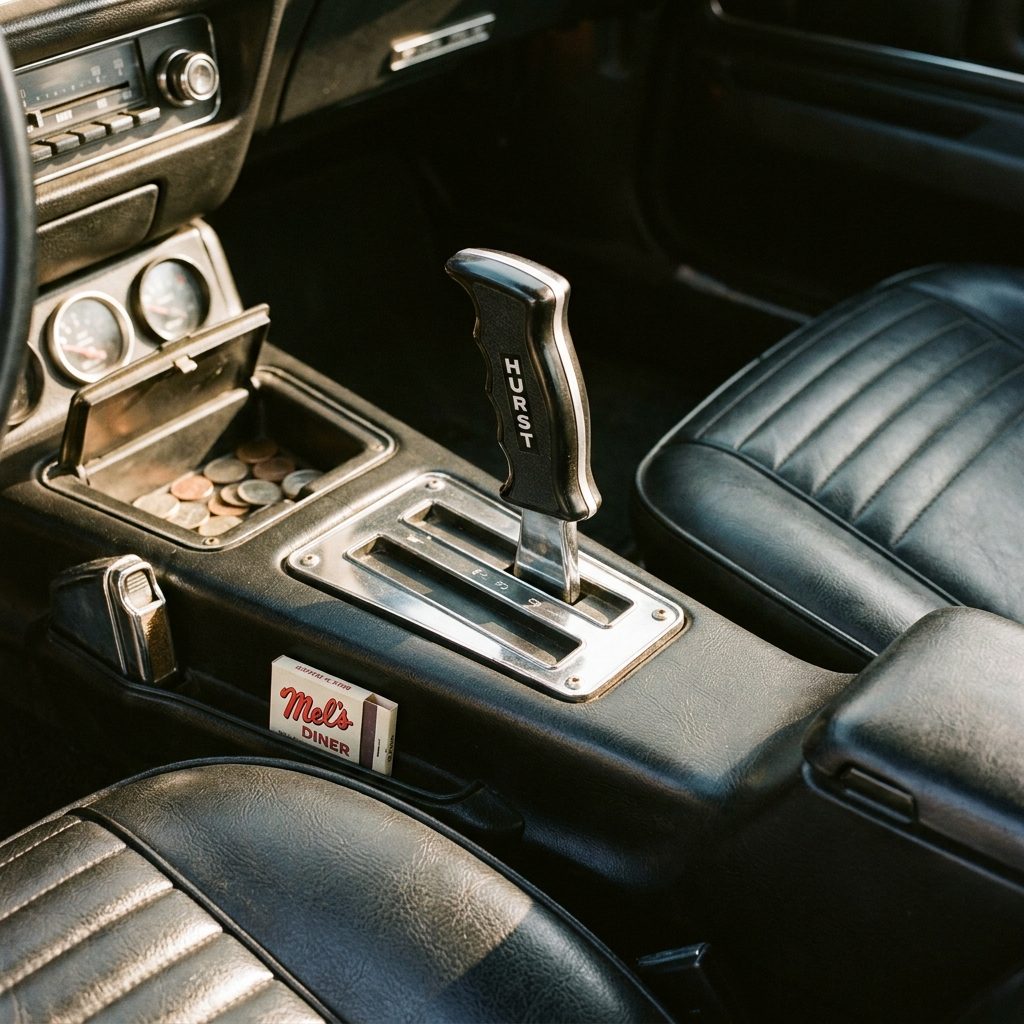
You grabbed it like you meant it. Hurst designed the T-handle so your hand closed around it naturally — like a tool, like something with a purpose beyond selecting a gear ratio.
The throw was mechanical and deliberate. First to second had a satisfying clunk. Second to third, shorter and tighter. The reverse lockout meant you had to lift and pull, a small ritual reminding you that this wasn’t some automatic pretending to let you participate. Rods and levers ran back to a Muncie or Borg-Warner gearbox that did exactly what your right hand told it to do. No slack, no interpretation, no electronic nannying. Direct.
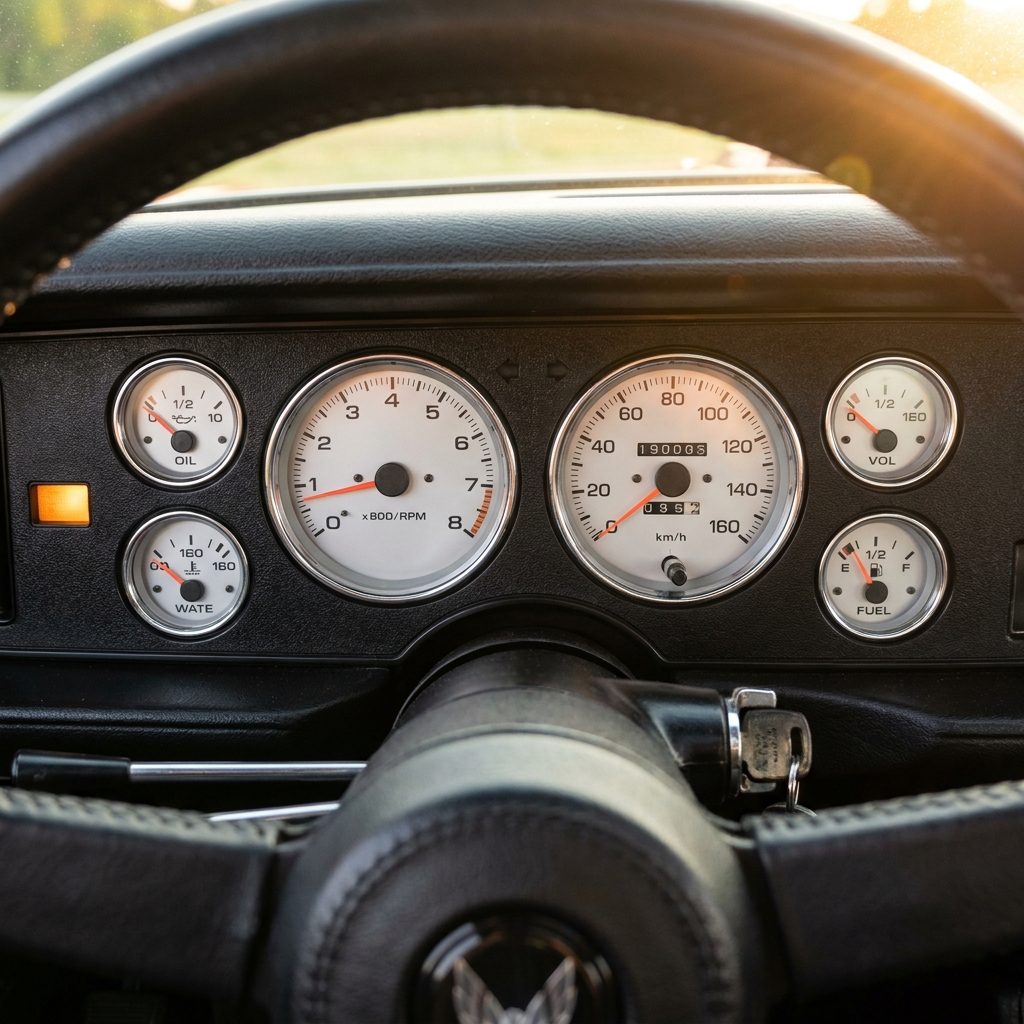
11. The Rally Gauge Cluster That Gave You More Information Than You Probably Needed but Made You Feel Like a Pilot
Would you like to save this?
Six gauges. Oil pressure, water temp, voltage, fuel, tach, speedometer — all real, all connected to actual senders, all telling you something about what the engine was doing right now.
Most cars in the seventies gave you a speedometer, a fuel gauge, and a constellation of idiot lights. The Trans Am treated you like you wanted to know. And once you got used to reading them? You did. You’d notice the oil pressure sag when you idled too long at a light. You’d watch the voltage gauge confirm the alternator was charging after a cold start. It felt like the cockpit of something that expected competence from whoever sat behind that wheel — and honestly, that expectation made you a better driver, or at least a more attentive one.
10. The Rear Spoiler That Served No Aerodynamic Purpose Below 120 MPH but Completed the Silhouette Anyway
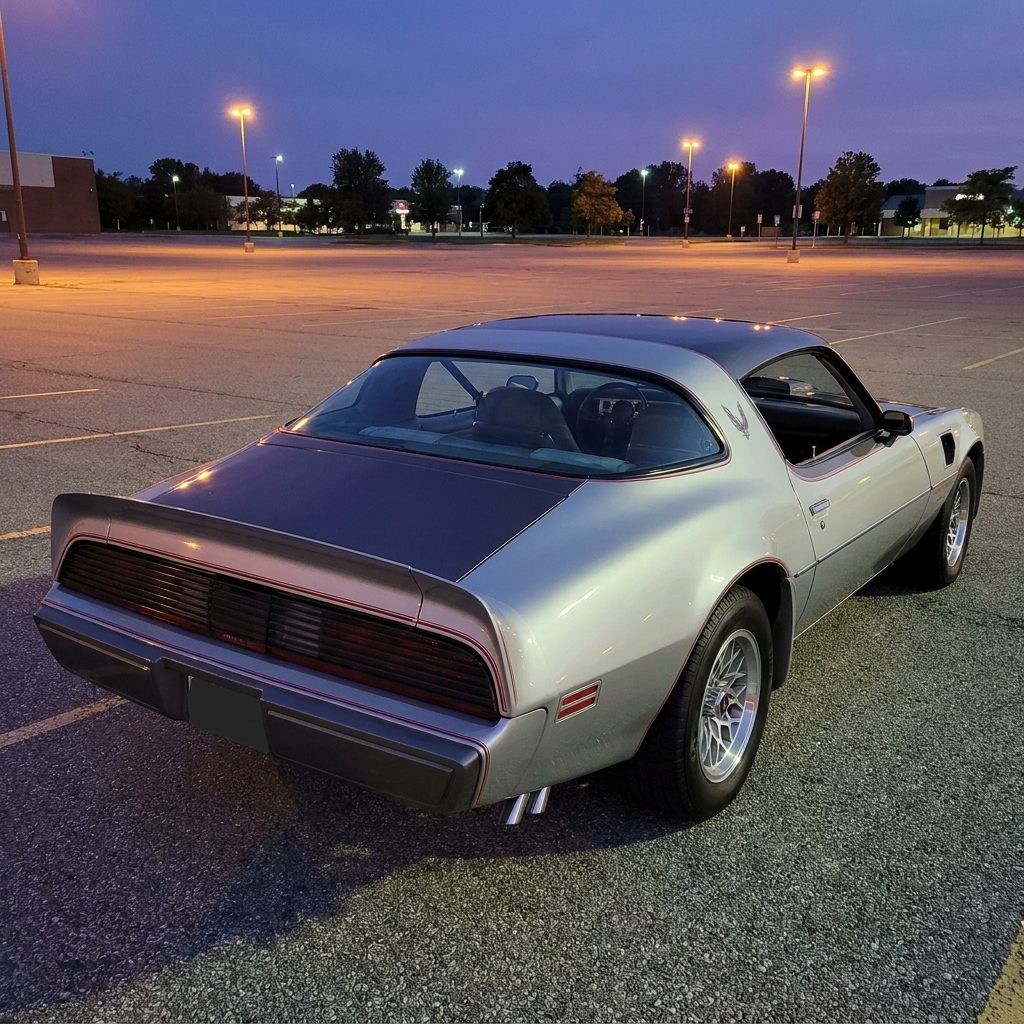
Nobody was hitting 120 on the way to the Dairy Queen. The spoiler wasn’t about downforce — it was about finishing the line. Without it, the Trans Am’s rear deck looked incomplete, a sentence trailing off mid-thought. With it, the whole car made visual sense from nose to tail.
The 1979 version sat up high enough to catch in the rearview mirror, a constant reminder of what you were driving. Functional? Barely, unless you were running flat out at a track day nobody actually attended. But sometimes design has nothing to do with function. Sometimes you just need a shape to feel inevitable, and that little upswept lip across the trunk lid did exactly that.
9. The Shaker Hood Scoop That Breathed Like the Car Was Alive
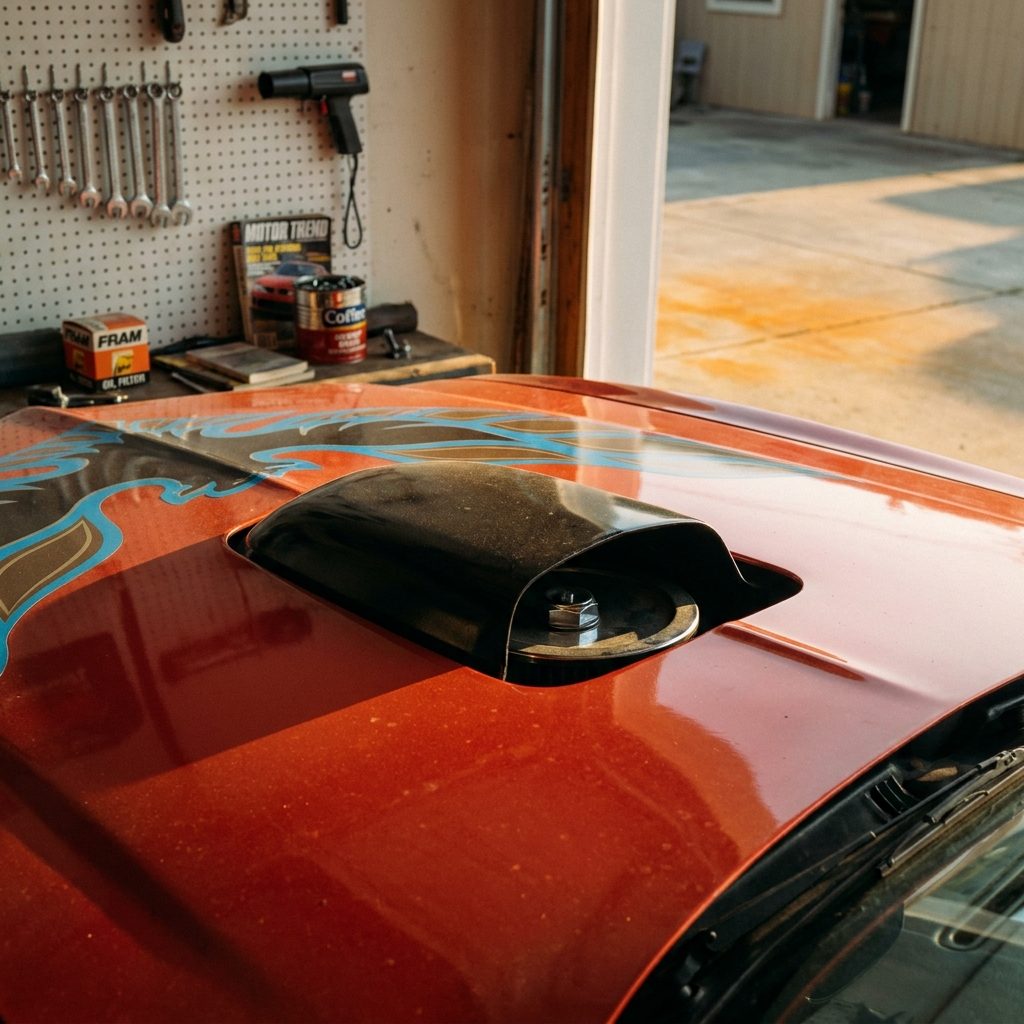
Most hood scoops on 1970s muscle cars were cosmetic. The Trans Am’s shaker was not. It bolted directly to the 455 cubic-inch engine block and moved with the engine under throttle, which meant if you stared at it hard enough from the passenger seat, you could actually watch it tremble at idle. That was not a design flaw. That was the whole point.
At wide-open throttle, the scoop sucked cold air straight into the Quadrajet carburetor without touching the hood. The induction roar it let through was something between a gasp and a growl. Every teenager who ever leaned against the fender of a ’73 Trans Am in a parking lot understood, on a cellular level, that this car was not pretending to be fast.
8. The Way the Back Seat Was Basically a Suggestion
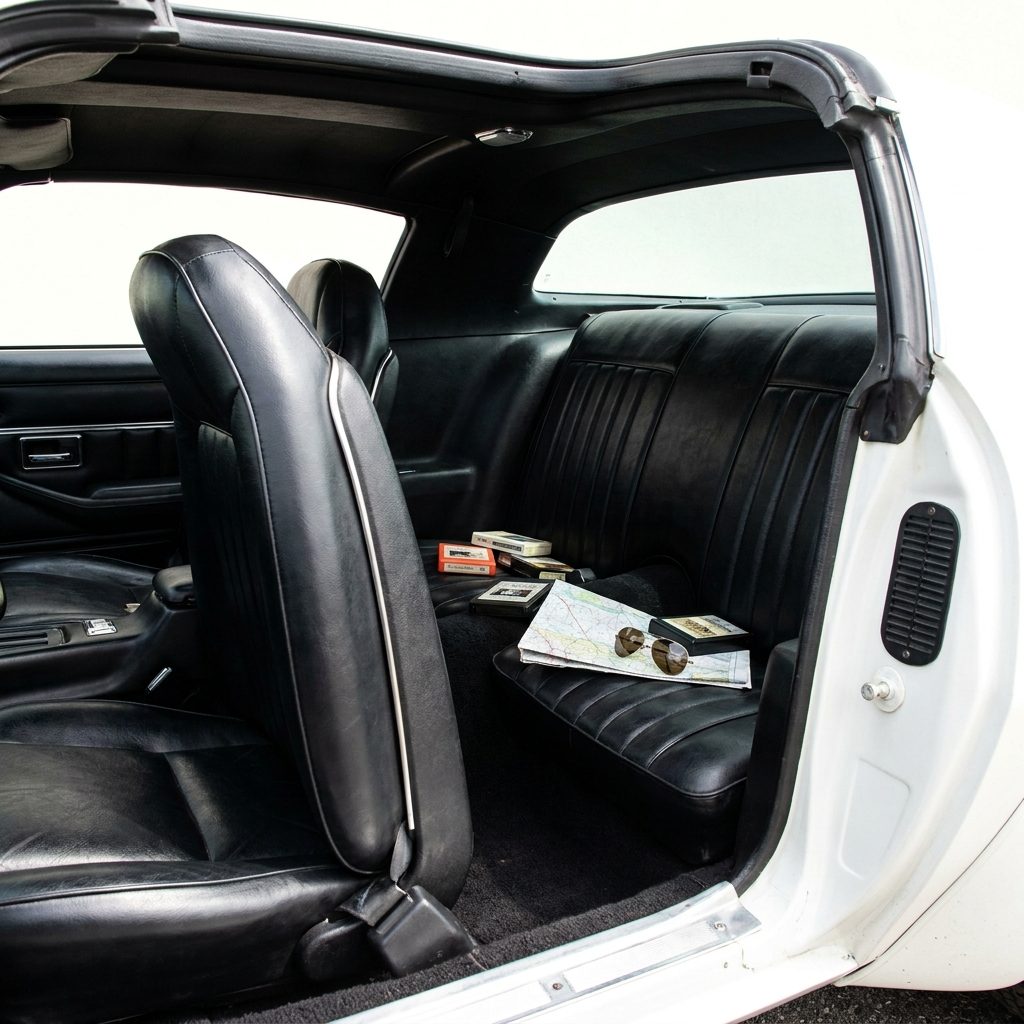
Two adults could sit back there if they didn’t value their knees. Or their dignity. The rear seat existed primarily as a legal classification tool — four seats made it a passenger car for insurance purposes, and the fact that any actual passenger over five-foot-six would spend the ride with their chin on their kneecaps was beside the point.
In practice? Jackets, 8-track tapes, a gym bag, and the occasional friend who lost a coin flip. Storage with upholstery. I’d argue most Trans Am back seats never held a willing human passenger more than a handful of times across the entire life of the car.
7. The 10th Anniversary Edition That Proved Pontiac Knew Exactly What It Had
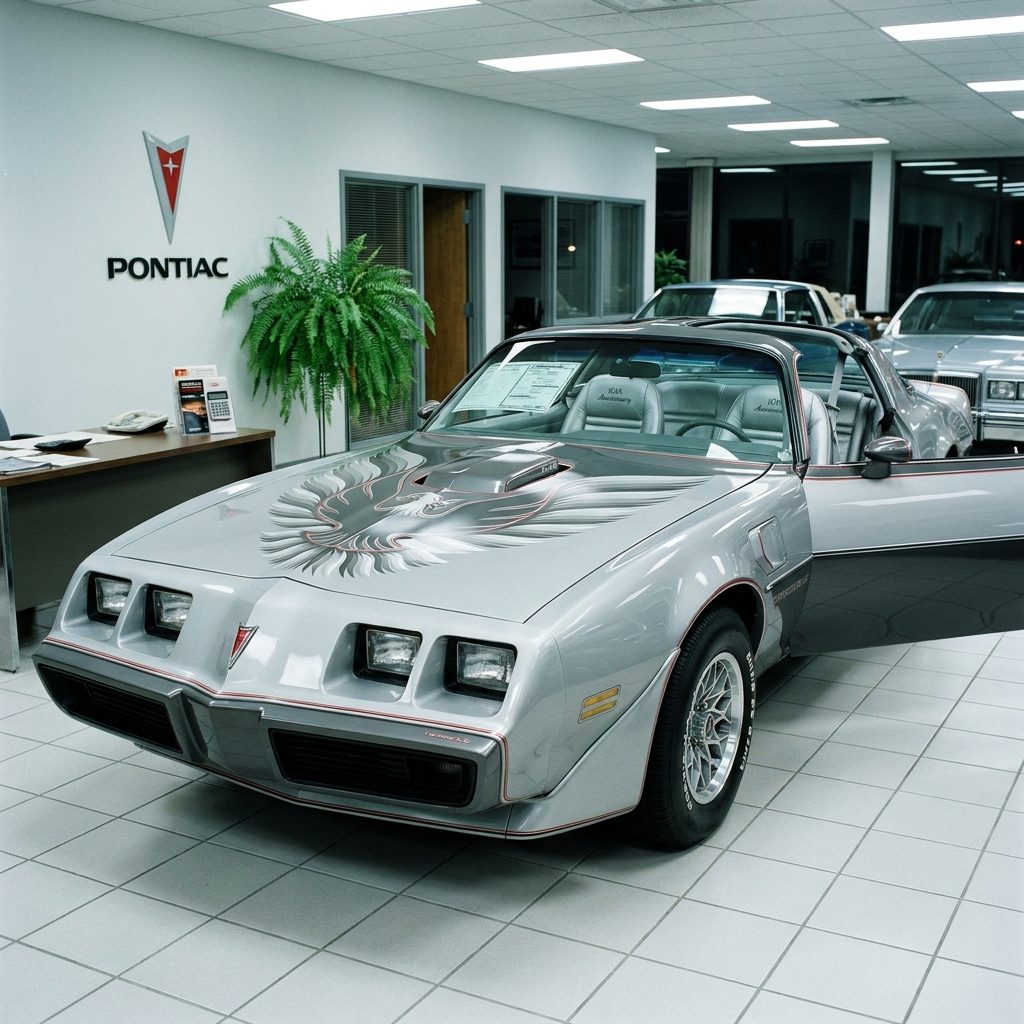
Silver over charcoal, a red pinstripe separating the two tones, silver leather interior, silver Firebird on the hood. Every one came with the 403 Olds V8 and a Turbo 400 automatic, because by 1979 the emissions stranglehold meant the big Pontiac mills were gone.
Didn’t matter. The 10th Anniversary car was about presence, not quarter-mile slips. Pontiac stepped back, looked at what the Trans Am had become across a decade, and decided to build a monument to it. The silver-and-gray scheme read more sophisticated than the Bandit black — more grown-up, less outlaw, the Trans Am dressed for dinner instead of a jailbreak. And the restraint worked. Some things get better when you stop shouting.
Dealers marked them up well over sticker. People paid it without flinching.
6. The Black-and-Gold Paint Scheme That Made Every Other Car on the Road Look Like It Was Trying Too Hard
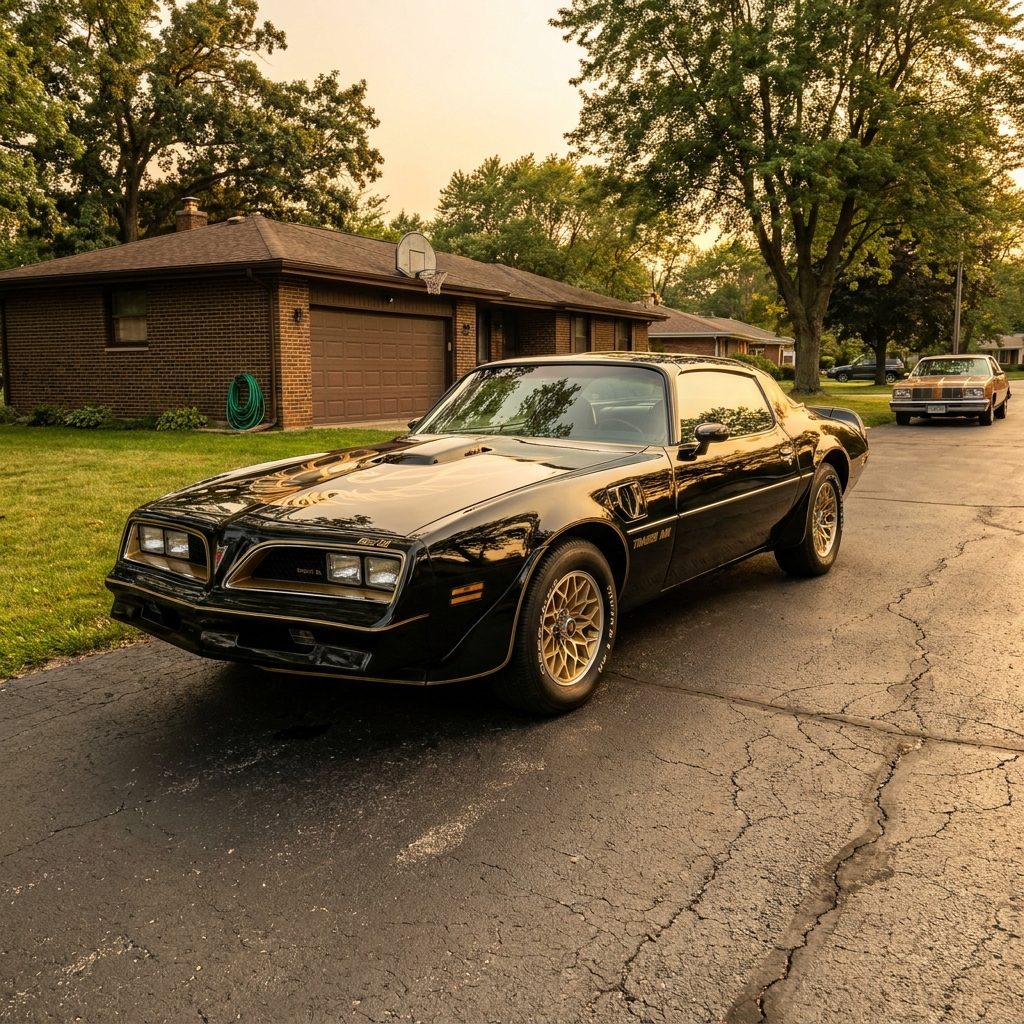
Pontiac offered the Trans Am in white, red, a shade of blue that looked fine enough in the brochure. Nobody cared. The black-and-gold Special Edition turned the car from a fast Pontiac into something with genuine menace behind it.
The gold was not shy. Pinstriping traced every body line, accents marked the wheels and grille, and that enormous Firebird spread across the hood like a family crest for people who never had family crests. Against that deep black paint, the whole package walked a tightrope between theatrical and ridiculous — and somehow landed on the theatrical side every time. It looked expensive, fast, and like it belonged to someone who had stories you probably wanted to hear.
Other muscle cars came in loud colors. Grabber Blue. Plum Crazy. Go Mango. Those were shouts across a crowded bar. The black-and-gold Trans Am was the guy leaning against the wall, saying nothing, while the whole room kept glancing over.
5. The Way Cops Looked at You When You Pulled Up to a Red Light
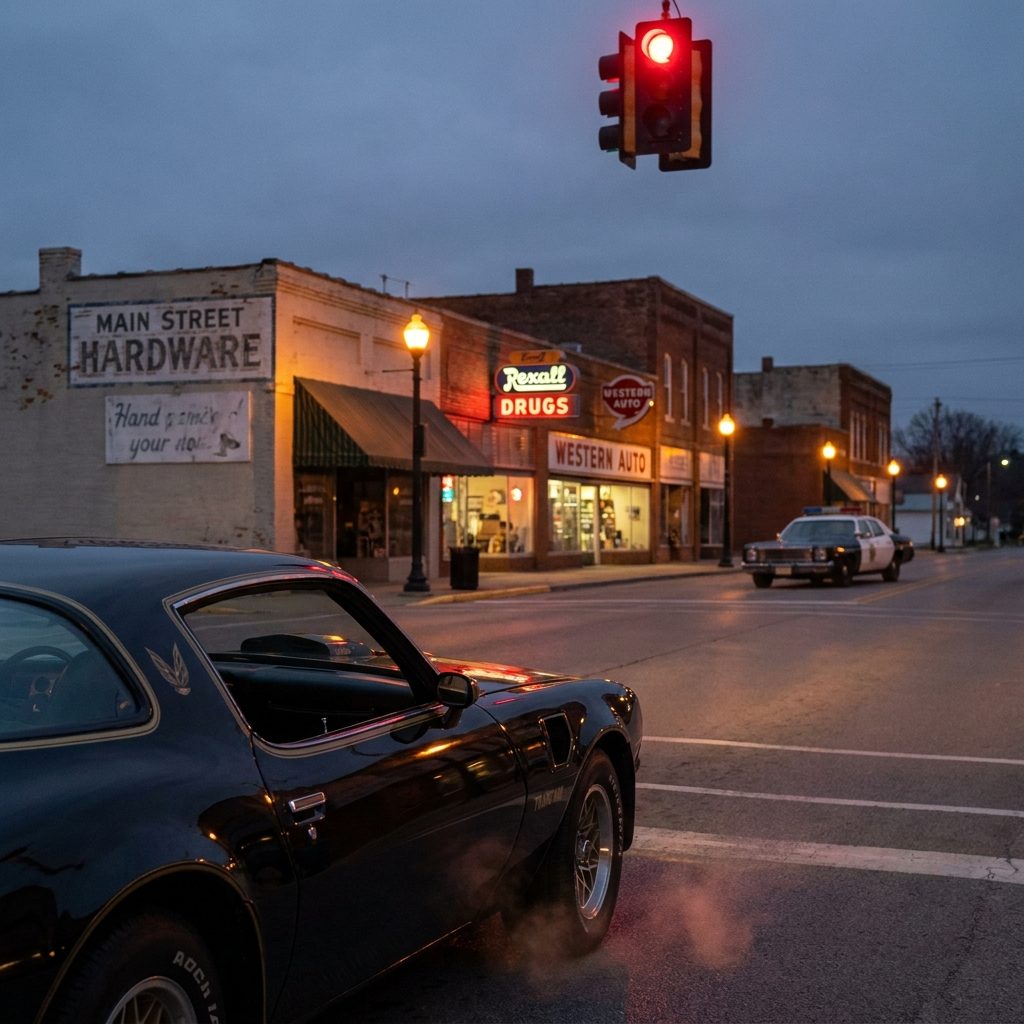
You didn’t even have to be speeding. Doing 24 in a 25, both hands on the wheel, seat belt fastened like a Boy Scout — didn’t matter. The Trans Am pulled patrol cars toward it the way a porch light pulls moths.
Something about the shape communicated trouble. The scooped hood, the low stance, the fact that it sounded like a parole violation even at idle. A cop would ease up alongside at a stoplight and just look. Not reach for the lights. Not wave you over. Just look. That look said I know what that car can do, and I know you know, and we both know what happens the second this light goes green.
Half the time? Nothing happened. You drove the limit. The cop turned off down some side street. But both of you knew the conversation had taken place.
4. The Exhaust Note at 3,000 RPM That You Could Feel in Your Sternum
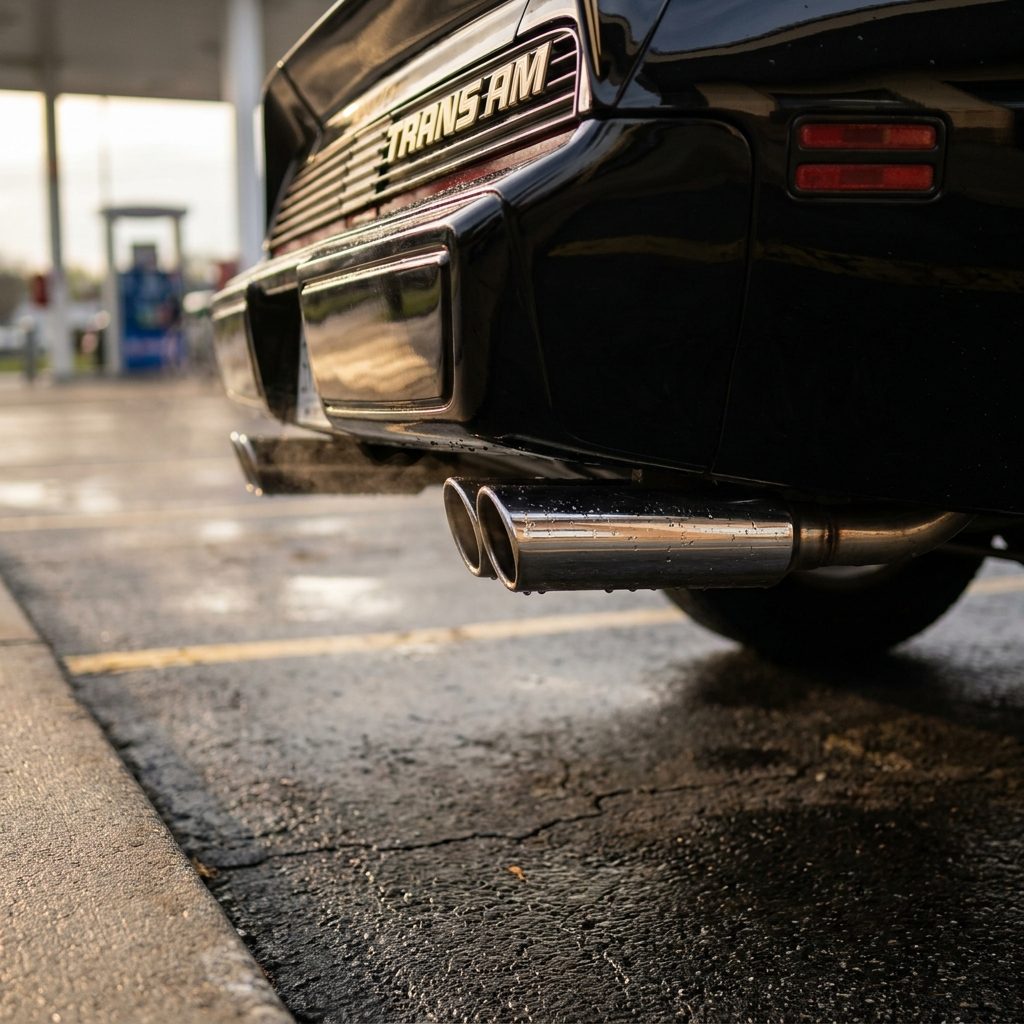
The Pontiac 400 and 455 made their power numbers on paper, but they built their reputation through the tailpipes. Not the high-pitched scream of a small-block wound tight to redline — something deeper. A baritone rumble sitting in the lower registers, vibrating through the floorboards and the seat frame and straight into your chest.
At idle, it burbled and popped like something barely tamed. At 3,000 RPM under load on a two-lane with the windows cracked, it became almost musical — a deep rhythmic pulse the whole car seemed to produce, not just the engine but the body panels, the frame, the air around it. You heard a Trans Am before you saw one. And you felt it before you heard it.
3. The Snowflake Wheels That Replaced the Honeycombs and Somehow Looked Even Better
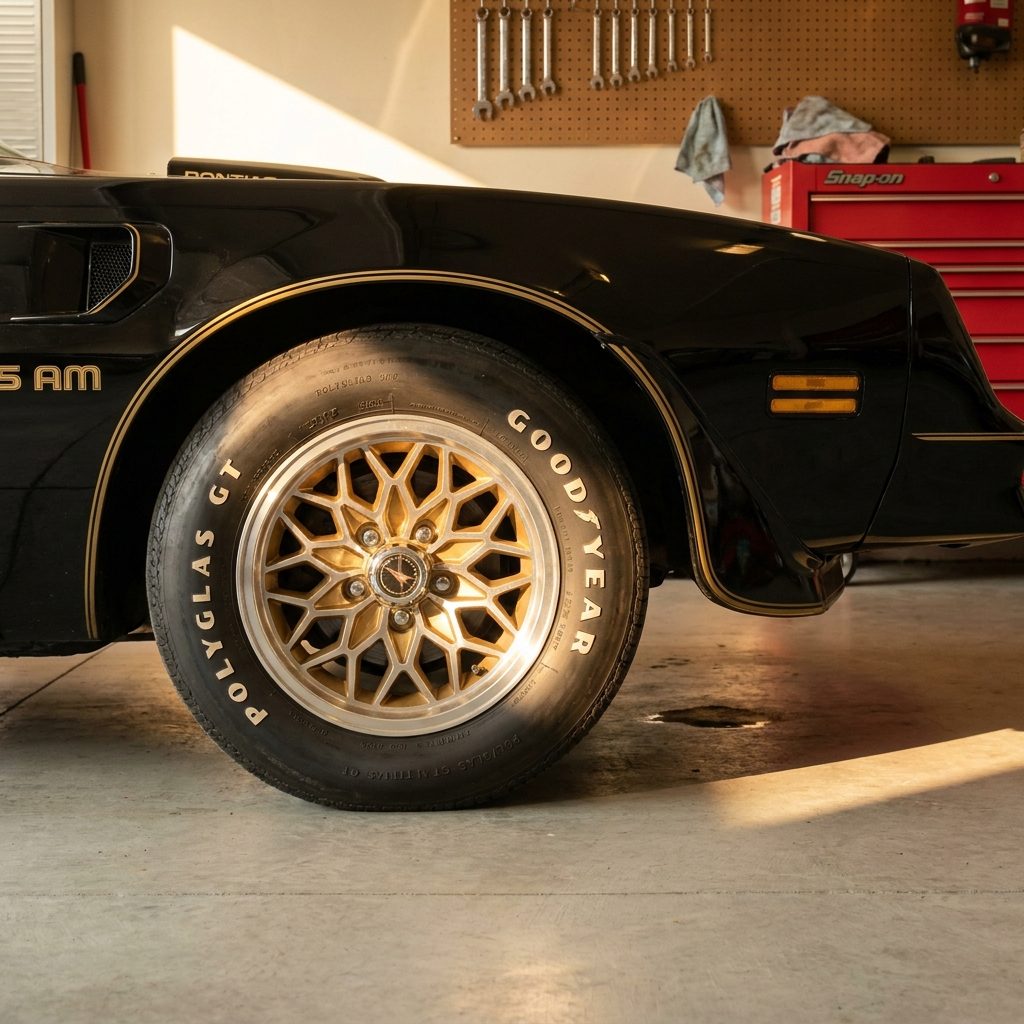
The honeycomb wheels were good. Real good. But when Pontiac swapped in the turbine-style Snowflakes for 1977, something shifted — the design was busier, more intricate, with a pattern that looked halfway between rally-car functional and jewelry-store ornamental.
Finished in gold on the Special Edition cars, they caught light from angles the honeycombs never could. Sitting still, a Trans Am on Snowflakes already looked like it was doing 40. The raised-white-letter Goodyear Polyglas GTs wrapped around them sealed the deal. And you could — people absolutely did — spend an unreasonable Saturday morning with a rag and a can of polish, working each spoke like it owed them money. Nobody called that obsessive. Everybody understood.
2. The CB Radio Mounted Under the Dash Because Smokey Was Everywhere and You Needed Intel
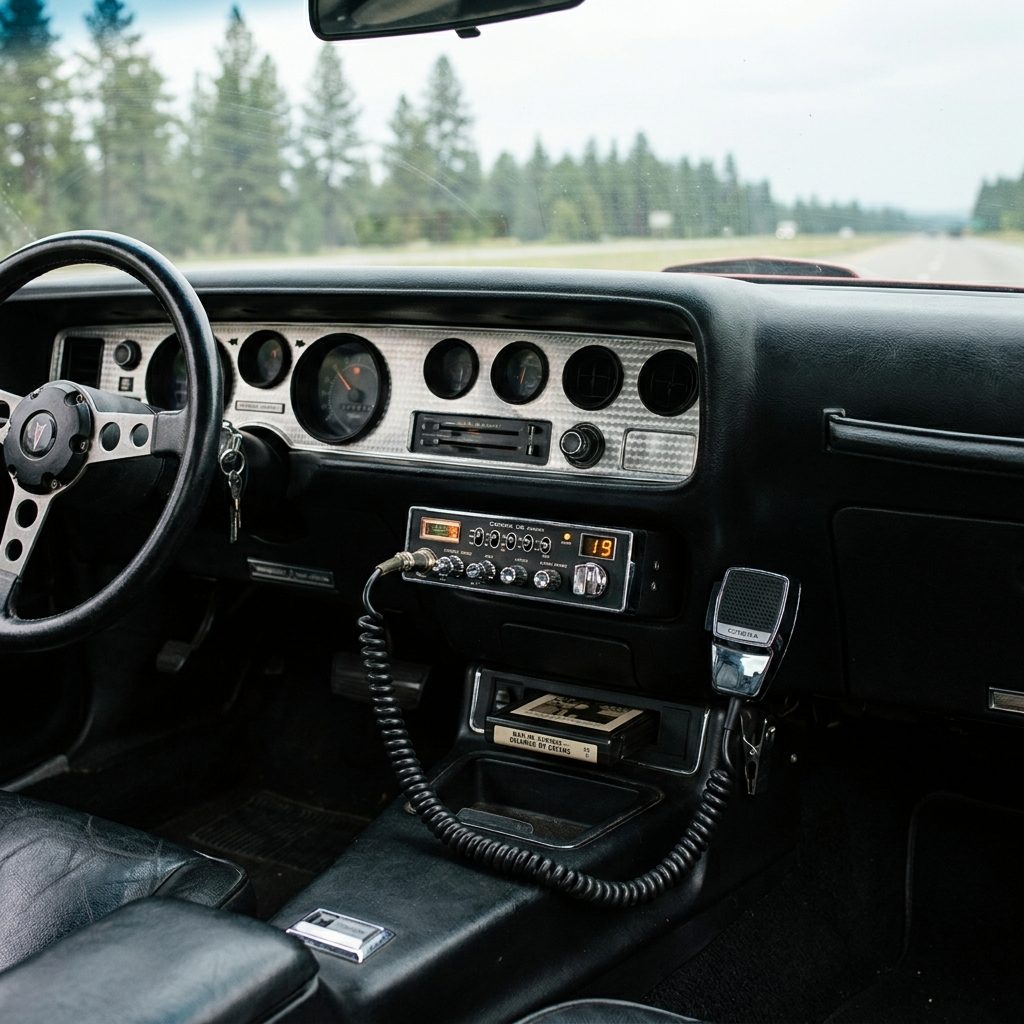
After 1977, half the Trans Ams on the road had a CB radio bolted under the dash. The other half belonged to owners still saving up for one.
The Bandit ran a CB. Reason enough. But the practical appeal was genuine — the Trans Am attracted speed traps like a magnet, and a CB tuned to channel 19 gave you a fighting chance. Truckers called out Smokeys by mile marker. You’d hear the crackle, the drawl, the heads-up about a bear in the median at exit 42, and you’d ease off the gas like you’d received a dispatch from the near future.
The chrome mic hung from a clip near the console. Some guys gave themselves handles. Most just listened. Every highway run became a low-stakes intelligence operation, which felt about right for a car that looked like a getaway vehicle even on a milk run to the Winn-Dixie.
1. The Way It Looked in a High-School Parking Lot, Sitting Among the Pintos and the Chevettes Like a Wolf Among Sheep
Would you like to save this?
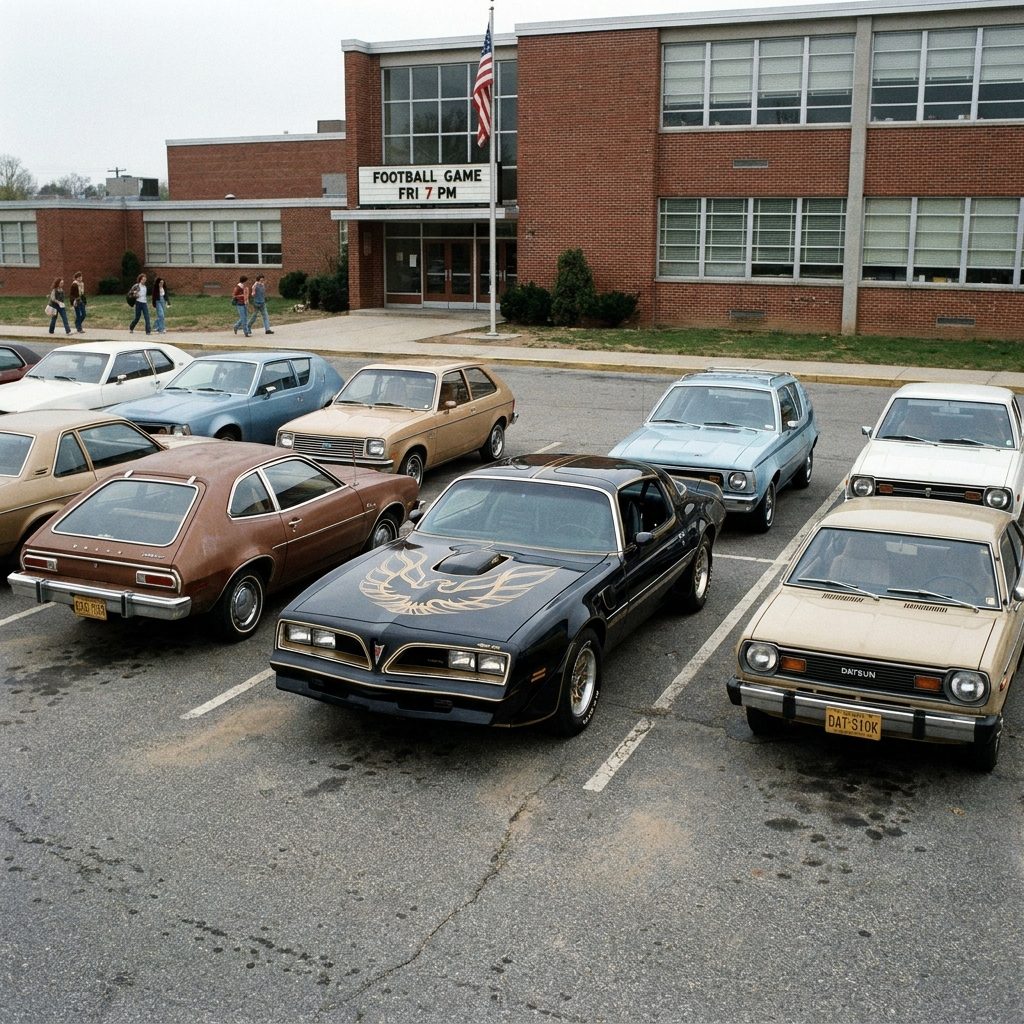
Context is everything. A Trans Am on a highway was fast. A Trans Am at a cruise night was cool. But a Trans Am in a high-school parking lot — surrounded by the cars most teenagers actually drove — that was a different animal. A glitch in the scenery.
The Pintos and Chevettes and Gremlins sat there doing honest, unglamorous work: ferrying kids from home to school and back without stranding them. They were transportation, full stop. The Trans Am was not transportation. It sat lower than everything around it, wider, blacker, louder even with the key in somebody’s pocket. You could pick it out from a third-floor hallway window without squinting.
Everyone knew whose car it was.
In a decade when most teenagers drove hand-me-down sedans with vinyl bench seats and AM-only radios, showing up in a Trans Am did all your talking for you. Like walking into homeroom in a leather jacket — except the jacket had a 400-cubic-inch V8 and gold pinstriping. You didn’t need to say a word, and frankly, anything you said would’ve been redundant.