
Would you like to save this?
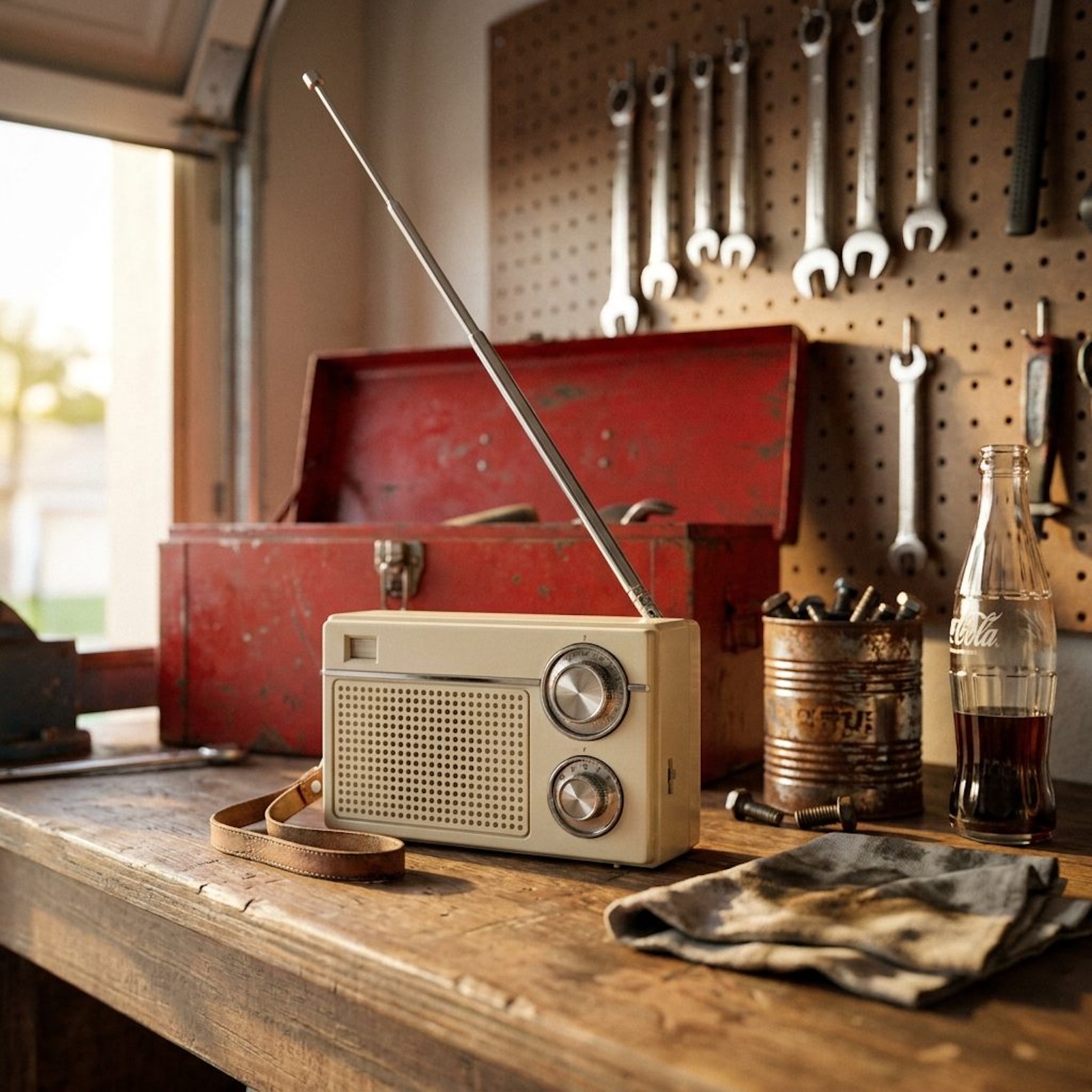
The coffee had already gone cold on the workbench by the time Dad opened the garage and began arranging the tools. You knew the whole day was gone as soon as the wrenches came out. No cartoons, no baseball—just motor oil and a transistor radio carrying the ballgame beneath the clatter of tools.
You were the helper, which meant flashlight duty, wrong-wrench duty, and plenty of standing around until Dad needed something immediately. These 26 memories will put you back on that cold concrete floor and in the driveway beside it, waiting for the moment when the engine finally sounded right.
26. Dad Declaring It Was Garage Day
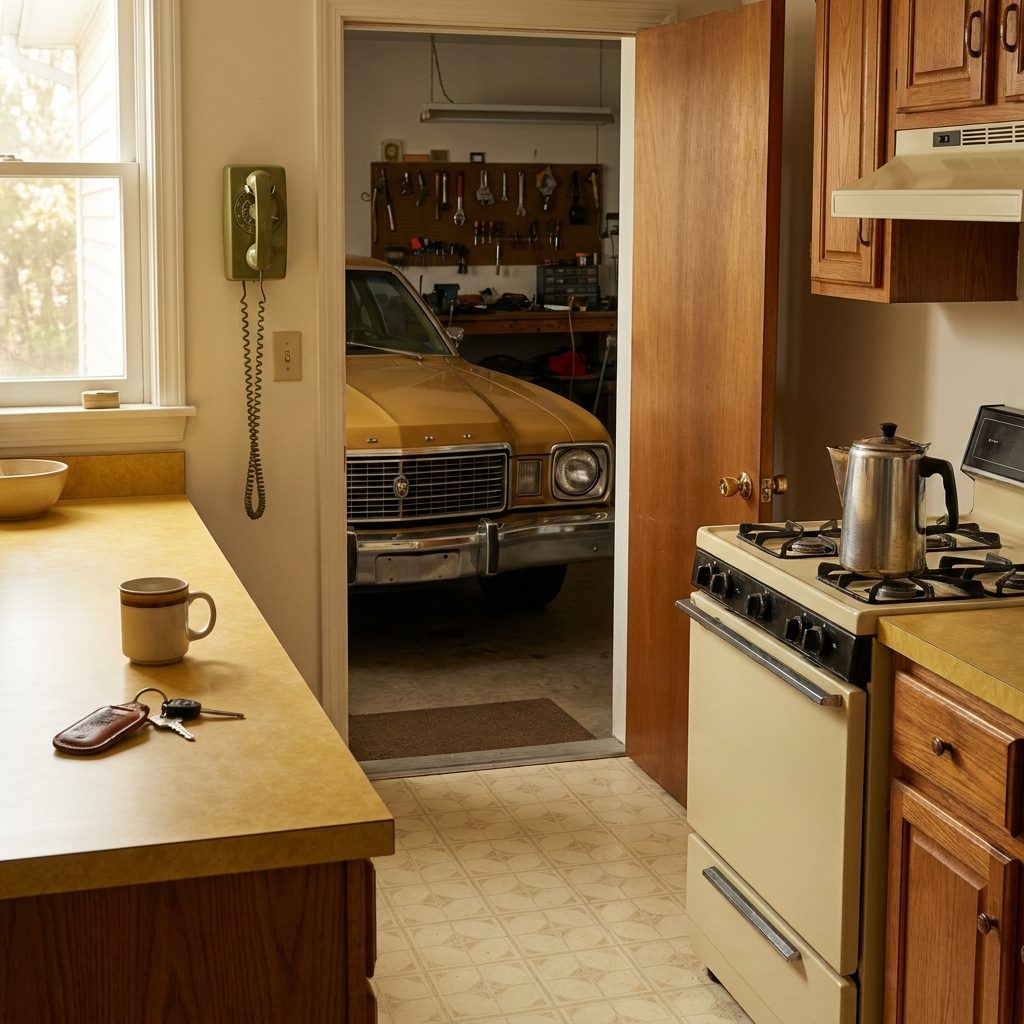
You could feel it coming at breakfast—Dad chewing slower than usual, staring through the window as though the car had personally insulted him. Then came the line every son knew by heart: “This morning, you’re gonna give me a hand in the garage.”
That settled it. No use asking about the game or the bike ride down to the creek. The car had developed a noise, leak, or smell, and Dad intended to find it before dinner.
25. Opening the Heavy Garage Door
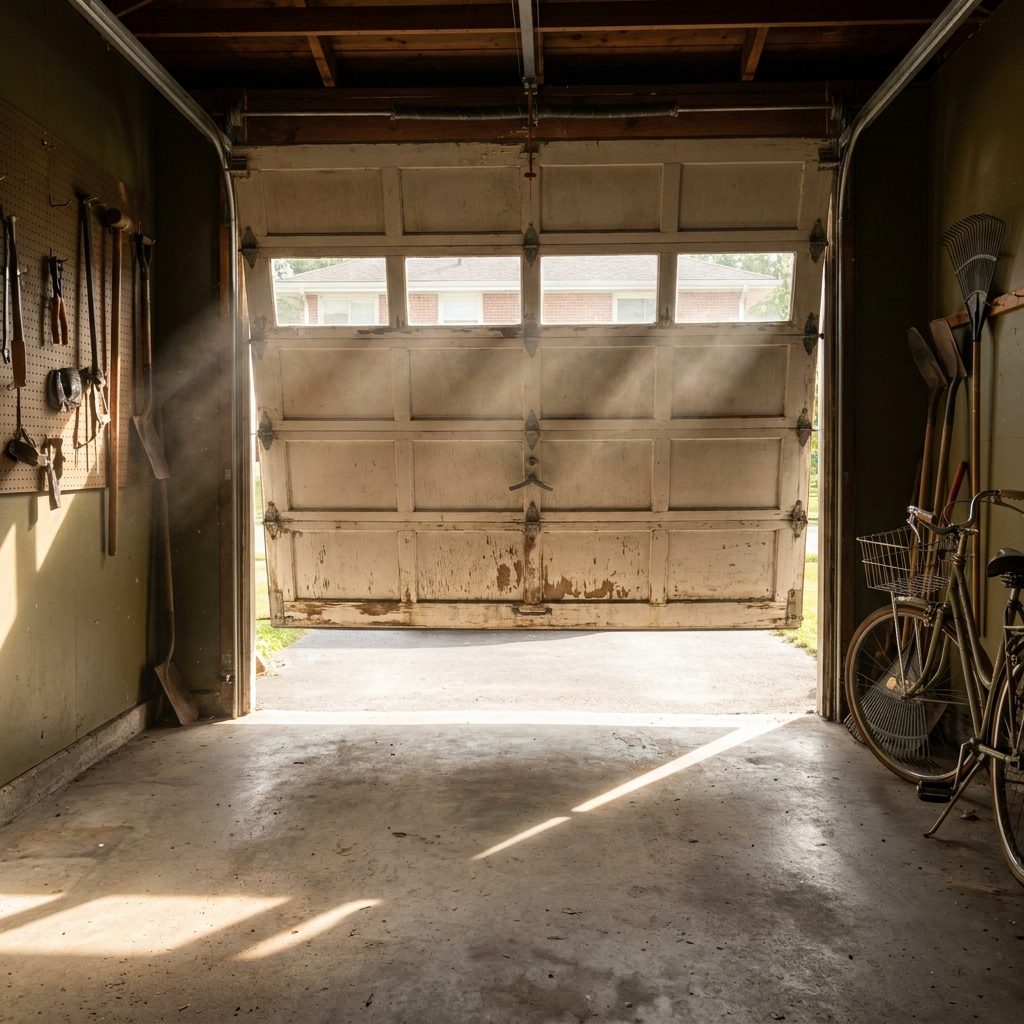
Before our garage had a power opener, the door was a two-hand job. You grabbed the handle at the bottom, planted your feet, and heaved. It resisted for the first foot, then suddenly grew light and shot up the tracks with a rattle that echoed down the street.
Cold air rushed in and daylight spread across the concrete. There sat the car, waiting like a patient that did not yet know how long the examination would take.
24. Backing the Car Partway Into the Driveway
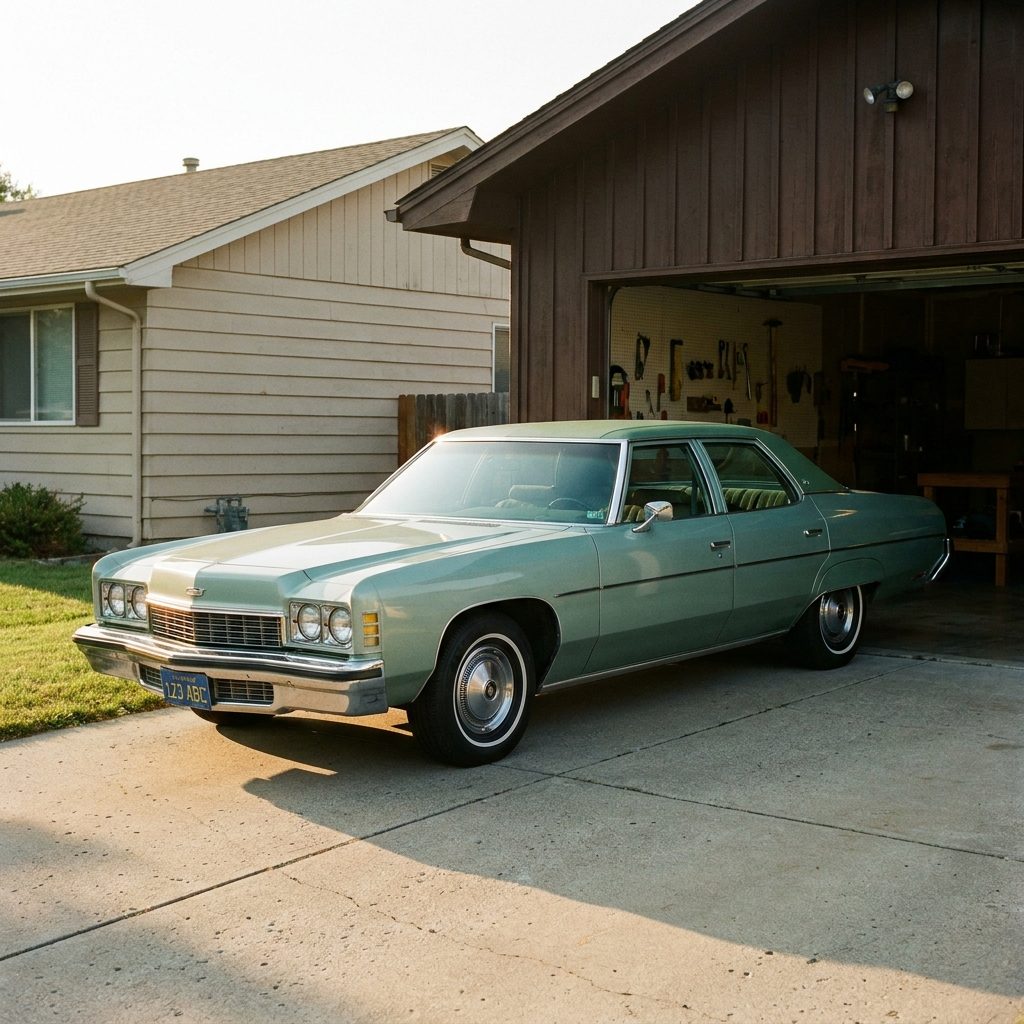
Sometimes Dad backed the car halfway out, leaving the engine bay near the open doorway where the daylight was strongest. He moved slowly, one arm across the seat and his head turned toward the narrow path between the door frame and everything stacked along the walls.
You stood off to the side under strict instructions not to touch anything yet. The engine ticked as it cooled, and the smell of warm metal announced that the real work was about to begin.
23. Opening the Heavy Metal Toolbox
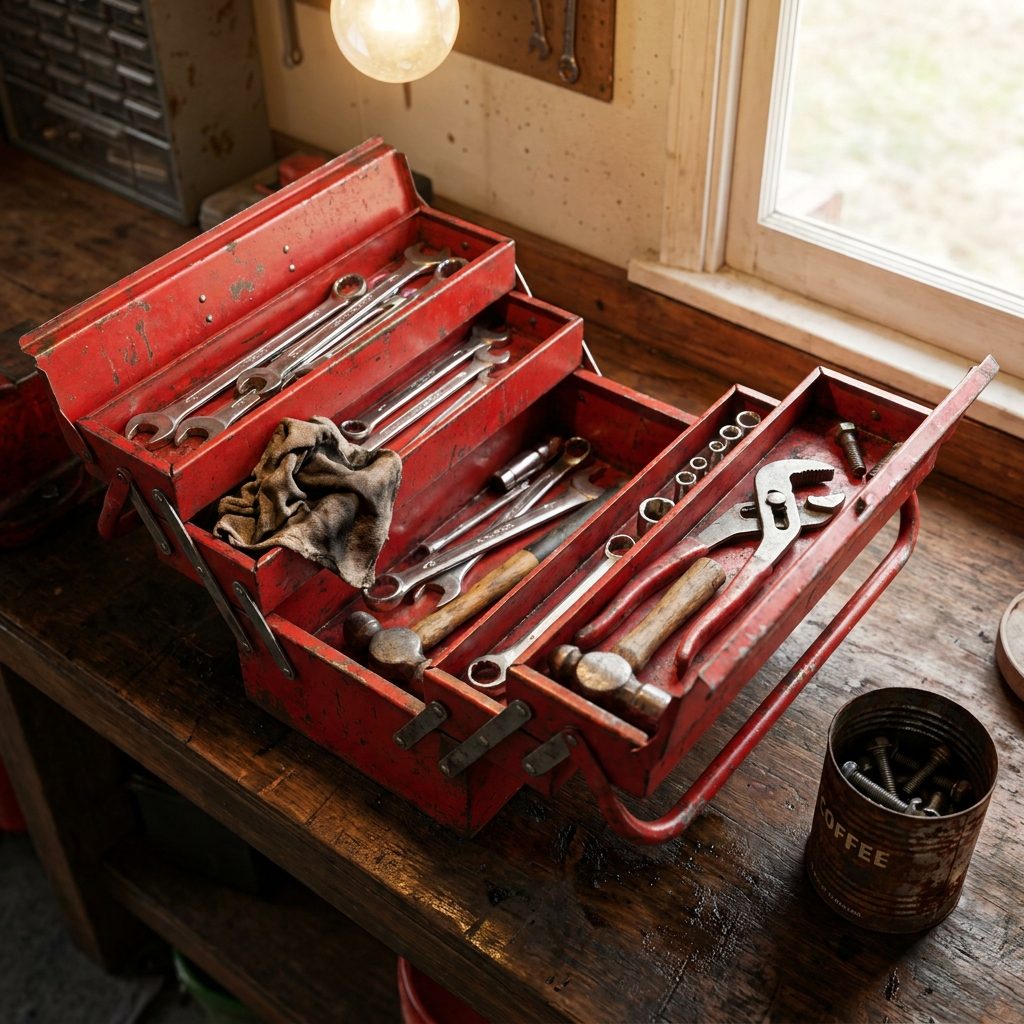
That toolbox had heft. Red paint had chipped down to bare metal at the corners, one latch always stuck, and the trays fanned outward on cantilevered arms when Dad opened the lid.
Every tool had a place, and he knew each one by feel. You learned quickly that returning a socket to the wrong compartment created a problem that would not be forgotten by the next Saturday.
The whole box smelled like cold steel, penetrating oil, and old machinery.
22. Crawling Under the Car With Dad
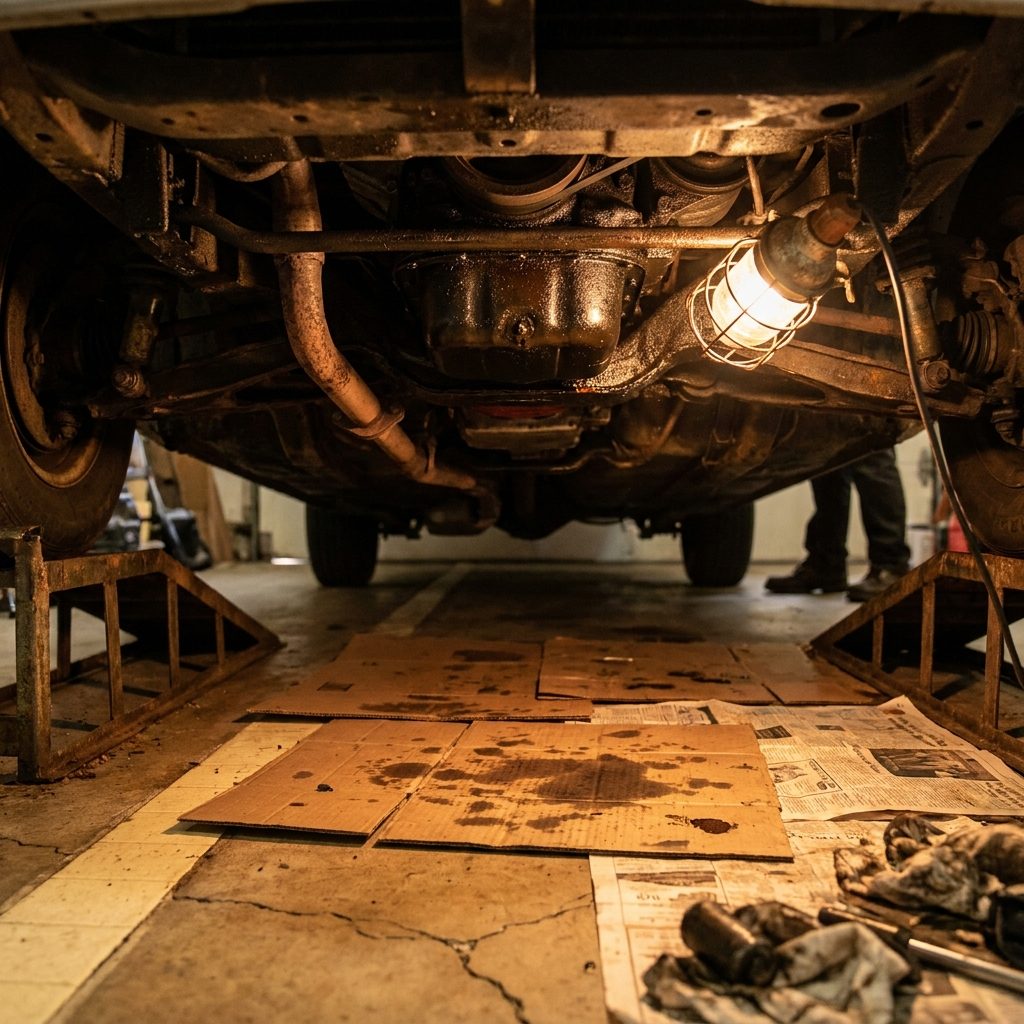
No creeper at our house for years. Dad flattened an appliance box and pushed it beneath the car so the cold concrete would not press directly into his back. The cardboard already carried stains from earlier oil changes, arranged like a record of every job it had survived.
If the car had to be raised, Dad made sure it was firmly supported before either of us slid underneath. Then the world became very small: Dad, the work light, the greasy underside of the family car, and you lying beside him while he pointed things out.
“That’s the drain plug. That’s the filter. Don’t touch the exhaust—it’s still hot.”
You lay shoulder to shoulder on old cardboard, closer than you usually sat anywhere else. Conversation came more easily when both of you were staring at machinery instead of each other.
21. Handing Dad the Wrong Wrench
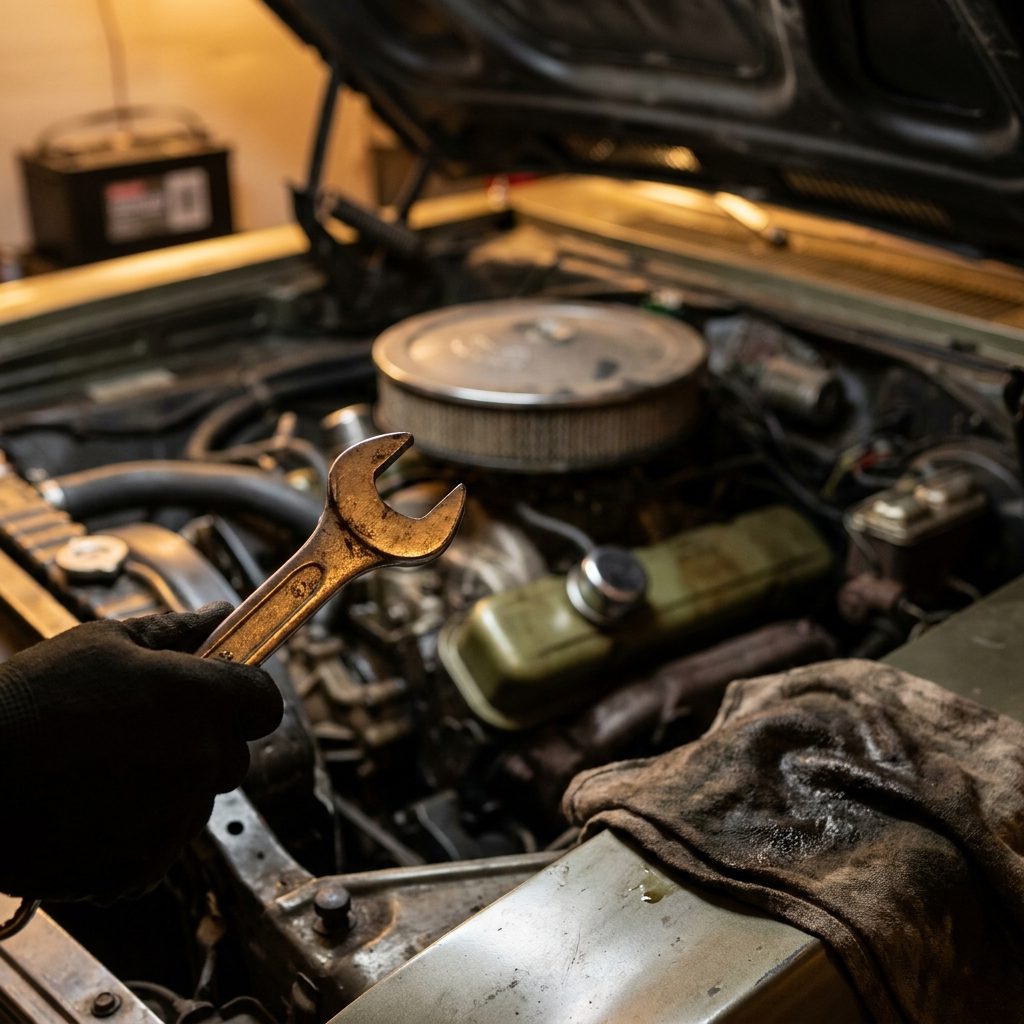
“Gimme the half-inch.” Simple enough. You selected the shiniest wrench in the tray and passed it beneath the car. Silence followed. Then his empty hand emerged, fingers opening and closing.
“That’s nine-sixteenths. Half. Inch.”
You never forgot the sizes you got wrong. Seven-sixteenths, one-half, nine-sixteenths, five-eighths—Dad called them out like a batting order. Most of the family car still spoke in SAE sizes. Metric belonged mainly to the neighbor’s import and to a separate corner of the toolbox, though that distinction gradually blurred.
Guessing was a habit Dad broke quickly. Reading the tiny stamped markings became the only acceptable method, because a socket slightly too large could slip, damage the fastener, and produce a new vocabulary lesson from under the car.
20. Holding the Flashlight Steady
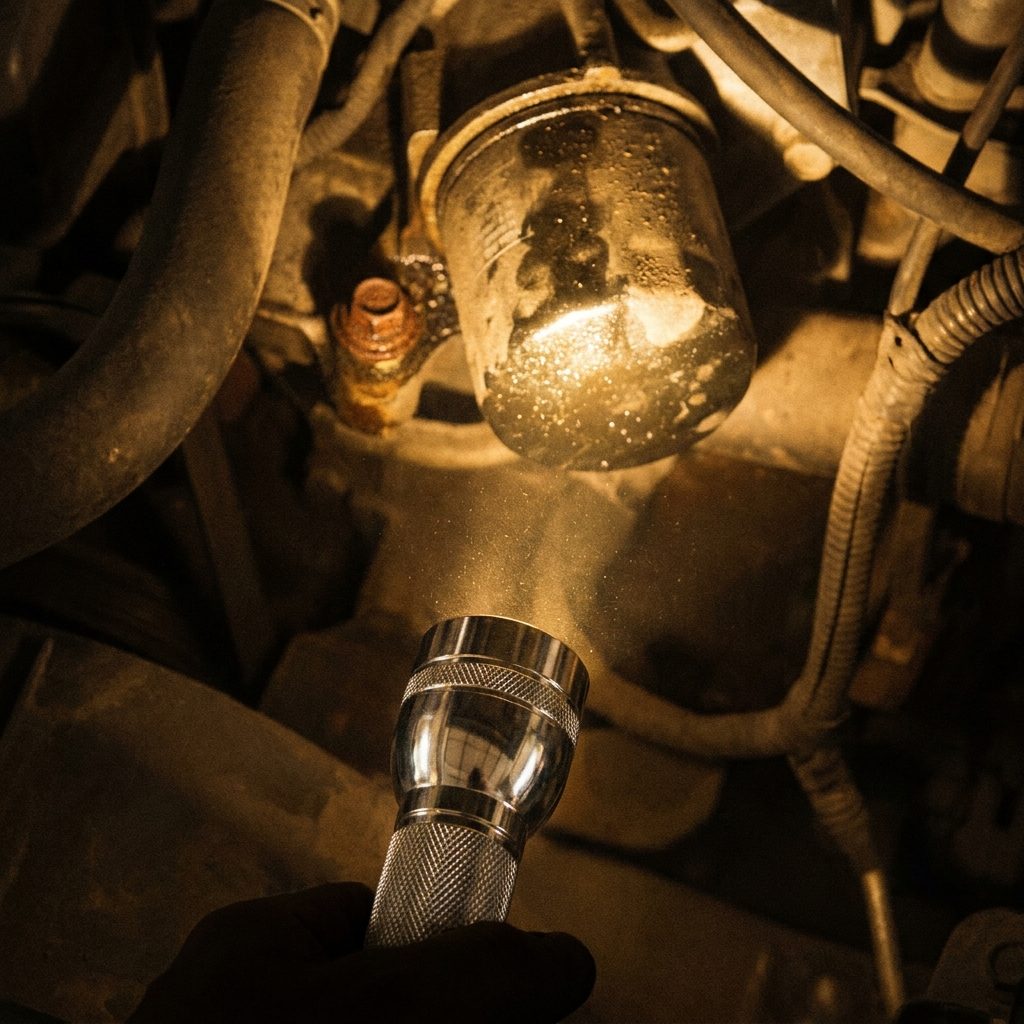
This was the hardest job a boy could be handed.
“Hold the light right there. No. There. THERE.”
The moment your arm tired or your grip shifted, the beam wandered away from the bolt and the entire operation stopped. You stared at one greasy spot until your eyes crossed, determined not to be the reason Dad grumbled again.
It was a small assignment, but it mattered. Dad could not see without you, and for once you were not merely standing in the way.
19. Changing the Oil and Wrestling With the Filter
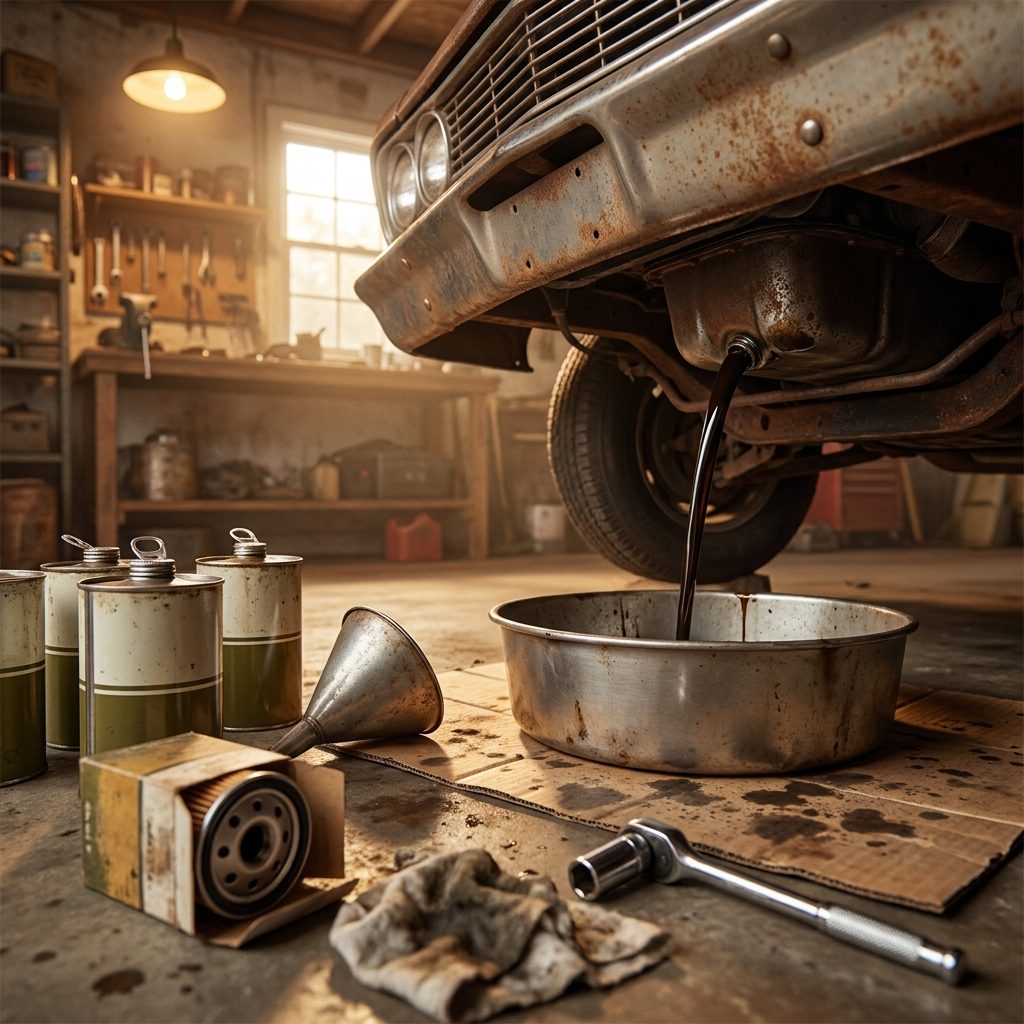
Dad loosened the drain plug, then pulled his hand away as the dark stream poured into the pan. You watched the used oil run out hot and thin, smelling like the inside of the engine itself.
The old filter was supposed to loosen with the filter wrench and spin off by hand. The wrench was rarely where anyone remembered putting it, so Dad tried a rag and both hands. When that failed, he occasionally resorted to the screwdriver-through-the-filter trick—a messy act of garage desperation rather than the elegant solution anyone would recommend.
Oil ran down his arm while you repositioned the drain pan. Before installing the replacement, he wiped a little fresh oil around the new gasket and spun the filter on by hand.
Fresh oil waited nearby in cans or bottles, depending on the year and what had been on sale. Dad set out the funnel, opened each container, and poured slowly enough to produce that hollow glug from inside the engine.
Then came the dipstick: wipe it, insert it, pull it again, and hold it toward the light. When Dad finally said, “Okay, start her up,” you listened together for leaks and unfamiliar sounds.
18. Checking the Radiator and Every Other Fluid
Would you like to save this?
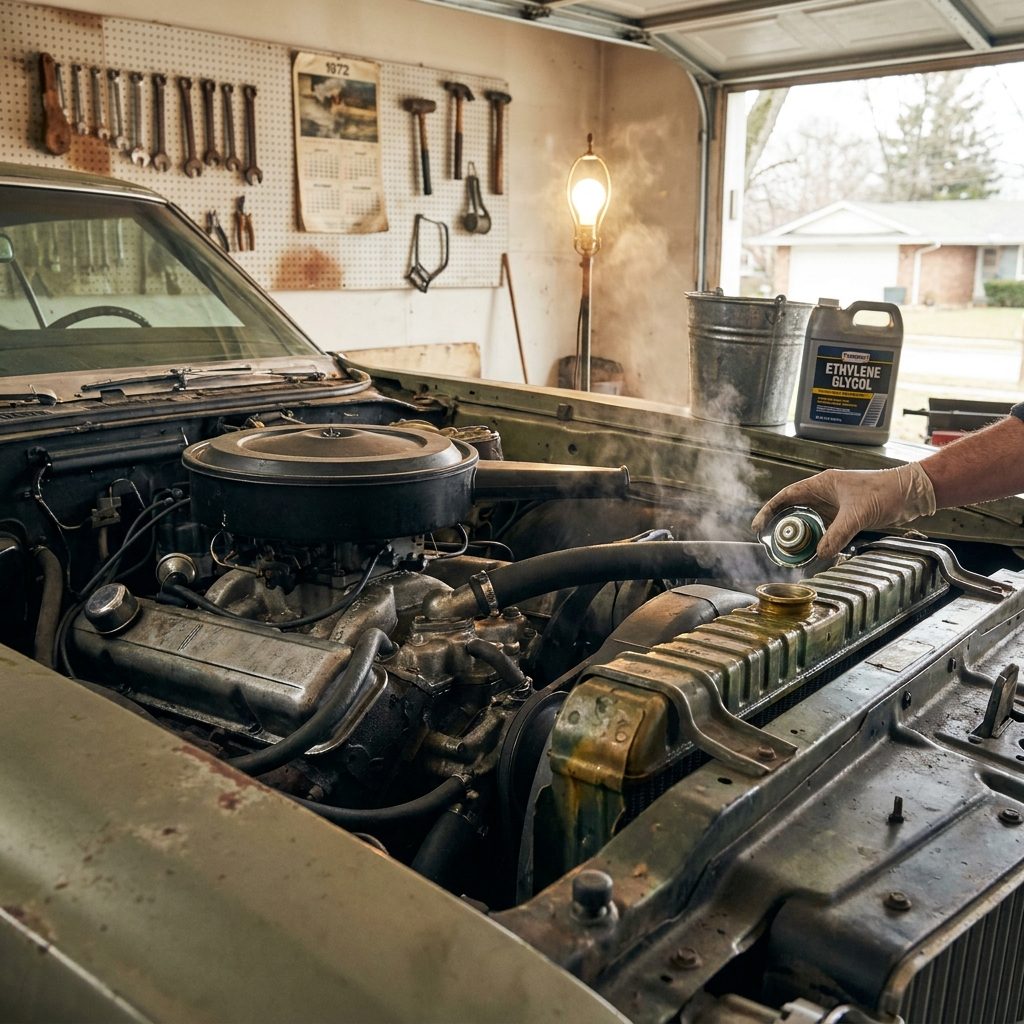
One rule arrived with no room for negotiation: never remove a radiator cap from a hot engine. Dad had heard enough stories about pressurized coolant to repeat the warning every time your hand went anywhere near it.
Only after the engine had cooled would he press down, turn the cap, and inspect the level. If it needed attention, he used the coolant appropriate for the car rather than assuming every system wanted the same mixture.
Then came the rest: transmission fluid, power steering, brake fluid, and washer fluid where equipped. Dad pulled the dipsticks, opened the reservoirs, and studied each level as though the fluids carried private information. He also took one last look at the oil he had just changed to confirm that the fresh fill had settled where it belonged.
The blue washer fluid smelled like cold weather and cheap perfume. The other liquids had different colors, textures, and checking procedures, all of which Dad appeared to carry in his head.
17. Cleaning and Tightening the Battery Connections
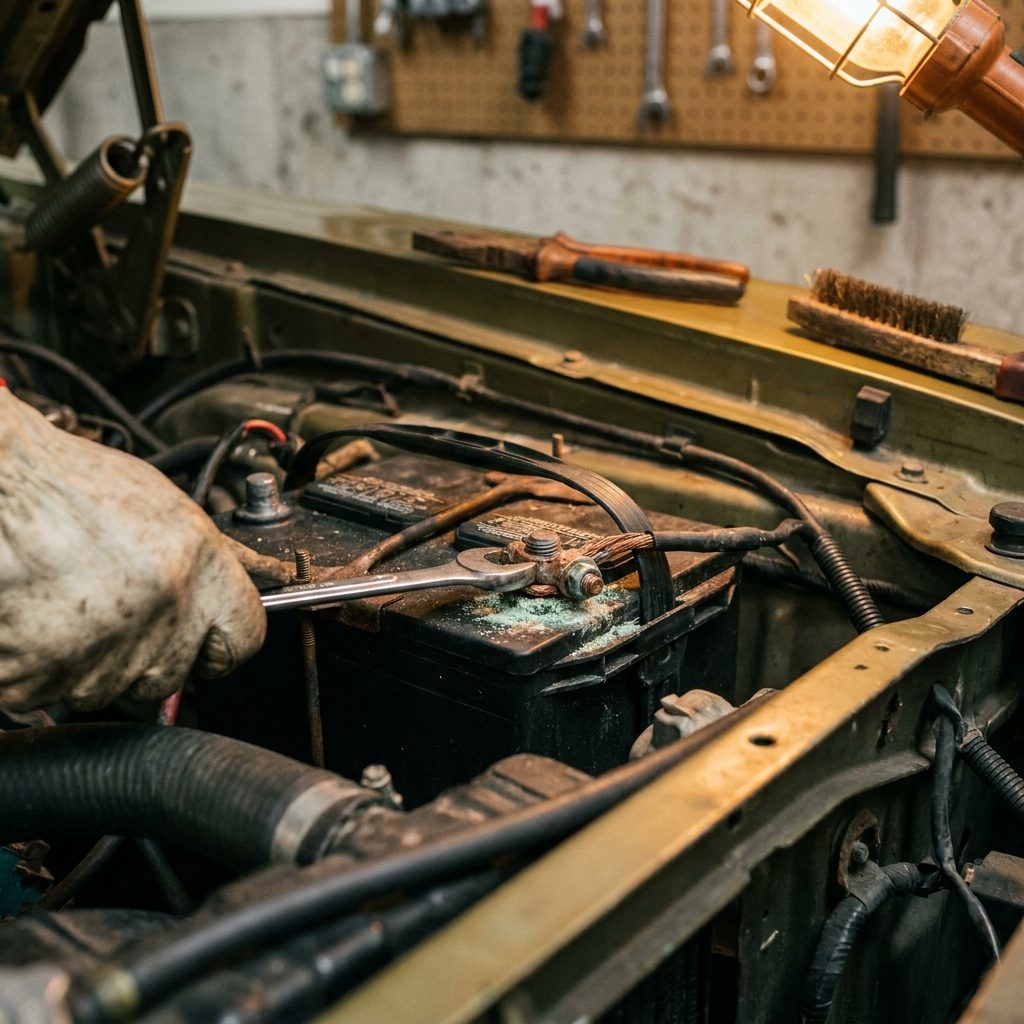
Before replacing anything, Dad grabbed each battery cable and checked for movement. A loose or corroded connection could produce slow cranking, intermittent power, or complete silence when the key turned.
He reminded you never to bridge the battery terminals with a metal tool. You did not fully understand the electrical consequences, but his tone ensured that you remembered the rule.
The baking soda fizzing around the corrosion was the best part. Dad disconnected the battery safely, neutralized the acidic residue, and scrubbed away the crusty buildup until the posts and cable ends were clean.
Once everything had been reassembled and tightened, he protected the outside of the connections against future corrosion. When he turned the key later, the starter often sounded stronger simply because electricity could finally travel through clean metal again.
16. Reading and Gapping the Spark Plugs
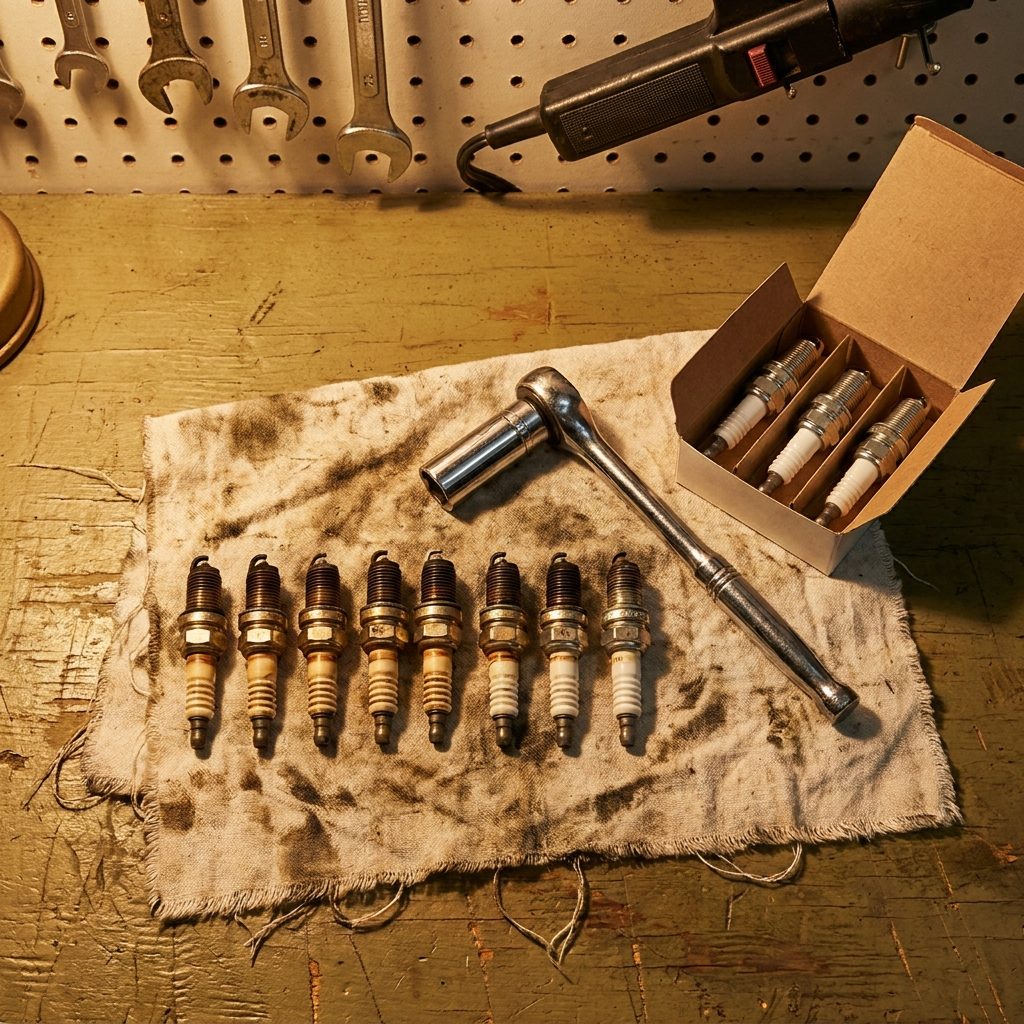
On a V8, eight spark plugs emerged and were arranged by cylinder on the workbench. Dad studied each one for clues. Heavy black deposits could suggest a rich mixture or incomplete combustion. Oil pointed toward a different problem. An unusually pale or overheated-looking plug called for a closer inspection.
He kept the plugs in order and handled the wires carefully, because crossing two of them could make a healthy engine run as though several internal parts had begun arguing.
The gap gauge was a little metal disc with a ramped edge, polished smooth from years in the toolbox. Dad slid it between the electrodes and felt for the correct drag.
If the gap was wrong, he adjusted the ground electrode carefully and checked it again. The required measurement came from the plug specification or repair manual, even when Dad recited it as though the number had been assigned to him at birth.
15. Adjusting the Carburetor Until the Idle Settled Down
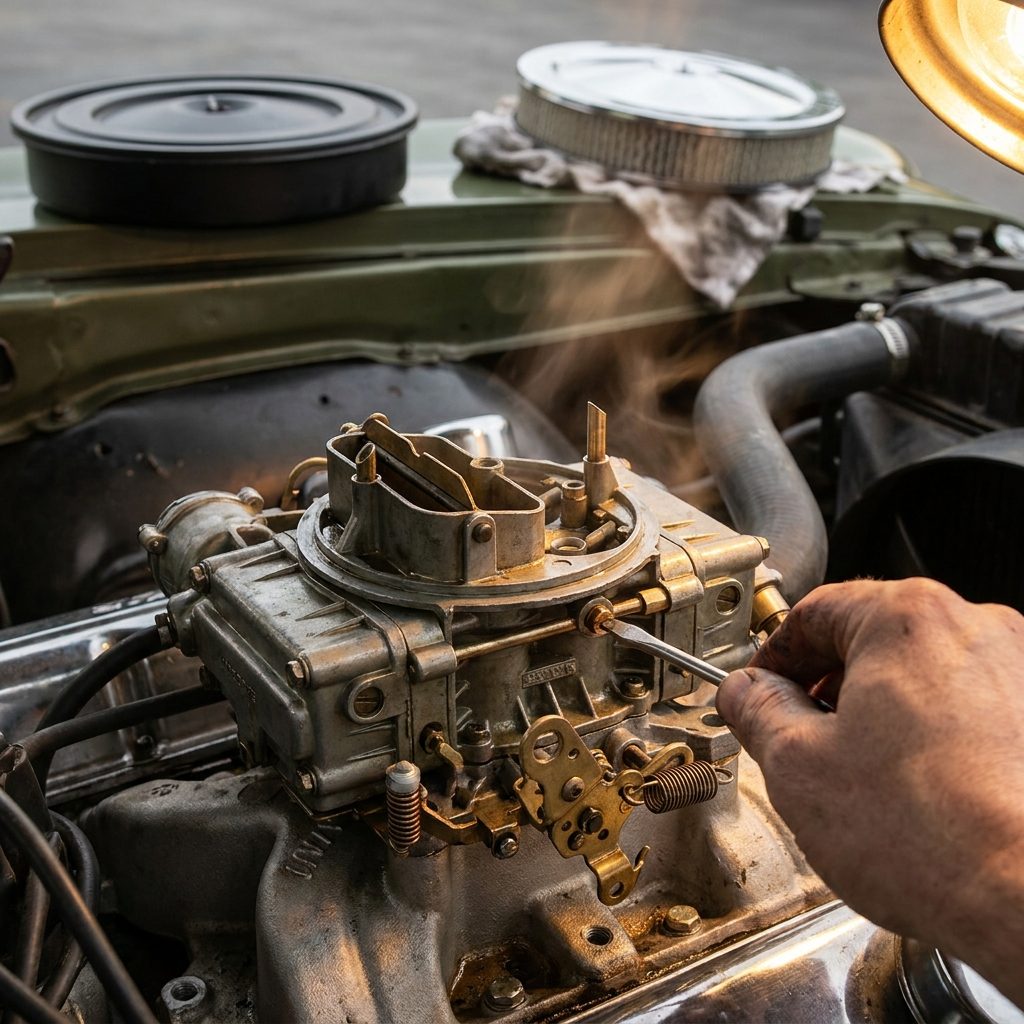
This was the part of the afternoon that seemed to depend on equal amounts of knowledge, patience, and hearing. With the engine running and the air cleaner removed, Dad leaned over the fender with a screwdriver and listened.
A carburetor could have separate adjustments for idle speed and idle mixture, and knowing which screw to turn mattered. Dad worked in small increments, waiting after each change while the engine rose, stumbled, or settled into a steadier rhythm.
His ear helped him hear improvement, but the correct setting depended on specifications, engine condition, ignition timing, and sometimes a tachometer or vacuum gauge. Still, when the idle finally stopped hunting, Dad tilted his head once and knew he was close.
14. Checking the Fan Belt With His Thumb
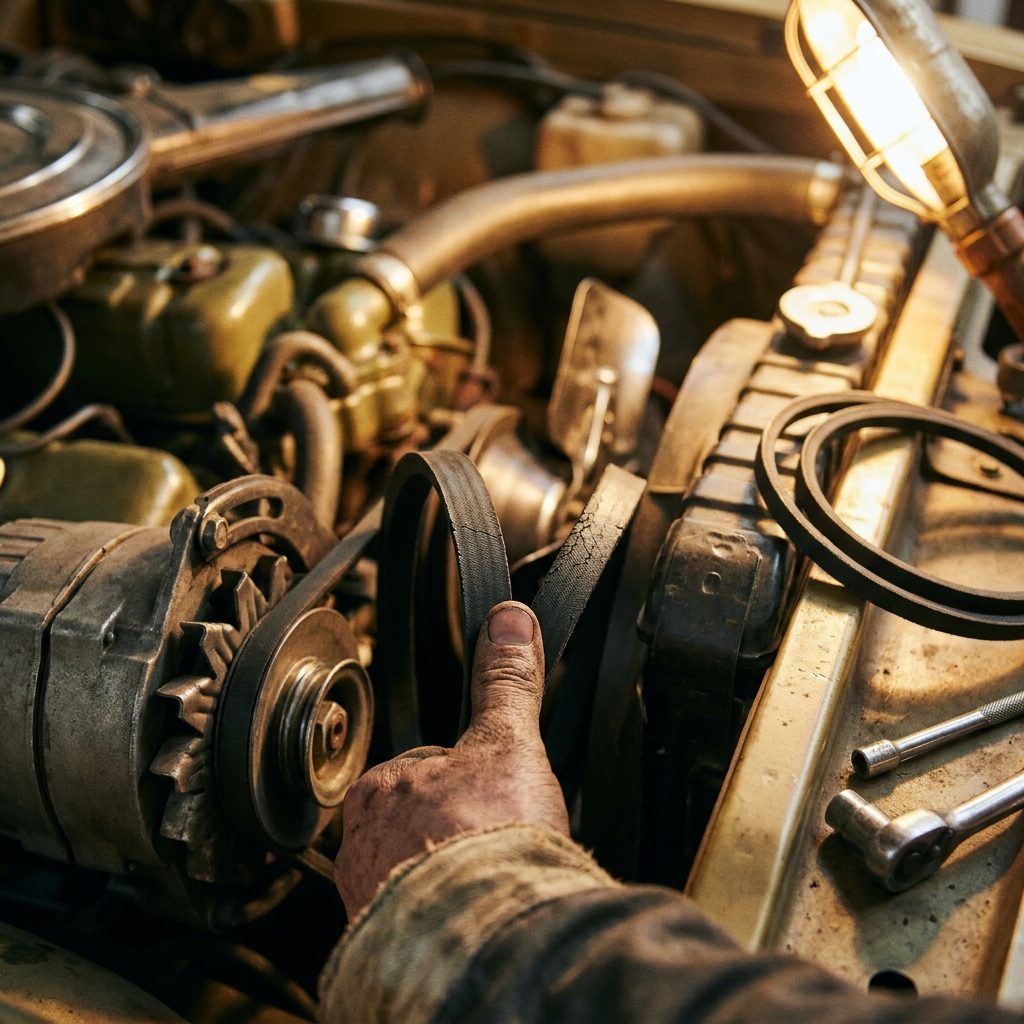
Dad pressed the belt near the middle of its longest span and watched how far it moved. The correct amount depended on the car and belt arrangement, but he knew how that particular one was supposed to feel.
Too tight could strain accessory bearings. Too loose produced the cold-morning squeal that told the whole street someone had started the car.
He also inspected the belt for cracking, glazing, and frayed edges. A spare hung from the pegboard because Dad disliked discovering roadside problems he could have prevented in the garage.
13. Rotating the Tires and Checking Their Pressure
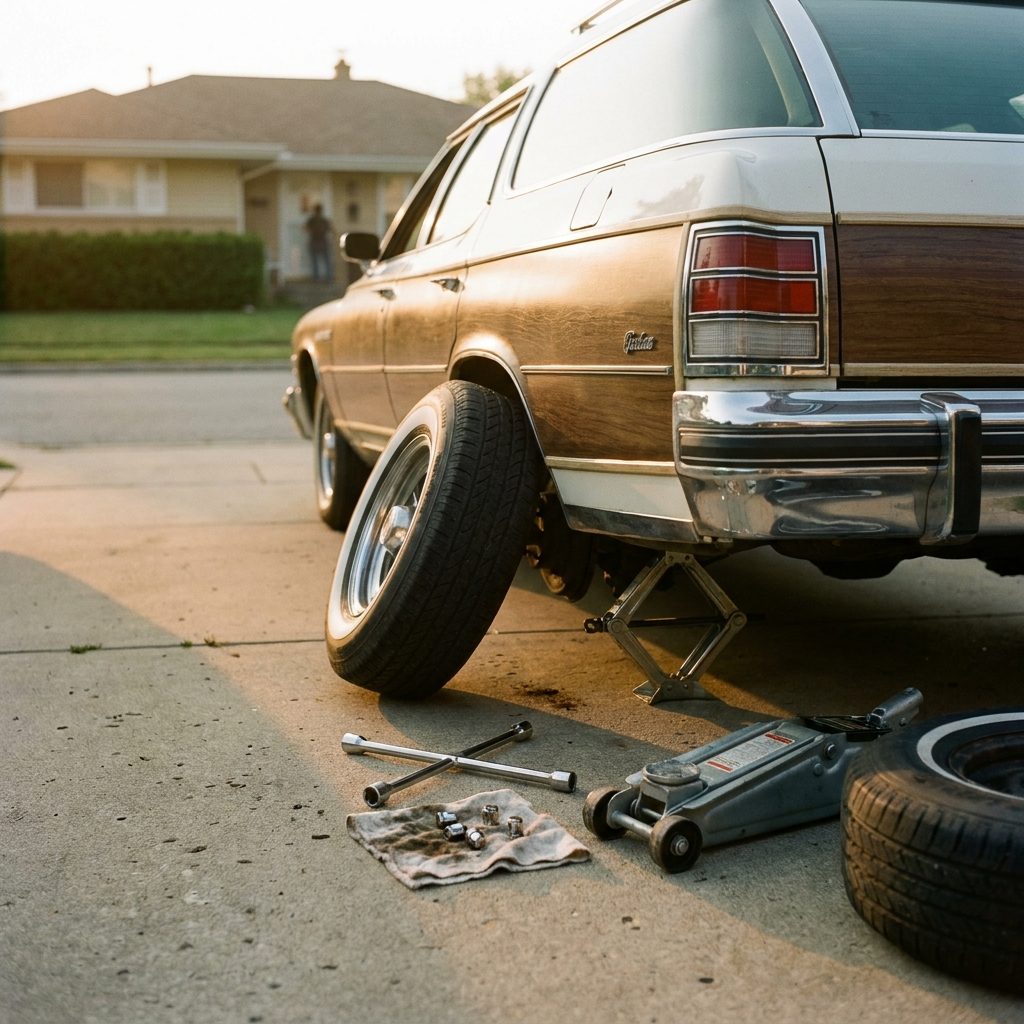
Tire rotation was the marathon event. Dad raised and supported the car properly, removed each wheel, and sent you rolling it toward its next position without letting it escape down the driveway.
The correct rotation pattern depended on the tire design and vehicle instructions, but Dad followed the pattern prescribed for that family car. He tightened the lug nuts in a crossing sequence rather than marching around the wheel in a circle.
Then came the pencil-style pressure gauge. The little measuring stick popped out with a hiss, and Dad compared the reading with the recommended pressure for the car and tires.
He sometimes pressed a thumb against the sidewall first, but the gauge delivered the actual answer. You held it carefully while the compressor shuddered to life and the air hose snapped against the valve stem.
By the time the last hubcap went back on, the sunlight had begun turning gold across the driveway.
12. Washing the Windshield by Hand
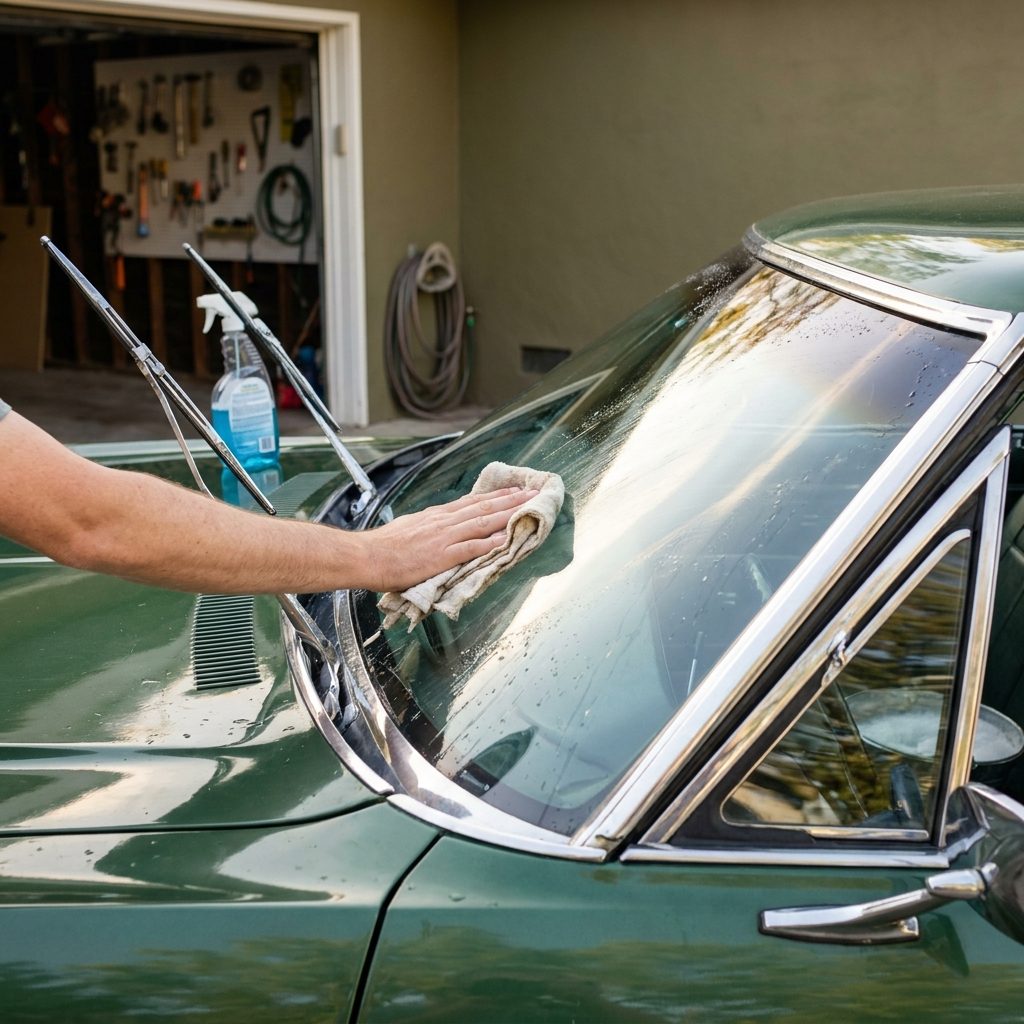
The wipers were lifted away from the glass first, standing at attention like two chrome soldiers. Then came the newspaper trick, a wadded rag, or the roll of paper towels Mom pretended not to notice leaving the kitchen.
Dad cleaned the outside while you worked from the passenger seat, knees on the cushion and one hand braced against the dash. Both of you buffed the same stubborn mark from opposite sides, pointing through the windshield while accusing the other person of missing it.
That corner never did come clean.
11. Polishing the Chrome and Waxing the Paint
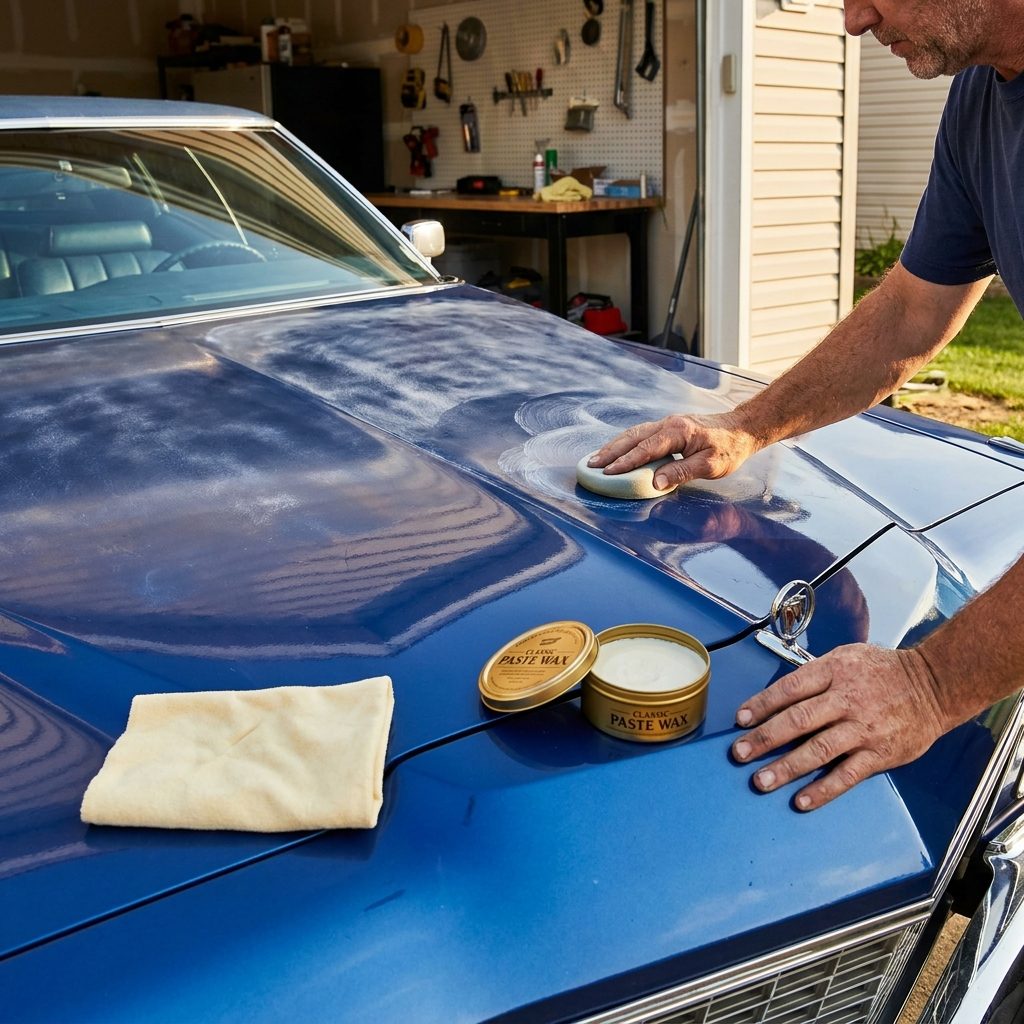
Chrome polish had a chalky smell that clung to the rag and your fingers. Dad worked it across the bumper until the surface clouded over, then buffed the haze away and inspected the reflection at an angle.
If your face appeared stretched across the curved metal, the job had passed.
The paint came next. Turtle Wax from the round tin went on with a damp applicator and dried into a dull haze beneath the afternoon sun.
Then you buffed. Your arm began failing around the second door, while Dad continued across the roof as though the muscles in his shoulder had been designed for exactly this motion.
When the last panel cleared, the family car threw sunlight back across the street. Dad stood with his hands on his hips and looked at the result longer than he would ever admit was necessary.
10. Scrubbing the Whitewall Tires
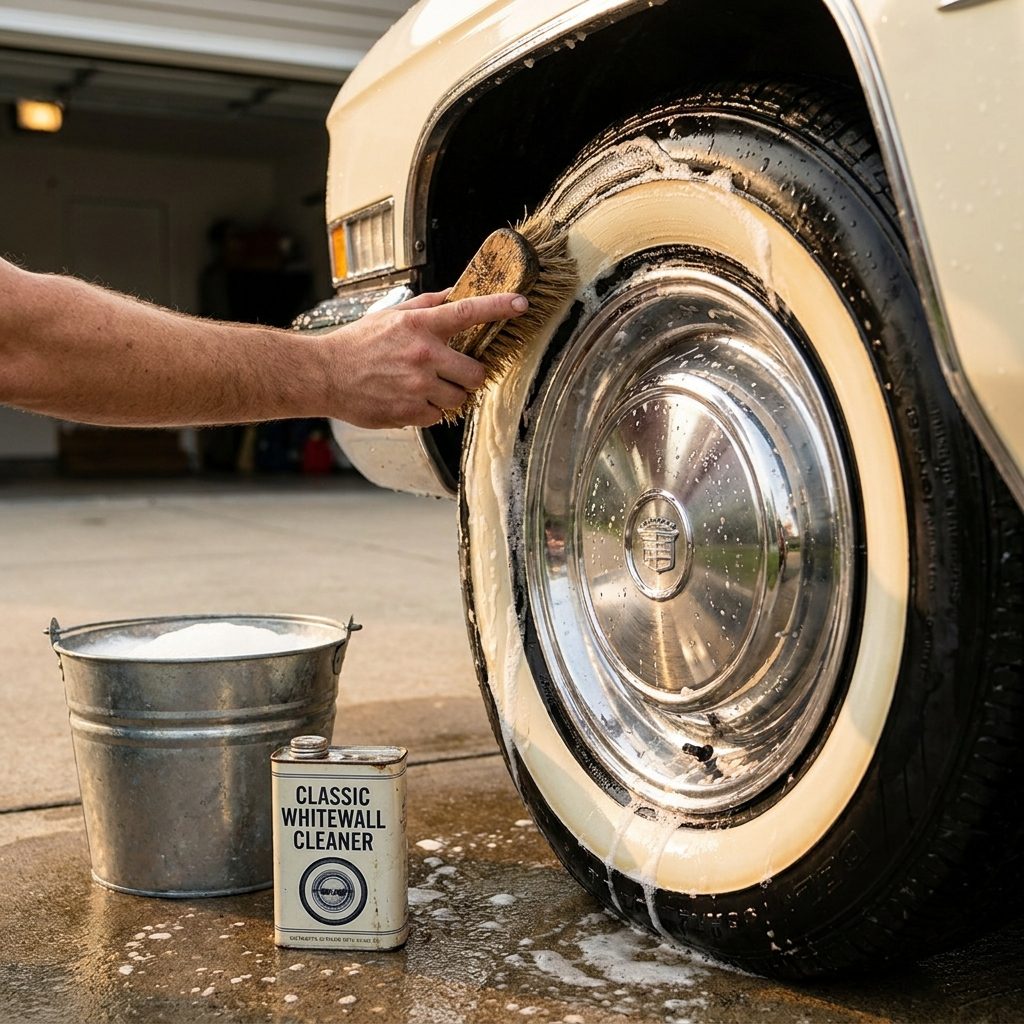
If the family car wore whitewalls, they became their own separate war. Road grime turned the bright bands gray, and an ordinary wash mitt barely disturbed it.
Out came the stiff brush and the special cleaner that foamed against the rubber. You knelt on wet concrete with your jeans soaked through at the knees, scrubbing until the white returned.
Dad inspected every tire from eye level. A gray patch meant another round with the brush. He did not need to say anything; one pointed finger carried the entire instruction.
9. The Ballgame or Rock Station Crackling on the Radio
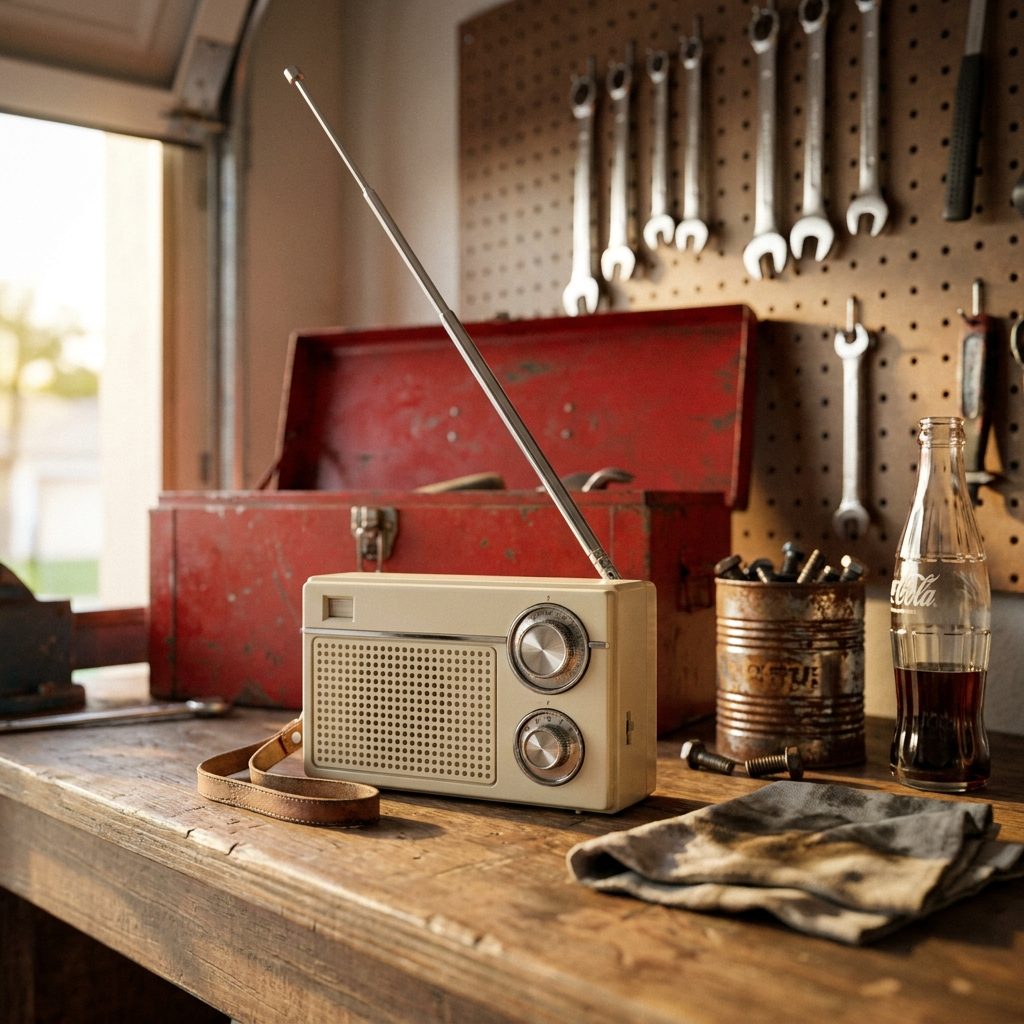
The little radio lived on the workbench, its antenna tilted toward whichever angle pulled in the signal. Some Saturdays brought the ballgame, the announcer’s voice rising beneath static while Dad grunted from under the car.
Other days the FM rock station came through, and he tapped a wrench against the fender in time without realizing it.
You learned every word to songs you were too young to understand while standing on concrete and holding a flashlight.
When the game tightened in the late innings, the work stopped. Dad slid out, wiped his hands, and listened. You did too.
8. The Smell of Gasoline and Warm Motor Oil
Would you like to save this?
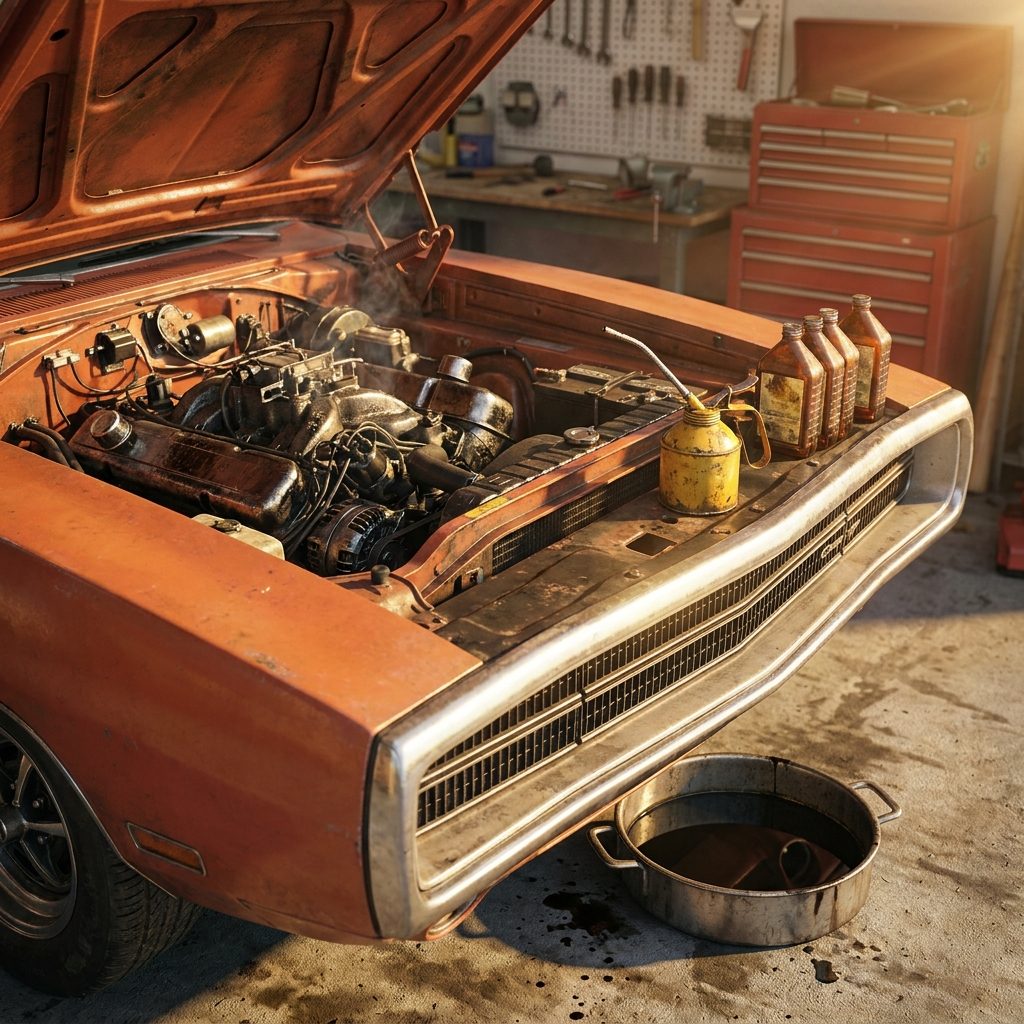
You could have identified that garage blindfolded. Gasoline floated sharp at the top, with motor oil beneath it and smaller traces of rubber, metal, wax, and exhaust.
Nobody talked much about ventilation or fumes. The risks were real even then, though the smell became inseparable from Saturday and from the sight of Dad working beneath the hood.
Catch a faint trace of it in a parking garage decades later and, for one second, you are eight years old again.
7. Grease That No Soap Fully Removed
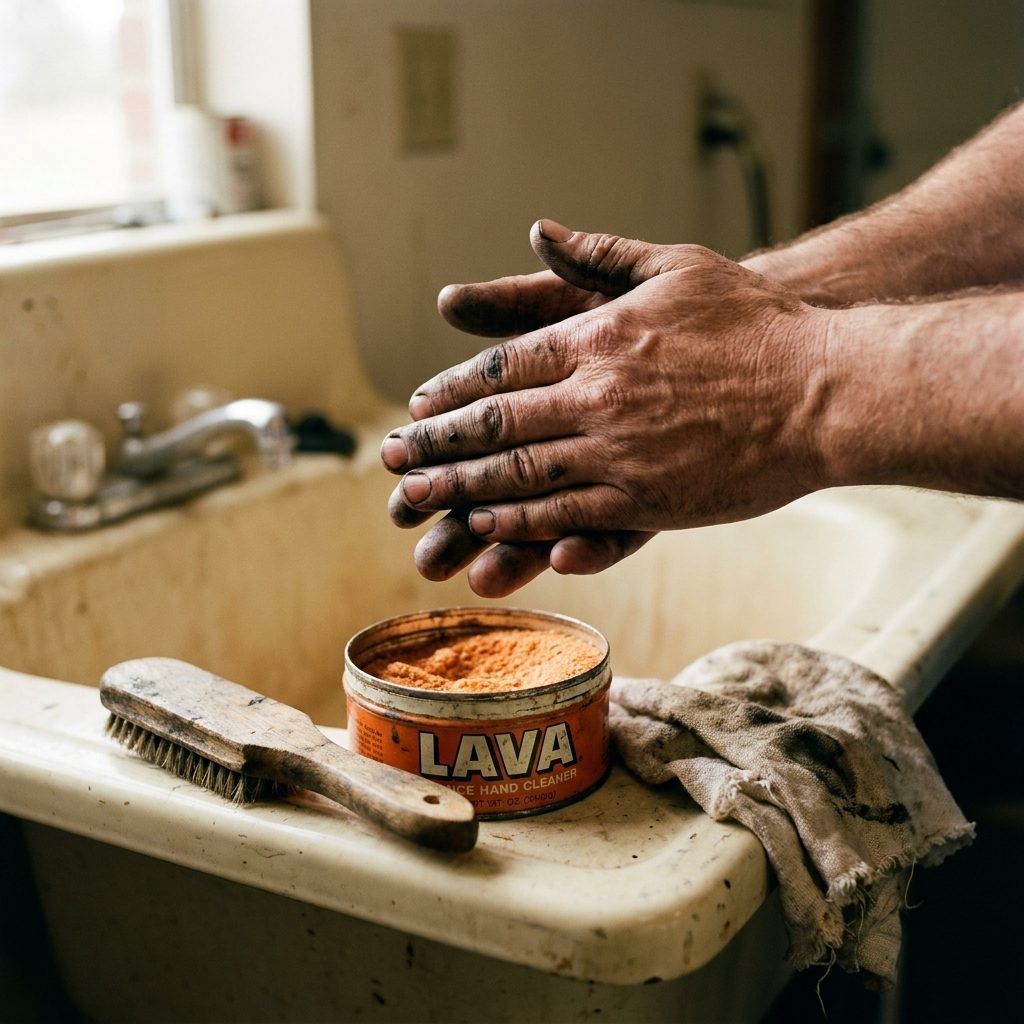
The gritty hand cleaner sat near the utility sink, and it never quite won. Dad scrubbed with the nail brush until his palms looked clean, but dark lines remained in the creases of his knuckles and beneath his nails.
By the time the work was done, his hands looked clean from a distance but still carried evidence of the day. You studied your own and wished they showed some sign that you had contributed.
6. The Workbench Only Dad Understood
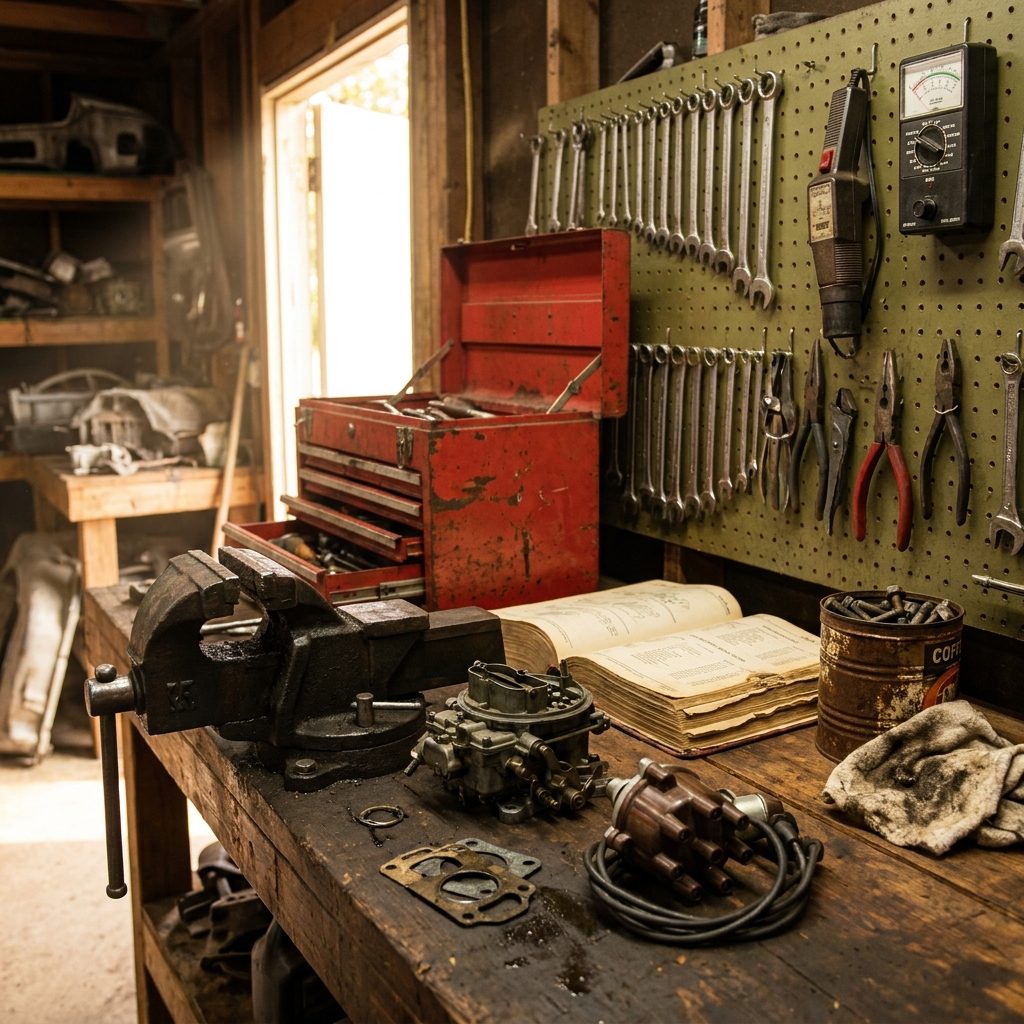
The workbench looked like chaos: a vise at one corner, carburetor pieces on a rag, a distributor cap, timing light, dwell meter, repair manual, and a parts catalog thick enough to serve as furniture.
Somewhere in the middle sat a Folgers can with a peeling label, filled with bolts, washers, cotter pins, pennies, and at least one spark plug that had no reason to be there.
When Dad needed a particular nut, he emptied the can across the bench and moved through the pile with one finger. Somehow, after several minutes, he found the exact piece.
There was no system beyond decades of refusing to discard anything that might become useful. Dad knew which gasket belonged to which job and why the greasy object at the far end could not be thrown away. To you it was clutter. To him it was a map.
5. Dad Explaining the Engine One Greasy Finger at a Time
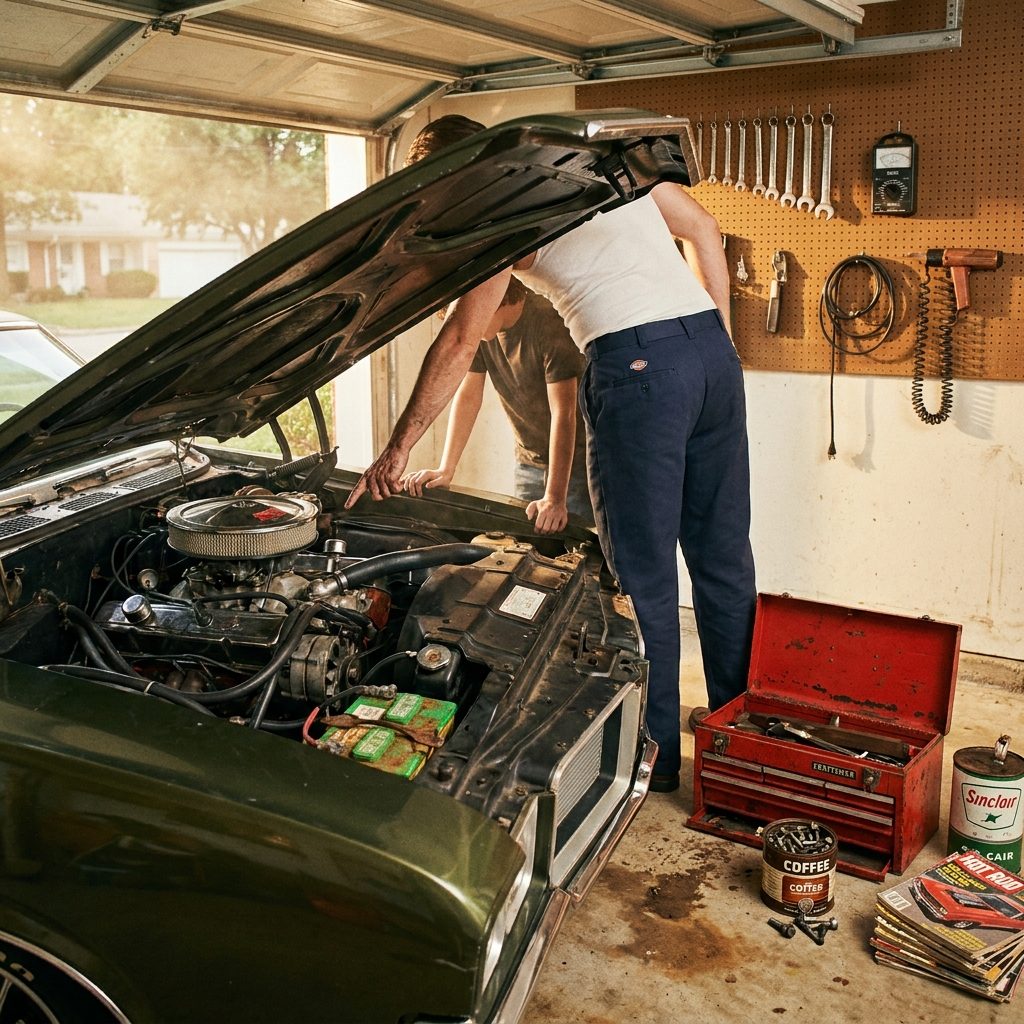
He wiped his hands on the rag hanging from his back pocket, leaned across the fender, and began pointing.
Carburetor. Distributor. Coil. The cap with wires spreading from it like spider legs.
You nodded as though you understood. Most of the explanation disappeared immediately, but certain pieces remained. Fuel entered here. Spark happened there. The noise came from everything working in the right order.
The explanation was not always perfect. What stayed with you was his conviction that a machine could be understood if you looked closely enough and refused to walk away too soon.
4. Taking the Car Out to See Whether the Work Helped
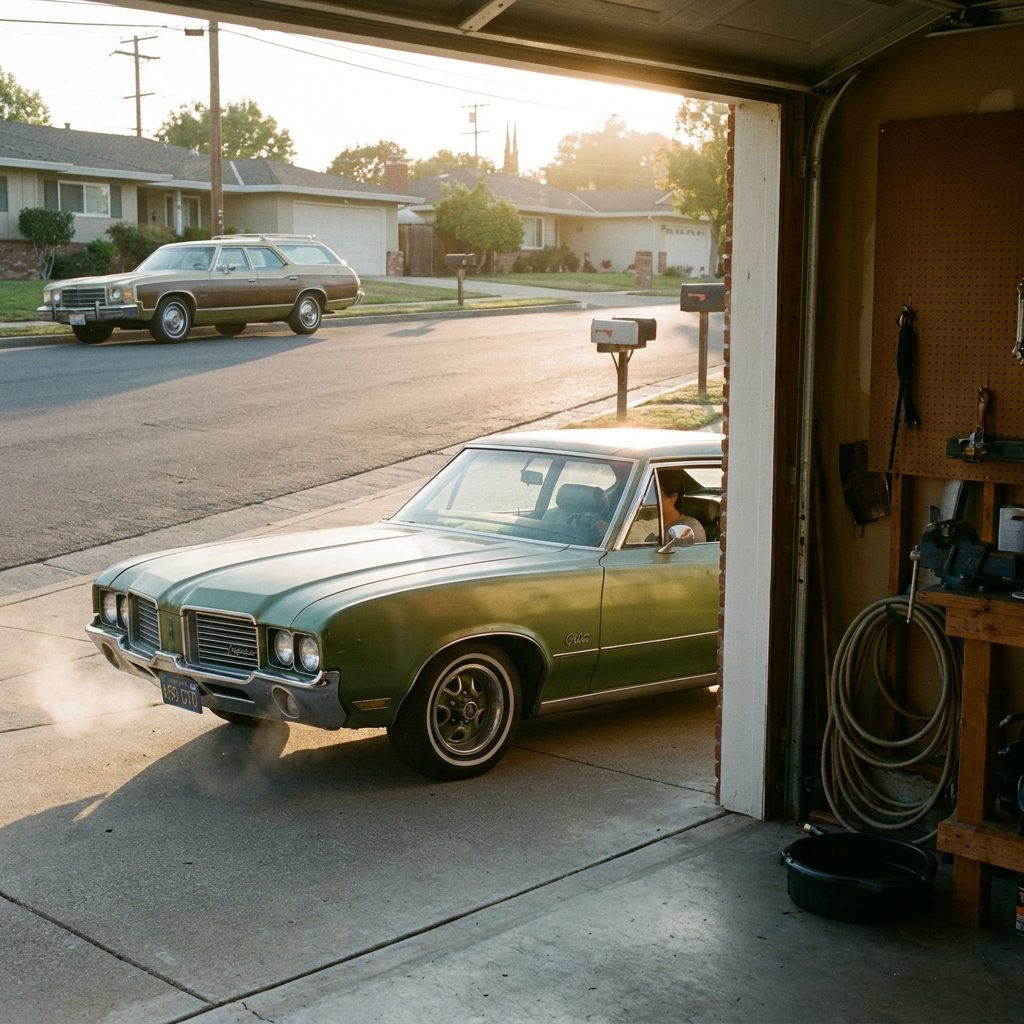
This was the moment of truth.
Dad turned the key and listened like a doctor with a stethoscope. The engine caught, settled, and continued running while he watched the gauges and checked beneath the car.
Then he eased the car down the driveway. You rode shotgun with the window cranked open while the two of you listened for the rattle, hesitation, or squeal that had helped start the day.
Around the block became two blocks if the engine sounded promising. At the stop sign, Dad gave it a little throttle and waited. When the unwanted noise failed to return, he offered one short nod.
That nod meant everything. The work had helped, and you had been part of it.
3. Stopping for Root Beer at A&W
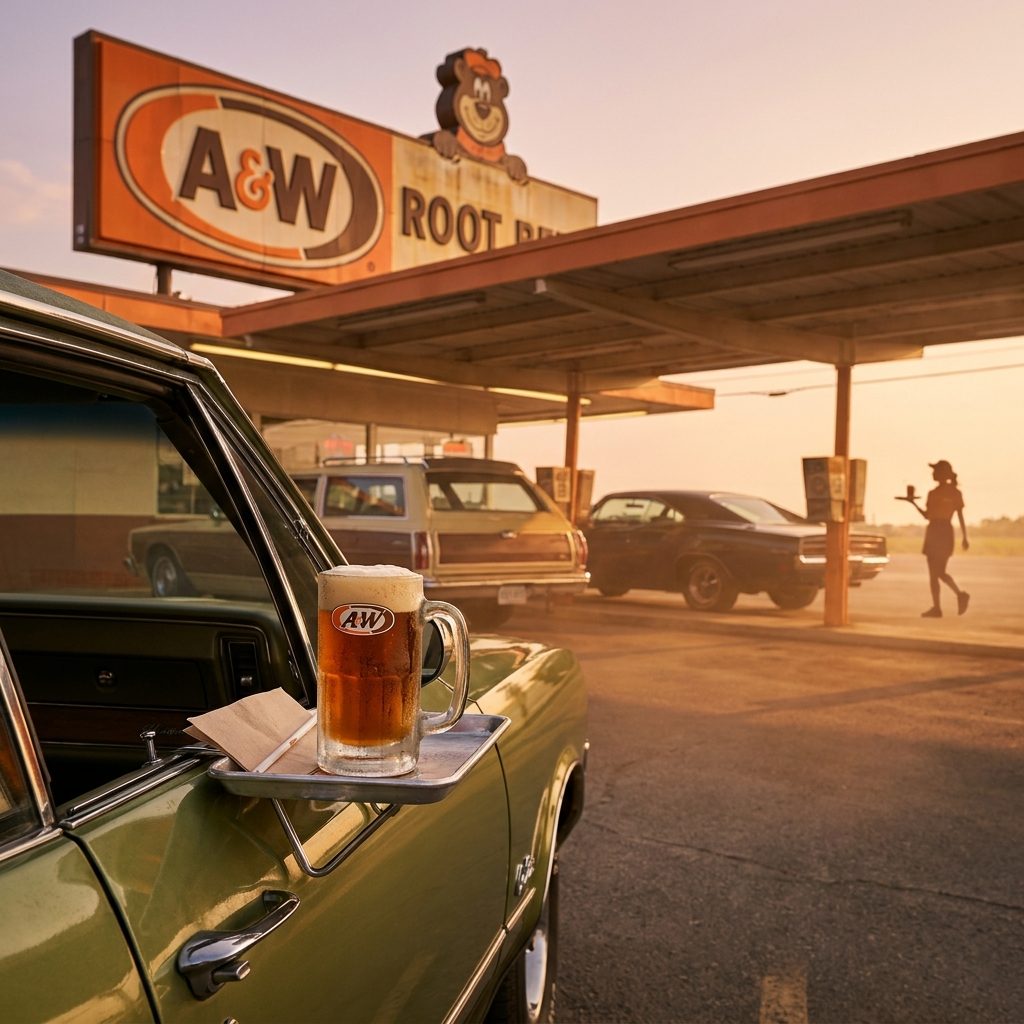
Grease remained beneath your fingernails when the frosty mug arrived, cold enough to make your hand ache. Root beer tasted different after you had earned it. That was not sentiment. It was chemistry.
Dad ordered the same thing every time. The two of you sat in the car, tired in a satisfying way, while the radio played softly.
He might mention the wrench you finally got right or the bolt that had resisted both of you for twenty minutes. One sentence from him landed like someone pinning a medal to your shirt.
2. Backing the Car Into the Garage With Inches to Spare
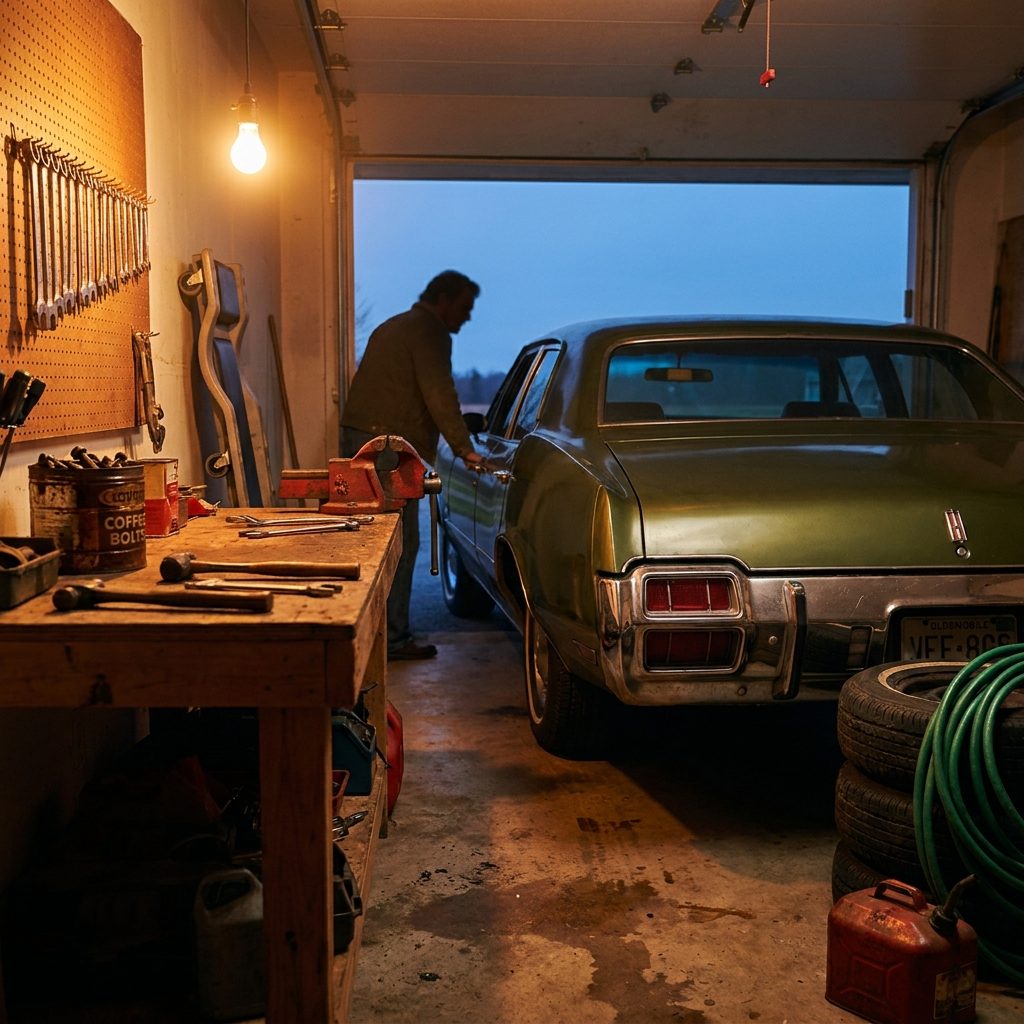
Backing in was its own mechanical skill. Dad leaned partly through the open window, one arm across the seat, and guided a full-size car into a garage narrowed by shelves, tools, bicycles, and everything nobody could throw away.
Sometimes you stood behind the car and directed him.
A little more. A little more. Stop.
The shelves and workbench seemed to occupy exactly the space the bumper wanted. Dad never hit them—or he had hit something once years earlier, and the family had agreed never to discuss the incident again.
1. The Quiet Pride When Everything Went Back Together
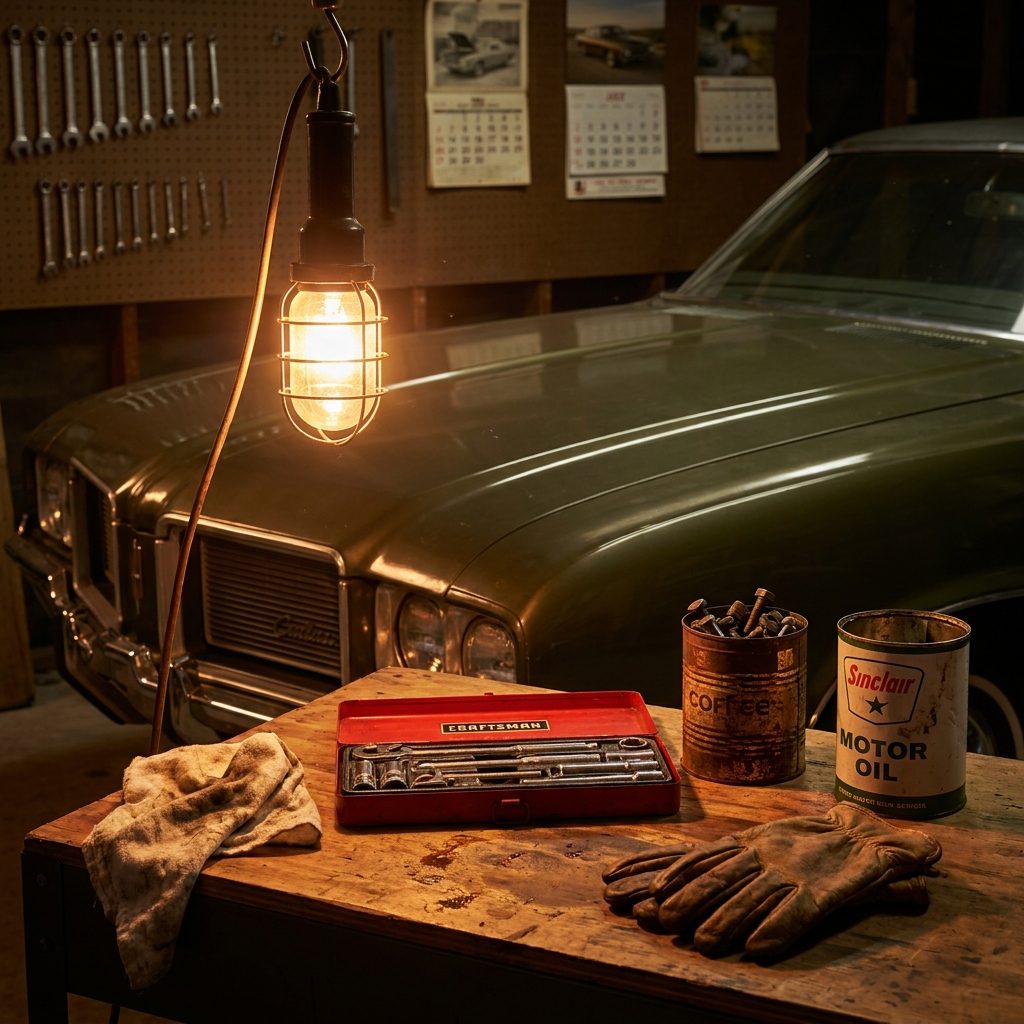
The tools returned to the pegboard and toolbox. The floor was swept. The car sat in its narrow space, running better than it had that morning, and nobody had needed to call a shop or abandon the job halfway through.
That feeling did not require a speech. You had helped make a problem smaller. Grease remained in the lines of your hands for two days, and you were glad to see it there.
Buried inside the afternoon was the lesson nobody bothered to announce: a problem was still only a problem. You looked at it, learned what you could, tried something, corrected the mistakes, and kept going until the machine worked again.
The tools went away. The garage grew quiet. The lesson stayed.