
Would you like to save this?
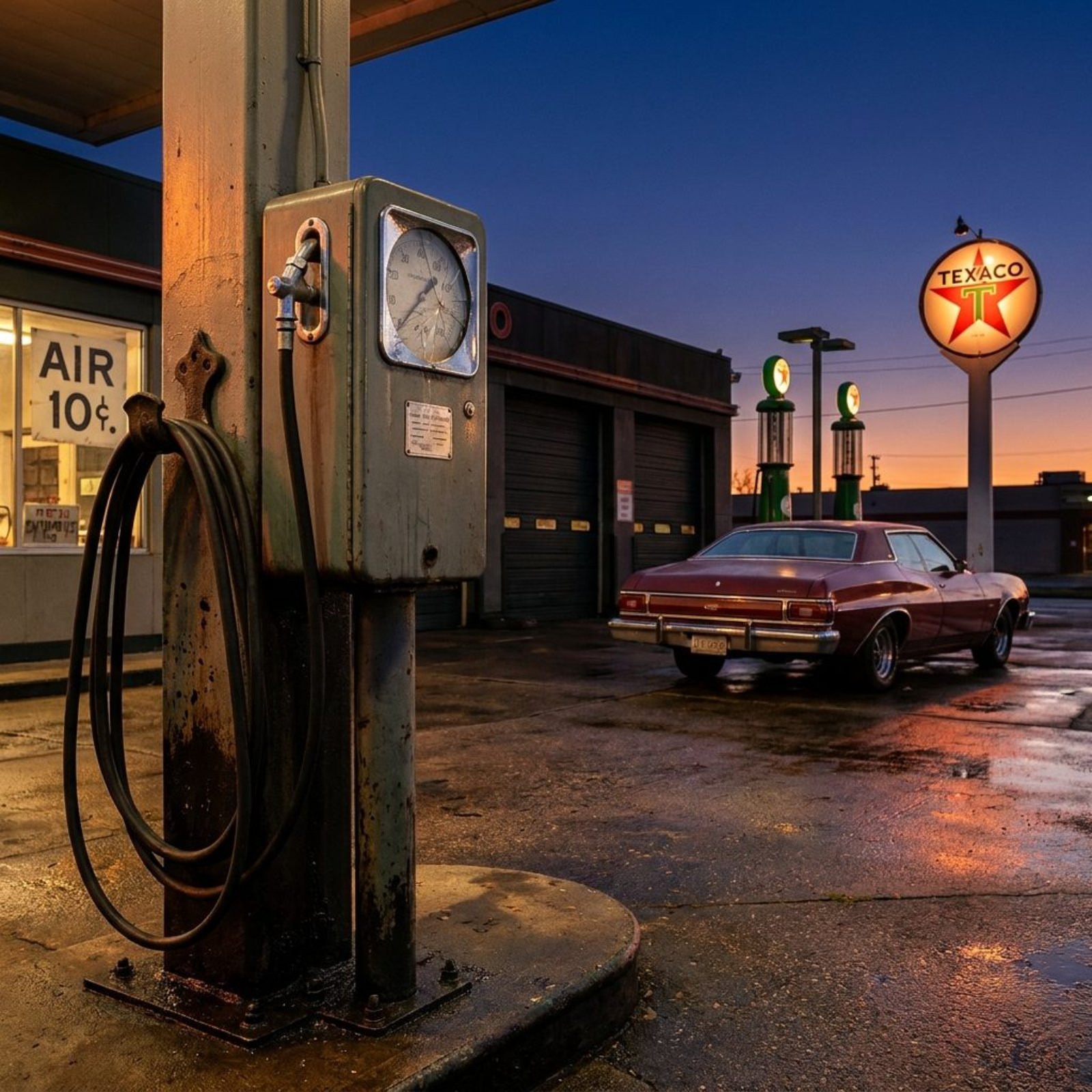
The bell rang twice when your front tires rolled over the rubber hose, and before the gearshift hit Park, a guy in coveralls was already heading your way.
Gas, oil, windshield, tires. Maybe a comment about the weather. Maybe a raised eyebrow at the left front tread. Maybe a question about your father, your job, or the kid in the back seat pretending not to listen. A 1970s full-service station sold fuel, but the pump island handled far more than that.
Under the corrugated canopy, the attendant knew which cars burned oil, which families were headed to the lake, which trucks needed watching, and which rumors had made town by noon. The place worked like a garage, a news desk, a weather report, and a small-town confessional with a cash register.
21. The Rotating Sign on the Pole That Told You the Price of Gas and the Price of Everything Else
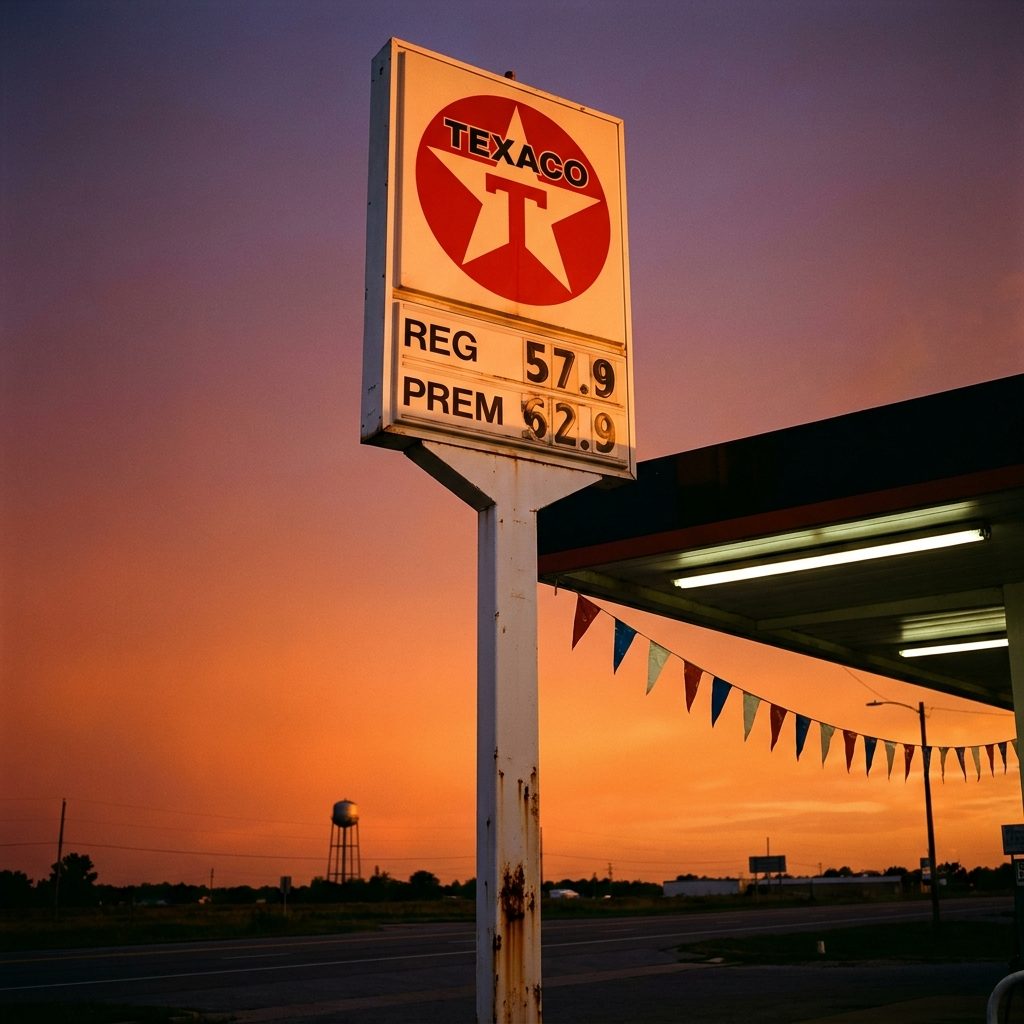
You could read it from a quarter mile away. The rotating sign sat high on its pole at the edge of the lot, spinning slow enough that you caught the price on every pass — fifty-eight cents a gallon, sixty-three by summer. Plastic insert numbers, changed by whoever drew the short straw with that long pole and a suction cup tool that never once cooperated gracefully.
Some stations listed cigarette prices on the same sign. Others listed the mechanic’s hours. Either way, it was the station’s handshake with the road: we’re open, we’re here, pull in.
20. The Grease-Stained Concrete Floor With the Oil Stain That Had Been There Since Eisenhower
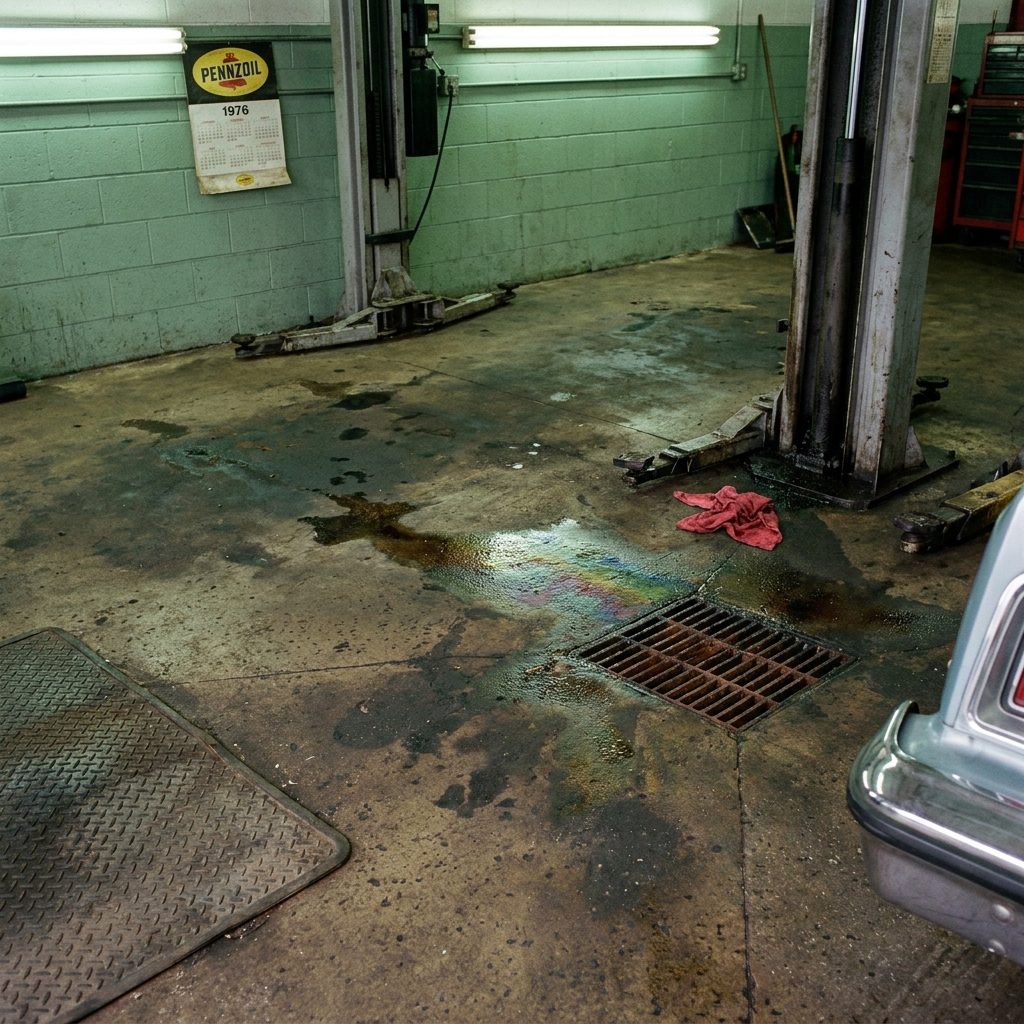
Nobody mopped that floor. Not really. Someone pushed a broom across it on Friday afternoons, maybe scattered sawdust from the barrel in the corner over the worst spots. But the stains were permanent — layers of Pennzoil and Valvoline and Quaker State going back decades, soaked so deep into the concrete they’d become geological.
You could read a service bay’s history in its floor. The dark oval where the drain pan always sat. The lighter patch near the door where sunlight faded things over the years. That one massive blotch shaped vaguely like Lake Michigan that everyone stepped around out of pure habit. The whole floor was a logbook, written in 10W-40, and nobody ever thought to read it except the guys who worked there every day and noticed anyway.
19. The Glass-Front Soda Machine With the Bottle Opener Bolted to the Side
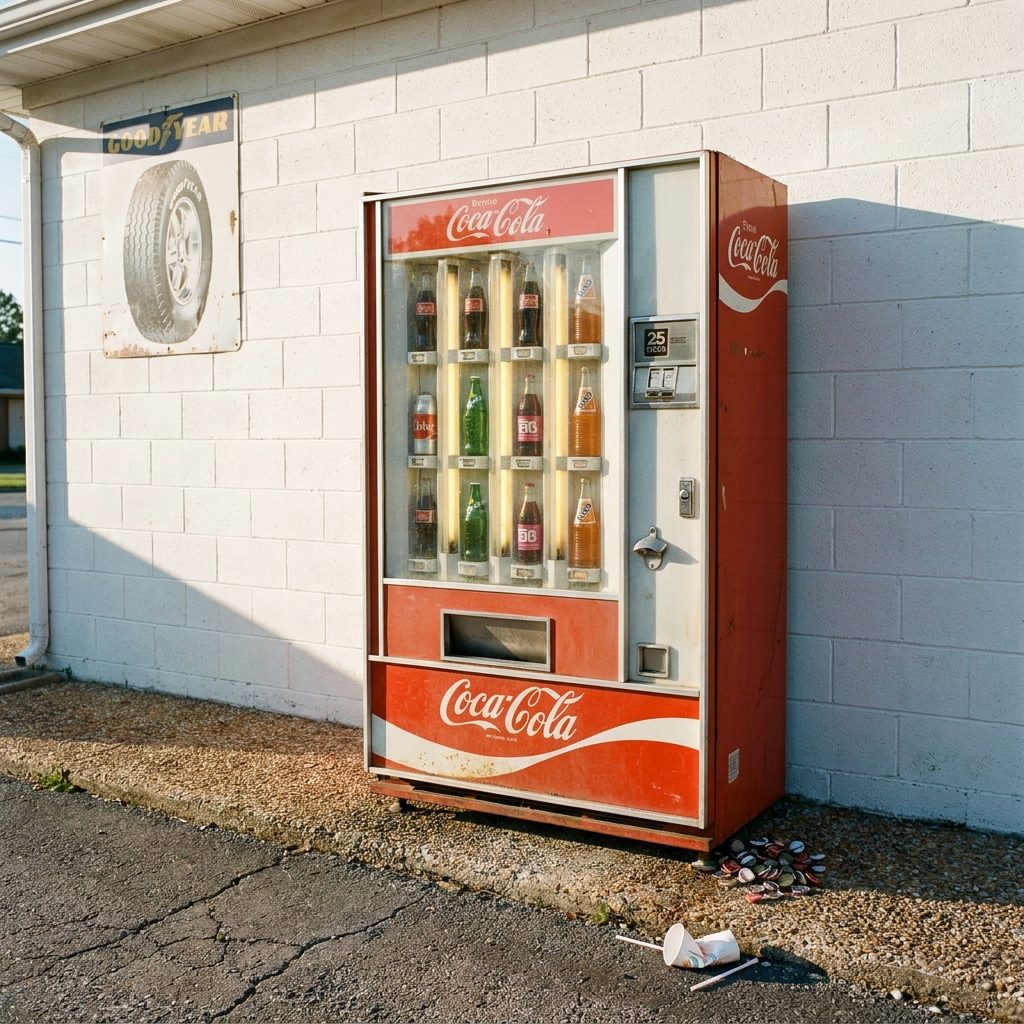
Quarter in, handle pulled, and a cold glass bottle dropped into the chute with a clunk that meant summer. The bottle opener was right there on the side of the machine, bolted on with Phillips-head screws gone orange with rust, and caps piled up underneath in a little drift nobody ever swept.
Tab. Fanta Orange. RC Cola if the station owner had loyalties. The bottles were sweating before you got the cap off. You stood there in the shade of the canopy and drank the whole thing — you weren’t taking a glass bottle with you. That was the arrangement. Drink it here, return the bottle to the rack, get on with your day.
18. The Attendant Who Knew Your Car by Sound Before He Saw It Pull In
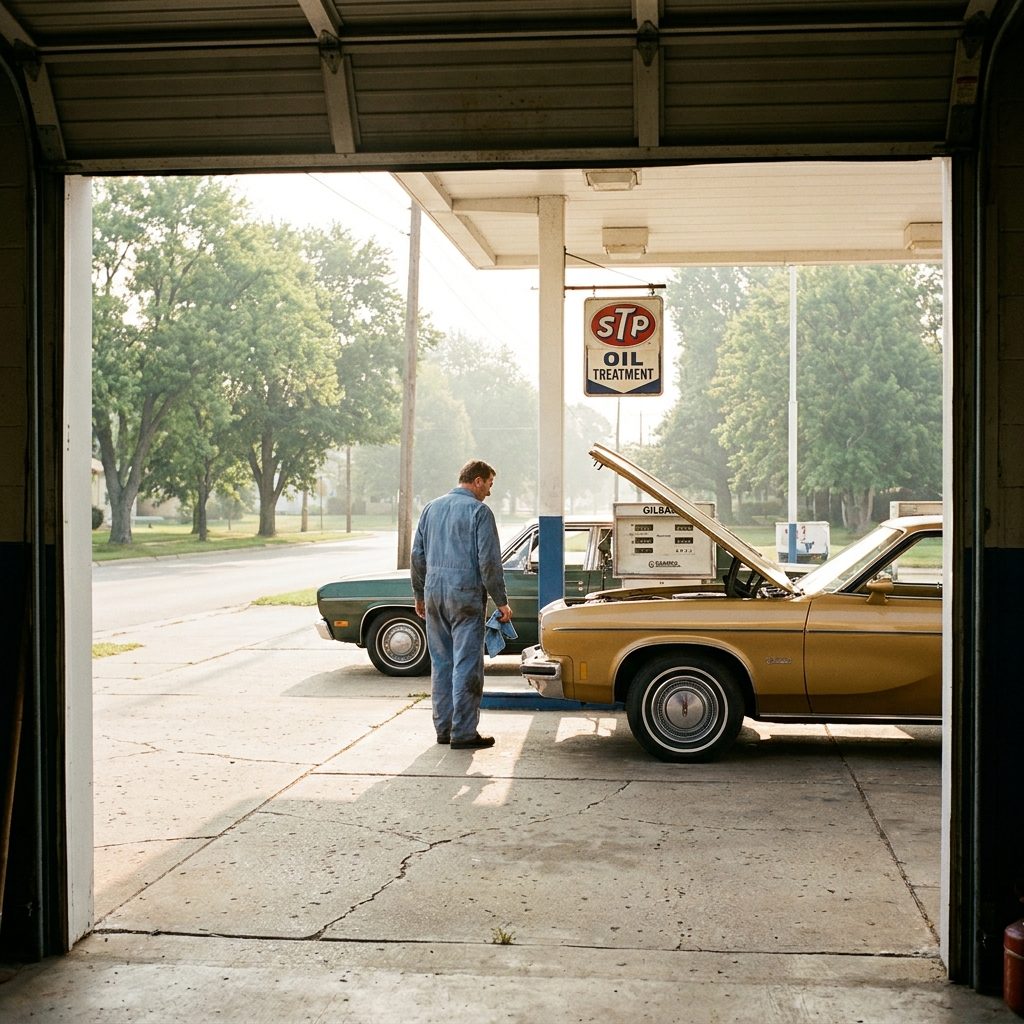
He heard the valve lifter tick on your Cutlass from inside the bay. Wiped his hands on the rag in his back pocket and was already walking toward the pump before you came to a full stop. “Still making that noise, huh?” That was hello.
He knew which side your gas cap was on. Knew you took regular. Knew your wife’s car needed premium because of the knock. He’d check the oil without being asked and hold up the dipstick for you to see, same as a doctor showing you an X-ray — and if it was low he’d top it off, write it on the receipt so you’d remember next time. No upsell. No script. Just a man who paid attention to every car that rolled across his air hose bell, and somehow remembered all of them.
17. The Rack of Free Road Maps by the Register That Nobody Appreciated Until They Were Gone
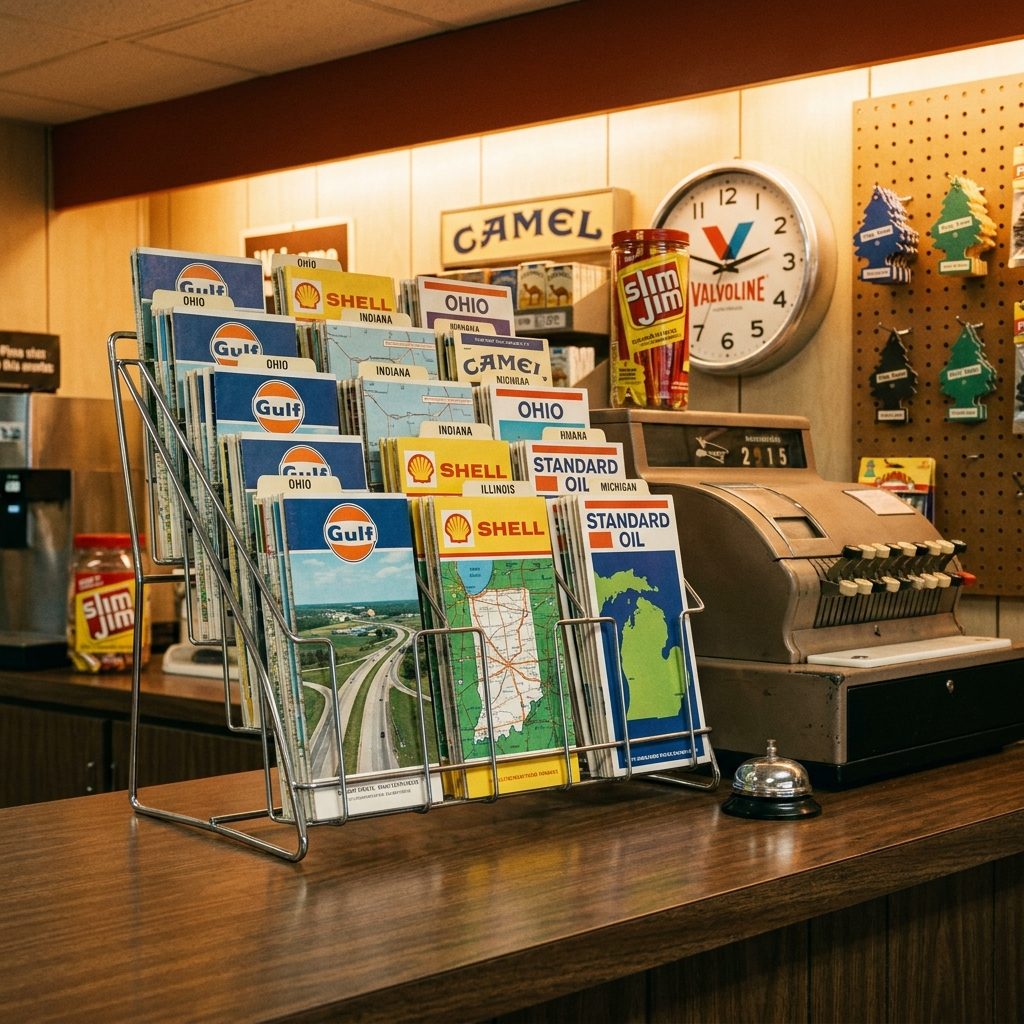
Free. Not discounted. Free. A chrome wire rack by the register held every state you might drive through, each one folded into a neat rectangle with the oil company logo on the cover — Shell maps, Gulf maps, Standard Oil maps with that clean red-and-blue typography that made the interstate system look like a work of art.
Before a road trip you’d grab two or three and spread them across the hood in the driveway, plotting the route with a ballpoint pen. The fold-lines wore through first. Then the corners tore. By the time you got home, the map looked like it had survived combat, and you stuffed it in the glove box with all the other casualties. Nobody ever thought to say thank you for a free map. We just assumed they’d always be there.
16. The Hydraulic Lift That Announced Every Oil Change With a Hiss and a Groan
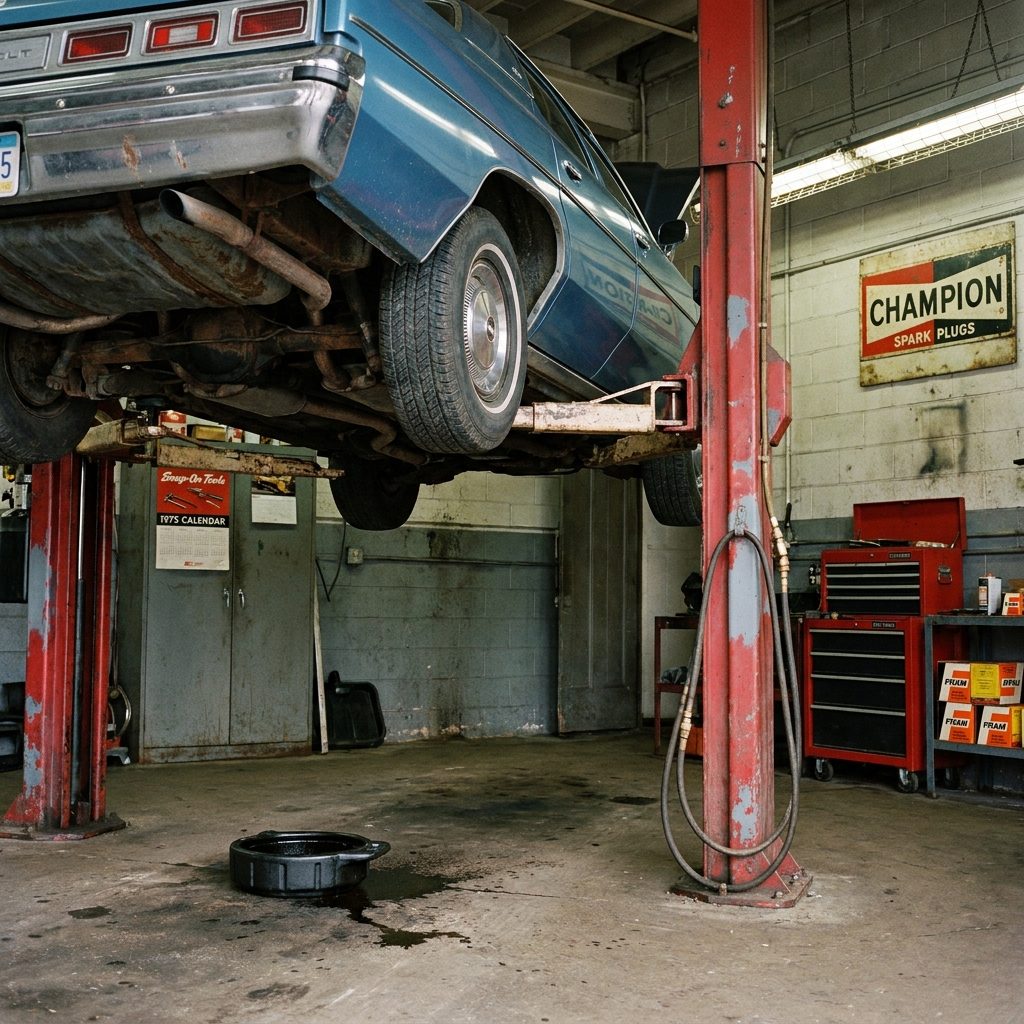
That sound. The hydraulic pump whirred, then came the slow pressurized hiss as two tons of Chevrolet rose off the floor — the whole car groaning like it had opinions about being grabbed by its frame rails. You stood back and watched it go up. Felt slightly miraculous every single time, if I’m honest.
Everything about a car looks different from underneath. Suddenly the exhaust is right there, the oil pan is right there, and you can see exactly where the rust is winning. The mechanic moved around under it like he’d memorized every bolt. He probably had.
15. The Restroom Key on the Wooden Paddle You Had to Ask For
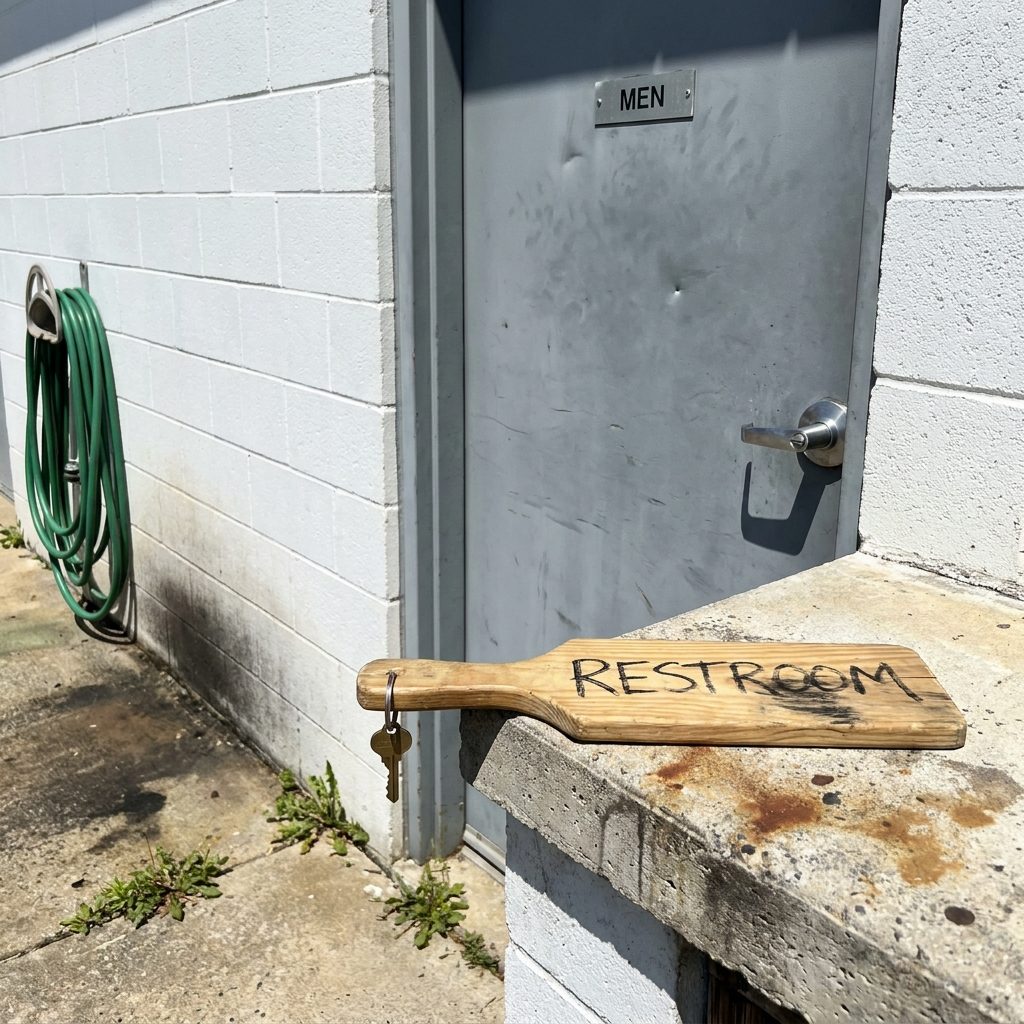
The paddle was the size of a small canoe oar. That was deliberate — you weren’t going to accidentally pocket this key and drive off with it down the highway.
You asked for it at the counter. The attendant reached under the register or pulled it off a nail on the wall and handed it over without a word, no judgment on his face, just the weary patience of a man who’d been asked a thousand times. The restroom itself was around the side of the building, through a door that stuck, and it smelled exactly like a room that got hosed down once a week. But two hundred miles from home on a summer afternoon, with your back teeth floating? It was enough. More than enough.
14. The Squeegee Bucket That Was Always Full, Always Blue, and Always a Little Too Cold
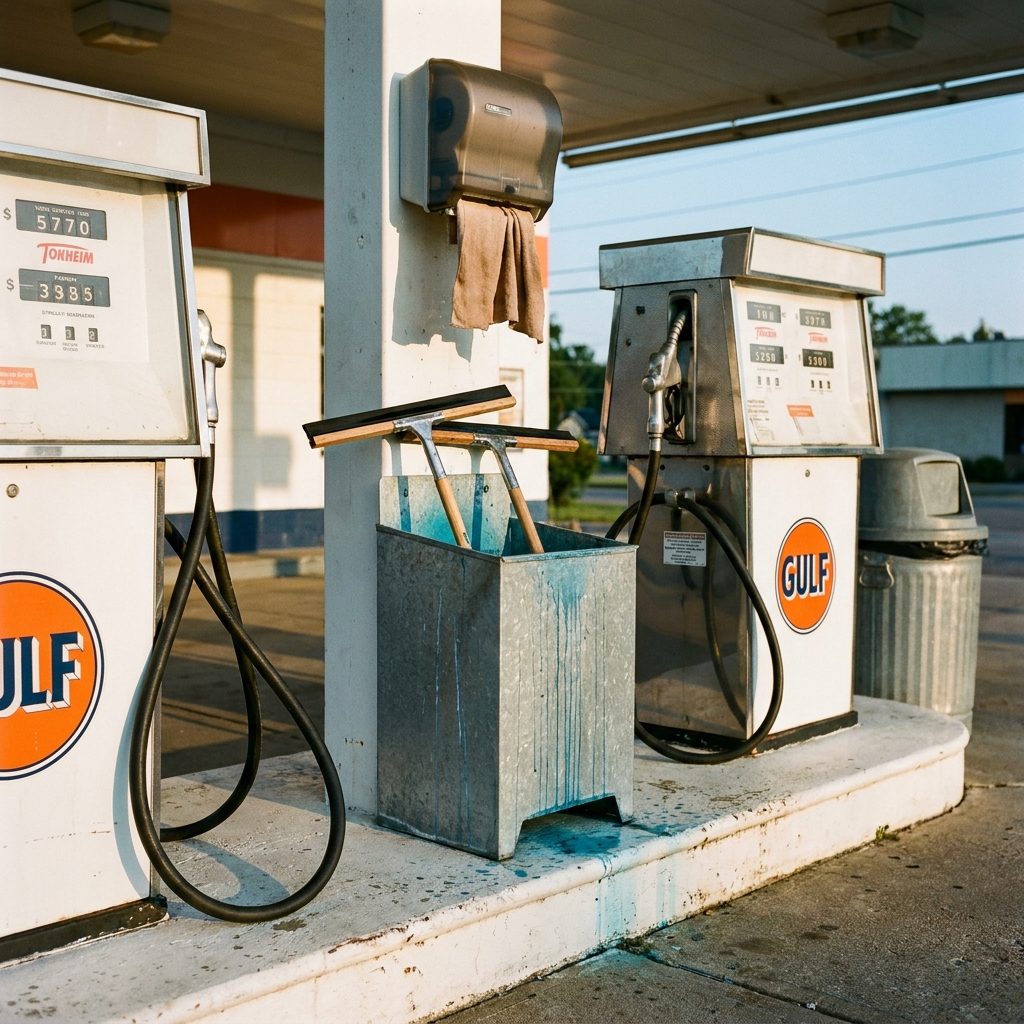
Cold. Shockingly cold, even in July. You pulled the squeegee out of that blue water and half of it ran down your arm before you got it anywhere near the windshield. And the rubber blade — always a little ragged on one edge, so it left a streak you had to go back over twice.
But you did it. Every fill-up. While the pump ran, you cleaned the windshield and maybe the back glass too if you were feeling thorough. A small ritual that belonged to the stop. The attendant would handle it at a full-service island, but most of us did it ourselves because standing there watching the numbers roll felt like dead time otherwise. Might as well make yourself useful.
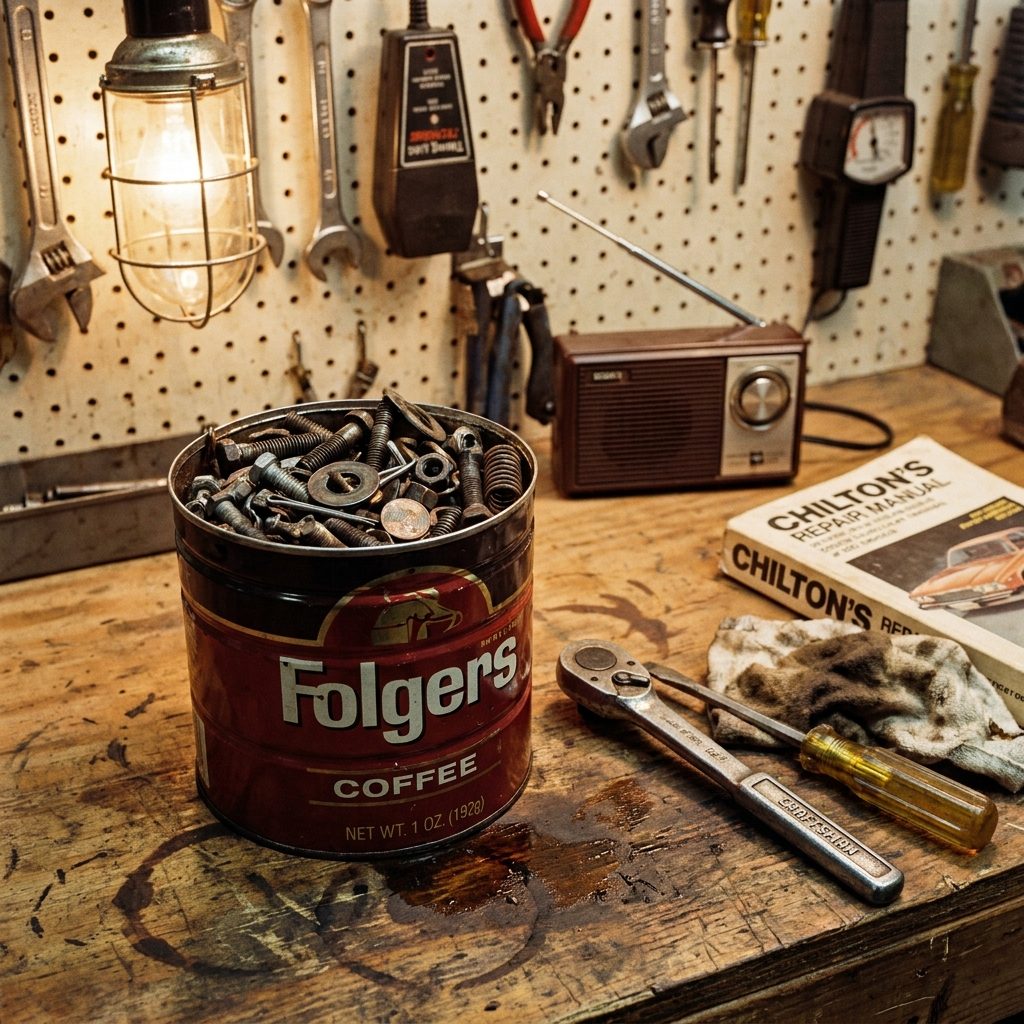
13. The Coffee Can Full of Bolts, Washers, and Pennies on the Service Counter
Would you like to save this?
Every station had one. Folgers. Maxwell House. Sometimes Chock full o’Nuts if somebody had taste. The coffee was long gone — what remained was a small, jangling archive of hardware nobody could identify but nobody would dare throw away.
Need a 5/16 bolt? Dig through the can. Maybe one’s in there. Maybe not. But you’d find three things you forgot you were looking for and two pennies from 1961, guaranteed. The can lived on the workbench like it had grown there organically, and some of those bolts predated the mechanic who inherited them by a full generation.
12. The Little Bell That Dinged When Your Tires Rolled Over the Air Hose at the Entrance
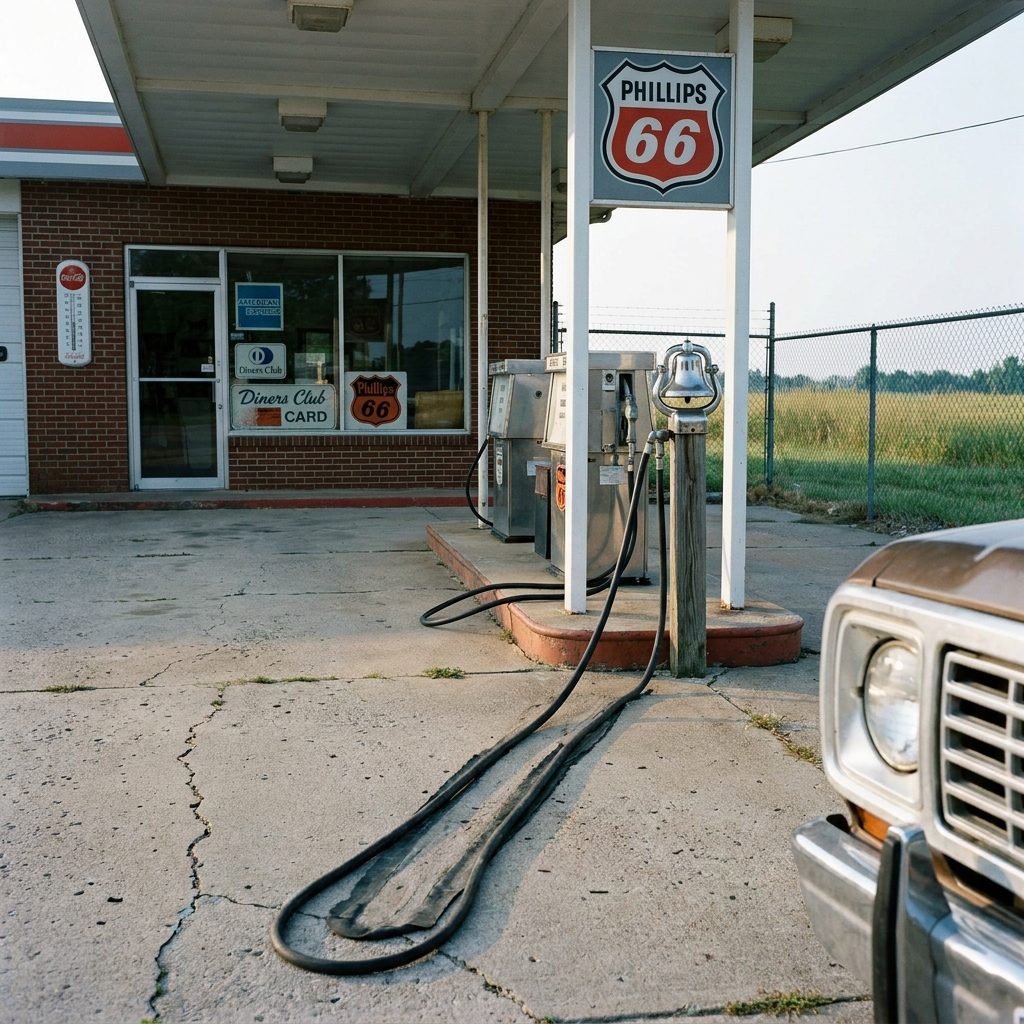
Ding-ding.
Two syllables that meant someone’s here. The rubber hose stretched across the driveway, and when your front tires crossed it, a pneumatic bell inside the station rang — by the time your rear tires hit it again, the attendant was already walking out. Elegant in the most ordinary way. No intercom, no camera. Just air pressure and a bell.
If you worked inside, you heard it all day long. Ding-ding. Ding-ding. Every car, every truck, every kid on a bicycle who rode across it on purpose because — well, because that sound was satisfying and kids know a good thing when they find one. When the bell finally stopped ringing at the end of the night, that’s how you knew the day was done.
11. The Mechanic’s Dog That Lived Under the Workbench and Greeted Every Customer Like Family
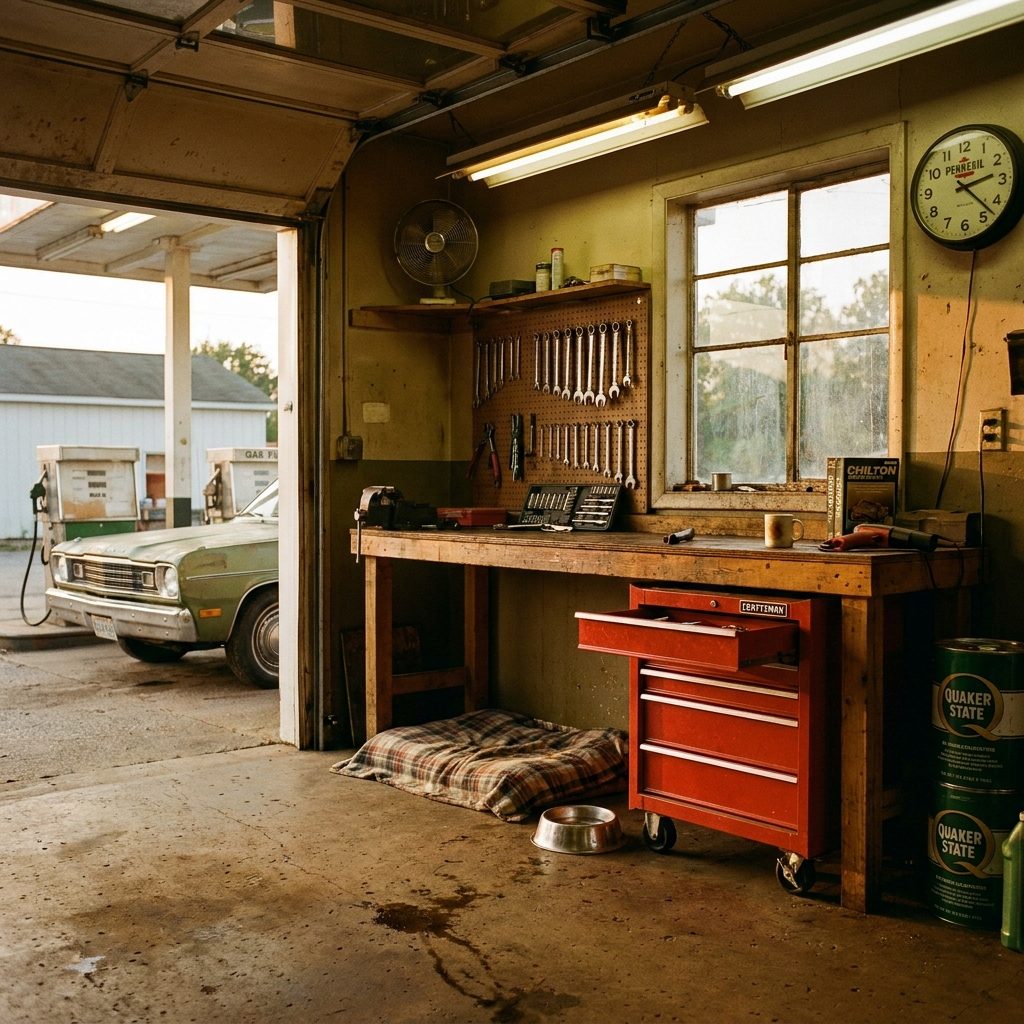
Every station had one. A mutt of uncertain breed and advanced years who slept on a blanket behind the compressor and wandered out to inspect your shoes when you pulled in. The dog didn’t belong to anyone in particular — it belonged to the station.
Kids loved that dog more than the gumball machine, and parents trusted the mechanic more because of it. Something about a guy whose dog sleeps in his shop all day tells you he’s there from open to close. He’s not going anywhere.
10. The Coin-Operated Air Hose Out Front That You Could Use Even When the Station Was Closed
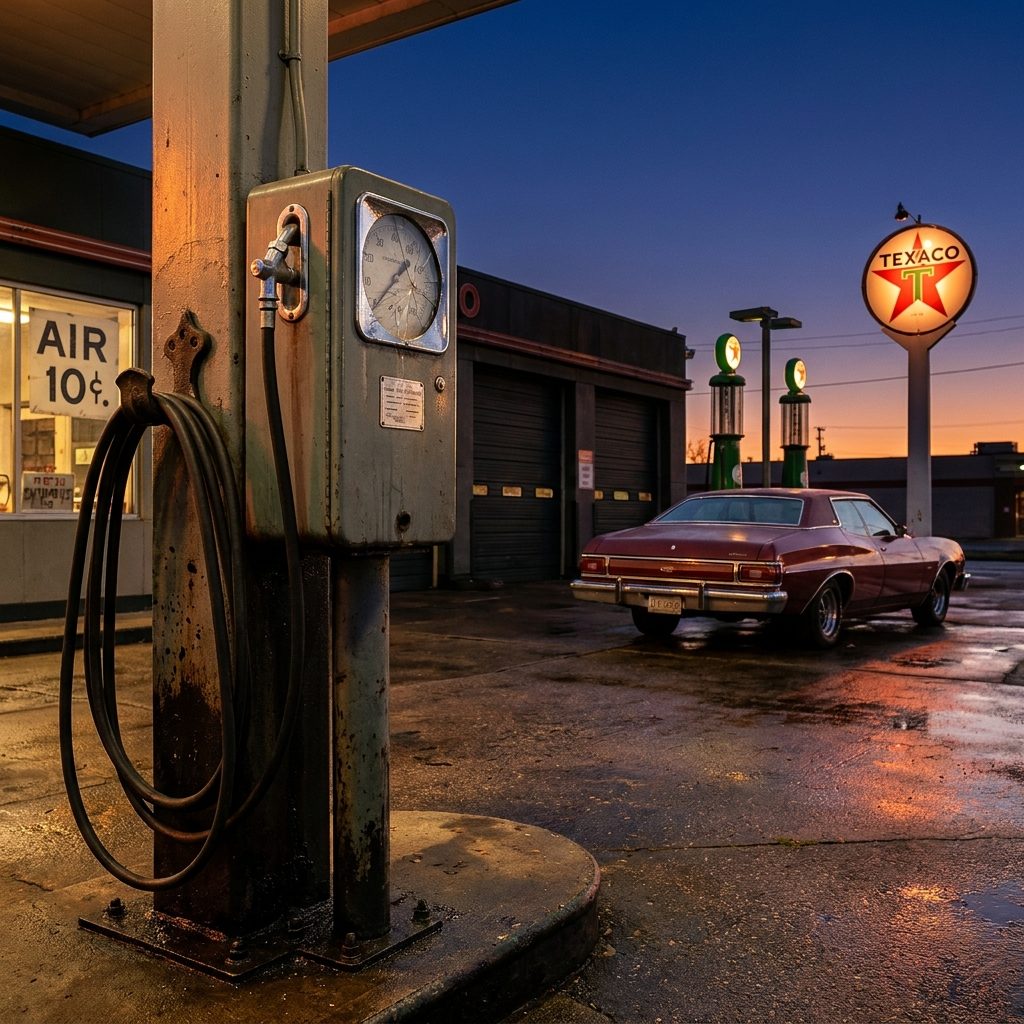
Ten cents. That was the deal. Drop a dime into the slot on that battered gray cabinet and the compressor would kick on with a wheeze and a rattle, and for about three minutes you had all the air you needed. No attendant required. No business hours. The hose was always a little shorter than you wanted it to be, and the pressure gauge needle vibrated so badly you had to guess whether you’d hit thirty-two PSI or thirty-five, but it didn’t matter. The machine was there at eleven o’clock on a Sunday night when nothing else in town was open.
That coin-op air hose was a kind of civic contract. The station owner left it running even when the bays were locked and the register was empty, because that’s what you did. You didn’t leave your neighbors stranded on the side of 9th Street with a soft tire. Small towns ran on exactly that logic.
9. The Cigarette Machine Standing Just Inside the Door Like It Owned the Place
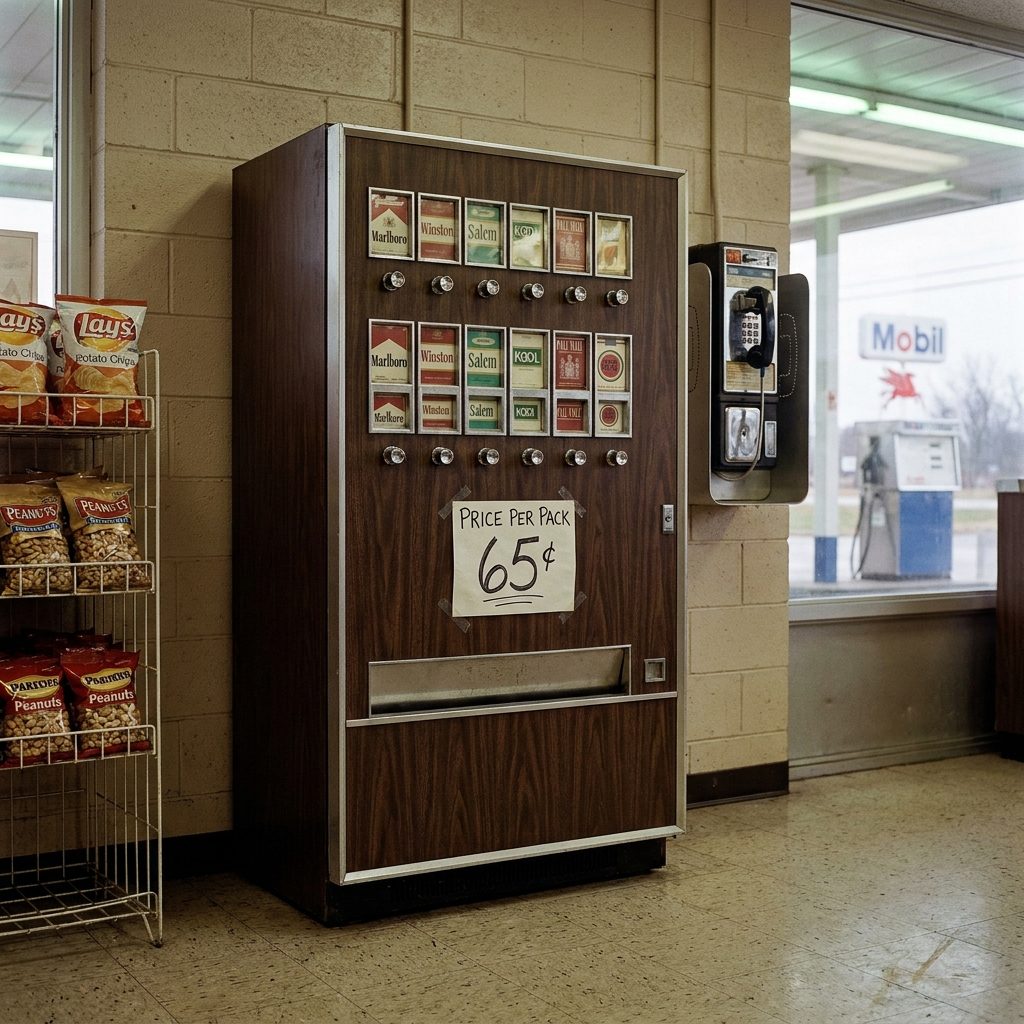
You pulled the chrome knob, dropped your coins, and a pack fell into the tray with a solid thunk. No ID check. No questions asked. The machine sat between the chip rack and the pay phone like a piece of furniture nobody gave a second thought.
Marlboro, Winston, Salem, Kool, Pall Mall — the brand labels behind those little windows were half the advertising budget for American tobacco. And every station had one of these boxes earning quiet quarters all day long while the owner was under a car changing tires.
8. The Hand-Painted Plywood Sign Out Front Advertising the Mechanic’s Specialties
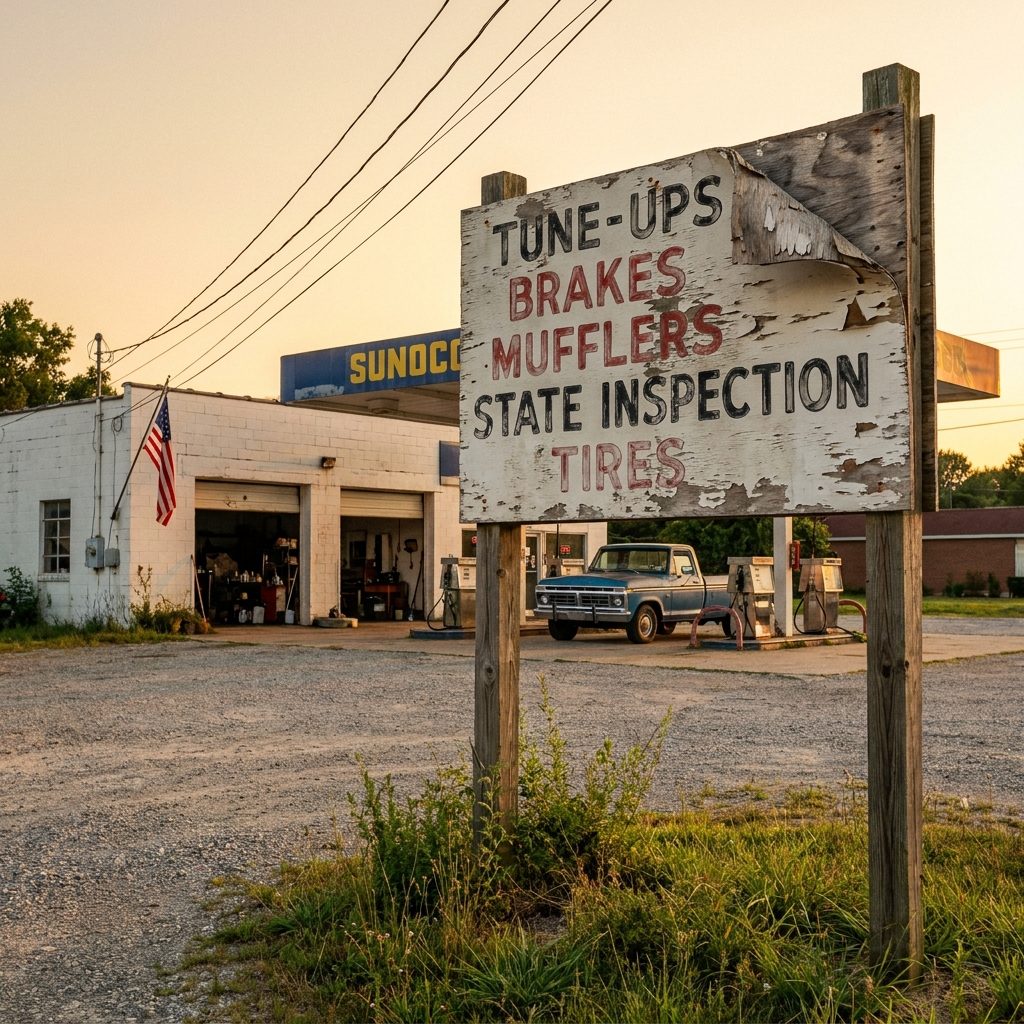
Not a corporate graphic. Not a franchise template. A piece of half-inch plywood, maybe four feet by six, painted by the owner or his nephew on a Saturday. TUNE-UPS. BRAKES. MUFFLERS. STATE INSPECTION. The letters weren’t quite level, and the red paint was a slightly different shade than last year’s because he grabbed whatever the hardware store had on the shelf.
That sign told you everything you needed. One-man operation. The man could do it all. The imperfection was the credential — nobody who lettered a sign that crooked was trying to fool you about anything.
7. The Pyramid of Motor-Oil Cans Stacked by the Pump Island
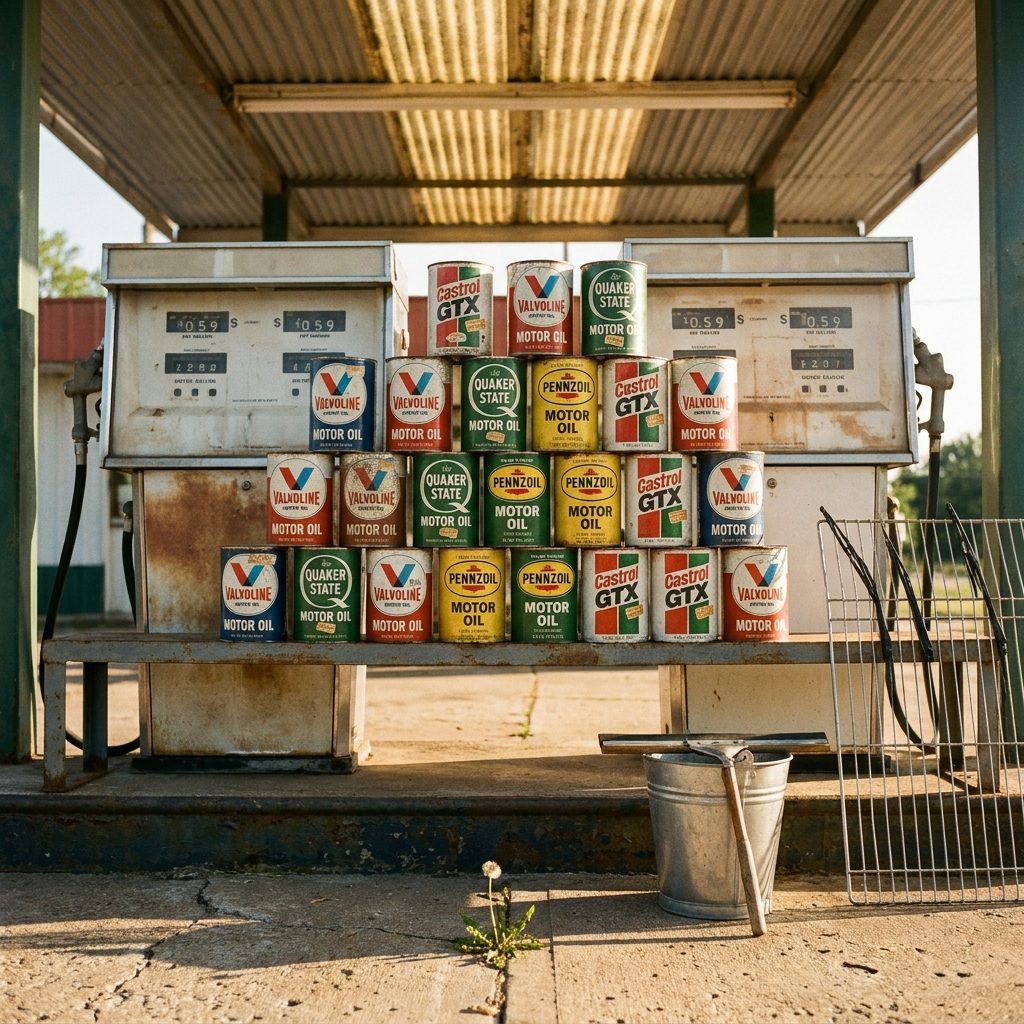
Quaker State in the green can. Pennzoil in the yellow. Valvoline in the white-and-red. Castrol GTX in that unmistakable red-white-and-green. They stood in neat pyramids on a metal shelf between the pumps — tin cans with pull-tab tops, lined up with military precision.
The attendant would check your oil and hold the dipstick toward you like a piece of courtroom evidence. A quart low. You’d nod and he’d grab one off the pyramid without looking, punch the spout in, pour it in a single tilt. Whole thing took about a minute and cost you a buck.
6. The Pinball Machine Humming in the Corner of the Service Bay
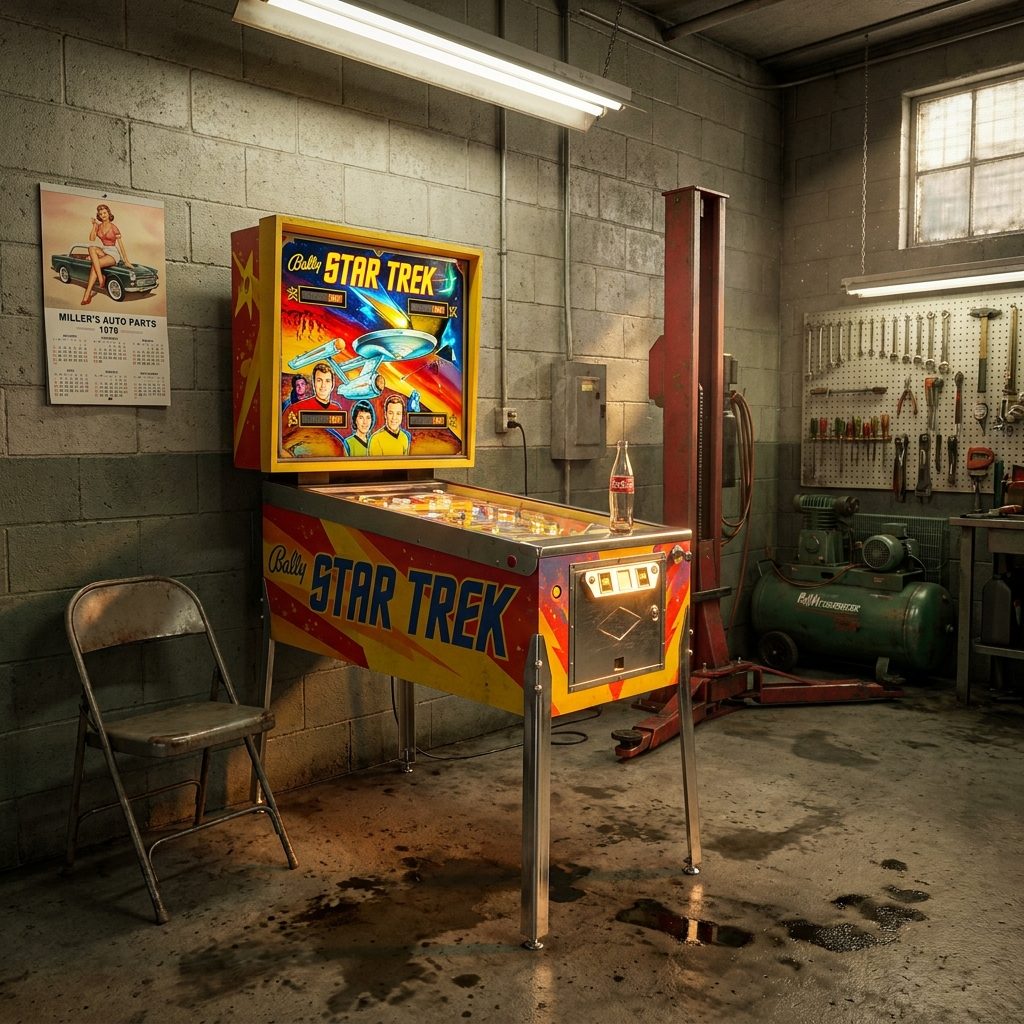
Quarter in the slot. The machine woke up with a series of clicks and pops and then that electric hum — bumpers live, flippers ready. You played while you waited for your oil change, and your kids played while you talked to the mechanic about the noise under the hood that only happened in reverse.
It sat on a concrete floor next to an air compressor. Entertainment and commerce sharing the same greasy square footage. A Bally machine six feet from a hydraulic lift. Nobody blinked at it, which is maybe the most 1970s detail in this entire list.
5. The Local High-School Bumper Sticker on the Cash Register
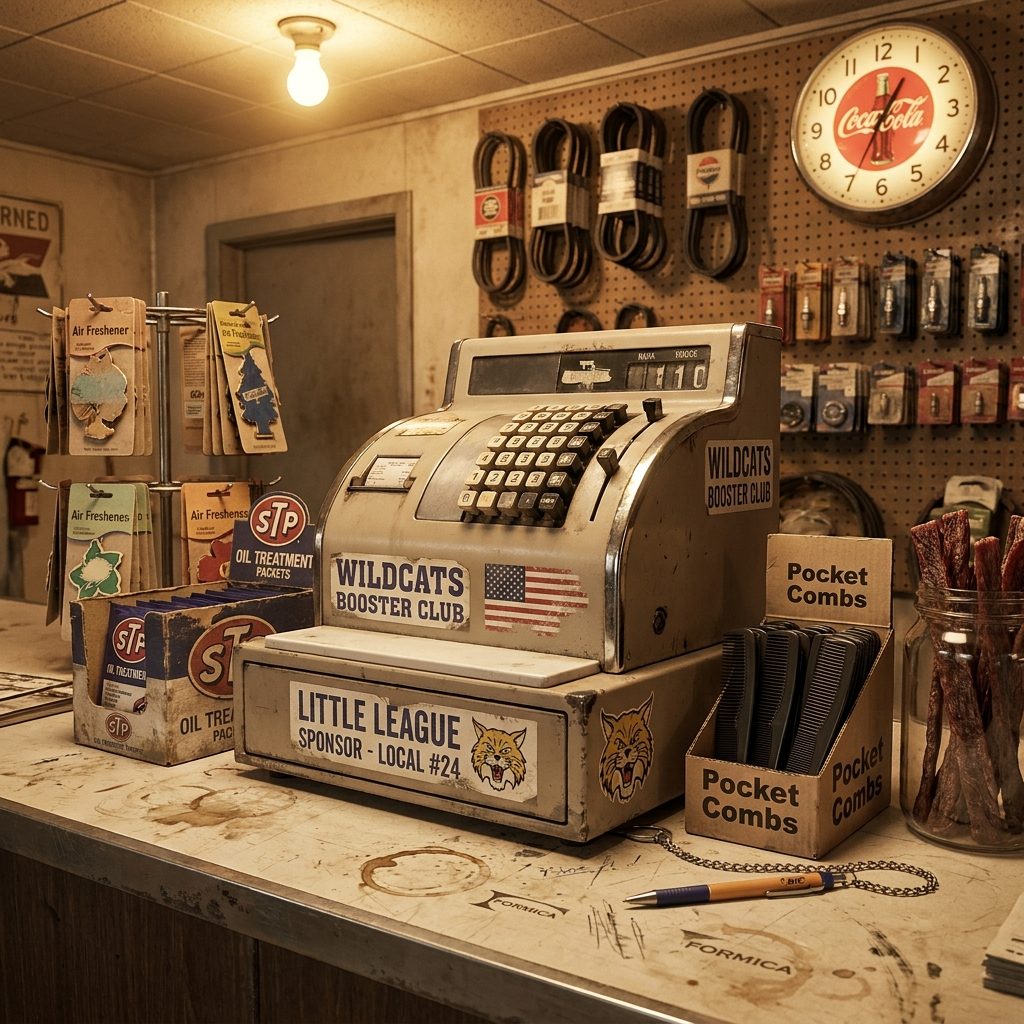
Wildcats. Eagles. Panthers. Whatever the local team was, their bumper sticker lived on that cash register. Booster club decal next to it. Last year’s Little League sponsor sticker peeling at one corner.
He coached a kid’s team, or at least bought the jerseys. He wasn’t a franchise operator rotating through on a corporate ladder — he was a neighbor who happened to fix cars. The station was his. The town was his. And those stickers told you so before you even opened your wallet.
4. The Air Freshener Display That Smelled Like a Pine Forest Had an Argument With a Chemical Plant
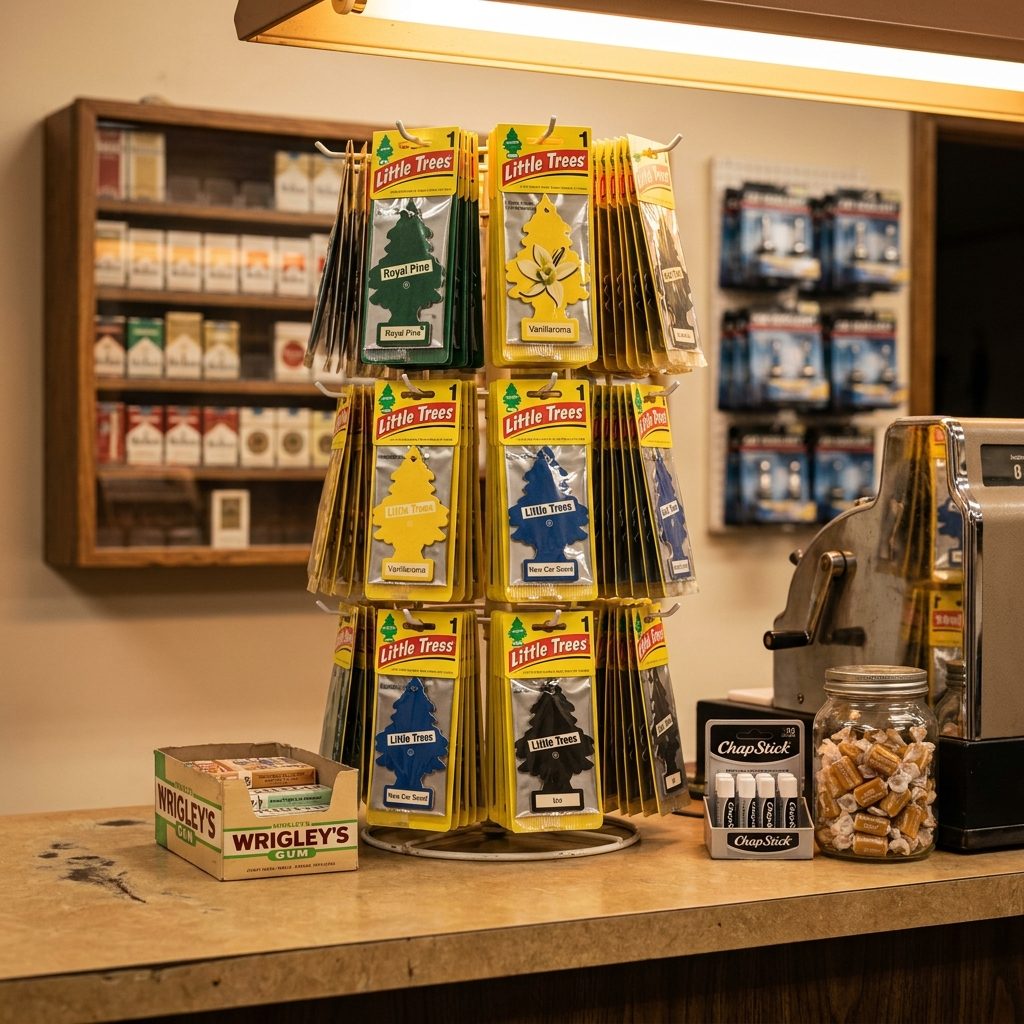
The Little Trees display stood on the counter near the register — a rotating wire rack of cellophane-wrapped pine trees in green, yellow, blue, and black. You could smell it from three feet away even though every single one was sealed in plastic. How? Nobody ever figured that out.
Royal Pine. Vanillaroma. New Car Scent. The holy trinity of automotive smell. You hung one from your rearview mirror and for about two days your Impala smelled like a forest. After that it smelled like a distant rumor of a forest, but you left it dangling anyway for six months because taking it down felt like giving up.
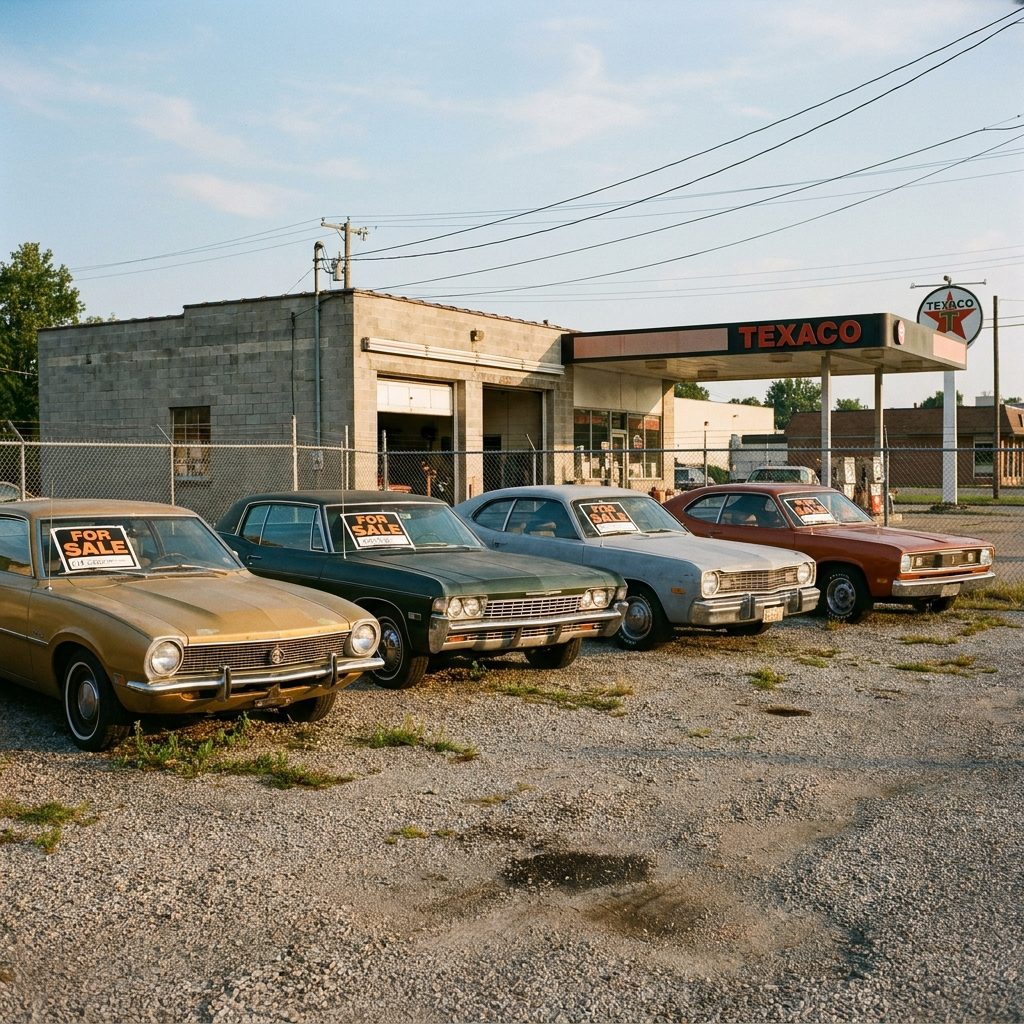
3. The Gravel Lot Next to the Station Where Cars Sat With FOR SALE Signs in Their Windshields
Would you like to save this?
Four or five cars on gravel with cardboard signs propped in the windshields. RUNS GOOD. CALL AFTER 5. OBO. The mechanic was selling them on behalf of customers, or they were trade-ins he’d fixed up on slow afternoons, or they were cars whose owners simply couldn’t cover the repair bill.
That gravel lot was the used-car marketplace before the internet existed. You drove past it every day and one afternoon you noticed a Dart that wasn’t there yesterday, so you stopped in and asked about it. And the mechanic — this is the part — told you everything wrong with it before he mentioned what was right. Can you imagine a dealership doing that?
2. The Vending Machine Full of Small Parts Nobody Thought to Stock Anywhere Else
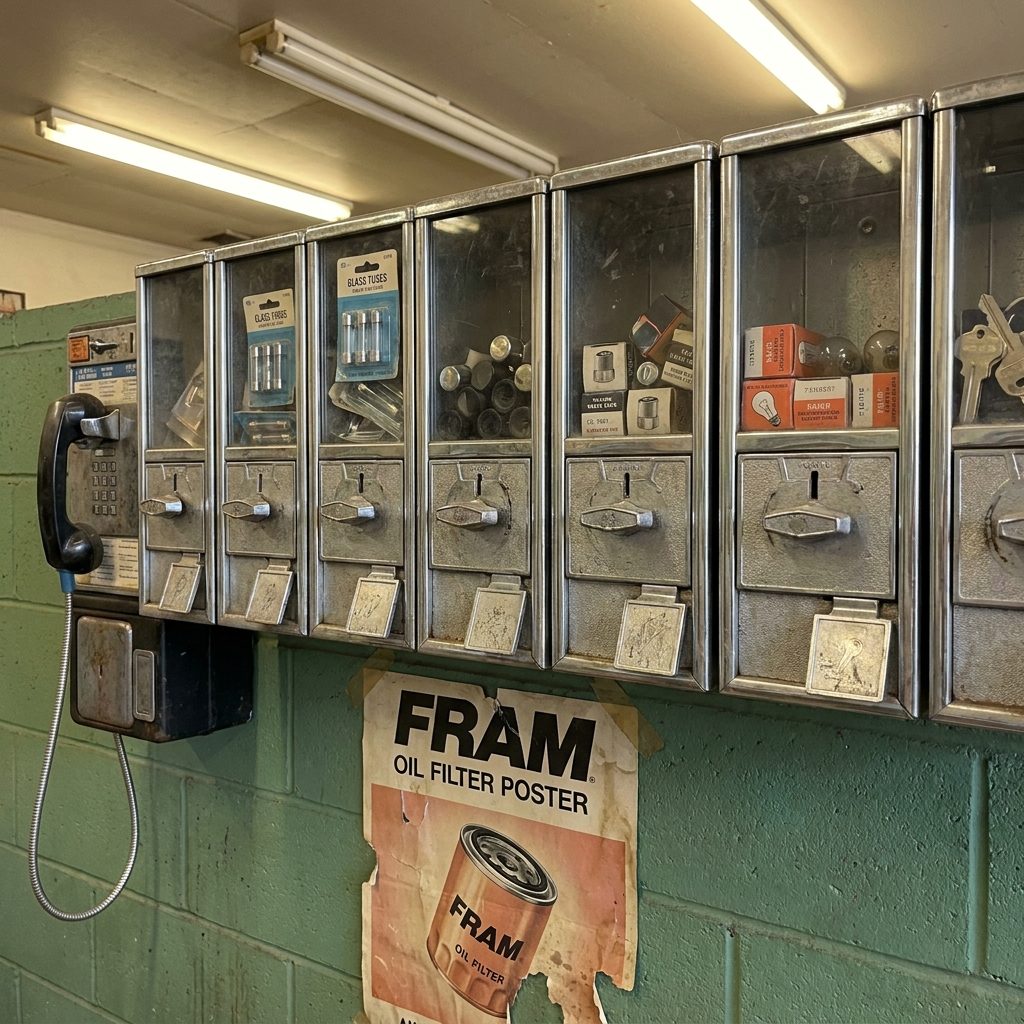
A bank of small glass-fronted dispensers bolted to the wall near the restroom hallway. Fuses. Valve-stem caps. Miniature light bulbs for your turn signal. Drop a quarter, turn the knob, and a little blister pack fell out.
Nobody drives to a store for a single fuse at nine o’clock on a Tuesday night. But you might pull into a gas station, and there it was — right between the pay phone and the men’s room door, solving a problem you didn’t know you had five minutes ago. Ugly little machine. Genuinely useful.
1. The Fluorescent Texaco or Gulf or Sunoco Sign That Was the Brightest Light on the Block After Dark
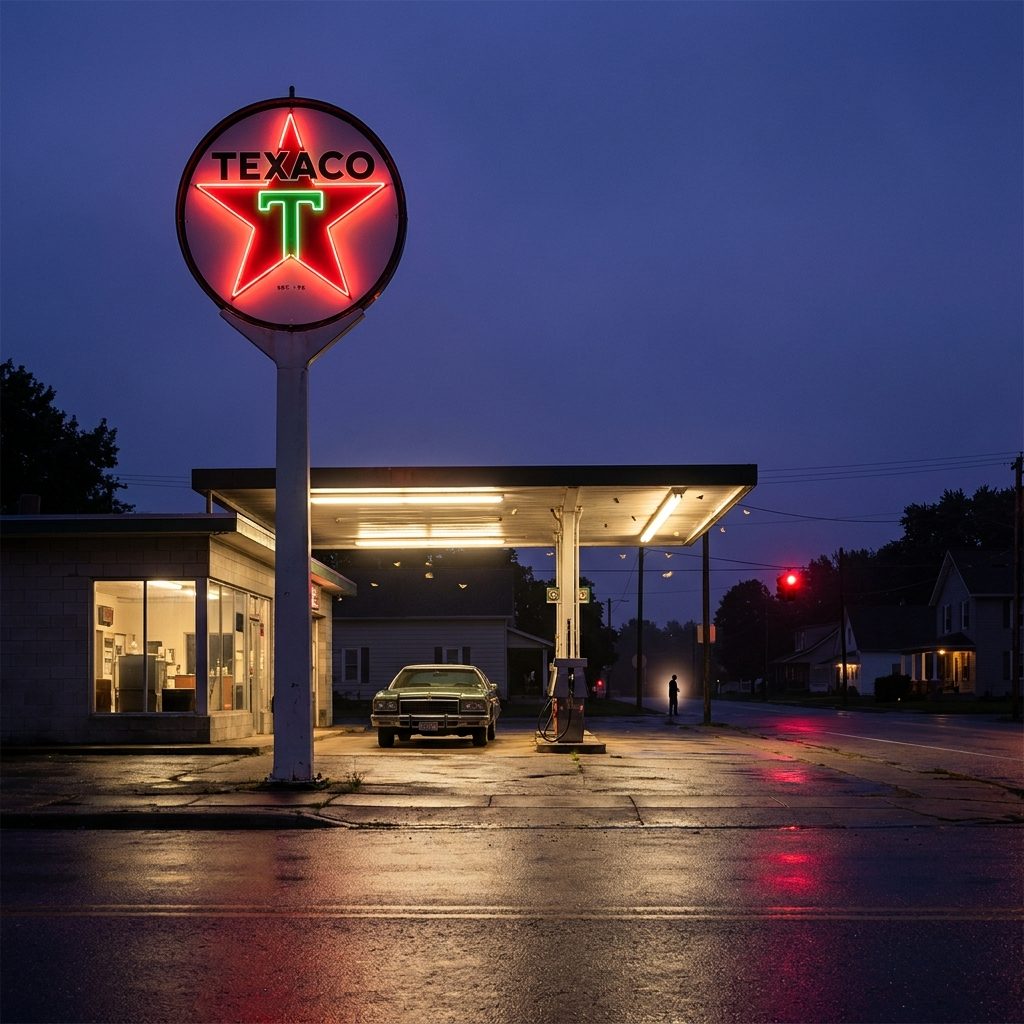
After nine on a weeknight, most of Main Street went dark — hardware store, barbershop, bank, all of it shut. But the gas station sign stayed lit. That glowing Texaco star or Gulf disc or Sunoco arrow was the brightest thing in town, visible from far down the road in any direction, humming with electricity.
You gave directions by it. Turn left at the Texaco. You made plans around it. I’ll pick you up at the Gulf station. On roads without streetlights — and there were plenty — it was the thing you drove toward when you weren’t quite sure where you were anymore.
It marked the town as much as it marked the station. Somebody’s still here. Something’s still open. Moths circling the canopy lights and a single car at the pump, and somehow that was enough to make a dark road feel less empty.