
Would you like to save this?
The cooler was packed the night before: cans of pop, sweating bologna sandwiches, grapes in a margarine tub, maybe one chocolate bar somebody was already guarding like evidence. Before sunrise, the duffel bags were wedged into the back of the wagon, the engine was coughing in the driveway, and one parent was pretending the paper map made perfect sense.
A 1980s road trip did not ease you into summer. It shoved you into the backseat with bare legs on hot vinyl, a sibling claiming the invisible border, and a cassette case sliding around on the floor. Somewhere between the last highway rest stop, the first motel pool, and the third threat to turn this car around, the family vacation became its own strange country. No GPS. No streaming. No screen glowing in the seatback. Just exits missed, snacks rationed, windows cracked, and the kind of boredom that somehow made every mile feel bigger.
33. The Cooler of Sandwiches Mom Packed So Nobody Had to Stop at a Restaurant
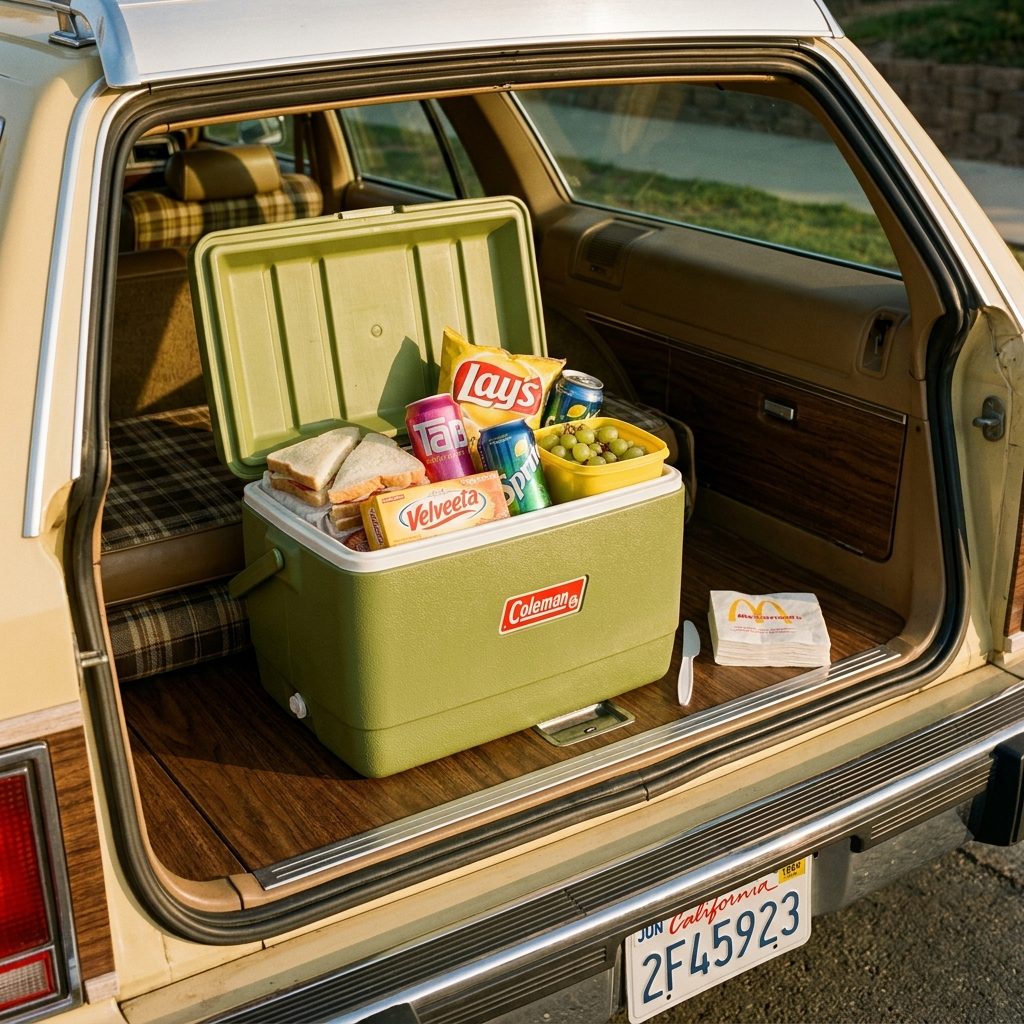
The cooler was non-negotiable. Stopping for lunch meant twenty minutes of debate, fifteen minutes of parking, and another twenty of everyone ordering separately. Mom had worked this out years before the rest of us and the answer was always a Styrofoam Igloo packed at six in the morning with wax-paper sandwiches and canned sodas that went lukewarm somewhere around the third state.
The system worked. The sandwiches got a little flat under the weight of the Tupperware. Nobody complained.
32. The Sticker Collection Pressed Against the Rear Side Window From Every State You Crossed
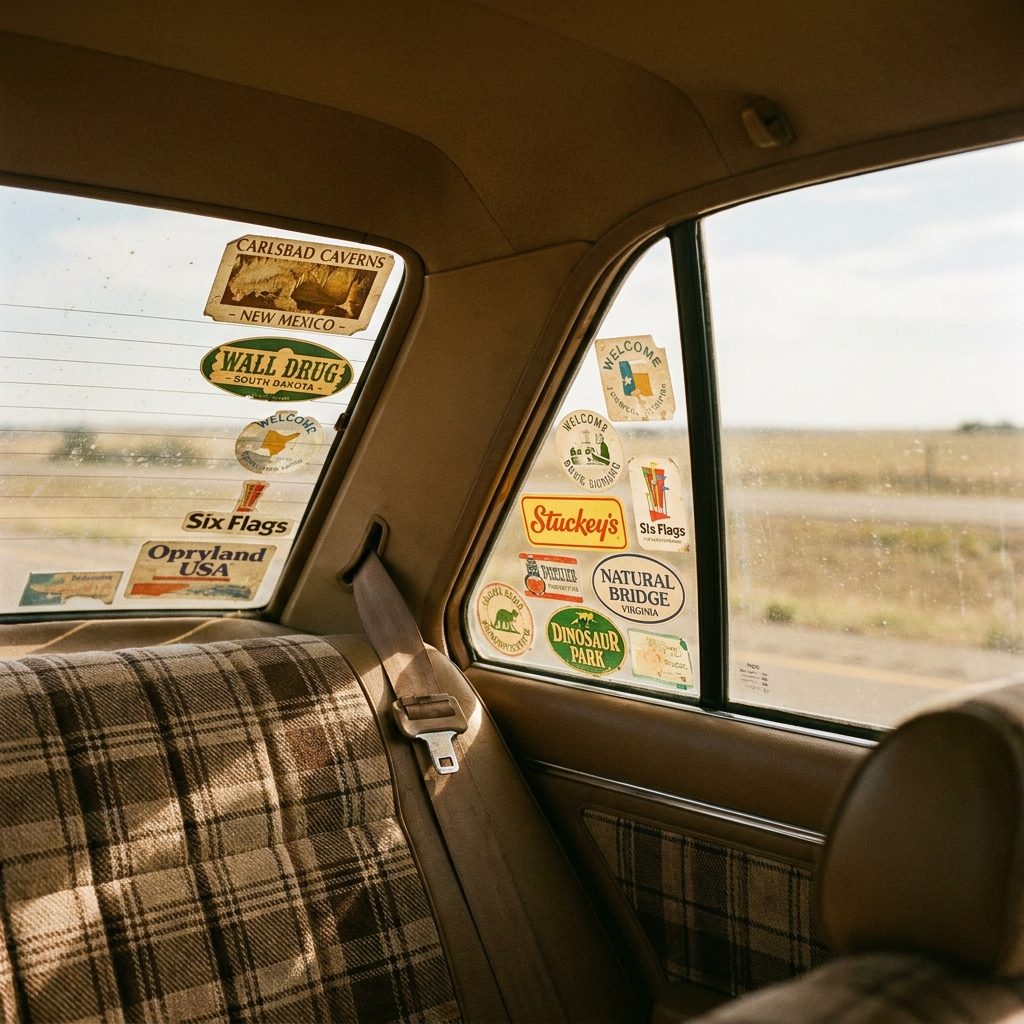
That rear window was a travel diary. Wall Drug. Stuckey’s. Natural Bridge. The giant faded Six Flags oval you got on the first trip and never took off because it was basically part of the car now. Every sticker was proof you’d been somewhere, layered on top of wherever you’d been before.
The collection reached a point where you couldn’t see out the back window properly, which Dad tolerated until it didn’t, and then it didn’t.
31. The AM Radio Finding Stations in the Dark Between One City and the Next
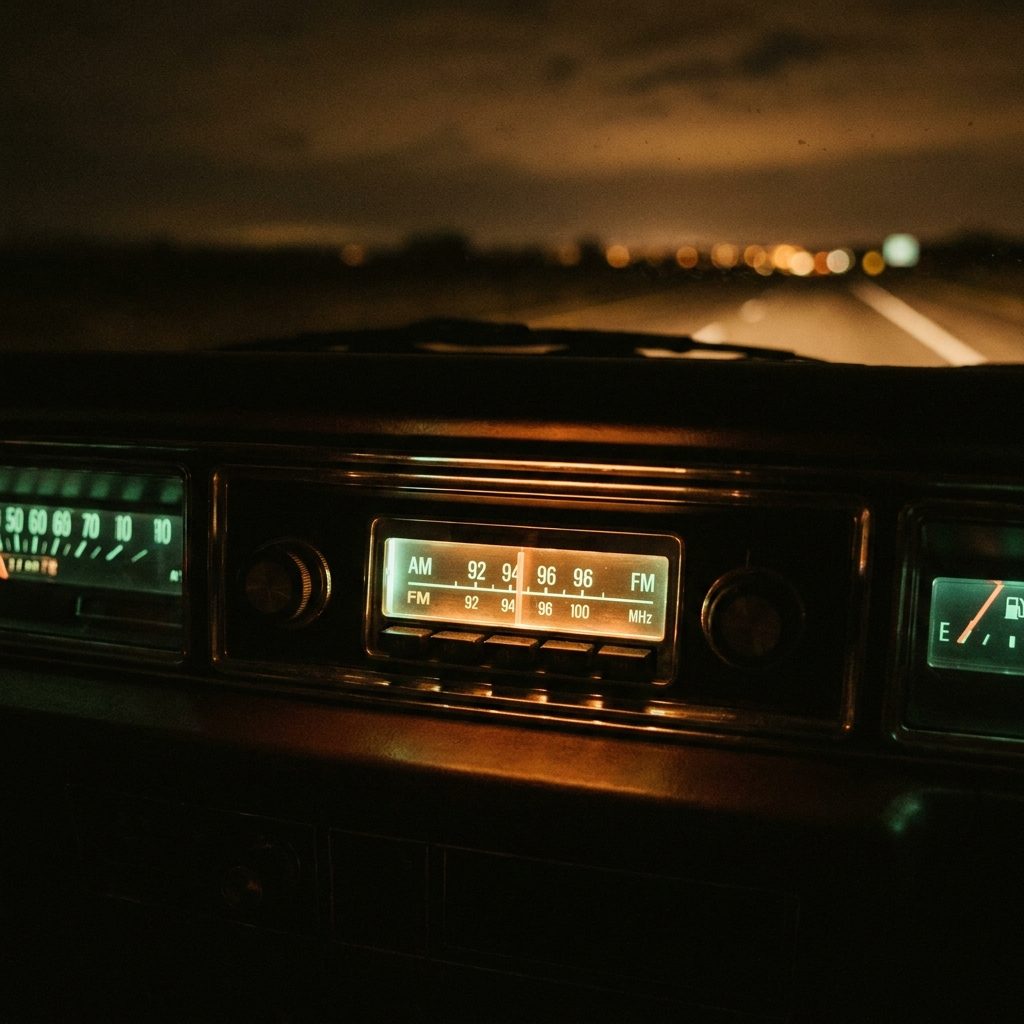
Late enough at night and the AM band did strange things. Stations from cities three hundred miles away bled in through the static, country music from somewhere in Texas mixing with a baseball game from a city nobody could identify. You’d hold the dial still and try to catch the call letters before the signal faded back into white noise.
That stretch of dark highway between stations had its own particular quiet. The kind where everyone in the back seat eventually stopped talking.
30. The Howard Johnson’s Off-Ramp at Mile 340 and the Promise of 28 Flavors
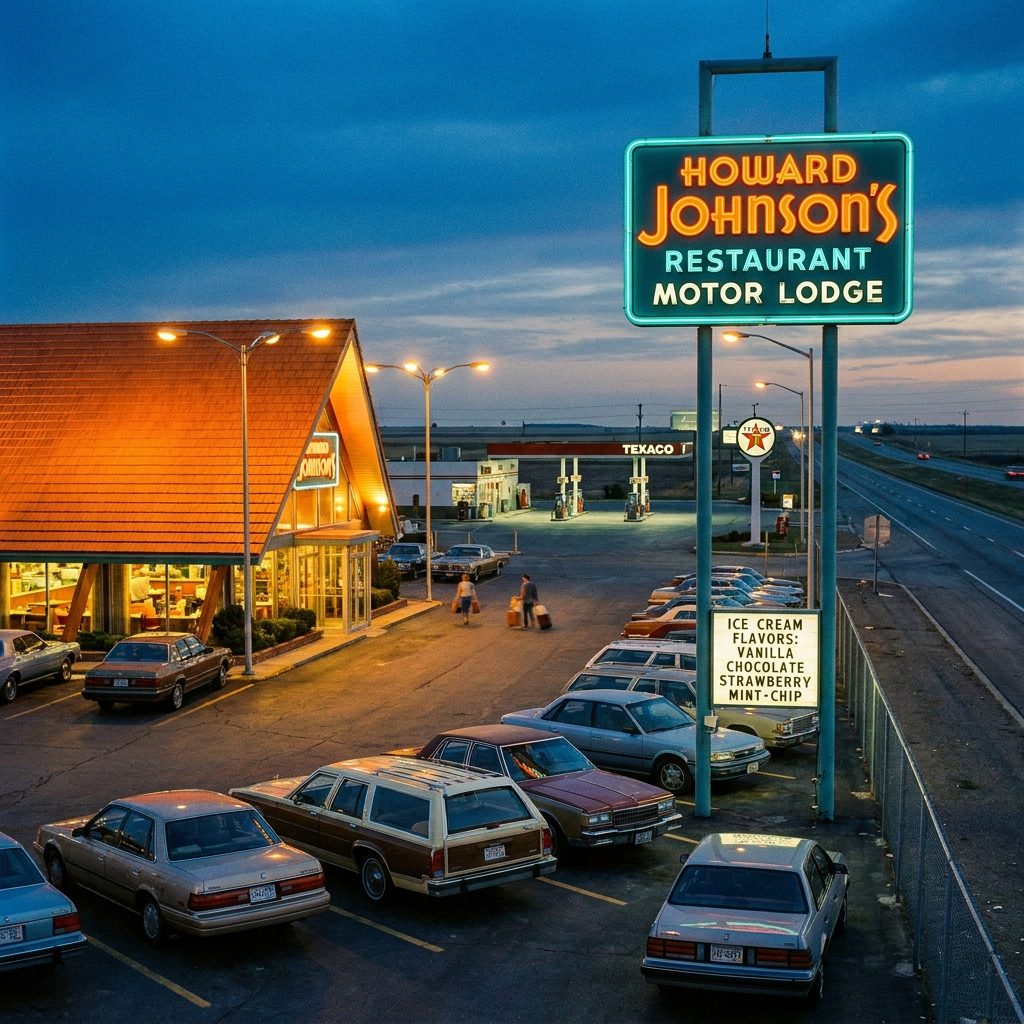
Every family had a HoJo ritual. The off-ramp appeared on the TripTik with a small orange star and that was enough. By the time the orange roof came into view at dusk, everyone in the car had already mentally ordered. The fried clams were Dad’s call. The 28 flavors were everyone else’s argument.
29. The Trucker Talk Coming Through the CB Radio Clipped to the Dash Visor
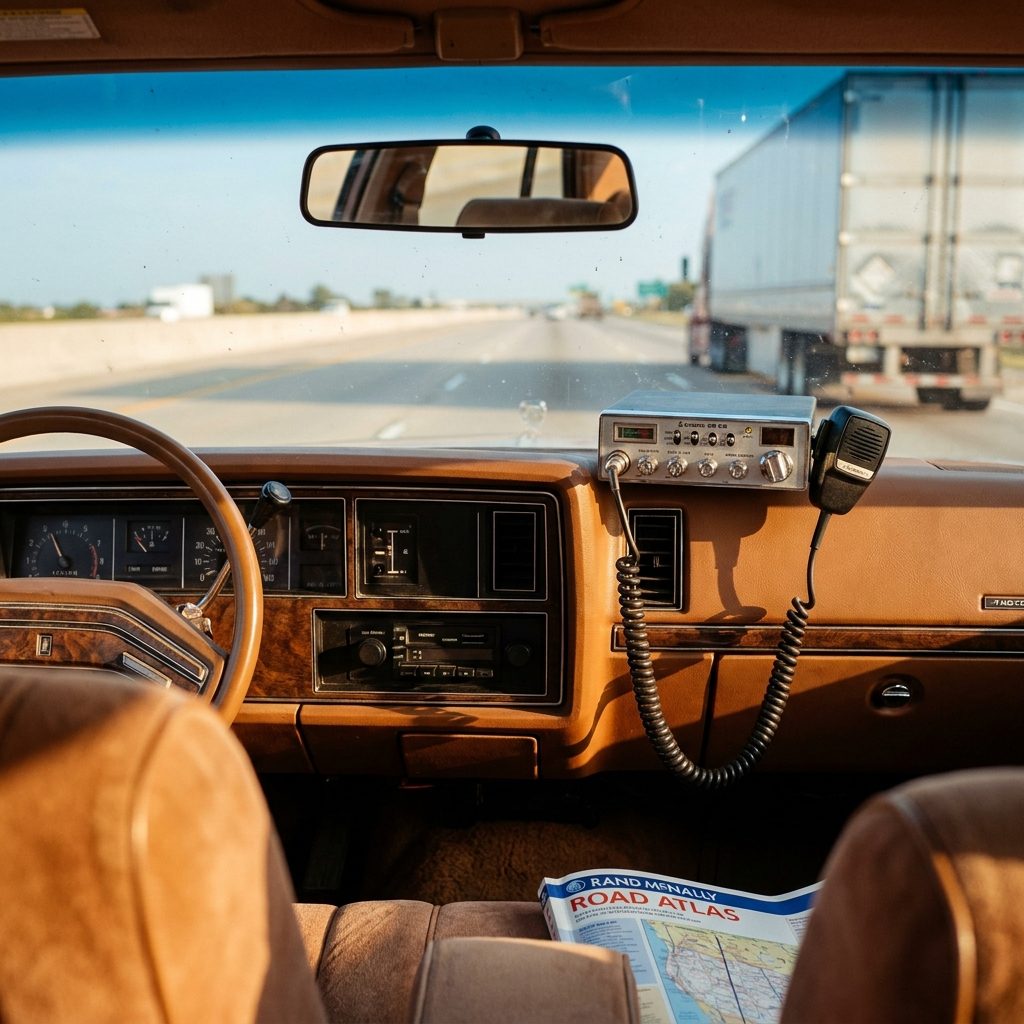
Not every family had one, which made the ones that did feel like they were traveling with classified information. The CB radio clipped to the visor pulled in trucker chatter about speed traps, slow traffic ahead, and conversations that had no clear beginning or end. The kids in the back seat listened without understanding half the terminology and found this completely acceptable.
Dads who called themselves anything other than their actual name on Channel 19 had more fun than they would admit.
28. The Rest Stop With the Vending Machine That Took Quarters You Didn’t Have
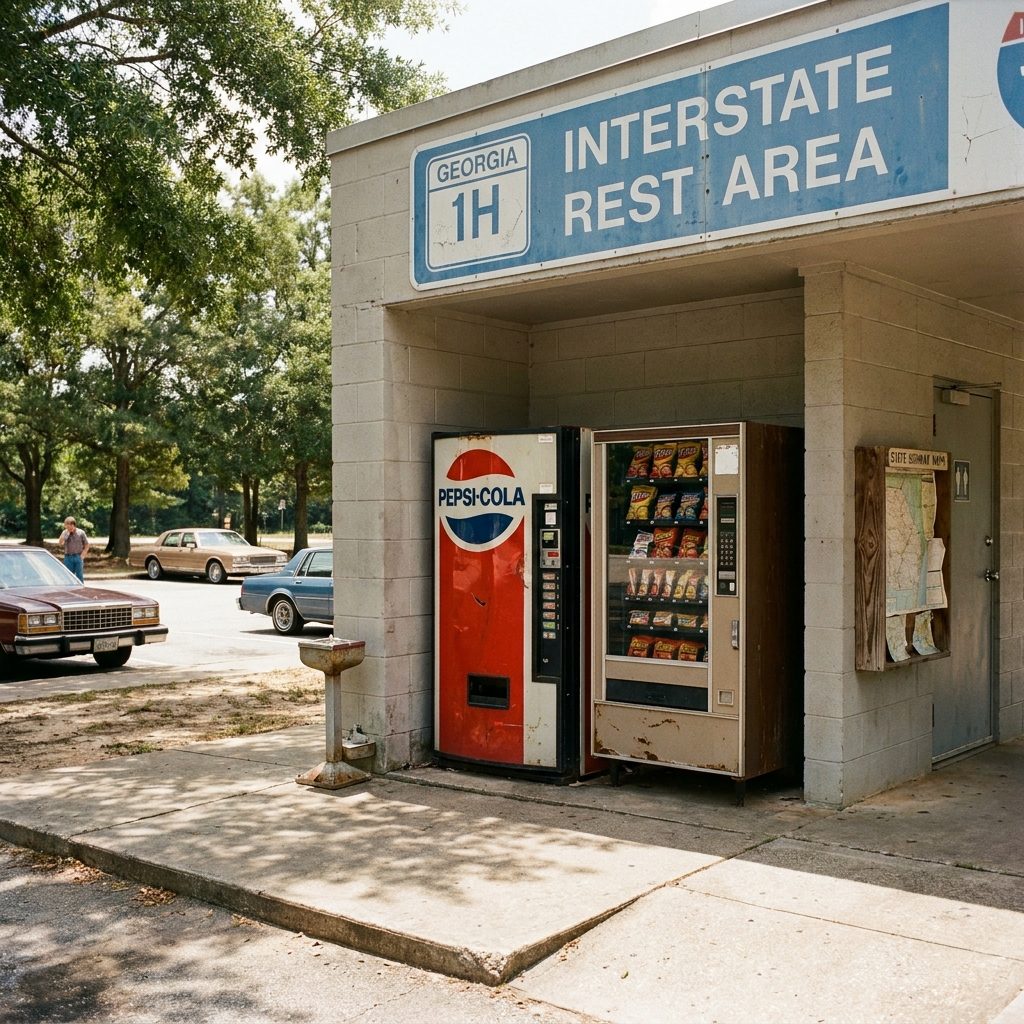
The rest stop vending machine was a negotiation. You needed two quarters and a dime and usually had three dimes and a nickel. Someone always had to go back to the car for change. Sometimes the machine took the money and nothing came out, which was its own formative lesson about the world.
The Fritos were always there. The good chips were always sold out. This was consistent across every rest stop in America throughout the decade.
27. Reaching the Motel Pool at 7pm After Eight Hours in the Car
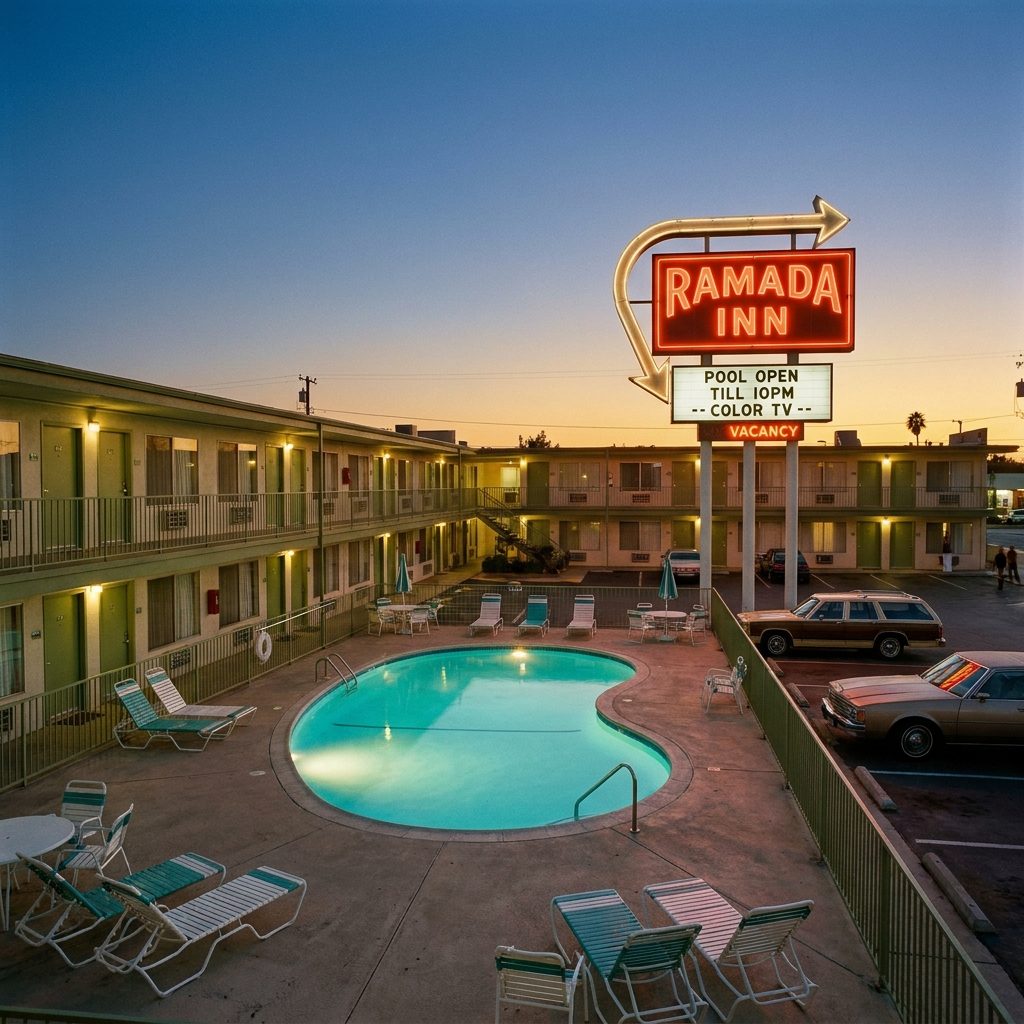
Eight hours in the back seat of a car with two other people and a cooler of sandwiches, and then the motel sign said POOL OPEN and the entire afternoon evaporated. Nobody cared that the pool was the size of a living room. Nobody cared that it smelled more like chlorine than water. The point was that it was not the car.
You could still be in the pool at 9:45 when they technically closed at 10. The overhead light would click off as a suggestion. It took another fifteen minutes for it to actually mean anything.
26. The Summer the Road Atlas Lived in the Front Seat and Everyone Fought Over Which State You Were In
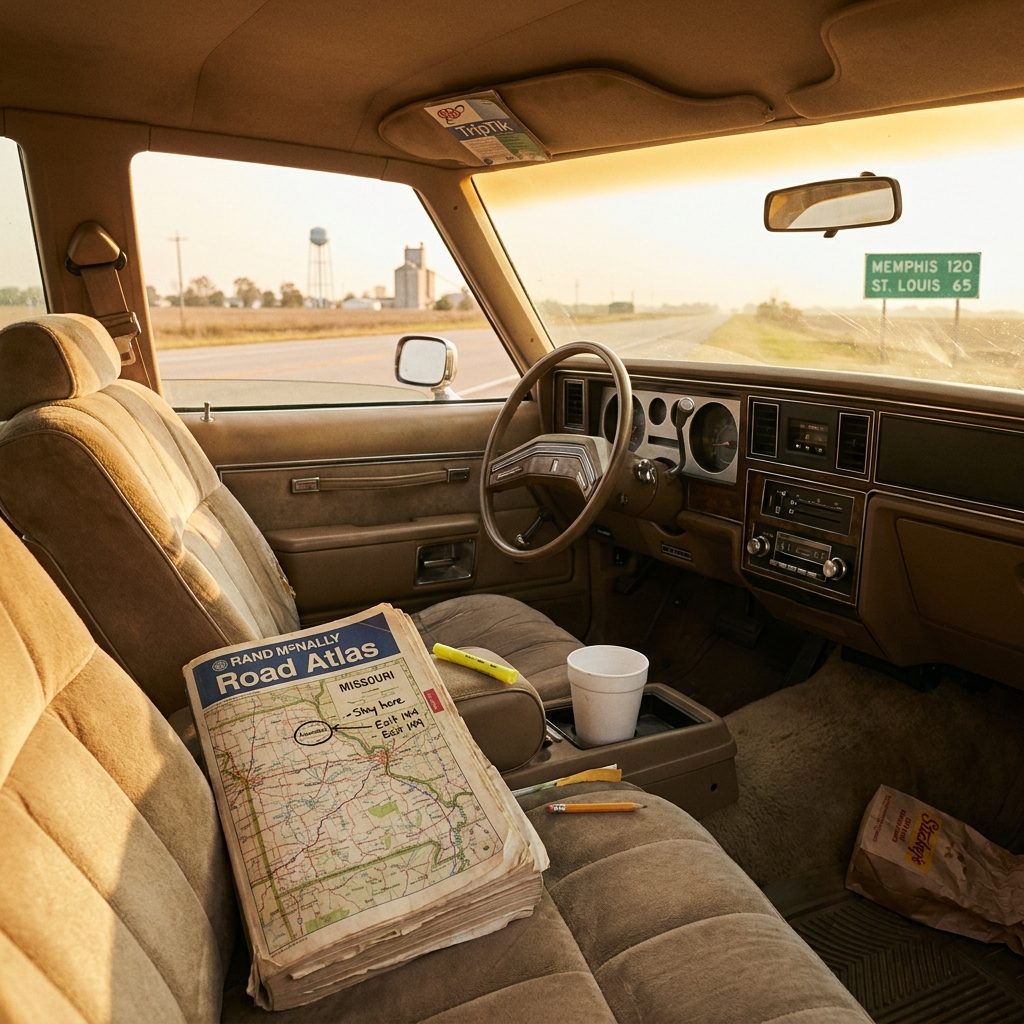
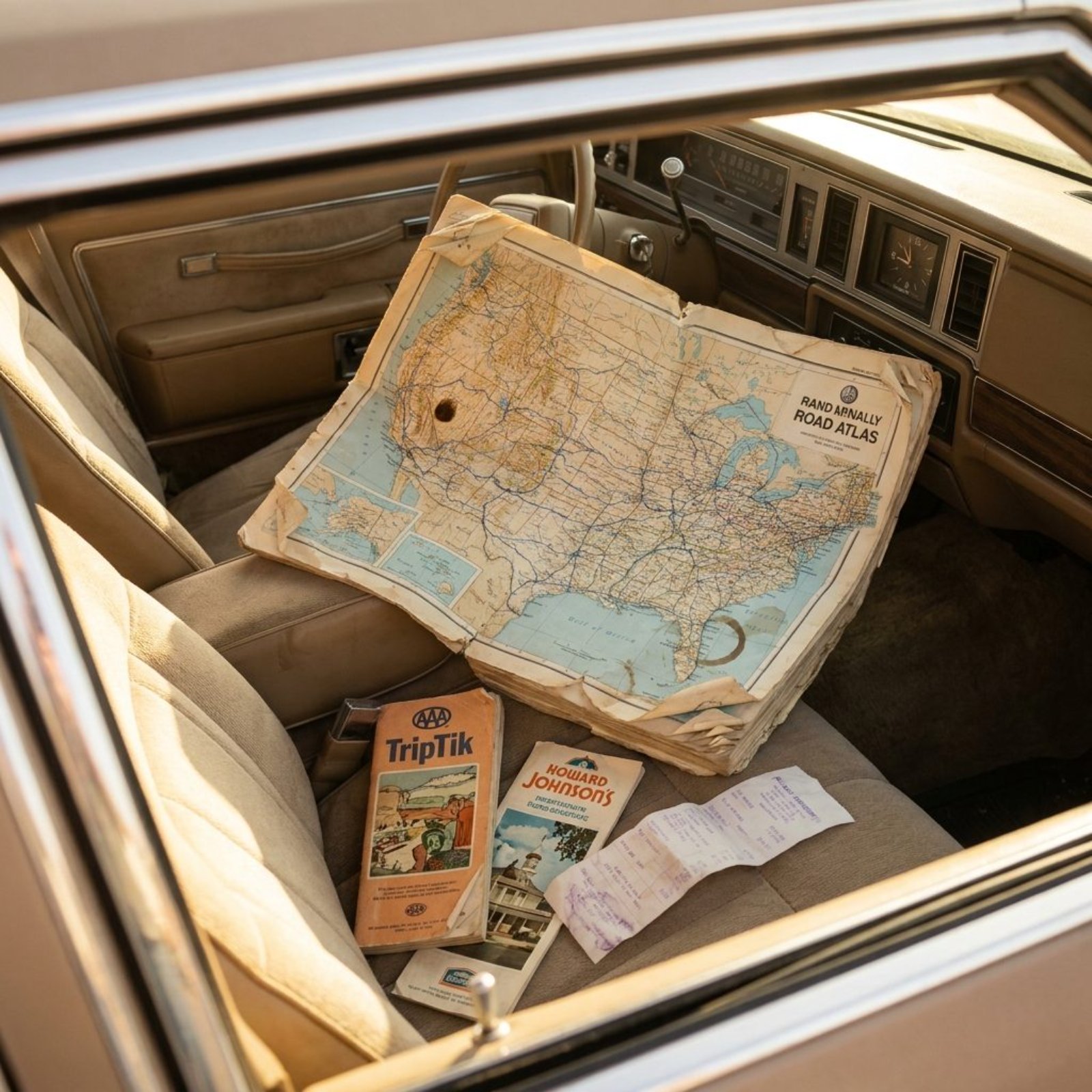
Nobody trusted the driver to read it and nobody trusted the kids in the back to fold it. So the Rand McNally Road Atlas just lived open on the passenger seat for the entire trip, slowly losing its spine, growing a coffee ring on the Tennessee page, and accumulating felt-tip circles around every Howard Johnson’s within reasonable distance of the highway. Someone in the back would ask how much farther and the front seat would squint at the scale of miles and say something like “maybe two inches.”
The atlas was its own kind of entertainment. You could trace the whole route with your finger, argue about whether the blue highway was faster than the red one, and spend a solid forty miles trying to figure out whether you’d actually crossed into the next state yet or if that sign was just a county line. AAA sent a TripTik too, that little spiral-bound strip of maps, but the atlas was the real authority. It knew every state, every interstate, every town that rated a dot. You didn’t need a signal. You didn’t need a battery. You just needed someone willing to read it upside-down from the back seat.
25. The Vinyl Backseat That Welded Itself to Your Thighs by Hour Two
Would you like to save this?
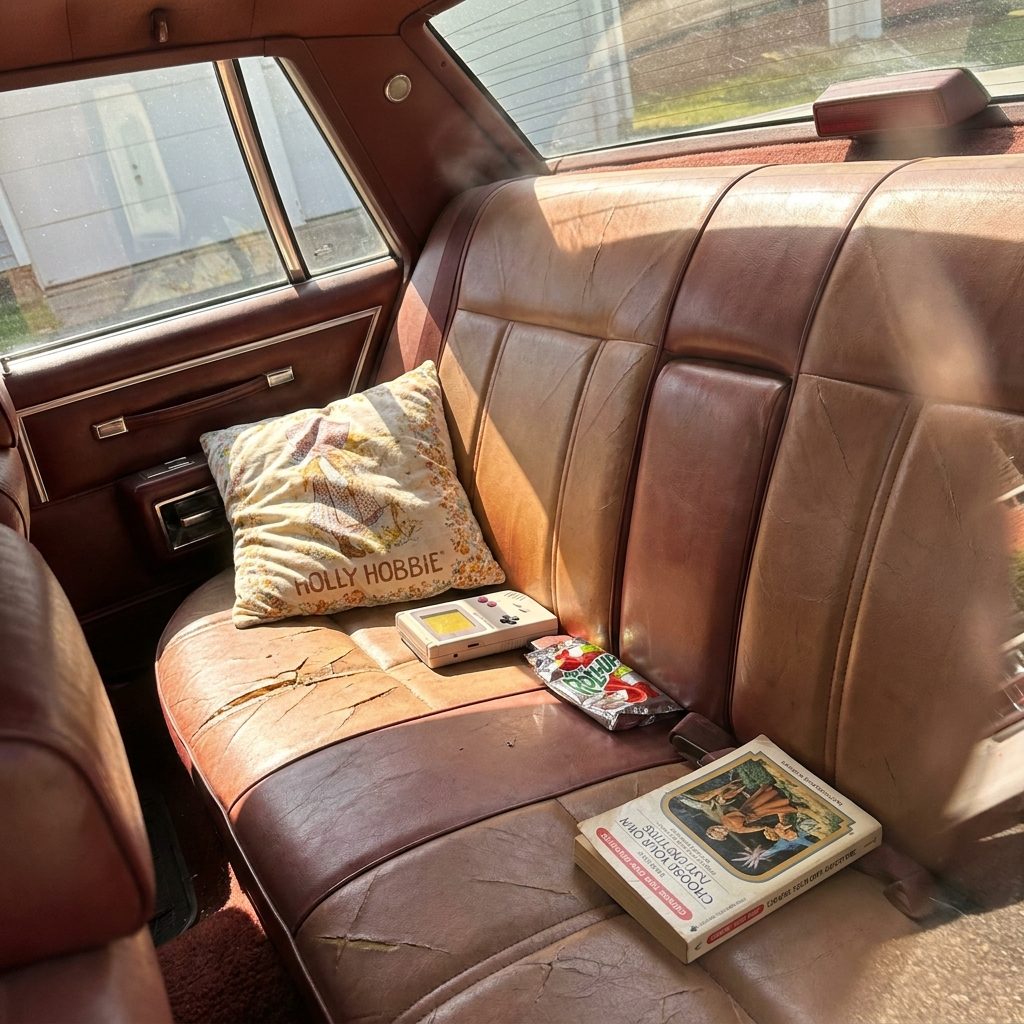
That vinyl collected heat like a grudge and held it until October. You learned fast: lay a towel down before sitting, or spend the next thirty seconds peeling skin off the seat back while your sister laughed from the other side of the car.
Cloth seats existed in 1985, sure. They cost more. So most of us got the vinyl, and every rest stop involved the same careful peel-and-unstick choreography before standing up. The waffle pattern those seat seams left on the back of your legs? Lasted longer than most sunburns.
24. The Rear-Facing Third Row Where You Waved at Strangers Until They Waved Back
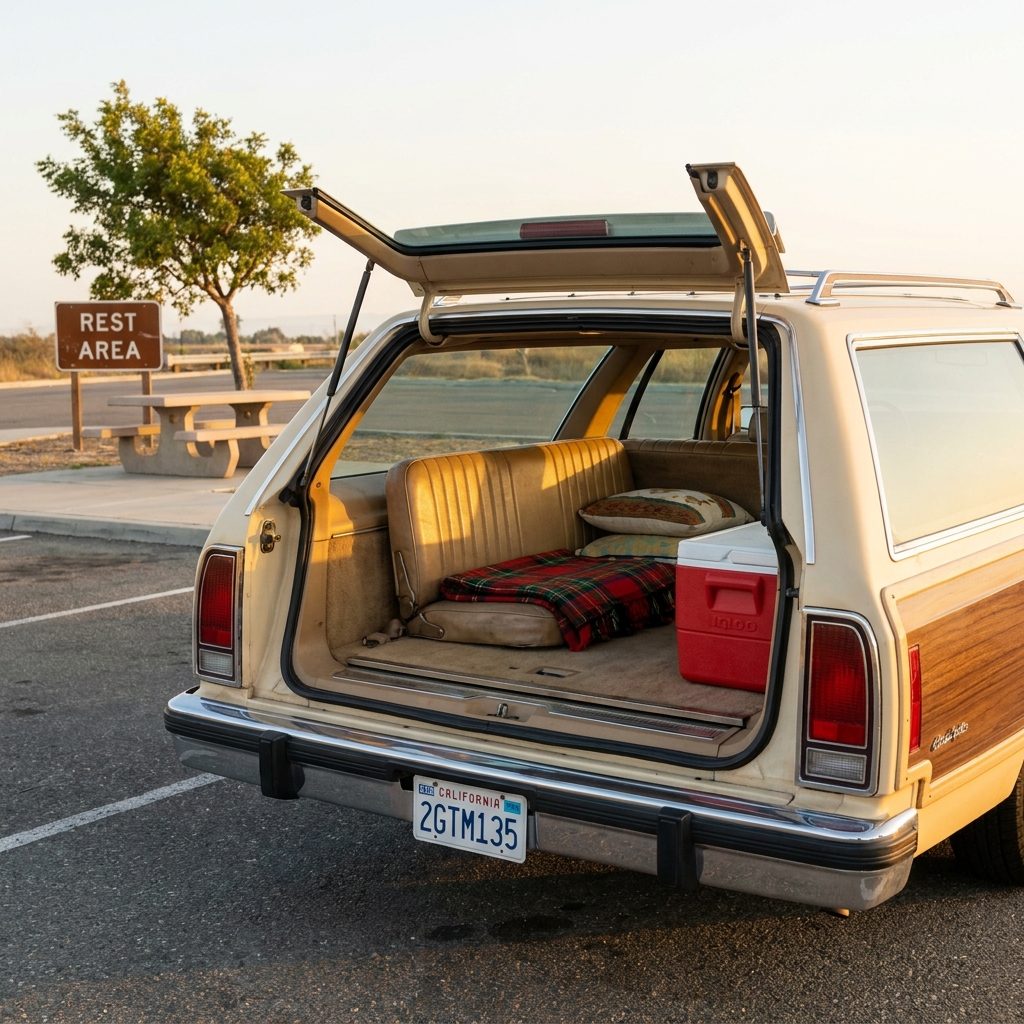
Riding backward at sixty miles an hour with no seatbelt — that was the privilege of the youngest kid in the station wagon. We fought for it.
The game was simple. Lock eyes with the driver behind you. Wave. If they waved back, you won something unnamed but real, and if they didn’t, you made a face until they caved. Truckers were the best because they always played along.
That third row sat right over the rear axle, so you felt every expansion joint in the highway straight through your spine. Nobody cared. You had your own little kingdom back there, separated from parental jurisdiction by two rows of seats and a cooler the size of a footlocker.
23. The Styrofoam Cup of Gas-Station Coffee Dad Balanced on the Dashboard for 200 Miles
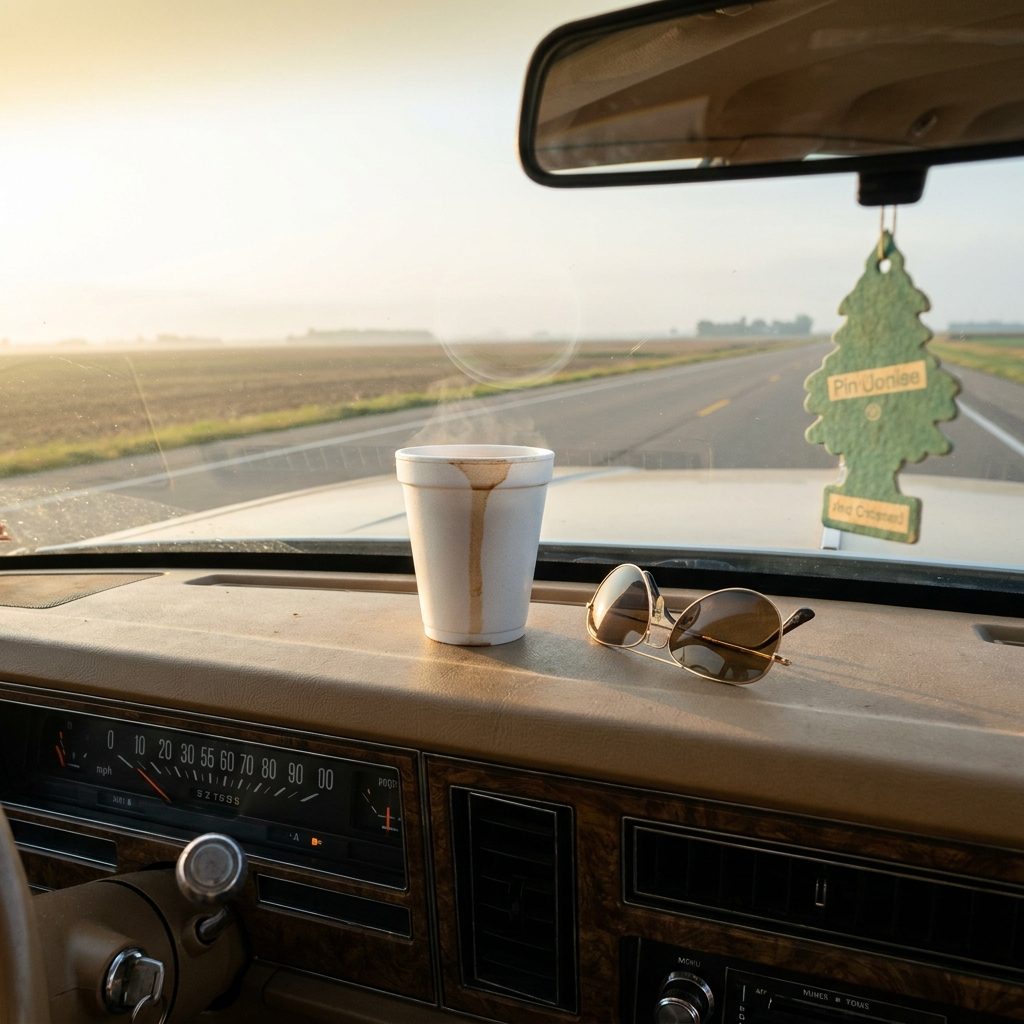
No lid. There was never a lid.
He’d walk out of the gas station with a Styrofoam cup filled to the brim, set it on that wide, flat dashboard, and drive like the laws of physics owed him a personal favor. It never spilled — that was the miracle. The cup would slide an inch on a curve, pause like it was thinking about it, and slide back. Your mother would say something. He’d take a sip without looking down. Cup went back on the dash. Two hundred miles of this, and not a drop on the vinyl.
22. The Argument Over Air Conditioning vs. Windows Down That Nobody Ever Won
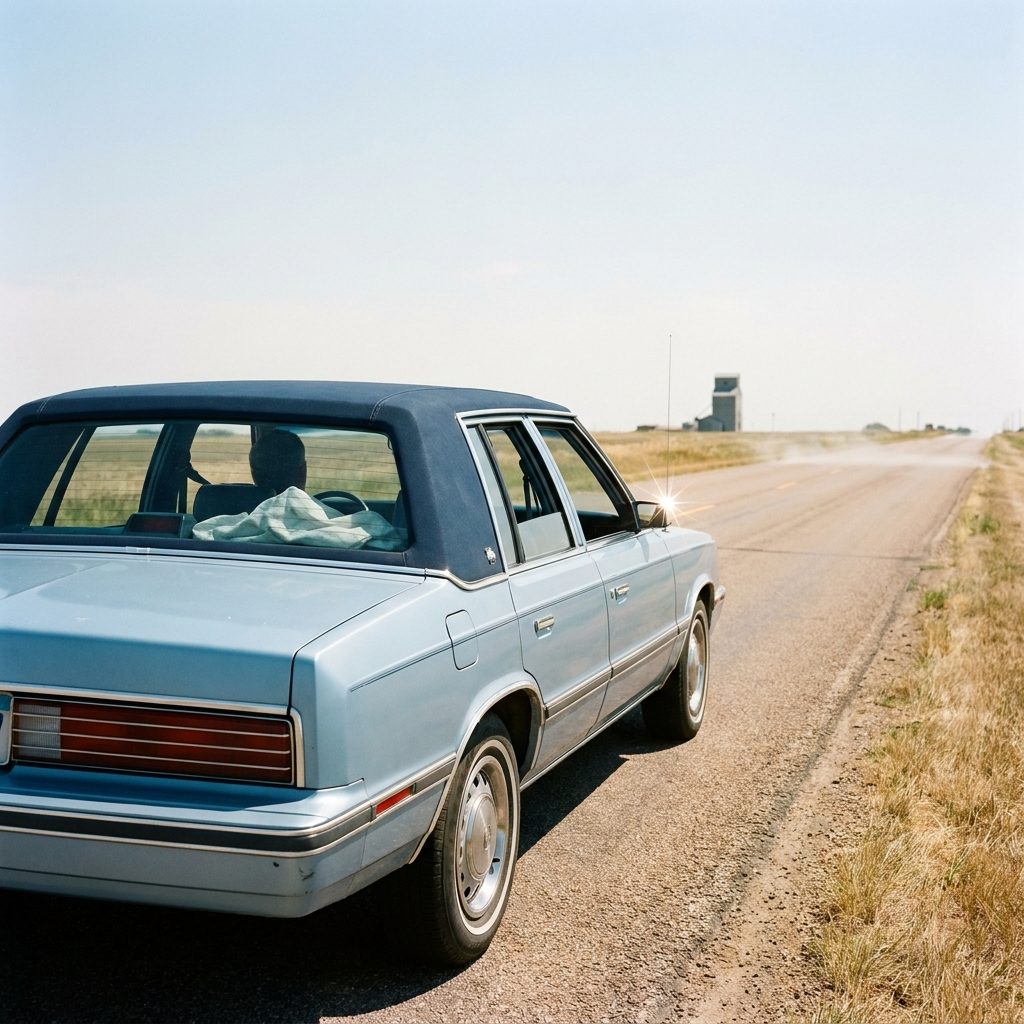
The air conditioning worked. Technically. It blew cool air if you were doing over fifty and the sun wasn’t directly overhead, which on a July road trip through Kansas meant it functioned from roughly 9pm to 6am.
So the windows came down. Then Mom’s hair blew into her face and she rolled hers up. Then the back seat became a convection oven, and someone asked to turn the AC on again. This cycle repeated every forty minutes for the entire trip. The correct answer was always whatever the car wasn’t currently doing.
21. The Kid in the Front Seat Whose Only Job Was Holding the Toll Money
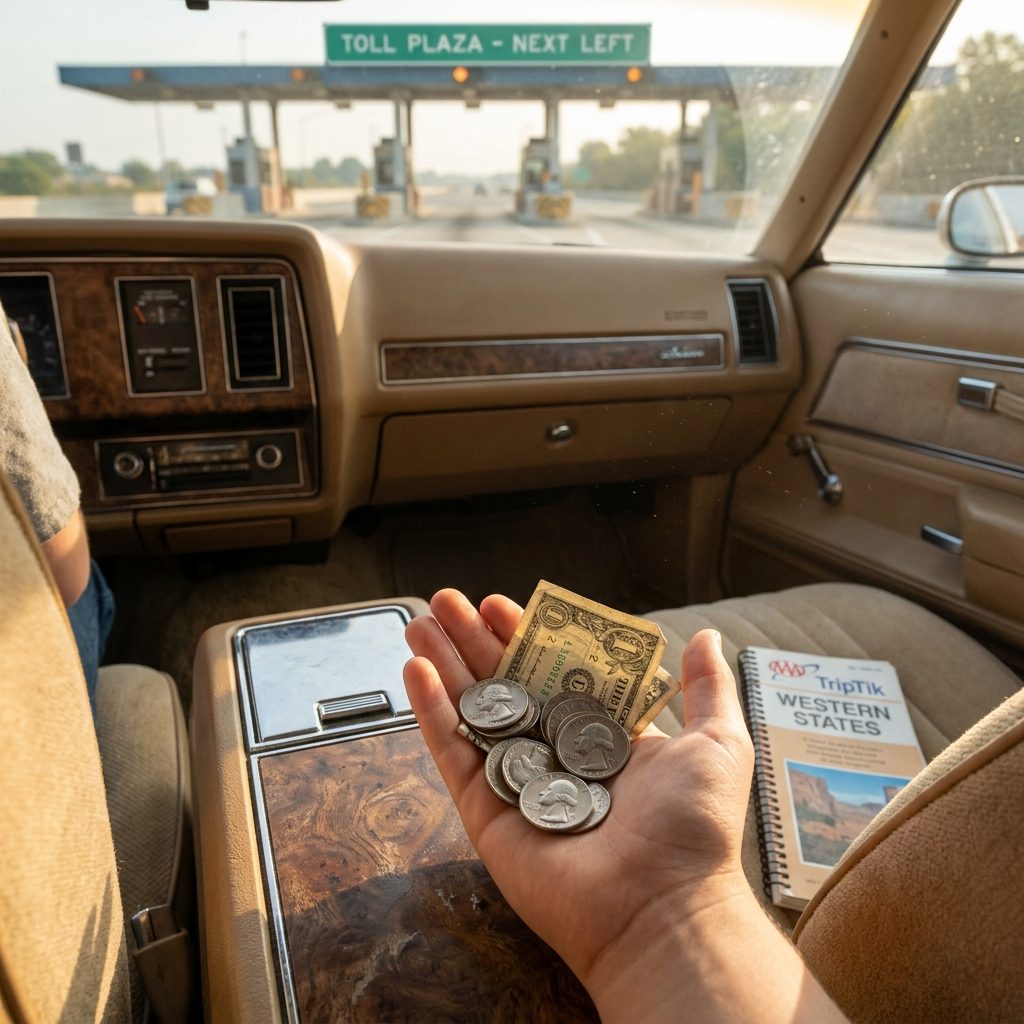
Front seat was earned, not given. And it came with duties.
Dad told you the amount three exits before the toll. You counted it out, held it ready, passed it over at the exact right moment so the booth transaction lasted under four seconds. Drop a quarter on the floor and you heard about it for the next sixty miles. Get it right and you got silence — which, from the driver’s seat in 1985, counted as high praise.
20. The Cassette Tape That Got Stuck in the Deck Somewhere in Pennsylvania and Played for Three States
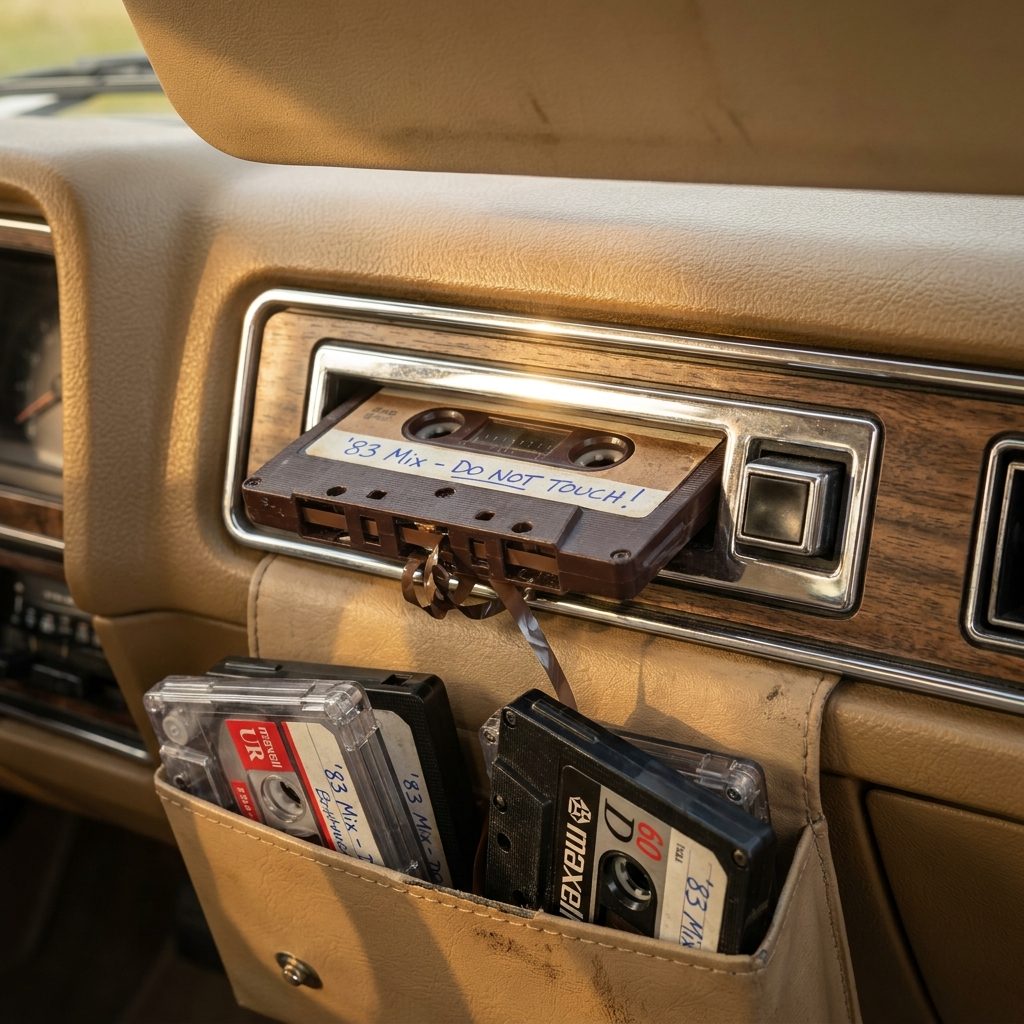
Side B of a mixtape your older brother made — Fleetwood Mac into Tom Petty into something unidentifiable that might have been recorded off the radio with the mic held up to a speaker. The eject button stopped working outside Harrisburg.
So you listened to it again. And again. By the third play-through, everyone in the car knew every word, including the parts where the DJ talked over the intro. The tape finally came loose at a Stuckey’s in Ohio when Dad jabbed a pen into the slot. That was the official factory-recommended repair method for every cassette deck manufactured in that entire decade, as far as any of us knew.
19. The Atlas Road Map Folded Into a Shape No Human Could Reproduce
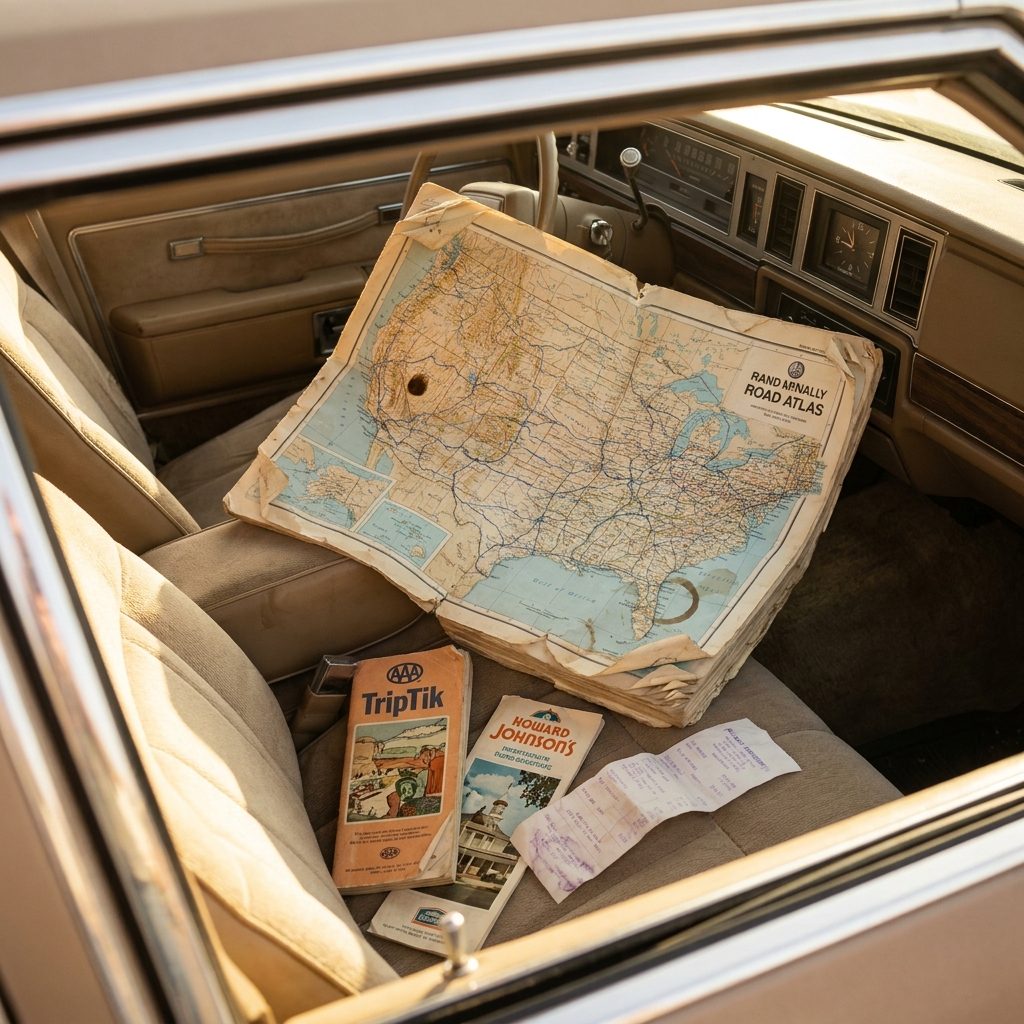
Nobody could refold that atlas back to its original shape. Not Dad, not Mom, not the one kid who thought they could. By day three it was a crinkled mass of paper that lived permanently in the footwell, consulted like an ancient scroll and understood by nobody under twelve.
The Rand McNally Road Atlas was the navigation system, the trip planner, and the dinner-table argument starter. You traced the route with your finger before you left the driveway and then watched helplessly as real life diverged from the plan somewhere around the state border.
18. The License Plate Game and the Spiral Notebook Where You Kept Score
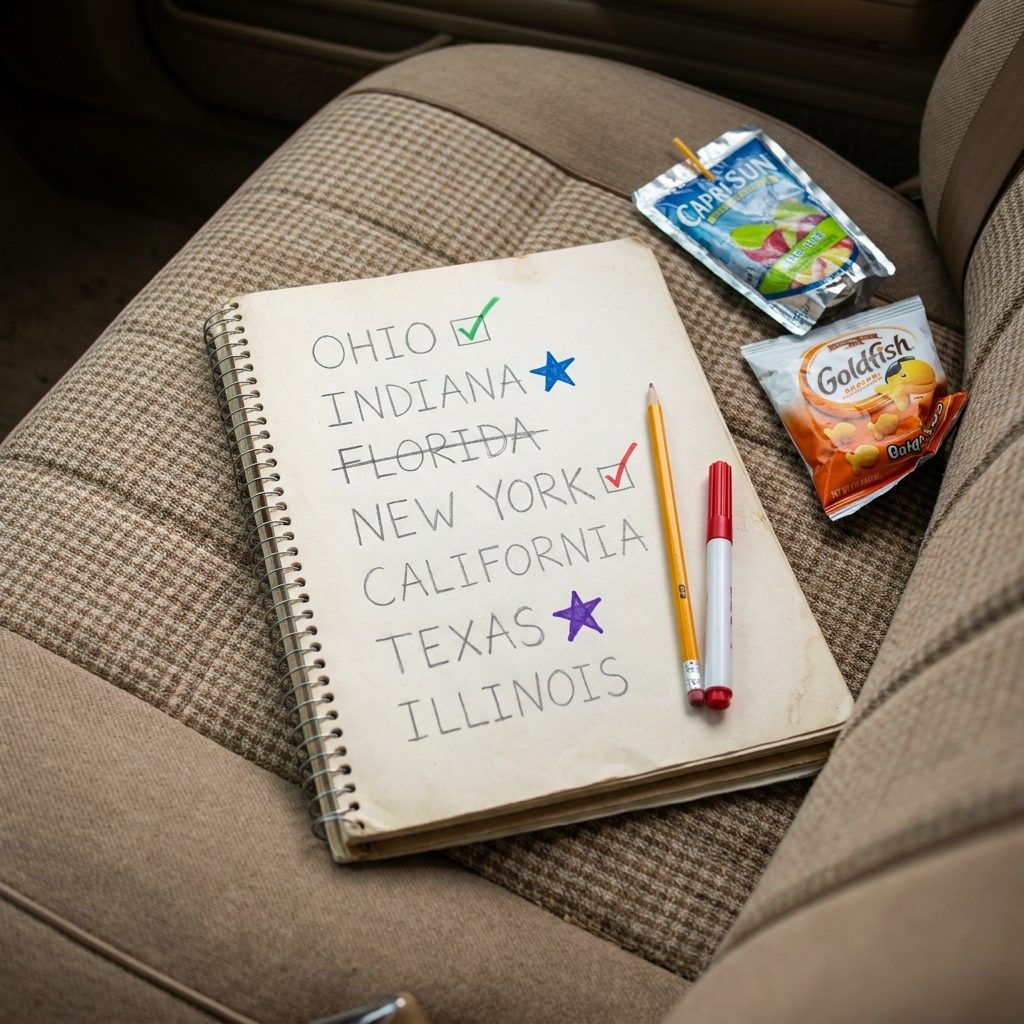
Alaska was worth more than Ohio. Everyone agreed on that. Hawaii was technically possible but required a level of luck that bordered on religious experience, and you kept the tally in a spiral notebook with a pencil that had no eraser left. Every rest stop became a frantic scan of the parking lot.
Rules varied by family. Some counted only rear plates. Some allowed fronts if the state issued them. One common rule demanded the spotter call it out loud before anyone else saw it, or it didn’t count — which sparked arguments that made the toll-money job look peaceful by comparison.
17. The Way the Whole Car Smelled Like Coppertone and Warm Vinyl by Day Three
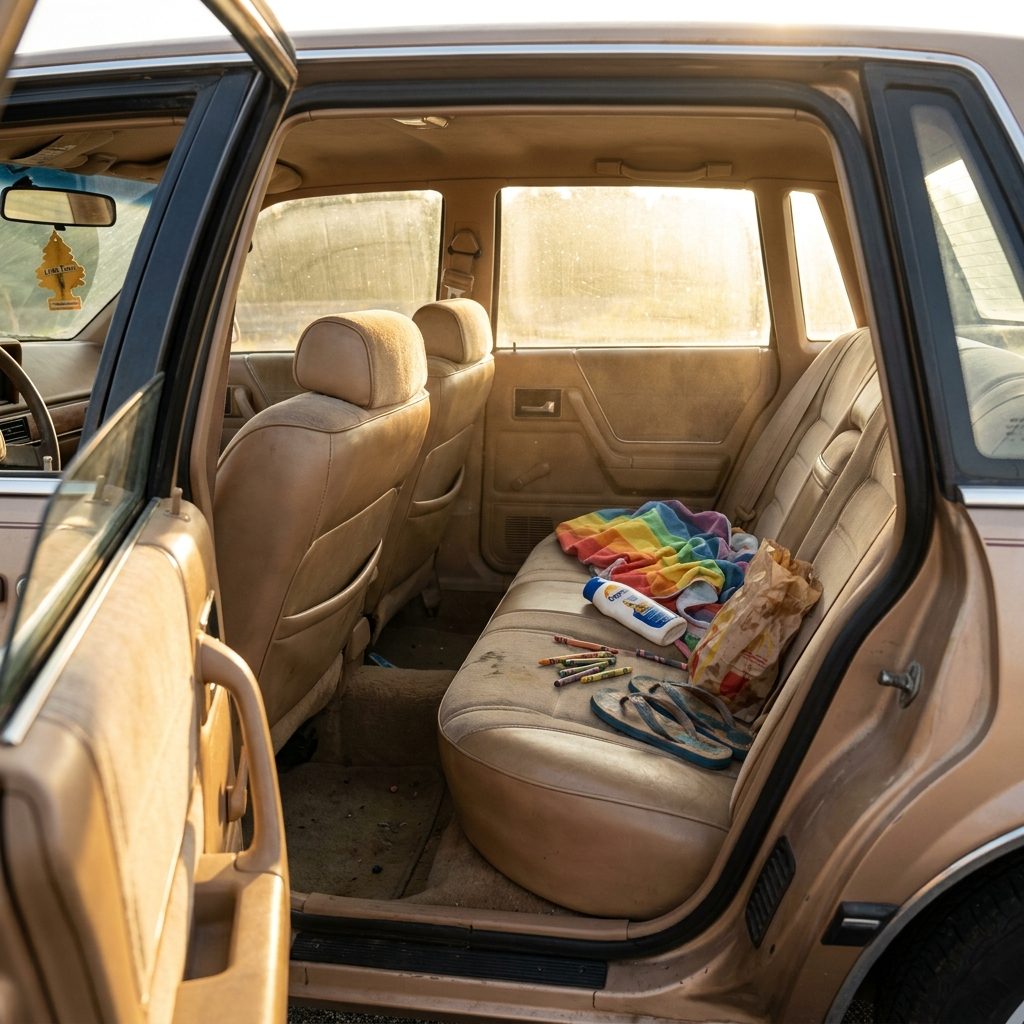
By Wednesday the car had its own climate. Coconut sunscreen baked into every surface — the seats held that smell the way old carpet holds cigarette smoke. The Little Trees air freshener Dad hung from the mirror had given up somewhere around Tuesday afternoon and was just hanging there, purely decorative.
You couldn’t wash it out. Didn’t want to. That smell was the trip. Every car ride the following summer started with a faint ghost of it rising from the seat fabric the first hot day, and for about two seconds you were back on the highway headed south with your feet on someone else’s cooler.
16. The Fast-Food Bag Passed Through the Window at the Drive-Through Because Nobody Was Getting Out of This Car
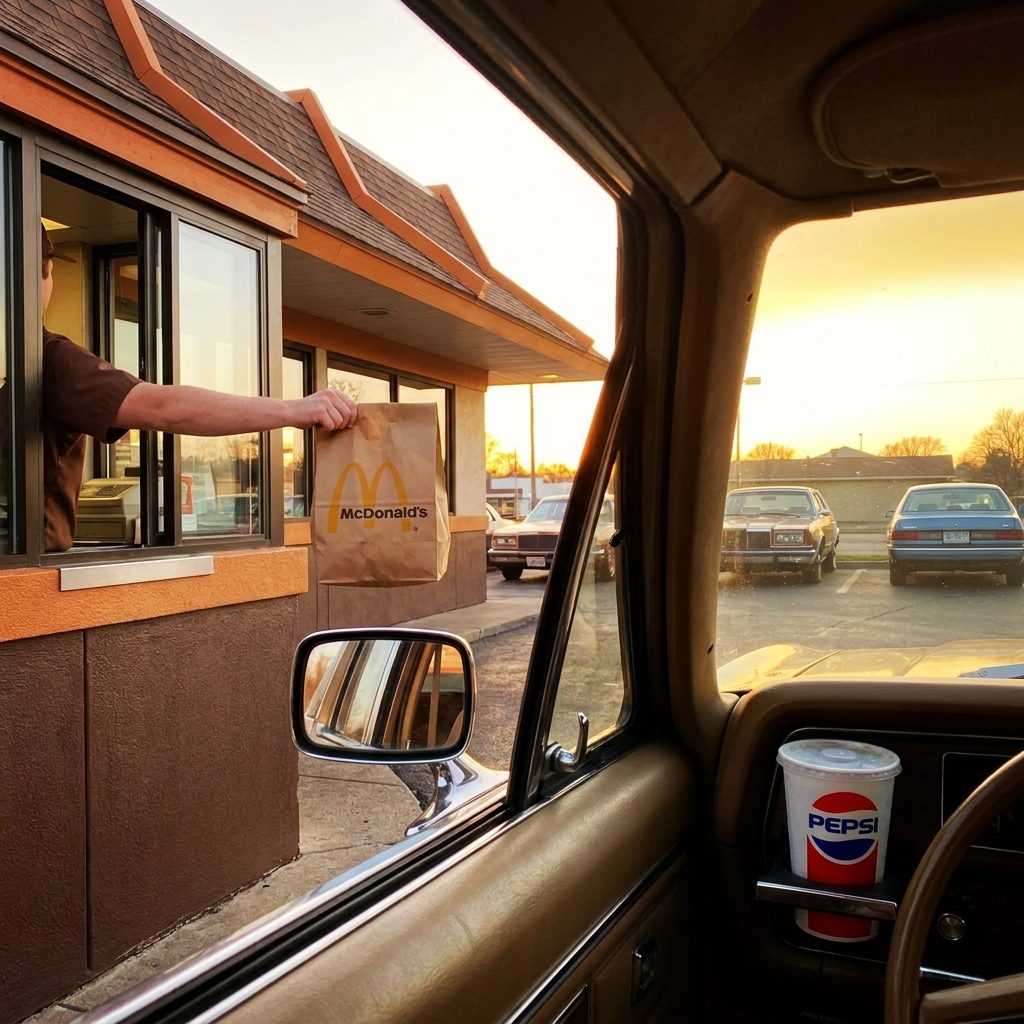
McDonald’s at exit 114. The order was assembled by committee from the backseat, relayed to the driver in overlapping fragments, and shouted through the window as one continuous sentence that included at least one correction mid-stream. Two Big Macs, a Filet-O-Fish for Mom, Happy Meals for the kids, and a large coffee that would ride the dashboard until the next state line.
Nobody went inside. Going inside meant killing the engine, which meant the AC had to restart from scratch — twenty minutes of hot air before anything cooled down again. The drive-through wasn’t about convenience. It was tactical.
15. The Moment You Saw the Ocean or the Mountains or the City Skyline and the Whole Car Went Quiet
Would you like to save this?
Eight hours. Maybe ten. The backseat had been a war zone since lunch — someone was carsick, someone else was out of batteries for the Walkman, and the floor was a geology of crumpled wrappers and lost crayons and one shoe nobody could find.
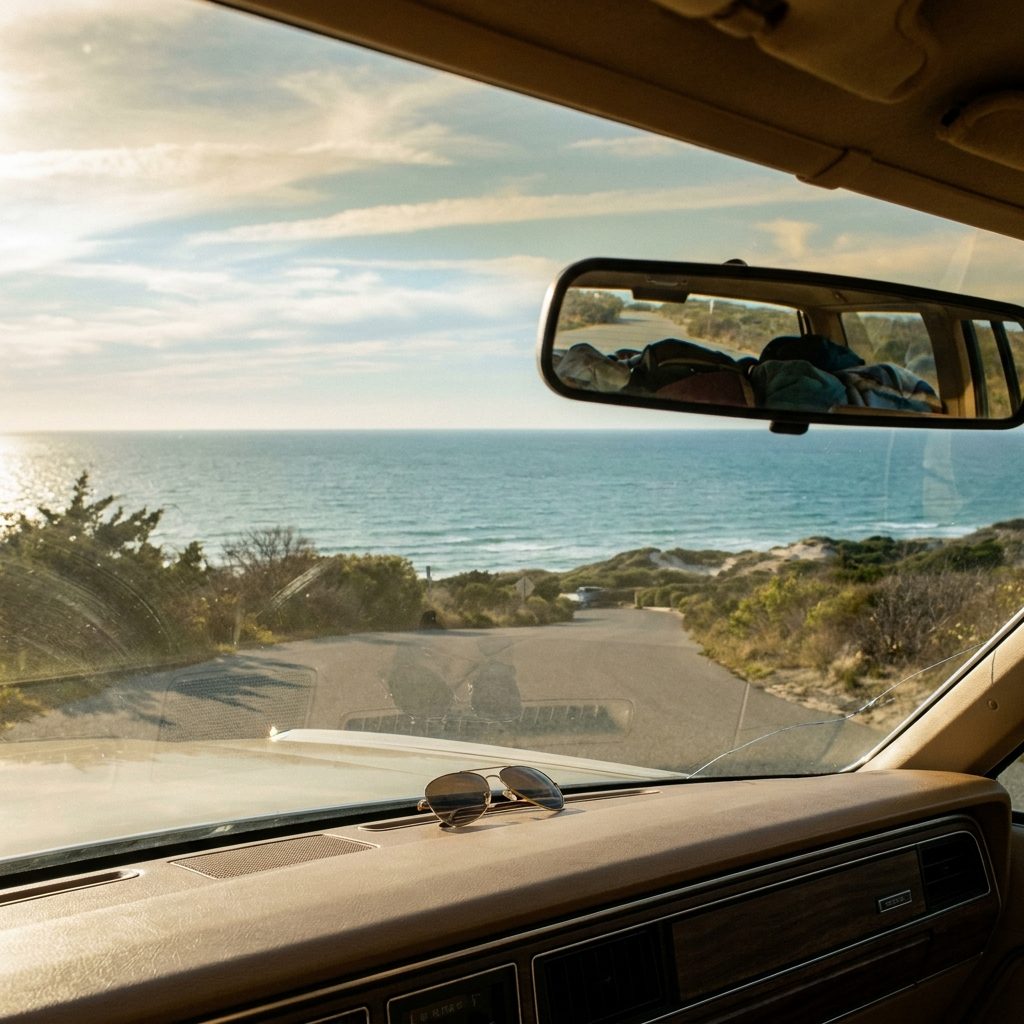
Then you came over a hill, or around a bend, or through a tunnel, and there it was. Whatever you’d driven all day to reach. The ocean stretched out flat and enormous. Or the mountains rose like a wall against the sky. Or a city skyline glittered in the dusk, all lit windows and promises.
Every kid pressed against a window. Nobody fought over anything for about ten seconds. That hush — earned across a full day of misery and snack wrappers — was the reason the whole trip existed, even if no one in the car would have put it that way.
14. The Gas Station Squeegee Dad Used on Every Window Whether It Needed It or Not
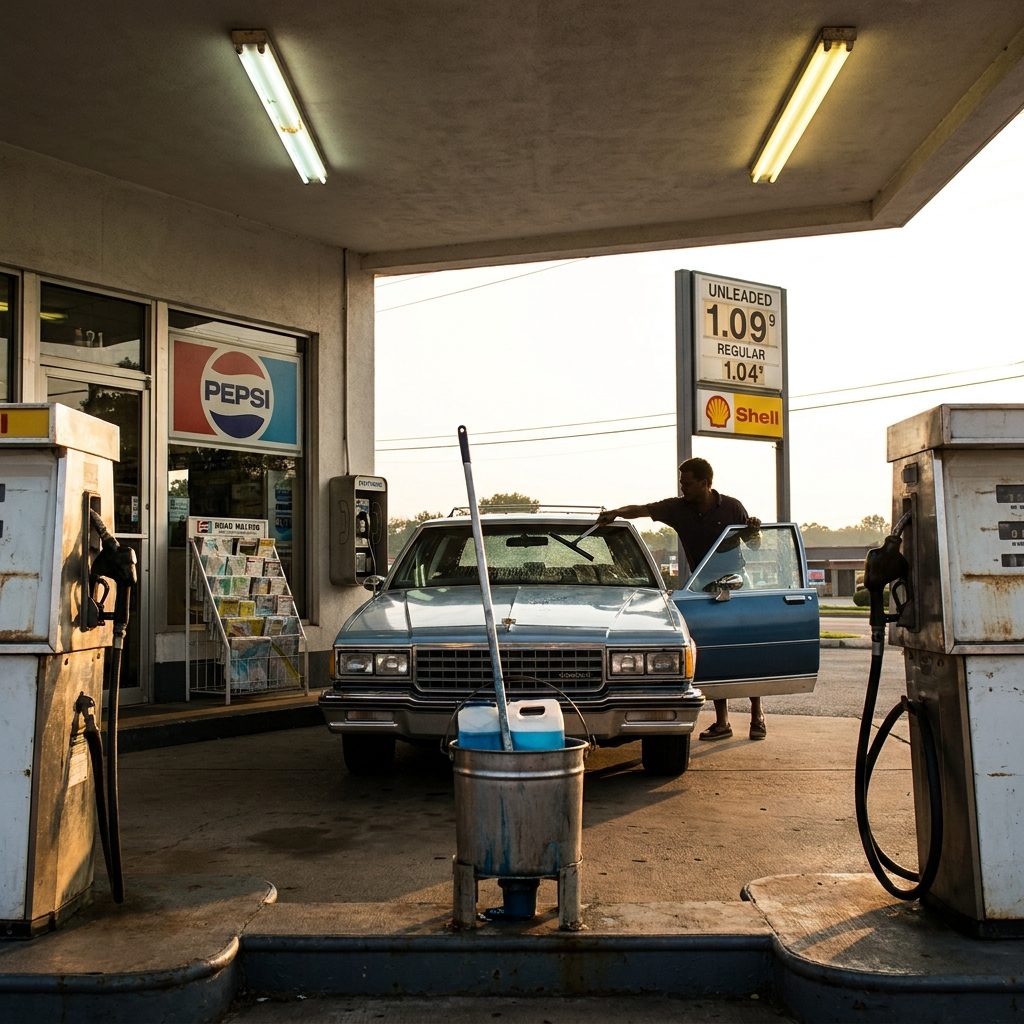
Every gas stop turned into a full detailing session. Dad would pump the gas, then grab that squeegee like it owed him money—front windshield first, then the rear window, then the side mirrors. If nobody intervened, the headlight lenses were next.
That blue fluid had a smell you could pick up from across the lot. Sharp, vaguely chemical, not unpleasant. The rubber blade left streaks half the time, but streaks weren’t the point. The ritual was. We had nowhere to be. The car was getting cleaned.
13. The Polaroid Somebody Took at the Welcome Sign That You Still Have in a Shoebox Somewhere
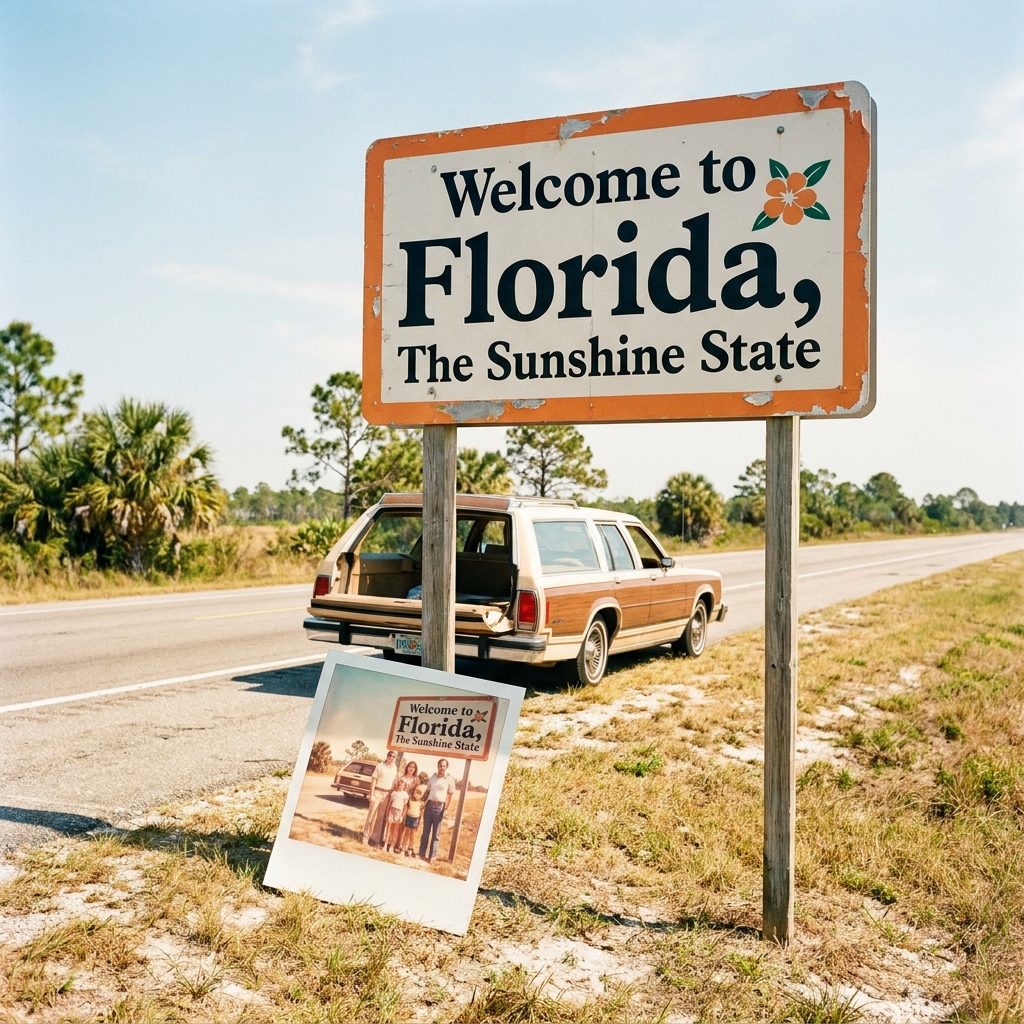
Someone always had the Polaroid OneStep. And someone always insisted on pulling over at the state line.
You’d pile out, squint into the sun, stand under whatever sign said WELCOME TO wherever, and wait for the white square to slide out. Then you’d shake it—everyone shook it, even though the instructions said not to. The image bloomed slowly in the heat, and by the time faces appeared you were already back on the highway doing sixty-five.
Those photos are still out there. Shoeboxes. Attics. The backs of junk drawers. A little washed-out, a little sticky. Proof that your family stood in front of a sign on a Tuesday in 1986 and nobody was looking the same direction.
12. The Emergency Bathroom Stop at the Gas Station With the Restroom Key Wired to a Wooden Paddle
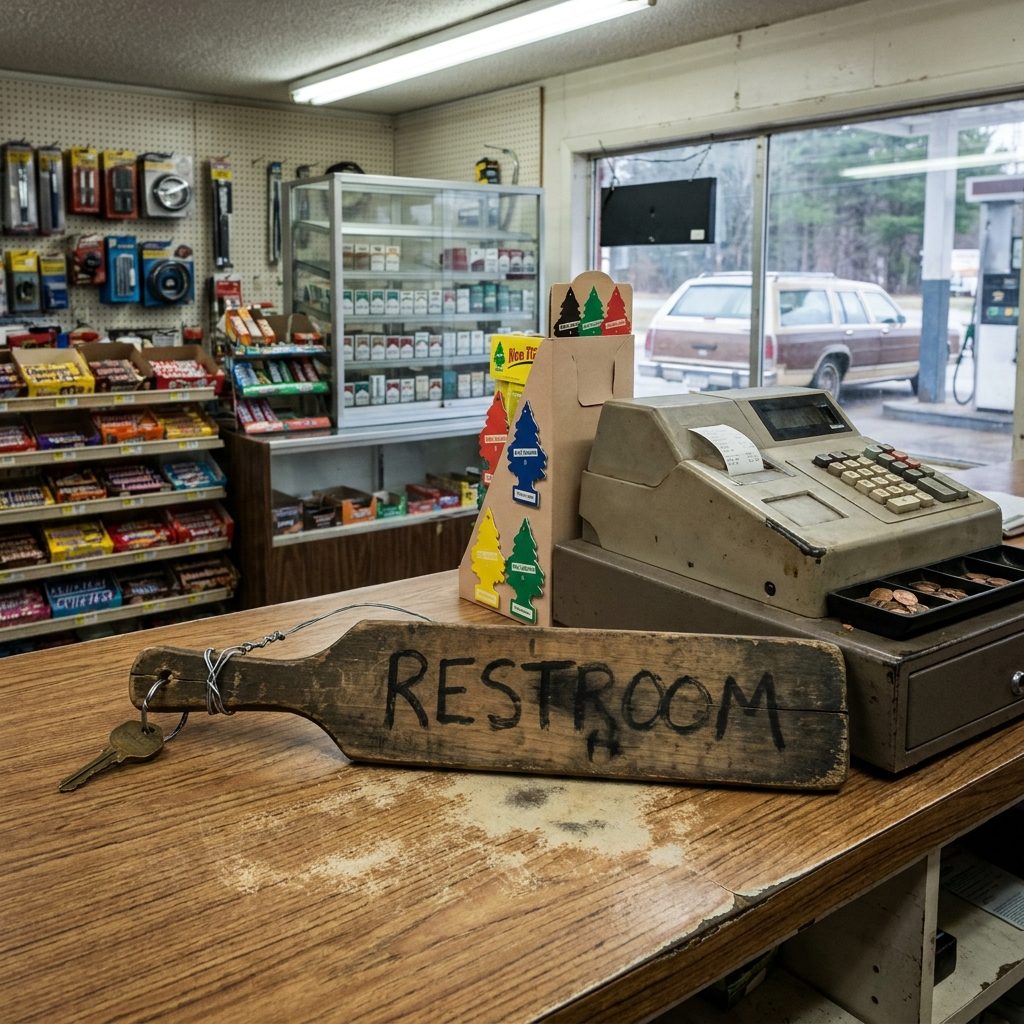
That paddle was the size of a cricket bat. On purpose.
You had to ask for it, had to make eye contact with the attendant, and then you had to carry this enormous piece of wood across the parking lot to a door around the side of the building that hadn’t seen paint since the Ford administration. The lock always stuck. The light was always a bare bulb. The soap was always pink, dispensed from a wall unit that produced roughly one molecule of lather per pump.
11. The Stuckey’s Pecan Log Roll at the Rest Stop That Tasted Like Victory
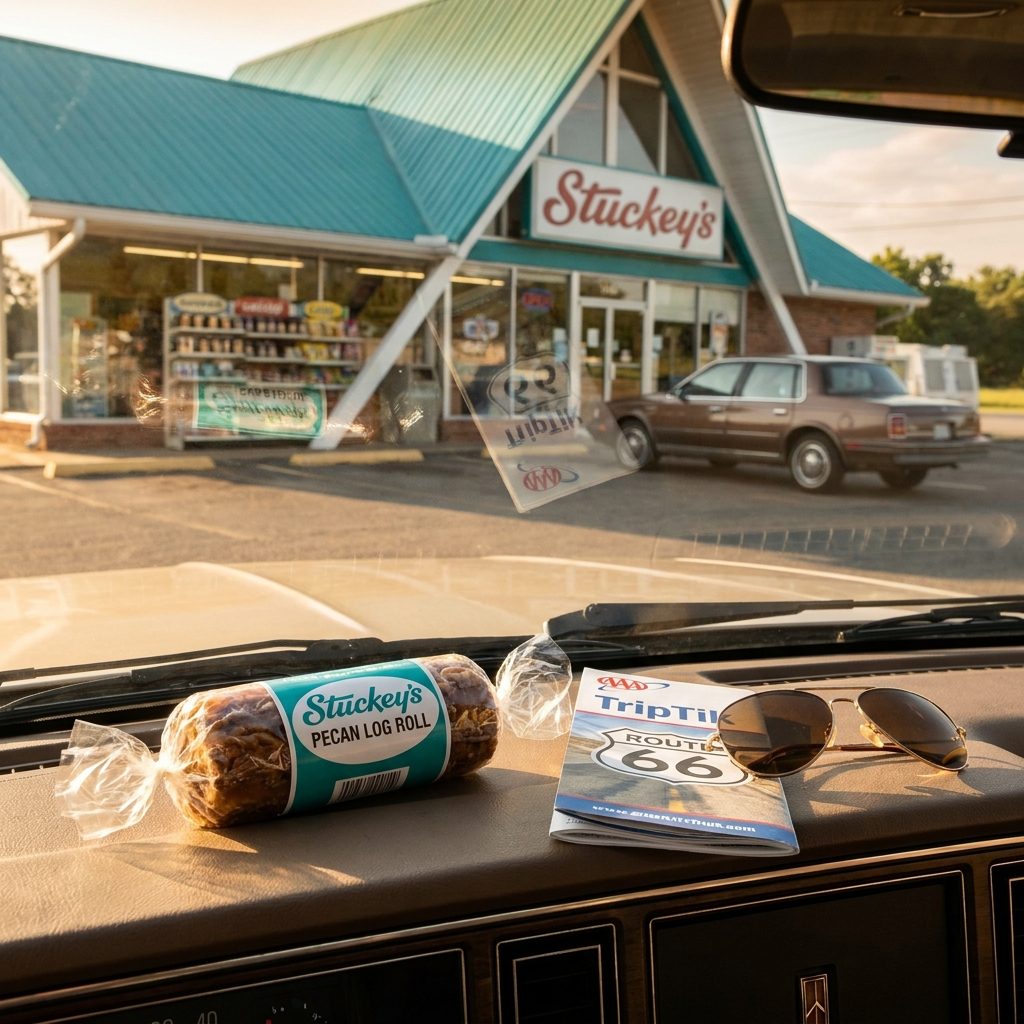
That teal roof on the horizon. Everyone knew what it meant: bathrooms, seashell souvenirs, and the pecan log.
The Stuckey’s Pecan Log Roll was a cylinder of nougat rolled in caramel and crushed pecans, wrapped in cellophane, and sold for a price that felt steep in 1985 but that nobody argued about. It was the reward for the last three hours. You peeled the wrapper back carefully—like unwrapping something earned—and it vanished in four bites. Pecans lodged in your molars for the next fifty miles. Nobody complained. Honestly, I think people enjoyed that part too, the slow dissolution of the evidence. Proof you’d been somewhere.
10. The Way Dad Drove With One Wrist Draped Over the Steering Wheel and the Other Arm Out the Window
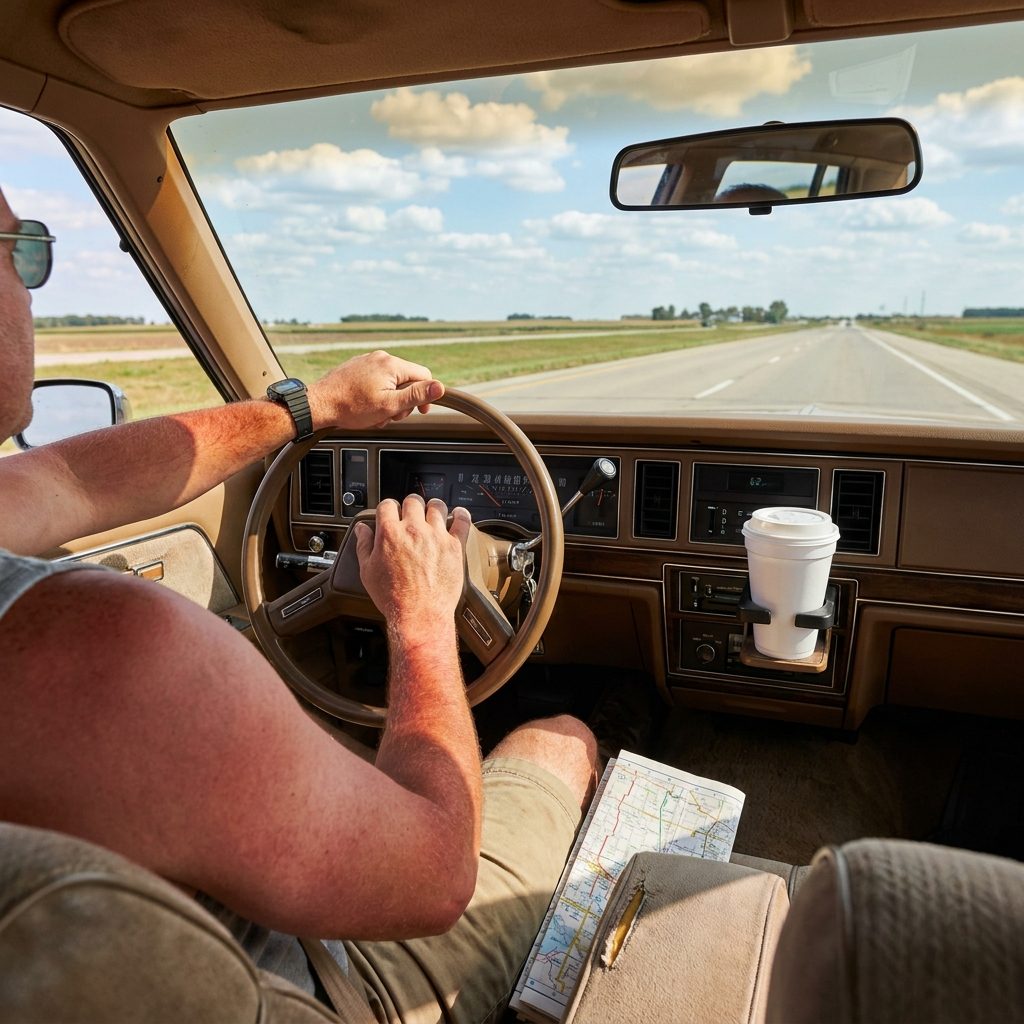
One arm always tanned darker than the other by August. The driver’s-side arm—hung out the window for six hundred miles at a stretch while the right hand barely grazed the wheel.
Universal posture of American fathers on the interstate. Relaxed to the point of sculpture. From the backseat you’d watch and think driving looked like the easiest thing in the world: lean back, steer with one wrist, let the road come to you. He made it look like loafing. It was probably the hardest thing he did all year, holding that casual pose for ten hours while four people behind him argued about the radio.
9. The AAA TripTik With the Highlighted Route and the Flip Pages You Turned Like a Tiny Book
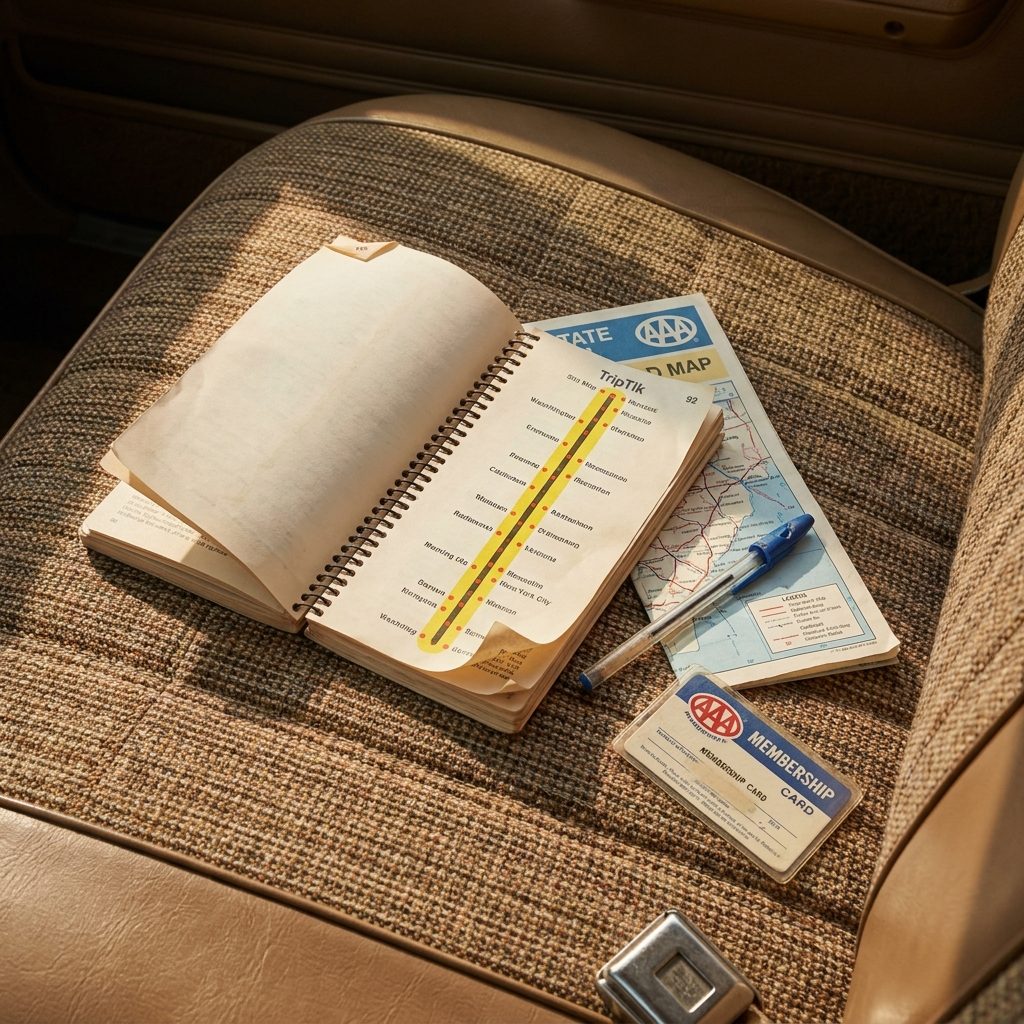
GPS didn’t exist. Phones didn’t have screens. You had the TripTik.
About the size of a checkbook, spiral-bound, with your route highlighted in yellow marker by someone at the local AAA office who actually sat down and traced the path by hand. Each page covered a strip of highway, and you flipped when you hit the bottom. Landmarks marked. Construction flagged. Hotels with AAA ratings got little diamond symbols. The front-seat navigator held the thing like holy writ. “We’re on page seven. Next exit has a Holiday Inn.”
Something deeply satisfying about turning that page. It meant progress—tangible, physical progress, in a way a GPS recalculation never delivers. Your whole trip measured in tiny flips of paper.
8. The Moment the Car Thermometer Hit 100 and Everyone in the Backseat Stopped Talking
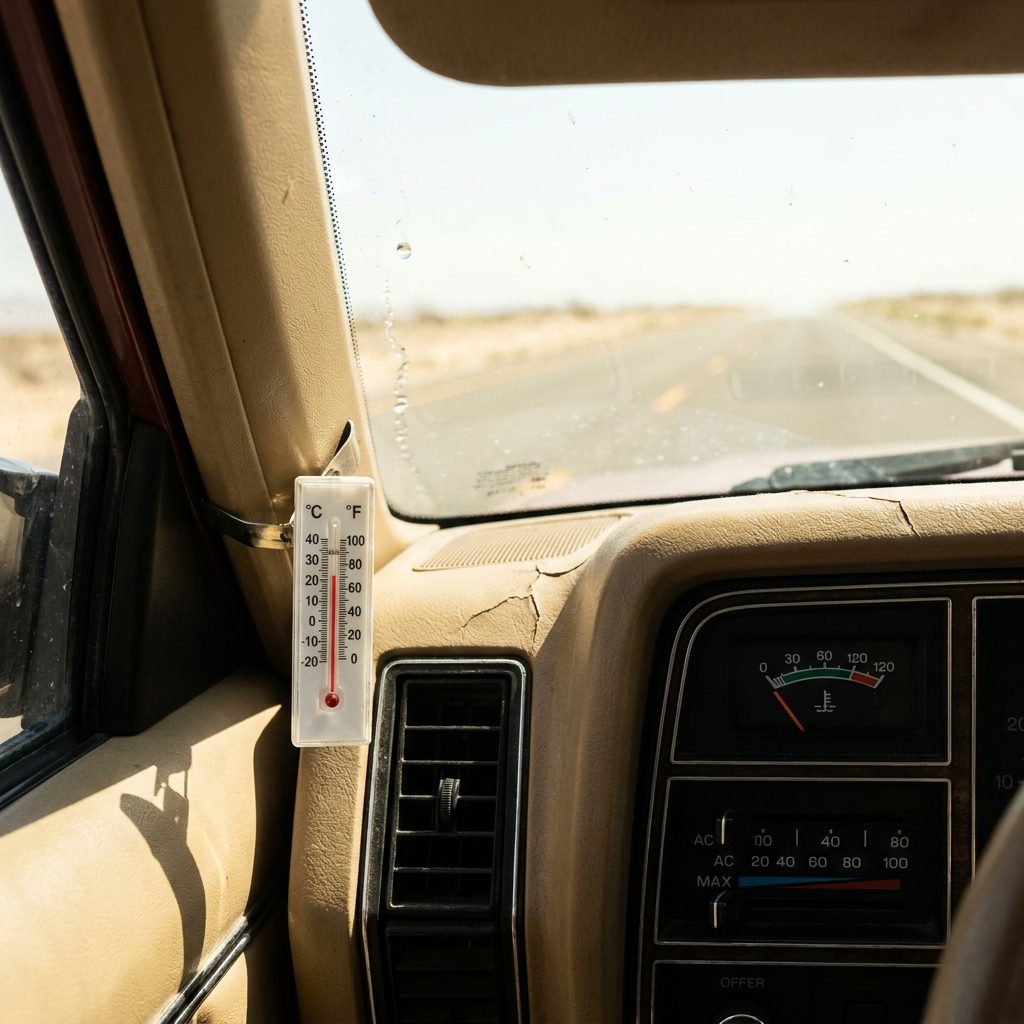
The car had a thermometer clipped to the visor—little round dial, red needle. Past ninety, complaints started. At a hundred? Silence.
Too hot to fight. Too hot for the license plate game. Too hot to do anything but press your cheek against the window glass and hope the AC was accomplishing something down in the engine bay. It wasn’t. The air wheezing from the vents felt like someone breathing on you from very close. You just sat there, sticky, legs peeling off the vinyl, watching the highway shimmer and ripple ahead like it was dissolving.
7. The Sleeping Bag Unrolled in the Wayback for the Kid Who Couldn’t Stay Awake Past Nine
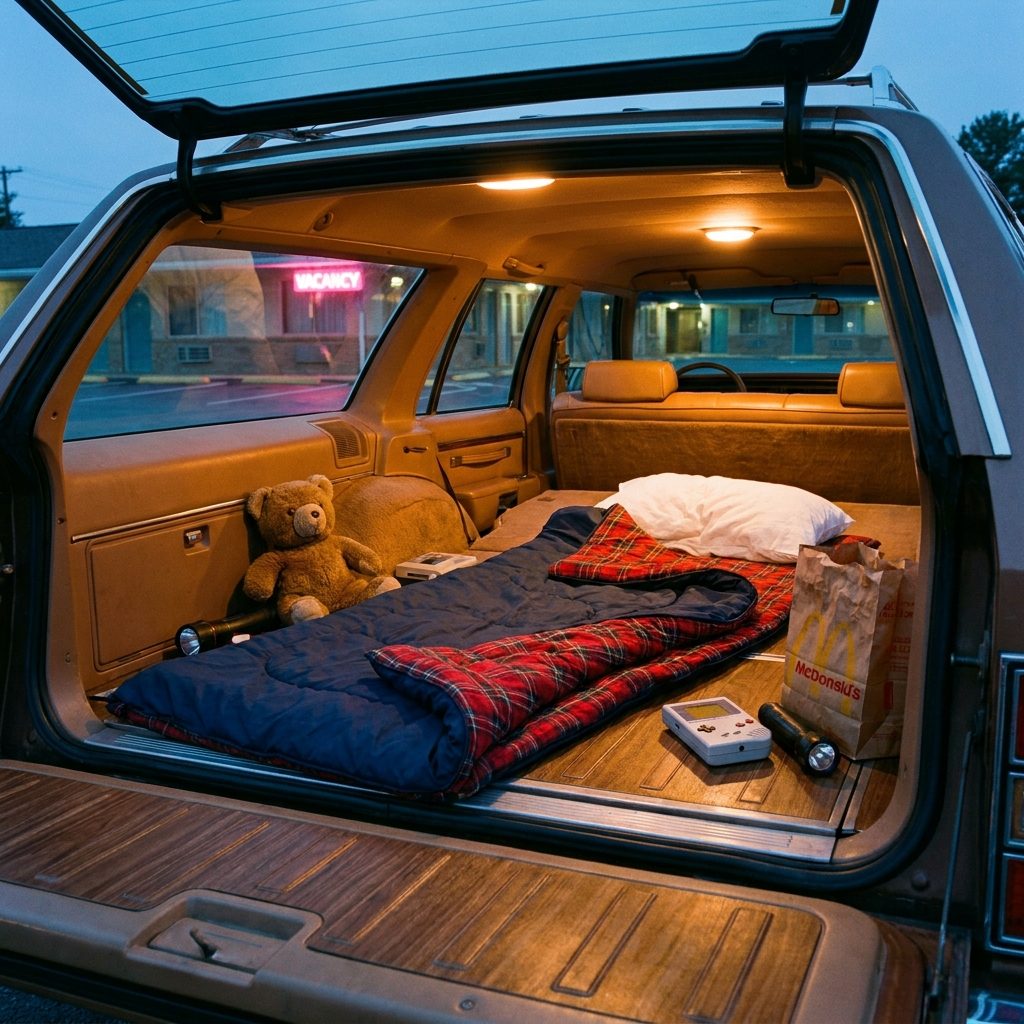
The wayback was the original lie-flat seat—before headrest screens, before minivans, before anybody worried much about seatbelt laws in the cargo area. The youngest kid just climbed back there and went horizontal.
A sleeping bag. A pillow swiped from the motel that morning. Maybe a stuffed animal. Then the hum of the highway did the rest. You’d fall asleep watching taillights through the rear glass, red glow pulsing as cars drifted between lanes, and wake up in a different state. Sometimes a different time zone. Disoriented, warm, smelling like nylon and carpet.
6. The Billboard Countdown That Started at 200 Miles and Made You Believe a Roadside Attraction Was Worth Stopping For
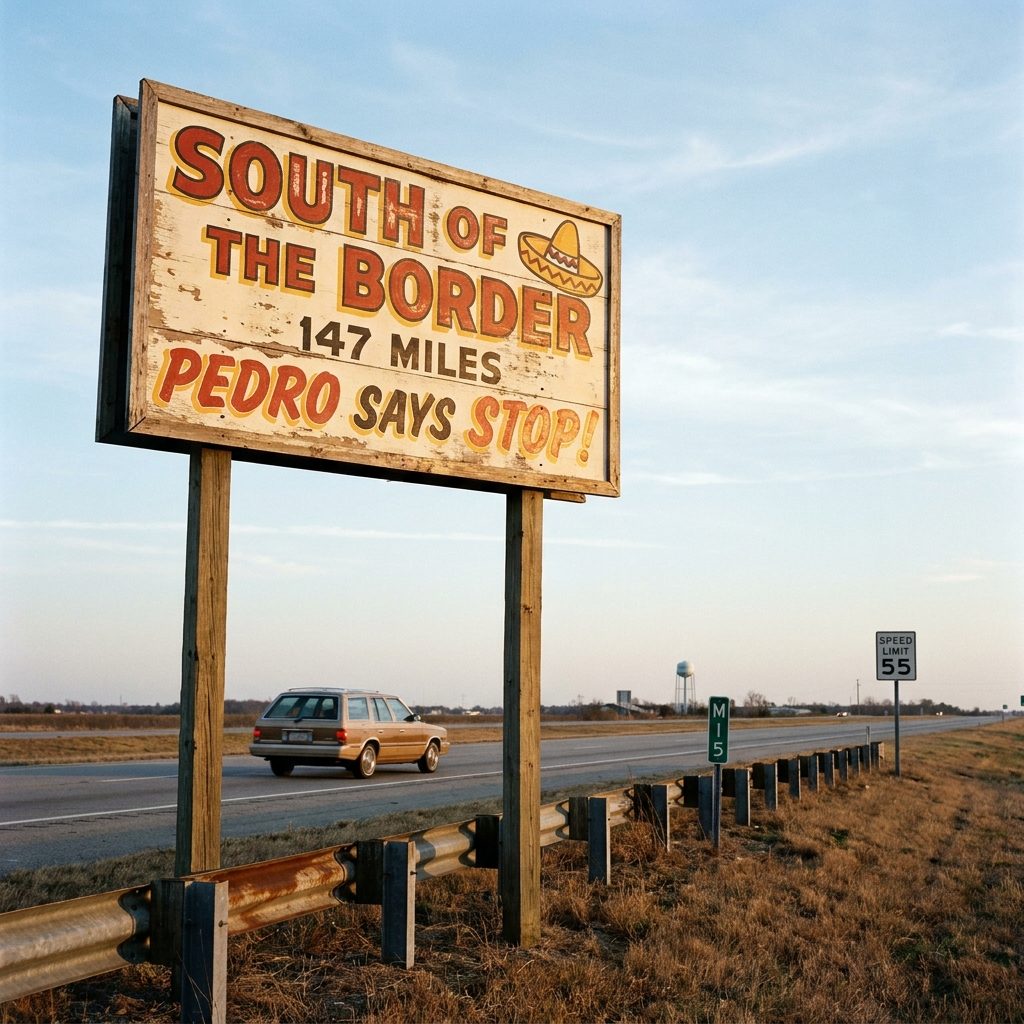
South of the Border started its pitch around mile 200. Wall Drug kicked in even earlier. Some reptile farm in Florida began the campaign near Jacksonville and didn’t let up until you were practically in the parking lot.
Every twenty miles, another sign. Brighter colors, bigger promises. By mile fifty the kids were chanting. By mile ten the driver had surrendered. You pulled in. You always pulled in. And the place was never as good as the billboards promised—but that didn’t matter, did it? The anticipation was the product. Hundreds of miles of buildup for a concrete dinosaur and a gift shop stuffed with rubber alligators. Absolutely worth it.
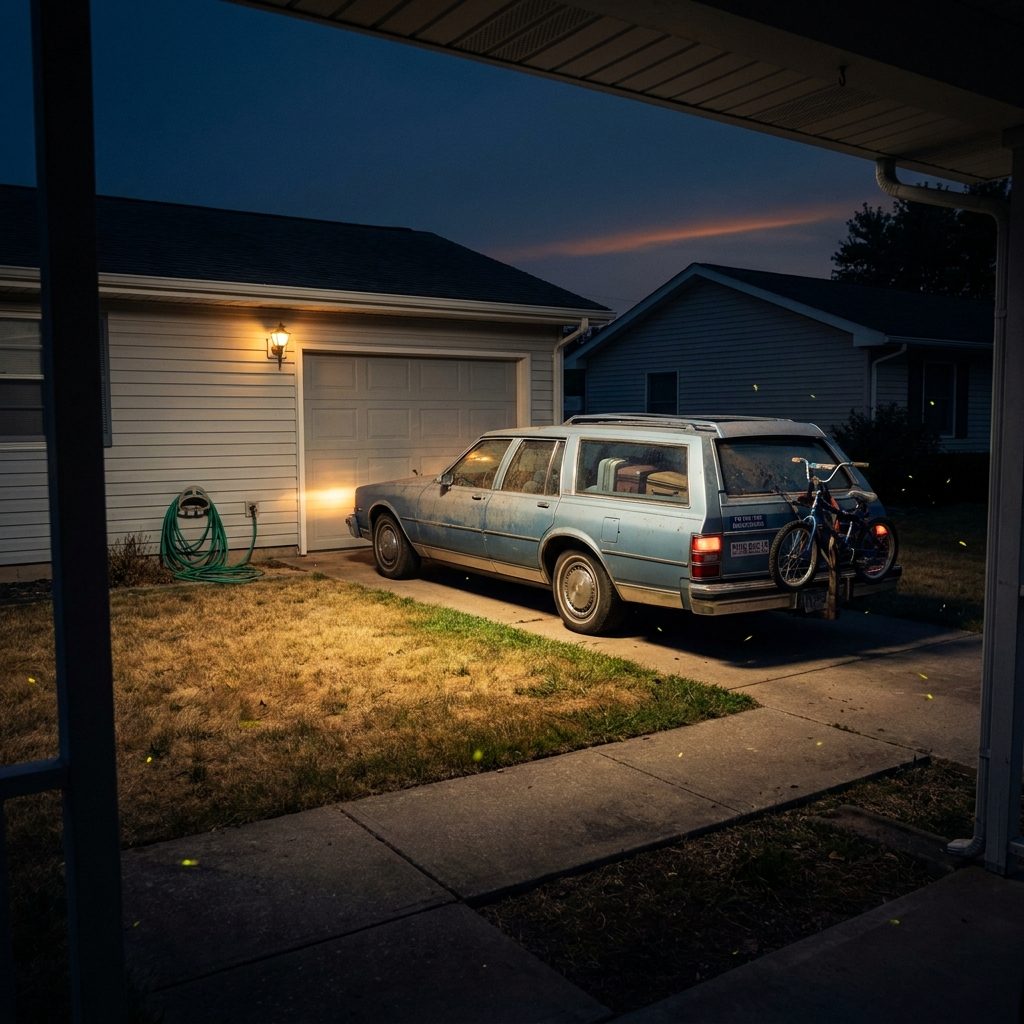
5. The Feeling of Pulling Back Into Your Own Driveway After a Week on the Road and Sitting in the Car for a Full Minute Before Anyone Moved
Would you like to save this?
Nobody opened a door right away.
A thousand miles behind you. Sunburns fading. Fast-food wrappers crammed into every crevice. The car smelled like a week of living—french fry grease and sunscreen and sleeping bag. When the engine finally went quiet in the driveway, with the house right there, the lawn taller than you left it, the porch light glowing because someone had the foresight to set a timer, everyone just sat.
Maybe thirty seconds. Maybe a full minute. Not tired exactly, though you were tired. Something closer to reluctance. The trip was done. The car would just be a car again tomorrow, sitting in the driveway going nowhere. And the strange little world you’d all built inside it—who sat where, what station played, when stops happened—would dissolve the second the doors swung open.
So you sat. Just a little longer.
4. The Dog-Eared Paperback Wedged Between the Seat and the Door That Got You Through Kansas
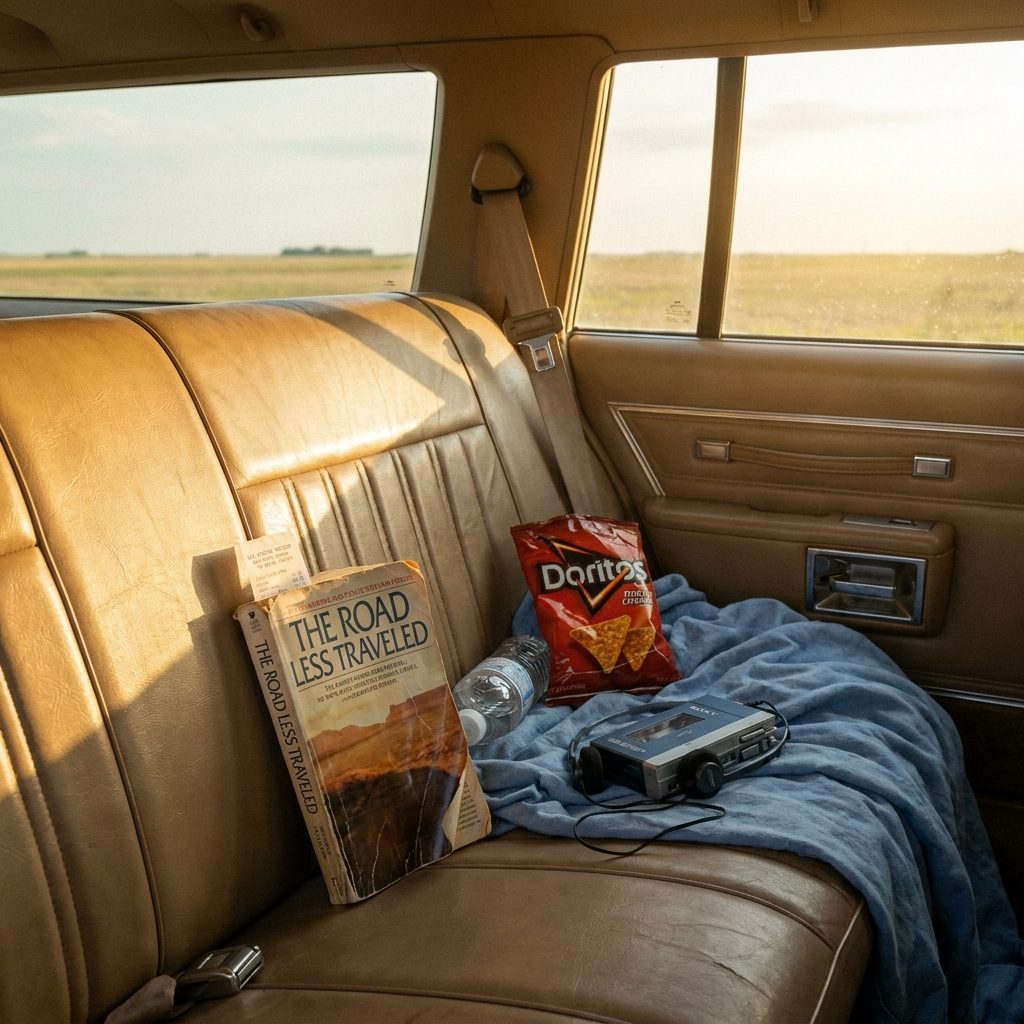
Kansas took forever. Everyone knew it. The highway was a line drawn by somebody who’d never once been tempted by a curve, and the wheat fields repeated themselves like wallpaper pasted by a madman with no imagination. Somewhere around hour three you gave up on the window and grabbed the book.
Could’ve been anything. A Hardy Boys. A Judy Blume. A Stephen King your older cousin left stuffed behind the seat last Thanksgiving — one you were absolutely, without question, not supposed to be reading. What mattered was that it ate the miles raw. You’d surface and two hours had gone and the light had shifted from white to amber and suddenly, impossibly, there were hills.
3. The Way Mom Navigated With Her Finger on the Map and Called Out Turns Thirty Seconds Too Late
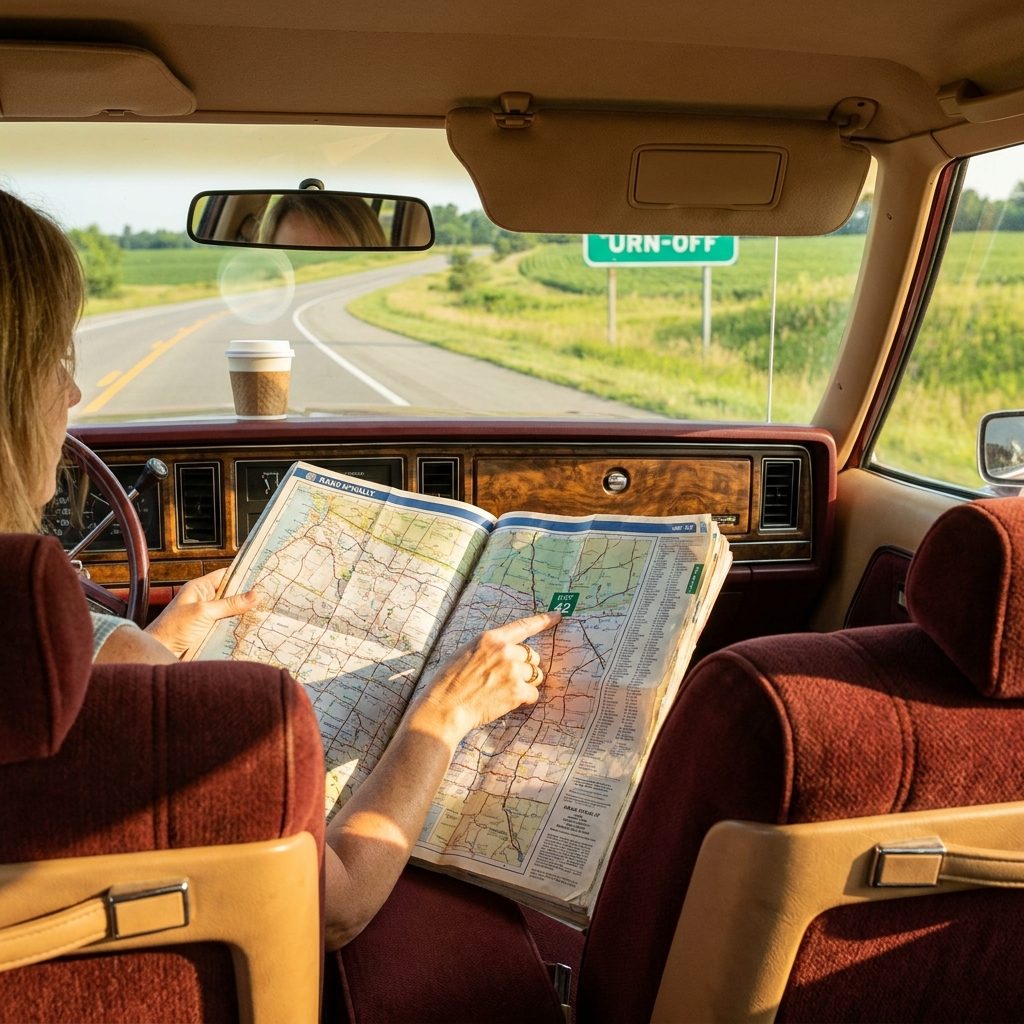
She had one job. Read the map, call the exits. And she performed it with total confidence, right up until Dad blew past the turn at sixty miles an hour and the car went quiet in that specific, pressurized way that meant someone was about to say something expensive.
“It said 117B. You wanted 117A.” That was Dad. Mom would rotate the atlas forty-five degrees, squint at it like it had personally insulted her family, and calmly announce that the next exit was only twelve miles ahead. Twelve miles in the wrong direction felt like fifty. Nobody pointed that out. Self-preservation was strong in that car.
But here’s what I keep coming back to — she got you there. Through detours and blown exits and that one baffling afternoon in Virginia where the map contradicted itself and the road signs contradicted the map. Every single time.
2. The Greasy Brown Bag of Souvenirs From the Gift Shop You Begged to Stop At
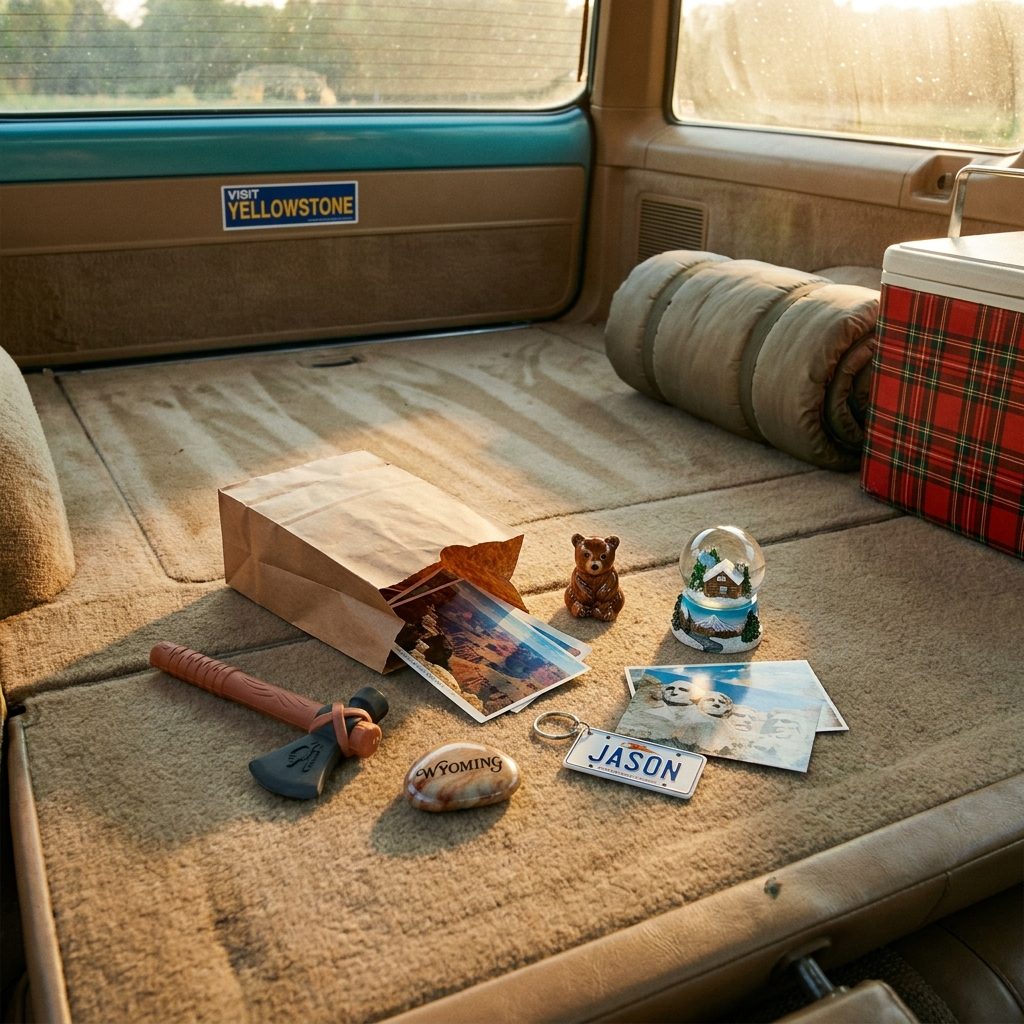
Two dollars. That was the budget, and you spent forty-five minutes stretching it like a trader working the floor. The polished rock or the rubber snake? The tiny birch-bark canoe or the keychain with your name on it — except they never had your name, so you bought your sister’s and told yourself you’d negotiate a swap later. You wouldn’t.
Pine incense and dust — that was the smell of every gift shop from the Ozarks to the Adirondacks, a universal constant. Half the inventory was made within a fifty-mile radius and the other half came from a warehouse in New Jersey, but none of that mattered to a kid with exact change and unlimited desire. You walked out clutching that brown bag like it held Spanish doubloons, and the plastic arrowhead inside sat on your dresser for three years before Mom finally threw it away during spring cleaning. You noticed. You said nothing.
1. The Exact Moment Dad Turned Off the Highway and Said ‘Let’s See Where This Goes’
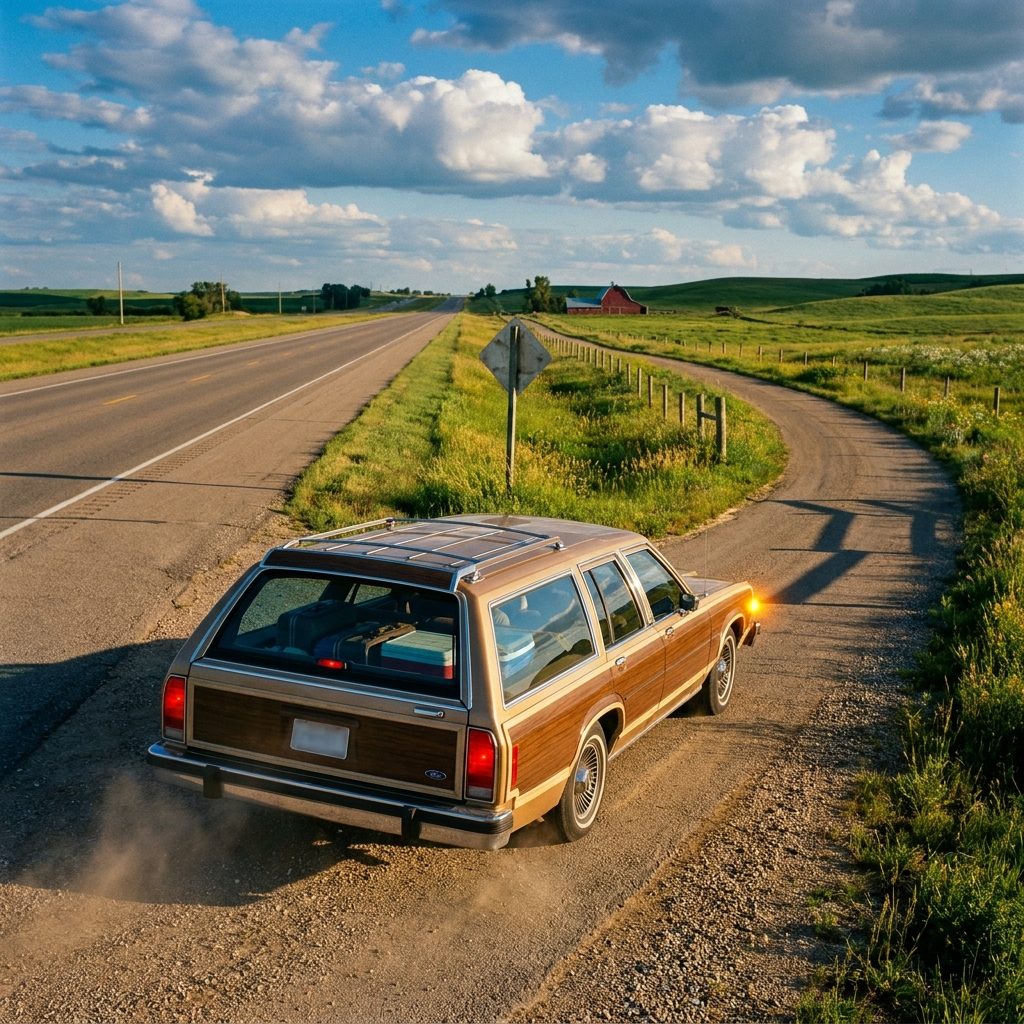
No warning. No committee vote. Just the blinker ticking on and the wagon drifting toward an exit nobody had discussed, authorized, or even seen on the map.
Mom looked up from the atlas. The backseat went still. Dad had that look — the one that meant he’d spotted something, or remembered something, or had simply decided the interstate was too boring to endure for another single mile. “Let’s see where this goes,” he said, and the Country Squire nosed down a two-lane road with no center line and no posted speed and absolutely no destination anyone could name.
Sometimes it dead-ended at a lake nobody knew existed. Sometimes it wound into a town with one stoplight and a diner that served pie on actual ceramic plates and the coffee tasted burned in a way that was somehow perfect. Sometimes? Just twenty minutes of fence posts and cows followed by a silent U-turn and a quiet merge back onto the highway. Didn’t matter which. Those unplanned detours are the parts that stuck — crisp and specific — decades after the planned stops all melted into one blurry rest-area montage.