Would you like to save this?
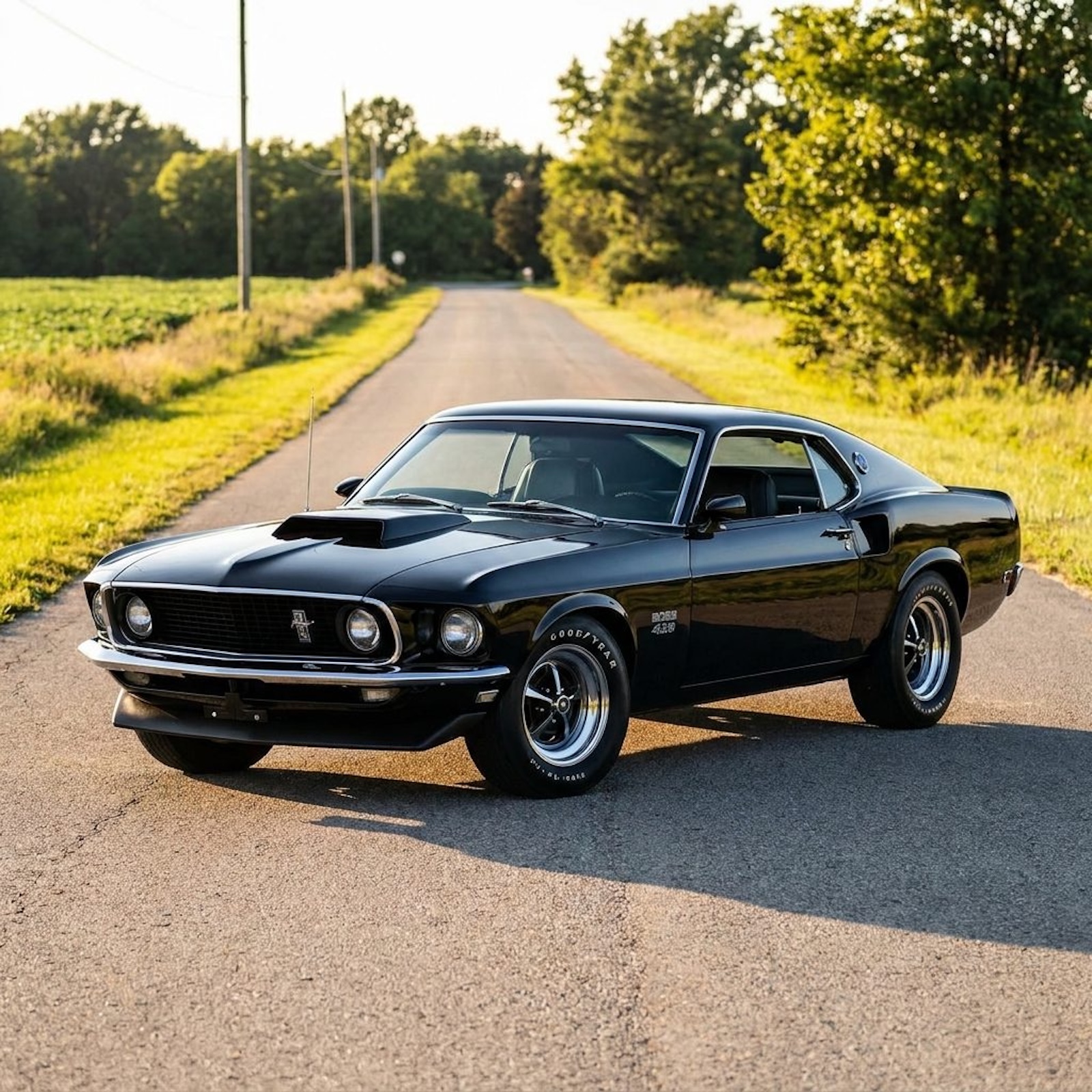
The gas station attendant stopped pumping mid-squeeze when one pulled in. That is the short version of what the Boss 429 did to people in 1969. Ford built it to homologate a new NASCAR engine, and the rules required at least 500 street versions. Ford produced 859 Boss 429s for 1969, then roughly 500 more for 1970.
Please note that some of the images in this article were created with the assistance of AI.
The engine was so wide that every car needed extensive front-structure work before it could leave Kar Kraft’s Brighton facility. What follows is the full accounting of why this low-volume Mustang still feels less like a trim package and more like a factory-backed engineering experiment.
26. Why Ford Built It in the First Place and It Had Nothing to Do With Mustangs
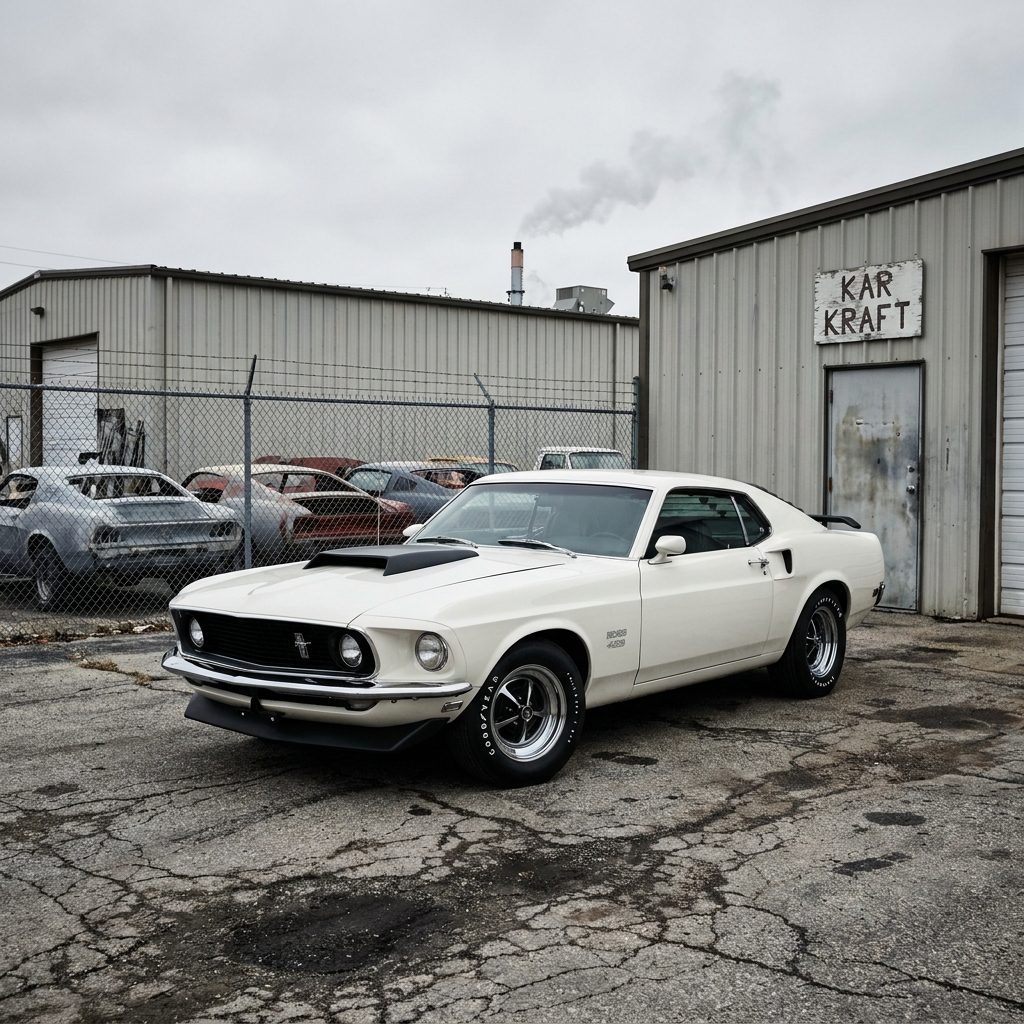
Ford did not create the Boss 429 because the Mustang lineup needed another street engine. The point was to make Ford’s new 429 legal for NASCAR competition, and homologation rules required at least 500 production examples.
The Torino Talladega carried Ford’s superspeedway ambitions, while the Mustang became the street car that satisfied the rule. Every Boss 429 was therefore a homologation special—a NASCAR requirement wearing a Ford VIN.
25. The Hand-Built Shock Towers That Made This Car a Kar Kraft Original
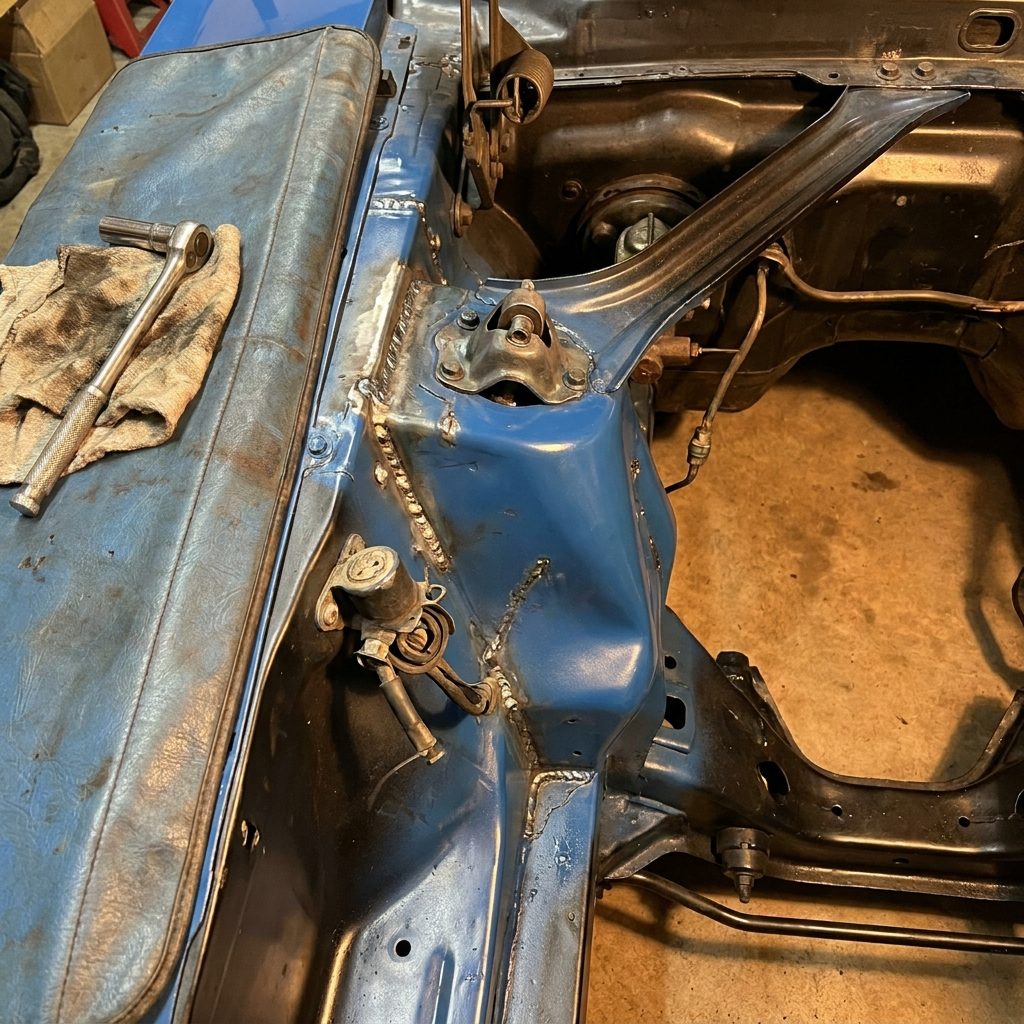
The 429 was too wide for the standard Mustang engine bay. Kar Kraft cut and repositioned the inner shock-tower structure on each incoming car, then rebuilt the surrounding front end to make room for the cylinder heads.
Those hand-finished areas remain important when authenticating a car, but no single weld proves originality by itself. Collectors look at the Kar Kraft number, body details, documentation, and the entire pattern of modifications together.
24. Only 859 Were Built for 1969—and Roughly 500 More Followed
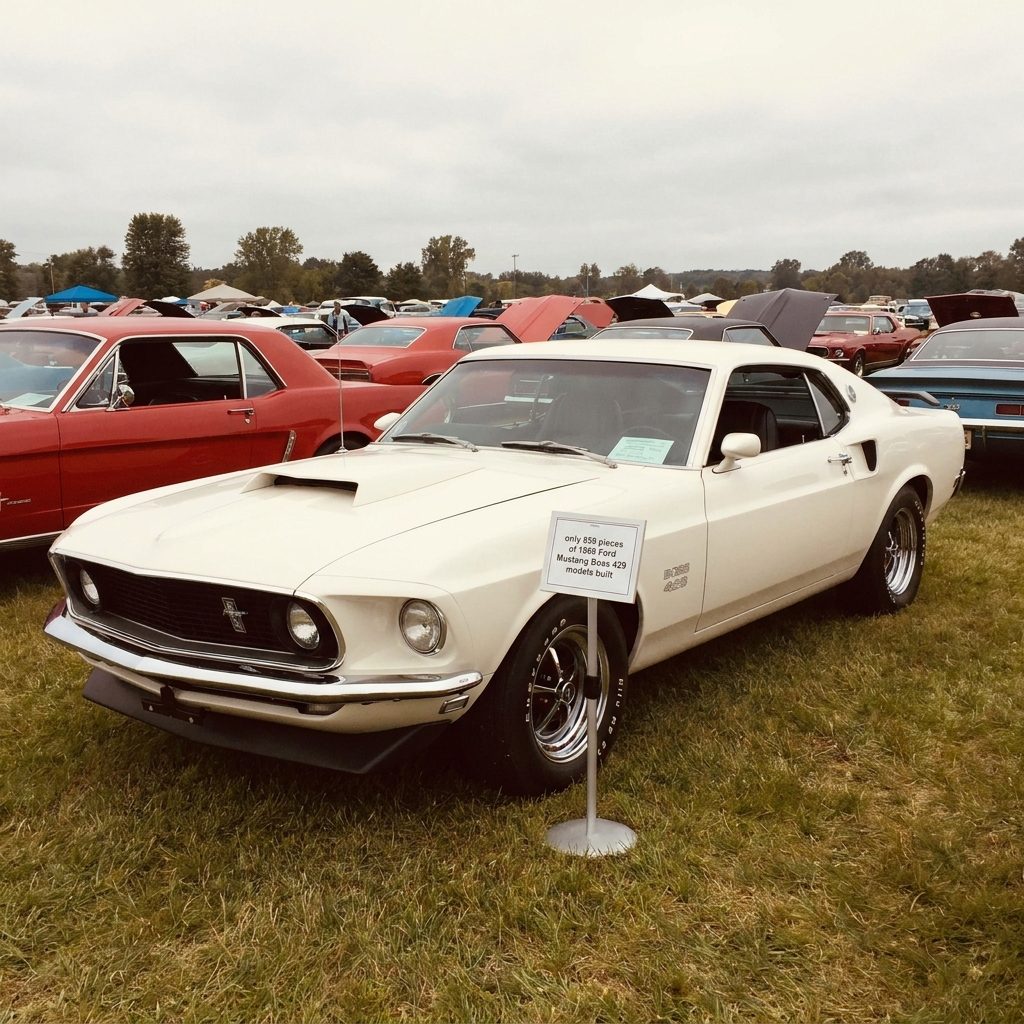
Production was tiny. Ford built 859 Boss 429s for 1969, followed by roughly 500 more for 1970, while producing tens of thousands of Mach 1s in 1969 alone. The Boss 429 was the ghost you almost never saw at the drive-in, and if one rolled into the A&W lot on a Saturday night, everyone stopped mid-root-beer to look.
Each car received a separate Kar Kraft number in addition to its Ford VIN. Collectors track those numbers like baseball cards.
23. The Understated Grille With No Running Horse
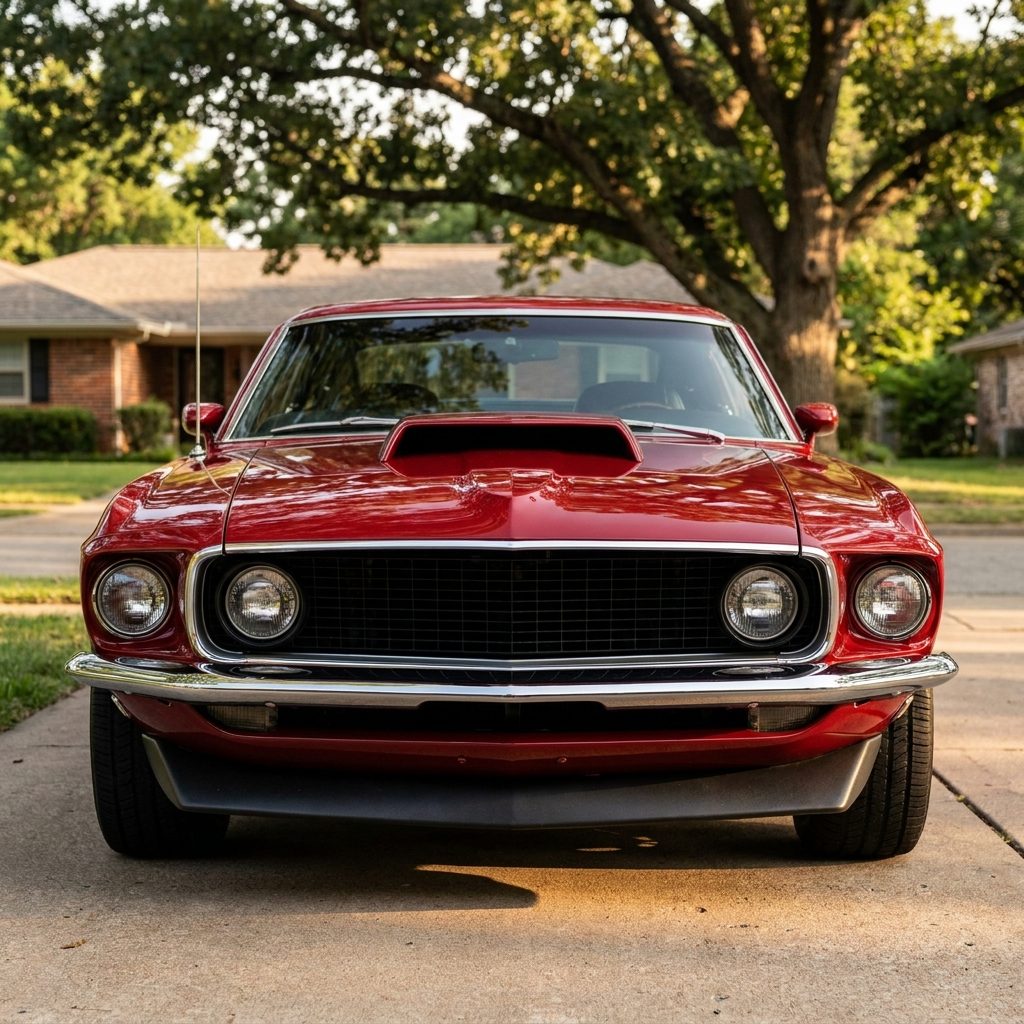
Ford deleted the galloping horse from the grille on the Boss 429. Just a blacked-out honeycomb with nothing in the center. On any other Mustang that would have felt wrong; on this one it felt like the car had nothing to prove.
Message received. If you didn’t already know what a Boss 429 was, the small badge on the front fender wasn’t going to educate you.
22. The Trunk-Mounted Battery That Gave It Away to Anyone Paying Attention
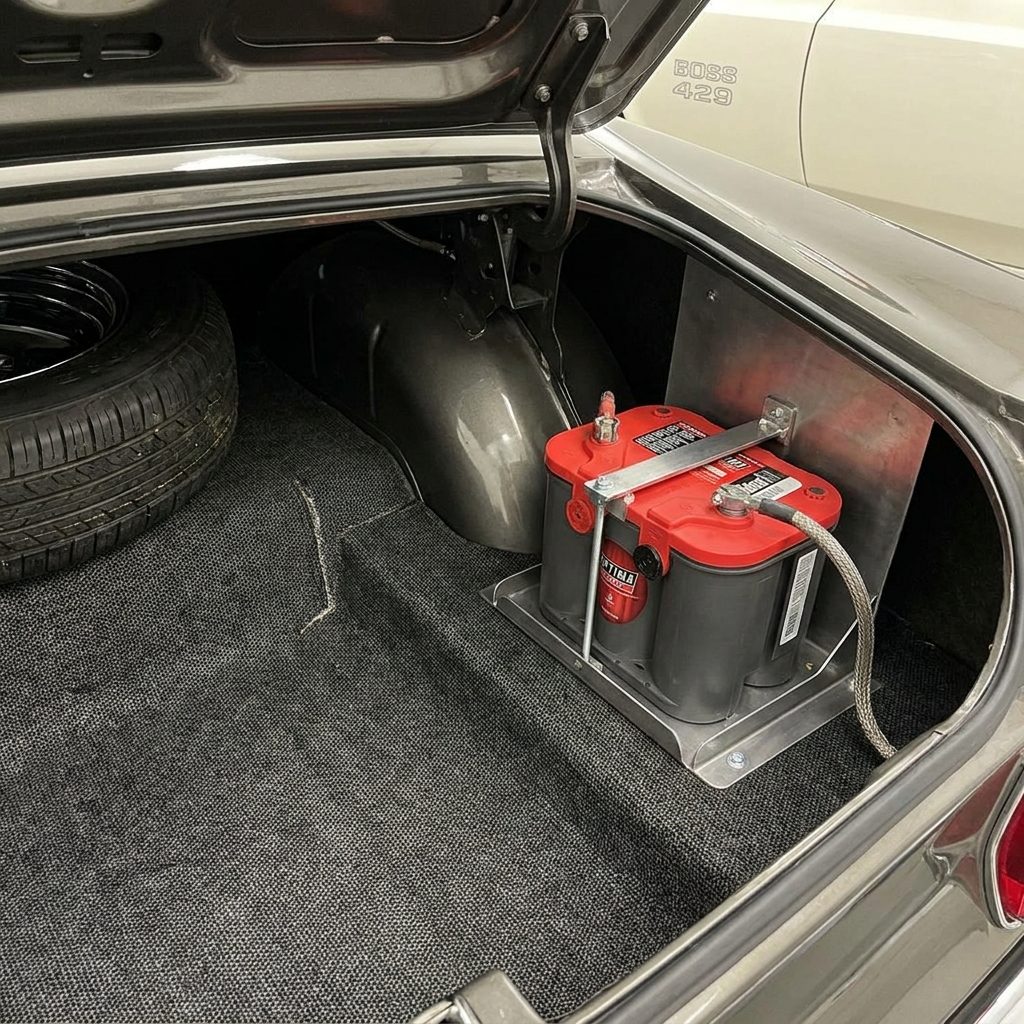
Pop the trunk on a Boss 429 and the battery immediately tells you this is not an ordinary Mustang. Ford moved it rearward to free space under the hood and take a little weight off the nose.
The relocation consumed useful trunk room, but practicality was never the reason anyone ordered this car.
21. The Advertised 375 Horsepower Figure Nobody Quite Believed
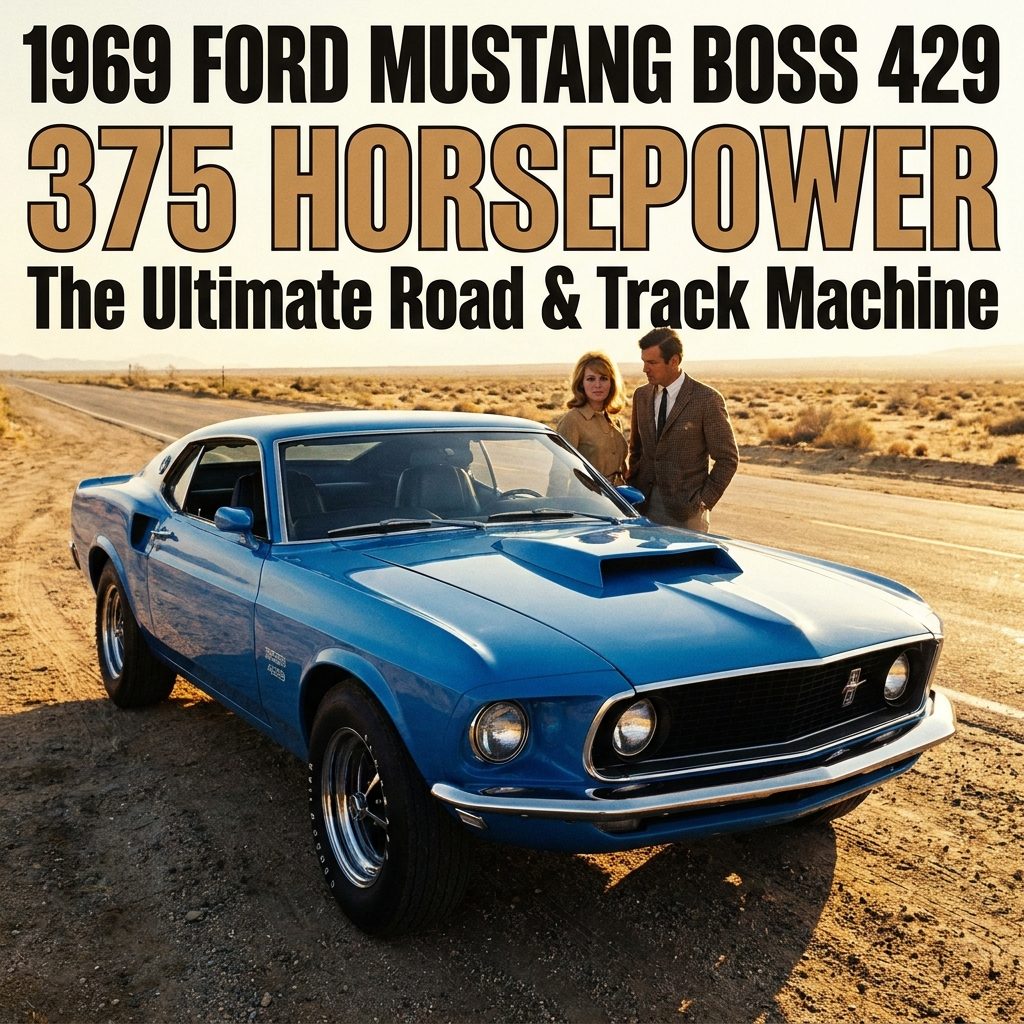
Ford rated the Boss 429 at 375 horsepower, a figure that has been debated ever since the car was new.
The engine’s enormous ports, aluminum heads, and racing origins convinced many owners that the published number did not tell the full story. Stock examples were also conservatively tuned, so modified engines could make far more power than the showroom specification suggested. On paper it looked civilized. Its hardware told a different story.
20. The Manual Choke and the Cold-Start Ritual Owners Learned by Heart
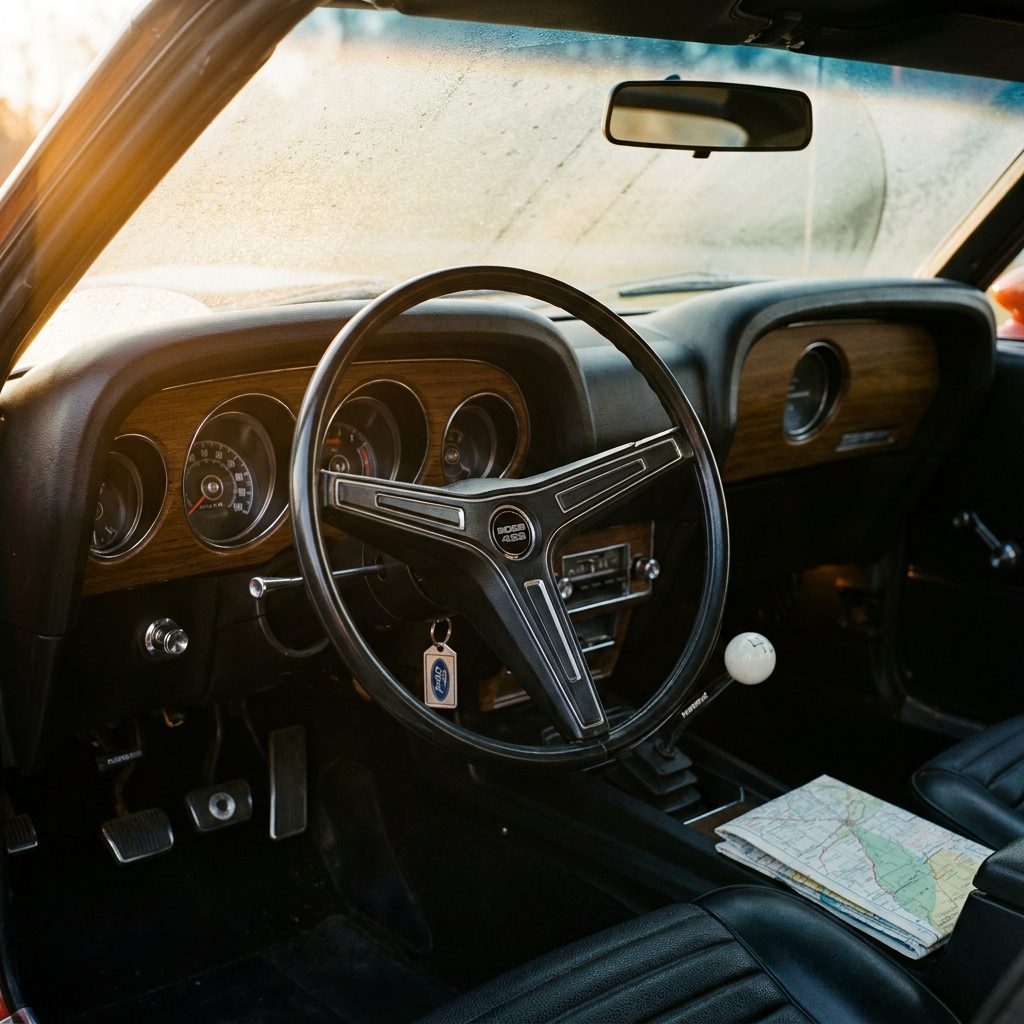
Starting a carbureted Boss 429 on a cold morning demanded more attention than pressing a modern start button. Owners learned how much choke and throttle their particular car wanted, and too much fuel could leave the engine flooded.
Get the sequence right and the big 429 caught with enough sound to announce itself to the whole block. Neighbors either loved you or they did not. Nothing in between.
19. The Wide Goodyear Rubber That Gave the Boss 429 Its Planted Stance
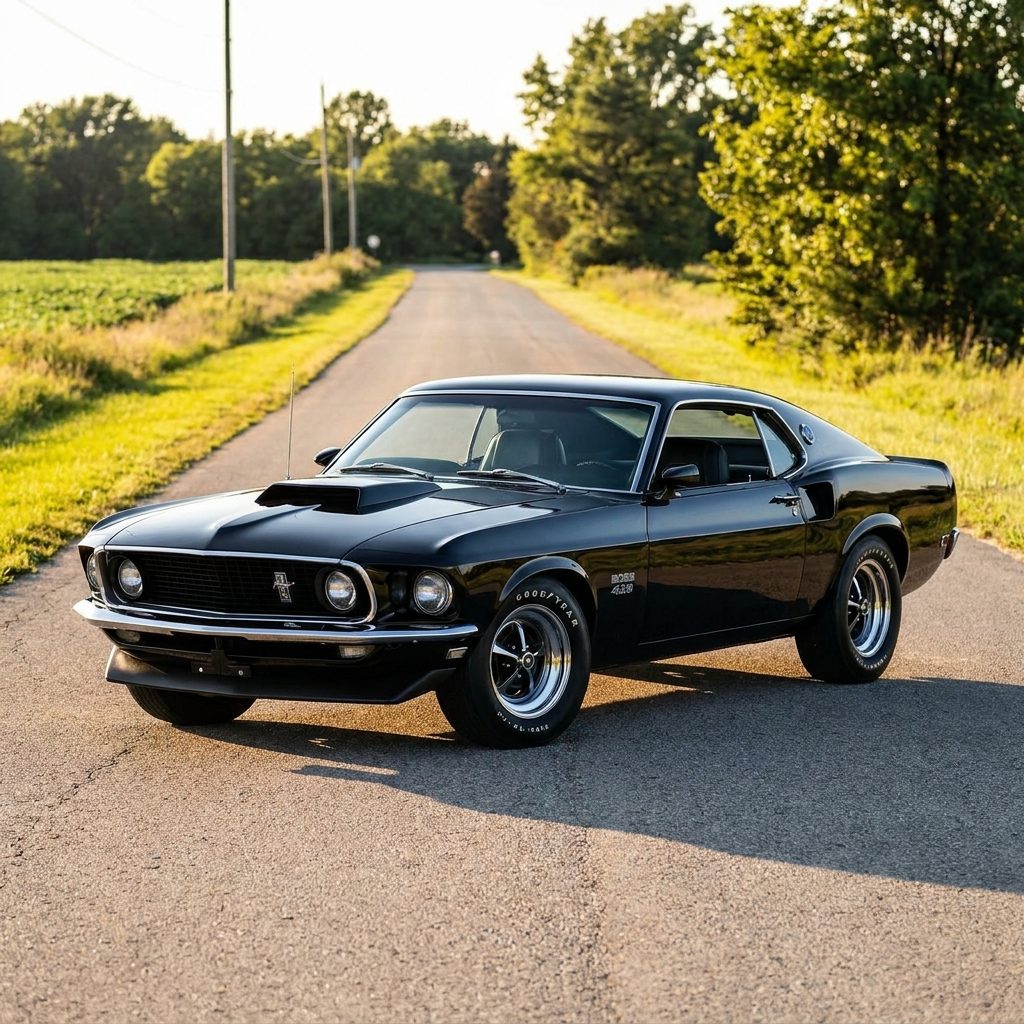
Raised white-letter Goodyears fill the wheel openings, giving the car the broad, planted look associated with late-1960s street muscle. This particular setup uses wider rear rubber and nonfactory wheels, pushing the stance beyond the original specification.
A factory-correct 1969 Boss 429 wore 15-inch Magnum 500 wheels with F60-15 Goodyear Polyglas GT tires. Those bias-ply originals looked purposeful without being oversized—and demanded respect once the pavement turned wet.
18. The Colors You Could Actually Order and the Ones Everyone Remembers
Would you like to save this?
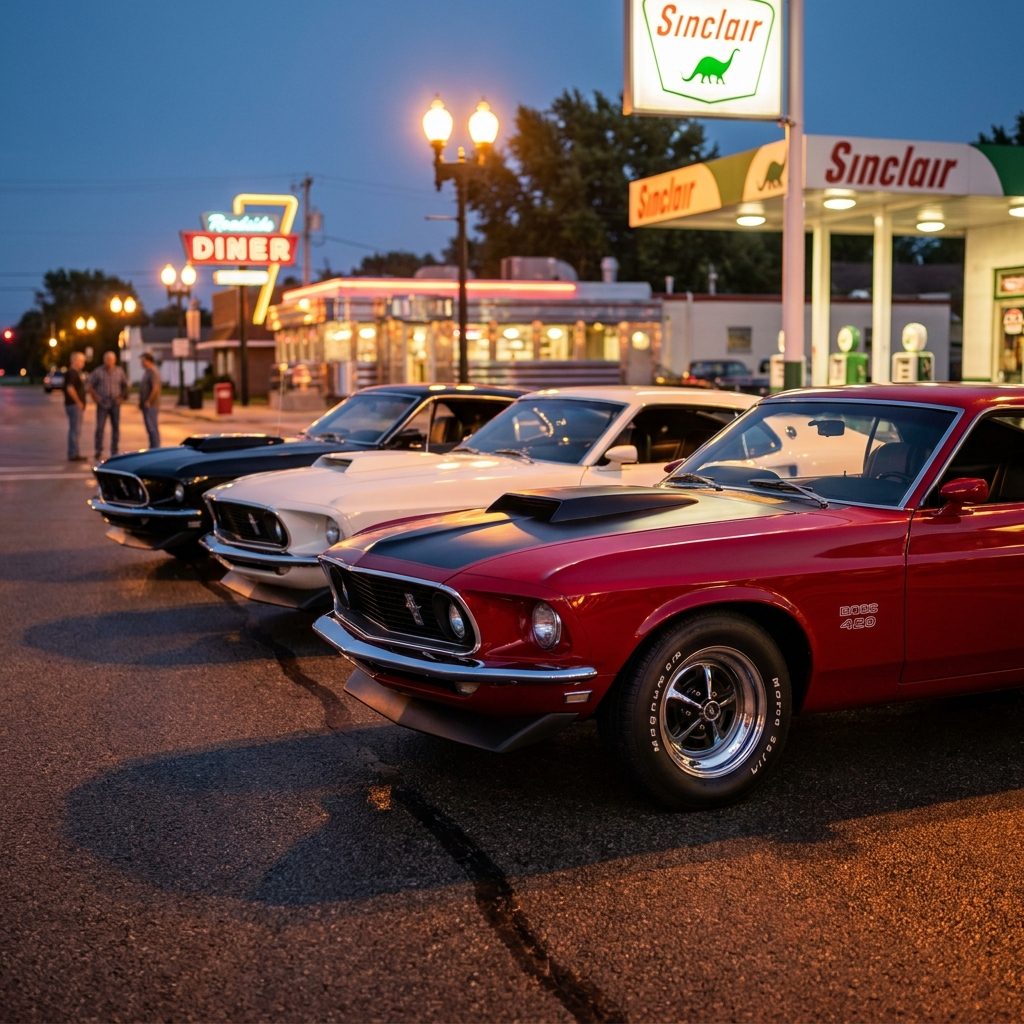
Ford offered the Boss 429 in a short list of colors, and most folks remember maybe three of them. Wimbledon White was the most common. Raven Black looked mean under a streetlight. Candyapple Red was what you ordered if you wanted every head at the drive-in to turn.
Royal Maroon completed the darker side of the 1969 palette. Grabber Blue was not a 1969 Boss 429 color; it joined the Boss 429 palette for 1970. Get it right at the car show or someone will happily correct you, loudly, in front of your family.
17. Kar Kraft in Brighton, Michigan and the Shop That Built Them One at a Time
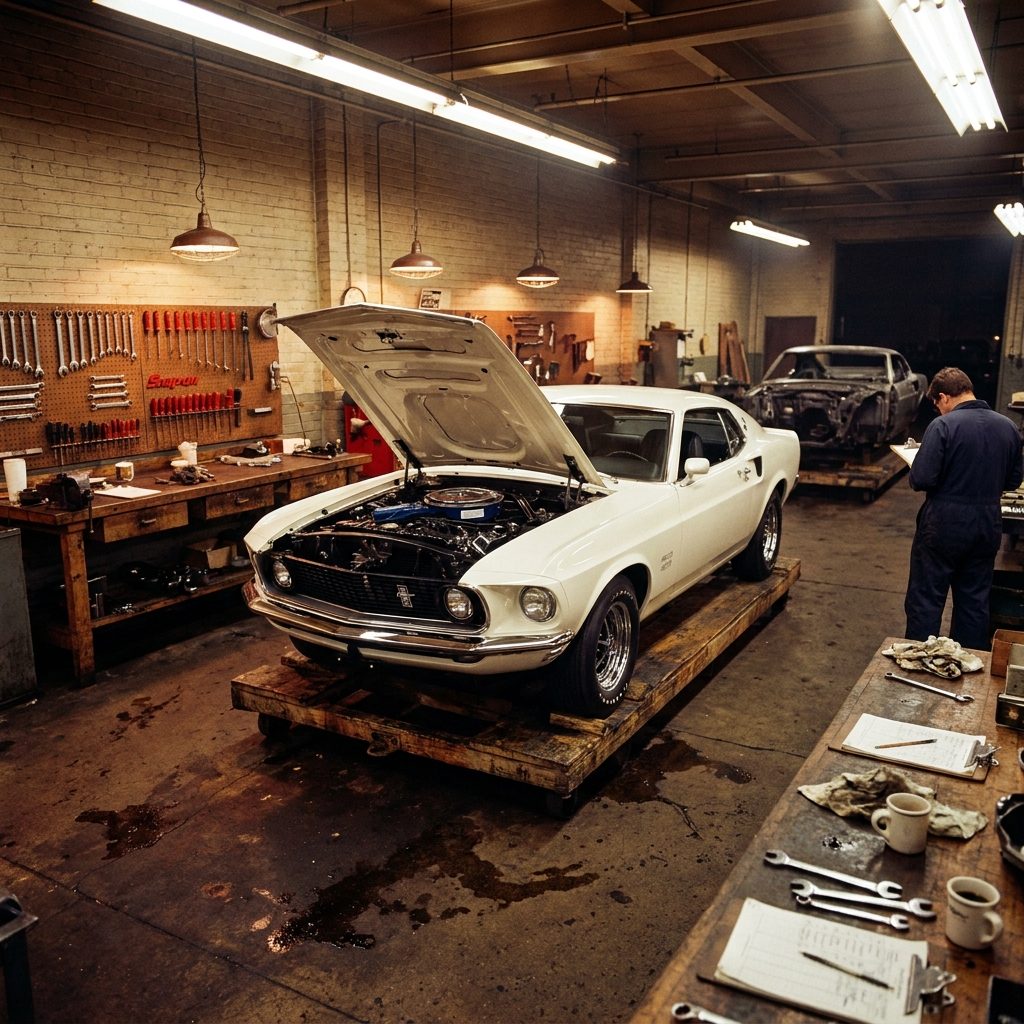
Kar Kraft was not just a body shop with a fancy name. Ford had already relied on the company for specialized performance work, so by the time the Boss 429 order arrived, the Brighton crew was accustomed to building small numbers of cars to standards no regular assembly line could easily meet.
A small team worked one car at a time from a checklist that read more like a race-prep sheet than a conventional production manifest. Cars arrived from Ford’s production process as partially completed Mustang bodies configured for the conversion, then underwent extensive disassembly and rebuilding before reaching dealers.
More skunkworks than factory.
16. The Aluminum Cylinder Heads That Set the Engine Apart
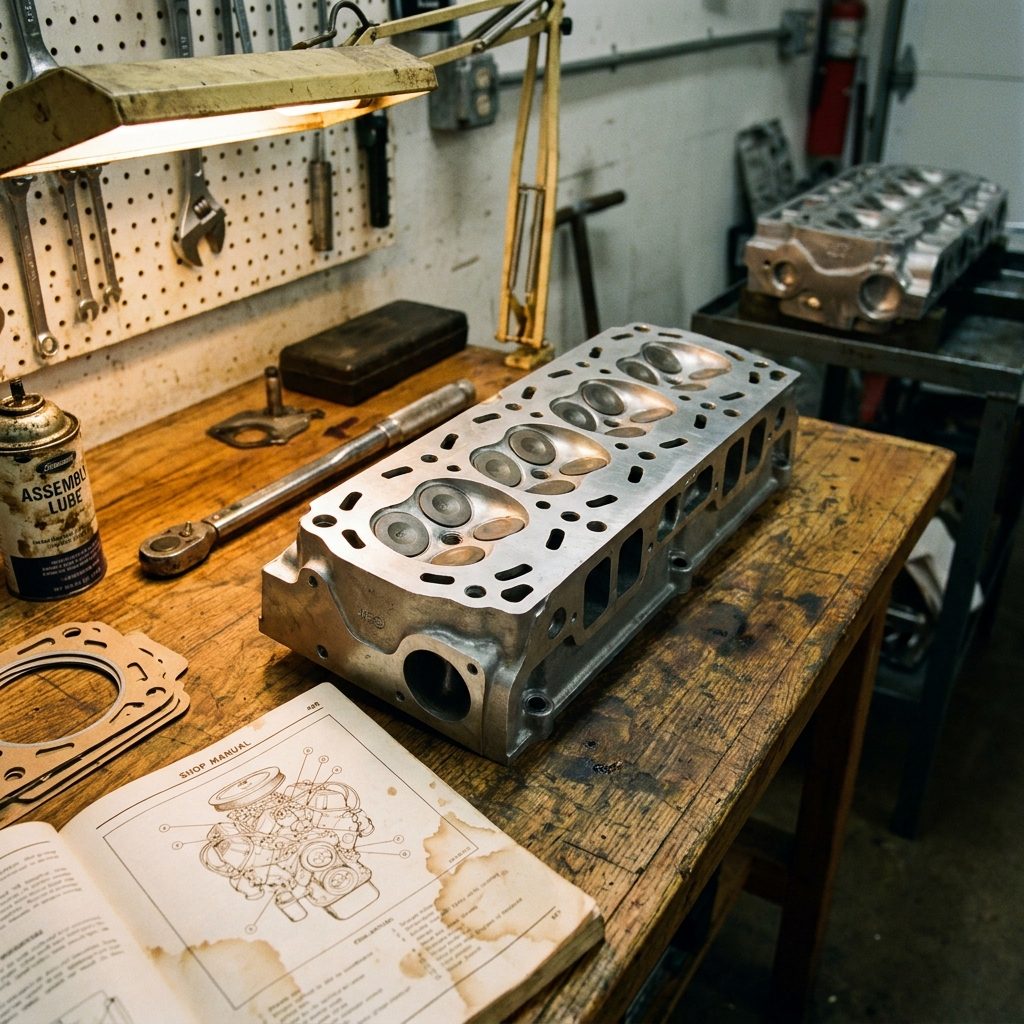
Cast aluminum cylinder heads on a Detroit production engine were still unusual in 1969. The Boss 429 used them to reduce weight and manage heat around its enormous canted valves and semi-hemispherical chambers.
They were expensive, exotic pieces by mass-production standards, and they made the engine look and feel closer to competition hardware than anything normally found in a Mustang showroom.
15. The Toploader Four-Speed That Was the Only Transmission
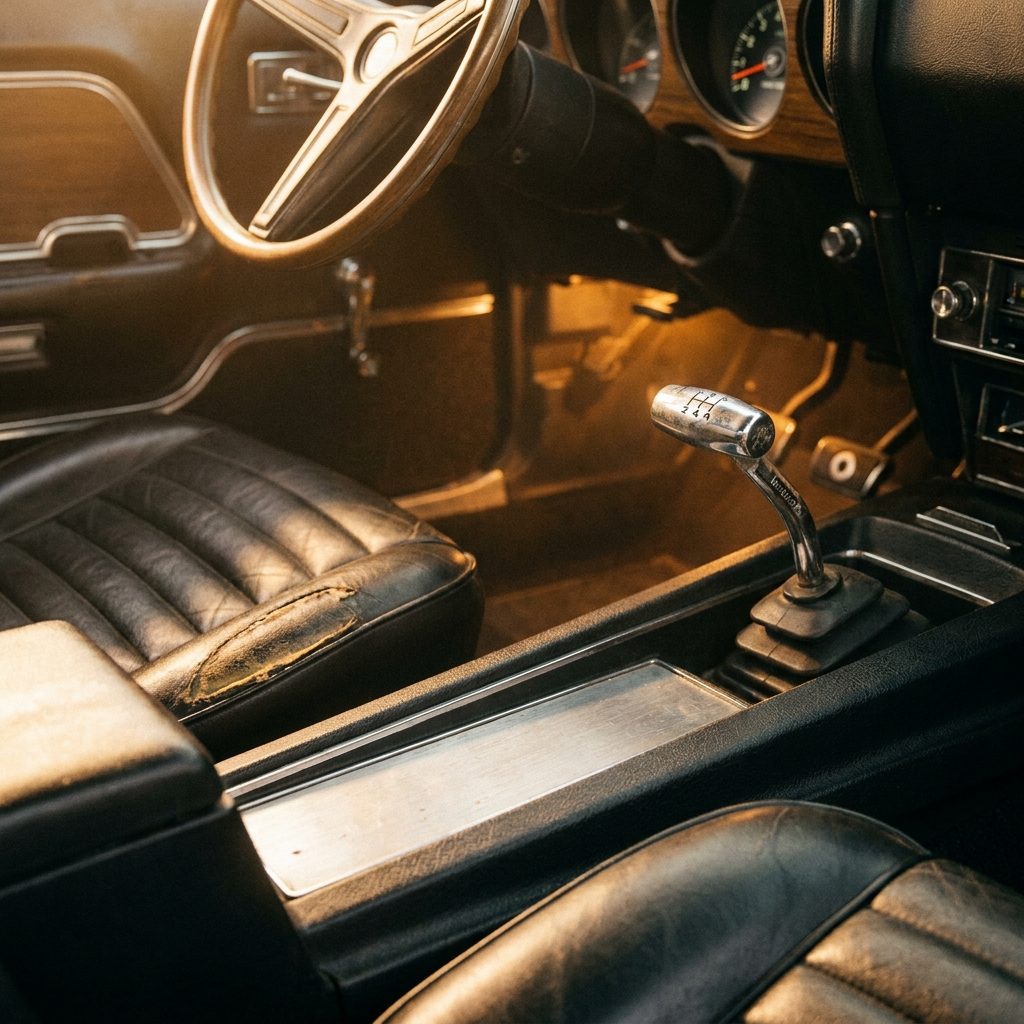
Every 1969 Boss 429 came with Ford’s Toploader four-speed. There was no automatic option.
The transmission matched the engine’s purpose: strong, direct, and built to tolerate torque. Three pedals were not a nostalgic flourish here. They were part of the package.
14. The Reinforced Rear Suspension With the Staggered Shocks
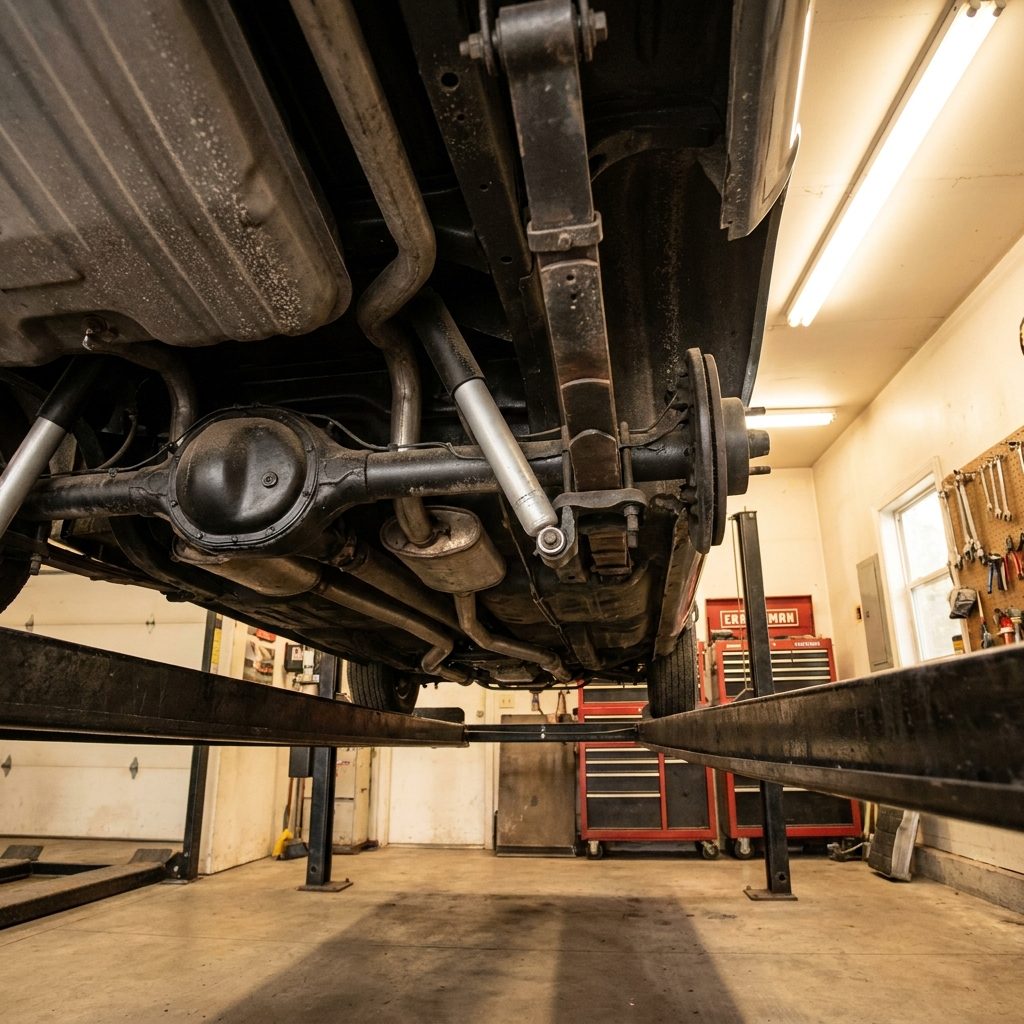
Detroit muscle cars of the era had a nasty habit of wheel hop under hard acceleration—the rear axle would wind up, release, and chatter the tires like a jackhammer trying to break the pavement apart.
Ford reduced it on the Boss 429 with staggered shocks, one mounted ahead of the axle and one behind. Small engineering decision. Nobody notices it until they launch the car hard and it just goes.
13. Power Steering, Power Front Disc Brakes, and the Serious Hardware Came Standard
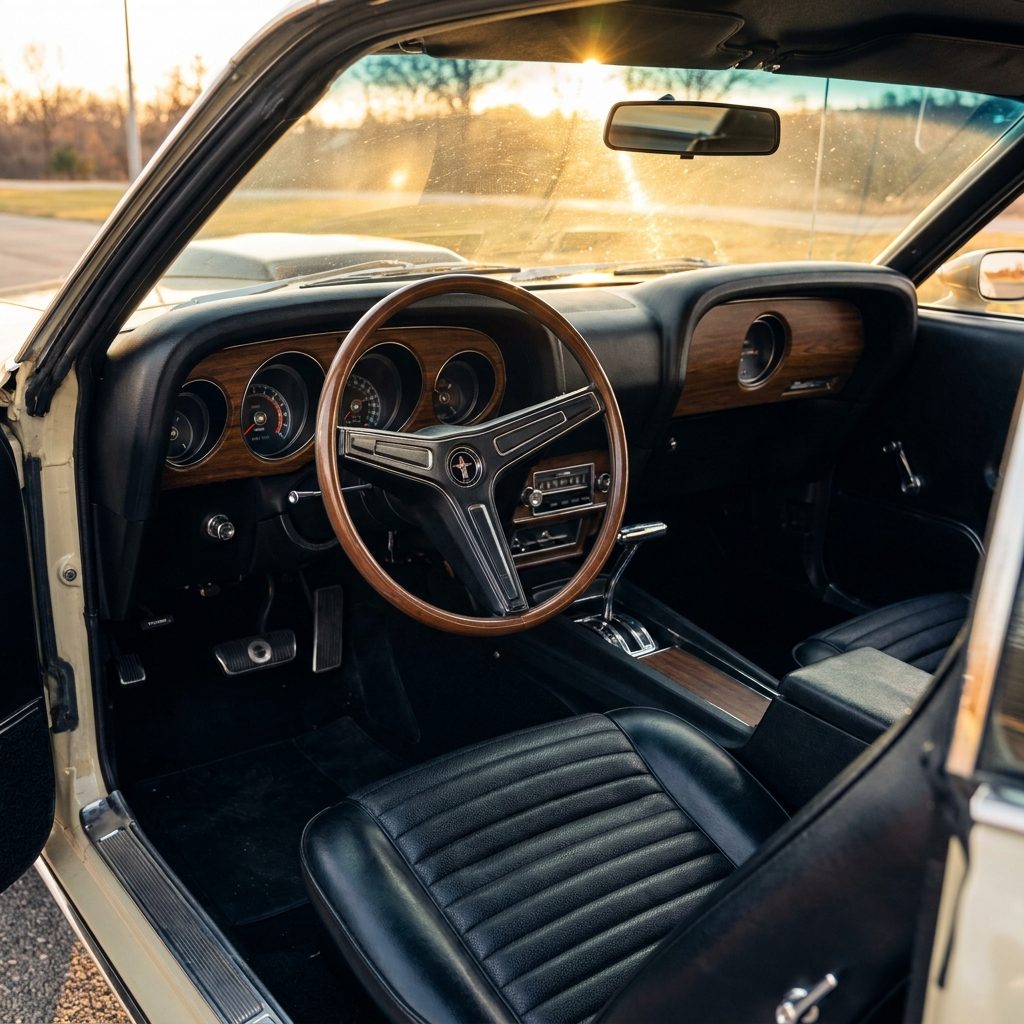
Every Boss 429 left Kar Kraft with power steering, power front disc brakes, a tachometer, and a Traction-Lok rear axle. Ford did not offer a bare-bones version of the package.
The equipment made sense. The engine was heavy, the price was high, and the car needed more than brute force to remain usable on the street.
12. The Sticker Price That Made Grown Men Wince
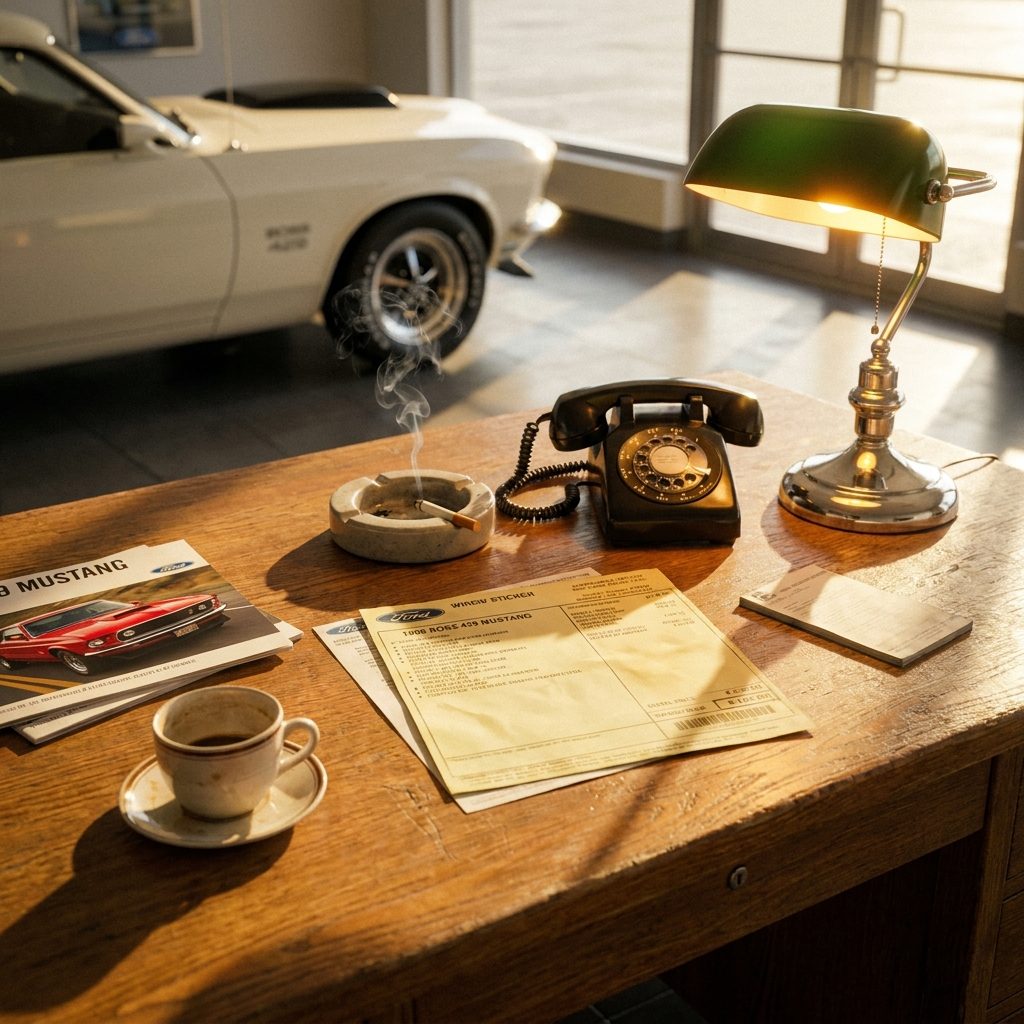
A base 1969 Mustang stickered below $2,700. A Boss 429 came in around $4,800—luxury-car money in 1969.
That price reflected the specialized engine, the Kar Kraft conversion, and the amount of hand work buried beneath the sheet metal. Buyers were not simply paying for a faster Mustang. They were paying for a low-volume homologation program.
11. Why the Boss 429 Is Worth More Than a House Now
Top Boss 429s have sold for hundreds of thousands of dollars, with originality, documentation, color, and restoration quality making enormous differences. Speed alone does not explain the market. Plenty of newer cars are faster and far cheaper.
Rarity, story, and provenance do the work. Ford built 859 for 1969. Kar Kraft modified them by hand. The engine existed because of NASCAR, not because a Mustang product planner asked for it. That combination turned an odd homologation special into one of the most valuable production Mustangs ever built.
Some still get driven, but every mile now carries a calculation.
10. The Semi-Hemispherical Combustion Chambers That Made the Whole Thing Possible
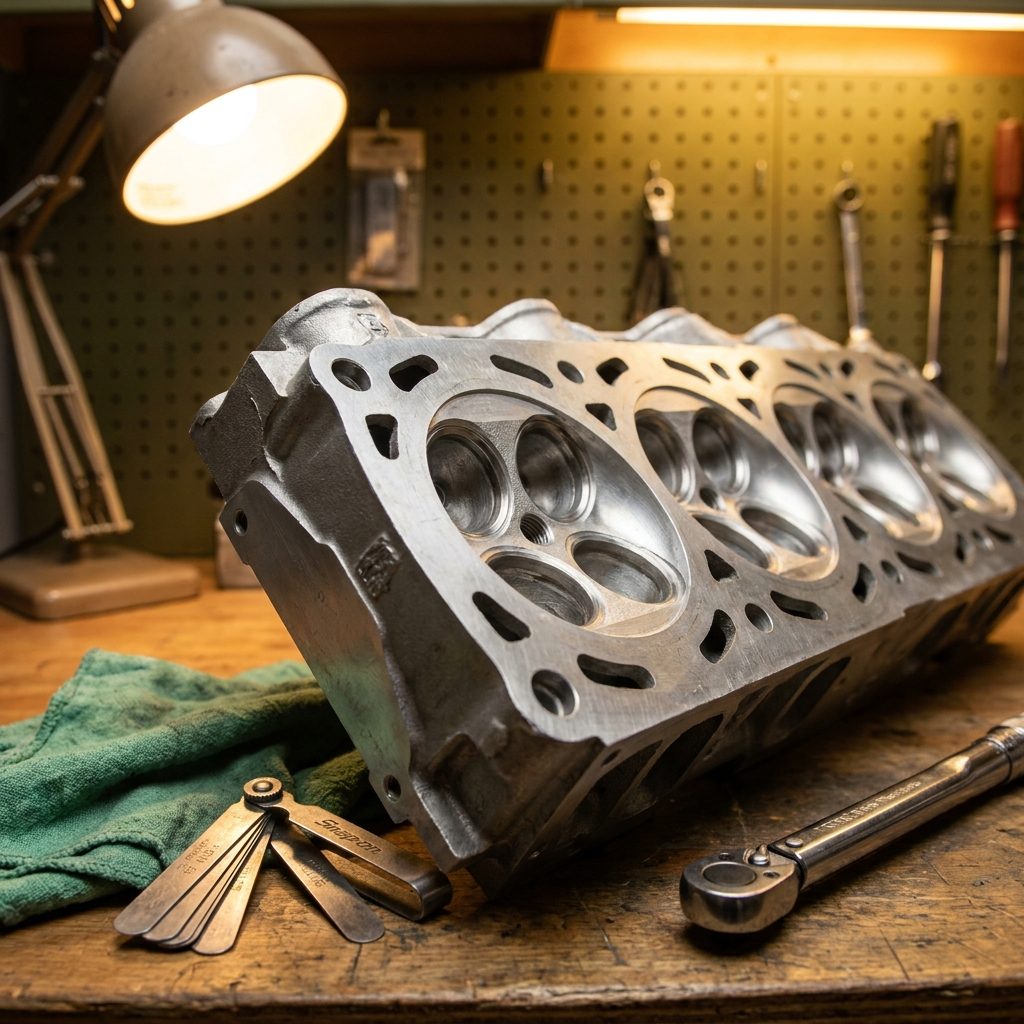
The Boss 429’s combustion chambers were not full hemispheres, which is why the design became known as a semi-hemi. The canted valves and broad chamber layout allowed enormous ports and excellent airflow at high engine speeds.
The heads flowed air like a firehose, but the block and bottom end mattered just as much. This was a complete competition-minded engine, not a clever cylinder head bolted onto an ordinary street motor.
9. The Restrained Exterior Graphics That Let the Shape Do the Talking
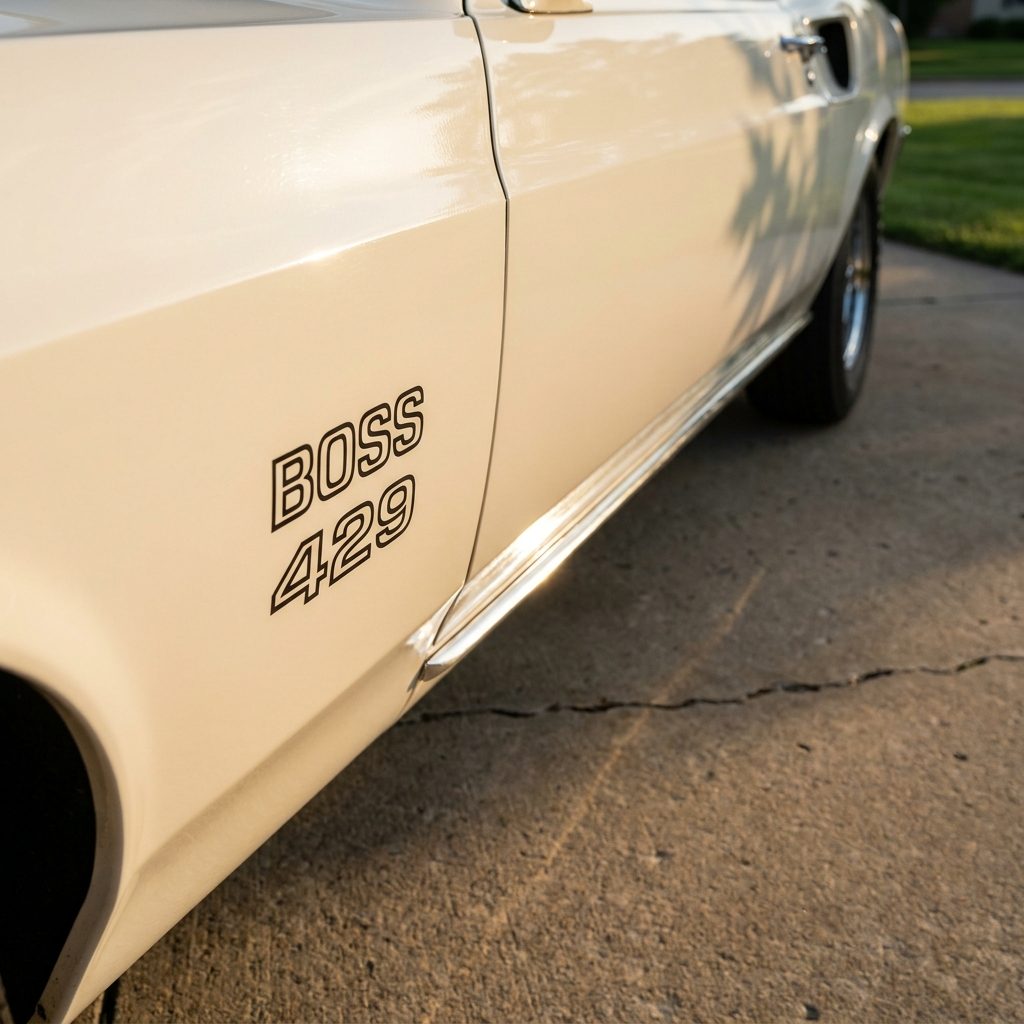
The Boss 429 did not depend on giant stripes or a billboard-sized model name. Its identification was restrained enough that the hood scoop, stance, and small fender badging did most of the talking.
That understatement became part of the car’s appeal. From twenty feet away it still looked like a Mustang. Up close, the proportions and hardware gave the game away.
8. The Upscale Mustang Interior That Barely Mentioned the Engine
Would you like to save this?
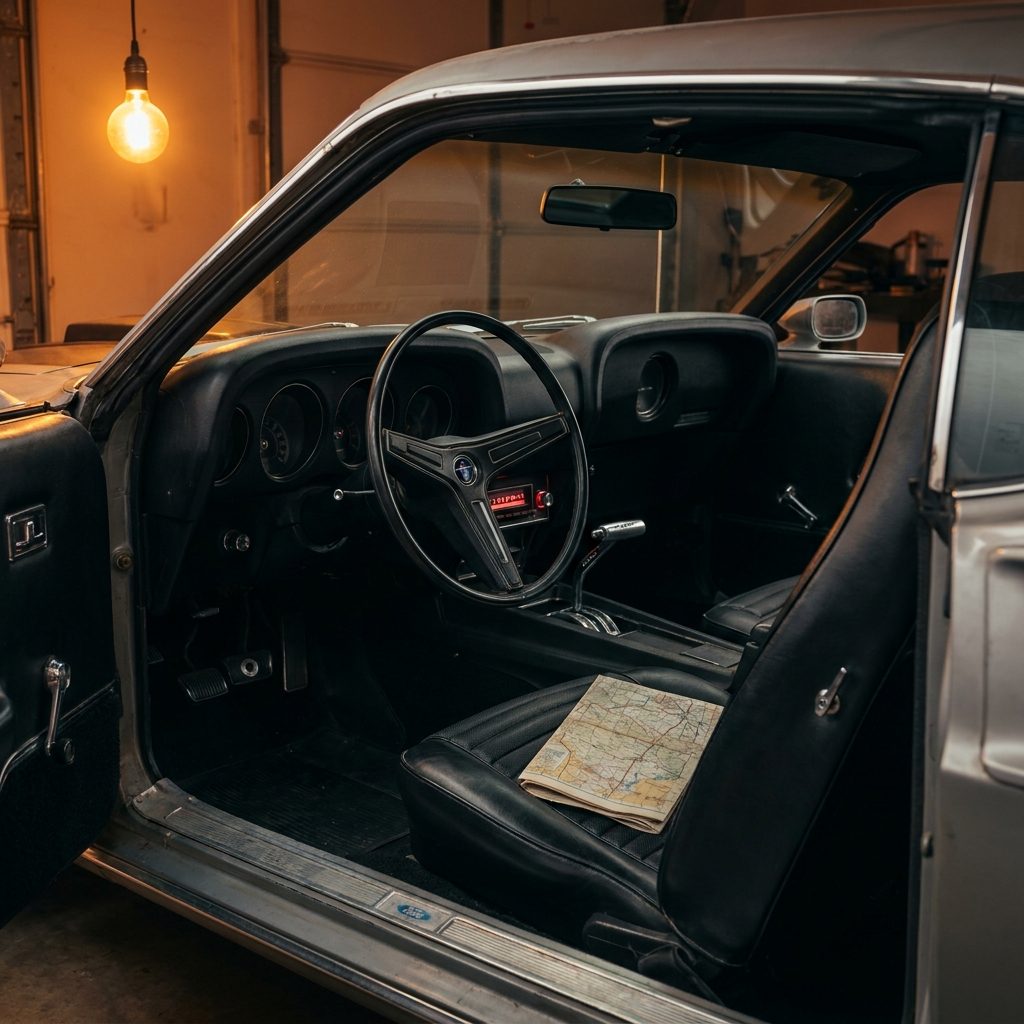
Slide into a Boss 429 in 1969 and the cabin felt like an upscale Mustang rather than a stripped race car. The seats, steering wheel, dashboard, and trim were familiar, and there was no elaborate plaque explaining the engine under the hood.
Ford could have turned the interior into a rolling advertisement. Instead, the hardware remained the secret. Only the driver needed to know what the car really was.
7. The Hood Scoop That Made the Boss 429 Instantly Recognizable
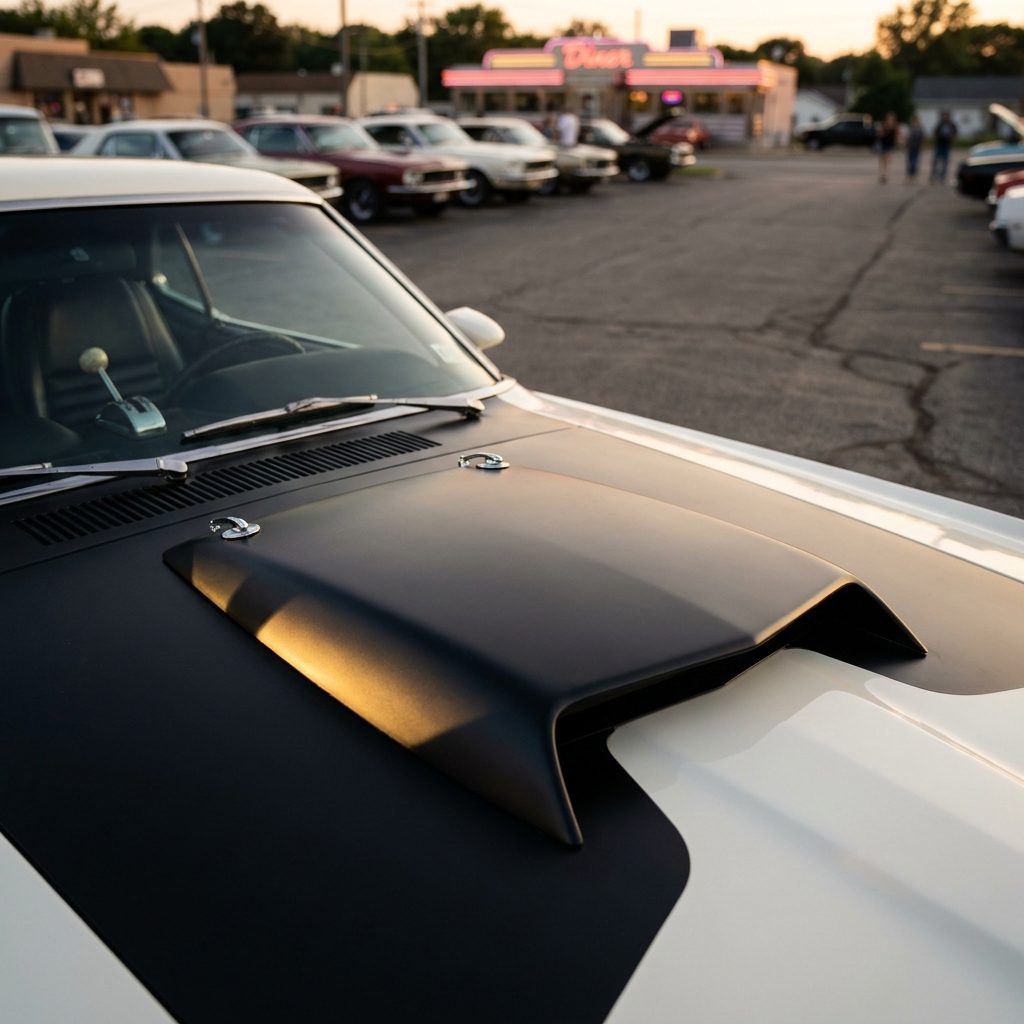
Even with a restrained badge and a blacked-out grille, the Boss 429’s hood scoop gave the car away before anyone read a single letter of trim. Its size and shape were dictated by function rather than style, but the result also became the car’s most recognizable visual signature.
Later reproductions and clones borrowed the scoop shape precisely because it reads as Boss 429 from a block away, even to people who couldn’t tell you what’s underneath it.
6. The Factory Warranty That Proved It Was Still a Street Car
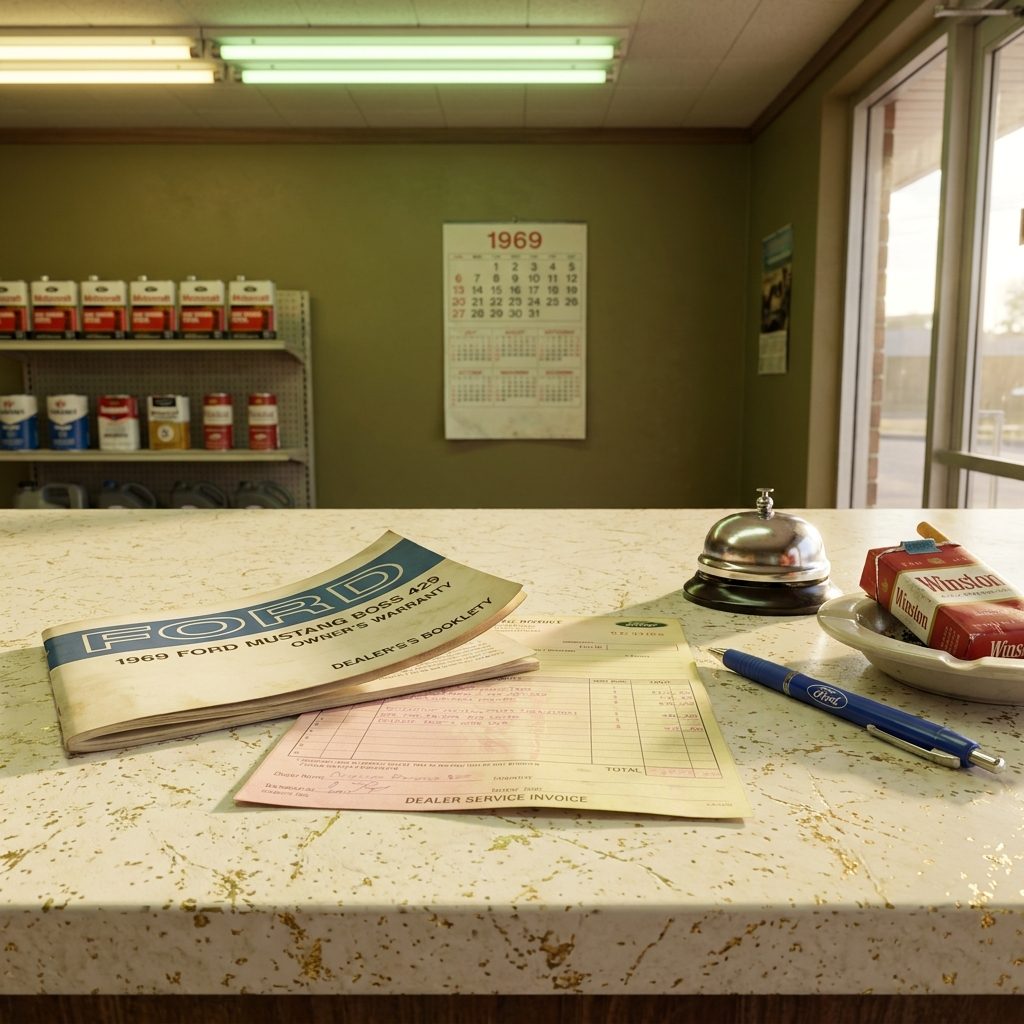
For all its NASCAR origins and hand-built front end, the Boss 429 was sold through ordinary Ford dealers as a production street car. It carried factory warranty coverage rather than arriving as an off-road race package with no protection at all.
That distinction mattered. Owners could drive home in a car built around competition hardware and still return to a Ford service department when something failed under normal use.
5. Black Jade Was the Color That Made the Boss 429 Look Almost Formal
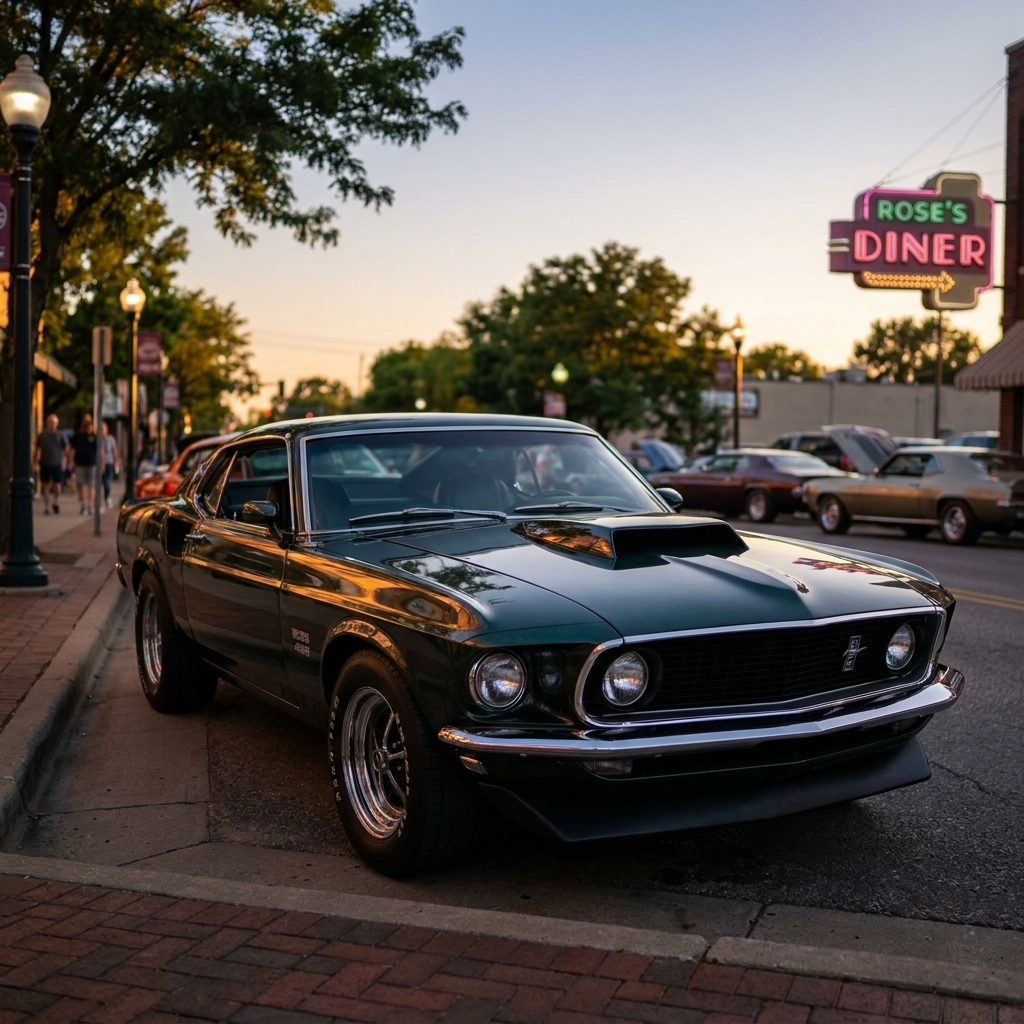
Black Jade was one of the five documented 1969 Boss 429 colors, and it changed the car’s personality completely. White looked clinical, black looked menacing, and Candyapple Red announced itself from across the lot. Black Jade made the car look almost formal.
It is a useful reminder that not every muscle car needed a loud color to look dangerous.
4. The Larry Shinoda Fingerprints All Over the Design
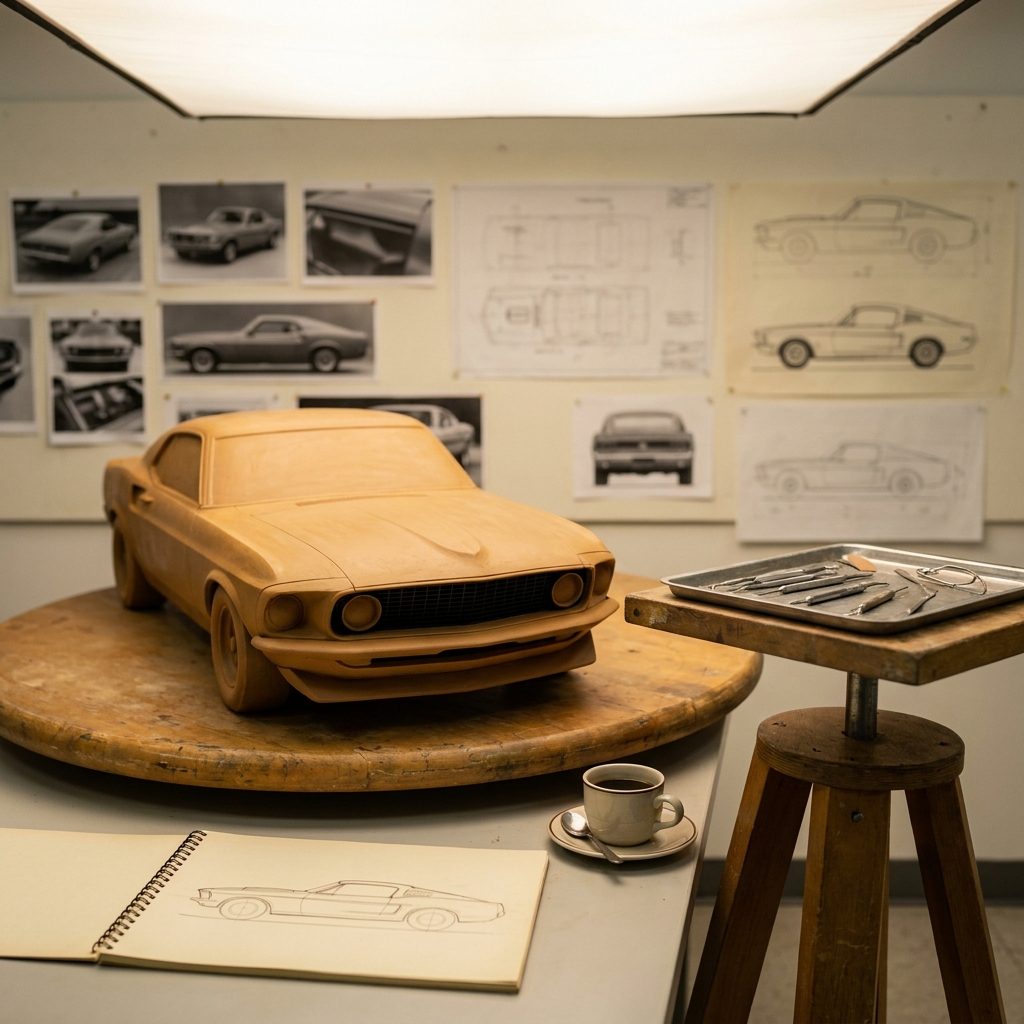
Larry Shinoda came to Ford after influential work on GM performance programs, including the Corvette and Camaro. Bunkie Knudsen brought him over in 1968 as Ford sharpened the identity of its performance cars.
Shinoda’s influence is visible in the Boss cars’ restrained graphics, blackout details, and purposeful stance. The design did not need extra decoration because the proportions and hardware already carried the message.
3. The First Time You Hear One at Idle You Understand Everything
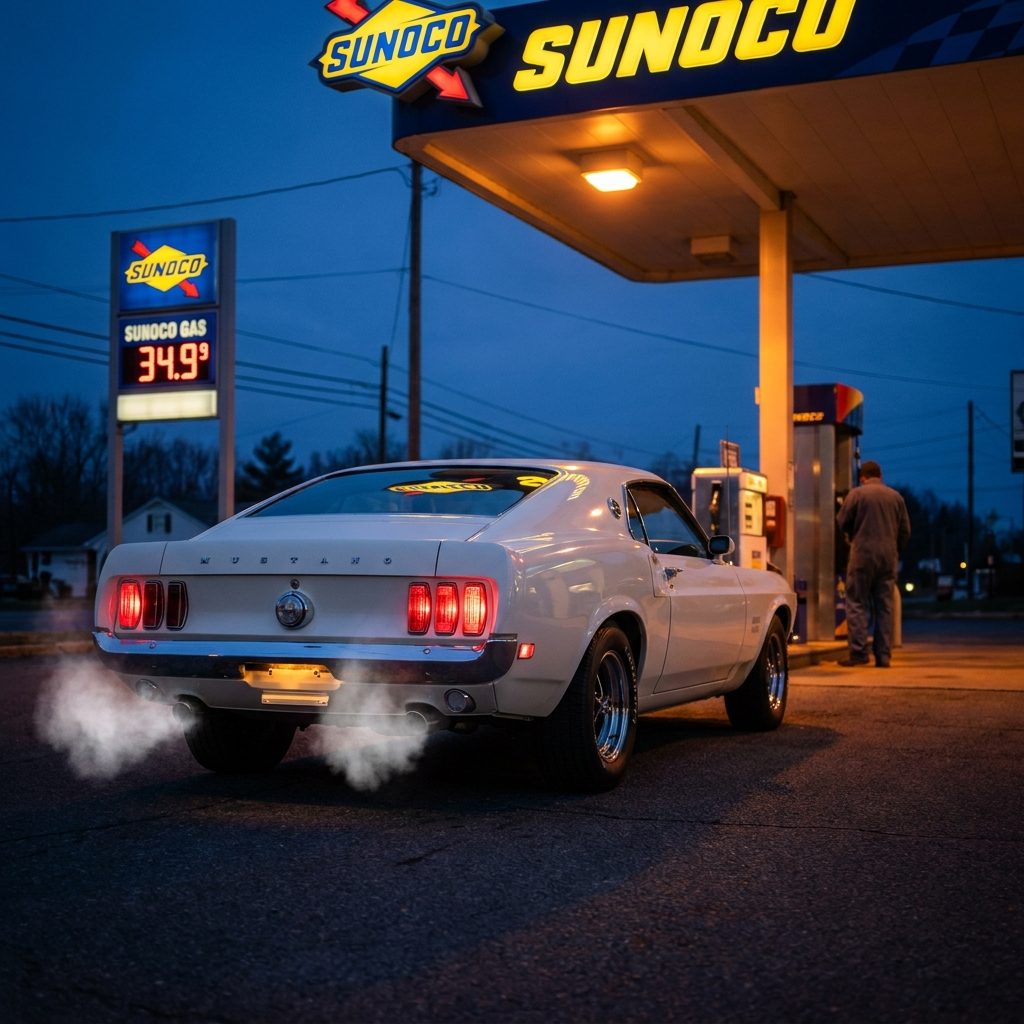
A properly tuned Boss 429 could be surprisingly restrained at idle, but it never sounded ordinary. The enormous displacement produced a low, heavy pulse that made the guy at the next pump turn around mid-conversation.
You can walk past a Chevelle SS at a gas station without noticing. You cannot walk past this one. That sound is part of why collectors chase it. The NASCAR story, Kar Kraft work, and tiny production run do the rest.
2. The Sealed Ram-Air Assembly That Fed the 735-CFM Holley
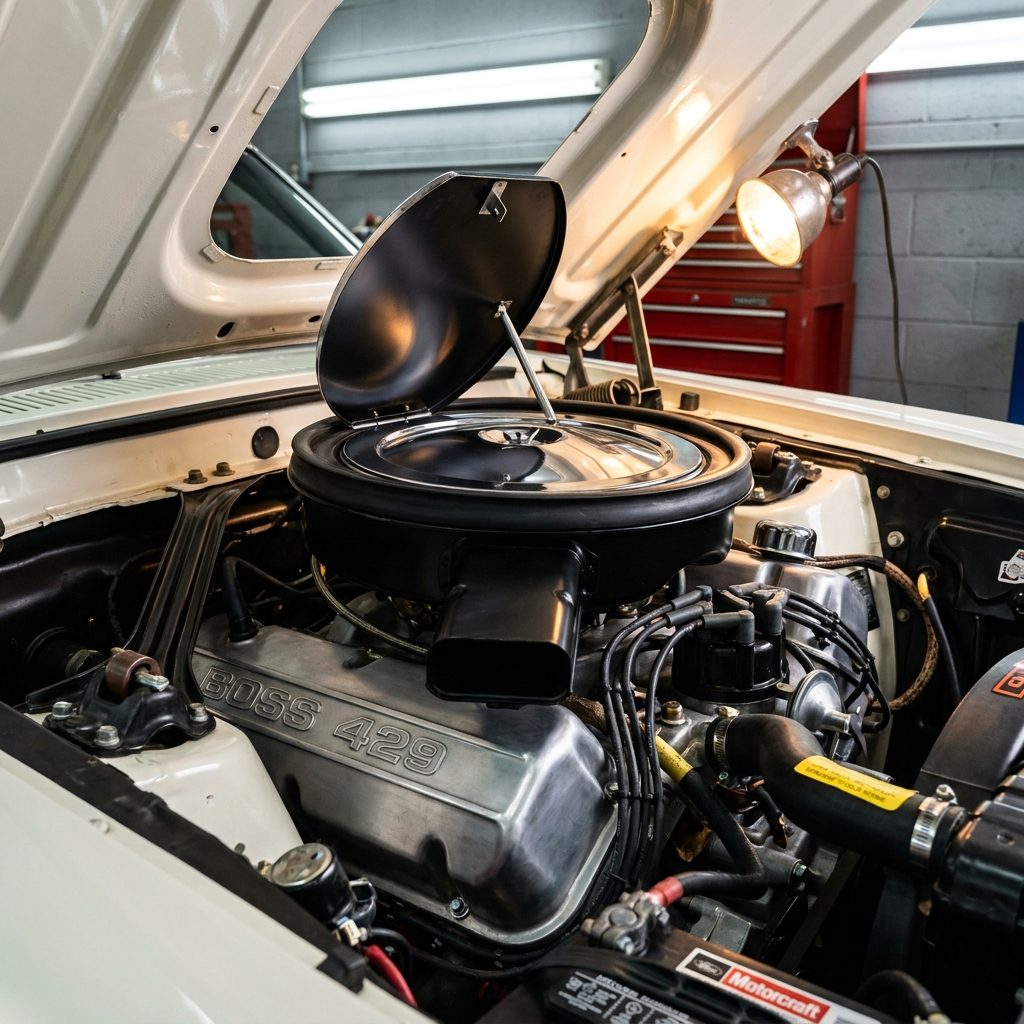
The air-cleaner assembly sealed against the hood scoop and fed outside air directly to a 735-cfm Holley four-barrel, rather than pulling from the hot engine bay the way a conventional open air cleaner does. It was a complete induction system engineered for airflow, not a decorative scoop bolted over ordinary hardware.
Under heavy throttle, the intake noise became part of the experience—a deep rush of air layered over the engine itself. The 429’s enormous ports were built to breathe, and this sealed setup helped supply them.
1. The Kar Kraft Number That Separates a Real Boss 429 From a Tribute
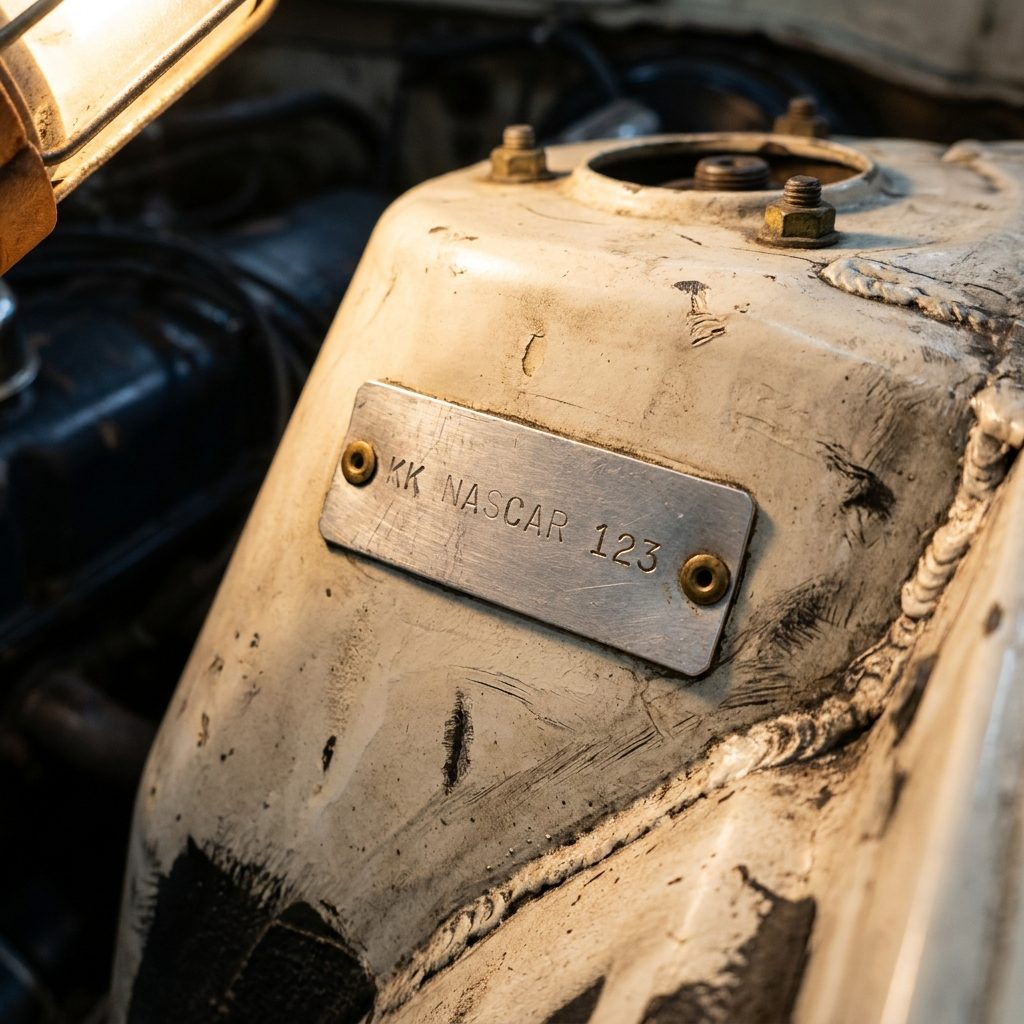
Every Boss 429 retained its Ford VIN and received an additional Kar Kraft number. The KK identifier recorded the car’s place in the Kar Kraft production sequence; it did not identify an individual worker.
For the 1969 and 1970 program, the known sequence runs from KK1201 through KK2558. Collectors use that number alongside the Ford VIN, door data, body modifications, documentation, and component details when determining whether a car is genuine.
The plate alone does not make a Boss 429, but a missing, altered, or inconsistent number can cost a car a great deal of credibility—and a great deal of value.