
Would you like to save this?
Saturday night started the moment you turned the key. The radio found its station, the windows came down, and two miles of Main Street became the whole world. No destination. No plan. Just the low rumble of the engine, the smell of summer asphalt through the window glass, and every kid in town doing the exact same slow loop past the same bright storefronts. Here’s what that felt like, in the specific, unrepeatable way it actually was.
The Drive-In Burger Stand Where the Carhop Knew Your Name and Your Order
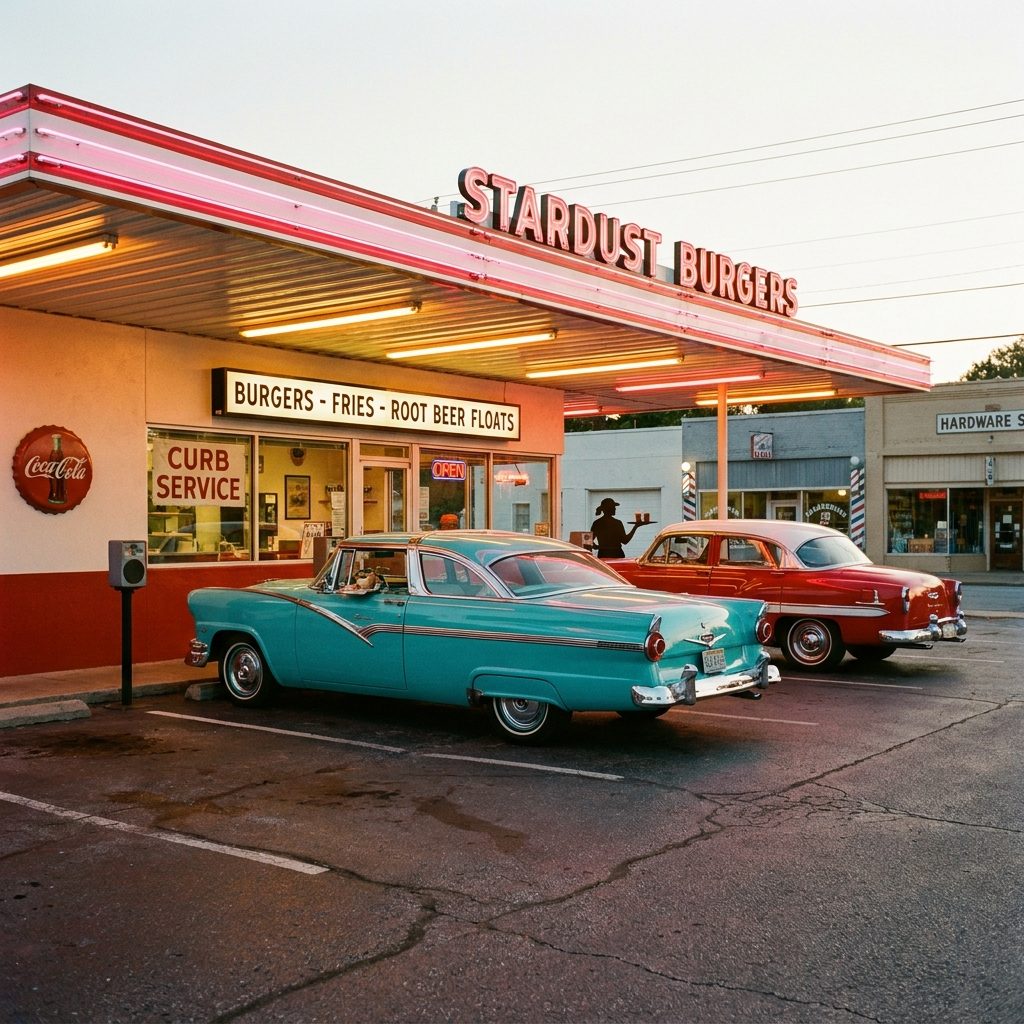
The carhop was there before you even cut the engine. She already knew you wanted the double with extra pickles and a large root beer, because you’d ordered the same thing every Friday for the past year and a half. That kind of memory felt like belonging, which at sixteen is the thing you want most.
Drive-in stands were the social switchboard of every small-town cruise night. You didn’t go for the food alone. You went to see who was parked next to who, whose car was two stalls down, and whether the person you’d been thinking about all week happened to show up. The burger was almost beside the point.
The Stoplight on Main That Turned Red Every Single Time You Had Something to Prove
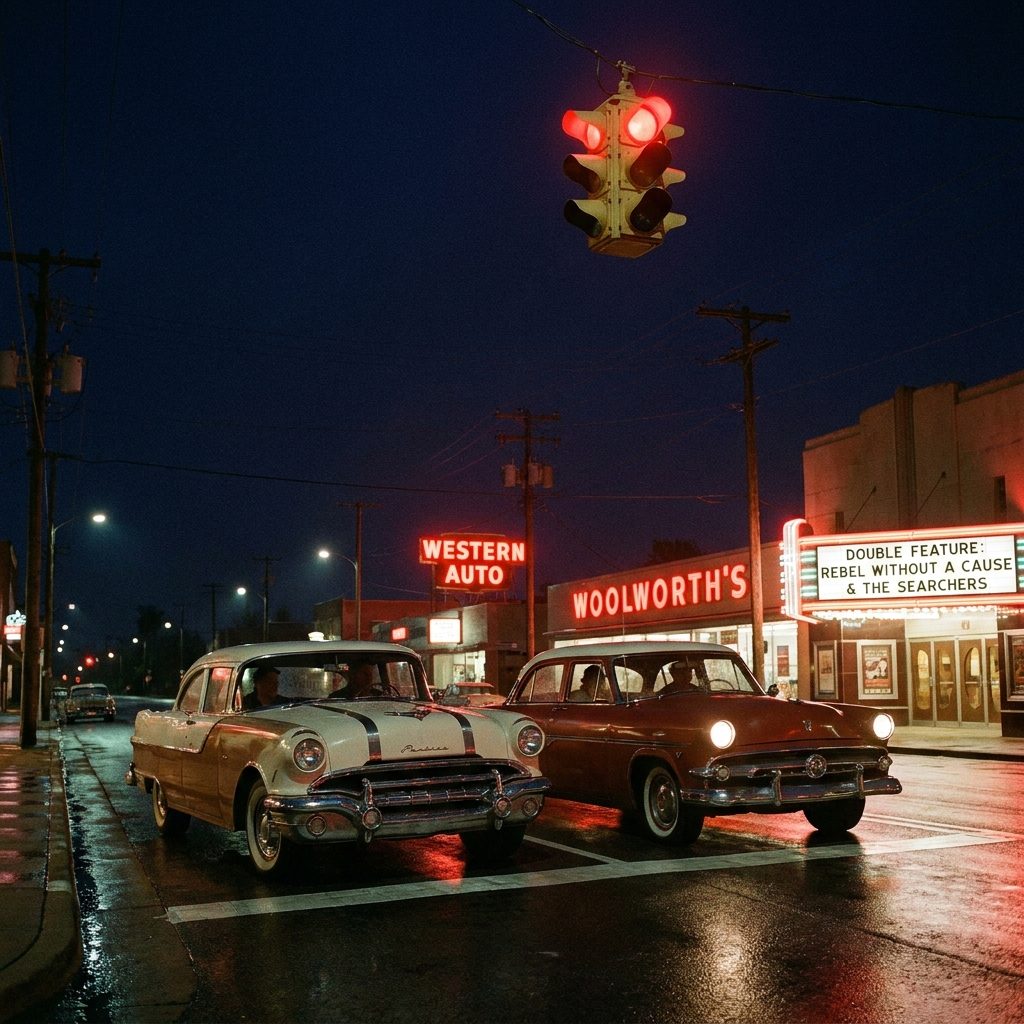
Every town had that one light. The one at the main intersection where two lanes came together and the whole cruise night seemed to funnel through a single red lens. You’d pull up, hear the other engine idling next to you, and the next thirty seconds felt enormous.
Nobody was going to race. Not really. But nobody was going to be the first to look away, either. The light went green and both drivers eased out just slightly faster than they should have, chrome bumpers even for half a block, and then it was over and the cruise continued like nothing happened. That was the whole game.
The Parked Car Full of Younger Kids Who Were Still a Year Away From a License
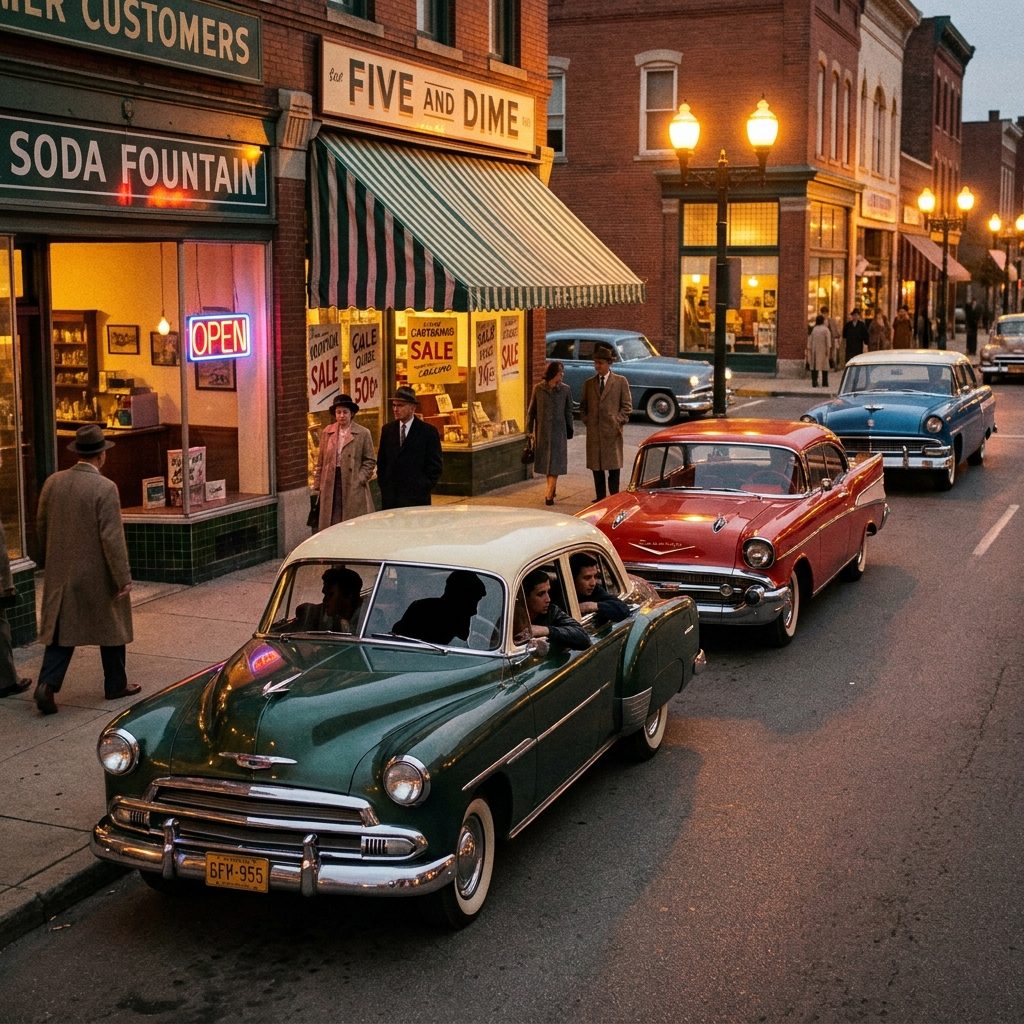
They were always there, the year-away kids. Parked or standing on the sidewalk in front of the five-and-dime, watching the loop like they were memorizing it. Which they were. They knew every car, every driver, every unwritten rule, and they’d been studying it all for two years before they ever got behind a wheel.
Getting your license wasn’t just paperwork. It was graduation from observer to participant. The cruise was the real initiation and those sidewalk years were the prerequisite course.
The Smell of Witch Hazel and Butch Wax That Meant Someone Had Put in Effort Tonight
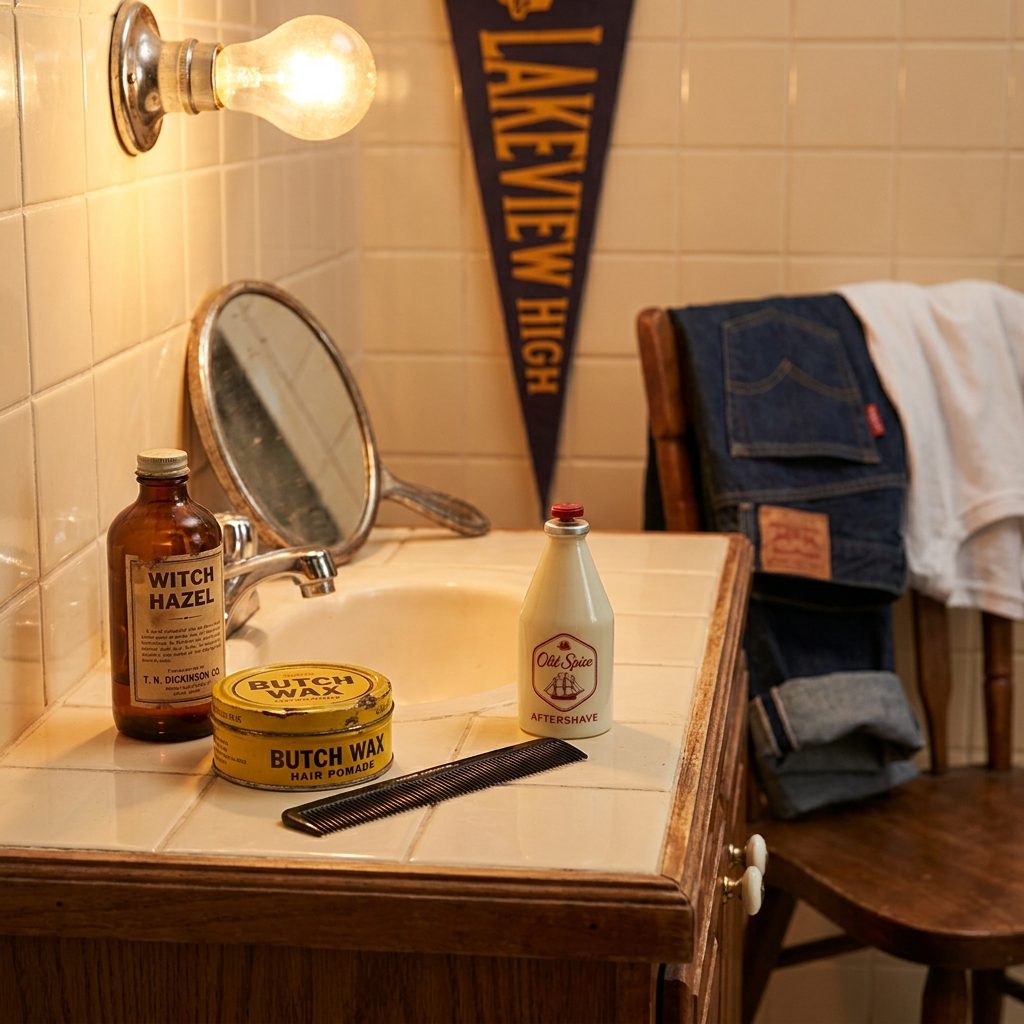
You smelled it the moment the car door opened. Witch hazel, Butch Wax, maybe a splash of Old Spice borrowed from an older brother’s medicine cabinet. The combination meant somebody had spent twenty minutes in front of the bathroom mirror before climbing in, which was information. It told you how seriously they were taking tonight.
The Railroad Tracks at the End of Third Street That Made Every Car Bottom Out
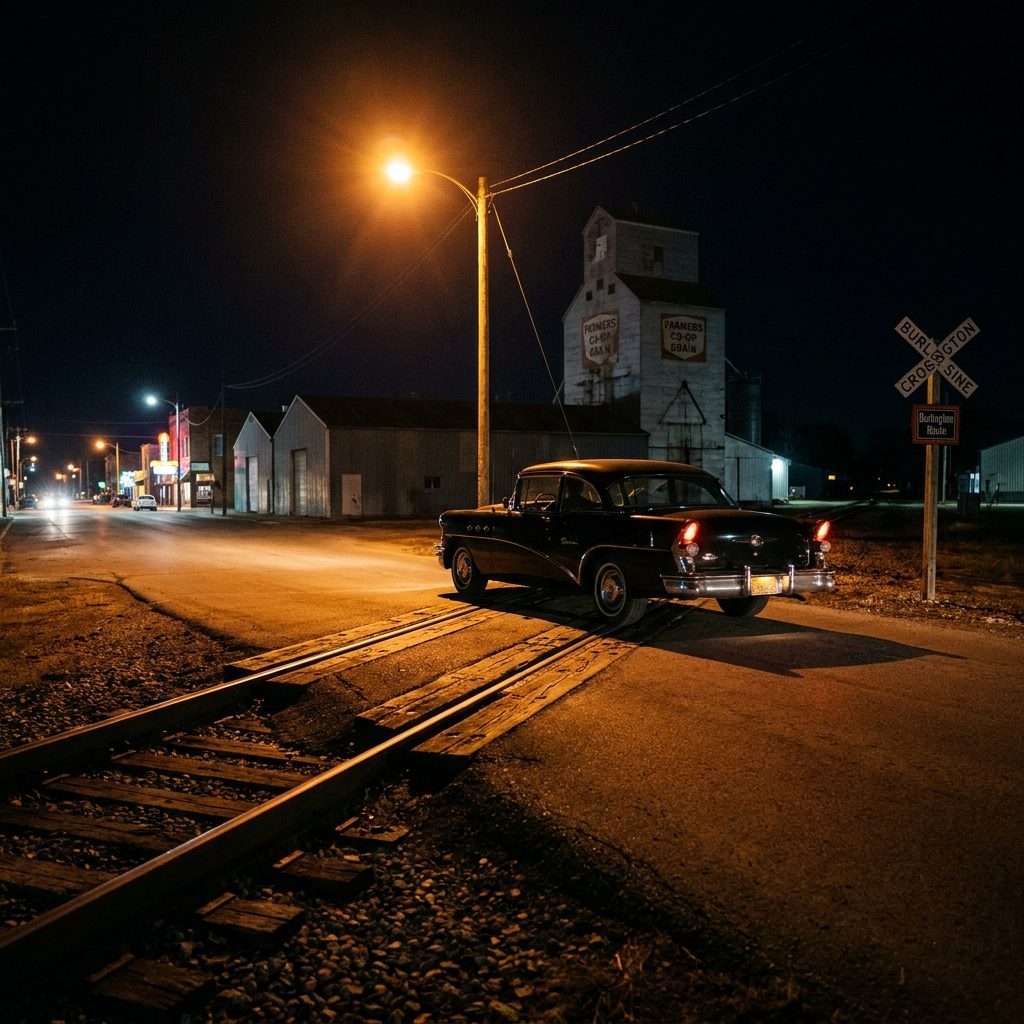
Every car in the cruise loop knew exactly where those tracks were. The low riders bottomed out every single time, throwing a shower of sparks into the Friday night dark, and nobody ever seemed bothered by it. You just lifted slightly off the bench seat, felt the chassis scrape, and kept going.
For the stock-suspension cars it was a satisfying thump and a good story. For the guys who’d lowered their rides more than they should have, it was a regular reminder that looking good and riding smooth were two different ambitions.
The Older Kid With the Convertible Who Seemed Like He Belonged to a Different Category Entirely
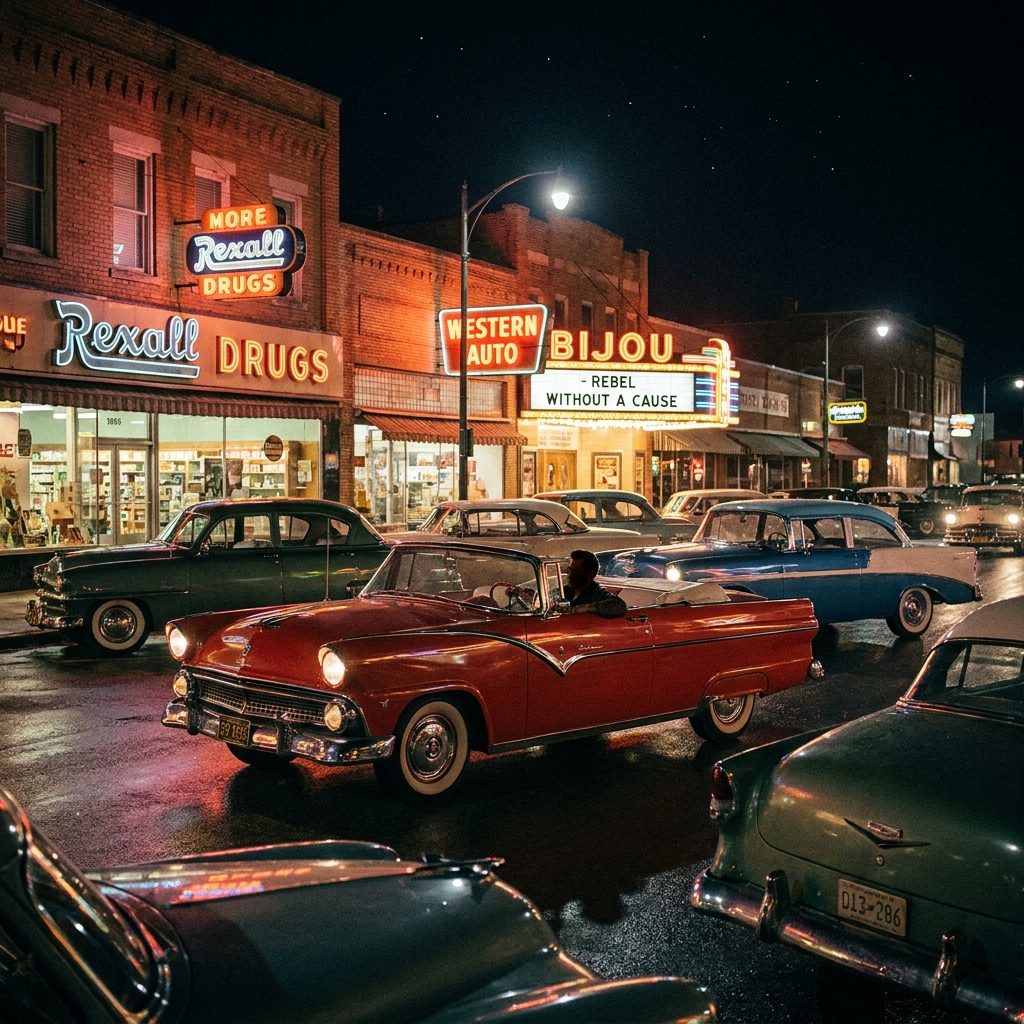
He was maybe nineteen, possibly twenty, which at fifteen felt like a different species. The top was down regardless of the temperature, the radio was louder than anyone else’s, and he moved through the cruise loop with the particular ease of someone who had already figured out the thing everyone else was still working on.
Every small town had one of these. The convertible was the credential. You didn’t wave at him so much as acknowledge him, the way you’d acknowledge something you hoped to become eventually.
The Way Everybody’s Parents Knew Everybody Else’s Parents and the Whole Town Was the Chaperone
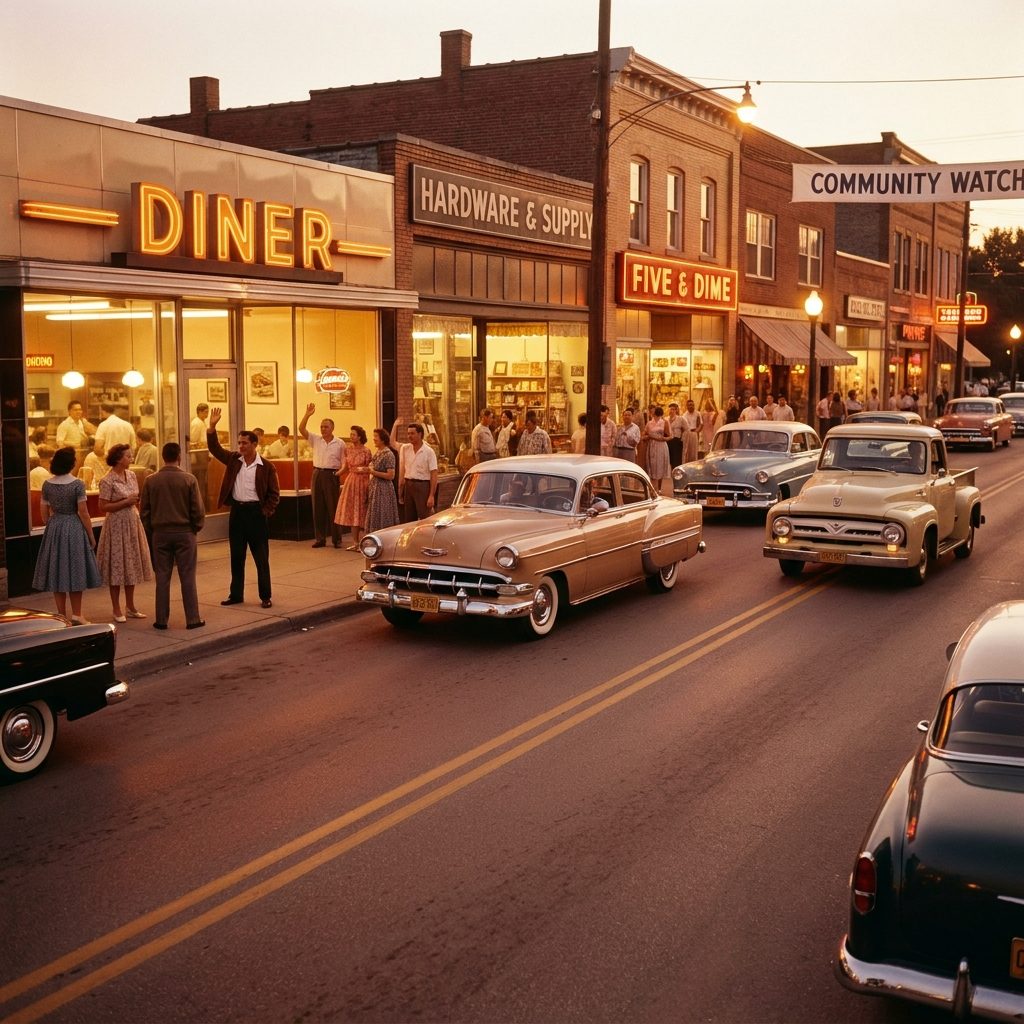
There was no such thing as anonymity on Main Street. Your father’s coworker was having pie at the diner counter. Your mother’s best friend lived half a block from the turnaround. The woman who taught Sunday school was buying something at the five-and-dime.
You weren’t being watched exactly. It was more that the whole town was present and you were one part of it, visible and accounted for. That feeling shaped the cruise into something different than rebellion. It was more like a performance everyone had agreed to attend.
The cruise wasn’t an escape from the town. It was the town, in motion, on a Friday night.
The One Car on the Block That Had an Actual Radio Antenna and Got Actual Stations
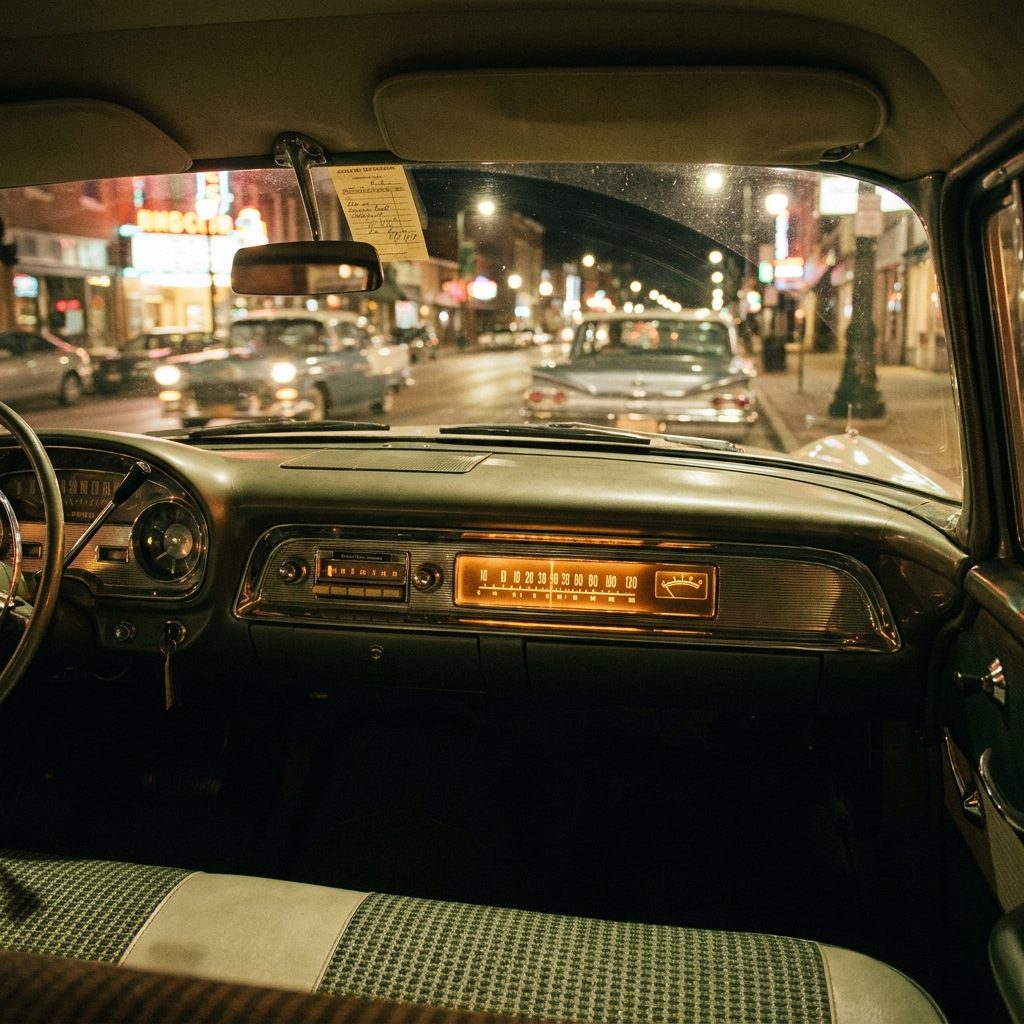
Reception was a real variable in 1950s small-town cruising. Most AM radios picked up the local station fine, but the local station signed off at ten o’clock and played farm reports until noon the next day. The car with the tall whip antenna and the good tuner could sometimes pull in Chicago or St. Louis, which felt like a dispatch from a larger world arriving right there on the bench seat.
Finding a strong signal during a cruise loop was a minor event. Everybody leaned in slightly when a distant station came in clear.
The AM Radio Dial You Fought Over All Night Long
Would you like to save this?
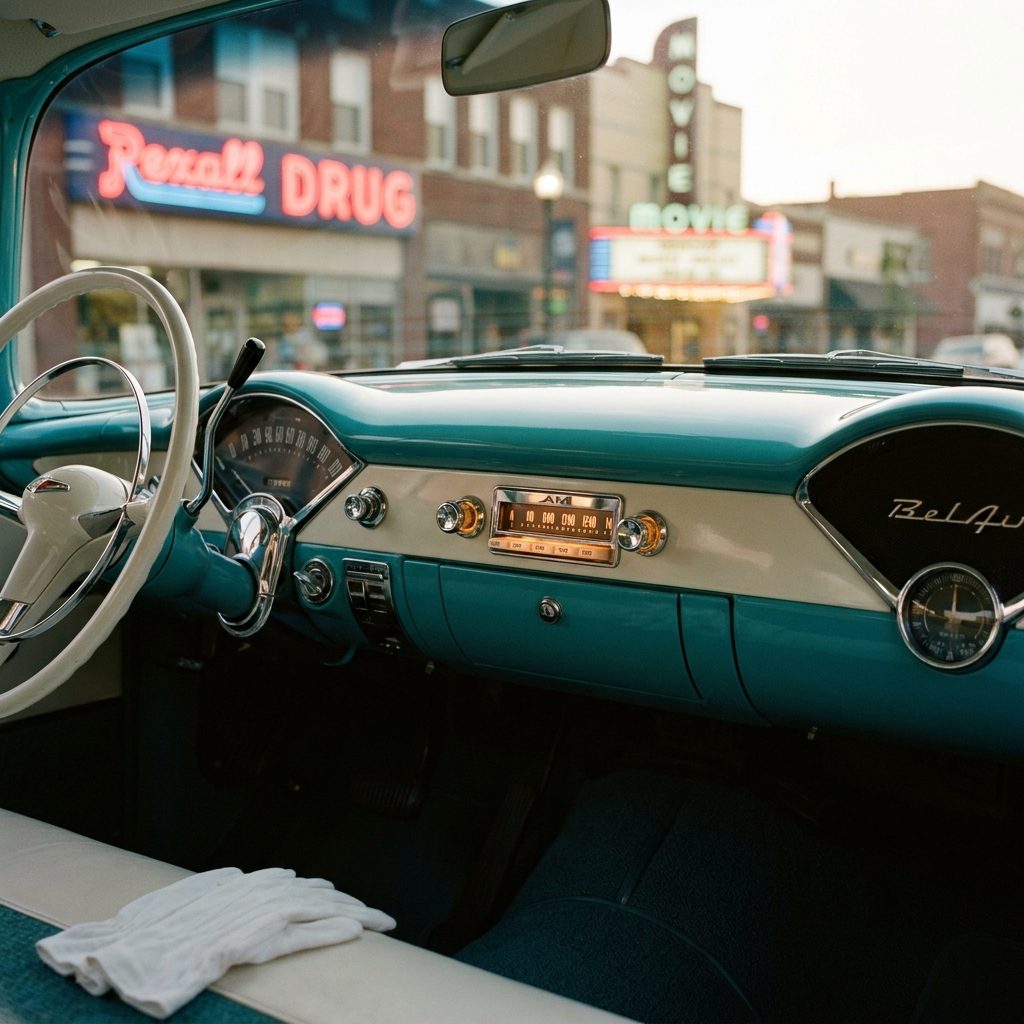
You had three stations on a good night, four if the weather was right and the skip was cooperating. Someone wanted country. Someone wanted the pop chart. Someone wanted to find the one distant station out of Cincinnati that played the stuff nobody’s parents approved of. The dial got spun, argued over, and finally abandoned at whatever came in clearest on the stretch between the five-and-dime and the turnaround point at the feed store.
By 1957, that glowing amber rectangle under the dash was the whole soundtrack of a Saturday night. Nobody had a choice in the matter, and somehow that made it better.
The Rexall Drugstore Corner Where Every Cruise Had to Pause
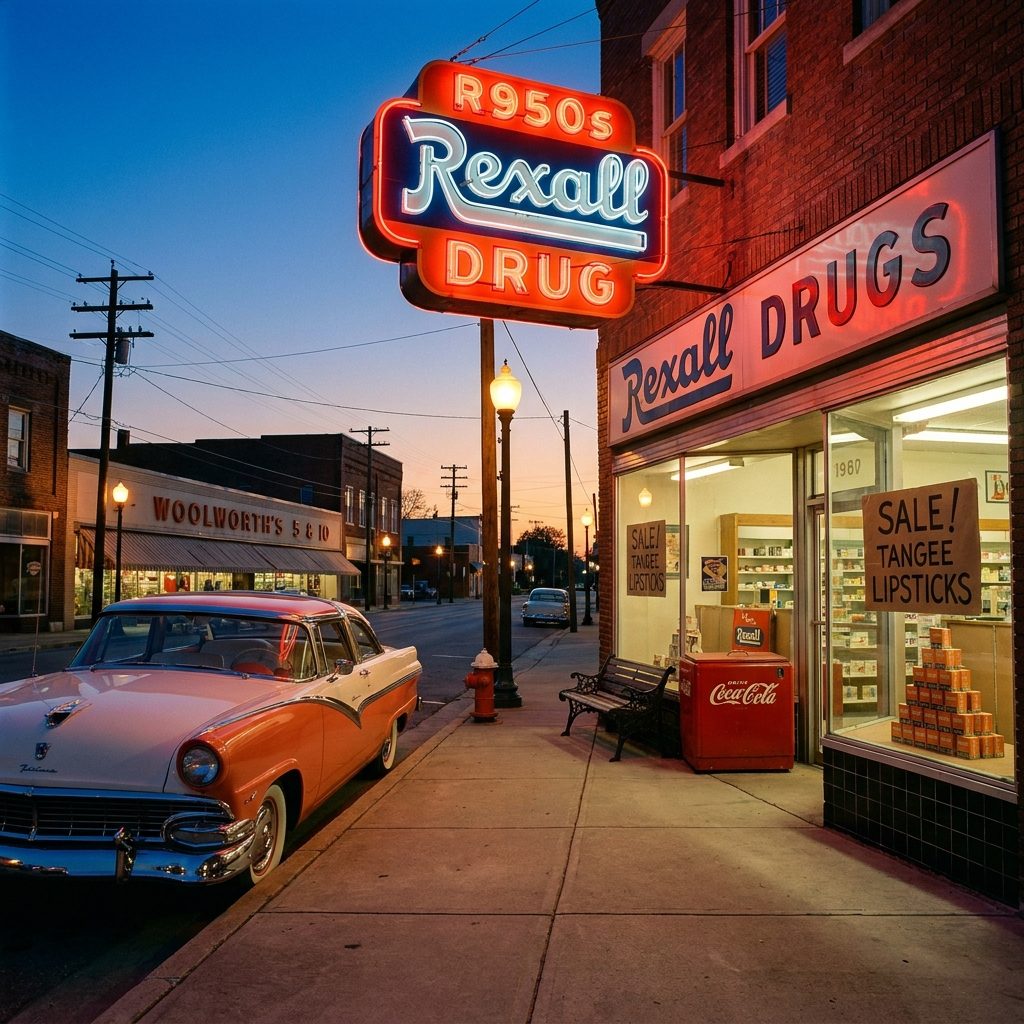
Every town had one. The Rexall sat on the corner everybody slowed down for, not because there was a stop sign but because the light from that window hit the chrome on your hood a certain way, and you wanted whoever was watching from the sidewalk to see it.
Inside: a soda fountain, a wire rack of 45s, and a pharmacist who knew your grandmother. Outside: the whole town drifting past at fifteen miles an hour on a Friday night, pretending they were just headed somewhere.
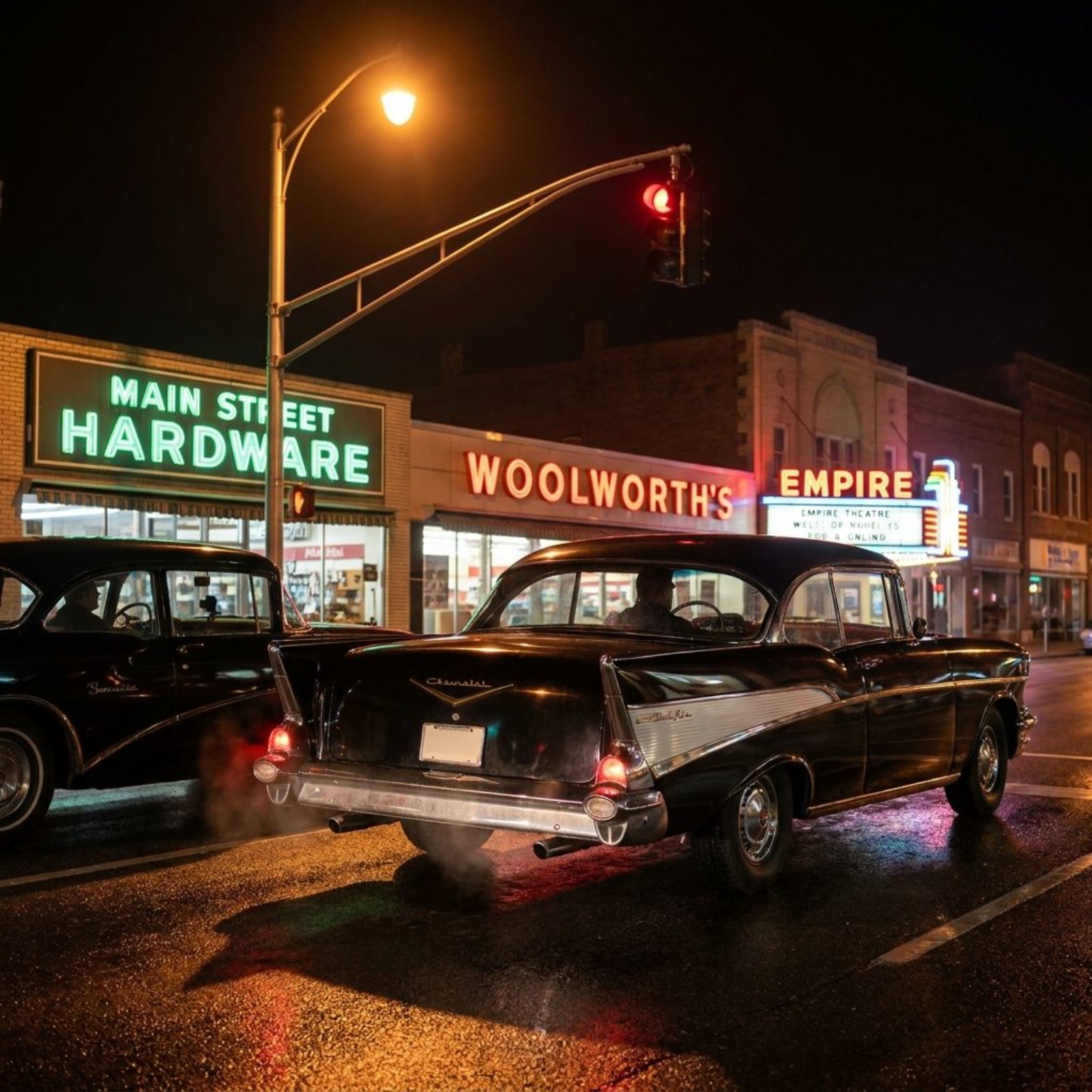
The Way a 1957 Chevy Bel Air Looked Under the Street Lamps
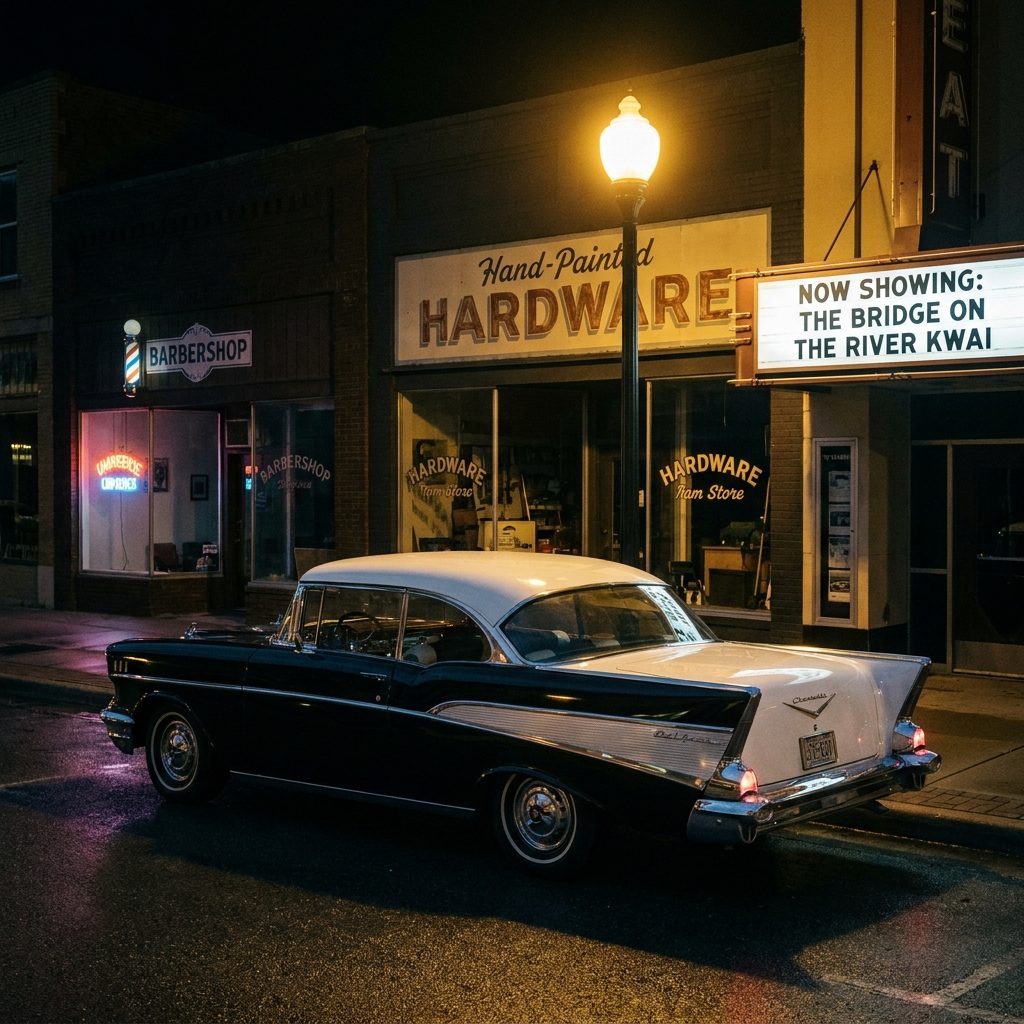
There are cars, and then there are cars that make people stop walking. The 1957 Bel Air was the second kind. Under a street lamp on a warm August night, that two-tone finish and those rear fins did something to the light that no photograph has ever fully captured.
Everybody who saw one parked on Main Street remembers exactly where they were standing. Some of them are still standing there in some corner of their mind, looking at it.
The Smell of Leaded Gas and Hot Pavement on a July Night
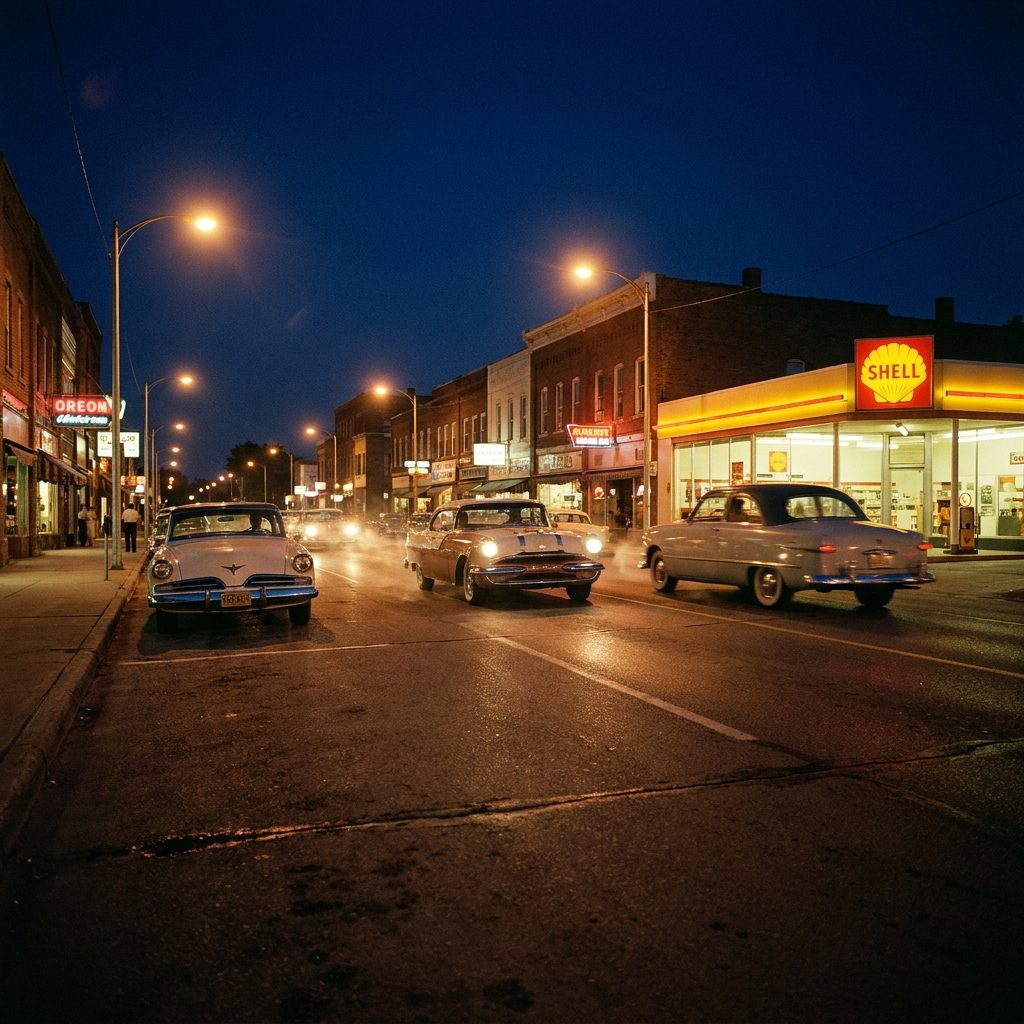
Nobody needed to explain what summer smelled like in 1957. It was leaded gasoline warming off hot asphalt, two-stroke oil from somebody’s older brother’s motorcycle, and the burnt-sugar scent of the popcorn machine at the five-and-dime with its door propped open.
You didn’t ride around to get anywhere. You rode around to be inside that smell, inside that particular quality of heat and noise and neon, for as long as a tank of gas would allow.
The Town Clock Tower That Told You When Your Curfew Had Already Passed
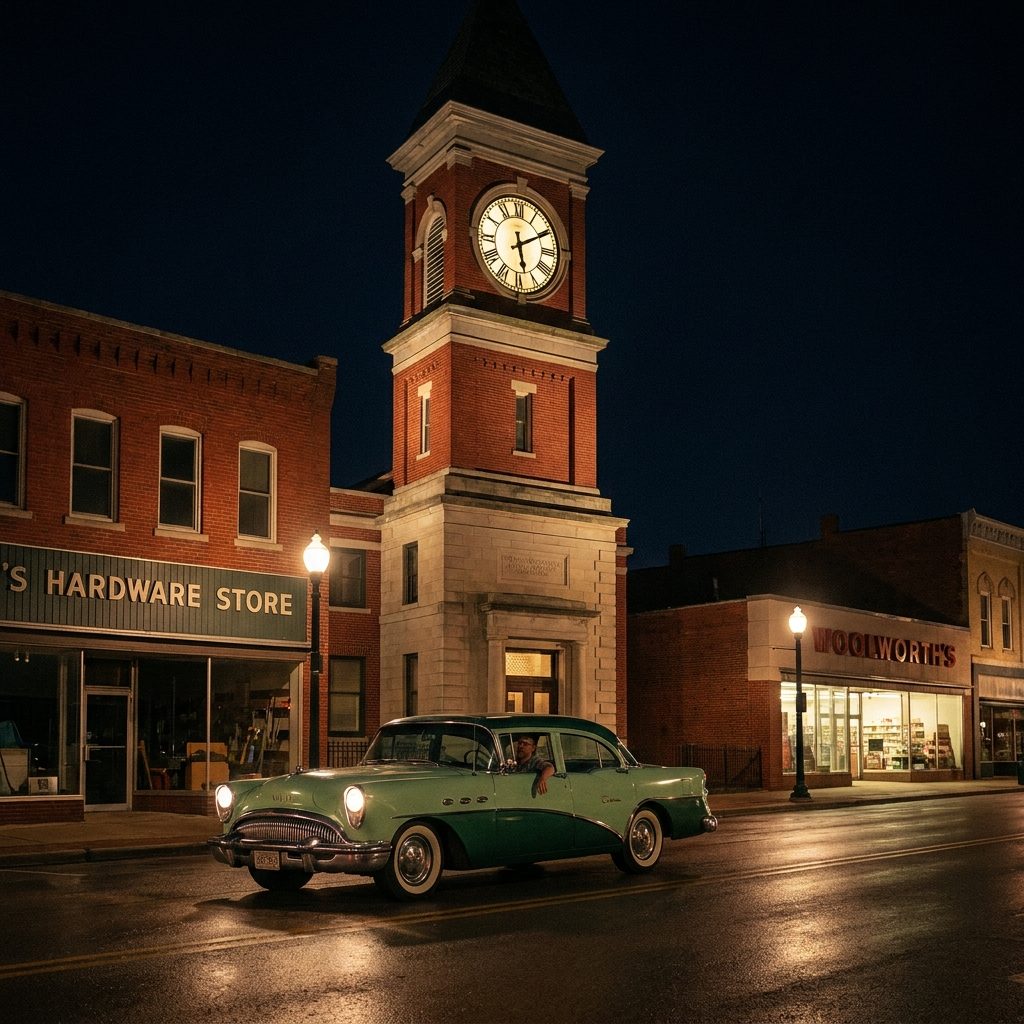
That clock didn’t have a snooze function. When the hands hit ten and the chime rolled down Main Street, you felt it in your chest even with the radio up. It was the same feeling every Saturday, a sudden arithmetic of distance between where you were and where you were supposed to be.
Some nights you made it. Some nights the phone was already ringing when you walked in the back door. The clock never cared either way.
The Bench Seat Wide Enough for Three Friends and Zero Complaints
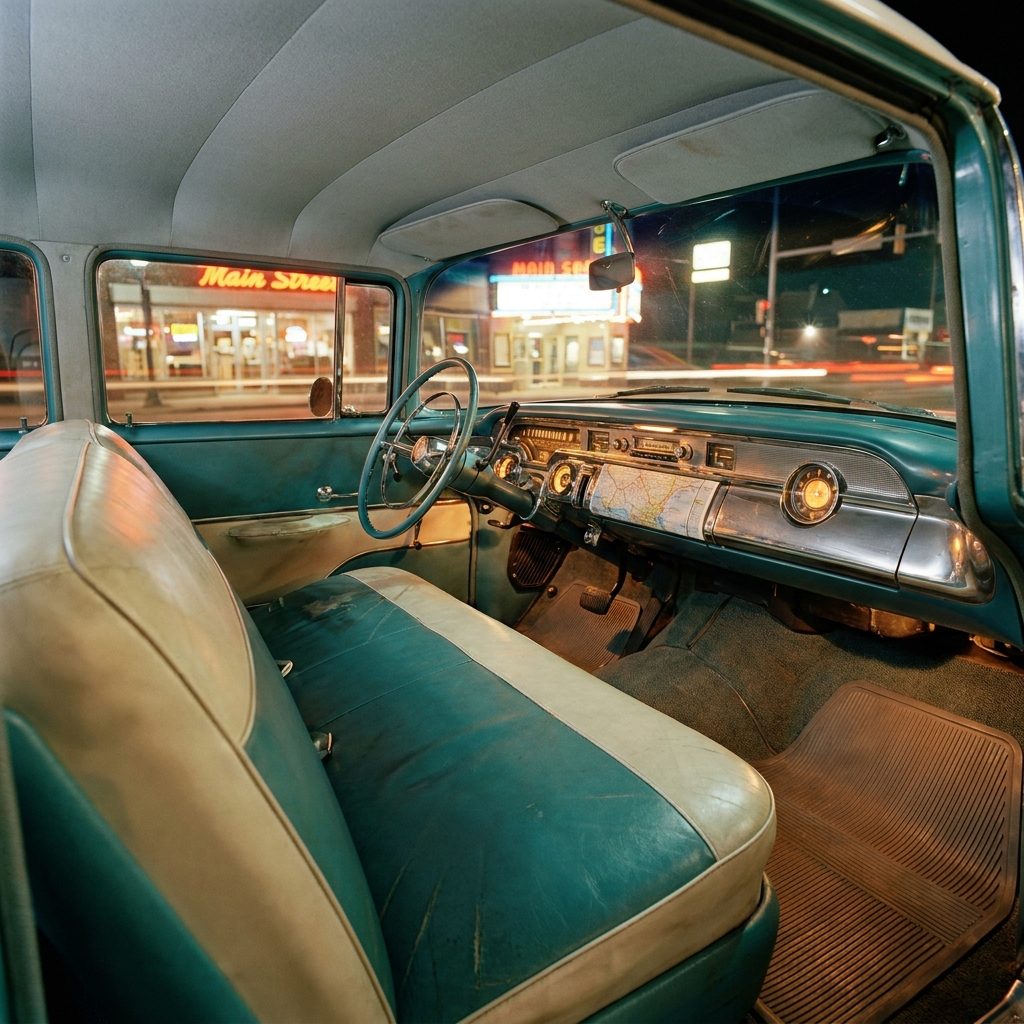
Three across the front was not a hardship. It was the whole point. The 1956 Pontiac’s bench seat was wider than some living room sofas, covered in that two-tone vinyl that stuck to your legs in July and crackled in November, and it fit the whole crew without a single person touching the door handle.
Bucket seats came later and everybody called it progress. Not everyone agreed.
The Turnaround at the Edge of Town That Everybody Just Knew About
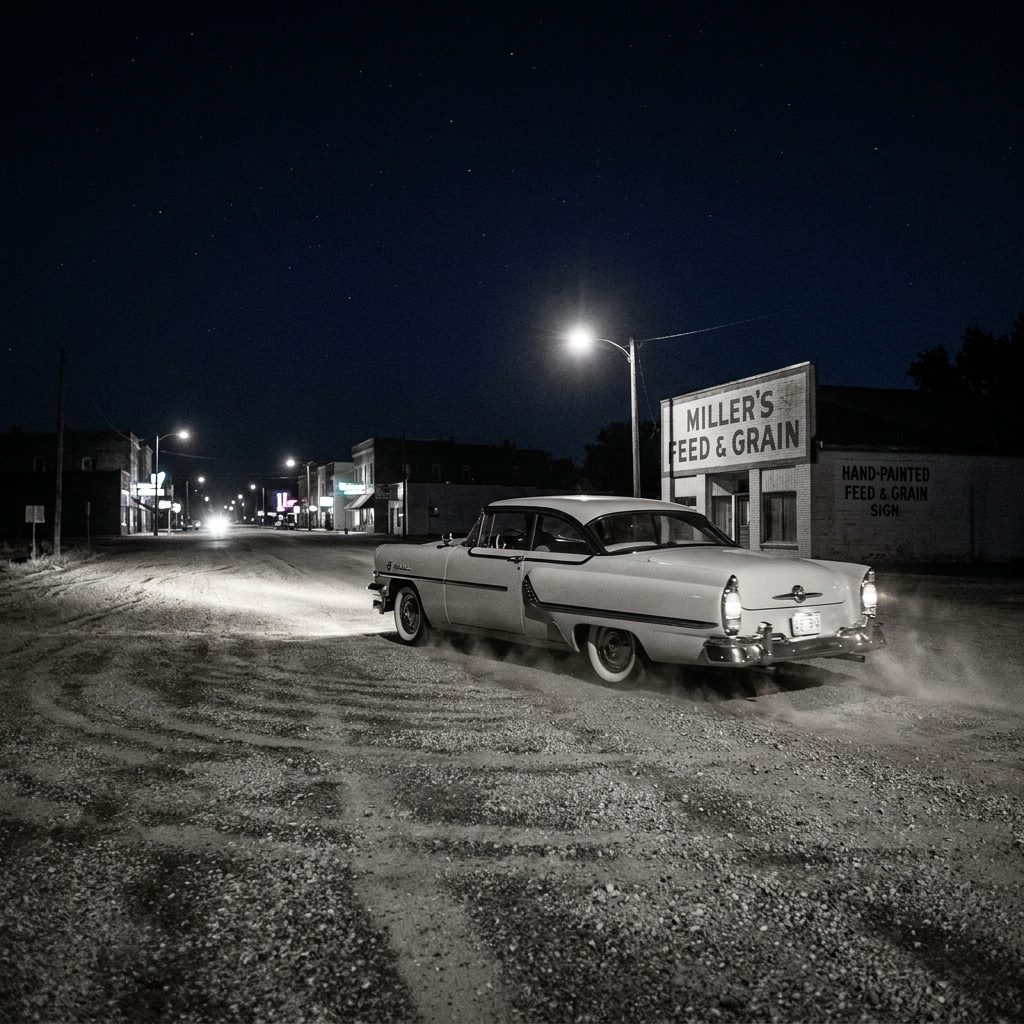
Nobody put up a sign. Nobody had to. Everybody who cruised Main Street knew exactly where you turned around, same spot every night, same rut in the gravel from ten thousand U-turns. It was at the feed store, or the grain elevator, or the edge of the last streetlight, it varied by town but the logic was identical everywhere.
You hit the turnaround, swung the wheel, and headed back the other direction. The whole point of the loop was the loop itself. The destination was the starting line.
The Saturday Night Outfit You’d Spent the Whole Week Deciding On
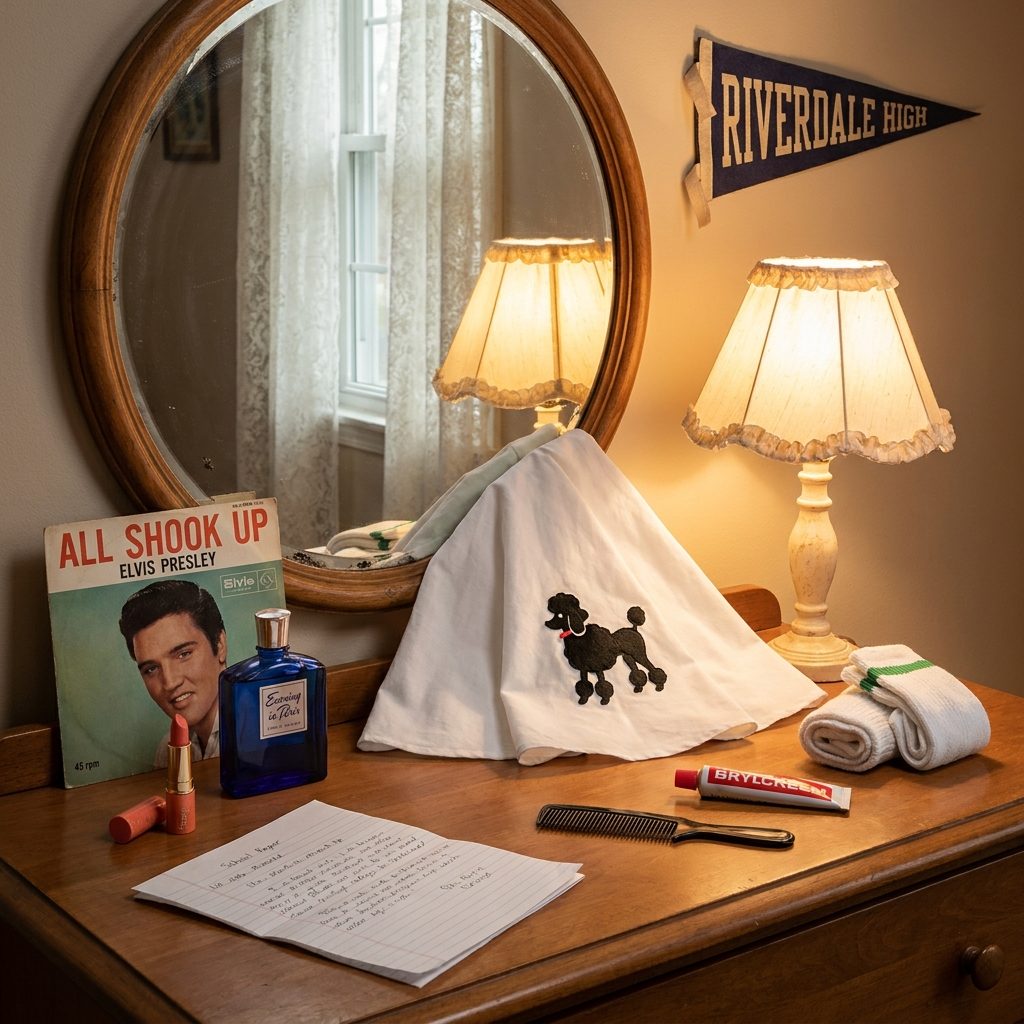
The circle skirt or the straight skirt. The white blouse or the pink one with the Peter Pan collar. These were not small decisions. They were negotiated across the entire week in the corridors of every decision-making power the teenage mind possessed.
By Saturday afternoon it was settled. The outfit was laid out on the bed. The Evening in Paris was on the dresser. And the whole construction would be judged in about forty-five minutes of slow rolling past the Rexall, so it had better hold up.
The Moment You Spotted Your Rival’s Car Coming the Other Way and Neither of You Would Blink First
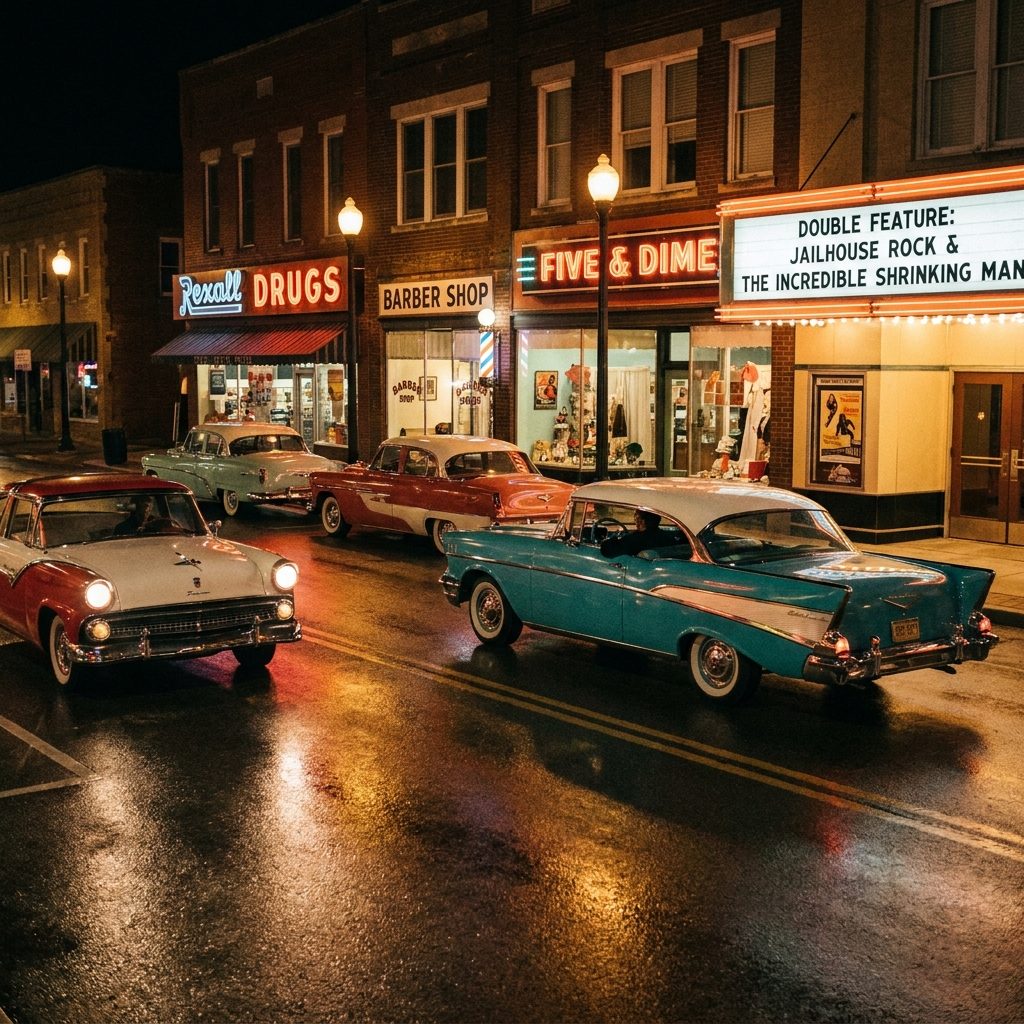
It happened at least once every loop. You’d come around the block and there was Tommy Briggs in his dad’s ’55 Ford, rolling the opposite direction at roughly four miles per hour, and suddenly neither of you was going to be the one to look away first. No words, no gestures. Just two silhouettes behind glass, each one daring the other to flinch. The street was only wide enough for this to matter.
The cars passed. The moment dissolved. You hit the turnaround at the Rexall and went around again, already planning what you’d say at the drive-in later about how he blinked first.
The AM Radio Static That Got Worse the Farther You Drove From the Station Tower
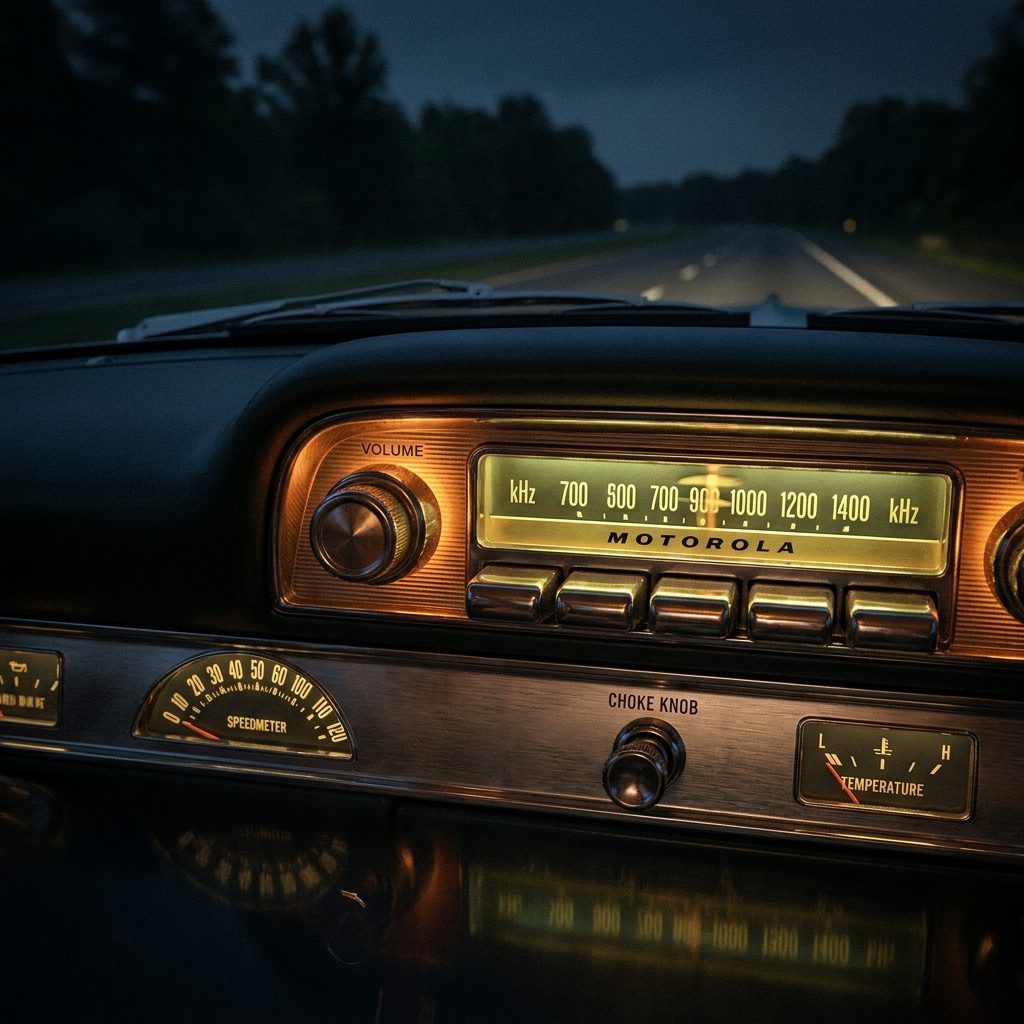
There was a dead zone about six blocks past the Texaco station where WCFL or whatever you were locked onto started dissolving into white noise and far-off voices from somewhere in Ohio. You’d reach up and give the tuning knob a quarter turn, find it again for a minute, lose it on the next block. Nobody complained. The static was just part of the music.
What came through clearly enough, though, was the thing. Buddy Holly for three blocks. Fats Domino for two. The DJ back-announcing from some studio that felt a thousand miles away even if it was forty.
The Dress Code Nobody Wrote Down But Everybody Followed on a Friday Night
Would you like to save this?
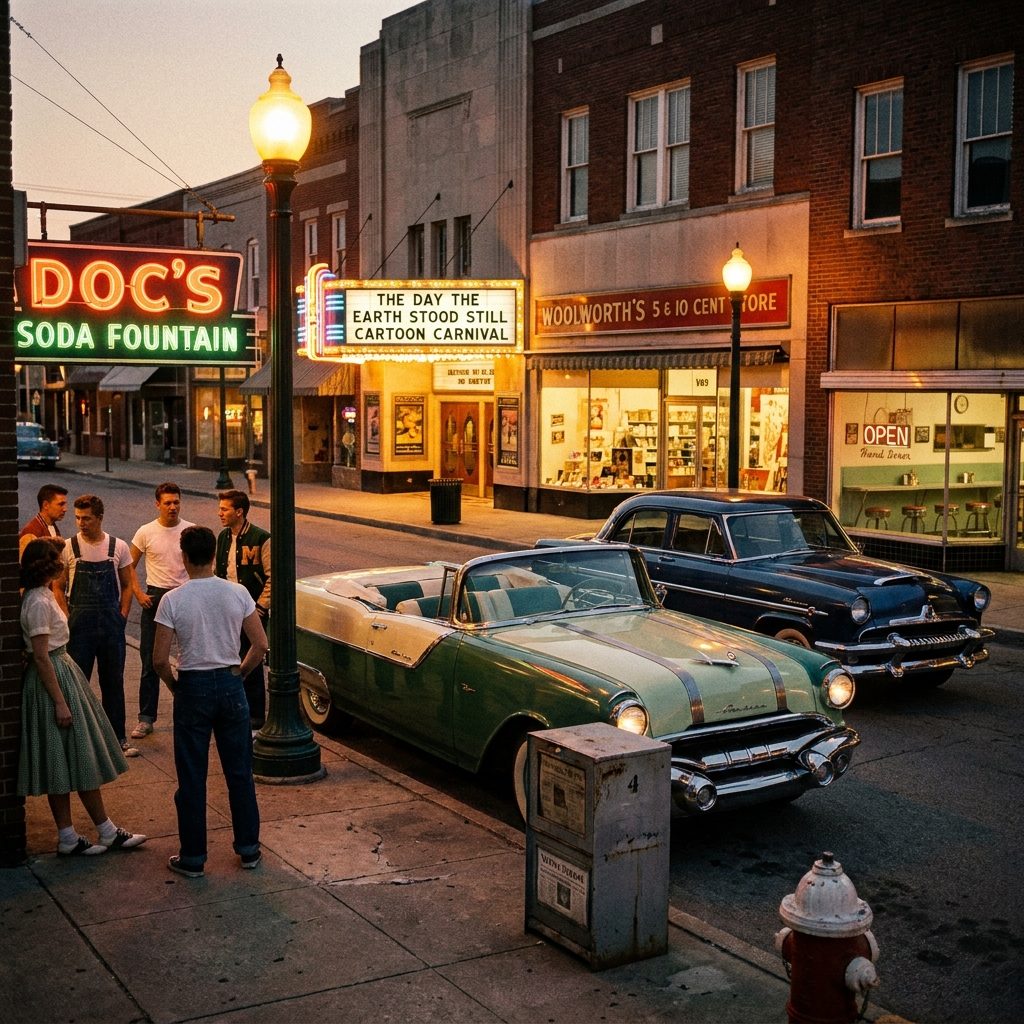
Rolled Levi’s or you might as well stay home. White T-shirt, maybe a letter jacket if you had one, definitely not if you didn’t. The girls had their own calculus that looked casual and wasn’t. Nobody circulated a memo. Nobody held a meeting. You just knew what the car looked like when it pulled to the curb and what the driver was supposed to be wearing when the window came down.
Breaking the code wasn’t rebellion. It was just wrong, the way a car sounds wrong when the timing’s off. You’d figure it out by next Friday.
Pulling Into the Texaco to Buy Exactly Fifty Cents of Gas and Make the Loop Last Another Hour
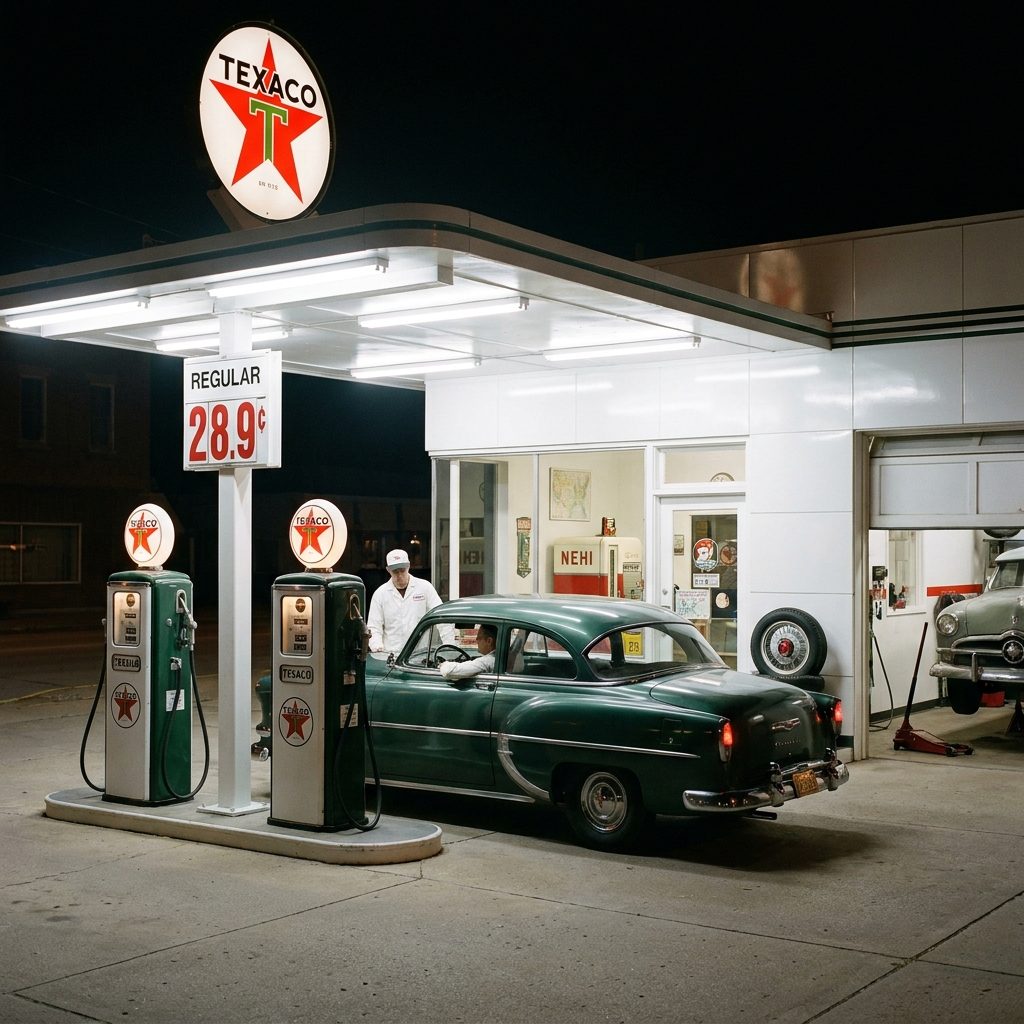
Fifty cents of regular kept the needle somewhere above the red line and bought you another hour on the circuit without having to explain to your father where the tank went. The attendant didn’t ask questions. He pumped the gas, wrote the slip, handed it through the window, and you were back in the loop before the light changed at the corner of Main and Elm.
The Exact Sound a Dual-Exhaust ’57 Chevy Made When the Driver Blipped the Throttle at the Red Light
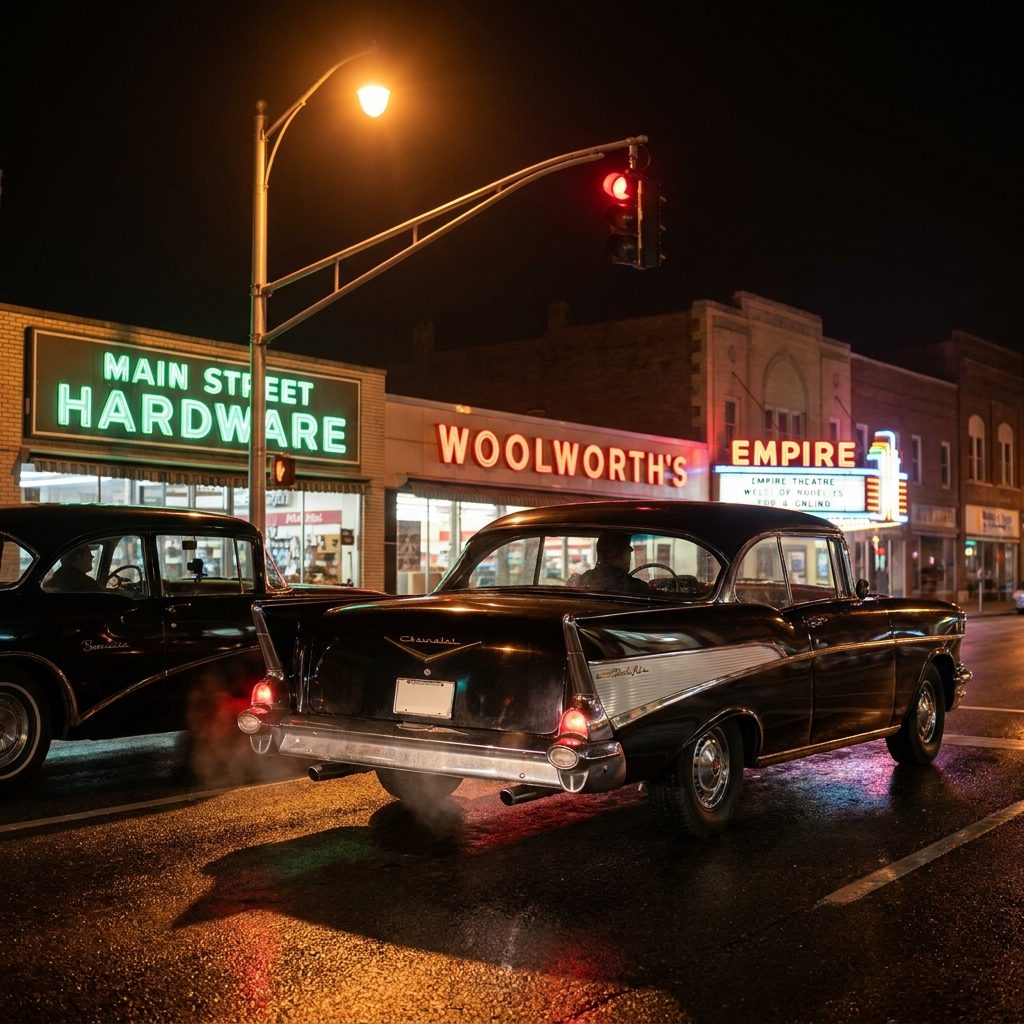
It wasn’t loud the way loud is supposed to work. It was precise. A quick blip of the throttle at a red light and a 283-cubic-inch V8 through dual exhaust produced a sound that went straight past your ears and landed somewhere in your sternum. The car barely moved. The sound was the whole point.
Kids who drove inline-sixes understood this on a theoretical level. Kids who drove small-block V8s understood it the other way.
The Girl in the Passenger Seat Who Slid Over Closer When You Turned Onto the Long Stretch
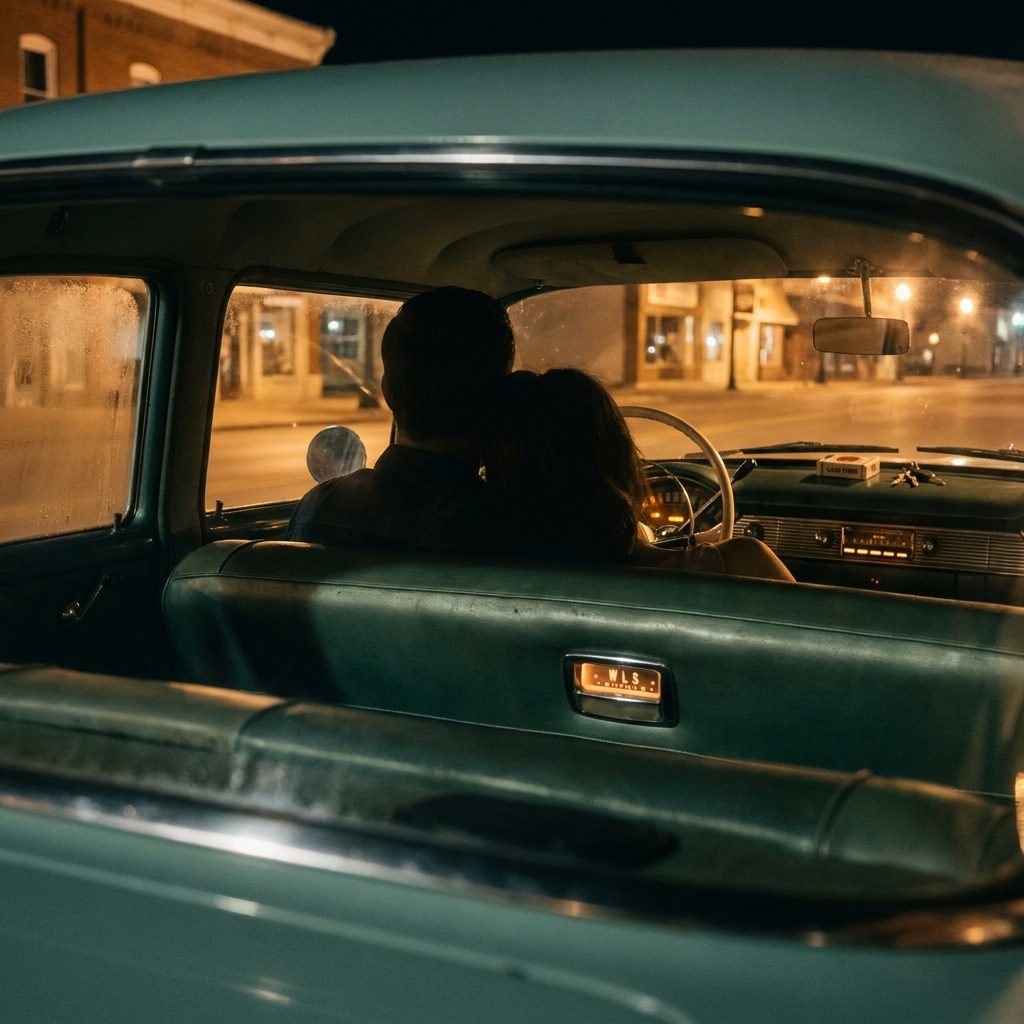
You knew the stretch. Everybody did — two blocks past the drugstore, where the streetlights got farther apart and the sidewalk traffic thinned out and the car went quieter than it had any business going.
That was when she’d move. Not a big move. A few inches, enough that you felt it in the springs of the bench before you could see it happening. And you drove that stretch a little slower every Saturday night for the rest of the year.
The Sound of Chrome Hubcaps Rattling Over the Brick Section by the Old Post Office
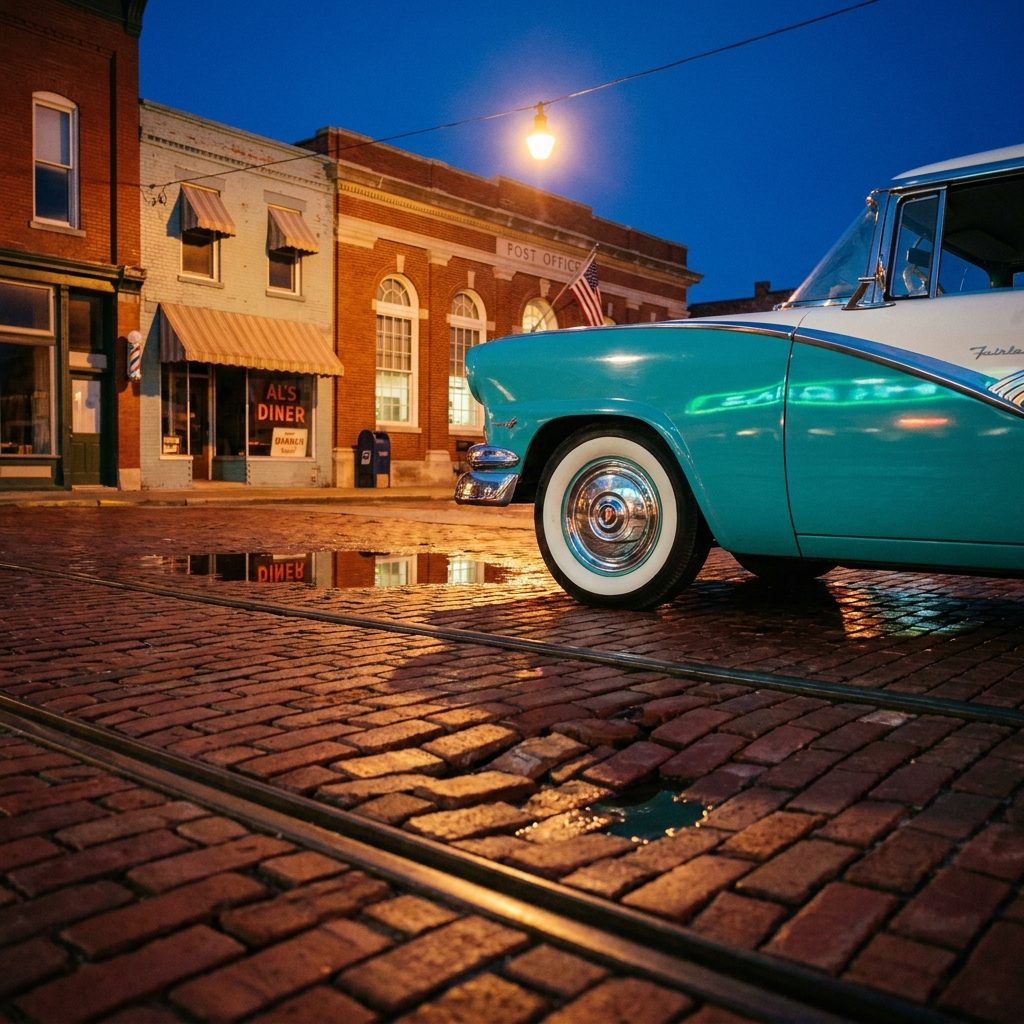
Every main street in America had that one block — the one where the pavement had been laid down over old brick or old trolley tracks, and no matter how many times the city said they’d fix it, nobody ever did.
You heard the hubcaps chatter before you felt it in the seat. Small sound. Permanent one. Close your eyes right now and you could probably still make it if somebody asked.
The Guy Who Had a Steady Job at the Feed Mill and Somehow Always Had Money for Gas
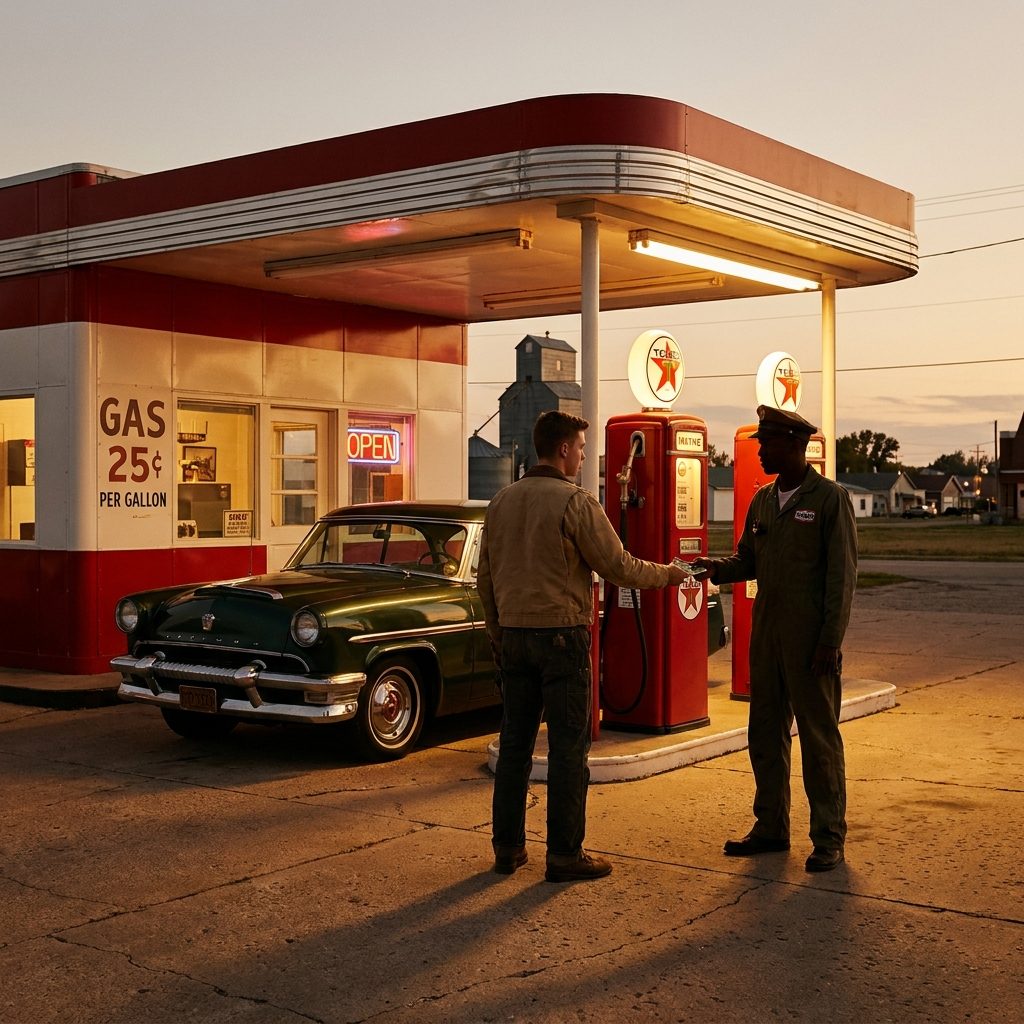
Nobody quite knew what he made down at the mill and nobody asked.
What everybody knew was he had a tank full of premium every Saturday, a carton of Camels on the dashboard, and a car three years newer than anything else in the parking lot after graduation. The rest of us pooled quarters and prayed the needle held above E until Sunday. He pulled up to the pump and told the attendant to fill it. Every small town produced exactly one of him per graduating class, and he was usually gone by twenty-five, off to somewhere bigger, leaving a legend behind that got taller every year.
The Two-Tone Paint Job That Made Every Car Look Like It Was Wearing a Sport Coat
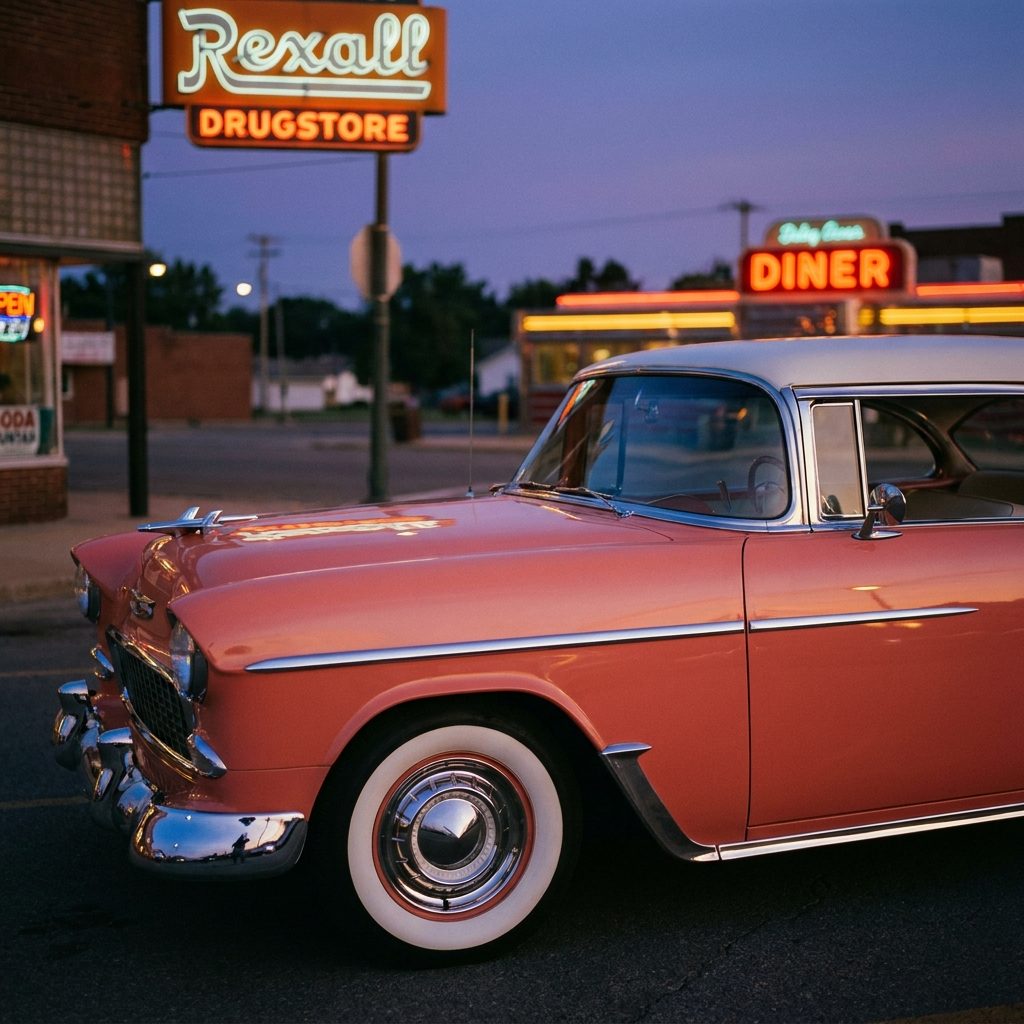
Turquoise over cream. Coral over ivory. Sea-foam over white. Detroit spent the middle of the decade dressing cars the way department stores dressed men for church, and everybody looked better for it.
A two-tone Bel Air pulling up to the curb was an event. Hard to explain to anybody who came up on the beige-on-beige years that a car could once make a person happy just sitting still at the curb doing absolutely nothing.
The Older Sister Who Let You Borrow Her Car If You Filled the Tank and Kept Your Mouth Shut
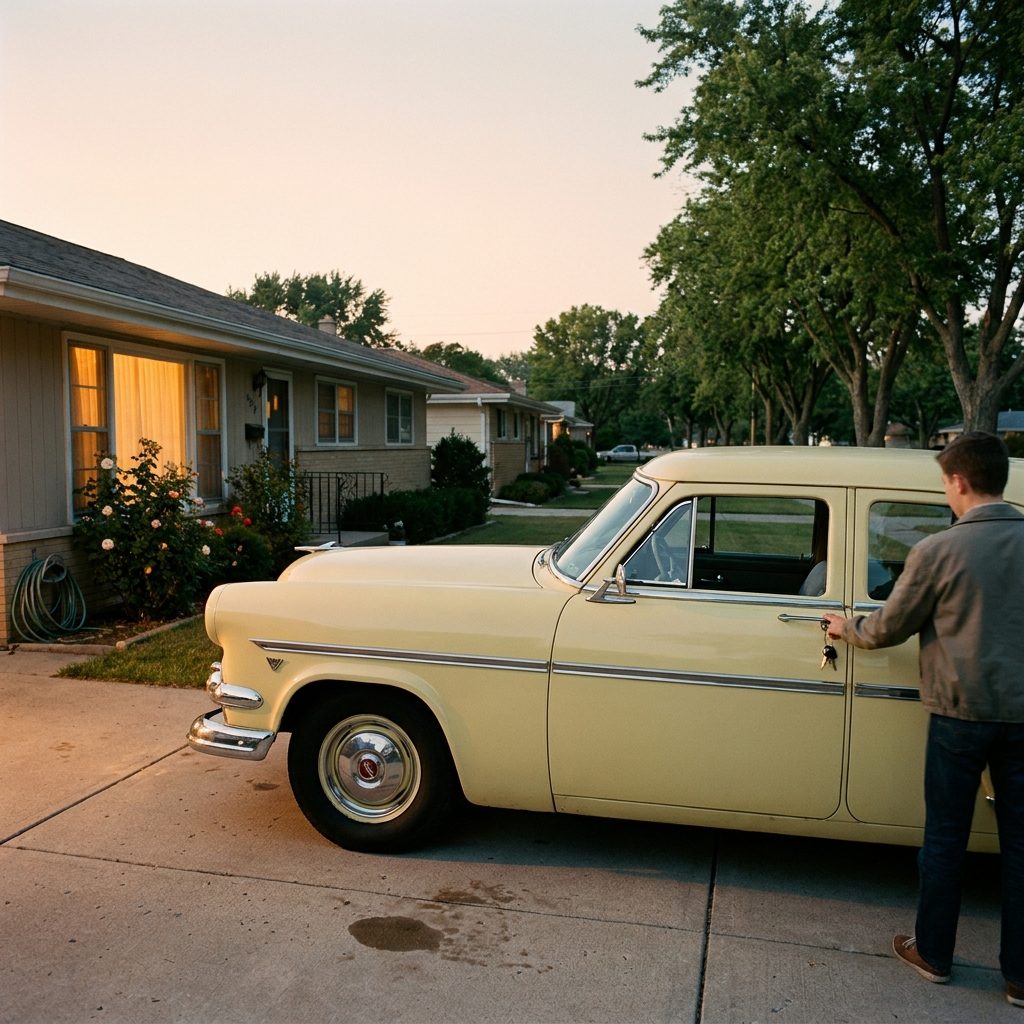
The deal was simple. Half a tank in, full tank out. Don’t tell Dad she’d lent it out, don’t get it dirty, don’t come home past ten, don’t touch the radio dial she’d set the way she liked it, and absolutely under no circumstances park it anywhere that could be seen from the diner where her boyfriend worked the late shift.
Five rules for one night of freedom. Cheap at the price.
The Way the Whole Town Went Quiet at Nine and You Realized the Cruise Was the Only Thing Still Happening
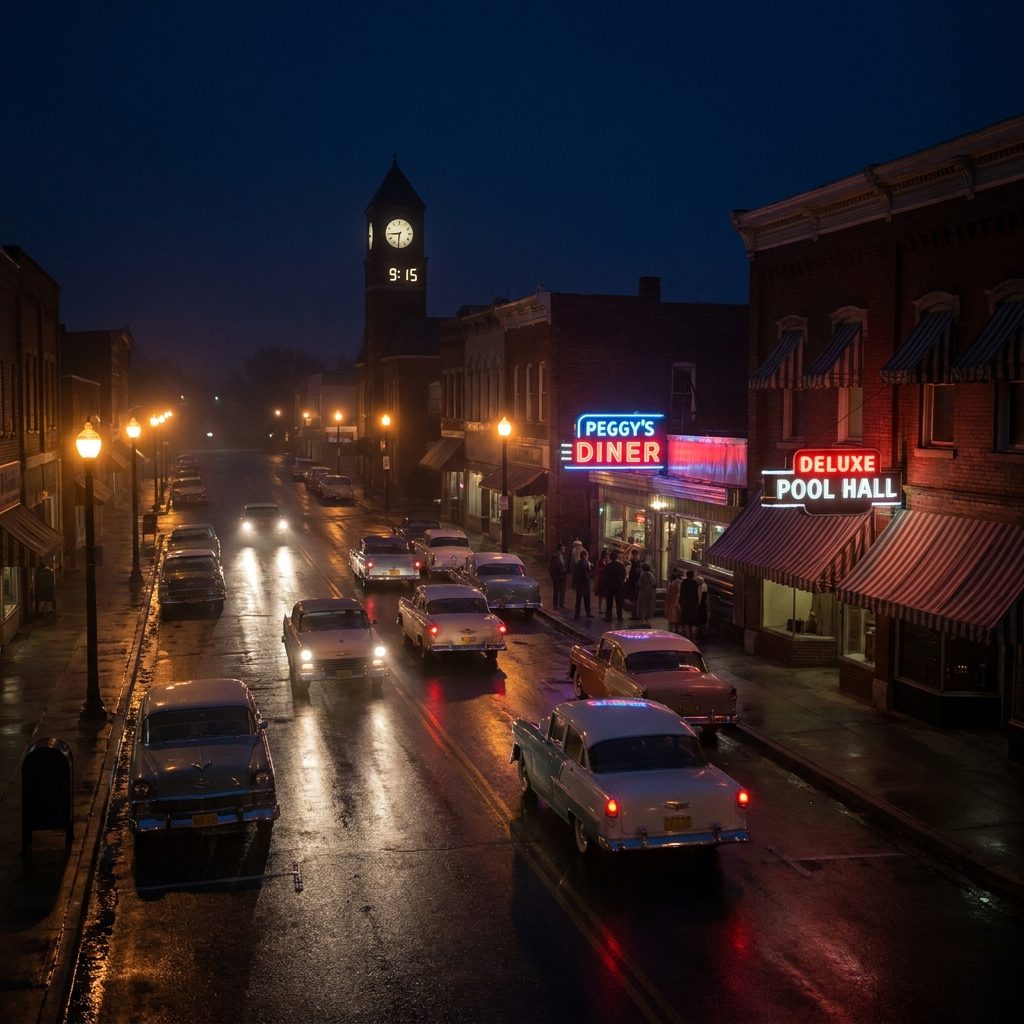
The hardware store closed at six, the drugstore at eight, and by nine the barber had swept up and gone home and even the diner had thinned out to the last stragglers nursing a coffee they’d let go cold twenty minutes ago.
Then you’d notice it. Every window dark, every sidewalk empty — and yet the street itself was full, moving slow, headlights sweeping across brick storefronts nobody was inside anymore. The town hadn’t gone to sleep. It had moved outside, into two lanes.
The Cop Who Sat in His Cruiser Outside the Pool Hall and Waved at Everybody By Name
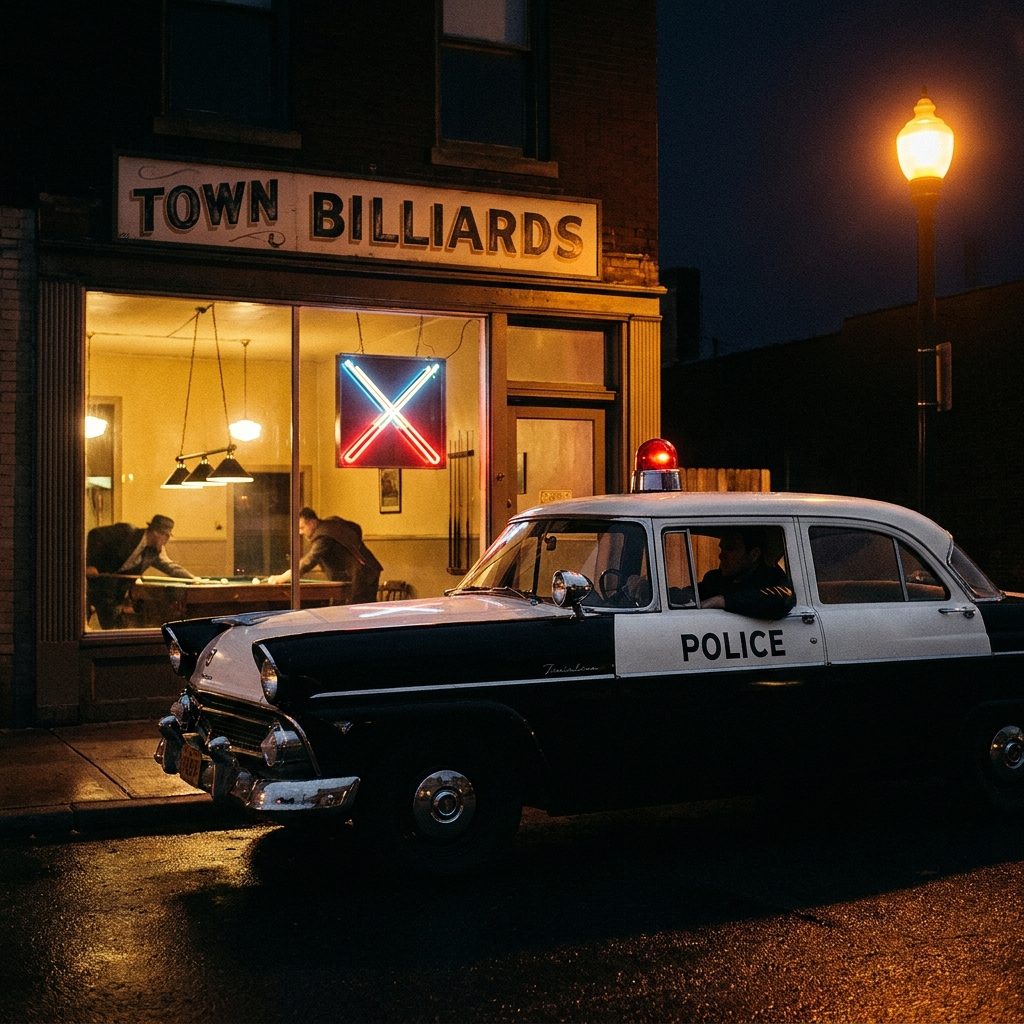
He wasn’t there to catch anybody.
He was there because the pool hall was where a certain kind of trouble came from, and if he sat out front nobody bothered to bring the trouble out into the street. He knew every car and every driver by the shape of the headlights coming up the block. He knew whose mother would want to hear about it and whose wouldn’t bother getting out of her chair. A wave from him meant you were fine. A slow nod meant slow down. That was the whole system, and somehow it worked for thirty years running.
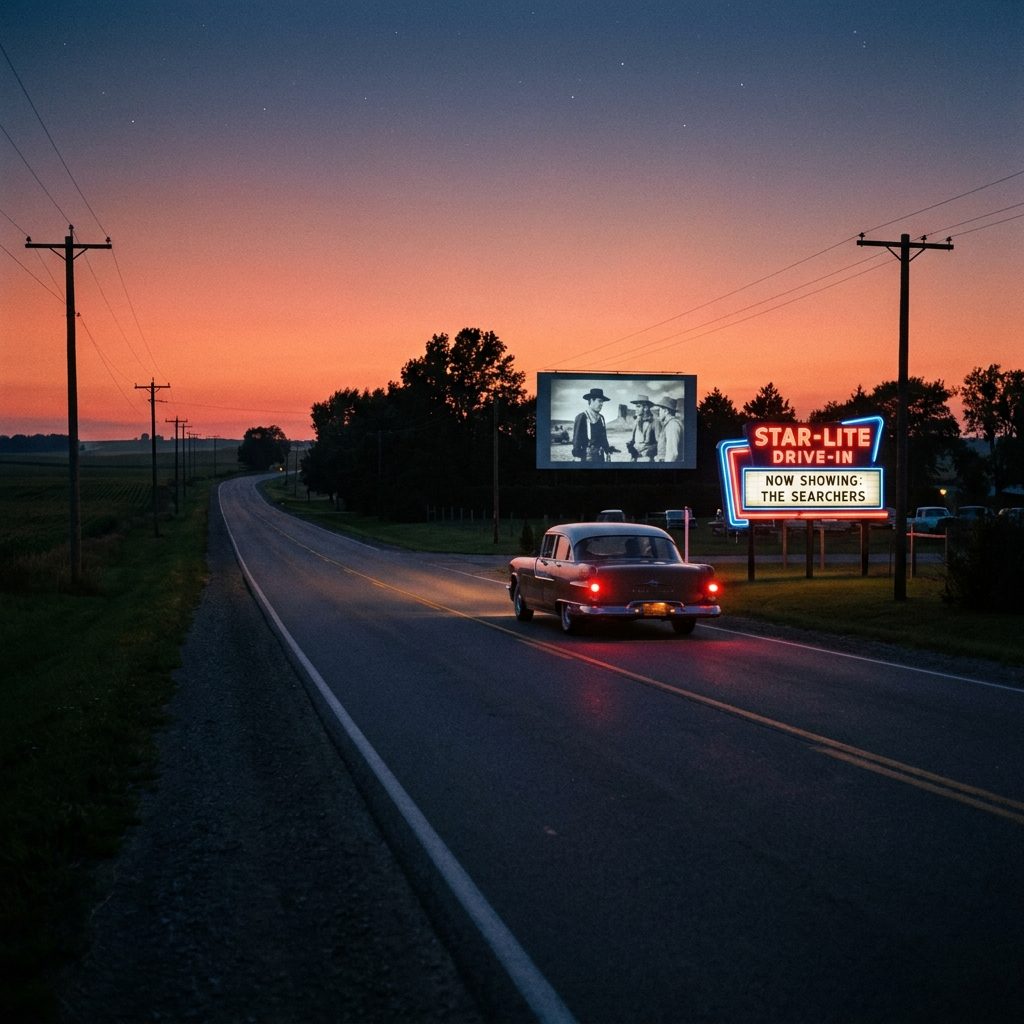
The Drive-In Movie Screen You Could See From the Highway a Mile Before You Got There
Would you like to save this?
Long before the marquee came into view, you saw the screen — a big white rectangle floating over the trees on the edge of town, catching the last light of the sun and then flickering to life once it dropped.
You could tell what was playing from a quarter mile out if you knew what to look for. The shape of a horse. The silhouette of a hat. Kids in the back seat rolling the window down to steal a couple of frames of a movie they hadn’t paid to see yet.
The One Girl Who Drove Her Own Car and Made Every Boy in Town Rethink His Assumptions
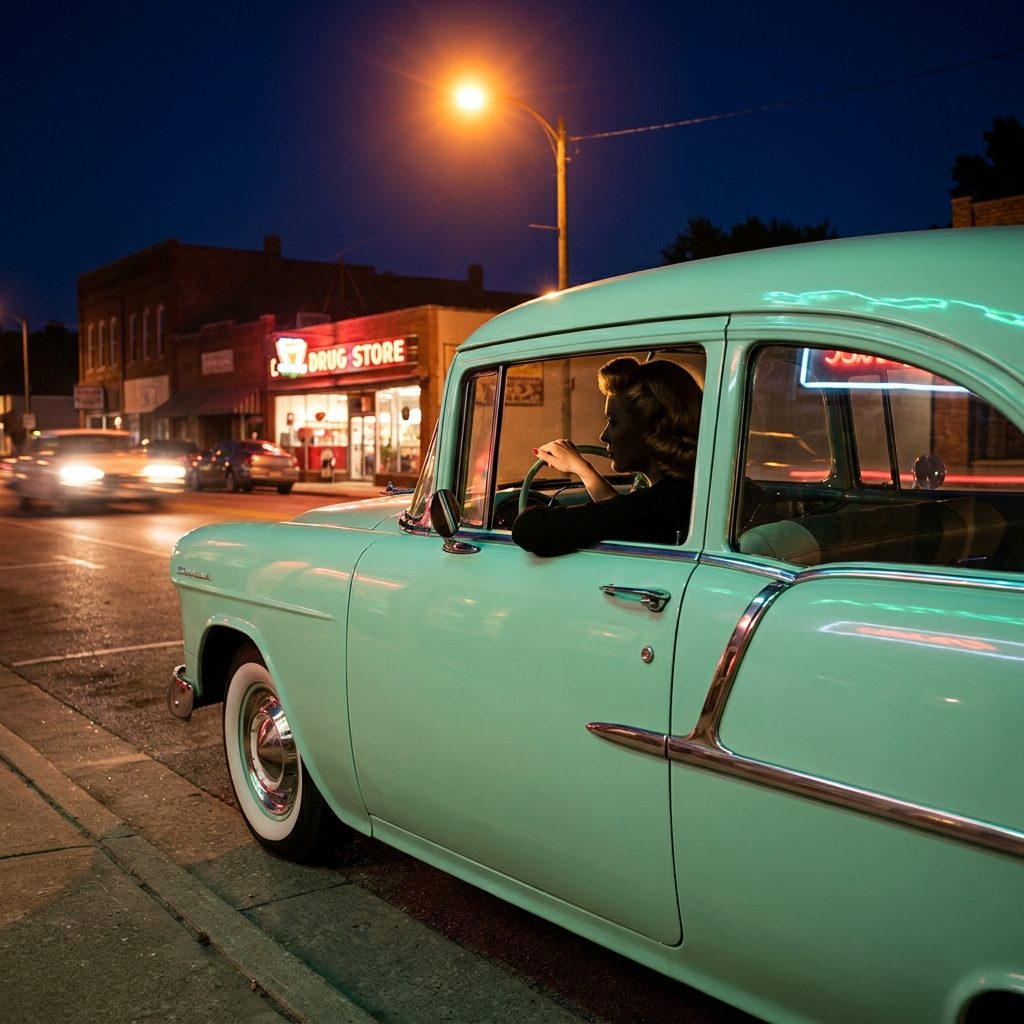
Most girls rode. She drove — her own car, in her own name, bought with money she’d saved working the counter at her uncle’s five-and-dime through two summers of double shifts.
Boys who’d never thought about it much suddenly had to. What did you say to a girl who pulled up next to you at the light, revved once, and pulled away clean? You didn’t say anything. You watched her taillights disappear and you thought about it for a week.
Coming Home at Midnight With the Windows Down and the Radio Playing Something You’d Remember Forever
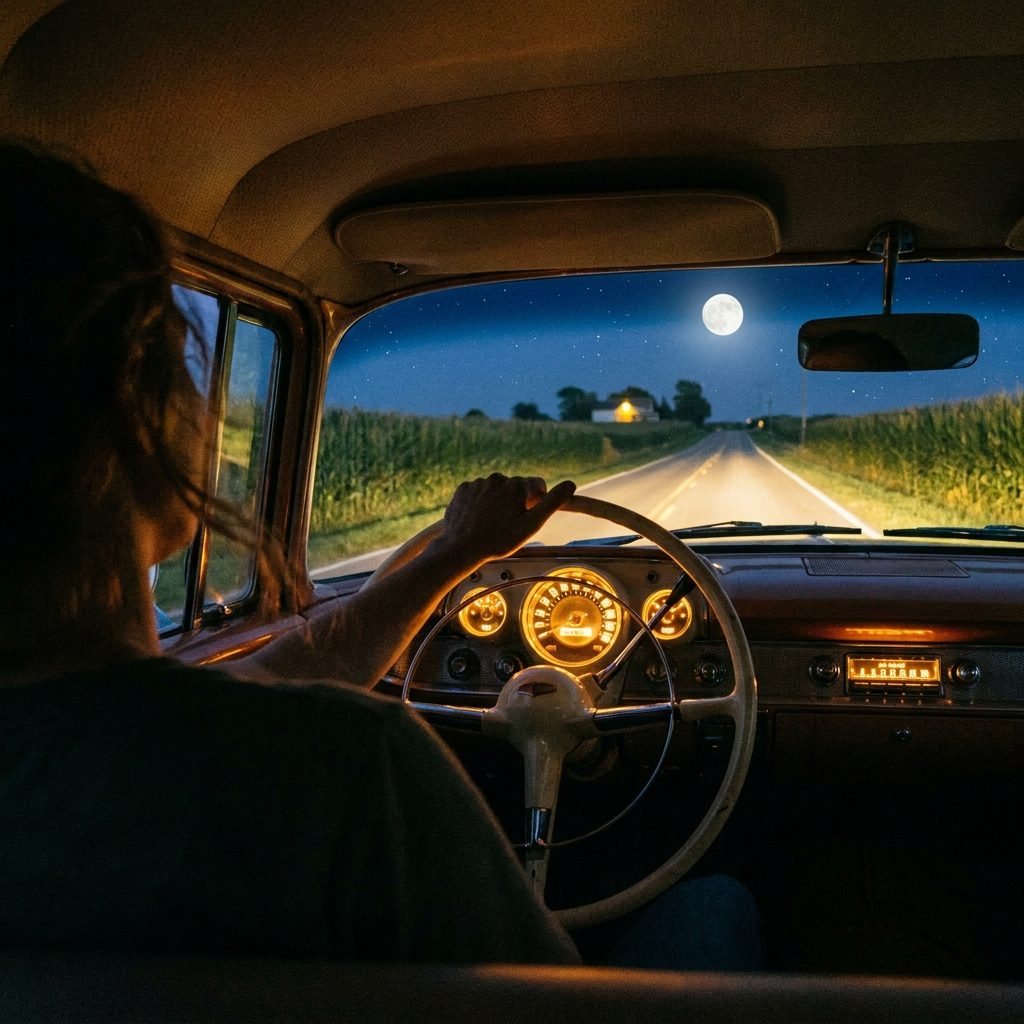
The cruise ended when the cruise ended. Sometime around eleven the cars thinned out, and by midnight it was just you and maybe one other set of taillights heading the same direction out of town.
The road home was two lanes of nothing — corn on both sides, the AM station fading in and out as you got farther from the tower. A song came on. You weren’t paying much attention to it at the time. And now, sixty years later, you can hear the first three notes and be seventeen again for about eleven seconds.
Nobody knew it then. You know it now.
The Malt Shop Window Where the Girls Sat in the Booth by the Glass and Watched Who Drove By
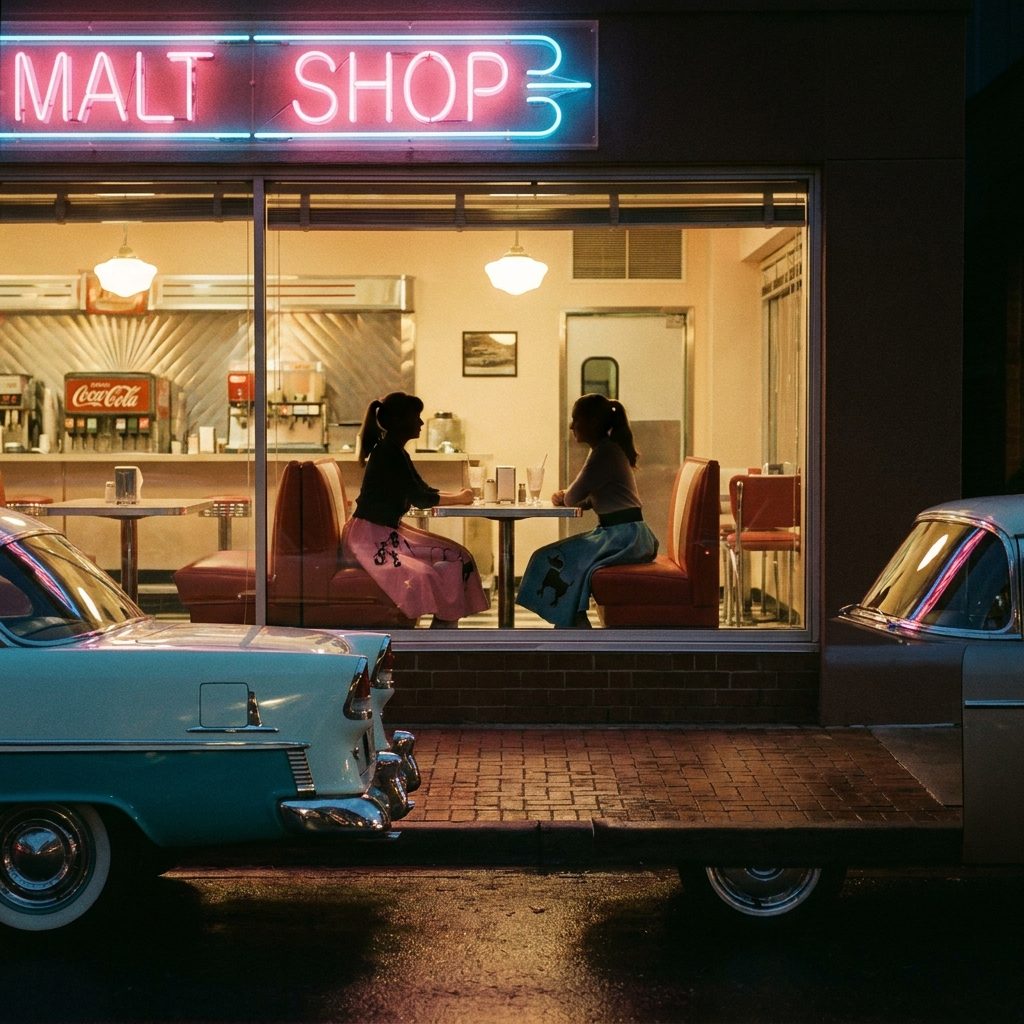
On a Saturday night, the booth by the window was the best seat in town. Nobody ordered a malt because they were thirsty — you ordered it because the booth cost a nickel of counter space and a nickel of manners, and once you were in, you had a front-row view of every car making the loop.
The girls sitting there were the judges. A honk from the street meant somebody had spotted them; a slow roll past the glass meant a boy was working up nerve to come inside. Every table in that shop had its own vantage, but only one mattered.
The Tuck-and-Roll Upholstery Some Older Kid Had Done at a Shop Two Towns Over
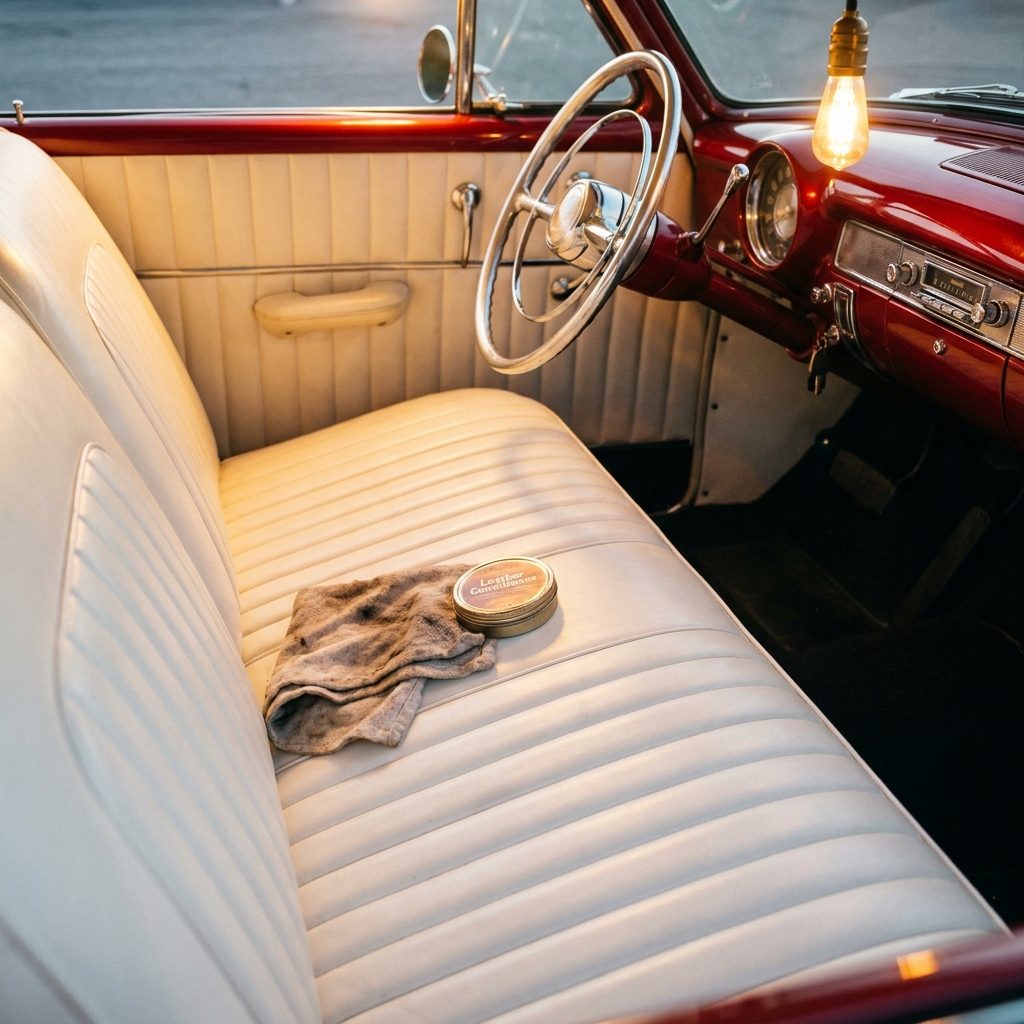
You could tell the second he opened the door. Everybody could. That white pleated vinyl looked like it belonged inside a jukebox, and the shop that had stitched it was in some town nobody you knew had ever driven to, which somehow made it more impressive.
Story went he’d saved a year and paid cash. Nobody could confirm it. Nobody wanted to — the seat itself was proof enough.
The Kid Whose Dad Owned the Ford Dealership and Somehow Always Had This Year’s Model
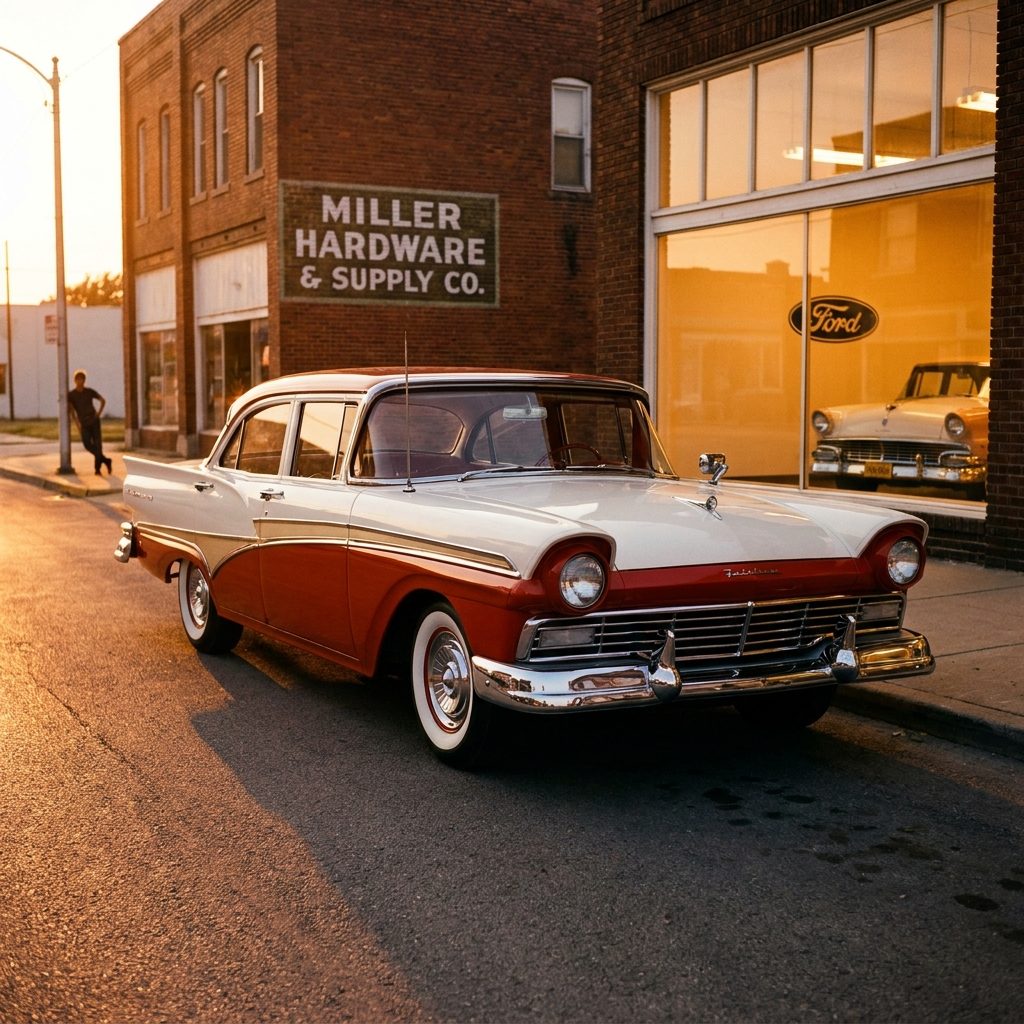
He’d roll up on cruise night in whatever had come off the truck that week — a Fairlane one Saturday, a Sunliner convertible the next. The rest of us drove cars our older brothers had driven first, and here was this kid rotating through Detroit’s whole catalog like it was nothing.
Nobody held it against him. You can’t fault a boy for what his father sells. But on the rare Saturday when somebody with a well-tuned ’55 out-cornered him at the turnaround, there was a quiet satisfaction that spread through the crowd, and everybody who saw it remembered for years.
The Fender Skirts That Made Every Sedan Look Like It Was Wearing a Long Coat
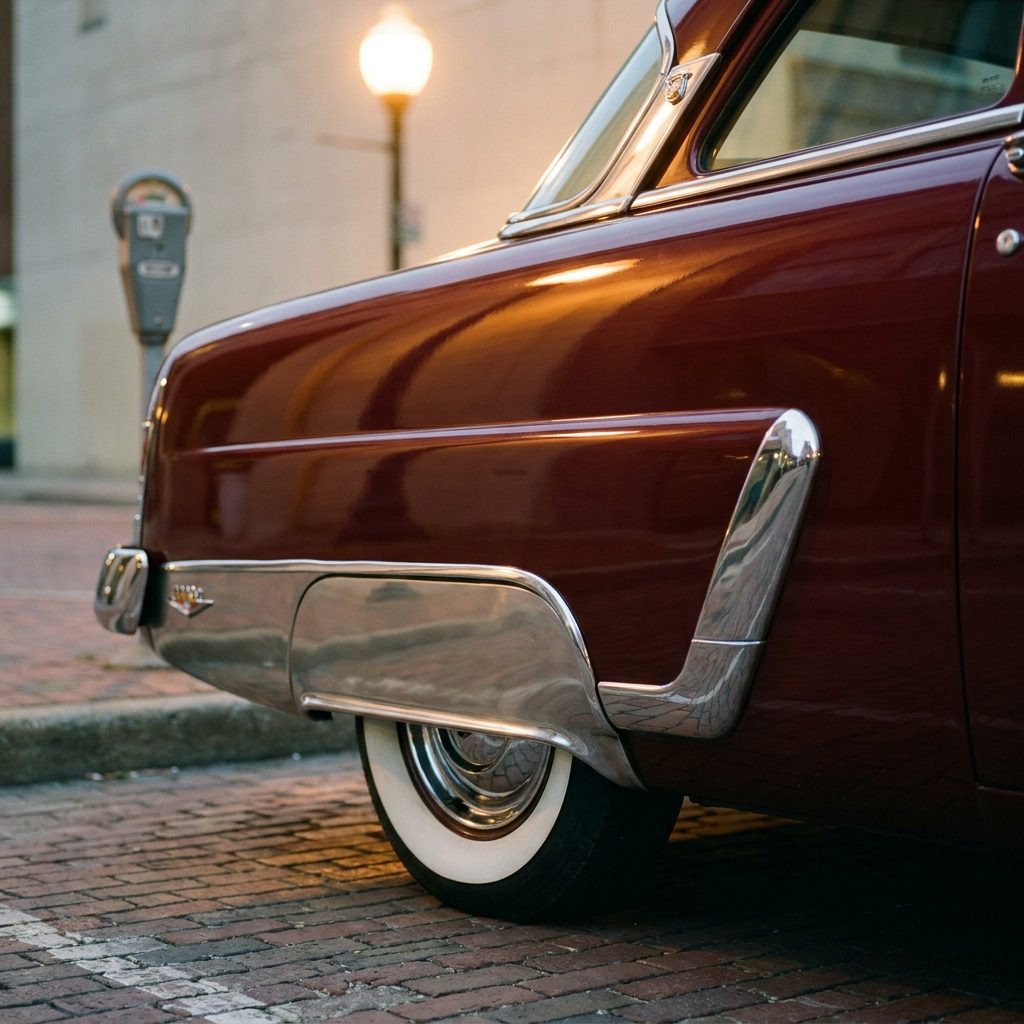
Skirts changed the whole silhouette of a car. Something that rolled off the line looking practical put on a set and suddenly looked like it had somewhere important to be. They caught the streetlamps and threw the light back in one unbroken line from the door all the way to the taillight.
Some guys chromed them. Some painted them body color. Either way, when the car passed you on the street, the wheel well was a mystery — and mystery got you talked about on Monday.
The Full-Service Wave From the Attendant at the Sinclair Who Recognized Every Car in Town
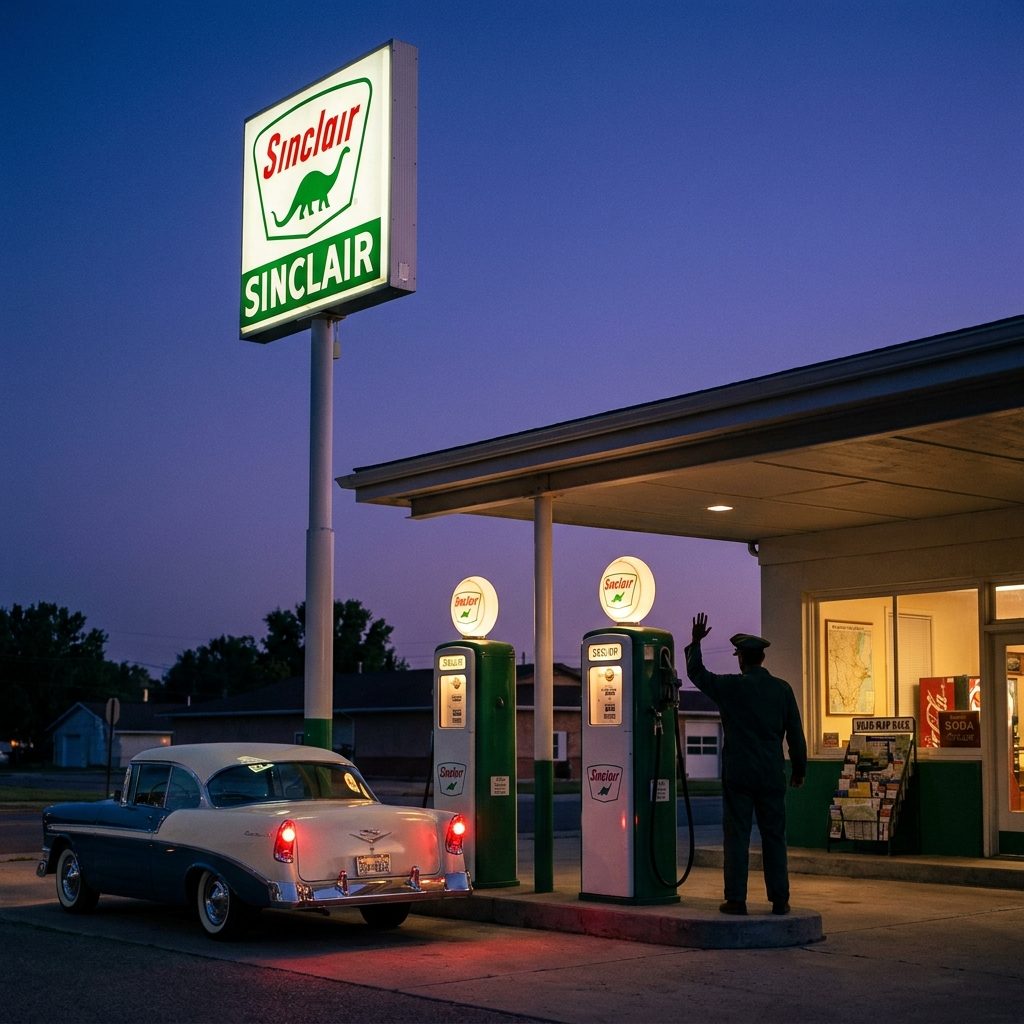
He knew your car before he knew your name, and he knew your name too. Roll past the Sinclair on the third loop of the night without stopping and you’d catch a two-finger wave off the brim of his cap. That wave meant you belonged to the town.
Station closed at nine on Saturdays. He stayed later on cruise nights anyway, sweeping the concrete island long after the pumps went cold, and nobody had ever asked him to. He just liked watching the cars go by.
The Way Your Best Friend’s Voice Sounded Different Riding Shotgun Than It Did Anywhere Else
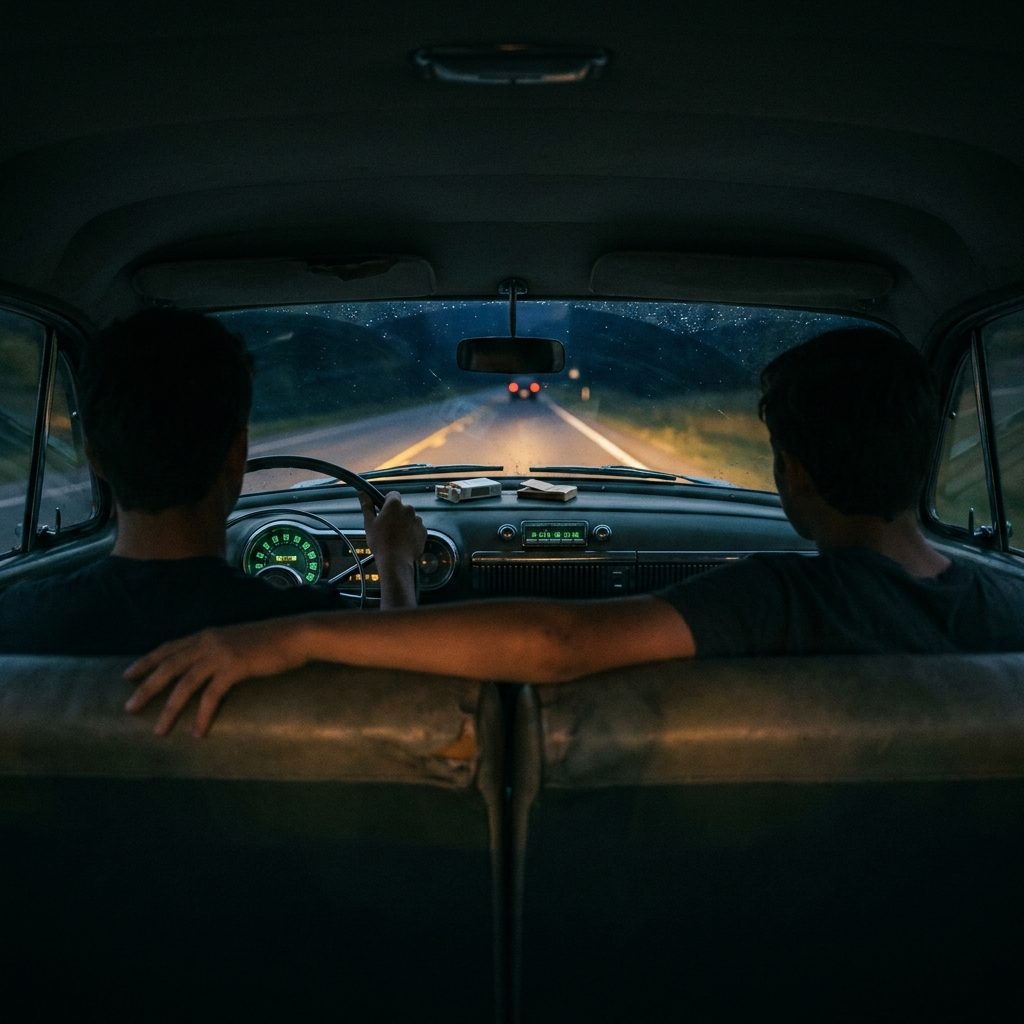
Something about the front seat at night unlocked him.
In the school hallway he was cautious. In the diner he was funny. But with the dash lights on and the town rolling past the windshield, he told you things you’d never heard him say in daylight, and you told him things back. Nobody wrote any of it down and nobody had to. The car was a room that only existed while it was moving, and the second the engine shut off in his driveway, everything said inside it went into a category you did not yet have a name for.