
Would you like to save this?
The showroom smelled like new vinyl and shoe polish, and the salesman wore a wide tie that had seen a few too many lunches. You slid behind the wheel of something rectangular and chrome-heavy that was honest about what it was. A 1980 car told you the truth — you could see the engine, hear the engine, and fix the engine in your driveway with a socket set and a Saturday afternoon. Here’s what forty-odd years did to the thing you drove home that day.
Chrome Bumpers That Doubled as Armor vs. Painted Plastic That Vanishes
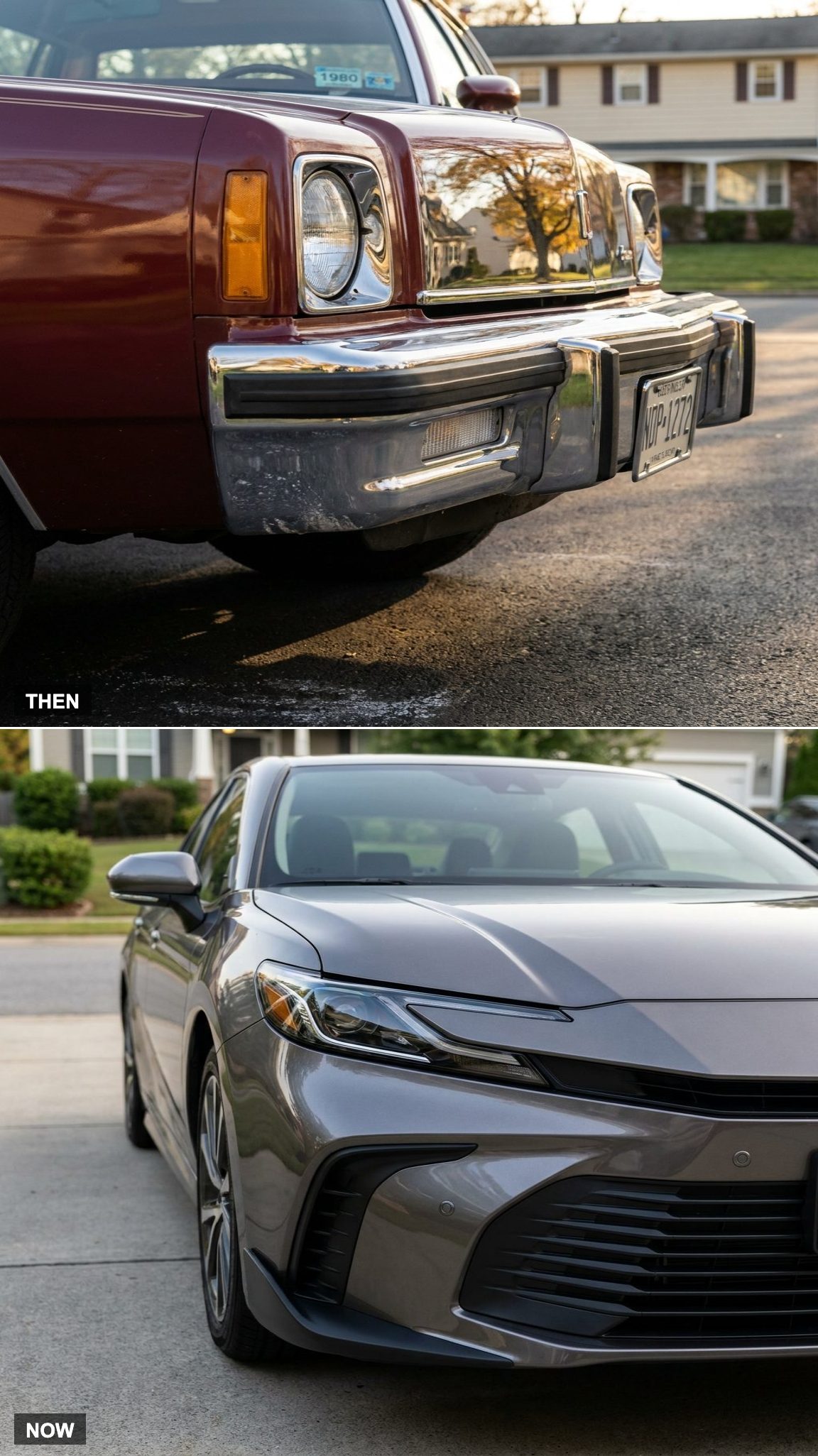
The 1980 chrome bumper meant business. It stuck out from the body like a shelf, weighed as much as a small child, and could shrug off a low-speed parking lot encounter without so much as a scratched grille. You could lean on it. You could sit on it while you drank a beer in the driveway on a summer evening and watched the neighbor’s kid ride his Big Wheel down the sidewalk.
The modern bumper is a lie. A clever one, painted composite molded over foam, engineered to crumple at exactly the right speed and then be replaced entirely for eleven hundred dollars. It looks like part of the car because it’s supposed to.
Prettier, safer, disposable.
Boxy Sheet Metal vs. Wind-Tunnel Curves
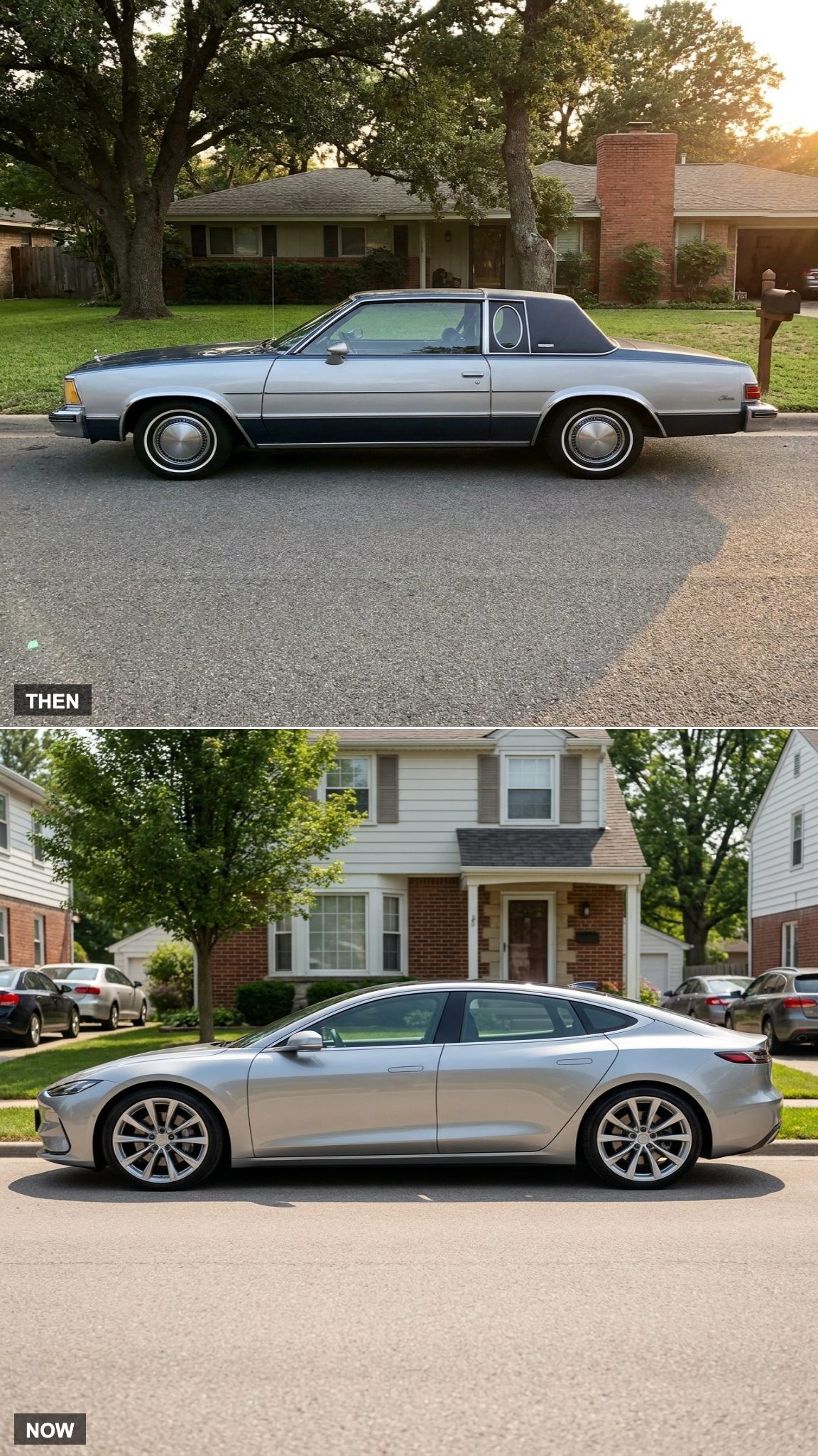
Cars in 1980 were drawn with rulers. Not literally, but close enough that you could set a level on the hood and it wouldn’t lie to you. Windshields stood almost straight up, trunks had actual corners, and you could tell a Chevy from a Ford from a block away because they were fundamentally different rectangles with different personalities and different tail lights and different opinions about what a car should even be.
Now every car is the same jellybean, and there’s a reason. A drag coefficient of 0.28 saves real fuel, and the engineers won that argument decades ago. But walk a modern parking lot and try to identify sedans without reading the badges. Good luck.
Cranking the Window Down vs. Pressing a Button
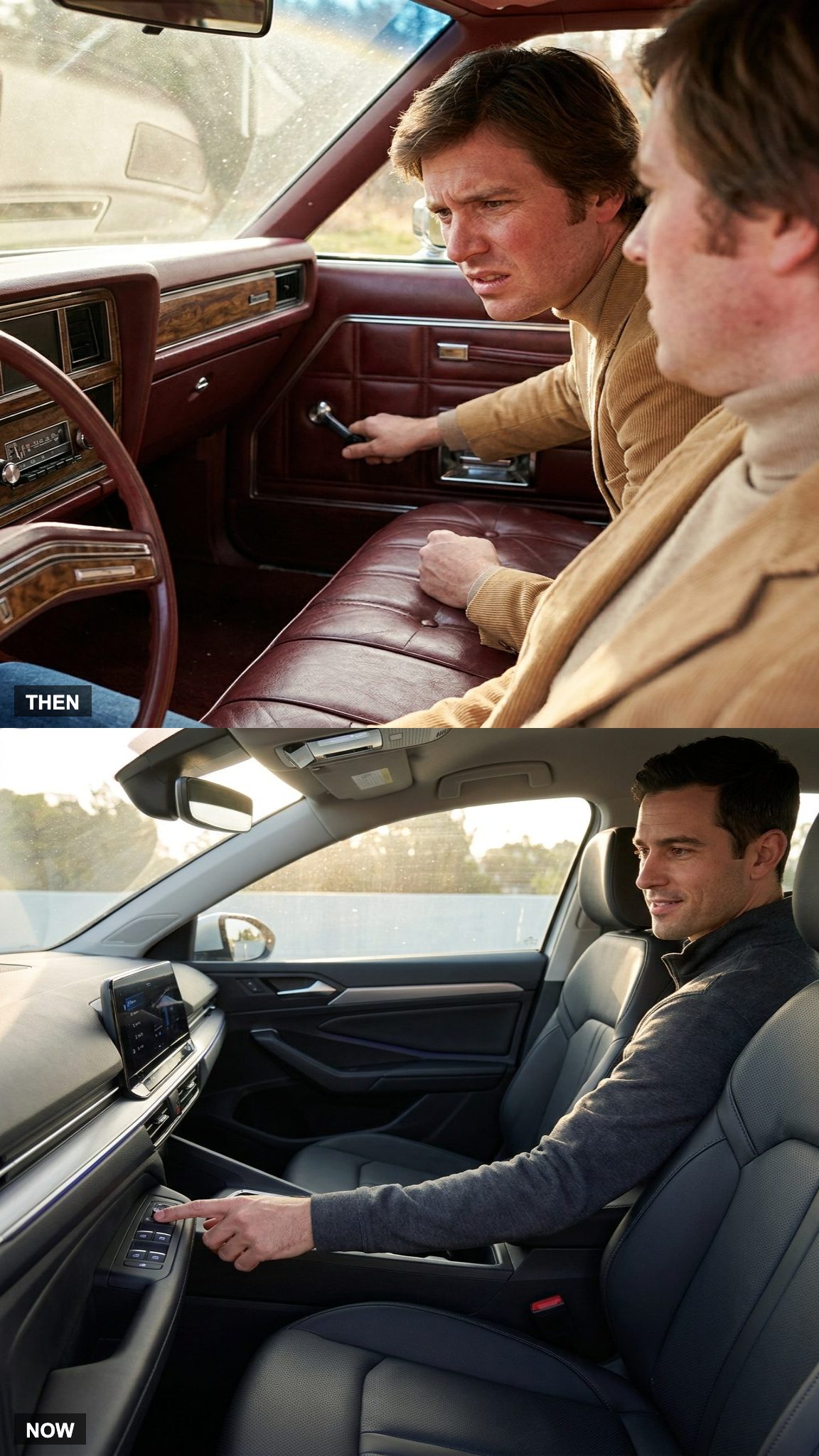
Rolling down the passenger window from the driver’s seat in 1980 was a workout. You leaned across, cranked with your right hand, and hoped nobody at the drive-through window judged the sweat on your forehead. Kids did it from the back seat because they were bored, and because the crank made a satisfying mechanical click at every quarter turn — a small reward for small effort.
Press a button now. The glass slides down on its own, powered by a small motor and a switch, and the childhood ritual of asking dad to roll down the back window is gone forever.
One Metal Key vs. A Fob You Never Take Out of Your Pocket
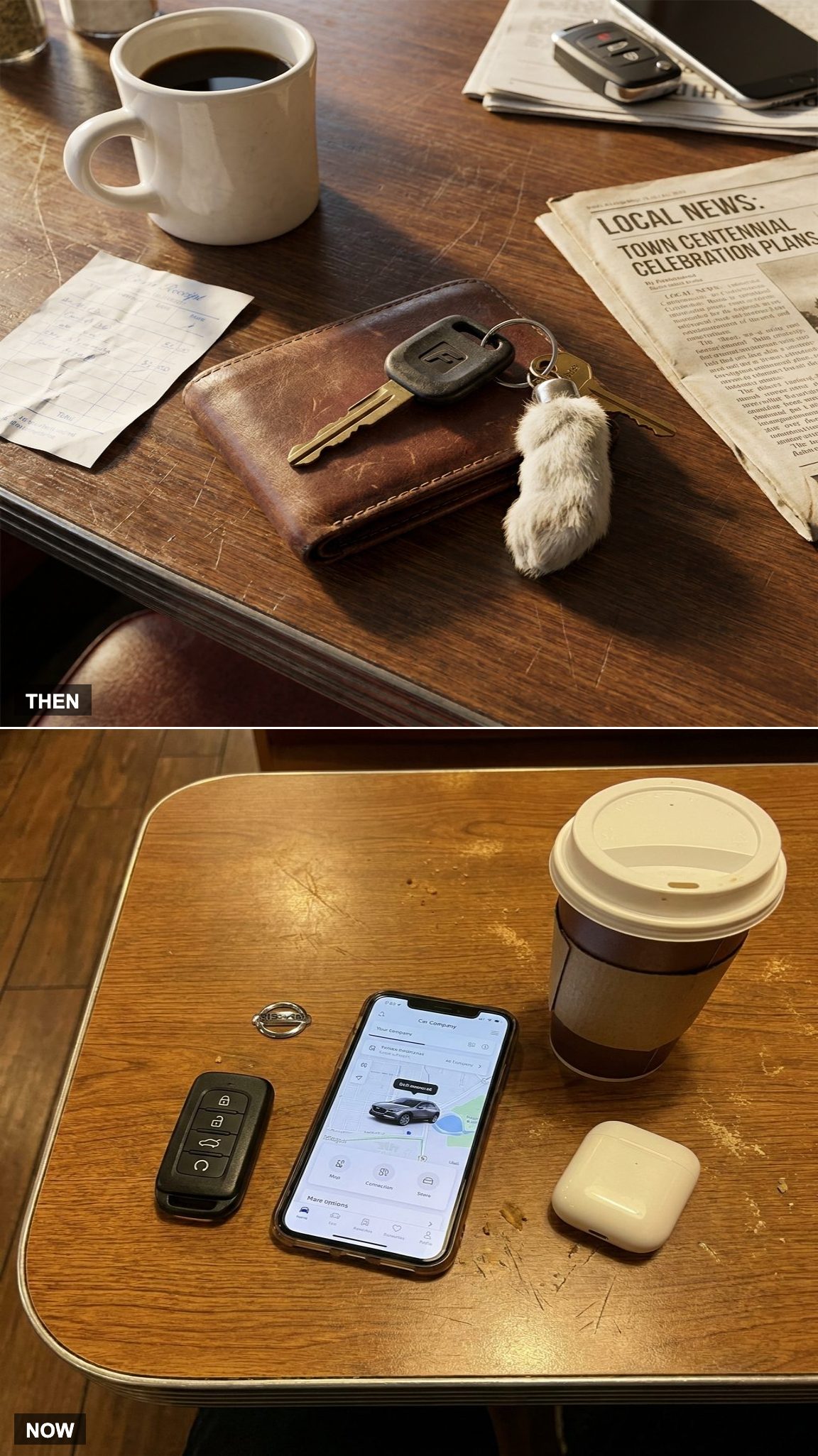
The 1980 key was a key. You slid it in, turned it, the engine cranked or it didn’t, and if you locked it in the car you called a locksmith or fished it out with a coat hanger from the neighbor’s garage. Simple contract between man and machine.
Modern fobs talk to the car through encrypted radio signals, unlock the doors when you touch the handle, and cost hundreds to replace if you lose one. Progress, sold separately.
AM/FM With Five Presets vs. A Tablet Bolted to the Dash
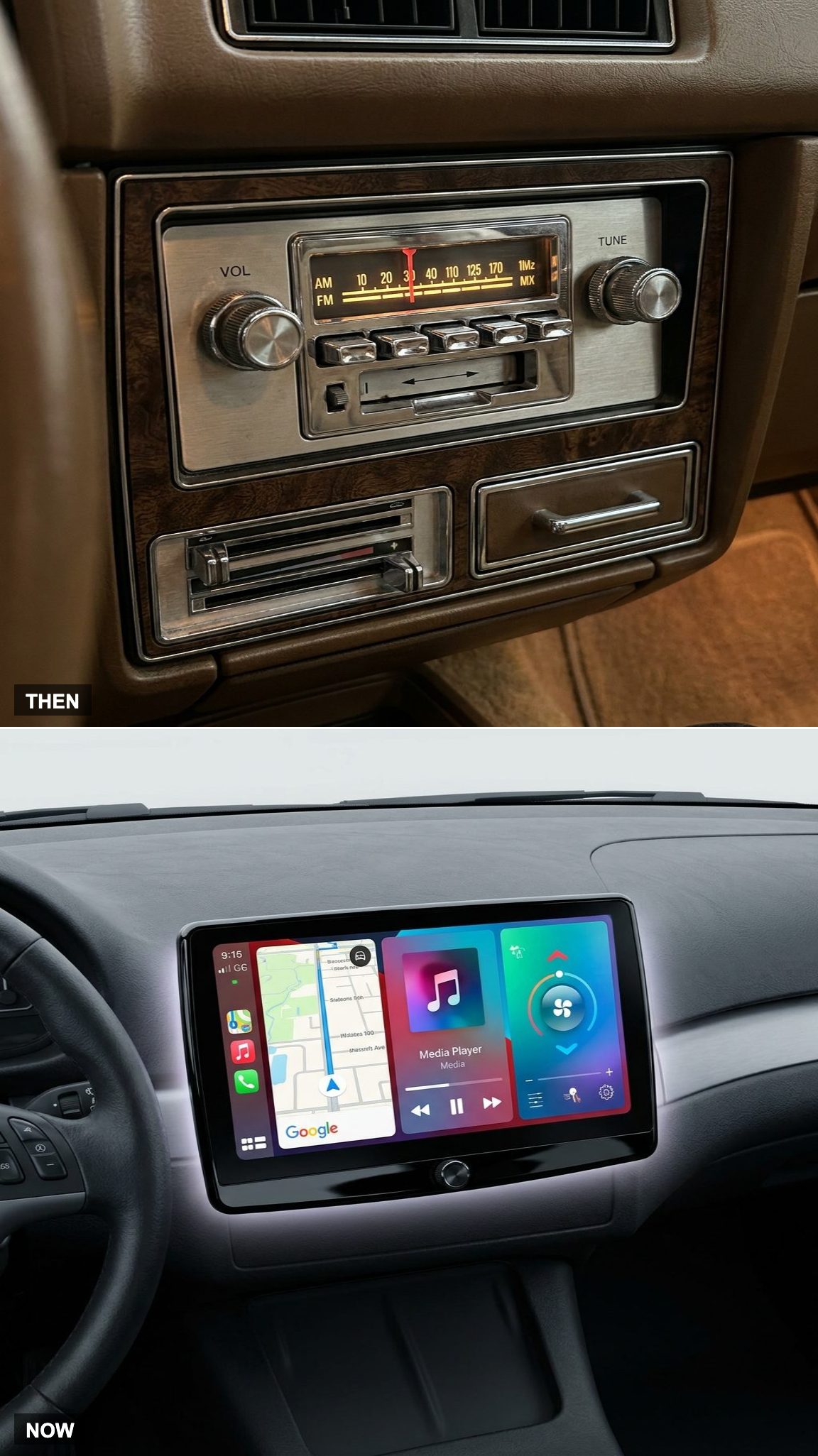
In 1980 you tuned the radio with a knob, memorized five stations with five chrome buttons, and if you wanted to change the song you waited for the DJ. The AM/FM stereo cassette was a genuine upgrade you paid extra for, and people bragged about it at the barber shop.
Now the dashboard is a twelve-inch touchscreen running the climate, the map, the phone, the seat heaters, and occasionally the radio, when you can find it buried three menus deep behind an animation of a rotating car.
Round Analog Dials vs. A Reconfigurable Video Game
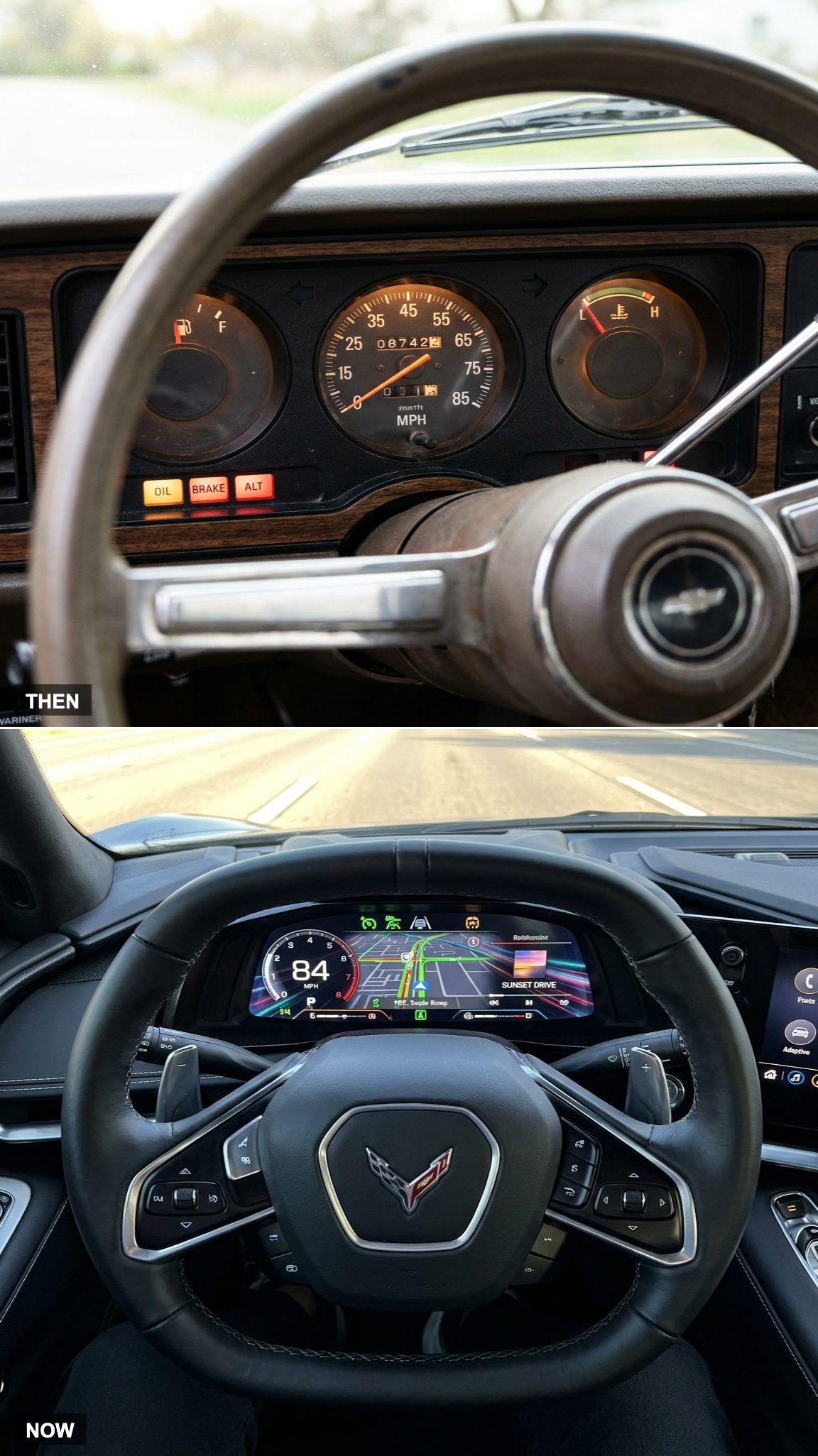
The 1980 gauge cluster told you three things: how fast you were going, how much gas you had, and whether the engine was on fire. Enough. Every needle was an old friend, and you could read them at a glance without taking your eyes off the road for more than half a second.
The modern cluster? A video game. You can make it look like whatever you want, which is either the greatest freedom in automotive history or a solution nobody asked for. Ask the guy trying to find his gas gauge under a submenu.
Reaching Out to Adjust the Mirror vs. Pressing a Switch
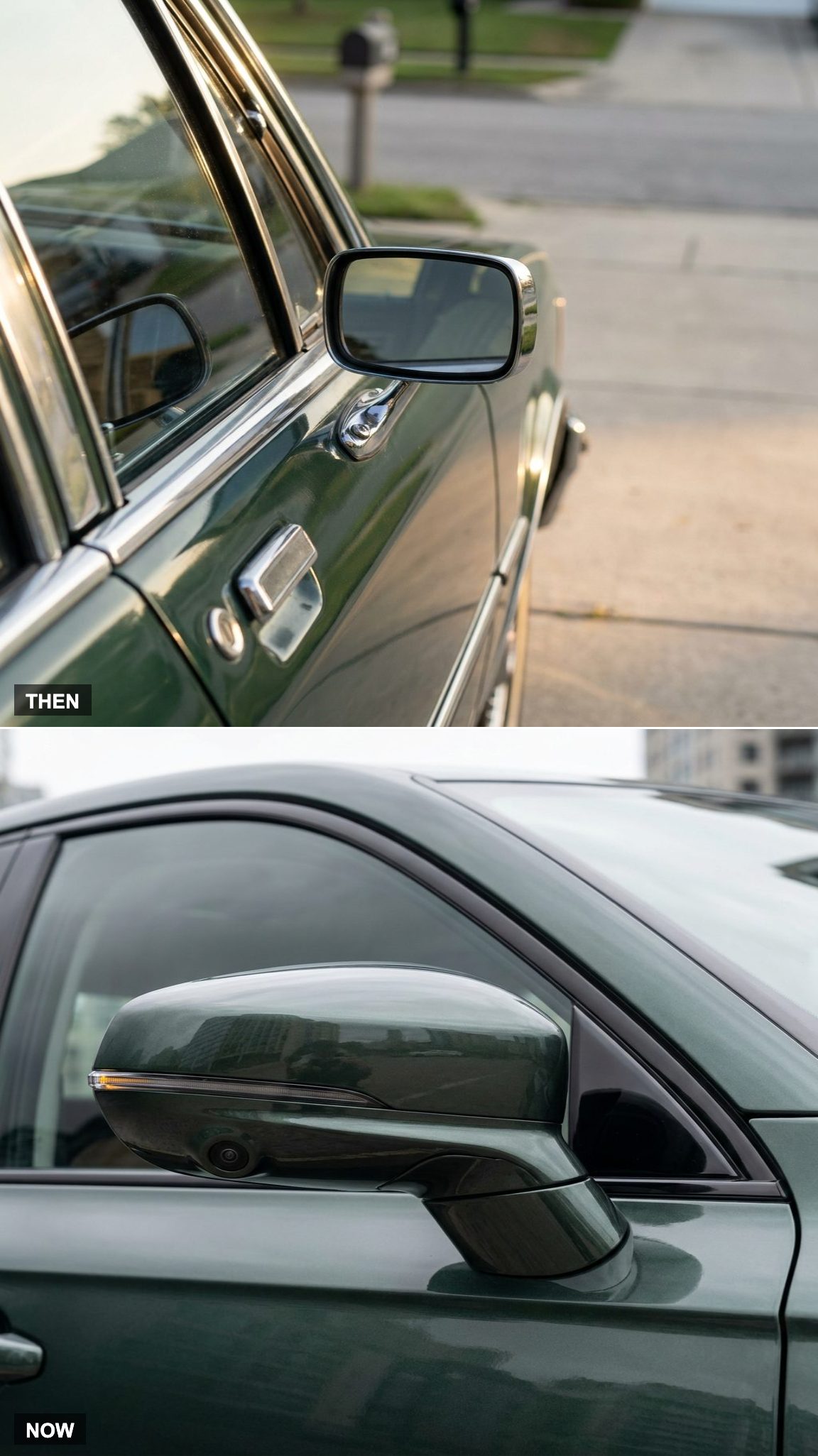
In 1980, adjusting the passenger side mirror meant rolling down the passenger window, leaning across the seat, and shoving the glass with your fingers until it pointed somewhere useful. If your wife had adjusted it for the grocery run, you were resetting it every time you got in the car.
Power mirrors. Blind spot indicators. Auto-dimming glass, ground illumination on the pavement below, folding motors that tuck them in when you park in a tight garage — all controlled by a little joystick on the door. Nobody misses the manual version.
Lap-and-Shoulder Belts Nobody Used vs. Airbags and a Computer Watching the Road
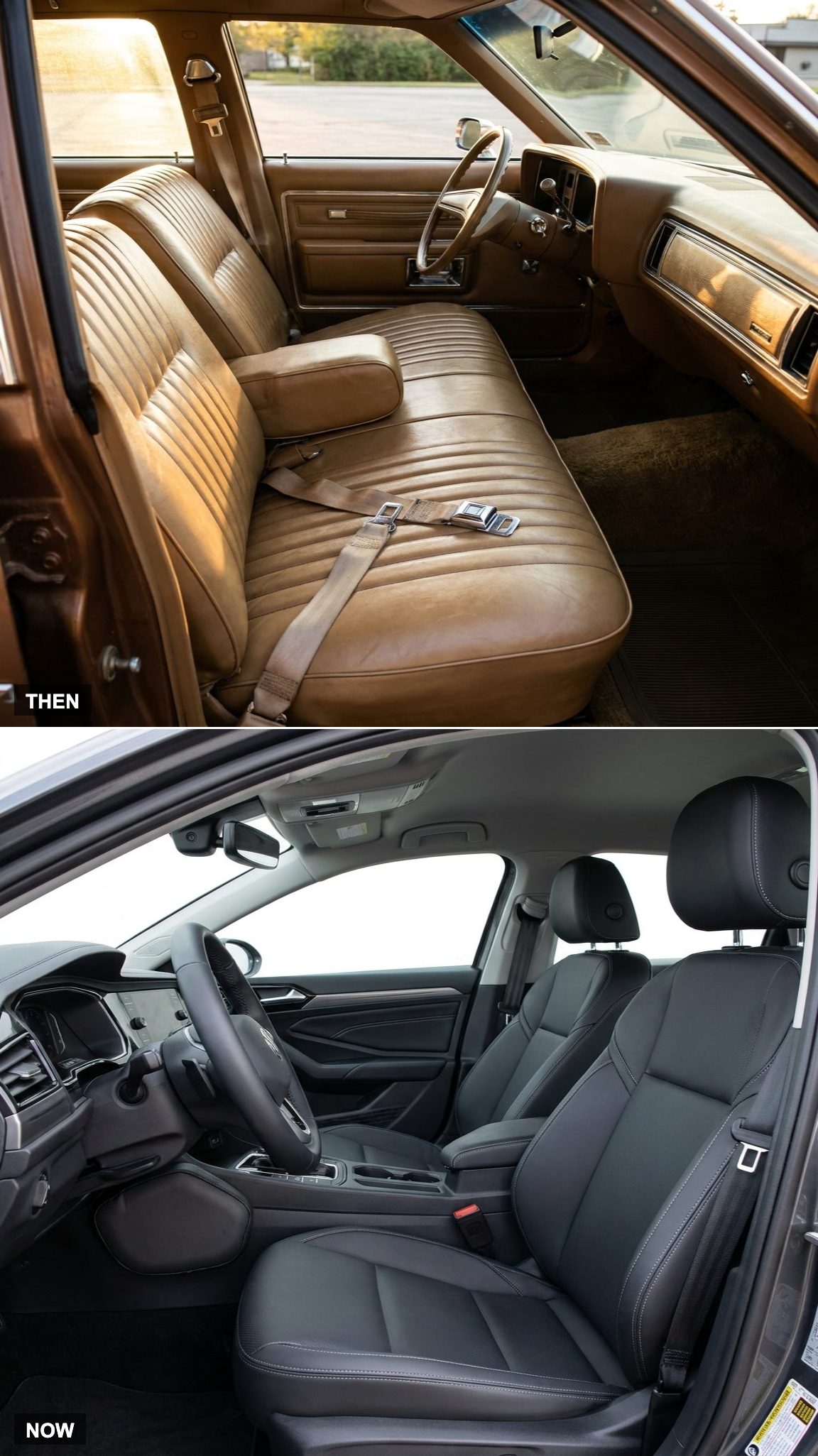
The 1980 safety brief was short. Front-seat lap-and-shoulder belts were there, but plenty of people ignored them, while rear-seat protection remained far more limited than it is today.
Kids rode in the back with no restraint at all, sometimes in the rear-facing third row of a station wagon, waving at truckers.
The modern car has front airbags, side airbags, curtain airbags, knee airbags, and a computer that will slam on the brakes before you know there’s a problem. It also nags you to keep your hands on the wheel every thirty seconds. Fair trade.
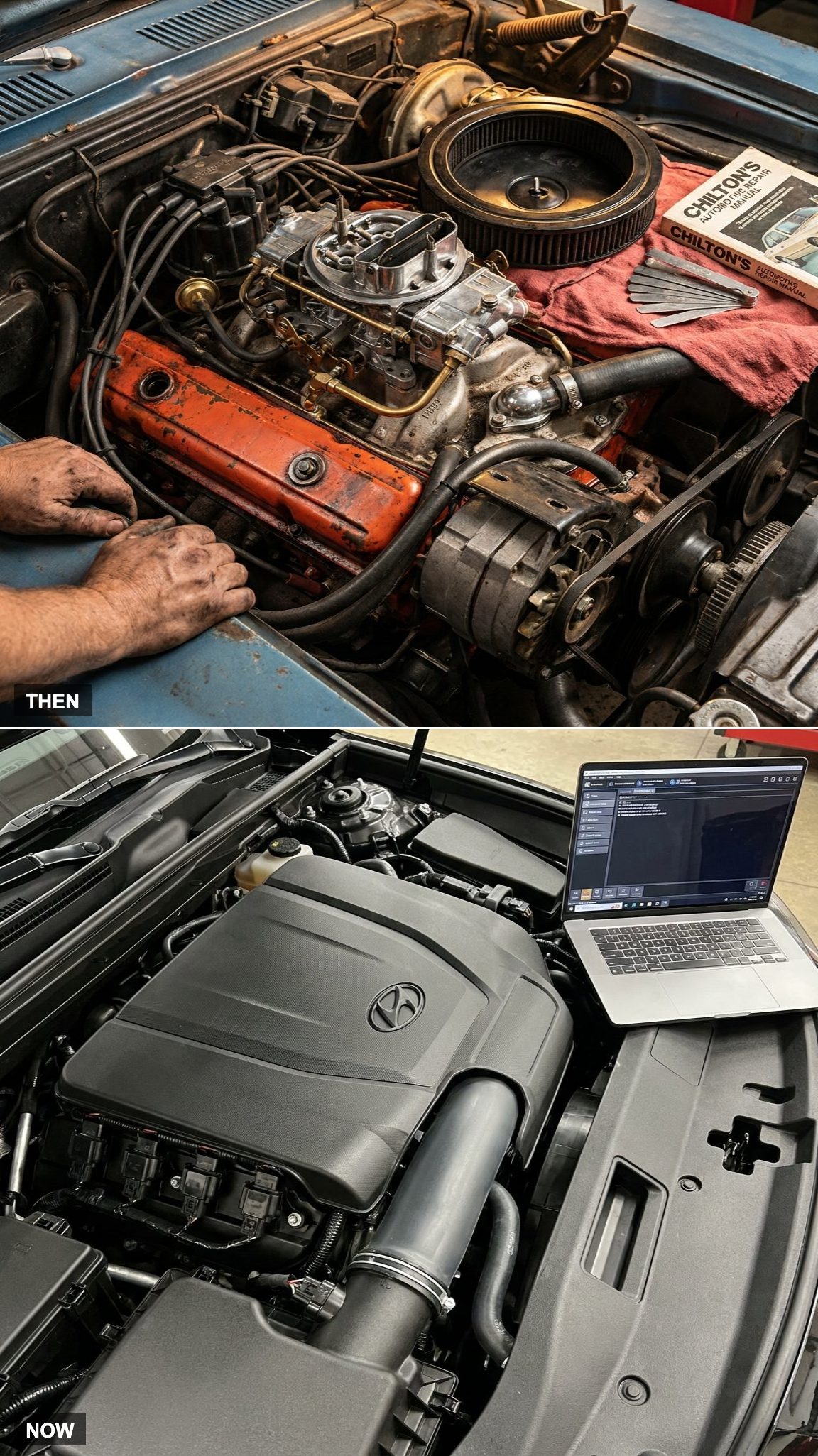
A Carburetor You Could Rebuild on the Kitchen Table vs. A Fuel Injection System You Cannot Touch
Would you like to save this?
The 1980 carburetor was a mechanical marvel you could take apart on a folding table with a screwdriver, a set of jets, and a rebuild kit from the parts store that cost less than a decent dinner. It ran rich when it was cold, flooded when you pumped it too many times, and hesitated on damp mornings — moody, but yours.
Modern fuel injection is smarter, cleaner, and gets much better mileage without needing any adjustment for a hundred thousand miles. It also talks to the car through a network of sensors that requires a scan tool costing more than a used carbureted small-block to diagnose. You don’t rebuild it. You replace it.
The Rand McNally Atlas in the Glove Box vs. A Voice Telling You Where to Turn
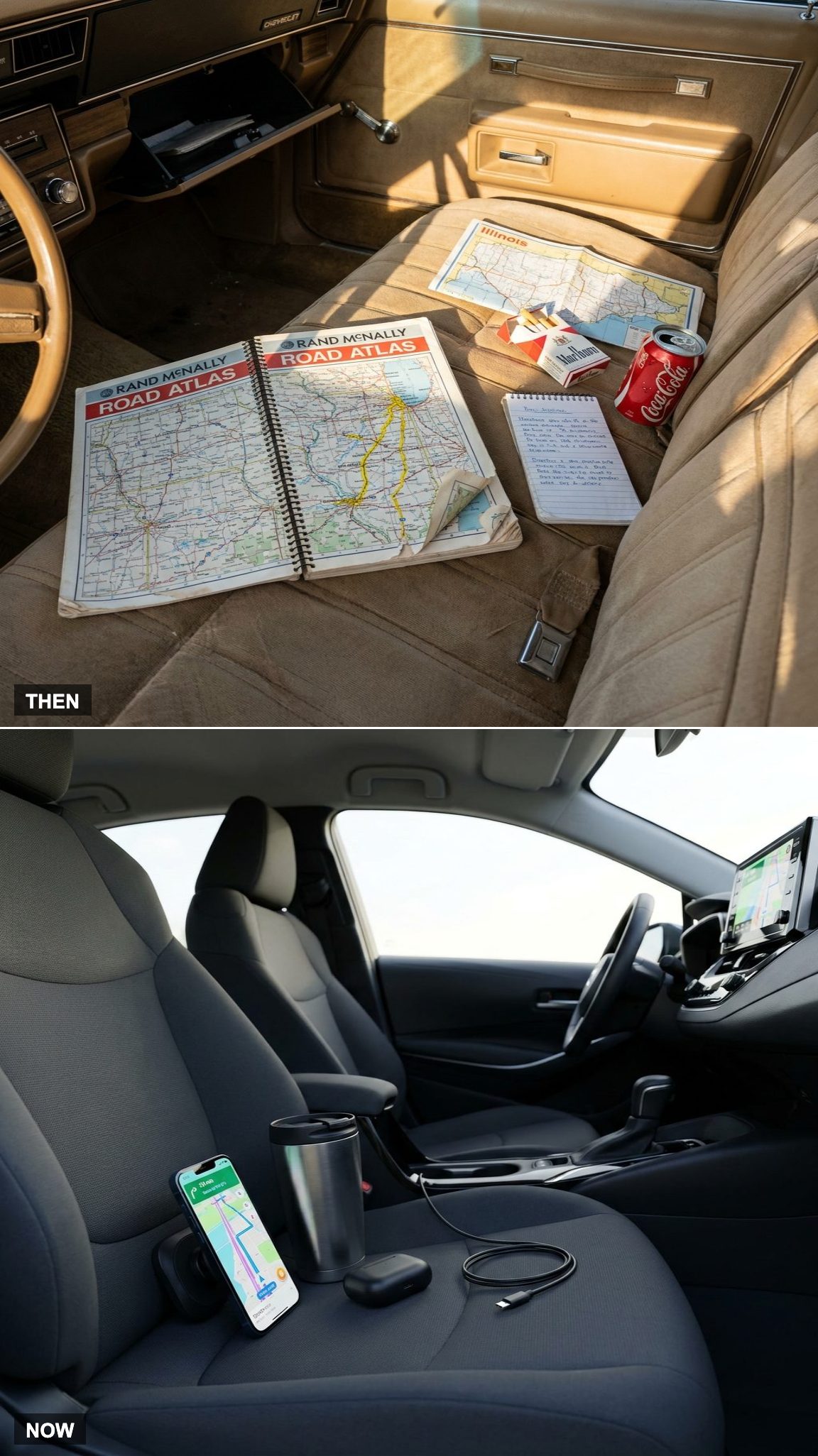
Planning a road trip in 1980 meant sitting at the kitchen table with the atlas open, tracing your route with a highlighter, and copying the interstate exits onto a legal pad in the order you’d need them. Got lost? You pulled into a gas station and asked a stranger, who drew you a map on a napkin and told you to watch for the water tower.
Now a voice on your phone tells you to turn left in 400 feet, reroutes around a traffic jam you didn’t know existed, and finds you the cheapest fuel within two miles. The napkin map lost, and honestly it deserved to.
Air Conditioning Was a Line Item, Not a Given
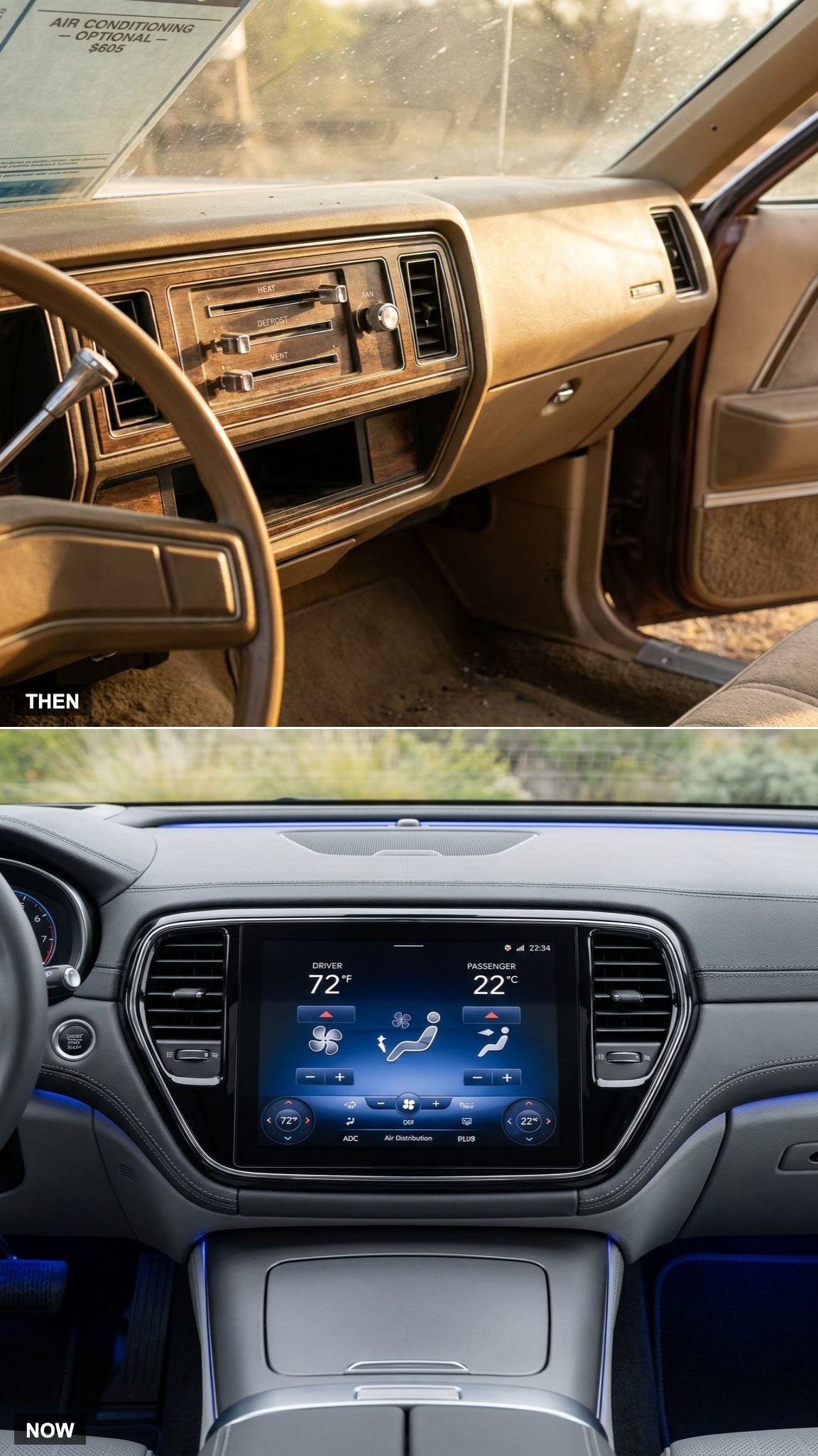
In 1980, air conditioning was a checkbox on the dealer’s order sheet, not a feature you assumed came with the car. A window sticker might list it around six hundred bucks — serious money when a new Chevy Citation started near five grand. Plenty of buyers skipped it, cracked the vent windows, and called it a summer.
Now? The base-model economy hatchback shows up with dual-zone automatic climate control and a heated steering wheel option waiting on the trim ladder. Your dashboard reports the exact temperature it’s pushing at your feet versus your face. Nobody sweats through a vinyl bench seat in July anymore, and nobody misses it.
Fuel Economy Was a Math Problem at the Pump
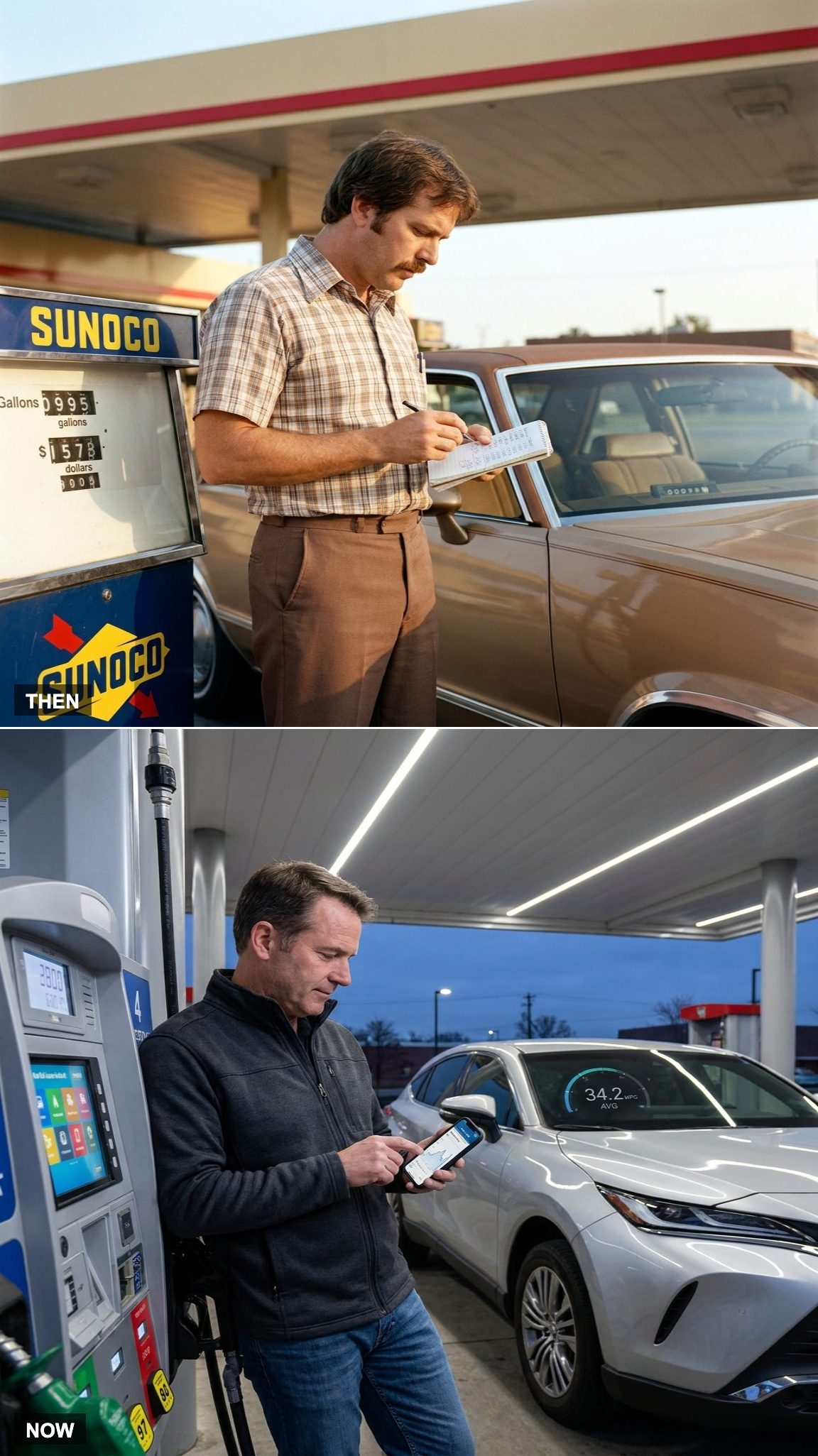
You kept a notebook in the glovebox. Odometer at every fill-up, subtract the last one, divide by gallons. That was your MPG.
If the number dropped two points, you started wondering about timing, or a choked air filter, or whether that last tank of gas had been cut with something. The 2026 dashboard just tells you — instant MPG, average MPG, trip MPG, lifetime MPG, and some cars will coach you to lift off the gas sooner like a driving instructor who never gets tired. The math is gone. So is the little notebook, and honestly so is the small satisfaction of doing long division on the back of a receipt while your kid asked when you were leaving.
Backing Up Was a Full-Body Sport
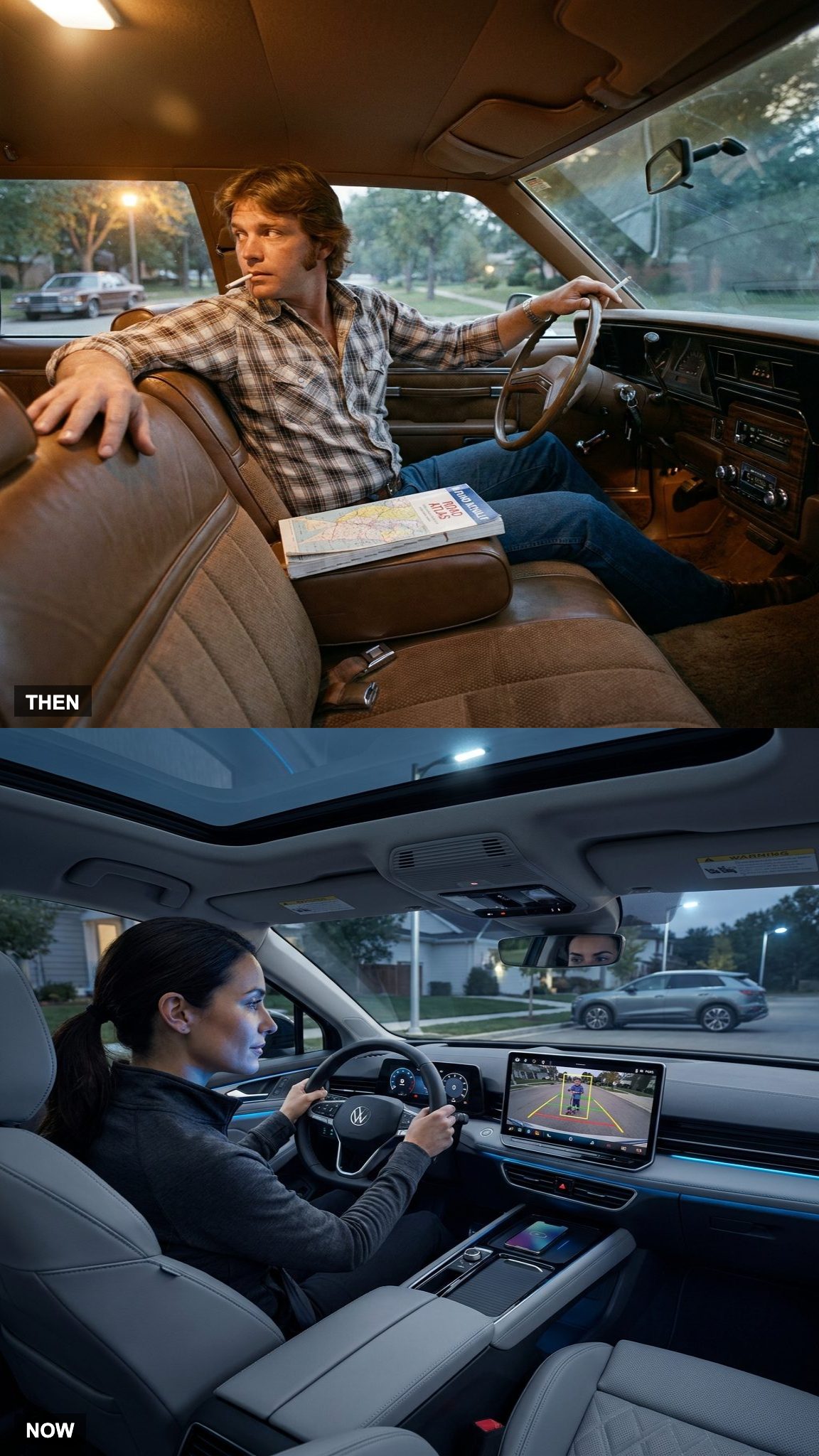
Reversing a station wagon out of a Friday-night driveway meant one arm slung over the seatback, neck cranked, right foot feathering the brake while you scanned for the neighbor’s dog. You learned the corners of your car by memory, because nothing was going to tell you where they were.
The backup camera changed the physical act of driving. People sit forward now, eyes on a screen, and the car chirps if a kid on a bike rolls into the frame. Safer, obviously. And yet an entire generation is growing up without ever learning to turn their head to look behind them.
Parallel Parking Was a Rite of Passage
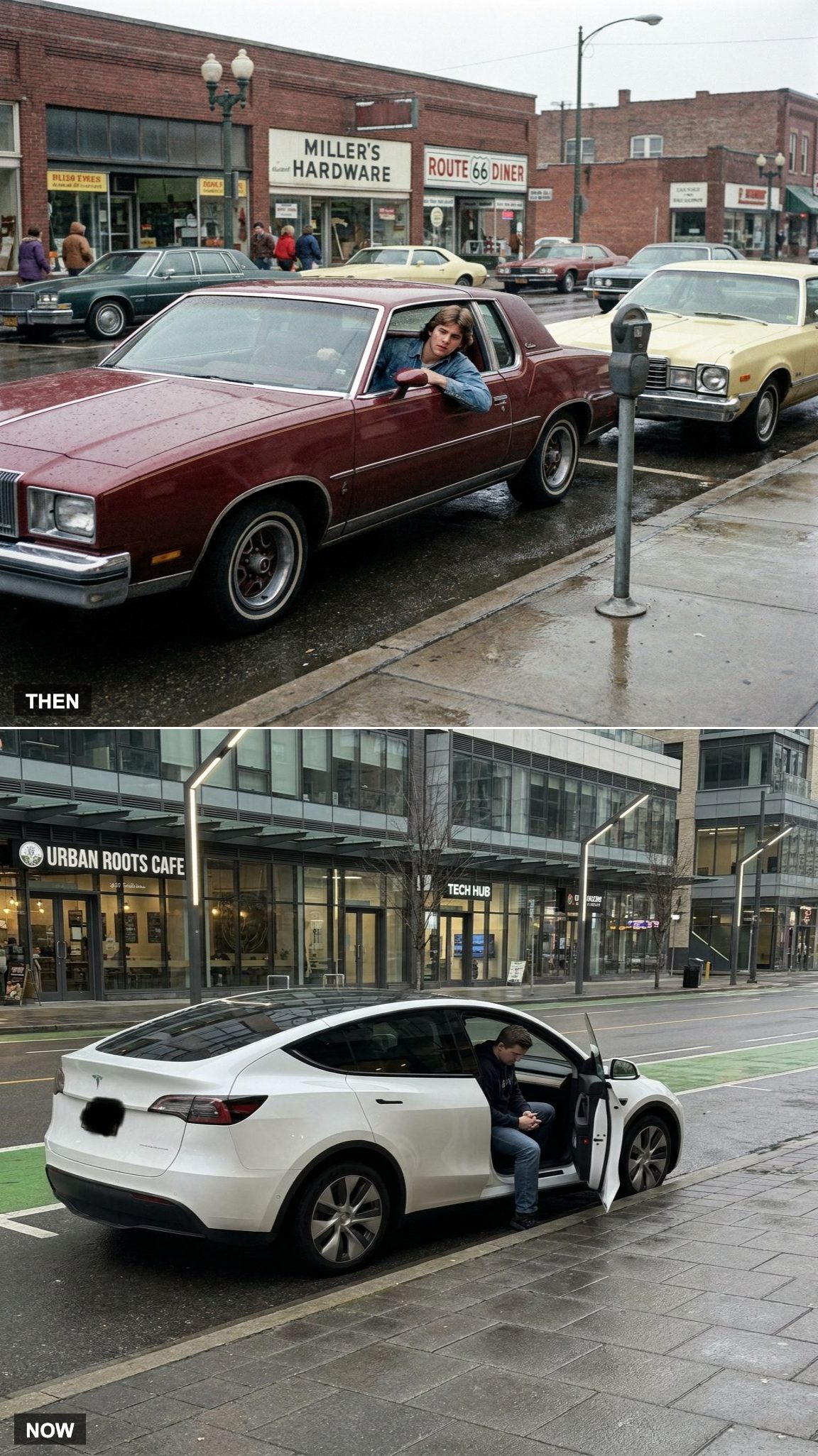
The driving test hinged on it. Two orange cones, a curb, and an examiner with a clipboard who had seen every excuse there was.
If you couldn’t slide a two-ton Cutlass into a gap on the first try, you drove home from the DMV in the passenger seat, red-faced, listening to your father explain what you did wrong for six miles. Now the car does the work for you — push a button, take your hands off the wheel, and the sensors figure out the geometry while you sit there and watch. Genuinely useful. Also the quiet end of one of the last driving skills that separated the confident from the terrified.
The Cassette Deck Was the Height of In-Car Tech
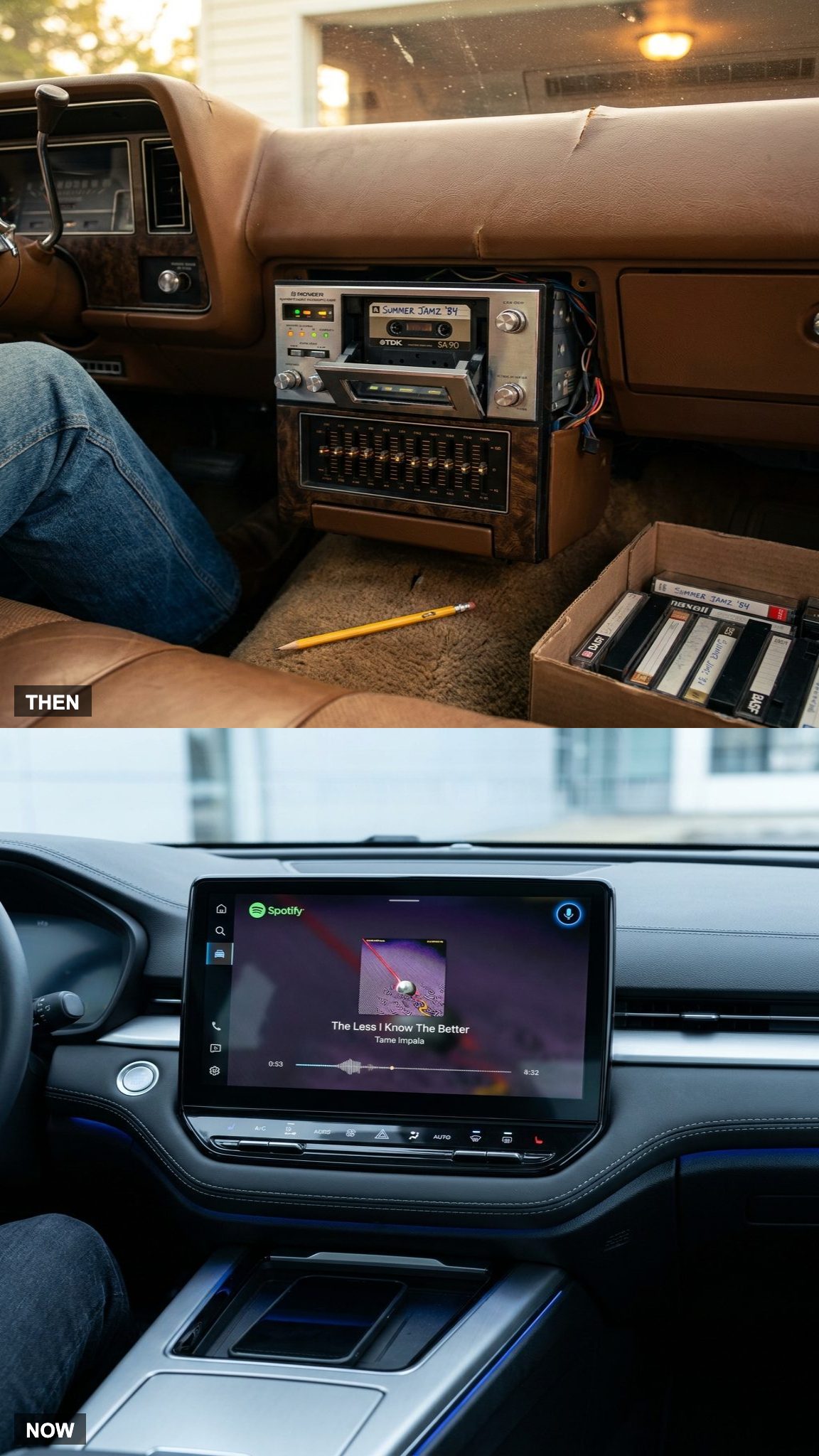
A cassette deck under the dash meant you had arrived. Better if it was Pioneer or Alpine, installed by a guy who advertised on the back of the local paper and worked out of a shop that smelled like solder and old carpet. Mix tapes came together on a home stereo, one finger on play and record, waiting for the DJ to shut up before the song started so you didn’t catch his voice on the intro.
The whole ritual is gone. Say an artist’s name out loud and the car plays it. No pencil for winding a chewed tape back into its shell, no shoebox on the passenger floorboard, just an algorithm guessing what you want next and usually getting it wrong.
A good mix tape took an entire Saturday afternoon. That was part of what made it good.
Diagnosing a Problem Meant a Guy Named Ray
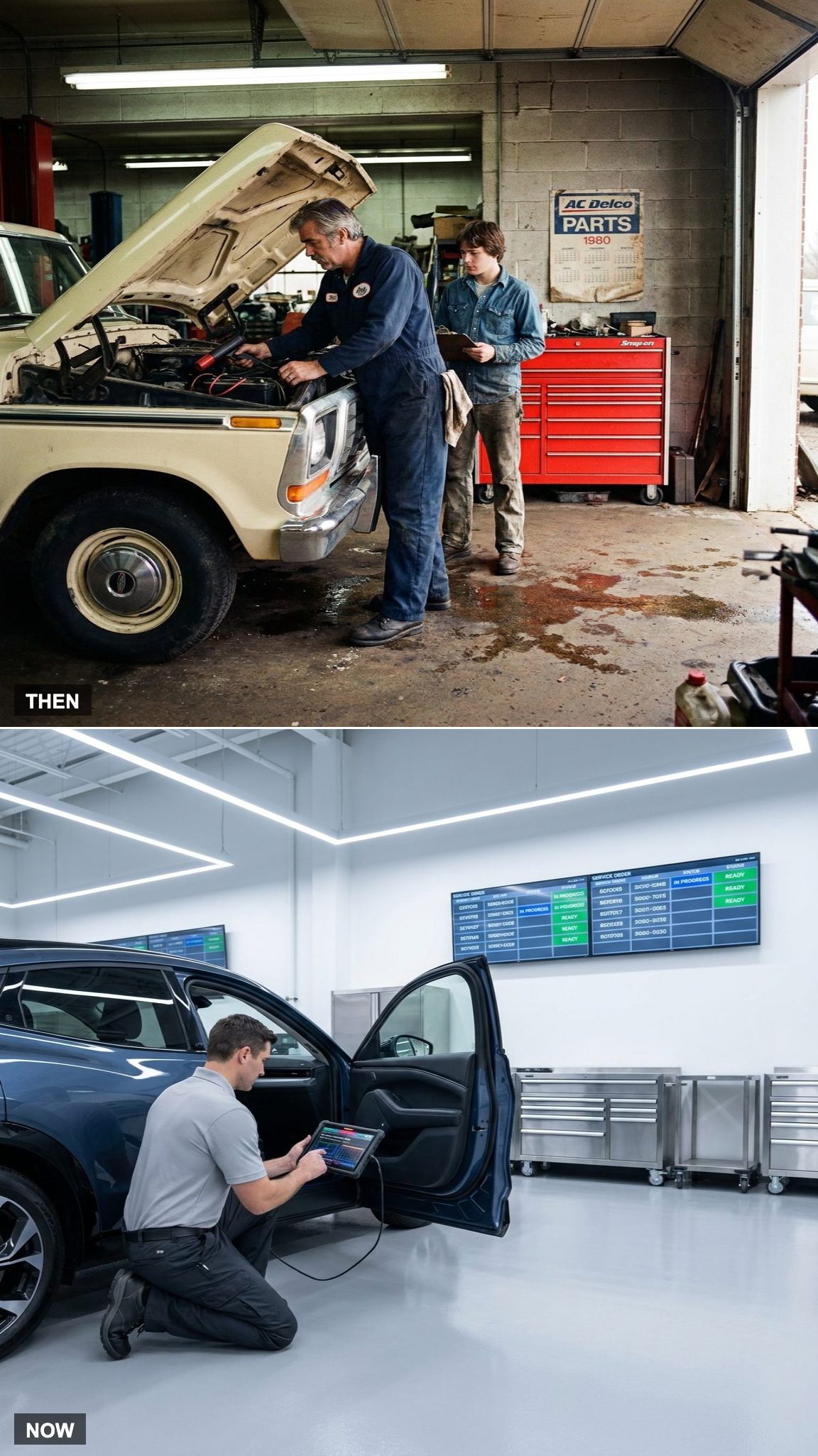
Ray listened. He’d put a long screwdriver against the block, hold the handle to his ear, and tell you it was the water pump before you finished describing the noise. Been doing it since 1962. No computer, no need for one.
The 2026 technician plugs a laptop into a port under the steering column and reads a code. P0420. Catalyst efficiency below threshold, bank one. Faster? Sure. Also completely blind to the hairline crack in the intake manifold you can hear if you know what to listen for — the kind of thing Ray would have caught in thirty seconds with his head under the hood.
Recall Notices Came in the Mail
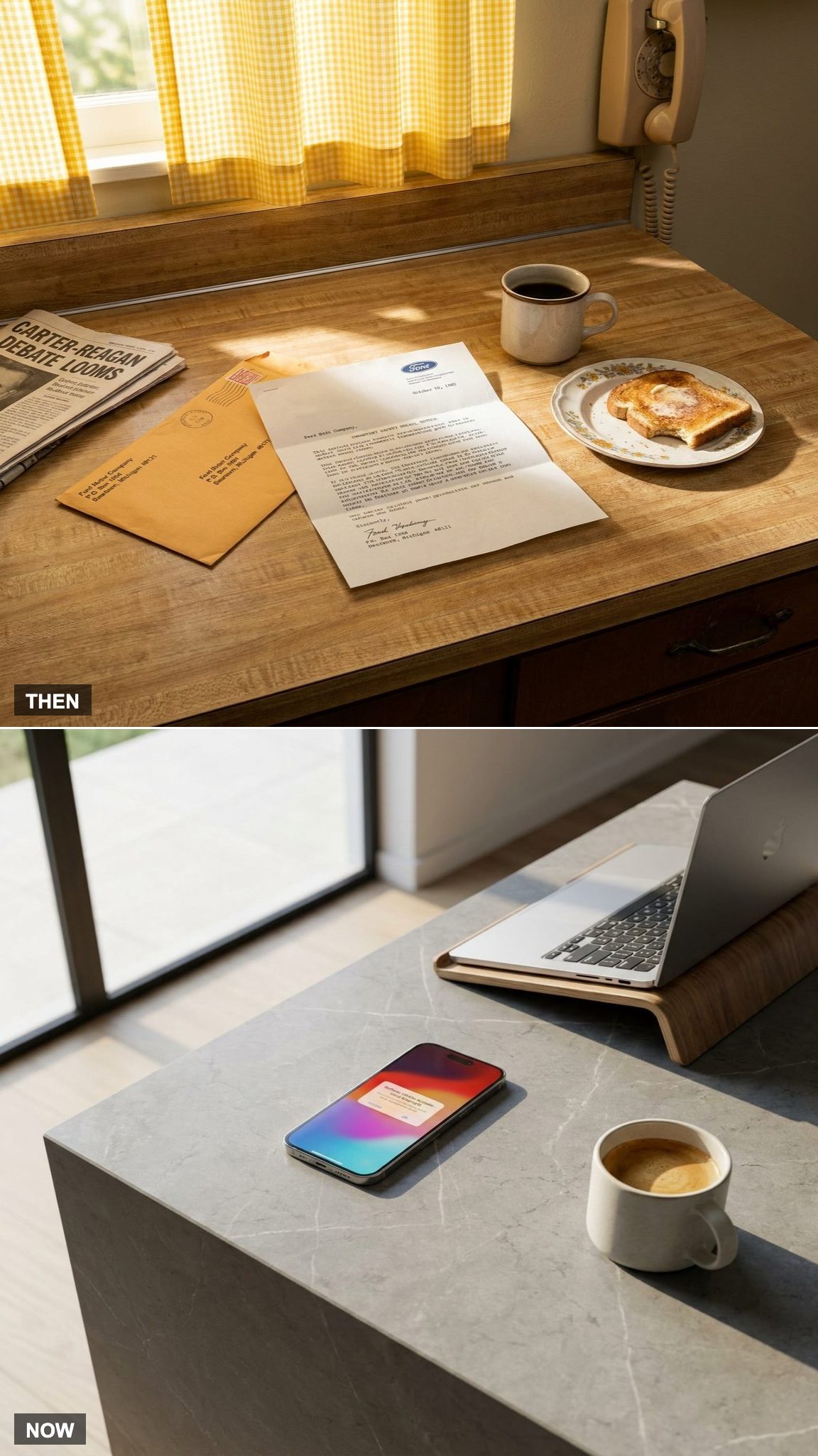
The recall letter came on a Tuesday. You opened it standing at the mailbox, read that your transmission might slip out of park while idling in your own driveway, and called the dealer for an appointment three weeks out. Then you drove there, sat in a lobby with a coffee vending machine that took quarters, and killed a couple hours reading a stack of six-month-old magazines while somebody swapped a bracket in the back.
Now the car updates itself in your driveway at three in the morning. You wake up to a push notification. Convenient. A little unsettling if you sit with it too long.
Cars Were for Driving, Full Stop
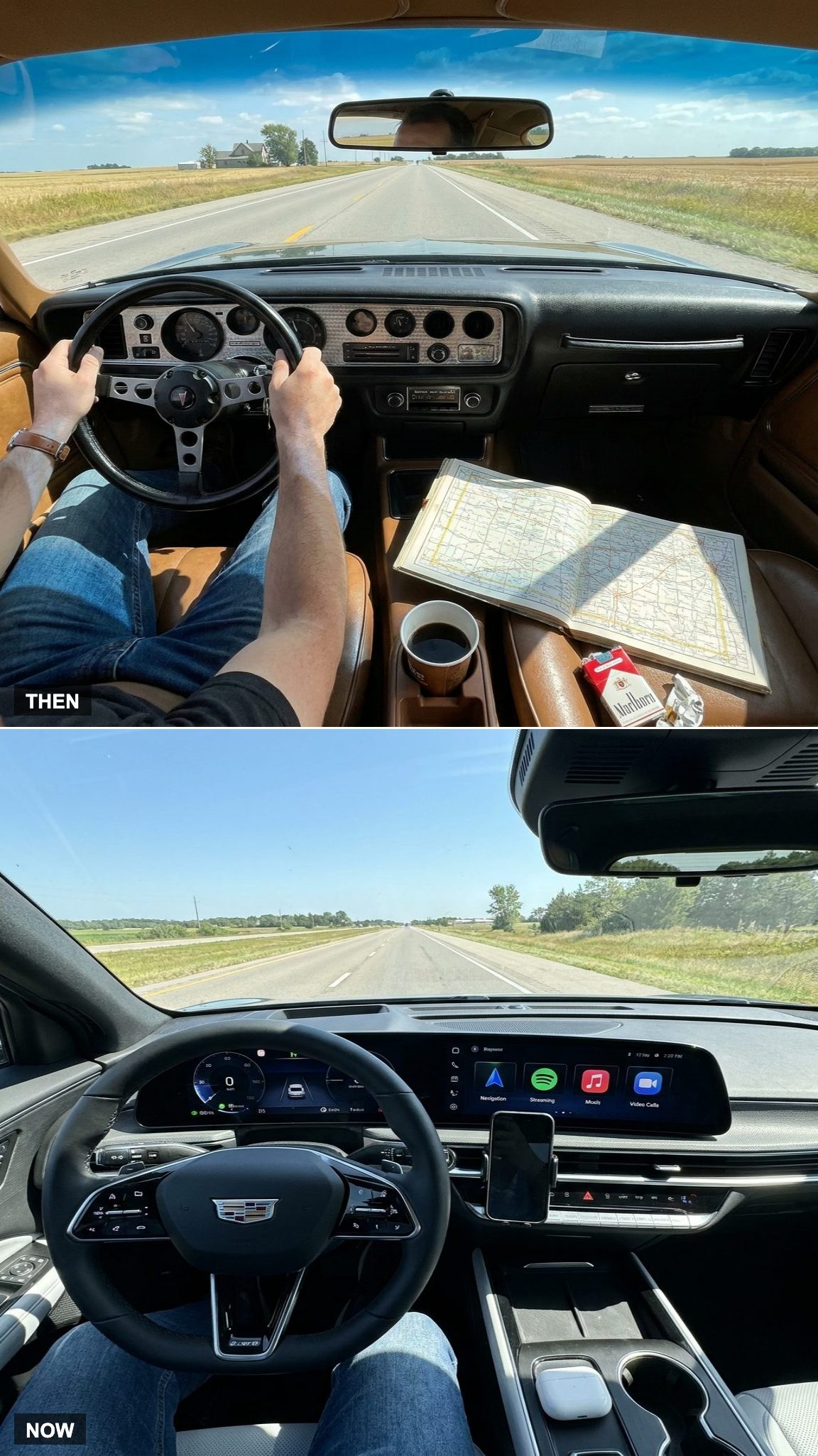
A 1980 Firebird gave you a steering wheel, three pedals, a shifter, and a radio. That was the interface. Everything else was road, engine, and whatever you were thinking about at seventy miles an hour. Long drives were quiet, or loud, depending on the radio, and either way you were mostly alone with your own head for company.
The modern car wants to be a phone. Screens for everything, notifications sliding in from the top, a friendly voice offering to read your texts aloud so you don’t have to touch anything.
You’re not driving so much as being driven while performing other tasks. Some people love it. Some of us keep an old truck around specifically to escape it.
The Family Sedan Lost the Driveway to the Three-Row Crossover
Would you like to save this?
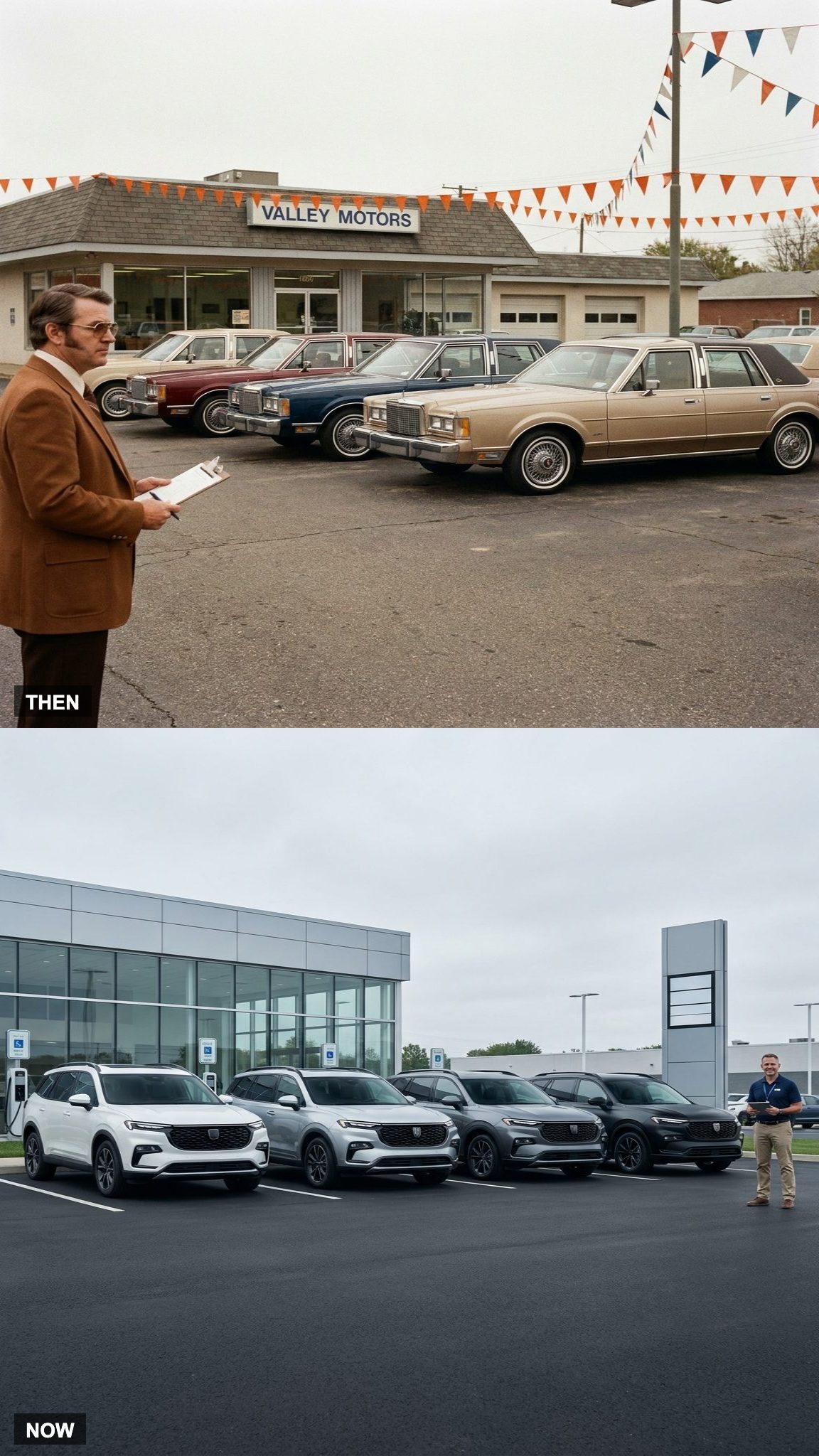
A 1980 Impala and LTD shared the same basic family-car formula: four doors, a long trunk, a broad bench and enough chrome to catch the afternoon sun. The details differed, but the category was unmistakable.
That family now shops for a three-row crossover with captain’s chairs and a panoramic roof. The sedan did not become unrecognizable. It lost its old job.
Buying a Car Meant a Saturday of Dealer Hopping
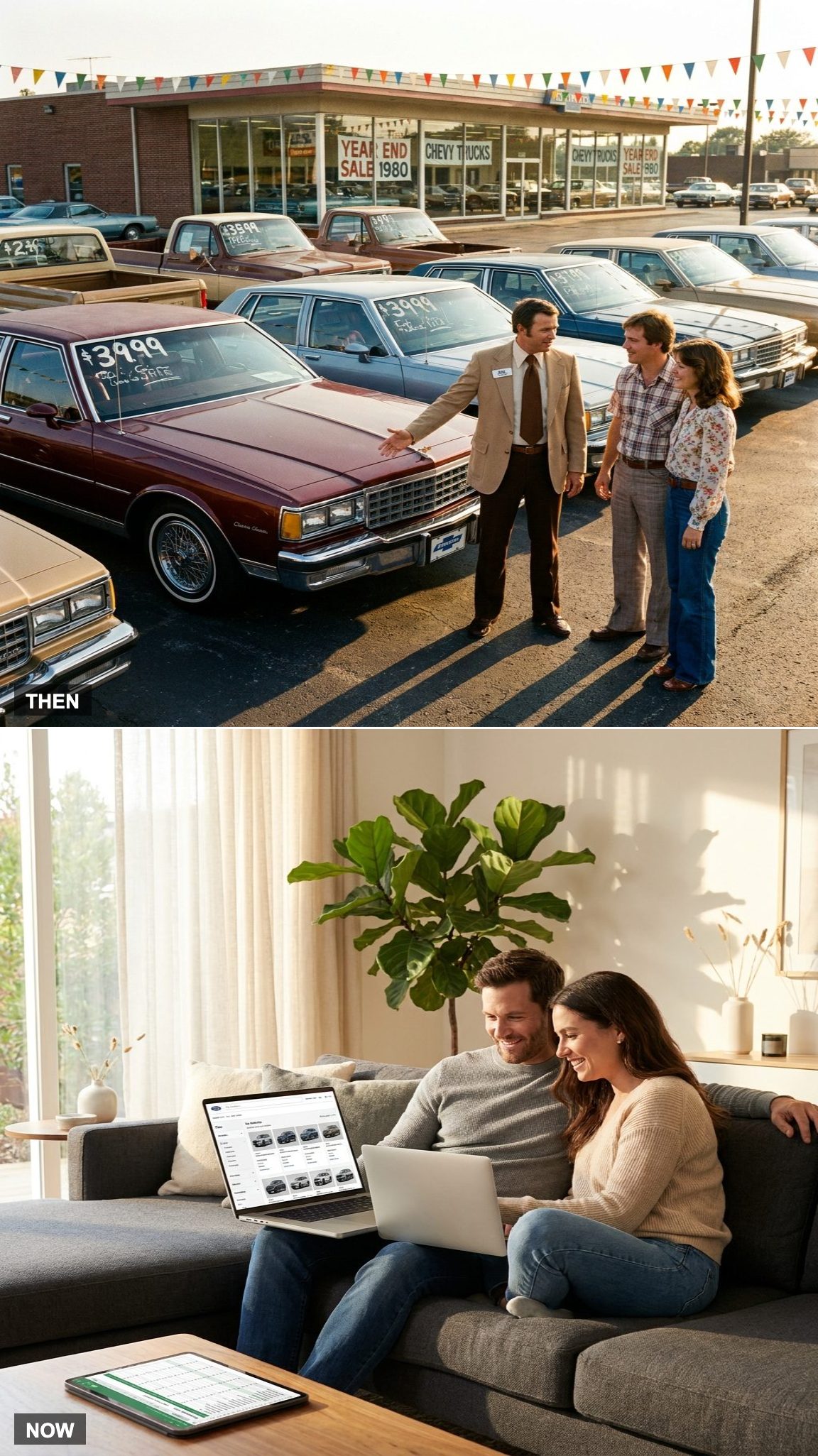
Buying a car took a weekend, minimum. You dressed a little nicer than usual, drove to three or four dealers, and sat in cramped offices with fake wood paneling while a salesman disappeared to talk to his manager. Twice. Maybe three times if the coffee was fresh. Then you came back the next Saturday and did it again with the wife along to give a second opinion on the color.
Now you can compare every trim, every color, every dealer’s price, and every buyer’s review from your couch. Some folks never set foot on a lot until delivery day. That saved the weekend, sure — but it also killed the popcorn machine, the free coffee, the balloons tied to the antennas, and the specific theater of the whole thing.
The salesman knew he had you the minute you sat in the driver’s seat and adjusted the mirror.
The Printed Brochure vs. The Endless Scroll of Reviews
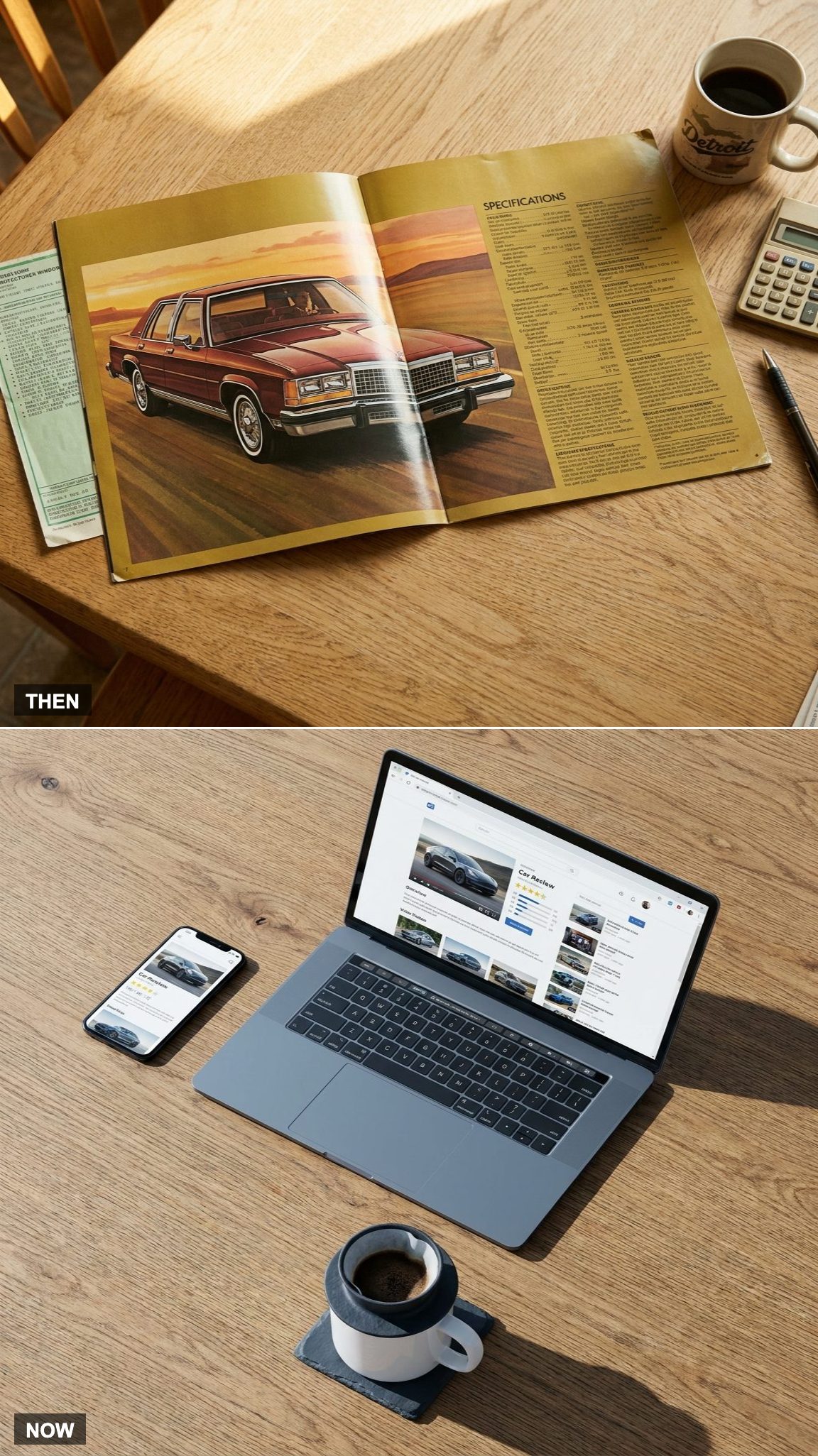
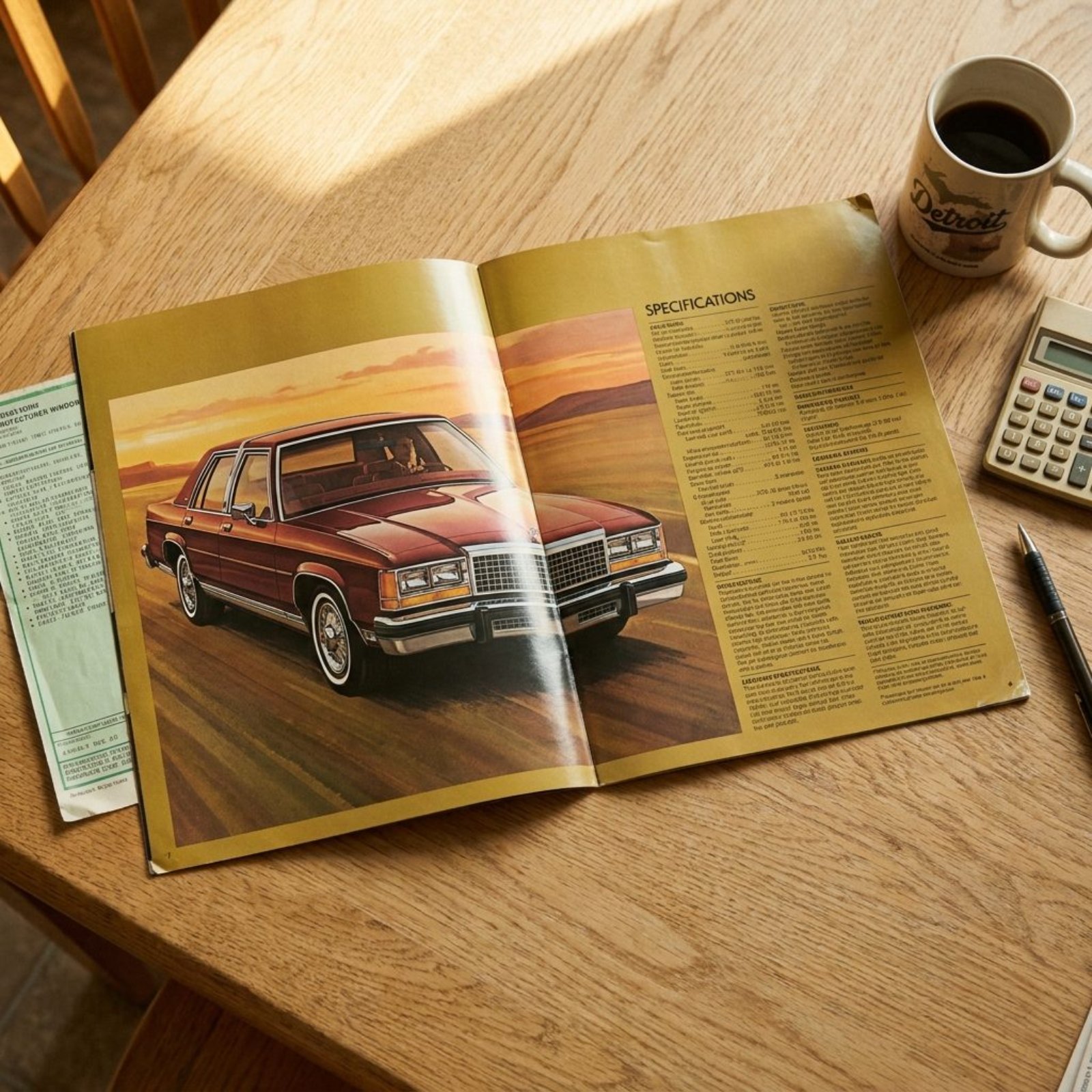
The 1980 brochure was a small paper miracle — airbrushed illustrations that made the car look longer and lower than it really was, spec tables printed in tiny type, and a folded cutaway diagram you could spread across the kitchen table. You took it home. You read it twice. You underlined things with a ballpoint you kept clipped to the refrigerator, and by the time you walked into the showroom you already knew the axle ratios by heart.
Now the brochure is a browser tab. Forty of them, if we’re being honest. You watch a stranger in Ohio drive the car you’re thinking about, listen to another stranger complain about the infotainment lag, and read a thread of owners arguing about the transmission until two in the morning. The dealer has less power than a YouTuber with a ring light.
The Options Checklist vs. The Bundled Tech Package

The 1980 order sheet ran the length of a placemat. You picked your engine, your axle ratio, your radio, your seat fabric, your roof treatment, your wheel covers, and about forty smaller things nobody would ever notice except you. Want power windows without cruise control? Fine. Want the tape deck but skip the tilt wheel? Also fine. The car was assembled to your specific superstitions.
Today you pick a trim level and that’s most of it. The heated seats come with the sunroof, which comes with the better speakers, which comes with the driver-assist suite. Want one thing from the top package? Buy the whole top package. The checklist got shorter and the bill got longer.
The Full-Size Spare vs. The Can of Goo in the Trunk
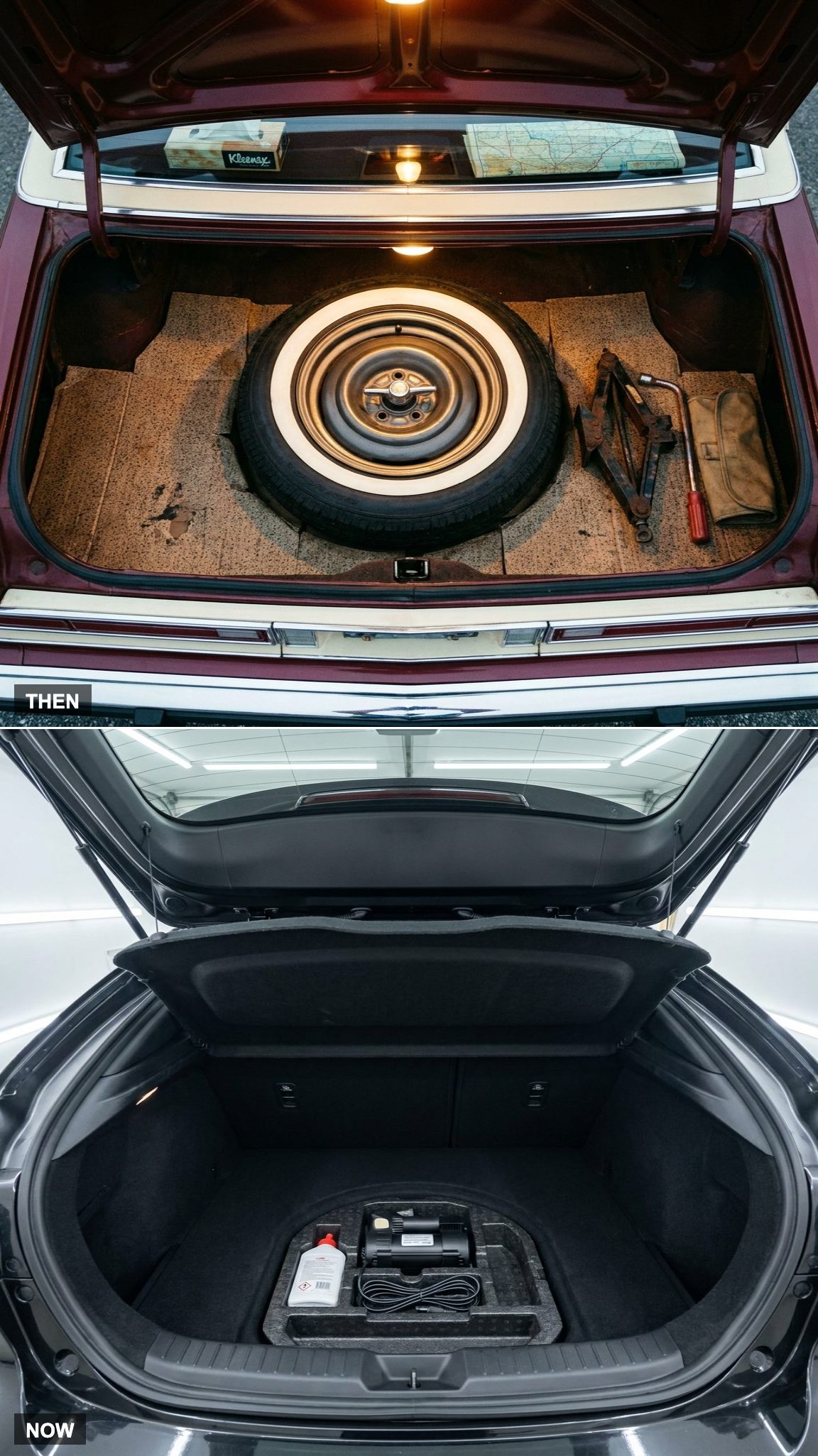
Pop the trunk of a 1980 sedan and there was a fifth wheel down there. Same tire as the ones on the ground, same tread, same size. You could drive on it for a year if you were the kind of person who did that, and plenty of people were.
Now you lift the trunk floor and find a can of sealant and a small compressor that plugs into the twelve-volt port. It works, sort of, on a nail hole. Does nothing for a sidewall gash on a Wednesday night in the rain. Automakers saved weight, cost, and a few square feet of trunk space. You gave up the one thing that always got you home.
The Quiet Dashboard vs. The Constant Chime Choir
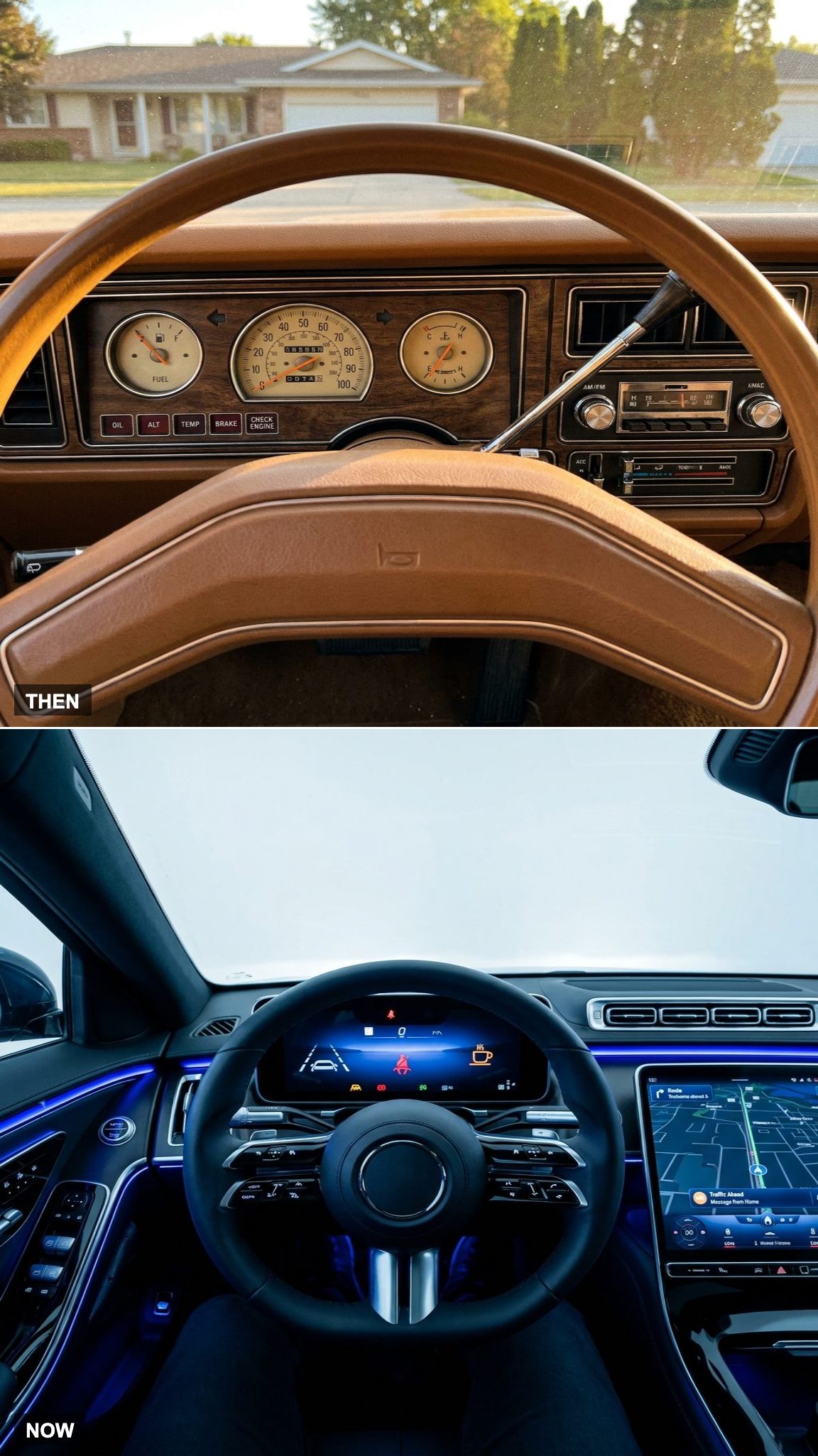
The 1980 dashboard had five warning lights, and if any of them came on you pulled over. That was the whole conversation. The car assumed you knew how to drive it and mostly left you alone.
The 2026 dashboard has opinions. It beeps when you drift half an inch toward the line, chimes when a car three lanes over enters your blind spot, flashes when it thinks you’re tired, and asks if you really meant to turn off traction control. Some of it saves lives. Some of it is a nervous passenger you cannot ask to be quiet.
Horsepower and Chrome vs. MPG and Software Updates
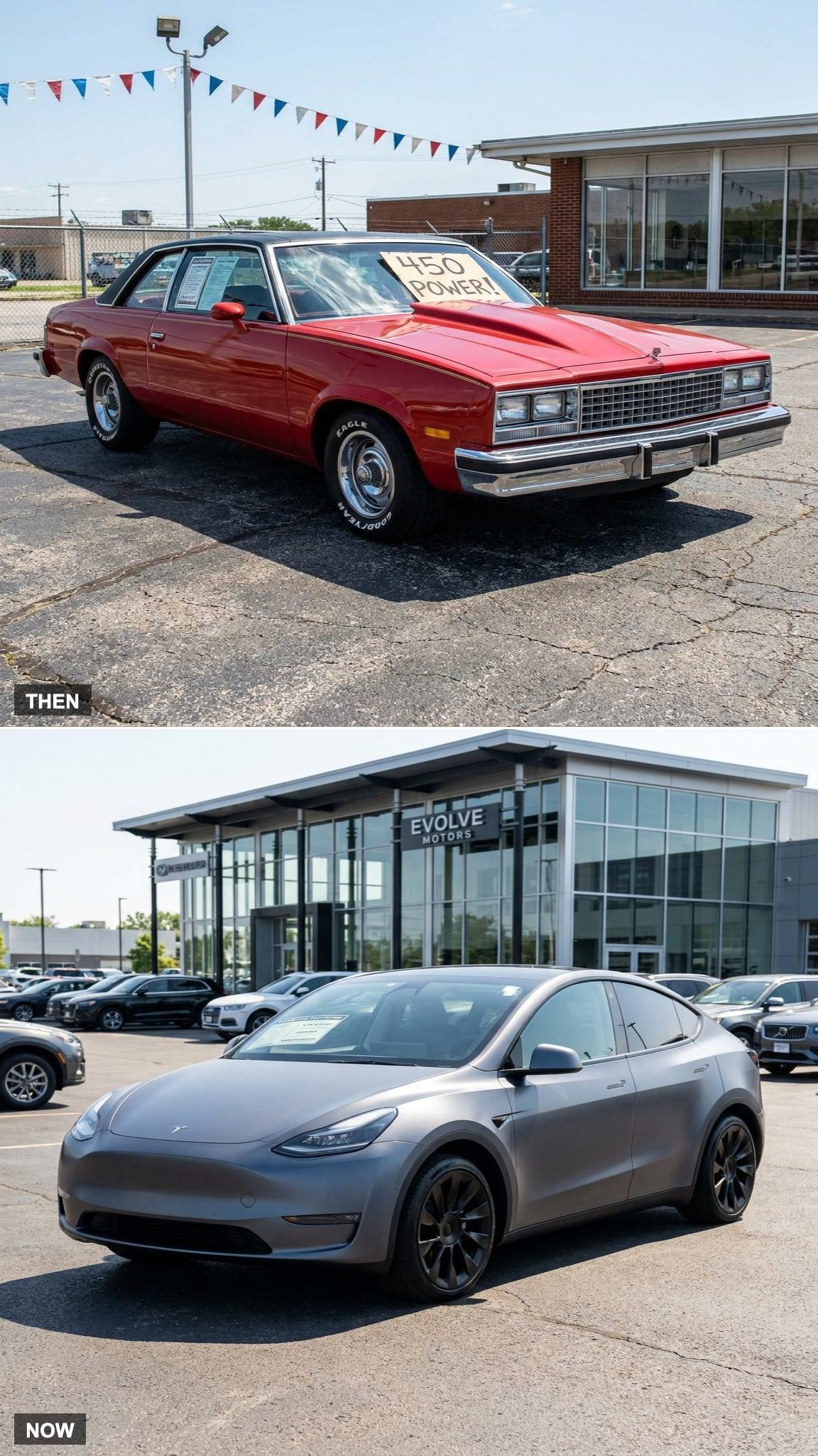
In 1980 the front of the brochure had a number on it. Horsepower. Sometimes torque, sometimes just the name of the engine option, which everyone in the neighborhood knew how to translate. Chrome sold cars. So did the shape of the taillights.
The 2026 brochure leads with a different number — miles per gallon, or miles per charge, plus safety ratings from three different agencies and the version number of whatever software is running the car this week. Somewhere on page four there might be a horsepower figure, and it is probably higher than the 1980 car by a wide margin. Small irony, that.
Buying the Machine vs. Subscribing to the Experience
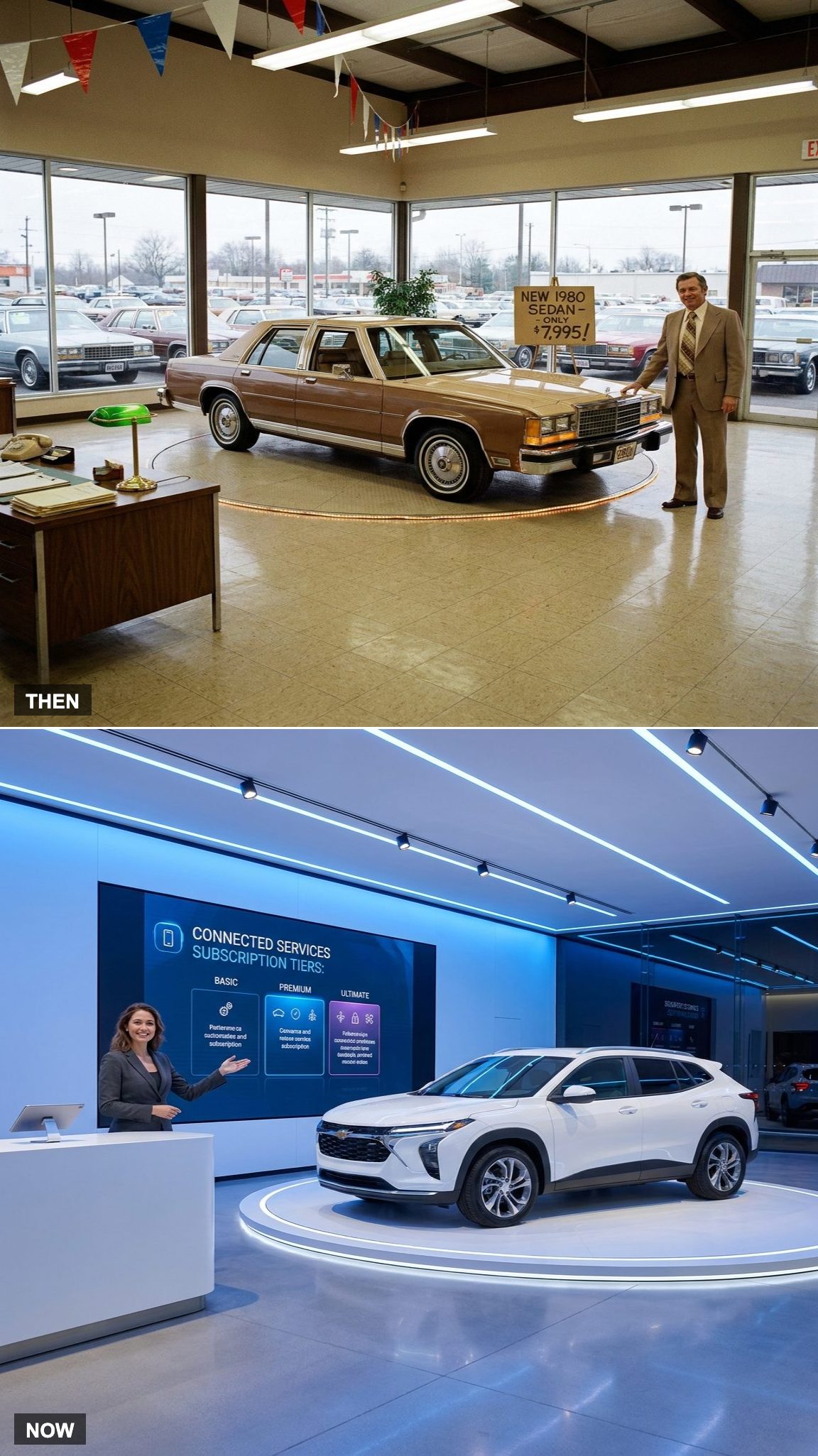
You bought the 1980 car and it was yours. Title in the glovebox, keys on a hook by the back door, and whatever you did to it after that was between you and the driveway. Wanted heated seats? You bought aftermarket pads at the parts store. Wanted a better radio? You swapped one in on a Saturday afternoon with a soldering iron and a beer, and if the wiring looked funny you asked the guy next door.
The 2026 car comes with a login. Some features are baked in, some are unlocked by a monthly fee, and some arrive as an over-the-air update while you sleep. The hardware in the seat can heat up, but only if the subscription is current. You bought the machine. You are renting the experience.
Anyone who signed a paper title in 1980 understood that the car belonged to them from that moment forward. That understanding is the thing that changed, more than the sheet metal ever did.