
Would you like to save this?
The alarm did not need to go off. You were already awake, lying there in the dark at five in the morning, listening to the tick of a cooling engine outside and running the day in your head before it started. The trailer was loaded the night before. The timing light was in the toolbox. One spare set of plugs was wrapped in a shop rag.
What follows is the whole day, from the first trailer ramp hitting the ground to the last miles home in the dark.
The Predawn Trailer Unload in the Pit-Row Fog
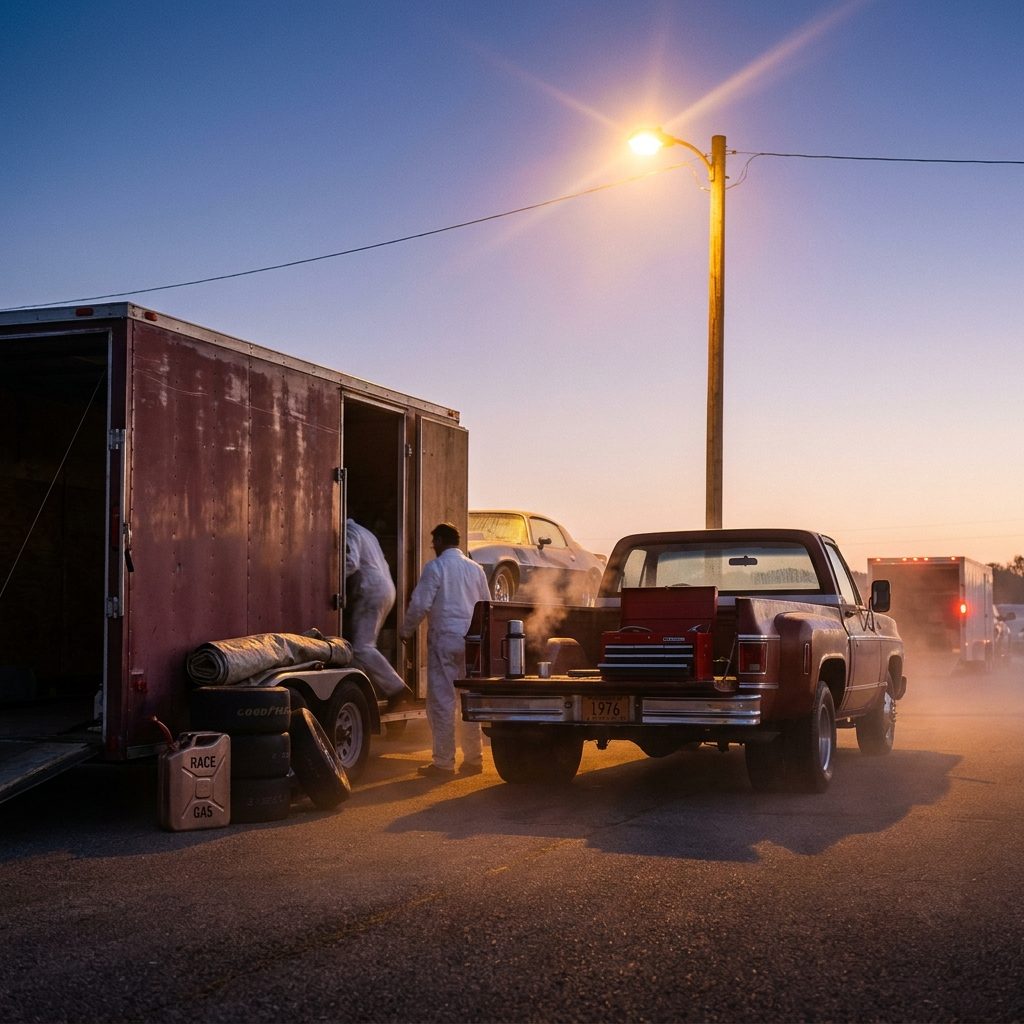
Five in the morning at the strip, your breath hanging in front of you while the trailer ramps came down with a hollow steel bang that carried through the fog.
Everyone worked in the same near-silence. One father passed around a thermos while an uncle already had a cigarette going, and the car came off the ramp cold because you rolled it into the pit spot by hand. Firing it at that hour would have announced your arrival to the whole property.
The Coffee Seller Working From the Tailgate of an El Camino
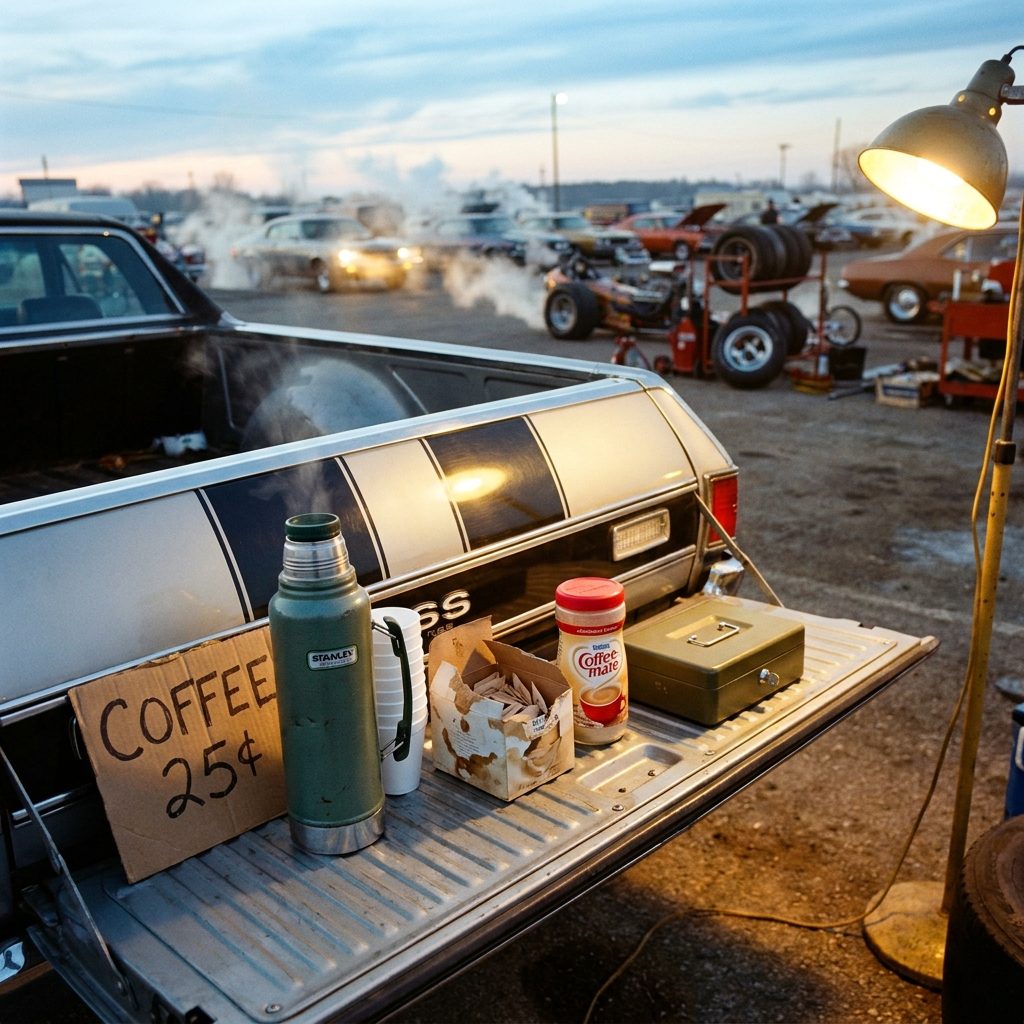
There was always one: a guy who showed up before nearly everyone else with a five-gallon urn or a couple of green Stanley thermoses and a stack of foam cups on his tailgate.
He charged a quarter and ran it on the honor system whenever he wandered off to inspect somebody’s motor. The coffee was terrible, and nearly everyone bought two.
He was not doing it for the money. He liked being the person who fed the pits. By 7 a.m., a small crowd stood around his tailgate with breath fogging in the cold, and the day had officially started.
The Tow Rig That Was an Everyday Pickup Monday Through Friday
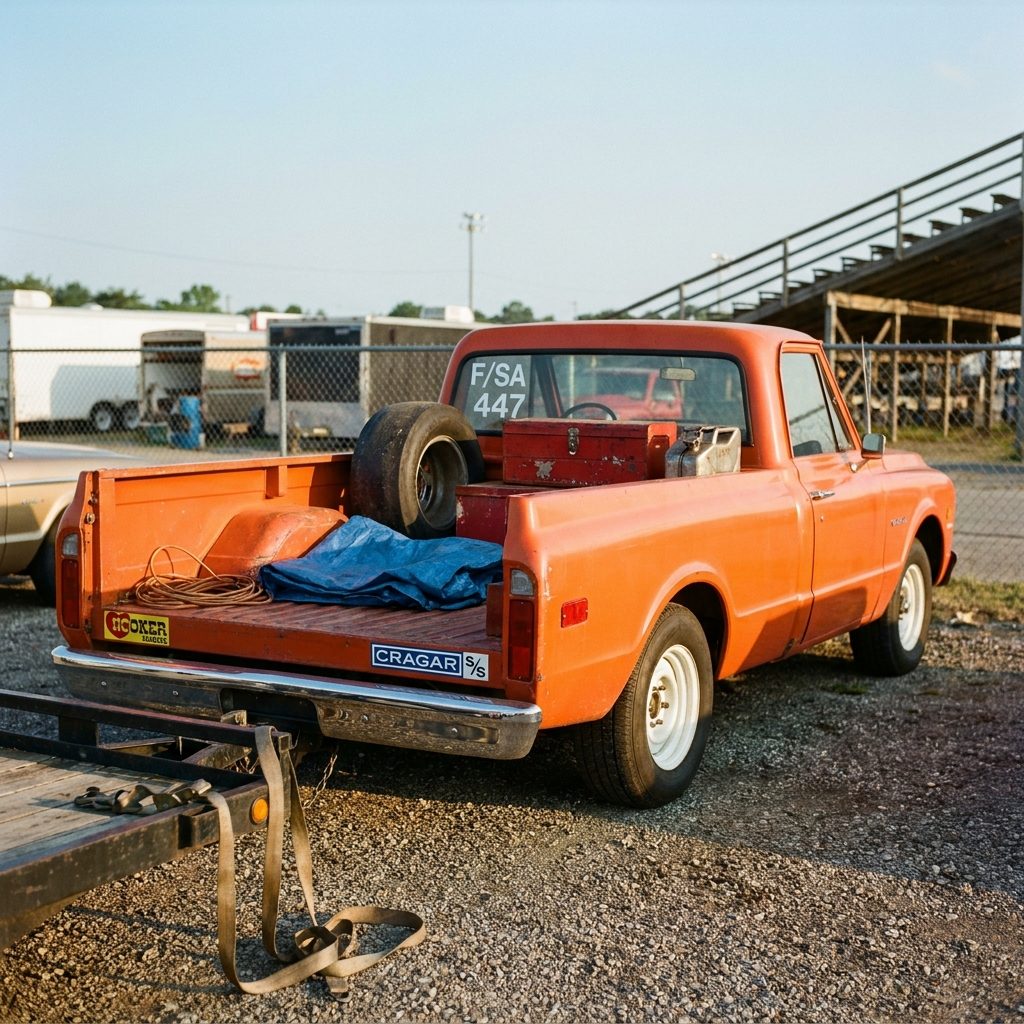
Half the tow rigs in the pits were the same trucks racers drove to work during the week. A 1972 Chevy C10 pickup with a bench seat, a bed lined in scrap plywood, and an AM radio that pulled in one station clearly. Monday it hauled lumber. Saturday it hauled a race car.
Behind it came a single-axle open trailer painted whatever color had been on sale at the hardware store, with surplus-store straps and a spare slick riding in the truck bed. Enclosed rigs were still unusual at many local Sportsman races.
The Tech Card in Your Shirt Pocket, Covered in Oil Fingerprints by Noon
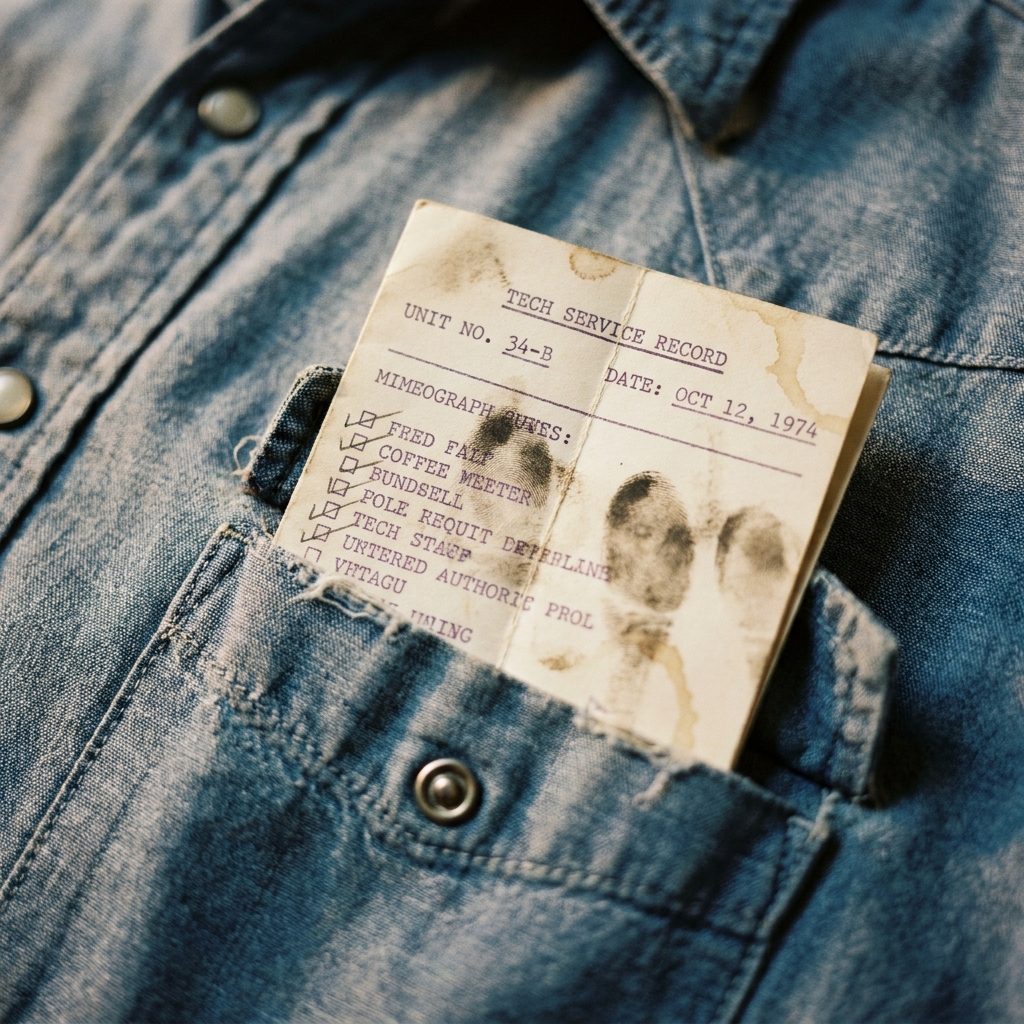
The tech card came with you everywhere on race day. You folded it in thirds, put it in your front shirt pocket, pulled it out at inspection, and watched an official write on it with a pen that barely worked.
For the next eight hours it grew steadily more destroyed: oil from your hands, a coffee ring on the back, and a crease through the middle from where you sat on it during the driver’s meeting.
Procedures varied from track to track, but the card was still the paper that proved you had cleared inspection and belonged in the lanes.
The Chalkboard Class Sheet Behind the Timing Tower
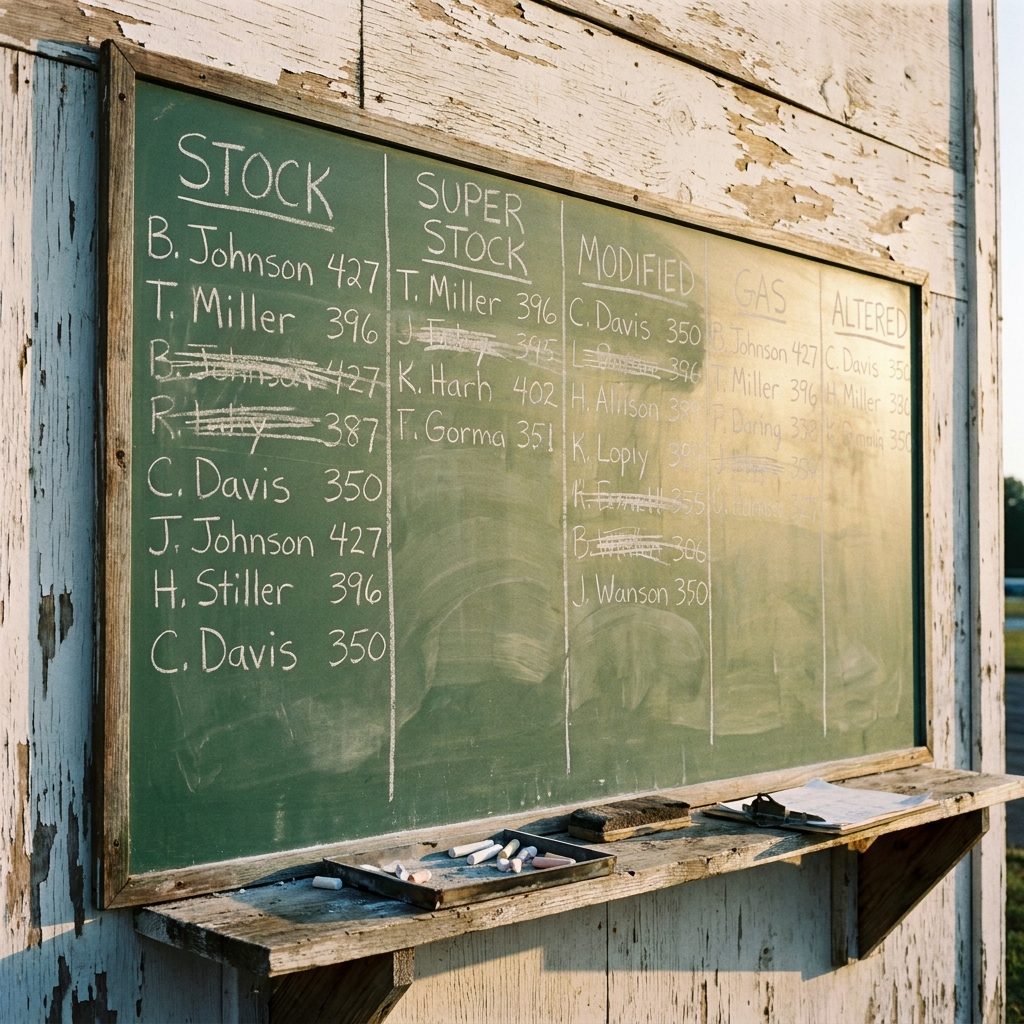
Before computer scoring, class assignments often went up on a chalkboard behind the timing tower: your name in white chalk, your car number beside it, and a line through the entry when your day was over.
Between rounds, racers gathered around it shoulder to shoulder, tracing possible pairings with greasy fingers and trying to read names through half-erased chalk dust. The board made the entire ladder visible at once, including the one car you hoped somebody else would draw.
The Pit Steward With the Walkie-Talkie and the Clipboard
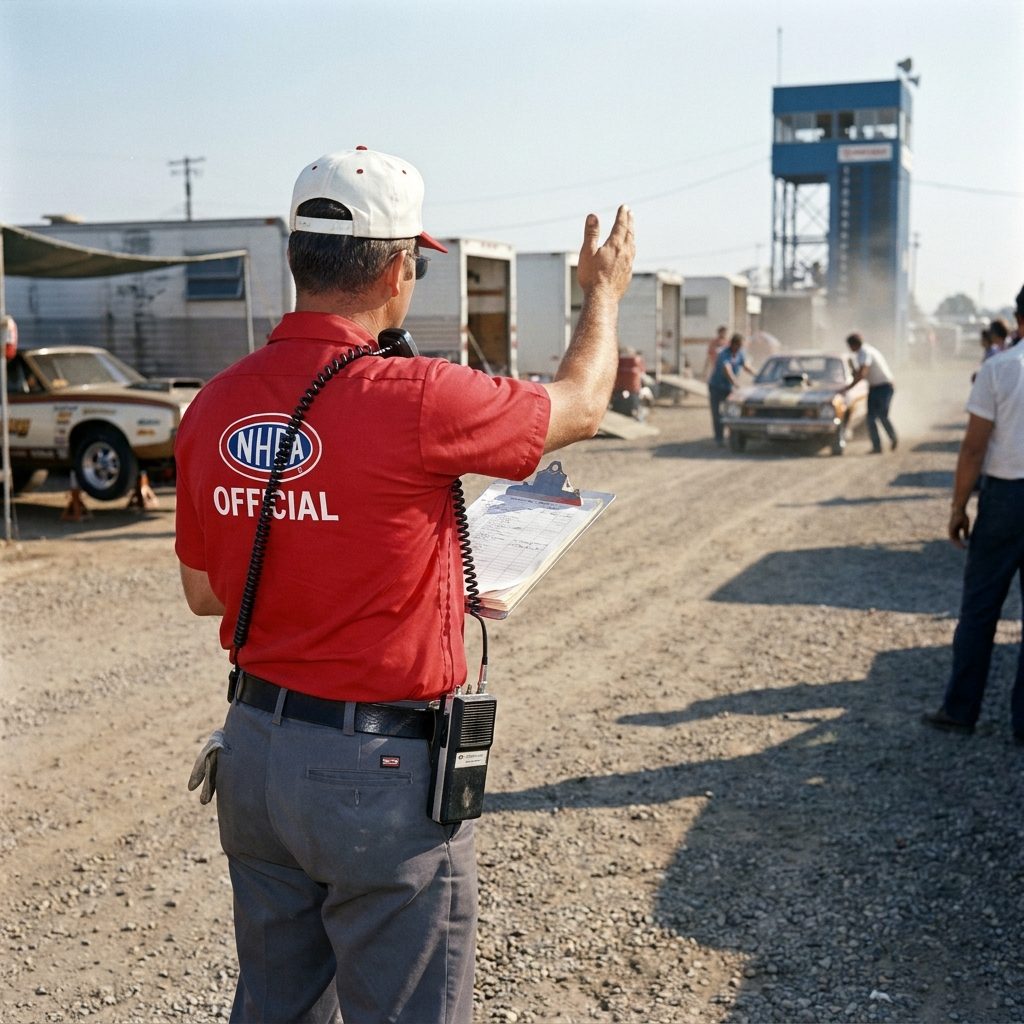
Every strip had one: a man in an NHRA shirt with a clipboard and a walkie-talkie who seemed to know every racer, every class, and every round.
He walked the pits calling cars to staging. If he pointed at you, you went. Plenty were retired factory workers or longtime local racers doing it for a little pay and free admission, and they carried the authority of state troopers.
Miss a call because you were arguing with your carburetor and he would remember the following weekend.
The Push Truck Getting a Reluctant Race Motor to Fire
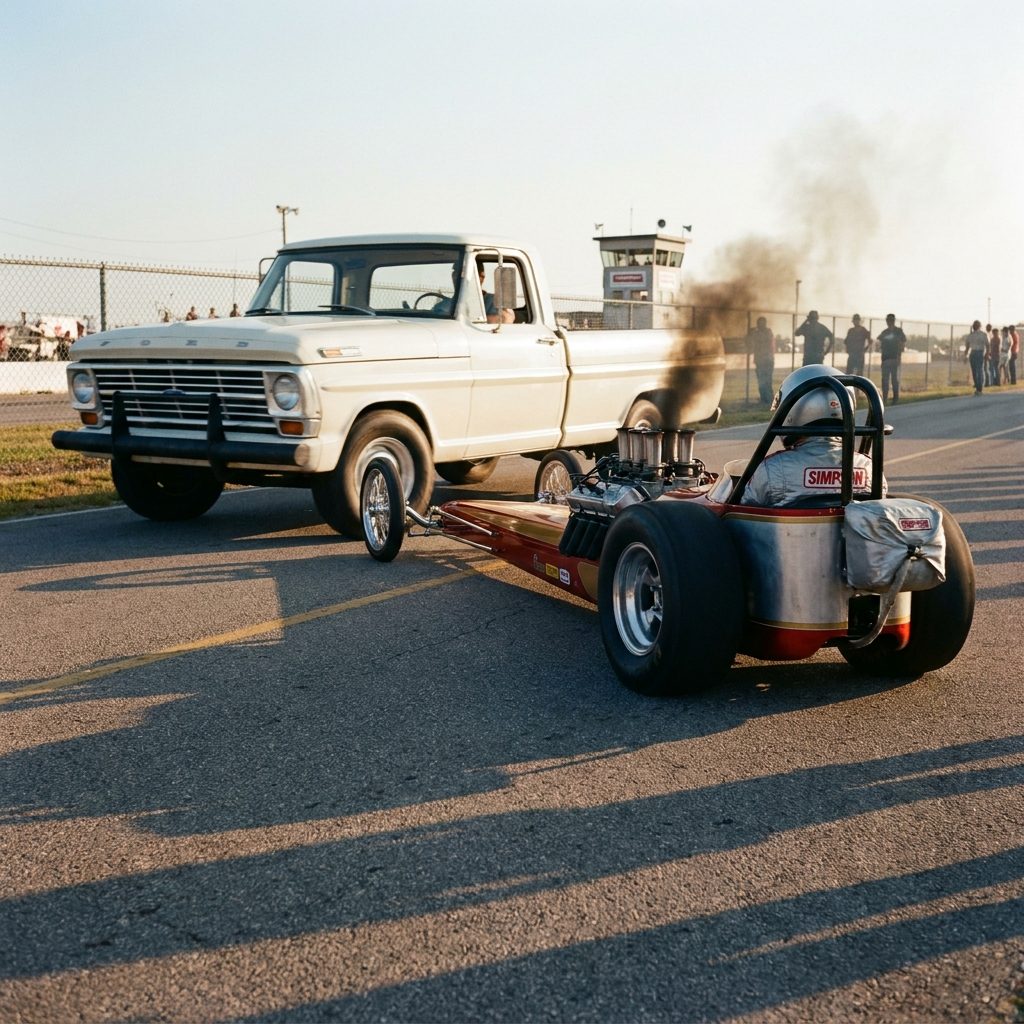
Many injected dragsters and competition cars lacked onboard starters. They fired by being pushed until the tires spun the crank fast enough for the ignition to light the engine.
That made push-truck driving its own specialty. Too close and you hit the dragster. Too far back and you never got it lit.
The experienced drivers felt the instant the racer dropped it into gear and the truck’s front bumper unloaded. A black puff, a roar, and the race car was alive.
The Pit Bike a Racer’s Kid Rode Between the Trailers All Day
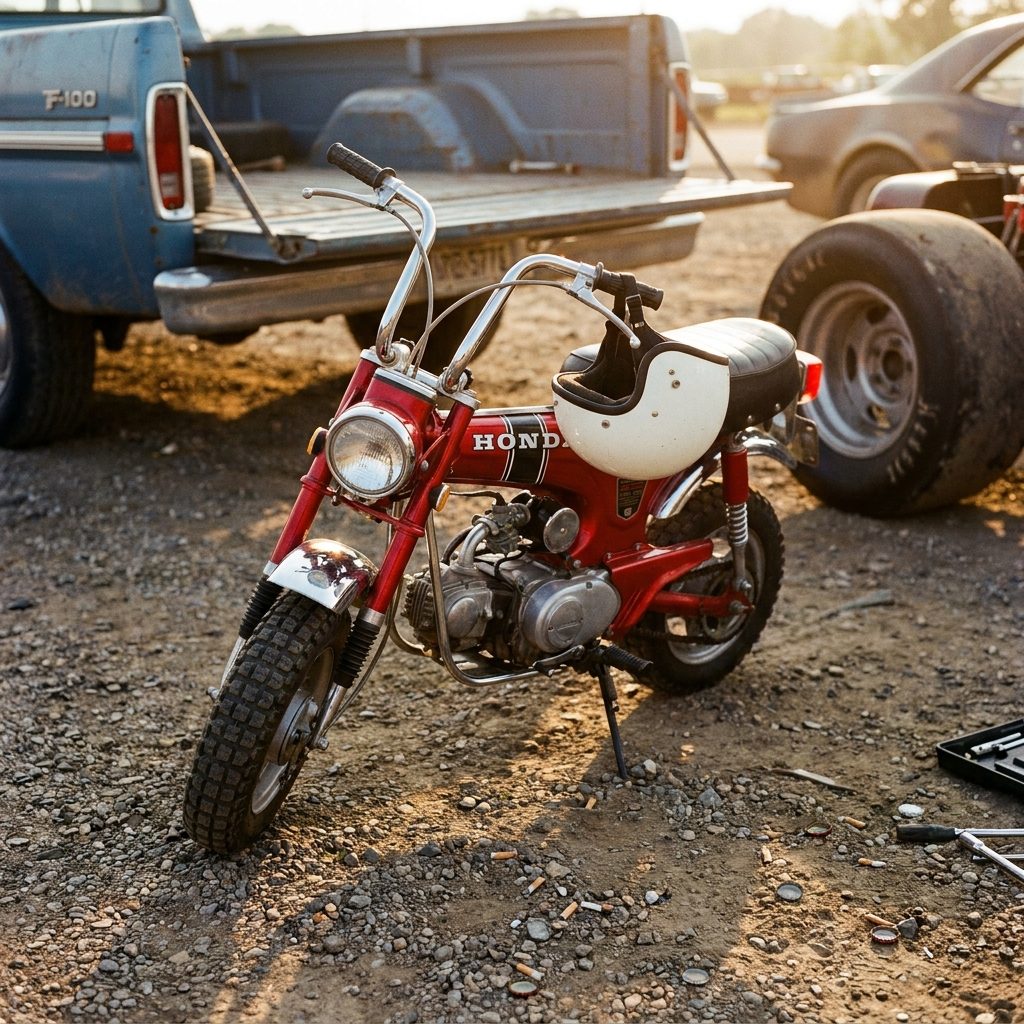
One kid always seemed to have a Honda Trail 70 or a Rupp minibike and spent the day looping through the pits, hair blown back and feet barely reaching.
The fathers waved. The mothers shouted from lawn chairs. Safety standards were looser, and helmets were not always treated with the seriousness they are now.
The bike was transportation, entertainment, and a way to know every corner of the pits before lunch.
The Guy With the Handheld Stopwatch Who Did Not Trust the Scoreboard
Would you like to save this?
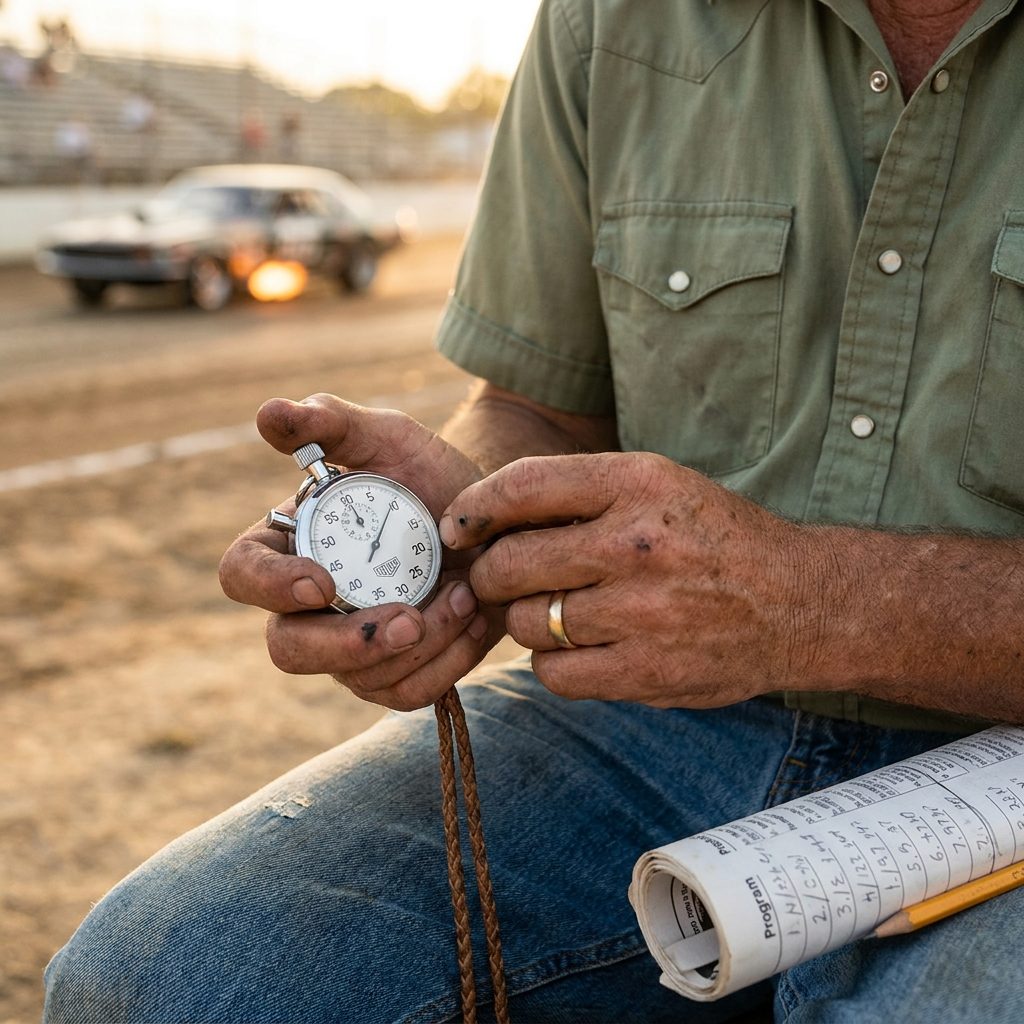
Every strip had one. Program folded to the class page, pencil behind the ear, thumb on the crown. He clicked at the launch, clicked at the finish, and wrote the number in the margin.
The official scoreboard was fine. His numbers were the ones people still asked about.
He might have been somebody’s grandfather, uncle, or father-in-law, but by the second round he was timing half the field.
The Wooden Grandstand That Looked Older Than Half the Cars
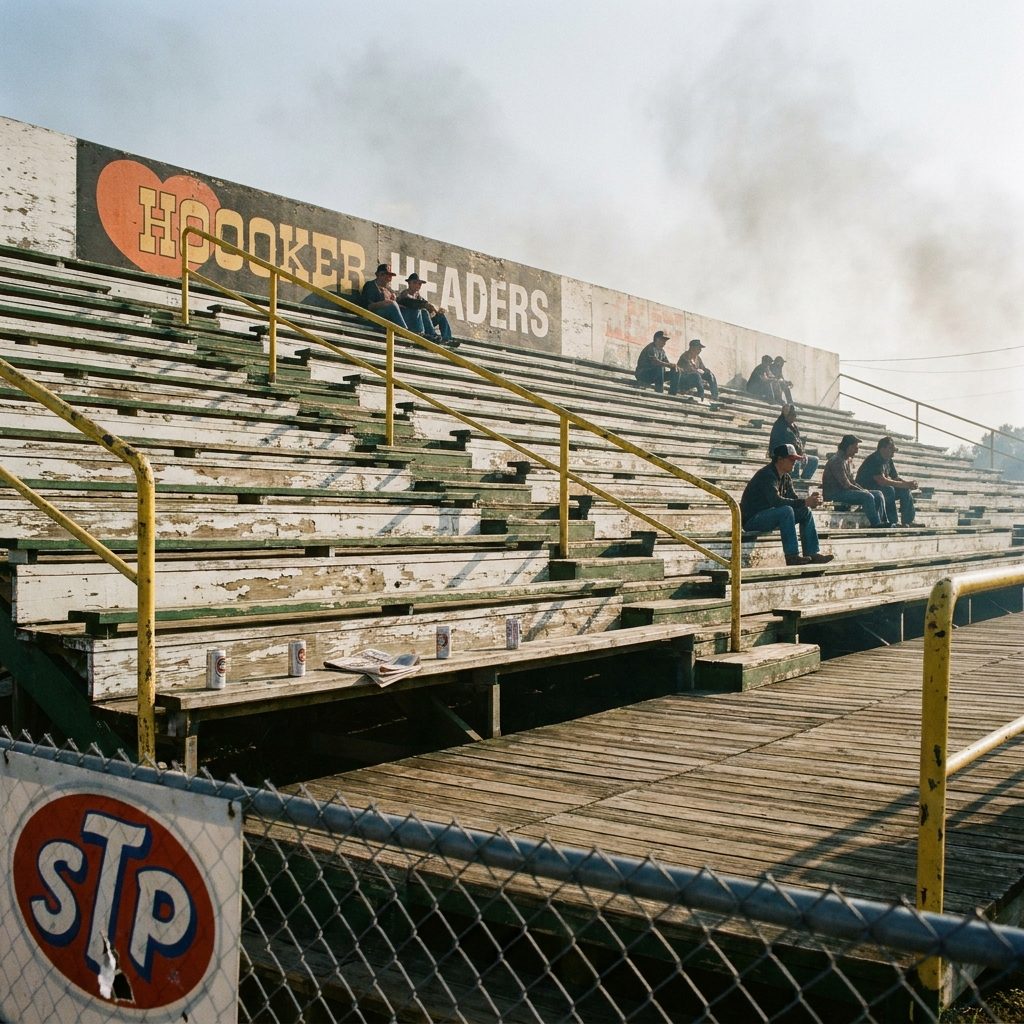
Splinters in a hundred places. Paint that had given up years earlier. You brought a cushion or sat on the folded back of your jacket, and it was accepted without comment, because that was the seat.
Your father sat there. His brother sat two rows up. The kid you had a crush on from geometry class sat three sections over with her family.
By Saturday afternoon, the town seemed arranged by bracket class.
The PA Speaker Bolted to a Light Pole That Had Seen Better Summers
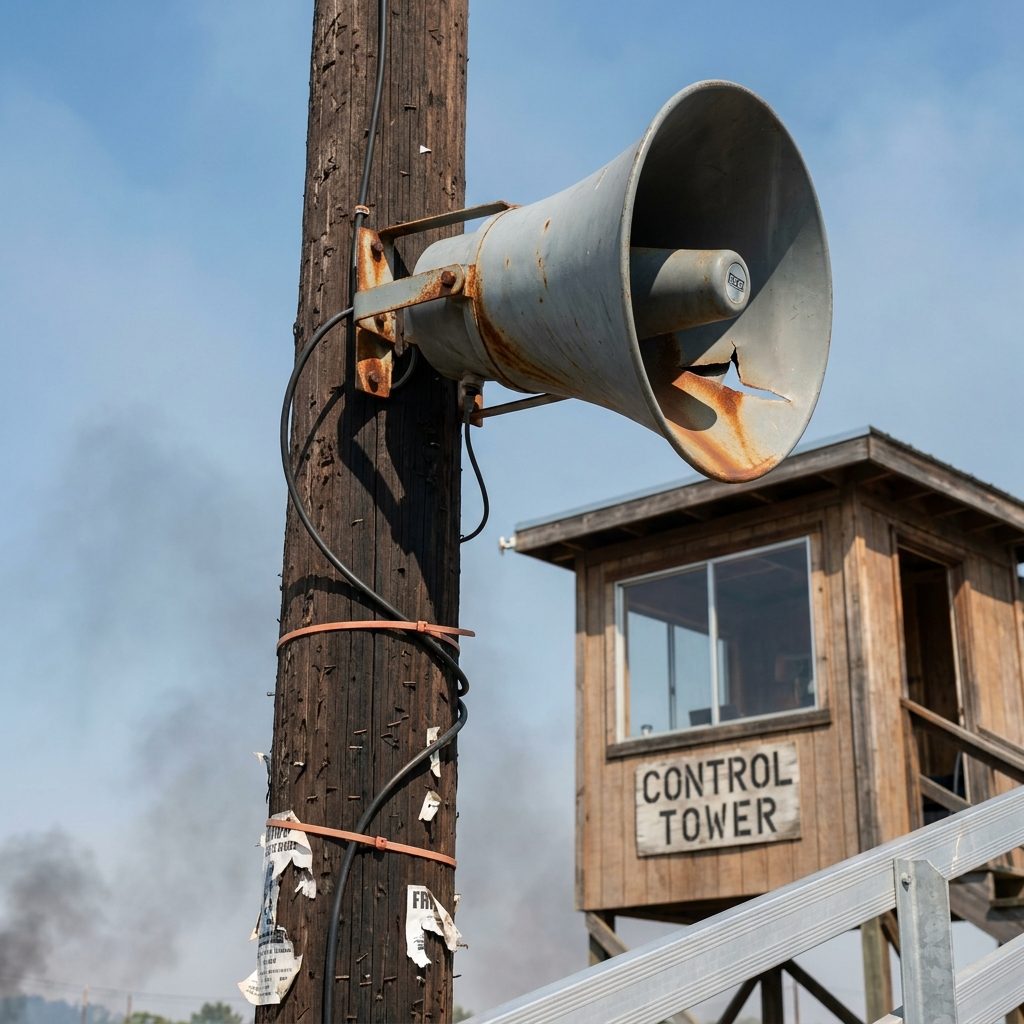
You looked up and knew what the announcement would sound like before the speaker crackled. Rusted bracket. Cone paper split down one side. A decade of thunderstorm damage nobody had fixed.
Every call from the tower came through as though the announcer were talking underwater with a mouthful of gravel: class winners, staging calls, and the car number of whoever had left the lights on in the pits.
The words were half a guess, but the excitement always came through clean.
The Trans Am Hood Bird Waiting in the Staging Lanes
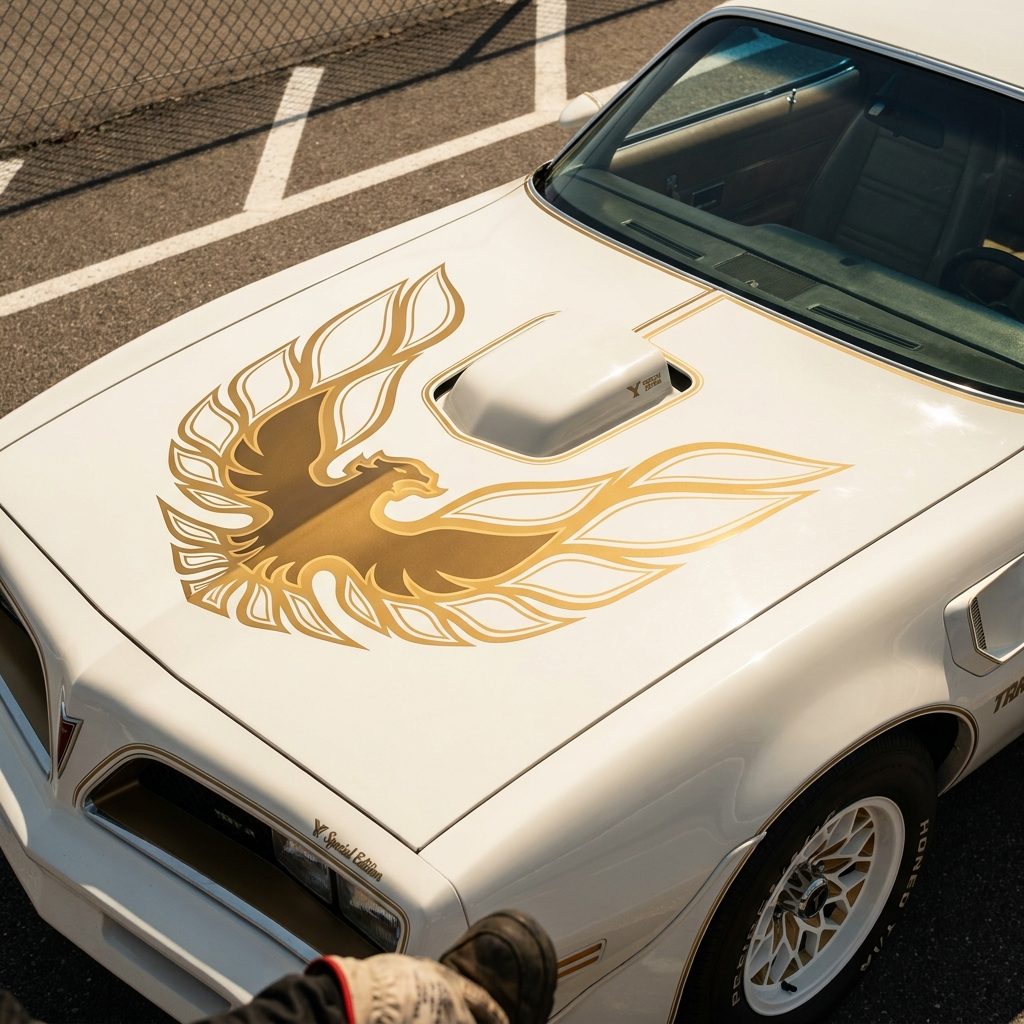
The hood bird did not need to say a word. It stretched across a white Trans Am and told the whole staging lane what kind of entrance the owner intended to make.
You could hear the Shaker vibrating from three cars back. A Camaro pulled up beside it, and the driver looked over, looked away, then looked back.
The round was already half over before either car moved.
The Ford Boss 429 Nobody Wanted in the Other Lane
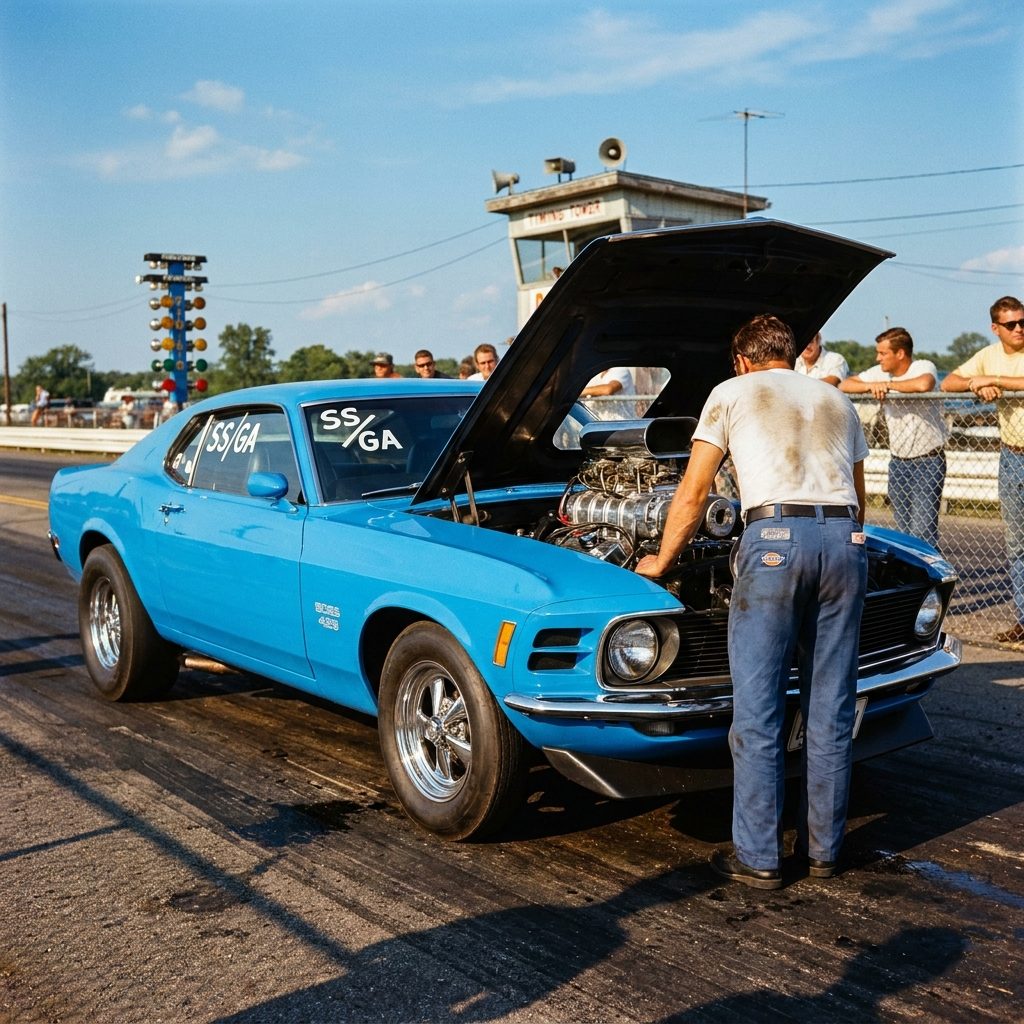
The Boss 429 was a homologation engine Ford installed in 1969 and 1970 Mustangs so the company could qualify the design for NASCAR competition.
At the drag strip, the car had instant presence: semi-hemispherical combustion chambers, aluminum cylinder heads, a hard idle, and a hood that drew a crowd whenever it came up.
Not every strip had one. If yours did, everyone knew whose it was. When the ladder paired you against him, there was a quiet moment when you did the math and decided whether you had a shot.
The Between-Rounds Thrash With the Hood Up and Fresh Plugs
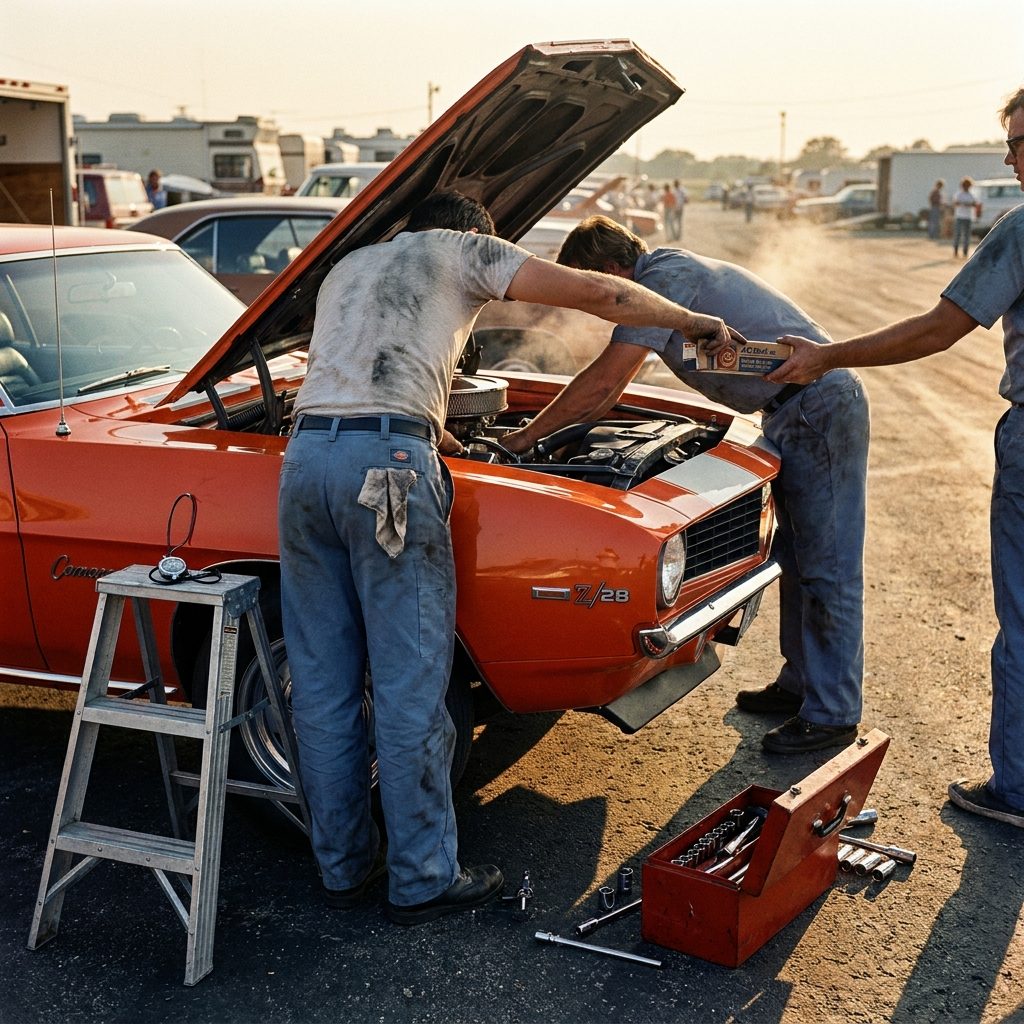
Win the first round and you might have forty minutes before the next call. If the car ran clean, you checked the plugs, timing, and slick pressure, then drank a lukewarm Coke.
If it did not run clean, you thrashed. Hood up. Valve covers off. Timing light plugged into the cigarette lighter of a nearby Nova. One person under the car while another ran for a different jet.
The announcer called your class. Ten minutes. Five. Go.
The Concession-Stand Cheeseburger Wrapped in Greasy Foil
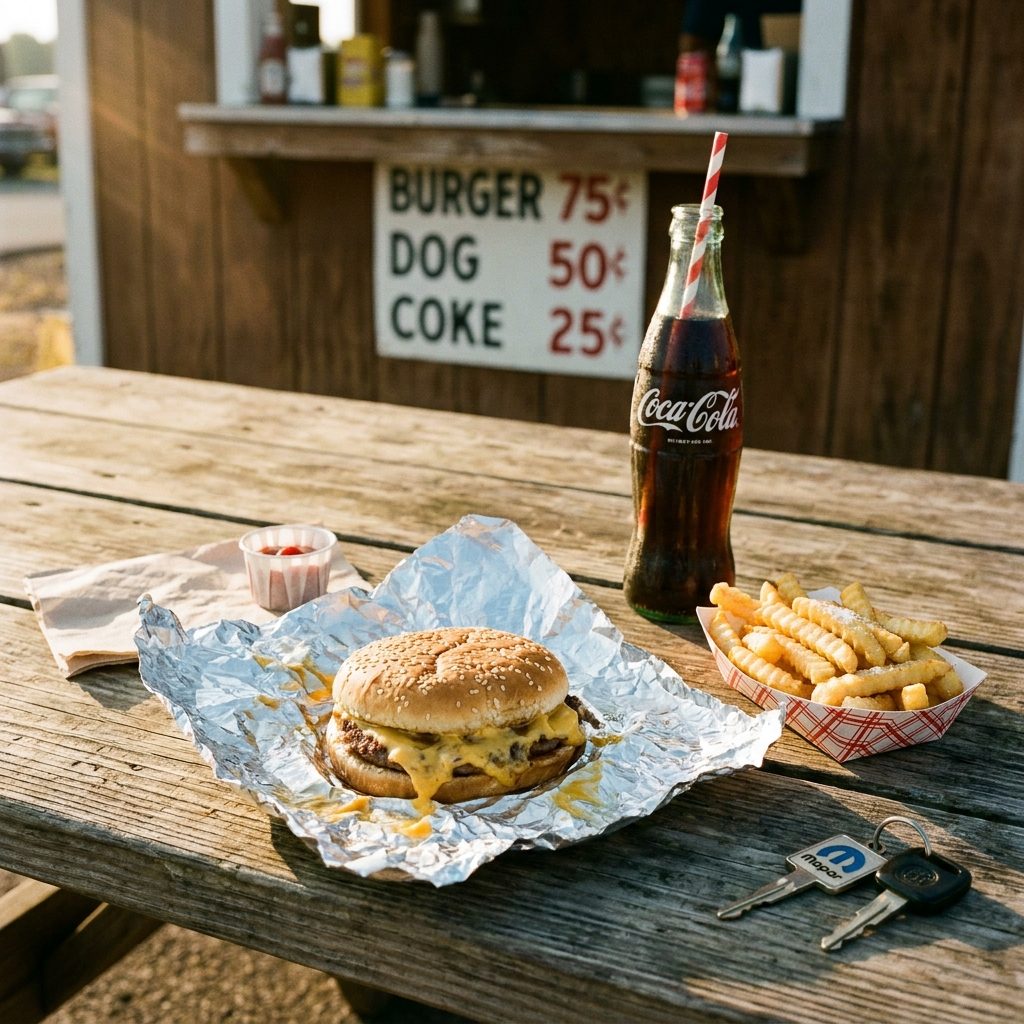
Seventy-five cents, wrapped tightly in foil that burned your fingers if you opened it too quickly. The patty was thin, the cheese had gone beyond melted, and somebody had oversalted the fries in a way you still remember.
You ate standing between rounds, one eye on the staging lanes and ketchup on your thumb.
Best cheeseburger of your life. No argument will change your mind.
The Christmas Tree Bulbs Reflecting in a Rain-Wet Lane
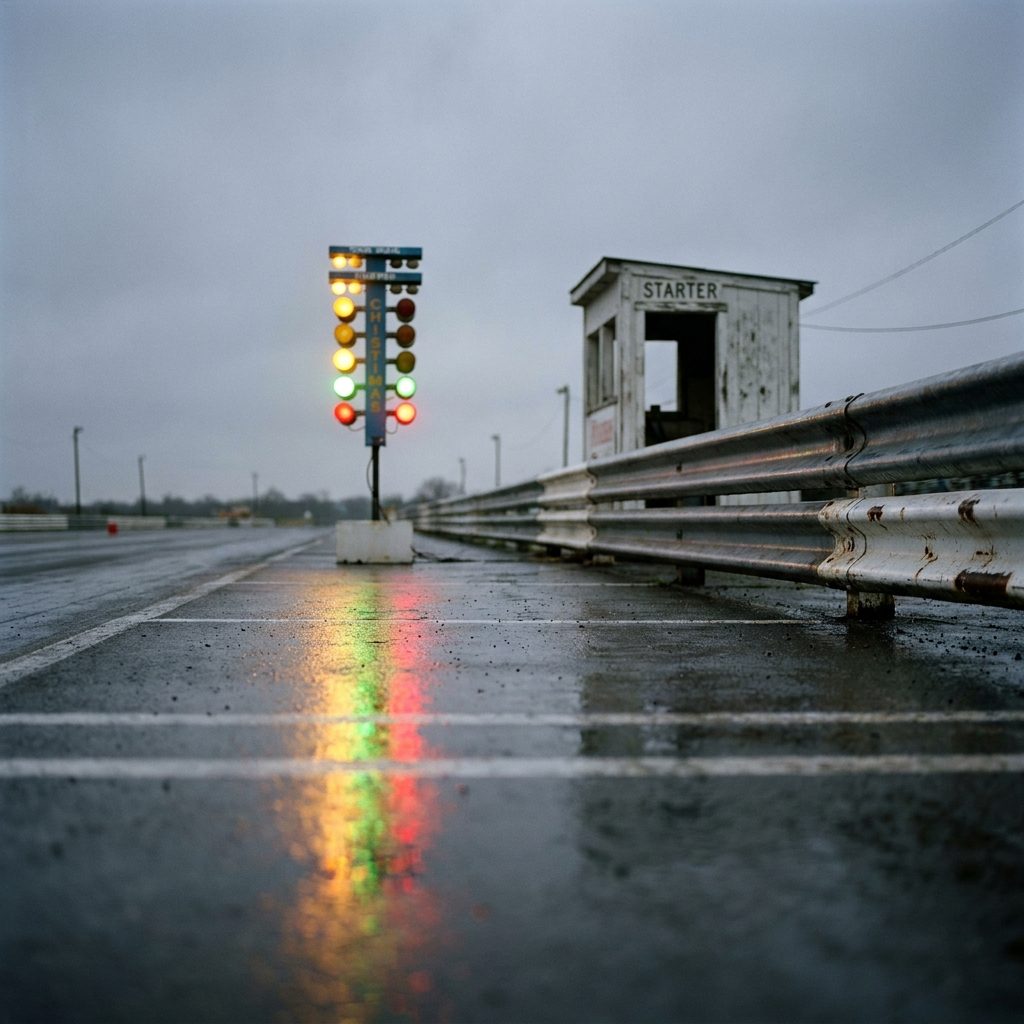
You stared at those bulbs long enough to see them behind your eyelids that night. Amber lights stepping down toward green, each one seeming slower when you were in the car.
Starting systems and timing conventions changed during the decade, but the tree never cared about your nerves.
When the lane was still damp from an early shower, the bulbs stretched across the asphalt in long bands of color. It looked like a painting nobody meant to make.
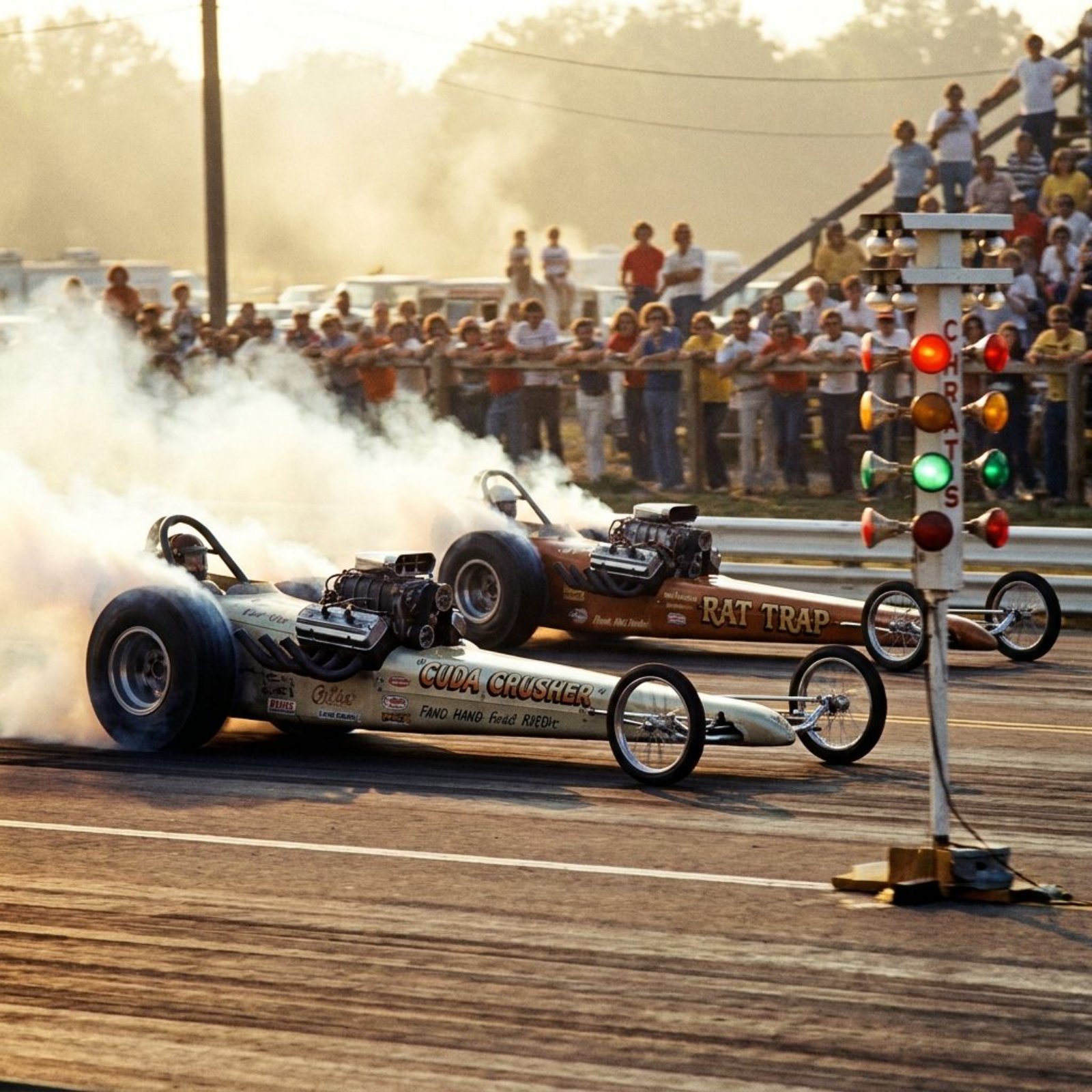
The Burnout Box and a Cloud of White Smoke You Could Taste
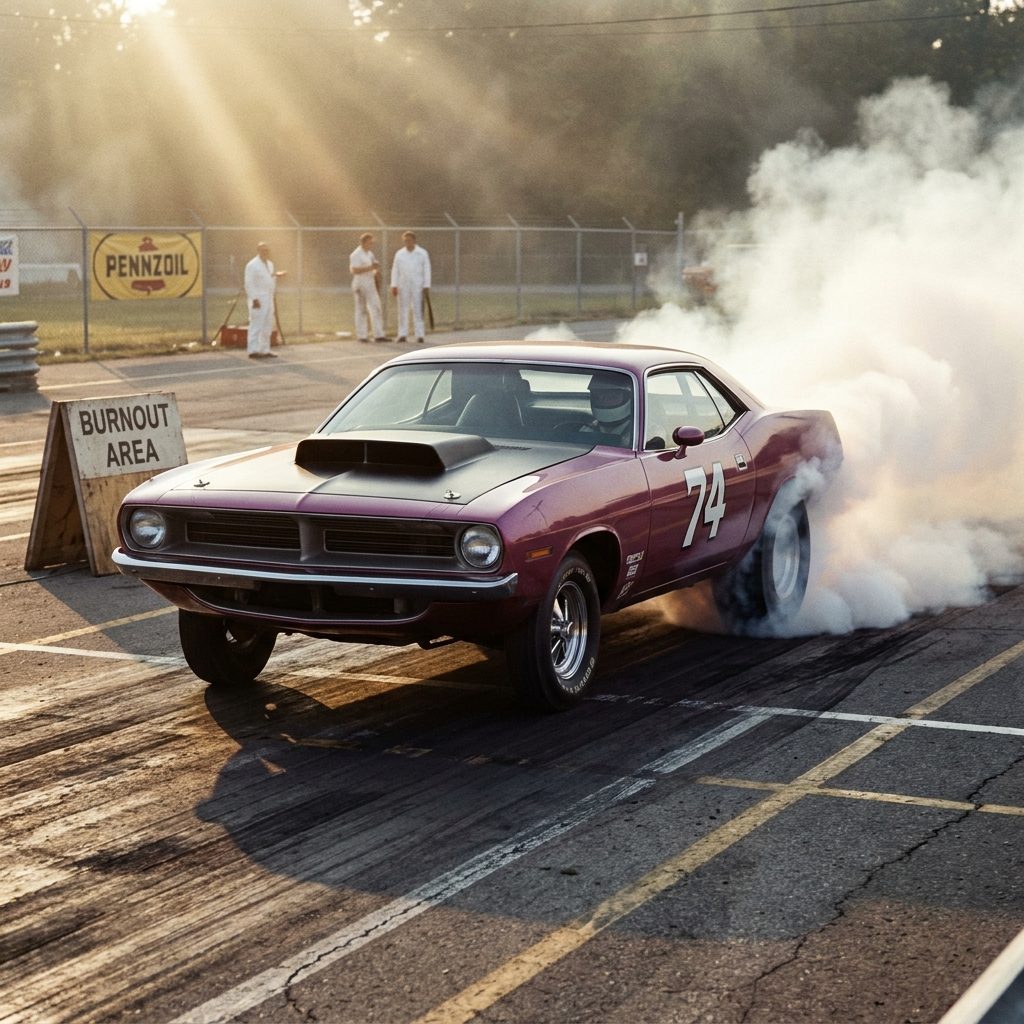
Nothing smelled like a fresh burnout on a cool morning: hot rubber, spent race fuel, and a trace of transmission fluid. Your eyes watered. It was worth it.
The smoke rolled across the pits and hung beyond the strip while every child within fifty feet edged a little closer than a parent would have liked.
The Black, Sticky Track Surface That Grabbed Your Sneakers
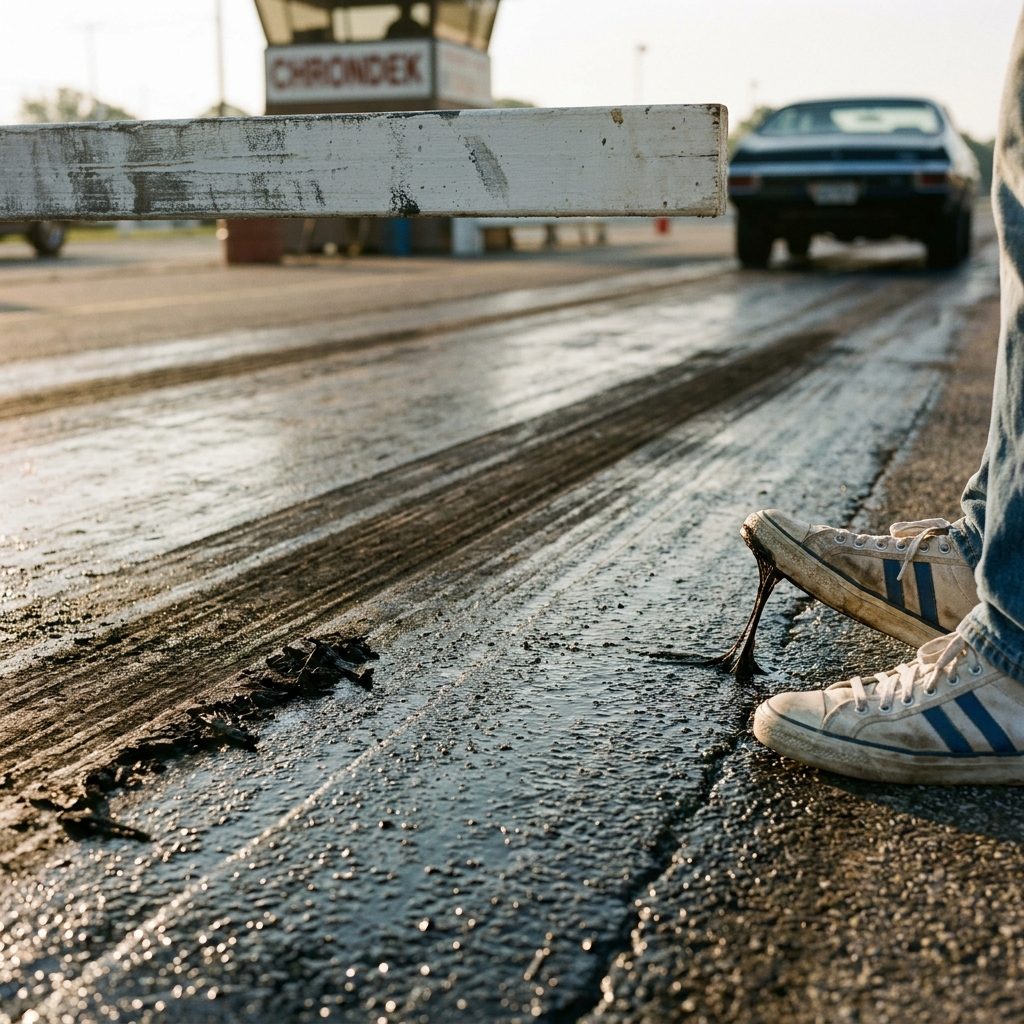
There was a sticky tug on the bottom of your Chuck Taylors as you walked toward the tower, each step making a faint peeling sound before you ever looked down to see why.
The track crew laid down traction compound and rubber through the day. By noon, the launch area looked like black glass.
The Time Slip Handed Through the Driver’s Window on Thin Yellow Paper
Would you like to save this?
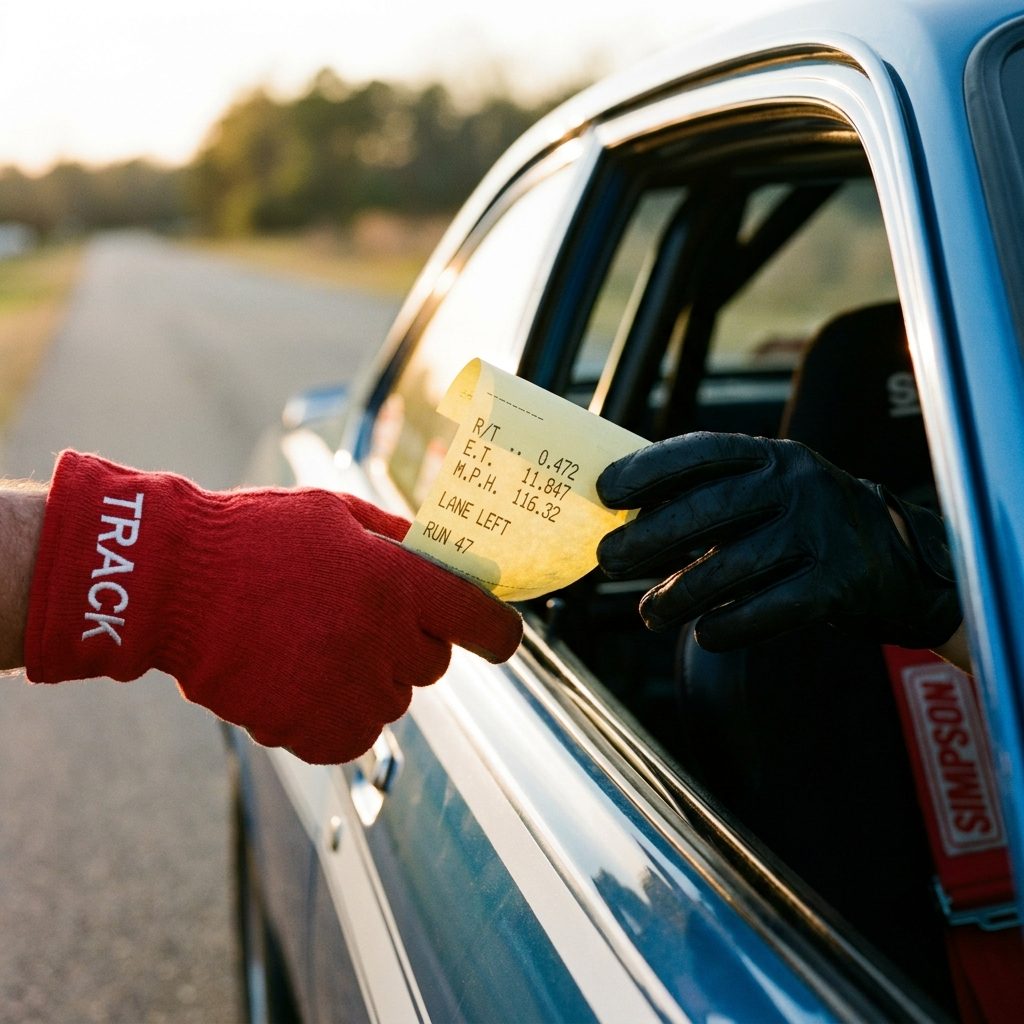
Yellow paper the thickness of a moth wing. A track worker handed it through the window, and you took it while the car still ticked with heat from the run.
Reaction time. Elapsed time. Trap speed. Three numbers that explained the previous few seconds better than any story could.
You read it twice before the engine even cooled, then drove back to the pits to decide what had gone wrong—or what had finally gone right.
The 55-Gallon Drum Trash Barrel Overflowing by 4 p.m.
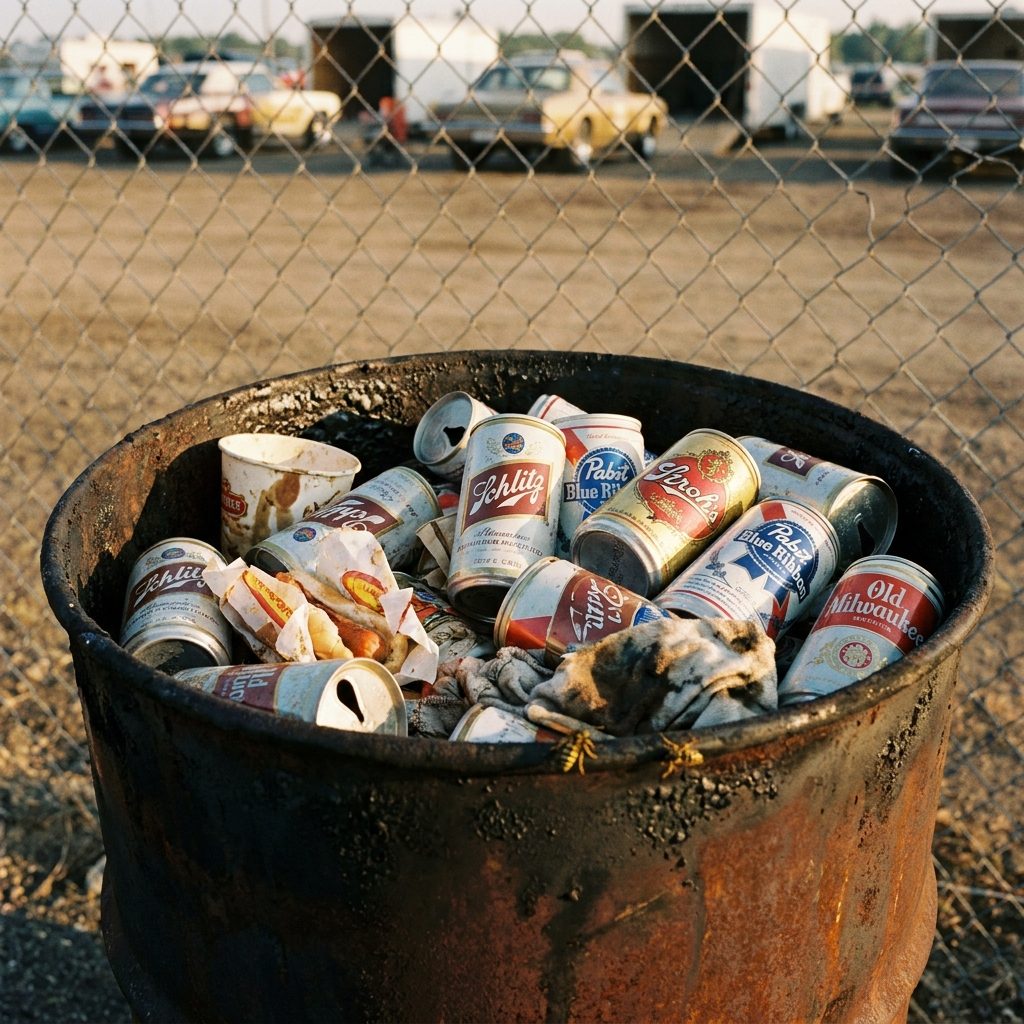
Every pit had a couple of scorched 55-gallon drums serving as trash barrels. By noon, they held a base layer of hot-dog foil and coffee cups. By 4 p.m., the top leaned under crushed Pabst Blue Ribbon cans, Schlitz, and a few Stroh’s.
The racers were supposed to save the beer until the car was loaded. By dusk, half the pit stood around a tailgate retelling a run that had happened three hours earlier.
The Nitro Cackle From Two Lanes Over That Rattled Your Teeth
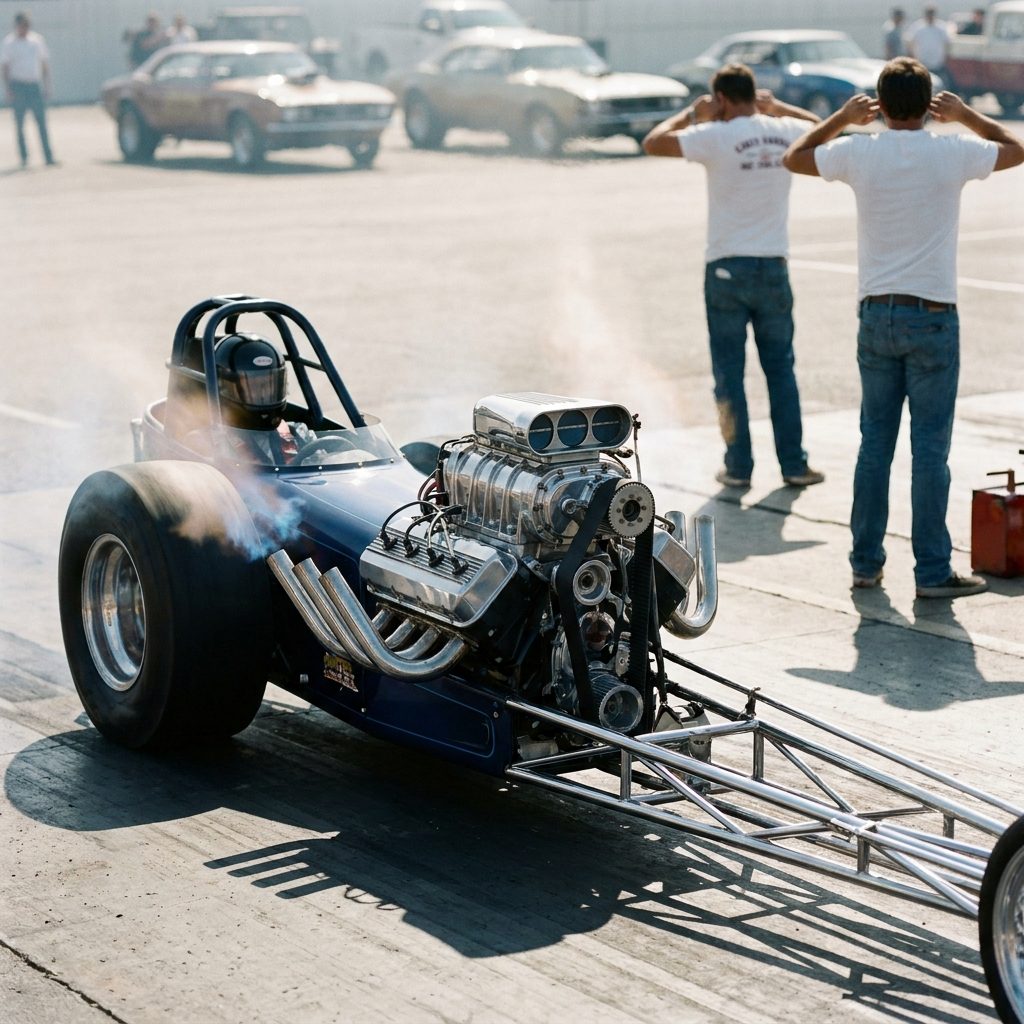
Nitro did not sound like an engine. It sounded like the sky coming apart.
It hit your chest first, then your teeth, then somewhere behind your eyes. Everyone in the pits stopped and turned because a fuel car cackling nearby demanded the whole place’s attention.
Then the fumes arrived—acrid, chemical, and burning at the back of your throat. The smell stayed in your shirt all the way home.
The Kid on Dad’s Shoulders Watching a Funny Car Burnout
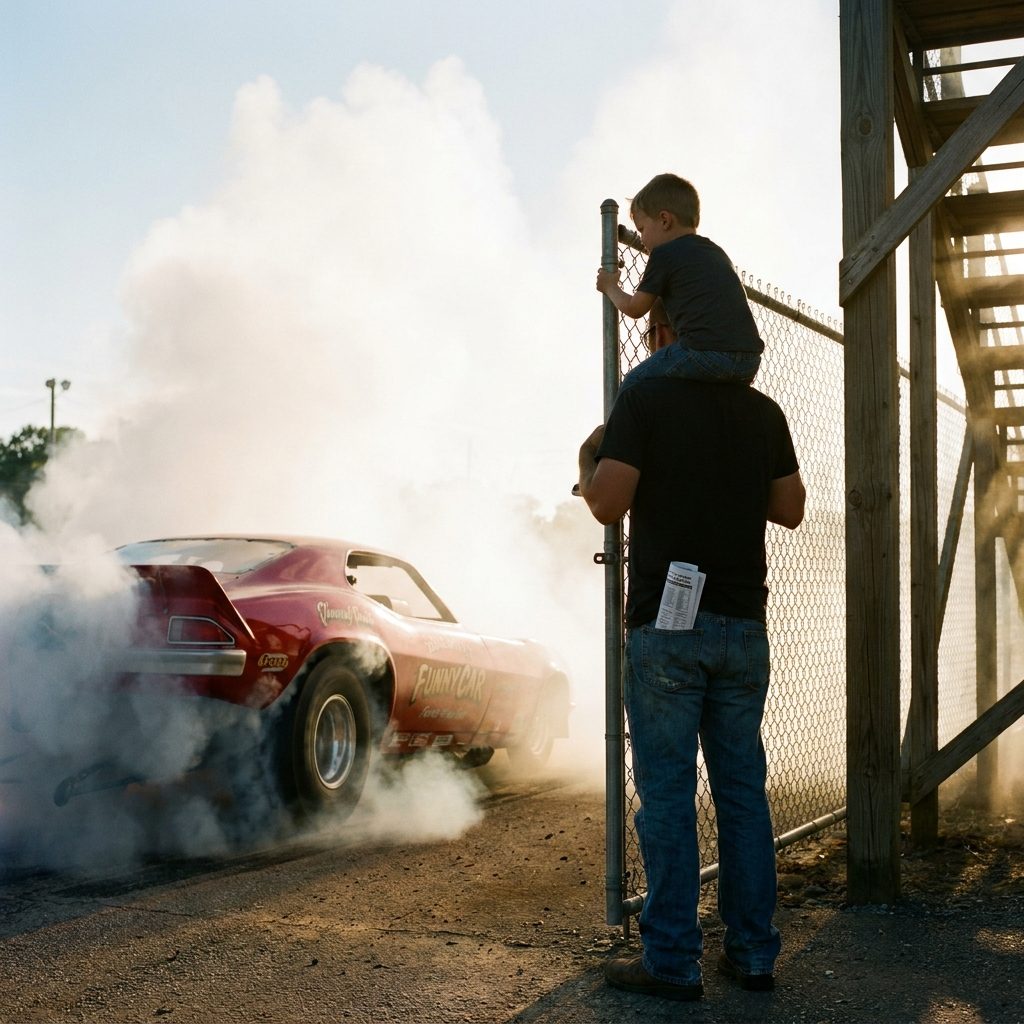
Every father at the strip seemed to know the same move: kneel, hoist the child up, point toward the near lane, and say, Watch this.
Then the burnout started. Smoke rolled over the fence. The child gripped the chain-link, eyes fixed on the cloud, while a supercharged Chrysler Hemi screamed somewhere inside it.
The Final Round With the Whole Strip Leaning In
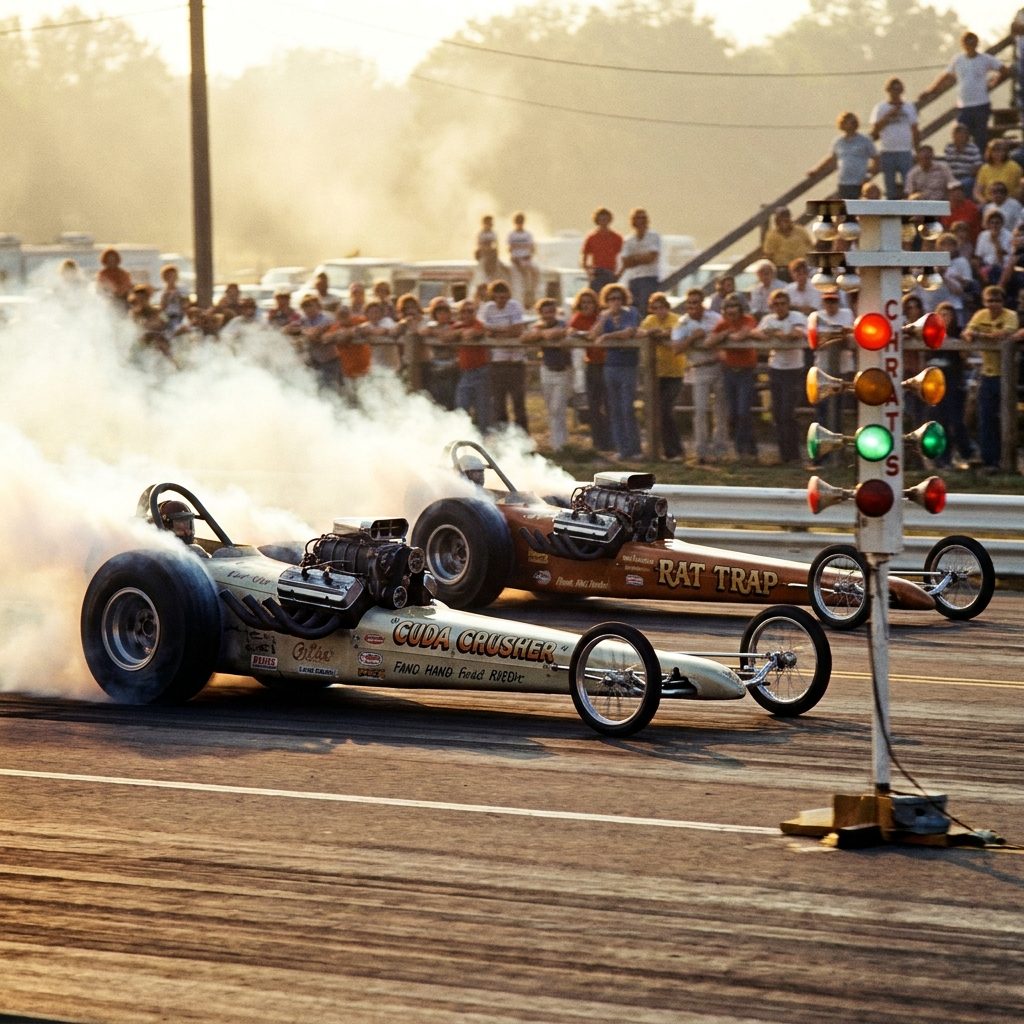
Both cars rolled out of the burnout box and toward the line. The place grew quiet in that particular way—not silent, just hushed.
The announcer stopped talking. People at the fence stopped arguing. Even the generators seemed to drop a note.
The amber bulbs counted down without mercy. The moment before green felt six years long. Then both throttles opened and the sound reached your sternum before your ears.
The bleachers erupted before either car crossed the finish line. That was how quickly a final could end in 1979. Some of them, anyway.
The Last-Round Loser’s Handshake Through the Driver’s Window
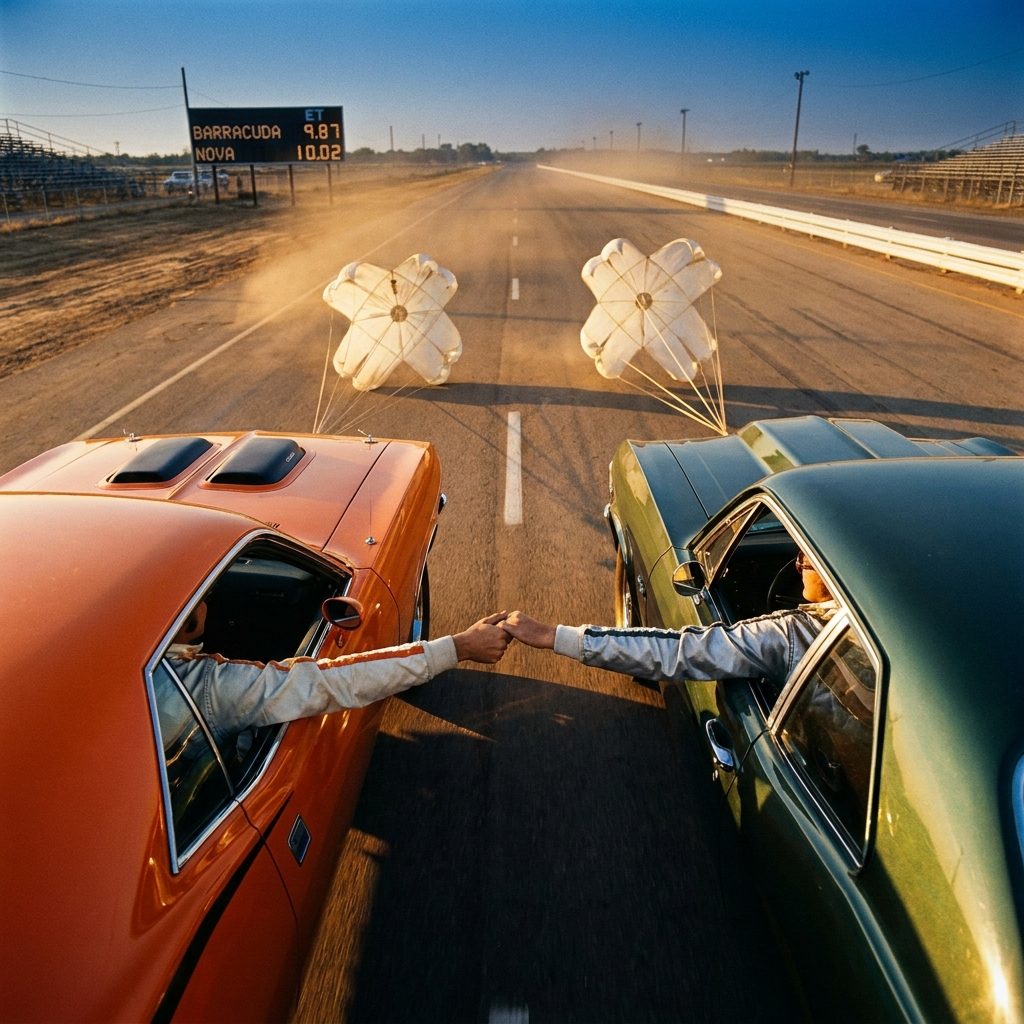
Class final. Two cars at the top end, engines settling after the pass. One driver reached out the window and the other reached back—a handshake between the lanes before both returned to the pits.
You lost more finals than you won. Every racer knew it. The handshake made the day mean something regardless of which side of it you were on.
The Sun Going Down Behind the Timing Tower
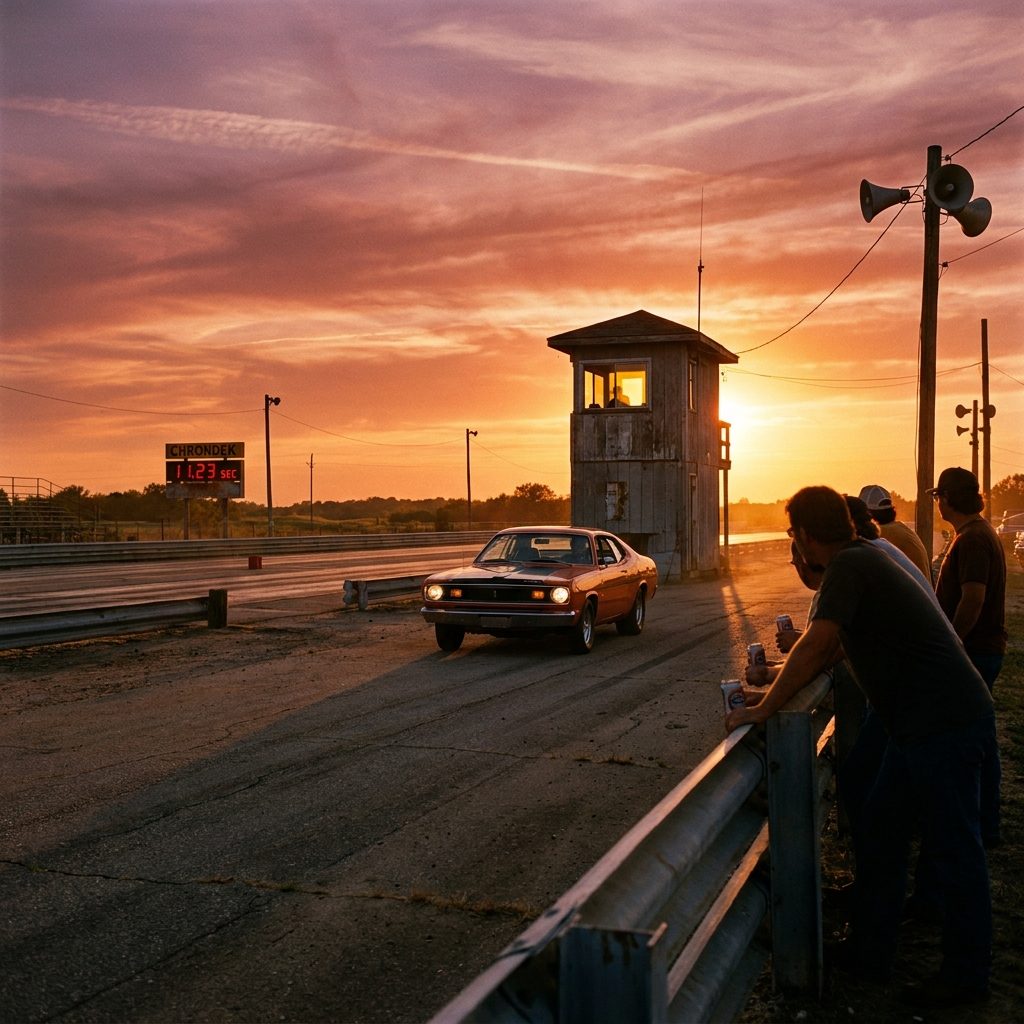
The last run of the day always felt different.
The crowd had thinned. Half the pits were already packed. Music bled through the PA between calls—Bad Company, Skynyrd, Bob Seger, or whatever station reached the strip clearly enough.
You stood at the fence with a warm beer or a cold Coke, watching the sun drop behind the tower and thinking about the trailer to load, the drive home, and work or school on Monday.
Then you thought, one more Saturday. There was always one more Saturday.
Except there was not. Not forever. Nobody standing at that fence in 1979 was thinking that far ahead, and maybe that was the mercy of it.
The Long Drive Home in the Dark With the Trailer Loaded
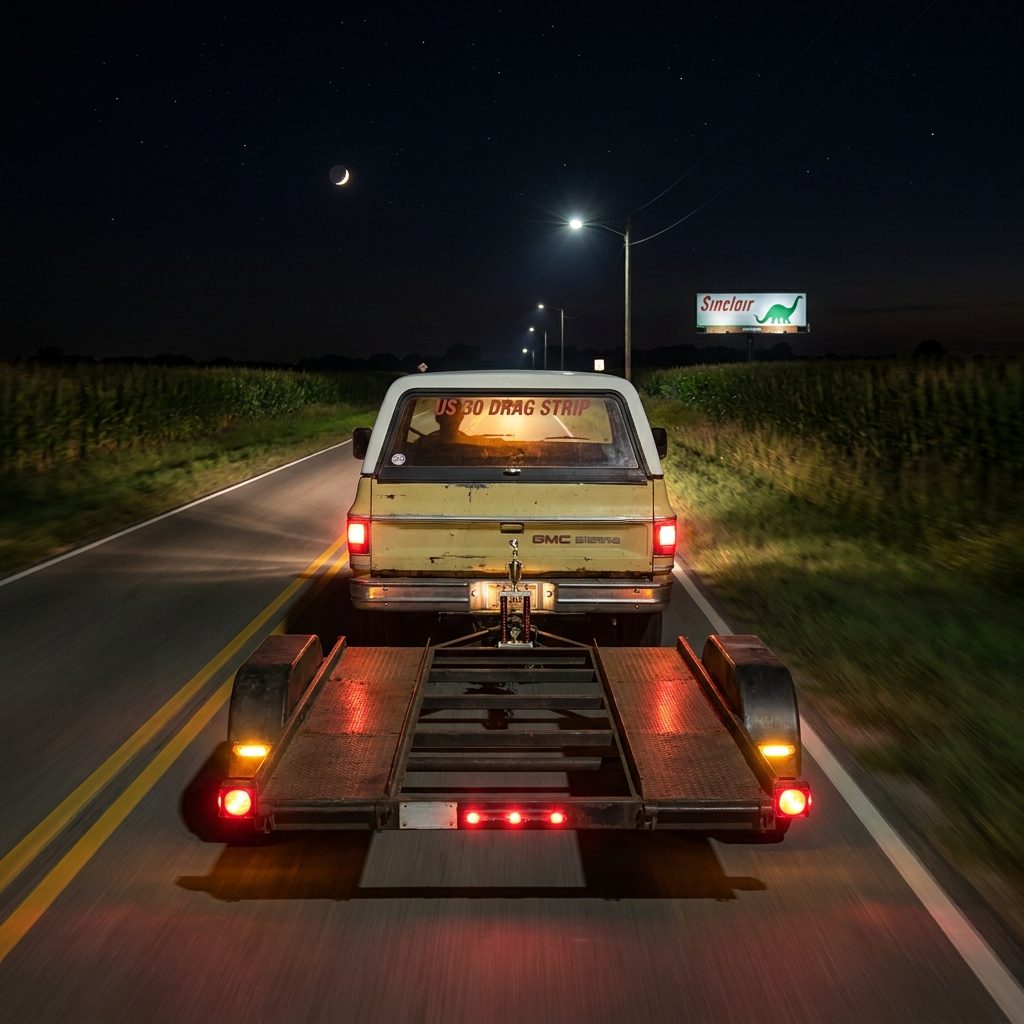
Ten o’clock. Eleven. The loaded trailer bounced behind you while the trophy shifted slightly with every curve.
The cab still smelled like race fuel and cheeseburger foil, so you drove with the window cracked.
Conversation was sparse. You replayed the last run in your head—where you left it on the tree, what you should have changed, and what had finally gone right—while the dashboard glowed green and the road kept coming.