
Would you like to save this?
The smell hit you before the gate did. Hot metal, old rubber, decades of oil pressed into gravel, and something else underneath all of it that you never could name. Dad had a list in his shirt pocket, a coffee can rattling on the floorboard, and exactly zero interest in turning back. You were eight years old and this was the plan. The junkyard on a Saturday morning was its own education, and what follows is the full curriculum.
The Price List Taped to the Office Window That Dad Always Studied First
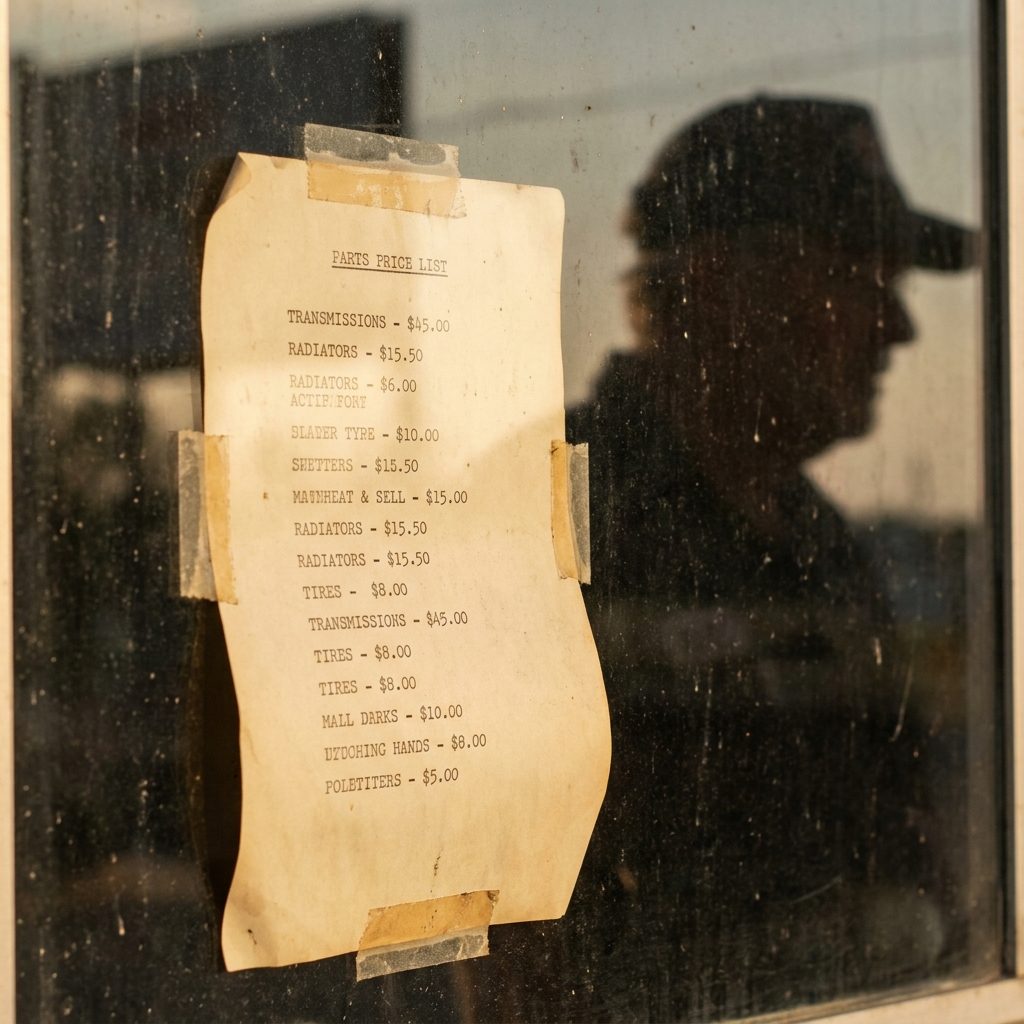
Dad always stopped at the window before he went through the gate. Not because he didn’t know what he was willing to pay. Because he wanted to know what they thought it was worth first.
That handwritten price list, crooked on the glass with masking tape going brown at the corners, was the whole economics of the morning laid out in typewriter ink. You stood next to him and watched him read it and you tried to read his face and learn something.
The Kid Who Stayed in the Car Versus the Kid Who Got to Come Along
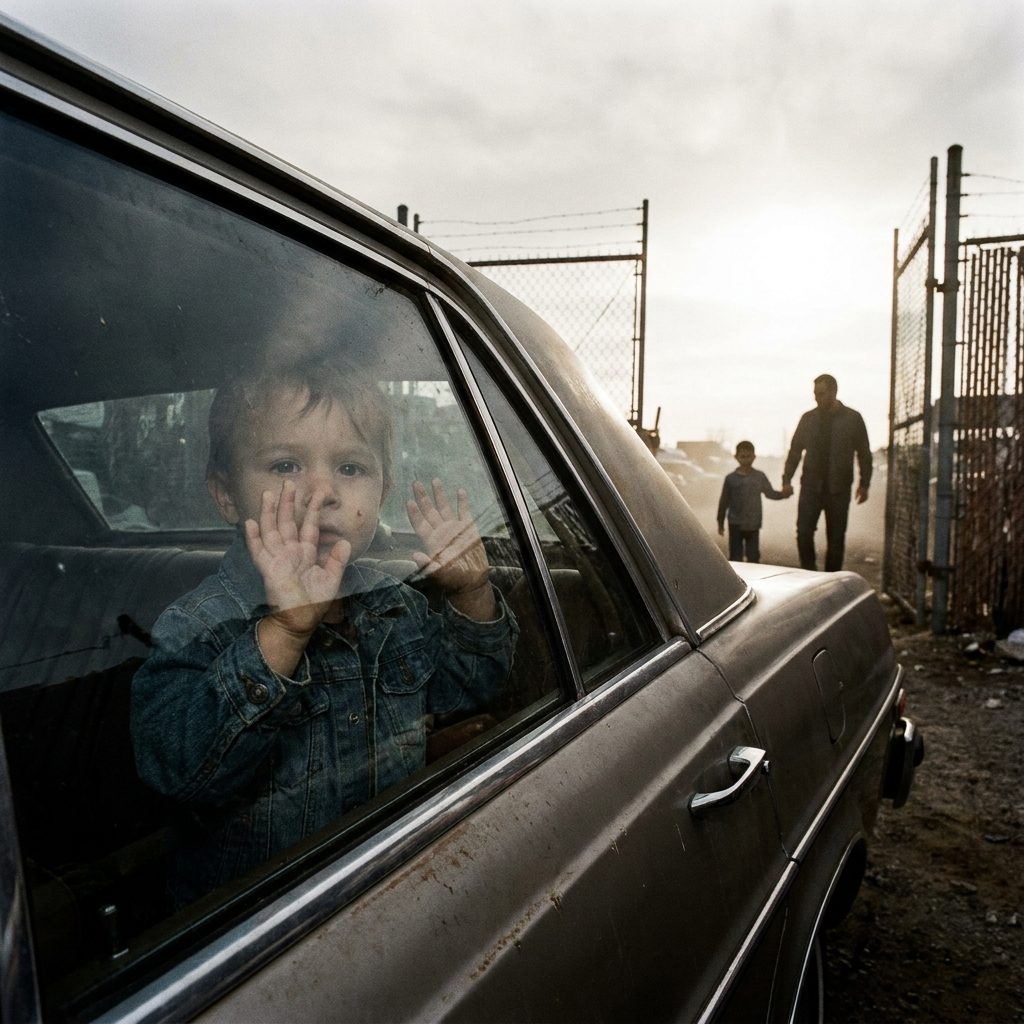
Some junkyards posted a sign. Others just had a rule that Dad enforced without explaining it. Either way, there was always a moment at the gate when you understood whether you were coming in or staying with the car.
Being left in the car was its own kind of suffering. You could see the rows of old cars through the chain-link and you couldn’t touch any of them. Being allowed through the gate meant you’d earned something, even if nobody said so out loud.
The Way the Whole Place Smelled Before You Even Got Out of the Car
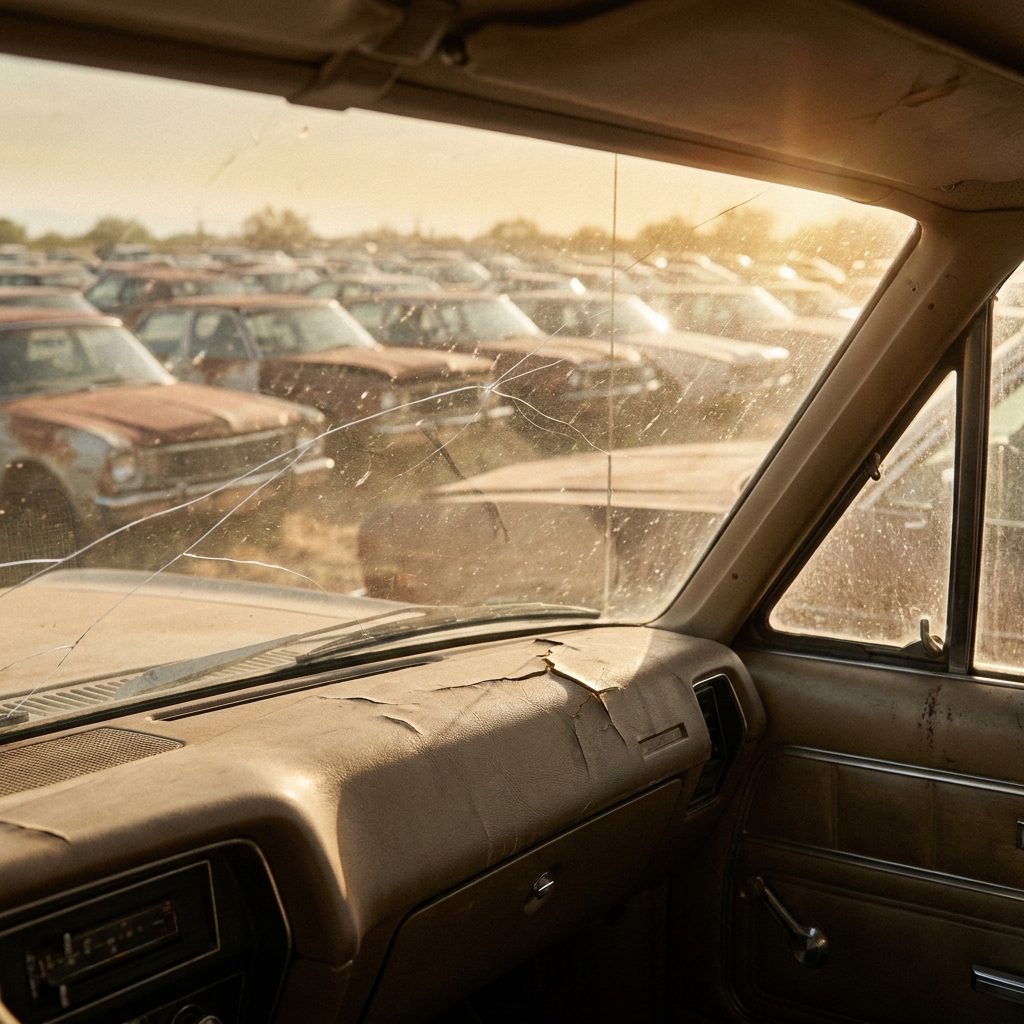
The windows were still up when it hit you. Something between hot metal and old oil and sun-baked rubber and rust, all of it baking together in the July heat. You couldn’t name every ingredient in that smell, but you’d know it anywhere, fifty years later, if you caught it again.
Dad didn’t say anything. He just parked, cut the engine, and reached for his gloves off the dash. That smell meant you were here. The whole morning was already underway.
Stepping Over the Puddle of Something You Didn’t Want to Step In

It wasn’t water. Everyone knew it wasn’t water. The color was wrong and it sat too still and there was a ring around the edge of it that told you how long it had been there. You stepped over it without asking what it was, because asking would have confirmed it.
The whole yard was a lesson in reading surfaces. What to step on. What to go around. What to crouch beside and what to leave alone. Dad moved through it like he’d memorized the floor plan.
The Cardboard Dad Laid Down Under the Car So You Could Hand Him Tools
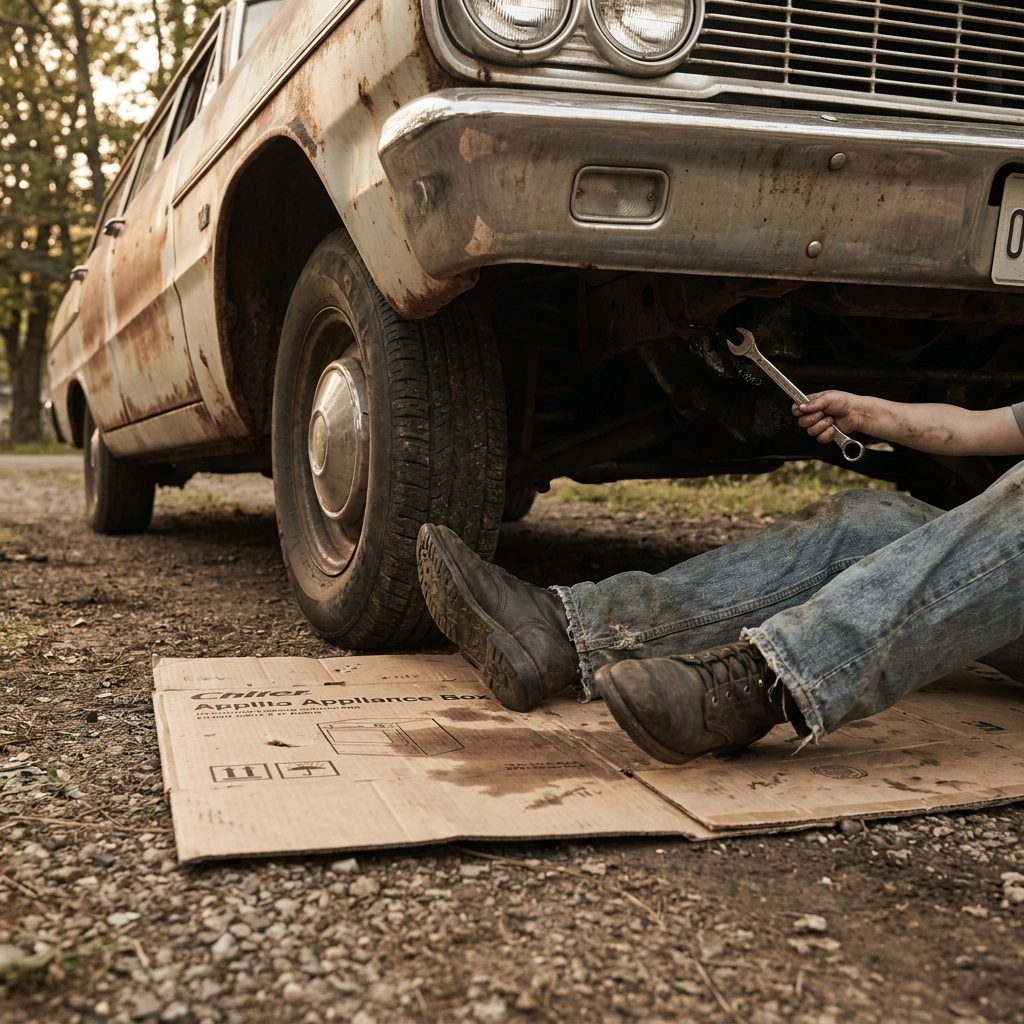
He found it somewhere in the yard, usually near the gate where other dads had left theirs. A flattened appliance box or a piece of a moving box, still stiff enough to keep his back off the gravel. He slid it under before he went down, and that was your signal to crouch and be ready.
Your job was to be the hands he didn’t have to move for. Put the wrench where he said. Hold the bolt so it didn’t roll. Keep the rag close. It wasn’t complicated. It was exactly the right amount of responsibility for a kid who wanted to be useful and didn’t quite know how yet.
The Junkyard Dog That Was Chained Up and Still Scared You Every Single Time
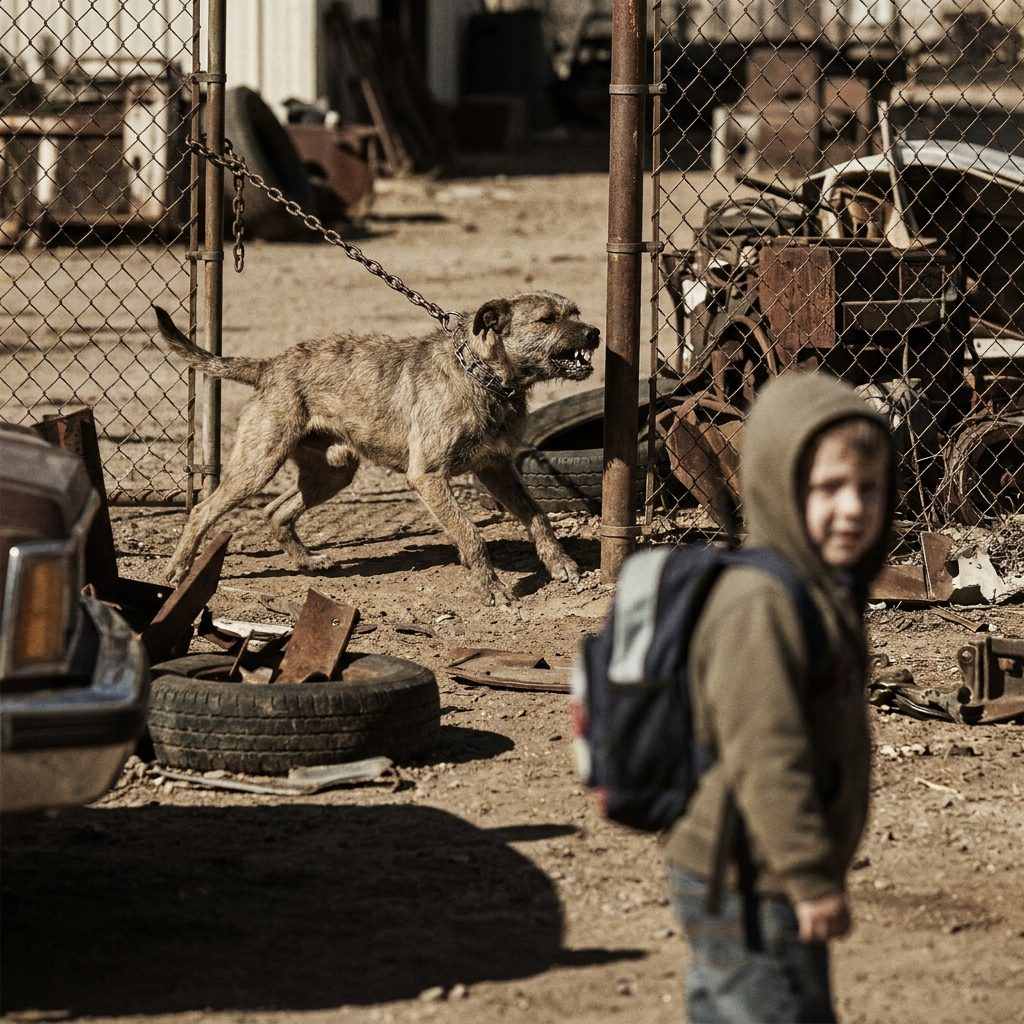
He was always chained. That was the one fact you kept reminding yourself of as you walked past. He was always chained and he had been chained every other time and he was going to be chained the whole time you were there.
None of this helped. The bark went off like a starter pistol and every time, without fail, you flinched hard enough that Dad noticed. He never said anything. But he noticed.
The Brown Paper Bag the Part Came Home In and the Smell It Left in the Car
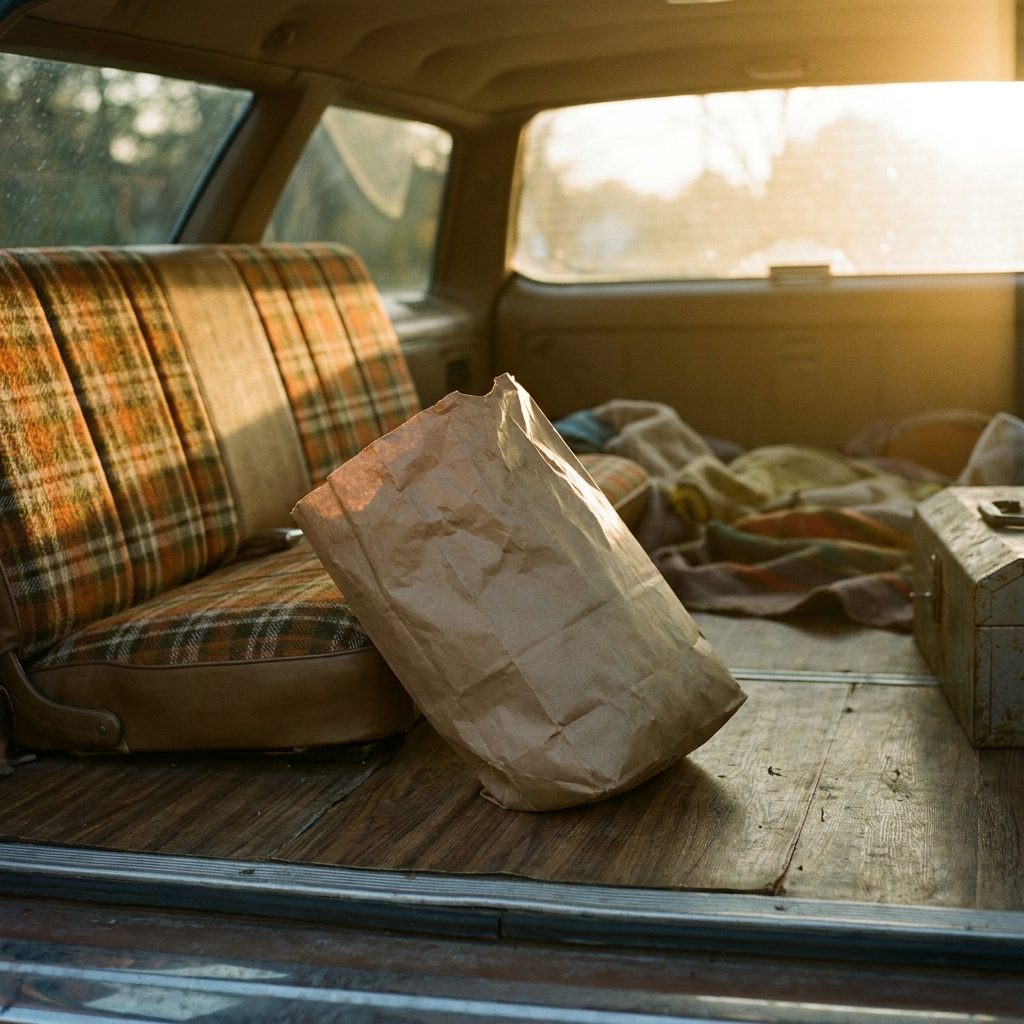
All the way home, that bag sat in the back of the wagon and the whole car smelled like it. Oil and metal and something older than both of those, the smell of a car that had been sitting in a field for three years giving up one of its last usable pieces.
It wasn’t an unpleasant smell. That’s the part that’s hard to explain to someone who wasn’t there. It smelled like the problem was almost solved.
The Moment Dad Spotted the Right Car From Forty Feet Away
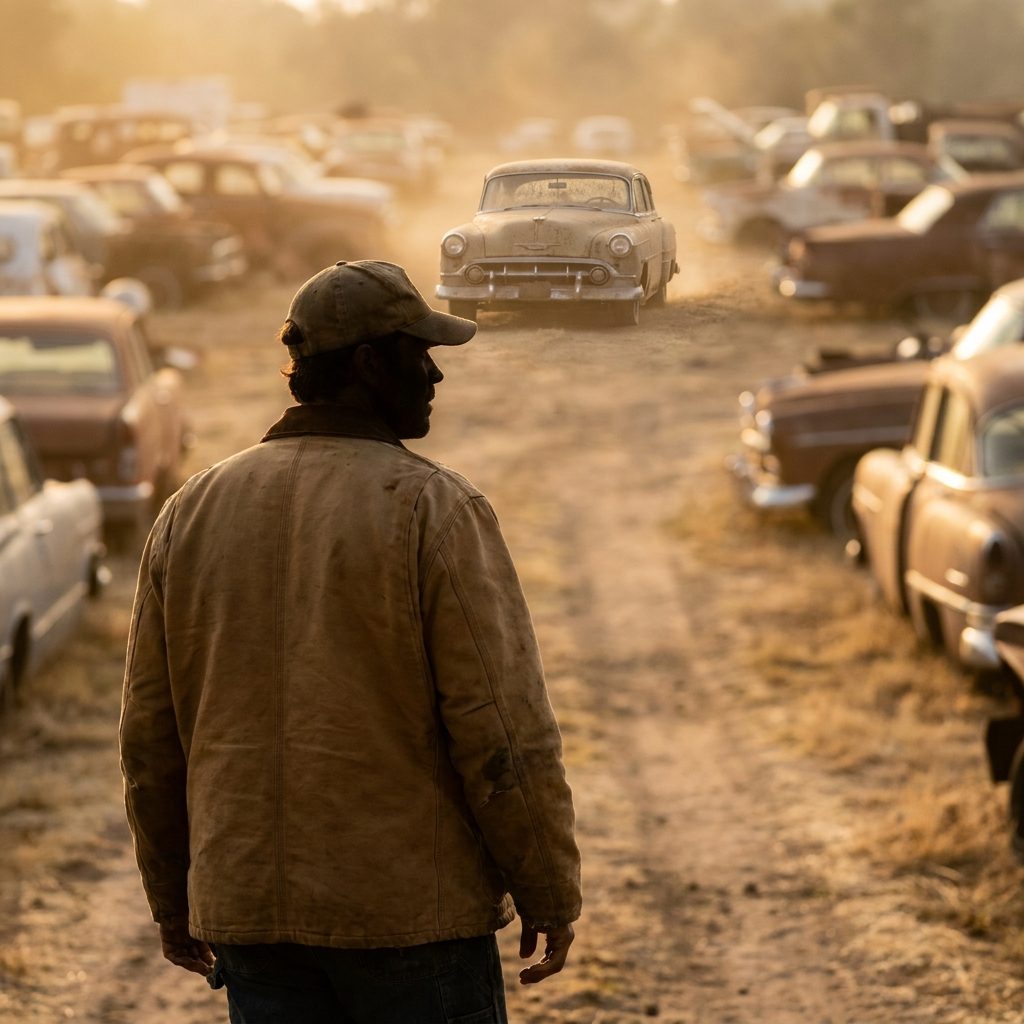
He didn’t say a word. Didn’t slow down, exactly. Just shifted his weight a half-step and you knew, that was the one. The right year, the right trim level, and most importantly, a driver’s-side door that still had its glass and its chrome strip intact. Dad had a kind of yard radar that made no sense until you understood he’d been doing this since before you were born.
The lesson wasn’t about the car. It was about knowing what you came for and not getting distracted by everything else. Every junkyard row is full of interesting wreckage. The man who wanders loses daylight. The man who knows his target is back home by lunch with the part in a paper bag.
The Unspoken Rule About Never Touching a Part Until Dad Said So
Would you like to save this?
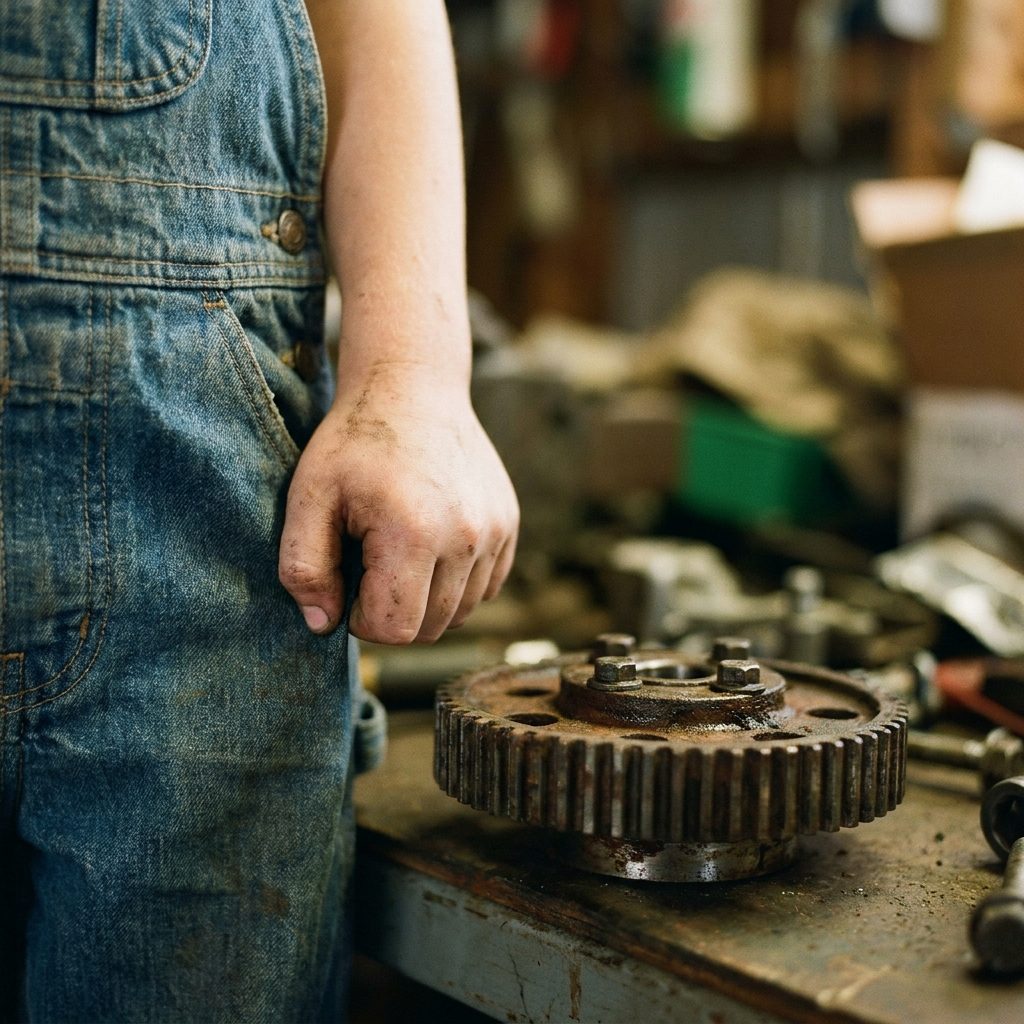
You learned it without being told. Or you were told once, hard, and it never needed saying again. You kept your hands at your sides or flat on the seat. You watched. You didn’t grab the switch, didn’t yank on the cable, didn’t test the door handle just to see if it still worked. Dad was running a diagnostic in his head and your job was to not break his concentration.
It felt like a lot to ask of a nine-year-old. Looking back, it was the best patience training most of us ever got.
The Triumphant Walk Back to the Car With the Part in Both Hands

The part was greasy. Your hands were already ruined. You didn’t care even slightly. There was something about carrying that piece back through the rows, past all the cars you had examined and passed over, that made the whole morning feel complete.
Dad would let you hold something on the walk back. Usually a small piece, something light. But you carried it like it was a trophy because it was.
That walk back toward the car, part in hand, was the whole reason for the morning. The negotiation at the counter, the ride home, the installation in the garage, all of that was still ahead. You’d found the thing. You were bringing it home.
The Chained-Up Ledger Book the Yard Guy Wrote Everything Down In by Hand
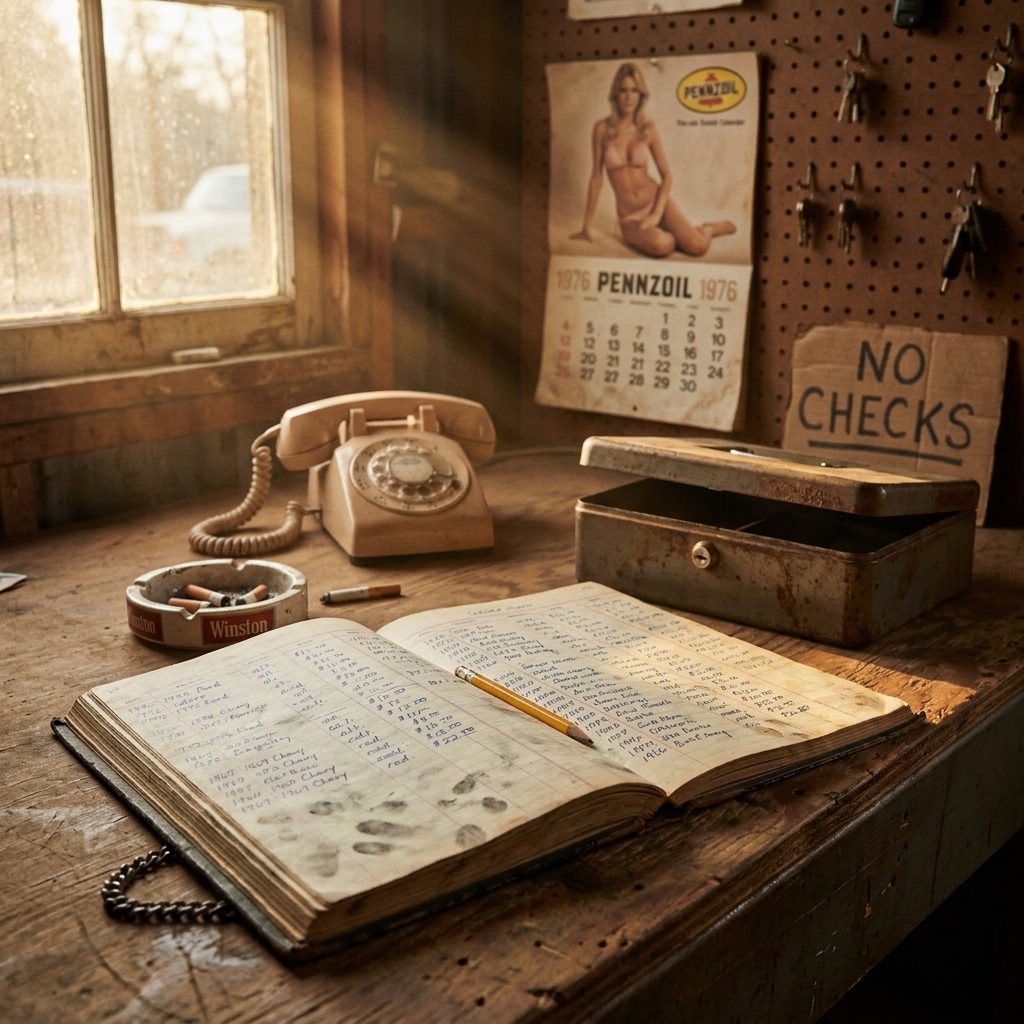
The yard guy wrote your name, the car you pulled from, and the price on a ledger line, and that line was the receipt. No carbon copy, no register tape, nothing else. If he said four dollars for the alternator, it went in the book as four dollars and that was the deal.
Dad would lean over the counter and read the entry upside down while it was being written. Not because he didn’t trust the guy. Because that was how you did business in 1974—you watched the number go on the paper.
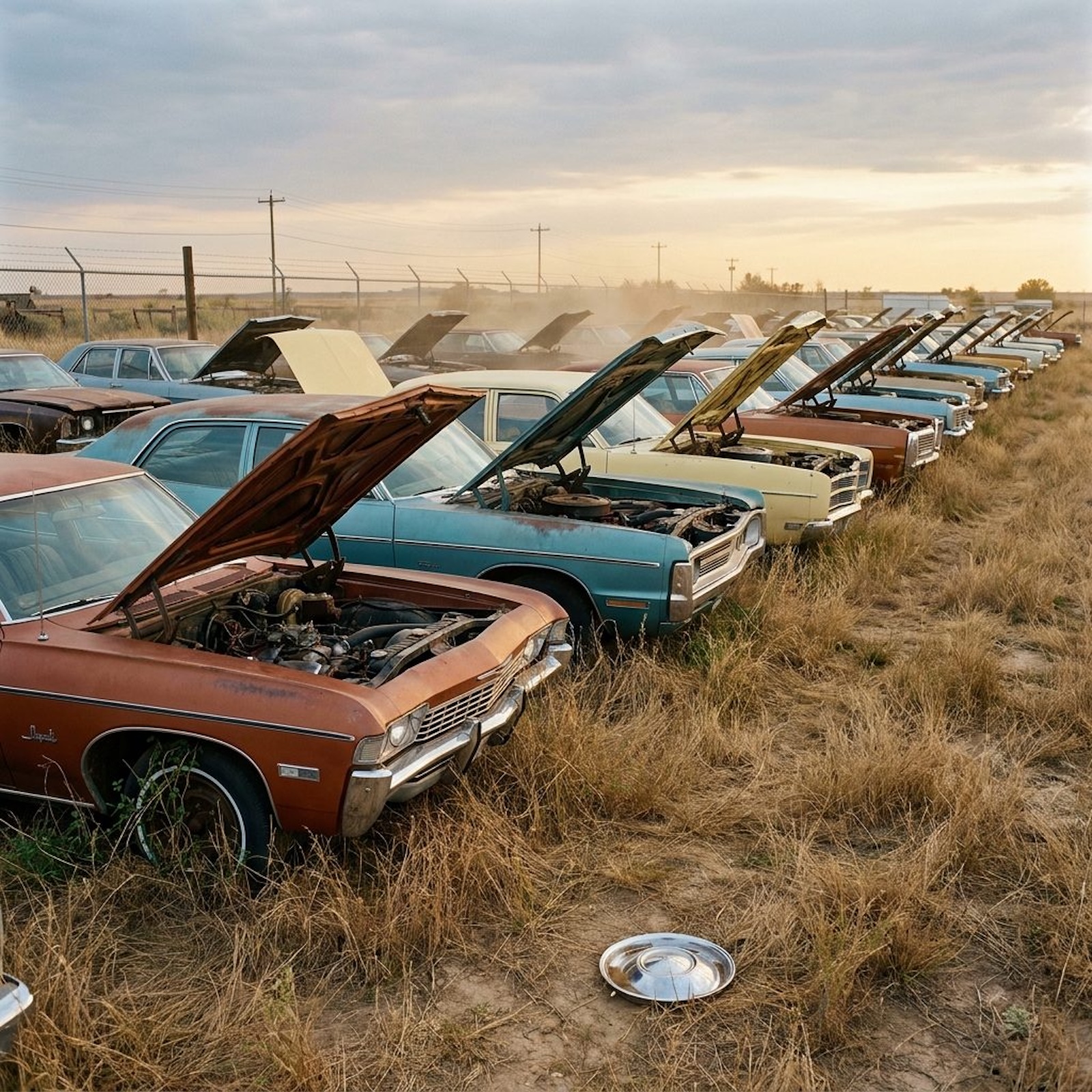
The Row of Cars With the Hoods Already Popped From the Guy Before You
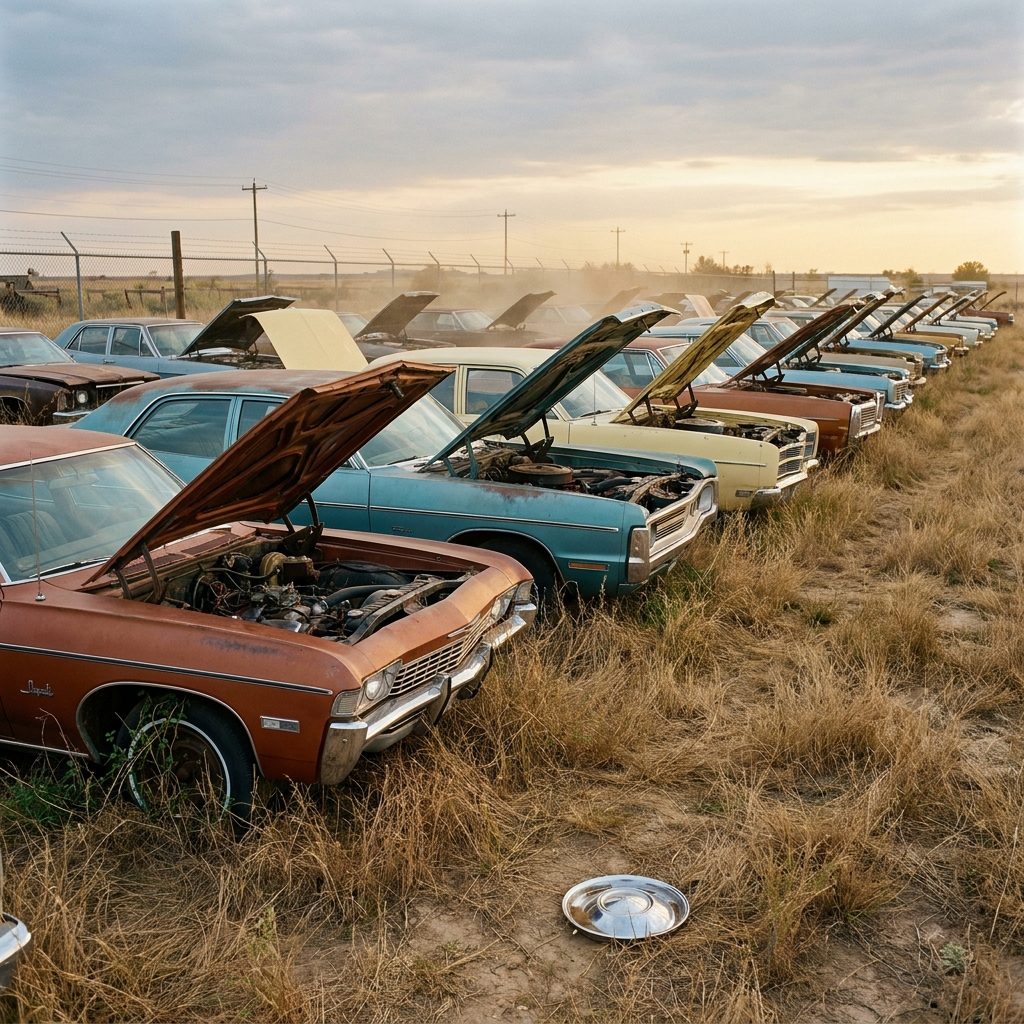
You walked down the row and every third hood was already up. Somebody had been here yesterday, or an hour ago, and moved on to the next one. The car kept working for people even after it stopped being a car.
Dad said you could read the yard by which hoods were open. Small-block Chevys all propped up meant somebody was building an engine. Wagons untouched meant nobody wanted a wagon that week.
The Coffee Can of Nuts and Bolts You Were Told You Could Fill for a Dollar
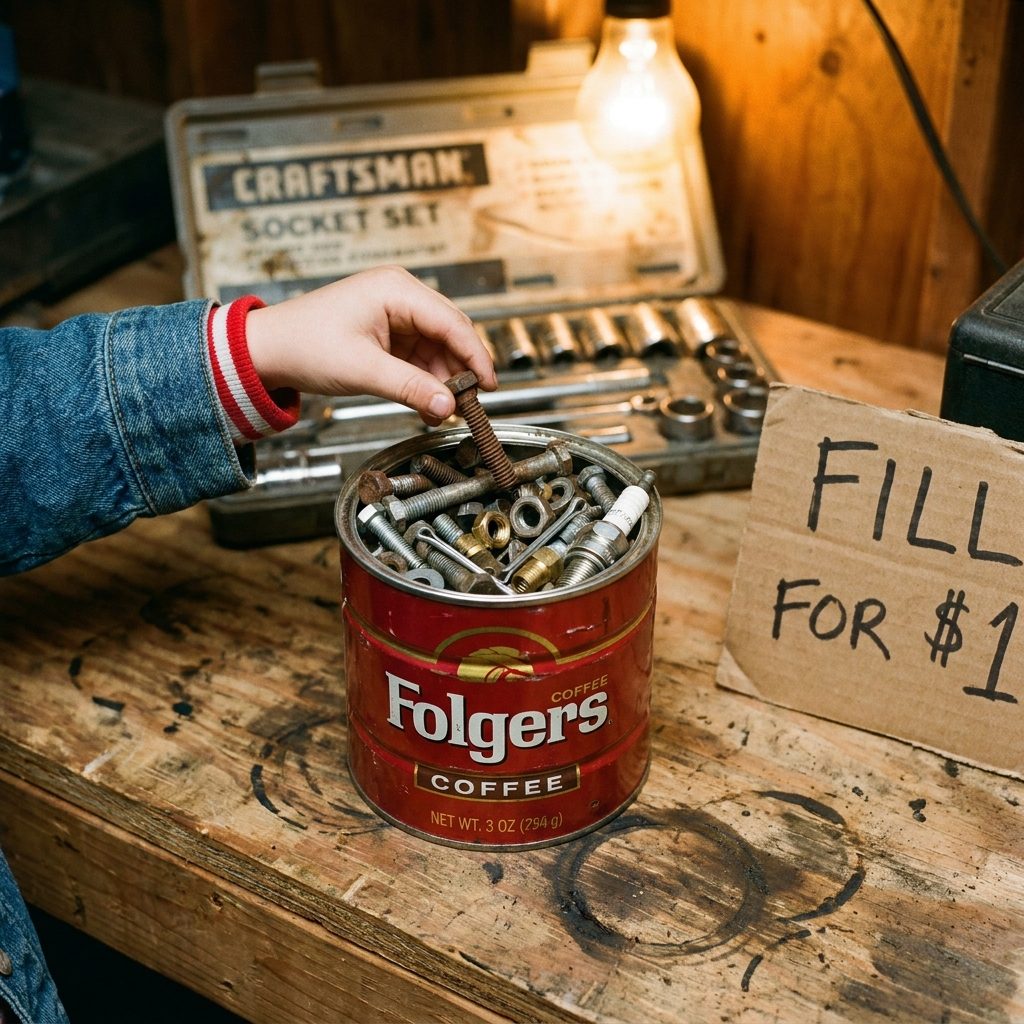
One dollar. Fill the can.
That was the deal, and it felt like winning the lottery when you were nine years old and holding an empty Folgers can in a place made of metal. You’d pack it so tight the lid barely closed—cotter pins wedged between hex nuts, washers stacked on washers, one weird brass thing you didn’t recognize but felt important. Half of it ended up in Dad’s coffee can on the workbench at home, where it stayed for the next twenty years.
The Way the Steering Wheels All Sat Cocked at the Same Weird Angle
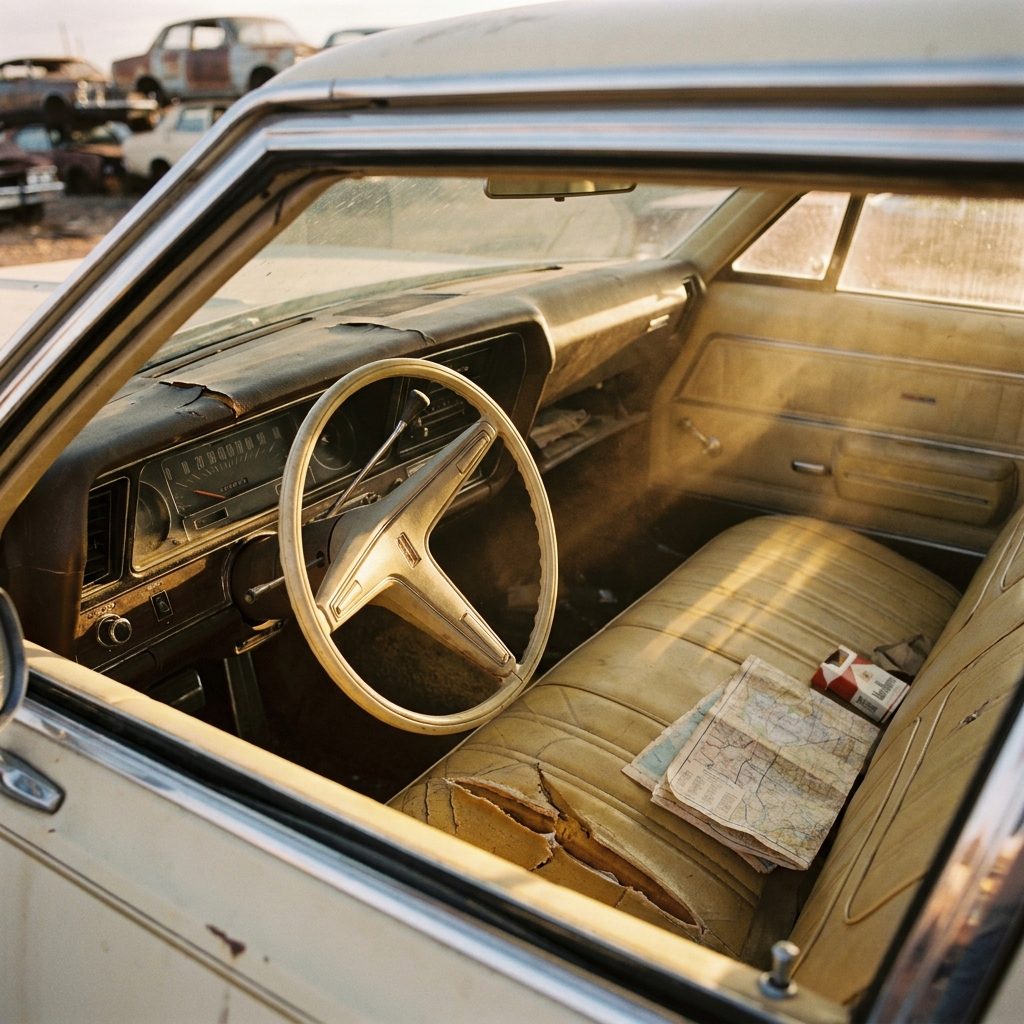
Every steering wheel in the whole yard was turned the same way—cocked about thirty degrees off center, like the cars all gave up mid-turn. Nobody parked a car with the wheel like that on purpose. Tow operators, damaged steering parts, and partially dismantled front ends could all leave the wheels sitting at odd angles.
You noticed it once and then you couldn’t stop noticing. Row after row of ivory and black plastic wheels, all pointing the same wrong direction, waiting.
The Radio Knob Dad Pulled Off Every Single AM Radio Just in Case
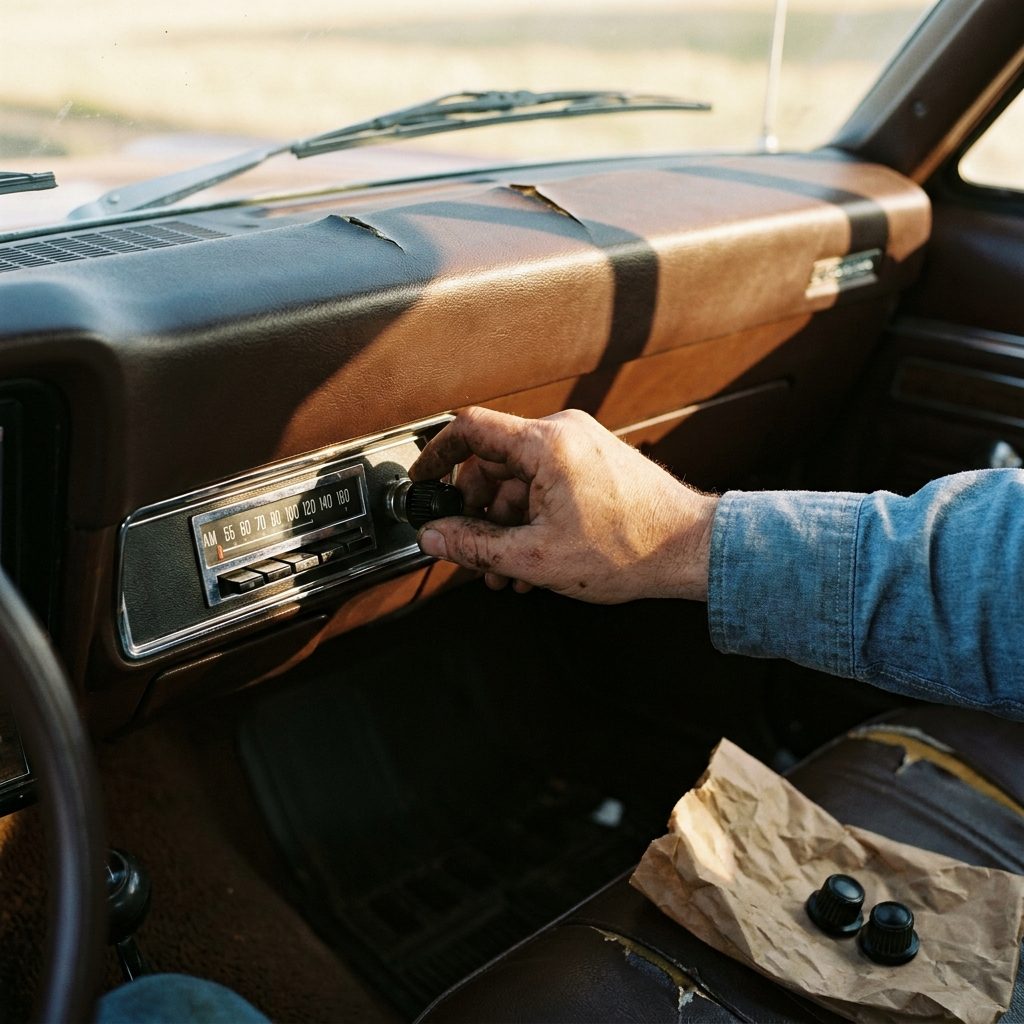
He pulled the knobs off. Every radio, every car, every trip. He did not need AM radio knobs, but they were cheap, often tossed into the purchase, and useful for all kinds of things.
Twenty years later there was a small parts drawer in the garage labeled RADIO KNOBS in blue Sharpie, and nothing in it was ever used for a radio. But three times a year he’d open that drawer looking for something that fit a lamp shaft or a shop-vac dial, and it was always in there.
The Hood Prop Rod That Wouldn’t Stay in Its Hole Because the Hole Was Rusted Through
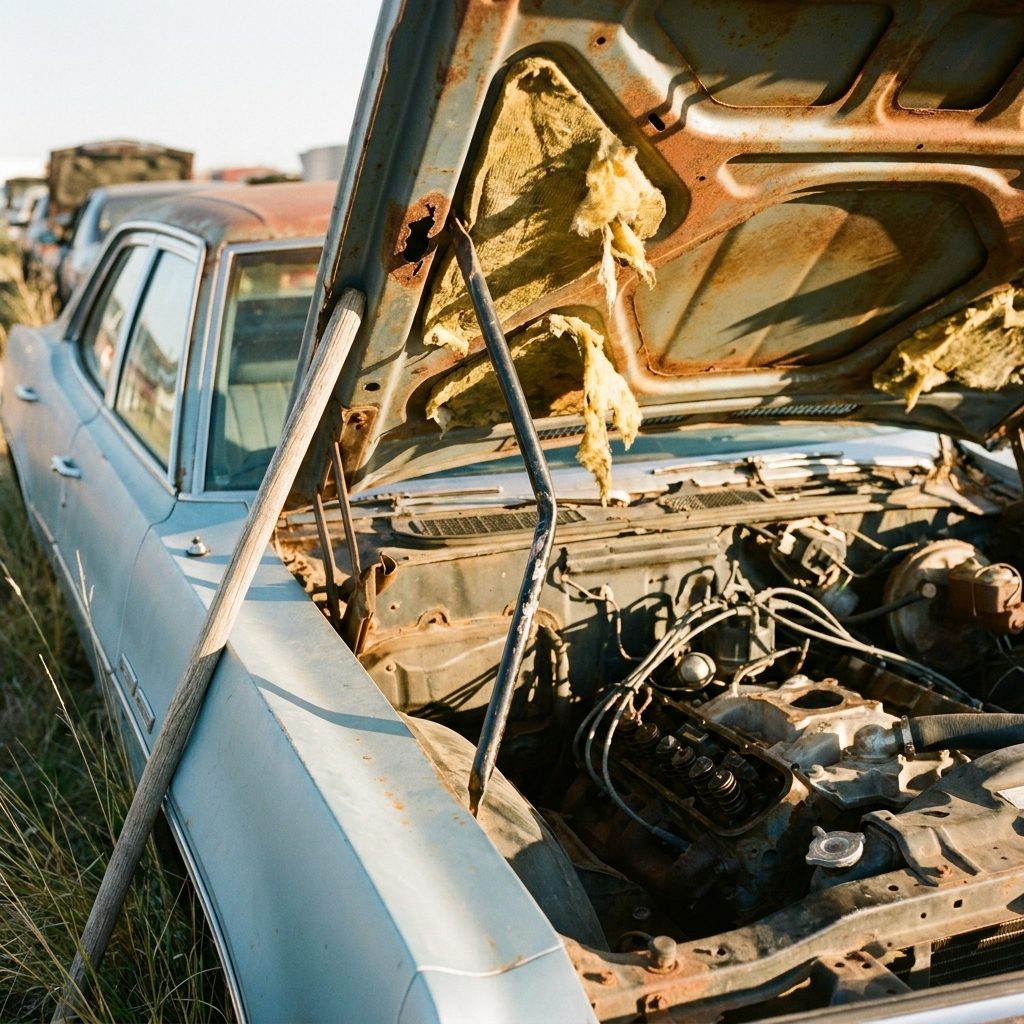
Half the hood props in the yard didn’t work. The little hole they were supposed to slot into had rusted through, or the rod itself was bent, or somebody had grabbed it for something else and never put it back.
So you learned the broomstick trick—an improvised prop used cautiously while Dad stayed clear of the hood’s path whenever the setup looked uncertain.
The Guy in the Office Who Knew Every Car in the Lot Without Looking at a List
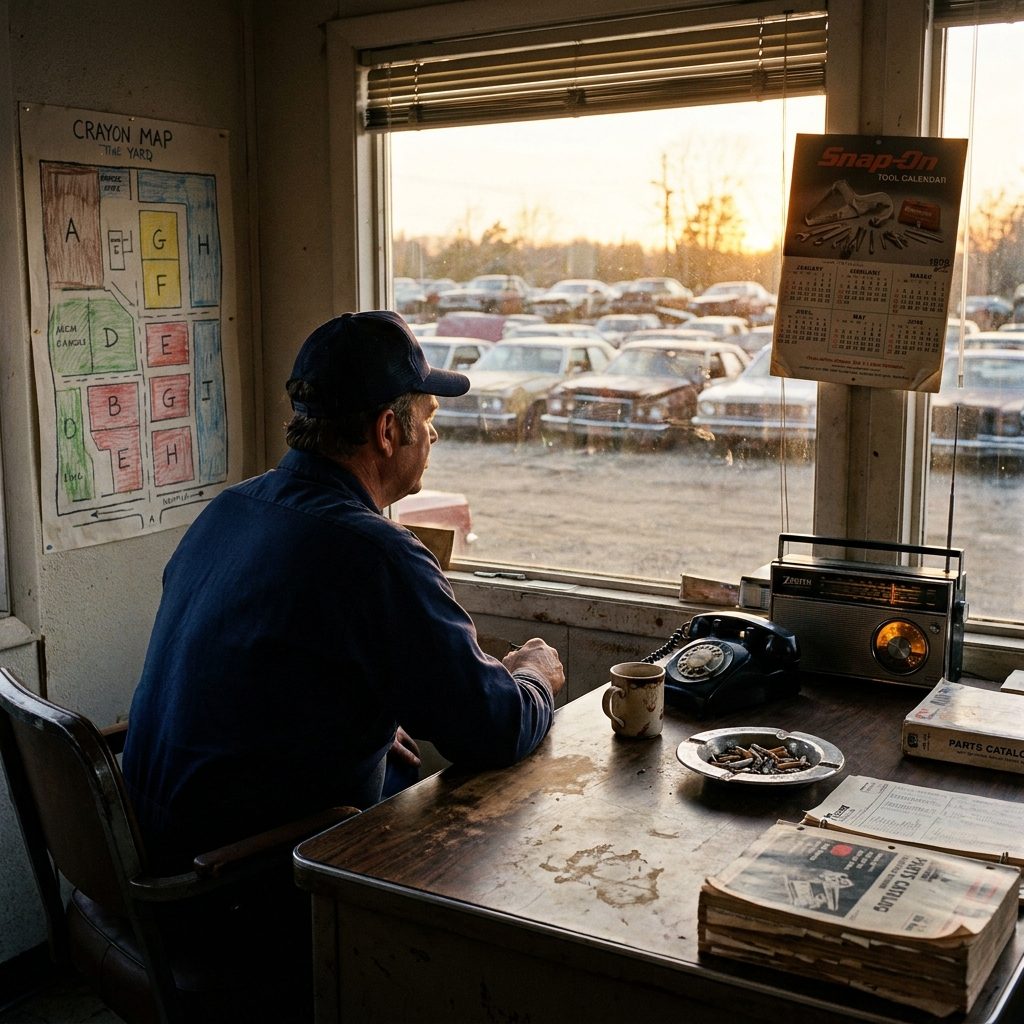
Dad would walk in and say he needed a rear passenger door for a 1968 Fairlane, and the guy would just point. Row C, halfway back, the green one. No paperwork, no hesitation, no checking a list.
He knew because he’d unloaded every one of them personally. Every car in the yard had come off a flatbed he’d driven, and the location went into his head the second the wheels touched dirt. The whole system lived between his ears, and it worked better than any computer.
The Passenger-Side Floorboard Full of Broken Glass That Crunched When You Stepped In
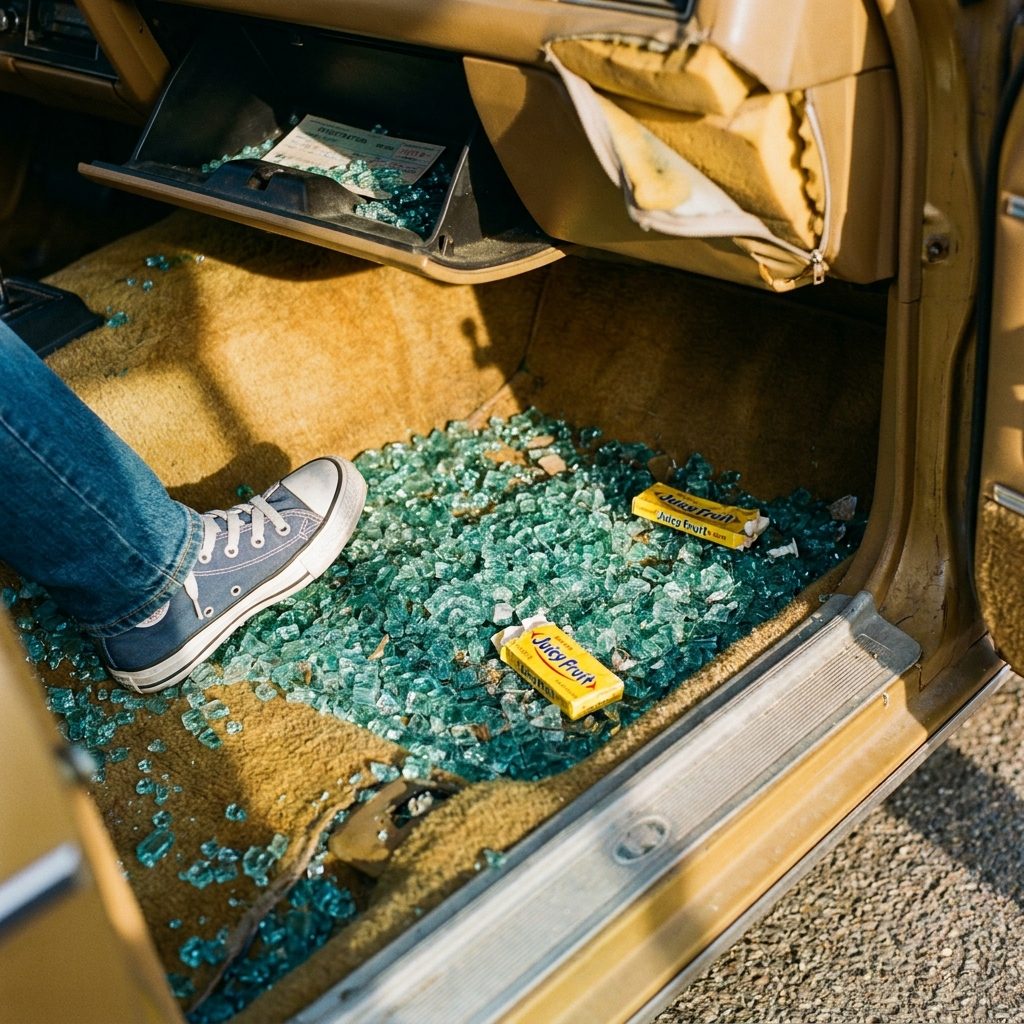
Every third car had a busted window, and every one of those cars had a floorboard full of little green glass cubes. Safety glass. Crunched under your sneaker like the world’s worst gravel.
Dad would tell you not to lean on the door. Then you’d lean on the door, cut your palm on the frame, and learn why he said it. He’d rinse it with water from a jug in the trunk, press a rag against it, and decide in about ten seconds whether it was bad enough to stop for.
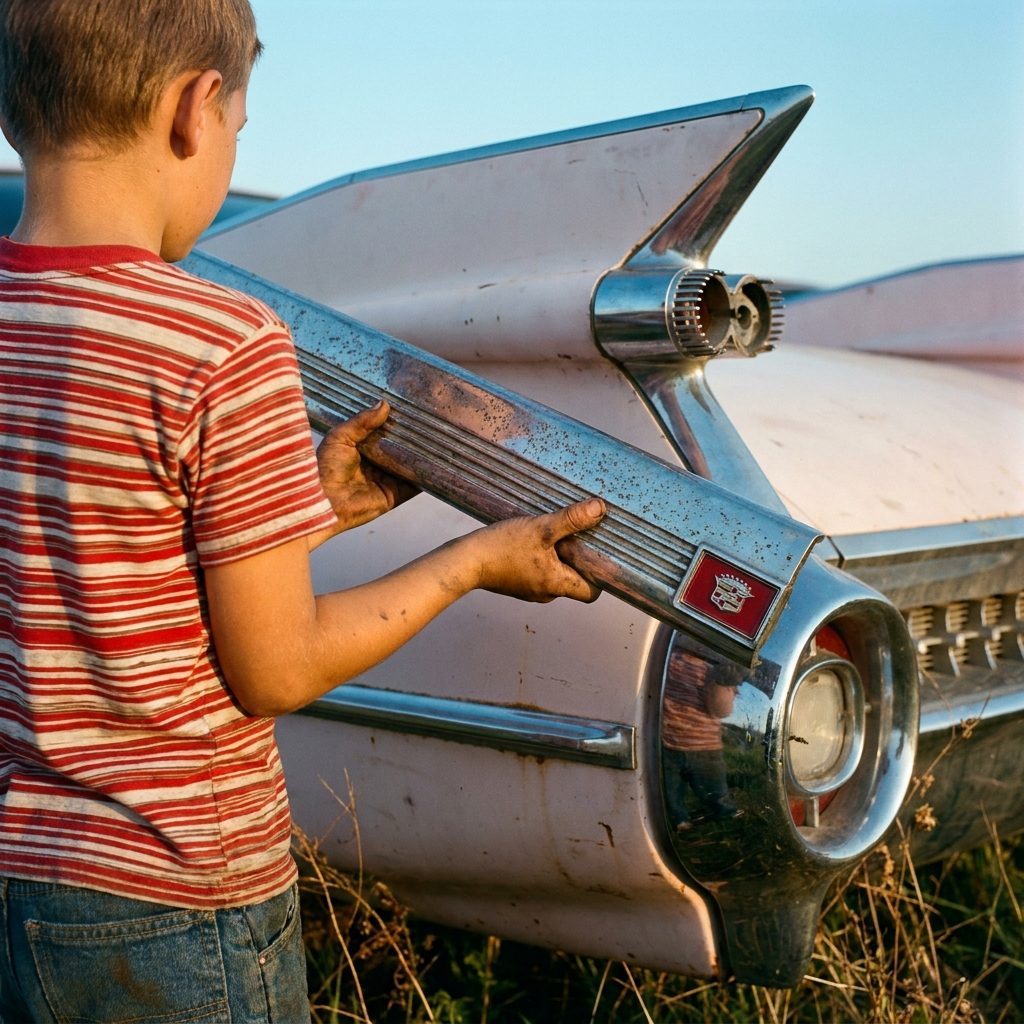
The Chrome Trim Piece You Wanted to Take Home Just Because It Was Pretty
Would you like to save this?
It wasn’t the part he came for. A piece of chrome trim off a Cadillac fin, ribbed and shining and completely useless—you wanted it because it looked like a spaceship.
Dad would sigh and say fine, go ask the guy up front, it’s probably a quarter. And it was. You carried it home like treasure. It lived on your dresser for six months and then in a shoebox for thirty years, and you still know exactly where it is.
The Battery Terminals So Corroded They Looked Like Blue Cauliflower
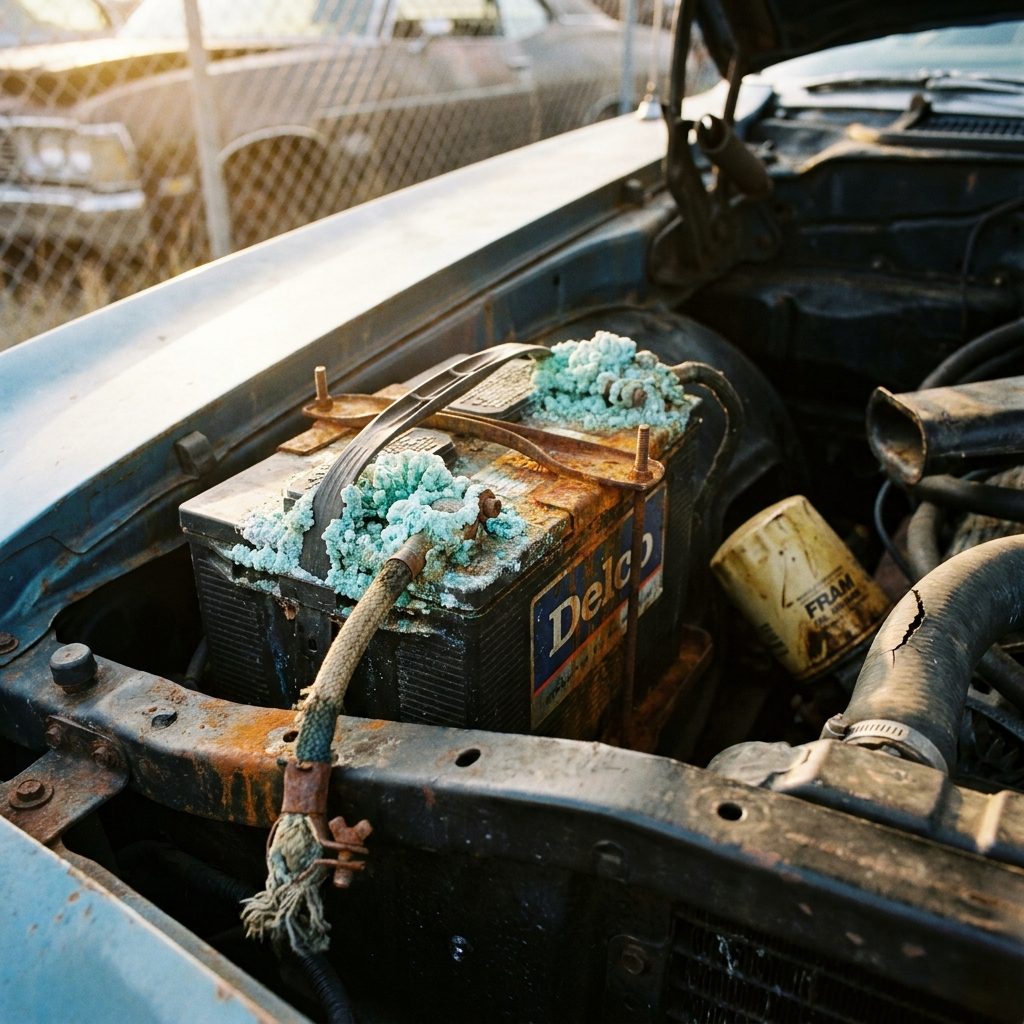
You could spot a dead battery from ten feet away in a 1970s junkyard because the terminals bloomed with this powdery blue-green crust that looked almost pretty in the sun, like something off a coral reef. Dad called it corrosion. You called it treasure.
He’d tap it with a screwdriver and it would flake off in chunks, and then he’d shake his head and move on. Dead battery. Not worth pulling. And when you reached out to touch it he’d catch your wrist without even looking, because he knew.
The Yard Cat That Lived Under a ’63 Falcon and Ran the Whole Operation
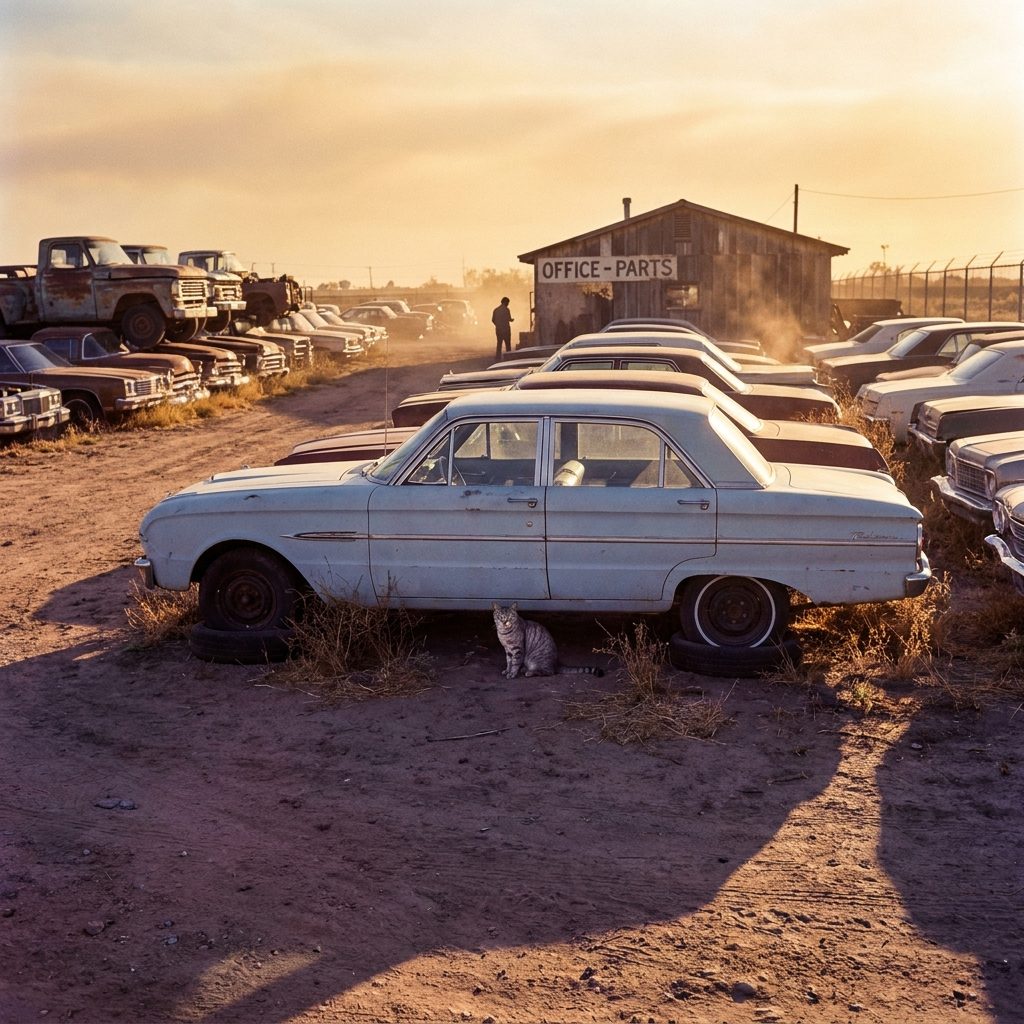
Every yard had one. Not the dog. The cat—the one nobody fed and nobody chased off and everybody seemed to work around like she was on the payroll.
Ours lived under a ’63 Falcon. Gray tabby, one torn ear, absolutely uninterested in you. She’d blink slow from the shade and go back to whatever cat business ran that yard, and Dad said she kept the mice down and the mice were the reason wiring harnesses didn’t last. That was the first time it occurred to you that a junkyard was a whole ecosystem, not just a pile of dead cars.
The Way Dad Screened an Alternator by Looking at the Brushes
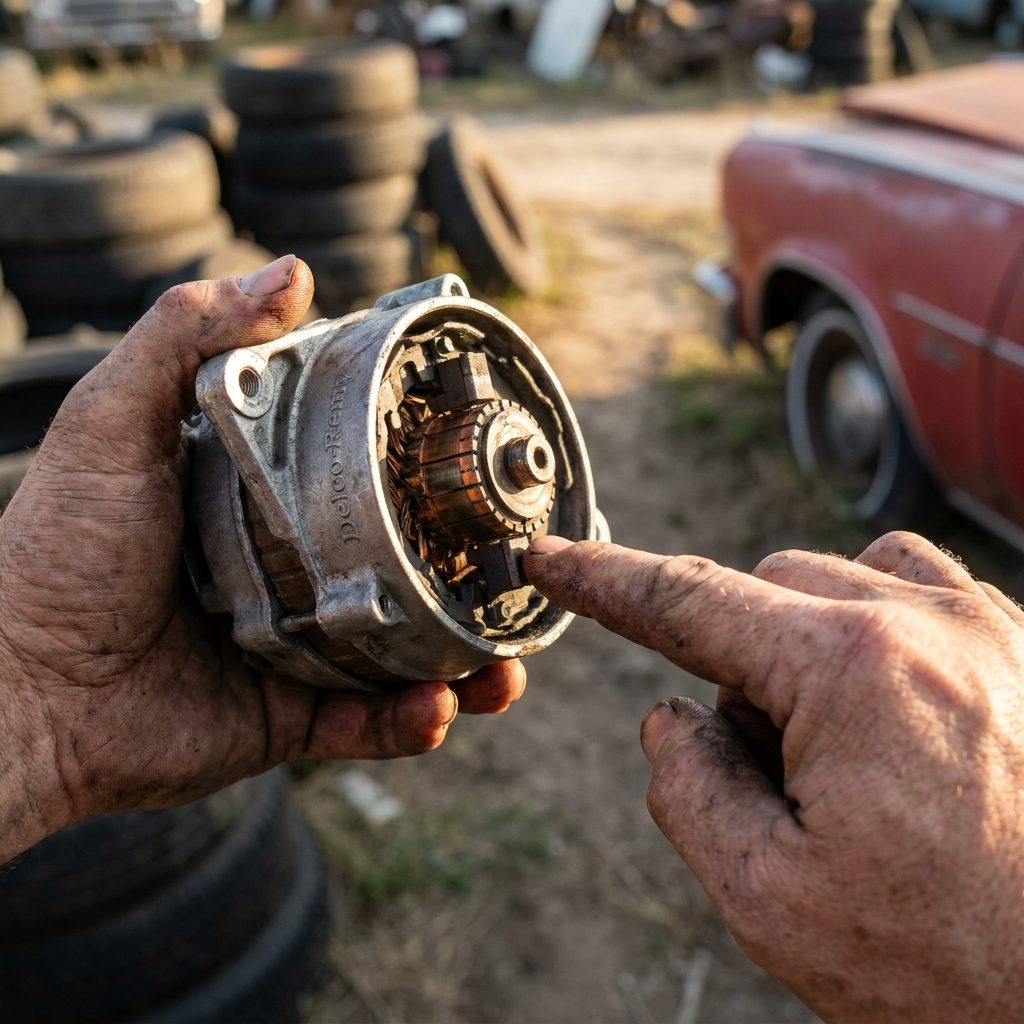
He would wipe the alternator clean enough to inspect the casing, pop the back cover off with a flathead screwdriver, tilt the whole thing toward the sun, and squint into the guts of it for maybe five seconds. Then he’d either nod or set it back down.
You asked once what he was looking at. Brushes, he said—little carbon blocks riding on the slip rings. If they were badly worn, that was one reason to leave the alternator behind. If they looked usable, the unit still needed proper testing because the bearings, diodes, regulator, windings, and other parts could fail too. No bench test happened in the yard. The glance was only a first filter.
The Trunk Dad Opened Carefully Because Years of Weather Had Gotten There First
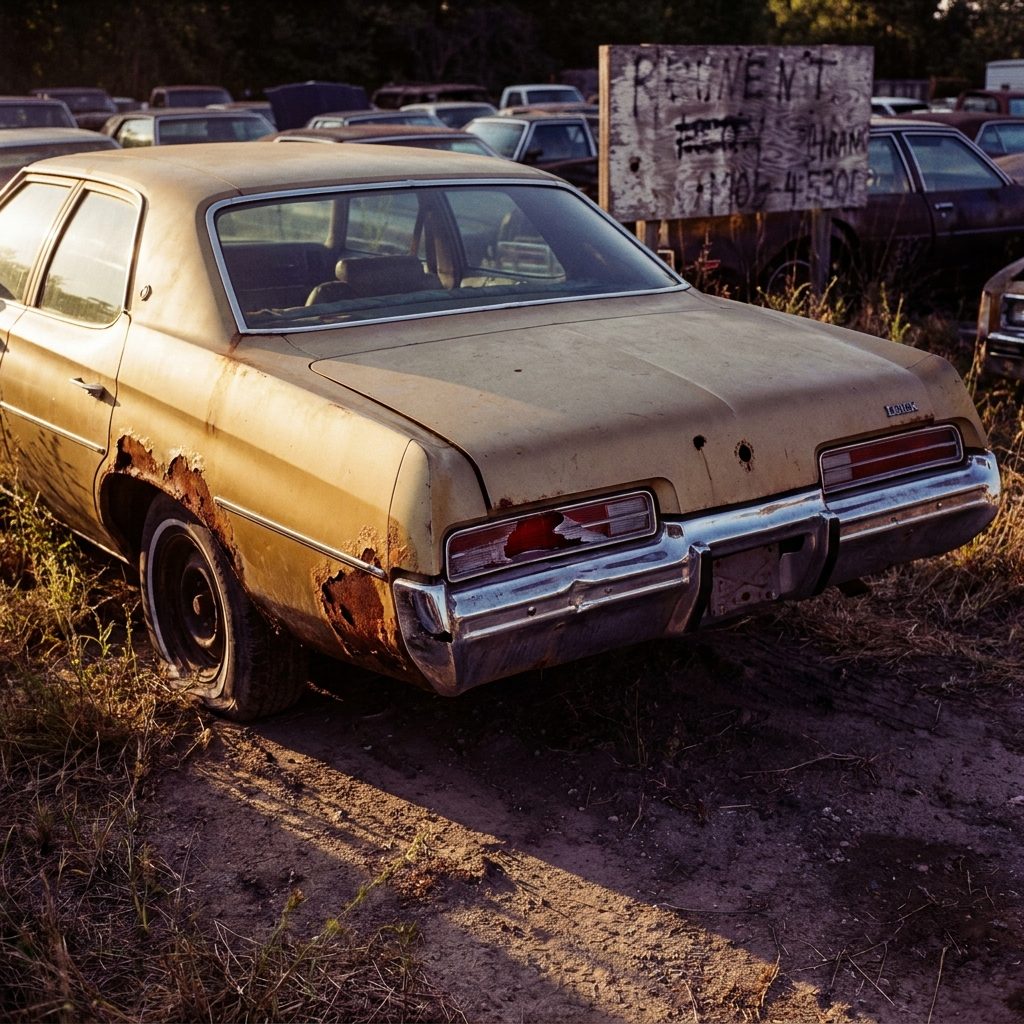
A junkyard trunk could hold almost anything ordinary and unpleasant: stagnant water, mouse nests, broken tools, soaked carpet, rust flakes, and a spare tire fused to the well.
Dad never yanked one open blindly. He checked the hinges, stood to one side, and lifted slowly in case the lid dropped or something sharp shifted underneath.
The mystery was rarely dramatic. It was usually just years of weather and neglect packed into a space nobody had opened since the car arrived.
The Exact Sound a Wrench Made When It Slipped and Skinned Dad’s Knuckle
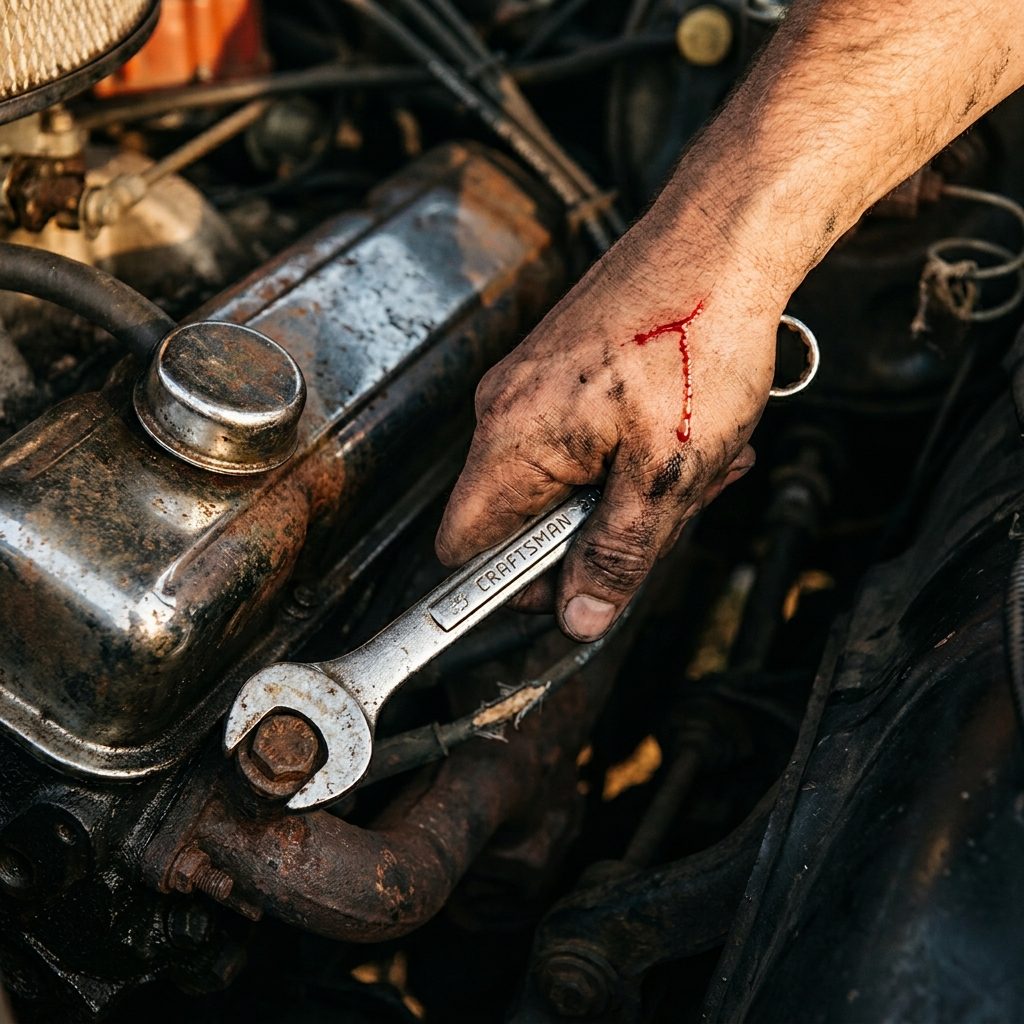
Metal on metal on bone. A short bright clang, then silence, then a very specific word Dad wasn’t supposed to say in front of you but always did.
He would shake the hand out, inspect the knuckle, clean it as best he could, and wrap it before deciding whether the cut was minor enough to continue. Junkyard bolts were always seized, and they usually won at least one round, and you learned that day that grown men bled sometimes and just kept working. Something about that seemed important without being sad.
The Long Quiet Drive Home While Dad Was Already Thinking About the Install
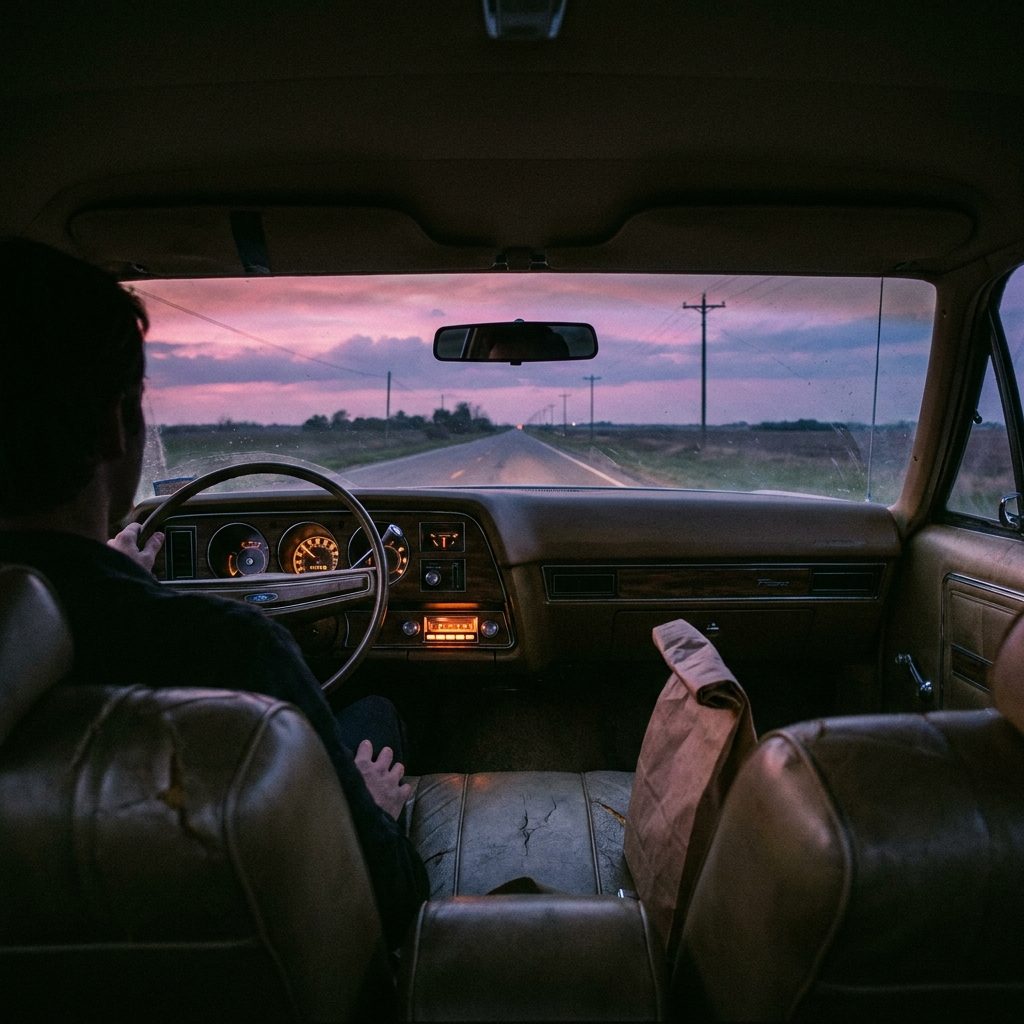
The windows were down because the wagon now smelled like the yard—motor oil, old vinyl, damp metal, and whatever still clung to the part wrapped in newspaper on the seat between you.
The AM radio played low, but Dad was not listening. You could tell by the way his eyes settled on the road and his lips moved slightly while he walked through the job in his head. Break the bolt loose. Pull the old one. Clean the mating surface. New gasket. Torque pattern.
You did not interrupt. Somewhere along the way, you had learned that he was already home, already in the driveway, already halfway through the repair. The part between you was the reason for the trip and only the beginning of the next job.