
Would you like to save this?
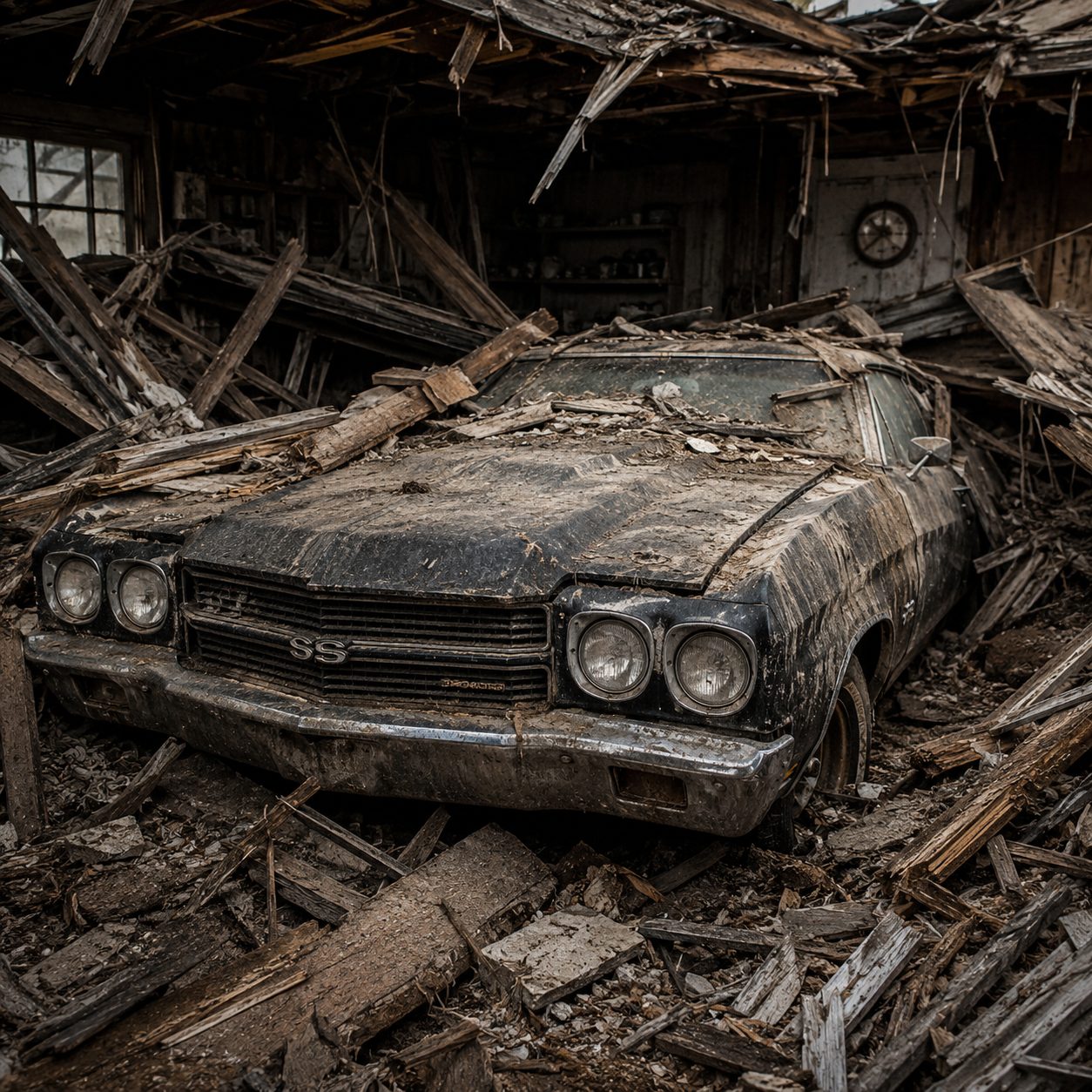
At first, it looked like the garage had swallowed the car whole. Splintered roof beams lay across the hood. Dirt filled the wheel wells. Decades of rain, rot, and darkness had turned the paint into something closer to a bruise than a color.
Then the debris shifted, and the face appeared: four headlights, an SS badge, and the blunt black grille of a 1970 Chevelle still staring out from beneath the wreckage. The roof had fallen. The tires had sunk. Nearly everything around it had given up. The car had not.
What happened next depended entirely on who imagined the rescue. Factory restoration or carbon-fiber restomod. Highway cruiser or stripped drag car. Pearl white, mirror black, bronze, emerald, or orange bright enough to wake the whole street. These 25 before-and-afters take the same ruined Chevelle and give it 25 radically different second lives.
From Collapsed Garage to Factory Showroom Restoration
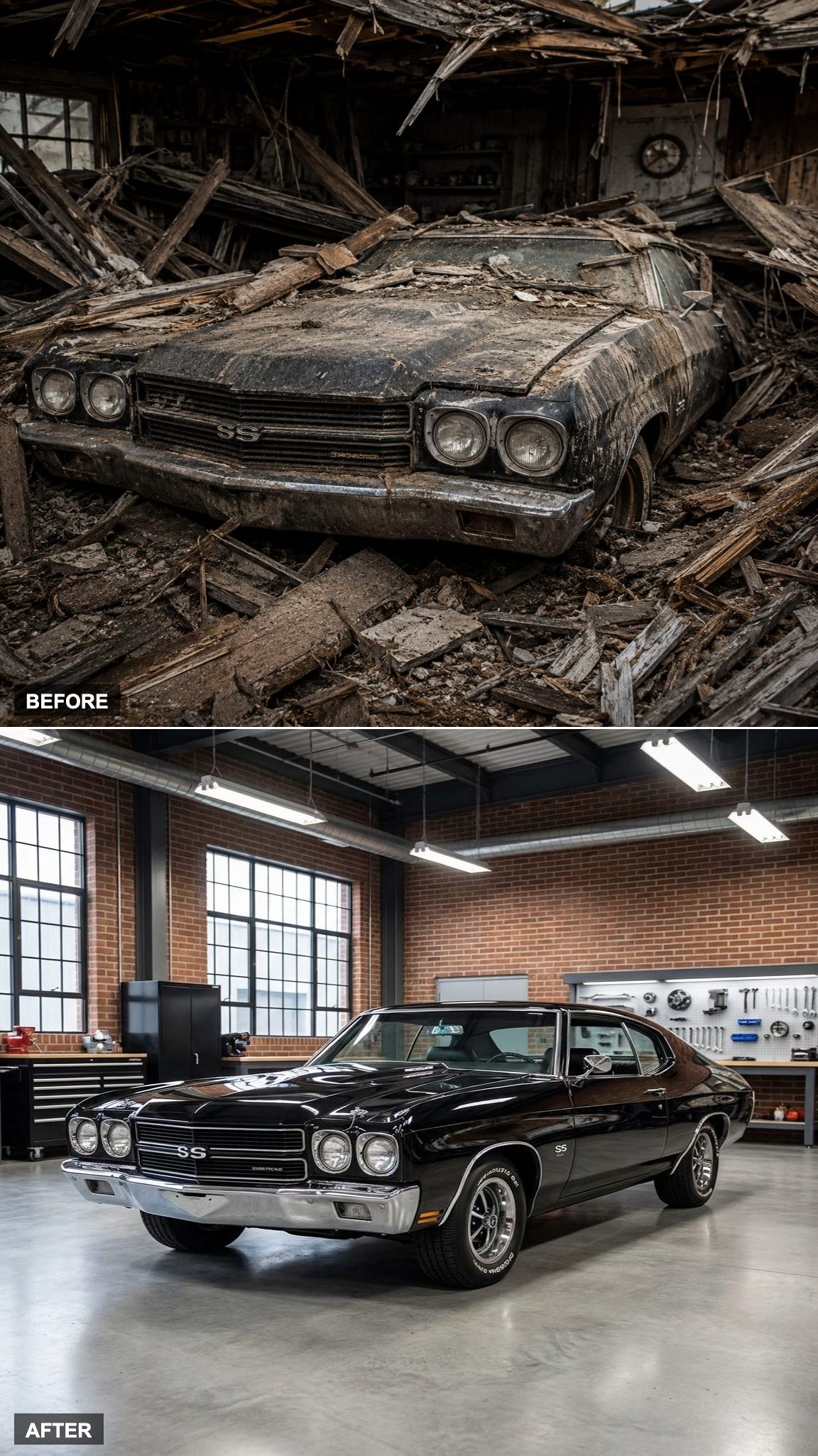
Some cars deserve to return looking much as they did when they first reached the dealership. Not lower, louder, or covered in carbon fiber. Just clean, correct in spirit, and recognizable from across the parking lot.
Factory-style wheels, chrome bumpers, restrained paint, and a period-inspired cabin let the Chevelle’s original shape carry the transformation. The dramatic part is not what was added. It is how completely the wreckage disappears.
Cranberry Red and Chrome Bring the Chevelle Back to Its Roots
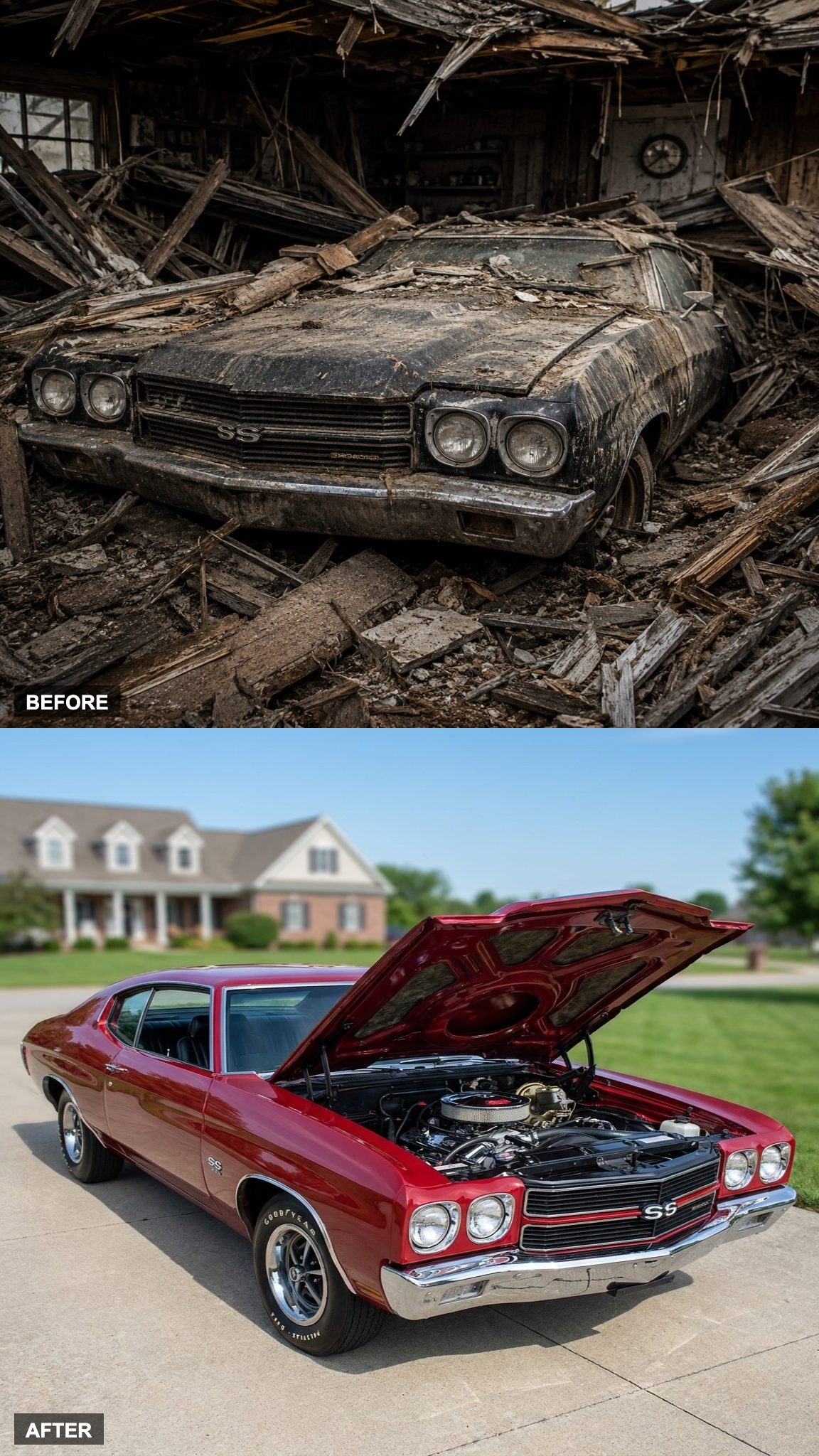
Cranberry red brings the long hood, broad chrome bumpers, and kicked-up rear quarters back into focus without turning the restoration into a costume. Black bucket seats keep the cabin simple, while polished five-spoke wheels and white-letter tires add just enough period attitude.
The open hood reveals a cleaned and carefully organized engine bay, but the larger success is restraint. Nothing fights the original shape. The car looks rebuilt for the road rather than redesigned for a convention floor.
Mirror-Black Paint Turns the Chevelle Into a Rolling Reflection
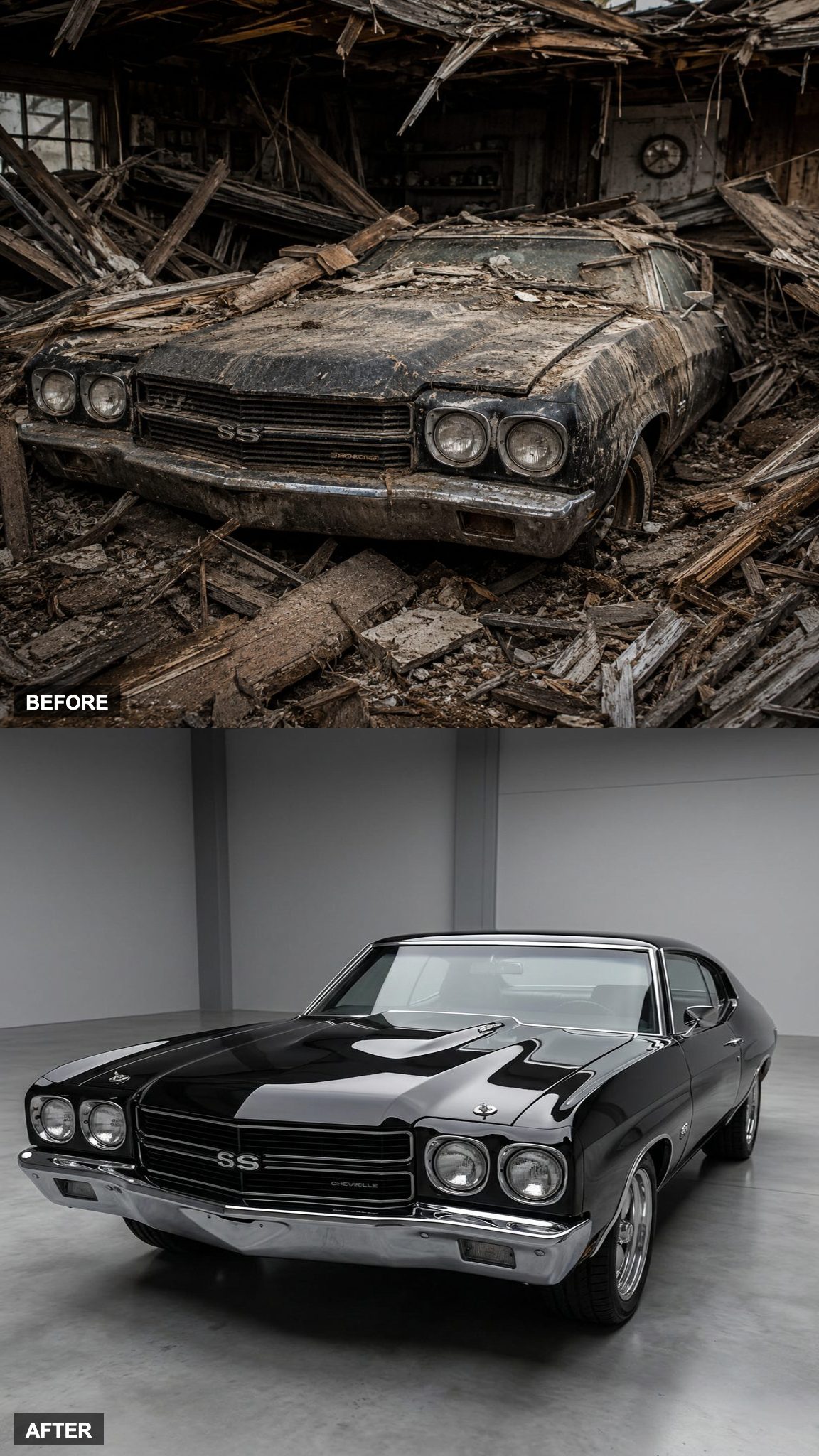
Jet black polished to a mirror finish is either the most confident paint choice in the room or the least forgiving. On this Chevelle, it is both. Darkened trim replaces much of the bright chrome, while black wheels settle into the bodywork instead of calling attention to themselves.
Inside, dark upholstery and modern materials continue the same idea without smothering the original dashboard shape. There is almost no color competing with the body. The finish, the reflections, and the Chevelle’s heavy profile do all the work.
“There is almost no color competing with the body. The finish and the reflections do all the work.”
Monaco Orange Brings Back the Chevelle’s High-Impact Muscle
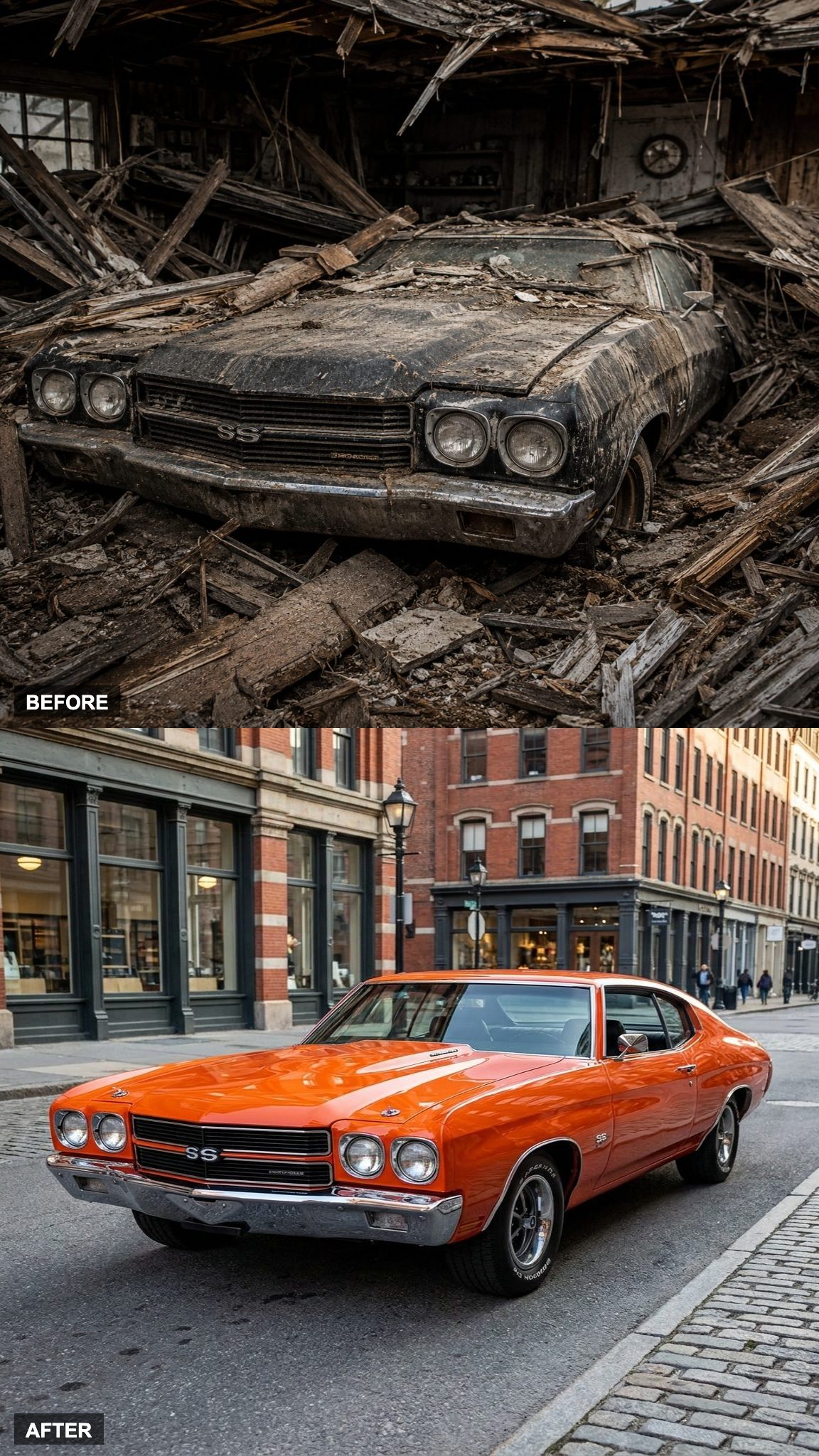
Orange paint and black racing stripes do not ask permission. They announce the car from the far end of the street, then let the cowl hood, polished wheels, and muscular stance finish the introduction.
The cabin stays closer to the period than the exterior color might suggest. Traditional gauges and a familiar steering-wheel shape keep the transformation tied to 1970 rather than turning it into a fully modernized restomod.
The Royal Blue Performance Build That Refuses to Sit Quietly
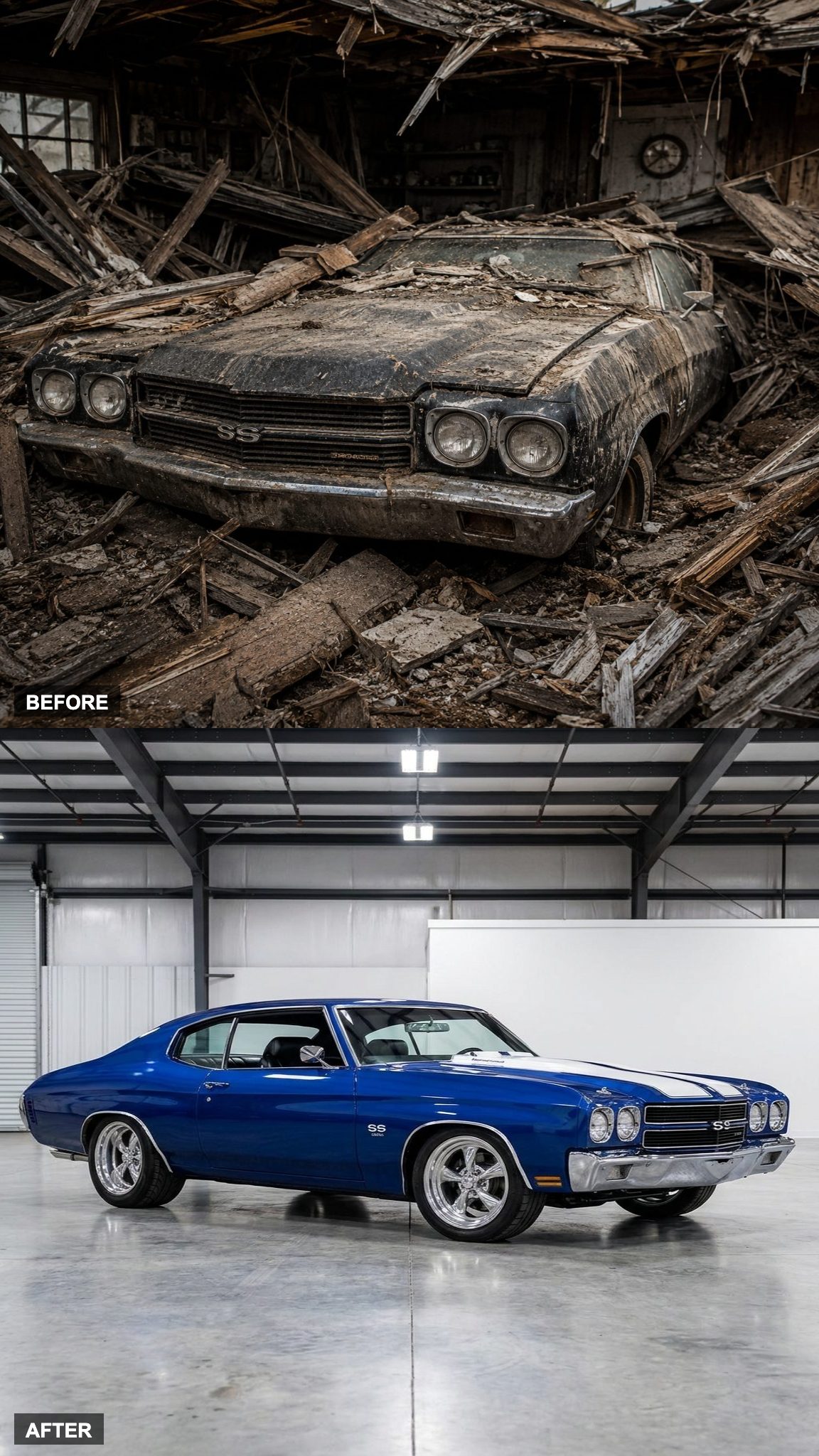
Some blues simply sit on the surface. This one changes with the light, reading cobalt under a clear sky before dropping toward navy as shadows move across the body.
The deeper color makes the chrome and polished wheels appear sharper without burying the Chevelle under decoration. A bright red or orange version arrives shouting. This one waits until you are close enough to notice how much is happening in the paint.
The hood catches the sky, the doors reflect the surroundings, and the rear quarters fall into shadow. One blue manages to give the car several distinct personalities.
Luxury Grand Touring Turns the Chevelle Into a Long-Distance Cruiser
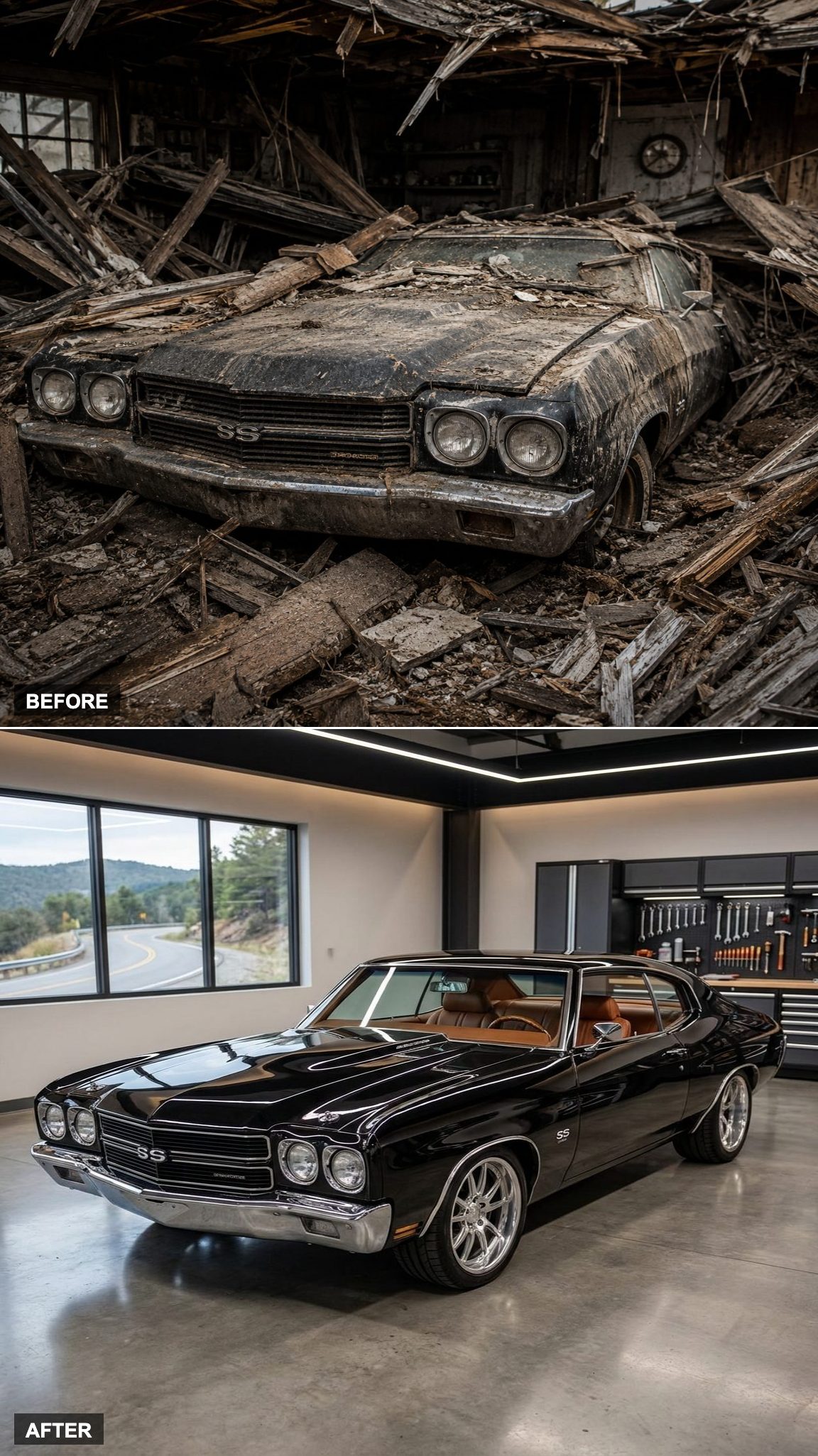
Muscle does not have to punish its occupants. This version points the Chevelle toward the open road instead of the drag strip, with fuller seats, a more finished cabin, and a stance that suggests highway miles rather than hard launches.
The transformation works because it does not remove the car’s authority. The hood is still long, the rear quarters are still broad, and there is still plenty of engine ahead of the windshield. The rough edges have simply been filed down.
A grand-touring build keeps the visual weight and power of a muscle car while adding the cabin materials and road-oriented details that make a longer drive feel plausible.
Champagne Metallic and Tan Leather Dress the Chevelle for Dinner
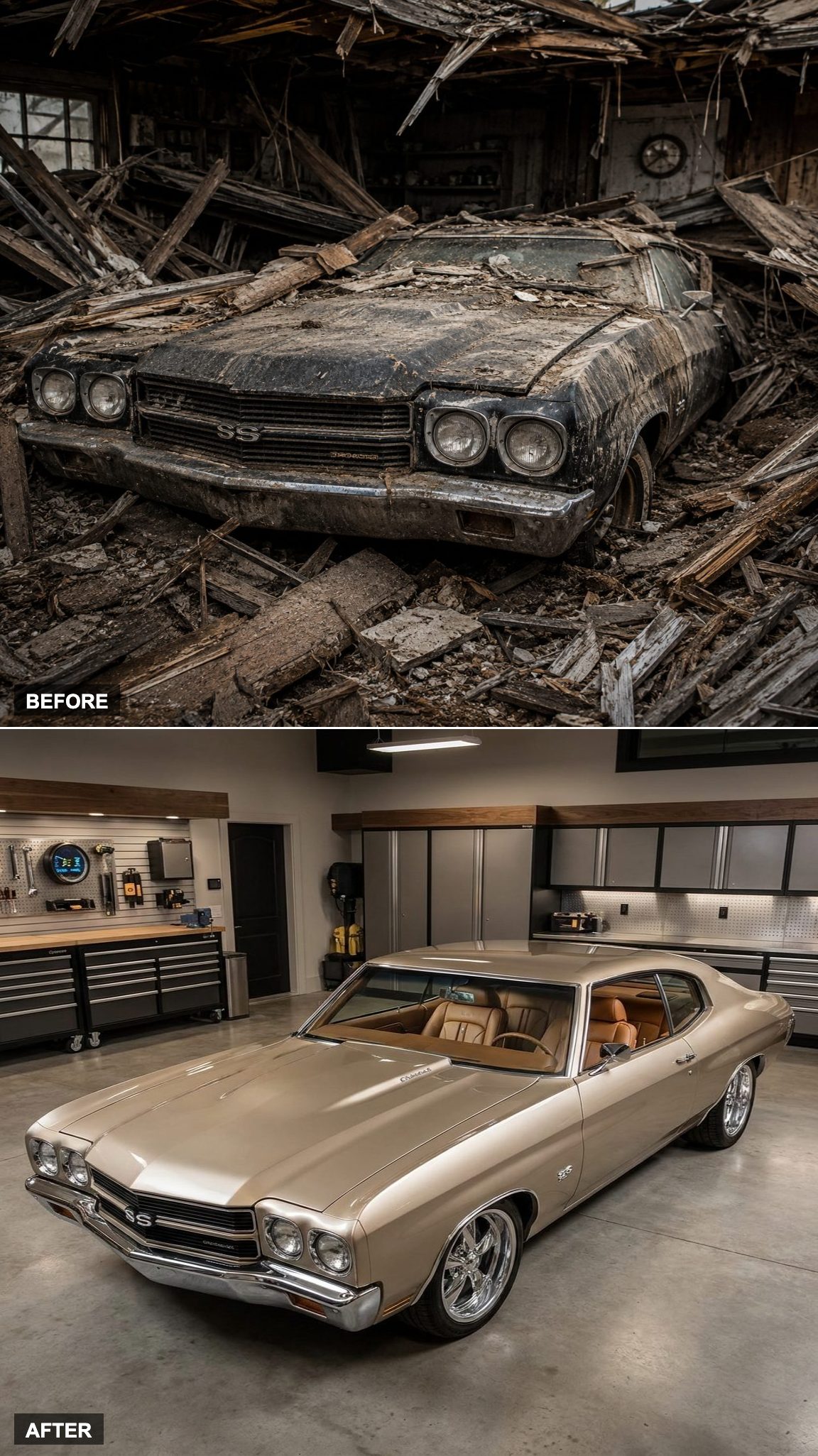
Champagne metallic sits somewhere between silver and pale gold, changing character as the light moves across the hood. It is an unusual choice for a Chevelle, which is exactly why the transformation feels more considered than another predictable red or black rebuild.
Inside, custom tan leather seats and a wood-trim dashboard give the cabin a warmer, more formal character. Digital gauges introduce modern information without dominating the view.
Polished wheels finish the exterior without dragging the car back toward full muscle-car theater. This is the Chevelle for someone who wants the shape but not necessarily the noise surrounding it.
Satin Gunmetal and Exposed Carbon Push the Chevelle Forward
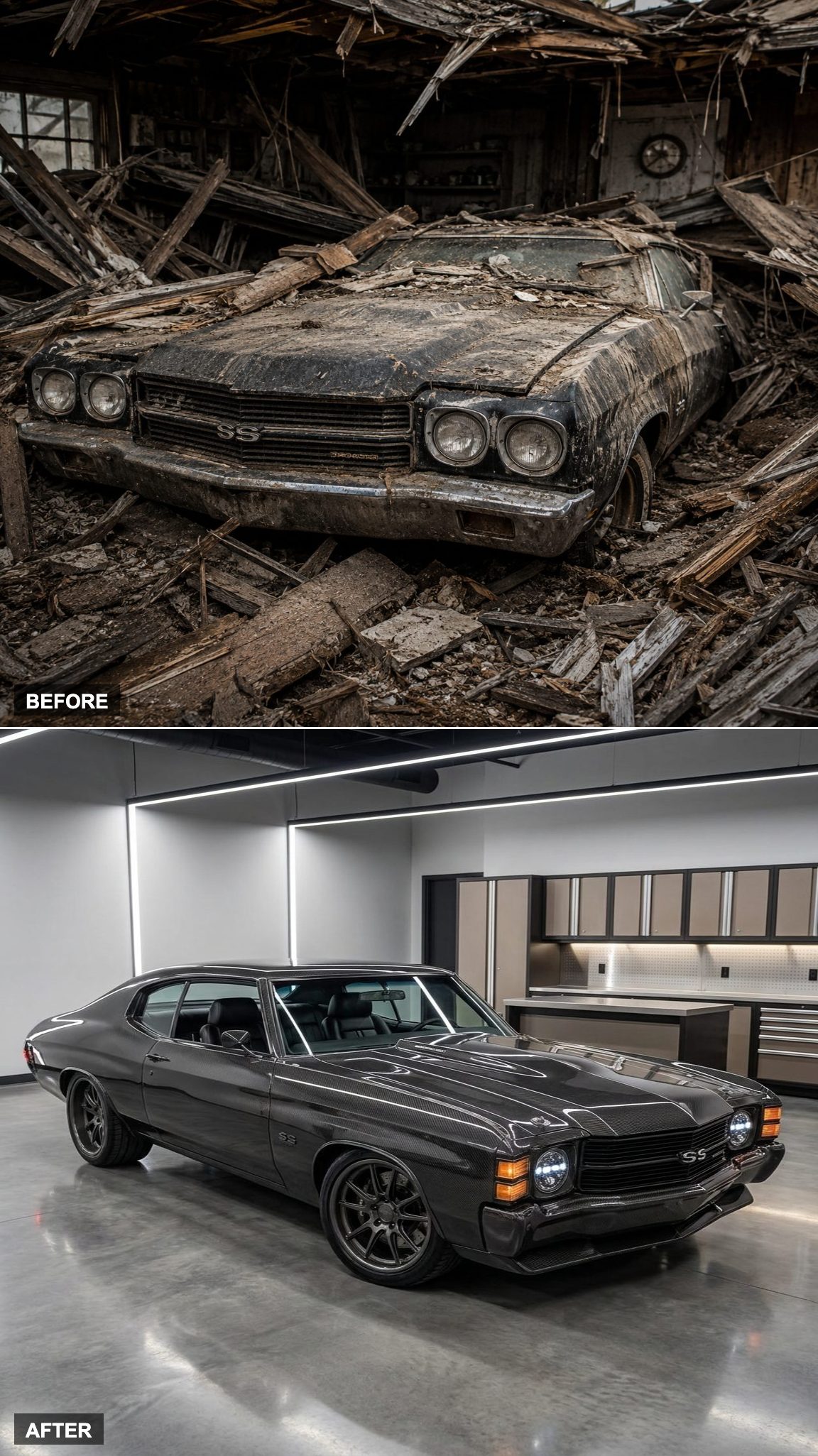
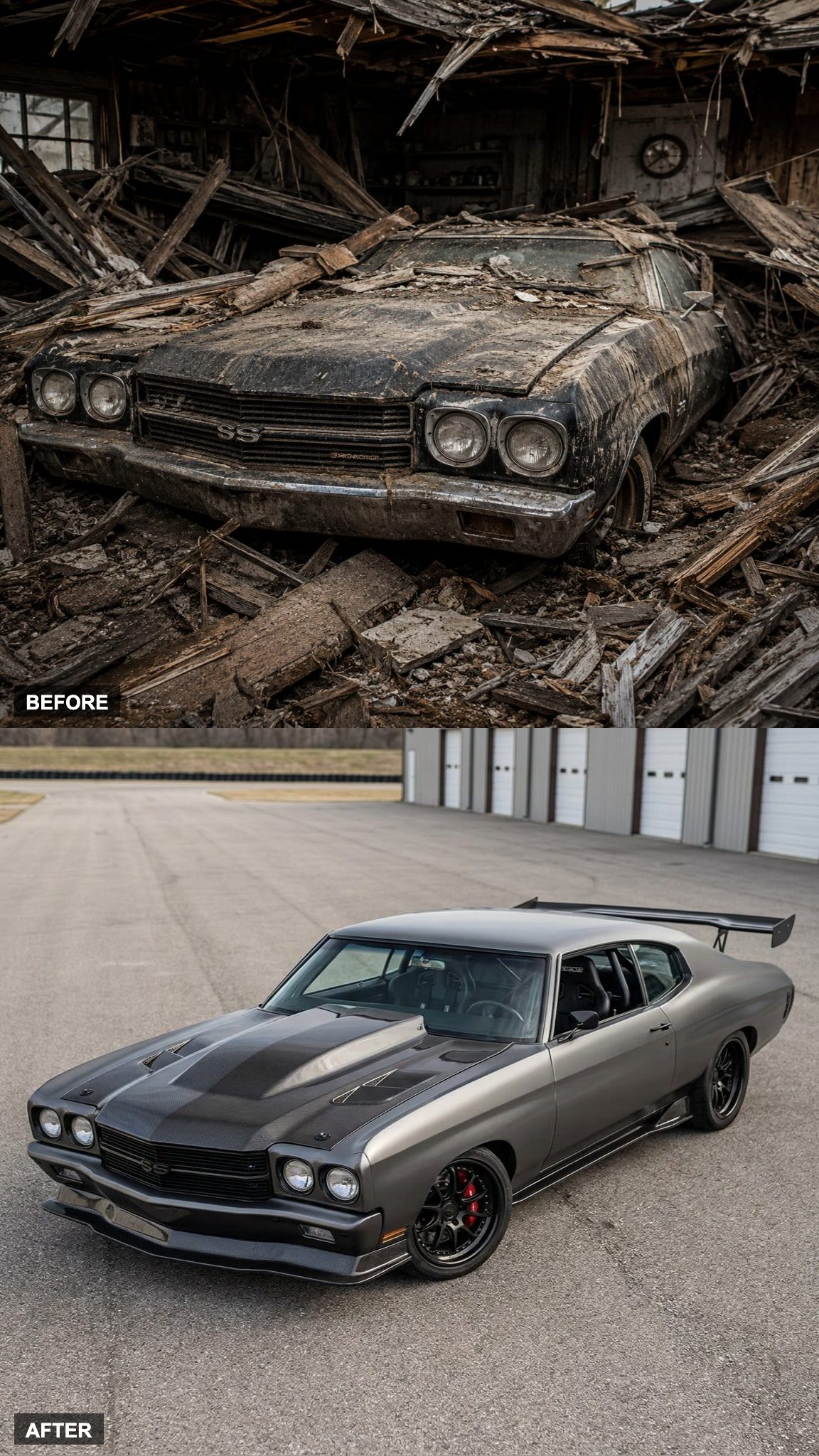
Satin gunmetal softens the reflections that usually race across a Chevelle’s long sides. The result is less flashy than gloss paint but more severe, especially beside the exposed carbon-fiber hood, front splitter, and rear spoiler.
Black wheels and large brakes continue the modern performance theme. Whether every aerodynamic piece is functional or partly visual, the direction is unmistakable: this build is chasing a modern track, not a 1970 dealership floor.
Modern Brakes, Low Stance, and Tighter Wheel Fitment Change the Proportions
Would you like to save this?
The most important changes here happen close to the pavement. Large wheels fill the openings, substantial brake hardware sits behind them, and the body rides lower over the tires than any factory Chevelle ever did.
A deep front splitter and compact rear spoiler sharpen the edges, but the lowered profile makes the biggest difference. Bringing the body closer to the ground stretches the car visually, making the hood appear longer and the roof seem lower without altering the original sheet metal.
White Racing Livery and a Roll Cage Strip the Chevelle to Its Purpose
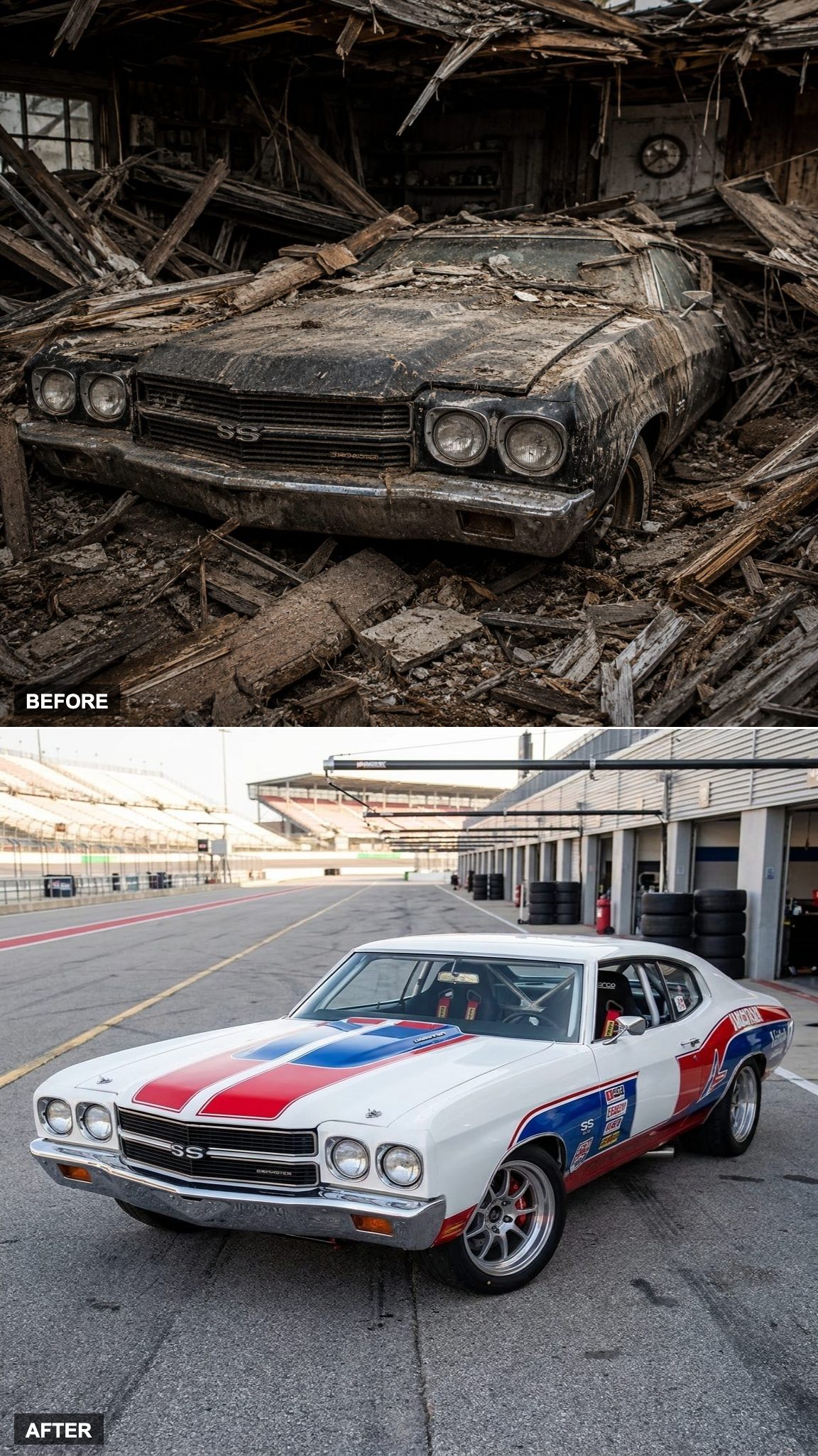
Racing graphics cut across the white paint before the roll cage, harnesses, or stripped cabin have a chance to explain what happened. This version trades plushness for a more focused, competition-inspired interior.
The white body keeps the graphics legible while exposing every vent, scoop, and dark mechanical detail. It is a Chevelle imagined less as a restored street car than as something prepared to spend weekends circling a track.
Candy Red Paint and a Detailed Engine Bay Build a Full Show Car
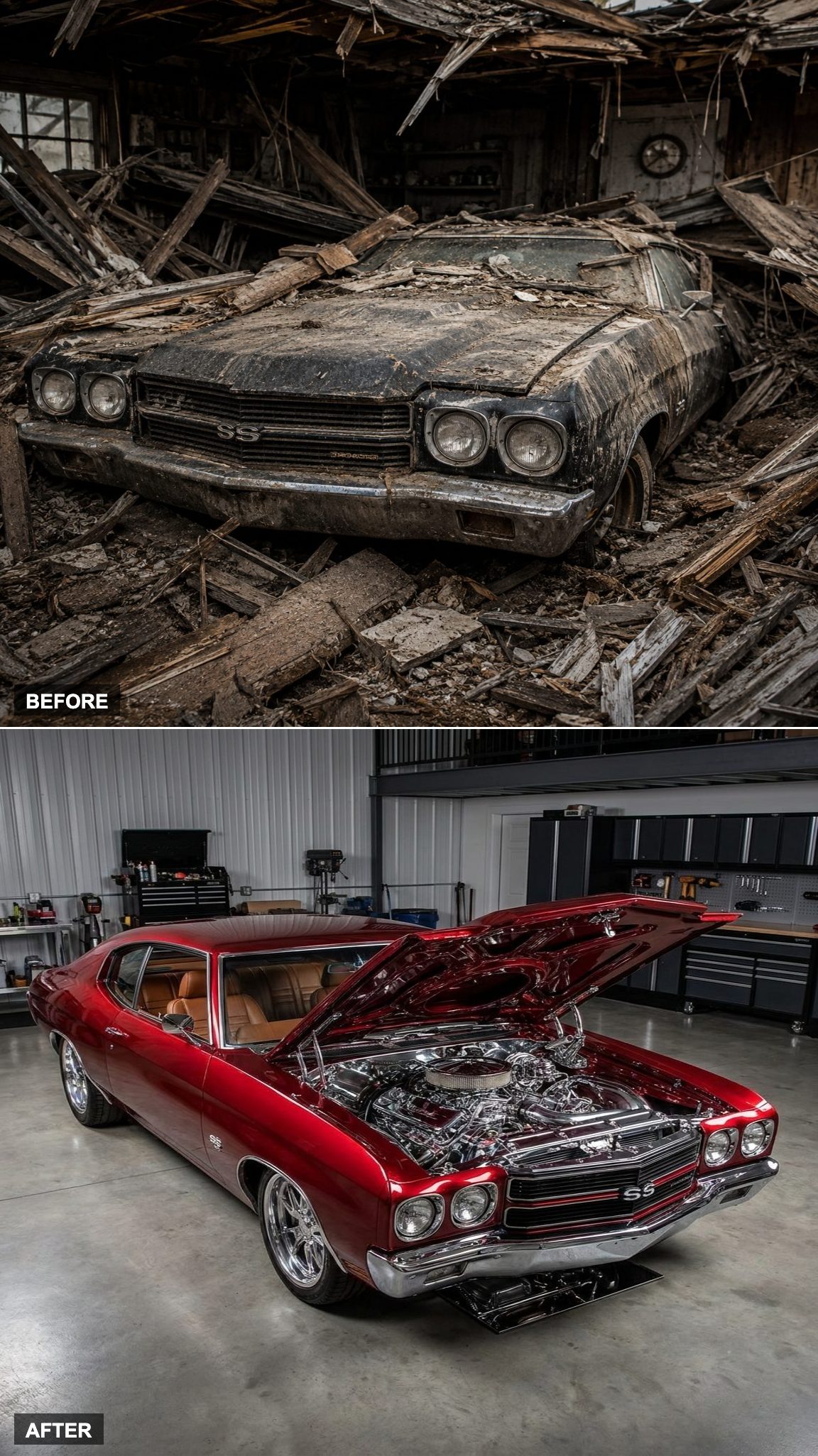
The multi-layer candy red would have been enough to hold a crowd, but this transformation keeps going. Chrome and polished metal organize the engine bay, while the visible suspension and underbody receive the same level of attention as the exterior.
Inside, tightly stitched leather gives the cabin a finished appearance without competing with the paint. Blending into traffic was never the goal here — this Chevelle is built to sit under bright lights, hood open, every surface on display.
Twin-Turbo Power Hides Beneath a Stock-Looking Green Exterior
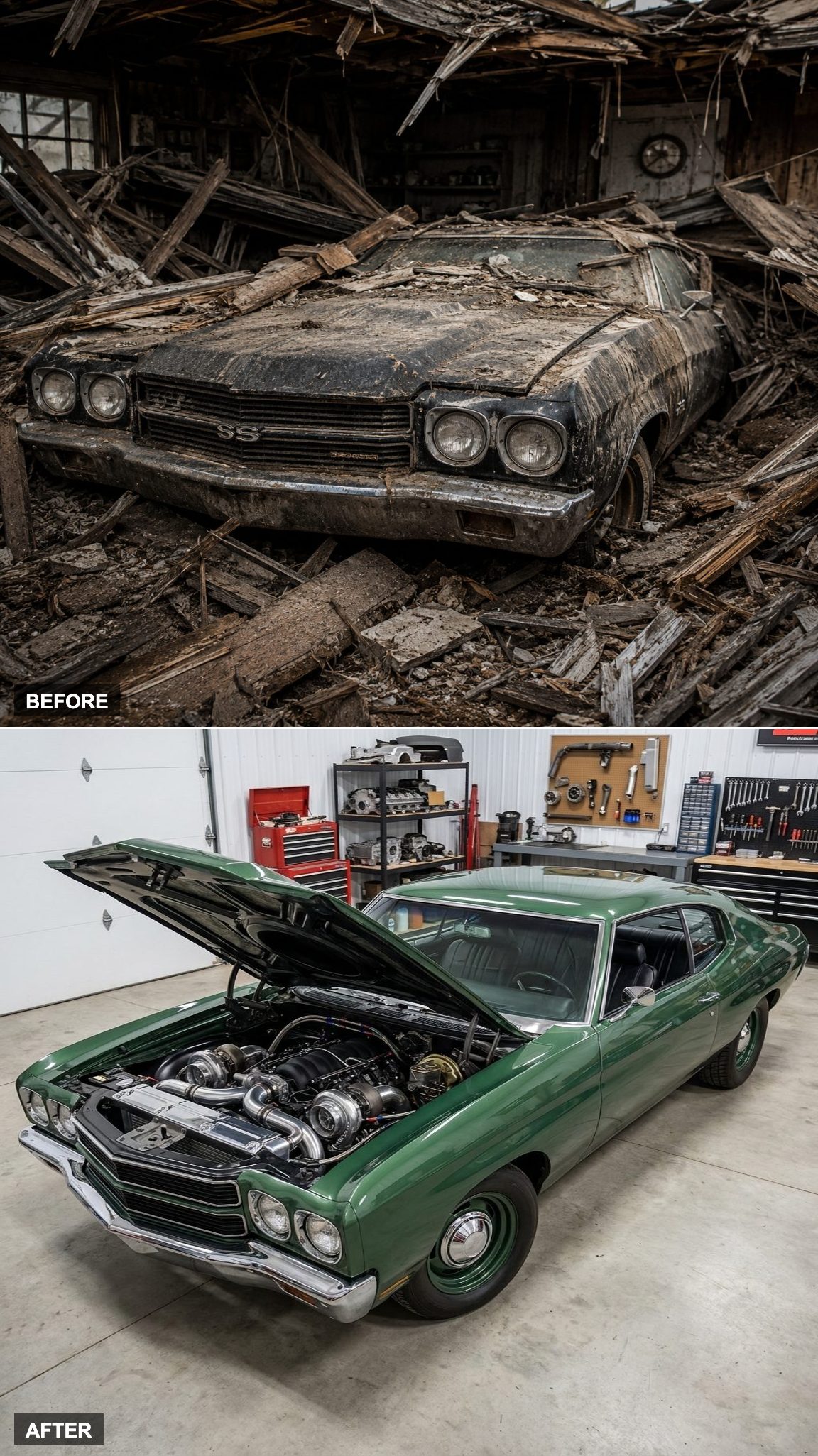
The dark green exterior is deliberately quiet. Simple wheels, restrained trim, and an interior that avoids bright colors let the car pass as an unusually tidy old Chevelle.
Opening the hood changes the story. A twin-turbo LS conversion replaces nostalgia with modern horsepower, while the understated exterior preserves the surprise. The appeal lies in the distance between what the car appears to be and what sits beneath the sheet metal.
Matte Olive Paint Lets the Chevelle’s Shape Do the Talking
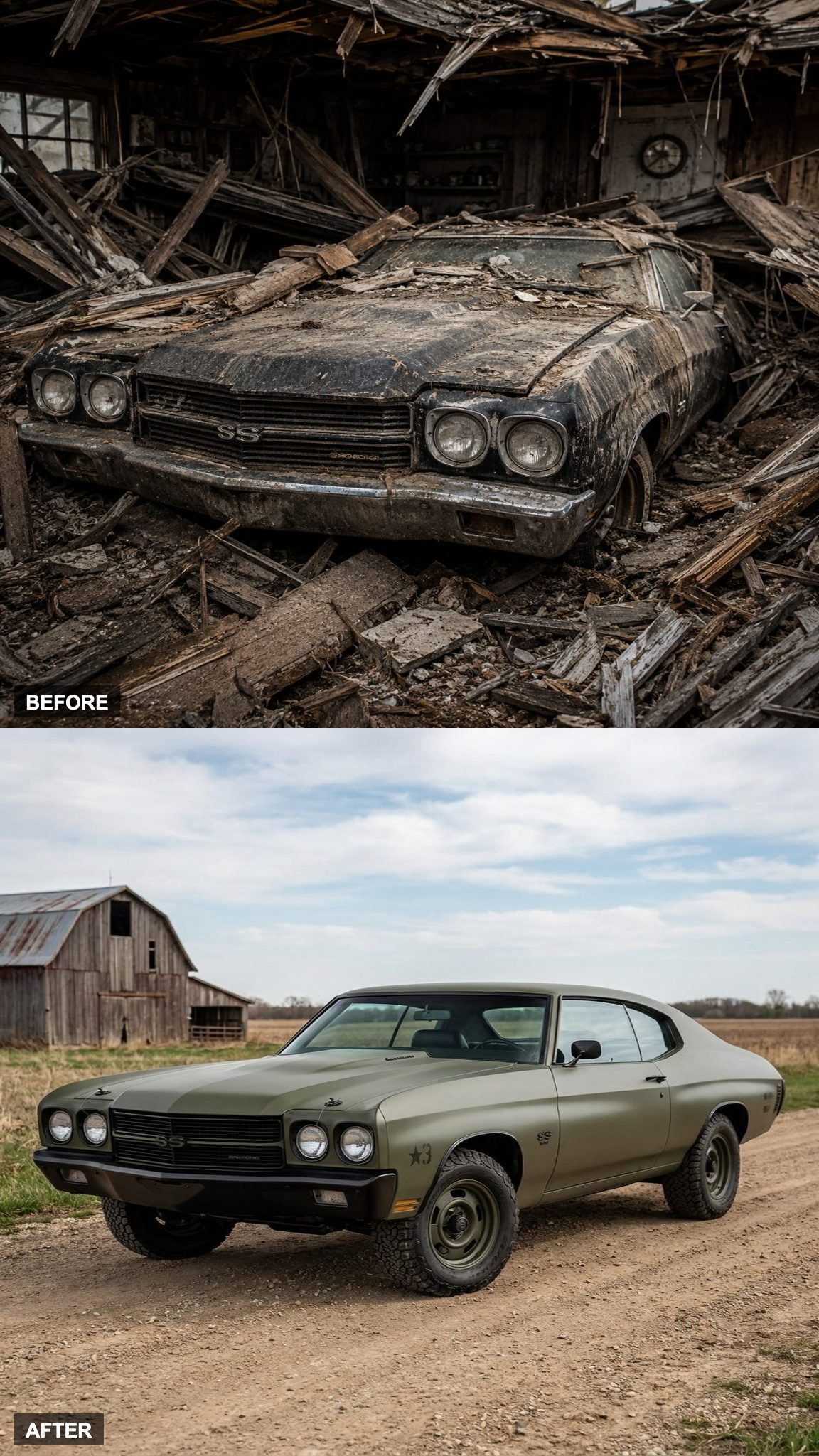
Most builds in this lineup compete for attention. This one seems less interested. Flat olive reduces reflections and removes the sparkle that usually comes with a freshly rebuilt muscle car.
Without bright chrome or metallic flake pulling the eye around, the long hood and heavy rear quarters become the main event. The finish also demands careful application because inconsistent sheen and uneven repairs are much harder to disguise than they are under conventional gloss paint.
With fewer reflections racing across the panels, the eye pays closer attention to the Chevelle’s basic mass and proportions.
Racing Numbers and a Stripped Cabin Re-create a 1970 Track Car
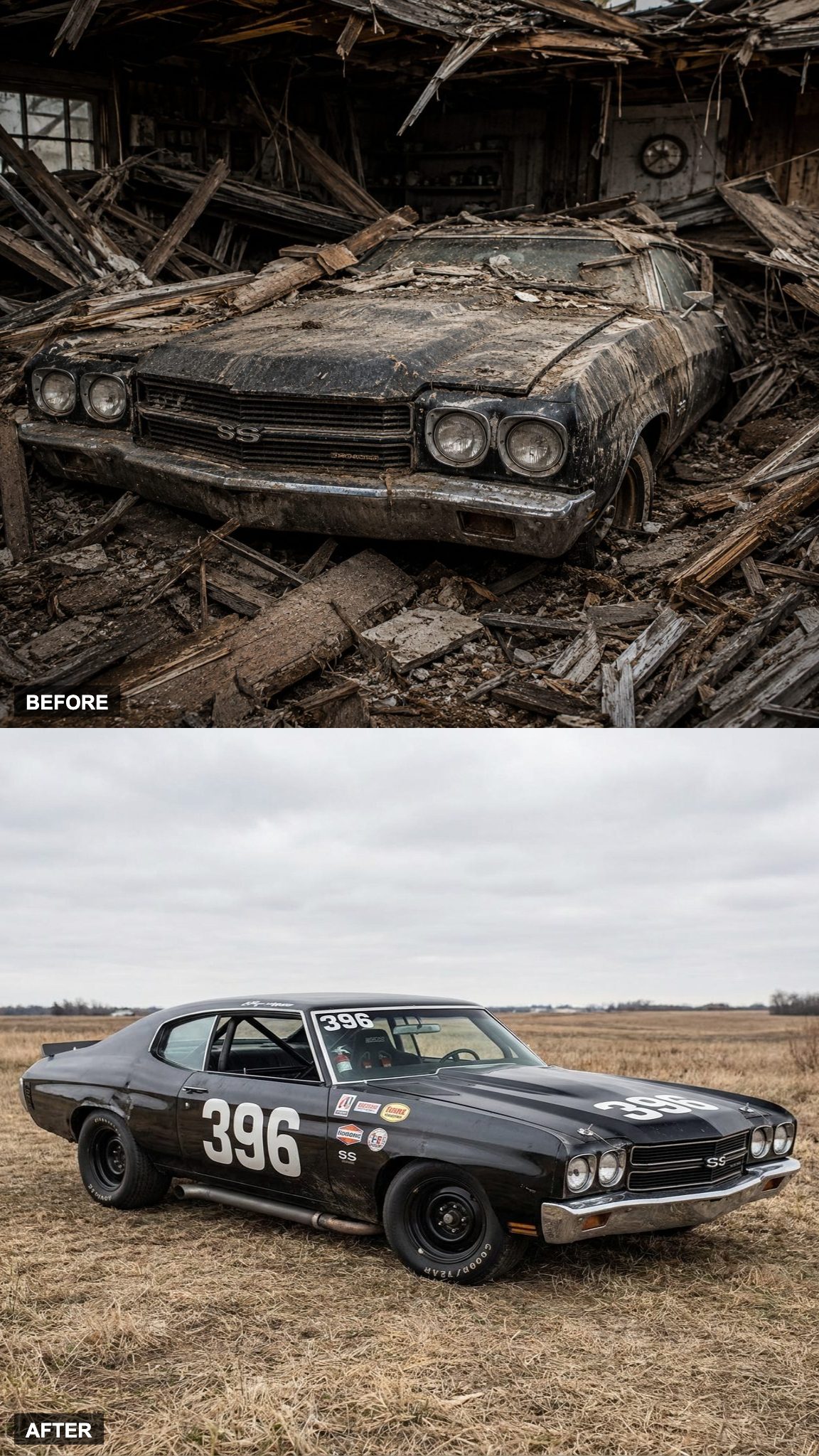
Everything about this transformation points backward. Racing numbers, hood pins, steel wheels, and a side-exit exhaust recall the privately built stock cars and short-track machines that appeared throughout the period.
The interior follows the same approach. Soft trim and entertainment equipment give way to a cabin organized around visibility, controls, and little else. Half measures would make this feel like a costume. The consistent period details turn it into a convincing tribute.
Sunset Bronze Paint Changes Every Time the Light Moves
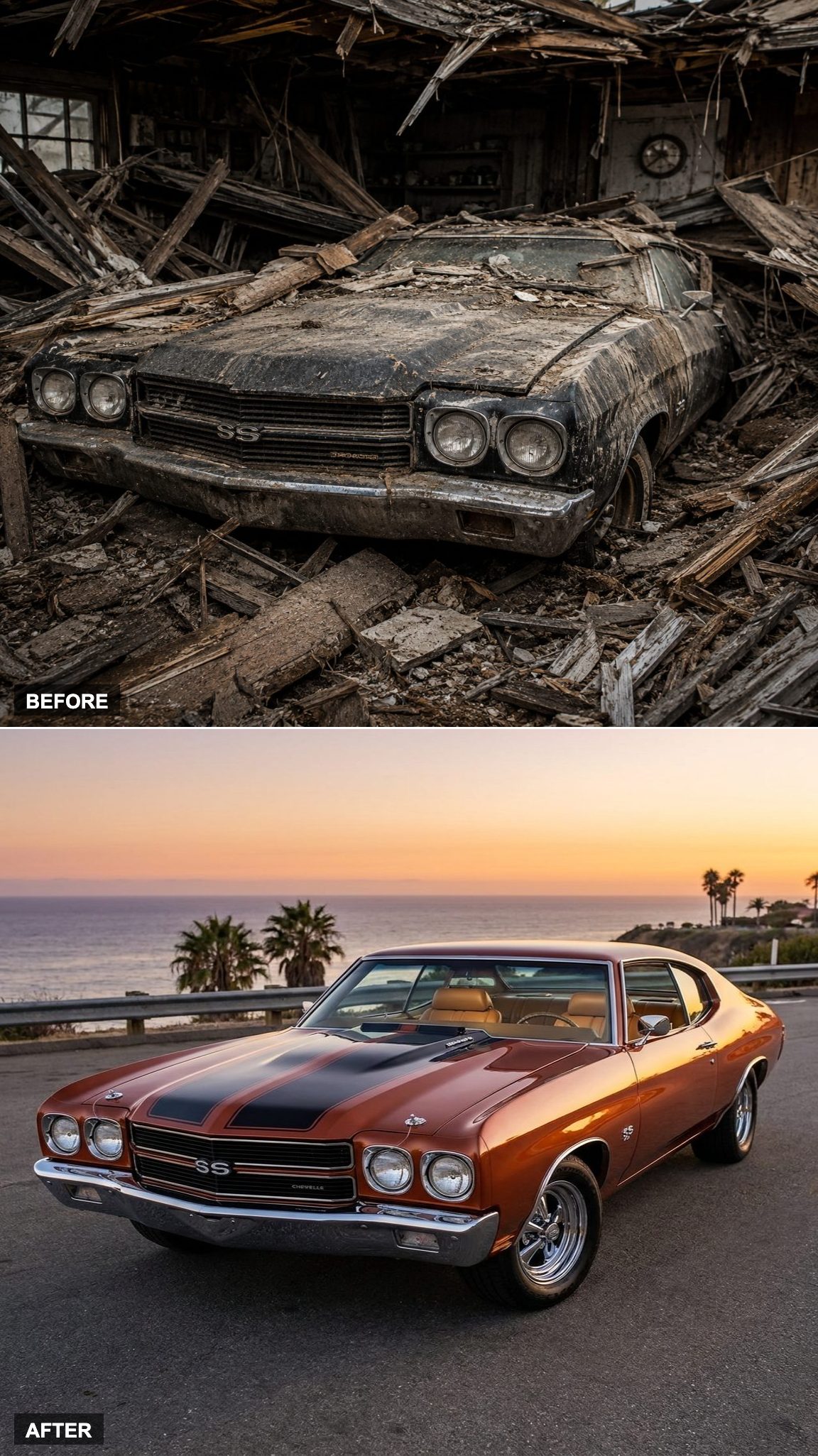
Bronze is a difficult color to balance. Push it too far toward brown and the car starts resembling a kitchen appliance from 1974. Add too much gold and the finish becomes louder than the body beneath it.
This version lands between the two. The paint looks restrained under flat shop lighting, then develops copper and gold highlights when the sun reaches the curved sections of the hood and rear quarters.
The wheels stay within the same family without matching the body exactly. Their darker bronze finish creates enough separation to keep the transformation from becoming a single uninterrupted block of color.
Cream Leather Gives the Bronze Chevelle an Unexpected Interior
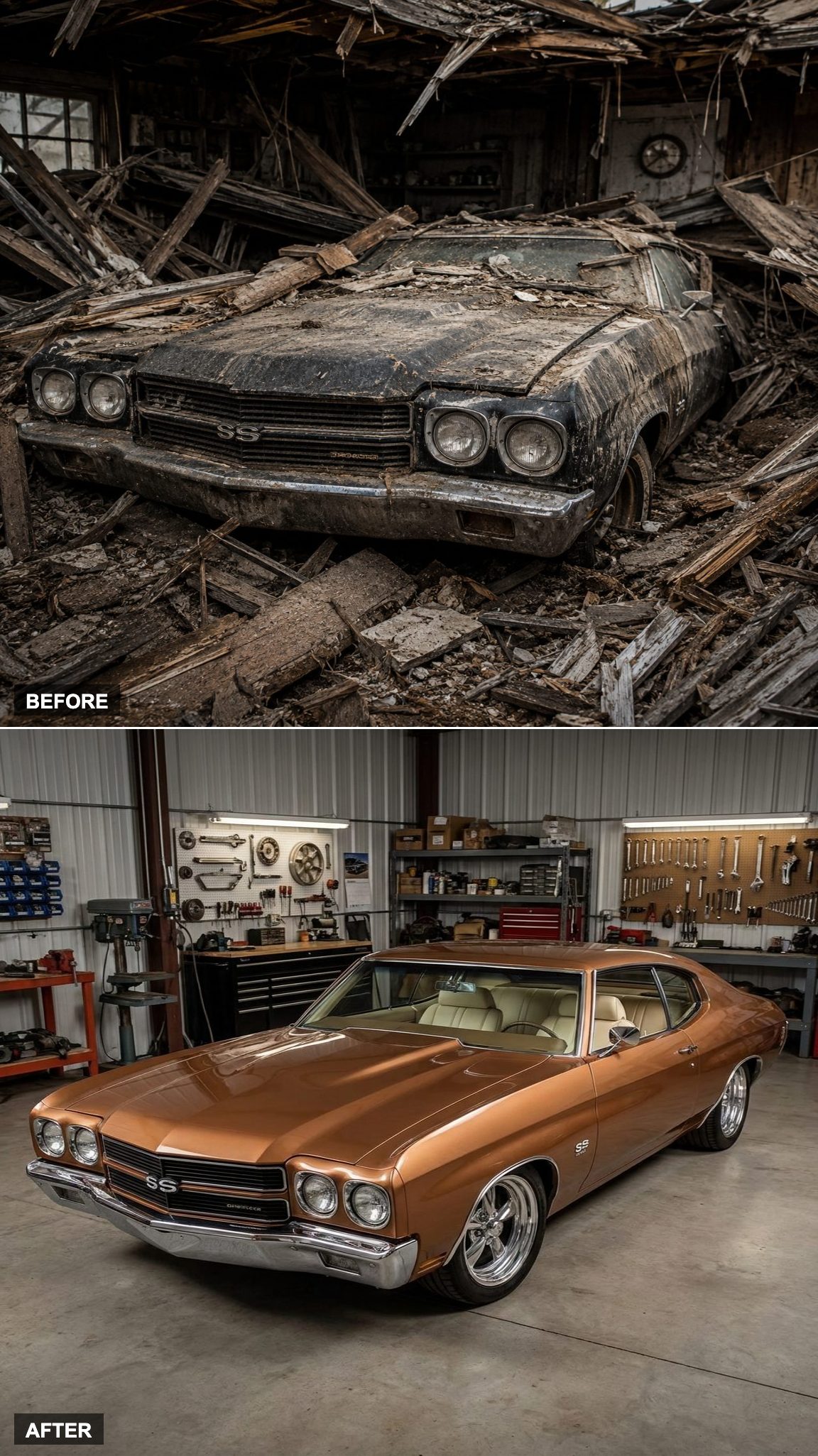
The exterior may be bronze, but the boldest change waits inside. Cream leather brightens the cabin and creates a sharp contrast with the darker dashboard, steering wheel, and exterior paint.
Polished five-spoke wheels bring a cooler note to the warm body color, while the lowered suspension reduces the visual gap above the tires. Chrome remains, but only in small enough doses to outline the original design rather than overwhelm it.
Dark Navy Paint and a Wood Steering Wheel Mix Two Eras
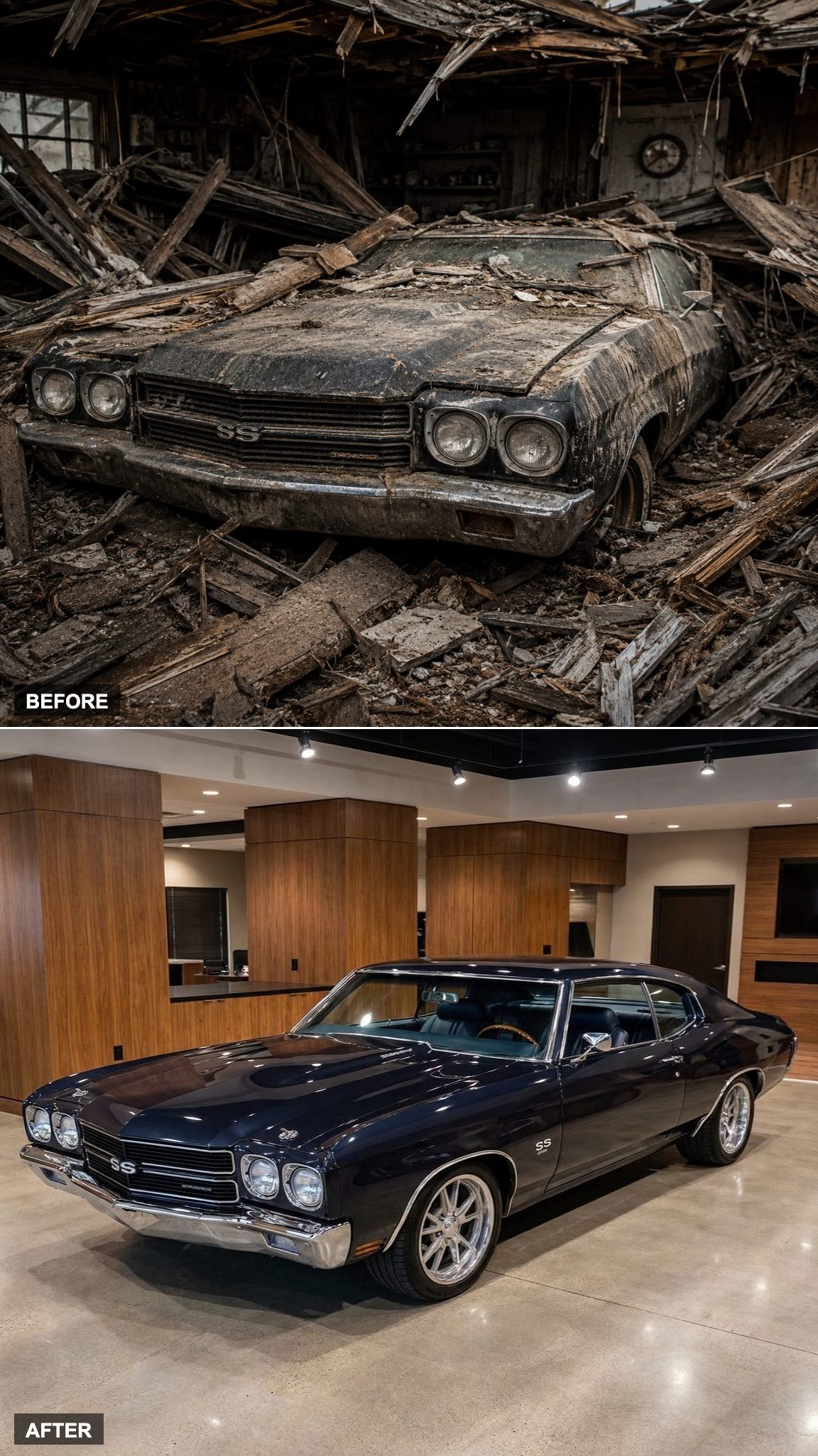
Dark navy metallic does something interesting to a body this large: it pulls the eye along the roofline and doors rather than letting it settle on the widest parts of the rear quarters.
Chrome window trim preserves a familiar period outline, while custom billet wheels move the car forward several decades. The restored wood steering wheel bridges the two approaches, bringing natural grain and warmth into an otherwise dark cabin.
Navy upholstery closes the loop without matching the exterior too literally. The materials change, but the color continues through the car.
Bright Yellow Paint and Side Pipes Turn the Volume All the Way Up
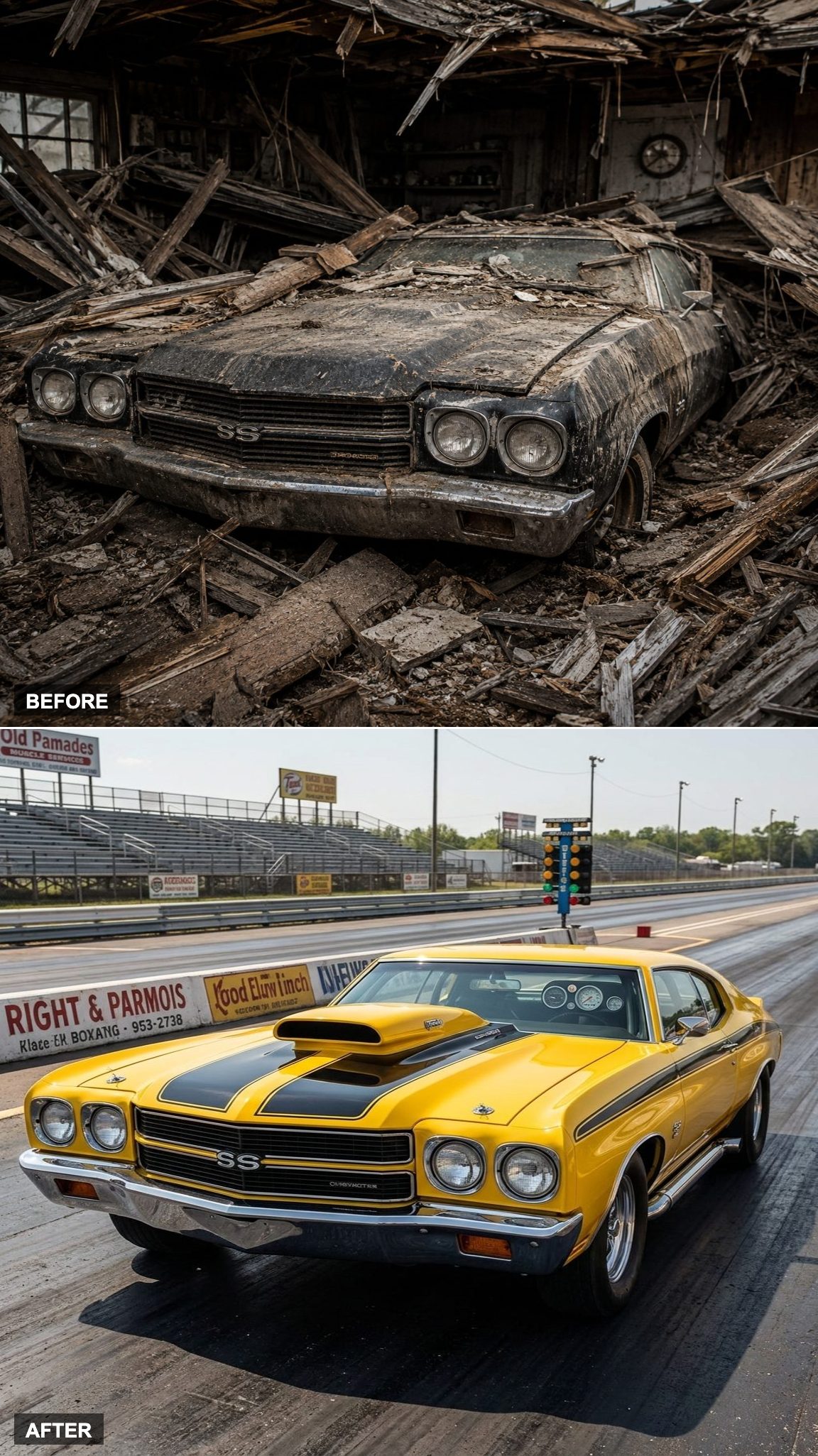
The drag-style wheels are narrow in front and wide in back, establishing the car’s attitude before the hood scoop or side pipes enter the picture. Black stripes break up the bright yellow paint while emphasizing the length of the hood.
Aftermarket racing gauges continue the theme inside. They suggest a car built around monitoring what the engine is doing rather than preserving a perfectly stock dashboard.
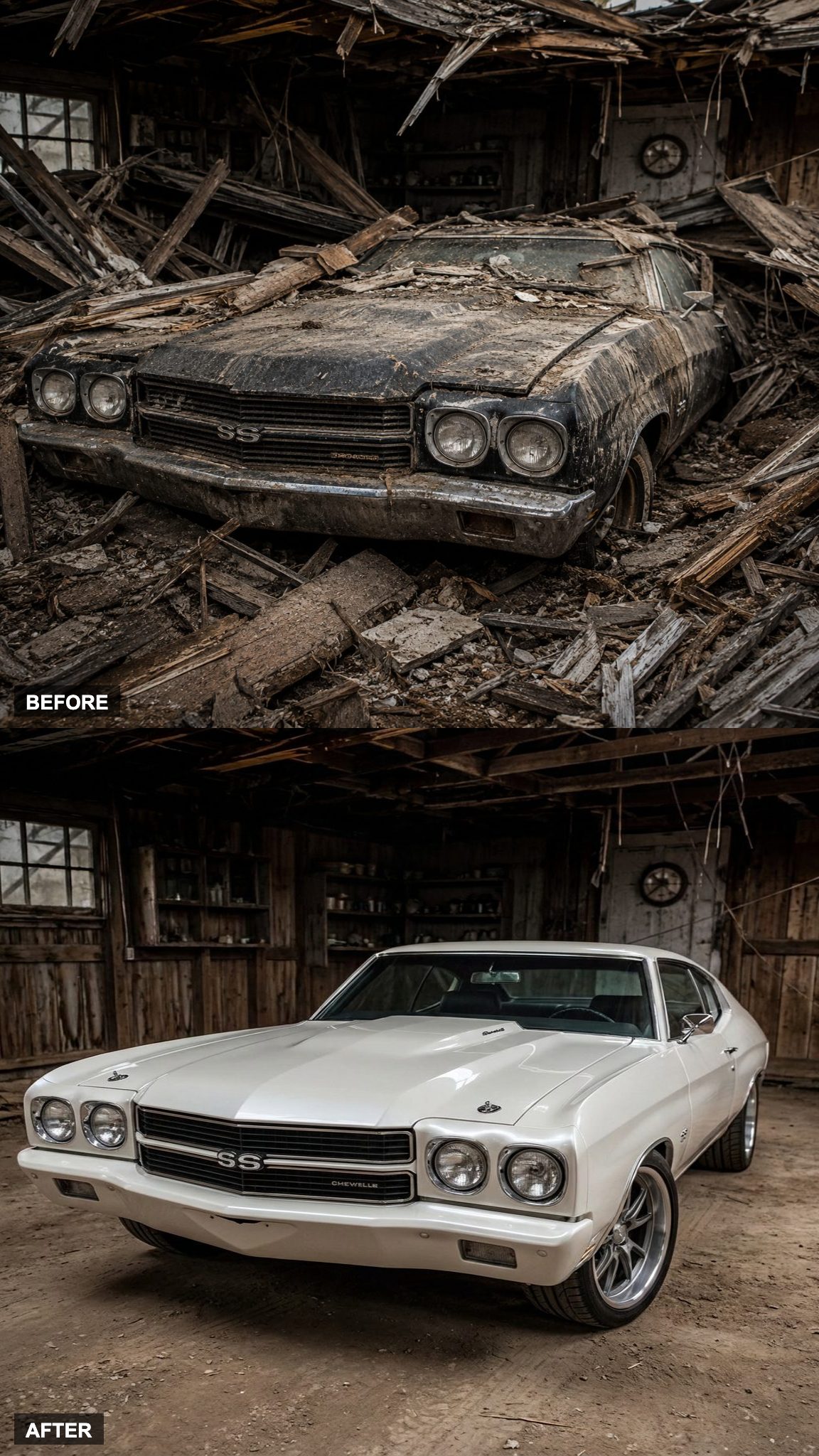
Pearl White Paint Makes the Bodywork the Main Attraction
Would you like to save this?
Pearl white rarely looks like a single fixed color. It can read cream in shade, silver beneath artificial light, and brighter white when the sun strikes a panel directly.
That movement suits the Chevelle’s broad surfaces. The hood, doors, and rear quarters catch light at different angles, so the car seems to shift slightly as the viewer walks around it.
Emerald Paint and Gold Wheels Lean Into Jewel-Tone Drama
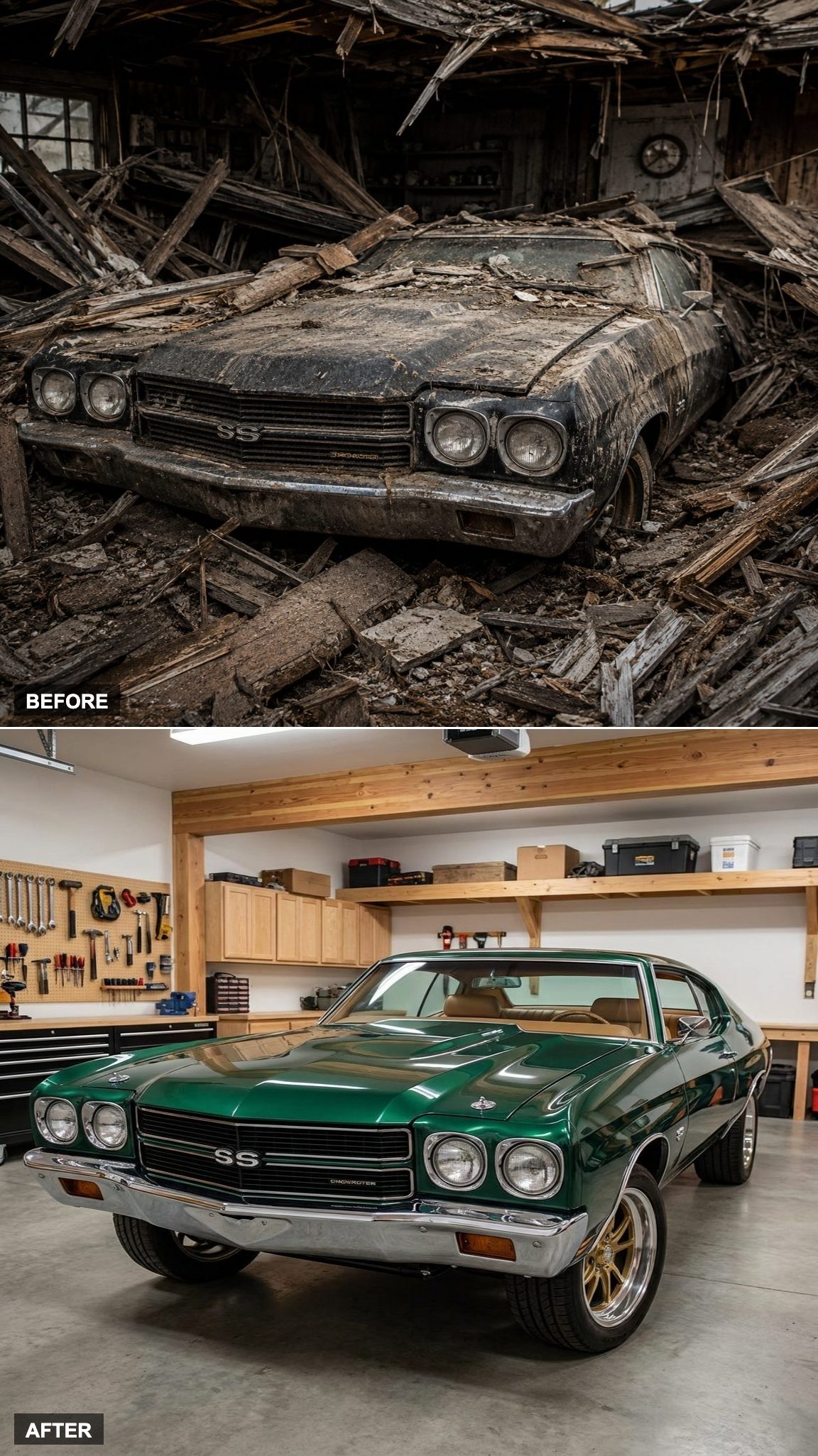
Gold-accented wheels against deep emerald paint could become theatrical very quickly. Here, the tan leather interior and restored brightwork keep the palette connected to traditional luxury materials.
The chrome trim outlines the windows, grille, and bumpers without competing with the gold wheels. Instead of removing every original decorative element, the transformation lets old and new finishes share the same body.
Copper Paint, Bronze Wheels, and a Hand-Built Console Warm Up the Cabin
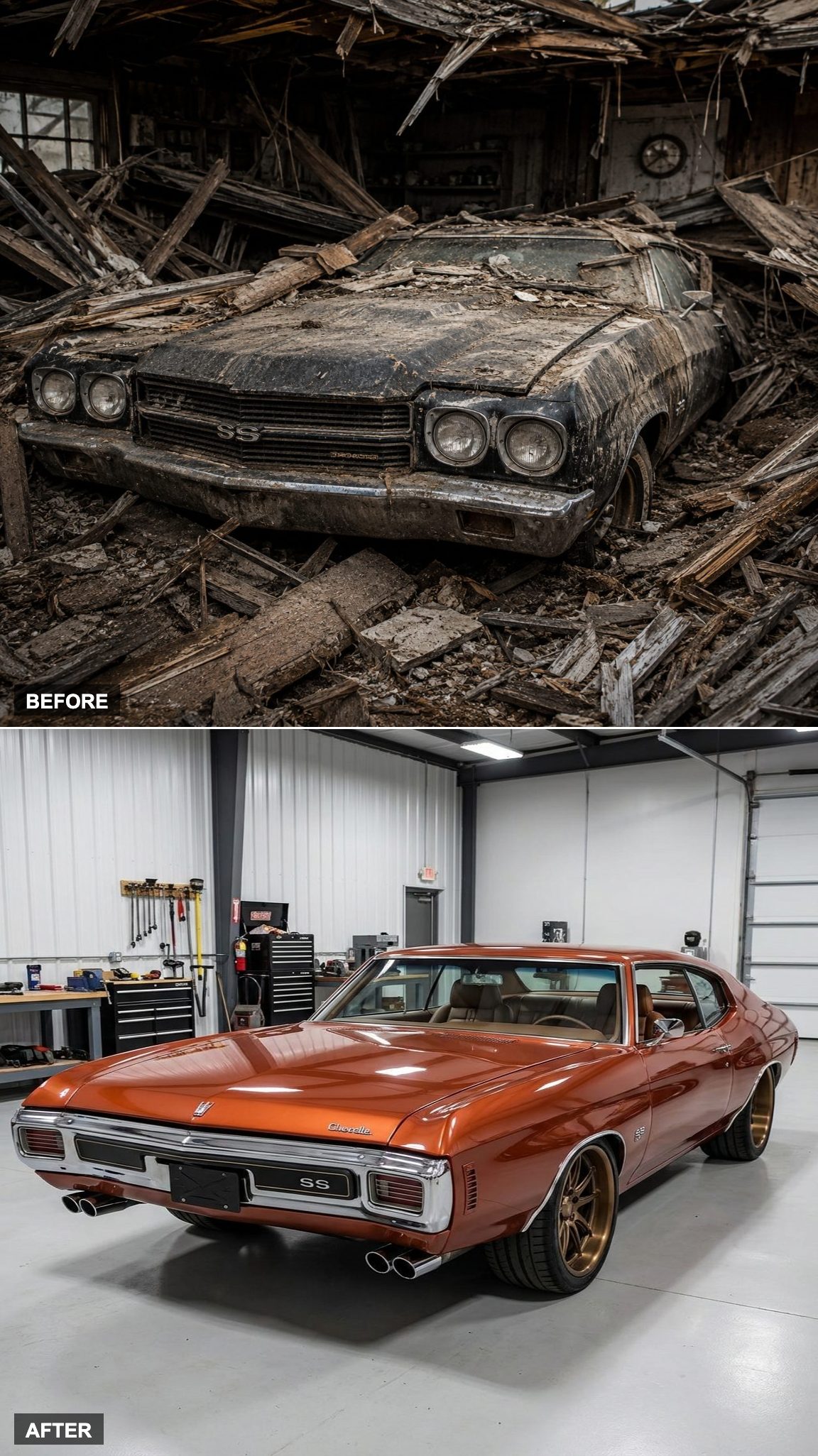
Copper paint and bronze wheels keep the entire exterior within a warm palette, but the handcrafted center console gives this transformation its clearest individual identity. The piece appears shaped for this cabin rather than dropped into place as a generic accessory.
Custom bucket seats follow the same approach, replacing the broad factory seating with a more fitted driving position. A prominent performance exhaust adds the less subtle half of the personality.
A High-End Show Build Turns Every Component Into Part of the Display
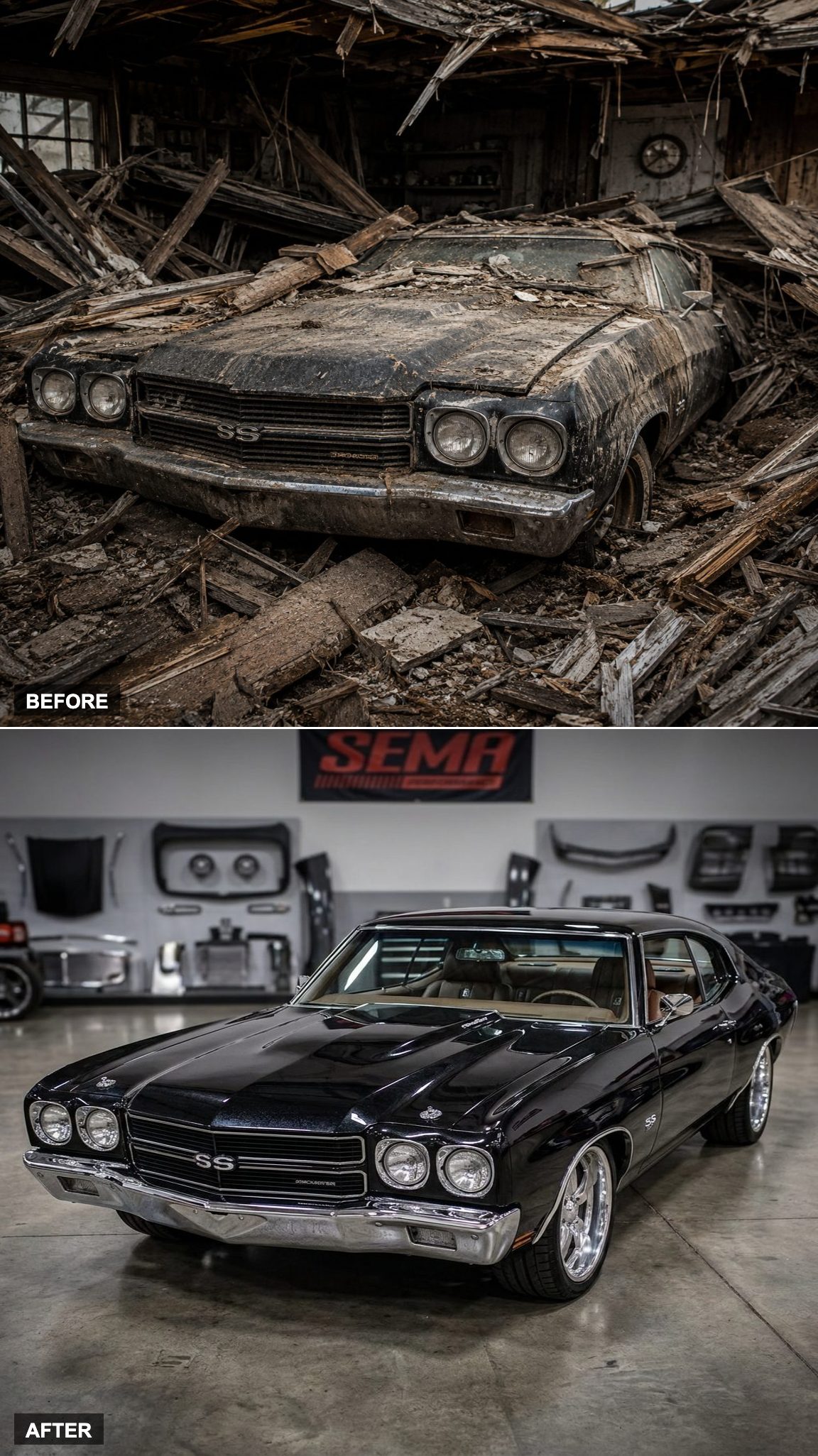
Every visible part appears selected with a show floor in mind. The wheels are highly detailed, the paint is polished to a deep finish, and the engine bay has been organized so carefully that hoses, wiring, and fasteners become part of the presentation.
Some high-end exhibition builds are driven regularly, while others spend most of their lives traveling between indoor displays. This Chevelle looks prepared for the second category, where an open hood and bright convention-center lighting reveal areas most road cars never expect anyone to inspect.
Straight to the Strip With a Blower, Slicks, and a Nose-High Stance
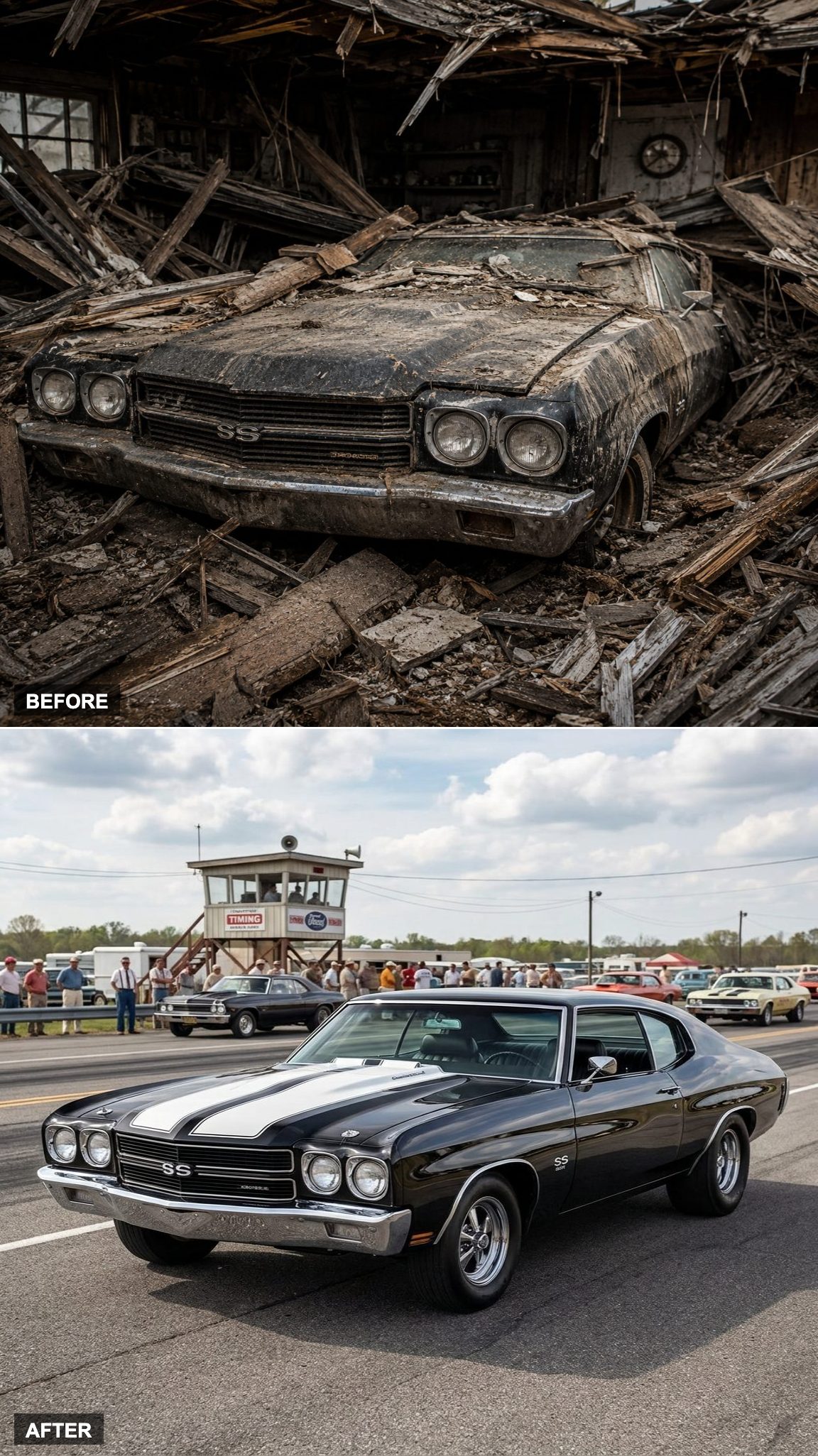
Not every Chevelle wants to spend its second life under show lights. This one is imagined as a vintage-style quarter-mile machine, with a polished blower rising through the hood and drag slicks filling the rear wheel openings.
The stance recalls an era when modified street cars often sat high enough to expose much of the suspension and mechanical hardware. Inside, unnecessary trim gives way to the controls and safety equipment needed for a competition-inspired build.
Wheelie bars complete the silhouette, extending beyond the rear bumper and making the car’s intended environment impossible to mistake.
A Modern Drag Build Focuses on Launches, Safety, and Nothing Extra
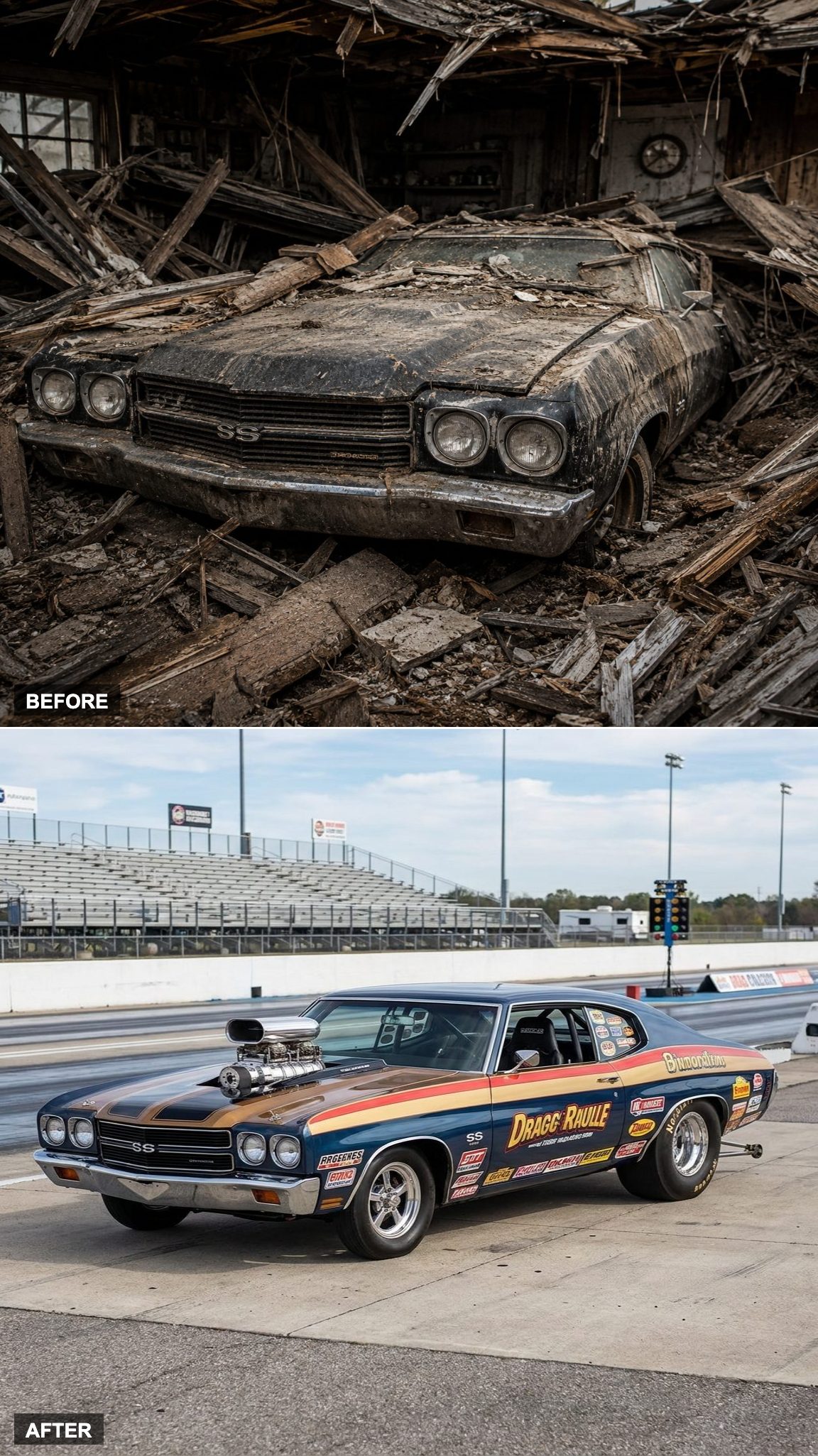
This version keeps the blower, slicks, and wheelie bars but treats them less as period theater and more as parts of a purpose-built strip car. The rear tires dominate the profile, while the stripped cabin leaves little room for anything unrelated to racing.
Inside, the visible racing equipment takes priority over polished trim or a factory-style radio. The body may come from 1970, but the approach is modern: control the launch, protect the driver, and remove whatever does not contribute.
Museum-Quality Detailing Re-creates the Small Marks of Assembly
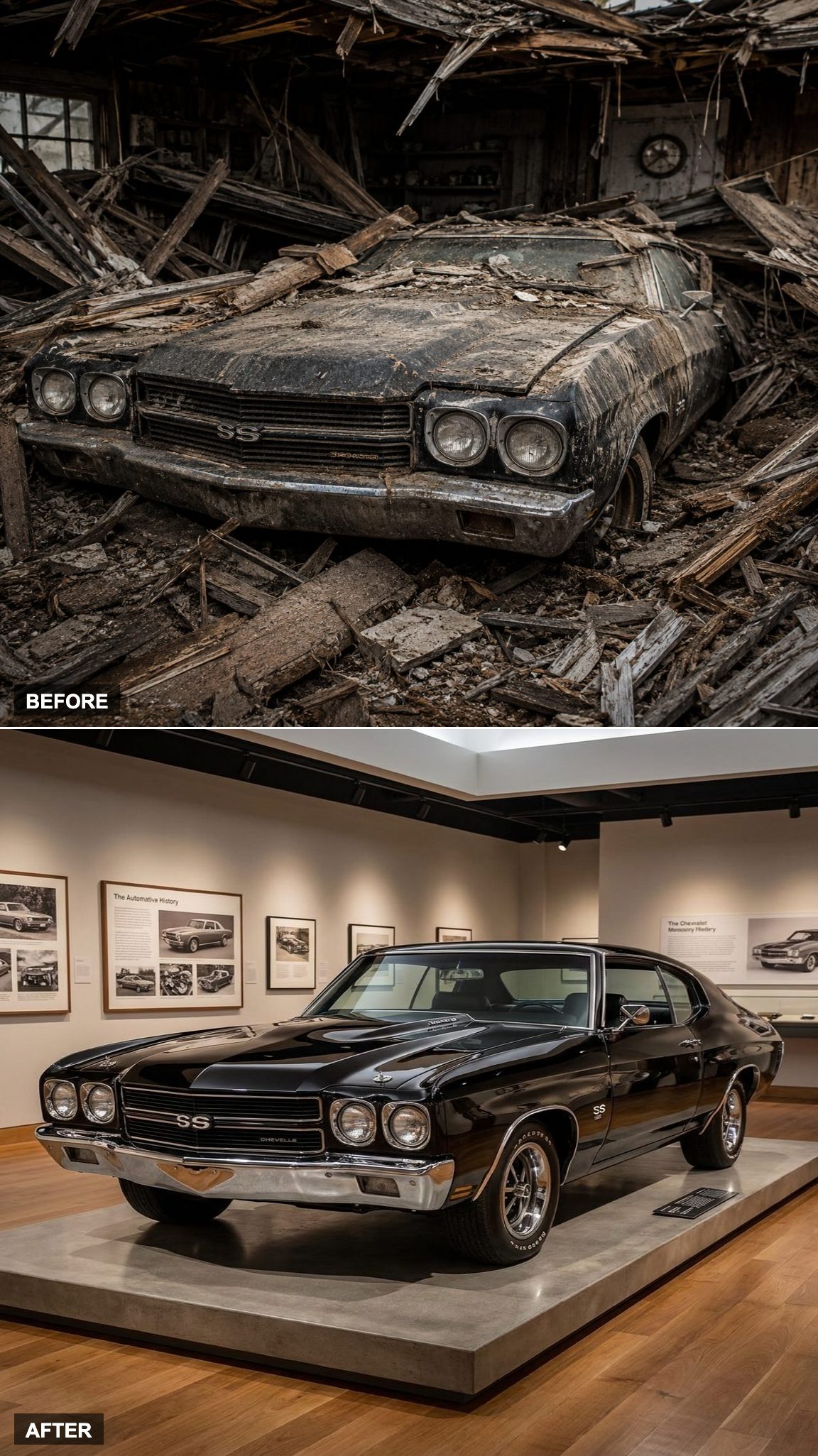
The first factory-style transformation focused on the overall appearance. This final version moves closer, concentrating on the small details that separate an attractive restoration from a competition-level one.
Correct-style hose clamps, hardware finishes, decals, paint markings, upholstery patterns, and factory-inspired engine-bay organization become part of the challenge. Documentation matters almost as much as shine because restorers need evidence for how individual components originally appeared.