
Would you like to save this?
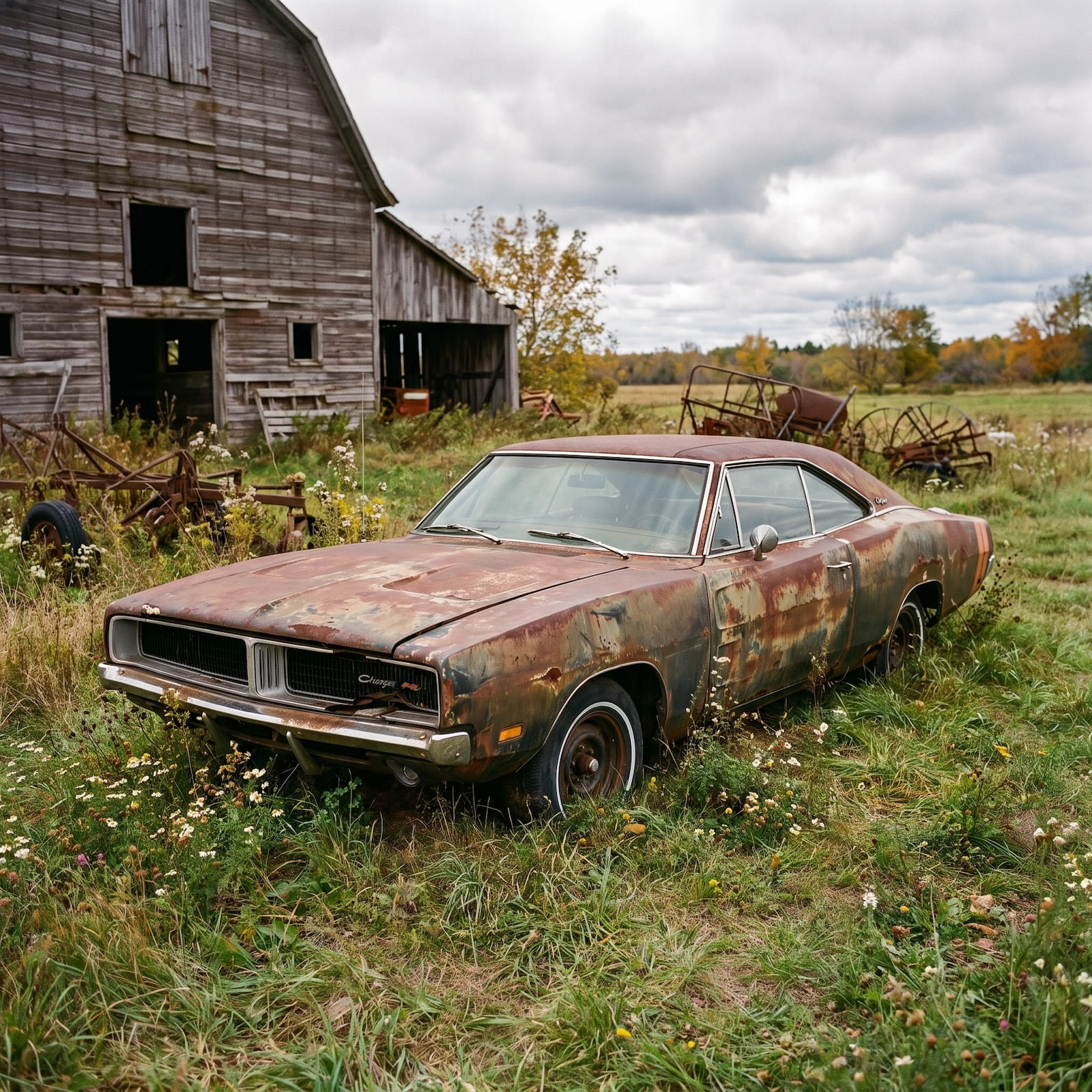
A rusted 1969 Dodge Charger sits behind a collapsing barn, its quarters eaten through and its engine long silent. Restoring that exact shell would require deep pockets, uncommon patience, and a willingness to replace almost everything the weather had claimed. But the shape is still unmistakable.
So this abandoned Charger became the starting point for 31 possible second lives. Each before-and-after keeps the same muscle-car bones while changing the paint, wheels, cabin, engine treatment, and setting—from cream and bronze outside a château to matte black back in a suburban driveway. Some combinations suit the Charger better than others. You be the judge.
Cream and Bronze Turn the Barn Find Into a Grand-Touring Restomod
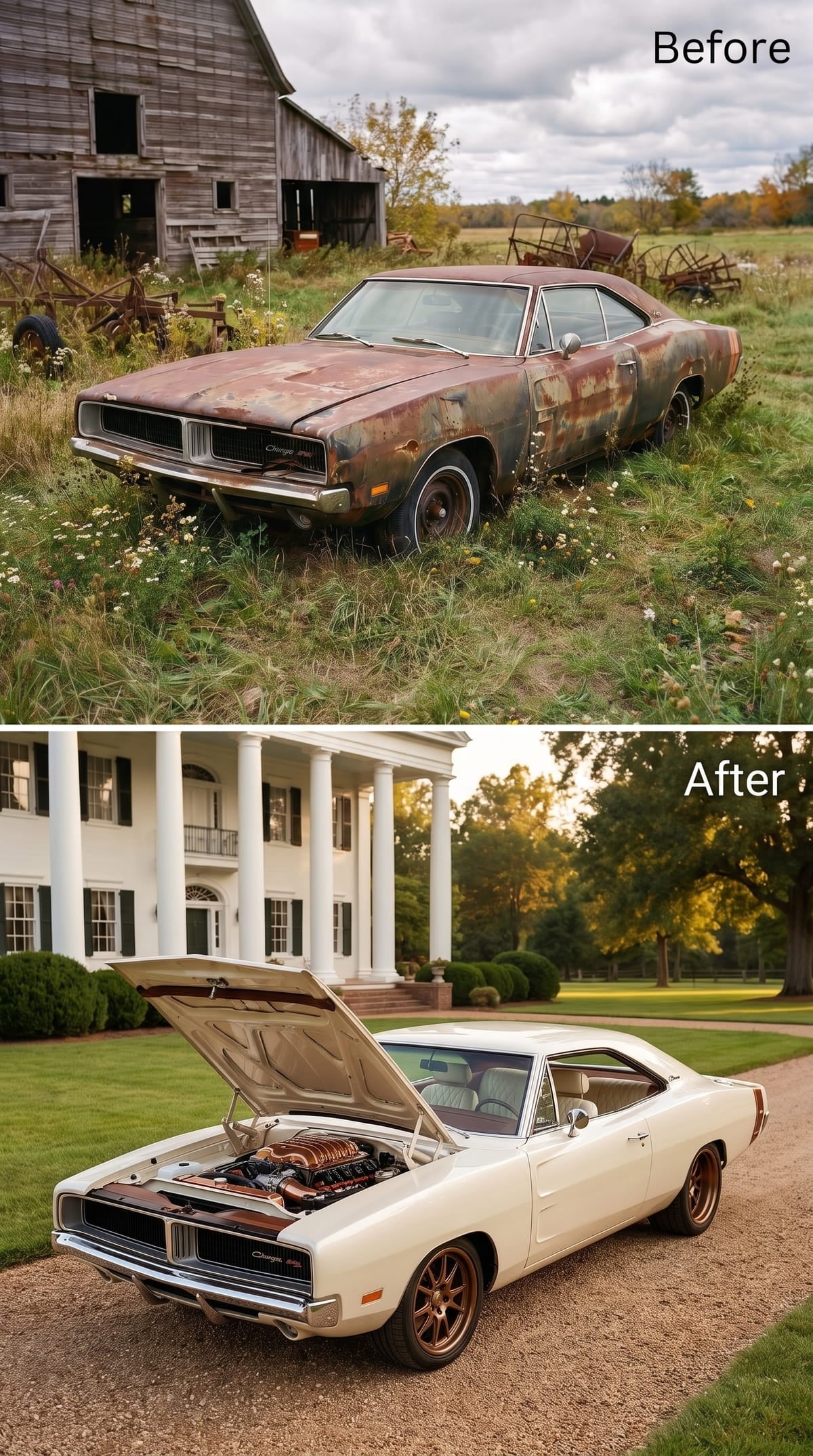
Finished in a warm cream, this reimagined Charger wears its new paint with the kind of quiet confidence that doesn’t need to announce itself. Bronze five-spoke wheels pull the whole palette together, echoing the copper-toned engine components visible under the open hood. The exposed supercharged V8 makes the mechanical direction clear.
Photographed against a columned estate backdrop at golden hour, the car sits low and purposeful on a gravel drive. The interior glimpsed through the glass shows a light neutral upholstery that keeps the cabin from feeling heavy. Clean, cohesive, and convincing enough to make you wish someone would build it.
Bare-Silver Bodywork Puts the Mechanical Work Front and Center
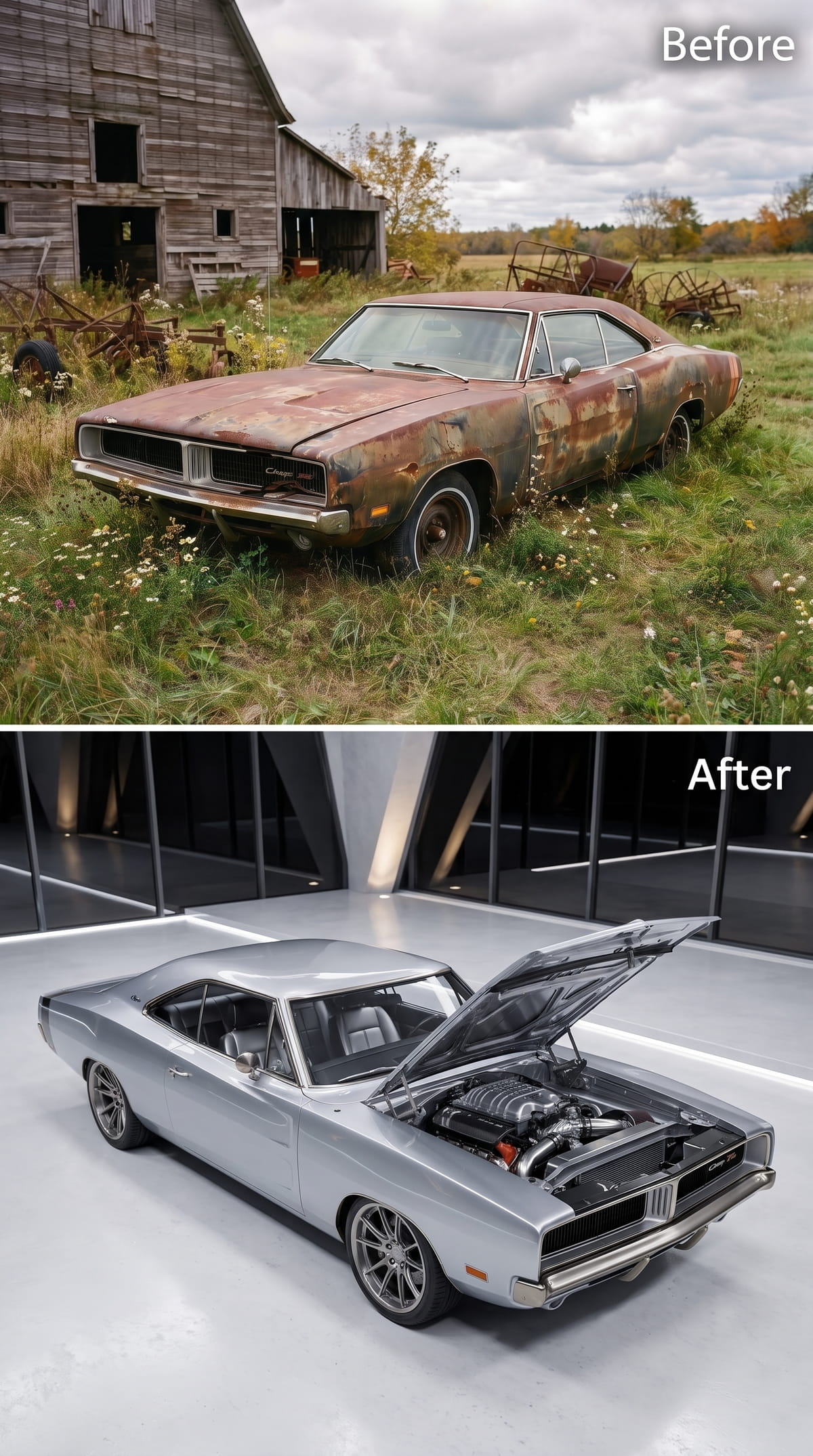
Rendered in a raw-looking silver finish with a hood propped open to show off a modern supercharged V8, this Charger makes no apologies for what it’s become. The multi-spoke wheels sit flush and wide, and the blacked-out interior is visible through the open door.
In this version, the engine bay is clearly the point. That exposed blower says more than any paint job could.
Matte White Against Black Glass Makes Every Body Line Count
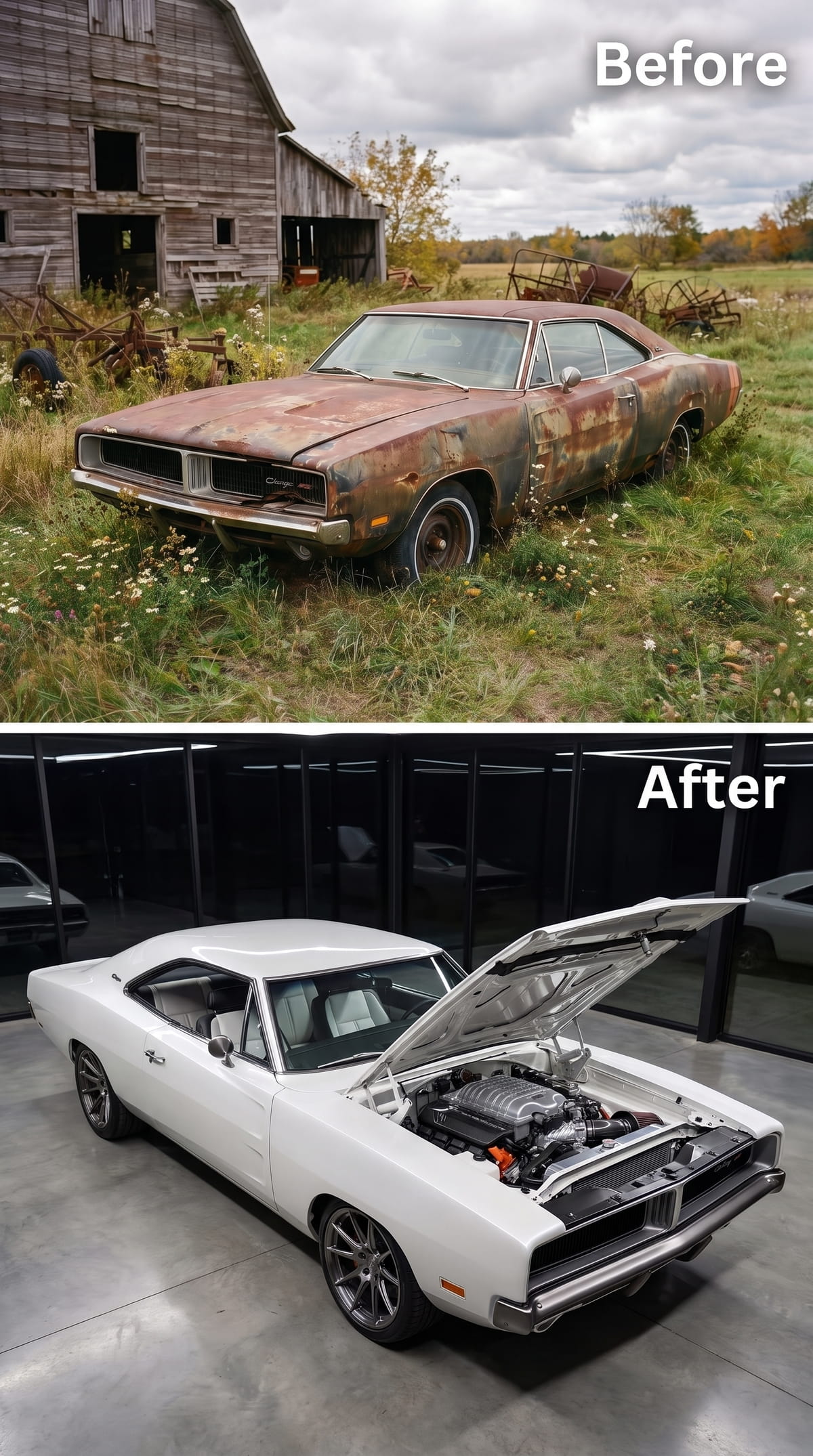
Matte-white bodywork sits over a set of dark five-spoke wheels, and the proportions feel exactly right. Hood up, the engine bay shows a supercharger sitting front and center, with polished aluminum intake covers and a sharp orange accent near the intake.
The setting does the car no favors on paper: a bare concrete floor, floor-to-ceiling black glass panels, strip lighting overhead. But somehow that spare, almost showroom-cold backdrop makes the white body look sharper than it would under warmer light.
Oxblood Paint Gives the Charger a Heavier, More Formal Presence
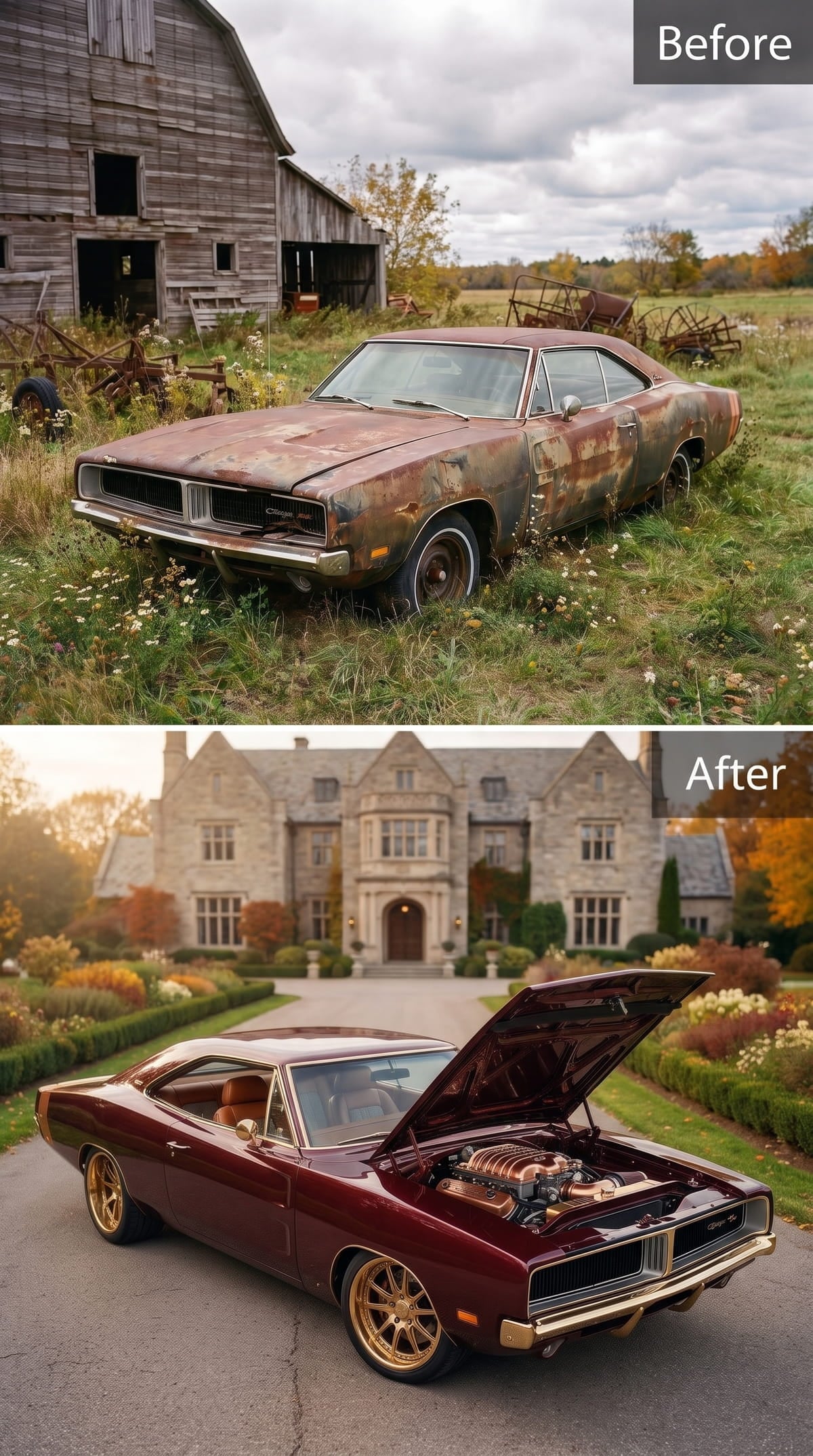
Deep oxblood burgundy gives the Charger’s broad body panels a heavier, more formal presence than bright red ever could. Gold five-spoke wheels push the concept toward show-car territory, while the open hood keeps the mechanical work from becoming secondary. Against the stone manor and autumn trees, the color feels rich rather than loud.
Champagne Paint and Chrome Wheels Under Cold Showroom Light
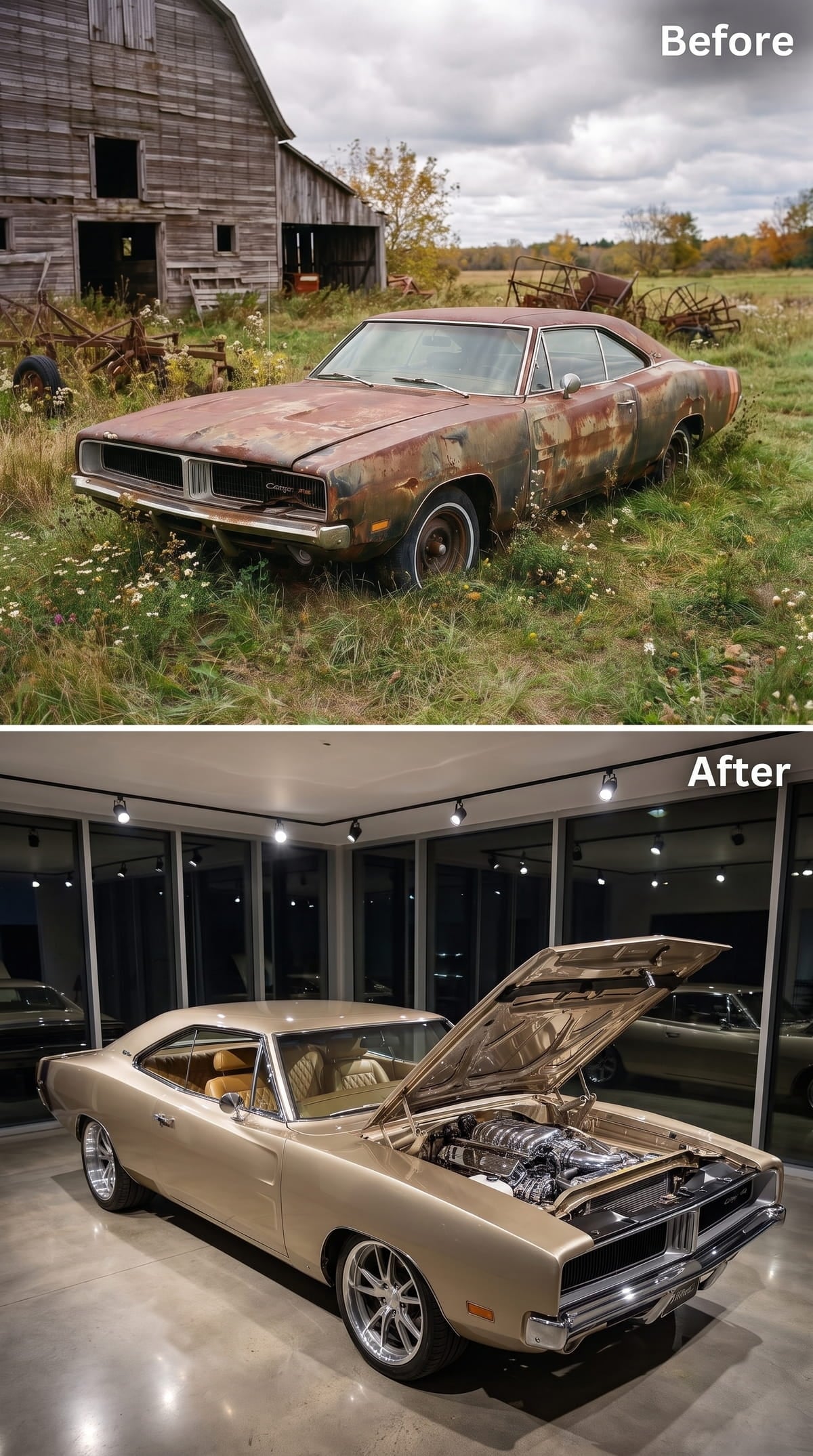
Wrapped in a warm champagne finish, the Charger sits on polished concrete under track lighting that sharpens every crease in the body. The supercharger is impossible to miss, but the multi-spoke chrome wheels carry enough visual weight to keep the engine from becoming the only thing you notice.
A heavier, deeper-dish wheel could have crowded the profile. This choice preserves the long, low shape while still giving the concept enough bright metal to hold its own under cold showroom light.
The Blush Finish That Softens the Shape Without Making It Timid
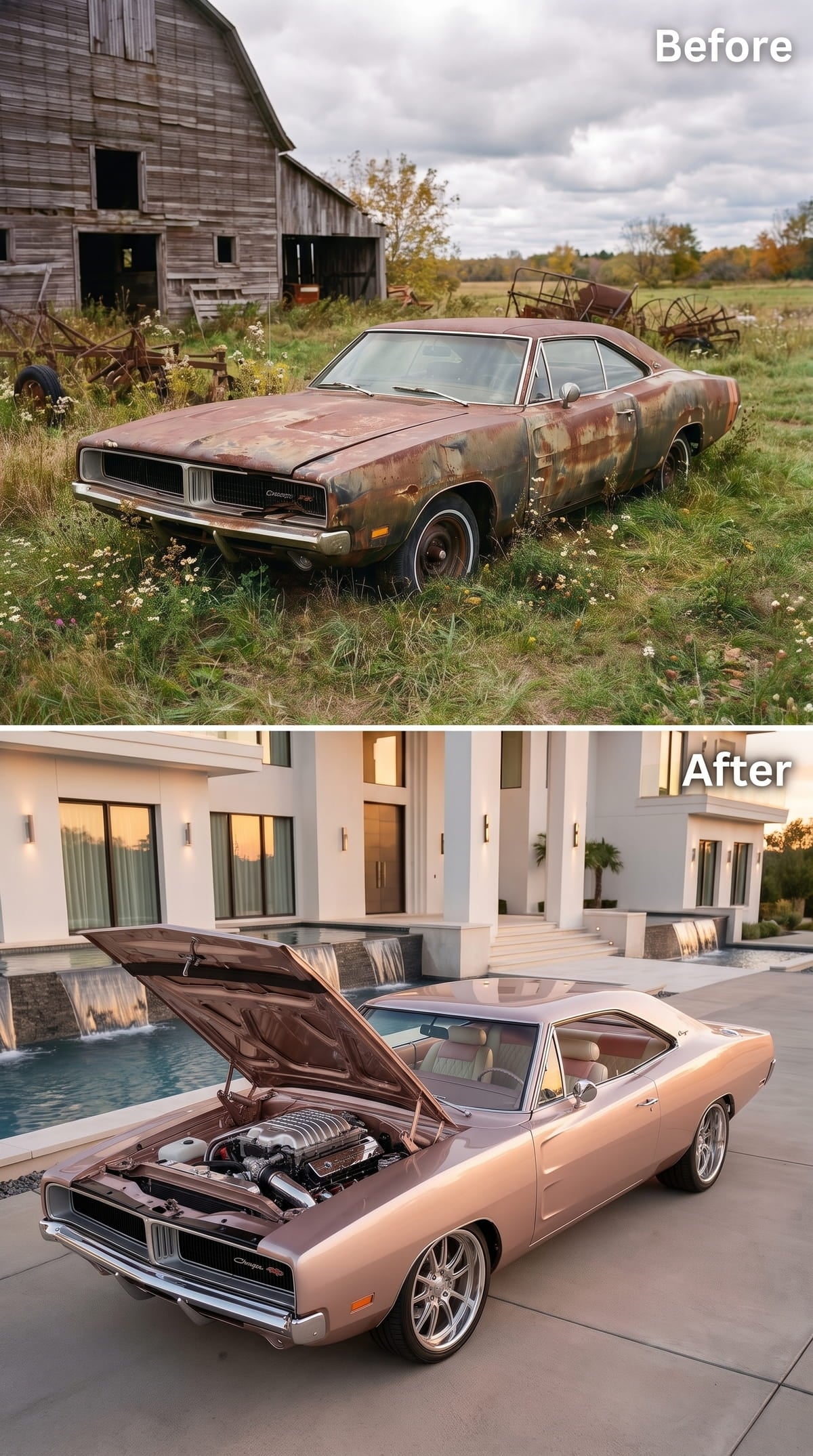
That color isn’t pink. It’s something richer, a warm blush with enough brown in it to read serious next to chrome.
Parked in front of a modern estate with a reflecting pool at its back, this Charger wears a muted rose-bronze finish that catches the golden hour light differently on every panel. The hood is propped open, showing a tall supercharger above a tightly finished engine bay with very little visual clutter. Polished five-spoke wheels finish the stance without overcomplicating it.
Gunmetal and Orange Stripes Bring the Charger Into Red-Rock Country
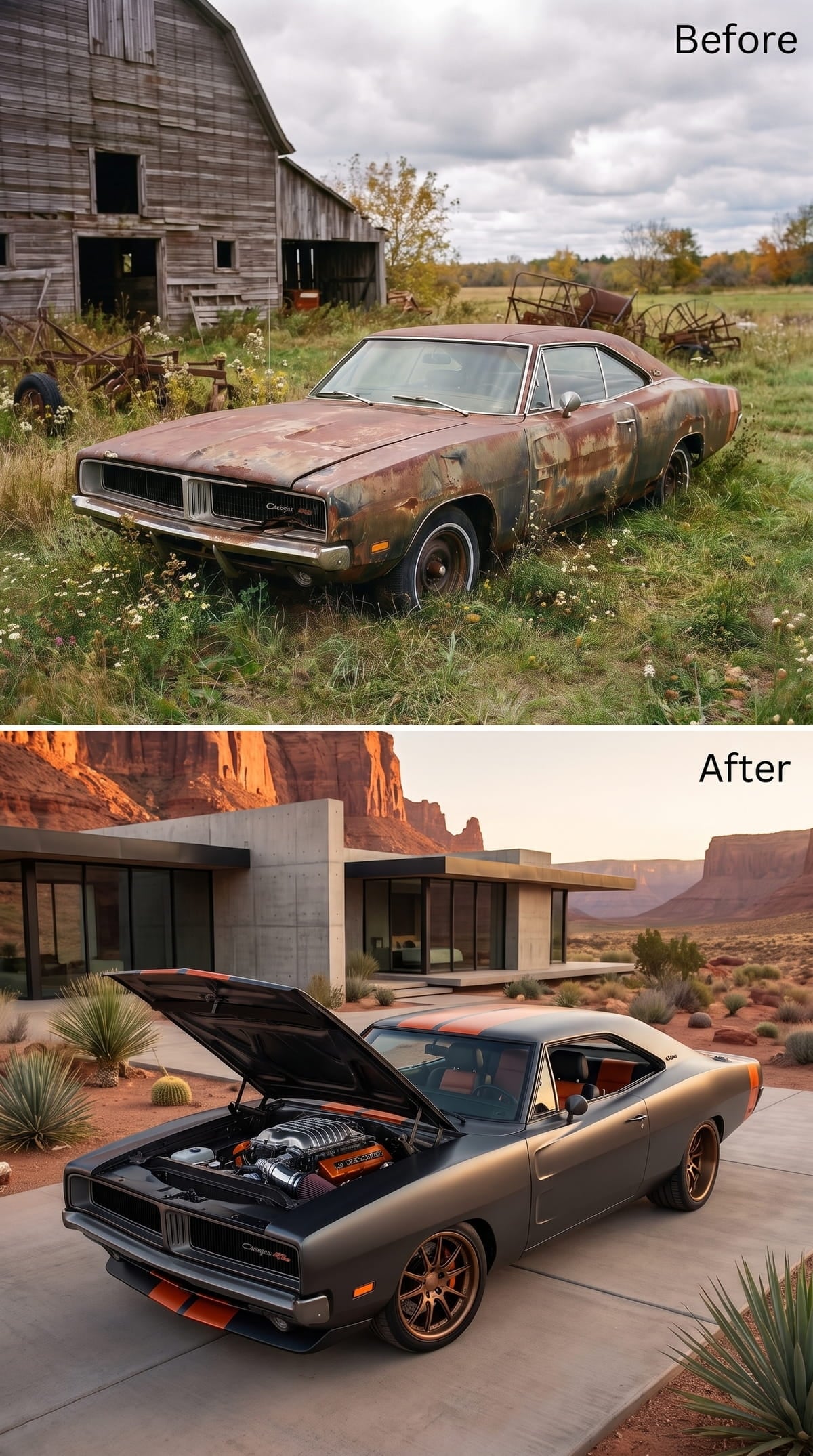
Gunmetal satin sits over the body like it was always meant to be there, anchored by twin orange stripes that run hood to tail. Bronze five-spoke wheels pull the palette together without trying too hard. Orange engine-bay accents carry the stripe color into the supercharged V8 without adding another exterior detail.
Behind it, a concrete modernist structure frames the scene against Utah canyon walls. It’s an odd pairing that somehow works, the car’s muscle-era proportions holding their own against that backdrop.
Did You Know: Dodge developed specialized Charger 500 and Charger Daytona variants to improve high-speed stability in NASCAR. Richard Petty left Plymouth for Ford in 1969, then returned to Plymouth when the winged Superbird arrived for 1970. The ordinary road-going Charger shared the dramatic shape, but the racing breakthroughs came from those purpose-built aerodynamic versions.
Copper on Bronze: How Far Can One Warm Palette Go?
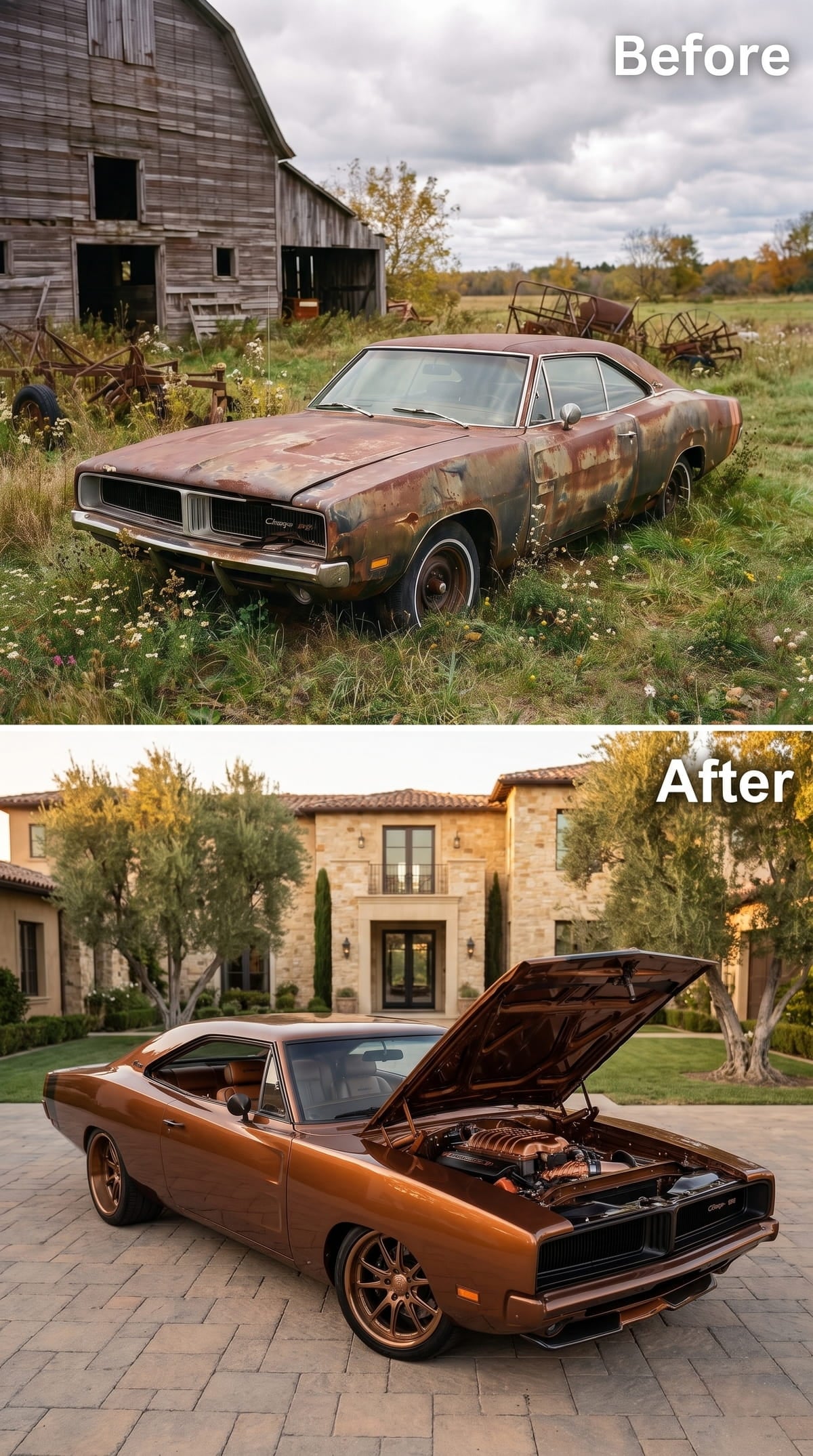
Burnt copper suits a 1969 Charger better than most people would expect. The paint reads warm and deep in golden-hour light, landing somewhere between cognac and raw copper depending on the angle. Paired with bronze multi-spoke wheels that echo the body color without matching it exactly, the whole exterior feels coordinated without being overdone.
Copper-accented valve covers carry the body color into the supercharged V8 without turning the engine bay monochromatic. The stone villa behind it adds context rather than competition. Wide pavers, cypress trees, and a Tuscan-style facade make this the kind of driveway that demands something more interesting than a modern sports car.
Color Story: Copper and bronze are close enough in tone to feel cohesive, but different enough in finish to create depth. Pairing a gloss body color with a matte-adjacent wheel finish keeps the eye moving without creating visual noise. It’s one of the quieter tricks in automotive color pairing, and it works well on broad, flat body panels like the Charger’s flanks.
Warm Ivory Against Château Stone Keeps the Charger From Feeling Clinical
Would you like to save this?
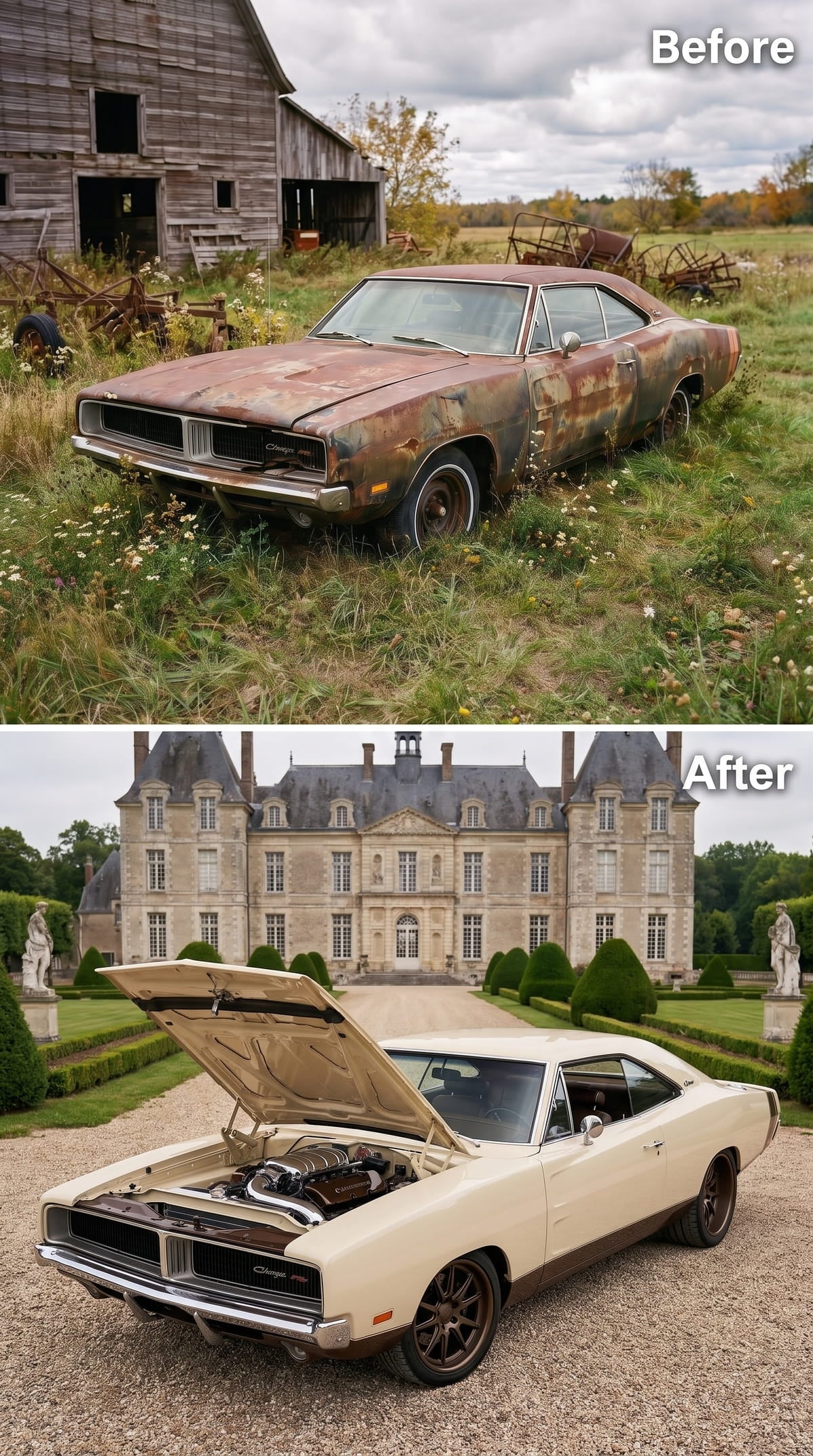
Sitting on a gravel courtyard with a French château behind it, this 1969 Charger wears an off-white finish that reads closer to warm ivory than bright white. It’s a deliberate call. Against that stone facade, a colder color would’ve felt clinical.
The open hood makes the mechanical treatment part of the concept rather than background detail. Bronze multi-spoke wheels ground the cream body without fighting it, and the lowered stance keeps the whole car from looking like a showpiece that’s afraid to move.
Candy Red and Gold Walk Right Up to the Edge of Excess
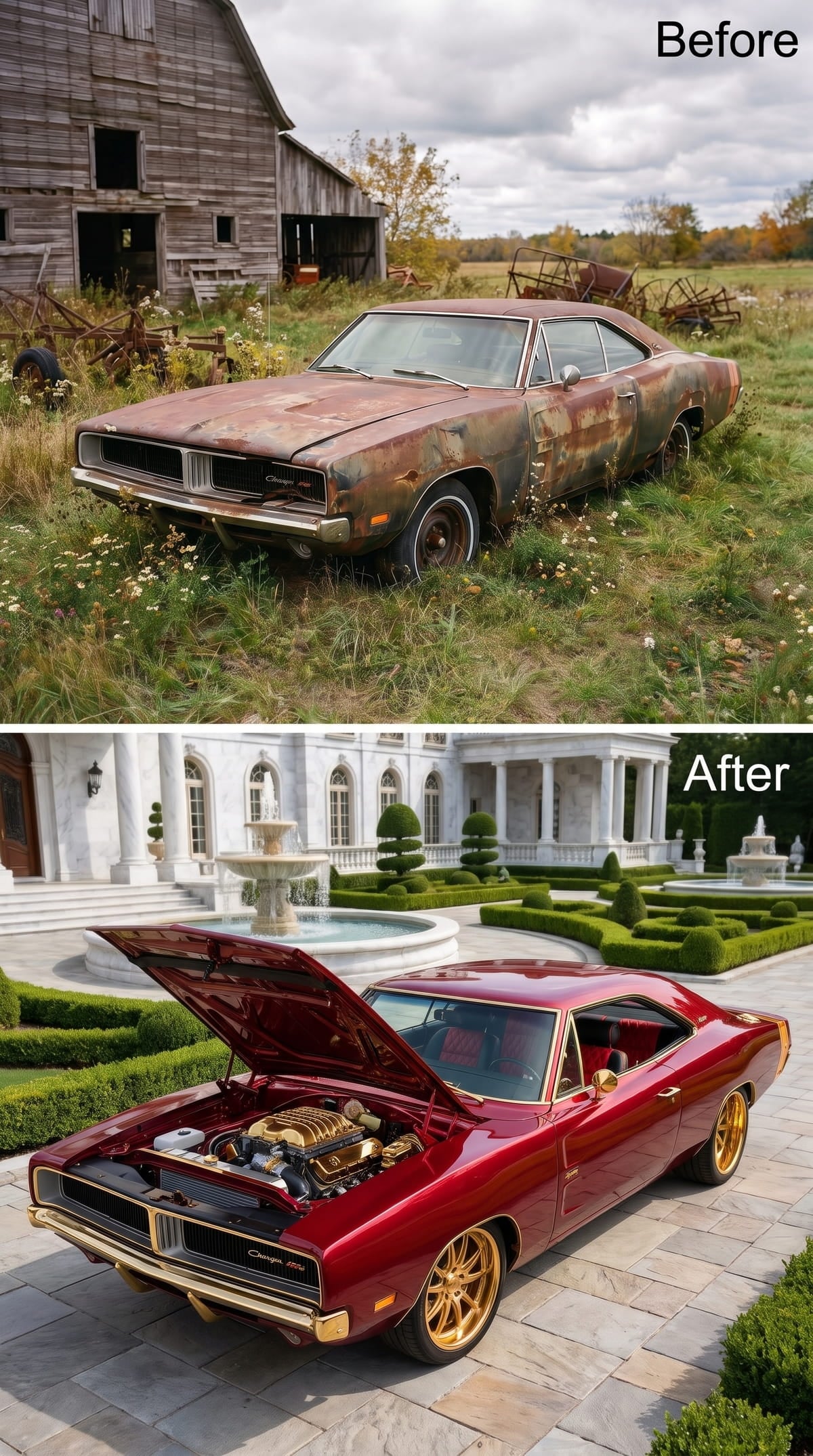
Few colors transform classic American muscle as decisively as candy apple red. The deep, almost jewel-like finish on this Charger catches light differently depending on the angle, and paired with gold five-spoke wheels, it reads less like a restomod and more like something that was always meant to live in front of a marble fountain.
Pop the hood and the engine bay makes its own argument. The supercharger sits center stage, finished in gold to match the wheels, flanked by components detailed to show-car standards. Gold accents in an engine bay can easily tip into costume-jewelry territory. Whether this remains disciplined or crosses into one accent too many depends on your tolerance for show-car drama.
Why It Works: Gold wheel and engine bay accents work because they anchor the same tone in two completely different contexts, one structural, one cosmetic, giving the concept a clear thread between the cosmetic and mechanical details. Repeating a finish rather than a color is one of the quieter tricks in a restorer’s toolkit, and it’s easy to miss until someone points it out.
Plum Paint Comes Alive After Sunset
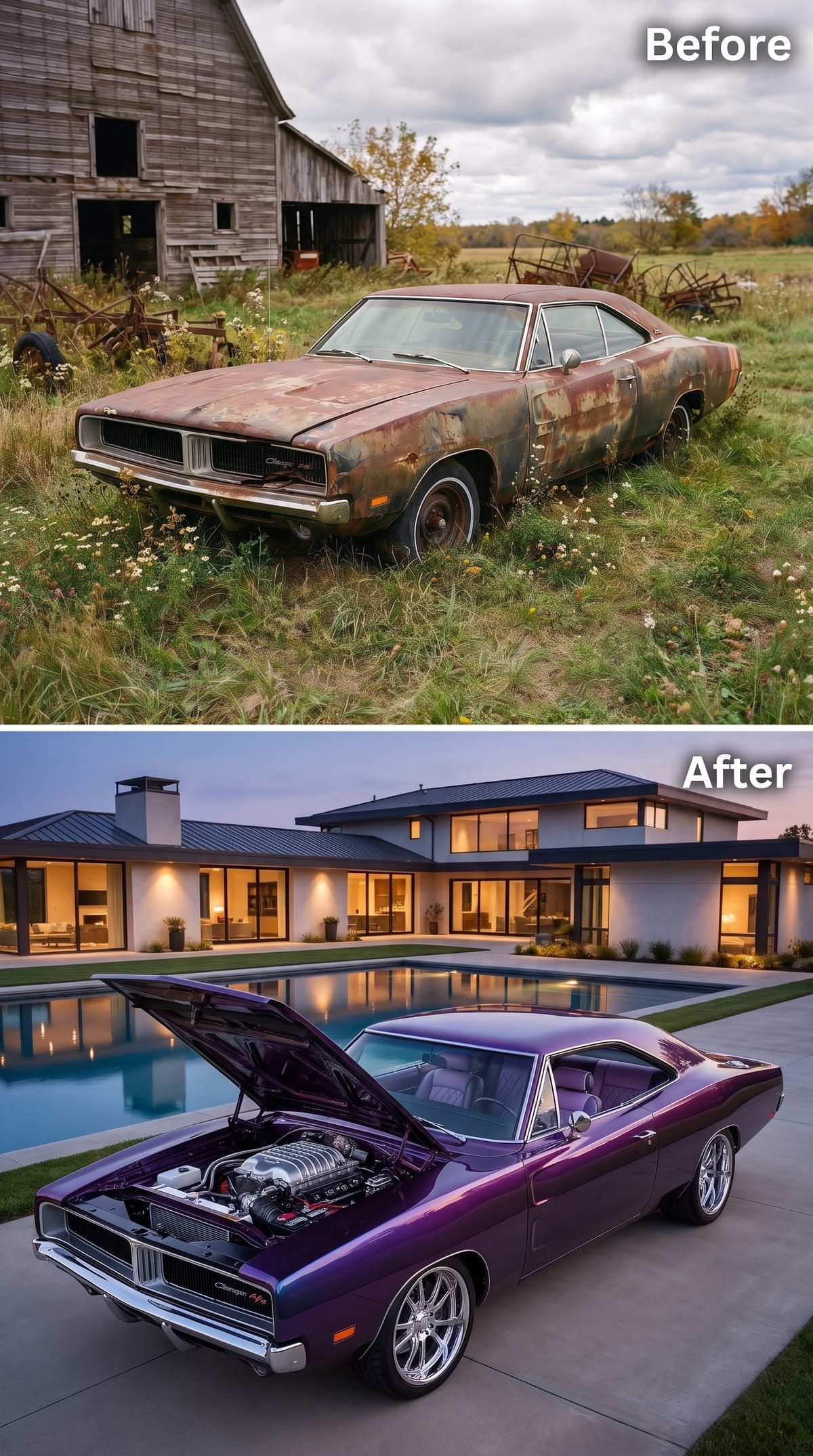
Finished in deep plum purple with a gloss coat that catches every shift in evening light, this Charger looks like it was born for a dusk reveal. The hood’s open, and that supercharged V8 sits centered in the engine bay like it’s supposed to be seen. Chrome five-spoke wheels ground the whole concept without competing with the bodywork.
The backdrop isn’t accidental. Poolside concrete, warm interior light spilling through floor-to-ceiling glass, a flat roofline overhead. Purple against that soft architectural glow is a genuinely sharp pairing.
Designer’s Secret: This particular rendering appears cooler under the surrounding evening light and warmer where the remaining daylight catches the body. If you’re choosing a bold color for a future build, consider how its usual lighting environment could affect the final read, because the same paint may look very different from one hour to the next.
Dark Cherry and Rose Gold Make the Engine Bay Part of the Color Story
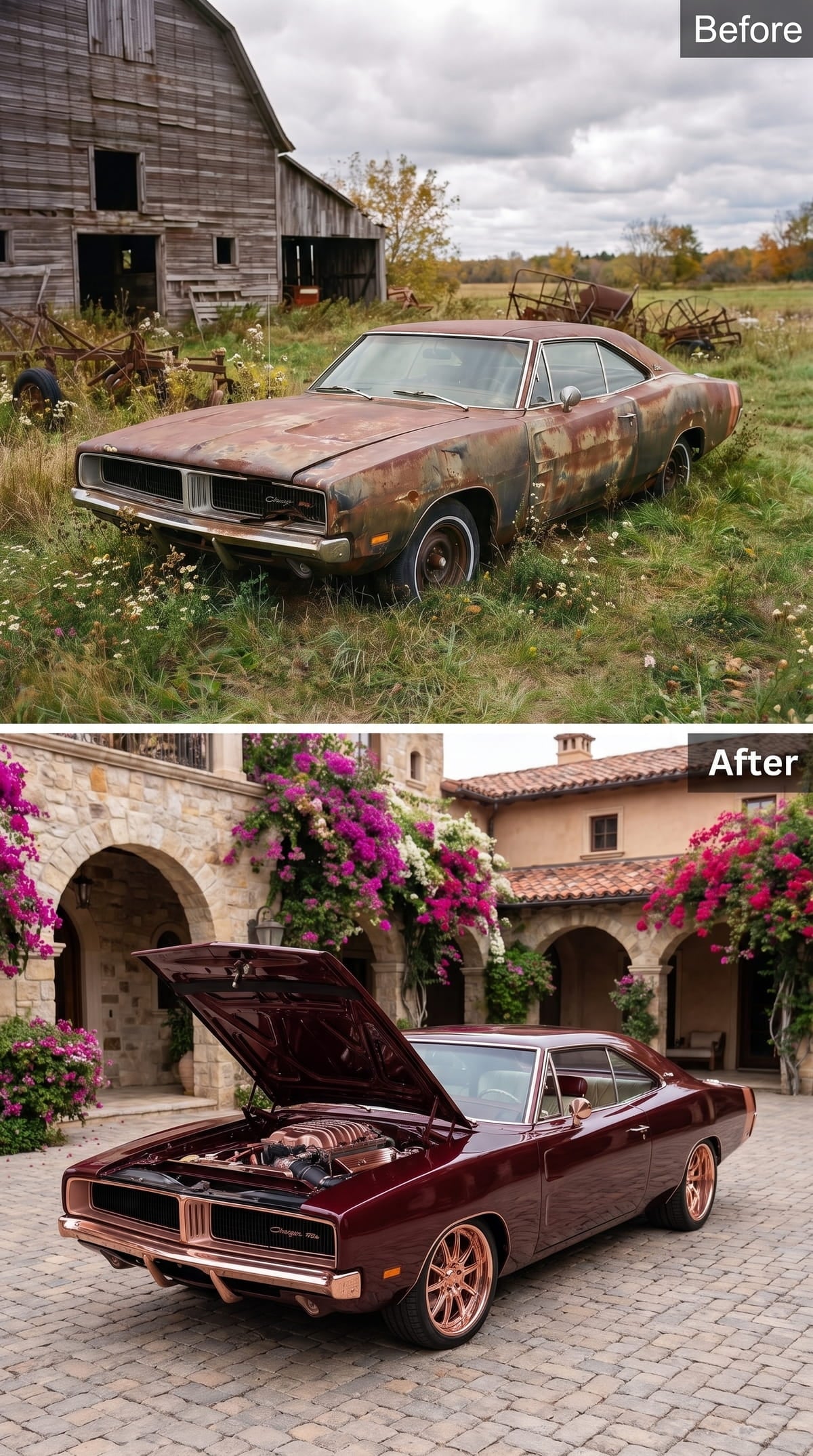
Deep burgundy paint catches the Mediterranean courtyard light differently than any bright color would, pulling almost black near the roofline and warming toward cherry at the fenders. Rose gold wheels tie directly to the copper-toned valve covers visible inside the open hood, creating a clear connection between the exterior and the engine bay. The bougainvillea climbing the stone arches behind it isn’t incidental staging. It matches.
Color Detail: Rose-gold wheels and copper-toned engine hardware share the same warm undertone, giving the concept continuity without requiring another stripe or body accent.
Forest Green Shows What Restraint Can Do
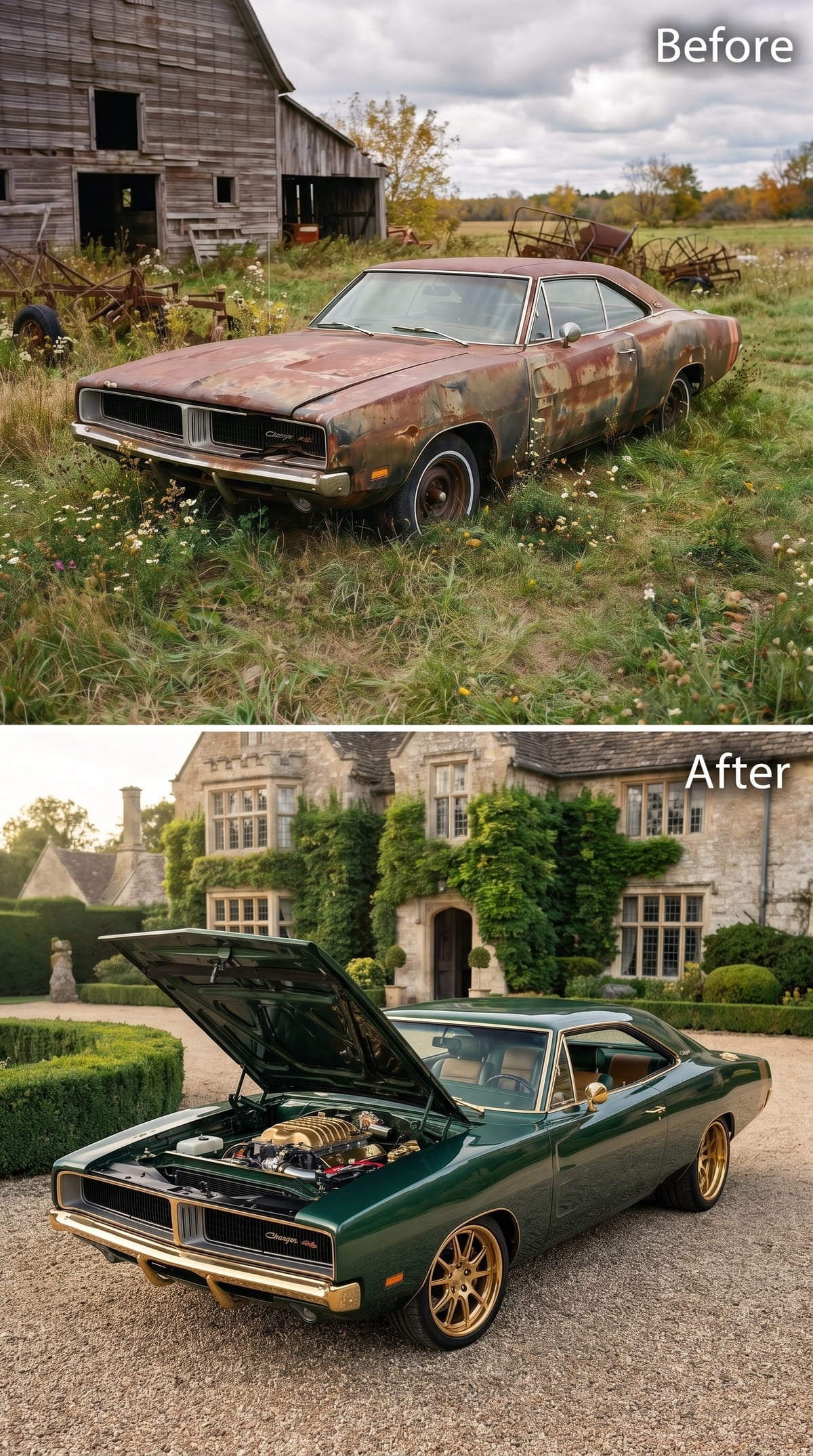
Forest green gives this version a quieter, more traditional character. The important choice is what has been left out: no stripes, no bright chrome, and no second body color competing with the long flanks. Gold five-spoke wheels provide the only strong contrast, while the ivy-covered estate reinforces the restrained palette.
Why the Engine Bay Matches the Wheels: Repeating the wheel tone inside the engine bay gives the design continuity without requiring another exterior accent color. The result is formal, almost old-world, even though the car underneath remains unmistakably American muscle.
Deep Green and Gold Give American Muscle an Old-World Setting
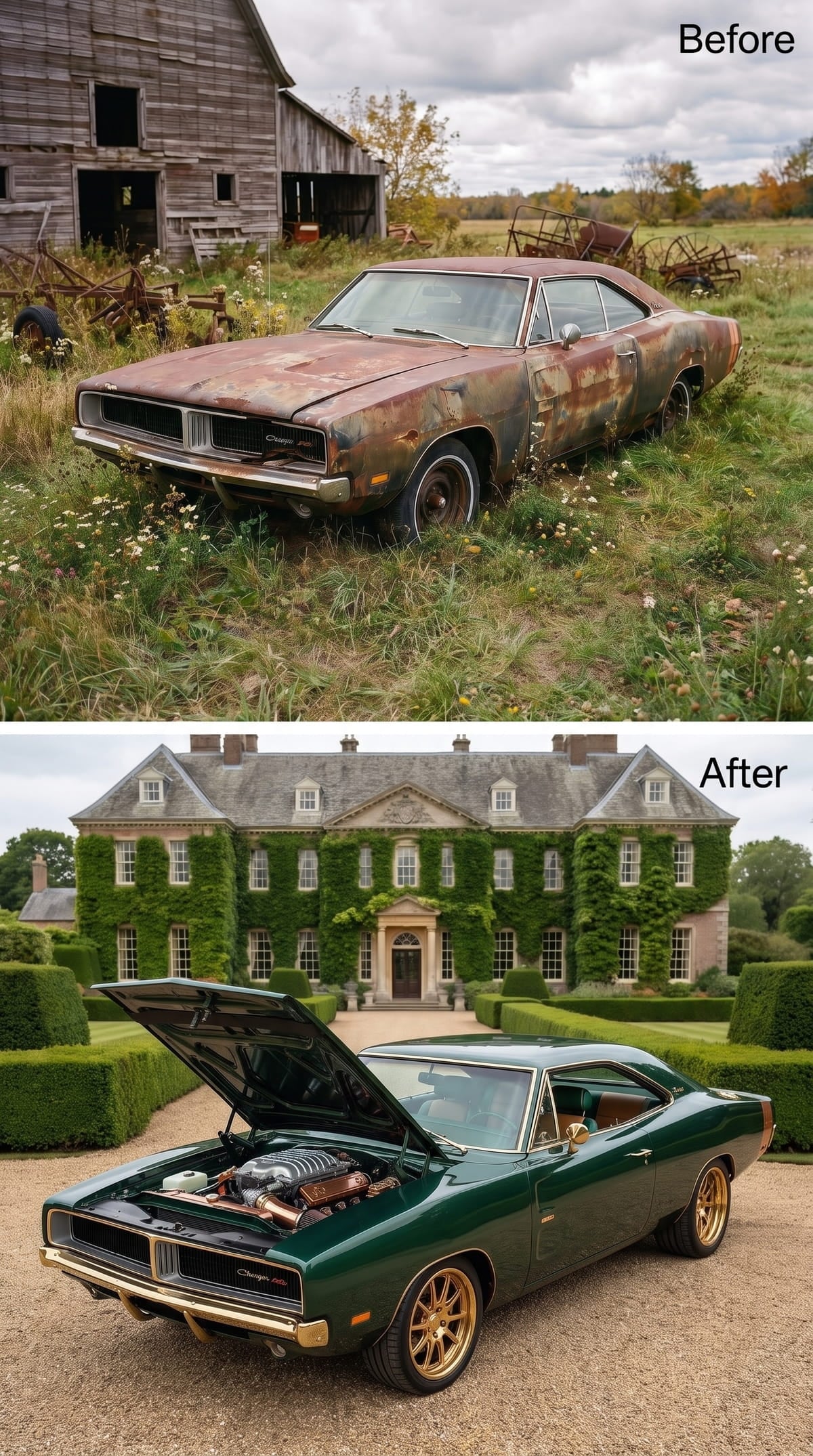
Dark green on a muscle car shouldn’t work this well, but against ivy-covered stone, it’s the only color that makes sense.
This second green version is darker and more saturated, with gold wheels and engine accents pushing it much closer to formal show-car territory. Unlike the restrained forest-green concept before it, this one depends on the contrast between rich paint and bright metallic detail. The Georgian manor behind it, wrapped in dense ivy and flanked by clipped boxwood hedges, gives the scene a formal backdrop that most muscle cars would fight against. This one doesn’t.
Midnight Blue Holds Its Own Beside the Marina
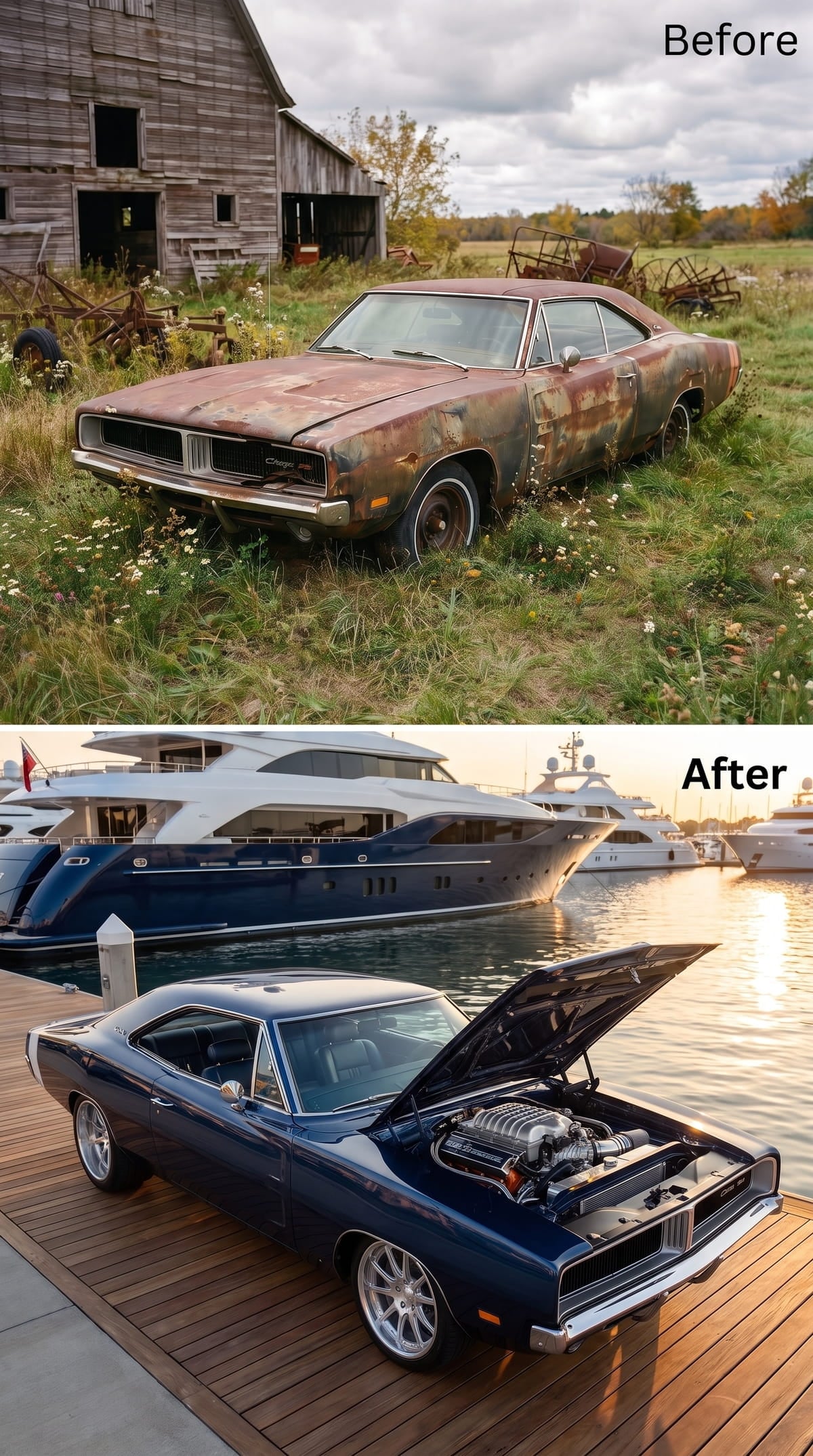
Parked alongside yachts at golden hour, the Charger wears a navy so dark it reads almost black until the sunset catches the hood’s curve. The polished supercharger rises above the engine bay, catching the last of the light, while the chrome wheels give the nearly black body a brighter lower edge. The teak dock and white yachts make an improbable setting, but the dark paint holds its own.
Plum and Copper Work Better When the Contrast Stays Quiet
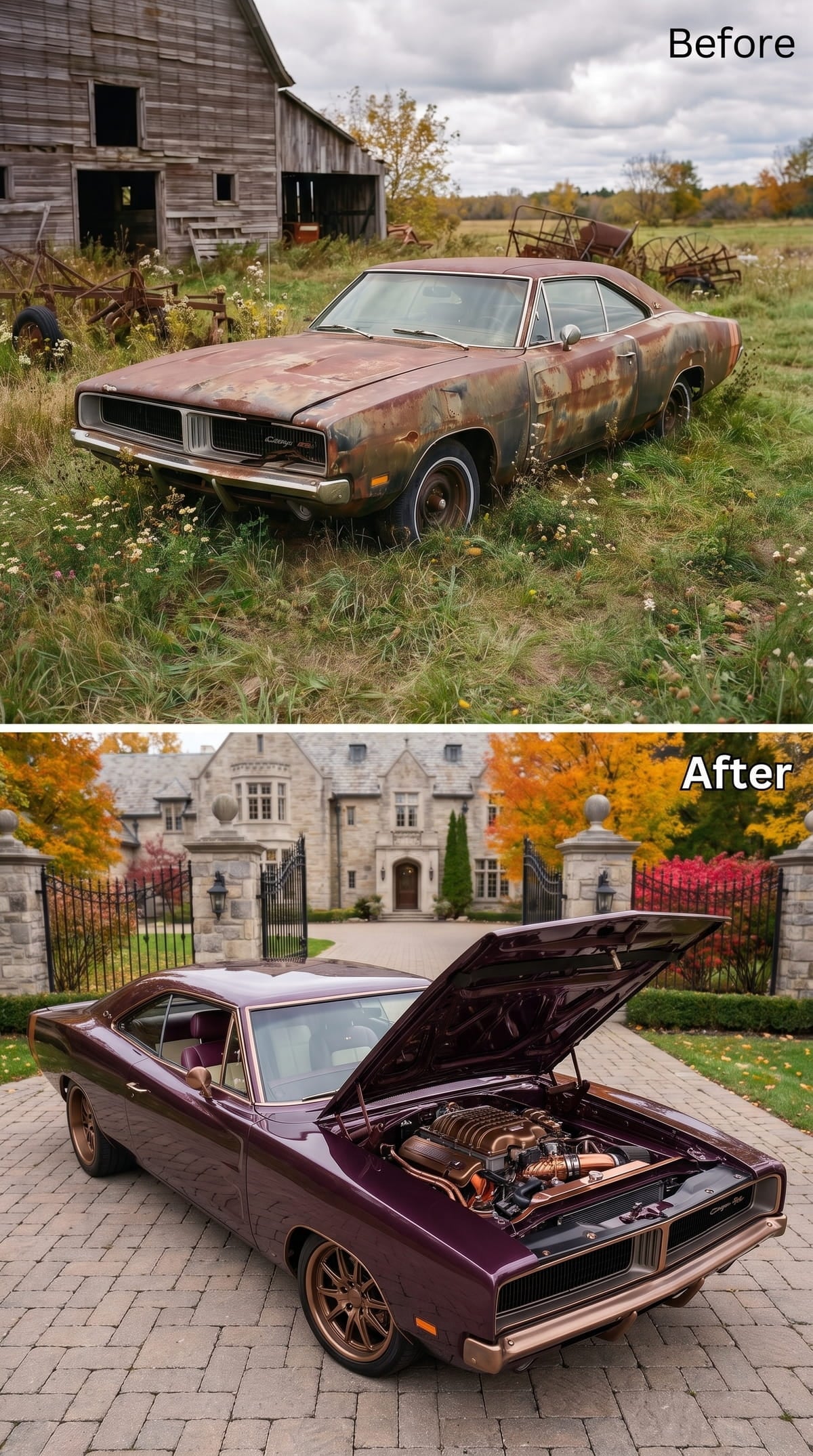
This plum version is less about contrast than atmosphere. Under the autumn canopy, the paint leans toward burgundy and makes the copper engine details feel warmer without requiring gold wheels or bright stripes. The restrained body color lets the hood-up mechanical display carry more of the drama.
Try This: When pairing a jewel-toned exterior with an engine-bay accent, consider carrying the wheel finish into the mechanical details rather than matching the body color. It pulls the eye through the whole car as a single composition rather than two separate design decisions.
Teal Against a Japanese Garden Should Clash—It Doesn’t
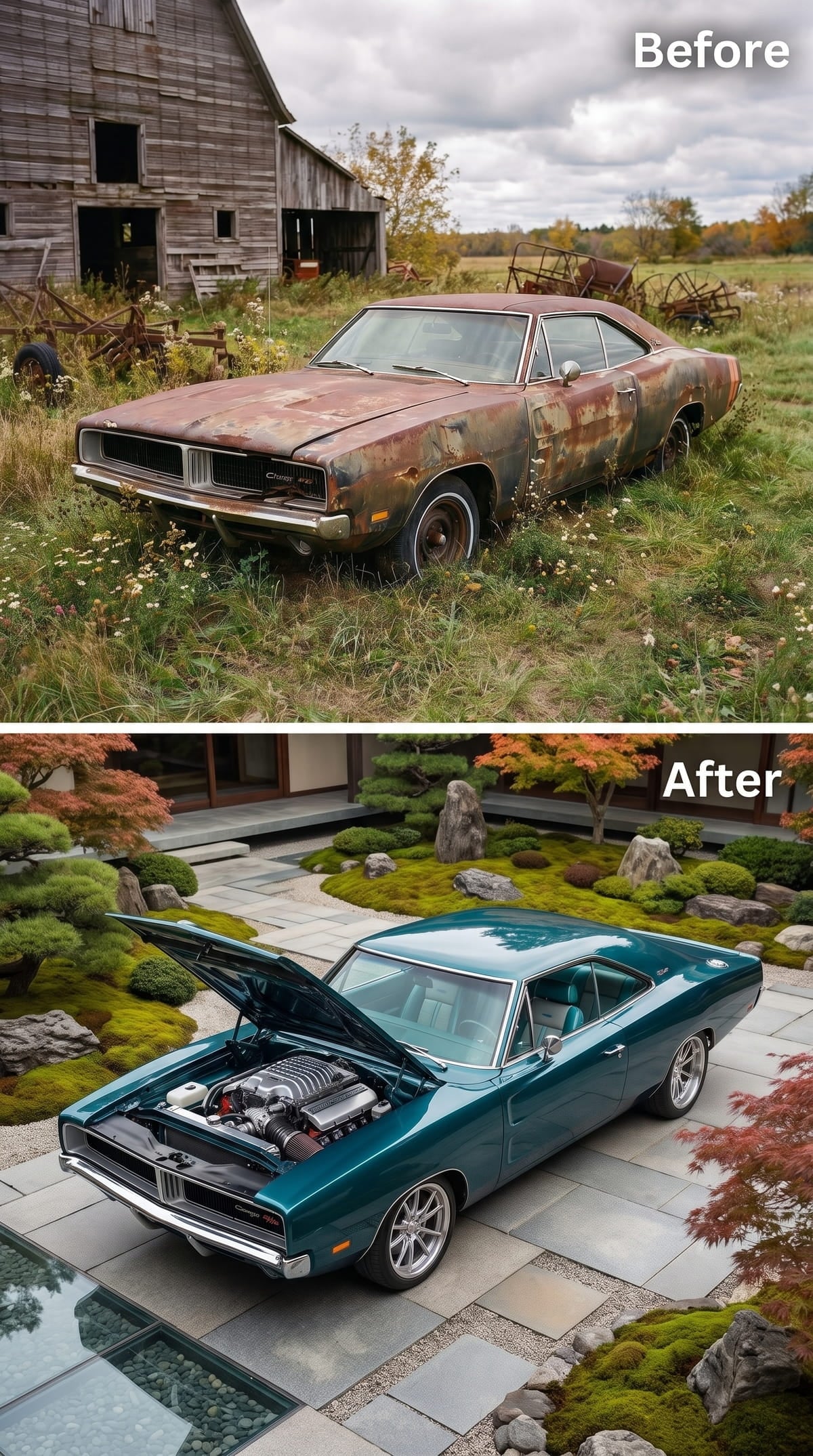
Teal can lean cool against stone and greener beside foliage. This version uses both sides of the color, placing it between pale pavers and warm red leaves. Parked on large-format pavers with raked gravel and clipped moss mounds behind it, the Charger’s hood-up reveal shows a supercharged engine dressed in chrome and red accents that read clearly against the dark bay.
The wheel choice is a multi-spoke silver finish, which keeps the lower half from competing with the body color. Japanese maples frame the rear corners of the shot, their red foliage pulling just enough warmth to stop the teal from feeling cold.
Color Notes: Against the cool stone pavers, the teal reads almost jewel-like, while the red foliage keeps the scene from becoming entirely cool-toned. Paired with chrome rather than gold accents, it stays crisp rather than drifting toward vintage.
Hunter Green and Copper Bring Warmth to the Château Courtyard
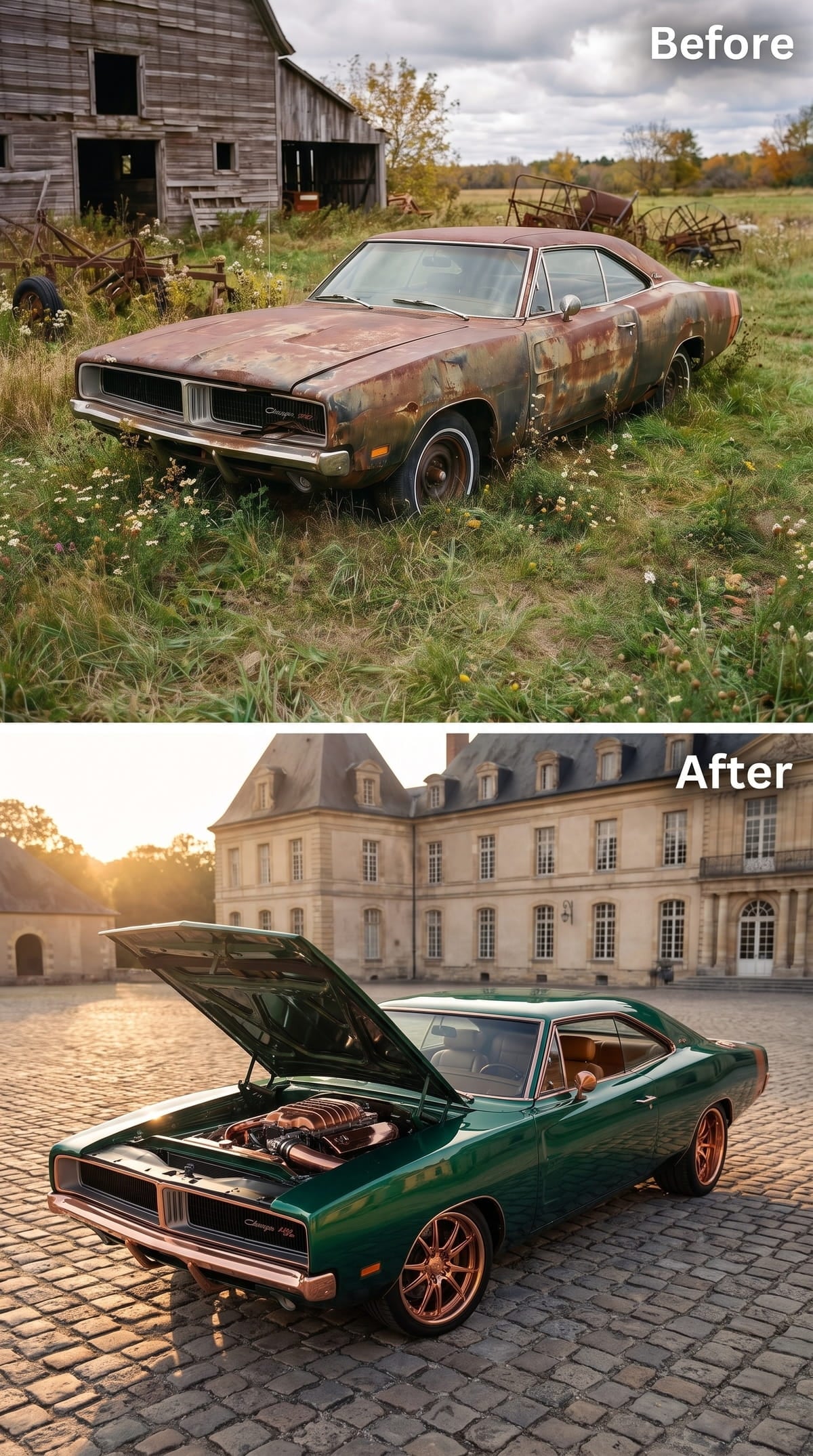
Finished in hunter green with a gloss that catches the golden hour light, this Charger sits on copper-finished wheels that pull the warm tones straight out of the engine bay. And that engine bay delivers: the supercharged V8 sits exposed under an open hood, its copper intake manifold and braided lines treated as display pieces rather than hidden hardware. The cobblestone courtyard and French château facade behind it don’t compete with the car. They frame it.
Style Tip: Green and copper work together because one reads cool and the other warm. Keeping the copper to the wheels and engine hardware gives the Charger contrast without turning the entire body into a two-tone exercise.
Silver Outside, Cobalt Inside the Engine Bay
Would you like to save this?
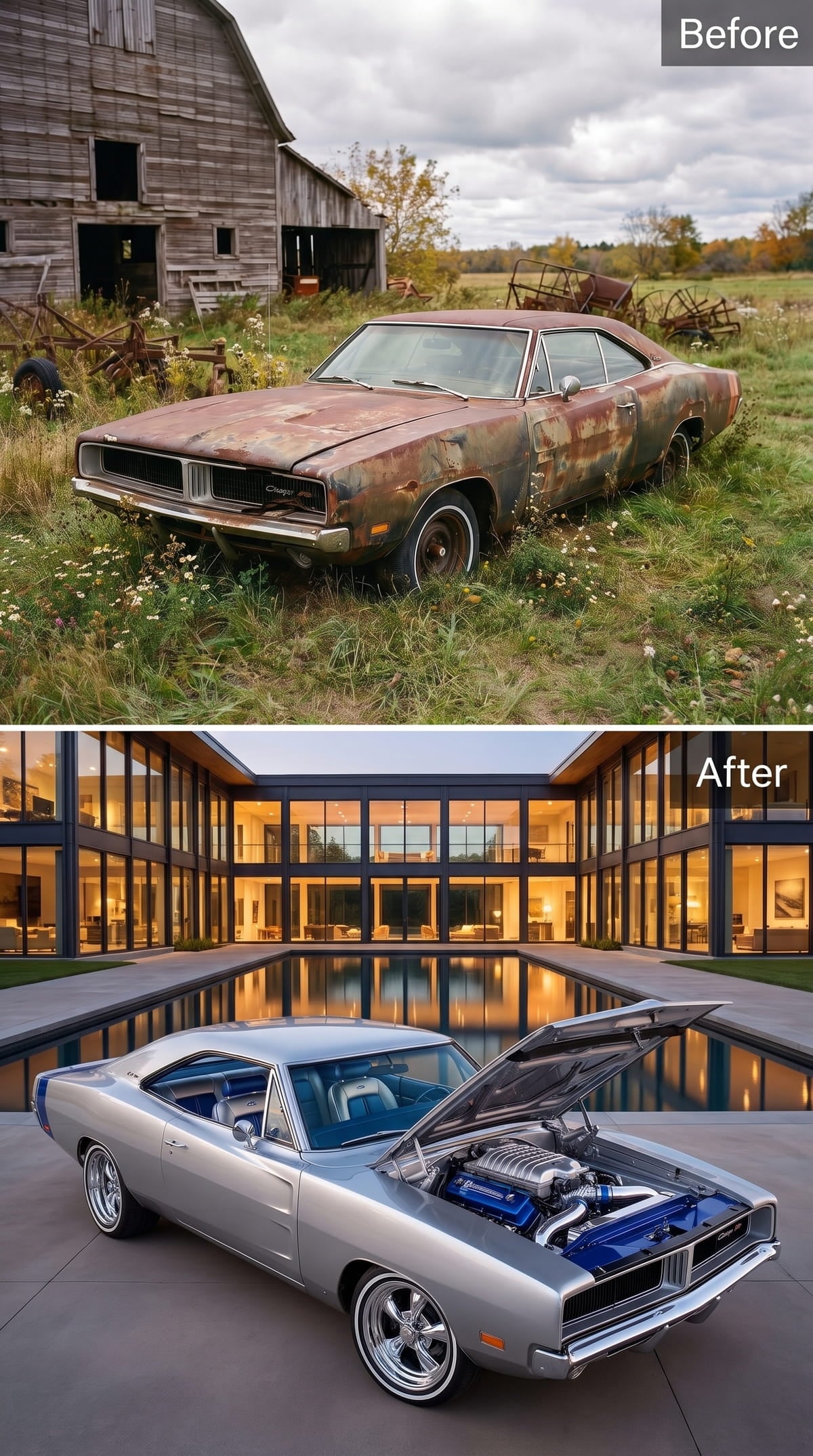
Painted in satin silver with a blue interior visible through the glass, this Charger carries a supercharged engine bay finished in matching cobalt blue with polished aluminum accents on the blower. The hood sits propped open at the front, making the engine bay part of the design rather than a hidden mechanical compartment. Classic five-spoke chrome wheels tie the chrome body trim together without fighting the cooler silver tone.
Warm amber light from the courtyard prevents the silver exterior from becoming sterile. Reflections from the glass and water add just enough warmth to separate the body from the cool blue engine treatment.
Finish Choice: Chrome keeps this silver concept in a cool, reflective palette, while bronze or gold would have introduced a much stronger contrast. The better choice depends on whether the goal is visual unity or a warmer accent.
Ice Blue Makes the Charger Look Almost Calm
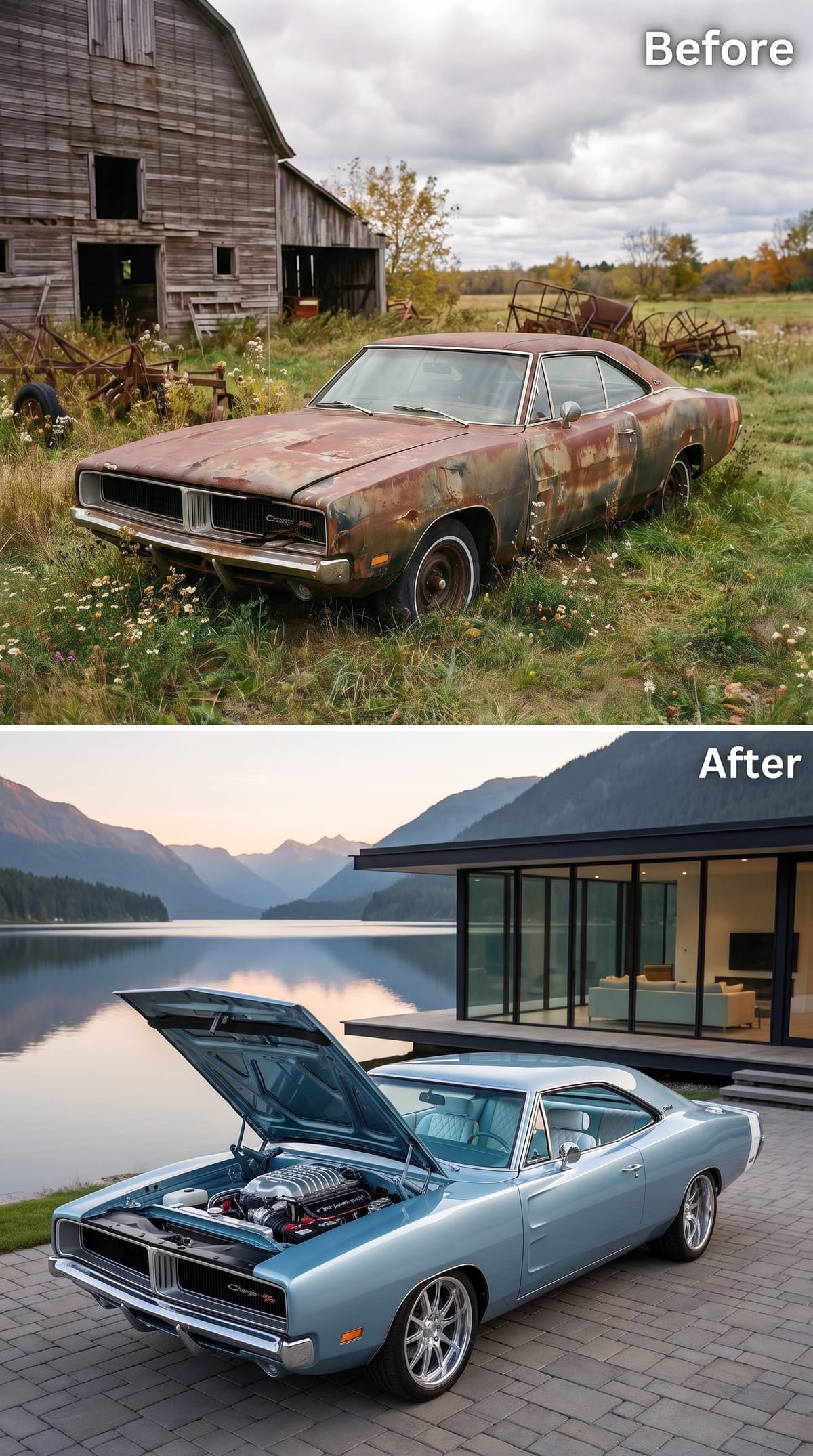
Wrapped in a soft ice blue with just enough metallic depth to catch the fading light, this reimagined Charger sits on a herringbone paver driveway outside a glass-and-concrete home with full lake and mountain views behind it. The hood is propped open, and the engine bay is worth the look: a supercharged V8 with red valve cover accents sits tight in there, with the red accents clearly separated from the pale body color. Polished multi-spoke wheels complete the stance.
The interior visible through the open door shows matching blue diamond-stitched upholstery. It ties the cabin back to the exterior without feeling gimmicky. Ice blue is an unusual choice for a Charger, but the still water and gray mountains make the pale finish easier to accept.
Cobalt Blue and Copper Play Cool Against Warm
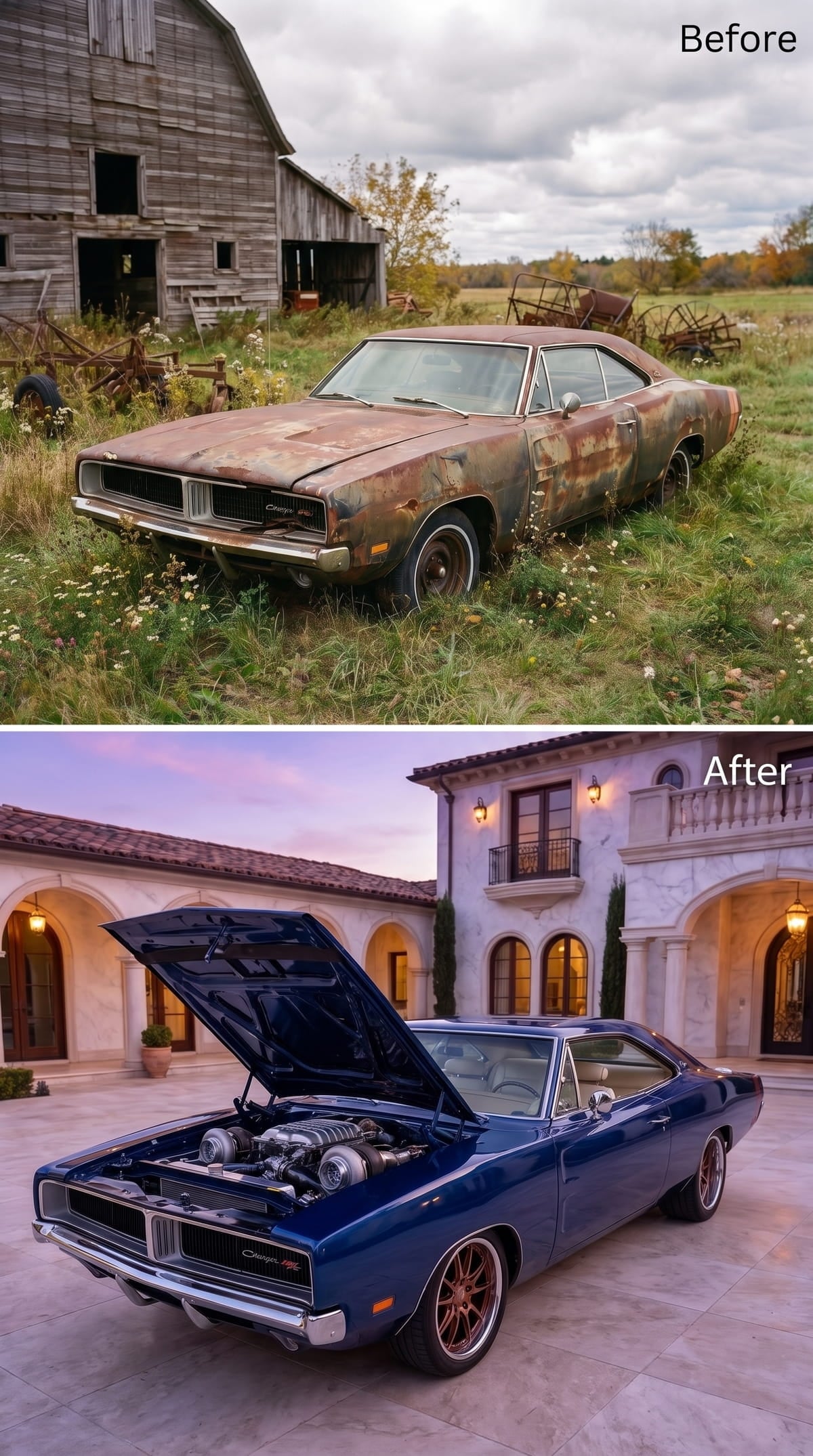
Laid out on pale travertine beneath a Mediterranean estate at dusk, this reimagined Charger wears a deep cobalt blue that shifts cooler as the sky behind it goes violet. At the center of the engine bay, a modern V8 carries polished forced-induction hardware that catches the warm glow from the arched wall sconces.
The copper wheel finish does real work here. It’s warm against the cool blue body, and it keeps the concept from reading as cold despite the monochromatic sky. Against the stone facade with its terracotta roof tiles, the copper pulls the car into the architecture rather than away from it.
Gunmetal Gray and Bronze Above the Sea
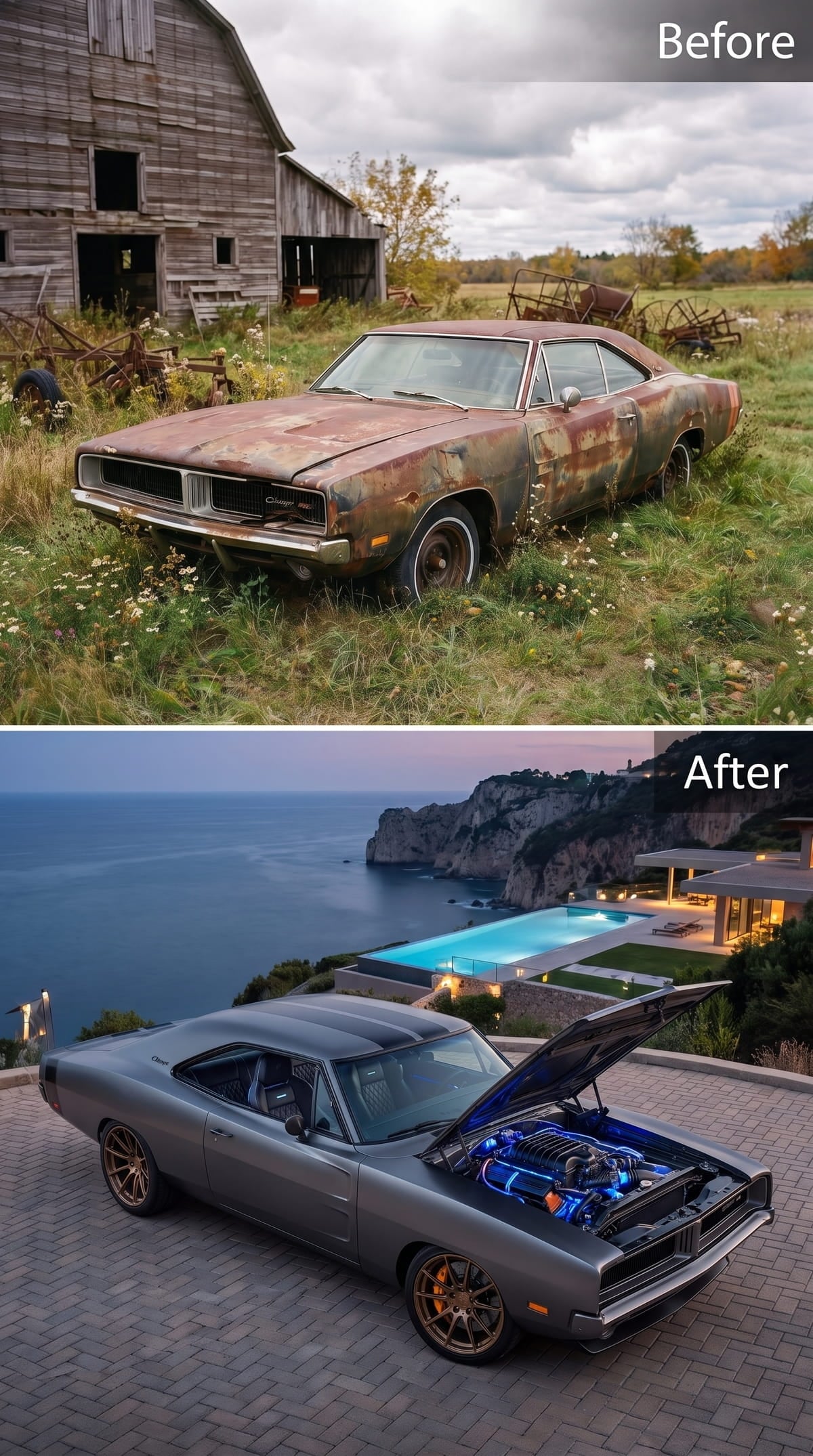
Set against a clifftop property at dusk, the reimagined Charger sits on a paver driveway in a satin gunmetal gray that reads almost blue under fading evening light. Bronze five-spoke wheels pull warm against the cool body finish, and the hood-open reveal shows an engine bay lit in electric blue, with visible intake runners and braided lines that make it look more laboratory than garage.
An infinity pool traces the cliff edge while warm interior light spills across the villa’s stone exterior. Cool gray paint, amber architecture, and the darkening sea create the contrast without asking the car for another stripe or accent color.
Ask Yourself: If you’re choosing a wheel finish for a gray or silver exterior, consider how the surrounding environment reads at different times of day. Bronze tends to preserve a warmer visual contrast under flat light, while chrome may appear less prominent depending on the surroundings and angle. Matching your wheel tone to the warmest fixed element nearby, whether that’s stone, wood, or architectural lighting, keeps the whole composition grounded.
Matte Army Green Turns the Bodywork Into Architecture
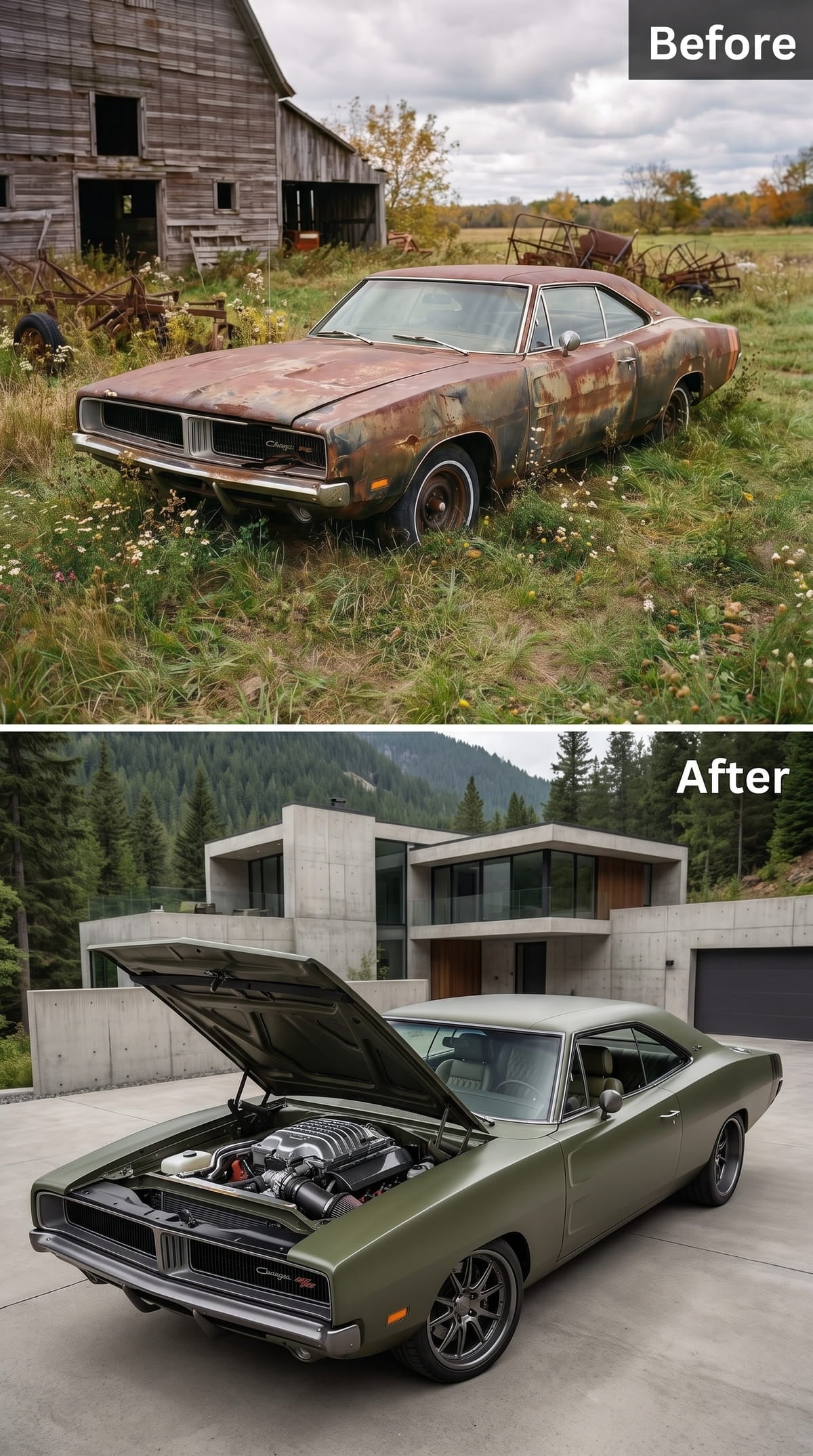
Against a backdrop of board-formed concrete and floor-to-ceiling glass, the Charger’s matte army green finish reads almost architectural itself. Rather than contrasting with the surroundings, the finish picks up their concrete, evergreen, and earth tones.
The engine bay gives the abandoned shell a mechanical future few people would have imagined from the original image. The matte body paired with dark multi-spoke wheels keeps the concept from tipping into show-car territory. It’s aggressive without announcing itself.
Style Math: Matte paint changes the way the Charger’s long flanks read by reducing reflections and emphasizing the silhouette. On this olive-leaning green, the finish also connects naturally with concrete and evergreen surroundings. The tradeoff is practical: matte surfaces require careful cleaning and can be harder to spot-repair than gloss paint.
Navy and Chrome Look Richer After Dark
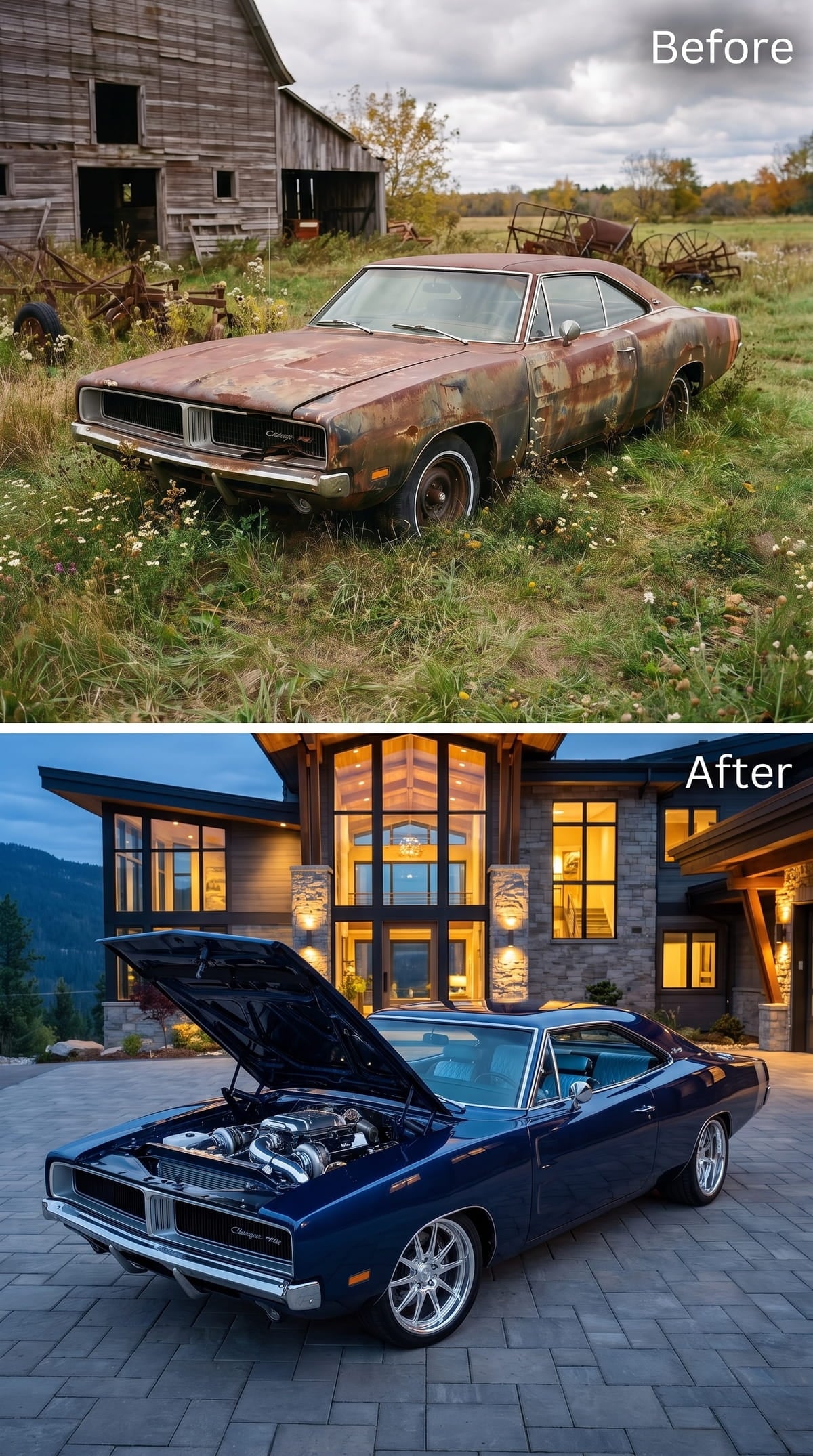
Deep navy paint sits under the dusk lighting with a blue-teal interior visible through the open door, and the combination reads richer at night than it would in daylight. Hood’s up, and the engine bay is all business: a supercharged V8 with polished chrome detailing that mirrors the multi-spoke wheels below. The house behind it is stone and dark timber, warmly lit through floor-to-ceiling glazing, and the paver driveway gives the whole scene a weight that suits a car this serious.
- Chrome wheel spokes work at night because they pick up ambient light rather than requiring direct sun to read as finished.
- Pairing a cool-toned exterior like navy with warm architectural lighting behind it creates contrast that makes the paint look deeper than it is.
- The blue-teal interior adds a second cool tone without repeating the navy body color exactly.
Gloss Black Leaves Nowhere for Weak Bodywork to Hide
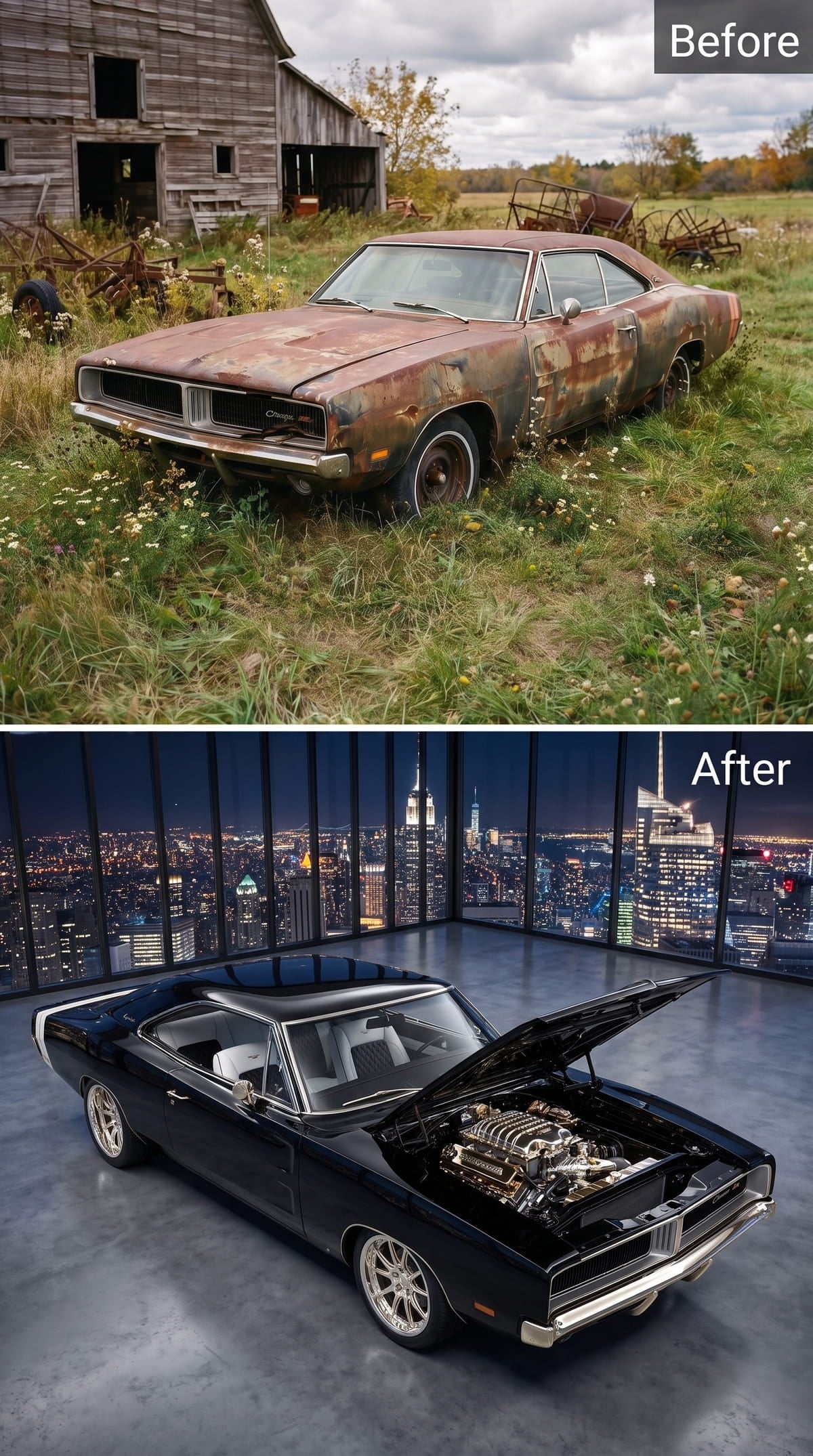
Parked inside a high-floor penthouse showroom, the Charger wears gloss black over every panel, and the finish is deep enough to mirror the city lights bleeding through floor-to-ceiling glass behind it. Chrome billet wheels anchor the stance. The hood stands open to show a supercharged V8 dressed in polished intake manifolds and chrome valve covers, making the engine bay one of the concept’s strongest focal points.
White leather interior keeps the cabin from disappearing into the black exterior entirely. It’s a sharp contrast, and it works.
Editor’s Note: Gloss black reveals panel waviness, uneven gaps, and surface flaws more readily than many lighter colors. On a body this long and flat-sided, the finish leaves very little room for careless preparation.
Copper Breaks Up the Monotony of Gloss Black
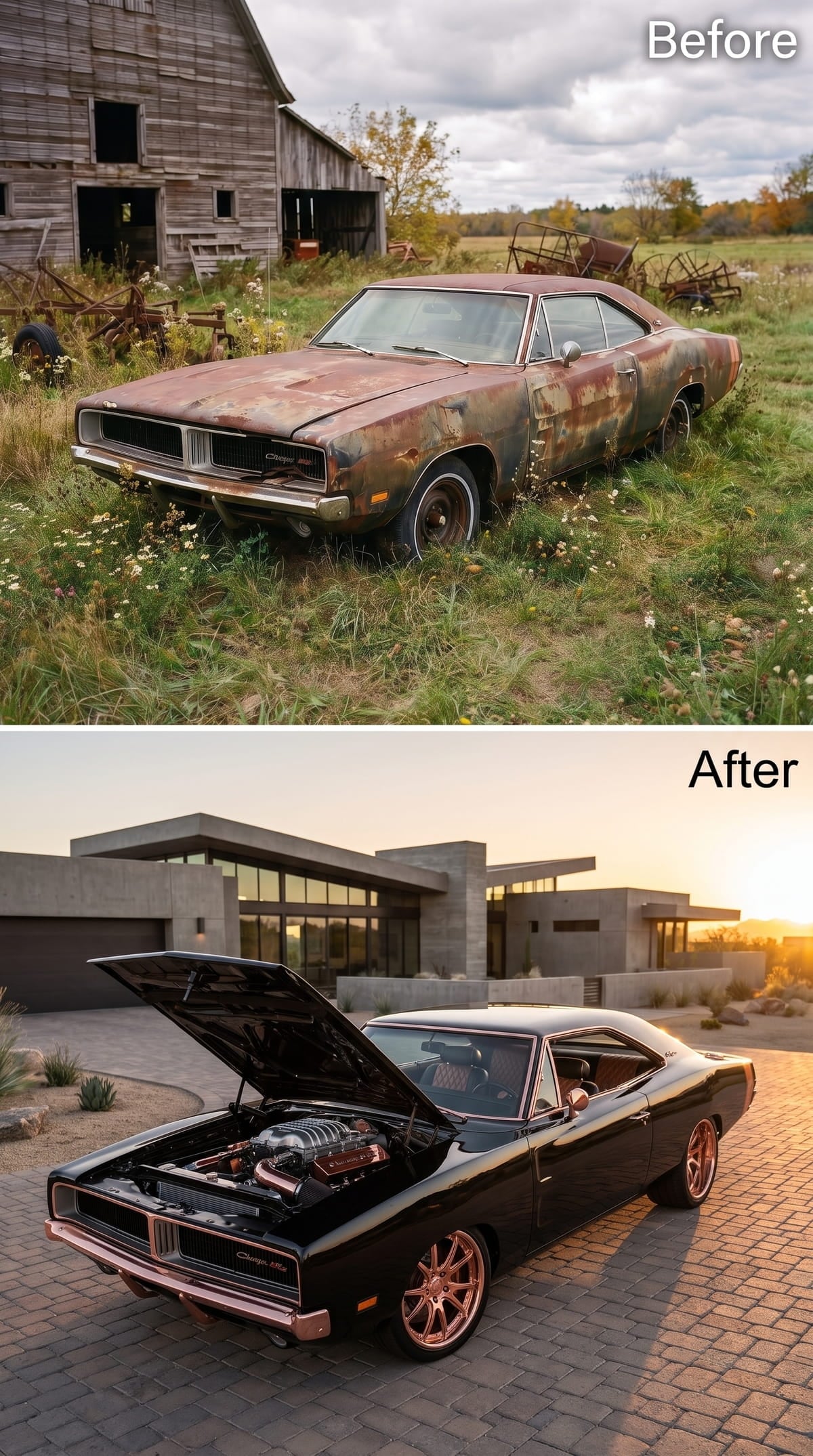
Reimagined in gloss black with rose-copper wheel faces and matching trim accents, this 1969 Charger sits outside a flat-roofed concrete residence, with the low sun picking up the copper details. The hood is propped open to expose a supercharged V8 with a chrome blower rising from the engine bay, framed by copper-toned valve covers that pick up the wheel finish directly.
Black on copper is a pairing with real tension to it. The body color absorbs light while the wheels and engine accents push it back out. That contrast keeps the concept from reading as a single monotone object and gives the eye somewhere to move.
Quick Fix: Rose copper sits between gold and bronze on the finish spectrum, and that position is useful because it bridges warm paint tones and cooler metal surfaces without committing fully to either. If you’re choosing a complementary accent finish for a black exterior, copper tends to read warmer than chrome and less precious than gold. It holds its own in direct sunlight without washing out.
Champagne Paint Meets Matte Black at Dusk
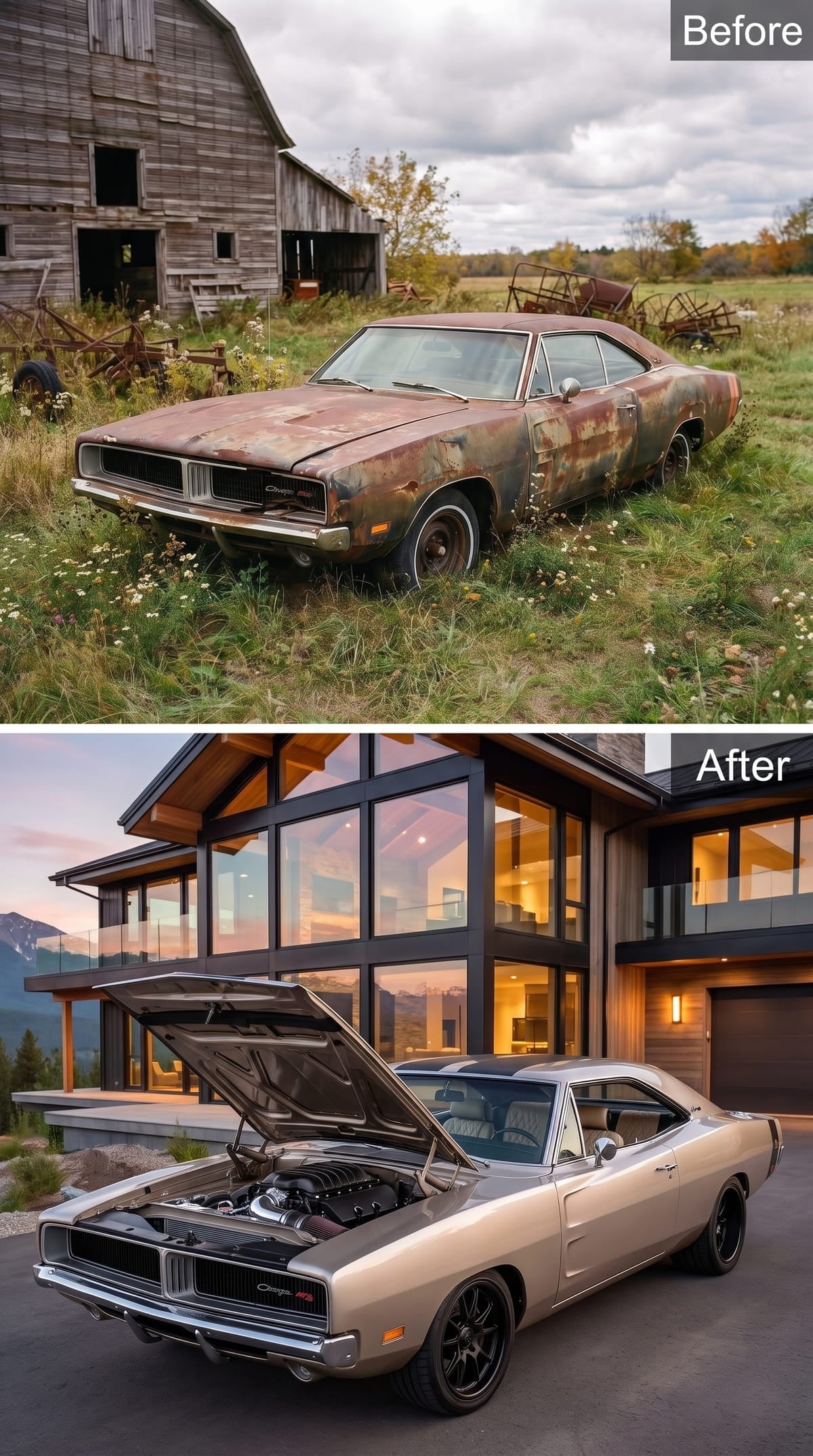
Shot at dusk in front of a home with floor-to-ceiling black-framed glass and warm timber fascia, the Charger wears a champagne gold finish that picks up the amber glow pouring through the windows behind it. Hood propped open, the engine bay shows a supercharged V8 sitting center stage. The black five-spoke wheels keep it grounded without competing with the paint.
Material Matters: Champagne and gold finishes can read very differently on cars because vehicles are seen under constantly changing light. At dusk, a champagne exterior reads almost metallic bronze, which is worth considering if a future builder wanted the car to photograph well across changing conditions. Pairing it with matte black wheels pulls the warmth down just enough to keep the whole package from reading precious.
Pearl White and Rose Gold Divide the Room
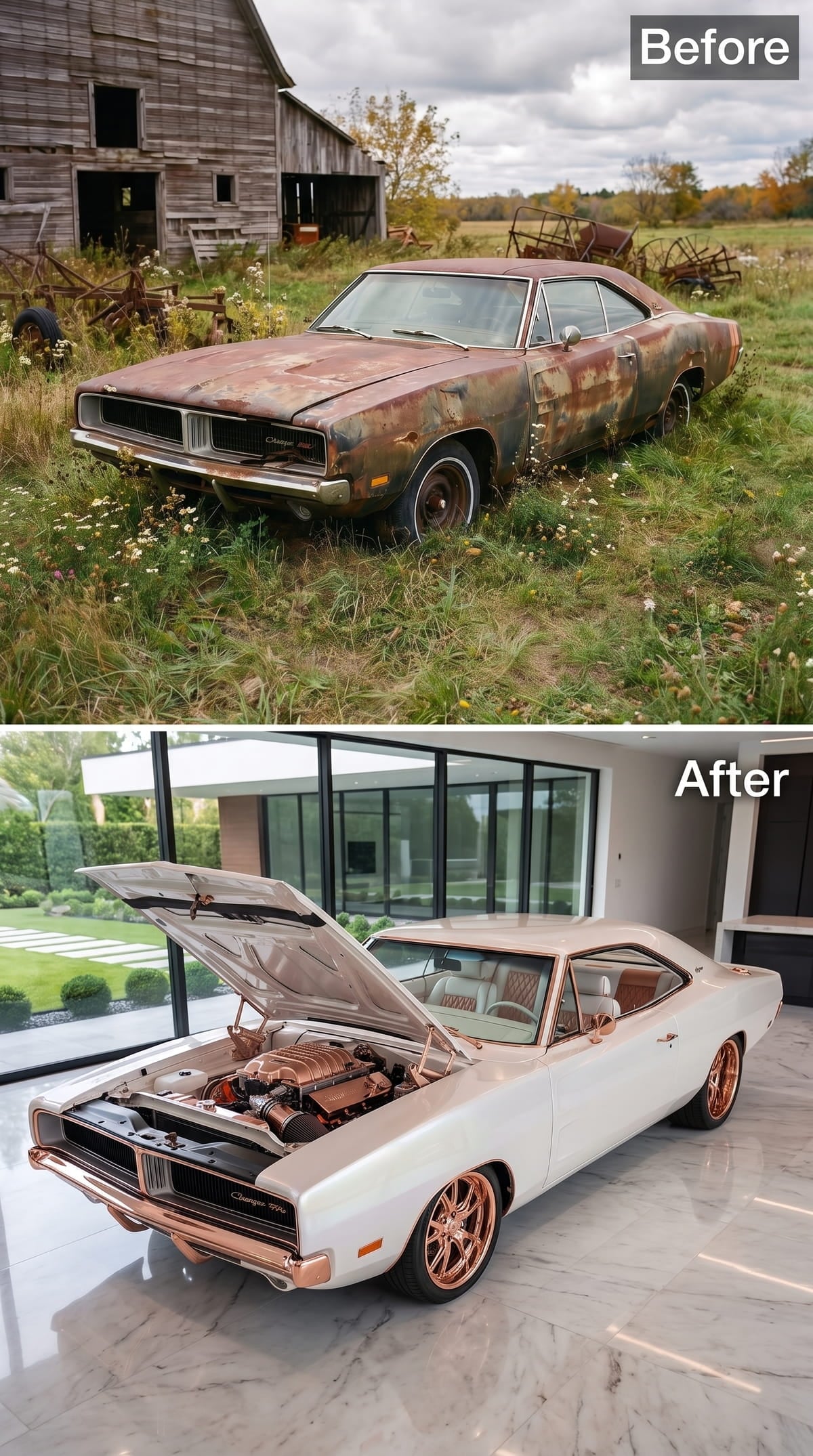
White over rose gold is a combination that will divide the room before anyone reaches the engine bay. The pearl exterior plays it cool while the copper-toned wheels, engine bay accents, and trim details pull relentlessly warm. Hood up, the supercharged V8 sits under rose gold valve covers that match the wheel spokes exactly.
The marble floor and floor-to-ceiling glass push the idea even further. The interior continues the same argument: quilted leather visible through the windows, stitched in the same copper tone threading through every other element of the concept. The repetition is polished and cohesive, although it may be one rose-gold accent too many for anyone who prefers a harder-edged Charger.
History Corner: The 1969 Charger retained the model’s full-width concealed-headlight grille. Its vacuum-operated doors are a familiar maintenance concern on surviving 1968–69 cars, and some owners replace the original system with modern electric actuators.
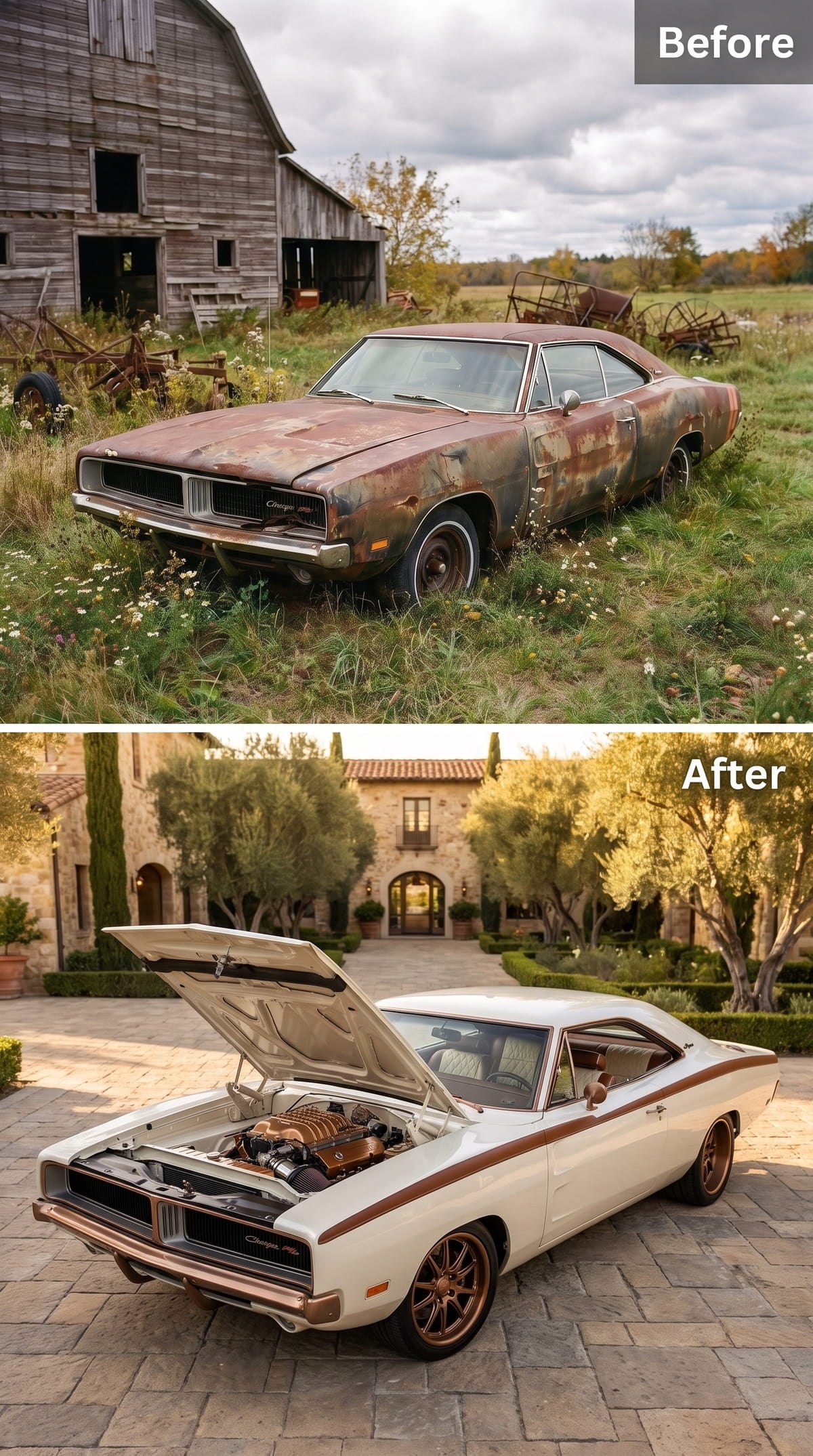
The Chocolate Side Stripe Saves This Cream-and-Bronze Version
Would you like to save this?
Finished in warm cream, this version depends on a broad chocolate-brown stripe running the length of the body. It visually stretches the Charger and separates the pale paint from the bronze wheels, preventing the entire concept from dissolving into one soft beige palette. The hood sits propped open over an engine bay packed with a supercharged V8, its copper-toned intake manifold and valve covers matching the bronze five-spoke wheels below. The repeated bronze and copper tones make the mechanical work feel like part of the design.
The backdrop earns its place too. Stone masonry, cypress trees, and a terracotta roofline give the car’s warm tones somewhere to land. Cream against warm limestone is a different proposition entirely than cream against a white garage wall.
Common Mistake: Matching your engine bay accent color to your wheel finish is one of the cleaner moves in a full restoration, but builders often pick one without knowing the other is going in. Decide both finishes before you commit to either. Bronze valve covers beside chrome wheels can make the engine bay and exterior feel like separate design decisions unless another detail connects them.
Pearl White and Blue Stripes Keep the Formula Clean
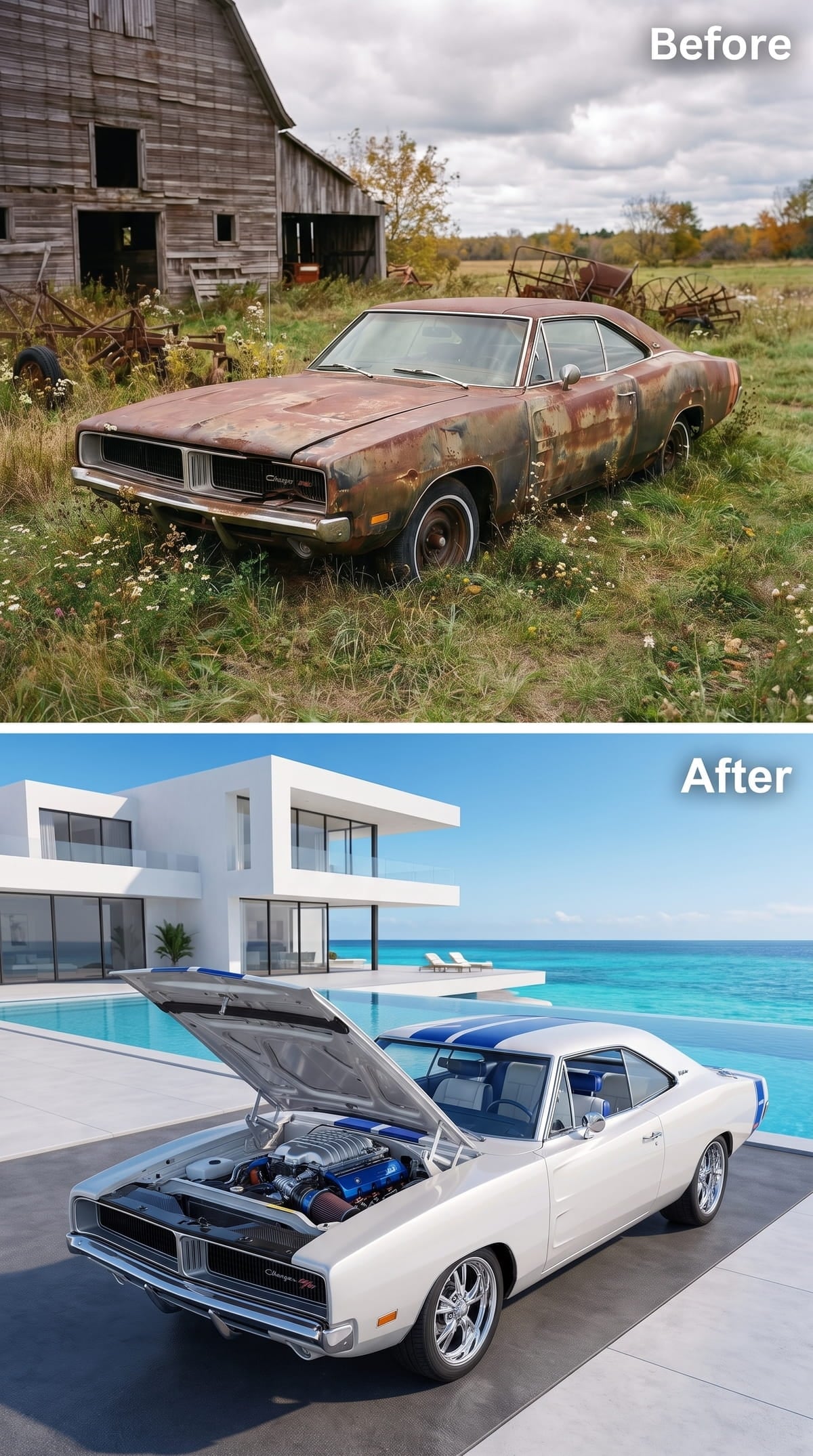
Ivory white paint runs the full body, with twin blue racing stripes cutting straight from the hood to the roof in a pairing that’s confident without being loud. The hood sits open, revealing a supercharged V8 dressed in matching blue valve covers and an intake treatment that gives the concept more than surface-level drama. Chrome five-spoke wheels keep the lower half clean. Behind it, an infinity pool and modern white architecture with floor-to-ceiling glass frame the car like a deliberate backdrop.
Matte Black Comes Back Down to Earth in a Suburban Driveway
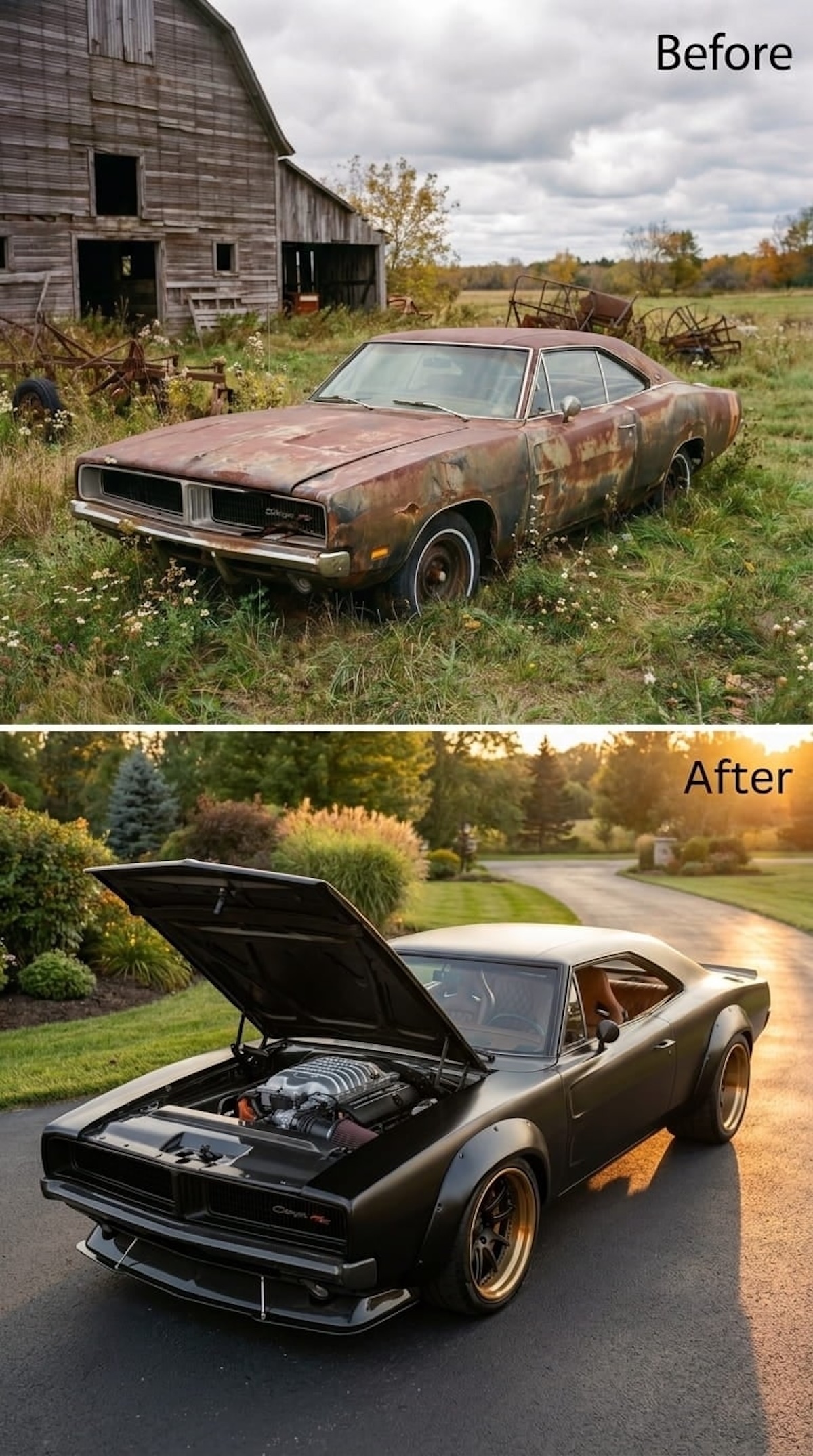
Finished in matte black with a low, wide stance and flared fenders, the car sits on bronze multi-spoke wheels that pull warmth out of an otherwise cold palette. The hood is open, and the engine bay shows a supercharged V8 with a polished intake sitting dead center, giving the bronze wheels a warm mechanical counterpart under the hood.
Matte black on a car this wide reads less like a color choice and more like a statement about proportion. The suburban setting, with its curved driveway and landscaped beds catching the last of the evening light, gives the car an unlikely context that actually works in its favor.