
Would you like to save this?
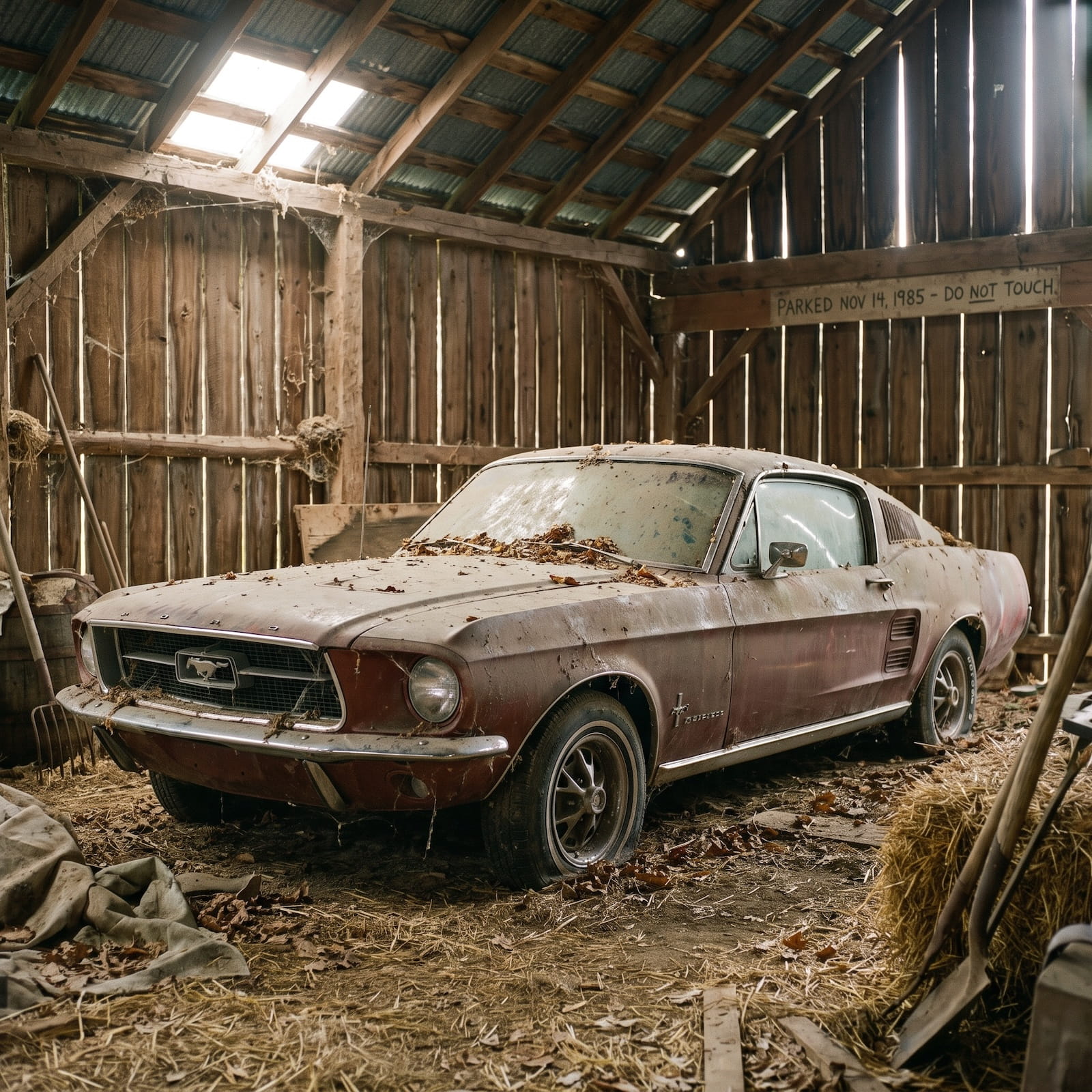
For decades, this 1967 Ford Mustang fastback sat inside a weathered barn while dust, leaves, and years of neglect settled across one of the most recognizable shapes in American car history. The faded paint and tired trim make a powerful before image, but the fastback roofline still suggests how many directions a serious rebuild could take.
The 28 transformations below push that idea in completely different directions, from factory-inspired restorations and polished show cars to pro-touring restomods, off-road builds, and wild custom finishes. Each one starts with the same forgotten Mustang and imagines a very different second life.
28. Barn Find to Show Car: 38 Years of Dust Stripped Down to Pure Cobalt
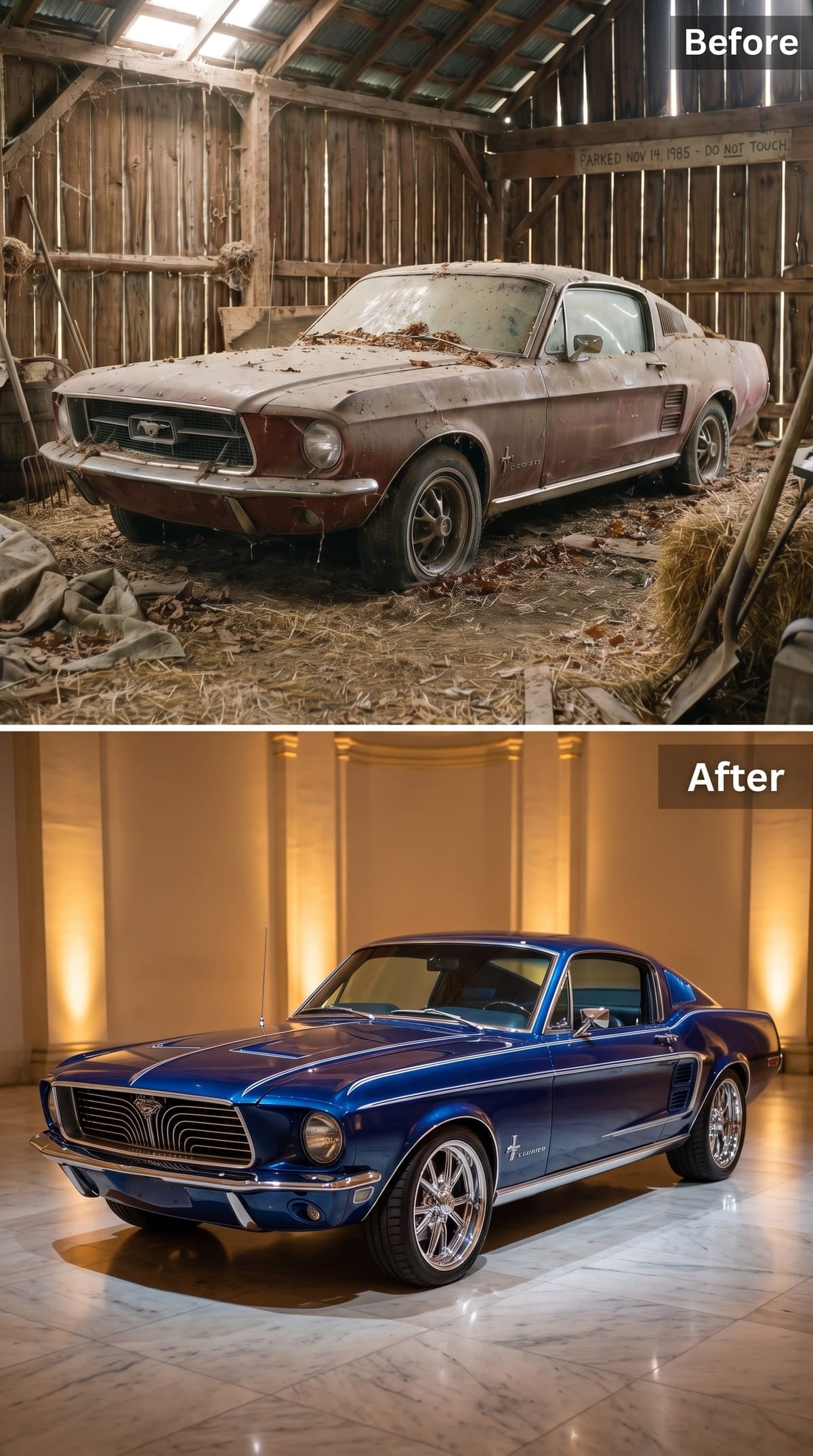
Deep cobalt blue transforms the neglected fastback into a polished show-car concept. Chrome accents catch the light, multi-spoke wheels fill the arches, and a redesigned horizontal grille sharpens the front without disguising the original proportions.
White accent striping follows the body without crowding the paint. Displayed beneath warm showroom lighting, the rebuild demonstrates how much presence the basic fastback silhouette still carries once the grime and deterioration are removed.
27. Matte Black, Zero Apologies: How a Fastback Gets Rebuilt With Intent
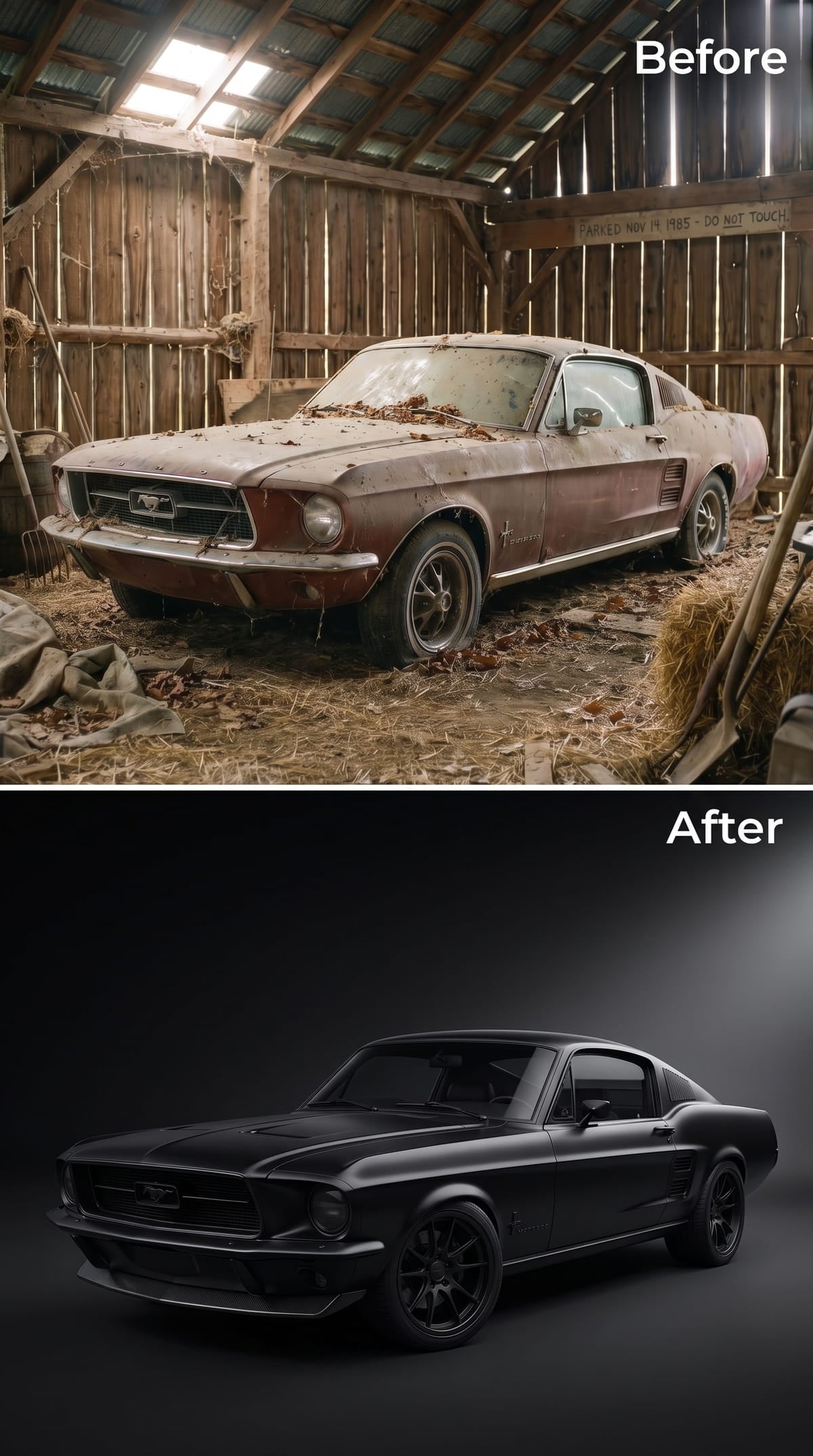
Every panel wears a matte black finish that scatters reflections and allows the roofline, rear haunches, and long hood to dominate. Matching dark wheels remove another visual interruption, giving the entire design one uninterrupted tone.
This approach depends on restraint. With little chrome and almost no contrasting color, the body shape has nowhere to hide. The build works because the 1967 fastback already supplies enough drama on its own.
26. Candy Red Done Right: Chrome Wheels, Show Lighting, and Zero Restraint
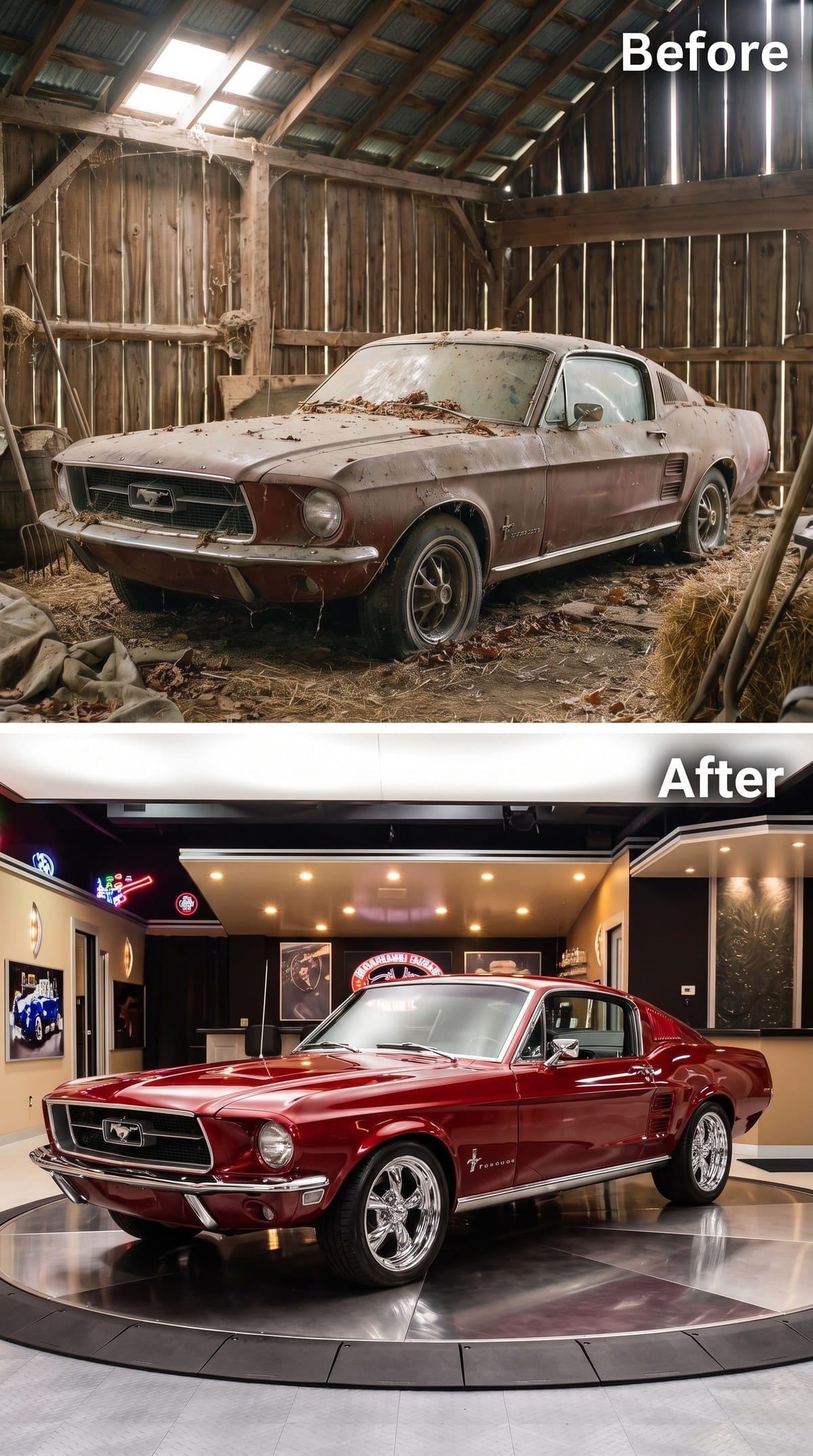
Parked on a circular platform beneath recessed lights, the fastback wears a candy-red finish deep enough to reflect nearly every surface around it. Chrome five-spoke wheels provide a bright counterpoint and keep the highly polished body from appearing visually top-heavy.
The surrounding garage completes the concept with neon signs, automotive art, and warm amber lighting. Nothing about this version is subtle, but every part commits to the same show-car direction.
25. Champagne Paint, Cobblestones, and a Fastback That Earned Its Second Life
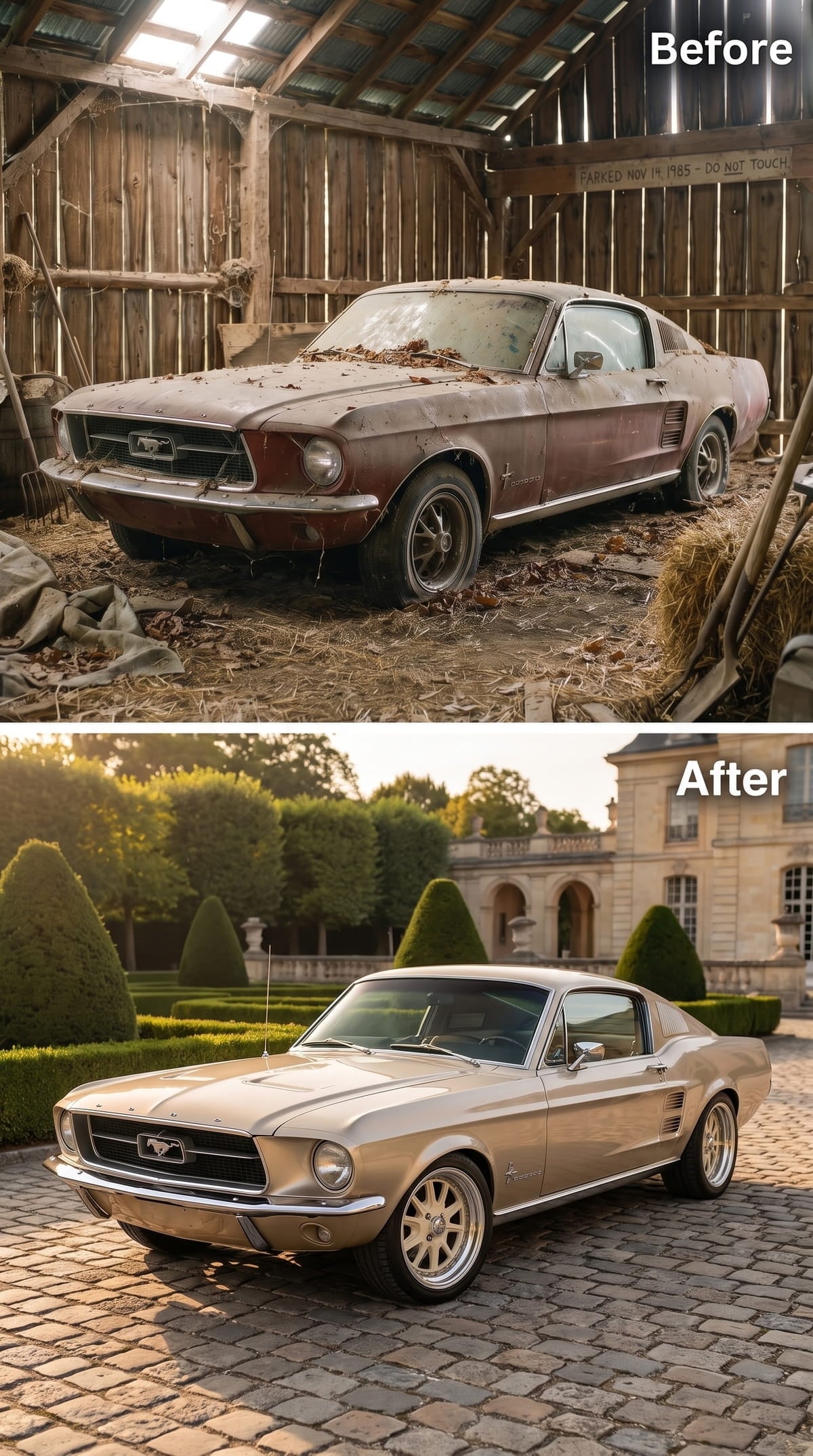
The warm champagne finish sits somewhere between gold, bronze, and muted silver depending on the light. Paired with polished multi-spoke wheels, it gives the fastback a more understated character than the brighter candy colors elsewhere in the gallery.
Cobblestones, hedges, and a formal estate backdrop emphasize the contrast between American muscle and European surroundings. The setting may be theatrical, but the restrained metallic palette suits the car surprisingly well.
Color Note: Champagne and bronze finishes can shift noticeably between sunlight, shade, and warm indoor lighting. That changing character makes them especially effective on bodywork with long curves and pronounced fender lines.
24. White and Cobalt on a Fastback Shell That Refused to Stay Dead
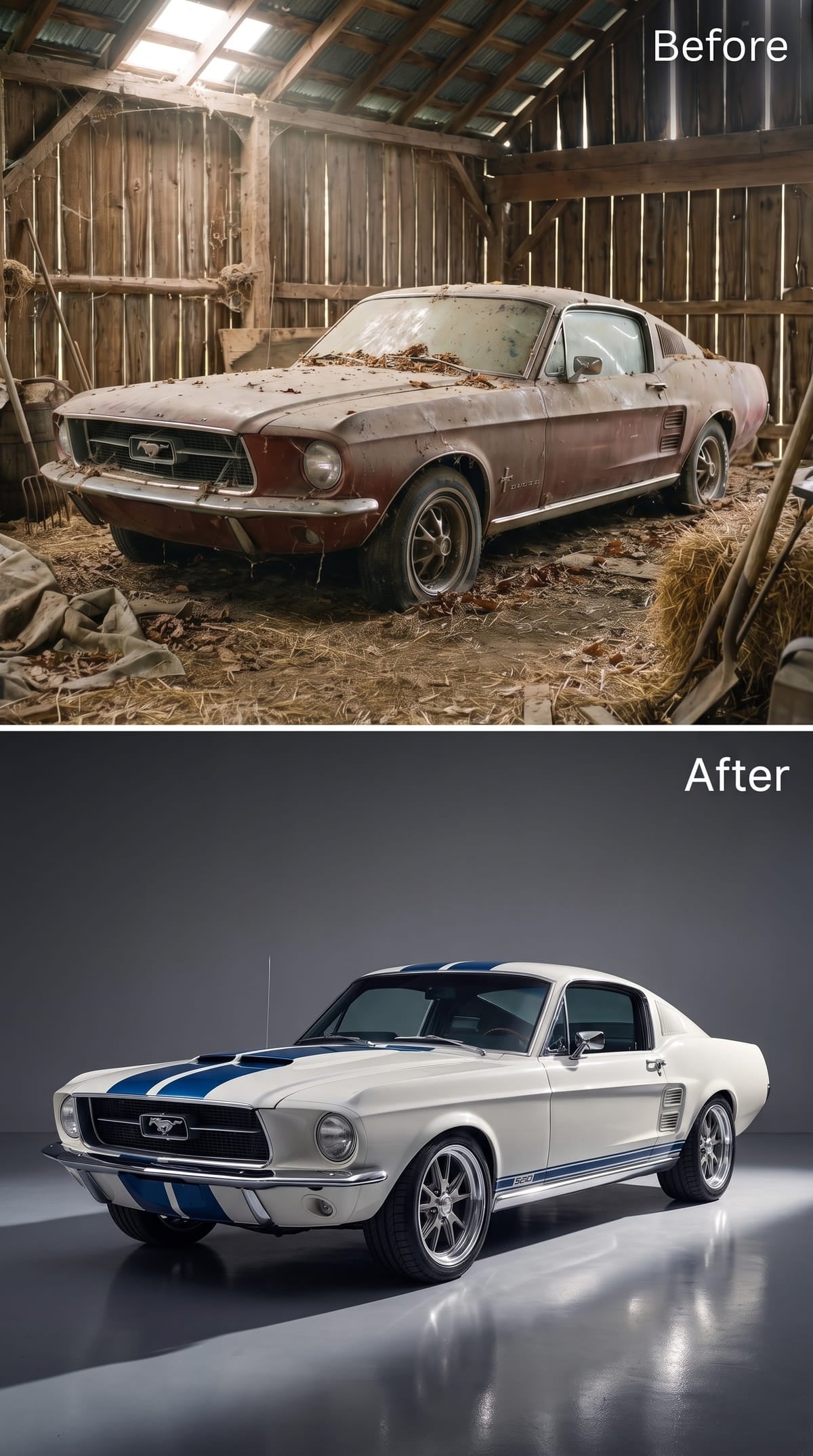
A clean white body receives twin cobalt racing stripes from hood to tail. Chrome bumper trim and polished five-spoke wheels keep one foot in the late 1960s, while the lower stance and crisp paint move the concept firmly into restomod territory.
The wide stripes make the strongest statement. Nothing about their placement is tentative, and the bold contrast gives the fastback a competition-inspired identity without requiring a complete race-car conversion.
Planning Note: Stripe width and placement should be mocked up on the actual body before paint begins. A layout that looks balanced in a reference image may appear too narrow or too wide once it crosses the Mustang’s hood, roof, and rear deck.
23. Candy Apple Red, Whitewall Tires, and a Fastback With a Factory-Inspired Finish
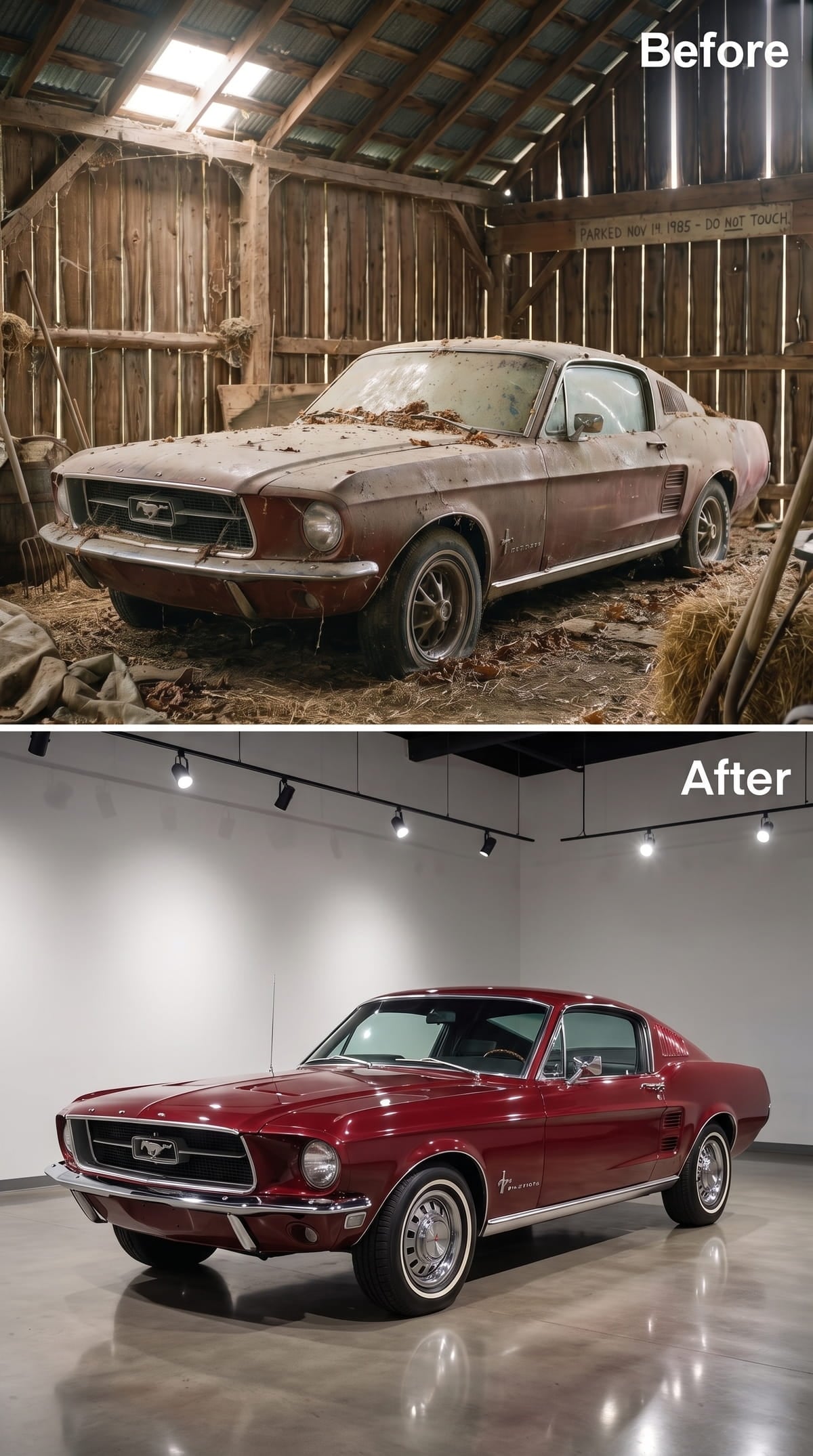
A burgundy-leaning Candy Apple Red finish gives this concept a more traditional personality than the aggressively lowered builds. Chrome spinner-style wheel covers and narrow whitewall tires push the design toward period custom rather than modern pro-touring.
The white gallery setting keeps attention on the color and trim. Whether every detail is factory-correct matters less here than the overall intention: imagine the barn find rebuilt as the immaculate boulevard cruiser it might have become in another life.
Editor’s Note: Whitewall tires were available during the era, although performance-oriented Mustang buyers also chose blackwalls or raised-white-letter tires. On a custom restoration, the right choice depends on whether the goal is period elegance or a more aggressive muscle-car look.
22. Copper Satin, Bronze Wheels, and a Fastback Built Around One Warm Palette
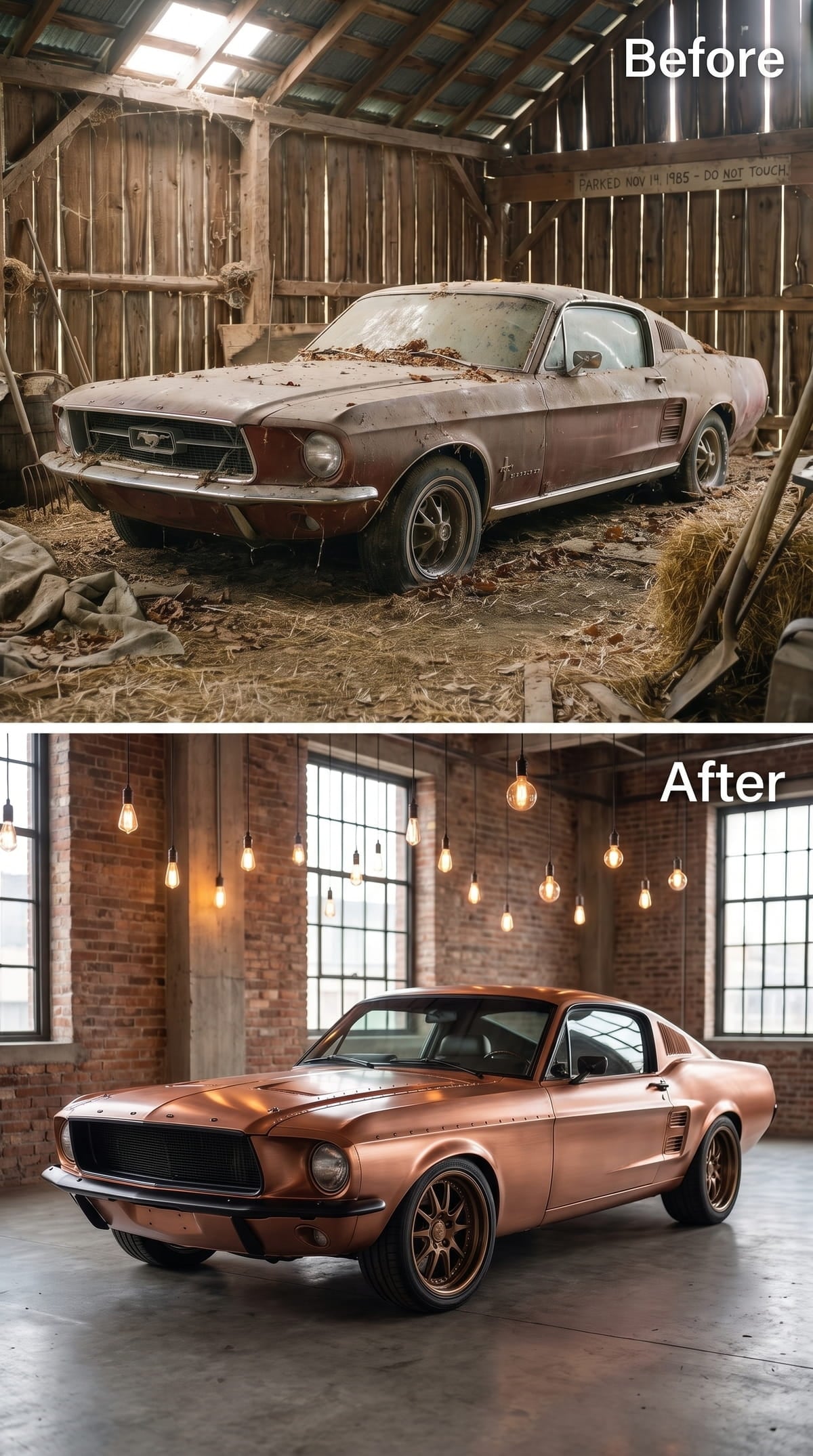
A copper satin finish gives the rebuild a soft metallic glow without the hard reflections of traditional clear-coated paint. Bronze wheels continue the warm palette, while the dark grille, hood details, and interior prevent the concept from becoming monochromatic.
The loft setting reinforces the color story with exposed brick, wood, and warm hanging bulbs. It looks less like a conventional garage display than a room designed around the finished car.
Finish Care: Matte and satin paint should be cleaned with products designed not to add gloss. Ceramic protection is one option, but it is not mandatory; the more important point is avoiding ordinary waxes and abrasive polishing that can create uneven shiny patches.
21. Sand Dune Paint and Rally Stripes on a Fastback Built for the Desert
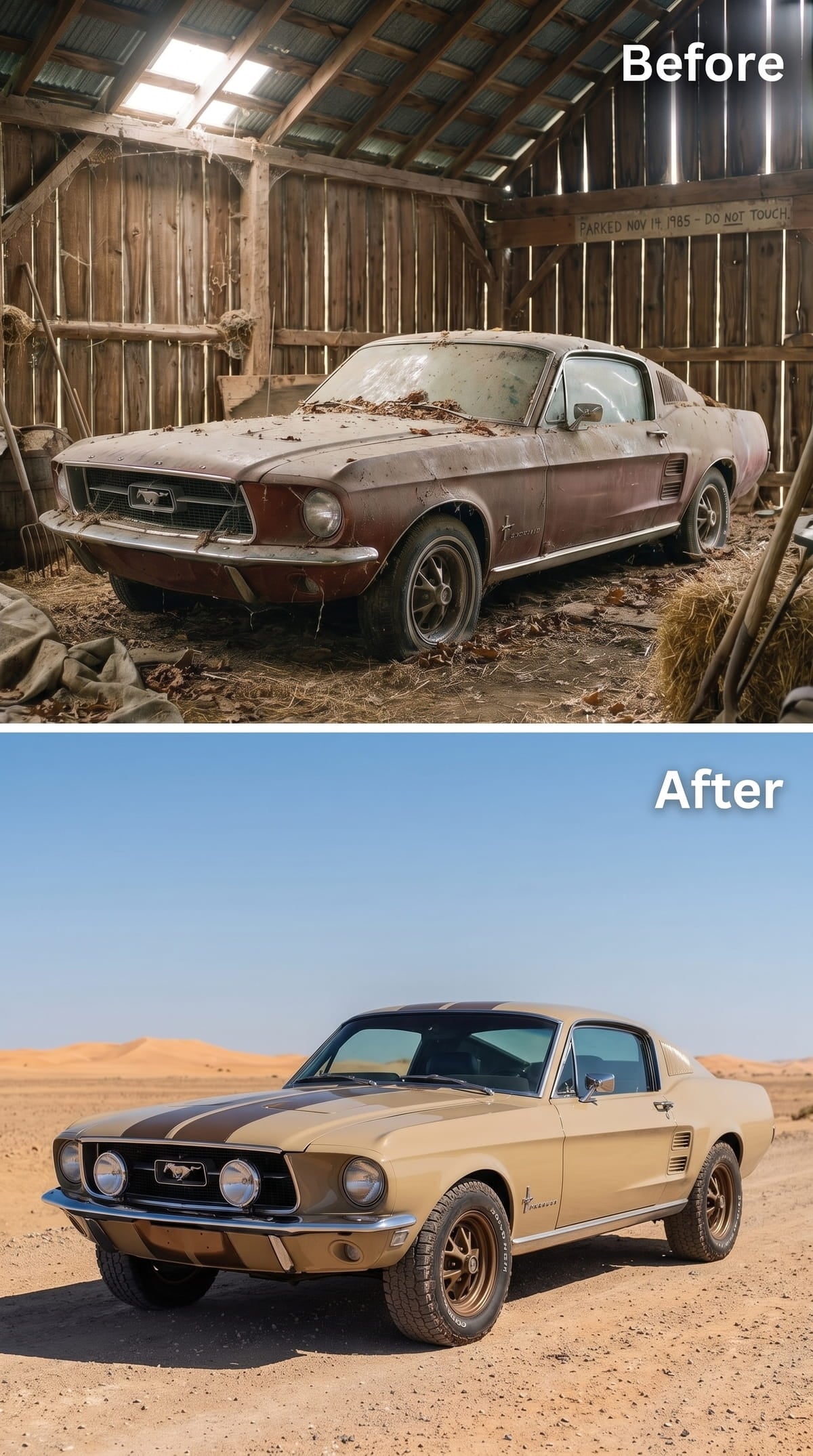
Tan bodywork and a dark chocolate stripe give this Mustang a desert-inspired personality. The palette feels closer to safari equipment than a conventional showroom restoration, but the contrast works with the long hood and dark grille.
Painted stripes can provide a seamless finish, while vinyl offers easier replacement and reversibility. Neither automatically adds more value; workmanship, historical accuracy, and the next buyer’s taste matter far more than the material alone.
Style Math: A subdued body color can support a darker stripe without overwhelming the fastback’s shape. The stripe should reinforce the hood and roofline rather than become the only feature visible from across the room.
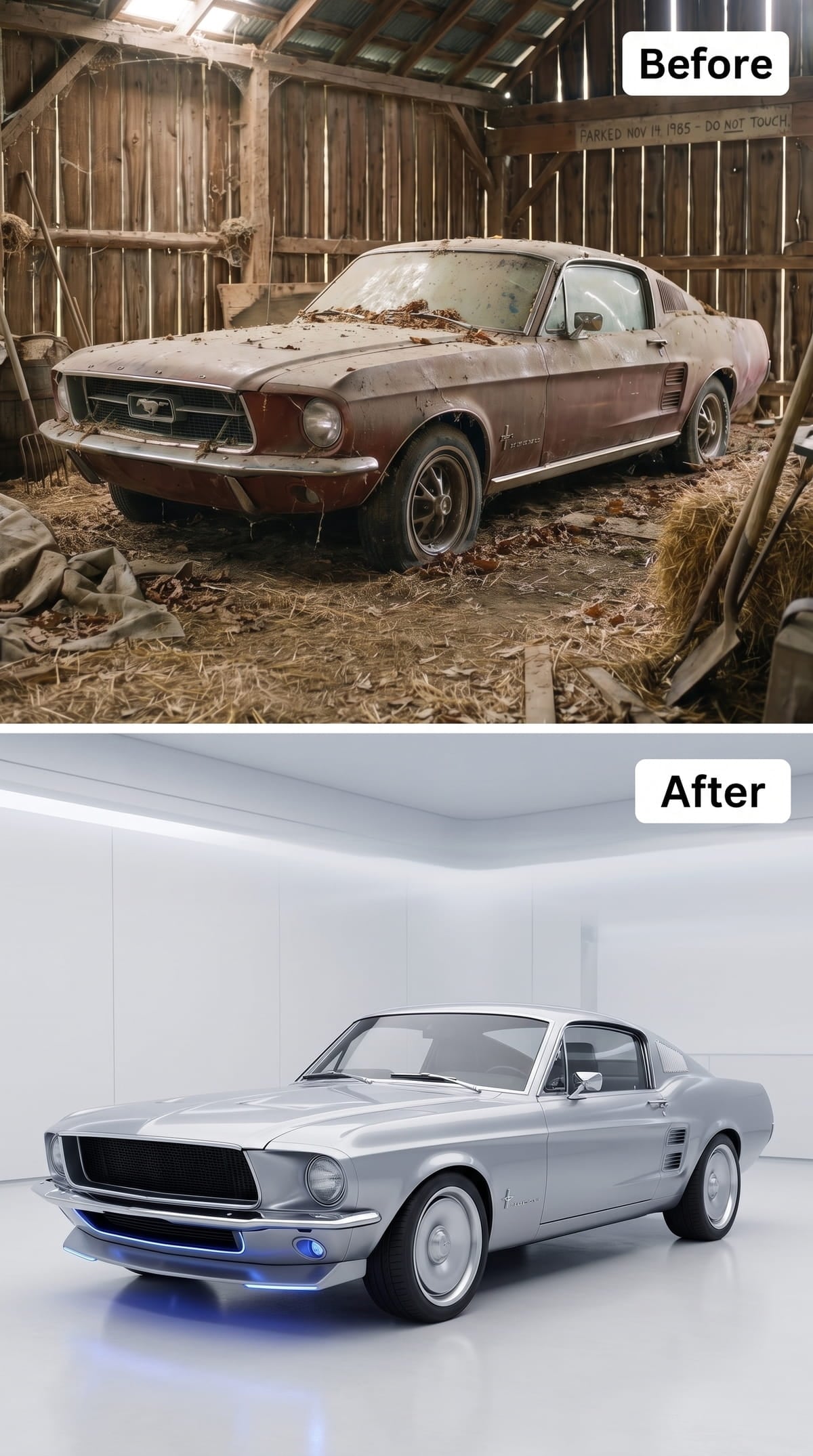
20. Mirror-Silver Paint and Blue Underbody Lighting Built to Own a Show Floor
Would you like to save this?
The highly reflective silver finish makes the body resemble polished metal, while cobalt underbody lighting supplies the only major accent color. Smooth turbine-style wheels sit close to the body and continue the futuristic show-car direction.
Blue auxiliary lights echo the glow beneath the rocker panels. This version has moved far beyond a restoration and into exhibition-car territory, but the original fastback profile remains recognizable beneath the modern treatment.
19. British Racing Green on Wire Wheels: The Fastback’s Grand-Touring Second Act
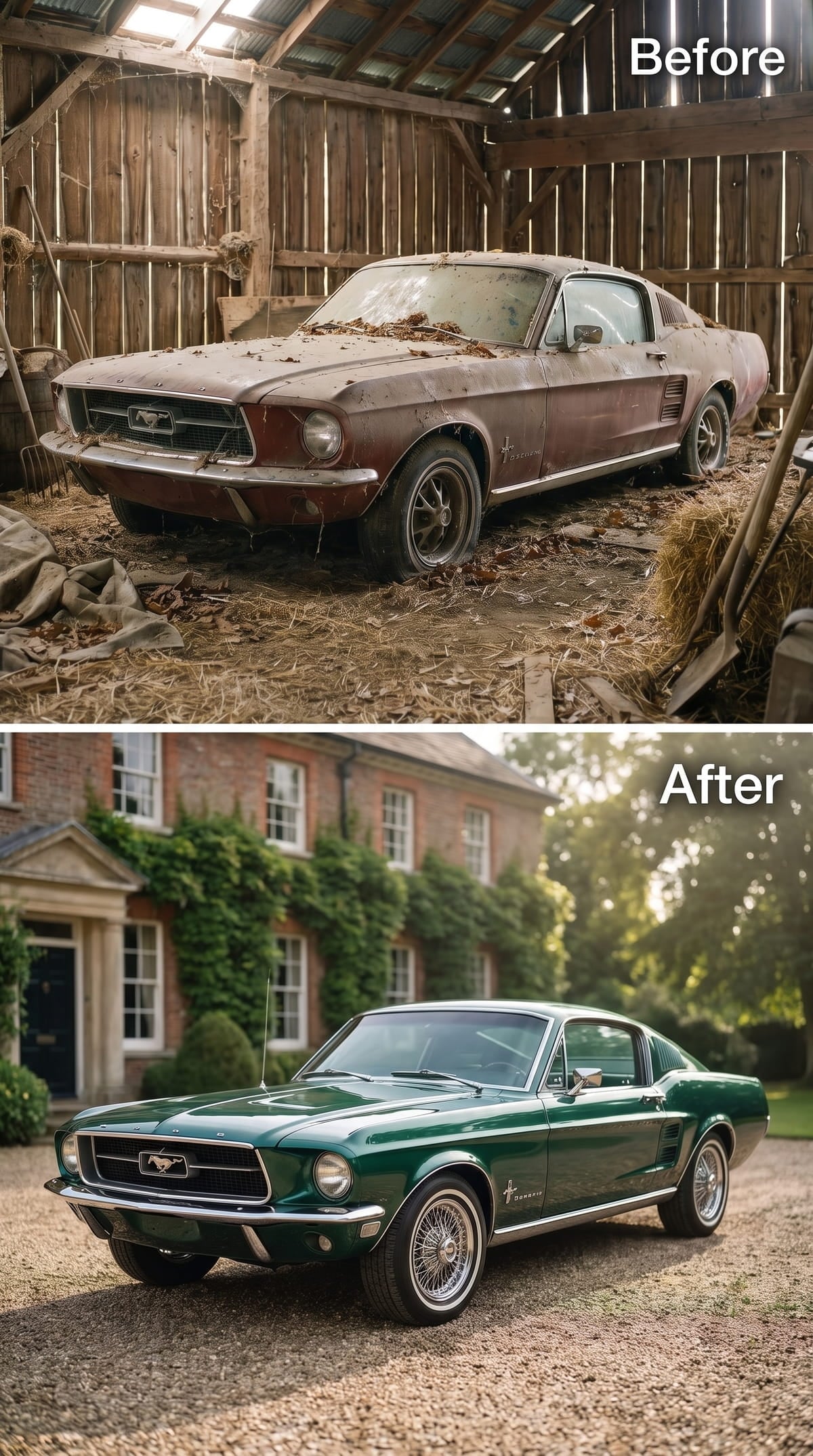
Dark green paint and wire-spoke wheels give this concept the character of a transatlantic grand tourer. The color deepens in shade and brightens in direct light, while the chrome spokes introduce a lighter, more delicate pattern than a typical muscle-car wheel.
The ivy-covered brick manor reinforces the British association, although this remains an American fastback underneath. That tension is what makes the concept interesting.
Wire-spoke wheels change the Mustang’s personality without changing the roofline, body sides, or long-hood proportions that identify it.
18. Mirror-Finish Purple on a Fastback That Spent Decades Collecting Hay
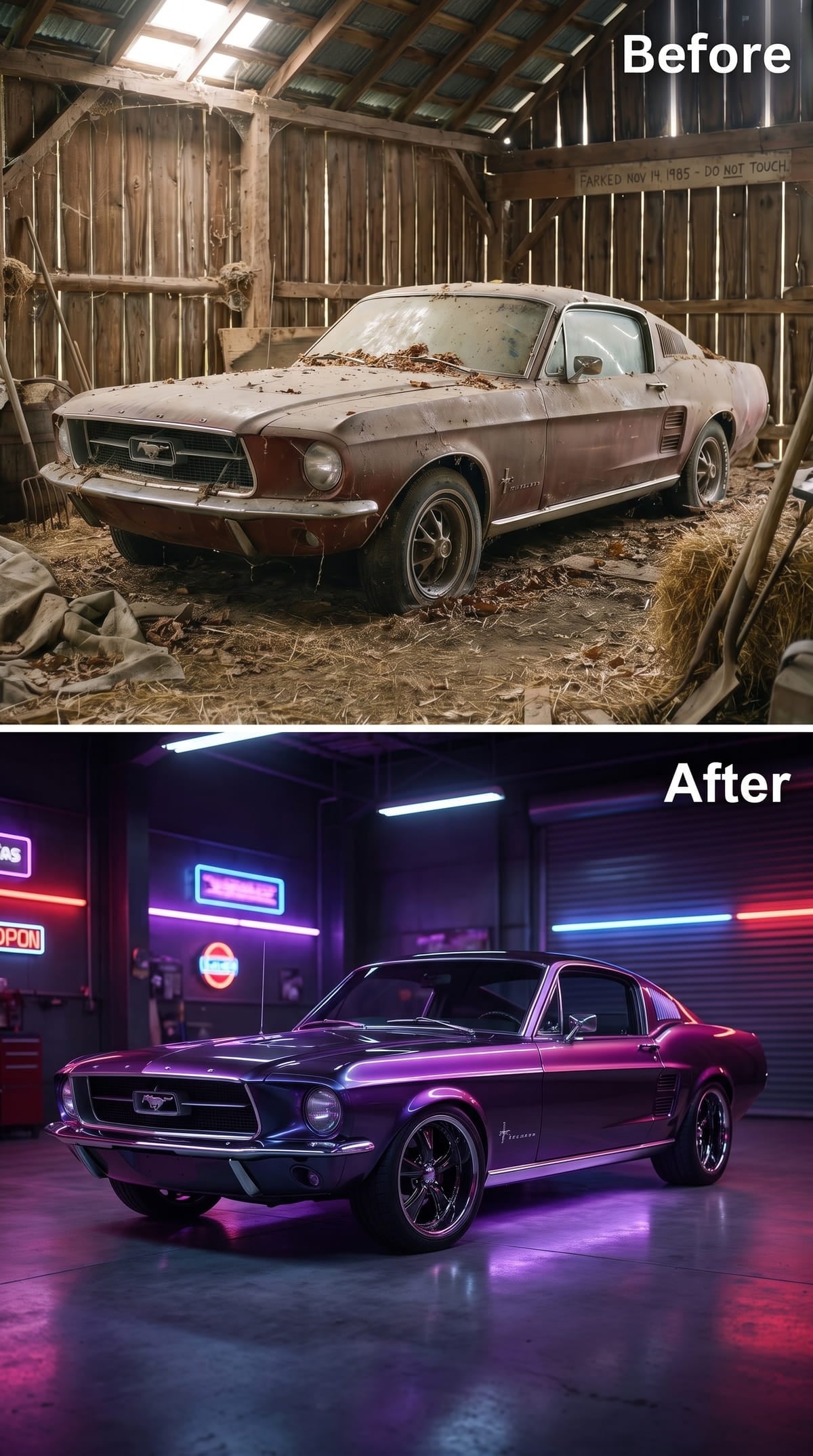
The deep violet finish shifts between blue, purple, and red beneath the neon lighting. Black multi-spoke wheels sit low beneath the body, giving the build a more aggressive stance than the polished green and champagne concepts.
It is deliberately excessive. Rather than hide the color sensitivity of the finish, the display lighting makes those shifts the entire point.
Lighting Note: LED display lighting generally produces less heat and ultraviolet output than direct sunlight, but any specialty finish can still change over time. Paint formulation, clearcoat quality, and exposure duration matter more than the color name alone.
17. Gunmetal Gray, Carbon Accents, and a Fastback With a Modern Competition Stance
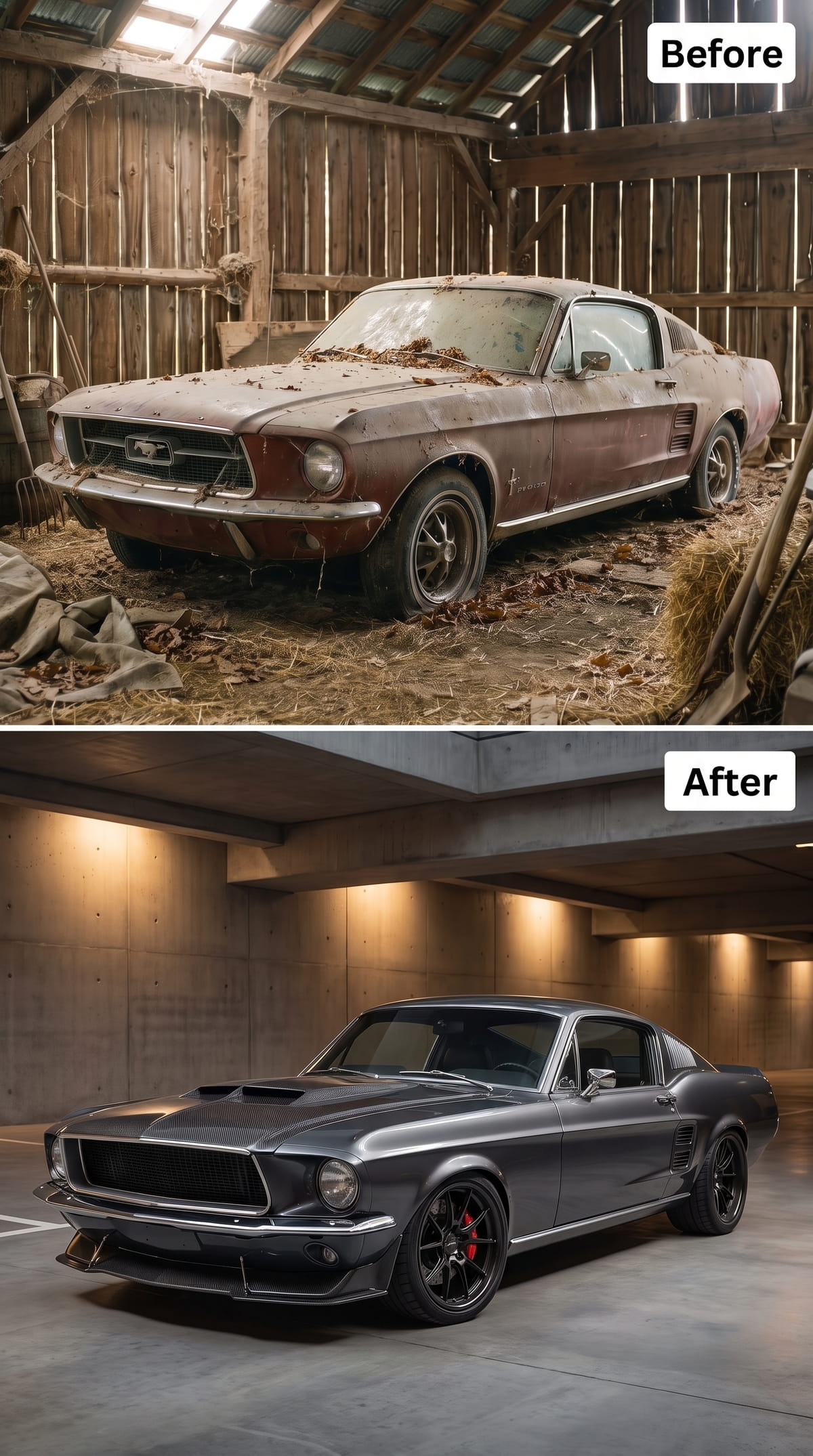
Gunmetal gray gives the body a muted metallic surface that scatters reflections rather than producing a mirror-like shine. A carbon-fiber hood accent adds texture, while the widened stance and dark wheels pull the concept toward a modern track-inspired restomod.
Red brake calipers provide a narrow flash of color through the spokes. The details remain legible because the surrounding palette is so controlled.
Why the Carbon Accent Works Here
Carbon fiber creates contrast through its woven texture and dark finish. Against gunmetal paint, the effect is subtle rather than dramatic, which suits a build that relies on close inspection instead of a bright two-tone divide.
16. Matte White, Blacked-Out Wheels, and a Fastback That Means Business
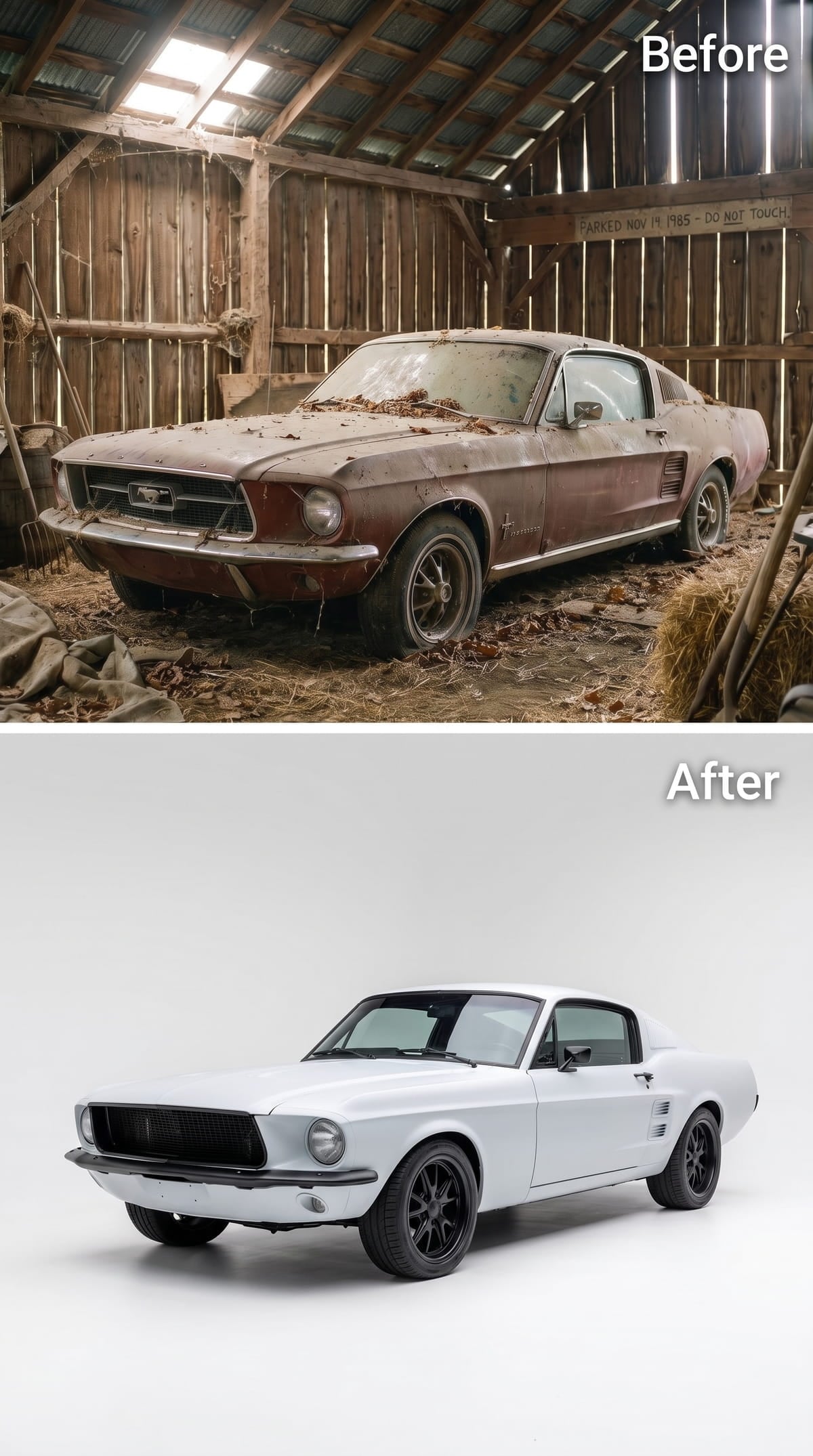
Matte white can make a classic body look clinical, but the black wheels and dark grille give this concept enough contrast to avoid that trap. The original roofline and body sides remain the main event.
The design feels modern without layering on stripes, chrome, or elaborate graphics. White establishes the shape; black identifies the mechanical and functional areas.
The blacked-out grille ties the front of the car directly to the wheels.
15. Burgundy Paint, Rose-Gold Wheels, and a Cognac Interior
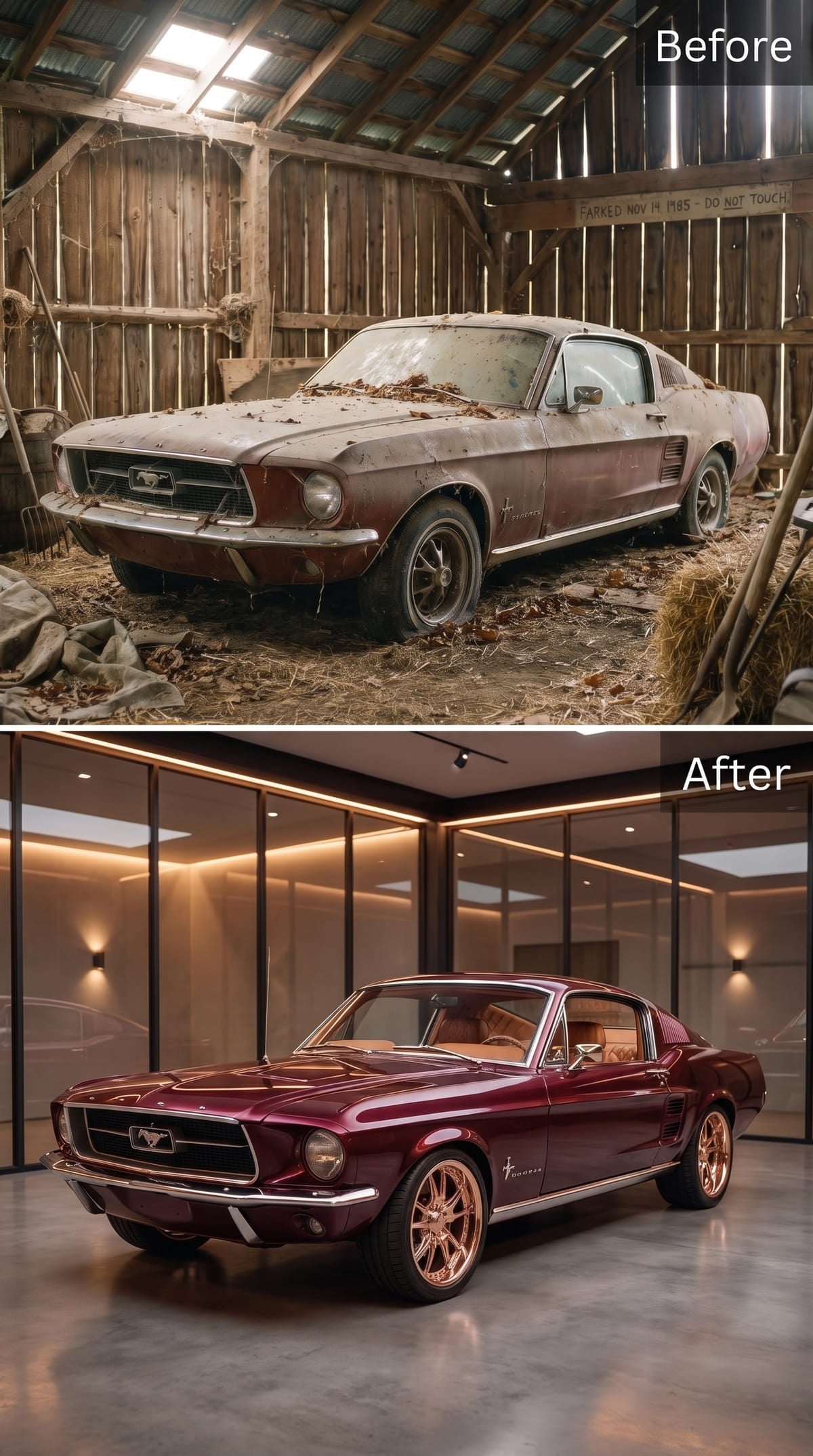
Deep burgundy paint shifts between red and purple depending on the light. Rose-gold wheels bring a warmer metallic note beneath the body, while the cognac-colored interior connects the exterior and wheel finishes.
The combination works because the colors relate without matching exactly. Warm showroom lighting strengthens that relationship and gives the metallic surfaces something soft to reflect.
Palette Note: Burgundy, bronze, rose gold, and cognac all contain warm undertones. Using black for the grille, tires, and smaller trim pieces prevents those related colors from blending into one uninterrupted block.
14. Midnight Blue on a Fastback Parked in Front of a Château
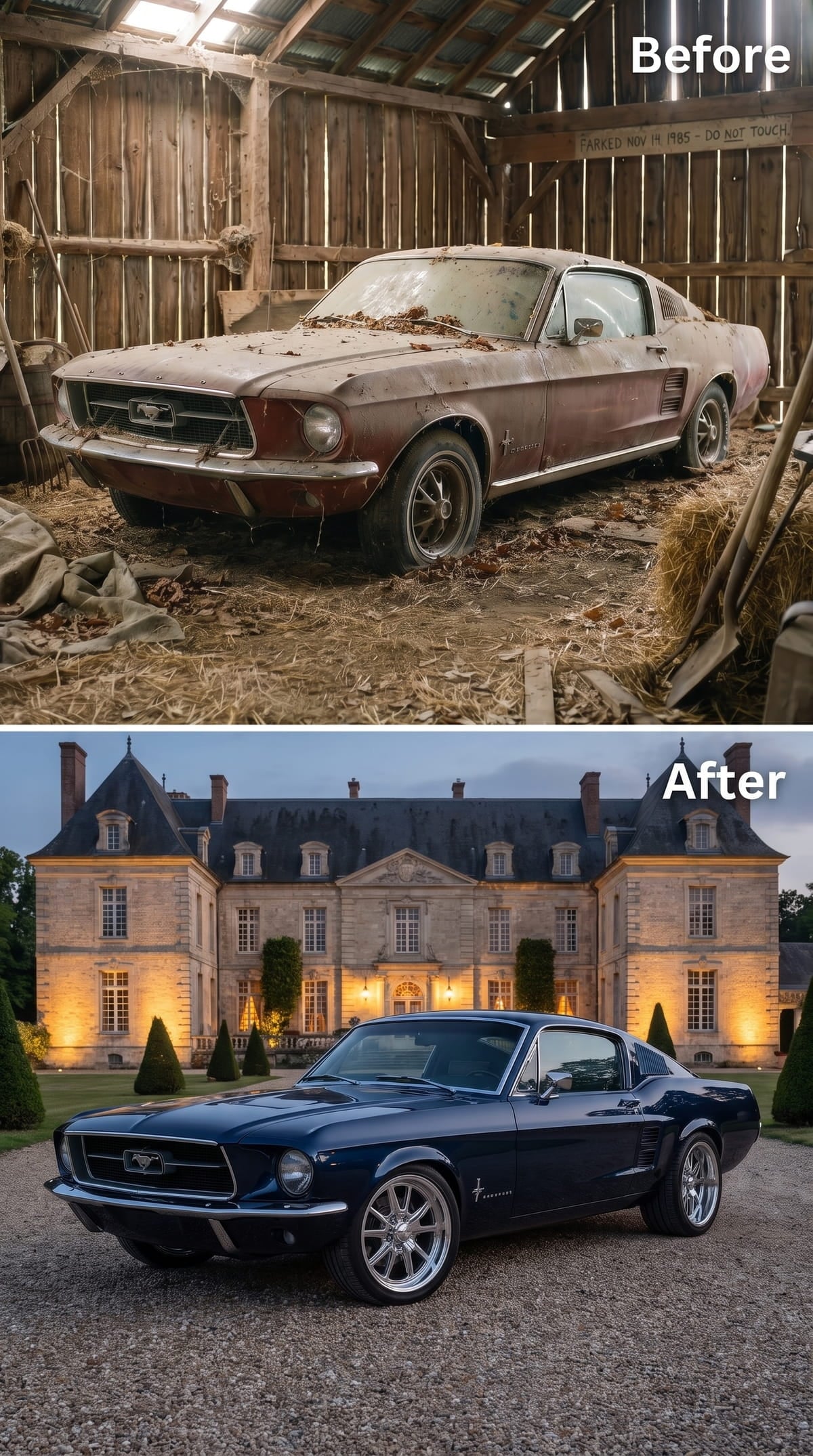
Satin navy covers the body with enough depth to appear nearly black in the shadows and more clearly blue where the remaining daylight reaches it. That is normal tonal change under different lighting, not necessarily a specialty color-shifting paint.
Polished five-spoke wheels keep the concept grounded in familiar Mustang territory. The formal setting raises the drama, but the simple color-and-wheel combination would work just as well in an ordinary garage.
Photography Note: Dark blue paint can appear nearly black at dusk, then reveal more color where reflections strike the body. Golden-hour and twilight photography exaggerate that natural range without requiring a true color-shifting pigment.
13. Olive Drab, Knobby Tires, and a Full Military-Inspired Makeover
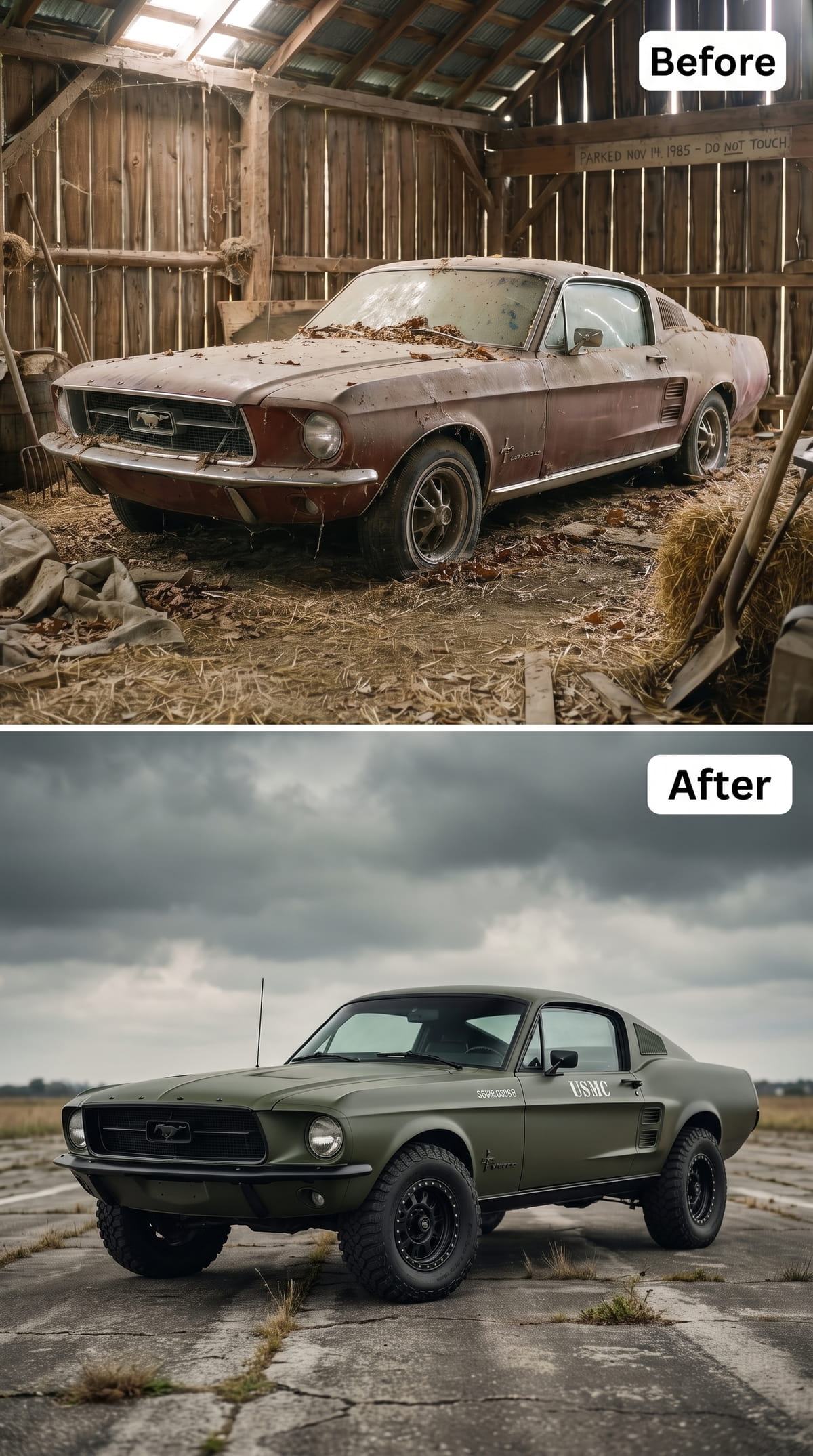
Matte olive drab and black steel wheels move this concept away from the polished show-car builds. The raised ride height, all-terrain tires, and stencil-style graphics turn the Mustang into a military-inspired custom rather than a conventional restoration.
The lettering should be treated as part of the concept, not assumed to represent a real historical unit. Any finished build using service markings would need those details checked carefully before paint or decals were applied.
Common Mistake: Military-inspired graphics can look convincing while still mixing branches, periods, and unit formats. Builders should verify insignia and stencil styles rather than treating every block-letter marking as interchangeable.
12. Olive Green, Off-Road Tires, and a Fastback Reimagined as a Trail Machine
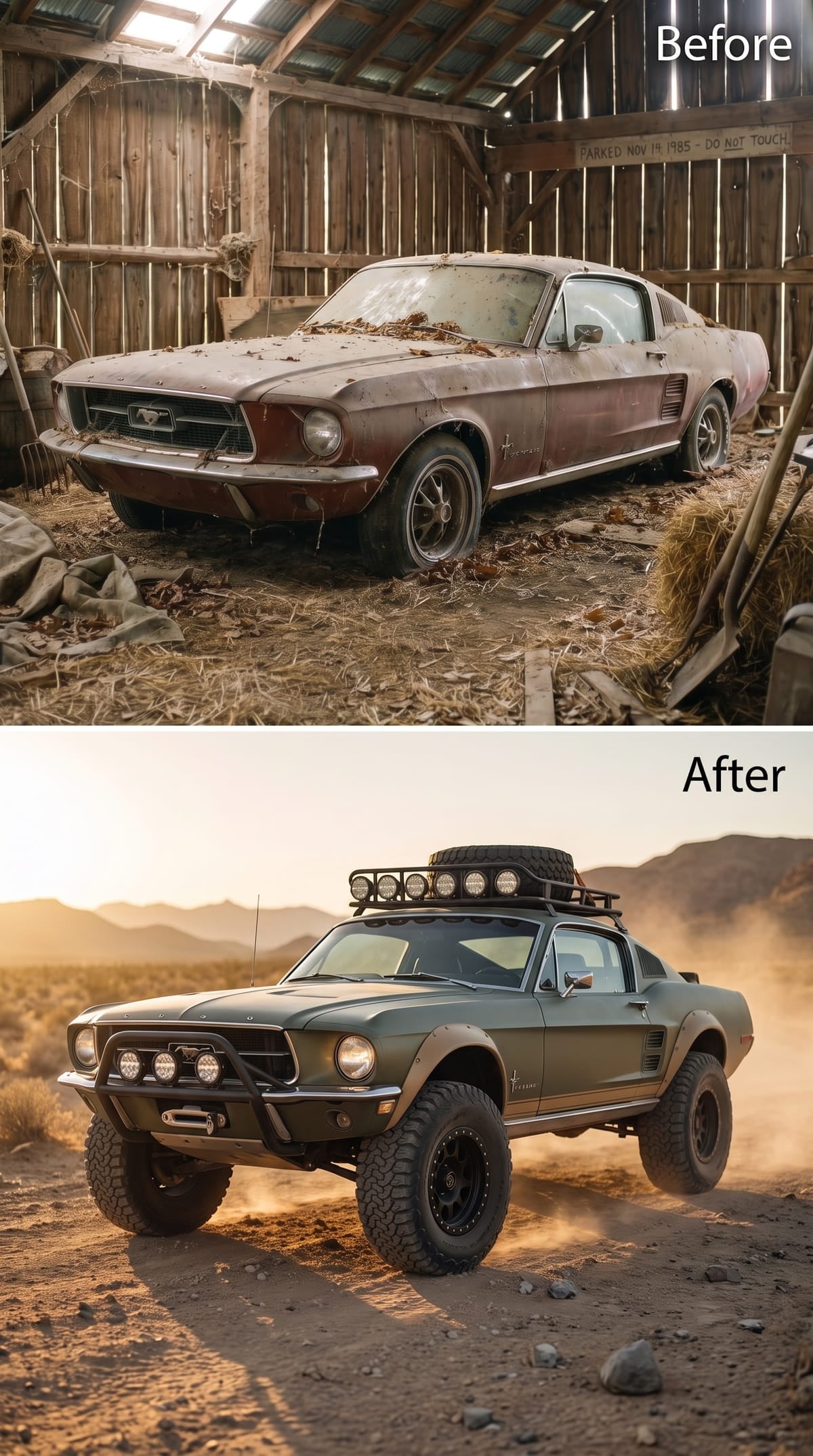
This version pushes the off-road idea farther. Massive all-terrain tires, black beadlock-style wheels, widened fender flares, a front bar, auxiliary lights, and a roof rack transform the fastback into something closer to a prerunner fantasy.
Dust behind the car reinforces the impression of movement over loose terrain, completing the sense of a Mustang built to leave pavement behind.
Engineering Reality: A lifted classic Mustang would require much more than larger tires. Suspension geometry, steering angles, driveshaft clearance, braking, wheel travel, and body reinforcement would all need to be engineered together.
11. Charcoal Paint, a Sunset Backdrop, and a Rebuild That Does Not Need to Shout
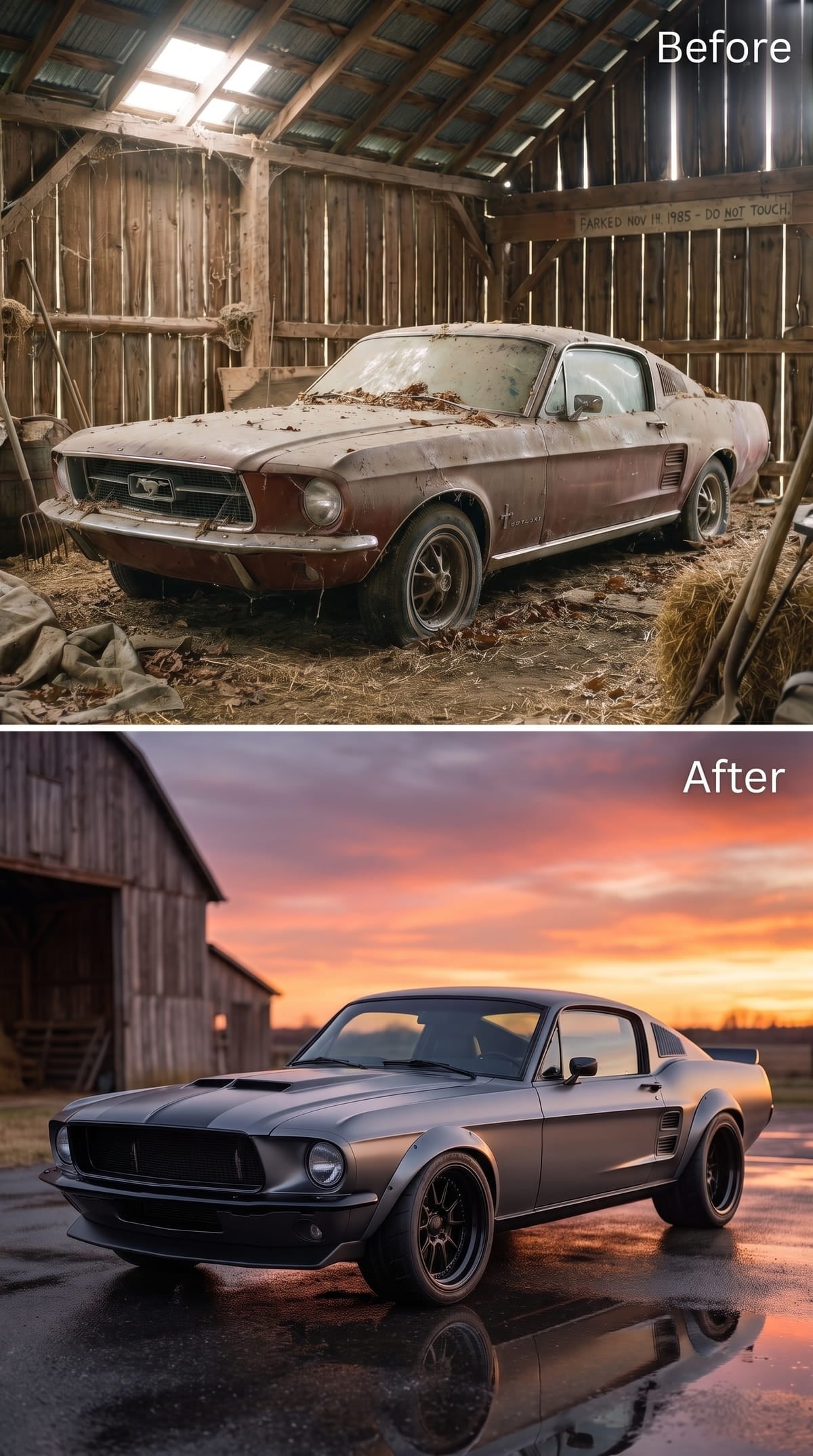
Flat charcoal paint takes on warm orange and violet reflections from the sunset. Dark wheels and body-color stripes keep the design restrained, allowing the wide stance and fastback profile to provide most of the impact.
The barn in the background visually reconnects the finished concept to the opening scene, completing the imagined before-and-after story.
Color Story: Matte and satin finishes scatter surrounding light across the surface. At sunset, that can introduce warm reflections that make a neutral gray appear subtly bronze or violet in photographs.
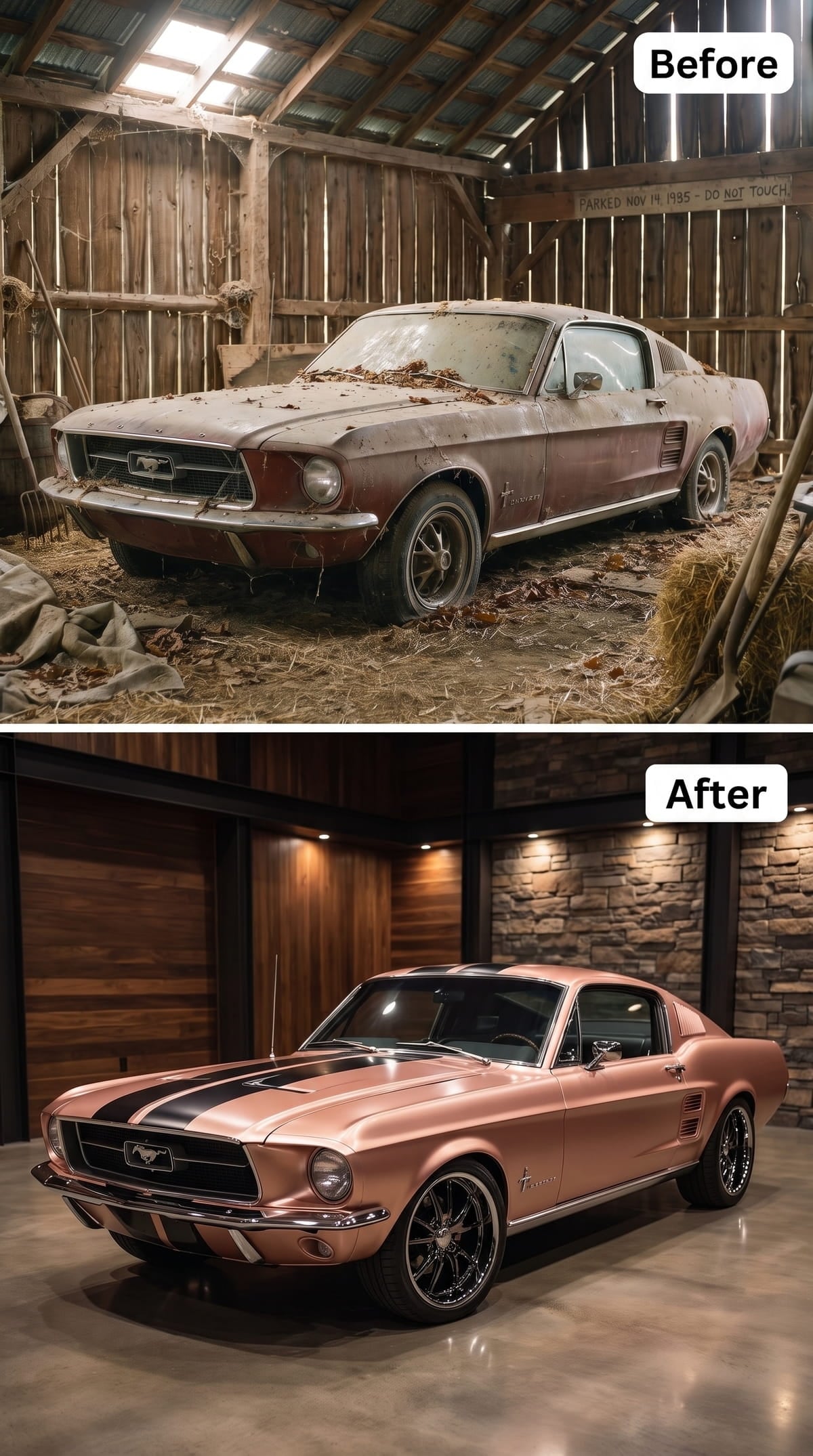
10. Rose Gold, Racing Stripes, and a Fastback Designed Around Warm Light
Would you like to save this?
Warm rose-gold paint receives two charcoal stripes from hood to tail. Dark multi-spoke wheels keep the metallic finish from becoming too delicate, while the stone and wood surfaces behind the car repeat the same warm undertones.
This is a display-oriented concept in which the garage and lighting are treated almost like part of the car. Under cooler daylight, the finish would likely appear pinker; beneath warm interior lighting, it moves closer to bronze.
Design Detail: Metallic warm colors respond strongly to lighting temperature. A paint sample should be viewed outdoors, under garage lighting, and at dusk before the final color is approved.
9. Cobalt Blue, Gold Racing Stripes, and a Fastback Built Around Contrast
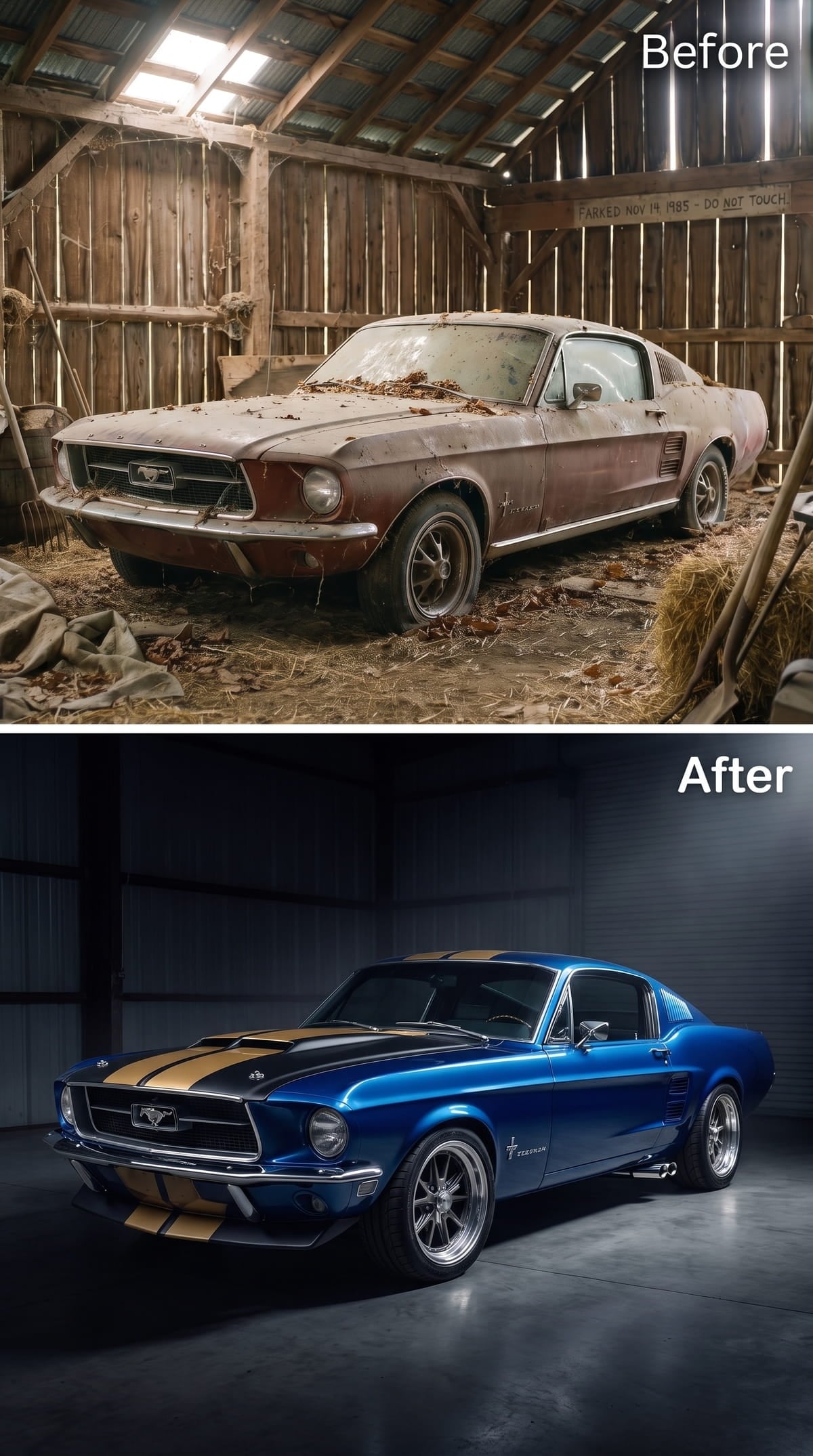
Cobalt metallic paint gives the body a vivid base while gold racing stripes create an unusually warm contrast. Five-spoke aluminum wheels fill the arches without appearing oversized, and the lowered stance stops short of looking crushed against the pavement.
Painted or applied as vinyl, the visual success of the stripes comes down to their width and uninterrupted path across the hood, roof, and rear bodywork.
Try This: Mock up stripe width with removable tape before choosing a permanent finish. Gold can overwhelm blue quickly if the stripes are too broad, especially under bright indoor lighting.
8. British Racing Green, Chrome Wheels, and a Fastback Prepared for the Show Floor
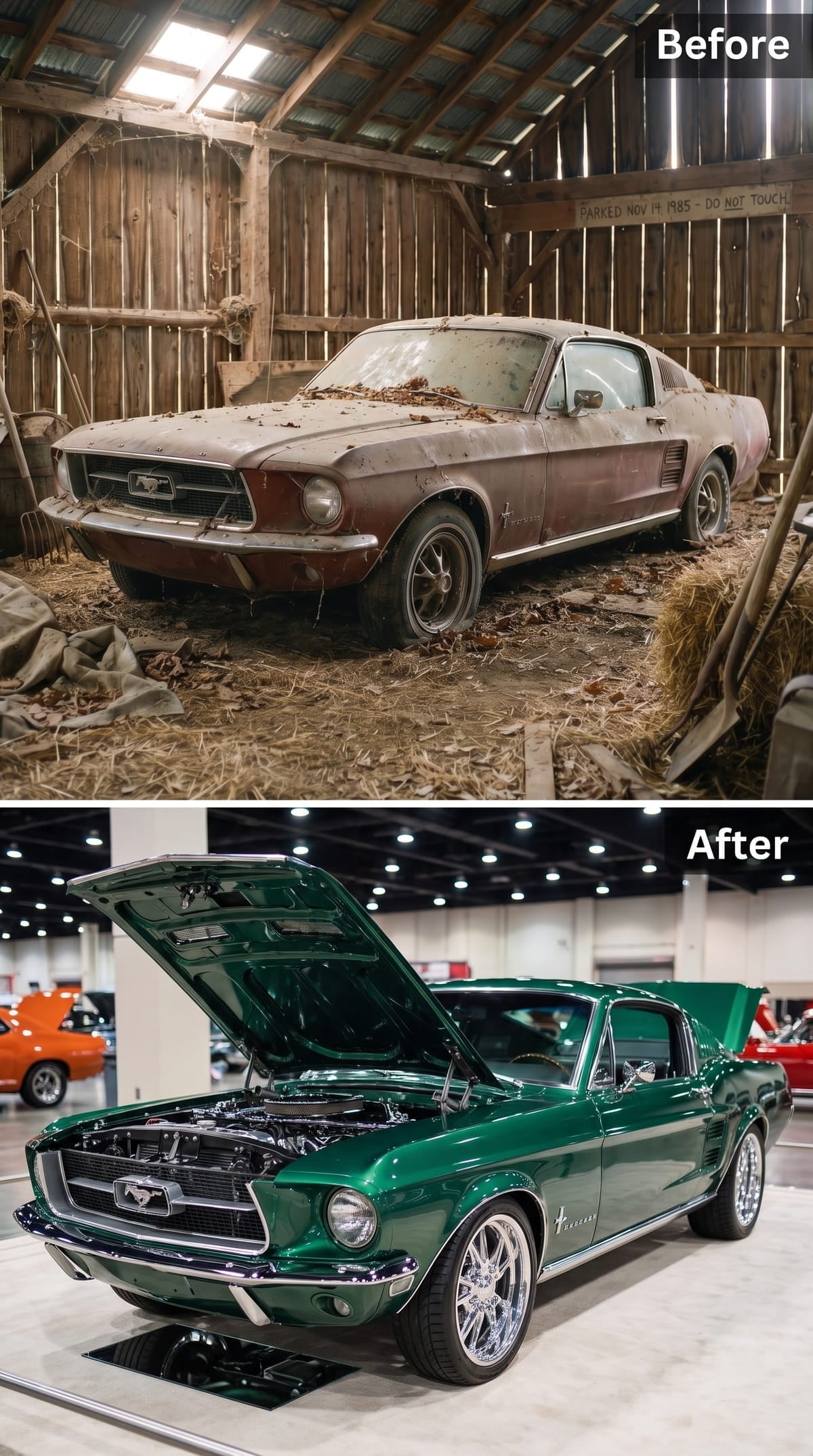
This show-floor version trades delicate wire wheels and an outdoor setting for chrome multi-spokes and a highly polished engine bay. High-gloss green paint reflects the overhead lights, giving the car a brighter and more modern custom appearance.
The raised hood turns the engine compartment into part of the display, reinforcing the idea that this version has been prepared for indoor judging rather than understated grand touring.
History Corner: British Racing Green is a general name for the dark green shades long associated with British motorsport. It was never one perfectly standardized color, but the connection between deep green paint, competition, and British sports cars remains strong.
7. Silver Fastback, Salt Flats, and a Pro-Touring-Inspired Stance
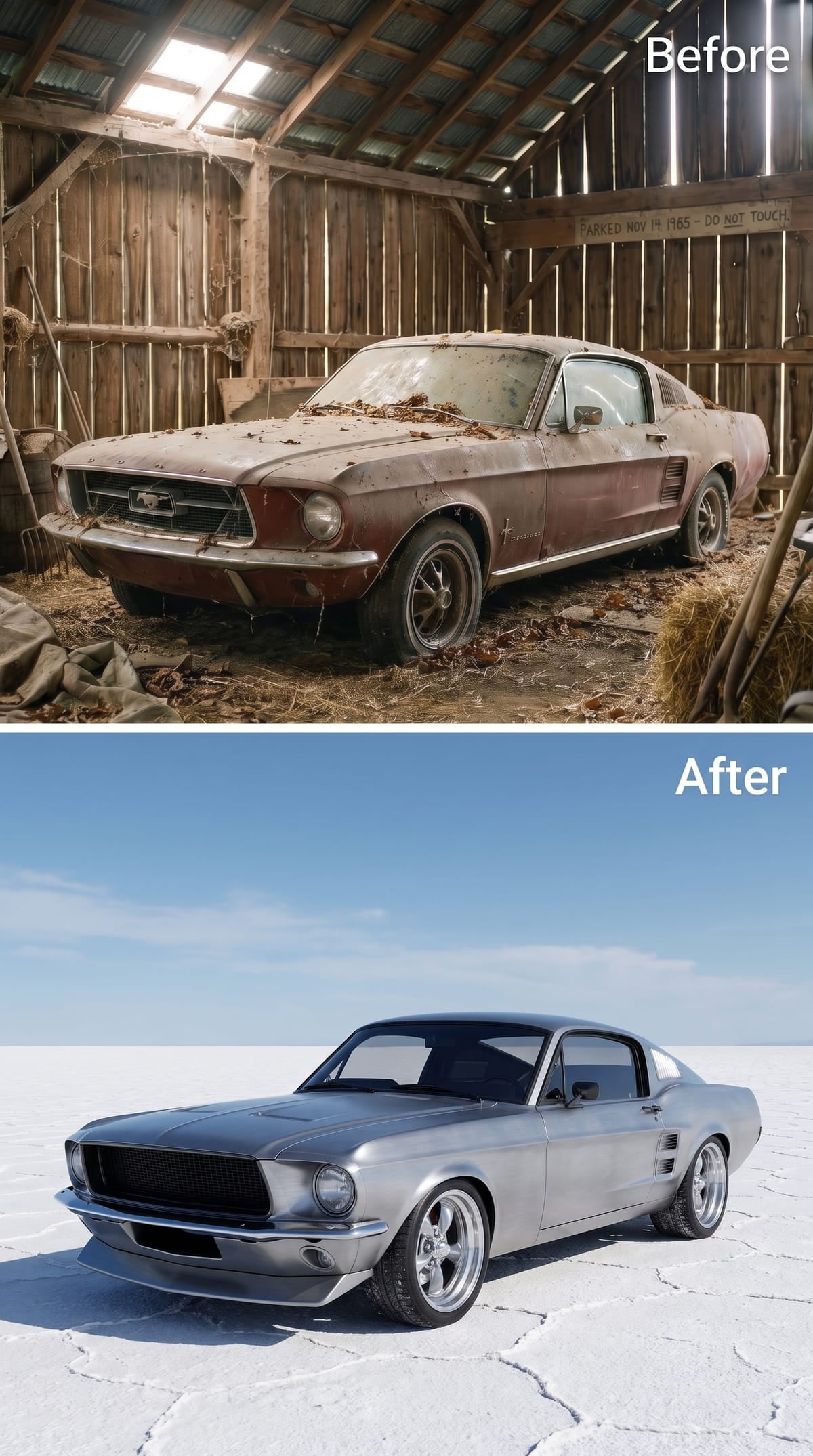
Silver paint, a dark roof panel, a black grille, and wide polished wheels give this concept a pro-touring appearance. A real build would need modern brakes, suspension, chassis reinforcement, and drivetrain work to deliver the performance suggested by the stance.
The pale salt-flat setting reflects light upward into the lower body and softens the shadows beneath the car. That makes the silver surfaces easier to read than they might be against dark pavement.
- A genuine pro-touring build normally combines modern tires, brakes, suspension, chassis reinforcement, and power rather than relying on appearance alone.
- Pale ground can reflect light into rocker panels and wheel openings, revealing details that disappear against black pavement.
- Wide wheels need the correct offset and suspension clearance; filling the arches visually is only part of the job.
6. Copper Fastback, Pacific Backdrop, and a Rebuild Made for the Coast
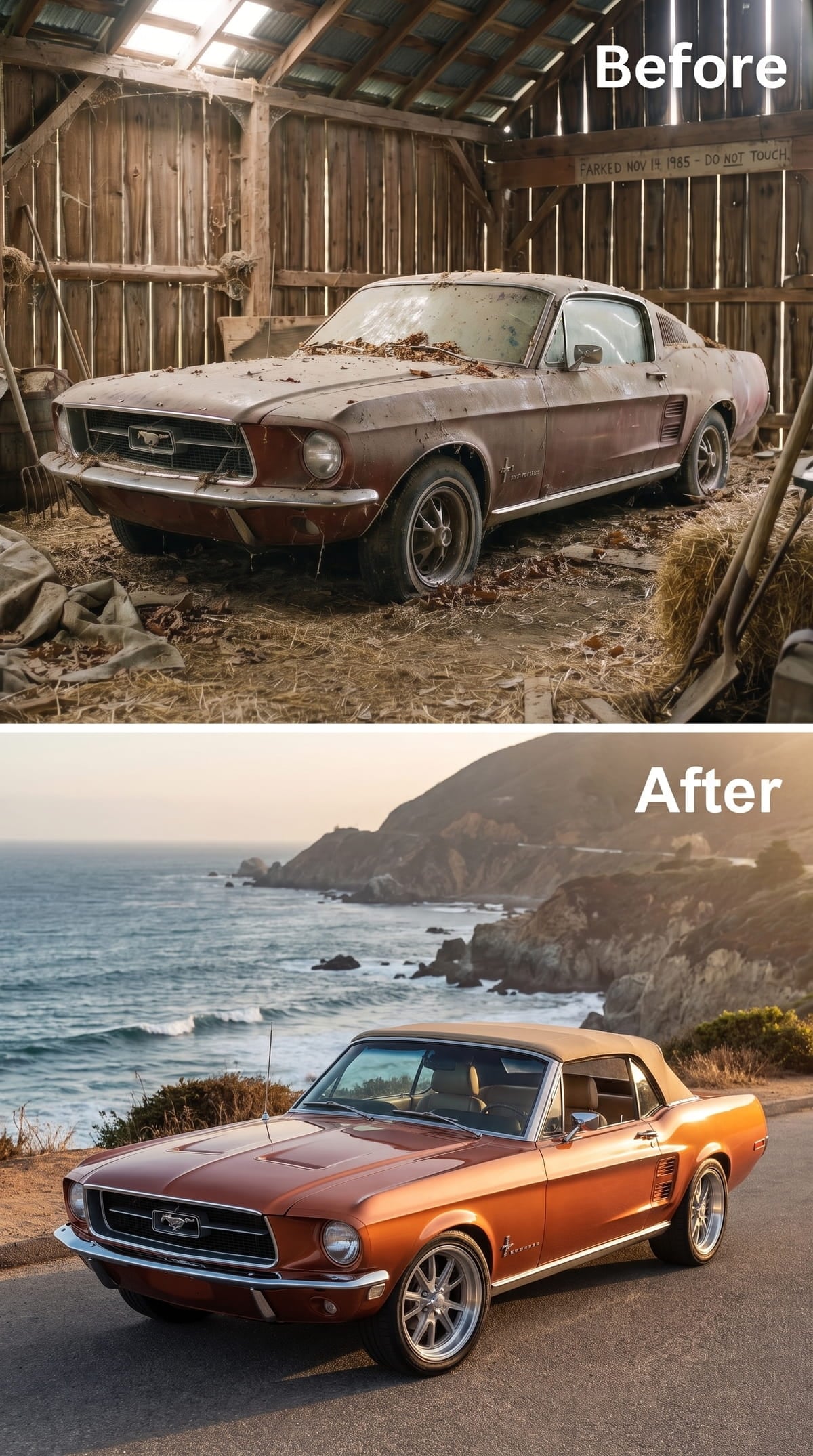
Copper-orange metallic paint glows against the California coast at golden hour. Chrome trim and polished five-spoke wheels keep the rebuild connected to traditional Mustang styling while allowing the body color to supply most of the drama.
A tan contrasting roof treatment completes the coastal palette and visually separates the greenhouse from the copper body. Read as a custom roof covering, it adds warmth without disturbing the fastback profile.
- Copper and bronze finishes shift noticeably under changing light, making sunrise and sunset especially effective for photography.
- A contrasting roof treatment can alter the apparent height and length of the roofline without changing the underlying body structure.
- Polished five-spoke wheels bridge vintage and modern styling, which is why they appear across so many restomod concepts.
5. Cream and Teal, Whitewall Tires, and a Fastback With Mid-Century Diner Style
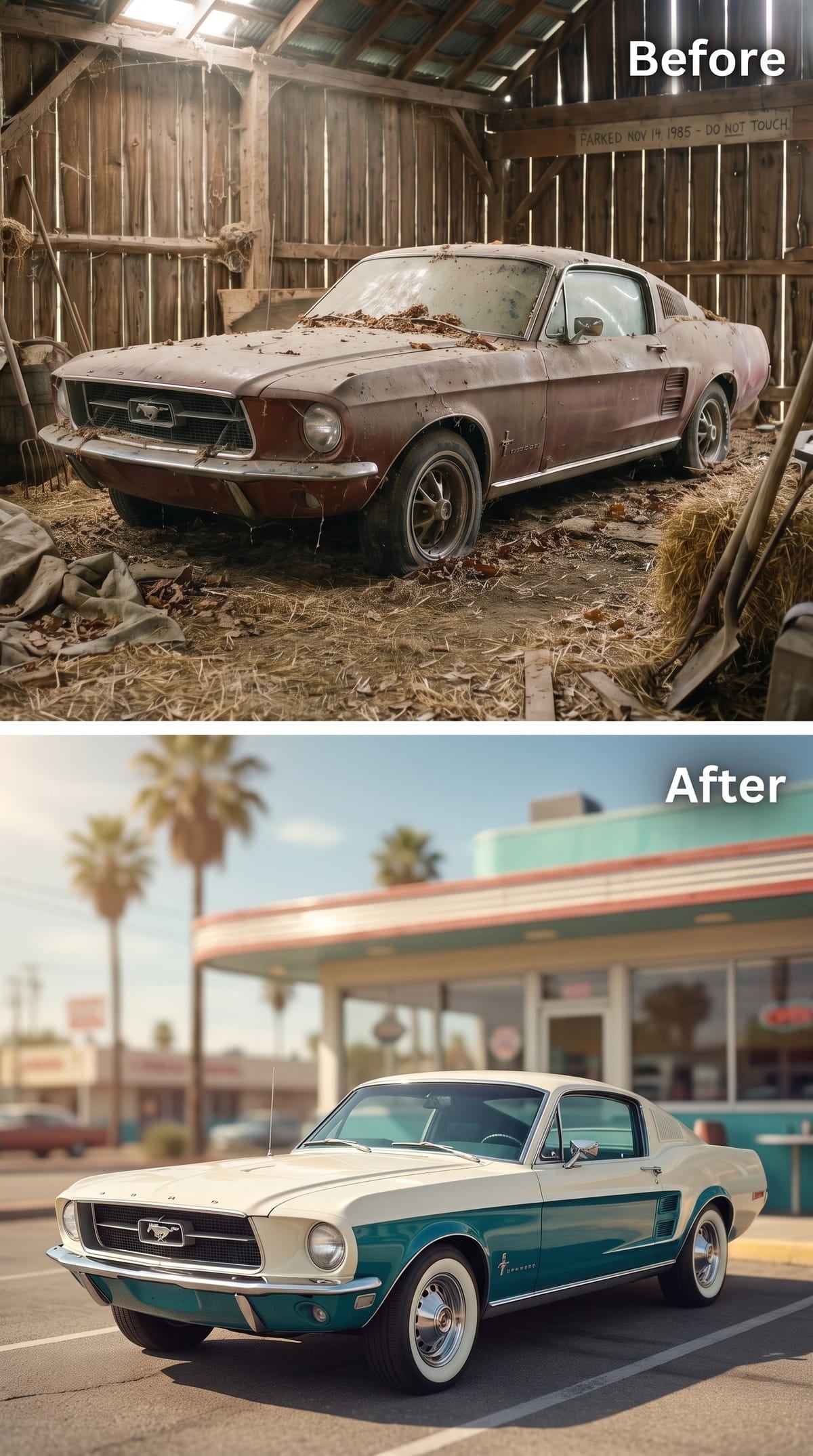
Ivory and teal borrow the spirit of 1950s and early-1960s two-tone automobiles rather than reproducing a normal factory 1967 Mustang scheme. Chrome wheel covers, spinner-style centers, and whitewall tires carry that retro-custom idea through to the ground.
The diner and palm-tree setting makes the concept feel almost cinematic. It is not a factory restoration, but it offers a clear alternative for an owner more interested in period atmosphere than strict originality.
Why the Two-Tone Paint Line Matters
The fastback roof flows continuously into the rear body, so a horizontal color division can easily interrupt the shape. Here the darker teal remains low while the cream upper section follows the roof and glass area. The success of the concept depends less on historical correctness than on keeping the dividing line consistent across each panel.
4. White Fastback, Red and Blue Racing Stripes, and a Competition-Inspired Rebuild
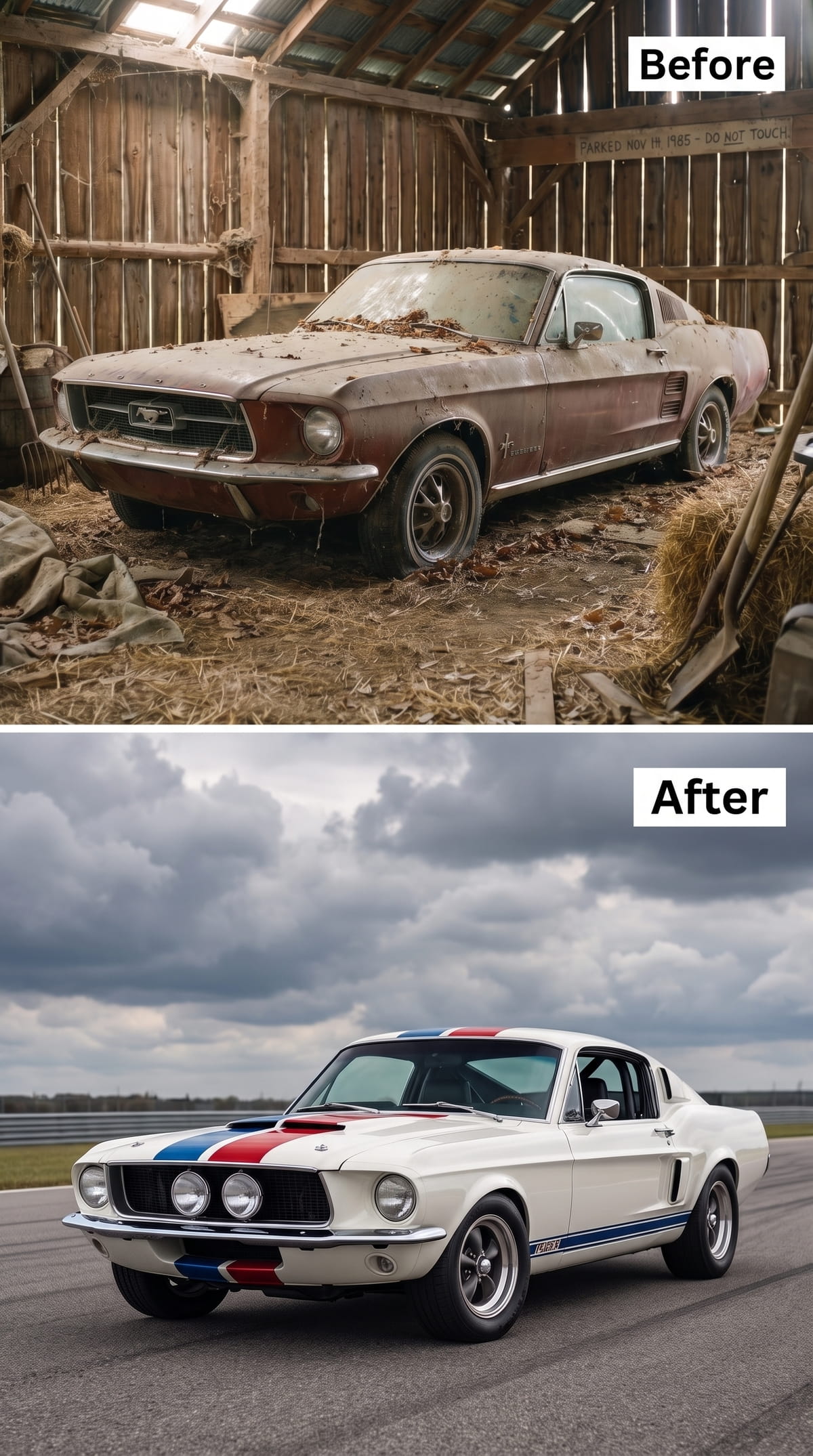
A white body provides a clean base for narrow red and blue stripes running across the hood and roof. The combination suggests vintage competition graphics without copying one verified historic racing livery.
Polished five-spoke wheels and low-profile tires pull the concept toward modern track-day styling. The stripes provide the identity, while the rest of the car remains comparatively simple.
3. Candy Red, Carbon-Fiber Hood Details, and a Fastback That Came Back Swinging
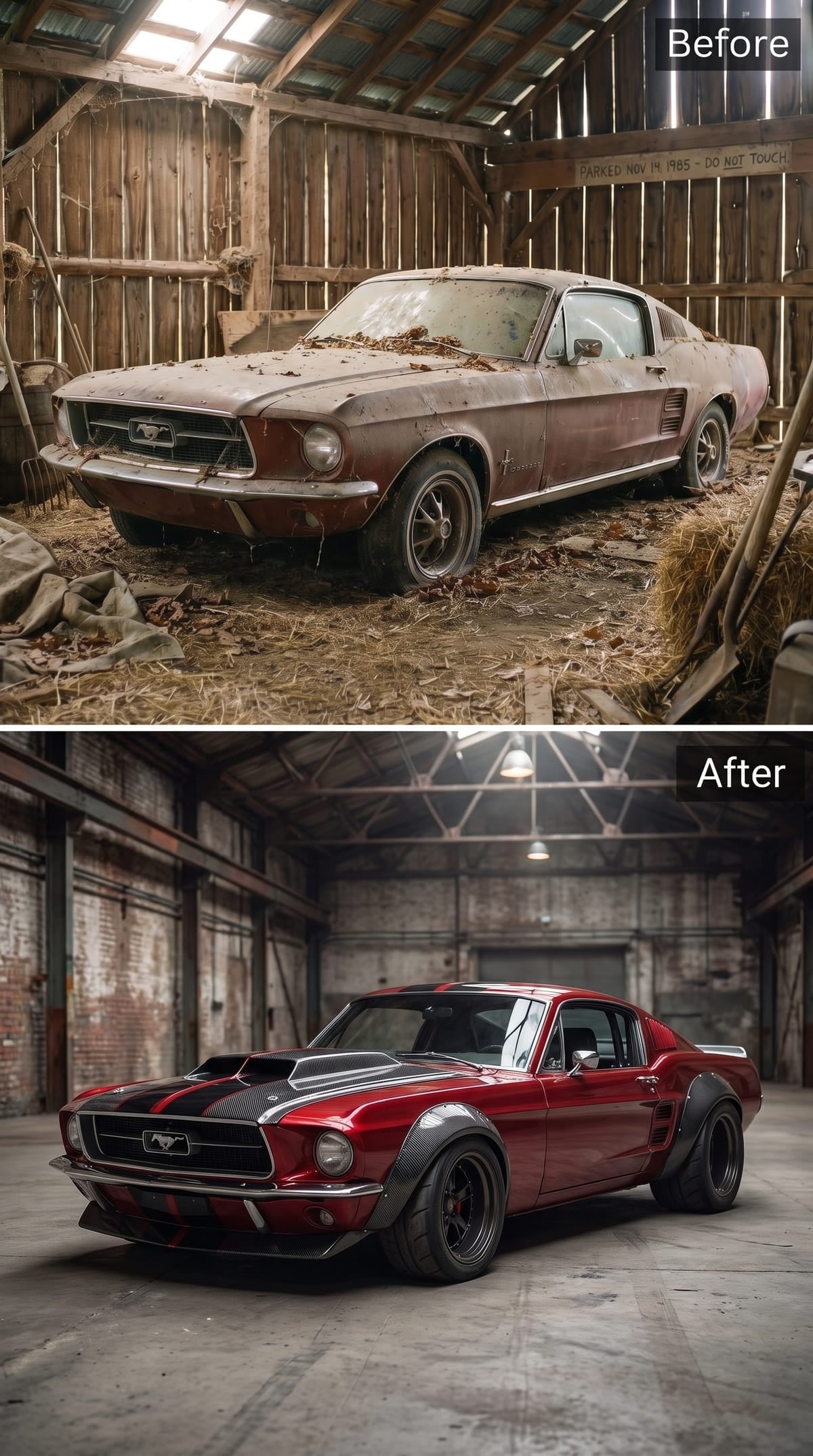
Deep candy red and twin black stripes establish the base, while the carbon-fiber hood section moves the build toward modern performance styling. Carbon fiber can reduce weight when it replaces heavier material, but heat extraction depends on properly designed vents rather than the carbon material itself.
Wide fender flares and dark wheels give the body a more aggressive stance. The warehouse setting keeps the background muted enough for the red finish to dominate.
2. Forest Green, Roof Rack, and a Fastback That Traded the Track for the Trees
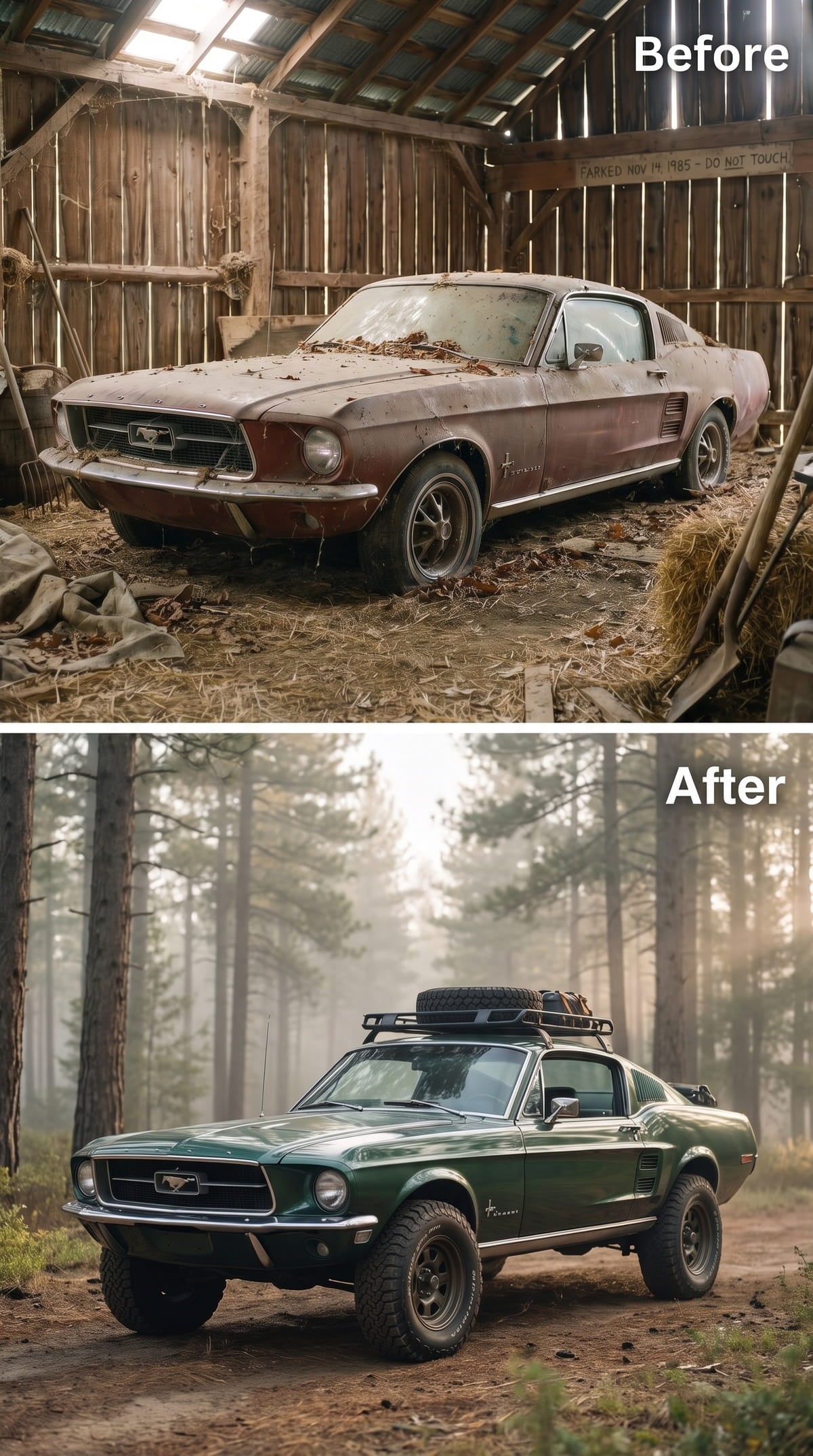
This third off-road concept takes a less military and more expedition-oriented approach. Deep forest green, a roof rack, a mounted spare, additional storage, and all-terrain tires turn the Mustang into an imagined Pacific Northwest trail machine.
Period-style steel wheels keep the lower half simpler than the heavily accessorized olive build. Fog and pine trees complete the scene, but the real distinction is the emphasis on travel gear rather than armor or tactical graphics.
1. Yellow and Black, a Drag-Strip Setting, and a Build Ready for the Starting Line
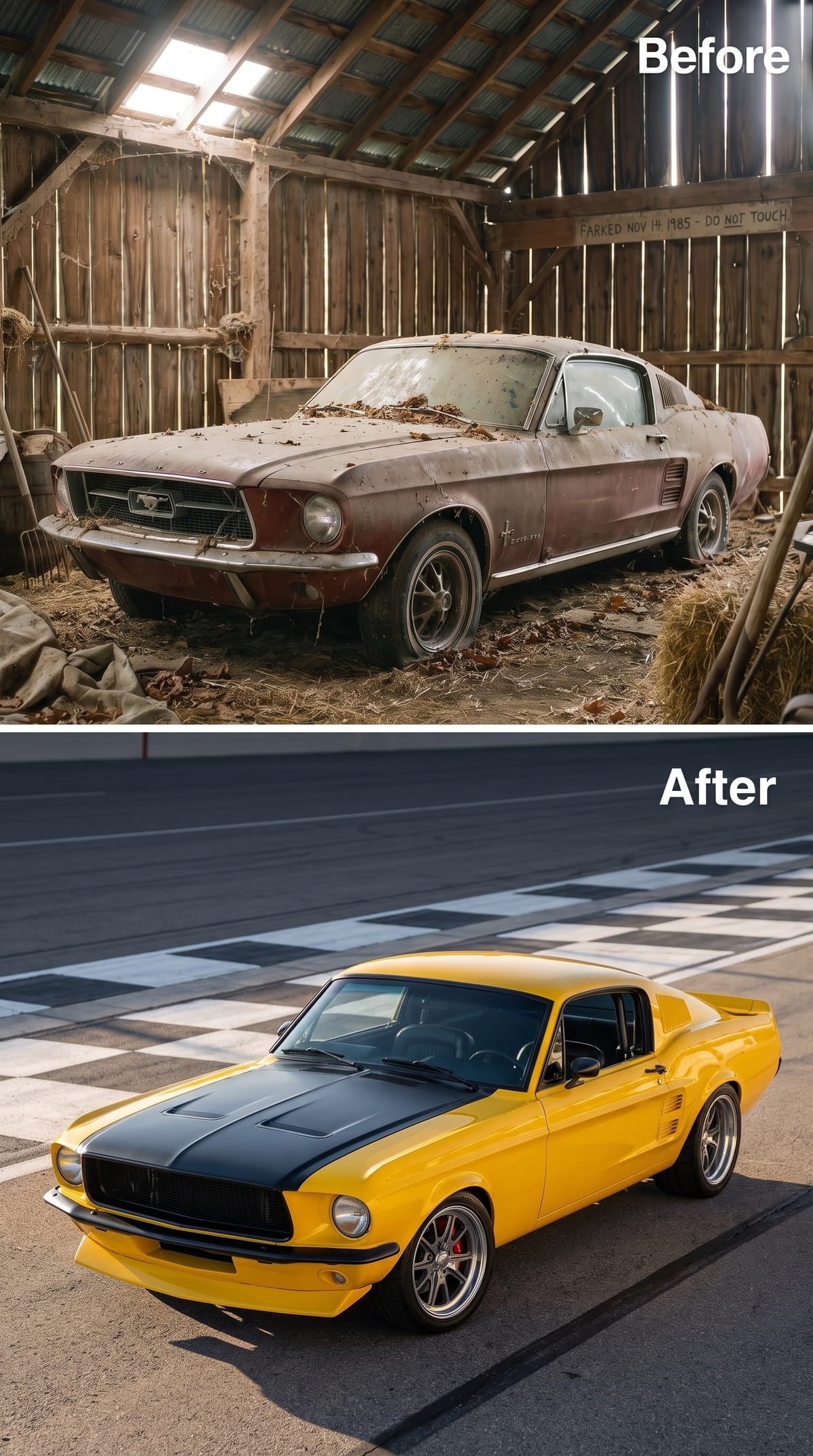
Solar yellow over a matte black hood gives the final concept the strongest contrast in the gallery. Wide stripe work follows the hood without swallowing the body lines, while polished multi-spoke wheels and red brake calipers add modern performance details.
The drag-strip setting suggests a car intended to run rather than remain beneath showroom lights. Visually, it closes the gallery with the Mustang pointed toward action instead of another display platform.