
Would you like to save this?
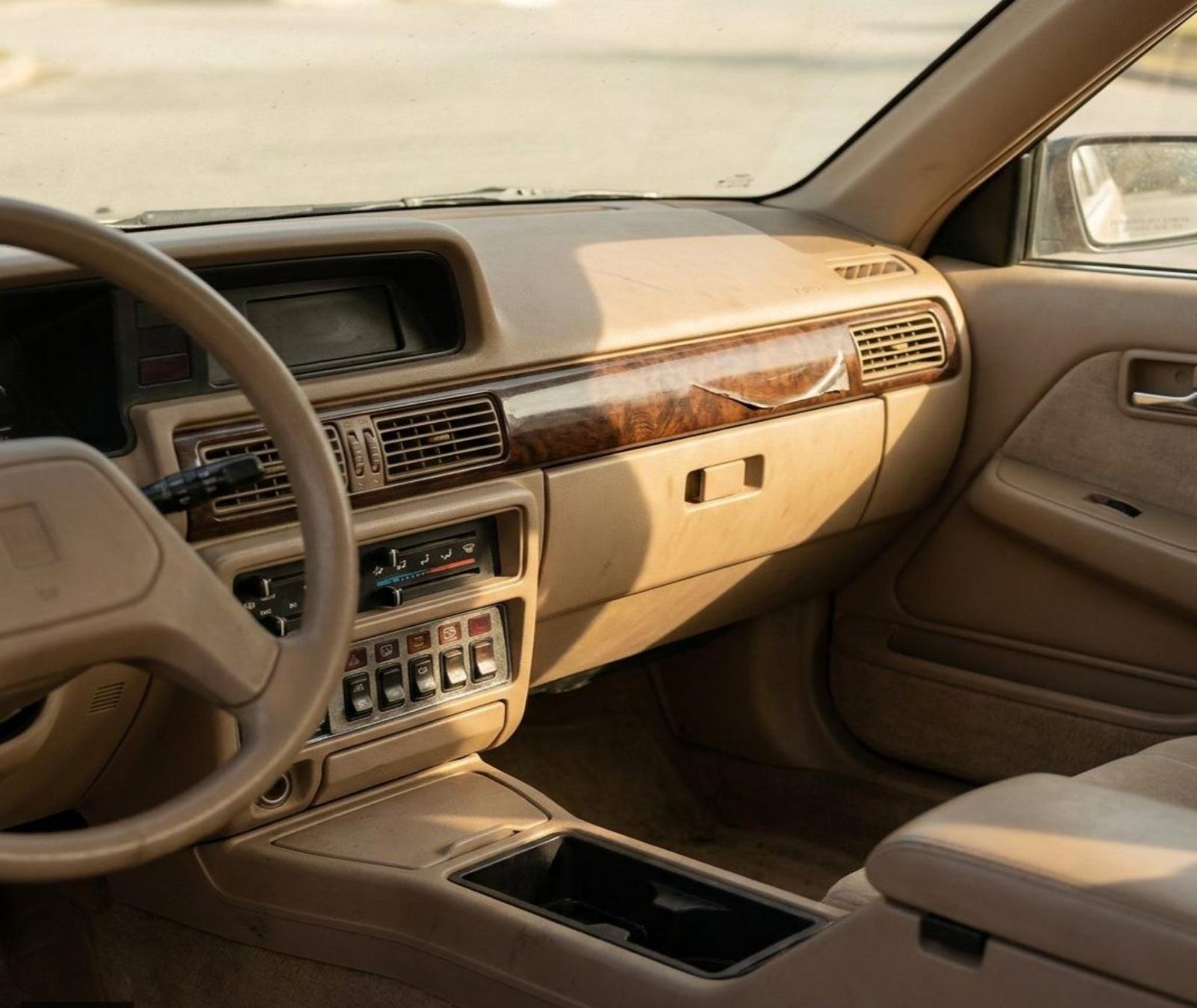
The 1985 interior had a smell. Warm vinyl baking in a July parking lot, a whiff of gas from the last fill-up, and the ashtray somebody swore they never used. You slid across a bench seat already polished smooth by drive-thru runs, and the radio stayed on AM until you fought the dial down to FM. Much of what you touched was molded plastic, vinyl, or cloth, and nobody tried very hard to disguise it.
Four decades later, the cabin has become a lounge that thinks. Here is the gap, cracked open seat by seat.
27. The Front Bench That Fit Three but Supported Almost Nobody
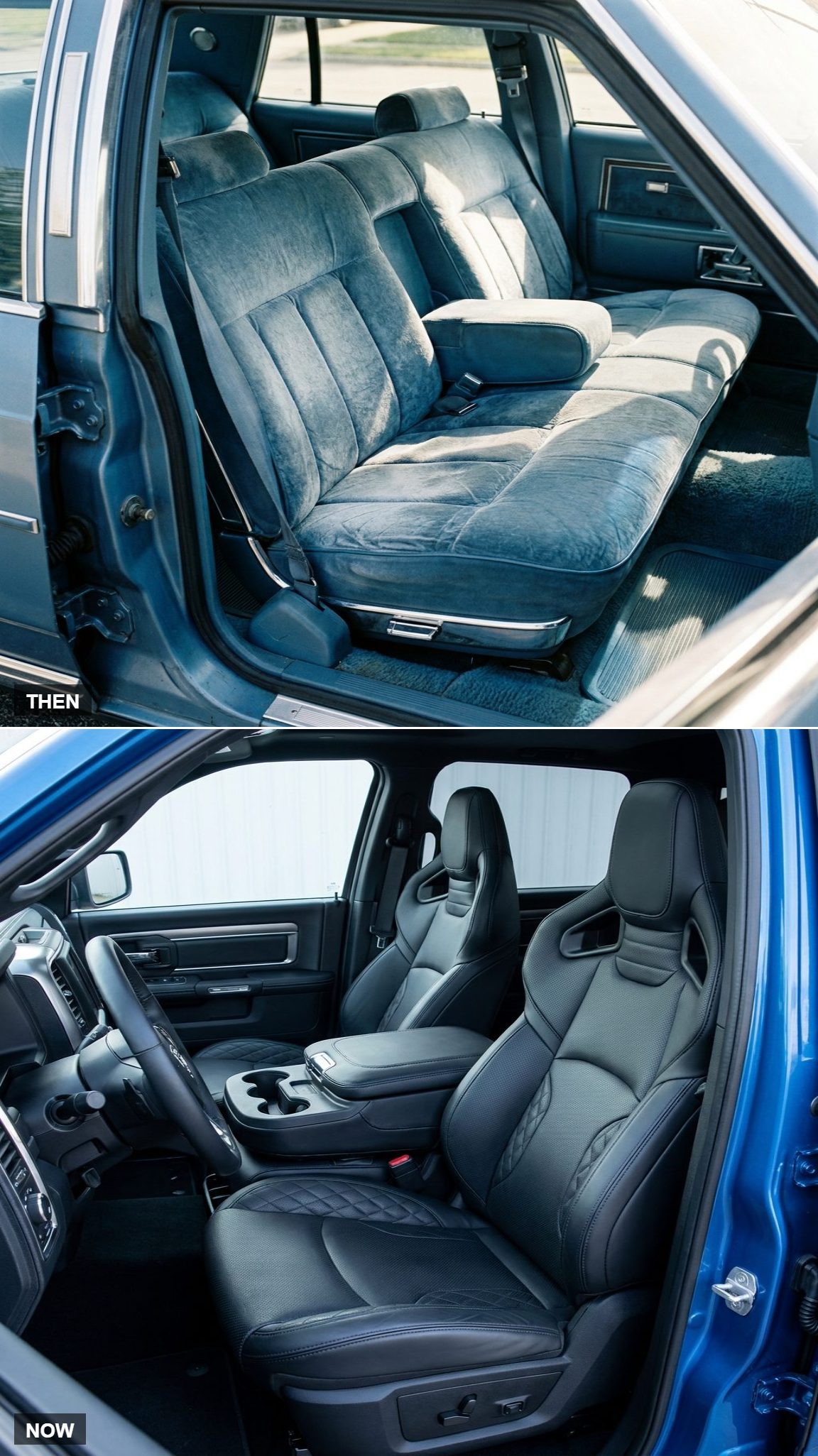
You could seat three across up front in 1985, at least in theory. In practice, the middle rider straddled the transmission hump while everybody slid toward the passenger door on a hard left turn. Foam over springs was about the whole arrangement, and after a road trip your tailbone filed a formal complaint.
Modern front seats hold each occupant separately, with sculpted cushions, side bolsters, adjustable lumbar support, and far more control over driving position. Higher trims add heating, ventilation, and even massage functions. The bench did not vanish only because it was uncomfortable. Airbags, center consoles, floor-mounted controls, and changing safety expectations all helped push it aside.
26. From a Skinny Two-Spoke Wheel to One That Runs Half the Car
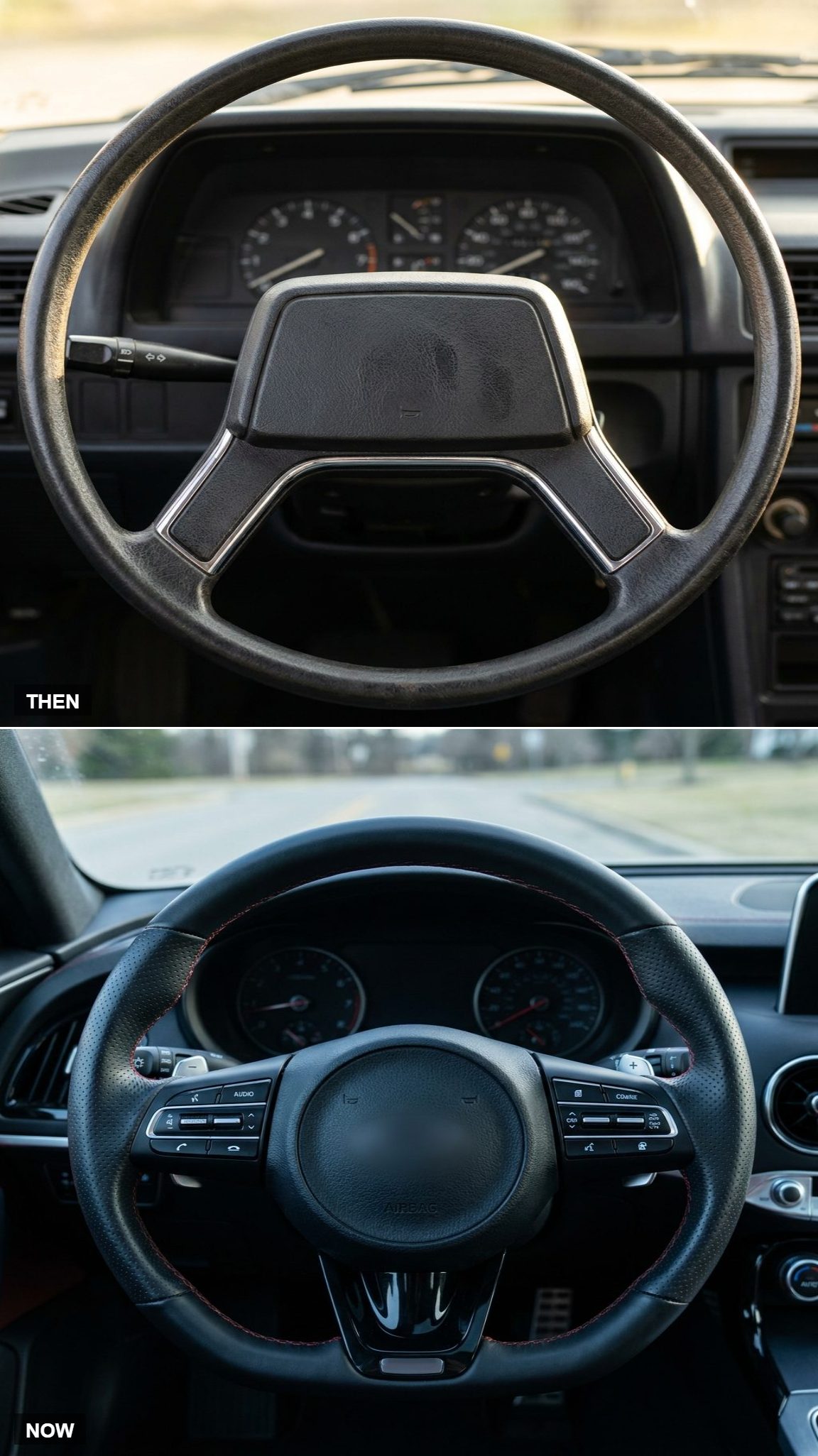
The 1985 wheel asked one main thing of you: turn the car. Skinny rim, two spokes, horn in the middle, done. Cruise control, when equipped, might live on a stalk you operated by feel.
Today’s wheel carries volume controls, cruise settings, phone buttons, driver-information menus, and a voice assistant. Some add paddle shifters and a heated rim for winter. The thicker structure also has to accommodate an airbag and considerably more electronics.
I miss the visual simplicity some mornings, right up until I want to skip a song without taking a hand off the wheel.
25. Round Dials at a Glance vs. a Screen That Changes With the Drive
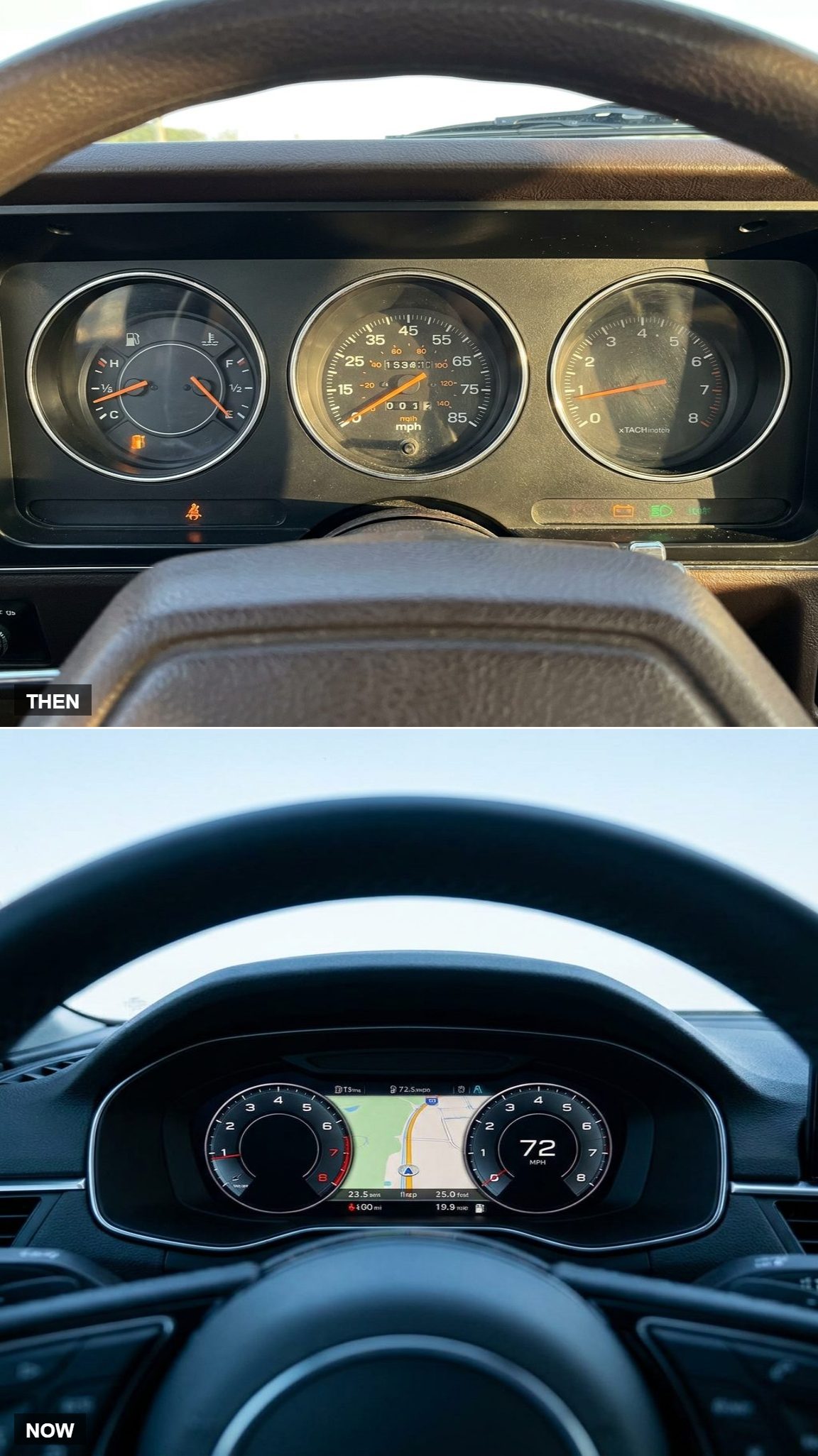
Several round dials, one job each. Many 1985 cars still wore 85-mph speedometers left over from a short-lived federal rule that had already been repealed. Needles sometimes wobbled over rough pavement, but the entire cluster could be read in half a second.
A modern cluster may be a screen pretending to be traditional gauges, a navigation map, an efficiency display, or all three. The layout can change with the drive mode and place directions directly in the driver’s line of sight.
The old panel provided less information, but it rarely buried the temperature gauge behind a menu.
24. The Window-Crank Workout Nobody Asked to Keep
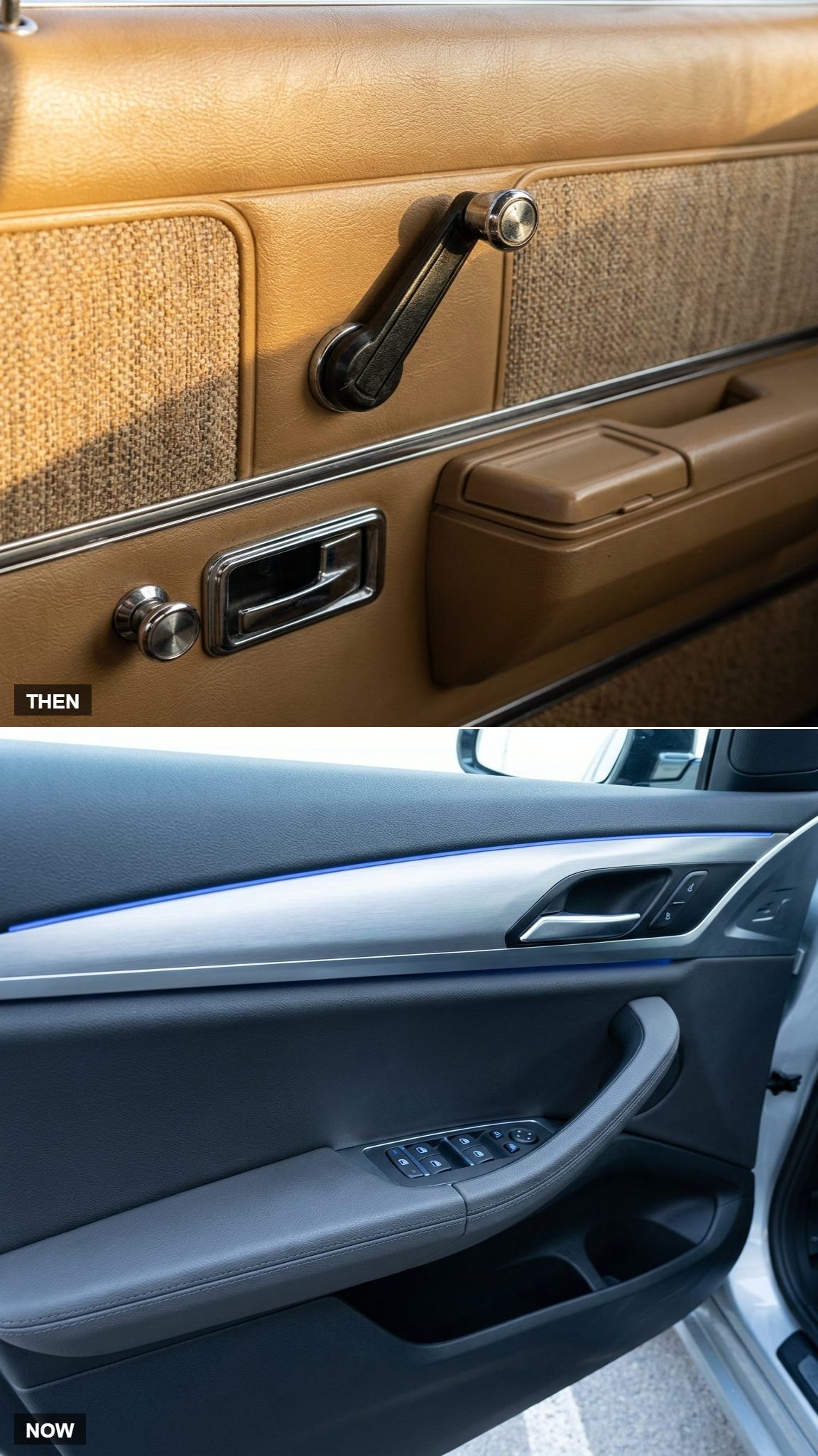
Rolling down a rear window meant reaching over the seat and cranking like you were starting a Model T. Power windows were available in 1985 and common in many luxury cars, but manual cranks remained standard equipment across much of the market.
Every door can now have one-touch controls, automatic lowering and raising, and a driver’s master panel that operates the whole cabin. Some systems even close the windows remotely when rain begins.
Kids will never know the specific defeat of asking somebody else to roll down a window that was six inches beyond reach.
23. AM/FM and a Cassette Slot vs. a Touchscreen That Runs Your Phone
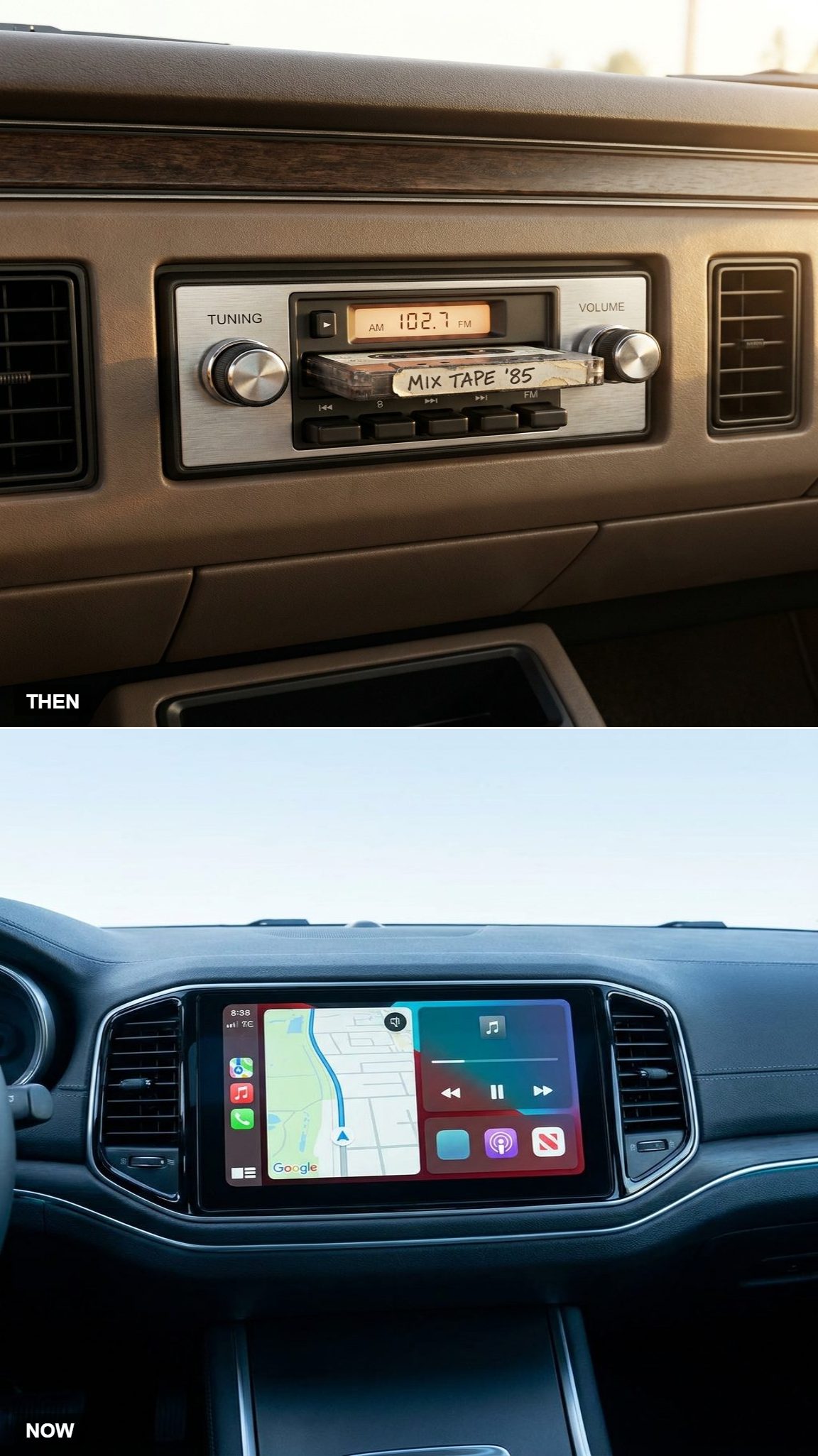
Five presets, a tuning knob, and a cassette deck that occasionally ate your favorite tape and returned the ribbon in distress. You made mixtapes at the kitchen table and drove around specifically to hear track four.
A good song came on the radio and you could not skip to it. You waited, and that wait was half the magic.
The modern screen runs your phone wirelessly: maps, messages read aloud, streaming music, podcasts, and an entire personal library. Better in almost every practical way, but missing the small ceremony of pushing a cassette home until the mechanism clicked.
The cassette made you wait for the song. The touchscreen makes you the DJ. Something was lost in the trade, even if you would never go back.
22. Sliding Heater Levers vs. a Cabin That Holds a Temperature
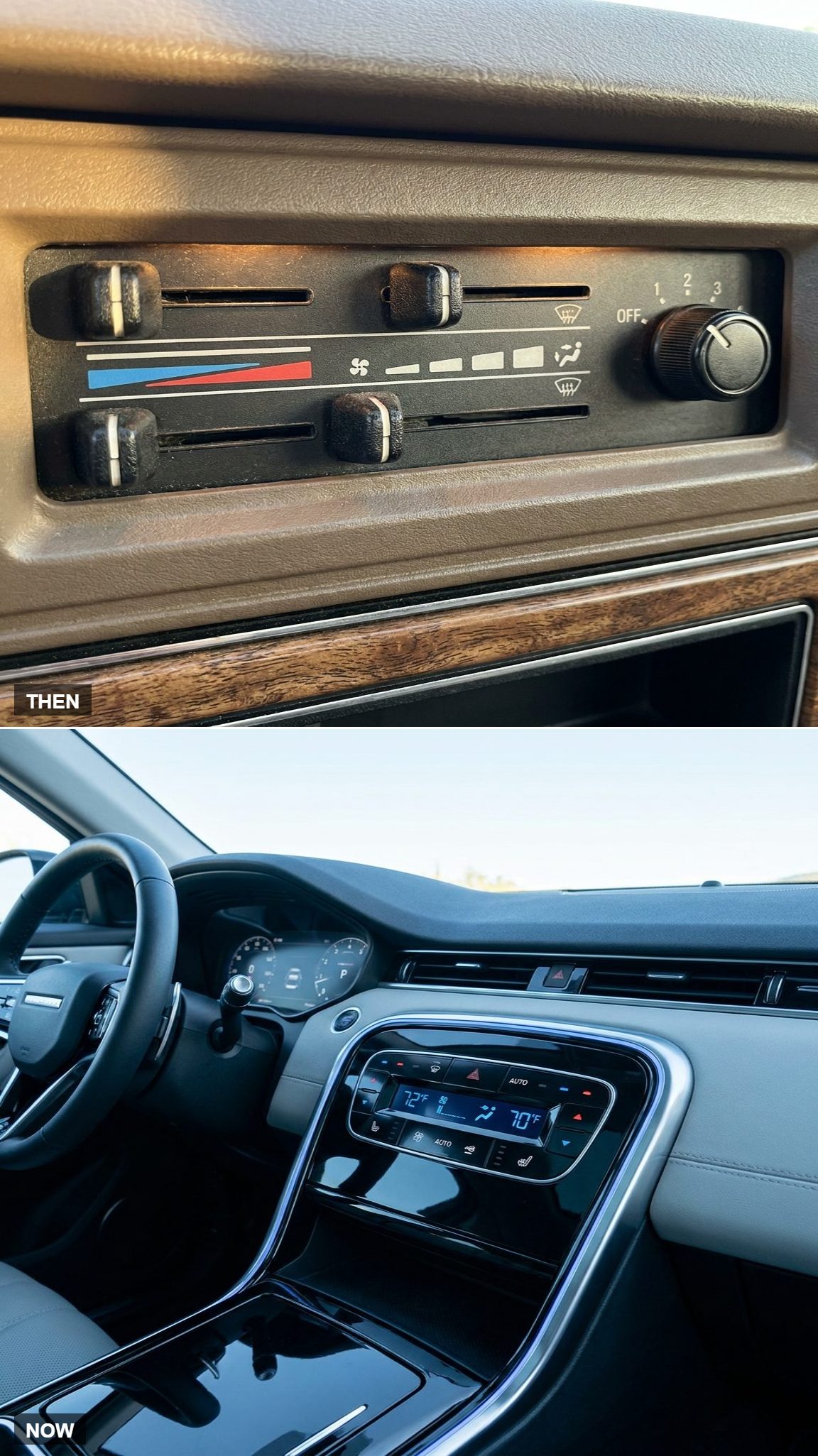
Heat in 1985 might be controlled by a slider pushed from blue toward red and a fan knob that became increasingly loud with every turn. Intermediate settings existed, but maintaining one comfortable temperature still required frequent adjustment.
Many new cars let each side of the cabin choose a temperature while the system quietly regulates airflow and heat. Higher trims may add a separate rear zone, heated steering wheel, ventilated seats, and remote preconditioning before anyone gets inside.
It is one of the largest everyday comfort improvements of the past four decades, even if nobody stands in a showroom admiring the thermostat.
21. The Sun-Cracked Dashboard vs. Soft Surfaces and Ambient Light
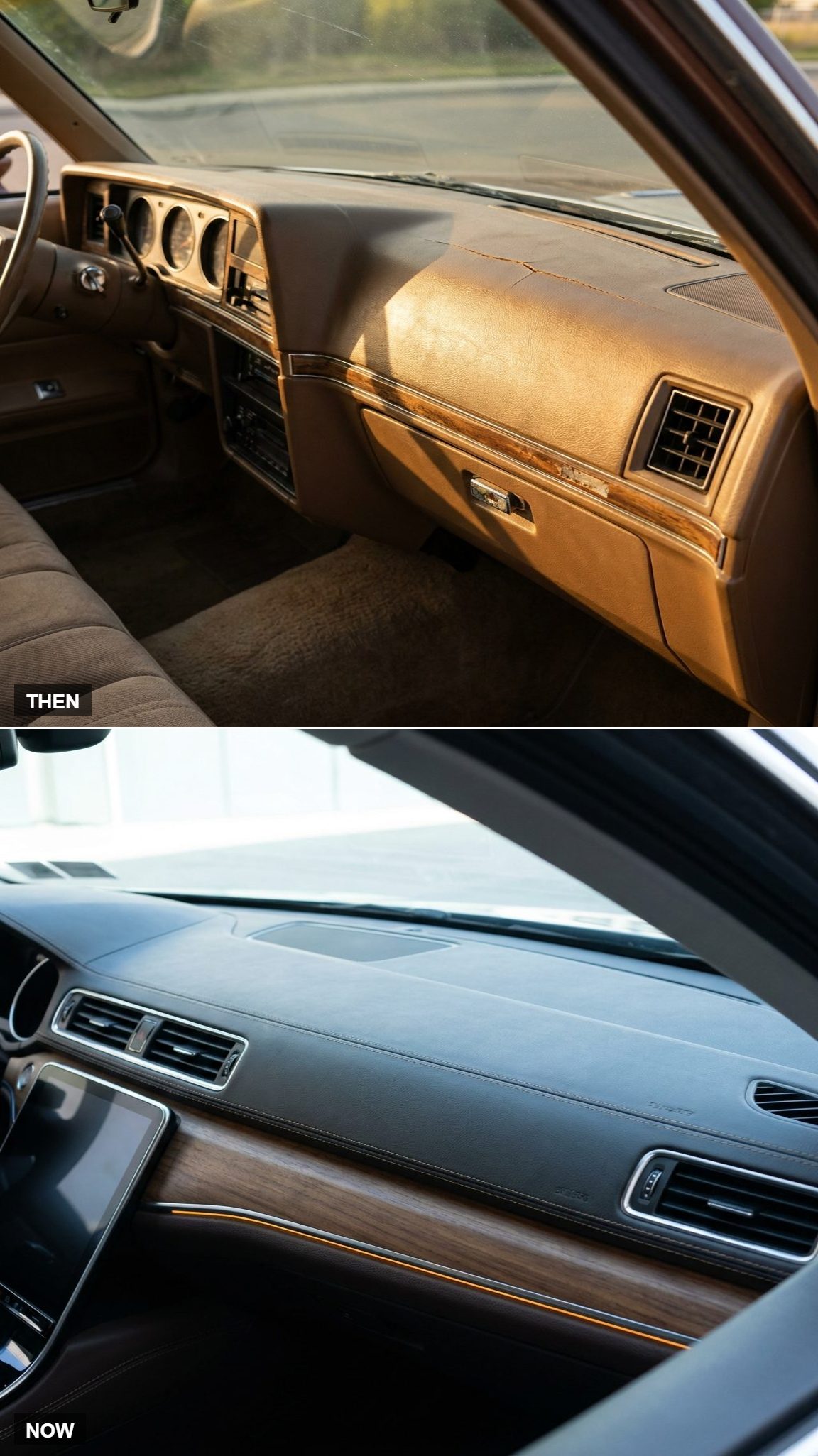
A 1985 dashboard might be padded vinyl or molded plastic, but either material could spend years baking beneath the windshield. Everybody remembers the spiderweb split across the top, often hidden beneath a fuzzy dash cover from the parts store.
Modern materials generally resist fading, cracking, and heat damage longer. Frequently touched sections may be padded, stitched, or wrapped in a convincing synthetic material, while ambient lighting adds another layer after dark.
The old dashboard was simple to understand. The new one usually lasts longer and feels better, but replacing a damaged section can involve sensors, screens, vents, airbags, and a much larger repair bill.
20. The Little Clock You Squinted At vs. Time That Sets Itself
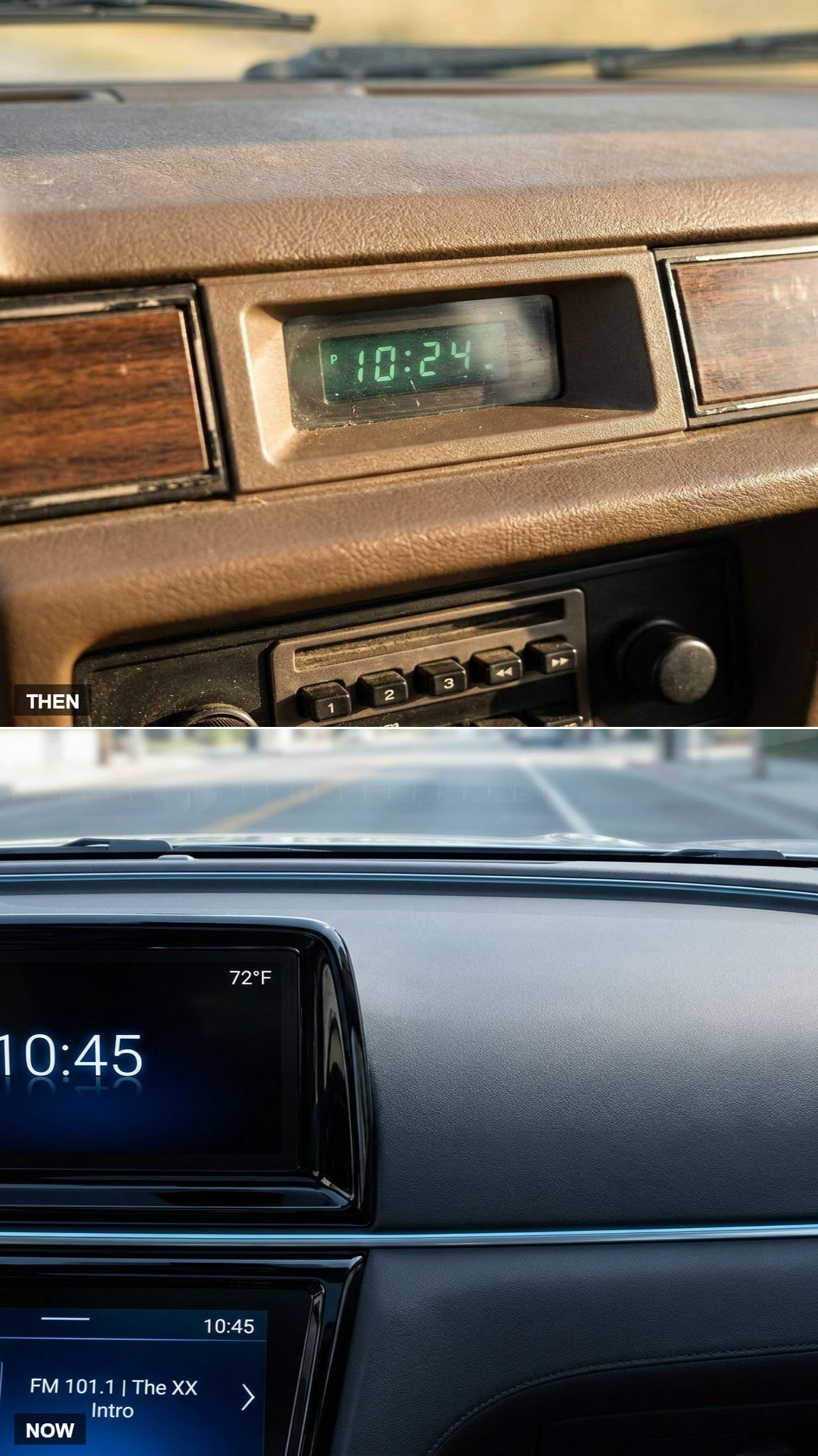
The dashboard clock was a small green digital square or a tiny analog face, and it was usually a little wrong. Twice a year, you found a pen tip and poked the recessed buttons until the numbers returned to something close to the correct time.
In many modern cars, the clock syncs through GPS, connected services, radio data, or a paired phone. It can update itself when the time changes or when the car crosses into another zone.
The old clock had one purpose and still required regular supervision. The modern one nearly disappears because it no longer asks for attention.
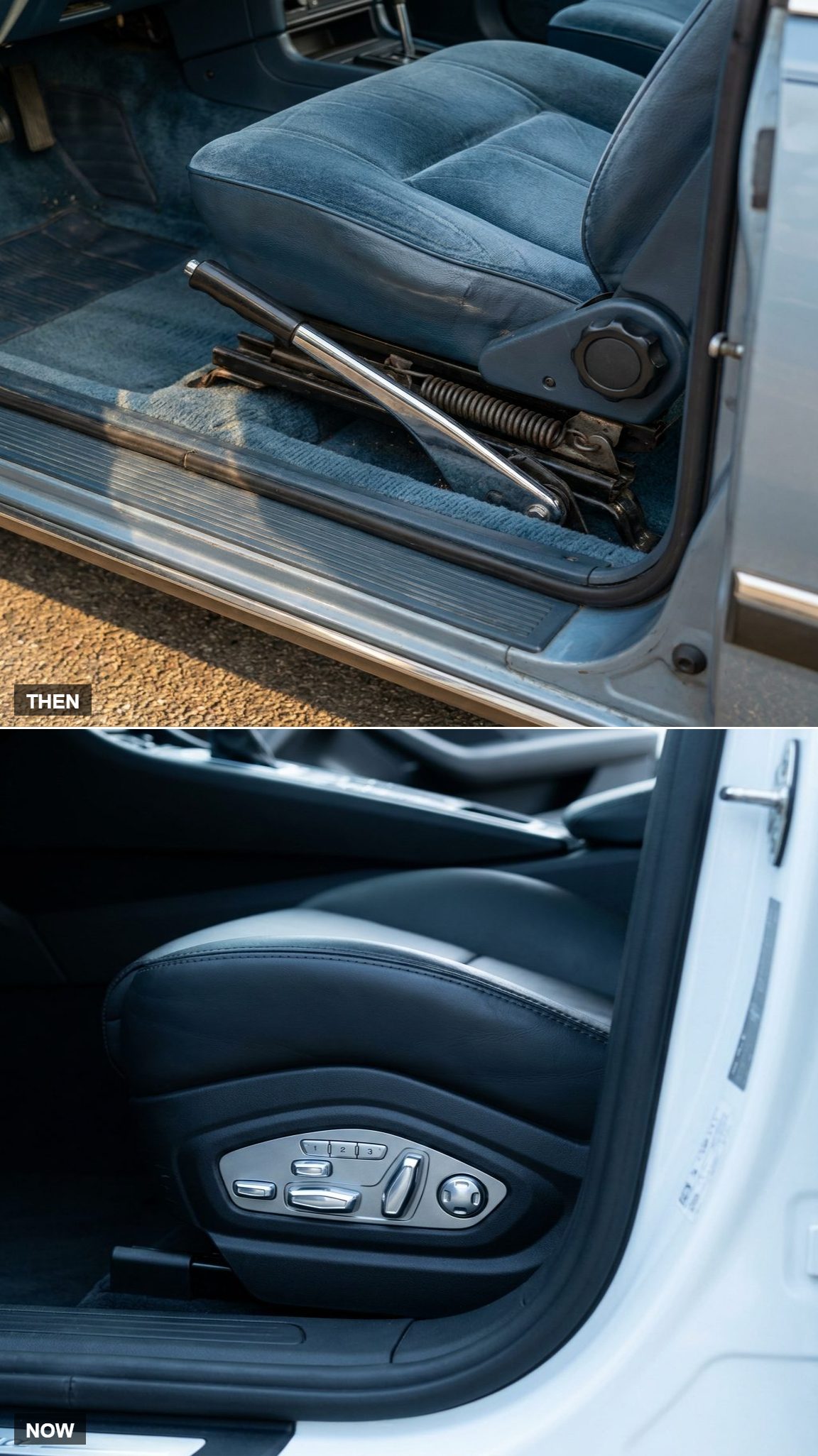
19. Yanking the Seat Lever vs. a Seat That Remembers You
Would you like to save this?
Getting comfortable meant lifting a bar, planting your feet, and sliding the whole seat along its tracks until it clunked into a notch. Miss the notch and it might move again when you accelerated. Depending on the car, the backrest used a lever or a knob that seemed to require endless turning.
Power seats now adjust height, cushion angle, recline, lumbar support, and distance from the pedals. Memory systems can store several positions and restore the mirrors and steering column at the same time.
It sounds excessive until two drivers of very different heights share one car. Then the memory button stops feeling optional.
18. Velour That Held Every Crumb vs. Upholstery Built for Modern Life
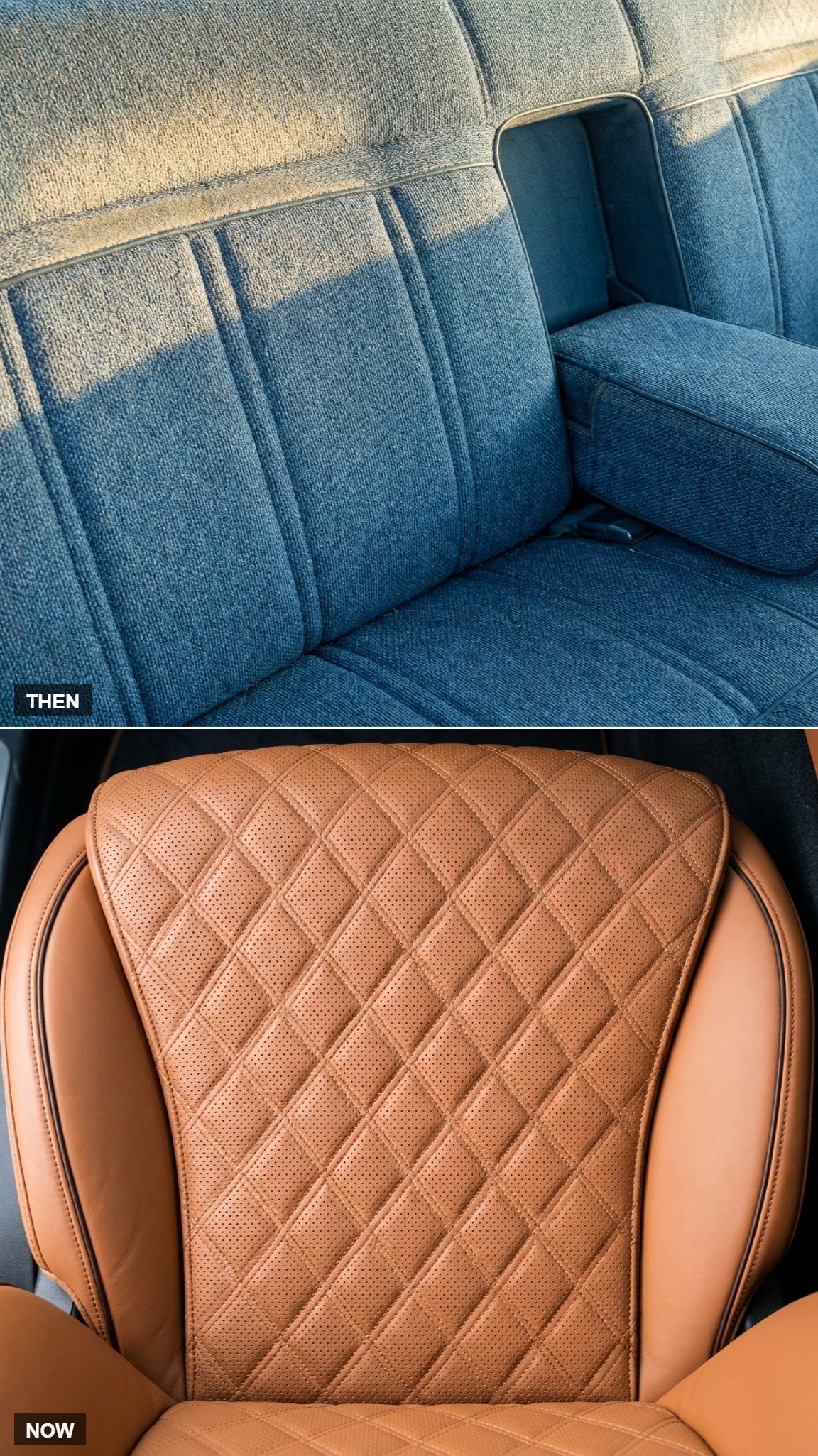
Period cloth came in blue, maroon, beige, gray, and enough geometric patterns to wallpaper a rec room. Velour could be comfortable, but it also held crumbs, spilled soda, pet hair, cigarette smoke, and static electricity with remarkable determination.
Modern upholstery ranges from durable woven cloth to perforated leather and synthetic alternatives designed to resist stains and simplify cleaning. Luxury trims add quilting, contrast stitching, ventilation, and heating, while practical family cars increasingly favor surfaces that can survive a dropped drink.
The best choice is not automatically leather. Cloth can remain cooler, grip occupants better, cost less, and require less maintenance.
17. The Back Seat: Basic Bench vs. Passenger Command Center
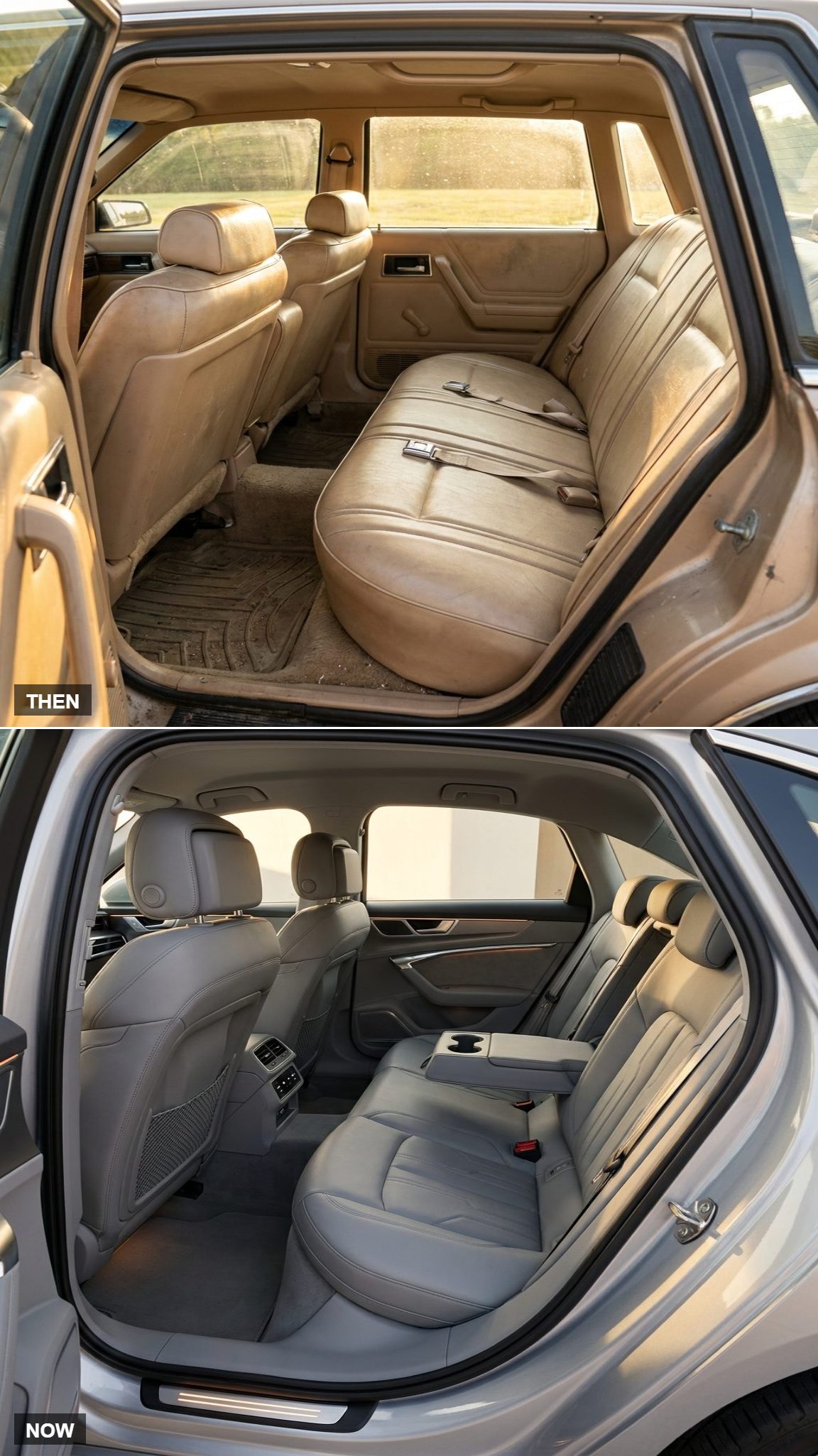
Many 1985 back seats were simple benches with limited contouring and few conveniences. Depending on the model, passengers might have lap belts, no adjustable head restraints, and little more than an ashtray in the door.
Modern rear seats can include adjustable head restraints, three-point belts, LATCH anchors attached to the seat structure, USB-C ports, cup holders, vents, heated cushions, and their own climate controls.
The rear bench went from spare seating to some of the most valuable real estate in the cabin.
16. The Glove Box: Paper Manual vs. the App
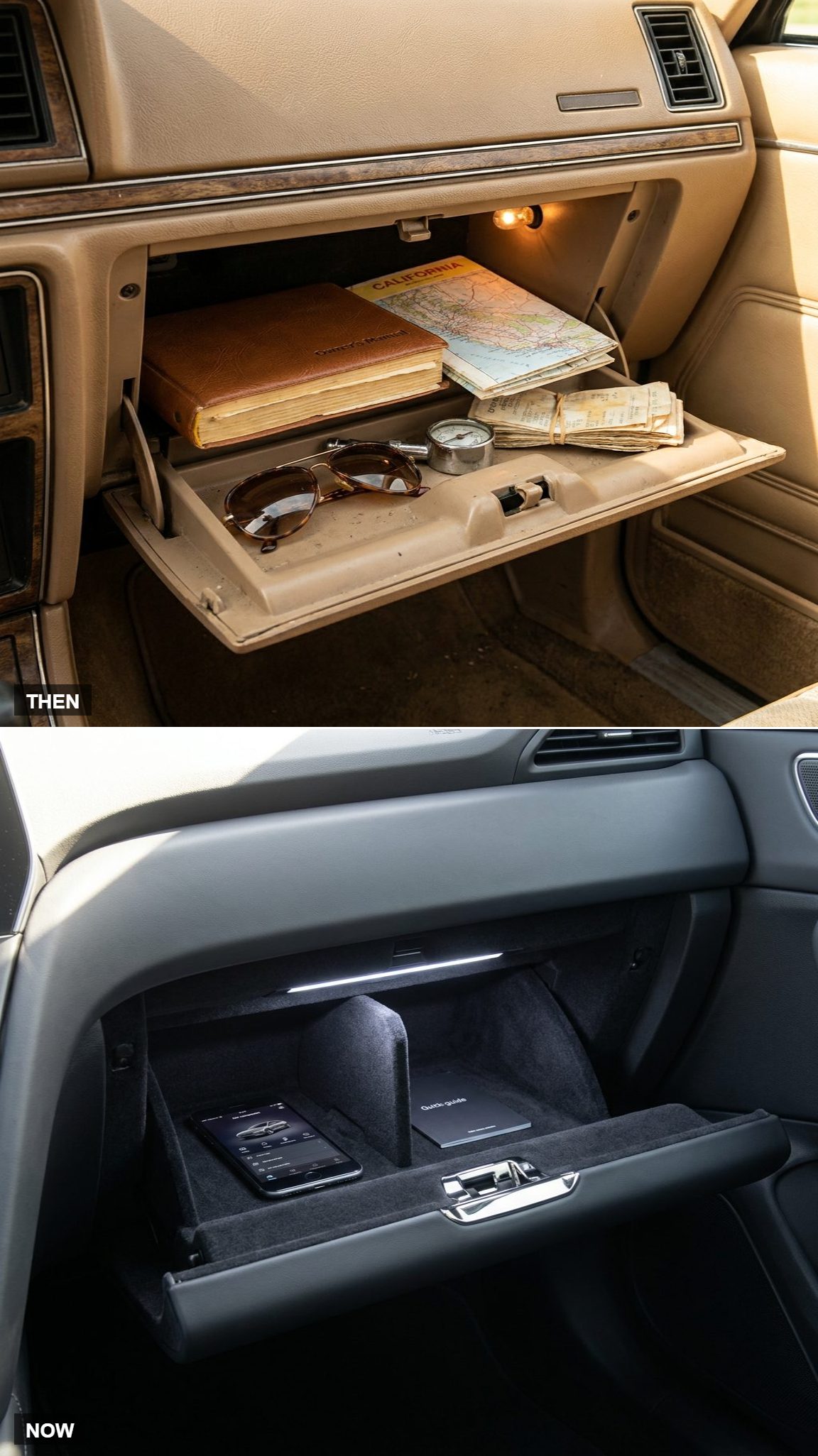
Every 1985 glove box seemed to contain the same collection: a vinyl-bound owner’s manual, a road map folded incorrectly, a tire gauge, several receipts, and one pen that no longer worked. Open the door too quickly and the whole archive spilled onto the floor.
Many manufacturers now put the complete manual online or inside an app, even when a smaller printed guide remains in the car. Tire pressure appears on the dashboard, service records live in connected accounts, and roadside assistance may be summoned from the screen.
The glove box became quieter because half its former responsibilities moved somewhere else.
15. The Center Console: Ashtray Nook vs. Storage Vault
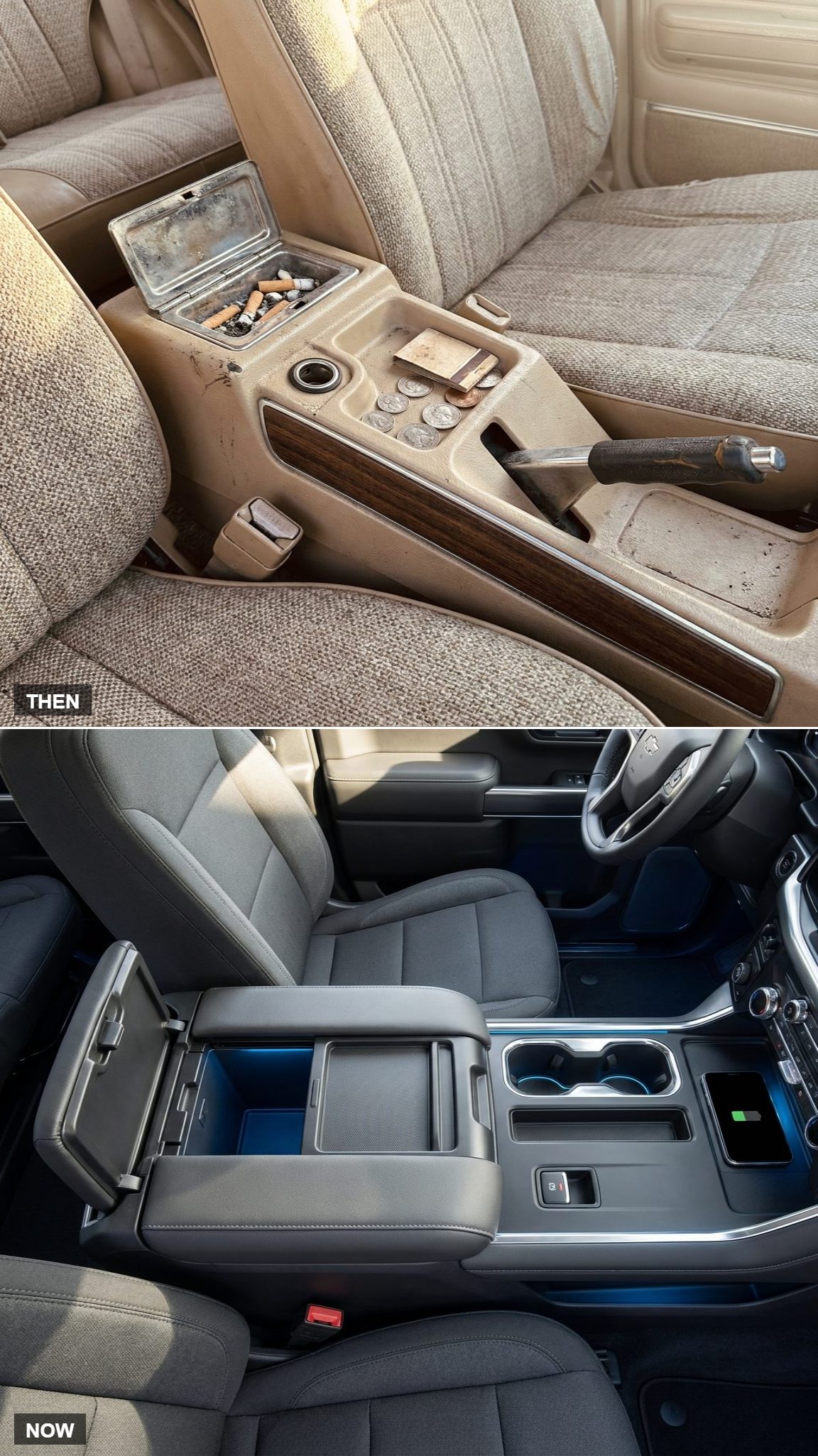
In a basic bench-seat car, the console barely existed—or there was no console at all. A narrow plastic section might hold an ashtray, lighter socket, and shallow tray for coins and matchbooks.
Today’s console can resemble a piece of luggage bolted to the floor. A padded armrest lifts over a deep storage bin, cup holders grip bottles, and smaller trays organize phones, keys, charging cables, and sunglasses.
The tradeoff is physical space. The old open cabin could seat another person. The modern console gives the remaining occupants somewhere to put nearly everything they carry.
14. Power Outlets: Cigarette Lighter vs. USB-C Everywhere
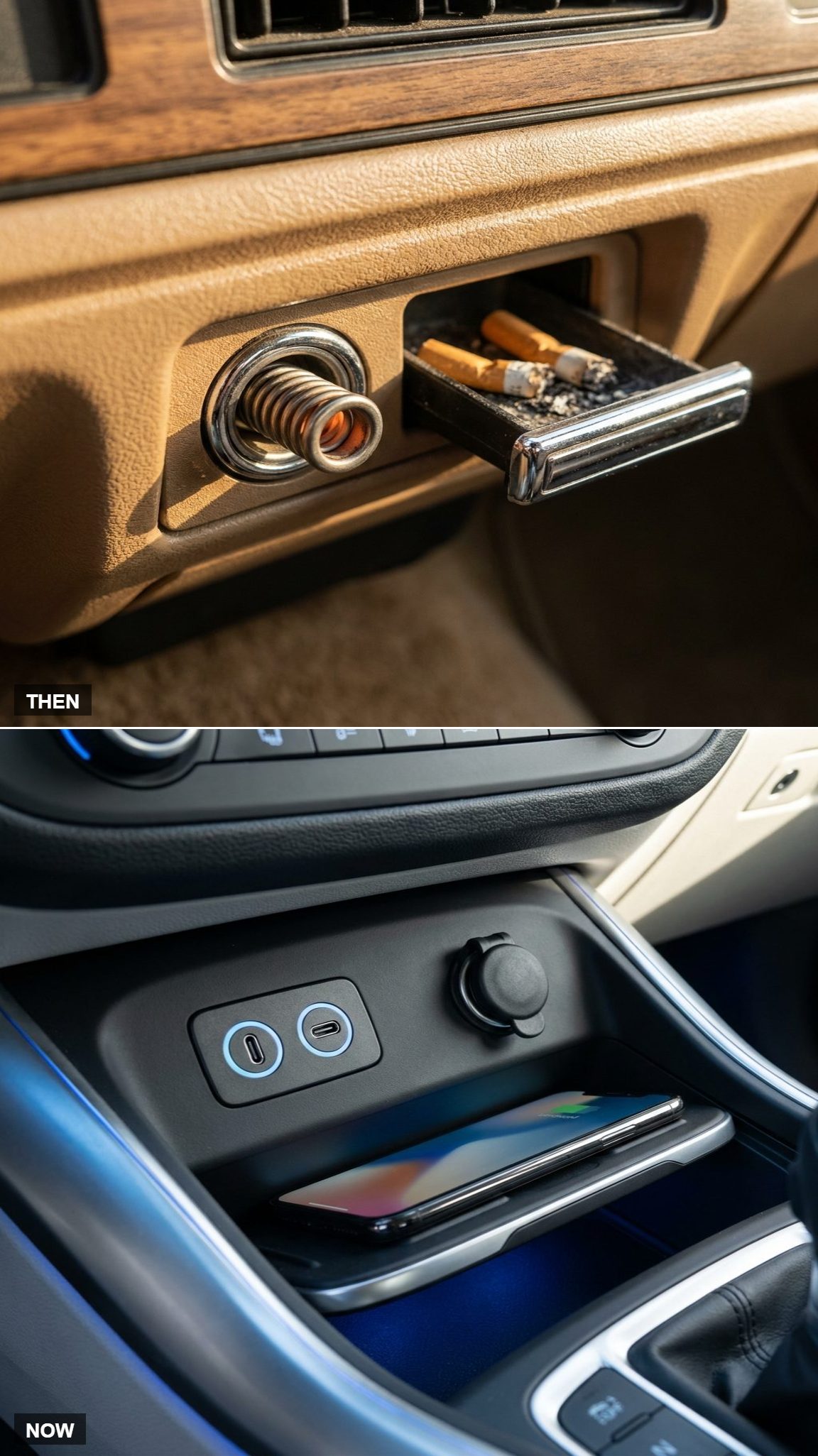
That glowing orange coil was once standard dashboard equipment. Push the lighter in, wait for the pop, and return it to the ashtray beside a row of cigarette burns left by less careful owners.
The socket survived as a 12-volt outlet, but much of the charging work moved to USB-A and USB-C ports, household-style outlets, and wireless pads. Some cars now provide separate charging points for nearly every seating row.
The little orange coil was once so ordinary nobody noticed it. Now an intact one makes an old dashboard look like a display from a different social world.
13. The Shifter: Mechanical Lever vs. Electronic Selector
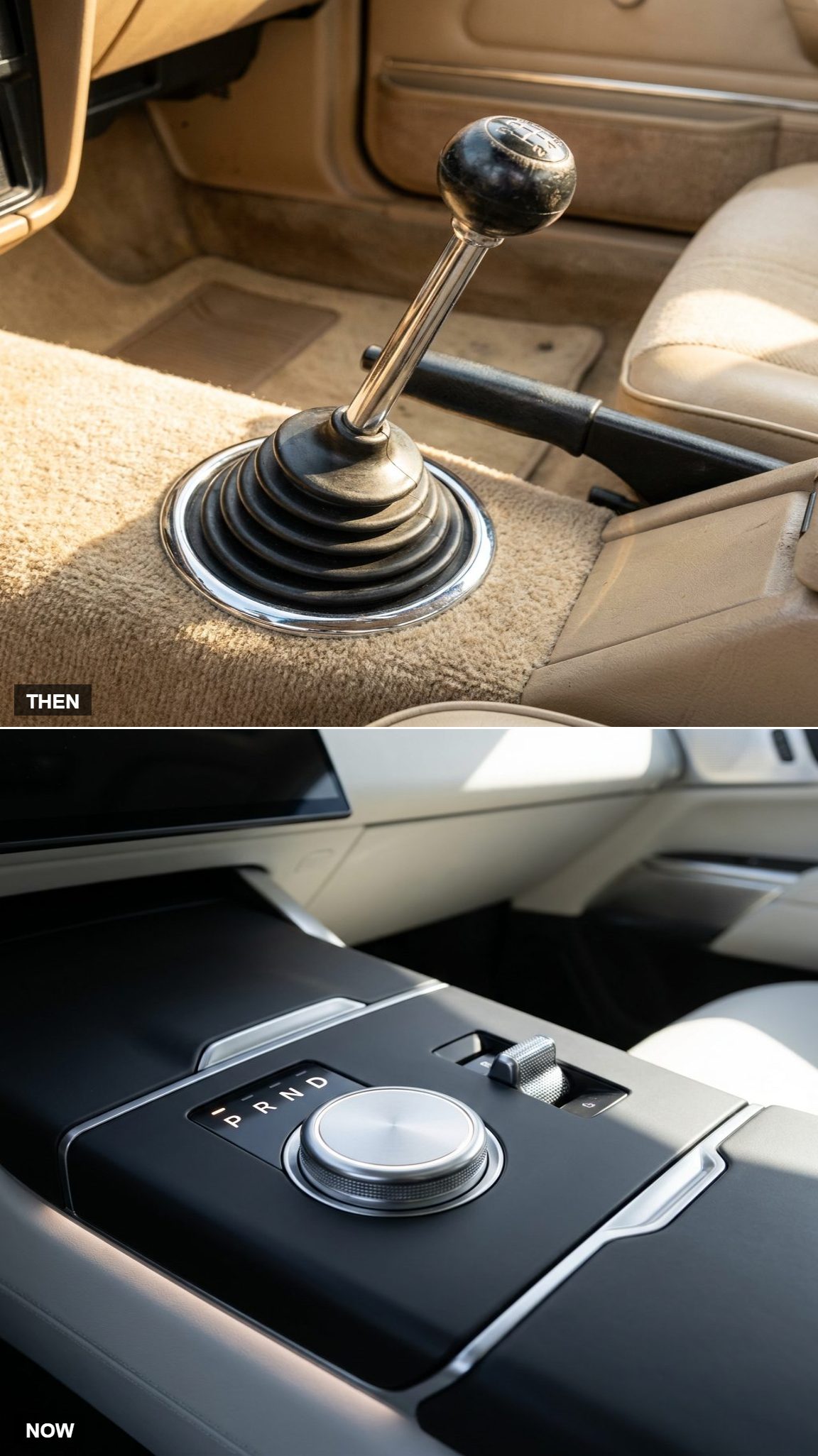
A manual car gave you a metal lever rising through a rubber boot, with the shift pattern stamped into a knob worn smooth by thousands of changes. An automatic might place its lever on the steering column or console, but the movement still felt mechanically connected to something beneath the floor.
Some modern automatics replace that motion with a rotary dial, electronic toggle, push buttons, or a compact selector. A light indicates the gear, and software prevents several mistakes the old mechanism would happily allow.
Cleaner and easier, certainly. But nobody has ever bragged about the satisfying weight of rotating a plastic dial into Drive.
A gear change you once felt through your wrist can now happen with the turn of two fingers.
12. Door Panels: Molded Plastic vs. Padded Controls and Storage
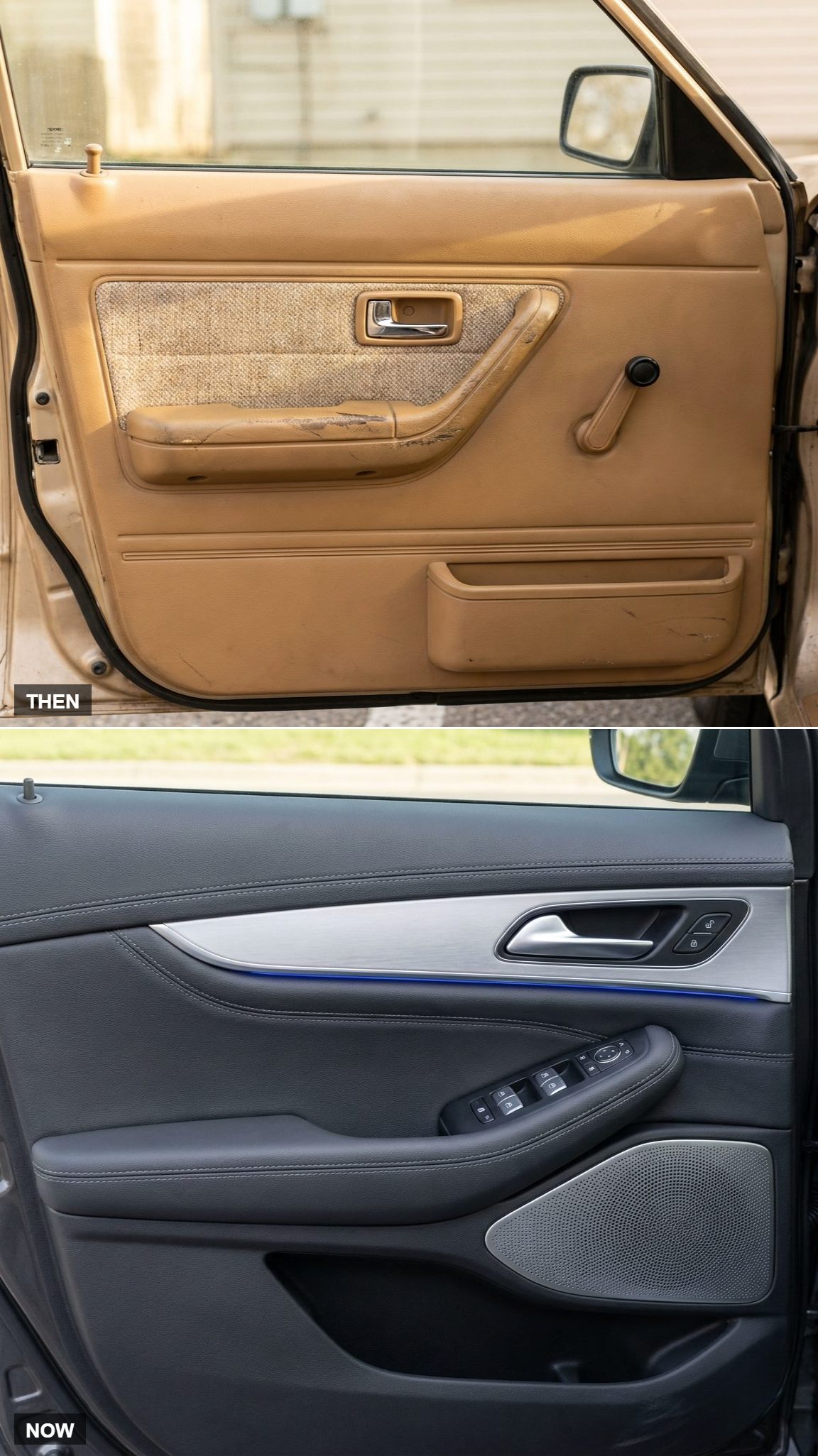
A basic 1985 door panel might combine molded plastic or vinyl with a manual lock knob, mechanical window crank, pull handle, and shallow storage pocket. Sunlight faded the color, elbows polished the armrest, and the mechanism remained fully visible.
Modern doors place padding where an elbow rests, surround the switches with stitched material or metallic trim, and provide larger bins for bottles and everyday clutter. Controls for windows, locks, mirrors, seats, and memory settings may all occupy the same panel.
The old panel showed exactly how the door worked. The modern one tries to make the mechanism disappear.
11. Cabin Lighting: One Dome Bulb vs. an Adjustable Glow
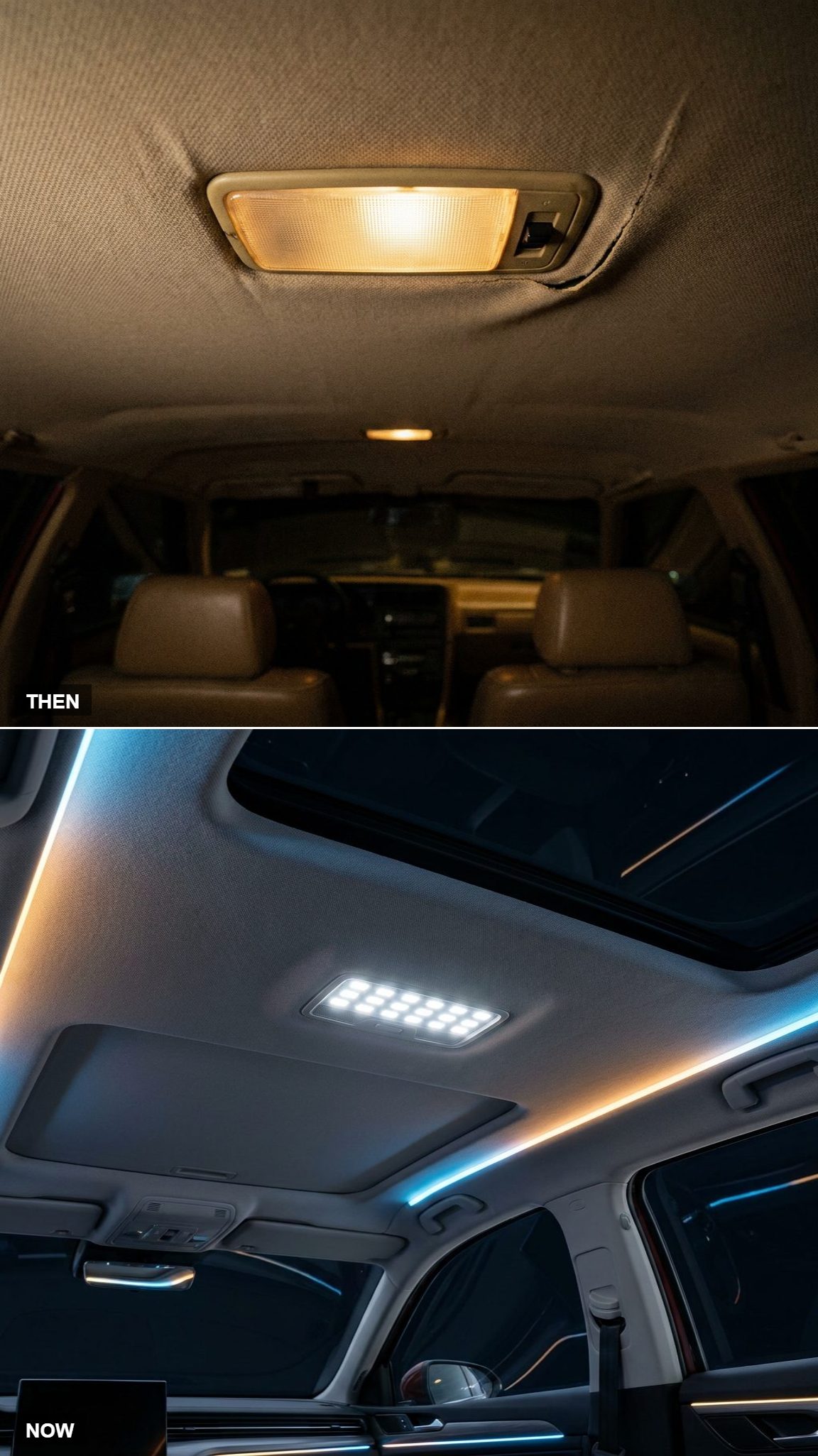
One bulb. Yellow, dim, tucked behind a frosted plastic cover that eventually turned the color of weak tea. You switched it on to hunt for a dropped french fry, and the light barely reached the floor.
Modern cabins use bright LED reading lamps, footwell lights, illuminated controls, and targeted lighting around storage areas. Higher trims may add color-changing strips across the dashboard and doors.
The old bulb helped you find the keys. The new system helps sell the interior after sunset.
10. The Stereo: Paper Speakers vs. a Cabin Tuned for Sound
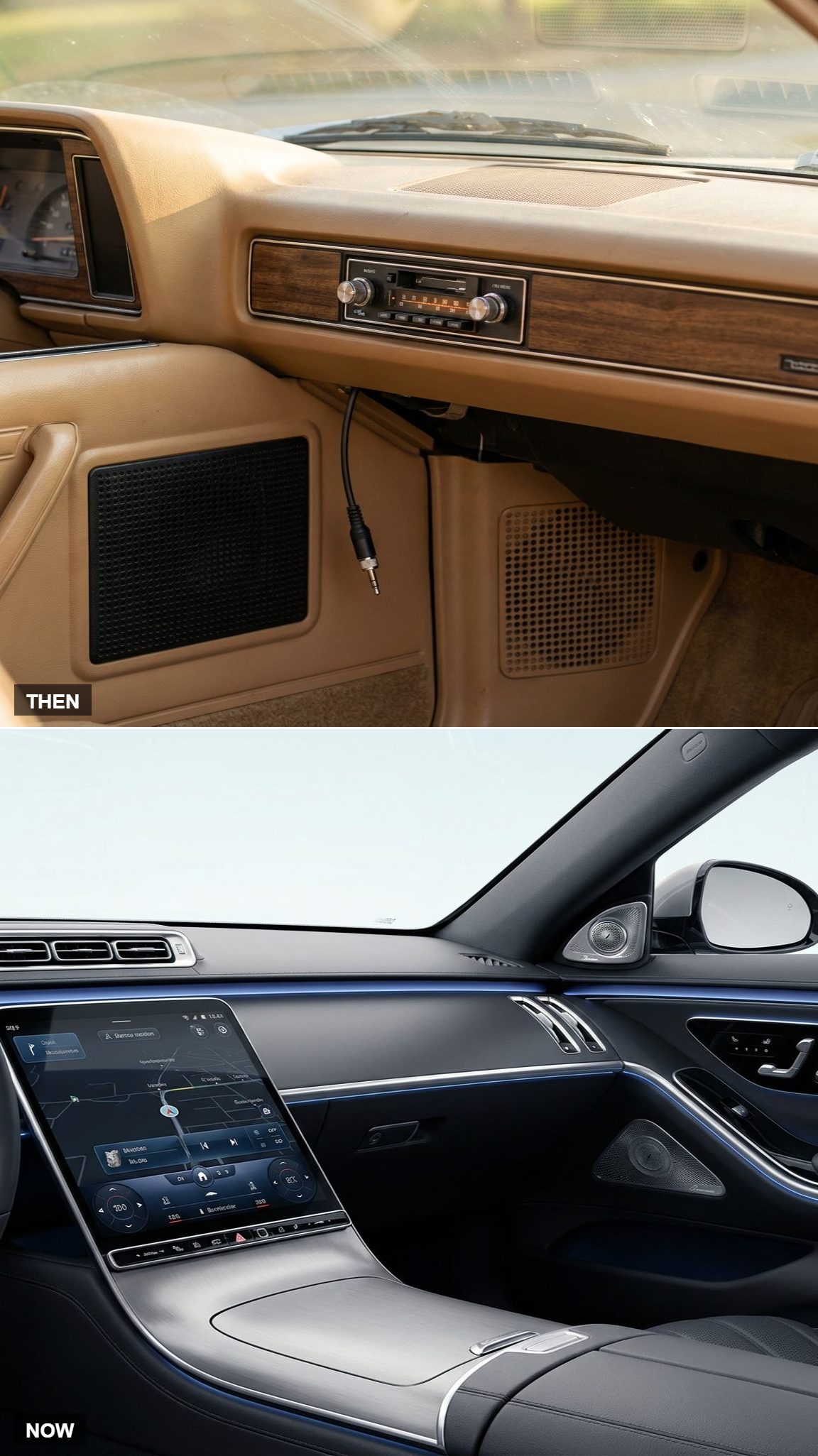
Two or four paper-cone speakers might handle the entire 1985 cabin. Turn them up and the door panel began buzzing before the music became impressive. That vibration was not an audio effect, but it became part of the song anyway.
Modern systems distribute woofers, tweeters, midrange speakers, and amplifiers throughout the cabin. Microphones and digital processing can adjust the sound for road noise, seating position, and the acoustics of the interior.
The system no longer sounds like music escaping from two holes in the dashboard. The whole cabin becomes the speaker.
9. Aftermarket Speaker Boxes vs. Audio Hidden Inside the Cabin
Would you like to save this?
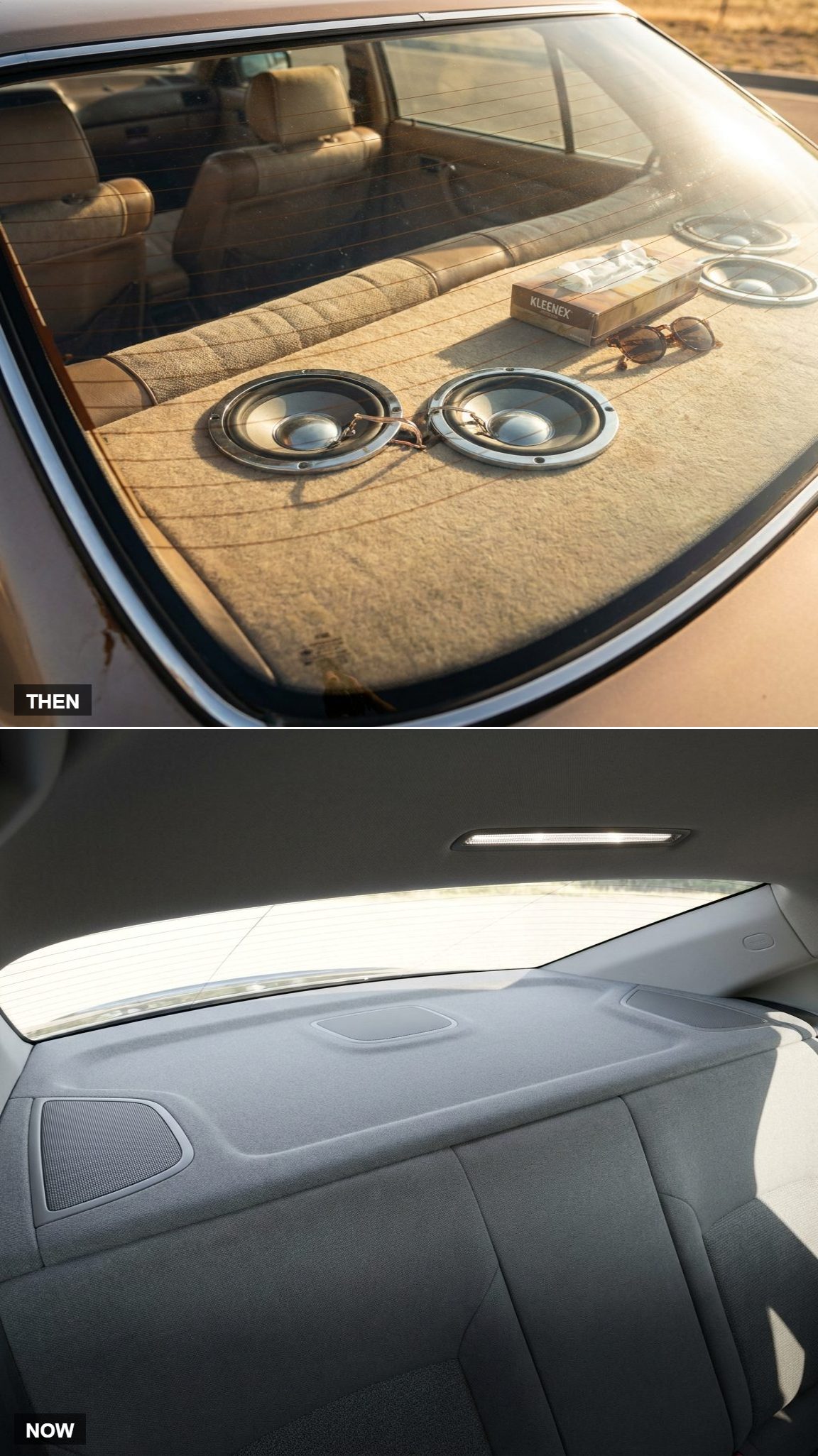
In many sedans, the rear parcel shelf became the natural home for aftermarket speakers. Other owners installed boxes in hatchbacks, trunks, or cargo areas, often with exposed wiring and grilles that rattled over every expansion joint.
Factory audio now hides subwoofers beneath seats, inside side panels, under rear shelves, and behind fitted trim. The installation occupies less visible space and arrives integrated with the electronics from the beginning.
The sound became larger while the hardware became harder to find.
8. The Rearview Mirror: Plain Glass vs. a Camera and Control Panel
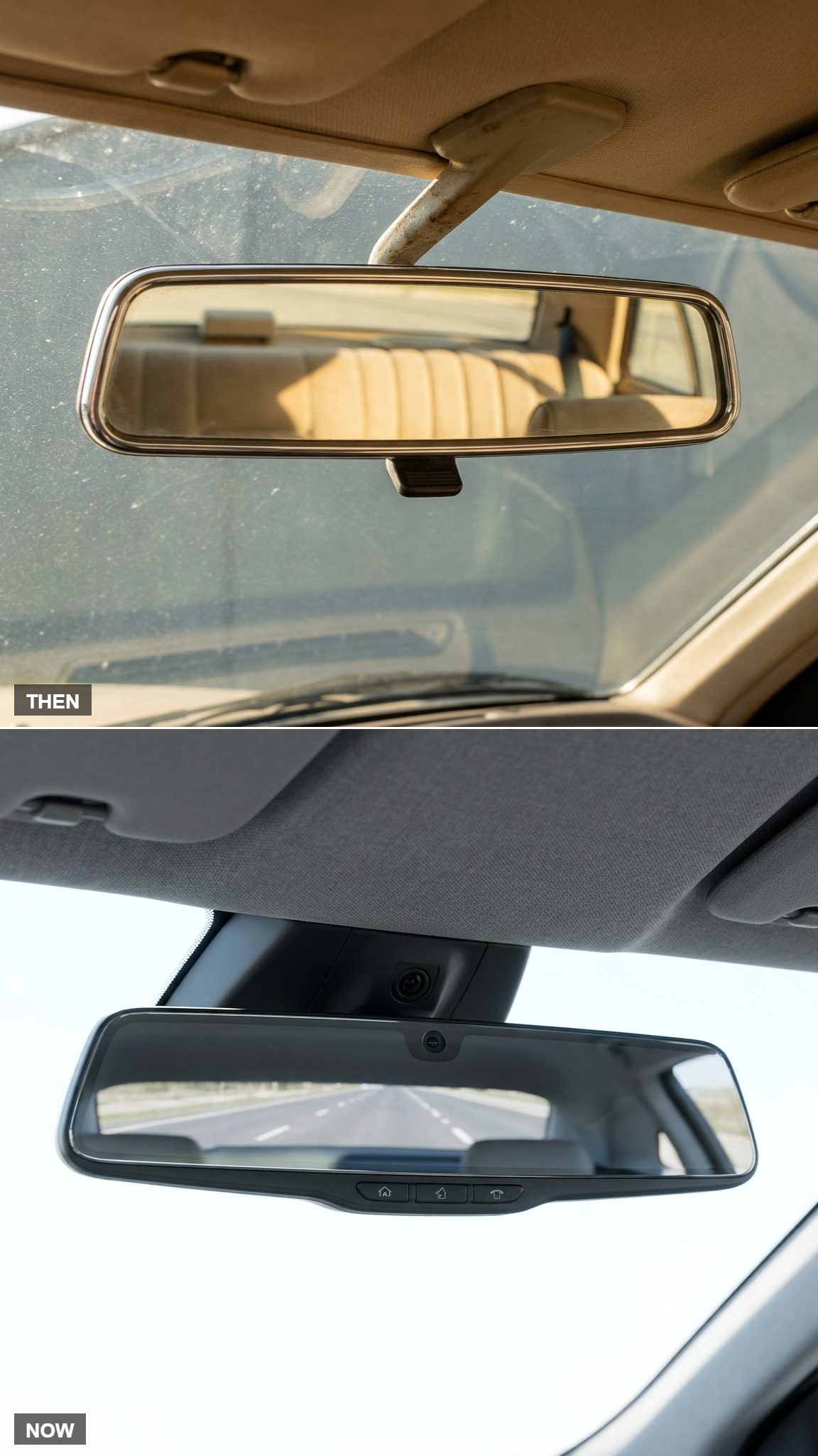
The old mirror performed one job. Plain glass, simple frame, and a tab underneath that changed the angle when headlights became unbearable at night. It never needed software and rarely gave trouble.
Modern mirrors may dim automatically, carry HomeLink controls, display compass or temperature information, and switch to a camera feed when cargo or rear head restraints block the view.
A piece of glass became a small electronics panel without becoming noticeably larger.
7. Exposed Seat Rails vs. Mechanisms Hidden Behind Trim
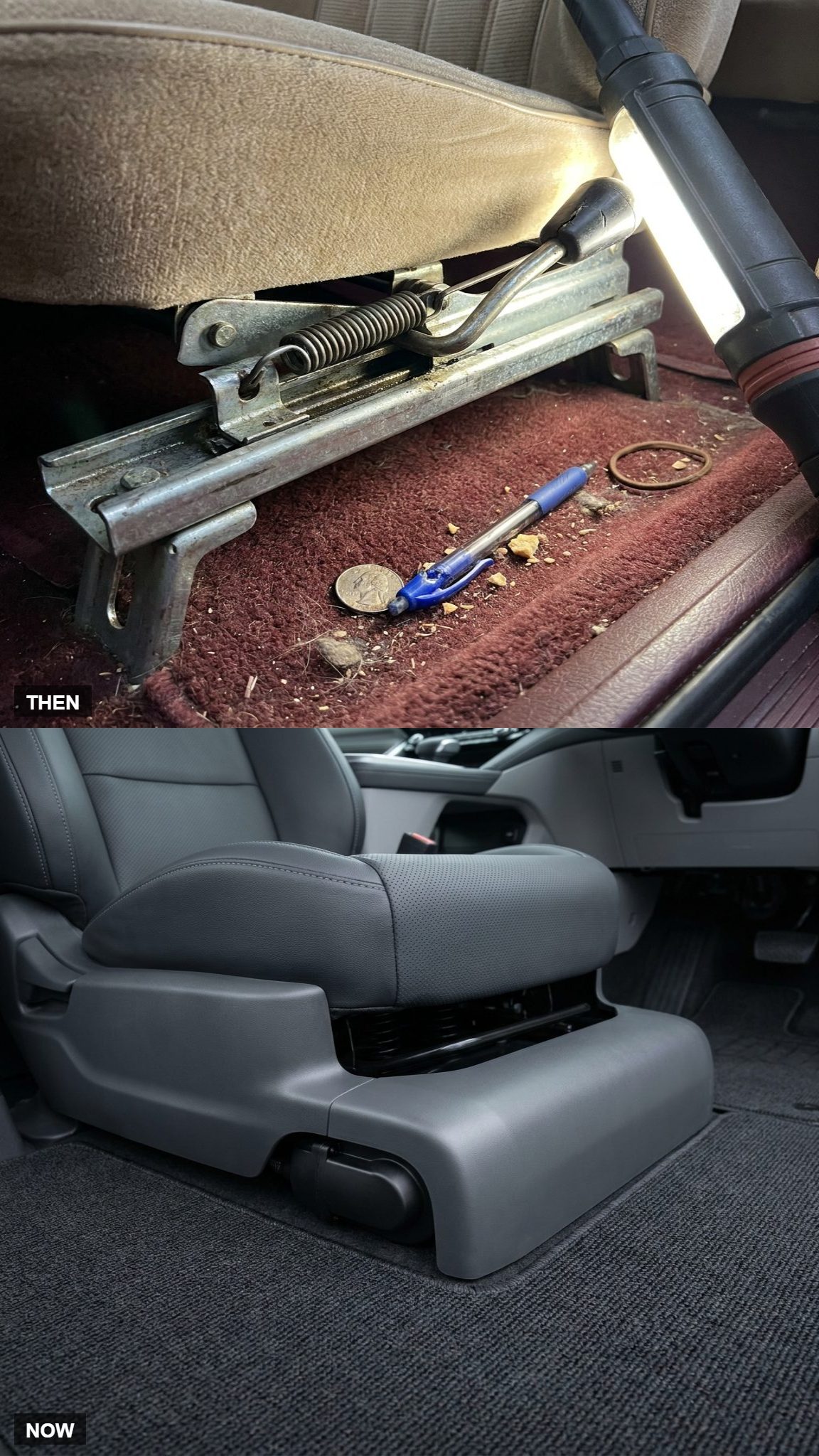
Reach beneath a 1985 seat and you might find raw steel rails, a spring, and a release lever with a plastic cap that had disappeared years earlier. Quarters and pens dropped into the mechanism and remained there until somebody removed the seat.
Much of the hardware now sits behind molded trim that reduces exposed edges and makes the cabin look more finished. Electric motors perform the sliding, raising, reclining, and lumbar adjustments.
The tracks are better hidden, but they have not defeated loose change. Coins still find a way beneath the seat and become part of the car permanently.
6. Thin Floor Coverings vs. Layers of Sound Control
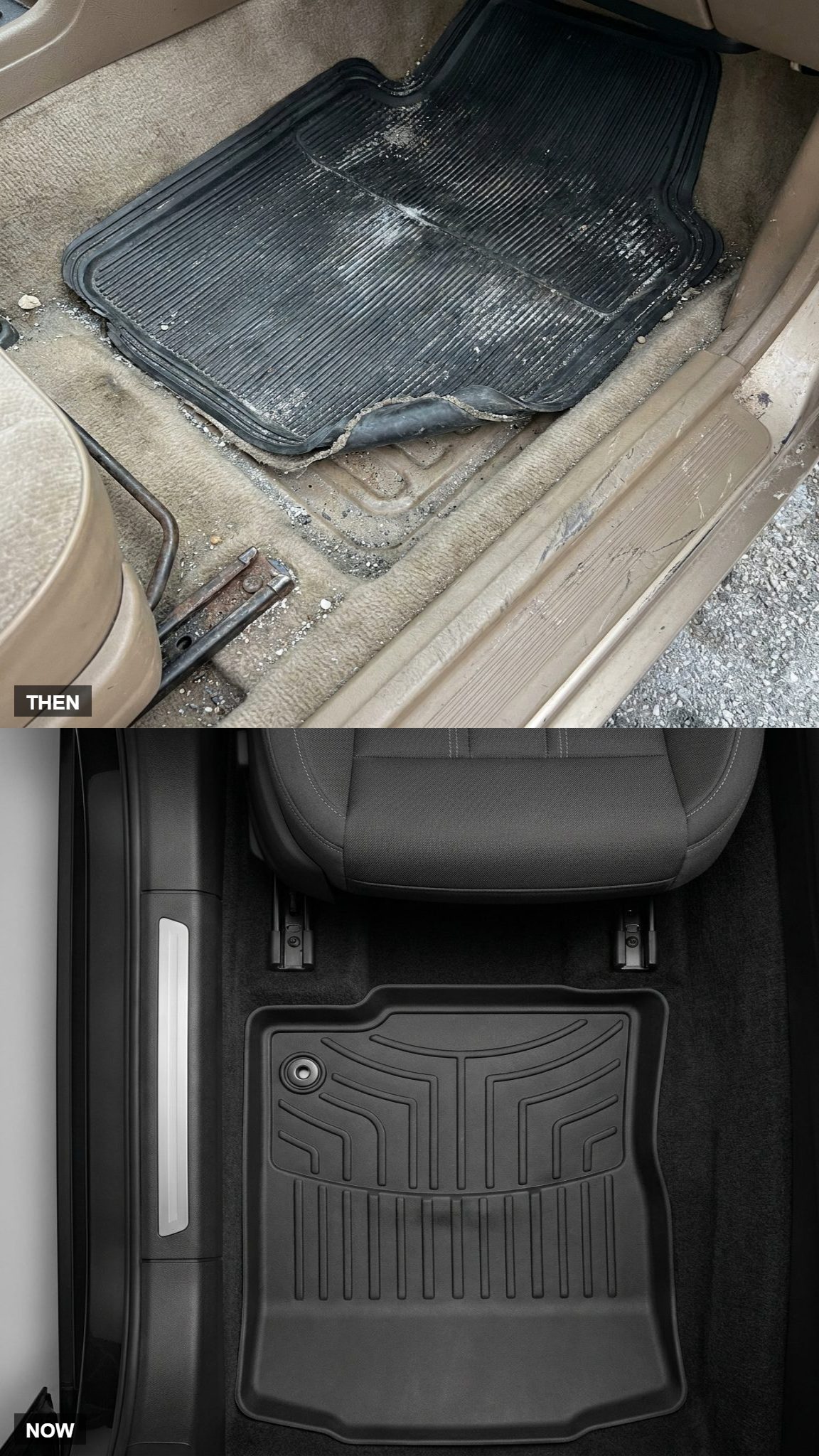
A base 1985 car might have thin low-pile carpeting, while fleet vehicles and work trucks could use rubber flooring that tolerated slush, gravel, and muddy boots. Neither treatment did much to hide the sound of tires and road beneath the cabin.
Modern quietness comes from the entire structure: carpet padding, insulation, acoustic glass, tighter seals, underbody treatments, and more controlled body construction. Anchored mats stay in place instead of curling beneath the pedals.
5. Two Skinny Door Pockets vs. Storage Nooks Everywhere
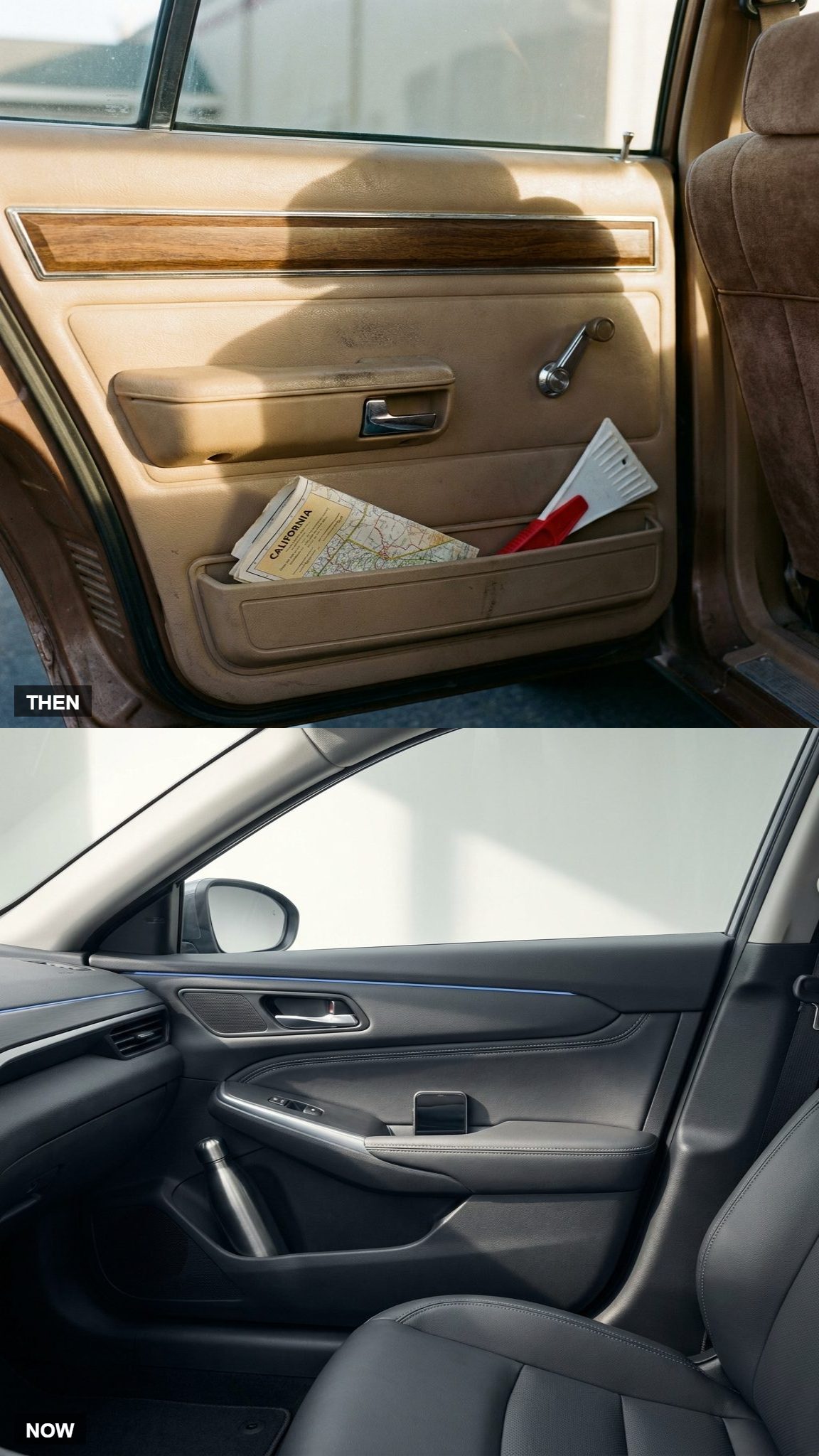
Storage in a basic 1985 cabin meant the glove box, one shallow pocket in each door when you were lucky, and the mysterious space beneath the seat where things went to be forgotten.
A modern interior distributes storage throughout the cabin. Deep door bins hold bottles, seat-back pockets carry tablets, and small trays appear beneath the climate controls or ahead of the shifter. Larger vehicles add compartments under seats and beneath removable floor panels.
The old car expected you to arrive with a map and a scraper. The new one assumes you are bringing half the house.
4. Unfolding a Gas-Station Map vs. a Voice That Knows the Next Turn
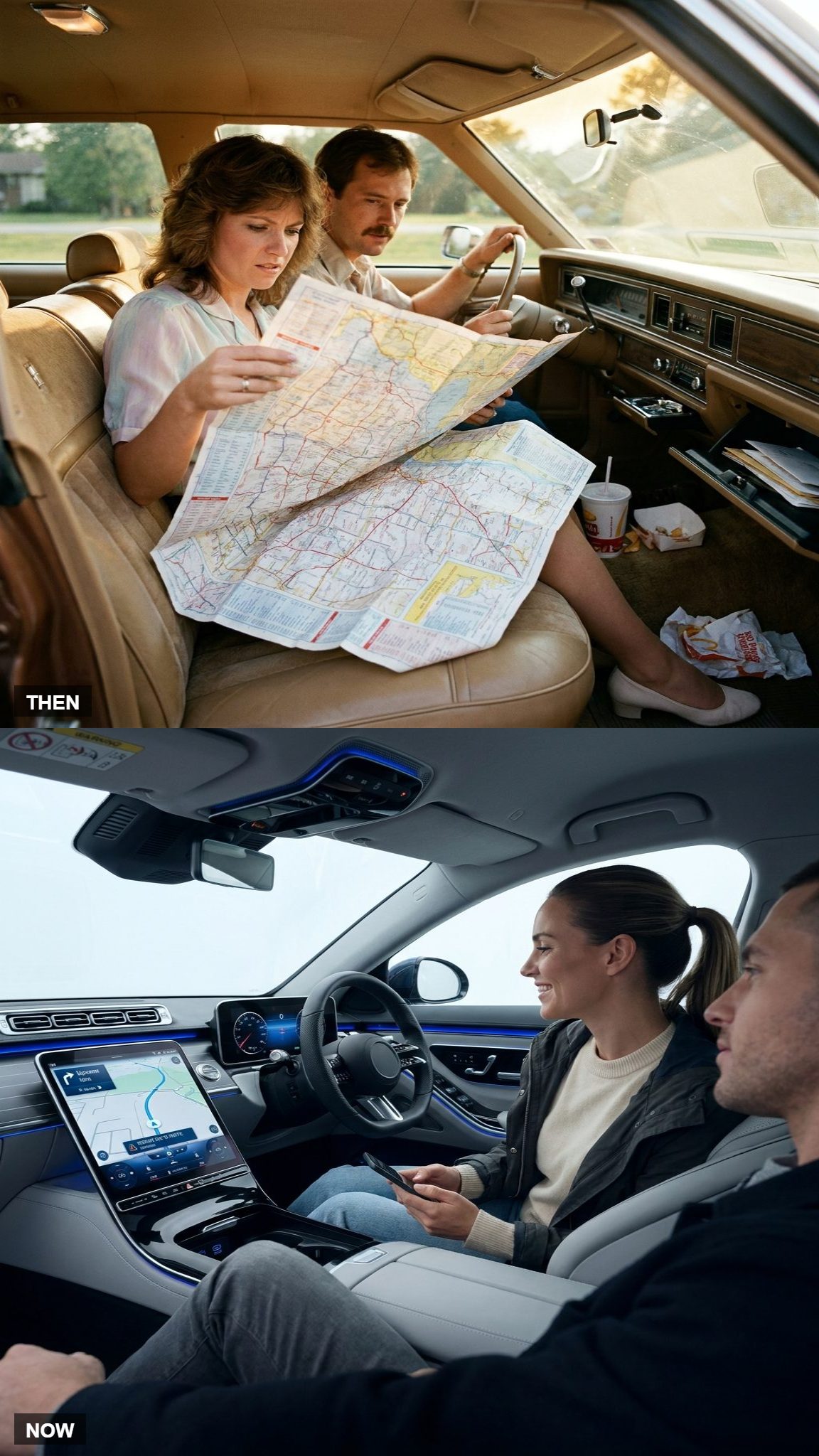
Getting somewhere new in 1985 could become a two-person job. One drove while the other wrestled with a paper map the size of a bedsheet and refolded it incorrectly at every stop. You memorized exit numbers, pulled into a gas station, and asked a stranger when the road stopped matching the page.
Now a screen draws the route in a glowing line while a calm voice announces the next turn. The system reroutes around collisions, searches for fuel, and updates the arrival time as traffic changes.
The glove-box map has become a museum piece, and the argument over who read it wrong went extinct with it.
3. A Fixed Steering Column vs. a Wheel That Comes to You
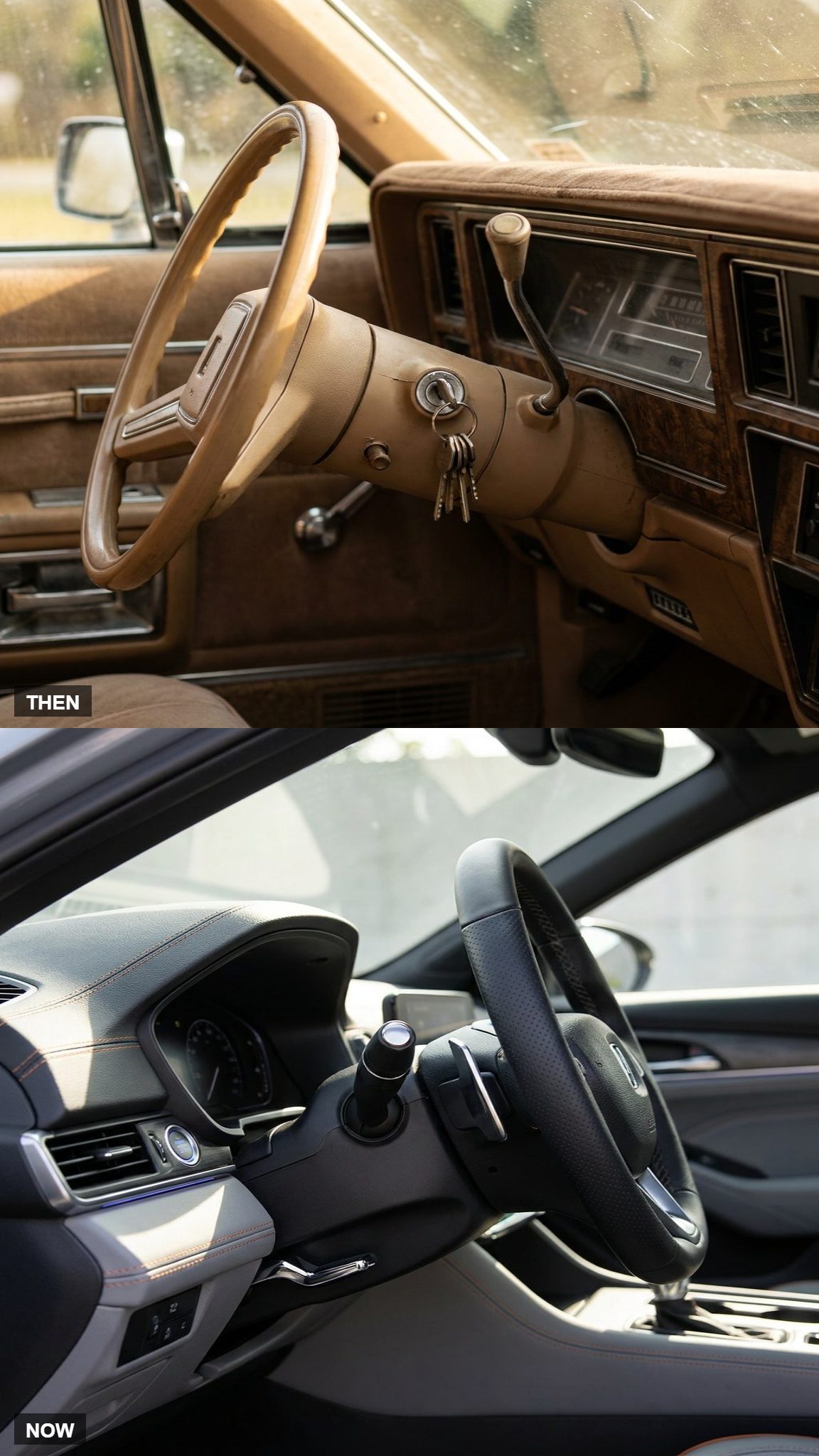
A basic 1985 car might offer no steering-column adjustment at all. Tilt wheels existed and were available on many models, but they were often optional, while telescoping reach adjustment remained far less common.
Modern columns tilt up and down and slide in and out. In some cars, the preferred position saves with the seat and mirrors, then returns automatically when the driver unlocks the door.
The old cabin asked the driver to adapt. The modern one moves several parts of the car to meet the driver instead.
2. Cryptic Warning Lights vs. Plain-Language Vehicle Alerts
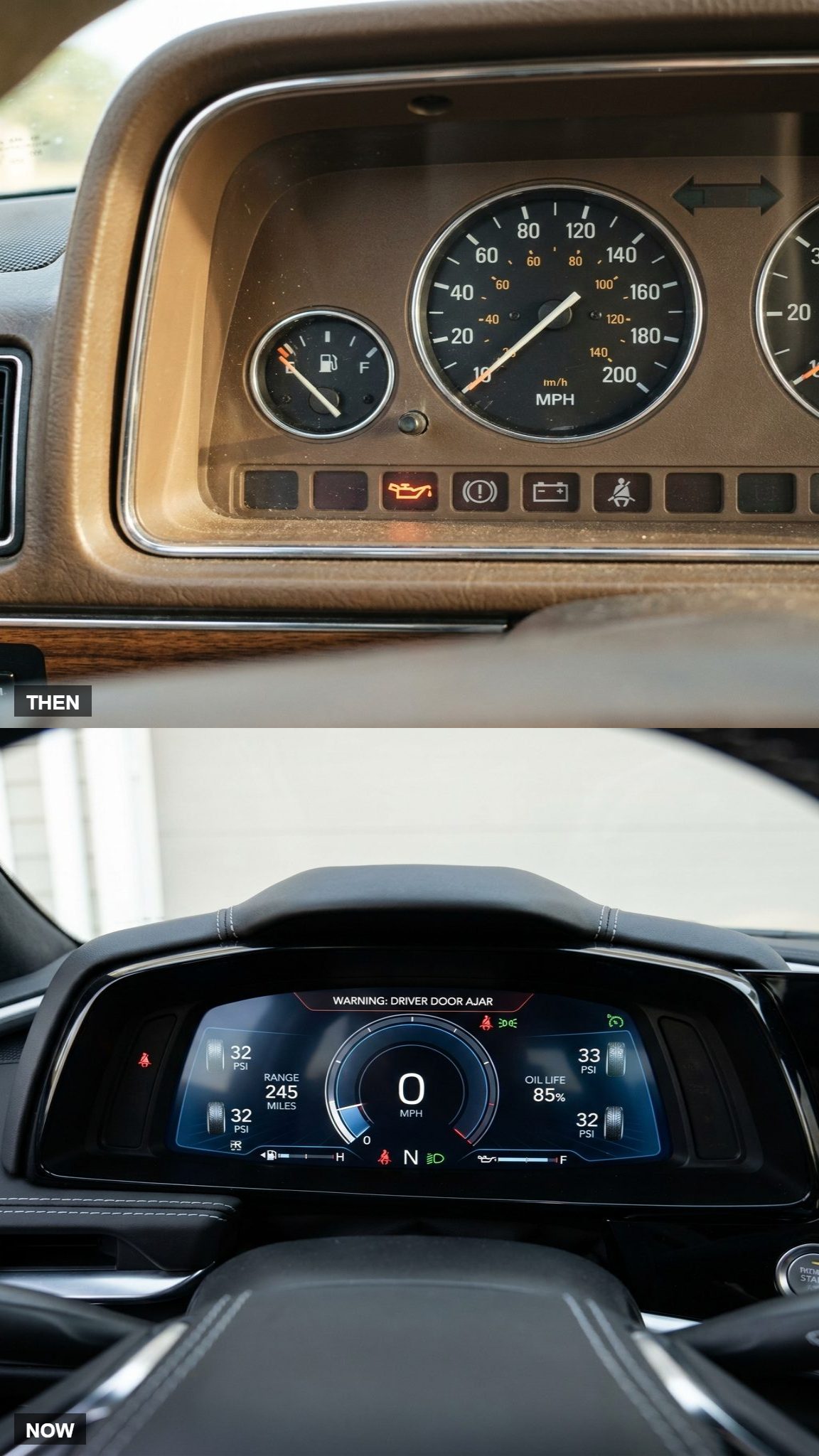
A 1985 instrument panel usually contained several warning lamps, but they offered little explanation. Oil, battery, brake, temperature, and engine symbols could illuminate after a problem had already developed, leaving the driver to interpret the urgency.
Modern displays report tire pressure at each wheel, remaining range, oil life, open doors, maintenance reminders, and specific system faults. Some alerts explain what happened and recommend the next action rather than illuminating one mysterious symbol.
The car went from a quiet partner that spoke in warning lights to one that provides a running commentary. Not every alert predicts trouble, but at least fewer of them require a translation manual.
1. Beige Plastic Everywhere vs. a Carefully Mixed Material Palette
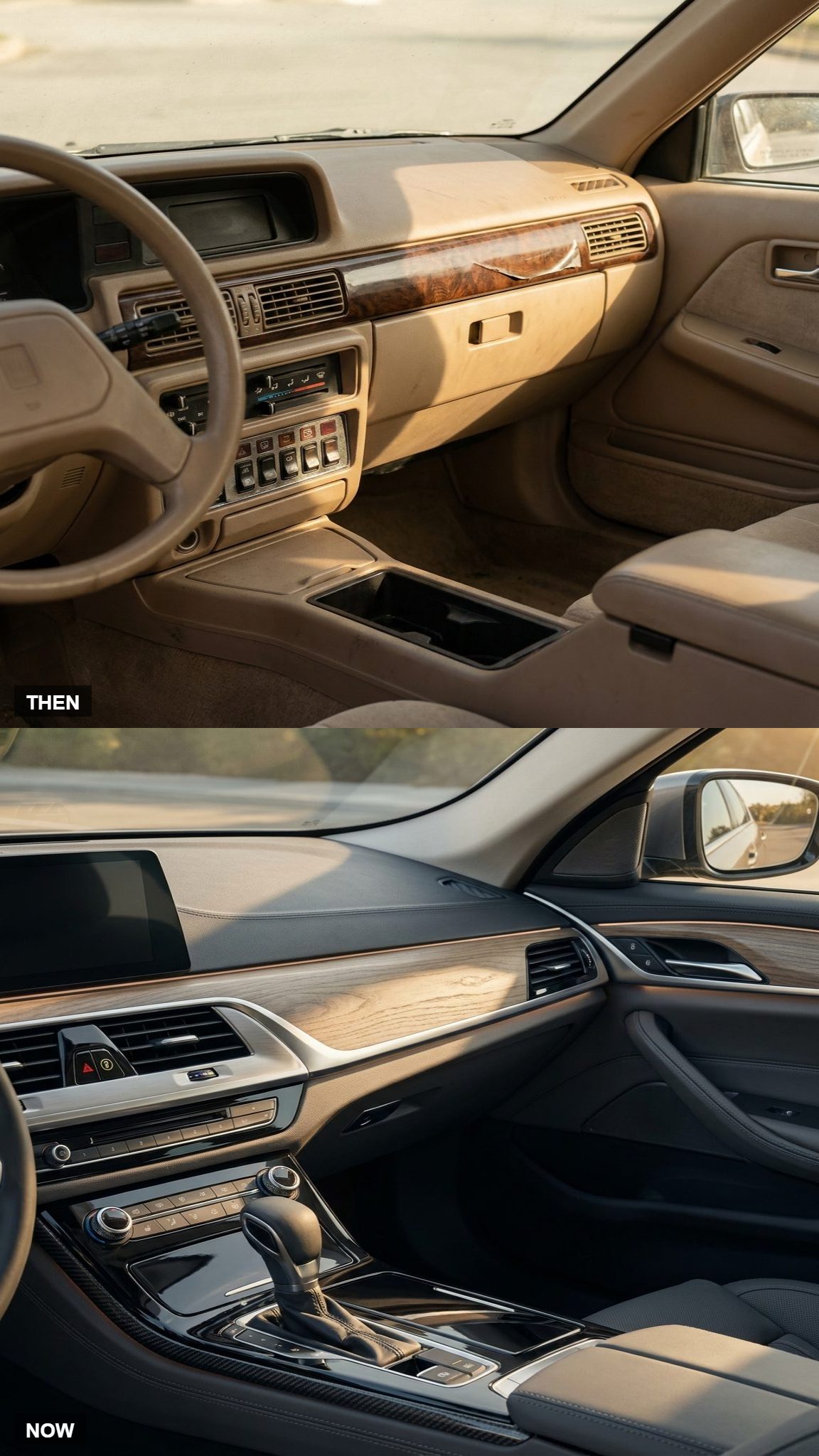
Beige, then more beige. Plenty of 1985 interiors committed to one color across the dashboard, doors, carpet, and seats, interrupted by a strip of simulated woodgrain or metallic-look trim.
Modern cabins build contrast through texture as much as color. Higher trims may use real open-pore wood, aluminum, leather, or carbon fiber, while mainstream interiors rely on increasingly convincing synthetic alternatives. Glossy piano-black plastic remains common too, despite its remarkable ability to collect fingerprints before the owner reaches home.
The industry did not abandon imitation materials. It became considerably better at combining them, hiding them, and placing the expensive surfaces where occupants are most likely to notice.