
Would you like to save this?
The flathead ticked as it cooled, and the whole garage smelled like gasoline, hot iron, and the coffee somebody forgot on the bench. You built the car with your hands, and it let you know exactly how well you’d done it. No computers, no error codes. Just your ears, your knuckles, and a set of feeler gauges worn smooth. What follows is the machinery and the muscle memory that turned a kid with a junkyard engine into somebody who could make it run.
Building Speed Around a Ford Flathead V8
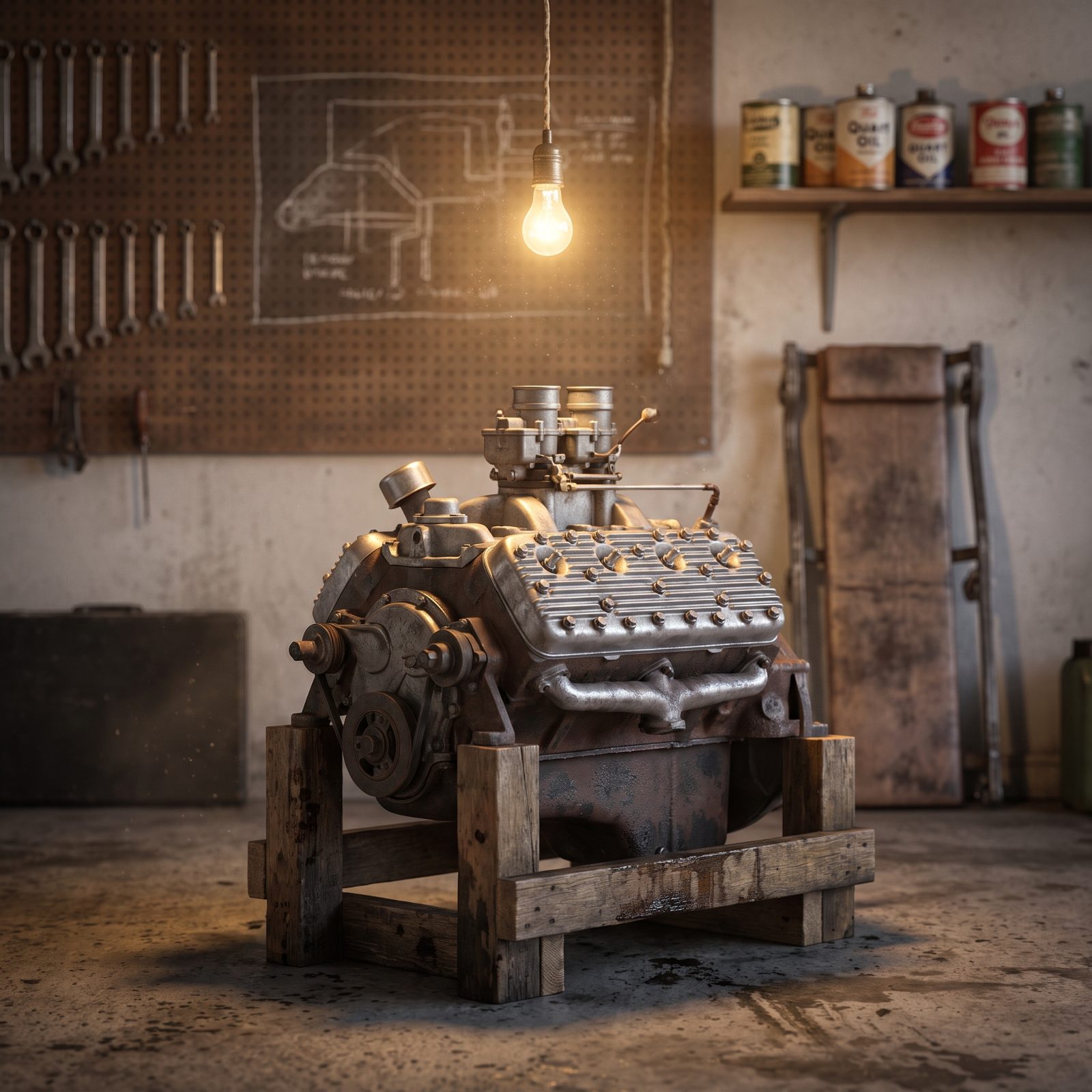
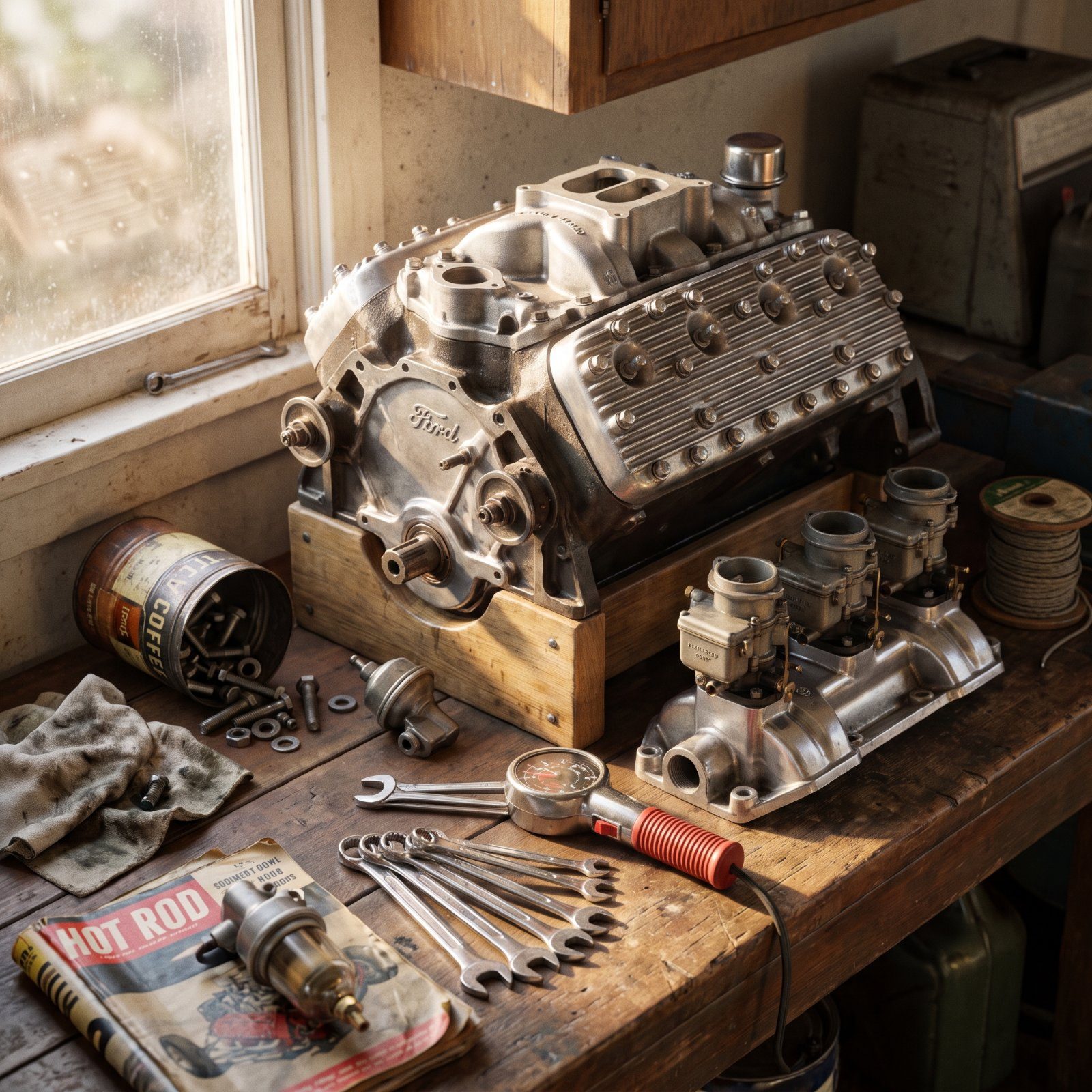
The flathead was the engine every kid started with, because it was everywhere and it was cheap. Junkyards were full of them, and a Ford V8 pulled from a tired sedan could become the heart of a roadster for the price of a weekend and some knuckle skin.
You didn’t buy power. You built it. Milled heads to raise compression, a hotter cam, twin carbs bolted to a finned manifold — every part was a decision, and every decision showed up in how the thing pulled off the line.
Swapping in an Overhead-Valve V8 From a Wrecked Car
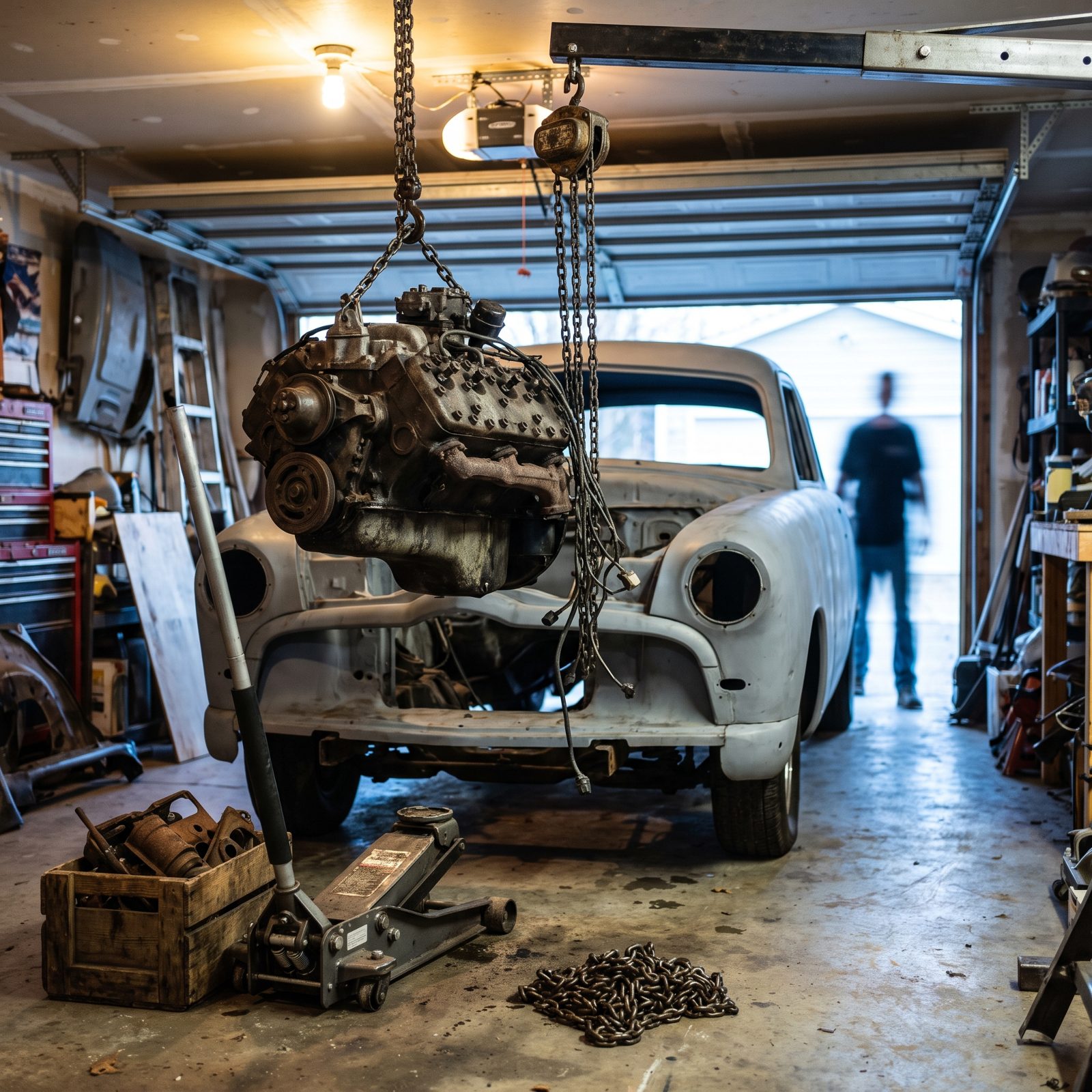
The overhead-valve V8s changed the game. When Oldsmobile and Cadillac brought them out, they made real power, and a wreck in the junkyard meant a rodder could get one for cheap.
Pulling one and dropping it into a light Ford body was the move if you wanted to leave flatheads behind. Nothing bolted up. You fabricated mounts, cut and welded, rerouted everything — a whole education in one weekend, and half of it was figuring out what wouldn’t fit.
Synchronizing a Row of Stromberg 97 Carburetors
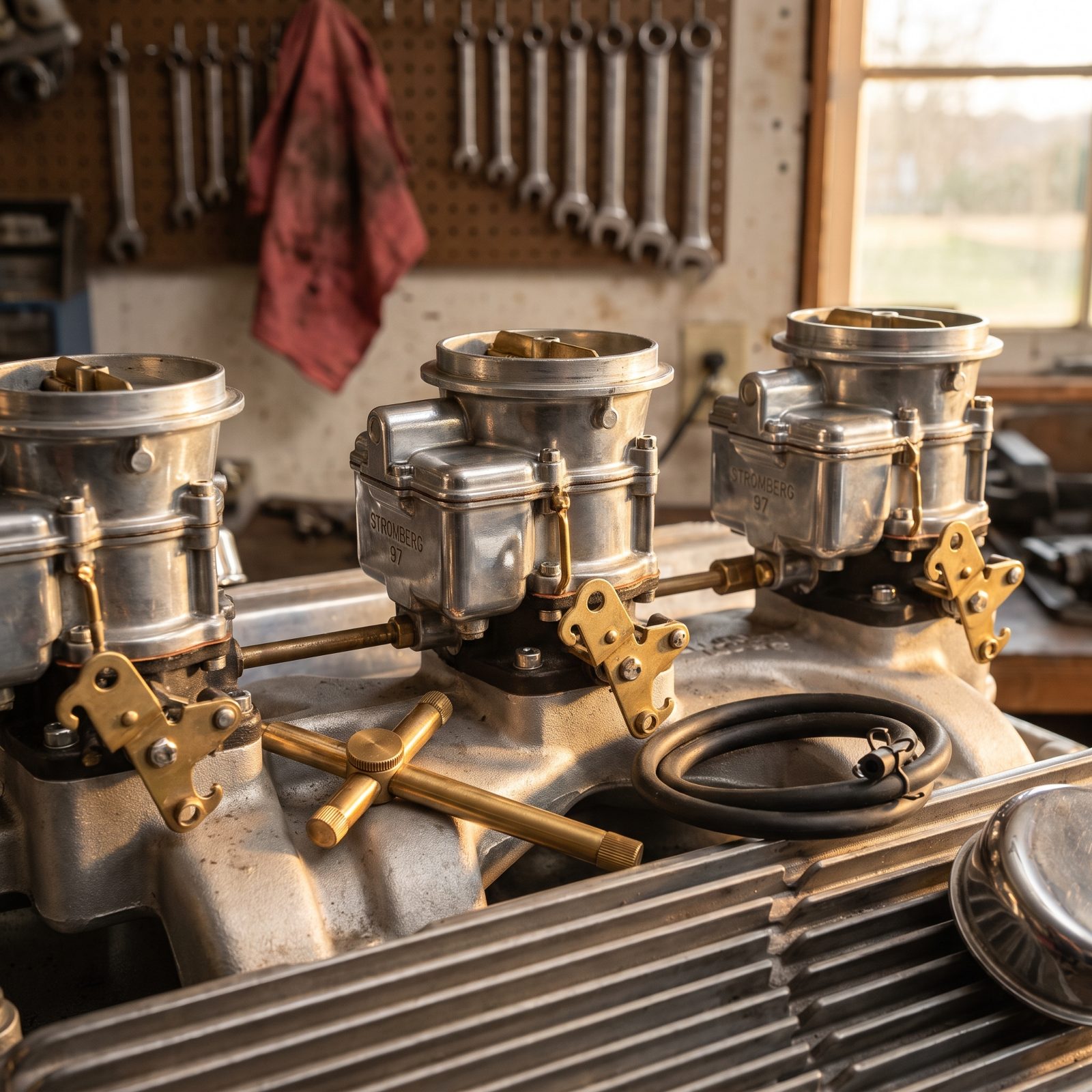
Three carbs feeding one engine sounds like more power, and it is — right up until they fight each other.
Getting a row of Stromberg 97s to pull together took patience most people didn’t have. Too much fuel and it loaded up and stumbled; too little and it ran lean and hot. You’d crack each throttle, listen, adjust, listen again, working down the line until they breathed as one.
Get it right and the engine came alive at every rpm. Get it wrong and you fought a flat spot the whole quarter mile.
Tuning an Engine by Reading the Spark Plugs
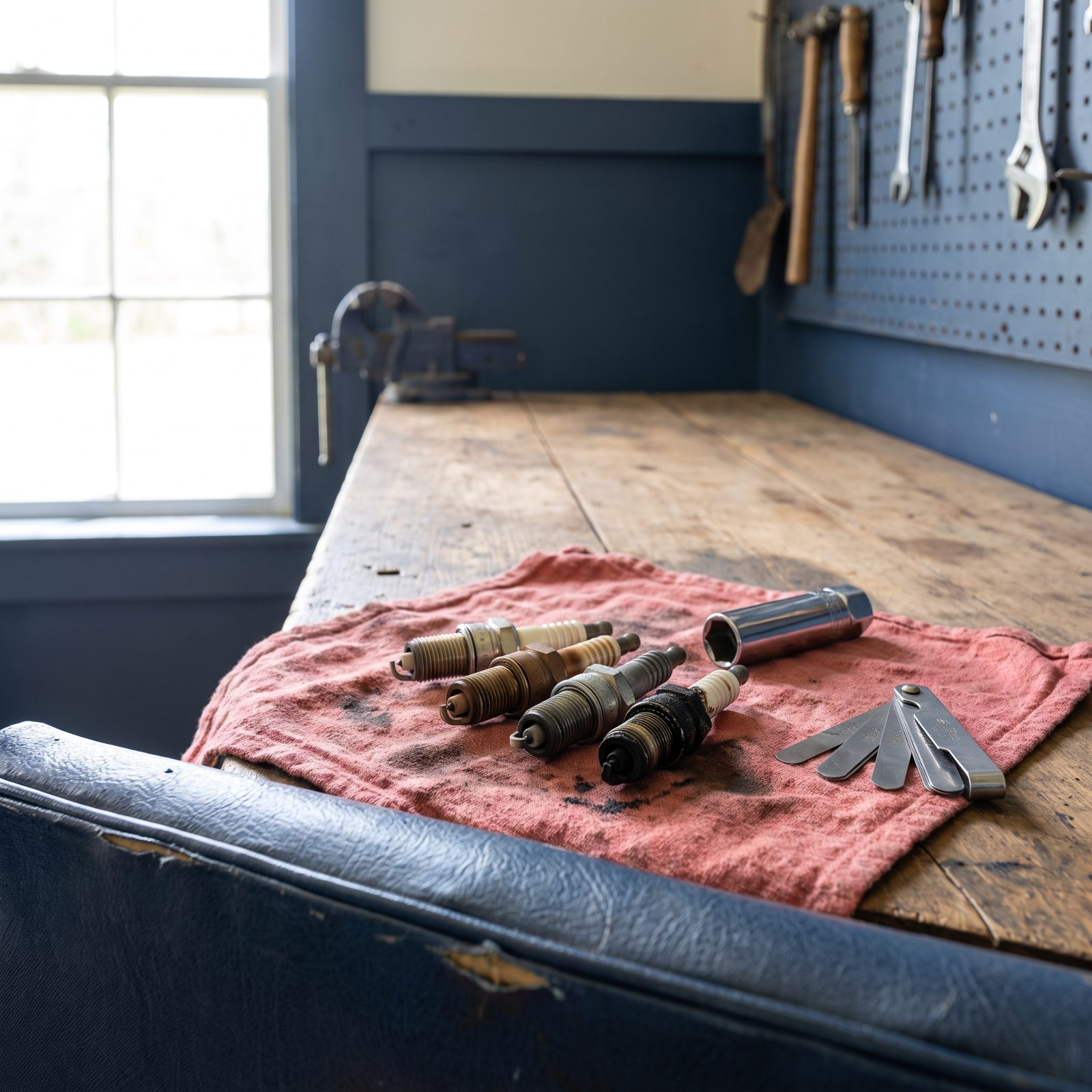
Pull the plugs after a hard run and lay them out. The porcelain told you everything. Light tan meant the mixture was right, chalky white meant lean — and lean would burn a piston — while black and sooty meant too much fuel.
This was diagnostics before diagnostics existed, and your eyes were the sensor. A good tuner could look at four plugs and know exactly which carb to touch and which way to turn the screw.
Adjusting Ignition Timing by Ear
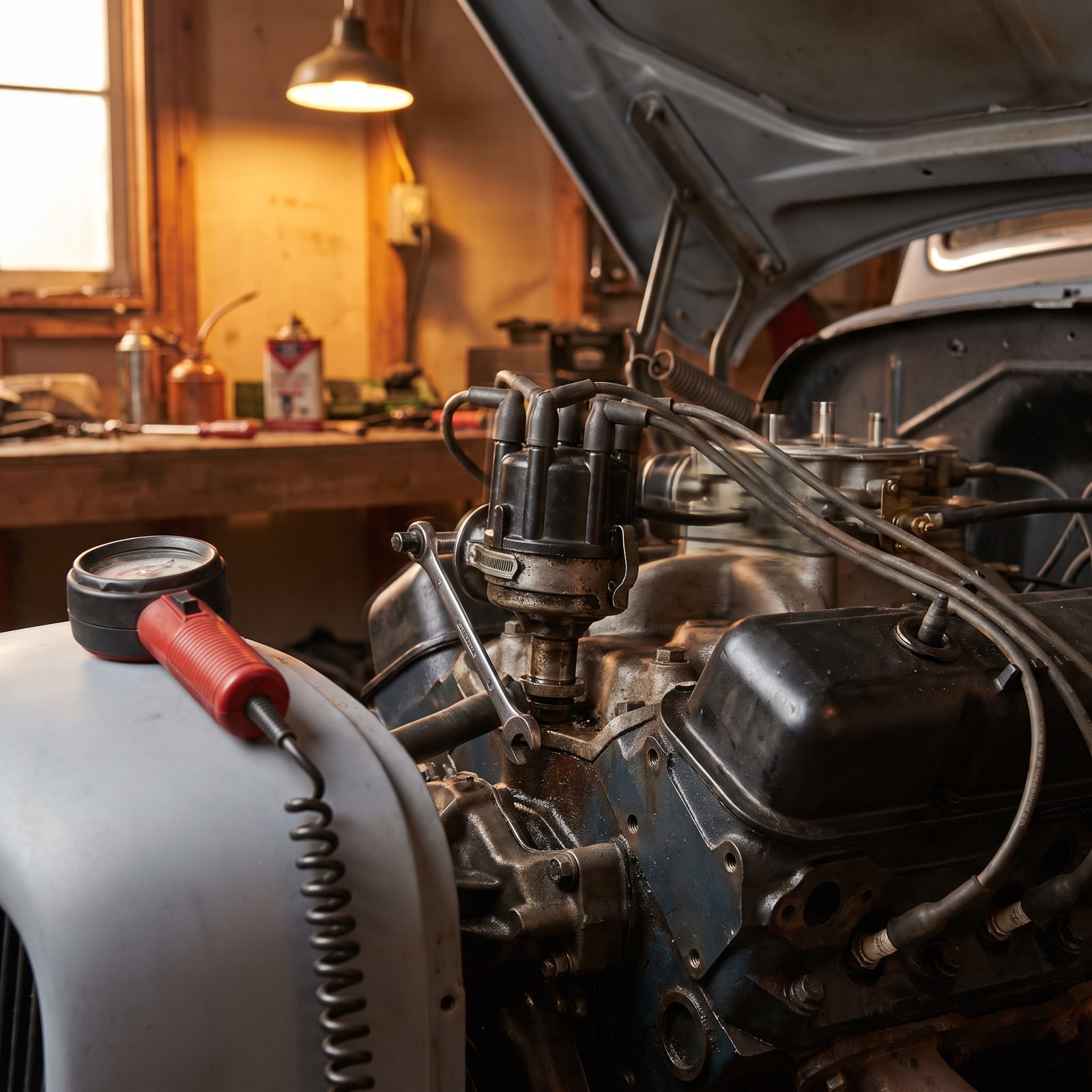
Loosen the distributor clamp with the engine running and turn it a hair at a time.
Advance it and the idle sharpened, the engine keening higher. Go too far and it rattled with pinging under load, that tinny knock that told you to back off before something broke. You learned the sweet spot by sound, not by numbers.
A timing light made it precise. But plenty of old hands never reached for one. They just listened, and their ears were rarely wrong.
The engine tells you when it’s happy. You just have to know how to listen.
Coaxing a Cold Engine Awake With a Manual Choke and Separate Starter Button
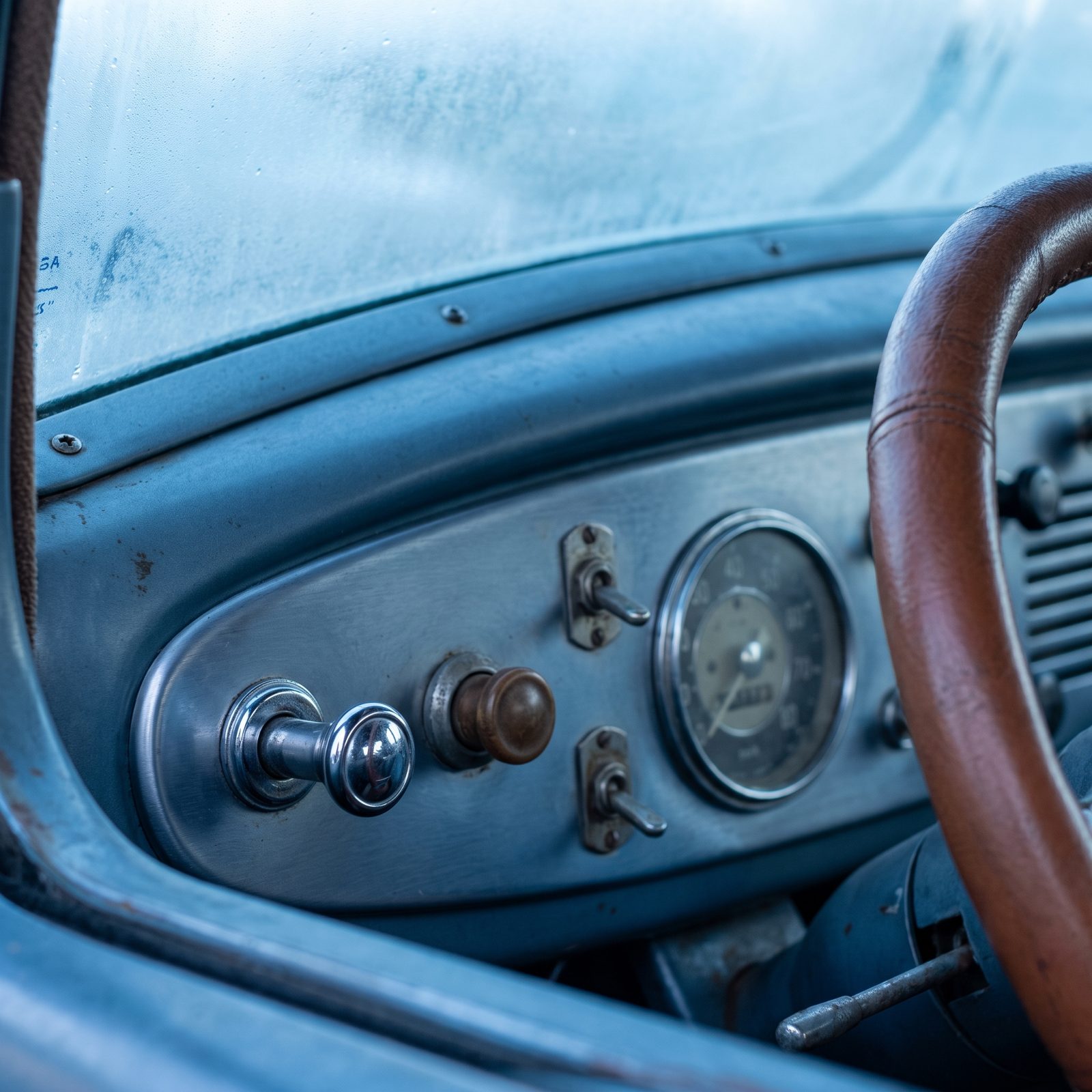
Cold mornings had a ritual. Pull the choke out to richen the mixture, pump the pedal once, then press the starter button — a separate thing from the key — and hold your breath while the engine cranked slow on six volts.
It caught, coughed, nearly died. You feathered the choke back in as it warmed, chasing the fast idle down to a steady tick. Rush it and it stalled. Get it right and the whole neighborhood heard you drive off.
Watching a Six-Volt Generator Struggle at Idle
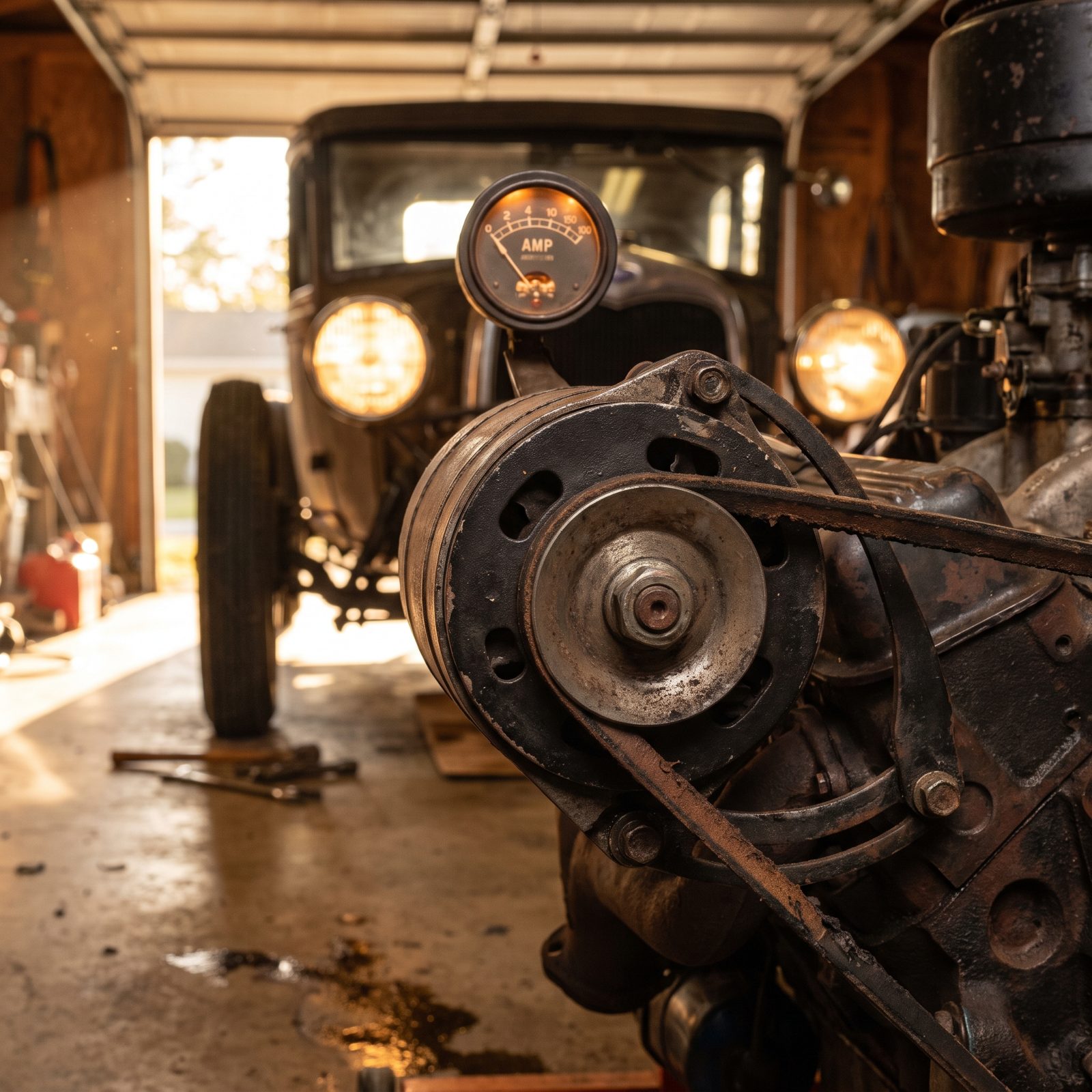
Six-volt systems ran everything on a thin margin, and at idle the generator barely kept up. Sit at a stoplight with the headlights on and you’d watch the charge gauge sag toward discharge, the lights dimming to a tired yellow.
Rev it and they brightened again. The whole system was telling you it wanted rpm. Nighttime driving became a constant small negotiation between your battery and your right foot.
Tracing Faults Through Cloth-Covered Wiring
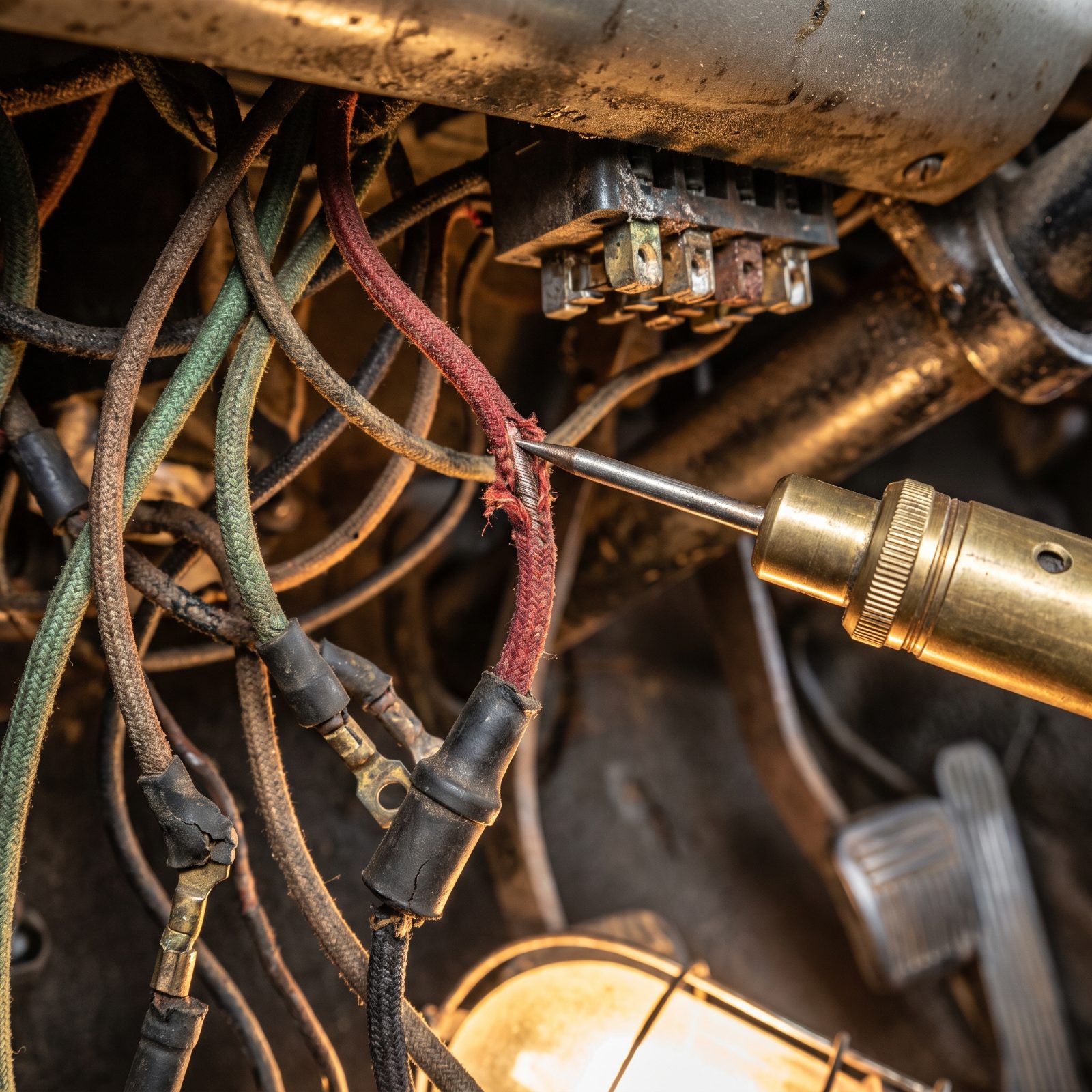
Cloth-covered wiring looked handsome and hid its sins.
The fabric insulation cracked with age, and a bare spot could ground out anywhere, killing your lights or your spark with no warning. Finding the fault meant working backward with a test light, probing every connection, chasing a color code that had faded to guesswork.
You learned patience under that dash. Half-lying across the seat, work light in your teeth, following one wire until it told you where it had gone wrong.
Running a Mechanical Fuel Pump With a Glass Sediment Bowl
Would you like to save this?
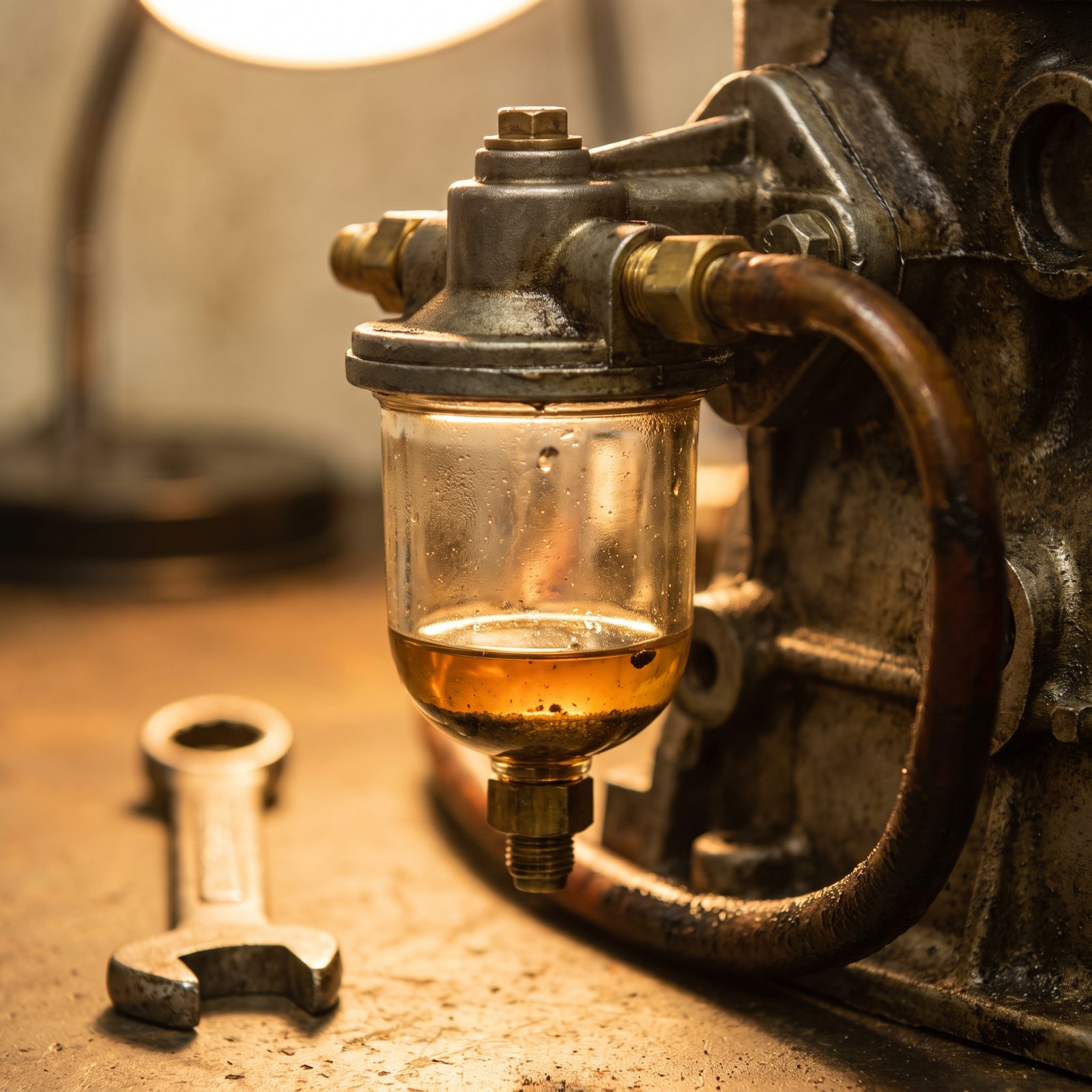
The glass bowl was practical and pretty at once. You could see your fuel sitting right there, amber in the glass, and you could see the trash it caught — grit and water settled at the bottom where it couldn’t reach the carbs.
Every so often you’d unscrew the bowl, dump the sludge, and screw it back on. A quick glance under the hood told you if fuel was flowing. No gauge required. Just a bowl of gasoline doing an honest day’s work.
Opening Exhaust Cutouts and Hearing the Bark of Uncorked Lake Pipes
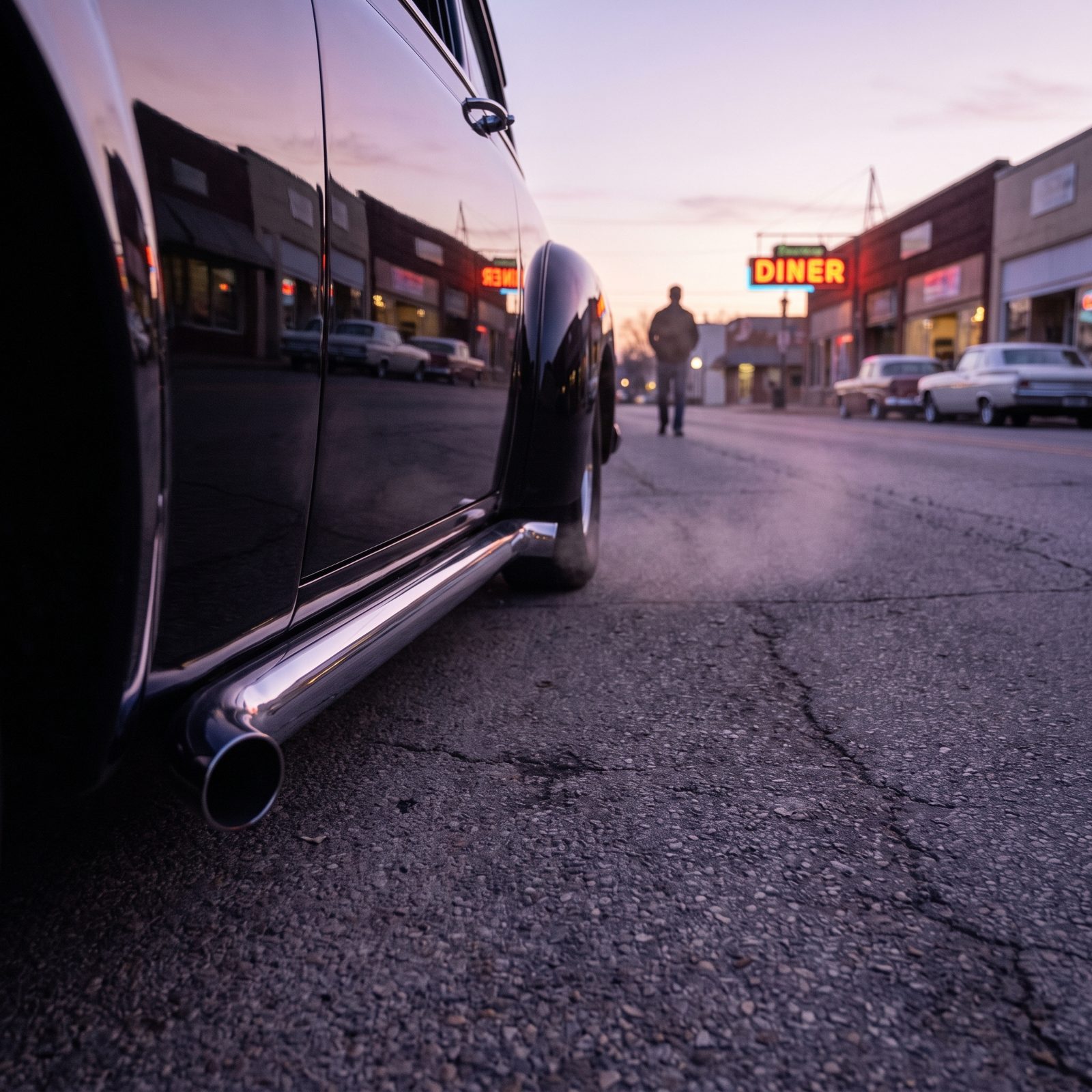
Lake pipes ran back from the headers with removable caps. Bolted on, the car was almost civil. Pull the plugs and the exhaust dumped straight out the side, raw and loud enough to rattle windows down the block.
You opened them for the strip and for cruising the main drag on a Saturday night. The bark off a hot cam through open pipes was why you built the thing in the first place — a signature nobody could mistake. Everybody within three blocks knew who was coming.
Chopping a Roof Without a Template
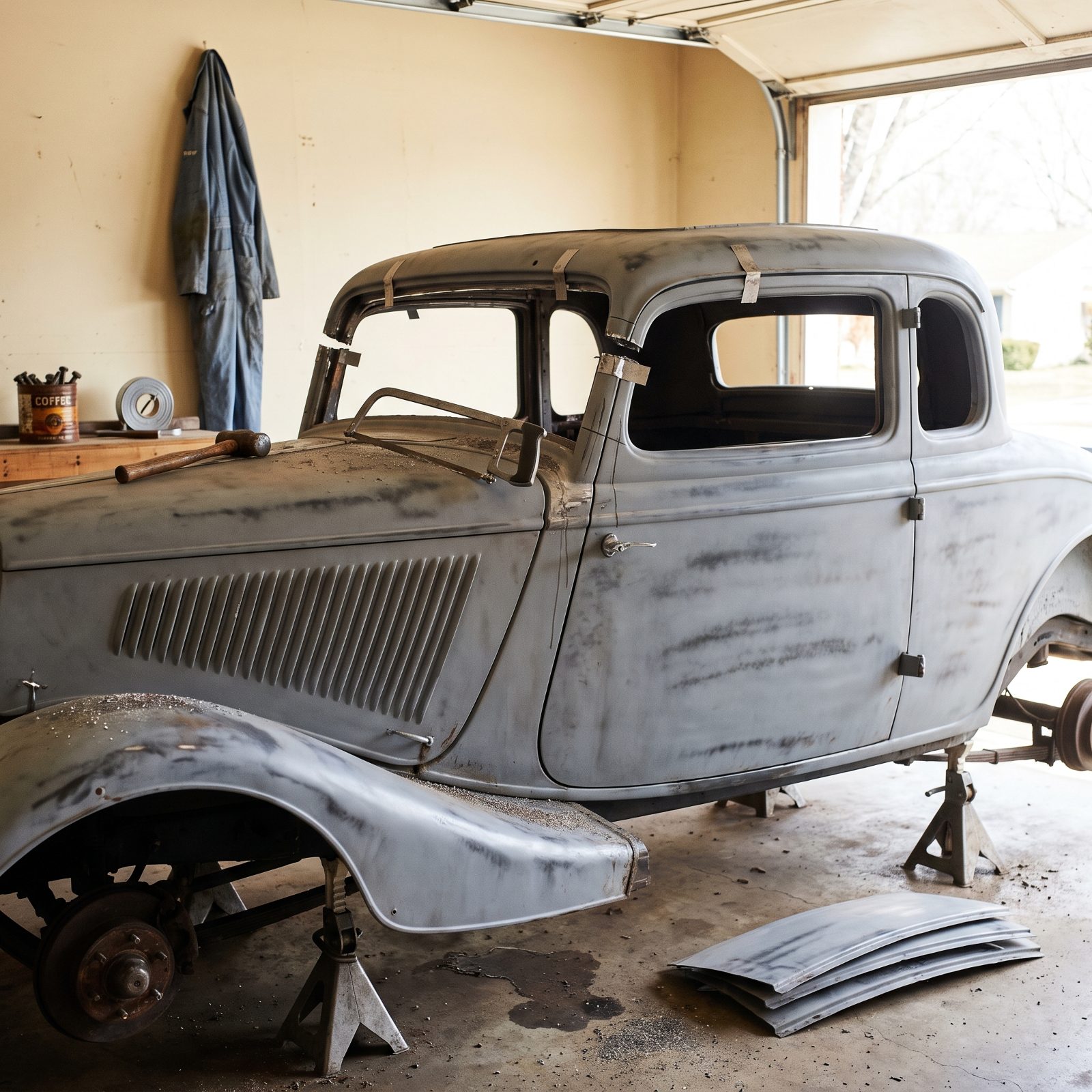
You marked the posts with a carpenter’s pencil, held your breath, and cut. No jig, no laser, no second body if you botched it. Chopping a top meant sawing through the windshield posts, the door frames, and the rear pillars, then wrestling the whole roof down two or three inches and figuring out how to make the metal meet again.
The slant was the tricky part. Drop a roof straight down and the windshield ends up too short and the whole thing leans wrong. So rodders learned to lean the posts, stretch the metal, weld in a filler strip. A lot of first chops looked like a helmet two sizes too small.
Channeling a Body Over Its Frame
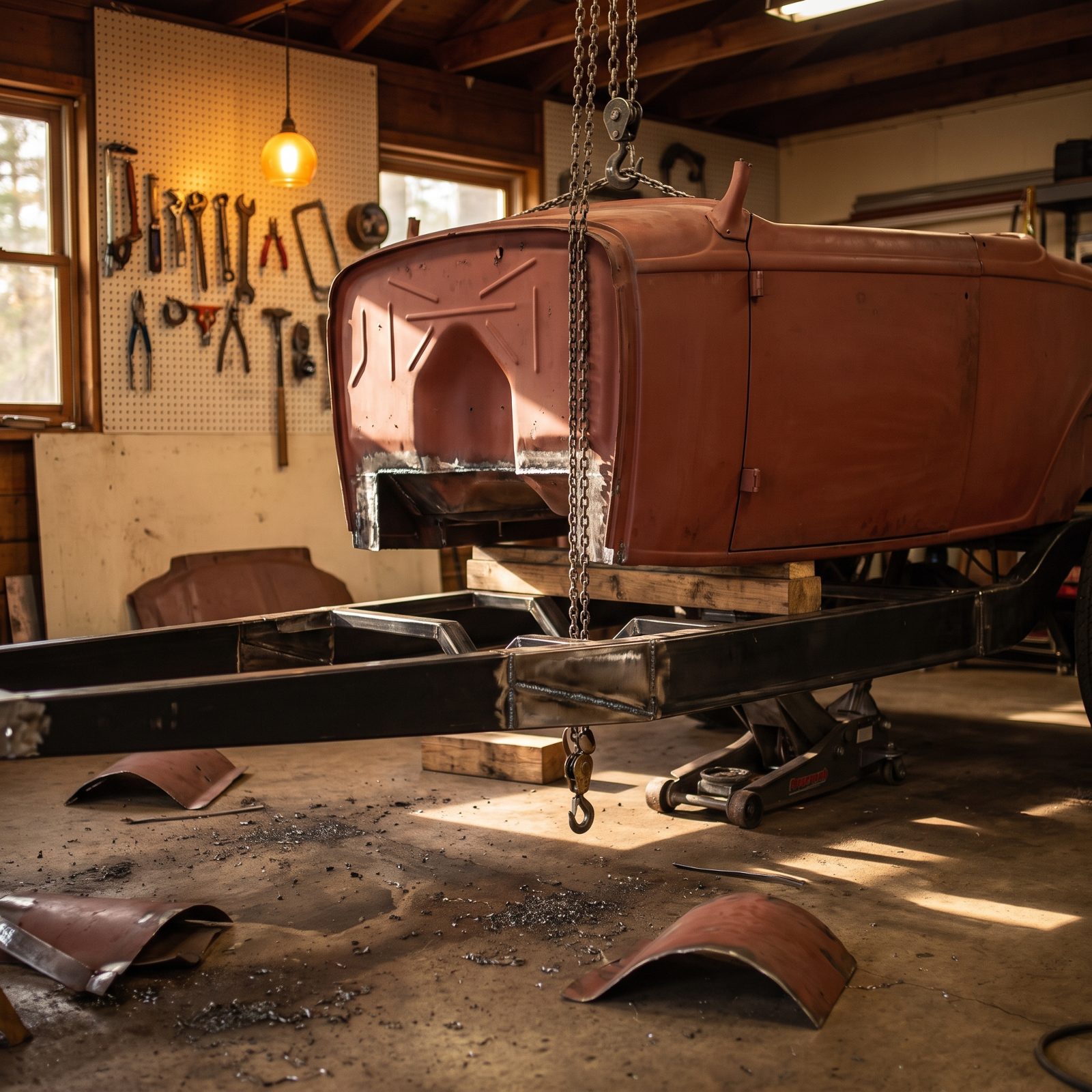
Channeling dropped the body down over the frame instead of sitting it on top, which slammed the whole car closer to the pavement without touching the suspension. You cut the floor out, notched it to clear the rails, and reset the body three or four inches lower.
The catch: you lost your floor. Your feet now sat below the frame, and rewelding a new pan meant hours flat on your back with a torch and a stack of cut sheet metal. Purists loved the mean, ground-hugging stance it gave a Deuce roadster. Anyone who ever cracked an elbow on the transmission tunnel had a different opinion.
Sectioning Sheet Metal With Hand Tools
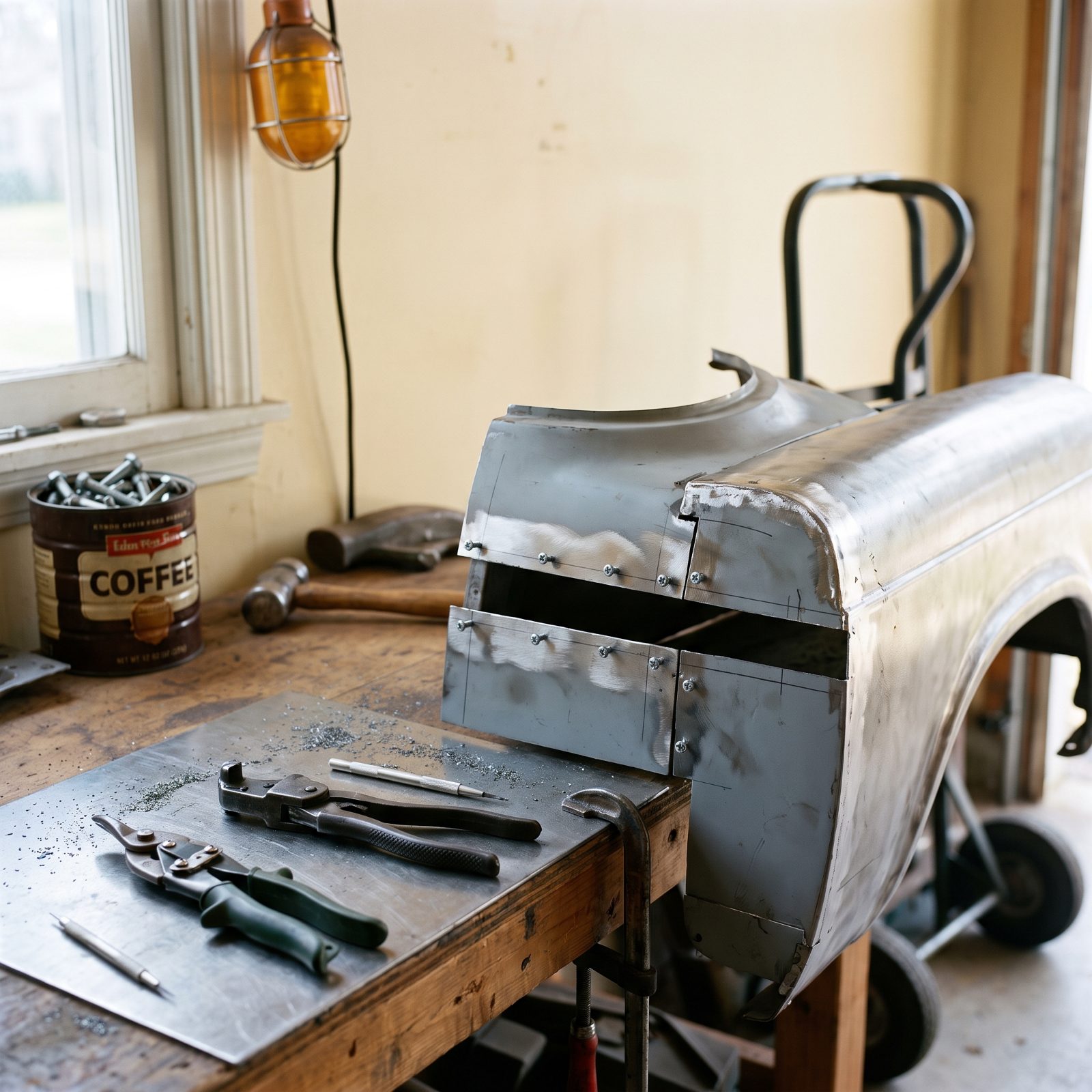
Sectioning meant slicing a horizontal band clean out of the body’s middle and lowering the top half onto the bottom, shrinking the car’s height without touching the roof or the frame. On a fat-fendered late-’40s coupe it was the difference between a lump and something lean.
Before power shears lived in every home shop, you did it with aviation snips and a hand nibbler, working an inch at a time and holding the halves together with self-tapping screws until you were ready to weld. Miss your cut line by a quarter inch across a door and the panel gaps told on you forever.
Gas-Welding Body Panels Before MIG Welders Were Common
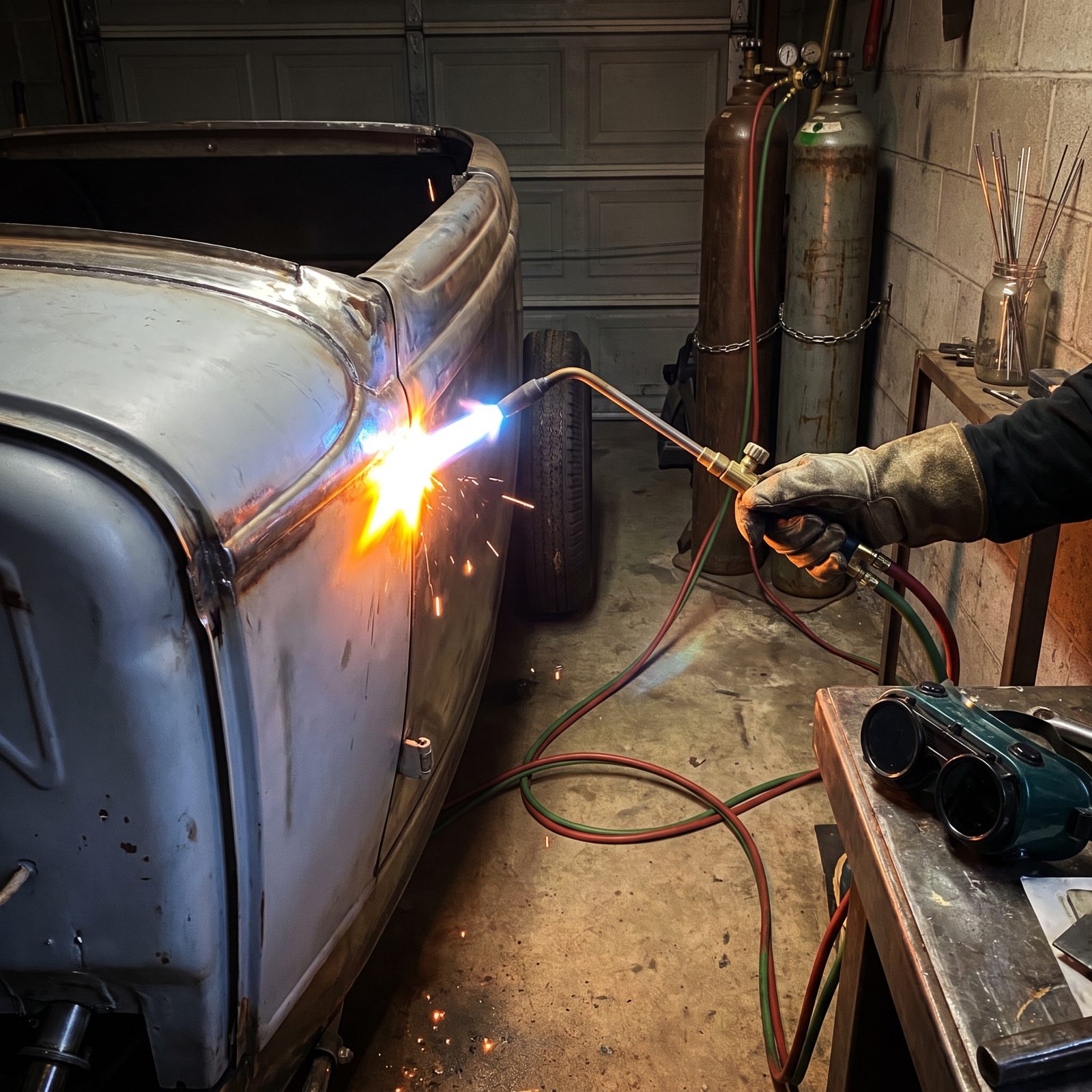
The torch hissed to life off a strike of the flint lighter, and the flame settled into a sharp blue cone you learned to read like a gauge. Too much oxygen and the metal spat. Too much acetylene and it went sooty. Gas welding sheet metal was a feel thing, and the feel took a summer to earn.
You fed filler rod into a glowing puddle no bigger than a dime, moving steady so the panel behind you didn’t warp into a potato chip. It ran hot and slow, which meant hammer-and-dolly work afterward to knock the ripples out. MIG welders would make all this look quaint decades later. In 1953 the torch was how bodywork got done.
Filling Body Seams With Molten Lead
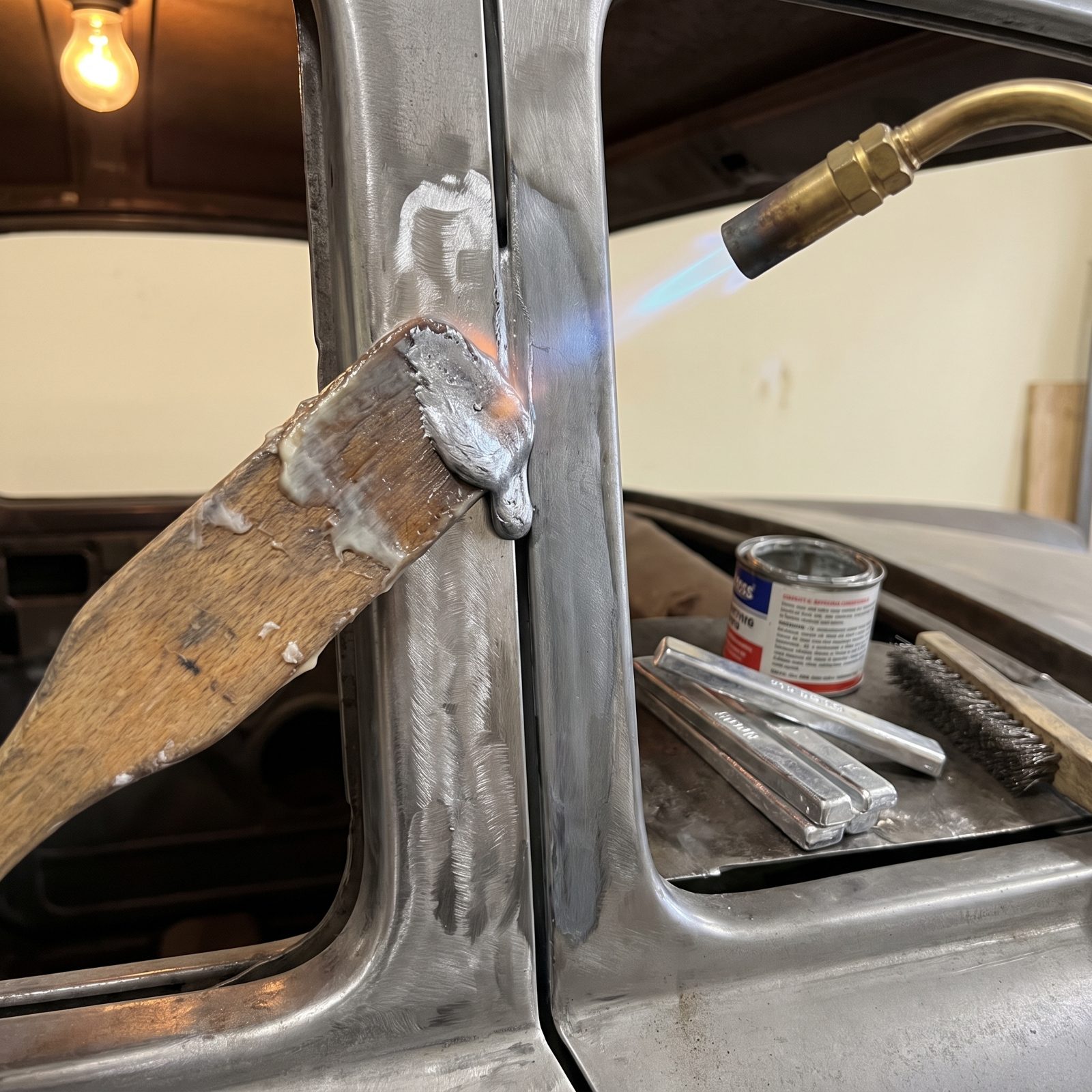
Before plastic body filler existed, you smoothed a chopped seam with lead. And yes, it went on molten. You tinned the bare steel, warmed a bar of body solder until it slumped, then spread it with a wooden paddle greased with tallow so it wouldn’t stick.
A leadsloth kept his metal warm and his paddle greasy, and never rushed a seam that would show under paint.
Fussy, hot, heavy. A well-leaded roof added real pounds to a car. Done right, though, it moved with the steel and didn’t crack when the body flexed at speed, which is more than the early plastic fillers could promise.
Z’ing a Frame to Drop the Car Lower
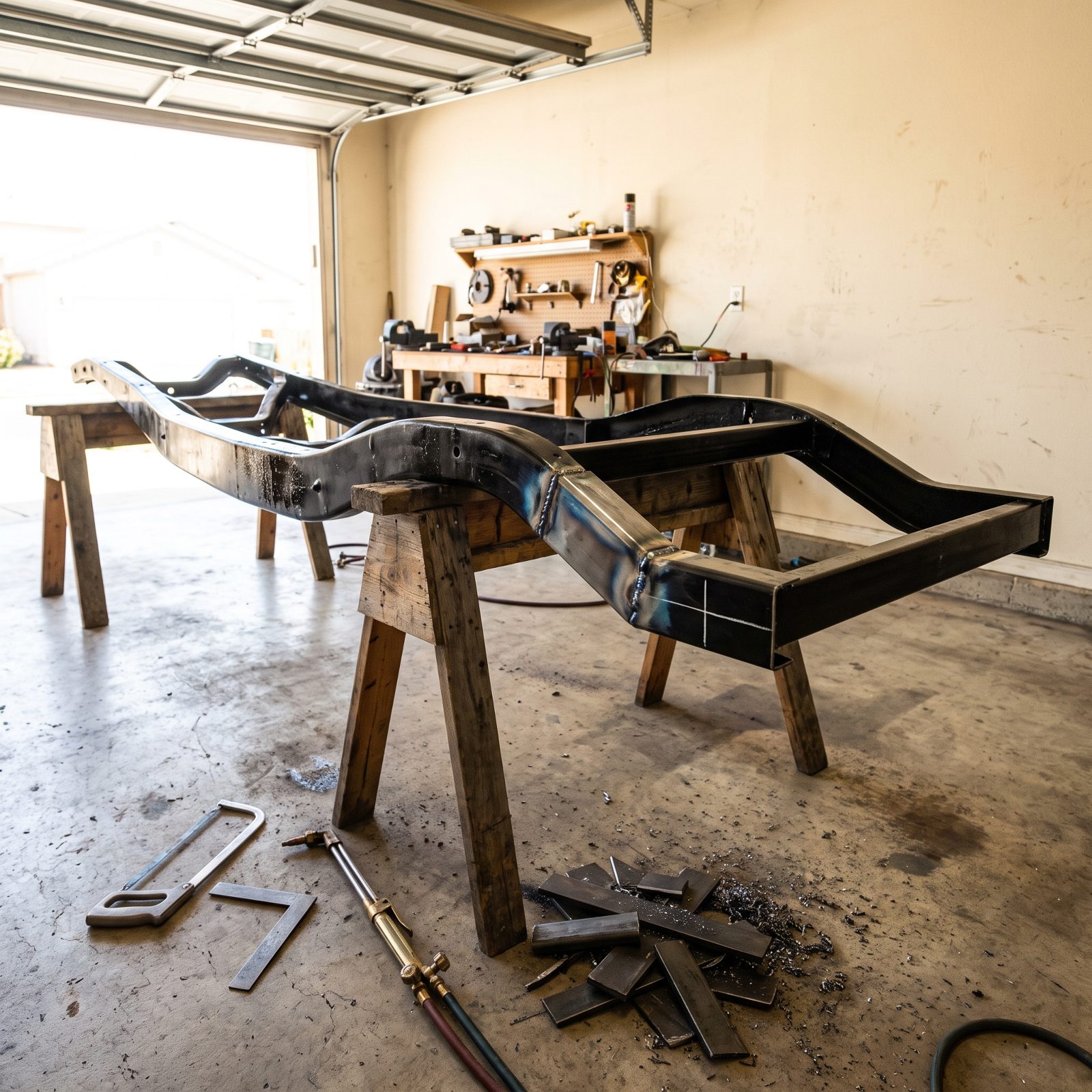
To slam a car’s tail to the ground without a channel job, you Z’d the frame. Cut each rail, step it up over the rear axle in a Z shape, then weld and box the joint so the whole back of the car drops several inches.
Get the offset wrong on one side and the car sat crooked. Measure twice, cut once, and box every weld, because a cracked frame rail at 90 on a bias-ply tire was nobody’s idea of a good afternoon. One of the cleaner ways to get a low stance, and it left your floor intact.
Heating and Dropping a Solid Front Axle
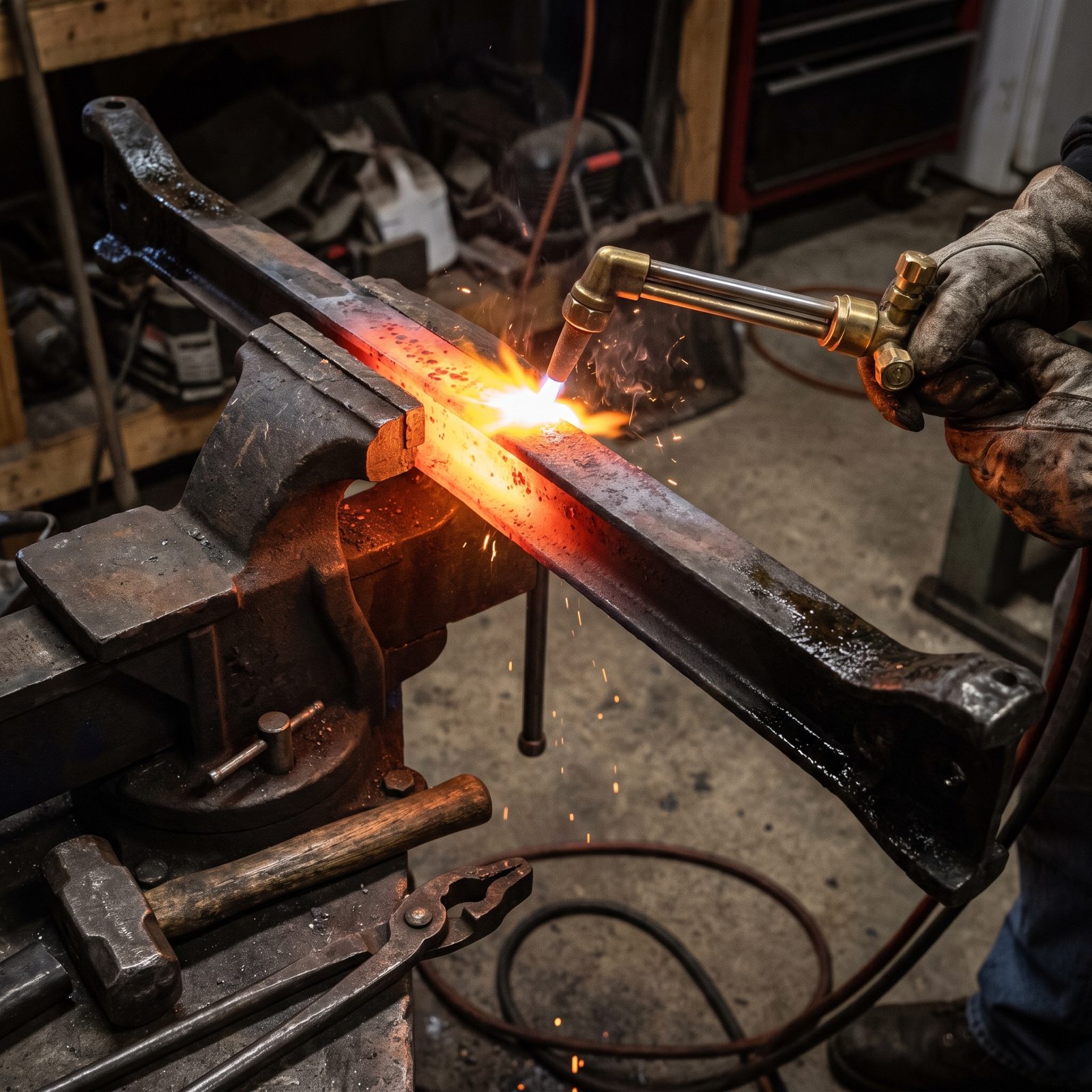
A dropped axle lowered the front end by moving the spring perches, and getting there meant heating a forged I-beam until it glowed cherry and reshaping the ends. Heat, hammer, nerve. You wanted the spindle bosses raised so the whole car rode two or three inches lower without cutting the springs.
Most rodders bought a professionally dropped axle if they could scrape the money together, because heating forged steel wrong could leave a weak spot you’d never see coming. The ones who did it at home worked slow, kept the heat even, and never forgot that the front axle holds up the part of the car doing the steering. No margin for showing off there.
Splitting Wishbones for Engine Clearance
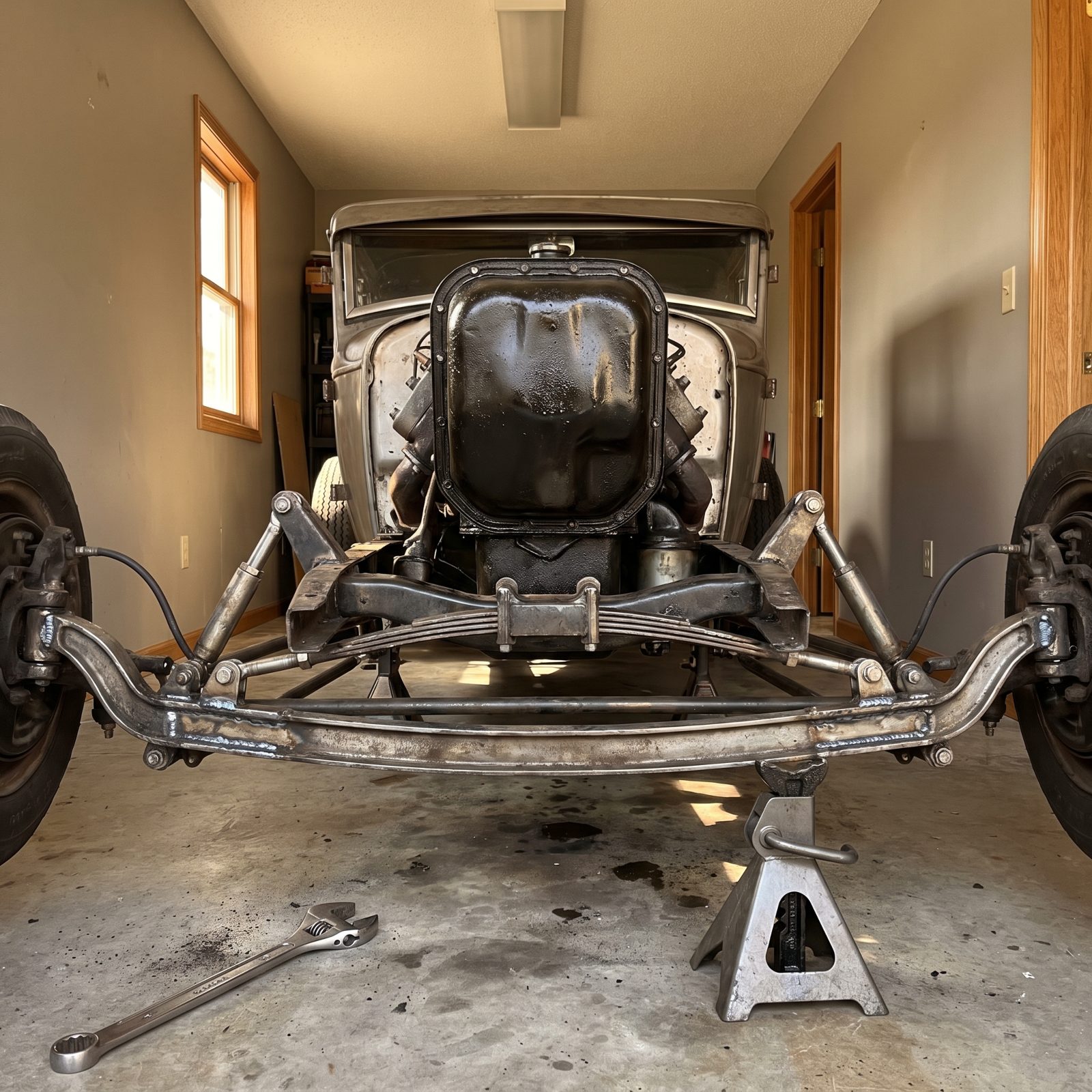
The stock Ford wishbone joined at a single point under the engine, right where a hot rodder wanted to hang a bigger oil pan or a swapped-in V8. So you split the wishbone, separating the two arms and running each out to its own mount on the frame rails.
It cleared the engine and let the front axle articulate better over rough ground. It also changed how the front end steered. You learned quick that a hot rod is a system, and moving one thing moves three others. That lesson usually arrived in a corner.
Converting Mechanical Brakes to Hydraulic “Juice” Brakes
Would you like to save this?
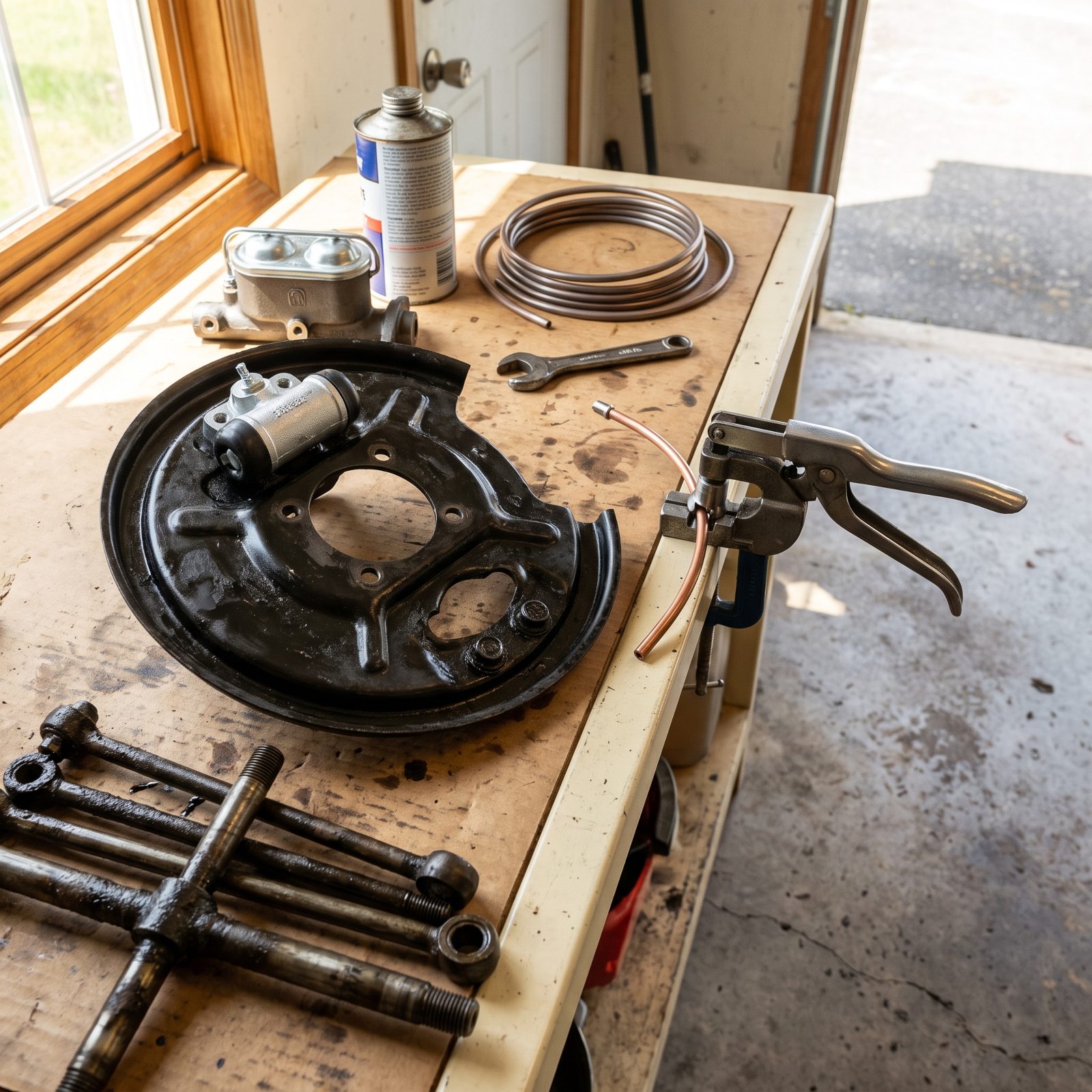
Ford ran mechanical brakes with rods and cross-shafts into the 1930s, and they worked about as well as you’d expect when you were trying to haul down a hopped-up flathead. Swapping to hydraulic “juice” brakes was the single smartest thing a rodder did all year.
You pulled the rod linkage, bolted on backing plates with wheel cylinders, plumbed a master cylinder, then flared and bled the lines by hand. Suddenly the pedal actually stopped the car instead of politely suggesting it. For a young guy driving fast on skinny tires, juice brakes weren’t a flourish. They were the reason he made it to next Saturday.
Driving Fast on Skinny Bias-Ply Tires
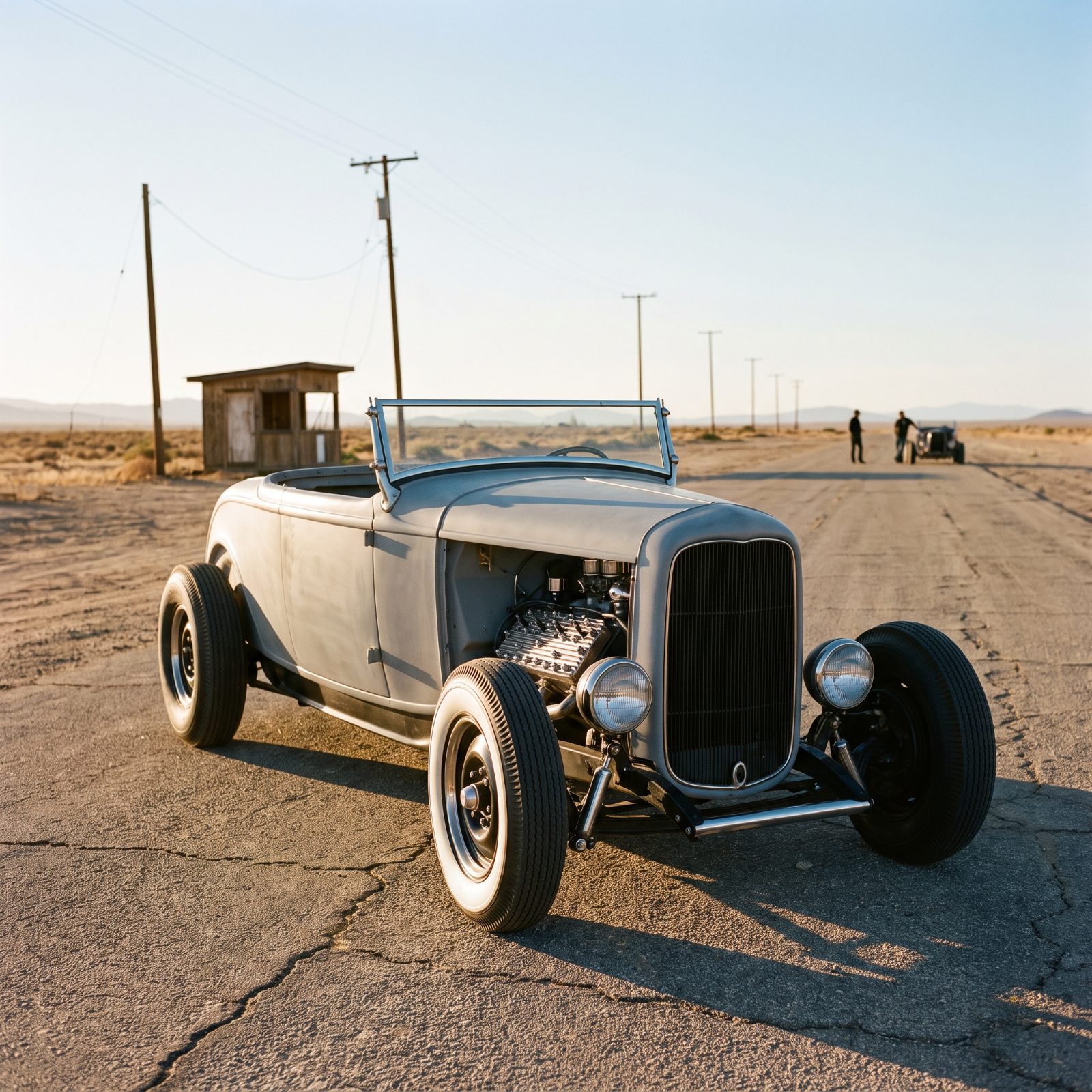
Those tall, skinny bias-ply tires looked right and drove terrifying. Narrow tread, tube-type construction, a sidewall that squirmed in a hard corner. In the rain they hydroplaned, and on a fast sweeper they’d let go all at once instead of warning you first.
You learned to feel the front end walking across pavement ridges and to respect what a wet road did to your stopping distance. No traction to spare and no computer to save you, just your hands, the seat of your pants, and however much sense you’d managed to collect by then.
Every skill on this whole list came home right here, on four narrow contact patches at speed. You built the car with your hands, and then you found out what you’d built. That was the deal, and nobody who lived it would trade a minute of it.
Mounting Pie-Crust Racing Slicks on a Backyard Rim
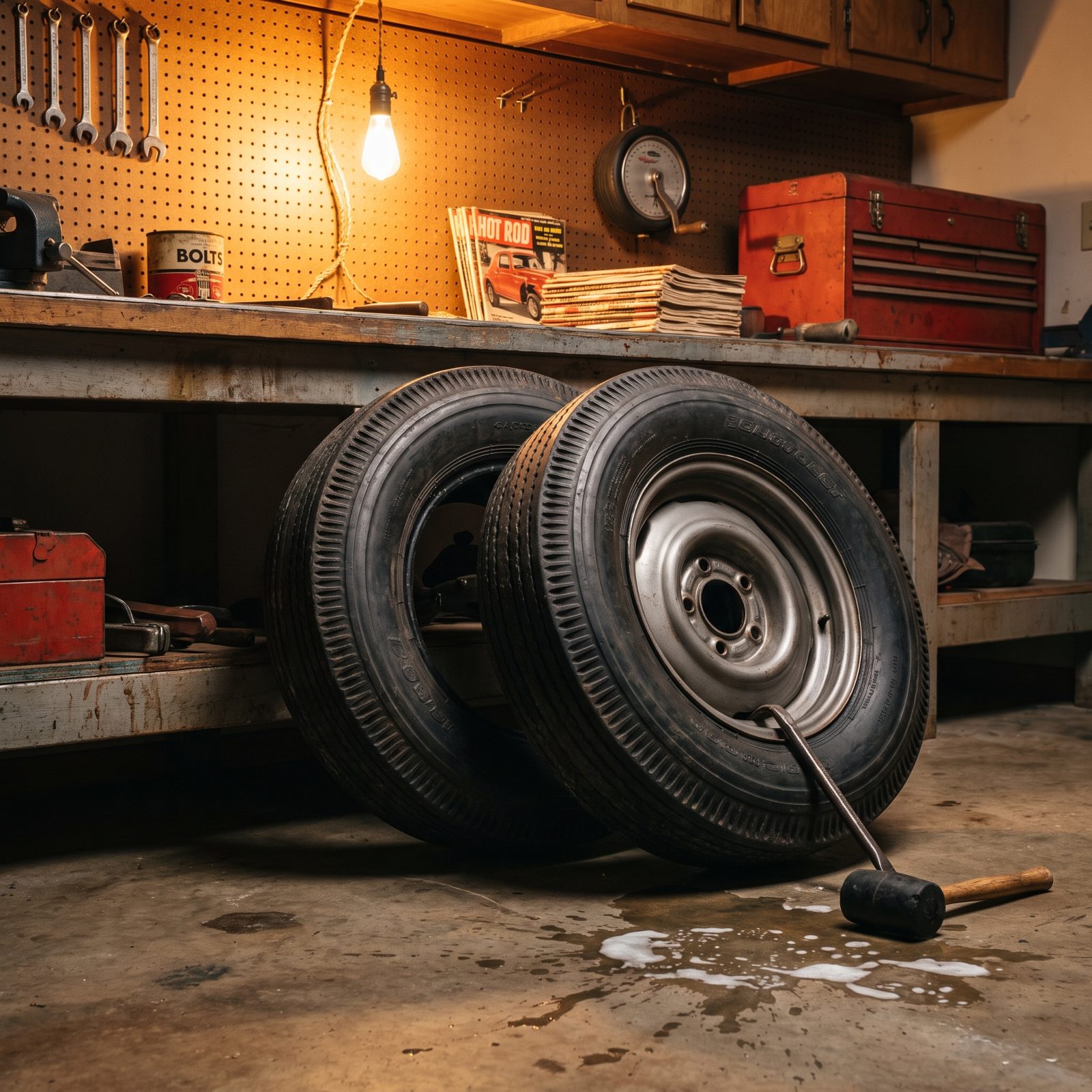
You could tell a serious car from a poser by the sidewalls. Pie-crust slicks had that scalloped, crimped edge that looked like somebody ran a fork around a pie before baking it, and they gripped hard at the strip while riding like a wooden wagon everywhere else.
Mounting them at home meant soap, a tire iron, a rubber mallet, and a few words you wouldn’t say in front of your mother. No machine seated that bead for you. You wrestled it, you cussed it, you got it, then you bounced the car down the driveway to check for a wobble.
Running Spindle-Mount Front Wheels With No Brakes at All
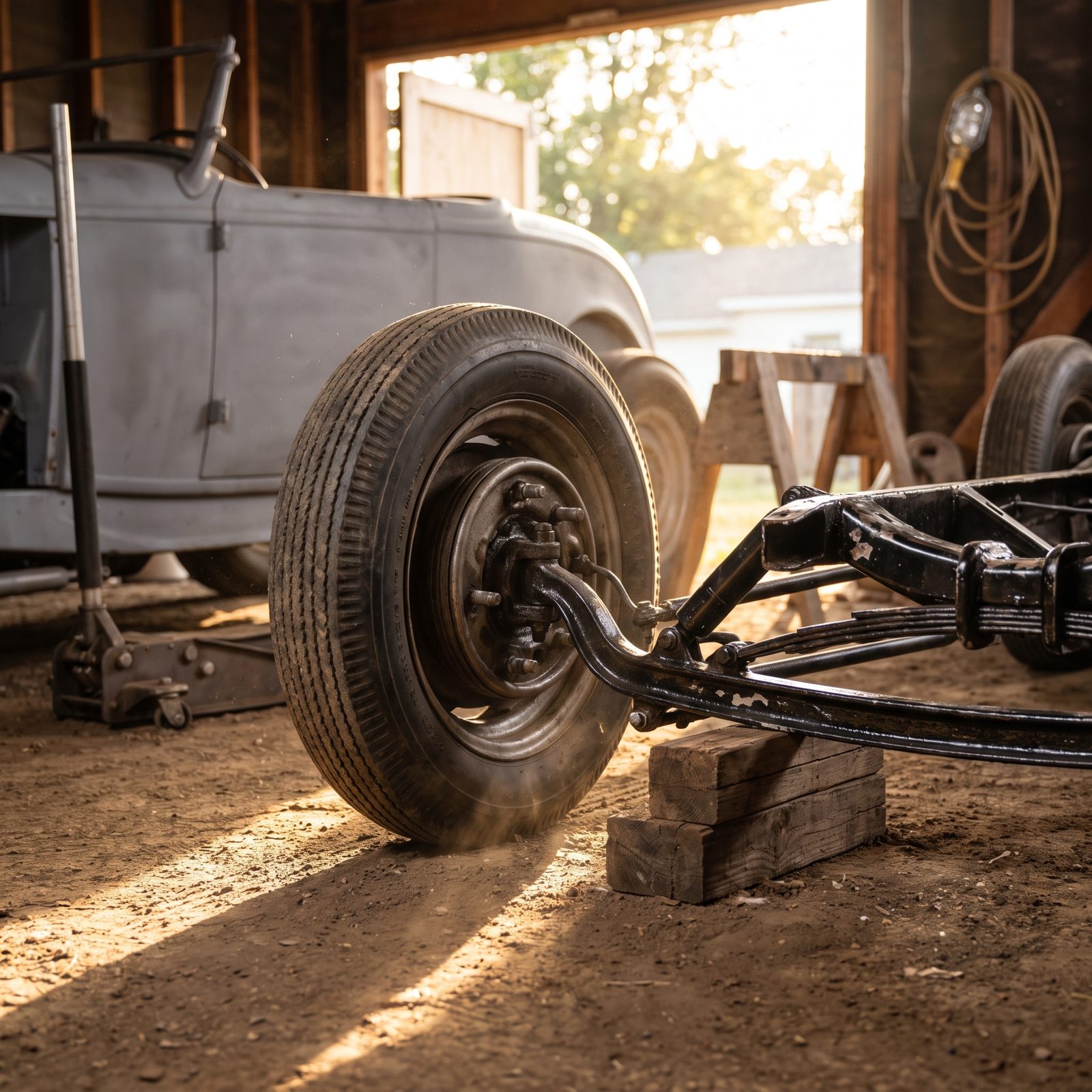
Some of these cars ran no front brakes. On purpose. The thinking went that a light front end stopped fine on the rears alone, and every part you deleted was weight you didn’t have to haul down the strip.
Was it smart on a public road? Not a chance. But it was the era’s whole logic in one decision — fewer parts, less weight, more nerve. You stopped with what you had and you planned your stops early.
Choosing Steel Wheels and Hunting Down the Right Dog-Dish Hubcaps
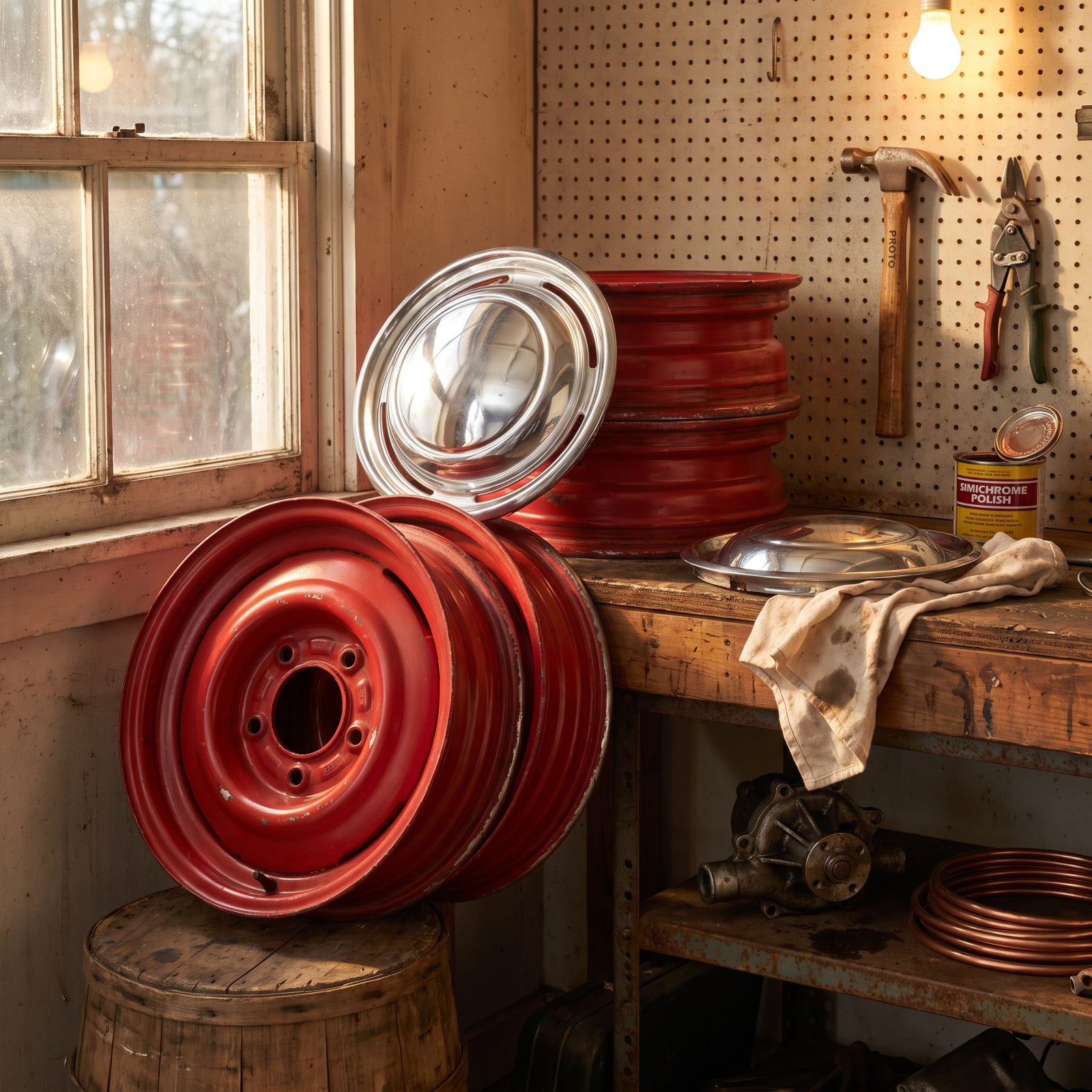
The wheel was a statement made in restraint. Plain steel, painted body color, capped with a small chrome dog-dish that covered the lug nuts and nothing else. No wire spokes, no flash — the look said the money went into the engine, where it belonged.
Finding a matched set of caps was the hard part. You worked the junkyards, checked the swap meet, and traded a buddy for the one you were missing. A mismatched cap on a nice car was a splinter you couldn’t stop noticing.
Pulling the Fenders for That Bare Competition Look
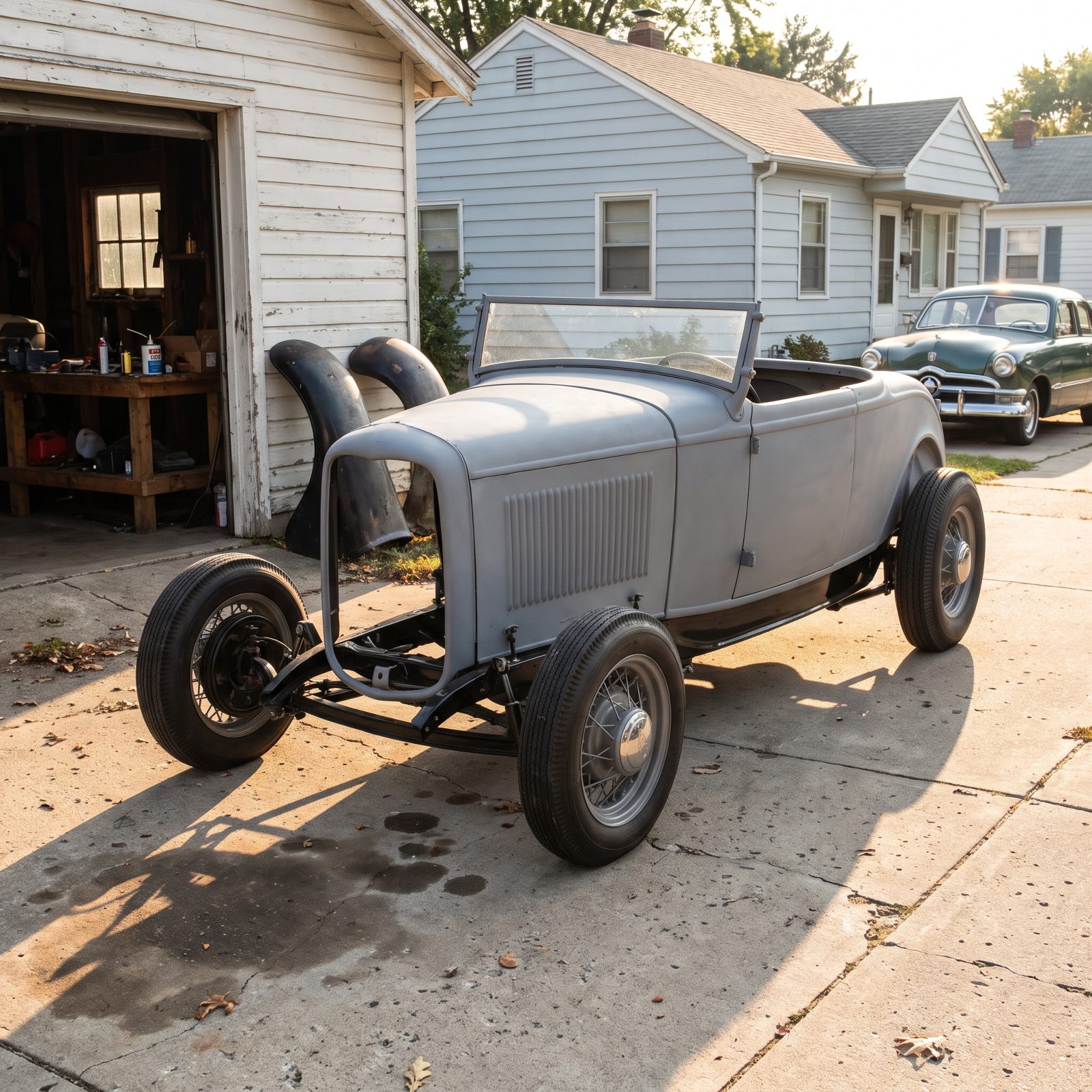
Off came the fenders, and the whole car changed character. Suddenly you could see the tire, the axle, the way the front end sat. The car looked stripped for a fight, because it was.
The fenders themselves ended up leaning against the garage wall for a decade, gathering dust, promised to a future that usually never came. Nobody bolted them back on. That was the point.
Hammering Louvers Into the Hood to Let the Heat Out
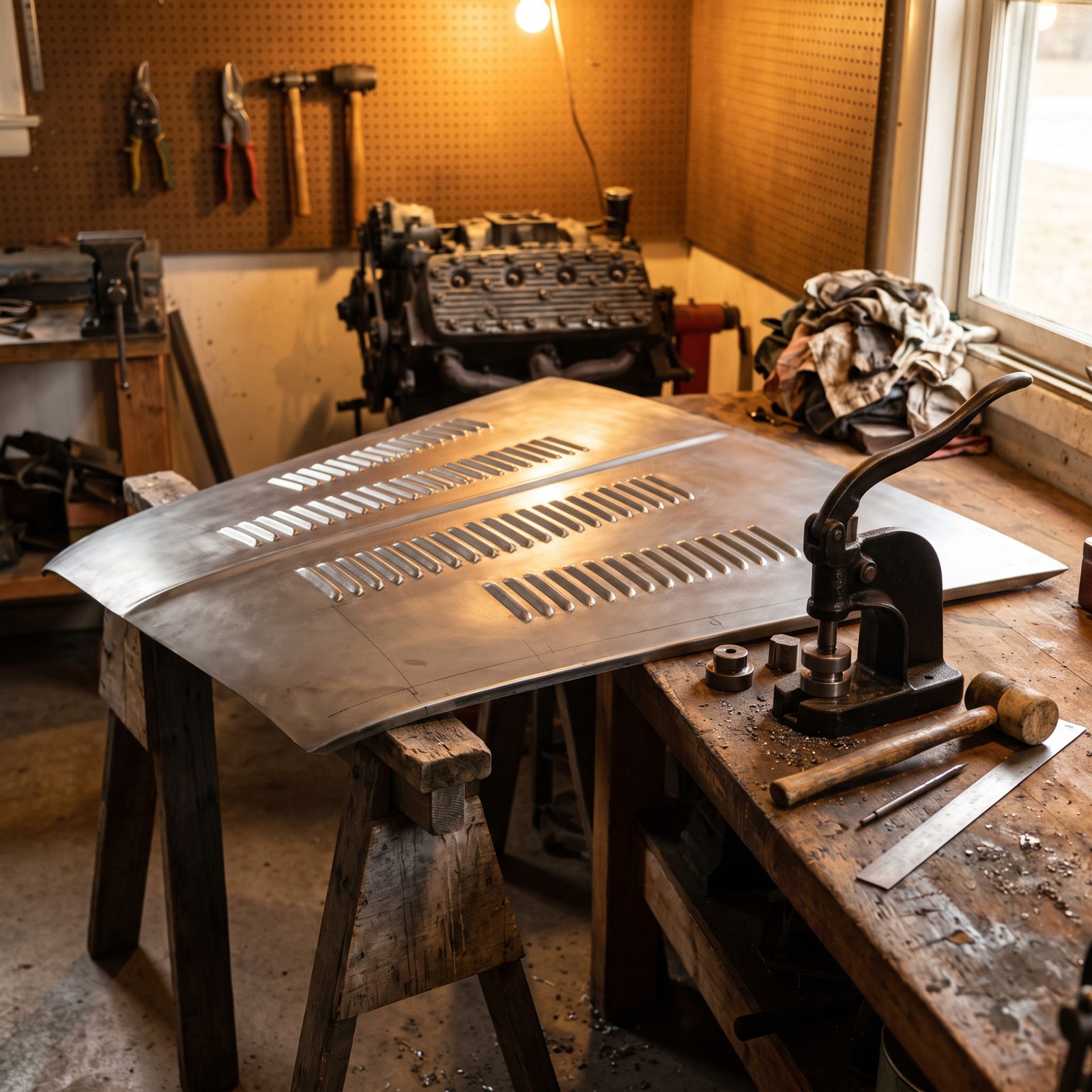
A flathead cooking under a closed hood needed somewhere for the heat to go. So you punched louvers, row after row of little raised slots, each one stamped with a press and a die and a good hard pull on the handle.
Get the layout crooked and it showed forever. Every louver had to line up with the last, spacing even, rows dead parallel. Guys spent whole Saturdays with a straightedge and a pencil before a single slot got punched.
It cooled the engine, sure. It also looked fast standing still, which mattered more than anyone admitted.
Making a Deuce Grille Shell Fit a Car It Was Never Meant For
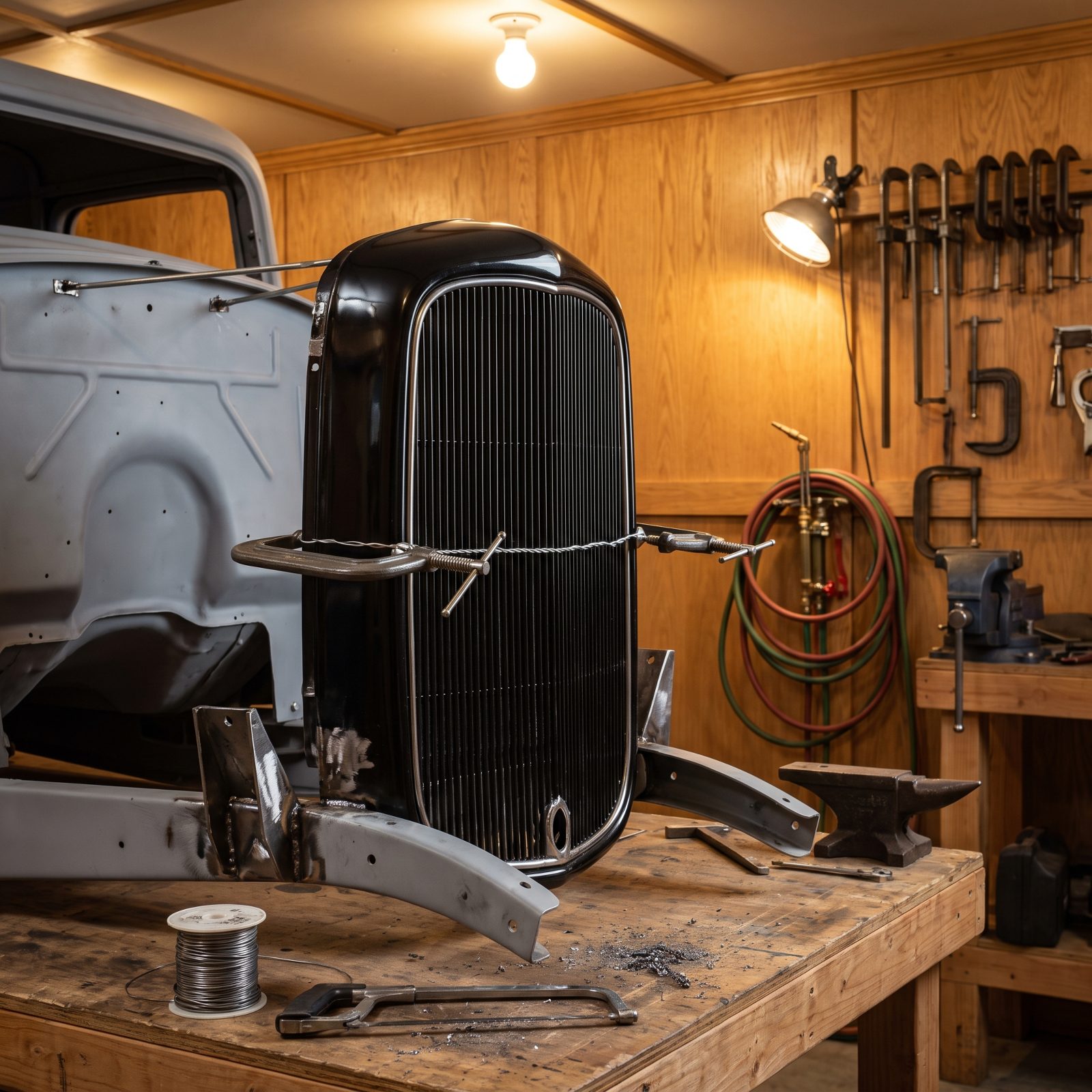
The 1932 Ford grille shell was the face everybody wanted. That tapered peak, that vertical elegance. Problem was, half the guys wanting it were building on something that never came with one.
So you made it fit. Clamps, bailing wire, cardboard templates, and a torch. You cut brackets from scrap and welded them where the geometry begged for it, test-fitting a dozen times before anything got tacked for good.
Dropping Into a War-Surplus Bomber Seat
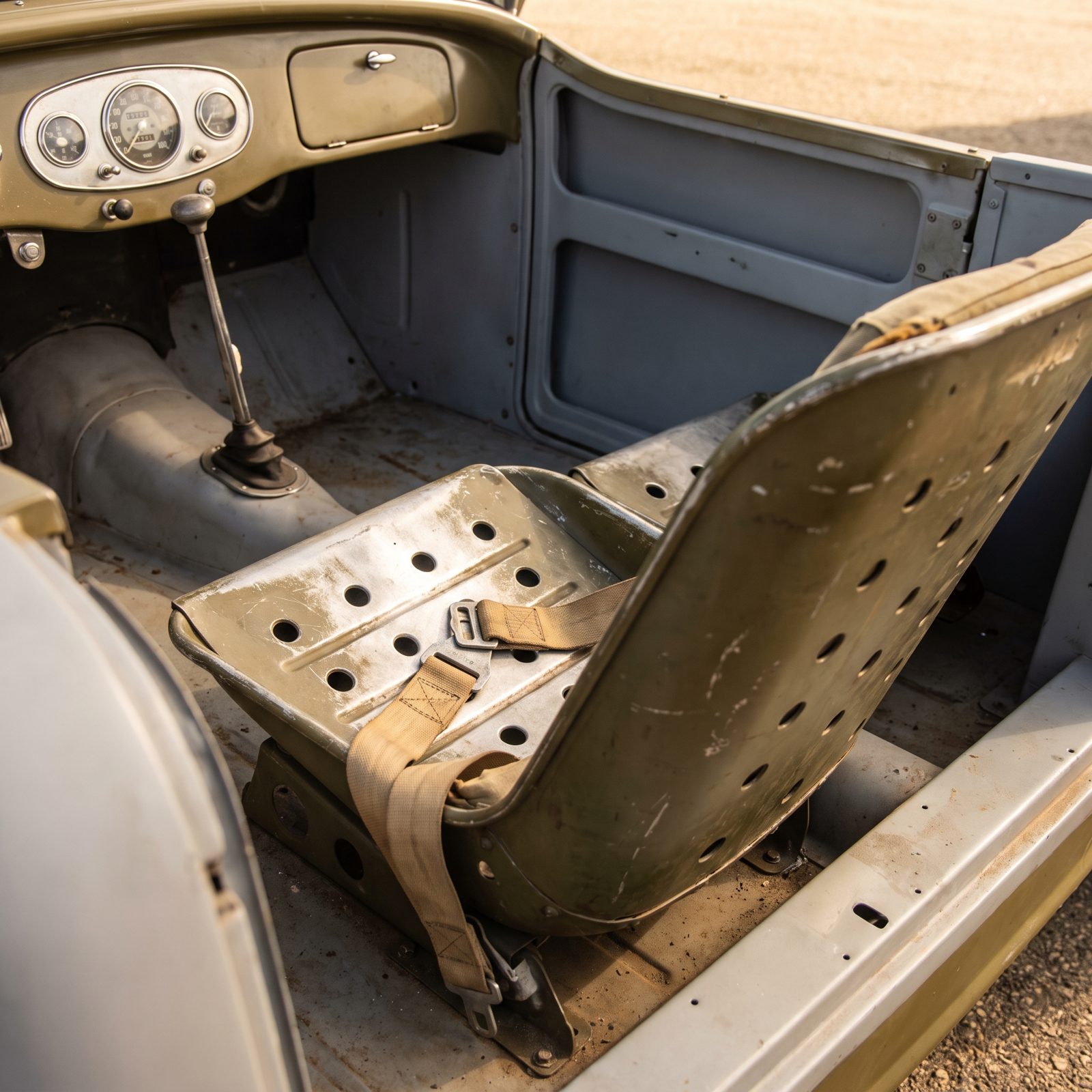
Army-Navy surplus stores were full of the war’s leftovers, and a bomber seat cost next to nothing. Aluminum, bucket-shaped, drilled full of lightening holes, bolted straight to the floor of your roadster.
Comfort wasn’t the pitch. That thin flat cushion did little against a rough road, and the aluminum got cold in winter and hot in summer. But it was light, it was cheap, and it looked like it belonged in something fast.
Paying the Upholsterer for a Proper Tuck-and-Roll
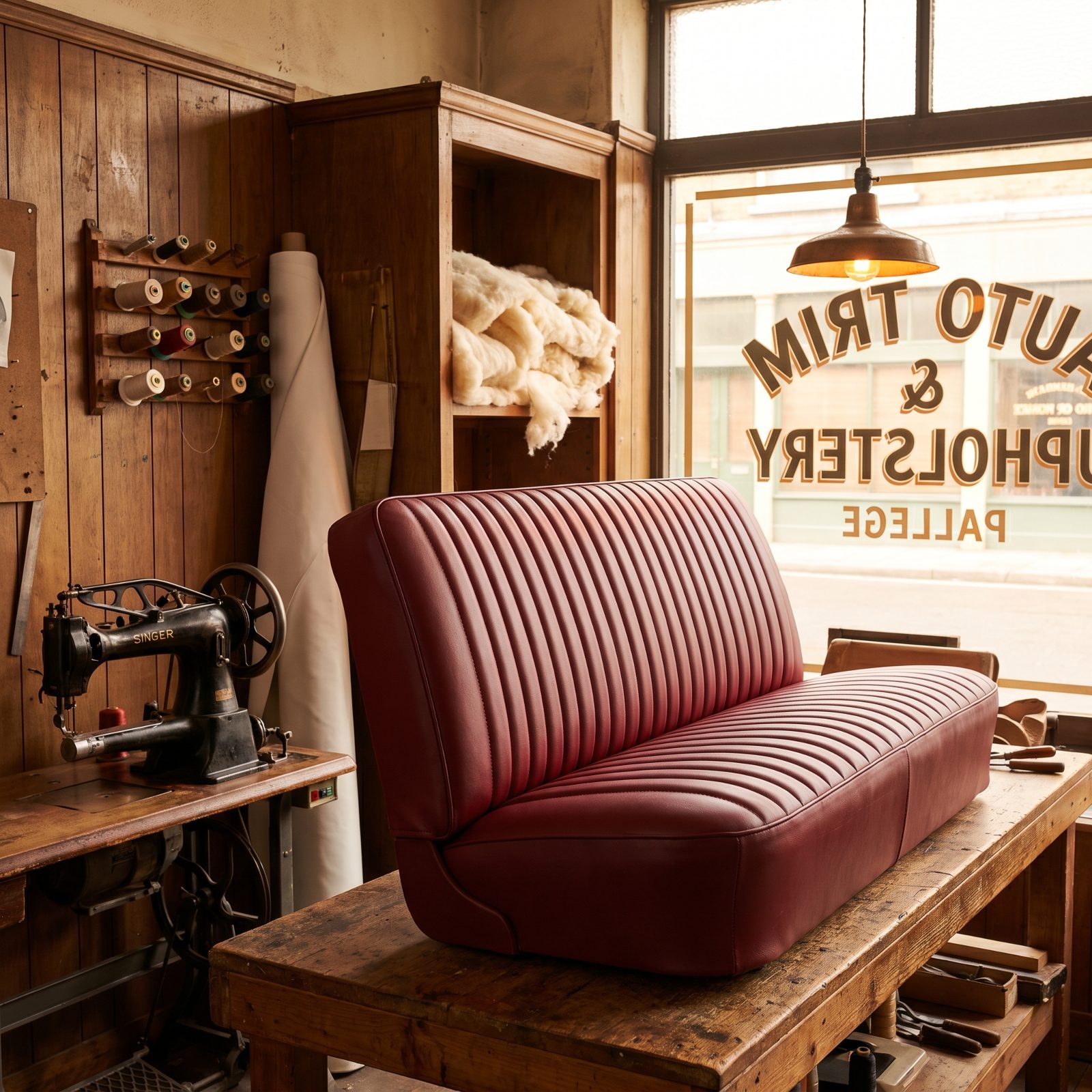
This was the one job most guys handed off. You could weld and wrench and hammer louvers all day, but a proper tuck-and-roll took a sewing machine, a bolt of vinyl, and a trimmer who’d done a thousand of them.
Tight parallel rolls, even pleats, batting packed just so. Oxblood, white, whatever your taste ran to — those seats turned a bare metal cockpit into something you were proud to sit in. It cost real money, which is why plenty of cars ran a folded Army blanket until the fund built up.
You saved the upholstery for last, because it was the reward for finishing everything else.
Turning a Sheet of Scrap Aluminum Into an Engine-Turned Dashboard
Would you like to save this?
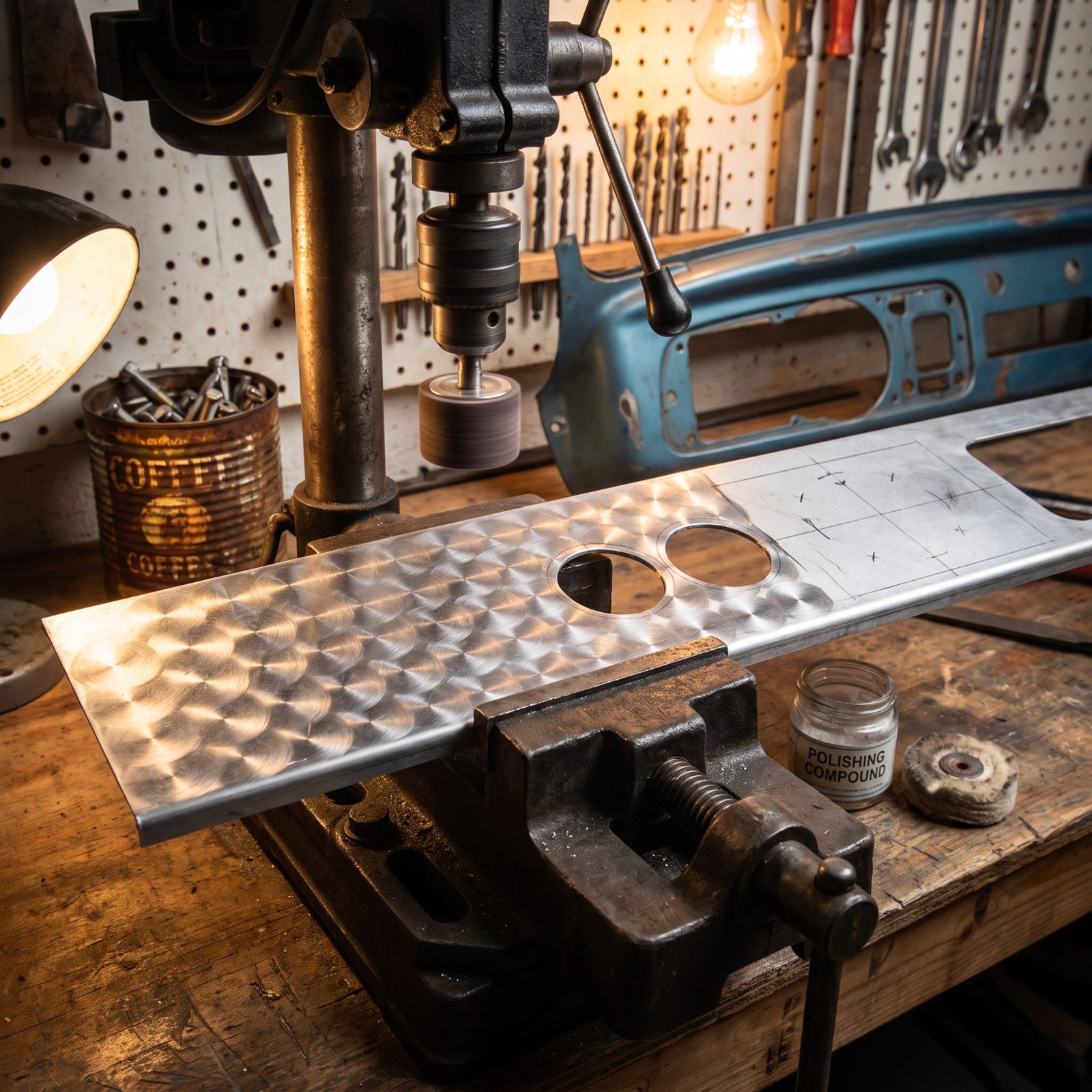
The engine-turned dash was cheap materials and rich patience. A flat sheet of aluminum, a drill press, an abrasive cylinder, and a whole lot of overlapping circles pressed in even rows until the surface caught the light like fish scales.
Space the swirls wrong and the eye caught the mistake in every angle of light. Space them right and the dash looked machined by a factory that never existed. Then you drilled the gauge holes, polished the edges, and mounted your speedometer in something you’d made with your own hands.
Reaching for the Long Floor Shifter and Rowing Through the Gears
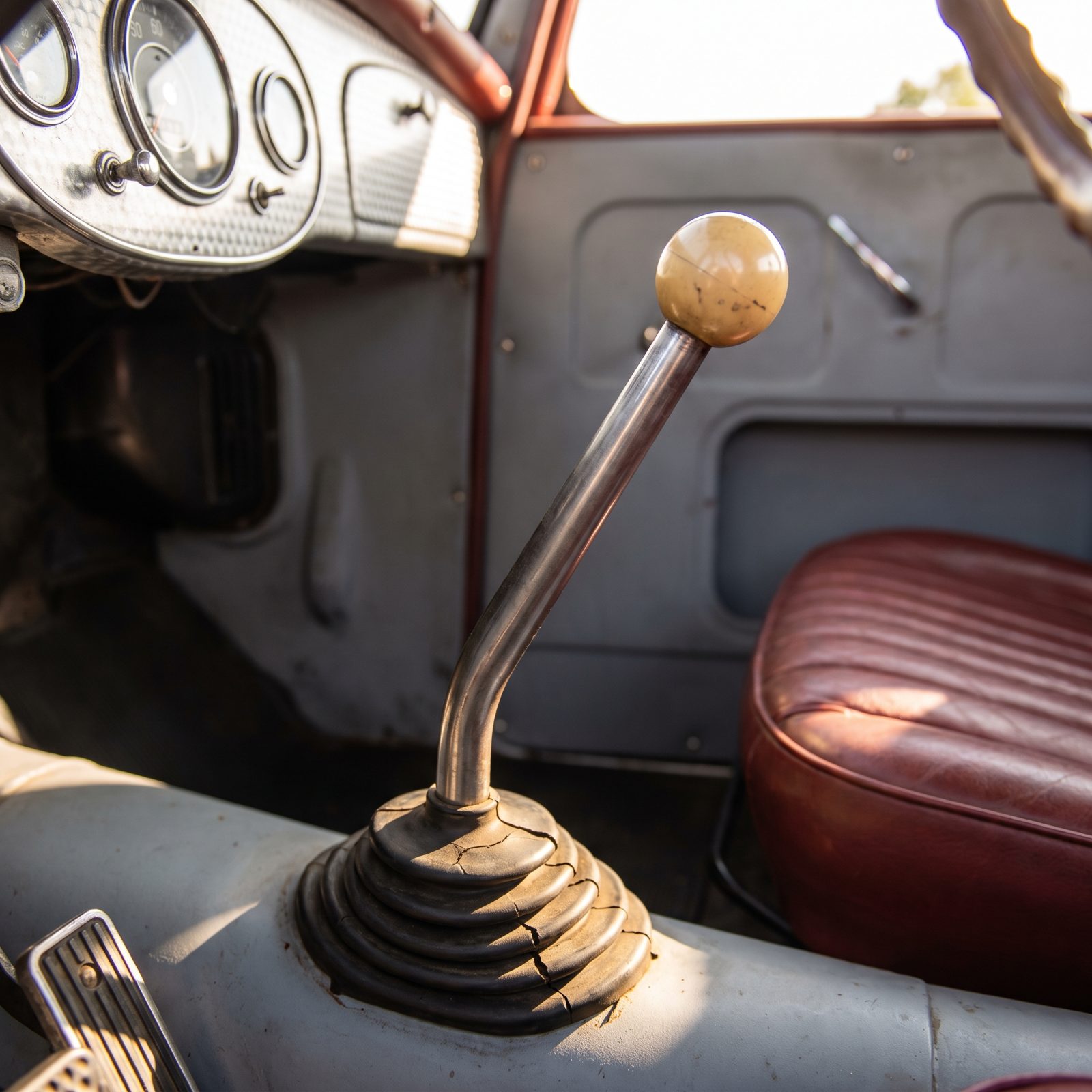
No console. No leather boot with stitching. Just a long steel lever coming up out of the floor with a round knob worn smooth by every gear change you’d ever made, and you didn’t tap it — you rowed it.
First gear took a deliberate throw. The knob sat right where your hand fell, cool in the morning, warm by afternoon. Downshifting into a corner meant matching revs by ear because nothing on that dash would help you.
Automatics were coming, and plenty of guys already had one in the family sedan. But in a car you built to drive hard, the long shifter was the last handshake between you and the machine, and nobody wanted a computer breaking that grip.
Driving Without Seat Belts or a Collapsible Steering Column
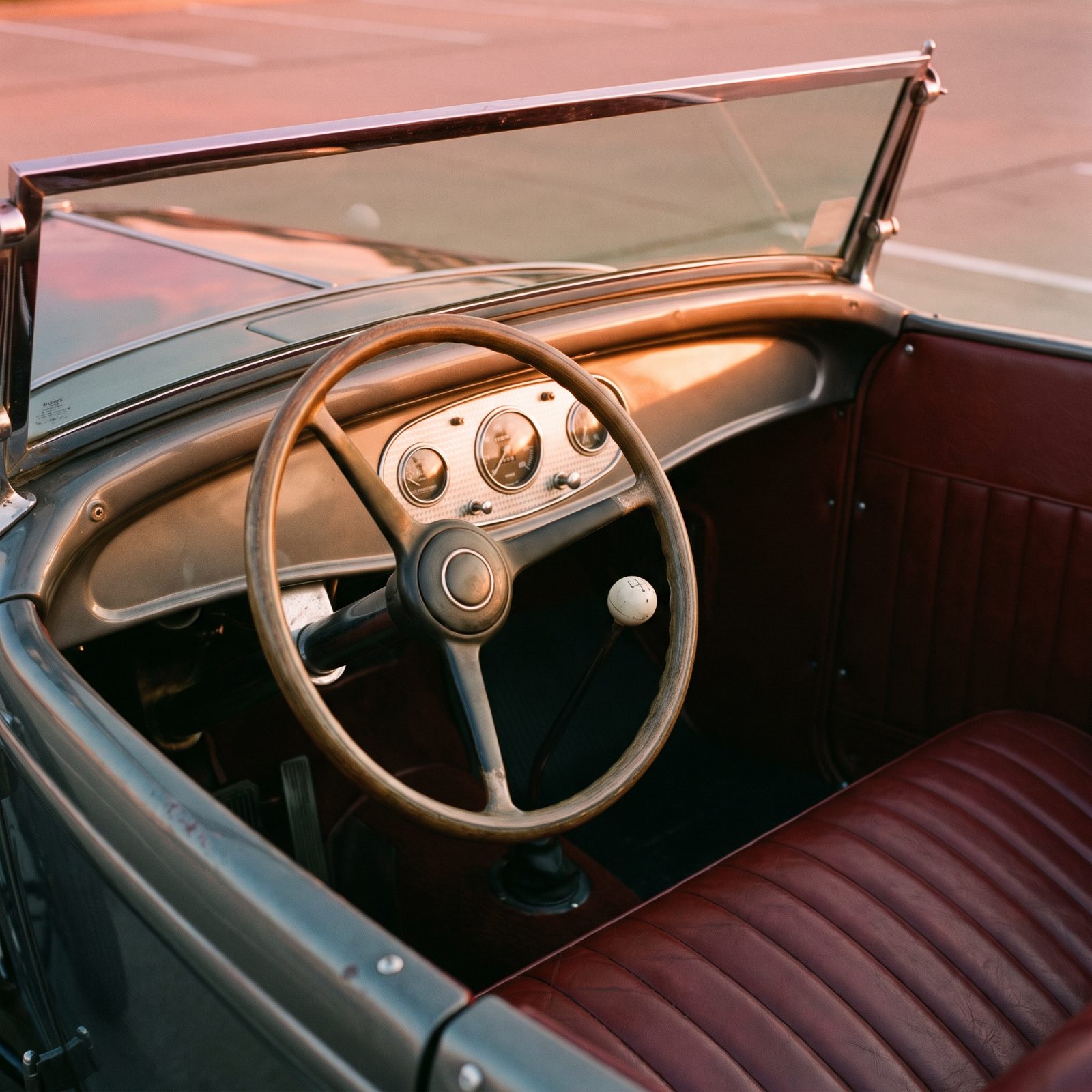
You held the wheel and that was your safety system. A rigid steel column pointed straight at your chest, the bench seat had nothing to hold you down, and everybody drove that way because there was no other way to drive.
Nobody thought about it much. The car went fast, you steered it, and you stopped it with drum brakes that faded halfway down a long hill. The whole cockpit came down to you, a wheel, and however quick your reflexes happened to be.
Relying on Dim Sealed-Beam Headlights
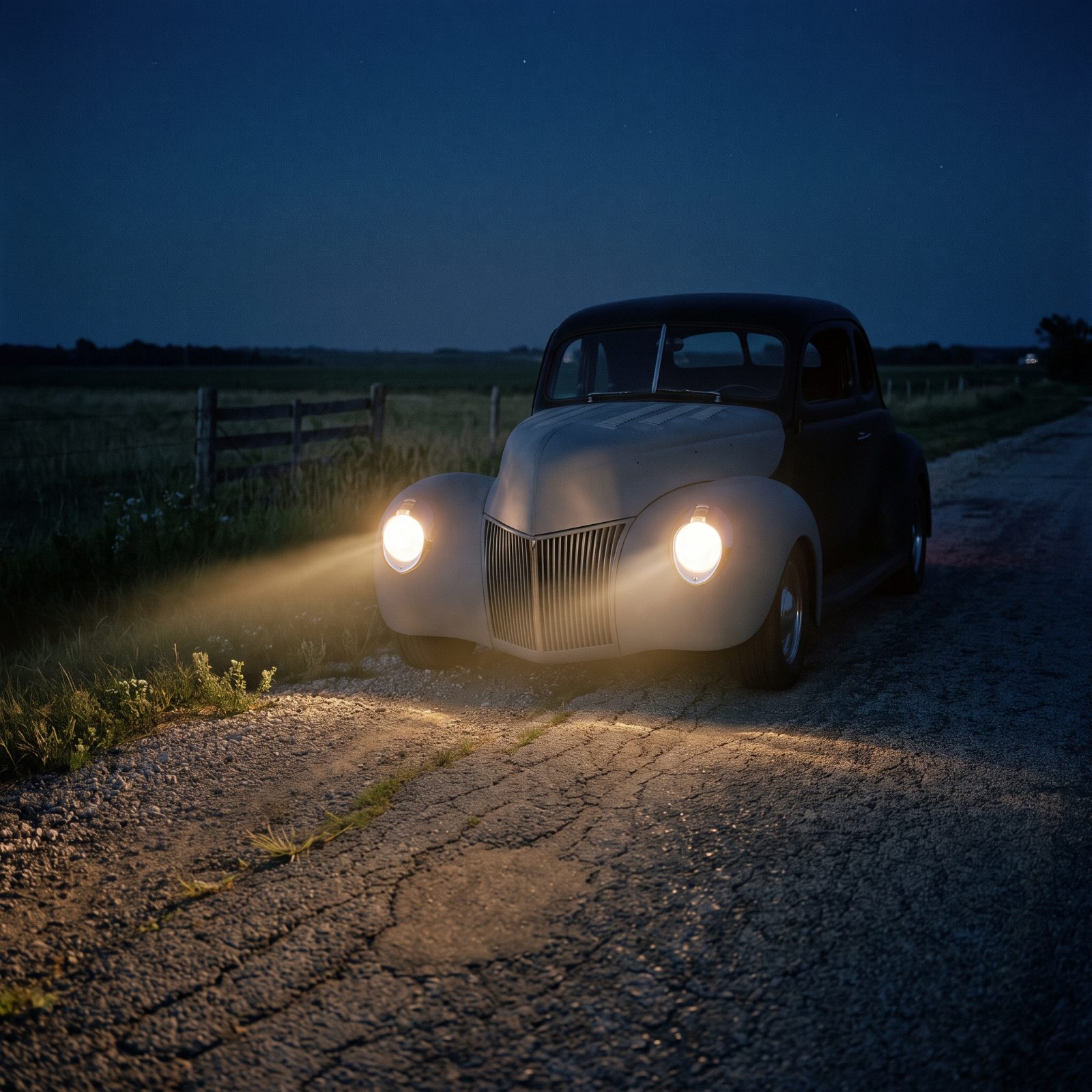
Two round sealed beams, six volts of tired electrical push, and a cone of yellow light that quit right about where you needed it most. Night driving in a 1950s rod meant you outran your own headlights and just made peace with it.
You learned the road by memory. Slowed for corners you couldn’t see yet. And when an oncoming car crested a hill, both of you squinted into a wash of dim amber and hoped for the best.
Guys upgraded to newer sealed beams the second they scraped together the cash. Cheapest performance mod there was, and it had nothing to do with going faster.
Learning the Difference Between Primer and “Suede” Paint
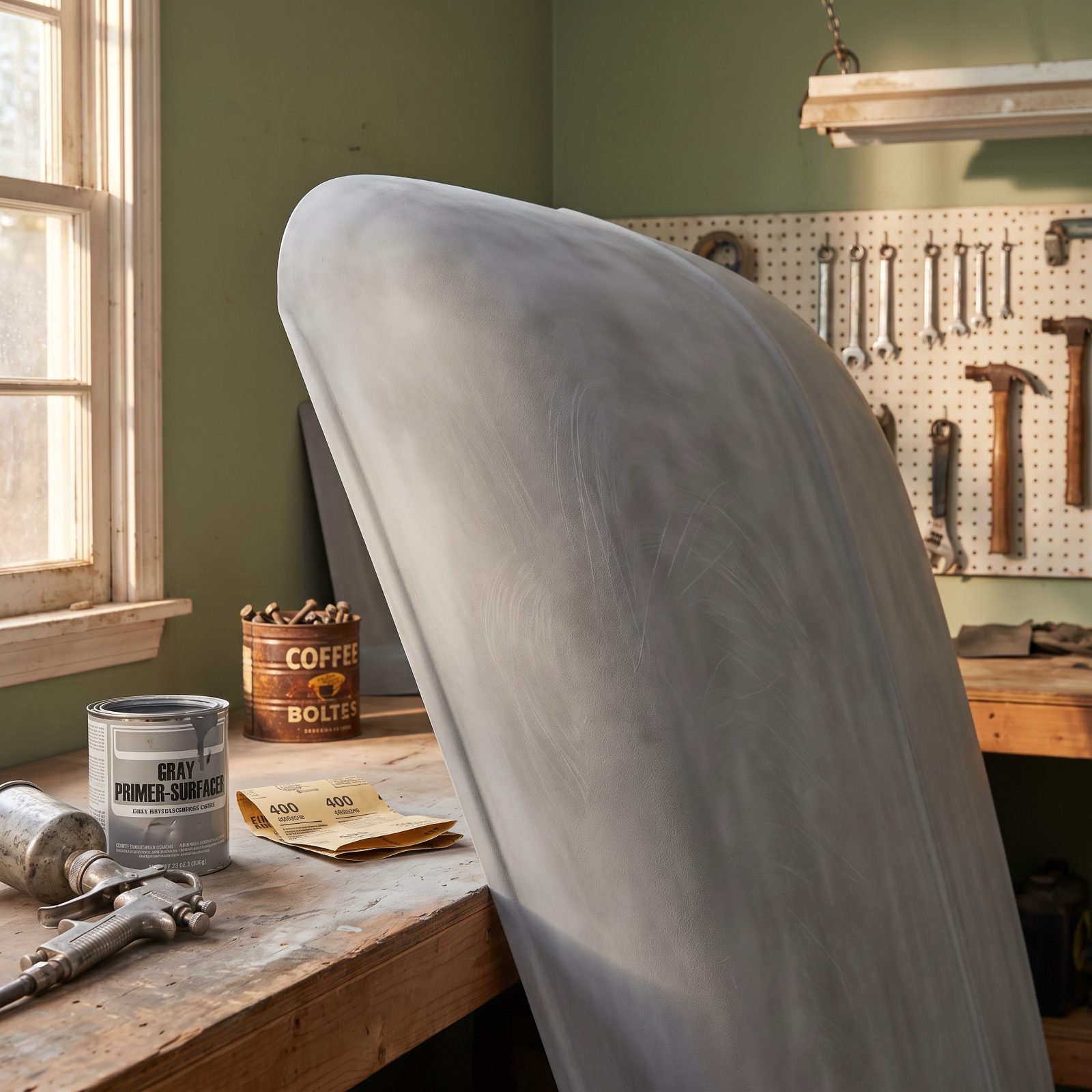
Not every flat-gray car was unfinished. Some guys ran primer because they were broke and saving for real paint. Others ran it on purpose, blocked smooth and rubbed down until the gray took on a soft, even nap. That was suede, and there was a real difference.
Rough primer meant a car in progress. Suede meant a car whose owner liked the look and stuck with it. You could sort one from the other by running your hand across the hood. One grabbed your palm. The other felt like felt.
Watching a Pinstriper Work Freehand
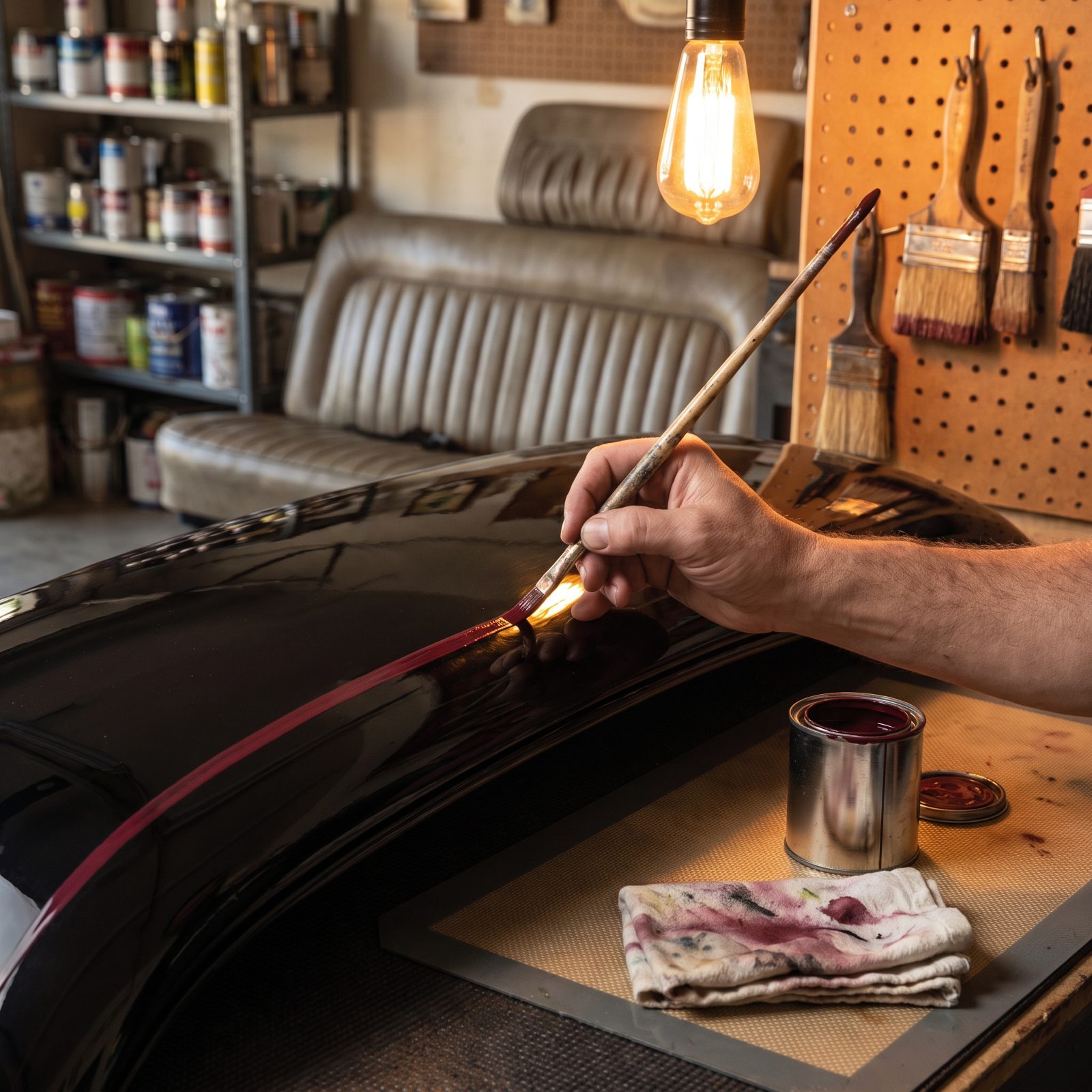
No tape. No stencil. No do-over. A striper loaded a long-bristled sword brush, took a breath, and dragged a line across a fender that had to land dead straight the first time. You stood there holding your own breath watching it happen.
The good ones did teardrops and scrolls off the top of their head, mirror-matched left to right by eye alone. Von Dutch made it famous, but every town had a guy with a steady hand who charged a few bucks and left your dash looking like somebody cared.
Laying Out Flames With Masking Tape and Imagination
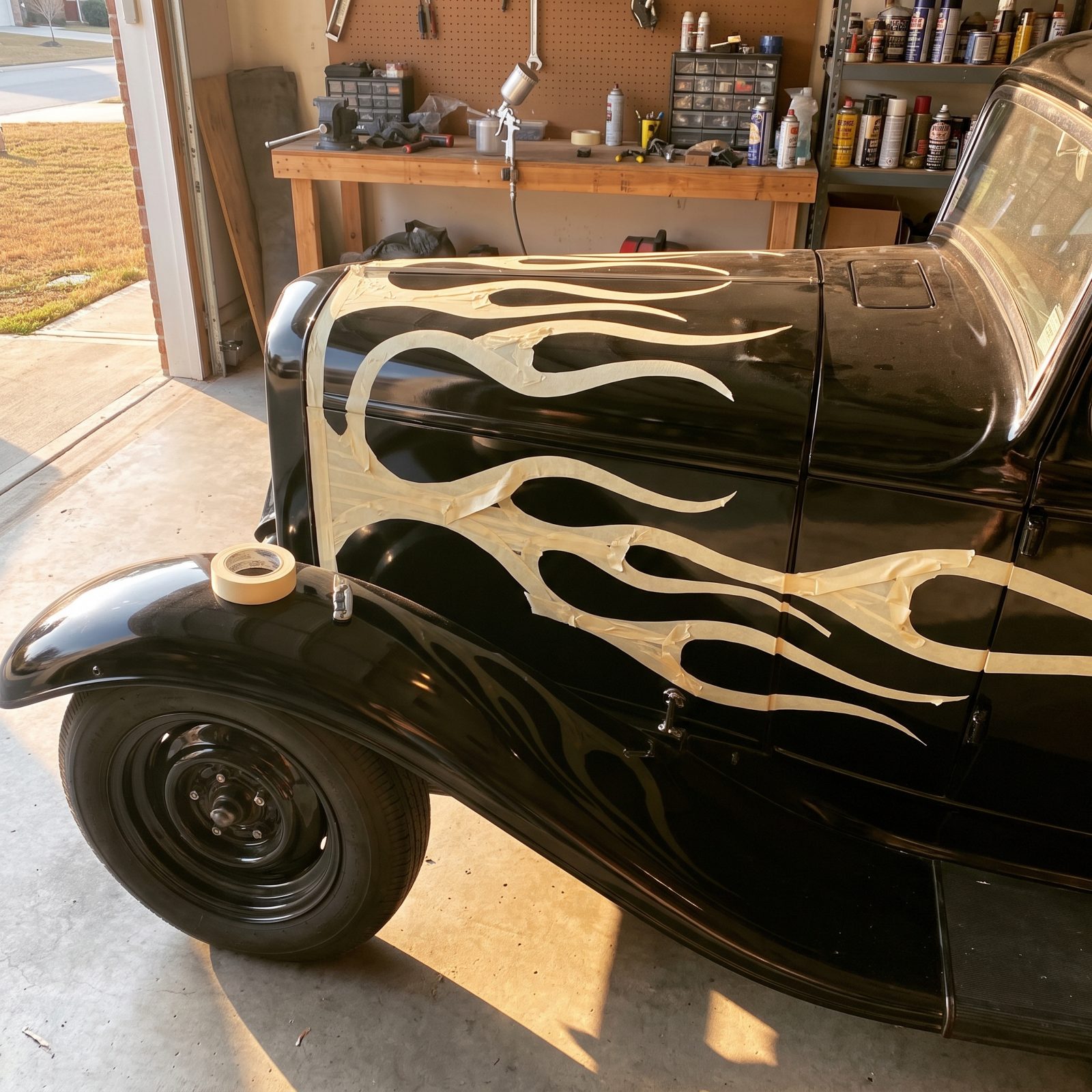
The flames lived in your head first. You saw them before they existed, then chased that picture with a roll of three-quarter-inch masking tape, bending and lifting and re-laying it until the licks looked right.
No template. The layout was you arguing with yourself over a fender, standing back, squinting, nudging one line a half-inch to the left. Then you sprayed yellow into orange into red and peeled the tape to see whether your imagination had held up.
Displaying a Cast-Metal Car Club Plaque
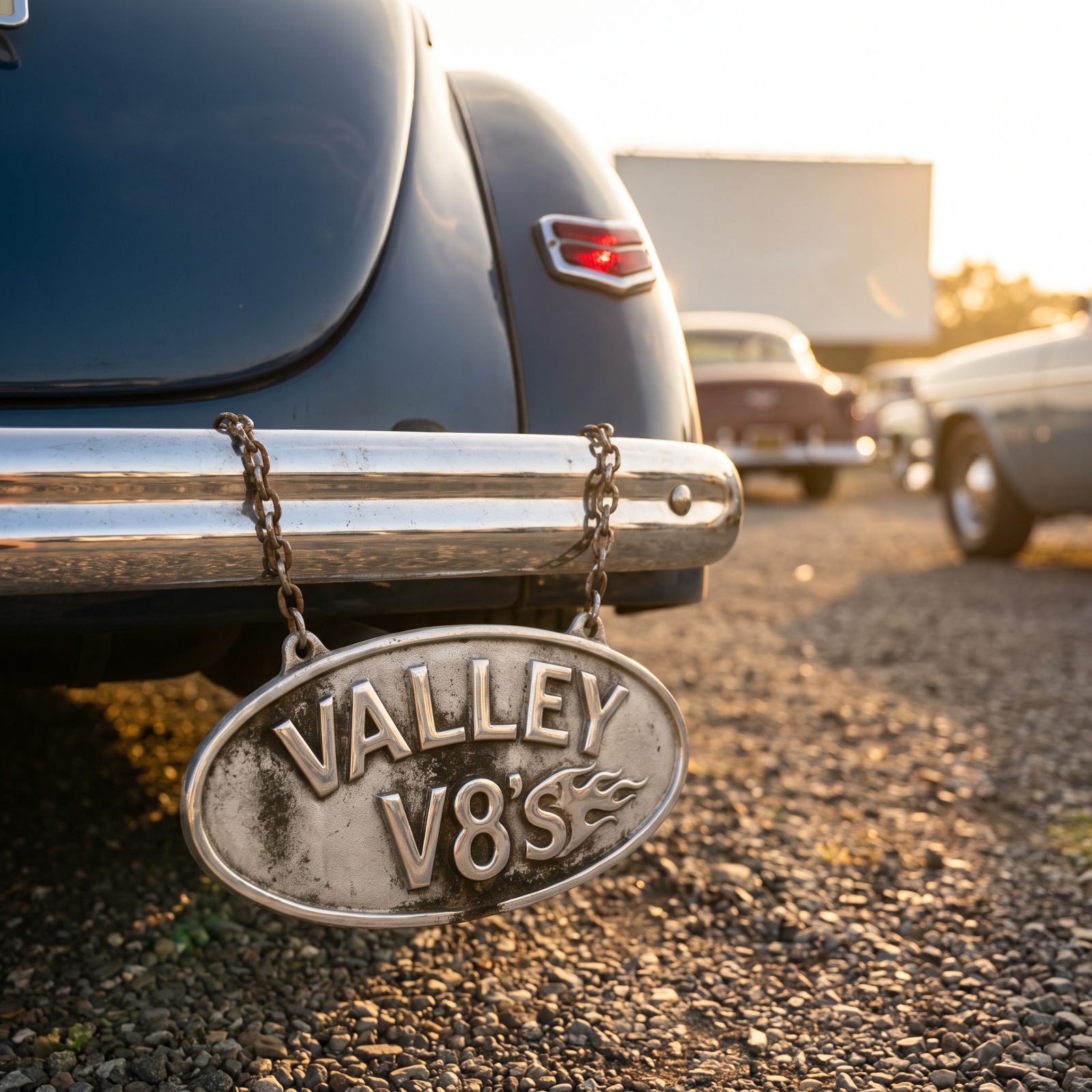
It hung off the back bumper on two little chains, a chunk of cast aluminum with your club’s name across it. Road Kings. Igniters. Throttlers. Whatever you and your buddies argued over for a month before somebody’s uncle poured the mold.
You couldn’t just buy one. You earned it by showing up, by having a car that ran, by being the kind of guy the club wanted around. The plaque said you belonged to something, a membership card any driver behind you could read at a red light.
Lose the club and you handed the plaque back. That stung more than any fine.
Carrying Timing Slips as Proof Instead of Posting Videos
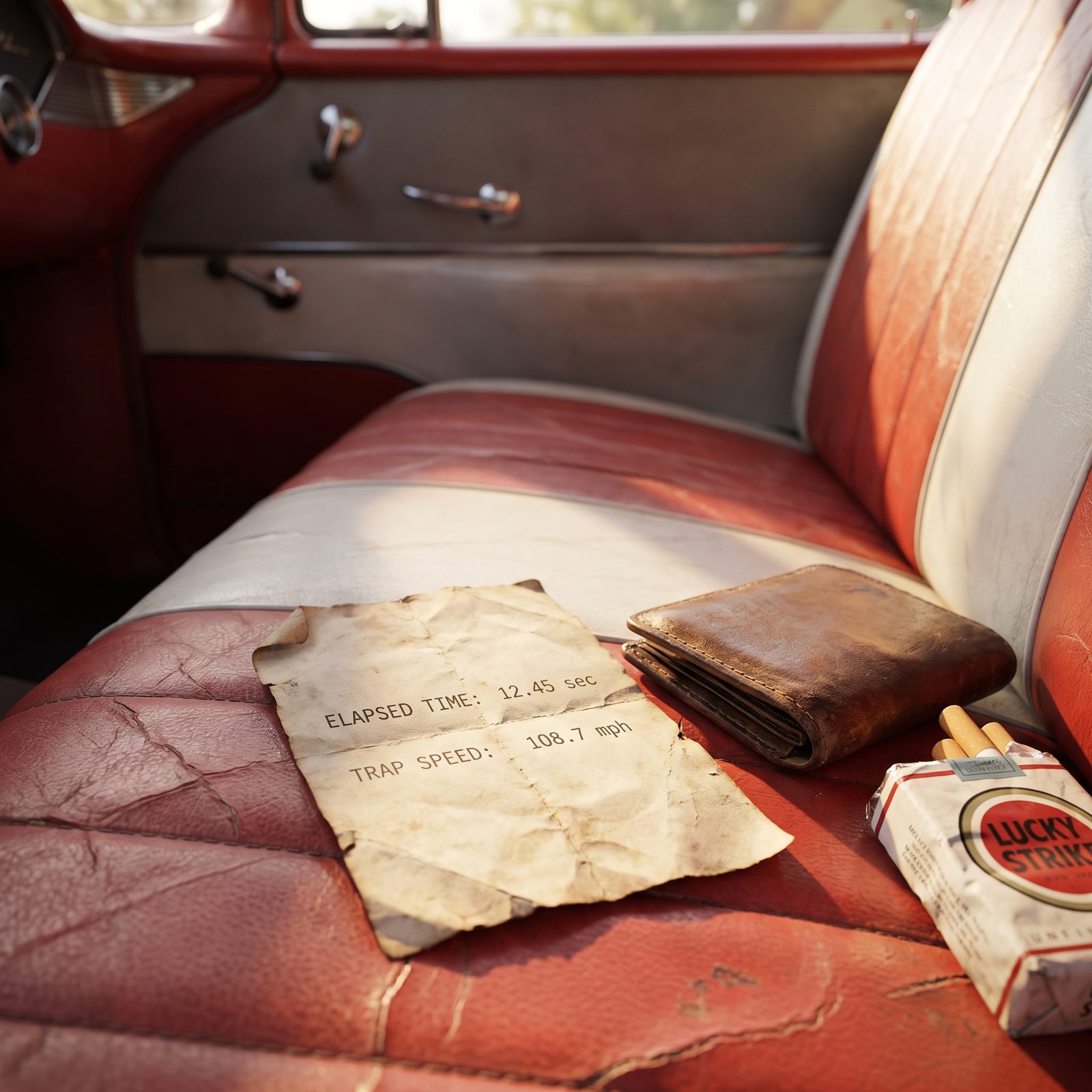
Your bragging rights fit in your wallet. A little strip of paper with your elapsed time and trap speed printed on it, handed over at the end of the strip, then folded and carried until it went soft at the creases.
That was the whole record. No video, no phone, no comment section. If a guy at the diner doubted your number, you reached into your back pocket and set the slip on the counter next to his coffee. Argument over.
Racing at a Rough Local Drag Strip Before Corporate Sponsorship
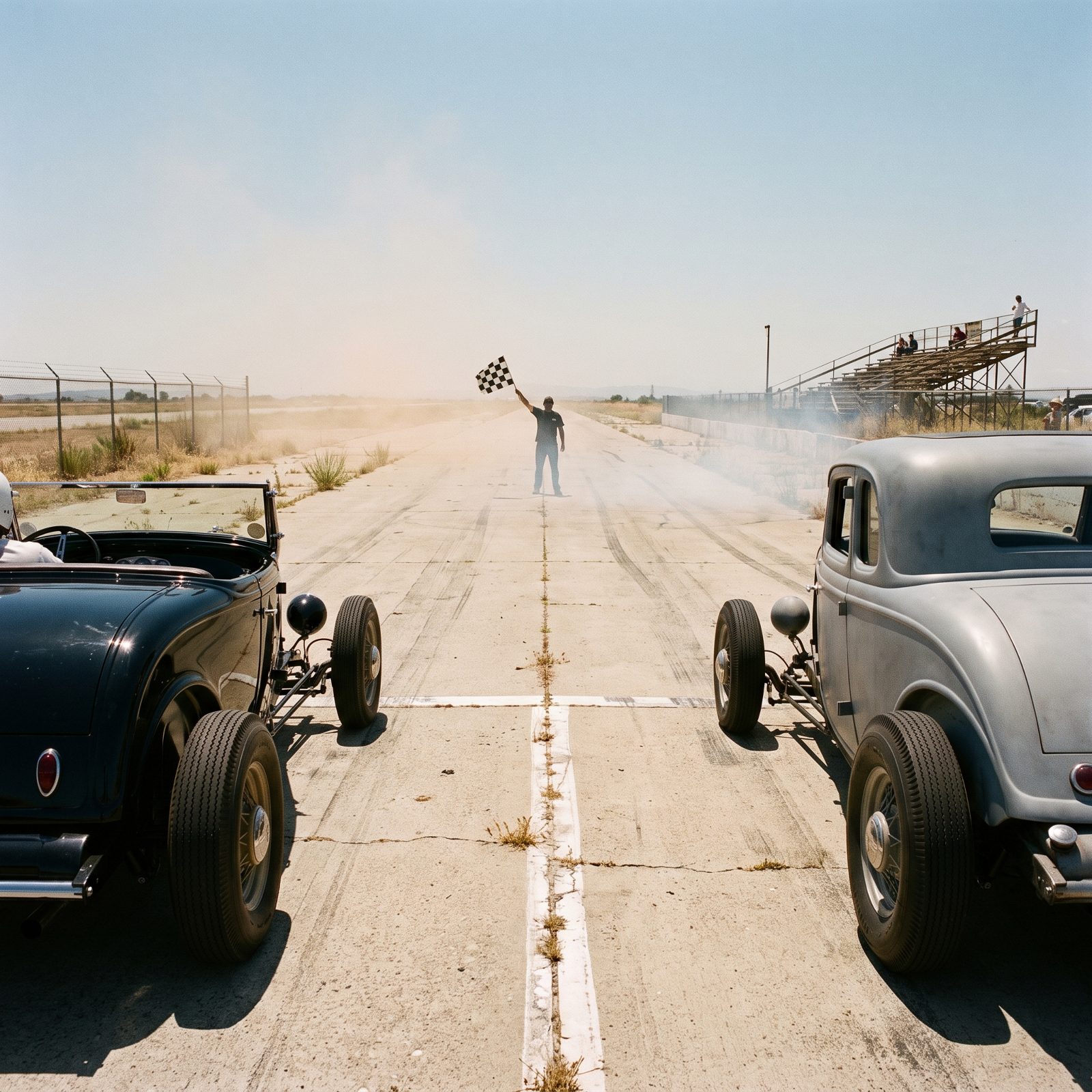
Before it was a business, it was a stretch of old airfield. Somebody painted a starting line on cracked concrete, a guy with a flag stood in the middle, and two cars lined up nose to nose.
No sponsor banners. No electronic Christmas tree. No sanctioning body cutting checks. You paid a couple bucks at the gate, ran your car until something broke, and drove home. The bleachers were wood planks and half the crowd was guys waiting their turn.
Running Flat Out on a Dry Lake Bed
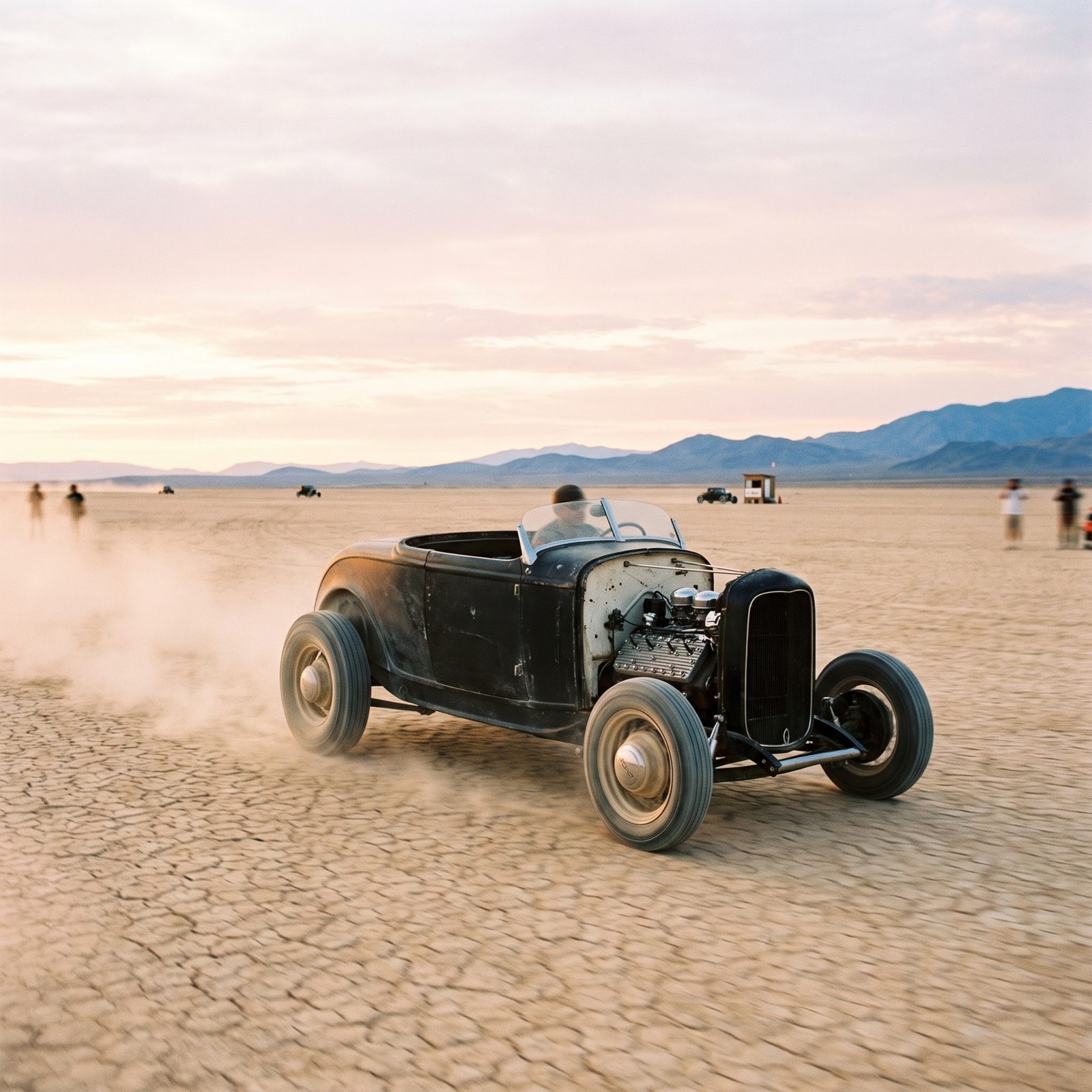
The lake bed went on forever, flat and cracked and empty, and out there you found out what your car actually had in it. No corners. No brakes worth mentioning when it counted. Just a straight shot across the dust toward a timing trap somewhere ahead.
El Mirage. Muroc, before the Air Force claimed it. Guys drove all night from Los Angeles, slept in the dirt, and ran at first light before the wind came up. The car had to be right, because nothing waited out there but you, a flathead wound to the ragged edge, and a whole lot of open ground to sort it out on.
Some of the fastest cars in America came out of one-car garages, built by kids who’d never laid eyes on a wind tunnel.
Push-Starting a High-Compression Engine
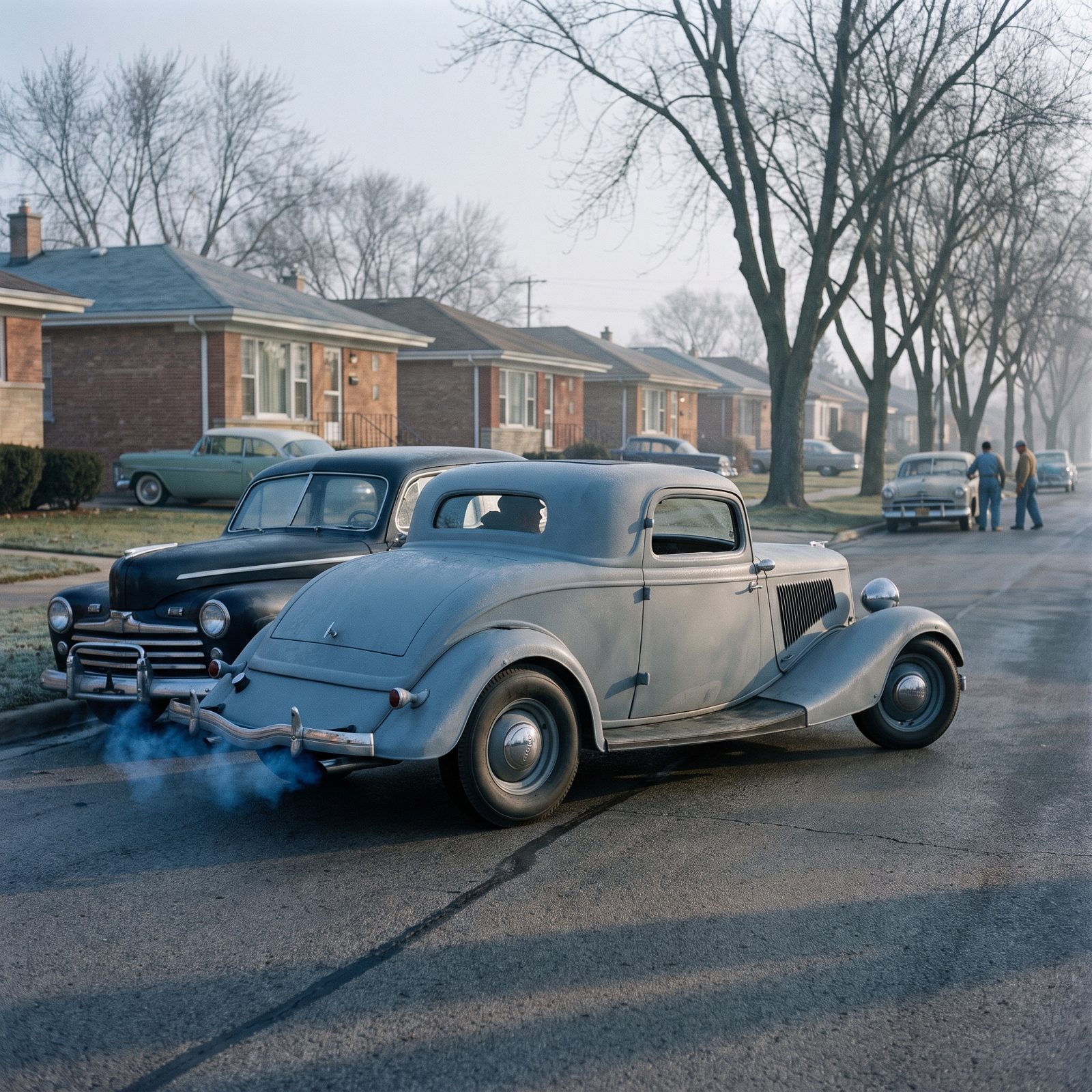
Some engines just wouldn’t spin over on a cold six-volt starter. Too much compression, too little juice, and there you’d be at seven in the morning with a buddy leaning into your bumper.
You’d roll it, drop it into second, pop the clutch, and the whole car would lurch and bark and finally catch in a cloud of blue smoke. Then you both grinned like idiots. A nuisance and a ritual, all in one.
Half the neighborhood knew your engine by the sound of that first cough. And if your car fired up on its own? Well, you’d built it a little soft.
Making Roadside Repairs With Tools From the Trunk
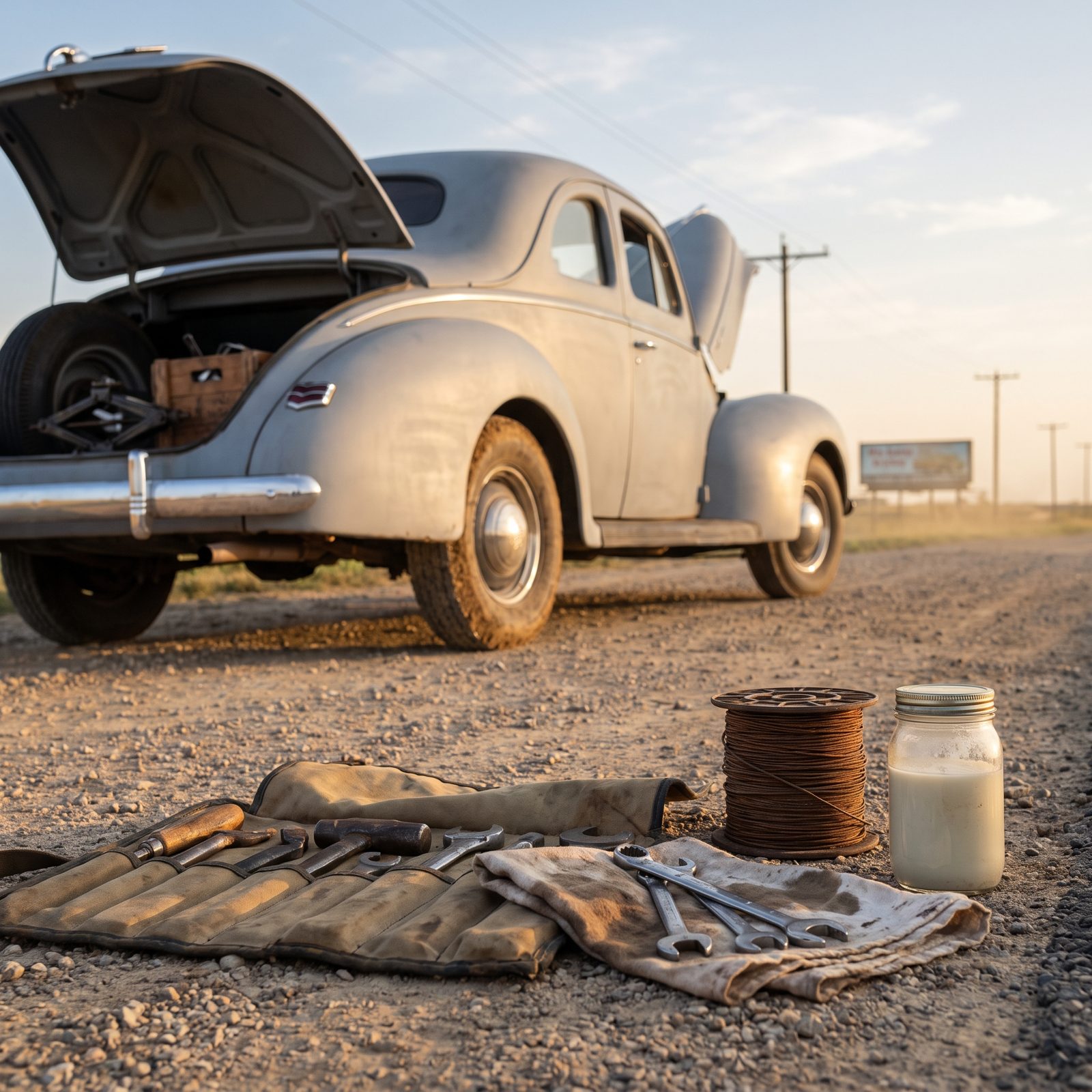
Every guy who drove a homebuilt car carried a rolling parts department in the trunk — a canvas tool roll, a coil of baling wire, a spare fan belt, and a jar of that gritty orange hand cleaner. You expected to break down. The only question was where.
A fuel line split on the highway? You patched it with a length of rubber hose and two clamps. A broken throttle linkage got wired straight to the carb and worked well enough to limp you home. Knowing your car meant knowing exactly which bolt would shake loose first.
Blending Leaded Fuel at a Service-Station Pump
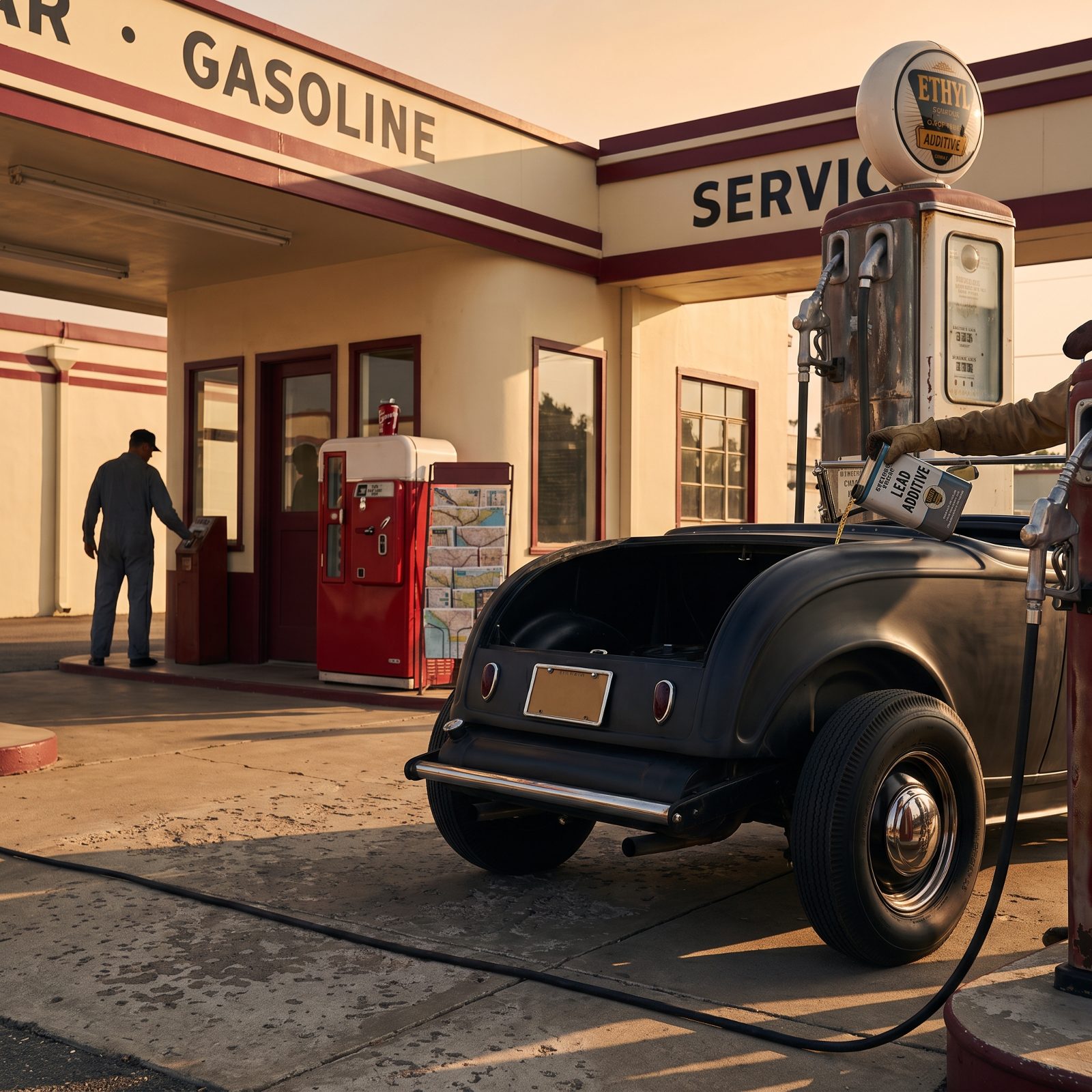
Pump gas alone would not feed a warmed-over flathead running high compression, so you learned to blend. A tank of the good high-test, a shot from a can of octane booster, and sometimes a little something a buddy at the airfield slipped you.
The smell of leaded fuel hung in the air like a promise. It coated your fingers, colored the exhaust, and kept the engine from rattling itself apart under load. Nobody thought twice about it. That was just what made the thing run right.
Knowing Which Junkyard Cars Donated the Best Speed Parts
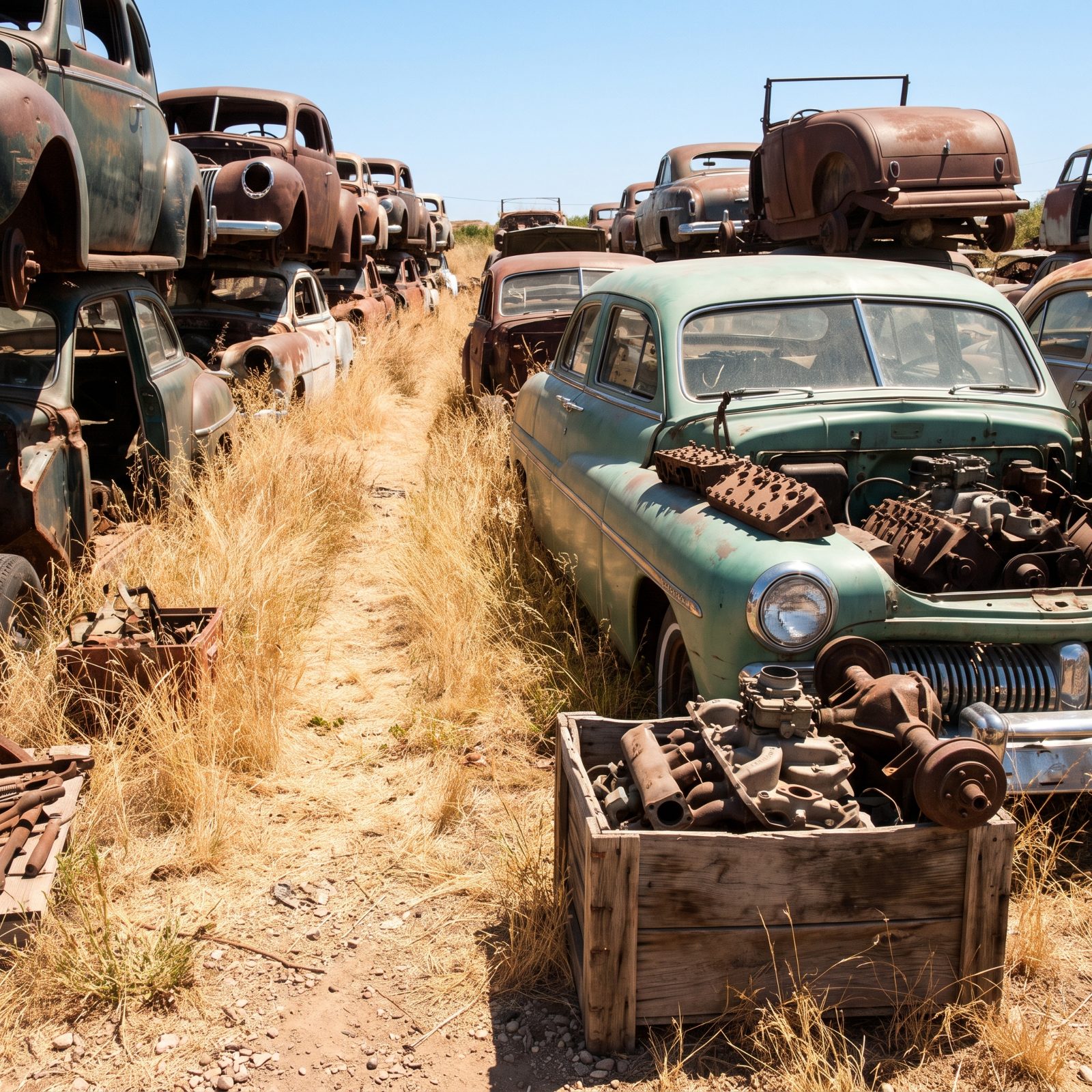
A junkyard was not a graveyard. It was a parts catalog you had to dig through in the heat, and knowing where to dig was half the battle.
You learned which cars gave up the goods. A ’39 Ford donated the coveted top-loader gearbox, a Lincoln Zephyr gave you a beefier rear end, and Mercury blocks had the bigger bore. So you walked the rows already knowing which fender to reach behind, which bolt to break loose first, and roughly how much the old man at the gate would let it go for.
Buying Performance Parts From a Tiny Neighborhood Speed Shop
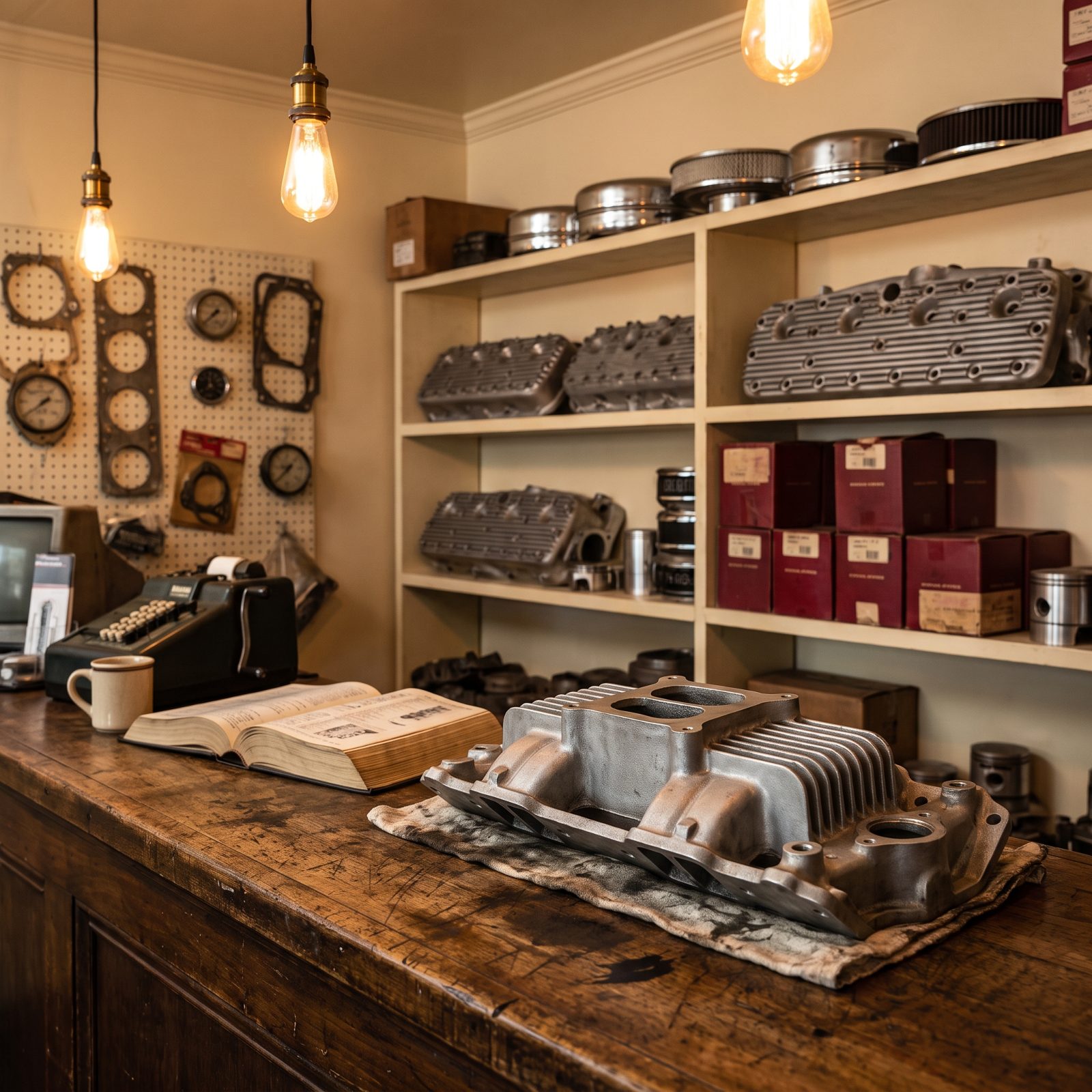
The neighborhood speed shop was maybe two hundred square feet of pure temptation. Finned aluminum heads on the shelf. A dual-carb intake you could not afford but visited anyway, like a shrine.
Grease had settled permanently into the creases of the guy behind the counter, and he knew what fit what without looking it up. You described a problem and he pulled the answer off a shelf. Half the time you left with a part and a lecture about why your last idea was going to blow the motor. He was usually right, the smug so-and-so.
Waiting a Month for a Hot-Rod Magazine, Then Passing It Around
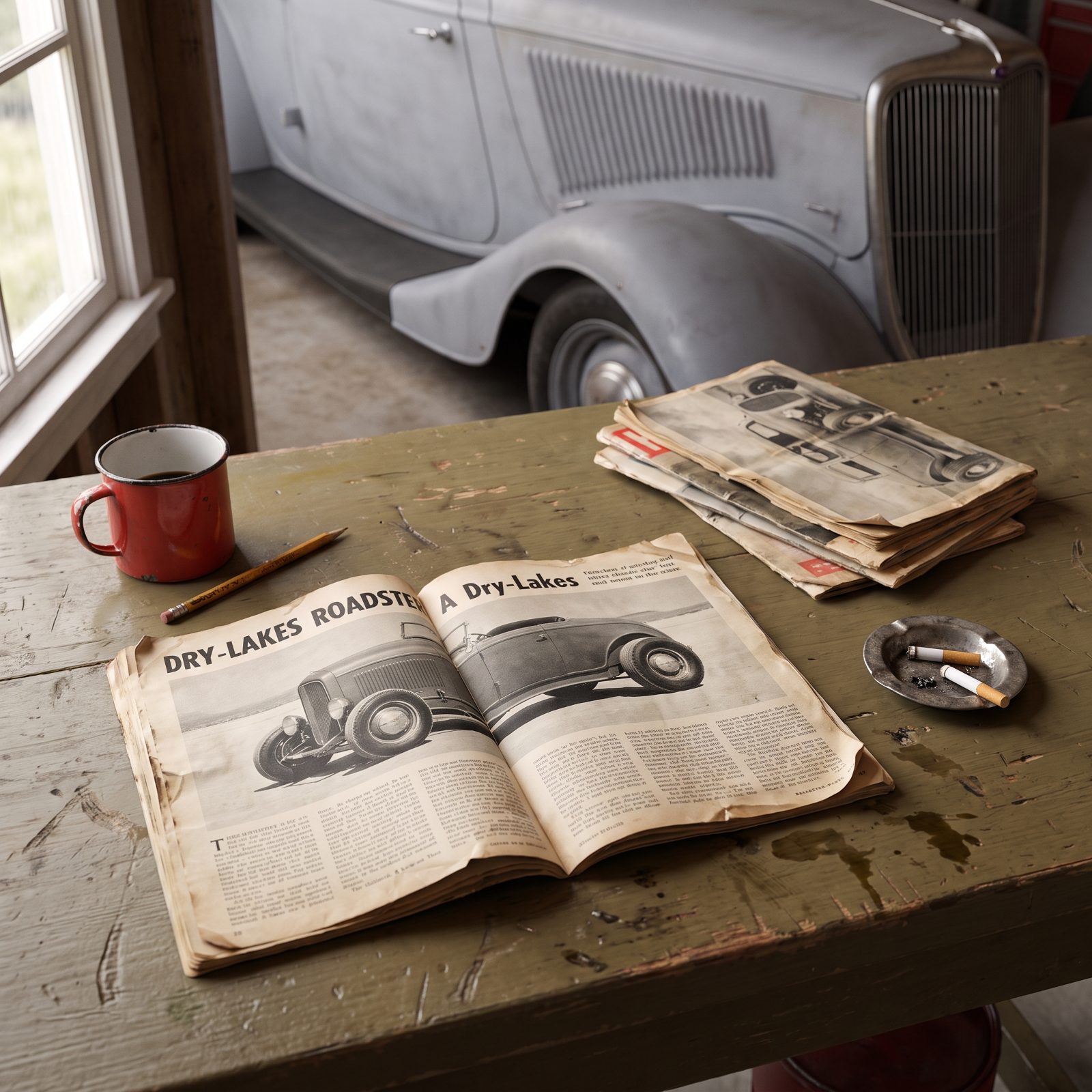
One magazine served a whole crew. It showed up once a month, and by the time it finished the rounds the cover was soft as cloth and the spine had given up entirely.
You studied every photo. How a fellow in California channeled his roadster, what carb setup ran fastest at the lakes, which trick you were going to try in your own garage that weekend. Then you handed it to the next guy, who kept it too long, and everybody knew it. That magazine was the internet before the internet — slower, and it smelled like ink.
Sharing One Garage Among an Entire Car Club
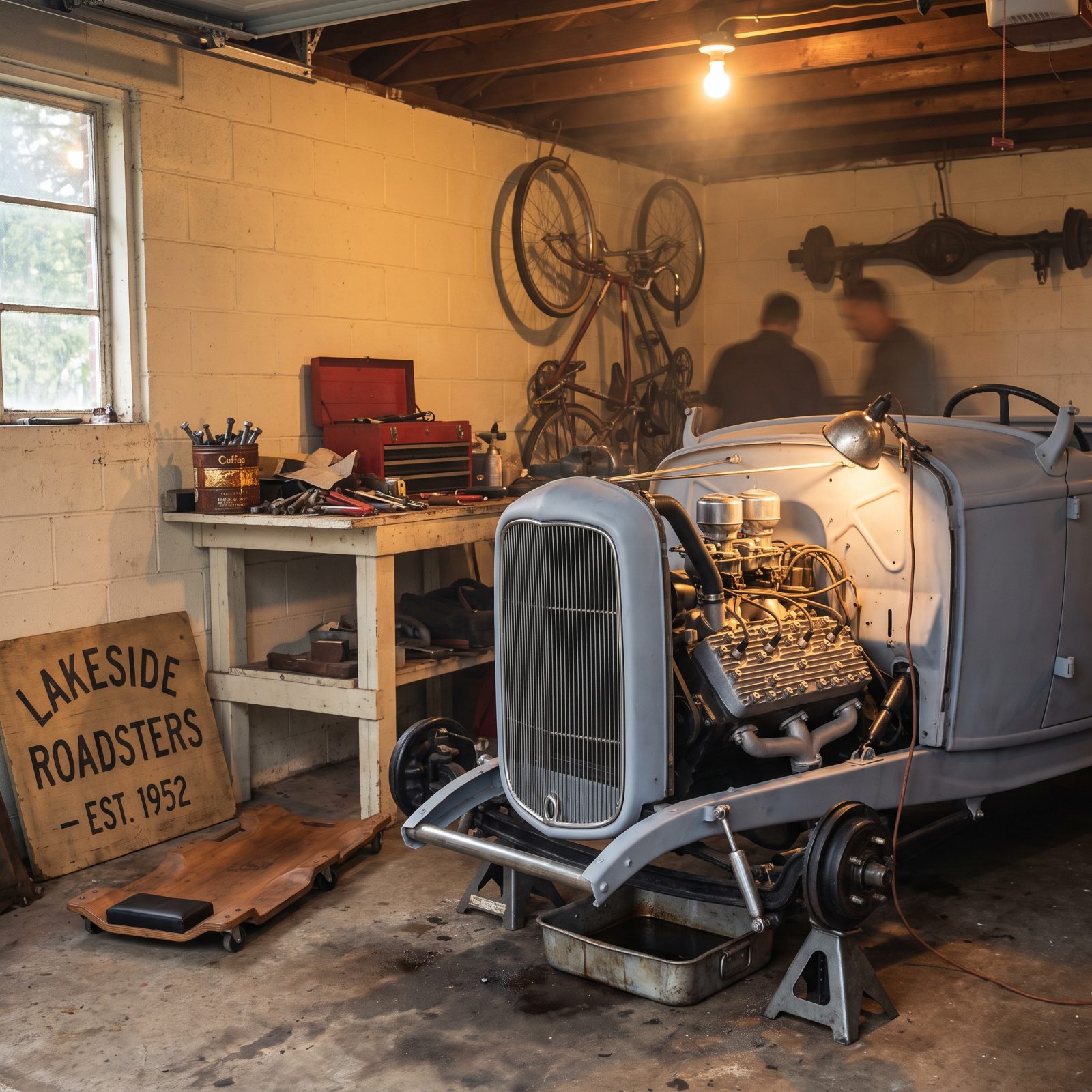
Nobody had a shop. You had one buddy whose dad let the club use the garage, and that was where everything happened.
Two cars up on stands, three guys under one of them, somebody’s transistor radio going, and a coffee can of shared hardware everybody dipped into and nobody refilled. You learned by watching the guy ahead of you make the mistake first.
The garage smelled like motor oil, cigarettes, and cold concrete. Clubhouse, classroom, and emergency room all at once. Skinned knuckles got wrapped in a shop rag and you kept going.
Cruising the Same Main-Street Loop and Meeting at the Drive-In
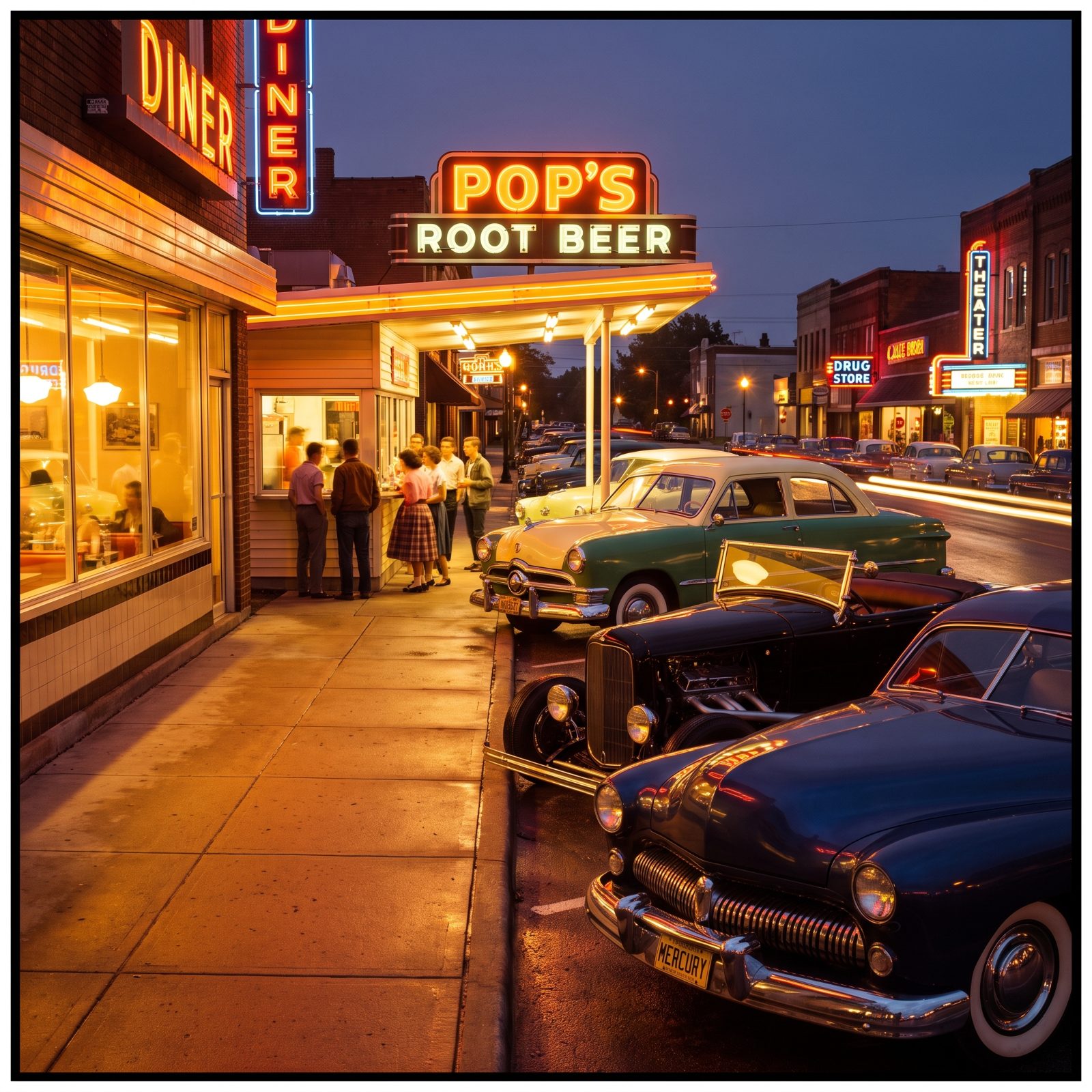
Saturday night ran on a loop. Down Main, around the far end, back up the other side, over and over, windows down and the radio loud enough to argue with the next car’s radio.
You went to be seen and to see who came out with what. A freshly painted deck lid. A new set of carbs that changed the note of the exhaust. Then everybody drifted to the drive-in root beer stand, backed the cars in, and settled onto the fenders to talk about the same things they always talked about. It never got old.
Explaining a Loud, Fenderless Car to the Local Police
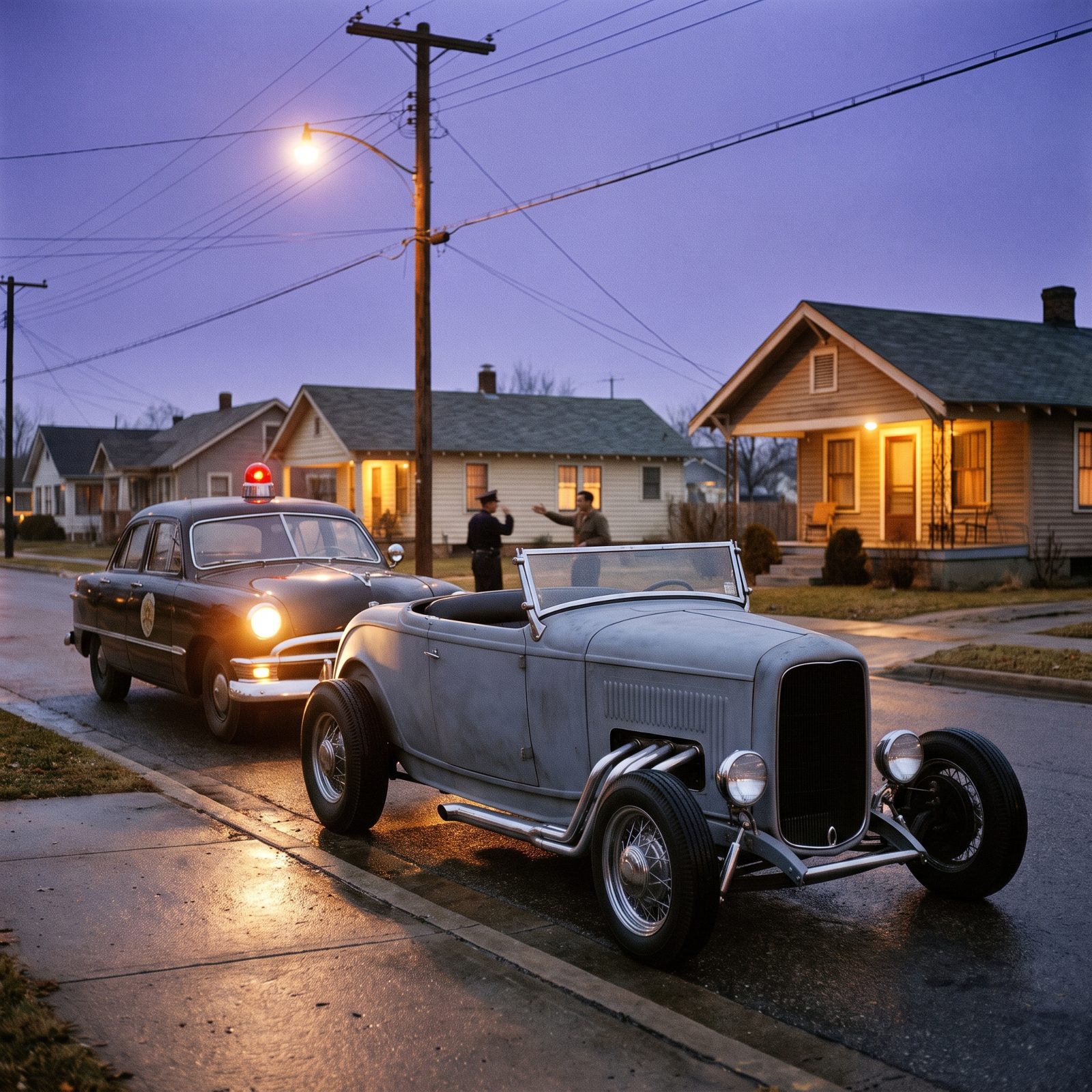
A car with no fenders and open headers announced itself from four blocks away, which meant the local cop knew you before he ever pulled you over.
You had the routine down. Kill the engine, hands where he could see them, and a rehearsed line about heading straight home and being real careful. Half the officers had built something themselves back in the day and mostly wanted a look under the hood. The other half wrote you up for the exhaust and told you to put the fenders back on. You never did.
Turning a Bench-Seat Cruise Into a Saturday-Night Date
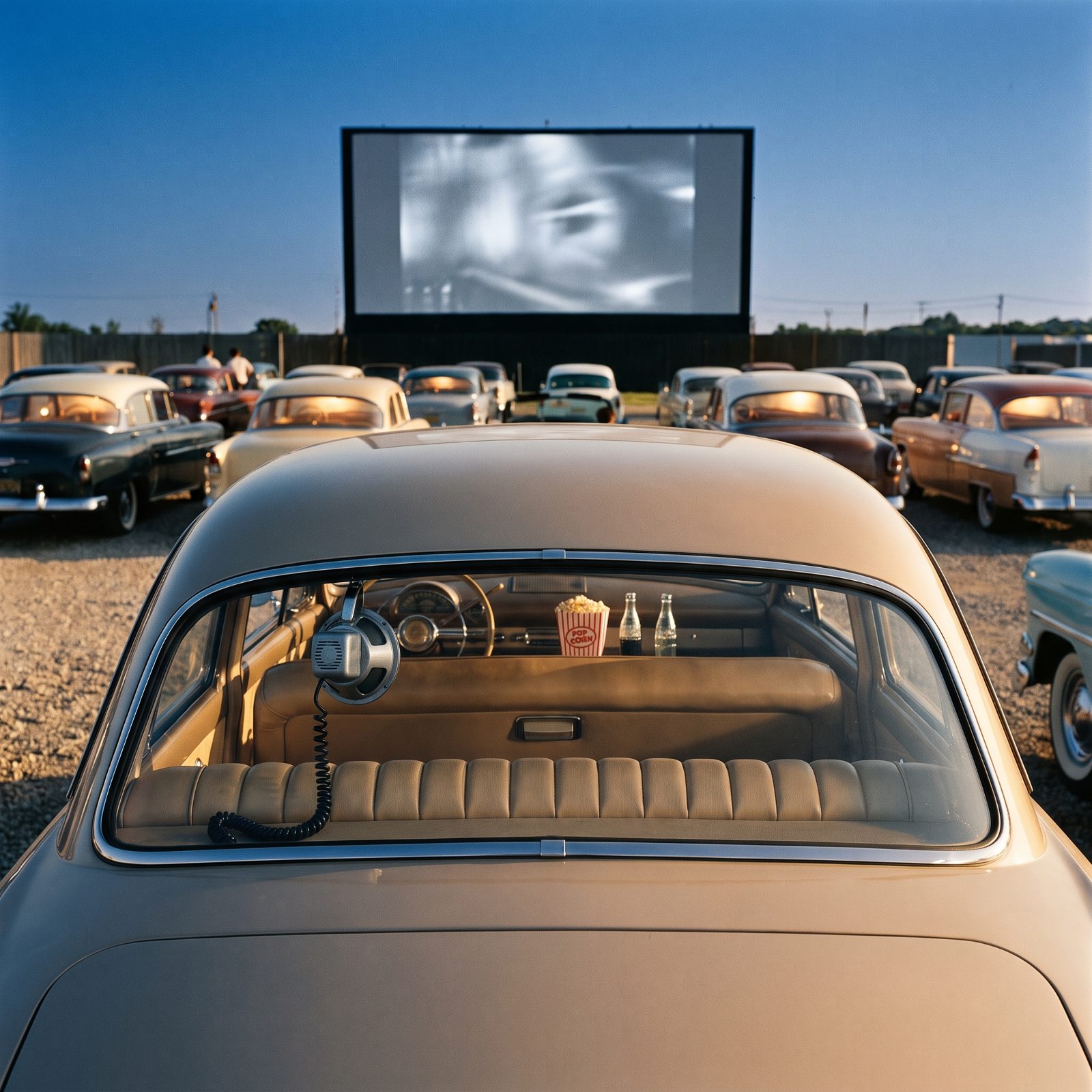
A bench seat was not an accident. It was an opportunity, and everybody knew it.
You washed the car twice, hung the chamois to dry, and prayed the flathead would idle smooth enough not to embarrass you at the pickup. Then you rolled out to the drive-in, hooked the speaker on the window, and let the movie play second fiddle to everything else going on in that front seat.
The popcorn went stale. The soda went flat. The engine ticked as it cooled in the gravel lot. Nobody was watching the screen anyway.
Driving the Same Car to the Track, Racing It, and Driving Home
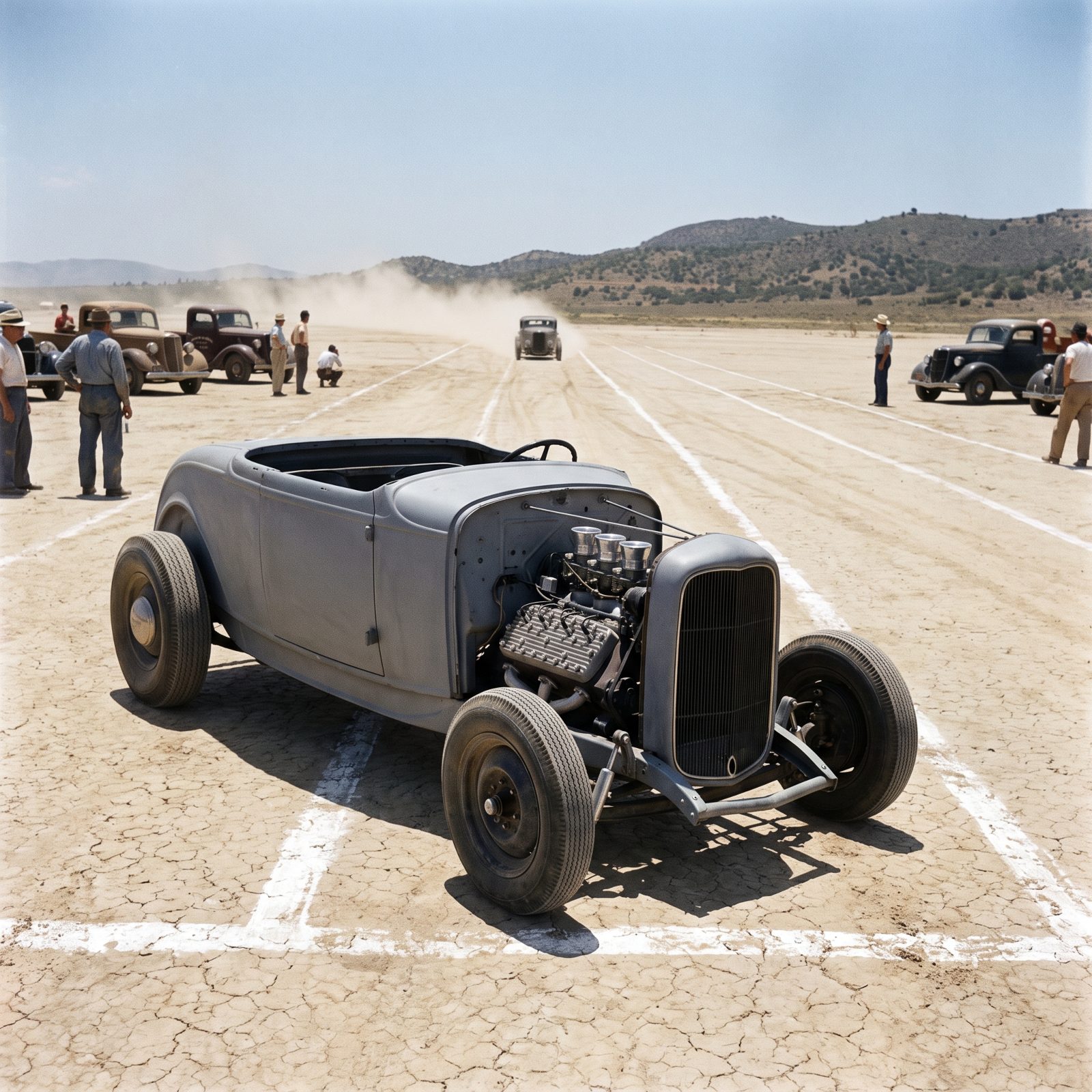
Here is the part that would stop a modern racer cold. You drove the same car to the track that you drove to school.
Air down the tires, maybe pull the hood, run your pass down the lakebed or the strip, then bolt everything back on and drive home on the same set of plugs. One car did all of it — grocery runs, dates, and quarter-mile bragging rights.
If it broke, you fixed it on the spot with the tools in the trunk. If it held together, you had a story for Monday. That car was your whole world, and you built every piece of it yourself.