
Would you like to save this?
A valet can read a car from thirty feet, and so can you, even if you’ve never put the knowledge into words. Long before the door opened, before anyone saw the leather or heard the stereo, the shape and the hardware had already made their case. Proportion did the talking. So did the metal, and the way the lights woke up when you walked near. These ten details separated cars that cost real money from cars that only wanted to look like they did. Some are gone now. A few are quietly coming back, and all of them worked on your eye before your brain got a vote.
A Long Hood With the Cabin Pushed Rearward
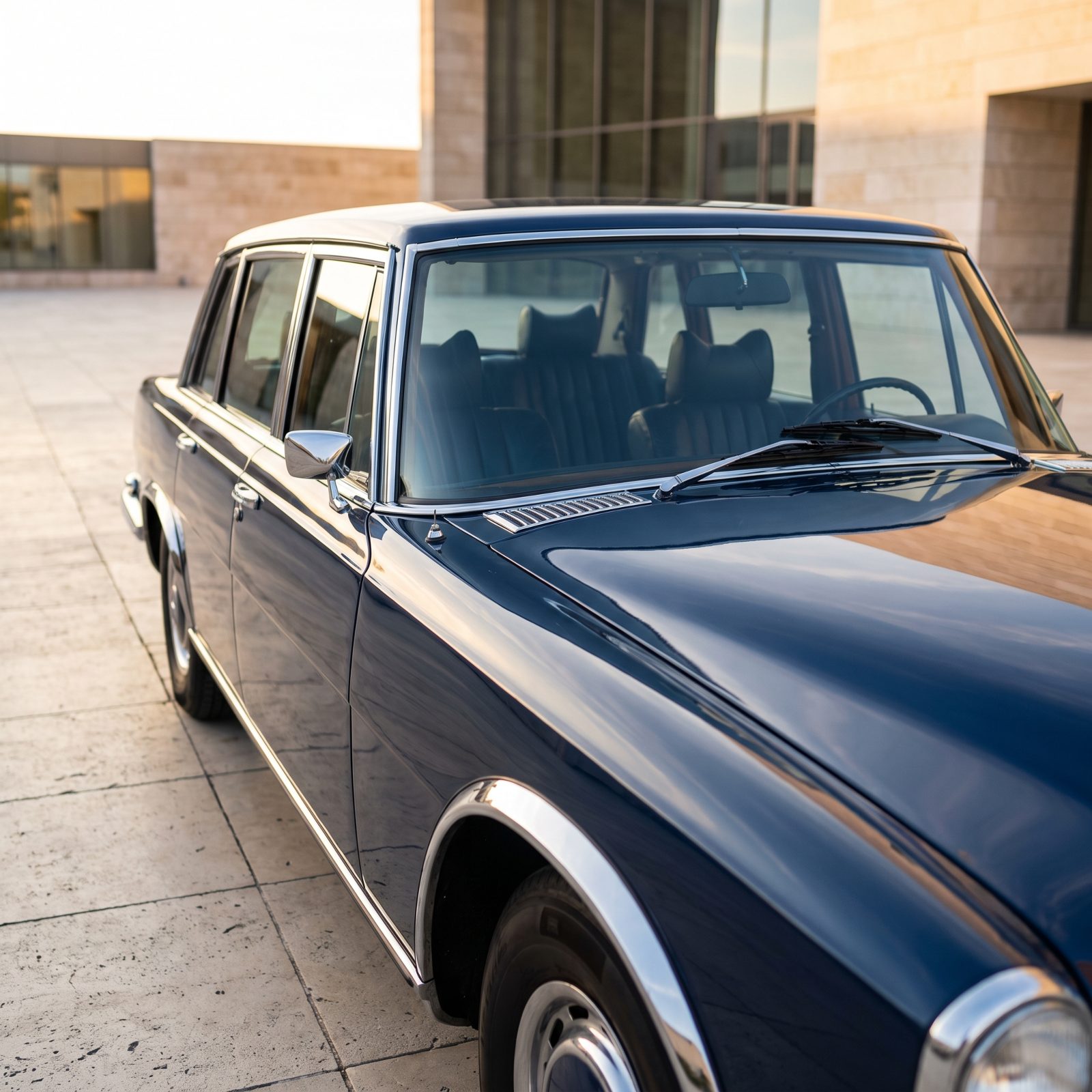
The eye measures wealth by where the cabin sits. Push it back toward the rear axle, stretch the hood out front, and the car reads expensive before a single detail registers. That proportion costs money to build, because a long hood usually means a big engine driving the rear wheels, which means a whole platform designed around it.
Cheap cars put the cabin forward and the wheels at the corners to save space. Luxury cars give up the space on purpose. The stretch of metal ahead of the windshield is the oldest status signal in the business, and it still works on a parking lot full of strangers.
A Generous Wheelbase Visible Between the Axles
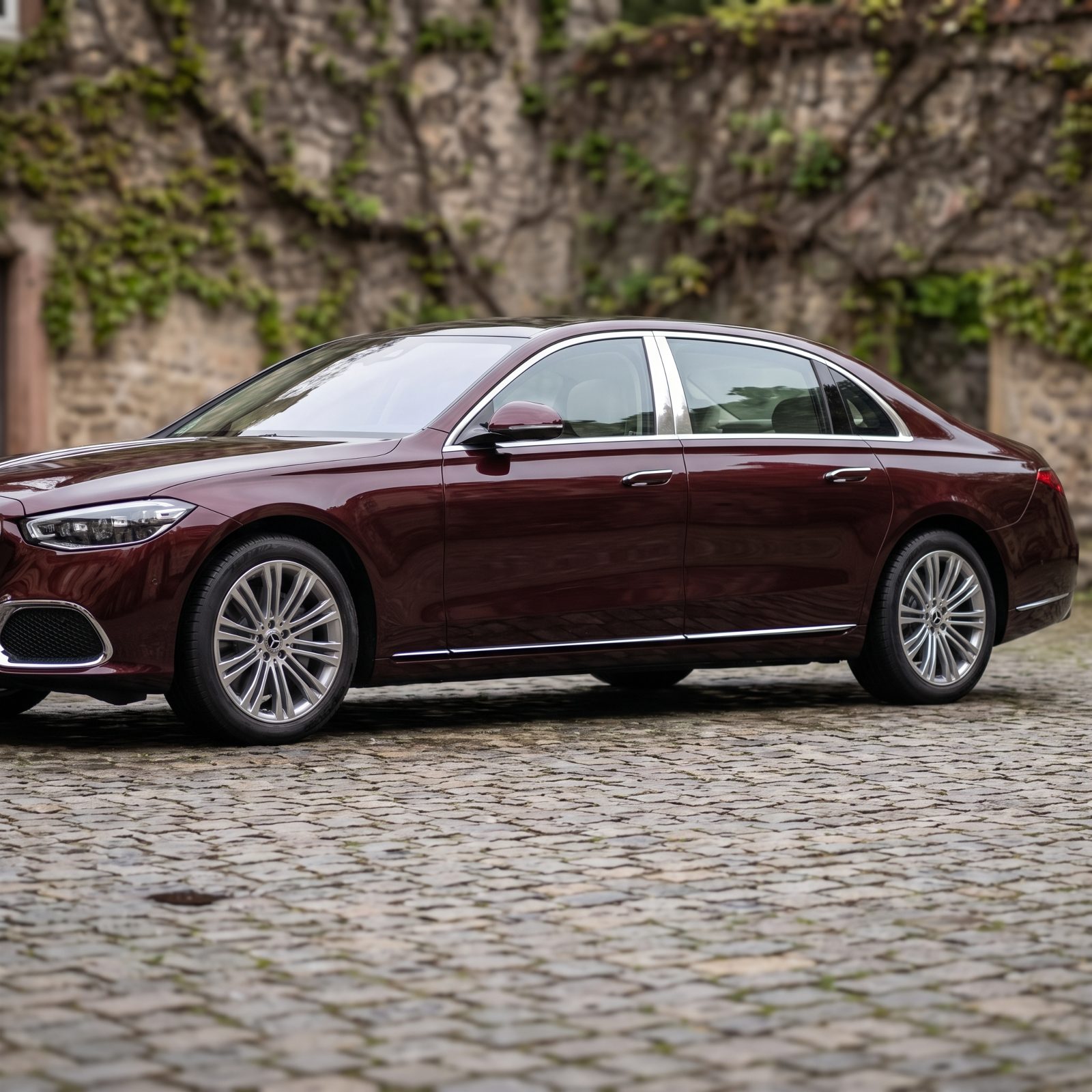
Stretch the gap between the axles and everything changes. Ride smooths out. Rear legroom opens up. And from the curb, the car simply looks more important.
Wheelbase is the one proportion you can’t fake with trim — you either paid for the metal between the wheels or you didn’t. That’s why the long-wheelbase version of a flagship always carried a premium and always will. The extra few inches do real work for the back-seat passenger, but they do their loudest work on the eye of someone standing on the sidewalk watching it roll past.
A Low Roof Over a Wide Body
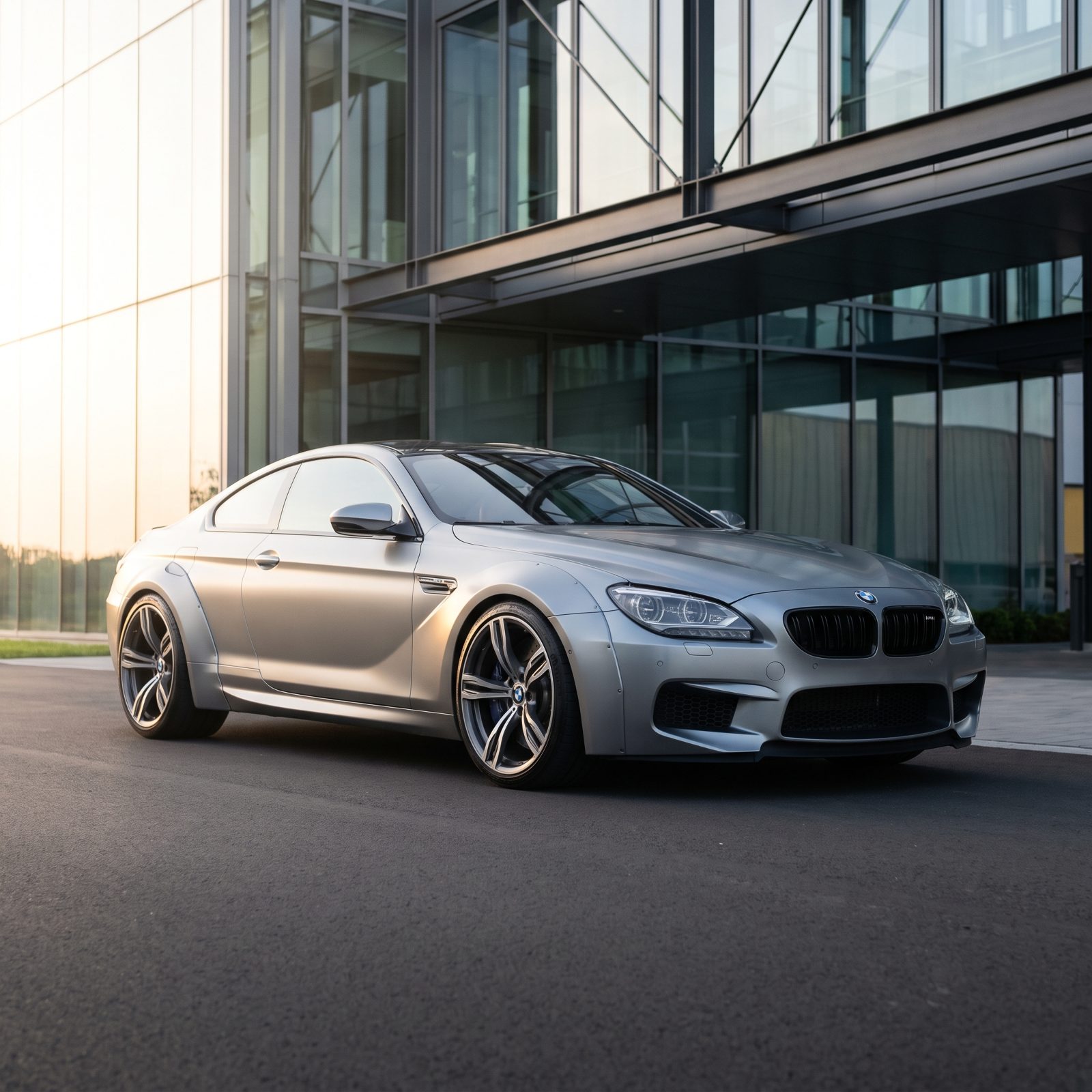
Width says grounded. A low roof says fast and serious. Put them together and the car looks like it’s hugging the earth.
The trick is the ratio. A tall greenhouse on a narrow body reads as practical, almost humble. Chop the roof down and spread the body wide and you get a car that looks planted even standing still. Engineers hate it, because low and wide fights headroom and interior volume. Designers love it, because the shoulder line becomes a horizontal statement you can read from across the street.
Short Front Overhangs on a Rear-Drive Stance
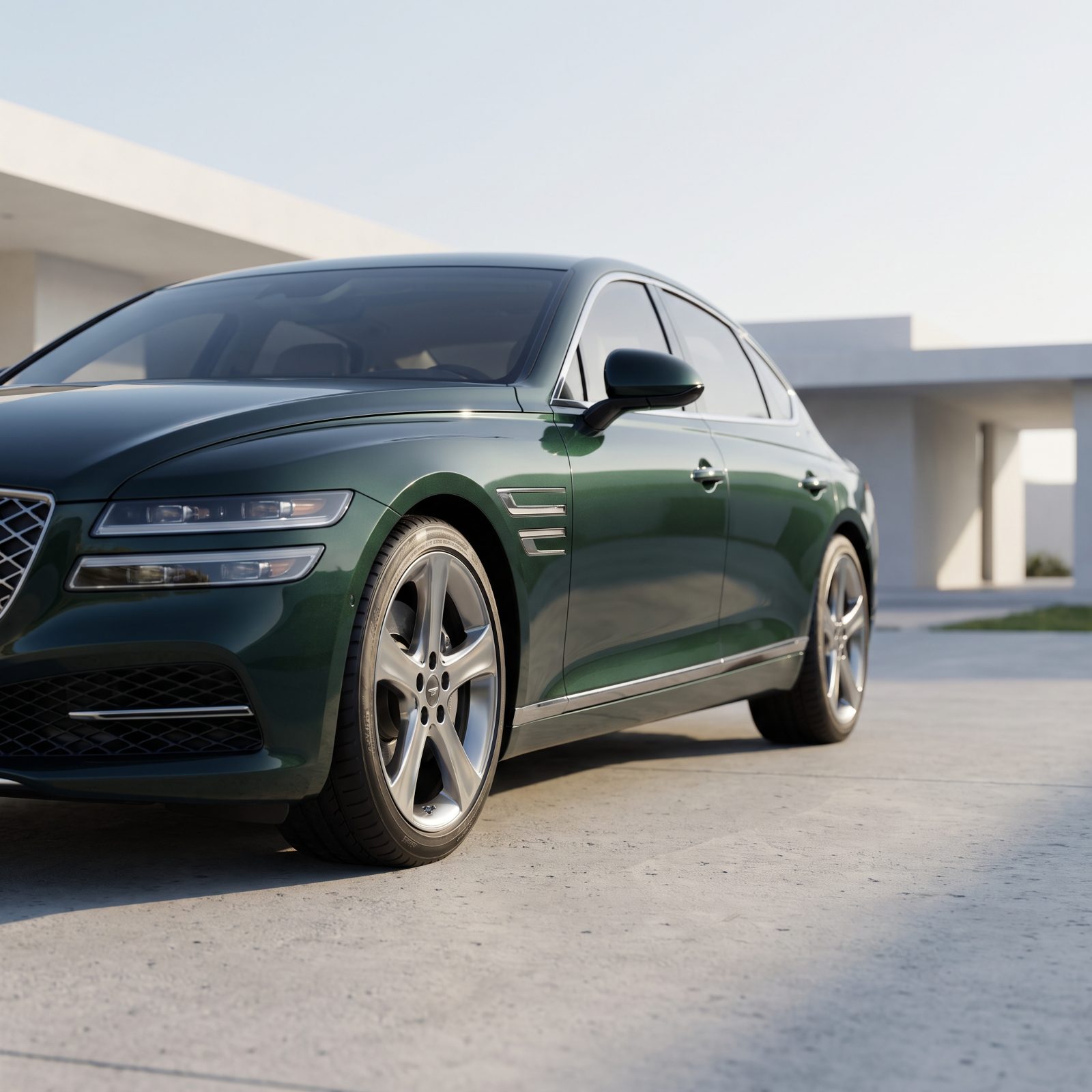
Look at where the front wheel sits relative to the bumper. On a cheap front-drive car there’s a long droopy chunk of body hanging out ahead of the wheel. On a proper rear-drive luxury car the wheel sits right up near the nose with almost nothing in front of it.
That short overhang is a byproduct of the whole engineering philosophy. Drive the rear wheels, push the front wheels forward, and the car looks ready to pounce. It’s the difference between a car that leans back and one that leans in.
A Formal Upright Grille With Real Depth
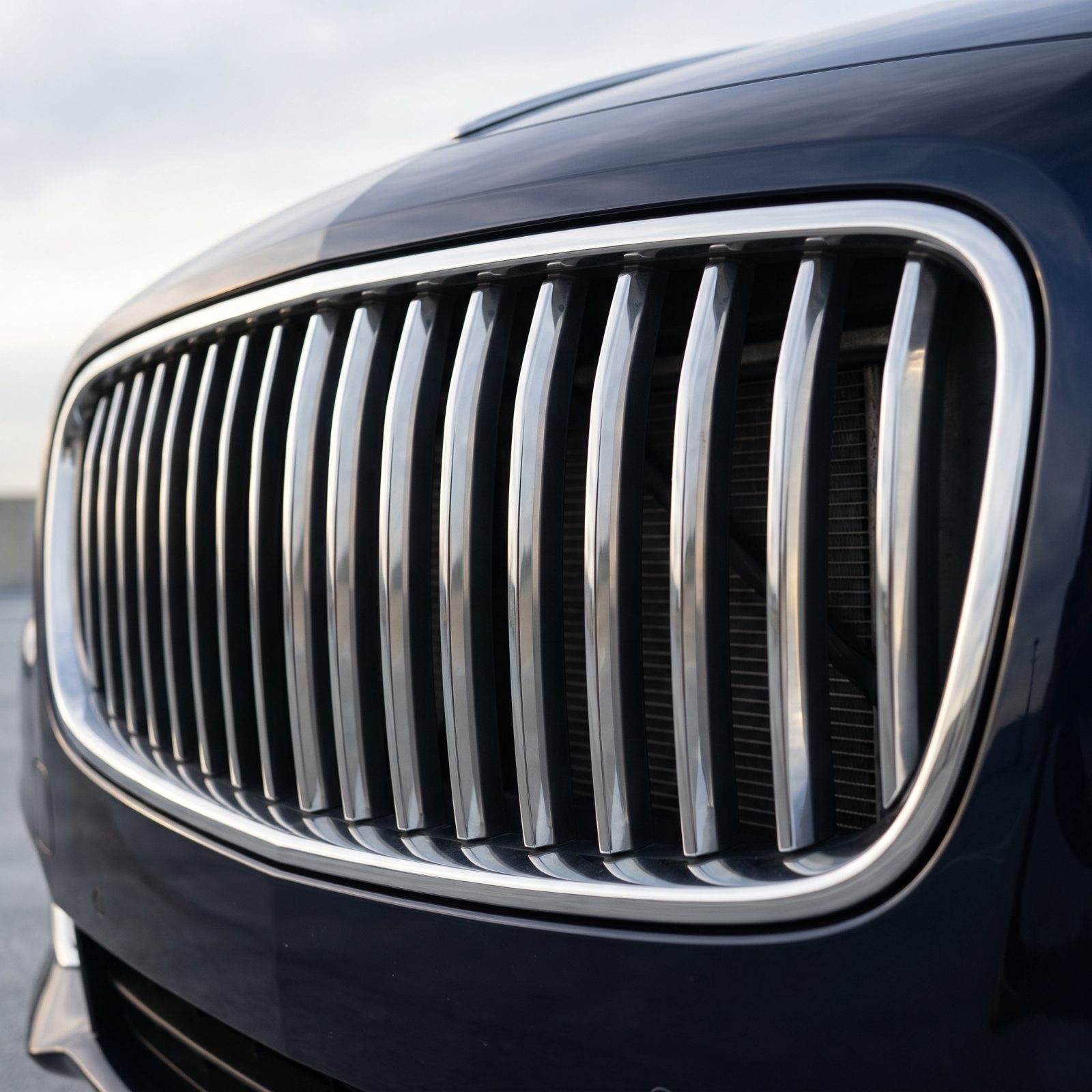
A flat grille printed on the front of a car looks like a decal. A tall, upright grille with actual depth behind the bars looks like a building entrance.
The depth is the tell. When vertical chrome slats recede into a genuine recess, each one throws a shadow, and the whole face gains dimension that light plays across all day. It signals that somebody spent money on tooling and cooling and shape instead of stamping a cheap molded panel. The upright formality borrows from a grand doorway on purpose — you stand in front of it the same way, which is exactly the feeling they’re selling.
A Fine-Mesh Metal Grille Instead of Molded Plastic
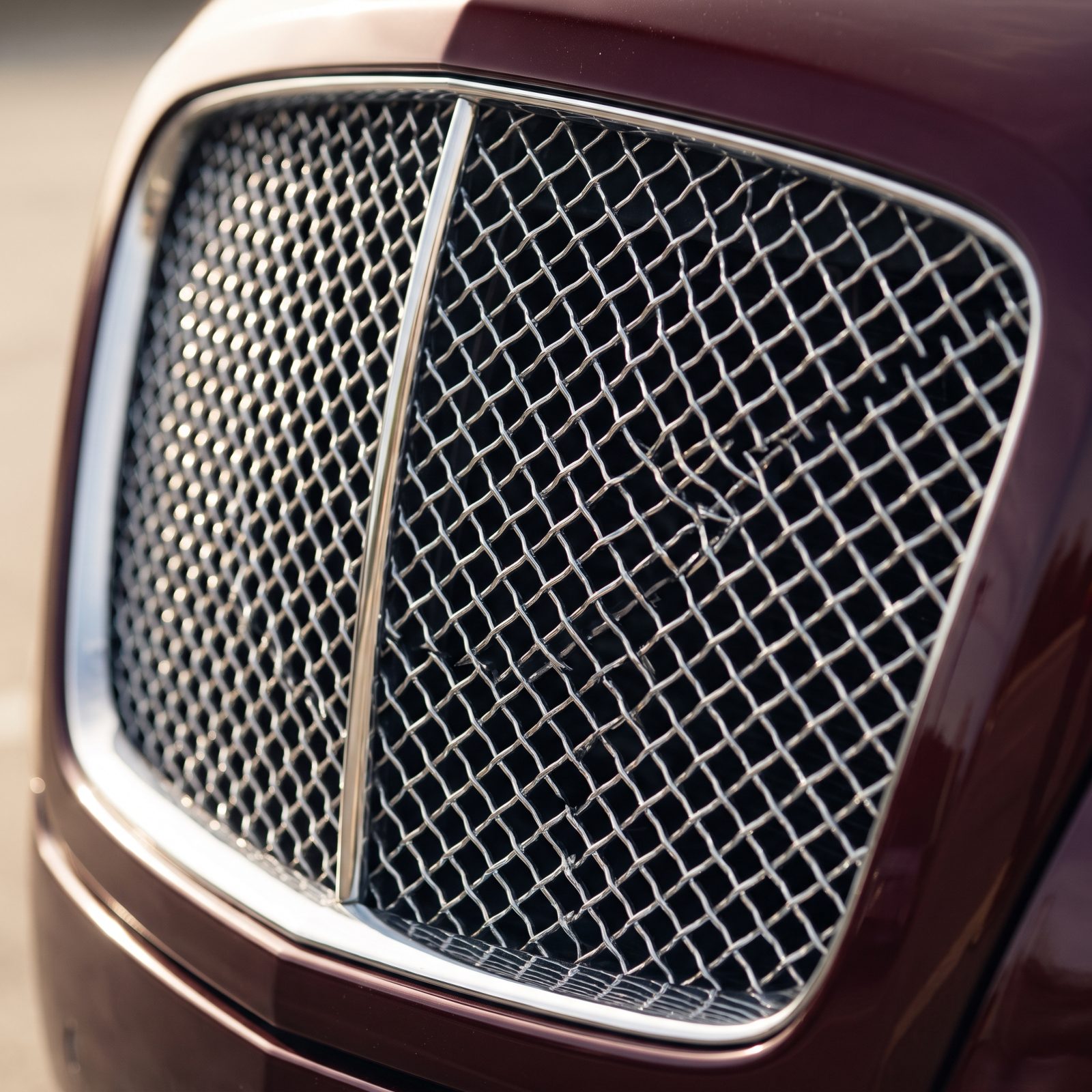
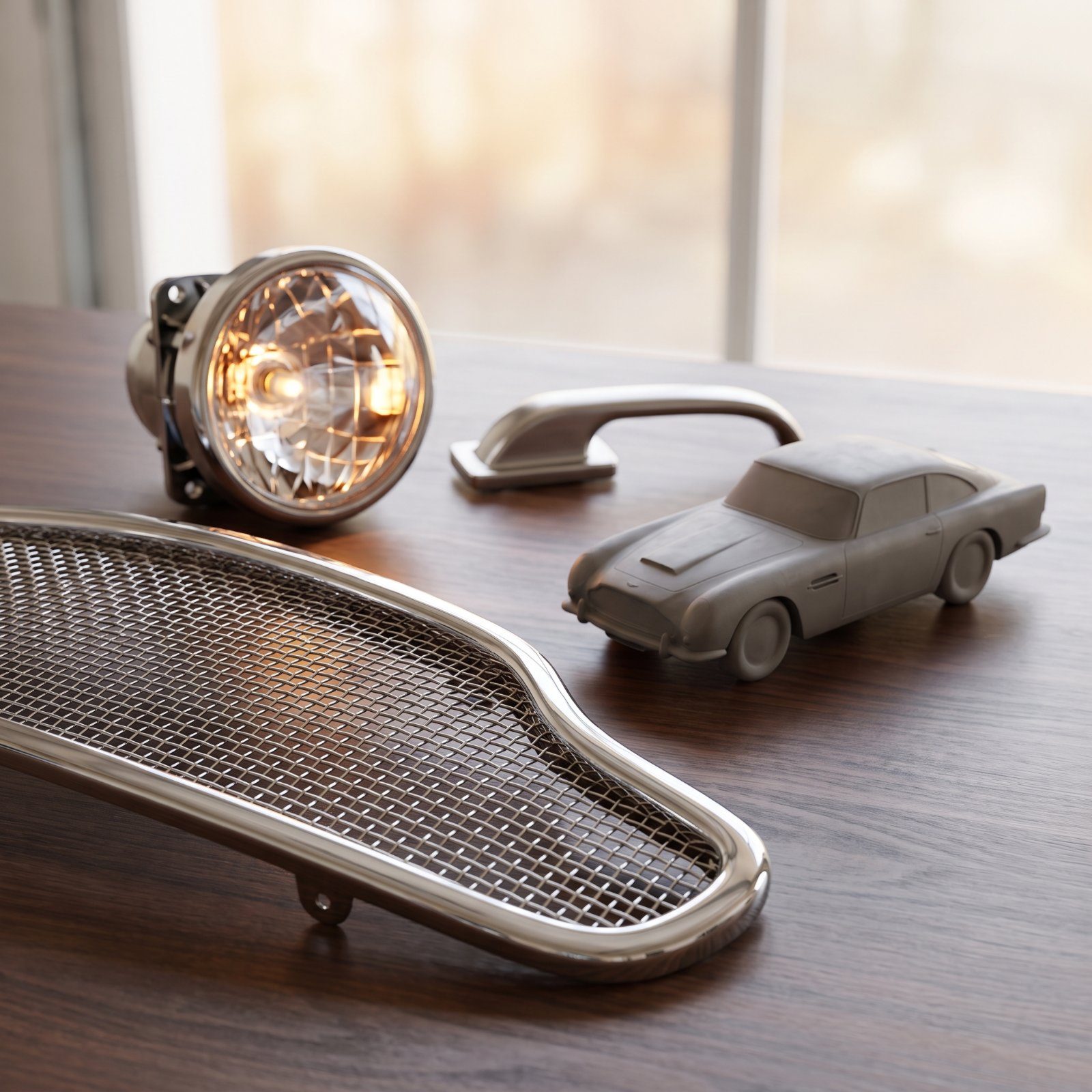
Here’s a tell almost nobody names out loud. Walk up to a grille and look at the weave. Real cars use fine woven metal mesh. Pretenders use a single molded plastic panel painted silver, with a texture that goes blurry and dead the closer you get.
Metal mesh has depth. Light catches each individual strand and throws tiny sparkles, and the pattern stays sharp at any distance. Plastic goes flat and cheap under close inspection. Small cost difference in parts, large difference in how the car reads from two feet away. And the people who buy these cars are the people who walk up and look.
Hidden Headlamps Leaving an Unbroken Nose
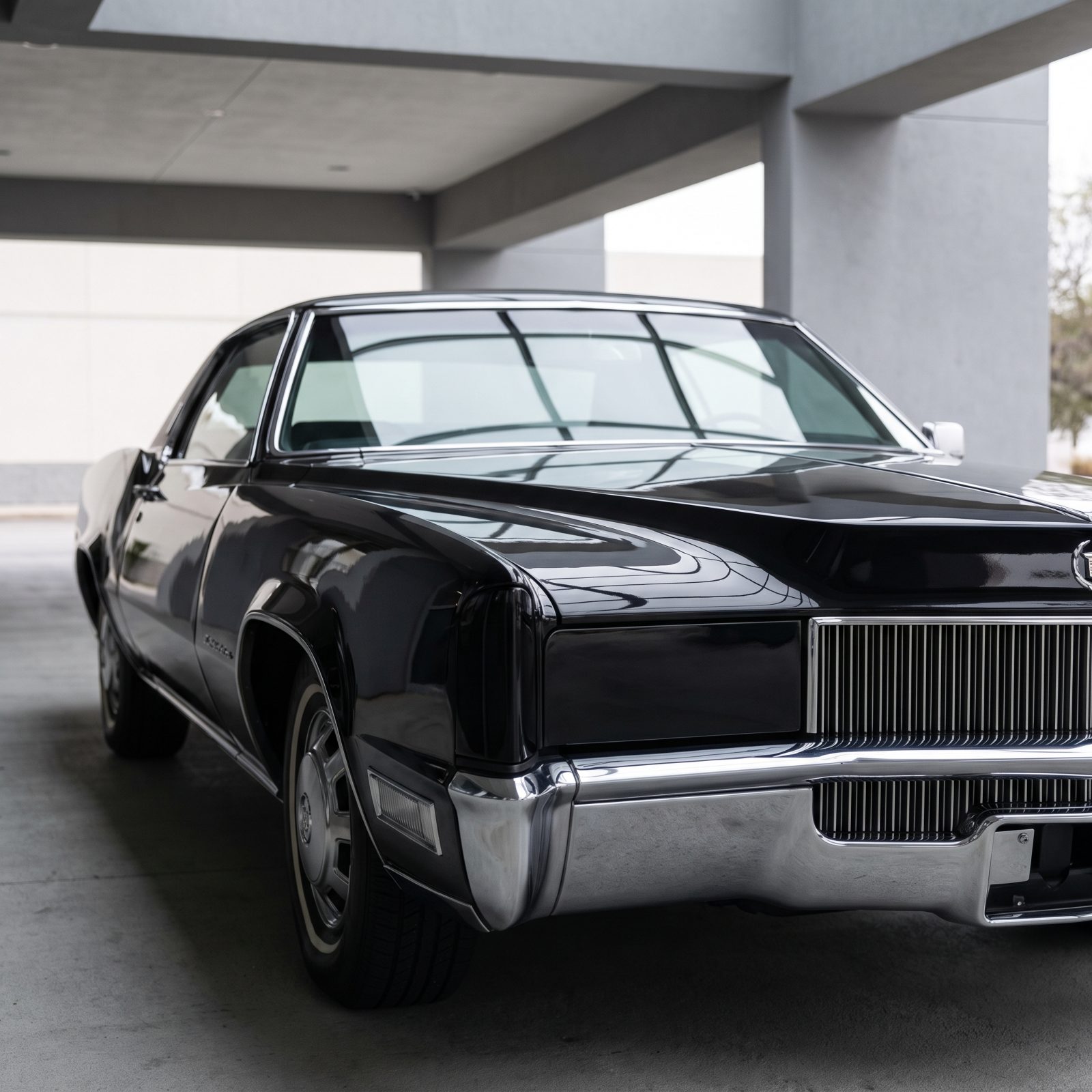
Headlamps are honest about one thing: they break up the front of a car. Two round or rectangular eyes staring out interrupt whatever clean shape the designer wanted.
So the expensive answer was to hide them — vacuum-operated doors, electric motors, flip-up panels, all built to give the car a smooth unbroken nose by day and reveal the lamps only at night. Pure theater, and wonderful theater at that. The nose stays sculptural and calm during daylight, and then at dusk the covers roll back and the car wakes up. That little mechanical reveal told you somebody spent real money on a part you only use when it’s dark.
Jeweled Projector Lenses Visible in Daylight
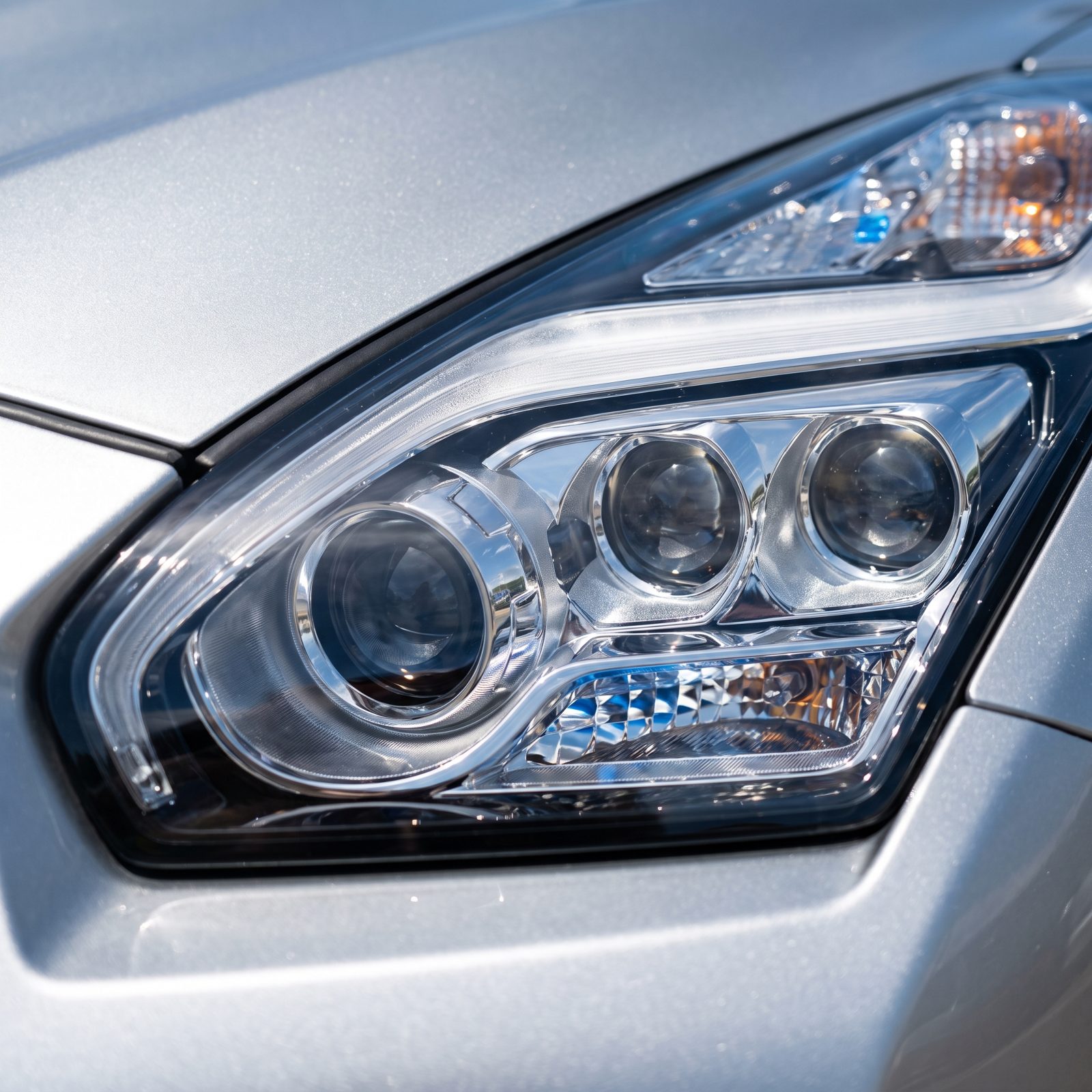
Switch a headlamp off and most of them go dead and boring. The good ones don’t.
Jeweled projector lenses are built to look like cut crystal in broad daylight, lamps off, nobody driving. Little chrome bezels, faceted reflectors, precise glass that catches sun and throws it back in tiny bright points. The idea? The headlamp is a piece of jewelry mounted on the fender, not just a tool for seeing at night.
I love this detail because it’s effort spent purely on the standing-still experience. The car is parked, doing nothing, and the lamp is still showing off.
Headlamp Washers Integrated Into the Bumper
Would you like to save this?
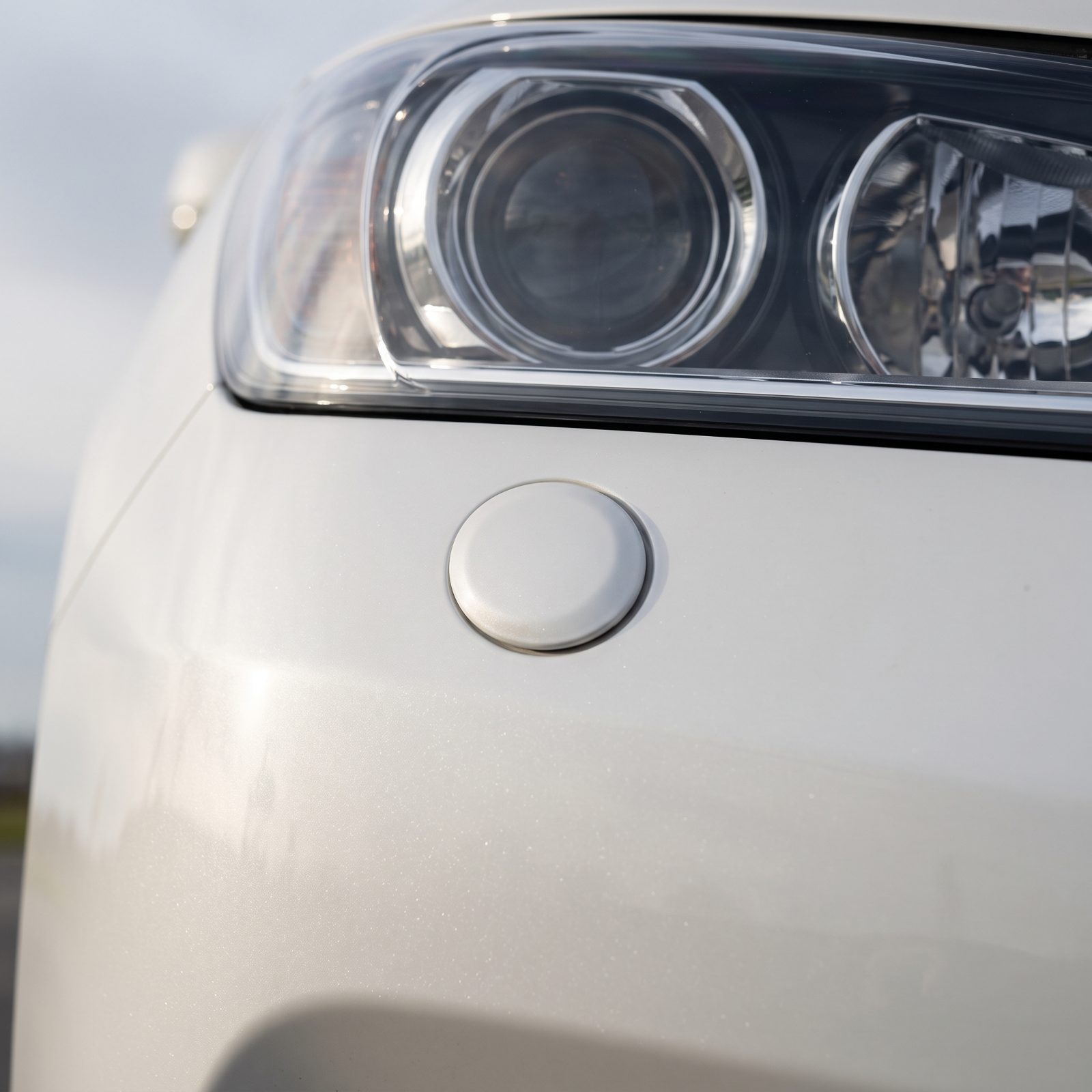
Nobody buys a car for the headlamp washers. That’s exactly why they signal luxury.
A little pop-up jet or a flush nozzle tucked into the bumper that cleans your lamps automatically is the definition of money spent where almost nobody will notice. It solves a problem most drivers never even think about. The presence of that tiny system tells you the whole car was engineered past the point of necessity, into the territory of why not.
Spotting the washer cap in the bumper is a quiet little handshake between the car and anyone who knows to look. Most people walk right past it.
Welcome Lights That Sweep Across the Body
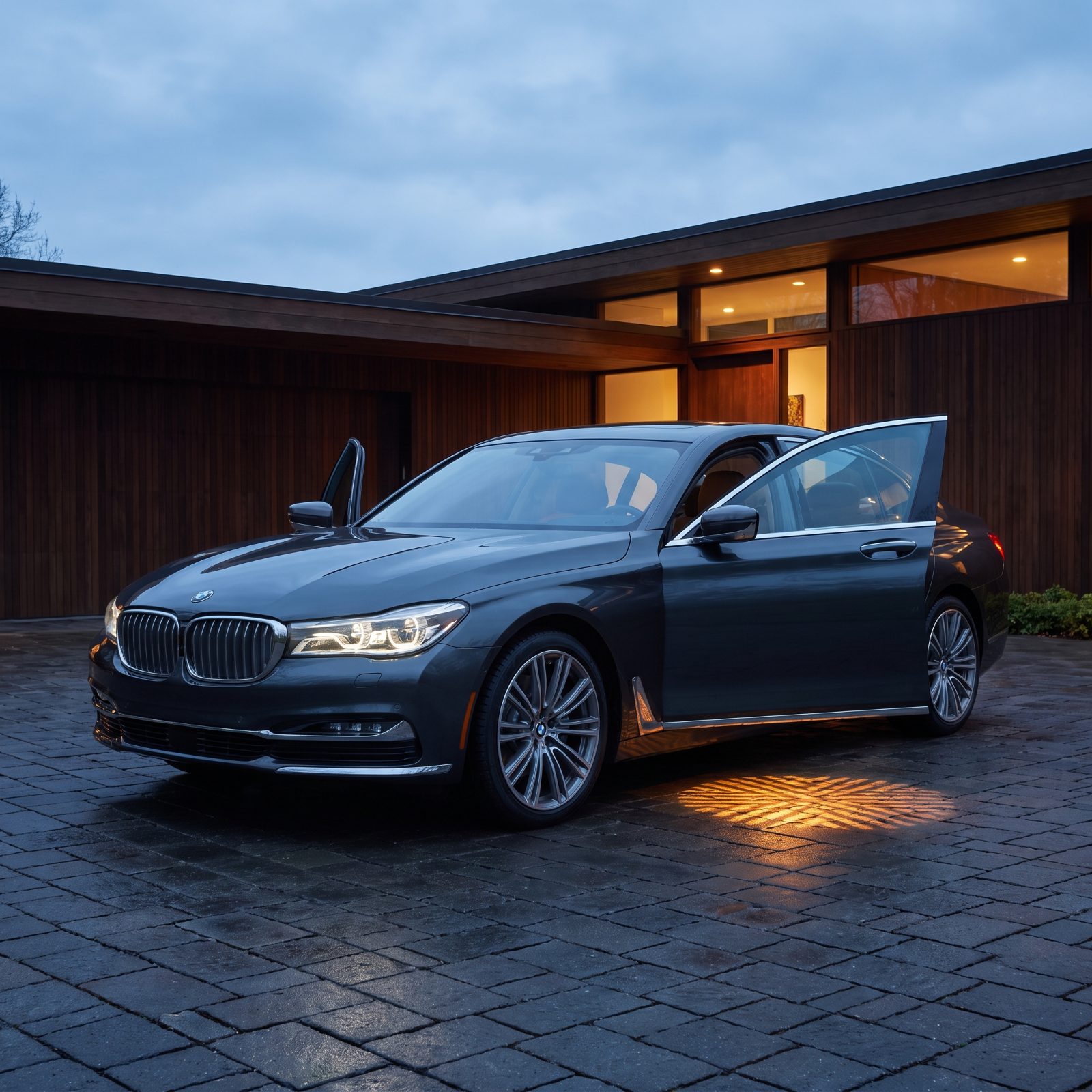
The newest version of this whole game happens before you even reach the car. Walk toward a modern flagship with the key in your pocket and it notices.
Puddle lights glow on the ground by the doors. The headlamps and running lights animate in a sweep. Handles light up or ease out to meet your hand. It’s a greeting, deliberate, a little choreographed hello in the ten seconds before you touch anything.
The old cars did their talking through metal and proportion. This one does it through light and timing — same goal, new tools. The car is still making its case before the door opens. It’s just learned how to put on a small show while it does.
An Illuminated Grille Emblem
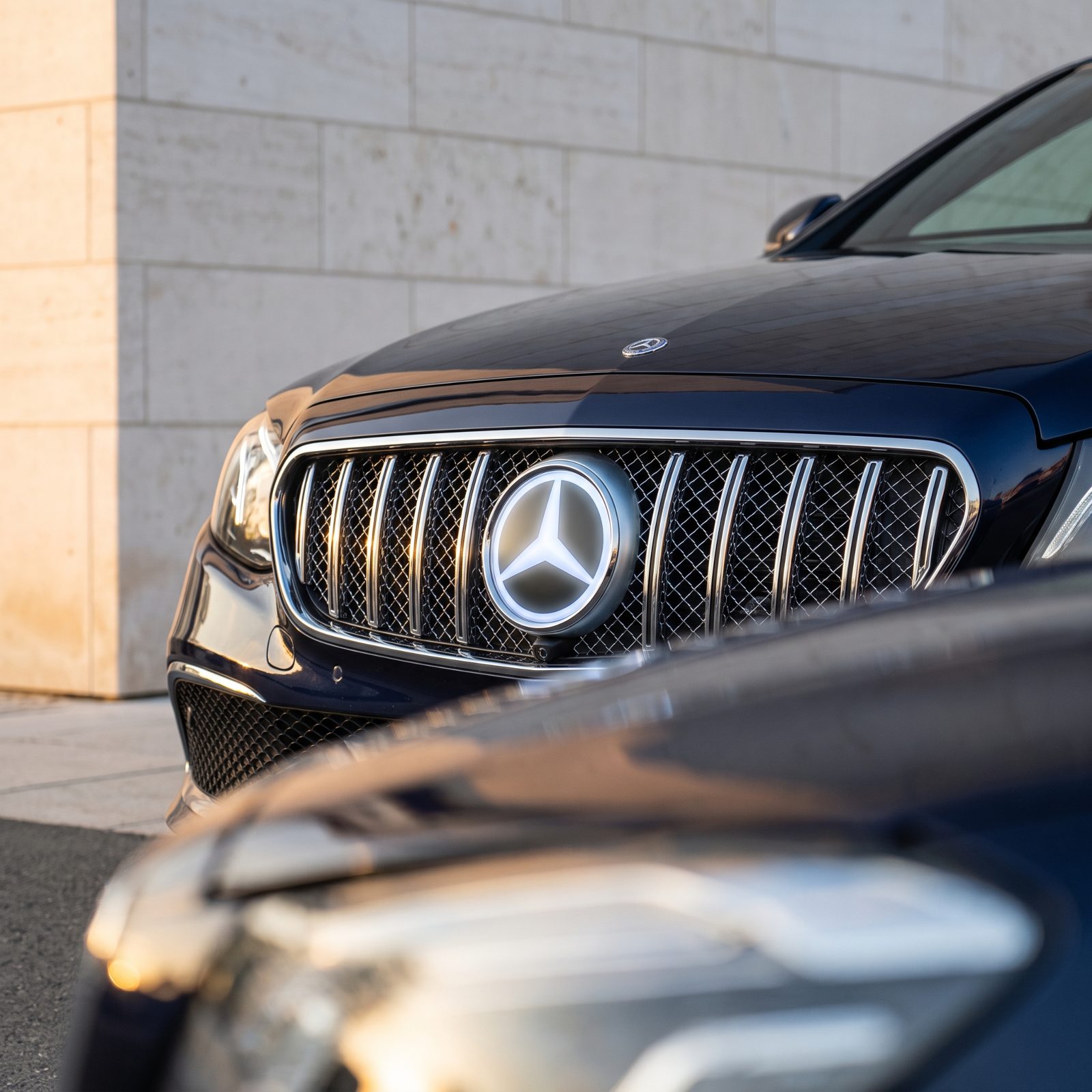
A lit badge does one job. It tells you the car is awake before the engine turns over, so you walk up to it in a dark parking structure and the emblem is already glowing — a small signal that this thing was built to greet you.
It reads as expensive because for decades it was. The wiring, the diffuser behind the crest, the legal wrangling in markets that banned lit front emblems — that’s effort you can see from thirty feet.
A Deep Gloss Paint Finish With Visible Clarity
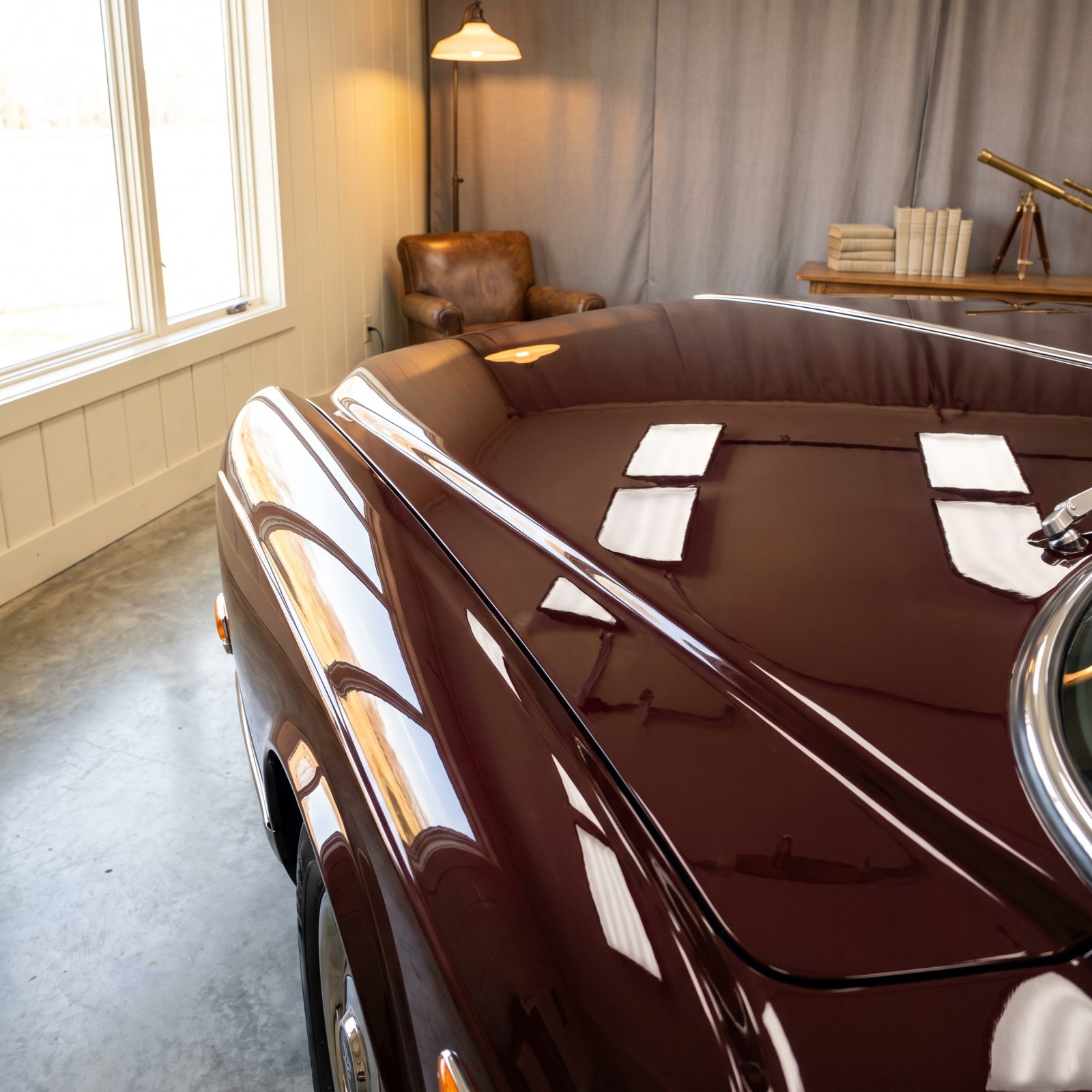
You can feel the difference before you can name it. Cheap paint scatters the reflection, but a proper finish holds it, so a cloud or a lamppost lands on the panel as a clean mirror instead of a wobble.
That clarity comes from layers and sanding between them — color coat under clear coat under more clear, each one flattened before the next. The result is depth you look into, not just at. Run your eye down a wet-looking fender and the reflection should travel without rippling. When it ripples? Somebody rushed.
Two-Tone Paint Separated by a Fine Coachline
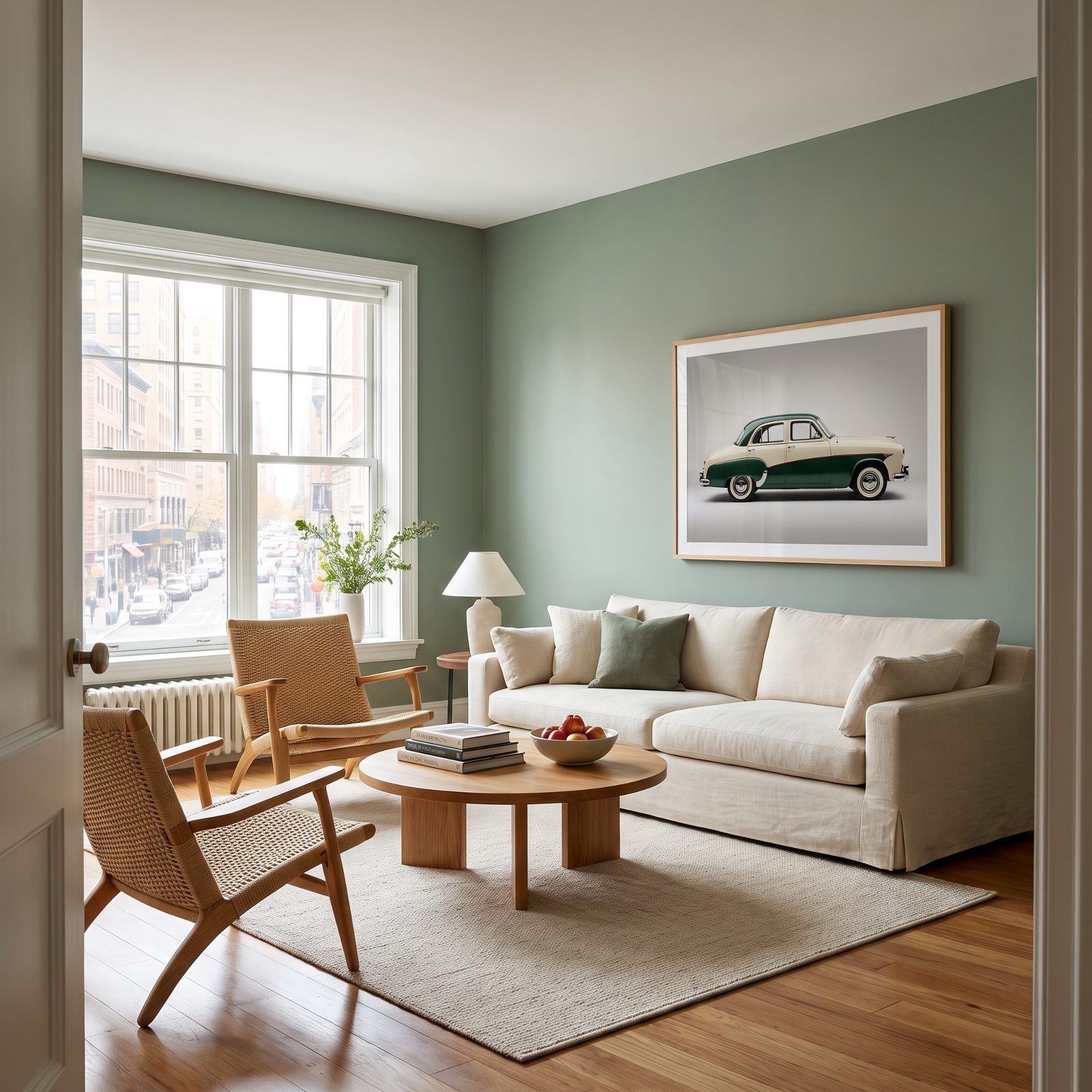
Two colors on one car is a confession of confidence. Get the line wrong and the whole thing looks like a mismatched repair; get it right and the car reads a foot longer than it is.
The trick is where the division sits. Low along the body it grounds the car and stretches it. And that coachline between the tones has to be dead straight across a curved panel — harder than it sounds, which is why it used to command a premium at the order desk.
Hand-Painted Pinstripes
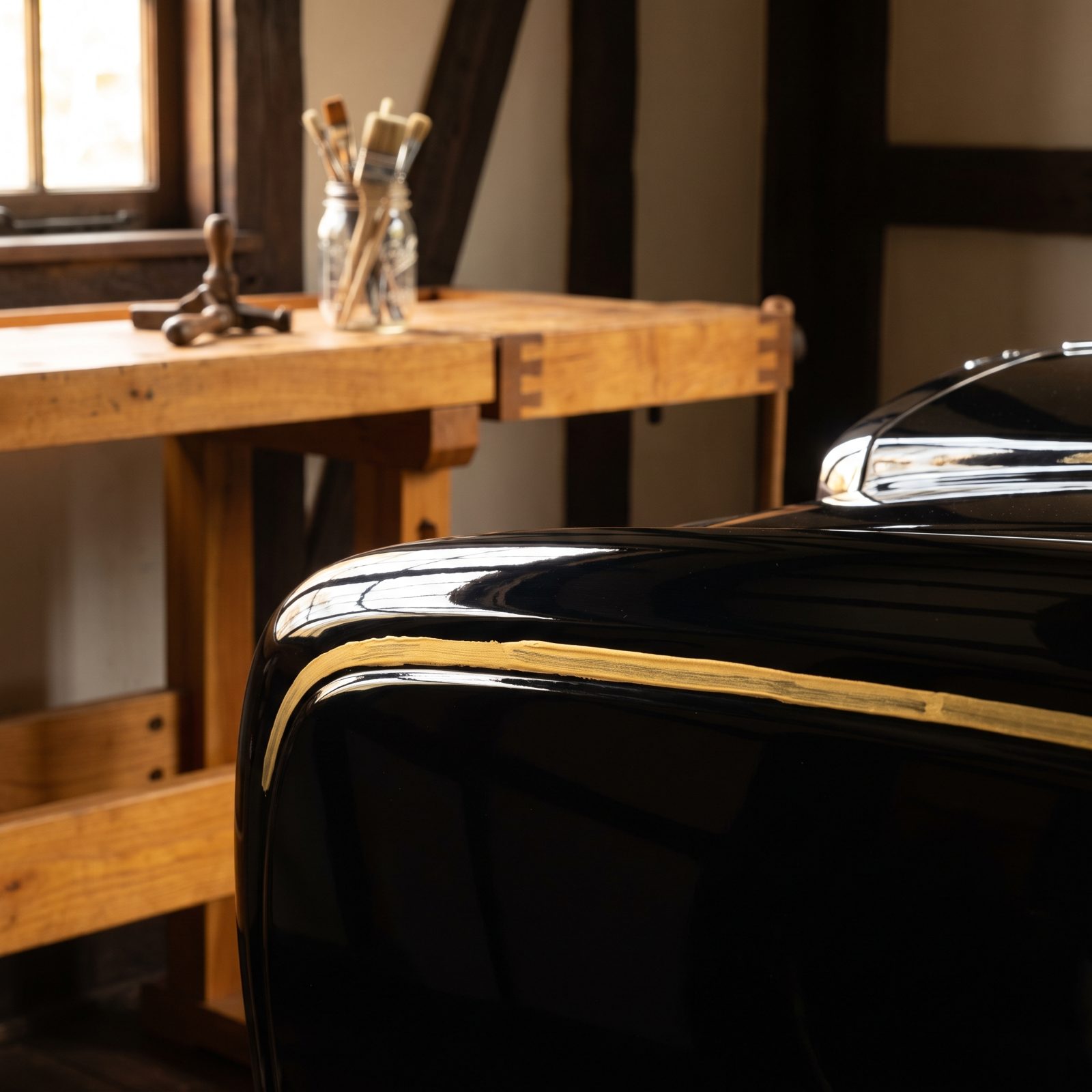
A sticker stripe is uniform. A brushed one breathes. That’s the tell.
Look close at a hand-laid pinstripe and you’ll see the line thicken and thin where a human wrist loaded the brush and let it run. The old-timers used a long-bristled dagger brush, steadied one pinky on the panel, and laid down a single pass — no masking, no going back. You either had the hand or you didn’t.
It survived into luxury cars long after decals were cheaper because the slight imperfection is the whole point. It says a person stood here.
Real Stainless-Steel Body Trim
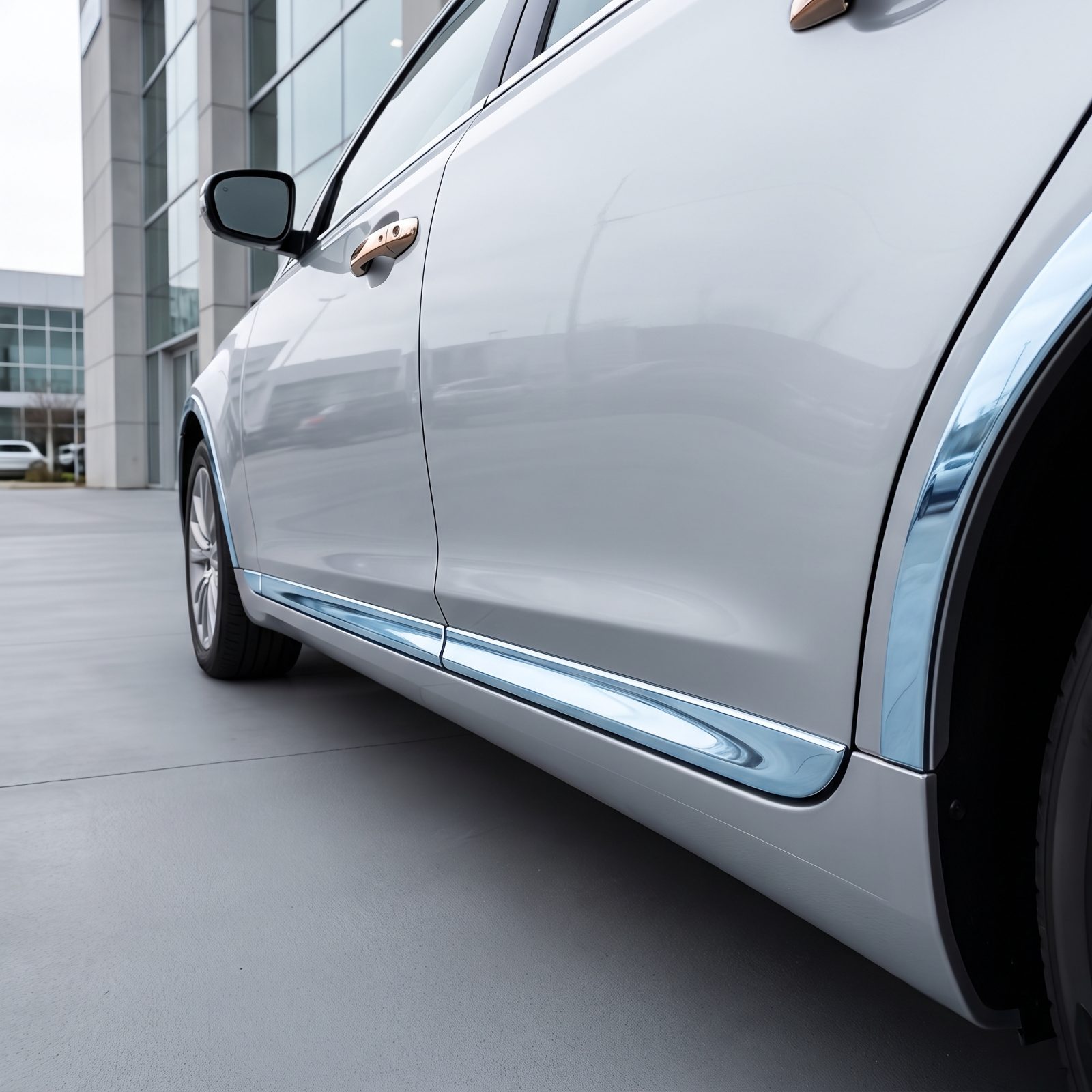
Plastic chrome peels. Stainless doesn’t. That’s the entire argument, and buyers of real luxury always knew it.
Stainless trim weighs something in your hand and throws a cooler, harder reflection than plated plastic. Thirty years on a car it’s still bright while the cheap stuff has gone cloudy and started lifting at the clips. Automakers moved to painted and plastic trim to save money and weight — and you can usually spot which cars skipped that corner, because the brightwork still looks alive.
Brightwork Around Every Side Window
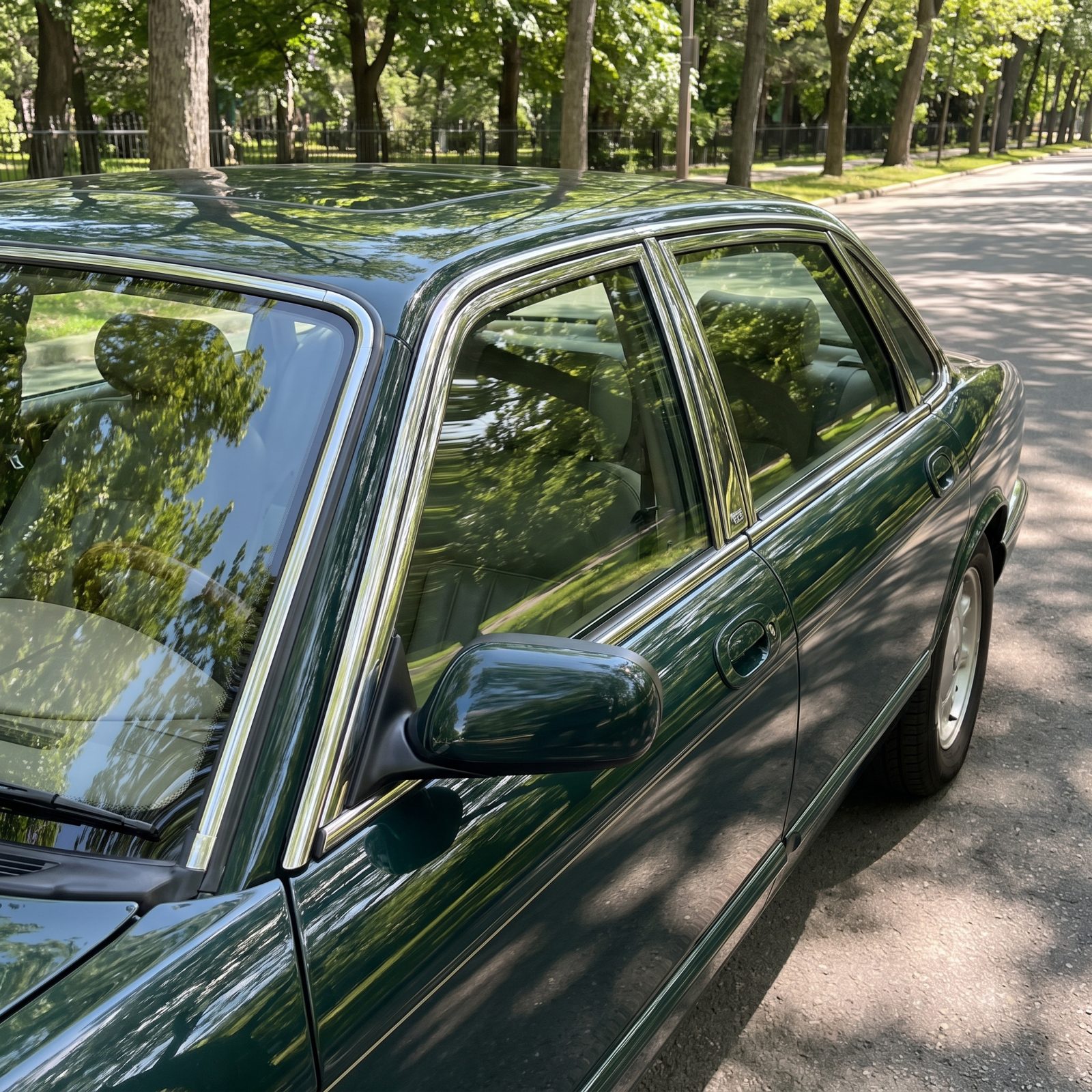
Trace a bright line all the way around the glass and the roof seems to float. That’s the job full window brightwork does — it outlines the greenhouse and lifts it off the body.
Modern cars go the opposite way now with blacked-out trim, which reads sporty and sinister. Fine. But the old chrome surround was a quiet luxury signal, and it took real work: separate strips, mitered corners, polished by hand to meet without a gap.
Power-Deploying Flush Door Handles
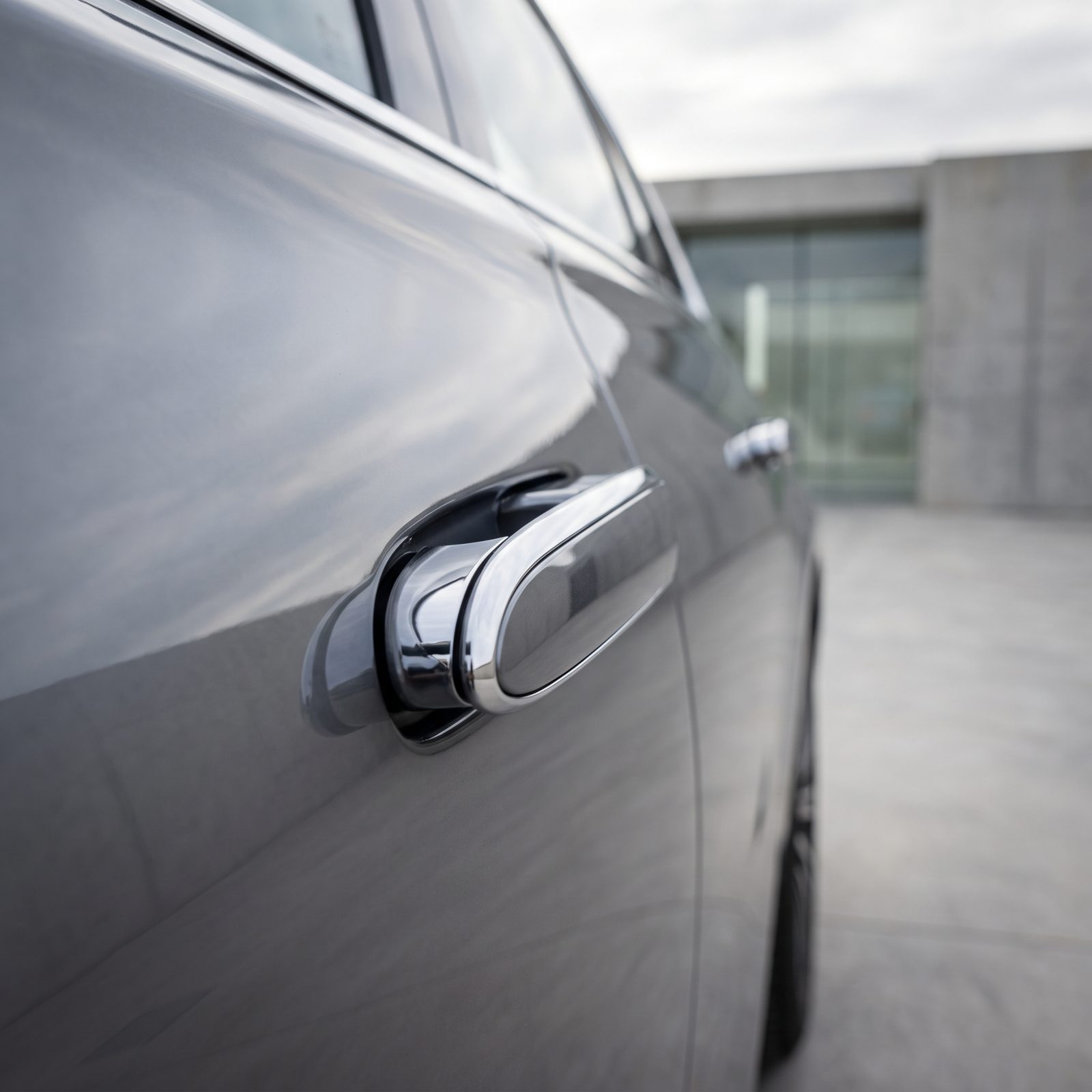
The door looks like it has no handle at all. You walk up, and the handle presents itself to you. That little motion is pure theater, and theater is the point.
Flush handles started as an aerodynamic play, shaving drag by keeping the body surface unbroken. Then the deploy sequence became a greeting ritual, a car acknowledging you before you touch it. Owners love it — right up until a frozen winter morning when the mechanism ices over and refuses to extend. Nobody mentions that in the brochure.
Soft-Close Doors That Draw Themselves Shut
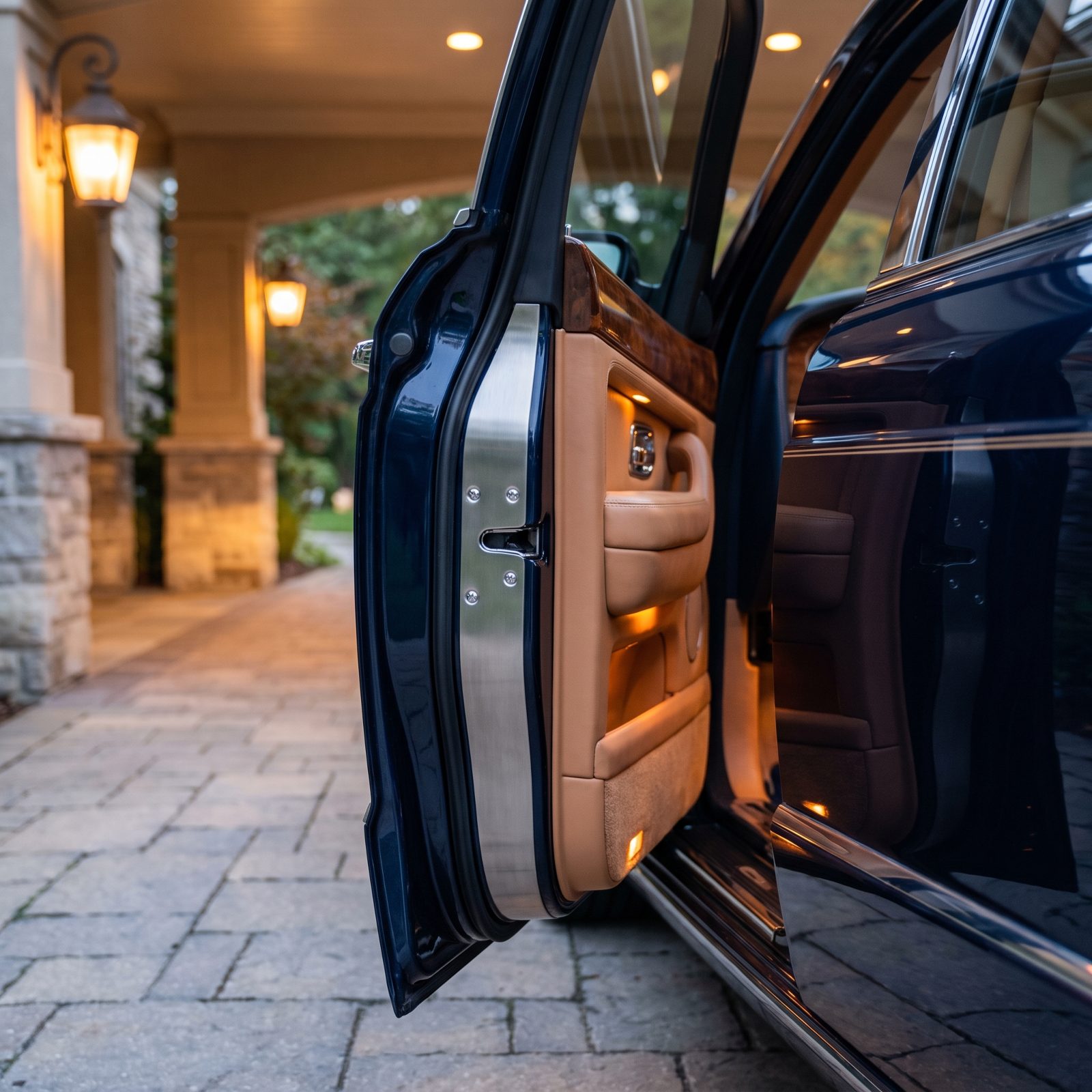
You give the door a gentle push. It stops an inch short, pauses, then pulls itself the rest of the way with a soft mechanical sigh. No slam. No second try.
That sound — or rather the absence of one — tells your ear the car is engineered to a different standard. A motorized cinch latch does the work, grabbing the striker and drawing the heavy door home. It solves a genuine problem on big doors that need force to seal, and it turns the ugliest part of getting in into something that feels deliberate and calm.
Frameless Side Glass
Would you like to save this?
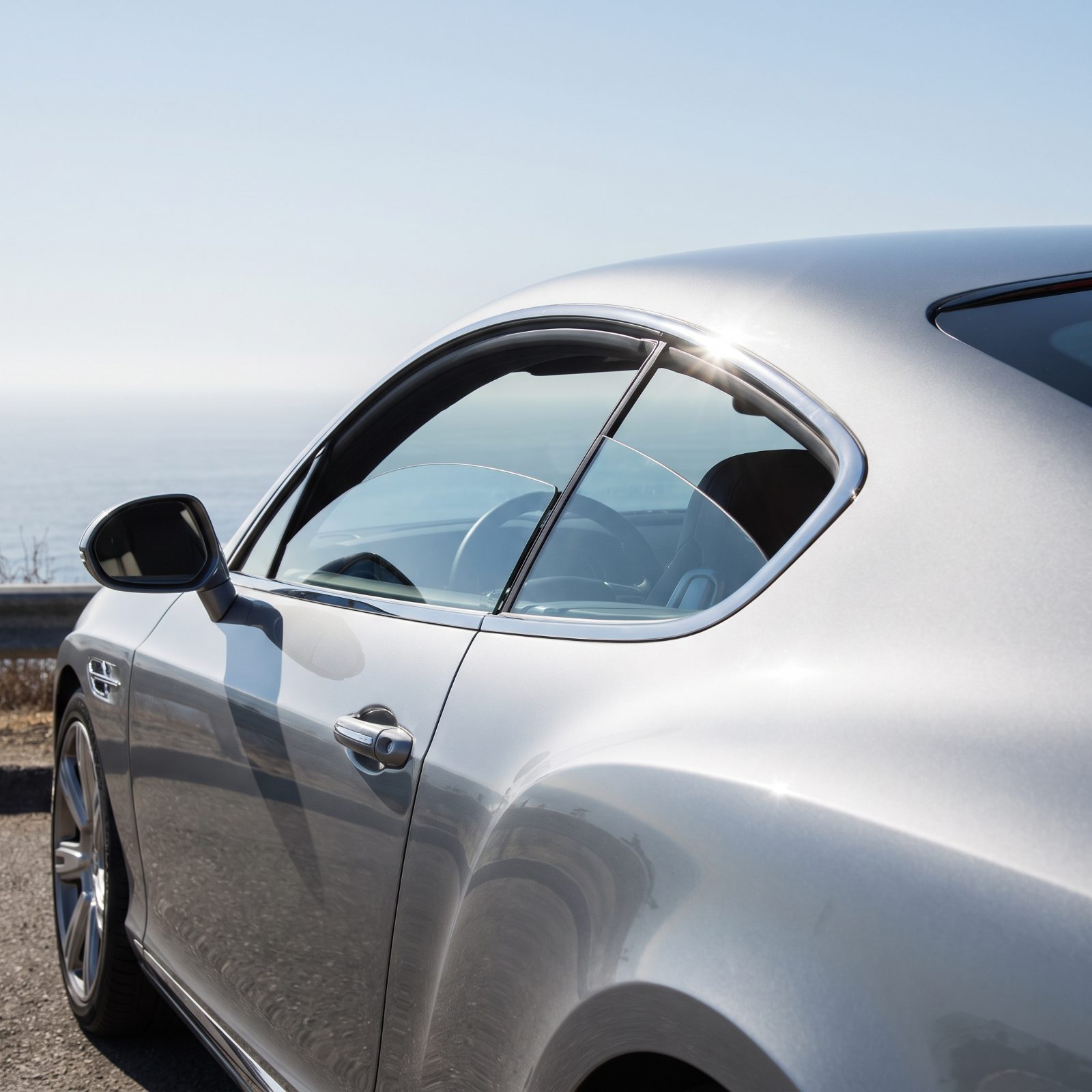
Roll the window down and the glass disappears into the door with no metal frame chasing it up and over. That clean door-top line is the mark of a coupe that wasn’t built to a budget.
Frameless glass is harder to seal, harder to keep quiet at speed, harder to engineer so it drops a hair when the door opens and rises to meet the body when it shuts. That’s why you mostly saw it on the better coupes. It looks effortless, which means someone sweated it.
Pillarless Hardtop Construction
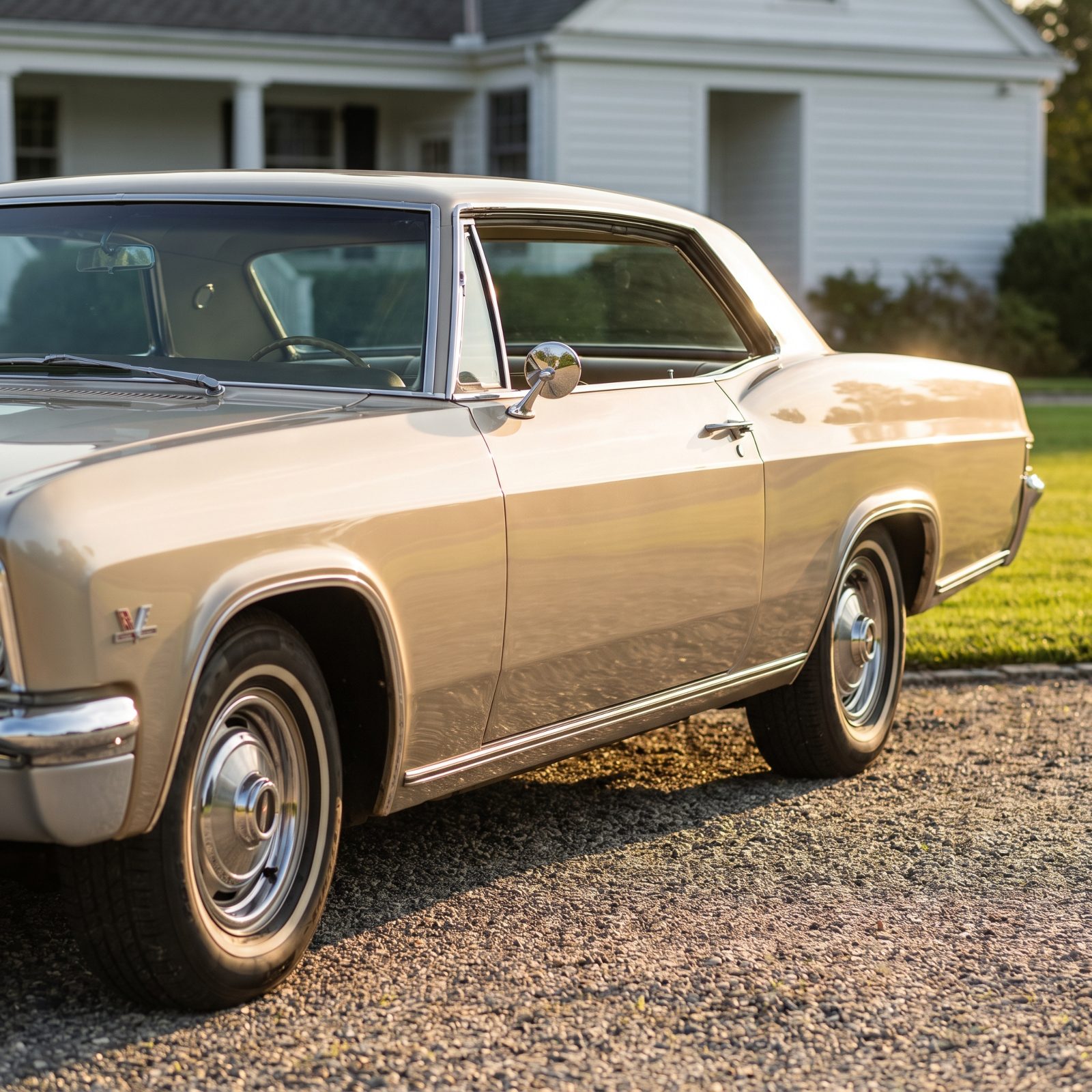
Drop all the windows on a true hardtop and the roof floats. No post between the doors, nothing interrupting the open span, so from the curb the whole upper half of the car becomes air and light.
It was the ultimate open-air flourish short of a convertible, and it cost a fortune to build because the body had to stay rigid without the pillar doing its usual structural job. Crash standards eventually killed it. Engineers couldn’t keep the look and pass the rollover tests, so the pillarless hardtop became one of those details you only see parked at a show now — and everyone walking past slows down.
No post between the doors, nothing interrupting the view. The roof just floats.
An Extra-Long Rear Door That Promised a Throne
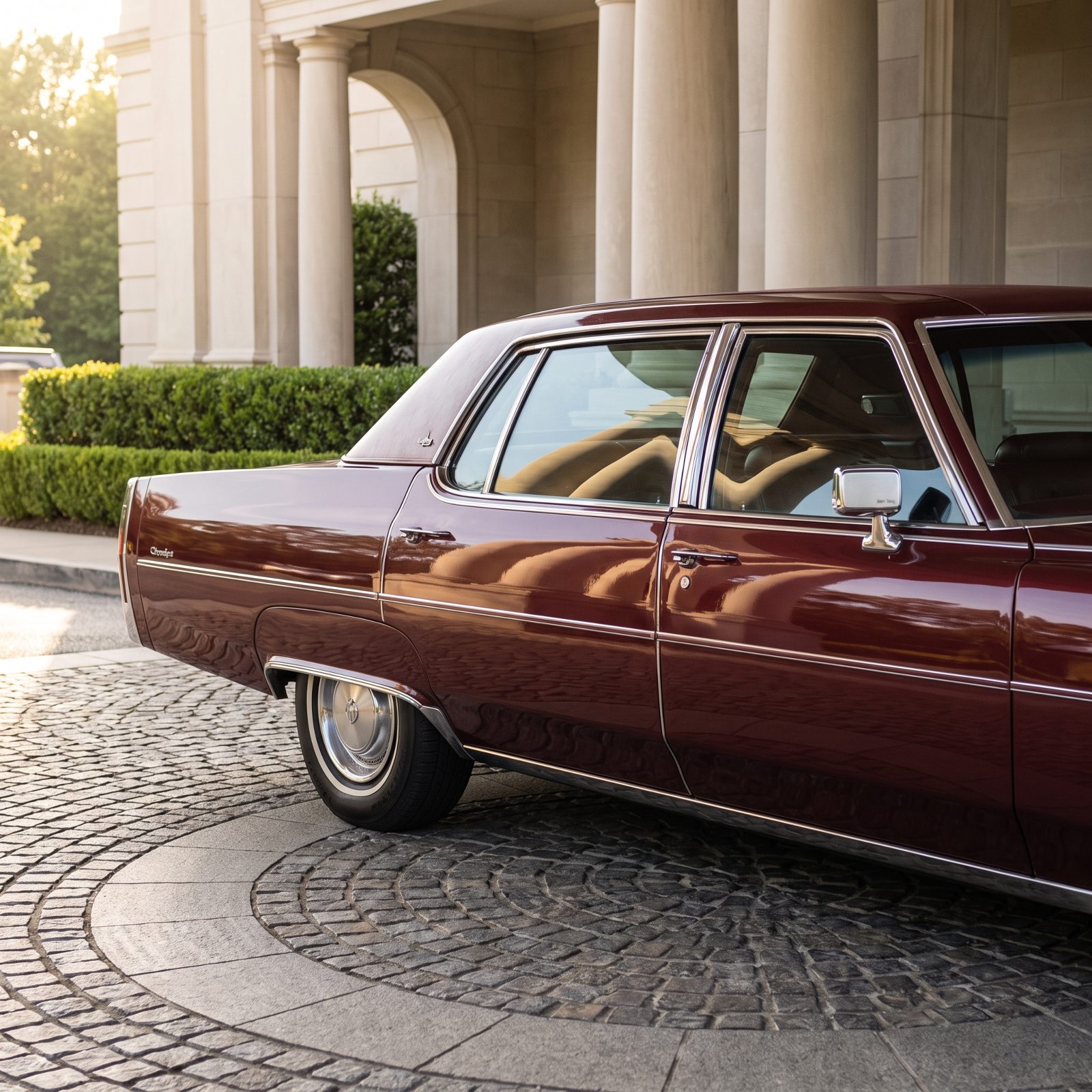
You could measure a car’s self-importance in the length of its rear door. Longer door, wider gate — and a wide enough gate insisted you step in rather than climb in.
Designers stretched that panel for one reason: a man in a long coat should never have to fold himself to sit down. The door swings open, the sill drops away, and the whole gesture reads as an invitation before anybody says a word. Short doors said errands. Long doors said occasion.
A Thick Formal C-Pillar Built Like a Castle Wall
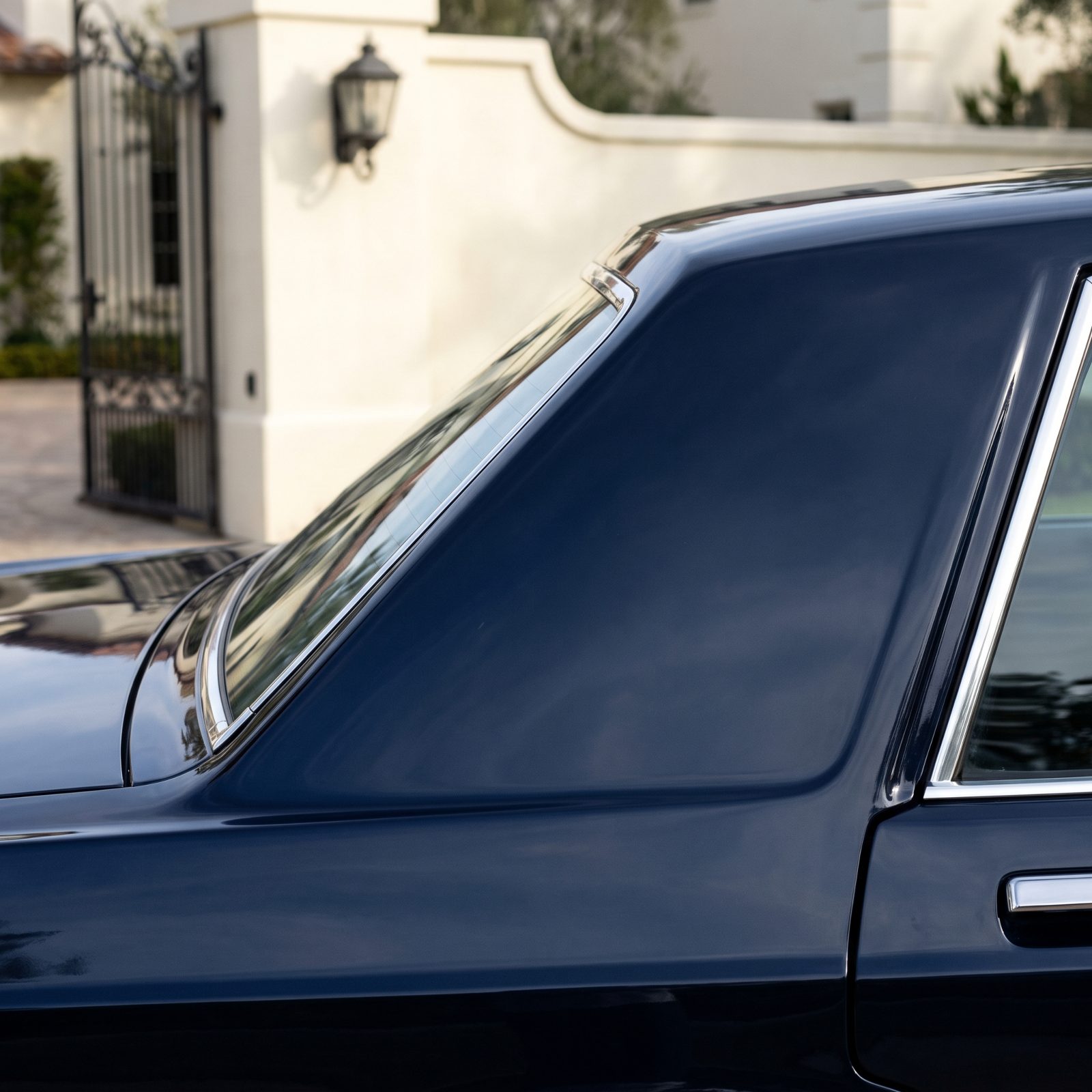
A thin pillar is honest. A thick one is discreet.
The heavy formal C-pillar did two jobs at once: it blocked the view inside, so whoever rode back there got privacy without curtains, and it made the rear of the car look solid, closed, protected. Designers knew a sliver of glass felt cheap and exposed. A broad band of painted steel felt like a fortress, and that was the whole point. Glass invites the eye. Sheet metal keeps it out, and keeping the eye out was half of what luxury ever sold.
A Vinyl or Fabric-Covered Formal Roof Faking the Carriage
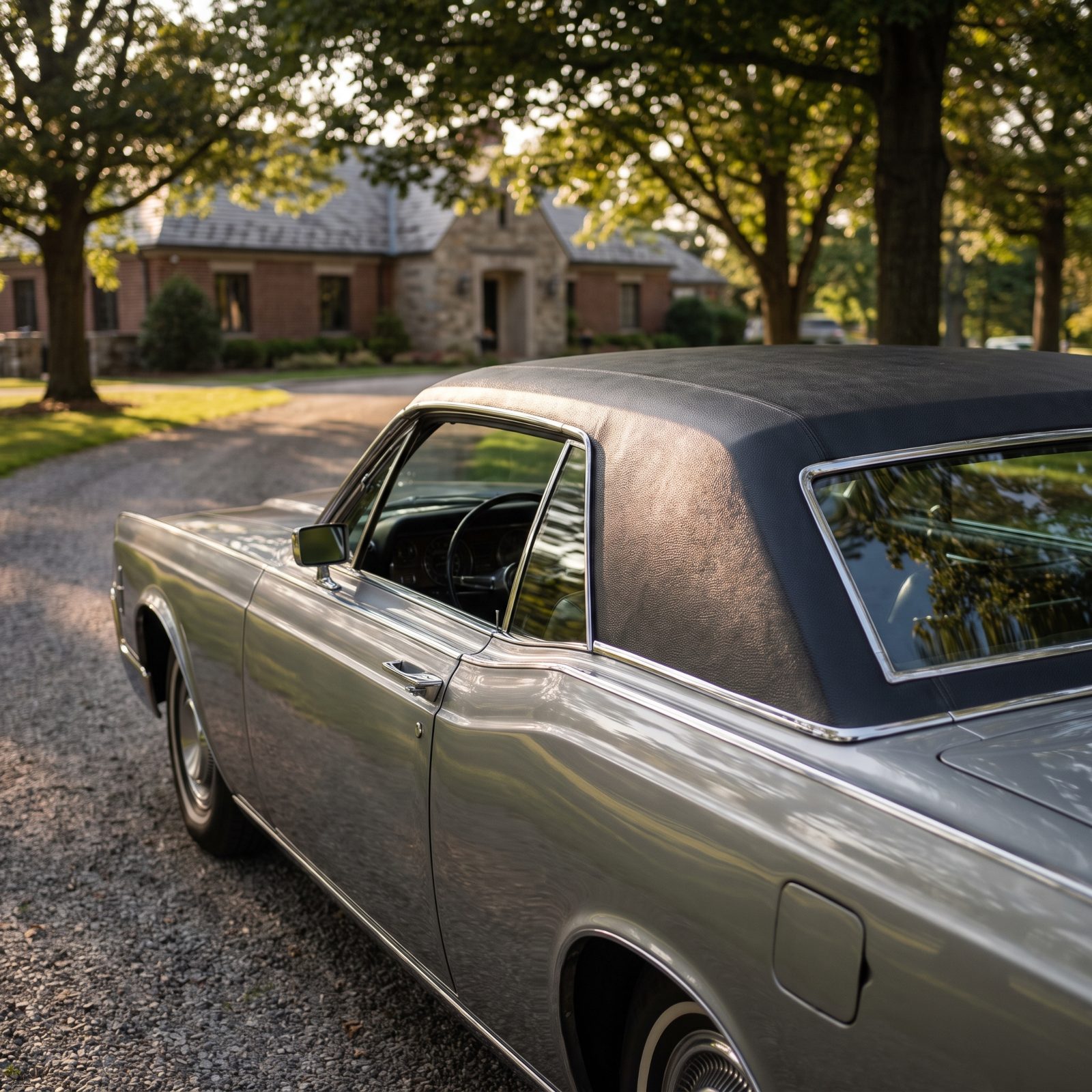
The vinyl top was a costume, and everyone was in on it.
It mimicked the leather and canvas roofs of horse-drawn carriages, back when a covered coach meant you were somebody. By the 1960s the carriage was long gone, but the memory of it clung to the padded roof like a borrowed coat of arms. Grained vinyl — sometimes real cloth on the pricier cars — broke up the metal and slipped in a second color without two-tone paint looking garish.
Opera Windows Set Into the Rear Pillars
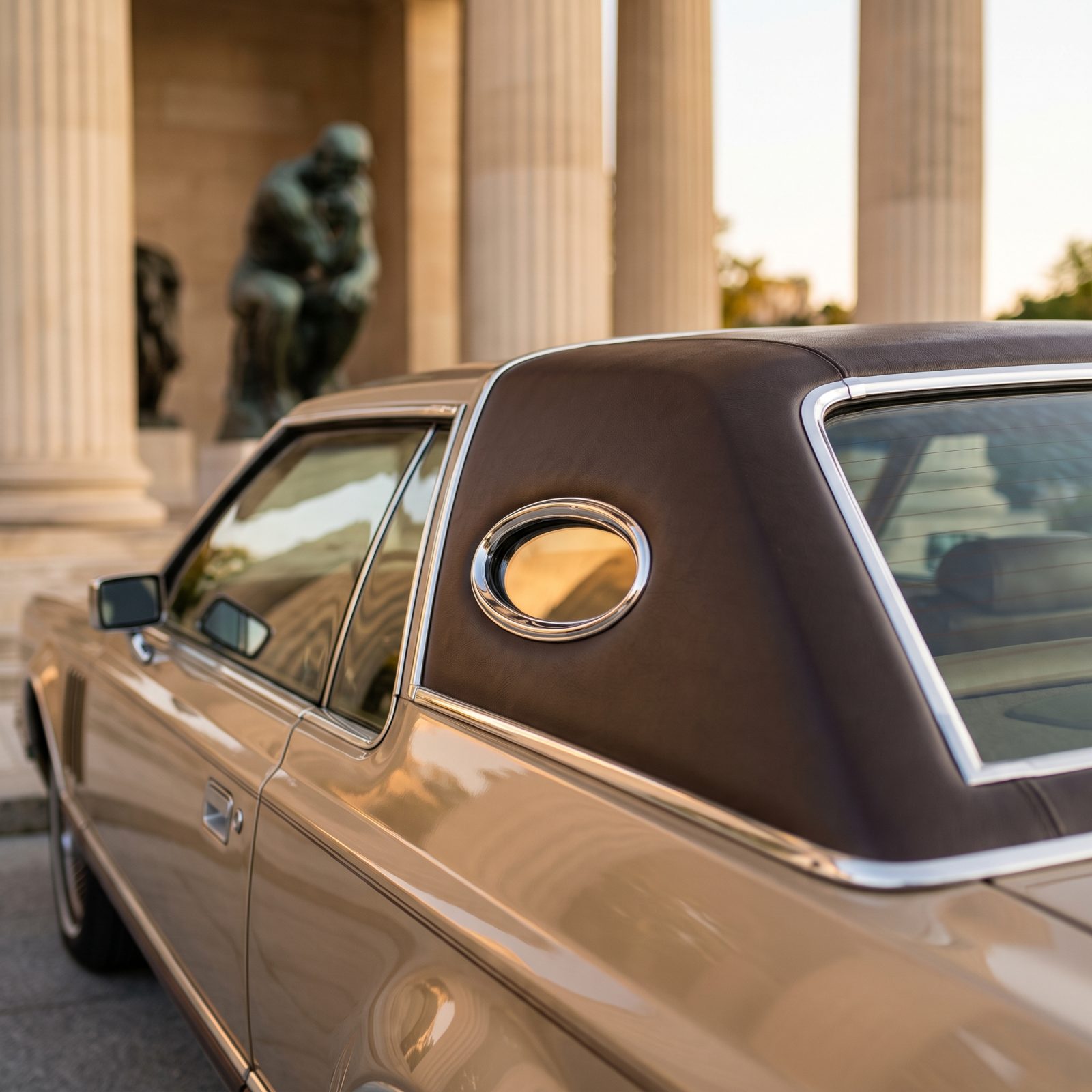
The opera window is the wink in the whole business. You spend all that effort building a thick, private pillar, then cut a tiny decorative window into it that does almost nothing for visibility.
That was the joke and the cleverness of it. The opera window nodded to the little glass ports in formal carriages, where a passenger could glimpse the street while arriving at the theater. On a 1970s coupe it was pure jewelry — often oval, often framed in chrome, sometimes etched with a crest. It said this car has somewhere worth pulling up.
Rear-Hinged Coach Doors That Open Like a Reveal
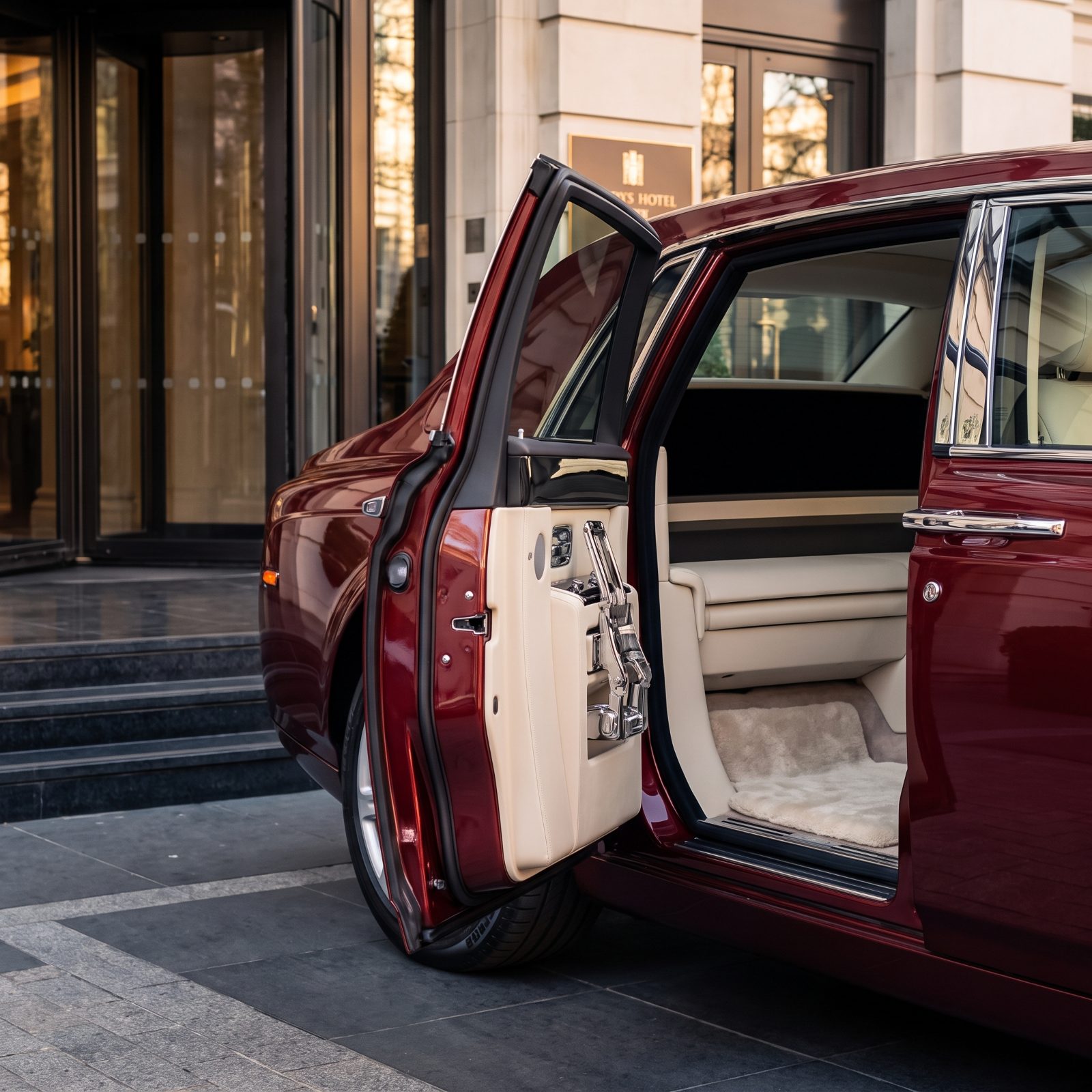
Front door swings forward. Rear door swings back. They meet in the middle, and when both open the whole side of the car falls away.
Coach doors, suicide doors, call them what you like — they make an event of getting out. No B-pillar in your way, so you exit facing forward, feet first, upright. The geometry forces a graceful departure, which is really engineering pretending to be manners. Modern flagships brought them back for exactly that theater, the sense that the car is unfolding to release you.
An Electric Side Step Gliding Into Place
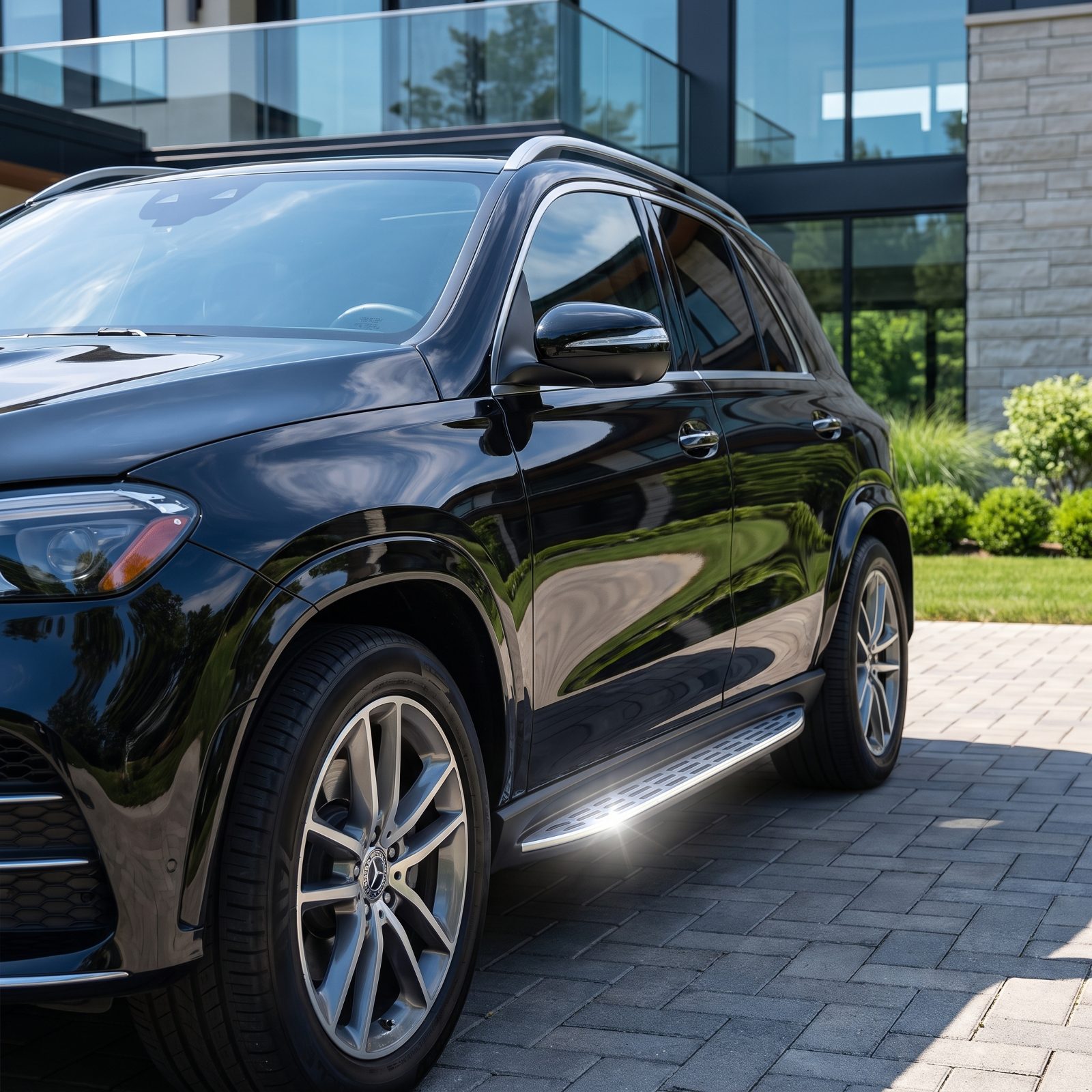
A tall SUV has one bad habit: it makes you clamber. The powered side step erased the clamber.
You walk up, the door senses you, and a machined aluminum plank slides out from under the body to settle at a comfortable height. A small mechanical servant, really, performing its little bow every single time. The old rolling pedestals did the same job for presidents and dowagers climbing into tall carriages — the modern version just hides the motor. The message hasn’t changed a bit: this thing rearranges itself to accommodate you, not the reverse.
Polished Turbine-Style Alloy Wheels Spinning Light
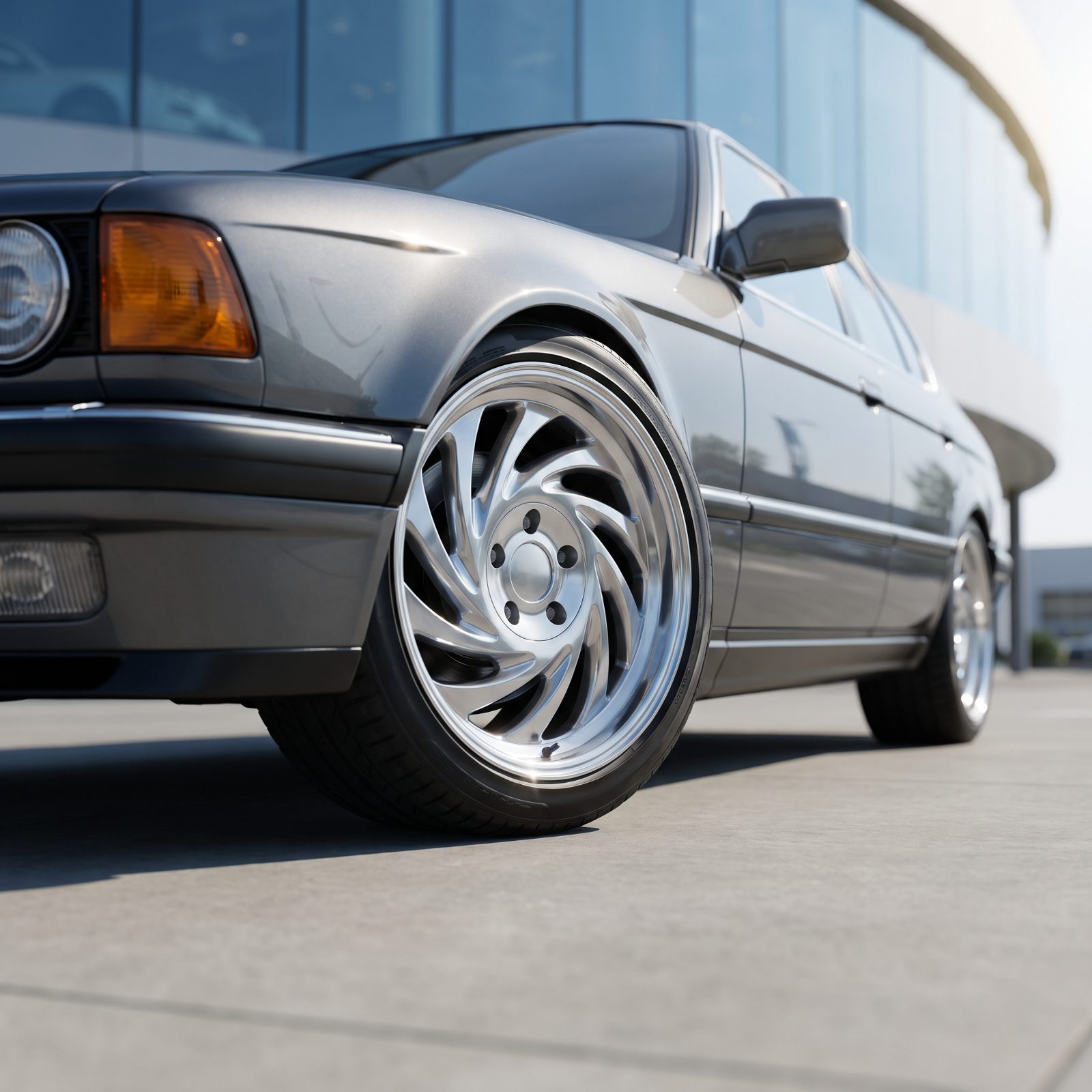
The turbine wheel sold motion while the car stood still.
Those curved, directional spokes looked like a jet engine fan caught mid-spin, and that was deliberate. Designers wanted the wheel to imply speed, aerospace, precision — the whole vocabulary of the machine age, even in a parking lot. Polished alloy threw light in a way a painted steel wheel never could, so the car sparkled from the ground up. People read brightness as expense. They’re usually right.
Large Disc Wheel Covers With Minimal Openings
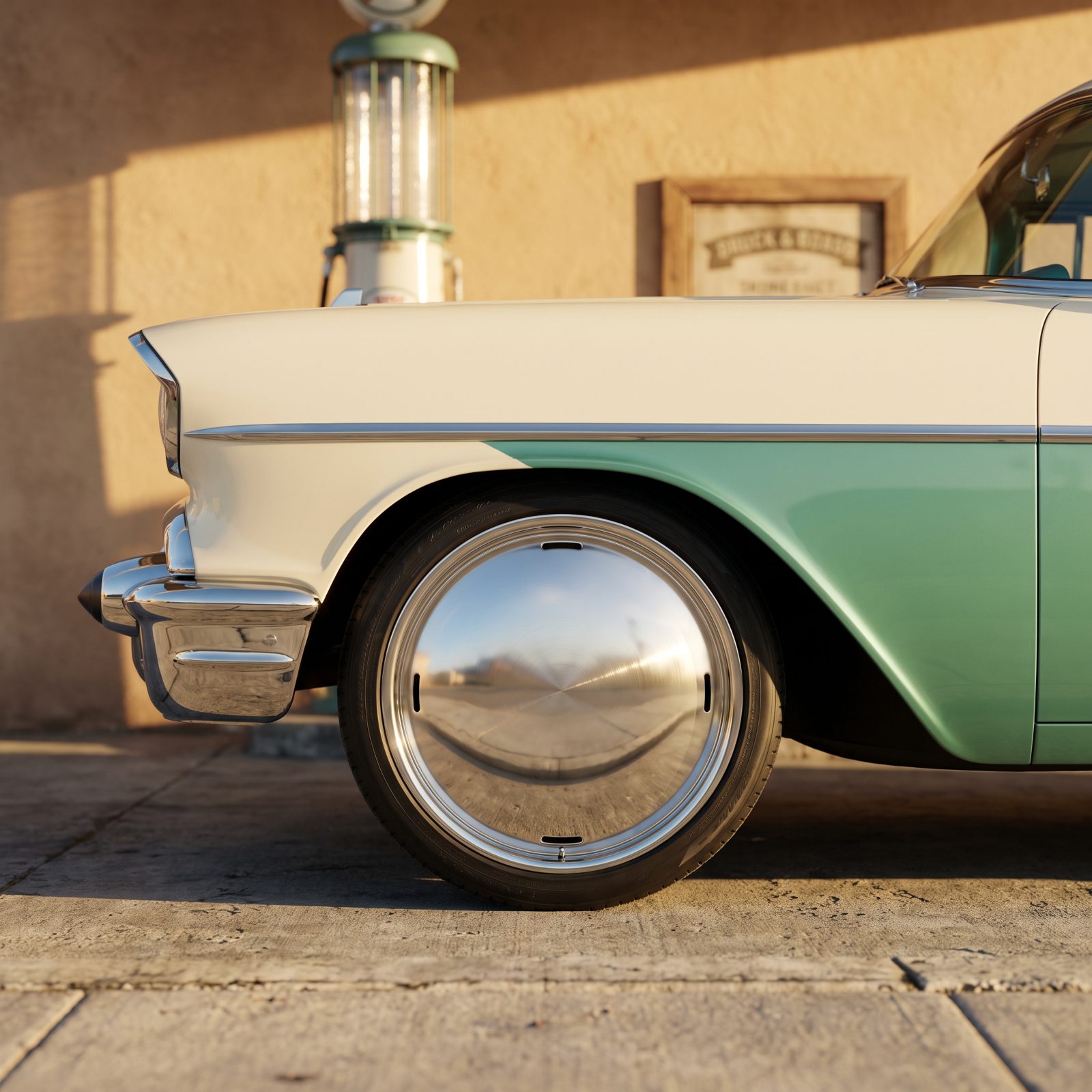
Spokes are busy. A smooth disc is calm.
The big near-solid wheel cover — chrome, dished, with only a few slim slots for brake cooling — turned the wheel into a mirror. No clutter, no visible lug nuts, nothing to catch dirt or distract the eye. On the formal cars of the fifties it gave the lower body a continuous sheen, a ribbon of chrome running right down to the pavement.
And there was snob logic underneath. A plain disc meant the owner wasn’t trying to fake a sporting pedigree he didn’t have. Quiet surfaces, quiet money.
A Full-Size Matching Spare Mounted Outside
Would you like to save this?
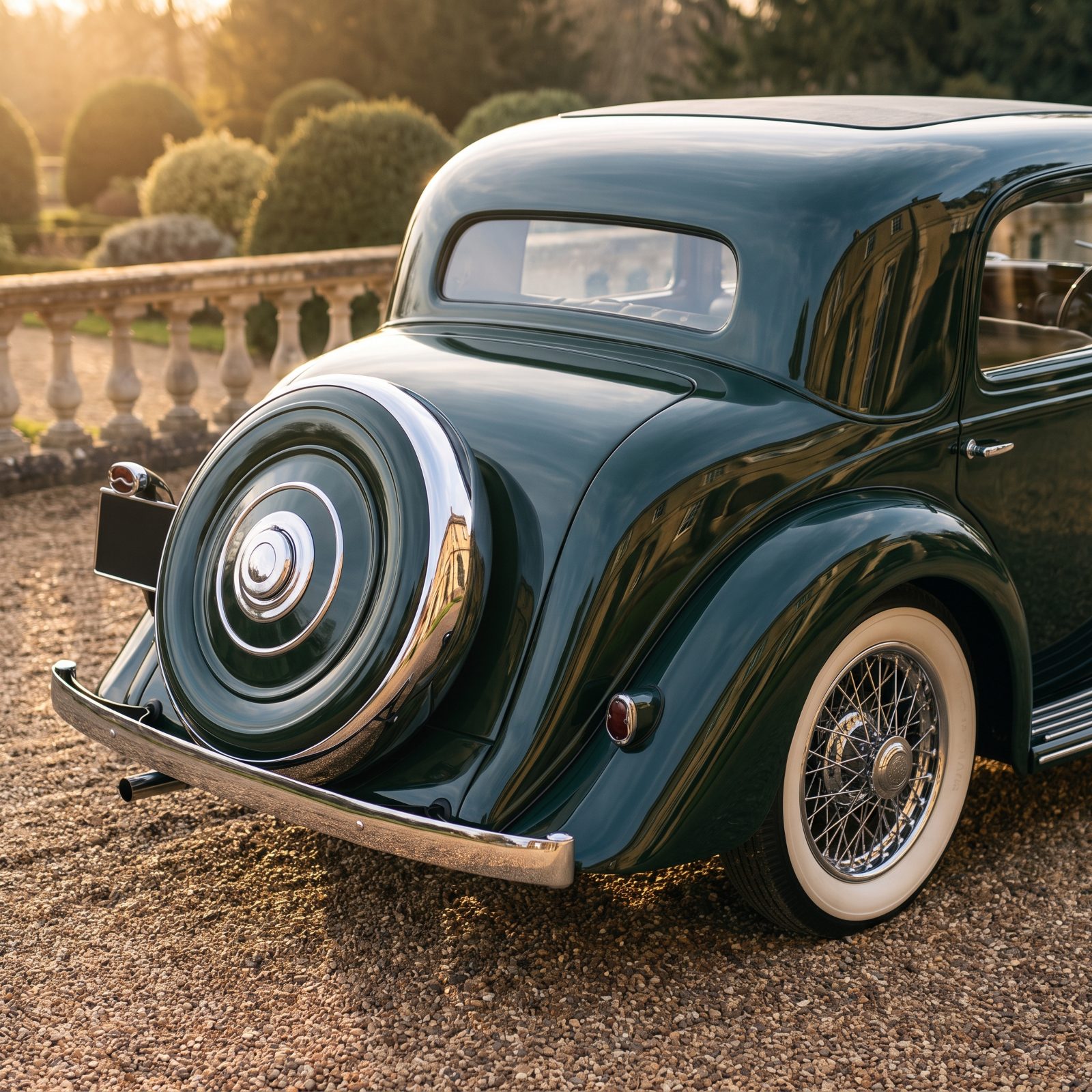
An externally mounted spare was a boast disguised as practicality.
Tucking the spare inside was tidier and cheaper. Mounting it outside, dressed in a painted metal cover that matched the body and crowned with a chrome rim, told everyone this was a car built without compromise. Room enough, money enough, coachwork good enough to put a fifth wheel on display like a crest on a shield.
On the great prewar tourers you’d sometimes get two, one in each front fender, flanking the hood like sentries. Pure ceremony — the car announced itself from the driveway and never once raised its voice.
Whitewall Tires With a Narrow Accent Stripe
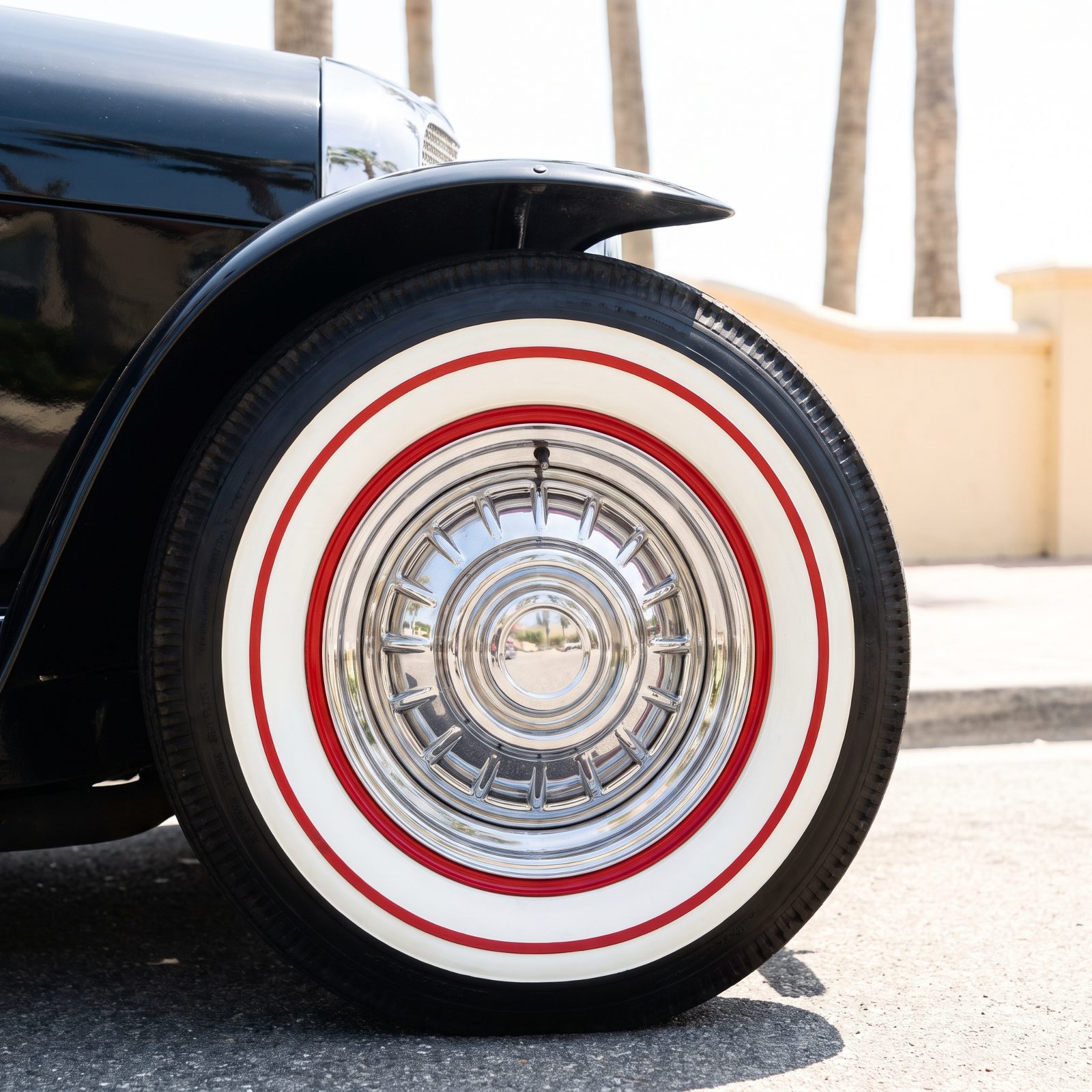
Black rubber does the work. White rubber does the talking.
A clean whitewall meant the owner had the time, or the help, to keep it scrubbed. Road grime shows the instant it lands on white, so a bright sidewall was proof of care — a car that got attention instead of just use. The narrow accent stripe was the next move. By the sixties the fat white band had gone a little common, so the thin stripe read as newer, trimmer, quietly updated.
It framed the wheel the way white cuffs frame a dark suit. Small detail, loud signal.
Air Suspension That Drops the Car to Meet You
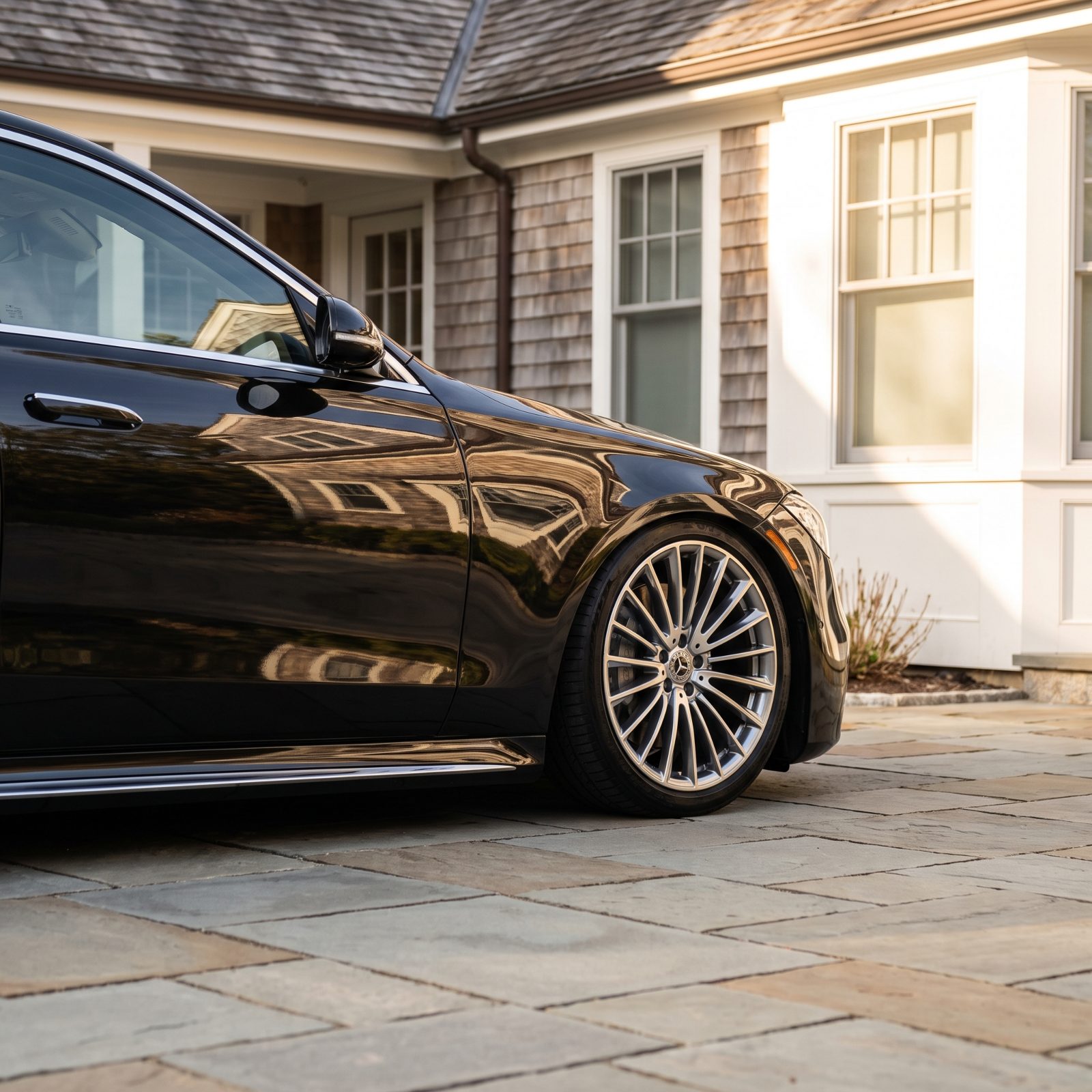
Height is a status move, and dropping it on purpose is the richer one. When air suspension lowers a car as you approach, it reads as the vehicle bowing slightly to make your entry easier, so the sill arrives at the perfect height and you never have to step up or fold down into it.
The engineering is real. The theater is the point. A car that adjusts itself for you feels alive and attentive in a way a fixed ride height never can.
Body Panel Gaps So Tight They Vanish
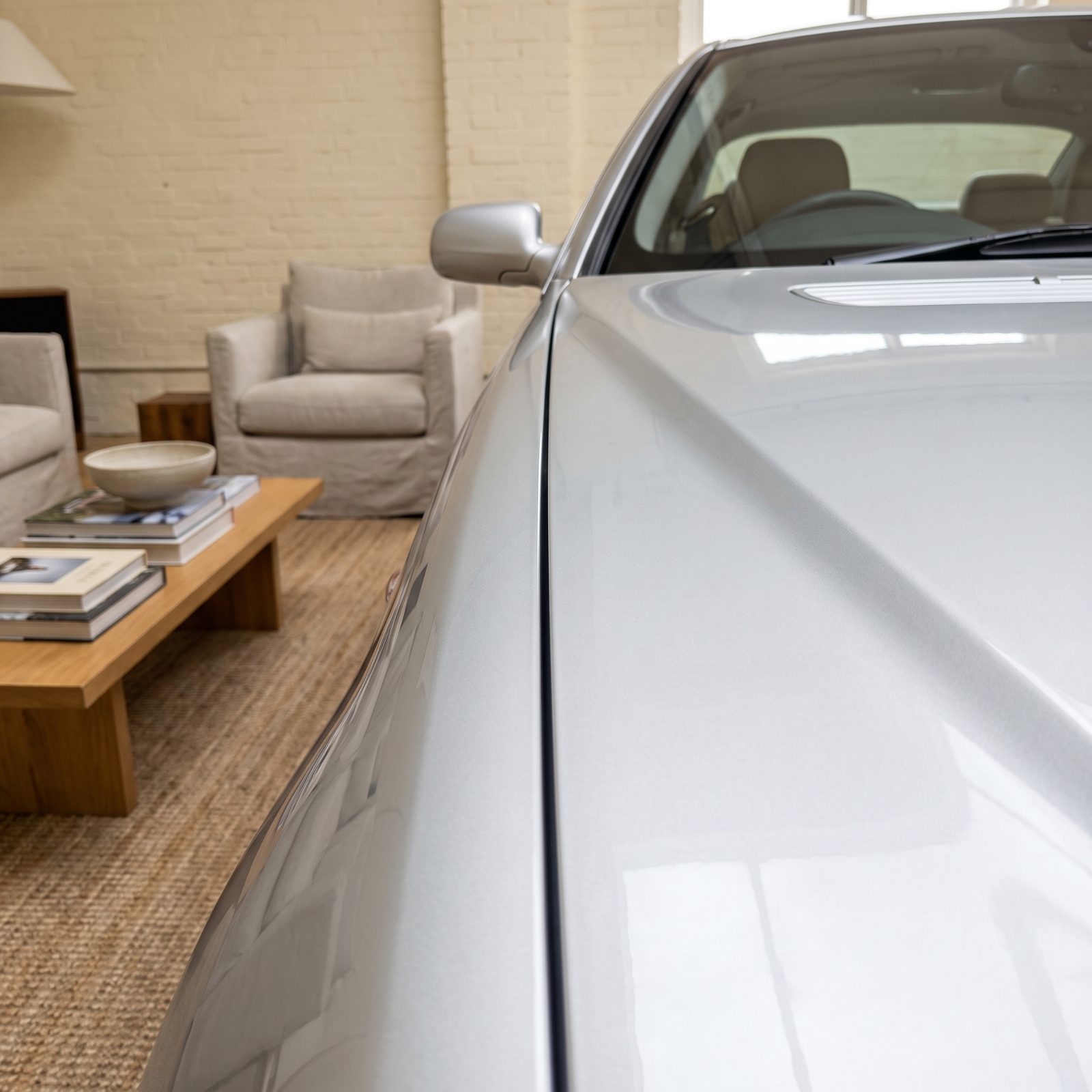
Run your eye down the seam where a door meets a fender. On a cheap car that line wanders — wide at the top, pinched at the bottom. Build to a different standard and it stays dead even end to end, thin as the edge of a credit card.
You read it before you can name it. Consistent gaps tell your brain that everything underneath got the same care.
A Clamshell Hood With Every Fender Seam Hidden
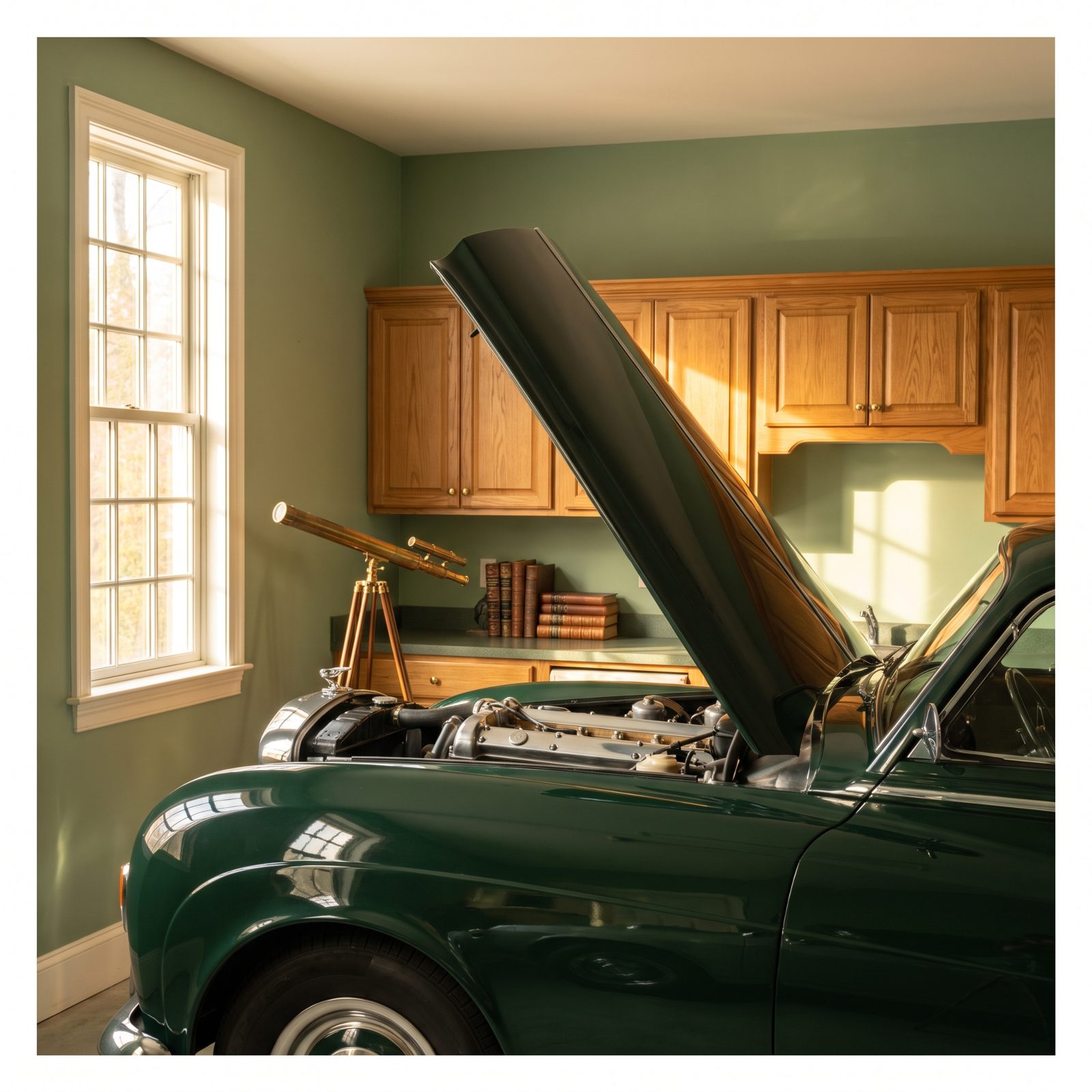
A clamshell hood is one giant panel that folds down over the tops of the fenders, so a shut car shows you an uninterrupted sheet of metal from one wheel arch to the other. No seams marching down either side. Just a clean, continuous surface.
Expensive to stamp. Hard to fit. Worth every bit of the trouble, because fewer seams means fewer places for the eye to snag, and the nose reads as one carved piece instead of a kit of parts bolted together.
Wipers That Hide Below the Hood Line
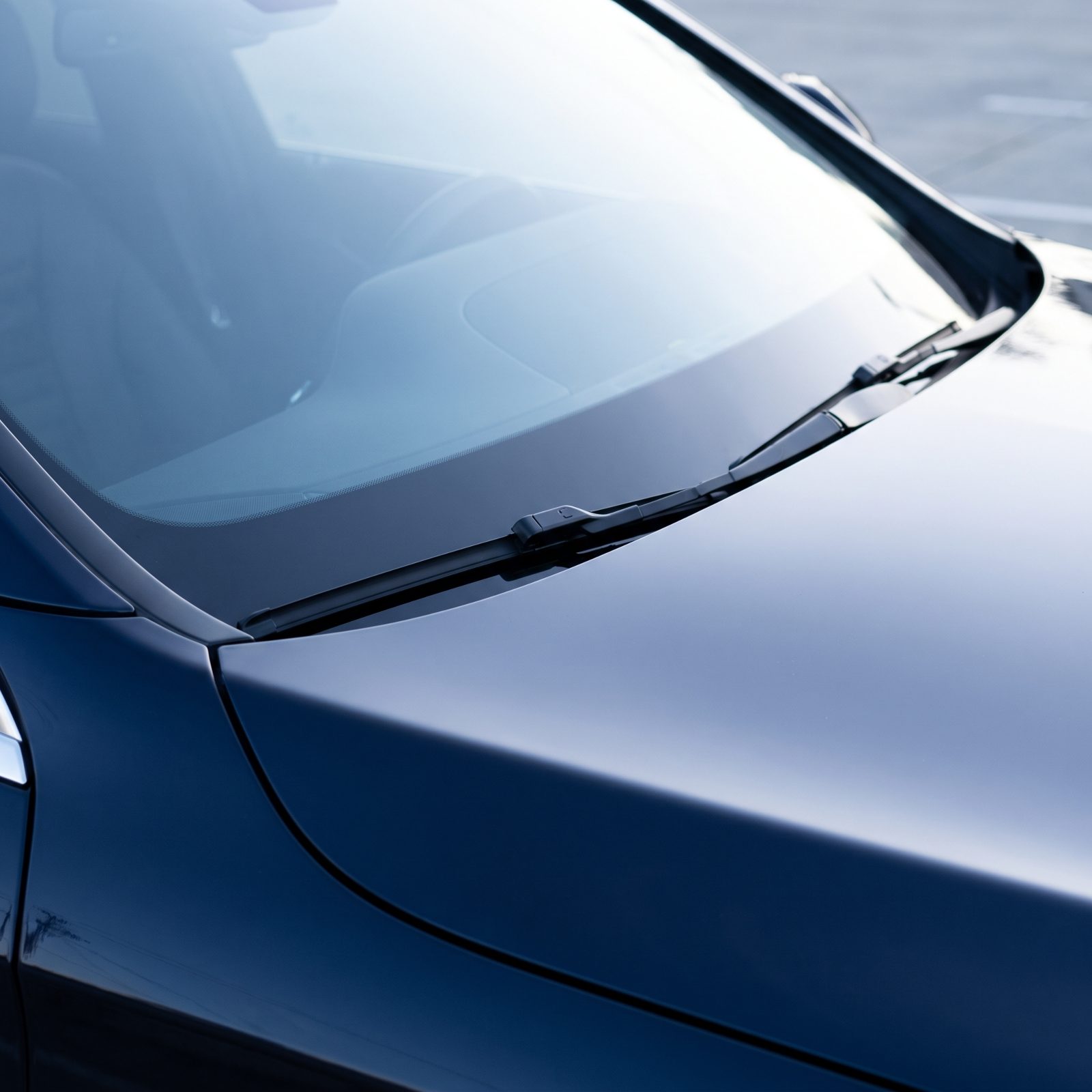
Park two cars side by side. One wears its wiper blades proud across the glass like a mustache. The other hides them below the trailing edge of the hood, so the windshield reads as clean glass all the way down to the cowl.
Tucked wipers cost more to package and help a little with the air, but the real payoff is visual. The front looks finished, deliberate, with nothing left showing that didn’t need to be.
A Windshield Set Nearly Flush With the Body

Older cars framed the windshield in a fat band of rubber that sat raised off the body. Bonded glass does away with all that. The windshield sits almost level with the surrounding metal, and light slides across hood, glass, and roof in one unbroken motion.
Your eye never stops at the edge of the glass anymore. The whole front becomes a single surface, which is exactly what they were after.
Chrome Rain Gutters Finished Like a Watch Bracelet
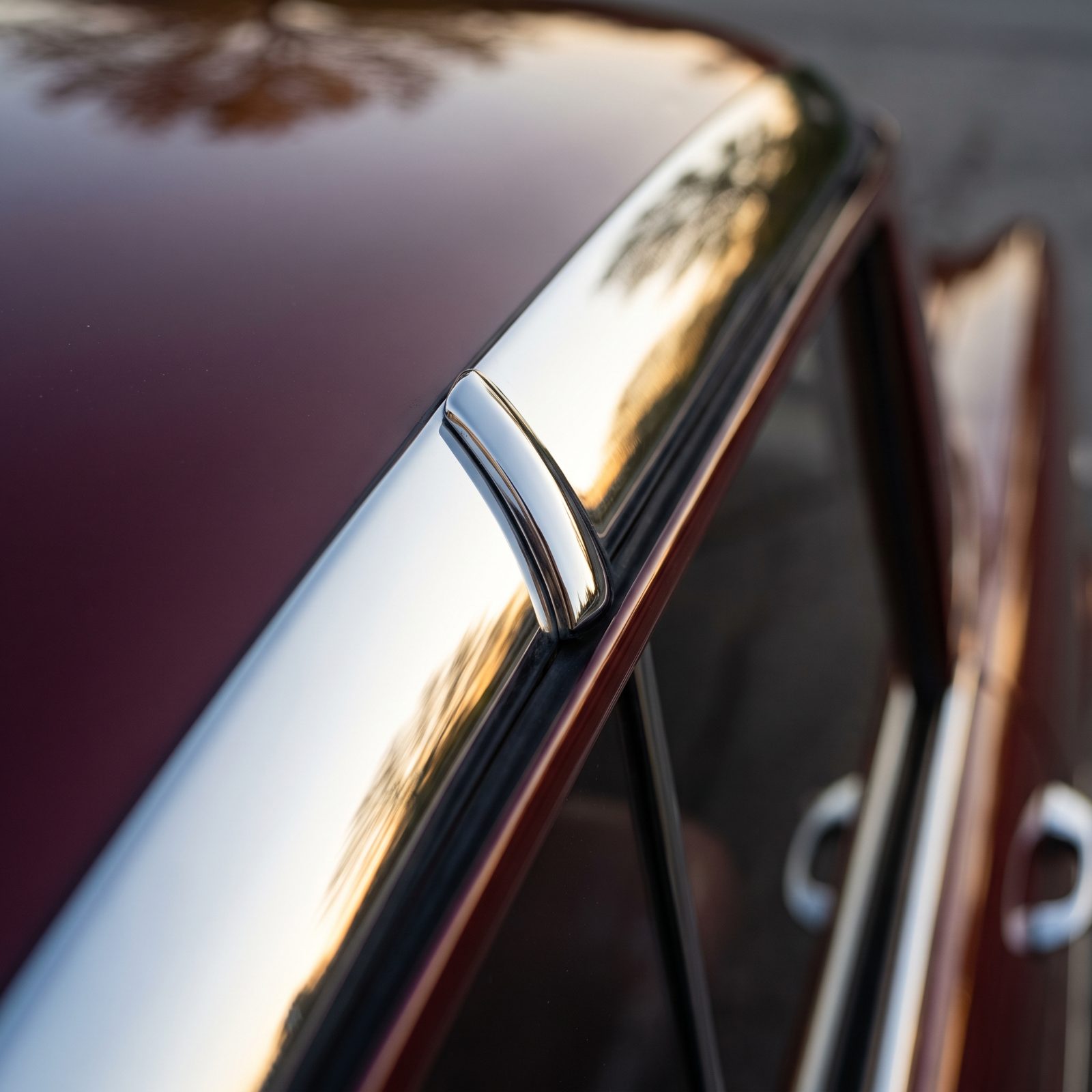
Rain gutters were plumbing. They kept water off you when you opened the door, and most cars finished them like exactly that — an afterthought.
The expensive ones treated that little channel of chrome like the trim on a watch. Polished bright, mounted dead straight, capped off at the ends instead of just stopping dead. Run a finger along it and you feel no burrs, no cheap crimp. Somebody cared about a part nobody was supposed to notice, and that tells you more than any badge.
Polished Exhaust Tips Built Into the Bumper
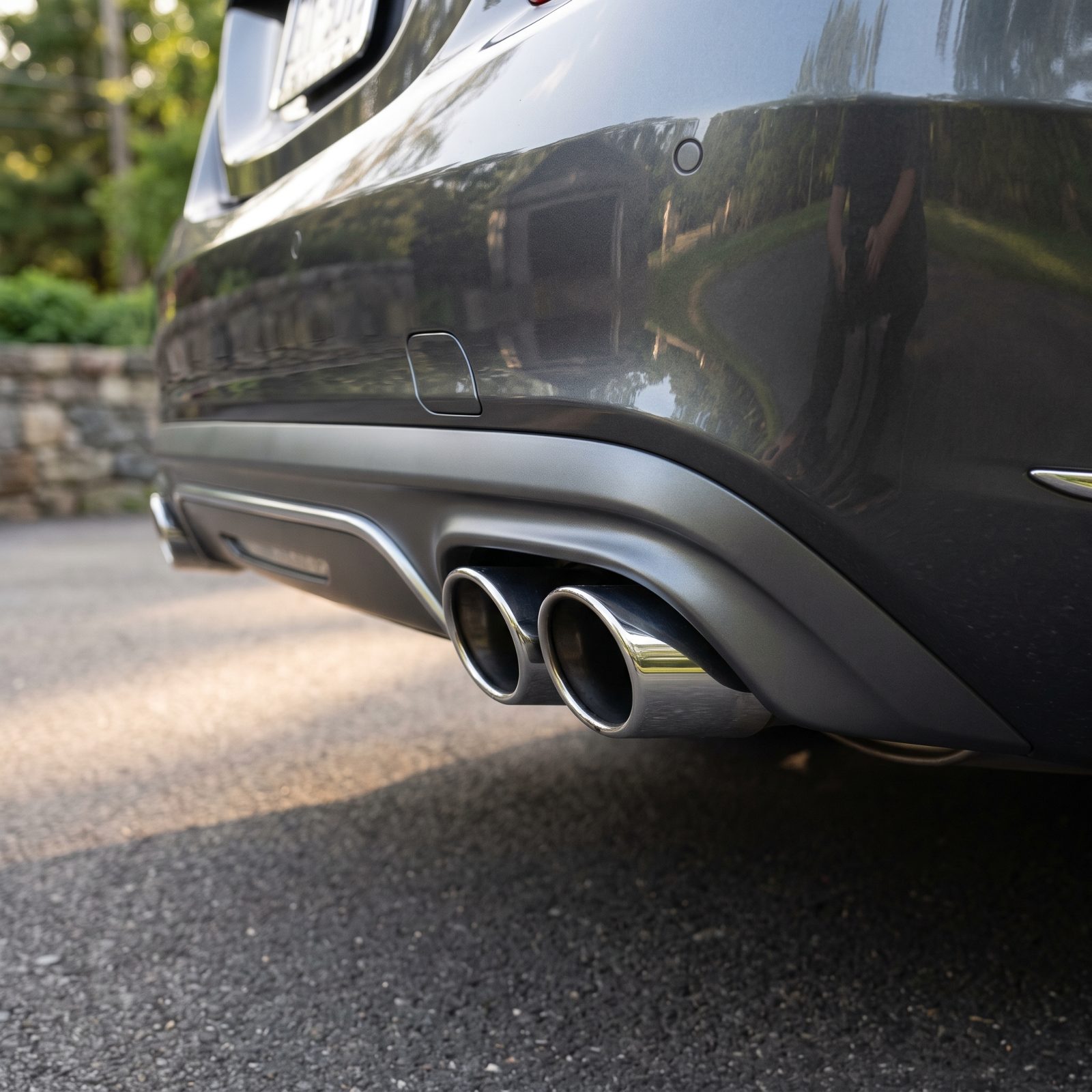
A cheap car hangs its exhaust pipe below the bumper like it’s ashamed of it — a black tube dripping soot. A car with some self-respect tucks a polished tip into a clean cutout in the bumper, flush and finished, part of the design instead of an apology for the engine.
Integrated tips mean somebody planned the whole rear end as one piece, exhaust included. Call it the difference between a tailpipe and a design element.
A Full-Width Rear Light Bar That Signs the Back of the Car
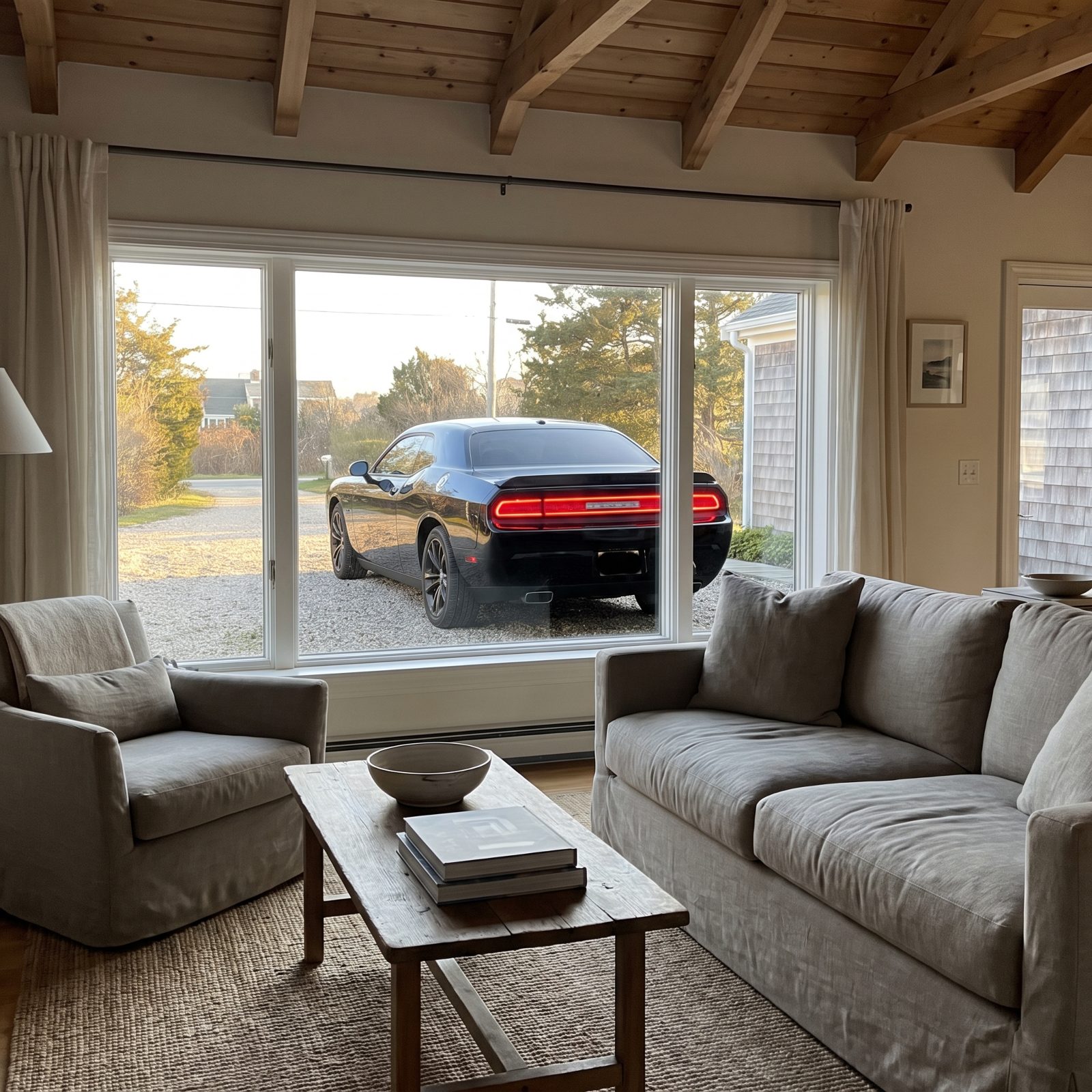
Separate taillights are a cost decision. A single bar of light running the whole width of the car is a boast. After dark it becomes the car’s signature — a horizontal line nothing else on the road copies cheaply.
The appeal is width. A full-width bar makes the rear look lower and broader than it really is, planted and serious, and you recognize the car from three cars back without reading a single letter.
A Brushed-Aluminum Trunk Garnish Running Between the Lights
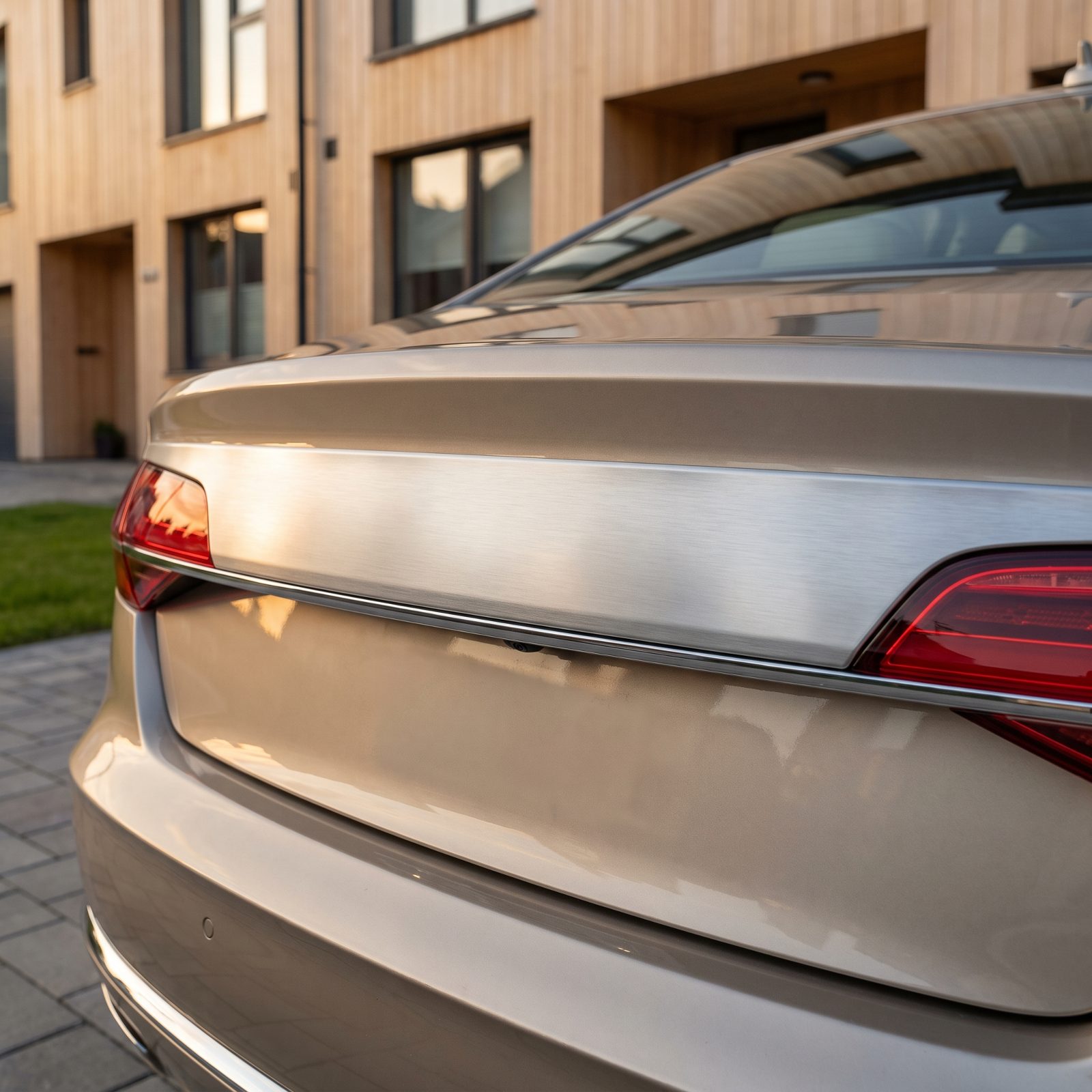
The strip of trim that runs across the trunk lid between the taillights seems like nowhere worth spending money. That’s precisely why spending it there tells you something.
A brushed-aluminum garnish catches light in fine parallel grain, cool and matte against the gloss of the paint. It’s a texture change in a spot most makers leave as painted metal or plastic. Finishing it in real brushed metal is a quiet move, the kind only people who look closely ever reward.
A Trunk Lid That Pulls Itself Shut
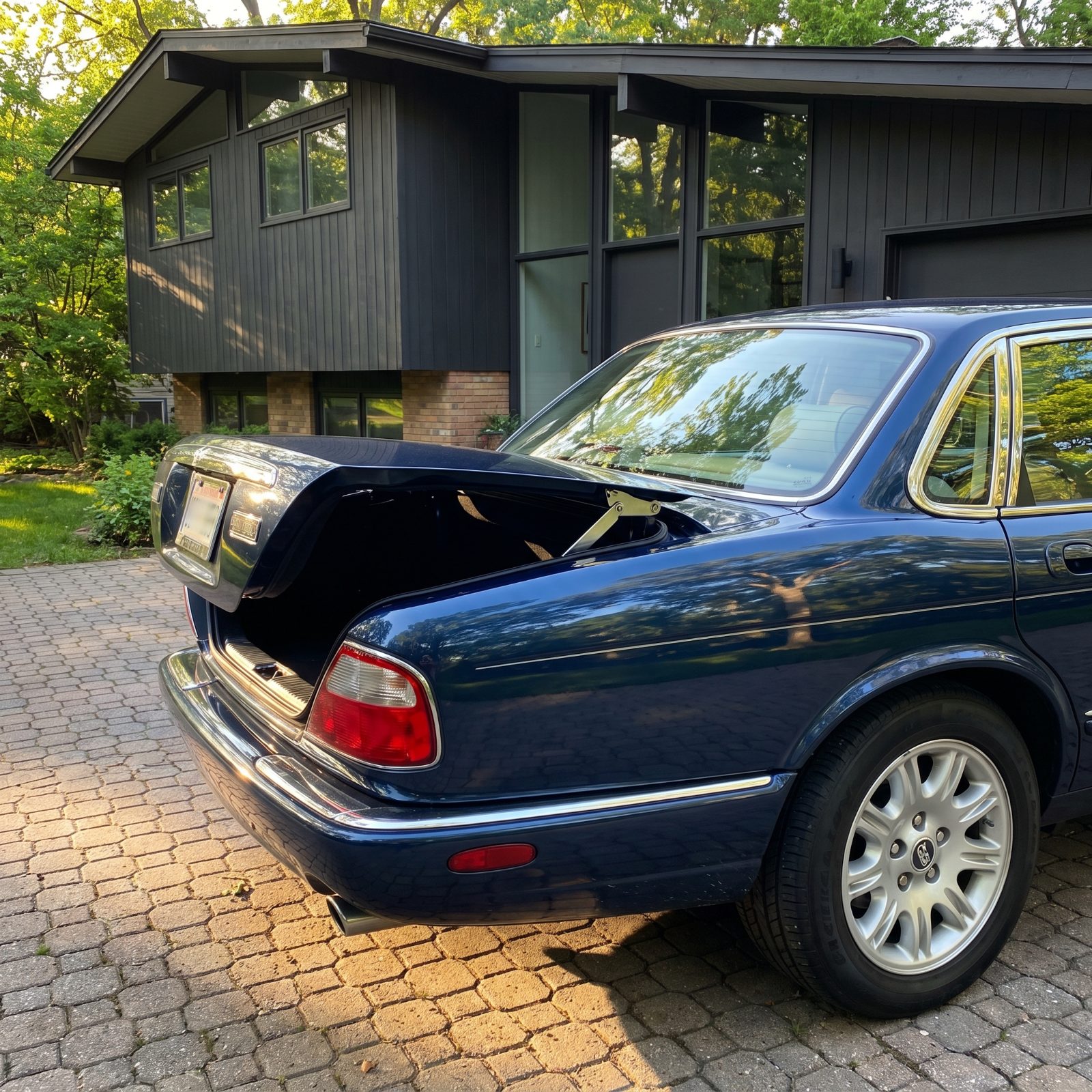
Slam a trunk and the whole car shudders. You feel the cheapness in your hand before you even hear it. A power-closing lid rewrites that moment entirely — you give it a gentle push, the mechanism catches, and it draws itself down with a soft, deliberate pull until it seats flush and silent.
No slam. No bounce. No second try. The car takes over the last few inches so you never have to put your back into it.
A Factory Umbrella Hidden in the Front Fender
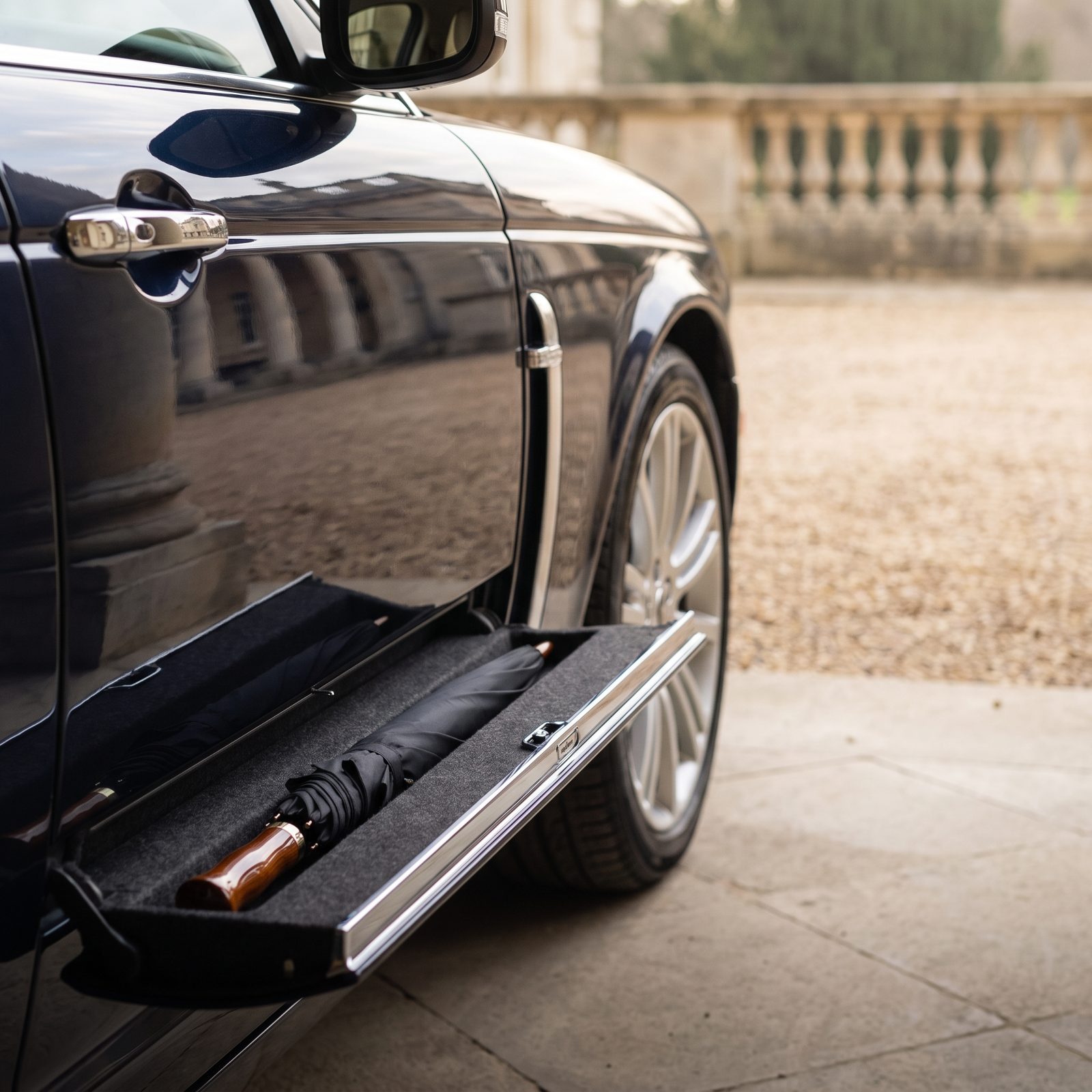
Rolls-Royce put umbrellas in the doors and everyone else pretended they thought of it first. The detail works because of what it implies: a car so considered that it worried about your dash from the curb to the awning.
Listen for the felt-lined channel and the quiet click as the shaft seats home. You feel engineering where you expected some glovebox afterthought. A passerby catches the open well and understands the whole philosophy in one glance, and that’s the thing — the luxury lands before the door even opens.
A Door-Mounted Courtesy Lamp Projecting a Crest
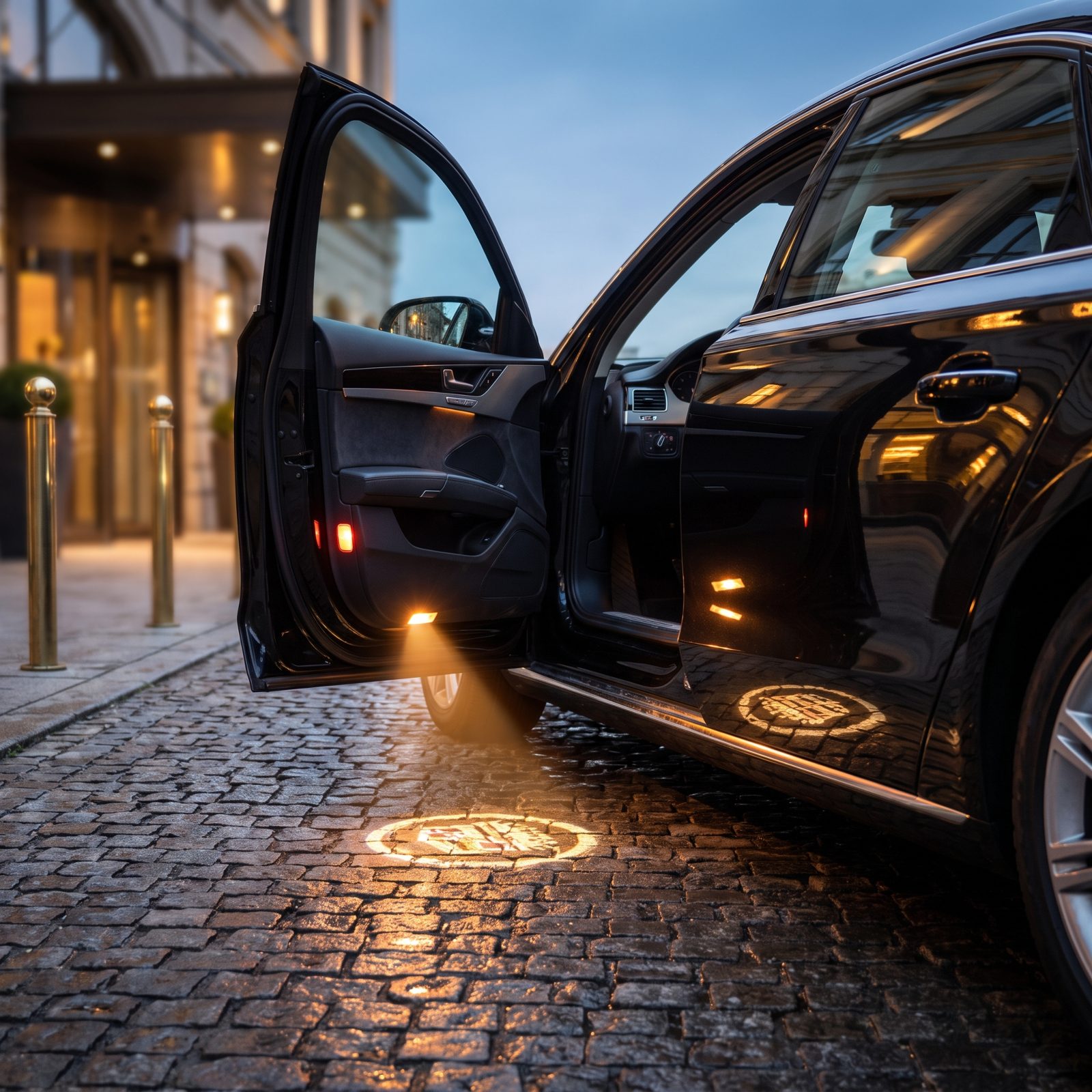
Open the door at night and the ground lights up with a crest. It’s theater, and it knows it.
The projection lamp does nothing a plain bulb couldn’t. That’s exactly the point — luxury spends money on the moment nobody strictly needs, the soft pool of light that says the car was thinking about your arrival before you were. Cheap cars give you a dome bulb. This one stages an entrance on the pavement.
A Key Fob Heavy Enough to Feel Engineered
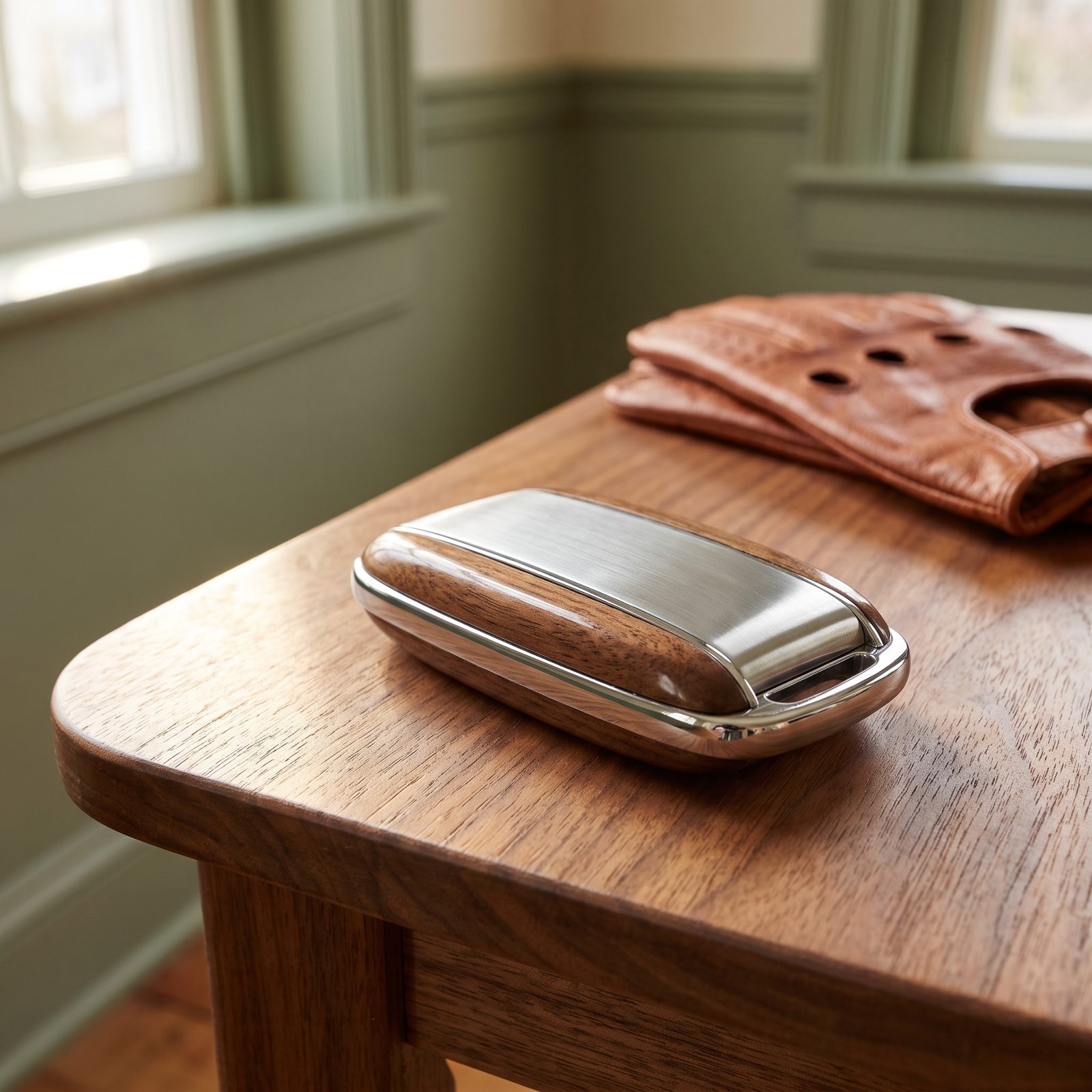
Pick up a cheap key and you feel the hollow. Pick up a good one and your hand recalibrates.
Weight is a signal older than the automobile — a heavy door, a heavy watch, a heavy pen, the brain reads density as quality before the conscious mind weighs in. Luxury makers know this and build fobs with metal cores and wood inlays that add nothing to function and everything to the handshake. The key is the first thing you touch and the last thing you set down, and it’s already talking before the engine turns over.
Power-Folding Mirrors That Unfurl on Approach
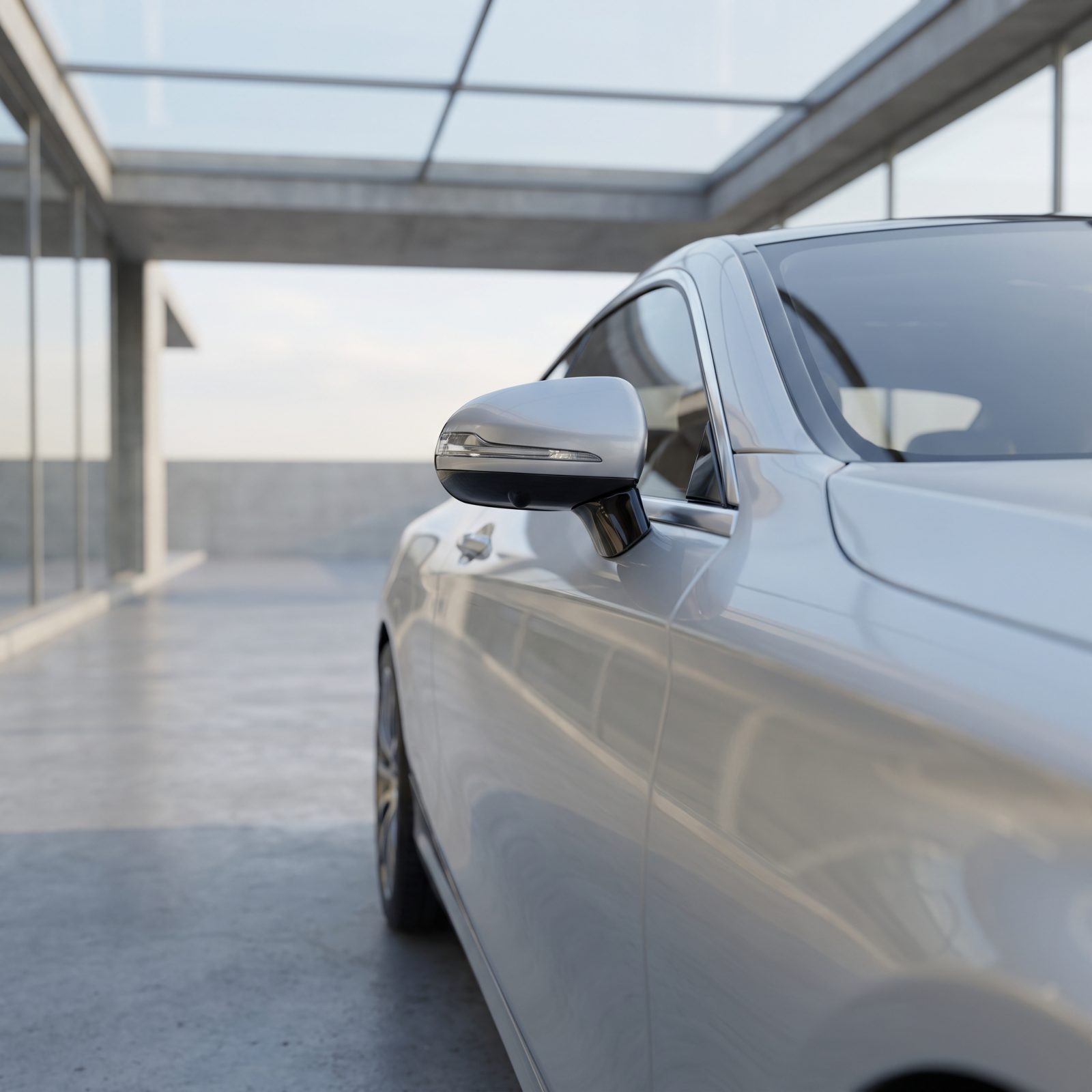
The mirrors fold flat when it’s parked. Walk up with the key and they unfurl, slow and deliberate, like the car is standing to attention.
It reads as alive, and that’s the trick. A machine that acknowledges your approach feels less like an appliance and more like something that recognizes you. There’s a real reason underneath the ceremony, too — folded glass survives a tight garage better. But the ceremony is what sells it. Call it a quiet mechanical bow before you’ve touched a handle.
A Visible Privacy Curtain in the Rear Window
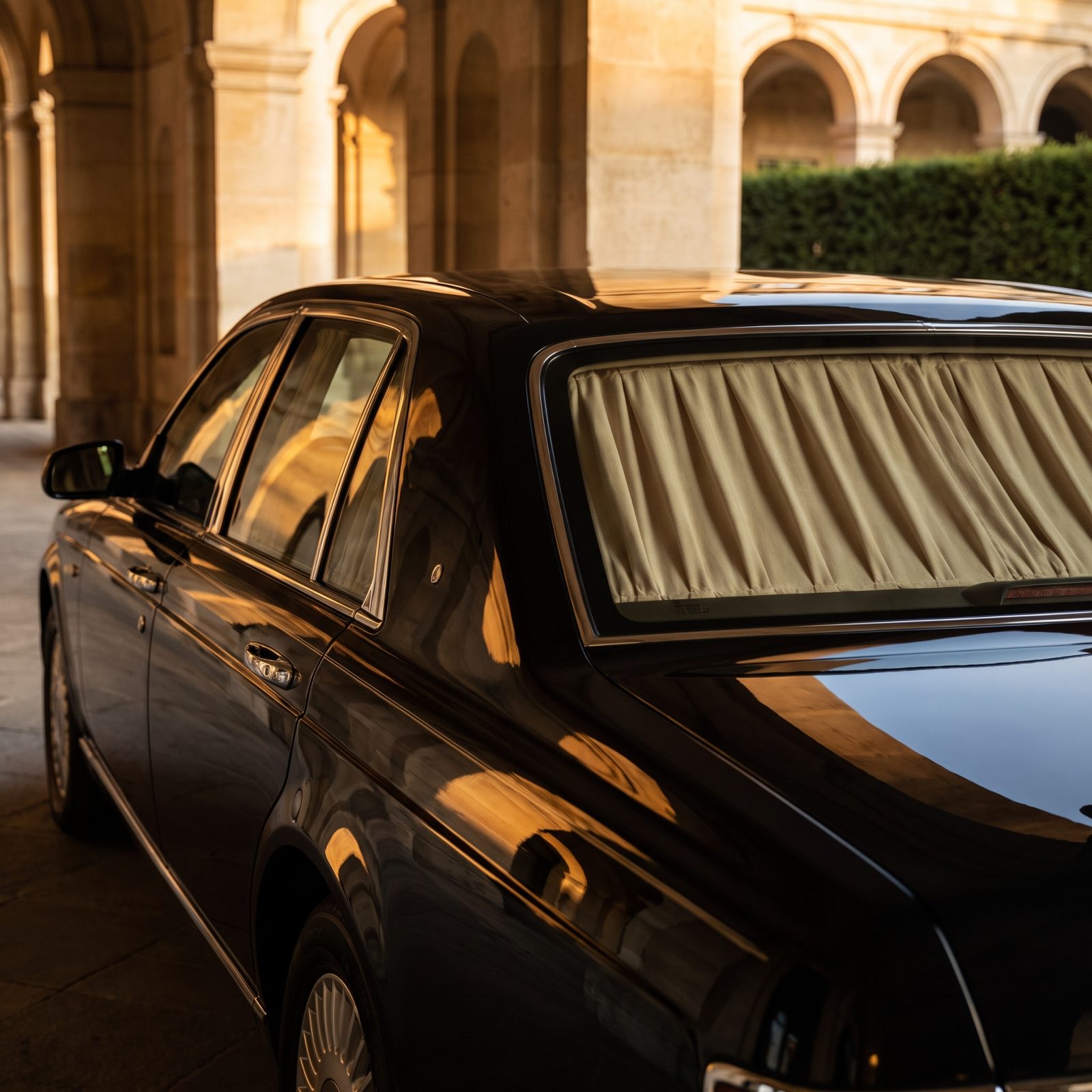
A drawn curtain in the back window says someone important is inside, or at least wants you to think so.
It’s the oldest status move there is: whatever you can’t see outranks whatever you can. Blackout film handles the sightline just as well, sure. But the pleated fabric curtain does something film never manages — it shows intent. Someone chose privacy. From the sidewalk, a shrouded rear glass turns an expensive sedan into a question, and a question beats an answer every time.
A Formal Marque Script Instead of a Plastic Model Badge
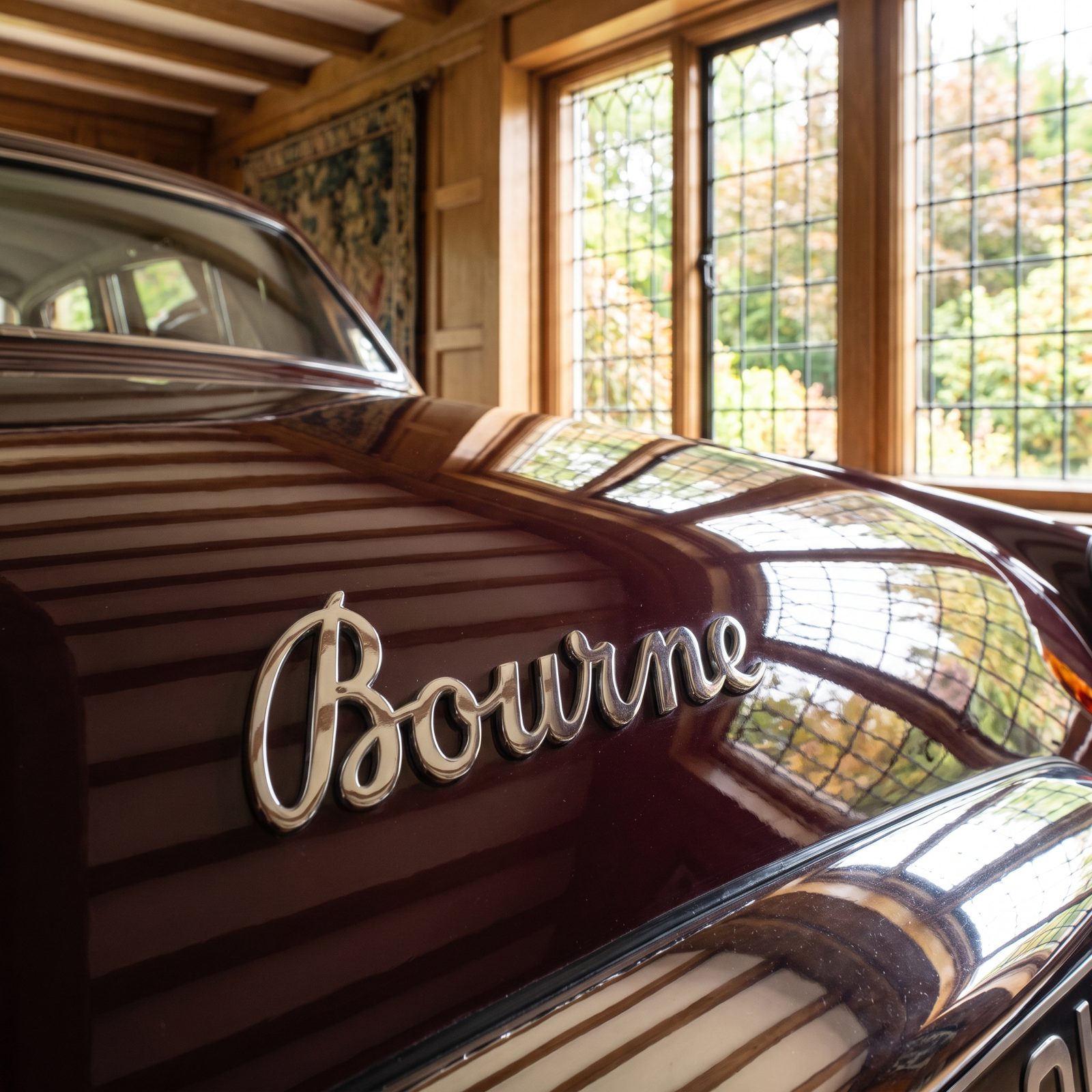
There’s a reason the finest cars spell out the name in flowing chrome and skip the trim-level alphabet soup.
A plastic “XLE” tells you what you bought. A hand-finished cursive script tells you who made it and lets you keep the money question to yourself. The restraint is the flex. No numbers, no letters announcing engine size — just the marque laid down in polished metal that sits proud of the paint and throws a clean shadow in the afternoon. It trusts you to already know. And that assumption, that nobody needs to shout the specs at you, is its own quiet luxury.
A Spirit of Ecstasy That Retracts for Security
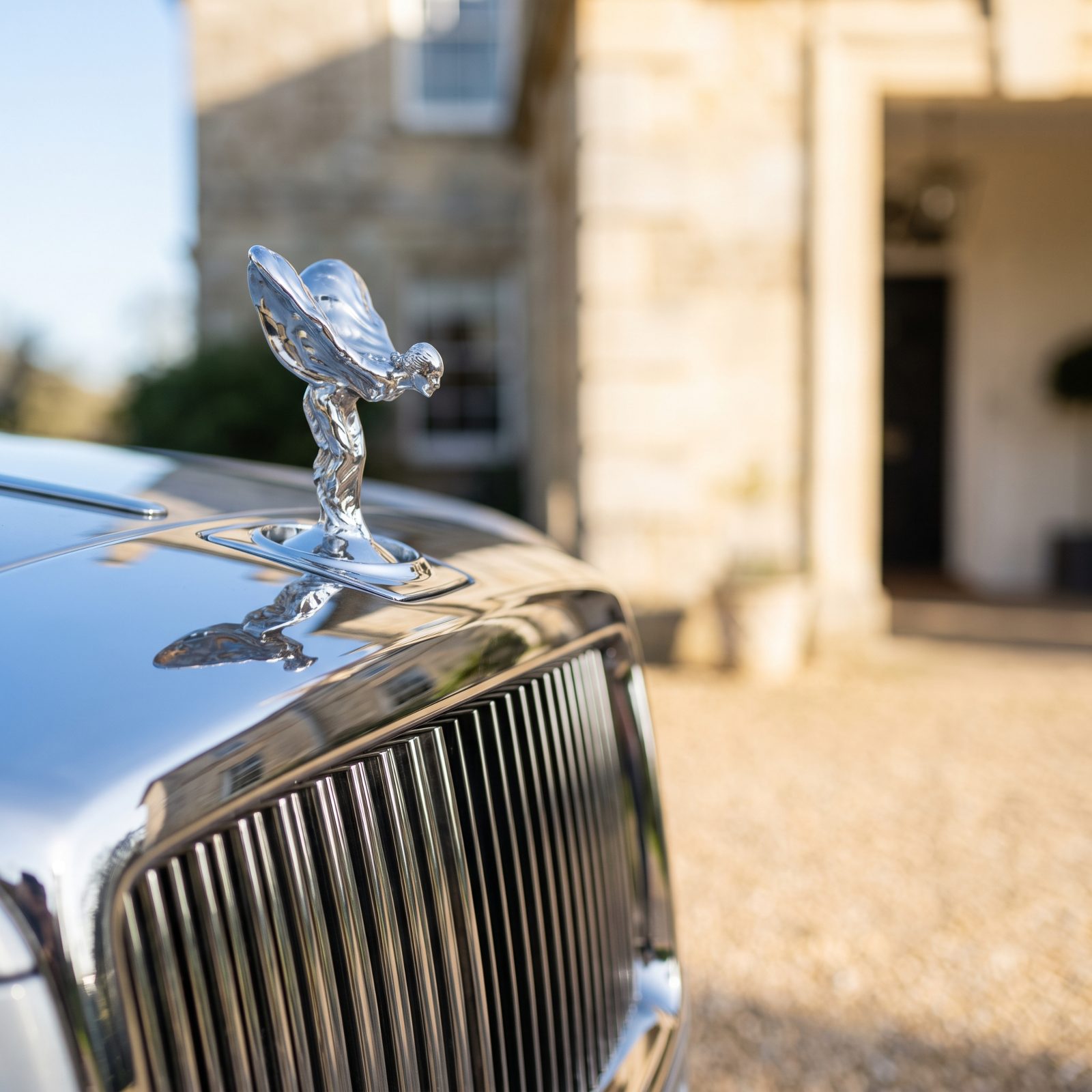
The most famous hood ornament in the world now hides when you walk away. Lock the car and the Spirit of Ecstasy sinks into the shell, flush with the grille, out of a thief’s reach.
It’s a small mechanical miracle wrapped around an old anxiety. Mascots got snapped off and pocketed for decades, so the fix wasn’t to drop the icon — it was to make her shy. Start the car and she rises again, deliberate and unhurried, standing back up to lead you down the road.
That rise is pure ceremony. A machine born in an age of flush aerodynamics still insists on a sculpture at the prow, because the sculpture was never about cutting drag. It was always about the arrival.