
Would you like to save this?
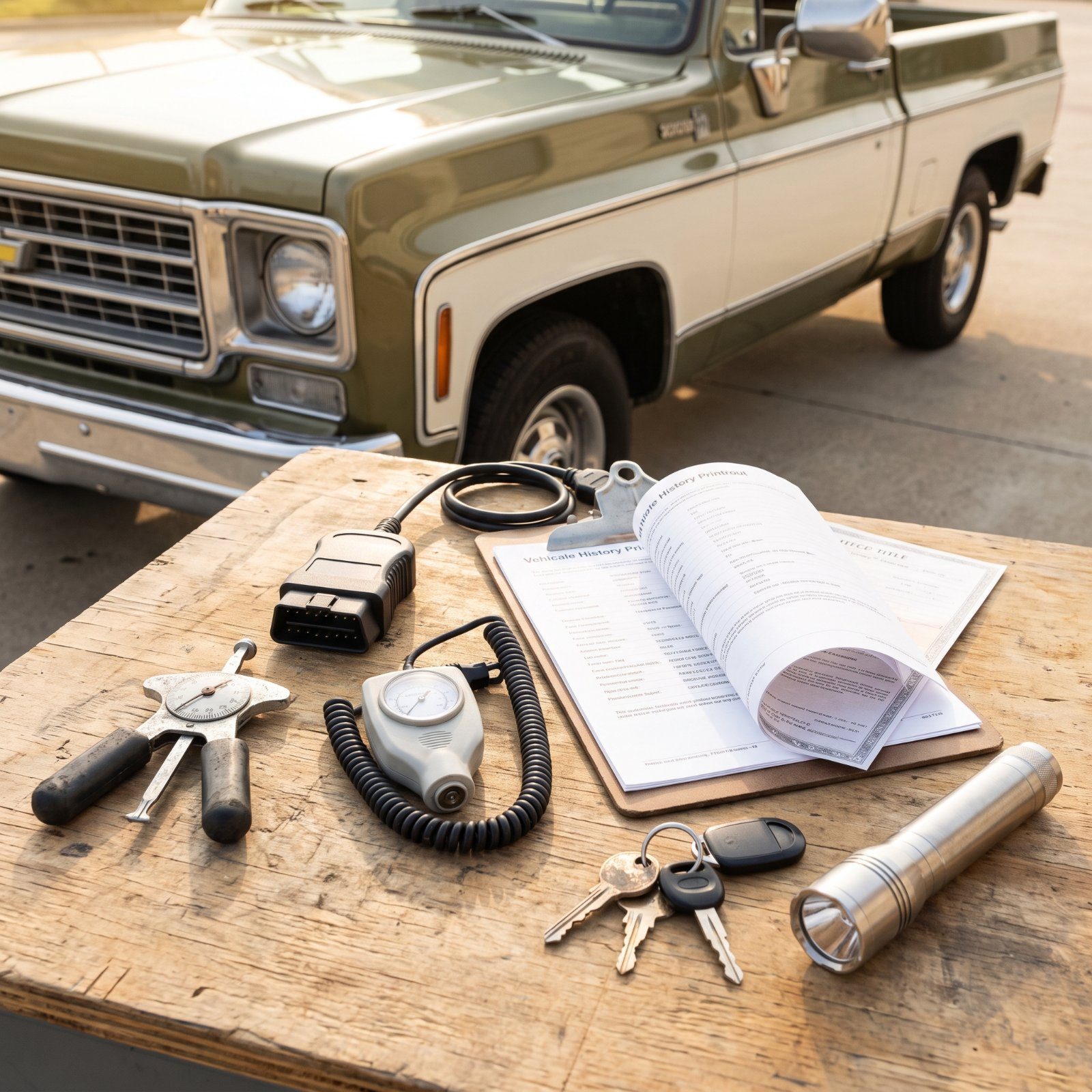
Nobody tells you the trade-in number gets decided in the first ninety seconds. The appraiser walks a slow lap, runs a finger along the bed rail, clicks a flashlight under the frame — and most of the figure is locked before you’ve finished your coffee. Knowing what they check changes how you prep the truck and how hard you push back. Here’s the quiet checklist running behind that friendly handshake, from the title brand down to the lift kit that’s costing you money.
38. A Clean Title Versus a Salvage, Rebuilt, or Flood Brand

The word on the title does more damage than any dent. A salvage, rebuilt, or flood brand tells a dealer the truck got totaled once by an insurer, then stitched back together or soaked. One word can chop a third or more off the number, because it follows the truck forever and scares off the next buyer too.
Why it matters so much: branded titles are nearly impossible to finance, hard to insure, and a liability nightmare on resale. A dealer isn’t just buying your truck. They’re buying the headache of selling it again.
So pull your own title before you trade, order a history report, and know exactly what’s on the record. A clean title is money in your pocket. And if an insurer ever offers to let you keep a totaled truck as a buyback, understand you’re accepting a brand that haunts the paperwork for the rest of its life.
37. A VIN That Matches the Title and Every Identification Label
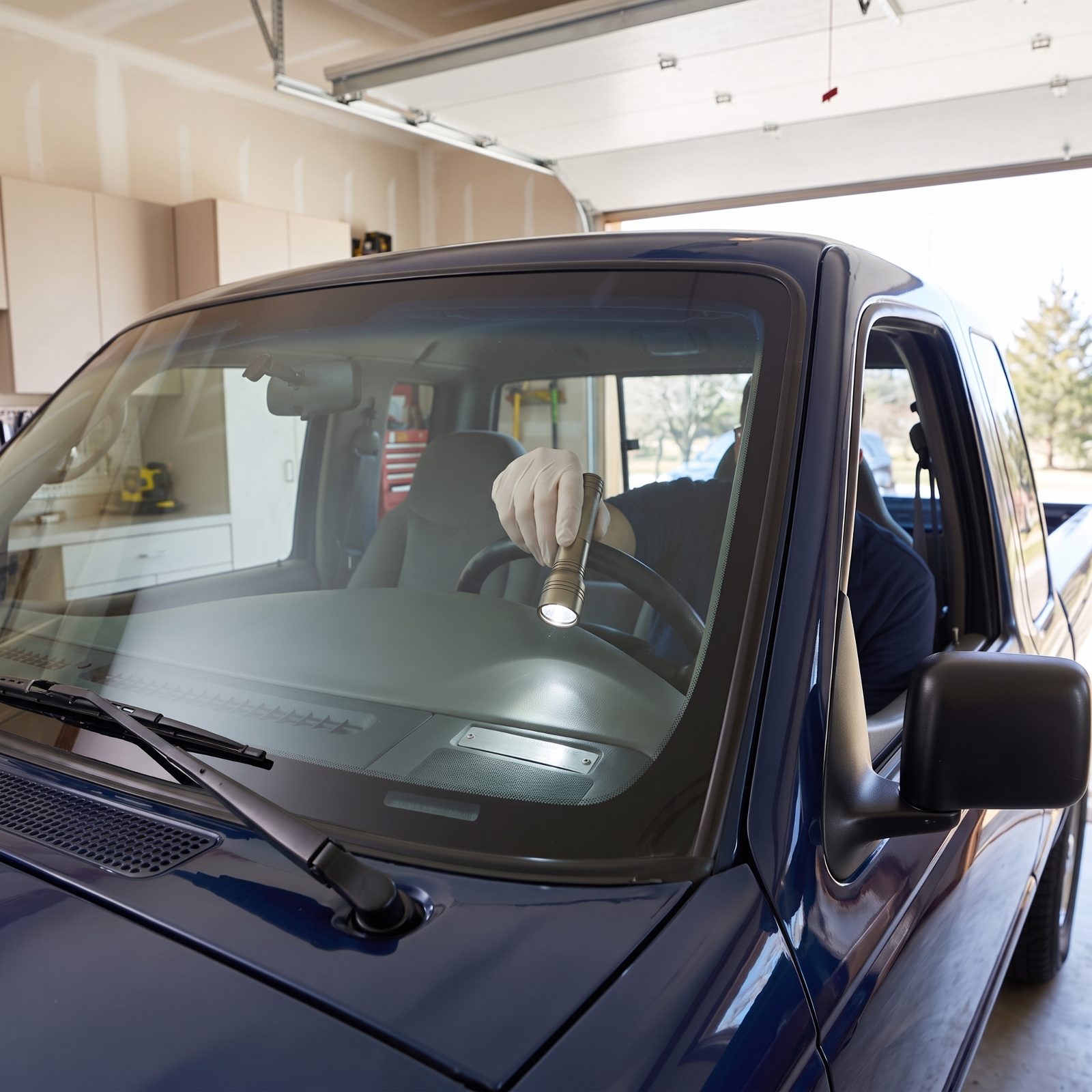
A VIN lives in more than one place, and a sharp appraiser checks all of them — the dash plate, the driver-door jamb sticker, the frame stamp, sometimes the engine and the glass. They want every one to read the same seventeen characters and match the title in hand.
When they don’t match, the whole deal stops cold. Mismatched VINs point to a swapped panel, a cut-and-shut repair, or worse: a cloned or stolen truck. No dealer takes on that kind of exposure.
Do the walk yourself before you trade. Door jamb, dash, title — confirm they agree. If a replacement windshield or door changed a label, have the documentation ready to explain it. A clean, consistent VIN tells the appraiser the truck is exactly what you say it is, and that trust is worth real dollars.
36. Complete Maintenance Records With Dates and Mileage

A shoebox of receipts is worth more than you think. Dated oil changes, timing-belt jobs, transmission services, each one with the mileage written in — a paper trail that says somebody kept track of this truck.
Here’s the plain truth. A dealer assumes the worst when there’s no record. No proof of service means they price in a looming repair, and that guess always lands in their favor, not yours. Records flip the math.
A full service history can add hundreds to a trade number, because it turns a gamble into a known quantity.
Stack them chronologically, oldest in back, and put the big-ticket items up front — the timing chain, the differential fluid, the fuel pump. If it’s all a glovebox jumble, spend twenty minutes sorting it the night before. That folder does the arguing for you.
35. Accidents and Damage Reported in the Vehicle History
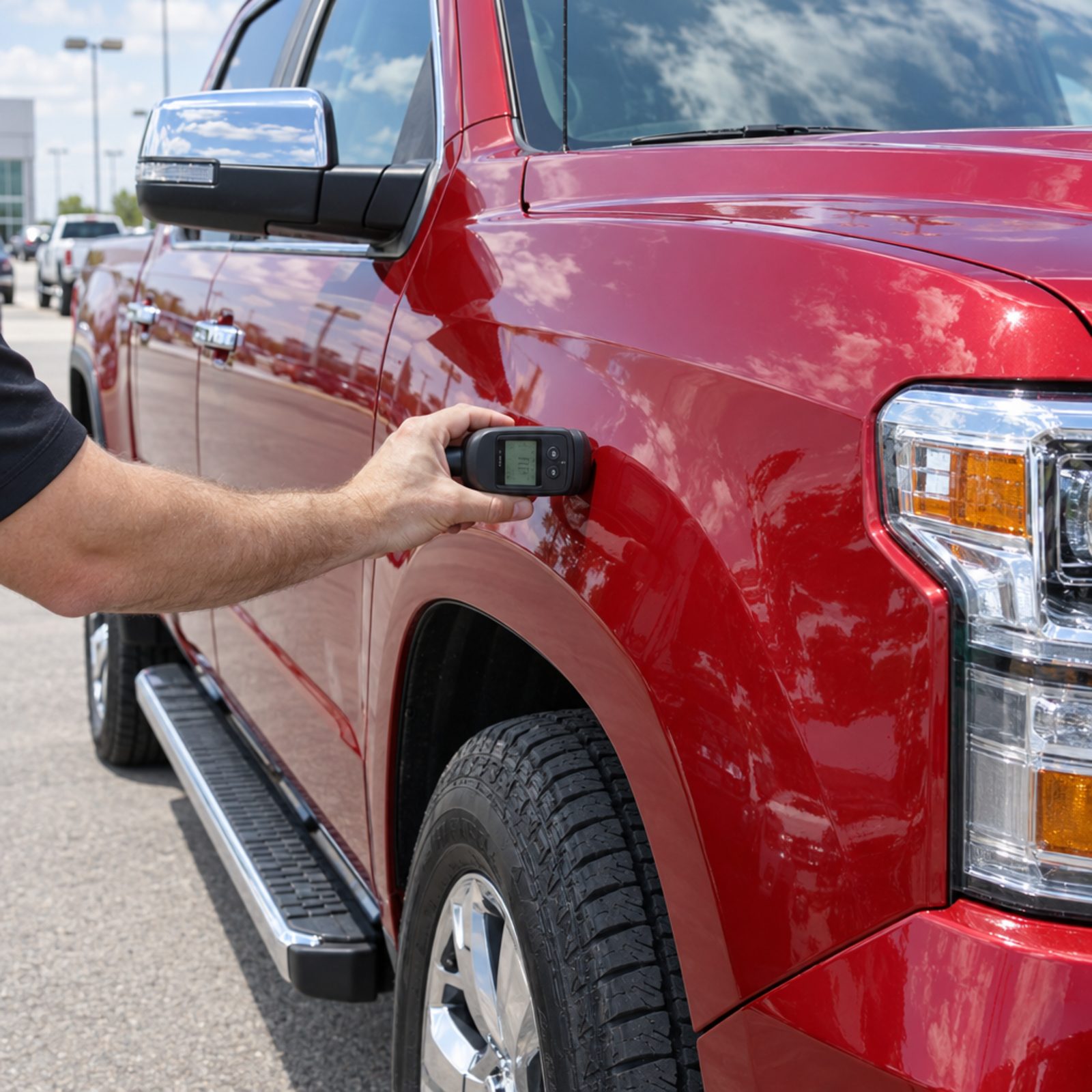
That fender repair you forgot about is on the report. Vehicle history databases log accident claims, airbag deployments, and structural damage, and the paint meter in the appraiser’s hand confirms the rest. Fresh paint reads thicker than factory, and it rats out a repair in seconds.
A reported accident drops value even when the fix was clean, because buyers down the line see the same report and hesitate. Frame damage hurts far more than a bumper cover.
You can’t erase history, so get ahead of it. If the repair was done right, bring the body-shop invoice showing OEM parts and proper structural work. A documented, professional fix reassures an appraiser far more than a blank history paired with mismatched paint they can spot for themselves.
34. Evidence the Truck Was a Rental, Fleet, or Work Vehicle
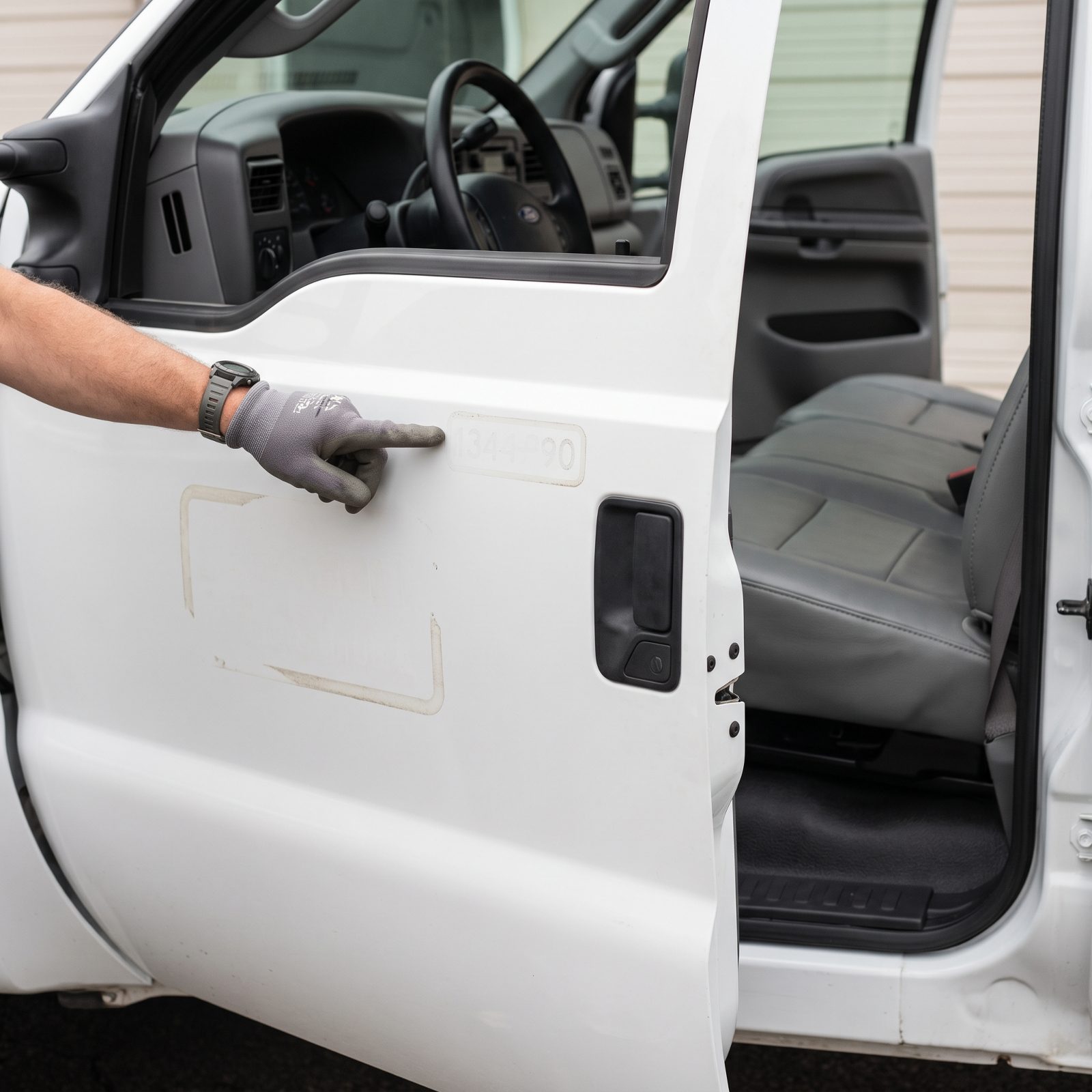
A ghost rectangle on the door where a decal used to be says plenty. So does a title listing a leasing company or a rental fleet as a prior owner. Appraisers spot the tells fast — faded outlines, drilled holes from a ladder rack, a fleet number shadow near the handle.
Why it stings: fleet and rental trucks rack up hard, inconsistent miles from dozens of drivers. Lots of idling, lots of short trips, lots of nobody-really-cared. The market discounts that use on principle, deserved or not.
If yours was a single-owner fleet truck that got real dealer service, that’s your angle. Bring the maintenance logs proving it ran on a schedule — which, honestly, plenty of fleets handle better than private owners do. Documentation can soften the fleet discount. It rarely erases it, so set your expectations accordingly.
33. Mileage Compared With the Truck’s Age
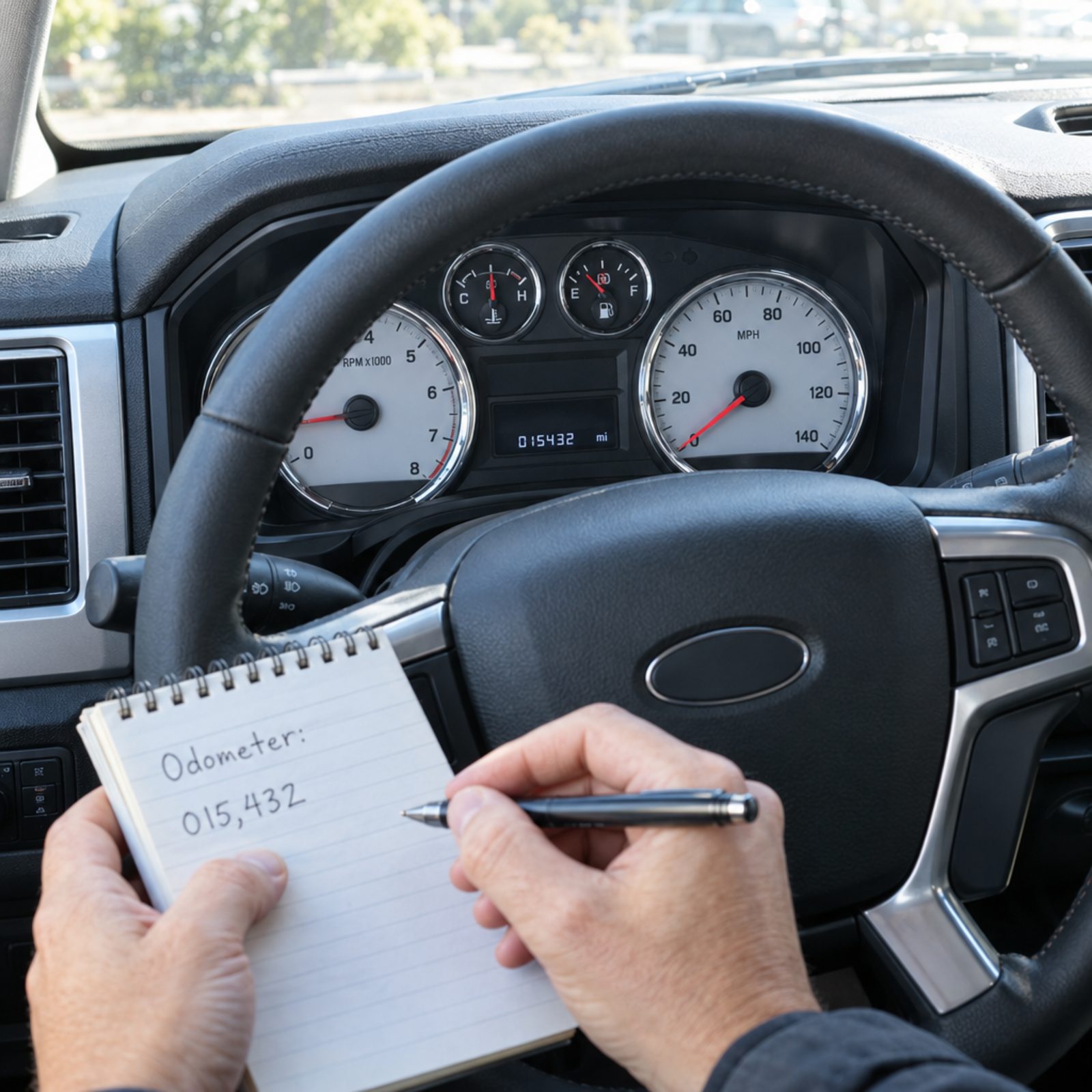
The odometer never gets read in a vacuum. An appraiser does quick math against the model year, since right around twelve to fifteen thousand miles a year is the baseline every value guide is built on. Land near that line and the number behaves.
Well below average reads as a gentle, mostly-garaged life, which helps. Well above average signals wear the mechanical inspection goes hunting for. Both get priced.
Here’s the twist people miss. Very low miles on an older truck can raise a flag too. A diesel that barely moved for a decade grew its own problems from sitting — dry seals, stale fuel, the whole sad list. Be ready to explain the usage either way. Honesty about how the truck lived beats a number that looks too good to be real.
32. Engine Hours That Reveal More Use Than the Odometer
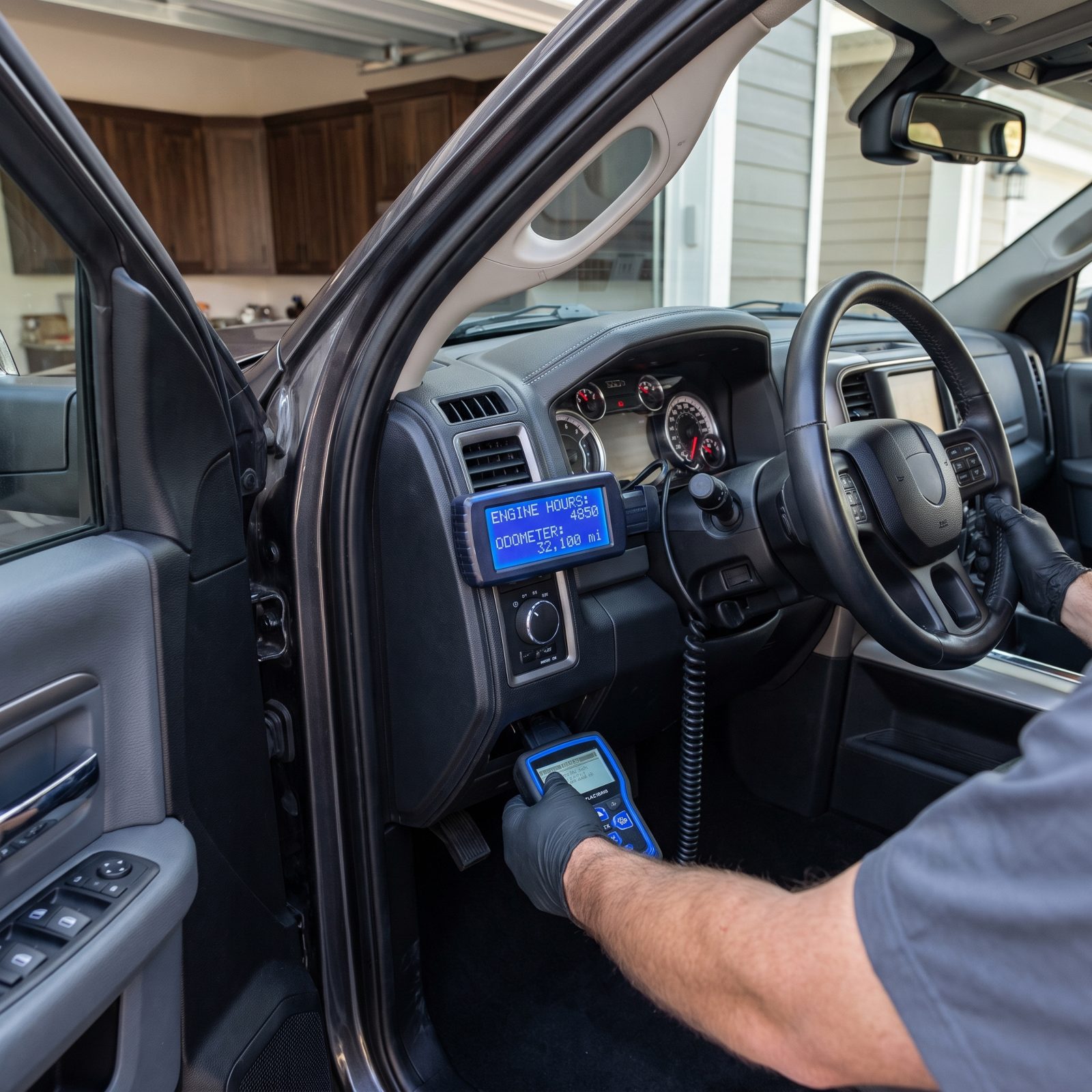
On a diesel, the odometer tells half the story. Plug a scanner in and engine hours come up, and that number catches the truck that idled for a living. A contractor’s rig can show high mileage plus a pile of idle hours that stack up like another sixty thousand miles of wear nobody can see on the dash.
Idling runs the engine without turning the wheels, so the hours climb while the miles don’t. Appraisers who know their trade read both. A low-mile truck with sky-high hours is quietly a high-mile truck.
You can’t change the hours, but you can own the story. If it idled for work and got serviced on an hour-based schedule, say so and show the records. The scanner doesn’t lie, so don’t try to out-talk it — let the paperwork do the explaining.
31. The Exact Trim, Drivetrain, Cab, and Bed Configuration
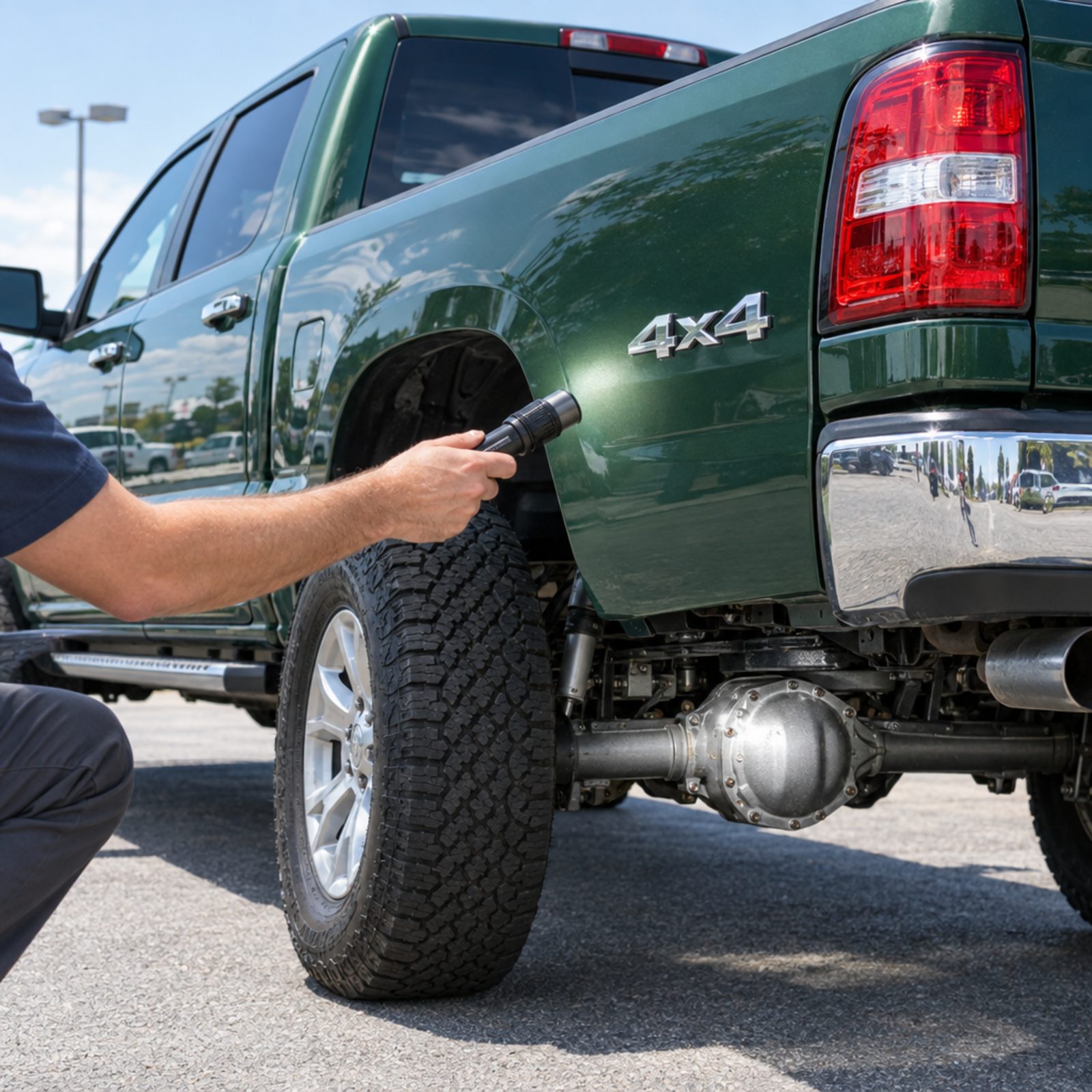
Two trucks of the same year can value hundreds apart on configuration alone. Four-wheel drive versus two. Crew cab versus regular. Short bed versus long. The appraiser decodes all of it, from the badges they shine a light on down to the differential under the bed.
Why it drives the number: the market wants certain combinations badly and ignores others. A 4×4 crew cab with a desirable engine moves fast and holds value, while a stripped two-wheel-drive long-bed regular cab sits on the lot — and dealers price that slow turn right into your offer.
Know your own spec cold before you walk in: the exact engine, the axle ratio, the towing package, the trim level. Those features are money. If the appraiser glosses over the tow package or the upgraded drivetrain, point it out. Nobody values your truck harder than you will.
30. Both Factory Keys, Keyless Remotes, and Security Codes
Would you like to save this?
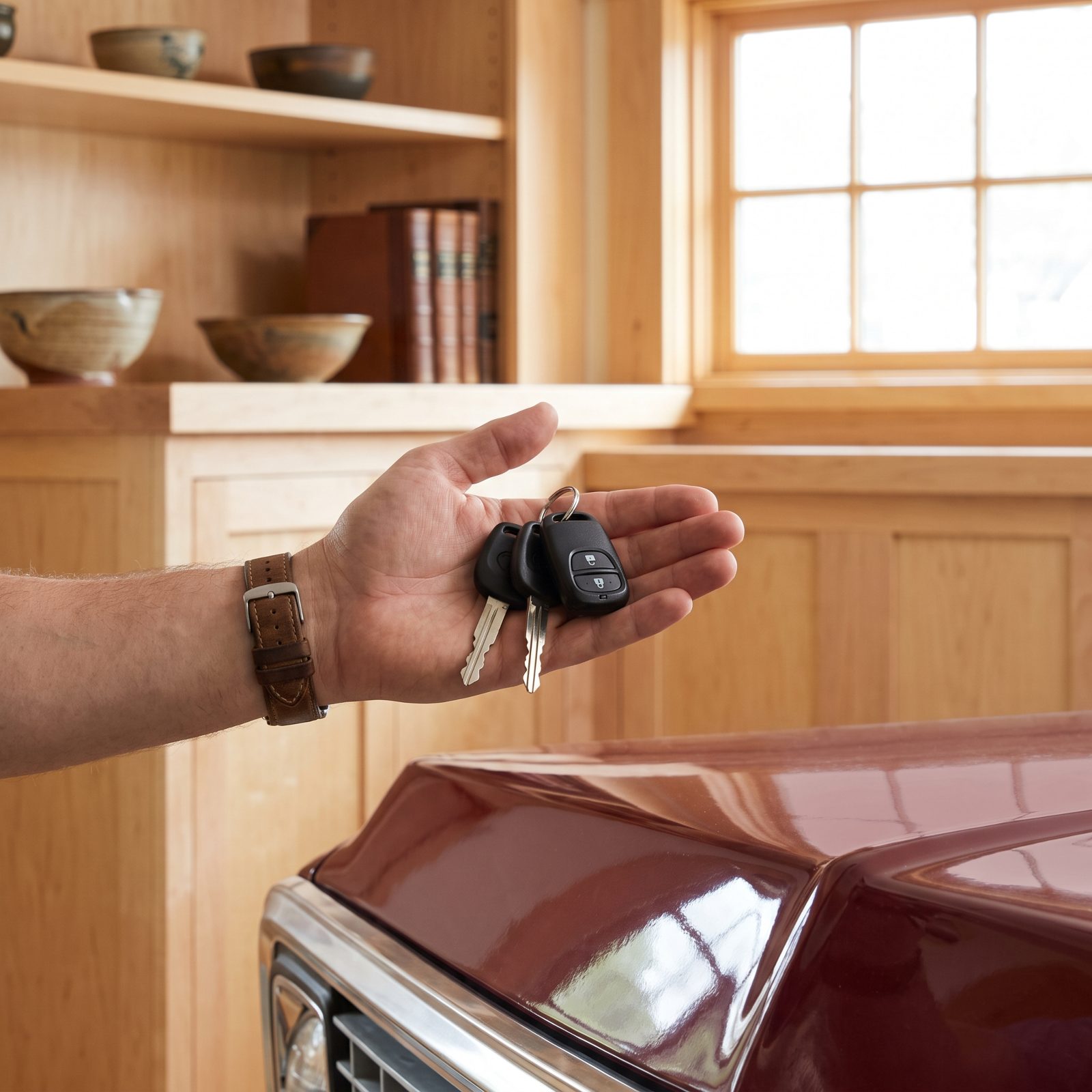
Hand over one key and watch the appraiser’s face change. Modern trucks pair keys to the computer, and replacing a lost smart key or programming a second fob runs real money at the dealer. Every missing remote is a line item they’ll subtract.
It sounds small. It isn’t. Two keys, both remotes, the wheel-lock key, and any security or radio codes signal a complete, well-kept truck. One lonely key says something got lost along the way.
Dig through the junk drawer before you go and find the spare. If a fob battery died, swap it so both work on the lot, and track down the owner’s booklet with the key code if you’ve still got it. These bits cost you nothing to gather and cost you money to be missing. Easiest value you’ll ever protect.
29. Aftermarket Modifications That Narrow the Buyer Pool
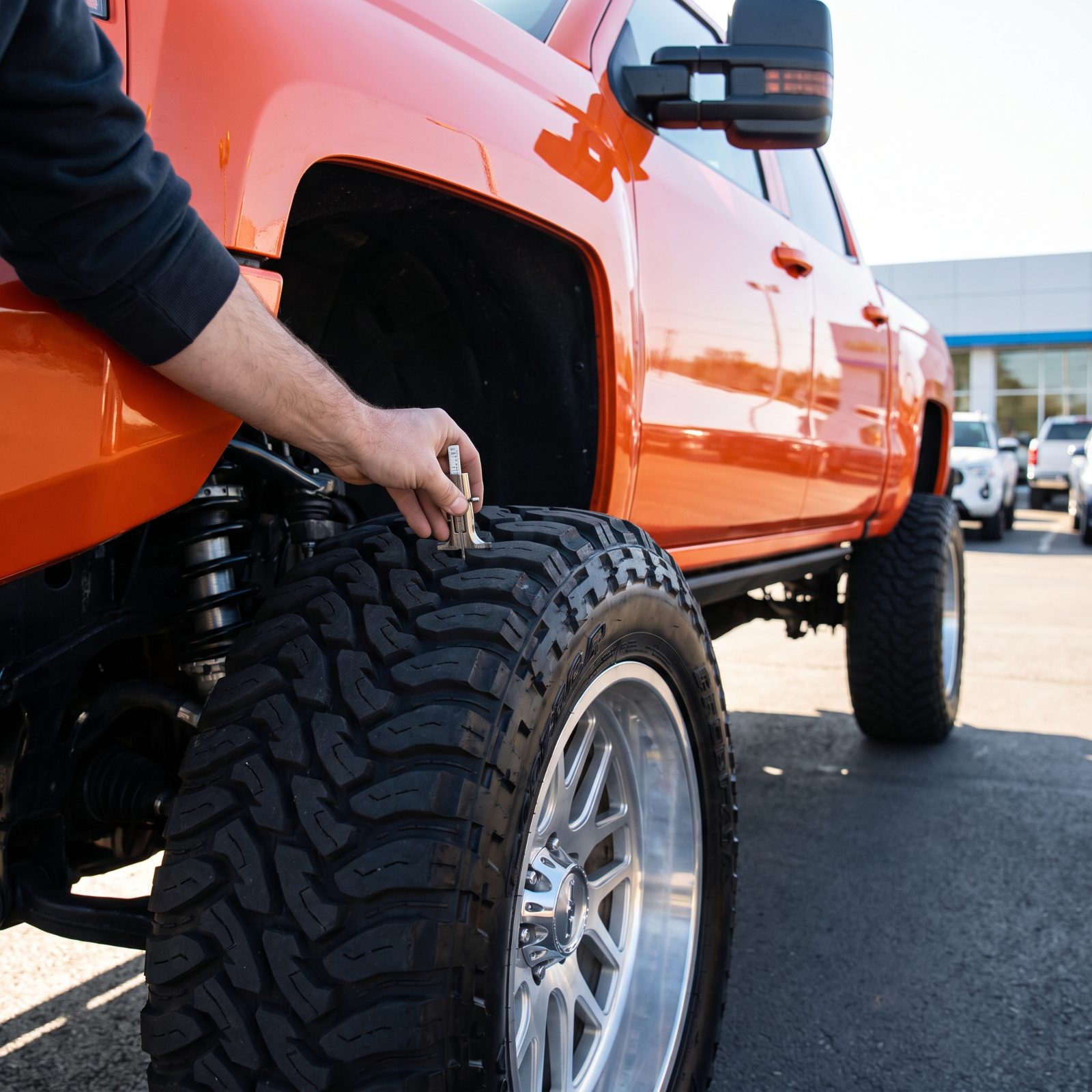
That six-inch lift and the fat mud tires you love are your taste, not the market’s. A dealer looks at heavy modifications and sees a smaller crowd of buyers, more liability, and a truck that’s harder to move. The tuner, the deleted emissions equipment, the lift — each one trims the pool.
And here’s the part that really stings. You rarely get back what you spent. A thousand-dollar exhaust might add nothing, and a diesel with a deleted emissions system can actually drop the value hard, because it’s a legal and resale problem wrapped in one.
Still have the factory parts? That’s your lever. Stock wheels, the original exhaust, the untouched suspension in a box. Offering to put the truck back to stock, or just throwing those parts in, widens the buyer pool again. Mods are for driving, not for trading. The dealer pays for broad appeal, not personal taste.
28. Mismatched Paint, Uneven Panel Gaps, and Other Signs of Collision Repair
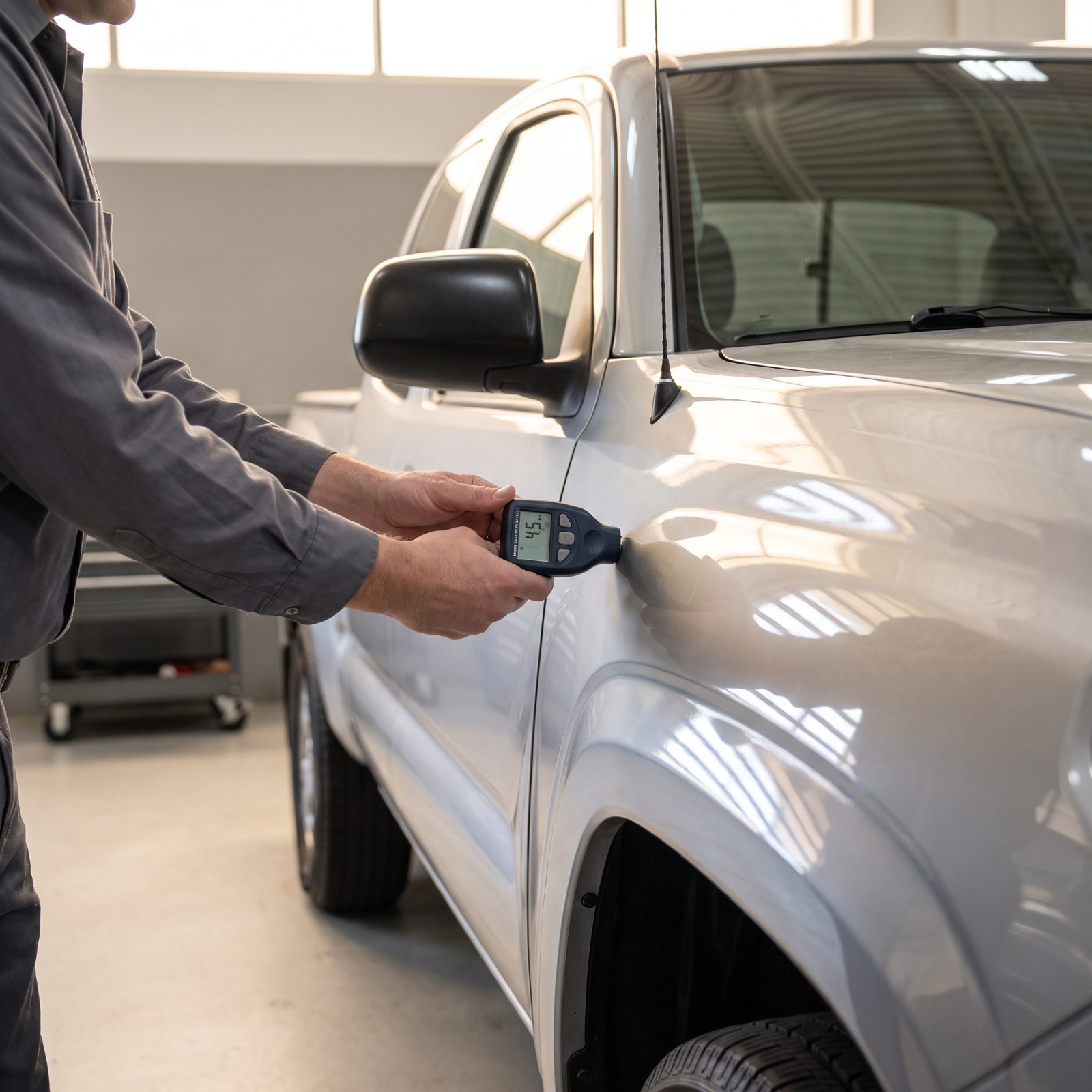
Run your hand down the side of a truck in flat morning light and your eyes catch what your hand already knows. One panel holds the light a hair differently than the one beside it, and a door gap runs wide at the top while it pinches tight at the bottom. These are the quiet signatures of collision work, and a dealer appraiser spots them before his coffee’s cool enough to drink.
Repaint and replaced panels tell him the truck took a hit. Even good bodywork drops trade value, because he has to assume the frame got stressed and the buyer will circle back with the same questions he’s asking right now.
Get ahead of it. Pull any repair invoices and keep them with the truck — a documented fender-bender with a clean alignment sheet reads far better than a mystery panel that makes him guess high on the risk.
27. Dents, Deep Scratches, and Hail Damage Across the Body
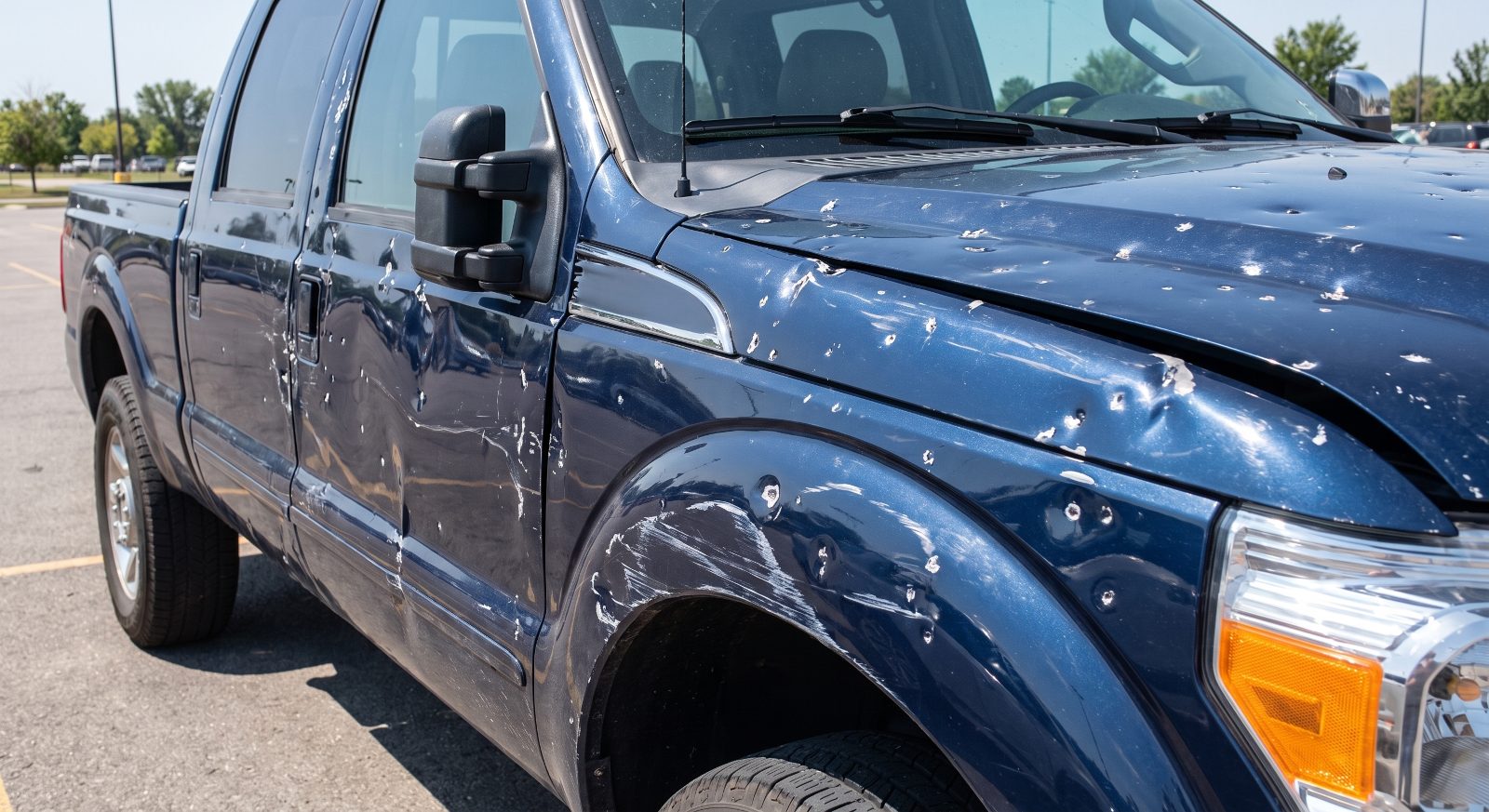
Hail is sneaky. On a sunny day the hood looks fine, but an appraiser tips his head low, sights down the metal, and suddenly it’s a golf-ball sky in miniature. Door dings, a creased bedside, a keyed scratch down to primer — he’s logging every one of them in that little notebook brain of his.
Here’s the real cost. Cosmetic damage doesn’t ruin a truck mechanically, but it goes straight onto the reconditioning estimate, and that number comes out of your offer dollar for dollar. Paintless dent repair isn’t free for him either.
Fix the cheap stuff before you go. A detailer can buff out light scratches for less than the dealer would deduct for them. Deep dents are a judgment call — but an honest truck that’s been wiped down and touched up always walks in stronger than one wearing a winter’s worth of parking-lot abuse.
26. Body Rust Around the Wheel Arches, Cab Corners, and Rockers
Surface rust is nothing. Rust eating from the inside out is everything.
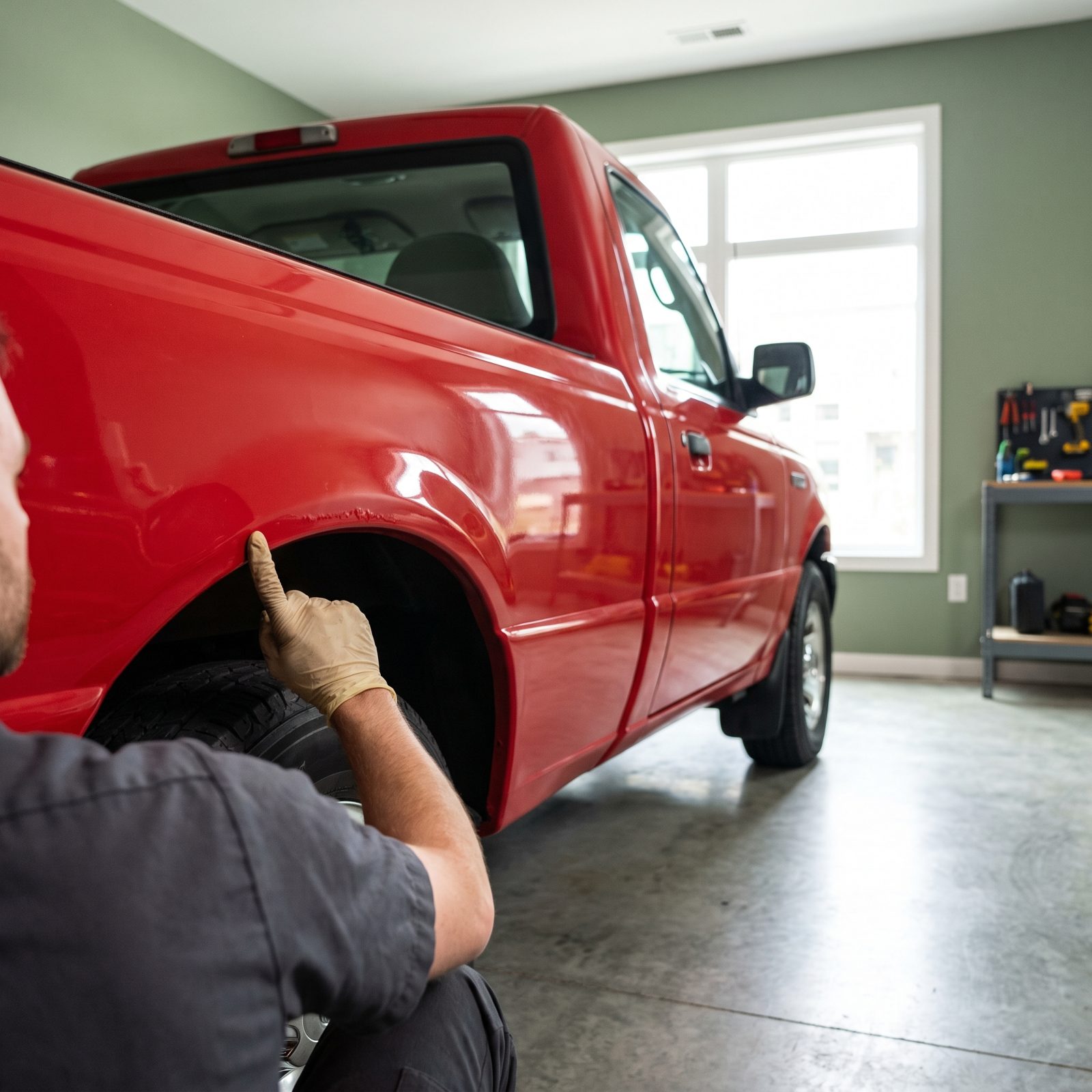
Trucks rot in predictable places: the lip of the rear wheel arches, the corners of the cab where the roof seam traps salt, and the rockers under the doors. An appraiser presses a thumb along those edges, and if the paint crackles or gives, he knows the metal behind it has turned to lace.
Cosmetic surface rust sands and sprays. Perforating rust means panel replacement or welding, and that work balloons fast. He also reads it as a map of the truck’s life — salt roads, no undercoating, left out in the weather through too many winters.
Catch it early. If you spot a bubble, have it cut and treated before it spreads, and keep the receipt. A rust spot that got fixed and documented beats an open wound any day.
25. Structural Rust on the Frame and Crossmembers
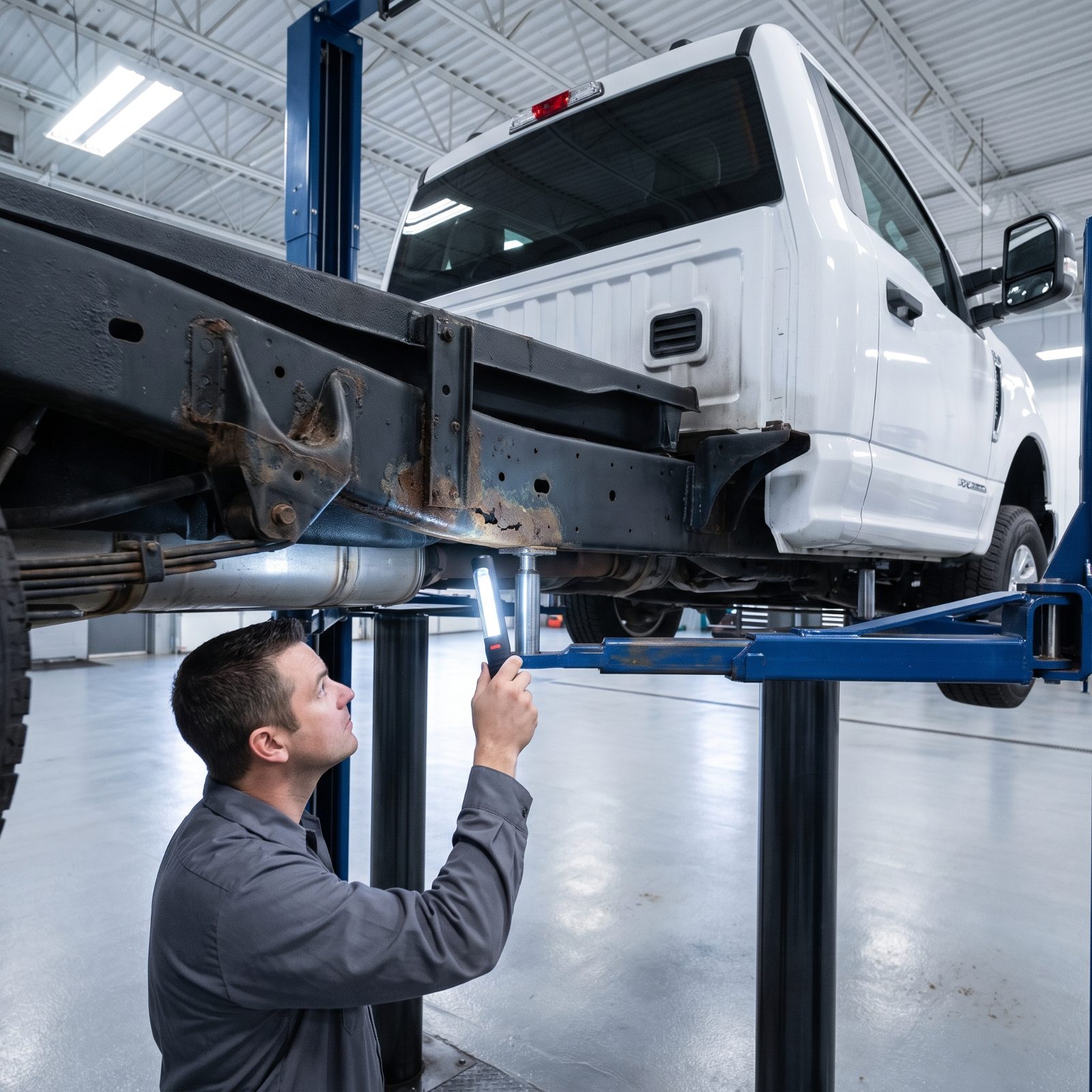
This is the one that changes the whole conversation. Body rust is cosmetic. Frame rust is a safety problem and a legal one, and an appraiser treats it that way the second the truck goes up on the lift and the flashlight comes out.
Flaking, scaling steel on the frame rails and crossmembers means lost strength. Enough of it and the truck won’t pass inspection, won’t tow safely, and in a lot of cases can’t be retailed at all. That turns a trade into a wholesale number fast — or a flat decline.
You can’t reverse heavy frame rot. But you can slow early surface rust: a wire-brush pass, a coat of rust converter, then a frame paint like POR-15 keeps honest patina from becoming a structural problem. Do it in the fall, before the salt flies.
24. Windshield Chips, Cracks, and Pitted Glass

Tip the glass into the sun and a tired windshield tells on itself. A field of tiny pits scatters the light into a haze, and down in one corner sits a star chip somebody kept meaning to fix.
An appraiser factors glass because a crack longer than a dollar bill is an automatic replacement, and pitting that blinds you at sunset fails inspection in plenty of states. A few hundred dollars, quietly subtracted.
The move is almost unfair how simple it is. A chip repair costs a fraction of a new windshield, and most insurance policies cover it with no deductible. Fix the chip before it runs into a crack and you’ve dodged the deduction entirely.
23. A Tailgate That Is Bent, Missing, or Difficult to Operate

Drop the tailgate. That little test says plenty.
An appraiser opens and closes it, feels for a bent panel, checks that both cables are intact and the latch snaps clean. A tailgate that sags, binds, or has gone missing entirely reads like neglect, and on a work truck it’s the first thing he reaches for.
Why it stings on the offer: a replacement gate with a camera, a step, or a damped drop can run real money, and a bent one throws off the whole rear-end lines to the eye. It also makes the truck harder for him to resell, because a buyer uses that gate every single day.
Easy win here. A frozen latch often just needs cleaning and a shot of white lithium grease, and a snapped cable is a cheap, bolt-on pair. Fix the function before the appraisal and the gate drops from a deduction to a non-issue.
22. Pickup-Bed Damage Hidden Beneath a Drop-In Bedliner
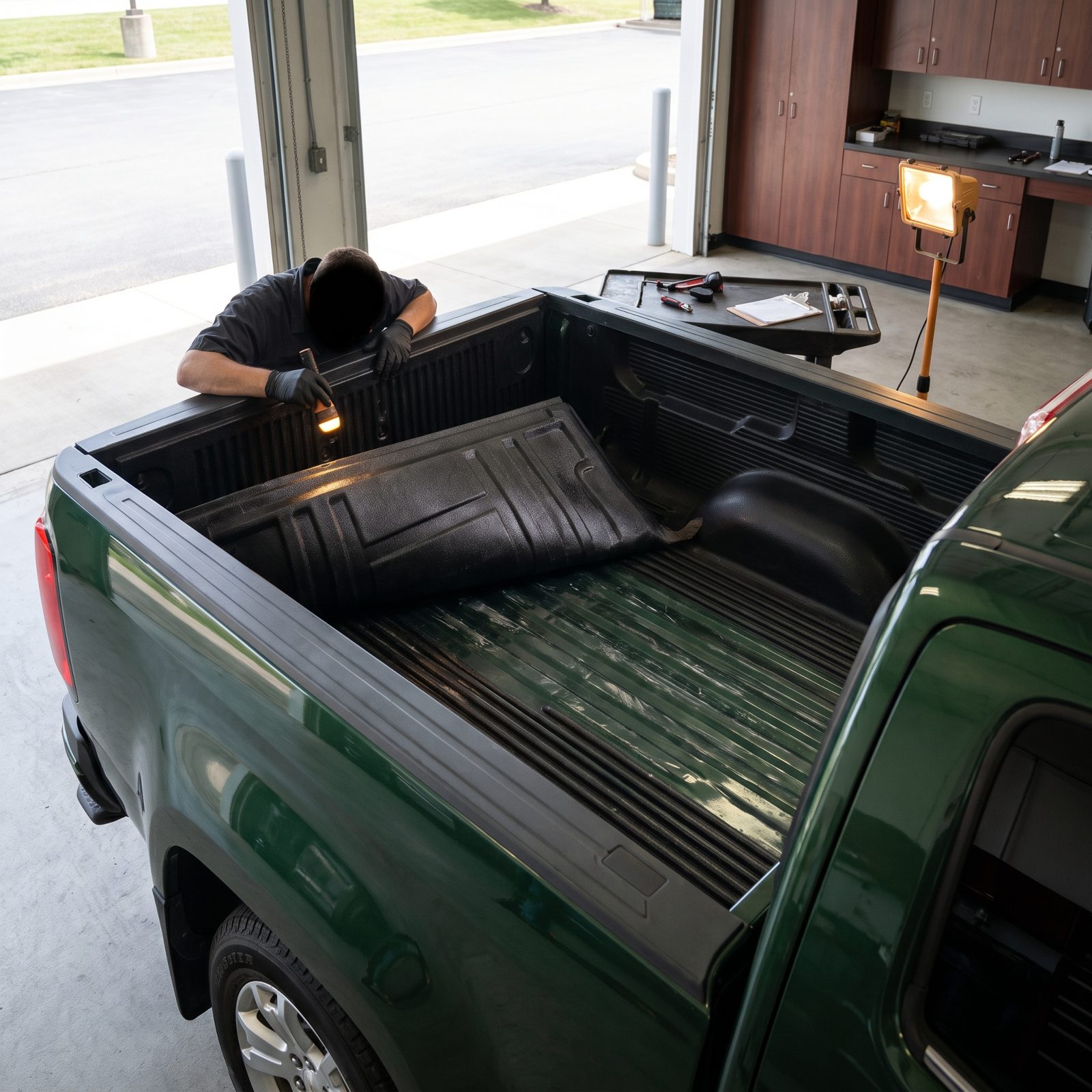
A drop-in bedliner looks like protection. To an appraiser, it looks like a lid on a mystery box, because he’s seen too many trucks where that textured plastic shell was hiding a floor full of rust. Every spilled drink and rainstorm ran under it and sat there, trapping moisture against bare metal with nowhere to go.
So he lifts the edge. If the bed underneath is rotten, that’s a repair he can’t price blind, and he’ll assume the worst to cover himself.
Best thing you can do: pull the liner, pressure wash the bed, let it dry, show it clean. A solid floor removes a huge question mark. And if it’s spray-in liner instead, say so — bonded coatings don’t trap water the way the drop-in trays do.
21. Four Matching Tires With Safe Tread and the Correct Load Rating
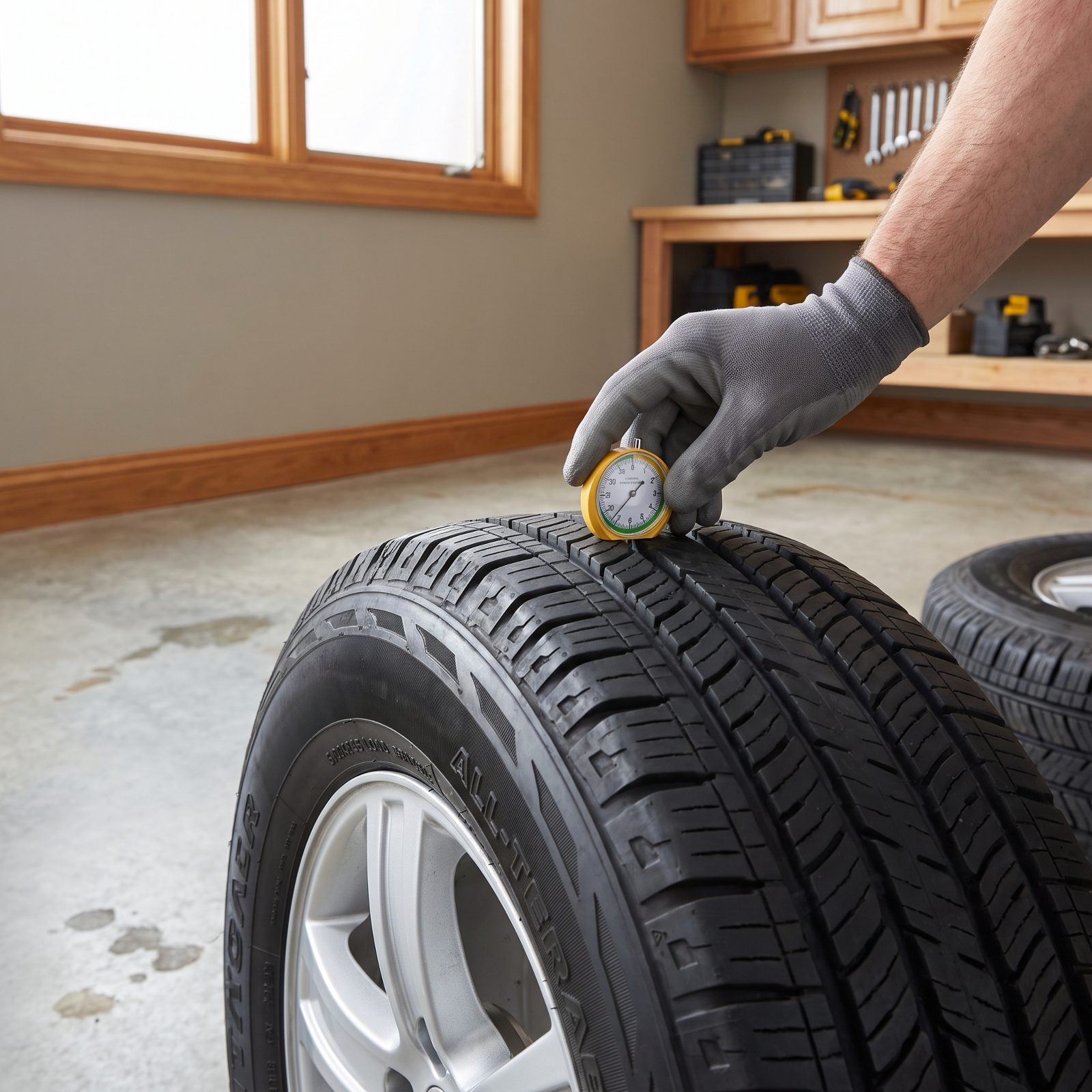
Tires are one of the few line items that can swing in your favor. An appraiser reads the tread with a gauge, checks all four for a match, and glances at the load rating stamped on the sidewall — a truck wearing passenger tires instead of the proper load range is a red flag and a cost.
Four good matching tires are money in the truck’s pocket. A mismatched set, uneven wear, or worn-down rubber all come off the offer, since he has to put safe tires under it before it hits his lot.
The play depends on the math. If your tires are near the end, don’t rush out and buy premium rubber you’ll never recoup. But if they’re solid and matched, make sure they’re clean and aired up so he sees exactly what you’re bringing him.
20. Fluid Leaks Visible on the Engine or Undercarriage
Would you like to save this?
Nothing kills a number faster than a wet undercarriage.
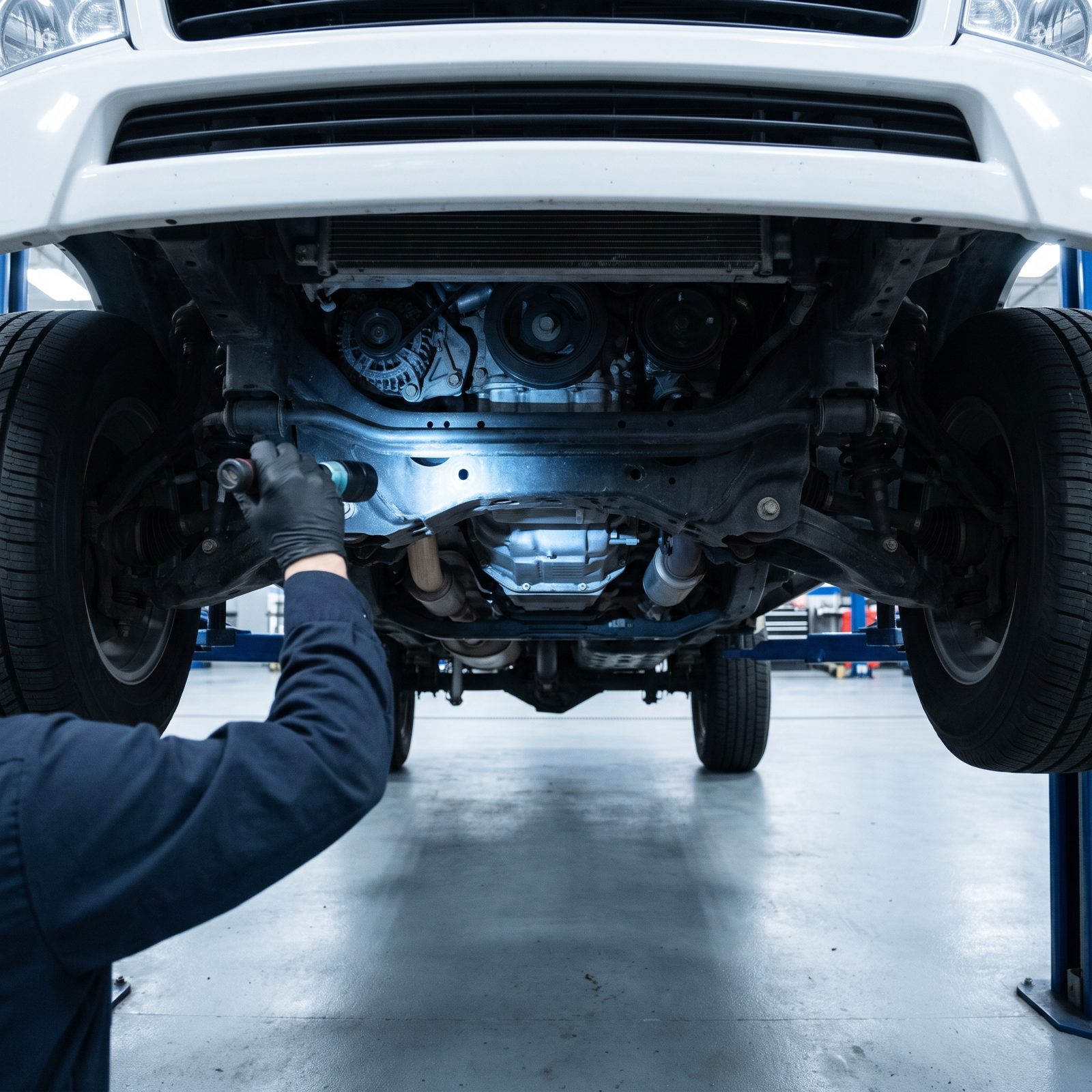
Up on the lift, the appraiser walks the drivetrain with a flashlight, looking for seepage at the valve covers, the oil pan gasket, the front and rear main seals, and the transmission case. A fresh damp film is a live leak. A caked, dusty crust is an old one that’s been going for years.
It drops the value hard because a leak means a diagnosis, and a rear main seal or a transmission job is labor-heavy and pricey. He prices in the worst reasonable outcome, since he can’t know which gasket is the culprit until he’s into it.
Before you trade, wipe down the suspect areas, drive it a week, then look again. A small weep from a valve cover gasket is a cheap fix you can knock out in a driveway afternoon. Clear it beforehand and you stop him imagining a bigger problem than you actually have.
19. A Cold Start That Exposes Hard Starting or Engine Rattle

A warm engine hides its sins. That’s why a sharp appraiser likes the first start of the day — cold, before anything’s been run. He turns the key and listens for how long it cranks, whether it catches clean, and what it sounds like in those first ten seconds.
Those opening moments are the tell. A long crank points to fuel pressure or a weak battery, a top-end rattle that fades as oil pressure builds hints at lifter or timing-chain wear, and a deep knock down low is the expensive kind of news. He hears all of it in the quiet.
So don’t warm anything up to fool him — fix the cause. A noisy cold start often traces back to an overdue oil change or the wrong viscosity. Fresh oil in the right weight, a strong battery, and a clean start do more for your offer than any detailing ever will.
18. Dashboard Warning Lights and Stored Diagnostic Codes
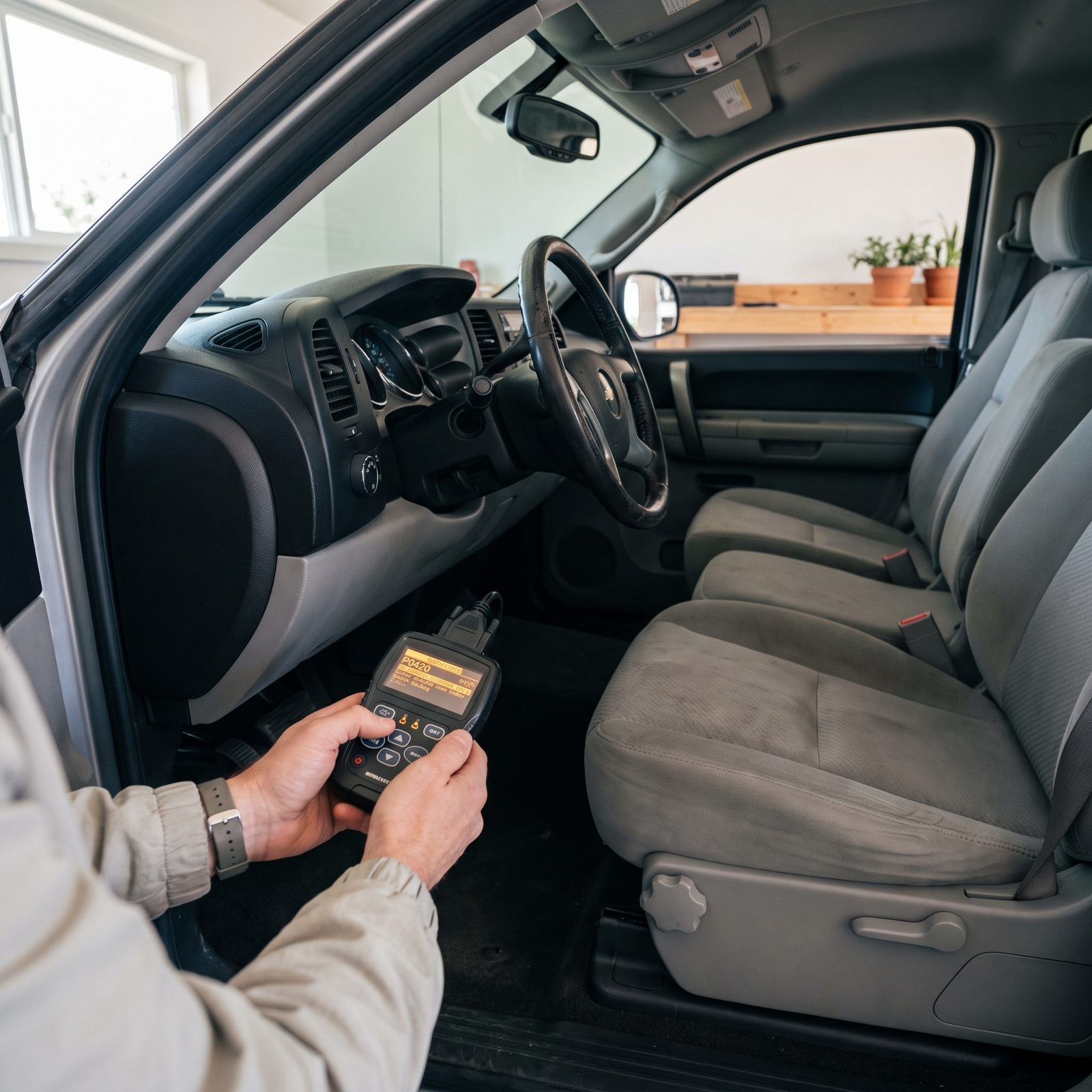
A truck can roll onto the lot looking showroom-fresh and still have a story hiding under the dash. The first thing an appraiser reaches for is a scanner, because stored codes don’t lie the way a freshly reset dash can.
Plenty of sellers try to game this, and almost none of them pull it off. Clearing the check-engine light right before the appraisal rarely helps. Modern trucks track readiness monitors, and a bank of monitors that hasn’t re-run since someone yanked the battery reads just as loud as the light itself. A pending misfire, an evap leak, a lazy oxygen sensor — all of it gets logged, and all of it waits for the scanner.
What a dealer wants is an honest, completed drive cycle with no active faults. Fix the real problem, drive it a week so the monitors reset on their own, then let them plug in. An EGR or catalytic-converter code can knock four figures off the number fast.
17. Low, Dirty, Burnt, or Contaminated Fluids
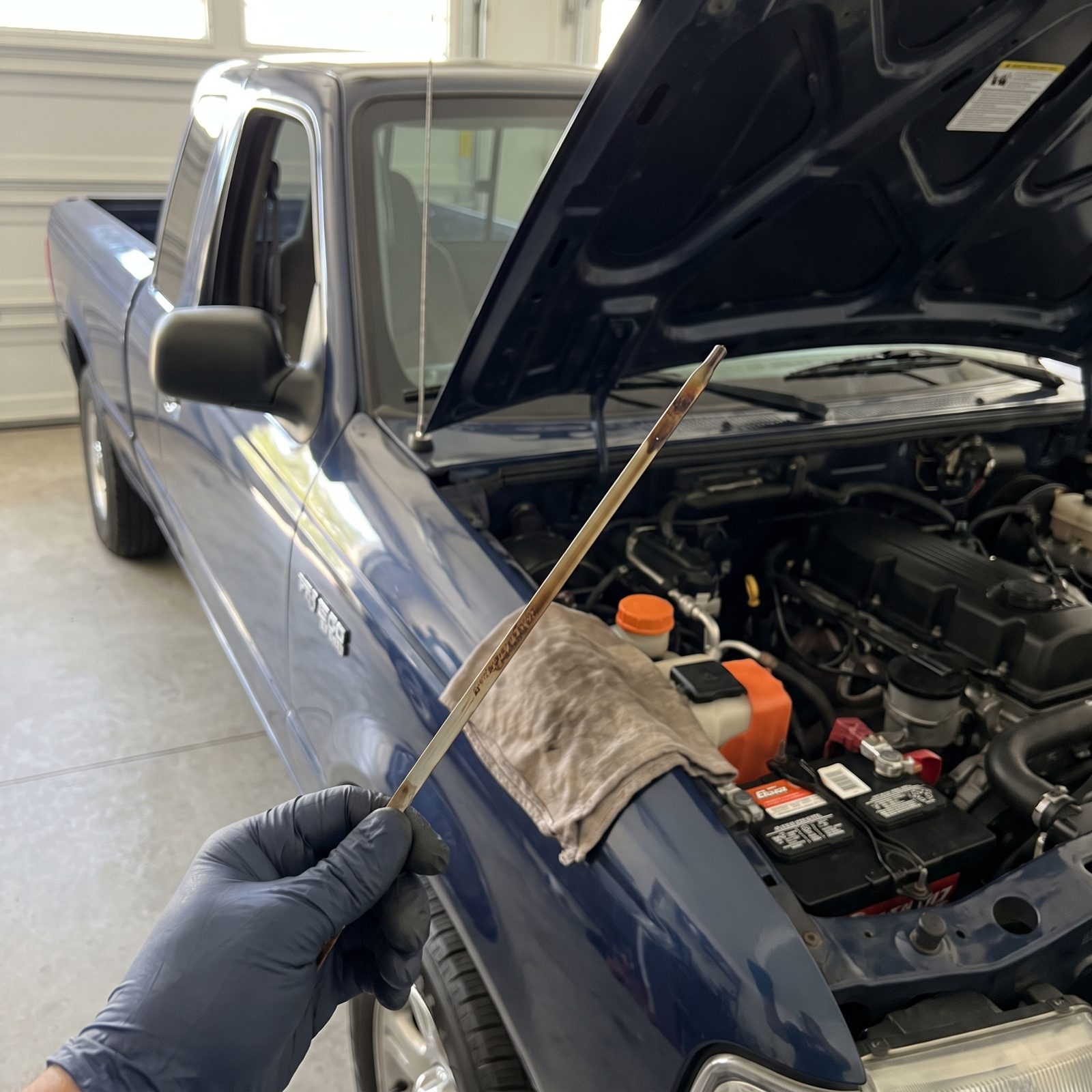
Pop the hood and the fluids spill years of maintenance history in about ninety seconds. An appraiser checks oil color and level, transmission fluid on the dipstick (for trucks that still have one), coolant clarity, brake fluid — and gives each a sniff.
Burnt-smelling transmission fluid gone dark brown instead of cherry red suggests overheated clutches. Milky oil or coolant means the two are mixing, and that whisper of a head gasket or cracked block tanks a trade number in a hurry. Coolant full of rust-colored sludge? That’s a cooling system somebody ignored for years.
Spend thirty bucks and an afternoon before the appraisal. Change the oil and filter with the correct weight, top the coolant with the right spec, check the trans fluid level and color. Clean fluids signal a truck that was cared for, and that impression carries straight down every other line on the appraisal sheet.
16. Blue, White, or Black Smoke From the Exhaust
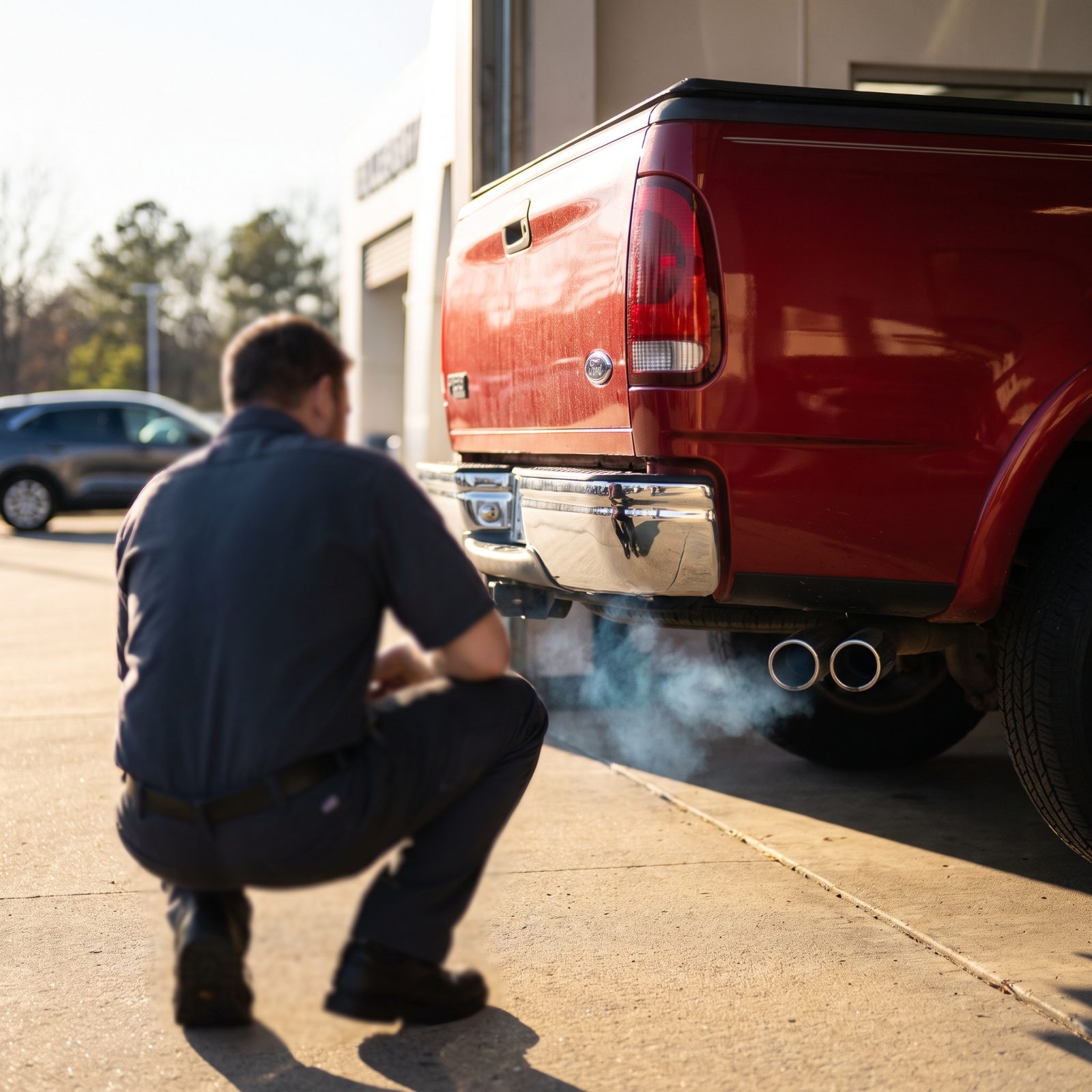
Color is everything with exhaust smoke. An appraiser watches the tailpipe on a cold start and again under a quick throttle blip during the test drive, because each shade points to a different repair bill.
Blue means oil is burning — worn valve seals or tired piston rings. White that hangs around after warm-up means coolant is escaping somewhere it shouldn’t, usually a head gasket. Black means the engine’s running rich on fuel it isn’t fully burning. On a diesel, a puff of black under hard acceleration is often normal; a steady haze is not.
You can’t fake your way past this one. If your truck smokes, get a real diagnosis first. Sometimes it’s a forty-dollar PCV valve or a sticking injector. Sometimes it’s a top-end rebuild. Knowing which one lets you decide whether to fix it or just price it honestly going in.
15. Automatic-Transmission Slipping, Harsh Shifts, or Delayed Engagement
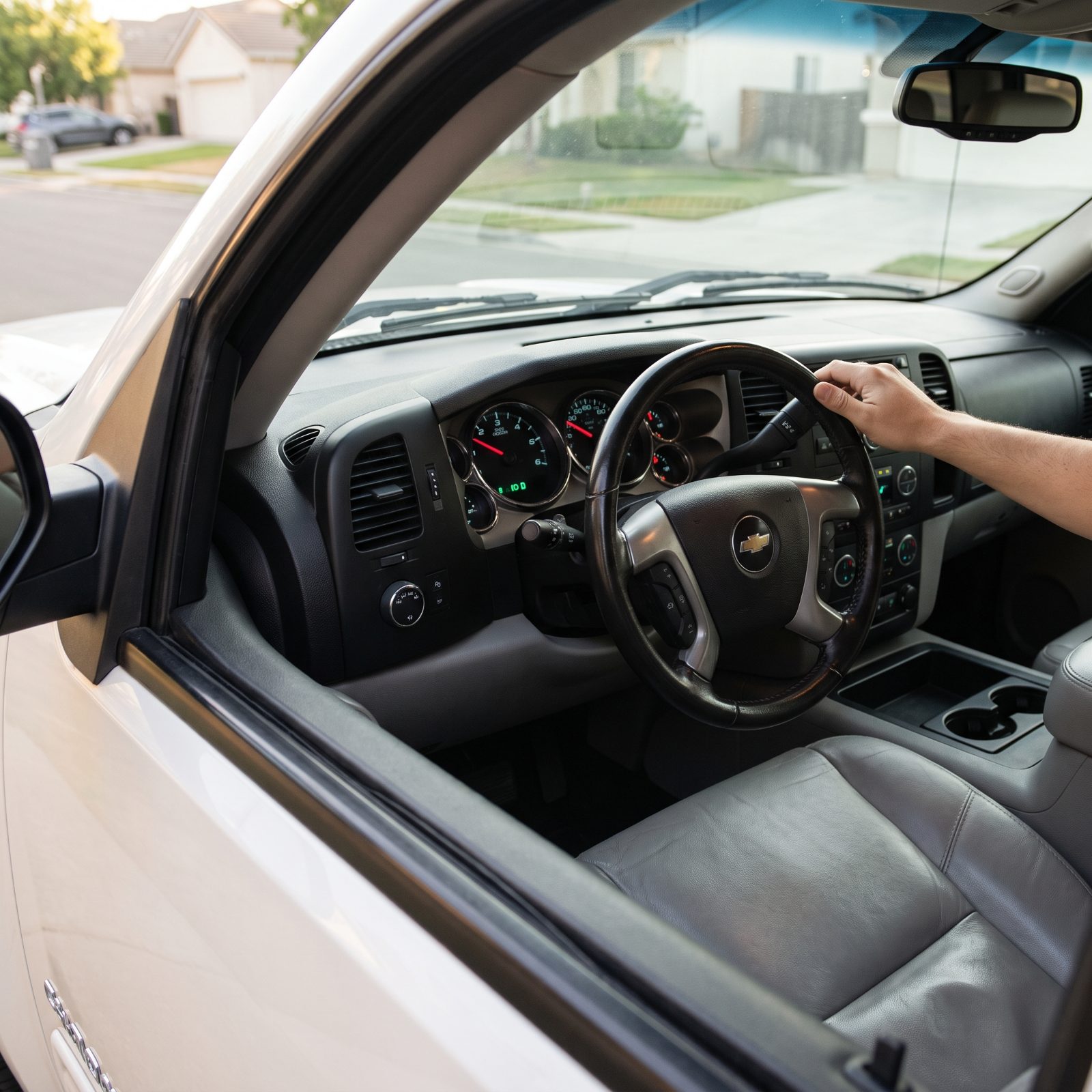
The test drive is where a transmission confesses. An appraiser feels for the shift into reverse and drive from a stop — a half-second too long and the clutches or seals are worn. Out on the road they watch the tach for flare, where the engine RPM jumps but speed doesn’t follow. That’s the classic slip.
Harsh bangs between gears, hunting between two gears that won’t settle, a shudder at light throttle: all of it says the valve body, torque converter, or internal friction material is living on borrowed time. A rebuild on a modern truck runs several thousand dollars, so this one symptom can swing a trade number harder than almost anything else on the sheet.
If yours shifts a little lazy, a drain-and-fill with the exact factory fluid sometimes helps more than people expect. But a full flush on a high-mileage unit can backfire badly, so talk to someone who knows your specific truck before you go that route.
14. Four-Wheel Drive and Low-Range Systems That Engage Correctly
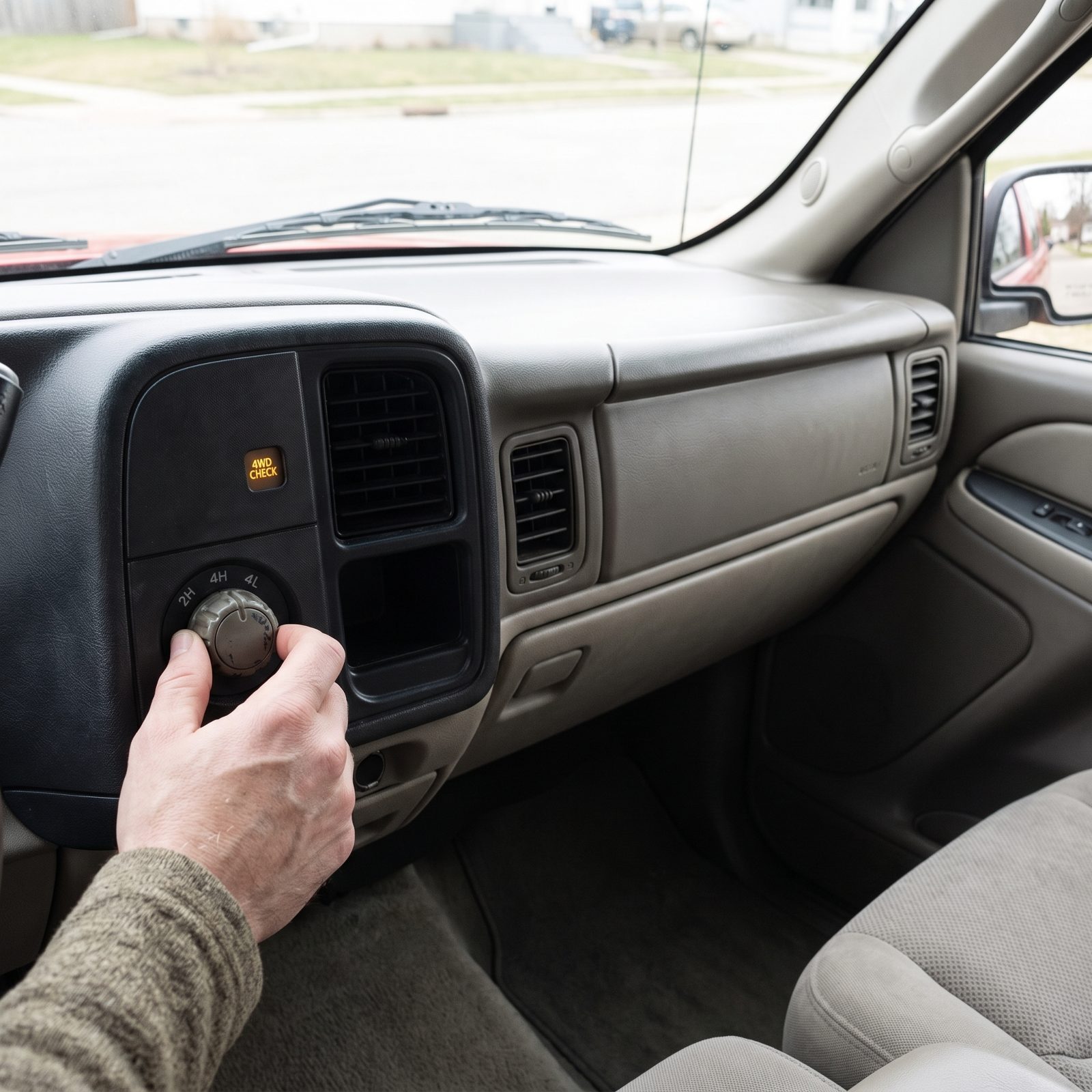
Plenty of truck buyers never actually test the four-wheel drive, and plenty of sellers quietly hope the appraiser won’t bother either. They will.
A dealer shifts into 4-High and 4-Low, listens for the front axle to grab with a clean clunk, and watches the dash light confirm it. Then they’ll creep forward in low range to feel the gear reduction. A system that won’t engage, grinds, or pops right back out points to a worn transfer case, a dead shift motor, broken vacuum or electronic actuators, or neglected front hubs.
On a truck people buy specifically for its four-wheel drive, a dead system isn’t a minor ding. It cuts into the whole reason the thing exists.
13. Brake Pedal Feel, Rotor Condition, and Stopping Performance
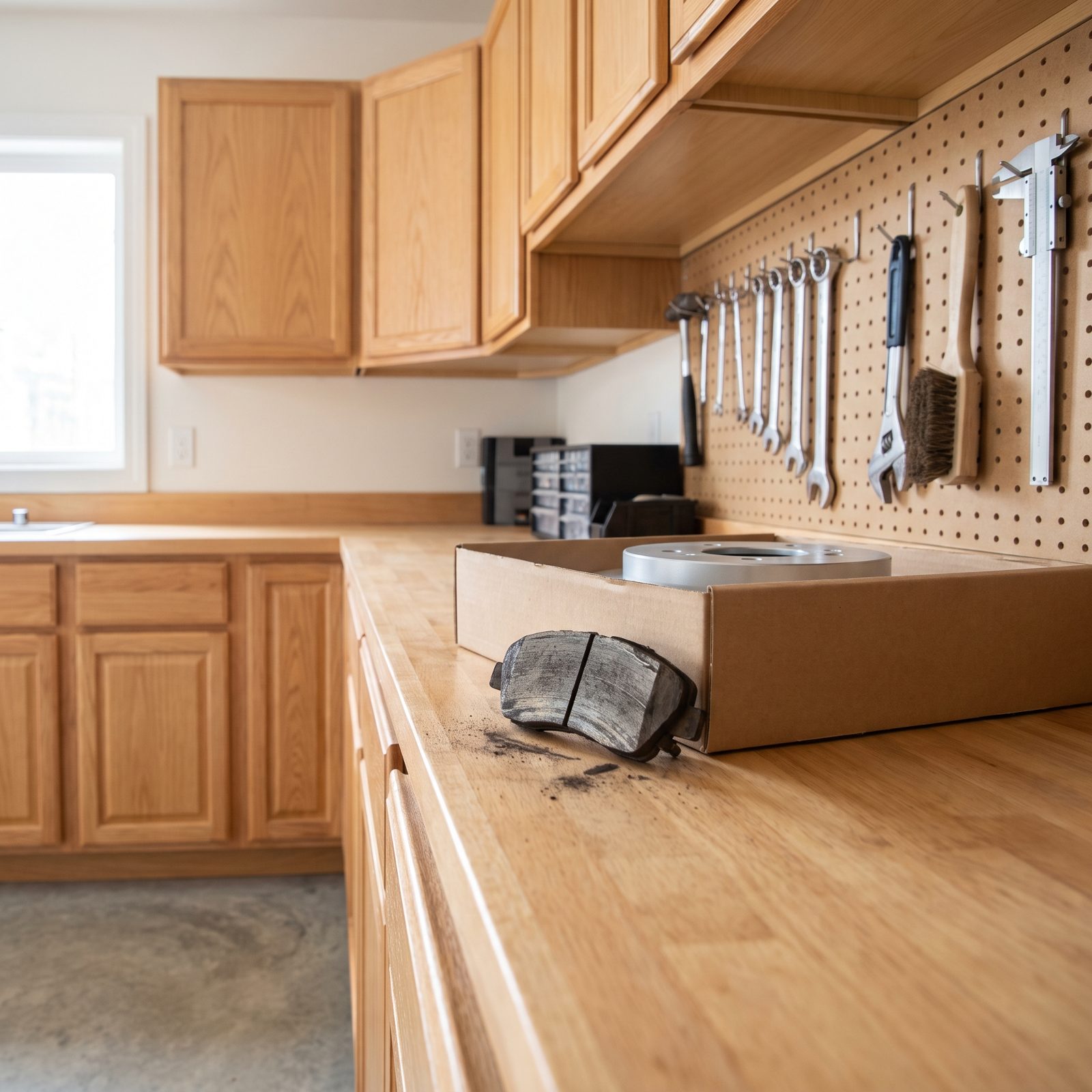
A good appraiser reads the brakes with their foot before they ever lay eyes on the rotors. A pedal that sinks slowly toward the floor means a leaking master cylinder or a soft line. A pulsing pedal under braking means warped rotors. A pull to one side points to a sticking caliper.
Then they look through the spokes. Deep grooves in the rotor, a lip you can catch a fingernail on, pads worn down to the metal backing — it all adds up. Brakes are a safety item, which means a dealer who takes the truck in has to make it right before reselling, and that cost comes straight off your offer.
Fresh pads and resurfaced or new rotors run a few hundred dollars at most, and they turn a nervous test drive into a confident one. Cheapest insurance you can buy for your number.
12. Steering Play, Pulling, or Vibration on the Test Drive
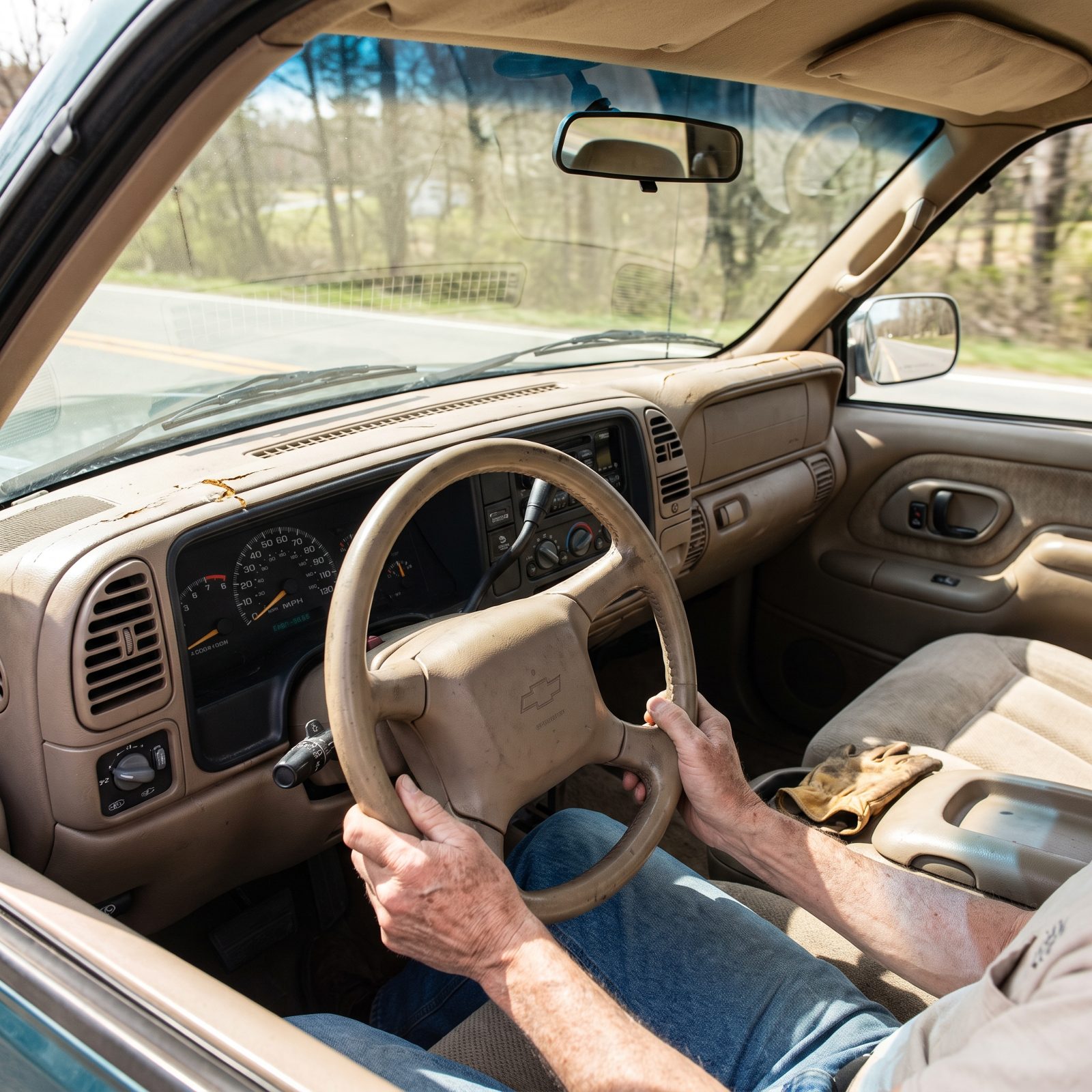
Everything a worn front end hides shows up at highway speed. An appraiser lets the wheel go loose for a second on a straight, flat road to see if the truck tracks true or wanders off. They feel for play — that dead spot where you turn the wheel and the truck hesitates before anything happens.
A pull to one side can be as simple as uneven tire pressure or as costly as a bad alignment, worn tie rods, or a dragging caliper. A shimmy through the wheel around highway speed usually means an out-of-balance tire or a bent wheel, though it can also be a failing ball joint or wheel bearing.
So before an appraisal, check tire pressures, get an alignment, and have the front end looked over. A truck that drives straight and quiet feels a decade younger than its odometer, and that feeling is worth real money.
11. Clunks, Bounces, or Wandering From Worn Suspension Parts
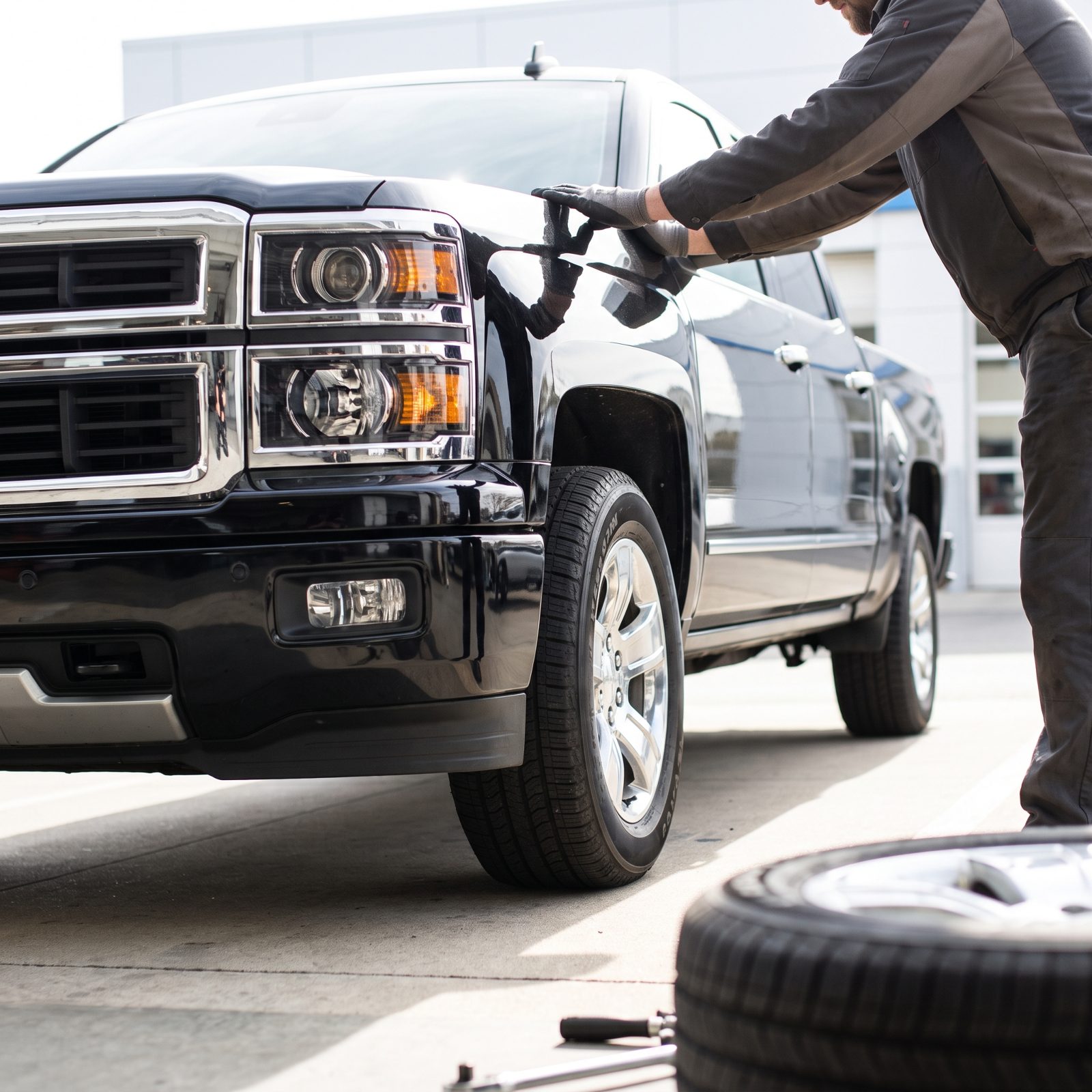
You know the classic move. The appraiser leans hard on a corner of the truck and lets go. A healthy shock settles in one rebound. A worn one keeps bobbing like a boat on a swell, and that tells them the dampers are shot.
On the test drive they listen over bumps and parking-lot dips for clunks — worn ball joints, sway-bar end links, control-arm bushings, or loose U-bolts on the leaf springs. A truck that wanders on the highway or crashes hard over every seam has suspension wear piling up front and rear.
End links and bushings are cheap and easy. Shocks are a reasonable afternoon job. Knock out the obvious clunks before the appraisal and you keep a dealer from mentally tacking on a full front-end rebuild he hasn’t even priced yet.
10. Working Air Conditioning, Heat, and Powered Cabin Features

Would you like to save this?
Within the first minute in the seat, an appraiser runs the A/C to full cold and the heat to full hot, cycles the fan through every speed, and tries the power windows, locks, mirrors, and seats. These feel like small things. They aren’t.
A/C that blows warm is one of the most common gripes on an older truck, and recharging a system that’s actually leaking means finding the leak first — which can mean a compressor, condenser, or evaporator. That gets expensive fast. A blower stuck on one speed is a resistor. A window that won’t go up is a regulator. Each dead feature is a line item the dealer quietly subtracts.
Get the cheap ones working. A fresh cabin filter, a working blower, windows that all go up and down — these little things tell the appraiser the truck was lived in and looked after, not run into the ground.
9. Smoke, Pet, Fuel, or Mildew Odors Inside the Cab
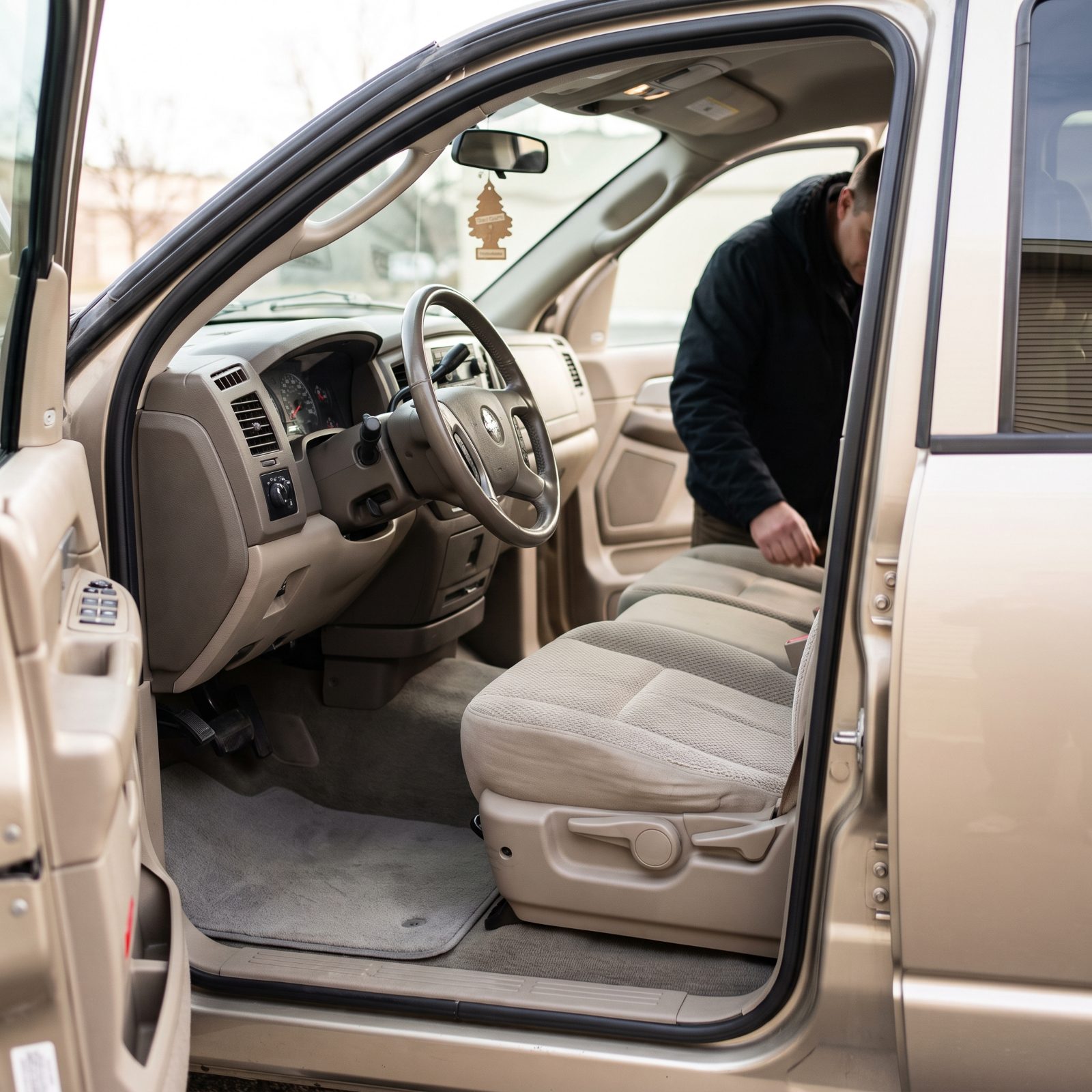
The nose closes a lot of deals, and it kills a lot of them too. An appraiser opens the door and takes a breath before they ever sit down.
Cigarette smoke soaks into the headliner, seats, and vents and never fully leaves, which is why a smoked-in truck takes a hard hit. Pet odor and ground-in hair. A mildew smell from a leaking cowl or a window left open in the rain. A gas whiff that hints at a leaking fuel line or injector. Each one lingers, and each one costs you.
So deep clean it before the appraisal. Shampoo the seats and carpet, run an ozone or enzyme treatment on the stubborn smells, replace the cabin filter, and chase down the source of any mildew instead of masking it. A fresh-smelling cab makes the whole truck read as cared for — and nobody who does this for a living is fooled by a cheap air freshener.
8. Wear on the Seats, Steering Wheel, Pedals, and Driver’s Armrest
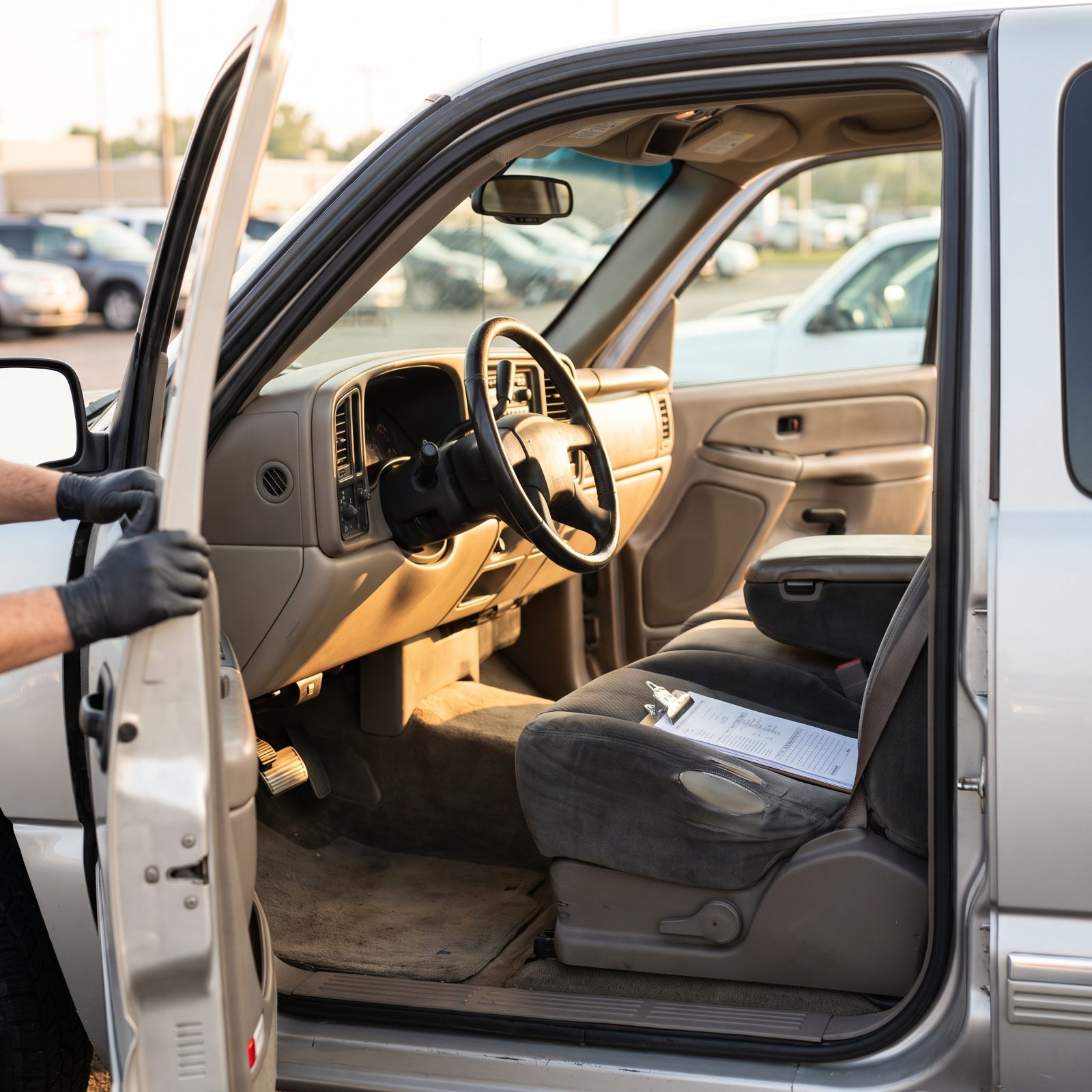
This is the first place a dealer looks, and it tells more than the odometer ever will. A truck can read 60,000 miles on the cluster, but if the driver’s seat bolster is polished shiny, the wheel rim is worn smooth at three and nine o’clock, and the brake pedal pad is sanded flat? The appraiser knows that truck lived harder than the number lets on.
Why it matters: mismatched wear is the tell for a rolled-back or replaced cluster, or just heavy fleet duty. Either way, it shaves the offer.
What to do instead: keep a cover on the driver’s seat from day one. A fitted neoprene or canvas cover over the high-wear spot preserves the original cloth beneath it, and a dab of UV protectant on any leather or vinyl trim twice a year goes a long way. Don’t bother with a cheap slip-on wheel cover, though. Appraisers peel those off in two seconds and assume the worst.
7. Missing or Altered Emissions Equipment
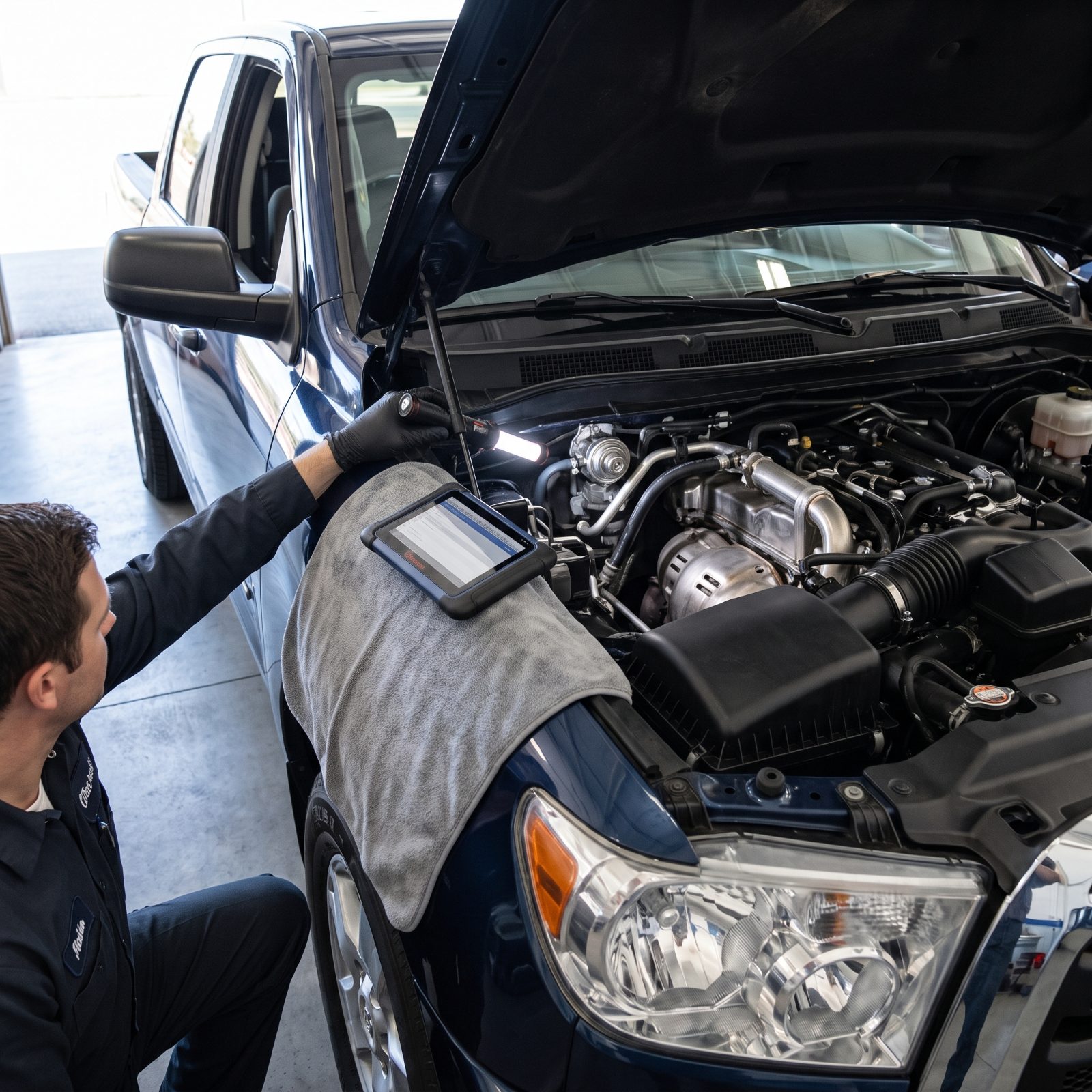
Somebody pulled the catalytic converter and dropped in a straight pipe. Or deleted the EGR to wake the engine up. Sounds meaner at the stoplight. At the appraisal desk, it’s a headache the dealer doesn’t want any part of.
Modified or missing emissions gear means the truck fails state inspection, can’t be resold to the next retail buyer in most markets, and might carry fines on top. The dealer either wholesales it cheap or hands you a quote that bakes in the cost of putting everything back to factory, and that’s a four-figure deduction in a hurry.
What to do instead: if you deleted anything, reinstall the factory hardware before you trade. The smart move is boxing up the original converter, EGR valve, and air box in the garage the day you modify. Returning to stock is always cheaper when you kept the parts.
6. Diesel Particulate Filter and DEF-System Problems
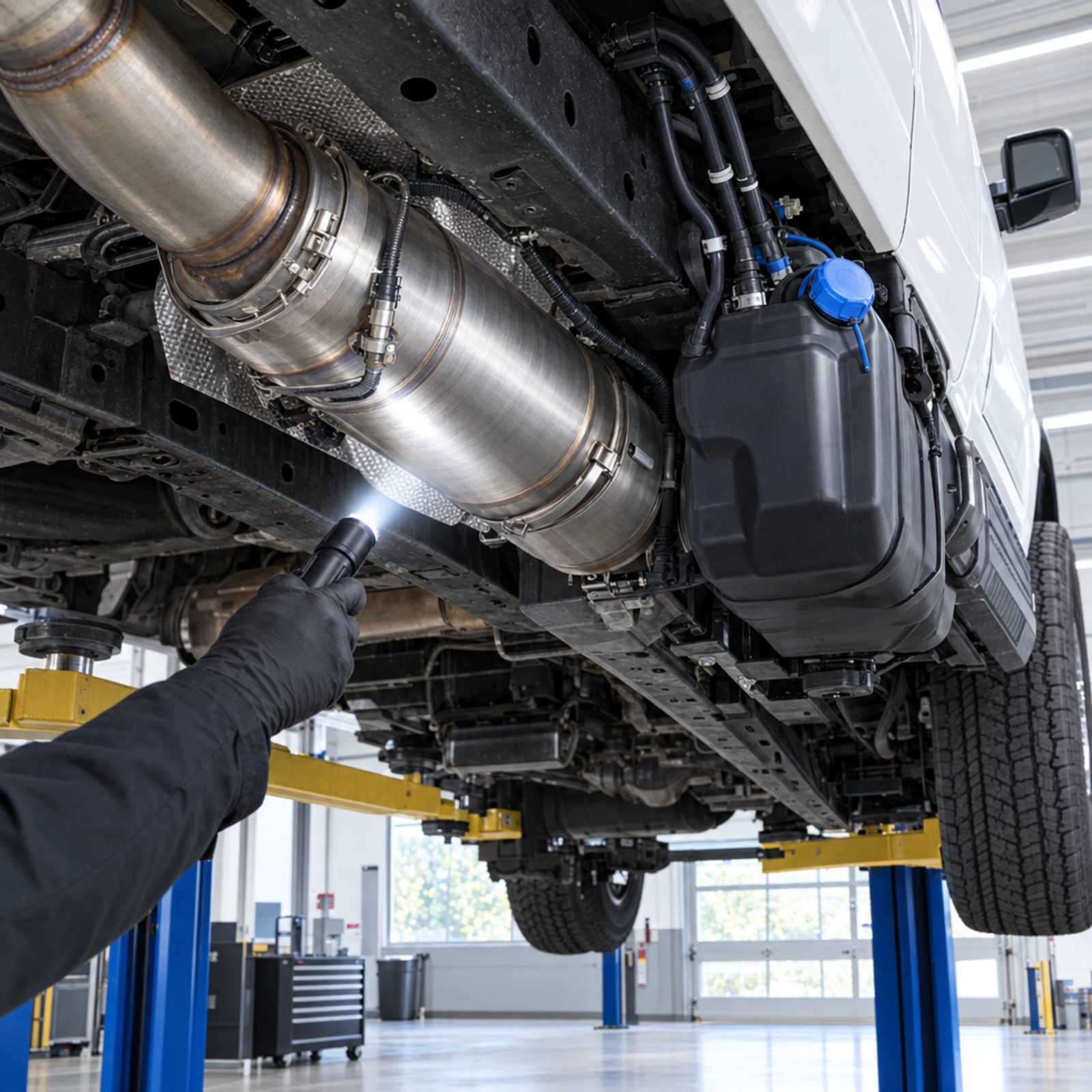
Diesel buyers know the dash lights nobody wants to see. The DPF warning. The DEF-level countdown that eventually drops the truck into limp mode at a crawling 5 mph. A clogged particulate filter or a failing DEF injection system is one of the most expensive repairs on a modern diesel, and the dealer prices every bit of that risk into your offer.
Replacement DPFs run into the thousands, and a derated engine is a truck nobody can test drive properly. Let the appraiser’s scanner pull codes for DEF quality or regeneration failures, and the number drops hard.
What to do instead: run the truck on long highway cycles before trade so it completes an active regen and clears soft codes. Use certified DEF only, and keep the tank topped. One more thing — get a full code scan yourself, before the dealer does, so nothing jumps out at the desk.
5. Signs of Flood Exposure Beneath the Carpets and Seats
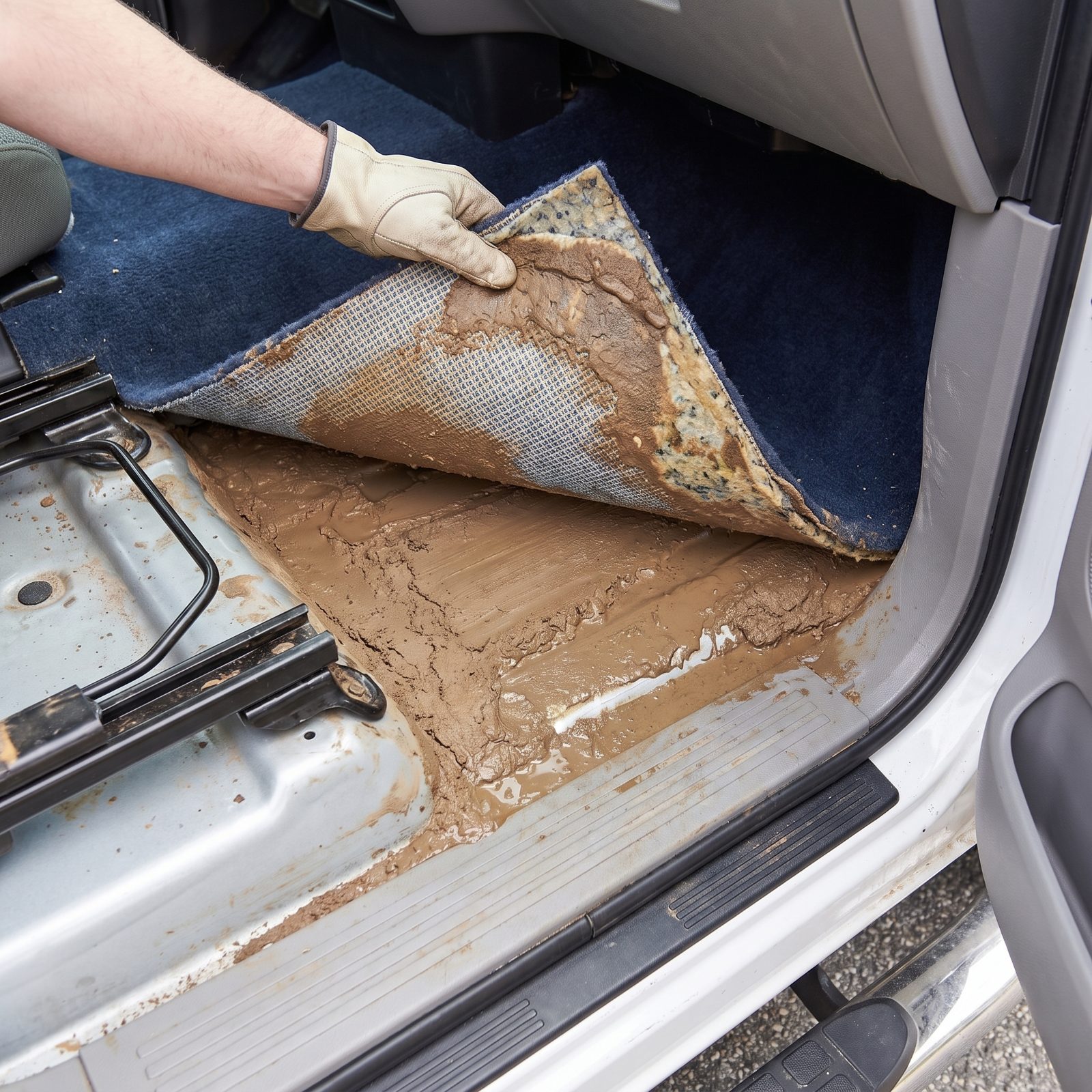
A flood truck can look showroom clean up top. The real story’s underneath. Appraisers peel back a corner of carpet, check the seat-bolt threads, sniff the cabin, and hunt for a silt line in the spare-tire well. Water gets into places soap never reaches.
Flood damage is a slow killer — corroded wiring harnesses, rusting floor pans, electrical gremlins that surface months down the road. Once a dealer suspects water, the offer collapses or just plain disappears, because they figure the title’s either already branded or headed that way.
Honesty is the play here. If your truck ever took on water, document the professional remediation and say so. If it didn’t, keep it that way: dry out any interior spill all the way, lift the mats, run a fan. Musty carpet backing reads as flood even when the real culprit was a leaky window seal you forgot about.
4. Excessive Hitch Wear and Suspension Sag From Heavy Towing or Payloads
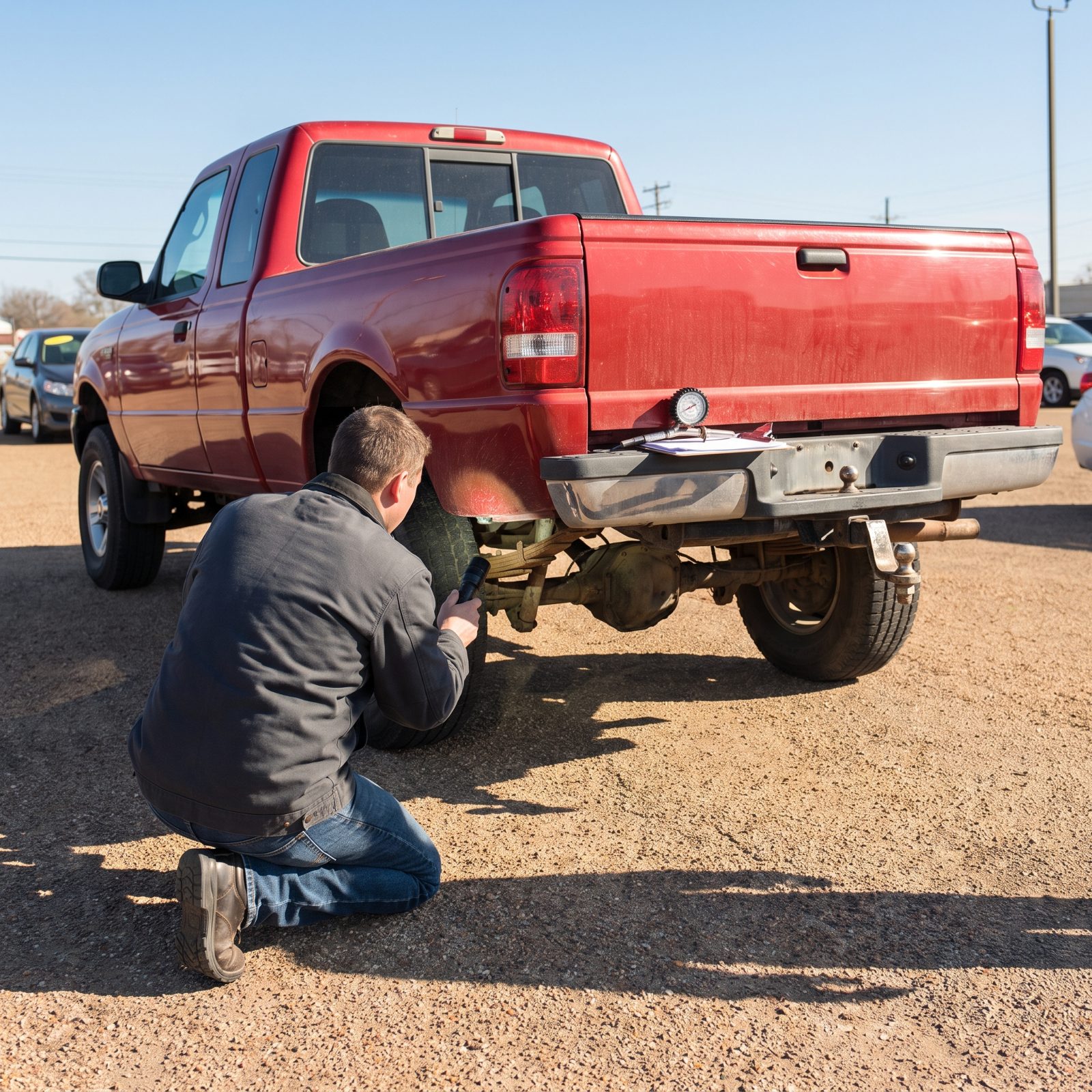
The receiver hitch tells on you. A scored, polished hitch ball and a sagging rear end say this truck pulled a loaded trailer for a living, not a bass boat twice a summer. Appraisers read that in about four seconds.
Heavy towing stresses the transmission, rear axle, brakes, and leaf springs all at once. Even a well-kept hauler carries more wear risk, so the dealer builds in a cushion to cover what they can’t catch on a short test drive.
What to do instead: service the drivetrain on schedule and keep every receipt. Fresh transmission fluid, a recent differential service, brake work on paper — all of it reassures the appraiser that the towing didn’t go unmaintained. And if the rear sags noticeably, a set of factory-spec leaf springs or helper bags restores ride height and signals you took care of things.
3. Professional Cleaning Versus Dirt That Hides Defects
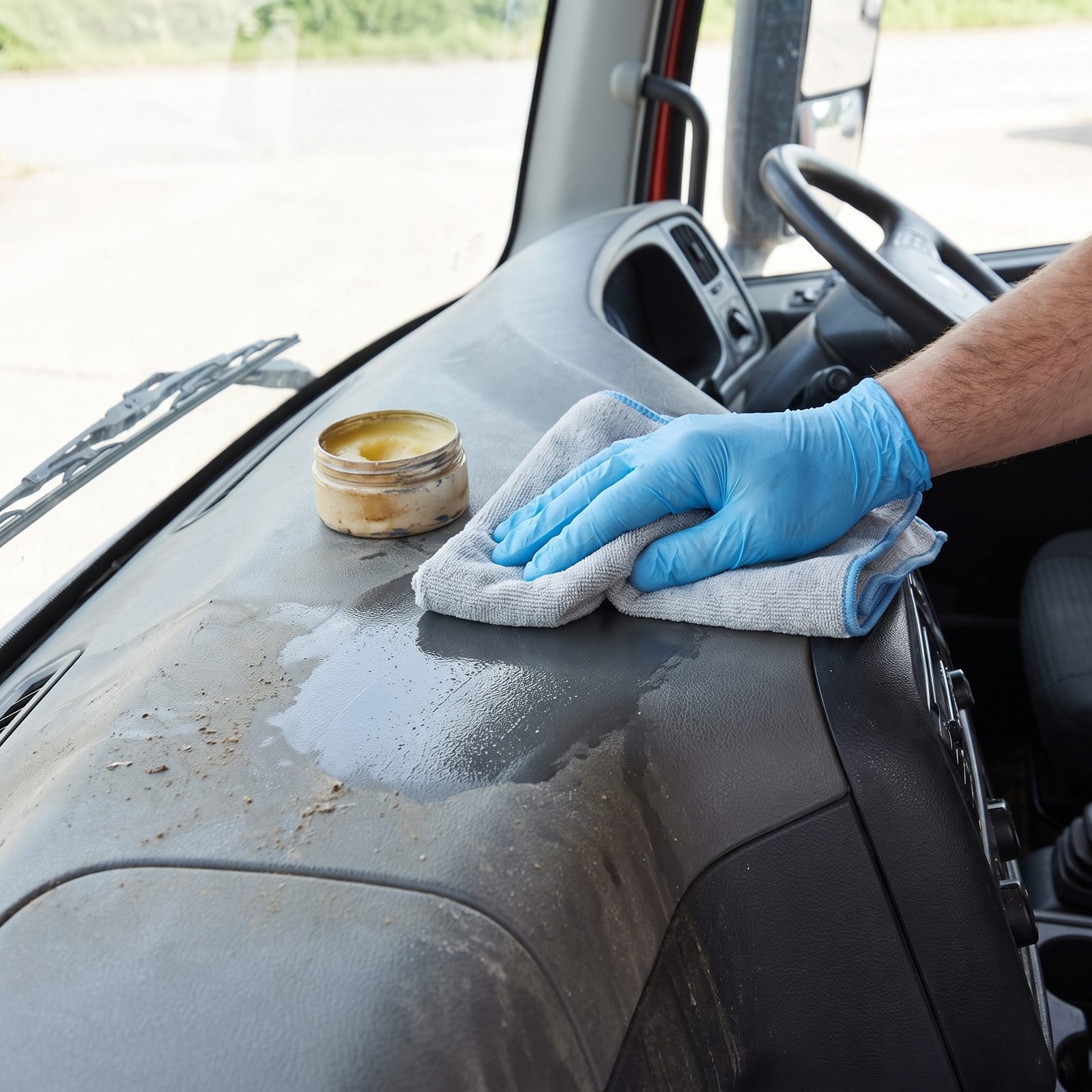
A clean truck appraises better. That part’s true. But there’s a line between presenting your truck honestly and scrubbing it so hard you bury the problems a dealer will dig up anyway.
Most folks get this backward. A spotless engine bay on a fifteen-year-old work truck doesn’t impress a seasoned appraiser — it makes them look harder, because someone degreased it right before trade and now they want to know what got hidden under all that shine. A pressure-washed undercarriage masks a fresh oil leak for exactly one afternoon.
So clean it like you respect it, not like you’re running a con. Vacuum, wipe down, wash and wax the paint, clear out the cup holders. Leave the mechanical honesty intact. A truck that’s tidy but shows its real, maintained wear reads as trustworthy — and trustworthy is worth money at the desk.
2. The Loan Payoff Compared With the Truck’s Appraised Value
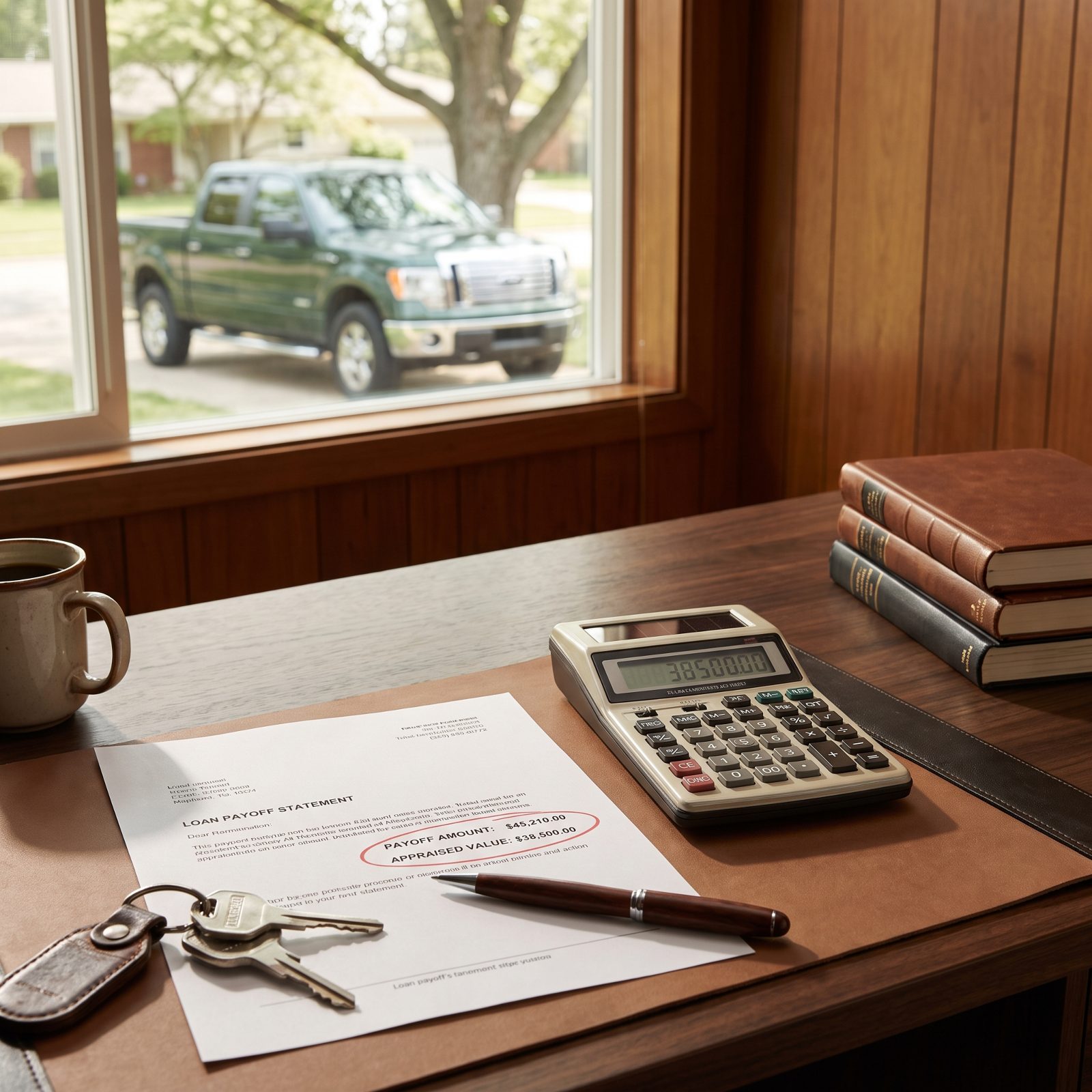
The truck can appraise beautifully and the deal can still go sideways. It all hinges on one number: what you still owe versus what it’s worth.
If your payoff tops the appraised value, you’re upside down, and that negative equity doesn’t vanish. It rolls into the new loan, or it comes out of your pocket at signing. Dealers aren’t hiding any of this — it’s just the part owners forget to check before they fall in love with the next truck.
Here’s the fix. Call your lender and get the exact ten-day payoff before you ever set foot on the lot, then look up a realistic trade range for your truck’s year, miles, and condition. Do the subtraction at your own kitchen table. If you’re underwater, you’ll want to decide whether to keep driving until the gap closes or bring cash to the deal — and you’ll want that sorted out before a salesman is watching your face.
1. A Bent, Cracked, or Poorly Repaired Frame
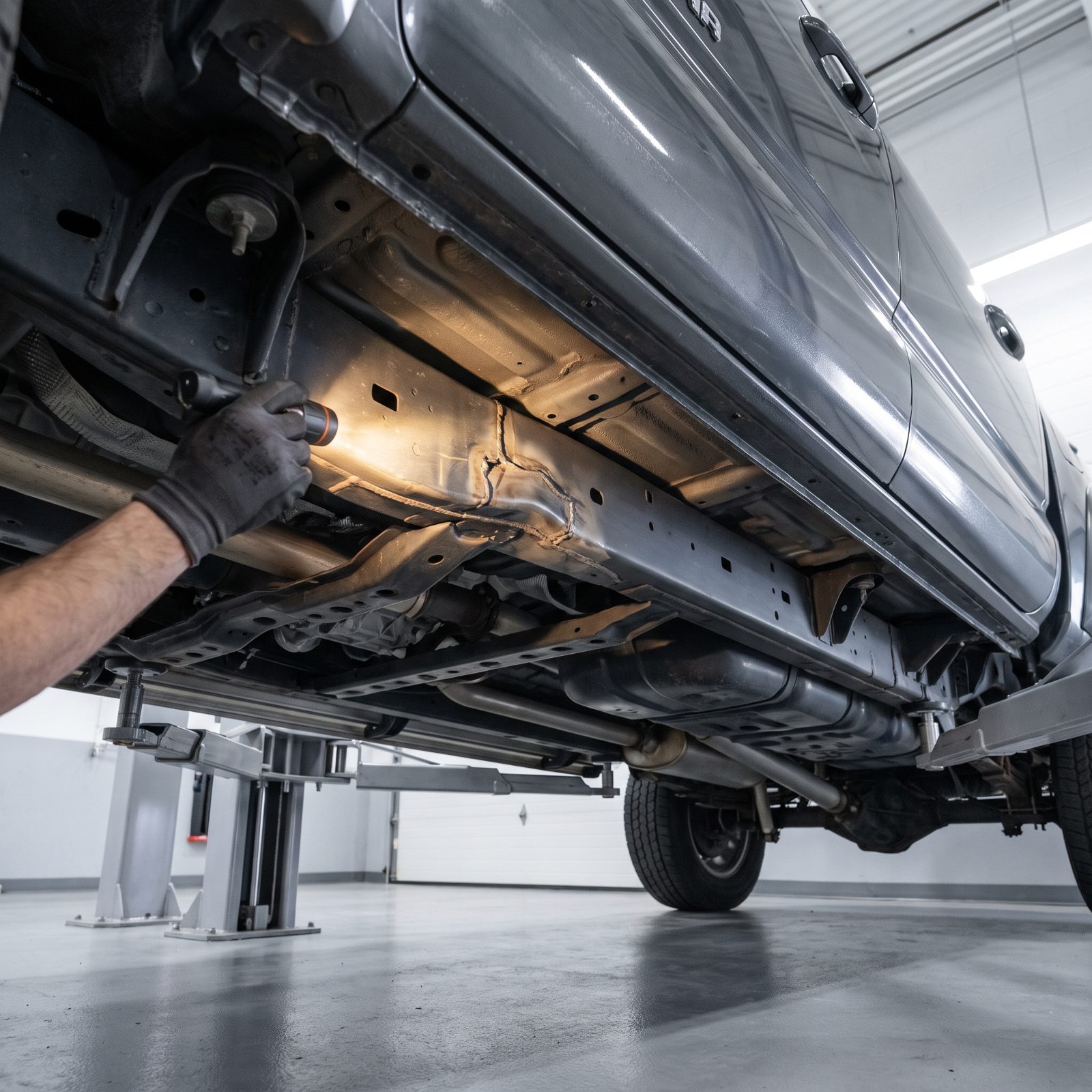
This is the one that ends the conversation. A frame that’s been bent, cracked, or straightened and welded back together isn’t a deduction — for most dealers it’s a wholesale-only truck, and the retail offer walks right out the door.
The appraiser goes underneath with a light and hunts the tells: wrinkled frame rails, fresh weld beads where the factory laid none, mismatched undercoating, body panels that don’t line up at the gaps, tires wearing crooked no matter how you align them. A compromised frame means the truck can’t tow or haul safely, and nobody’s taking that liability at retail money.
What to do instead: if your truck’s been in a real hit, get a professional frame inspection and hang onto the documentation. Honest disclosure with proof of a proper repair beats a dealer discovering it cold. And buying a used truck you plan to trade later? Spend ten minutes under it first. The frame is the one thing you truly cannot fix on the cheap.