
Would you like to save this?
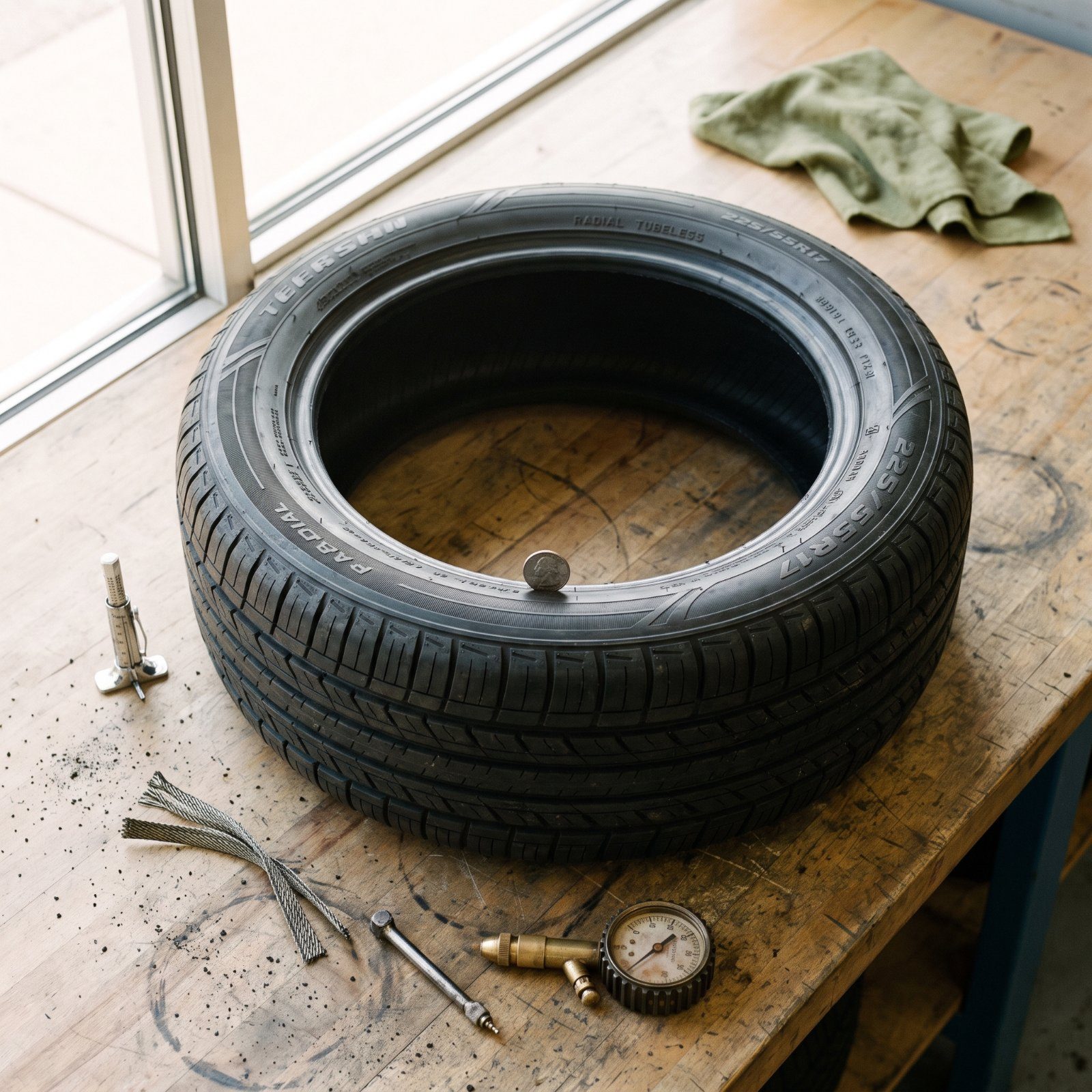
The tire counter is where good money goes to die quietly. Not because the folks behind it are crooks, but because most drivers hand over the keys without knowing what to look at first. A tire can look showroom-fresh on the outside and be scrap underneath, and a five-minute repair can be the wrong one. Every check below takes seconds, and most need nothing fancier than a quarter and a flashlight. Here’s what to know before you say go.
48. The Hidden Inner Shoulder May Be Bald While the Outside Looks New
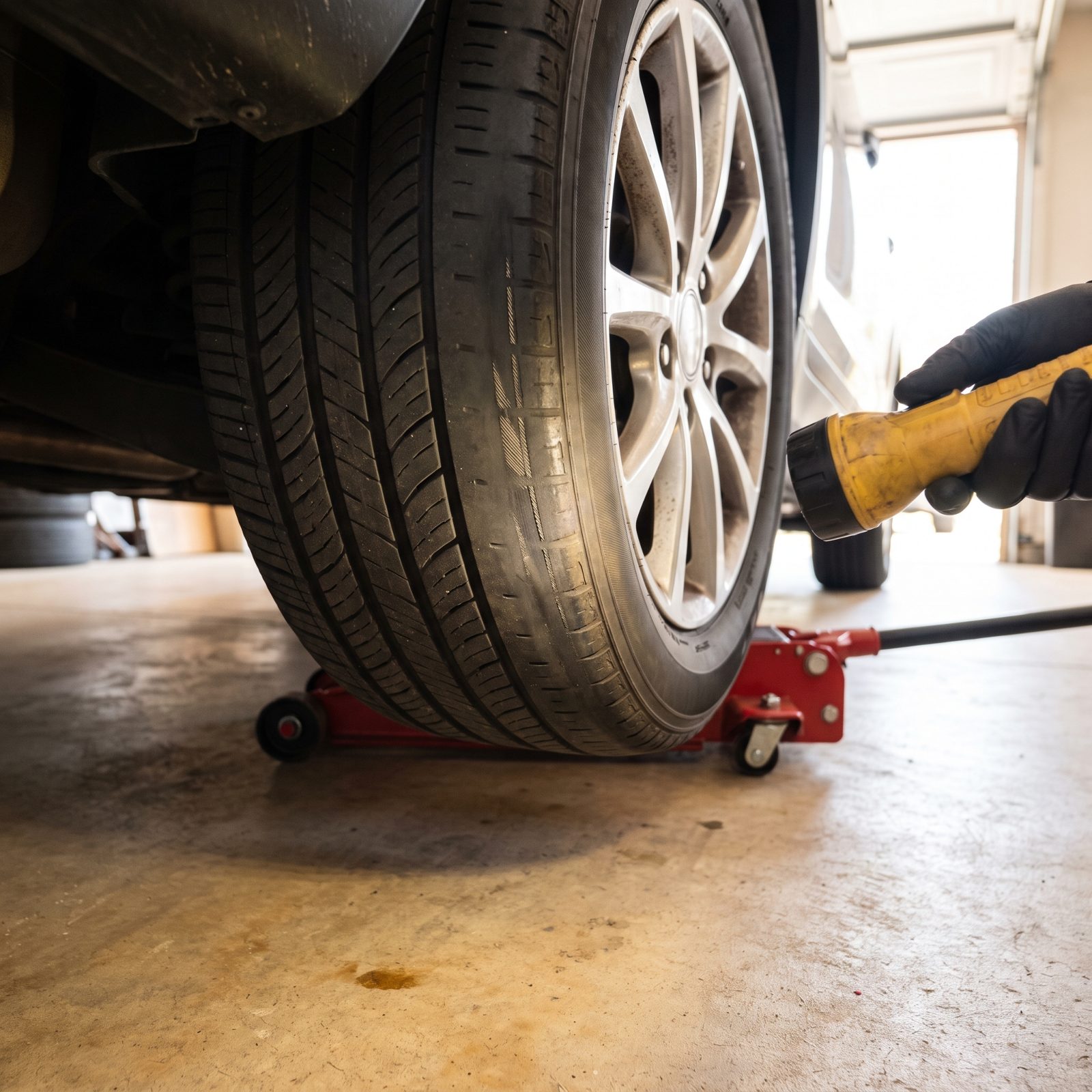
This is the trick that catches good people off guard. You walk around the car, kick the tires, see fat tread, figure you’re fine — and meanwhile the inner shoulder, the edge you can’t see without getting down on the floor, has worn to the cords. Bad alignment and tired suspension bushings scrub the inside long before the outside shows a thing.
Run your hand along that inner shoulder, or shine a light under there. Feathered, slick, or showing steel belt? That tire’s done, no matter how pretty the outside looks. And if it wore that way, fix the alignment before the new ones chew up identical. New rubber on a crooked car is just a slower way to burn money.
47. The Four-Digit DOT Code Can Reveal a Brand-New Tire Is Already Years Old
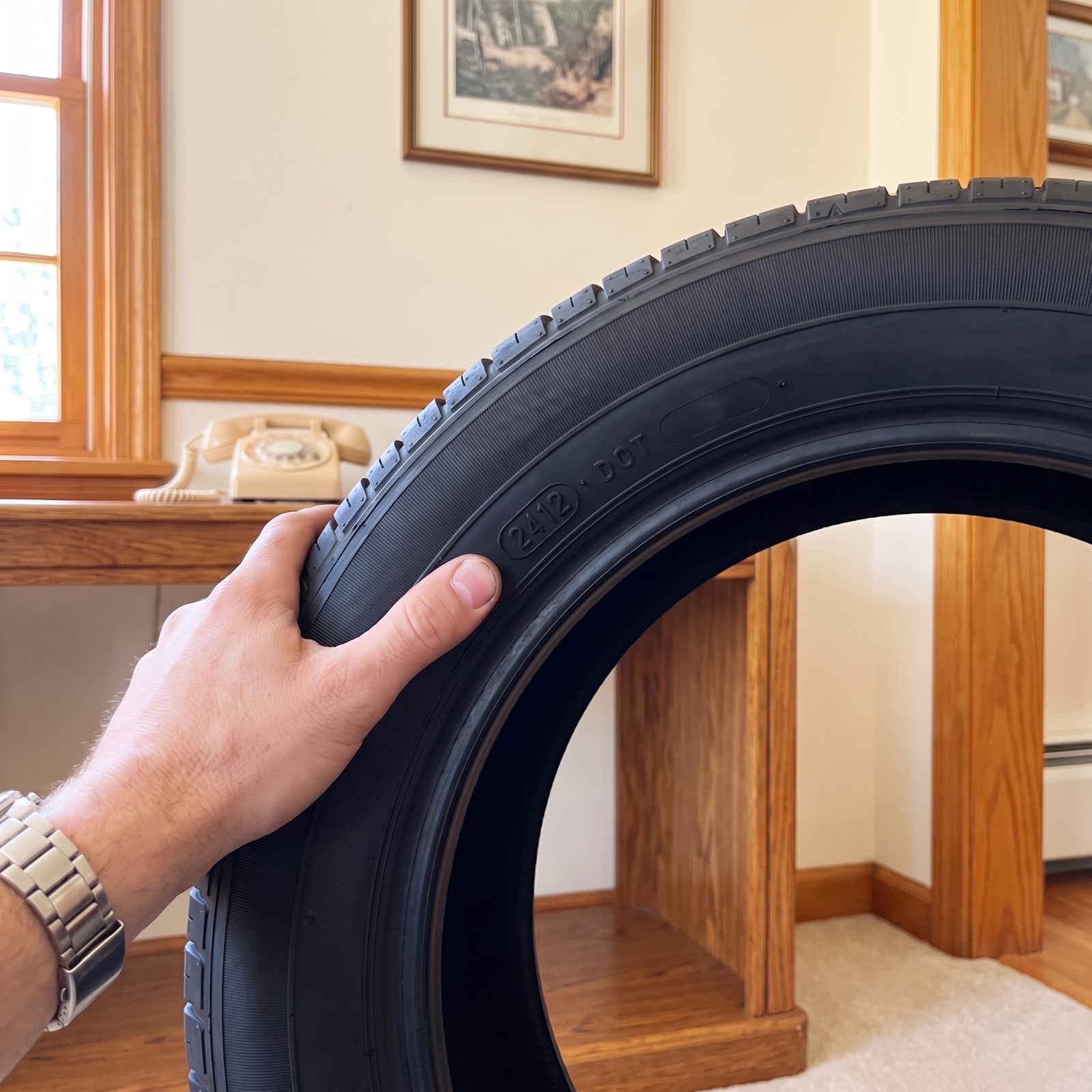
Rubber doesn’t care whether a tire ever touched the road. It ages sitting on a warehouse rack, which means that “new” tire you’re about to buy could’ve been molded during a different presidential administration.
Find the DOT marking on the sidewall. The four digits in the small oval beside it are the date — first two the week, last two the year. A tire reading 2412 was built the 24th week of 2012. If you’re paying new-tire money, you want something built within the last year or two, not a shelf orphan. Ask, and check it yourself before they mount a thing.
46. A Quarter Reveals Wet-Weather Risk Before Tread Reaches the Legal Limit
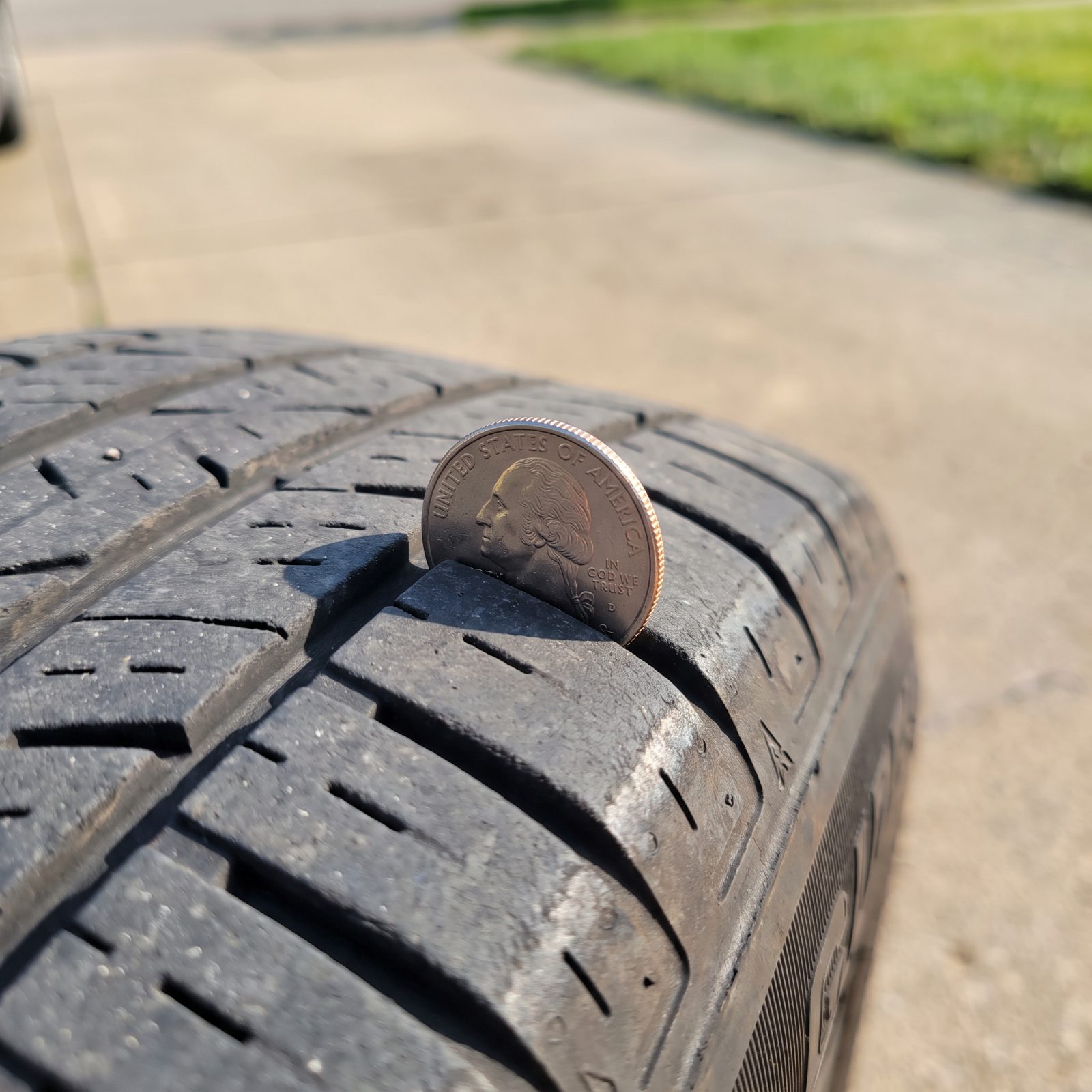
Forget the penny. The old Lincoln-head trick only tells you when a tire is legally dead at 2/32 of an inch, which is already way past safe in rain. By then you’re hydroplaning on a film of water with nowhere for it to go.
Grab a quarter instead. Stick it in the groove with Washington’s head pointing up. If the tread doesn’t reach the bottom of his neck, you’re down around 4/32 and wet grip is falling off a cliff. That’s your real shopping cue — not the legal minimum. Check several spots across the tread and on both edges, since uneven wear will lie to you if you only check one.
45. Small Surface Cracks Aren’t the Same as Deep Cracking or Exposed Structure
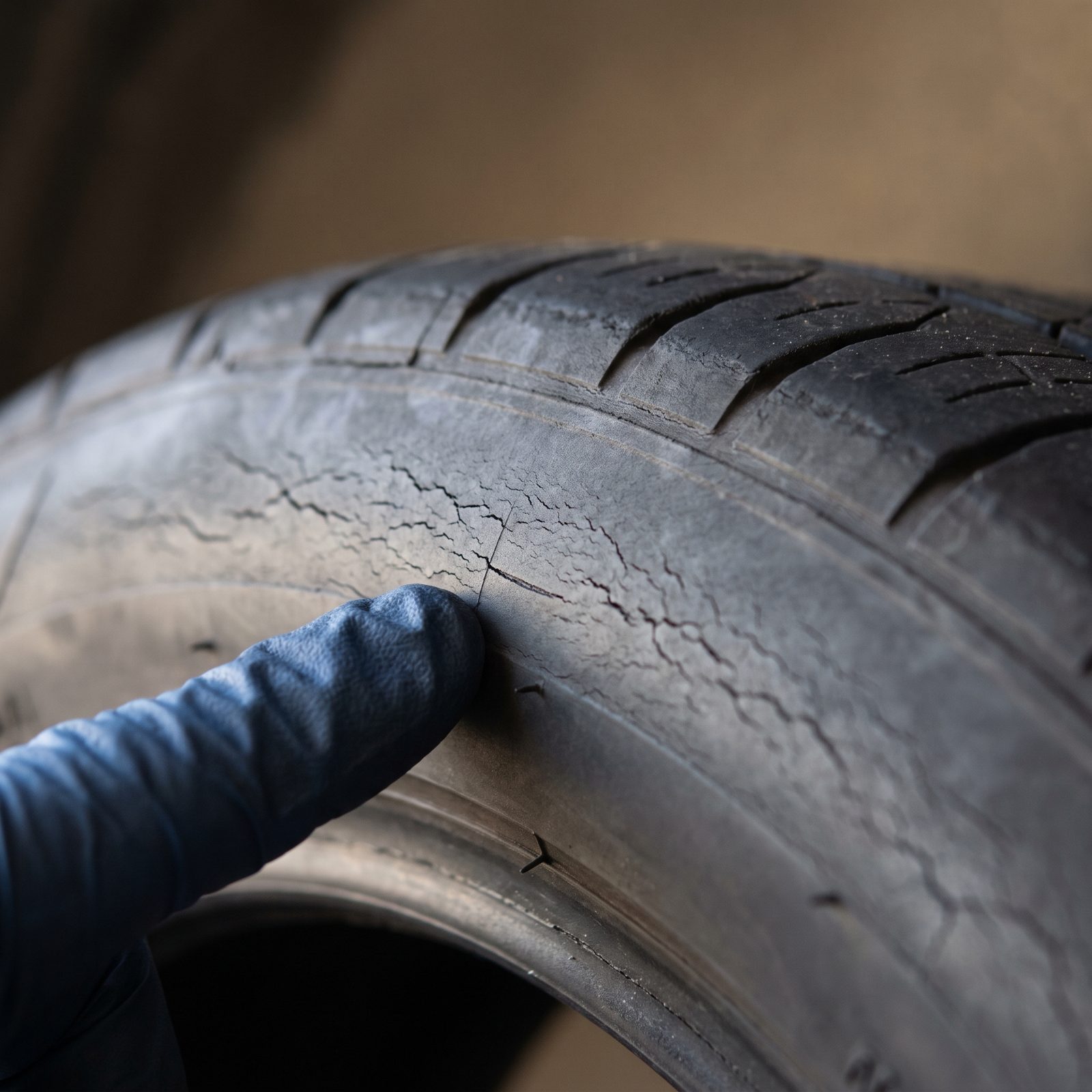
Not every crack is a death sentence, and not every crack is harmless. This is where people panic over nothing or shrug off something real.
Fine surface checking — that spiderweb of shallow lines in the sidewall rubber — is mostly cosmetic ozone aging. It happens on cars that sit, on tires baked by sun. Annoying, not urgent. But cracks that run deep into the rubber, that you can wedge a fingernail into, or anything exposing the fabric or steel underneath? That’s structural, and it’s over. Press on the crack. Shallow and tight means keep watching it. Deep, wide, or showing cords means replace it now. When in doubt, ask the tech to flex the sidewall and show you how far the crack goes.
44. A Sidewall Bulge Usually Signals Broken Internal Cords
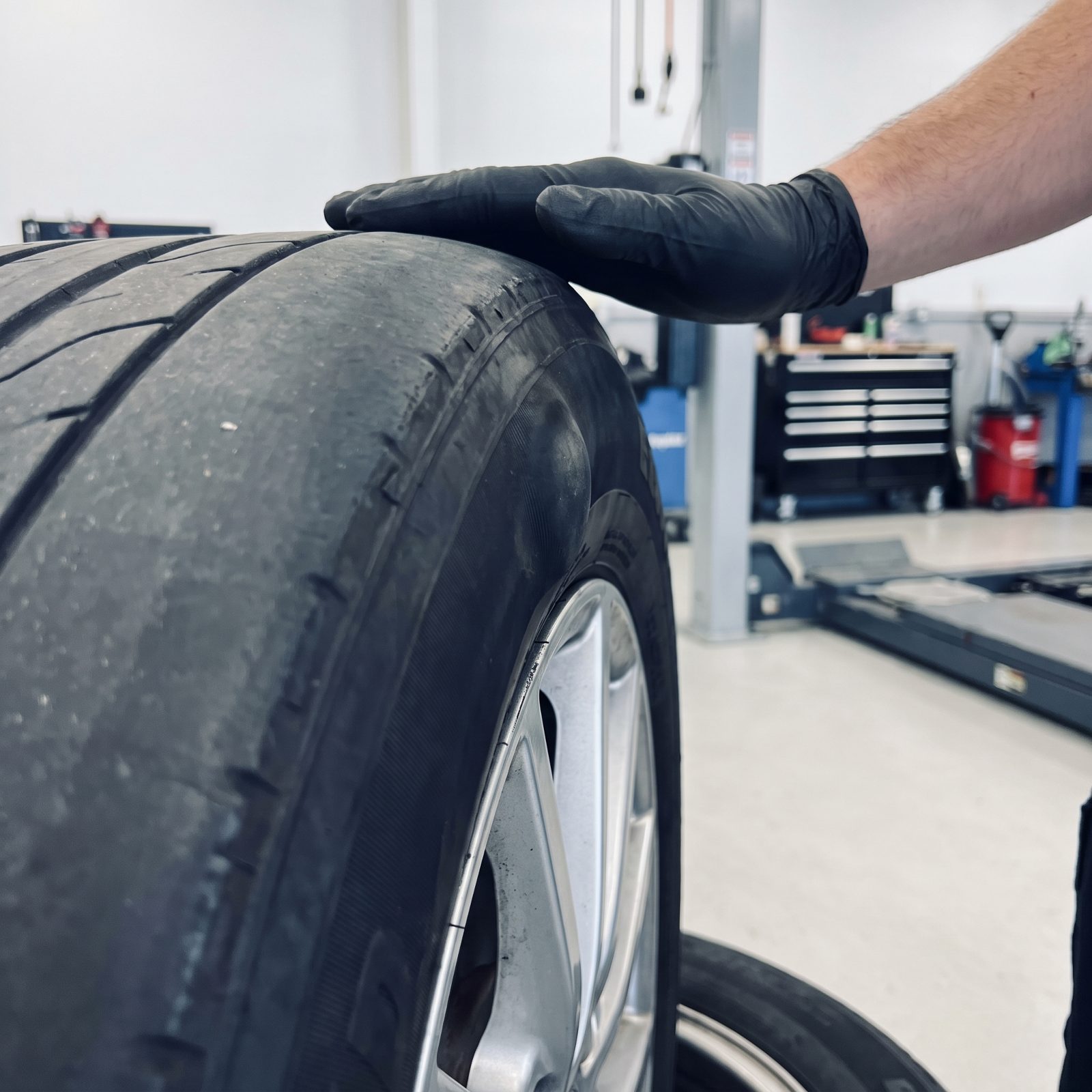
A bubble pushing out of the sidewall is the tire quietly telling you something snapped inside. Usually the cords in the casing have broken, often from slamming a pothole or curb hard enough to pinch the rubber against the rim.
Air is now pressing against a thin patch of rubber with nothing reinforcing it. That’s a blowout waiting for a hot day on the interstate. There’s no repair for this. None. Anyone offering to patch a sidewall bulge should be shown the door. Replace it — and if money’s tight, at least swap the partner on the same axle too so grip stays even.
A sidewall bulge is not a cosmetic flaw. It’s the structure already failed, just not all the way yet.
43. A Screw in the Tread May Be Properly Repairable
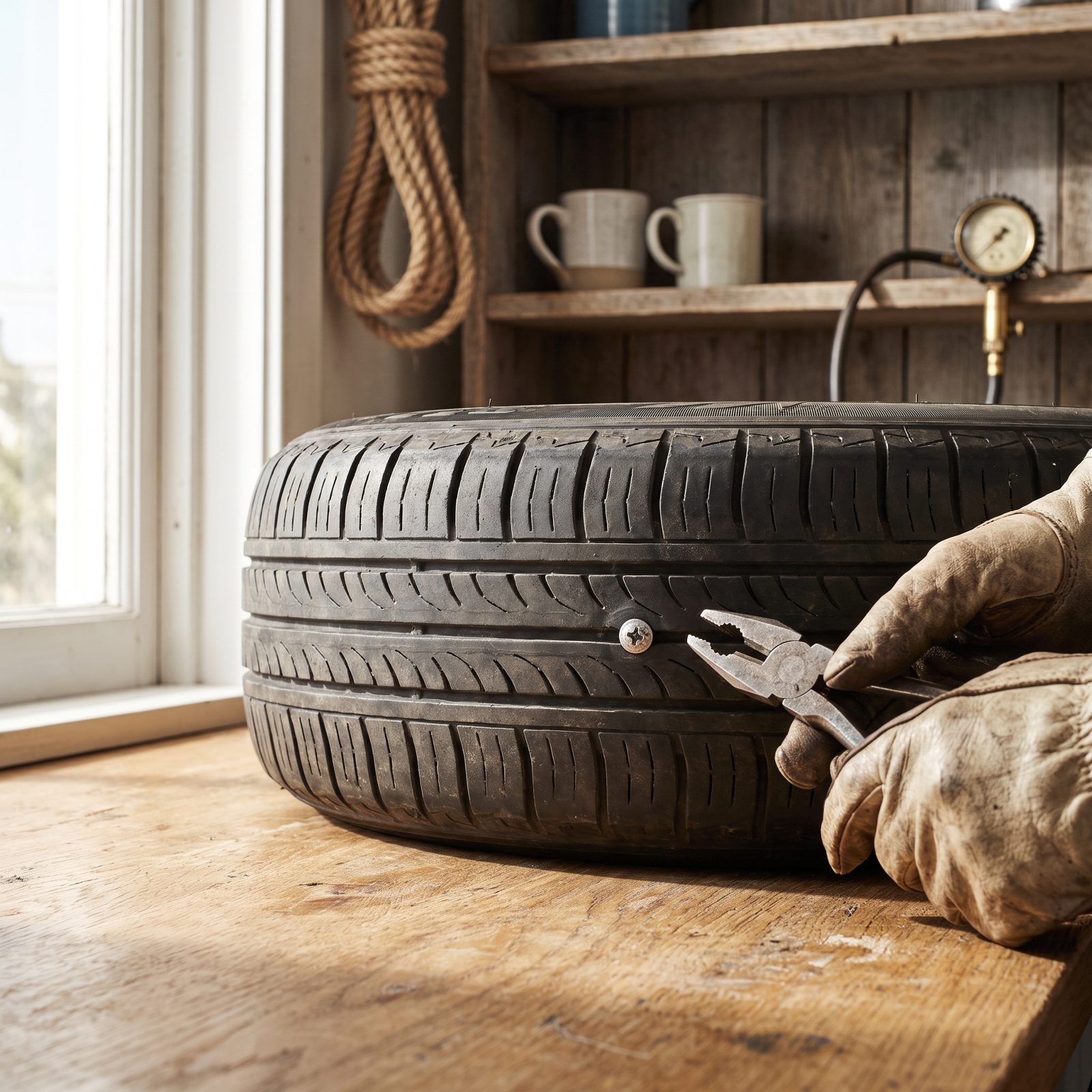
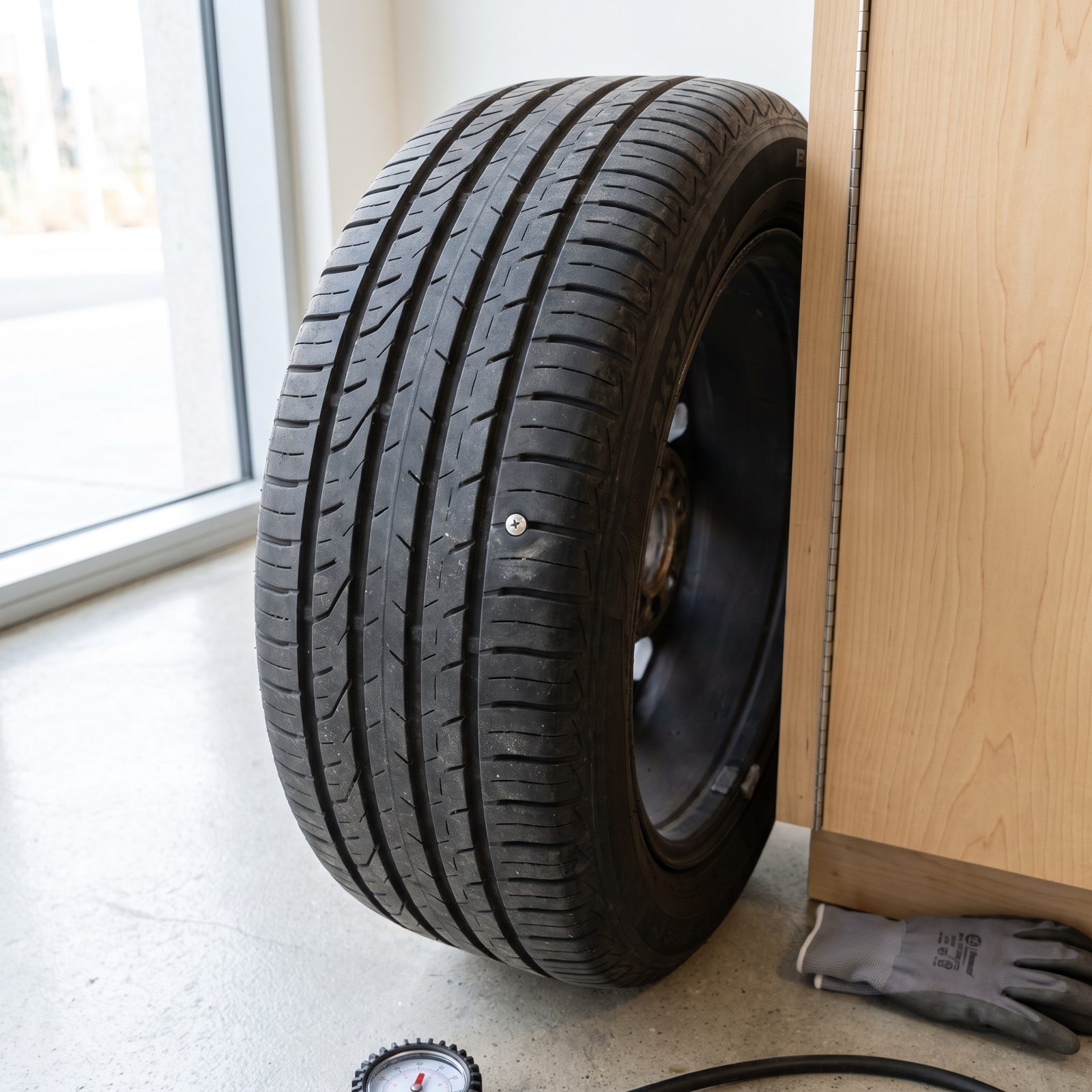
Good news, for once. A nail or screw sitting dead center in the tread, where it’s flat and thick, is often a perfectly fixable problem. Don’t let a shop talk you into four new tires over one screw in the right spot.
The rule most reputable shops follow comes straight from the industry repair standards: the puncture has to sit in the central tread area, roughly the middle three-quarters, and stay under about a quarter inch across. Meet both and you’ve got a real candidate for an internal repair. Pull it, plug and patch it from the inside, roll on. Just make sure they verify the location before quoting you a tire.
42. Punctures Near the Shoulder Usually Cannot Be Safely Repaired
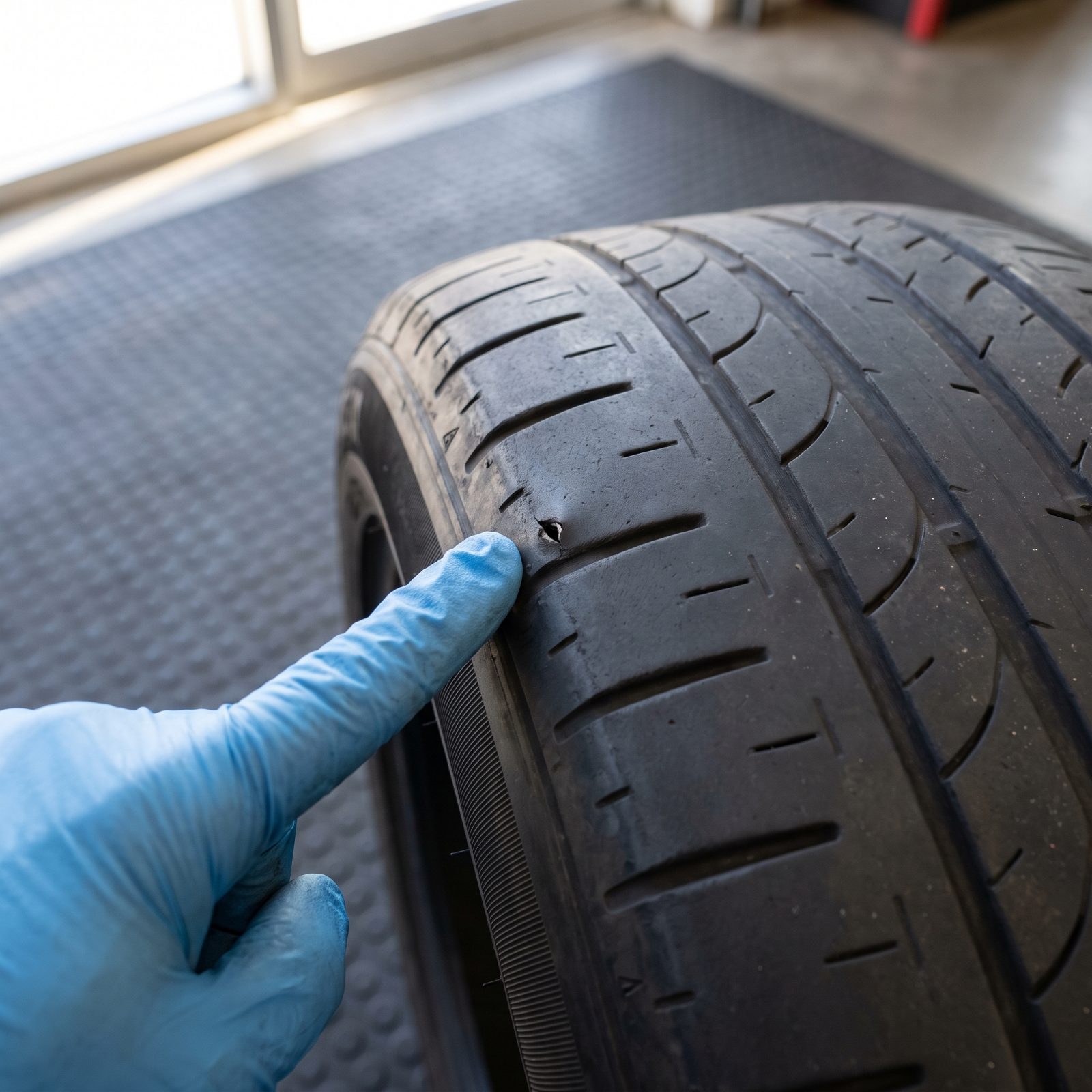
Same nail, wrong neighborhood. A puncture out on the shoulder or into the sidewall sits where the rubber flexes hard every single rotation. It’s thinner there, and the casing works constantly, so a patch won’t hold and the tire can let go.
That’s the whole reason shops draw a line at the central tread. Hole in the outer quarter near the edge, in that curved shoulder, or anywhere down the sidewall? The honest answer is no. A shop that plugs it anyway is gambling with your front axle. Replace it. Yeah, it stings to toss a tire with plenty of tread, but a shoulder repair that fails at speed costs a whole lot more.
41. An Internal Patch-Plug Is Not the Same as an External Rope Plug
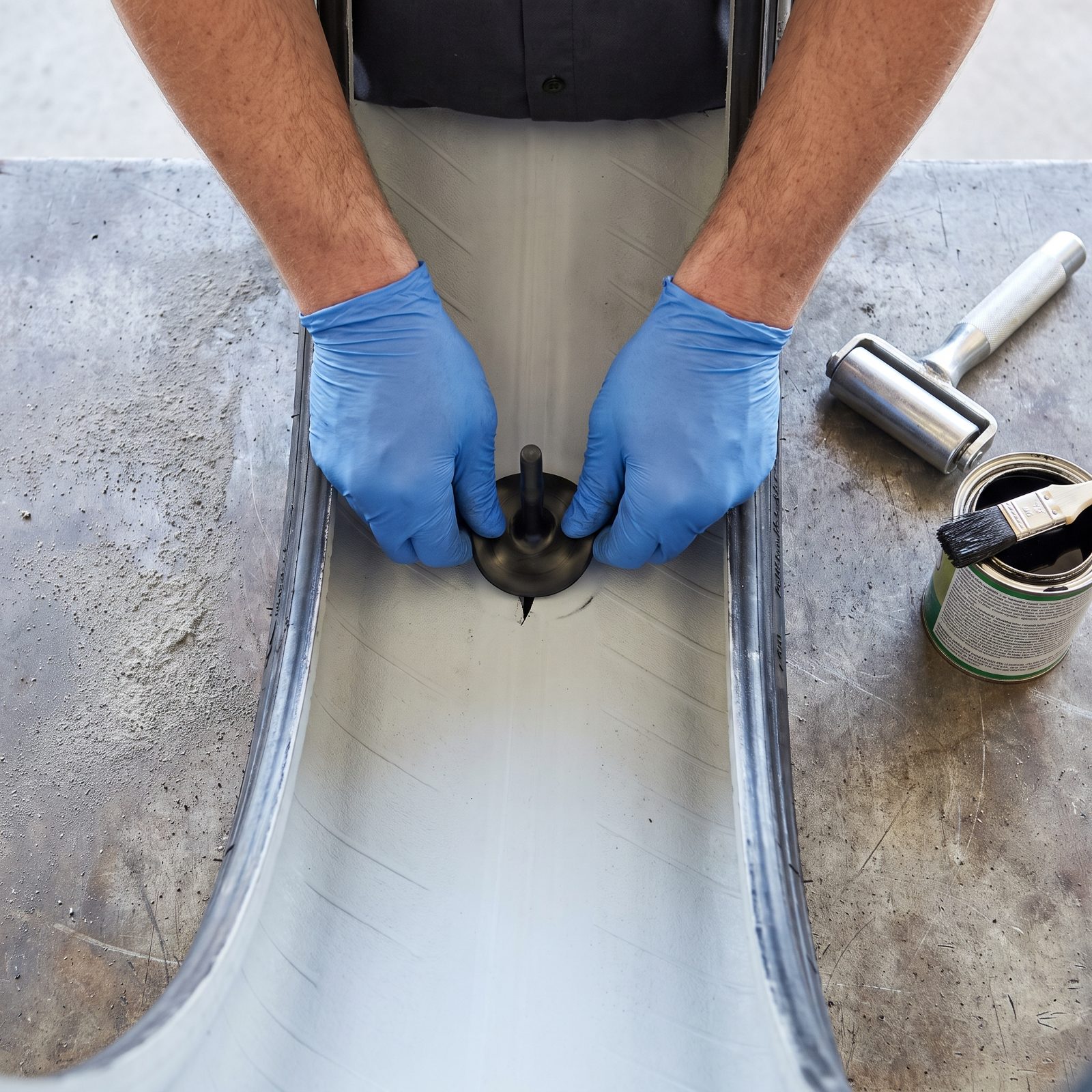
This is the one that separates a real repair from a roadside bodge.
A rope plug — that sticky string jammed in from the outside without removing the tire — is a temporary get-home fix. It seals the tread surface but does nothing for the inner liner and never gets inspected from inside. A proper repair means the tire comes off the rim, the tech checks the inside for hidden damage, reams the hole, and installs a combination patch-plug that seals both the channel and the inner liner as one unit.
Ask the shop straight: are you dismounting the tire and doing a patch-plug from the inside? If the answer is a quick string from the outside, fine for limping to the shop — not for calling it fixed. The permanent repair is always done with the tire off the wheel.
40. Driving on a Flat Can Ruin an Otherwise Repairable Tire
Would you like to save this?
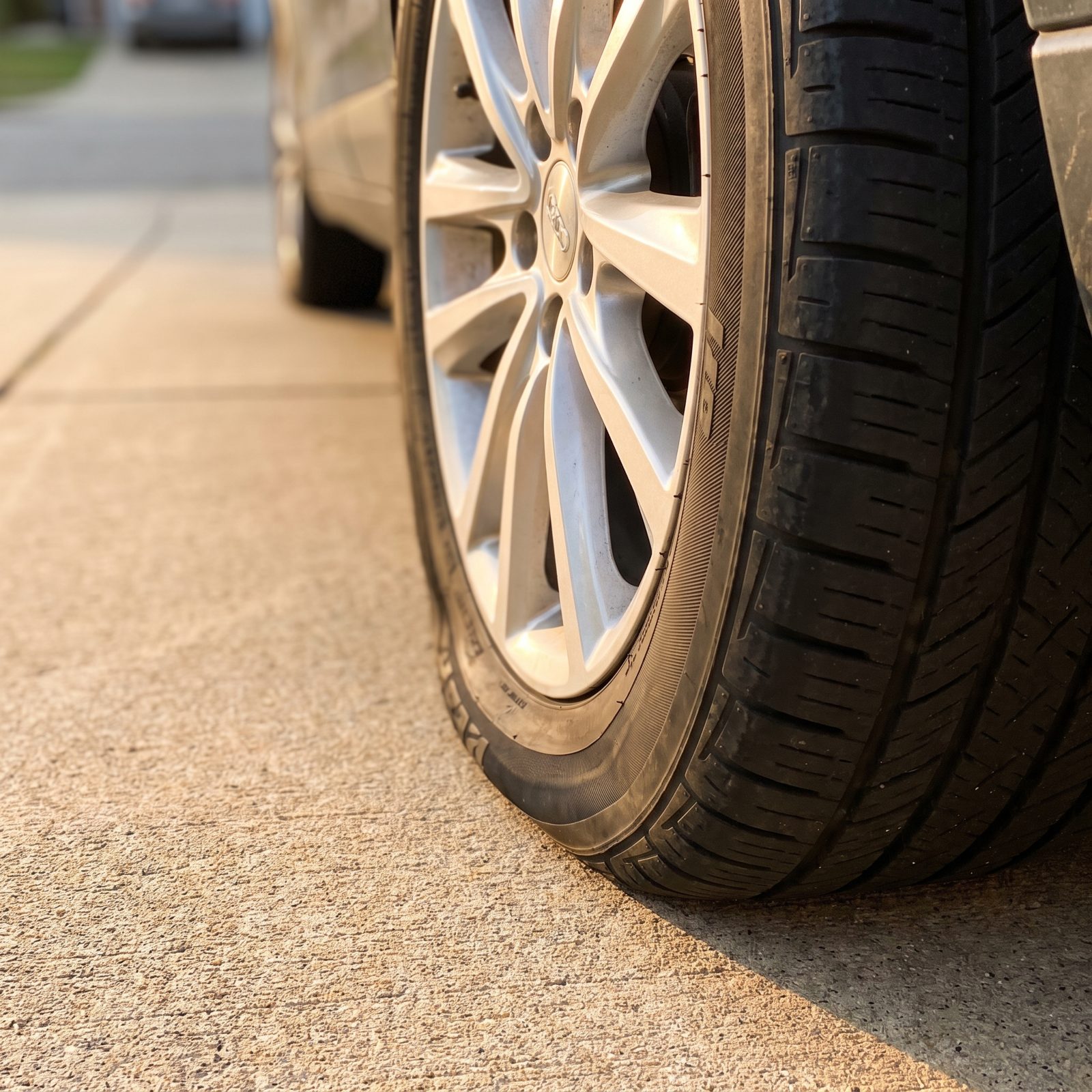
That instinct to limp just a little farther on a flat is exactly what turns a twenty-dollar repair into a new tire. Run a tire flat even a short distance and the deflated sidewall folds and overheats, grinding the inner liner against itself until it shreds.
Now the puncture’s irrelevant. The casing is cooked from the inside, and no patch fixes structural heat damage. Catch a flat, pull over, air it up if you can, or throw the spare on. Don’t drive it soft. When you bring it in, ask the tech to inspect the inner liner for the telltale gray rubber dust and scuffing that means it was run flat. That one inspection decides repair versus replace, and it’s the step a rushed shop skips.
39. A Leaking Valve Core Can Mimic a Punctured Tire
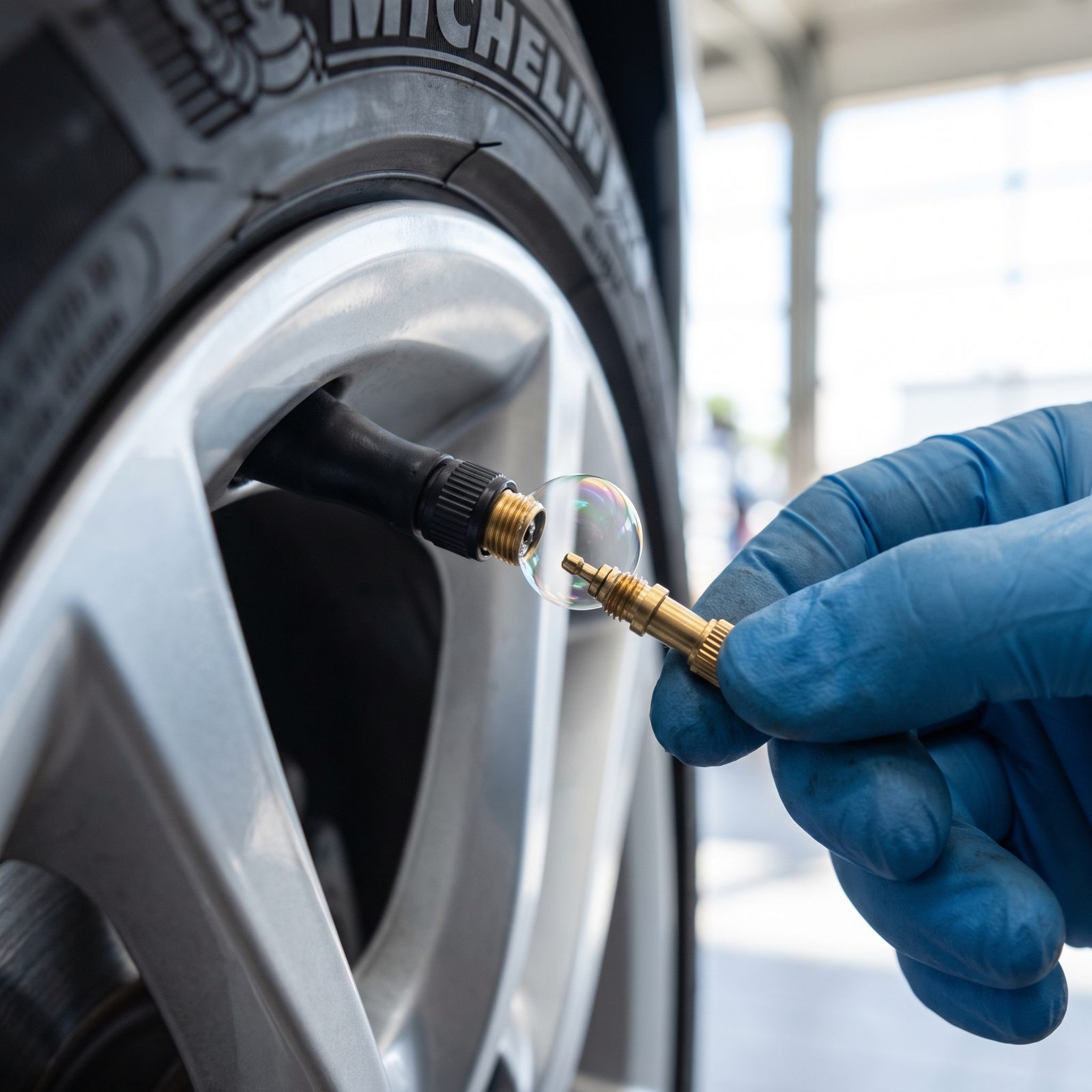
Before you authorize a tire repair, make sure there’s actually a hole in the tire. A loose or leaking valve — the brass core and stem hardware at the wheel — bleeds air so slowly it feels exactly like a nail puncture. People replace perfectly good tires chasing a leak that lived in a fifty-cent part.
The test takes seconds. Mix a little dish soap and water, brush it on the valve, and watch the tip of the stem for bubbles. Bubbles there mean a new valve core or valve stem, not a plug and not a tire. Ask the shop to soap-test the valve first. Any honest tech does it before touching the tread.
38. Metal TPMS Stems May Need Service Kits, Not New Sensors
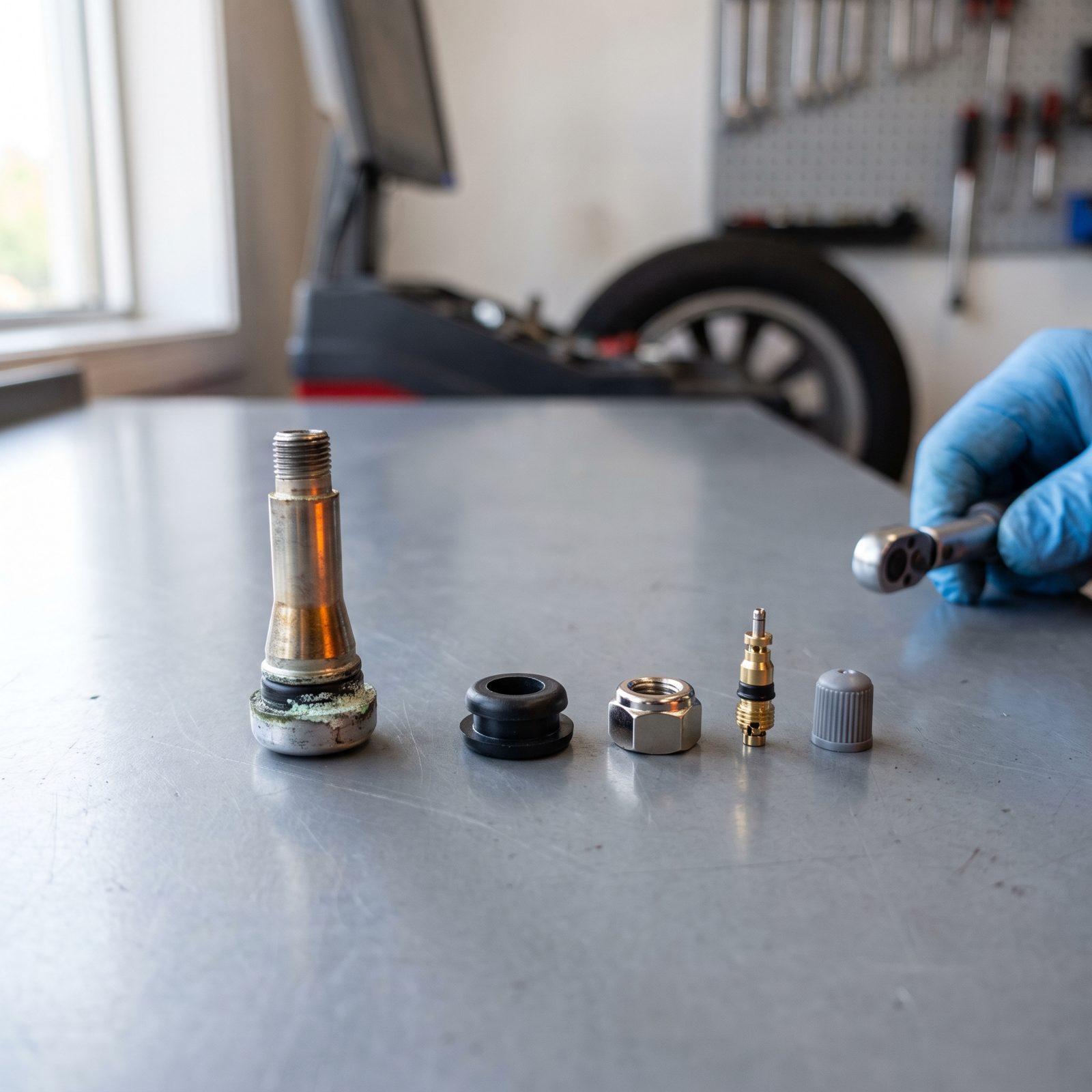
The shop says your sensors are shot. Maybe. But on a lot of cars the TPMS sensor and the metal valve stem are two separate pieces, and what fails first is the cheap stuff — the rubber grommet, the sealing washer, the valve core. That hardware corrodes, especially where they salt the roads.
A full sensor set can run well past a hundred bucks per wheel on some makes, while a service kit is a few dollars. If the sensor still pairs and reads correctly, you’re paying sensor money for a grommet problem.
Ask the counter to test each sensor’s battery and signal before quoting replacements. If they read fine, request fresh service kits — new grommet, nut, core, cap — at every tire change. Standard practice, not an upsell.
37. Temperature Swings Can Trigger a TPMS Warning Without a Leak or Bad Sensor
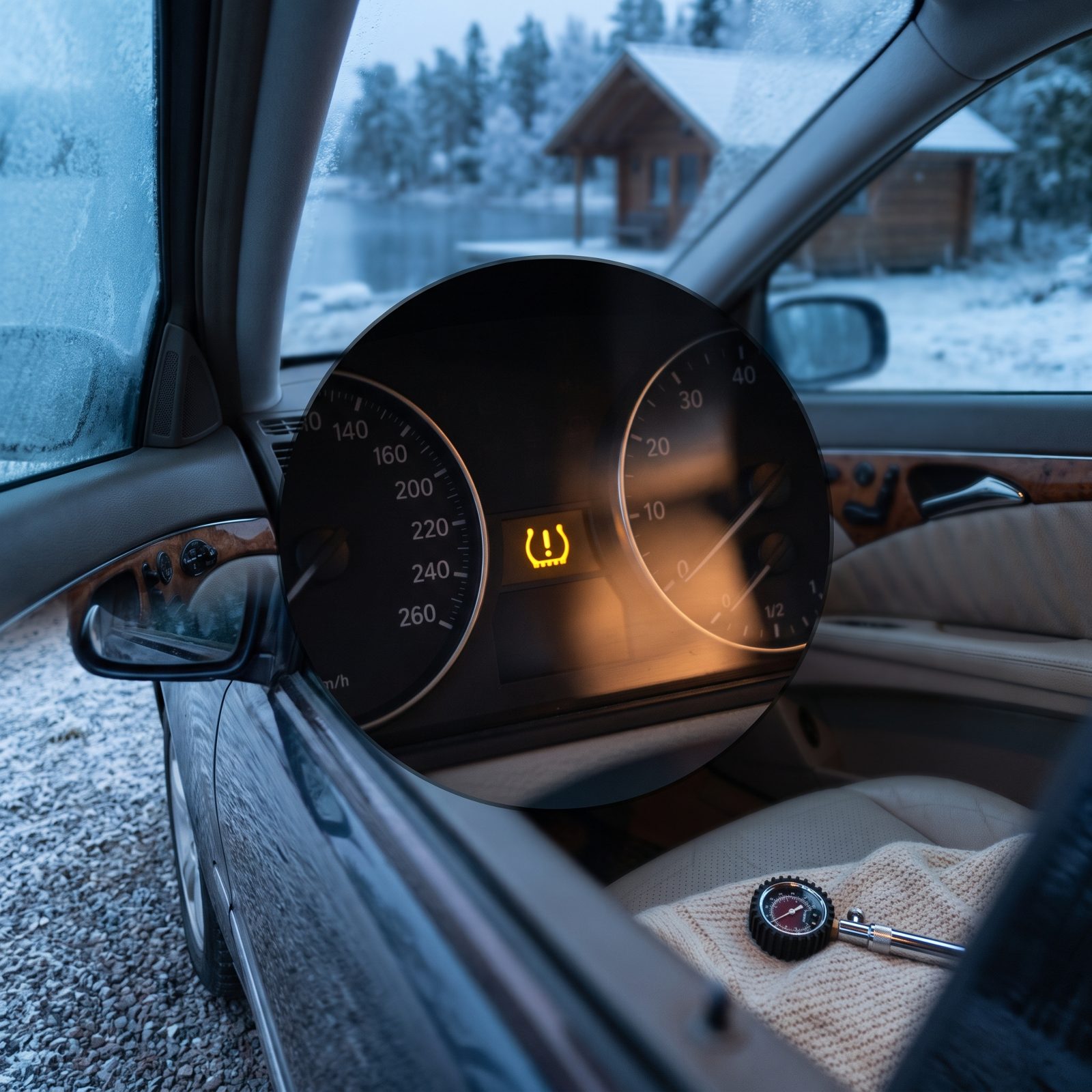
Cold snap overnight, warning light on in the morning, panic by breakfast. Nobody warns you about this part: tire pressure drops roughly one PSI for every ten degrees the temperature falls. A frosty morning after a warm week can knock a few PSI off all four and light up the dash with nothing actually wrong.
Before you authorize a leak diagnosis or a sensor swap, check the pressures yourself with a decent gauge once the car’s been sitting cold. If they’re a little low across the board and it warmed up later, that’s physics, not failure.
Top them off to the placard spec on a cold morning and watch the light clear. Now — if one tire reads way off from the other three, that’s your leak. One low tire is a problem. Four slightly low tires in December usually isn’t.
36. Corrosion Around the Wheel Bead Can Cause a Persistent Slow Leak
The tire holds air for a week, then it doesn’t. You keep topping it off. The shop finds no puncture, no bad valve, no cracked rim. So what gives?
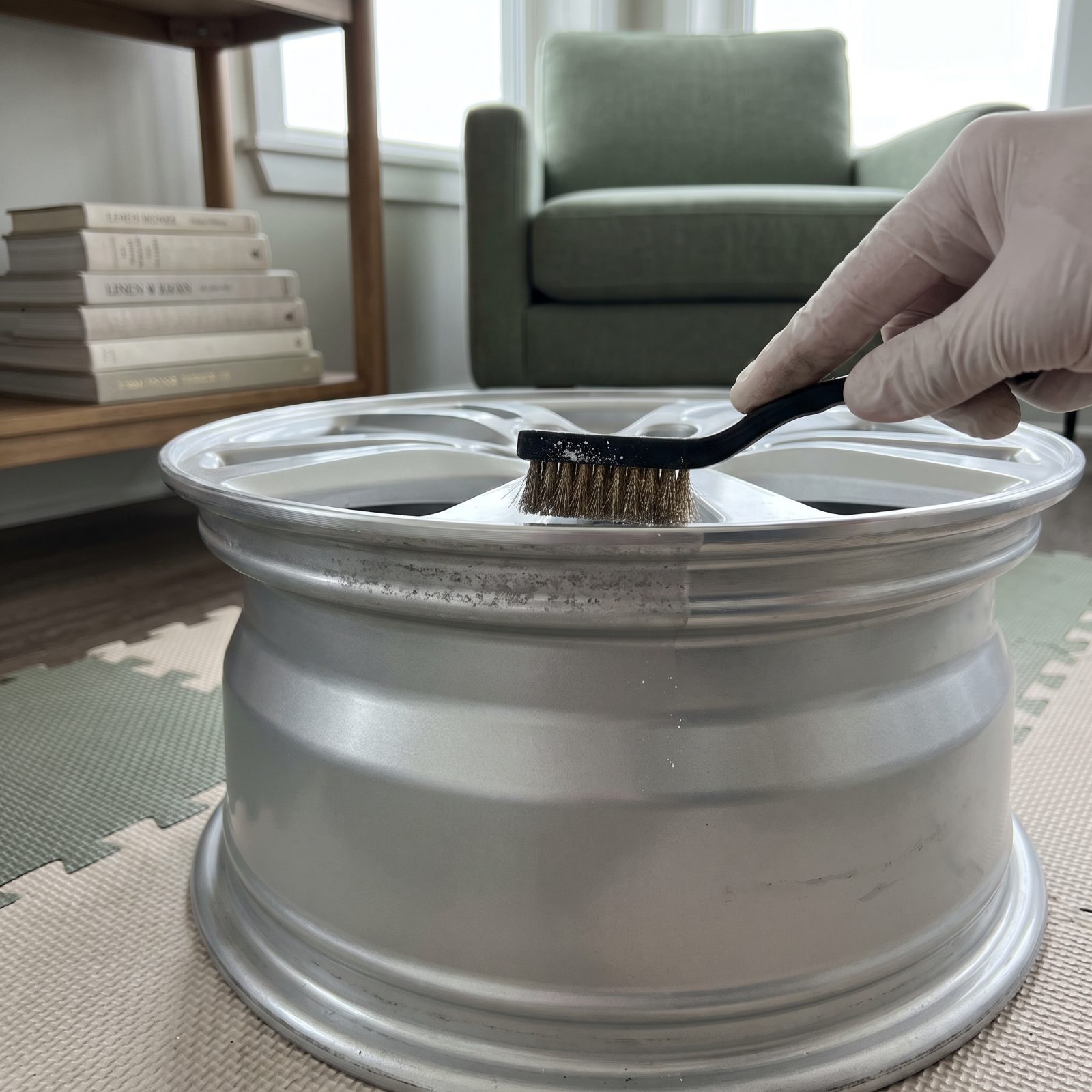
Nine times out of ten on an older alloy wheel, it’s corrosion right where the tire bead meets the metal. Aluminum oxidizes into a chalky, crusty ring that breaks the airtight seal, and the air seeps out slow enough that you blame the weather for months.
The fix is cheap — it’s labor, not parts. Ask whether they scuffed and cleaned the bead seat when they mounted the tire. A wire wheel back to bright metal, a thin coat of bead sealer, a fresh mount, and that’s usually the end of it.
35. A Bent Wheel Can Cause Vibration That New Tires Will Not Fix
You buy four new tires to cure a steering-wheel shimmy and the shimmy comes right back. Infuriating. And it’s usually not the tires.
A wheel that got bent on a pothole or a curb strike won’t spin true no matter how balanced the tire is. Static balancing can’t correct a rim that’s physically out of round, so the vibration follows the metal, not the rubber.
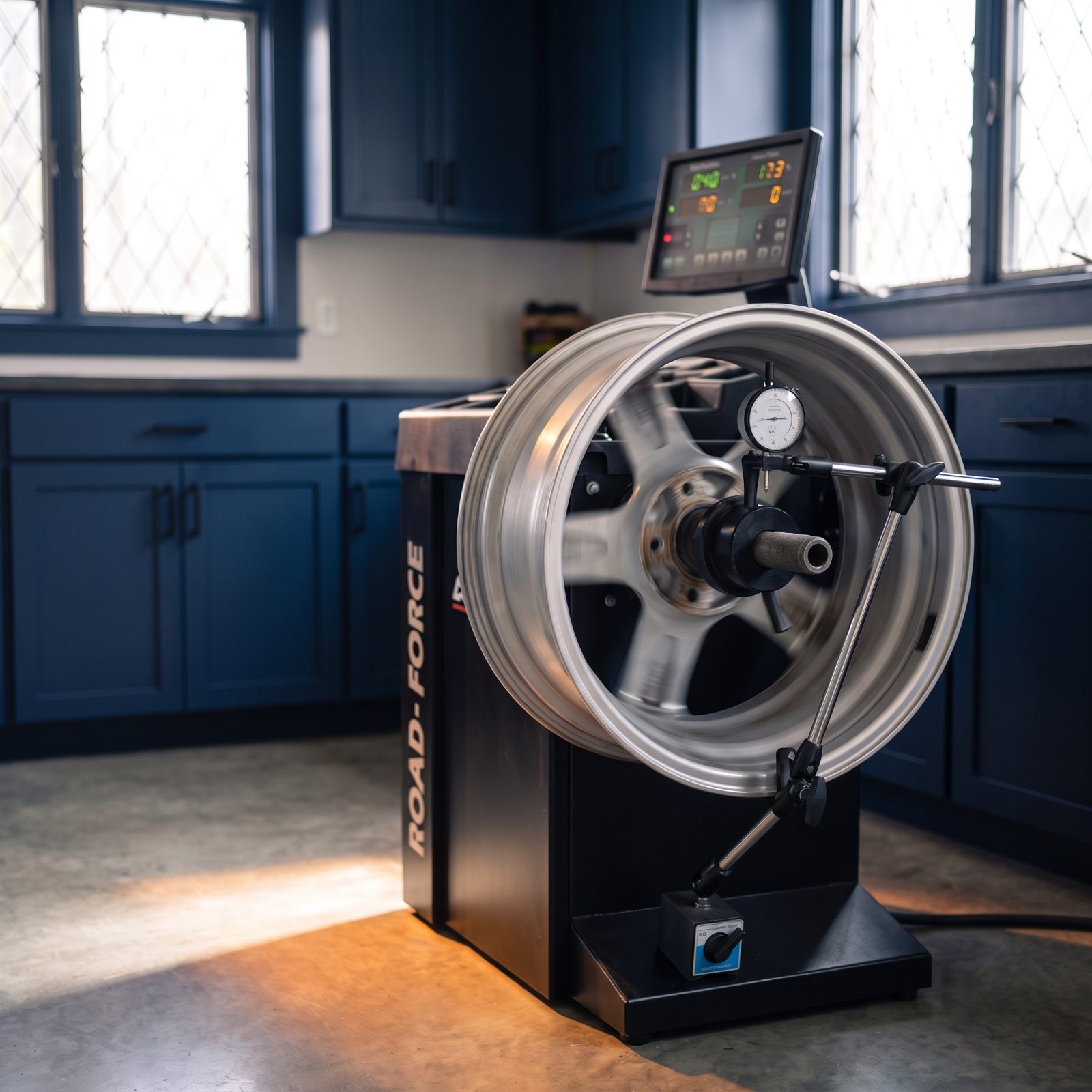
Before you authorize a fresh set to fix a vibration, ask the shop to check lateral and radial runout on a dial indicator — or better, to run a road-force balance. With the tire off, the bare rim spins on the machine’s shaft while a dial indicator, held on a stationary stand with its plunger set against the wheel, tells you whether the wheel itself is bent before you blame the tire. Spend a few bucks diagnosing before you spend hundreds guessing.
34. Worn Suspension Parts Can Destroy a New Set of Tires
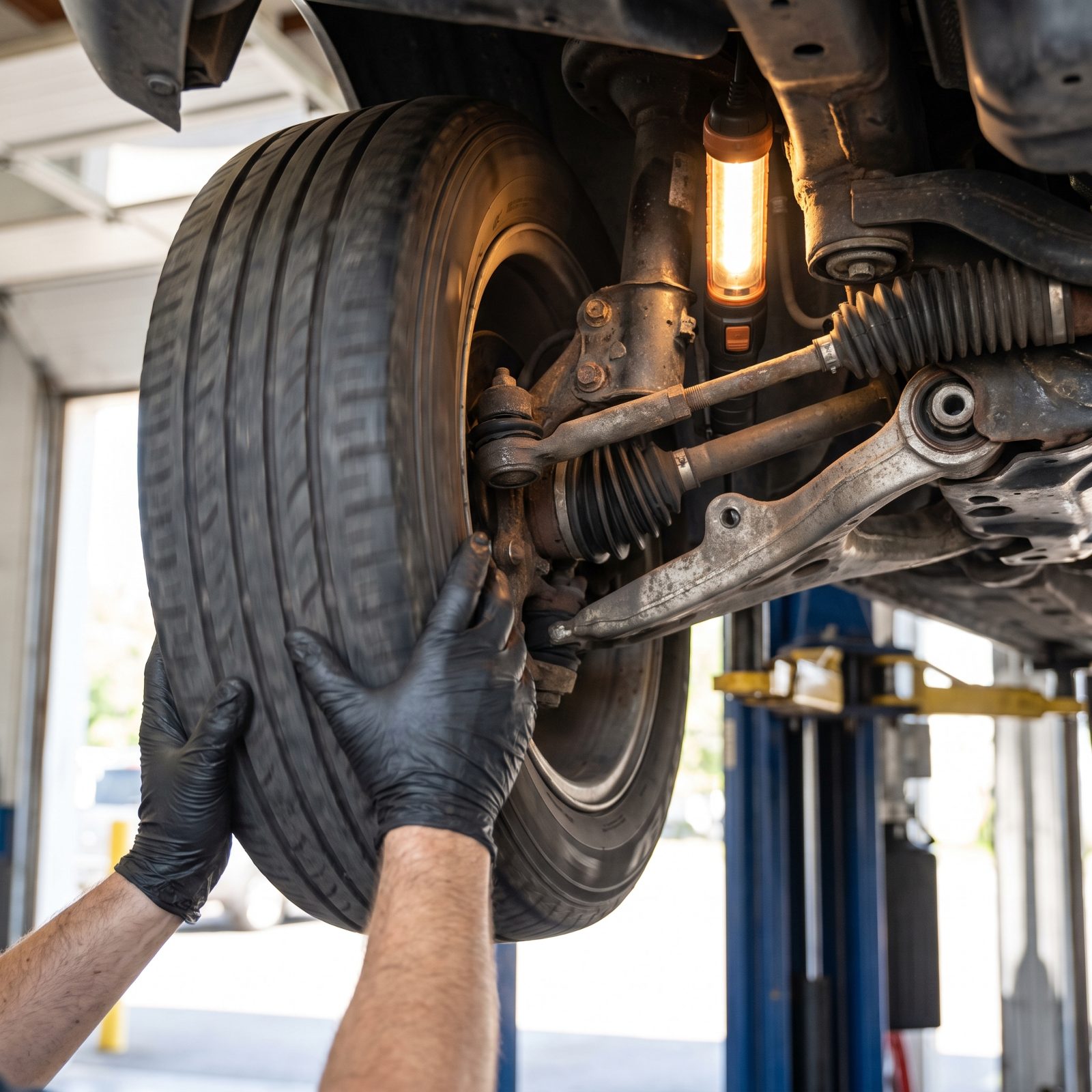
New tires on a tired front end is money poured out onto the floor.
Worn ball joints, loose tie rod ends, sloppy control arm bushings — any of them lets the wheel wander out of its intended angle under load. The alignment can read perfect on the rack and still go to pieces the moment you hit a bump, because the slop only shows up when the suspension moves.
The result is cruel. A fresh set chewed down to the cords on one edge inside of a few thousand miles. We’ve watched a brand-new tire go bald on the inside shoulder before the owner finished paying it off.
Ask for a suspension inspection before new rubber goes on, especially if the old tires wore unevenly. Fix the worn part first. Then align. Then buy tires. In that order, every time.
33. Cupped Tread Often Points to Weak Shocks or Struts
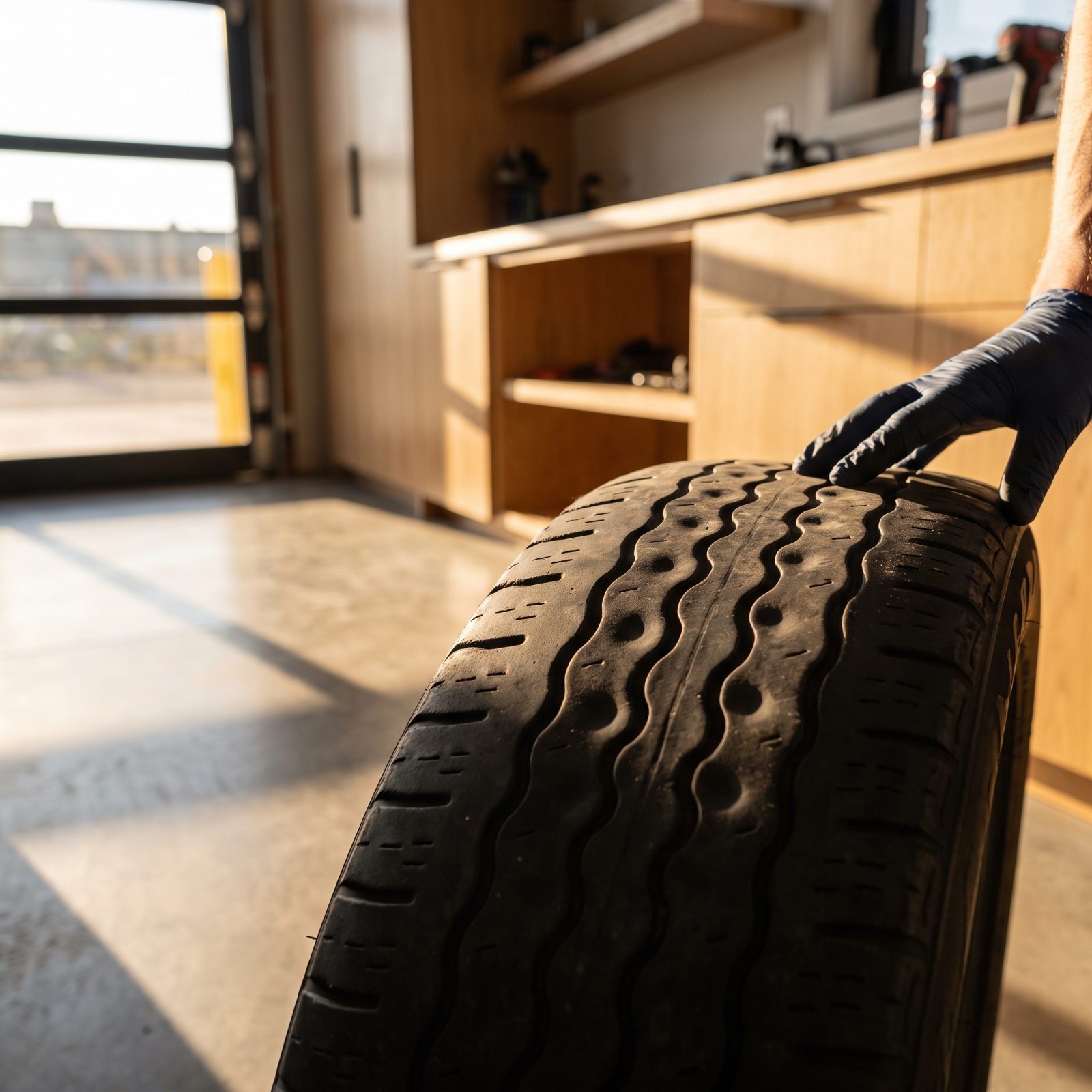
Run your palm across the tread and feel a washboard — high spot, low spot, high spot. That scalloped wear has a name: cupping. And it tells a story.
Cupping means the tire isn’t staying planted on the road. It’s bouncing, however slightly, and each little hop scrubs off rubber at the point of contact. Usual culprit? Worn shocks or struts that have lost the ability to control the wheel’s rebound.
Replace the tires without addressing the dampers and the new ones cup right back, then you’ll hear a growl that climbs with speed. Ask the shop to bounce-test each corner or inspect the shocks for leaking fluid. Replace what’s worn, in axle pairs, before the new tires go on.
32. Feathered Tread Usually Signals an Alignment Problem
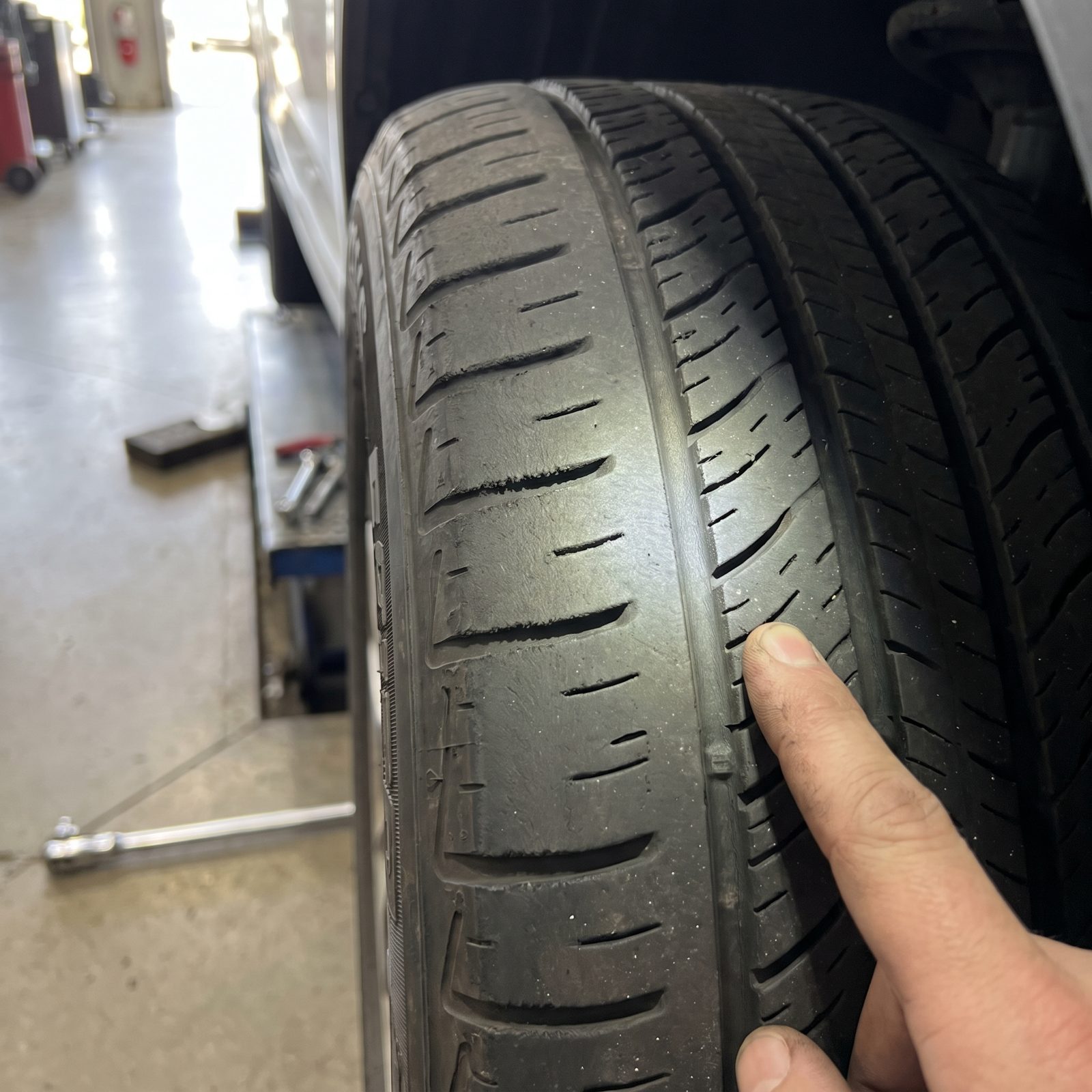
Drag your hand across the tread one direction and it’s smooth. Drag it back and it catches like a cat’s tongue. That’s feathering — one of the most reliable fingerprints a tire leaves of a misalignment.
Feathered edges usually point to a toe setting that’s off, the tires pointing slightly in or out as they roll. They scrub sideways a hair with every revolution, shaving one edge of each tread rib into a ramp.
And here’s the trap. Mount a new set without correcting the toe and they’ll feather right back. Before you buy, ask whether the old tires showed feathering, and if so, insist on a four-wheel alignment as part of the job — not as a maybe-later. Do it before the new rubber ever touches the road.
31. Center Tread Wear Often Means Chronic Overinflation
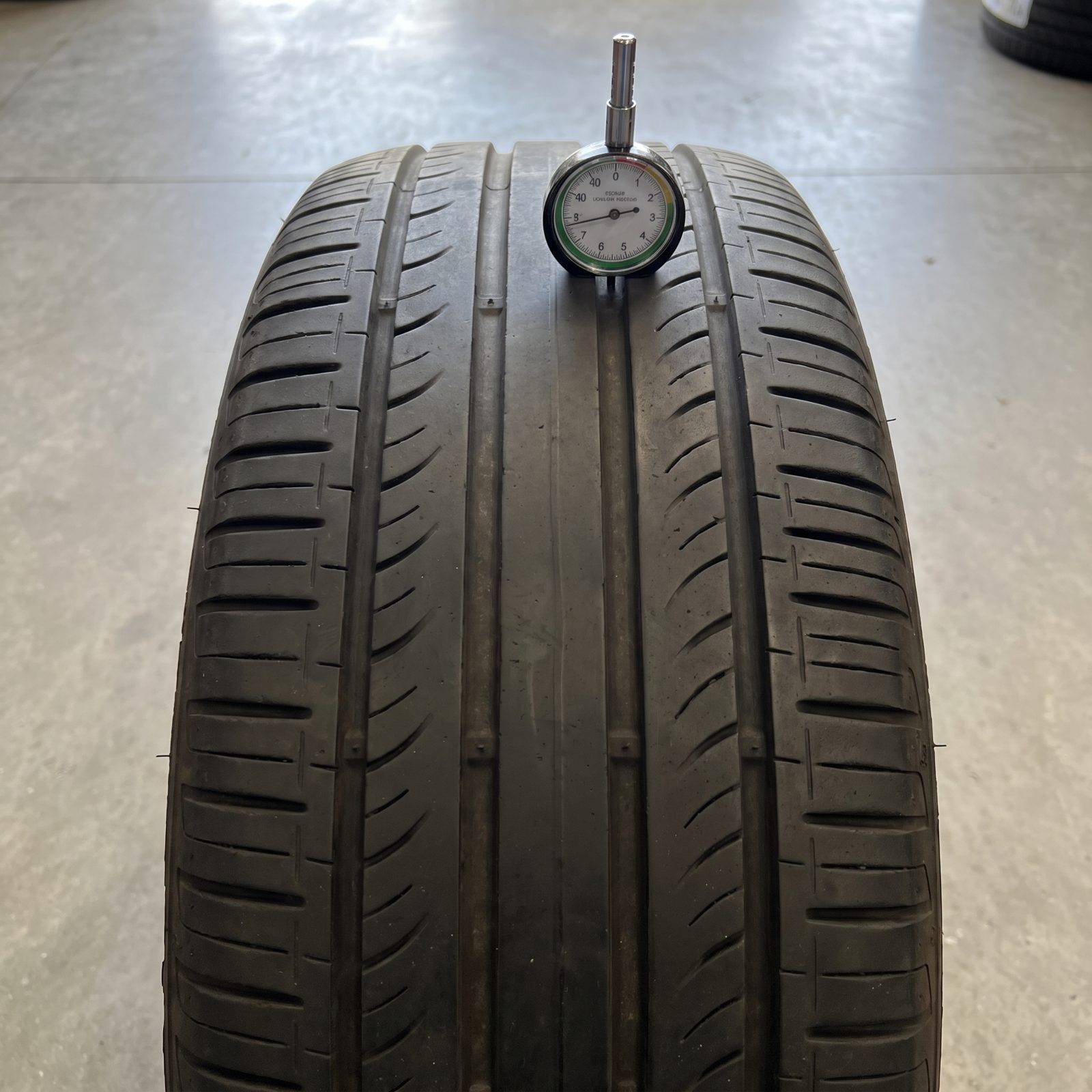
A strip of baldness straight down the middle while the shoulders still look healthy. That’s the signature of a tire that’s been carrying too much air for too long.
Overinflate a tire and it bulges in the center, so the middle of the tread does all the work while the edges barely touch. You lose grip, you lose ride comfort, and you lose tread life right where you can least afford it.
Plenty of folks pump to the number stamped on the sidewall, which is the maximum, not the recommendation. Before the shop sets your new tires, confirm they’re inflating to the vehicle’s spec, not the tire’s ceiling. And push back if anyone tells you more air is always better. It isn’t.
30. Wear on Both Outer Shoulders Often Means Underinflation
Would you like to save this?
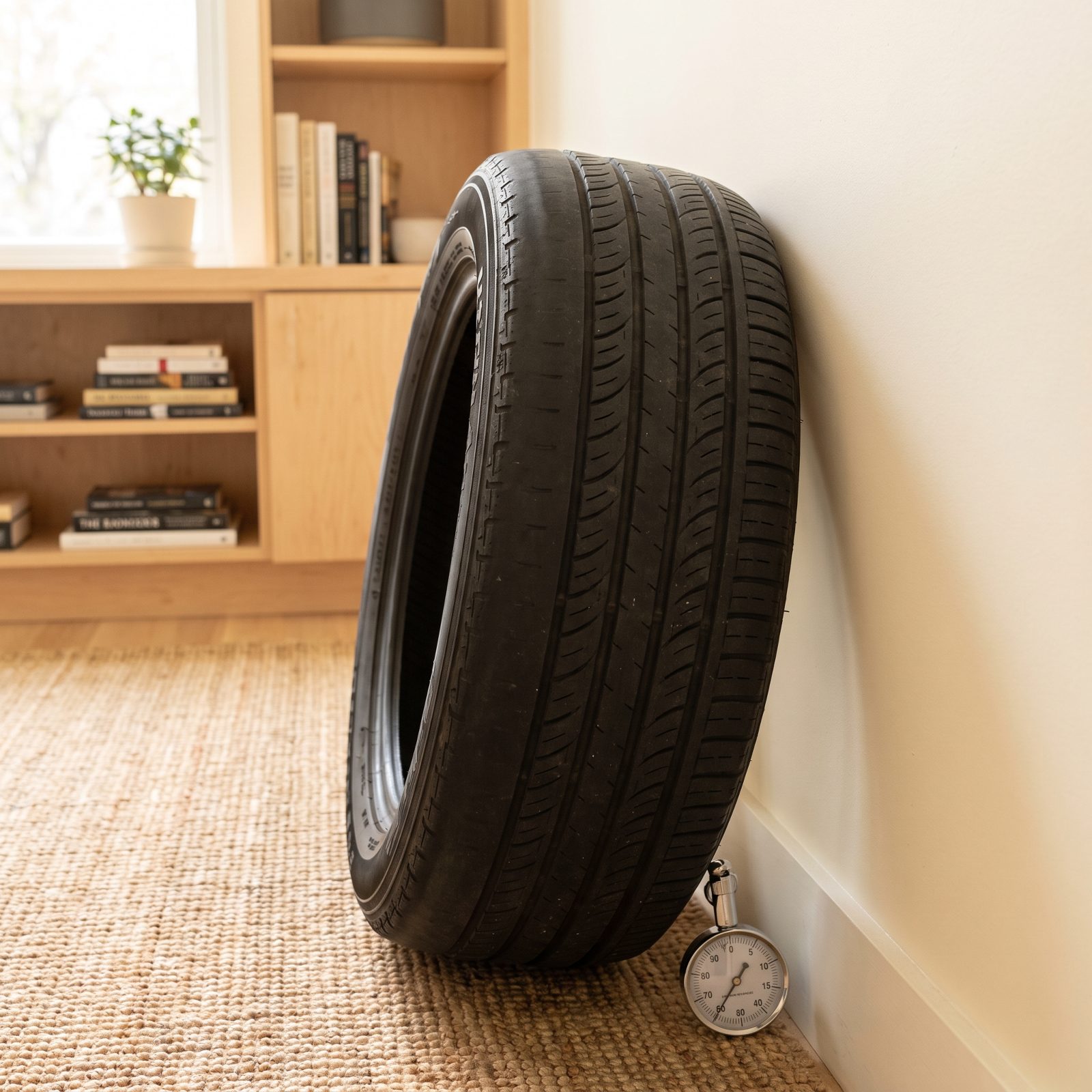
The opposite problem leaves the opposite mark. When both outer edges wear down while the center holds up fine, the tire’s been running low on air.
An underinflated tire flattens out, so the shoulders bear the load and the middle goes along for the ride. You burn more fuel, the tire runs hot, and on a long highway haul that heat is exactly what causes a blowout.
If your old set shows worn shoulders, don’t just buy replacements and roll out. Ask what pressure they’re setting, and get in the habit of checking monthly with your own gauge. A dollar’s worth of air saves a tire, and sometimes a whole lot more than a tire.
29. The Door-Jamb Placard, Not the Sidewall, Lists the Correct Tire Pressure

This mix-up wears out more tires than almost anything: the number molded into the sidewall is the maximum pressure that tire can safely hold. It is not what your car wants.
Your vehicle’s correct pressure lives on a little placard in the driver’s door jamb — sometimes inside the fuel door or glovebox instead. The engineers who built the car picked that figure for your weight, your suspension, your ride. The tire company’s number is just the ceiling.
Inflate to the sidewall max and you’ll overinflate, wear the center bald, and ride like a buckboard down a washboard road. Before a shop sets your new tires, tell them to use the door-jamb spec. Any outfit worth trusting already knows this. The ones that don’t are telling you something.
The sidewall says what the tire can take. The door jamb says what your car wants. Those are not the same number, and the gap between them is measured in worn-out rubber.
28. Nitrogen Will Not Eliminate Normal Pressure Checks
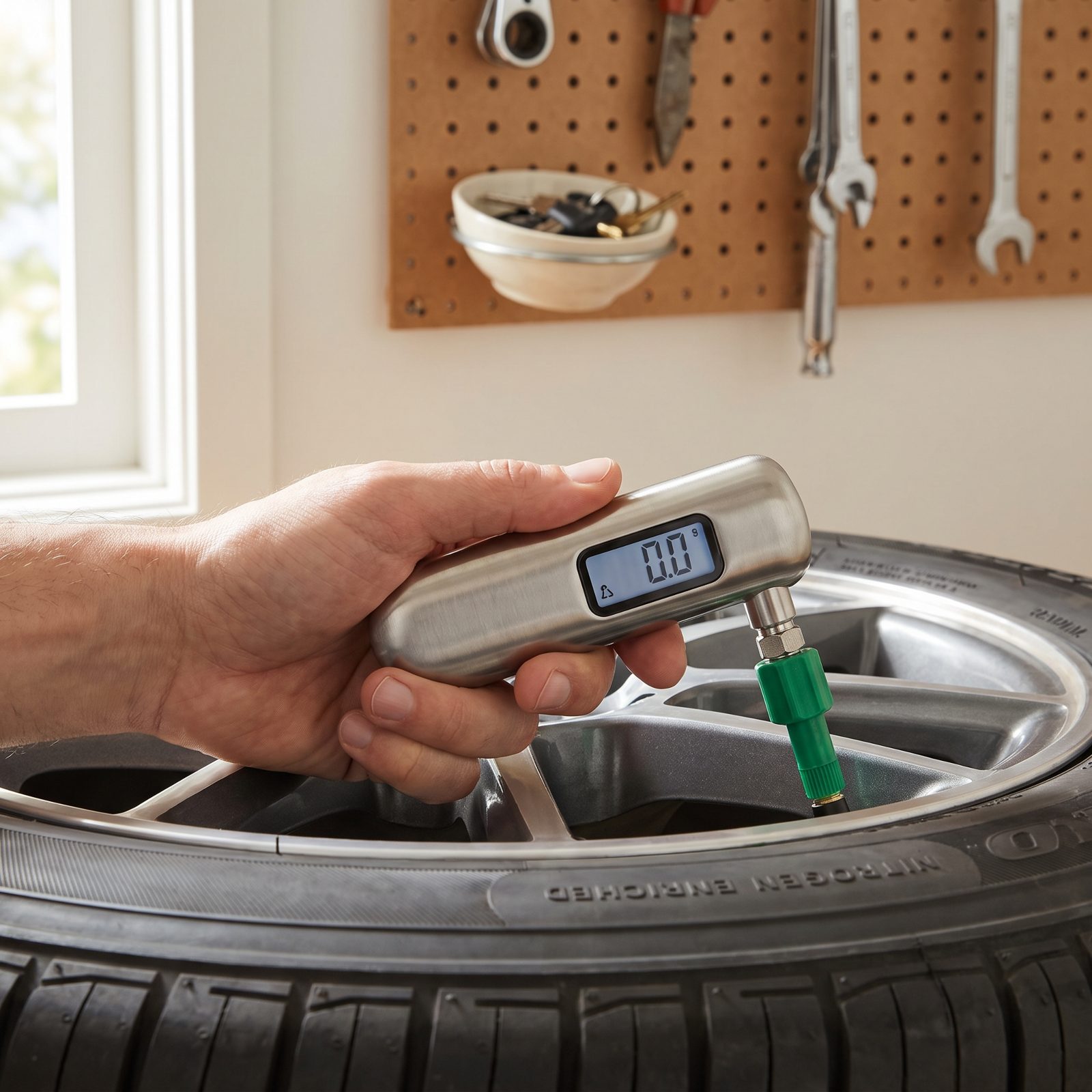
Somebody at the counter sells you nitrogen and swears the tires will hold pressure forever. They won’t. Nitrogen molecules migrate a little slower than plain air, so you lose maybe a pound or two less per month, and that’s the whole story. It isn’t magic, and it sure doesn’t cancel out the gauge in your glovebox.
Temperature still swings pressure around a pound for every ten degrees. A cold snap drops all four tires whether they’re full of nitrogen, air, or good intentions. Run them low and the shoulders scrub, the sidewalls flex, heat builds, and you shave real miles off the tread.
So keep a decent gauge handy and check them cold once a month. The green caps are fine. Just don’t let anybody talk you out of your own two eyes.
27. Rotation May Extend the Life of Tires That Look Ready for Replacement
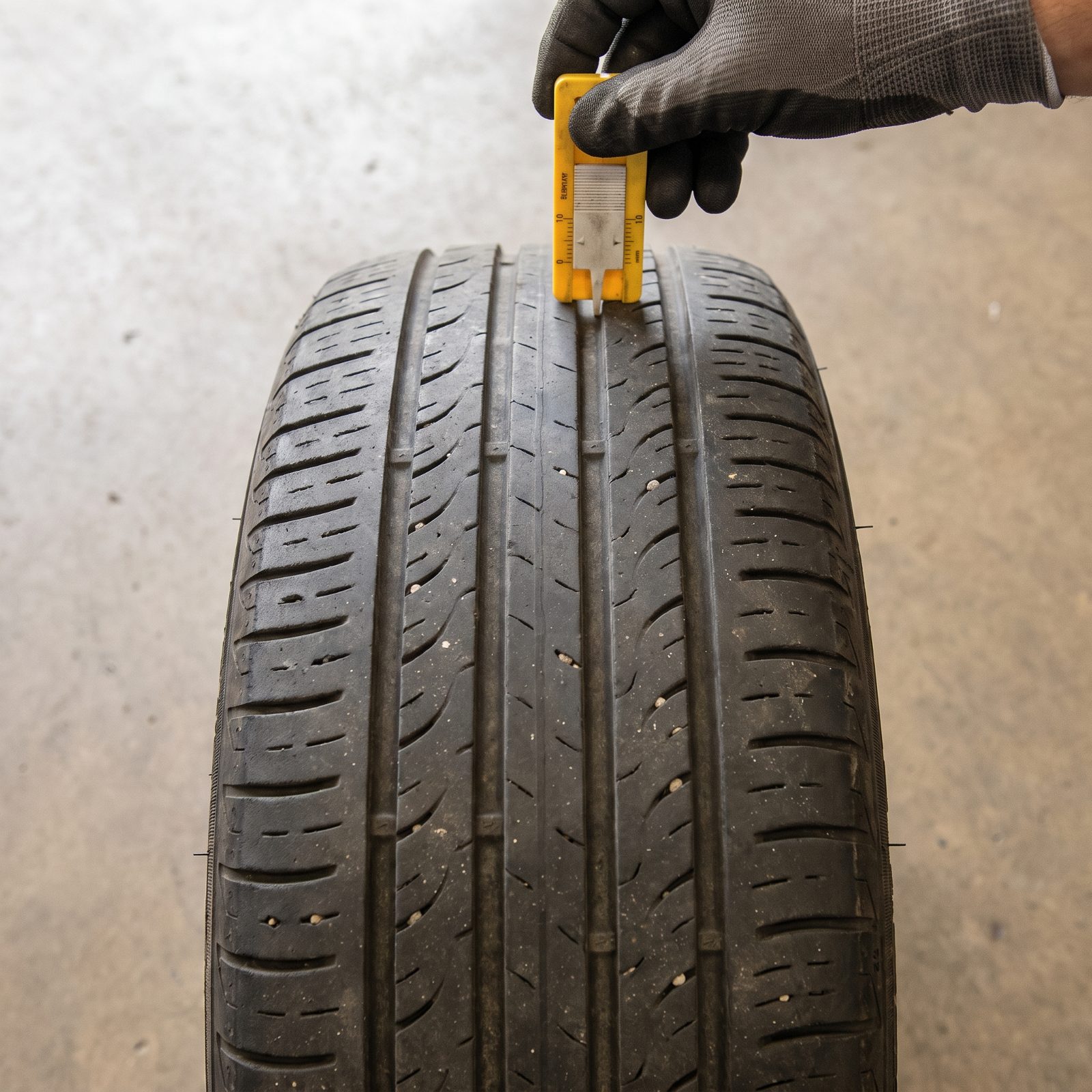
You glance at the fronts, see them worn thin, and brace yourself for four new tires. Pump the brakes. On a lot of front-drive cars the fronts handle the steering, the braking, and the pulling, so they wear roughly twice as fast as the rears while the backs still have plenty of life left.
A rotation moves the fresher rears up front and evens the whole set out. Done every few thousand miles, it can stretch a set well past what you’d expect and spare you a full replacement you didn’t actually need yet.
Before you authorize four, ask them to measure all four with a depth gauge and read you the real numbers. If the rears come up deeper than the fronts, you want a rotation, not a sales ticket.
26. Staggered Wheel Setups May Prevent Front-to-Rear Rotation
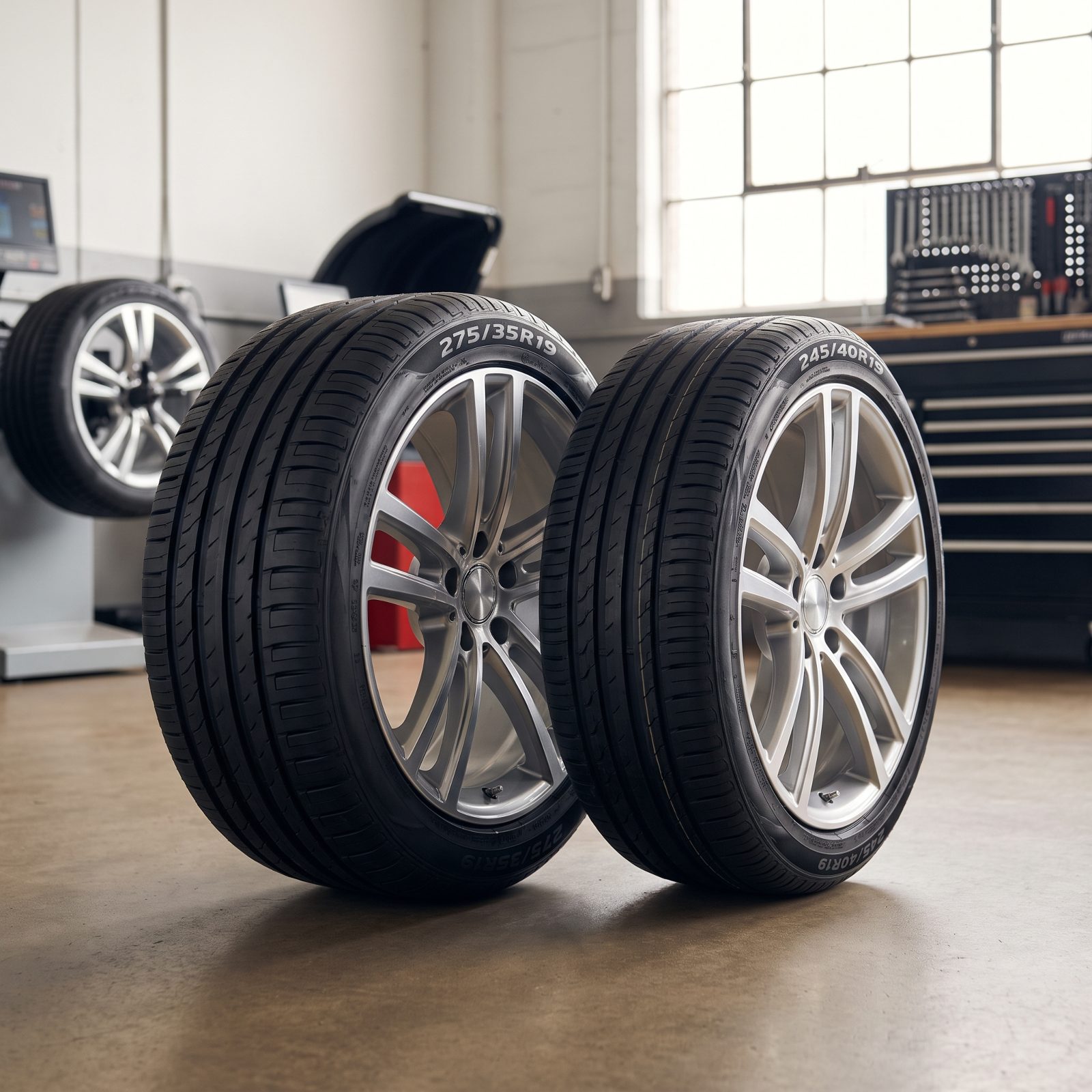
Not every car plays by the cross-rotate rules. Plenty of performance cars and some sporty sedans run a staggered setup, with the rear tires wider than the fronts. Different sizes can’t trade places, so the usual front-to-rear shuffle is simply off the table.
And here’s where it bites you. A shop quotes a mileage warranty that requires rotation, then the fine print quietly voids it because your car physically can’t be rotated the normal way. You end up paying for a promise you were never going to collect on.
Check your sidewalls. If the front and rear sizes differ, ask the counter exactly how they’ll handle rotation and warranty. Some setups allow a side-to-side swap on non-directional tires. Others allow nothing at all. Know before you sign.
25. An Alignment Is Usually Separate From Tire Installation
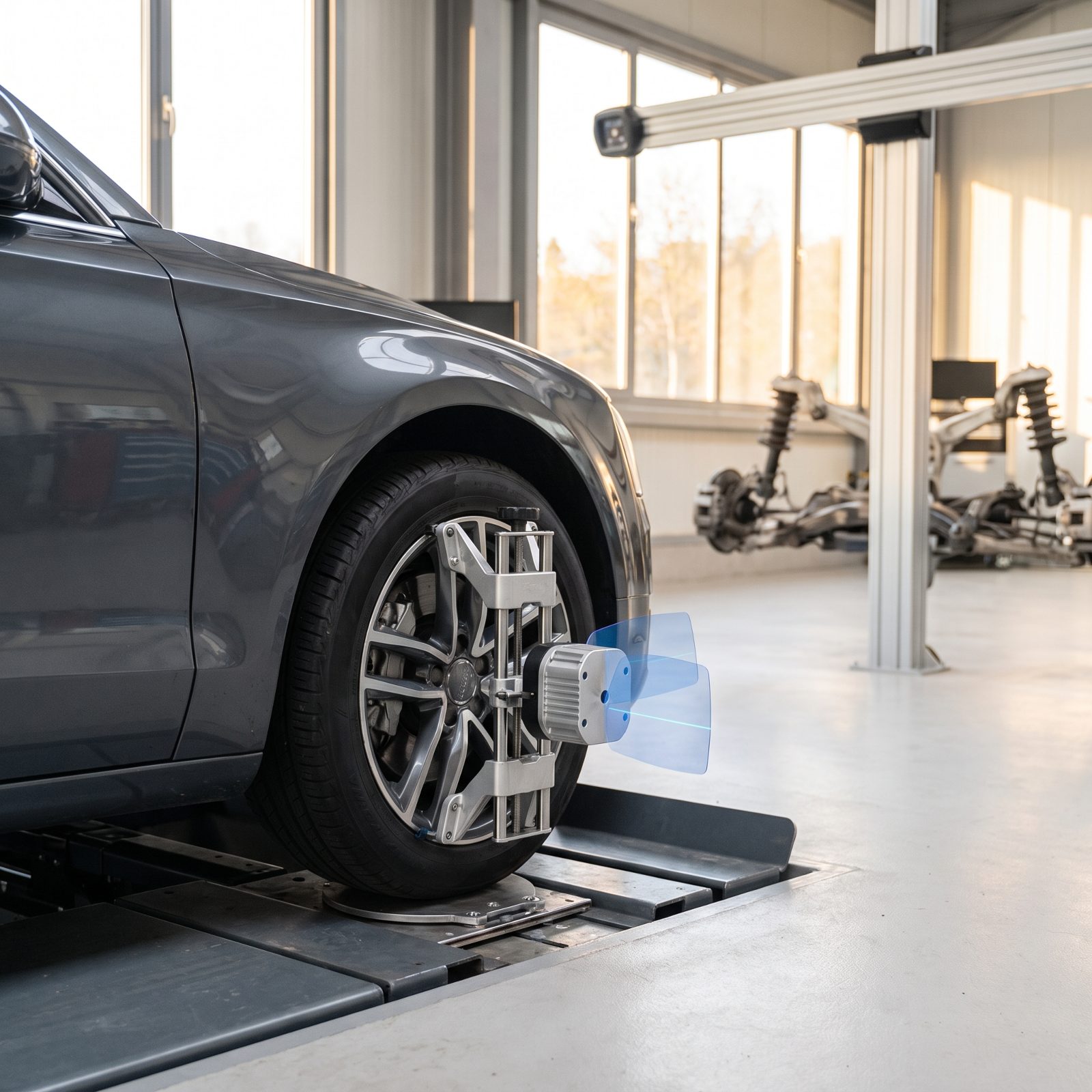
You buy four tires, roll out happy, and six months later the new rubber is feathered on one edge. The culprit was sitting there the whole day: your alignment was off, and nobody checked it because an alignment is a separate service with a separate price.
Mounting and balancing set the tire on the wheel and spin it true. Alignment sets the angles the whole wheel points at, and a toe or camber that’s out of spec will chew a fresh set unevenly and fast. That wear is never covered by any warranty, by the way.
Ask for an alignment check whenever you put on new tires, especially if the old ones wore crooked or the car clipped a curb or a pothole hard. A hundred bucks or so protects a far bigger purchase.
24. Road-Force Balancing Can Find Problems Ordinary Balancing Misses
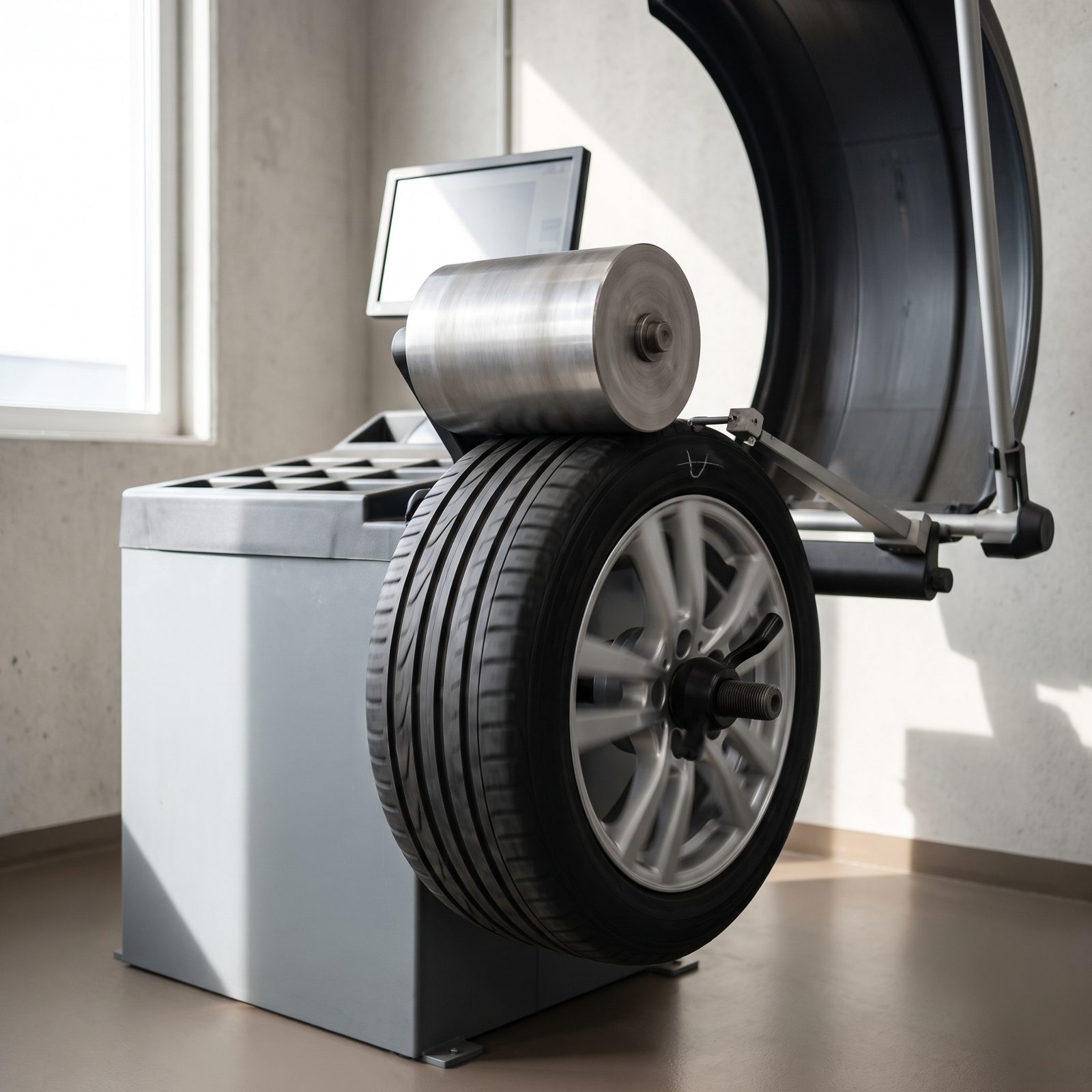
Standard spin balancing finds where a wheel is heavy and sticks a weight opposite it. Good enough most of the time. But it can’t feel a tire that’s stiff in one spot, or a wheel that isn’t perfectly round, or a bead that didn’t seat evenly, and those show up as a vibration no amount of ordinary weights will ever cure.
Road-force balancing rolls a loaded drum against the tread while it spins, which mimics the weight of the car pressing down and measures how the tire actually pushes back. It reads the stiffness variation and tells the tech how to index the tire on the wheel to cancel it out.
If a brand-new set still shakes at highway speed after a regular balance, ask for road-force before anyone starts throwing parts at it.
23. A Missing Wheel Weight Can Cause Highway-Speed Shaking
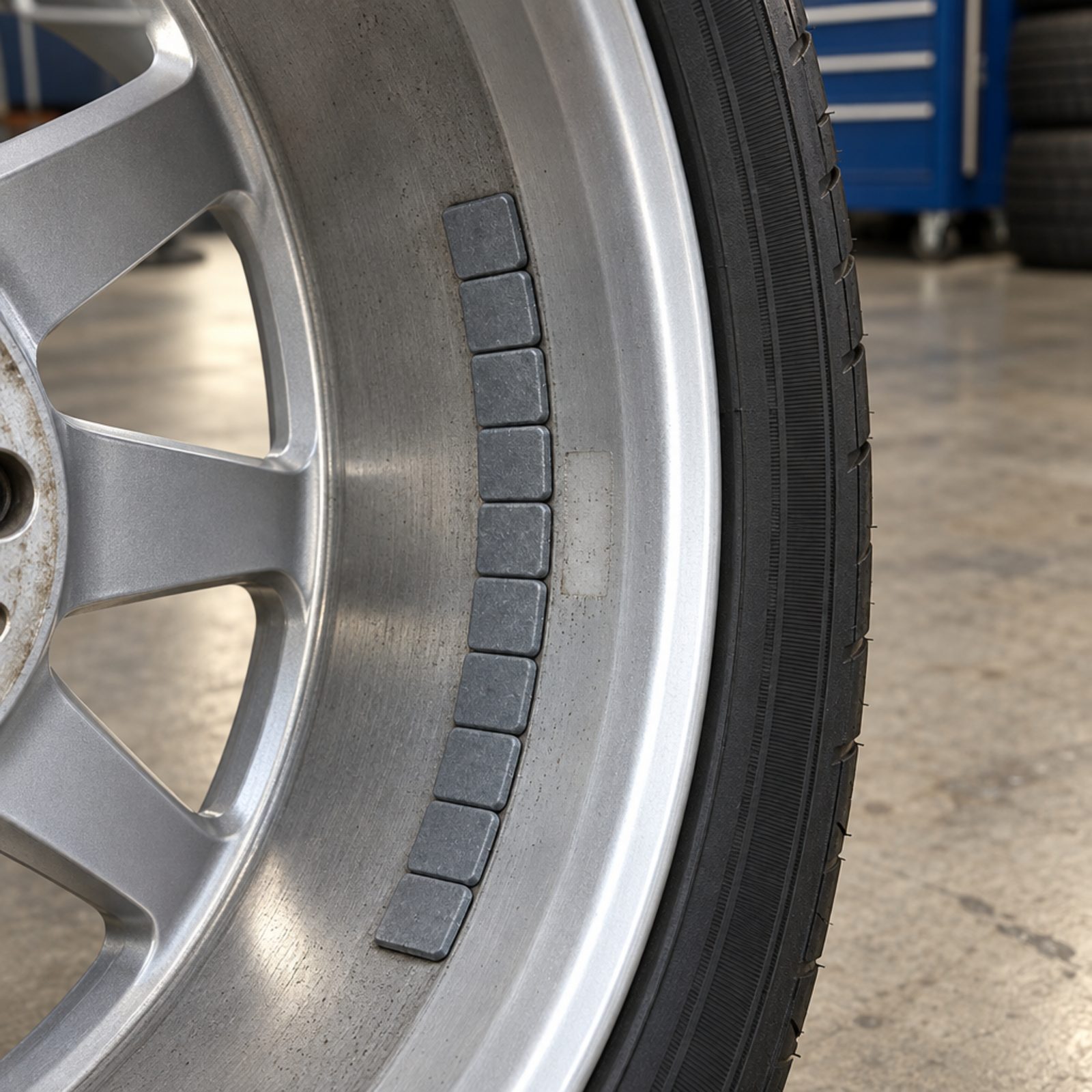
You clip a curb, scrape through a car wash, or just grind out a few hard winters, and one of those little stick-on weights lets go. Now the wheel is heavy on one side again, and somewhere north of sixty the whole front end starts buzzing up through the wheel.
People spend real money chasing that shimmy with tie rods and bearings when the fix was a two-dollar weight and a rebalance. A missing weight is one of the first things any good tech checks.
If a vibration shows up out of nowhere, have them pull the wheels and eyeball the barrels before you authorize anything expensive. And ask whether they’ll clean the surface and use quality coated weights, so the next one actually stays put.
22. Lug Nuts Should Be Tightened With a Torque Wrench
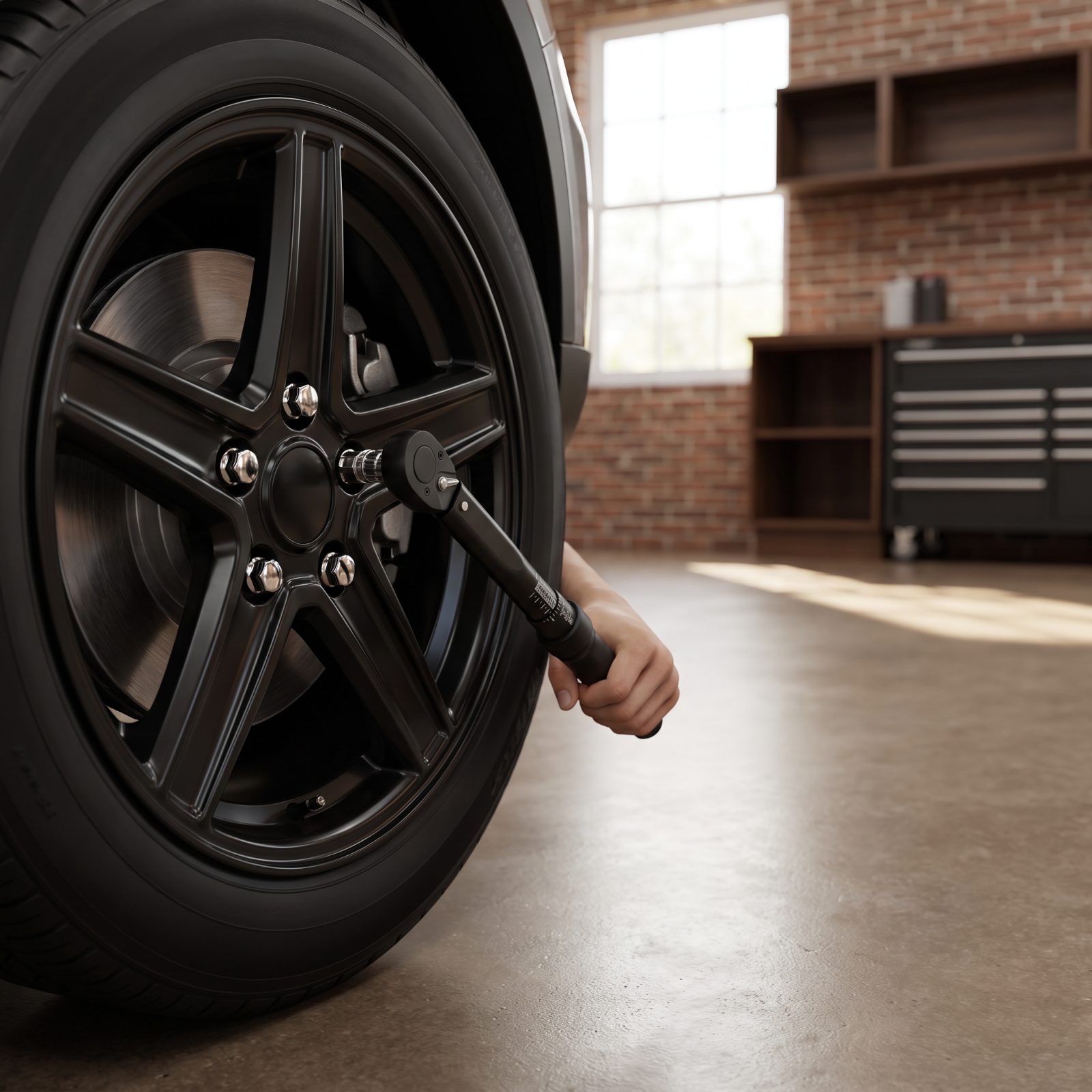
An impact gun is fast. That’s the problem. A tech in a hurry hammers the lug nuts on at whatever the gun delivers, which can be double the spec. Over-tight nuts stretch the studs and can warp a brake rotor, and that comes back later as a pulsing pedal you’ll blame on your brakes.
Too loose is worse. A wheel that works itself off at speed is not a story you want to be telling.
Most passenger cars want somewhere in the neighborhood of 80 to 100 lb-ft, and your owner’s manual lists the exact figure. A proper shop snugs the nuts with the gun, then finishes by hand with a torque wrench in a star pattern. Ask whether they torque to spec. If the answer is a shrug, go find a different shop.
21. The Cheapest Quote May Exclude Mounting, Balancing, Stems, and Disposal
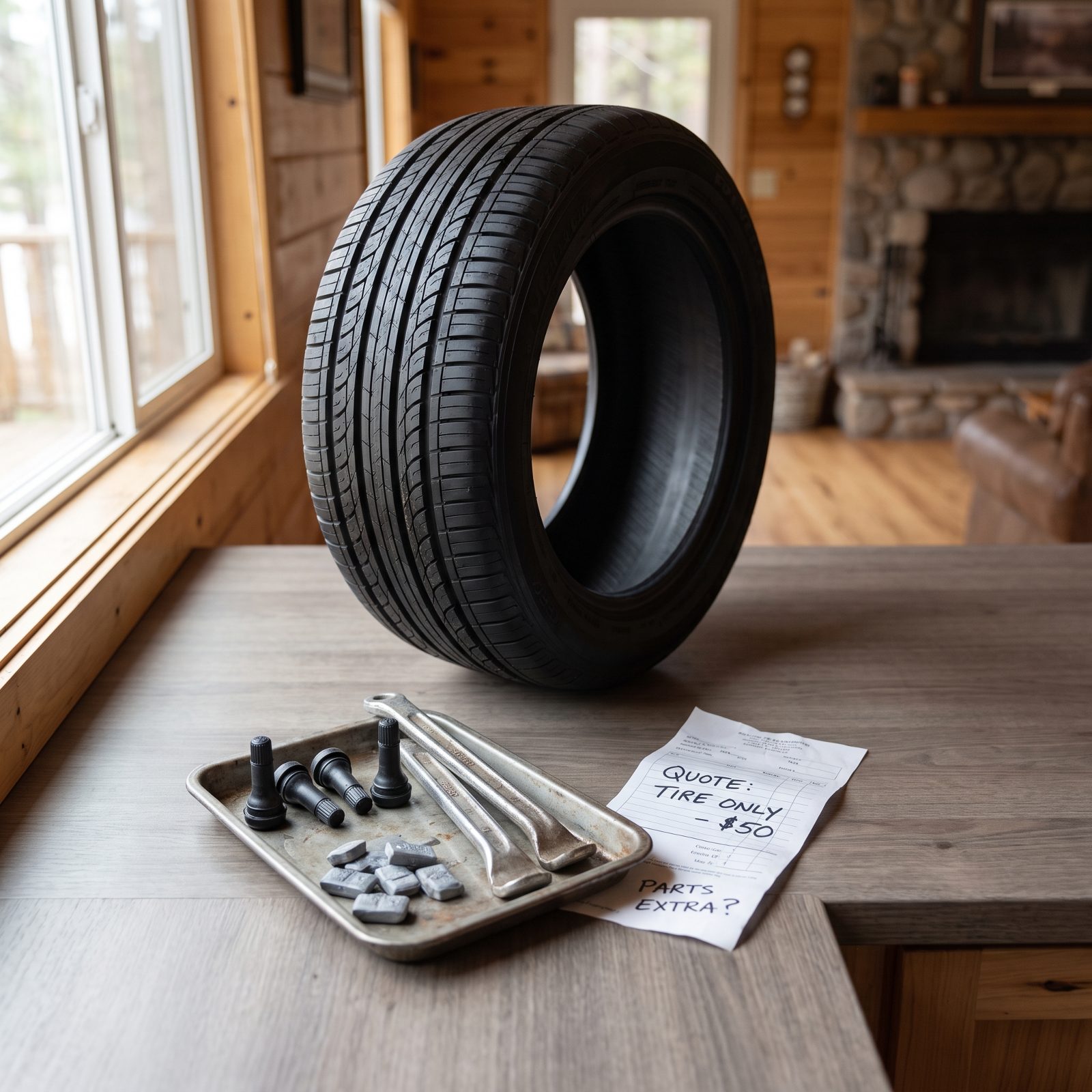
That online price per tire looks great until you’re standing at the register staring at a total that somehow grew legs. The tire itself is only part of the bill. Mounting, balancing, new valve stems, TPMS service, shop supplies, old-tire disposal — they all stack on top, and a lowball quote tends to leave every one of them off.
By the time it’s all added up, the “cheap” set can land within a few bucks of the shop that quoted everything up front.
So ask for an out-the-door price with every line listed. Mounting and balancing per tire, stems, disposal fee, taxes. Then compare apples to apples. The honest quote is sometimes the lower one, once the add-ons quit hiding.
20. Road-Hazard Coverage Often Pays Only a Prorated Amount
Would you like to save this?
The counter sells road-hazard coverage like it hands you a free new tire the second you hit a nail. Read the terms. Most policies prorate the payout by how much tread you’ve already burned through, so pick up a screw at half tread and they cover about half the cost of a replacement, not the whole thing.
Some policies only pay for a repair, and only cover full replacement when the damage genuinely can’t be safely plugged or patched.
Before you add it, ask three flat questions. Does it pay full replacement or prorate by tread? Does it cover repairs? Is there a deductible per claim? The coverage can still be worth it on an expensive set. Just know exactly what you’re buying.
19. Mileage Warranties Usually Require Rotation Records
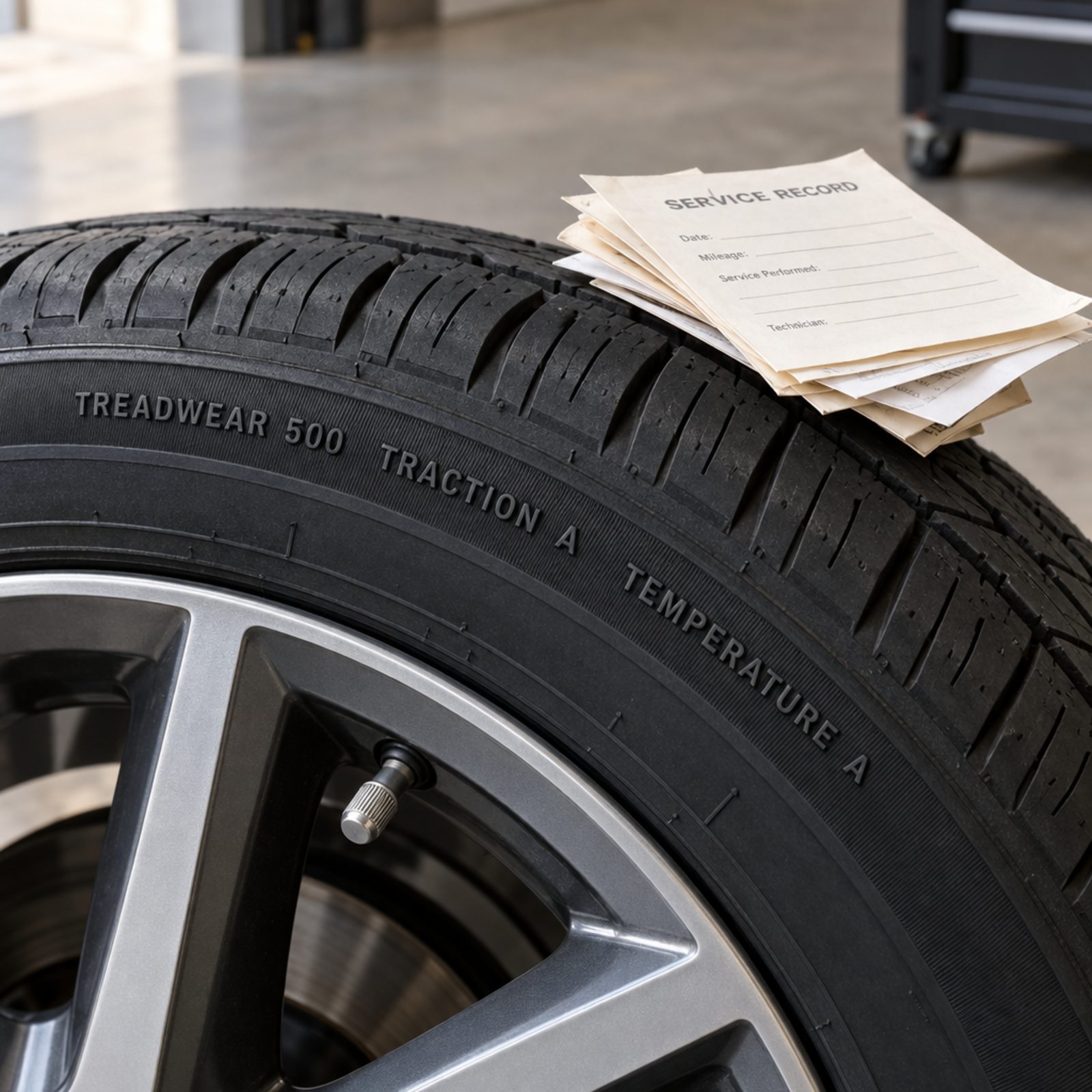
A big mileage warranty sounds like a flat-out promise. It’s really a conditional one, and the condition most people blow is the paperwork. These warranties almost always require documented rotations at set intervals, done through a shop, with a receipt to show for it.
Skip the rotations, or do them yourself in the driveway with nothing on paper, and when the tires wear out early the claim dies on a technicality. No records, no prorated credit.
Keep every rotation receipt in the glovebox or a folder. Ask the shop up front what the warranty requires and how they want it documented. The tire that “wore out too fast” is almost never the manufacturer’s fault in their eyes unless you can prove you held up your end.
18. The UTQG Treadwear Number Is Not a Universal Mileage Promise
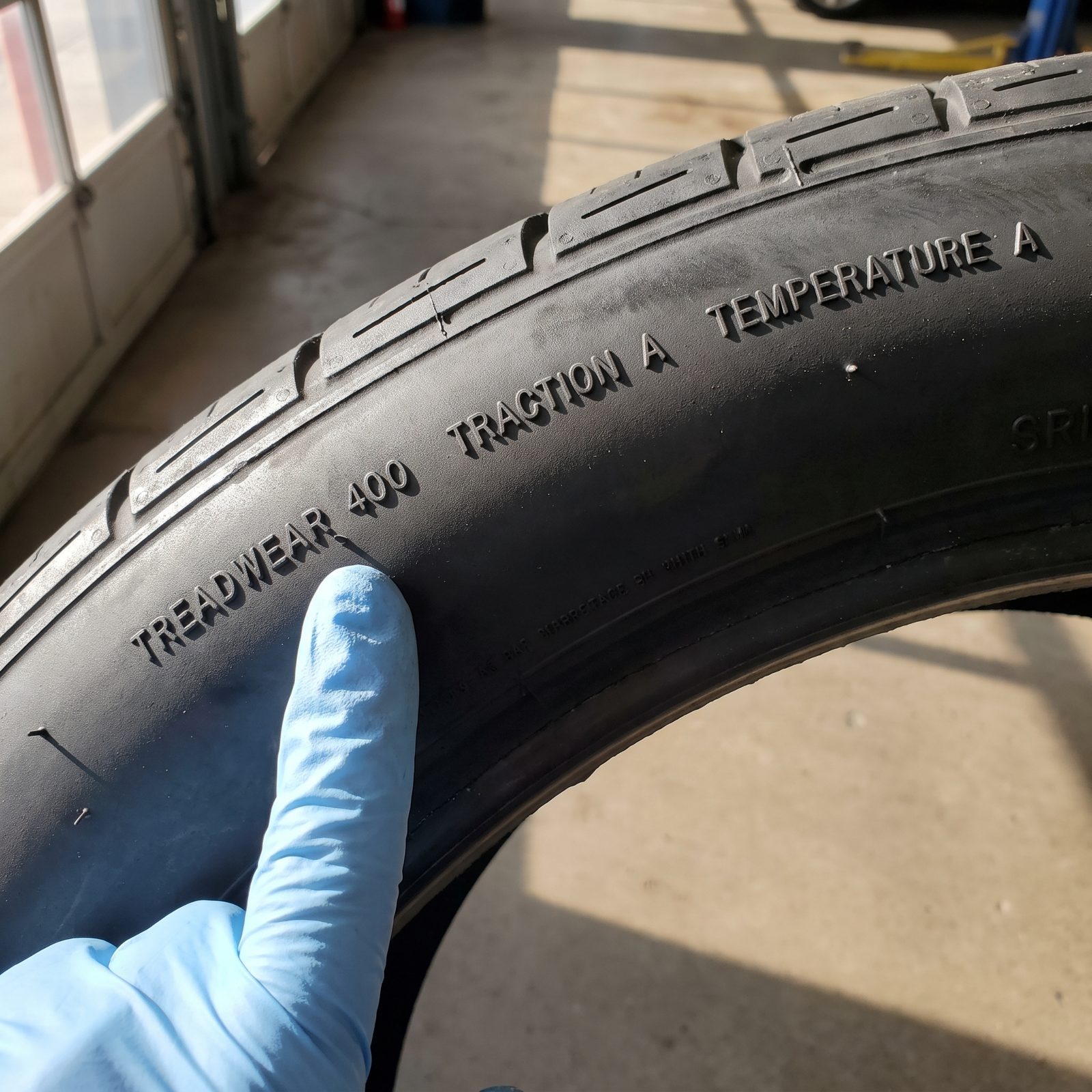
That three-digit treadwear number looks like a promise. It isn’t. A tire graded 600 won’t necessarily last twice as long as one graded 300. The UTQG rating comes from a government-prescribed test, but here’s the catch — each manufacturer runs and grades its own tires, which means a company can sandbag a number to flatter a different line. The grade compares apples to apples within one brand’s catalog only, and even then it’s a relative guide.
So don’t let a shop sell you “80,000-mile rubber” on the strength of a molded number. Ask for the written mileage warranty instead, in miles, with the conditions spelled out. That’s the figure the maker will actually stand behind. Then read the fine print about rotation records and tread-depth minimums, because that’s what they’ll check if you ever file a claim.
17. Long-Life Tires Can Trade Away Wet Grip and Ride Comfort
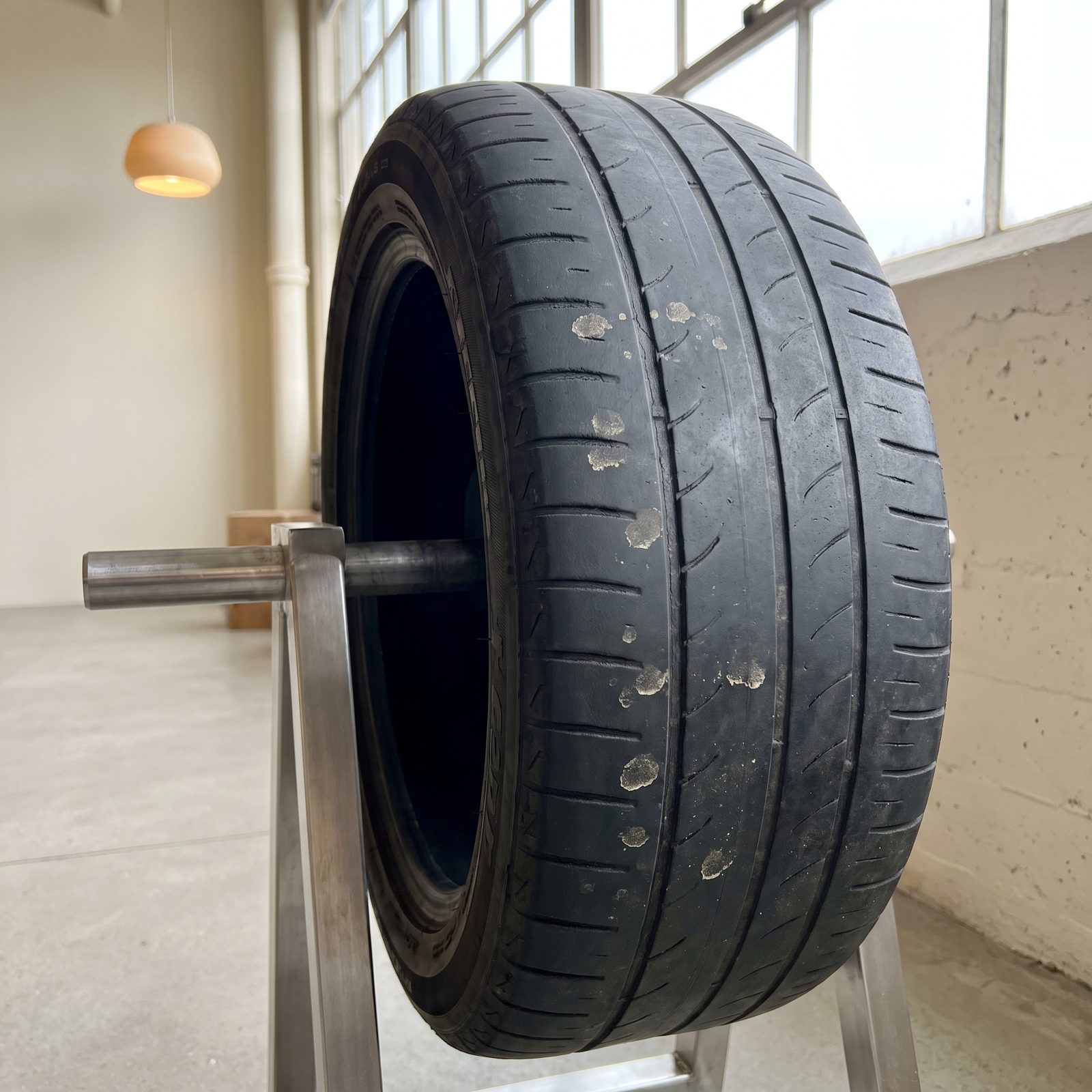
Chase a huge mileage number and something has to give. The compounds that resist wear run harder, and harder rubber grips wet pavement less eagerly while shoving more road noise and harshness into the cabin. You paid for 80,000 miles and got a longer stopping distance in the rain as a silent bonus.
Decide what the car is actually for before you sign. A highway commuter that never sees a spirited corner is a fine candidate for long-life touring rubber. But a car you enjoy driving, or one that lives where it rains, is better off with a grand-touring or performance all-season that trades some tread life for shorter wet stops. Ask the counter for the wet-braking data or reputable test results, not just the warranty mileage.
16. Original-Equipment Tires May Prioritize Automaker Targets Over Longevity
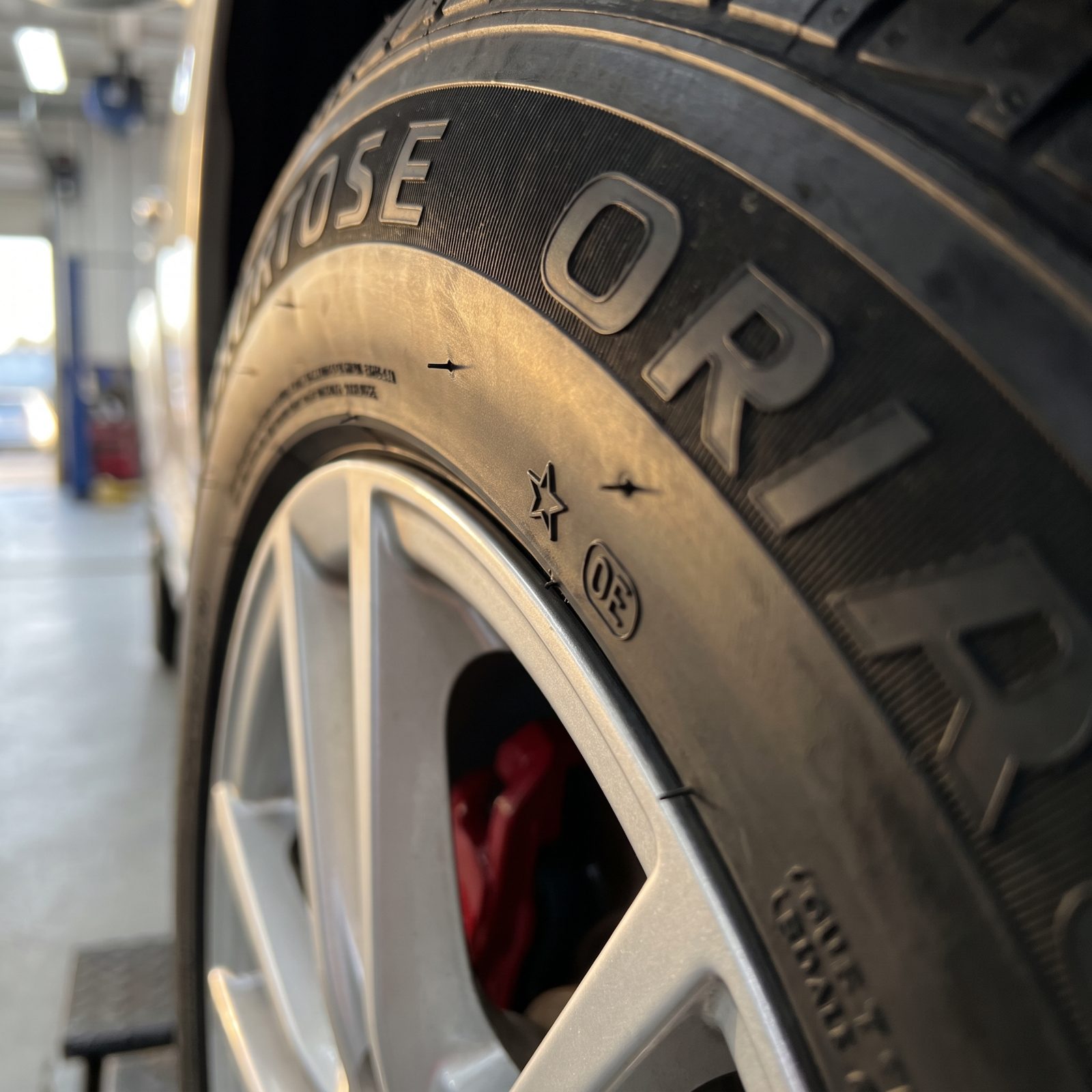
The tires your car wore off the showroom floor were engineered to a long list of automaker demands: a fuel-economy figure, a specific ride feel, a rolling-resistance target, sometimes a noise-cancellation foam liner. Longevity usually sits near the bottom of that list. That’s why so many people replace factory tires early and feel vaguely cheated.
You are not required to buy the same OE-spec tire again. Those carry a small manufacturer code on the sidewall. Ask the shop whether a comparable aftermarket tire in the same size, load, and speed rating would give you more tread life or better wet grip for the same money. Often it will. Just keep any run-flat or foam-lined requirement intact if your car genuinely depends on it.
15. A Matching Tire Size Does Not Guarantee the Correct Load Index
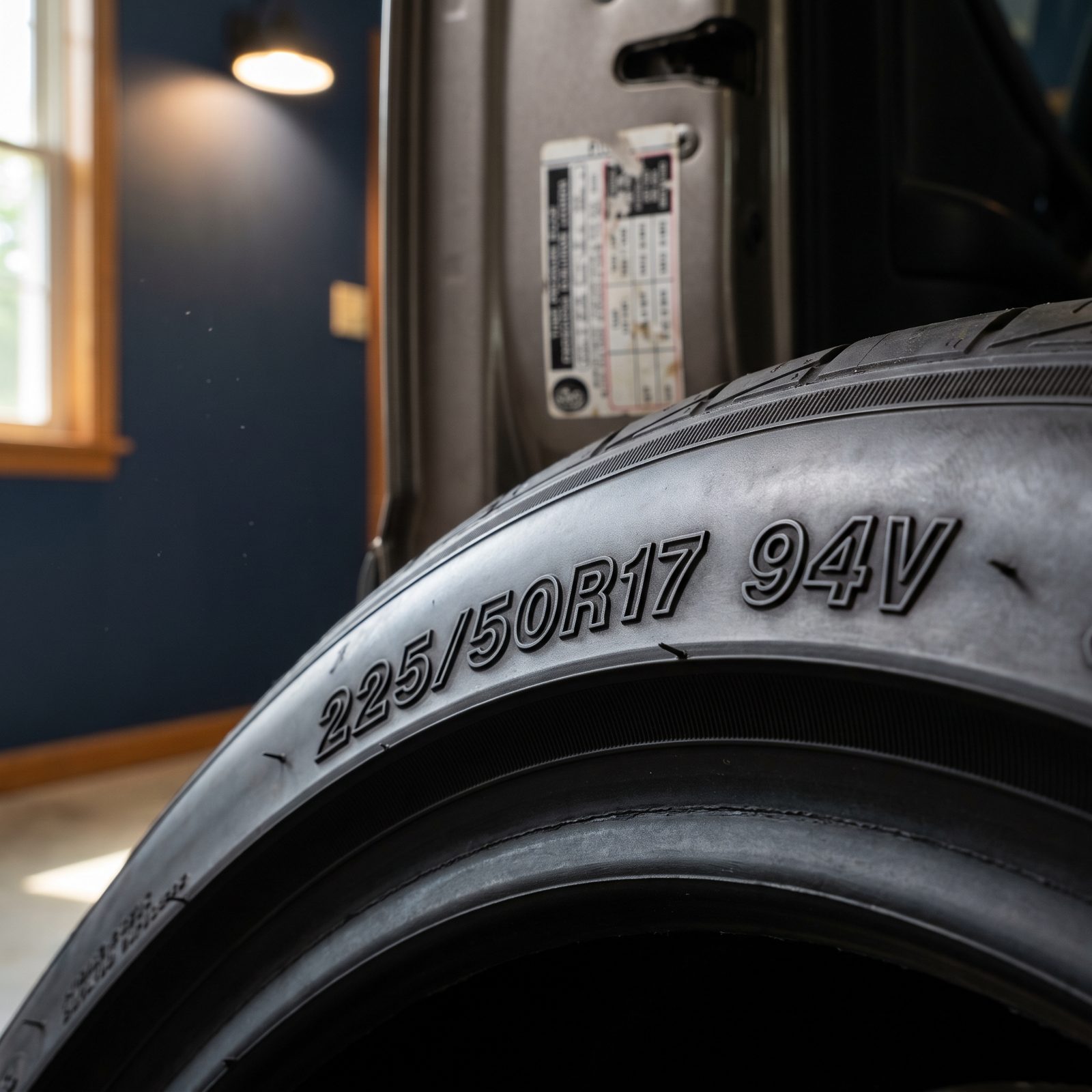
Two tires can read the same width and diameter and still carry very different loads. The number right after the size is the load index, and it tells you how much weight each tire is rated to support. Drop below what your vehicle calls for and you’ve built a weakness into every mile — especially on a loaded truck, SUV, or minivan hauling family and gear.
Find the factory spec on the placard inside the driver’s door jamb and match or exceed the load index. Never go under. For trucks, mind the LT designation and ply ratings too. Before you authorize anything, ask the counter to read your door placard back to you and confirm the tires they’re mounting meet or beat both the size and the load index. Thirty seconds, and it’s the number people skip most.
14. A Lower Speed Rating Can Alter Handling and Warranty Eligibility
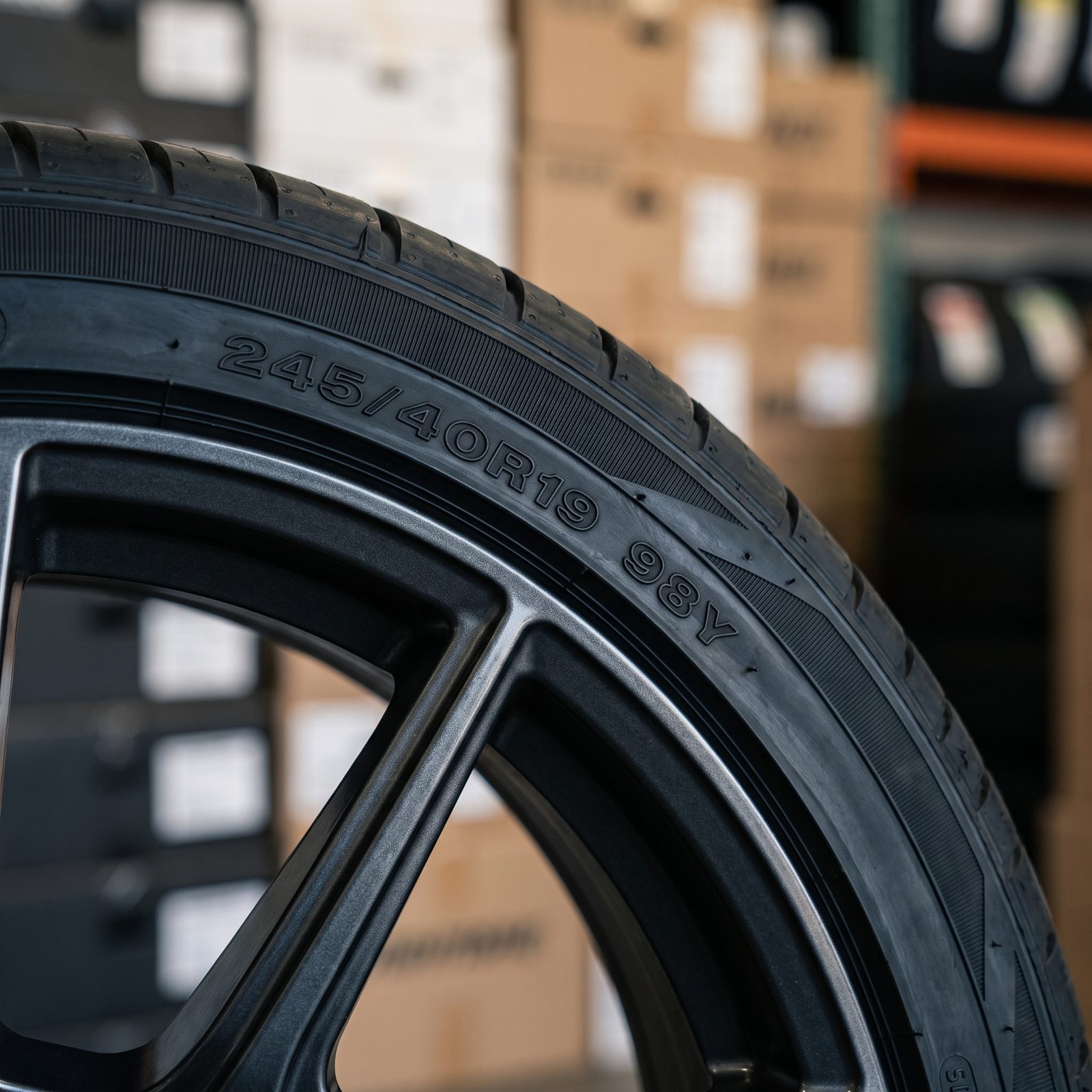
The letter at the end of the service description is the speed rating, and it’s shorthand for more than top speed. Higher-rated tires lean on stiffer construction and stickier compounds, so dropping from a V to an H or T rating can soften steering response and lengthen stopping distances even though you’ll never drive that fast.
And there’s a paperwork catch. Some manufacturers and insurers tie coverage to maintaining the original speed rating, and a few European performance cars are legally specced around it. Match the factory rating unless you have a deliberate reason not to — fitting dedicated winter tires, say, which are allowed to carry a lower rating. If a shop pushes a cheaper lower-rated tire, ask straight out how it changes handling and whether it affects any warranty on your vehicle.
13. All-Wheel-Drive Vehicles May Require Closely Matched Tread Depths
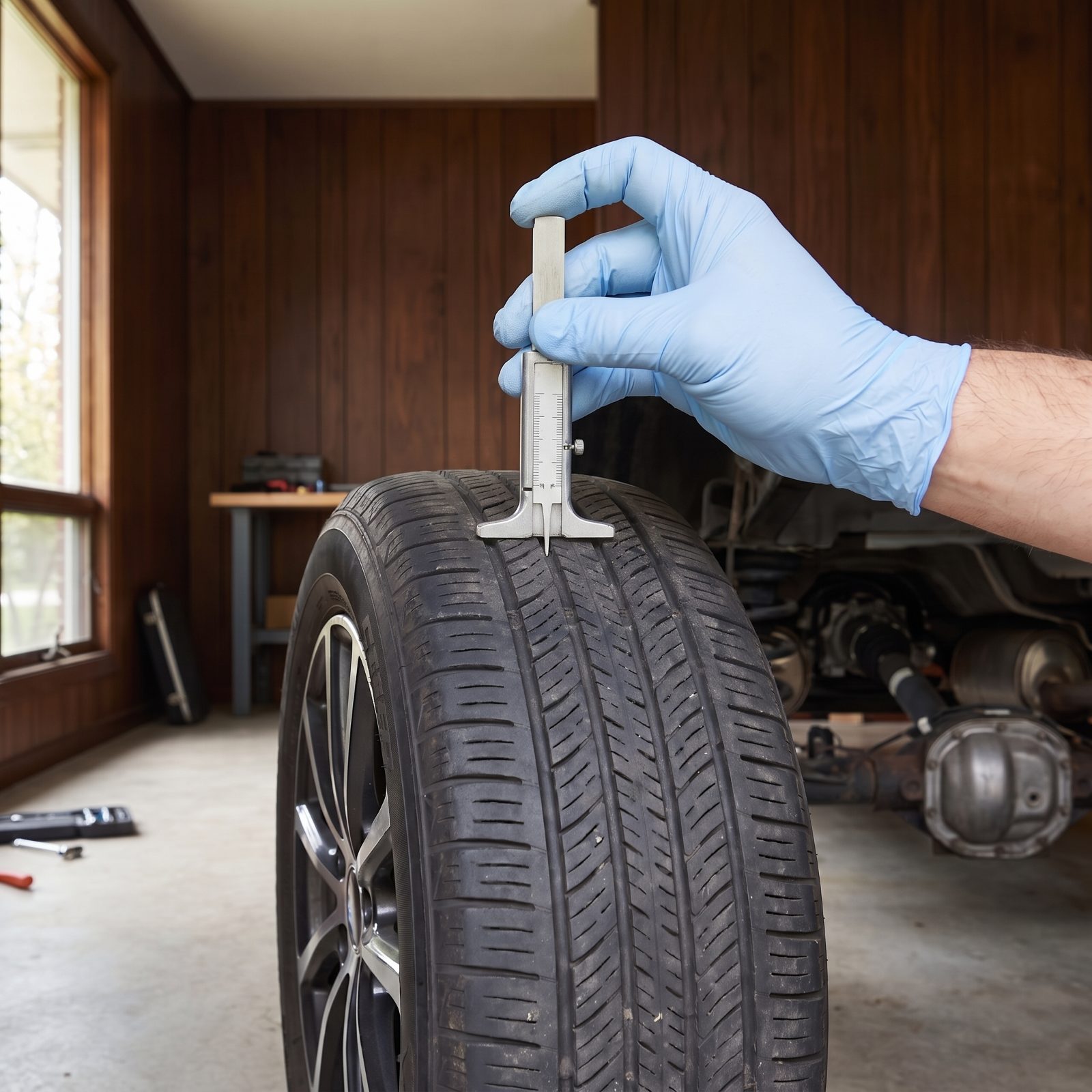
An all-wheel-drive system wants all four tires turning at nearly the same rate. A tire with more tread has a slightly larger rolling diameter, so it spins at a different speed than its worn mate. On many AWD cars, that constant mismatch loads up the center differential or transfer case and cooks it over time — a repair that dwarfs the price of tires.
Most automakers publish a maximum allowable difference across all four tires, and it’s tight. That’s why a single flat on an AWD car can force a conversation about buying more than one. Before you authorize anything, ask the shop to measure tread depth on all four, compare it to your owner’s manual spec, and tell you whether a single replacement is safe for your drivetrain.
12. Tire Shaving Can Sometimes Save an AWD Owner From Buying Four Tires
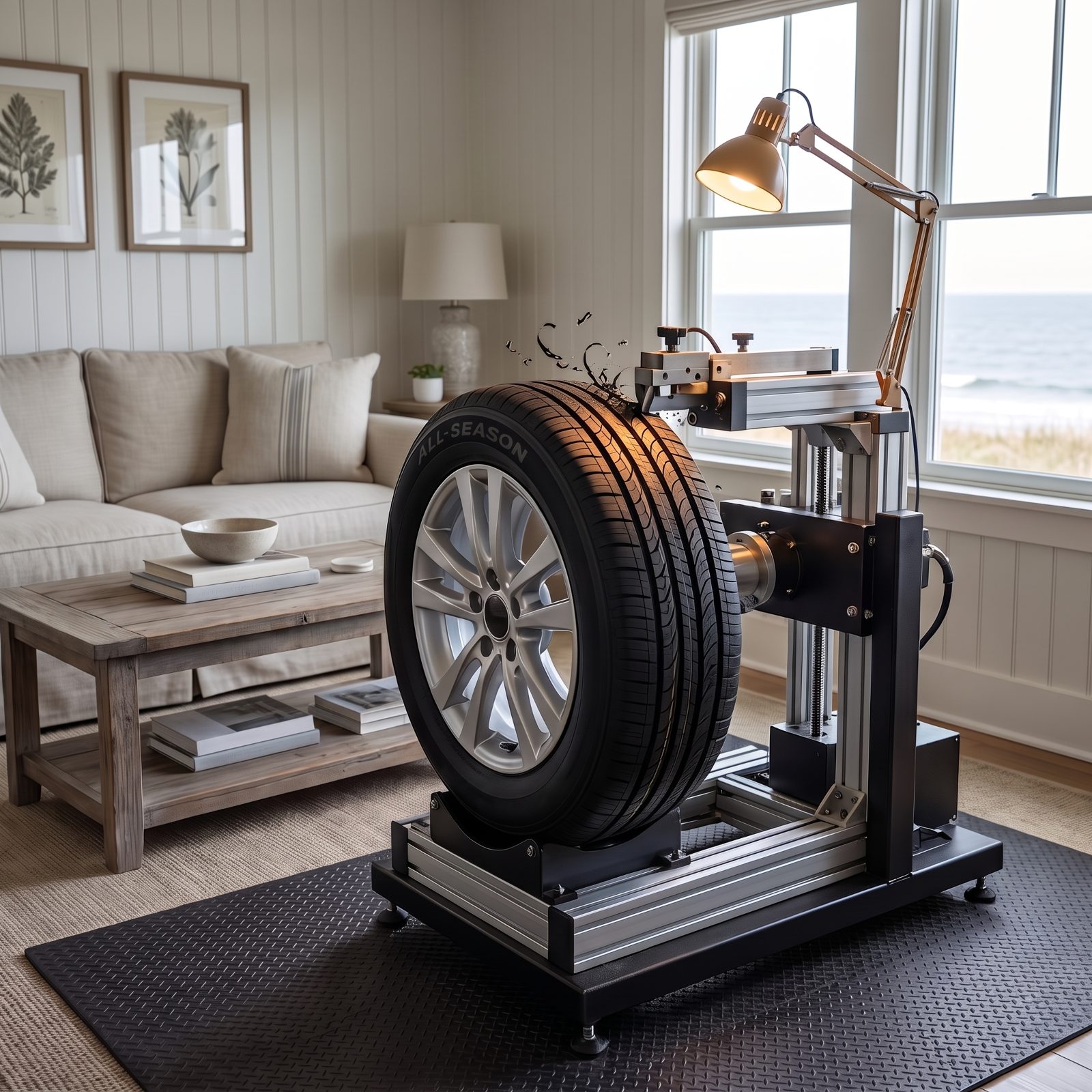
Here’s a trick the counter rarely mentions. One tire on your AWD car gets destroyed, the other three still have plenty of life, and you assume you’re buying four. You’re not — not always. A specialty shop can shave a brand-new tire down to match the tread depth of the surviving three, bringing all four back within the manufacturer’s tolerance for a fraction of a full set.
It’s a genuine service with genuine machines, not a backyard hack. Not every shop offers it. Not every situation calls for it. But it’s worth asking about before you resign yourself to four new tires. Measure the surviving three first — if they’re more than halfway worn, four fresh tires probably make better sense anyway.
11. All-Season and All-Weather Tires Are Not the Same Thing
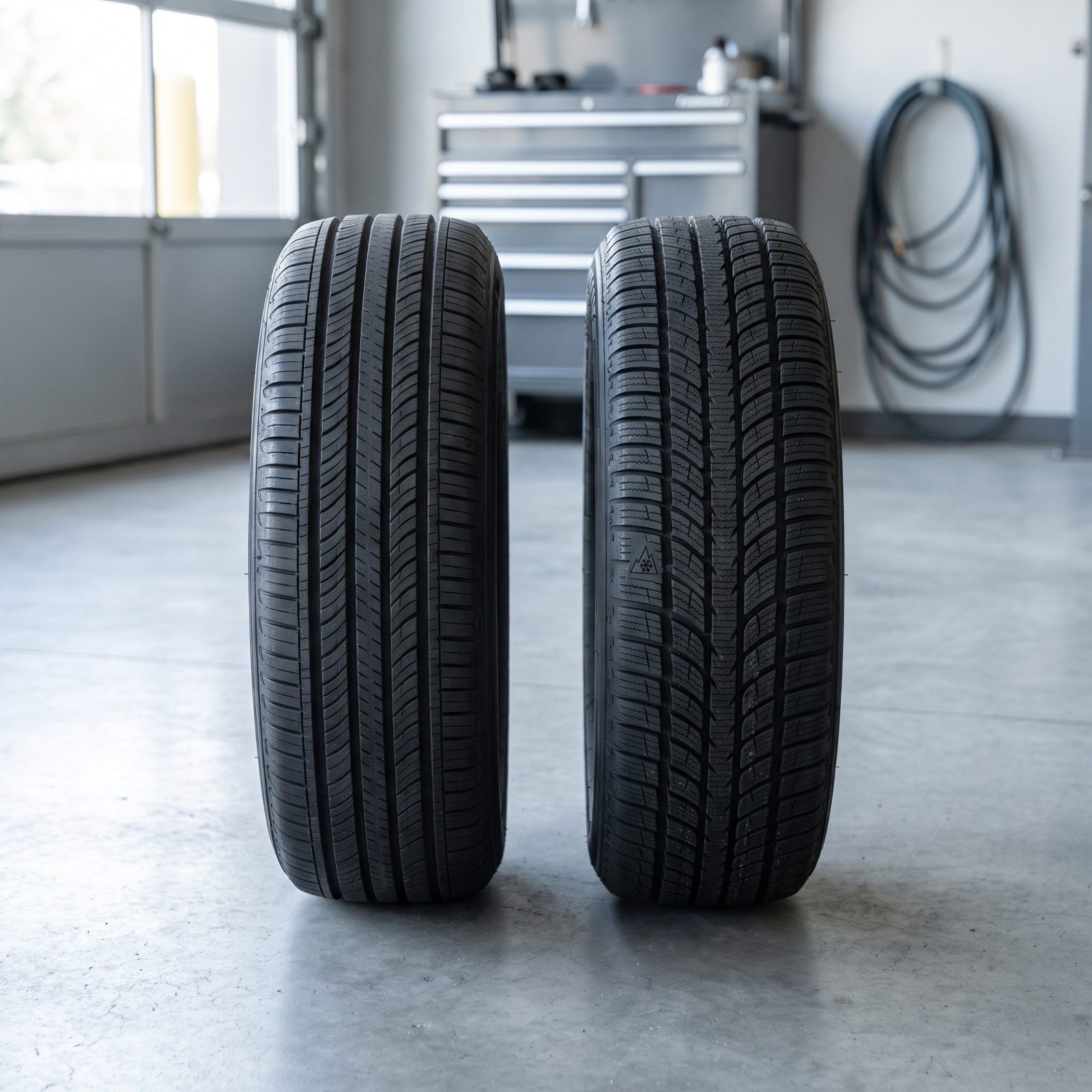
The names sound like synonyms. They aren’t. A standard all-season tire is a warm-and-mild-weather compromise that handles light snow poorly once temperatures drop near freezing, because its rubber stiffens. An all-weather tire, on the other hand, uses a cold-flexible compound and extra siping, and it earns the three-peak mountain snowflake certification — meaning it’s genuinely rated for severe snow while still being safe to run all year.
If you live somewhere with real winters but can’t be bothered to swap seasonal tires, all-weather is the answer most drivers don’t know exists. When a shop says “all-season,” ask whether the tire carries the mountain-snowflake symbol. If it doesn’t, you’ve got a true all-season on your hands, and it’ll feel nervous on cold, icy mornings no matter how aggressive the tread looks.
10. The Three-Peak Mountain Snowflake Has a Specific Meaning
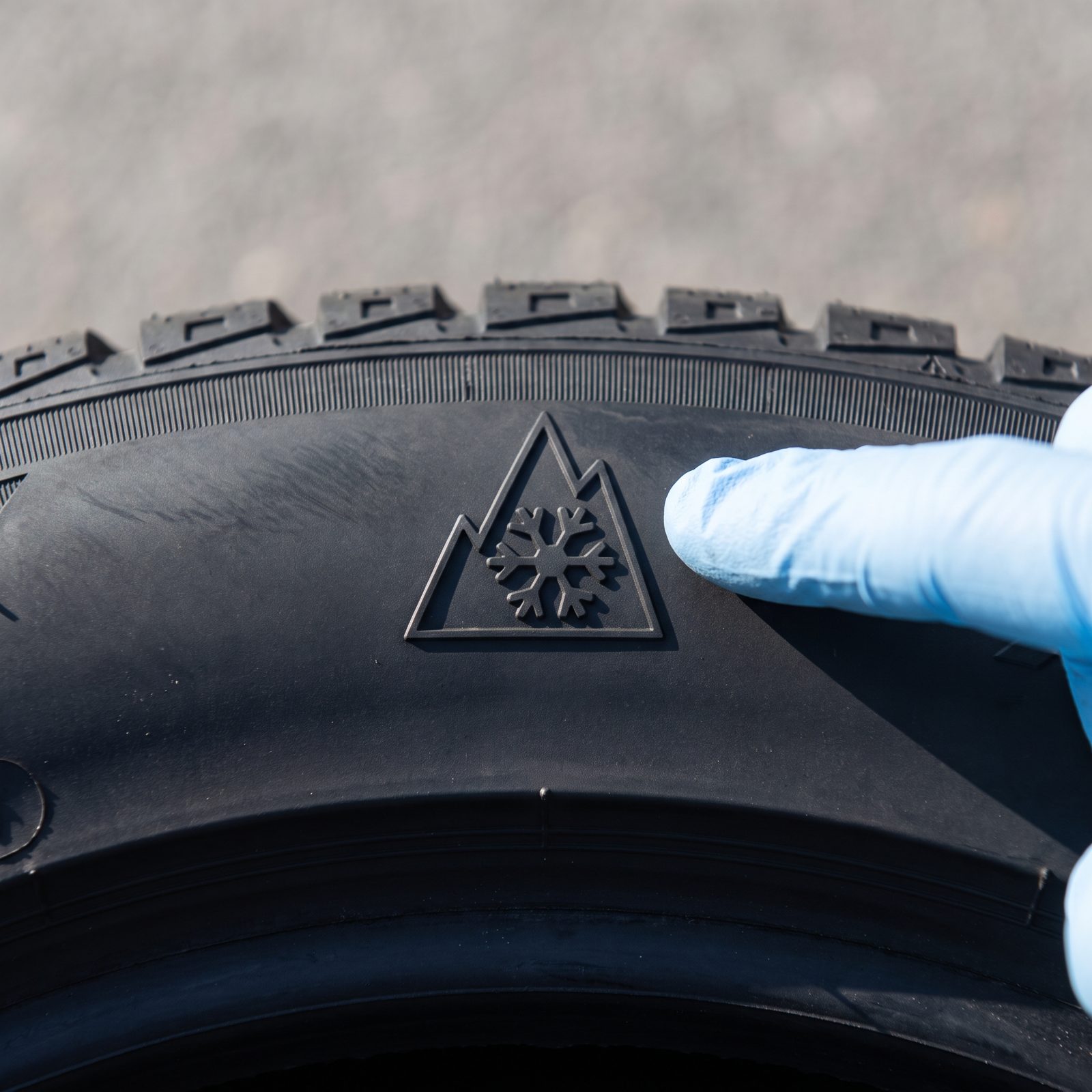
A genuine emblem of three distinct mountain peaks with a snowflake inside is the only winter marking that means anything official. A tire earns it by passing a standardized snow-traction test. The older “M+S” (mud and snow) stamp is a loose, unregulated marking that any all-season can wear, and it tells you almost nothing about how a tire actually behaves in deep snow.
So when you’re buying for winter, hunt for the three-peak mountain snowflake, not M+S. Dedicated winter tires carry it, and so do true all-weather tires. Some regions even require it by law on mountain passes during storms. Ask the shop to physically point to the symbol on the sidewall before you pay, and check that it clearly shows three peaks. Can’t find it, or only see a skewed triangle with a snowflake? Then it isn’t there, and the tire isn’t rated for severe snow no matter what the brochure implies.
9. Winter Tires Lose Much of Their Snow Advantage Before They Look Worn Out
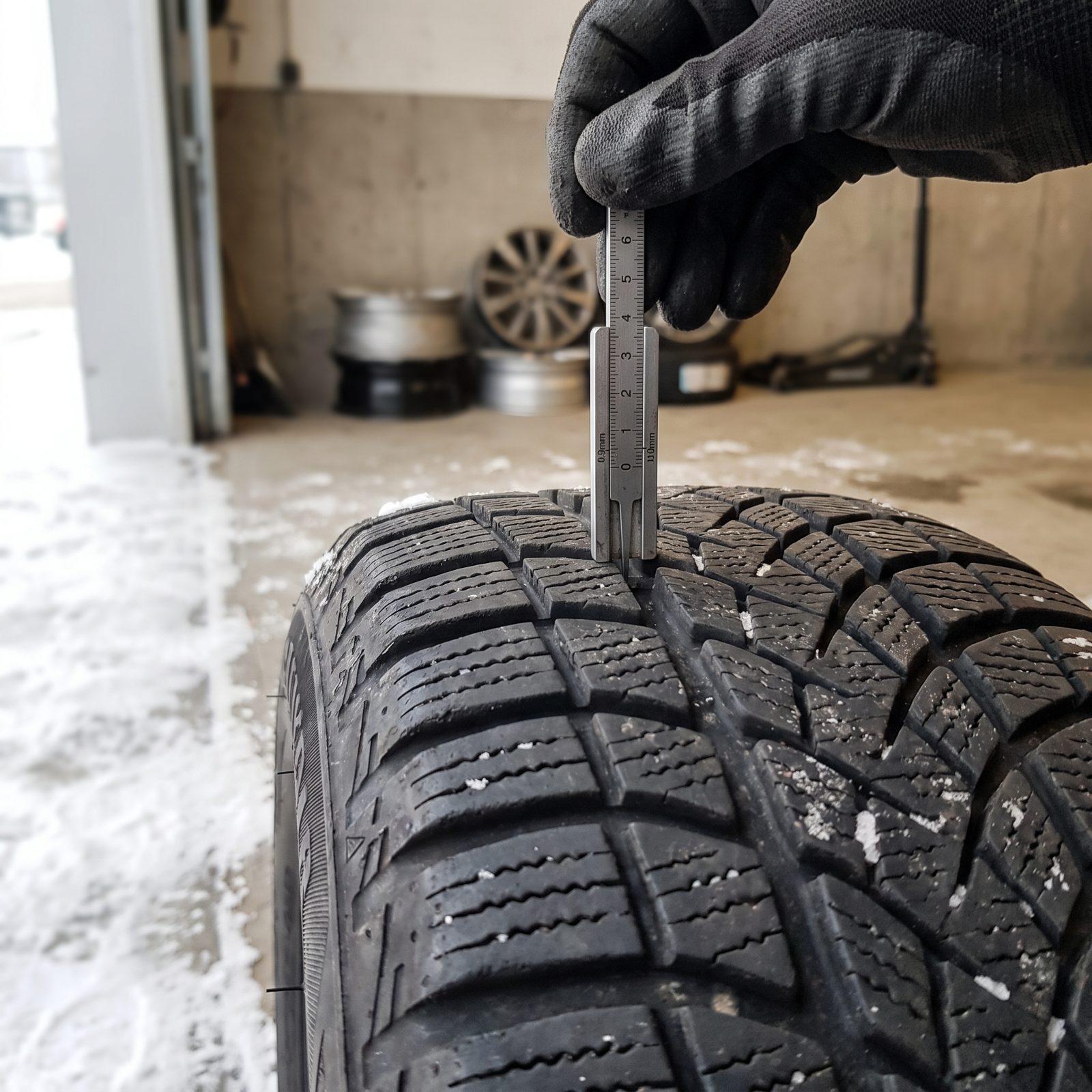
Winter rubber doesn’t quit when it hits the wear bars. It quits long before. The soft compound that grabs ice depends on deep siping and pliable rubber, and both fade once the tread drops below roughly 5/32 of an inch. The tire still looks fine, still rolls fine, it just stops doing the one job you bought it for.
Before you authorize anything, ask the shop to measure tread depth across all four rather than eyeball it. A 2/32 wear-bar reading is legal but useless on packed snow. Down near 5/32 heading into another winter? Rotate the budget toward replacement now instead of gambling on a January hill.
8. Summer Tires Can Be Damaged by Extreme Cold Even Without Being Driven
Cold is harder on summer tires than most drivers realize. That high-grip compound stiffens dramatically below about 45 degrees. Park a sports car outside through a hard freeze and the rubber can develop micro-cracks and flat spots, even sitting dead still in the driveway.
So if you daily a car on summer tires and real winter is coming, don’t just ask the shop for new rubber. Ask whether the car should be on a second set of all-seasons or winters entirely. Check the sidewalls near the bead for fine crazing before you authorize a swap. And if you can, store a seasonal car above freezing, slightly over-inflated, off the cold slab.
7. Run-Flat Tires Can Sometimes Be Replaced With Conventional Tires, but There Are Tradeoffs
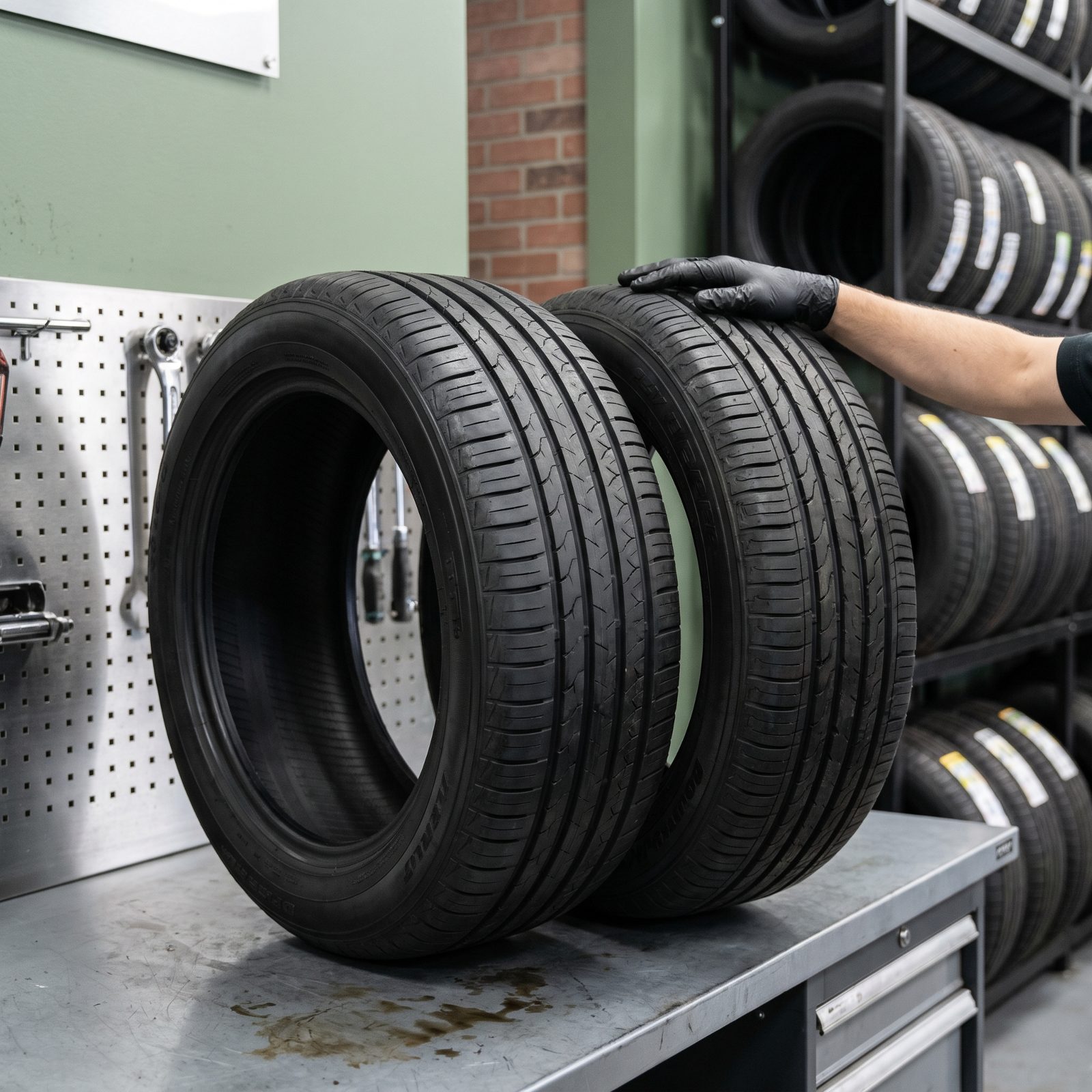
Switching from run-flats to standard tires is tempting. Conventional tires ride softer, cost less, and the selection is wider. But run-flats exist because many of these cars carry no spare, no jack, and sometimes no room for one. Lose the run-flat and you lose that safety net.
Three things to confirm before you authorize the switch:
- Does the car carry a spare or a reliable sealant-and-compressor kit?
- Will the softer sidewall throw off the tire-pressure monitoring or the handling the car was tuned for?
- Are you prepared to carry roadside coverage instead?
We’ve made this swap and been happy with the ride. We also made sure there was a plan for a flat at midnight on a dark shoulder. Go in with eyes open.
6. A Run-Flat May Hide Damage After a Low-Pressure Event
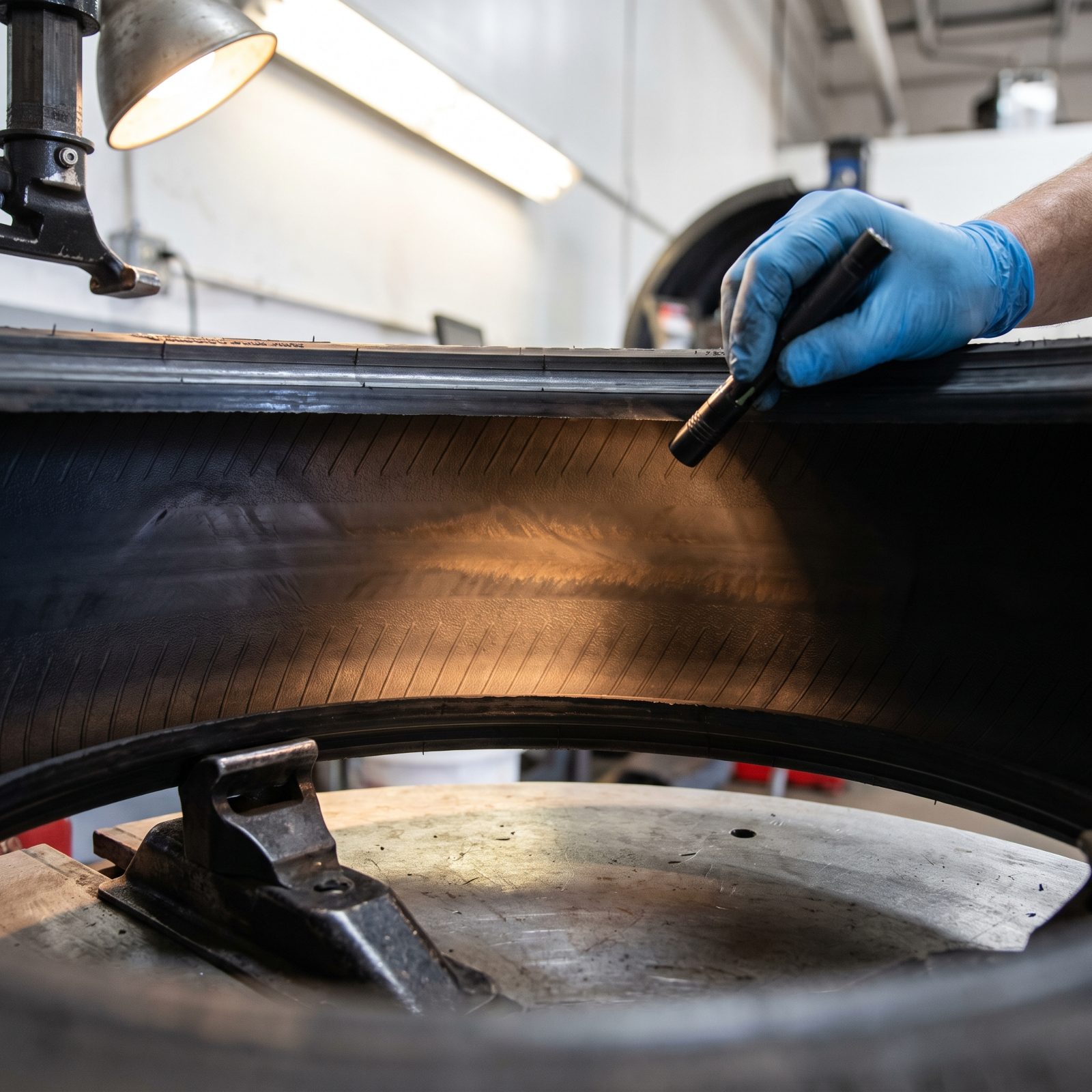
Here’s the quiet danger with run-flats. They let you keep driving on zero pressure, which is exactly what they’re for. But if that run went longer or hotter than it should have, the reinforced sidewall can cook from the inside while looking completely normal from the outside.
If your TPMS flagged a flat and you kept driving, don’t just tell the shop to top it off. Tell them it was run low, and for how far. Ask them to demount and inspect the inner liner for heat scorching or delamination. A run-flat that carried you home at 50 mph on no air has burned through most or all of its reserve, and it may not survive a second event.
5. Electric Vehicles Can Wear Tires Faster Because of Weight and Instant Torque
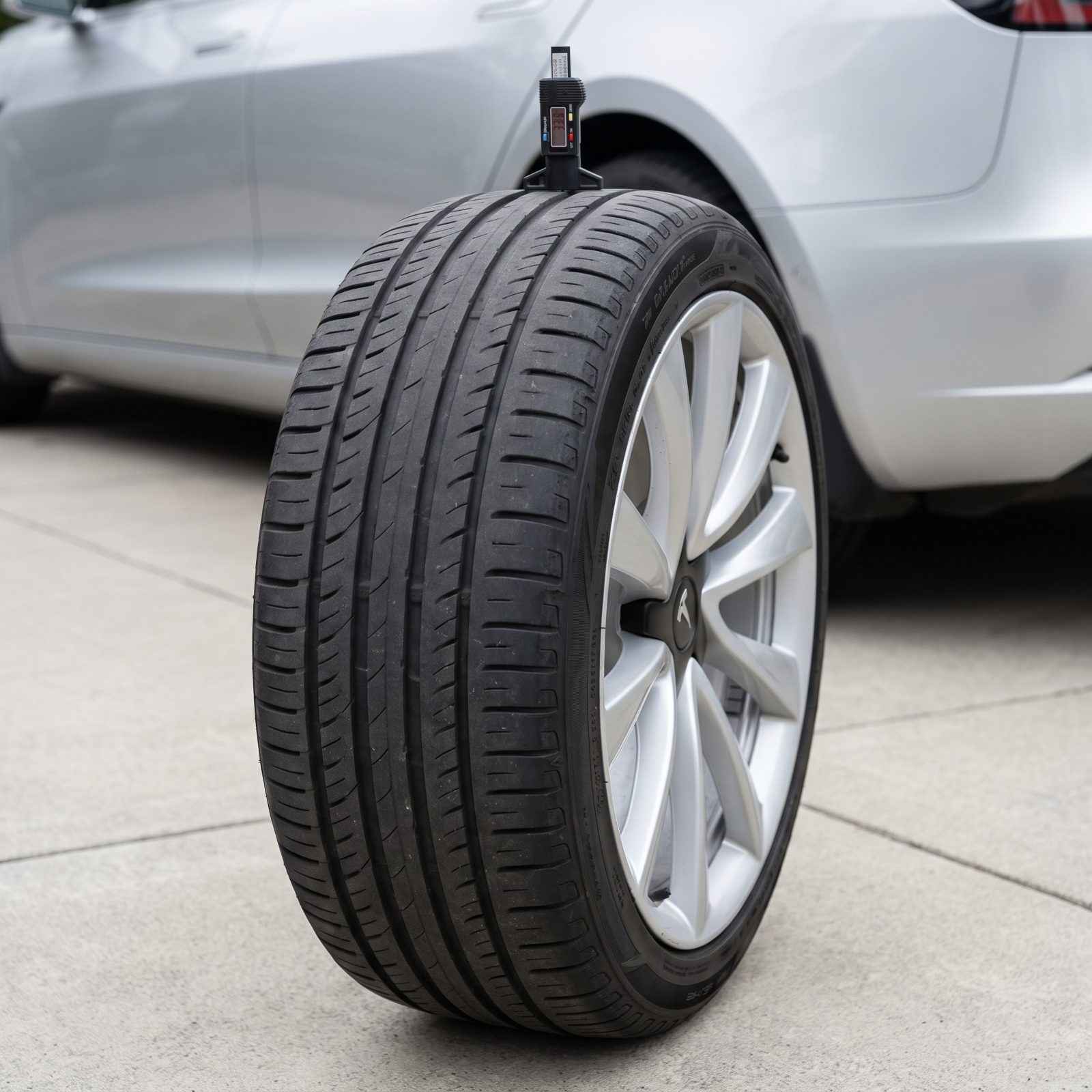
An EV is heavy, and it hits you with full torque the instant you touch the pedal. That combination scrubs tread faster than a comparable gas car, sometimes a lot faster if you enjoy the launch. The car isn’t broken. Physics is just sending the invoice.
When your EV needs tires, don’t default to the cheapest match by size. Ask for EV-rated tires built with reinforced construction, higher load ratings, and compounds made for the weight, and many carry a foam liner for cabin quiet too. Confirm the load index meets or beats the original, rotate roughly every 5,000 to 7,500 miles, and keep pressures right at placard. Sloppy pressure on a heavy car eats shoulders alive.
4. Your Full-Size Spare May Be Older Than Every Tire on the Car
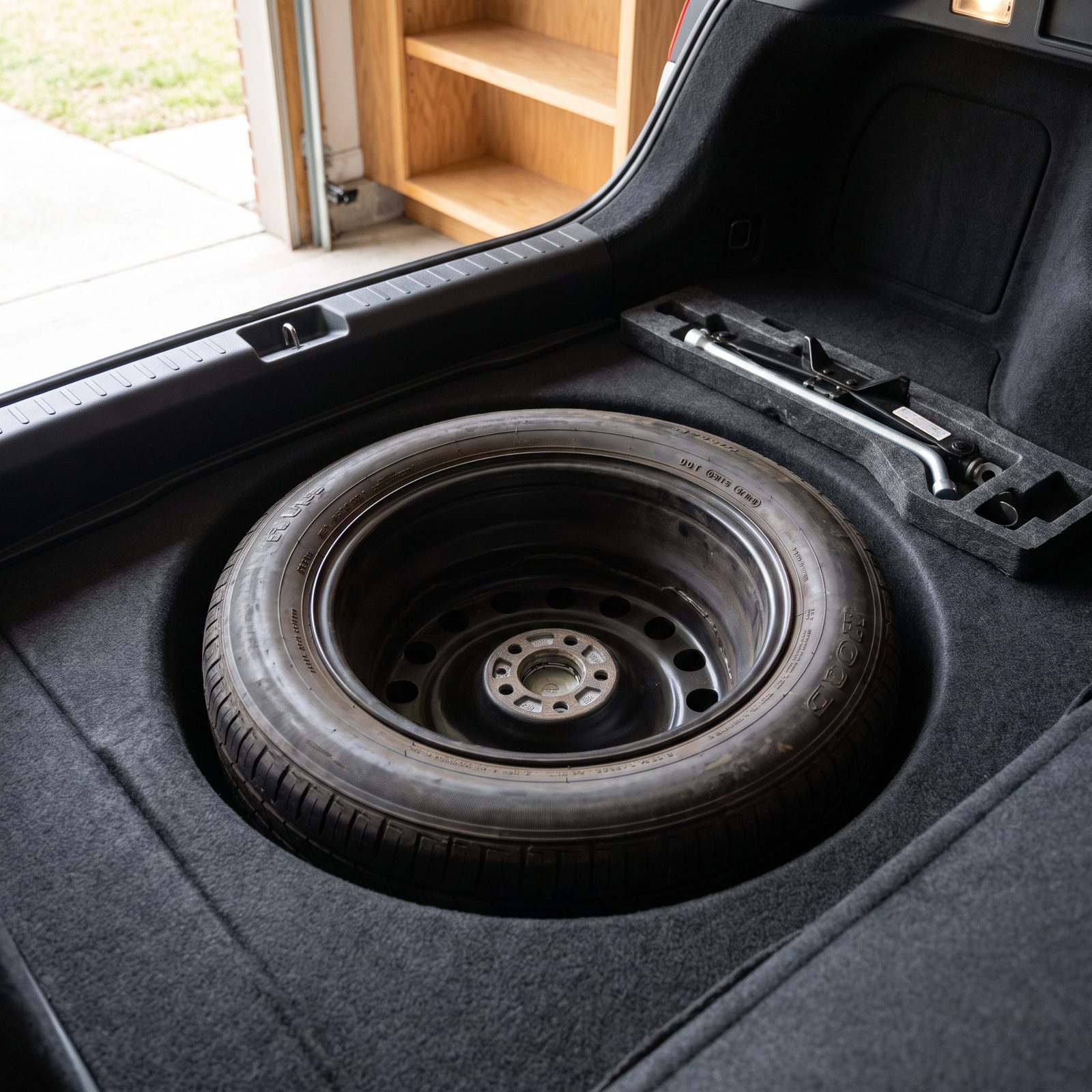
Pop your trunk floor and look at the spare’s date code. On a lot of cars, especially ones bought used, that spare has never touched the road and is the same age as the day the car rolled off the line. Rubber ages whether it’s driven or not, and a ten-year-old spare is a liability pretending to be insurance.
So before any tire visit, read the DOT code on the spare. The last four digits are the week and year it was made. Six years is a common caution threshold, ten is a hard stop for most manufacturers regardless of tread. If your spare is past its prime, roll it into the conversation while you’re already paying for a mount and balance.
3. Used Tires May Conceal Internal Damage That Is Invisible From Outside
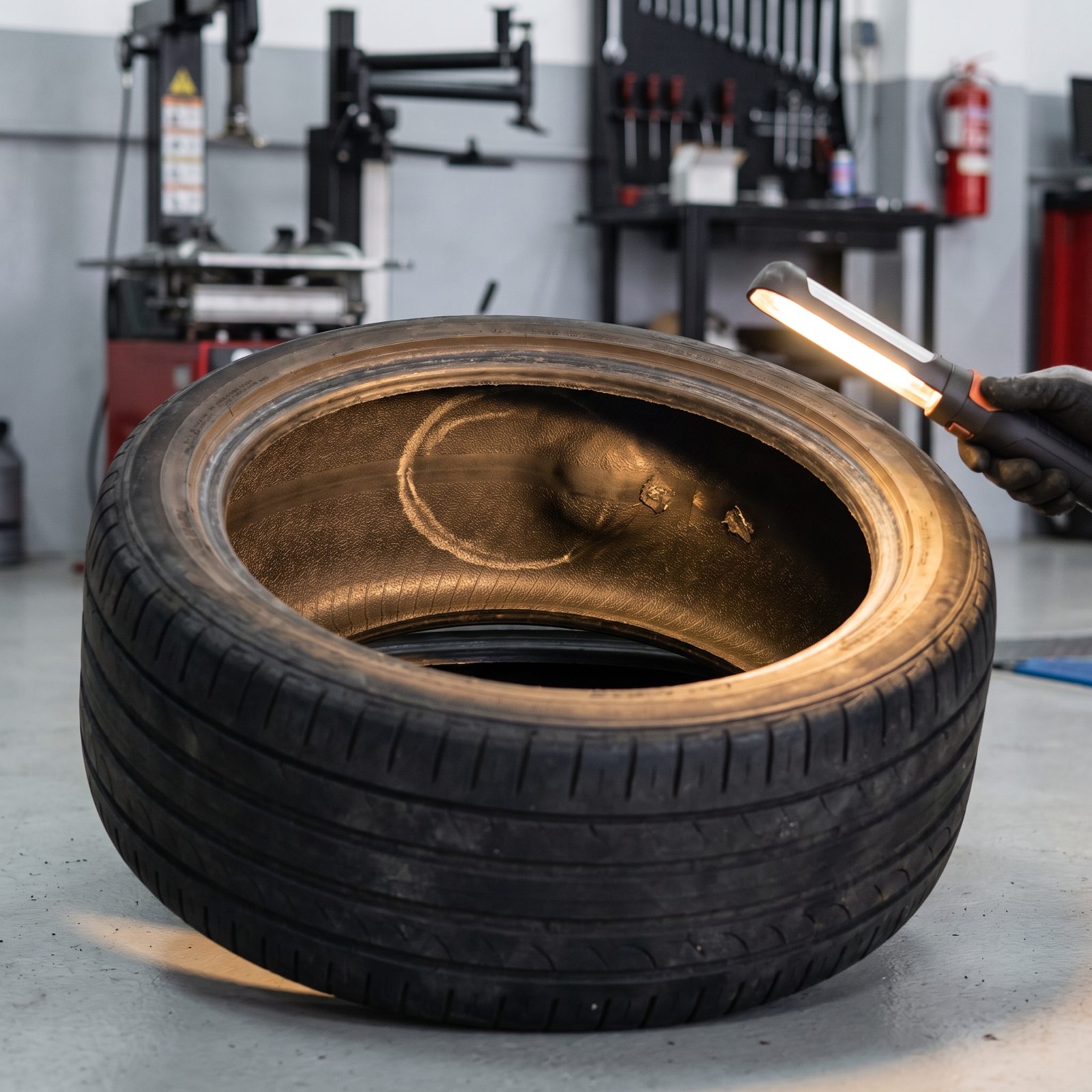
A used tire can look great and still be ruined where you can’t see it. Belts separate internally after a hard curb strike or a long stretch on low pressure, and none of that shows on the tread or the outer sidewall. You’re buying somebody else’s unknown history.
If a shop offers used tires to save you money, slow down. Ask to see the inner liner. No wrinkles, no gum-string plug poking through, no bulge, that’s the minimum bar. Ask the age from the DOT code. Honestly? For anything safety-critical I’d rather buy one quality new tire than a matched pair of mystery used ones. The savings vanish the first time a tire lets go at speed.
2. The DOT Identification Number Can Reveal Whether a Tire Was Recalled
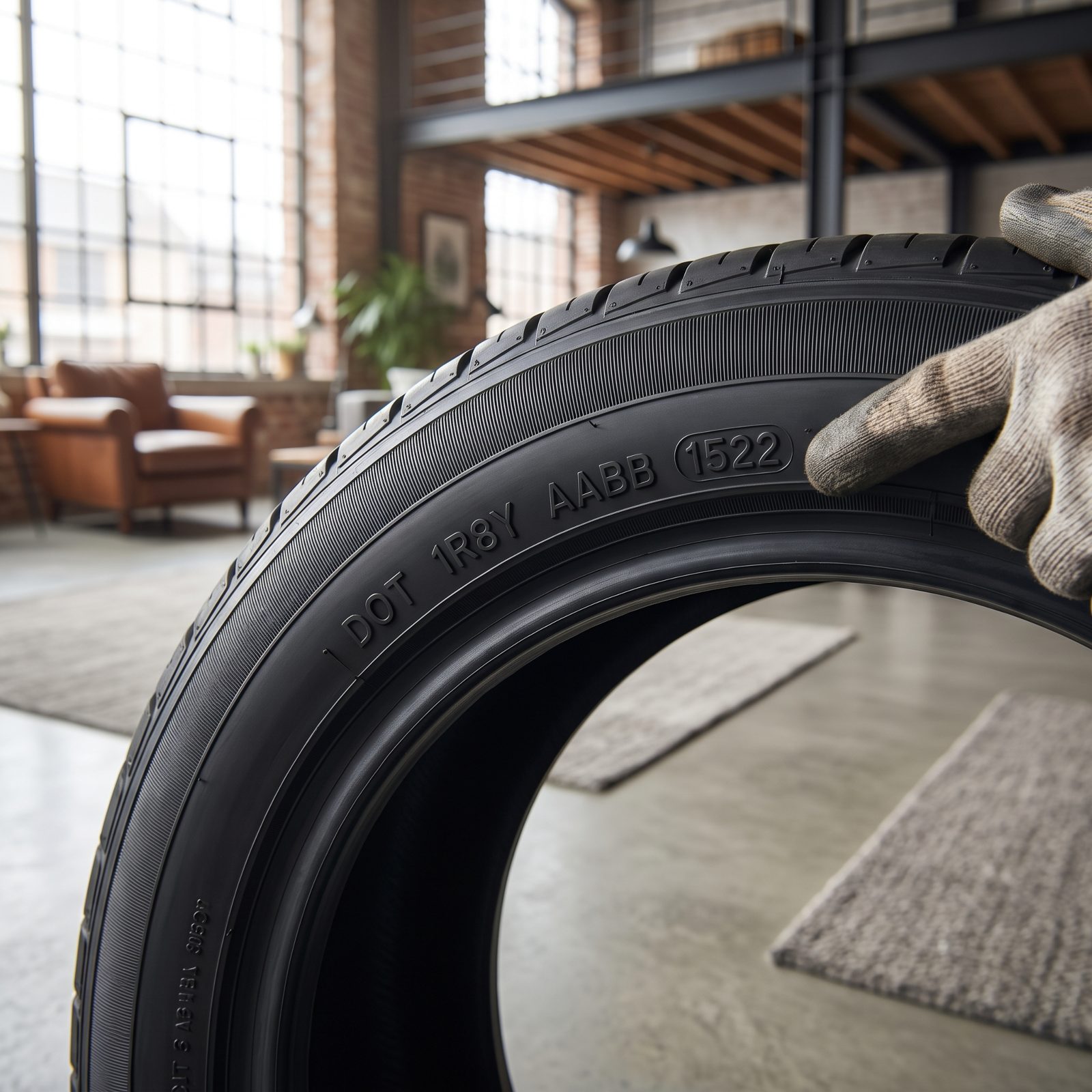
That small, hard-to-read string of characters stamped after DOT near the top of the sidewall isn’t decoration. It’s the tire’s fingerprint, telling you exactly when and where it was built. When you can make it out, the last four digits give the week and year, and the full code can also tell you whether that specific production batch was ever recalled.
Before you authorize new tires, write down the full DOT code and check it against the manufacturer’s recall lookup, or ask the shop to run it for you. Recalls happen for tread separation and other failures, and plenty of recalled tires still sit on shelves and under cars. Two minutes of checking beats finding out at 70 mph.
1. New Tires Usually Belong on the Rear When Only Two Are Replaced
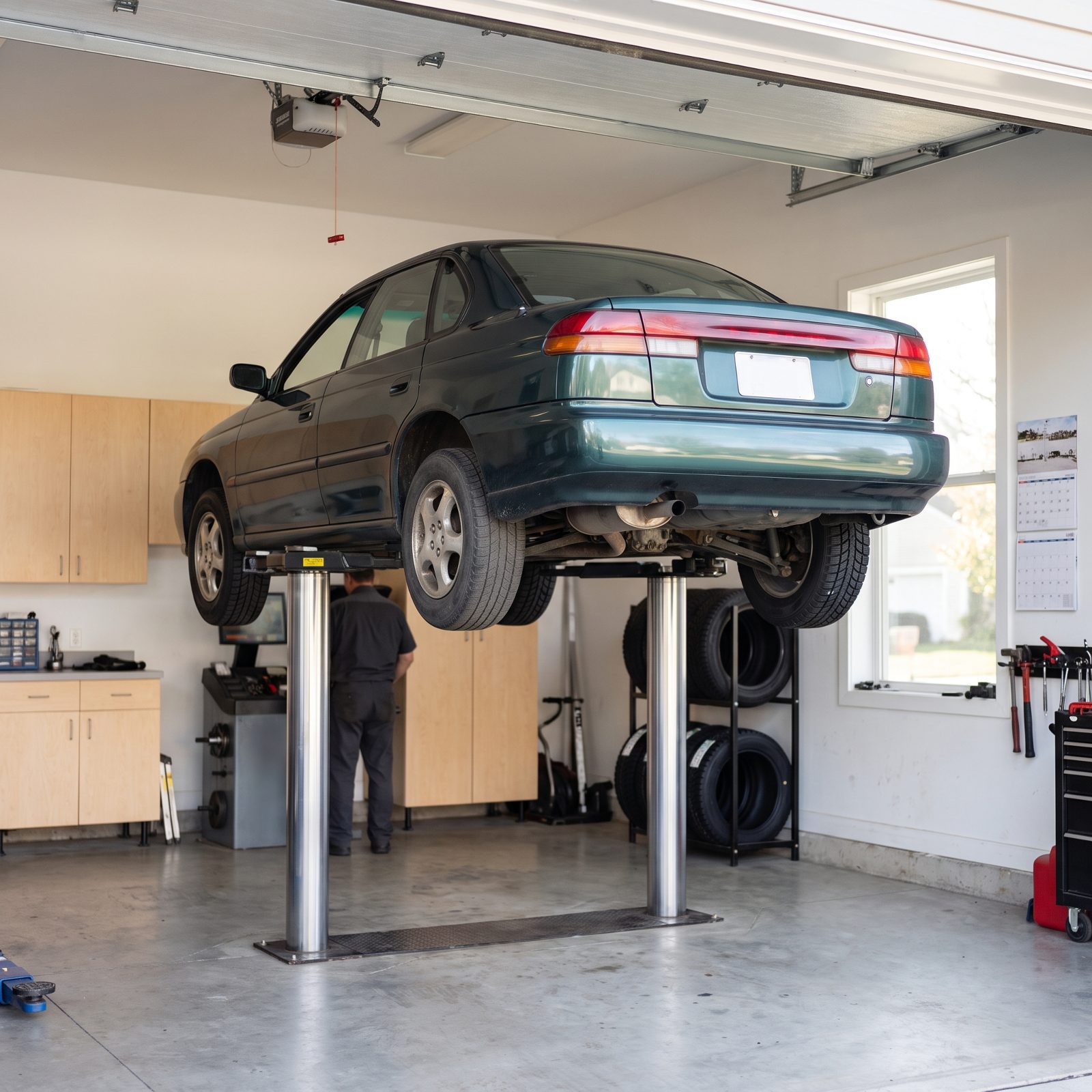
This one surprises people, and it’s worth getting right. When you buy only two tires, the new pair goes on the rear, not the front, no matter which wheels drive the car. It feels backward. It isn’t.
Deeper tread on the rear keeps the back of the car planted in the wet. Put the better tires up front and the rear can let go first, which sends you into a spin you often can’t catch. Fresh fronts on worn rears is the recipe for a rainy-day pirouette. If a shop tries to mount the new pair up front because it’s quicker, or because the fronts wear faster, stop them cold. New tires on the rear, rotated forward on your normal schedule afterward.
Better tires on the rear keep the car pointed where you aimed it. That’s the whole reason, and it’s not negotiable in the rain.