
Would you like to save this?
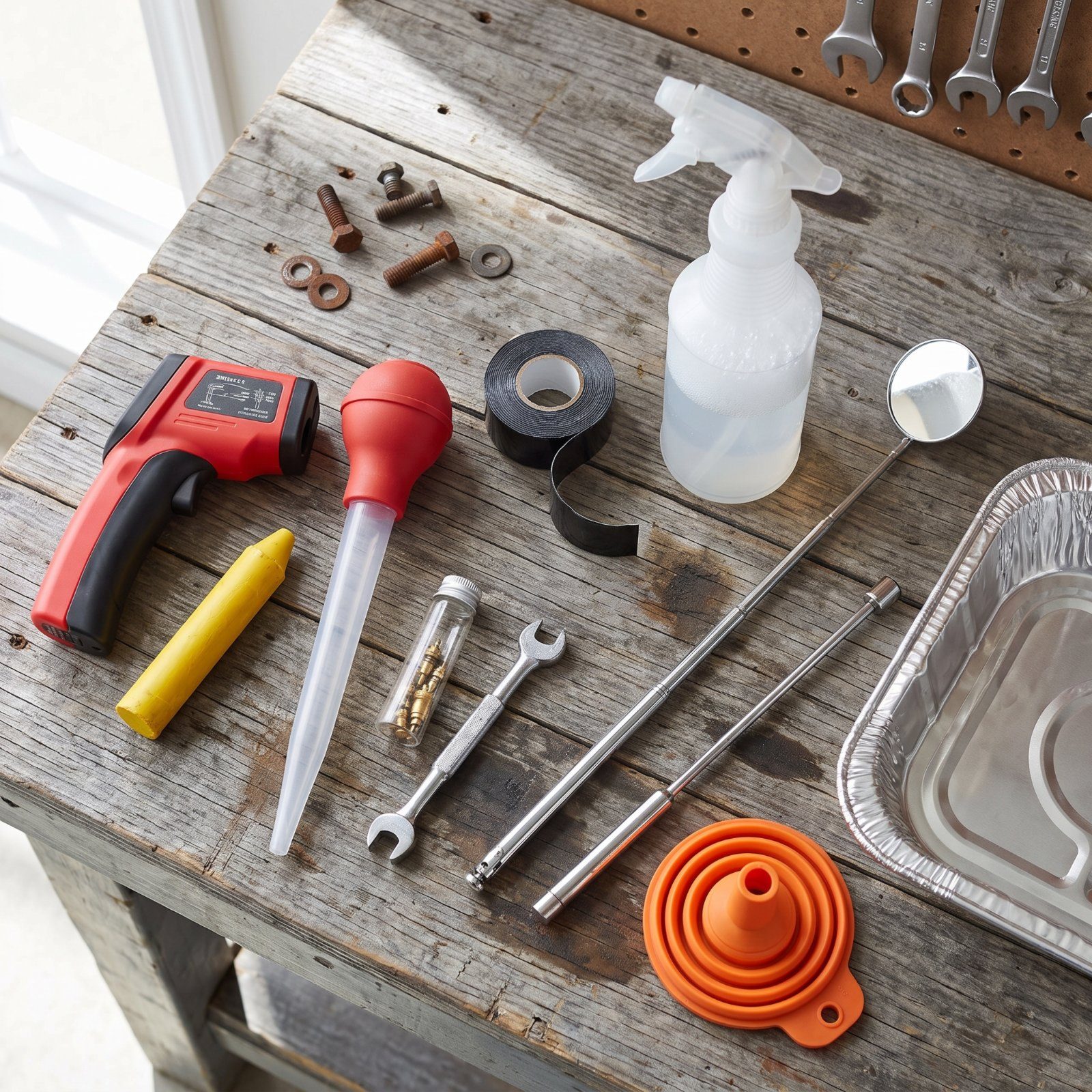
A roadside breakdown separates two kinds of drivers. One stands at the shoulder flagging strangers while the other pops the trunk and gets to work, and the difference is rarely mechanical talent. It’s what’s stashed in the cargo area, and most of it never came off an auto-parts shelf. Some of the smartest gear long-haul veterans and old wrenches carry would baffle a parts counter kid. A kitchen tool. A crayon. A strip of tape that sticks to nothing but itself. None of these are gimmicks. Every one of them earns its spot by solving a problem the glovebox manual never bothered to mention.
Please note that some of the images in this article were created with the assistance of AI.
47. Infrared Thermometer for Spotting an Overheating Wheel
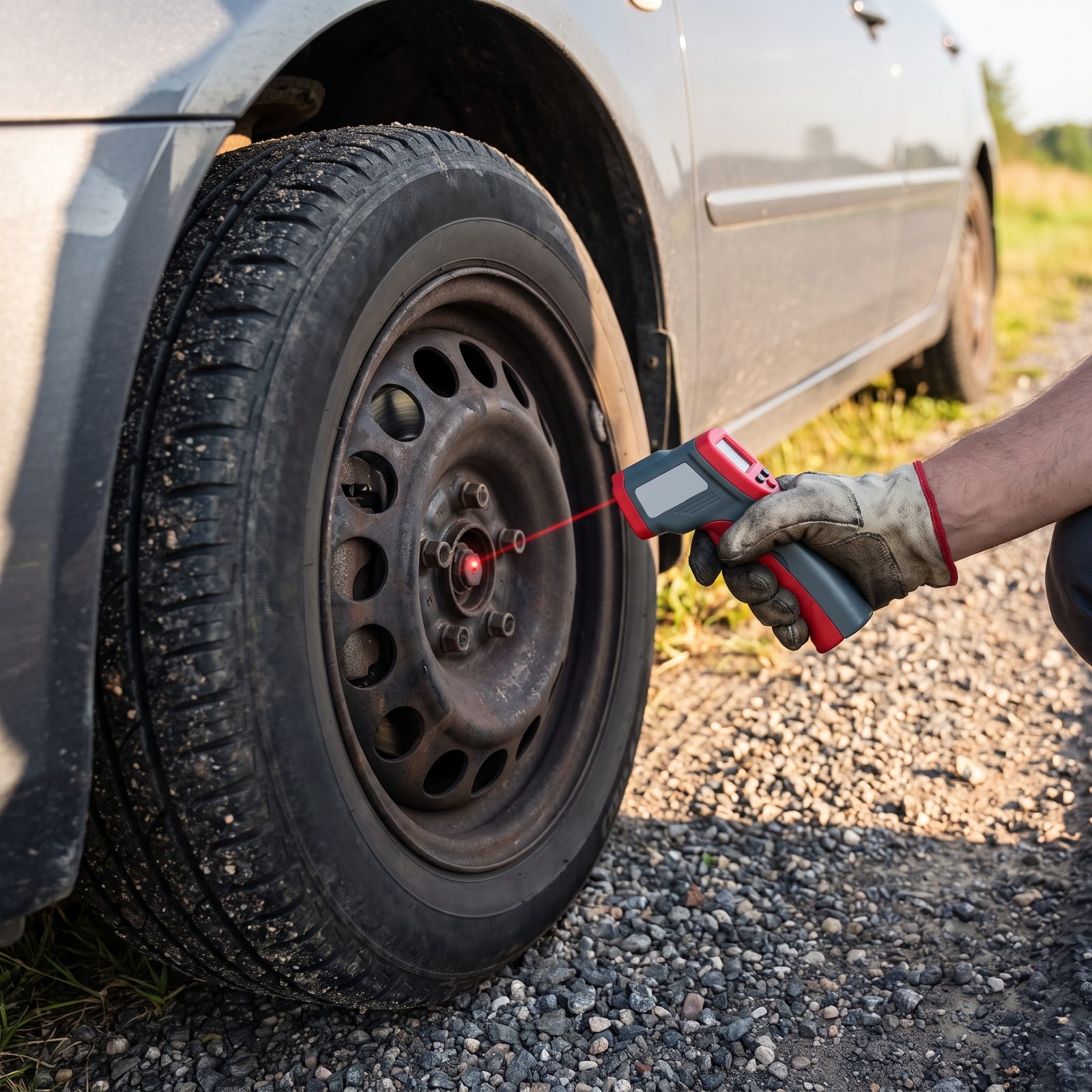
A seized brake caliper or a dragging pad doesn’t announce itself. It just quietly cooks one wheel until the bearing grinds or the hub starts smelling like burnt pennies. Point an infrared thermometer at each hub after a long descent or a hard stretch of highway, and the trouble shows itself in seconds.
One wheel reading forty or fifty degrees hotter than its mates on the same axle means something’s dragging — a warning you can act on at a rest stop instead of a surprise you discover when smoke rolls out at seventy. Costs little, weighs nothing, lives in a door pocket.
46. Wax Tire-Marking Crayon That Writes on Wet Rubber
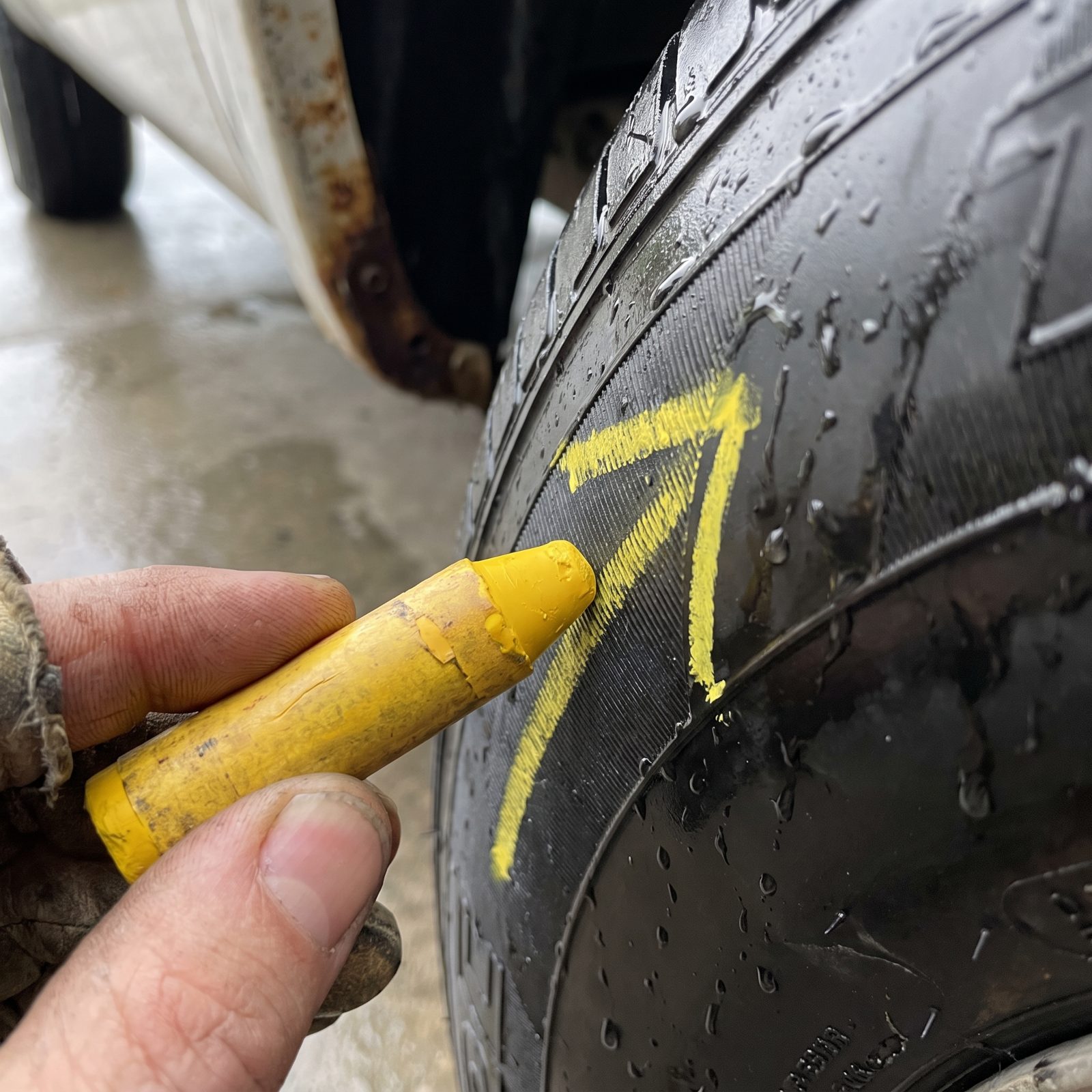
Chalk quits the moment rubber gets wet. A wax tire-marking crayon doesn’t care, writing on a soaked, muddy, oily sidewall and leaving a mark that stays put through rain and rotation.
Rotating tires in a driveway? Mark their positions before they come off so you remember where each one goes back. Checking for a slow leak, draw a line across the tread and valve stem to track how the tire sits. And if you’re dealing with a tow truck or a shop and want to prove which tire was flat, a bold wax arrow settles the argument fast. Cheap insurance against your own forgetfulness.
45. A Dedicated Turkey Baster for Pulling Excess Fluid
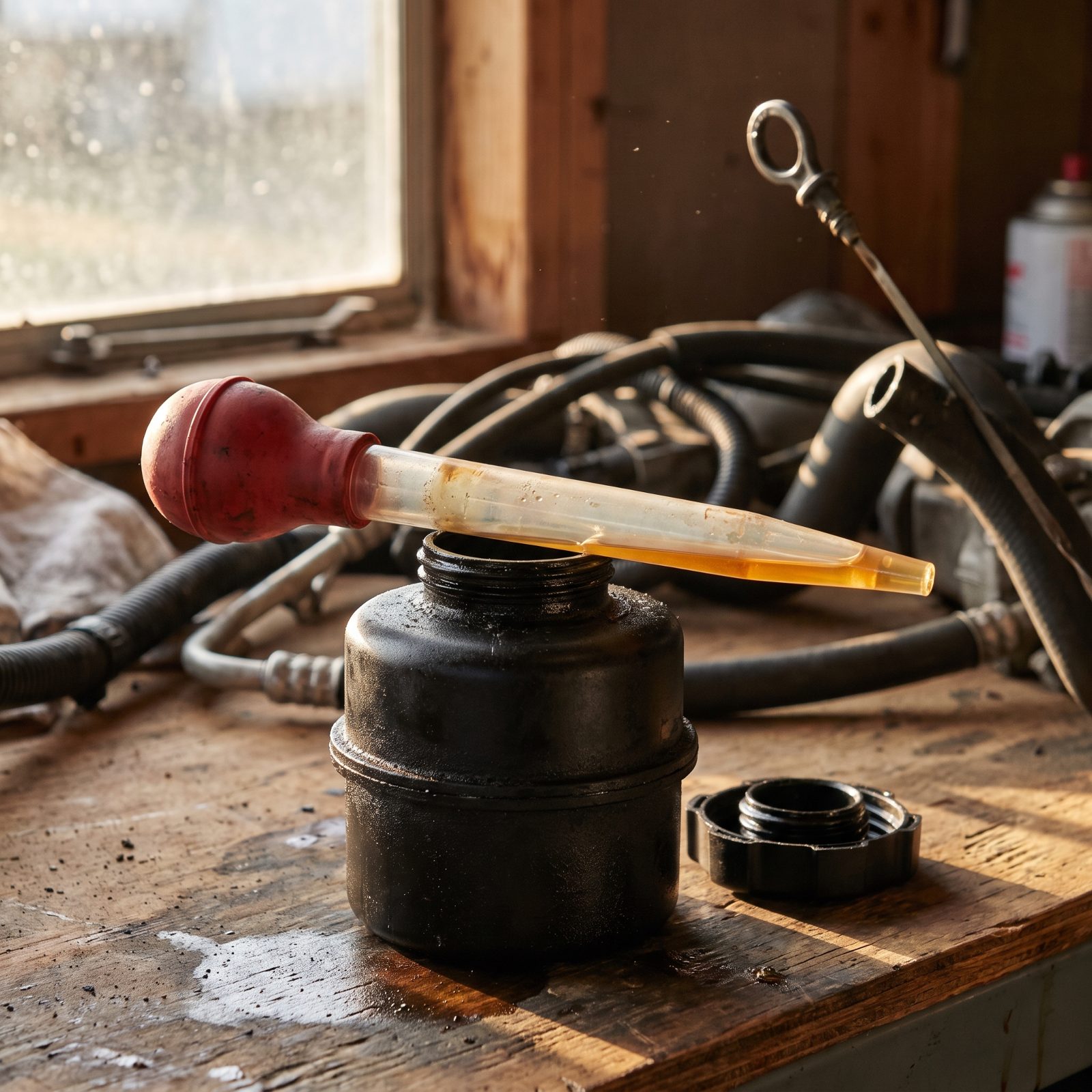
Overfill a reservoir and you’ve got a problem nobody warns you about. Too much power-steering fluid, brake fluid, or coolant can foam, overflow, or push past seals, and draining a sealed system to pull a few ounces back out is a miserable afternoon.
A turkey baster solves it in thirty seconds. Suck the excess right off the top. The same trick works for pulling old fluid out of a master cylinder before a fresh flush, or evacuating a battery cell that got overfilled.
One rule, non-negotiable: this baster never goes back in the kitchen. Label it, bag it, keep it in the trunk forever. Fluids and food don’t mix.
44. Valve-Core Tool With Spare Cores in a Sealed Vial
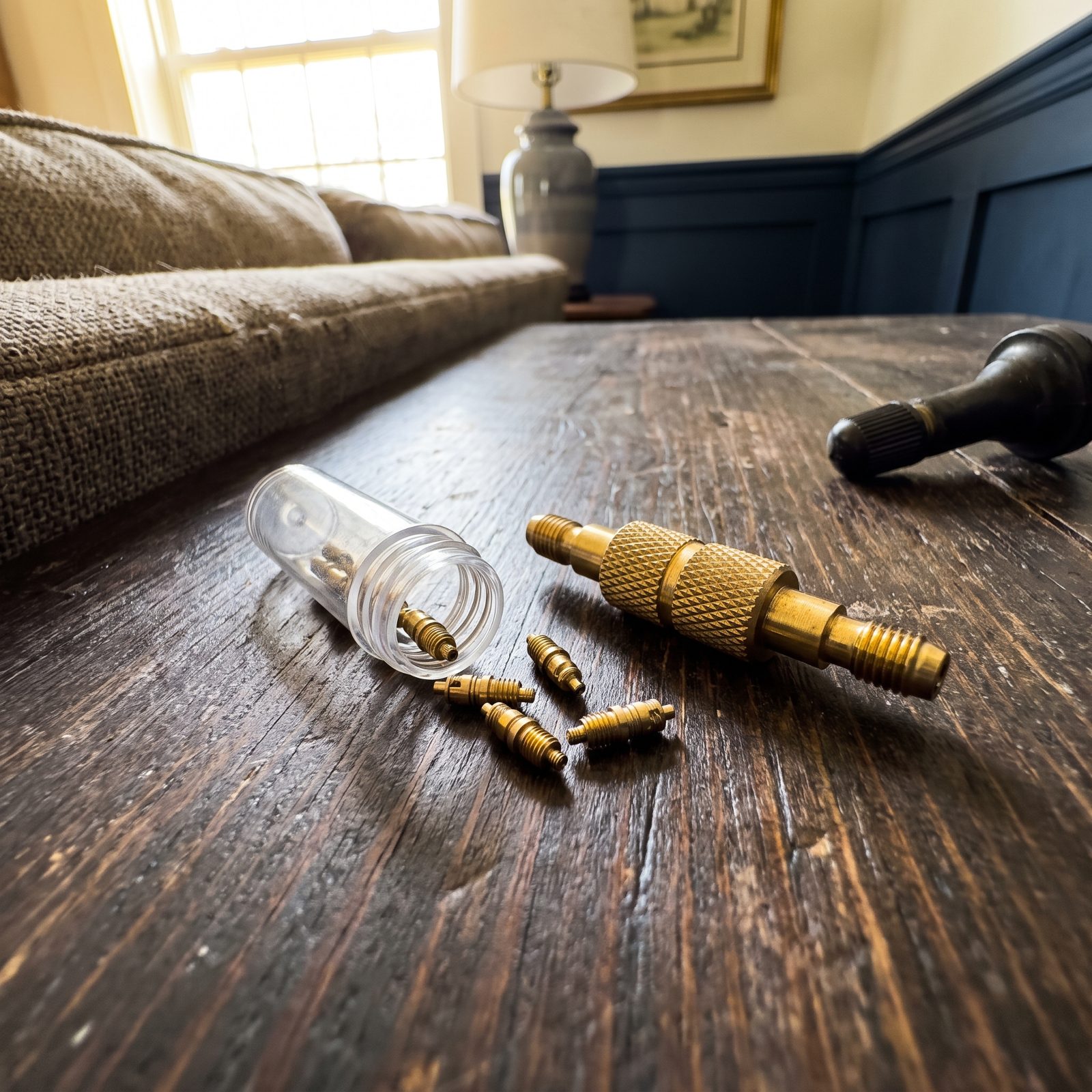
Now here’s the failure almost nobody carries a part for: the valve core. That thumbnail-sized brass fitting inside the valve stem is the actual thing holding air in your tire, and when it leaks or corrodes, the tire goes flat while no amount of pumping helps.
A valve-core tool unthreads the bad core, and a sealed vial of spares lets you swap in a fresh one at the roadside in under a minute. The whole kit fits in a film canister. Most drivers have never heard of this fix and end up stranded over a two-cent part.
43. Self-Fusing Silicone Tape for Emergency Hose Repairs
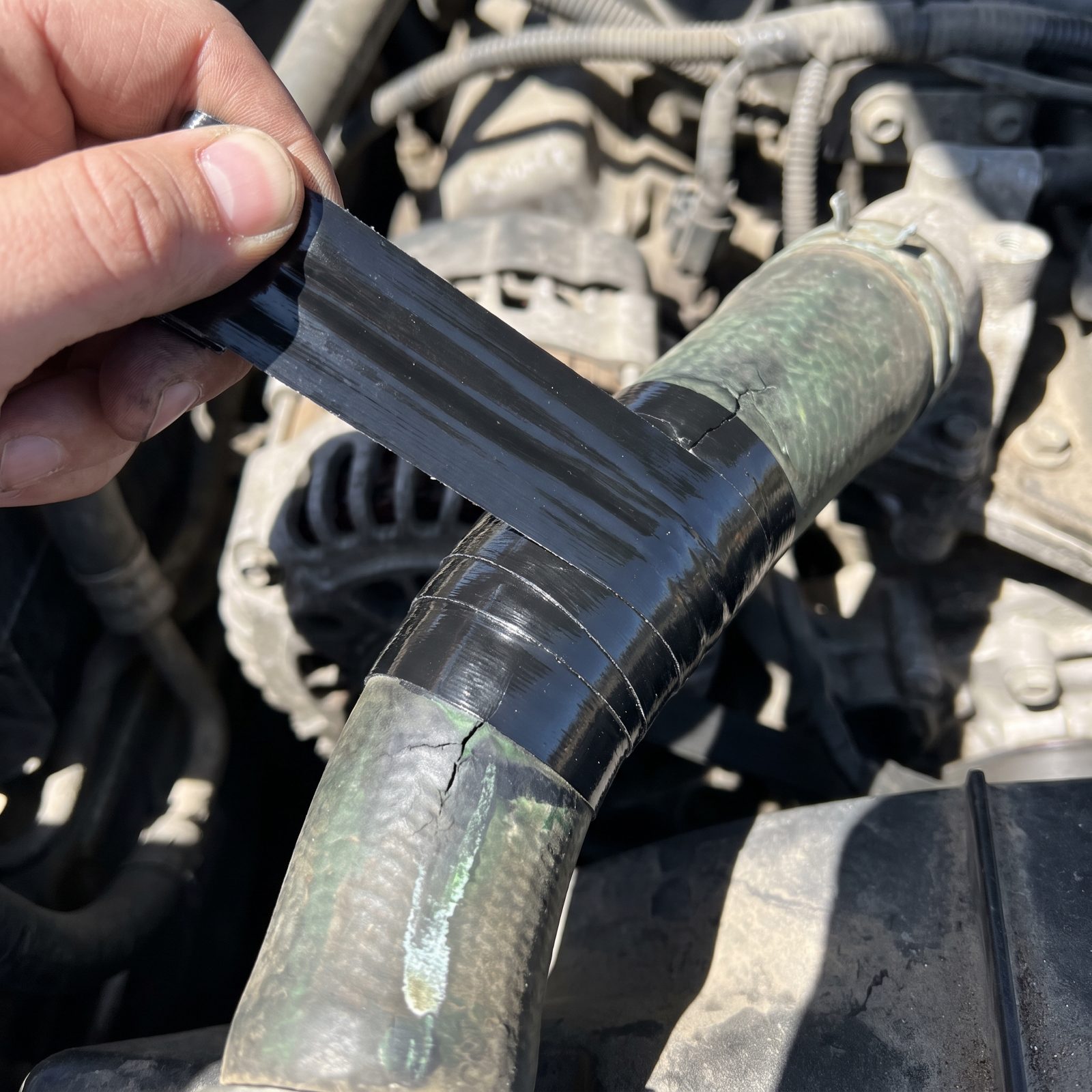
This tape has no adhesive. It sticks only to itself, fusing into a solid rubber band as you wrap, which sounds like a drawback right up until a heater hose splits twenty miles from the nearest town.
Regular tape slides off anything hot, wet, or oily. Self-fusing silicone bonds to its own layers and shrugs off heat, coolant, and pressure long enough to limp you home. Get-you-there fix, not a permanent one.
Stretch it tight as you wrap. The tension is what makes it fuse into a seal instead of a loose bandage.
42. Soapy-Water Spray Bottle for Finding Air Leaks
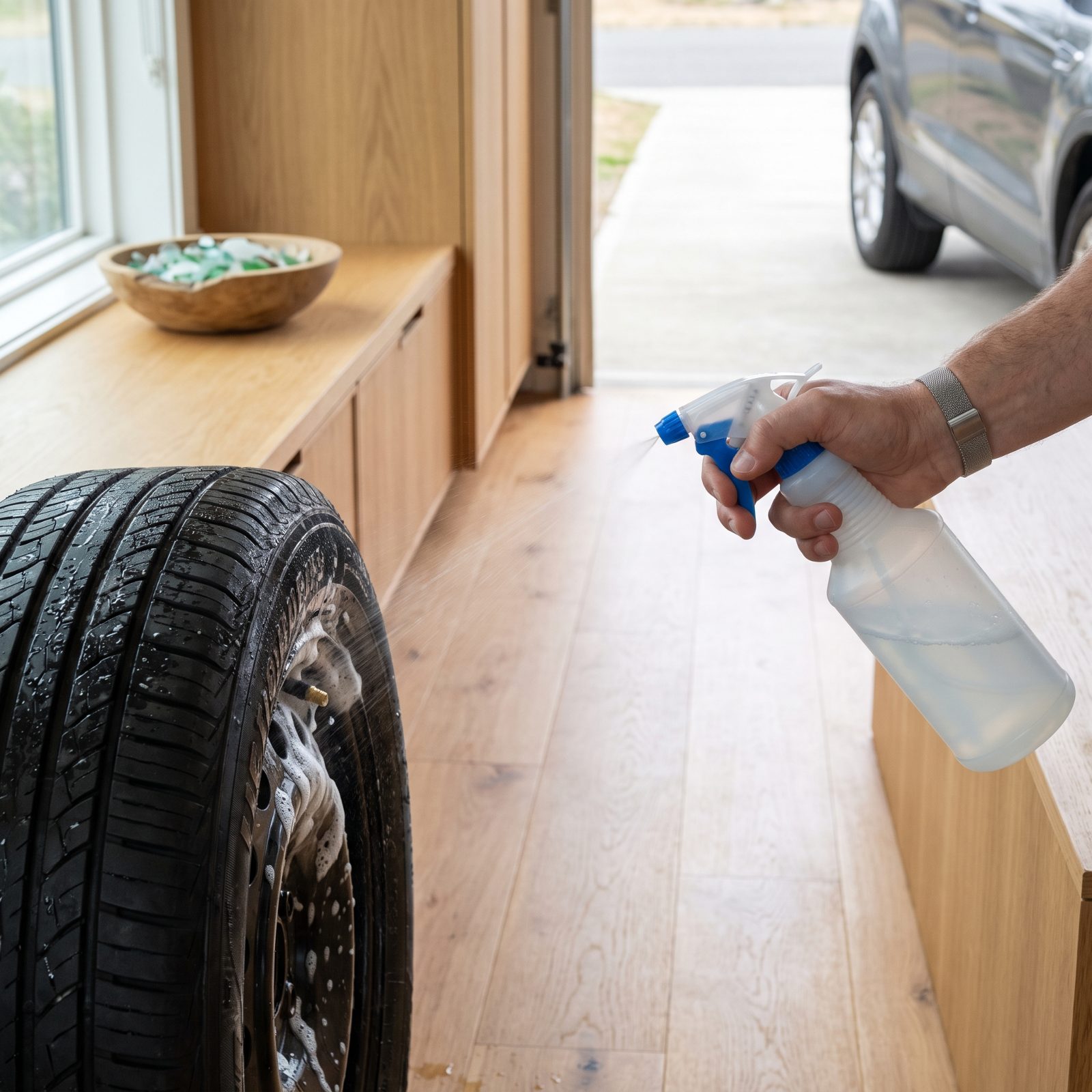
A big leak you can hear. A slow one you can’t, and that’s the kind that strands you in a parking lot three days later. A spray bottle of soapy water finds it instantly.
Mist it over a tire valve, a bead, a suspect hose connection, or a tire plug you just installed. Wherever air escapes, bubbles grow. No bubbles, no leak. Works on anything that holds pressure, from a tire to a propane fitting on an RV.
41. Telescoping Inspection Mirror for Seeing Behind Components
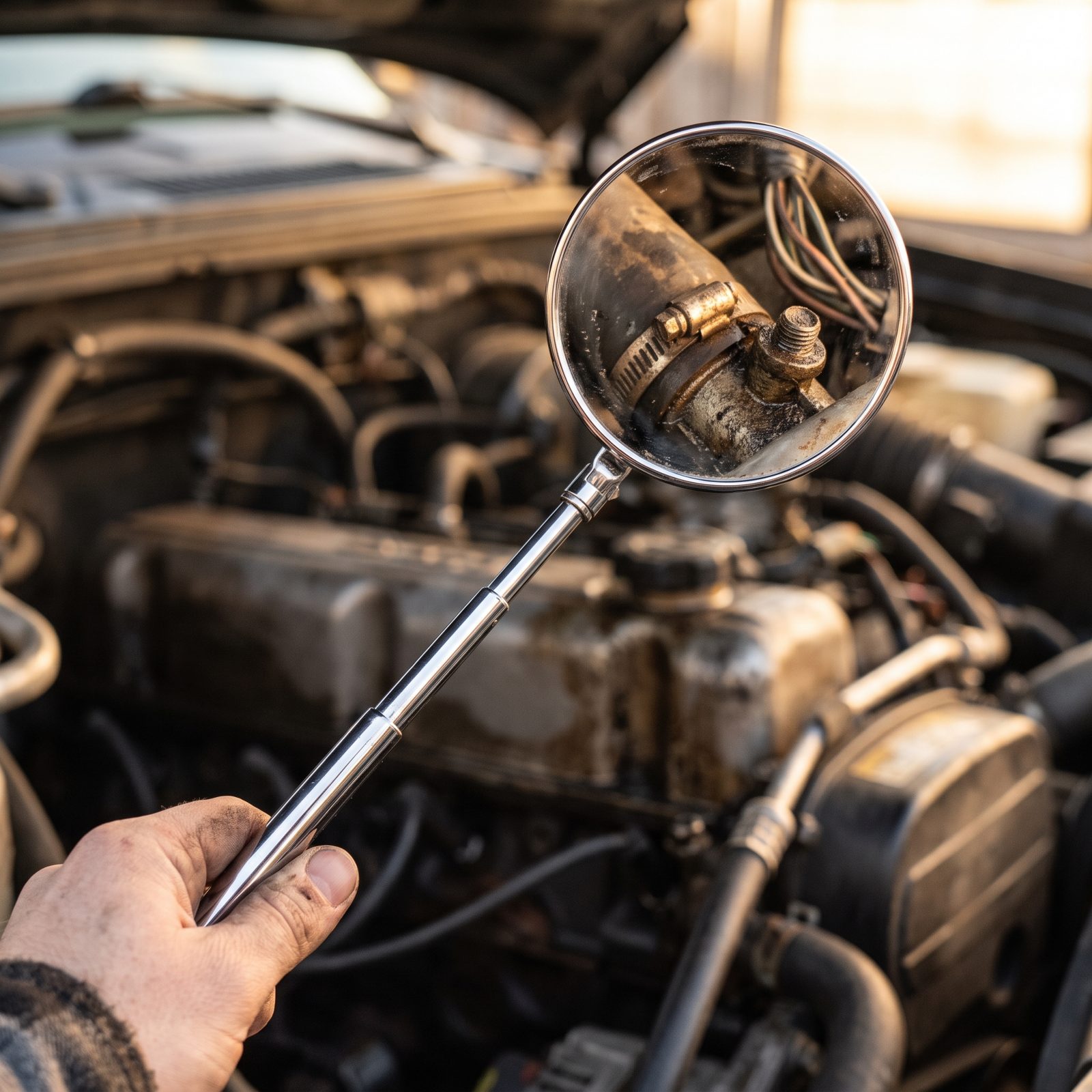
Half the stuff that breaks on a car hides where your eyes can’t reach. A leaking seal on the back of the block. A connector tucked behind the intake. A bolt you dropped into some crevice you’ll never see again.
A telescoping inspection mirror collapses to pen size and extends to arm’s length, so you can reach the round mirror into the tight spots. Pair it with a flashlight and you’ll diagnose in two minutes what would otherwise mean pulling parts for an hour. The chrome round-head kind survives a glovebox beating better than the plastic ones ever do.
40. Magnetic Pickup Tool for Retrieving Dropped Hardware
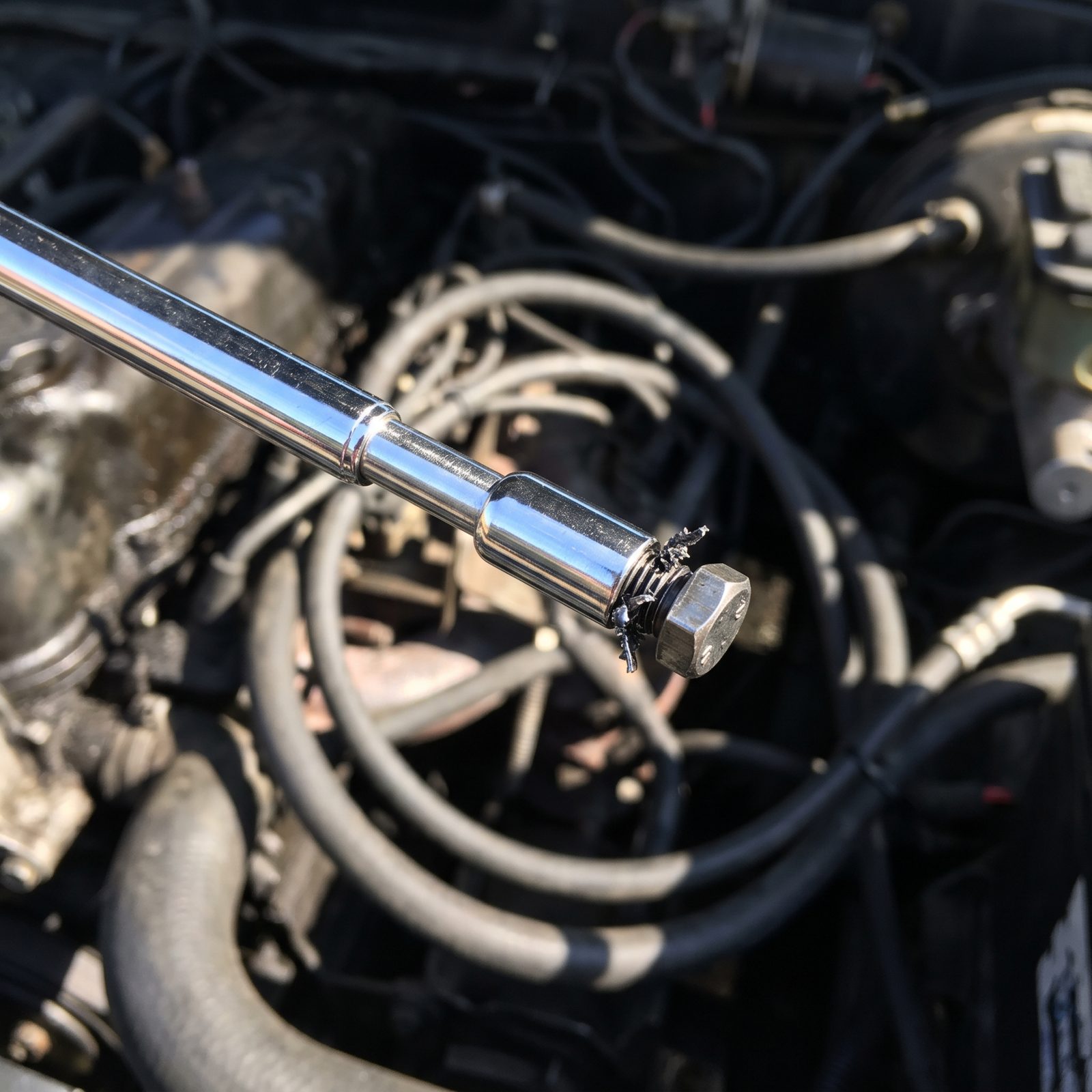
Every bolt you drop finds the one spot you can’t reach. It bounces twice, then vanishes into the suspension or down between the block and the frame. A magnetic pickup tool ends the swearing.
Extend the wand, reach into the gap, and the dropped nut, washer, or socket snaps right onto the tip. The flexible-neck versions bend around obstacles the straight ones can’t. Cheapest sanity you’ll ever buy, and nobody appreciates it until they’ve spent twenty minutes on their knees hunting a ten-millimeter.
39. Folding Silicone Funnel That Stores Nearly Flat
Would you like to save this?
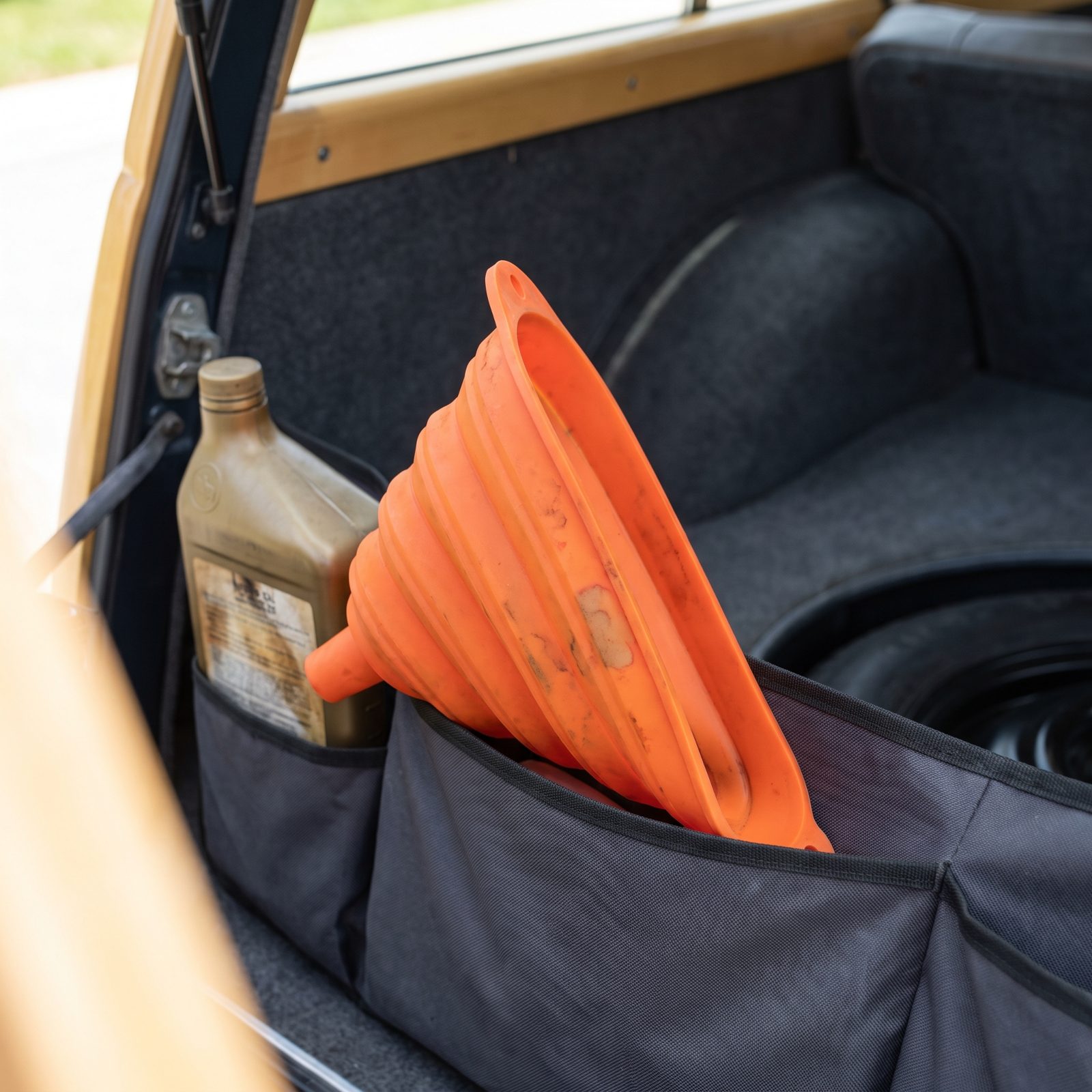
A rigid funnel takes up a shoebox of space and never nests right with your other gear. A silicone one folds down to the thickness of a coaster and springs back into shape when you need it.
Top off oil on the shoulder without painting the engine bay, or add coolant without cooking your knuckles. When you’re done, it wipes clean, folds flat, and slides back into a door pocket. The flexible spout even bends into odd filler necks a hard plastic funnel can’t reach.
38. A Disposable Roasting Pan for Catching Fluid Leaks
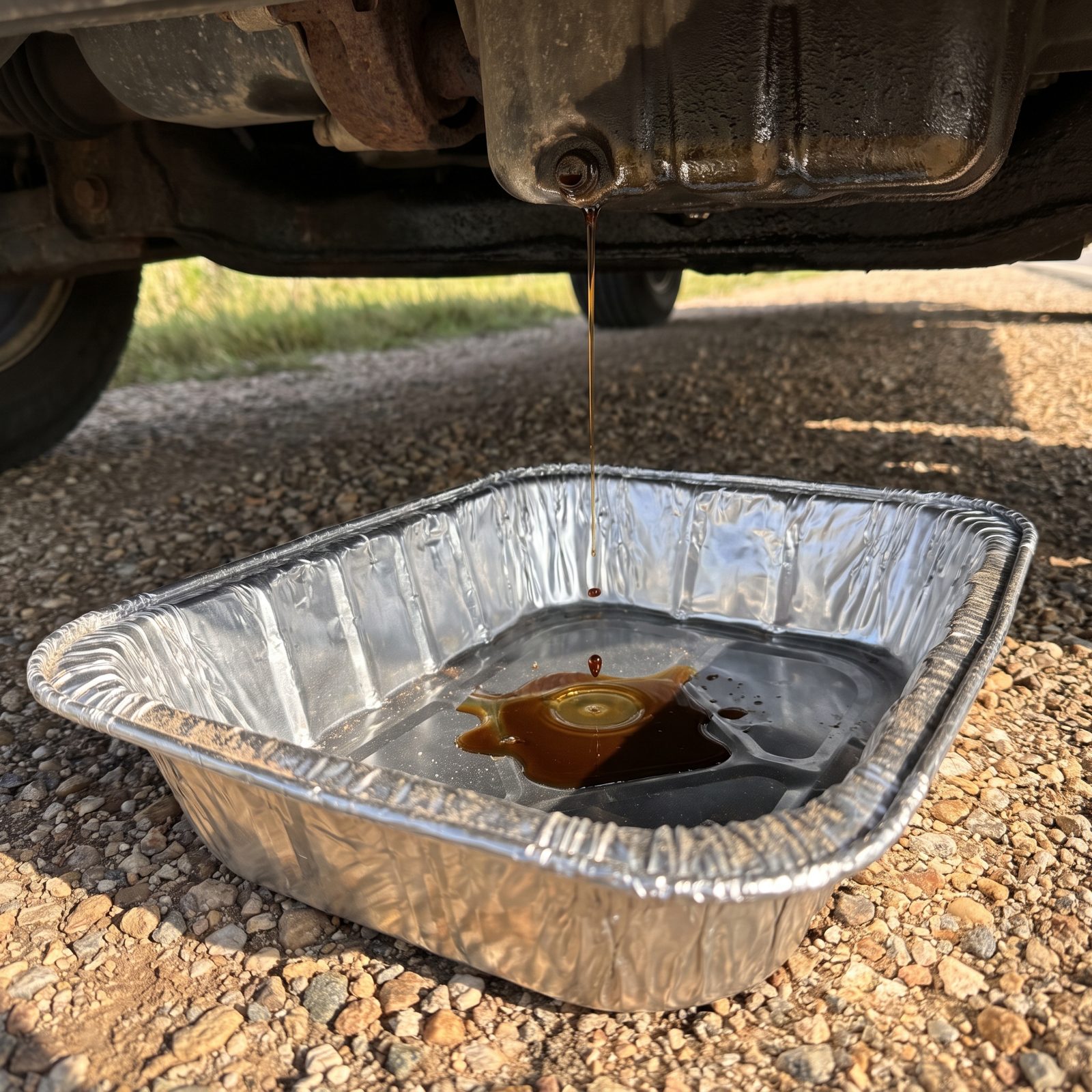
When a leak shows up in a parking lot or a motel driveway, you need to catch the mess and figure out what’s dripping, fast. A cheap foil roasting pan slides right under the car and does both jobs.
It catches oil, coolant, or transmission fluid before any of it stains the pavement, and the shallow silver bottom lets you read the color and smell of whatever’s leaking — which tells you how worried to be. Red is transmission. Green or orange is coolant. Brown is oil. When you’re done, it folds up and goes in the trash, and a couple packed flat in the trunk cost almost nothing while sparing you a cleanup fee or an ugly stain on somebody else’s driveway.
37. The Rubber Jar-Opening Pad That Beats a Seized Fuel Cap
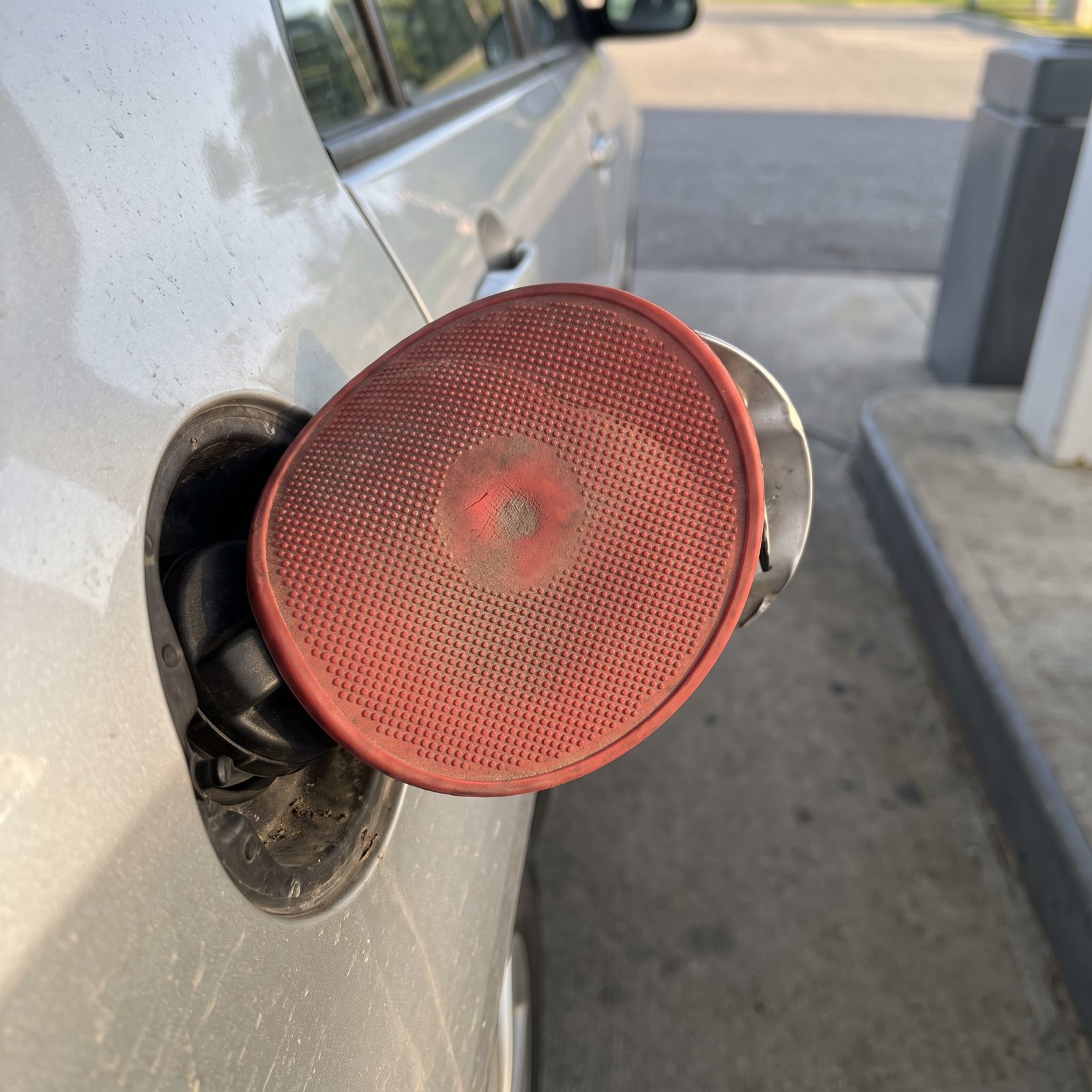
You’ve stood at a gas station fighting a fuel cap that won’t budge, knuckles white, nothing to grip but smooth plastic in the cold. A thin rubber jar-opening pad fixes that in two seconds, and it spares your hand the skinned knuckle.
It weighs nothing and lives flat in a door pocket. The same pad opens stubborn oil-filler caps and coolant reservoirs too, which is where it really earns its keep.
36. A Stiff Detailing Brush for Clogged Cameras and Parking Sensors
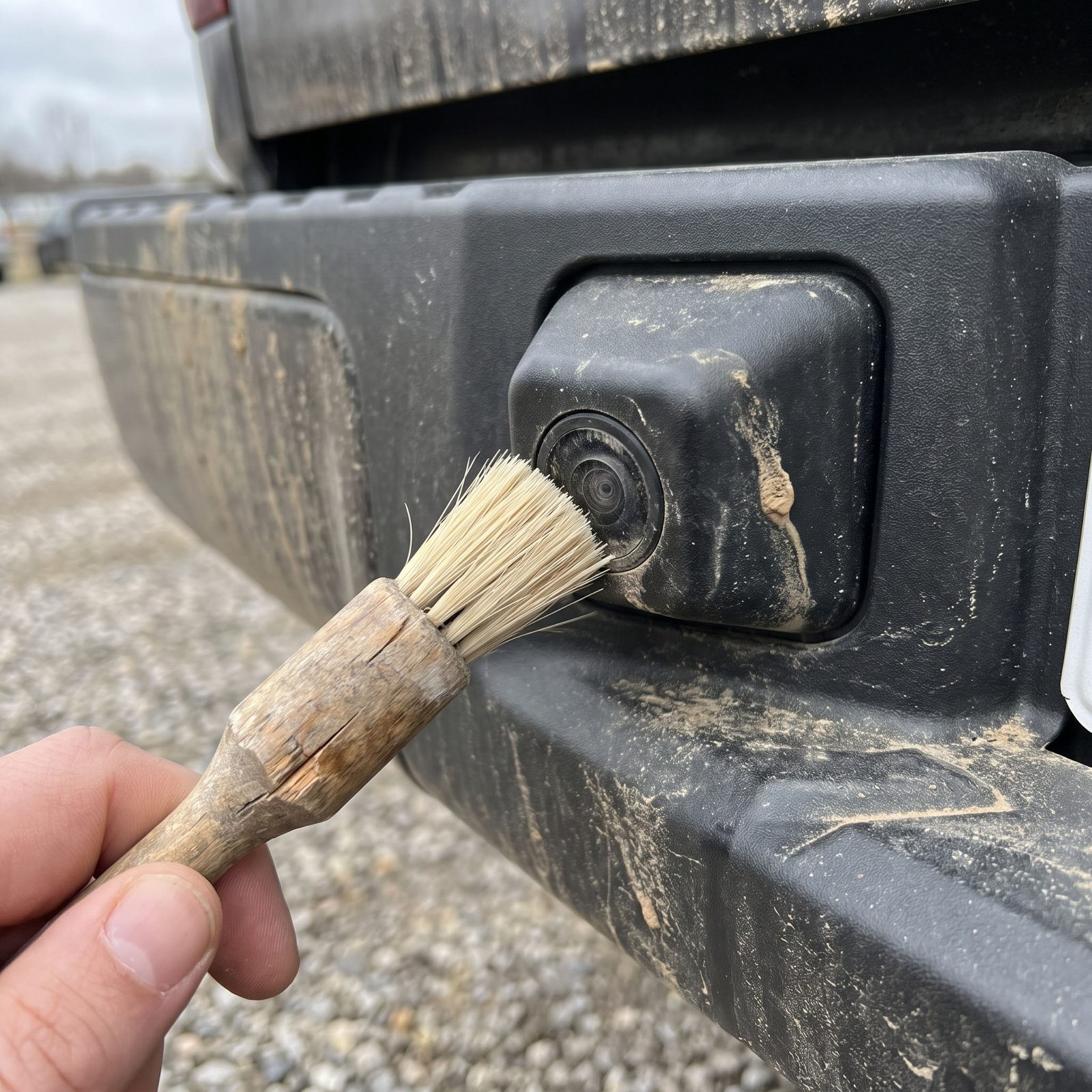
Modern cars are covered in little glass eyes that quit the second they get dirty. A backup camera smeared with road film, a parking sensor packed with slush, and suddenly the dashboard is screaming warnings over nothing.
A stiff detailing brush clears them without scratching, because the bristles reach into recessed housings a rag can’t. It also sweeps dust out of the vents and the gap around the shifter, so it keeps busy on the days nothing’s broken.
35. Blue Painter’s Tape for Holding Loose Trim Without Wrecking the Paint
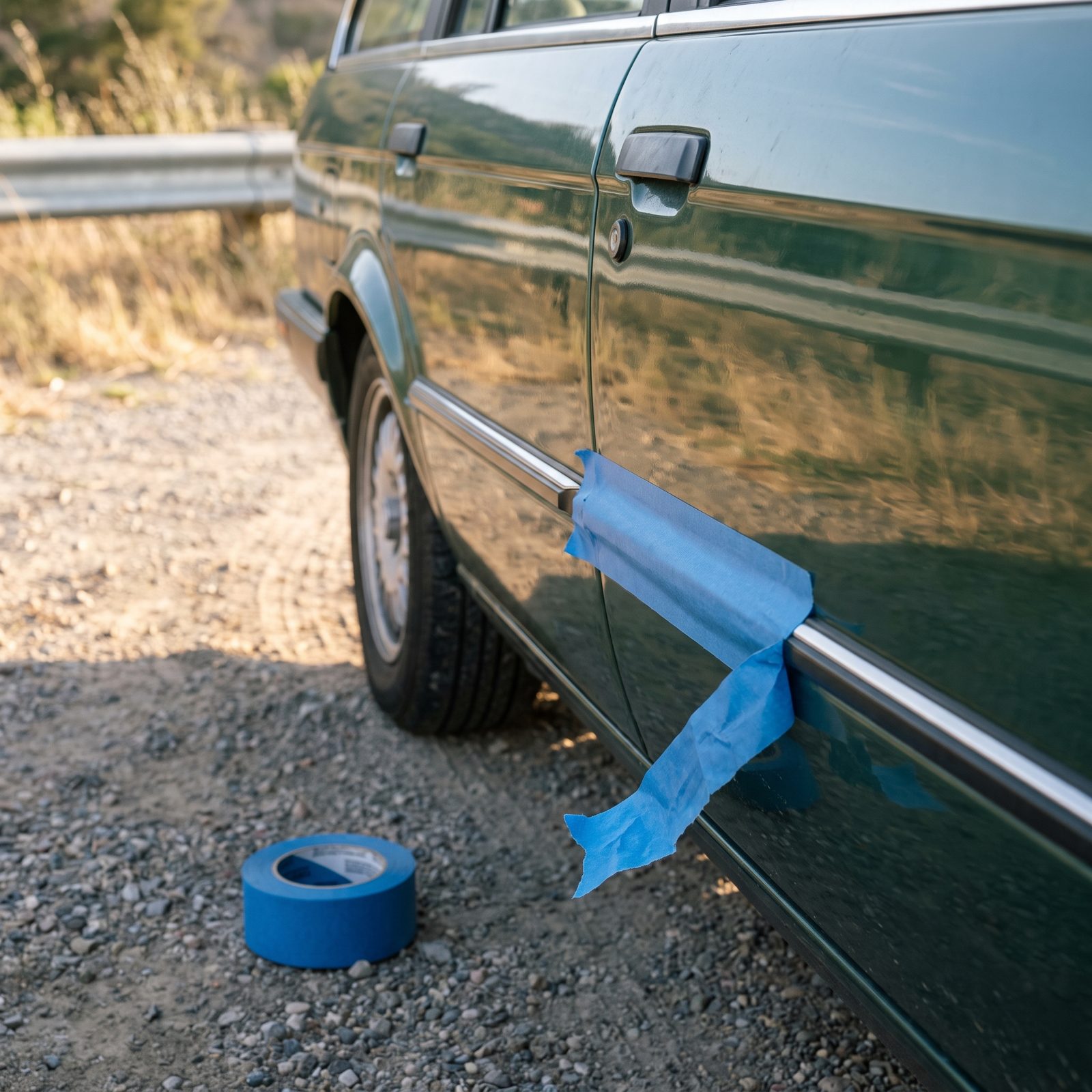
Duct tape is the wrong answer here, and everybody reaches for it anyway. Leave it on painted trim in the sun for a day and it bakes on, leaving gummy residue that takes solvent and a weekend to scrub off.
Blue painter’s tape holds a loose molding, a lifted weatherstrip, or a cracked mirror housing long enough to get home. Then it peels off clean — no ghost mark, no sticky film. It isn’t pretty. But it buys you a drive to the shop instead of a tow.
34. A Short Length of Pool Noodle for Cargo That Rattles and Rolls
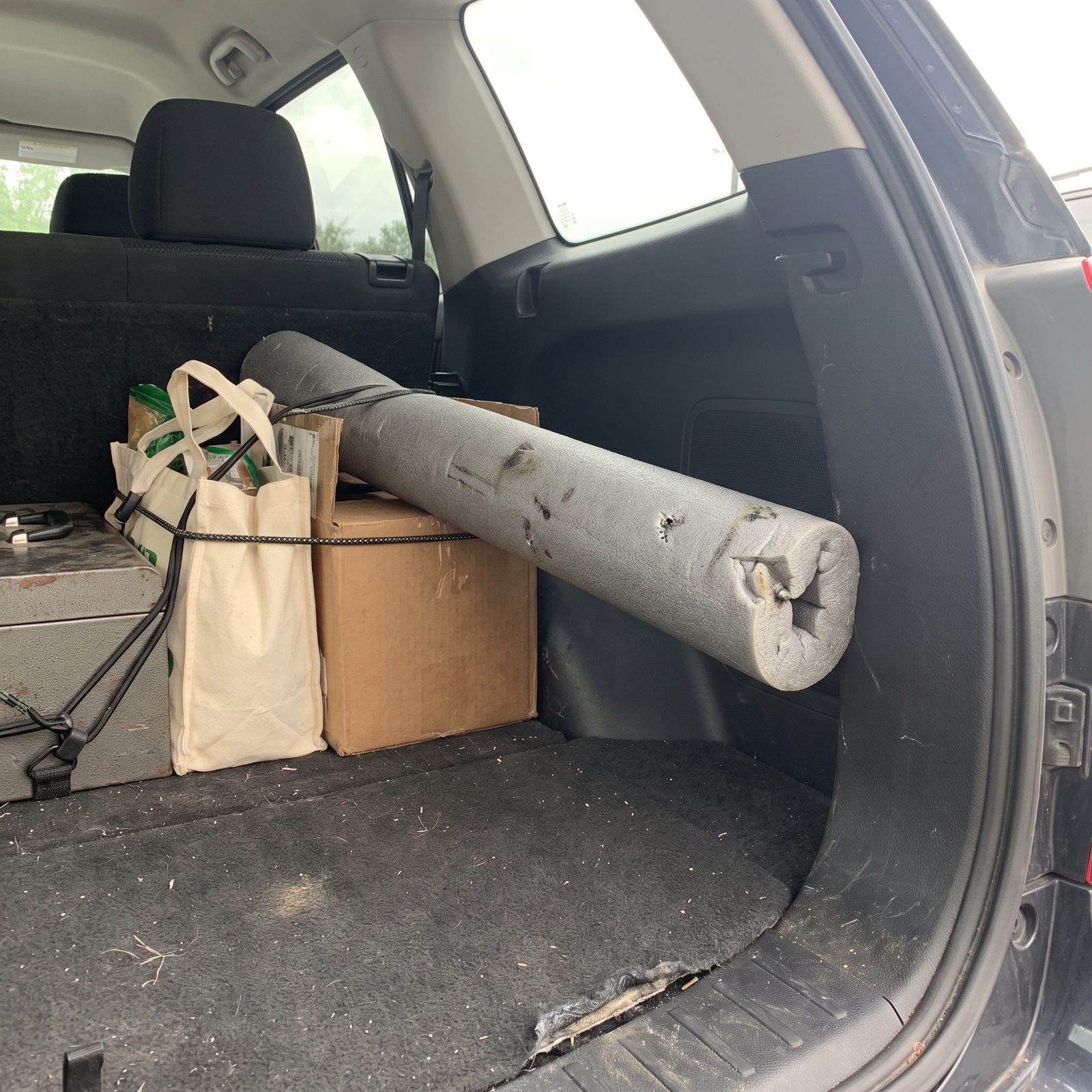
A foot of pool noodle might be the dumbest-looking thing you can keep in a car, and one of the most useful. Cut it to length and wedge it into the gap between a sliding box and the wheel well. The rattling stops. The box stays put.
Slit one lengthwise and it slips over a sharp tailgate edge or a bracket that keeps gouging your shins. Costs almost nothing, and it floats — which tells you it won’t soak up the spilled coffee it’s eventually going to meet.
33. A Cheap Shower-Curtain Liner as a Waterproof Repair Groundsheet
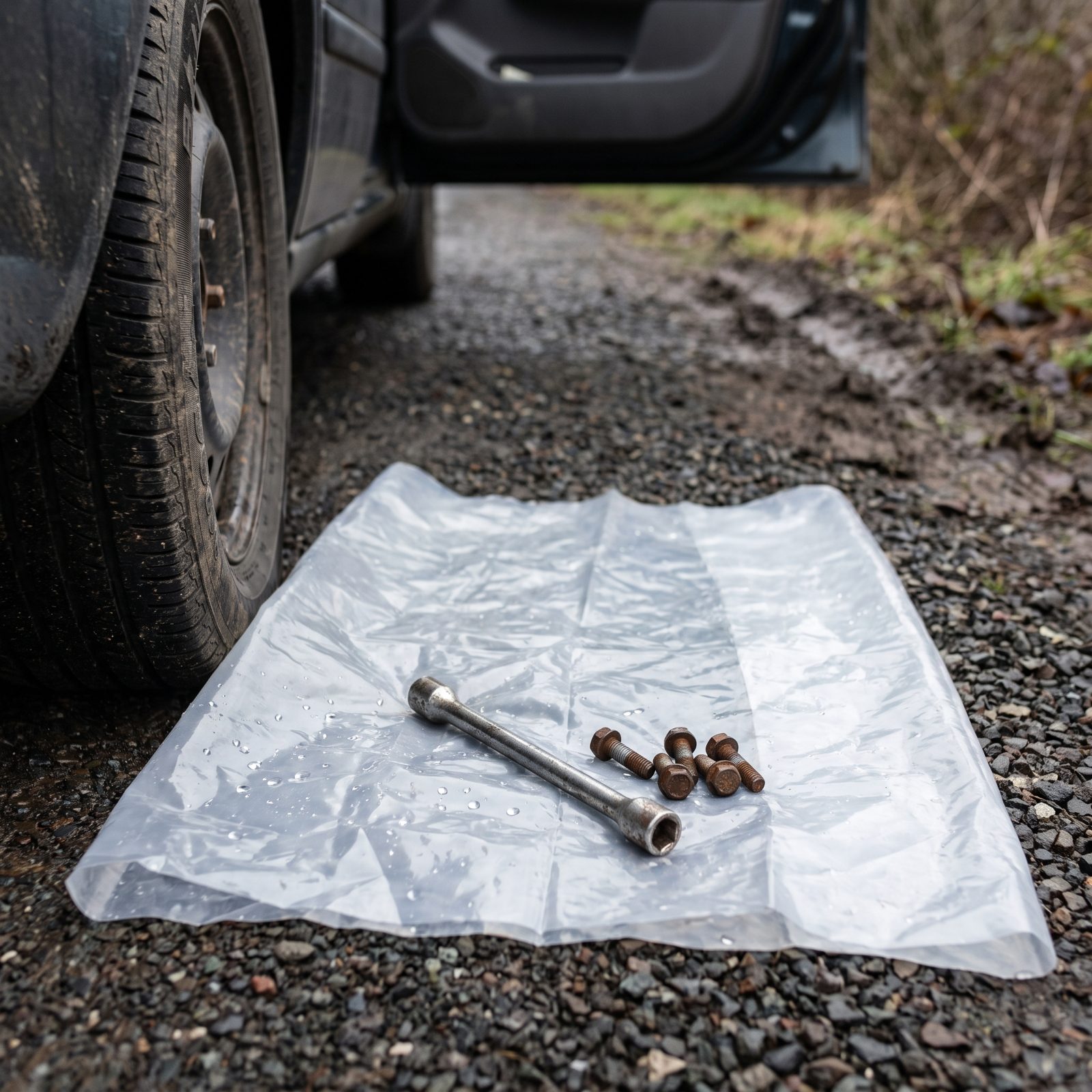
Changing a tire on wet gravel means kneeling in mud while your clean bolts and wrench end up buried in it. A folded shower-curtain liner — the cheap plastic kind — solves both. Spread it out and you’ve got a dry sheet to work on and somewhere to set small parts so they don’t vanish into the dirt.
Folds down to nothing. Shrugs off oil and water, wipes clean, goes back in the trunk flat.
32. Compressed Coin Towels That Grow When You Add Water
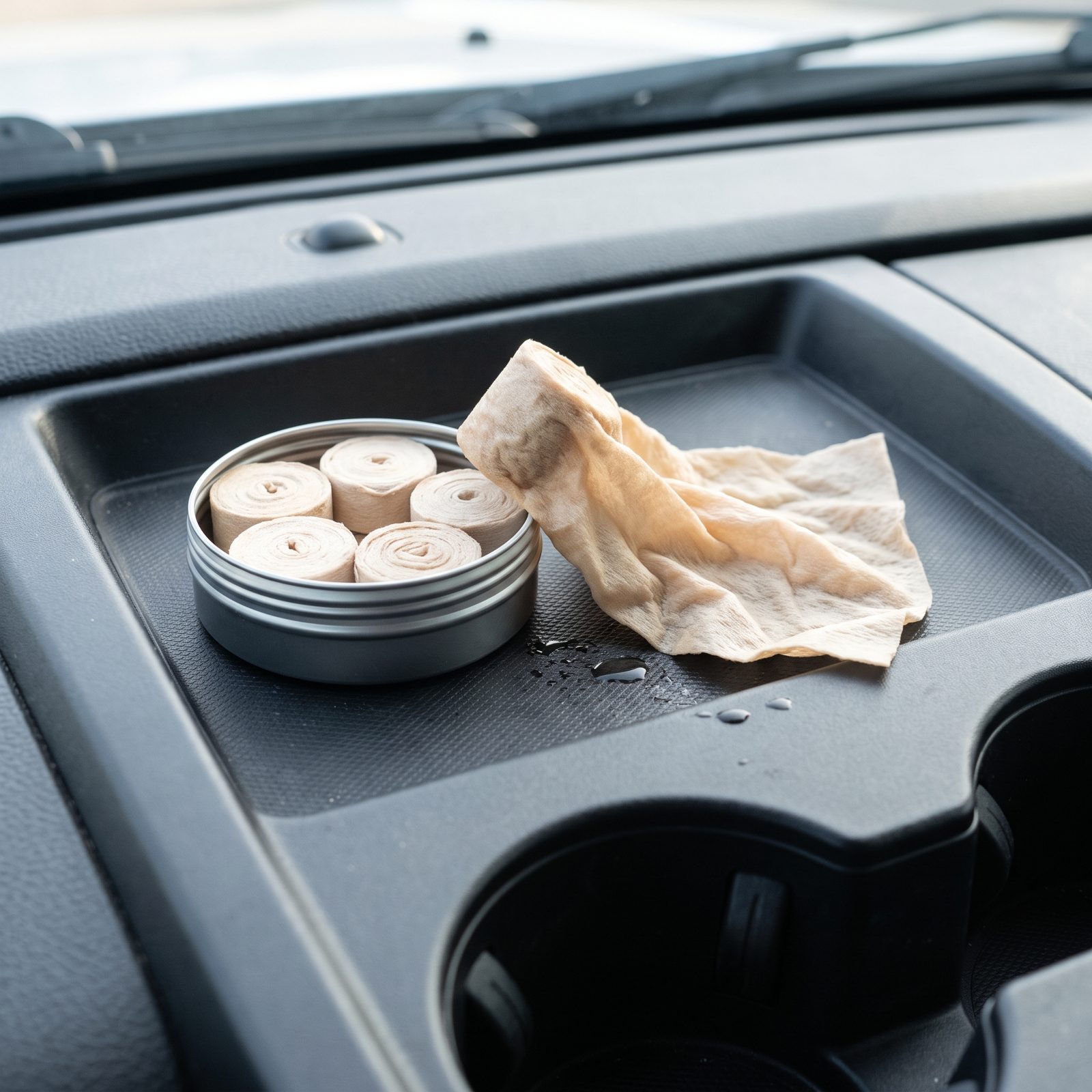
These look like gimmicks. They aren’t. Each one is a compressed disc the size of a coin, and splash water on it and it unrolls into a real towel. A tin of them lives in the center console and barely registers.
They handle the spilled drink, the greasy hands after checking the oil, the kid who sniffs out the one muddy puddle at the rest stop. Run out and you refill the tin for a couple bucks, then forget about it all over again.
31. A Reusable Silica-Gel Canister to Kill Damp in Storage Compartments
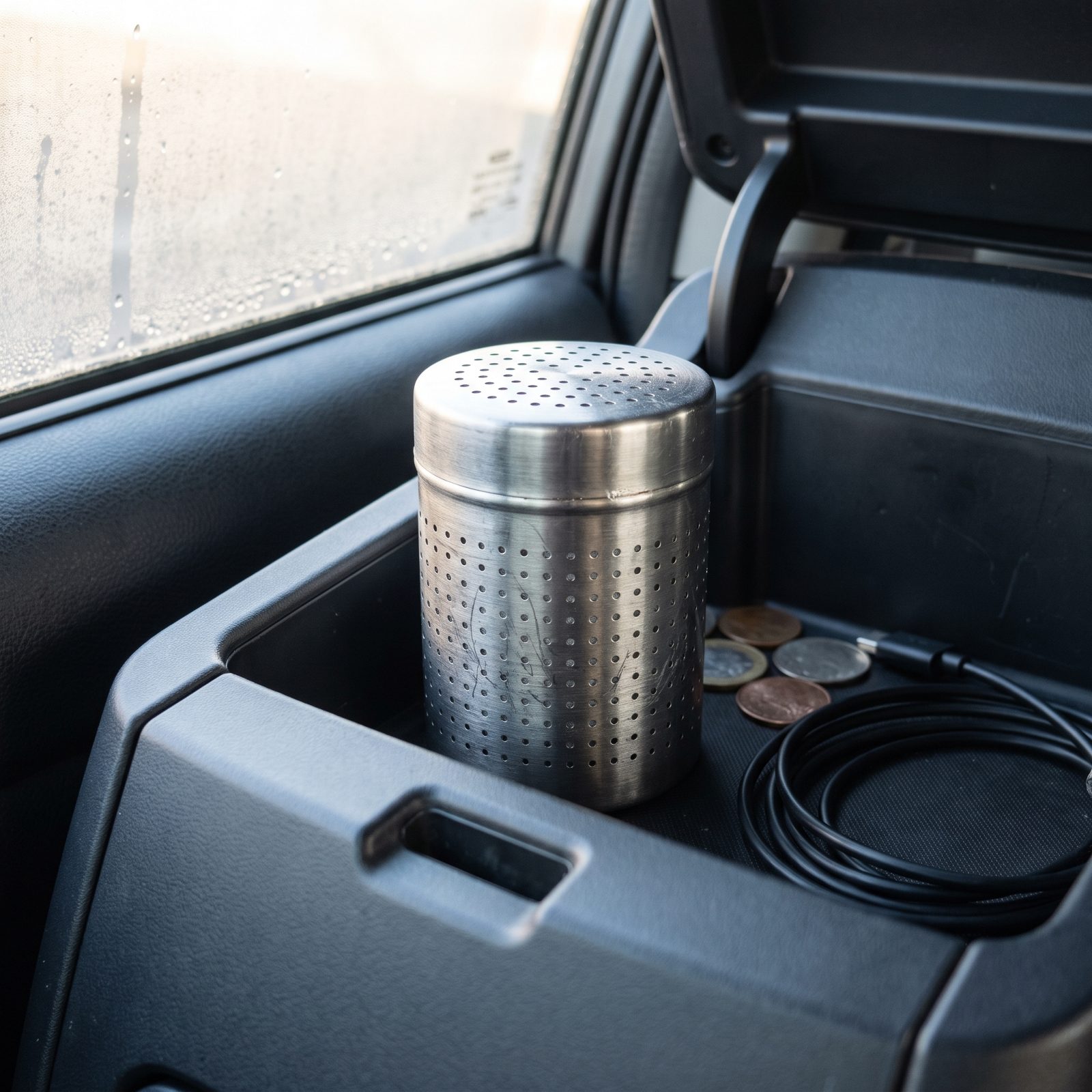
Cars trap moisture. You’ve felt it on a cold morning when the inside of the glass sweats and the console carries that faint mildew smell. A reusable silica-gel canister sitting in a storage compartment pulls that damp straight out of the air.
When it saturates you dry it in a warm oven and it works again, which is why the reusable kind leaves the throwaway packets in the dust. Keep one wherever you stash the registration and the sunglasses you forget you own.
30. A Compact Hand Broom for Broken Glass and Packed Snow
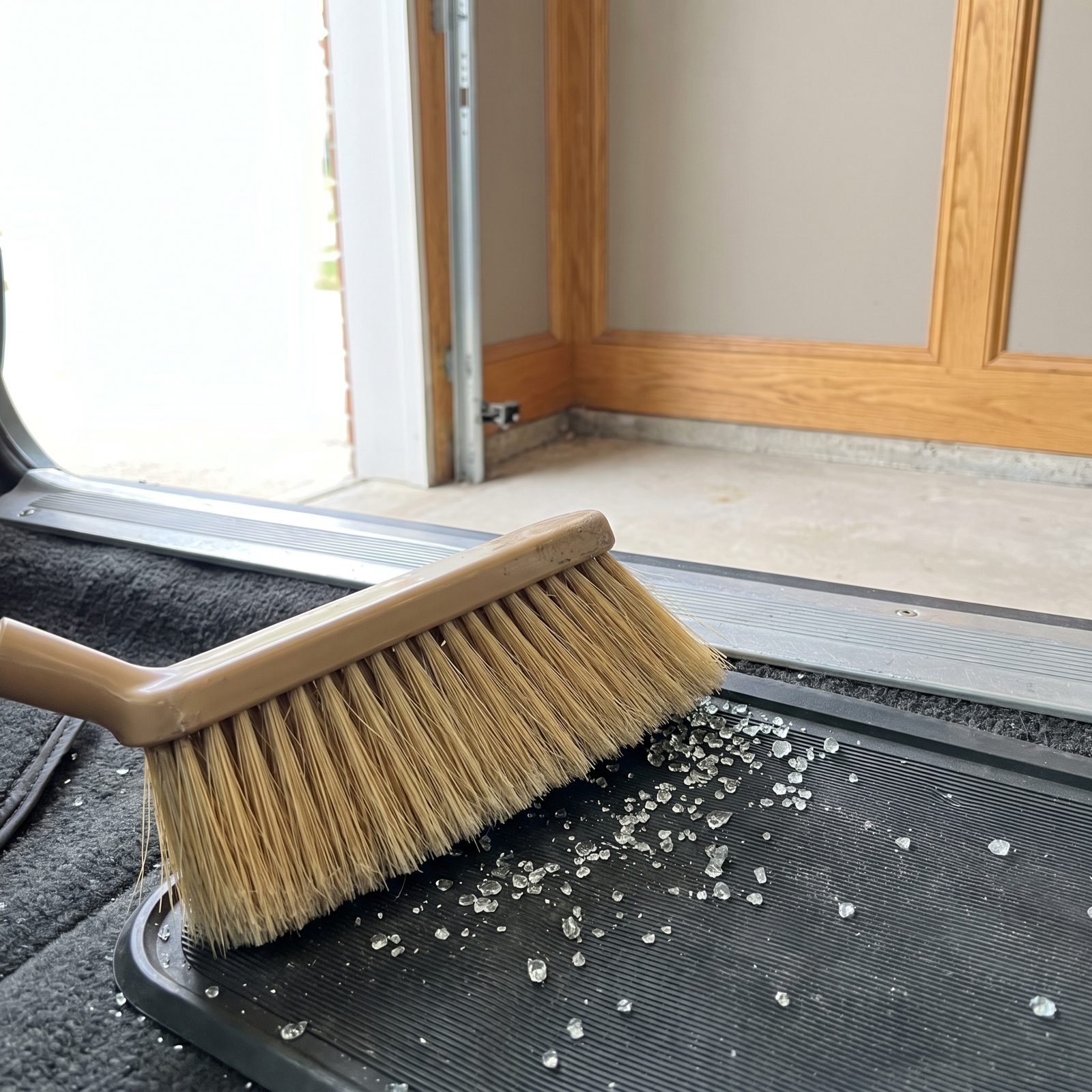
If a window ever shatters — and plenty of people find out it does — the last thing you want is to be clearing cubes of safety glass off the floor mat with your bare hands. A compact hand broom sweeps it into a pile fast and keeps the fragments off your palms and away from little feet.
Off-season, it clears packed snow off wiper blades and brushes gravel off the floor mats. Stiff bristles, short handle, tucks under a seat and waits.
29. A Foam Kneeling Pad for Gravel and Blistering Pavement
Would you like to save this?
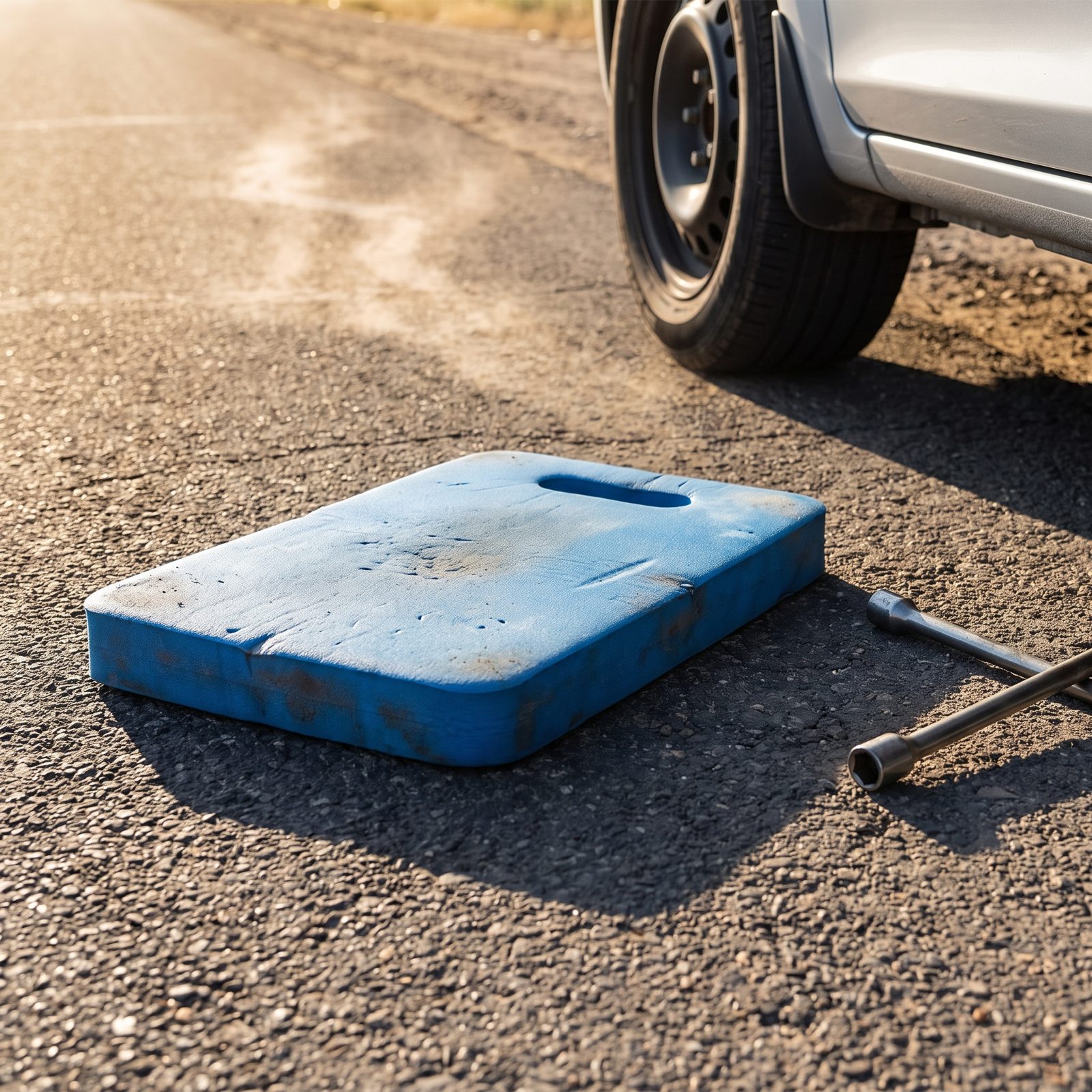
Pavement in July will burn your knees through denim, and gravel will leave them dented and sore for a day after. A cheap foam kneeling pad — the kind gardeners swear by — lets you actually work on a roadside problem instead of hopping around the whole time.
Closed-cell foam, so it doesn’t soak up water or oil. Brace a jack on soft ground, cushion your knees through a tire change, or hand it to someone changing a diaper on a long haul. One pad, a dozen uses, always dry.
28. A Collapsible Bucket for Hauling Water, Sand, or a Load of Tools
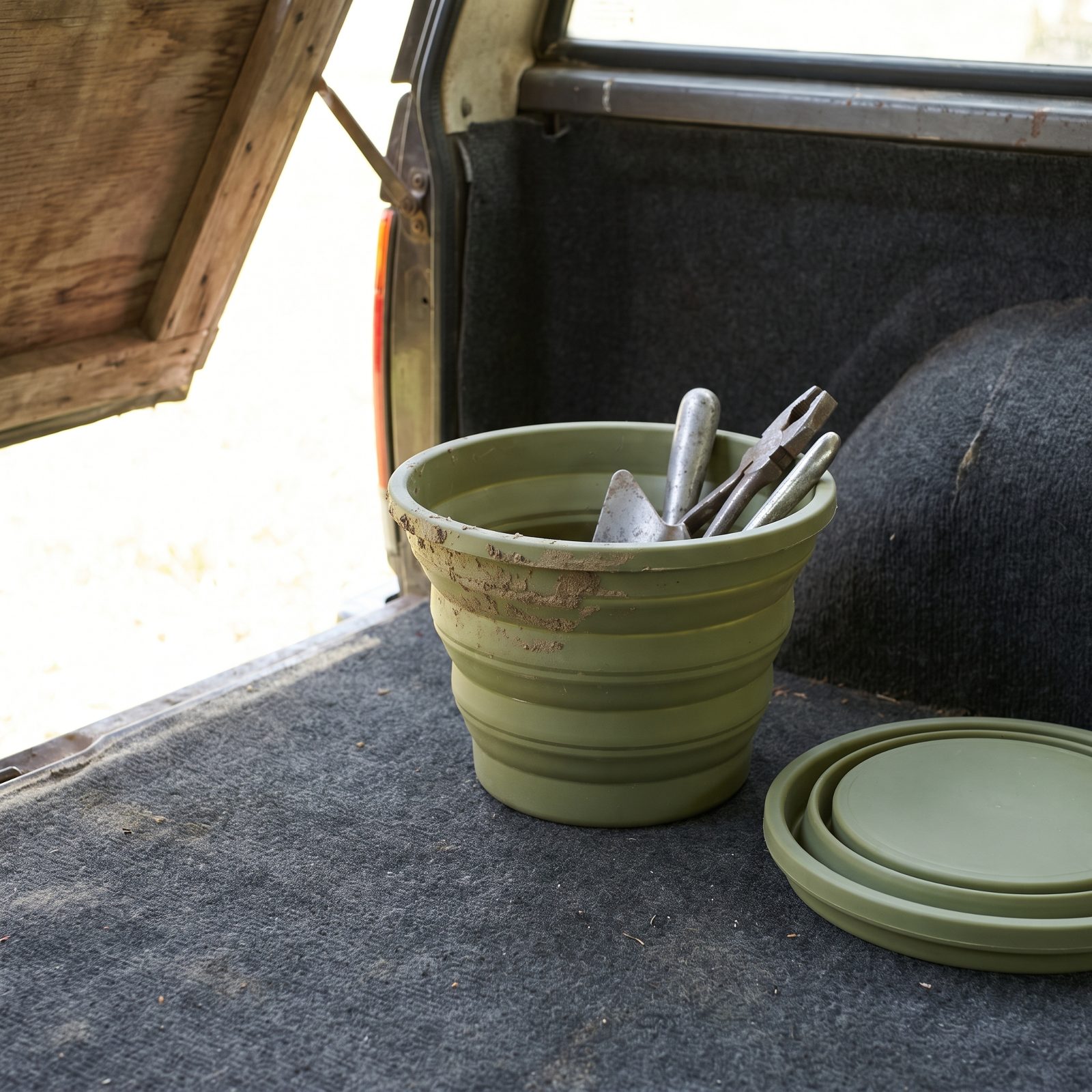
A collapsible silicone bucket folds flat to the thickness of a dinner plate, then pops open to hold a couple gallons. That’s the whole pitch, and it holds up when trunk space is the thing you never have enough of.
Fill it at a rest stop to top off a leaking radiator. Carry sand or kitty litter to a wheel spinning on ice. Haul loose tools from the car to wherever you’re working so you aren’t making six trips with your arms full. Then it flattens back down and vanishes.
27. Folding Wheel Chocks for Safer Roadside Work
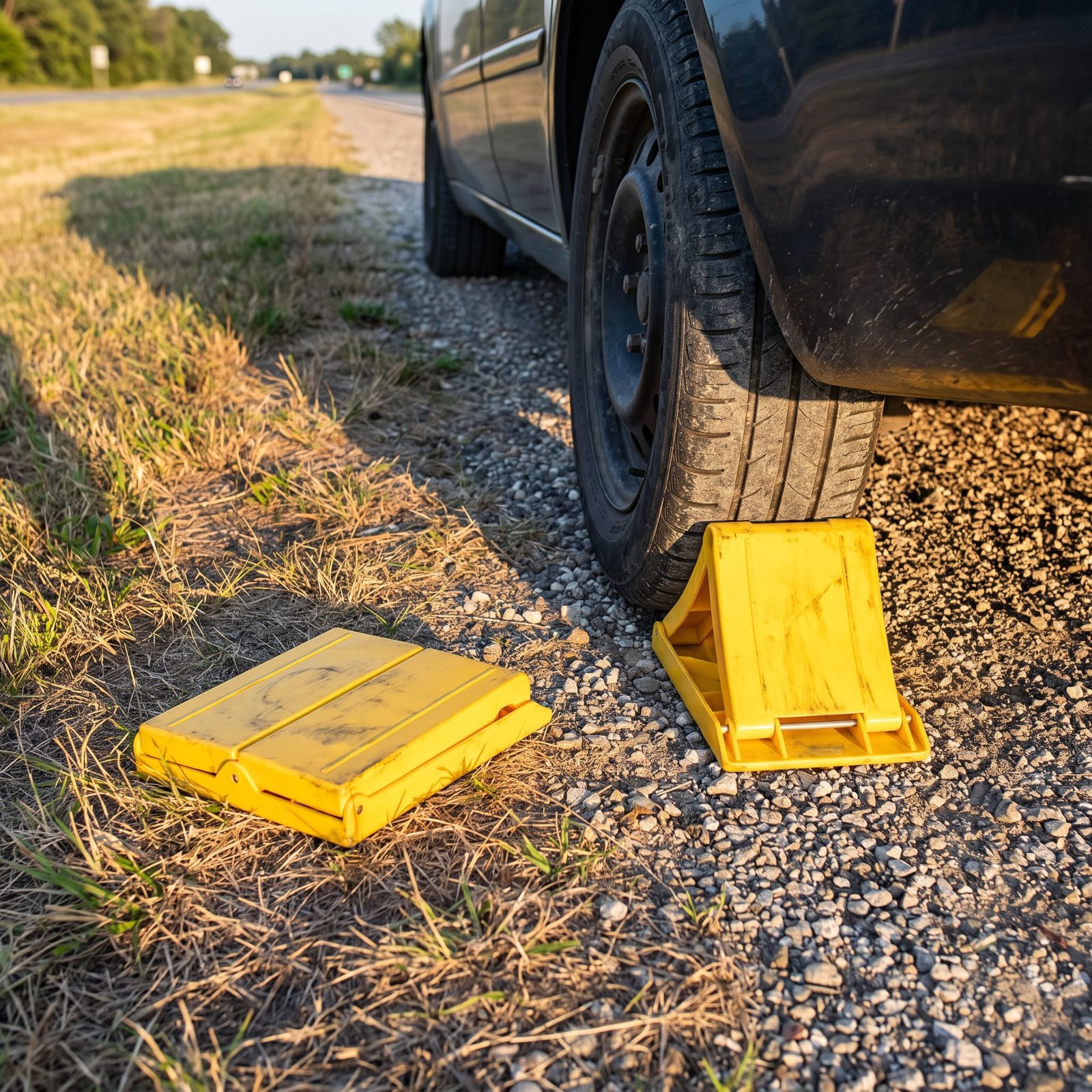
A parking brake holds a car. It doesn’t hold a car when you’ve got the rear end jacked up and you’re reaching under it. That’s where a chock earns its spot in the trunk.
Folding ones collapse to the size of a paperback, so there’s no excuse. Slip them behind the downhill tires before the jack ever comes out. Anybody who’s watched a car roll off a scissor jack on a sloped shoulder doesn’t skip this step — and won’t let you skip it either.
26. An Assortment of Stainless Hose Clamps
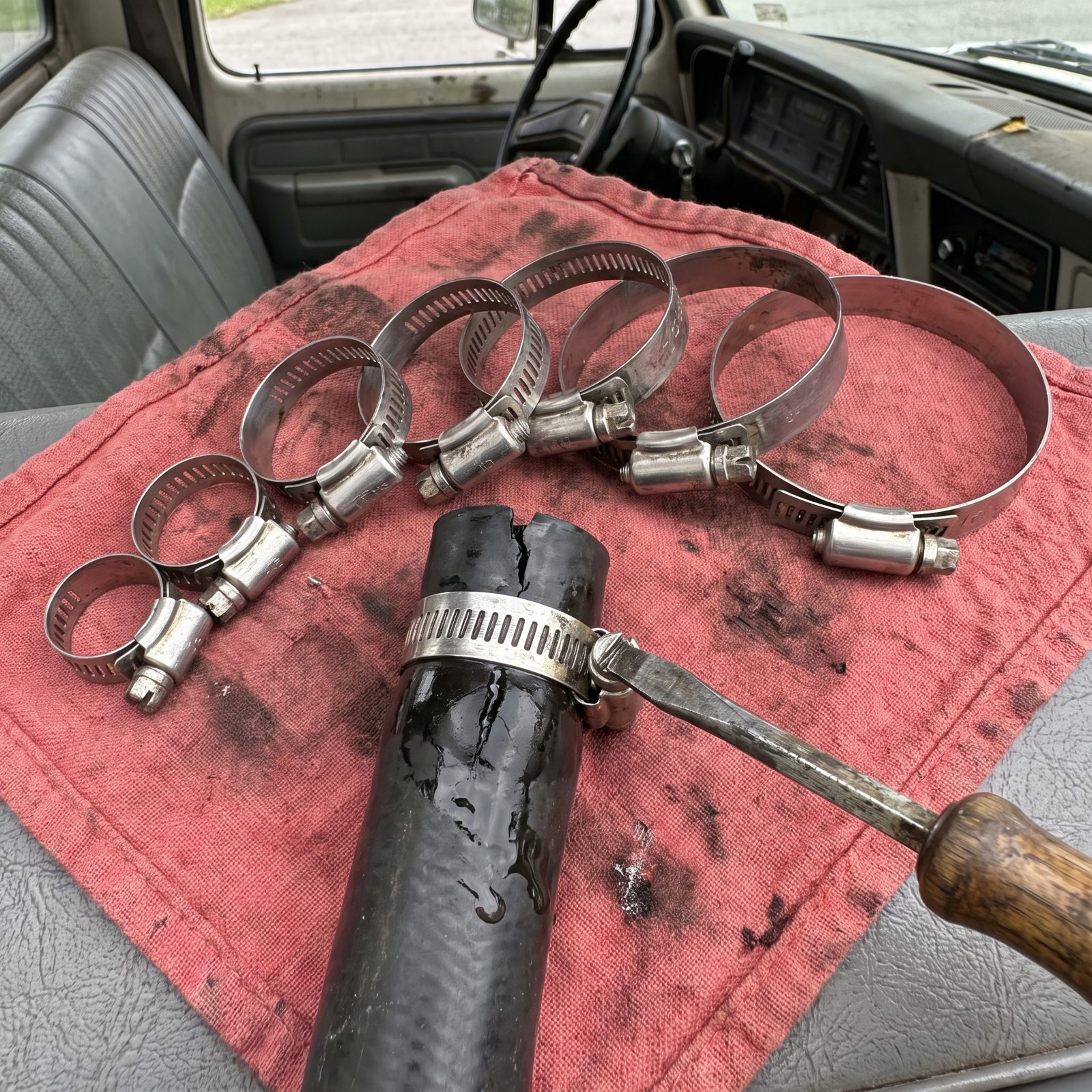
A hose clamp lives in the glovebox for reasons that mostly have nothing to do with hoses. A broken bracket, a loose heat shield rattling against the exhaust, a sagging bumper trim — a stainless worm-gear clamp cinches any of it tight enough to get you another two hundred miles.
Carry a range of sizes, because the one you need is always the one you didn’t pack. And stainless matters: the zinc-plated cheapies rust solid and seize the screw right when you need to loosen them.
25. A Spool of Mechanic’s Wire for Stabilizing Loose Parts
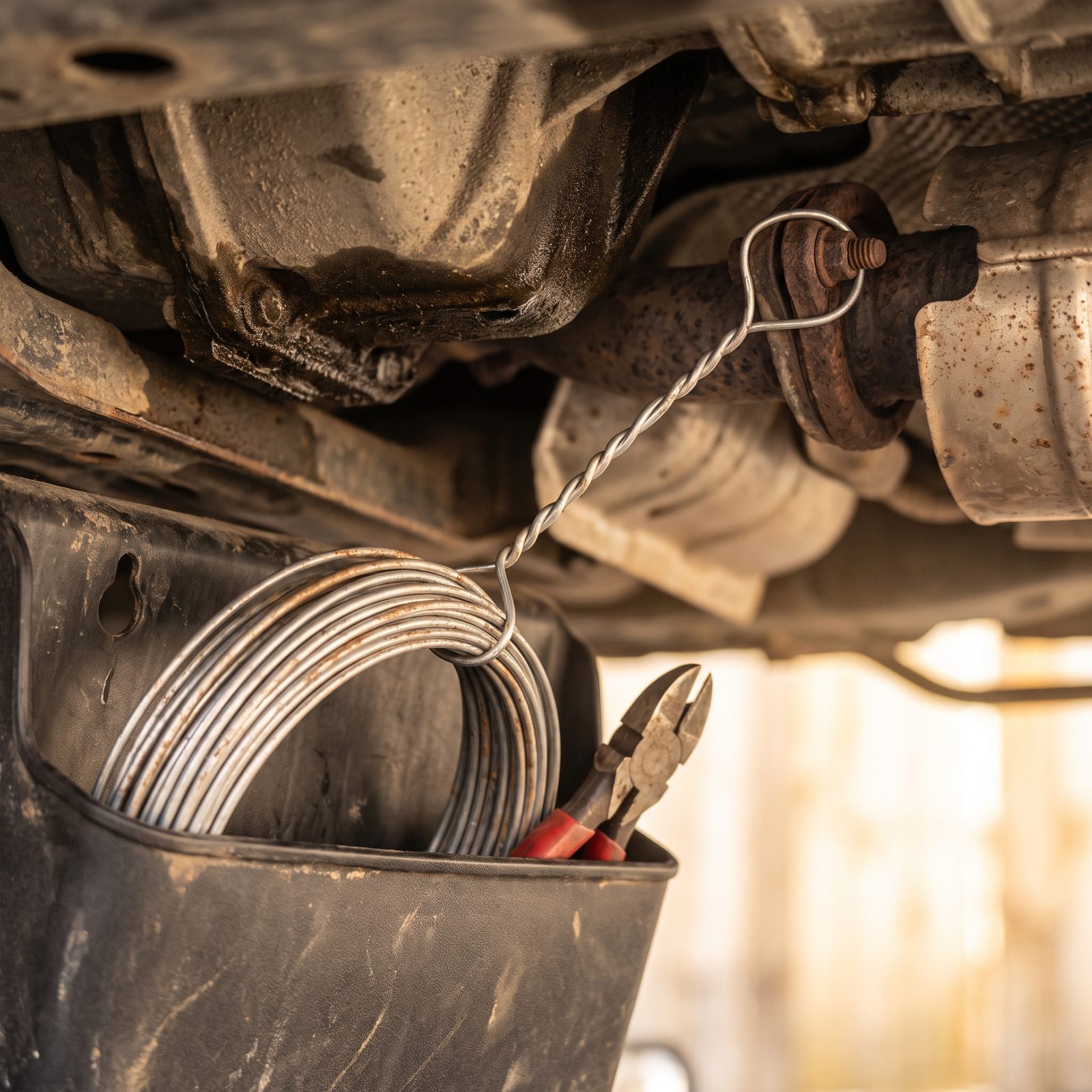
Nobody mentions this one until the day it saves the trip. A tailpipe drops a hanger on a back road, and suddenly it’s dragging and sparking. A length of soft steel wire, pulled straight off the spool, hooked around the flange bolt and twisted tight with a pair of pliers, is the start of the fix.
Dangling splash guards, sagging bumpers, a glovebox door that won’t latch — wire handles them all. Zip ties melt near heat. Wire doesn’t. A full spool weighs almost nothing and tucks into a door pocket for years without a thought.
24. A Vehicle-Specific Spare Fuse Assortment
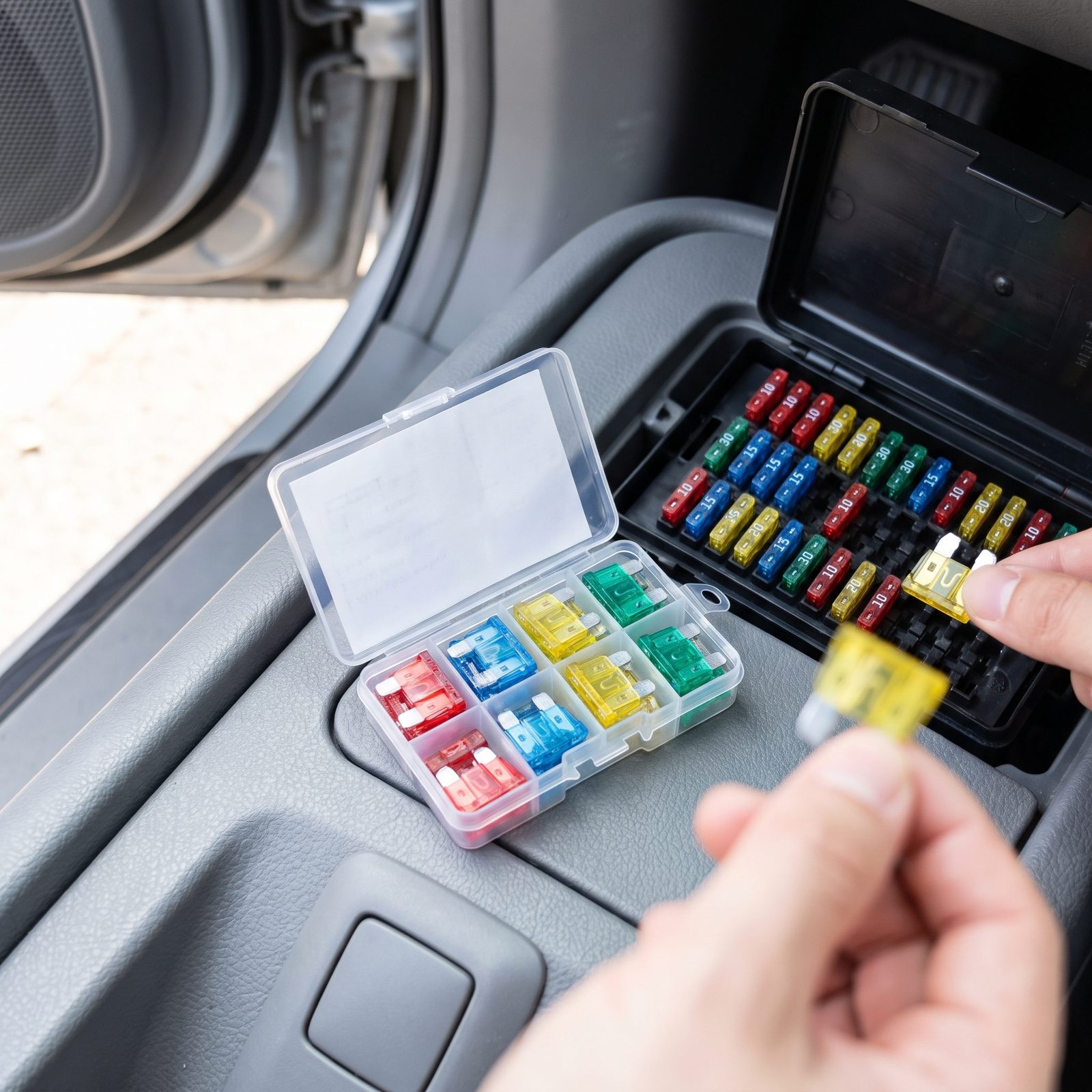
A dead fuse costs fifty cents and ten minutes. Not knowing which fuse costs a tow.
Here’s what people get wrong. They buy a generic bulk pack of mixed fuses, then discover their car uses the low-profile mini blades and the pack is full of standard ones. Pull your owner’s manual, check the fuse chart, and pack the exact types and amperages your vehicle actually uses. Throw in a cheap fuse puller too — prying them out with needle-nose pliers in the dark is how you snap one off in the slot.
23. Compact Ratchet Straps for Unexpected Cargo
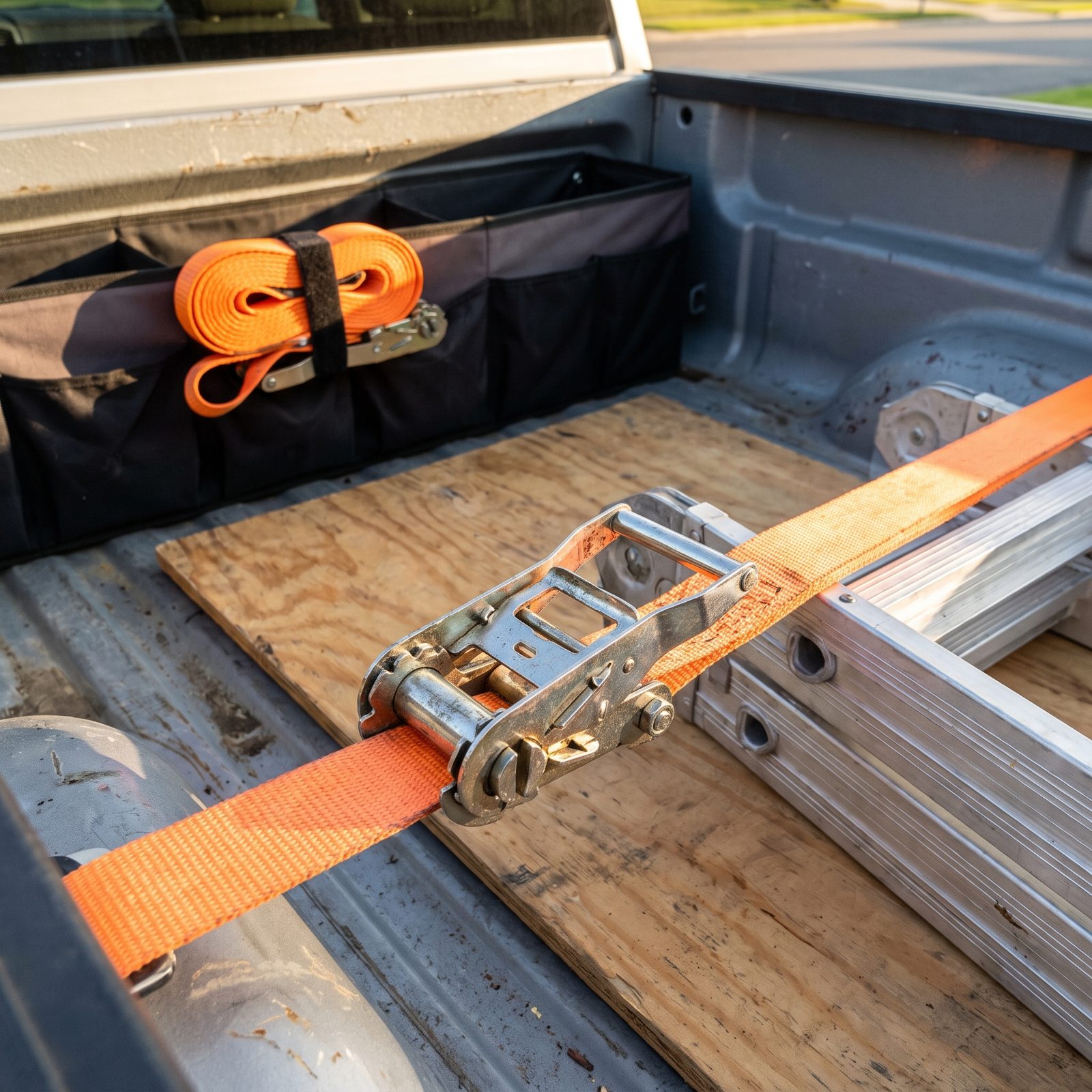
You never plan to haul the thing. The free bookshelf on the curb, the lumber run that turned into more lumber, the yard-sale dresser that won’t fit in the trunk. A pair of compact ratchet straps turns “no” into “load it up.”
Bungee cords stretch and let go. A ratchet strap bites down and stays. Get the short ones meant for cargo, not the giant tow-grade monsters, and keep them coiled with a velcro band so they don’t become a knotted nest under the seat.
22. A Padded Moving Blanket for Cargo and Roadside Work
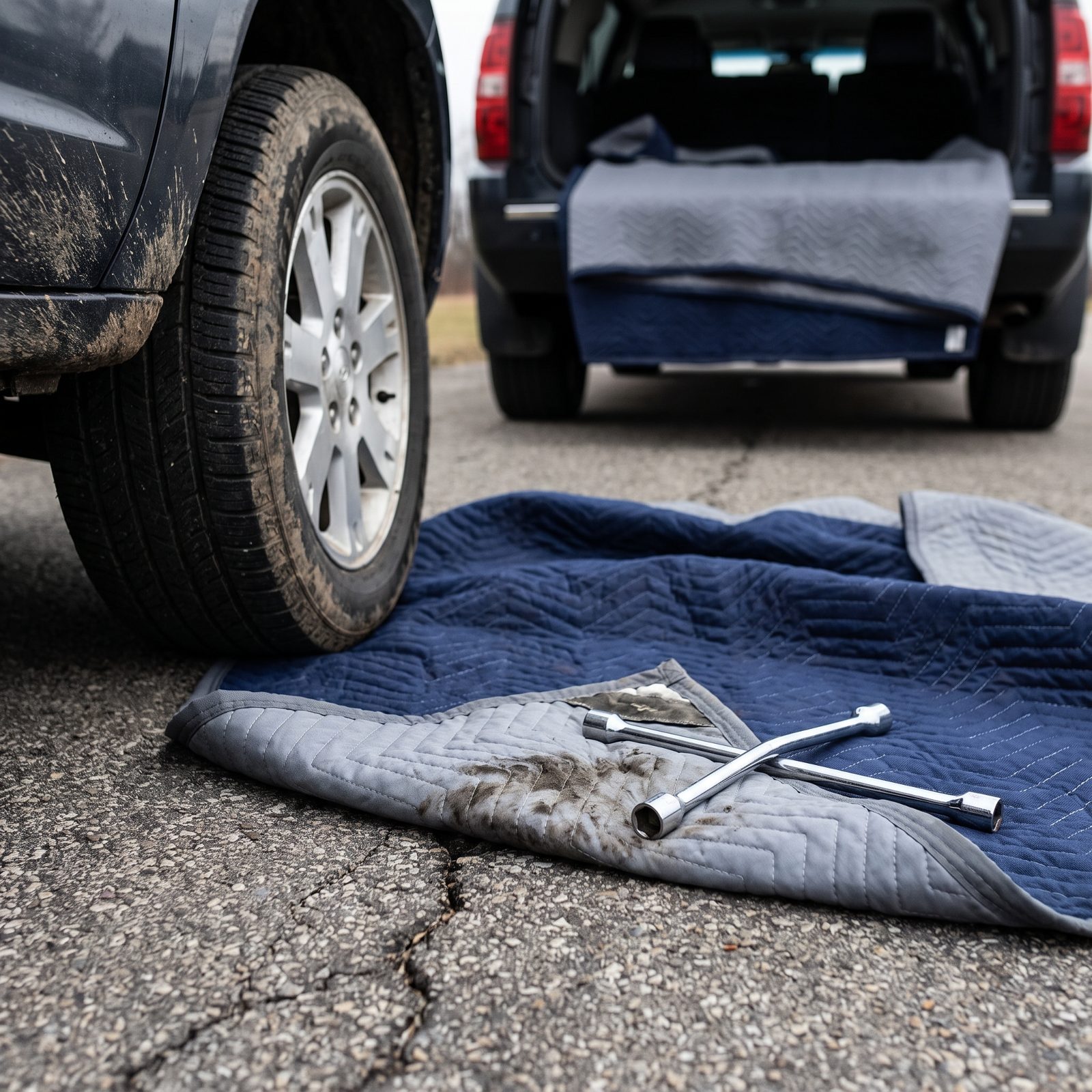
Changing a tire on cold asphalt is misery on the knees. A folded moving blanket fixes that, and kneeling pad is the least of what it does.
It pads cargo so the toolbox doesn’t gouge the paint. It wraps a glass tabletop. It covers a seat after a muddy day. In a pinch it’ll even buy traction under a drive wheel stuck in snow — though that one’s a last resort. For a few dollars it’s the most useful square footage of fabric you’ll ever keep in a vehicle.
21. Heavy-Duty Contractor Bags for Wet or Dirty Gear
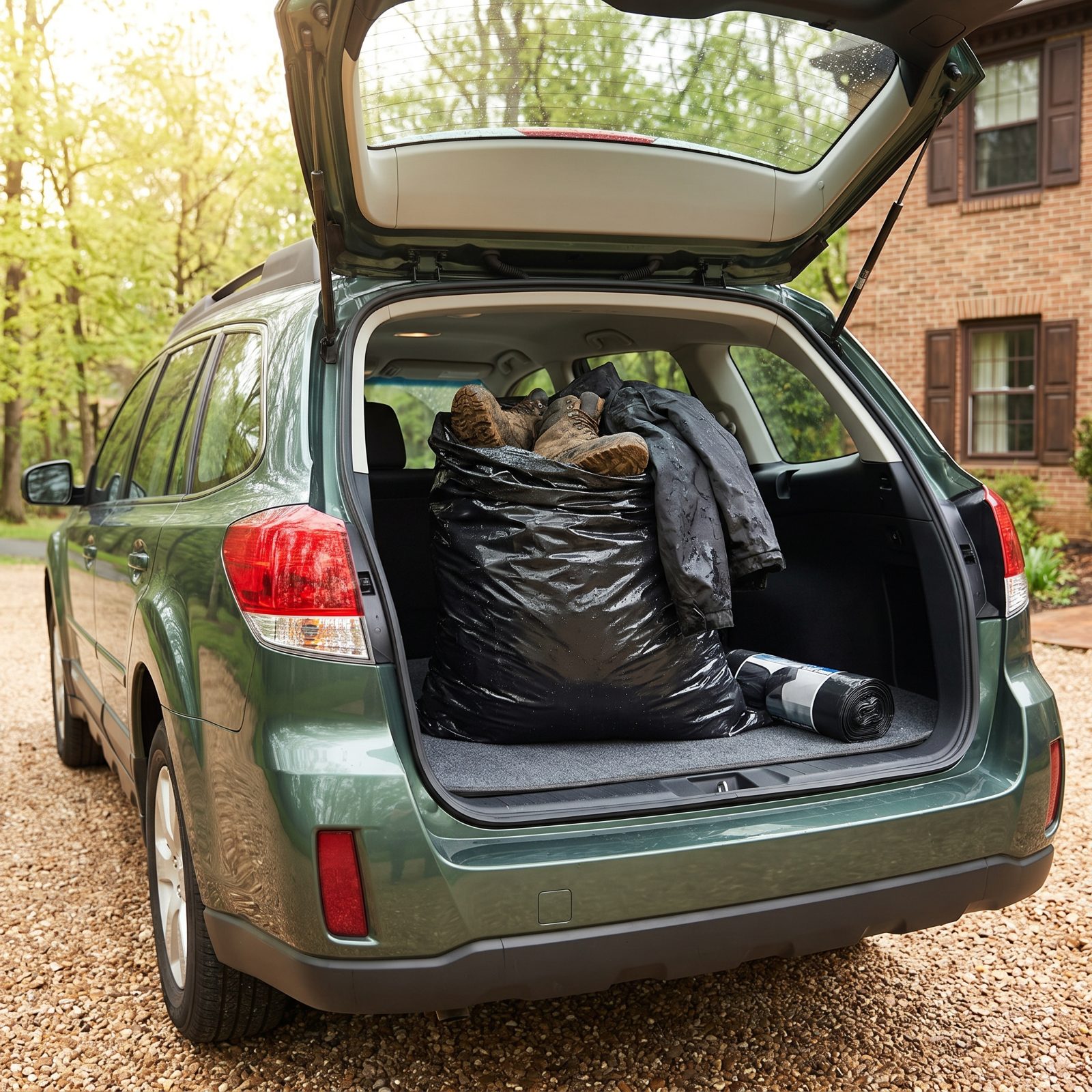
Thin kitchen bags tear the second you put anything real in them. Contractor bags — the three-mil heavy ones — don’t.
Soaked rain gear after a game. A flat tire you don’t want rolling greasy filth across the cargo floor. Muddy boots, a wet dog towel, the oily rags from a roadside fix. Stuff it all in and the mess stays put instead of soaking into the carpet. Roll a few up and tuck them in the spare-tire well, where they’ll sit untouched until the exact afternoon you need them.
20. Powder-Free Nitrile Gloves for Fluid Checks and Repairs
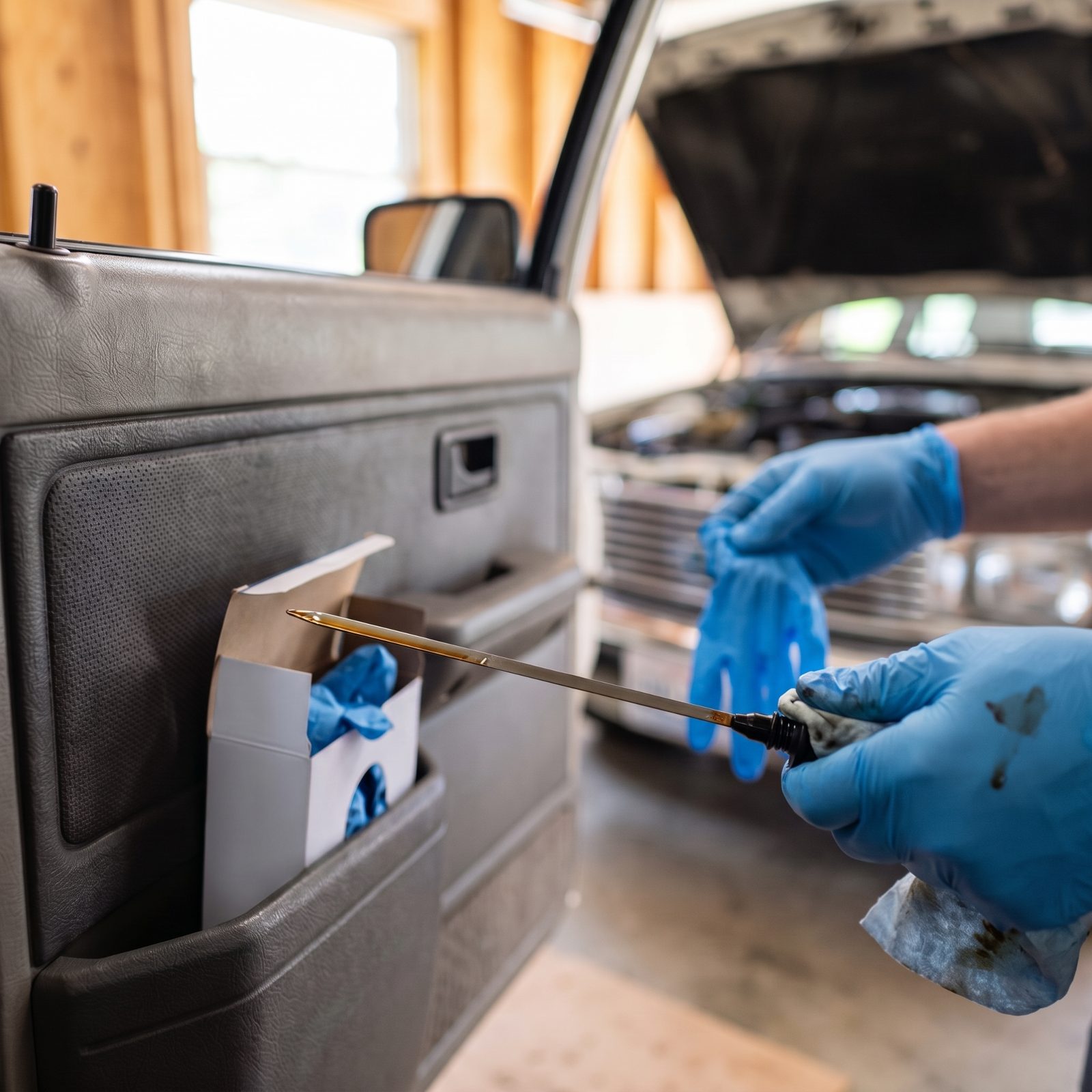
Nobody wants to shake hands at the next stop with brake fluid under their nails. A box of nitrile gloves keeps the grime off, and that’s reason enough on its own.
But there’s more to it. Nitrile shrugs off oil, gas, and solvents that eat through cheap latex. Powder-free means no chalky residue on whatever you touch next. Checking a dipstick, topping off coolant, swapping a battery terminal — pull on a pair and your hands stay clean enough to climb back in the car and keep driving.
19. Sealed Safety Goggles for Dust and Fluid Protection
Would you like to save this?
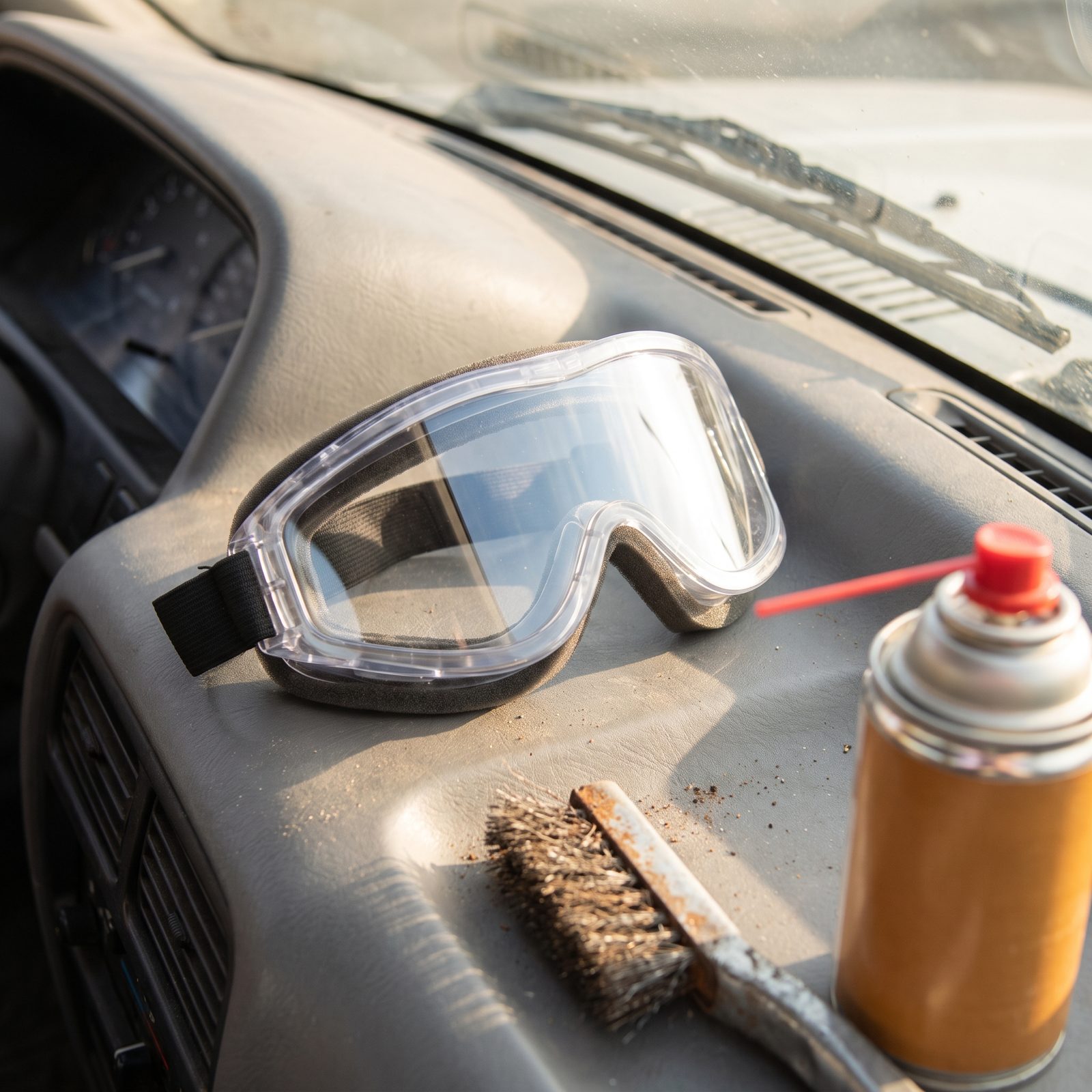
Think about the last time you looked up under a car and got a face full of rust flakes and road grit. Open-sided safety glasses let all of that straight in.
Sealed goggles with a foam gasket wrap the whole eye. Wire-brushing a corroded bolt, blowing out a clogged line, spraying penetrating oil overhead — the junk that rains down stays off your eyes. They cost a few dollars and weigh nothing. Keep a pair in the kit, and the day you need them you’ll be glad they weren’t sitting on the workbench back home.
18. A Rechargeable Headlamp for Hands-Free Repairs
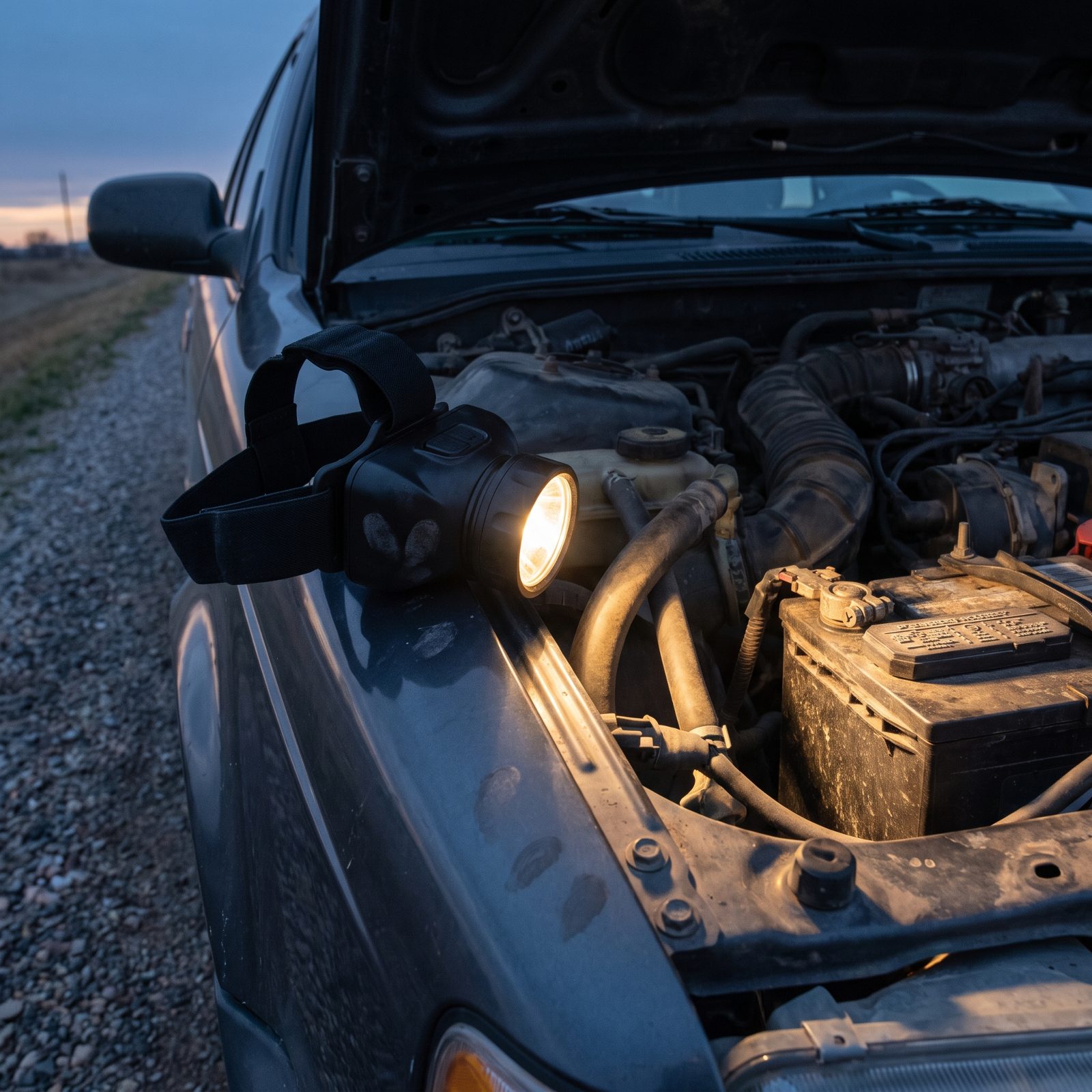
Holding a flashlight in your teeth while both hands fight a battery terminal is a rite of passage nobody should have to repeat. A headlamp ends it.
The beam goes exactly where you’re looking. Rechargeable models skip the dead-battery problem that kills a flashlight at the worst moment, and you top it off on the same cable as your phone. Clip it to the owner’s manual in the glovebox so you always know where it is.
A flashlight lights the ground. A headlamp lights the job. Once you fix something at night with both hands free, the old way feels ridiculous.
Charge it twice a year and it’ll be ready for the night the trip goes sideways on a dark shoulder.
17. An Automotive-Rated Fire Extinguisher Strapped Where You Can Reach It
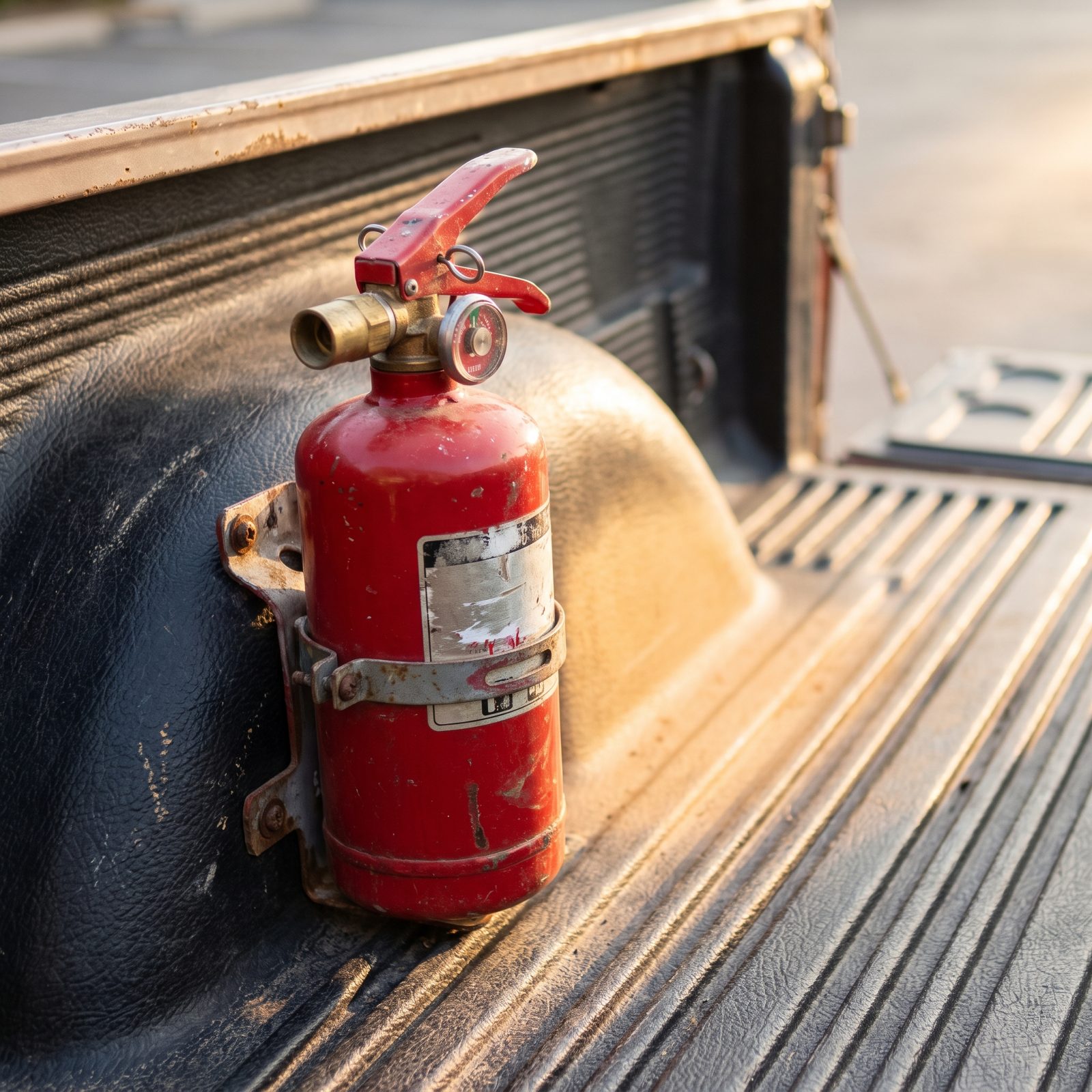
Most folks who carry an extinguisher bury it in the trunk under a spare tire and a bag of road salt, which is useless. A car fire doubles in size about every minute, and you do not have a minute to dig.
Get one rated for Class B and C — flammable liquids and electrical — with a label you can still read, and mount it to the floor or the side of the cargo area with a real bracket. Keep a second small one in the driver’s footwell or under the seat. A 5-pounder handles most engine-bay flare-ups before they reach the fuel line.
16. A Seat-Belt Cutter and Window Punch Clipped Within Arm’s Reach
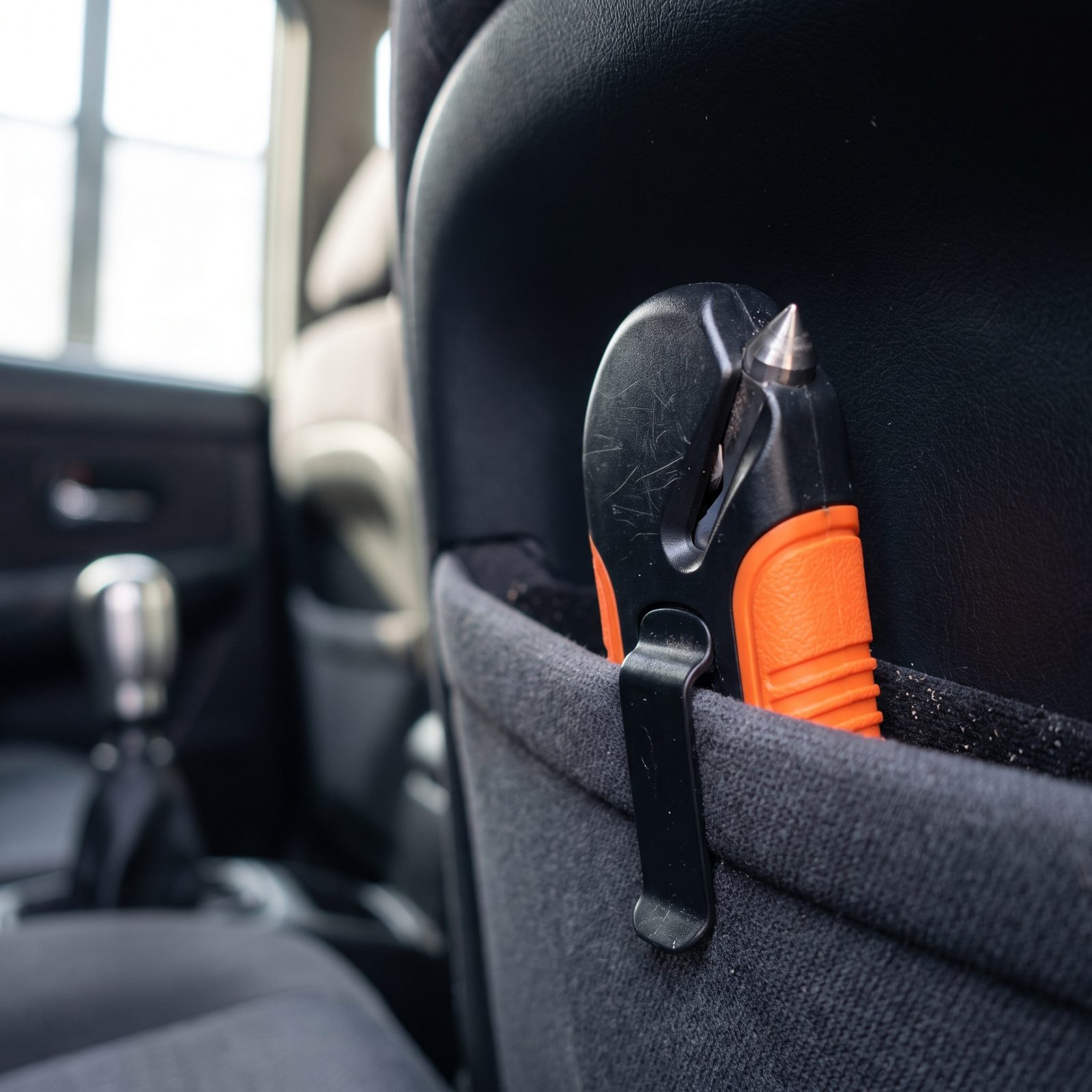
The glove box is the worst place for this tool. In a rollover or a submerged car, you cannot reach across the cabin. It needs to live where your hand already goes — for back-seat passengers, that means clipped to the pocket on the seat back in front of them.
Laminated windshields will not shatter, so that spring-loaded punch is for the tempered side and rear glass. One firm press against the corner of the window and it goes. Not the center — the corner. The blade recesses behind a guard, so it slices through a jammed belt without taking a chunk out of your palm.
15. A Trauma Kit That Goes Beyond Band-Aids and Aspirin
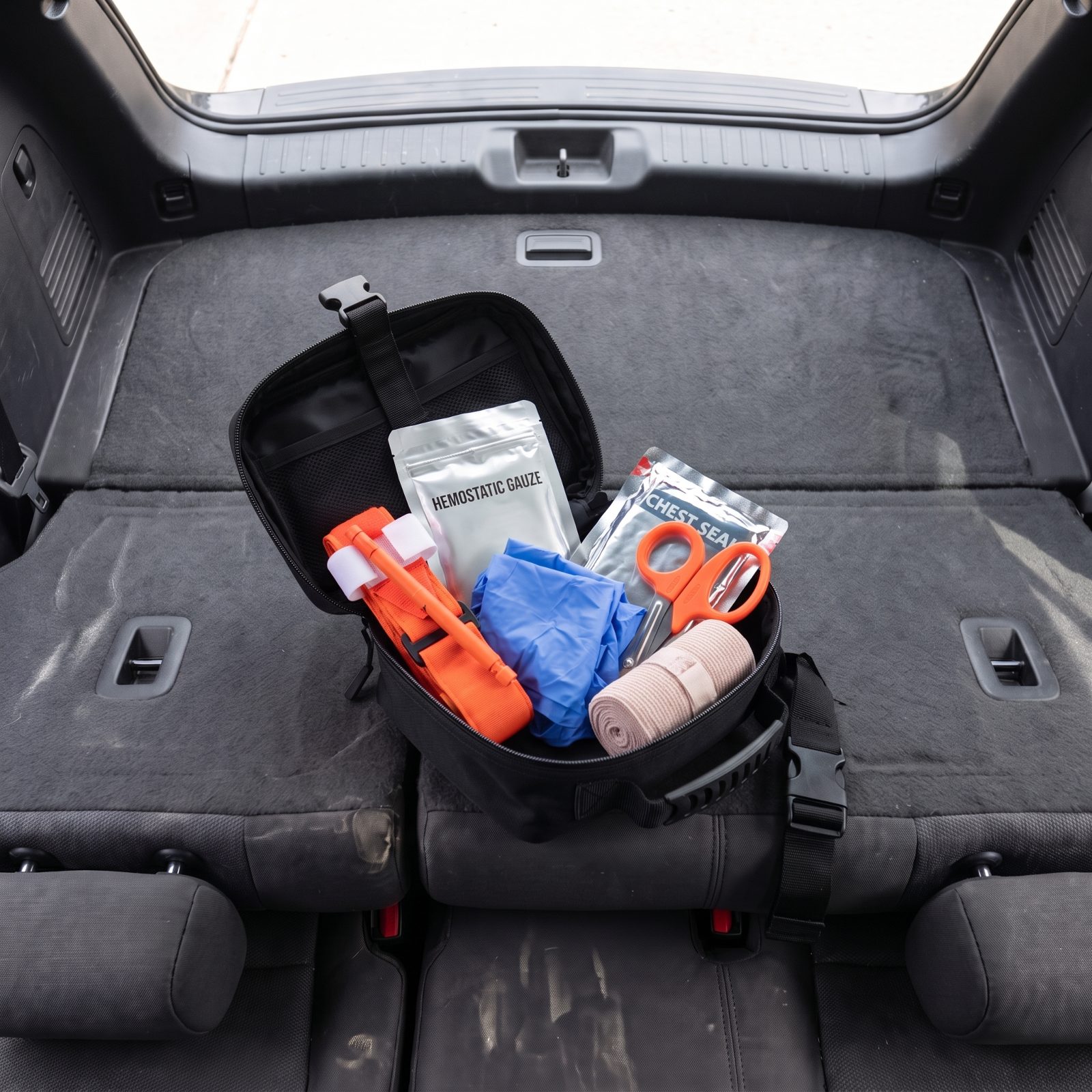
A drugstore first-aid kit is built for a paper cut in the kitchen. It does nothing for the injuries that actually happen on a highway, and those injuries bleed.
Experienced drivers carry the stuff that stops blood loss: a tourniquet, hemostatic gauze, a pressure bandage, trauma shears, gloves. The thinking is grim but simple. Somebody can bleed out before the ambulance arrives, and a tourniquet in the hands of a rattled amateur still beats standing there doing nothing.
Watch a free bleeding-control course online. Twenty minutes, and it changes what that orange tourniquet means to you.
14. A High-Visibility Reflective Vest Stuffed in the Door Pocket
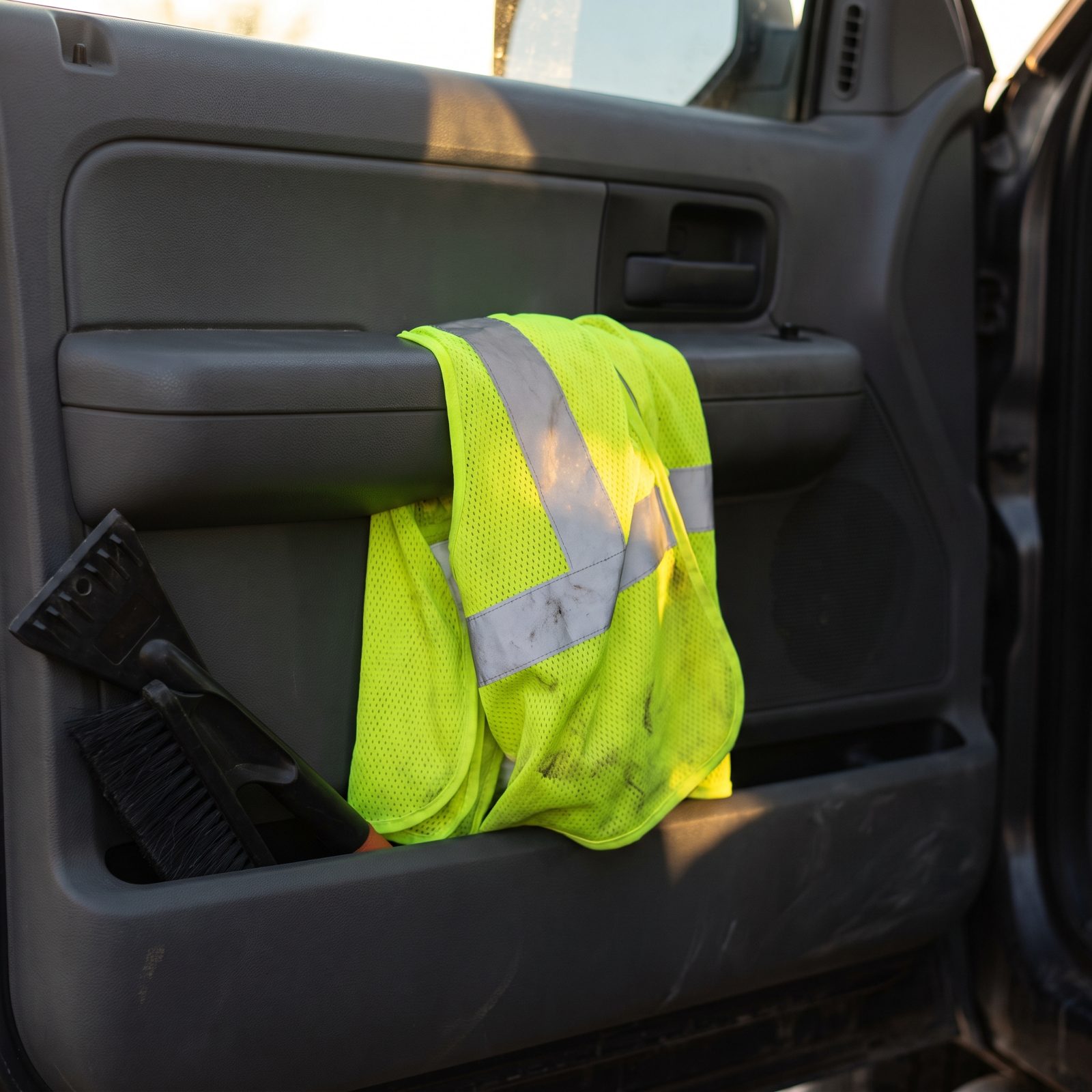
Step out of your car at dusk and you basically vanish. Headlights wash out a person in dark clothes on a shoulder, and drivers don’t see what they aren’t looking for.
A folded vest weighs almost nothing and turns you into something a tired trucker can’t miss. Door pocket, not trunk — so you pull it on before you open the door, not after you’re already standing in the lane.
13. Weighted Reflective Warning Triangles That Hold the Wind

Flares are dramatic. They also burn out, roll into dry grass, and they’re flat-out illegal in a few places. Reflective triangles do the same job and keep doing it all night long.
The cheap ones are a nuisance — one gust from a passing semi knocks them flat, and now your warning device is lying face-down on the asphalt doing exactly nothing. Spend a little more for weighted bases that stay put. Set the farthest one well back up the road so traffic has time to read the situation and ease over.
12. A Reflective Emergency Blanket No Bigger Than a Deck of Cards
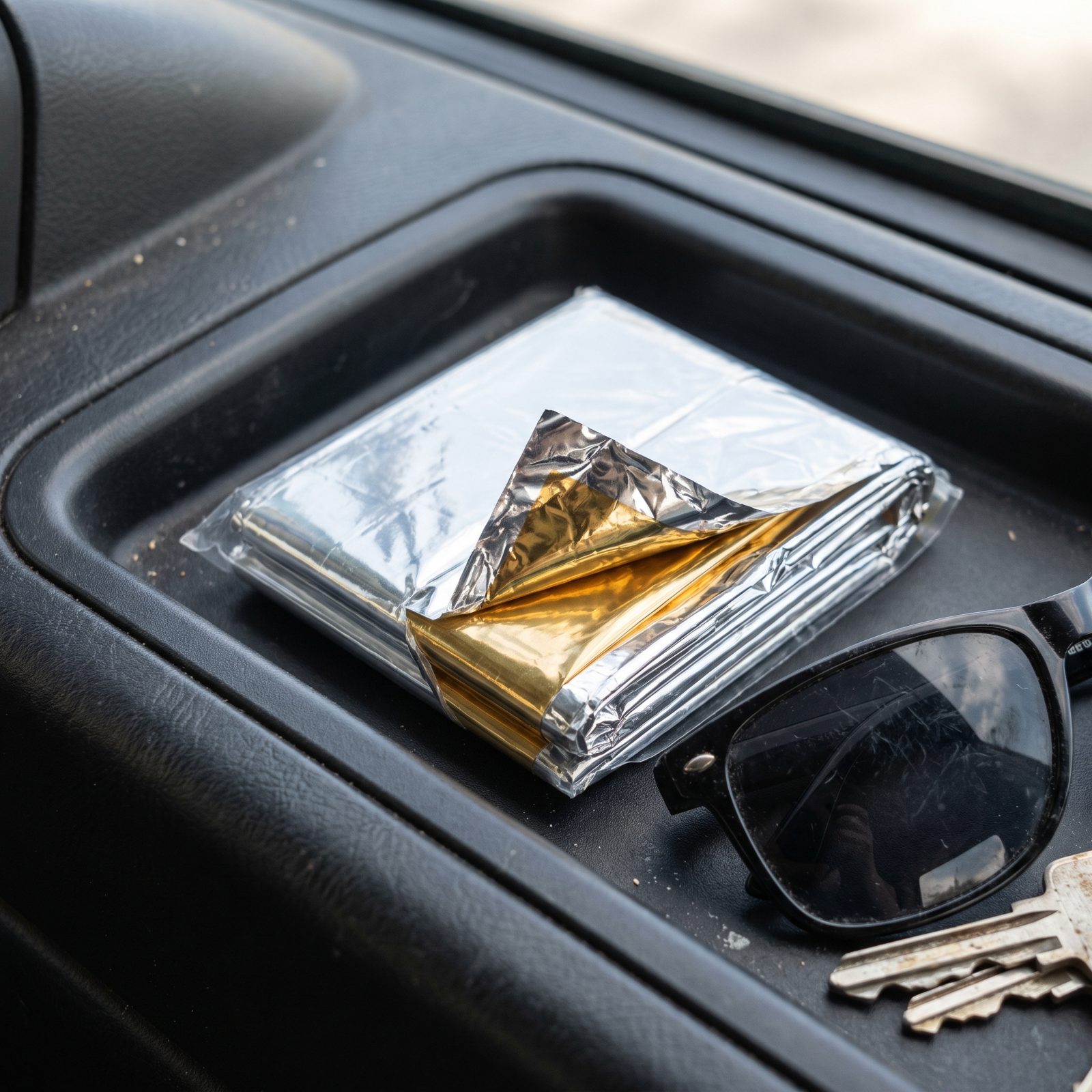
It looks like a gag gift — a sheet of foil that folds down smaller than a sandwich. Then the heater dies in January with a cracked serpentine belt and you understand why it earns its spot.
The mylar bounces your own body heat back at you, which matters when the cabin’s cold and help is an hour out. Keep one per seat. They cost almost nothing and weigh less than your phone.
11. A Packable Waterproof Poncho for the Roadside Downpour
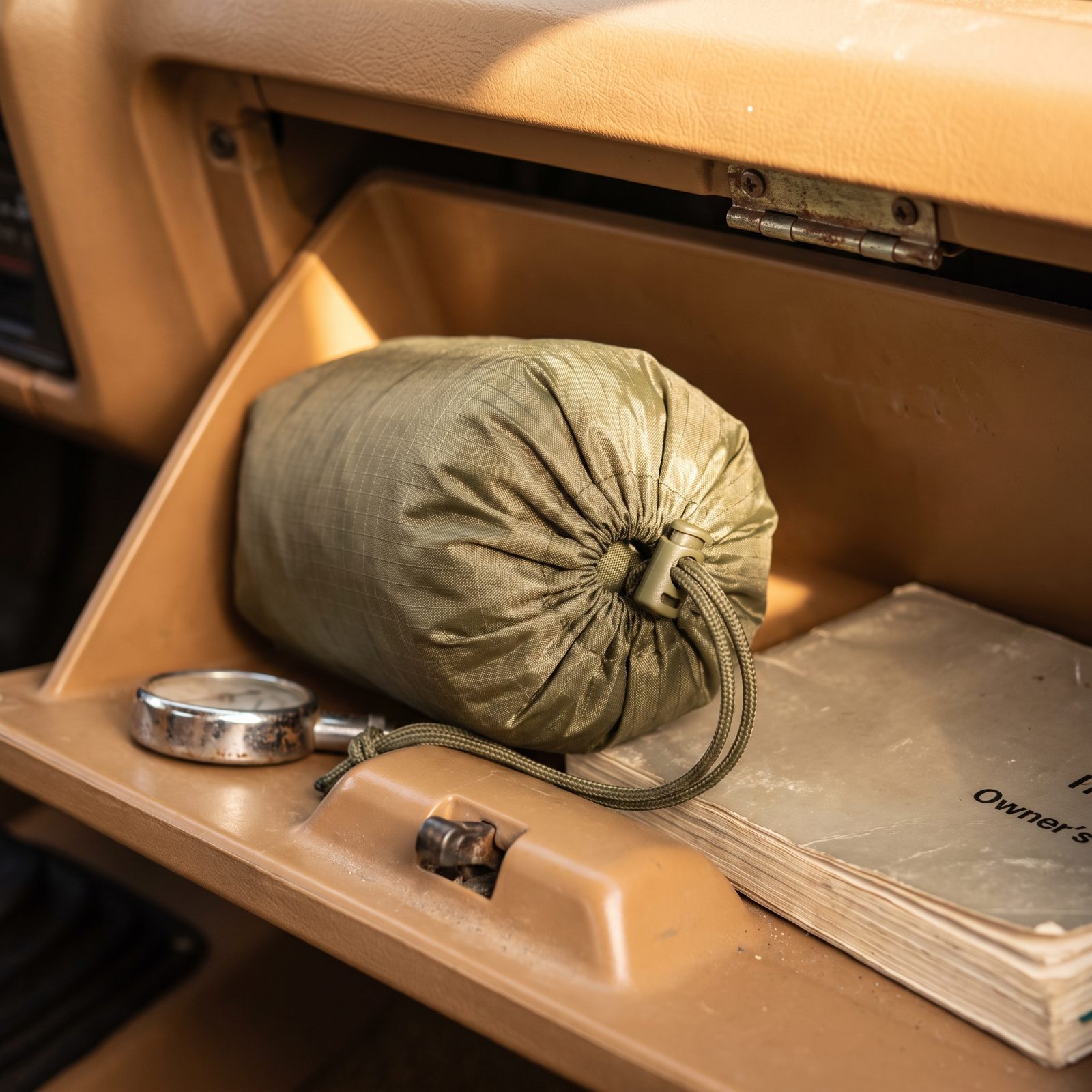
Changing a tire in a cold rain is misery, and misery makes people rush, and rushing is how folks get hurt standing a few feet from traffic.
A real poncho — not the throwaway kind that splits at the first seam — keeps you dry and keeps your head clear while you work the lug wrench. It packs into a stuff sack about the size of a soda can and rides in the glove box alongside the owner’s manual and tire gauge.
10. Factory-Sealed Emergency Water Pouches That Survive the Summer
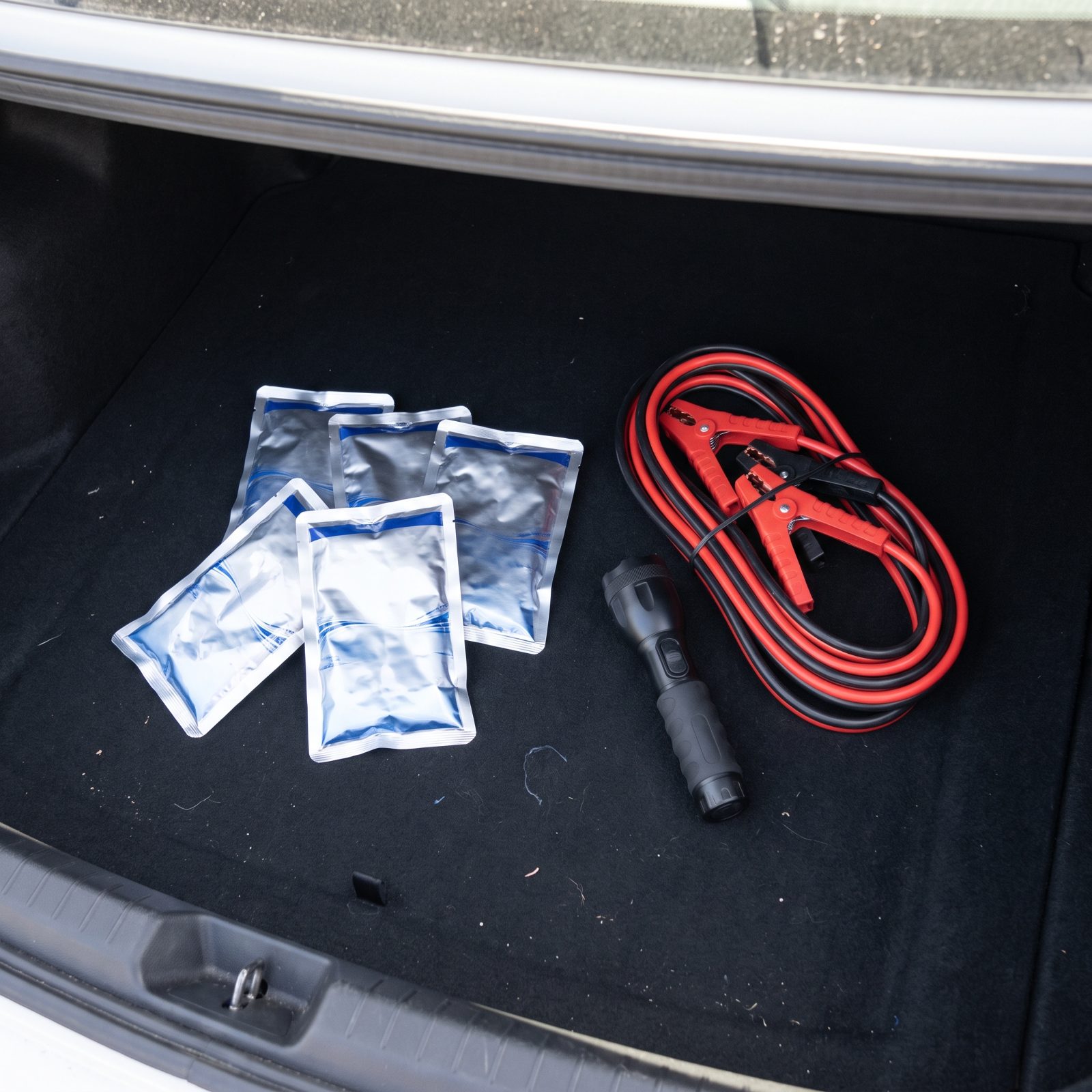
A plastic bottle left in a hot trunk through July goes soft, warps, and starts tasting like the plastic it came in. Then January rolls around, it freezes, and it splits.
Sealed pouches are built for exactly that kind of abuse. They ride through wild temperature swings for years without going off, lie flat so nothing rolls around under your spare, and give you something to drink when a breakdown turns into a long sunny wait on the shoulder. Toss a handful in the trunk. Forget about them until the day you’re glad they’re there.
9. A Pair of Dry Socks Sealed in a Zip Pouch
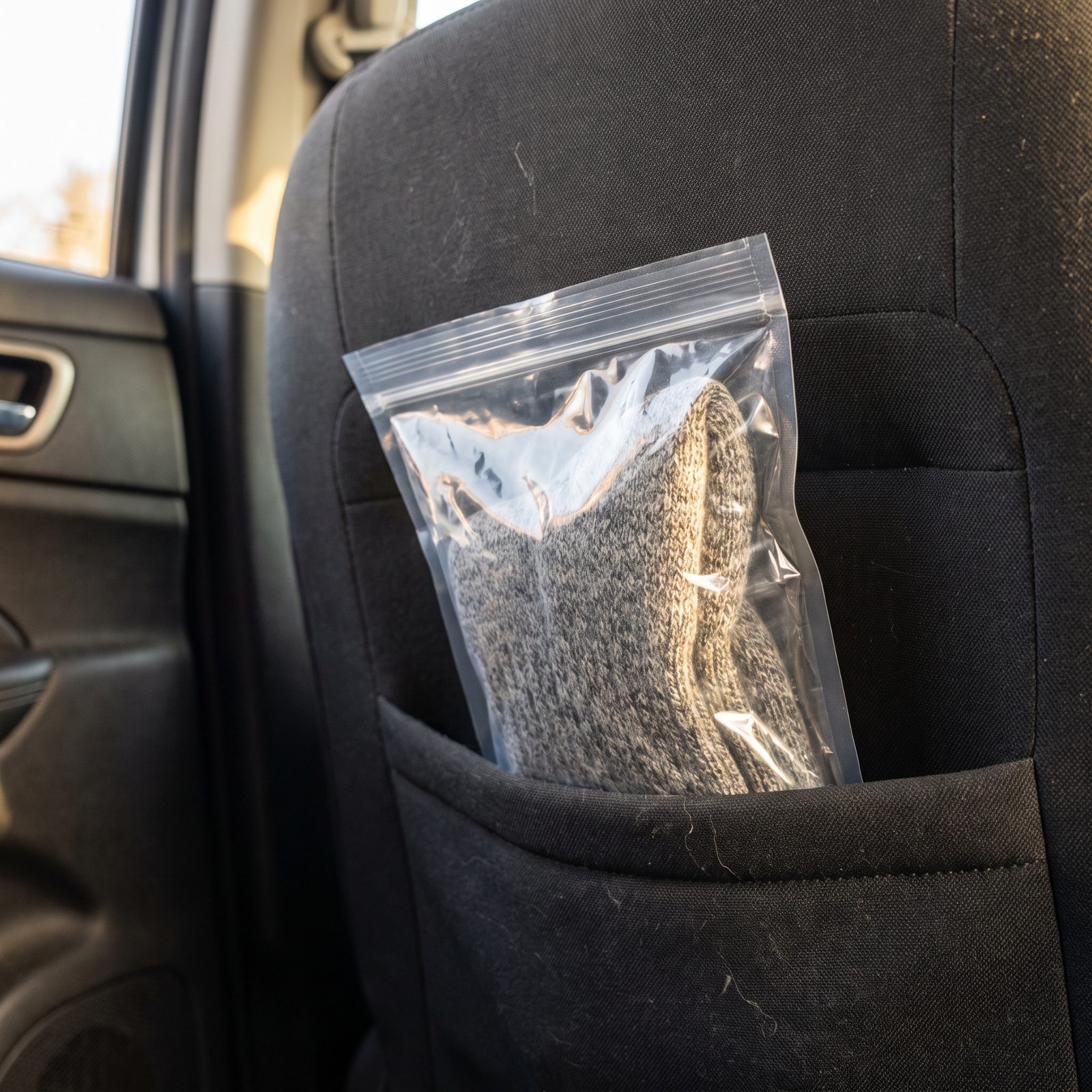
Here’s the one nobody expects. The people who’ve actually been stranded swear by it.
Wet feet in cold weather aren’t just uncomfortable — they’re how a bad night slides into a dangerous one. Step in a slush puddle while you’re setting out your triangles and those soaked socks start pulling heat out of you fast. A sealed bag keeps a spare pair bone dry for years. Make it thick wool, because wool still holds warmth when it’s damp. Small thing. Big payoff.
8. Sturdy Walking Shoes for the Hike You Did Not Plan
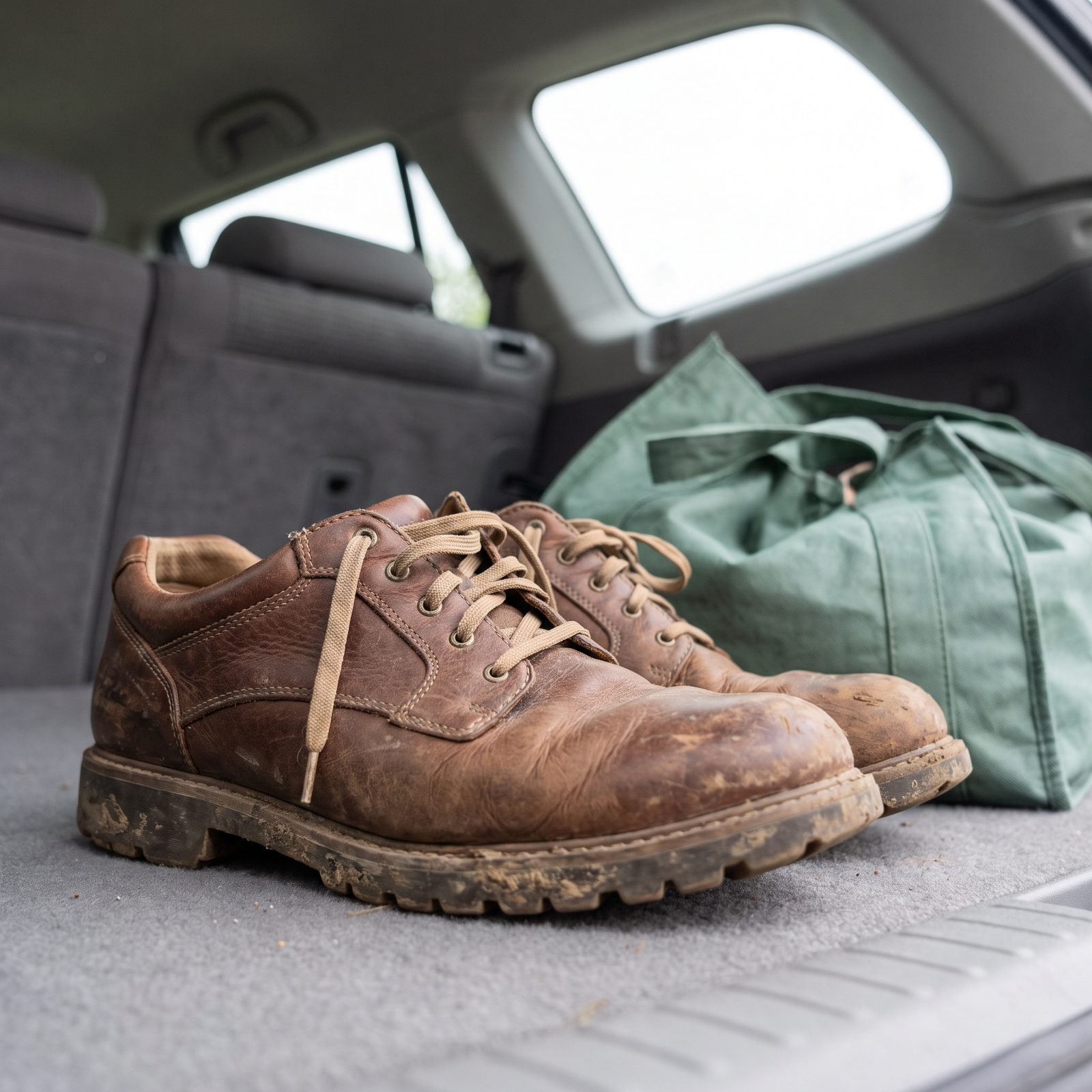
Picture the worst version of a breakdown. Phone dead, no signal, nearest exit three miles back. Now picture walking it in dress shoes or sandals.
A beat-up pair of real walking shoes in the cargo area costs you nothing but a little space, and the one time you need them, nothing else will do. Keep the pair you already retired from daily wear. Broken-in beats brand new when your feet have a long shoulder ahead of them.
7. A Current Paper Road Atlas Riding in the Door Pocket
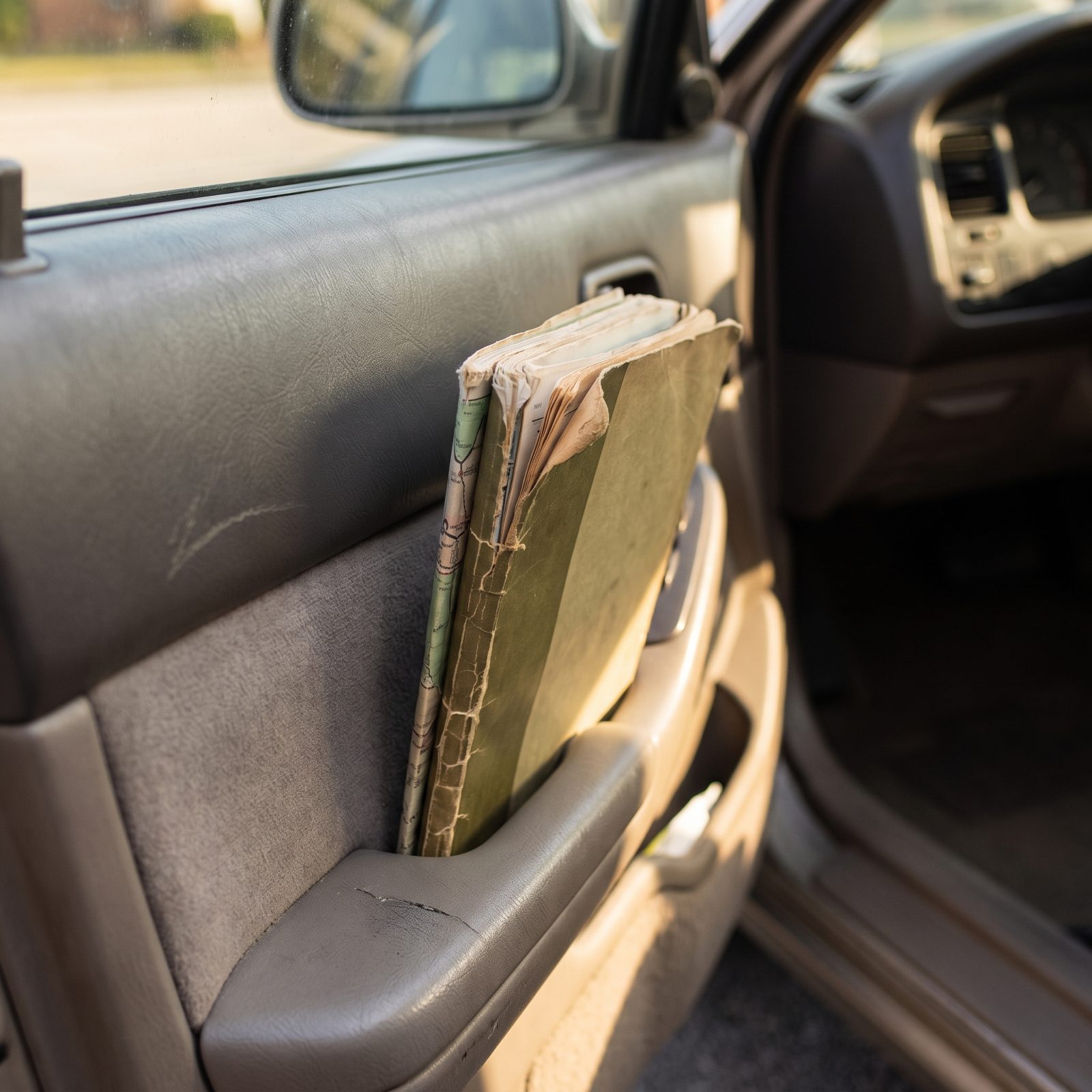
Phones die and signal drops the moment the scenery gets good, but a paper atlas doesn’t care about any of that. The surprise isn’t that experienced drivers keep one. It’s how often they actually use it, and how they swap in a fresh edition every few years so new roads and reroutes don’t catch them off guard.
Keep it in the door pocket, not the trunk. A map you can reach while parked on the shoulder beats ten of them buried under a spare tire. The whole-state view also does something a phone never will: it shows you where you are in relation to everything, not just the next turn.
6. A Laminated Emergency Contact and Medical Card in the Glovebox
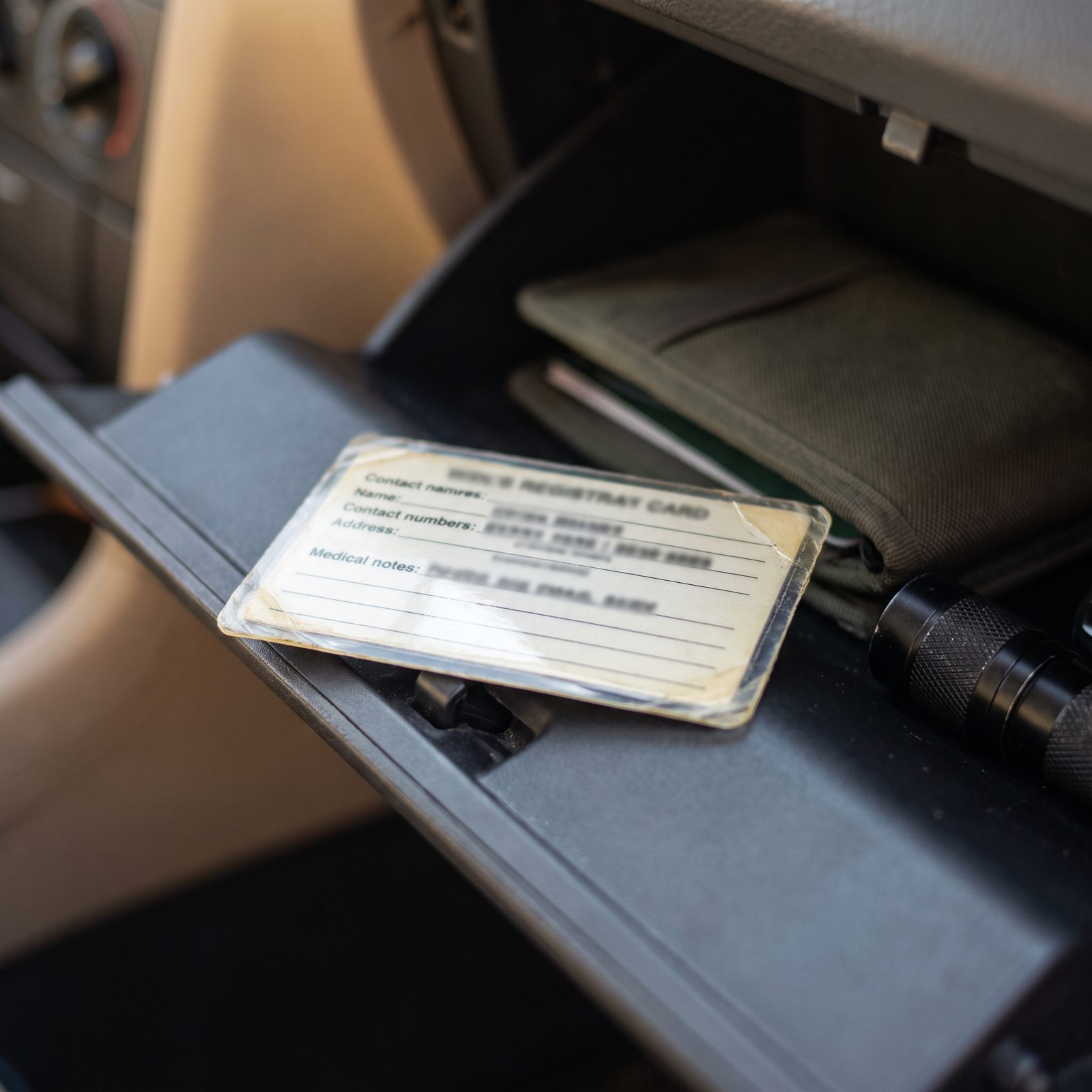
If something happens to you, the card speaks when you can’t. First responders check the glovebox and the visor before they go digging. A laminated card listing your name, address, an emergency contact’s name, phone, and email, plus a few notes tells them in five seconds what might otherwise take an hour of guessing.
Lamination matters more than people think. A paper card turns to pulp after one spilled coffee or one humid summer in a parked car. The plastic survives. Write it by hand if you want, then run it through a cheap pouch laminator or have the office supply counter do it for a couple bucks.
5. Small-Bill Emergency Cash Hidden in a Concealed Pouch
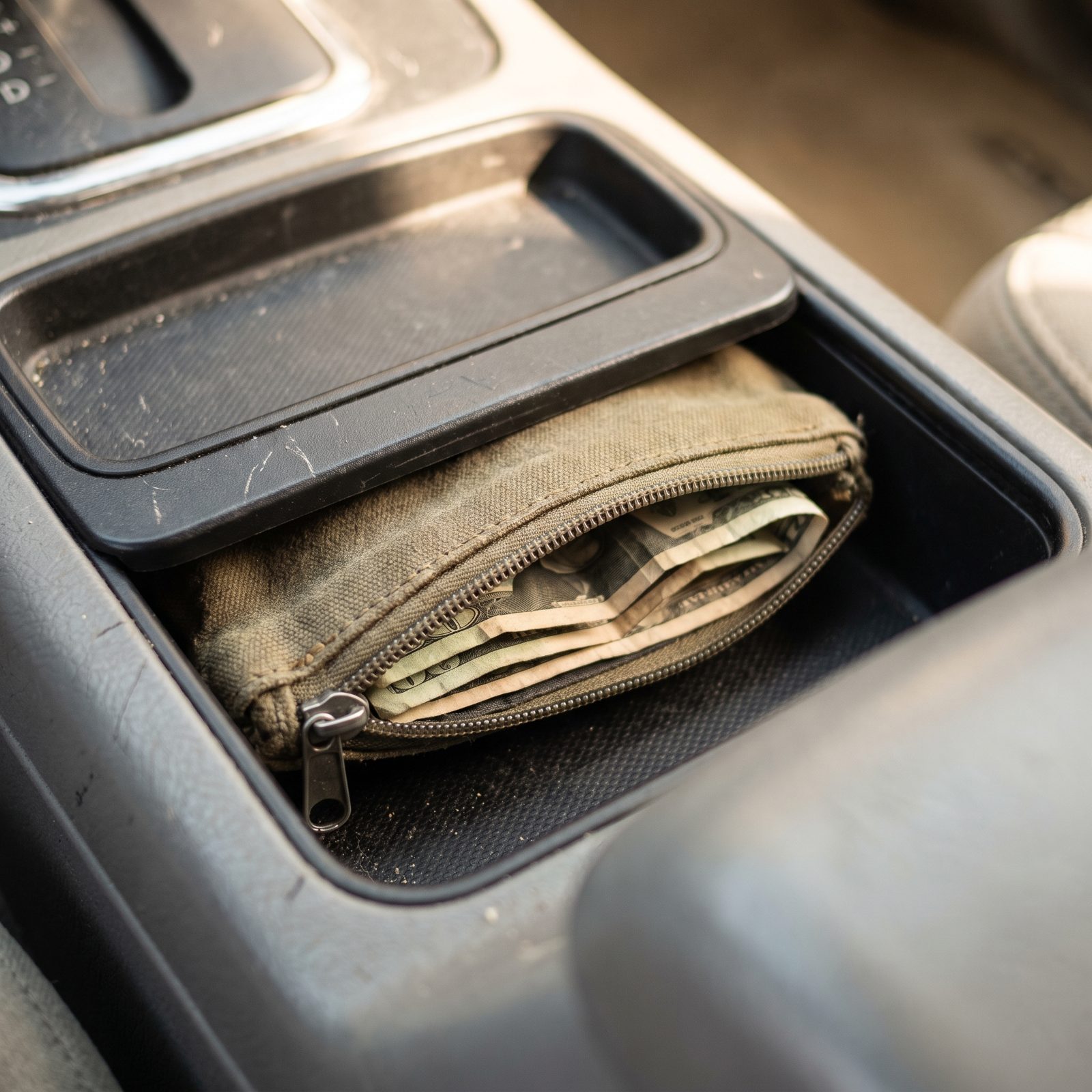
Cards get declined. Terminals go down. The one gas station still open at 2 a.m. in a town with a single stoplight might run cash only, and it absolutely will not take a tap on a phone that’s already down to four percent.
Keep small bills, not a single large one. A folded fifty does you no good when the toll is two dollars and the booth has no change. A folded stack of fives and tens in a concealed pouch covers a tow driver’s tip, a gallon of gas, a sandwich, or a pay phone in a dead zone. Yes, those still exist.
4. A Pocket OBD-II Scanner That Reads the Warning Code Before the Shop Does
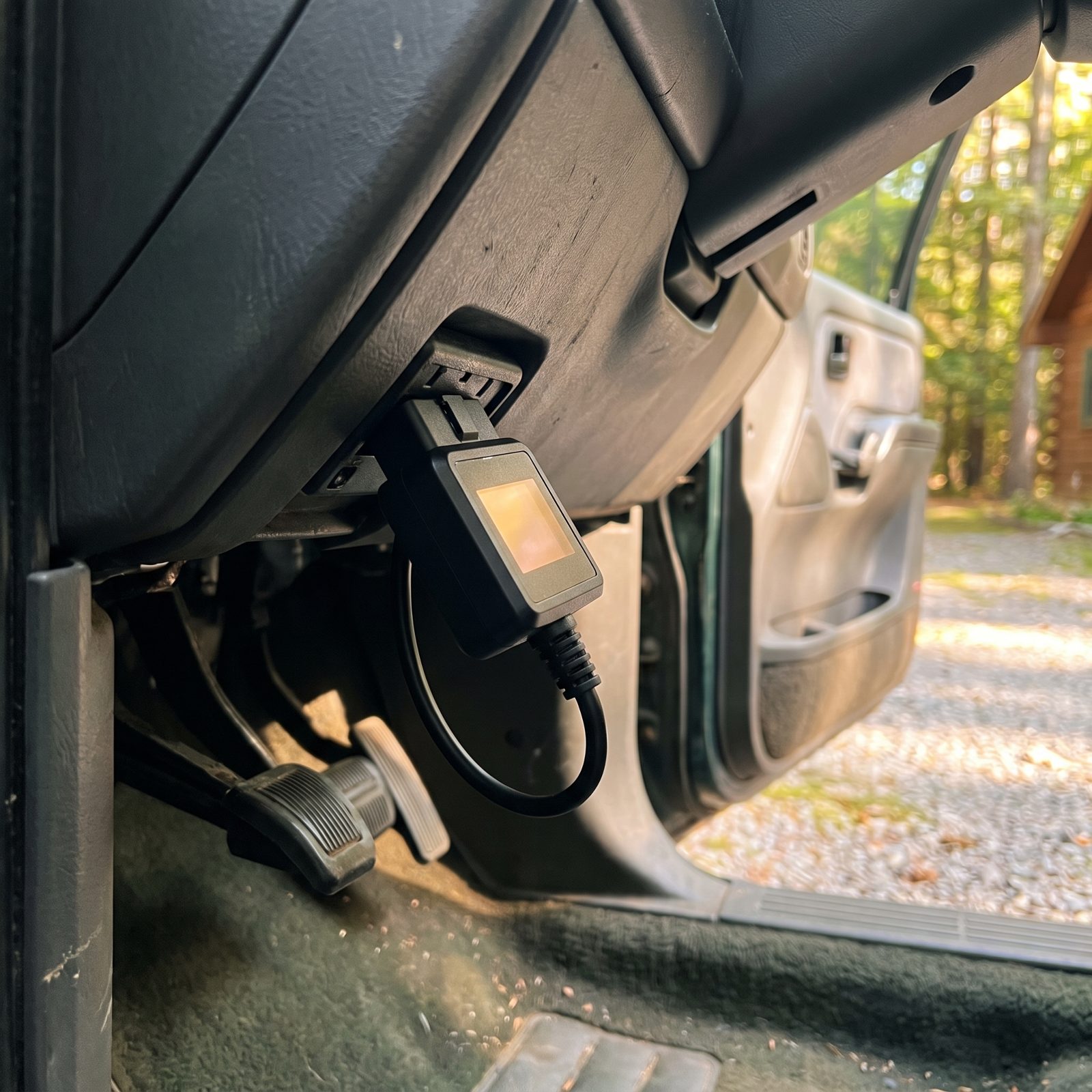
The check-engine light is a coward. It tells you something is wrong and then refuses to say what. A pocket scanner, the kind that plugs into the port under the dash and talks to an app on your phone, pulls the actual code in about thirty seconds.
That’s the difference between “pull over right now” and “a loose gas cap, keep driving, deal with it tomorrow.” It also means nobody at a shop can tell you the car needs a thousand dollars of work when the code is a cheap sensor. Drivers who’ve been burned love this one, because it moves the power from the service writer back to the person signing the check.
3. A Portable Tire Inflator With a Preset Auto-Shutoff
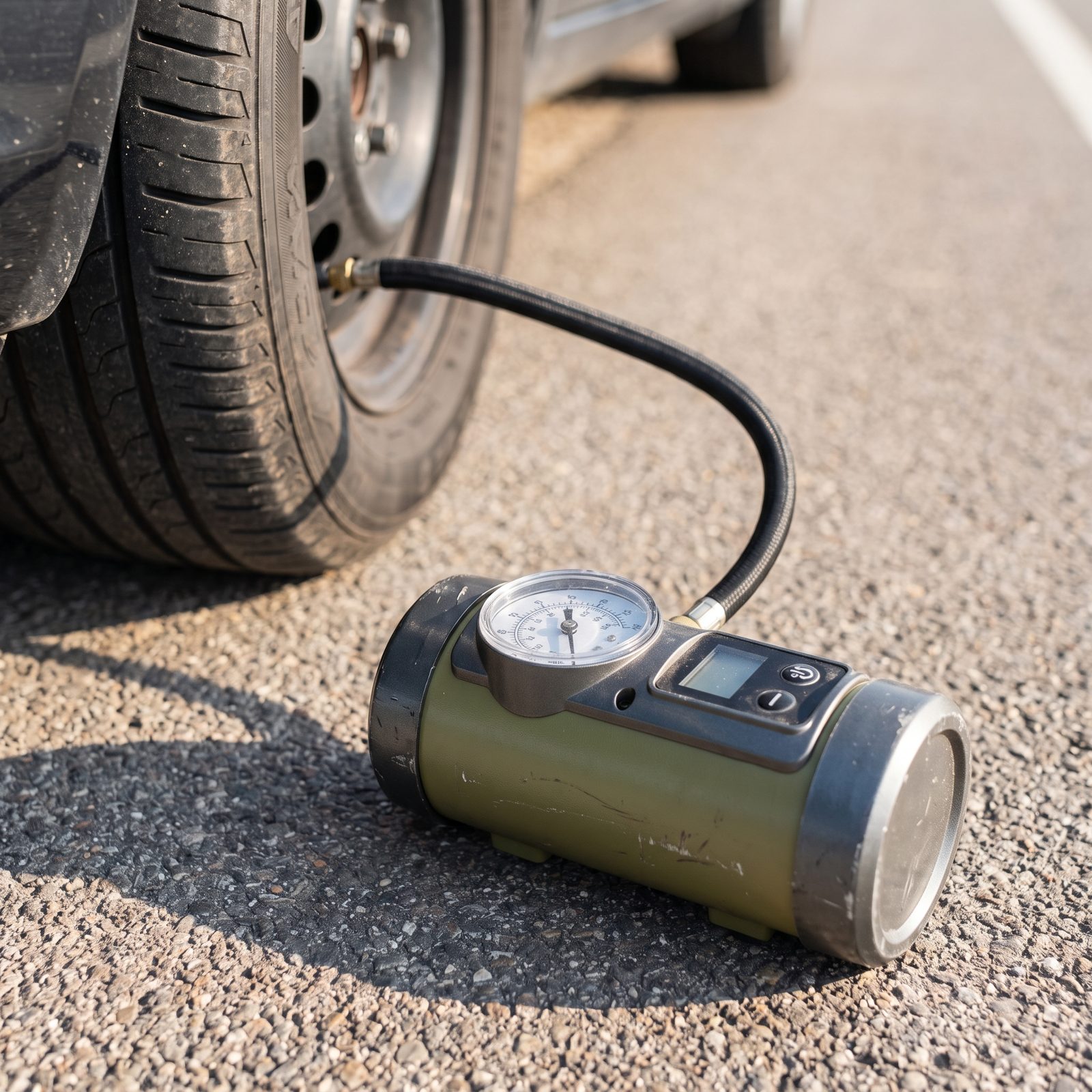
A slow leak doesn’t need a tow. It needs ten pounds of air and a calm drive to the nearest shop. A cordless inflator with a preset shutoff lets you dial in the number, walk away, and let it stop on its own instead of babysitting a gauge in the cold.
The auto-shutoff is the detail nobody mentions. Older pumps overfilled tires constantly, because you had to eyeball it while your hands froze. Set it to the number on the door jamb, not the number on the tire sidewall. Those are two different figures, and mixing them up ranks among the most common mistakes going.
2. A Lithium Jump Pack With Protected Clamps You Can’t Spark
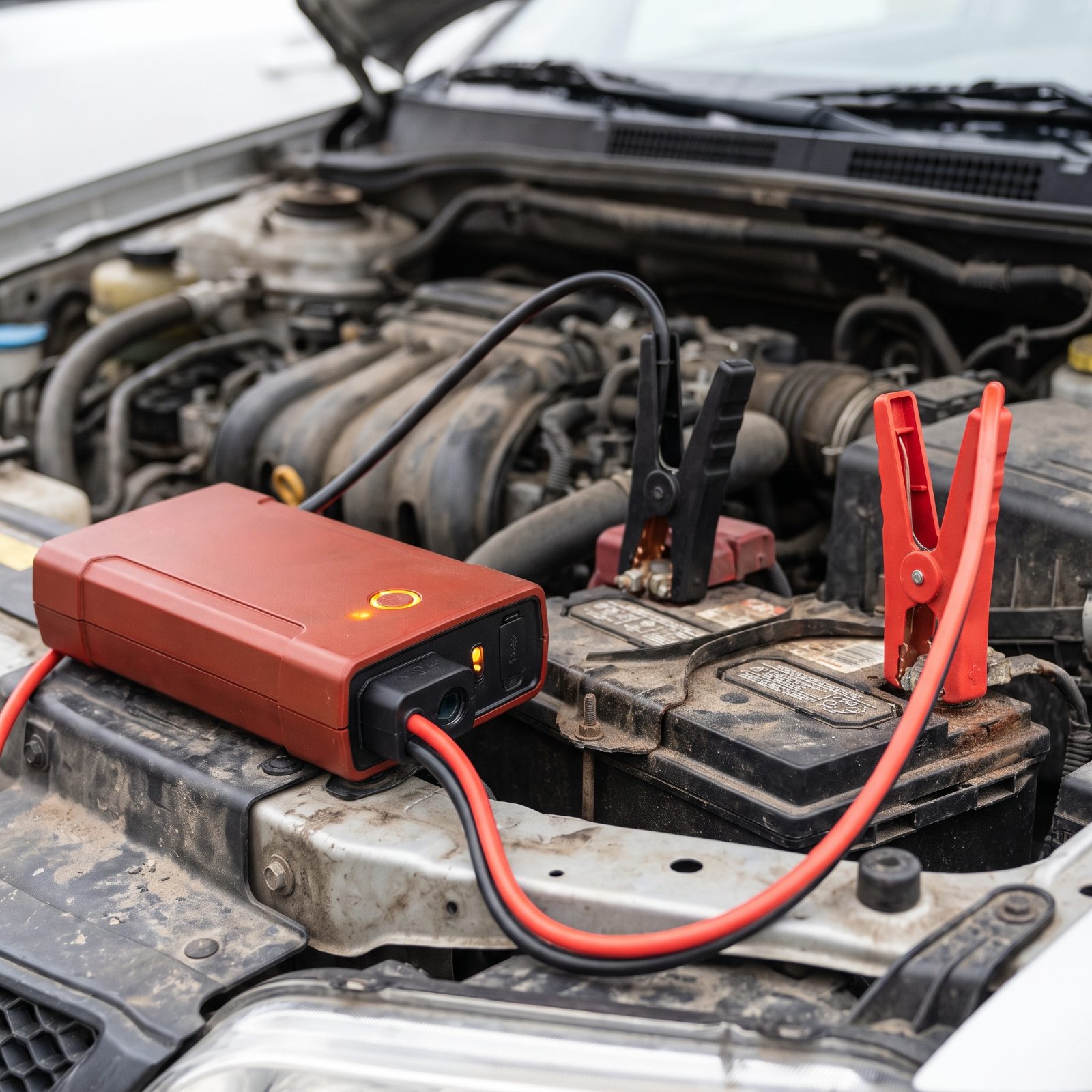
A dead battery used to mean flagging down a stranger, hoping he had cables, and hoping harder that neither of you clamped the wrong terminal. The lithium jump pack killed that whole ritual. It lives in the glovebox, holds a charge for months, and fires a stalled engine on its own.
The feature worth paying for is reverse-polarity protection on the clamps. Clip them backward and nothing happens. No spark, no fried electronics, no drama. For anyone who grew up watching a careless jump throw blue sparks across a cold morning, that alone earns the price.
1. A Charged Power Bank With the Cable Already Built In
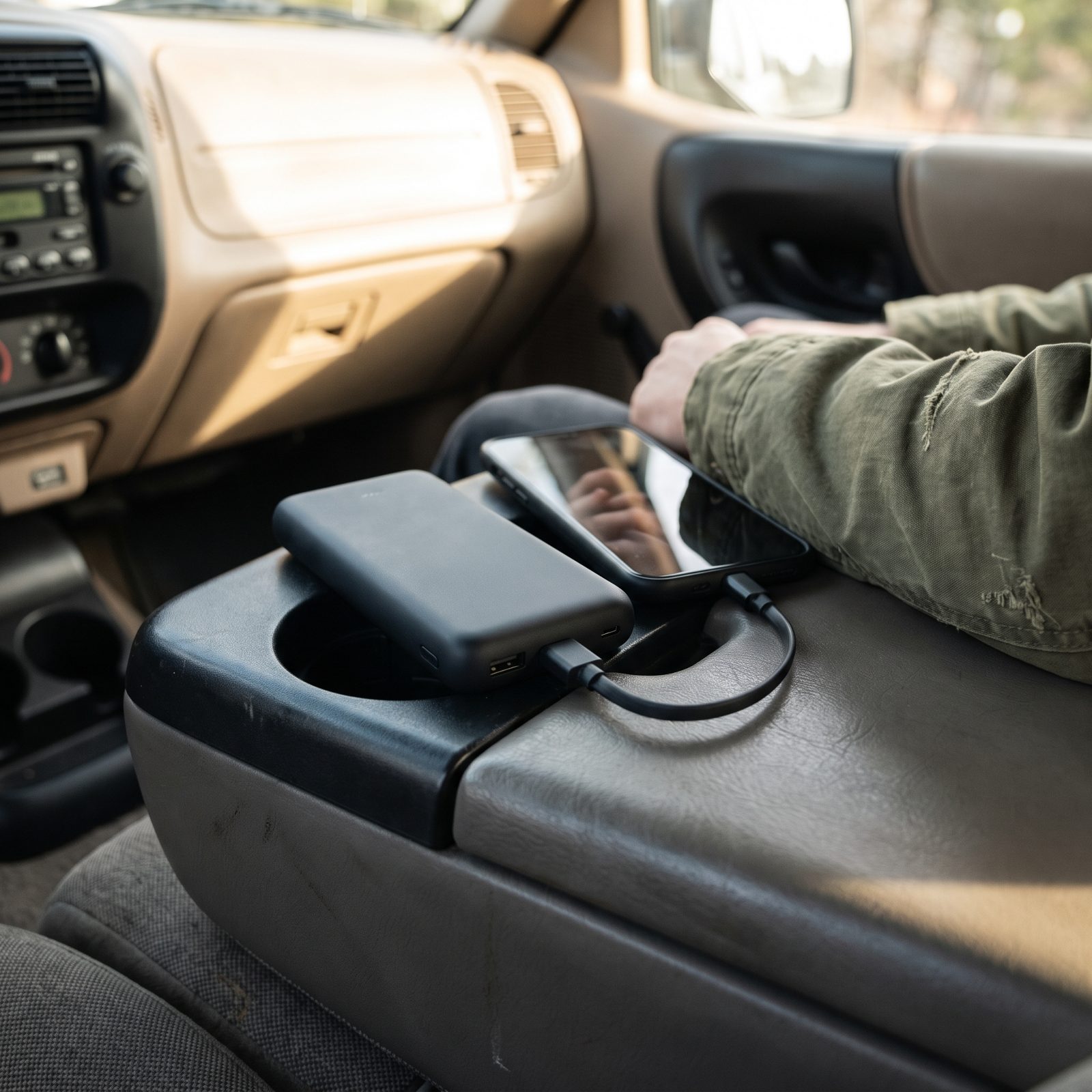
The forgotten charging cable is the oldest curse in the glovebox. You pack the power bank, leave the cable at home, and now you’ve got a dead brick sitting next to a dead phone. A power bank with the cable built right into the body solves the whole mess.
Keep it charged, which is the part everyone skips. A power bank at zero percent is a paperweight. Top it off once a month, stash it in the console, and it’ll run your phone through a long wait for a tow with charge to spare. The best emergency item is the one that works the day you reach for it.