
Would you like to save this?
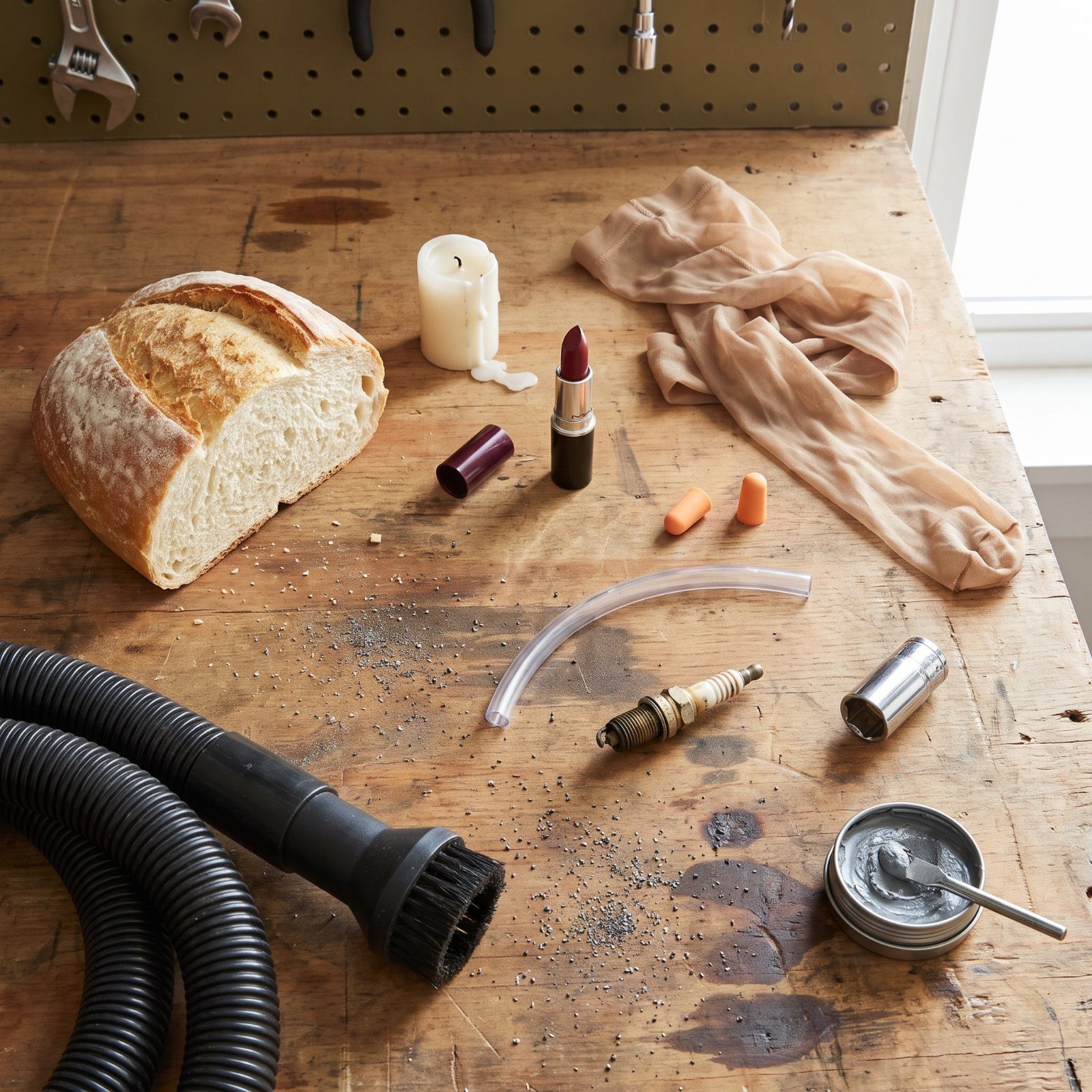
A loaf of white bread sitting on the workbench next to a bearing puller looks like a mistake. It isn’t. Some of the smartest fixes in a home garage come from objects that have no business being there — candle stubs, old pantyhose, a tube of lipstick swiped from a bathroom drawer. These aren’t gimmicks or internet dares. They’re the shortcuts old-timers kept to themselves because they sounded too dumb to work, and then they went right ahead and worked anyway. Here are the ones worth stealing.
Please note that some of the images in this article were created with the assistance of AI.
42. Pack Bread Behind a Pilot Bushing to Push It Out
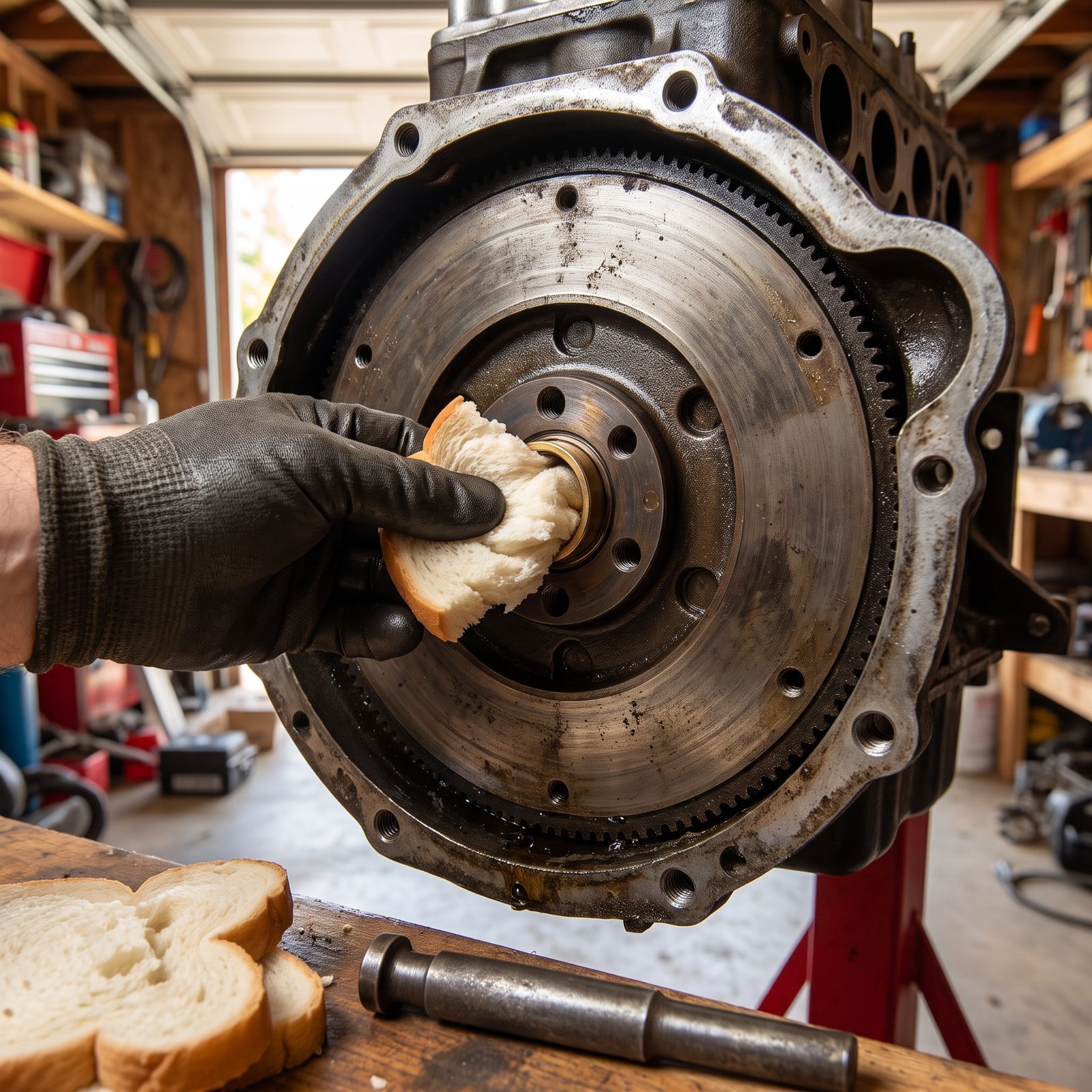
Nobody believes this one until they try it. A pilot bushing sits deep in the crankshaft with no way to grab it from behind, so you pack the cavity full of white bread, drive a drift or the right-size dowel in behind it, and the hydraulic pressure of the trapped bread forces the bushing right out. Messy, absurd, and it beats the forty-dollar puller you’d buy once and lose.
Grease works too. But grease flings everywhere, and bread stays put and cleans up with a shop rag.
41. Touch Candle Wax to Heated Threads on a Seized Fastener
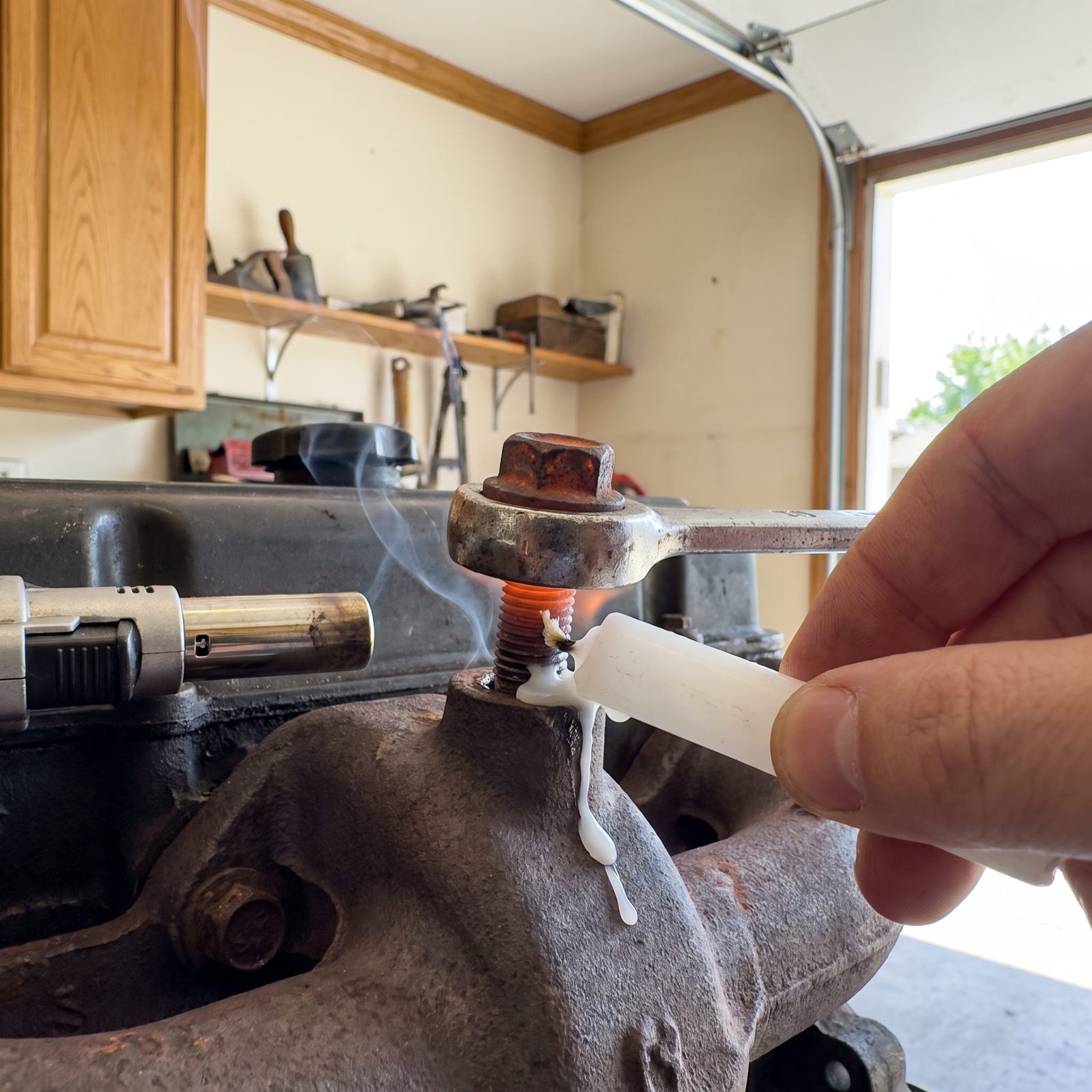
Penetrating oil is great until the fastener is genuinely cooked onto its threads by years of heat and rust. Warm the nut with a torch, back it off a hair, then touch the tip of a plain candle to the threads. The wax melts and wicks down into the hot joint by capillary action, reaching deeper than oil ever does on a seized bolt.
Here’s the logic: wax flows thin when it’s hot and grips when it cools, filling the microscopic gaps rust leaves behind. Bone-dry exhaust studs that laughed at WD-40 will often give up after this.
40. Slightly Depress the Brake Pedal Before Opening a Hydraulic Line
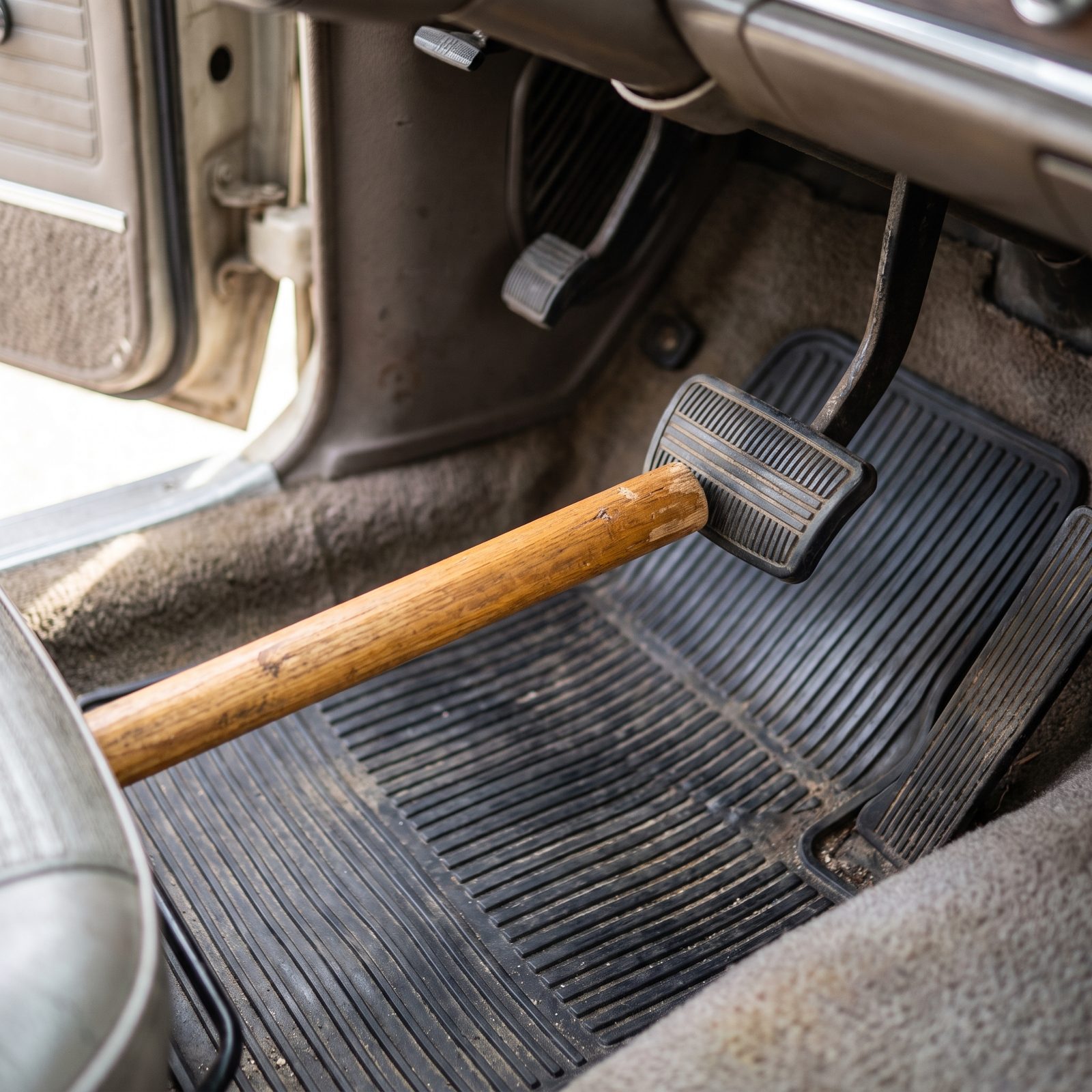
This one saves you an hour of pumping air out later. Before you crack open a brake or clutch hydraulic line, wedge a stick to hold the pedal down about an inch. That light pressure closes off the compensating port in the master cylinder, so fluid won’t keep draining out and air won’t keep sneaking back in while you work.
Less fluid on the floor, less air in the system, and a bleed job that goes fast instead of fighting you.
39. Slip Plastic Wrap Beneath a Fluid-Reservoir Cap to Slow Drainage
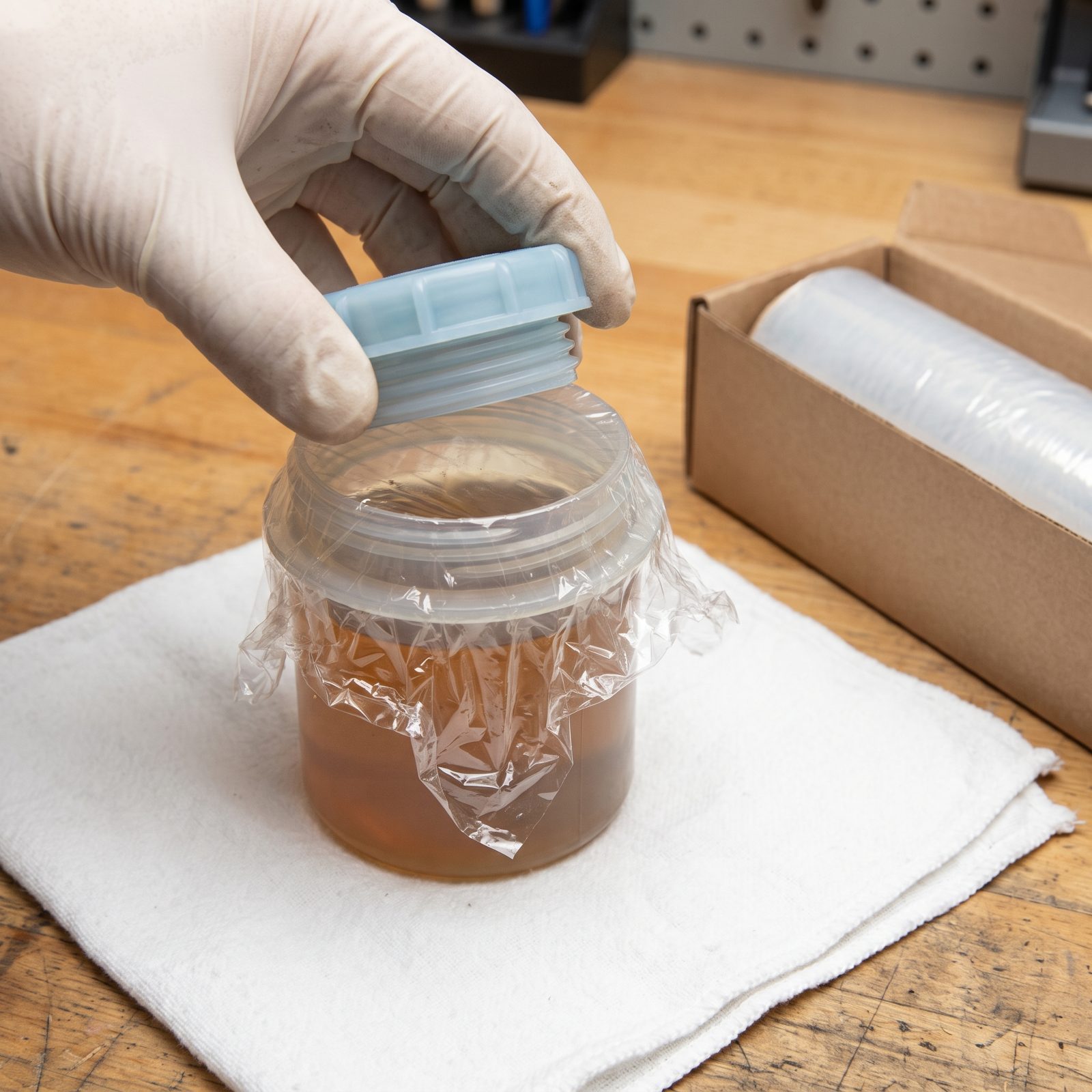
Pop the cap and gravity empties the line below while you fumble with the fitting. So lay a square of plastic wrap over the neck opening and screw the cap back down over it — the film holds a light seal, and when you open a hose or filter downstream, the fluid barely trickles instead of gushing.
Same idea as a thumb over a straw. Coolant, brake fluid, power-steering reservoirs, fuel lines on carbureted setups. Works on all of them.
38. Mark a Misaligned Hood Latch With Lipstick
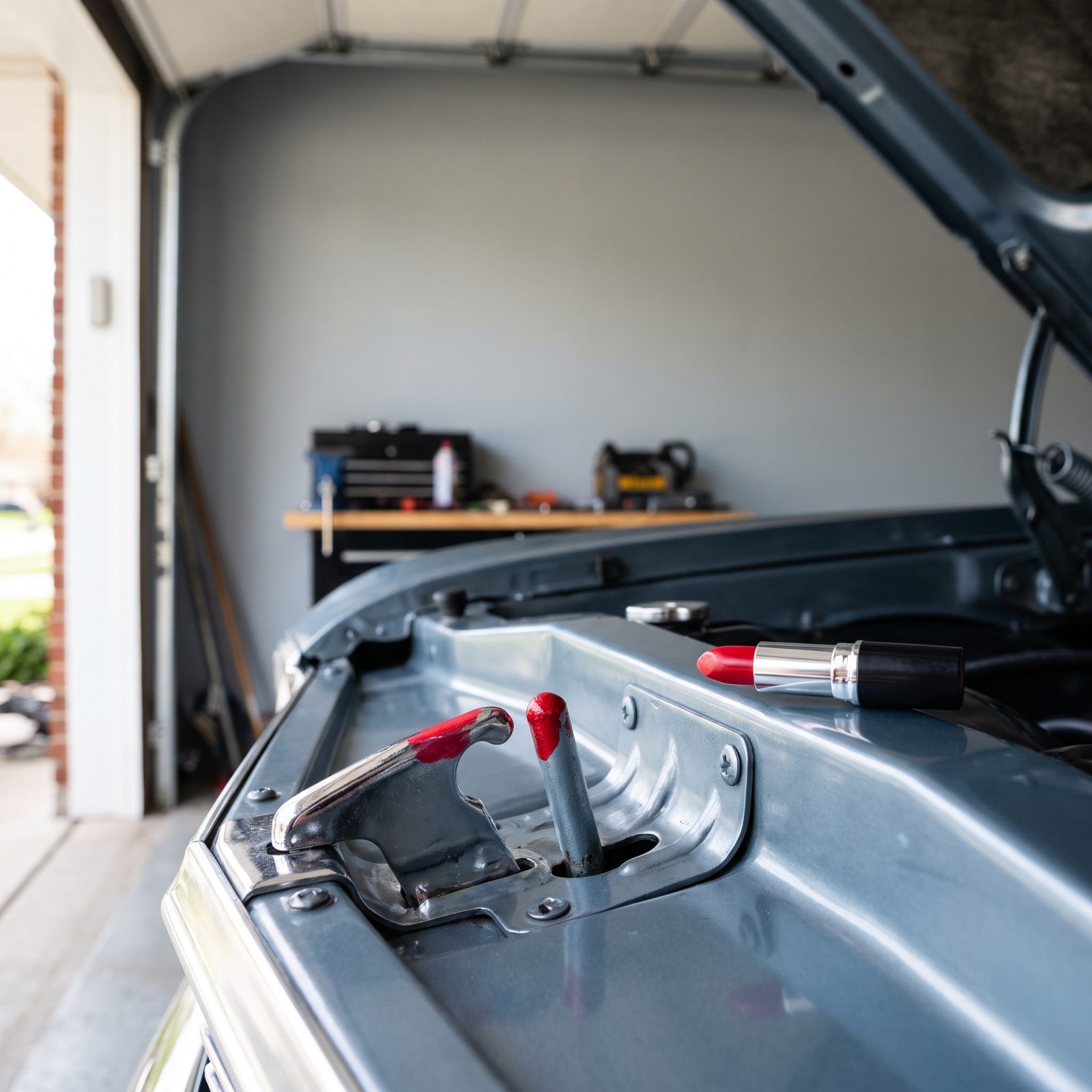
Hood latches, door strikers, panel gaps. Anywhere two parts meet and you can’t see exactly where they touch, lipstick tells the truth. Dab a blob on the tip of the striker pin and the latch hook, close the panel, and the transfer mark shows precisely where contact happens and where it misses.
Machinist’s dye does the same job for more money. Lipstick is cheaper, stays sticky, and wipes off with a rag (including the stray smears that inevitably end up on the chrome emblem while you work) — and the reds show up best against bare or painted metal. Sounds ridiculous until you’ve chased a rattling hood for a whole afternoon with no idea why it won’t seat.
37. Stretch Pantyhose Over a Shop-Vac Nozzle to Catch Lost Hardware
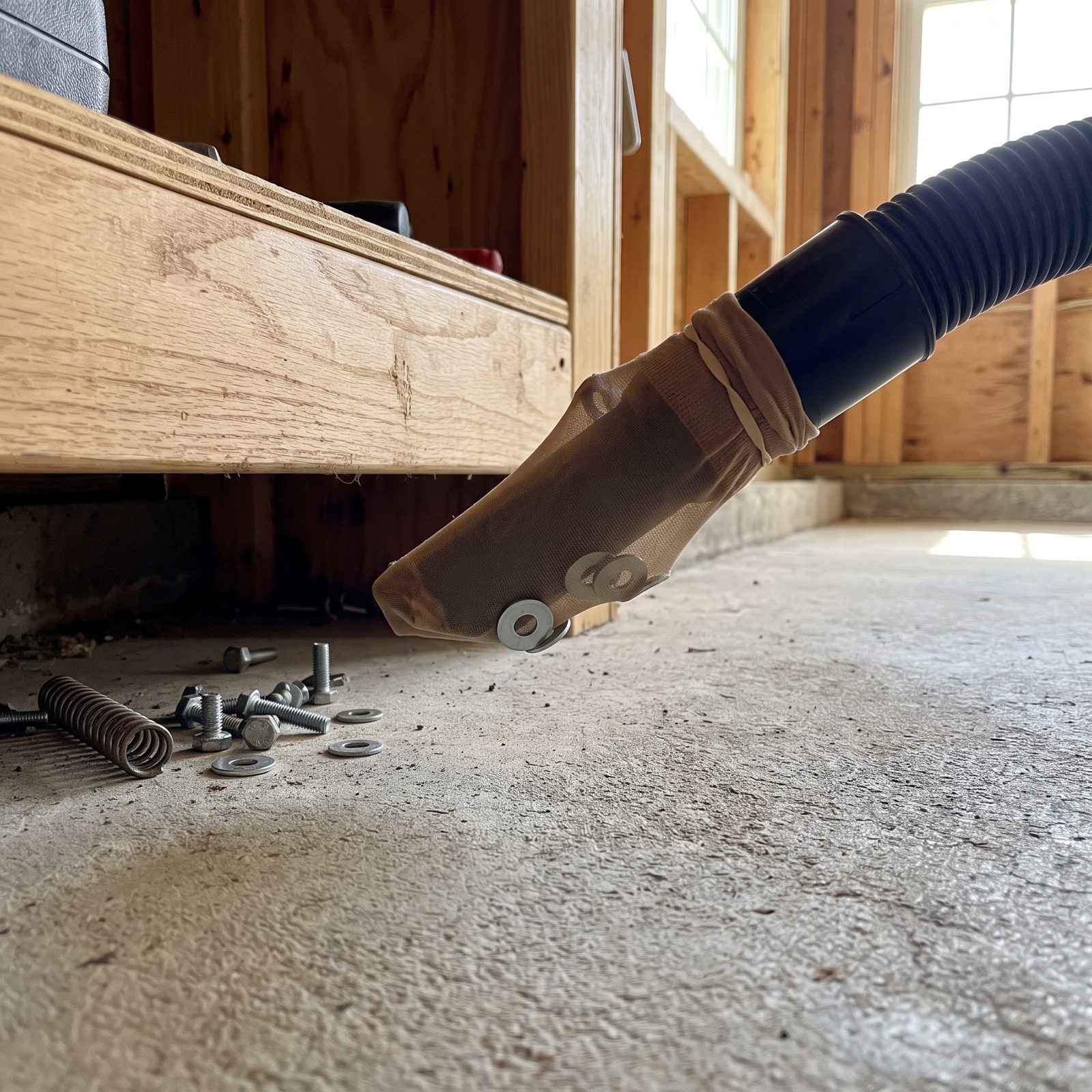
You drop a tiny spring clip and it vanishes into the gravel of the garage floor or under a rack where your hand won’t fit. Stretch an old pair of pantyhose over the shop-vac nozzle, snap a rubber band around it, and vacuum the area. The suction pulls the part up and the nylon catches it before it disappears into the canister.
Peel your bolt off the surface of the stocking and keep going. Nothing finds dropped hardware in a tight spot faster, and it costs nothing you didn’t already have in a drawer.
36. Wedge a Paper Strip Into a Socket to Hold a Nut
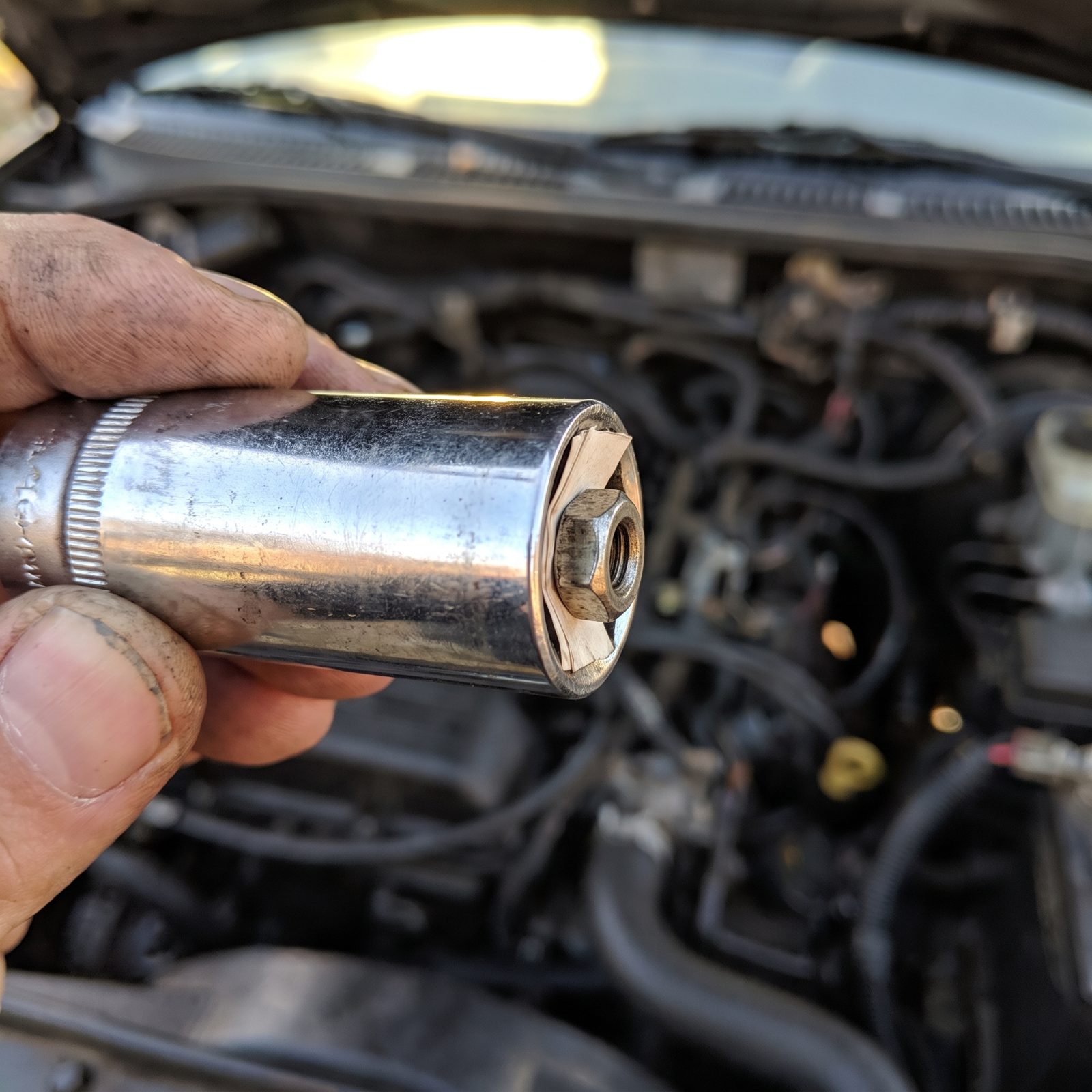
No magnetic socket, no spare set of hands, and the nut has to go on a bolt buried somewhere your fingers can’t reach. Fold a narrow strip of paper and wedge it along the inside wall of the socket. It pinches the nut just enough to hold it in place while you feed the socket down to the bolt.
Cheaper than a magnetic socket. And it works on stainless or brass fasteners where a magnet does nothing at all.
35. Start Spark Plugs With a Short Piece of Rubber Hose
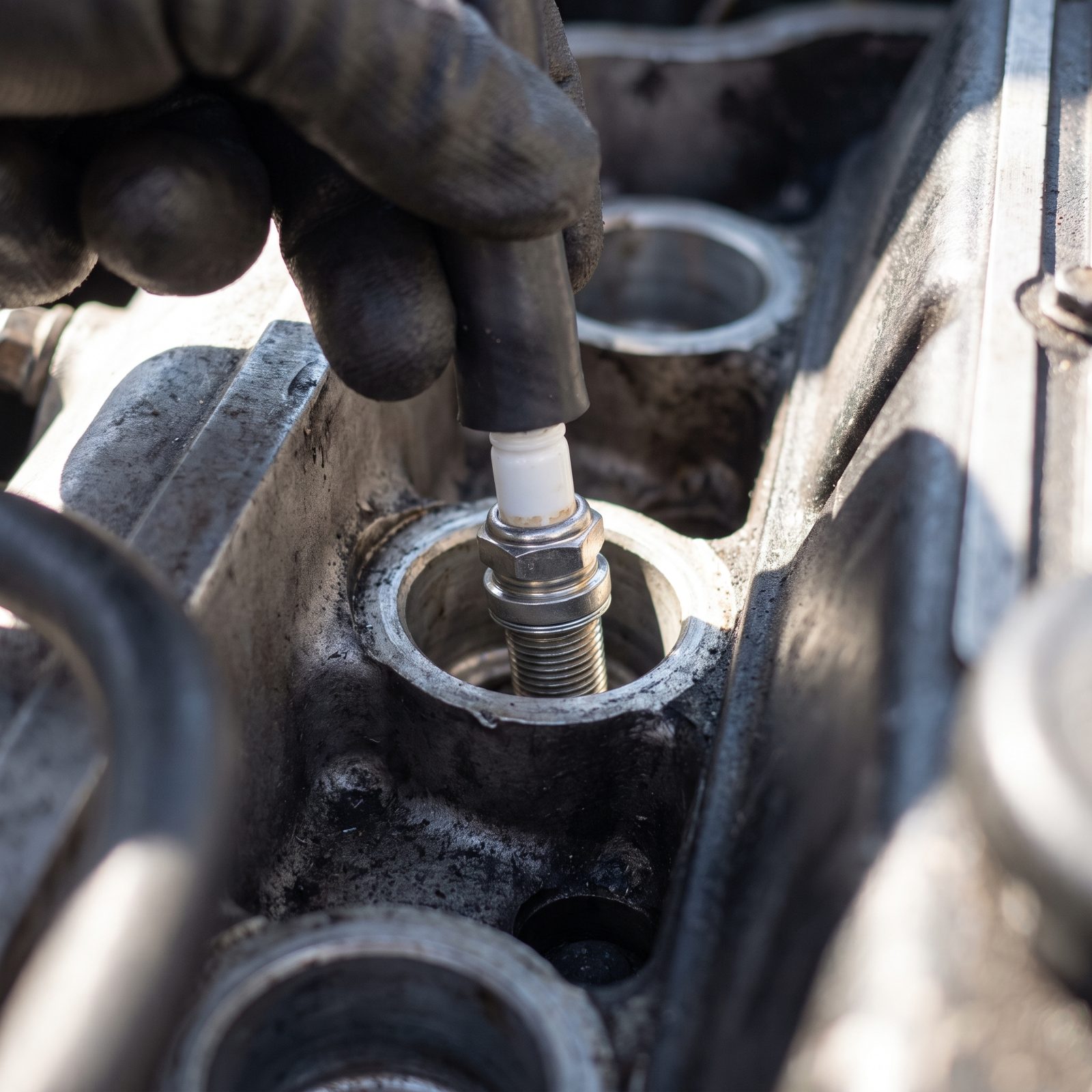
Cross-threading a spark plug into an aluminum head is an expensive mistake, and the deep recessed wells on modern engines make it easy to do. Push a six-inch length of rubber hose over the plug terminal and use the hose to lower and thread the plug by hand.
If the plug catches wrong, the hose slips on the terminal instead of forcing the cross-thread. You get a feel for the threads you can never get with a socket and a long extension. Finger-tight? Pull the hose off and finish with the wrench.
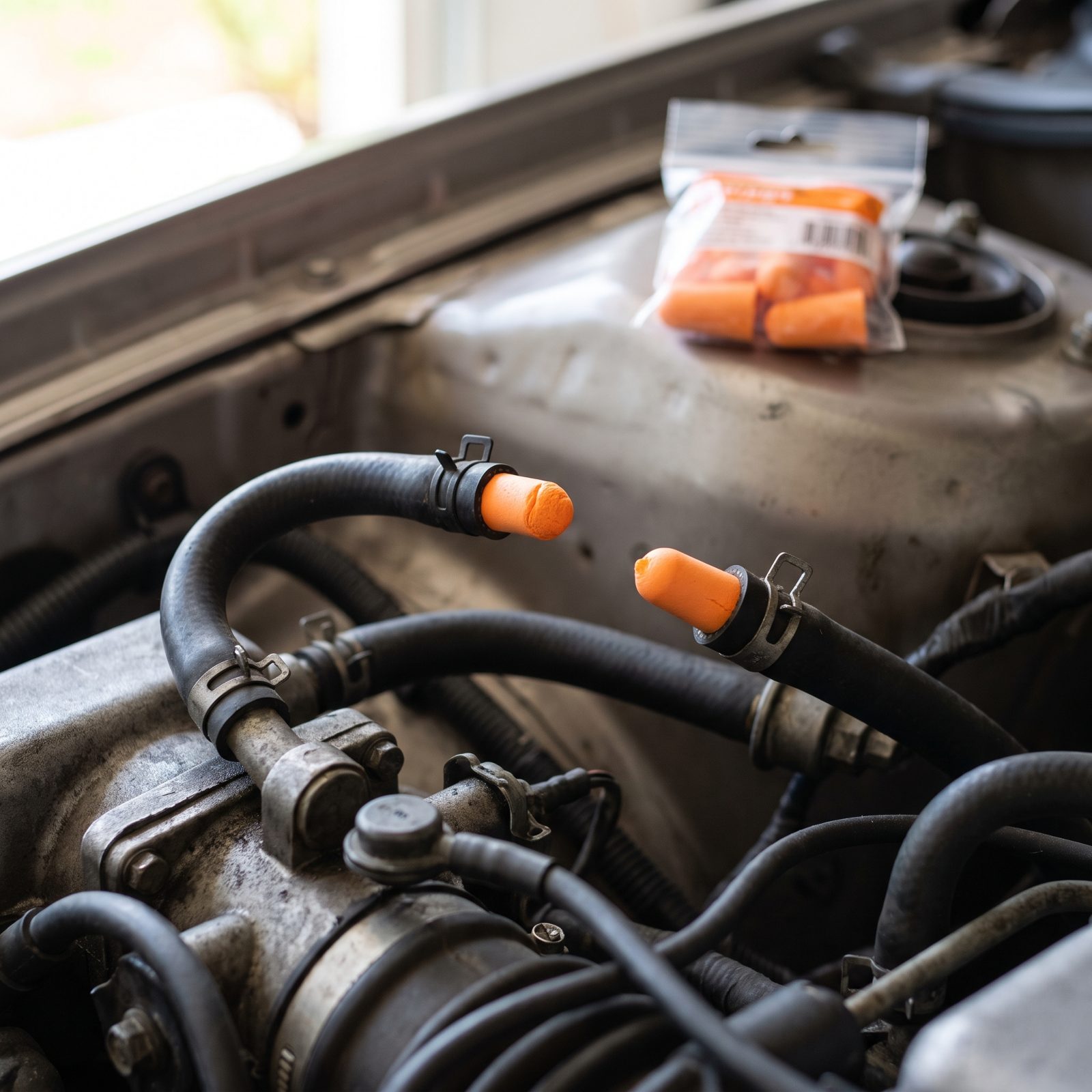
34. Seal Open Hoses With Clean Foam Earplugs
Would you like to save this?
Disconnect a fuel line or vacuum hose and you need to cap it fast before fluid drains or dirt gets in. Clean foam earplugs are already shaped for the job. Compress one, push it into the hose end, and it expands to a snug seal.
They come in a range of sizes in one cheap box, they’re disposable, and they won’t scratch a fitting the way a golf tee or a bolt might. Keep a handful in the glove box for roadside work.
33. Add Valve-Grinding Compound to a Slipping Screwdriver Tip
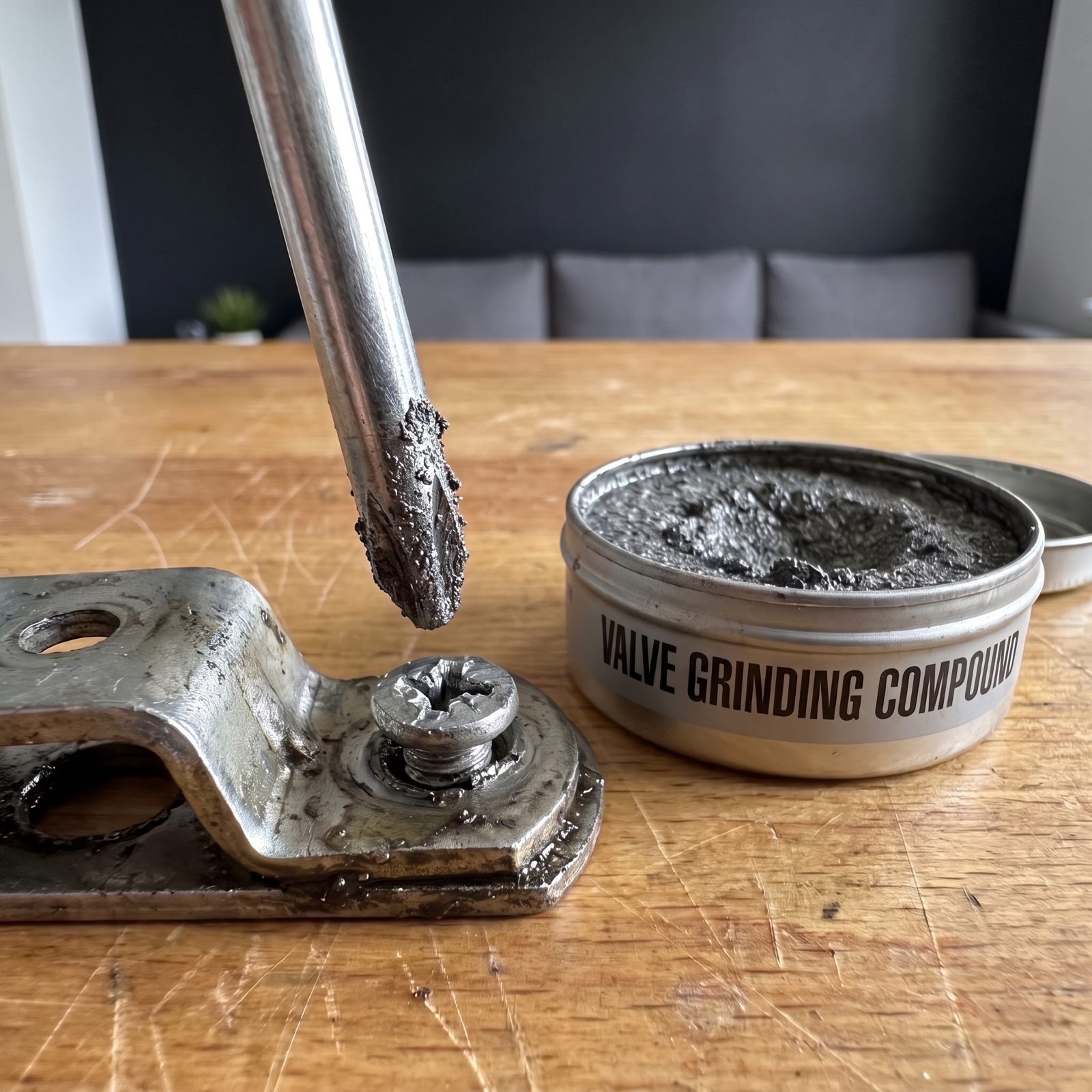
The screw head is chewed up and your driver keeps camming out, stripping it worse every turn. Pack valve-grinding compound onto the tip before you set it in the slot — a generous, packed-on coat gives the grit plenty to work with. The grit bites into the metal and gives the driver purchase it otherwise can’t find.
It’s the same abrasive paste you’d use lapping valves, which most engine guys already have on the shelf. A coat of it is the difference between backing a stubborn screw out and reaching for the drill — worth remembering before you resort to an extractor.
32. Wrap Tape Around a Universal Joint to Stop the Flop
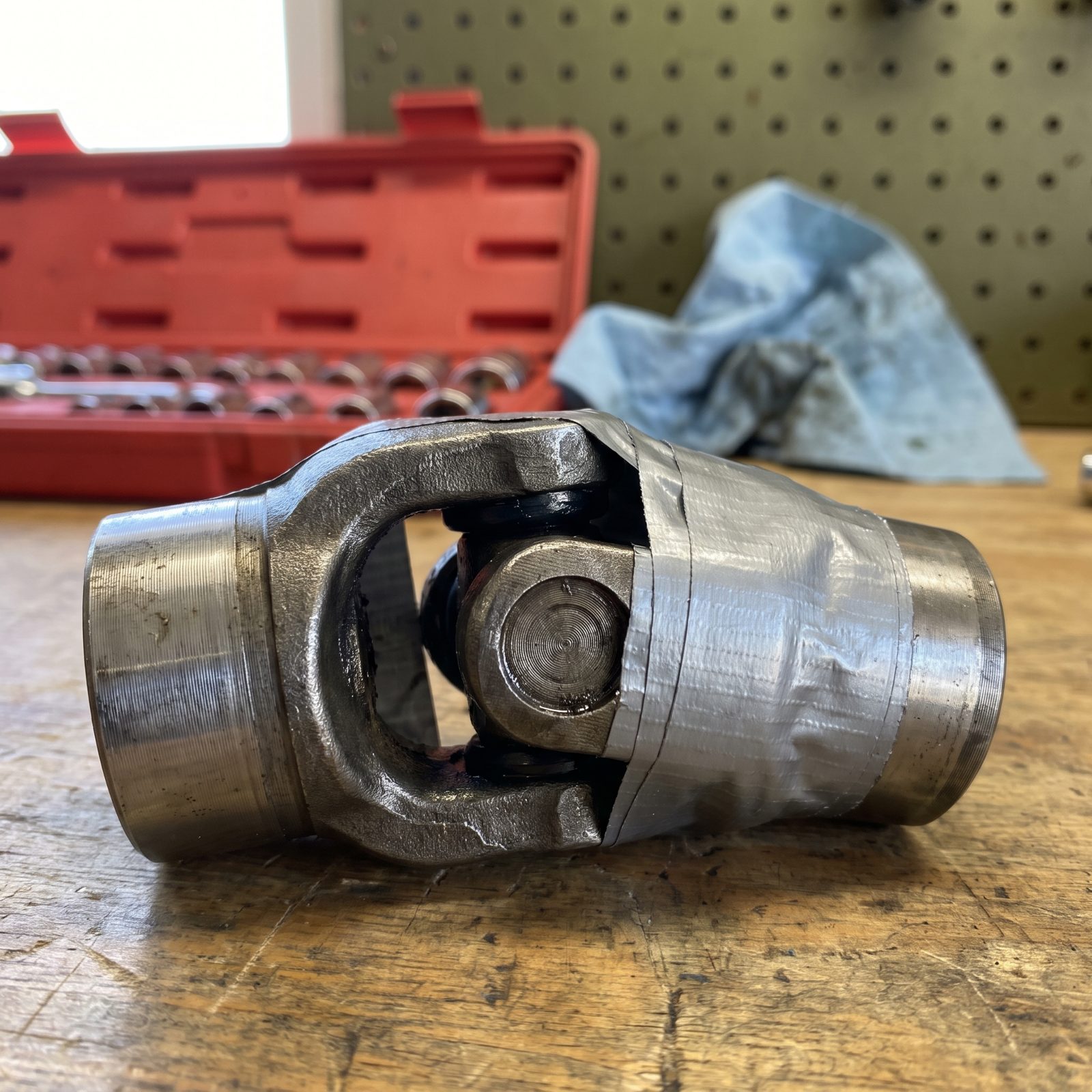
Anyone who has rebuilt a driveshaft knows the maddening part: free a U-joint and the yokes swing every direction at once while the needle bearings threaten to spill. Lining it all up while it flops is a two-hand job, and you’ve got one hand.
A few wraps of tape lock the whole assembly rigid. It holds the caps seated, keeps the angle fixed, and lets you position it exactly where it needs to go before it drops into the yoke. Peel the tape, press the clips home, done.
31. Blow a Stubborn Rubber Grip Loose With Compressed Air
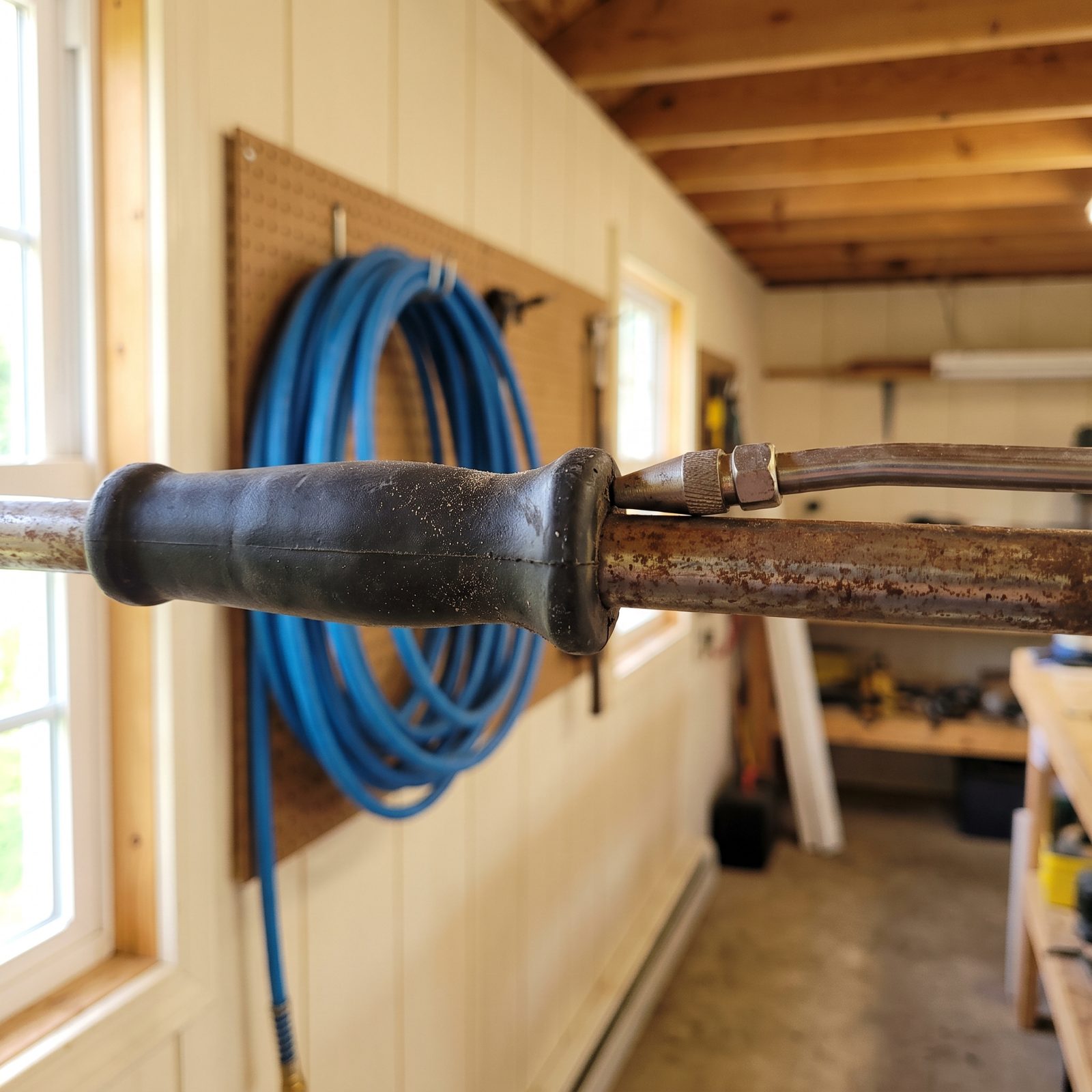
Pulling a rubber grip off a bar is a fight you usually lose, and when you win you’ve torn the grip. Those things suck down onto metal like they were molded there.
Slip the tip of a blow gun under the lip and give it a short burst. The air inflates the grip from the inside, breaks the suction, and it slides free with almost no effort. Same trick reseats a new grip — the air floats it on for a second before it grabs. Keep the pressure low. You’re persuading it, not launching it across the garage.
30. Drag Fingernails Across Bar Soap Before the Dirty Work
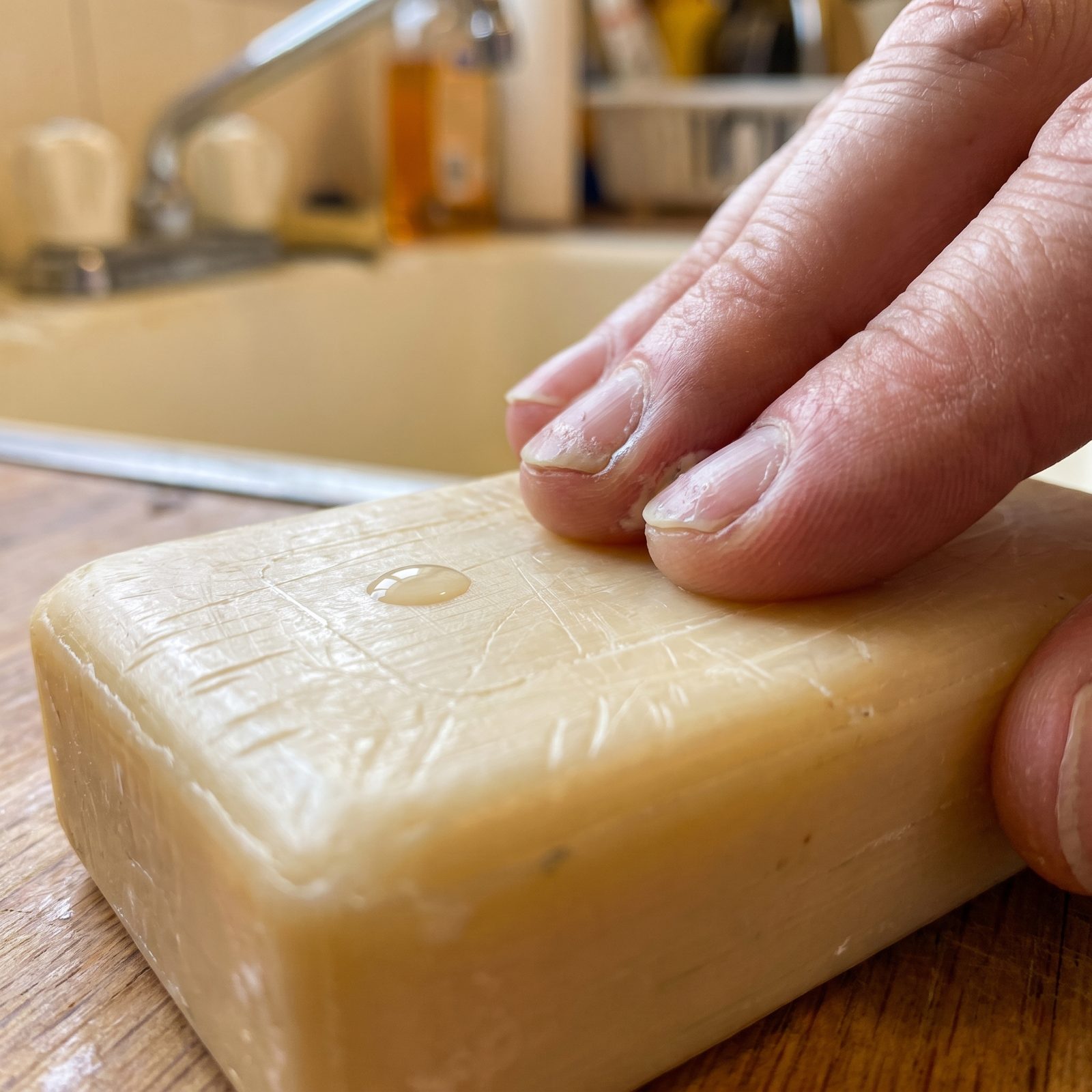
Grease sets up camp under your nails and refuses to leave. Scrubbing with a brush only pushes it deeper into skin you’d rather keep.
Before the job, scrape your nails across a dry bar of soap until the gaps pack solid. The soap plugs the space where grease wants to collect, and when you wash up afterward the whole plug rinses out and takes the grime with it. Sounds like something a grandfather would tell you. It is. That’s exactly why it works.
29. Dust Talcum Powder on the Spot That’s Rubbing
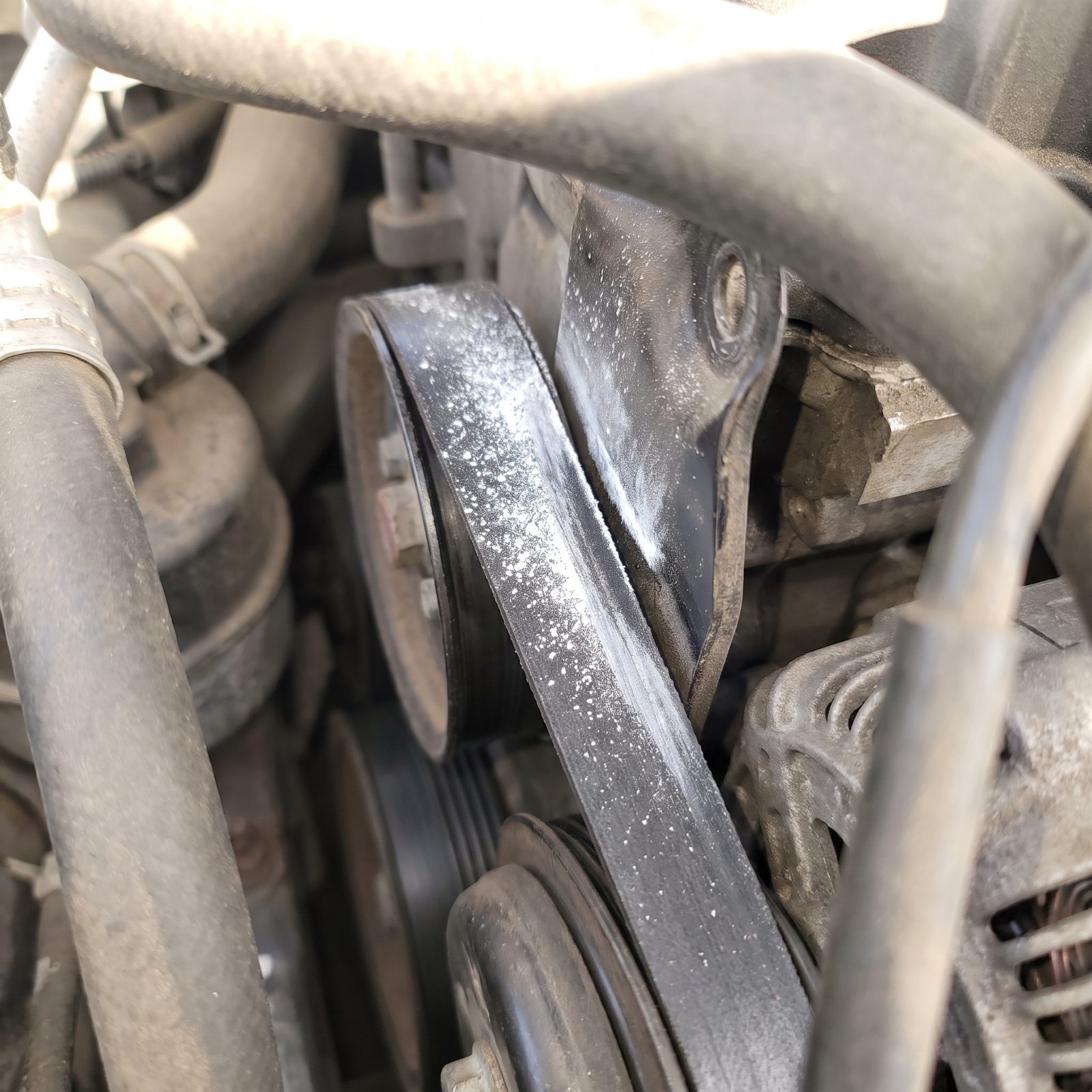
You hear the squeak but you can’t see the source. Something’s touching something else under there, and chasing a phantom rub by feel wastes an afternoon.
Dust the suspect area with talcum powder, then run the car or work the suspension through its travel. Wherever two parts are kissing, the powder wipes away clean and leaves a bright streak. The rub point shows itself — no guessing, no hour of staring. Costs almost nothing, too.
28. Run Chalk Across the Tread to Dial In Tire Pressure
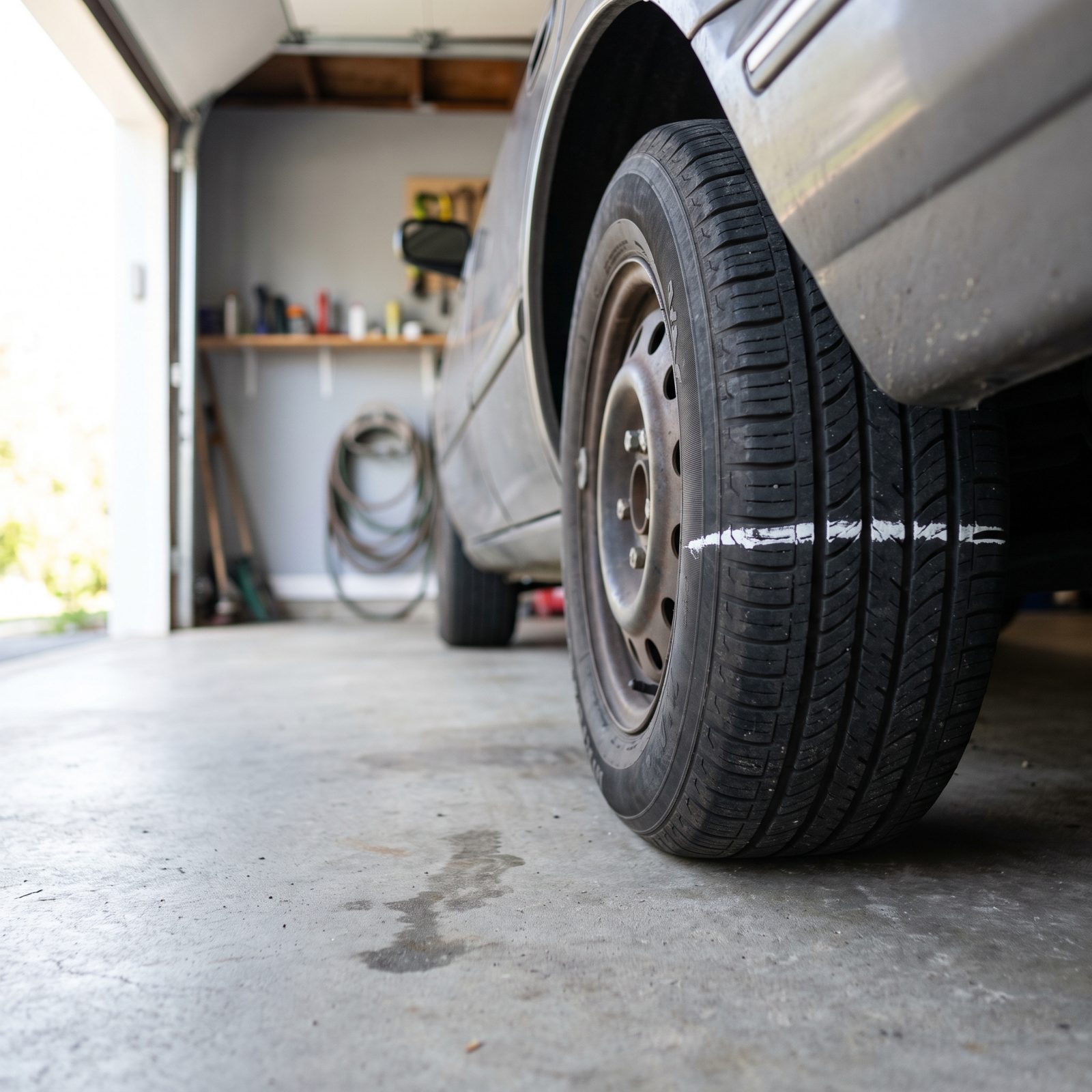
The sticker in the door jamb gives you a number. It doesn’t know your car’s weight distribution, your wheels, or how you drive. For anyone fussy about contact patch, chalk settles the argument.
Draw a line of chalk straight across the tread, roll the car forward a tire revolution, then look. Chalk worn off the center first? Too much air. Gone at the edges but still there in the middle means you’re low. Even wear across the whole line is your answer.
27. Fold a Gutter Out of Aluminum Foil for Oil Changes
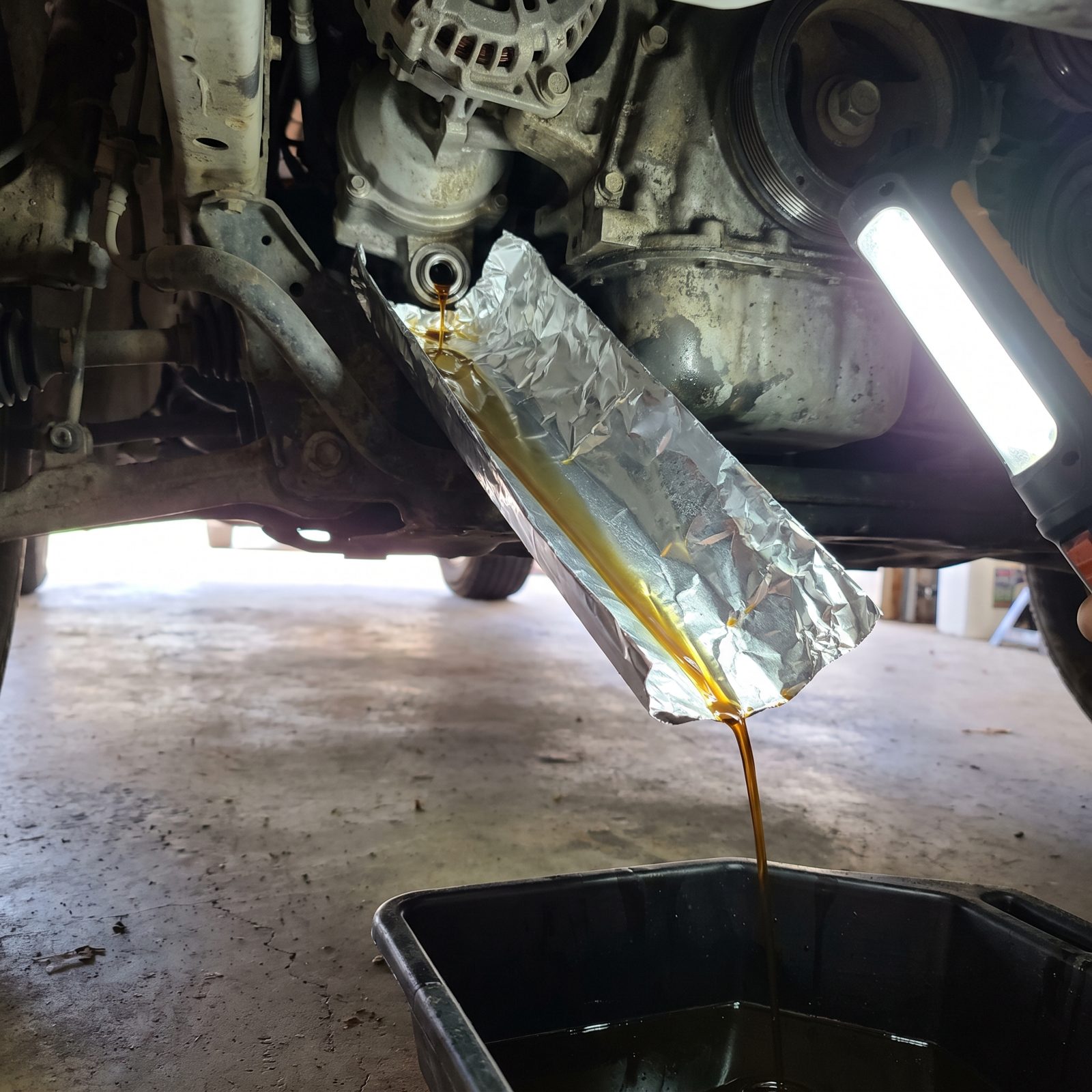
Oil almost never drains straight down. It runs along a crossmember, finds a seam, and ends up everywhere except the pan.
Fold a sheet of heavy-duty foil into a narrow trough, tuck one end under the drain plug and the other over your pan. The oil follows the channel instead of your driveway. When the job’s done, fold the foil up and toss it. No scrubbing a drip tray, no cleaning concrete for a week. Disposable, bends to any angle, done.
26. Bag the Oil Filter Before You Break It Loose
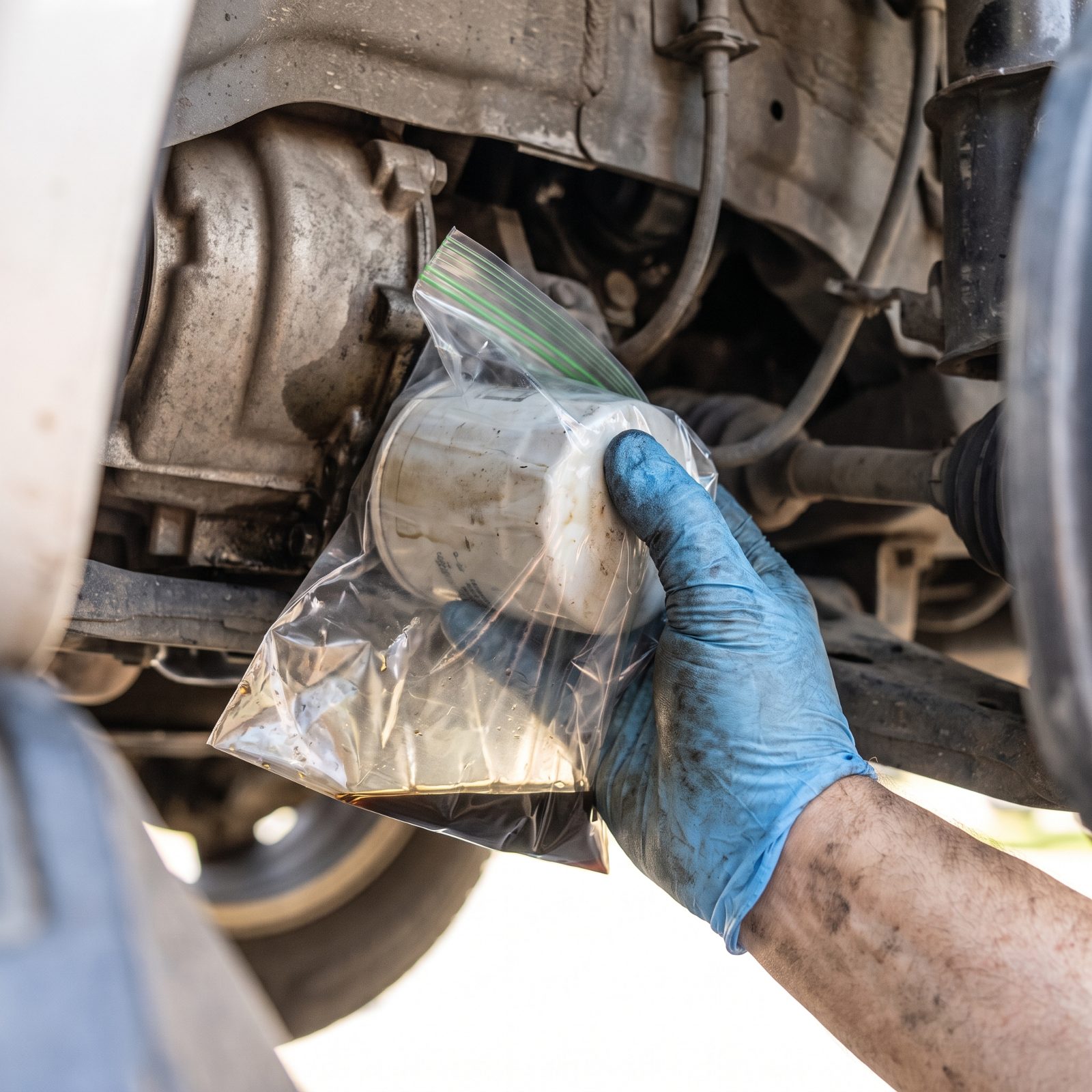
A sideways or upside-down filter dumps the second it clears the threads — straight down your forearm and into your sleeve. You feel it coming and you still get soaked.
Slip a sandwich bag over the whole filter before you turn it. The bag catches the spill, holds the filter as you lower it, and goes in the trash sealed up. No oil river down your arm, no drips on the frame rail. A box of cheap bags already lives in most kitchens, so there’s no excuse for the mess.
25. Grease the Drill Bit to Trap the Shavings It Makes
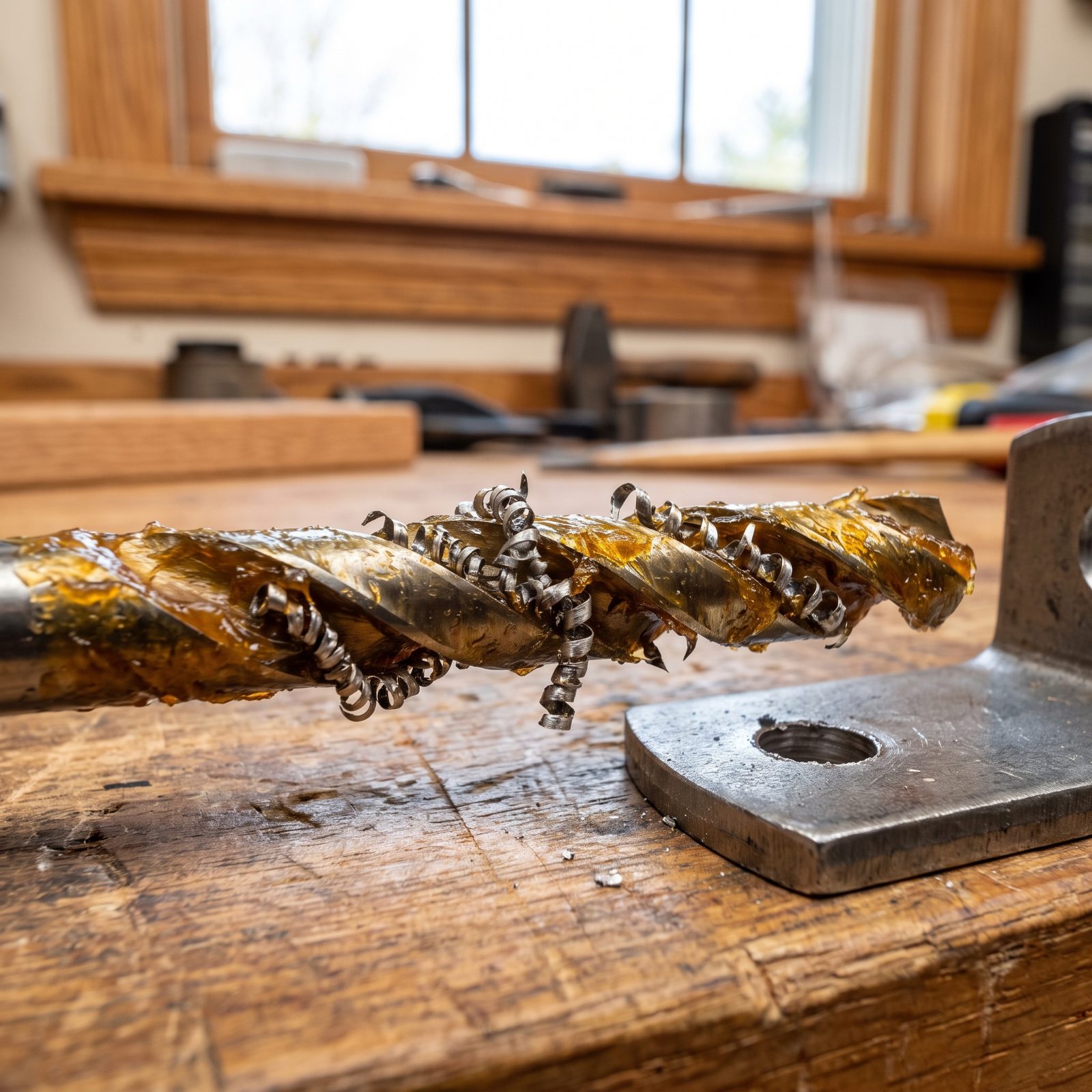
Drilling overhead or near something you can’t afford to drop a shaving into is a minefield. Those little metal curls go everywhere — eyes, bearings, electrical connectors.
Smear a coat of grease on the flutes before you drill. The shavings stick instead of flying loose, so they ride up and out in a clump you can wipe off. Keeps swarf out of sensitive spots and spares you fishing a metal sliver out of a window channel later. Wipe the bit clean, regrease, keep going.
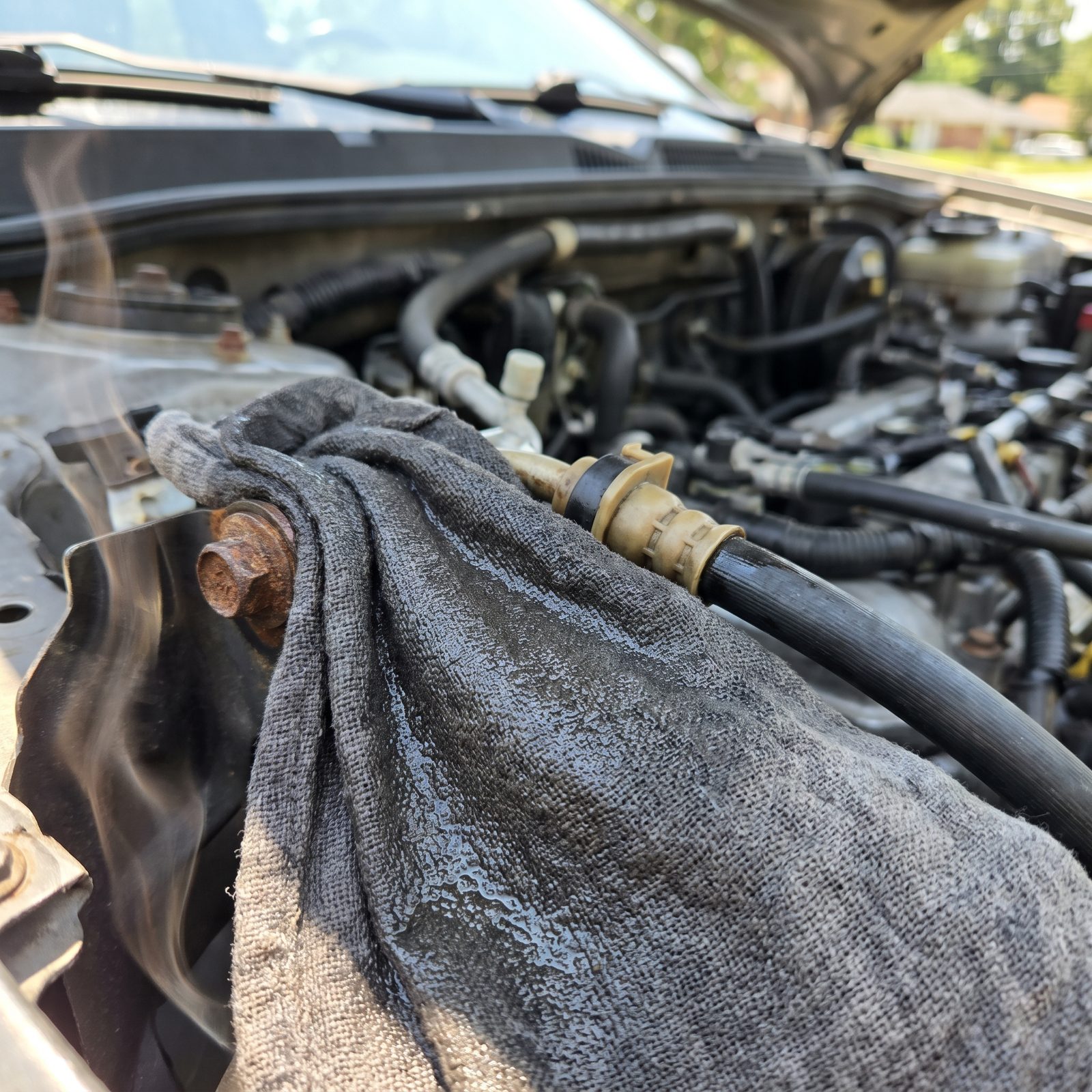
24. Lay a Water-Soaked Rag to Guard Parts From Torch Heat
Would you like to save this?
Heating a seized bolt is the right move. Torch heat doesn’t respect boundaries, though — the rubber line, the wiring, the painted panel two inches away all pay the price.
Soak a shop rag and lay it over whatever you need to protect before you light up. The wet rag pulls heat away and shields the part behind it while you work the fastener loose. Keep it wet, keep an eye on it, and keep an extinguisher within reach, because you’re playing with open flame near fuel systems. Good sense around a torch beats speed every time.
23. Spin a Nut On Before You Cut a Bolt Down to Size
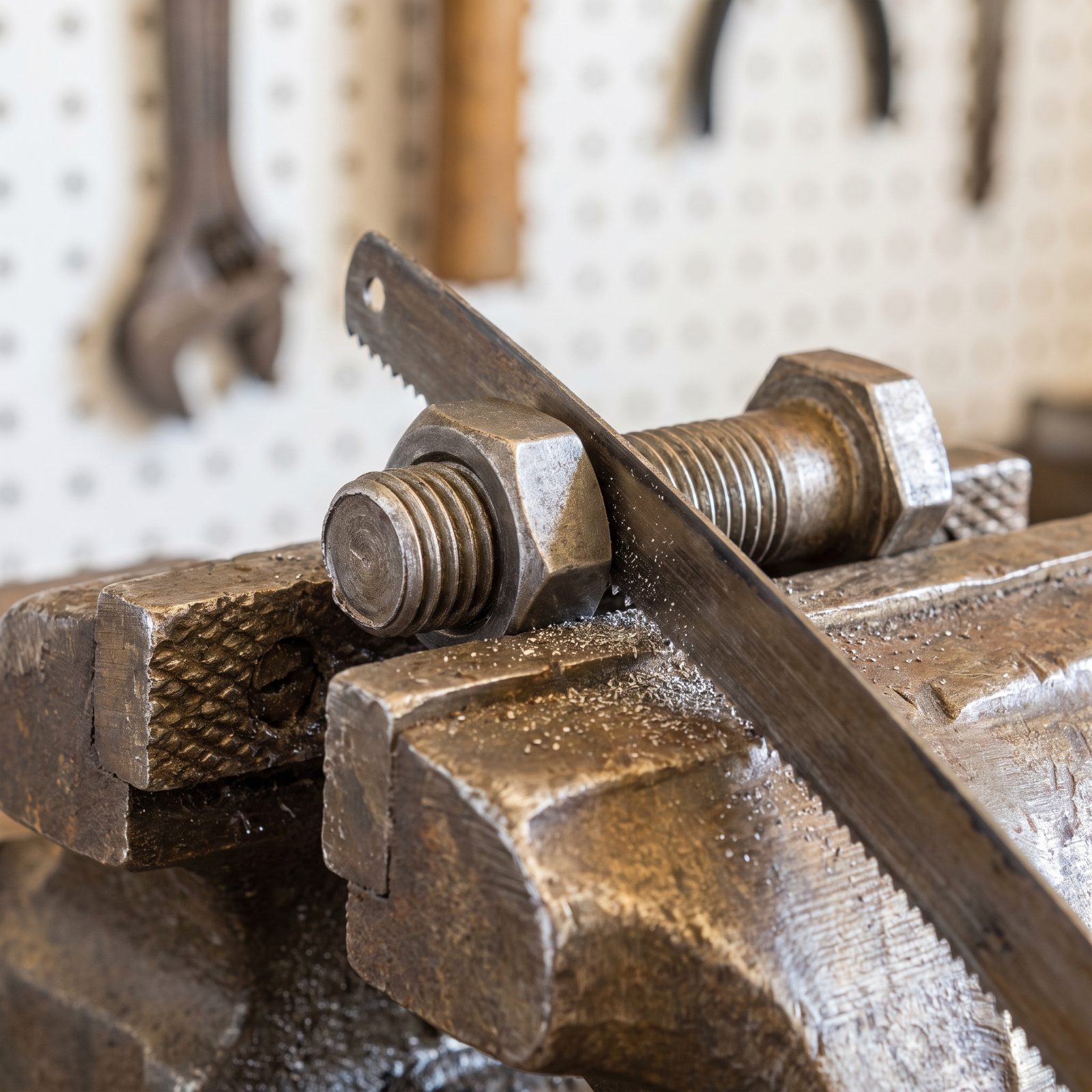
Cut the head off a bolt to make a stud and the fresh end is always chewed up, the threads mashed flat so no nut will start on it. Then you’re filing by hand and swearing.
Thread a nut onto the threaded end you’re keeping, clear of the cut line, before you saw off the head. Make your cut, clean up the burr, then back the nut off over the fresh end. As it unwinds, it chases the threads straight and knocks off the rough edges, and the bolt threads like new. One of those tricks that feels obvious the second you see it and genuinely clever the first time.
22. Spin a Left-Hand Drill Bit Into That Broken Fastener
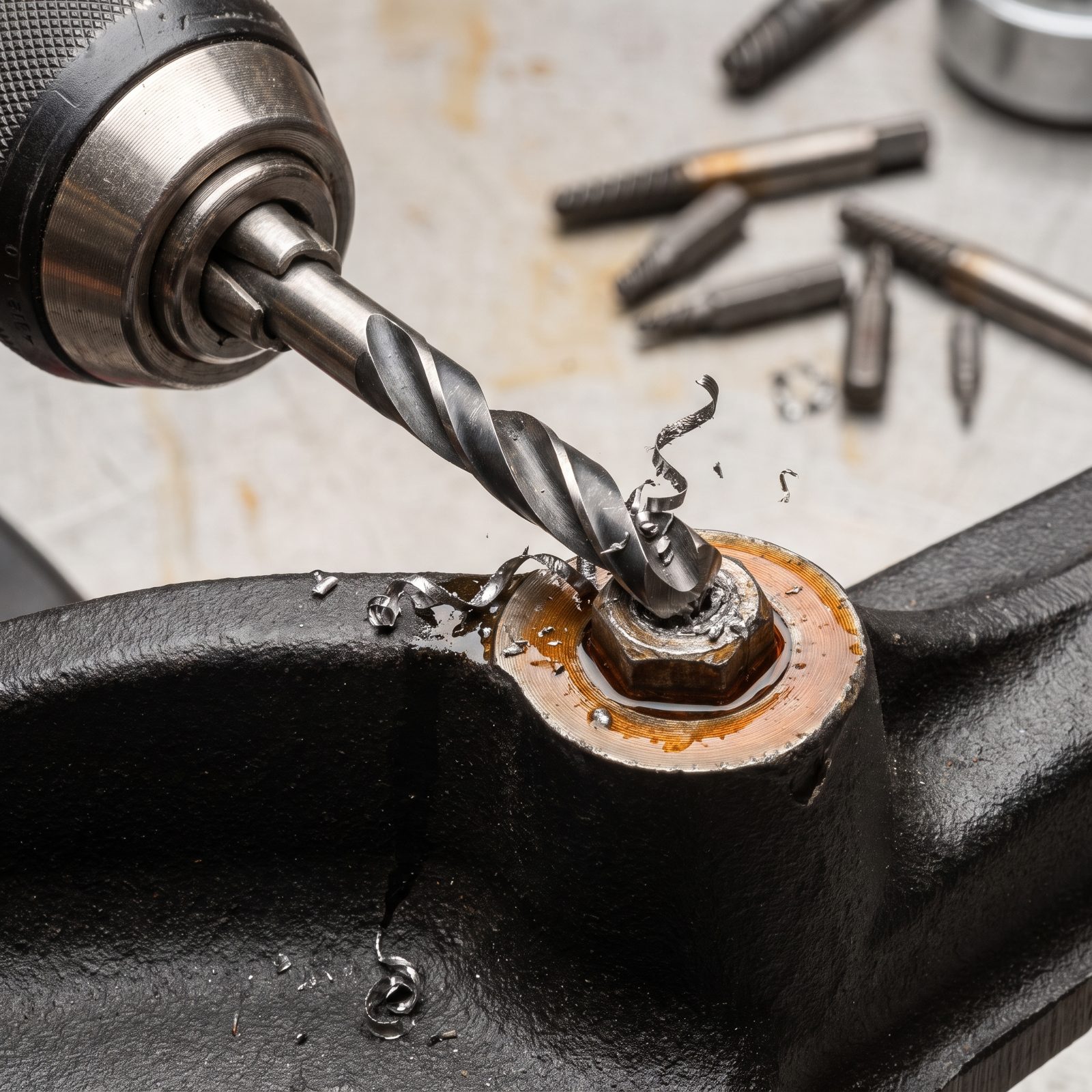
Most folks grab a regular drill bit to start an extraction, then stand there wondering why the broken bolt never budges. Run the drill in reverse with a left-hand bit instead, and something lucky happens: the same cutting action that bores the pilot hole also twists the stub counterclockwise, which is exactly the direction you want it backing out. More than a few seized bolts walk right out before you ever reach for an extractor.
Keep the drill on reverse, go slow, let a little penetrating oil do its part. Feels backward the first time. Works anyway.
21. Jam Two Nuts Together to Back Out a Stubborn Stud
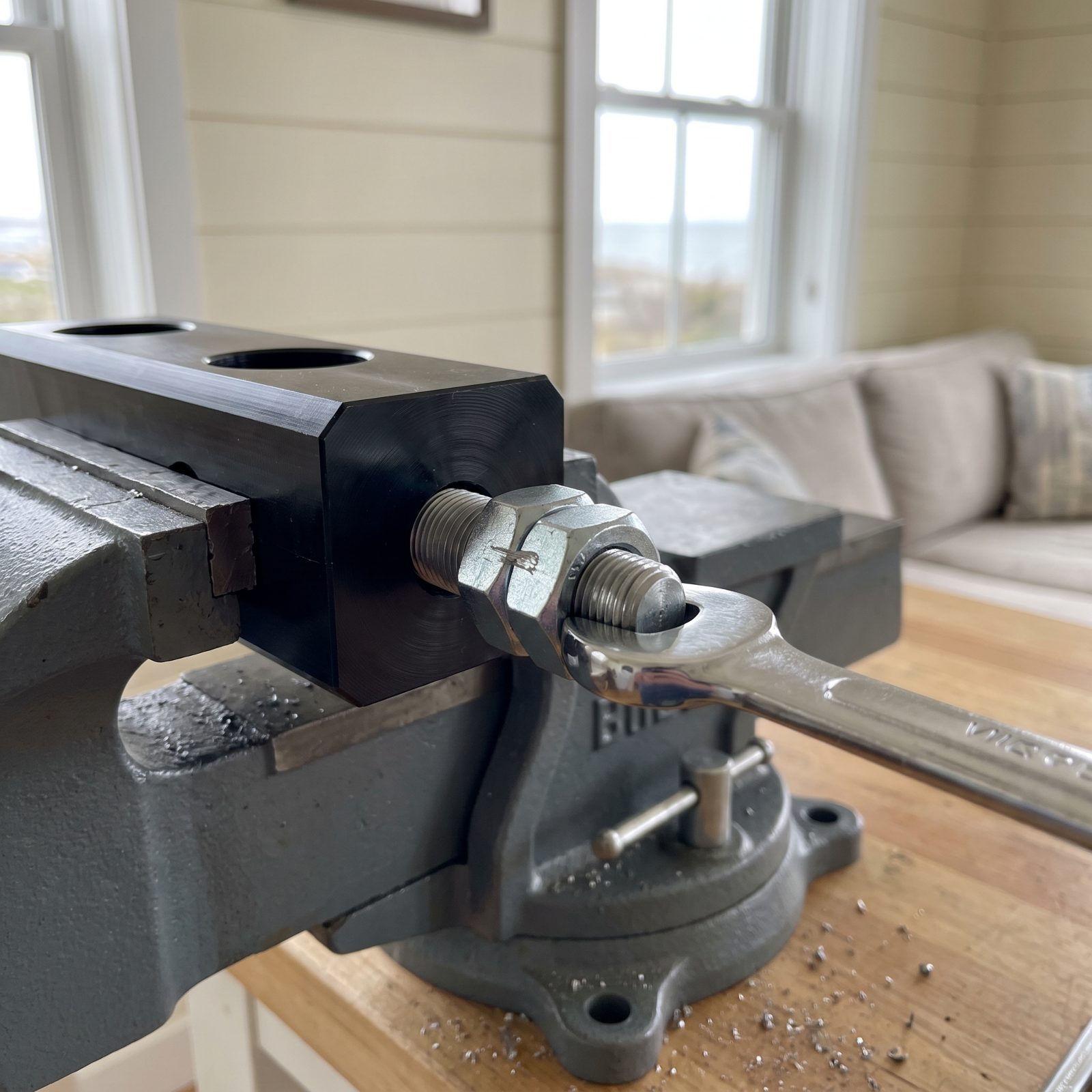
Studs have no bolt head to grab, and that’s the whole frustration. The fix costs nothing and already lives in your junk drawer.
Thread two nuts onto the stud, run them down, then crank them hard against each other until they bind. Now put a wrench on the bottom nut and turn it counterclockwise. Because the pair is locked together, the stud spins with it and threads right out. Installing a stud? Same move, just turn the top nut instead. It’s one of those tricks that makes you feel slightly foolish for ever fighting a stud with a pair of pliers.
20. Pump a Floor Jack to Coax Suspension Bolt Holes Into Line
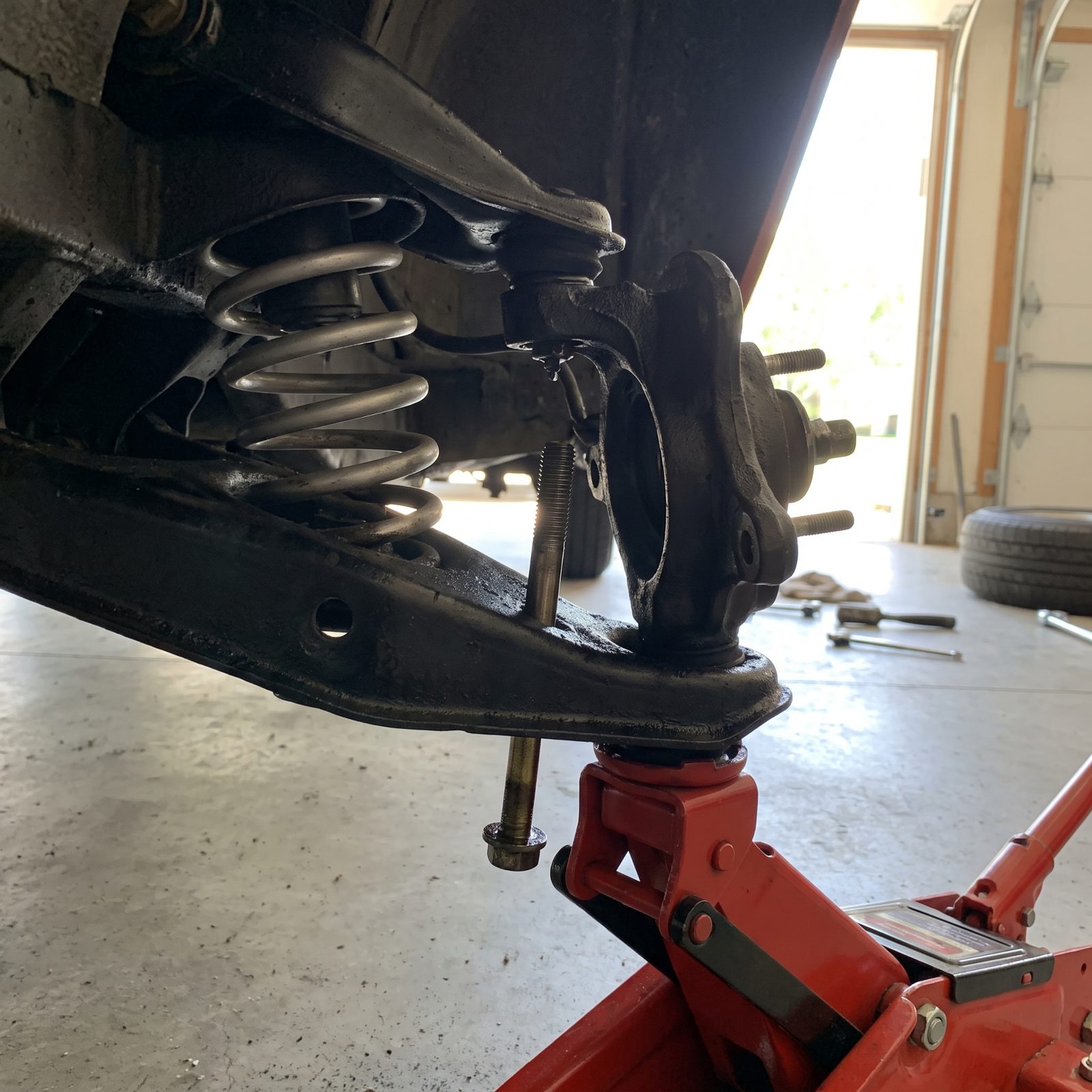
Anyone who has tried to reconnect a loaded control arm knows the dance. The holes sit a quarter inch apart and no amount of swearing closes the gap, because the spring is fighting you the whole time.
Set a floor jack under the arm and raise it slowly. A few pumps loads the suspension, swings the geometry around, and walks those two holes right into register. Slide the bolt through while the jack holds tension. Now, never crawl under a vehicle held up by a jack alone — that’s a different story. Using one to nudge a component into position is perfectly safe.
19. Ratchet-Strap That Awkward Exhaust Section Into Place
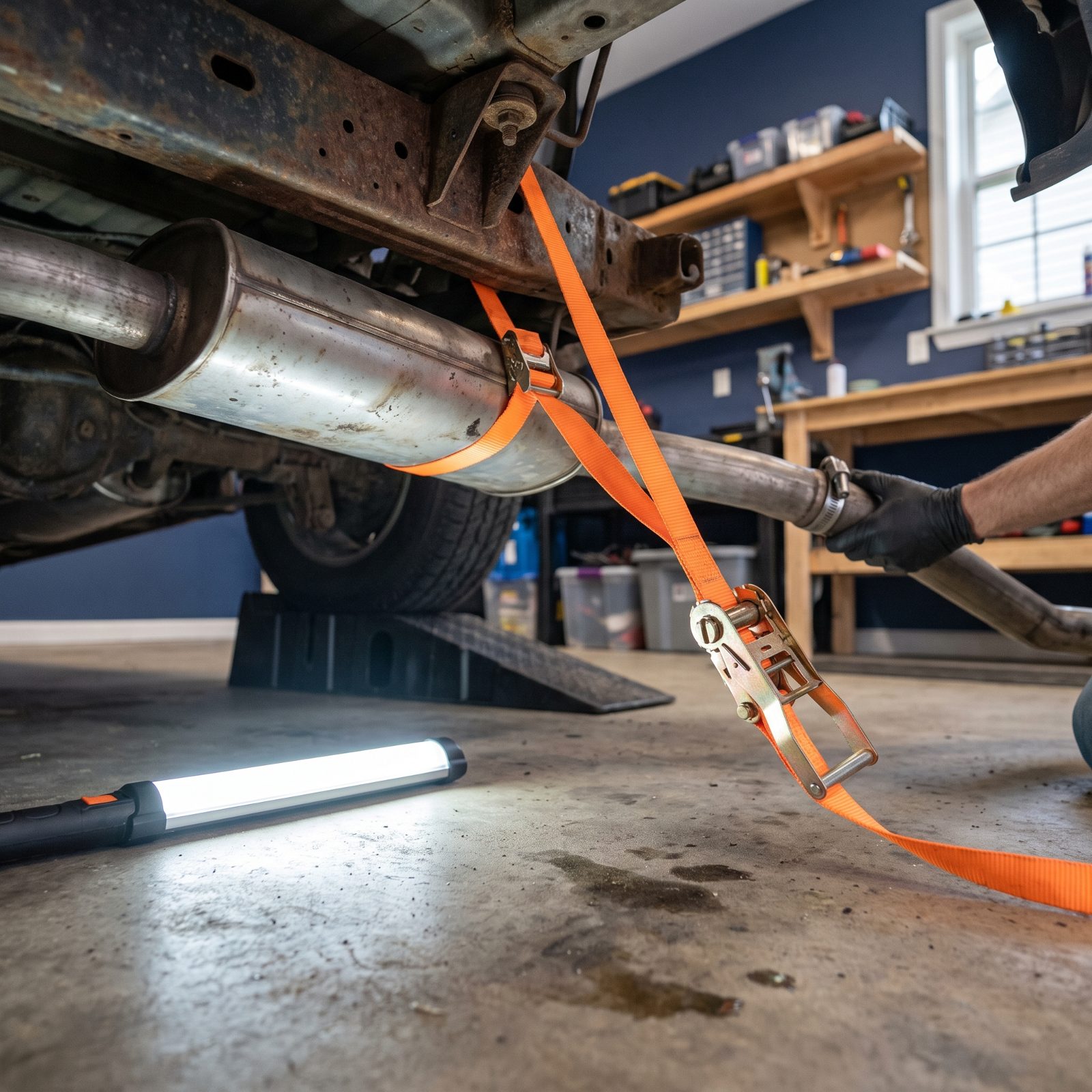
Exhaust work is a wrestling match you lose with only two hands. The pipe hangs heavy, the flange won’t meet, and the one helper you’ve got is at work.
Here’s where a cheap ratchet strap earns its keep. Loop it around the section, anchor it to a frame rail or a jack stand, and crank the webbing until the pipe sits exactly where the hanger wants it. Now both your hands are free to start the clamp bolts. It holds the position dead steady while you work, and it never once complains about the smell.
18. Fill a Buried Gearbox Cleanly With a Big Plastic Syringe

When the gearbox is buried and the fill hole sits sideways, out of easy reach, a funnel or squeeze bottle will glug, overshoot and slop oil down the casing and your sleeve.
A large plastic syringe with a bit of flexible tubing on the nozzle solves it. Draw up the fluid, snake the tube into the fill hole, push. Measured fills with far less mess (keep a rag handy, as a little oil can still smear around the fill hole and drip onto the case), and you’ll know down to the ounce how much went in.
17. Route Clear Tubing Uphill When You Bleed the Brakes
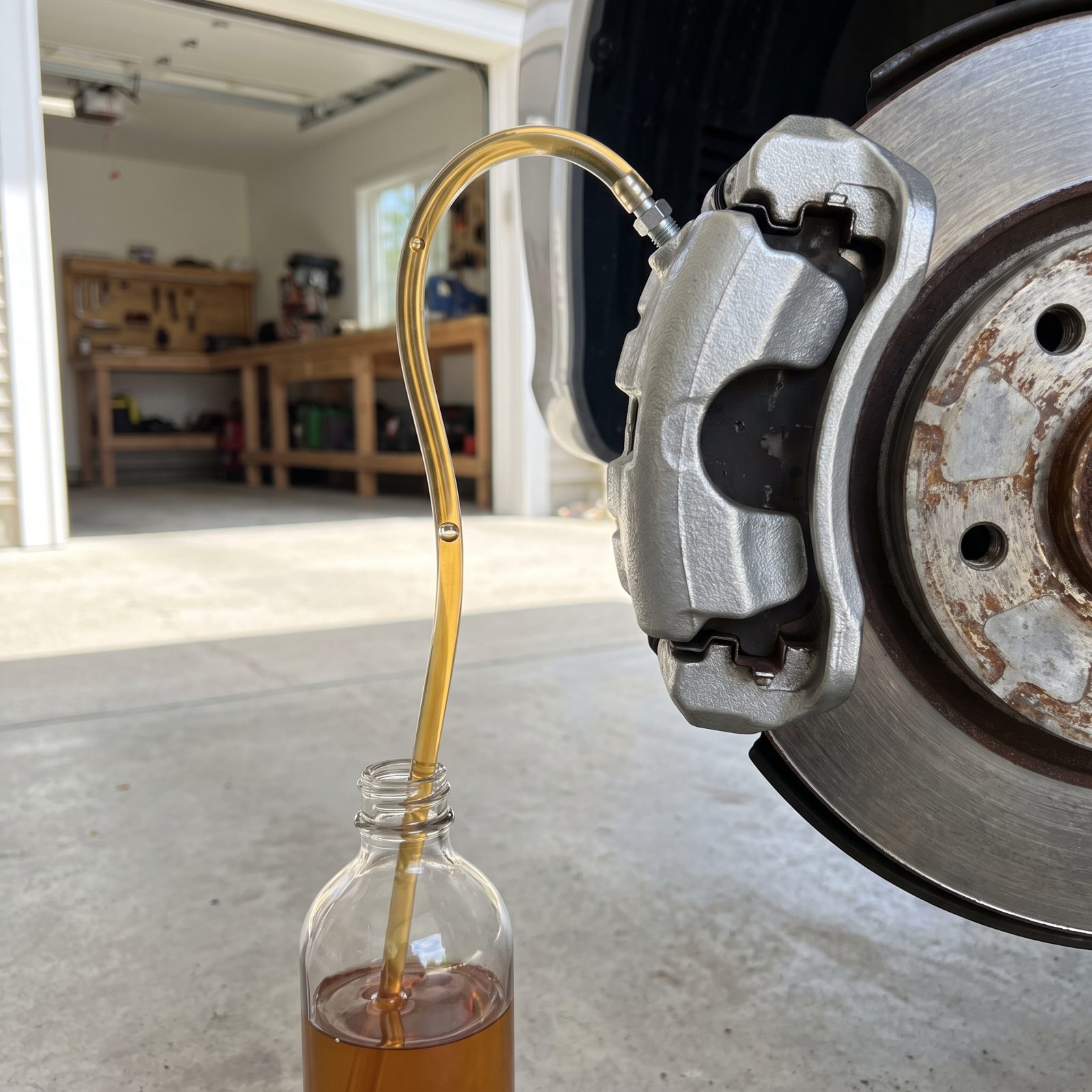
Bleeding brakes solo usually means air sneaking back up the bleeder between pedal strokes, which is why you keep chasing the same mushy pedal around in circles.
Run your clear bleed tube up and over before it drops into the catch bottle. That rising loop traps fluid, and the trapped fluid becomes a one-way seal. Bubbles float up the line and out; they can’t fall back down into the caliper. Watch them march up the clear tubing until the stream runs solid and gold. When the bubbles quit, that corner is done.
16. Hunt an Air Leak With a Simple Length of Flexible Tubing
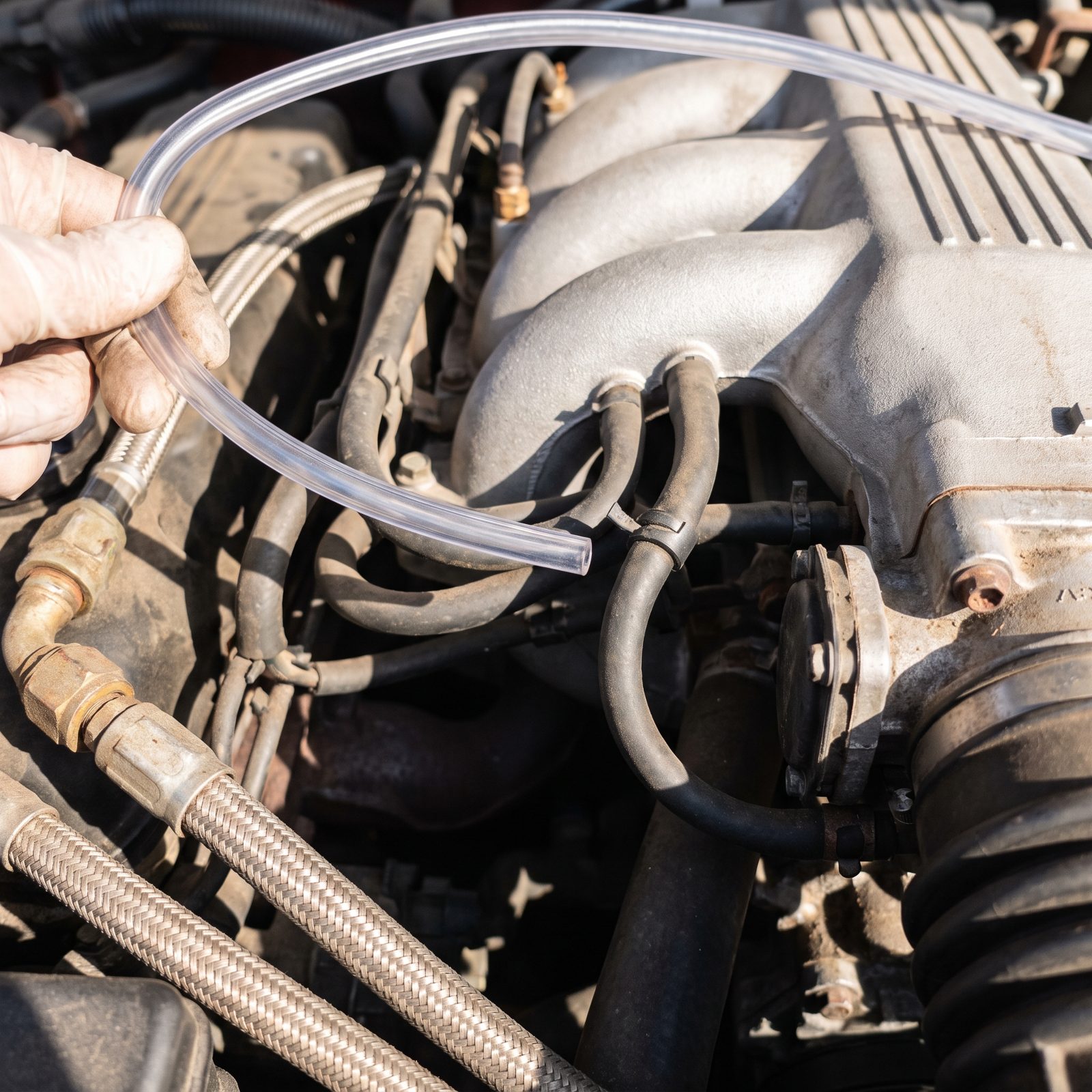
A vacuum or boost leak hisses somewhere in a crowded engine bay, and your bare ear hasn’t a prayer of sorting which of a dozen fittings is the culprit.
Hold one end of a thin flexible tube to your ear and sweep the other end slowly around every joint, hose, and gasket. The tube funnels sound straight into your ear and turns a faint, scattered hiss into a sharp one you can point at. Move the tip an inch at a time. When the noise jumps, you’ve found it. A stethoscope for the quiet stuff, built from leftover line.
15. Press a Long Screwdriver to Your Ear and Find the Noise

Is that whine the alternator, the water pump, or a tensioner bearing on its way out? From a foot away, every one of them sounds exactly alike.
Put the tip of a long screwdriver against the component’s housing and press the handle against your ear. The steel carries the vibration right into your skull, so a failing bearing roars while the bits beside it stay faint. Touch each accessory in turn, and the bad one gives itself away. A mechanic’s stethoscope does the same job — but the screwdriver was already in your hand.
14. Back-Probe a Connector With a Fine T-Pin
Would you like to save this?
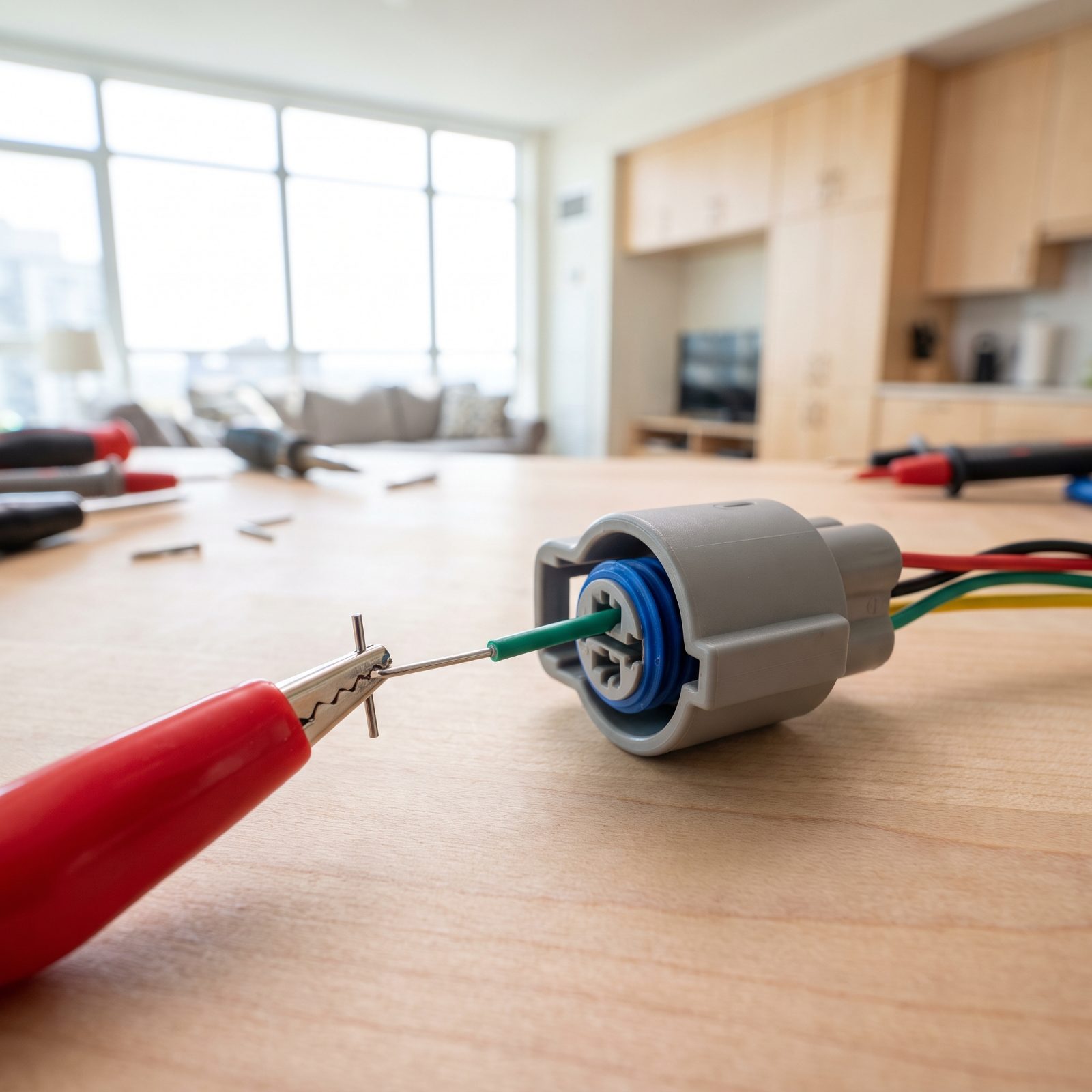
Diagnosing a circuit often means checking a connector’s terminals on the bench, with the plug disconnected. Trouble is, jabbing a fat meter probe into those tiny terminal openings can spread the terminal and tear the weather seal.
Slide a fine pin alongside the wire into the back of the connector instead, easing it past the weather seal until it touches the metal terminal inside. Clip your meter to the pin head and you get a clean reading with the connector unplugged on the bench. The pin is thin enough to slip into the opening without tearing a thing. Pull it out when you’re done and the connector is none the wiser.
13. Wire Up a Fused Jumper Lead Before You Test Anything
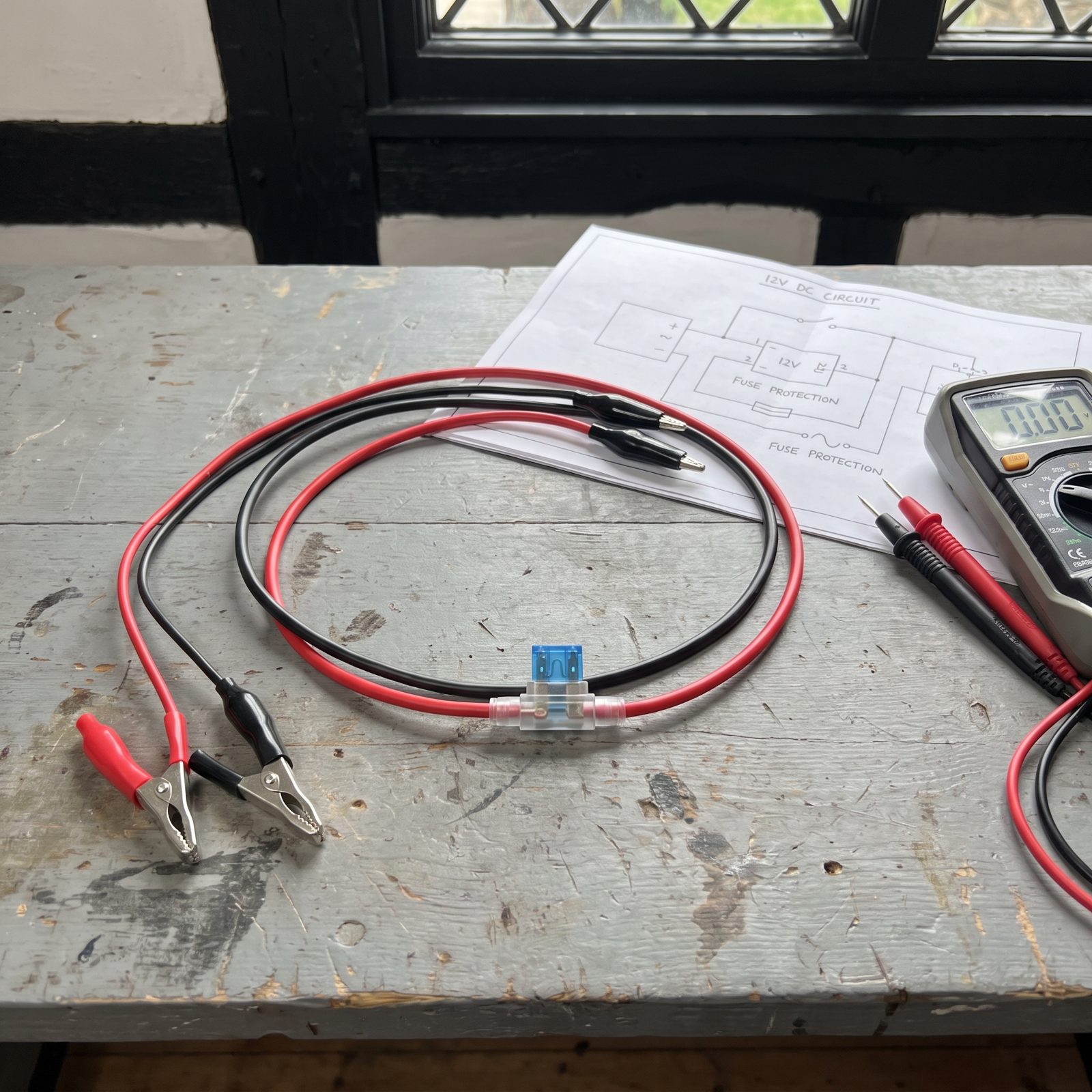
Bridging two points to test a relay or power up a component with a plain jumper wire is how a small electrical fault becomes a melted harness and a cloud of smoke.
Build a jumper lead with an inline fuse holder spliced into the middle and the right fuse fitted. Now if you accidentally short a circuit or hit a dead ground, the fuse pops instead of your wiring. Ten minutes to make, and it’ll hang on a hook forever.
12. Use a Headlamp Bulb to Load-Test a Suspect Circuit

A test light tells you a circuit has power, but it lies by omission. A corroded connection can light a probe and still collapse the second a real load pulls through it. That’s how so many parasitic drains and dim grounds get misdiagnosed by weekend troubleshooters who swear the voltage read fine.
An old headlamp bulb with two leads soldered on fixes that. Jump it across the suspect point and it draws four or five real amps, same as a working component would. Clean connection, the bulb burns bright. Weak or resistive one, it glows dull or flickers. The load does the talking.
11. Push Bolts Through a Cardboard Diagram During Disassembly
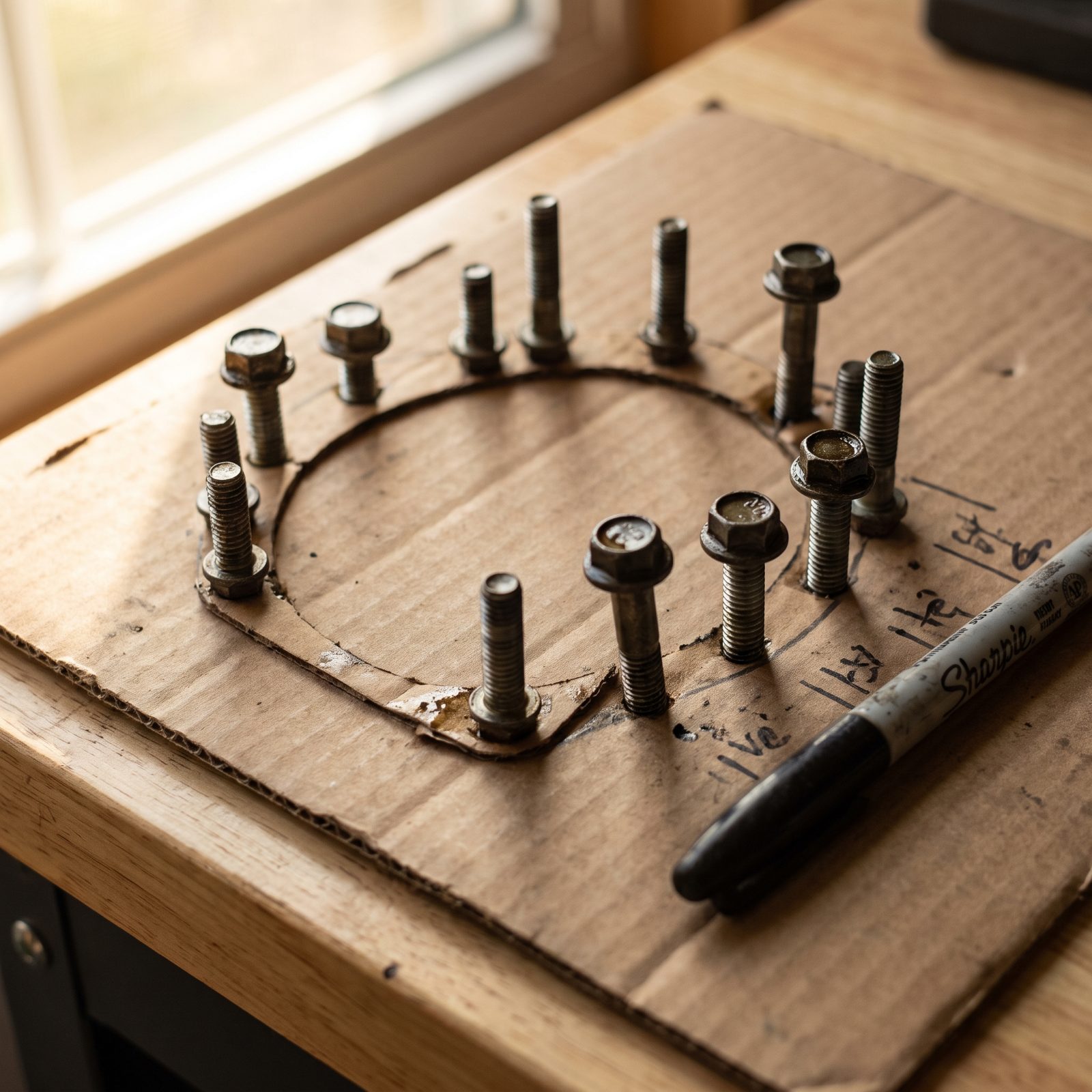
Reassembly goes wrong in one quiet way. The bolts all look alike until the one slightly longer one bottoms out in a blind hole and cracks a casting, and nobody remembers which went where after a three-hour teardown. Memory is not a storage system.
So grab a scrap of cardboard. As each bolt comes out, poke it straight through in the pattern it held on the part, and the cardboard becomes a map and a holder at once — length, thread, and position are all locked in place by the bolts themselves, even if the phone rings and the job sits for a week. Nothing rolls off the bench. Nothing ends up in the wrong hole.
10. Line a Magnetic Parts Tray With a Shop Towel
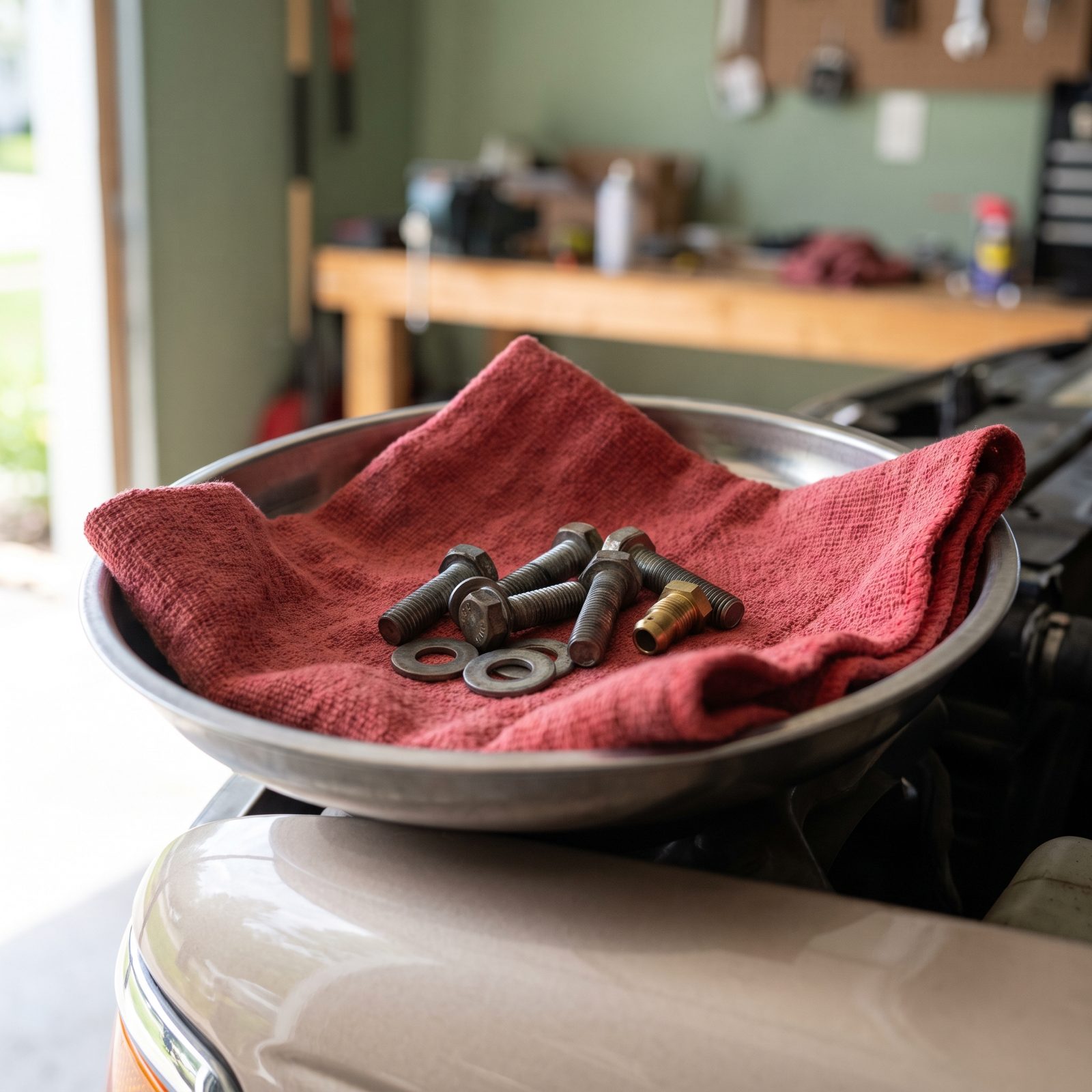
Magnetic trays are the best cheap upgrade a garage can buy — right up until you try to grab a small fastener and find it welded flat to the bottom by the very magnet that caught it. Fingernails scrabbling at a lock washer is its own special annoyance.
Drop a shop towel in the bottom. The magnet still pulls through the cloth strongly enough to hold everything through a rollaway or a pitching repair, but the fabric lifts each piece just enough that you can pinch it out in one go. It keeps magnetized bolts from grabbing grit off the dish, too. Small change, and you feel it every single time.
9. Spread a White Shower-Curtain Liner Beneath the Work Area
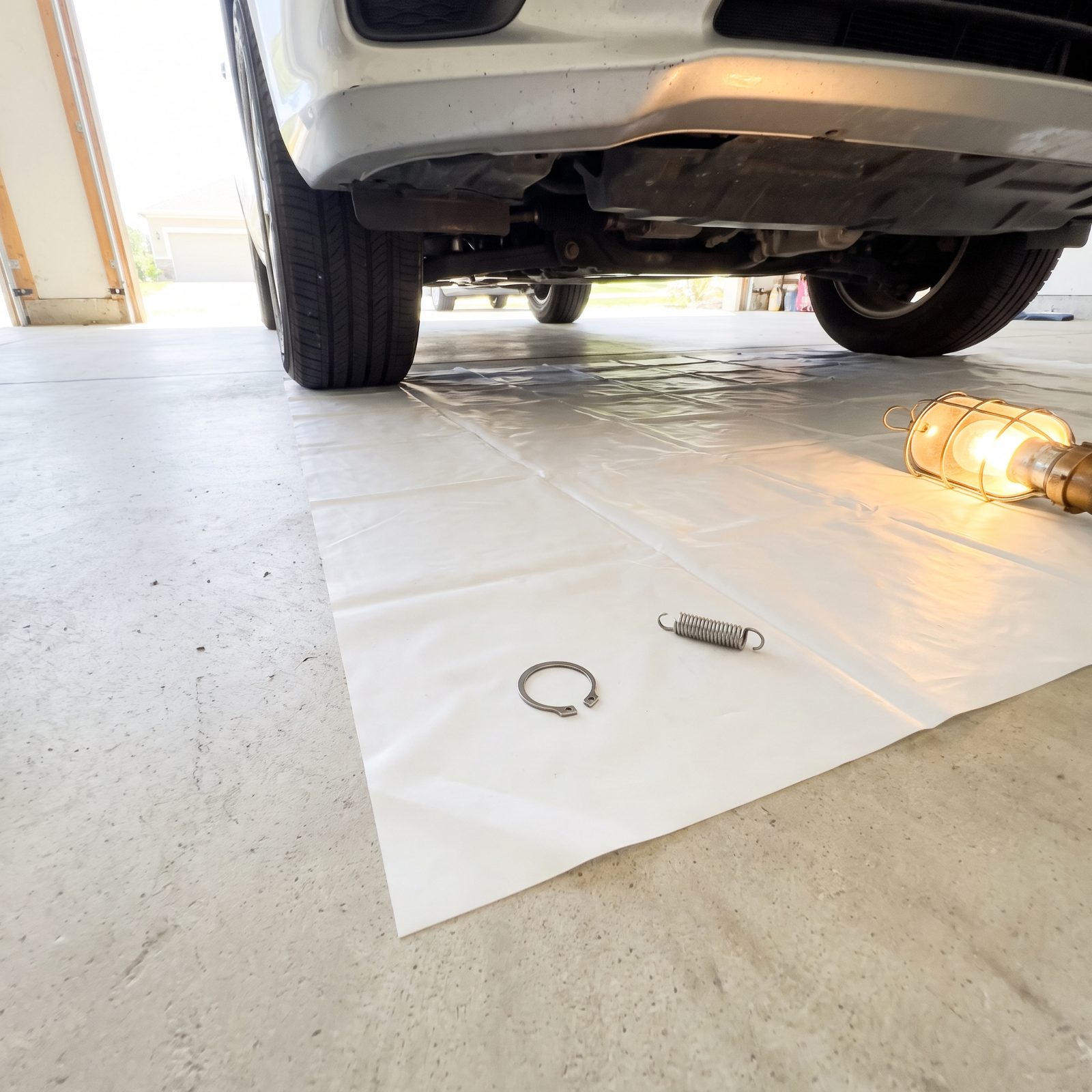
Drop a cotter pin on a gray concrete floor and it vanishes into the texture like it was designed to. Drop it onto a white plastic sheet and it may as well be sitting under a spotlight.
A cheap white shower-curtain liner spread under the work zone turns the floor into a light box. Springs, clips, ball bearings — every tiny thing that lives to roll under the toolbox lands in plain sight against the white. Catches fluid drips, folds up small, costs a few bucks.
8. Slip Cardboard Over a Radiator While Working Nearby
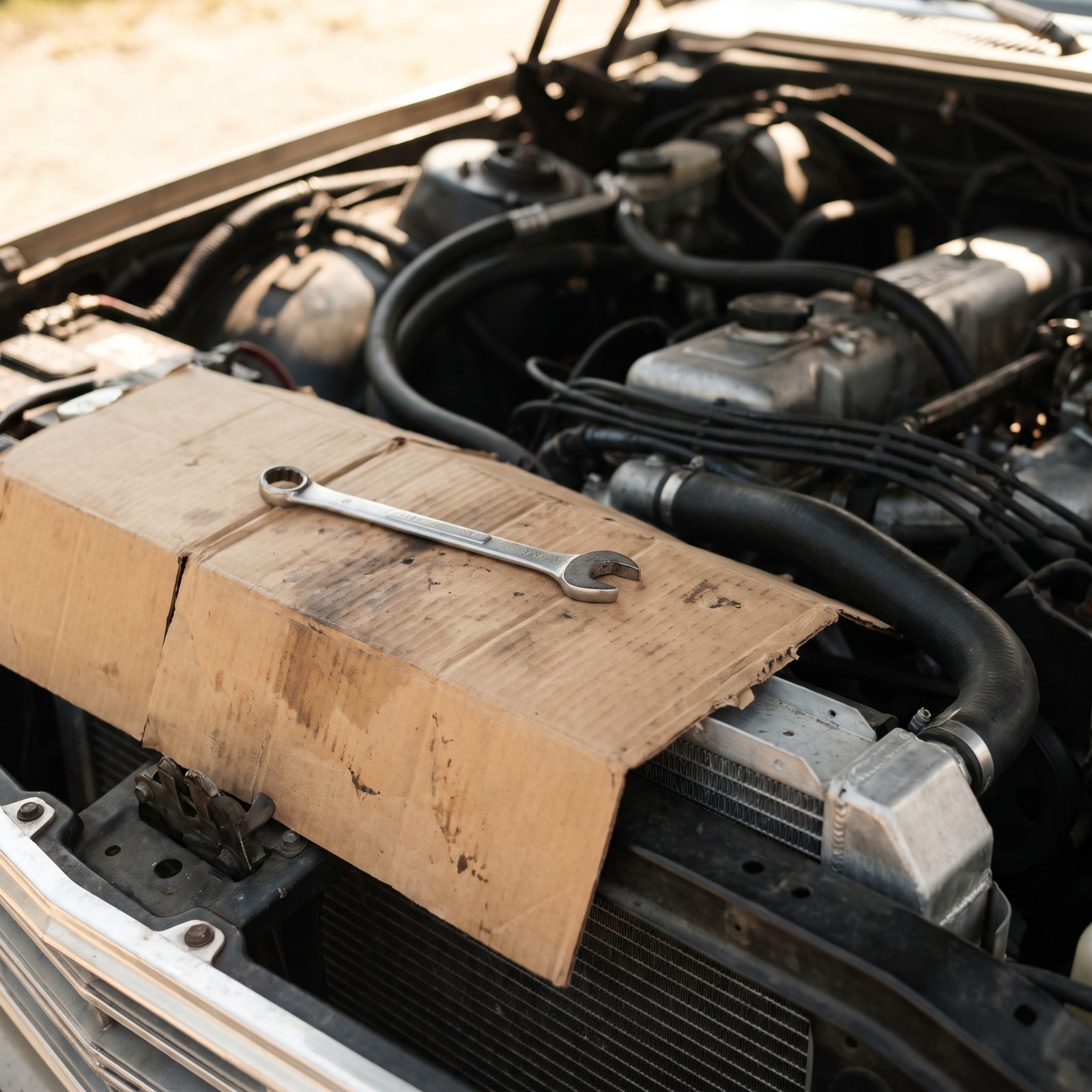
Radiator fins are the delicate teeth of the cooling system, and a dropped socket or a slipped screwdriver bends them flat in an instant. Bent fins choke airflow. Enough of them add up to a car that runs hot on the highway for no reason the owner can name.
A sheet of cardboard tucked over the fins while you work above or behind the radiator shrugs off dropped tools and scraping elbows. Thirty-second habit. It prevents a problem you’d never trace back to that one careless afternoon.
7. Pad Sharp Fender Edges With Split Pool Noodles
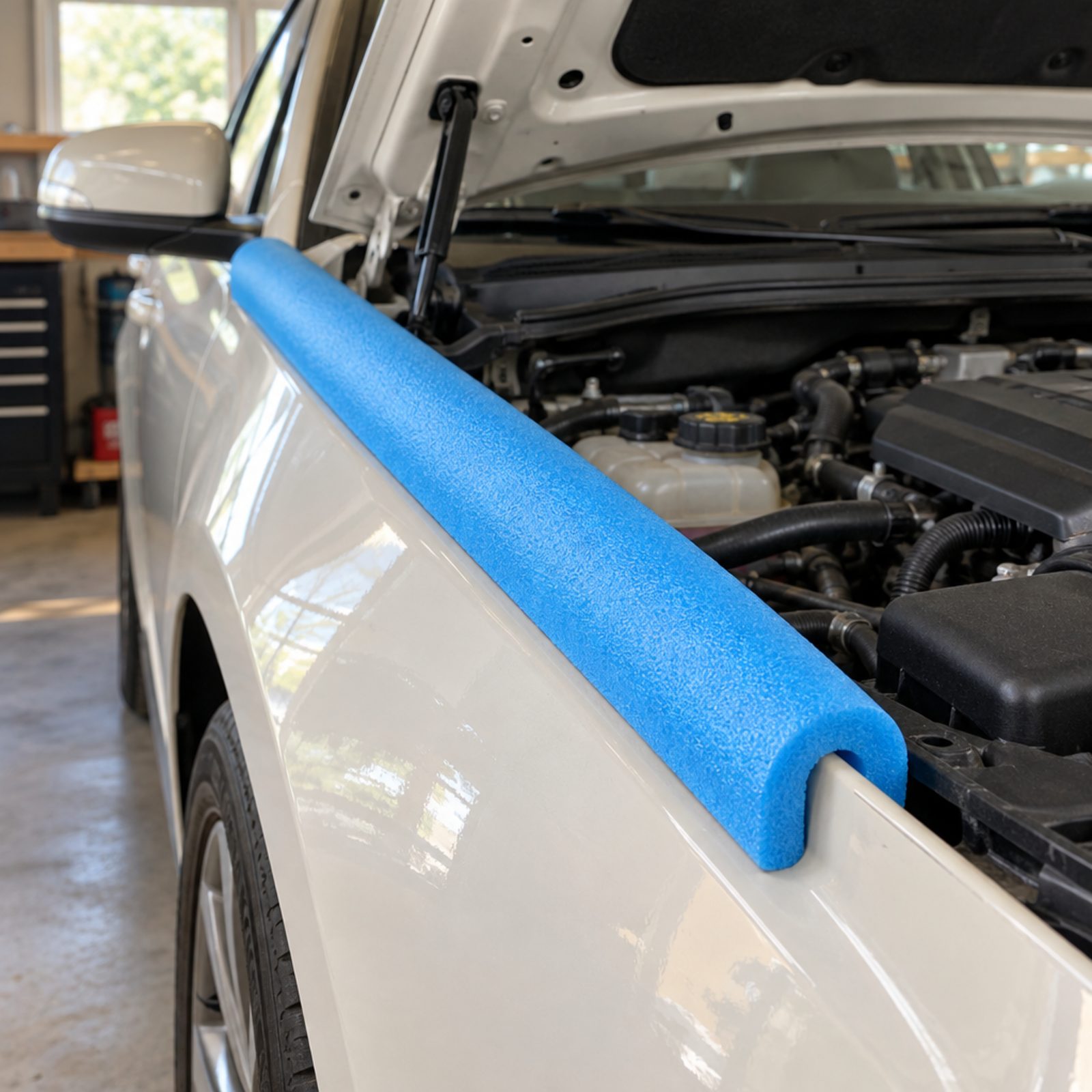
Lean over a fender for an hour and the folded edge of the sheet metal writes a bruise across your gut that lasts three days. That same edge chips its own paint the first time a belt buckle or a tool handle drags across it.
A single pool noodle slit lengthwise and pressed over the top edge of the fender puts a soft cushion between you and the metal — foam against the body, foam against you. Protects the paint from scratches and the mechanic from the slow misery of pressing into a steel edge for a long job.
6. Cut a Slot in a Hockey Puck to Make a Pinch-Weld Jack Pad
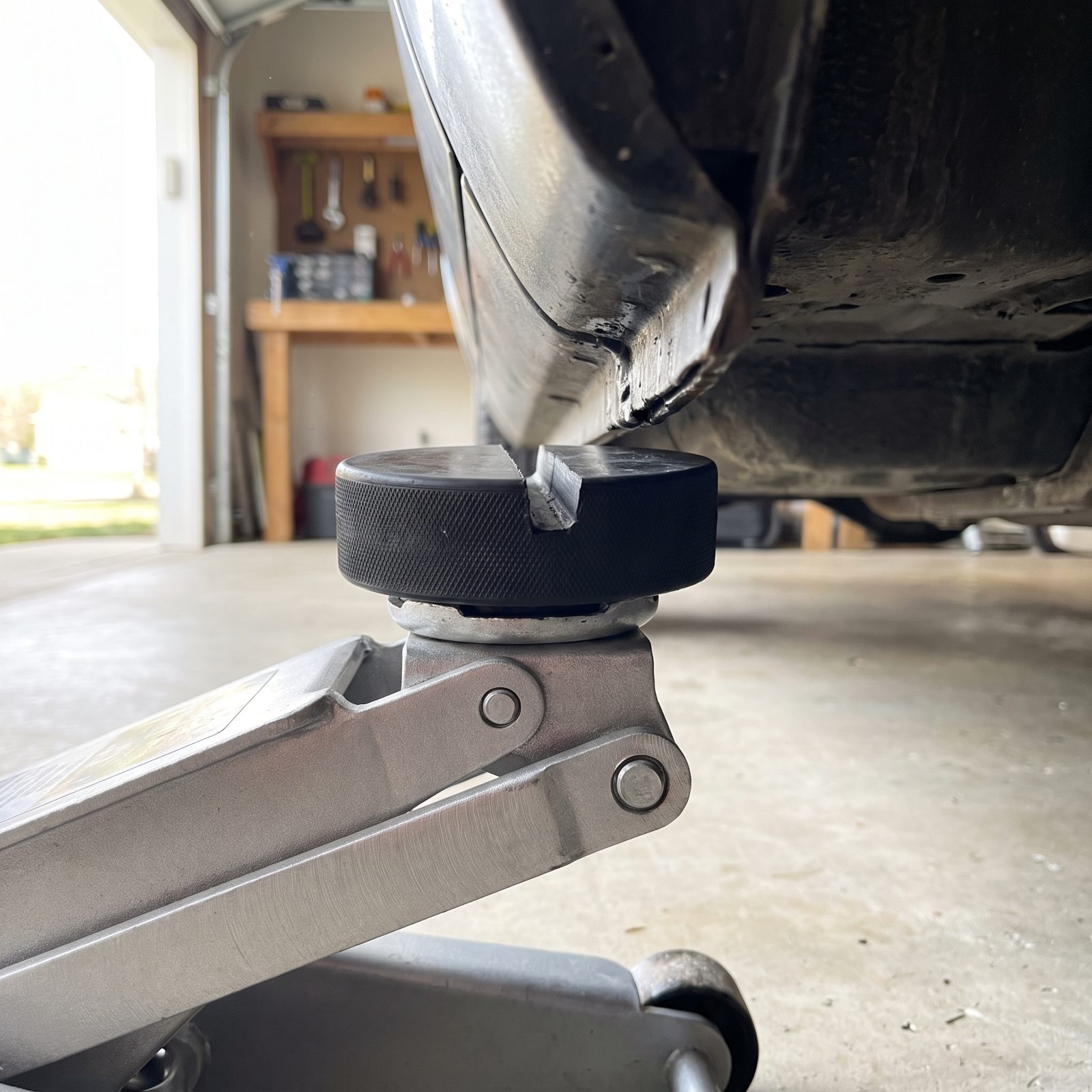
A bare floor-jack saddle set against a car’s pinch-weld seam folds that thin steel lip over like a dog-ear in a paperback. Once it’s crushed, it’s crushed. It never jacks or supports cleanly again.
Cut a straight slot across the face of a standard hockey puck and line it up so the seam drops into the groove while the dense rubber spreads the load. The puck is already the right thickness, it doesn’t compress, and it costs a couple of bucks. Shops sell dedicated slotted pads for exactly this. They’re just prettier hockey pucks.
5. Support a Removed Brake Caliper With a Bent Wire Hook
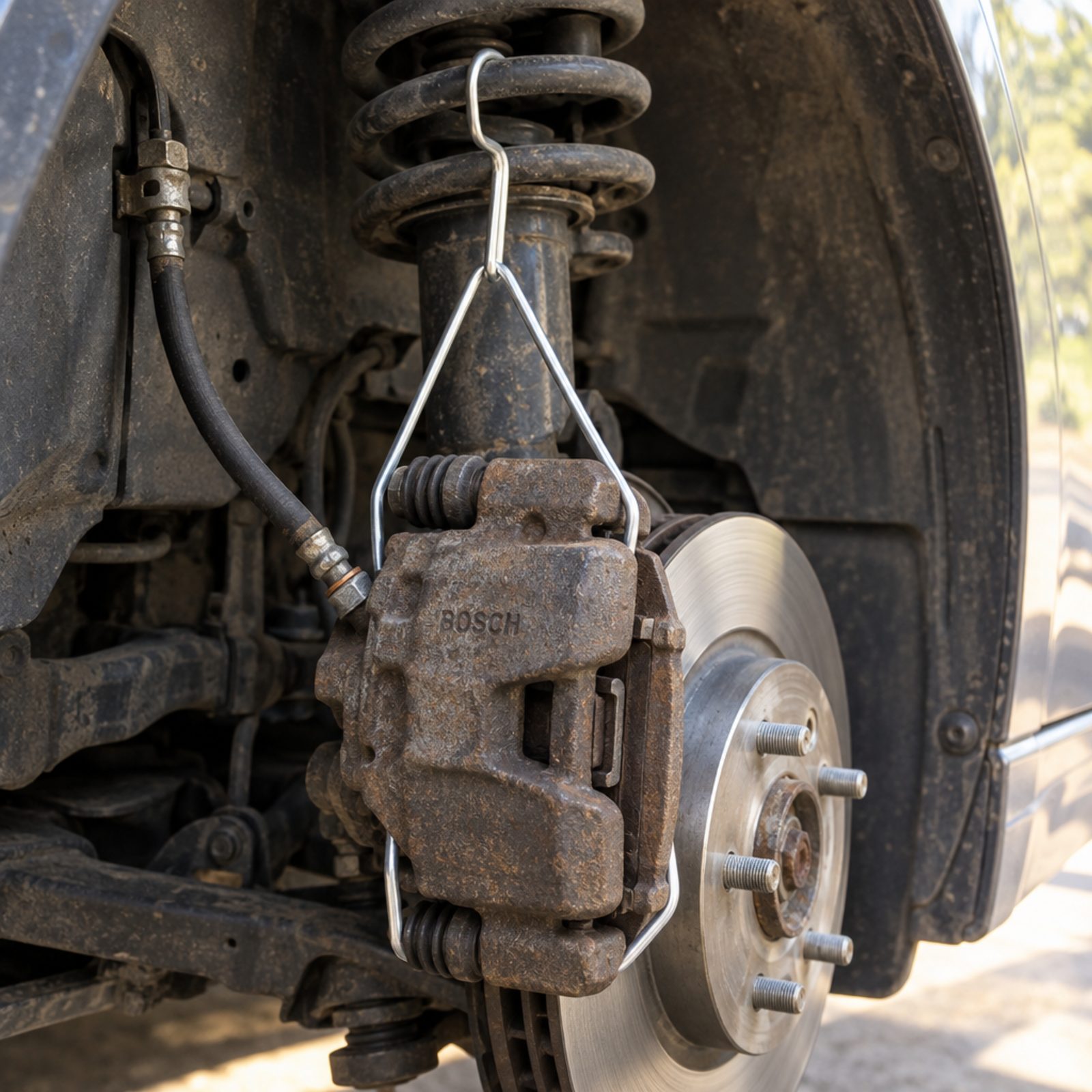
Pull a caliper off during a brake job and let it dangle on the hose, and you’ve quietly started a second repair. The rubber line was never rated to carry that weight. It kinks internally, the damage hides, and a few weeks later one wheel is dragging.
A heavy coat hanger bent into a hook holds the caliper up against the coil spring or control arm with zero tension on the hose. Ten seconds, costs nothing, and it kills off the single most common invisible mistake in a driveway brake job.
4. Saw Through Emblem Adhesive With Dental Floss
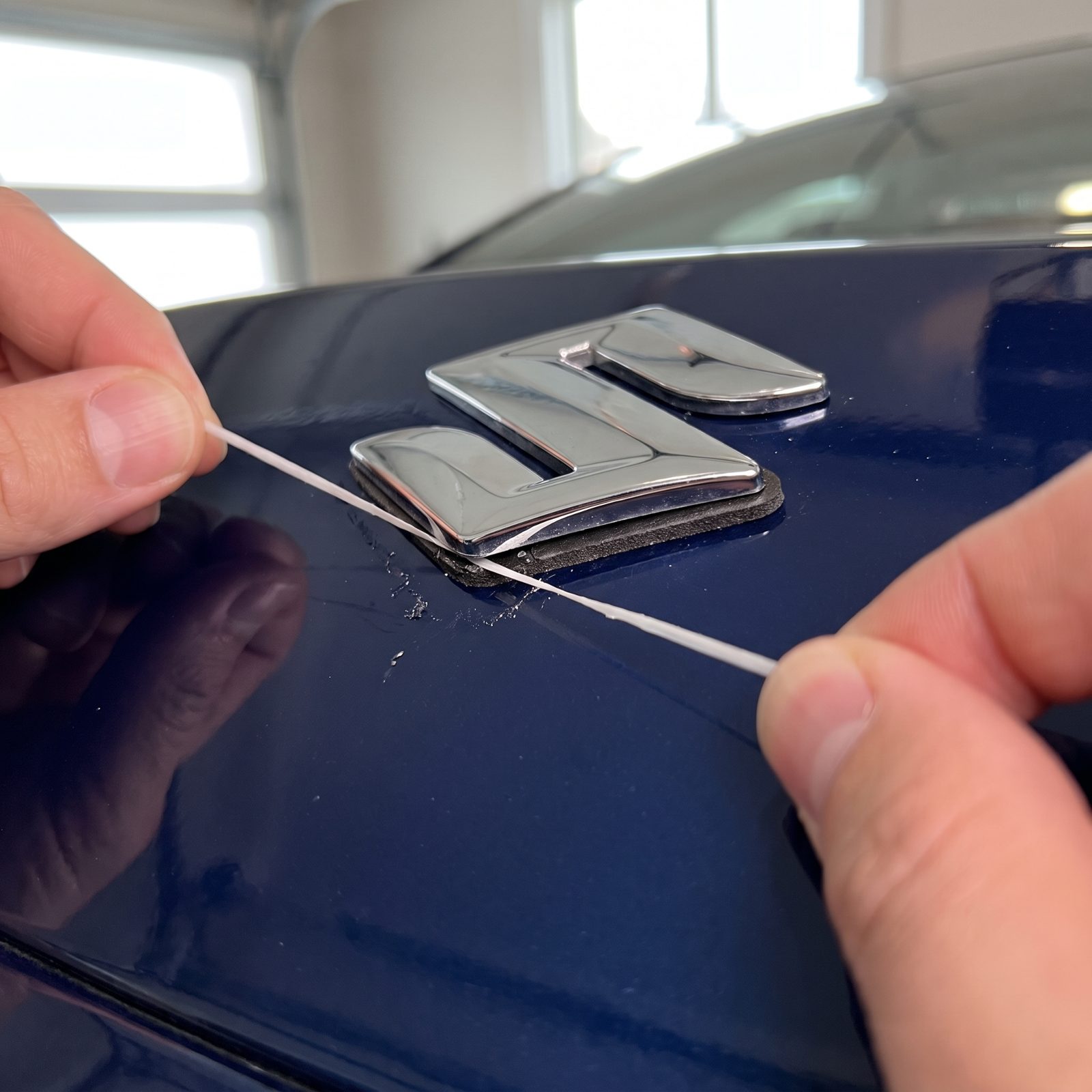
Pry at a glued-on emblem with a trim tool and you gamble the paint. The badge comes off in chunks, the clearcoat lifts with it, and now there’s a touch-up job that was never on the list.
A length of dental floss or fishing line worked behind the emblem in a sawing motion slices the foam adhesive flat against the panel without ever touching the finish. Warm the area first on a cold day so the glue gives easier. The badge releases clean, and whatever glue film is left wipes off with a plastic razor and a little adhesive remover. Nobody believes the floss part until they watch it work once.
3. Tape a Small Hose to a Shop-Vac for Precision Suction
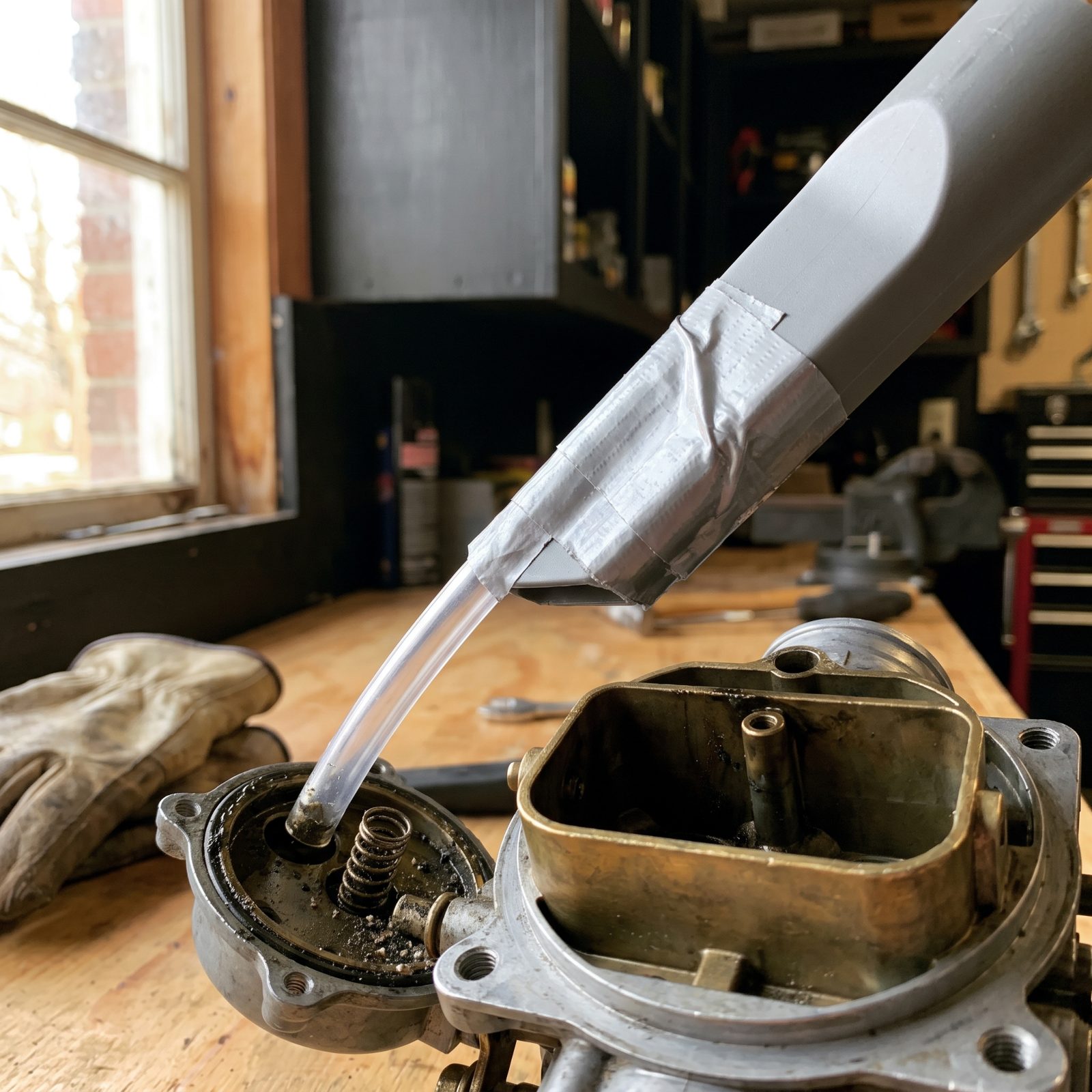
A shop-vac nozzle is wonderful for a dirty floor and useless for the gap behind a dashboard or the recess of a carburetor throat. The mouth’s too wide to reach anything that matters.
Tape a thin flexible hose — aquarium tubing, a drinking straw, a piece of vacuum line — to the crevice tool. Route its upper end into the nozzle mouth so it actually draws air. Once it’s in the airflow and the mouth is sealed around it, the whole machine’s pull concentrates into a point you can aim. It drags grit out of tight castings and clears debris from a fresh bore. And here’s the part most folks miss: stretch a scrap of pantyhose over the hose end and it’ll catch a dropped clip or spring without swallowing it into the bag.
2. Break a Hose Seal With a Rounded Pick Before You Pull
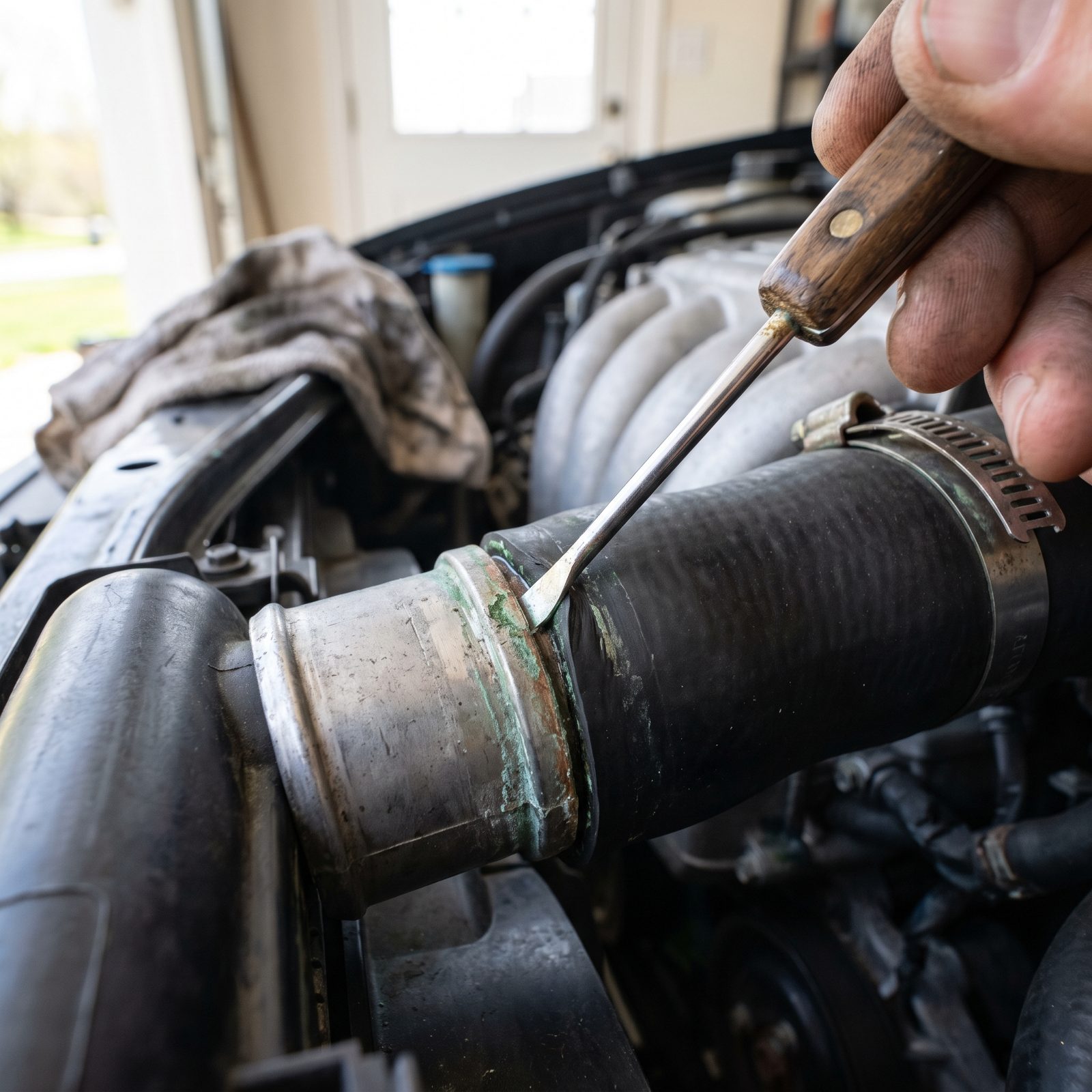
A stuck hose is just rubber fused to its fitting by old coolant that dried into glue. Yank it and one of two things happens: the hose tears, or the plastic nipple on the radiator snaps clean off. Either way, your five-dollar job just became a four-hundred-dollar one.
Nobody ever tells you the real fix. Work a smooth, flat-tipped pick all the way around the edge where the hose meets the fitting first, and break that seal before you break anything you actually need. The smooth, blunt blade is the part people skip. Go in there with a sharp pick and you’ll gouge the sealing surface, which hands you a fresh leak the moment you button it back up.
Twist, don’t pull. A quarter turn once the seal is cracked and the hose walks right off.
1. Crack the Fill Plug Loose Before the Drain Plug Comes Out
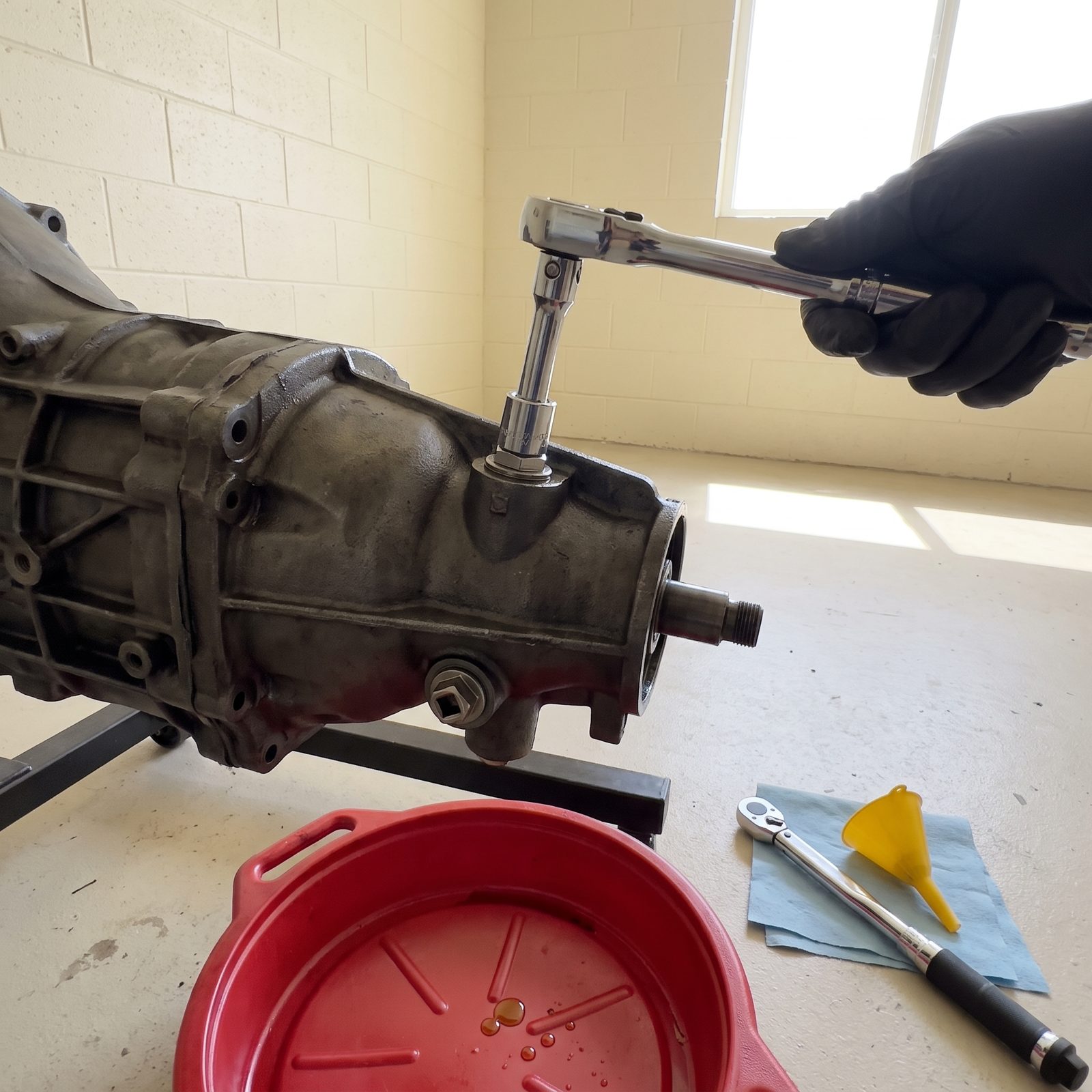
This is the mistake that leaves a guy standing over an empty gearbox with a long walk to the parts store ahead of him. He drains the fluid first, reaches for the new stuff, and finds the fill plug won’t budge. Now the car’s empty, undrivable, and the one bolt between him and driving off is seized dead tight.
So loosen the fill plug before you ever touch the drain plug. Comes loose? Good — you know you can refill. Fights you? Well, at least the old fluid’s still in there and you can nurse the thing to a shop instead of calling a tow. Transmissions, differentials, transfer cases — the order is everything.
Costs nothing. Saves a day.