
Would you like to save this?
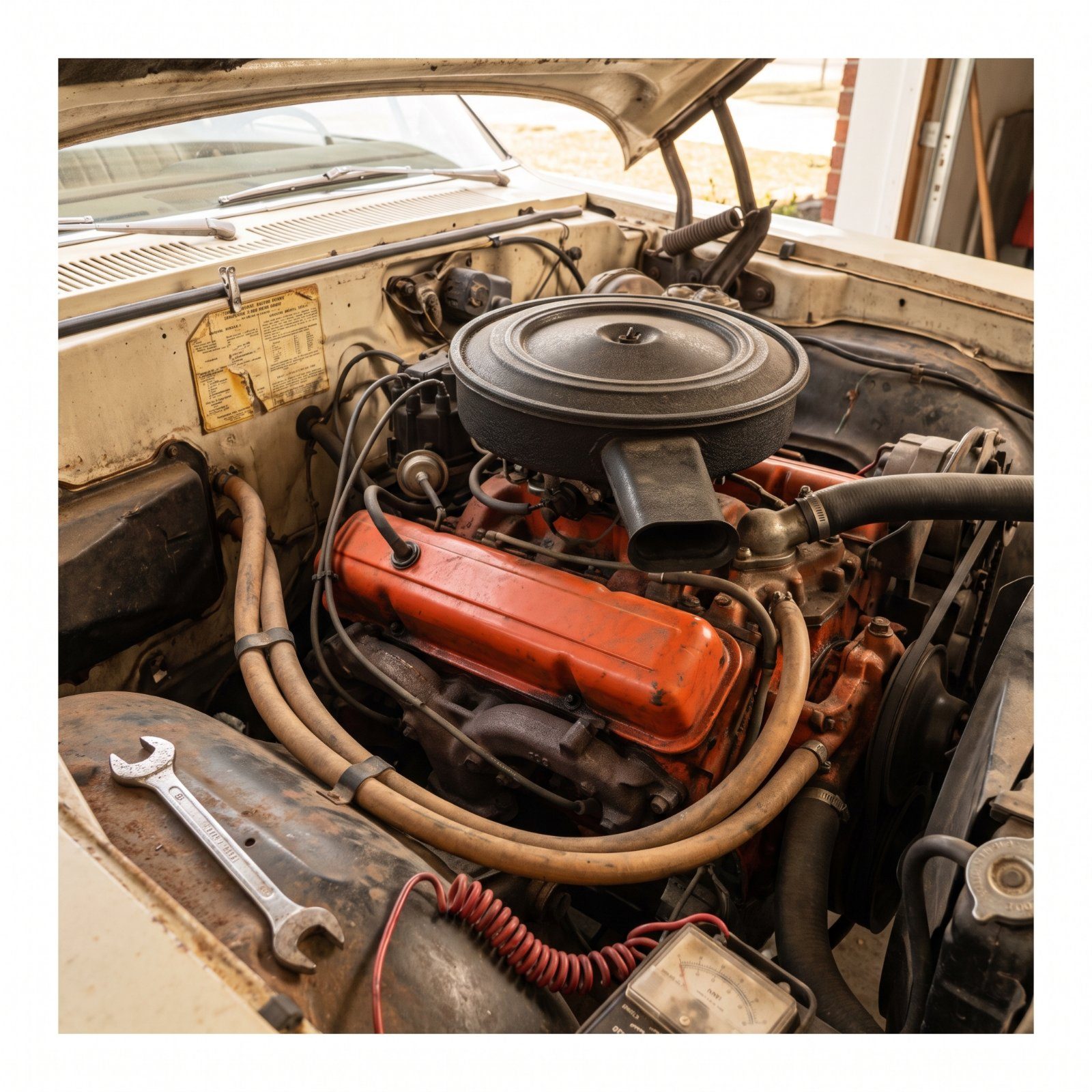
Pop the hood on a 1975 Oldsmobile and you’d find a spiderweb of rubber vacuum lines, a carburetor the size of a coffee mug, and a sticker underneath telling you exactly where to set the timing. None of it survives on a new car. Not a single piece. The things that made a Saturday-morning tune-up possible got engineered out one by one, and most drivers never noticed them leave. These are the parts that ran the American car and then disappeared.
Please note that some of the images in this article were created with the assistance of AI.
26. The Thermostatic Air Cleaner That Stole Heat Off the Exhaust Manifold
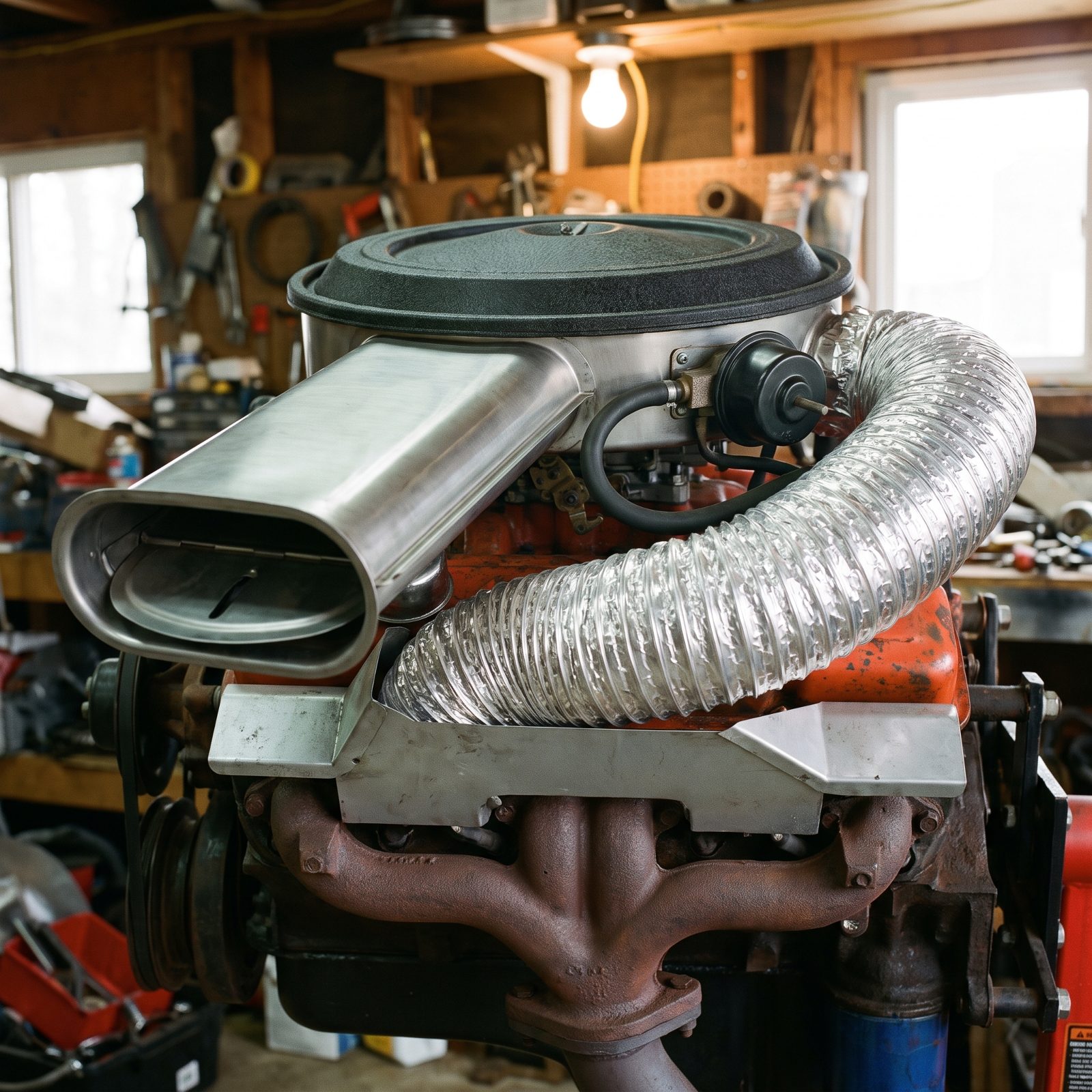
Cold morning, choke on, and the carburetor wanted warm air so the fuel wouldn’t puddle on the intake walls. So Detroit built a duct that scooped heat straight off the exhaust manifold and fed it up into the side of the air cleaner housing, the hose running around the can while the snorkel stayed open, with a vacuum motor on a bracket mounted on the air cleaner itself.
And you could watch it work. Lay a hand on the foil hose as a cold engine warms and feel the heat moving — smooth driveability on a 20-degree morning, no computer involved.
Then fuel injection and electronic intake-air heating made the whole oversized, foil-wrapped dryer-vent-hose contraption pointless. The air just comes in cold through a plastic box now, and nobody gives it a second thought.
25. The Exhaust Heat-Riser Valve That Woke Up a Cold Carburetor
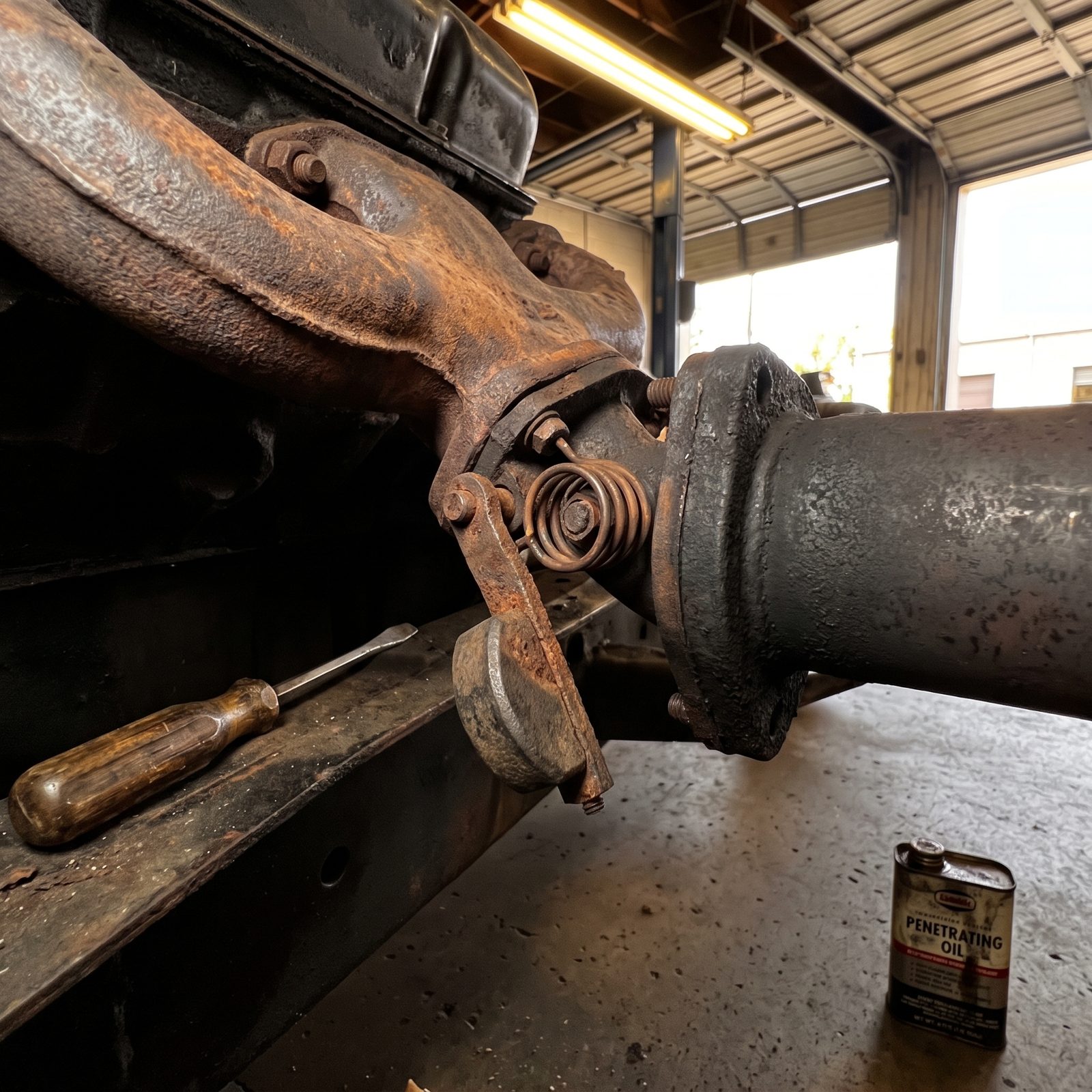
A flat little flapper valve in the exhaust, right where the manifold met the pipe, pulled off something clever. On a cold engine it stayed shut and routed hot exhaust gas up under the intake to warm the carburetor base, then once things heated up a bimetal spring let it swing open.
Mechanics knew this one by sound. A stuck, rattling heat riser clacking at idle was a familiar Monday-morning gripe, and a squirt of the special penetrating lube made for exactly that job usually freed it up.
Modern engines warm up fast and meter fuel electronically, so the heat riser quietly went extinct. If you’ve never heard one rattle, well — you missed one of the small percussion sounds of an old V8 coming to life.
24. The Choke Pull-Off Diaphragm That Managed Cold Starts Without a Computer
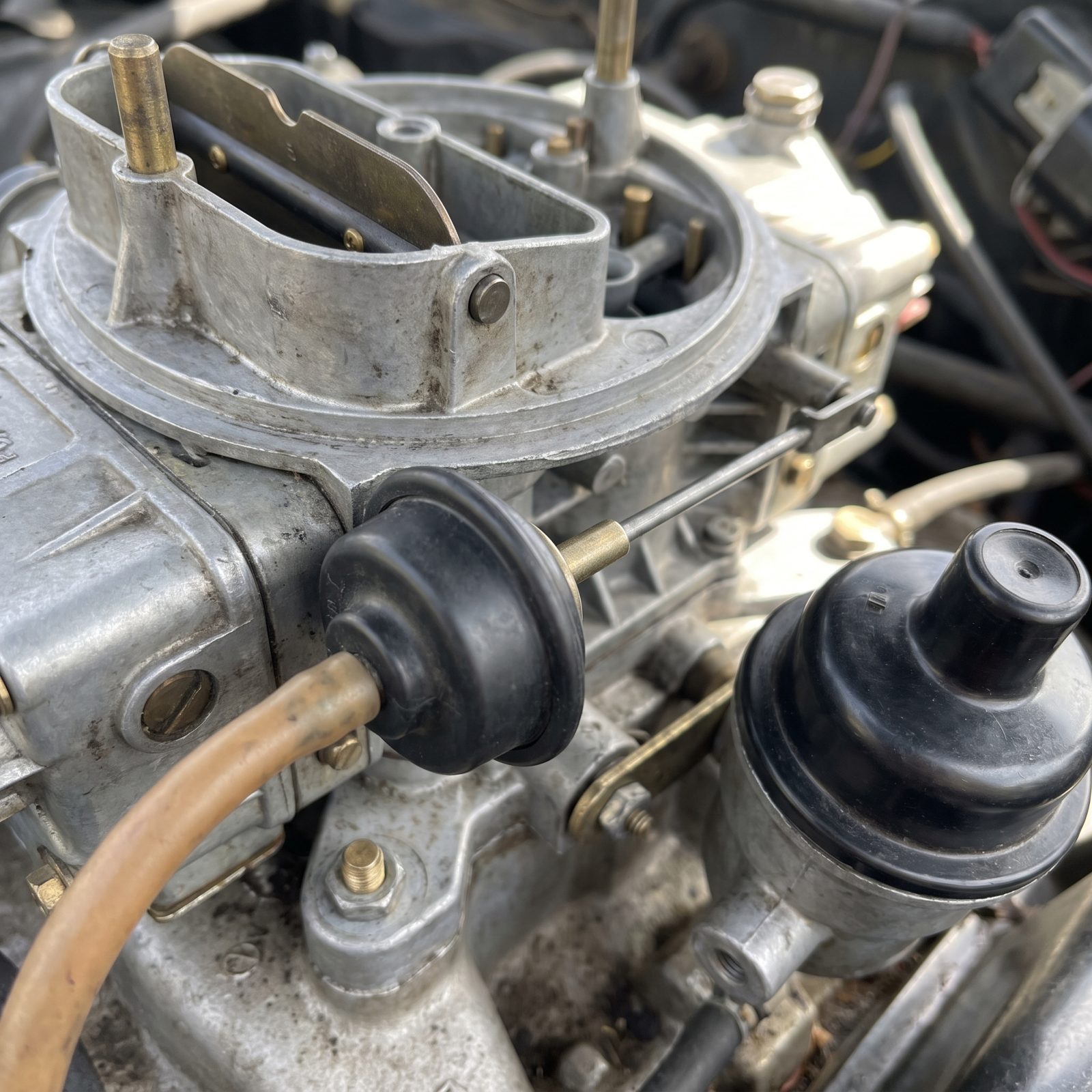
Every carbureted car needed a fat, rich mixture to fire up cold, then had to lean out fast or it would flood as it caught. The automatic choke handled the rich part. The pull-off diaphragm handled the second half.
The instant the engine started, manifold vacuum yanked a little rubber diaphragm that cracked the choke plate open a precise amount. Too little and the engine loaded up and stumbled; too much and it stalled stone cold.
All of it was a mechanical dance set by spring tension and vacuum — tuned at the factory, adjustable at the shop. Fuel injection replaced the entire choke system with code. No more fast-idle cam, no more pumping the gas pedal once to set the choke before a frosty start.
23. The Vacuum Hose Web That Secretly Ran the Whole Car
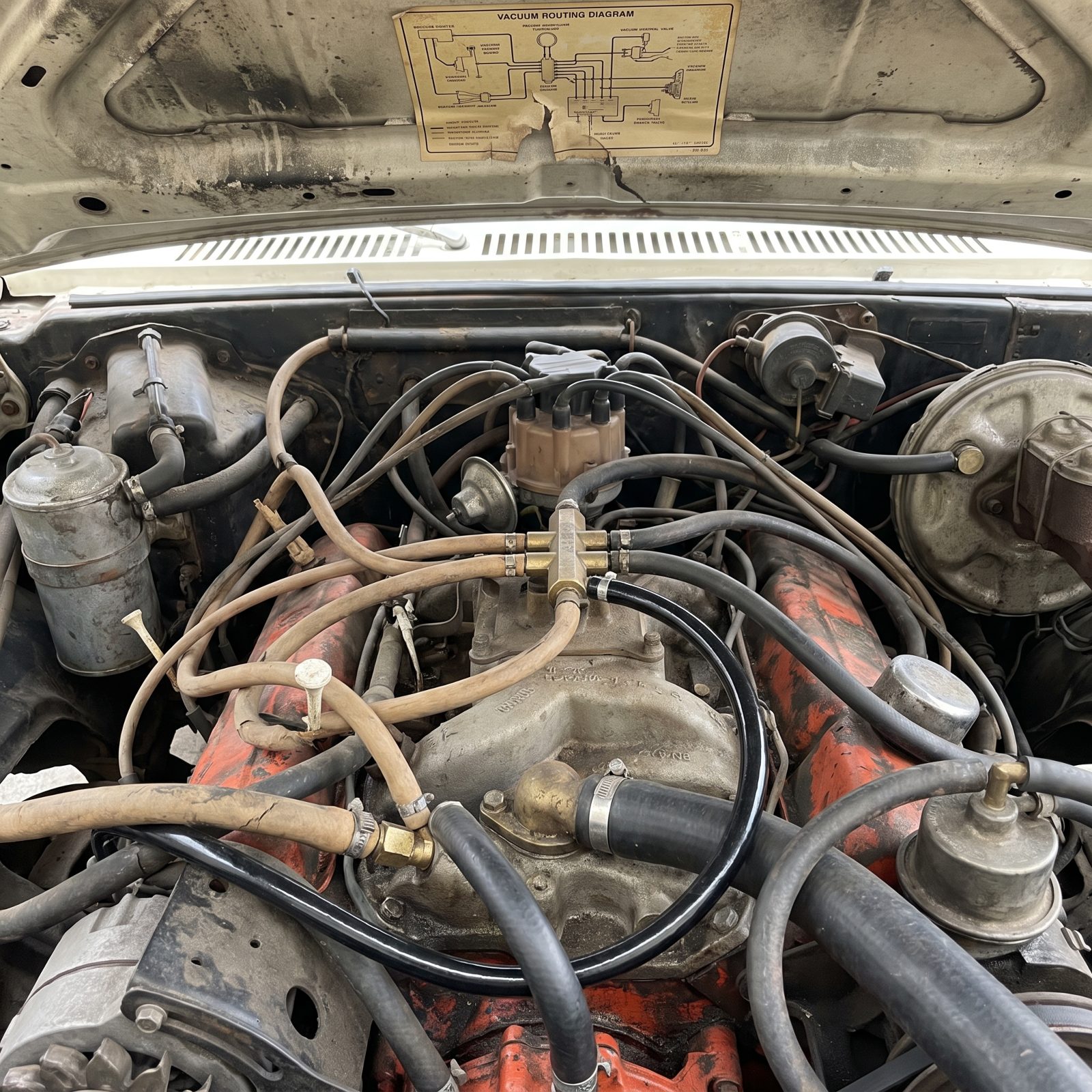
Under the hood of a 1975 car ran a nervous system made of rubber. Not wires. Hoses — dozens of them, from thin lines to fat ones as thick as a heater hose, clamped to big brass fittings and routed to places you’d never guess.
Engine vacuum worked the distributor advance, the heater and air-conditioning doors inside the dash, the transmission shift modulator, the EGR valve, the headlight doors on some cars, even the trunk release on certain Cadillacs. A single cracked hose could set the idle wandering, kill the heat, or stick the vent on defrost. One hose.
Diagnosing a dry-rotted vacuum leak by ear and feel was a genuine skill. There was a diagram decal under the hood because even the factory knew nobody could keep it all straight.
22. The Distributor That Advanced Timing With Spinning Weights
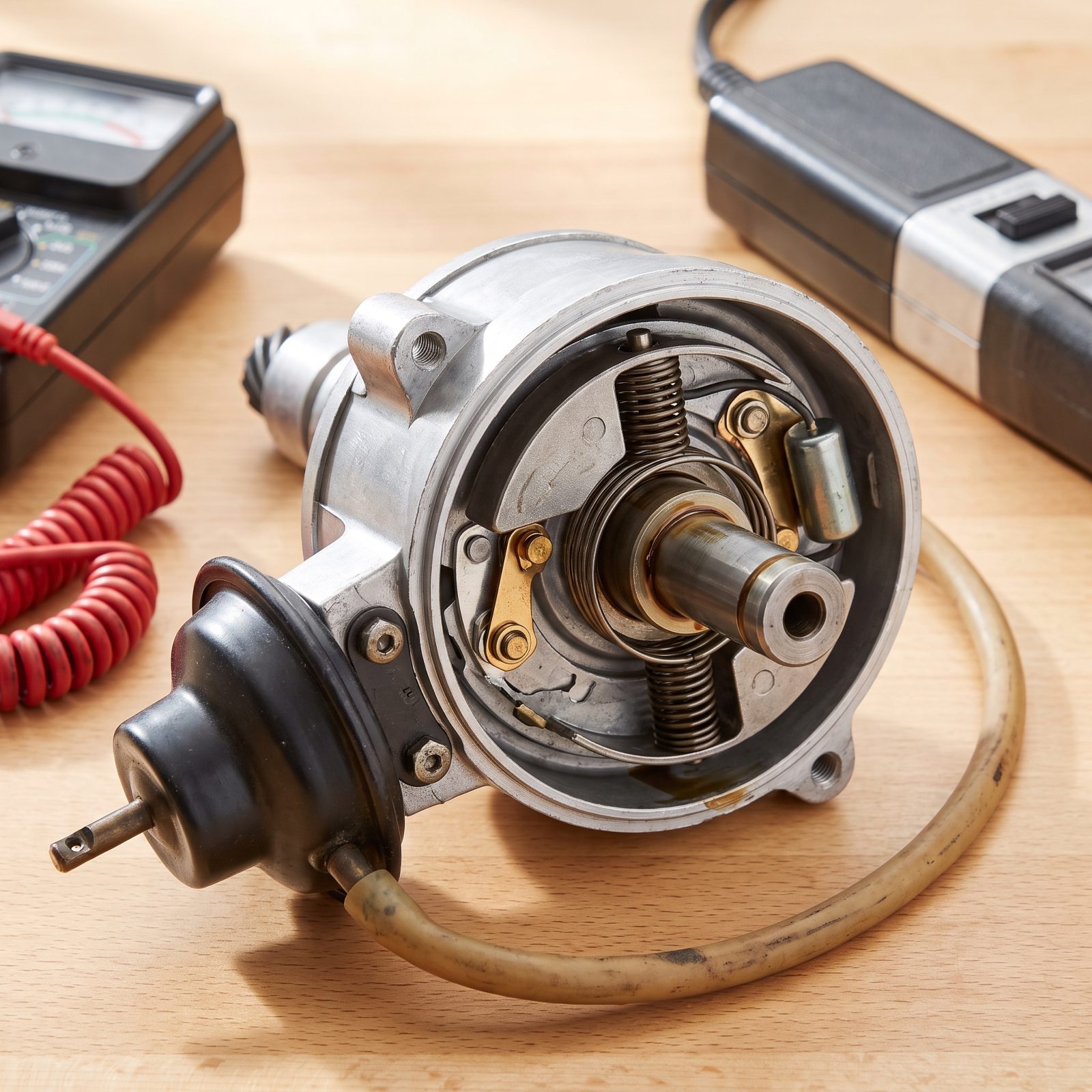
Spin a distributor shaft faster and two little weights swung outward against spring tension, twisting the timing earlier. That was centrifugal advance. Bolt a vacuum canister on the side, normally plumbed to the engine to read load, and you had vacuum advance stacked on top of it.
Together they drew a purely mechanical timing curve — no sensors, no computer. You tuned it by swapping springs and weights, and plenty of guys did exactly that on a Saturday afternoon for a little more snap off the line.
A timing light and a steady hand let you set base timing against the tune-up decal, watch the advance come in as you revved, and feel the difference in how the car pulled. Electronic ignition erased all of it. The curve now lives in software you’ll never touch.
21. The Mechanical Fuel Pump Bolted to the Side of the Engine
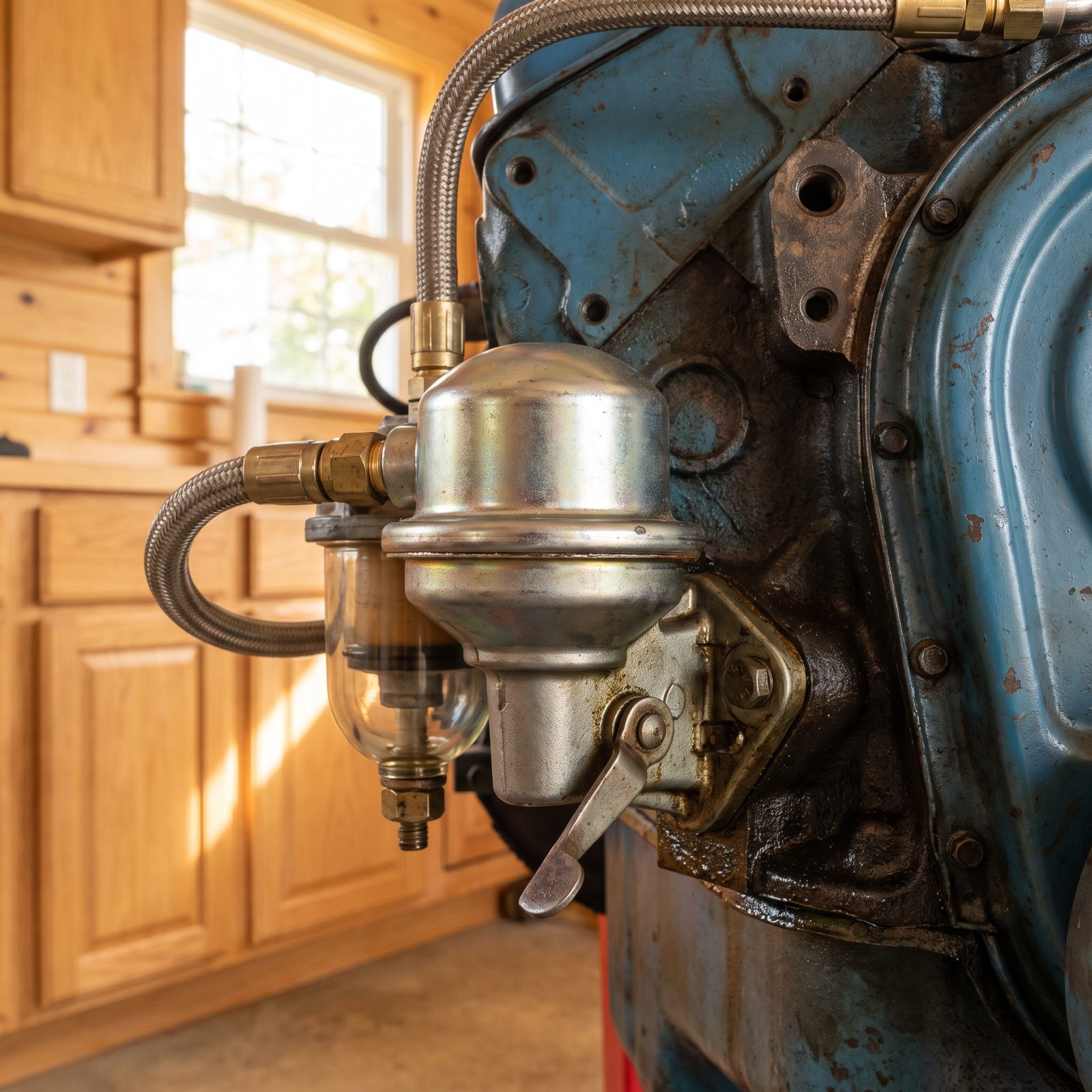
No fuel-pump relay. No hum when you turned the key. The fuel pump on a 1975 car was a stamped-steel lump bolted to the block, worked by a lobe on the camshaft, and a rubber diaphragm inside pulsed gas up from the tank every time the arm rose and fell.
It even had a hand-priming lever on the side so you could fill the carburetor bowl after changing a filter. Replacing one was a half-hour job with two line wrenches and a new gasket.
Electric pumps moved into the fuel tank, where they run cooler and feed the high-pressure injection needs. Reliable, sure. But you can’t reach them with a wrench on a Sunday anymore, and that stings more than it probably should.
20. The Under-Hood Tune-Up Decal That Told You Everything
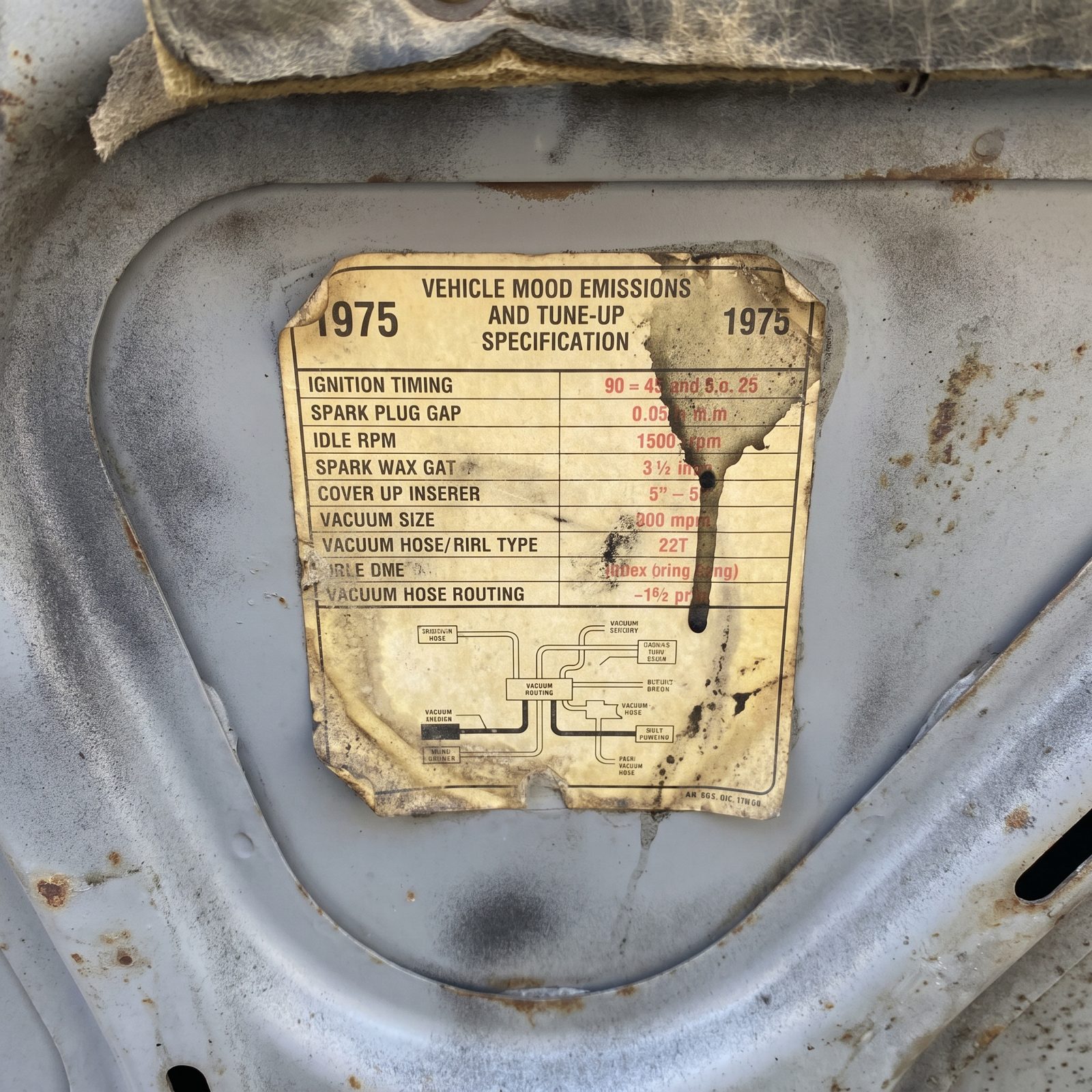
Every car wore a cheat sheet. Glued under the hood or on the radiator support sat a decal with rows for ignition timing, spark plug gap, idle RPM, and often a little diagram of where all those vacuum hoses went.
That sticker was the bridge between the factory and the guy with a timing light in his driveway. Set the car to the numbers a fresh, legible decal listed and it ran the way Detroit intended it to.
Cars still carry an emissions label, but it tells you almost nothing you could act on. There’s nothing to adjust. The specs that once invited you to tune your own car got swapped for a sealed system and a scan-tool port.
That decal was the last printed instruction manual the engine ever gave you.
19. Front Wheel Bearings You Cleaned, Greased, and Packed by Hand
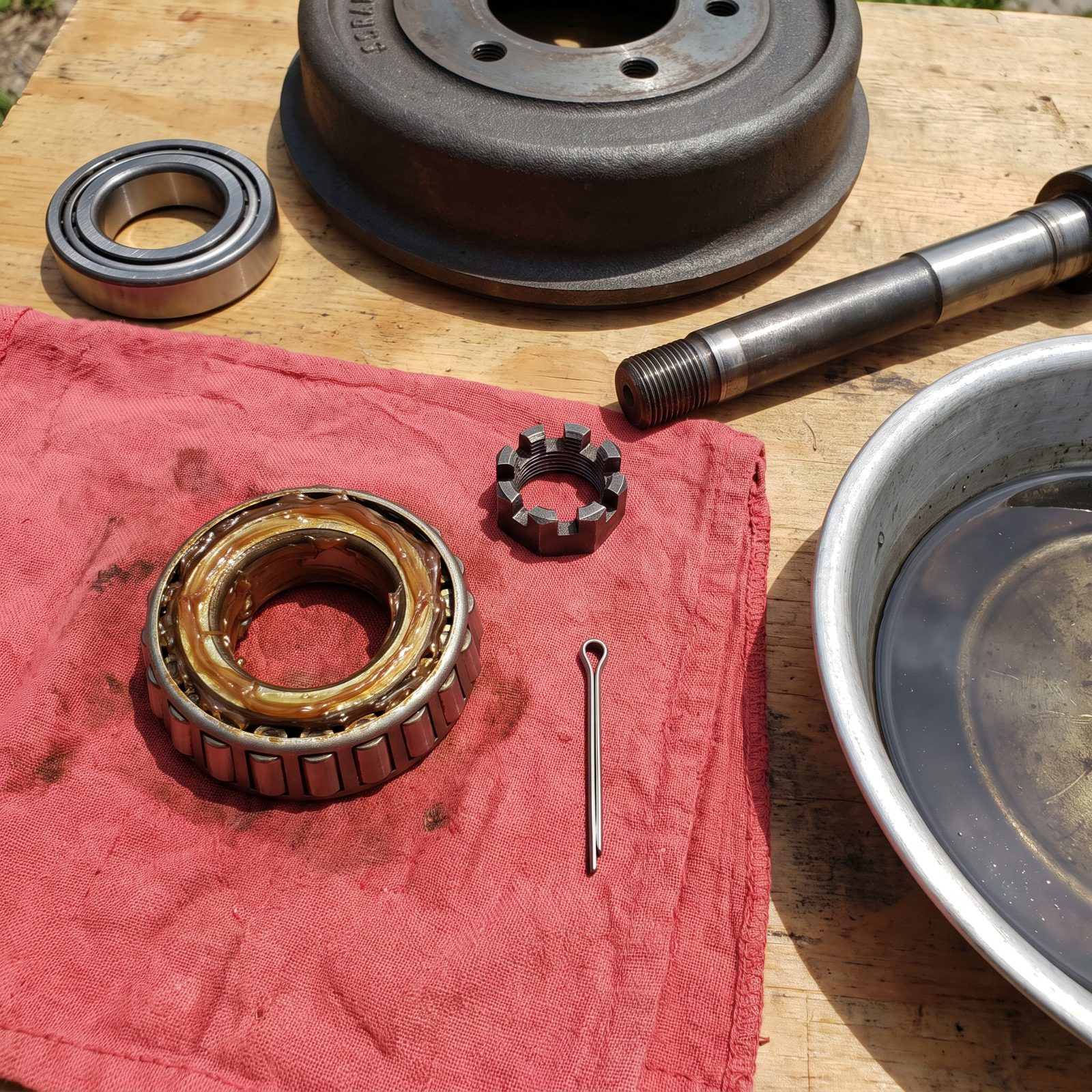
Pull the dust cap, pull the cotter pin, back off the castle nut, and the whole front hub slid off into your hand with the bearings inside. You washed them in solvent, spun them to listen for roughness, then packed them with fresh grease by working it into the rollers with your palm.
Messy, satisfying work, usually done every brake job or two. Set the nut to the right drag, drop in a new cotter pin, tap the dust cap back on, done.
Modern cars use sealed hub bearing assemblies. When one goes, you don’t clean it — you unbolt the whole unit and throw it in the trash. Cleaner hands, heavier parts bill.
18. The Wet-Cell Battery With Six Caps You Could Pop Open
Would you like to save this?
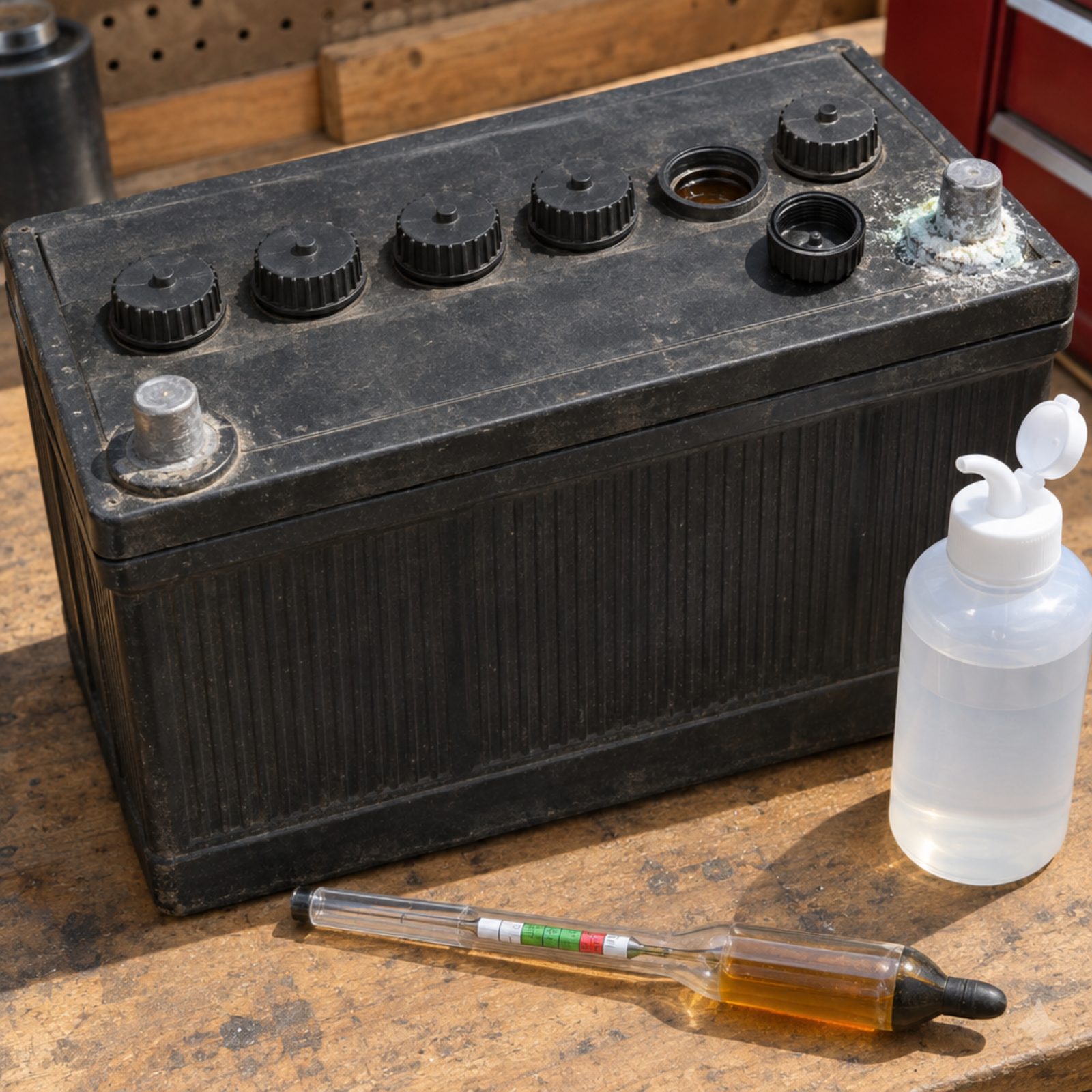
Six little screw-off caps ran across the top of the battery, and behind each one sat a cell you were supposed to check. Low fluid? You topped it off with distilled water. Wanted to know its health? You tested each cell with a hydrometer and read the float.
A battery that ran dry on a hot summer wouldn’t hold a charge, and plenty of them did. Checking the electrolyte was part of a proper tune-up, right alongside the plugs and points.
Sealed maintenance-free batteries took over, and there’s nothing left to open. You don’t check it. You wait for it to die and buy another. Fewer burned fingertips, less to think about.
17. The Speedometer Driven by a Spinning Cable
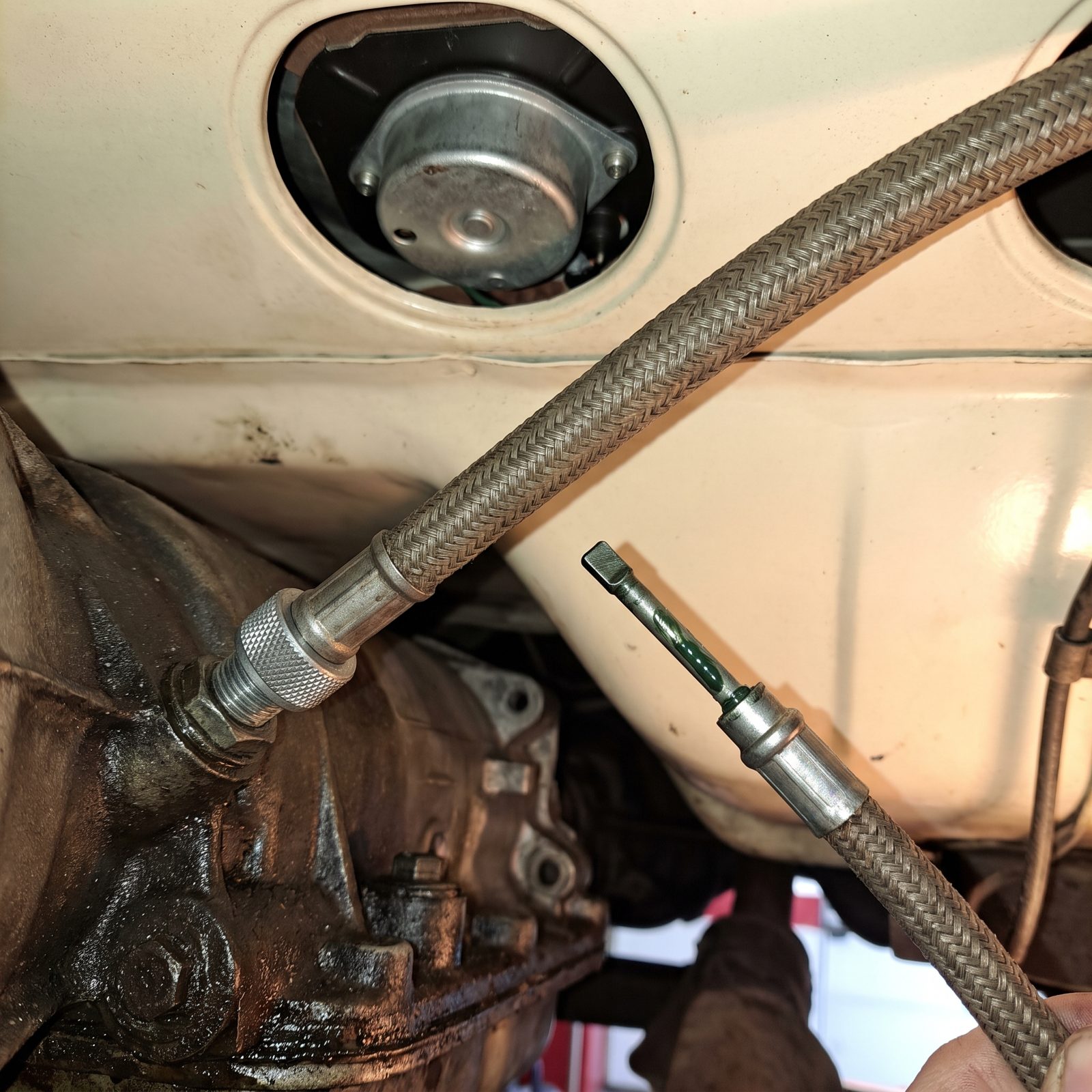
Your speed came up through a physical cable. A gear in the transmission spun a square-tipped inner wire inside a flexible housing, all the way to the speedometer head in the dash, where it drove the needle through a magnet and a hairspring.
That’s why an old speedometer needle sometimes wavered or buzzed. A dry, kinked cable made that distinctive whir, and a squirt of cable grease usually cured it.
A small electronic sensor on the transmission replaced the whole run of cable. The reading is more accurate and it never needs grease. But nothing about a digital readout has the honest mechanical shimmy of a needle fed by a wire spinning the full length of the car.
16. A Tangle of V-Belts, One for Every Accessory Under the Hood
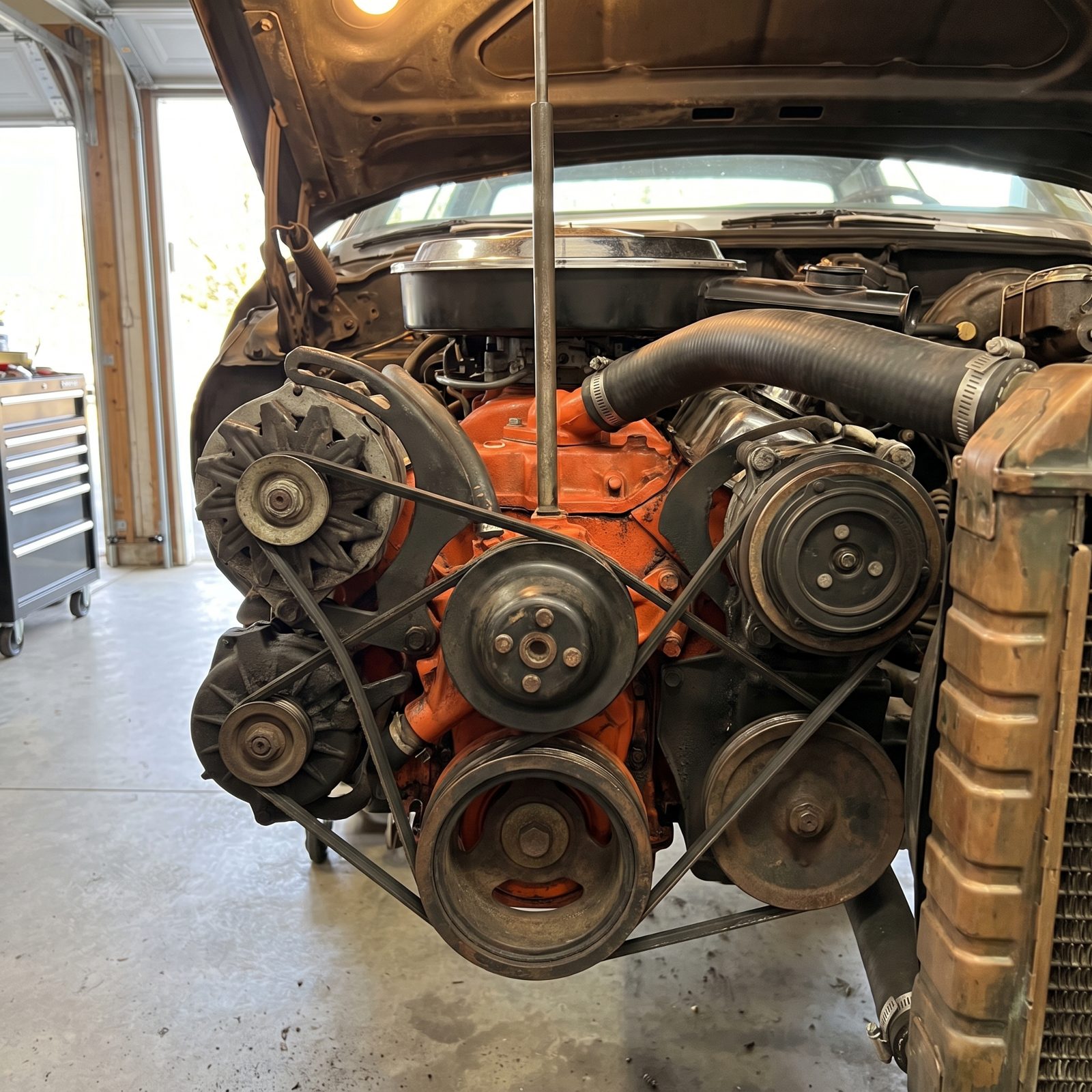
Stand in front of a 1975 V8 with the hood up and count the belts. Two, three, sometimes four of them, each riding its own groove on a stacked crankshaft pulley and fanning out to the water pump, the alternator, the power steering pump and the air conditioning compressor. Every accessory got its own ribbon of rubber, and they crisscrossed the front of the engine like a cat’s cradle.
When one stretched, you heard it first. That high squeal on a cold start meant a slipping fan belt. Fixing it meant loosening a slotted bracket bolt, prying the alternator outward with a bar, and snugging it down again while holding tension with your other hand. Replacing an inner belt meant pulling every belt in front of it first.
The single serpentine belt took over through the 1980s, snaking around every pulley at once with a spring-loaded tensioner doing the adjusting. One belt, no pry bar, no guesswork. Much tidier, and the front of the engine never looked half as busy again.
15. Glass-Tube Fuses You Could Actually See Blow
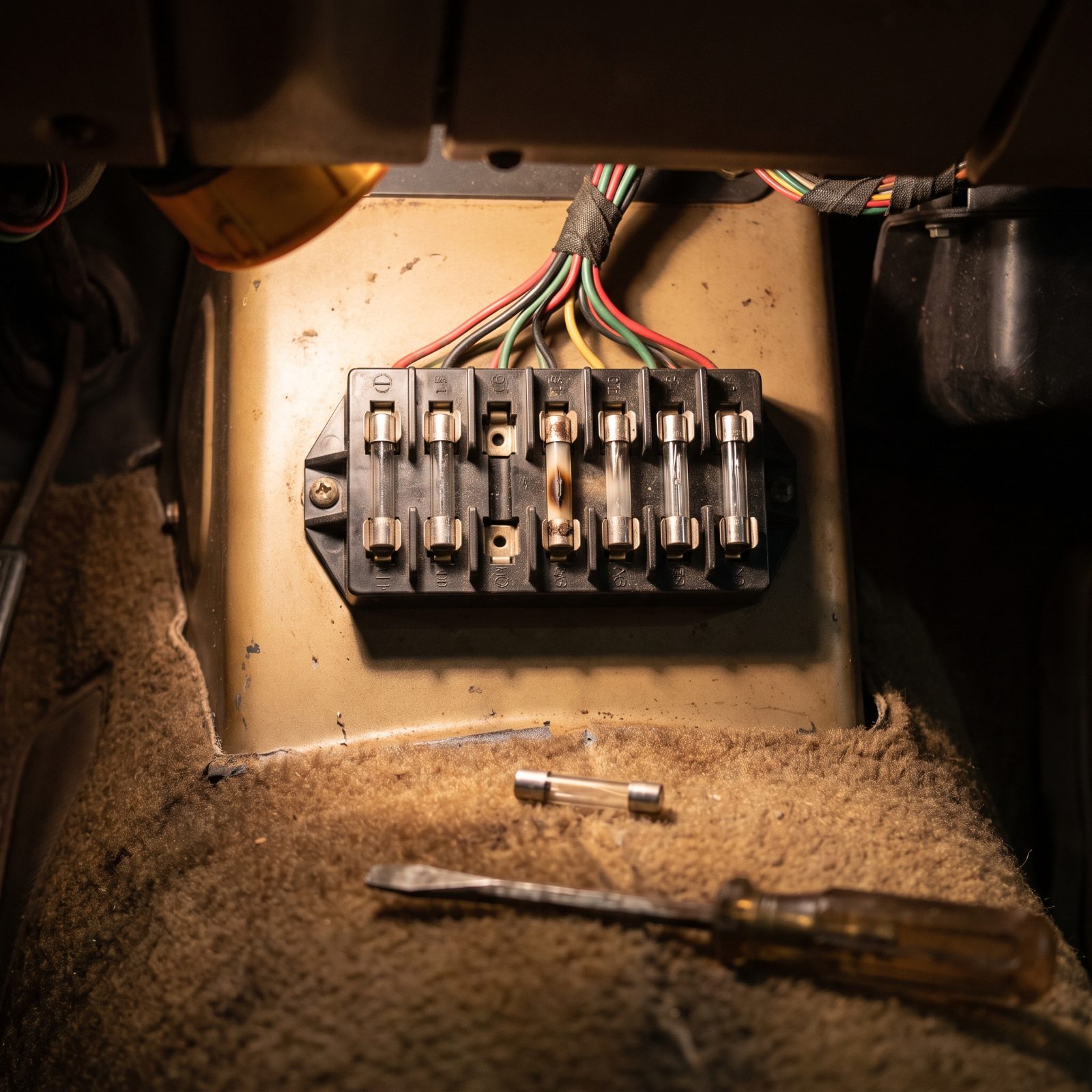
Reach under the dash on a 1975 car and you’d find a fuse block with a row of little glass cylinders clipped between metal ends, each one guarding a circuit for the radio, the wipers, the dome light or the heater fan. Inside every tube ran a thin metal strip you could see with your own eyes.
When something shorted, the evidence was right there. The strip snapped, and a hard short often left the glass scorched black. You didn’t need a test light to find the culprit. You just looked down the row, pried the dead one out with a screwdriver or a fingernail, and clipped in a spare from the glovebox. GM’s version even came in different lengths for different ratings, so a bigger fuse wouldn’t fit where a smaller one belonged.
Plastic blade fuses arrived in the late 70s and took over the industry, color-coded and easier to plug in. Today many circuits are protected by solid-state electronics inside control modules, and there’s nothing to see at all.
14. Sealed-Beam Headlamps Swapped Out Whole, Glass and All
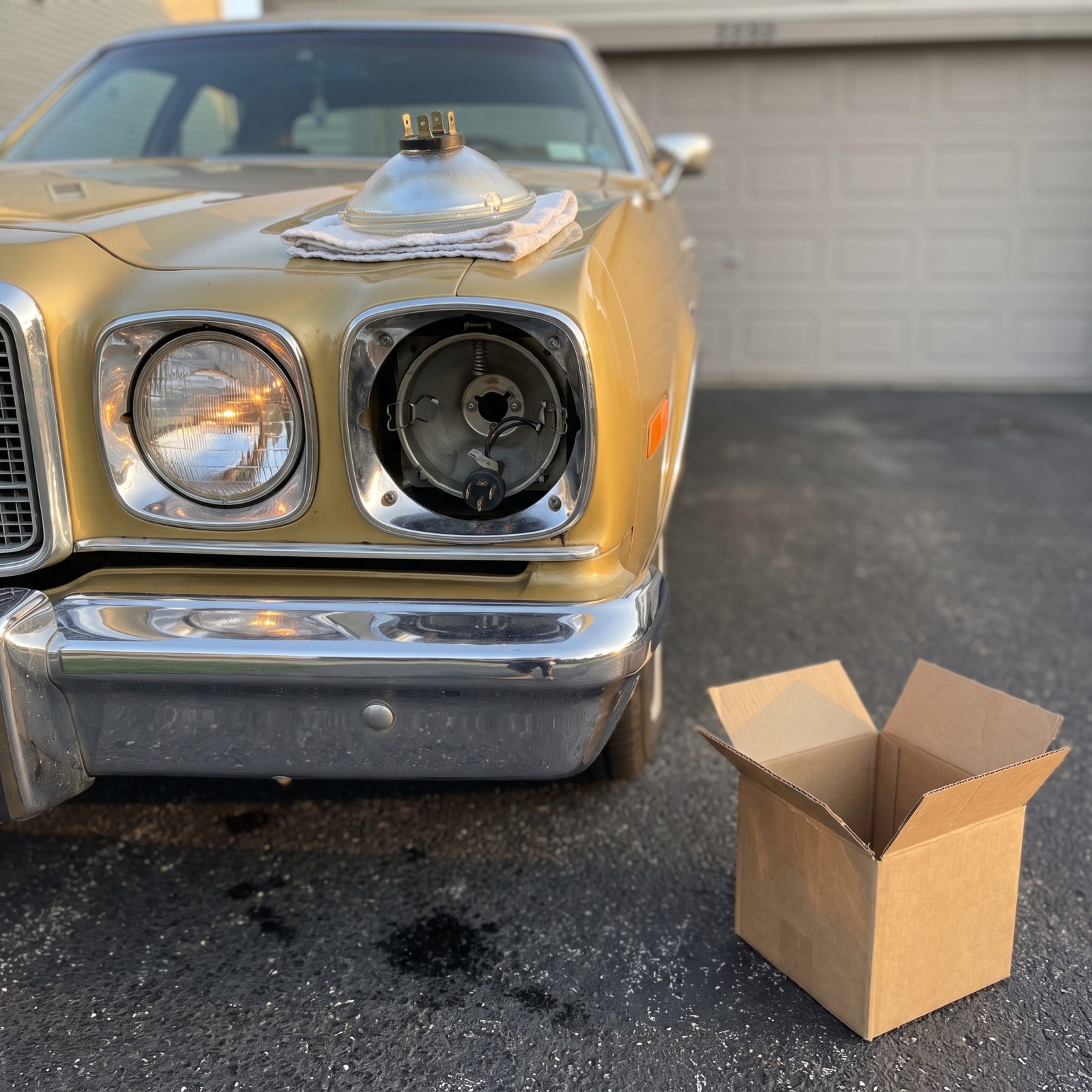
A 1975 headlight wasn’t a bulb. It was the entire lamp: filament, reflector and glass lens fused into one sealed unit, with three prongs sticking out the back. When it burned out, the whole thing went in the trash and a new one came out of a cardboard box.
The swap took minutes. Back out a few screws on the trim bezel, pull the retaining ring, tip the old lamp forward and unplug it. Push the new one onto the connector, set it in the bucket, and bolt the ring back on. The only rule was to leave the spring-loaded aiming screws alone so the beam stayed where it belonged. Every parts store and most gas stations stocked them, because nearly every car on the road used the same handful of sizes.
Then composite headlamps with small replaceable bulbs freed designers to shape the lights however they wanted. Now headlights are sculpted housings that fog, yellow and cost a fortune to replace as an assembly.
13. Kick-Panel Vents That Let the Breeze In Without a Fan
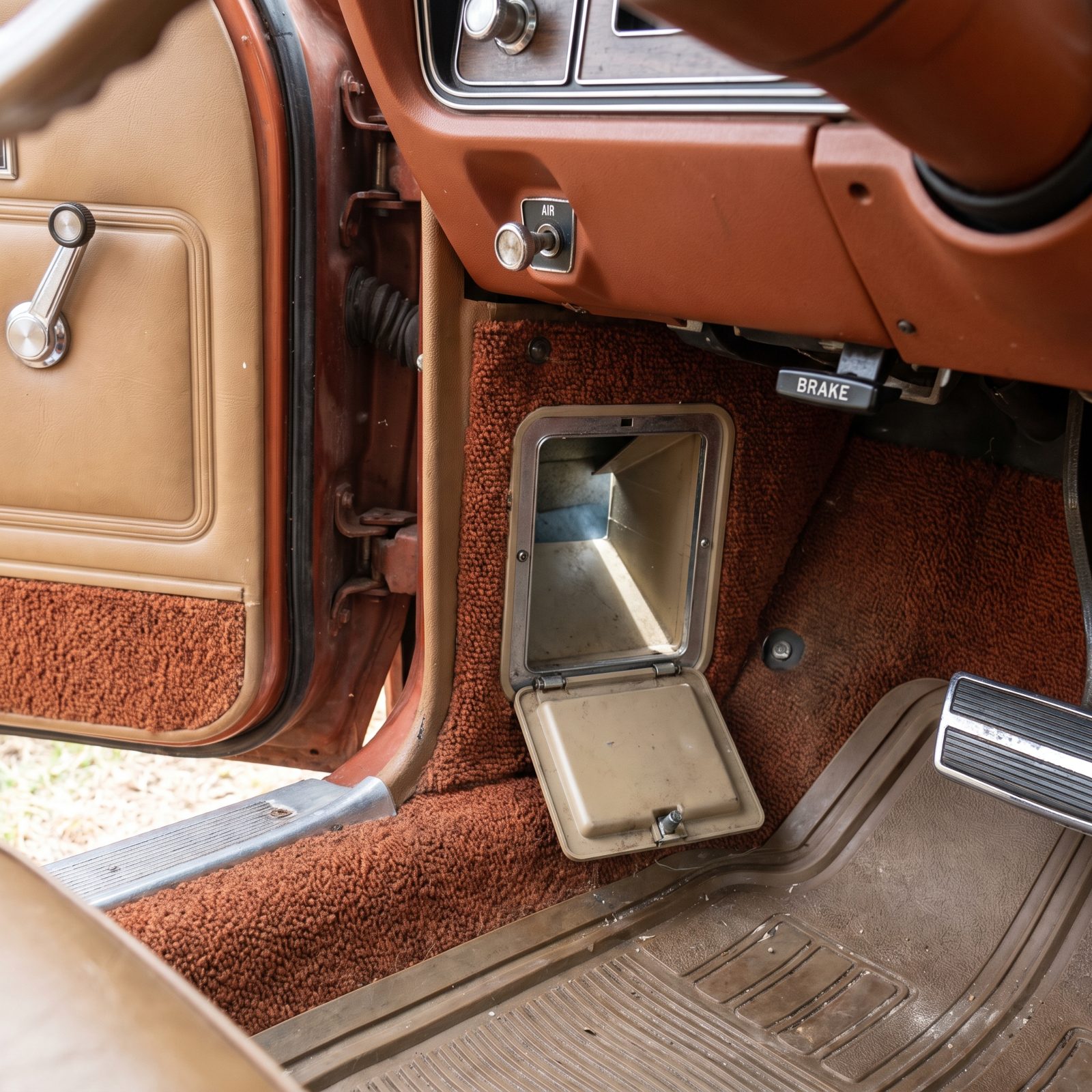
Down by your left foot, in the side panel just ahead of the door, sat a little hinged flap. Pull a knob on the lower dash marked AIR and that flap swung open, letting outside air rush straight in through a duct from the cowl. No blower, no electricity. Just forward motion pushing fresh air into the footwell.
On a summer drive it was a gift. Crack the vent, roll down the window, and you had a cross-breeze aimed right at your ankles. It also let in the occasional leaf, a few bugs, and on a rainy day a splash of water if the cowl drains clogged up.
Fan-driven ventilation and air conditioning made it redundant. Modern cabins are sealed tight for noise and climate control, and every bit of outside air now passes through a filter and a blower motor before it ever reaches you. The free breeze is gone.
12. Heater Controls You Could Feel Snap Through a Cable
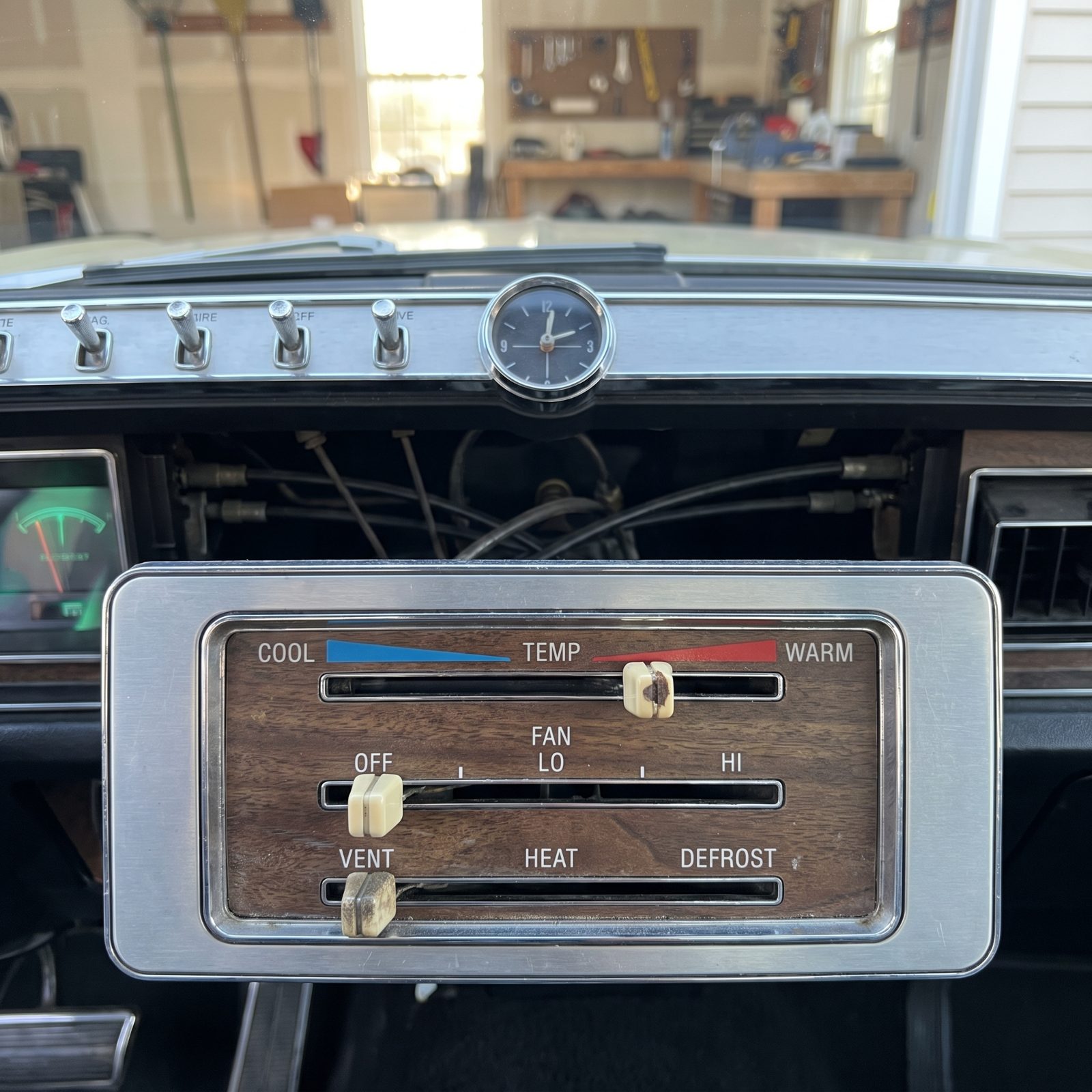
Slide the temperature lever toward WARM on a 1975 dash and you could feel the resistance travel through your fingertips. Behind the panel, a steel cable in a sheath ran all the way down to a blend door in the heater box, and moving the lever physically moved that door. Pull the dash bezel off and you can see them, a nest of cables snaking off toward the firewall.
The mode lever worked the same way, sweeping from VENT to HEAT to DEFROST, while the fan slider clicked through its detents from OFF to LO to HI. You never had to look. Your hand learned where everything was, and a gloved thumb could make adjustments on a freezing morning.
Electric actuators replaced the cables, and then touchscreens started swallowing the controls entirely. Now a failing blend-door motor clicks behind the dash, and changing the temperature can mean tapping through a menu at 60 mph.
11. The Floor Button That Flicked Your Brights On
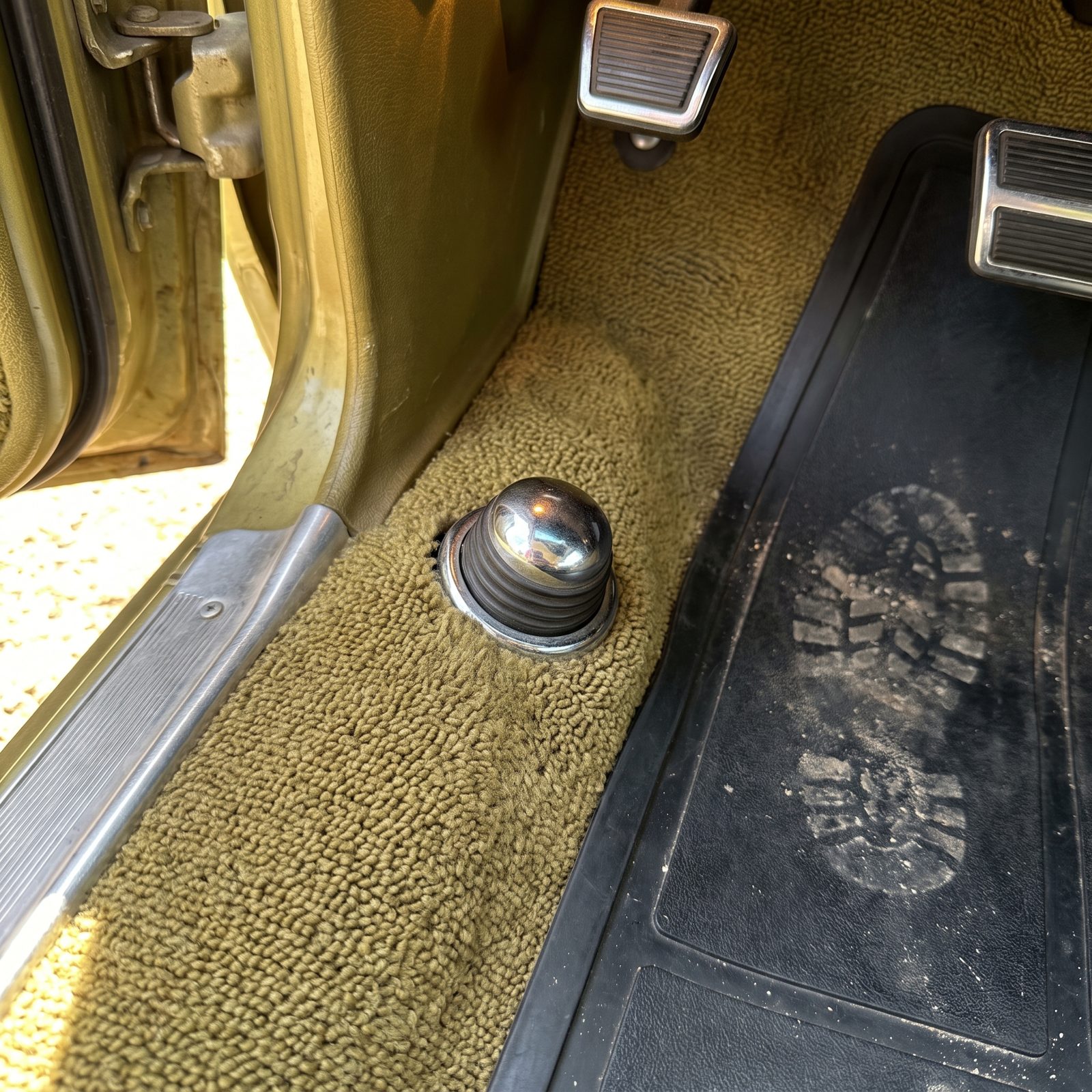
Your right foot handled the gas and brake. Your left foot, on most cars with an automatic, had nothing to do except one job: clicking the high beams. A chrome-capped button sat on the floor to the left of the pedals, poking up out of a ribbed rubber boot, and a firm tap toggled between low and bright.
Coming over a hill on a dark two-lane, you’d see oncoming headlights and stomp it without taking your hands off the wheel. Click, dim. Click, bright again once they passed. It became pure muscle memory for a generation of drivers.
The trouble was its location. Down on the floor, the switch sat in the path of snowmelt, road salt and spilled coffee, and plenty of them corroded or got stuck. Through the late 70s and 80s the job moved up to the turn-signal stalk, where flash-to-pass came along for the ride. The floor button disappeared, and left feet went back to resting.
10. AM Pushbutton Radios With Presets You Set by Hand
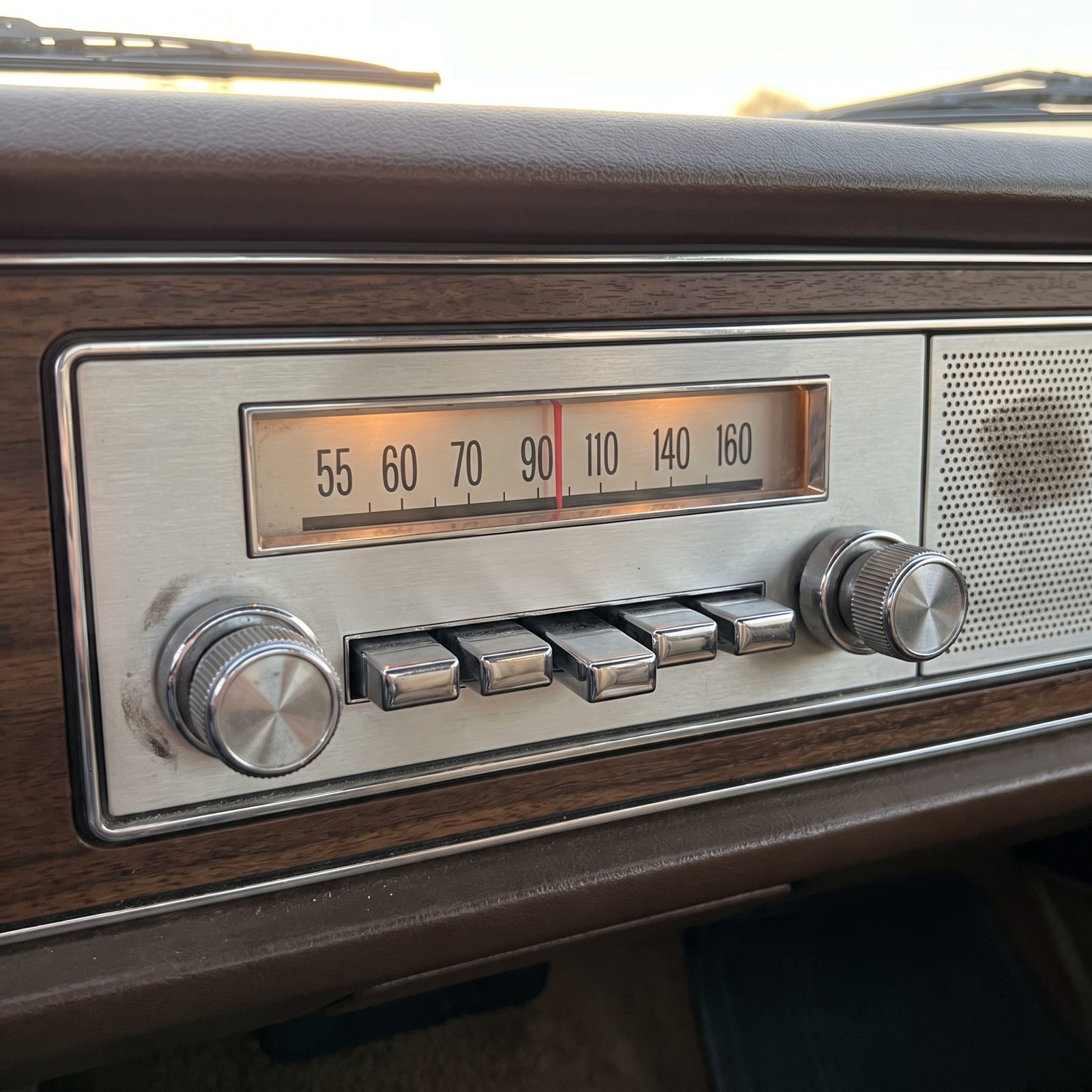
A glowing dial, a red needle, numbers running from 55 to 160 across the face, and a row of chunky chrome buttons underneath. One knob for volume, one for tuning. That was the whole entertainment system in a huge number of 1975 cars, and AM was all it pulled in.
Setting a preset was a mechanical ritual. You tuned in a station by hand with the knob, pulled one of the buttons outward, then pushed it back in hard. Inside, a mechanism locked onto the tuning position, and from then on, punching that button sent the needle sliding across the dial with a satisfying clunk. No memory chip involved. The radio remembered with levers and springs.
Digital tuners with electronic presets ended all of it, then satellite radio and phone streaming made the dial feel ancient. Some new electric cars have dropped the AM band altogether because of interference from their electronics.
9. The Telescoping Fender Antenna You Pulled Up by Hand
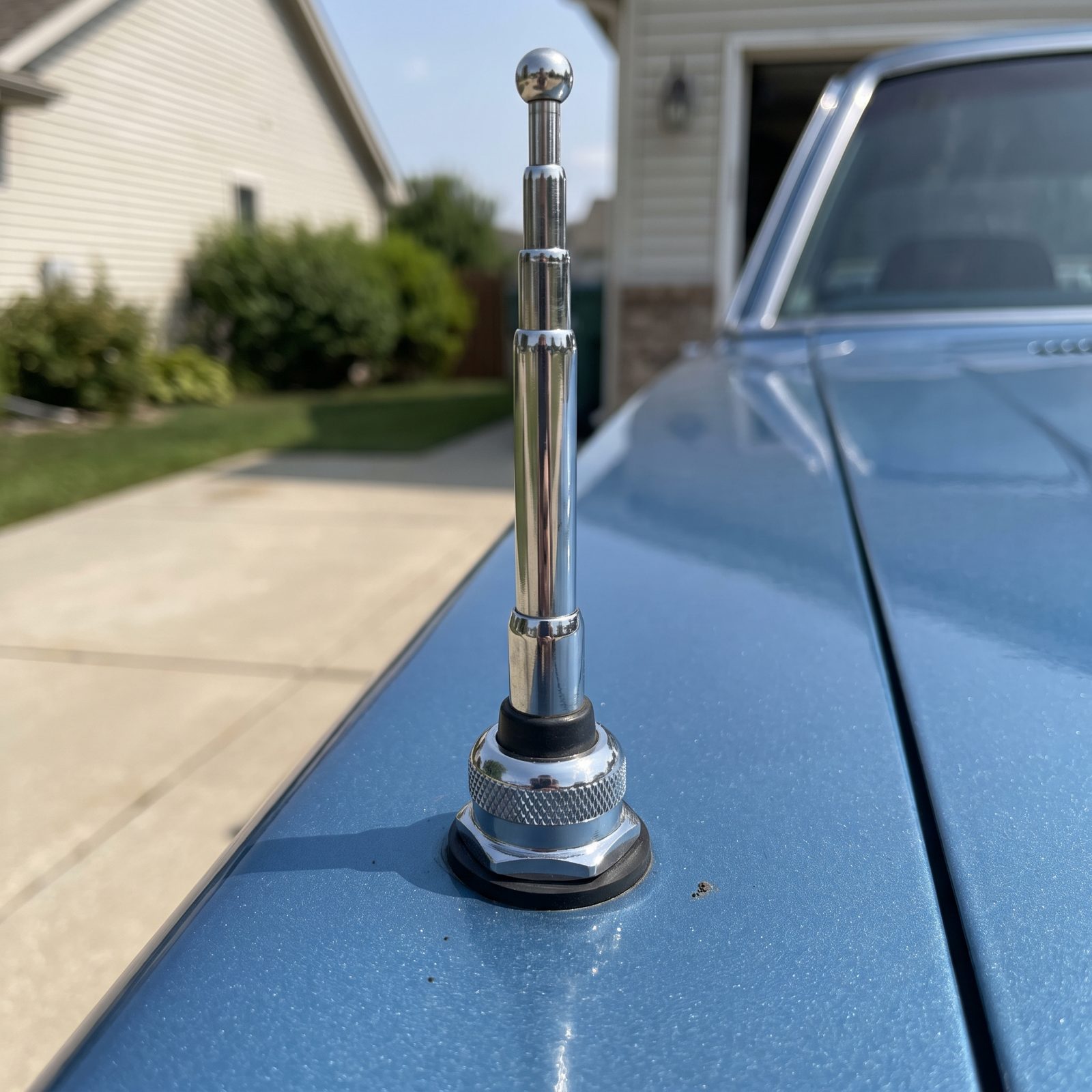
A chrome mast stood on the front fender, stacked in nesting sections with a little ball on top. Want better reception? Pinch that ball and pull the antenna up to full height. Heading into a car wash? Push it back down, section by section, until it sat as a stubby chrome post on top of its knurled base.
Forget to lower it and the car wash brushes might bend it into a fishhook. Leave it up on a city street and someone might snap it off just for fun. Plenty of drivers ended up with a coat hanger jammed into the base as a substitute, and it worked surprisingly well.
Power antennas that rose on their own came first, then antennas printed into the window glass, then the shark fin on the roof. Nobody pulls an antenna up by hand anymore, and nobody needs a coat hanger to hear the ballgame.
8. Vent Windows That Scooped Air Right at Your Elbow
Would you like to save this?
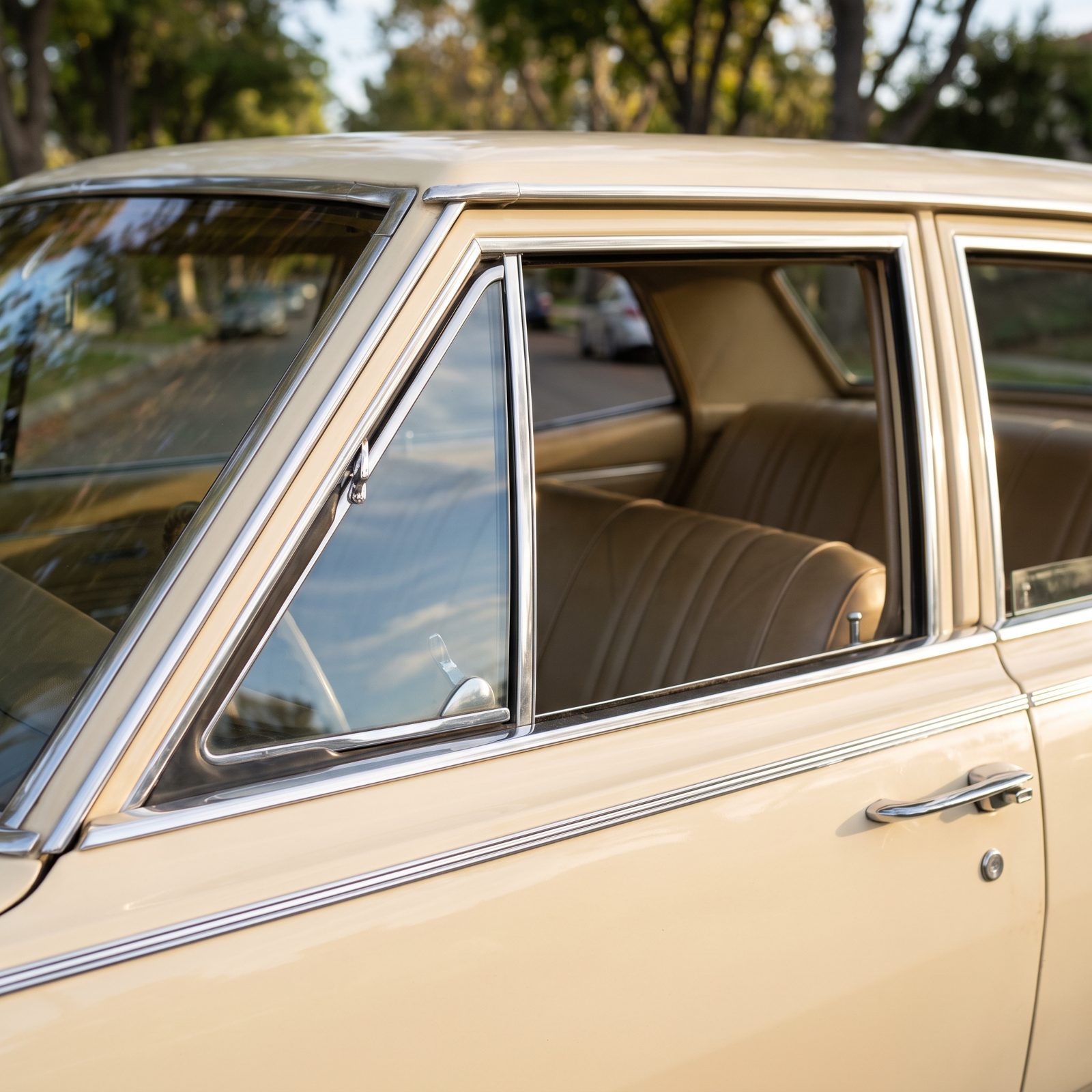
Crank the little triangle open on a July afternoon and it funneled a blade of air straight across your forearm where it rested on the door. No fan, no vents to fuss with and aim. The vent window — some folks called it a wing window — pivoted on a vertical axis so you could fine-tune the breeze without rolling down the big glass and taking the full gale in the face.
And it did a second job nobody ever put in a brochure. It let the smoke out. A whole generation of commuters cracked the wing, parked a cigarette in the gap of the main window, and drove home with the air moving right where they wanted it.
The vent windows started disappearing in the late 1960s and on through the 1980s. Flush glass cut wind noise and drag. Air conditioning stopped being a luxury and became the thing everybody expected. That extra pane with its own seal and latch was, frankly, one more part to leak and rattle and annoy you. Sensible calls, every one of them — and yet nothing built since has put outside air on your elbow quite like that again.
7. Exposed Rain Gutters Running the Length of the Roof
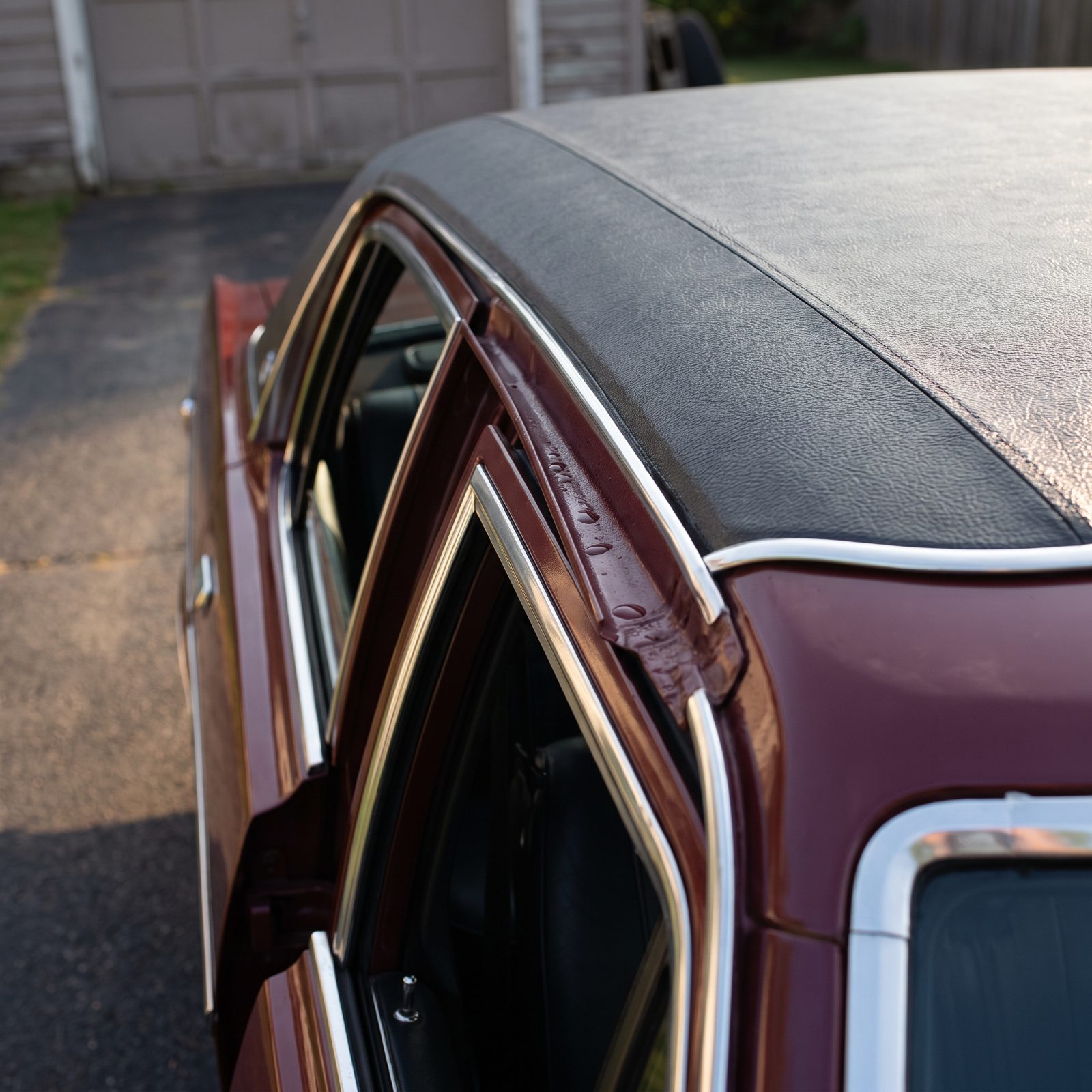
Run a finger along the edge of the roof on a 1975 sedan and you’ll find a narrow metal channel, usually capped in bright trim, tracing the line above the doors. That was the drip rail. When it rained, water running off the roof collected in that gutter and drained off the front and back instead of pouring onto your head when you opened the door.
It did double duty, too. Roof racks and ski carriers clamped right onto the gutters, no factory rails required. On cars with vinyl tops, the rail also framed the edge of the vinyl, though water and dirt trapped there helped plenty of roofs rust out underneath.
Designers wanted smoother, quieter bodies, and exposed gutters added wind noise and drag. Doors started cutting up into the roofline, and the channels got hidden under trim or engineered away. Now rain on the roof slides straight into your seat when the door swings open.
6. Chrome Bumpers That Stood Off the Body Like a Prizefighter’s Jaw
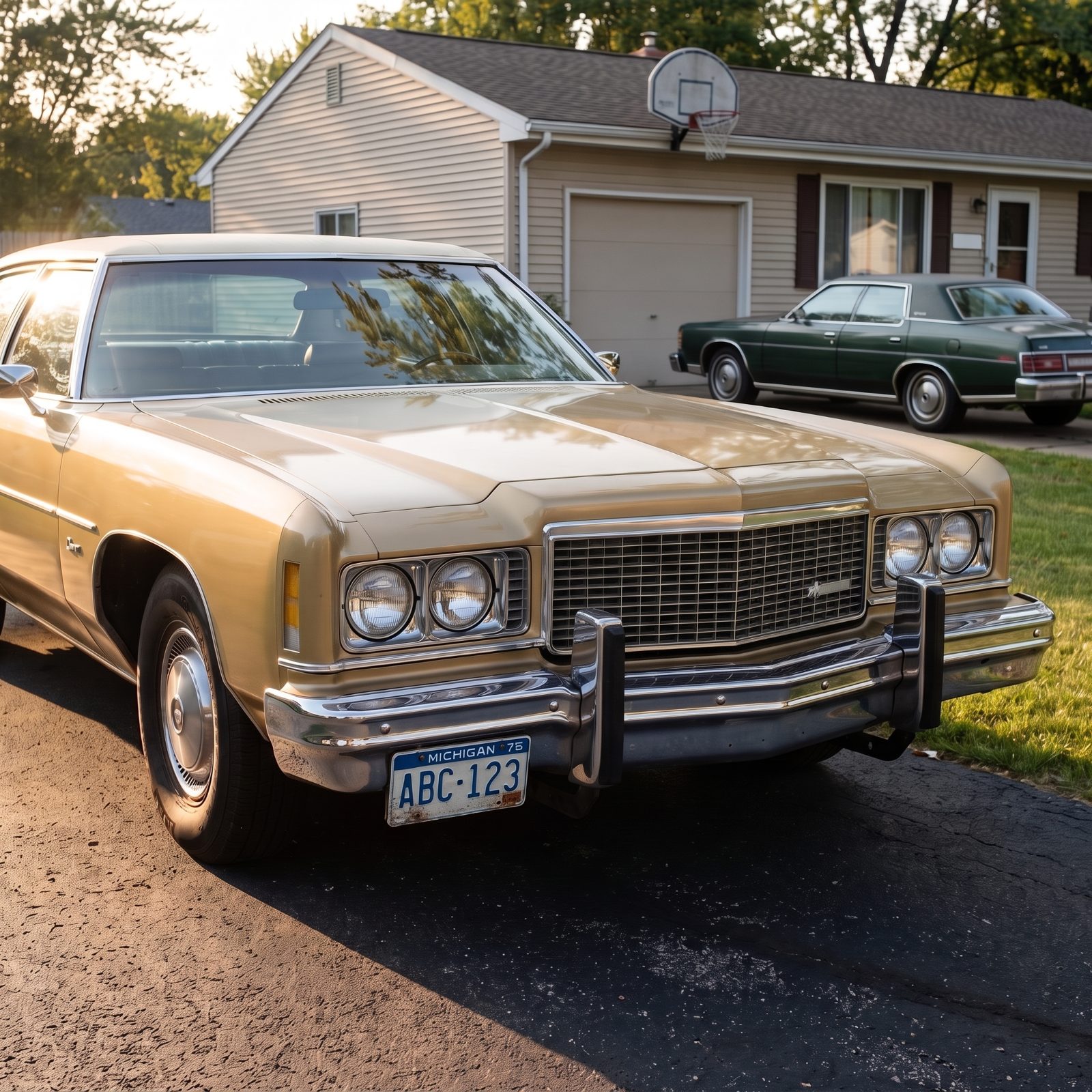
You could set a coffee cup on a 1975 bumper and it wouldn’t tip over. These were real steel beams, chrome-plated and bolted to the frame on brackets, sitting a good few inches off the body. Tap one at parking speed and you got a scuff that buffed out with a rag. The bumper took the hit instead of your wallet.
Federal bumper standards from the early 70s pushed the look hard, and cars sprouted these big protruding blades front and rear, often with rubber-faced guards. Then designers decided chrome dated a car and aero mattered more, so bumpers vanished under color-matched plastic. Now a love-tap cracks a pricey fascia with a parking sensor baked into it.
5. The Bumper Jack That Lifted the Whole Car by That Chrome Bar
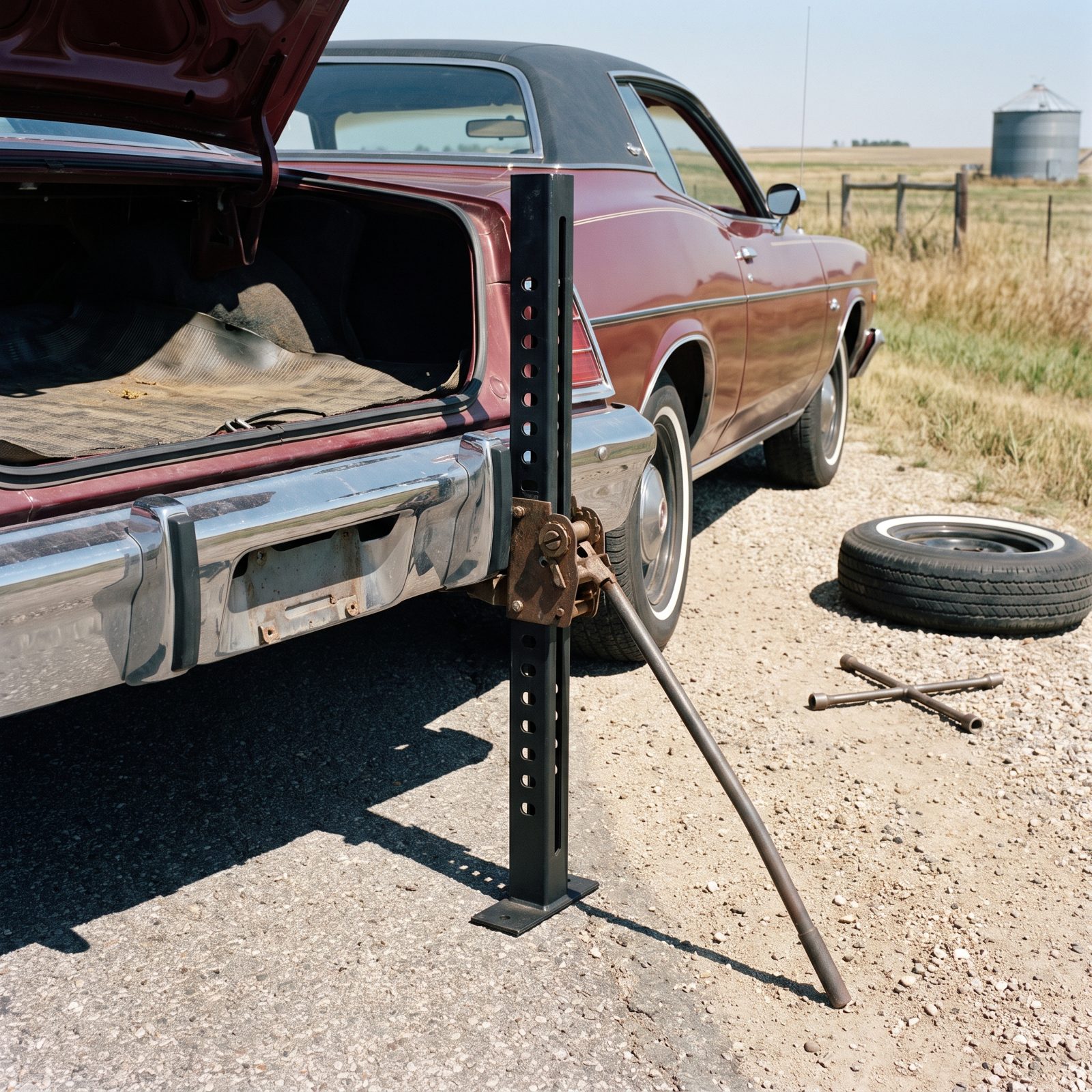
Flat tire on a 1975 coupe meant one tool: the bumper jack. A tall slotted post with a hook that slid right under that chrome bar, and you ratcheted the whole corner of the car into the air by the bumper itself.
It worked because the steel was structural. It also scared the daylights out of anyone who’d watched a car slip off one on a soft shoulder. These jacks got phased out as bumpers went soft and plastic, replaced by scissor jacks that lift at a reinforced pinch-weld under the rocker. Try hooking a jack under a modern bumper and you’ll peel it off like a sardine lid.
4. The Front Bench Seat and the Glorious Middle Spot
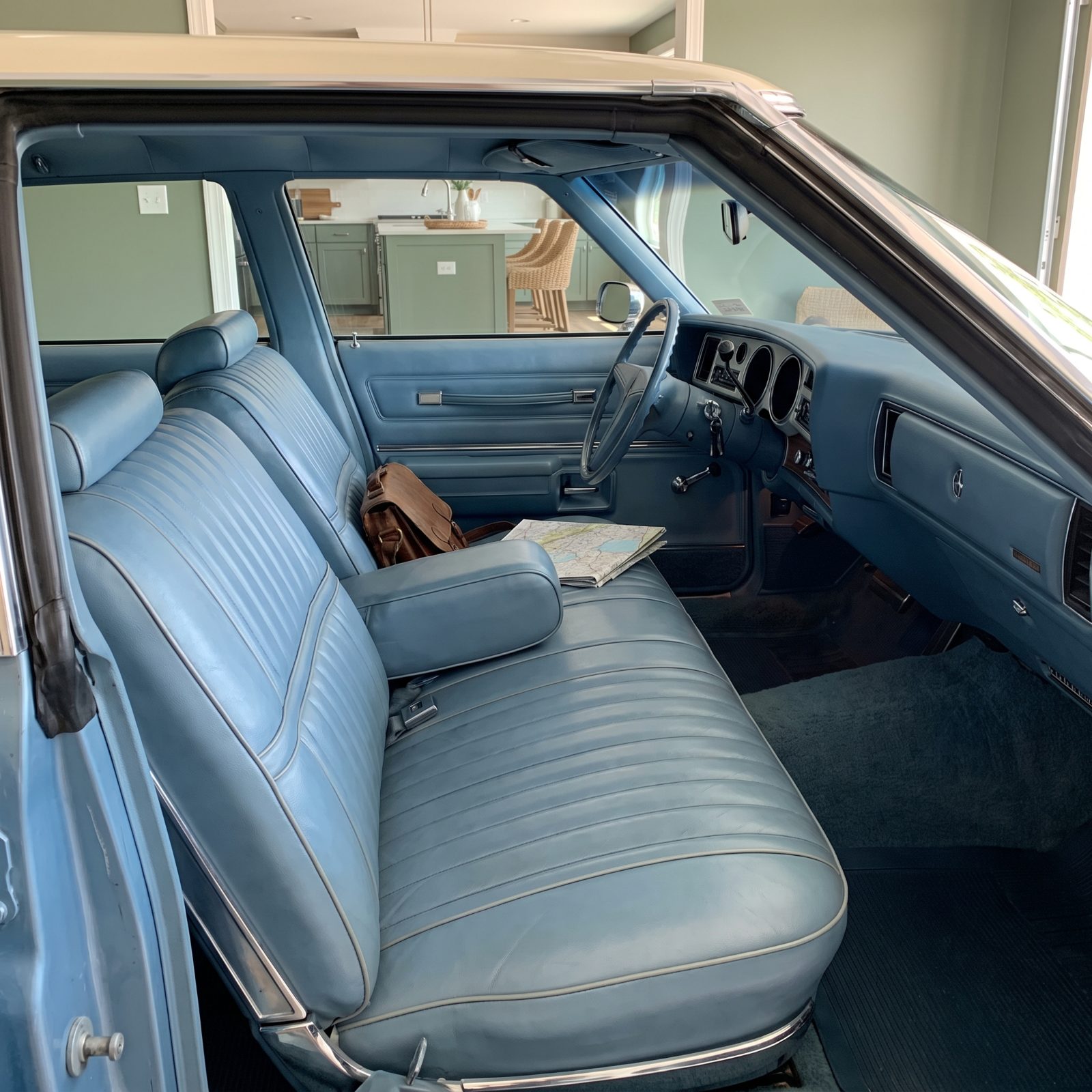
Three across the front, and the kid in the middle got the hump and the best view of the speedometer. The 1975 front bench was one long couch with no console in the way, nothing between driver and passenger but a fold-down center armrest when you wanted it.
Date night meant sliding over to the middle. A full family of six fit in one sedan. Then bucket seats and the center console won out, partly for sportiness, partly because console storage sells. The last mainstream American sedans with a front bench disappeared around 2013.
3. Three on the Tree: The Column Shifter in the Family Sedan
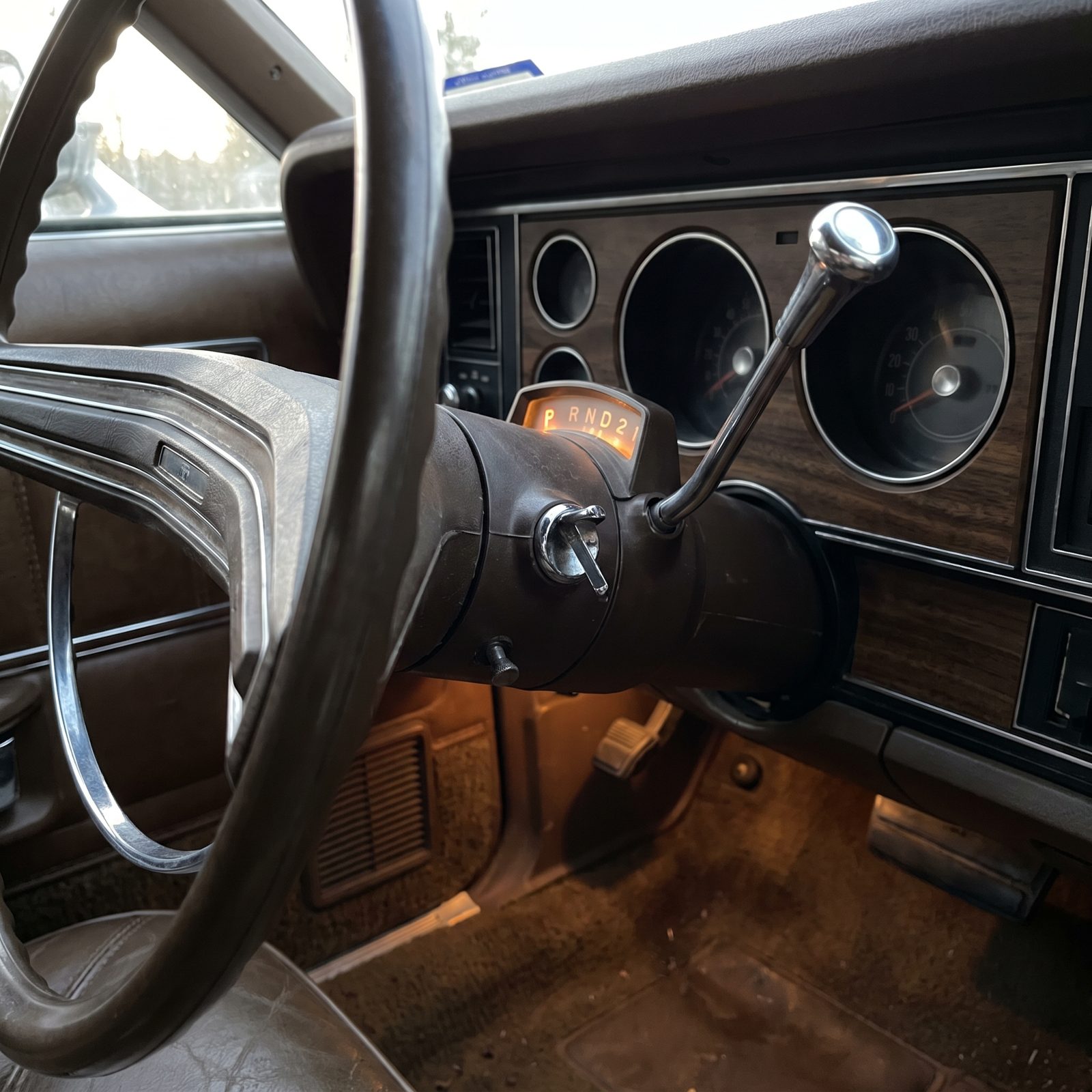
The shifter lived on the steering column, not between the seats. Pull the lever down and toward you, watch the little pointer swing across P R N D behind the wheel, and go. That empty floor kept the front bench clear for a third passenger, which was the whole idea.
Manual versions were the famous “three on the tree” — a three-speed worked with a column lever and a clutch. Automatics kept the column shift going well into the 2000s on full-size American cars before floor shifters and electronic buttons killed it off. Find one today and it feels like a rotary phone bolted to a laptop.
2. The Window Crank You Spun by Hand at Every Door
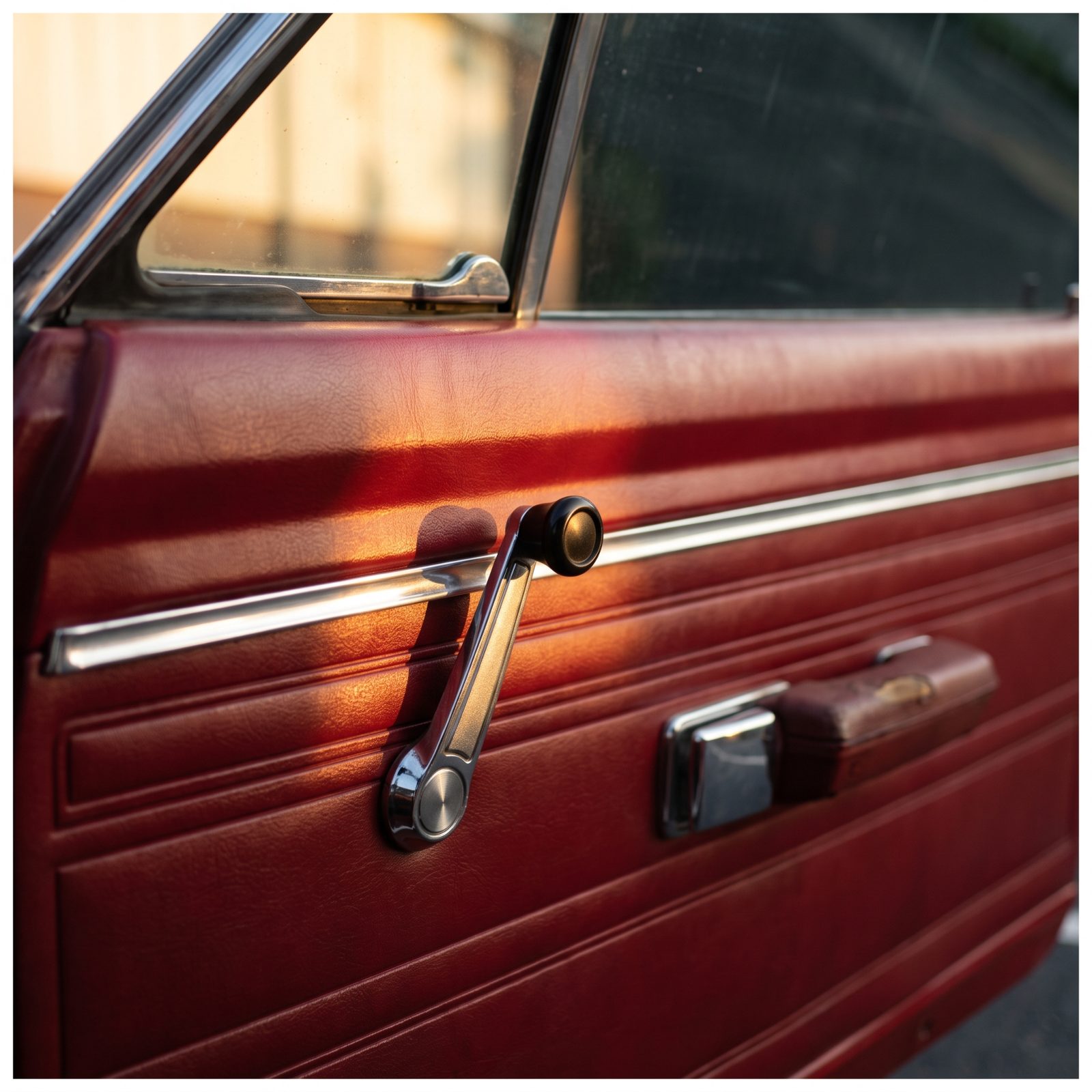
Want air in the back seat? You reached back and spun the crank — usually a full dozen turns to drop the glass. Every door had one, a chrome arm with a knob, and they almost never broke because there was nothing electric to fail.
Roll-up windows gave us the phrase “roll down the window,” which survives even though nobody rolls anything anymore. Power windows were a luxury option in 1975, something you bragged about. Now the crank is gone from new cars entirely, and a small piece of muscle memory went with it.
1. The Lap-Only Belt Across the Back Seat
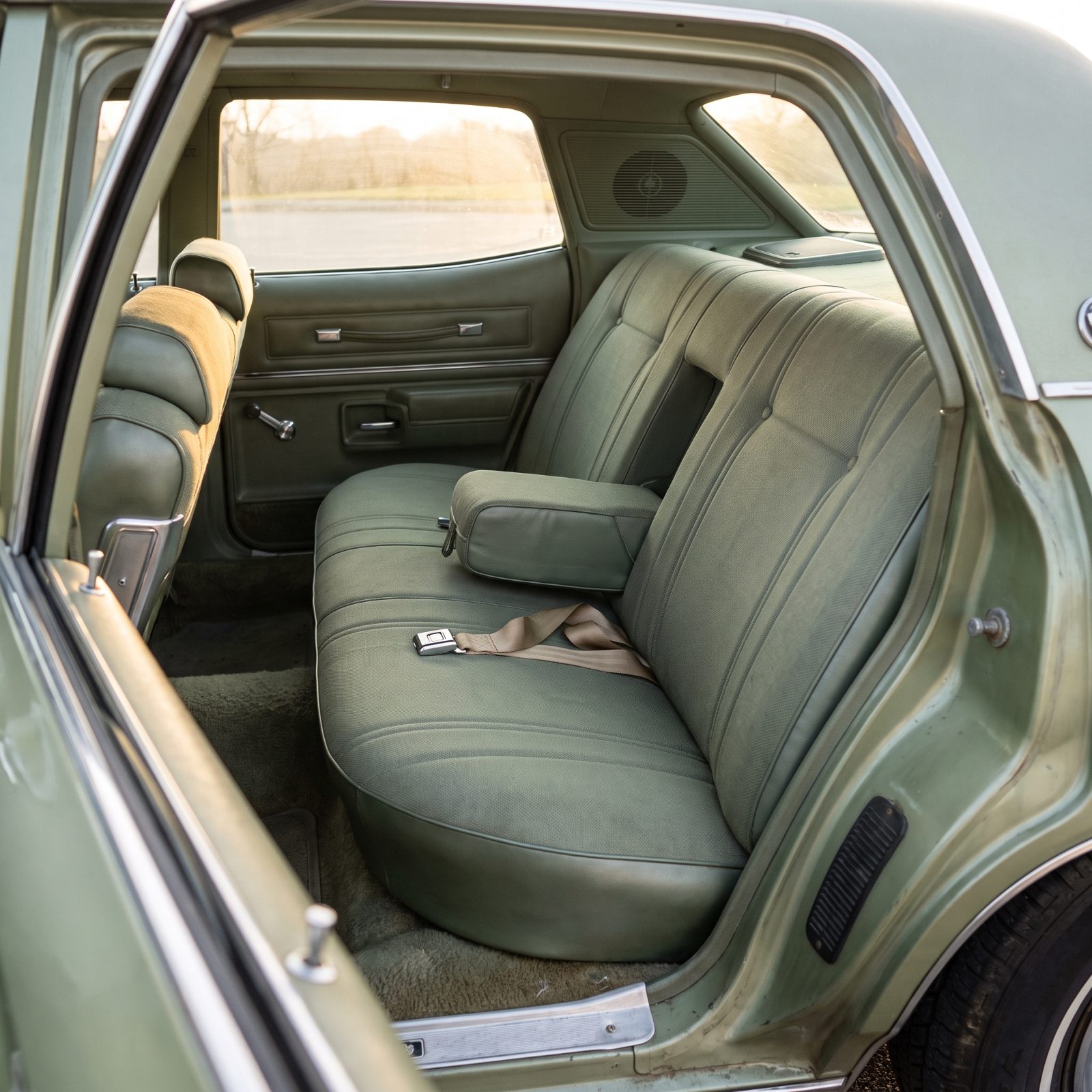
Reach down between the cushions, fish out two loose straps, click the chrome buckle across your lap, and that was the whole system in back. No shoulder belt. A lap belt only, if you bothered at all, and plenty of kids rode loose in the way-back of the wagon.
It’s easy to be grim about this one, so here’s the honest version: these cars were built before carmakers put three-point belts in the back seat. Rear three-point belts didn’t become standard until the late 80s and into the 90s. Plenty of what vanished from the 1975 car we miss — but this one, we genuinely don’t.