
Would you like to save this?
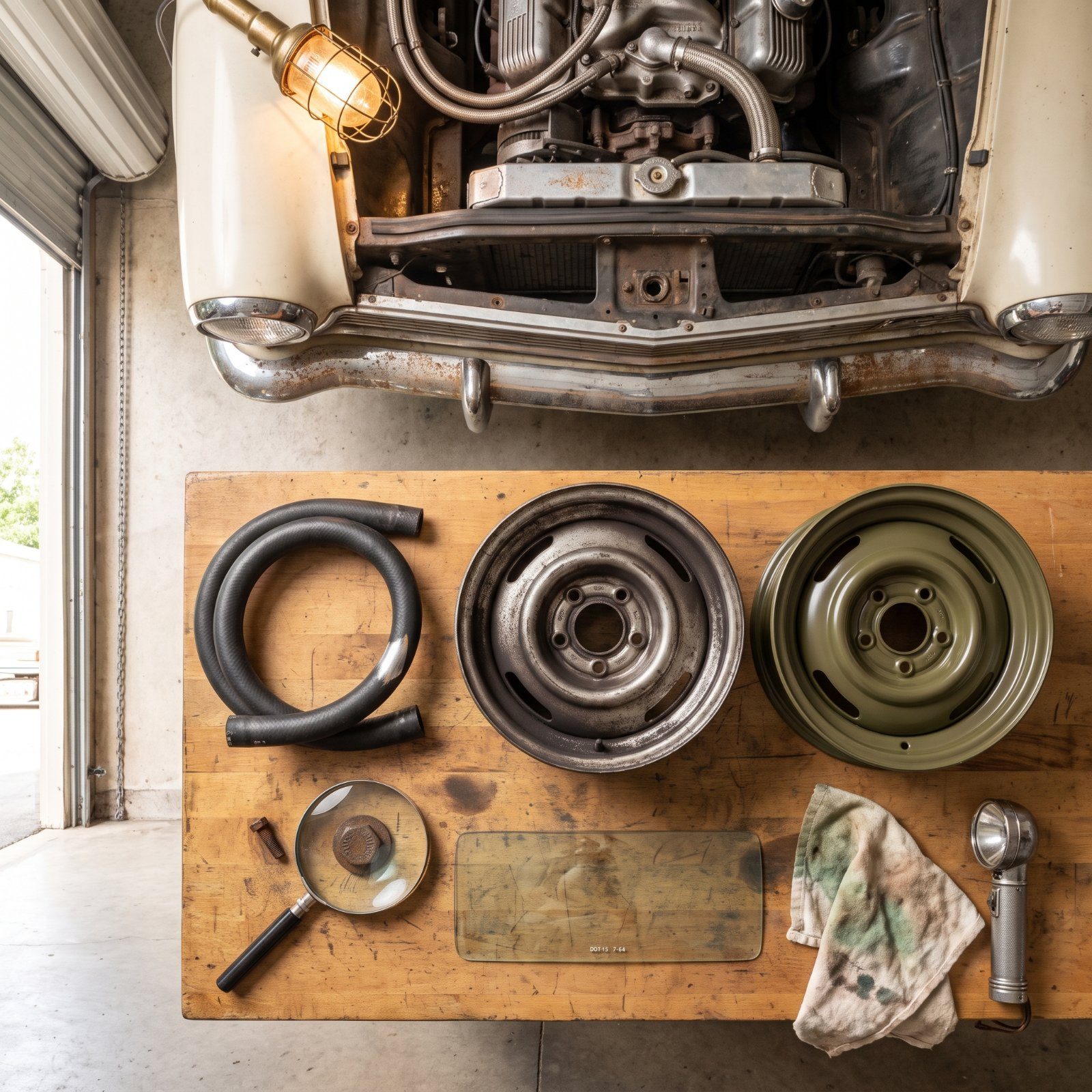
A good mechanic reads a car the way a tracker reads mud. The owner’s still fumbling with the key fob while the story’s already written across the hood, the glass, the fasteners, the dust. Nobody lies to a seasoned eye on purpose — the car does the talking for them. A rub mark here, a clean streak there, one wheel that looks a little too tidy. These are the tells that get read in the first ninety seconds in the bay, long before anyone pops the hood and starts explaining what they think is wrong.
Please note that some of the images in this article were created with the assistance of AI.
38. Shiny Rub Marks on a Hose Reveal Hidden Engine Movement
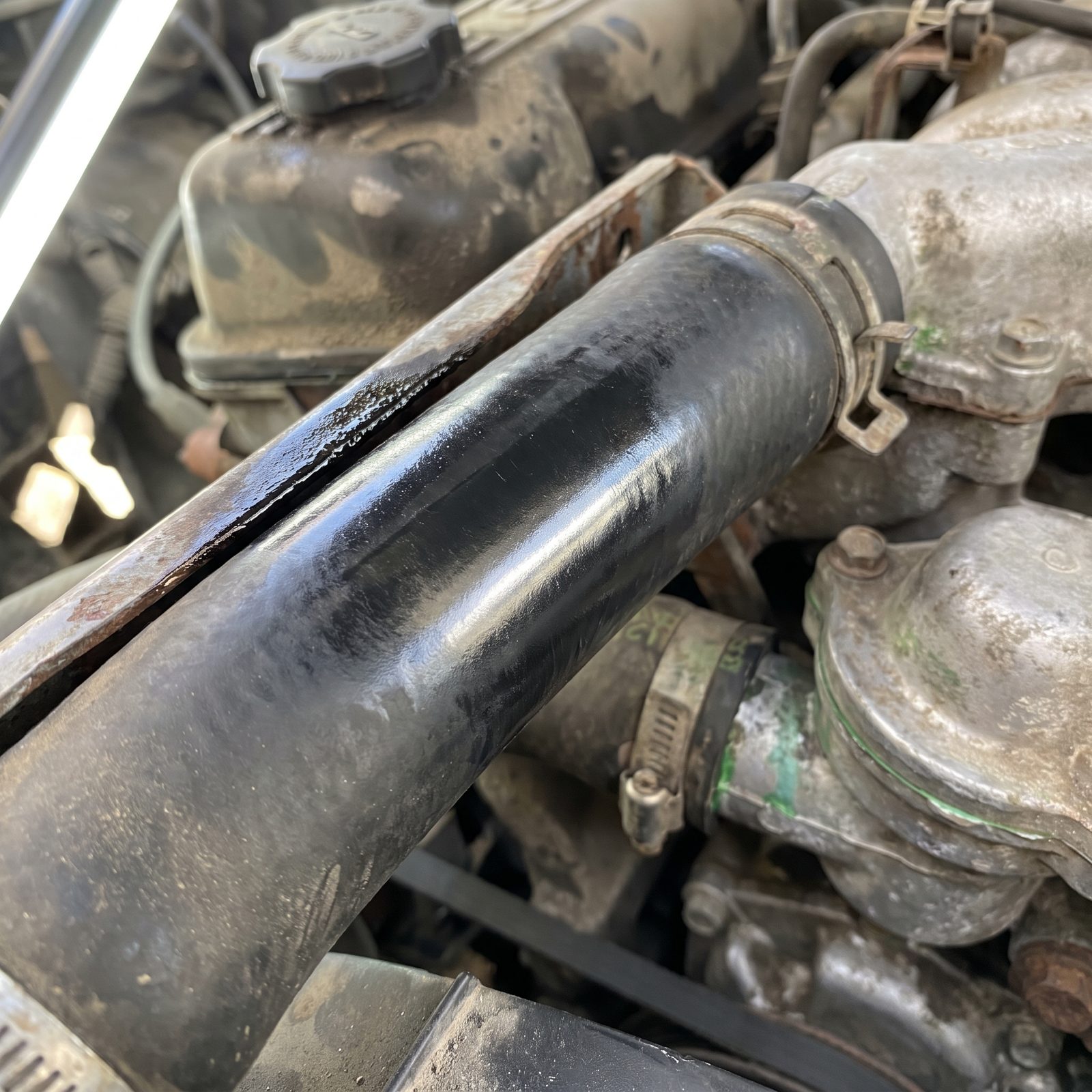
A worn-shiny patch where a hose kisses a bracket means the engine is rocking more than it should. Rubber doesn’t polish itself. It gets buffed by a thousand little vibrations the motor mounts are supposed to swallow.
A mechanic sees that gloss and immediately suspects a collapsed or torn mount, maybe a tired transmission mount on top of it. The hose is just the witness. Leave it long enough and that rub wears clean through, dumping coolant on a back road at the worst possible moment.
37. A Clean Streak Through Engine-Bay Dust Often Traces a Leak
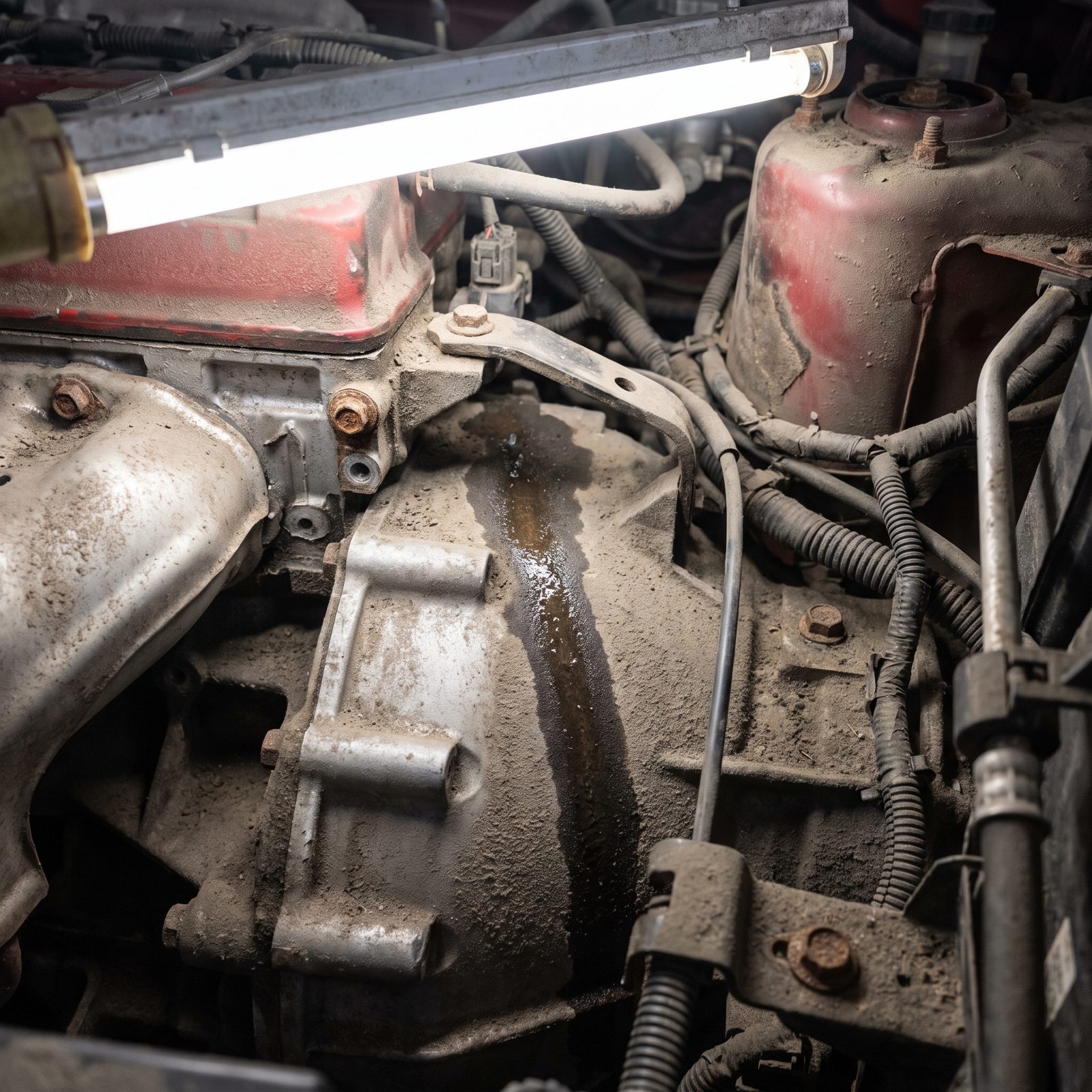
Dust is honest. It settles evenly over everything until something disturbs it, and a single clean line cutting down through that film is a fluid trail — oil, coolant, or power-steering fluid washing the dust away as it travels.
Follow the streak uphill and you find the source; the low end just tells you where it pooled. Owners swear up and down the car has no leaks because the driveway looks spotless. But a slow weep never makes it to the ground. It paints a stripe in the dust and evaporates on the way down.
36. One Unusually Clean Wheel Can Mean Its Brake Is Not Working Fully

Pads throw off fine black dust every time they bite, and two front wheels should wear a matching coat of it. When one stays strangely clean, that brake isn’t gripping like its partner.
Could be a seized caliper. Could be a collapsed hose starving it of pressure, or a slide pin frozen solid. The clean wheel is slacking off, which means the dirty one is picking up the extra, and uneven braking pulls the car sideways under hard stops. A mechanic clocks the mismatch from across the bay before touching a single lug nut.
35. Different Date Codes on the Windows Reveal Past Glass or Collision Work
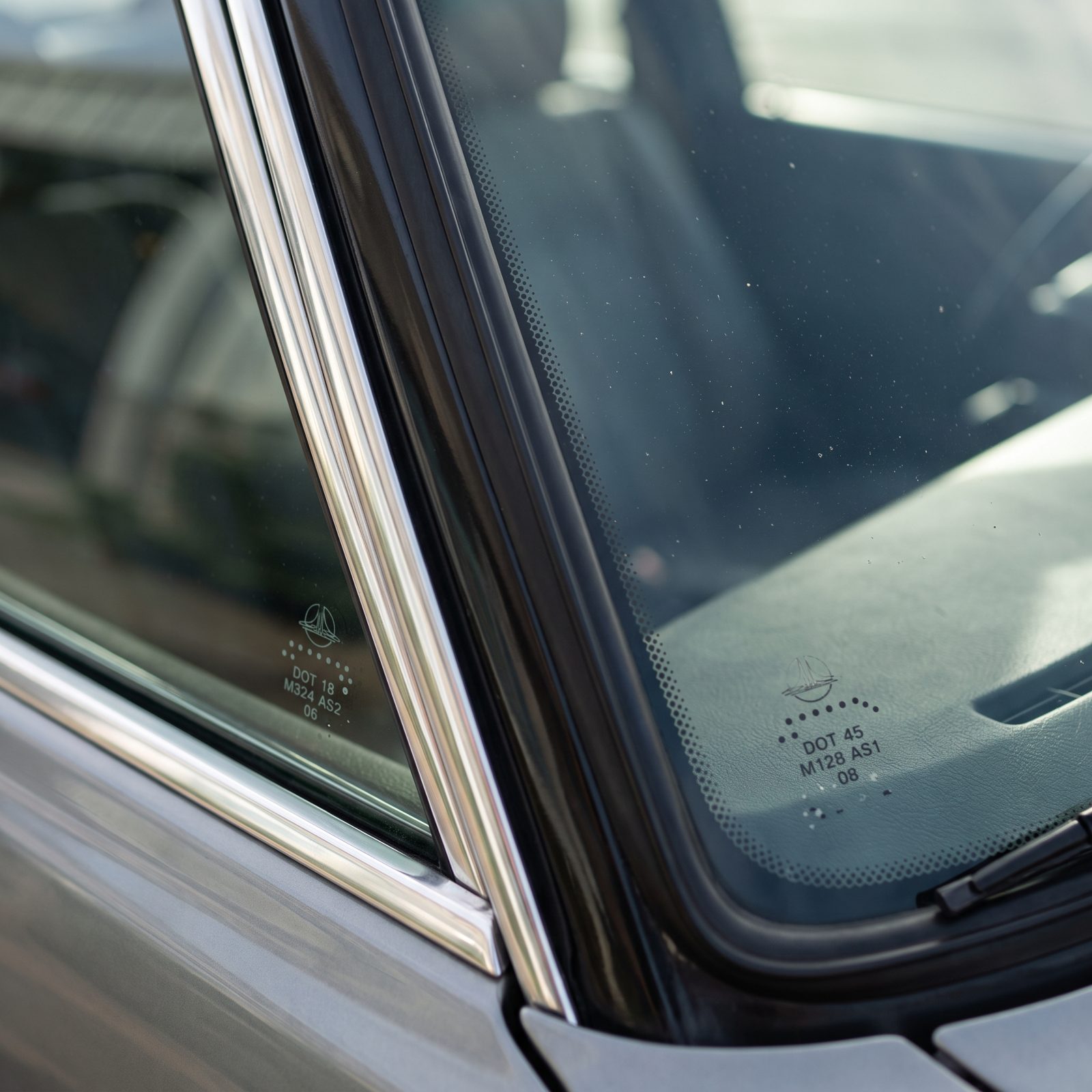
Every piece of factory glass carries a tiny stamped date in one corner — a dot code or a year. Straight off the line, all the panes land within a few months of each other.
Find one window dated two years after the rest and you’ve found replaced glass. A single swapped pane might just be a rock chip. But several on one side of the car start telling a different story — a rollover, a side impact, something the Carfax missed or the seller conveniently forgot. The glass remembers even when the paperwork doesn’t.
34. A Greasy Film Inside the Windshield Can Point to a Seeping Heater Core
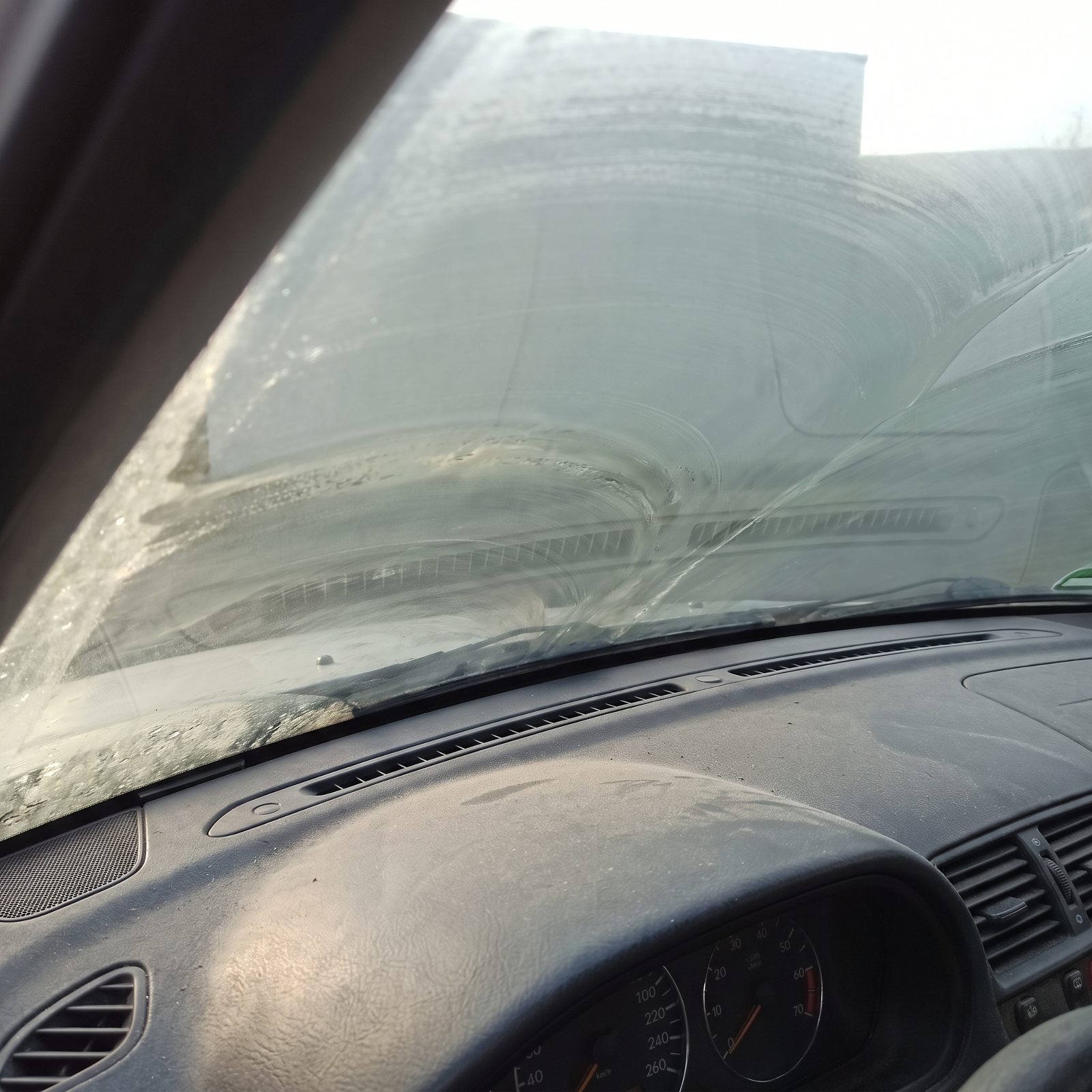
You know that stubborn oily haze on the inside of the glass that smears instead of wiping clean? When it keeps creeping back right over the defroster vents, a mechanic starts thinking about the heater core.
A seeping core blows a fine coolant mist through the vents and coats the windshield in a sweet, greasy film. Add a faint syrup smell and glass that fogs up and won’t clear, and the diagnosis writes itself. Owners usually blame the window cleaner. It isn’t the cleaner.
33. A Rock-Hard Upper Radiator Hose Soon After Startup Suggests Abnormal Cooling-System Pressure
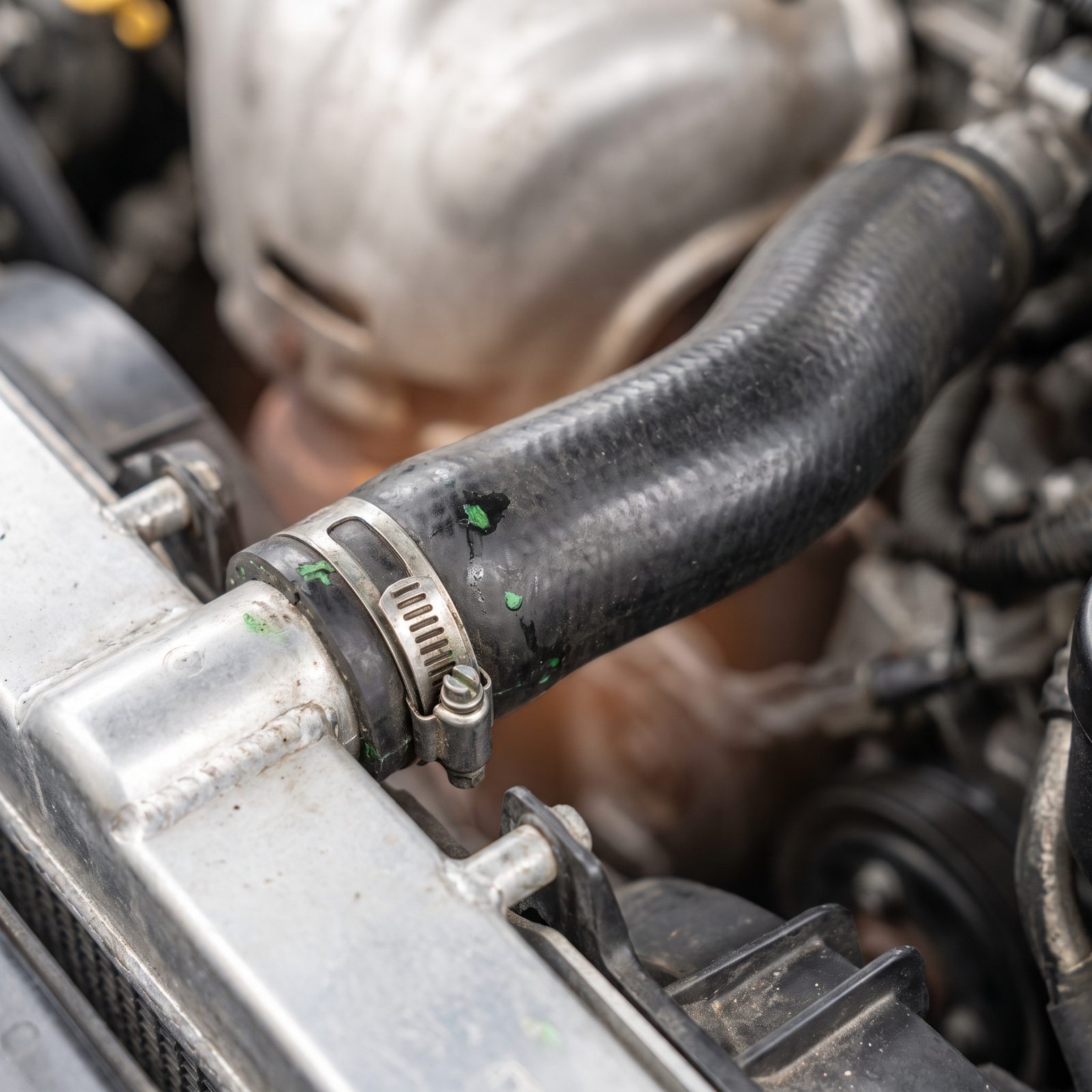
Squeeze an upper radiator hose a few minutes after a cold start. It should give a little, soft like a firm handshake. If it’s already rock hard and feels ready to burst that early, the system is building pressure it has no business building yet.
That points at a failing head gasket forcing combustion gases into the coolant, or a stuck cap holding too much pressure. Either way, something’s wrong before the engine ever reaches operating temperature. No gauge needed. The hose tells on the car.
32. Soot Around Only One Exhaust Outlet Can Reveal Uneven Exhaust Flow
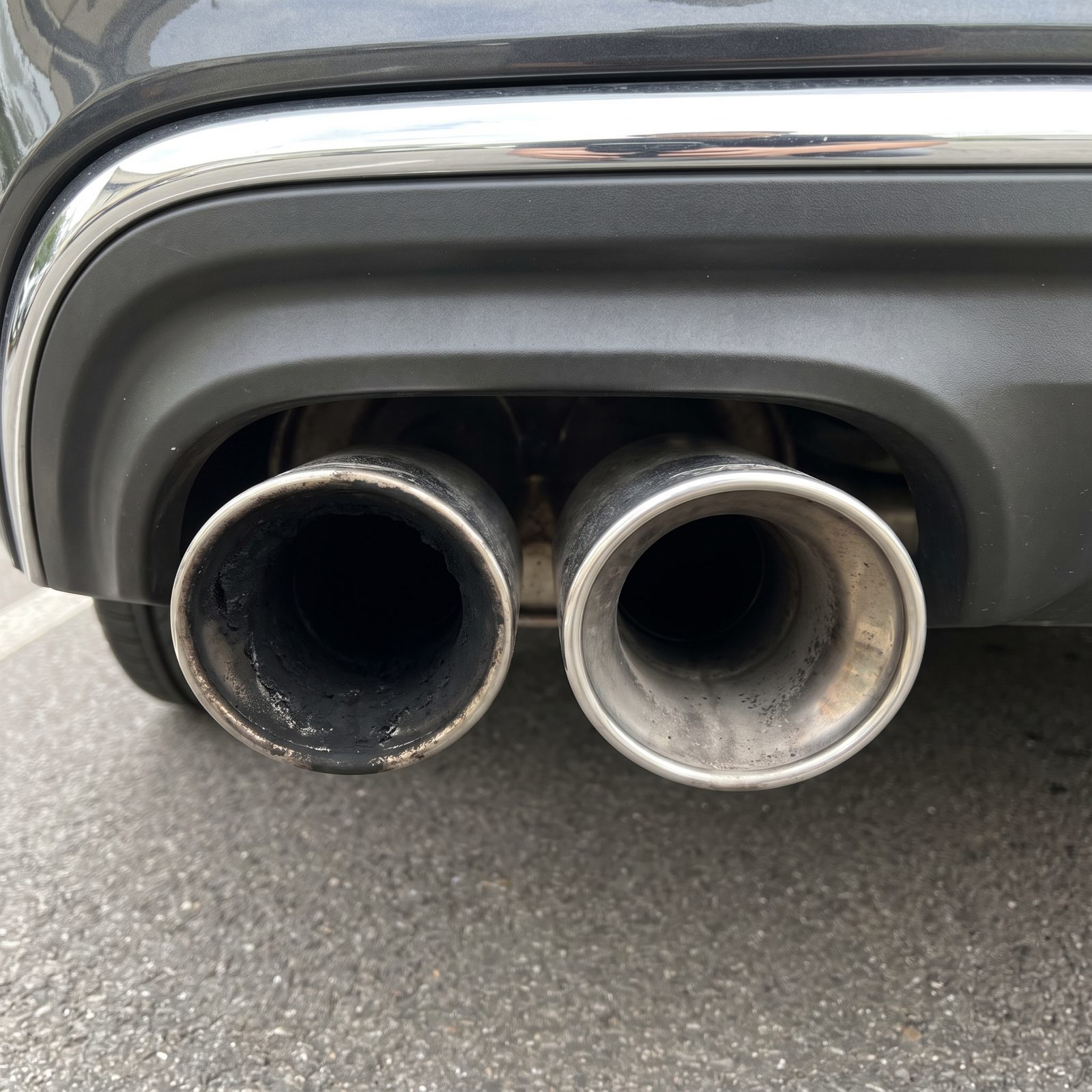
On a dual-exhaust V-engine, both tips should show roughly matching soot. One tip caked black while its twin stays pale means the two banks aren’t burning the same.
The dirty side is running rich and dumping unburned fuel — a bad injector, a dead coil, a leaking valve on that bank. The clean side is doing its job. That lopsided carbon pattern is one of the fastest reads in the trade, visible the second a car rolls past, long before anyone hooks up a scanner.
31. A Power Window That Has Lost Its Automatic Function Suggests Recent Battery Disconnection
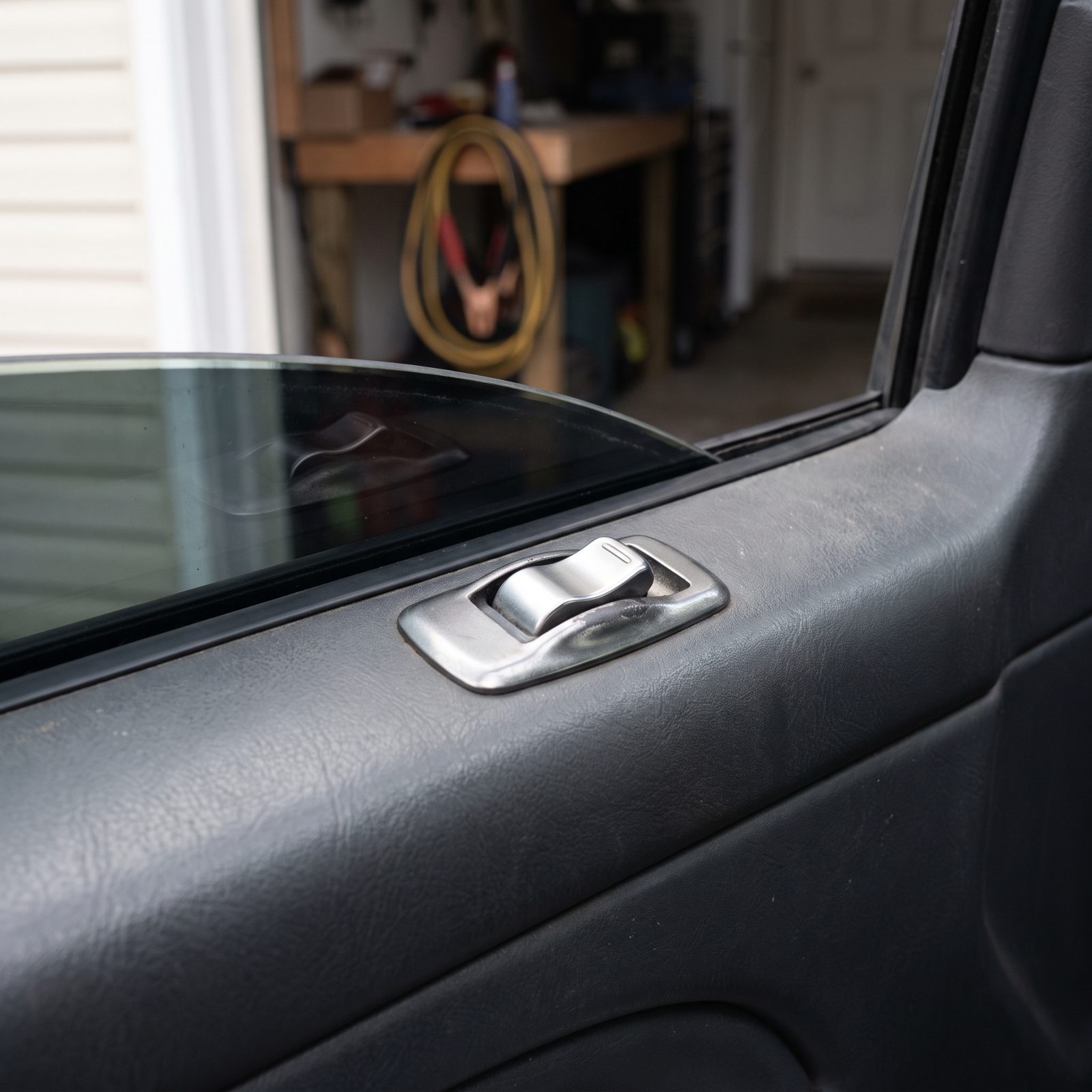
Plenty of cars have a one-touch auto-down window, sometimes auto-up too. Pull the battery and that feature forgets itself until somebody manually re-calibrates it.
So when a passenger window only crawls down while you hold the switch, a mechanic quietly starts wondering what happened to the battery lately. New one? Dead one jumped off? Somebody in there chasing a short? It’s a small tell. But it opens a line of questioning the owner hasn’t volunteered.
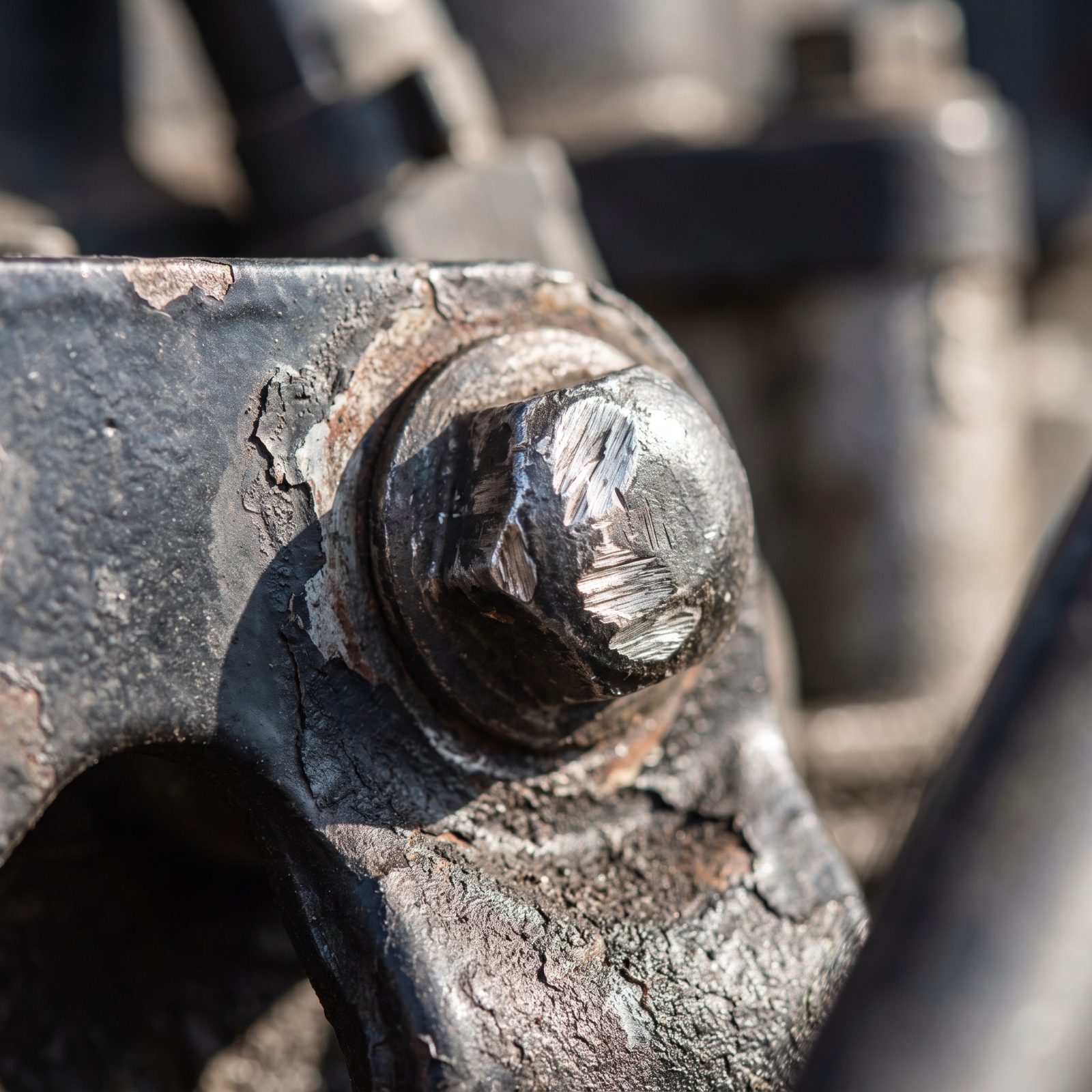
30. Tool Marks on Factory Fasteners Expose Earlier Repairs
Would you like to save this?
Factory bolts go in once, torqued by a machine, and they keep a smooth untouched finish. The second a human lays a wrench on them they pick up a signature — rounded corners, scratch marks, chipped paint, maybe the bite of the wrong tool.
A mechanic scanning an engine bay reads those marks like footprints in snow. Scarred fasteners around the water pump mean someone’s been in there. Shiny gouges on the valve cover bolts hint at a recent gasket job. Who touched what, and in what order, is sitting right there in the metal for anyone who knows to look.
Factory fasteners are born clean. Every scar after that is a story someone chose not to tell you.
29. Fresh Undercoating Over Seams Can Conceal Developing Rust
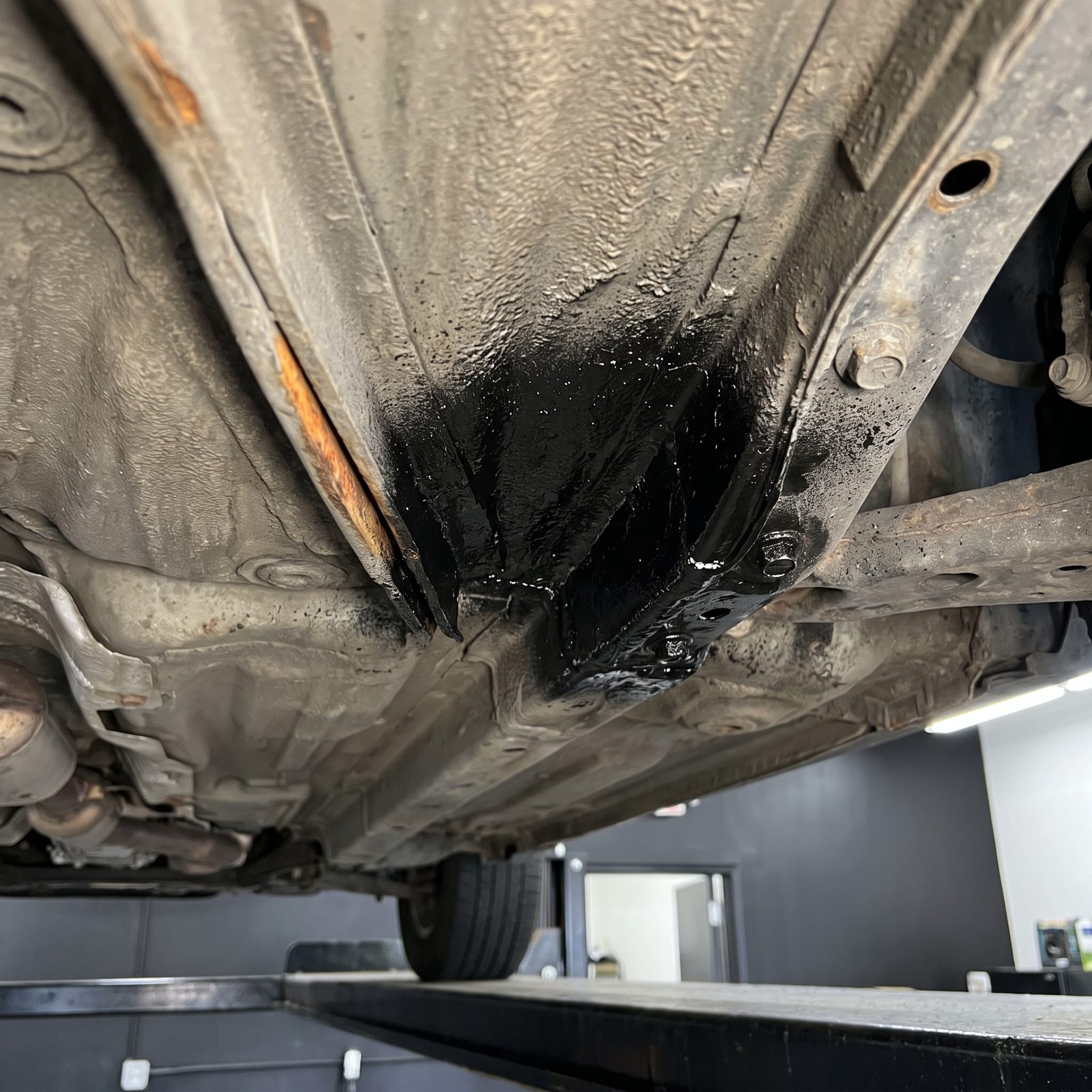
Factory rustproofing ages uniformly into a dull, dusty grey-brown. A patch of fresh glossy black undercoating stands out like a new sock in an old drawer.
Sometimes it’s honest maintenance. Often it’s a cover-up — thick coating sprayed over a rocker panel or frame seam that’s already bubbling underneath. The new layer hides the rot from a quick glance and buys the seller a cleaner sale. A mechanic pokes at suspicious fresh coating with a screwdriver, and if it crumbles into flakes, the real story falls out with it.
28. The Dashboard Light That Stays Dark When It Shouldn’t

Every warning lamp is supposed to flash on for a second when you turn the key. That’s the bulb check — the car proving its own alarm system still works. So when one lamp stays dark while everything around it glows, a mechanic’s eyebrow goes up before the engine even starts.
A missing bulb check usually means somebody pulled a bulb or spliced the circuit to hide a fault that would otherwise light up and flunk an inspection. Honest problems announce themselves. A light that refuses to show up was taught to keep a secret.
27. The Clean Stripe on the Rim Where a Weight Used to Live
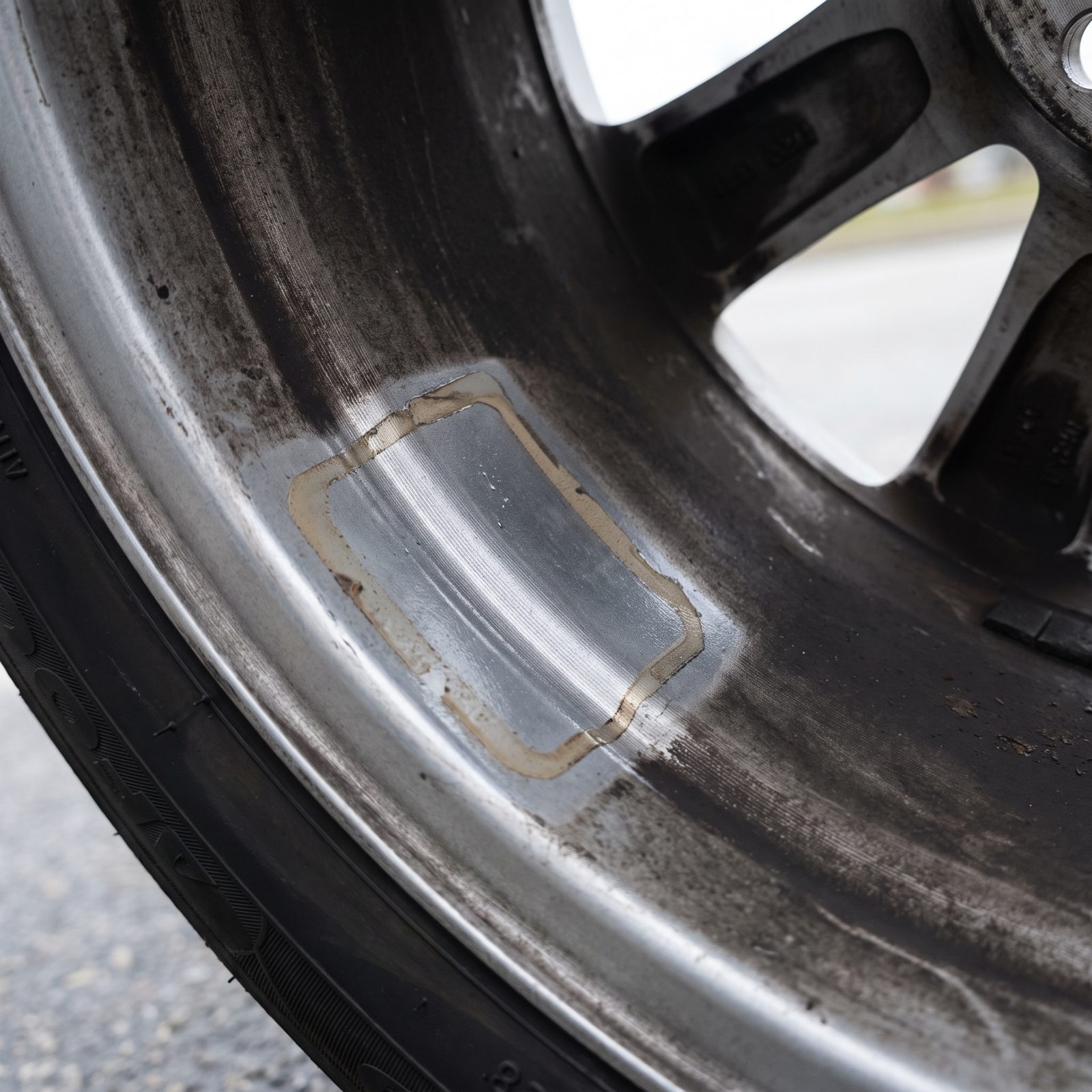
Brake dust coats a wheel evenly over months of driving. So when a mechanic spots a crisp rectangle of clean metal sitting in that grime, something recently left the spot — almost always a stick-on balance weight that came loose or got clipped by a curb.
Lose one weight and the whole wheel goes out of balance. The owner feels a new shimmy at highway speed and swears it appeared overnight. But the rim already confessed. That bright little patch is the outline of the missing piece, like the pale square on a wall where a picture hung for years.
26. A Buffed Shine on the Sidewall Says the Tire Has Been Rubbing
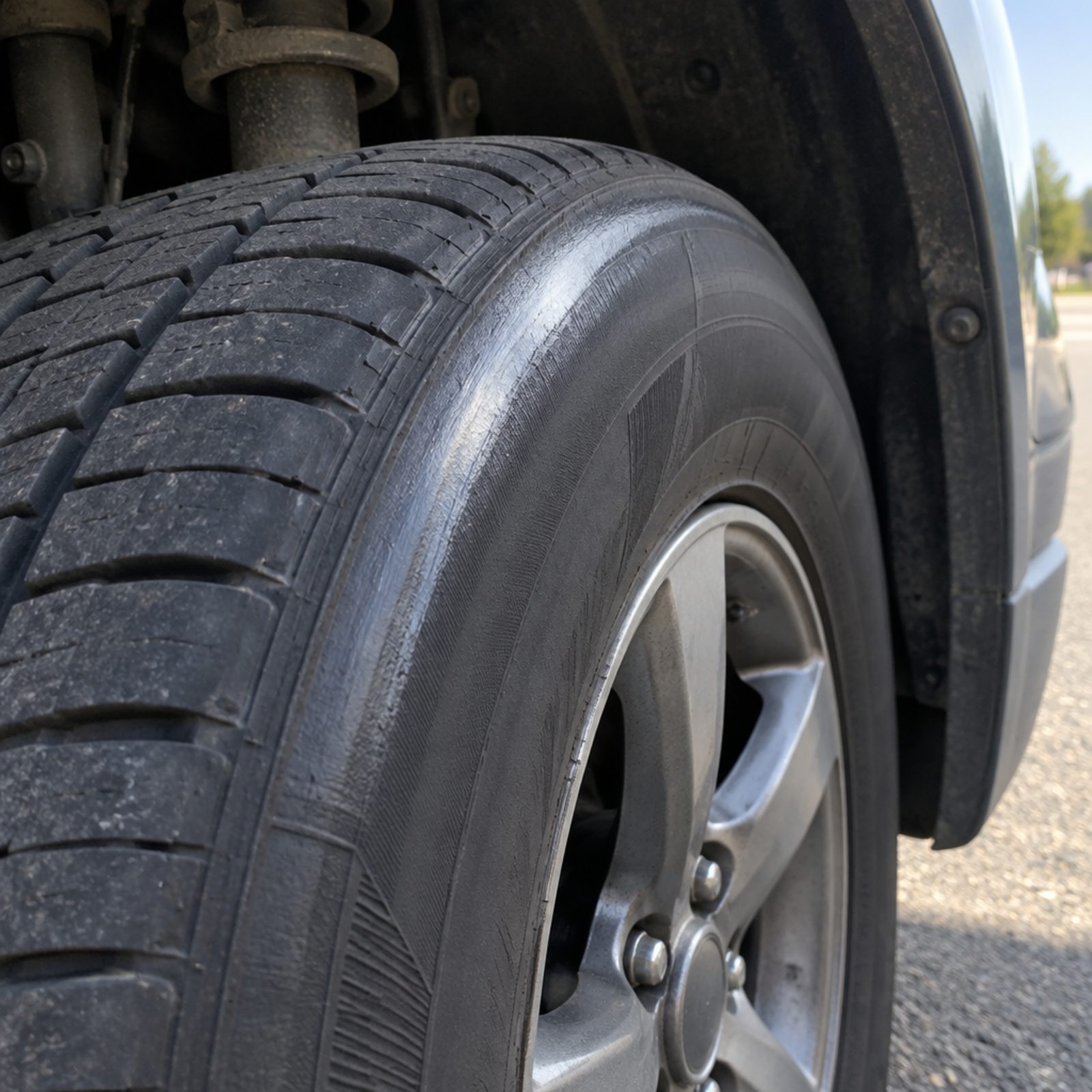
Rubber doesn’t shine on its own. When part of a sidewall looks buffed smooth and lighter than the rest, that tire has been kissing something it shouldn’t — a fender lip, a strut, a swaybar link under load.
That mark tells a mechanic the ride height is off, the wheel is too wide, or a suspension component has shifted. Check whether the car sits level first, because a sagging spring on one corner will scrub a tire quietly for months.
25. Droplets Pooled in Connectors Mean Somebody Just Hosed the Engine Down
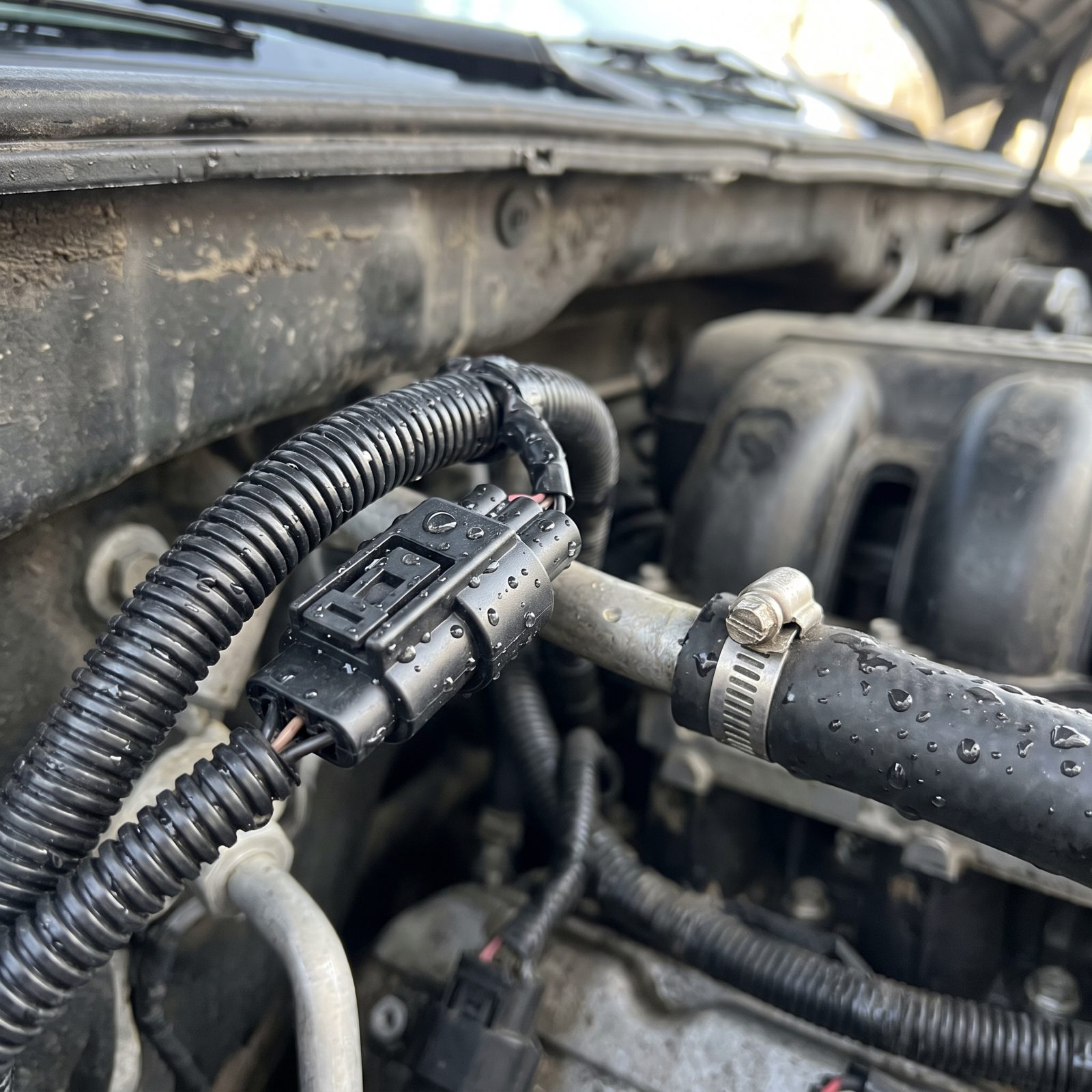
Water trapped around a plug under the hood is a red flag for two reasons. Someone just hosed this bay, and pressure washing drives moisture into connectors that were never meant to swim.
A sharp tech clocks the beaded water on the harness and bracket, plus droplets hiding in a sensor plug, while the intake behind it is still caked in dust and grime. That moisture corrodes pins and triggers intermittent faults weeks later, long after the car changed hands. A quick rinse that didn’t even get the grime off isn’t care. It’s just a new problem waiting to happen.
24. Paint Mist on the Door Seals Gives Away a Past Body Repair
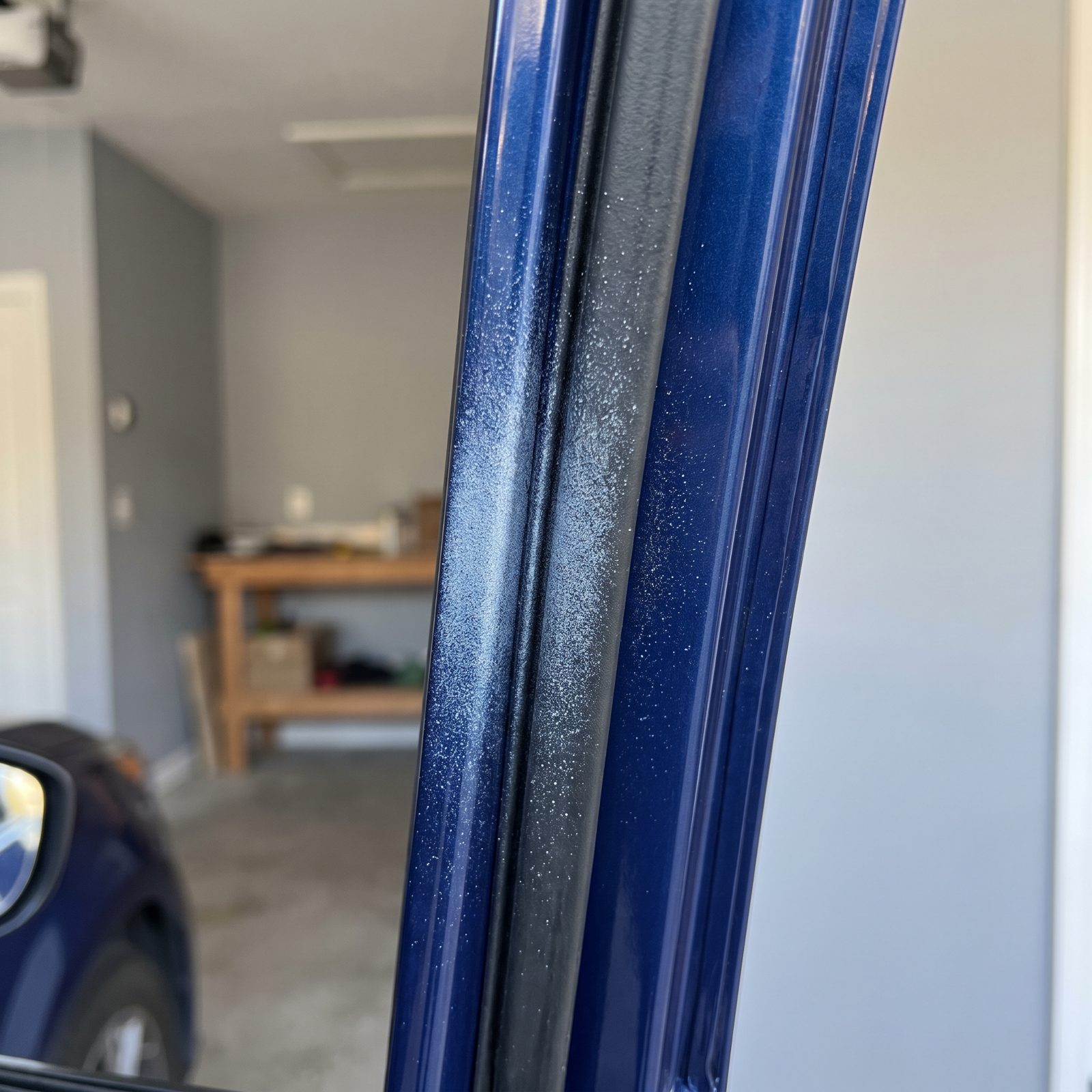
Factory paint never lands on rubber. The robots and masking lines at the plant keep the weatherstrips clean. So when a mechanic runs a thumb along a door seal and finds a gritty haze of color baked into it, that panel was sprayed somewhere else, after the car left the line.
Overspray on seals, in door jambs, around headlight housings — it all whispers accident repair. Not necessarily a bad one. But it reframes everything, and now the panel gaps and paint depth get checked too.
23. Bolts Missing From the Belly Pan Tell You Someone Was Already Under There
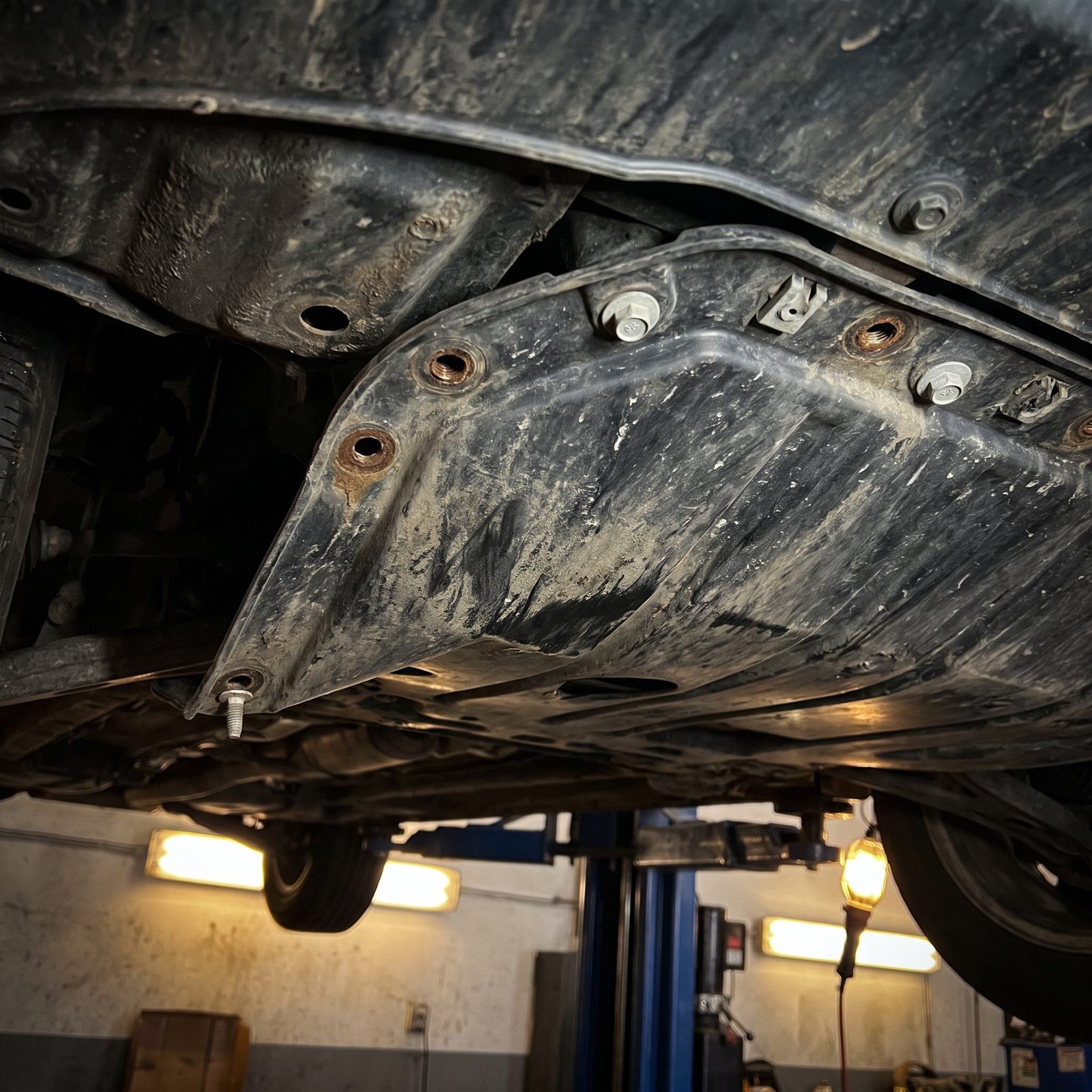
Underbody panels come with a full set of fasteners. Pop a car on the lift and count the empties. Each missing bolt or clip is a door someone opened and never fully shut.
Maybe an oil change where the splash shield got dropped and rushed back up with half the hardware. Maybe a repair abandoned halfway. A mechanic reads those gaps as a map of who’s been down here and how carefully they worked. A sagging belly pan flapping on two clips isn’t just sloppy — it’s a preview of the attention the rest of the car probably got.
22. Crushed Pinch Welds Show the Car Met the Wrong End of a Jack
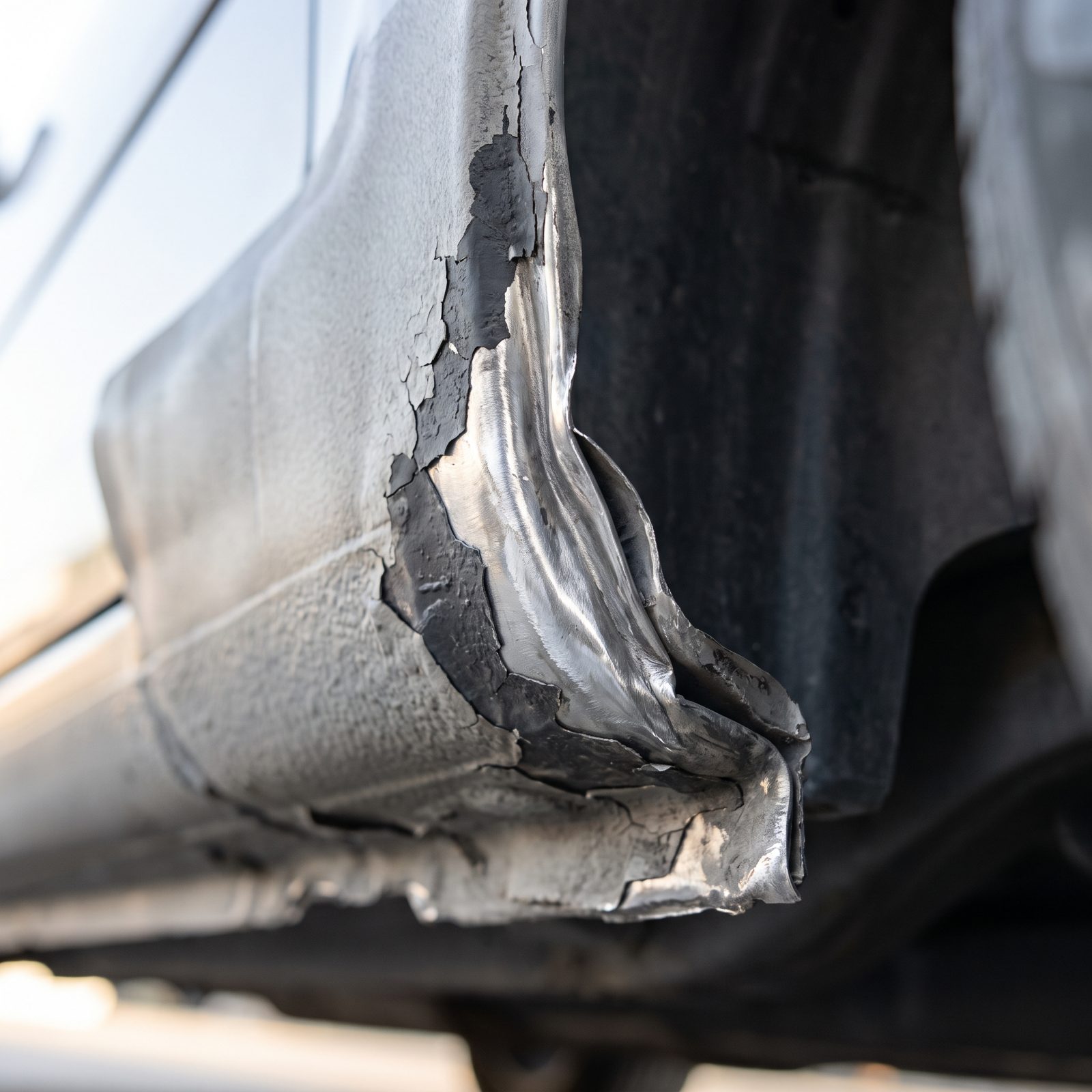
Cars have real jacking points — reinforced spots meant to take the load. The pinch weld along the sill is not one of them, though plenty of folks lift there anyway because it’s easy to reach.
A folded, crushed seam under the door tells a mechanic the car was jacked wrong, probably more than once, probably by somebody in a hurry on the shoulder of a road. Small thing, bigger pattern: corners cut, tools missing, work done fast instead of right. Where the car got lifted hints at who was doing the lifting.
21. Powdery Green Crust on a Ground Strap Predicts Gremlins to Come
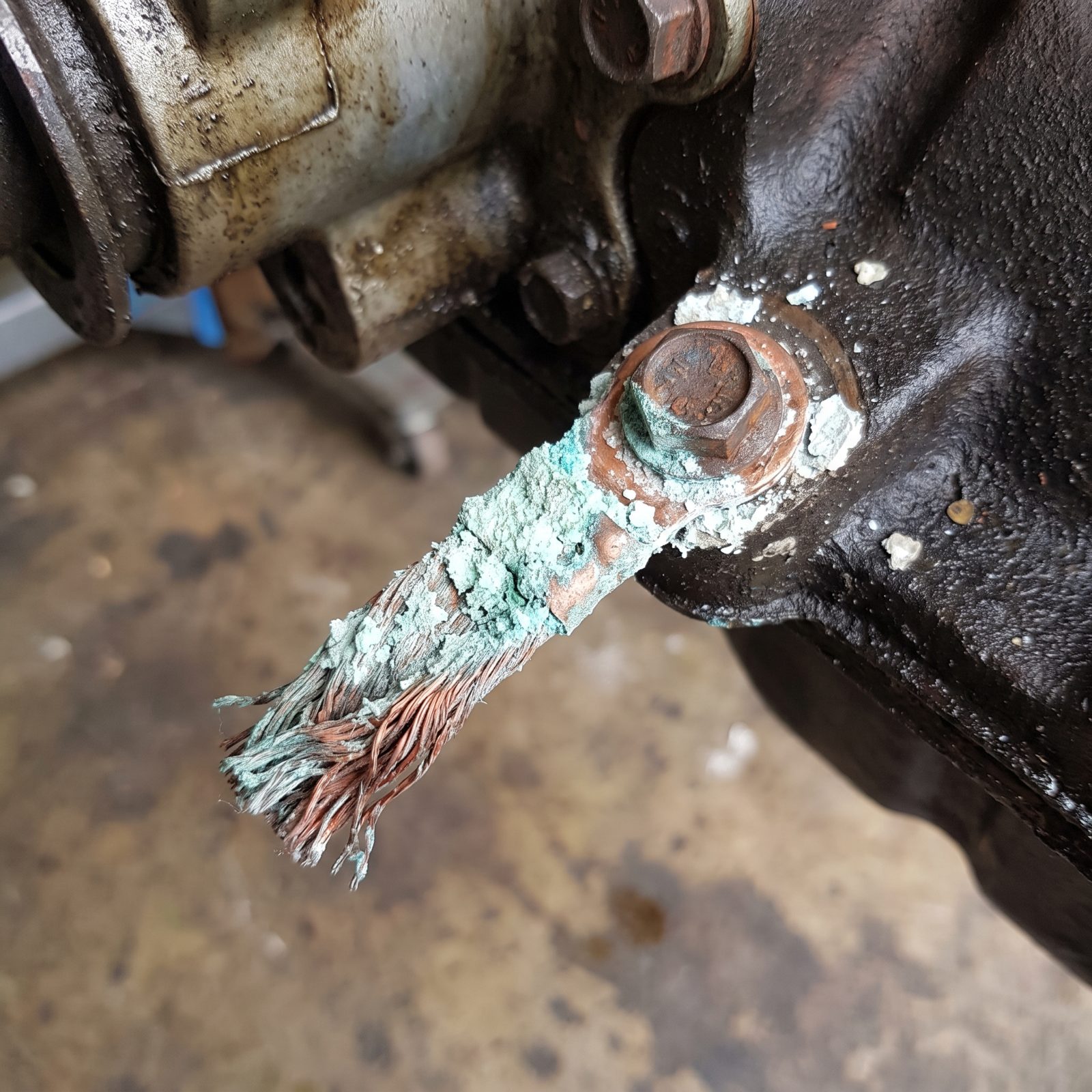
Green and white fuzz on a ground connection is corrosion eating the metal path electricity needs. A clean ground is invisible and just does its job. A corroded one introduces resistance, and resistance is the author of a thousand maddening, intermittent electrical faults.
Flickering lights. A radio that reboots itself. A sensor that throws a code and then clears. Chase any of those long enough and they often trace back to a crusty strap bolted to the body. A mechanic who spots that verdigris can predict the owner’s complaint before it’s spoken.
20. A Battery Case Bulging at the Sides Is Waving a White Flag
Would you like to save this?
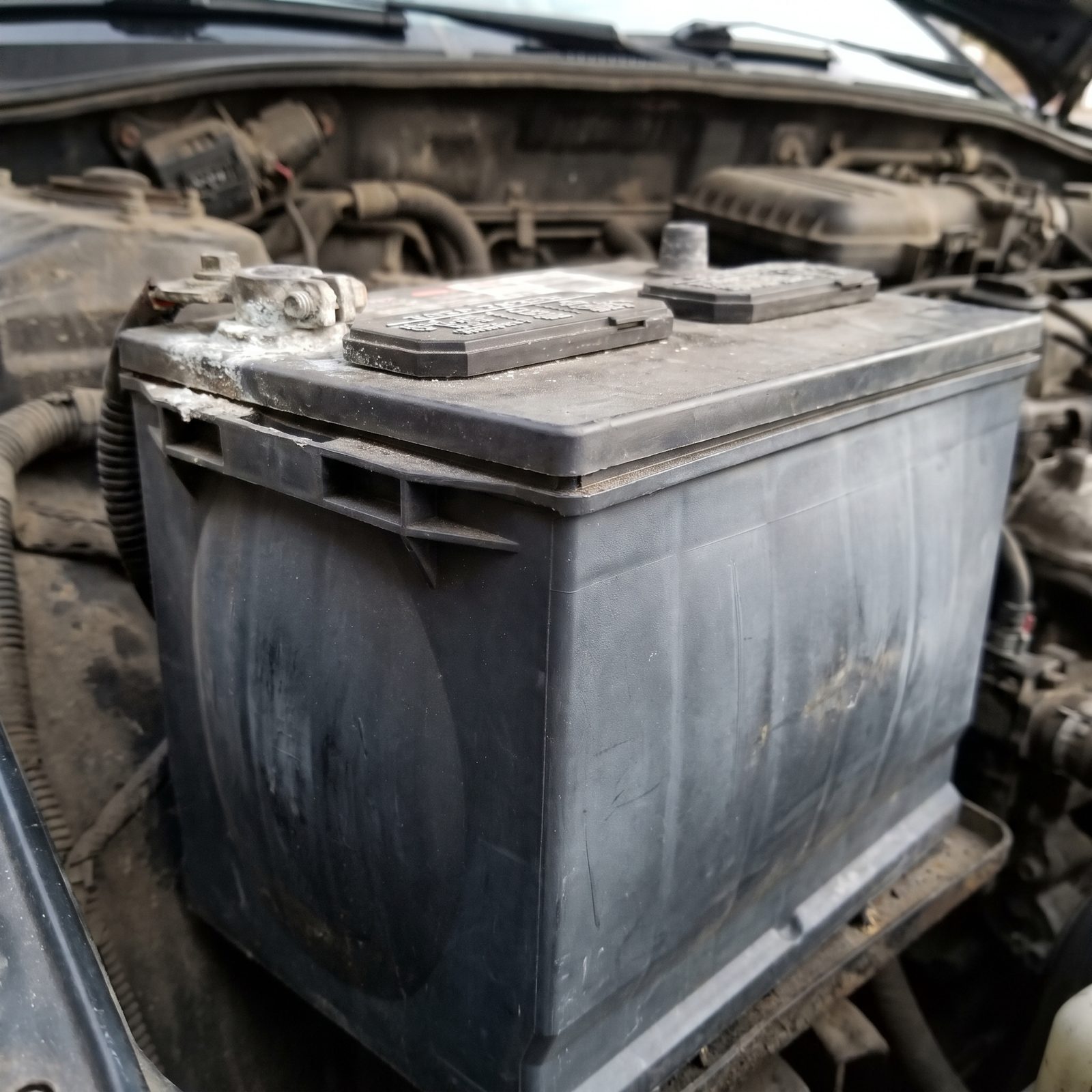
A healthy battery case has flat, square sides. When those walls bow out like a can left too long in the sun, the battery has been cooked — either by chronic overcharging or by sitting next to too much heat.
That swelling is plastic surrendering to the pressure building inside. A mechanic reading a puffed-up case already suspects the charging system before testing it, because batteries don’t swell in a vacuum. Something was feeding it too hard, and whatever that was is probably still bolted under the hood.
19. Mystery Wires Spliced Near the Battery Point to Add-On Work
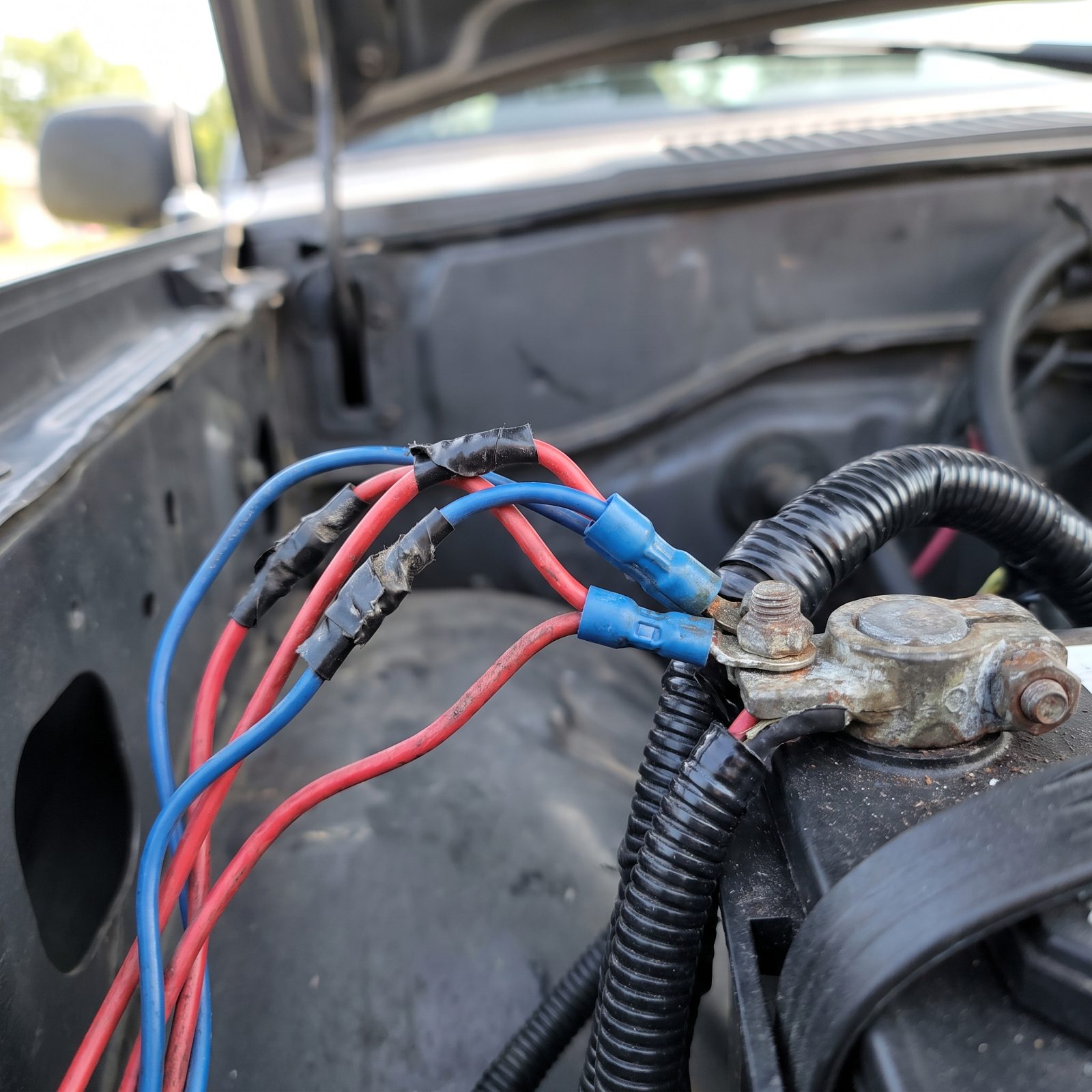
Factory wiring is tidy, color-coded, and sheathed in loom. So the moment a stray red wire taped to the positive post comes into view, a mechanic knows somebody added something — an alarm, a stereo amp, a light bar, a remote starter.
None of that is automatically bad. But amateur splices near the battery are a top cause of drains that kill a car overnight and shorts that chew through fuses. The owner describes a dead battery every Monday morning. The tech already found the culprit, dangling off the terminal, wrapped in tape that gave up months ago. The car confessed first. They always do.
18. Blue or Rainbow Rotor Discoloration Reveals Excessive Brake Heat
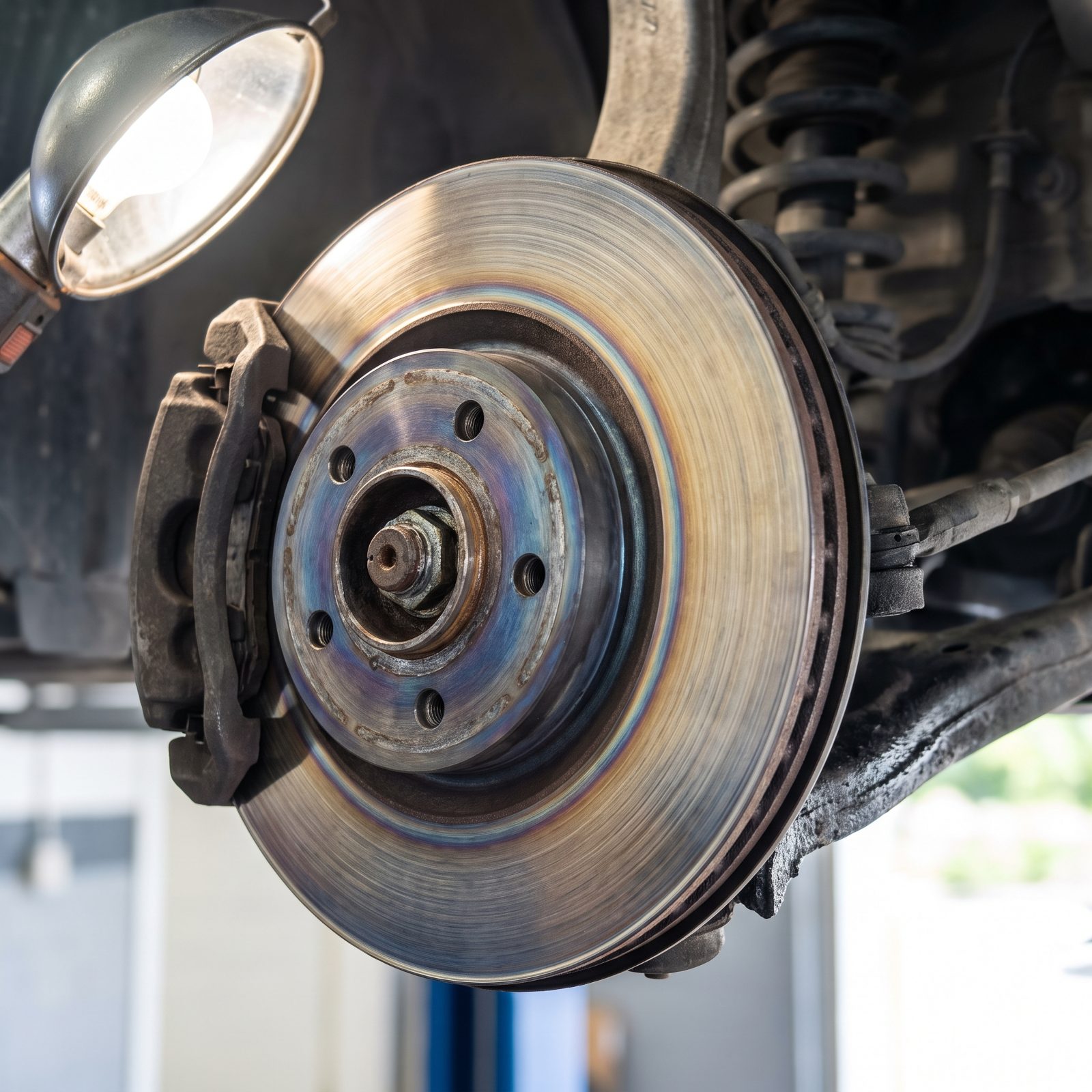
That blue-gold swirl across a rotor is a temperature record written in metal. Steel takes on the straw-to-blue tint once it crosses a certain heat threshold, and it never lets go. So a mechanic sees it and immediately wants to know what cooked these brakes.
Could be a dragging caliper. Could be some nervous soul riding the pedal all the way down a mountain. Could be a trailer the car had no business towing in the first place. Whatever did it, the rotor ratted out its owner before a word got spoken.
17. A Radiator Fan Roaring After a Cold Start Raises an Immediate Question
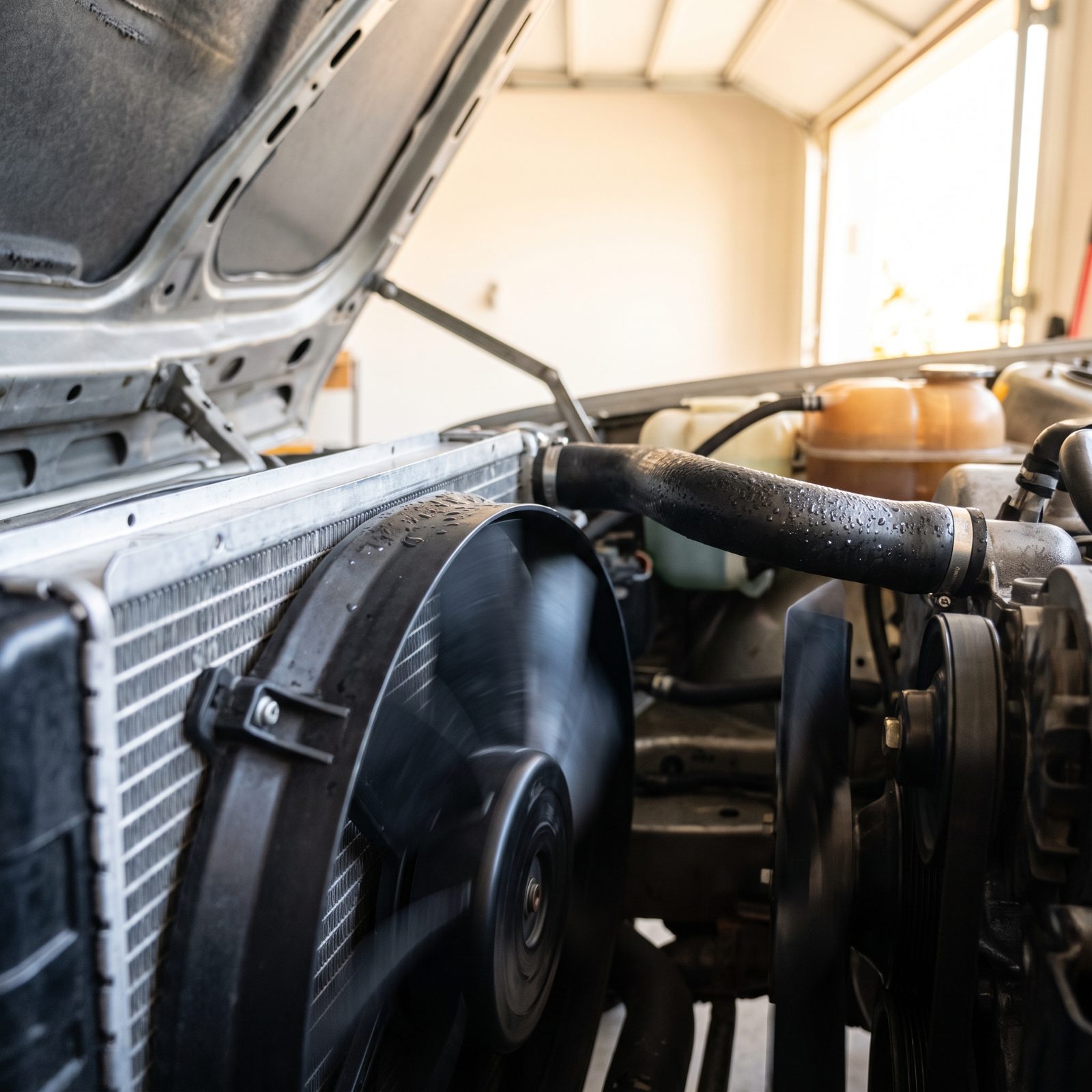
A cold engine has no reason to run its fan at full tilt. So when it screams to life seconds after a cold start, a mechanic’s eyebrows go up.
Usually it means the car thinks it is already hot. Blame a temperature sensor reading wrong, a stuck thermostat, air trapped in the cooling system, or a module that has lost the plot. None of it is catastrophic yet. But all of it points to a cooling system somebody neglected or recently poked at. The timing of that roar is the whole clue.
16. Uneven Cranking Speed Can Reveal a Compression Problem

Listen to a healthy starter and the engine spins over with an even, steady rhythm. Uh-uh-uh-uh, all the same tempo. Now listen to one that surges and stumbles, speeding up through part of the rotation and dragging through the rest.
That irregular tempo often means one cylinder has lost compression. With no healthy resistance in that hole, the crank whips through it fast, then labors on the strong ones. A trained ear catches it before any gauge ever touches a spark plug hole. Free diagnosis, hiding in the sound of the start.
15. A Brief Blue Exhaust Puff Suggests Oil Entering the Combustion Chamber

Color is the language of exhaust. Black means too much fuel, white means coolant where it has no business being, and blue means oil burning in the chamber. That last one is the quiet confession.
A short blue puff on startup that clears up fast usually points to valve stem seals leaking oil into the cylinders overnight. A steady blue haze under acceleration leans toward worn rings or guides. A mechanic watching that puff knows roughly how the engine was treated and how much life is left, all from a second of smoke most owners never catch in the mirror.
14. A Delay Before the Transmission Engages Signals Internal Wear or Low Fluid Pressure
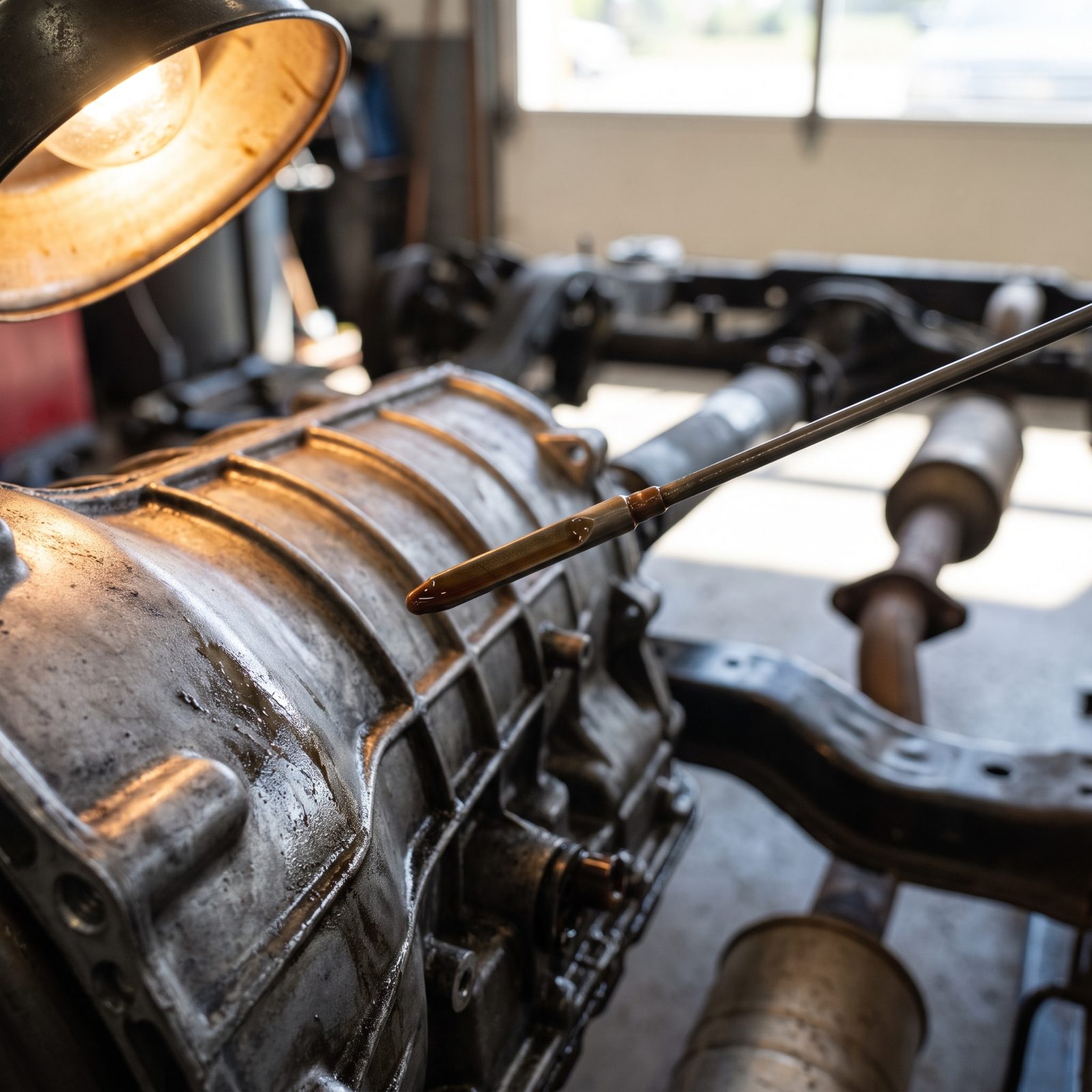
Shift into drive and a healthy transmission catches almost at once. A beat of hesitation before the car wants to move, a second or two of nothing, is a tell nobody can hide.
That lag usually means low internal pressure or worn clutch packs that no longer grab the way they should. Then you pull the dipstick and the story deepens. Fluid gone dark instead of bright red, or carrying a faint burnt smell, says the service schedule got ignored for a long, long time. The delay and the fluid together write a maintenance history more honest than any folder of receipts.
13. A Hum That Changes During Turns Suggests a Loaded Wheel Bearing
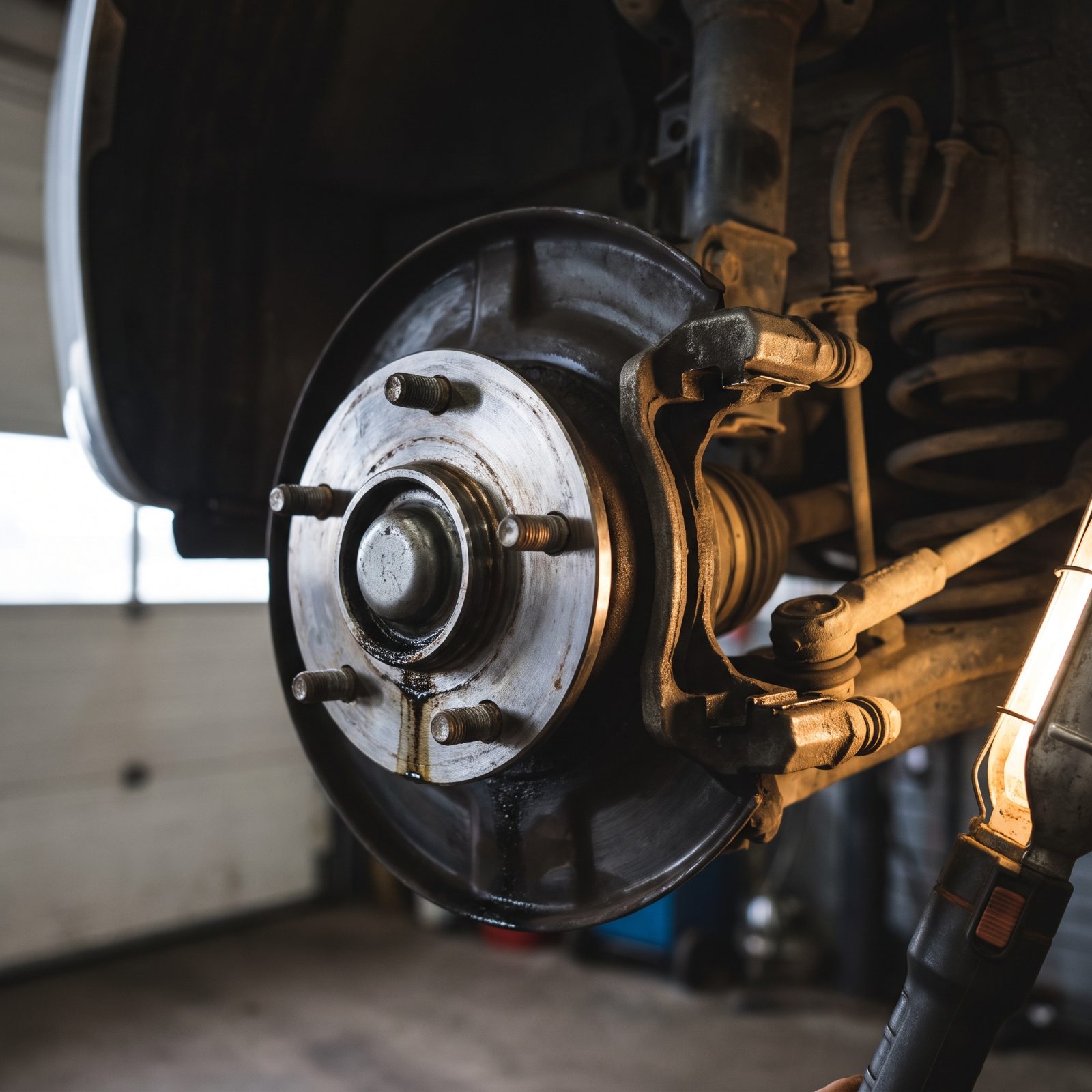
A worn wheel bearing sings on the highway, a low hum like distant tires on grooved pavement. Pinning it down comes down to the steering wheel.
Swerve gently left, then right, at speed. If the hum swells turning one way and fades the other, that is the bearing loading and unloading as weight shifts across the car. Louder when weight presses onto a corner, quieter when it lifts off. One test, and a mechanic knows which side is dying. No stethoscope, no lift, just a changing pitch in a bend.
12. A Car That Travels Slightly Sideways Exposes Rear-Axle or Alignment Trouble
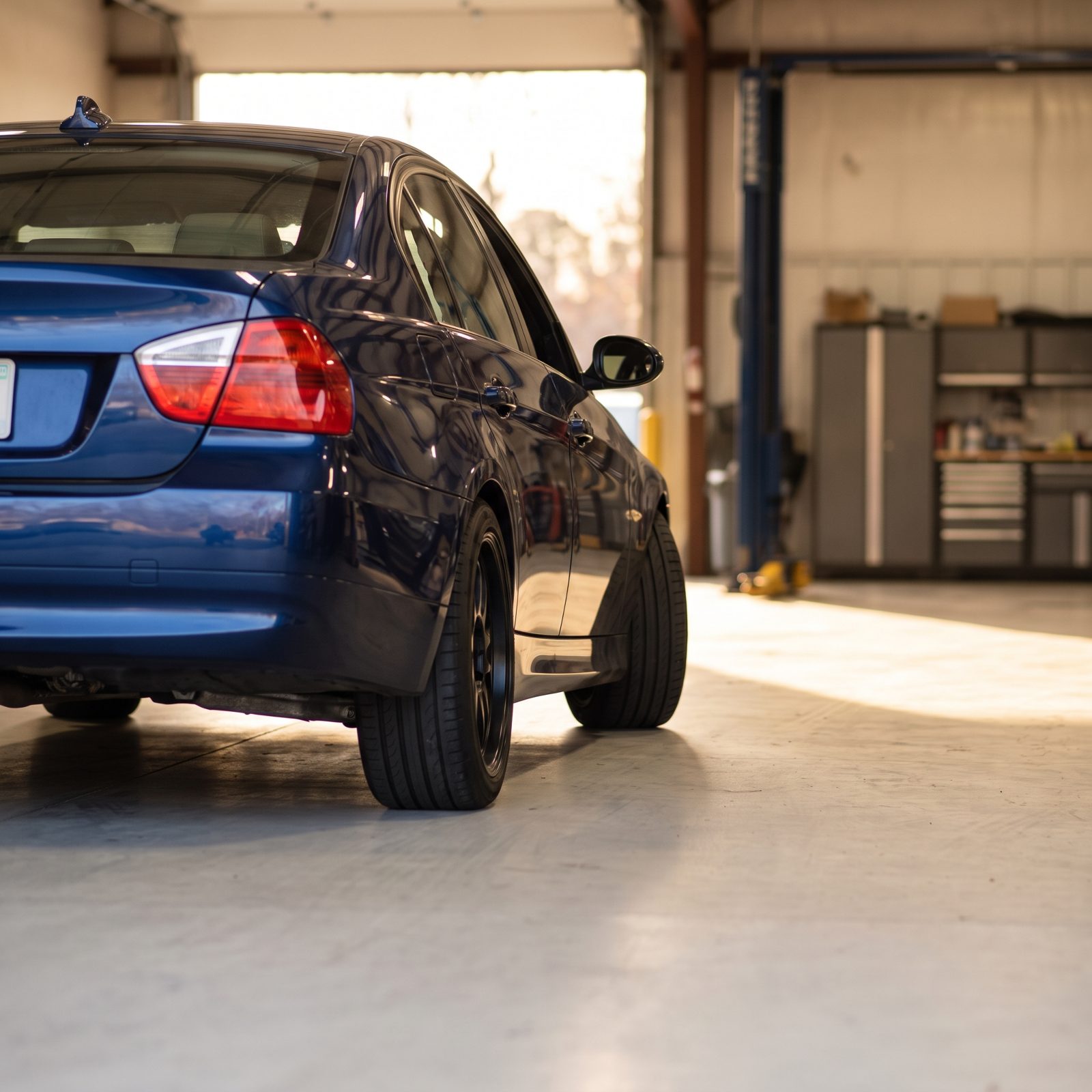
Watch a suspect car drive straight away from you and the whole frame can look crooked, the back end offset from the front like a dog trotting at a slant. Mechanics call it crab-walking.
It means the rear axle is no longer square to the front. A bent axle, sagging or snapped suspension mounts, or a good hard smack against a curb will throw the rear out of line. The owner usually has no clue, because the car still goes where the wheel points. But that sideways gait points straight to a past collision or a worn-out rear end, and the tires will eat themselves confirming it.
11. Wear Confined to an Inner Shoulder Can Hide Until the Tire Is Near Failure
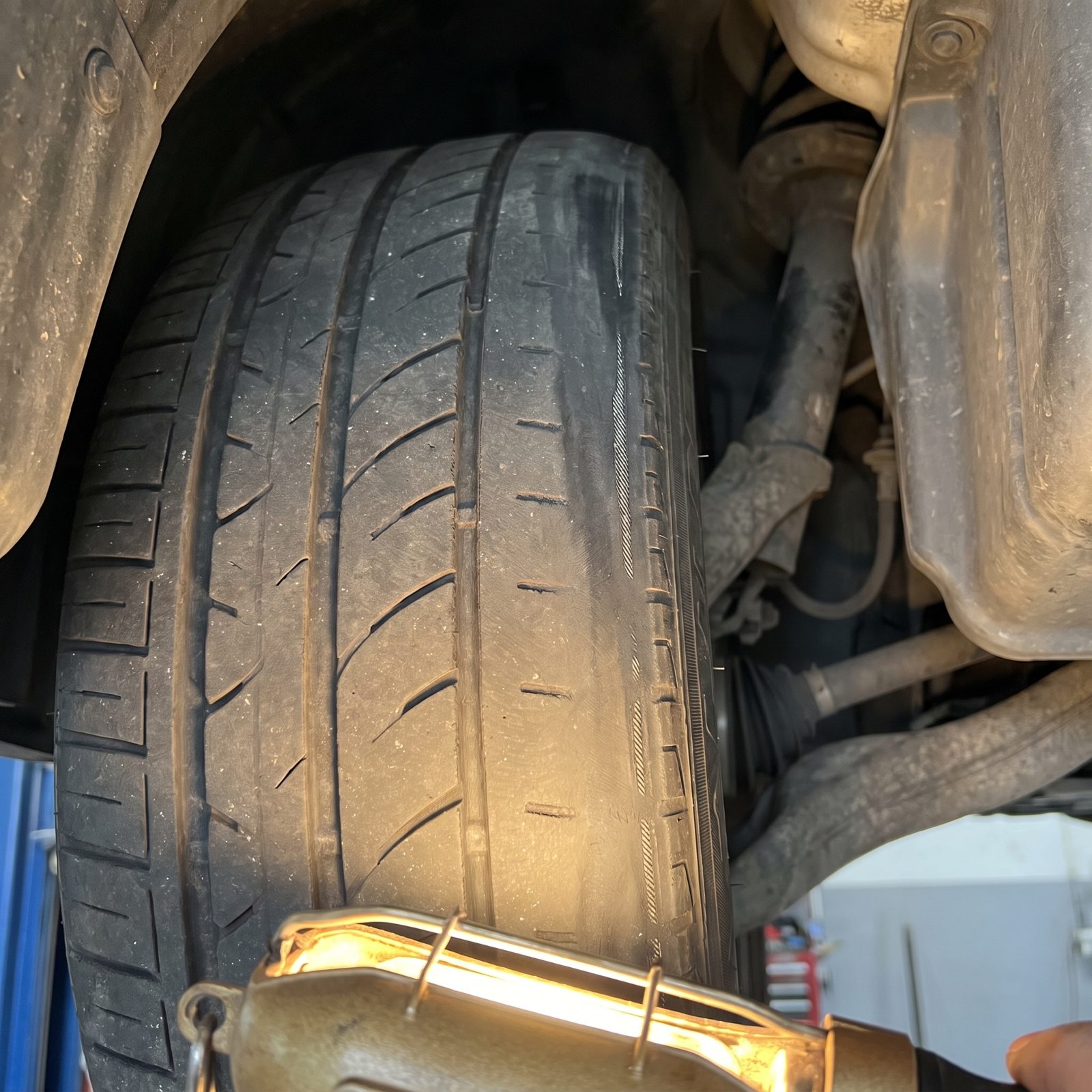
The sneakiest tire wear lives on the inner shoulder, the edge facing the center of the car. You never see it from the driver’s seat. You could circle that car a hundred times and swear the tread looks fine.
Meanwhile the inside edge is going bald, worn down to feathered cords by bad camber or an alignment nobody bothered to check. A mechanic runs a hand along that inner edge out of pure reflex, because that is where a tire that looks perfectly good turns out to be one hard corner from letting go. The clue only shows itself to whoever bothers to reach in and feel for it.
10. A Fresh Tire Among Three Worn Ones Matters on All-Wheel-Drive Cars
Would you like to save this?
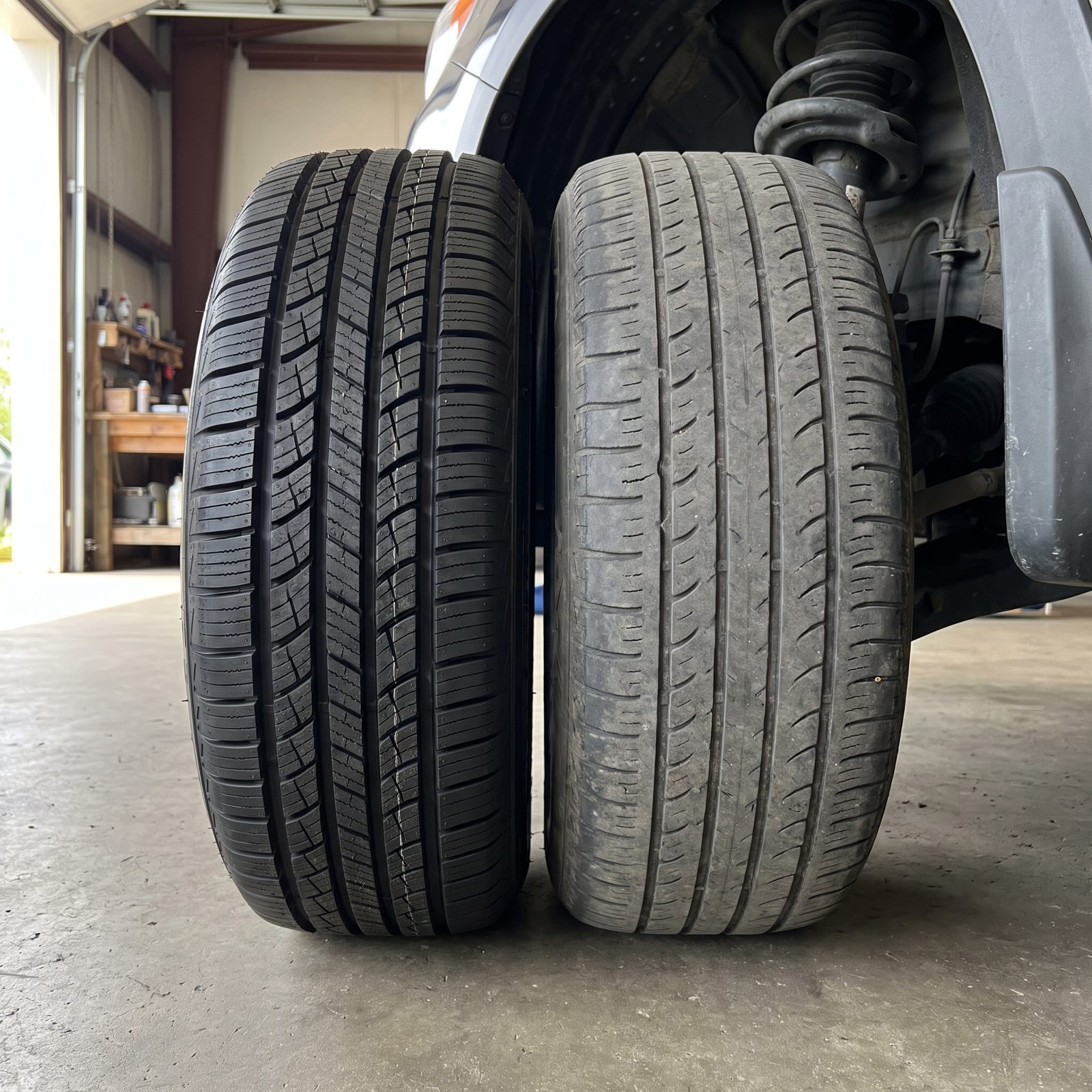
On a rear-drive or front-drive car, swapping in one new tire is no crisis. On an all-wheel-drive car, a single fresh tire among three worn ones is a flashing warning light.
Here is the problem. A new tire has a bigger diameter than worn ones, so it rolls at a slightly different speed. The drivetrain fights to reconcile that gap every single mile, loading the differentials and clutches with stress they were never meant to carry day in and day out. A mechanic who spots one shiny tire on an AWD car knows the owner either does not understand their driveline or is about to pay dearly for cutting a corner. That mismatch is a whole lot cheaper to fix than the gearbox it threatens.
9. Directional Tires Mounted Backward Betray a Rushed, Careless Previous Service
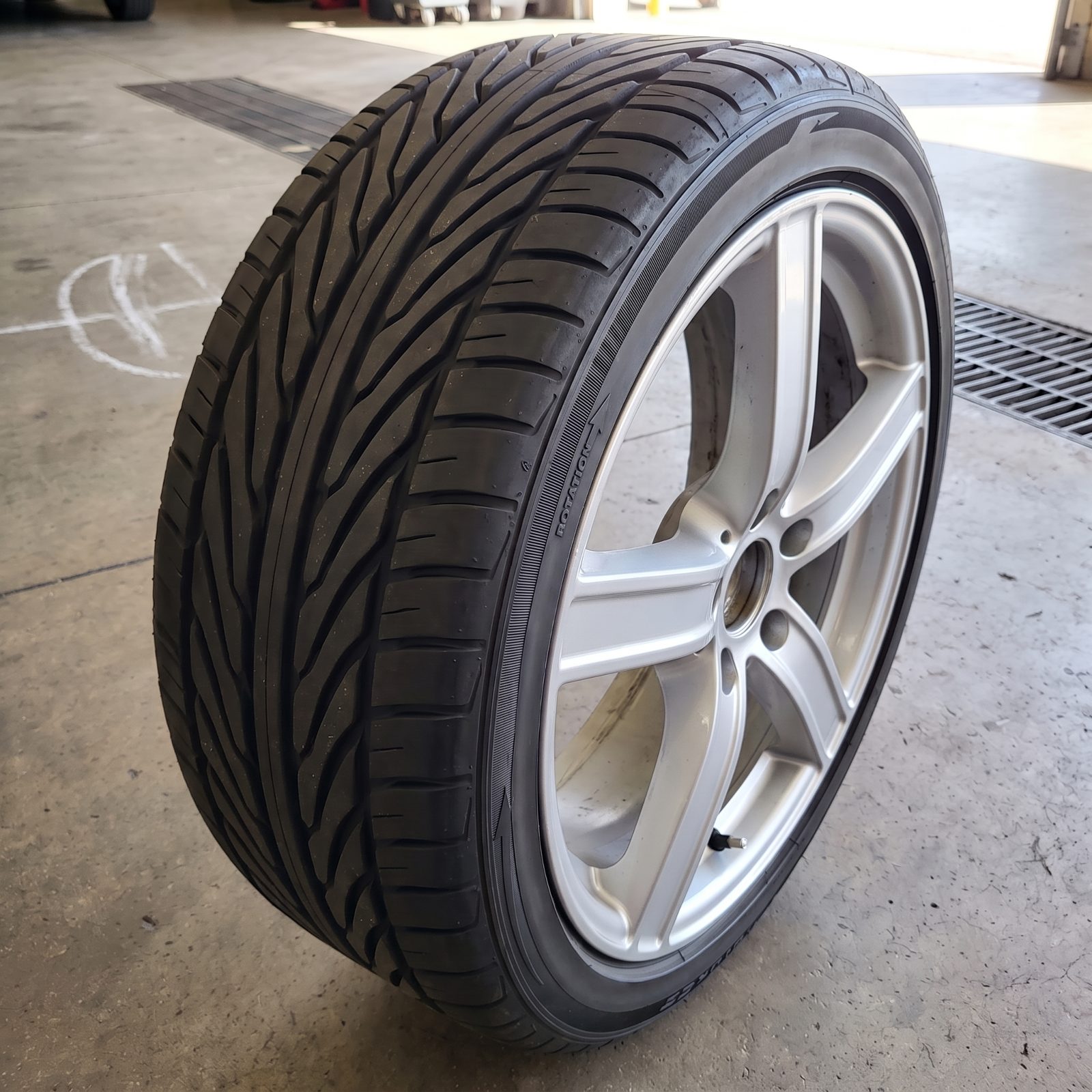
Flip to the sidewall and find the little arrow molded into the rubber, the one showing which way the tire’s meant to roll. Directional tires only work spinning one way. Mount one backward and the tread channels end up fighting the water they were cut to clear.
When a mechanic spots a directional tire spinning the wrong way, he isn’t just looking at that tire. He’s reading the shop that touched it last, because somebody balanced and mounted it without ever glancing at the sidewall. That means they were hurried or they didn’t care. And a hurry on something this basic makes you wonder what else got the quick treatment. Brake torque. Lug nuts. Fluid levels. The cheap mistakes tend to travel in packs.
8. Cracked Sidewalls and an Old Date Code Expose a Tire’s True Age
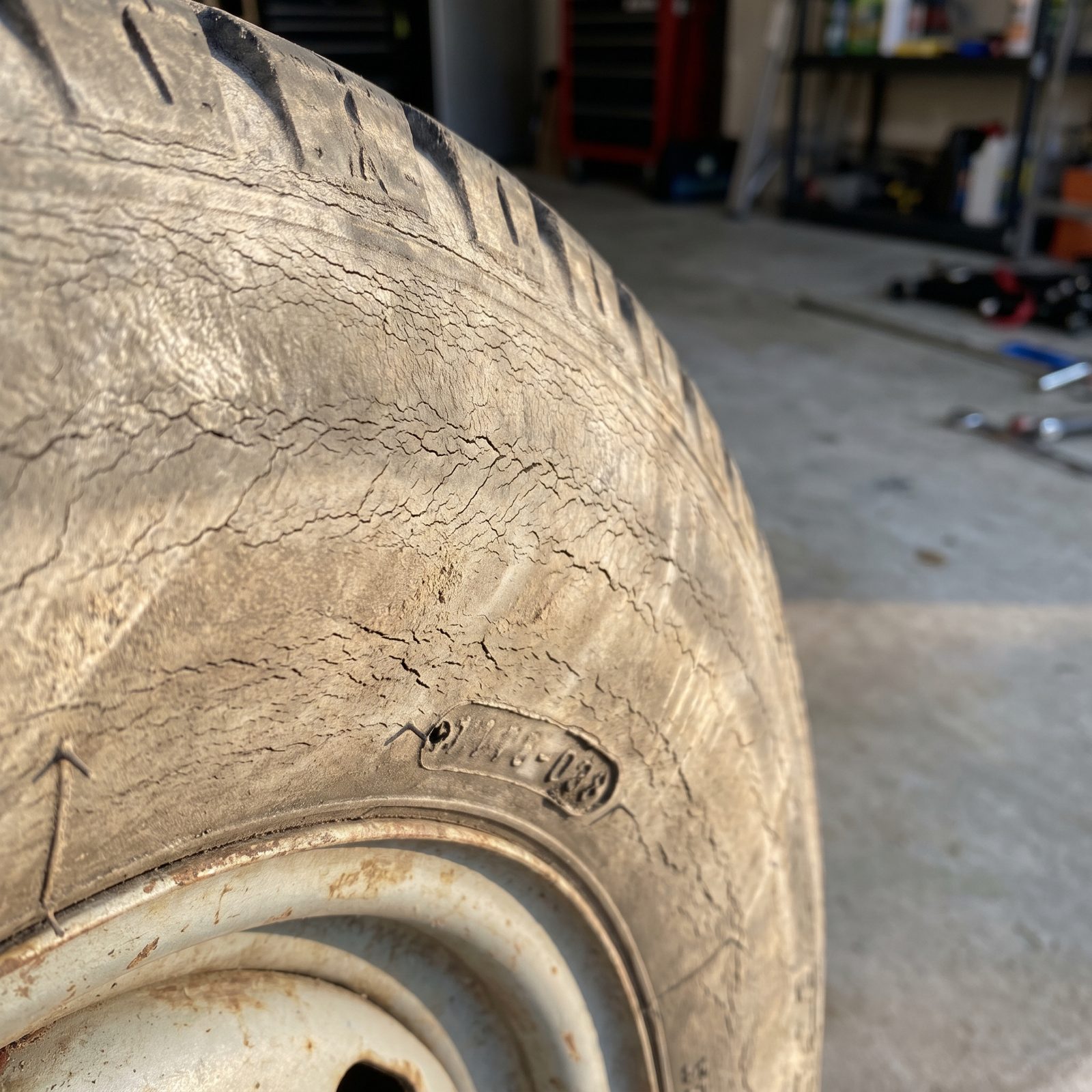
Tread depth lies. A tire can show plenty of meat and still be as dangerous as a bald one, because rubber ages whether the car moves or not. A car that sat in a driveway for six years grows a crop of sidewall cracks that tell the whole sad story.
The date code is stamped right into the sidewall — a small oval with a short string of stamped characters, often hard to make out once the rubber has weathered. A mechanic finds it in seconds, even if reading it takes a moment longer. Deep tread, a code from the last decade, and fine cracking creeping out from the shoulder add up to a car that hasn’t gone many places. Or a bargain set bought already old off a back shelf, which is its own kind of insult.
7. Panel Gaps That Don’t Match Side to Side Point to a Past Collision
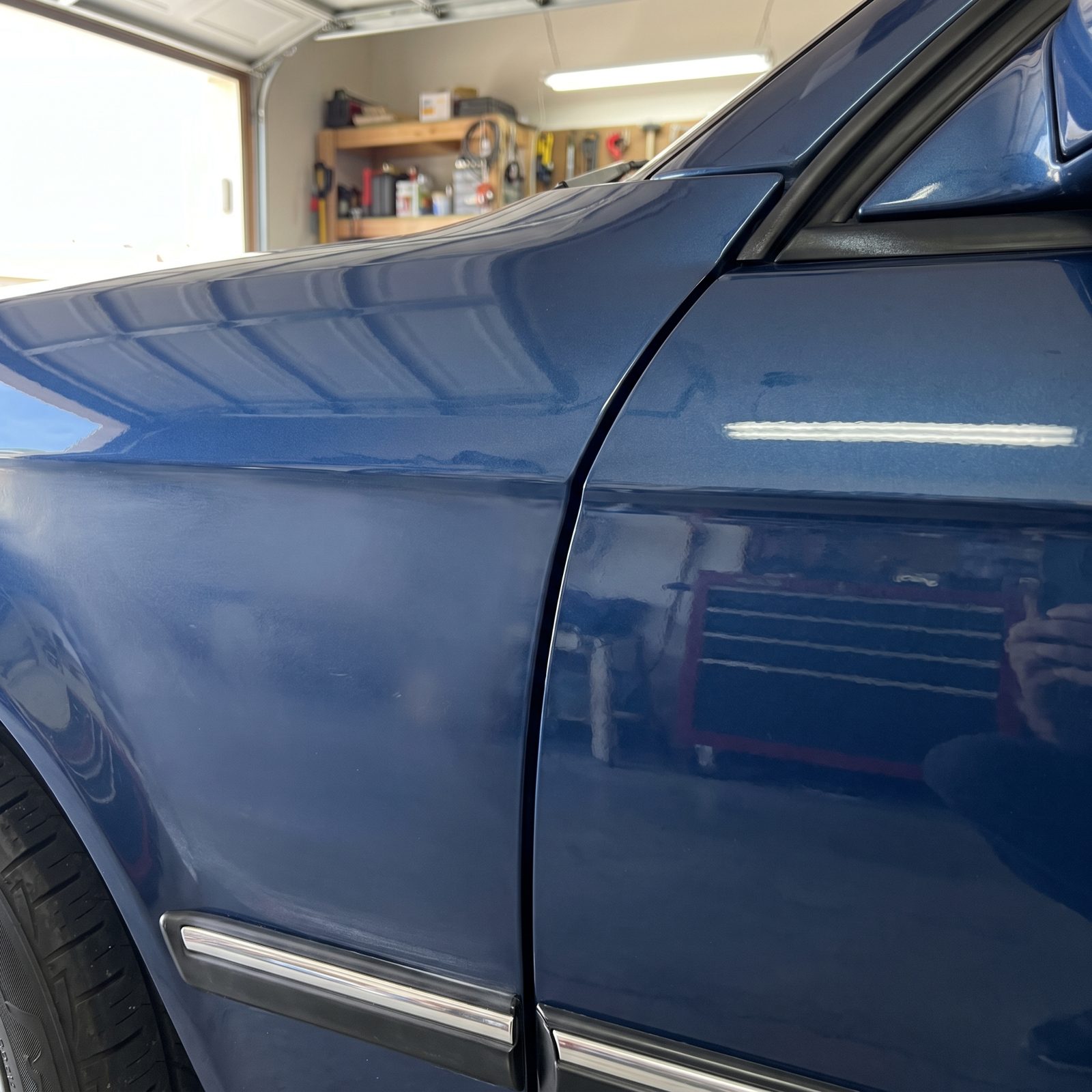
Stand at the front corner and sight down the body like you’re aiming a rifle. Factory lines are obsessive about even gaps — borderline neurotic, actually. A seam that yawns wide at the top and squeezes shut at the bottom didn’t leave the plant looking like that.
Uneven gaps say somebody took the front clip apart and bolted it back by hand. Could’ve been a fender bender. Could’ve been a water pump job by a shop that never bothered to line things back up. Either way it’s your cue to look harder at the paint, the bolt heads, and the inner structure nobody’s going to point out for you.
6. A Door That Sags as It Swings Open Reveals Worn Hinges or Worse
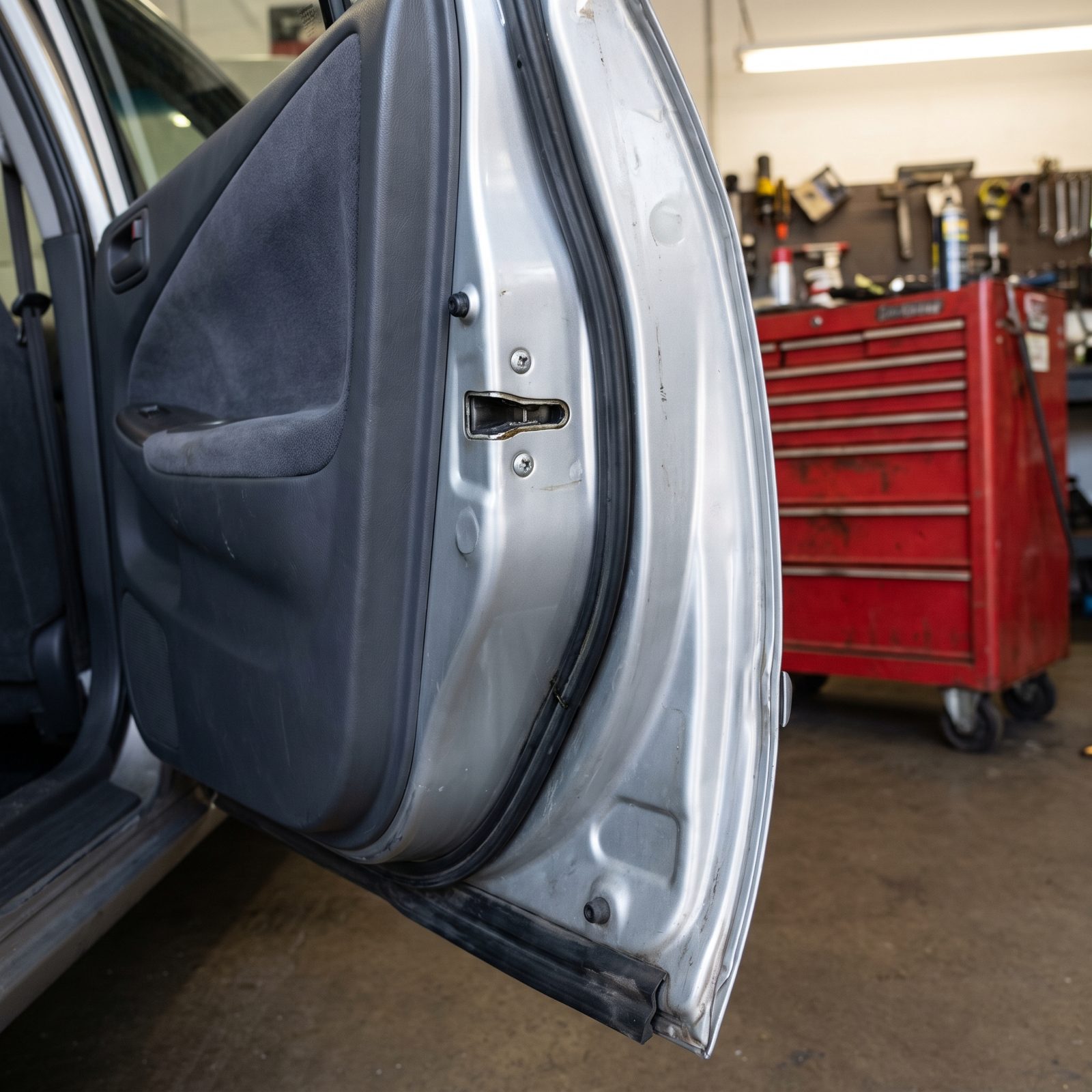
Open the heavy front door slowly and watch the latch end. A healthy car swings it level and the latch meets the striker dead on. A tired one lets the door drop as it opens, so you have to heave it up a hair to get it to close.
That sag is worn hinge pins and bushings, usually earned through years of hard use or a door slammed by someone twice its size. Sometimes it hints at something uglier — structural misalignment from a hit that shoved the body out of square. Either way, a sagging door is a story about how the car got treated, and it’s not a story anybody volunteers.
5. Damp Carpet With No Spill in Sight Means a Leak You Can’t See Yet
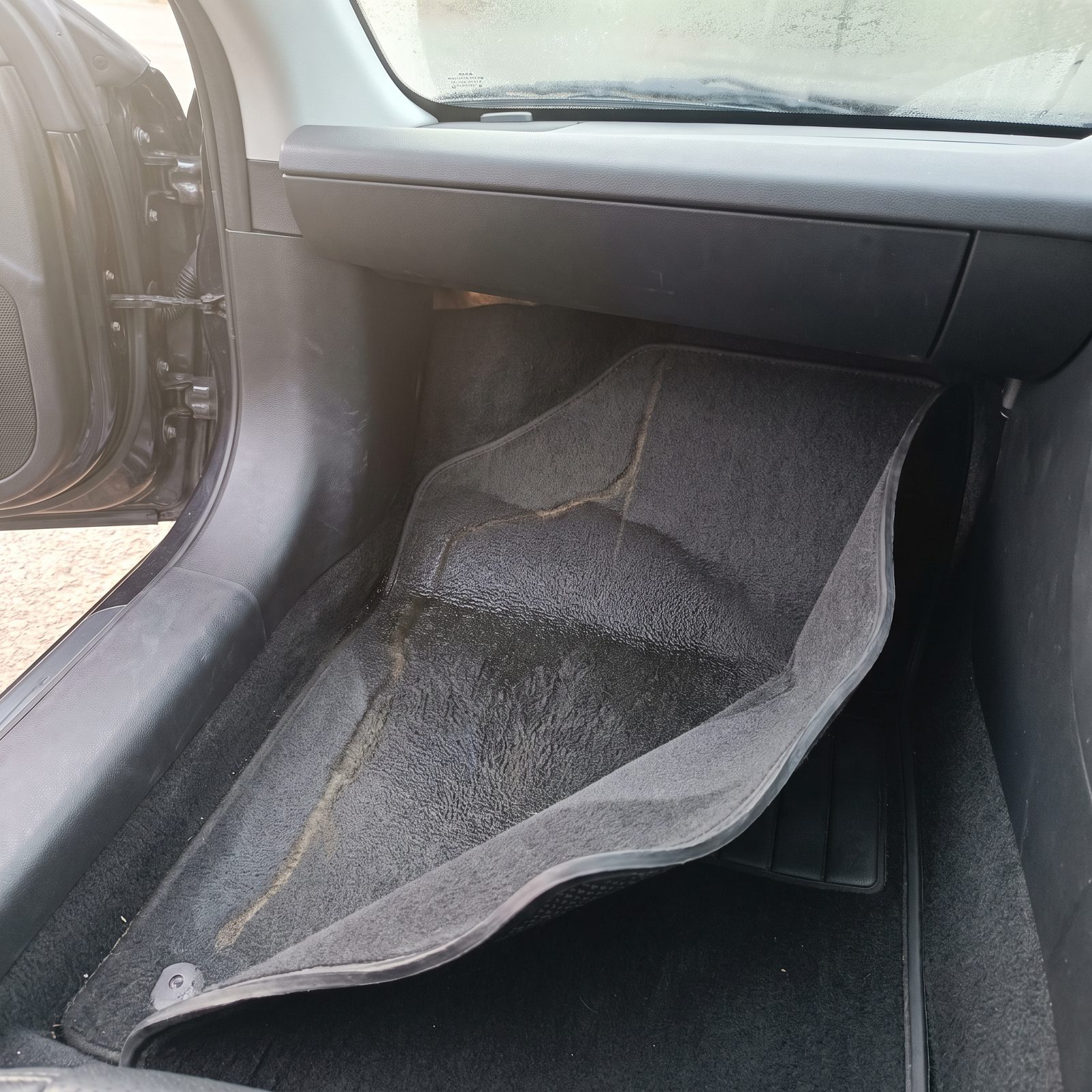
Press a palm flat into the passenger footwell. Dry carpet is boring, and boring is good. Damp carpet with no obvious cause is a mystery, and mysteries in footwells get expensive fast.
Water comes from three usual culprits: a blocked sunroof or cowl drain dumping rain inside, a leaking heater core soaking the floor with sweet-smelling coolant, or a windshield seal that finally gave up. A mechanic doesn’t just note the wet — he leans in and sniffs it. Coolant carries a faint syrup smell. Plain water means a drain. And a musty, mildewed cabin that no tree-shaped air freshener can conquer tells him this has been wet a long time and the owner’s been pretending otherwise.
4. Pedal Rubber Worn Through When the Odometer Reads Low Starts a Hard Conversation
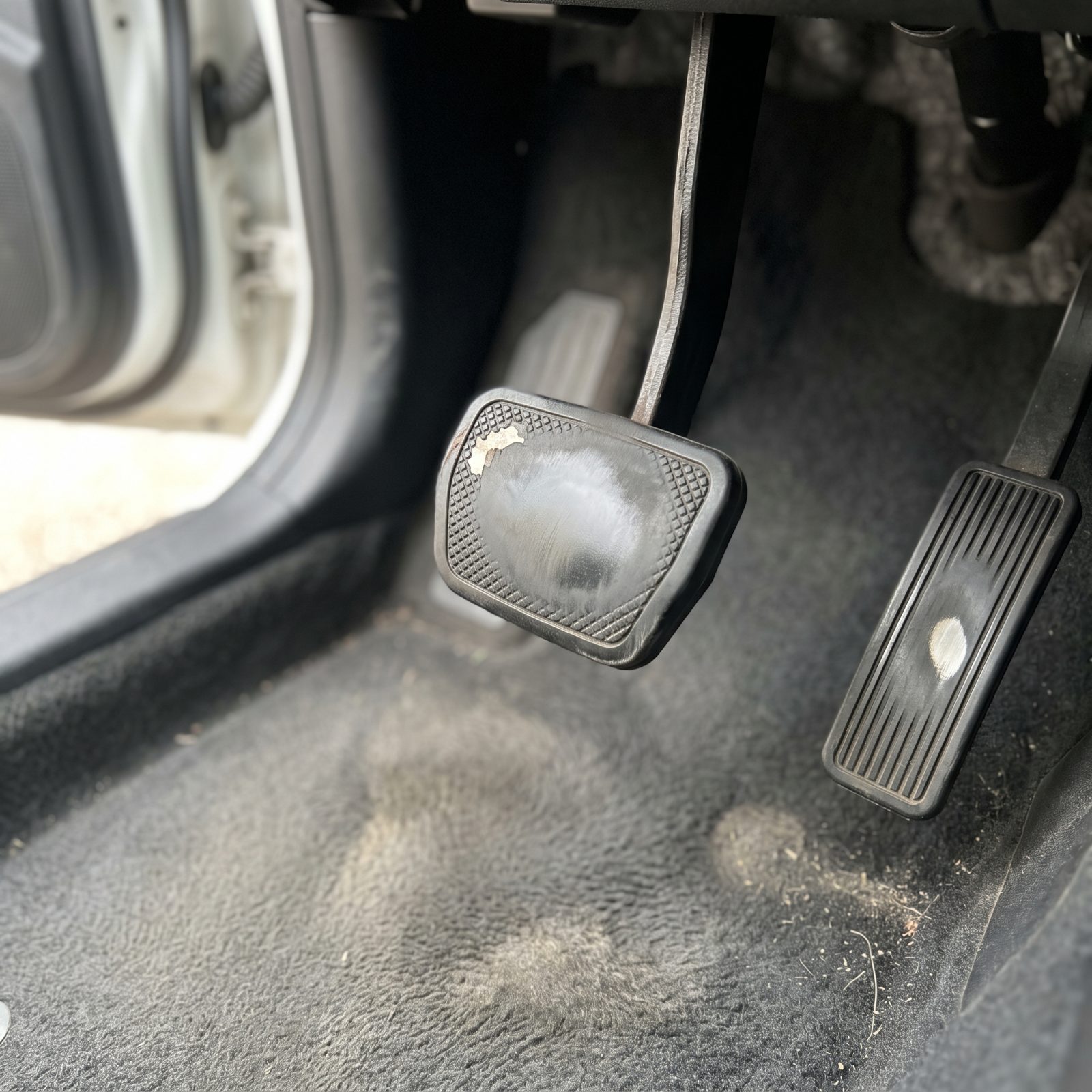
The brake pedal pad is a small truth-teller. New cars wear crisp molded texture across the rubber. A pedal rubbed glass-smooth in the center, edges rounded off, maybe bare metal starting to peek through, is a pedal that’s been stepped on a hundred thousand times.
Now glance at the odometer. Sixty thousand, it says. The two don’t agree, and one of them is lying. Worn pedals, a shiny steering wheel rim, a sagging driver’s seat, and a sanded-down shifter knob that all argue with a low mileage number — those are the fingerprints of a rolled-back odometer or a swapped cluster. A mechanic trusts the wear, not the digits.
3. A Scuffed Hitch Ball and a Green, Corroded Trailer Plug Mean This Car Worked for a Living
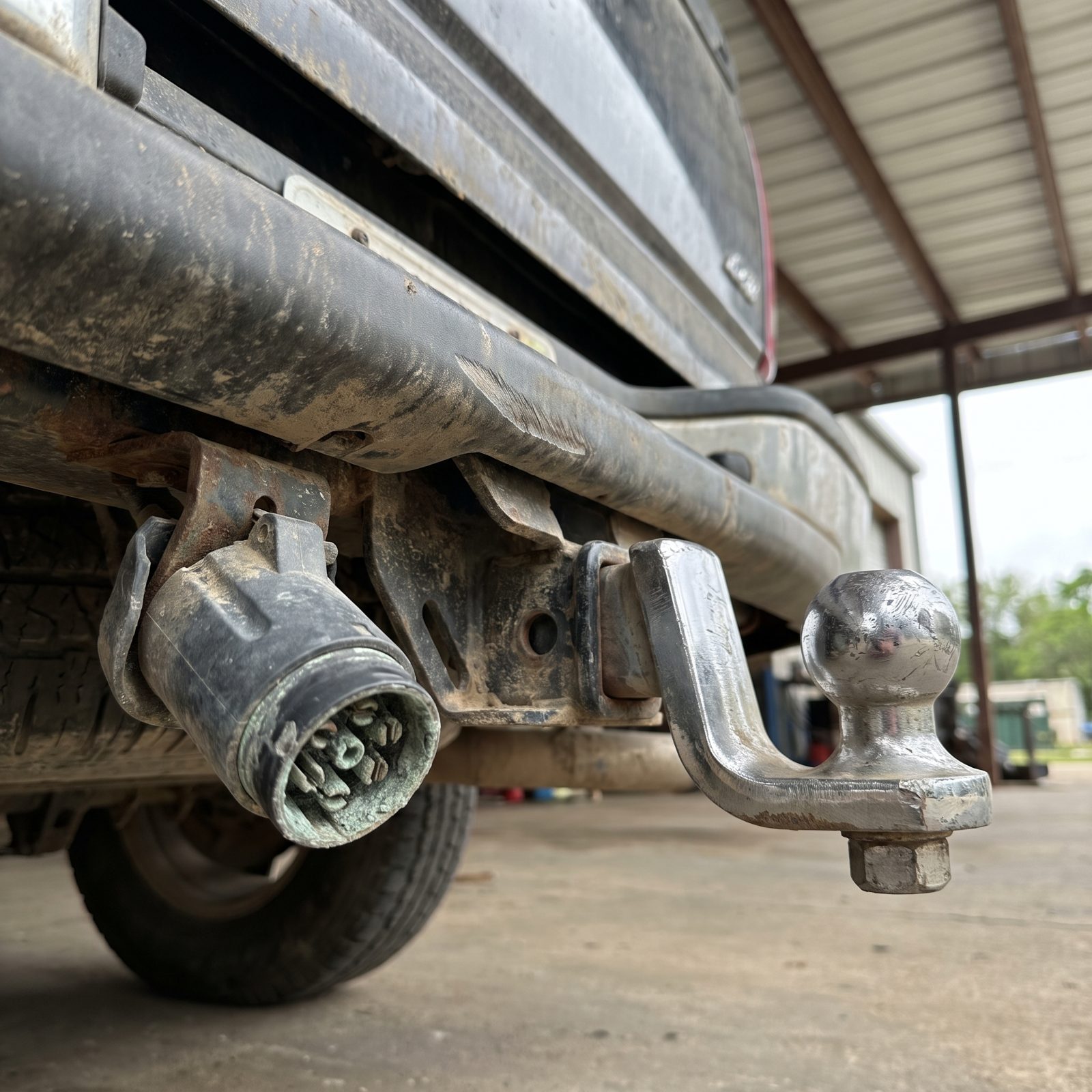
A hitch ball tells you fast whether that pickup or SUV ever pulled anything. A pristine, unmarked ball is pure decoration. A ball whose chrome is still bright but covered in scratches and scuff marks has had a coupler dropped onto it over and over, season after season.
Follow it to the trailer wiring plug. Pins gone green with corrosion, housing chalky and cracked, maybe a sad wad of electrical tape — and you’re looking at a vehicle that spent real time hauling a boat, a camper, or a utility trailer. That changes everything about the inspection. Now the mechanic wants a close look at the transmission fluid, the rear suspension, the brakes, and the cooling system, because towing leans hard on all four. The owner will probably call all that wear “normal driving.” It wasn’t.
2. Spare Oil and Coolant Jugs Rolling Around the Trunk Tell On the Engine
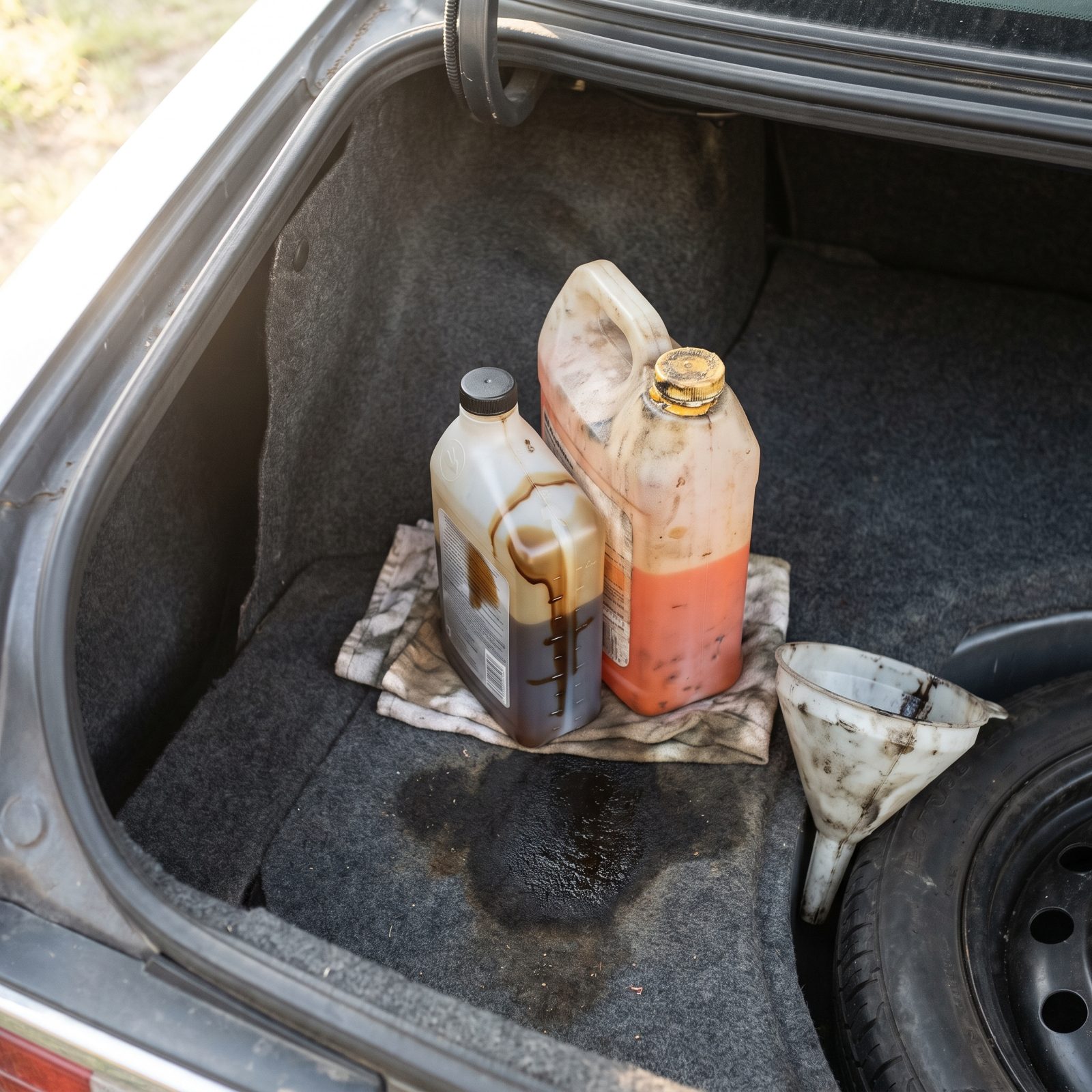
Pop the trunk and the car confesses. A quart of oil with dried rings running down the side and a jug of coolant standing on the stained carpet beside it aren’t road-trip supplies. They’re a habit, and not a good one.
Nobody keeps oil in the trunk unless the engine drinks it. The owner tops off instead of fixing, probably because the real repair costs more than the car means to them. A mechanic sees those bottles and already knows how the day will go: the dipstick will come out dark, the valve cover will likely be weeping. The jugs told him before the hood ever lifted.
1. Fresh Oil on the Splash Shield Separates a Leak That’s Alive From One That’s History
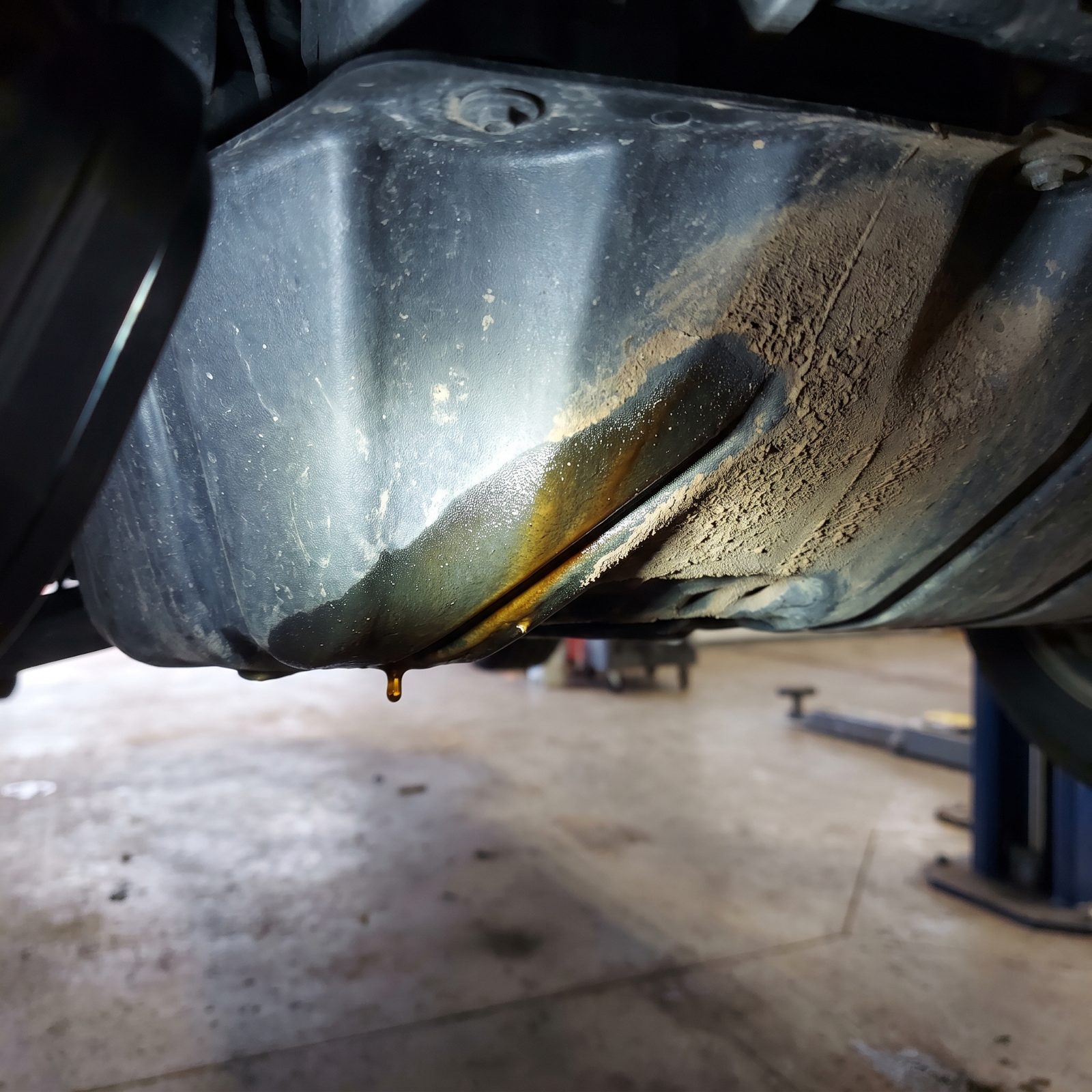
Every used car has oil residue somewhere underneath. What matters is whether it’s leaking right now or leaked years ago and quit. The splash shield under the engine settles the argument.
Old residue is dry, dusty, baked into a dull brown crust that road grime has long since claimed. A live leak looks wet — it catches the light and glistens. Drag a finger across a fresh streak and it comes back clean and dark, maybe with a drip already forming at the low edge. That one difference separates a scary story from a settled one, and it can be the line between a car worth buying and one worth walking away from.