
Would you like to save this?
Most concept cars are just next year’s sedan wearing a costume. A grille that won’t survive the accountants, a wheel that won’t survive the pothole. But every so often an automaker hands its engineers a blank sheet and no adult supervision, and what rolls out of the studio stops making sense in the best possible way. Pods that dock inside bigger pods. Rally cars with eight wheels. A supercar with a pickup bed and a Lotus V12 under the floor. These aren’t the polite dream cars that quietly became next year’s trim level — these are the ones that got weird on purpose.
Please note that some of the images in this article were created with the assistance of AI.
Here are the ones worth remembering.
42. Suzuki Pixy and SSC: The Personal Pod That Docked Inside a Bigger Car
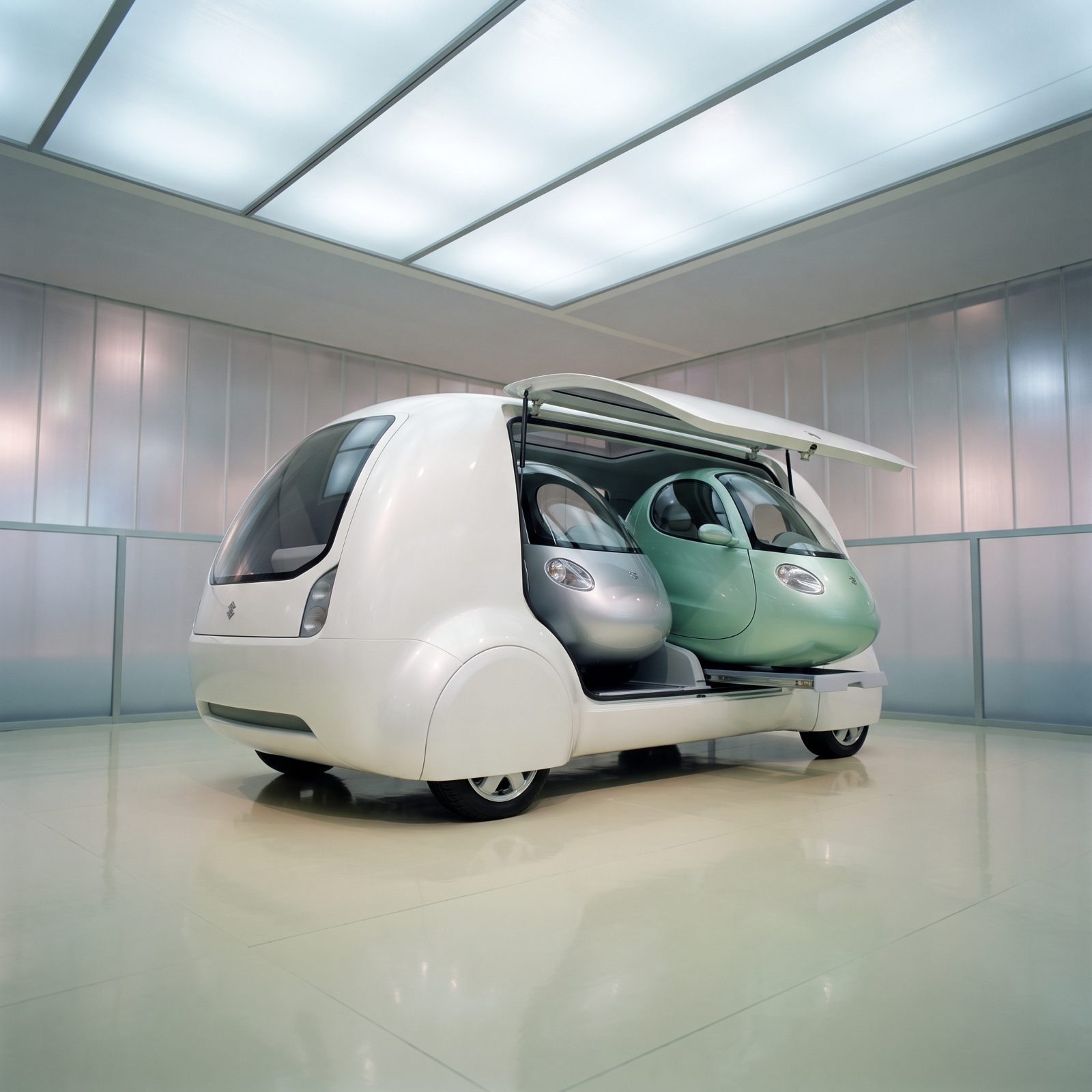
Imagine your car as a garage that walks around. That was the Pixy and SSC. The SSC was the big outer shell, a four-wheeled capsule that did nothing on its own — the magic lived in the two Pixy pods tucked inside it, single-seat two-wheeled bubbles you drove into the building, through the lobby, right up to your desk.
Suzuki built this in 2007 as a real question: why should your vehicle stop at the curb? The pod was your seat on the road and your seat at the office, while the shell handled the highway miles. Sounded like science fiction then. Watch how electric scooters and micro-mobility are getting bolted onto cars now and it looks less crazy by the year.
41. Mitsubishi MMR25: The Eight-Wheeled Rally Car Built for a Future That Never Showed Up
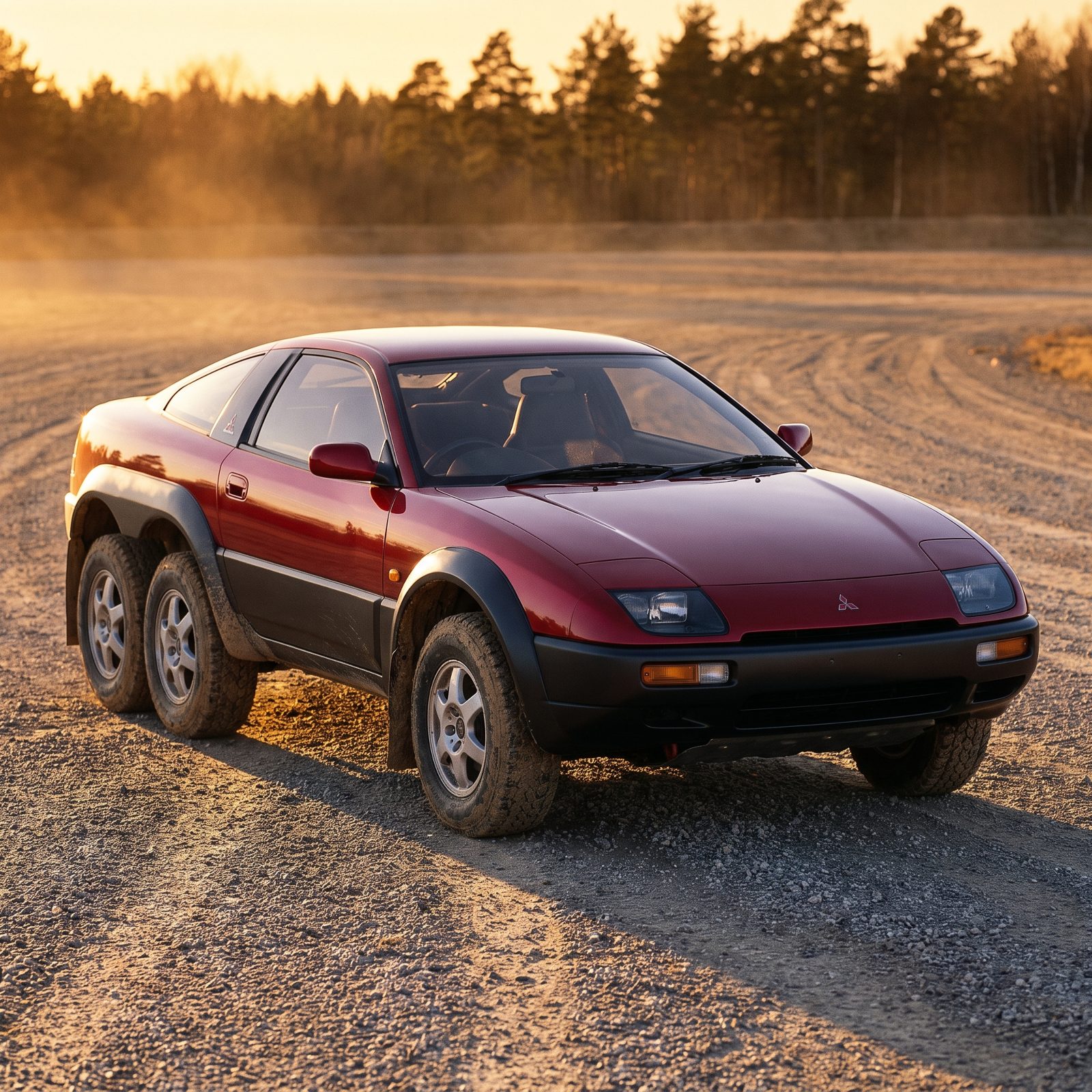
Four wheels per side. That is not a typo. Mitsubishi’s MMR25 looked at the rally scene and decided the future of putting power down was more contact patches, not more horsepower. Eight wheels meant eight surfaces clawing at loose gravel, the idea being that grip and traction control could spread across the whole flank.
It never raced, because rally regulations had opinions about that sort of thing. But the thinking behind it — obsessive traction, all-surface control — is exactly where Mitsubishi’s road cars went next. The Lancer Evolution owes a little of its all-wheel-drive brain to studio exercises this strange.
40. Citroën Osmose: The City Car That Let Strangers Ride on the Outside
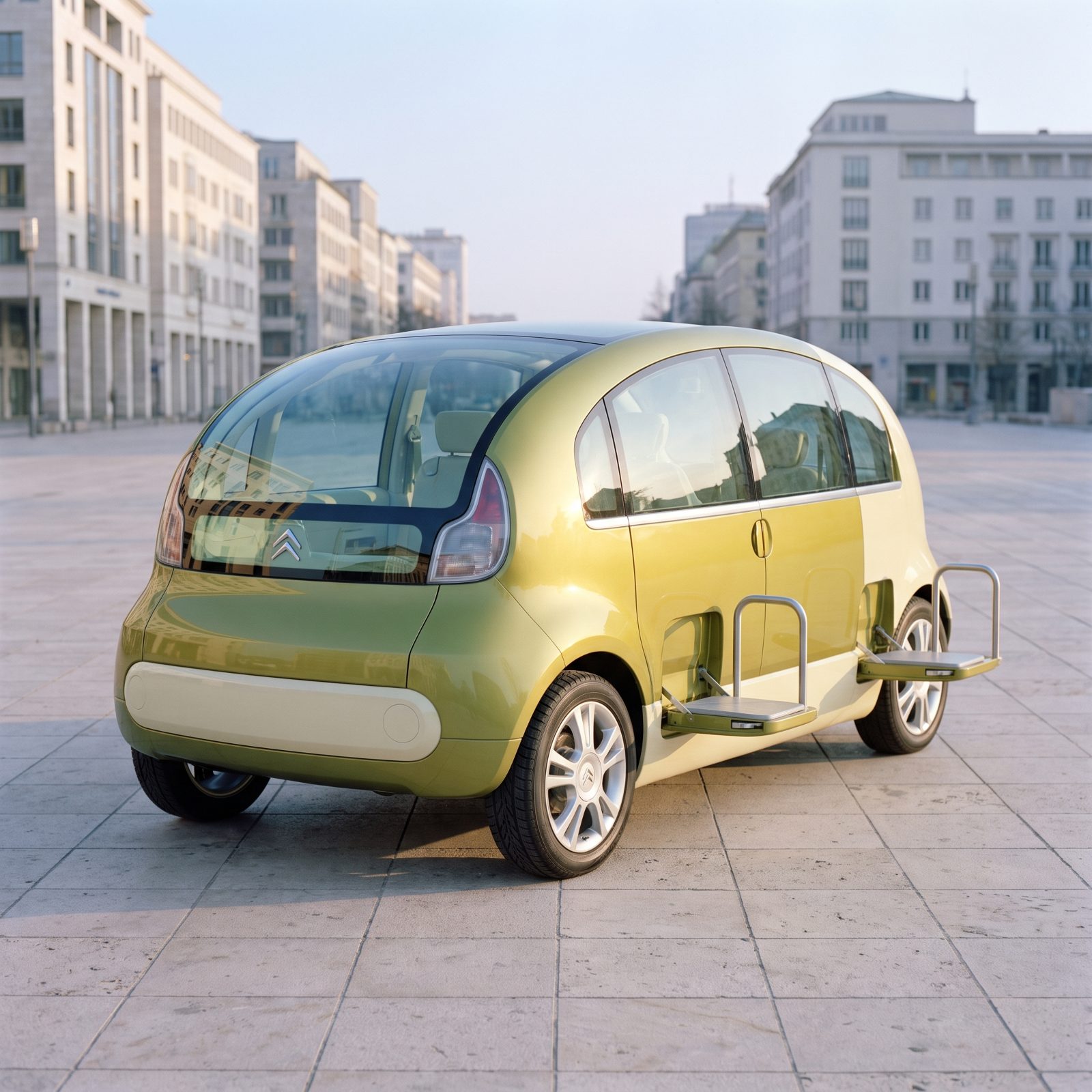
The Osmose had a front end that smiled, and that was no accident. Citroën designed this 2000 concept around friendliness — a car that could invite pedestrians to hop aboard for a short ride. Here’s the wild part: fold-out platforms on the right side where strangers could stand and hitch a lift across town.
Ridesharing imagined before anyone had a word for it, back when climbing into a car with someone you didn’t know still sounded like an act of madness. The exterior platforms never caught on, obviously. Nobody wants to commute clinging to the side of a bubble. But the social idea underneath it called exactly where city transport was heading.
39. Isuzu Como: The Lotus-V12 Supercar That Also Hauled Lumber
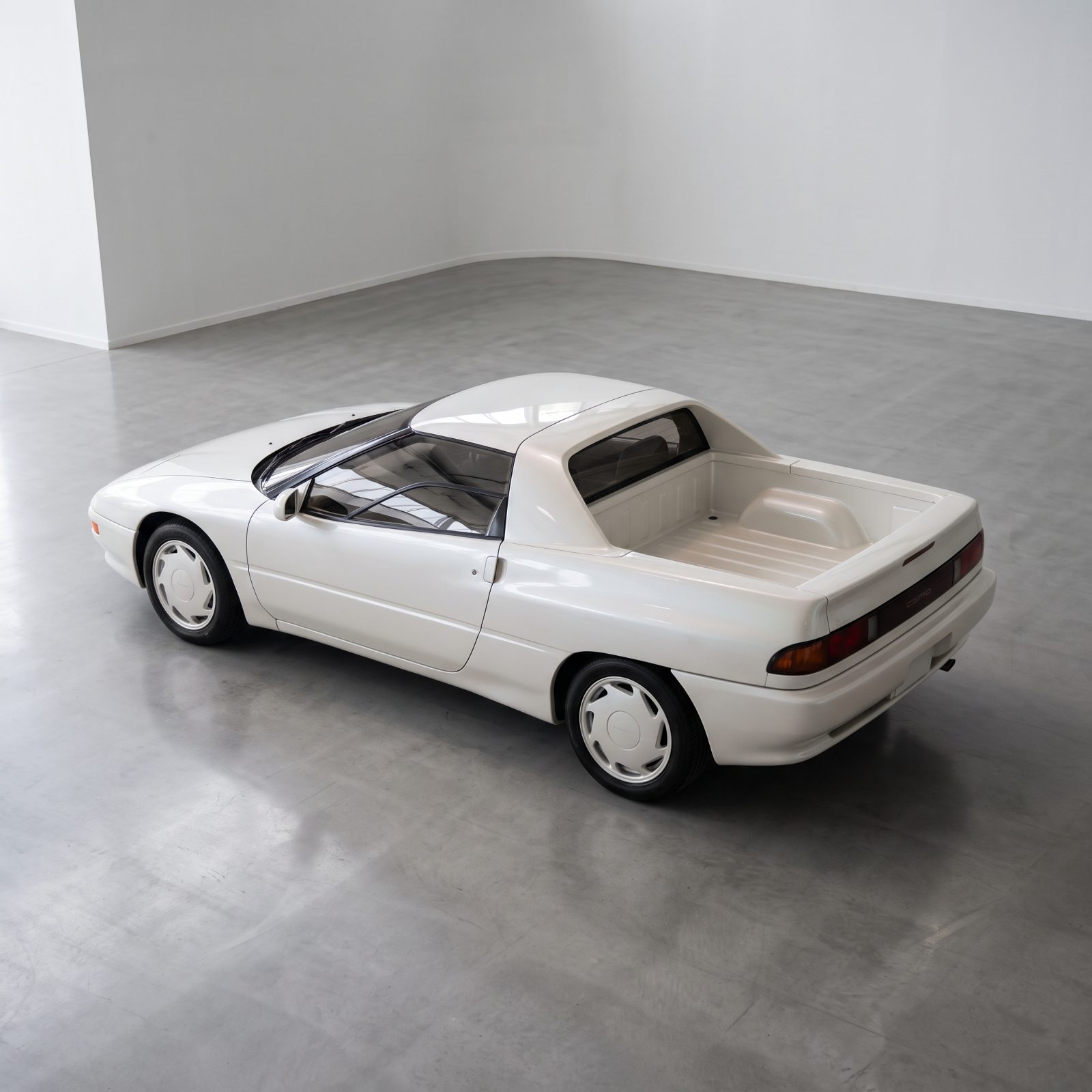
A Lotus-designed V12, a supercar silhouette, and a pickup bed. The Isuzu Como was three cars arguing inside one body, and somehow that’s the charm of it. In the early 90s Isuzu, a company most people knew for trucks and SUVs, wanted to prove it could think wild — so it stuck exotic performance on top of practical utility and flat refused to pick a lane.
The Como mattered because it was honest about the brand. Isuzu made workhorses. This was a workhorse that could embarrass a Ferrari and still carry your two-by-fours home, and that kind of cheerful contradiction is rarer than a clean concept drawing.
38. Renault Zoom: The Electric City Car That Shrank to Park

The Zoom folded itself up like a pocket knife. Find a space too small to park in, and its rear wheels pivoted inward while the whole back end lifted, dropping the car’s length by almost a foot. Renault showed it in 1992 — electric, scissor-doored, and genuinely clever about the one thing every city driver actually hates.
Parking space, not range, was the problem it went after. That’s the insight most electric concepts missed for years. And the name survived, by the way. Renault later put it on the ZOE’s spiritual cousin, and its whole electric lineup wears the echo.
37. Honda Fuya-Jo: The Rolling Nightclub You Drove Standing Up
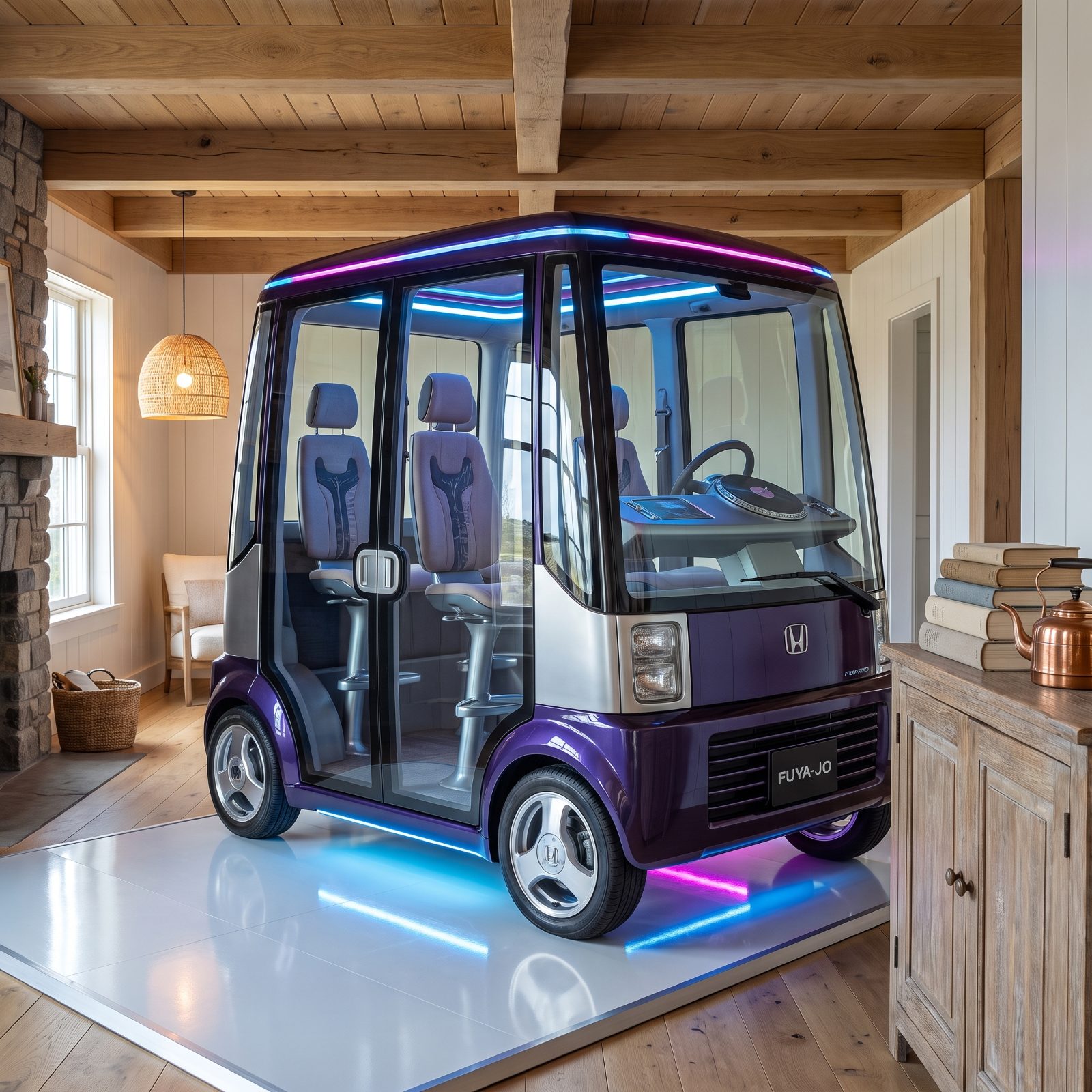
Honda looked at Tokyo’s club kids who partied all night, then had to slump into a boring seat for the drive home, and decided the drive should keep the party going. The Fuya-Jo — roughly “sleepless city” — was built so passengers stood almost upright on stool-like seats. The steering wheel looked like a turntable. The dash had DJ gear.
It was absurd and it knew it. But it also asked a real question nobody else was bothering with in 1999: what if a car was a mood, not just transport? That notion — cars designed around an experience rather than a commute — runs straight through to every mood-lit, screen-covered cabin being built today.
36. Peugeot Moovie: The Pod That Rode Between Two Enormous Side Wheels
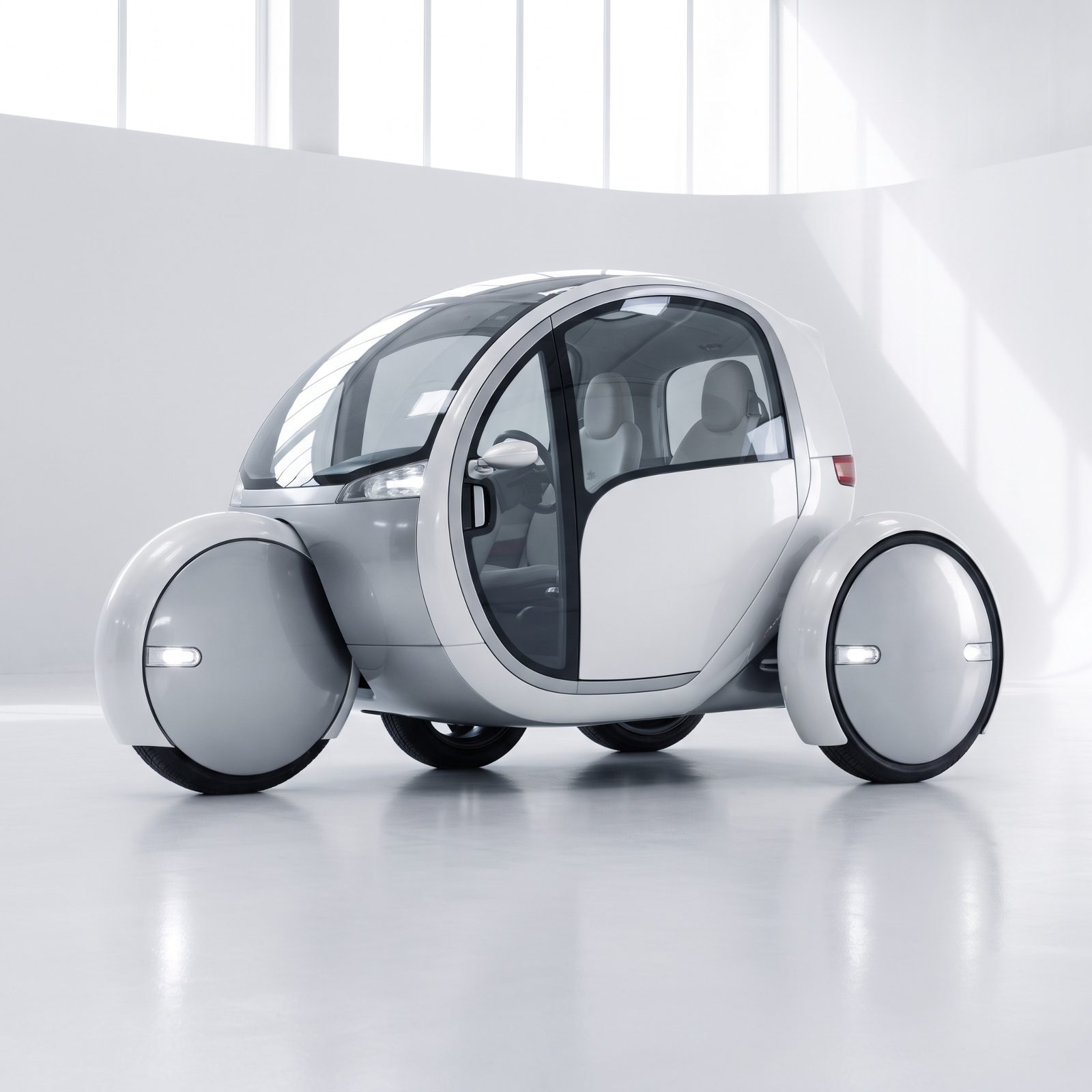
The Moovie put its biggest wheels on the outside of the body — two huge discs on either side of a tiny pod that looked like it was being carried by them. It won a Peugeot design competition in 2005, which tells you something about how much designers love a shape that makes no mechanical sense but looks like nothing else on earth.
Those giant side wheels weren’t just styling, though. They let the cabin sit low and wide, and the sliding glass door let riders step straight in from the curb. Pure design-school fantasy, and gloriously so. Not every concept needs to predict the future. Some just remind you cars can be sculpture.
35. Renault Racoon: The Amphibious 4×4 You Climbed Into Through the Roof
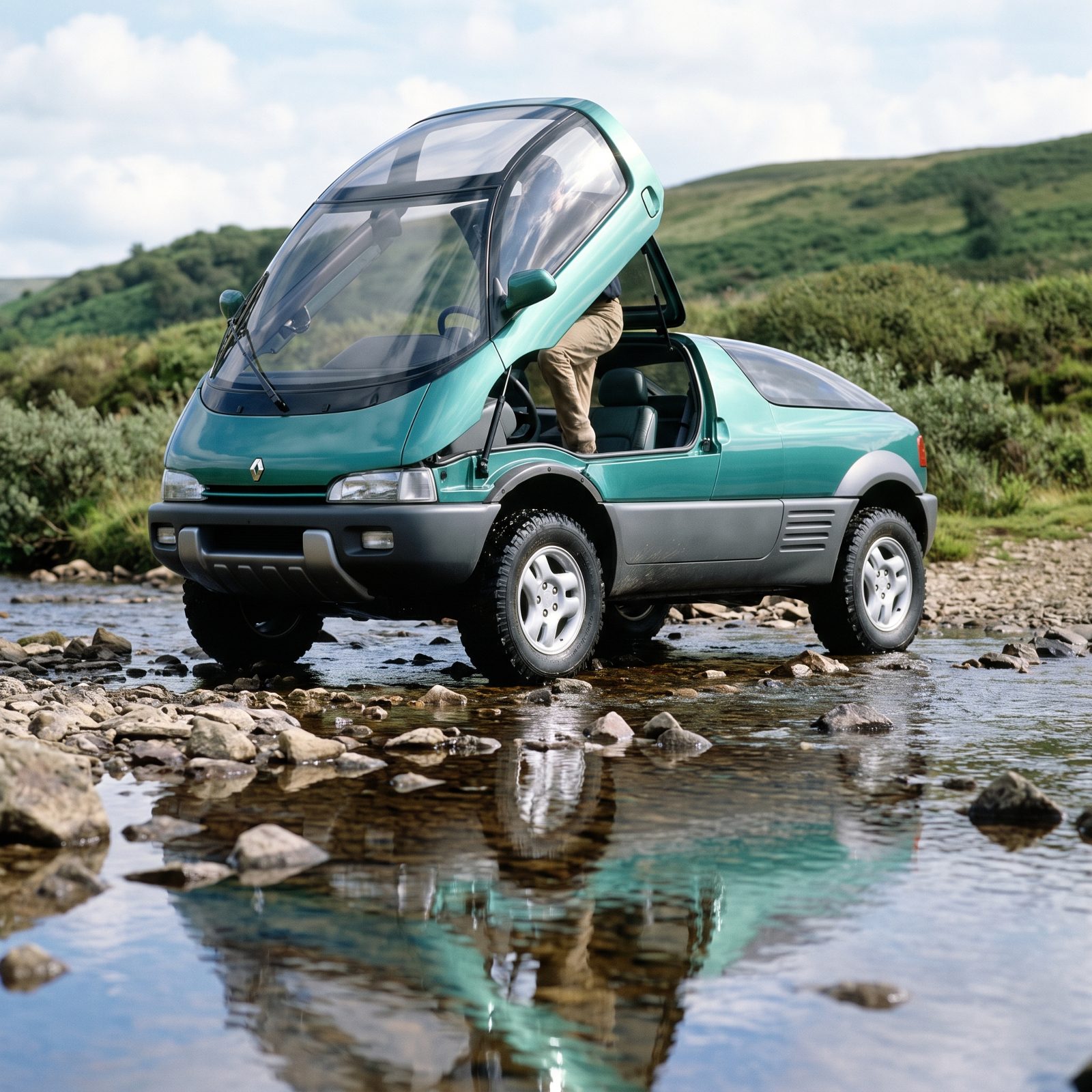
Forget the side doors. To get into the Racoon you swung the whole windscreen-and-roof section up off the front and climbed in, like boarding a fighter jet. Renault built this compact off-roader in 1993 to go anywhere, and it meant anywhere — water, rock, mud, all handled by a teal SUV body with grey cladding, a tilt-up front canopy and chunky tires.
What made it interesting wasn’t the gimmick. It was the loaded tech. The Racoon packed cameras, sensors, and navigation systems that read like a wish list in 1993 and a spec sheet now — Renault testing how much electronic brain a vehicle could carry. Turns out the answer was: all of it.
34. Porsche C88: The Badge-Free Family Sedan Porsche Built for China
Would you like to save this?
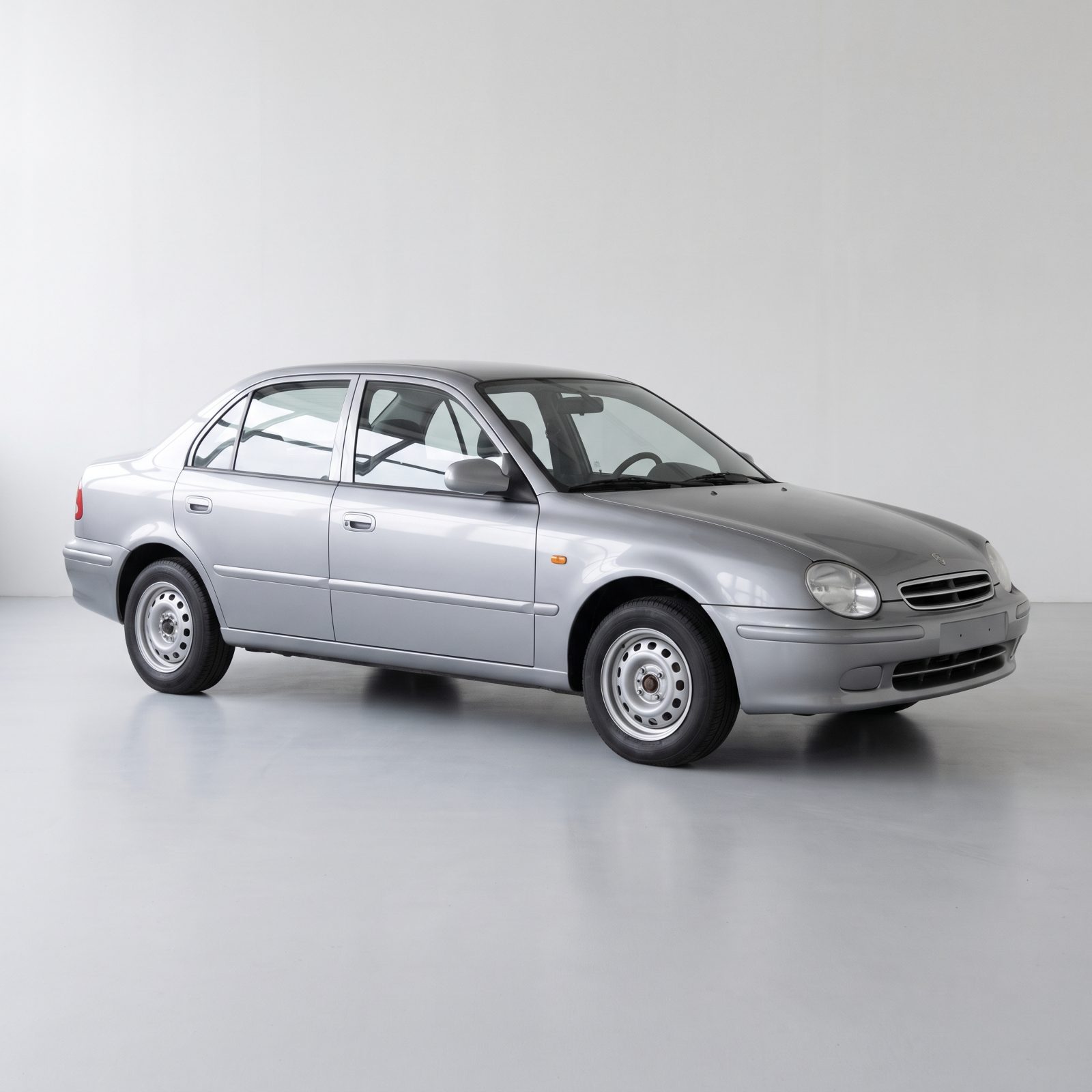
The strangest thing Porsche ever built had no Porsche badge on it, and that was the whole idea. In 1994 China ran a competition for a national family car, and Porsche entered the C88 — a sensible three-box sedan designed to be cheap, roomy, and buildable in huge numbers. No 911 swagger. Just an honest people’s car from the company known for the exact opposite.
Why the “88”? The number is lucky in China. The project was Porsche quietly proving it could engineer anything, including boredom, better than most. The car never got built, but it stands as the clearest reminder that Porsche’s engineering talent was never really about sports cars.
33. Mazda RX-500: The Rotary Wedge With Rear Lights That Told You What It Was Doing
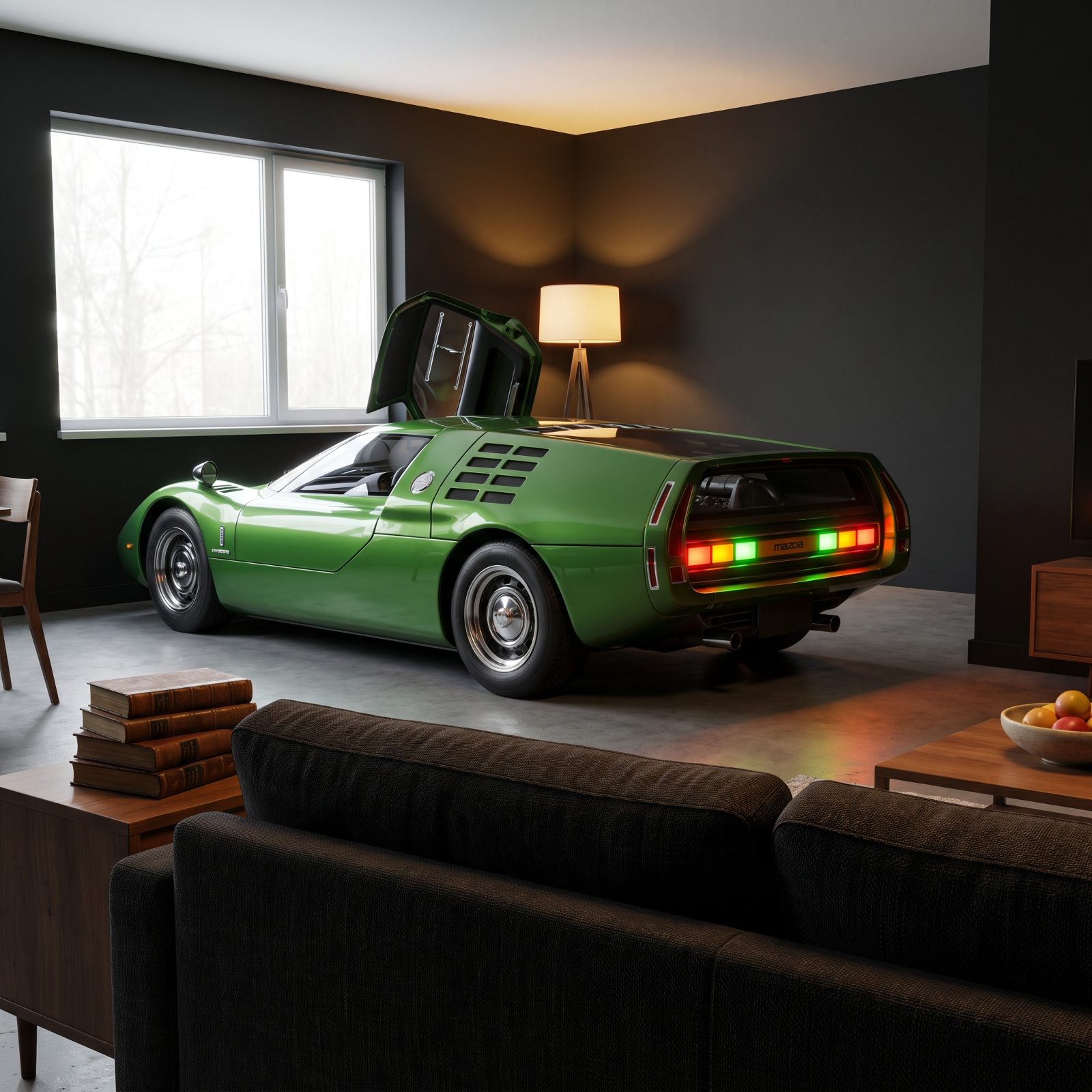
The RX-500 talked to the cars behind it. Its rear panel carried a set of colored lights that signaled exactly what the driver was doing: green for accelerating, amber for coasting, red for braking. A conversation with traffic, decades before anyone thought cars should have a voice.
Underneath that low 1970 wedge sat a rotary engine — the technology Mazda was betting its whole identity on. This was the brand showing off, a rolling flex of design and engineering at the peak of rotary optimism. The color-coded lights never became law. But look at modern brake-light tech and adaptive signaling and you realize Mazda was fifty years early to the whole idea that a car should tell you its intentions.
32. Mercedes-Benz F 300 Life Jet: The Three-Wheeler That Leaned Into Corners Like a Motorcycle
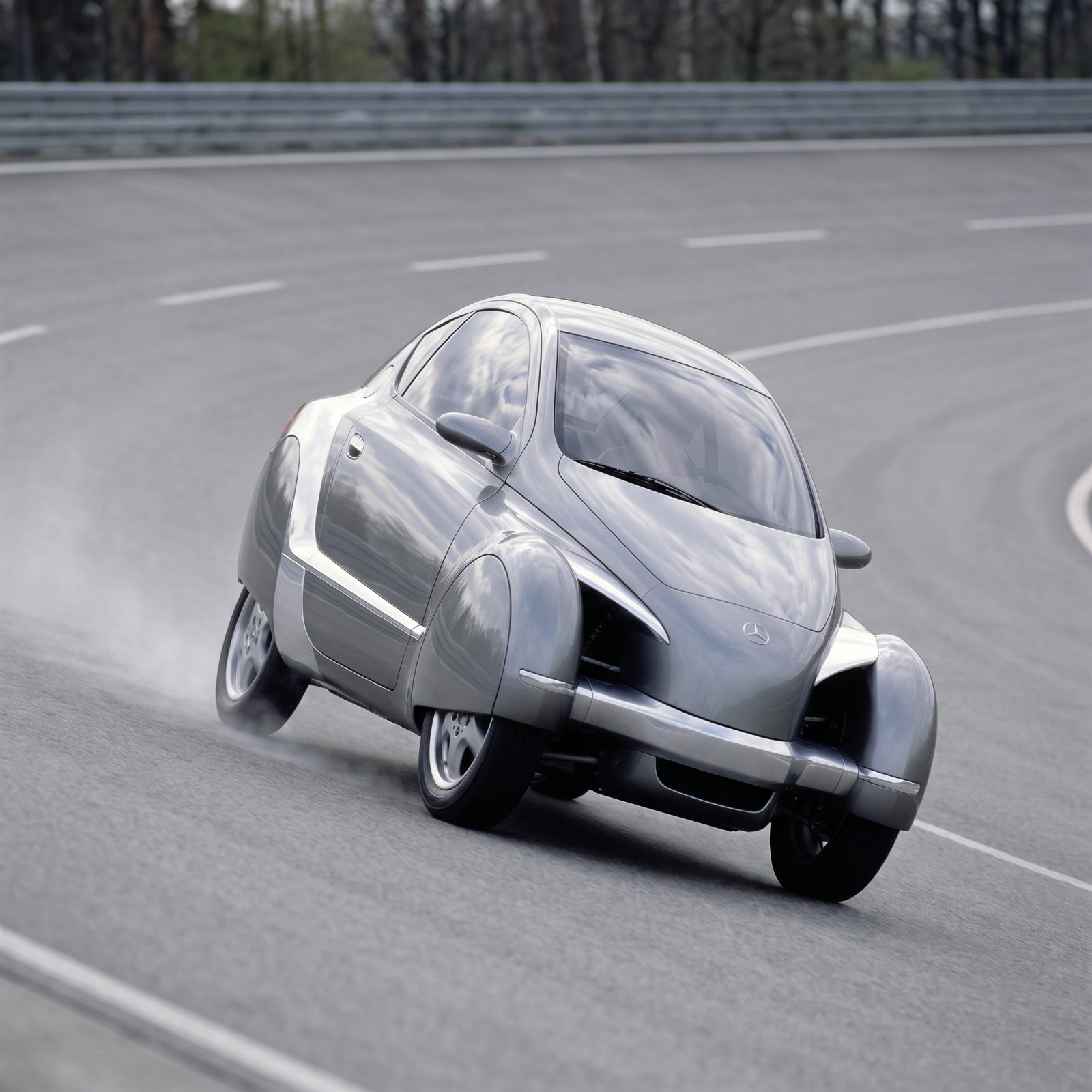
Lean into a corner on a bike and your body fights physics. The F 300, shown in 1997, did that fighting for you. Two wheels up front, a single wheel at the back, and a system that tilted the whole vehicle up to 30 degrees into a turn while the passengers stayed put inside an enclosed cockpit.
The point was serious. Mercedes wanted the fun and efficiency of a motorcycle with the weather protection of a car, and none of the terror. That tilting logic later fed into real production three-wheelers and a pile of stability research.
31. Jeep Hurricane: The Twin-V8 Beast That Could Spin in Its Own Footprint

Two 5.7-liter HEMI V8s, one at each end, about 670 horsepower crammed into a vehicle with Wrangler-style doors and a hull carved from aluminum like a boat. The Hurricane rolled out in 2005 as a four-wheel-steering demonstration that bordered on absurd.
And here’s the trick that stopped people cold. All four wheels could turn toward each other, letting the whole truck pivot in place. Zero turning radius. Crab-walk sideways out of a tight trail spot. Jeep was flexing its muscle to prove nobody could out-weird them off-road, and that same four-wheel-steer idea is standard on serious hardware now.
30. BMW GINA: The Sports Car Wrapped in Stretchy Fabric Instead of Steel
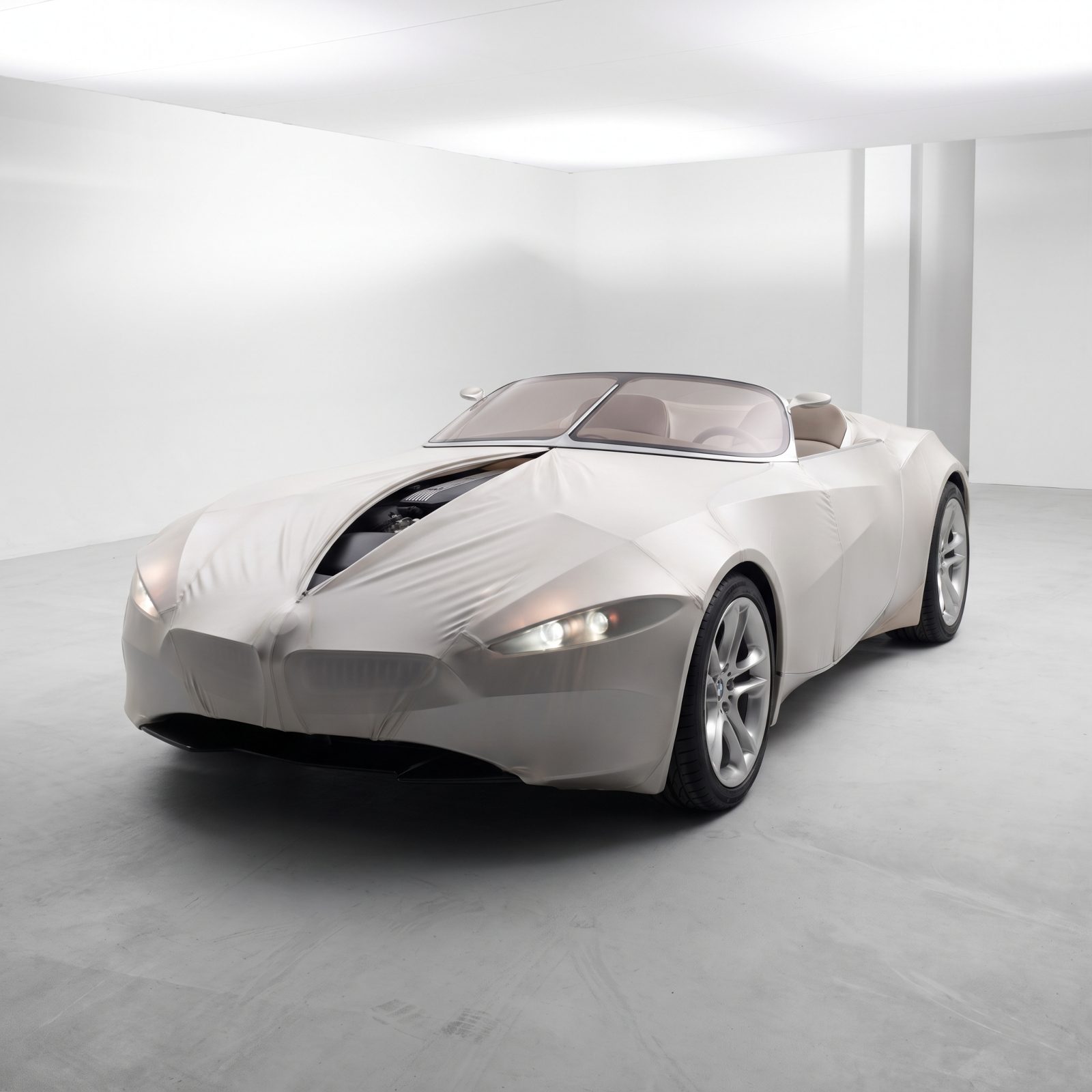
Imagine a car you could re-sculpt by stretching its skin. That was GINA, unveiled in 2008. Instead of painted metal panels, a single piece of water-resistant fabric stretched over a movable aluminum and carbon frame, and pulling the frame changed the shape underneath.
The hood split open down the middle to show the engine. The headlights hid beneath the skin and emerged when needed, like eyes opening under a bedsheet. Art-school provocation? Partly, sure. But it asked a real question about why cars need so many rigid parts, and it loosened up how BMW thought about surfaces and light for years afterward.
29. Toyota Kikai: The Car That Hung Its Own Guts on the Outside
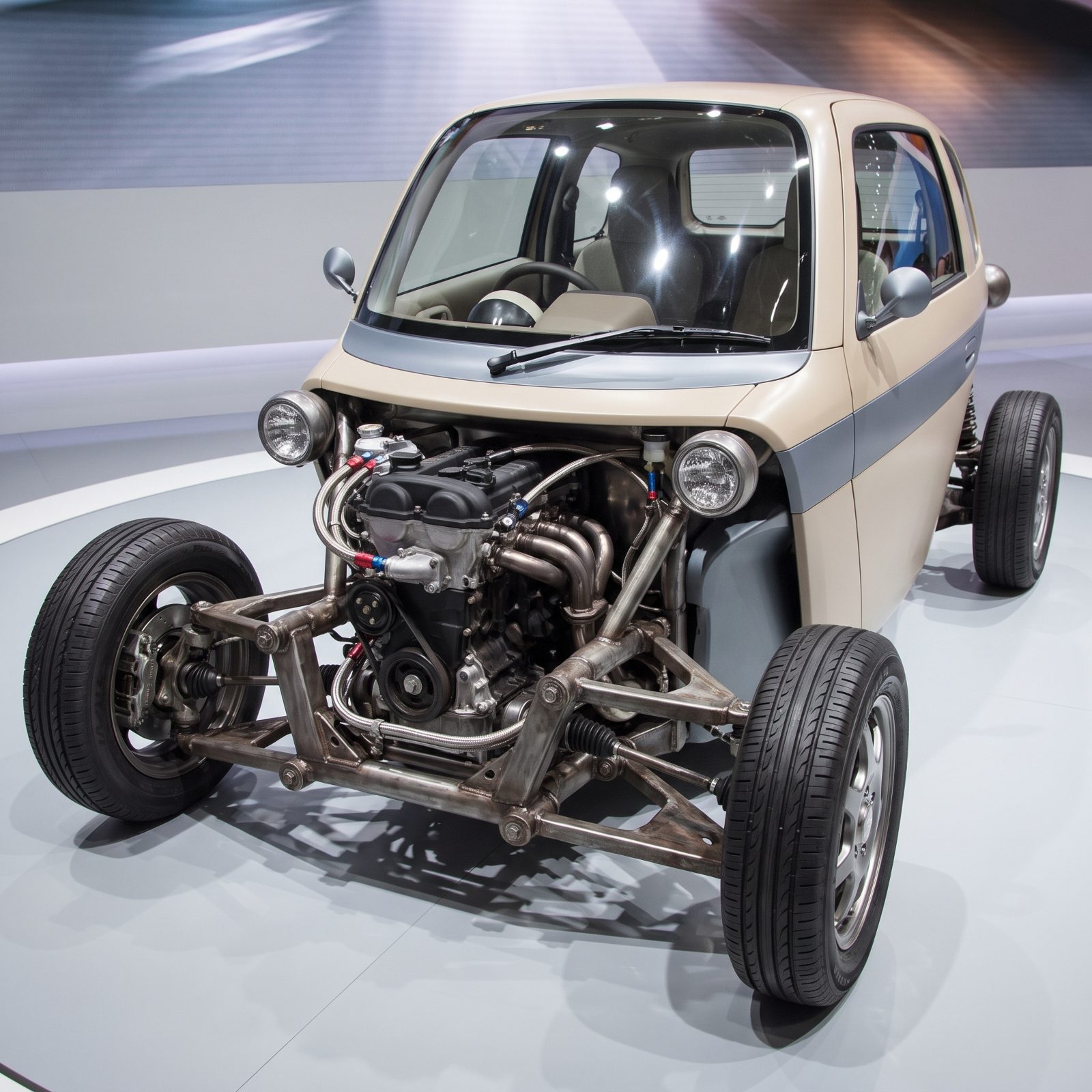
Most cars hide their mechanical parts. Shame, really. The Kikai, shown at the 2015 Tokyo show, did the opposite and put its engine, braided hoses, exhaust headers and welded suspension arms right out in the open where you could study them. You could even see the front wheels through little windows in the footwell.
Toyota’s whole argument was that cars had become too sealed off, too appliance-like, and that we’d lost any feel for the machinery hauling us around. So they built a love letter to the mechanical honesty of old motoring and dressed it up as a modern provocation.
28. Nissan Pivo: The Electric Egg Whose Cabin Spun a Full 360 Degrees
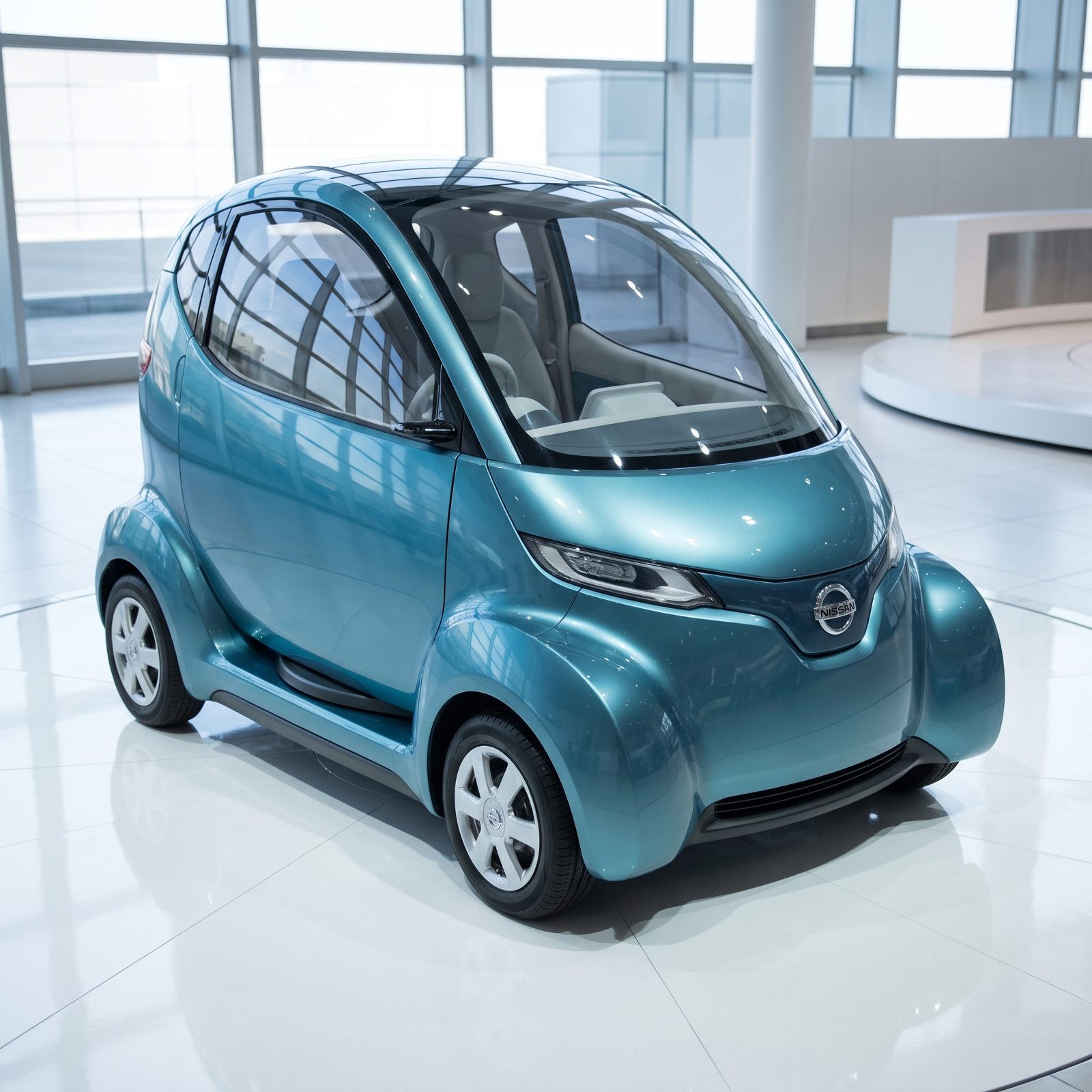
Reversing is the worst part of driving in the city. Nissan agreed, and in 2005 built the Pivo, a bubble-shaped electric pod whose entire cabin rotated a full 360 degrees on its chassis. No reverse gear needed. Pull into a spot, spin the cabin around, drive out nose-first.
The idea was so compelling Nissan built two more versions over the following years, adding a chirpy robotic companion and wheels that could turn 90 degrees to parallel park sideways. Impractical? Hopelessly so. But it treated the daily grind of city driving as a design problem worth solving, which almost nobody else bothered to do.
27. Citroën Karin: The Pyramid on Wheels With the Driver Sitting Dead Center
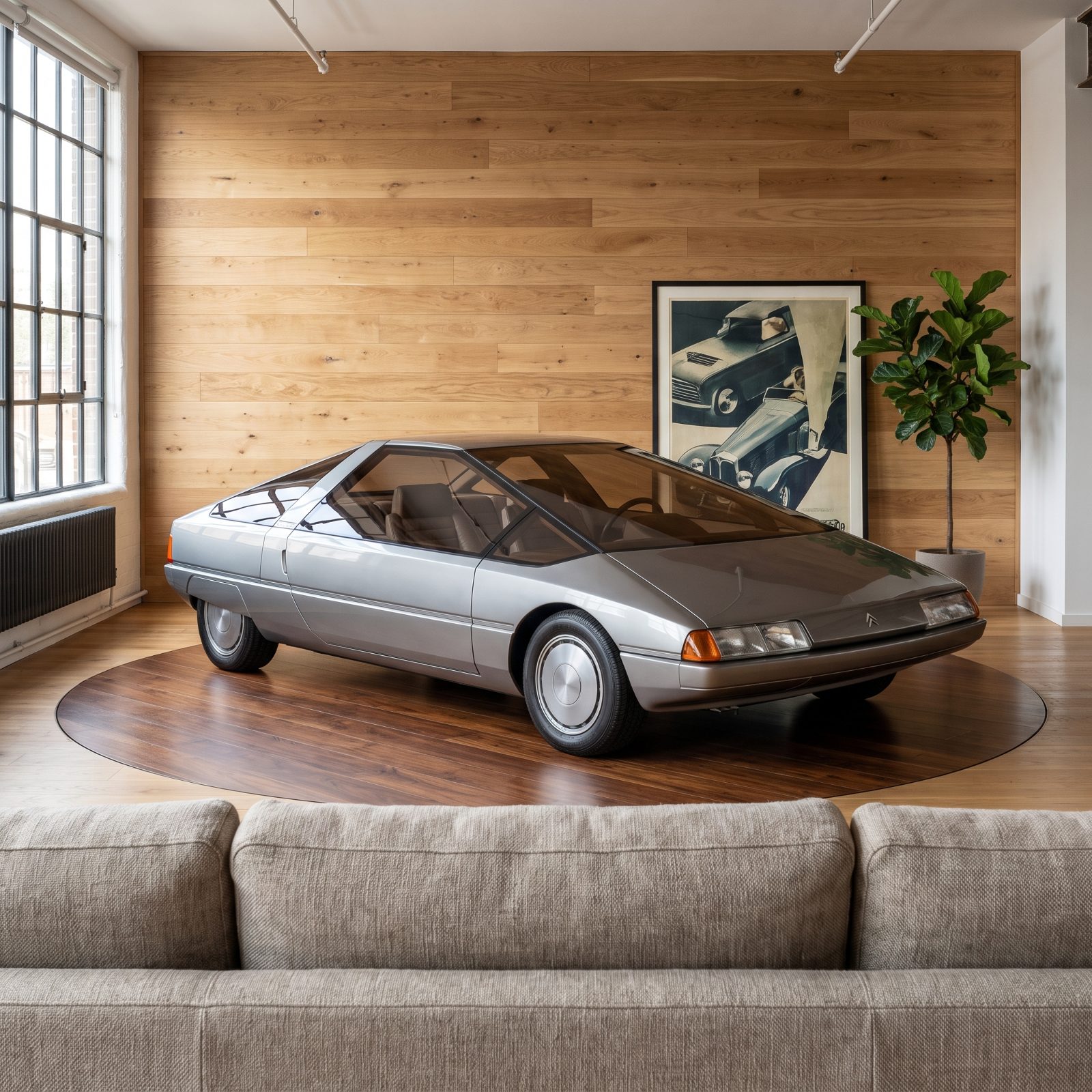
In 1980, Citroën built a car shaped like the tip of a pyramid. The Karin tapered up to an almost pointed roof, its glass raking in at angles that made it look like a piece of science-fiction set design that had wandered onto the show floor by mistake.
Three seats inside, arranged so the driver sat dead center with a passenger tucked on each side and slightly behind. Sound familiar? A famous British supercar made that layout legendary years later. The Karin got there first, as a wild thought experiment about how a cabin might be organized if you threw out every rule.
26. Honda Puyo: The Soft-Bodied Car That Glowed Through Its Gel Skin
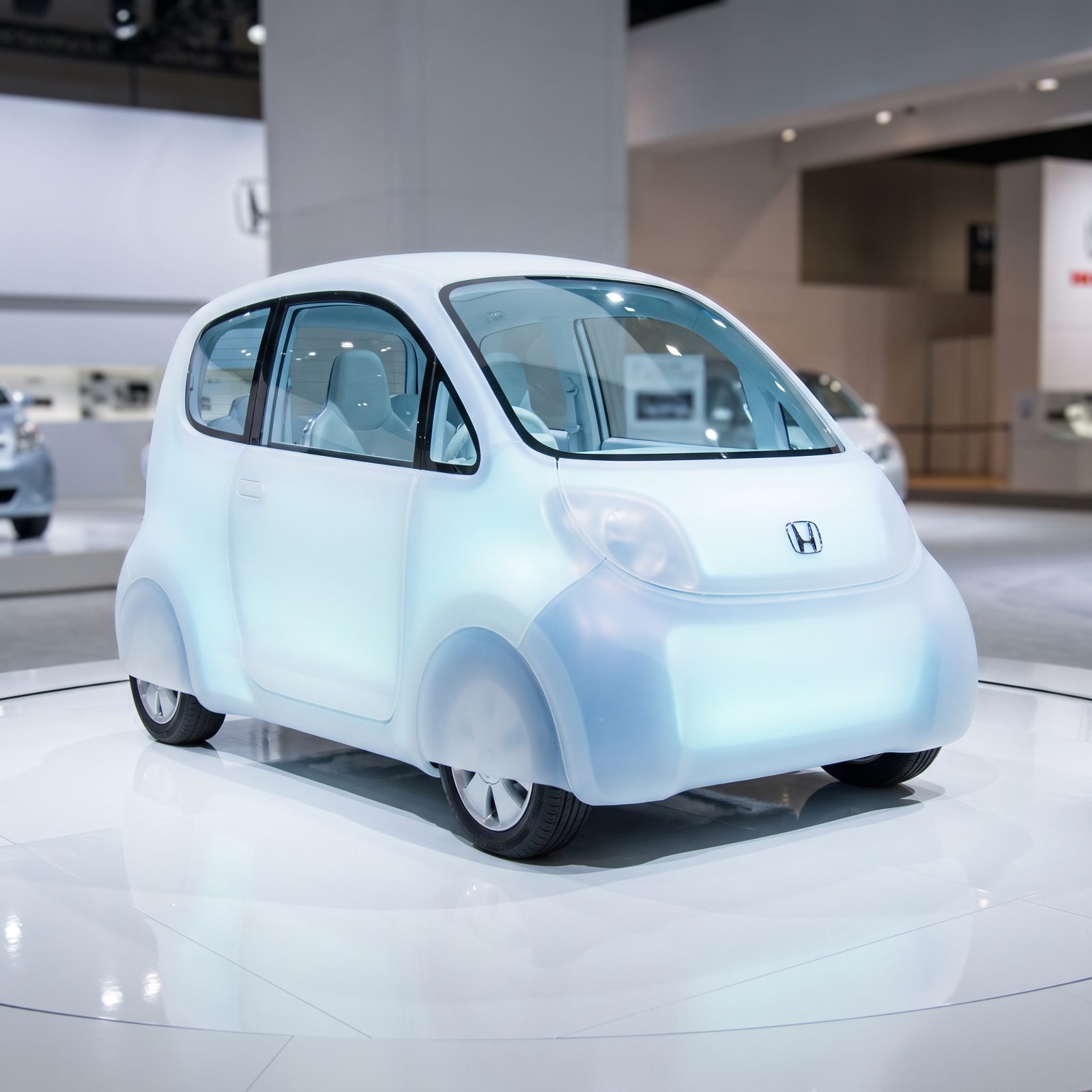
A car you could pat. Honda’s Puyo, from the 2007 Tokyo show, wore body panels of soft silicone gel that felt squishy to the touch and glowed with light from inside. The name comes from a Japanese word for that soft, bouncy feeling.
Honda’s thinking ran two ways here. A gentle, friendly surface might make small cars feel less intimidating in crowded cities, and a softer skin could be kinder to a pedestrian in a low-speed bump.
25. Toyota Fun-Vii: The Car Whose Whole Body Was One Giant Screen
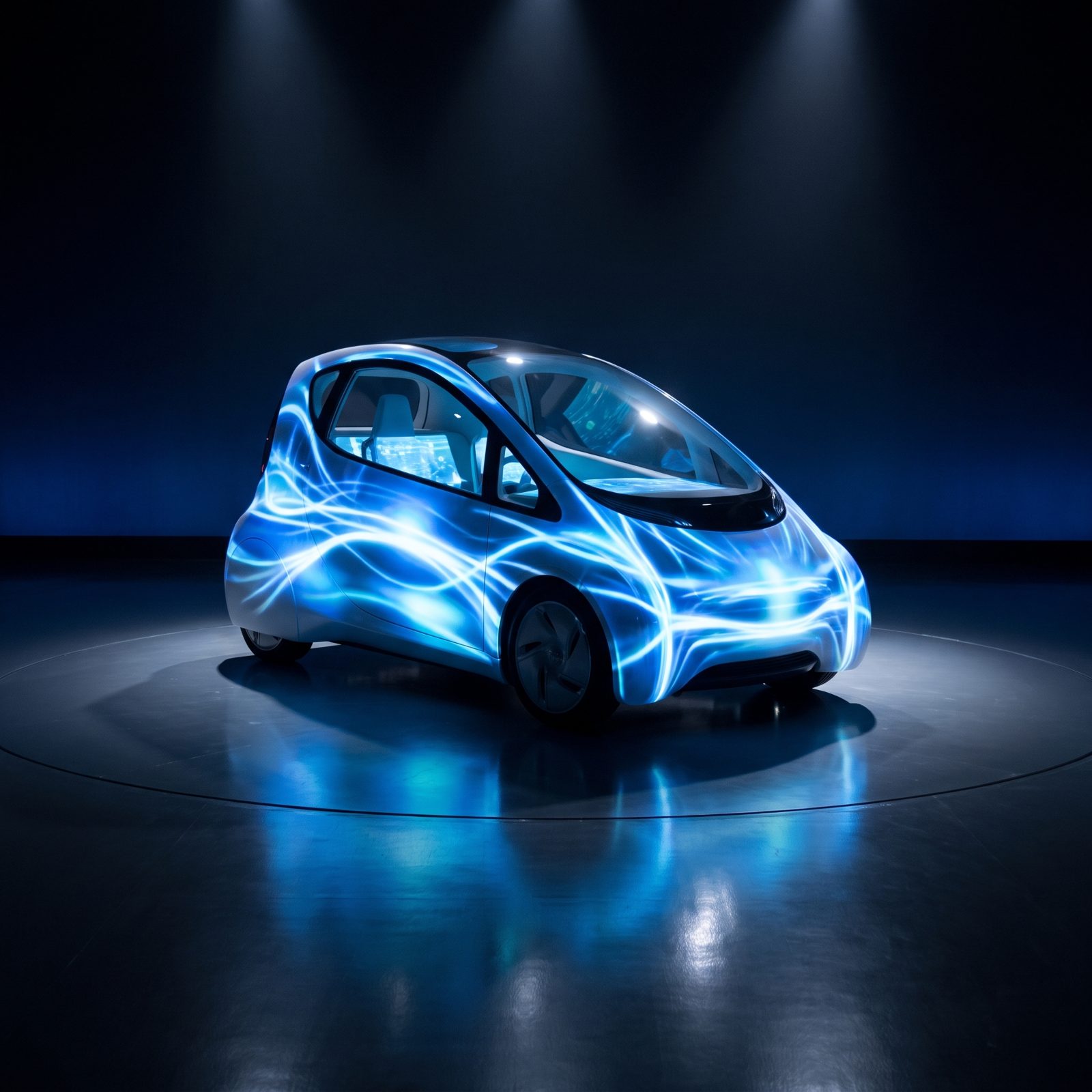
Change your car’s color with a phone. Not the paint. The whole thing. Toyota’s Fun-Vii, shown in 2011, covered its entire exterior and interior in programmable digital displays that could throw up any color, pattern, or message on command.
Toyota called it a “smartphone on wheels,” which sounded like marketing nonsense until you watched the body shift from solid white to swirling graphics in real time. The exterior could flash a greeting, display art, or help you pick it out of a packed parking lot. Most of that is still years from any showroom. But the notion of a car as a connected, customizable surface slid from fantasy to roadmap thanks to concepts like this one.
24. Audi AI:TRAIL Quattro: The Glass Off-Roader Lit by Flying Drones

Would you like to save this?
Ditch the headlights. Send up drones instead. The AI:TRAIL quattro, revealed in 2019, carried a set of small rotor-drones that could lift off the roof and fly ahead to light the trail, or hover overhead and wash the ground in light from above.
The rest of the vehicle was nearly all glass, wrapping the cabin so you could see the terrain in almost every direction. An electric off-roader built on the bet that an autonomous future frees the cabin to become a viewing platform.
23. Audi Skysphere: The Roadster That Physically Grew and Shrank Between Driving Modes
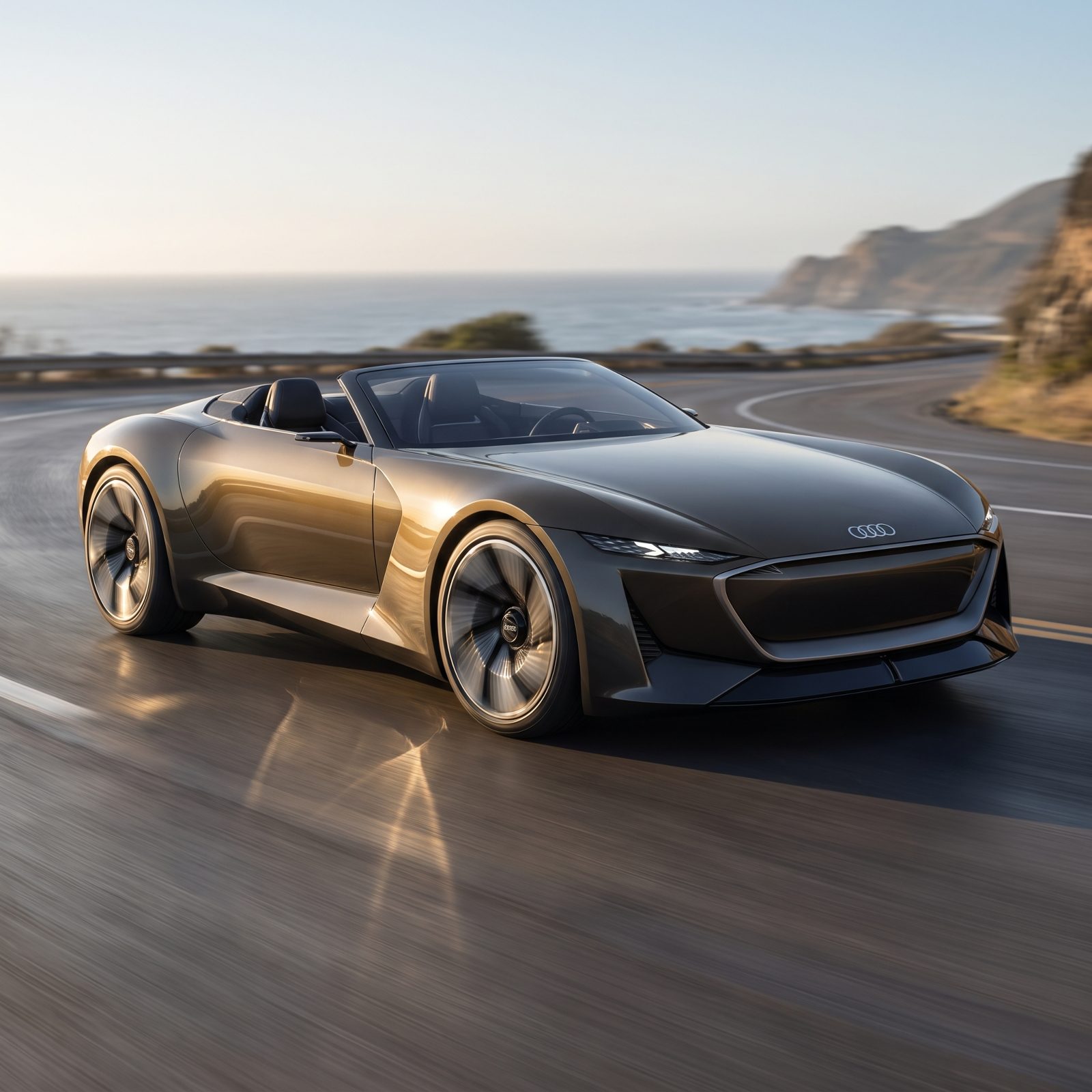
Cars have a fixed wheelbase. It’s one of those things you never think to question. The Audi Skysphere, shown in 2021, broke the rule and physically changed its own length by roughly 25 centimeters depending on how you wanted to drive.
Stretch it long for a relaxed, self-driving grand tourer. Shorten it for a tighter, sportier thing you steer yourself. The body panels and chassis actually slid to pull it off. Audi’s argument: one car could be two very different machines, and an electric platform hands designers freedom the old mechanical layouts never could.
22. Mercedes-Benz Vision AVTR: The Crab-Walking Car With Moving Body Scales
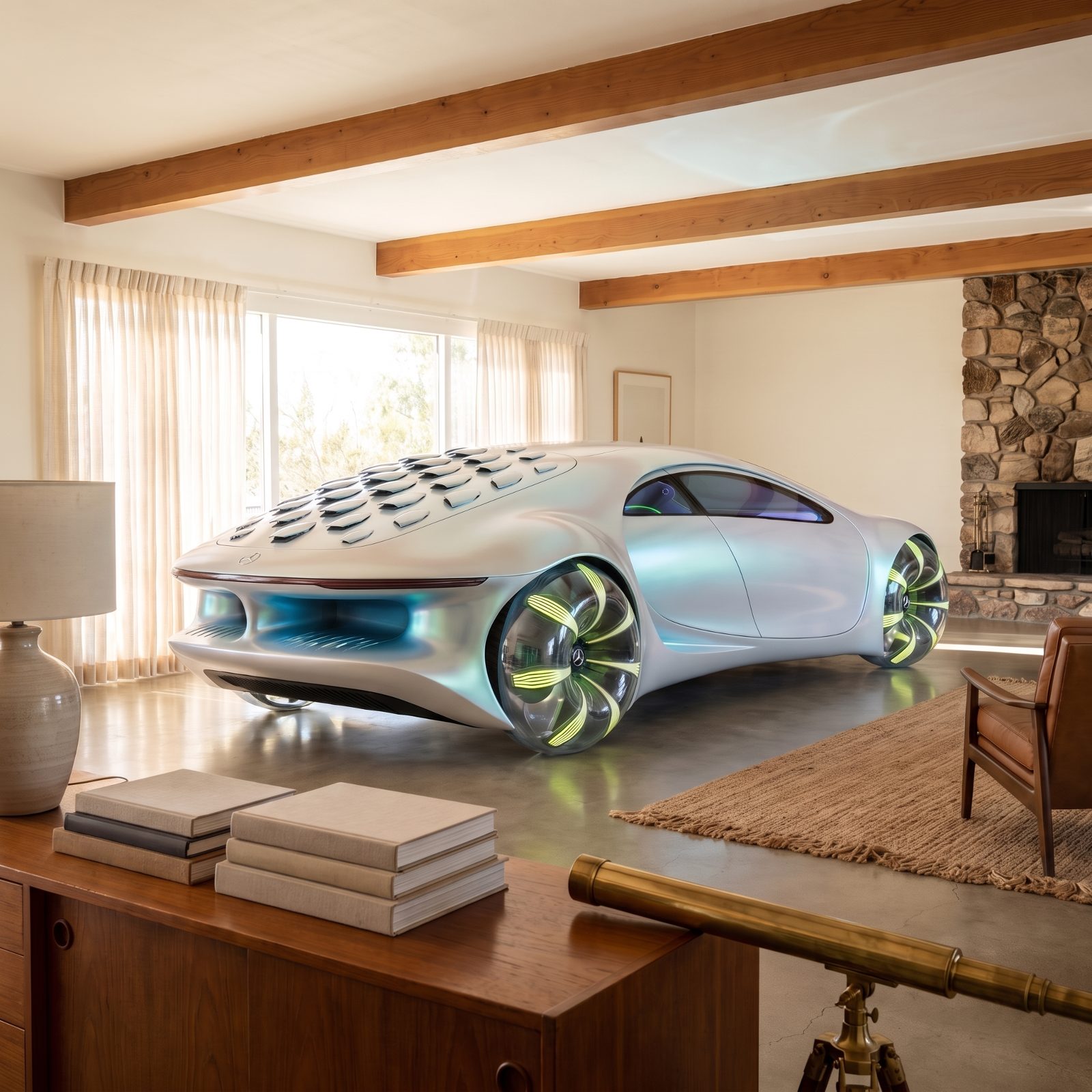
No steering wheel, and no front or rear in any sense a driver’s-ed instructor would recognize. The Vision AVTR, unveiled in 2020 and inspired by the film Avatar, drives diagonally. All four wheels swivel, so the whole car scuttles sideways like a crab easing into a parking spot.
Those flaps along its back aren’t decoration. They move, opening and closing like scales to communicate with the world outside. Nobody’s building this, and nobody ever planned to. It was Mercedes asking what a car owes its surroundings once it stops being just a machine.
21. Toyota Setsuna: The Working Roadster Built From Interlocking Wood Panels
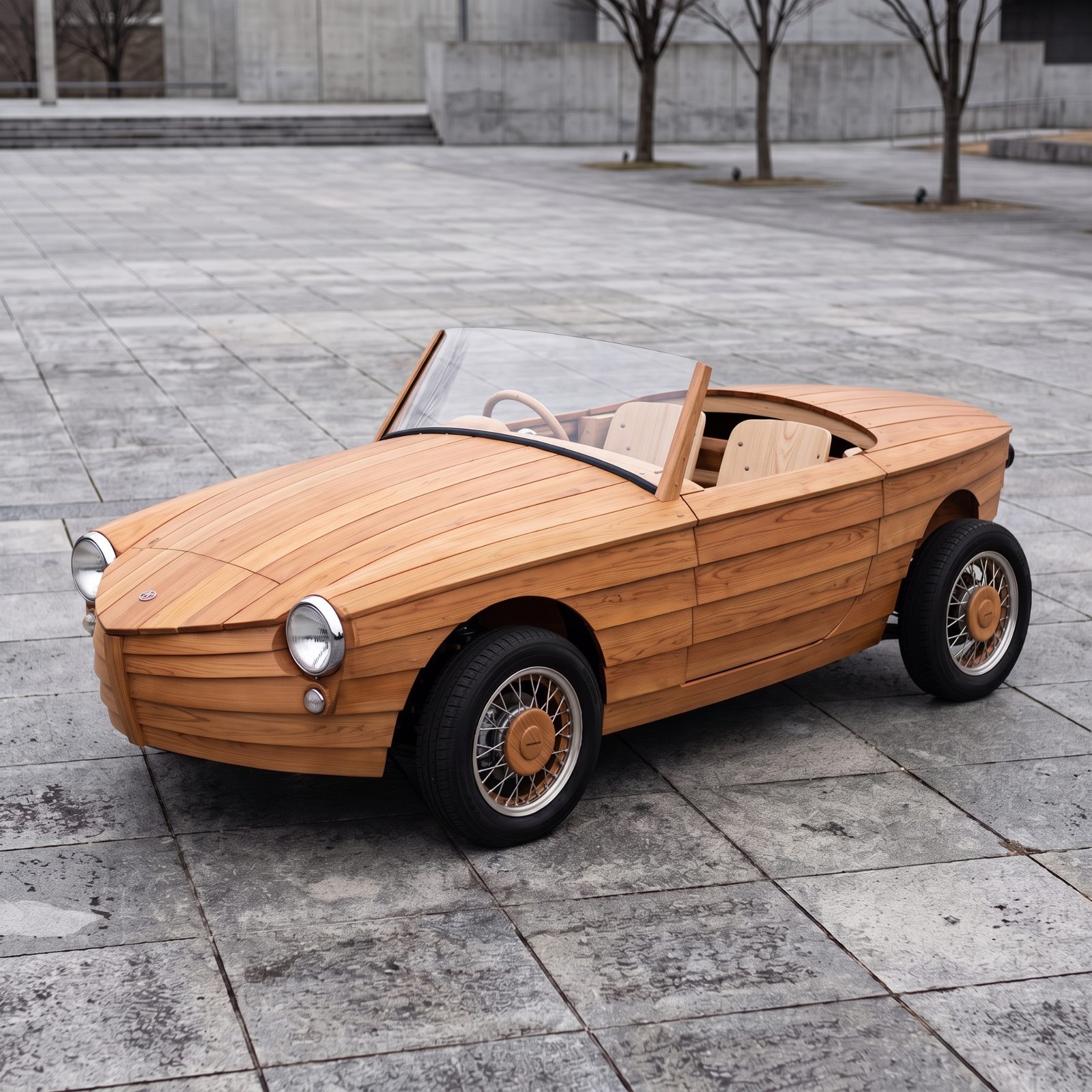
Toyota built a car you’d expect to find behind glass in a woodworking museum, then actually drove the thing. The Setsuna, shown in 2016 at Milan Design Week, is a working roadster made almost entirely of wood — Japanese cedar for the skin, birch for the frame, held together with traditional joinery instead of a single fastener.
The idea underneath is almost unbearably poetic. Wood ages. It darkens, it weathers, it keeps a quiet record of the years a family spends with a car. Toyota even fitted a meter built to tick off a full century. This was a car meant to become an heirloom instead of a trade-in.
20. Peugeot Onyx: The Copper-Clad Supercar With a Recycled-Newspaper Cabin
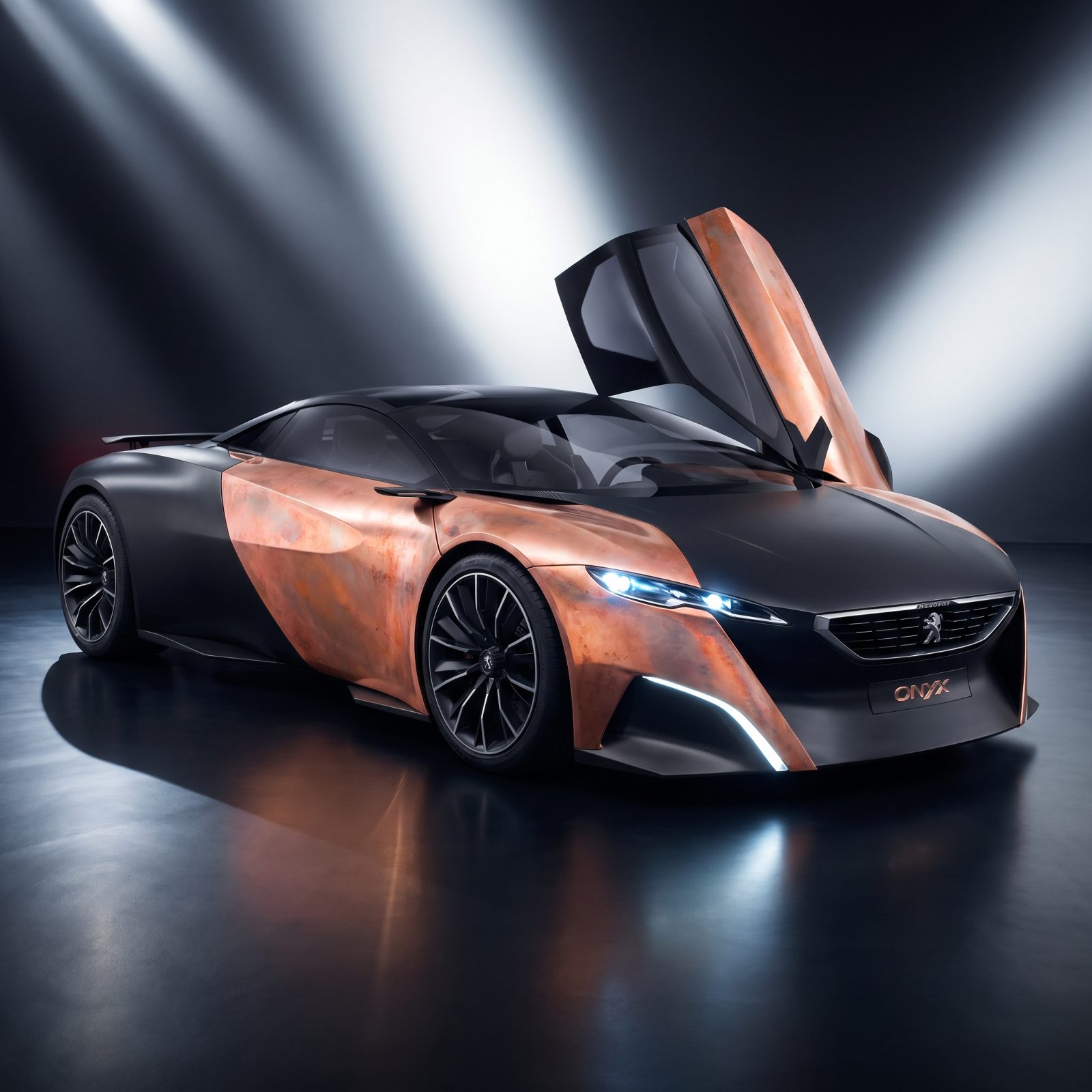
Peugeot clad half a supercar in pure copper and then left it bare. No clear coat, no protection, nothing. The Onyx, from 2012, was designed so its copper flanks would patina differently depending on how the car got handled and where it lived, so every example would age into something nobody else owned.
Inside, the strangeness kept going. The dashboard was formed from compressed recycled newspaper — a single sculpted felt-like material called Newspaper Wood. Raw copper and old headlines in a 680-horsepower hybrid. It made no sense, and it was wonderful.
19. Ford SYNus: The Tiny Urban Car Styled Like a Bank Vault
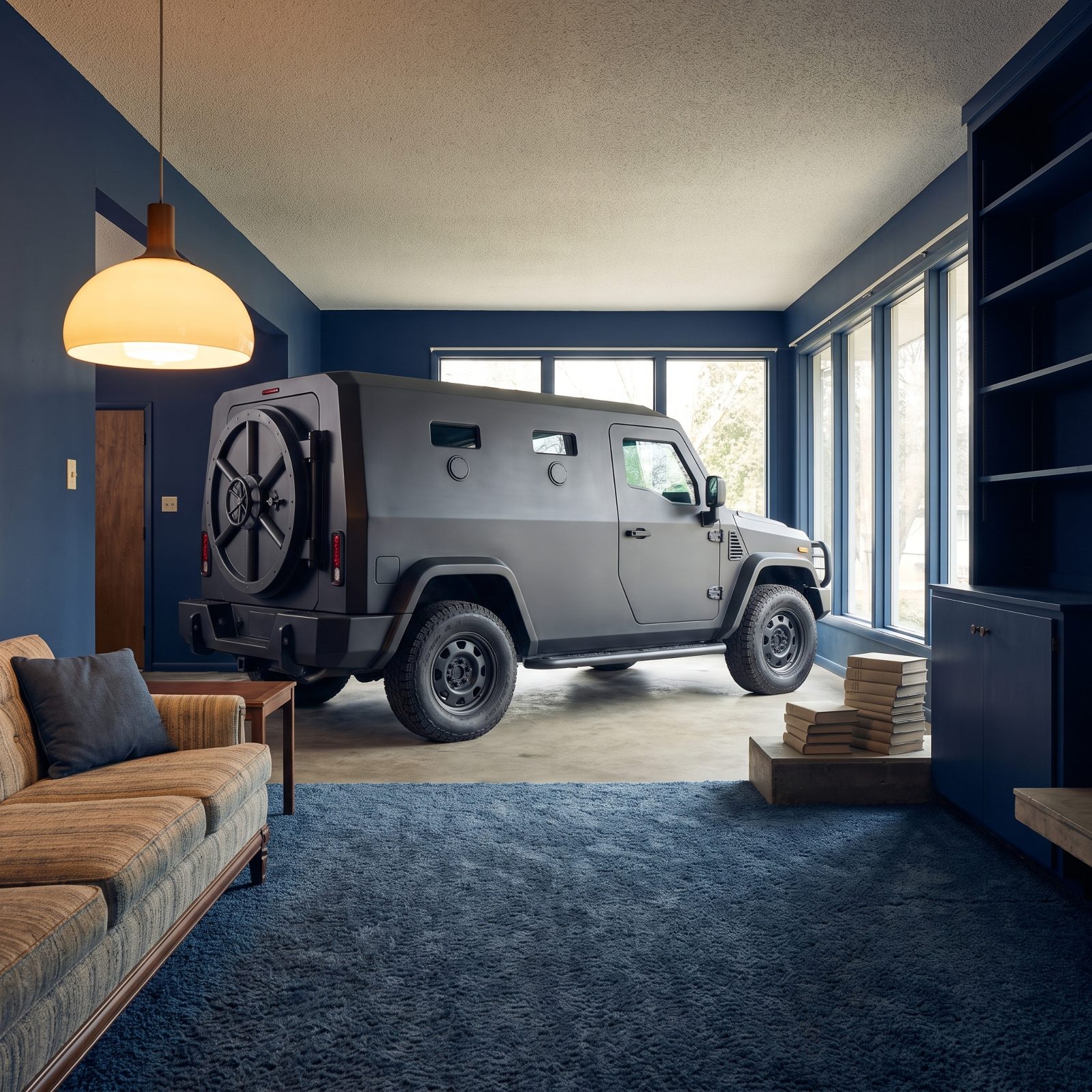
Ford designed a tiny city car to look like it could survive a heist. The SYNus, from 2005, was a boxy, armored-looking city car with a vault door bolted to the back, slit windows, and bodywork that growled keep out. Urban paranoia, turned into transportation.
Park it and shutters dropped over the glass. Open that rear vault and you found a lounge with flat screens — a safe little room you carried through a hostile city. Nobody ordered one. But it named a real anxiety years before anyone else dared to.
18. Ford 021C: The Minimalist City Car With a Trunk That Opened Like a Drawer
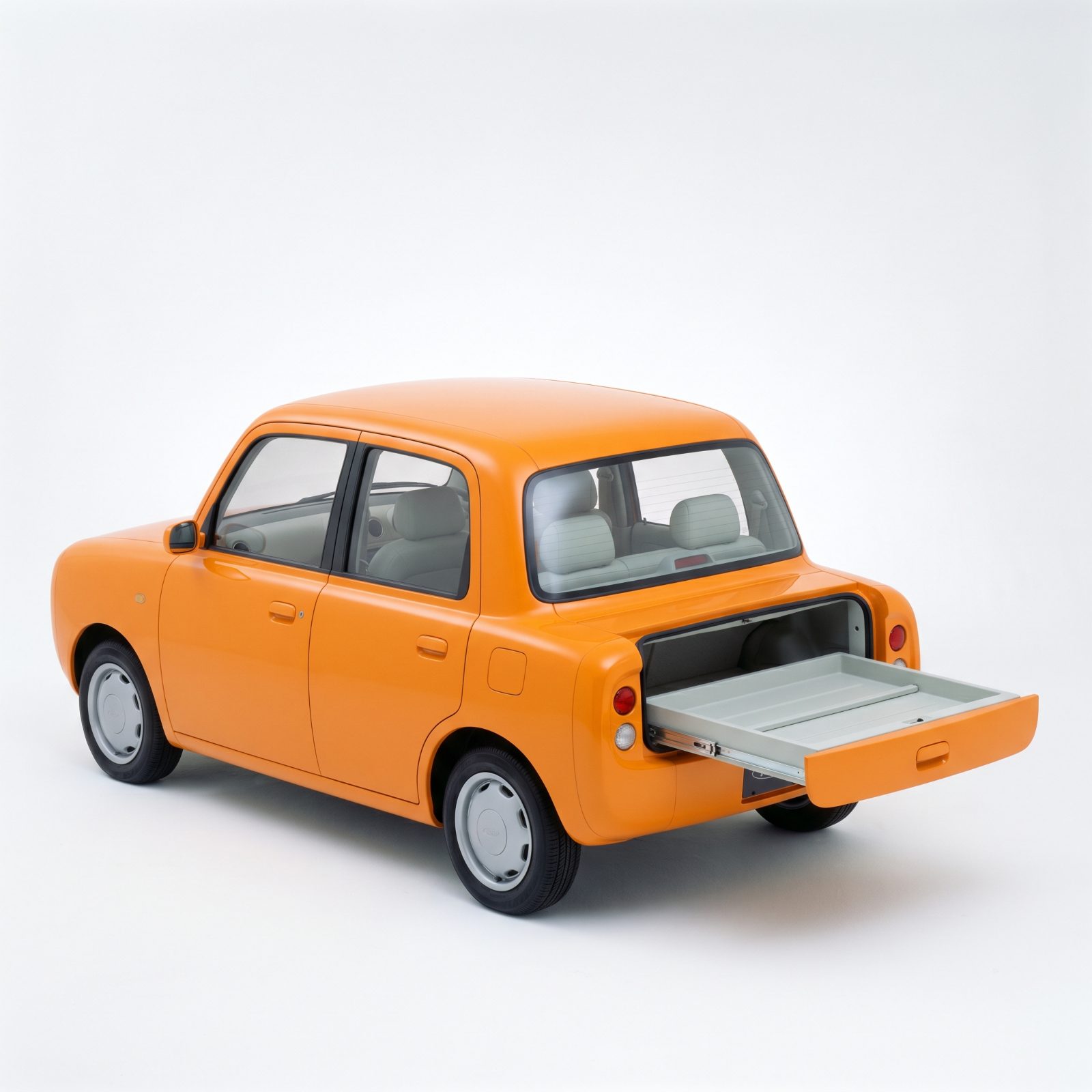
Designed by a furniture and product guy rather than a car stylist, the 021C from 1999 treated an automobile like a well-made object. Bright orange, rounded, honest, with four conventional front-hinged doors and a slim black B-pillar standing between them.
The best part was the trunk. It didn’t lift. It slid straight out like a dresser drawer, so you loaded groceries at waist height without hauling anything over a lip. Simple. Obvious, once you saw it — which is exactly why almost nobody in the whole industry had thought of it first.
17. Porsche Panamericana: The Open-Roof 911 Study With Zippered Fabric Panels
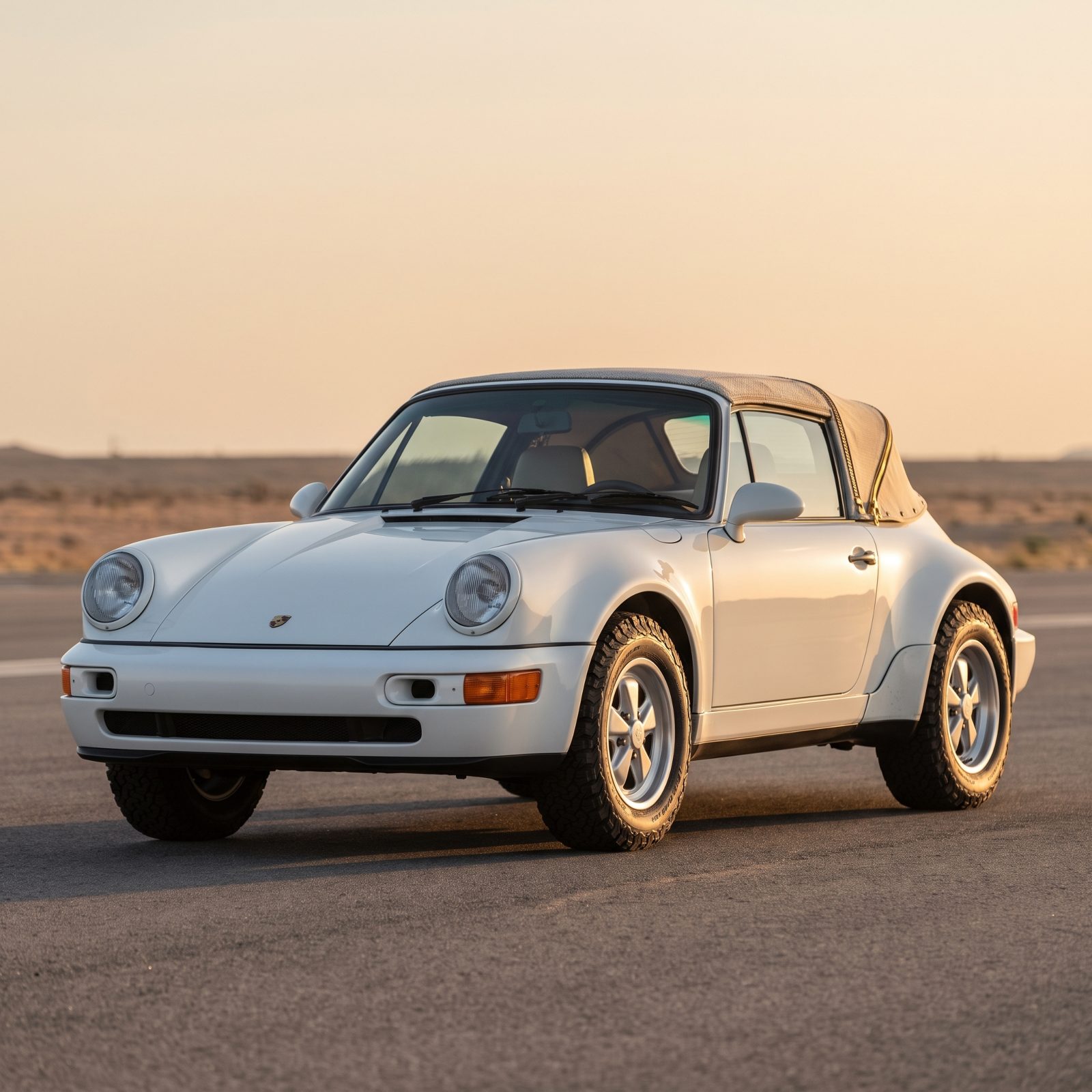
Built in 1989 as a 80th-birthday gift for Ferry Porsche, the Panamericana rode on a 964 Carrera 4 but looked like a 911 that had run off to join a desert rally. Flared arches, rear wheels left out in the open, a cabin you could peel back to the sky.
The clever part lived in the roof. A removable fabric top zipped onto the body, letting you reconfigure the car between coupe, targa, and open roadster. That modular thinking fed straight into the production targa and roadster ideas that followed. A birthday present that quietly set a direction for years.
16. Chrysler Portofino: The Lamborghini-Based Sedan With Four Scissor Doors
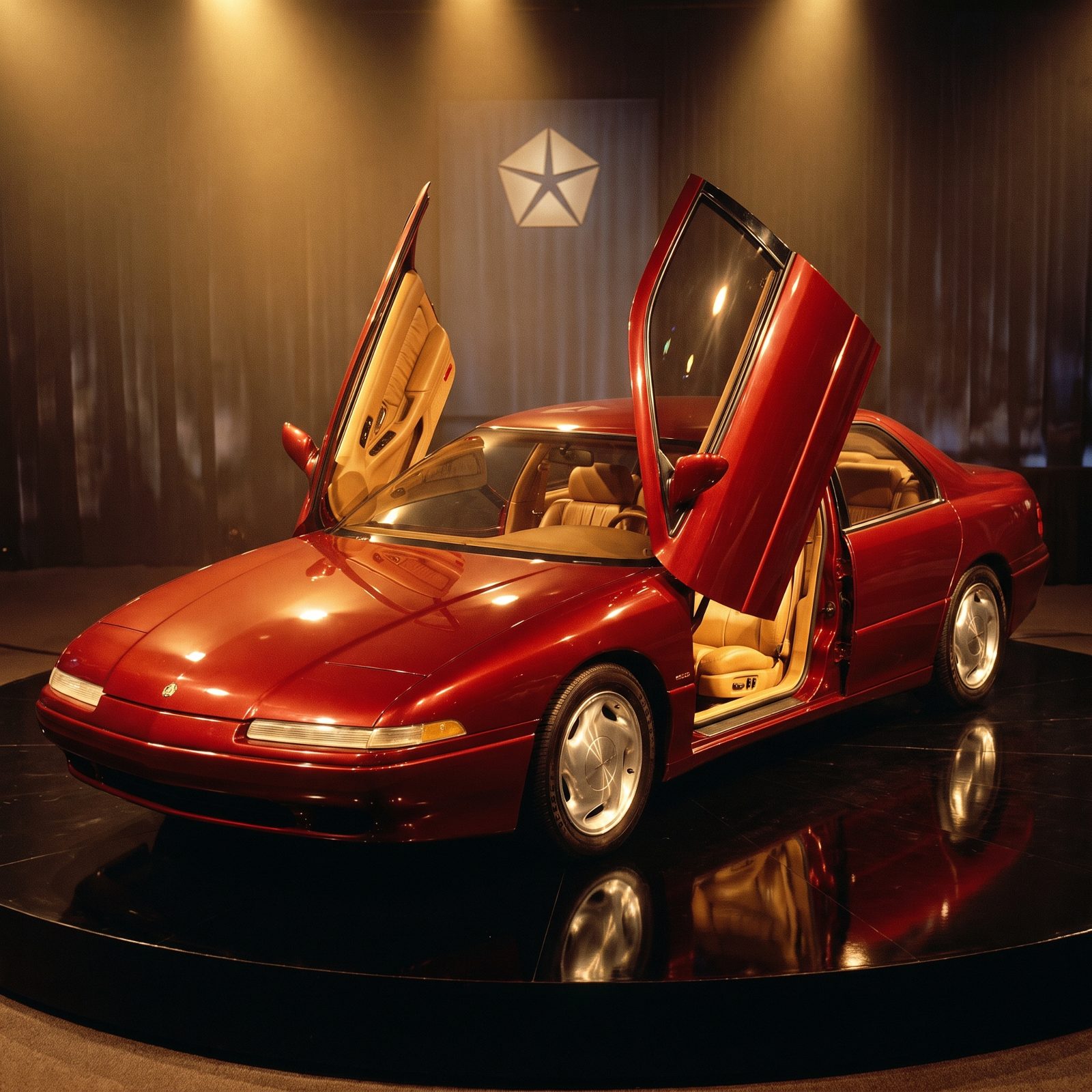
When Chrysler bought a stake in Lamborghini, the oddest thing it did was build a family sedan on supercar bones. The Portofino, from 1987, put a Lamborghini Jalpa V8 under a long front hood and dressed it as a four-door, with all four doors opening in scissor fashion.
A scissor-door four-seater is a packaging nightmare, which is part of why you’ve never driven one. But that smooth, long-hooded shape pointed dead at the look Chrysler would make famous across its 1990s LH sedans. The weird one previewed the normal ones.
15. Mercedes-Benz F 200 Imagination: The Luxury Coupe Controlled by Joysticks
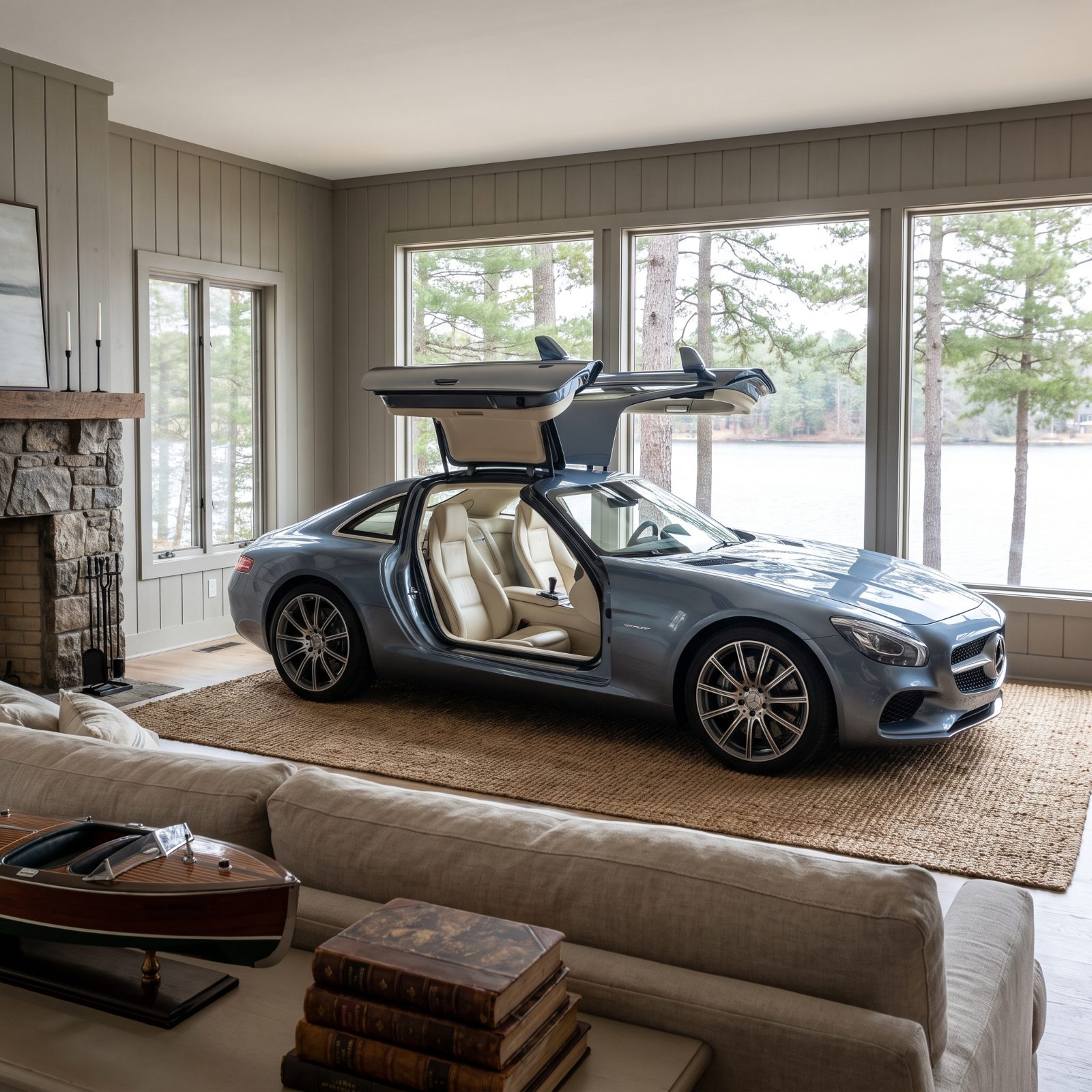
No steering wheel. No pedals. The F 200 Imagination, shown in 1997, swapped the whole business of driving for two small joysticks — one in the door, one on the console — either of which could steer, brake, and accelerate. Hand the controls across to your passenger without ever stopping, at least in theory.
It sounded like science fiction, and partly it was. But the real cargo was the tech packed around the gimmick: drive-by-wire, active body control, keyless go, cameras standing in for mirrors. Most of that quietly turned up in Mercedes showrooms over the following decade. The joysticks stayed in the lab where they belonged.
14. Chrysler Atlantic: The Art Deco Coupe Powered by Two Joined Neon Engines
Would you like to save this?
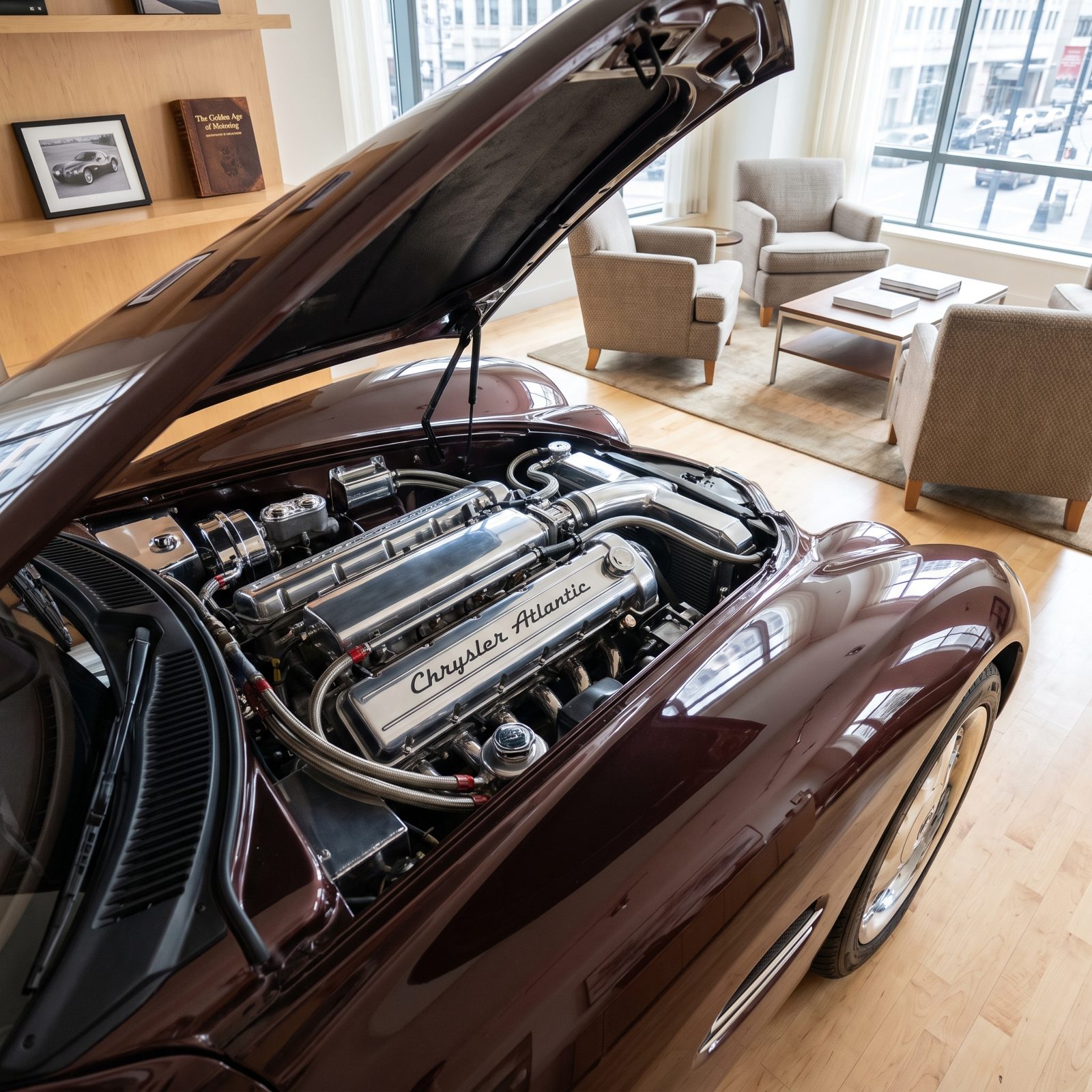
Chrysler reached back to pre-war French coachbuilding and built itself a dream. The Atlantic, from 1995, was a long dark burgundy coupe with Art Deco curves lifted straight from the Bugatti Type 57SC Atlantic — pontoon fenders, a tall grille, chrome absolutely everywhere.
Under that endless hood sat the oddest engine trick on this list. Two inline-four Neon engines, joined end to end into a single straight-eight. A humble economy-car motor, doubled, breathing life into something that looked like it cost a fortune. Cheap parts, aristocratic result. Pure Chrysler showmanship.
13. Volkswagen XL Sport: The Featherweight Coupe Powered by a Ducati V-Twin
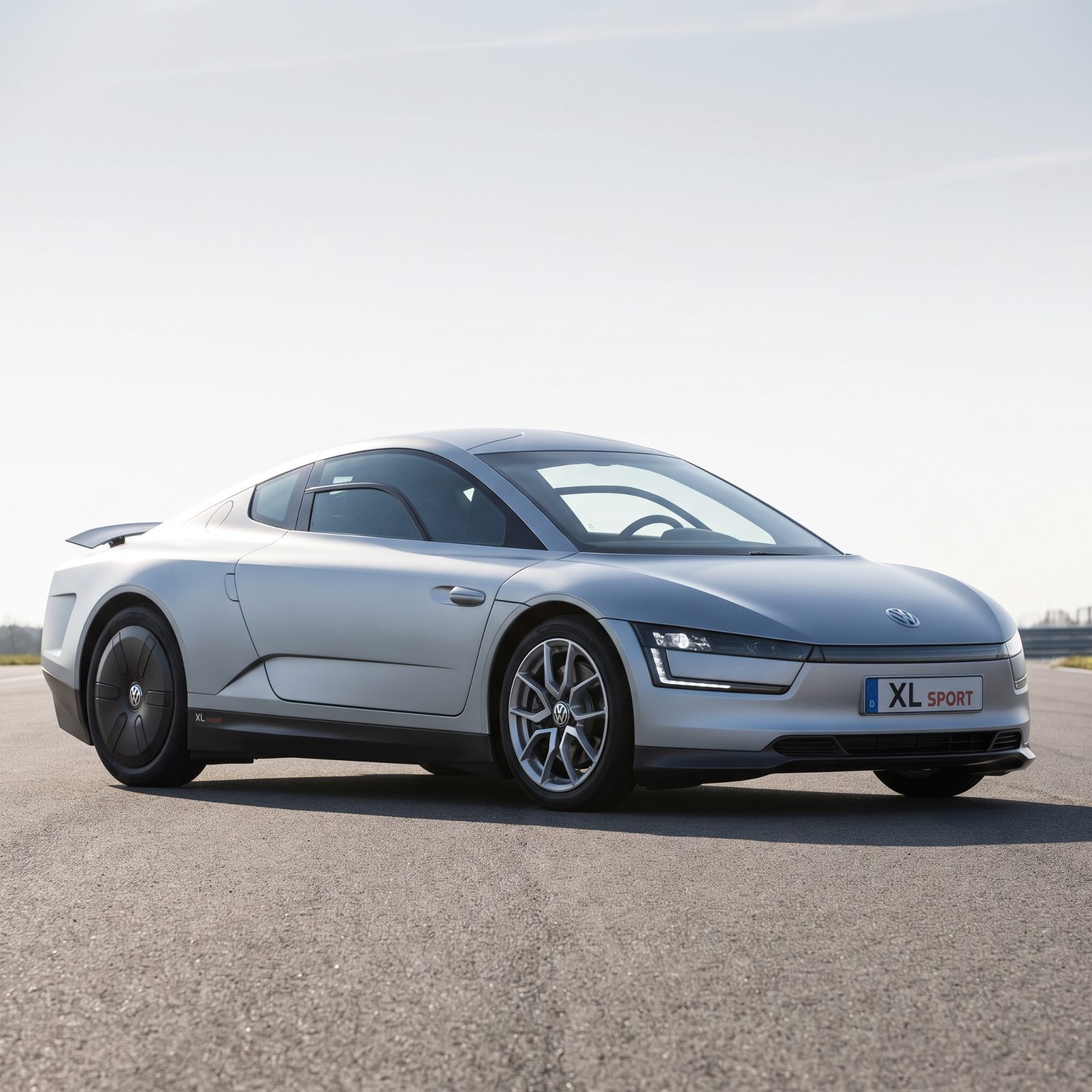
Volkswagen grabbed a motorcycle engine and built a car around it. The XL Sport, from 2014, borrowed the V-twin from a Ducati 1199 Superleggera and dropped it into a carbon-bodied teardrop that weighed next to nothing.
It grew out of the XL1, VW’s radical ultra-efficient commuter, then chucked efficiency overboard in favor of speed. The lesson stuck anyway. A tiny bike motor in a car that barely registers on a scale will out-think a heavy brute with a big engine every single time. Physics doesn’t care how many cylinders you brought to the fight.
12. Mazda Furai: The Rotary Race-Car Concept Shaped Like a Lick of Flame
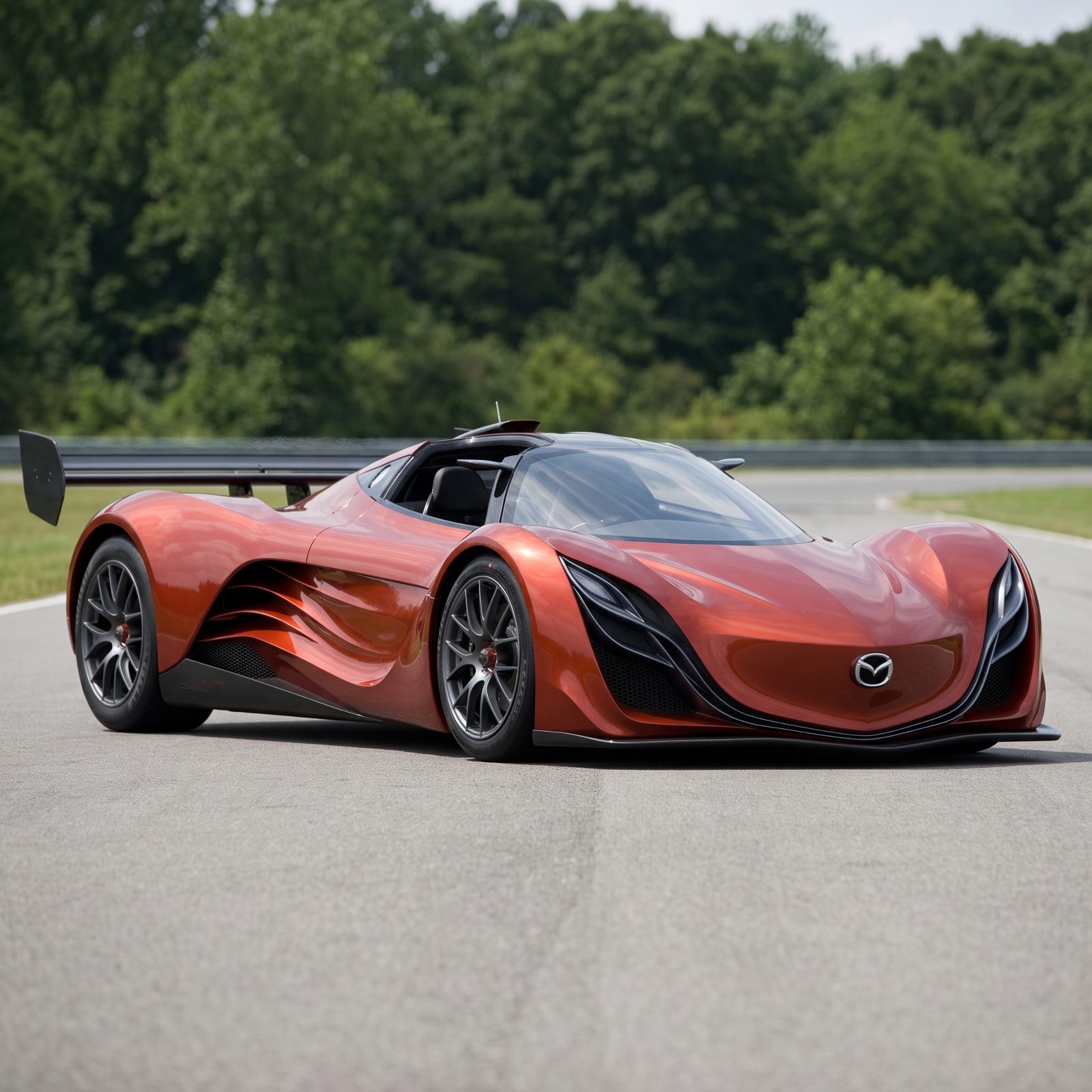
The name means “sound of the wind” in Japanese, and the body looks like someone froze a flame mid-flicker. Underneath that orange skin sat a three-rotor engine running on ethanol — the last real hurrah for Mazda’s spinning-triangle obsession before the company set rotaries aside.
What made the Furai strange was its honesty. No show-stand ornament here. It was built on a real Courage LMP race chassis and actually ran at Laguna Seca, and those flowing surfaces weren’t decoration — they were airflow made visible.
Then there’s the sad part. The only running example burned to the ground during a magazine test in 2008. A flame-shaped car that ended as flames. Nobody planned the irony.
11. GT by Citroën: The PlayStation Supercar That Clawed Its Way Into the Real World
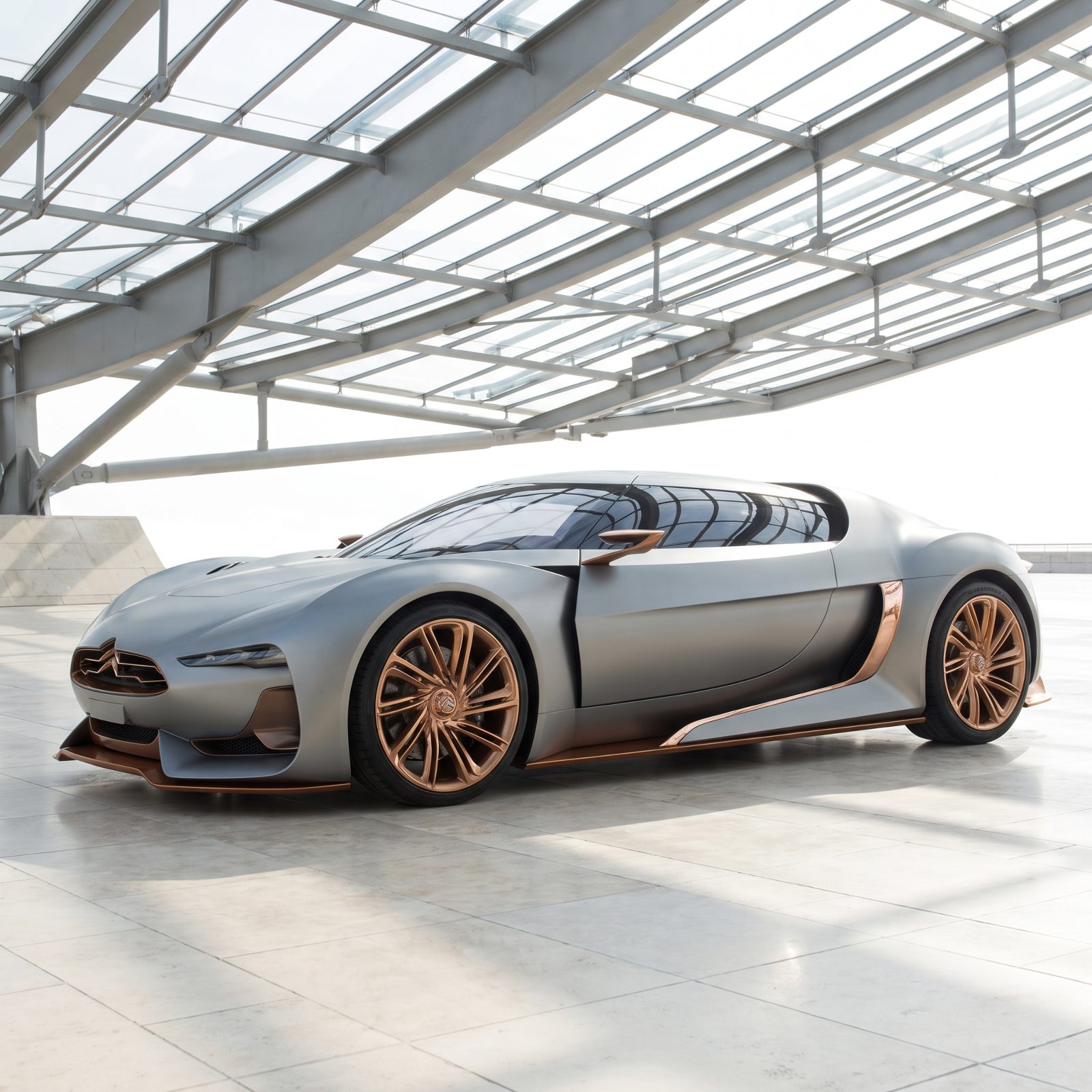
This one was born inside a video game. Citroën designed it for Gran Turismo 5, where it existed only as polygons you could drive on a screen — and then the company did something nobody expected and built four physical running examples.
The surfaces look liquid, almost poured rather than pressed. Its party trick was a matte silver-grey body that soaks up light rather than reflecting it, set off by copper wheels and lower trim.
It mattered because it smudged the wall between virtual and real design. A whole generation of car fans first fell for a car they could never touch. Citroën let a few of them touch it anyway.
10. Lamborghini Egoista: The Single-Seat Supercar Sealed Under a Fighter-Jet Canopy
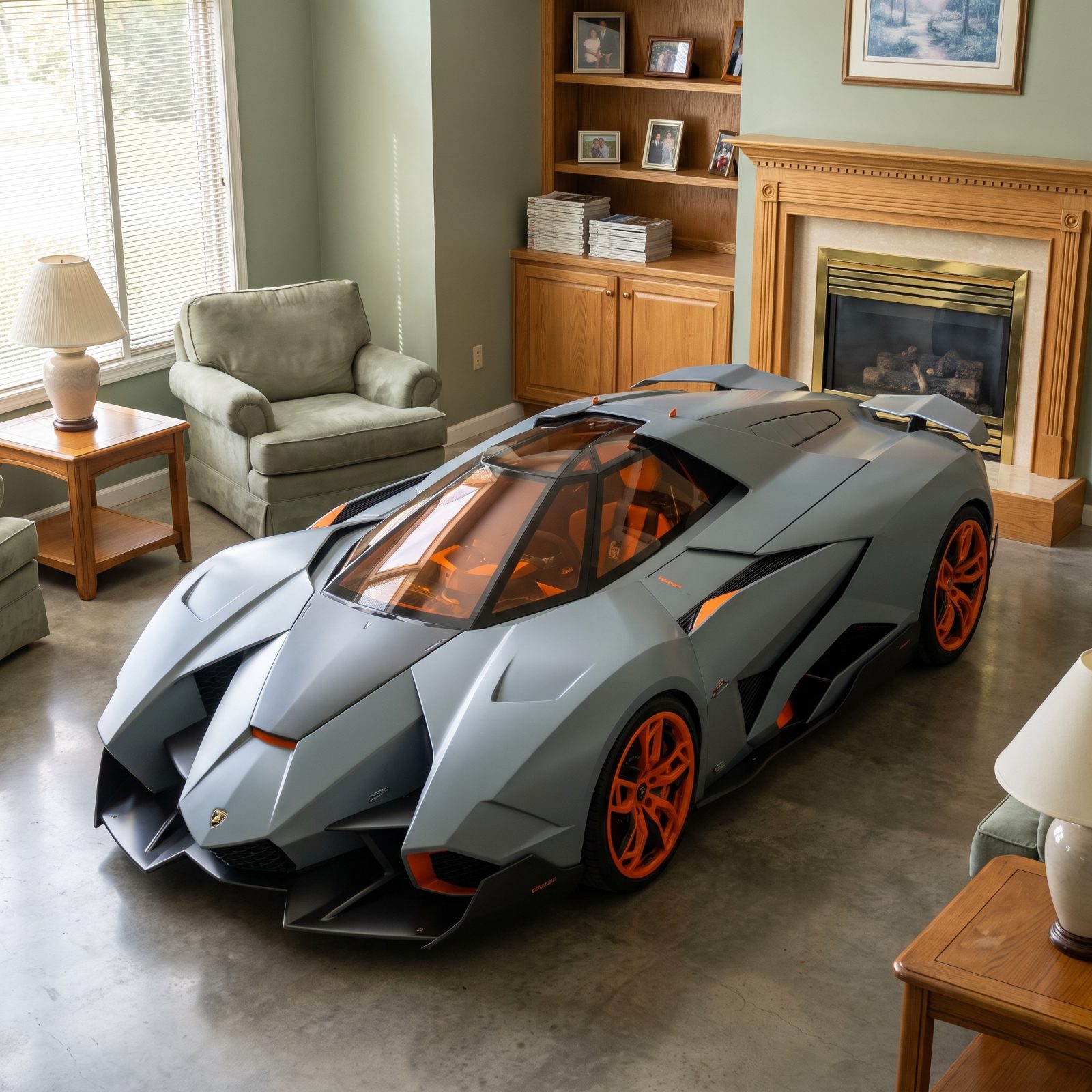
Lamborghini built this for its 50th birthday and gave it exactly one seat. The name translates to “selfish,” which tells you the whole story.
You don’t open a door. You lift an entire canopy, like climbing out of a jet after a sortie, and the driver sits dead center, strapped into a cockpit designed around one person and nobody else.
The styling borrowed from attack helicopters rather than other cars — aggressive strakes, matte anthracite skin, a sense that it might be armed.
It matters because it pushed the idea of a driver’s car to an absurd, honest extreme. One person, one engine, zero compromise for a passenger who was never invited.
9. Plymouth XNR: The Lopsided Roadster With a Tailfin on One Side Only
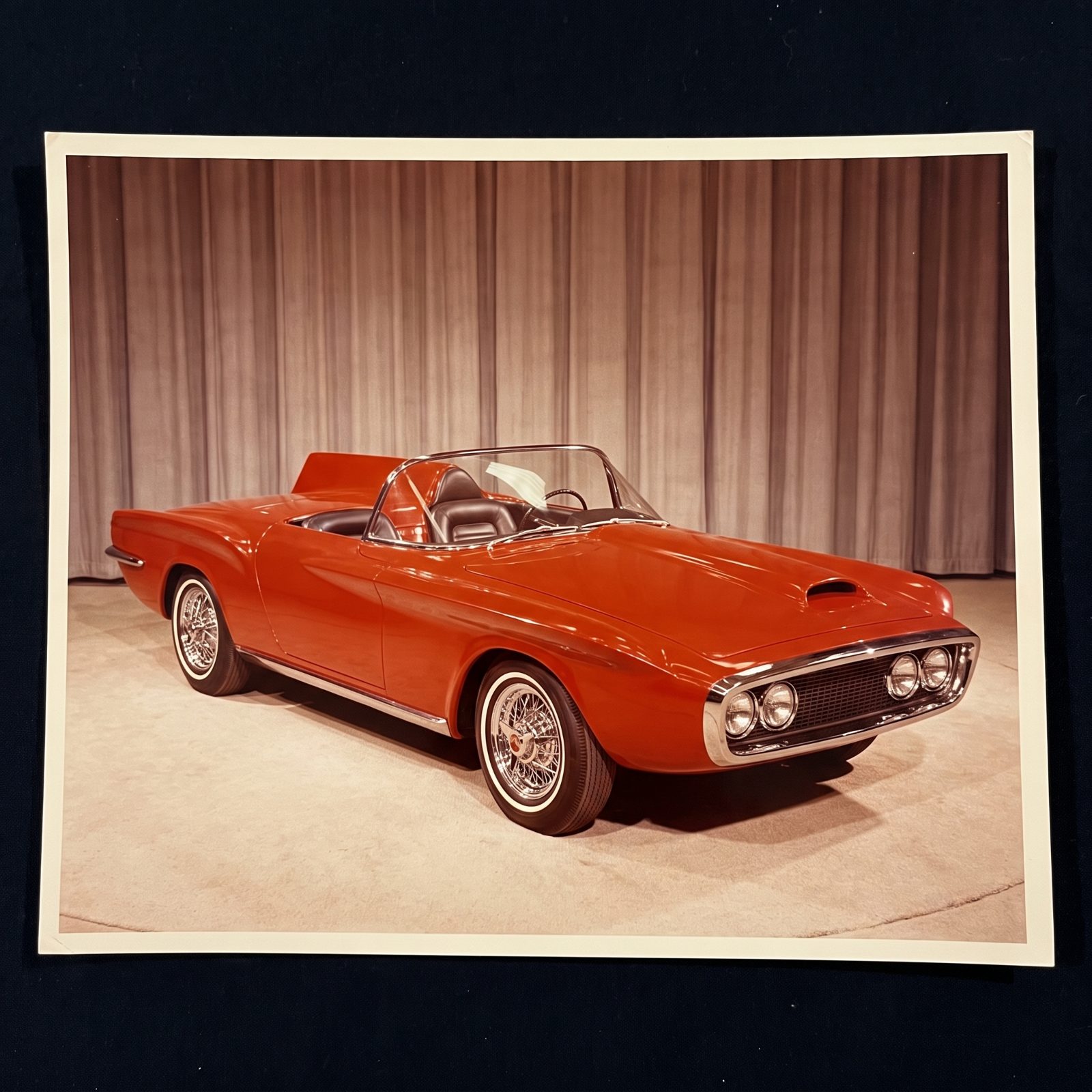
Symmetry is a rule almost every car obeys without thinking. The XNR broke it on purpose.
Built in 1960 on a humble Valiant platform, it carried a hood bulge and a sweeping tailfin that ran down the driver’s side only, so from the passenger side it looked like a calmer, different car entirely. The asymmetry traced the line of the engine and the driver, as if the sheet metal had been shaped around whoever mattered.
And then there’s the history, which is wilder than the shape. The one surviving car passed through the hands of the Shah of Iran and later a Lebanese collector, survived the civil war hidden away, and only resurfaced decades later. A lopsided roadster with a survival story to match.
8. Lancia Stratos Zero: The Wedge So Low You Climbed In Through the Windshield
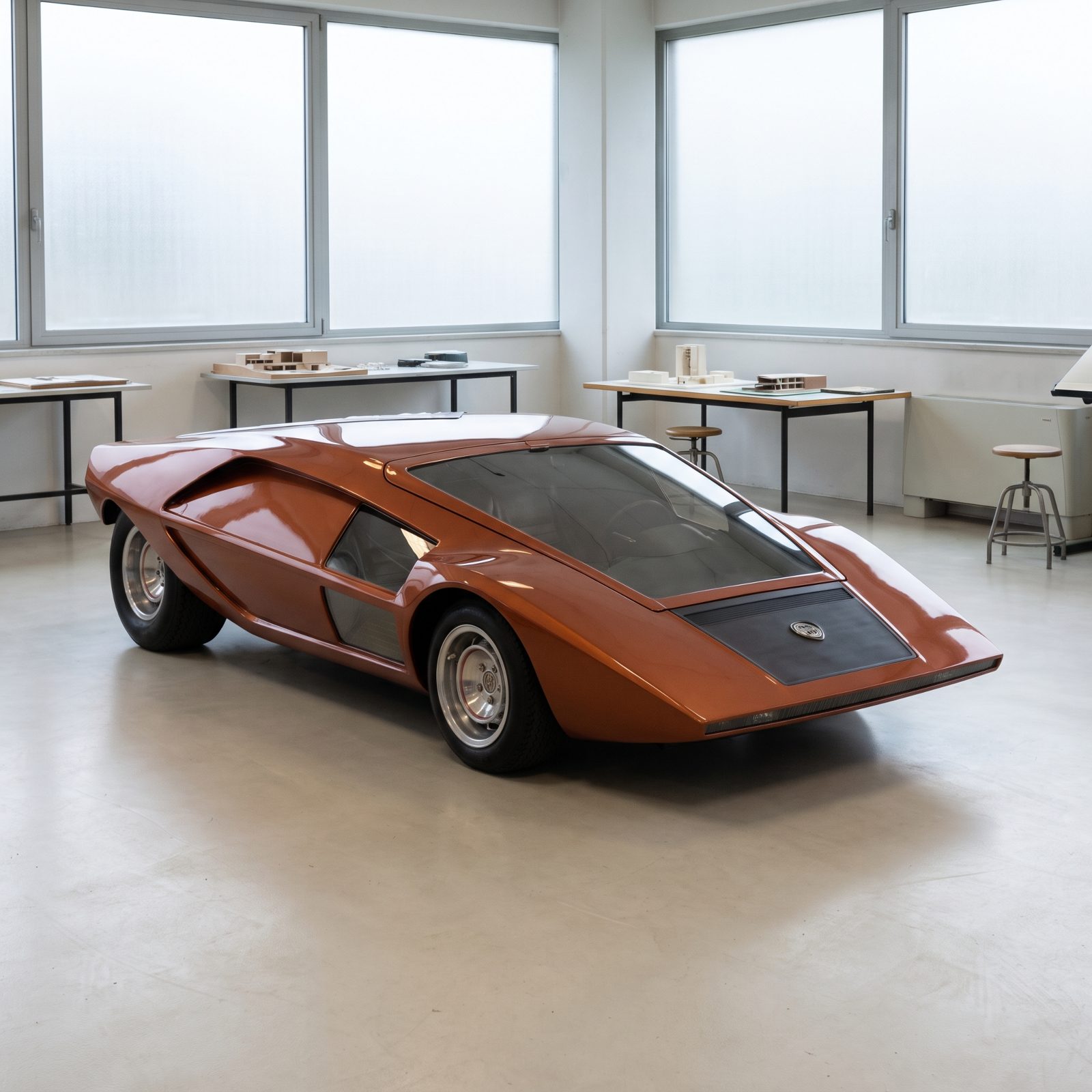
Thirty-three inches tall. That’s the whole headline. The 1970 Stratos Zero sat so flat that a conventional door made no sense, so the designers hinged the windshield itself — you lifted the front glass and stepped down into the car over the nose.
The wedge shape here wasn’t a styling flourish. It was a manifesto. This single running concept argued that the future of the sports car was a doorstop, and the industry spent the next decade agreeing.
You didn’t get into the Stratos Zero so much as put it on like a boot.
It also seeded the name and the attitude for the Lancia Stratos rally car that went on to dominate the sport. A show car that actually fathered a legend.
7. Ferrari 512 S Modulo: The UFO That Half-Swallowed Its Own Wheels
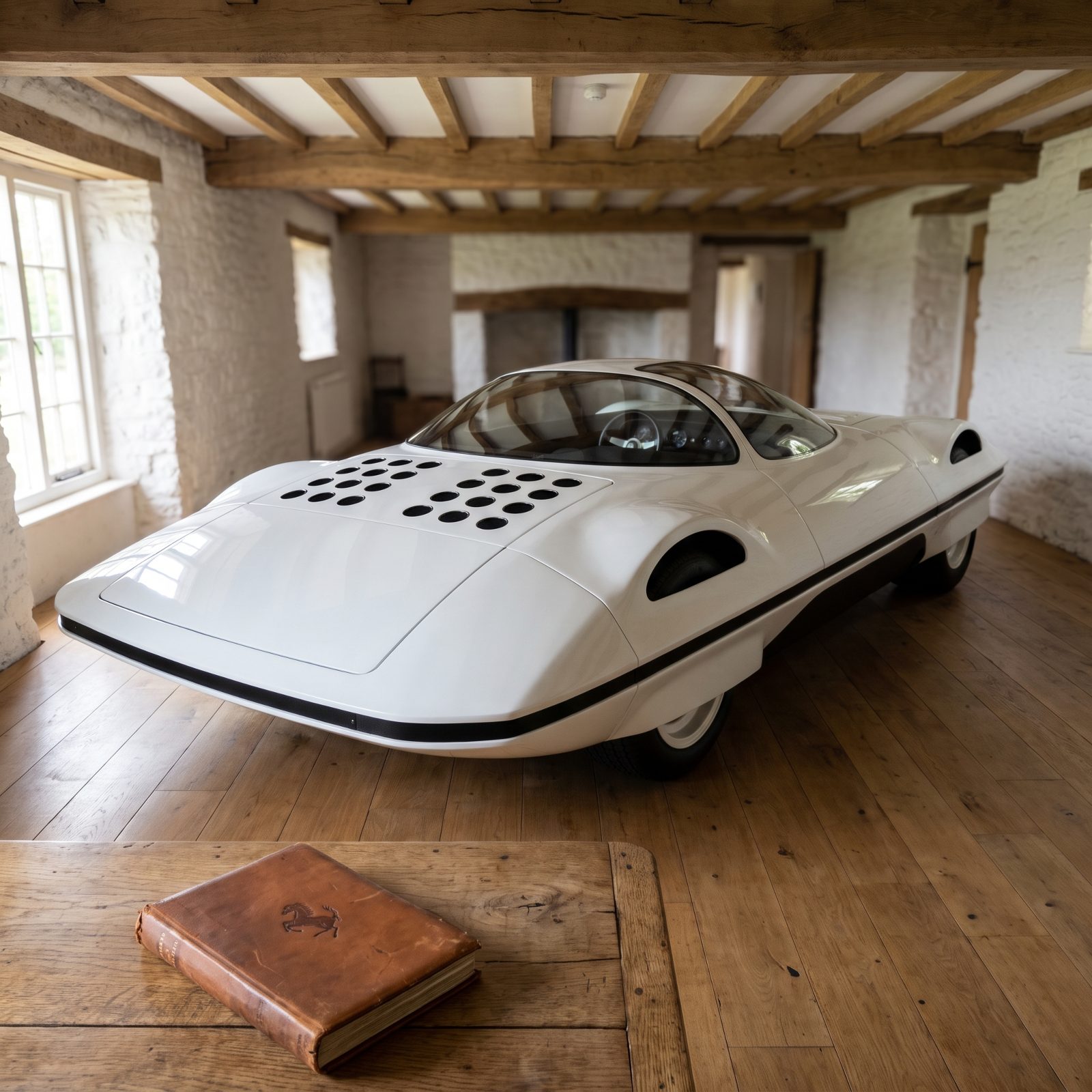
It looks like it landed rather than parked. The 1970 Modulo wrapped a Ferrari racing V12 in a body so smooth and low it resembled a flying saucer that forgot to keep flying.
Two oddities define it. The canopy slid forward over the nose to let you in, and the wheels were partly hidden under the bodywork, only the bottom arcs peeking out. Twenty-four round vents dotted the rear deck over the engine.
What made it count was the way it treated the whole car as one continuous surface instead of a collection of bolted-on parts. Decades later it finally got restored to running order. For most of its life, though, it just sat there — a frozen idea nobody dared drive.
6. Maserati Boomerang: The Geometric Wedge That Put the Gauges Inside the Steering Wheel
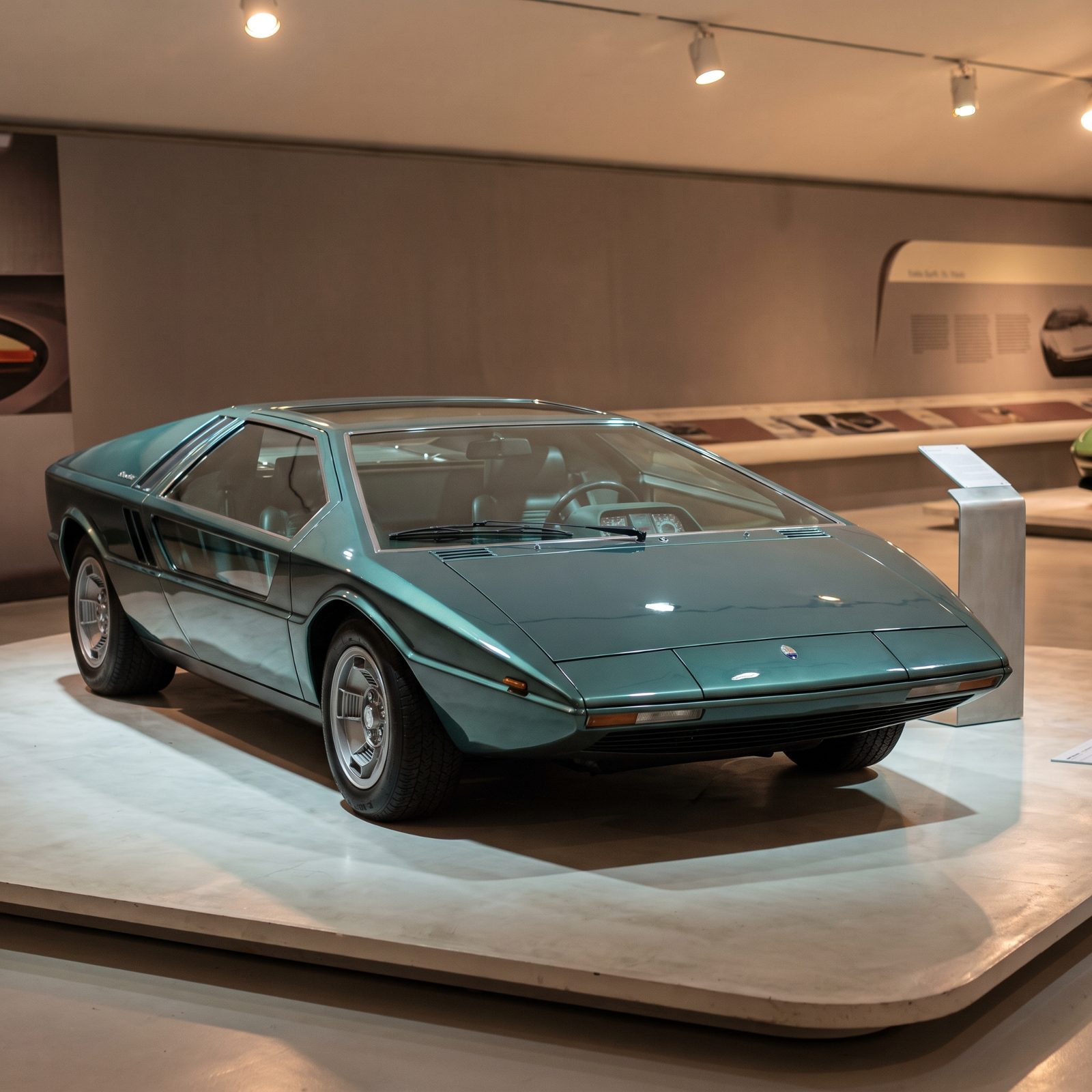
The 1972 Boomerang sharpened every edge until the car looked folded from a single sheet of paper. A steeply raked windshield broke sharply from the long, flat hood, so low and level you could have served breakfast on it.
Its strangest detail hid inside. The instrument cluster sat inside the steering wheel itself, in a fixed hub the rim turned around, so every dial stayed in the driver’s sightline.
As a pure exercise in geometry, it’s one of the sharpest shapes ever drawn for a running car. And unlike most concepts, it survived — road-registered and occasionally driven, which makes it rarer than nearly anything else on this list.
5. Lamborghini Marzal: The Glass-Walled Four-Seater You Entered Through Gullwing Doors
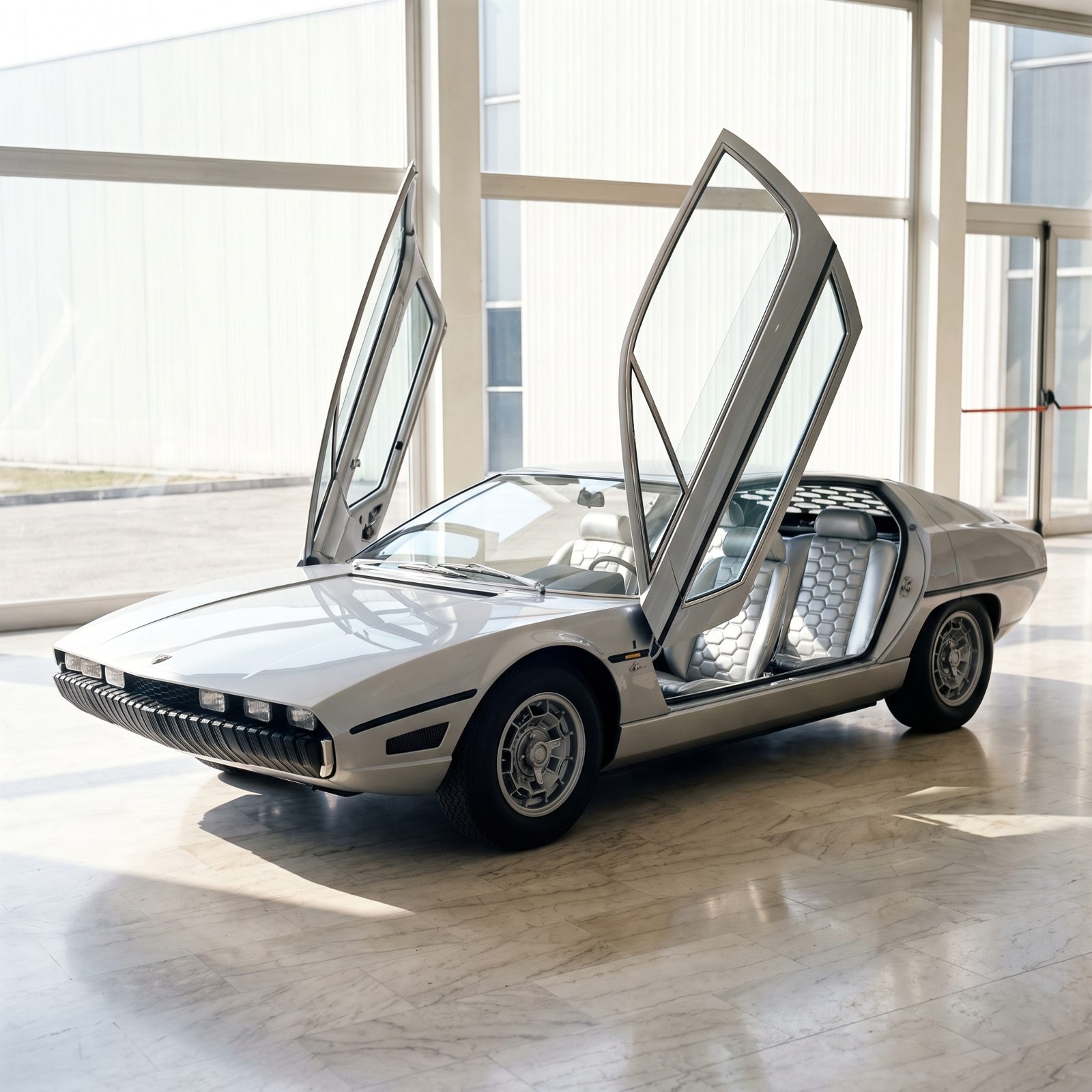
Most sports cars hide their occupants. The 1967 Marzal did the opposite, wrapping its four seats in glass from roof to floor — gullwing doors included.
The hexagon was a recurring theme of the car, repeated in the cabin and the rear grille, while the wheels wore slotted alloy faces and the seats a quilted checkerboard pattern. Swing up the glass gullwing doors and the interior looked like a silver checkerboard lit from inside.
It proved a four-seat Lamborghini could still look low and dramatic, an idea that led directly to the Espada production car. A greenhouse on wheels your luggage could watch the scenery from.
4. Cadillac Cyclone: The Jet-Age Coupe With Radar Hidden in Its Nose Cones
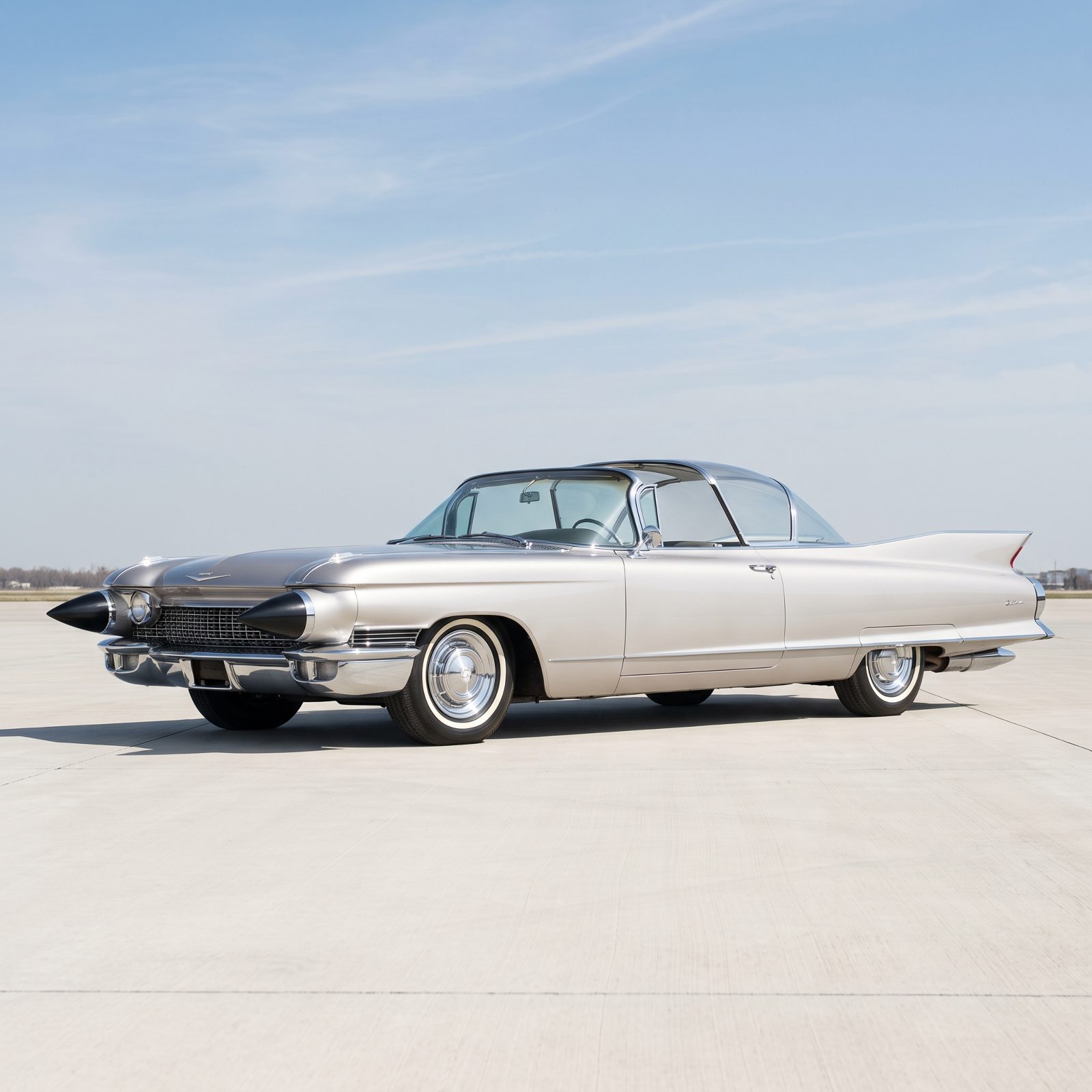
1959, peak space-race fever, and Cadillac decided the car should see danger before the driver did. The Cyclone wore two black nose cones up front, each housing early radar meant to spot obstacles and warn of a collision.
The canopy slid back electrically. The tailfins reached full atomic-age glory. It looked less like a car and more like something taxiing for takeoff.
And here’s the part that sticks with you: that radar gimmick sounded like pure science fiction back then, yet every modern car with adaptive cruise control and collision warning is running on the same basic dream. Cadillac was sixty years early and wrapped it in chrome.
3. GM Firebird III: The Turbine Dream Car Bristling With Seven Fins and a Joystick
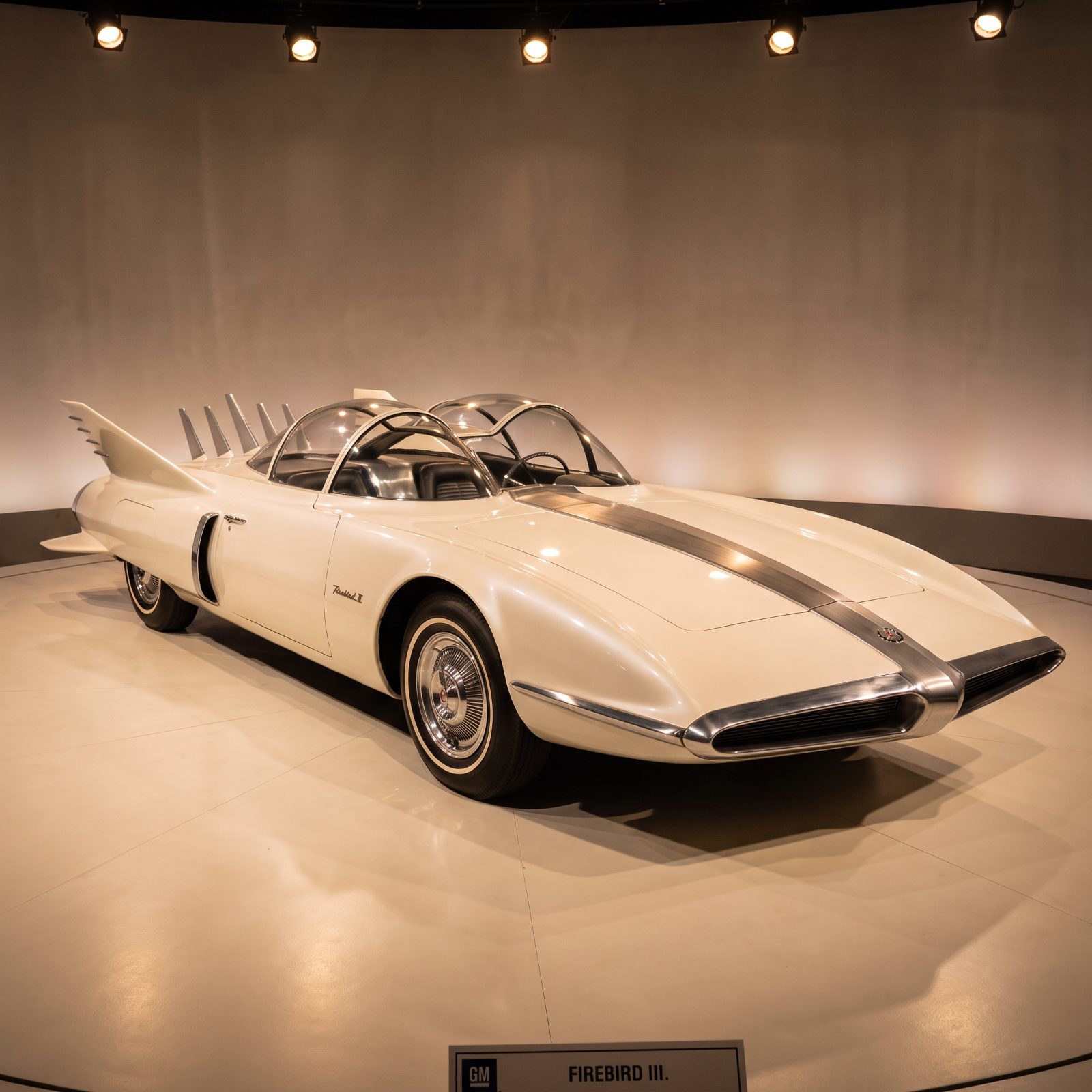
If any car ever earned the word “spaceship,” this is it. The 1958 Firebird III ran on a gas turbine, carried seven fins across its tail, and ditched the steering wheel entirely for a single joystick that handled steering, braking, and acceleration all at once.
Twin bubble canopies covered a two-seat cockpit. It had cruise control, an early anti-lock braking idea, and air conditioning back when most houses still went without.
What makes it count is how it treated the car as an experiment in human-machine control, decades before anyone muttered “drive-by-wire.” GM built a running turbine dream and let it loose on a test track.
Nobody drives with a joystick today. But the notion that a car could be commanded rather than merely steered started on a Motorama stage with seven fins catching the spotlights.
2. AMC Amitron: The Tiny 1960s Electric Car That Fed Its Own Batteries Back
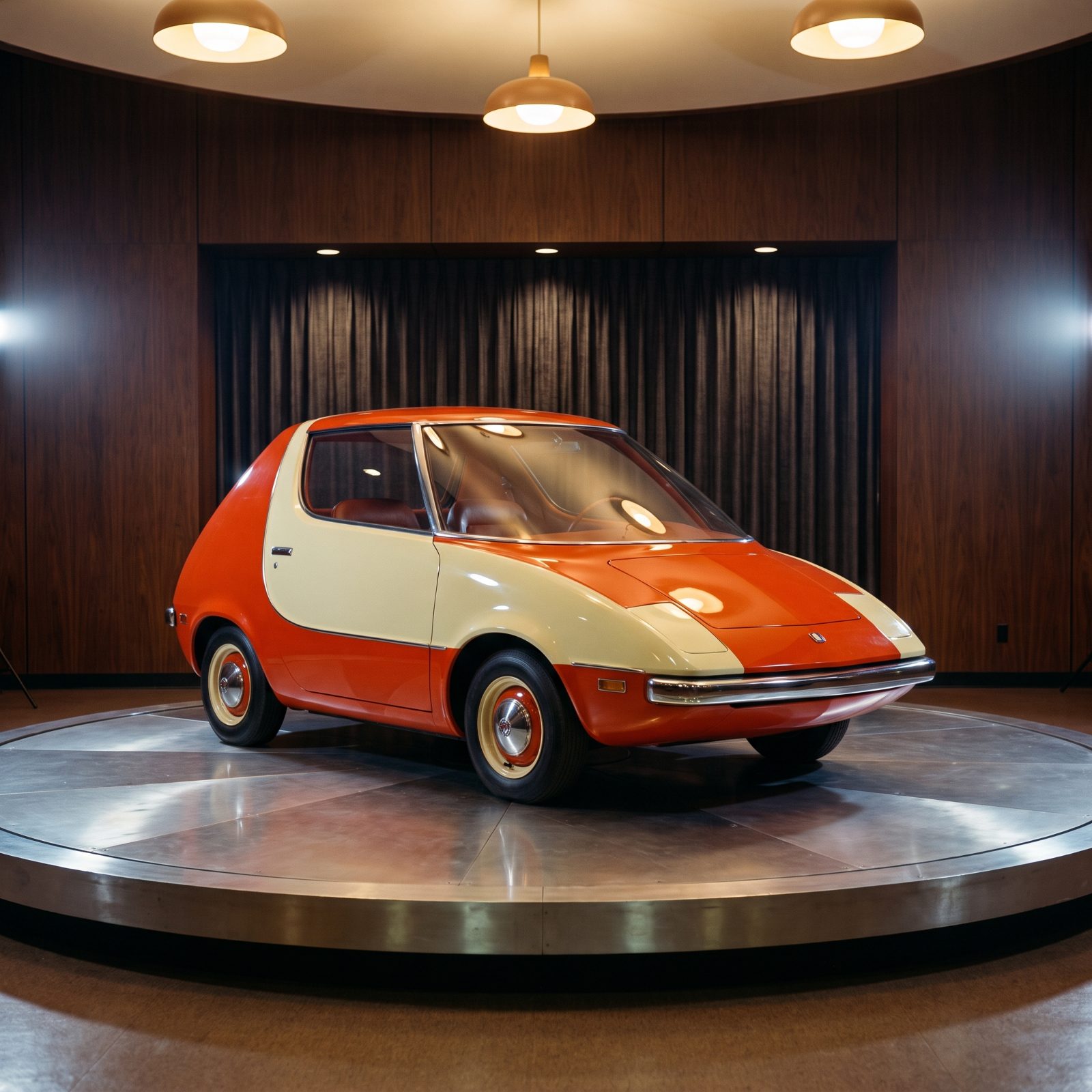
Decades before anyone coined the phrase “range anxiety,” AMC built a jellybean of a car that fed energy back into its own batteries the moment you lifted off the throttle. Regenerative braking. In 1967. Most drivers wouldn’t run into that trick until the hybrids showed up near the end of the century.
Picture three people sitting across in something barely longer than a phone booth, running on lithium and nickel-cadmium cells instead of the lead-acid bricks everybody assumed you’d need. AMC claimed around 150 miles between charges, which is the kind of number you squint at. Did the real car ever sniff that figure? Probably not. But the engineering was sound and almost thirty years ahead of the room.
1. GM Le Sabre: The Jet-Age Dream Car Whose Roof Closed Itself in the Rain
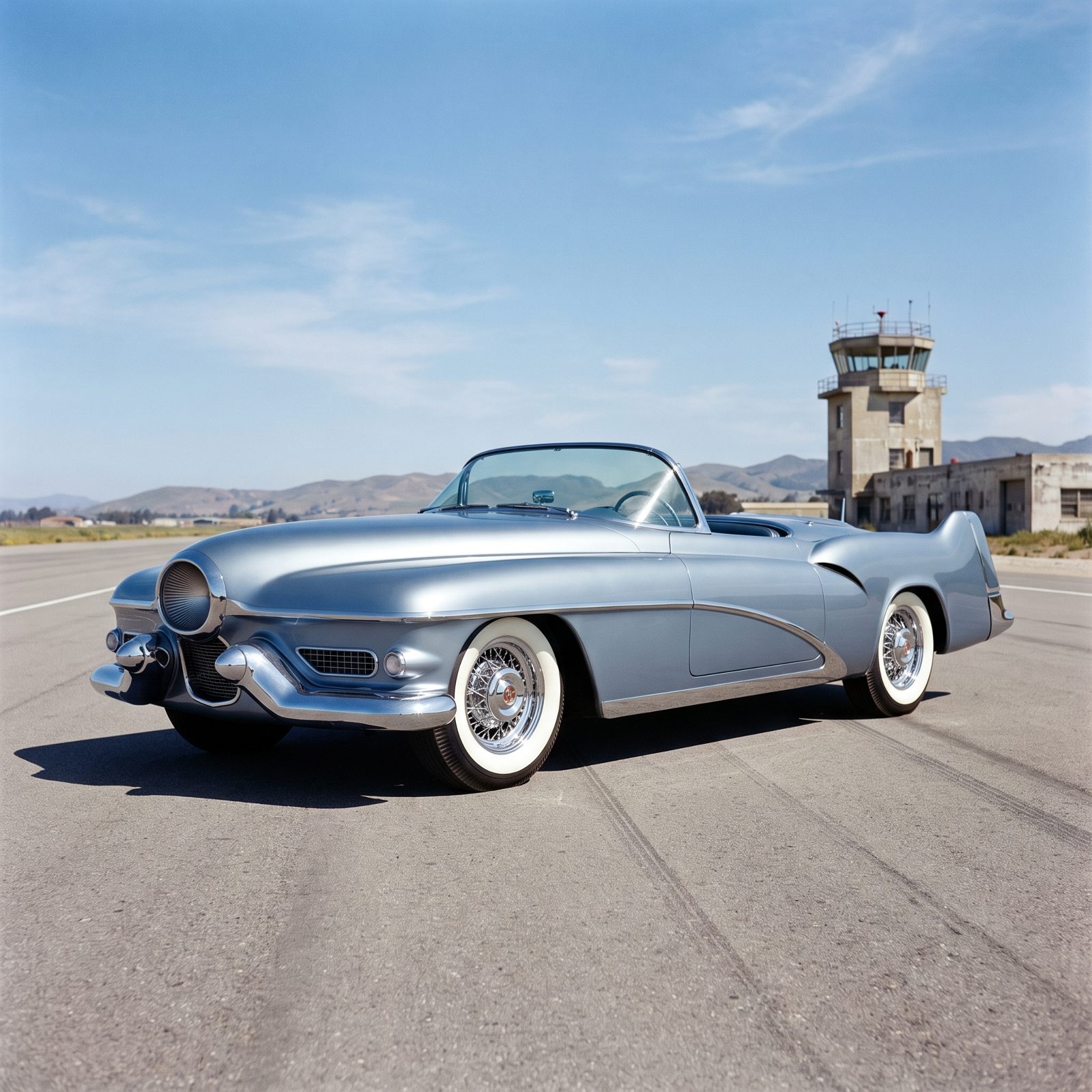
A moisture sensor between the seats could close the convertible top before you got wet. In 1951. Picture it: the Le Sabre sits parked, feels the first drops land, and quietly raises its own roof and side windows while the owner’s still inside finishing a sandwich.
Named after the F-86 Sabre jet and shaped like one too, it swiped aircraft ideas from nose to tail — a magnesium body, round, jet-intake-style pods capping the front fenders, and tailfins that nudged the whole postwar industry toward that chrome-and-rockets look everybody fell for. Under the hood sat a supercharged aluminum V8 fed by two tanks: gasoline to fire it up, methanol when you wanted it to move.
Every tailfin that followed owes this car a nod.
Sure, the rain-sensing roof is the party trick folks bring up first. The lasting thing is the shape. This is the car that taught Detroit to dream in jet fuel.