
Would you like to save this?
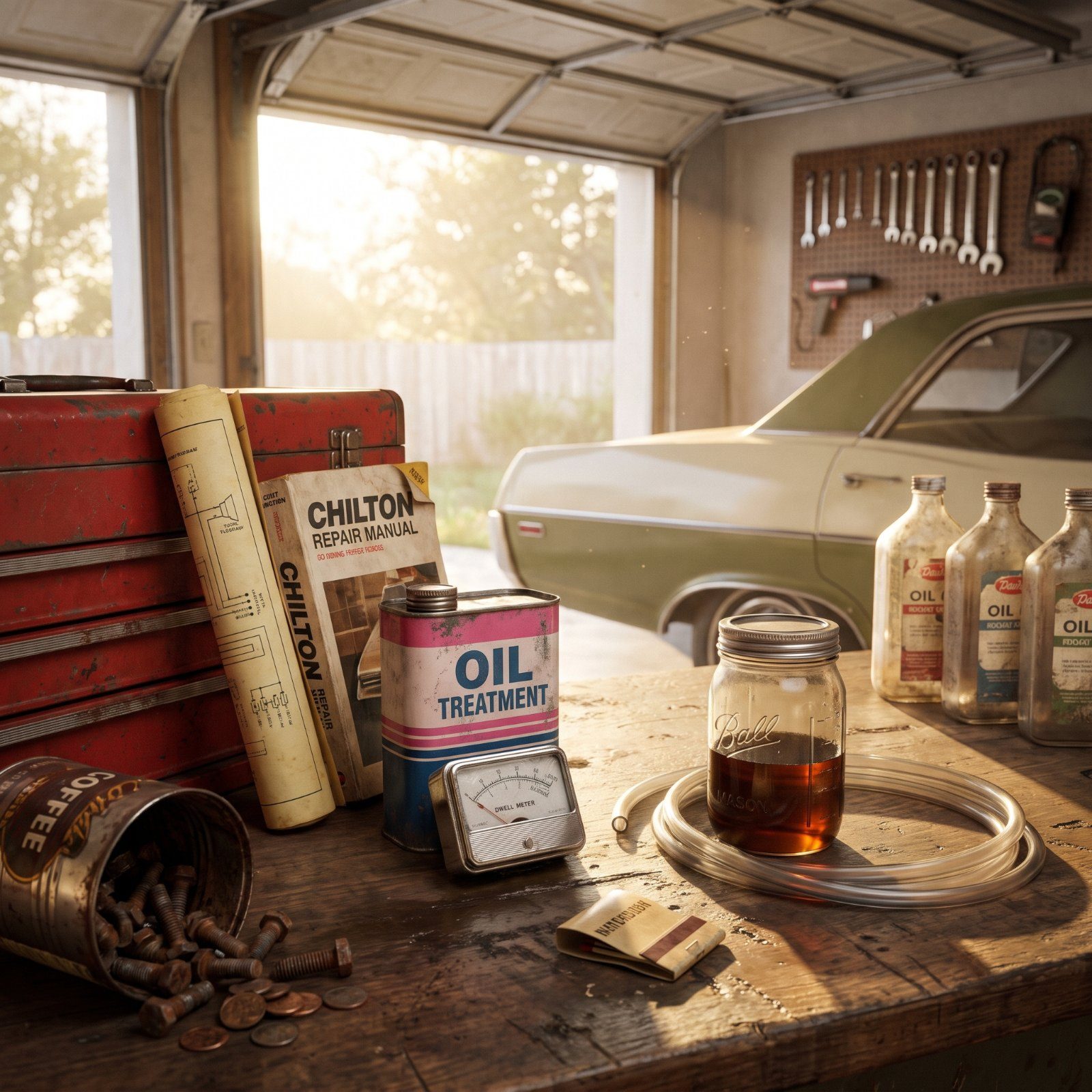
Warm motor oil draining into a coffee can on a Saturday morning. A pink can of STP on the workbench next to a half-full thermos. Somewhere between the transistor radio and the creeper under the Buick, dads learned to fix cars with whatever was within arm’s reach. Some of it was genius. Some of it would get a shop shut down now, and all of it got the family to church on Sunday. The ones below were standard practice once — most have quietly disappeared.
Please note that some of the images in this article were created with the assistance of AI.
27. Draining the Oil Straight Into a Coffee Can and Pouring It Down the Storm Drain
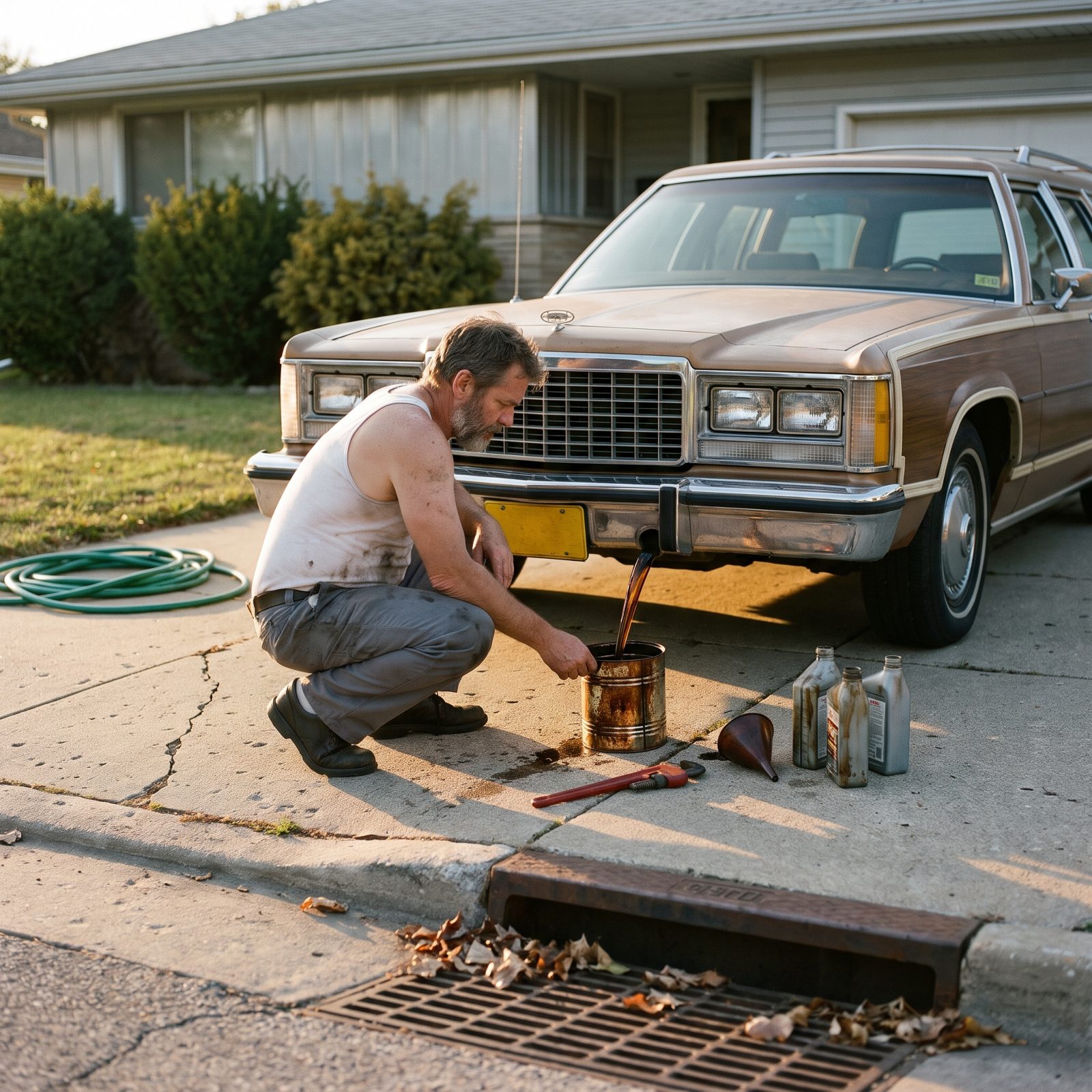
Nobody thought twice about it. You drained the crankcase into whatever can was handy, and when it filled up you walked it to the curb and tipped it down the storm drain. Clean hands, empty can, done by lunch.
That one gallon didn’t feel like much at the time. But multiply it by every driveway in America doing the same thing every three thousand miles and you understand why we can’t do it anymore. A little used oil fouls a shocking amount of groundwater.
26. Gapping Spark Plugs With the Cover Off a Matchbook
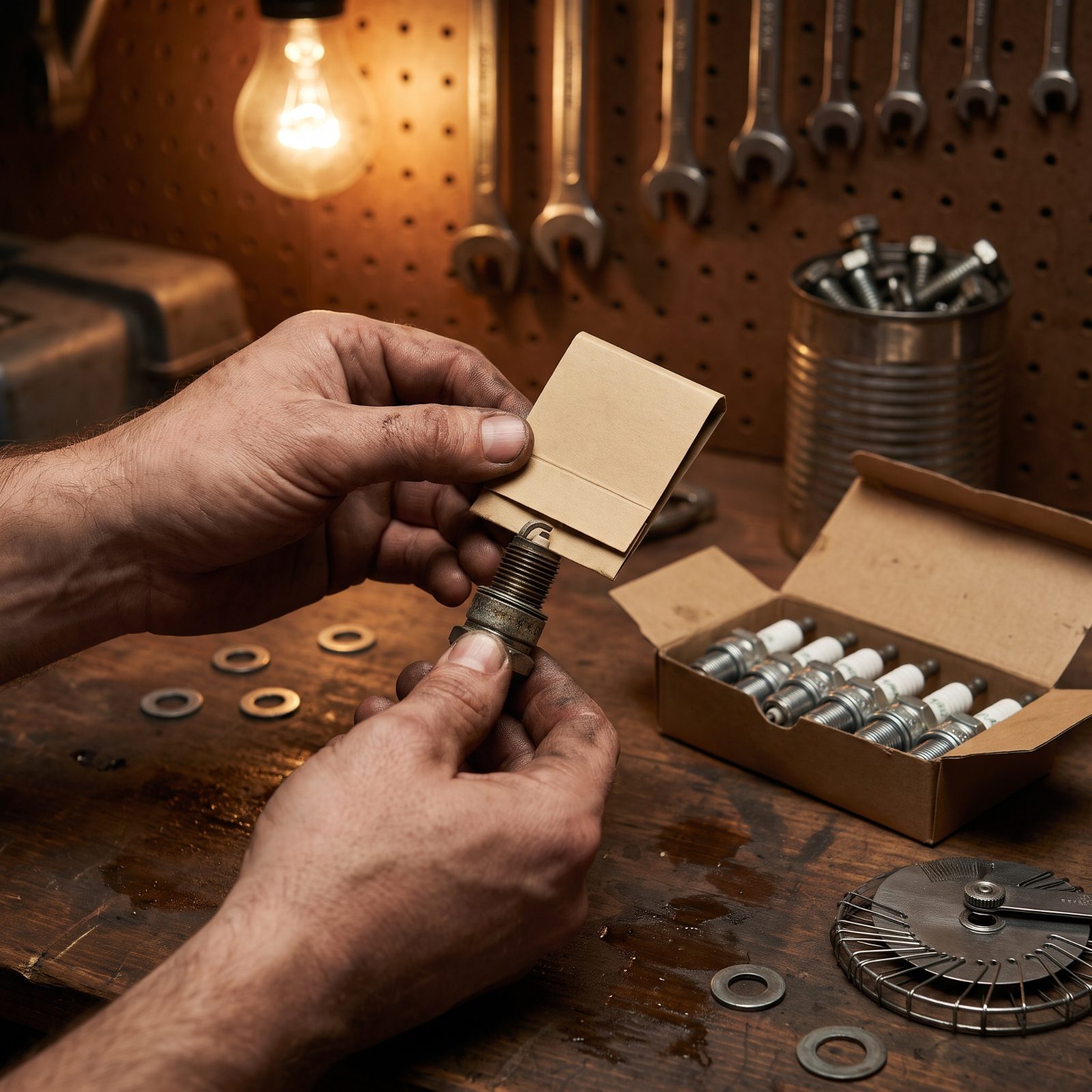
The proper tool was a round wire feeler gauge, and most guys owned one. But the matchbook cover was always closer. Fold it over, slide it in the gap, and if it dragged just right you called it good enough and threaded the plug back in.
It worked more often than it had any business to, because a standard matchbook cover ran close to the gap most engines wanted. Close being the key word. A modern tech setting iridium plugs to a thousandth of an inch would faint.
25. Tuning the Carburetor Idle by Ear With a Flathead Screwdriver
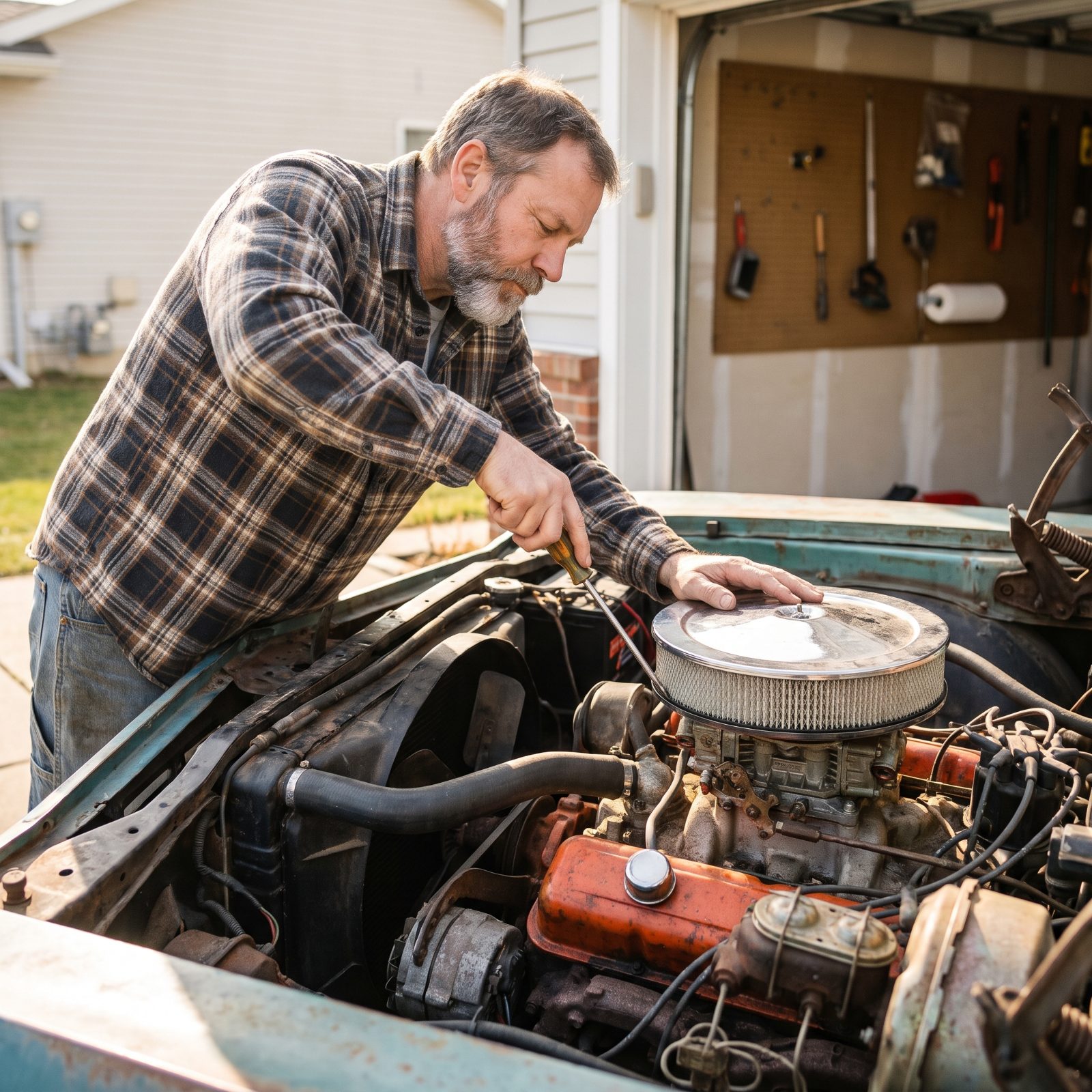
This was the real art. No gas analyzer, no laptop, no sensors — just a screwdriver, a running engine, and an ear trained over years of Saturdays. You turned the idle screw a hair at a time until the lope smoothed out and the engine settled into that even, happy chop.
A good tuner could hear a lean miss before any gauge would show it. Old-timers could do this in under a minute and get it dead right. Modern cars don’t even have an idle screw to turn, which is efficient and also a little sad.
The best carburetor tool a man owned was the one between his ears.
24. Bleeding the Brakes Alone With a Mason Jar and a Piece of Hose
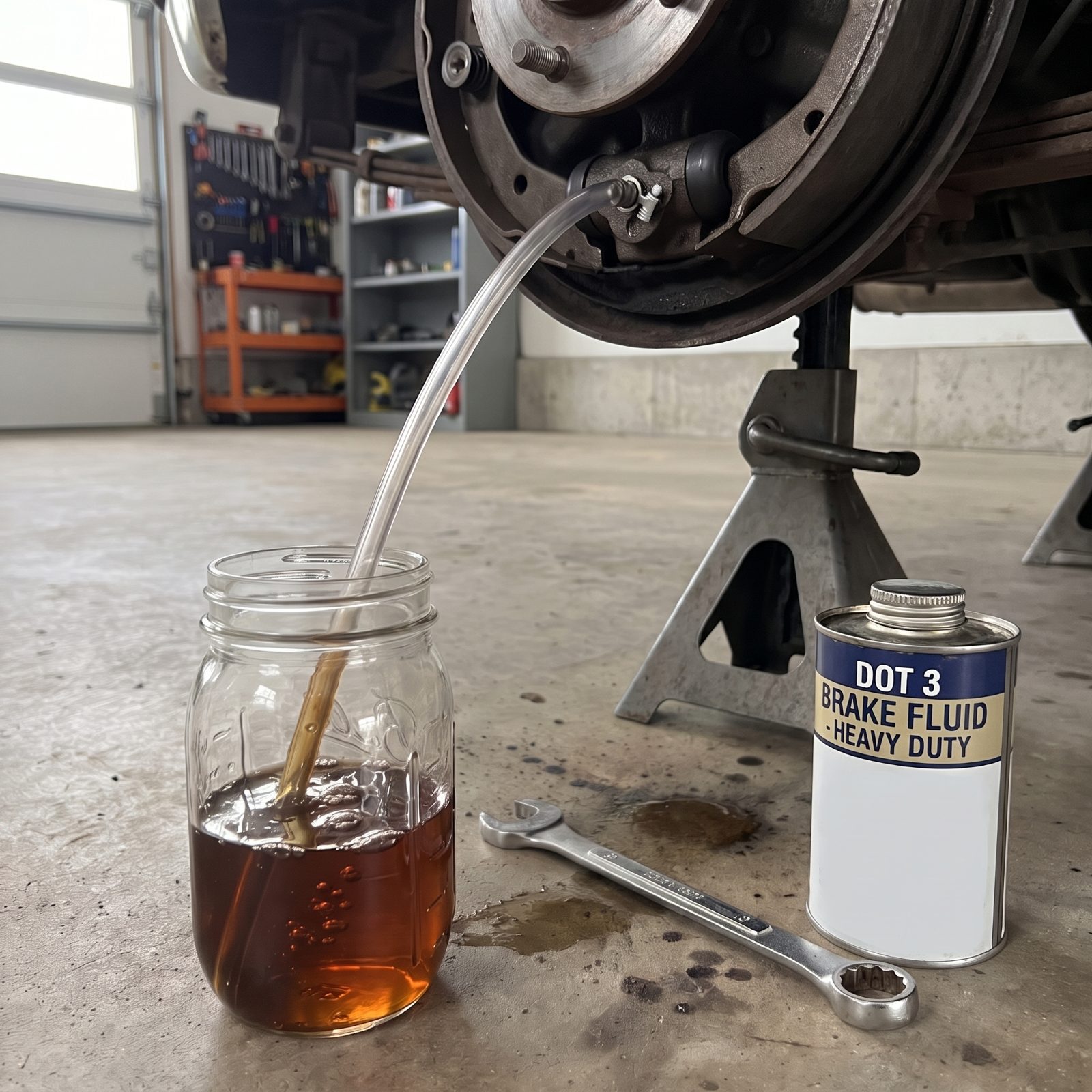
Bleeding brakes is a two-person job. One pumps the pedal, the other cracks the bleeder. Unless you were a dad on a Sunday with nobody to help, in which case you ran a hose from the bleeder down into a mason jar of brake fluid and did it solo.
The submerged hose end kept air from getting sucked back into the line between pumps. Crude, but it worked, and it saved you from begging the neighbor. Shops run vacuum pumps and pressure bleeders now — but the jar still lives on a lot of home benches.
What Our Readers Say
- Full-size land yachts still win hearts: in Jalopy Talk readers’ votes, they got hearts 87% of the time, compared with 79% for the other car pictures in the same articles.
- The family station wagon holds up too, with our readers giving wagon photos more hearts than the other images in the same articles, 88% versus 83%.
From Jalopy Talk reader polls and votes.
23. Wrapping a Weeping Radiator Hose in Electrical Tape
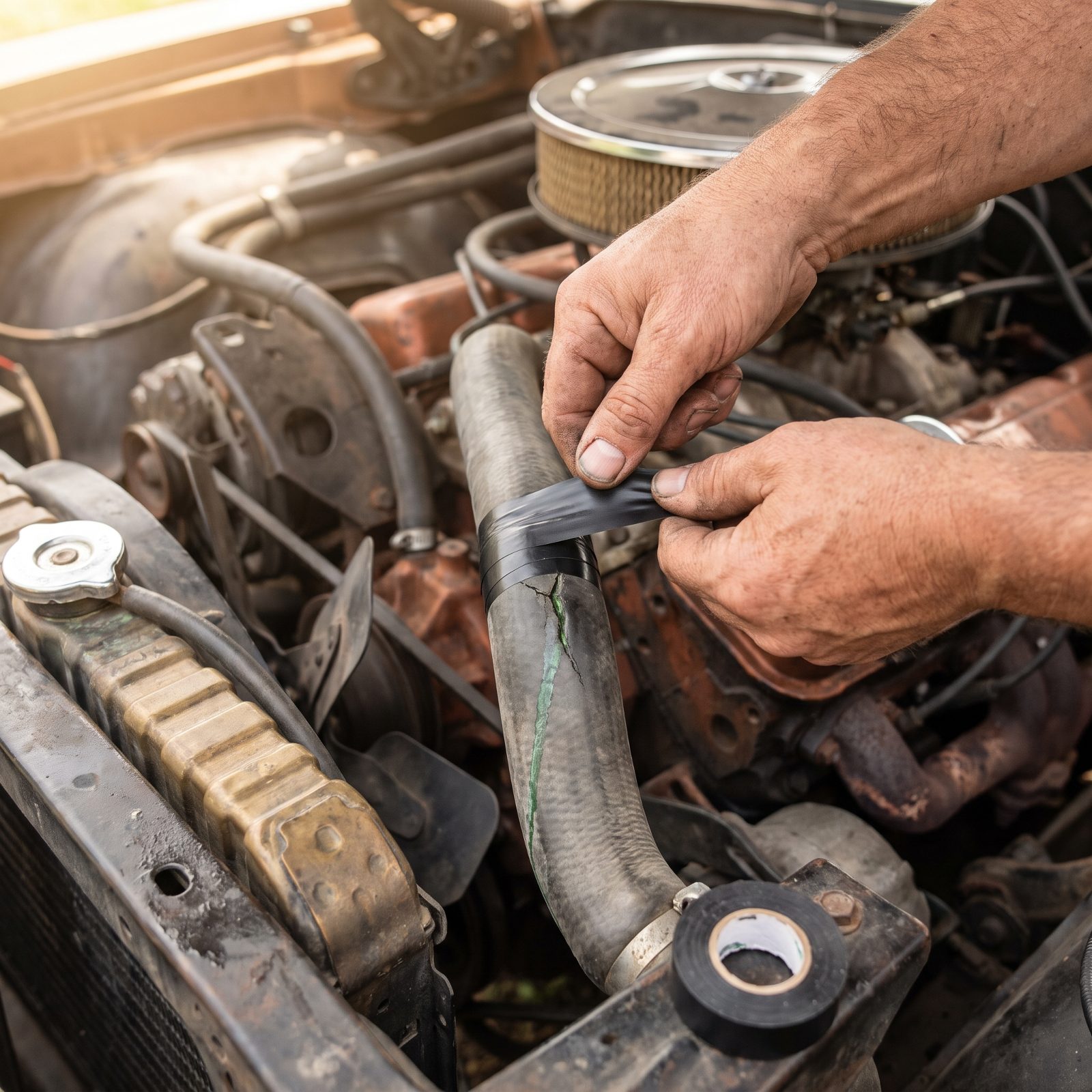
A hose splits on a Friday night, the parts store is closed, and you’ve got to get to work Monday. Out came the roll of black electrical tape. You wrapped it tight over the weep, maybe doubled a hose clamp over the top, and prayed it held through the commute.
Sometimes it bought you a week. Sometimes a mile. Tape never actually sealed cooling pressure — it just slowed the leak enough to limp home. A modern shop would replace the hose on sight and charge you for a system flush while they were in there.
22. Jump-Starting Bare-Handed With Clamps That Sparked
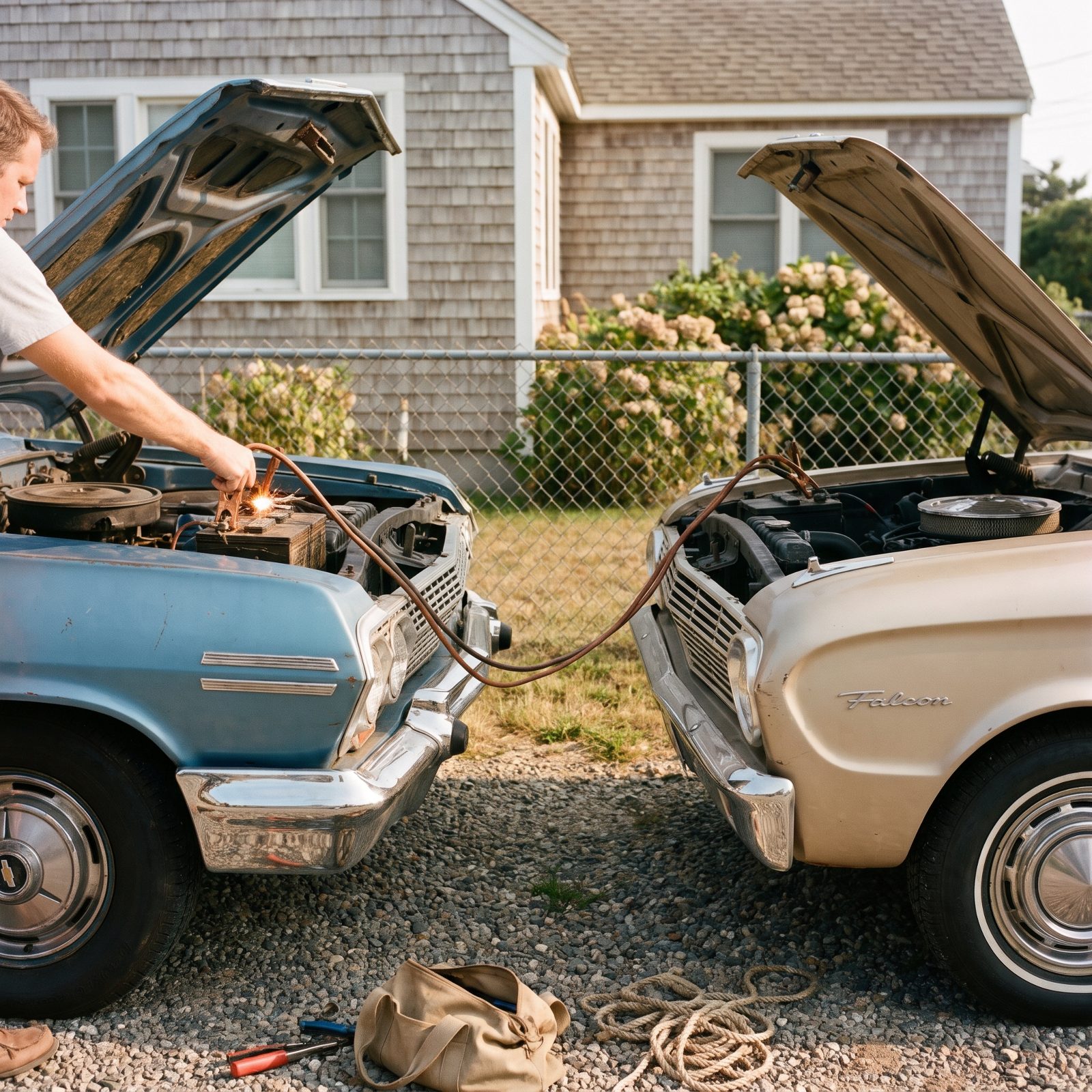
Nobody wore gloves. Nobody checked which post was which twice. You slapped the red clamp on the dead battery, the black on the good one, and when a spark jumped you figured that meant it was working. Hands bare, cigarette often lit, leaning right over an old battery venting hydrogen gas.
Reverse the clamps and you’d fry the alternator or worse. Spark near a gassing battery and you had a genuine chance of a face full of acid. We got away with it a thousand times over, which is exactly why modern shops drill proper connection order and eye protection.
21. Propping the Car on a Brick and a 2×4 Instead of a Jack Stand
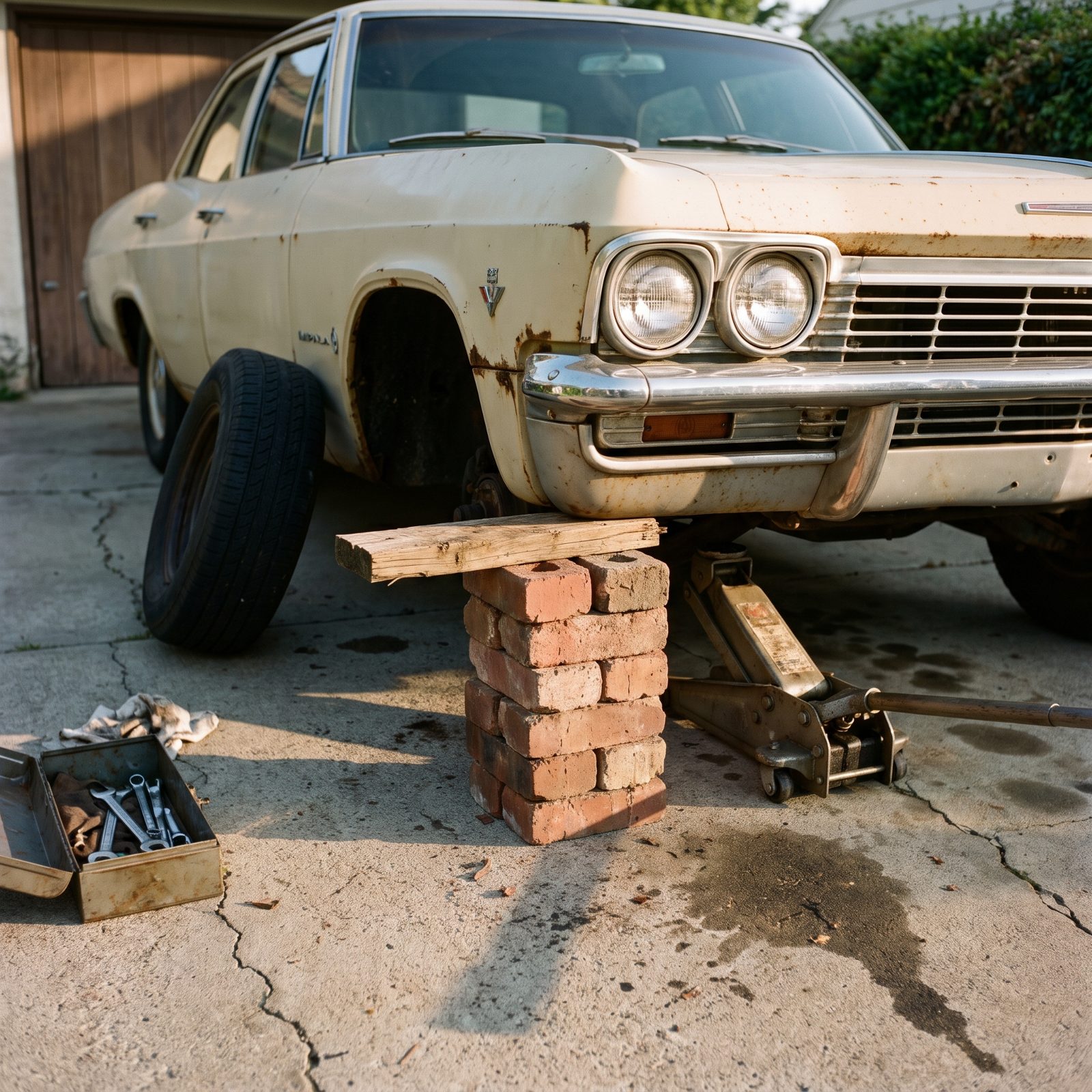
The rolling floor jack lifted it. A couple of stacked bricks with a chunk of 2×4 across the top held it. Then a grown man slid underneath on a creeper to pull a transmission with nothing between him and two tons of Detroit steel but masonry and scrap lumber.
Bricks crack under point load. Wood splits. Nobody today would sign off on this, and the number of men who got hurt or worse doing exactly this is the whole reason proper rated jack stands exist and get used in every shop.
20. Dumping In a Can of STP to Hush a Clattering Engine
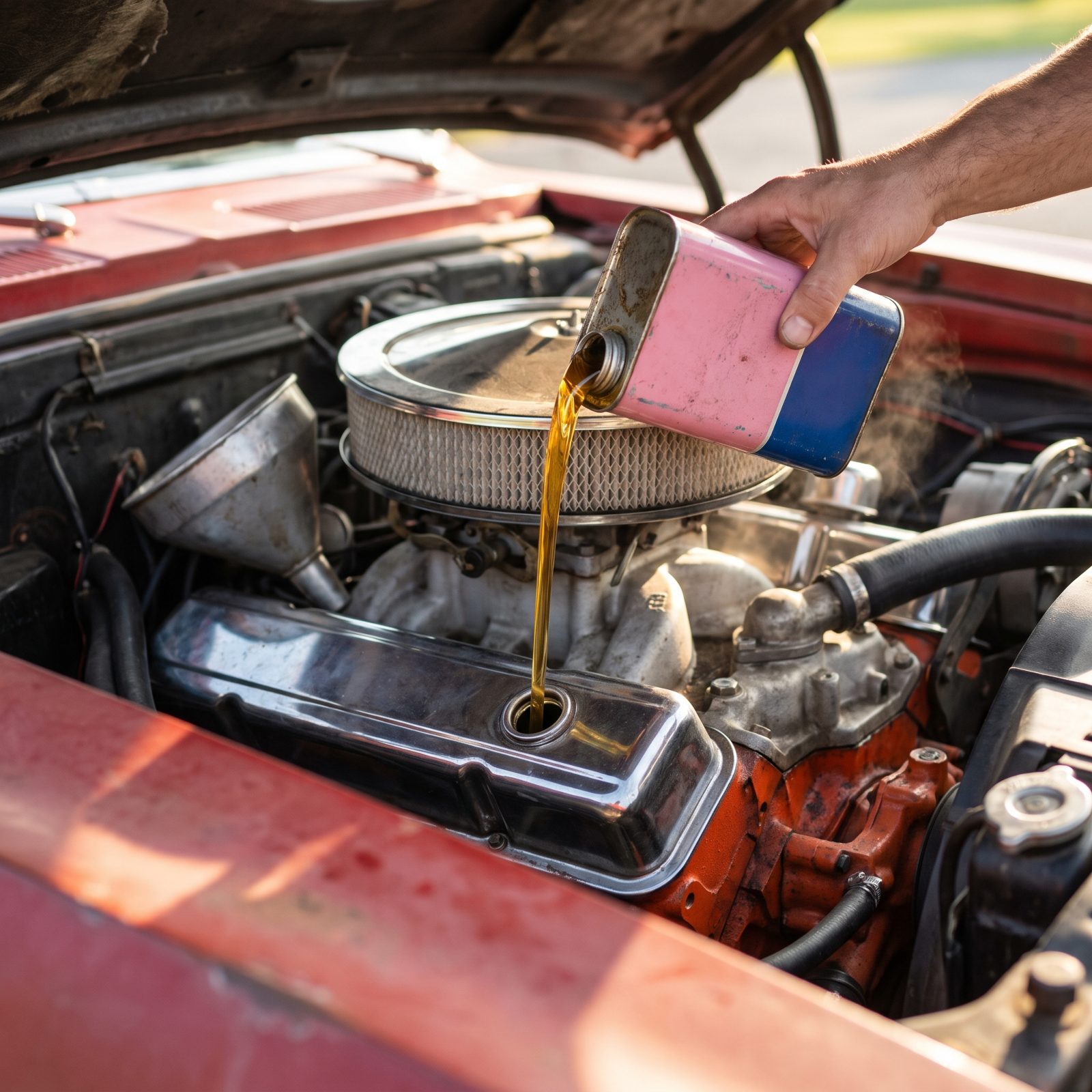
Lifters ticking? Bearings a little loud? A tired engine burning oil and rattling at idle? In a thousand driveways the fix came in a pink-and-blue can. Thick as molasses, you poured a can of oil treatment into the crankcase and the noise would quiet right down.
It worked by sheer viscosity, thickening the oil enough to cushion worn clearances for a while. But it never fixed a thing. It just muffled the sound of a problem getting worse. A real mechanic hears a lifter tick and wants to know why, not pour syrup over it.
19. Filing the Pitted Points Inside the Distributor With an Emery Board
Would you like to save this?
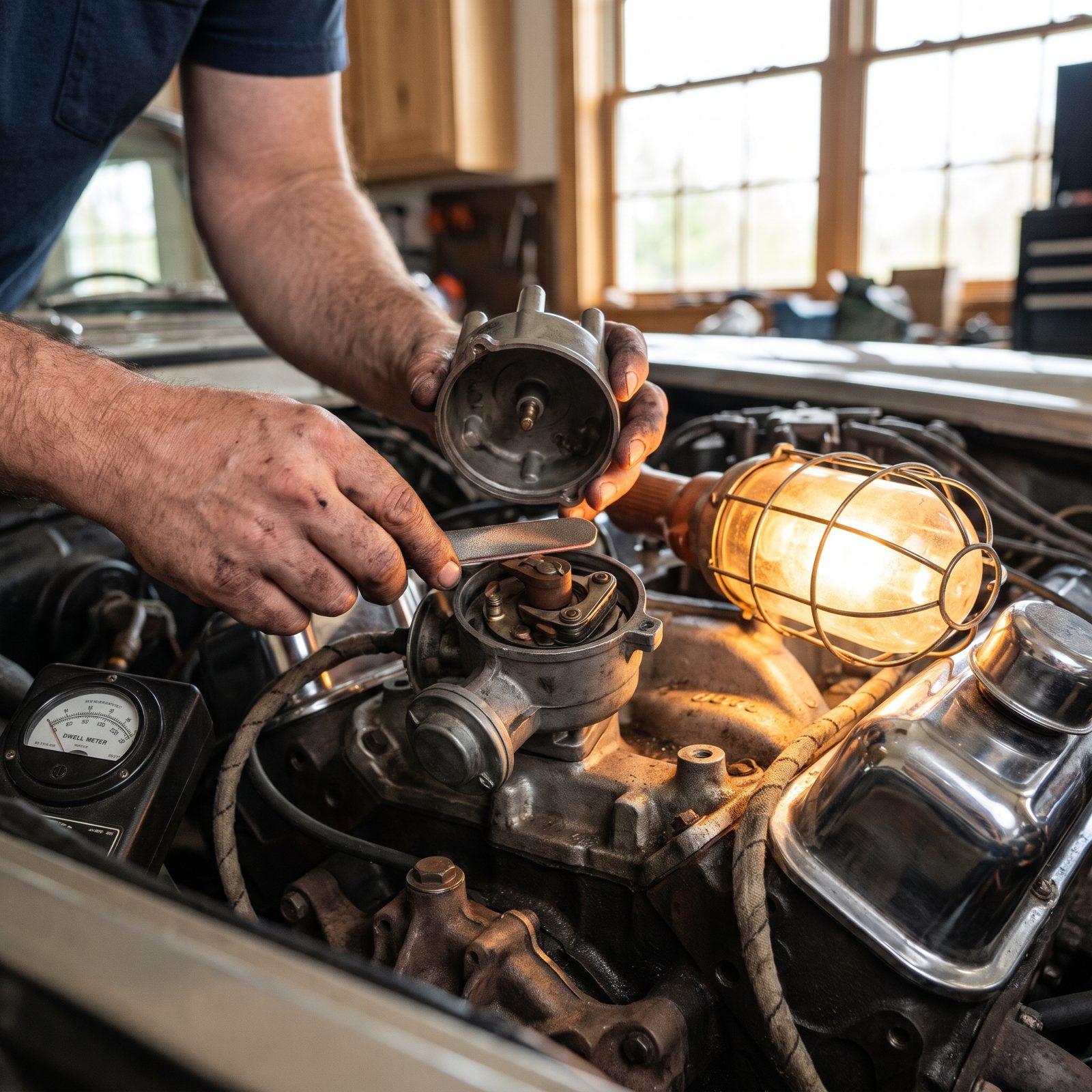
Ignition points pitted and burned over time, and a burned point meant hard starting and a rough miss. New points cost money and a trip to the parts counter. A small file or an emery board cost nothing, so you’d hold the points assembly in one hand and dress the contacts smooth right there over the engine bay.
You could nurse a set of points a long way past when they should have been replaced. The catch: filing changed the gap, which threw off the timing, which meant chasing your tail on dwell afterward. Electronic ignition killed points entirely, and with them this whole patient little ritual.
18. Scraping an Old Head Gasket Clean and Bolting It Right Back On
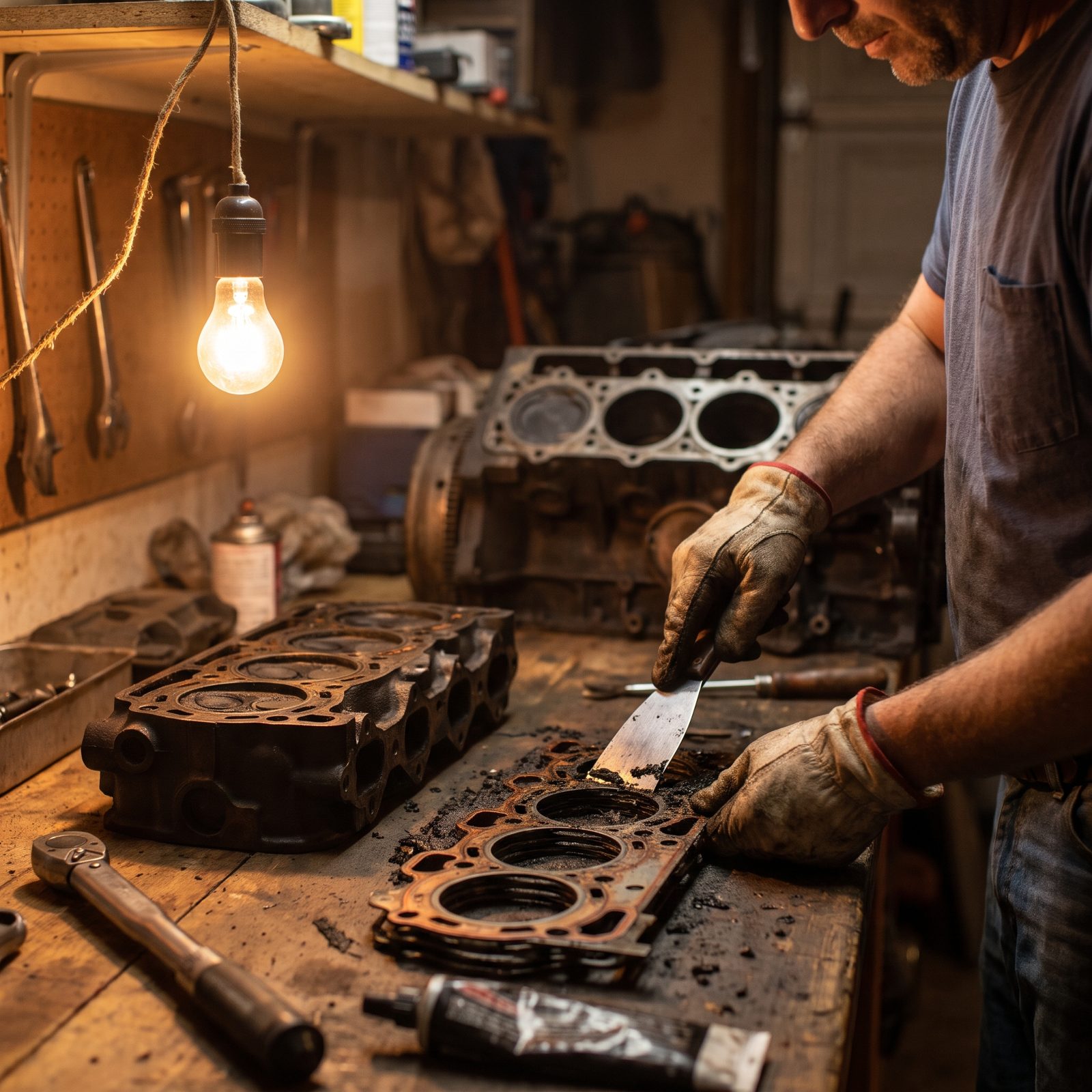
A head gasket is a one-time part. Compress it once between the head and block and it’s taken its final shape forever. Every machinist on earth will tell you to throw the old one out and fit a new one.
Plenty of dads disagreed on a tight budget. You’d pull the head, scrape the old gasket clean of carbon and crud, smear it with a little sealant for luck, and torque the head right back down over it. Sometimes it held through the summer. More often it blew again by fall and taught an expensive lesson. This is a trick that was never a good idea, only a cheap one.
17. Rebuilding the Carburetor on the Kitchen Table
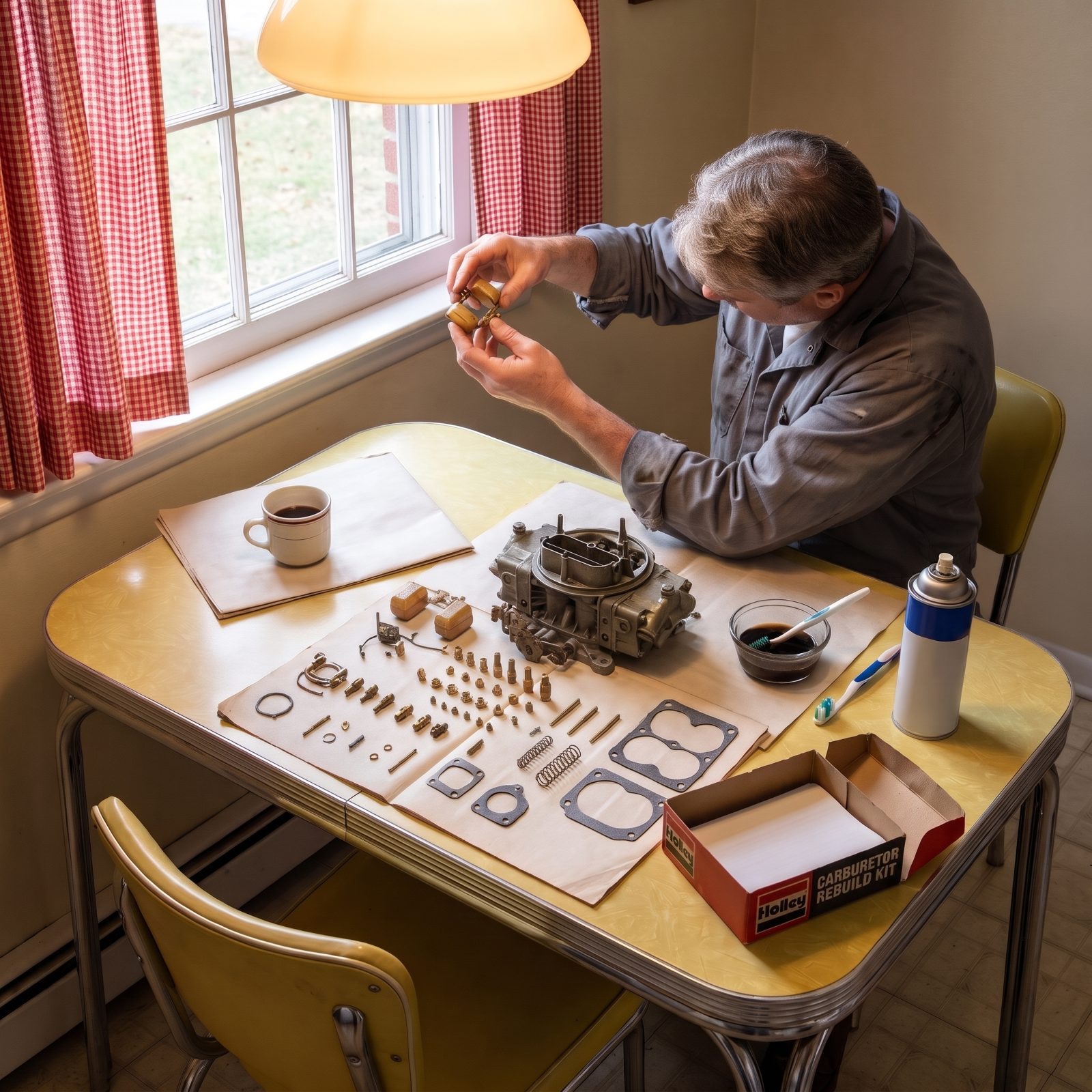
The float bowl came apart on the same table where breakfast had happened an hour earlier, and every jet, needle, and spring got its own spot on the spread-out paper, laid out in the order they came off so they’d go right back the same way. Forget one gasket and the thing idled rough for a week.
A shop today won’t touch a carb — they swap the unit, bill you, and move on. But give a dad a rebuild kit and a steady hand and he could bring a dead Holley back to life with nothing more than a toothbrush and a can of solvent.
16. Setting Ignition Timing With a Strobe Light and a Good Ear
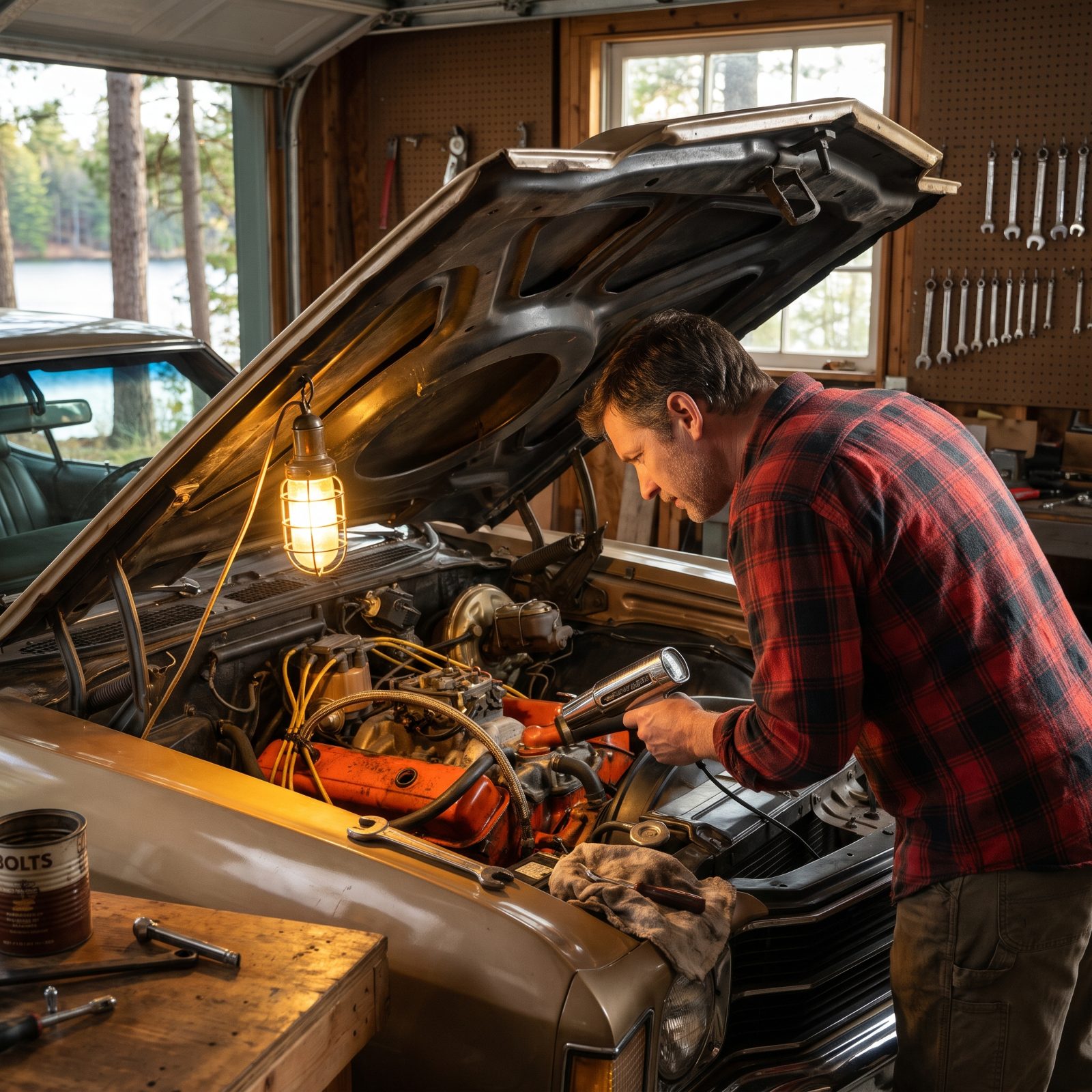
You timed it by sound as much as by the mark. The strobe flashed the pointer against the balancer, you nudged the distributor a hair, then you listened. A little ping on hard acceleration meant back it off. A lazy pull meant advance it.
Modern cars time themselves — a sensor does it a thousand times a second and nobody ever gives it a thought. Dialing in a distributor by ear, though, chasing that sweet spot where the engine came alive without rattling, was a feel you earned over years. Some guys could set timing with no light at all. Just revs and instinct.
15. Mixing Their Own Coolant From Whatever Was in the Garage
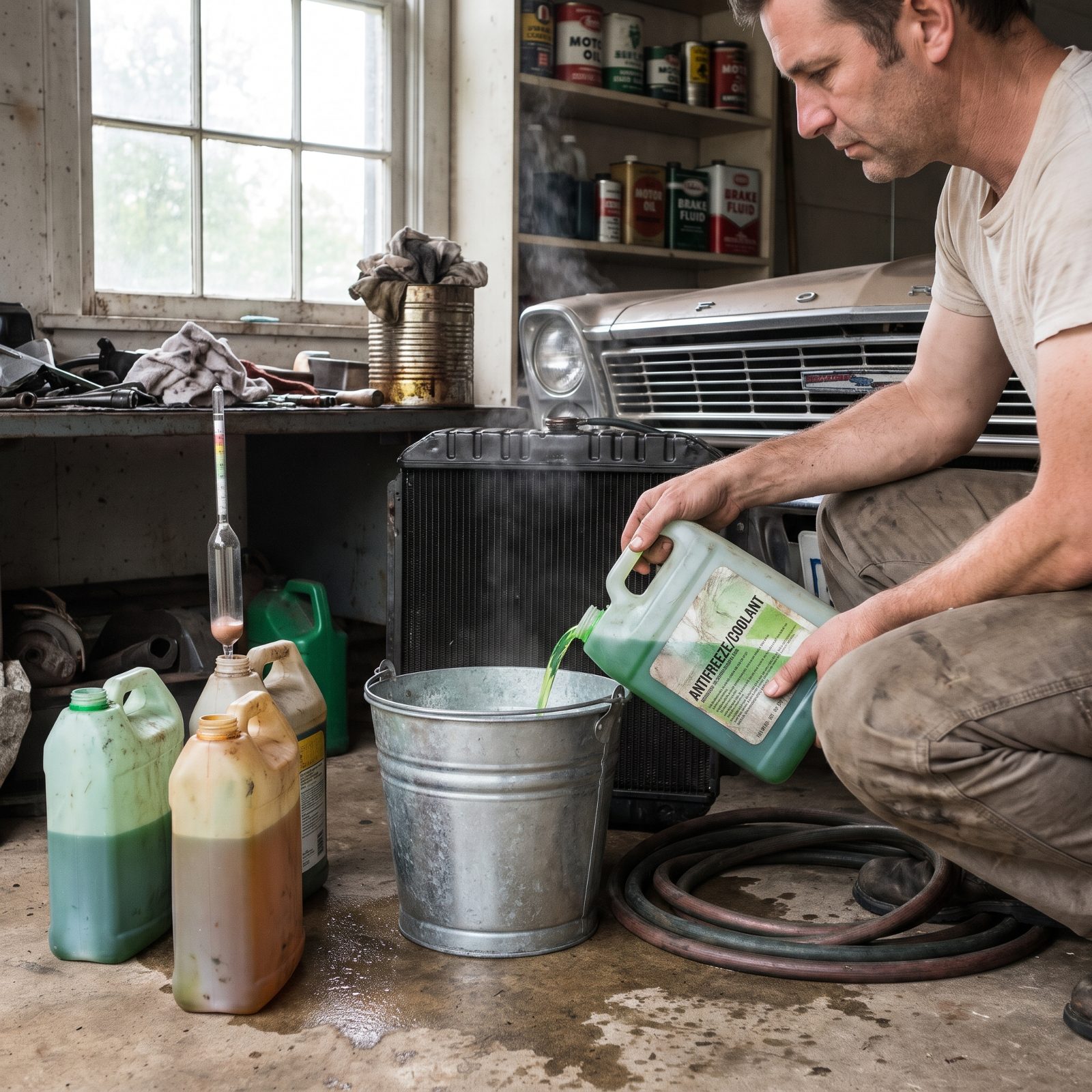
Half a jug of green left over from last year, a splash of something amber a neighbor handed over, topped off with tap water straight from the hose — the ratio was more hope than chemistry. If it didn’t freeze and it didn’t boil over, you called it good and shut the hood.
No shop would dare today. Coolant is spec’d to the car now, color-coded, incompatible if you blend the wrong kinds. Back then it all went in the same radiator and the engine ran fine clear through another summer.
14. Driving on Bald Tires Until the Cords Showed Through
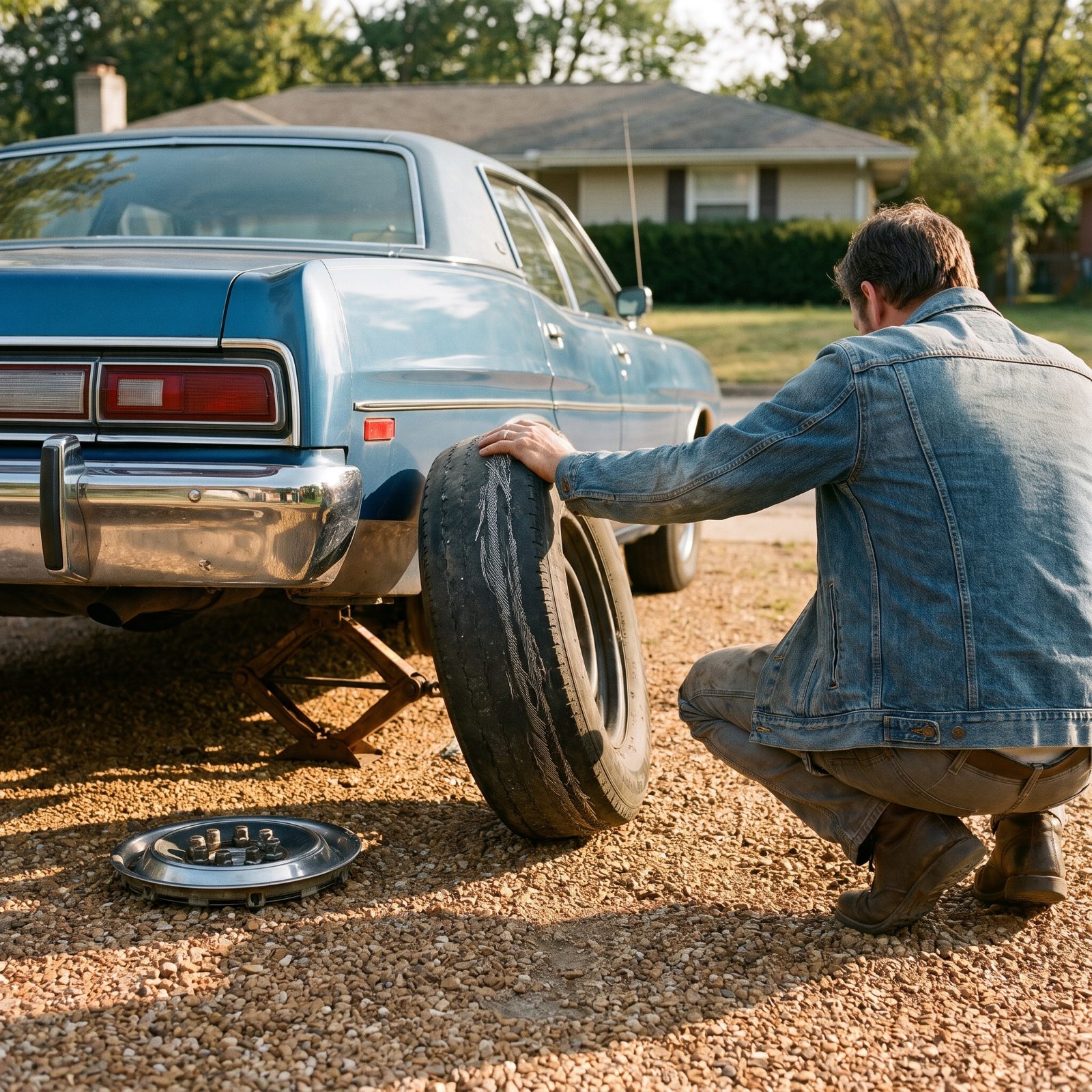
You could see the cords before you’d admit the tire was done — bald as a cue ball, smooth enough to skate across wet pavement, and still good for another month in a dad’s eyes, because new tires cost money and payday was Friday.
The rule was simple. If a cord wasn’t actually poking out yet, it had life left. Cops gave tickets, wives gave looks, and the tire rolled on anyway.
13. Running a Fan Belt Made From a Nylon Stocking in a Pinch
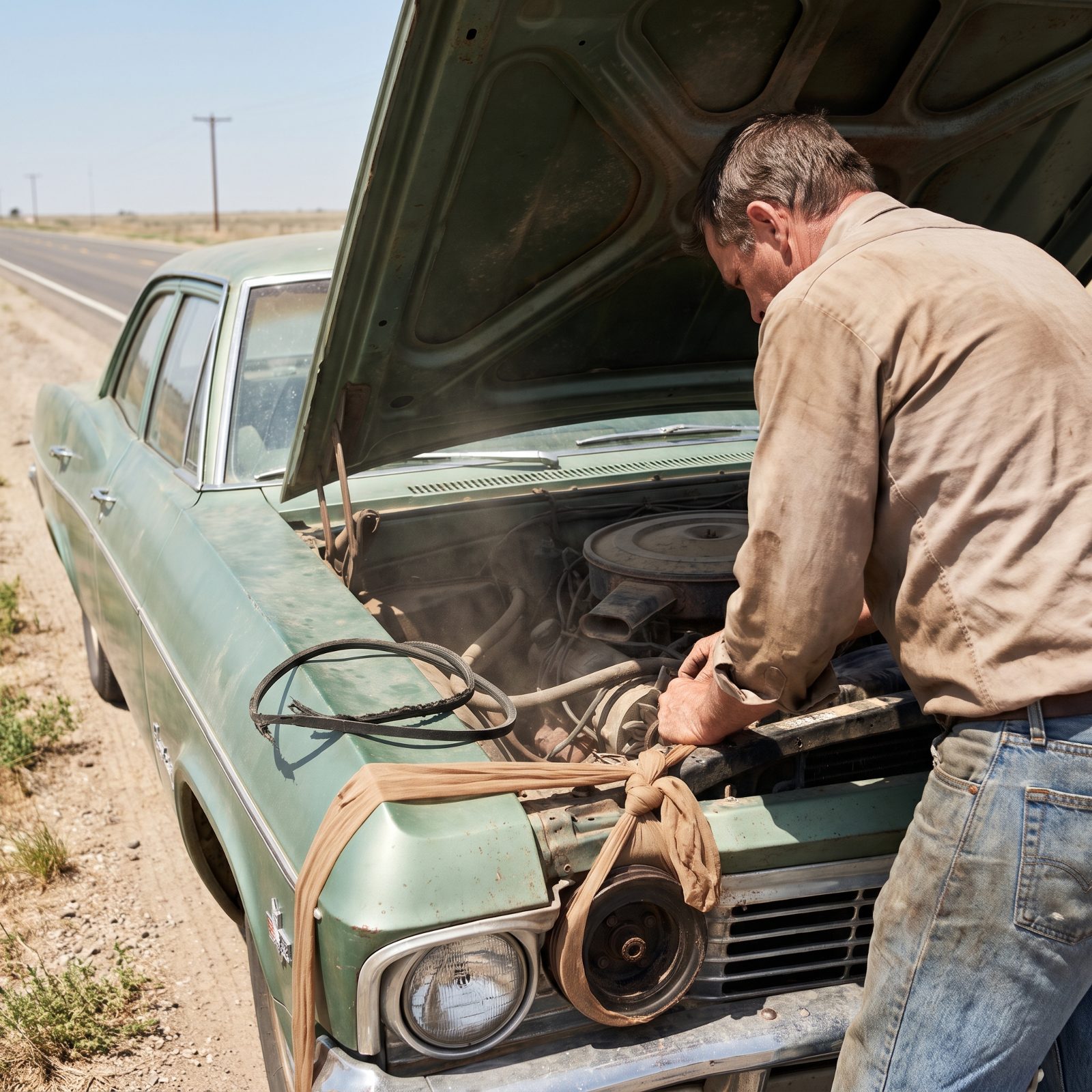
The belt let go twenty miles from anywhere. A nylon stocking, knotted and looped tight around the pulleys, would spin long enough to limp a car to the next gas station. It stretched. It slipped. It whined like a kettle on the boil. And somehow it worked.
This was glovebox wisdom, passed man to man. Everybody knew somebody who’d done it, and the ladies in the family learned not to ask where the stocking went.
12. Adjusting Valve Lash Hot With the Engine Idling
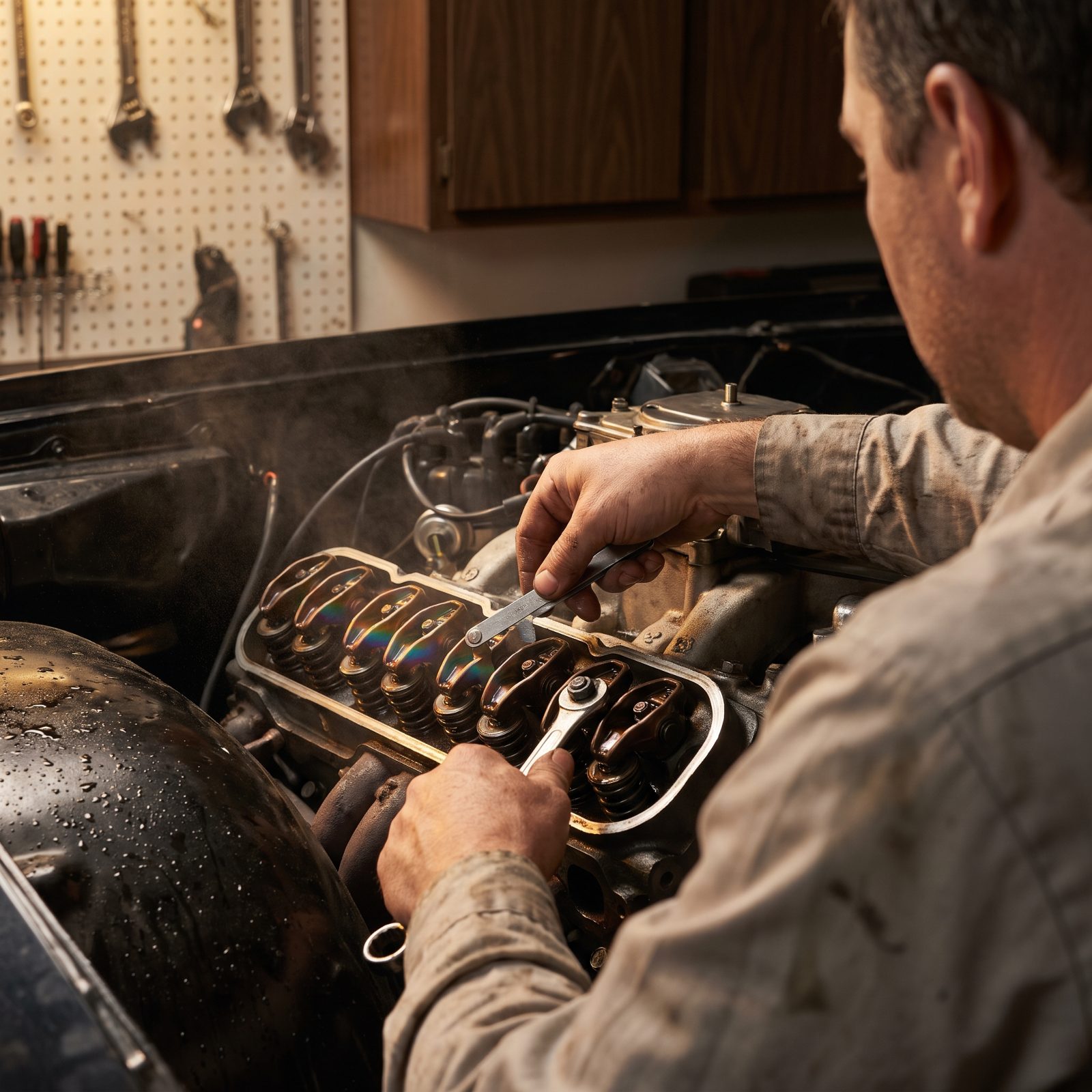
Oil everywhere. The engine ran, the rockers clattered, and you slid a feeler gauge between moving parts to set the lash hot — wrench in the other hand, knuckles inches from spinning steel. Get the gap right and the ticking quieted. Get it wrong and a valve burned.
Nobody adjusts valves hot anymore, and most engines use hydraulic lifters that never need a thought. But solid-lifter engines demanded the ritual, and the men who did it wore the oil spray on their forearms like a badge.
11. Packing Wheel Bearings by Hand With a Tub of Grease
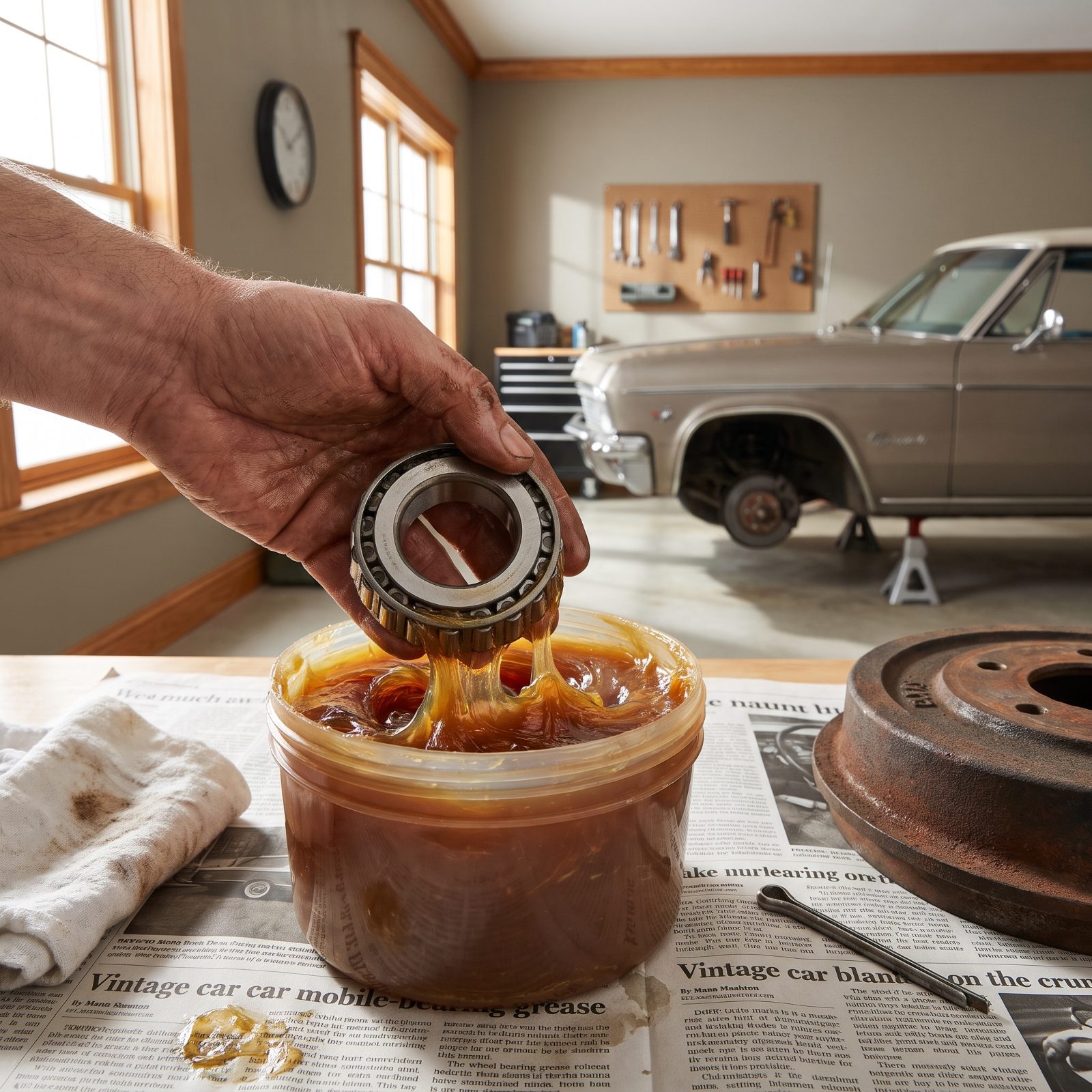
You dipped the bearing straight into the tub and lifted it out, amber goo stringing off the rollers back into the can, every roller already coated and dripping, ready to be worked. Grease to the wrist, grease under the nails for a week. Your fingers told you when it was packed right.
Shops have machines for this now, or they just replace the whole hub assembly, sealed at the factory. A dad on a Saturday did it by hand, every spring, so the family wagon rolled quiet all summer.
10. Welding an Exhaust Patch Over a Rusted-Out Muffler
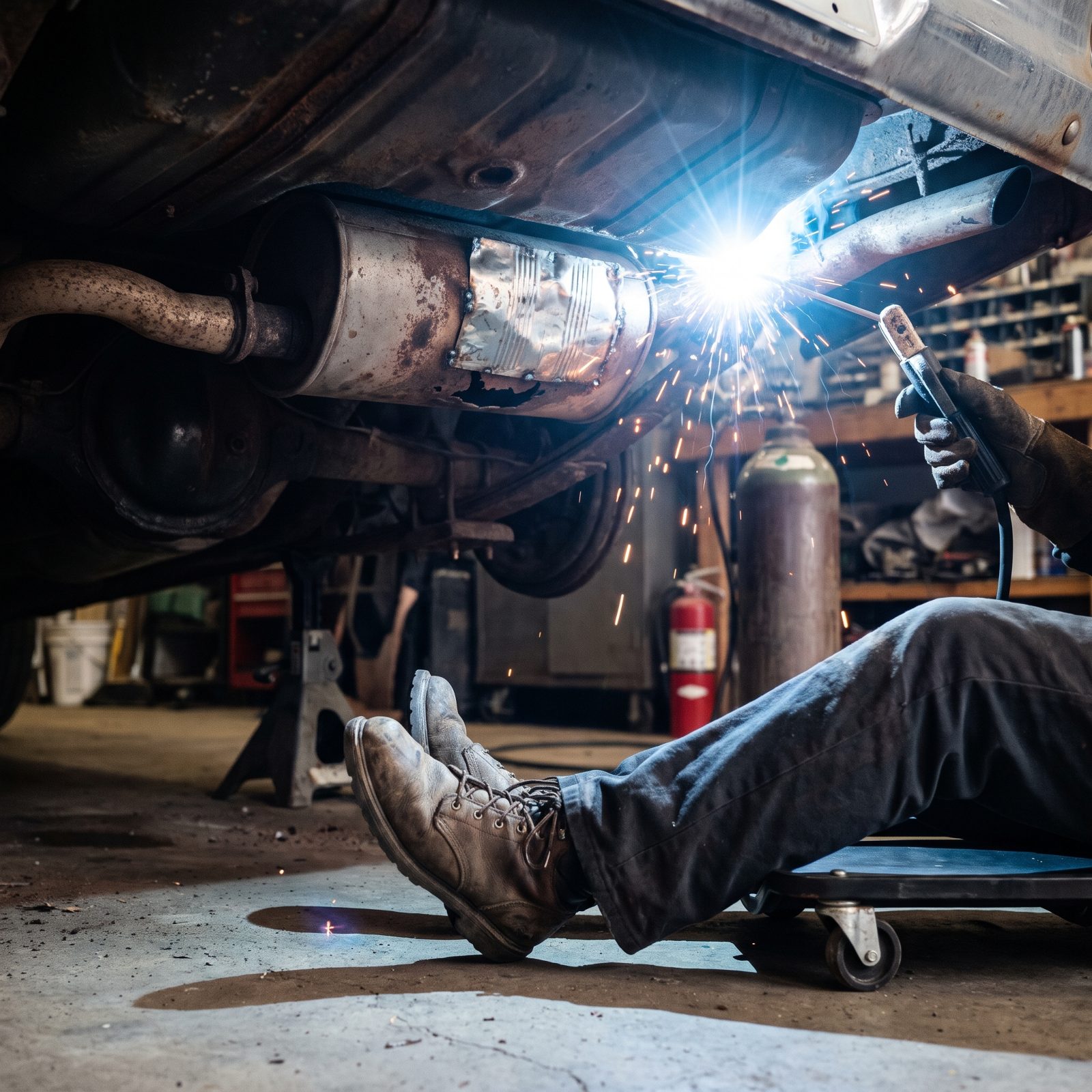
The muffler rusted through and roared like a dragster, so a flattened coffee can got tacked over the hole with a buzz-box welder and a prayer. It wasn’t pretty. It wasn’t legal. It bought another year before the whole system finally had to come off.
Welding near a fuel line and a gas tank, under a car on jack stands, with sparks raining down — that’s a list of things no modern shop would ever sign off on. But it quieted the car and saved a hundred bucks, and nobody was asking for more.
9. Lighting a Cigarette While Leaning Over an Open Gas Tank
Would you like to save this?
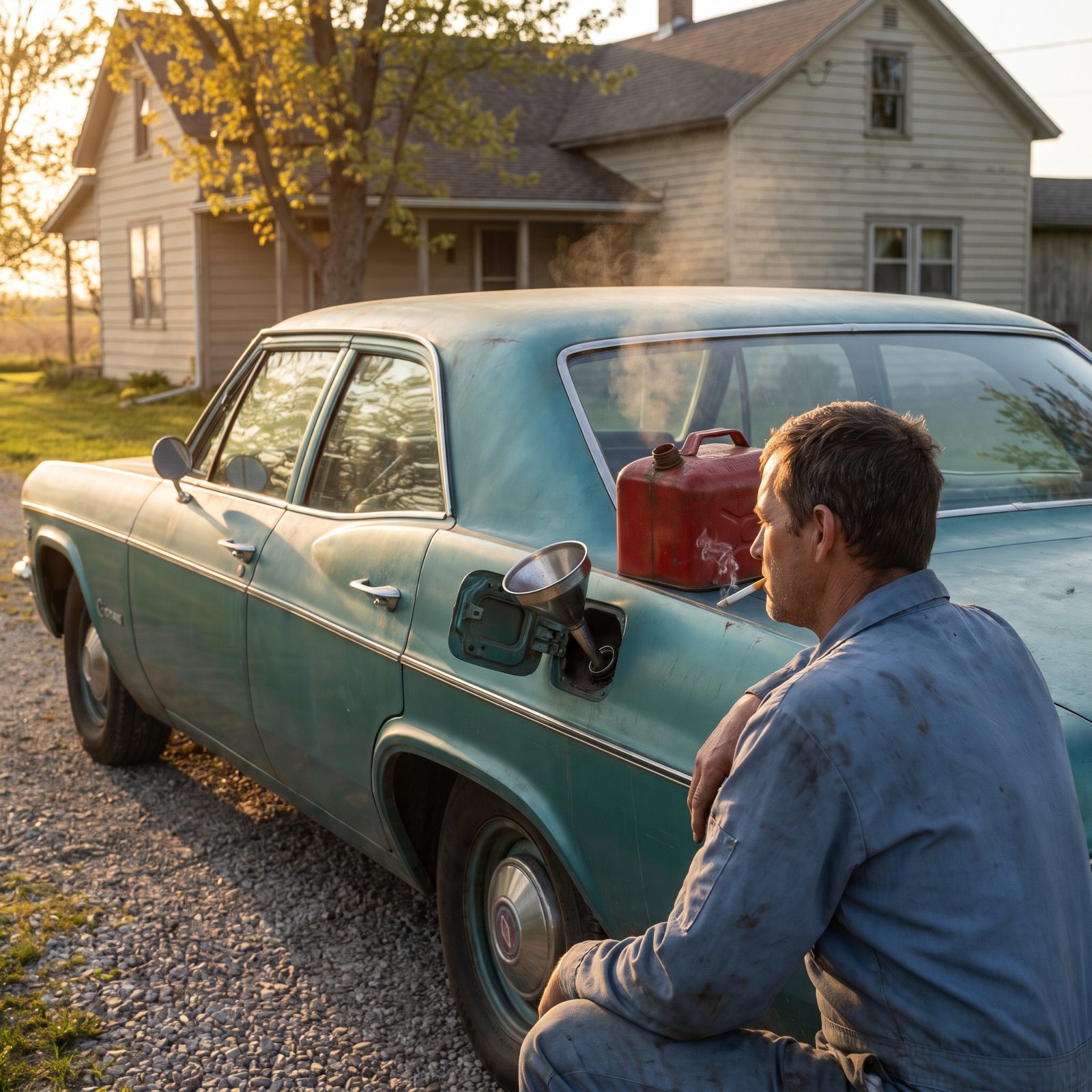
The gas can sat waiting on the trunk lid, the empty funnel hovered over the filler neck, the fumes rose in the heat, and there he stood with a Lucky Strike burning an inch from all of it. Nobody thought twice. Men smoked everywhere back then — pumping gas, under the hood, leaning over an open tank in the driveway.
It’s a wonder more driveways didn’t go up. A modern tech would faint on the spot. But that casual cigarette, dangling over a tankful of fuel in the summer light, might be the most honest picture we’ve got of how differently we handled our cars.
8. Cleaning Battery Corrosion With a Splash of Flat Coca-Cola
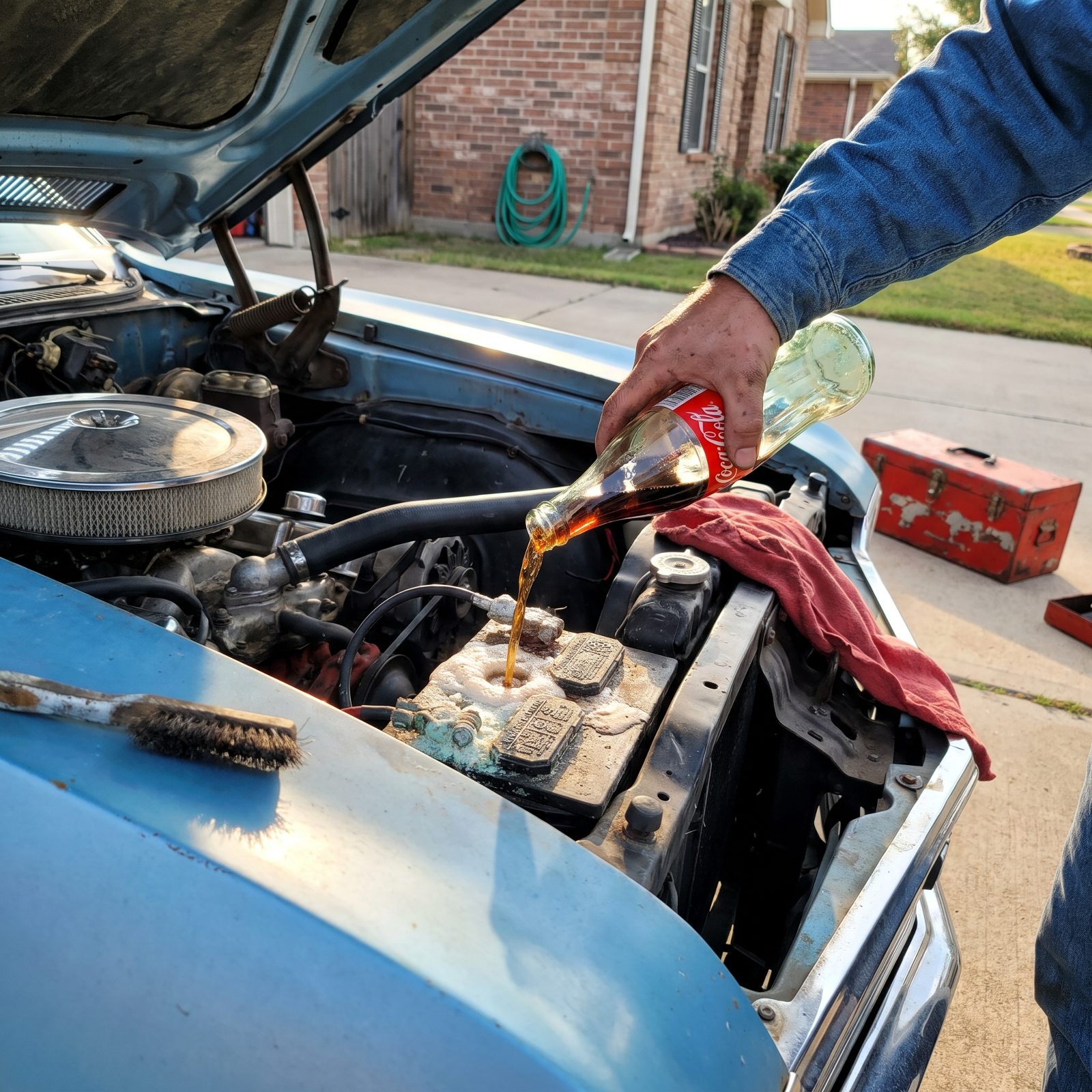
The battery wouldn’t turn over and the terminals looked like a science-fair volcano, so the nearest answer sat in the garage fridge. A splash of flat Coke across the top of the battery between the posts, a fizz, a scrub with a wire brush, and the crust melted away. The mild acid in the soda really does eat corrosion.
It also eats everything else. The sugar leaves behind a sticky film that pulls in grime, and the acid will happily go to work on your paint and your hands if you get careless. Mechanics today reach for baking soda and water, which neutralizes instead of piling on more acid. But on a Sunday with every parts store locked up tight, a cold Coke got it done.
7. Bump-Starting the Car by Rolling It Down the Driveway
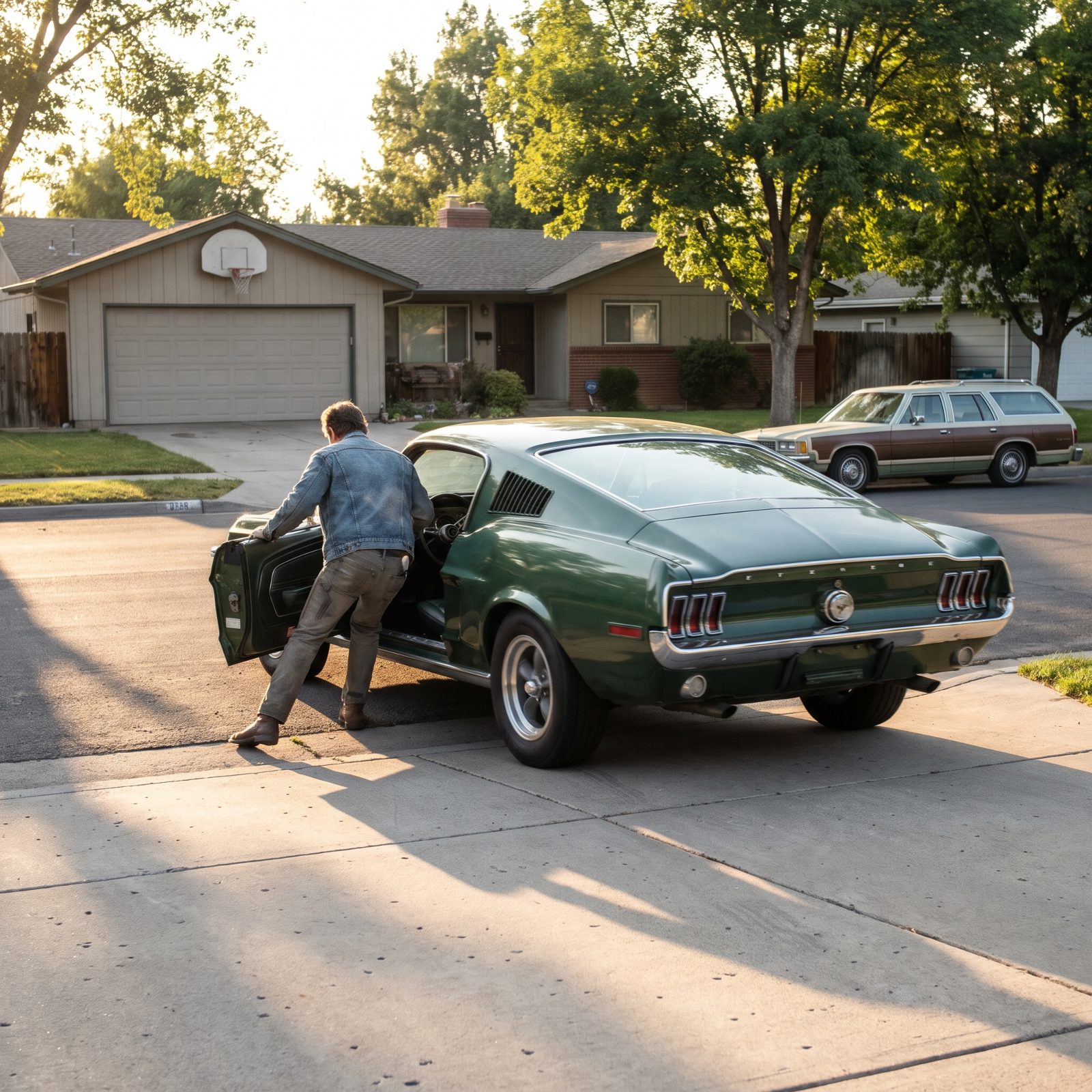
Dead battery, manual transmission, and no jumper cables within a mile. The fix was pure physics. Roll the car, drop it into second, pop the clutch, and let the turning wheels spin the engine back to life. One good shove down the driveway and the thing would cough and catch like it had just been faking the whole time.
You needed a hill, a stick shift, and a little nerve. Automatics and keyless ignitions make it impossible now, and a modern tech would just reach for a jump pack. Still, there’s a strange pride in firing up a car with nothing but your own shoulder and a bit of slope.
6. Stuffing a Rag Into a Leaking Fuel Line
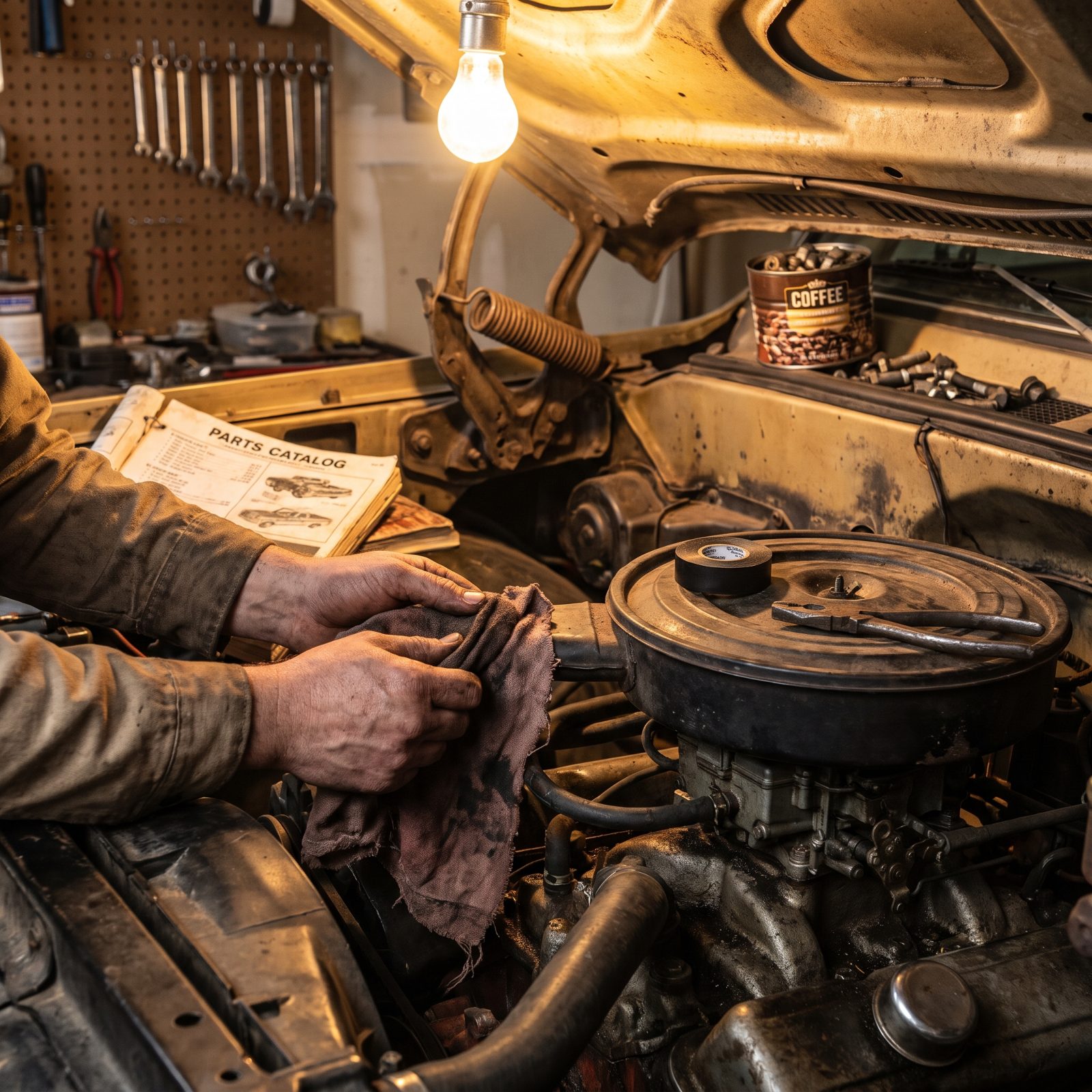
This one was never meant to last, and everyone knew it. A hairline crack in the fuel line, a wet patch spreading under the engine, and a man who needed the car running by morning. The answer? A rag wrapped tight, maybe with a hose clamp or a twist of wire, just enough to slow the drip to a trickle.
Gasoline near a hot engine is a fire waiting for an excuse, which is exactly why no shop would touch this today. They’d replace the line and send you on your way. But a rag got you to payday, and payday bought the real part.
5. Siphoning Gas by Mouth From One Car to Another
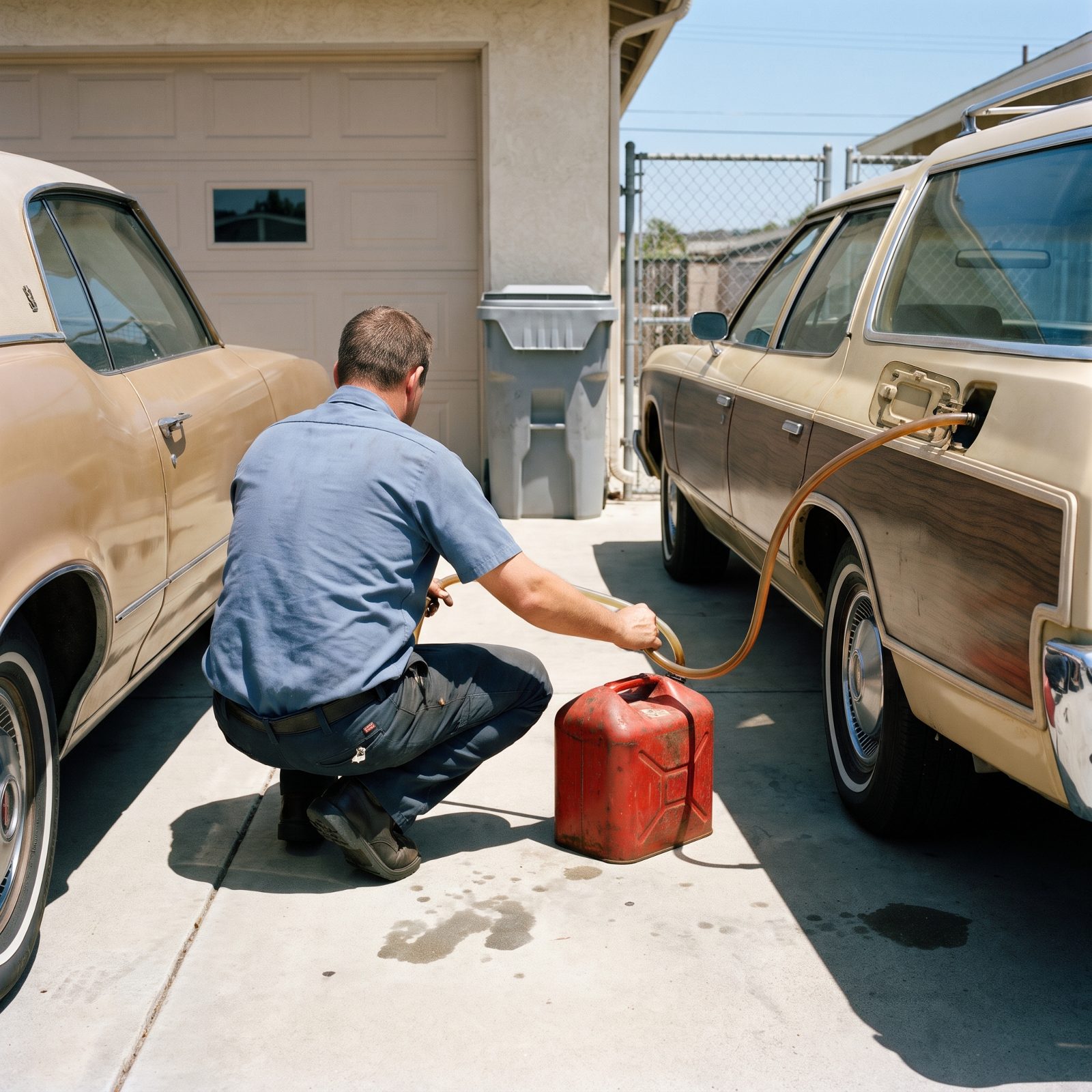
The trick was sucking just hard enough to get the gas moving, then whipping the hose into the can before you caught a mouthful. Timing was everything. Plenty of dads got it wrong — a sputter, a cough, and the unmistakable taste of leaded regular that no amount of coffee could kill.
Suction and gravity did all the work, no special tools beyond a length of hose. Nobody does this anymore, and not just because inhaling gasoline is a genuinely bad idea. Anti-siphon screens in modern filler necks killed the practice off for good. The old cars had none of that — just an open tube and a worse plan.
4. Pulling the Thermostat Out Entirely to Stop Overheating
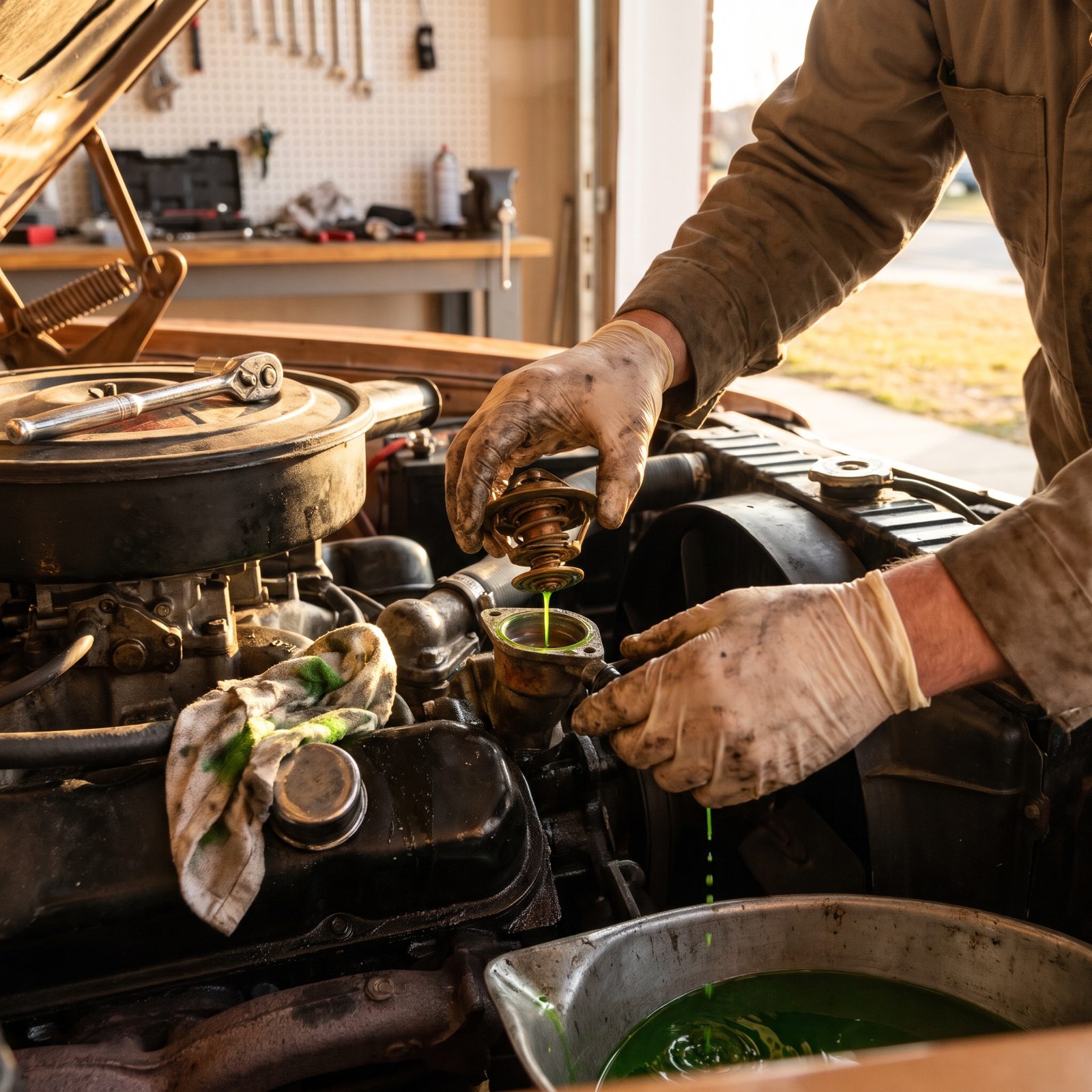
Car running hot in July traffic, the temperature needle creeping toward the red. Old-school logic ran like this: if the thermostat is stuck shut and choking the coolant, just take the thing out. No thermostat, no blockage, no overheating. Simple.
Simple and wrong, mostly. Yank the thermostat and the coolant races through so fast it barely cools at all, and the engine never reaches proper operating temperature — which wears it faster and runs it rich. A good mechanic would laugh and hand you a new three-dollar thermostat. But on a scorching afternoon with the radiator boiling over, pulling it felt like genius for about a week.
3. Spraying Ether Straight Into the Carb on Cold Mornings
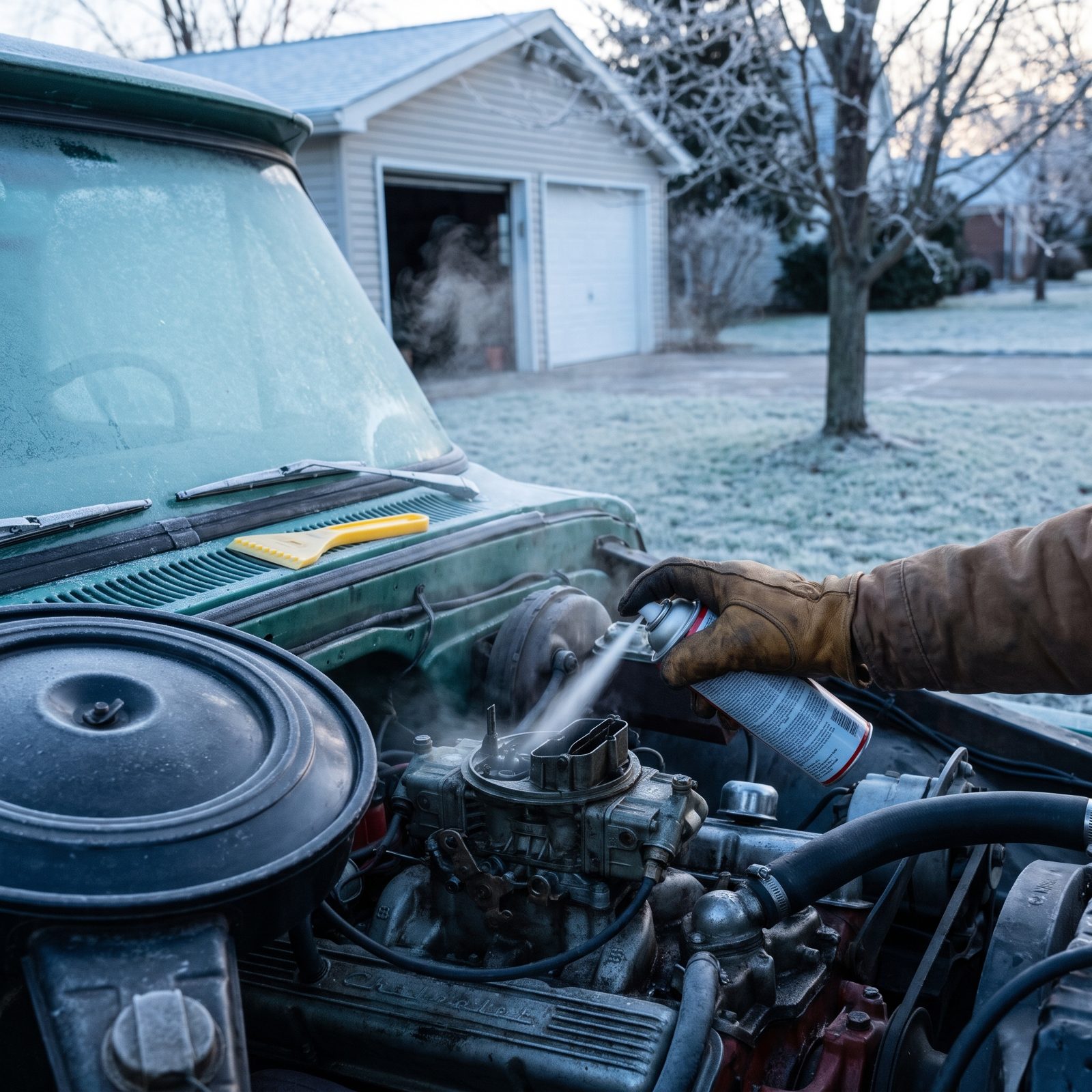
Ten degrees out, the engine cranking and cranking, and a dad reaching for the silver can of starting fluid. A quick shot of ether down the carb throat, crank again, and the engine fired with a bark. On the coldest mornings it felt like a miracle you could buy for a dollar.
Ether ignites easier than gasoline, which is exactly the problem. Too much and you get a backfire that can crack a piston or send the whole air cleaner up in flames. Fuel-injected engines don’t need it and shouldn’t get it. But for a frozen carbureted truck that flat refused to turn over, one careful squirt was the difference between going to work and calling in.
2. Testing Spark by Holding the Plug Wire to Feel the Jolt
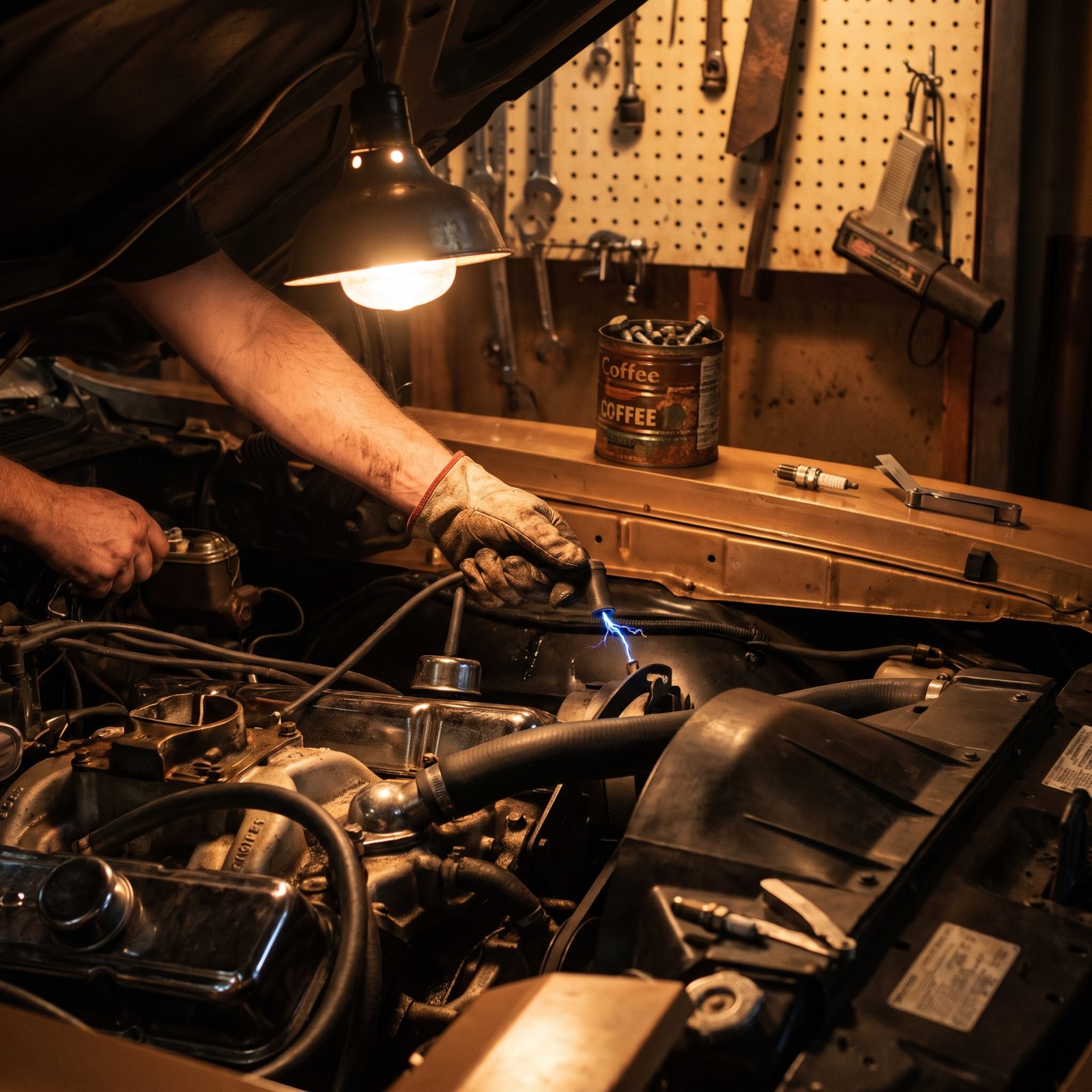
You never forgot the jolt. Wondering if a cylinder was firing, a dad would grab the spark-plug wire bare-handed, have someone crank the engine, and watch for the blue snap to jump to metal. If it arced, the spark was good. Nothing? There was the problem. Diagnostics by eyeball, and by feel.
Ignition voltage runs into the tens of thousands of volts at tiny current, so it rarely did lasting harm beyond a yelp and a jumped foot. A bad heart rhythm or a wet floor, though, could turn the joke into a hospital trip in a hurry. Mechanics use a spark tester now — a cheap tool that does the same job without the comedy. Anyone who ever grabbed a live wire bare-handed still remembers exactly how it felt — which is why the glove came out.
1. Sanding Rust and Painting a Fender With a Spray Can in the Driveway
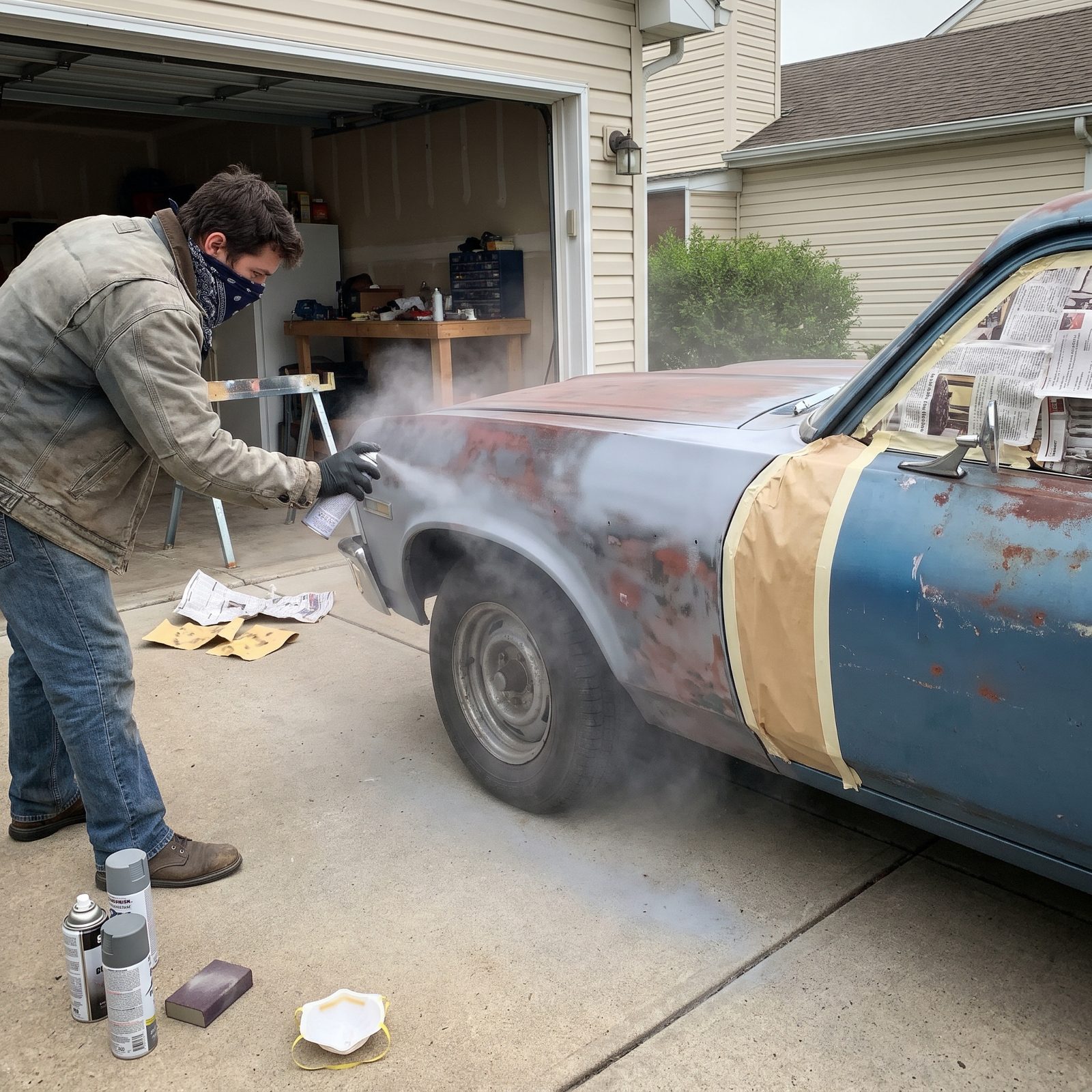
Rust creeping up the fender like a slow stain, and a dad who wasn’t about to hand over body-shop money. Out came the sandpaper, a can of Bondo, and a rattle-can of primer. A whole Saturday of sanding, filling, and spraying out in the open driveway — bugs and dust settling into the wet paint and all.
It never matched. The color got close but the texture came out orange-peel, and half the overspray drifted onto the neighbor’s car. A proper shop sprays in a booth with real equipment and walks away with a factory finish. A driveway job stopped the rust for another year and cost about the price of lunch. From ten feet away, on a cloudy day, it almost fooled you.
Rattle-can fenders are a long way from what readers love today: in our heart votes, cars restored to concours condition got hearts 85% of the time, versus 74% for other images.