
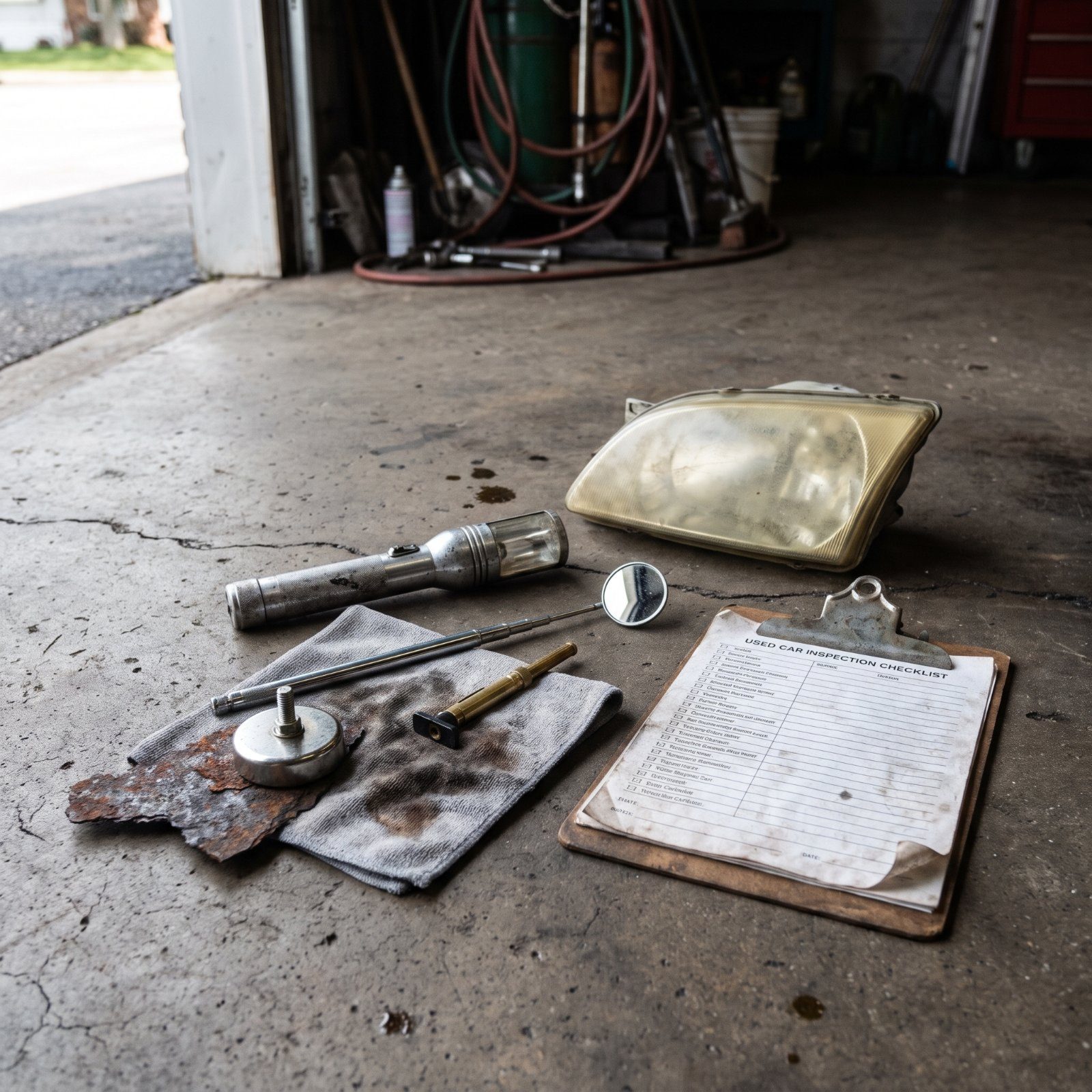
You can tell before the salesman finishes his first sentence. The car’s sitting there trying to look proud, and it’s giving itself away the whole time. Dull paint. A headlight gone the color of a cataract. A little rust freckle creeping up from a wheel arch. These are the tells, and they’re honest ones. A clean carfax lies; a chalky fender does not. Walk any lot with somebody who’s spent thirty years under cars and watch them slow down, tilt their head, and just know. Here’s what they’re reading long before anybody mentions price.
Please note that some of the images in this article were created with the assistance of AI.
28. Dull, Oxidized, Chalky Paint That Wipes Off on Your Hand
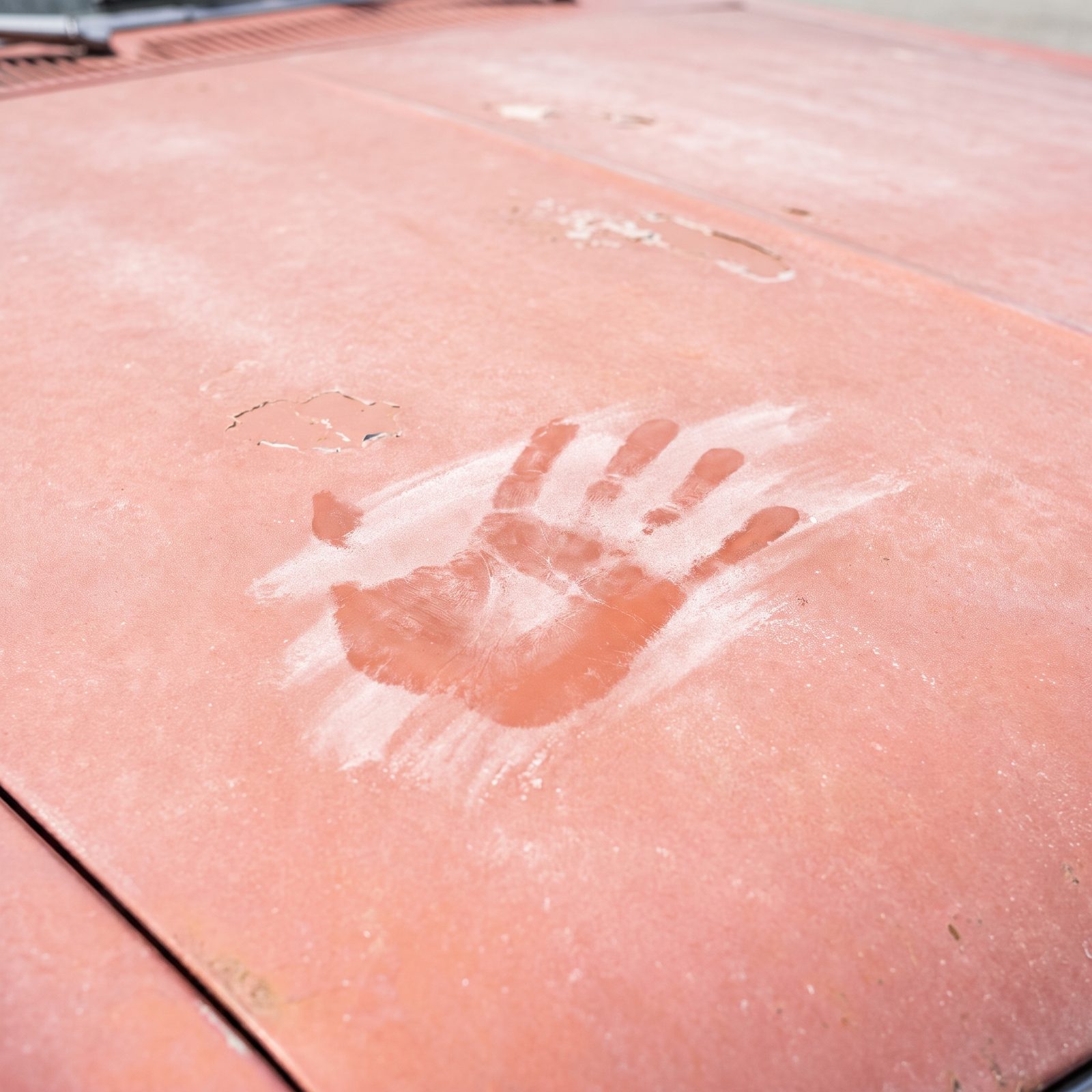
Paint that’s lost its depth tells you the car lived outside, uncovered, for years. Healthy clear coat reflects like water, but oxidized paint goes flat, and if you drag a finger across a baking-hot fender you’ll lift off a smudge of chalk. That chalk is the clear coat breaking down and giving up.
It’s not just cosmetic. Once the clear coat fails, the color underneath gets exposed and starts dying fast. A car this neglected on the outside got the same attention underneath, which is to say none.
What Our Readers Say
- In our reader votes, cars pictured in restored, concours condition got hearts 85% of the time, compared with 75% for the other images in the same articles.
From Jalopy Talk reader polls and votes.
27. Headlight Lenses Gone Cloudy and Yellow as Old Dentures
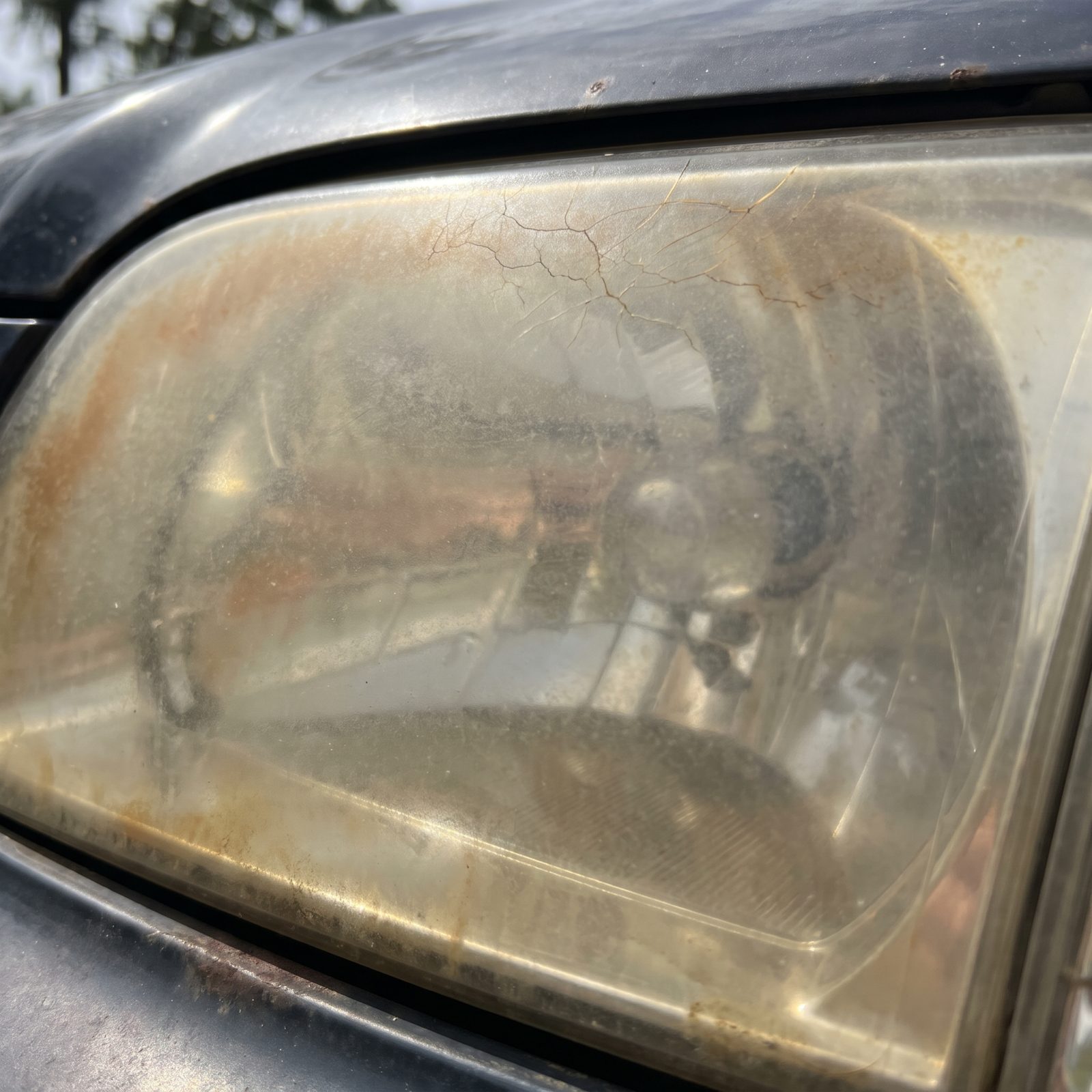
Cloudy headlights are the first thing a trained eye clocks from twenty feet off. The lens goes yellow and foggy as the UV film wears off the polycarbonate and the plastic oxidizes from the surface in.
Here’s what it really signals: nobody spent fifteen minutes with a restoration kit, which means nobody spent fifteen minutes on anything. A yellowed headlight is a car that was driven and never cared for. And it guts your nighttime visibility, so it’s a safety problem wearing a cosmetic disguise.
26. Rust Blooming Out From the Wheel Arches Like a Bad Rumor
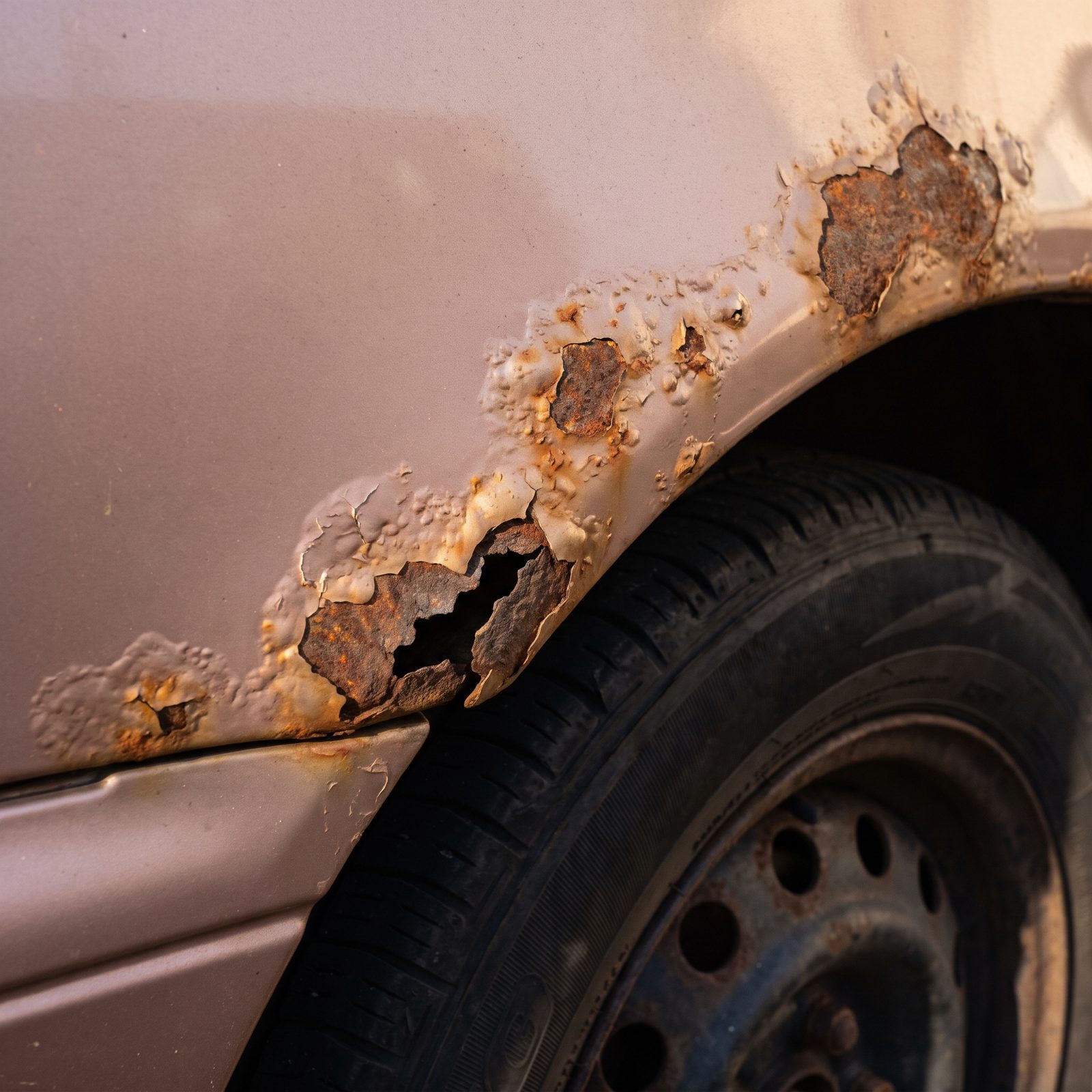
Wheel arches rot first because that’s where the road throws everything at the sheet metal: salt, grit, water, every mile of winter. When rust starts blooming out from under the paint along that curved lip, it’s never the whole story. What you can see is a fraction of what’s happening behind the panel.
So poke it. If a screwdriver sinks in, walk away. That bubbling paint is the metal swelling as it oxidizes, shoving the finish up from underneath, and by the time it shows on the surface the back side is already lacier than you’d ever want to look at.
25. Rust Bubbling Up Under the Door Sills Where Nobody Looks
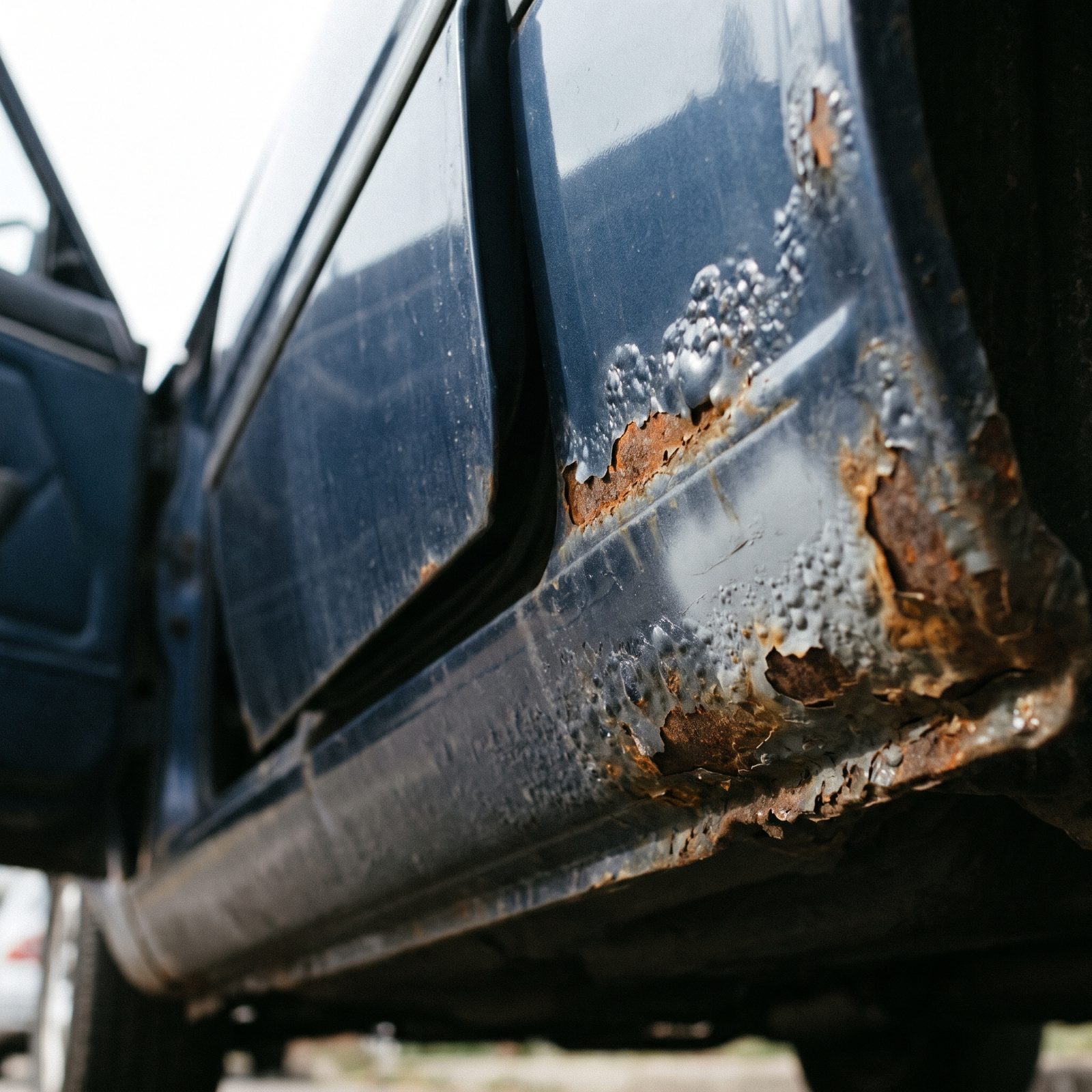
The door sills are the sneaky ones. You have to crouch to see them, which is exactly why neglected cars rot there unnoticed. Water collects inside the rocker panel, the drain holes clog with leaves and grime, and the metal cooks from the inside out.
Bubbling paint along that bottom seam means the frame-adjacent structure is going. This is no bolt-on fender you can swap in an afternoon. Rocker rust is structural, expensive, and the thing that turns a fixable car into scrap. Run your hand along the underside, and if it feels crusty, you’ve found the deal-breaker.
24. Sidewalls Cracked and Dry-Rotted Like an Old Leather Boot
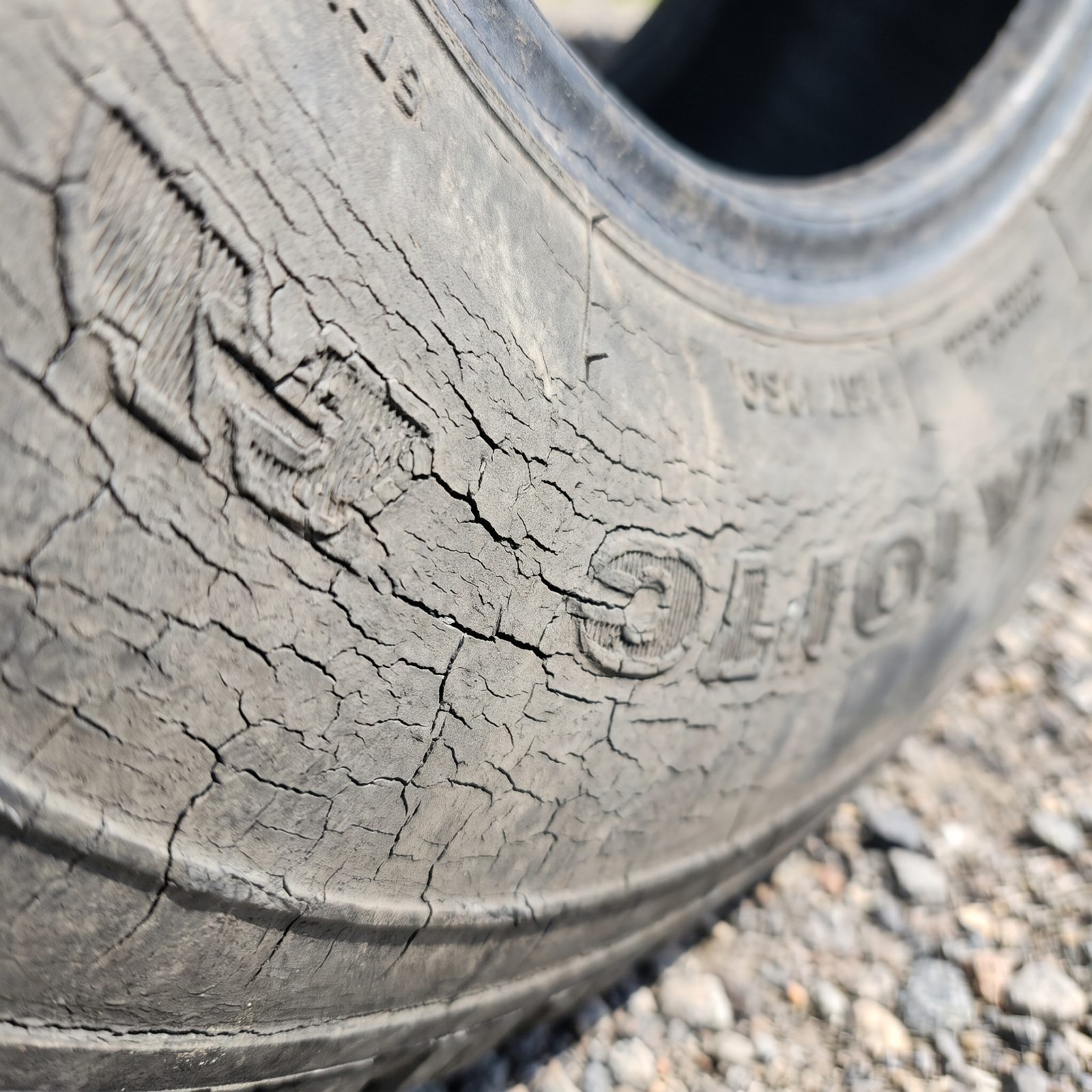
Rubber doesn’t just wear out. It dies of old age. A sidewall webbed with fine cracks is dry rot, and it means those tires have been sitting still and baking longer than they’ve been rolling. The oils that keep rubber supple evaporate, and the surface perishes into a brittle crackle.
Tread depth can read fine while the tire’s still deadly. Dry-rotted rubber lets go without warning at speed. If the sidewalls are cracking, you’re budgeting for four tires on day one, and you’re wondering what else sat neglected while these quietly came apart.
23. Tread Worn Unevenly, One Edge Gone, the Other Fat
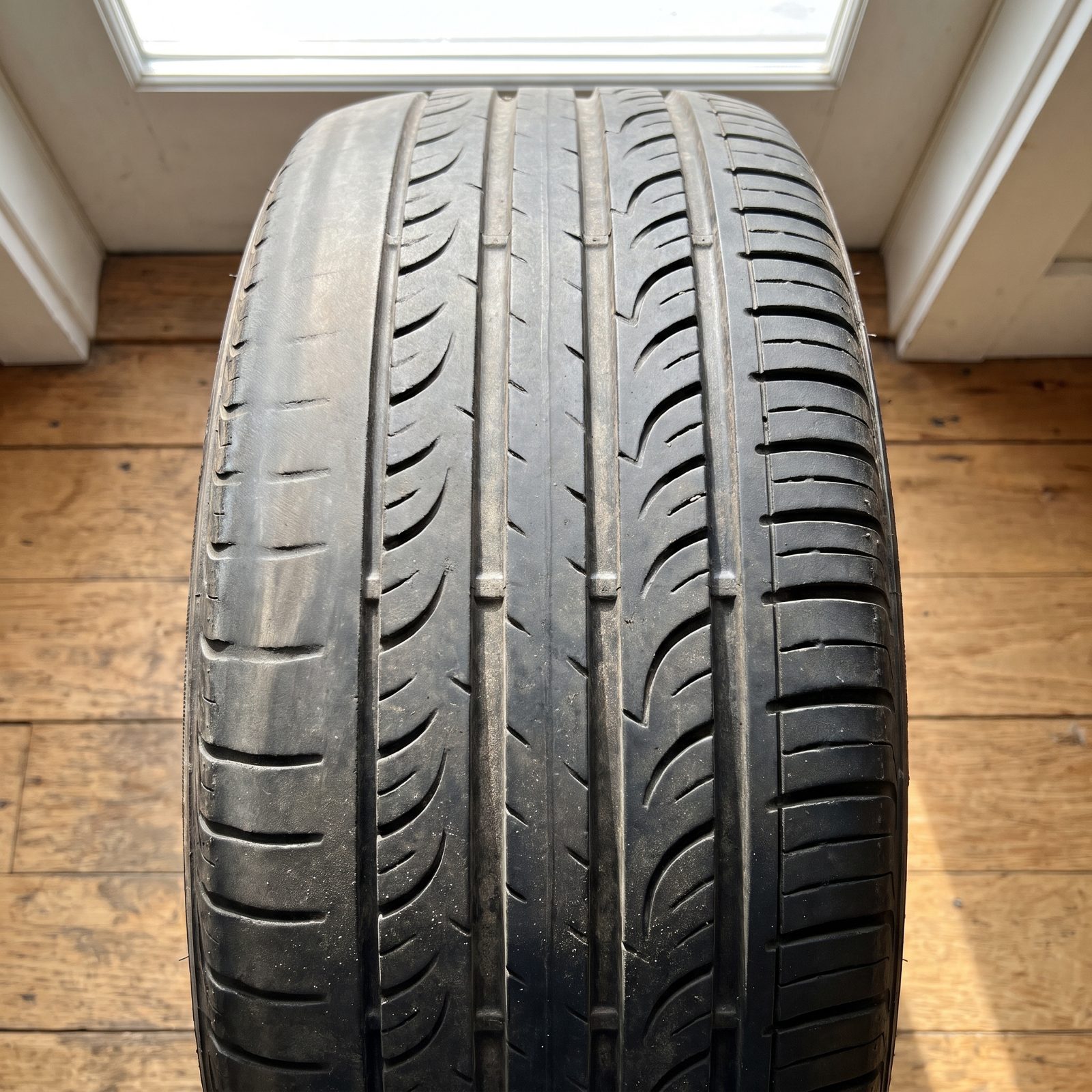
Tread that’s bald on one edge and deep on the other is a tire wearing itself out trying to warn you about a problem somewhere else. Alignment’s off, a suspension component’s shot, or somebody’s been running the pressure wrong for years.
Sweep a palm across it. Smooth one way, sharp the other? That feathering points straight at a toe or camber issue. A careful owner catches it at the first rotation. A neglectful one drives it until the cords show. Uneven wear is never really about the tire. It’s about everything the tire’s bolted to.
22. A Different Tire on Every Corner Like a Garage Sale on Wheels
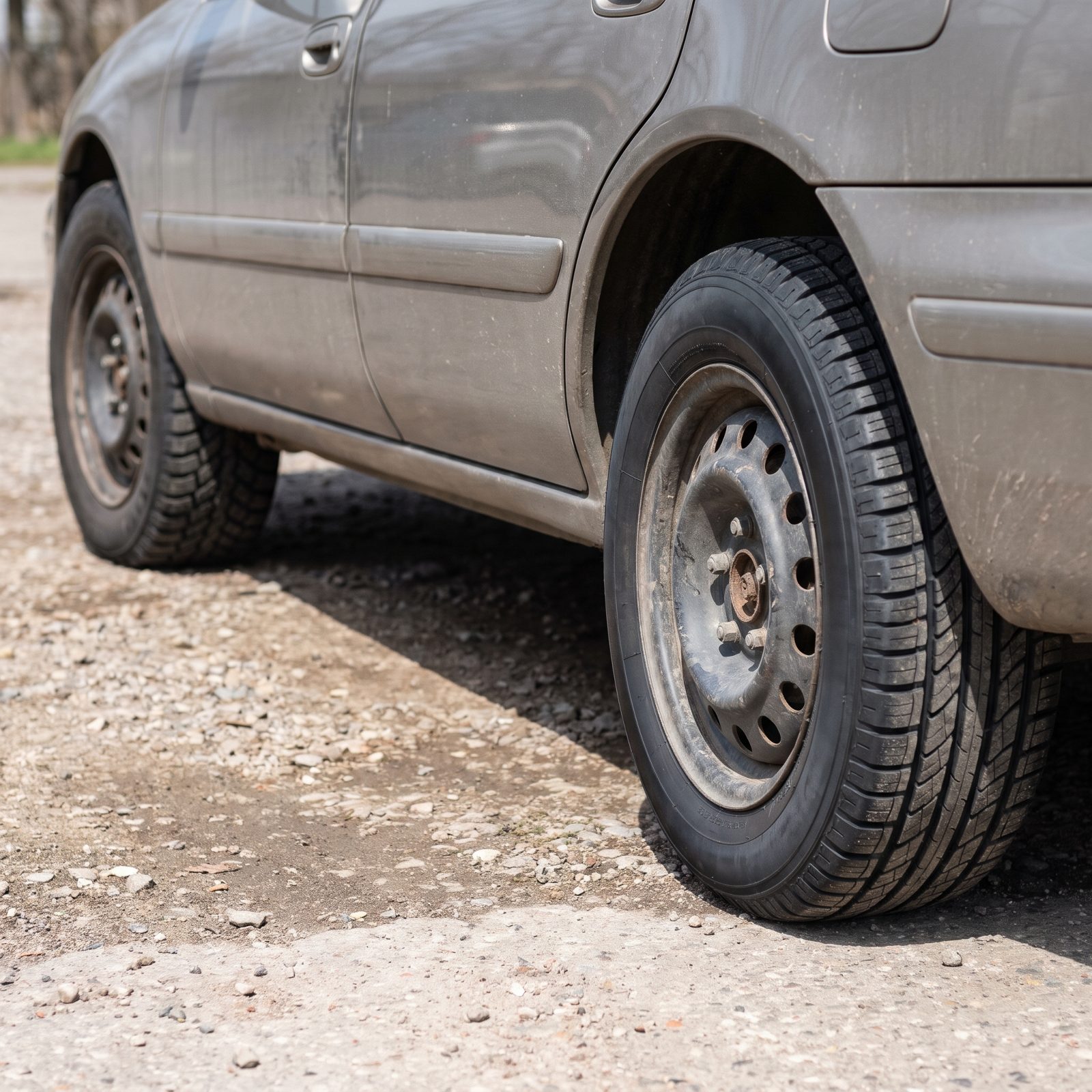
Four tires, four different treads. That’s a car fixed one flat at a time, always with whatever was cheapest or whatever the buddy had rolling around his garage. It says the owner never saw the car as a system, only as a thing that occasionally needed a tire to stop the leak.
Beyond the penny-pinching, mismatched tires genuinely drive worse, and on an all-wheel-drive car they can cook a differential. But mostly it’s a window into the whole relationship: patch, never maintain.
21. Brake Rotors Rusted Orange and Scored With Deep Grooves
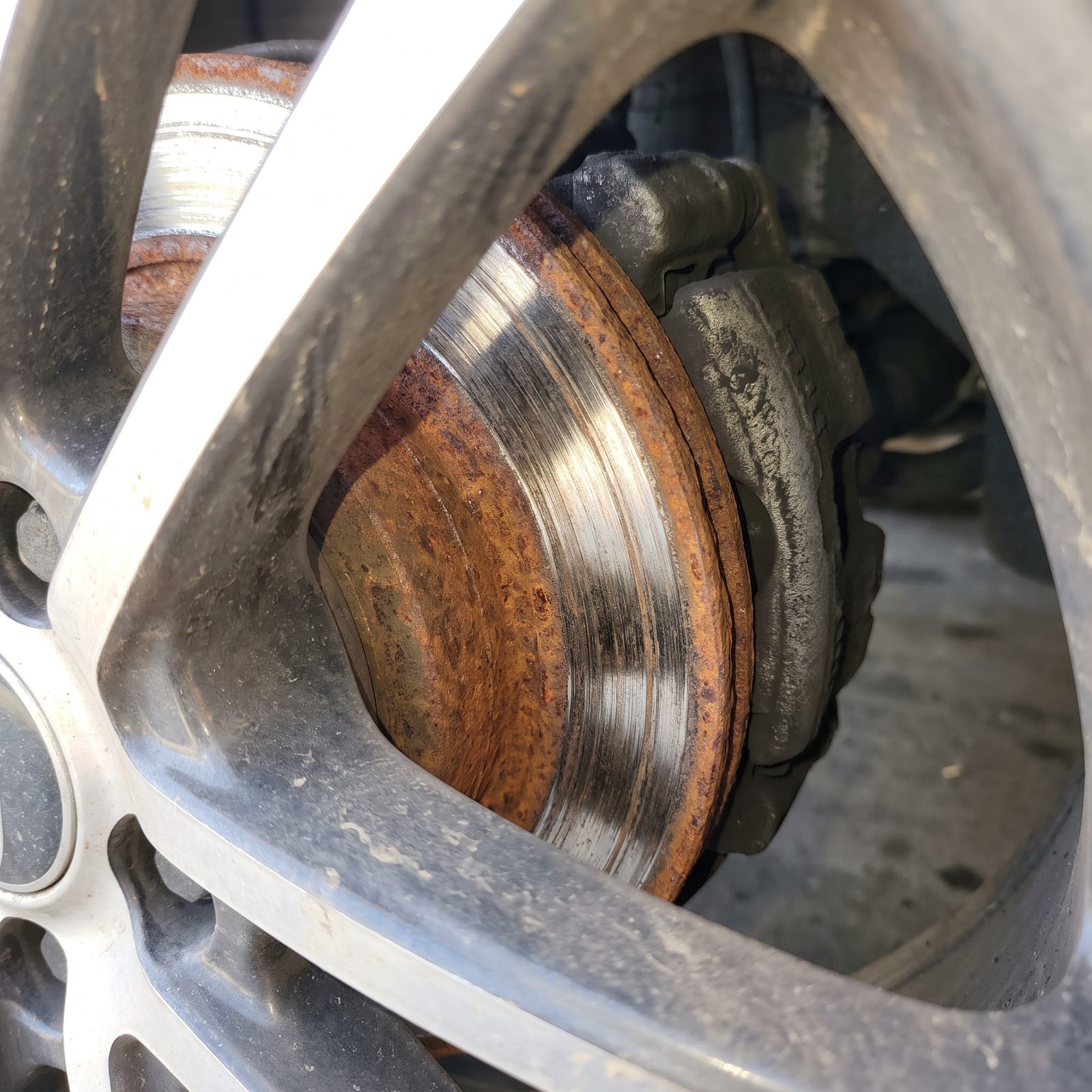
A film of surface rust on rotors is normal after one rainy night parked. Deep scoring you can catch a fingernail in, plus a thick raised lip around the edge, is something else entirely. That’s pads worn down to the rivets, metal grinding metal, somebody who kept driving well past the noise.
And rust caked across the whole braking surface means the car’s been sitting a long while with moisture eating the iron. Either way it’s new rotors and pads, and it tells you the one maintenance item that actually stops the car got ignored right along with everything else.
20. Clear Coat Peeling Off the Roof in Ragged Patches
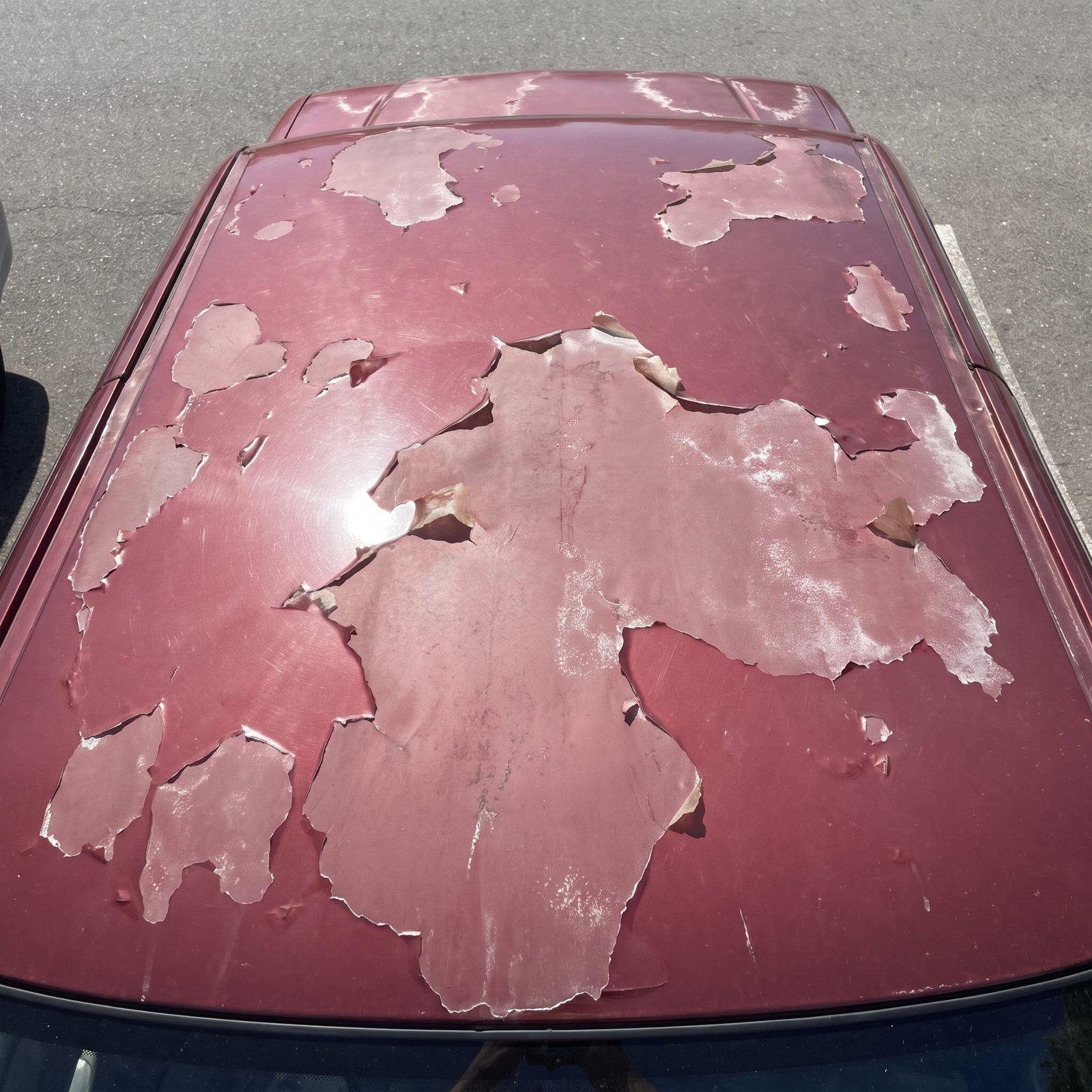
Roof and hood take sun dawn to dusk, so that’s where the clear coat gives up first. When it peels, it lifts in ragged islands, matte dead zones ringed by whatever gloss is still clinging on.
You can’t polish this away. Once clear coat delaminates, the only real fix is respraying the panel, and that’s real money. It’s the loudest shout on this whole list that a car spent its life parked under open sky with nobody who cared enough to throw a cover over it.
19. Swirl Marks and Scratches Webbing the Whole Finish
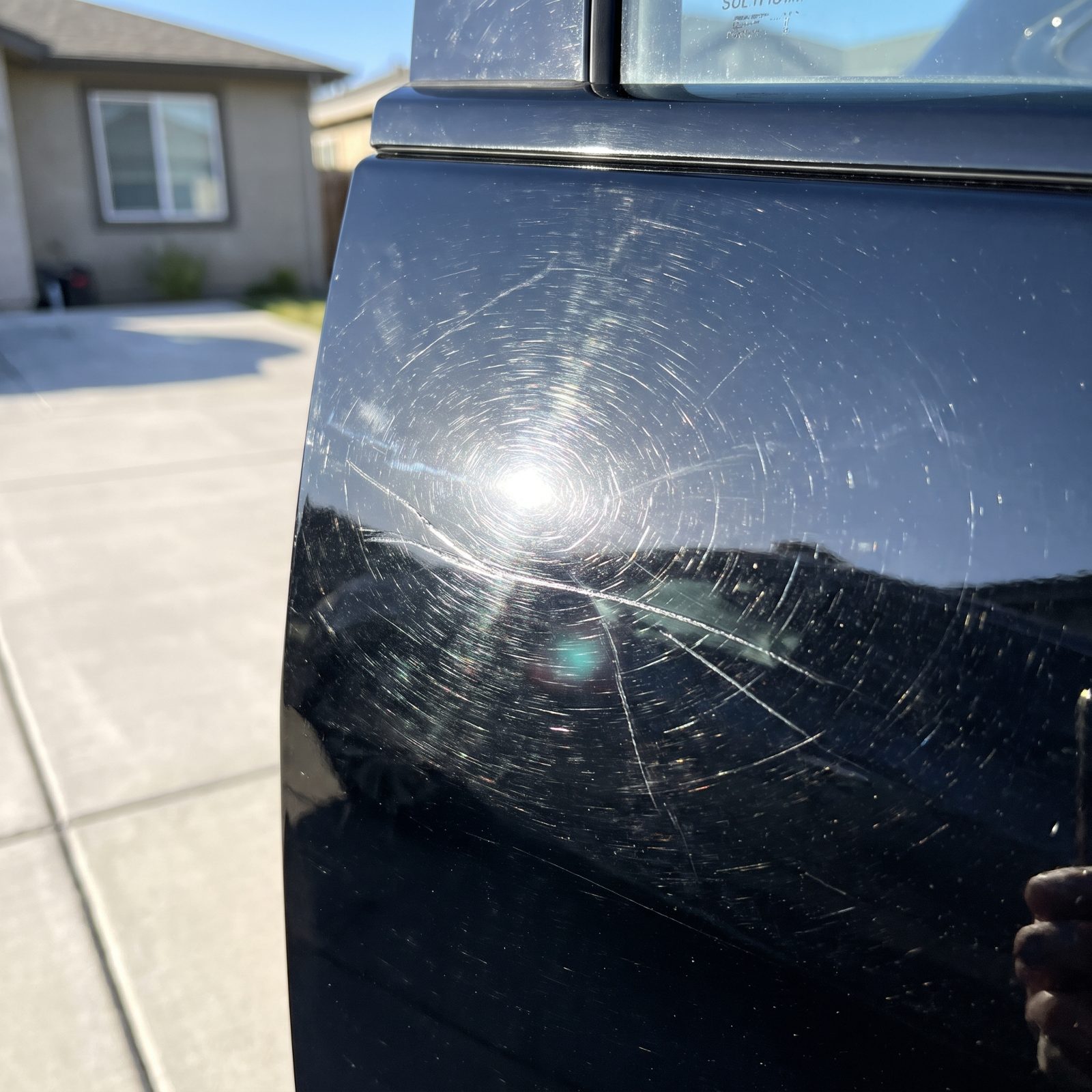
Catch a dark car’s paint under a bright window glare and the swirls light up like a spiderweb. That halo of fine circular scratches is the paint’s diary: years of dry rags, gas-station washes with filthy brushes, and wiping dust off with whatever shirt was handy.
None of it’s fatal, and a proper machine polish erases most of it. But what the swirls tell you matters more than the marks. Somebody who swirls a finish to death never once washed it right, which usually means they never did anything else right either.
18. Sagging Doors and Panel Gaps That Don’t Line Up
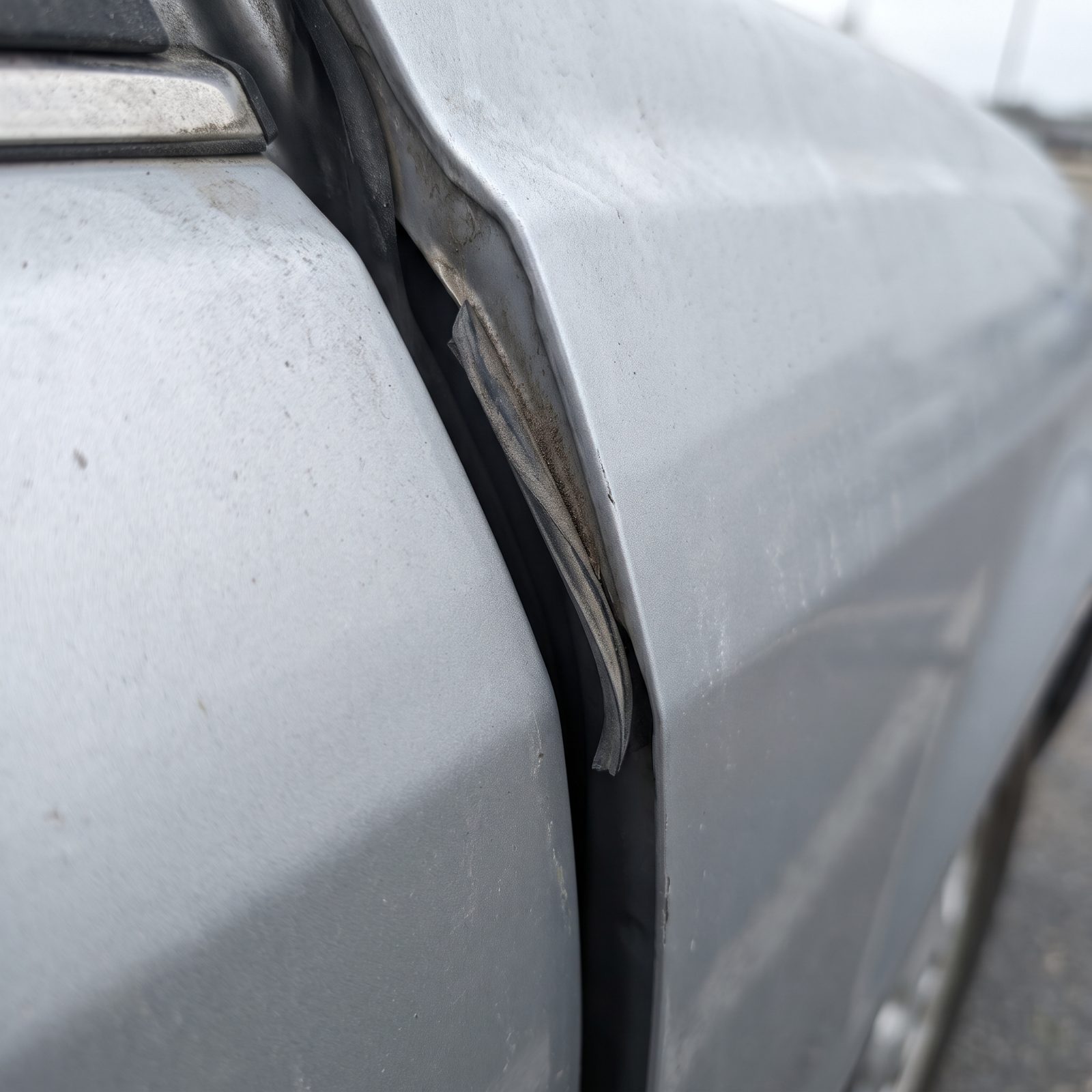
The first thing a trained eye lands on is the gaps. Factory panel gaps are tight and even, the same width top to bottom. When a door droops, when the trunk sits crooked, when one gap yawns wide and its neighbor pinches shut, somebody’s been inside that sheet metal and didn’t put it back right.
Sagging doors usually mean worn hinges, which means a lot of hard miles and nobody who cared to tighten them. But crooked panels can also mean a wreck, straightened badly. Either way, the car stopped being square, and nobody made it square again.
17. The One Door That’s a Slightly Different Shade
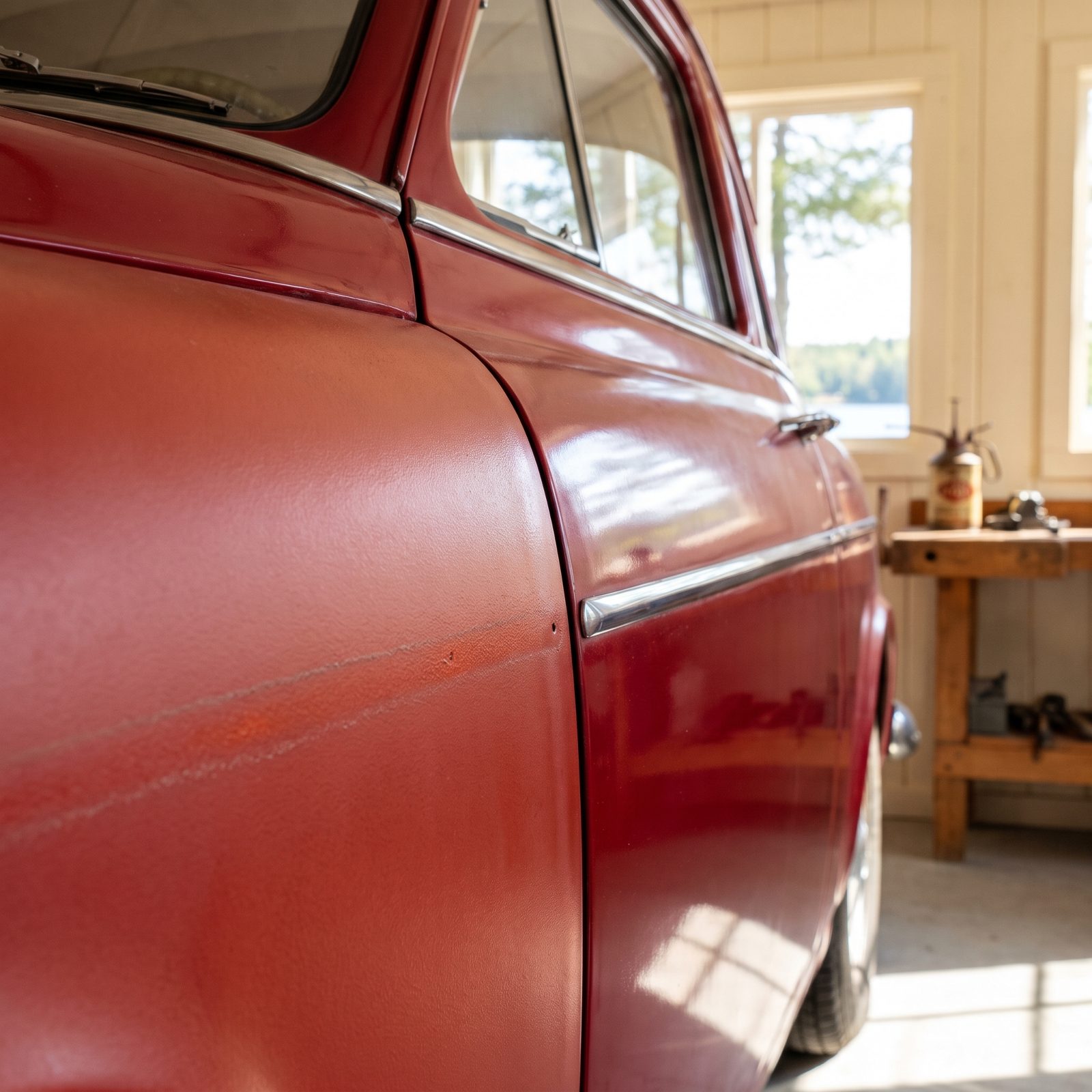
Paint rarely matches twice. A body shop can get close, but close is the tell. Stand so the sun rakes across the side of the car and look down the length of it. One panel will catch the light differently — slightly darker, slightly glossier, a whisper of orange-peel texture the factory never left.
A repaint isn’t automatically bad. Cars get dinged. But it means something happened here, and honest sellers tell you about it. The ones who don’t are hoping you won’t notice. Check the door jambs and under the hood too, because overspray likes to hide where people forget to look.
16. Trim and Badges Hanging On By a Prayer
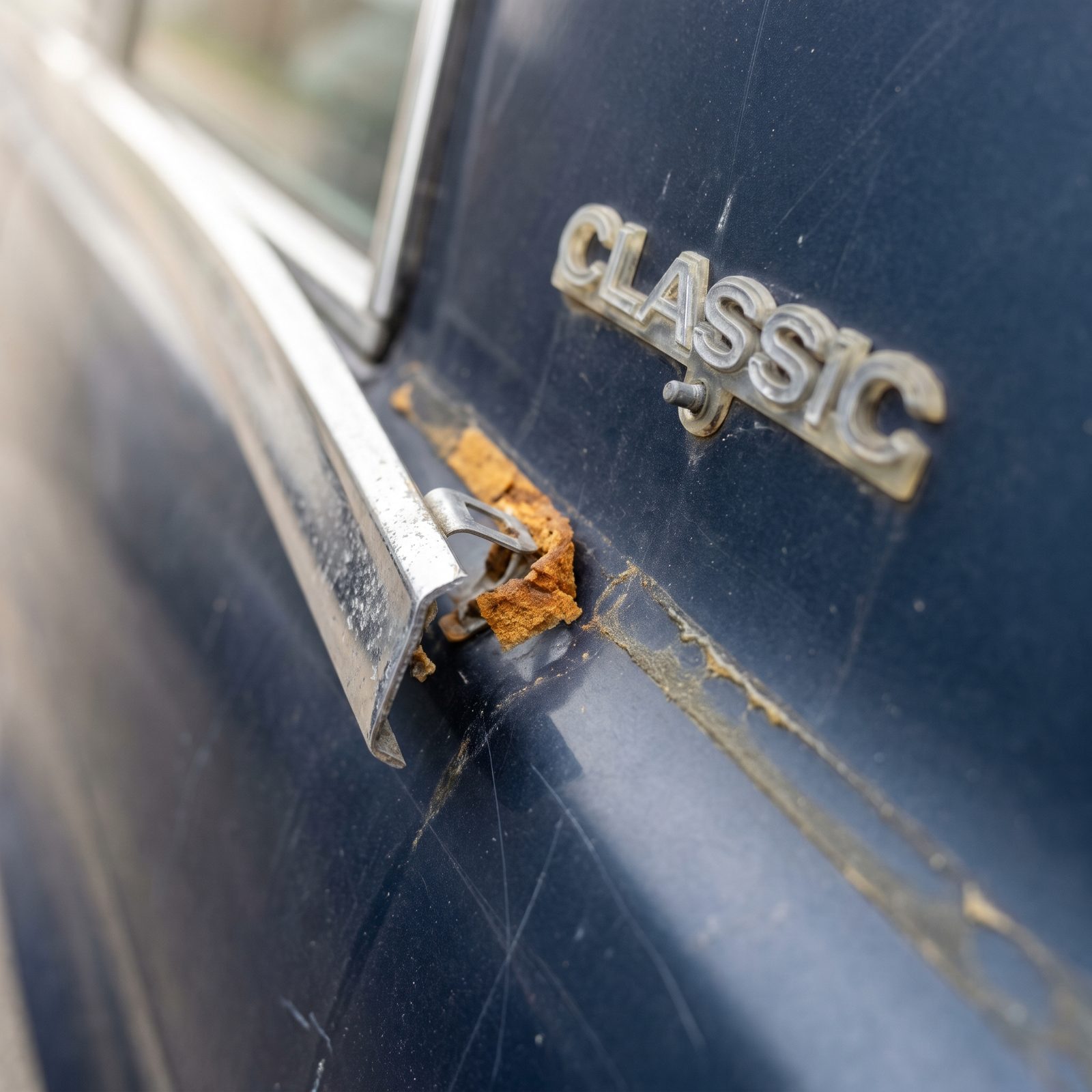
Trim that flaps in the wind tells you about the owner, not just the car. A loose chrome strip takes two clips and ten minutes to fix. A badge hanging crooked takes less. When nobody bothered with the easy stuff you can see, ask yourself what they skipped underneath where you can’t.
That trim is worth the ten minutes: Jalopy Talk readers gave cars with lots of chrome more hearts than the other images in the same articles, 90% versus 83%.
15. A Dashboard Cracked Like a Dry Riverbed
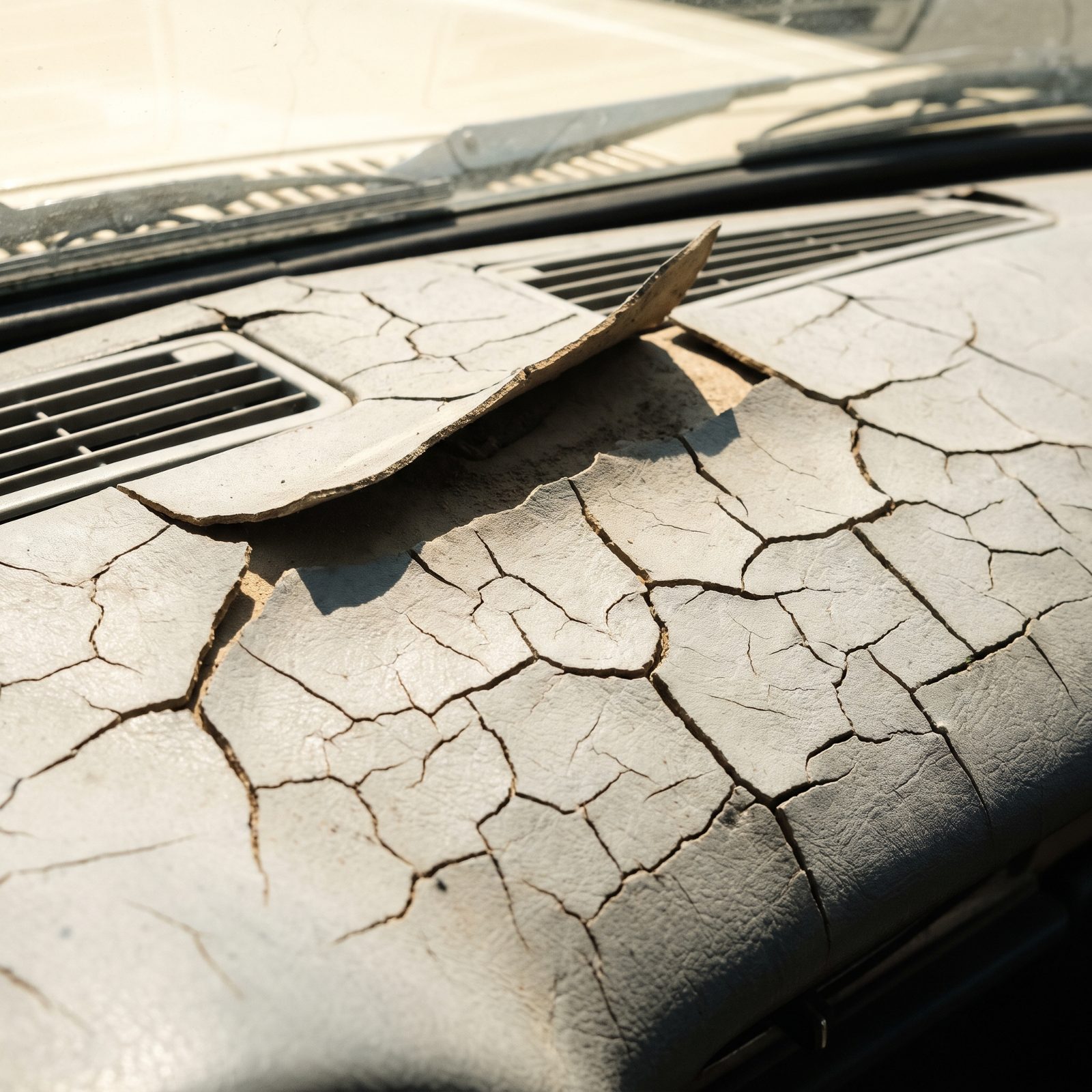
A spiderwebbed dash is the sun’s signature — years parked outside with no cover, no sunshade, no garage. The vinyl dries, shrinks, and splits into that dry-riverbed pattern that never gets better, only worse.
Here’s what it really tells you: this car lived its whole life exposed. And what the sun did to the dash, it did to the wiring insulation, the rubber seals, the window motors, every bit of plastic baking under that glass for a decade. The dash is just the part you can see.
14. Seats Faded and Split From Years in the Sun
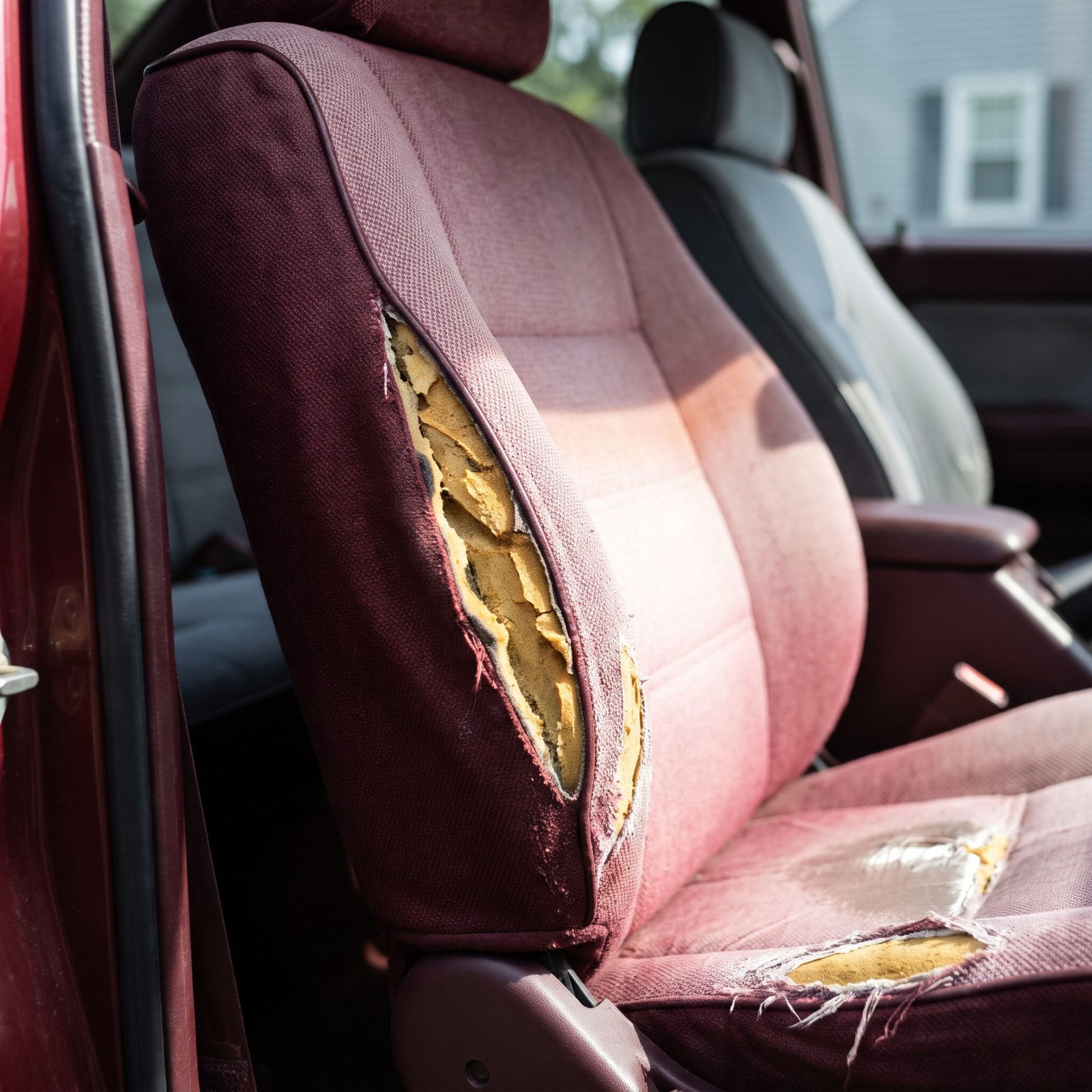
Seats wear in a pattern, and the pattern tells a story. The driver’s side bolster splits first because that’s where your hip drags across it a thousand times a month. Sun-fade shows as a gradient, darker where the fabric hid in shadow, bleached pale where the light fell.
Torn upholstery alone isn’t a dealbreaker. Covers exist. But faded, cracked, foam-poking seats paired with that baked dashboard paint a picture: an outdoor life, hard use, and nobody who thought a windshield shade was worth the loose change in the ashtray.
13. An Ashtray Running Over and Floors You Don’t Want to Touch
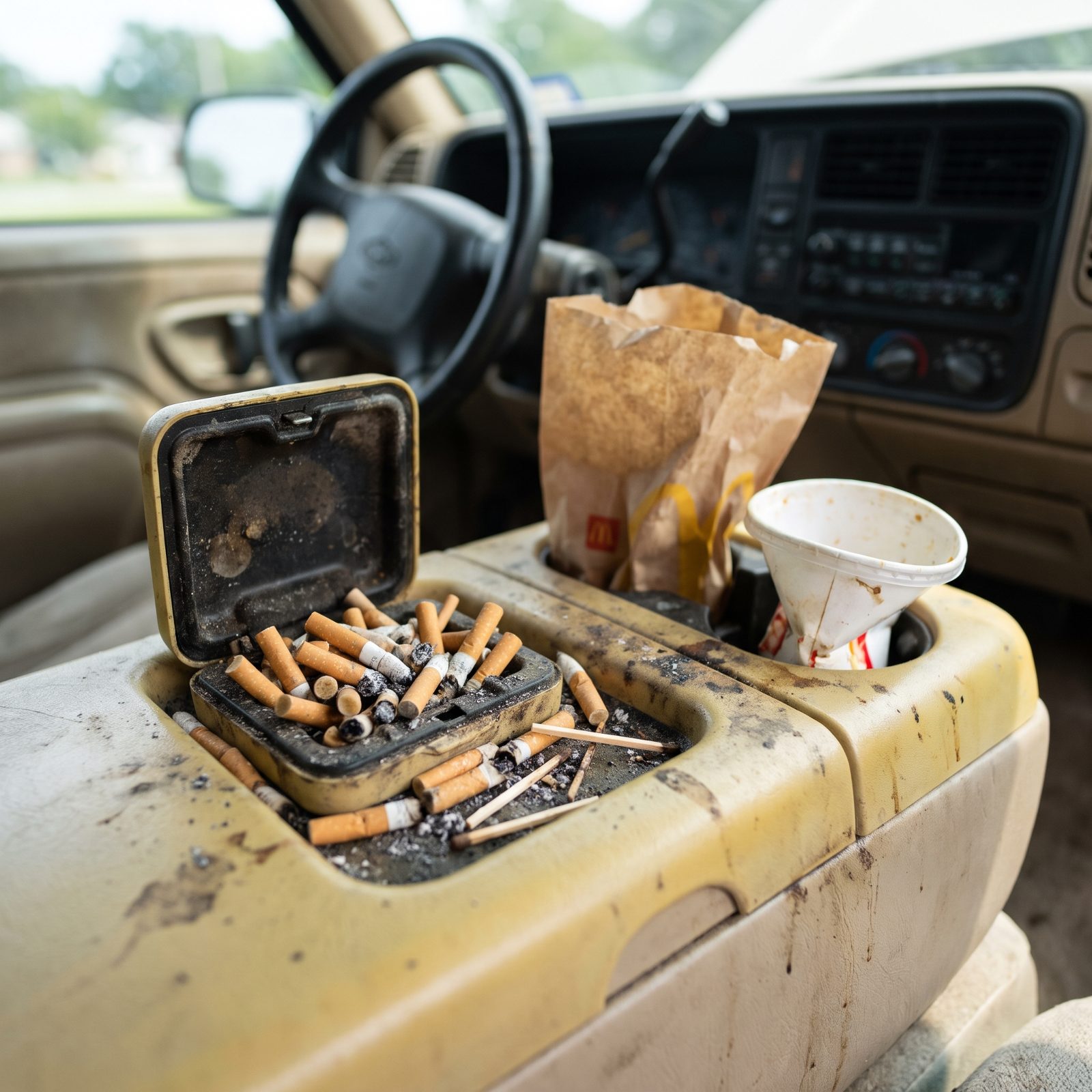
A trashed cabin is the most honest thing in the whole car. You can detail a neglected interior for a showing, but you can’t detail an owner’s character. An overflowing ashtray, wrappers crushed into the floor mats, a cupholder glued shut with old soda — all of it says the same thing: this person didn’t respect their own machine.
And here’s the part that matters. Somebody who won’t empty an ashtray isn’t checking the oil on schedule. The mess you see is a window into the maintenance you can’t.
12. That Damp, Musty Smell the Second the Window Cracks
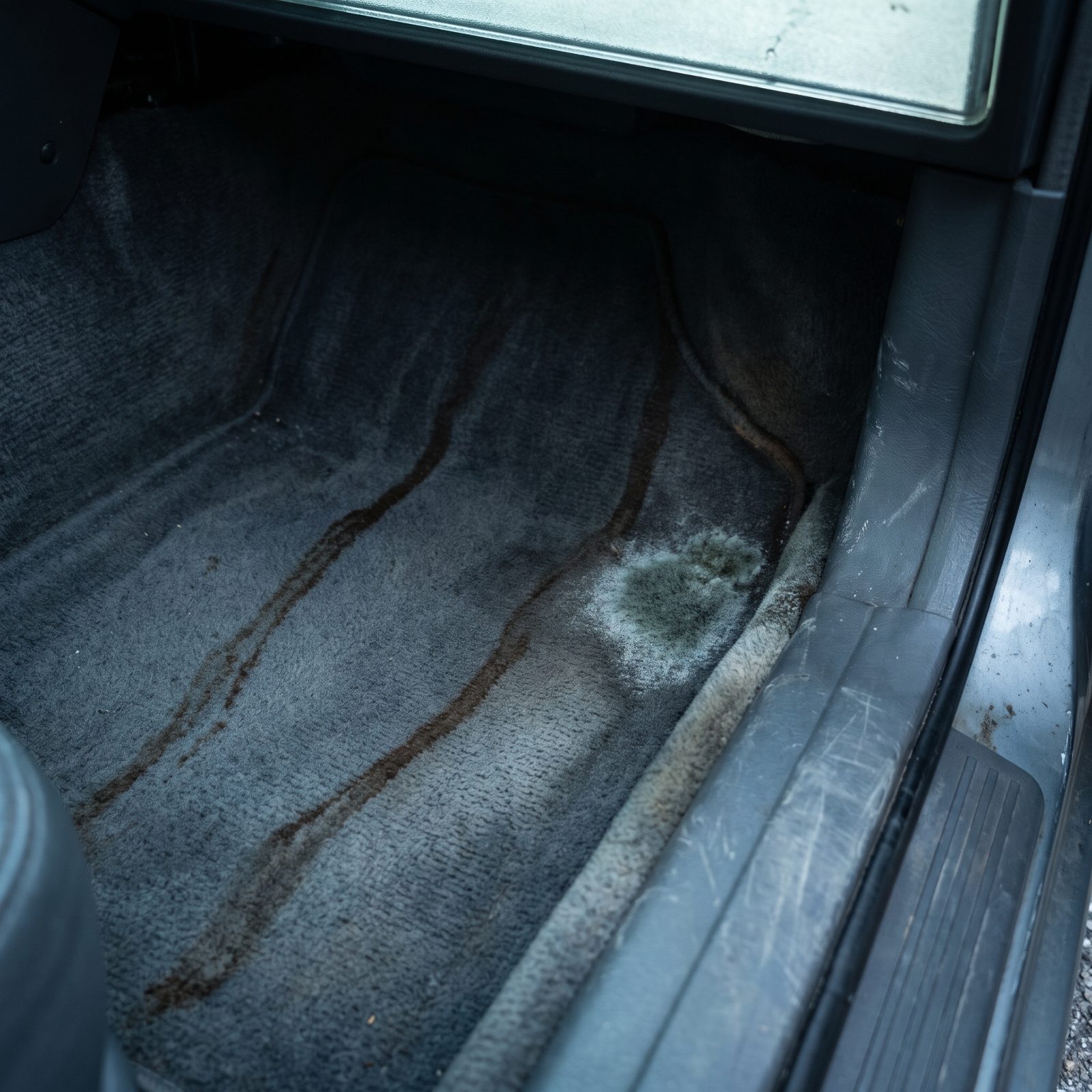
Your nose beats your eyes on this one. Crack a door on a neglected car and that damp, basement-closet smell rolls out before you can see a thing. Mildew means water got in and stayed — a leaking windshield seal, a clogged sunroof drain, a window left down in the rain.
Water in a car is a slow disaster. It rots carpet padding, corrodes the floor pan from underneath, and feeds mold into every vent. Sellers spray air freshener to cover it. A pine-tree scent fighting a musty undertone isn’t a fix. It’s a confession.
11. Windows Filmed Over With Haze From the Inside
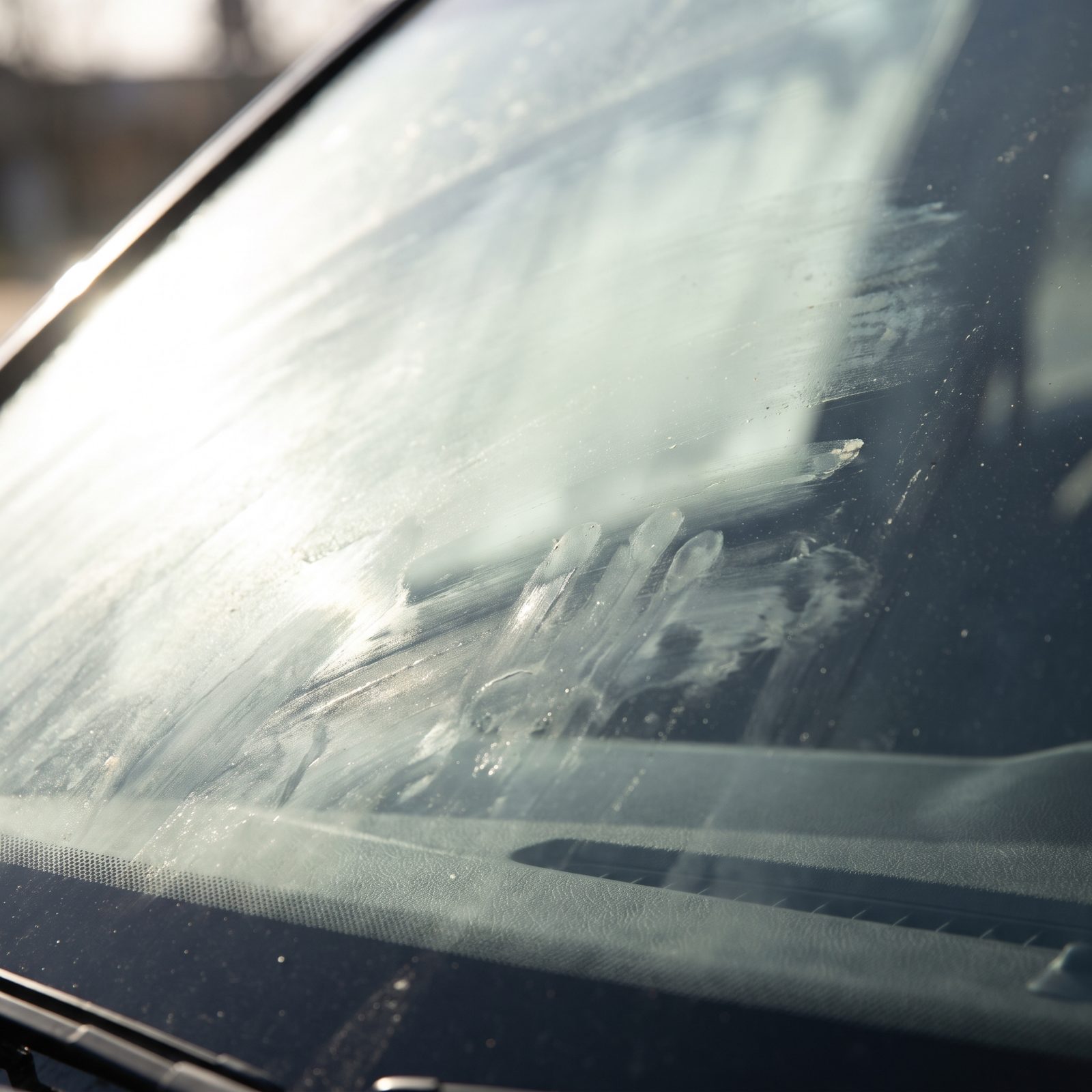
Hold up the glass to the light and you’ll see it. A greasy, cloudy film on the inside of the windshield that no one ever wiped away. It’s the fog of years — cigarette smoke, off-gassing plastics, breath, grime, all settling and baking onto the glass until the whole car looks at the world through a dirty aquarium.
Seems minor. It isn’t, really. It’s one more chore the owner never did, and it genuinely makes night driving dangerous when headlights scatter across that film. Clean glass is five minutes. Dirty glass that’s been dirty for years is a mindset.
10. An Engine Bay Caked in Years of Black Grime
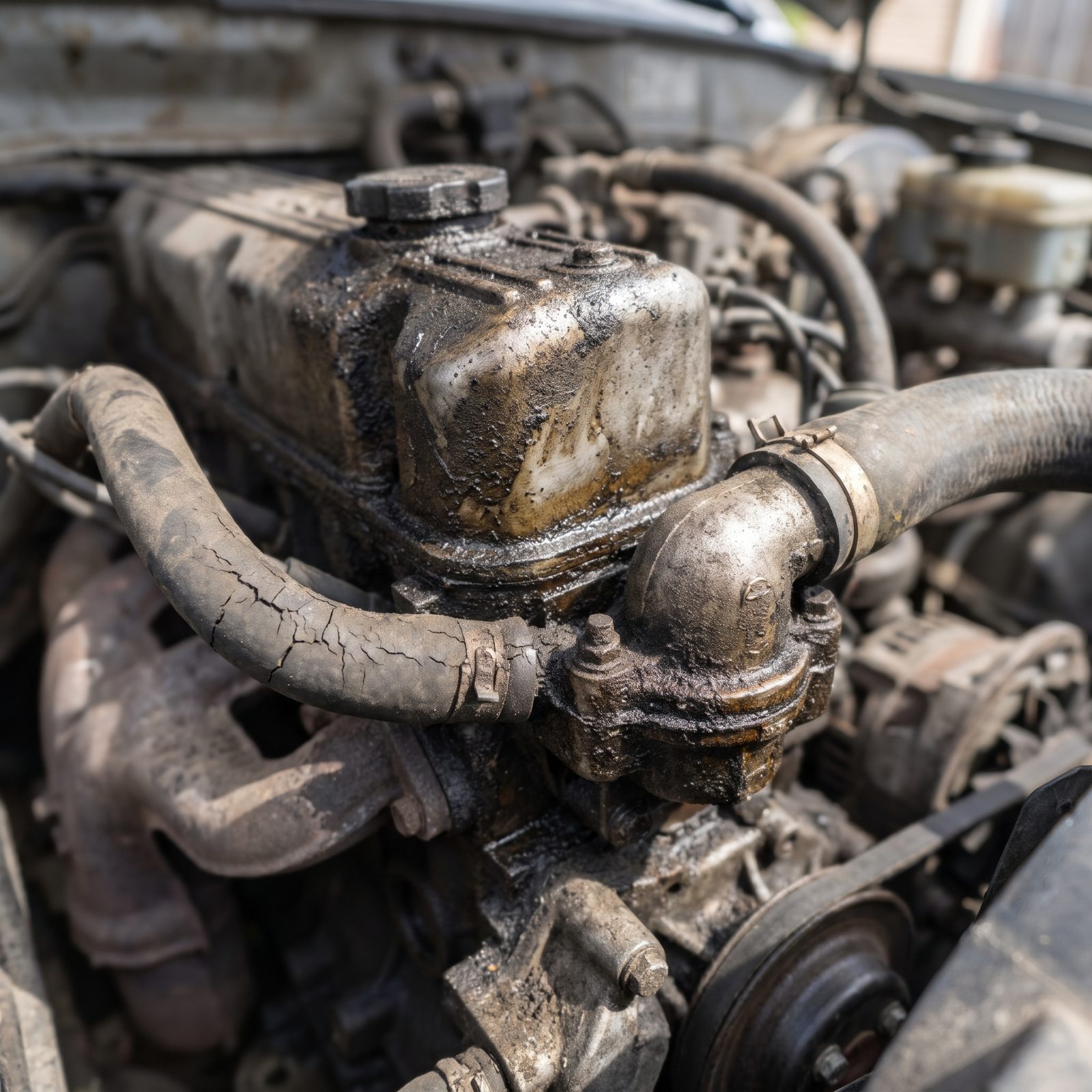
Pop the hood and the story’s written in the grime. A caked-on layer of black, oily grit over everything isn’t just dirt. It’s oil that’s been weeping out of gaskets and seals, mixing with road dust, and building up undisturbed for years. Clean engines leak. Dirty ones have been leaking.
Thick grime also hides problems, which is why sloppy sellers leave it and sharp ones steam-clean it. A spotless bay on a high-mileage car can be its own warning. What you want is honest dirt — not caked neglect, and not suspicious shine.
9. The Dark Stain Spreading on the Driveway
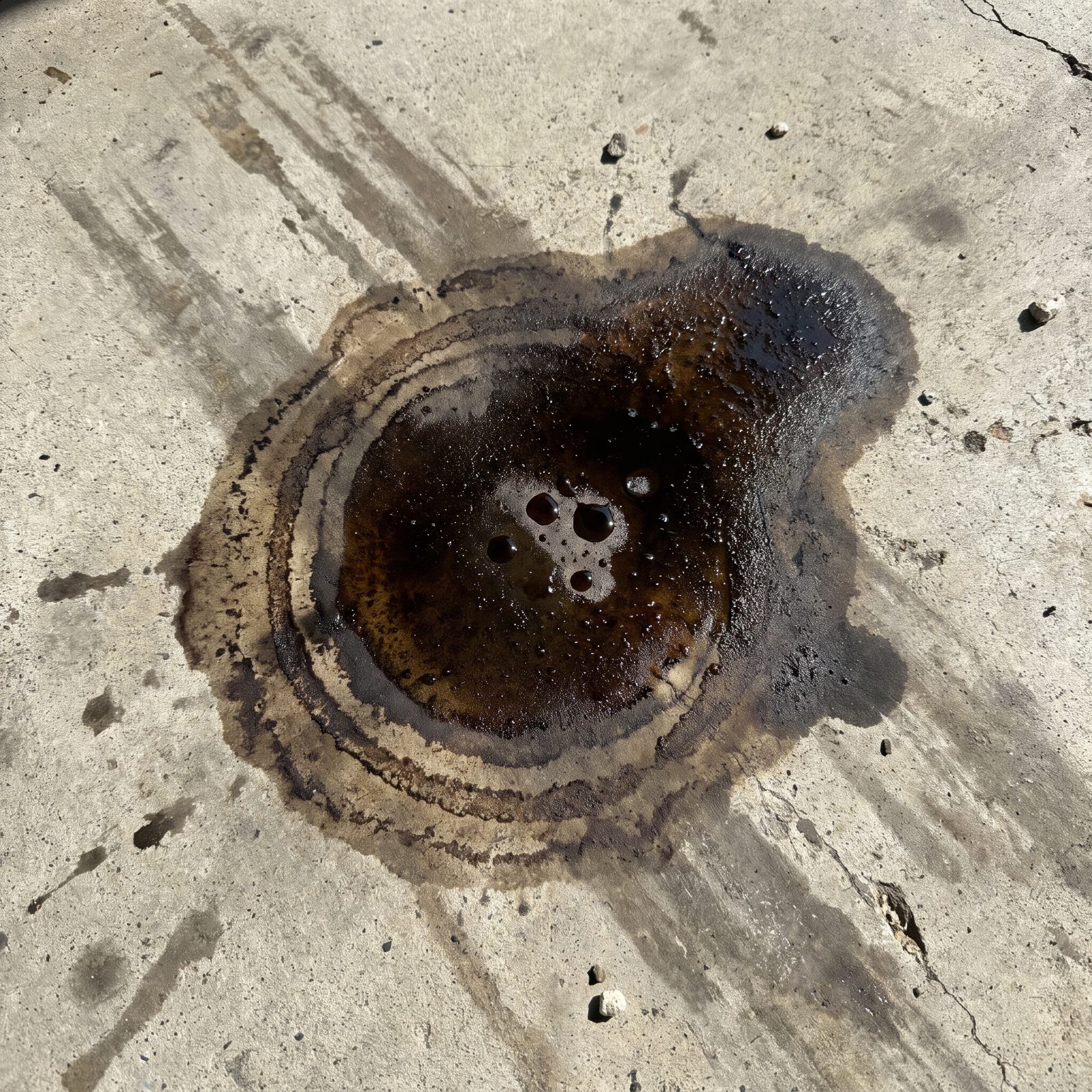
Ask to see where the car normally parks. The ground doesn’t lie. A dark, spreading stain with concentric rings, old leaks ghosted around fresh ones, tells you this car has been marking its territory for a long time.
A small spot might be a tired valve-cover gasket, cheap to fix. A wide, layered stain with fresh drops still forming means something’s actively failing and nobody’s addressing it. And the part nobody mentions: the dripping you can see on the ground is oil that isn’t where it’s supposed to be, which means the engine’s been running low and hot for who knows how long.
8. Dark, Burnt-Smelling Transmission Fluid
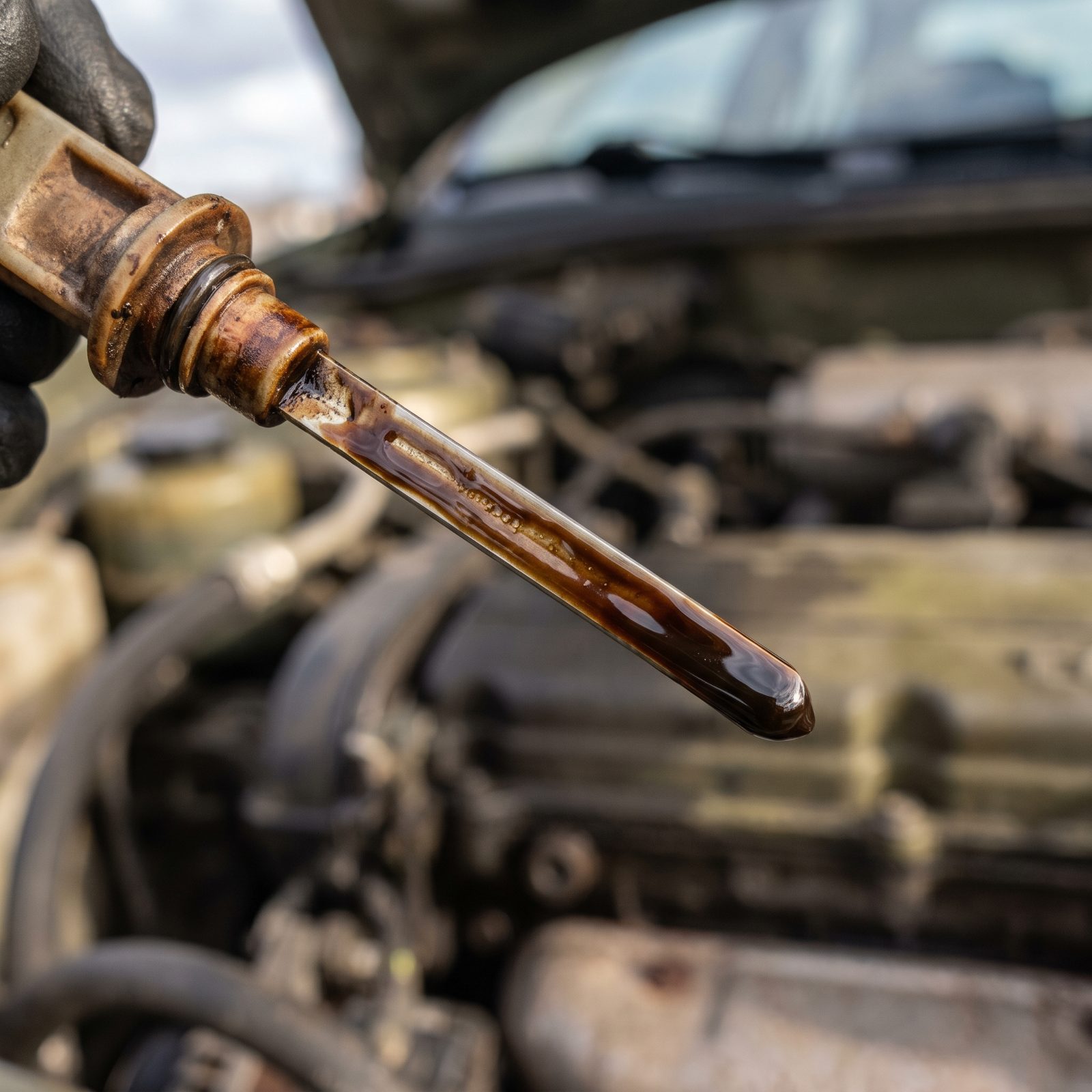
Pull the dipstick, wipe it, pull it again. Clean transmission fluid is bright red and smells faintly sweet, while neglected fluid goes dark as old coffee and smells like something scorched on the stove. That burnt odor is the tell — it means the clutches inside have been cooking, shedding friction material into the fluid for a long time.
Nobody changed it. A transmission that smells burnt at the dealer lot got ignored for a hundred thousand miles, and rebuilds run into real money.
7. Milky Coolant in the Overflow Tank
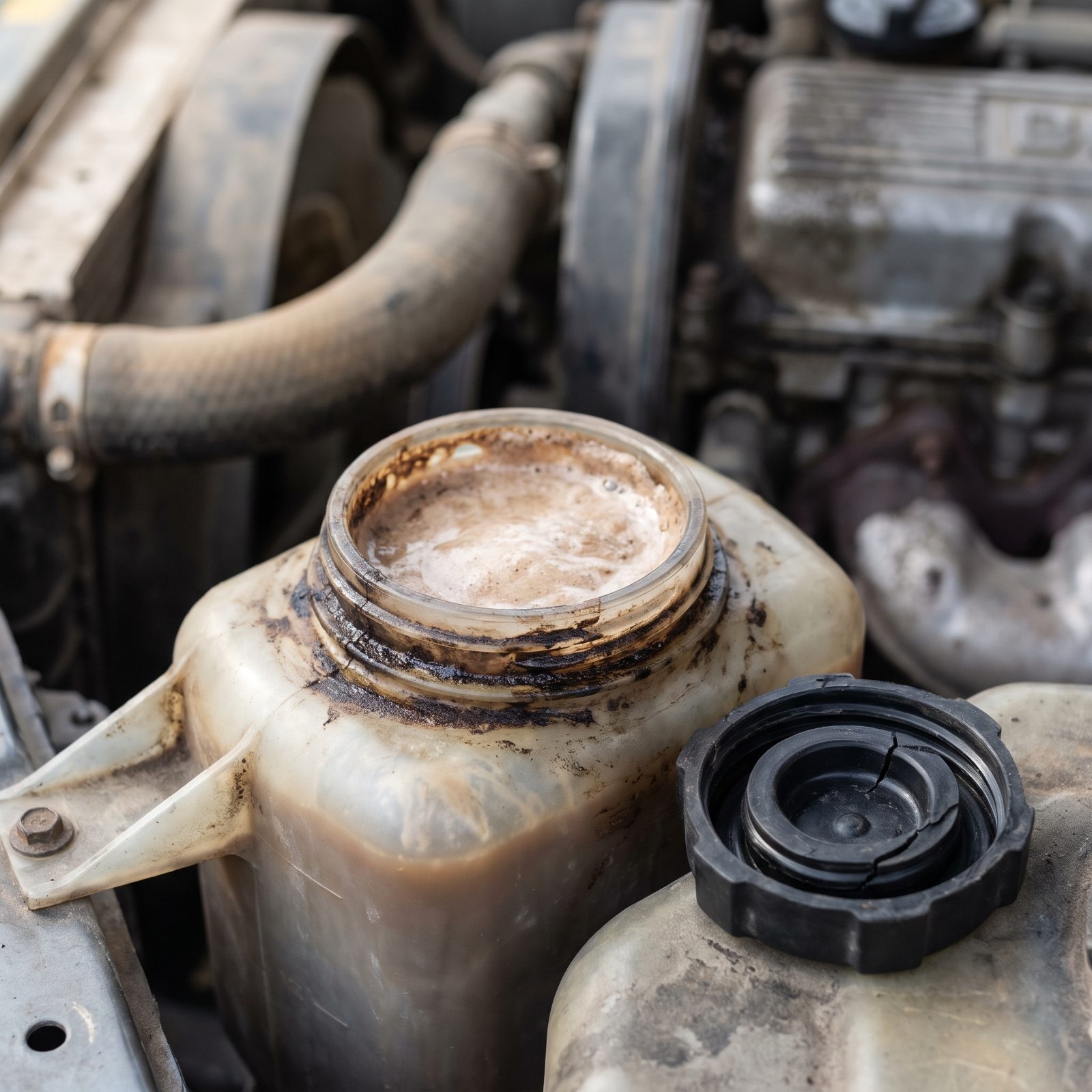
Clean coolant looks like a sports drink — green, orange, pink, whatever the formula. The second it turns the color of a milkshake, something has failed and oil is mixing where it has no business being.
Milky coolant usually means a head gasket on its way out, sometimes a cracked head. Both cost a fortune. And a seller who tops off the tank hoping you won’t look? That tells you plenty about the rest of the car.
6. Corroded Battery Terminals
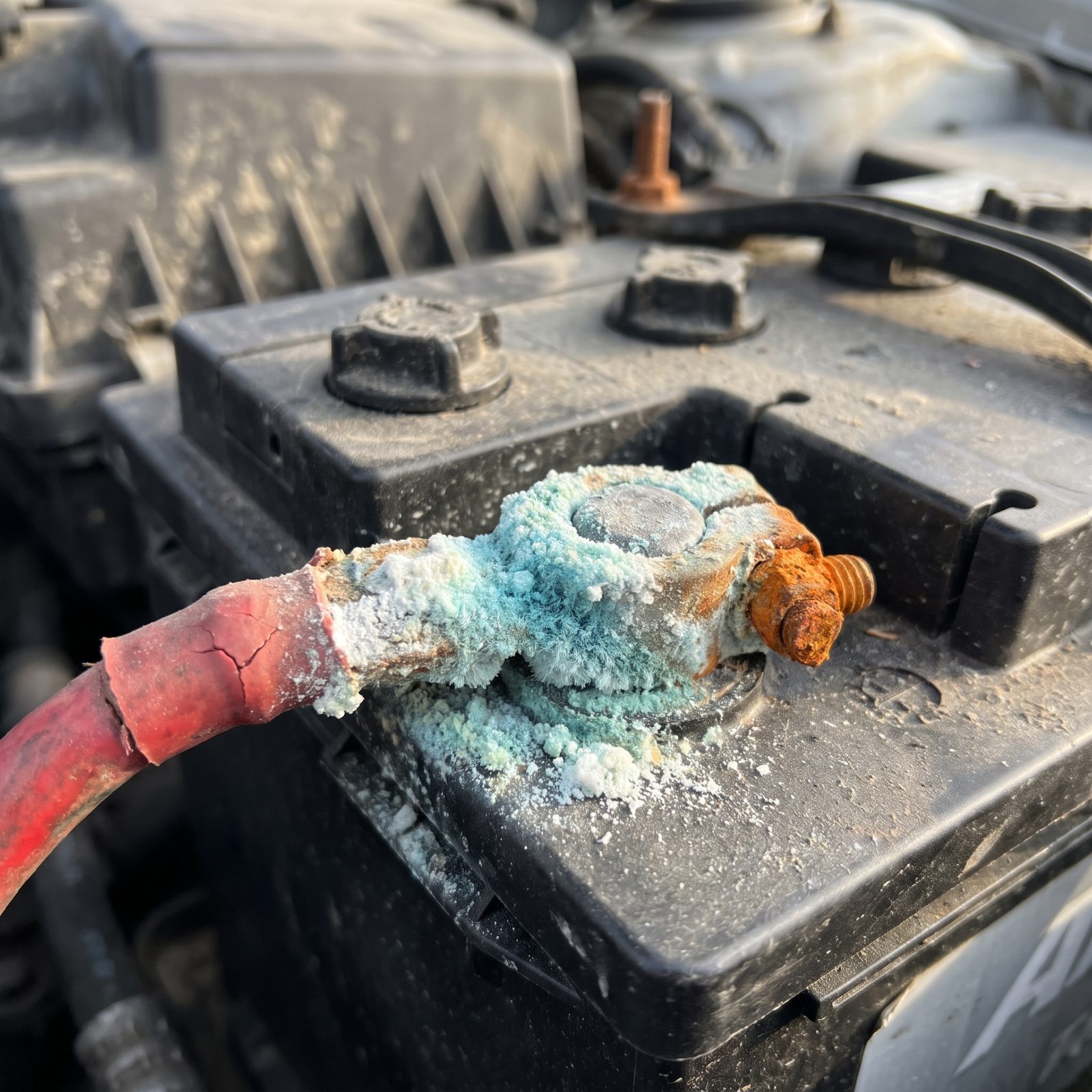
That fuzzy blue-green crust around the battery post looks small. It isn’t. Corrosion that heavy chokes the connection, drops voltage, and leaves the car cranking slow and hard on a cold morning.
Here’s what it really tells you: nobody has opened this hood with a wrench in years. A fifteen-minute cleanup would have stopped it cold, so the fact that it bloomed into a fur coat means the car got gas, got driven, and got nothing else.
5. Perished, Cracked Serpentine Belts
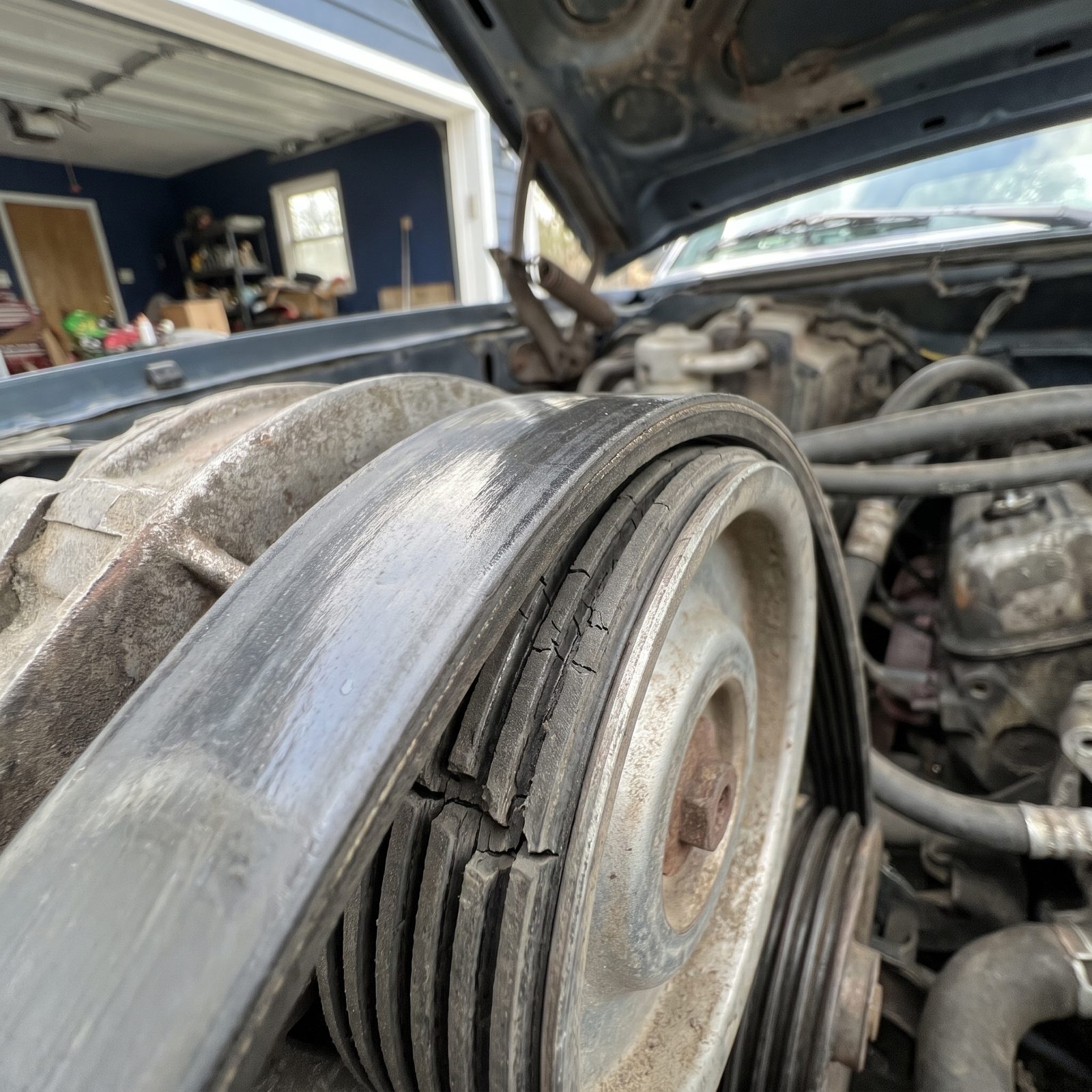
Bend the belt back with your thumb and look at its ribbed underside. A healthy belt is black and supple. A neglected one is gray, glazed on the smooth side, and cracked across its ribs into loose, crumbling chunks like dry earth in August.
A belt in that shape is overdue by years, and when it finally lets go — usually at highway speed — you lose the alternator, the water pump, and the power steering all at once. Cheap part. Expensive to ignore.
4. Weathered, Hardened Rubber Hoses
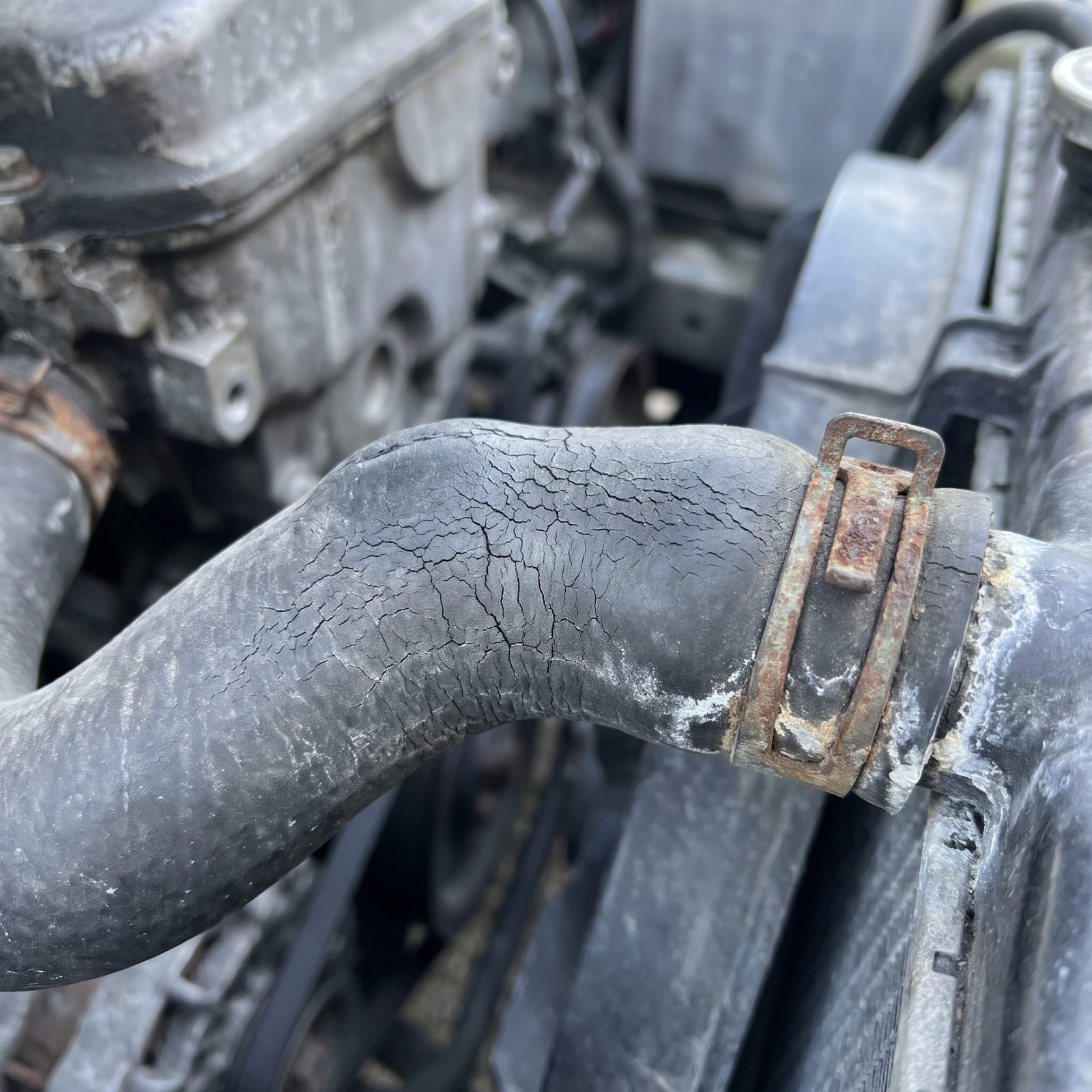
Squeeze an upper radiator hose. It should give like a firm handshake and spring right back.
Now the neglected one. It’s either rock hard and cracking at the bends, or soft and spongy where the inner lining has broken down — and both come to the same end. The hose is old, brittle, and one hot day away from splitting and dumping coolant in traffic.
3. Blue Smoke From the Exhaust
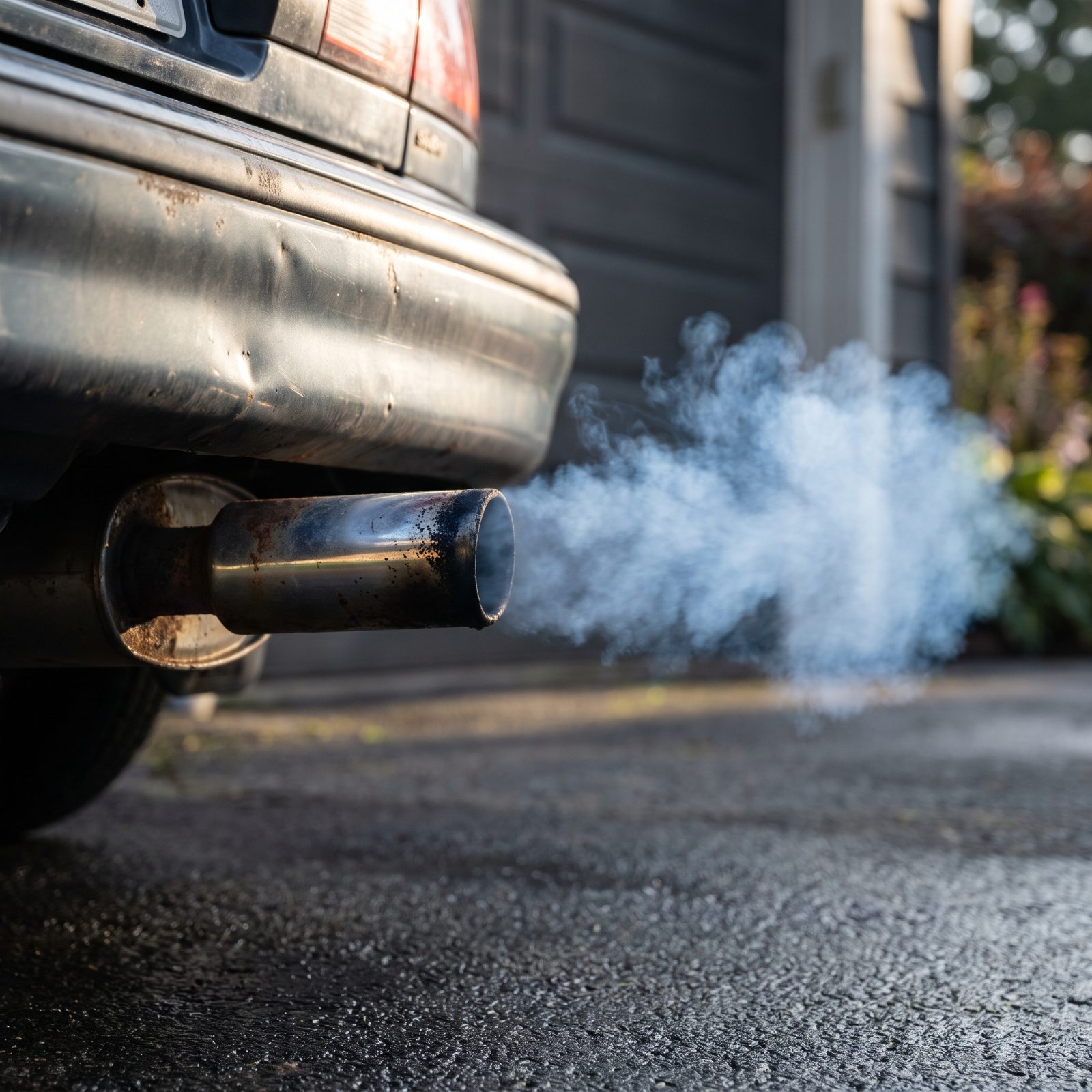
Watch the tailpipe on a cold start. A puff of white steam is just condensation and it clears fast. Blue smoke is a whole different animal — blue means the engine is burning oil.
Worn valve seals let oil seep past overnight, so you get a blue cloud at startup that fades once it’s running. Worn rings smoke under load, when you give it gas. Either way the engine is eating oil and the clock is ticking. A seller who revs it in the lot and waves the smoke off with his hand already knows exactly what you’re looking at.
2. Dangling, Rusted Exhaust Hangers
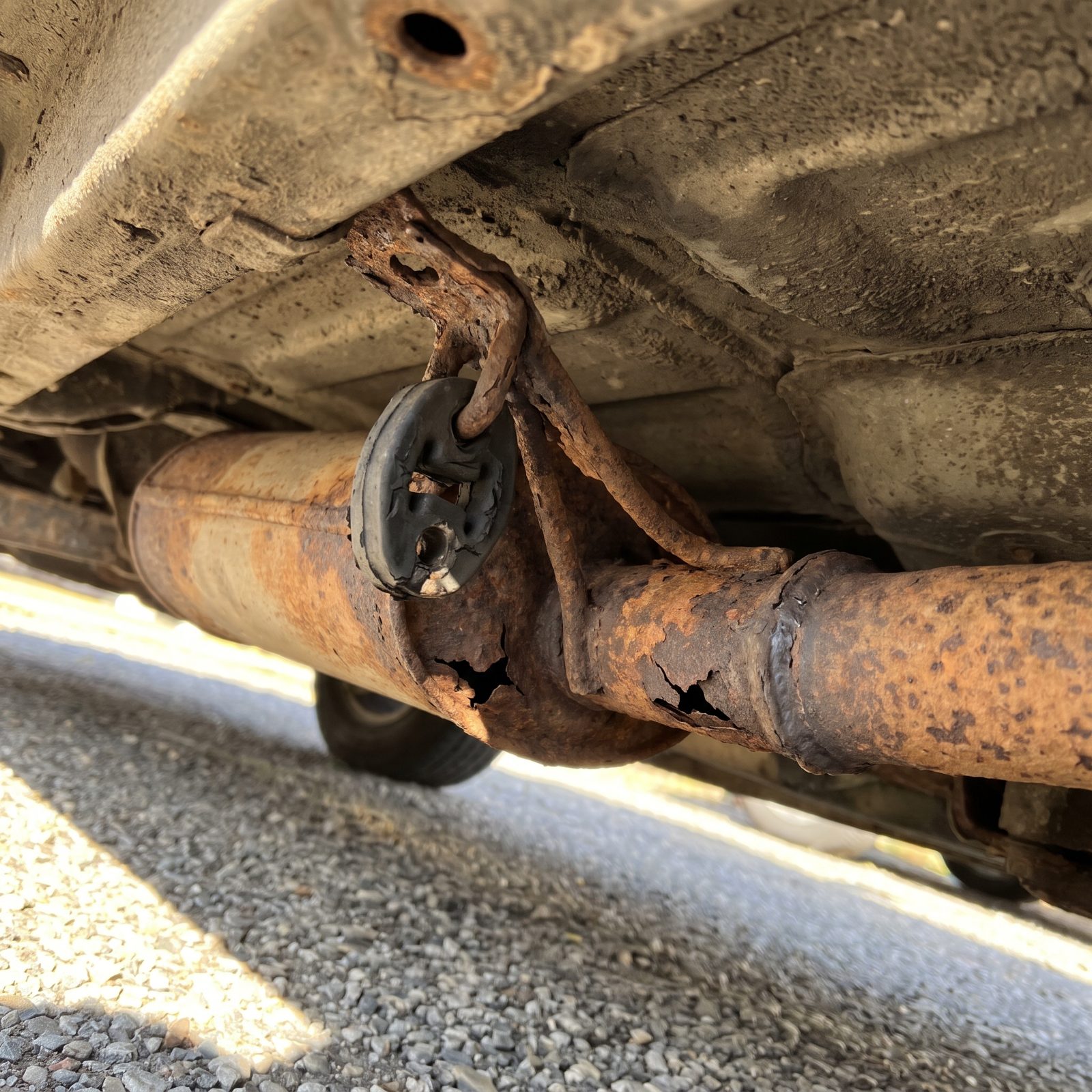
Crouch at the back and look under. If the exhaust is drooping, propped on a bent coat hanger, or swinging loose from a snapped rubber mount, you’ve found a car that got the cheapest possible fix and nothing more.
Rusted-through pipes, flaking mufflers, a tailpipe lashed up with wire — none of it is catastrophic on its own. But it’s a map of every repair that got skipped, and following that map usually leads somewhere worse.
1. Check Engine Light Glowing on Startup
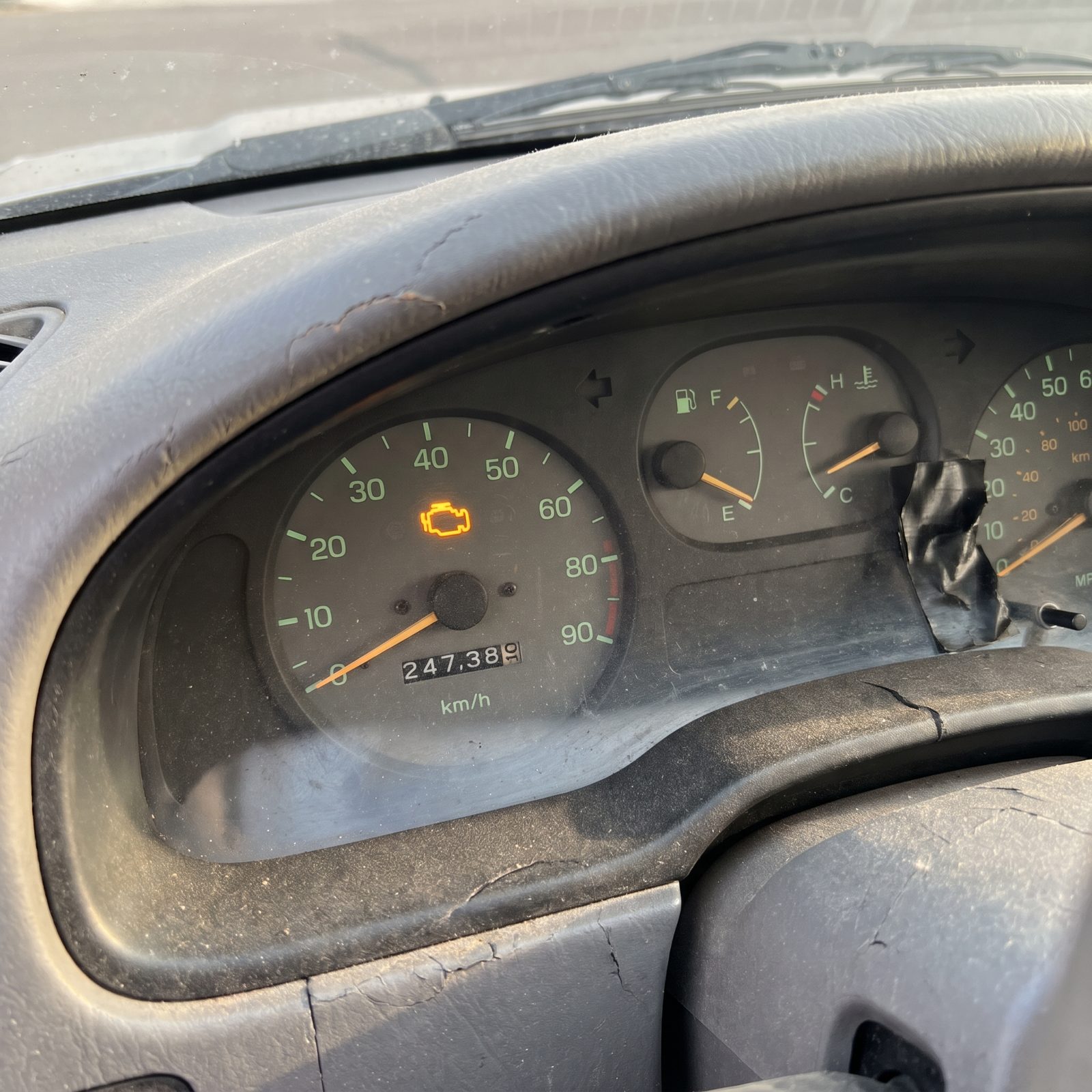
The light is supposed to flick on when you turn the key, then go dark once the engine settles into a run. If it stays lit, the computer has stored a fault and the car is telling you something is wrong right now.
Worse is the light that’s been taped over, or the bulb somebody yanked so it can’t come on at all. That’s no repair. It’s a cover-up, the oldest trick on the lot. A free code scan at any parts store reads exactly what the owner was praying you wouldn’t ask about — so go run it before you hand over a dime.