
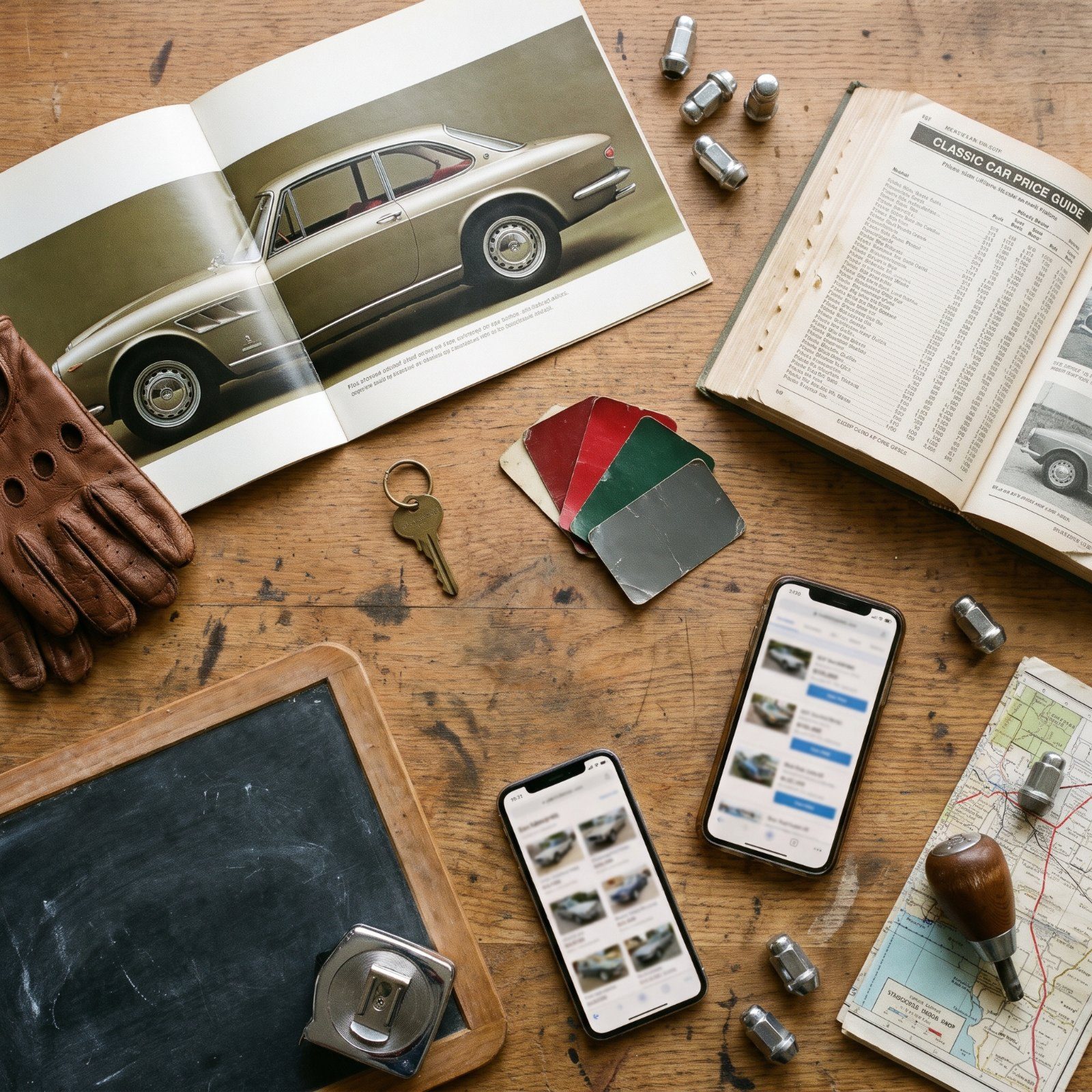
There’s a folder on everyone’s phone. Screenshots of cars nobody is actually buying — a red coupe with the color-matched hardtop, a black-plate survivor with original miles, a wagon so clean it looks poured out of a mold. You scroll past it at red lights and before sleep, and you know the trim codes better than your own blood pressure. Yet year after year the car stays exactly where it lives best: in your head. The dream car isn’t really about the car. It’s about the version of you who drives it, the Saturday mornings you picture, the person you’d finally be with the right machine in the garage. These are the ways we idealize, postpone, and keep rewriting that fantasy, and what the stalling actually says about us.
Please note that some of the images in this article were created with the assistance of AI.
17. Your Childhood Bedroom Poster Still Gets a Vote
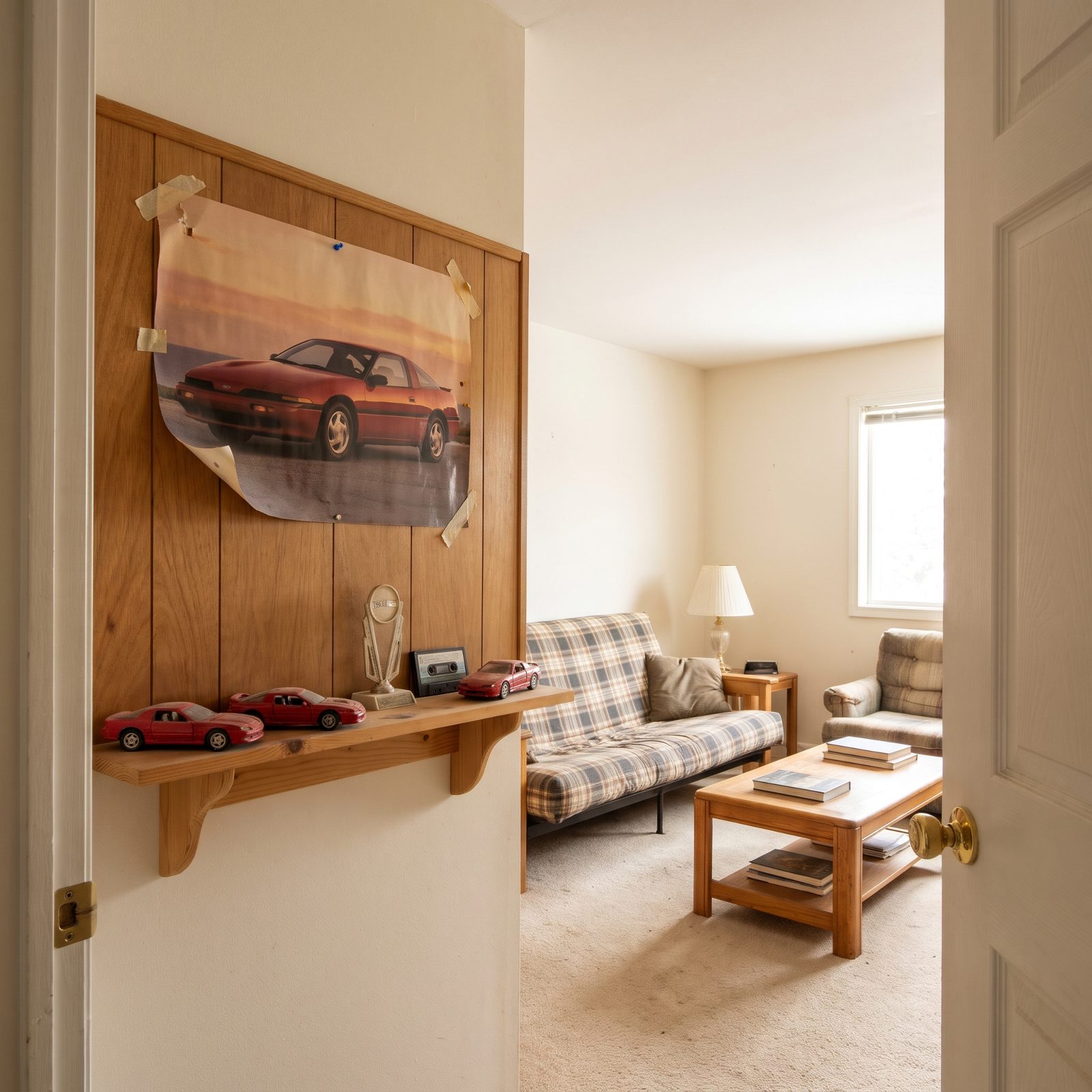
Ask a grown adult what their dream car is and watch their eyes go back thirty years. The answer is almost never the sensible thing they test drove last month. It’s the car on the bedroom wall — the one they couldn’t afford, couldn’t reach, couldn’t even legally drive yet.
That poster set the template, and the template never fully updated. Psychologists call it imprinting dressed up as taste. The cars we loved before we could buy anything wired the reward circuit, so every later crush gets measured against a ten-year-old’s definition of cool.
What Our Readers Say
- When Jalopy Talk readers loved a car photo and tapped a reason, “nostalgic” (27%) and “body style” (26%) came out ahead of “would drive” (17%).
- In our readers’ heart votes, cars that look like the 1960s got hearts 88% of the time, versus 77% for the other images in the same articles.
From Jalopy Talk reader polls and votes.
16. Saved Listings Live Comfortably Above Your Actual Budget
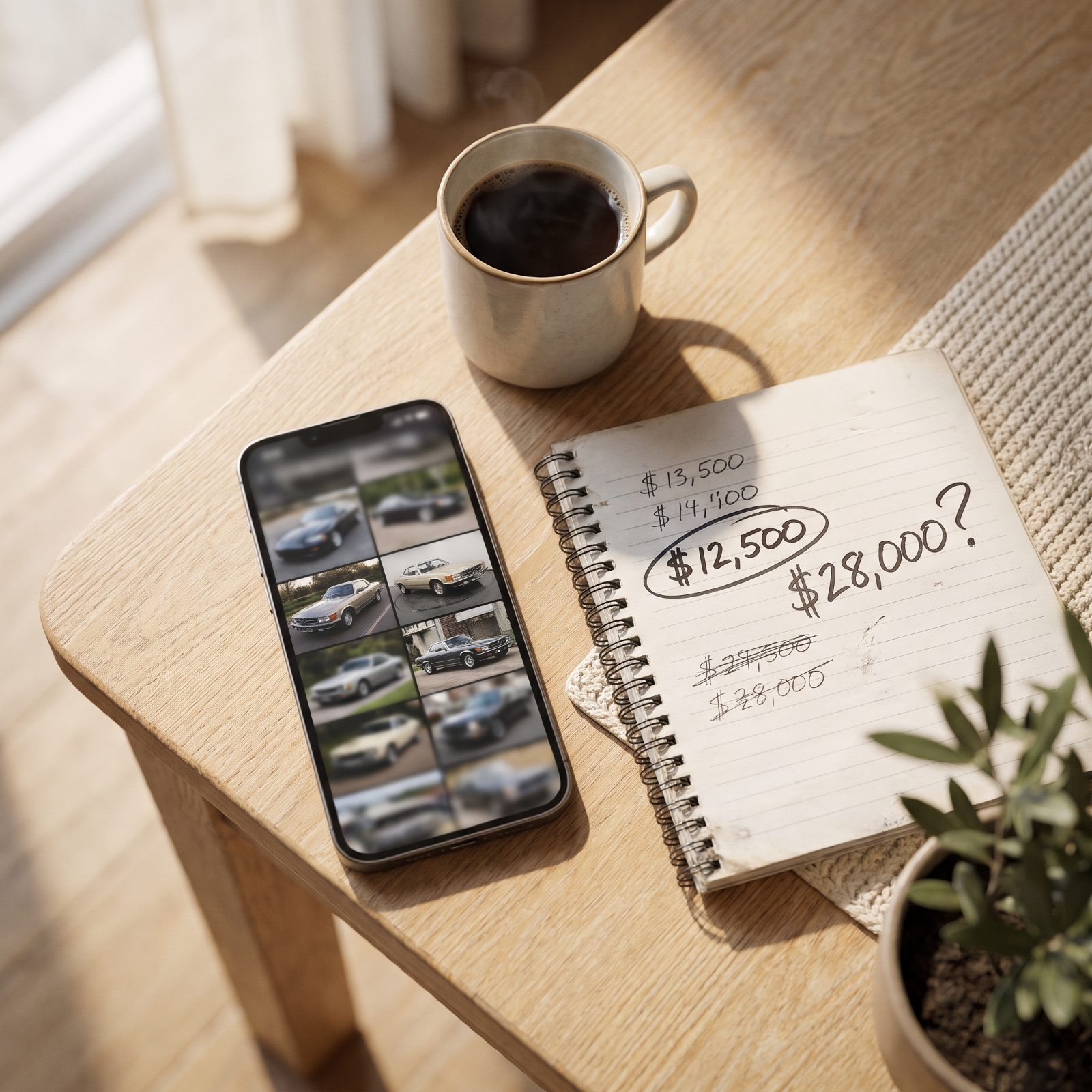
Scroll through anyone’s saved vehicles and you’ll find a quiet lie. The budget says one number; the hearts and bookmarks say a good deal more. Nobody saves the reasonable one. Reasonable doesn’t give you anything to dream about at 11pm.
This is window shopping as emotional maintenance. That listing you’ll never buy still pays out a little hit of pleasure every time you look, and the payout is free — no commitment, no payment book, no insurance call. You get the daydream without the downside, so the saved folder keeps drifting upward like a balloon nobody’s holding.
The car you save is the person you want to be. The car you buy is the person you actually are.
Nothing wrong with the drifting. Just notice it. The gap between the saved list and the real budget is a pretty honest map of your appetites versus your nerve.
15. You Want Supercar Speed, Wagon Space, and Hybrid Mileage
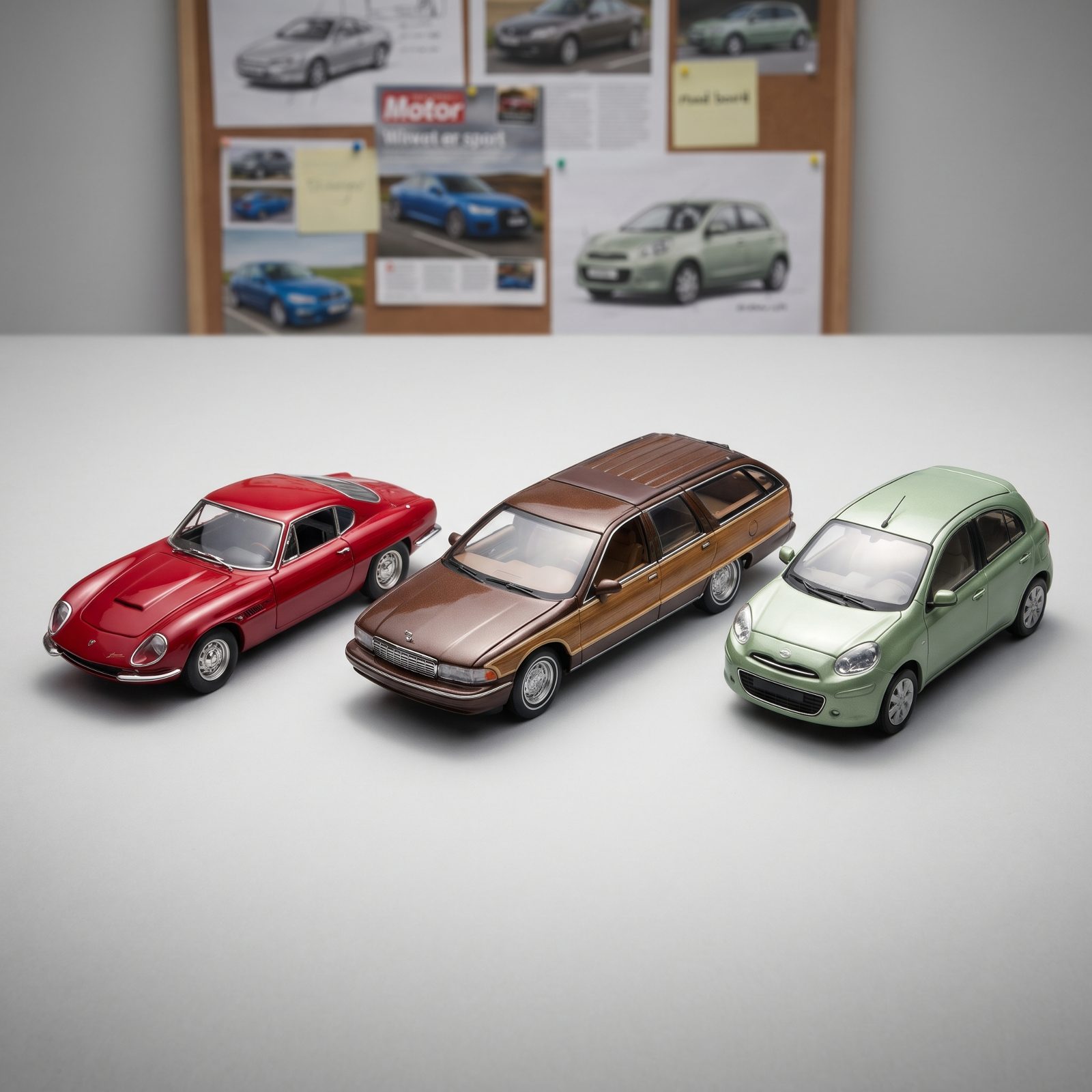
The dream car’s spec sheet is a wish list no engineer could build. You want the launch of a two-seat rocket, the cargo hold of a family hauler, and a fuel bill that barely exists. Loud and quiet. Head-turning and invisible in traffic, somehow at the same time.
Real cars force trade-offs. Fantasy cars don’t, and that’s the whole appeal. When nothing’s being purchased, nothing has to be chosen, so the imagined car quietly piles up every virtue at once.
14. You Build the Perfect Spec but Never Place the Order
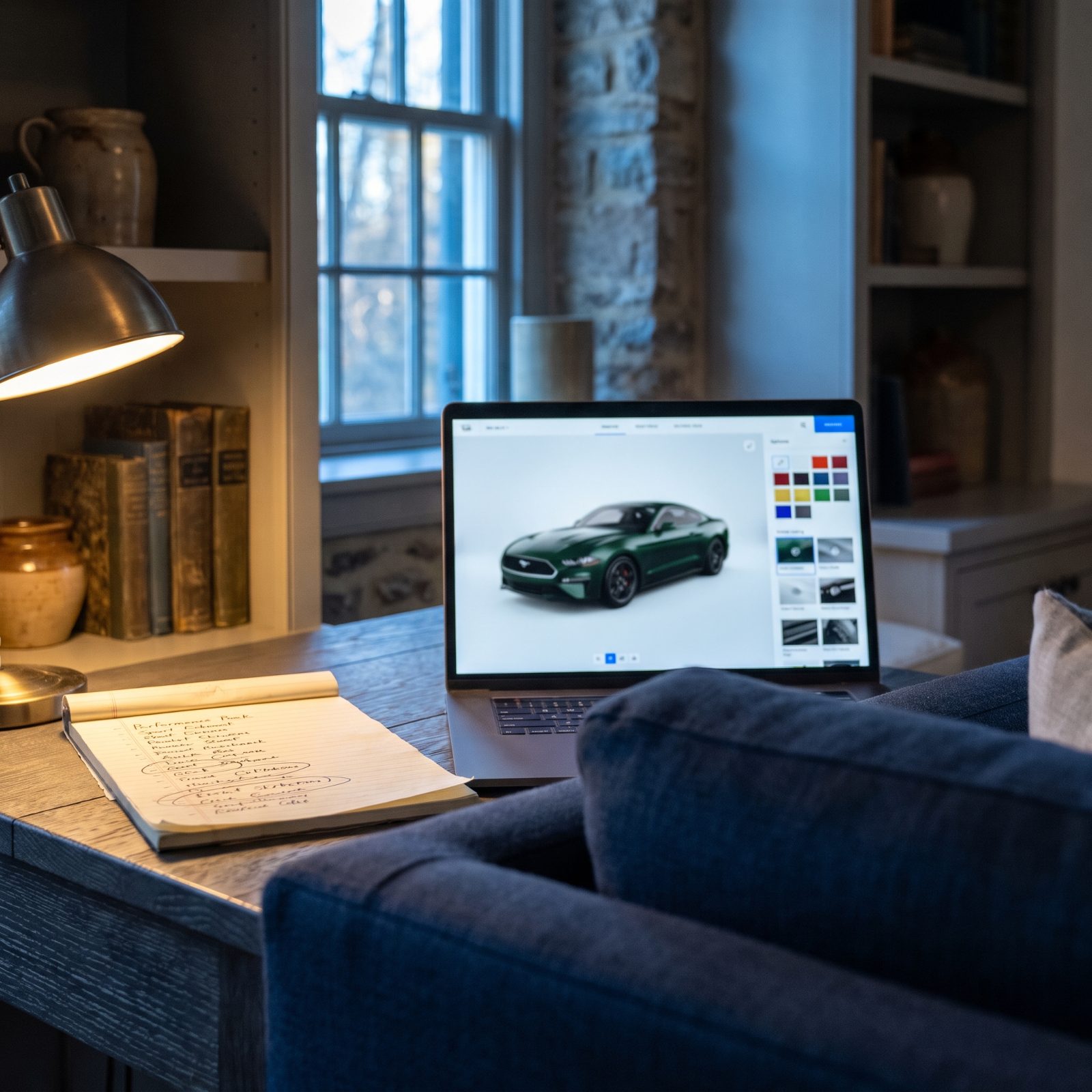
You’ve configured it. Twice. The color, the wheels, the interior, the one option package that’s worth it and the two that aren’t. You know the build better than the salesperson. And the order? Still sitting there, unsubmitted, perfect and unborn.
Here’s the trick your brain plays: the configured car is flawless precisely because it isn’t real yet. The second you buy, it becomes a specific object with road rash, a weird smell, and a payment. An imagined car stays spotless forever. Buying it is a demotion.
13. Researching Every Trim Starts Feeling Suspiciously Like Progress
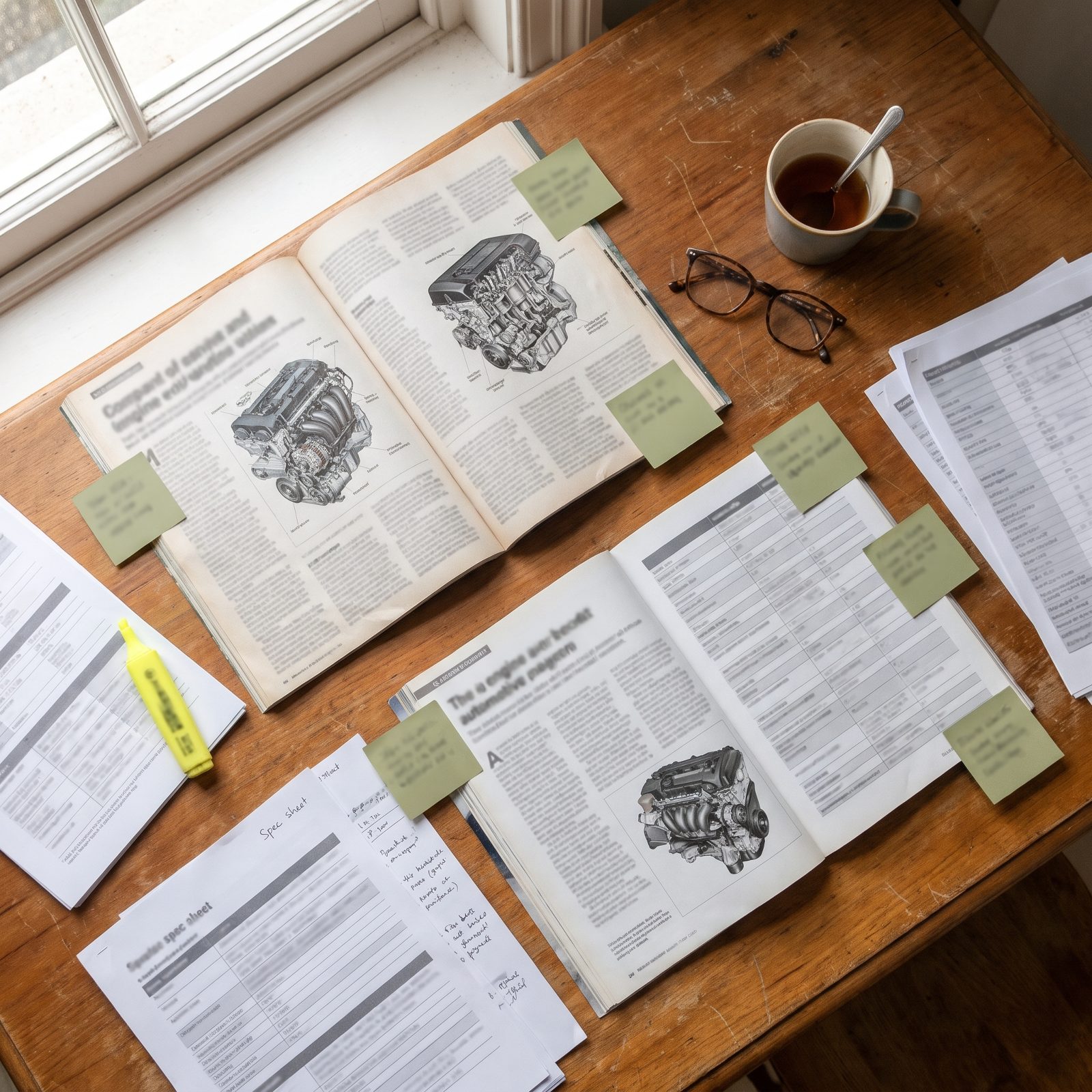
Three hours deep into forum threads about which model year finally fixed the transmission, you feel productive. You’re learning. Being responsible. Doing your homework before such a big decision.
You’re also not buying anything, and part of you knows it. Research is the socially acceptable way to postpone — it looks like diligence from the outside and feels like momentum from the inside, but momentum that never reaches a dealership is just motion in a circle.
Information makes us feel in control, and control feels good enough that we mistake collecting it for acting on it. At some point the reading stops reducing risk and starts replacing the decision entirely.
12. You Keep Tying the Purchase to One More Milestone
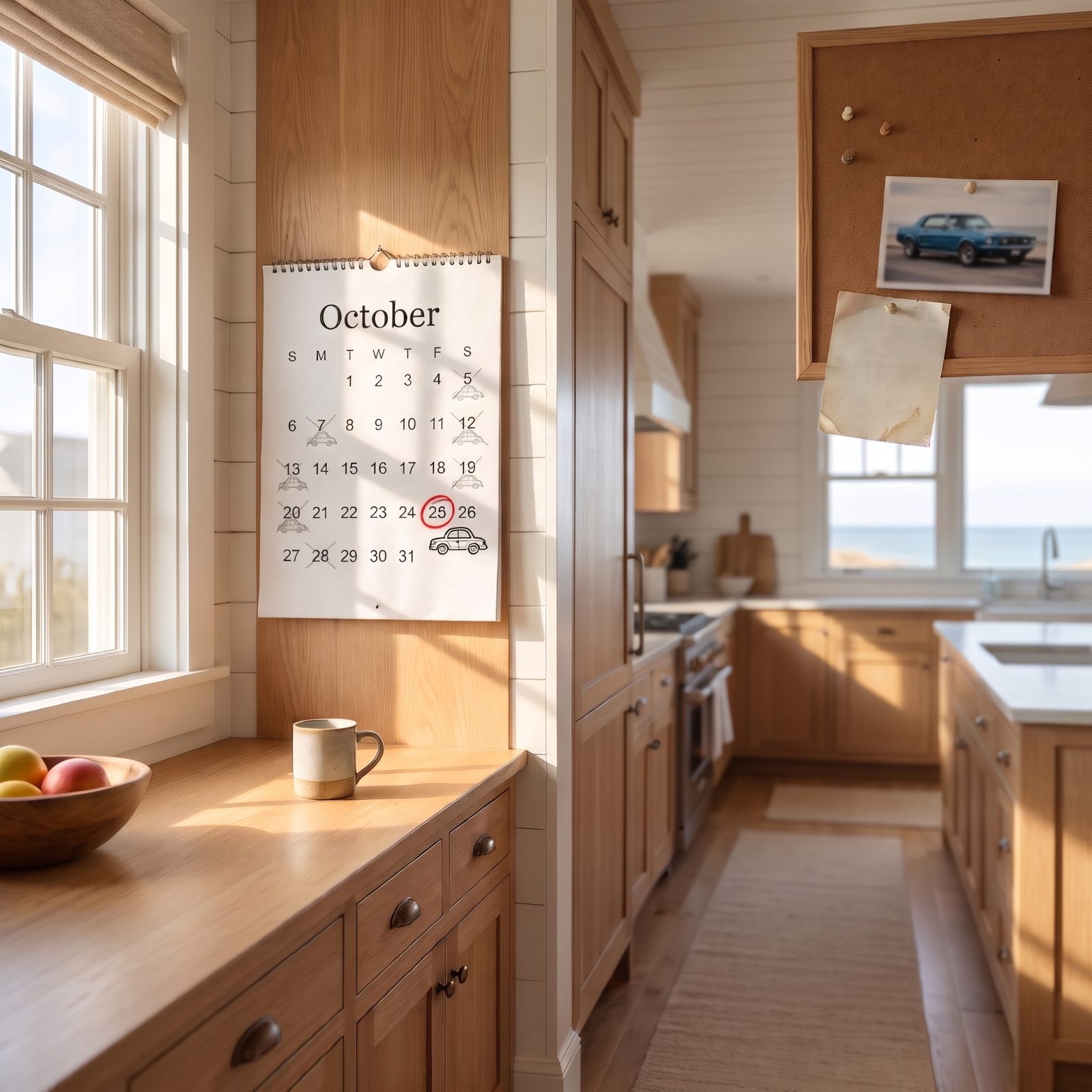
First it was after the promotion. Then after the kids finished college, then after the mortgage, then after the next raise, then after retirement. The dream car keeps getting chained to a finish line that keeps moving, and each milestone that arrives quietly spawns a new one.
Tying a reward to a condition feels responsible. But watch how the condition behaves. Hit it, and instead of buying the car, you set a new one. The car was never really waiting on the milestone. The milestone was waiting on your willingness, which never quite arrives.
This is how people reach seventy with a perfect dream and an empty garage. The gate kept moving because you kept moving it. Somewhere underneath is a worry that the real car will disappoint the imagined one — and a disappointment deferred forever is easier than one faced on a Saturday.
11. You Avoid the Test Drive That Might Break the Spell
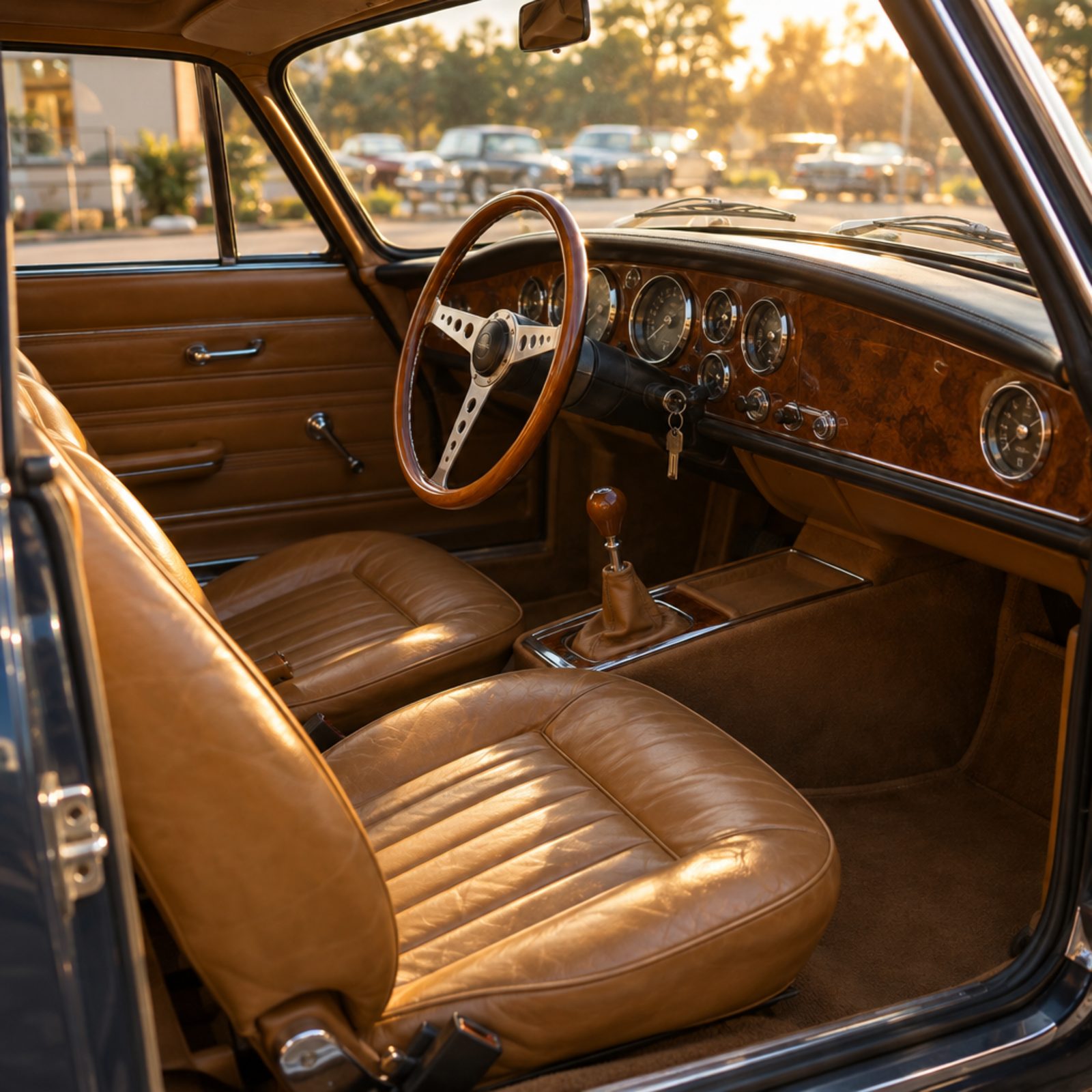
The car is sitting right there. The dealer said take it for a spin. And you found a reason not to — wrong day, too busy, don’t want to waste their time, you’ll come back. You came back for everything except the one thing that counts.
Deep down you suspect the reality might not match the reel playing in your head. The steering could be numb, the seat could wreck your back, and that engine note you built a whole identity around might just sound like noise after ten minutes.
10. You Judge Every Candidate Against a Retouched Auction Photo
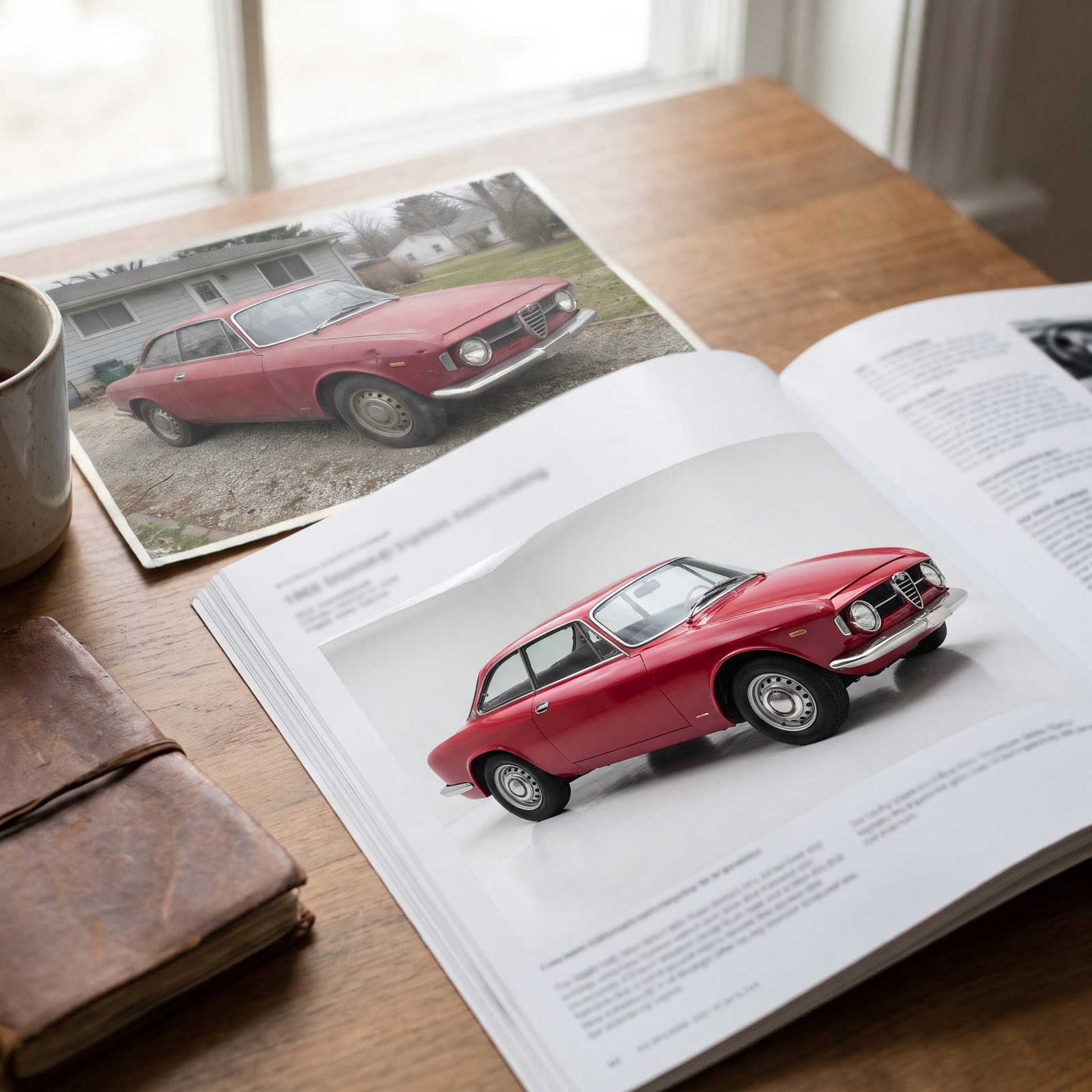
Somewhere in your memory lives a single image: a concours-level example shot under studio lights, paint buffed to liquid, every panel gapped to the millimeter. That image became the ruler. Now every real car you look at gets held up against it and found wanting.
Trouble is, the yardstick’s a lie. That auction photo was staged, color-corrected, and shot by a professional whose job was to make it look impossible. Compare any honest, drivable, affordable car to that, and the honest one loses every time.
9. You Crave a Manual Despite Living in Stop-and-Go Traffic
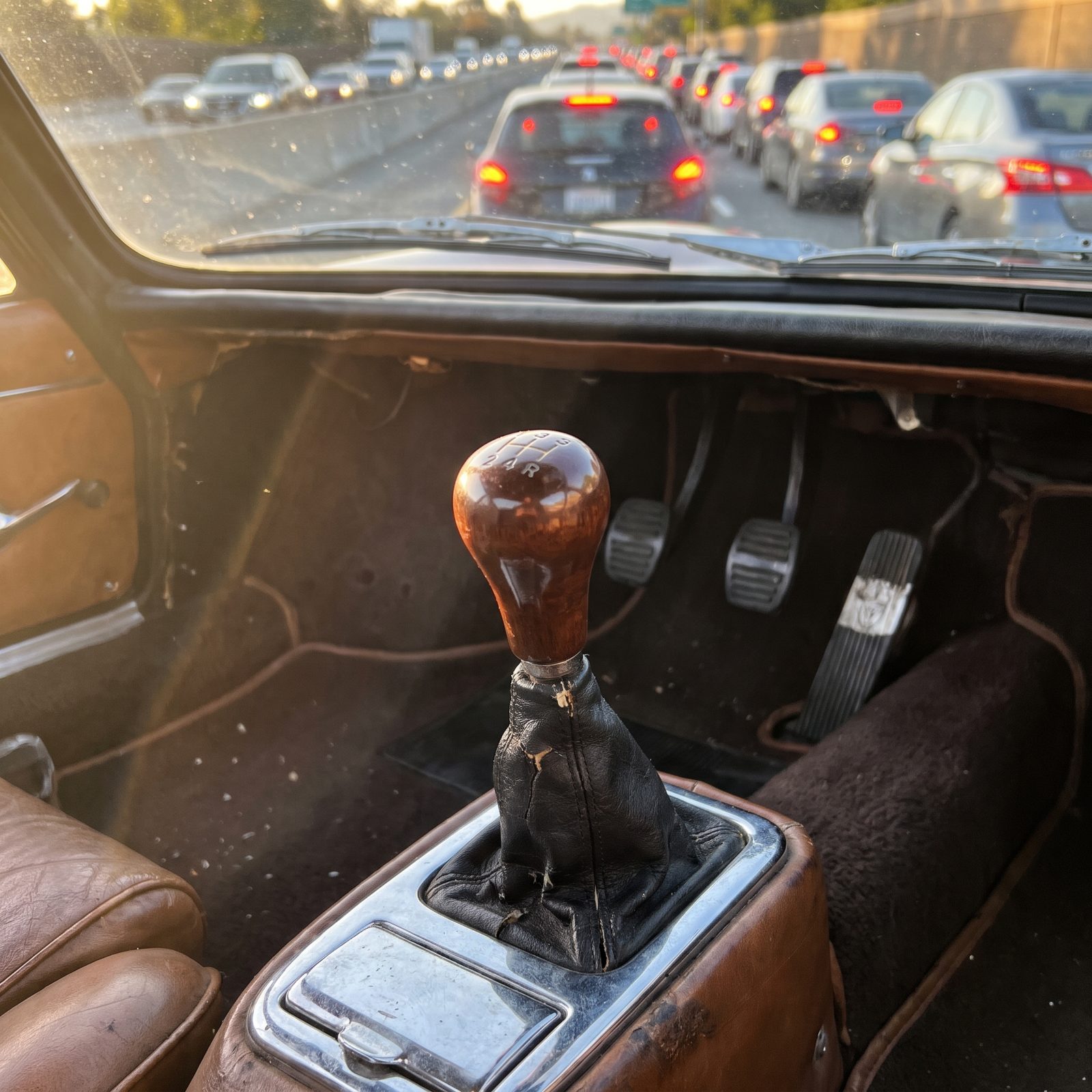
You want three pedals. You want to row your own gears, heel-toe downshift, feel bolted to the machine. You also drive forty minutes a day through traffic that moves in ten-foot increments, where a manual means a left leg like a prizefighter and a clutch replaced before its time.
The desire isn’t about how you drive. It’s about who you want to be while driving. That stick is a costume for a version of you on an empty mountain road, not the you crawling toward the on-ramp.
We buy cars for the trips we imagine, not the commutes we actually have. The fantasy mileage is all canyon switchbacks at dawn. The real mileage is mostly red lights. Both can be true, and the gap between them is where a lot of dream cars quietly die.
8. Insurance and Service Costs Somehow Stay Outside the Fantasy

The fantasy includes the key turning, the engine firing, the open road. It never includes the premium quote, the specialist who charges by the hour, the part that comes from overseas and takes six weeks, or the tires that cost more than a decent used sedan.
Our minds budget for the fun part and conveniently forget the rest. The sticker price is vivid and concrete, so it gets counted. The grinding ongoing costs are vague and future-tense, so the brain files them under later and moves on.
Which is why so many dream cars arrive and then sit under a cover, driven twice a year, because the owner finally did the math the fantasy skipped. The purchase was planned. The owning was not.
7. That Exhaust Note Makes the Tiny Trunk Seem Irrelevant
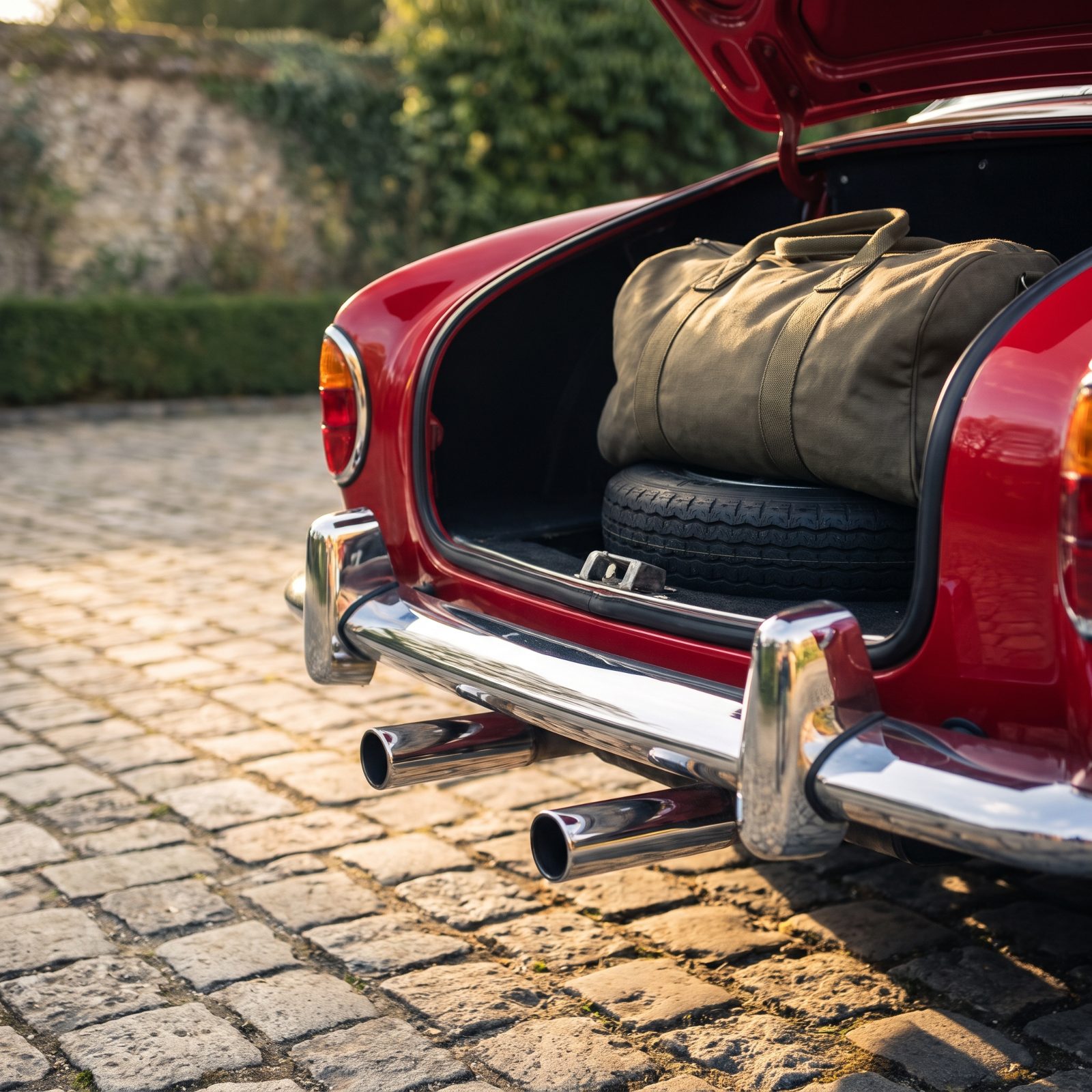
You sit in the thing and the first thing it does is growl. That low burble at idle, the bark when you blip the throttle. Suddenly the fact that your golf clubs won’t fit, and groceries ride in your lap, and there’s no cupholder worth the name — all of it evaporates. The sound bought your silence.
This is the halo effect running full tilt. One trait we love, in this case the engine note, spills over and colors everything else about the car as good, so the brain stops weighing the trunk fairly. It’s already decided.
We run the exact same math on a life we want. The job with the big title and brutal hours. The relationship with the great story and the lousy weekday reality. One glorious feature drowns out five deal-breakers, and we call it love when it’s really just the halo doing our thinking for us.
Our readers seem to understand the trade: sports car photos got hearts 79% of the time, compared with 63% for the other images in the same articles.
6. The Car Is Supposed to Make You More Interesting
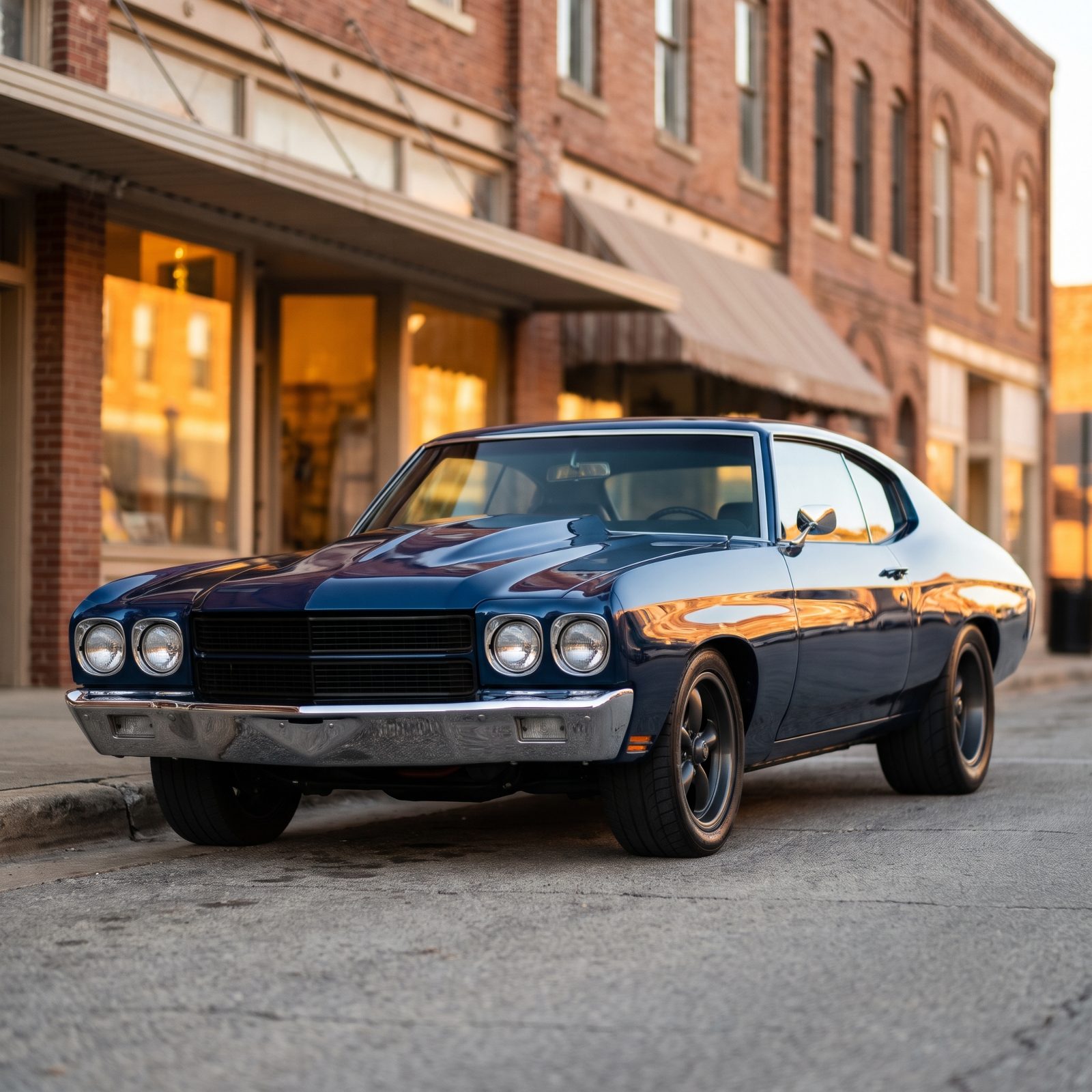
Be honest about the daydream. It was never only about getting from A to B faster. You pictured yourself climbing out of that car and becoming, somehow, a slightly better version of you — more confident, more the kind of person who drives a car like that.
That’s identity signaling, and it cuts both ways. We don’t just tell the world who we are with our stuff. We tell ourselves. The wallet reaches for whatever matches the self we’d like to believe in.
Same reason somebody buys the running shoes and feels like a runner for about a week. The object is a down payment on an identity you haven’t earned yet. Sometimes the car does nudge you into the person. Mostly, though, you’re the same you — now with a bigger insurance bill and a story you tell at parties.
5. Half the Dream Is Imagining Who Watches You Arrive
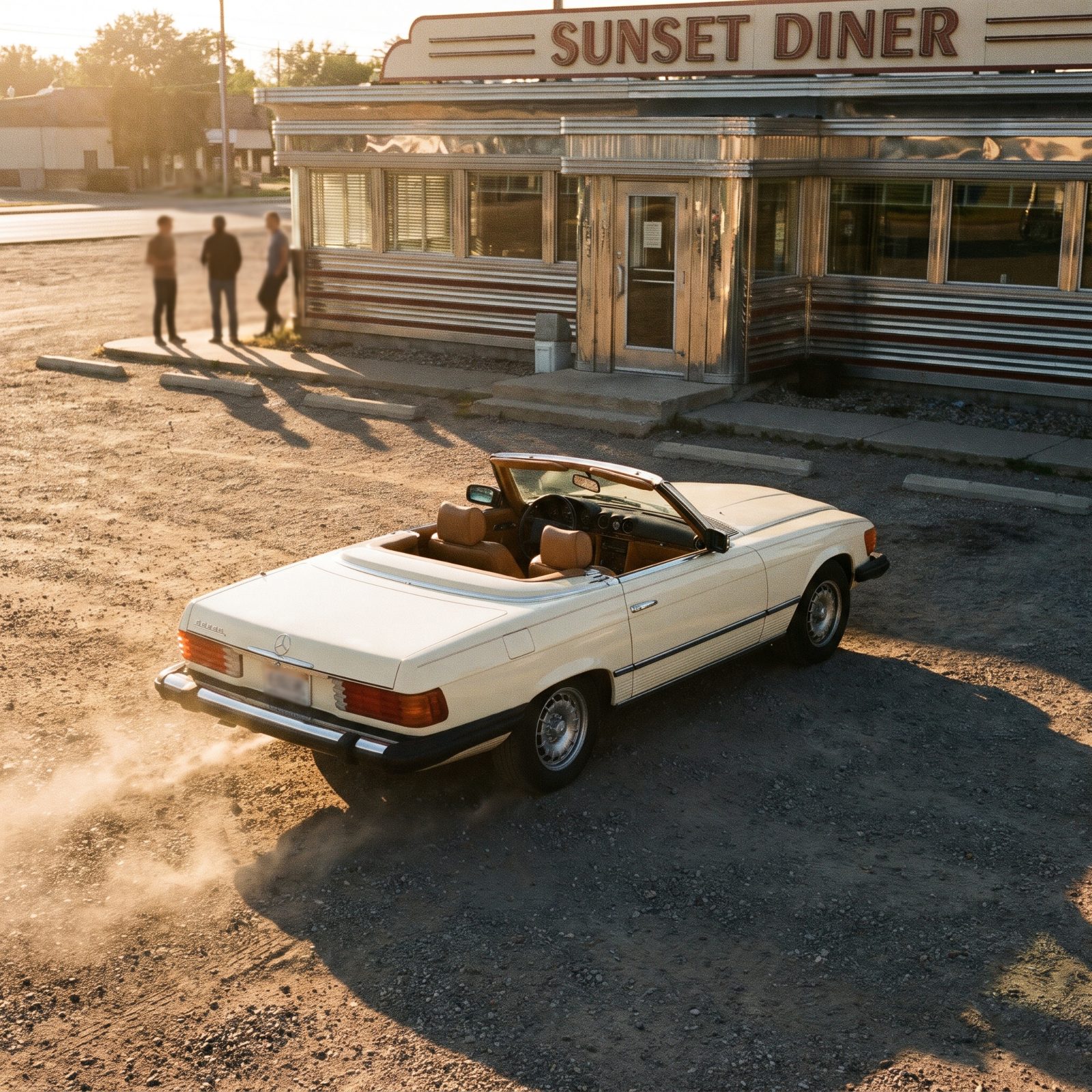
Run the fantasy all the way through and you’ll notice it’s never just you alone on an empty road. There’s an audience. The old buddies at the reunion. The neighbor who always had something to say. Someone, somewhere, watching you pull up and recalibrating their opinion of you in real time.
Psychologists call this the spotlight effect, and it’s a kind of lie we tell ourselves — we wildly overestimate how much anyone is actually noticing us. The studies are a little embarrassing to read. People are dead certain everyone clocked their dorky shirt. Almost nobody did.
The dream car runs on that imagined crowd. You buy partly for a jury that’s mostly not in session. And the freeing truth is that the guy at the gas pump glances for two seconds and goes right back to his own life.
4. Someone Calling It Impractical Only Makes You Want It More
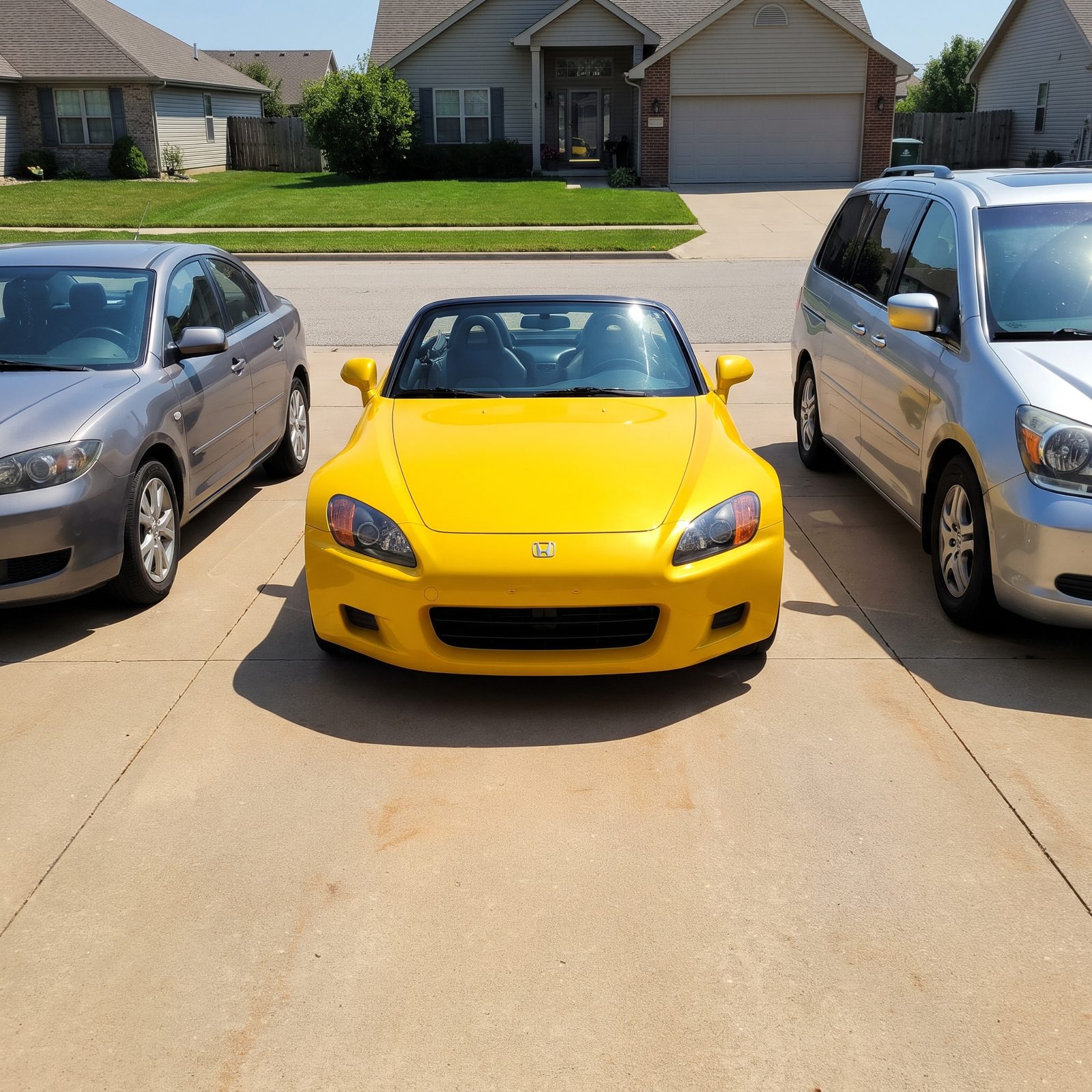
Somebody says it. A spouse, a brother, the guy at work. “Where are you gonna put the kids?” “That thing’ll be in the shop constantly.” “Totally impractical.” And instead of cooling you off, it pours gas on the fire. Now you want it twice as bad.
That’s reactance. Tell a person they can’t, or shouldn’t, and the wanting hardens into something close to principle. The car stops being a purchase and becomes a flag you’re planting.
We do this with every life choice people warn us off — the risky move, the second act, the thing everyone swears is a mistake. Resistance makes it feel more like ours, more like freedom. Sometimes the doubters are wrong and you should go for it. And sometimes you flat can’t tell your own desire apart from the stubborn itch to prove somebody wrong.
3. A Nonrefundable Deposit Turns Your Doubts Into Devotion
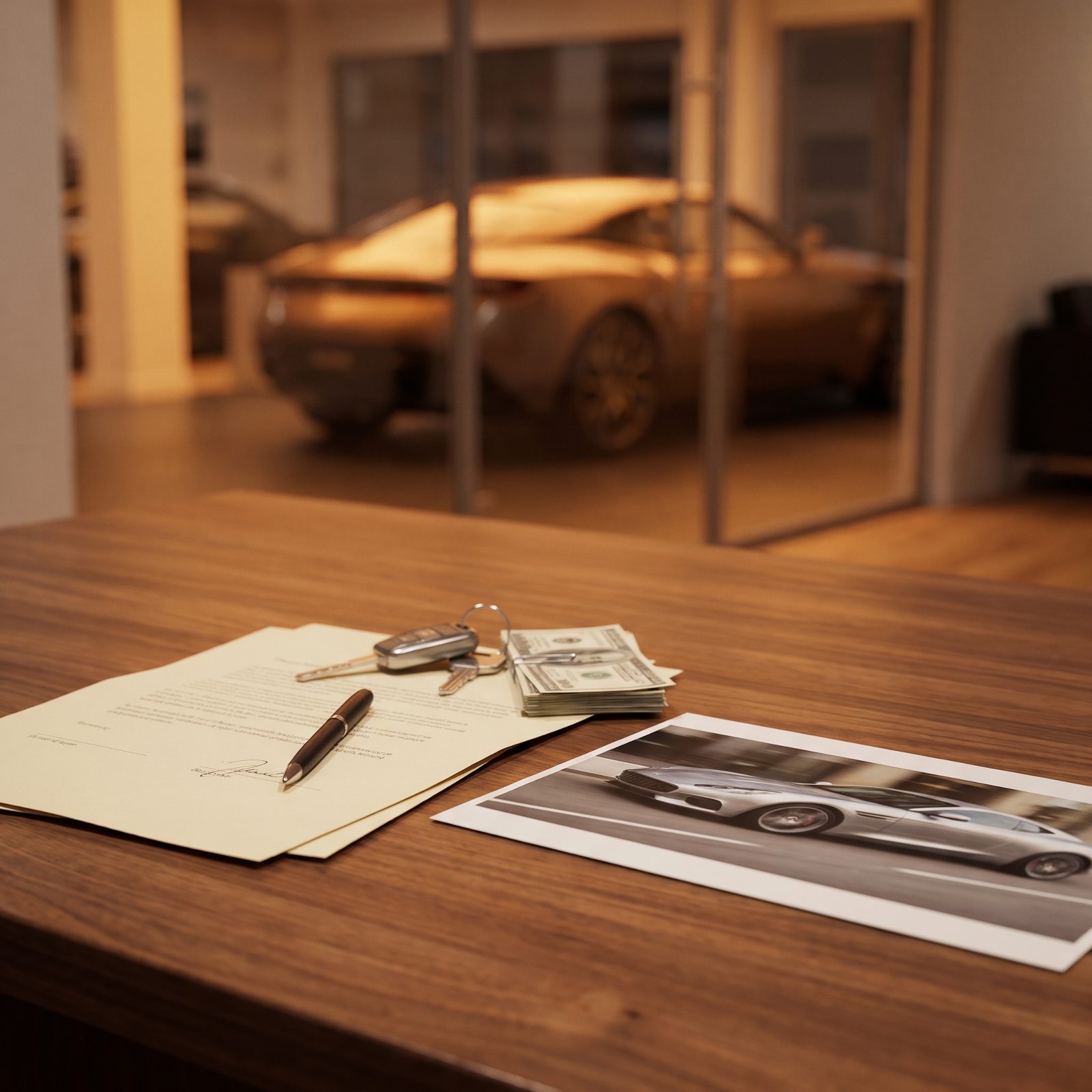
The moment the deposit clears, something funny happens upstairs. Yesterday you had a list of worries — the payments, the upkeep, the resale. Today those worries get quieter, and a little voice starts building the case for why this was smart all along.
That’s commitment escalation meeting the sunk-cost fallacy in a showroom. Once we’ve put real money down, especially money we can’t claw back, the mind rewrites the story so the decision looks right. Doubt starts to feel like disloyalty to your own wallet.
Same reason people stay in things long past the point of sense. The mortgage, the degree, the plan they’ve already poured years into. The investment itself becomes the argument. “I’ve come this far.”
We don’t protect good decisions. We protect expensive ones.
And here’s the uncomfortable part. A deposit tells you nothing about whether the car is right for you. It only tells you how hard you’ll now work to believe it is.
2. Once It’s Yours, Mileage Suddenly Feels Like Damage
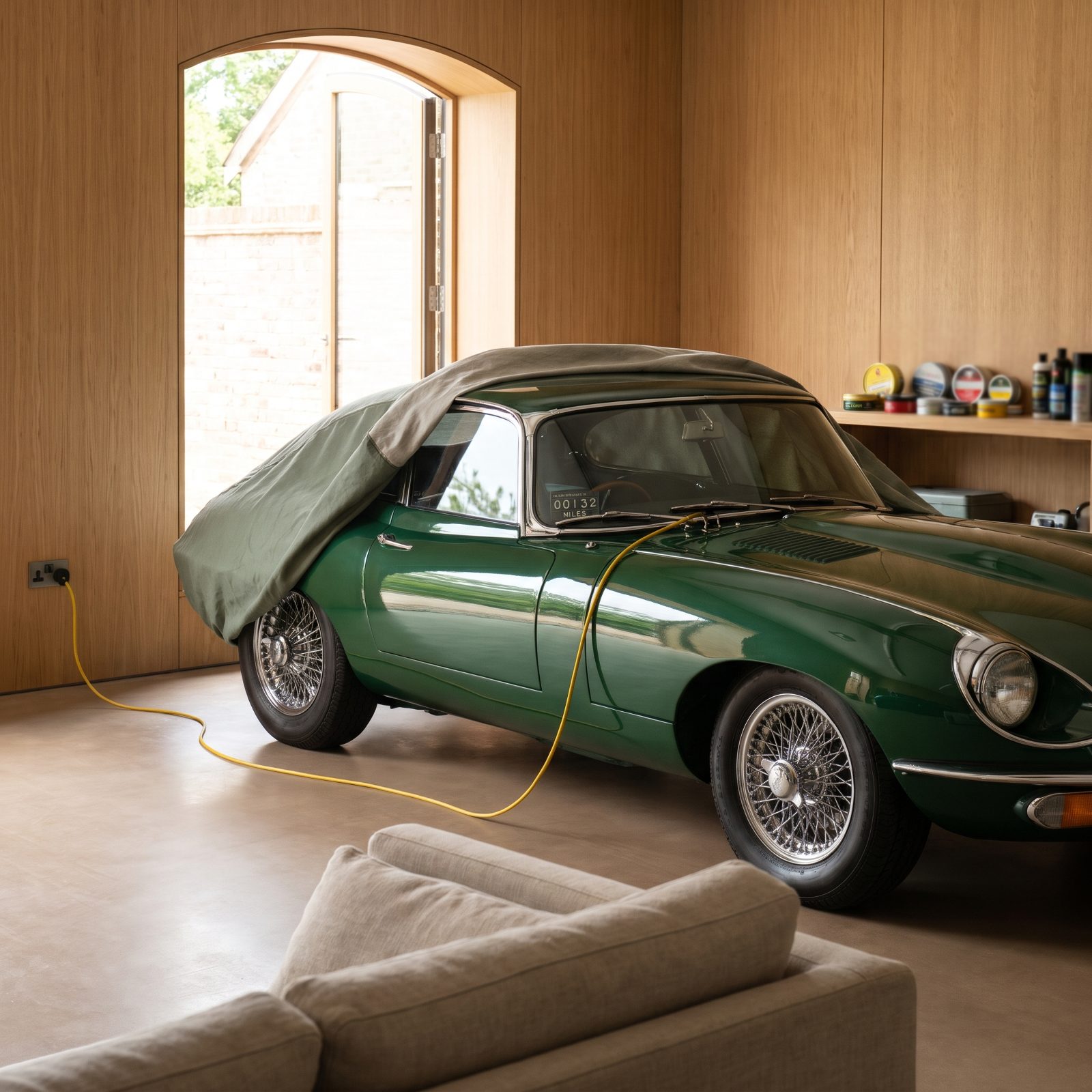
You wanted this car for years so you could drive it. Then you own it, and a strange reluctance sets in. Every mile on the odometer feels like a tiny withdrawal from an account you’d rather not touch. Out comes the car cover. The good weather gets “saved.” Pretty soon you’re treating the thing like a museum piece instead of a machine built to move.
This is the endowment effect and loss aversion, holding hands. The second something is ours, we value it more, and we feel the sting of any loss harder than the pleasure of using it. Driving is fun. Watching the miles climb reads as a loss. The loss wins.
You spot it everywhere once you know the shape of it. The good china that only comes out for a holiday that never arrives. The nice bottle saved for an occasion big enough to deserve it. We hoard the very things we bought to enjoy, scared of using them up. The road’s right there. Drive the car.
1. After Buying, You Still Browse Listings for the Better One
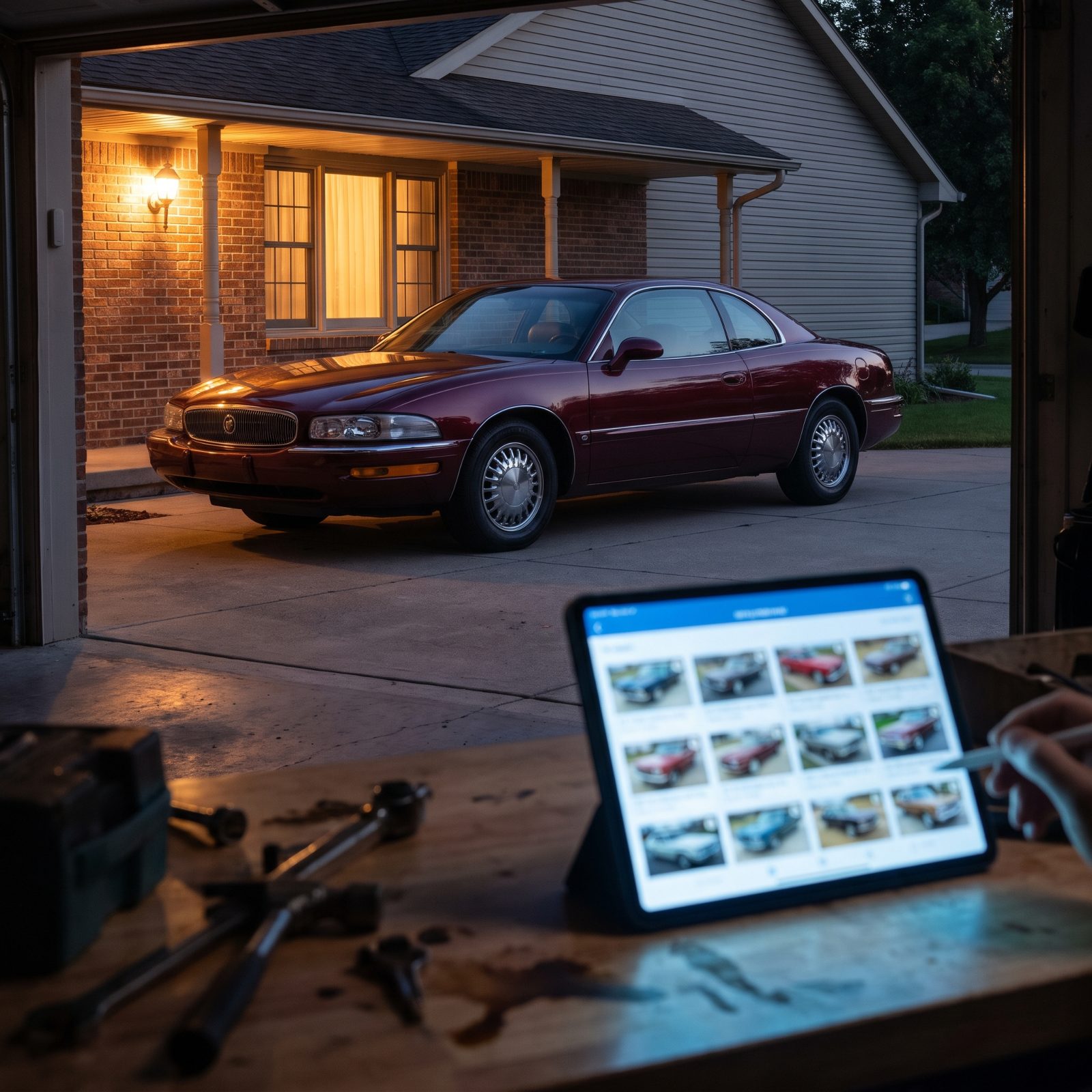
You finally got it. The dream, in your driveway, title in your name. So why are you still scrolling the listings at night, still clocking the one with the better color, the lower miles, the engine you talked yourself out of?
Welcome to hedonic adaptation, the quiet thief at the end of every chase. We get the thing, the thrill spikes, and within weeks the brain resets the baseline. The car becomes normal, and the wanting machine simply picks a new target. The dream was never a destination. It was a treadmill with a nice paint job.
Same mechanism behind the raise that stops feeling like a raise, the bigger house that becomes just the house. The chase feels like it ends at the finish line. It doesn’t. It relocates.