
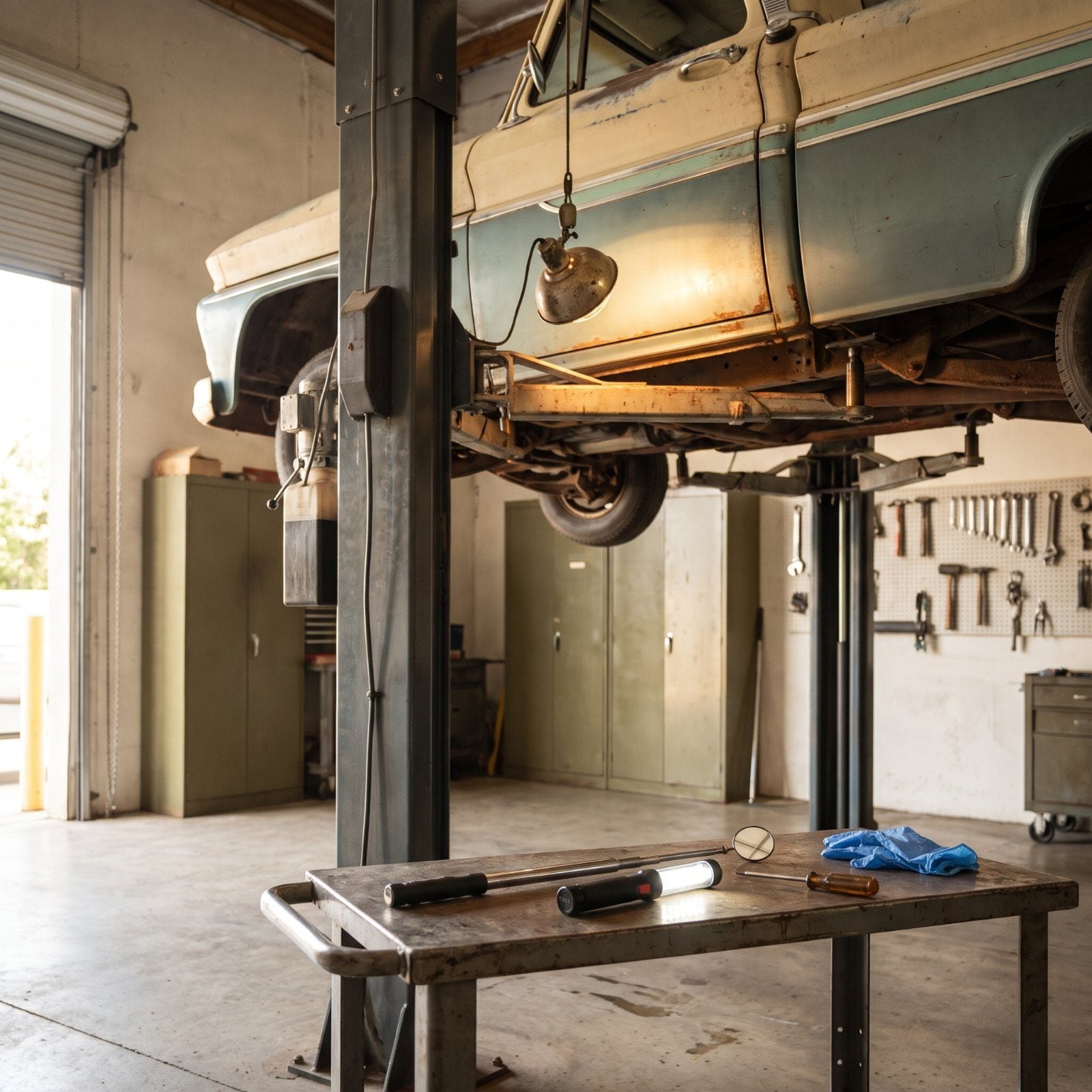
A clean fender tells you nothing. A truck can gleam in the driveway, start on the first turn of the key, and still be rotting from the inside like an apple that only went bad near the core. The trouble hides low, behind gaskets, under carpet, inside folded sheet metal where water sits and stays. We’ve crawled under enough old pickups to know where the real money is won or lost. Grab a flashlight and a magnet. Here’s where to look before you hand anybody a check.
Please note that some of the images in this article were created with the assistance of AI.
36. Trusting Fresh Paint on the Rocker Panels
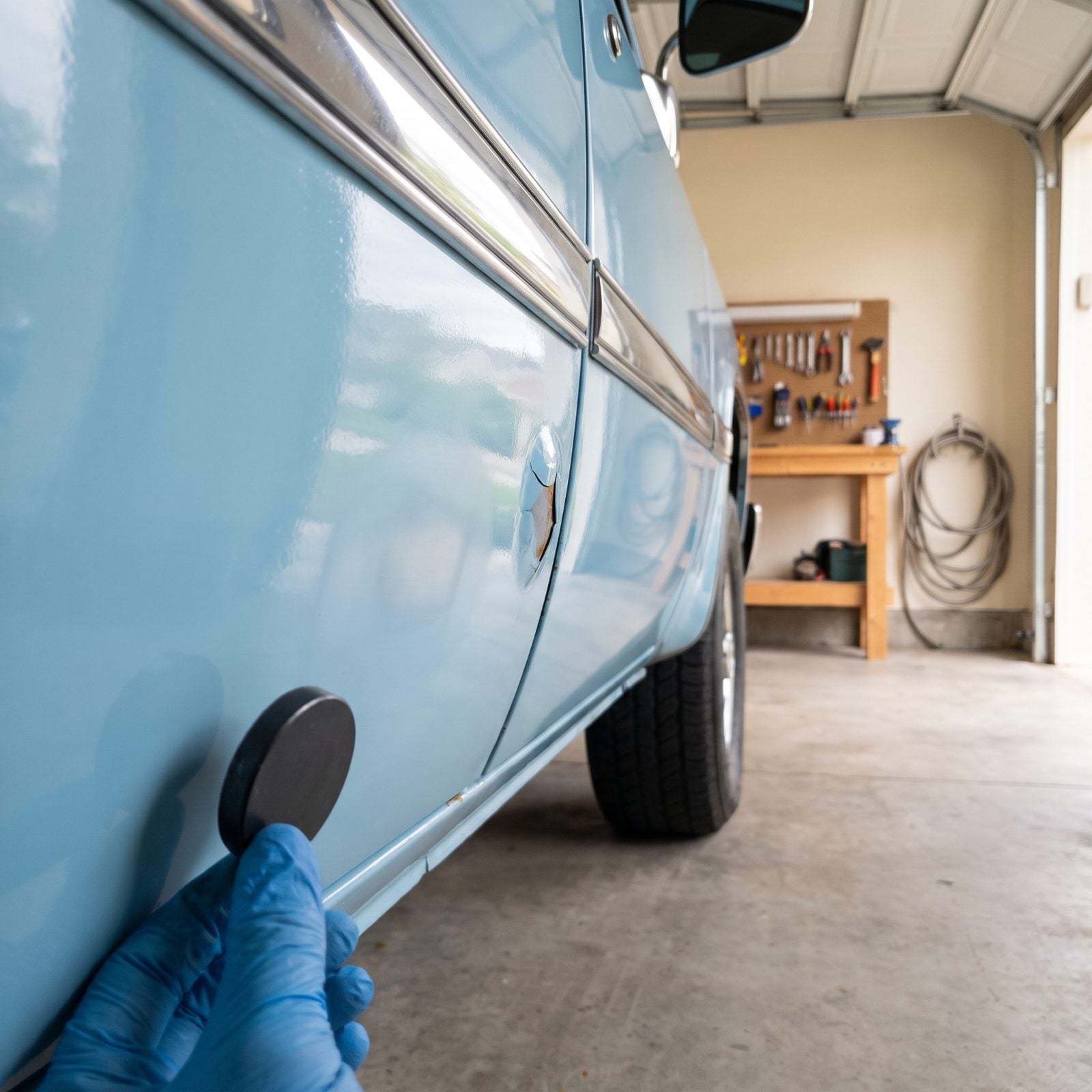
Fresh paint on a rocker panel is the oldest trick going. Rockers are hollow, they trap road spray, and they’re the easiest spot to skim with filler, prime, and shoot so they look arrow-straight for a sale. Looks great. Means nothing.
Filler over rust doesn’t stop rust — it traps moisture against raw steel, and the hole keeps growing under a perfect paint job until the whole panel crumbles in your hands a year later. You paid for steel. You got spackle.
Run a magnet along the length. Strong, even grip means metal; weak or wandering grip means filler. Tap with a knuckle and listen for the dull thud of bondo versus the sharp ring of steel, and always check the underside where the pinch seam lives.
35. Missing Filler and Rust in the Cab Corners
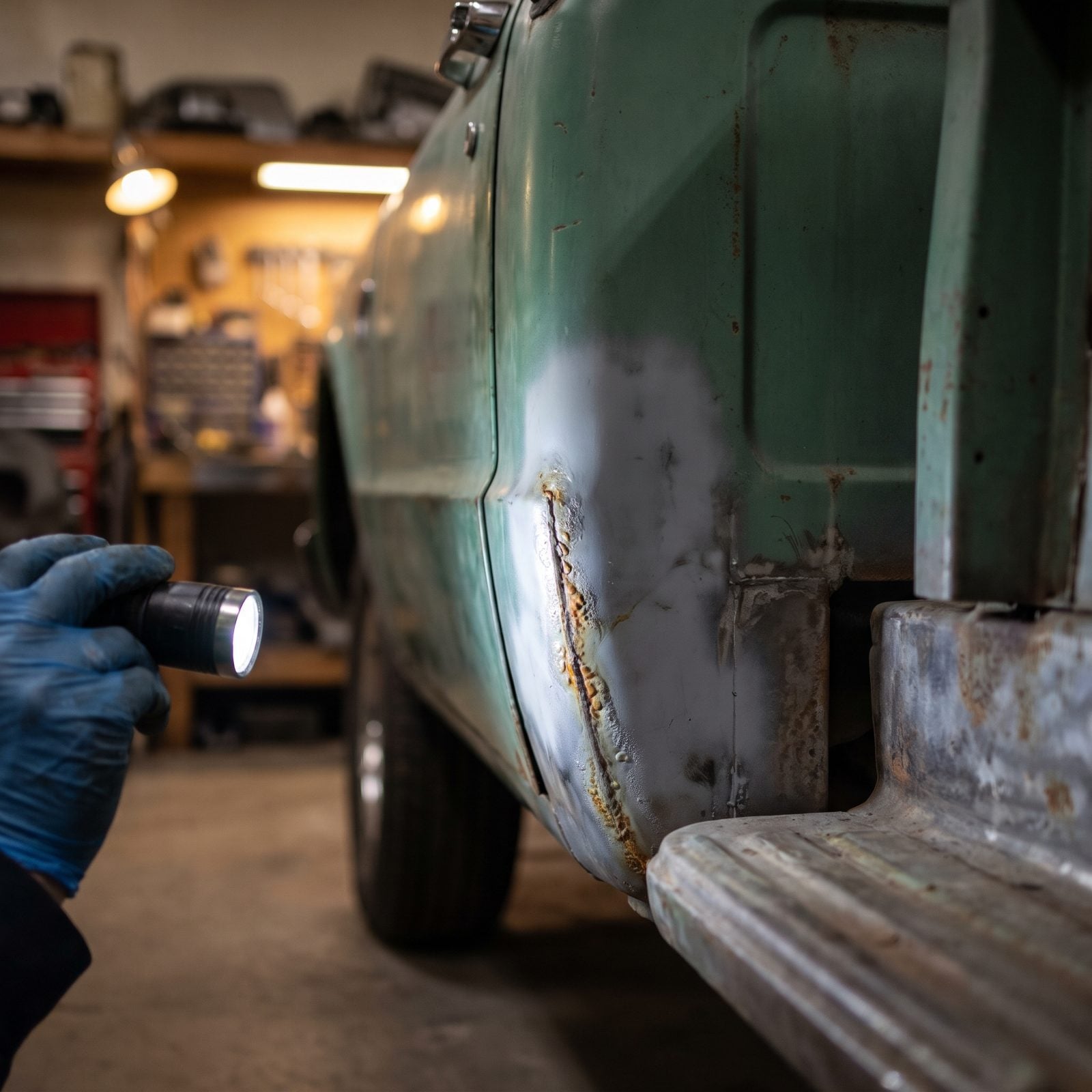
Cab corners are the panels at the back bottom of the cab, right where mud, leaves, and salt collect and never dry. On a classic pickup this is almost always the first place to go.
Here’s why it bites. These corners sit directly over the rocker ends, so when they rot they take structural metal with them, and a patch done badly throws the whole door gap out of line. A sagging corner means doors that won’t shut square.
Look for paint that bubbles in a fine freckled pattern, seams that look fatter than the other side, any spot where someone feathered filler into a tight radius. Patch panels for most popular trucks run cheap — but only if the metal they weld to is still sound.
What Our Readers Say
- When Jalopy Talk readers loved a vehicle photo and tapped a reason, “nostalgic” came out on top at 29%, followed by “body style” at 23% and “would drive” at 19%.
From Jalopy Talk reader polls and votes.
34. Skipping the Lower Windshield Channel Beneath the Gasket
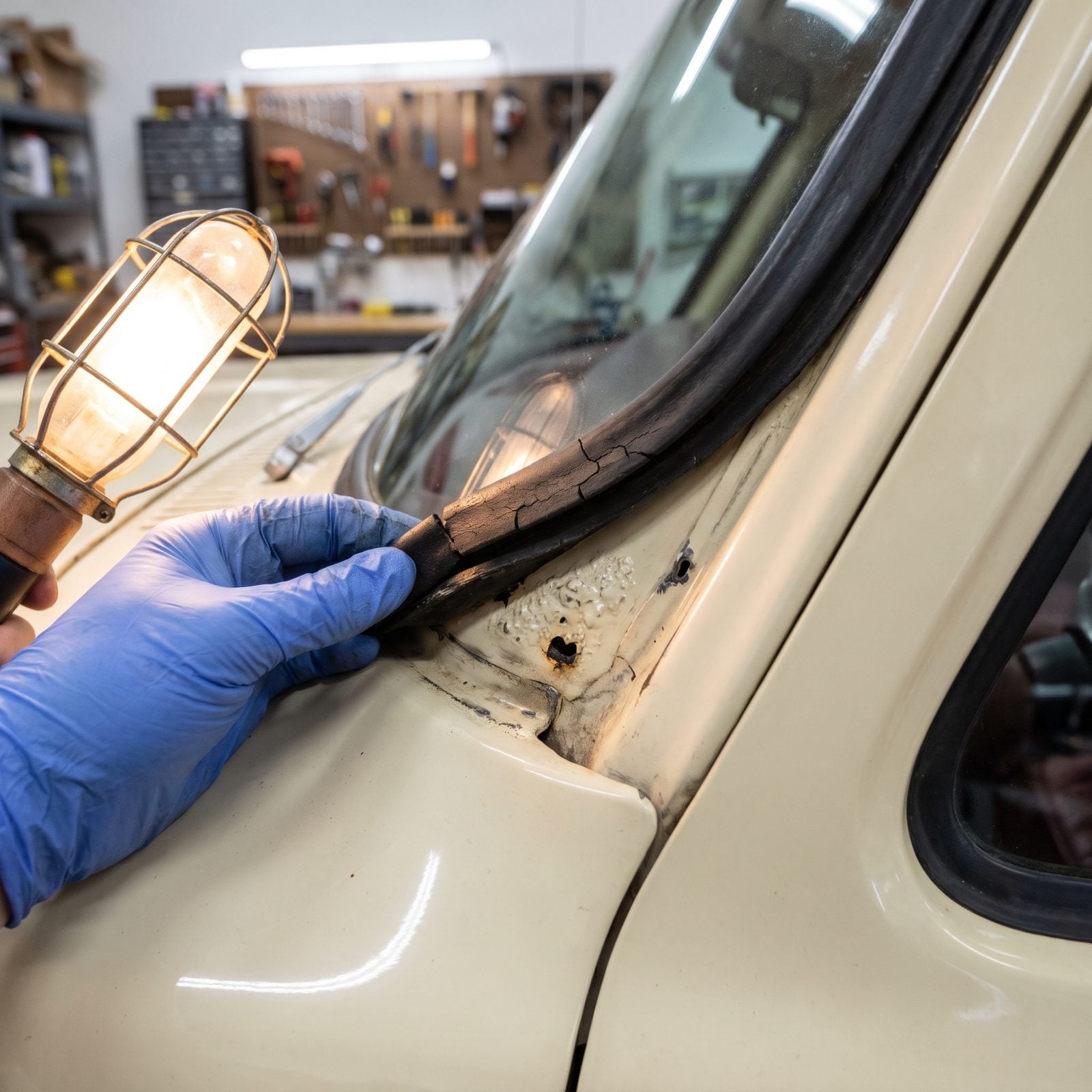
Everybody checks the glass. Almost nobody checks under the gasket that holds it.
The lower windshield channel is a horizontal trough that collects every drop running down the glass. That rubber seal traps the water against the metal and holds it there like a sponge. Decades of that, and the channel perforates from behind the gasket where no casual buyer ever peeks.
This one matters because the channel is part of the cowl structure. Rot here lets water pour straight into the cab and onto the floor pans, feeding several other problems on this list. Gently lift a corner of the gasket and probe the lip with a small screwdriver. Soft, flaky metal usually means the whole channel needs cutting out.
33. Overlooking the Cowl Vent Plenum Under the Grille
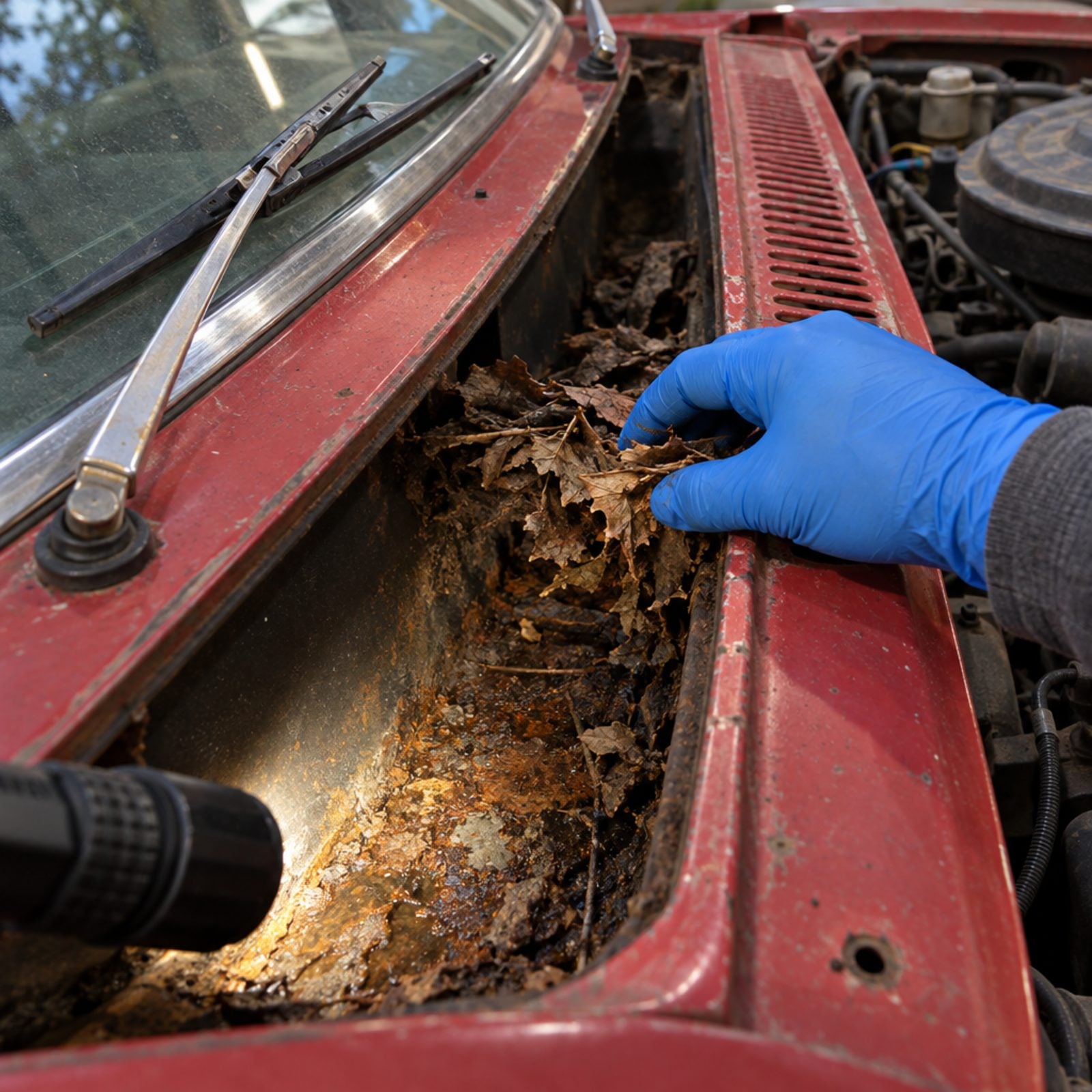
The cowl vent plenum is the open box at the base of the windshield, just behind the hood, that feeds fresh air into the cab. It’s also a leaf trap, a drain, and a rust factory rolled into one.
Water and debris funnel in through the cowl vent, settle on the plenum floor, and sit. There’s no easy way for it to dry out and no easy way for you to see it without a flashlight pointed down into the gap. Once the plenum floor rots through, water drips onto your feet and the heater box every time it rains.
Open the hood, peer down into the box just ahead of the windshield, shine a light. Leaves are normal. Scale, flaking, and daylight shining through from below are not.
32. Ignoring the Welded Cowl-to-Firewall Seam
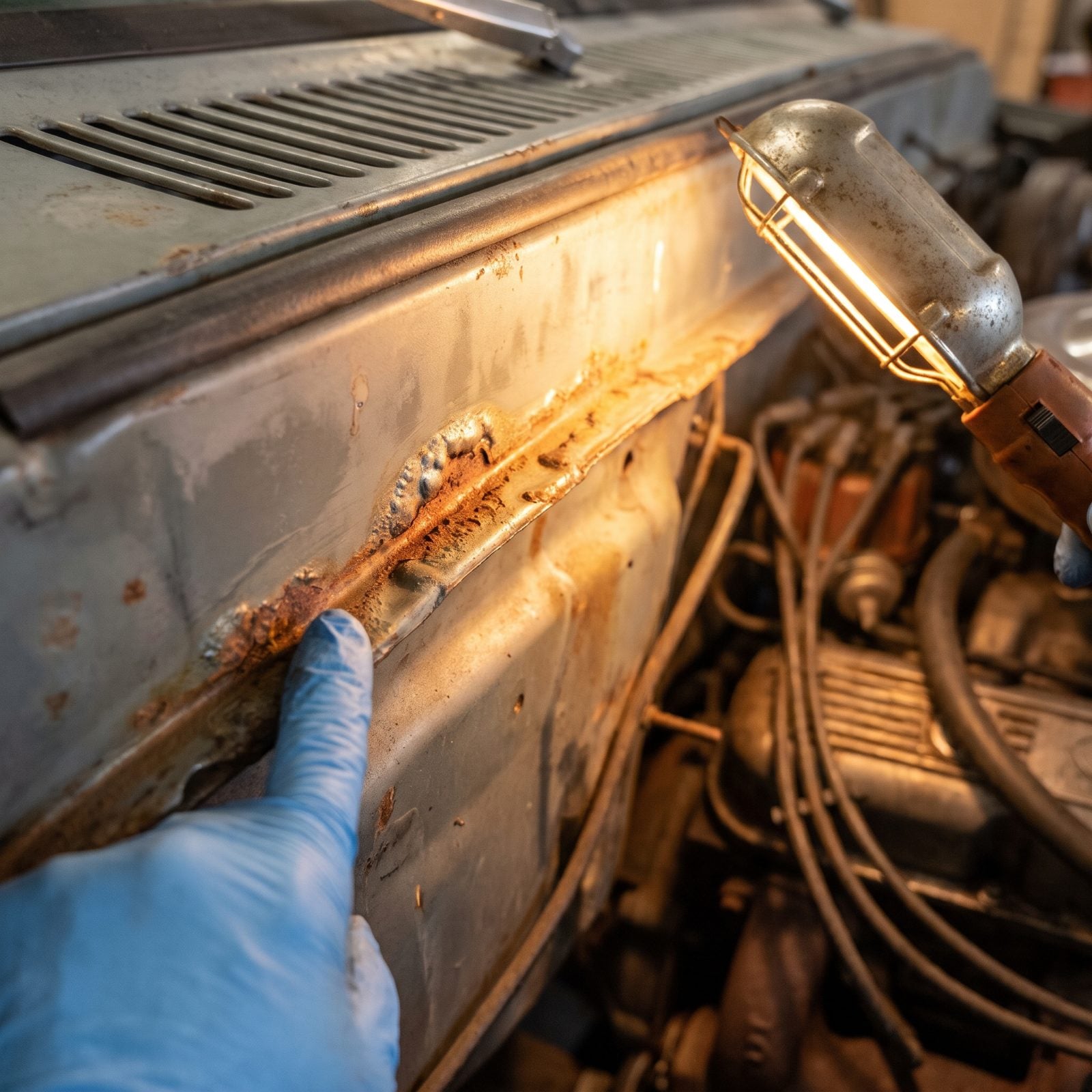
Where the cowl panel joins the firewall, two layers of steel are spot-welded together. Water that gets into the cowl runs down and parks in that seam, and once rust starts between the layers it has nowhere to go but outward.
You’ll see the evidence as seam swelling — the joint looks puffy and the paint cracks in a straight line. That’s rust jacking the layers apart from the inside. It’s one of the nastiest areas to repair properly, because you’re welding in a structural corner with lousy access, and a bad fix compromises how the whole front of the cab sits.
Run your fingers along the seam in the engine bay. Any ridge, bubble, or crack following the weld line deserves a hard second look before you talk price.
Seam swelling is rust bragging about work it already finished behind the paint.
31. Checking Around, but Not Inside, the A-Pillar Bases
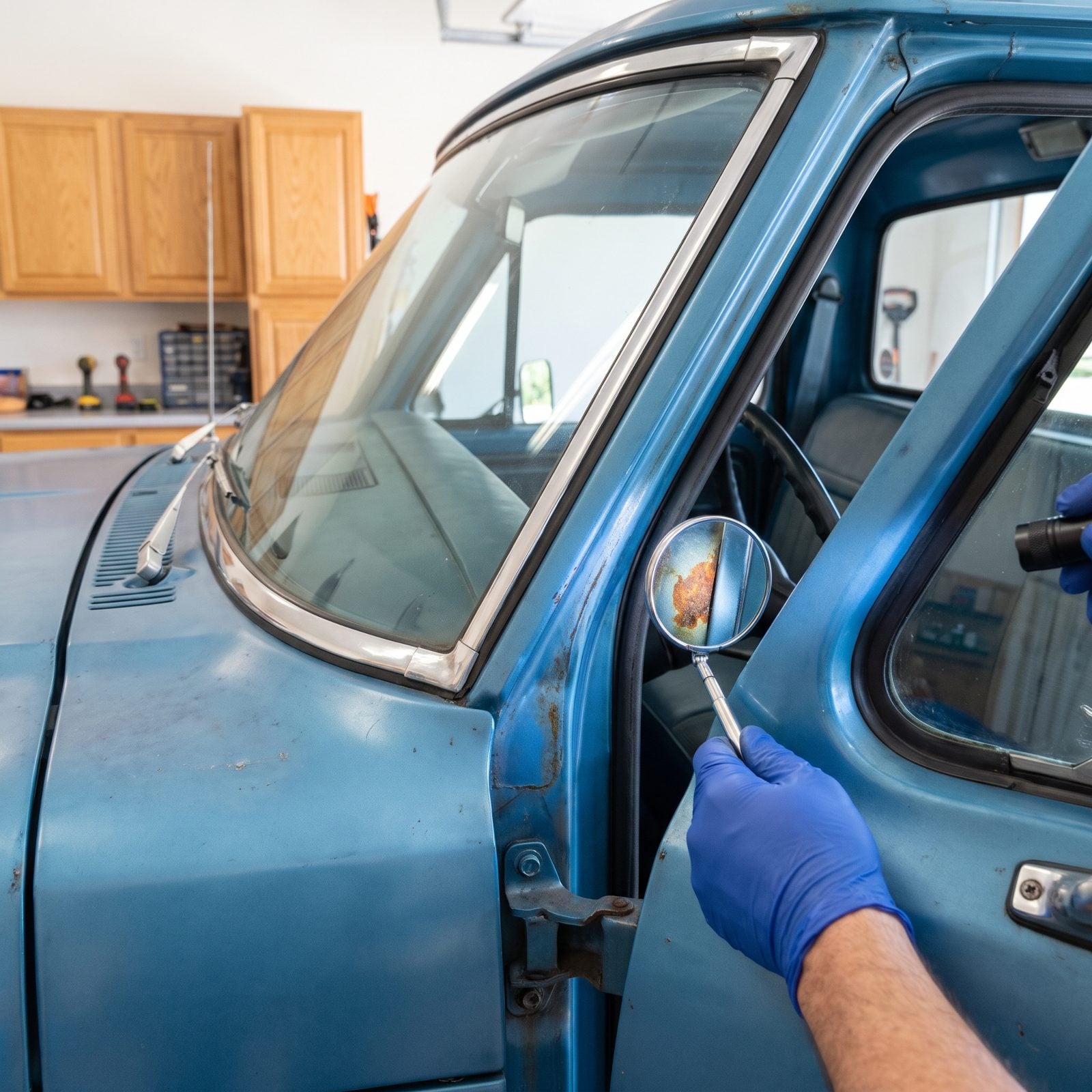
The A-pillar base is where the windshield pillar meets the cowl and the door hinge area. The outside can look flawless while the inside — the face you can’t see without a mirror — quietly turns to lace.
This is a structural pillar. It carries the windshield, supports the roof, and anchors the top of the door opening. Rot hidden inside it is both dangerous and expensive, and sellers miss it honestly all the time because they’ve never seen the inner face either.
Open the door, grab a small round inspection mirror and a flashlight, hold the mirror inside the cab partway up the windshield pillar to view its inner face, and shine the light along the outside of the pillar. Water draining from the windshield channel lands right here. If the mirror shows a rust patch where the outside shows smooth paint, walk carefully.
30. Failing to Inspect the Door Hinge Pillars
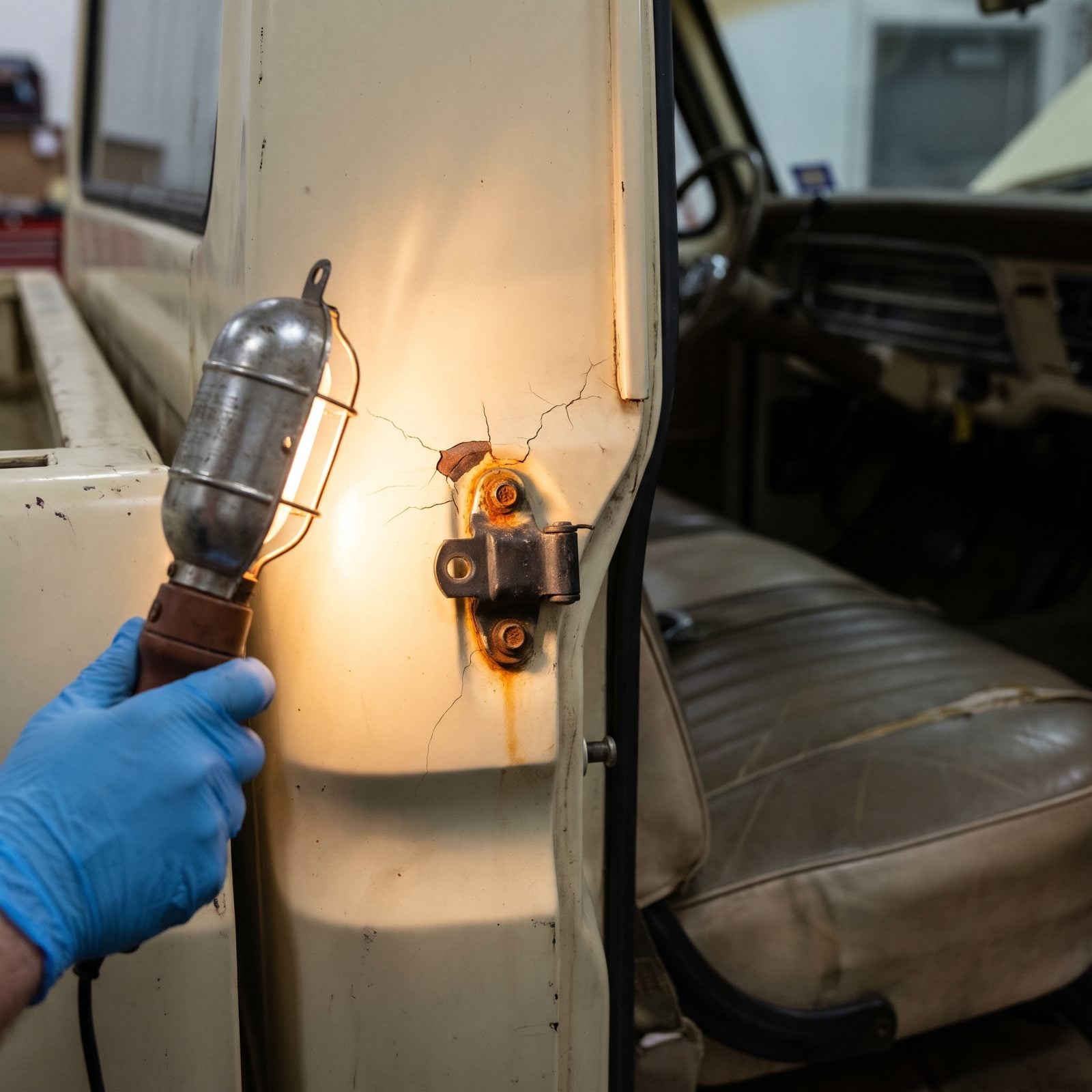
The hinge pillar is built to carry the entire weight of the door, and on an old truck that’s a lot of leverage riding on one small chunk of metal. When rust weakens it, the door starts to sag.
A sagging door is the tell, but the pillar can speak for itself too. Shine a light around the hinge; if you see cracked paint, flaking metal, or rust bleeding from the mounting bolts, the hinge pillar is suspect. Corrosion usually starts around the hinge mounting area and radiates out, and because it’s structural, a proper fix means welding new metal into a load-bearing spot.
Open and close each door a few times. Watch the gap. Feel for play. A door that clunks or drops as it swings is telling you where the money went.
29. Ignoring the Folded Hem Along Each Door Bottom
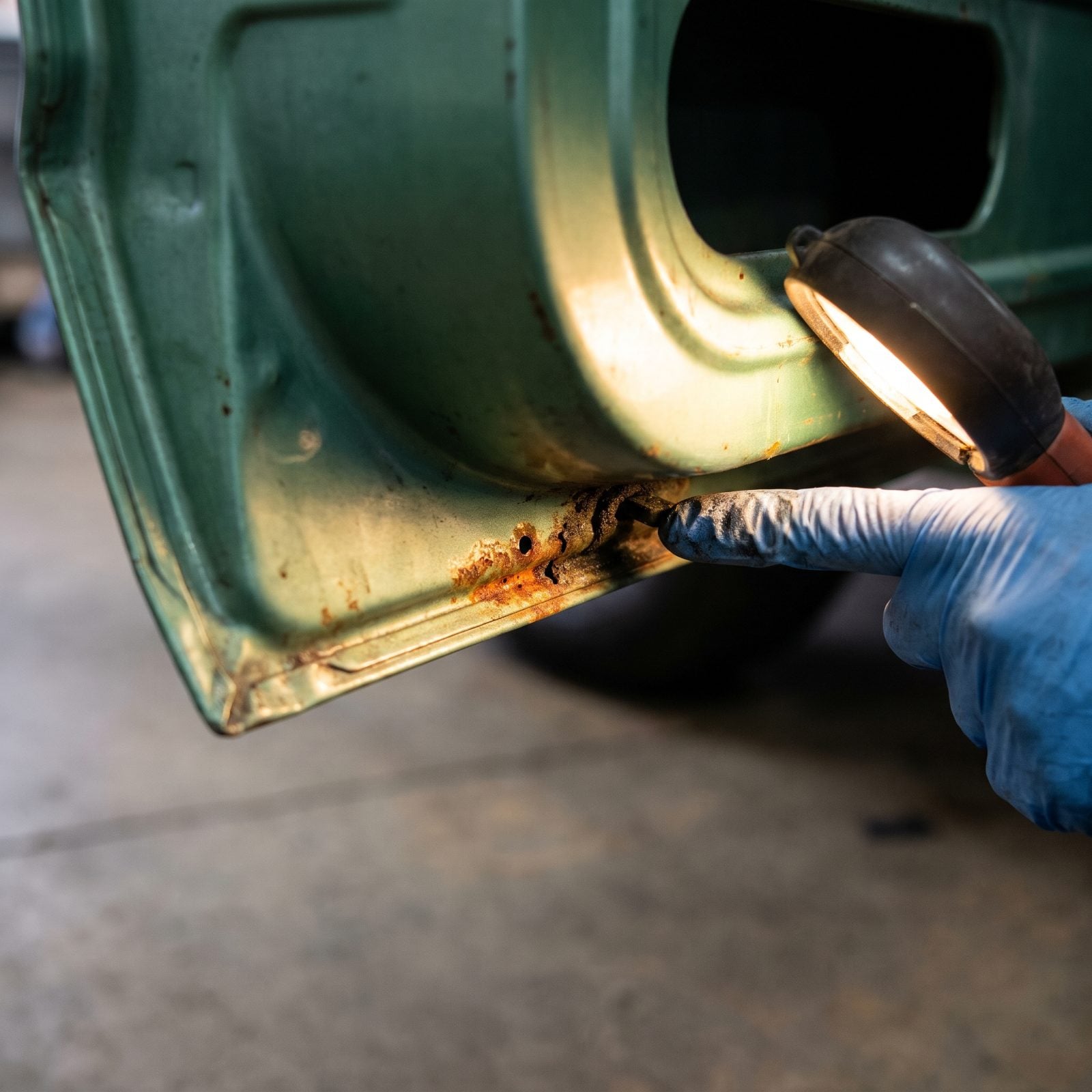
Look at the very bottom of any door. The outer skin wraps around and crimps over the inner frame in a folded hem, and that fold holds water like a gutter with no downspout.
Every door has little drain slots at the bottom. They clog with dirt, the water can’t escape, and it sits in the fold rotting both layers from inside the crease outward. By the time you see bubbling along the bottom edge, the hem is usually eaten through where the two panels meet.
Poke the drain slots with a screwdriver to be sure they’re open, then run a finger along the hem feeling for roughness or swelling. Closed doors hide all of this, so inspect them open, bottom edge up.
28. Skipping the Toe Boards Above the Footwells
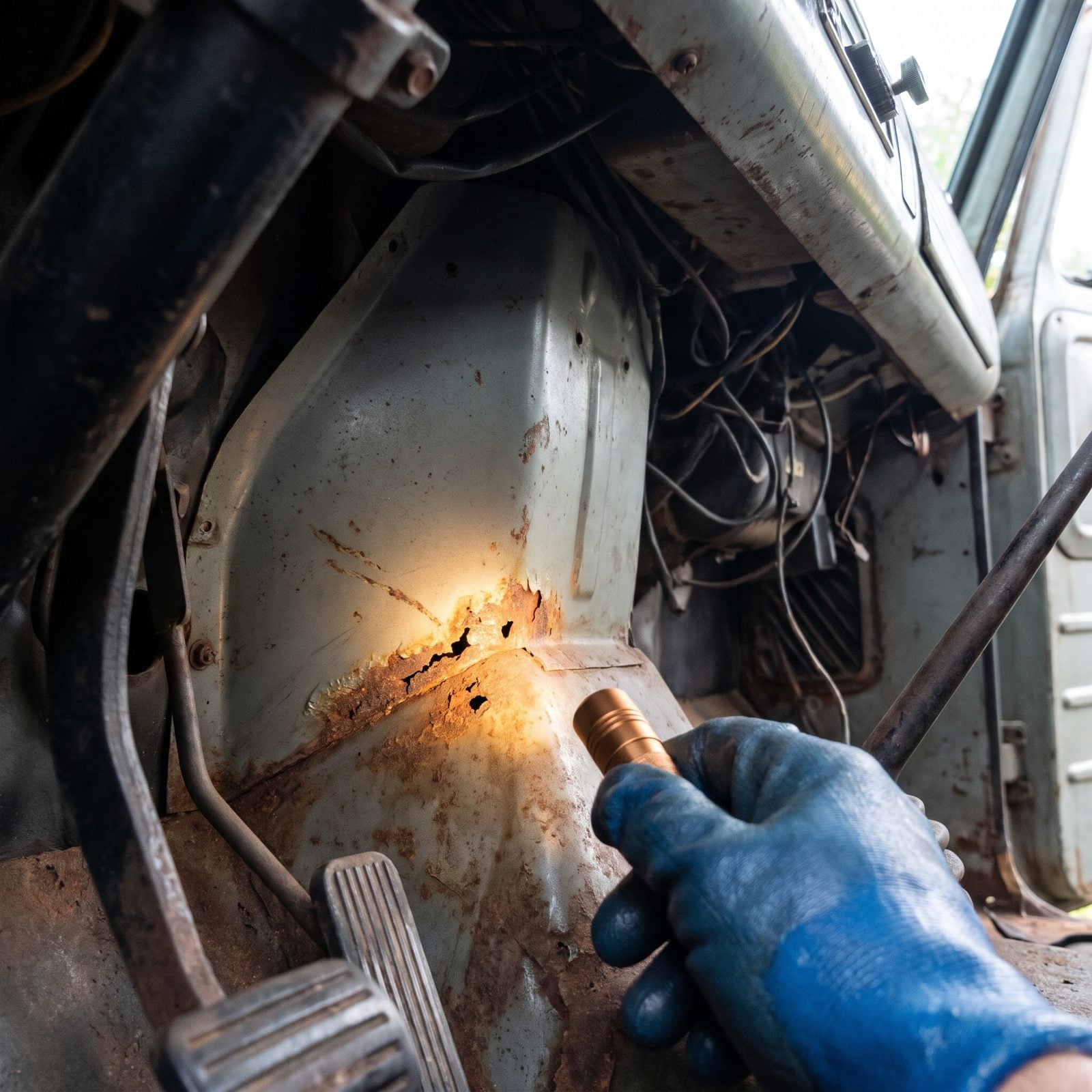
The toe boards are the angled panels above the footwells, where the firewall folds down to meet the floor. Your feet rest near them and the pedals hang off them, which makes this the last place you want soft metal.
Water from a bad windshield channel or a leaking heater box runs straight down the firewall and gathers at that bend. It’s an awkward, tucked-up spot that almost nobody inspects, so rust gets a long head start before anyone notices.
Get your head down in the footwell with a flashlight and look up at the angled panel and the firewall base. Press on it. Check around the pedal mounts especially — corrosion there isn’t just a repair, it’s a safety problem.
27. Ignoring the Cab Mount Cups and Brackets
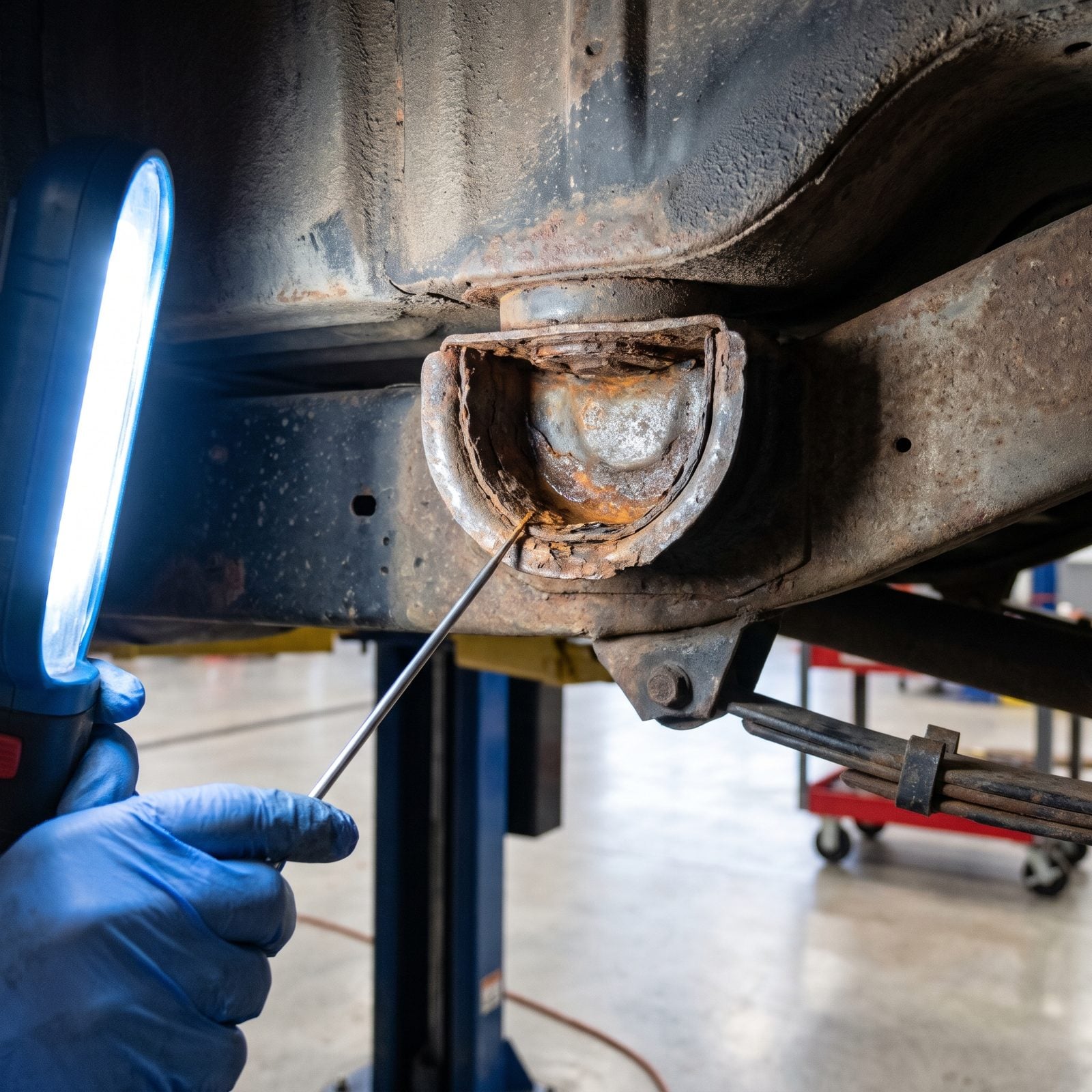
Everybody crawls under and checks the frame rails. Almost nobody shines a light straight up into the cab mount cups, those little cupped brackets where the cab sits on rubber bushings over the frame.
So why does it matter? The cup is a pocket, and water runs down the firewall, pools in there, and sits against the rubber for decades. By the time you see swelling at the seam the metal underneath is scale, and a cab that should bolt down solid instead flexes, cracks your door gaps, and squeaks over every railroad crossing between here and Tulsa.
Poke each cup with an awl before you talk price. If the probe sinks or the bracket crumbles, factor in fabricated replacement cups and fresh polyurethane bushings. On a truck that otherwise looks clean, bad mounts are the cheapest reason to walk and the most expensive surprise to miss.
26. Missing Rust Beneath the Seat Riser
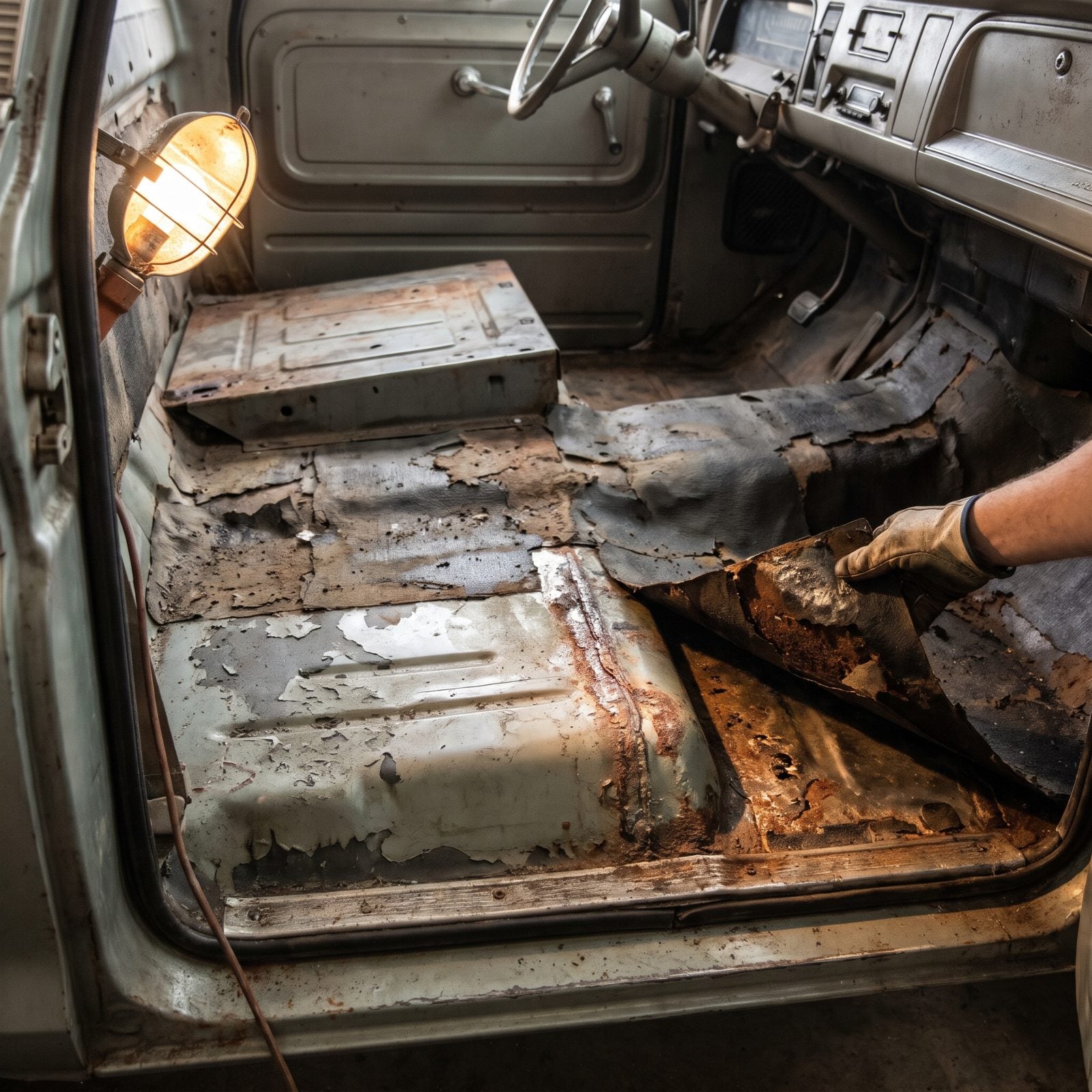
Pull the bench. I mean it. The seat riser traps every spilled coffee, every wet boot, every leak from a tired windshield gasket, and it hides all of it under a mat of tar paper nobody has looked at since the Johnson administration.
What you find is bubbled paint and perforation right where the riser welds to the floor pan. That seam carries load. Rot it out and the whole seating structure works loose, which you won’t feel until you’re doing seventy and the bench rocks under you.
Lift the matting, run your fingers along the welds, hunt for that brown halo under blistered paint. A clean floor you can actually see beats ten floors somebody swears are fine.
25. Ignoring the Lower Seam on the Rear Cab Wall
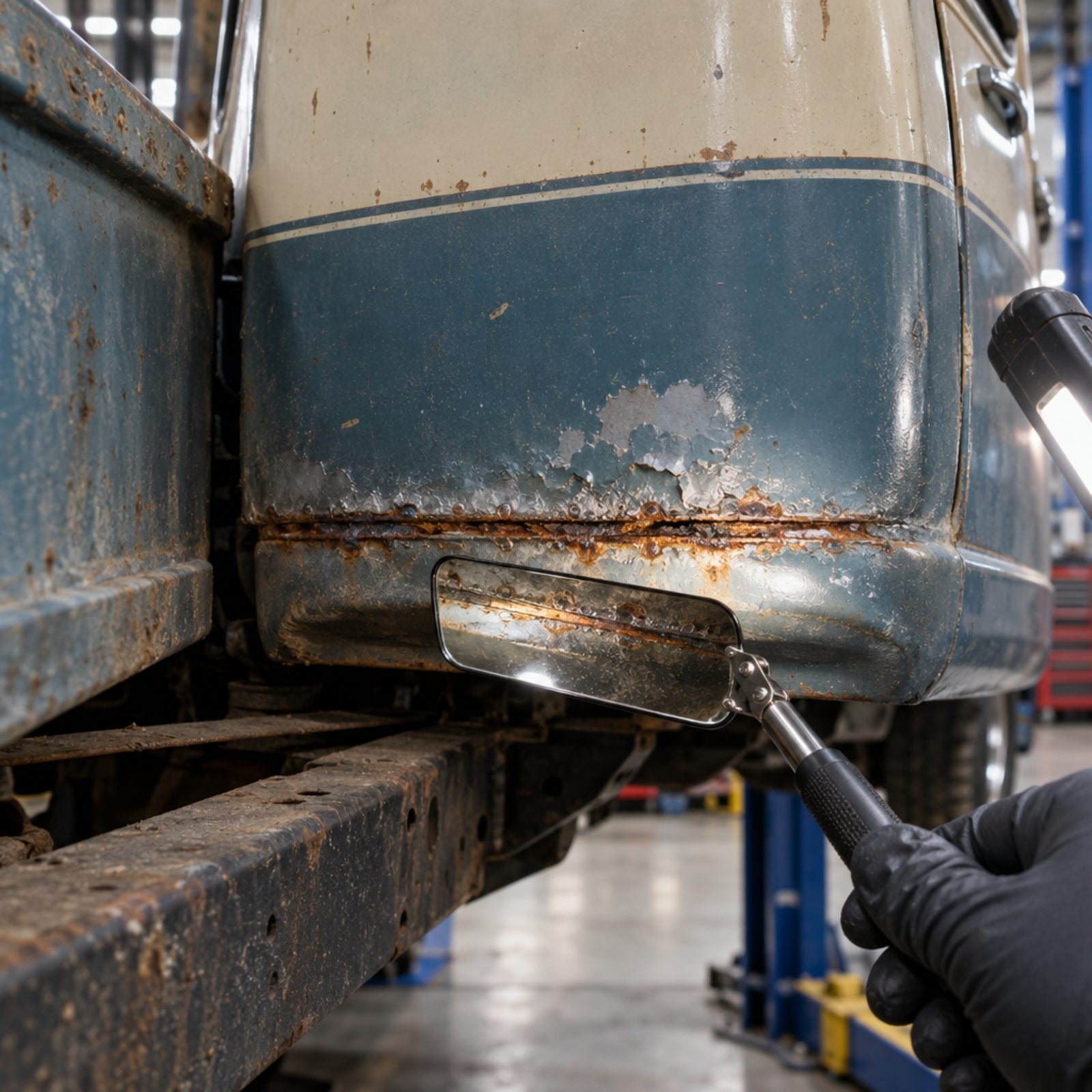
The back wall of the cab is a water trap dressed up as a flat panel. Two layers of steel lap together at the bottom seam, and the factory sealer that was supposed to keep moisture out dried up and shrank away forty years ago.
Once water wicks into that overlap, it rusts from the inside out. By the time the paint lifts, you’re looking at a seam you can’t just wire-brush. The fix is cutting, cleaning both mating faces, and welding in new metal, which is real labor.
Hold a mirror against the lower cab wall, just above the bed, to check the seam. Lifted paint in a straight line along the lap is your warning. Pretty paint on the outside means nothing if that seam is cooking underneath.
24. Failing to Look Under the Rear Window Gasket
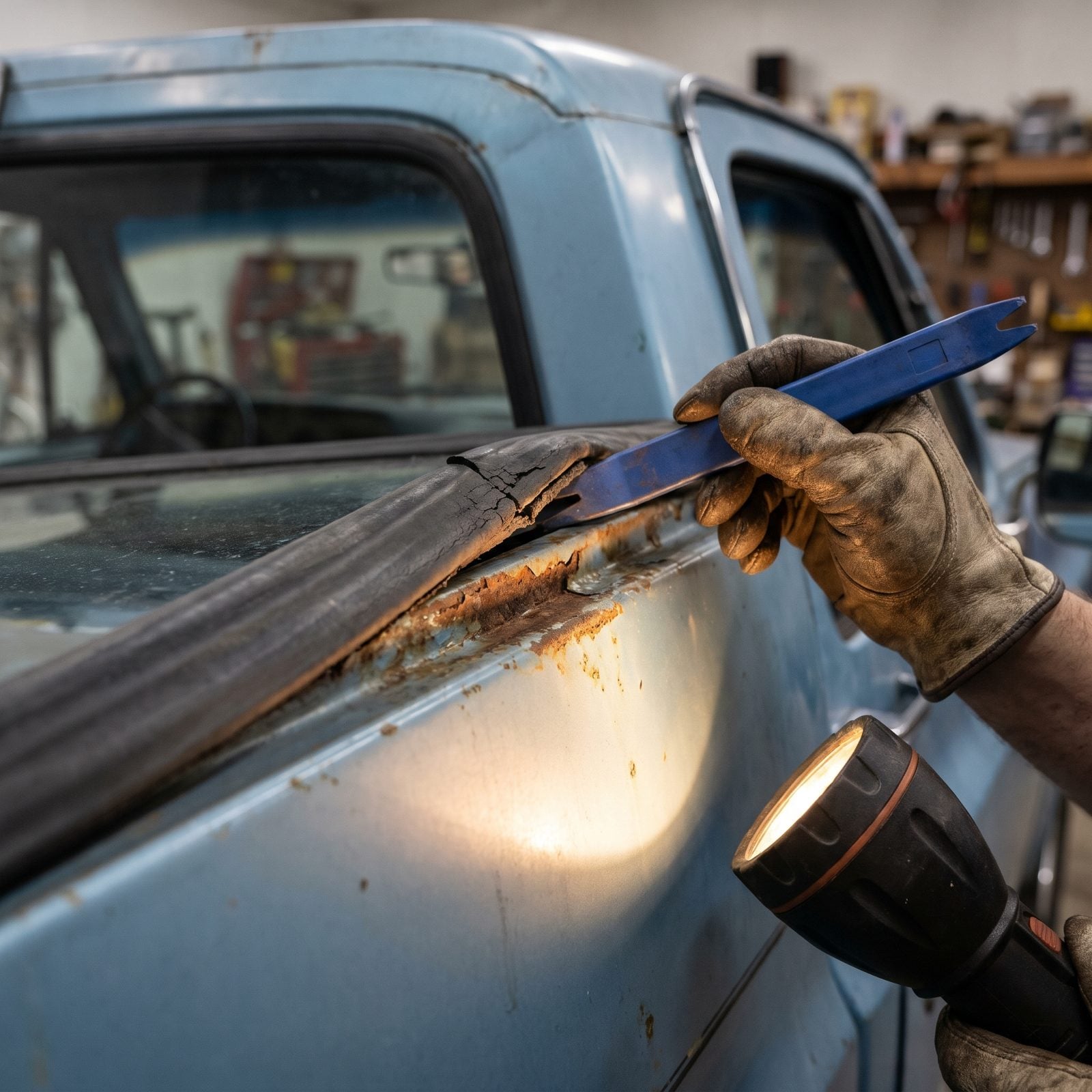
That old rear window gasket looks like it’s protecting the cab. It’s doing the opposite. Rubber that’s lost its flex holds a thin film of water against the cab’s outer panel, and the sheet metal underneath becomes a quiet little rust farm nobody sees because the rubber is in the way.
Lift an edge of the gasket with a trim tool and look at the panel underneath. Rust and grey body filler there mean the metal is going, and rotted metal means a new gasket won’t seal and the leak just keeps feeding itself.
I’ve watched buyers fall head over heels for a mint cab and never once peel back that gasket. Thirty seconds of looking saves you a cab-panel rust repair you really, really don’t want to price out.
23. Missing Corrosion Along the Roof Drip Rails
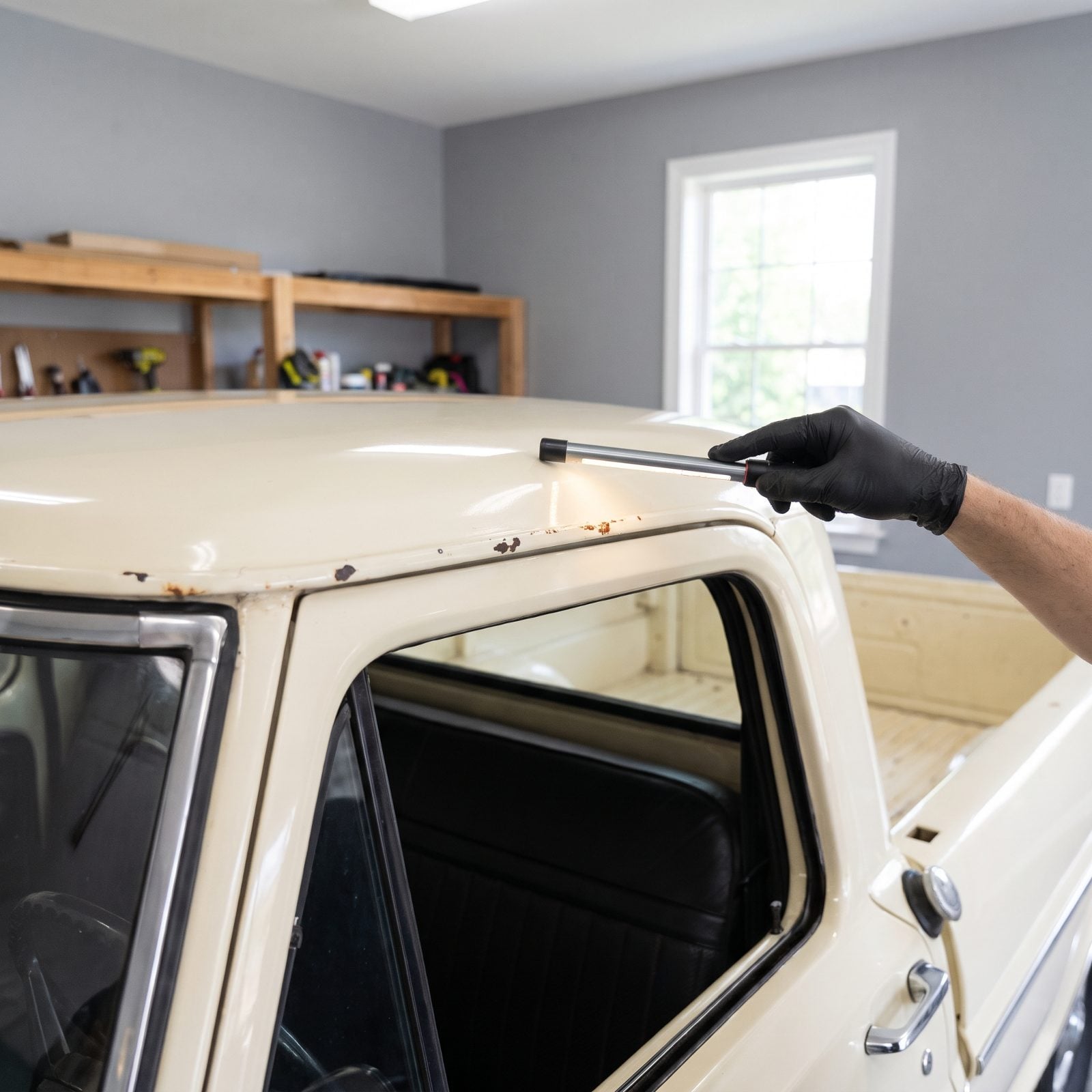
Drip rails earn their name. They catch runoff and funnel it off the roof, which also means they catch leaves, grit, and pine needles that pack in and hold water like a sponge.
The rail is a folded channel, so it rusts in a spot you can’t see without getting up high and looking straight down into it. Corrosion here spreads to the roof skin and the top of the A-pillar, turning a cosmetic rail into a structural headache.
Stand on a step stool and run a finger down the full length. Flaking inside the channel, a puffy paint line — those are your signs. Most buyers never check it because it’s above eye level, and that’s exactly why sellers don’t bother fixing it.
22. Skipping the Firewall Around the Master Cylinder
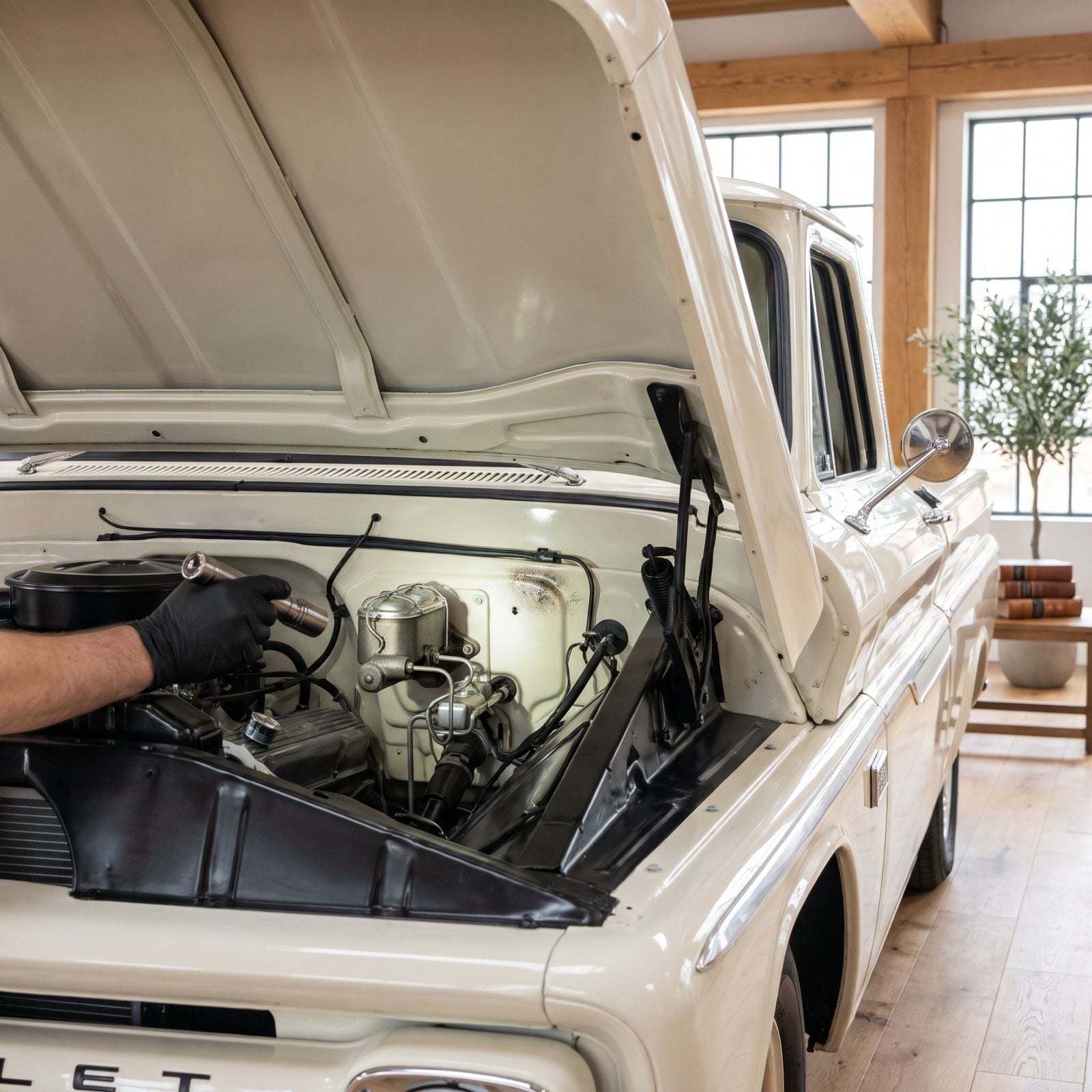
Brake fluid is a paint stripper with a parts number. Any weep from the master cylinder runs straight down the firewall, eats the finish, and sets up rust right where the pushrod punches through the steel.
That area matters more than it looks. The firewall carries the pedal loads, and a rotted master cylinder mount can flex under hard braking or, worse, let the whole assembly work loose. Nothing cosmetic about it.
Look for bubbled paint and a dark stain fanning down below the cylinder. Press around the studs. If it feels soft or you see a brown halo, you’ve got fluid damage and corrosion together, which is a two-part cleanup every single time.
21. Trusting a Repainted Battery Tray
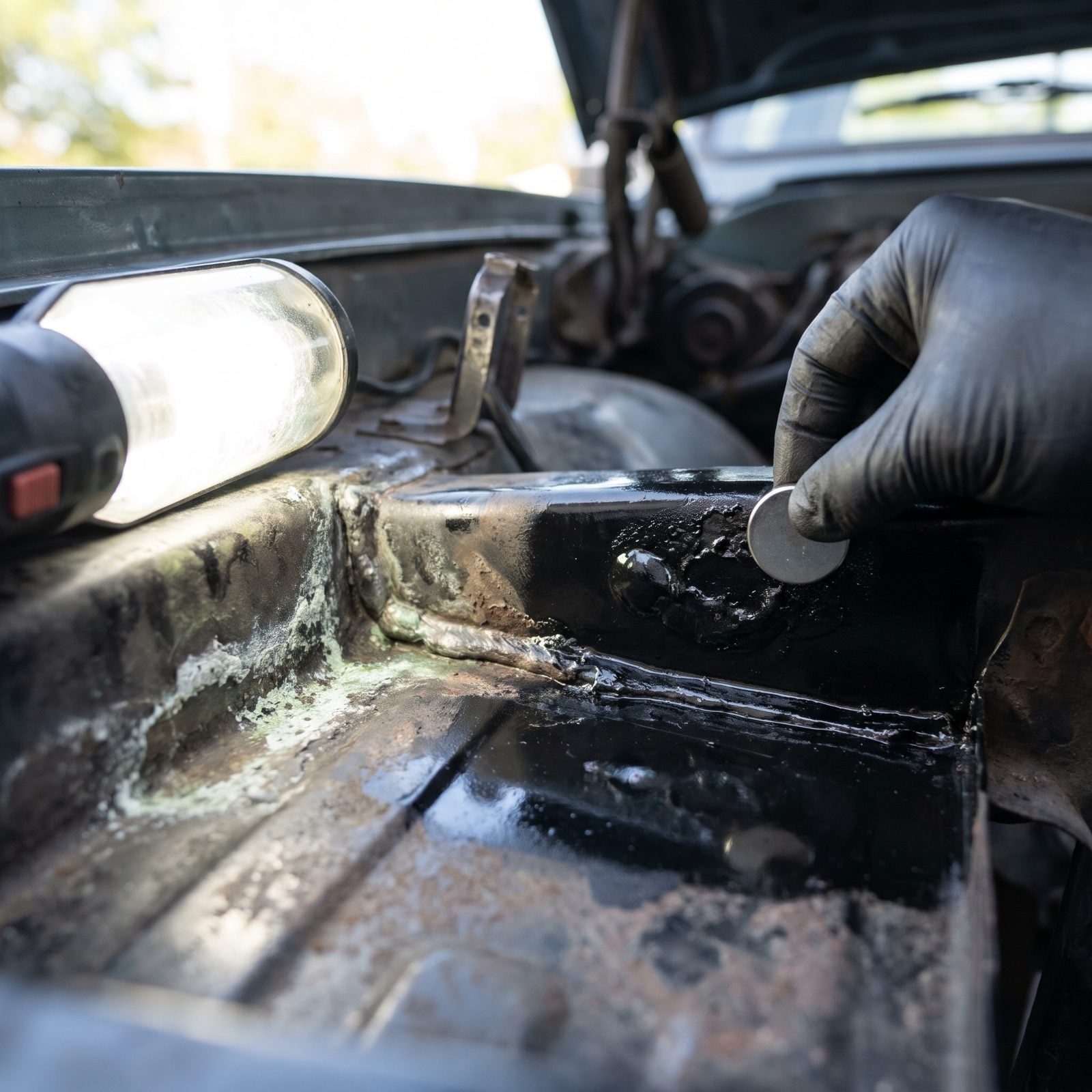
A fresh coat of paint on the battery tray should set off alarms, not put you at ease. Years of acid fumes and the occasional overfill eat the tray and the inner fender below it, and the easiest way to hide the damage is a quick rattle-can respray.
Paint doesn’t stop acid rot. It buys time and hides the swelling where the tray meets the fender, nothing more. Press on it, slide a magnet across it, hunt for the chalky greenish residue acid leaves behind at the edges.
If the rest of the engine bay is weathered and only the tray gleams, somebody’s covering something. Clean metal wears its age honestly. Suspiciously new paint in one small spot is almost always a bandage over a wound.
20. Missing Rust Inside the Lower Radiator Support
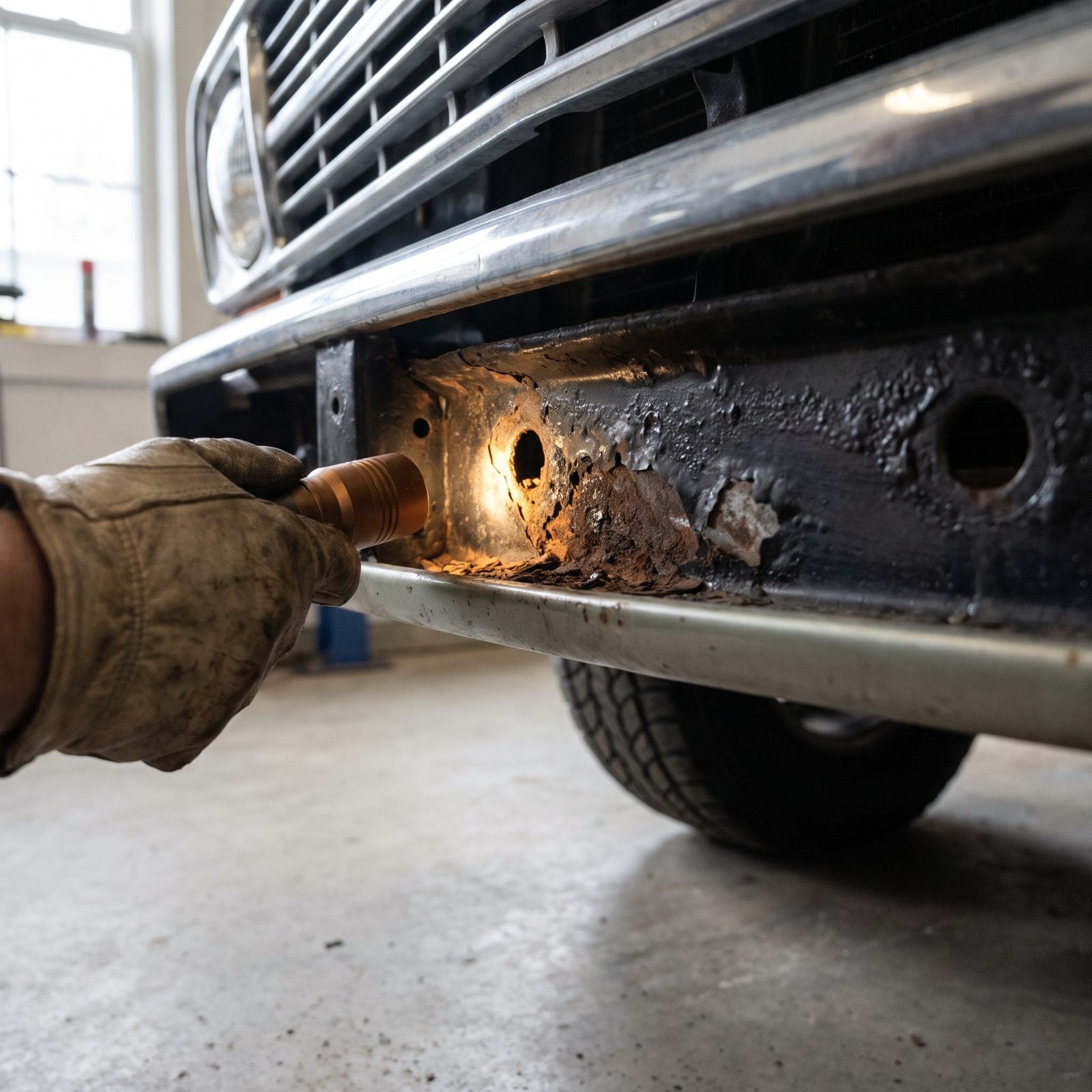
The lower radiator support is a boxed steel beam, and boxed sections are where rust throws a party nobody’s invited to. Road spray and coolant drips get inside through the drain holes and never fully dry out.
Because it’s hollow, the outside can look respectable while the inside is turning to lace. This piece ties the front sheet metal together and locates the radiator, so when it goes soft, panel gaps wander and nothing lines up right.
Shine a light into the drain holes and look for brown flaking inside. Tap along the bottom with a knuckle. A dull thud instead of a ring means the interior is packed with scale.
19. Missing Rot at the Heels of the Front Fenders
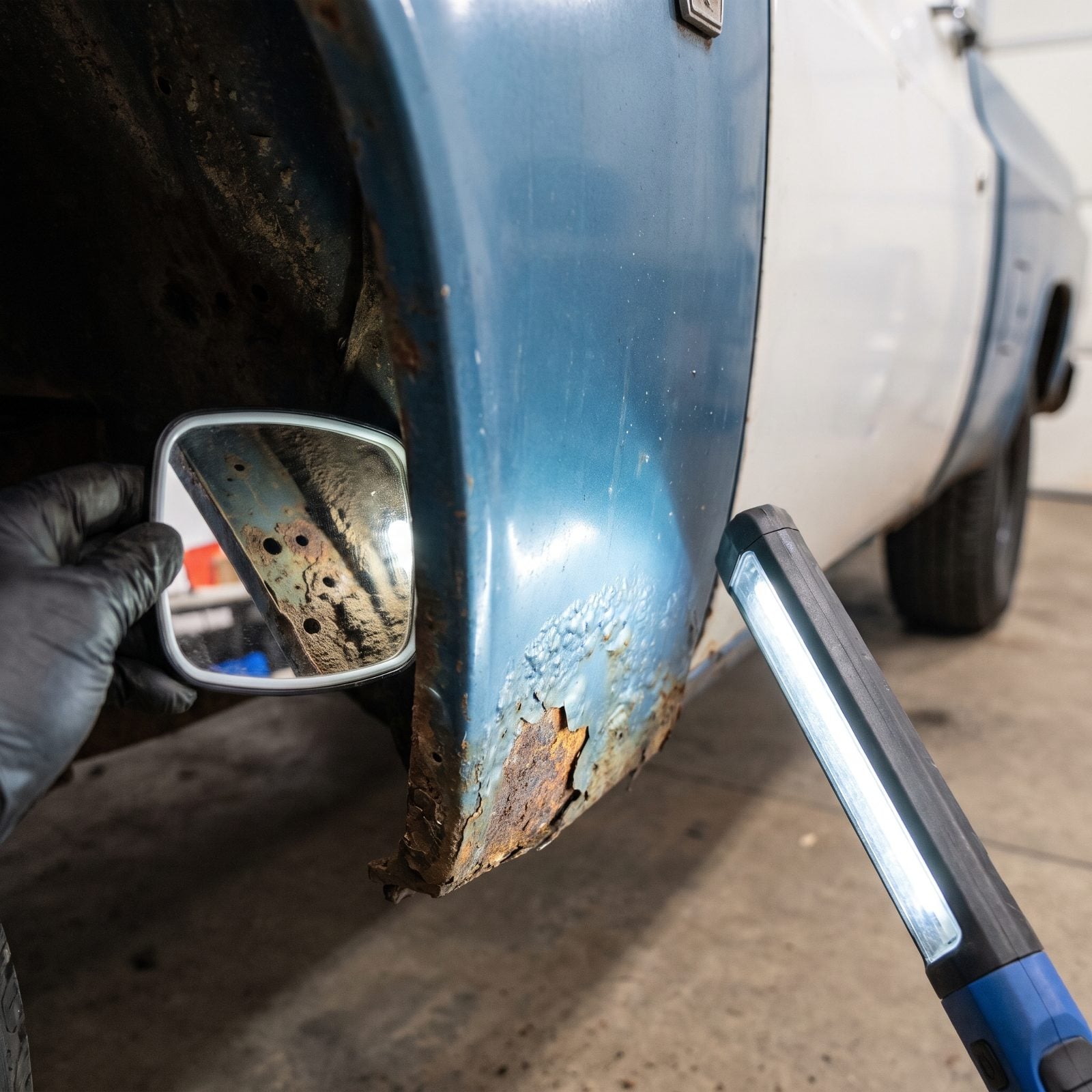
Walk around any old pickup and you’ll naturally eyeball the headlight end of the fender. The heel, where the fender tucks back behind the door, hides in shadow. That’s where it quietly rots.
Mud, salt, and road grime pack into that back corner and never get washed out. The fold holds moisture against the steel, and the rot creeps up from the lower edge where the normal walk-around angle never catches it.
Crouch at the back of the fender and mirror the backside. Bubbling along the bottom fold and soft spots behind the splash line are the giveaways. Fender heels are a classic seller’s blind spot, which makes them a smart buyer’s best bargaining chip.
18. Overlooking the Hood’s Folded Leading-Edge Hem
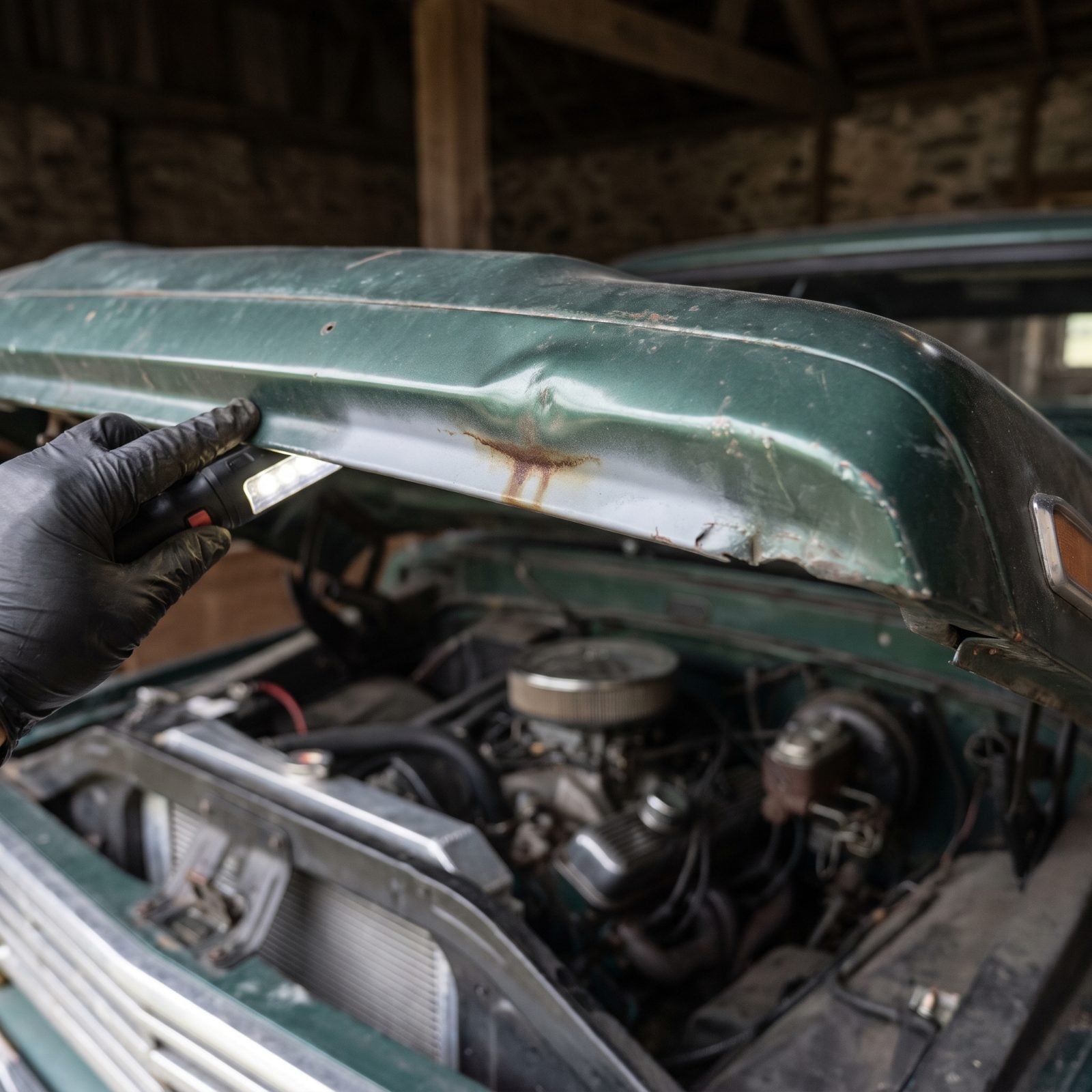
The front edge of a hood isn’t one piece of steel. The outer skin folds over the inner frame and gets crimped, and that crimp is a hollow lip that pulls in water and holds it like a straw.
Rust blooms inside the hem and pushes out wherever the skin is weakest, weeping brown streaks out of creases and dents and eating the lower lip of the fold into a torn, ragged edge. By the time you see it the fold is delaminating, and a hood hem is fussy, slow work to repair properly.
Shine a light along the front fold and look for creases with rust streaking out of them, and for any edge that’s flaking or torn. A smooth, tight hem? Good sign the hood lived under cover. A creased, rust-streaked or ragged one tells you it sat out nose-first in the rain for years.
17. Ignoring the Running-Board Support Brackets
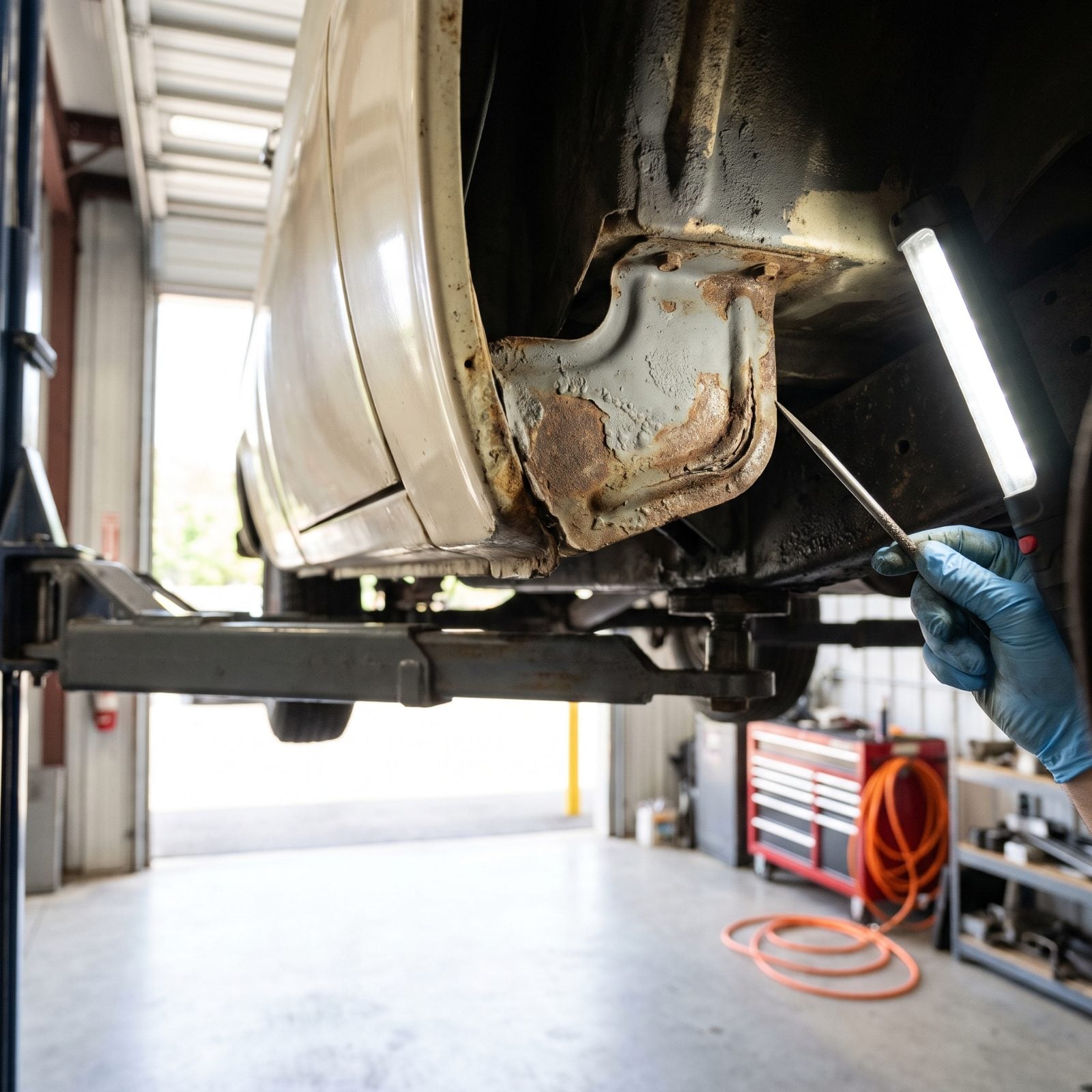
Running boards don’t float. On most old pickups they ride on steel brackets tied into the body sheet metal under the rocker panel. Those brackets spend their whole lives in the spray zone, getting blasted with water, salt, and grit off both tires.
Rust attacks where the bracket joins the rocker and fender seam and where the board sits on it. Both are flat surfaces clamped together with moisture trapped in between. A rotted bracket lets the board sag, flex when you step on it, or pull away from the cab and fenders. Sellers sometimes hide the problem with a fresh coat of black paint and a new bolt or two.
Get under the side of the truck and look at each bracket where it meets the body. Grab the running board and give it a firm push up and down. Any creak, give, or rust bleeding out of the seams where it joins the body means the support is weaker than it looks.
16. Missing the Lower Seam of the Bed’s Front Panel
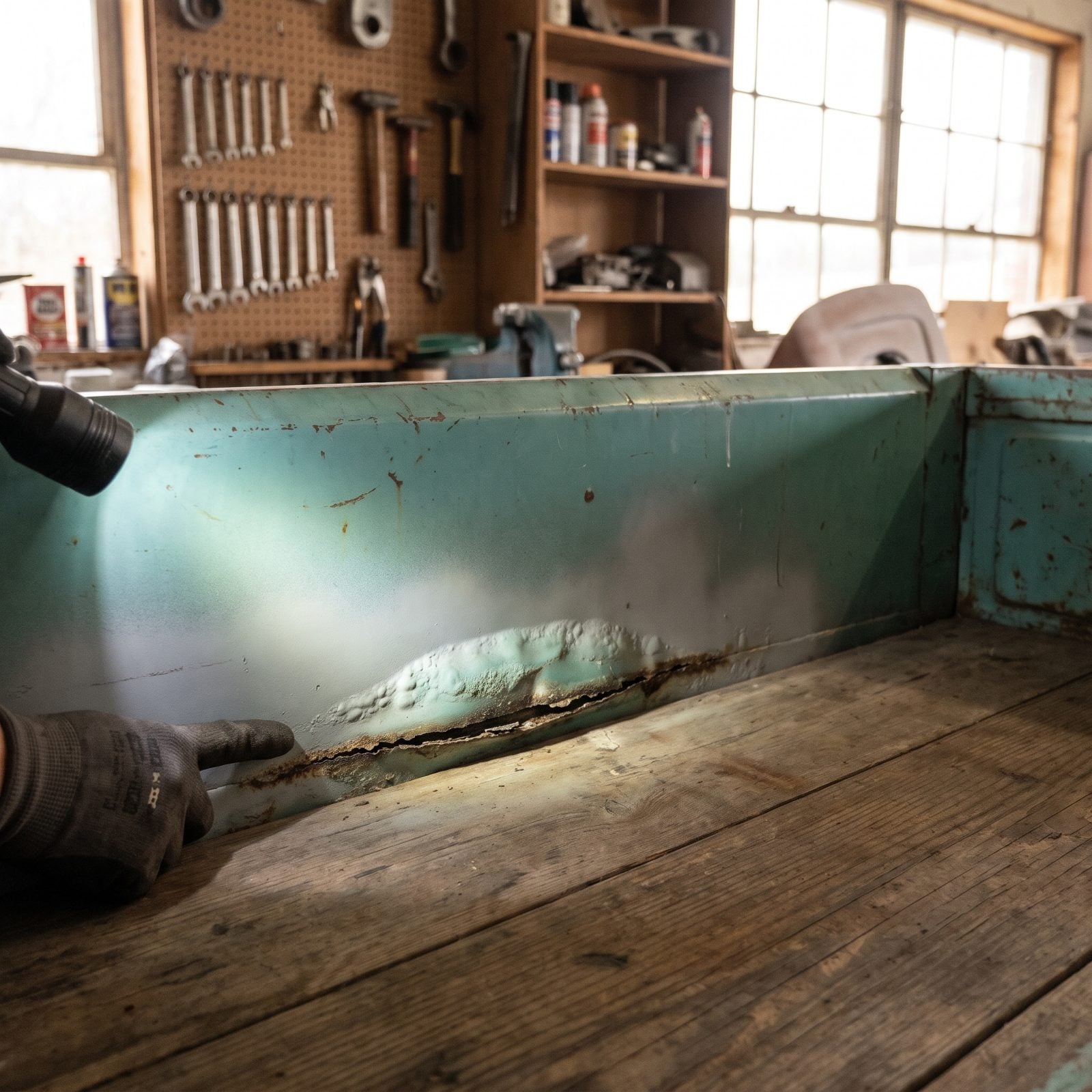
The bed’s front panel, the wall right behind the cab, meets the bed floor in a long seam. Anything that lands in the bed slides forward every time the truck brakes and piles up against that joint. Rain, leaves, and spilled feed all end up there.
That debris sits for years, holding moisture against two overlapping layers of steel. The seam rusts from the inside out. Because the gap between bed and cab is narrow, you rarely see the back side of it without pulling the bed. It’s also a spot that bed liners and fresh spray coatings cover beautifully.
Sweep out the front of the bed and check the full width of the seam. Then shine a flashlight into the gap between the cab and bed and look at the outside face of the panel’s lower edge. Rust streaks, swelling, or daylight at the corners are all bad news.
15. Ignoring Rust Between the Bed Floor Seams
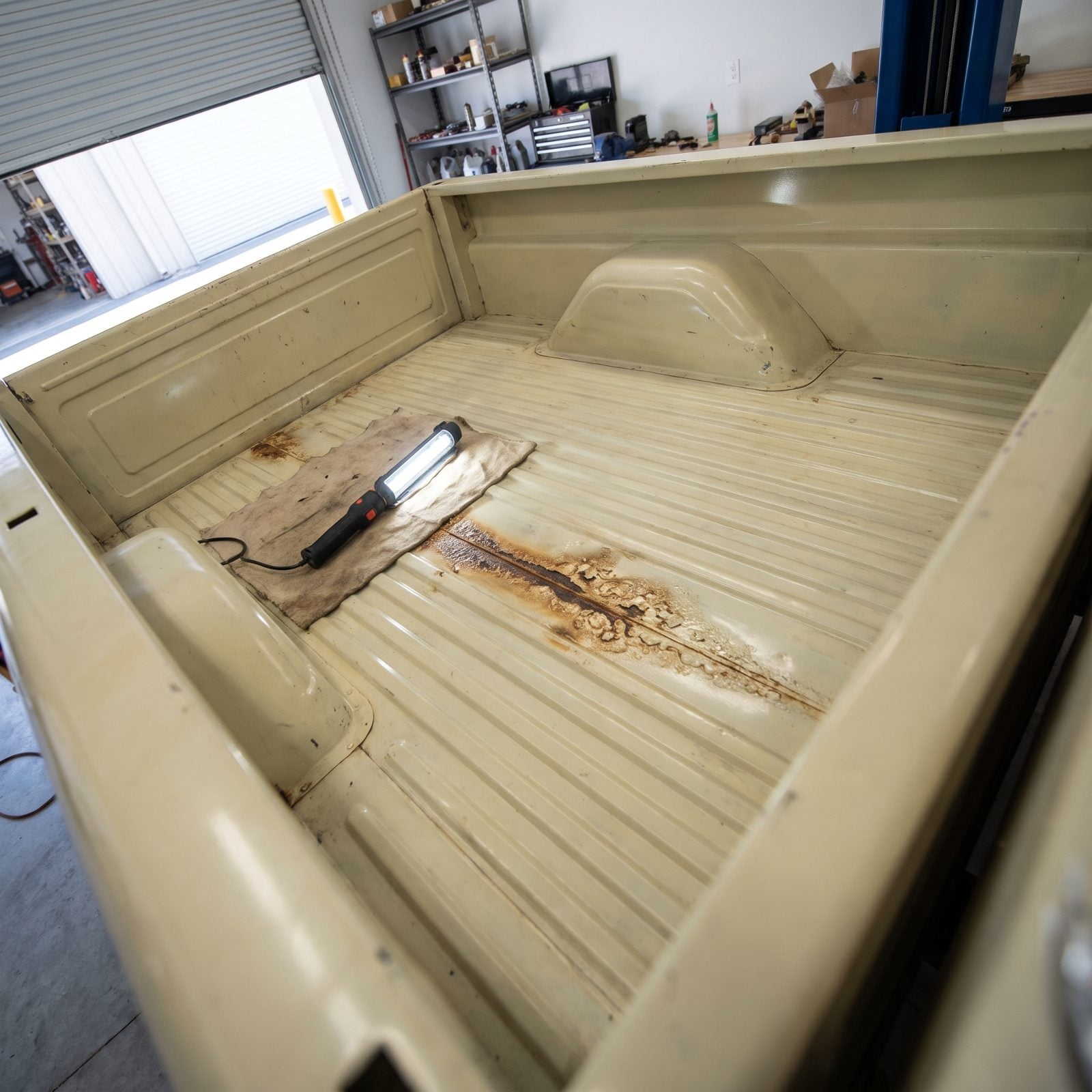
Steel bed floors on a lot of classic pickups aren’t one smooth sheet. They’re built from sections that are lapped and spot-welded together, stiffened by long stamped ribs. Every overlap is a place for water to creep in and sit.
Rust between those layers is invisible at first. Later it shows up as a raised line, cracked paint, or orange weeping along the joint. By the time you can see it, the overlapping edges are often thin. Wood-floor trucks have their own version: the steel strips and hardware holding the planks down rust wherever they touch damp wood.
Shine a flashlight at a low angle across the floor so swelling along the seams casts a shadow. Tap suspicious joints with a screwdriver handle and listen for a dull, crunchy note. Ask how long a drop-in liner has been in the bed. Plastic liners can hold water against the floor for years, and pulling one out sometimes reveals a very different truck.
14. Failing to Inspect the Bed Floor Cross Sills
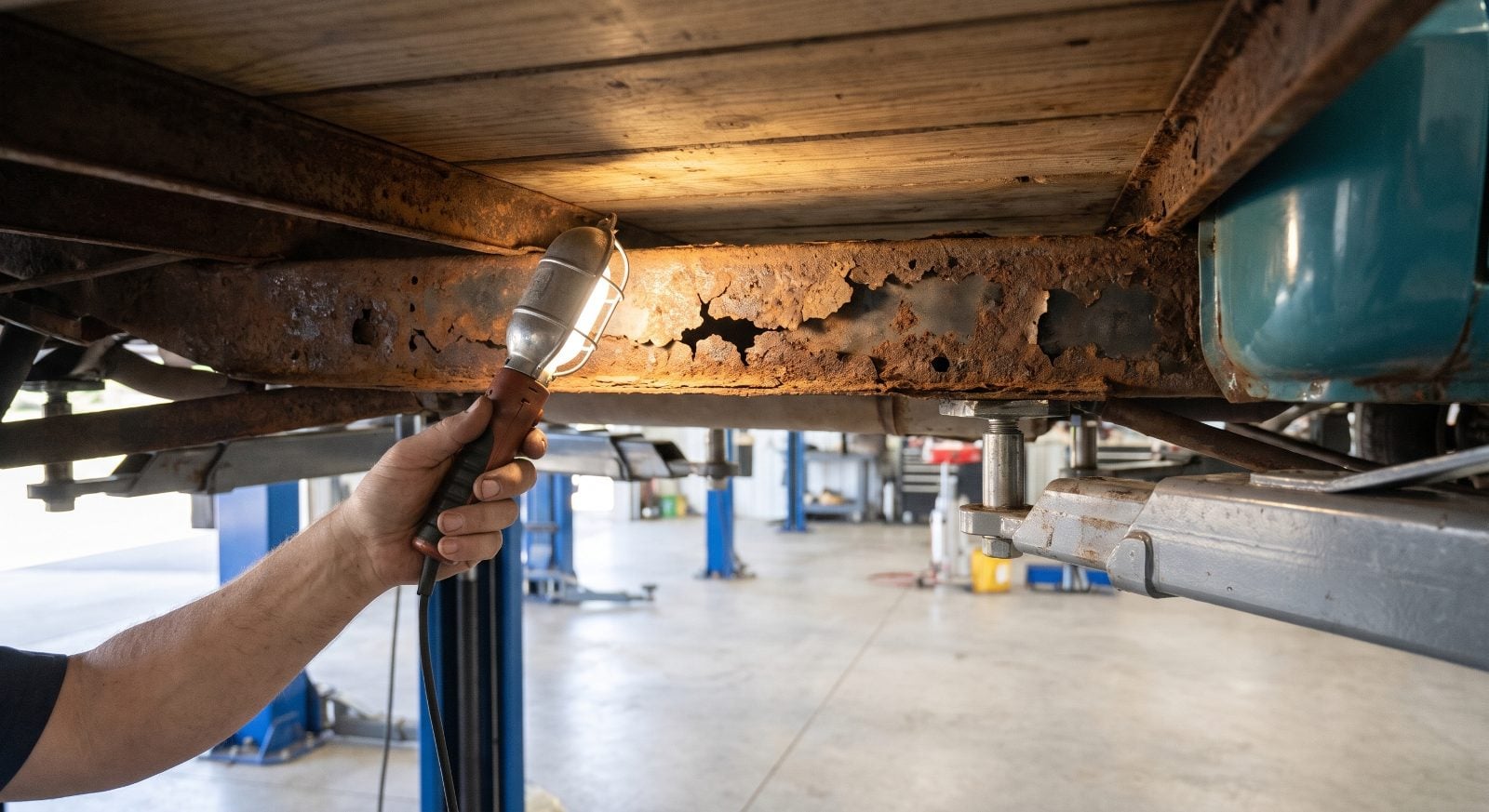
Under the bed floor, a set of crossmembers called cross sills carry the floor and tie it to the frame. They’re the skeleton of the bed, and they live in one of the wettest places on the truck, pressed tight against the underside of the floor.
Water that seeps through the floor or kicks up from the tires gets trapped between sill and floor. The sills rust along their flanges and where they’re welded or bolted to the floor. That means the floor can lose its support even while the surface still looks okay. Wood-floor beds sit on sills too, and a rotted sill lets the planks sag.
Get under the truck and look at each sill along its full length, especially the ends near the bedsides. Probe the flanges with a screwdriver. Then climb in the bed and walk across it. A soft spot or a drum-like flex over a sill tells you the support underneath is gone.
13. Missing Corrosion Around the Bed Mounting Bolt Recesses
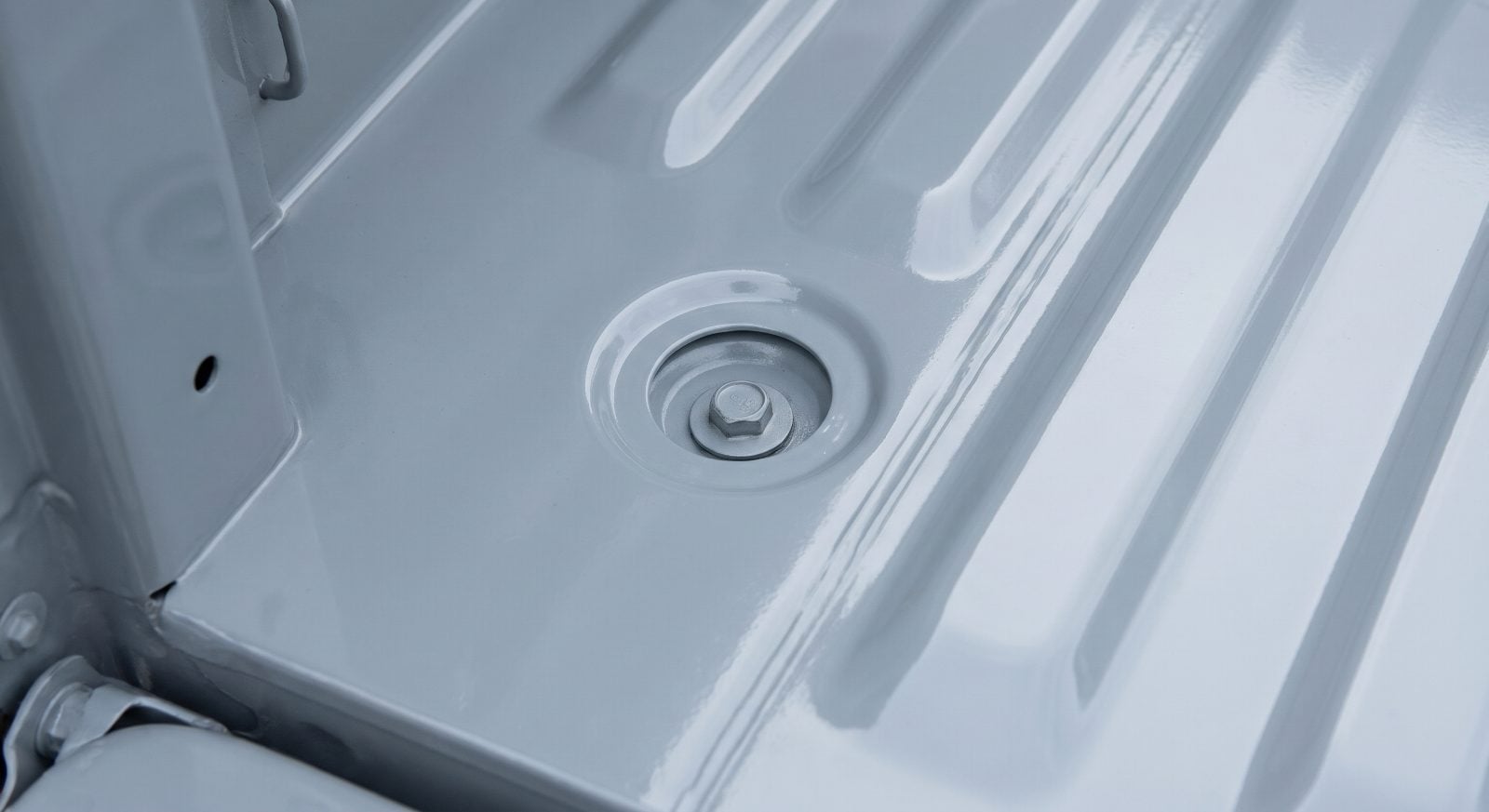
The bed floor is held by a bolt that passes through the panel near the corner, close to the side wall. On many trucks the bolt head sits in a round recess stamped into the steel floor, and that recessed pocket spreads the load around the hole.
On this freshly painted bed there’s no rust around the bolt head, so the painted hardware stays clean with no corrosion. The real wear is loosening: the wood compresses around each hole, the hole can wallow out, the bolt can back off, and the bed starts wobbling at the corners. Some frames also use washers between the bolt head and the wood, and those can crush into the grain around the hole.
Find every bed bolt and look closely at the wood around each one. Pencil circles, missing bolts, or mismatched hardware are all clues. Kneel down and check where the rails meet the legs. Loose bolts aren’t a deal-breaker on their own, but they turn taking the bed apart for a move into a stripped-hole repair job.
12. Overlooking the Undersides of the Rear Wheel Tubs
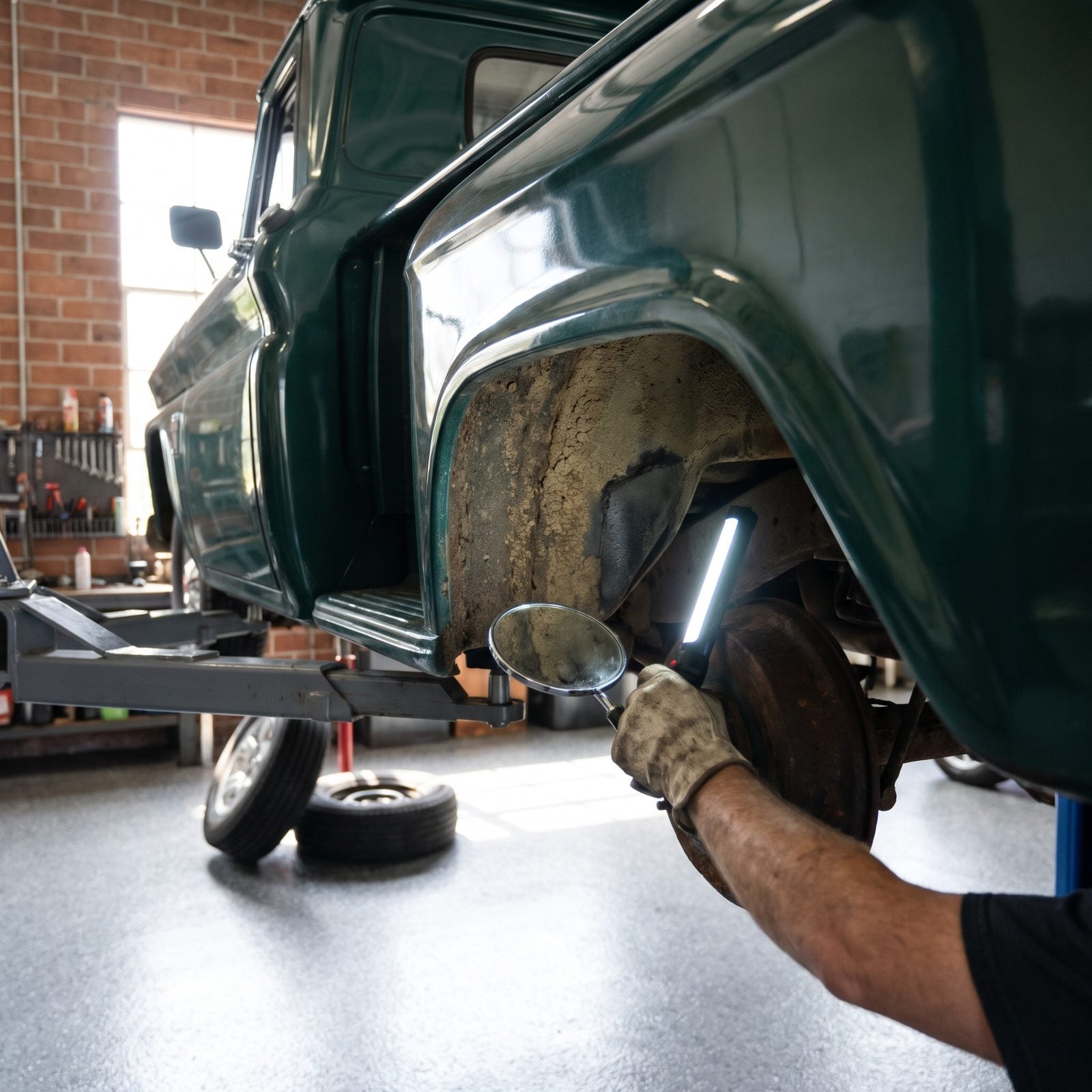
On fleetside-style beds, the rear wheel tubs are the humps inside the bed that clear the tires. From inside they look like plain, solid bumps. From underneath, they’re a sandblaster’s target.
The tires throw water, gravel, and salt straight up into the tubs every mile. Mud cakes onto the underside and stays wet. The tubs rust through from below, especially where they’re welded to the bed floor and the bedside. A fresh coat of liner on top hides the damage until the hole breaks through.
Turn a flashlight up into each wheel well and knock off a chunk of caked mud to see what’s under it. Check the seams where the tub meets the floor and the bedside. If you can, have someone shine a light from underneath while you look from inside the bed. Any pinpoint of light means the tub is already holed.
11. Missing Mud-Trap Rust Behind the Lower Rear Bedsides
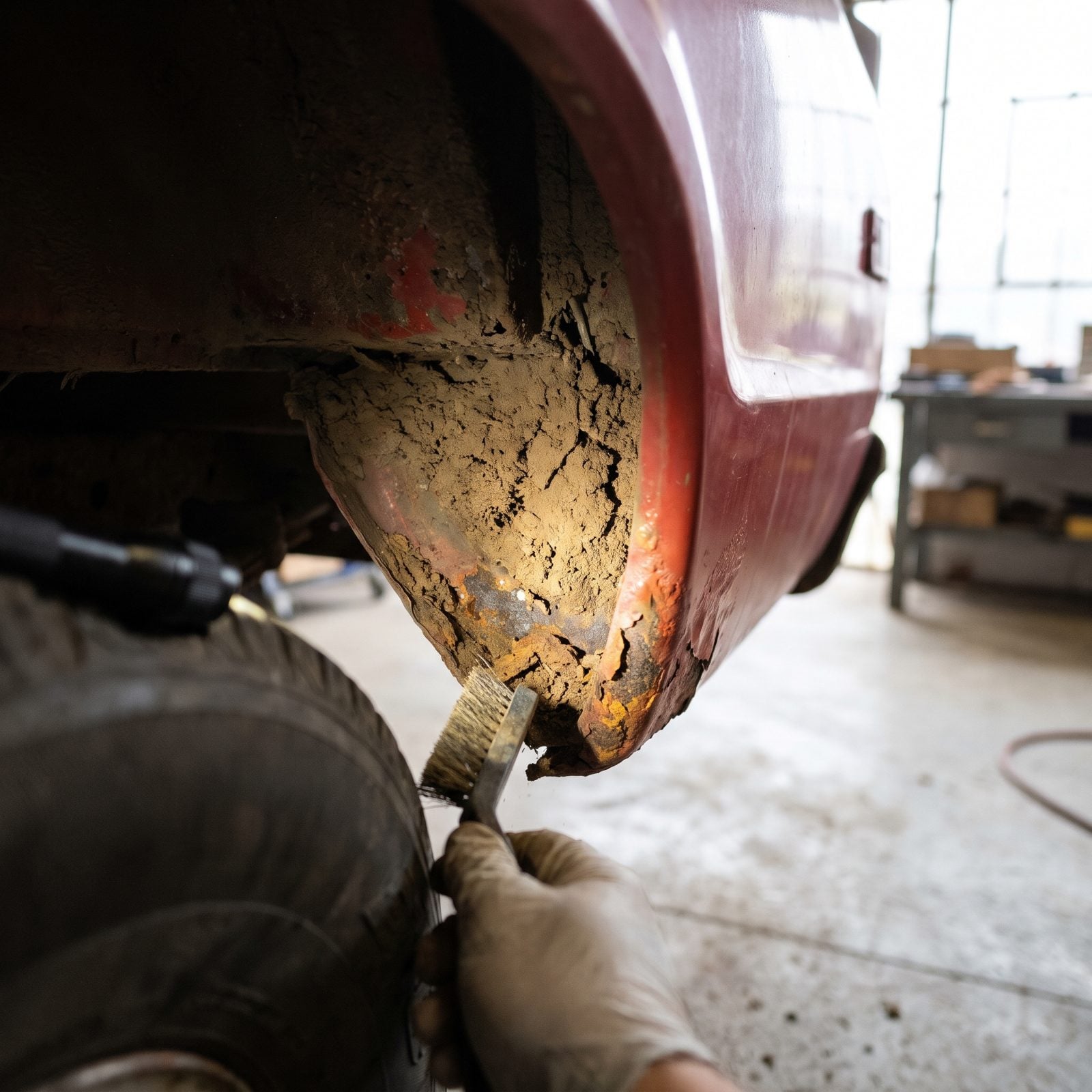
Behind each rear wheel, the lower bedside folds in toward the floor and the inner structure. The pocket between the outer skin and the inner panel is one of the best mud traps on any old truck.
Spray off the rear tires gets flung into that gap. The mud packs in and stays damp long after the rest of the truck dries. The outer skin rusts from the inside out, so the first sign is usually bubbling along the lower edge behind the wheel opening. By then, the inner metal is often in worse shape.
Check the lower bedside corners right behind each wheel, looking up inside with a light and a mirror. If you see packed dirt, scrape some out. If what comes out is half rust flakes, you’ve found your problem. Run a magnet over the outer skin too, because this is prime territory for filler.
10. Failing to Probe the Bedside Stake Pockets
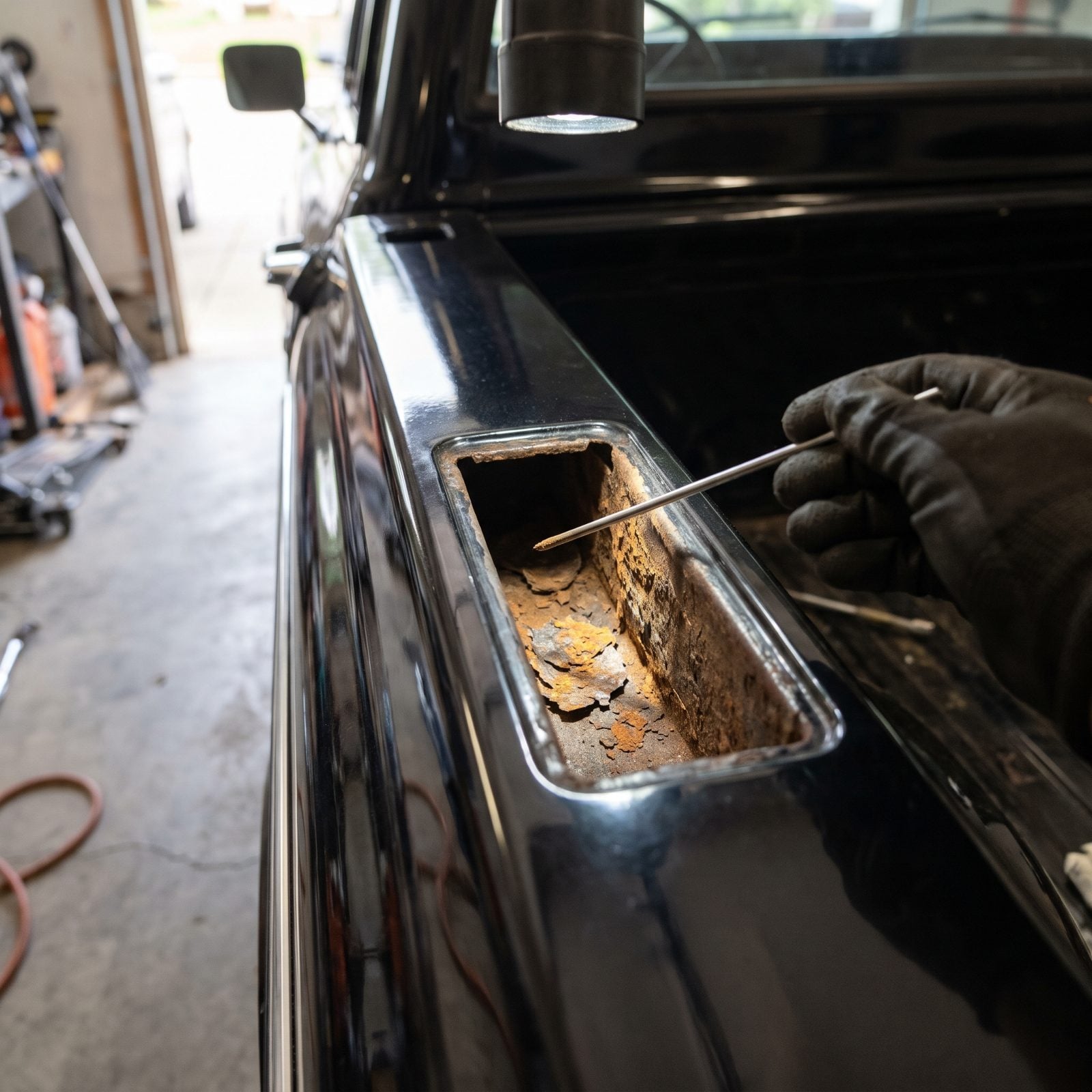
Stake pockets are the rectangular openings in the top rails of a pickup’s bedsides. They were built to hold stakes for racks or side boards, and on most trucks they open into a hollow pocket that drops down inside the bedside.
Every time it rains or the truck gets washed, water can run straight into them. Dust and debris pile up at the bottom, and moisture sits in the pocket long after the outside has dried. It rusts the steel inside the pocket and the bedside around it. You can’t see any of this from outside until rust bleeds through or the paint bubbles below the opening.
Stick a finger or a thin metal probe down into each pocket and feel the bottom. Grit, crust, or flaking scale tells you water’s been sitting in there. Shine a light down too. Look for orange rust and scale on the inside walls as well. Then check the outside of the bedside directly below each pocket for rust spots or bubbling paint, because that’s rust working its way out.
9. Trusting Smooth Paint Along the Top Bed Rails
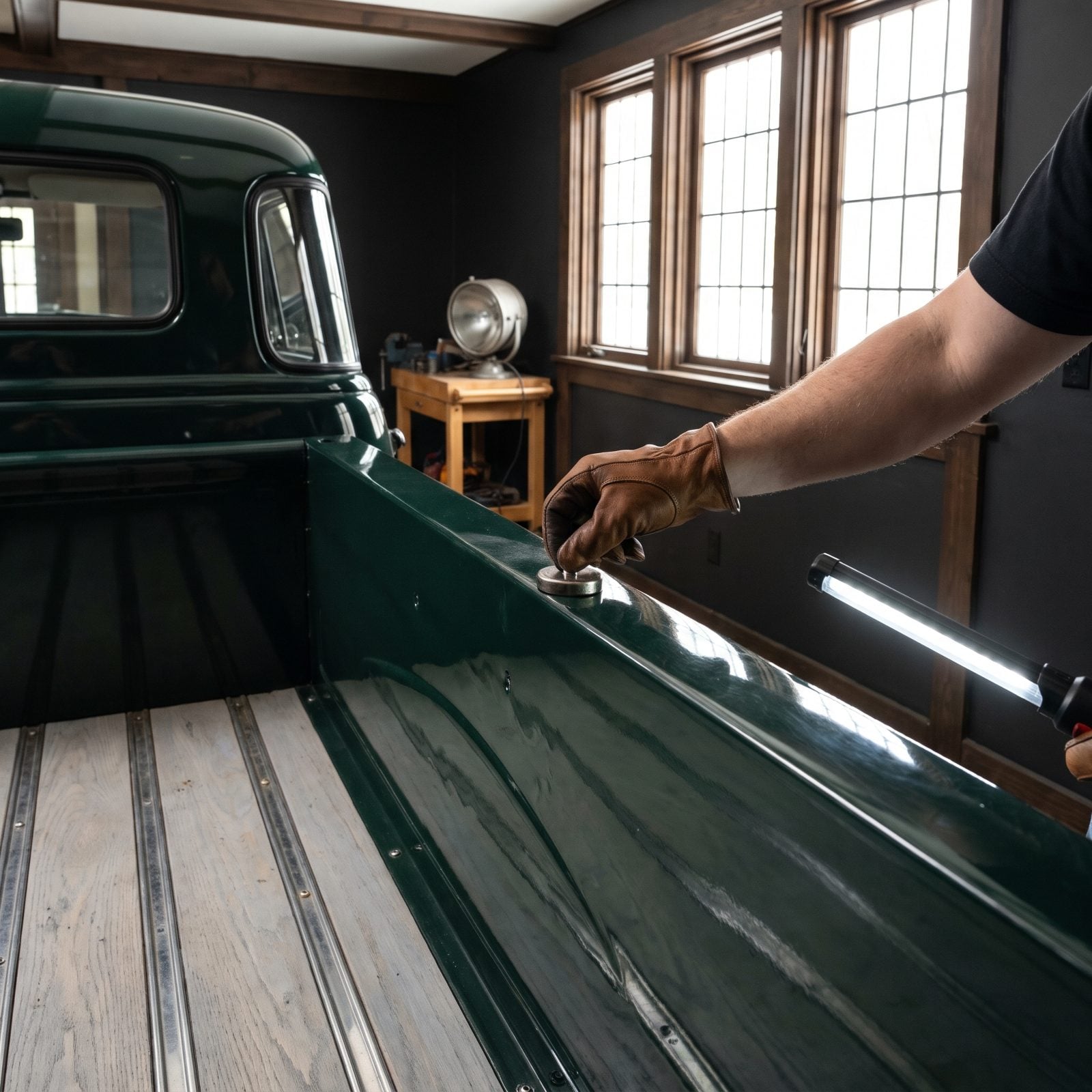
The top bed rails are the caps running along the top of each bedside. They get a lot of cosmetic attention because they’re the first thing you touch when you lean on the bed. On many pickups they’re a folded, double-wall section, not a single sheet.
That means rust can start on the inside of the rail and work its way out. Water gets in through seams, stake pockets, or the open ends of the rail. Smooth, shiny paint on top proves very little. Sellers also love to skim pitted rails with filler, since the surface is narrow and easy to block sand.
Run your hand along the underside of the lip, where you can’t see. Feel for roughness, pinholes, or flaking. Magnet the top surface end to end. Check the corners where the rails meet the front panel and the tailgate area, because water pools there. A line of bubbles along the rail edge means the inside is already going.
8. Ignoring the Recess Around the Fuel Filler Neck
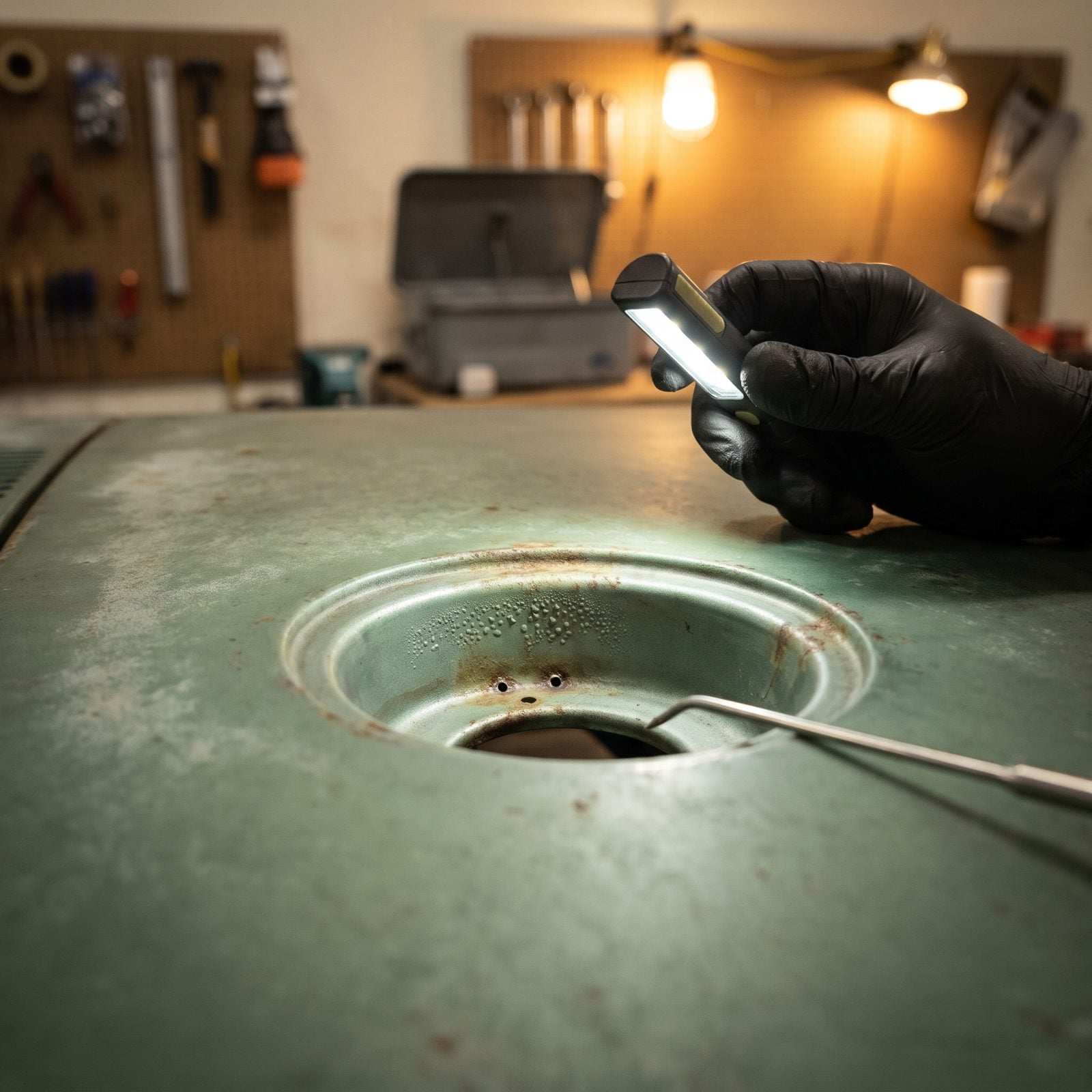
Pop the fuel door and most people glance at the cap, close it, and walk away. The spot that bites you sits in the pressed-steel cup around the filler neck — that little bowl catches every drop of rain, every splash from the pump, every winter slush spray off the highway.
Water sits in that recess and never fully dries. Paint blisters first, then the steel under it goes to lace. See a bubble? The backside is already perforated, and the inner wheelhouse behind it is usually keeping it company.
Run a gloved thumb around the entire lip. Tap it with a small screwdriver handle and listen for that dull, soft thud that means thin metal. Shine a light behind the fill tube if you can reach. A clean, solid cup is a good sign the whole quarter was cared for.
7. Failing to Inspect the Rear Bed Sill
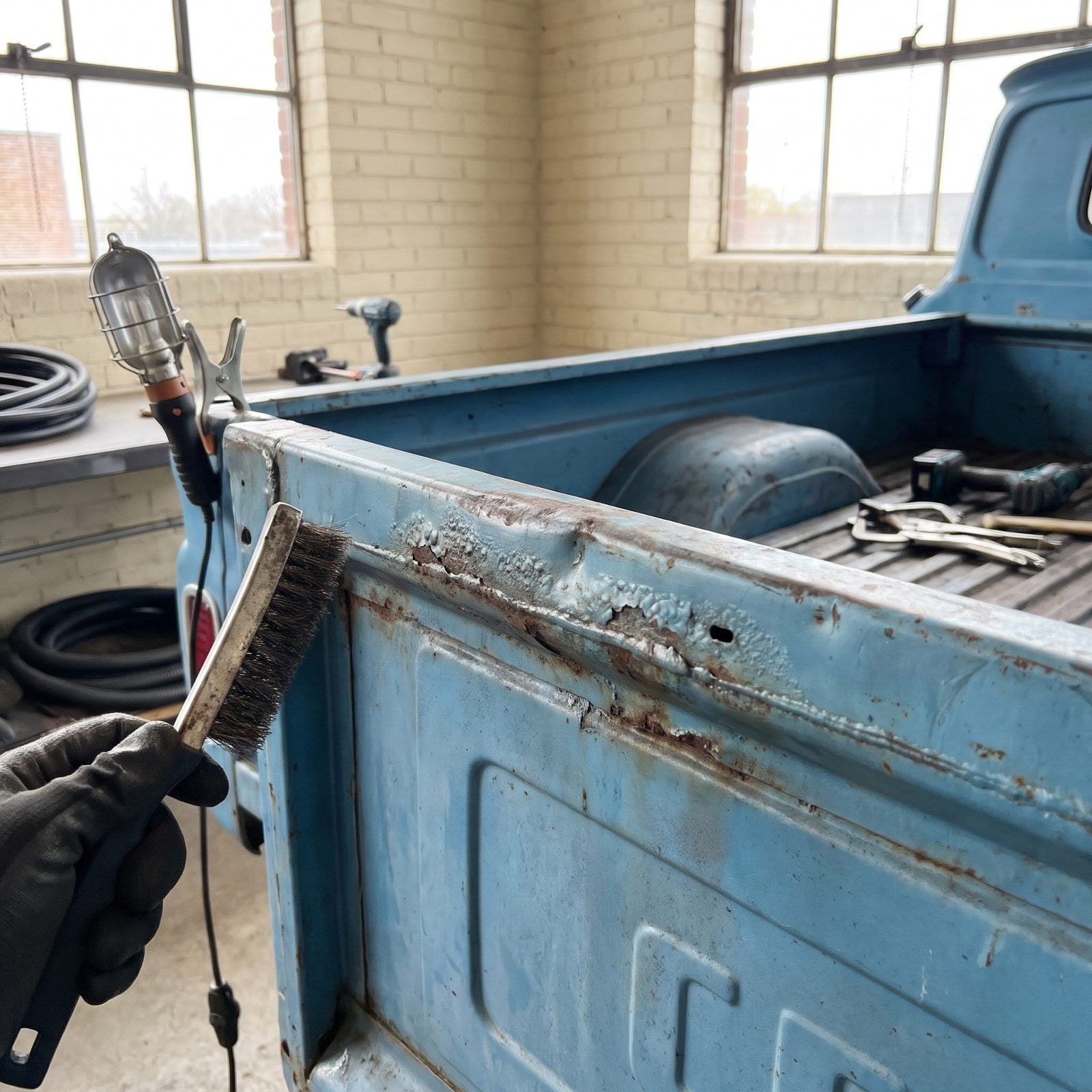
The rear bed sill is the steel crossmember that closes off the back of the bed floor, right under the tailgate, and it leads a hard life. Being a flat ledge at the back of the truck, it catches everything that blows into the bed — leaves, mulch, firewood debris, salt, standing water after a rain. Folks haul their whole lives over that edge and never once think about what’s rotting underneath it.
It’s a double layer of spot-welded steel, so moisture wicks into the seam and swells it from the inside. The seam opens up like a book left in the rain. Fixing it right means cutting and welding in new sheet, not slapping on a quick patch.
Drop the tailgate, brush off the scale, and sight along the sill. Look for the seam pushing apart and poke the bubbled spots and pinholes where water hides. A straight, tight rail tells you the tailgate is honest.
6. Missing Rust on the Inner Faces of the Frame Rails
Everybody checks the outside of the frame. Almost nobody checks the inside.
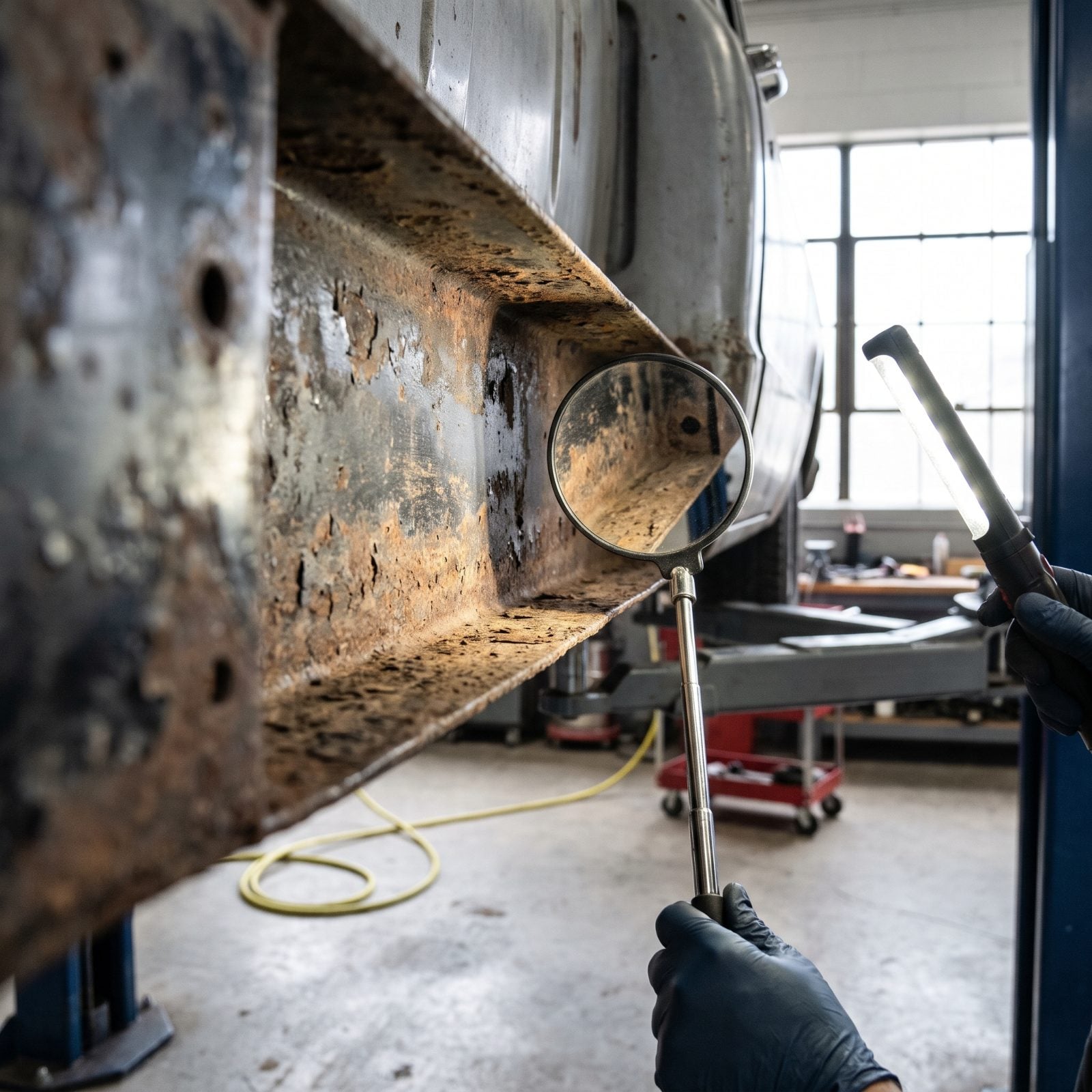
The inner faces of the rails — the sides that point toward each other under the truck — are where salt-laden mud gets flung and packs in tight. It stays wet for days. It can’t drain. And since you can’t see those faces standing next to the truck, they rot in total privacy.
A frame that looks presentable from the curb can be scaling badly on the hidden side, and frame rot is the one problem that turns a fun project into a fabrication nightmare. This is structural. Nothing else matters if this is gone.
Get it on a lift. Use an inspection mirror on a long handle and a bright light to walk both inner faces end to end. Press a putty knife against suspect areas. Solid steel resists. Scale caves.
5. Missing Scale on the Front Suspension Crossmember
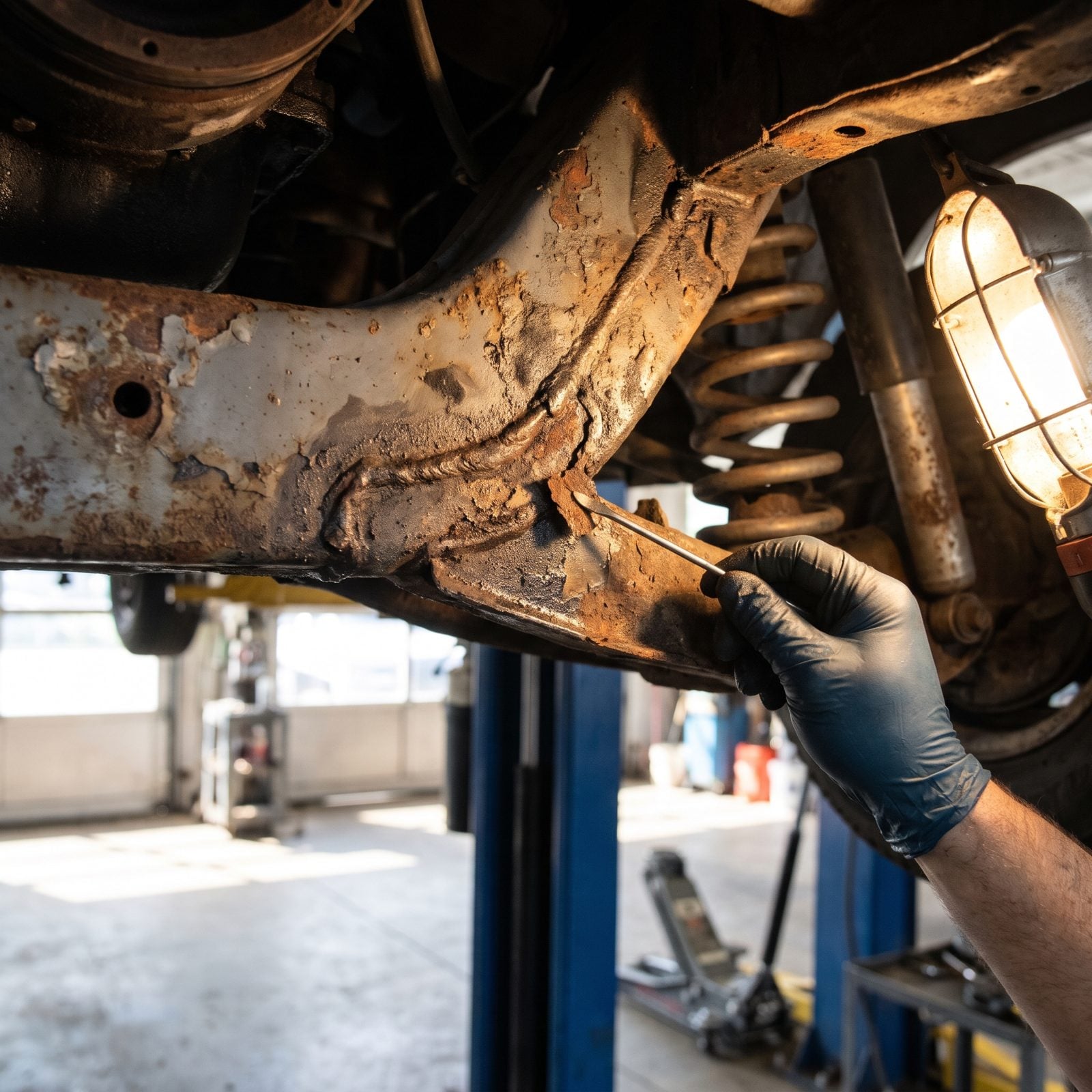
The front crossmember ties the frame together up front and holds the control arms and spring pockets. It takes every pothole and every braking load, parked right behind the radiator where road spray hits it constantly.
Scale building up in the spring pockets and around the control arm mounts isn’t cosmetic. A weak crossmember lets the geometry shift under load, which eats tires, kills your alignment, and in the worst case lets a mount tear loose. Safety issue, full stop.
Crawl under with the weight on the suspension. Probe the weld seams and the spring pockets with a pick. Watch for cracks radiating from the mounting points, not just surface fuzz. Clean steel with honest paint flaking off is fine. Spongy, layered scale is not.
4. Failing to Check the Rear Frame Crossmember
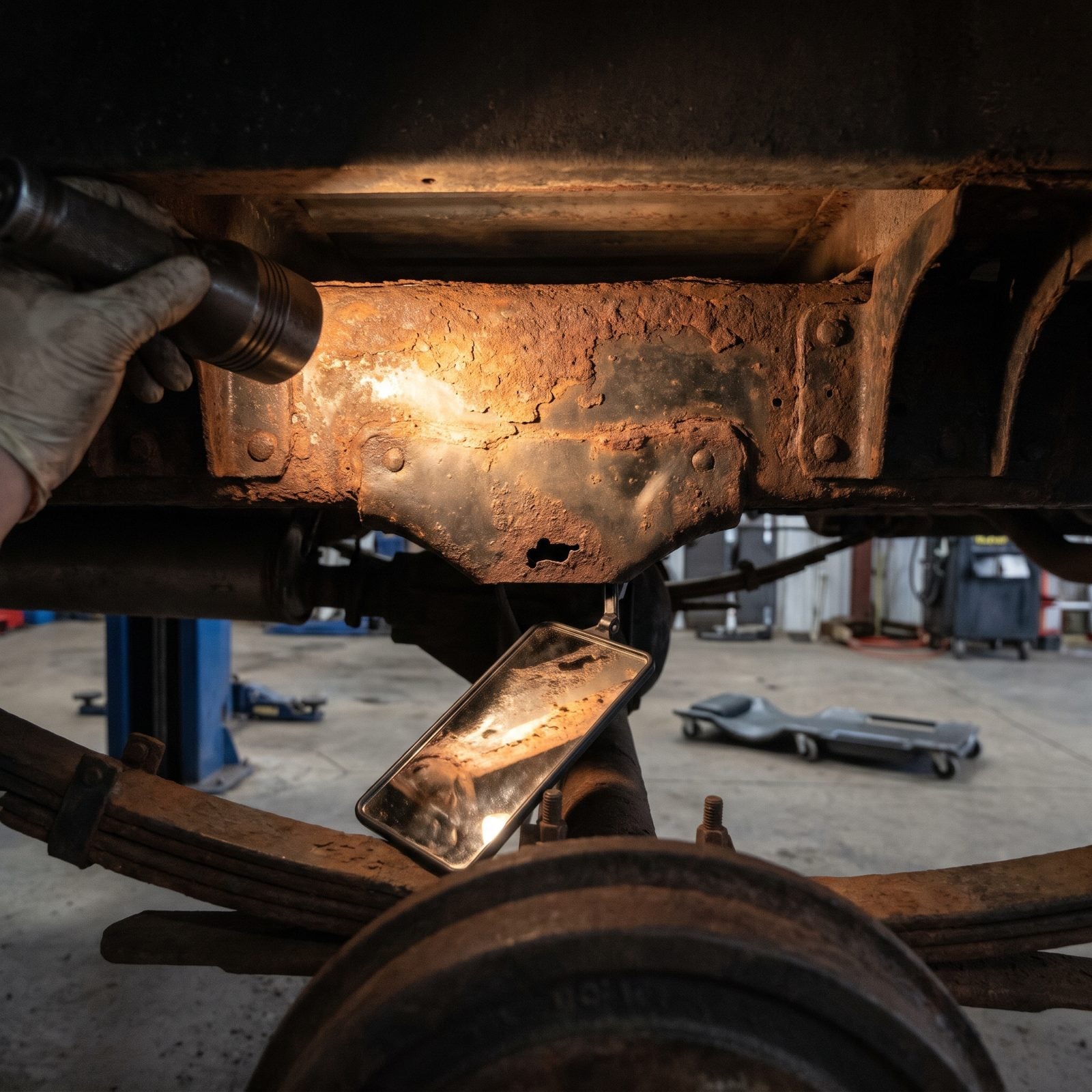
The rear crossmember sits at the very back of the frame, and here’s the trap: it’s got a flat-ish top surface that acts like a shelf for road debris. Wet leaves, mud, salt, all of it settles there and sits.
Because this member often carries the rear bumper, the hitch, and sometimes the spare tire winch, a rotted one can let those loads work loose. Lose it and the back of the frame can splay apart under a trailer load, since it ties both rails together at the tail.
Reach up and run your fingers across the top of it — the part you can’t see from the ground. Feel for scale and flaking. Tap it and listen. Dull means thin.
3. Skipping the Leaf-Spring Hangers and Shackles
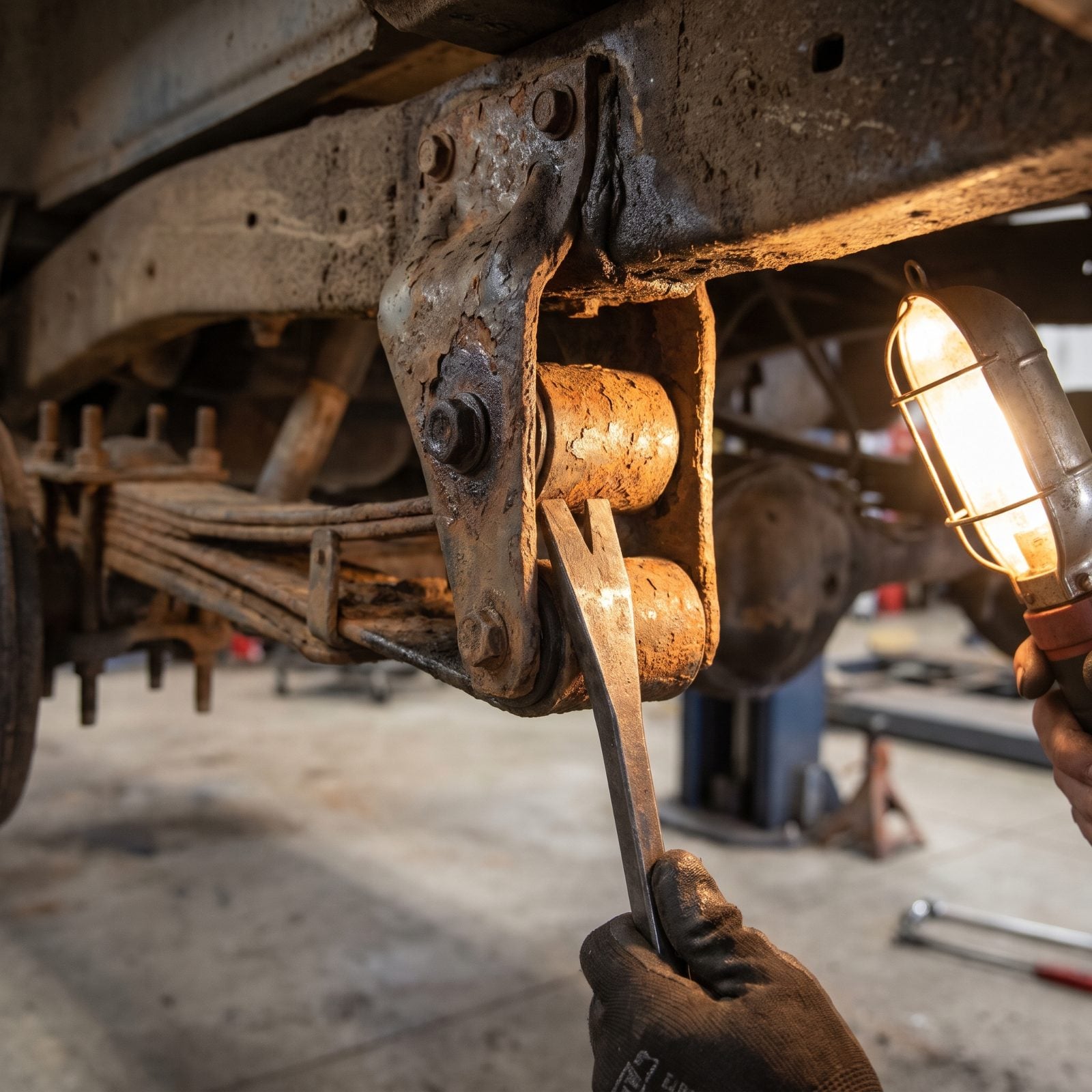
The spring hangers are the brackets that bolt the leaf springs to the frame, and the shackles are the hinged plates that let the springs flex. They hang down low, right in the splash zone, trapping grime in every pocket and around every bolt head.
Rotted hangers are sneaky. The truck rolls fine until it doesn’t. A hanger that tears loose under a load drops the axle and ruins your whole day — probably somebody else’s too.
Grab a pry bar and check for play at each shackle. Look hard at where the hanger meets the frame rail, because that’s where scale likes to build between the two surfaces. Clean bolt heads and tight brackets are what you want.
2. Ignoring Rust Around Old Trailer-Hitch Mounting Holes
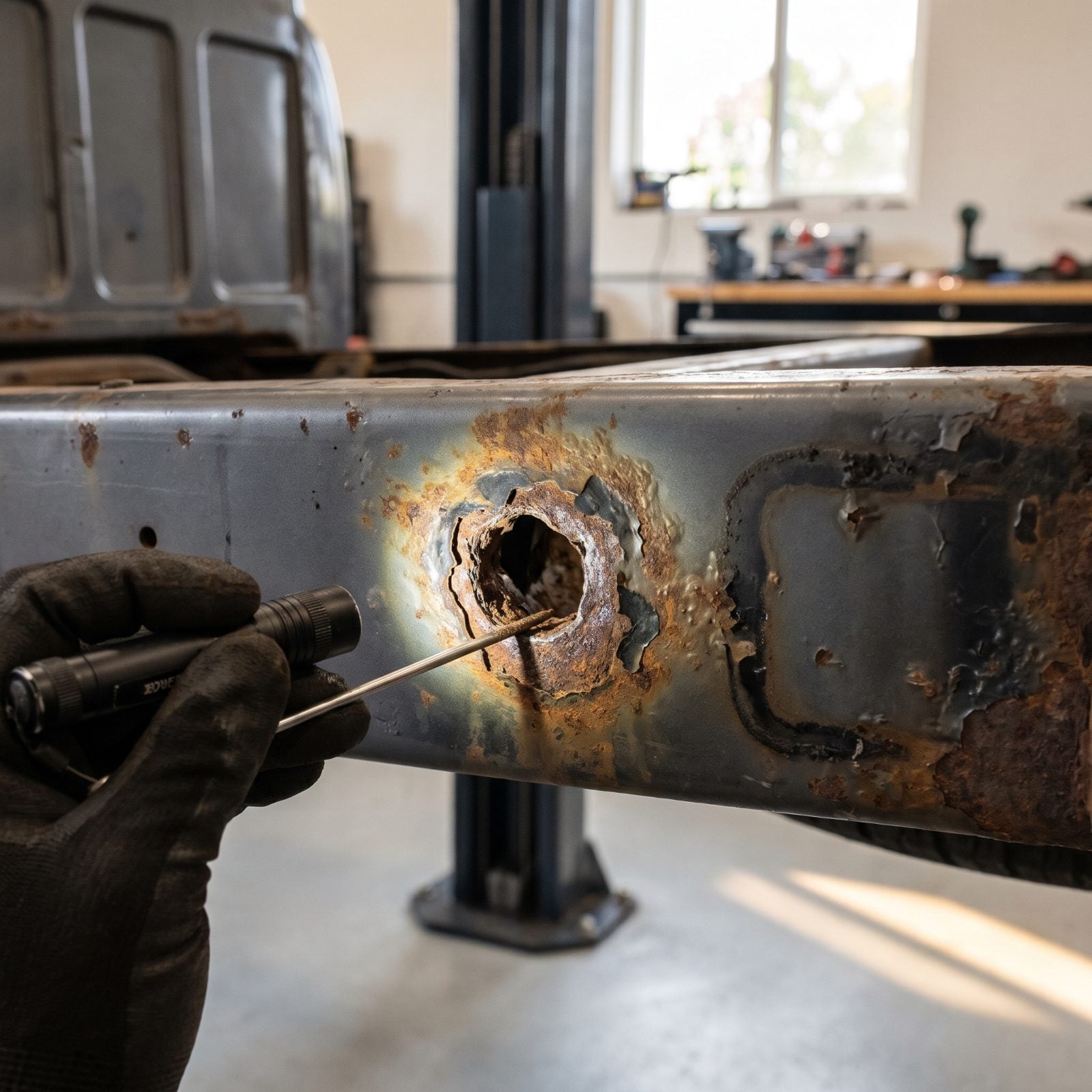
Somewhere along the way, someone drilled this frame to bolt on a hitch. Those raw holes never got touched up, and raw cut steel rusts faster than anything with paint on it. Each hole becomes a little entry wound.
Worse, drilling a boxed or channel frame breaks the protective coating and lets moisture migrate inside, so the damage spreads from the hole outward where you can’t see it. A frame weakened by a ring of corroded holes loses strength right where towing loads concentrate.
Look for witness marks and bolt-hole clusters even if the hitch is long gone. Probe each hole edge and feel for crumbling. Spot the aftermath of a cheap welded-on hitch? Be twice as suspicious.
1. Ignoring Moisture Trapped Inside Boxed Frame Sections
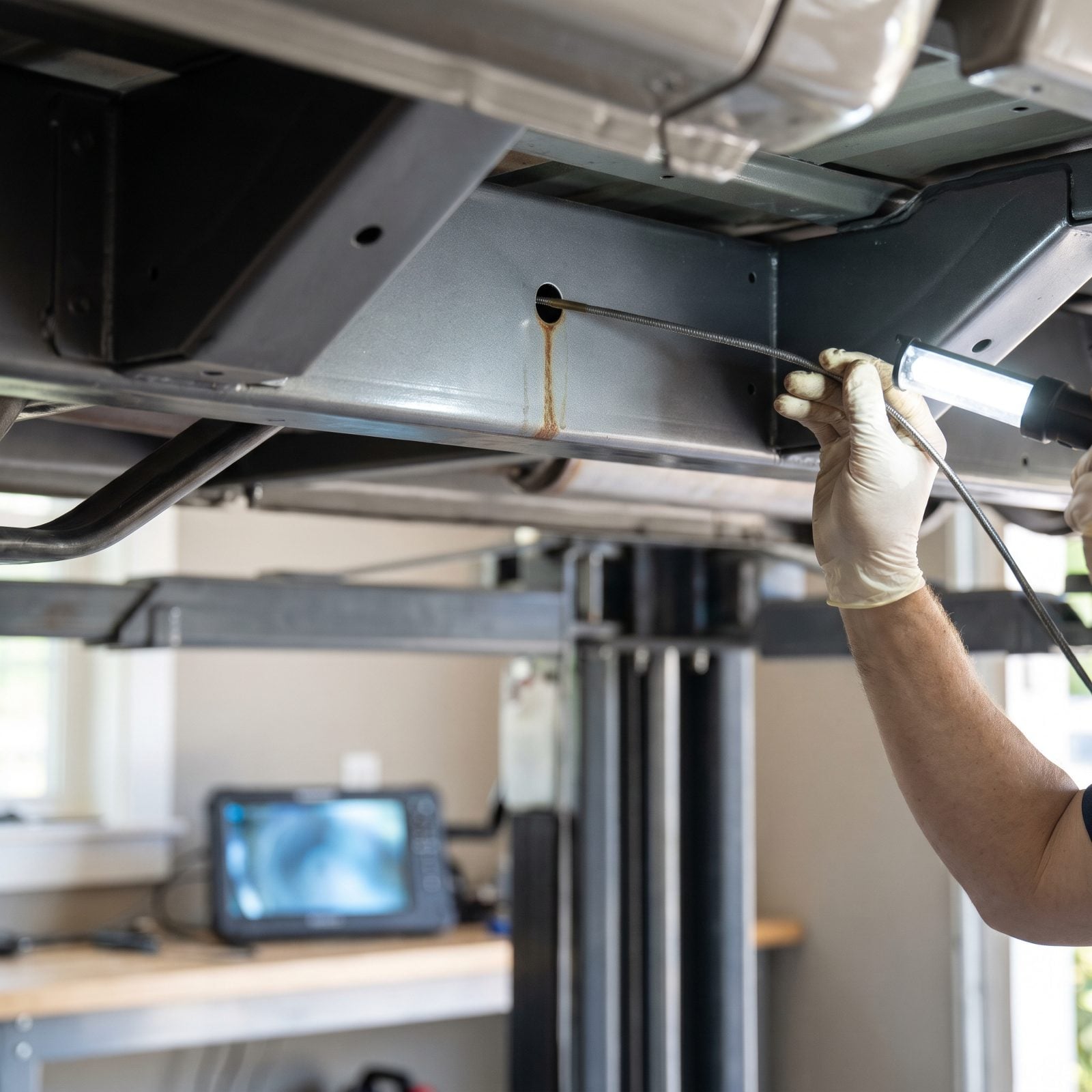
Boxed frame sections are the enclosed, hollow stretches of the rail. Strong, sure — but also a sealed cave where condensation collects and never leaves. A frame can look flawless on every visible surface and be scaling itself apart from the inside.
This is the rust you’ll never catch with a flashlight alone, and it fails without warning because you had no way to watch it coming. By the time it shows outside, the wall thickness is long gone.
Find the factory drain holes on the underside and check them for rust streaks weeping out — your first clue something’s brewing inside. Serious about the truck? Feed a cheap borescope into an access hole and look at the inner walls directly. A few extra minutes here can save you a whole frame.
The rust you can see is a negotiation. The rust sealed inside a boxed rail is a surprise, and surprises on a frame are expensive.
Tight, dry inner walls mean you found a keeper. Flaking, powdery scale on the borescope means keep looking at other trucks. Alright, go grab that borescope before you hand anybody a check.