
Would you like to save this?
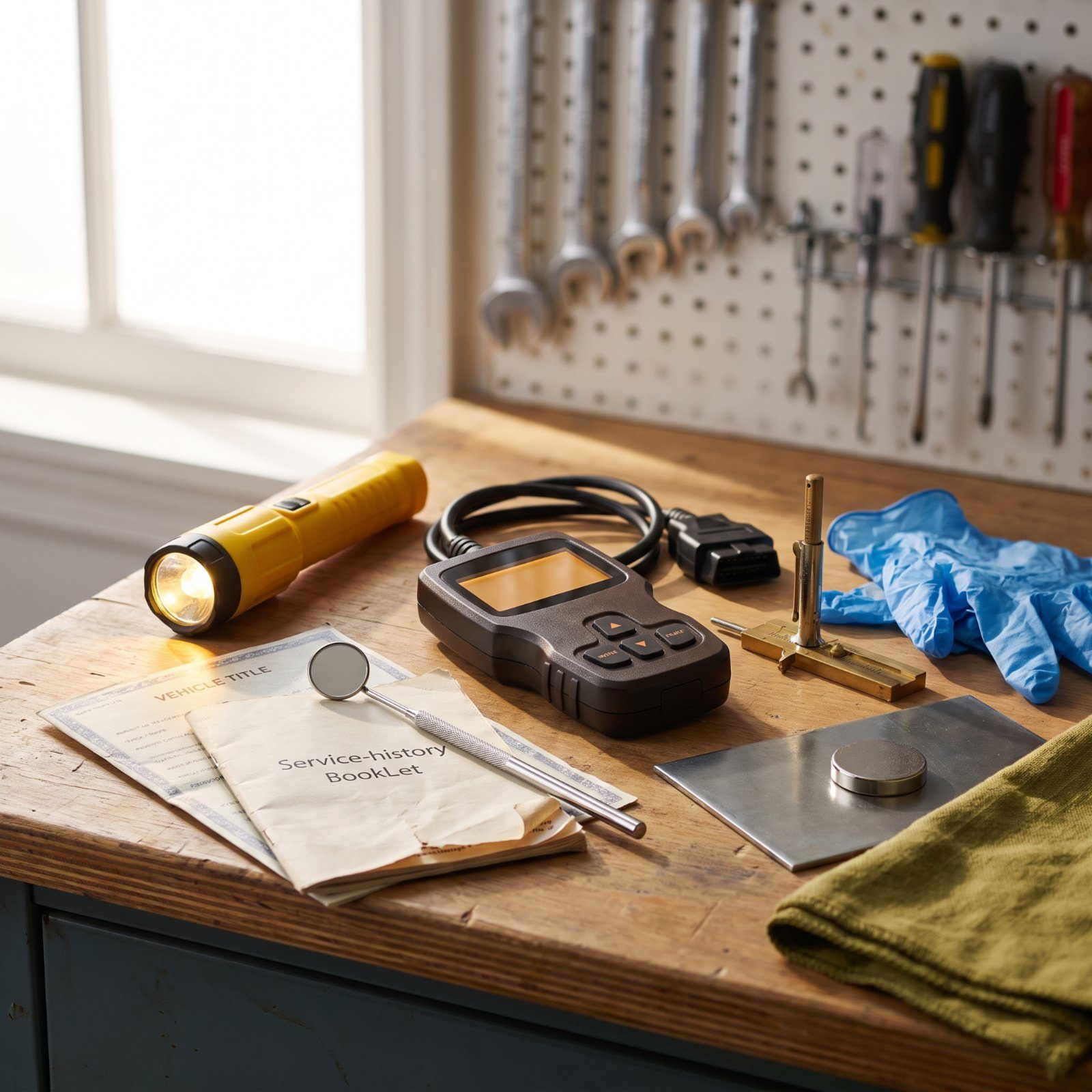
A clean carwash and a full tank cover a multitude of sins, and the seller is counting on exactly that. What they don’t count on is you crouching by the rocker panel with a flashlight, or plugging a scanner in before the engine ever turns over. Most buyers inspect a car the way they’d admire a cake — frosting side only. The real story lives underneath, in the paperwork, in the codes the computer has been quietly stacking up while nobody looked. Forty years under the hood teaches you where to point the light first.
38. The VIN Plates and Paperwork Don’t Match
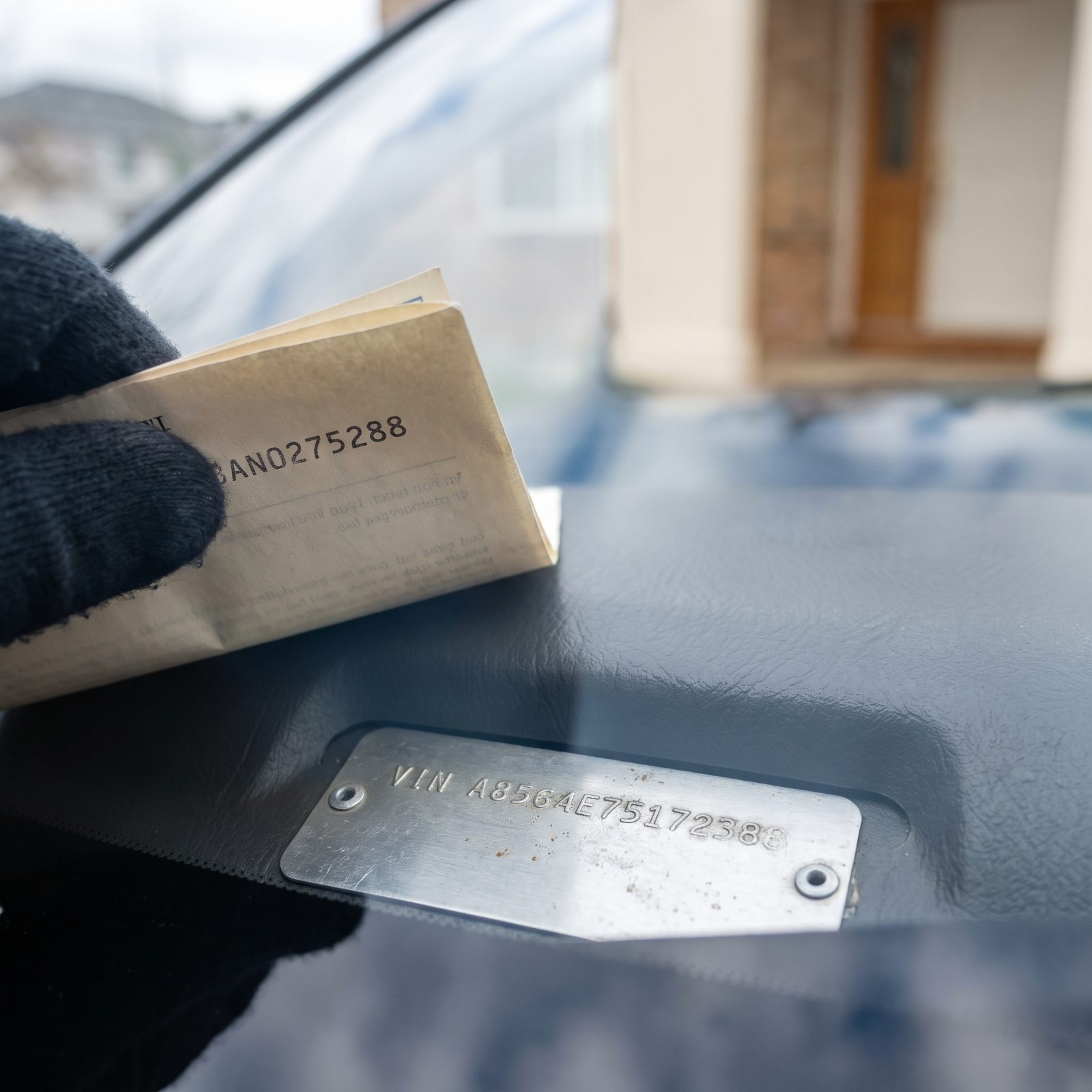
Start with the dashboard VIN under the windshield, then the door-jamb sticker, then the title in your hand. Three numbers, one story. If any character disagrees, stop.
Mismatched plates mean one of two things, and neither is good: the car’s been re-tagged after a theft, or it’s a cut-and-shut — two wrecked cars welded into one, wearing a borrowed identity. Shiny new rivets on an old car? That’s the tell that ends the viewing.
Photograph all three locations, run the number through the free NHTSA VIN decoder and a paid history report, and if the engine stamping is accessible, check that too. A seller who gets twitchy when you compare numbers has just answered your question for free.
37. The Title Is Branded, Rebuilt, Salvage, or Flood-Damaged
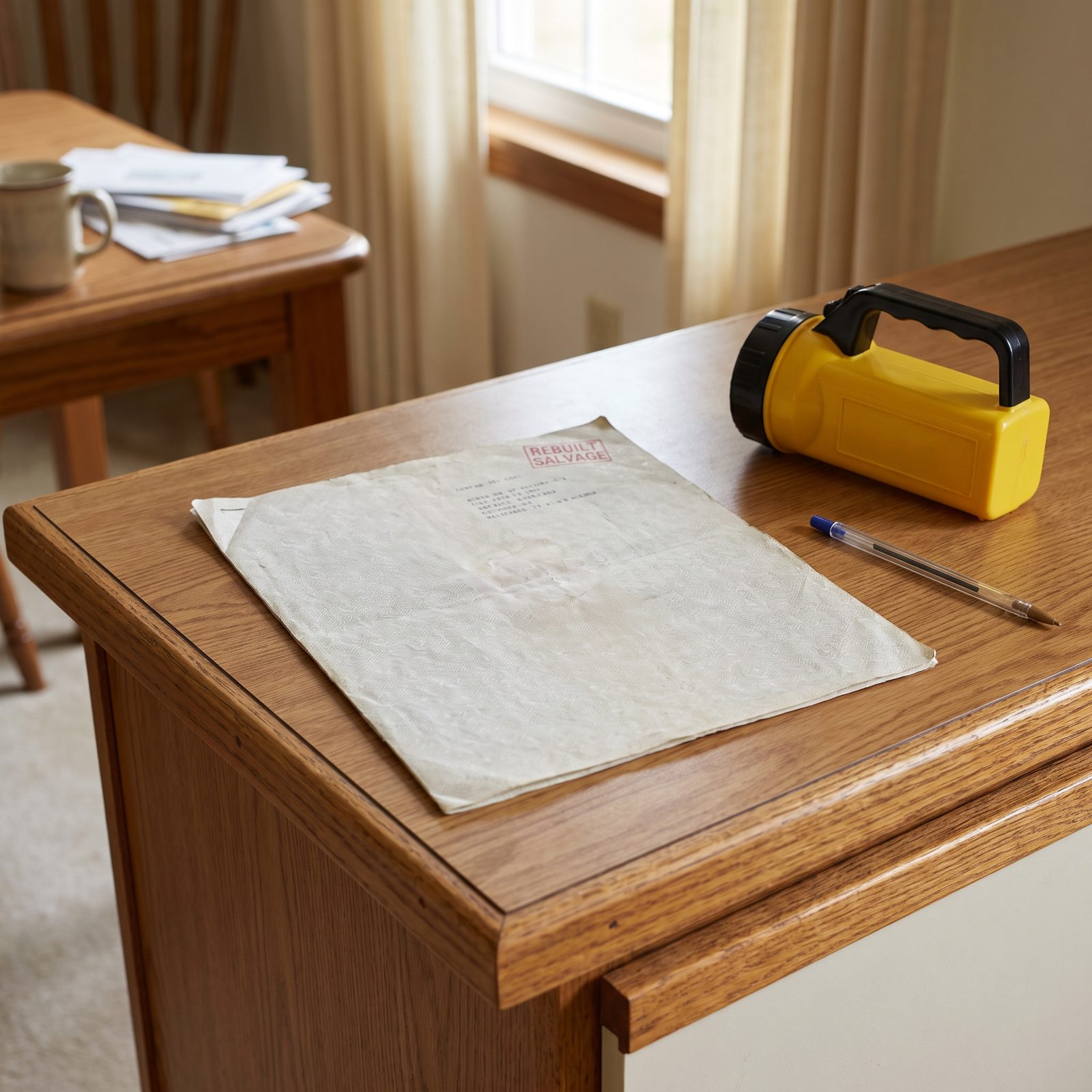
The cheapest car on the lot is usually cheap for a reason written on the title. A branded title — salvage, rebuilt, flood, lemon law buyback — means the car carries a serious mark in its history — often an insurer declaring it a total loss. Somebody decided it wasn’t worth fixing. Then somebody fixed it anyway.
Flood cars are the quiet killers. Water wicks up wiring harnesses and sits in control modules for years, corroding pins until the electronics fail one system at a time. You won’t see it on a test drive. You’ll see it next winter when the airbag light comes on and stays on.
Pull a full history report before you drive anywhere, and cross-check the title brand against the DMV, because a car can be “washed” clean across state lines. A rebuilt title isn’t automatically a dealbreaker. But it should cut the price hard and buy you an independent inspection — no exceptions.
36. Dashboard Warning Lights Don’t Illuminate at Startup
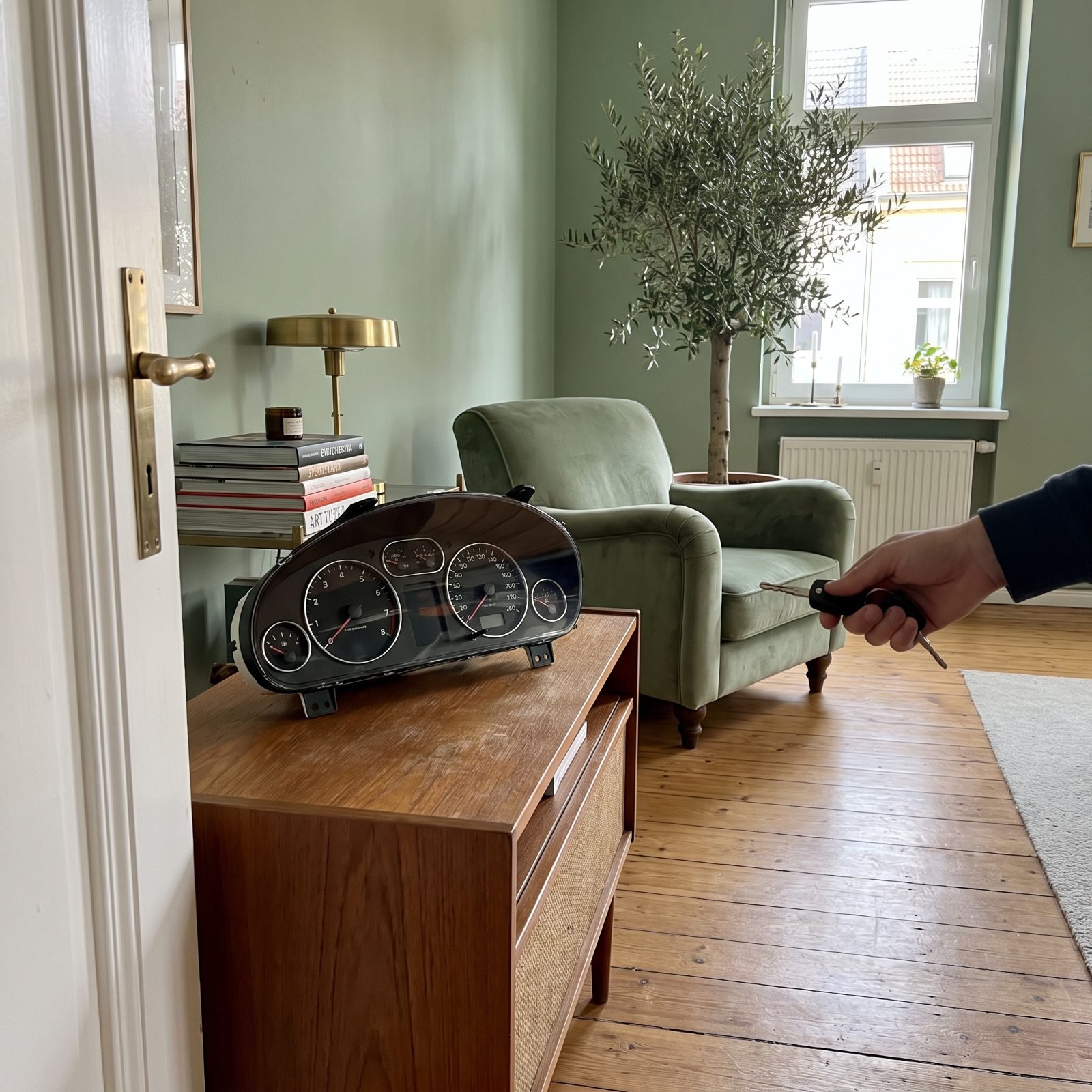
Turn the key to the on position, don’t start it, and watch the cluster. Every warning lamp should light for a self-test — check engine, airbag, ABS, oil, battery. That’s the bulb-check, and it’s supposed to happen.
If a light stays dark, somebody may have pulled the bulb or spliced the circuit so a real fault can’t announce itself. The airbag lamp is the one that matters most. A dark SRS light can mean the system’s disabled, the module’s unplugged, or the bags already deployed and nobody ever replaced them.
Do this before the seller distracts you with the radio. A dash that lights up like a Christmas tree for two seconds and then clears is a healthy dash. A suspiciously calm one is hiding something.
35. OBD Readiness Monitors Were Recently Reset

Plug the scanner in and check the readiness monitors before anything else. These are the self-tests the car runs on its own: catalyst, oxygen sensor, EVAP, EGR. Disconnect the battery or clear a code and they drop to “not ready,” then need a full drive cycle to finish.
A car sitting on a lot with every monitor showing “not ready” usually means somebody cleared the computer recently. Honest reason: a dead battery. Dishonest reason: erasing a check-engine light just long enough to make the sale, knowing full well it’ll come back after you drive it home.
34. The Scanner Finds Stored or Pending Trouble Codes
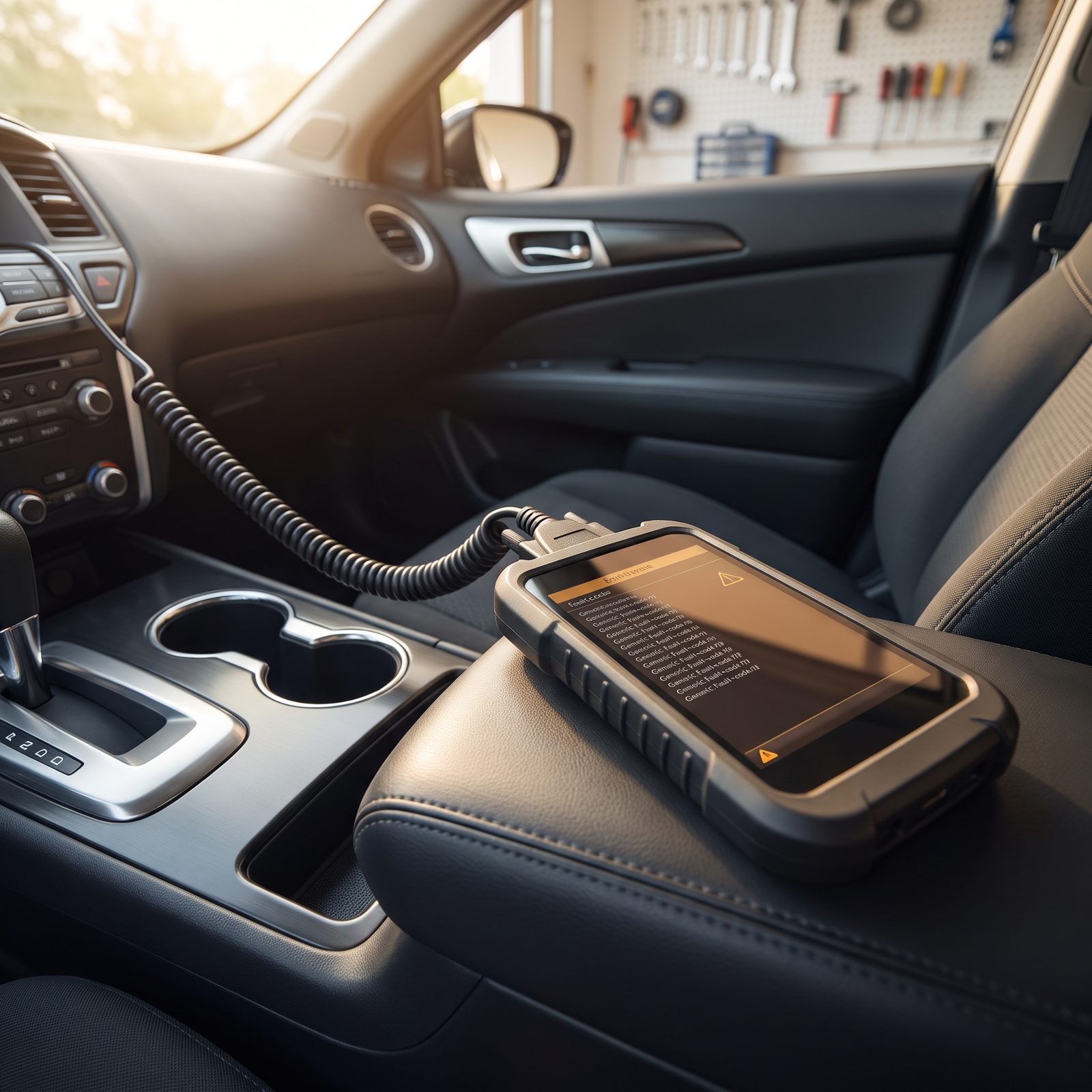
Clearing a code only hides it until the next drive cycle. Pending and stored codes are the ones that haven’t tripped the lamp yet, or just got reset — and they’re the scanner’s gift to you.
A P0300 random misfire, a bank-one lean code, a transmission solenoid fault: these are expensive problems getting ready to introduce themselves. One pending code might be nothing. A whole cluster of them pointing at the same system is a repair bill the seller is hoping you’ll inherit.
Carry your own scanner — even a thirty-dollar Bluetooth dongle and a free phone app will do. Read live data too, not just codes. Watch coolant temp climb, fuel trims settle, the O2 sensors switch back and forth. A thirty-second data stream tells you more than a shiny hood ever will.
33. Cabin Wear Doesn’t Match the Reported Mileage
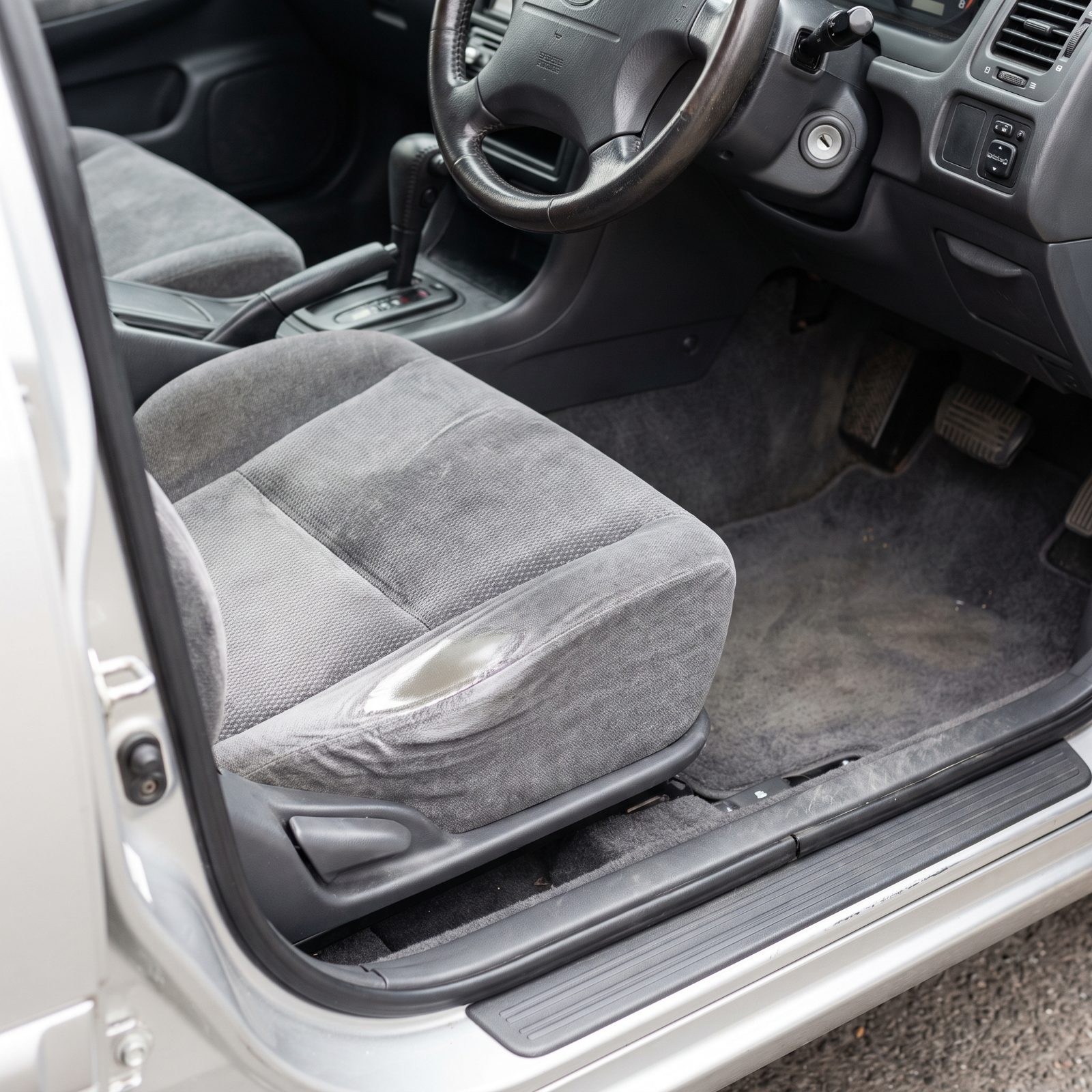
The odometer lies more often than the body panels do. A car claiming 60,000 miles should have a steering wheel that still holds its texture, pedal pads with pattern left, and a driver’s bolster that isn’t polished smooth from a decade of somebody climbing in and out.
Odometer rollback is still a live scam, and digital clusters that can be reprogrammed in minutes made it easier, not harder. Your cross-check is the stuff that can’t be reprogrammed: the shine on the gear knob, the sag in the seat foam, the ring worn into the ignition barrel.
Match all that against service stickers in the door jamb, oil-change records, and the inspection history on the report. When the cabin looks like 150,000 and the dash says 60,000, believe the cabin.
32. The Engine Was Warm Before You Arrived
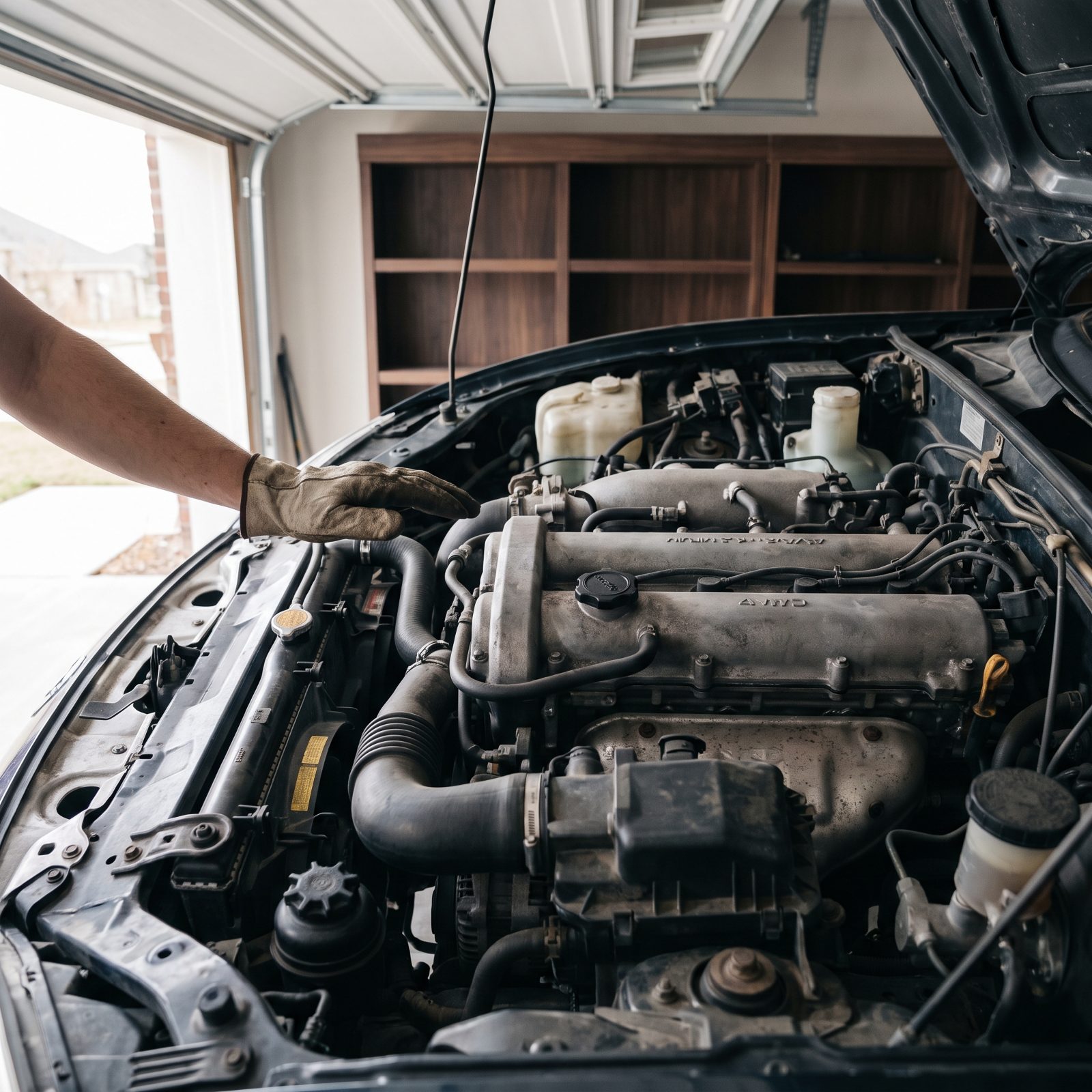
You pull up for a cold-start inspection and the hood is already warm. The seller “just moved it out of the garage.” Maybe. Or maybe they warmed it up so you’d never hear what it does cold.
Cold starts are confession time. A worn engine ticks from dry lifters, rattles a loose timing chain, puffs blue smoke from tired valve seals, or cranks slow on a dying battery. Thirty seconds later, warm, it all quiets down and sounds fine.
So insist on a genuinely cold start. Put your hand near the block before the key turns, and if it’s warm, reschedule — or come back early and knock unannounced. A seller with a healthy engine wants you to hear it cold. A seller who warmed it up is answering a question you hadn’t even asked yet.
31. Fresh Undercoating Is Concealing the Underside
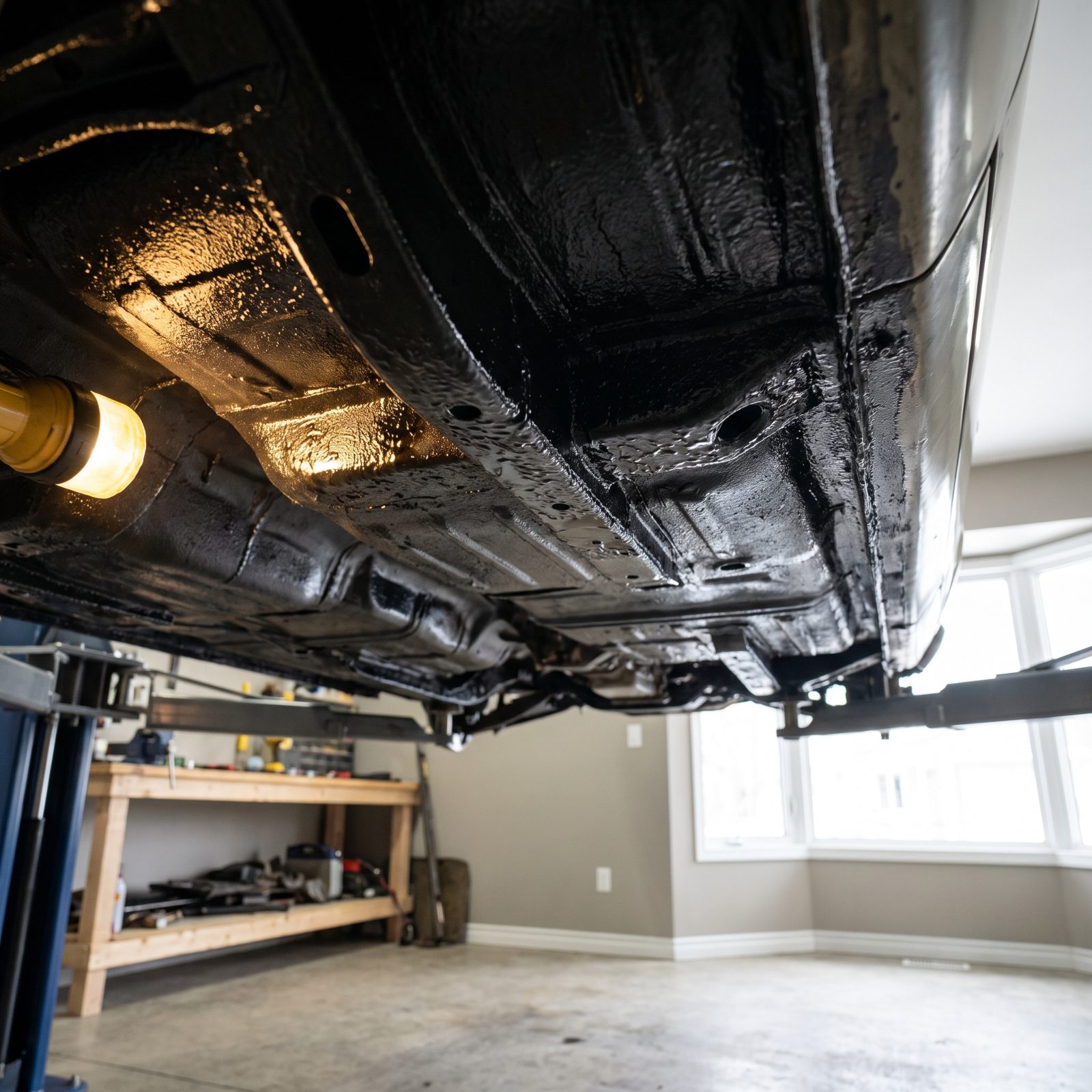
A spotless, blacker-than-black underside on an older car is a red flag, not a selling point. Fresh undercoating sprayed over everything — bolt heads, brake lines, suspension bushings and all — isn’t protection. It’s a mask.
Sellers rarely undercoat a clean frame right before listing. They undercoat a rusty one to hide scale, pinholes, and crumbling metal from your flashlight. The thick rubberized layer buys the seller a sale and buys you a frame that’s dissolving out of sight.
Get the car on a lift. Look for coating sprayed onto parts that should never be coated, and for a texture too new to belong on an old car. Poke the suspect seams gently with a flathead. If flakes rain down, that coating is doing a job a wire brush and an honest price should have done years ago.
30. Uneven Panel Gaps and Paint Overspray Reveal Collision Repairs
Would you like to save this?
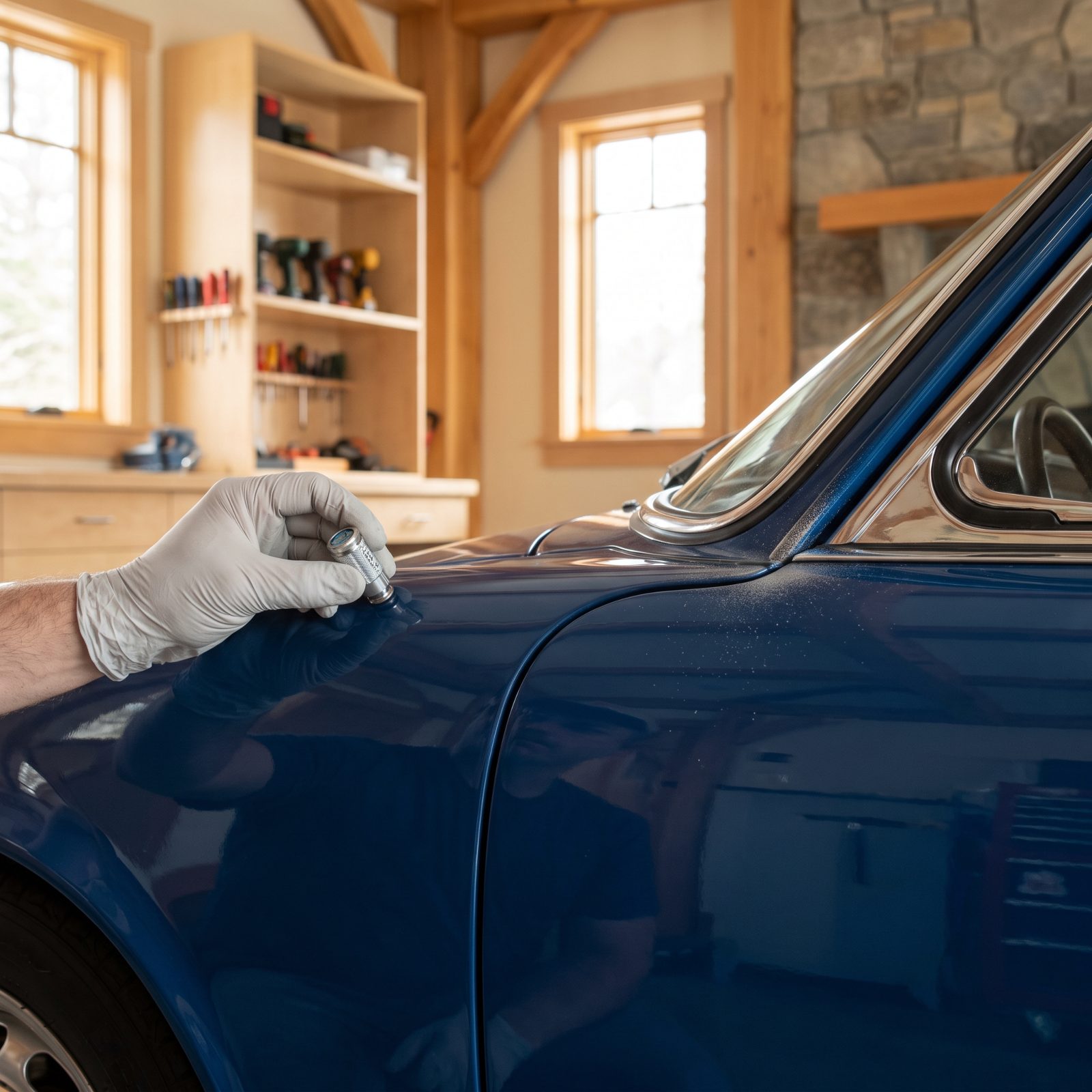
Crouch at the front corner and sight down the body line toward the back. Factory panel gaps are even and tight. A gap that widens at one end, or a door standing proud of the fender, means that corner met something solid.
Then hunt for overspray — a dusting of paint on rubber door seals, on unpainted plastic trim, on the edge of a weatherstrip. Factories mask all that. A body shop in a hurry doesn’t. A cheap magnetic or digital paint gauge reveals filler and respray in seconds, reading thick wherever a panel got skimmed with bondo.
Collision repair isn’t automatically fatal. Bad collision repair is. Misaligned panels hint at a bent structure underneath, and that’s the part that decides how the car crashes the next time — with you in it.
29. Structural Rust Has Reached the Rockers or Mounting Points
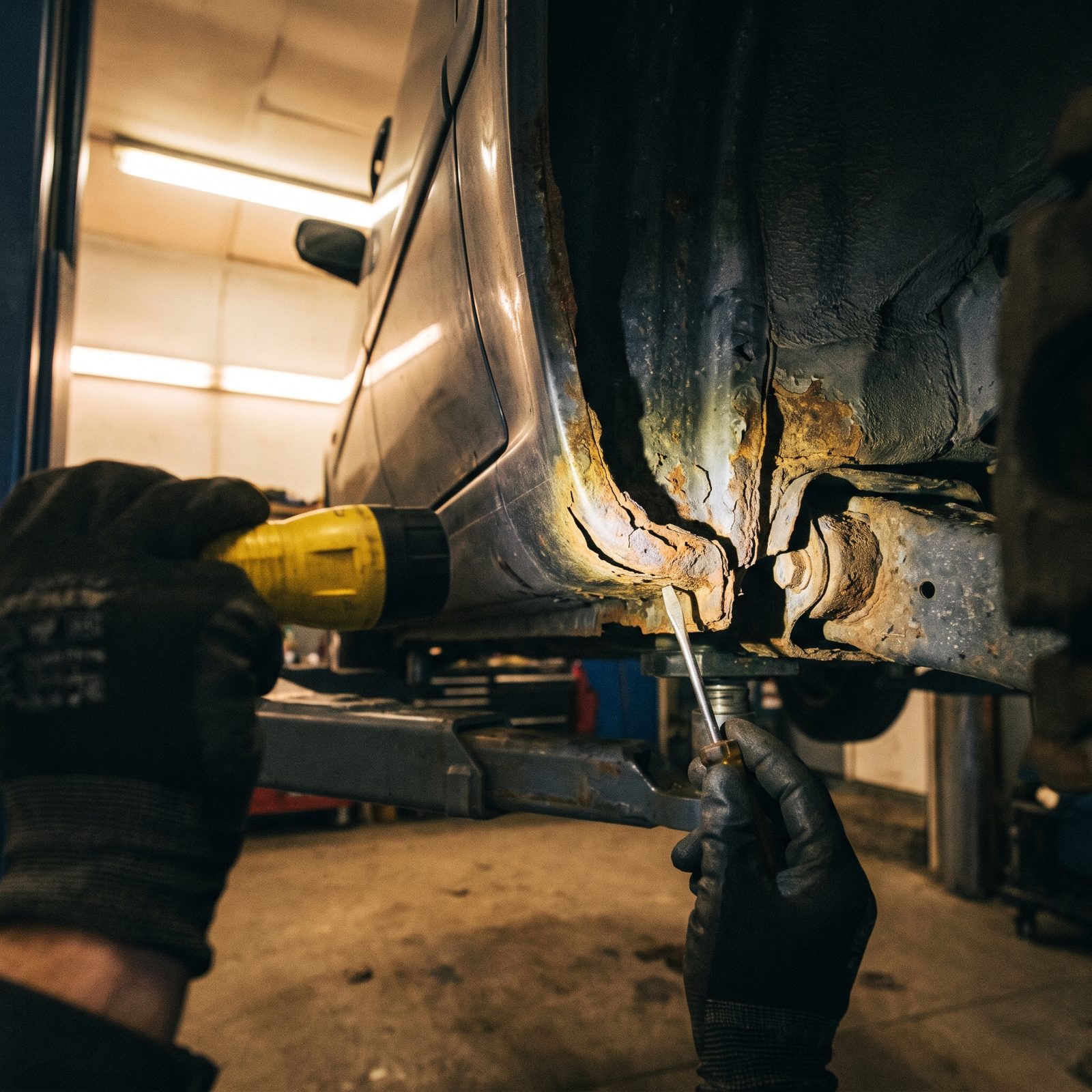
Surface rust on an exhaust clamp is cosmetic. Rust that’s eaten into the rockers, floor pans, frame rails, or suspension mounting points is structural — and that’s the one that ends the inspection for good.
These are the parts holding the car together, and holding your seatbelt mount, subframe, and control arms to the chassis. When corrosion reaches a mounting point, a single bump can tear it loose. There’s no polite body-filler fix, only cutting and welding in fresh steel, which costs more than most used cars are worth.
Run the car up on a lift and take a flashlight to every seam. Press — don’t stab — at the suspect spots with a screwdriver. Solid steel resists. Soft, flaky, or hollow-sounding metal at a load-bearing point means walk away. Shiny paint up top doesn’t count for much when the skeleton underneath is giving up.
28. Silt, Corrosion, or Musty Odors Point to Flood Damage
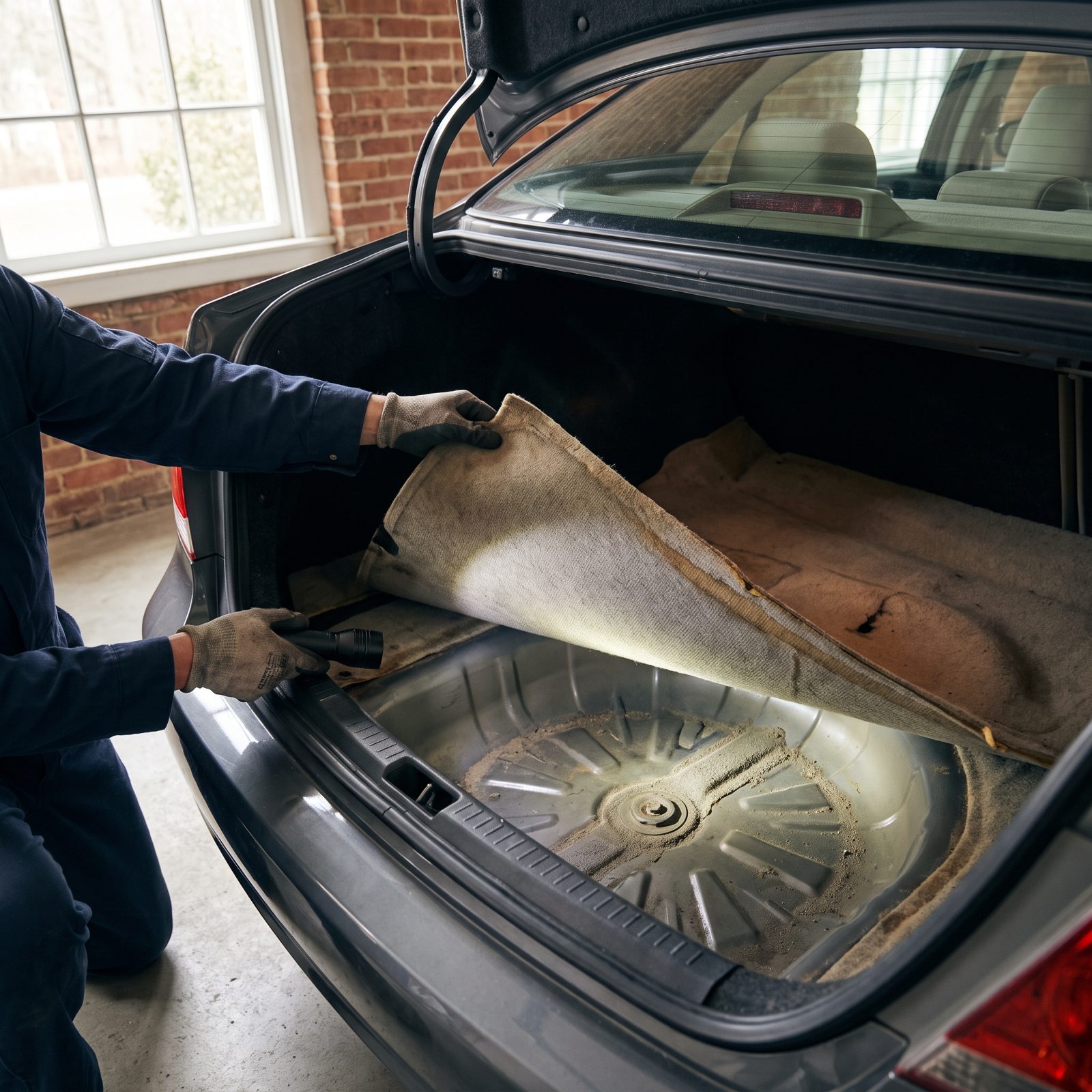
Pull the carpet back in the trunk and the spare-tire well tells the truth. A tide line of dried silt, powdery rust on the seatbelt anchors, that gym-bag-left-in-the-sun smell lingering under a cloud of air freshener — water sat in this car longer than anyone wants to admit.
Flood damage is a slow poison. Water wicks into harnesses and connectors, and the corrosion keeps working for years. You’ll chase electrical gremlins, failed modules, and mystery warning lights that never add up, usually long after the money changed hands.
Check the low points nobody cleans — under the seats, behind the kick panels, inside the fuse box. Pop a few connectors and look for green or white crust on the pins. And a sweet-smelling car with brand-new carpet in a ten-year-old sedan? That’s its own kind of confession.
27. Melted Connectors or Scorched Insulation Reveal Fire Damage
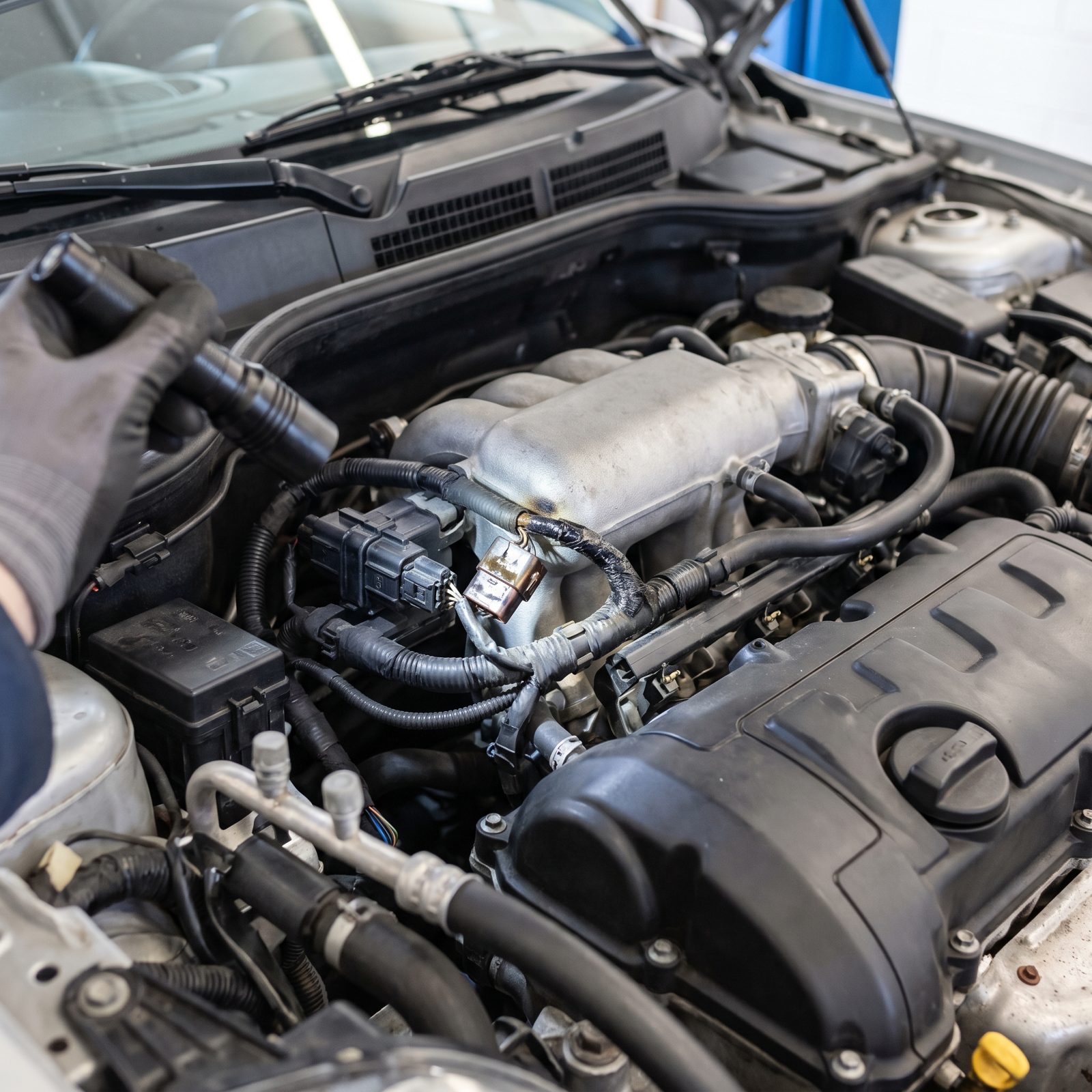
Fire leaves fingerprints. Not always a blackened shell. Sometimes it’s a single connector in the engine bay with a glazed, melted lip and insulation that went crinkly and brown near a heat source. Run your light along the harness looms and the fuse box edges and take your time.
A car that caught fire and got patched up is a car with compromised wiring you can’t see. Heat hardens insulation, brittle insulation cracks, and cracked insulation shorts. You inherit a rolling electrical fire risk and an insurance company that may balk if the branded history ever surfaces.
Look for mismatched paint texture on the firewall, replacement wires in colors that don’t match the factory loom, a suspiciously fresh section of harness tape. One new connector in a bay full of aged, chalky plastic is a question worth asking out loud.
26. Uneven Tire Wear Points to Alignment or Suspension Trouble
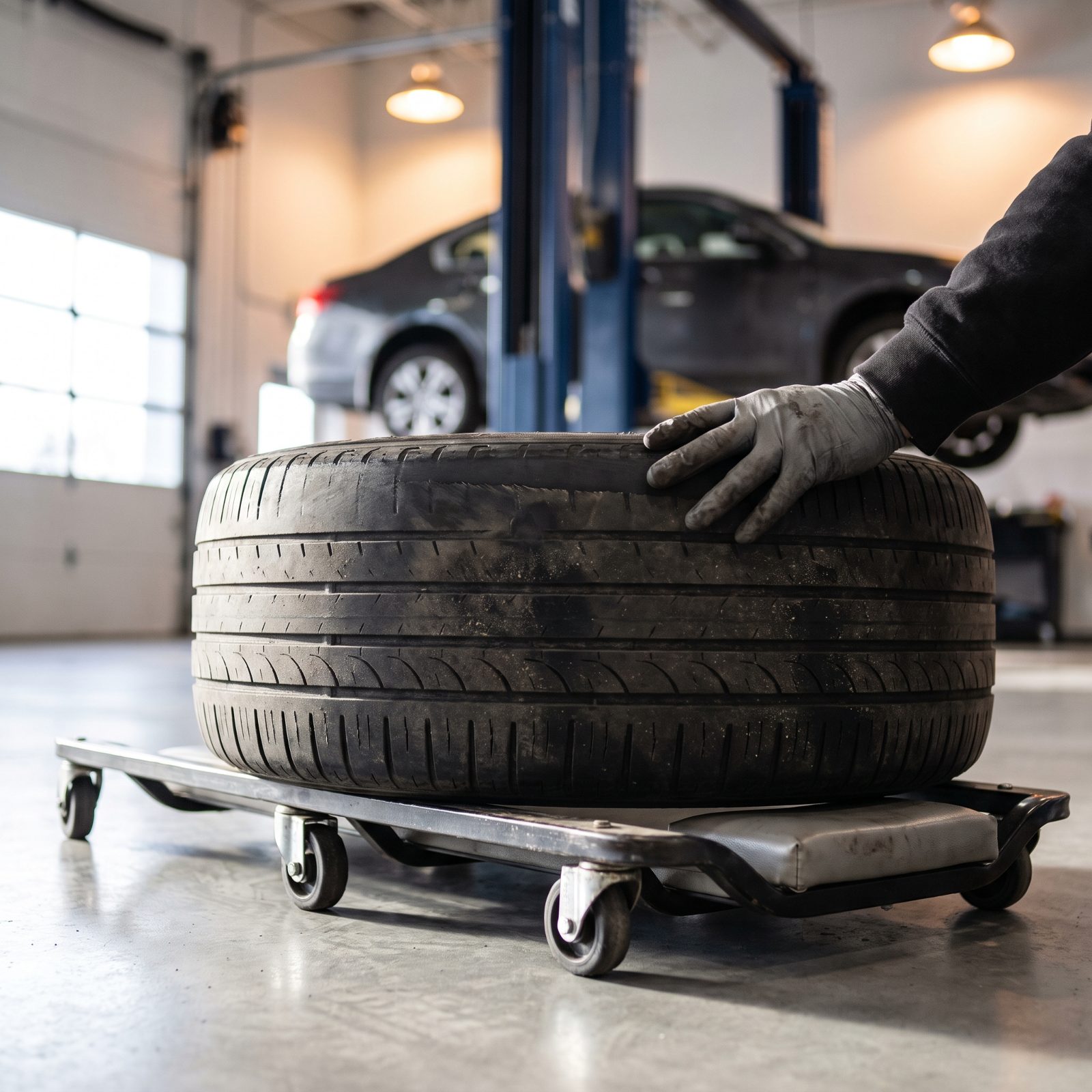
Flip the front tire over and read it like a logbook. When the inner shoulder is shaved down to the wear bars while the outer tread still looks half-new, the alignment has been off or the suspension is plain worn out. Feathering you can feel with your palm — smooth one way, sharp the other — usually means toe is out of spec.
And here’s why it matters beyond the rubber. Tires are cheap to blame and expensive to ignore. Worn edges often trace back to sagging springs, loose tie rods, or a bent control arm, and those are the real bill.
25. Mismatched Tires or Old Date Codes Signal Neglect
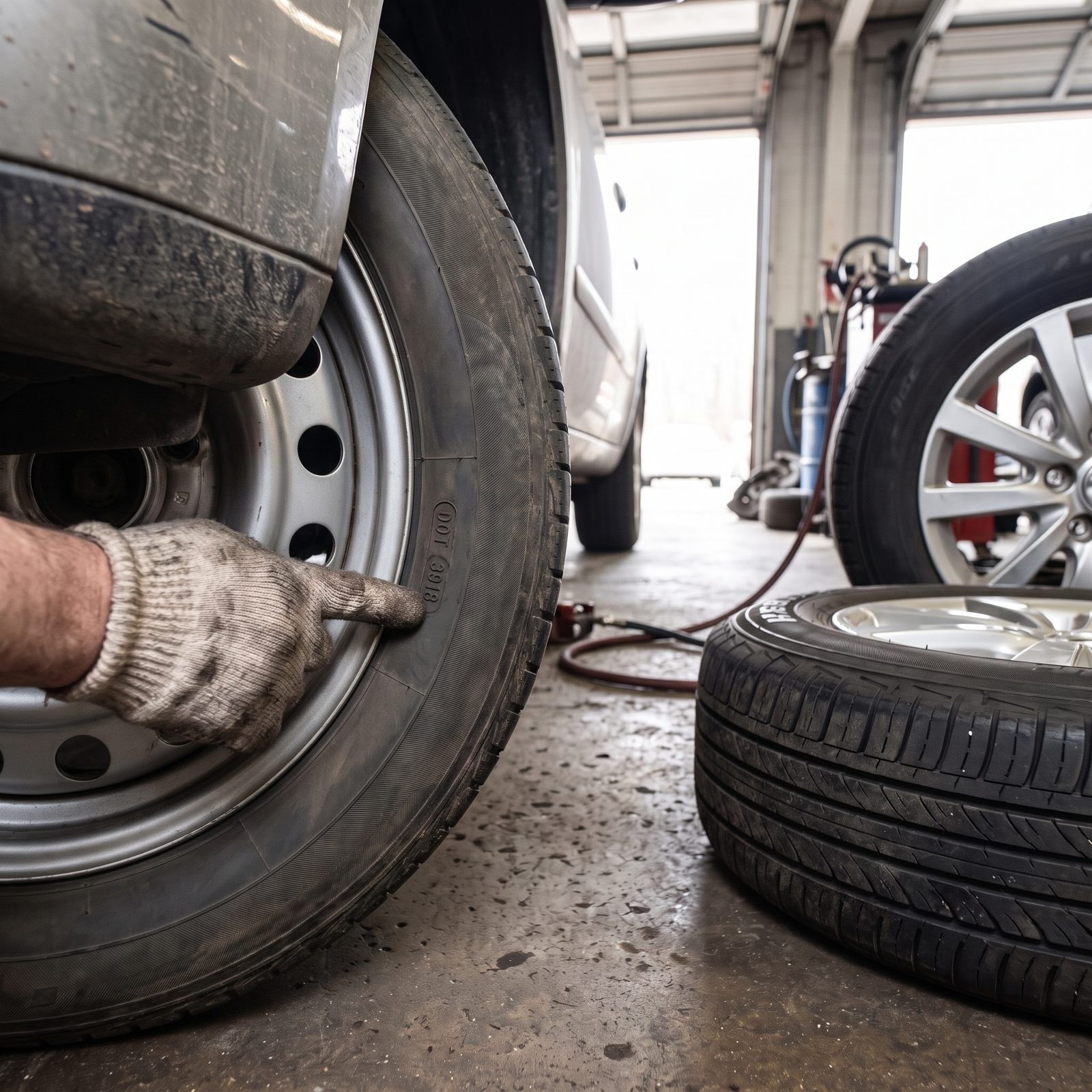
Four tires, four different tread patterns. That’s a car someone fed the cheapest rubber available, one replacement at a time, usually after a blowout they put off for a month.
Then there’s age — the sneaky part. Every tire carries a four-digit DOT date code on the sidewall: week and year. A tire can look fine and still be dangerously old, because rubber dry-rots from the inside. A six-year-old tire with deep tread can let go on the highway while looking perfectly healthy.
Mismatched sizes or brands on the same axle also mess with braking, traction control, and in all-wheel-drive cars, the driveline itself. If the owner cut corners on the four patches of rubber touching the road, imagine what got skipped under the hood.
24. The Wheels Are Bent, Cracked, or Poorly Repaired
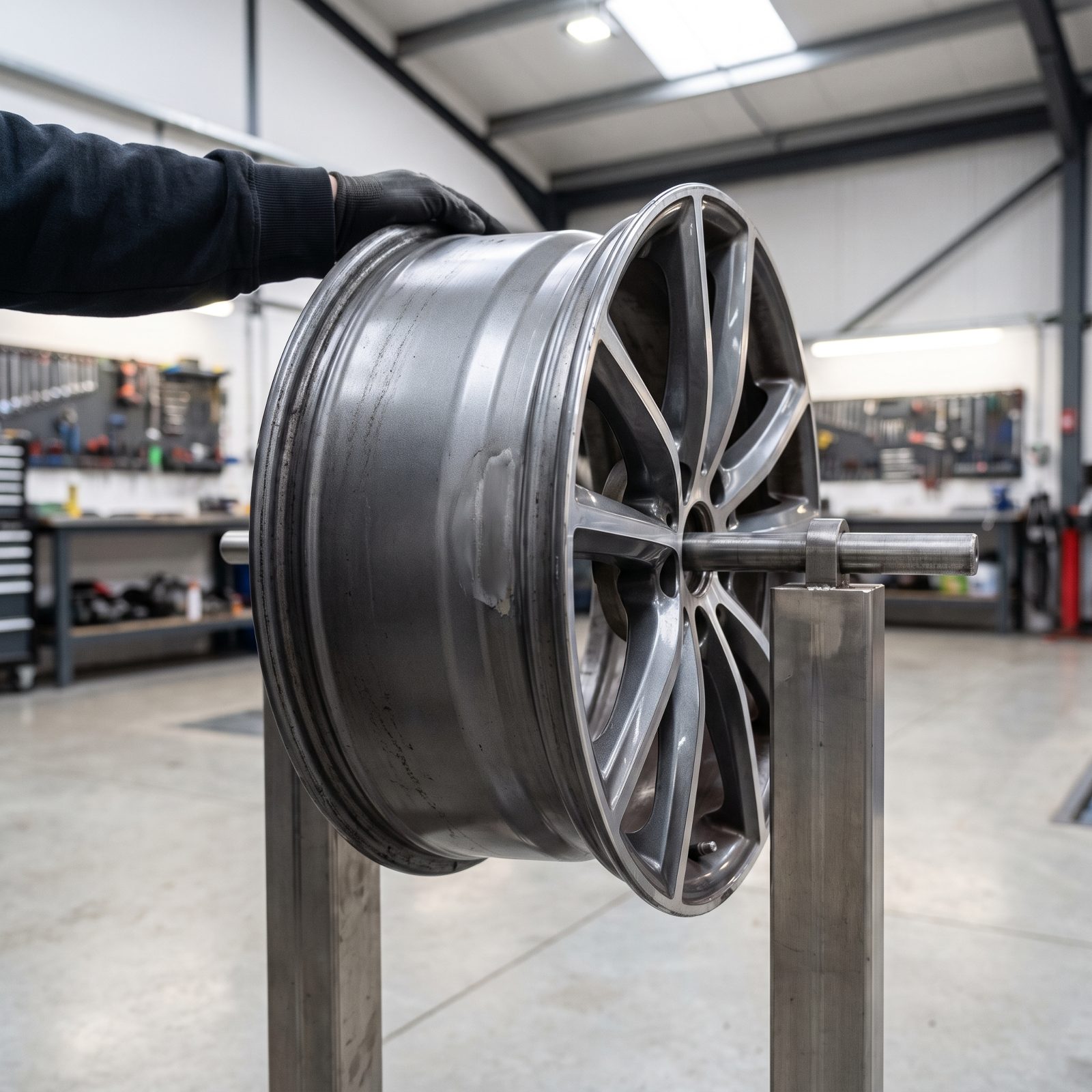
Spin the wheel off and look at the inner barrel, the part nobody bothers to clean. A flat spot you can feel with your thumb, a hairline crack along the rim lip, a patch of clear coat that sits differently than the rest — those are curb strikes and pothole hits somebody tried to make disappear.
A cracked alloy can leak air slowly, then fail all at once. Welded repairs on structural rim sections are a gamble most shops won’t stand behind, and for good reason.
A wheel that’s been straightened on a press looks fine until the day it doesn’t.
Put each wheel on a balancer if you can, and watch how much weight the tech has to pile on to make it true. A rim fighting the balancer took a hit hard enough to matter.
23. Engine Oil, Coolant, or Transmission Fluid Is Leaking
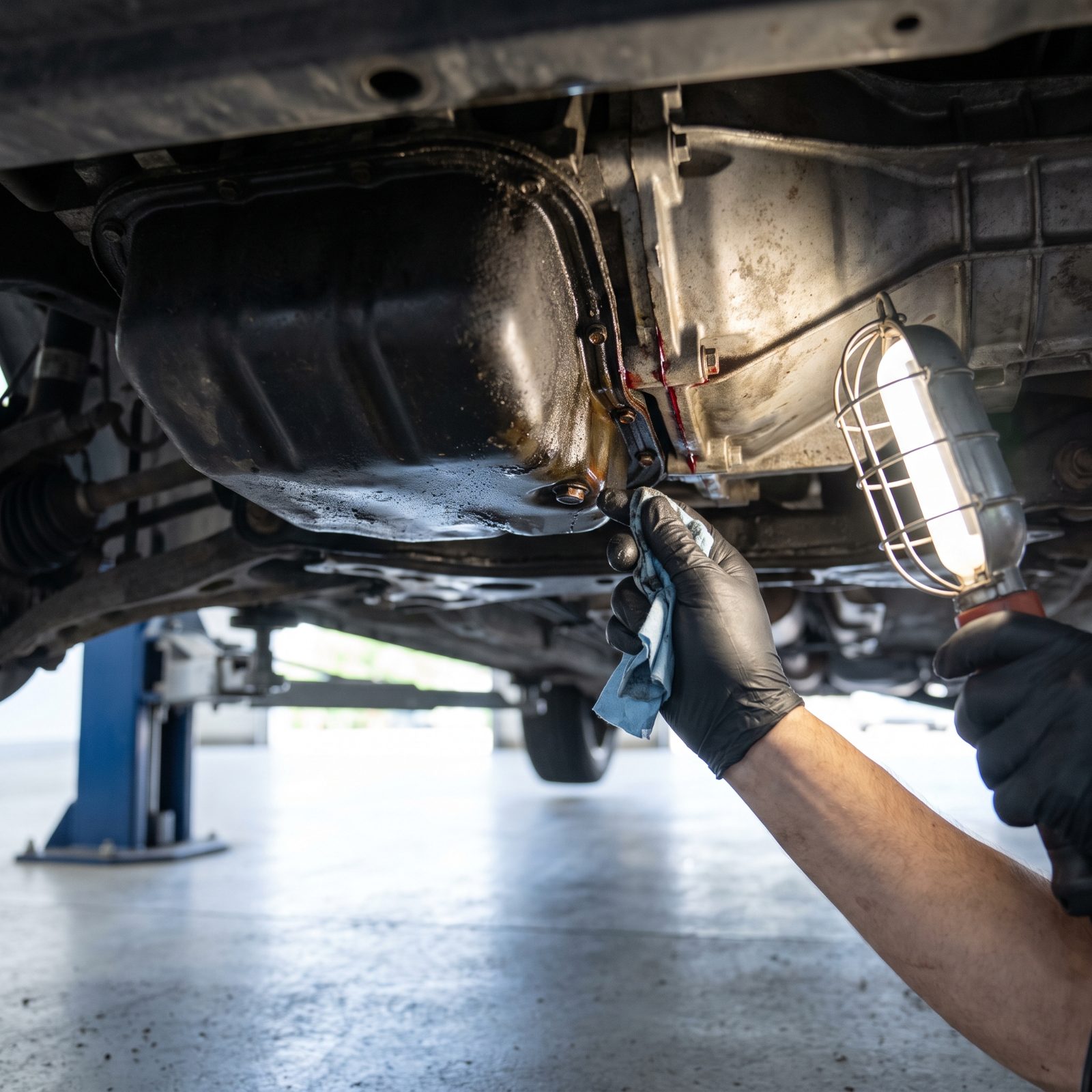
Get it on a lift and look up. Fresh oil weeping from an oil pan gasket catches light and grime both, so you’ll see a dark, shiny film with dirt stuck to it. Coolant leaves a crusty green or orange trail. Transmission fluid is the red one — and red fluid where red fluid shouldn’t be is never good news.
Small seeps are normal on older cars. But a pan that’s wet front to back, or a steady drip you can watch form, is a repair bill waiting on you, not the seller.
Trace every leak to its highest point. Oil pools low but climbs high, and the actual source is often a gasket two feet above the drip. A rear main seal leak alone can mean pulling the transmission to fix it — ask any poor soul who’s done it in a driveway.
22. Brake Fluid or Fuel Is Visibly Leaking
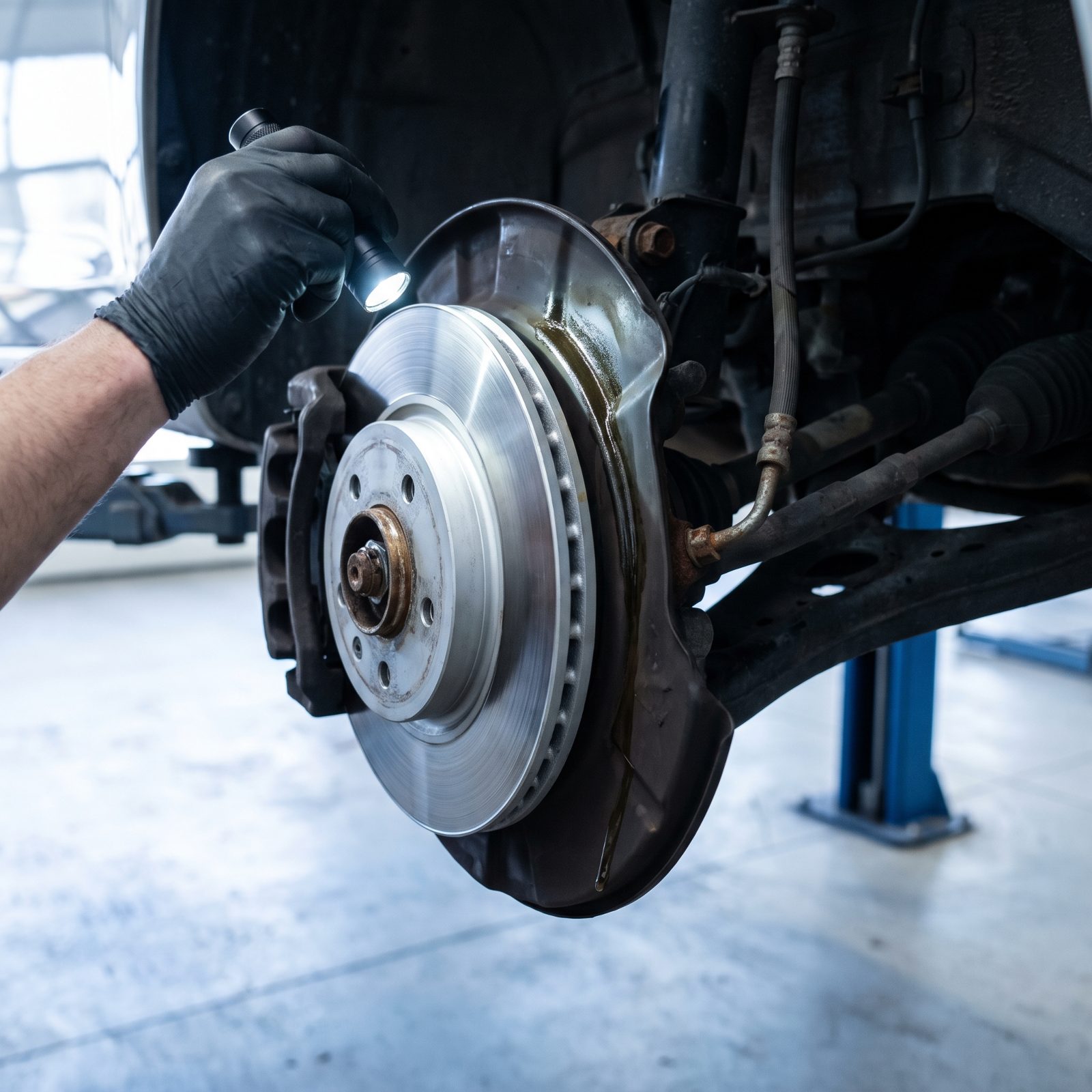
This is the one that can hurt you. Everything else on this list costs money. A brake or fuel leak can cost a whole lot more.
Brake fluid shows up as a slick, clear-to-amber film around the calipers, flex hoses, or master cylinder, and it strips paint where it lands. A soft pedal on the test drive plus a damp fitting under the car means the hydraulic system is losing its grip, literally. Fuel leaks you’ll smell before you see them — raw gasoline near the lines or tank, and that’s a fire you don’t want to own.
Neither of these is a negotiating chip. Walk away, unless the price already assumes a full brake or fuel-system rebuild and you’ve got a shop lined up to do it before the car moves under its own power again.
21. Milky Oil, Oily Coolant, or Coolant Bubbles Signal Cross-Contamination
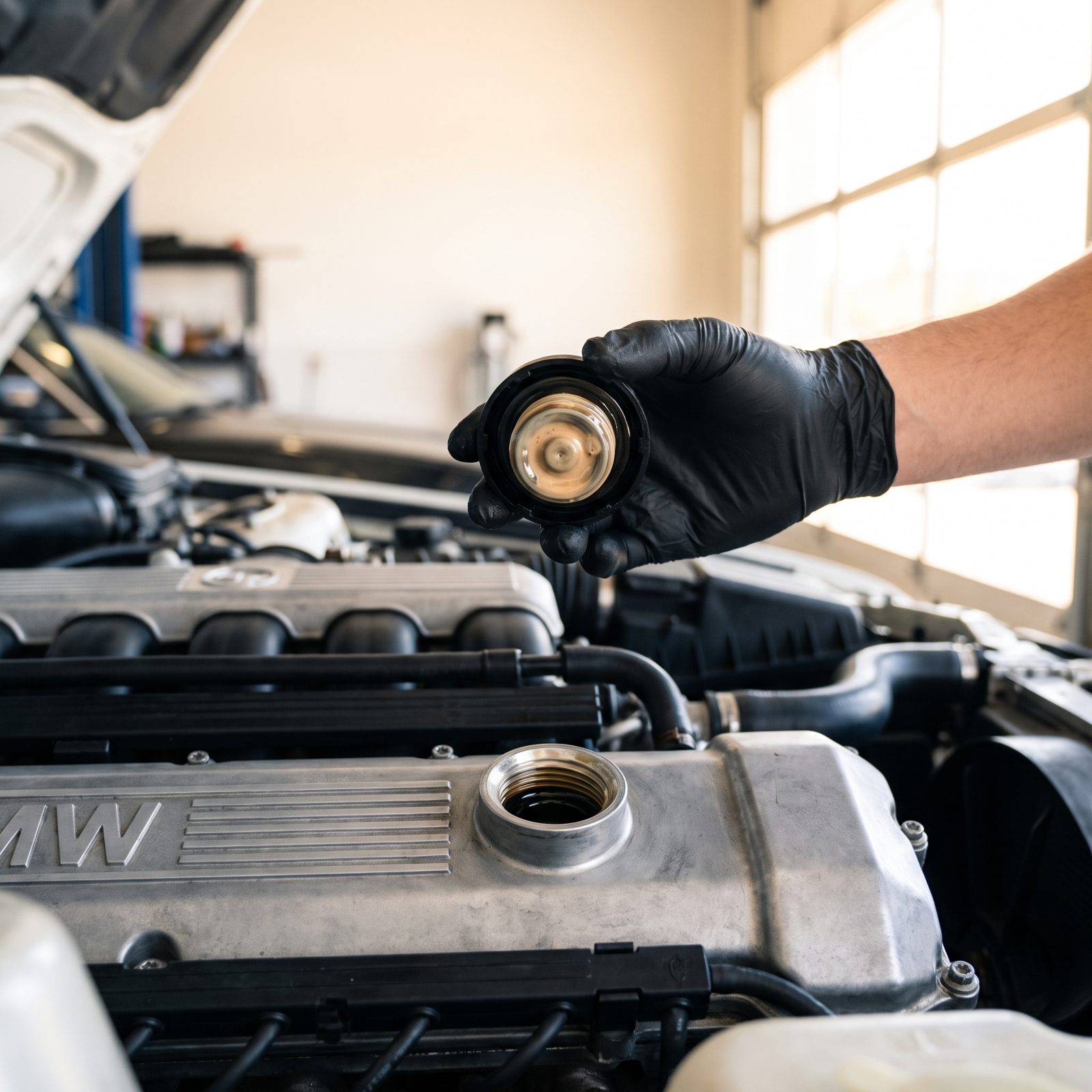
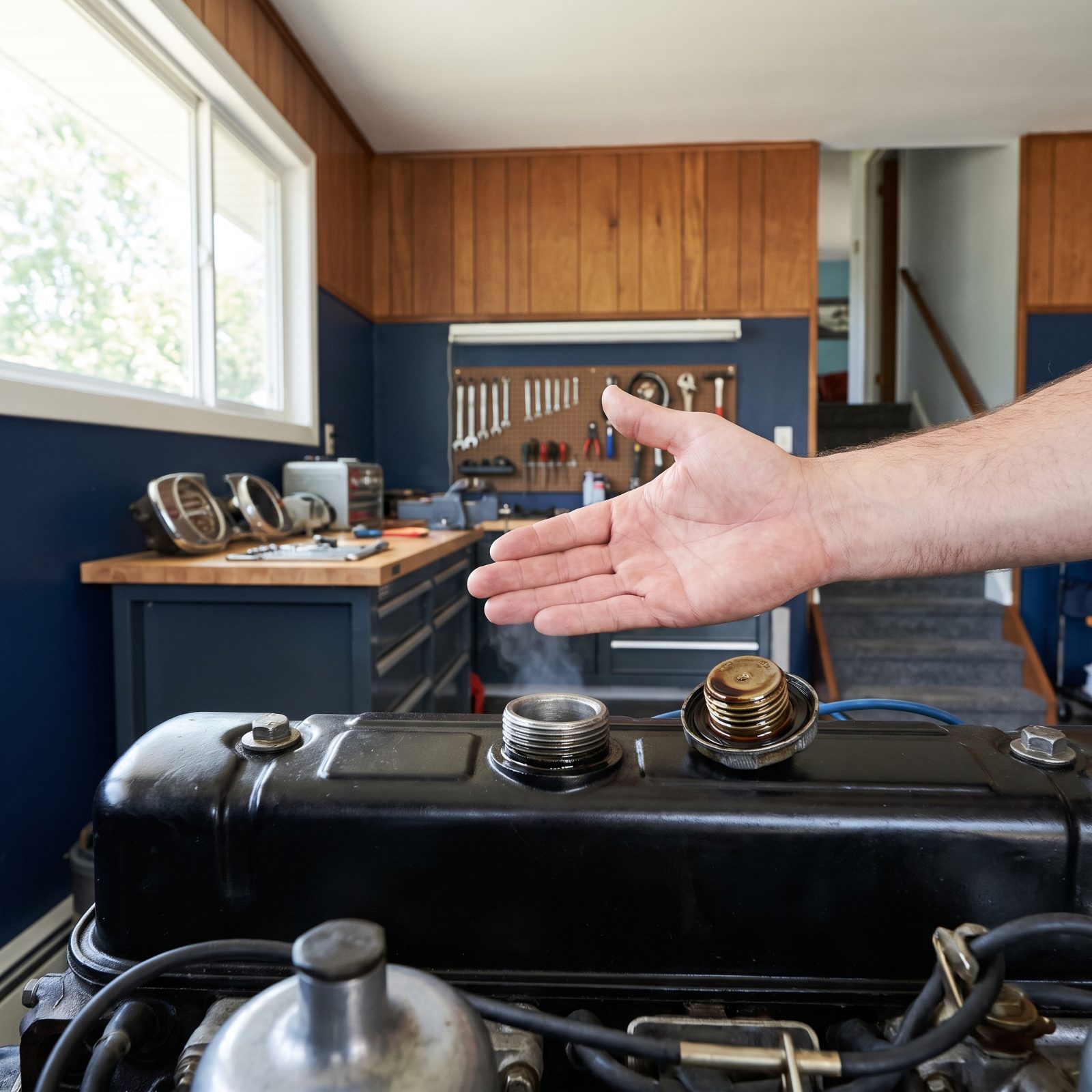
Flip the oil cap over. If the underside is coated in tan, milkshake-colored paste, oil and coolant are mixing where they absolutely should not. Check the coolant while you’re in there. An oily film floating on top, or bubbles rising in the reservoir while the engine idles, tells the same story from the other direction.
That’s usually a failing head gasket, a cracked head, or a warped block. Coolant in the oil destroys bearings, and combustion gases in the coolant push the temperature up until something lets go.
This is one of the more expensive discoveries you can make standing in a stranger’s driveway. On a lot of engines, a head gasket job climbs into the thousands once the heads need machining. A chocolate-milk oil cap is the car telling you to keep your checkbook shut.
20. Metallic Glitter in the Oil Signals Internal Engine Wear
Would you like to save this?
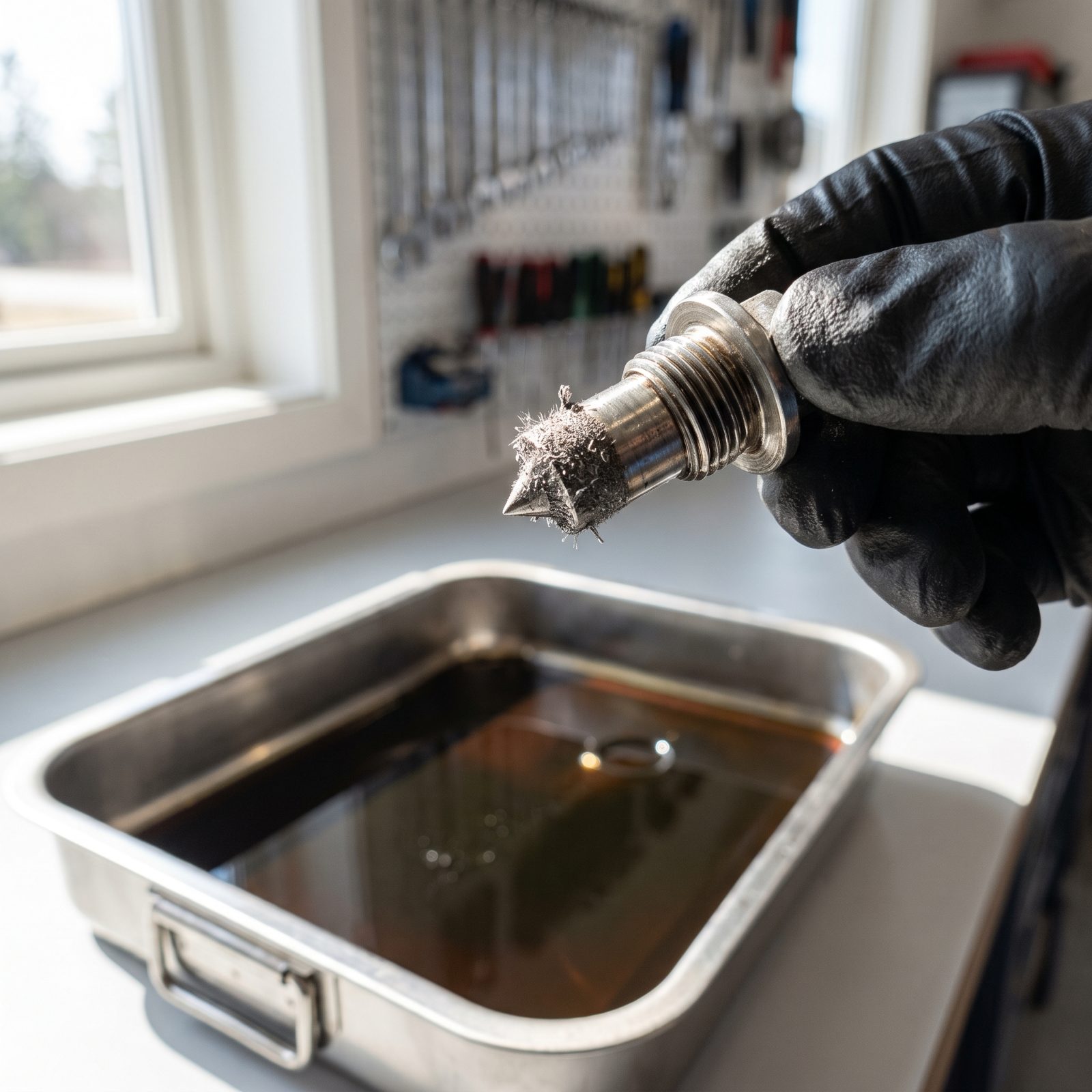
Pull the dipstick, wipe it on a clean white rag, and tilt it to the light. Fine metallic shimmer in the oil — like someone dumped a pinch of glitter in there — means metal is grinding against metal somewhere inside. The magnetic drain plug, if the car has one, will grow a gray beard of filings when the engine is eating itself.
A little microscopic haze is normal. Visible flecks are not. Bearings, cam lobes, and gears all shed metal as they fail, and that debris circulates and speeds up the damage.
If you’re serious about a car and the seller plays ball, a cheap oil analysis sample reads the metals in parts per million. The lab sees the trouble a month before the engine does.
19. Blue, White, or Black Exhaust Smoke Reveals Engine Trouble
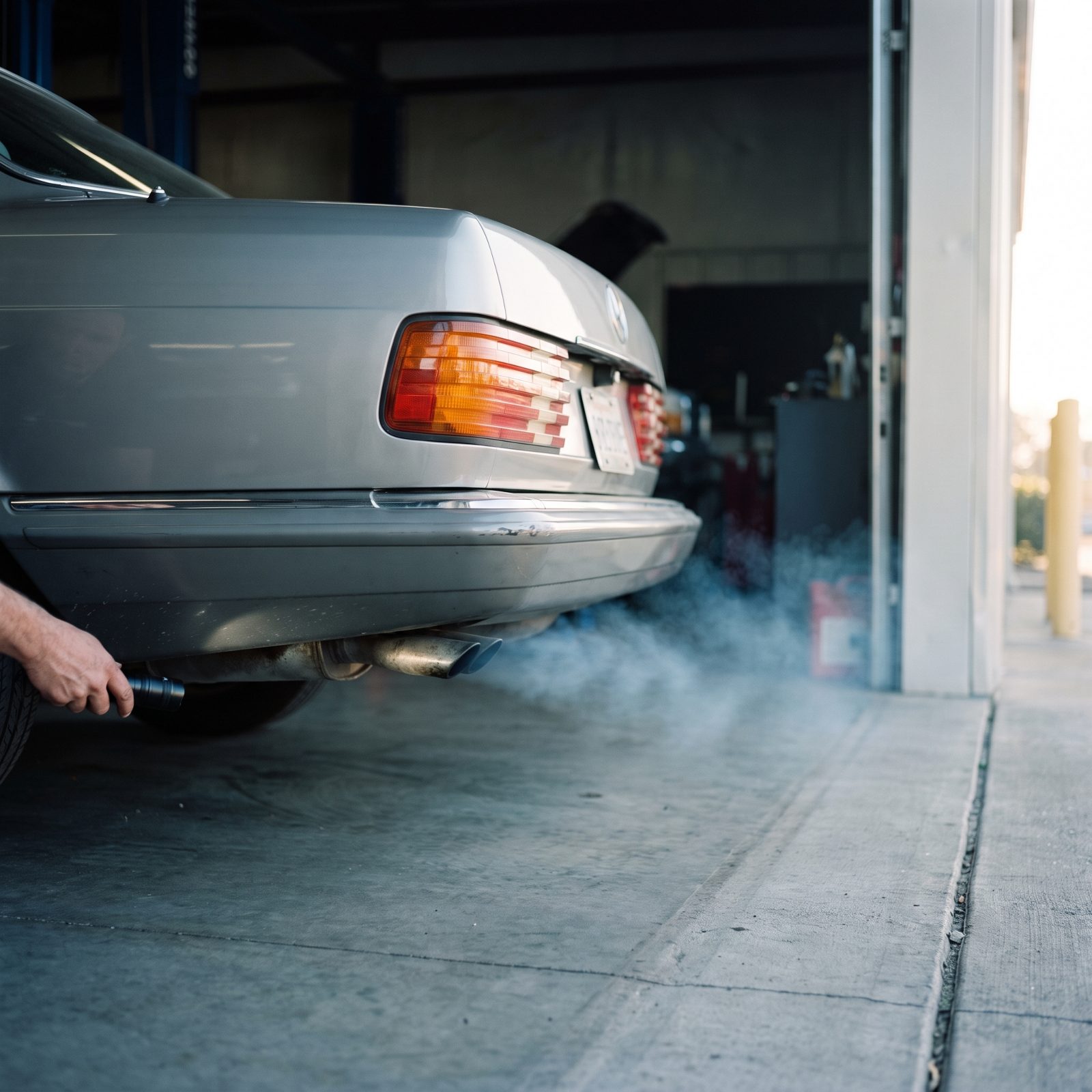
Have someone rev it while you stand behind, and watch the tailpipe closely. The color is a diagnosis.
- Blue smoke means burning oil. Worn valve seals or rings, and the car will drink a quart between changes while fouling plugs.
- White smoke that lingers and smells faintly sweet is coolant burning in the cylinders. That’s the head gasket again, and it’s the costly one.
- Black smoke means it’s running rich, dumping more fuel than it can burn. Could be a sensor, could be a fueling fault, and it tanks both mileage and the catalytic converter.
A faint puff of white on a cold start that clears in seconds is just condensation. Perfectly normal. But steady smoke of any color once the engine is warm is the car confessing.
18. Deep Knocking Noises Point to Internal Engine Damage
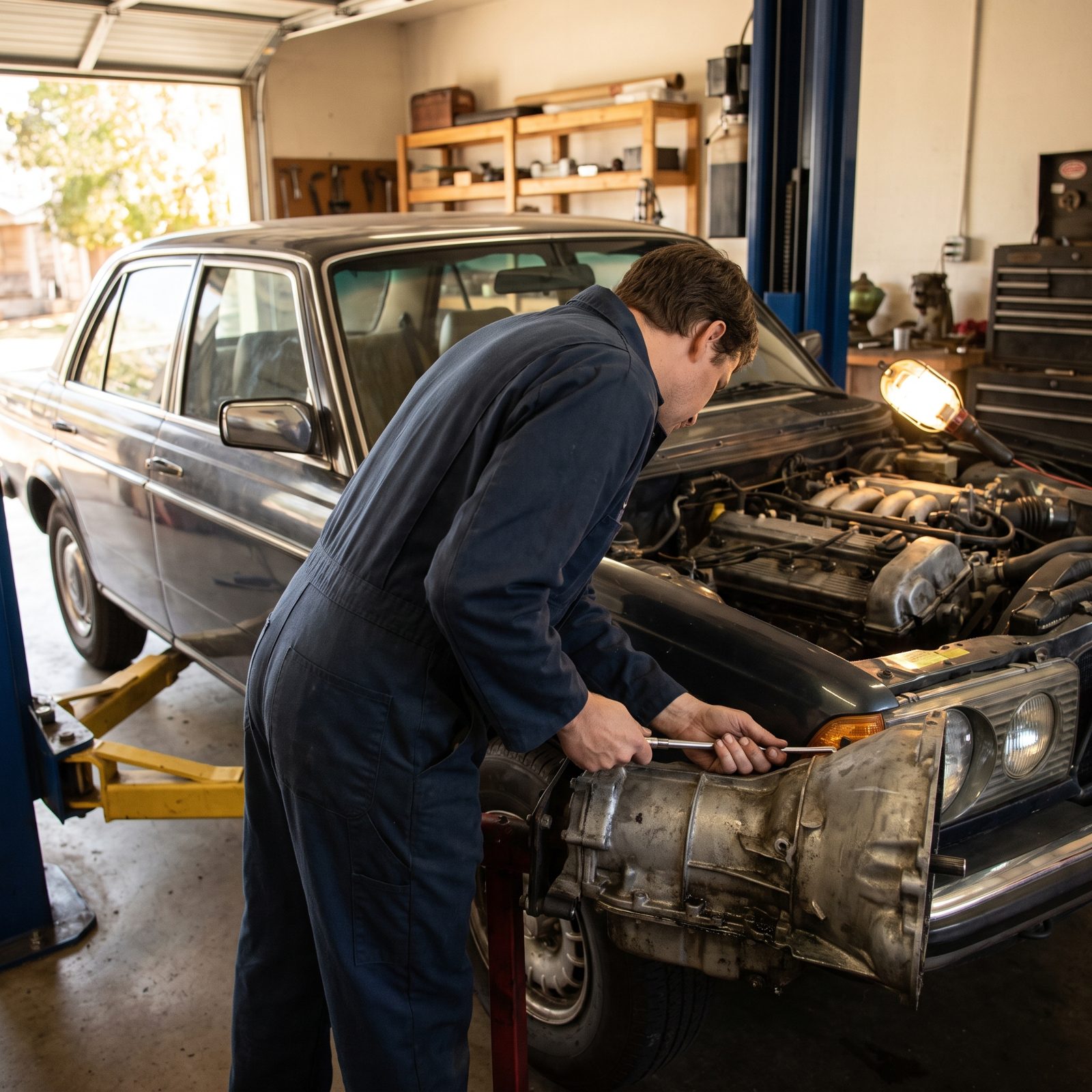
17. A Cold-Start Timing-Chain Rattle That Hangs Around Too Long

16. The Engine Idles Rough or Stumbles Through a Misfire
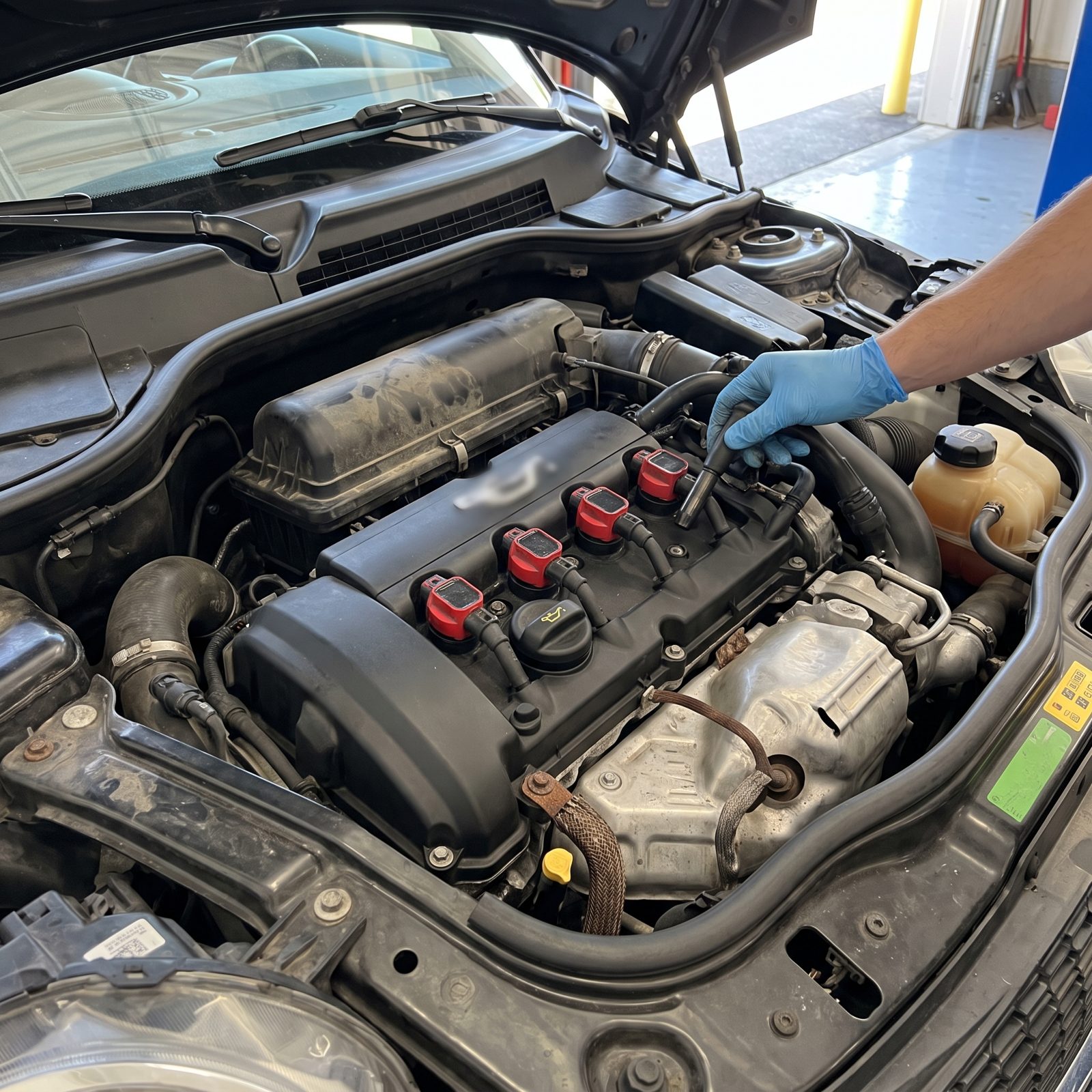
15. Blow-By Puffing Out of the Oil-Filler Opening
14. Household Connectors and Loose Splices That Give Away Hacked Wiring
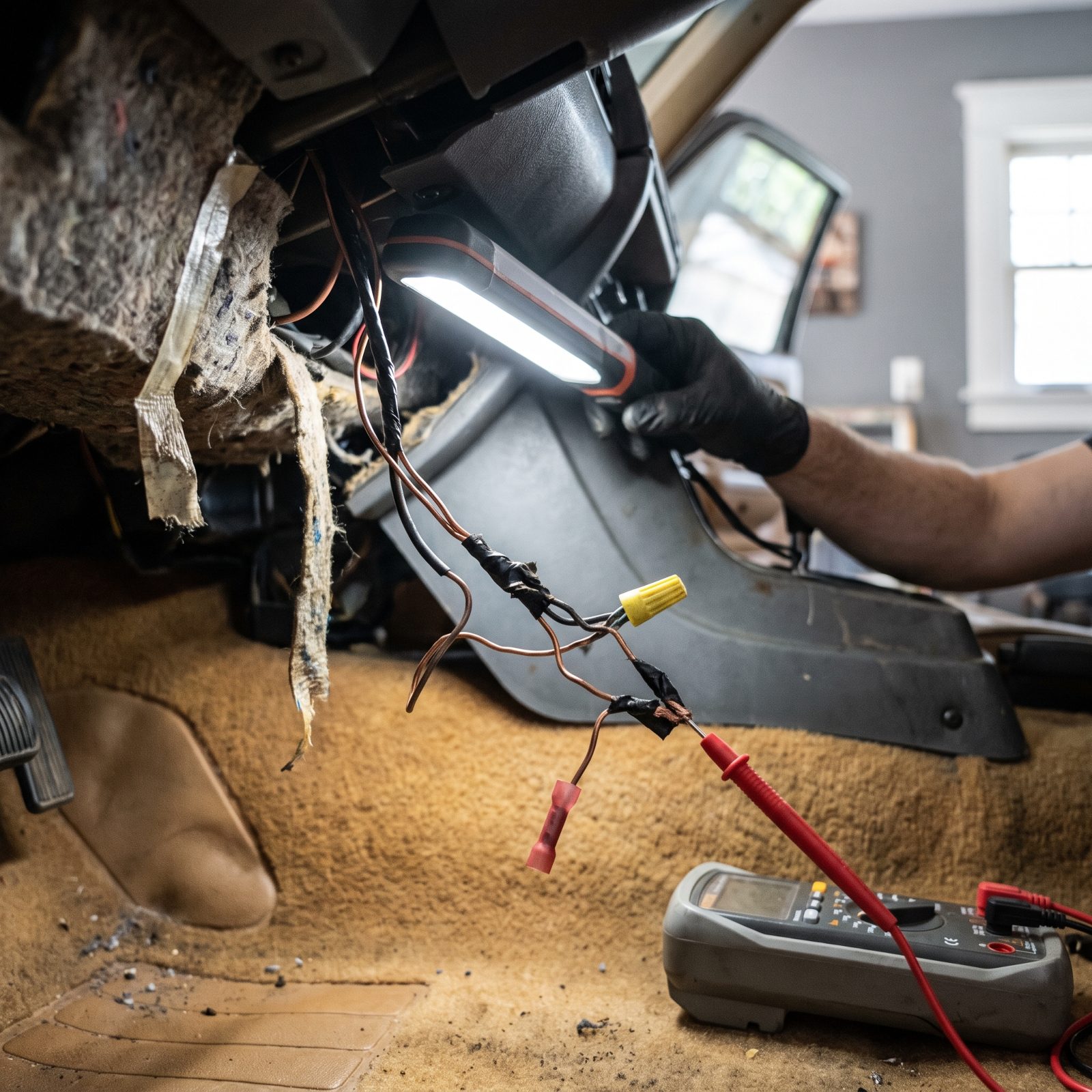
Pop a lower dash panel and you learn more about a car than any spotless paint job will tell you. You want factory connectors, color-matched wire, and loom that follows the original routing. What you don’t want: a wire nut from the hardware aisle, three colors of tape wrapped around a splice, or a stereo install where somebody tapped power straight off the ignition switch.
Hacked wiring is a slow-burn problem. Loose splices overheat, corrode, and drop voltage, handing you phantom gremlins that no scan tool can pin down because the fault keeps moving. And the nastier version? Bad grounds and un-fused taps start fires. Shops charge a fortune chasing the ghosts.
Bring a cheap multimeter and a test light, then check for voltage drop across any suspicious joint. Factory repairs use soldered or heat-shrink butt connectors and OEM-style terminals. If you see twist caps or scotch-locks, assume the whole harness got the same treatment and price the car like a rewire is coming.
13. The Temperature Creeps Up and the Cooling Fans Never Kick On
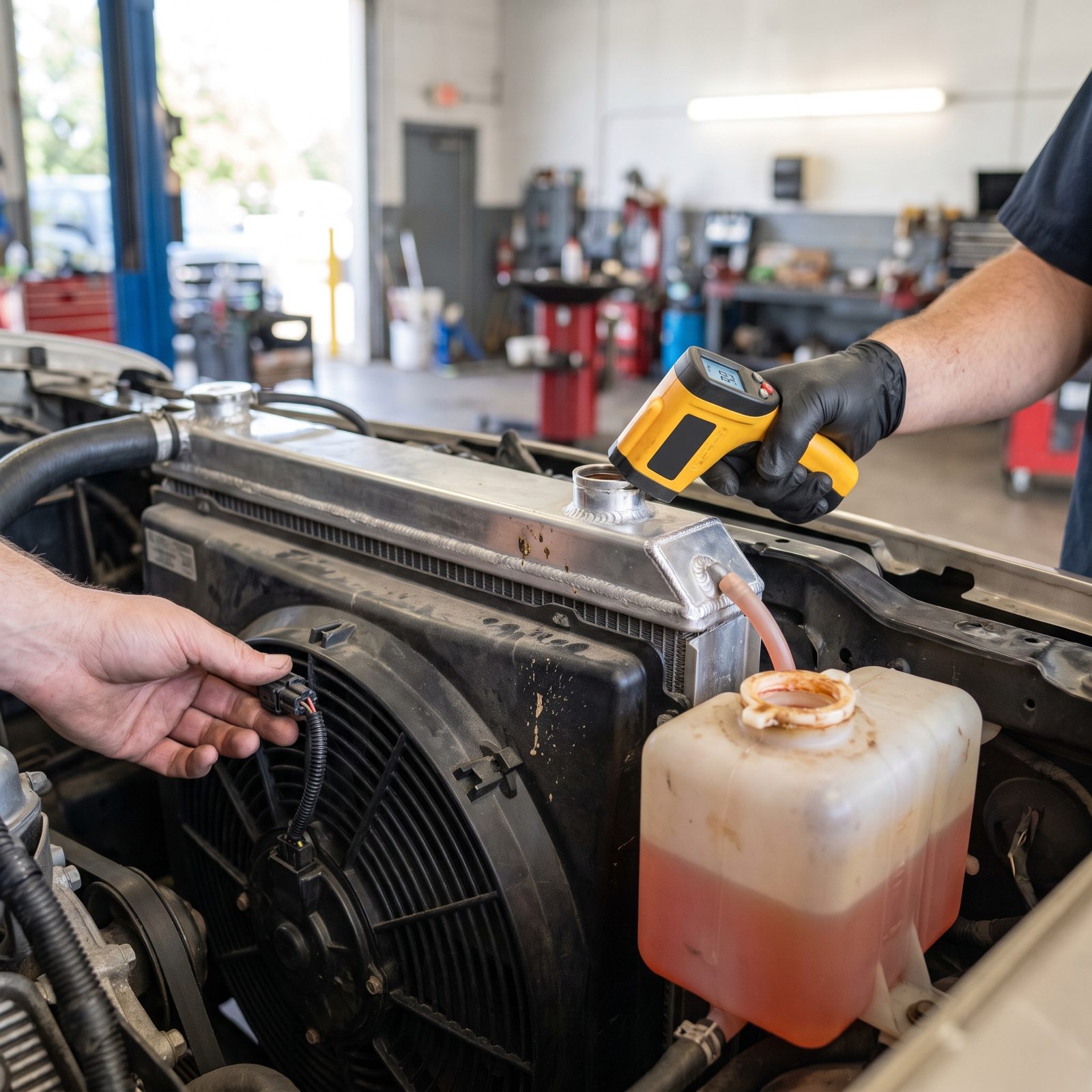
Let it idle in the shop until the needle wanders past the halfway mark and just watch the fans. On a healthy car they spin up with a thump before the gauge gets nervous. But if the temperature keeps climbing while the fans sit dead, something’s hiding behind that calm dashboard.
A fan that won’t cycle means a failed motor, a bad relay, a cooked temperature sensor, or wiring somebody butchered. Let it slide and you cook head gaskets, warp aluminum heads, and turn a cheap sensor into a four-figure teardown.
Point an infrared gun at the radiator and the thermostat housing while it warms up. The fan should trigger before the coolant hits boiling range. Flick the A/C on too, since that usually commands at least one fan. No response, no deal until you know the real repair cost.
12. A Transmission That Hesitates, Flares Between Gears, or Smells Scorched
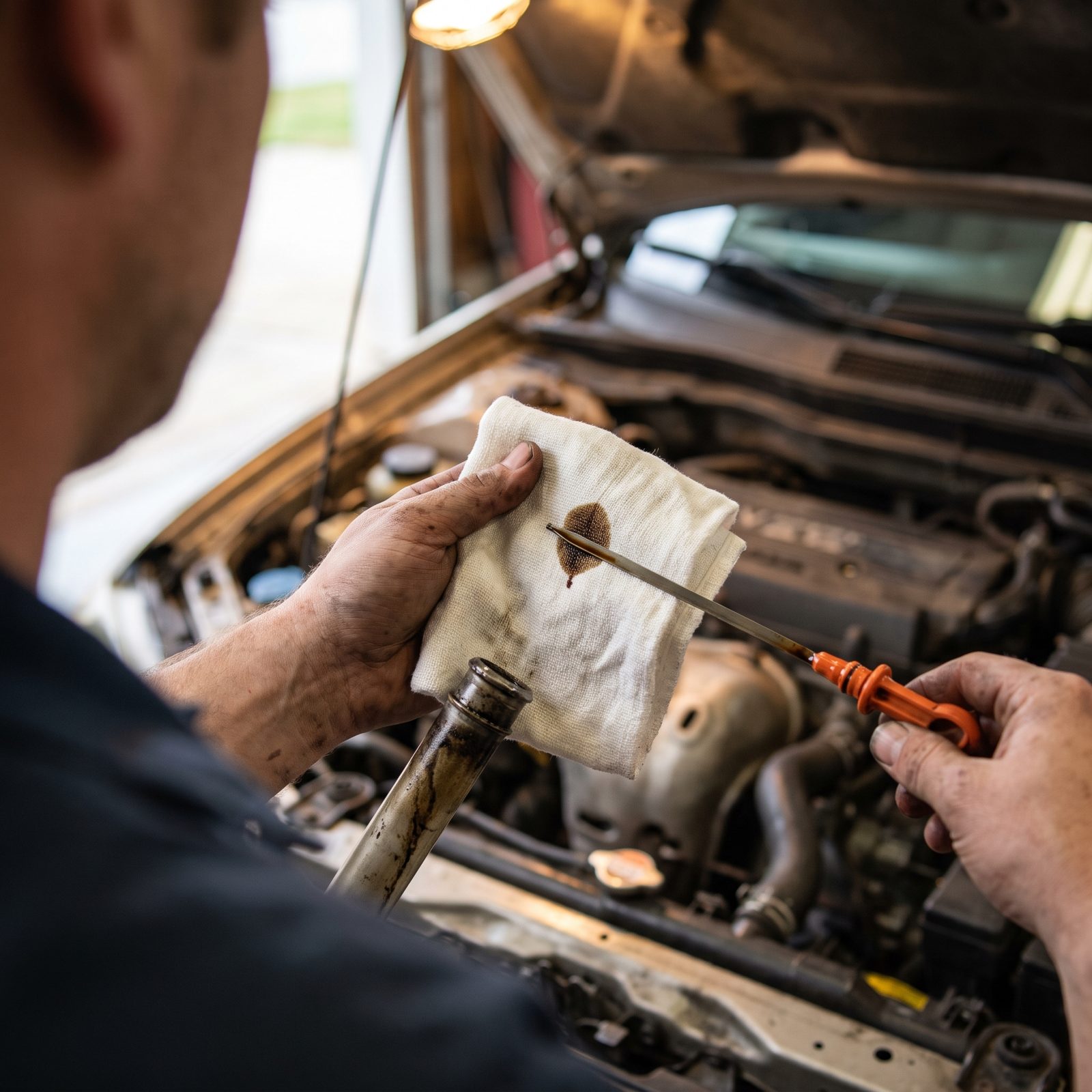
Cold fluid, engine running, shifter walked through every gear. That’s the ritual, and most buyers skip it. A good automatic drops into each gear with a soft, quick engagement. A tired one makes you wait a beat, then clunks in, or revs up between shifts like the clutches are slipping before they manage to grab hold.
That flare is worn friction material shedding into the fluid, which is why bad transmissions smell burnt. Once you catch scorch on the dipstick, the damage inside is already done. Rebuilds and replacements run into the thousands, enough to erase whatever deal you thought you were getting.
Pull the dipstick (if the car still has one) and wipe it on a white rag. Healthy fluid reads translucent red and smells faintly sweet. Dark brown with a burnt edge? Somebody ignored it for years.
11. The Manual Clutch That Slips When You Lean On It
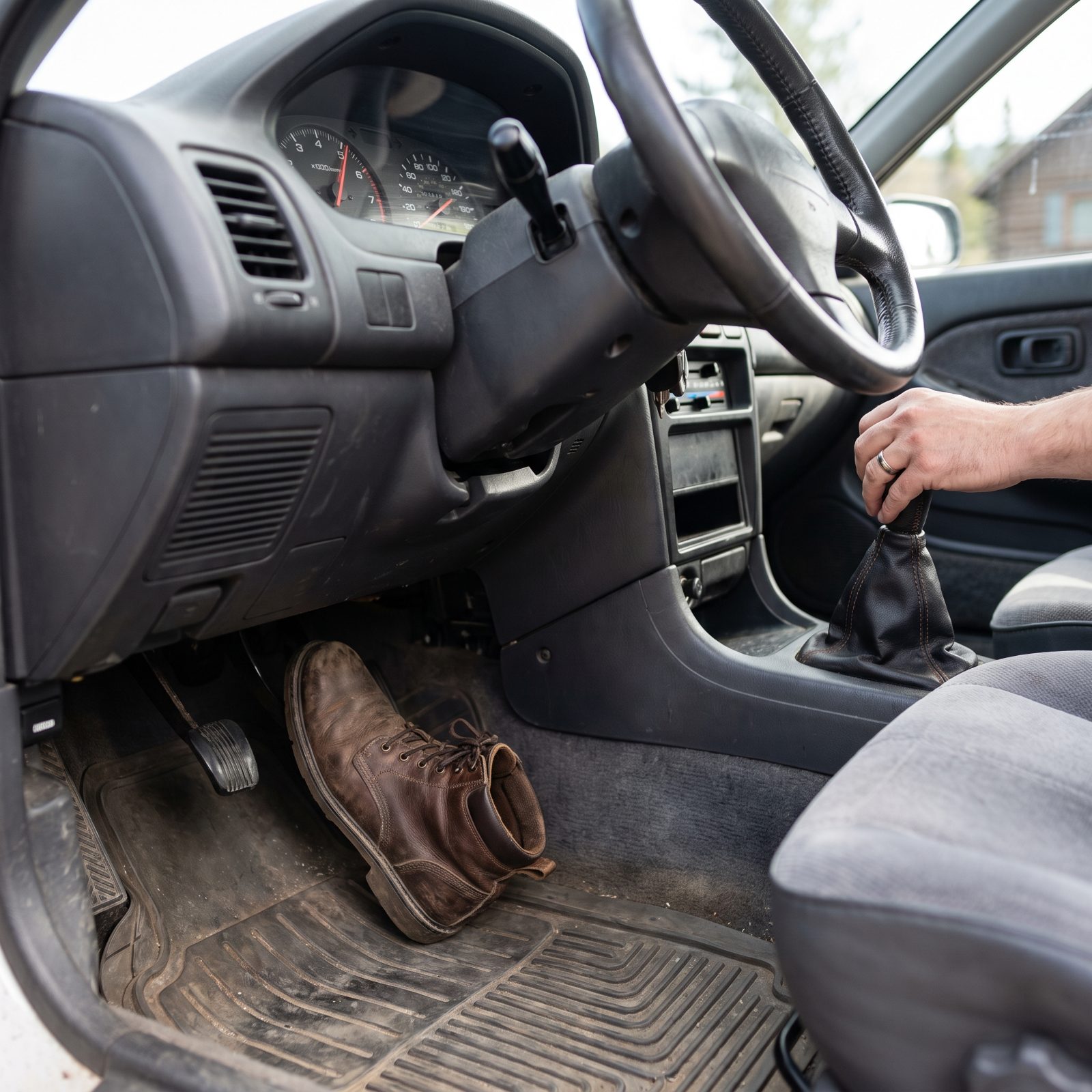
Every manual deserves this test before money changes hands. Get it rolling in a tall gear at low speed, say fourth at thirty, then floor it. If the rpm leaps up but the car barely gathers pace, the clutch disc is slipping instead of grabbing. Sometimes you’ll catch a faint hot-cardboard smell to go with it.
A slipping clutch is worn down to the rivets, and it only gets worse from there. Keep driving it and the flywheel glazes, which turns a clutch job into a clutch-and-flywheel job and a fatter bill.
Check the pedal feel while you’re at it. The bite point should sit low to middle. Grabs right at the top of the travel? The disc is nearly gone. Budget for the swap or walk.
10. Clicking in the Turns and Split Boots That Expose Worn CV Joints
Would you like to save this?
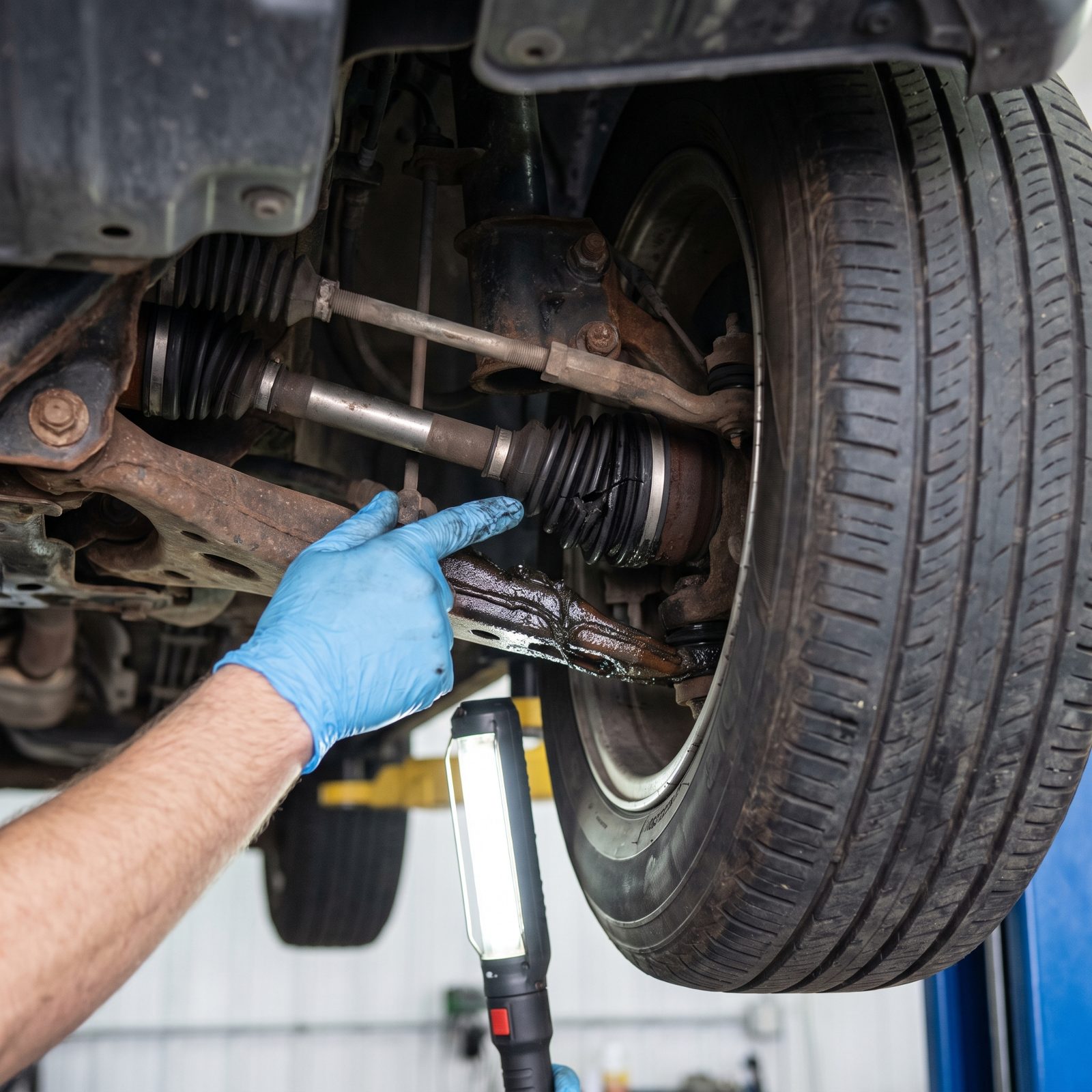
Crank the wheel to full lock in an empty lot and drive a tight, slow circle. A clean driveline stays quiet. A worn one serves up a rhythmic click-click-click that speeds up with the car, and that’s the outer CV joint telling you its days are numbered.
CV joints die when the rubber boot splits and the grease slings out, letting dirt and water grind away at the bearings. Crawl under and you’ll see thrown grease painting the suspension and a torn, accordion-pleated boot. Caught early, a split boot is a cheap reboot. A clicking joint is a whole new axle.
9. A Speed-Sensitive Vibration That Traces Back to the Driveshaft
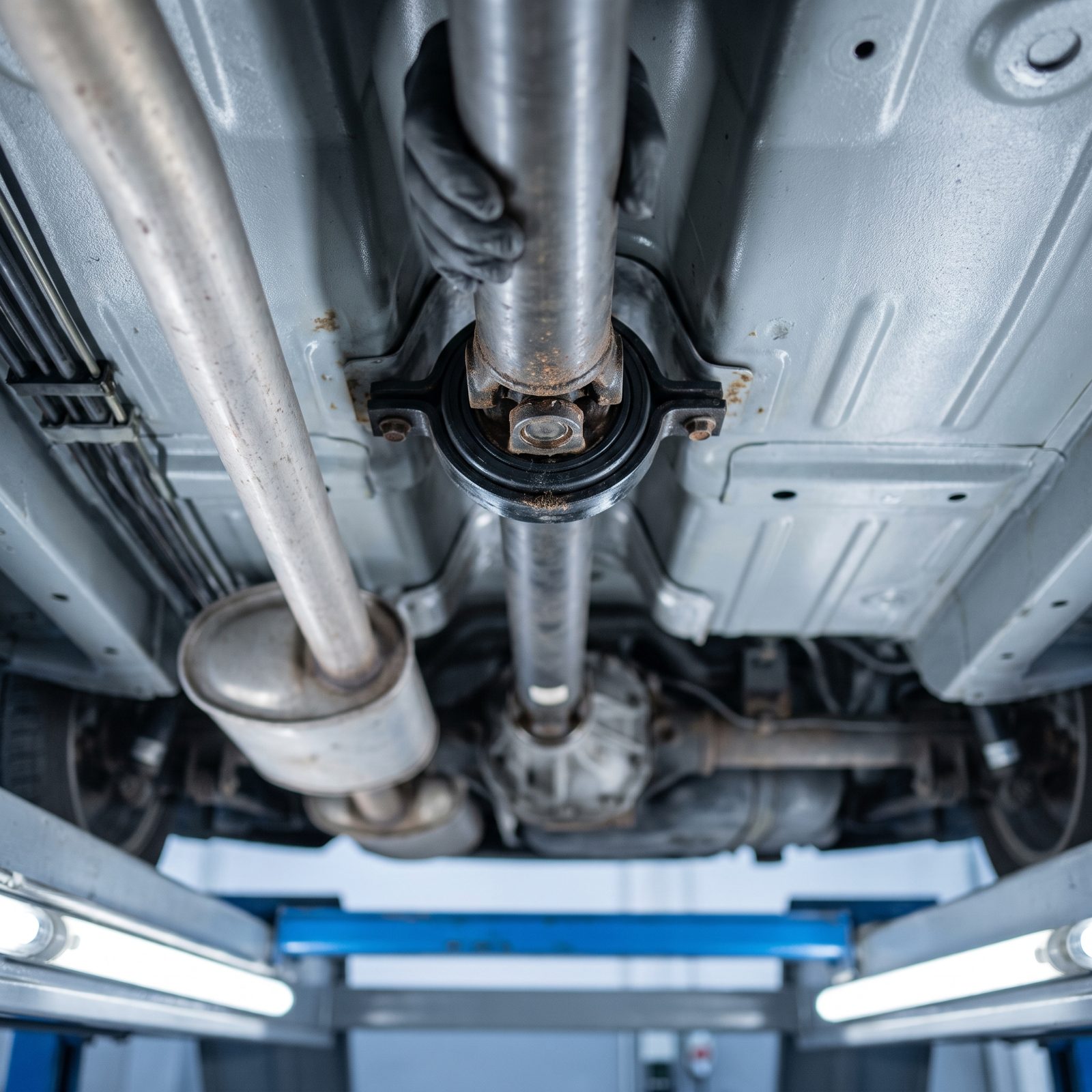
Some vibrations tie to the wheels and some tie to the driveshaft, and telling them apart saves you from chasing the wrong repair. On a rear-drive or four-wheel-drive car, a shake that comes on hard between fifty and seventy and changes with the throttle, not the brakes, usually points down the tunnel.
The culprits are dry, worn U-joints or a collapsed center support bearing. Keep driving on a bad U-joint and it can seize or let go. That drops the shaft, which can punch the floor or lock the rear wheels. Not a cheap afternoon.
On the lift, grab the driveshaft and twist. There should be no rotational play at the joints and no clunk. Spin it slowly and feel each U-joint for notchiness. A center bearing that’s cracked or oil-soaked gets replaced as a unit.
8. Differential Whine That Changes Pitch Between Acceleration and Coasting
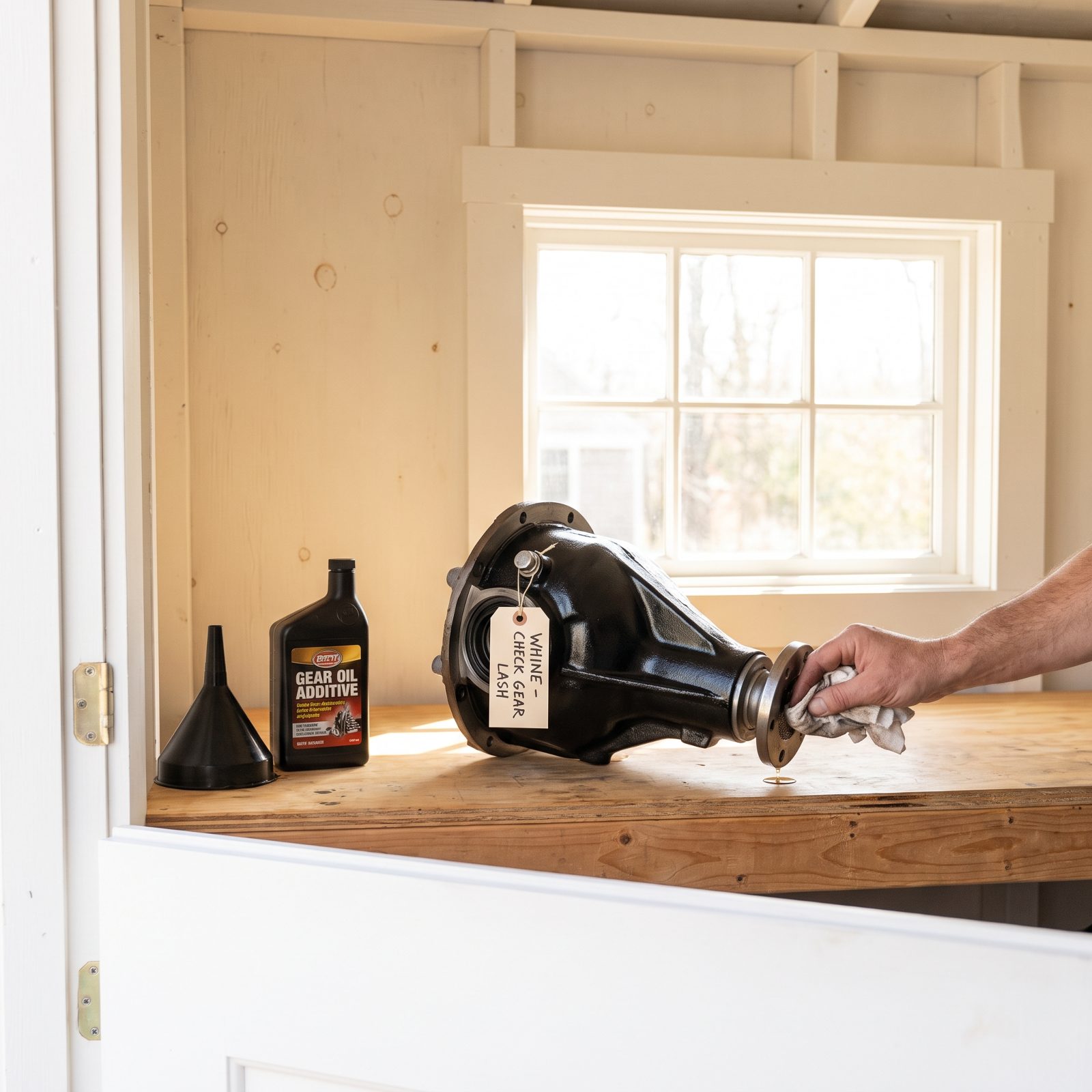
Pull away from a stop and listen. A faint whine that rises with speed, then shifts pitch the moment you lift off the throttle, is the rear end telling on itself. That change between load and coast means the ring and pinion gears are worn, or the backlash has drifted out of spec and nobody ever set it right.
Leave it be and the bill climbs fast. A differential rebuild or a used pumpkin swap runs real money, and on plenty of classics the correct gear sets have simply dried up.
Here’s the test. Roll the windows down, find a quiet stretch, hold a steady 40, then coast. If the sound changes character, pop the fill plug afterward and check the gear oil. Metallic glitter on the magnet or a burnt smell seals it. Walk away, or fold the rebuild into the price.
7. A Humming Wheel Bearing That Grows Louder As You Lean Into a Turn
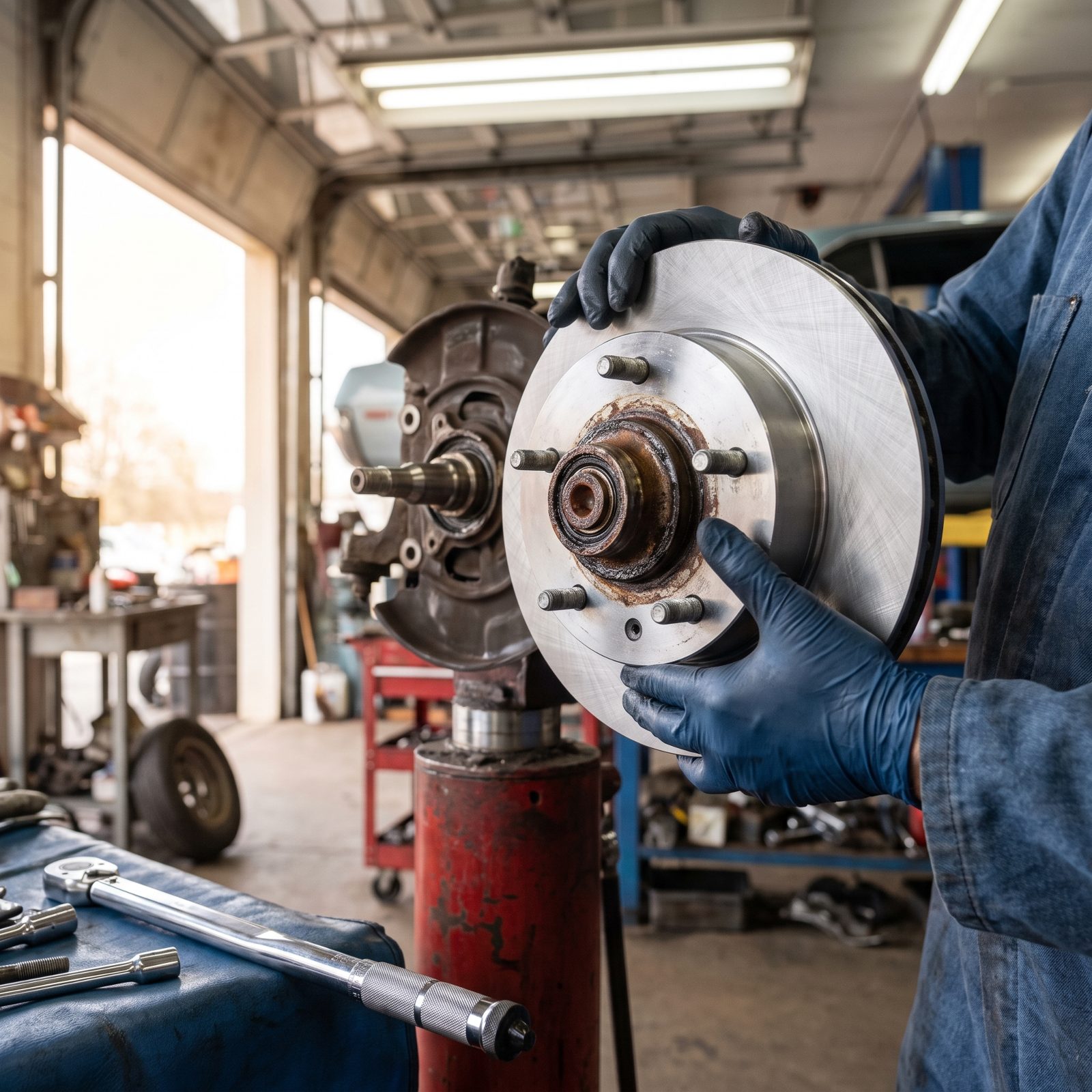
You know the sound — a low drone that follows you down the highway, steady as a refrigerator, getting louder the faster you go. Now swing the car gently left, then right. If the hum swells one way and fades the other, you’ve found a failing wheel bearing.
A bearing that’s already singing is on borrowed time, and when one finally seizes you can lose a wheel. That’s not drama. That’s physics.
Catch it with a simple lift-and-rock. Grab the tire at 12 and 6, then 3 and 9, and push-pull. Any clunk or slop means play in the bearing, so factor a replacement into your offer. Modern sealed units are cheap and easy to fit; the older adjustable tapered-roller kind just need repacking and setting, assuming the races aren’t pitted.
6. Too Much Slop in the Steering Wheel Before Anything Actually Turns

Sit in the car with the engine running and turn the wheel a few degrees each way, counting how far it moves before the front tires actually respond. More than an inch or two of dead travel means wear somewhere in the chain — the steering box, the idler arm, the pitman arm, or the coupler.
Loose steering is more than a highway annoyance. It hides which component is actually worn, and it lets the car wander, which is tiring and genuinely unsafe at speed.
Have a helper rock the wheel while you watch under the hood. The slack shows itself at the worn joint. A recirculating-ball box can often be snugged up with the sector shaft screw, and if that doesn’t firm it, something’s shot — which becomes your bargaining chip.
5. Leaky Struts and a Car That Keeps Bouncing After You Push Down On It
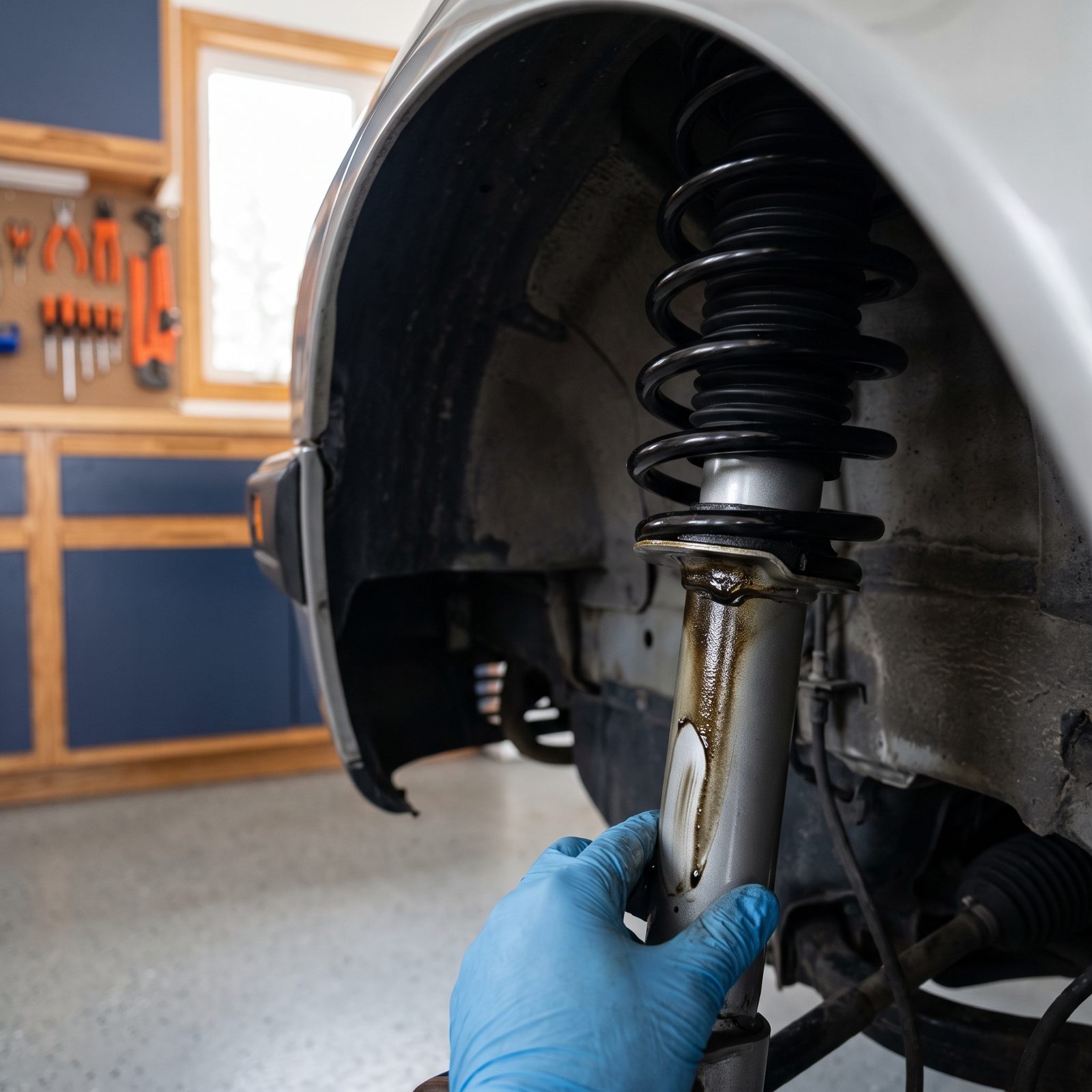
Lean on a fender corner, push down hard, and let go. A healthy car settles in one motion. If it rocks up, down, and up again like a porch glider, the dampers are cooked.
Then look at the shock bodies. An oily film running down the tube means the seal has let go and the damper is spent. Blown shocks wreck tire wear, stretch braking distances, and leave the whole car feeling vague and seasick.
Shocks and struts are consumables, so a worn set isn’t a dealbreaker — it’s leverage. A decent set of gas-charged replacements is cheap, and swapping them is a weekend job. Just don’t believe anyone who swears the bounce is “how these old cars ride.” It isn’t.
4. Ball Joints and Tie-Rod Ends With Play You Can Feel By Hand
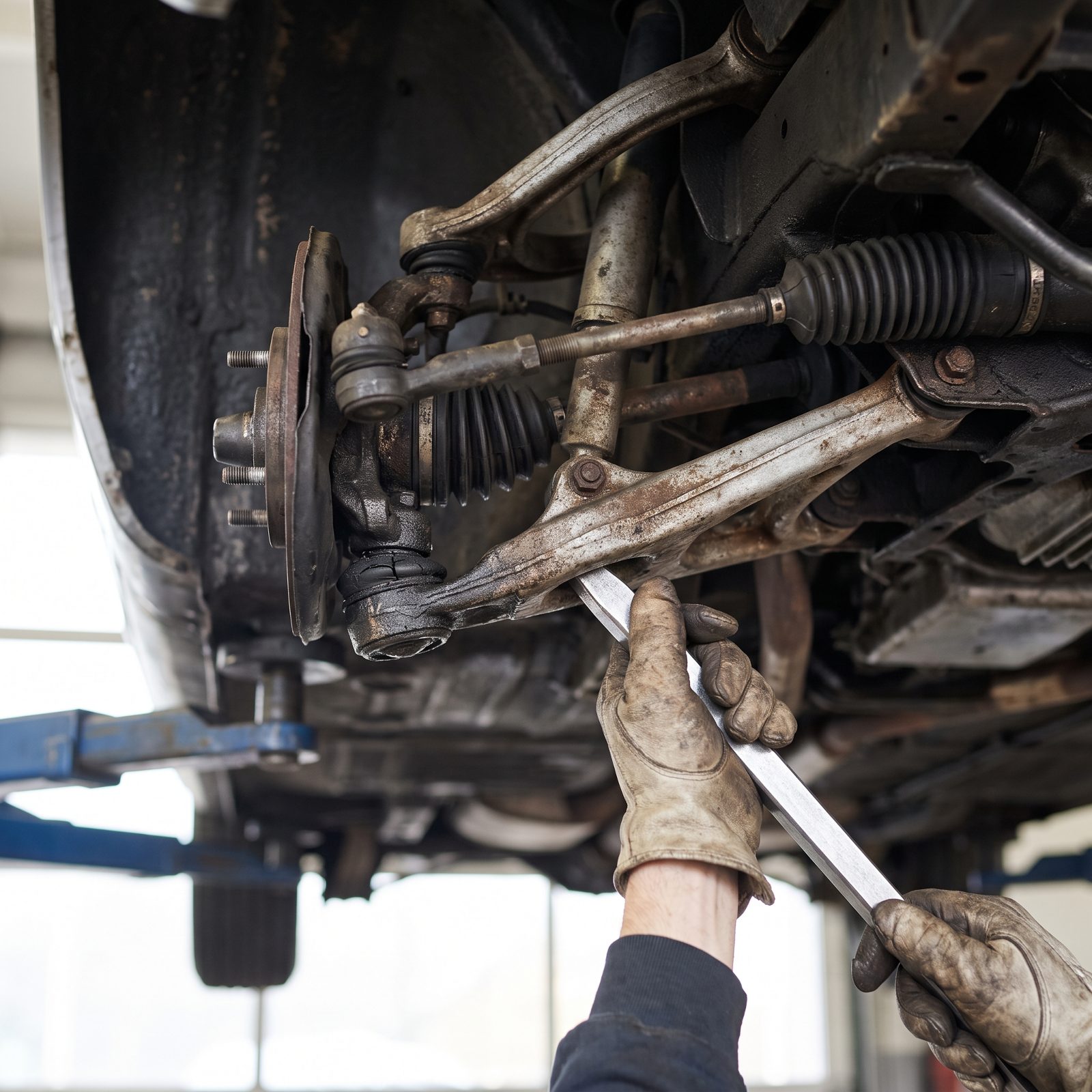
This is the five-minute check that saves the most lives. With the front end lifted, wrap your hands around the top and bottom of the tire and rock it vertically. Clunk means a worn ball joint. Then grip the sides and rock it side to side — play there points at tie-rod ends.
These are the parts holding your wheel to the car. A ball joint that lets go at speed drops the corner and sends you into the ditch, and worn tie-rod ends make the car dart and chew the inside edge off a tire.
While you’re under there, look for cracked, leaking boots. A torn boot is the beginning of the end for any joint. New ones are cheap, but pressing ball joints is labor, so price the repair and decide how much you still love the car.
3. A Brake Pedal That Feels Mushy or Slowly Sinks Toward the Floor
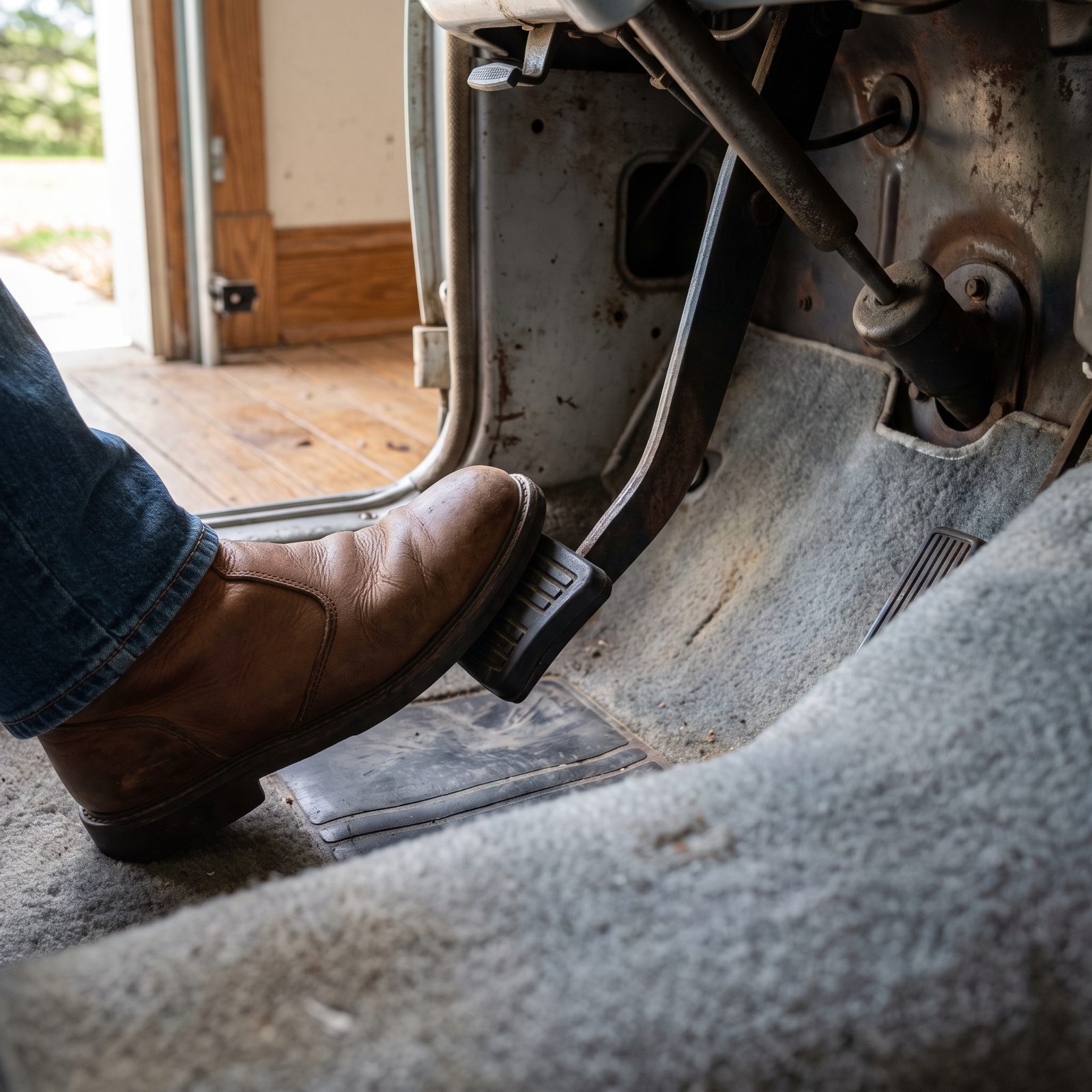
Pump the brake pedal a few times, then hold firm, steady pressure. It should stay put, high and hard. A pedal that slowly creeps toward the floor under your foot means the master cylinder is bypassing internally; a soft, spongy one means there’s air or moisture in the lines.
A sinking pedal is one of the few problems here that can bite you on the drive home from the sale. Brakes don’t give second chances.
Start cheap. A full flush with fresh DOT 3 or DOT 4 cures a spongy pedal caused by old, water-logged fluid. A sinking pedal usually means a master cylinder — an afternoon and a modest part. While you’re down there, check the ground under the car for drips and squeeze the flex hoses for cracks.
2. Tampered Airbag Covers, Spliced Seatbelts, or Hacked-Up Safety Wiring
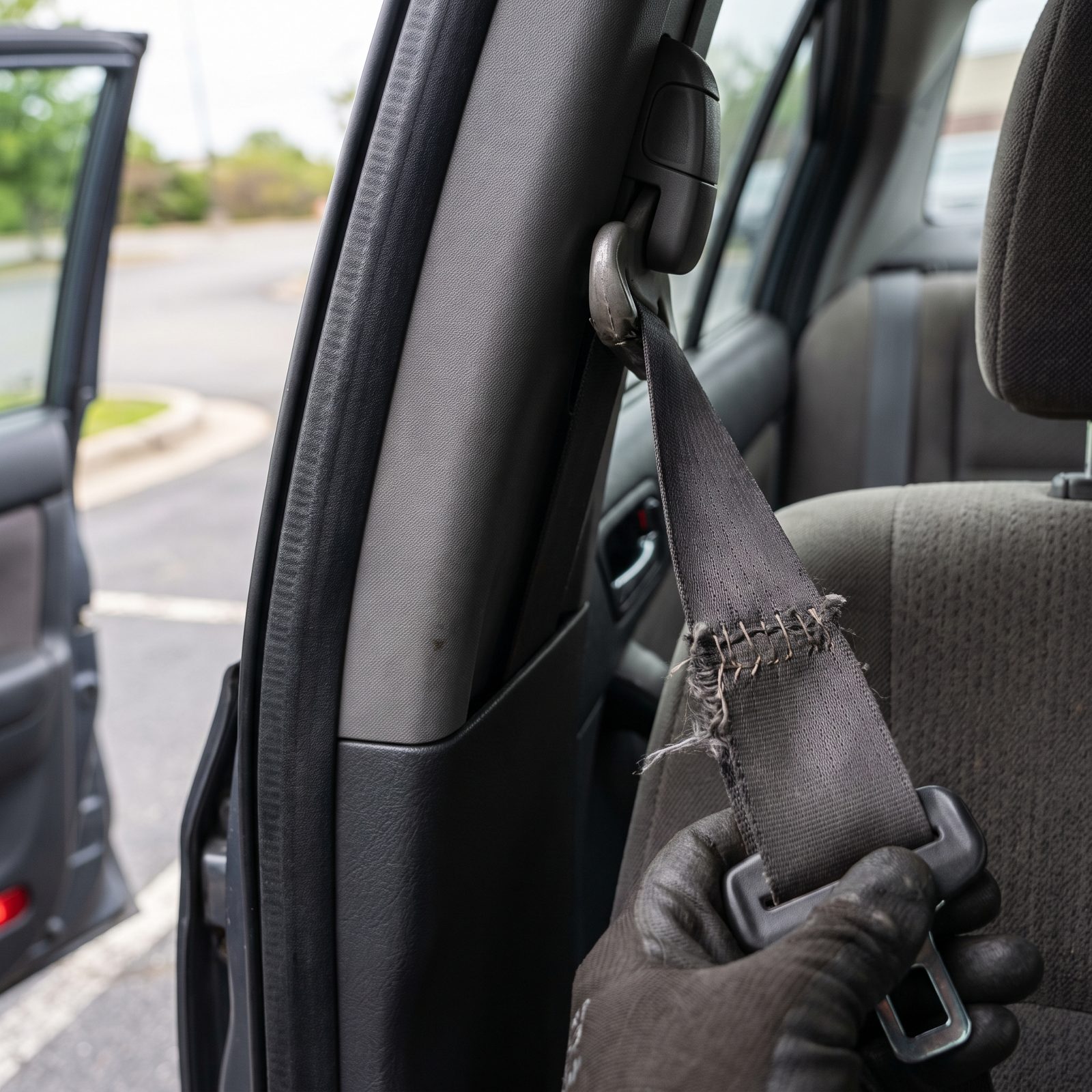
Take a close look at the airbag cover in the steering wheel center. A loose fit, mismatched screws, or a seam that doesn’t line up suggests a deployed bag got swapped for junk — or for nothing at all. Then tug every seatbelt sharply. It should lock. Frayed webbing, DIY stitching, or a belt that just reels out freely is a red flag.
Here’s the quiet danger. Safety systems only matter in the one crash you never saw coming, and a deactivated airbag or a spliced belt stays invisible right up until that moment.
Check the airbag warning light on startup — it should glow, then go out. If it never comes on, someone pulled the bulb to hide a fault. Treat any whiff of safety-system tampering as a hard pass unless you’re ready to put it right, properly, with real parts.
1. Frame Rails With Kinks, Buckles, or Welds That Never Came From the Factory
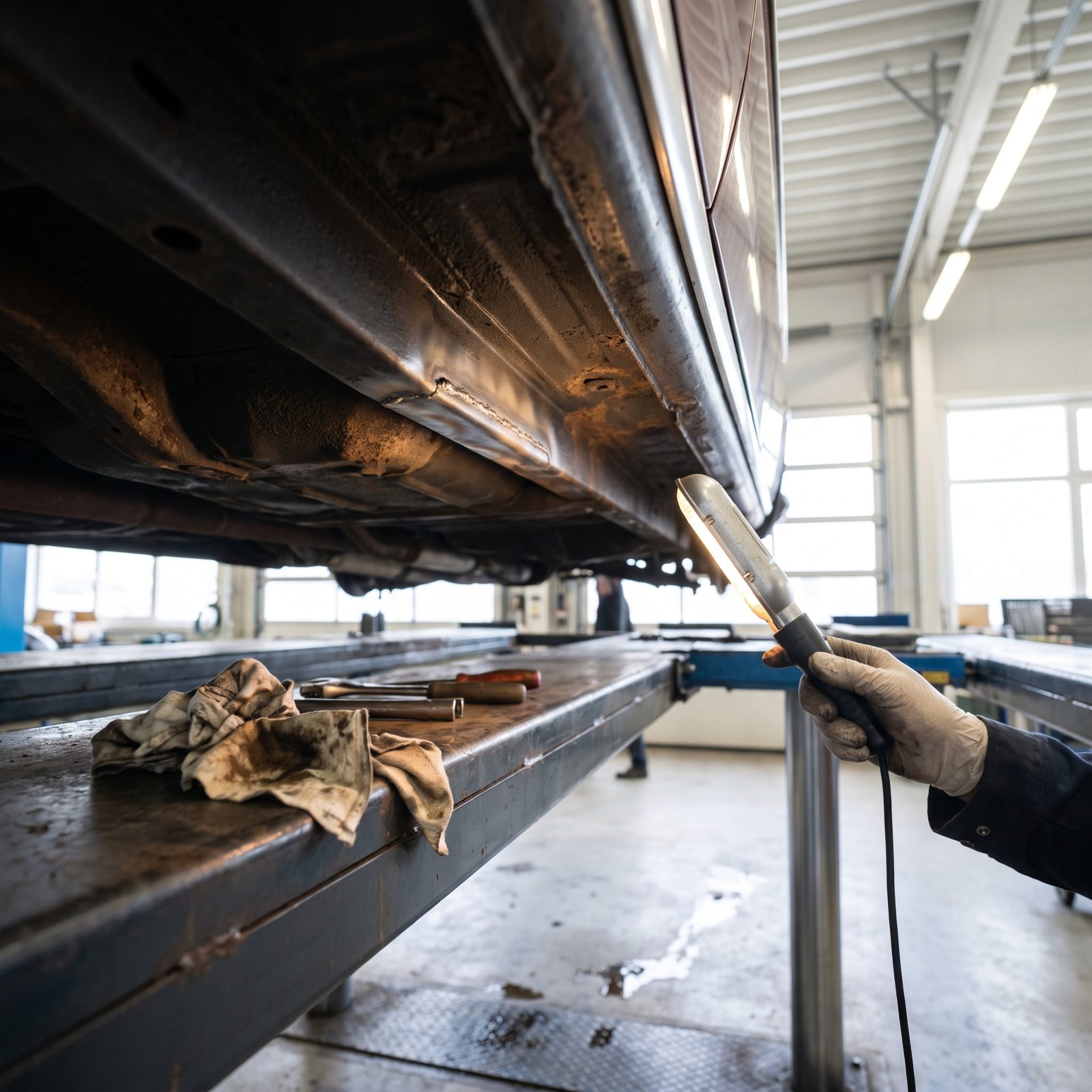
Get under the car with a good light and run your eyes down the length of each frame rail. Factory steel is smooth, with consistent spot welds and even undercoating. A kink, a wrinkle, or a bright patch of grinder-and-weld work means the car took a serious hit and somebody wrestled it back into shape.
A bent frame ends the conversation. It throws off alignment forever, cracks over the years, and no amount of fresh paint fixes a car that’s been folded.
Compare left to right — the rails, body mounts, and crossmembers should mirror each other. Watch for paint overspray, mismatched bolts, and fresh seam sealer where there shouldn’t be any. If the frame’s been tweaked, every other dollar you pour into that car sits on a crooked foundation.
A shiny repaint sits on top. A bent frame runs all the way through. One you can admire, the other you drive home and regret.