
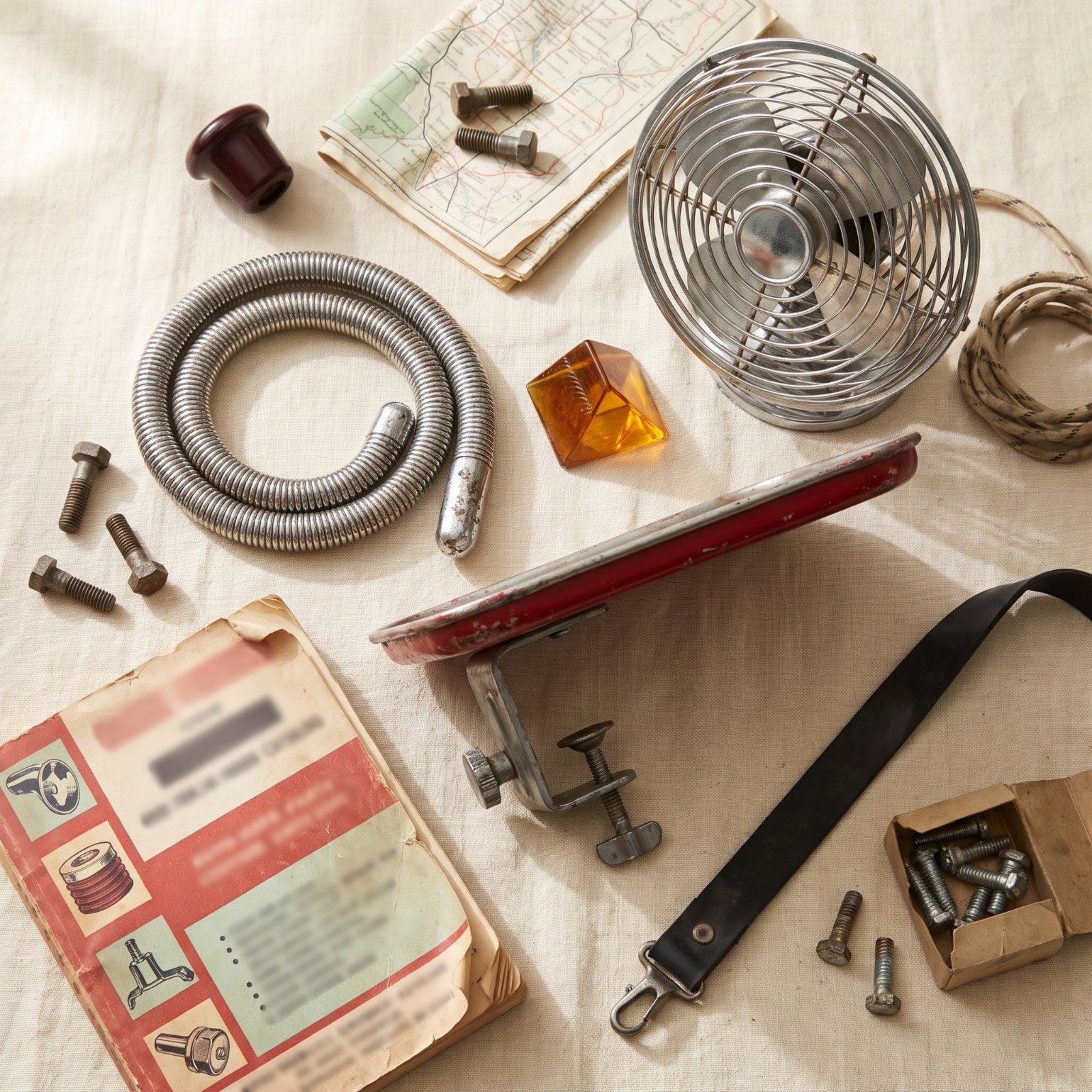
Somewhere in a shoebox in your parents’ attic, there’s a chrome gadget nobody can identify anymore. Maybe it clamped to a window. Maybe it dangled off the bumper and solved a problem that mattered in 1958 before vanishing without a funeral. Back then the dashboard was the frontier, and every spring the J.C. Whitney catalog arrived thick as a phone book, promising comfort, safety, and style for a couple of bucks plus shipping. We bought it all. Some of it worked. Most of it is hilarious now, so pour a cup of coffee and come look.
Please note that some of the images in this article were created with the assistance of AI.
36. Curb Feelers That Scraped Along the Gutter Like a Cat’s Whiskers
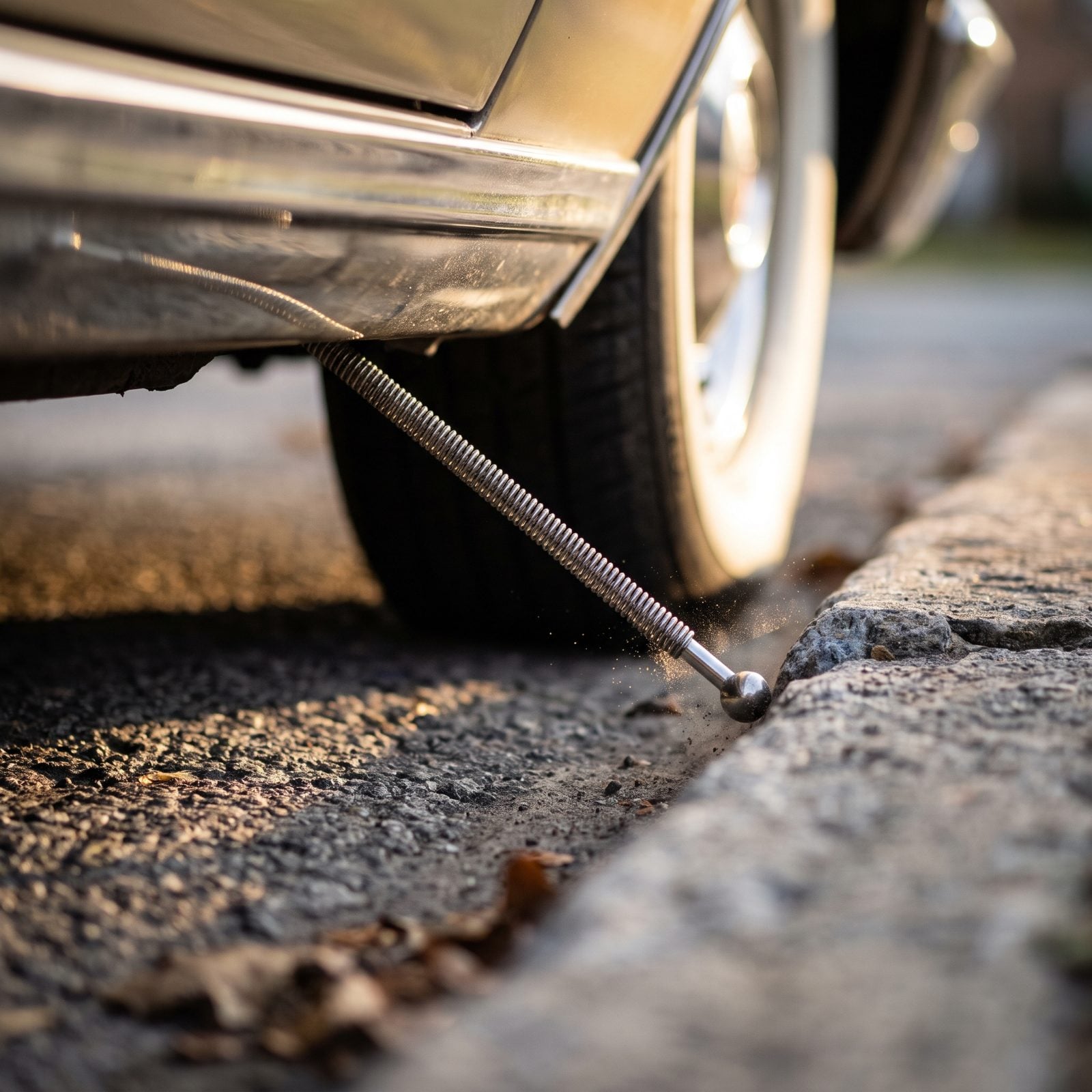
You parallel parked by sound. That faint metallic skree against the gutter meant stop, you’ve arrived, the sidewalls are safe. Curb feelers were springy chrome wires bolted to the lower fenders, bent out just far enough to drag the curb before the paint did.
Good tires cost real money, and nobody wanted a gray scuff on a bright whitewall from kissing concrete. So we hung what looked like insect antennae off a car with a gleaming chrome-and-black bumper and called it protection. They worked, too. That’s the part people forget.
35. Rubber Static-Discharge Straps Dragging Behind You on the Highway
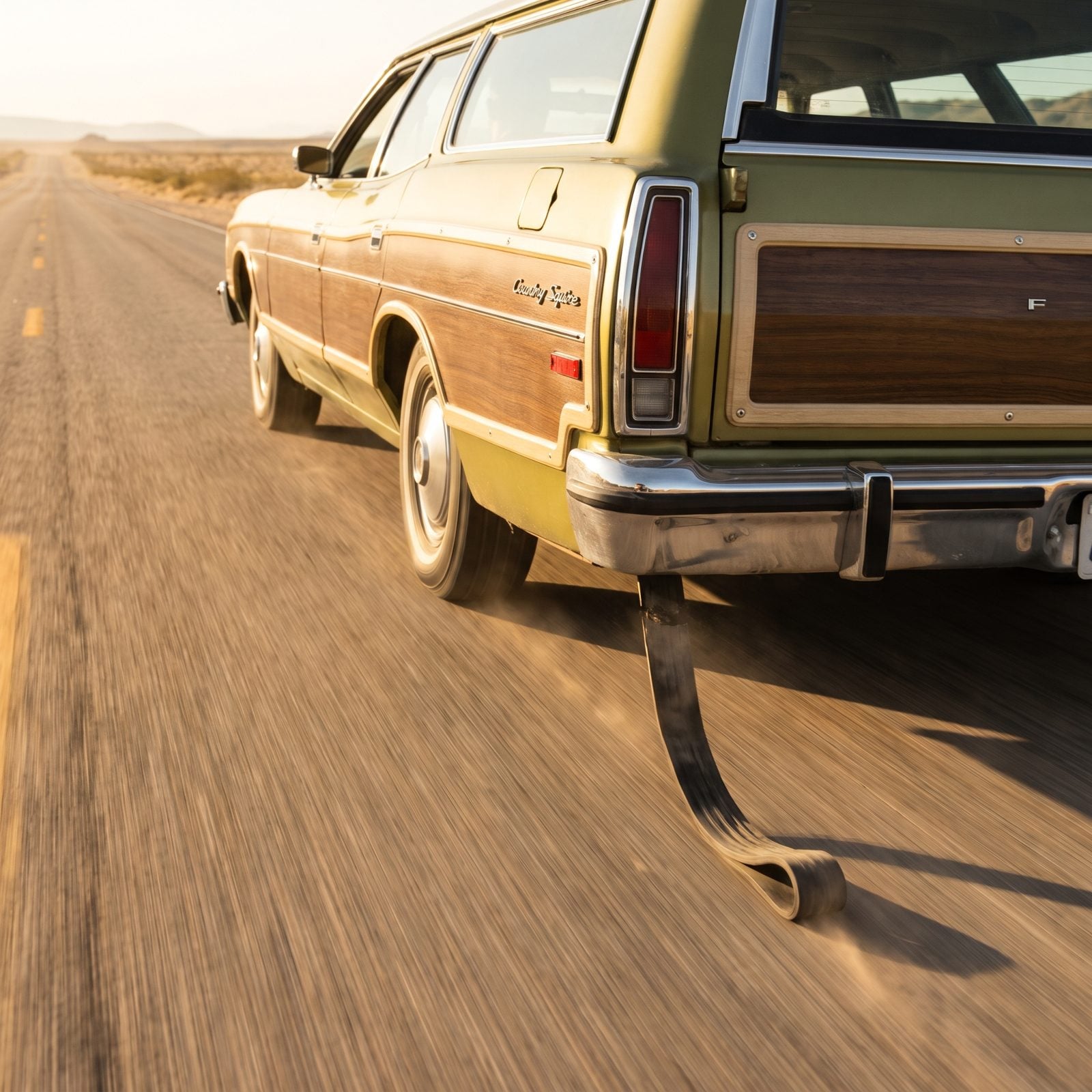
A strip of black rubber hung off the bumper, just long enough to drag the road. The idea? Bleed off the static charge your car built up at speed so you wouldn’t get zapped grabbing the door handle at the gas station.
Whether it worked depended on who you asked and how dry the air was. But for a stretch in the sixties and seventies, thousands of cars went down the interstate trailing a little rubber tail, like something that had followed the car home. Carsickness relief, static relief, the catalog promised both. Honestly, most people installed it because the guy down the street had one.
Asked whether those dangling bumper strips ever did anything, a longtime science writer notes that “In the 1980s, English trading standards officers prosecuted a company for selling anti-static strips because they simply do not work as described”
34. Dashboard Prisms So You Could See the Light Turn Green Without Craning Your Neck
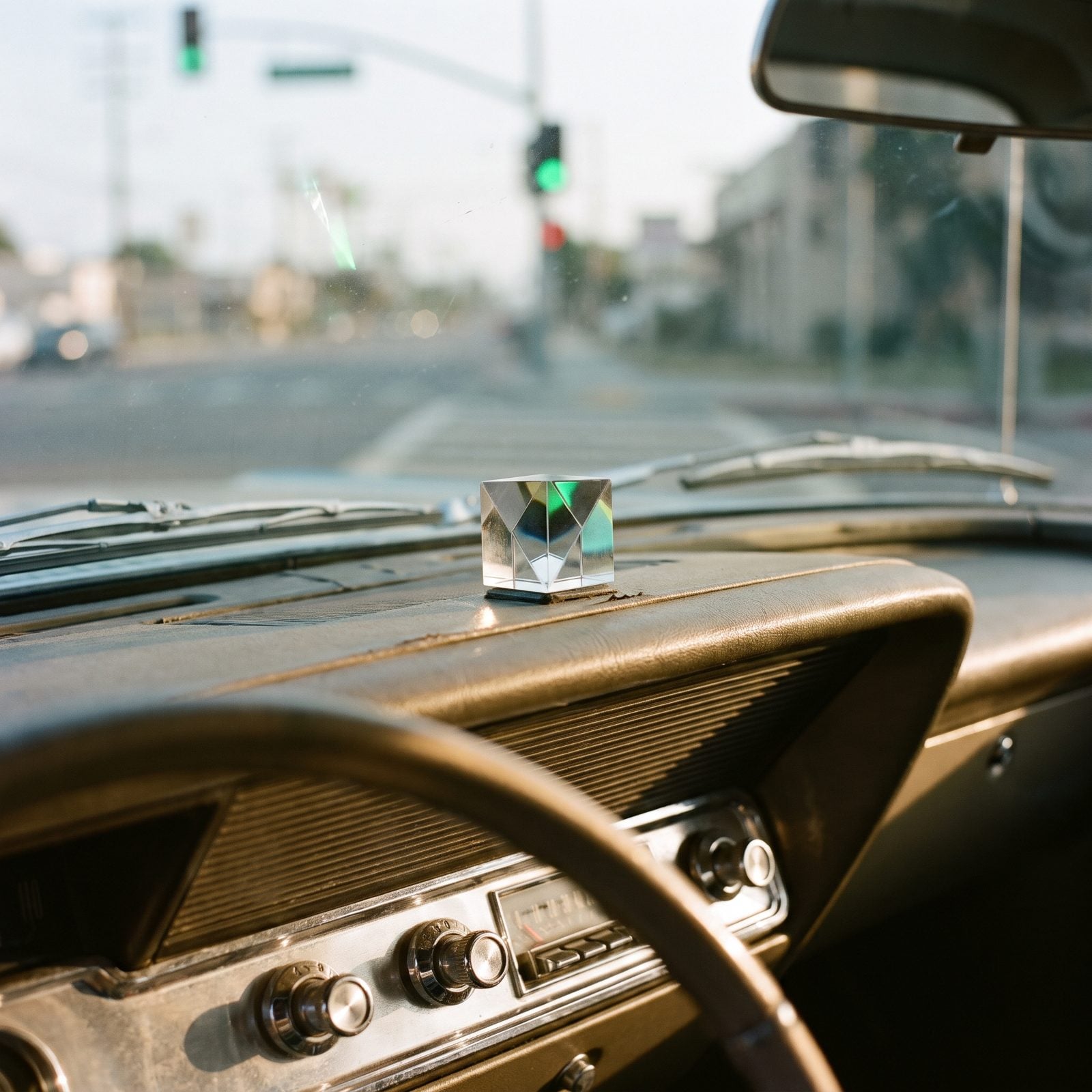
Pull up first in line at a tall overhead signal and you couldn’t see the light without ducking down and pressing your face to the windshield. Somebody’s answer was a little glass prism, suction-cupped to the top of the glass, that bent the overhead light down into your field of view.
It solved a real problem. It also looked like a science-fair project glued to your dashboard, though the refracted rainbow edge was kind of pretty in morning sun. Then cars got lower, lights got positioned better, and the prism went the way of the running board. I’d take one back just for the little flash of color.
What Our Readers Say
- When our readers loved a car photo and tapped a reason, the top pick was “nostalgic” at 26%, ahead of “would drive” and “body style” at 21% each.
- Jalopy Talk readers still like their shine: car photos with lots of chrome got hearts 82% of the time, compared with 75% for the other images in the same articles.
From Jalopy Talk reader polls and votes.
33. Oversized External Windshield Sun Visors Bolted Over the Glass
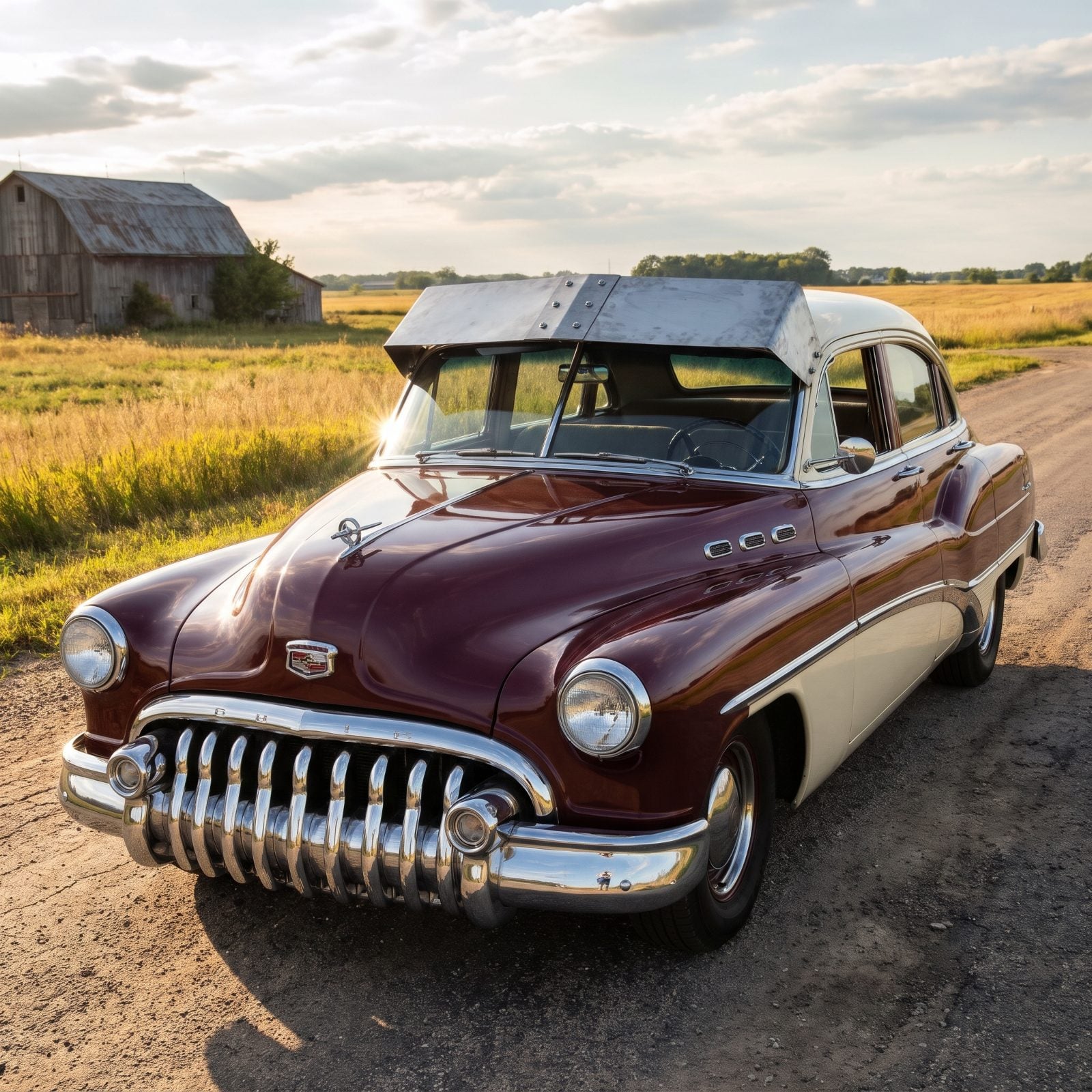
Picture a baseball cap sized for a Buick. The external sun visor was a sheet-metal brim bolted across the top of the windshield, often left as bare, unpainted metal, jutting forward to shade the glass and cut glare before air conditioning was standard in anything.
On a prewar coupe it looked tough, almost menacing, like the car was squinting. On a station wagon it looked like the thing had grown an eyebrow. They threw shade in the literal sense and cut cabin heat on a July afternoon. Factory A/C killed them off, which is the recurring theme of this whole list, honestly.
32. Rear-Window Venetian Blinds That Turned Your Back Glass Into a Living Room
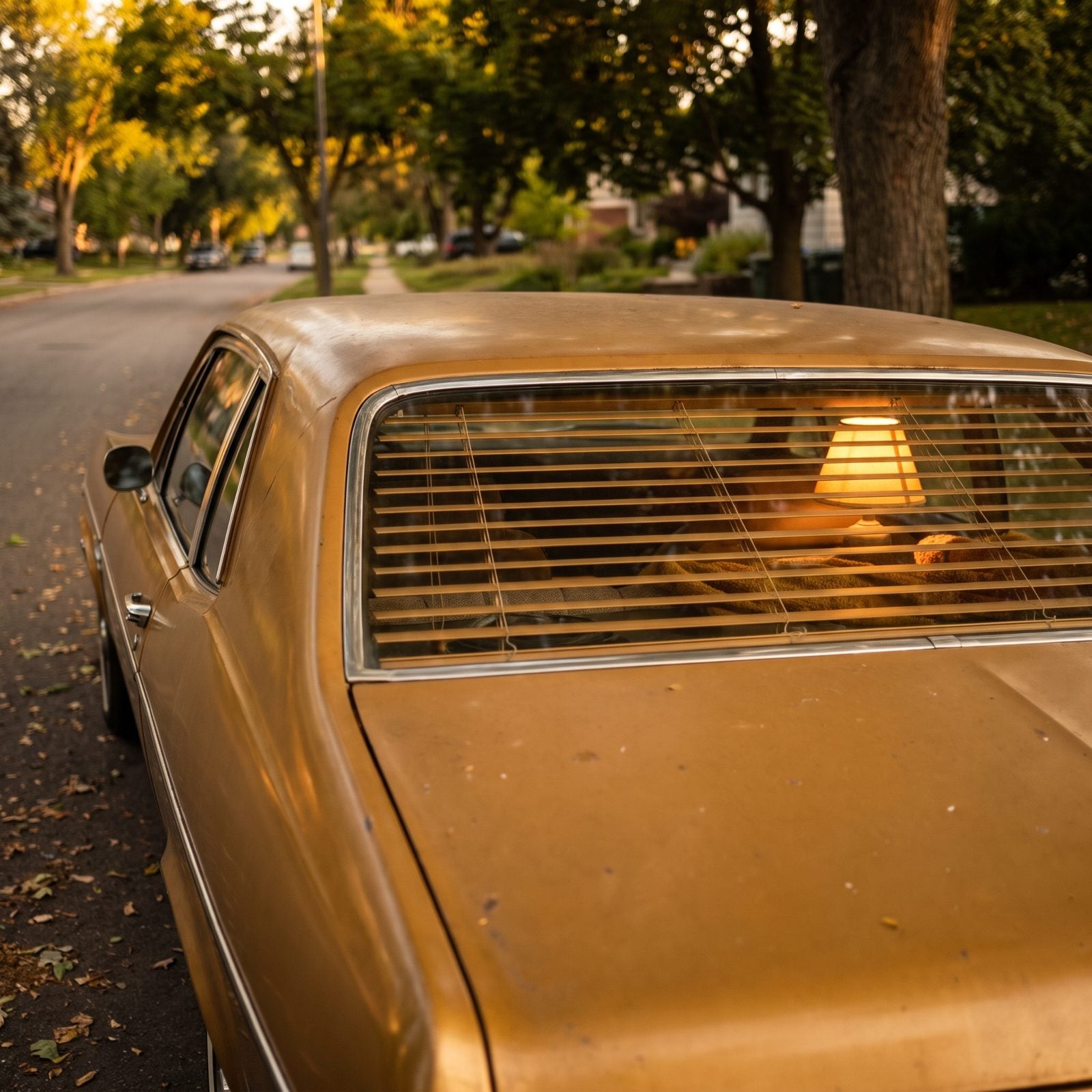
Nothing said 1973 like driving around in a car that had window treatments. Horizontal louvered blinds clipped across the rear glass, cream or black slats you could angle to cut the afternoon glare on the back seat where the kids were melting.
They came in two flavors: tasteful and extremely not. On a Monte Carlo with fuzzy dice and a vinyl top, the blinds finished off a mobile shag-carpet lounge. The downside nobody mentioned in the ad? You couldn’t see a thing out the back at night. Form beat function and the cops eventually noticed.
31. Window-Mounted Swamp Coolers That Hung Off the Door Like a Thermos
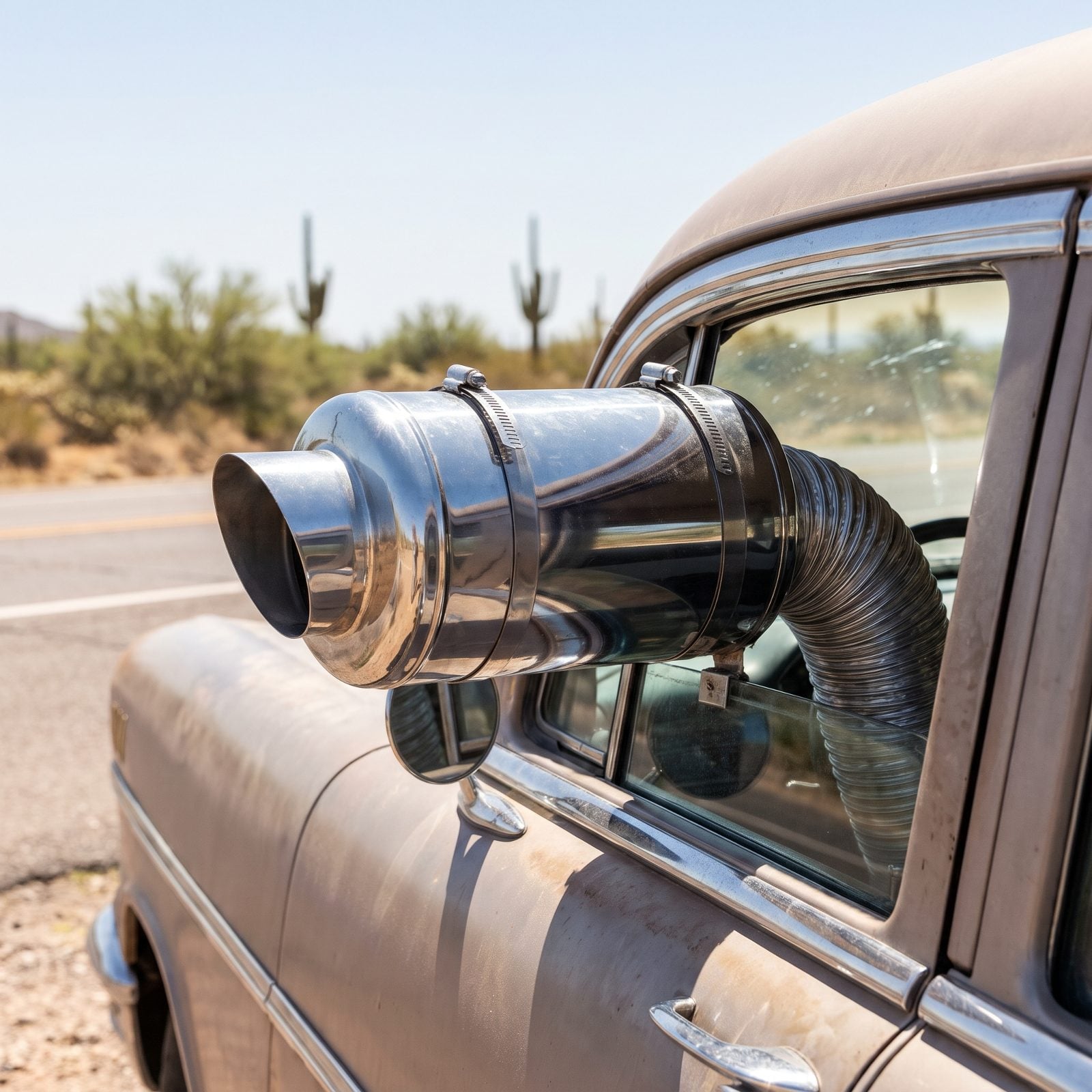
Before factory air, this is how the Southwest survived a July drive. A chrome canister clamped onto your rolled-down window, scooping air as you moved, pulling it through a wet pad, and pushing cooler damp air into the cabin. An evaporative cooler, same principle as the big box on grandma’s roof.
It worked best when you were moving and the humidity was low, which in Arizona meant it worked fine. Stop at a red light and it quit. Drive through anything muggy and it just made you sweatier. Still, for a few bucks you got relief on Route 66, and the chrome looked sharp hanging off a dusty beige Chevy.
Explaining why the window coolers worked best out West, an automotive history writer observes that “Since the evaporative effect is greater in dry air than in humid air, desert cooler might be a better name, but swamp cooler stuck with consumers.”
30. Dashboard Tissue Dispensers Shaped Like Tiny Chrome Mailboxes
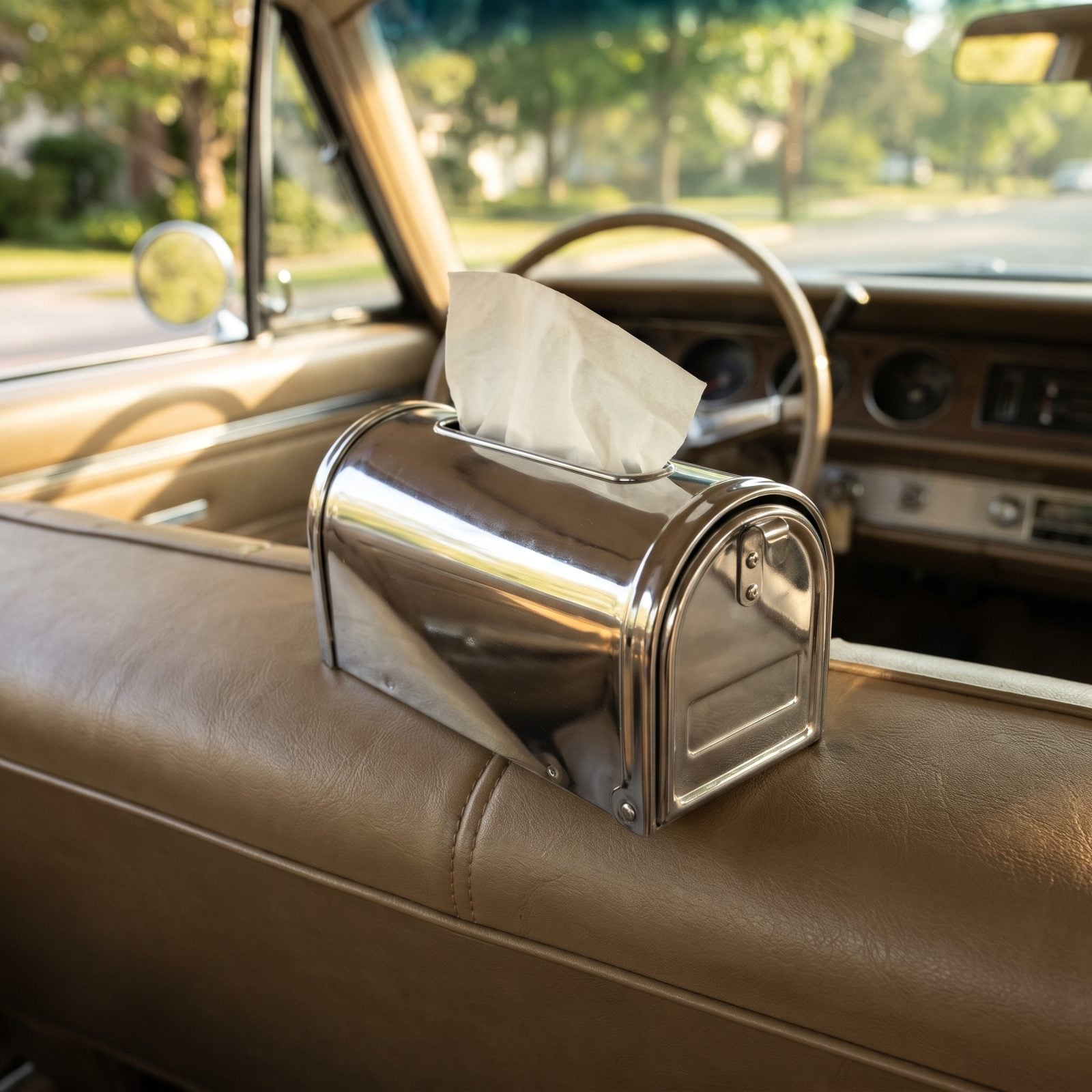
It sat on top of the dashboard like a miniature chrome mailbox, and when the kid in the back sneezed, you reached over, dropped the little front door, and pulled a tissue without taking your eyes off the road. A dashboard tissue dispenser. Somebody decided this was a problem worth engineering a chrome box for.
And it was genuinely handy. Cold season, long trips, a car full of runny noses. The glovebox was always a mess and the tissues got crushed in there. But mounting a dedicated appliance for Kleenex feels gloriously over-serious now, like your car had a butler.
29. Chrome Oscillating Dashboard Fans That Blew Hot Air Around With Great Enthusiasm
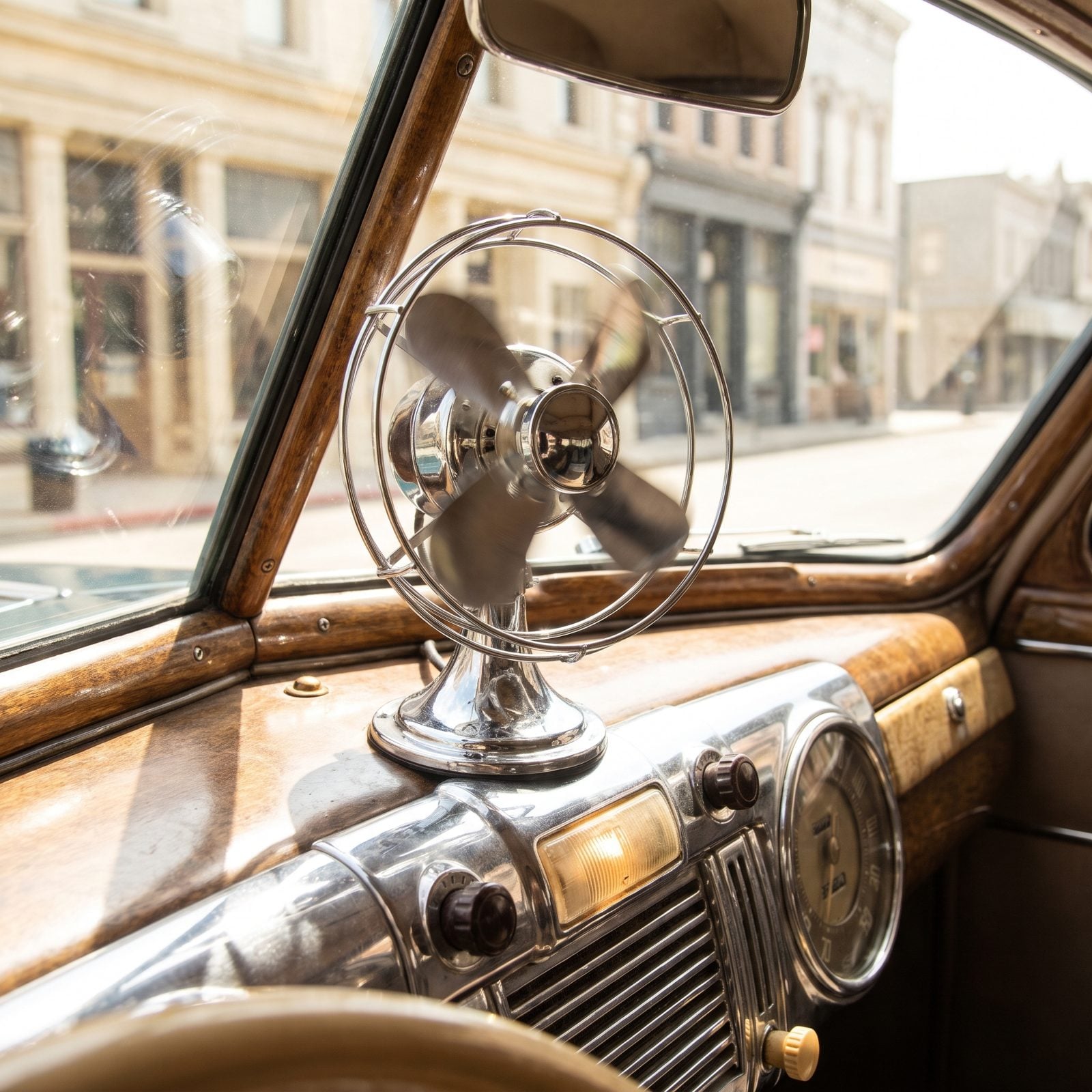
In the summer of 1948, air conditioning was something you went to the movies to experience, not something you drove in. So you perched a chrome oscillating fan on the dash, plugged it into the cigarette lighter, and let it swing back and forth, moving the hot cabin air from one side of your face to the other.
It didn’t cool anything. Thermodynamics doesn’t care about good intentions. But a moving breeze feels better than still, swampy heat, and the chrome single-cage design was genuinely pretty, like a full-size desk fan had joined you for the ride.
28. Plug-In Dashboard Coffee Makers Because Apparently We Couldn’t Wait for the Diner
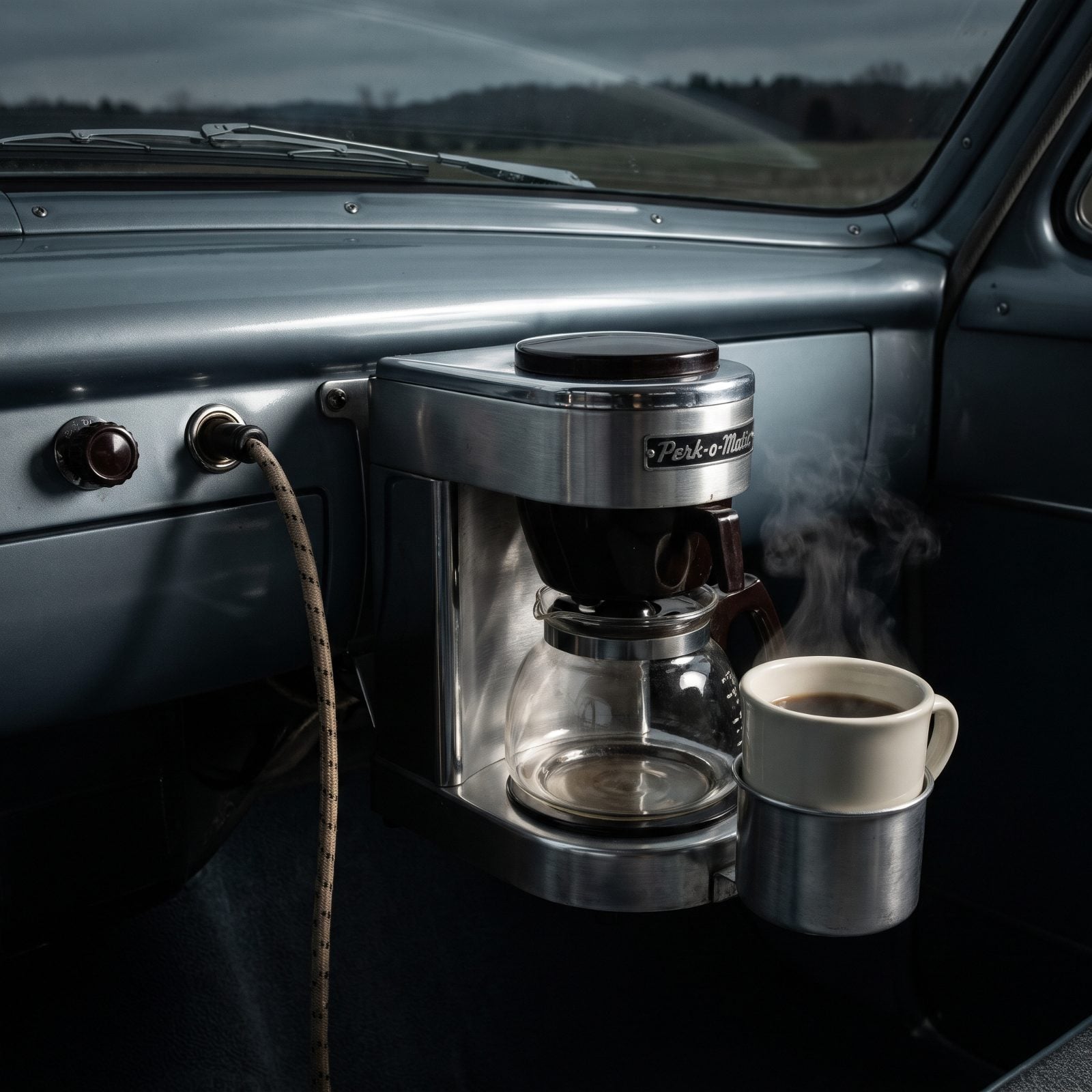
Of everything in the old catalogs, this is the one that still stops you cold. A working coffee maker, bolted to your dashboard, wired into the cigarette lighter, with a little matching cup clipped alongside. You could percolate a hot cup of coffee doing fifty on the turnpike at six in the morning.
Spill risk? Enormous. Brewing time? Glacial, on twelve volts. Practicality? Basically none. And yet there is something magnificent about an era that looked at a long dark highway and thought, what this needs is fresh coffee, brewed on site.
Nobody needed it. Everybody who saw one wanted one. That’s the whole golden age of car accessories in a single chrome gadget. It was never about solving the problem. It was about the catalog arriving in spring and dreaming for a page or two about a road trip that hadn’t happened yet.
27. CB Radios With Hand Microphones the Size of a Shoe
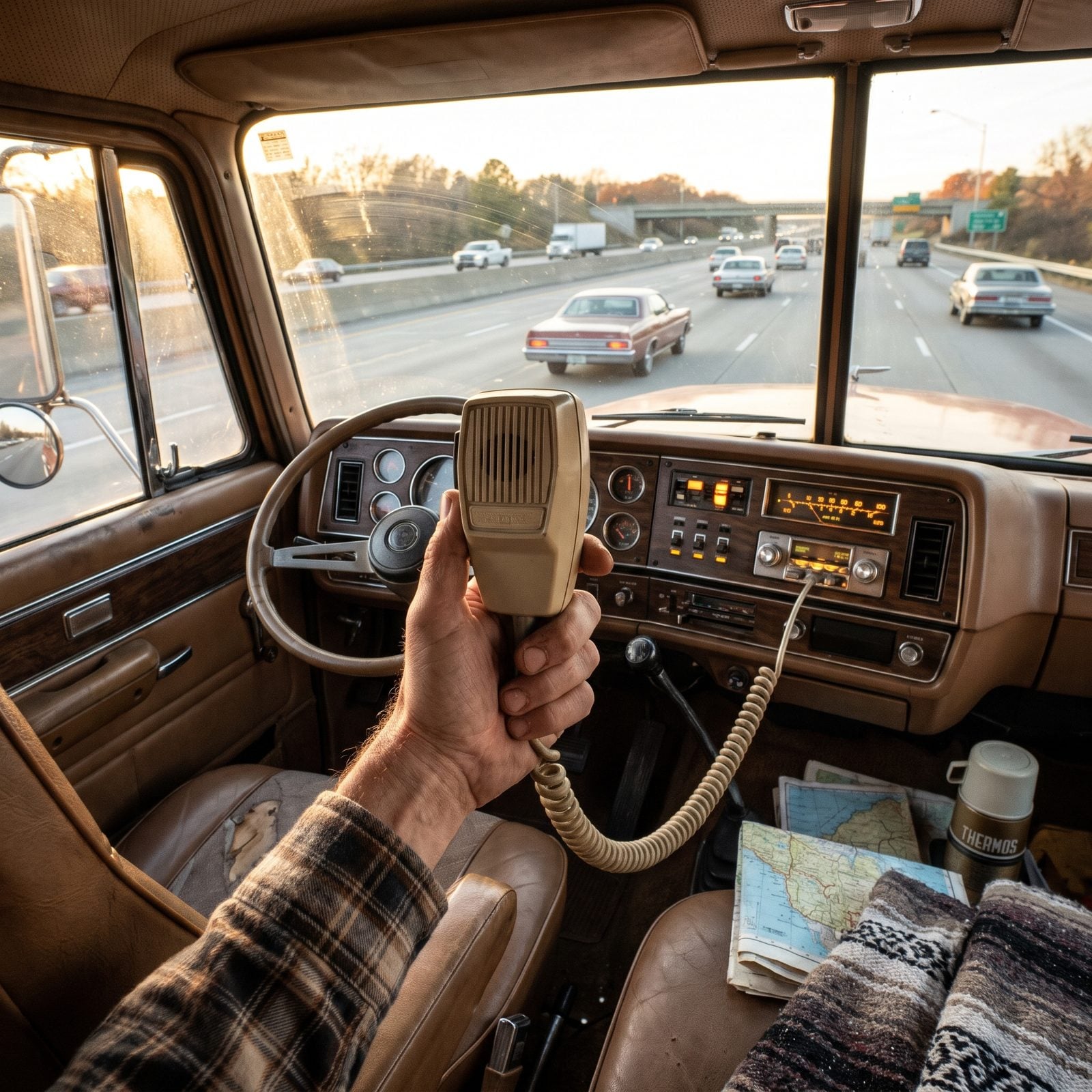
For a few years in the mid-70s, every car on the interstate was secretly a radio station. You picked a handle, grabbed that microphone the size of a brick, and told strangers forty miles up the road where Smokey was hiding.
The mic was the whole personality of the thing. You held it to your mouth like you were about to crown a champion. “Breaker one-nine” meant you were somebody now, part of a secret brotherhood that mostly discussed truck stops and speed traps.
Then everyone got a CB, the channels turned to static and squabbling, and the whole magic drained out almost overnight.
26. Towering Whip Antennas Topped With a Tennis Ball
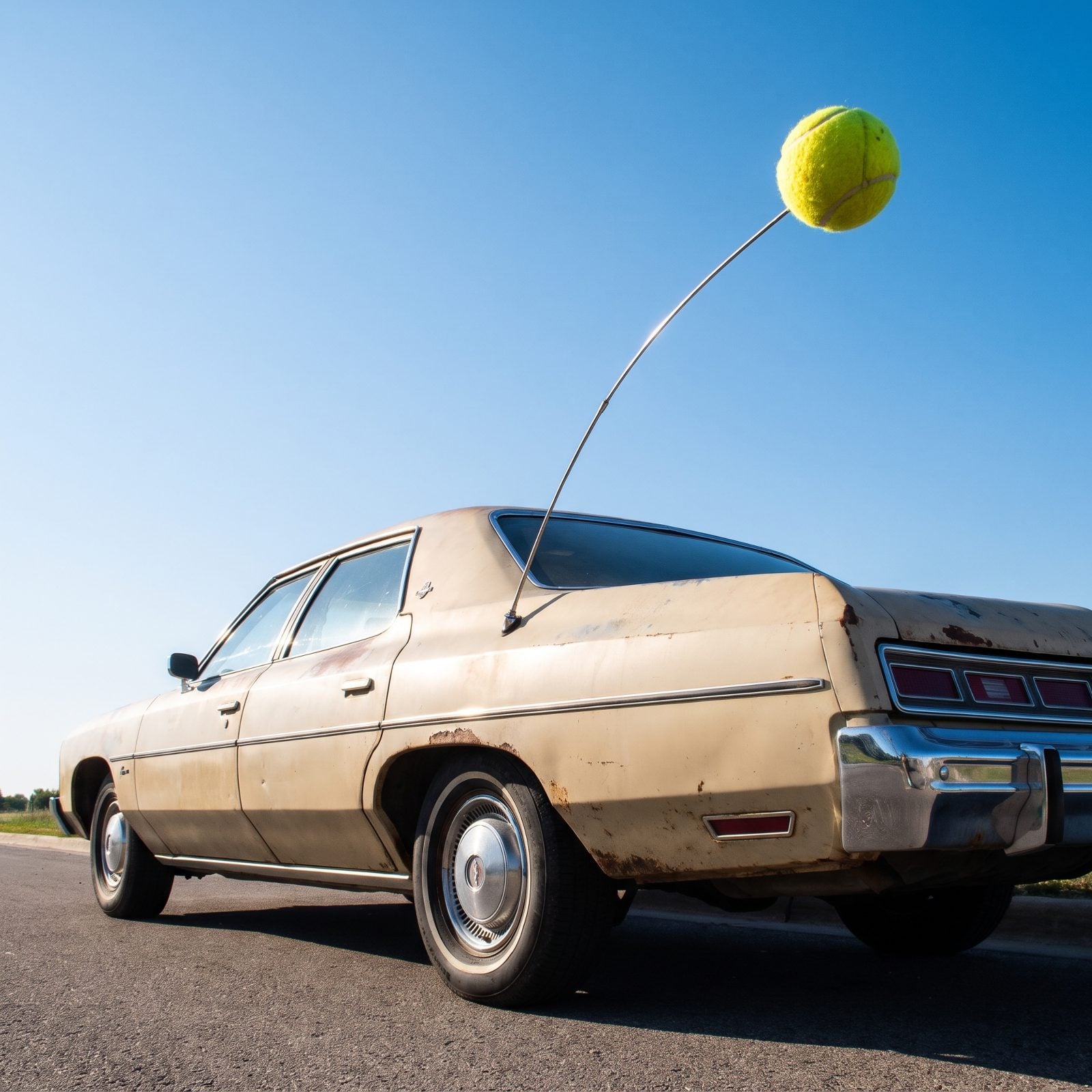
The antenna came first. Then the tennis ball went on the tip, and that was no joke — it kept you from taking your own eye out leaning over the trunk, and it let the neighbors find your spot in the mall lot from clear across the asphalt.
These things whipped and sang in the wind at highway speed, tall enough to clip the roof of the car wash if you forgot to crank them down. A fluorescent tennis ball dangling up top somehow made the whole rig look even more serious. We were very proud of these.
25. Brick-Sized Radar Detectors Suctioned to the Windshield

It beeped, it blinked, and it convinced you that you were basically invisible to the law. The early radar detector was a slab of black plastic the size of a cigarette carton, suction-cupped to the glass right in your line of sight, its little red light standing guard.
You trusted it completely. You also noticed it screamed its head off every time you passed a grocery store with automatic doors, a garage opener, or absolutely nothing at all. False alarms were the price of feeling like a secret agent.
24. Corded Car Phones Mounted Beside the Console

A car phone meant you had arrived. It bolted to the console in its own cradle, wired straight into a transmitter box the size of a lunchbox stuffed under the seat, and it cost a small fortune per minute.
You didn’t make casual calls. You made important ones, ideally while idling at a red light where people could see you doing it. The handset was tethered by a coiled cord, so you sat there talking into your dashboard like a very expensive CB radio.
Nobody tells you how good it felt to hang up a phone that was physically attached to a car.
23. CD Wallets Bulging From the Sun Visor Straps
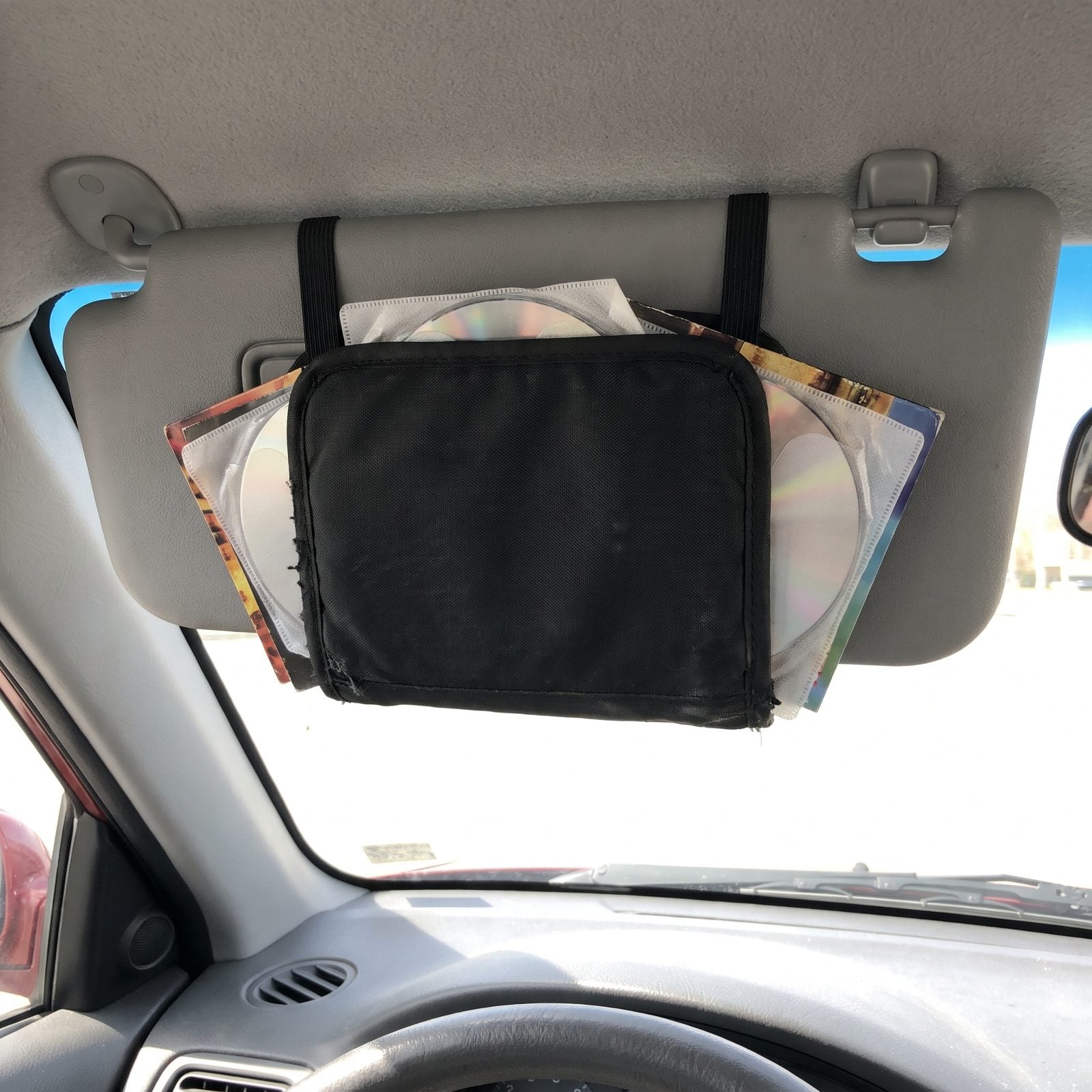
The sun visor had a second job in the 90s: holding a small stack of discs in a zippered nylon wallet strapped on with elastic. Flip it down and the whole thing sagged toward your lap like an overstuffed sandwich.
Your entire music collection lived up there, filed in clear sleeves, scratching itself against every pothole. You’d dig one-handed through the pages at 60 miles an hour, pop the disc in, and watch it skip the instant you hit a bump. Then the whole wallet would slide off in a hard left turn and fan discs across the passenger footwell.
22. Fuzzy Dice Swinging From the Rearview Mirror
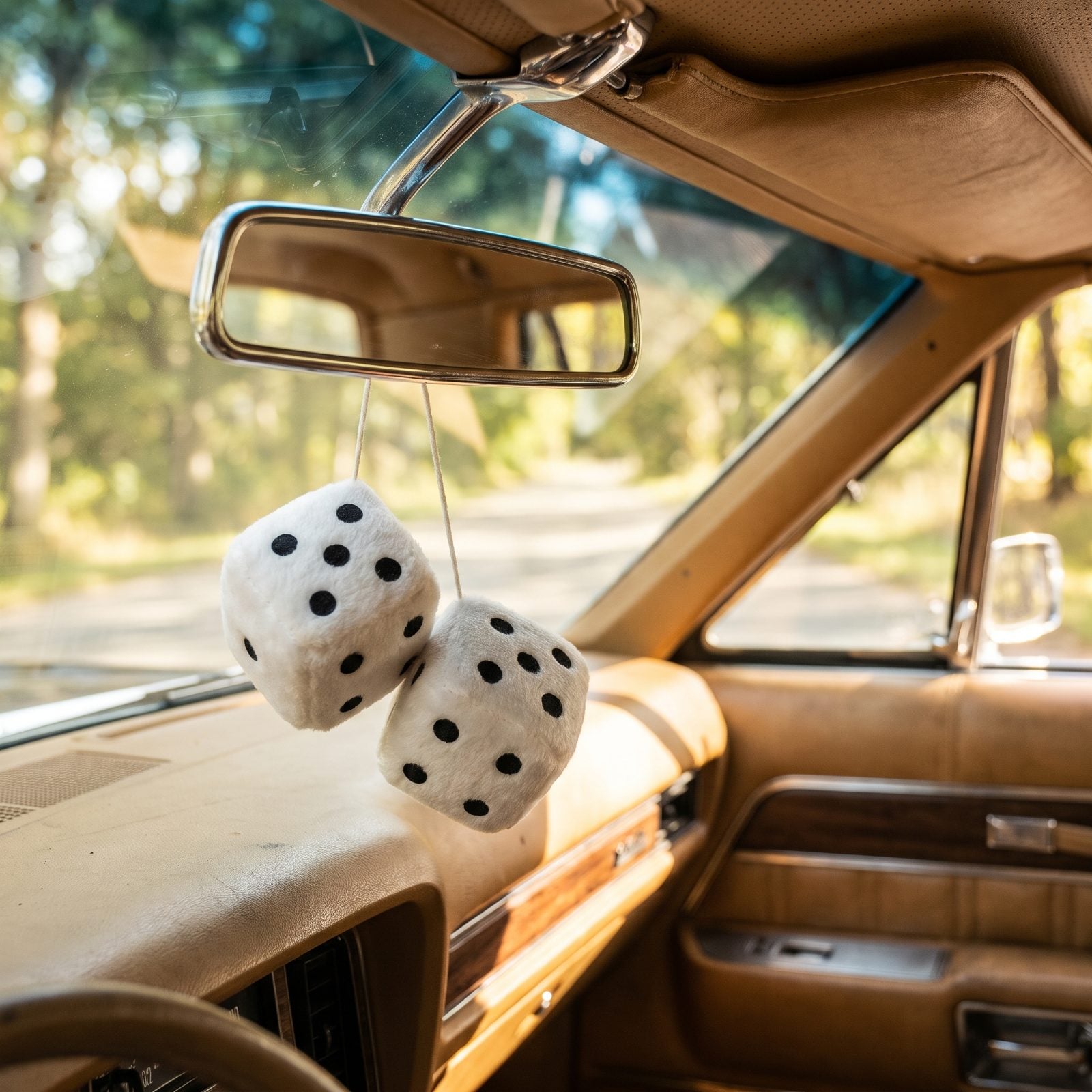
No performance benefit. No safety feature. Just two plush cubes the size of grapefruits, swaying from the mirror, telling the world you were a gambler at heart even if the wildest bet you made all week was a left turn on yellow.
Fuzzy dice gave the car an attitude. They came in every color, mostly red, and they blocked a good third of your rear view. Nobody cared. They were the single most honest accessory ever made: pure fun, zero function.
21. Dashboard Hula Dancers With the Spring-Loaded Hips

She stood on the dash on a little spring, and every bump in the road set her hips to wiggling. A hula dancer meant vacation, sunshine, somewhere warmer than wherever you actually were.
Most folks never saw Hawaii. They just grabbed the dancer off a gas-station gift rack and let her bring the islands to the daily commute, where she wobbled through every pothole, faded in the sun, and never once stopped smiling. That was the appeal.
20. Nodding Dogs Perched on the Rear Parcel Shelf
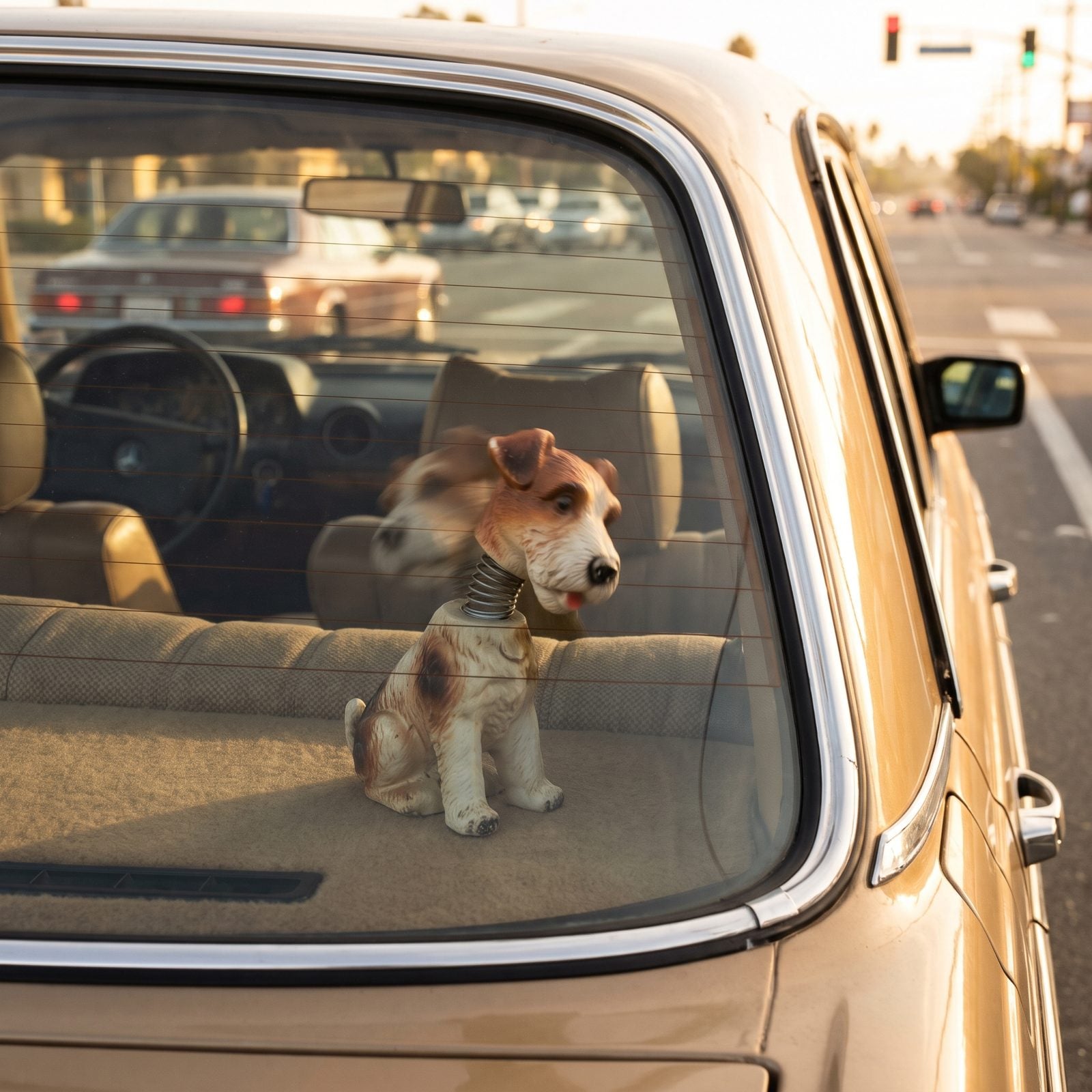
You spotted them at every stoplight: a little dog on the back shelf, nodding along to the rhythm of the road like it agreed with everything the driver ever did. Brake, accelerate, hit a bump, and that spring-necked head bobbed its endless approval.
It did nothing. It just rode back there soaking up the sun, keeping the family company, and somehow the sight of a nodding dog in the car ahead of you made the whole drive a little friendlier.
19. Crocheted Toilet-Roll Covers Riding the Parcel Shelf
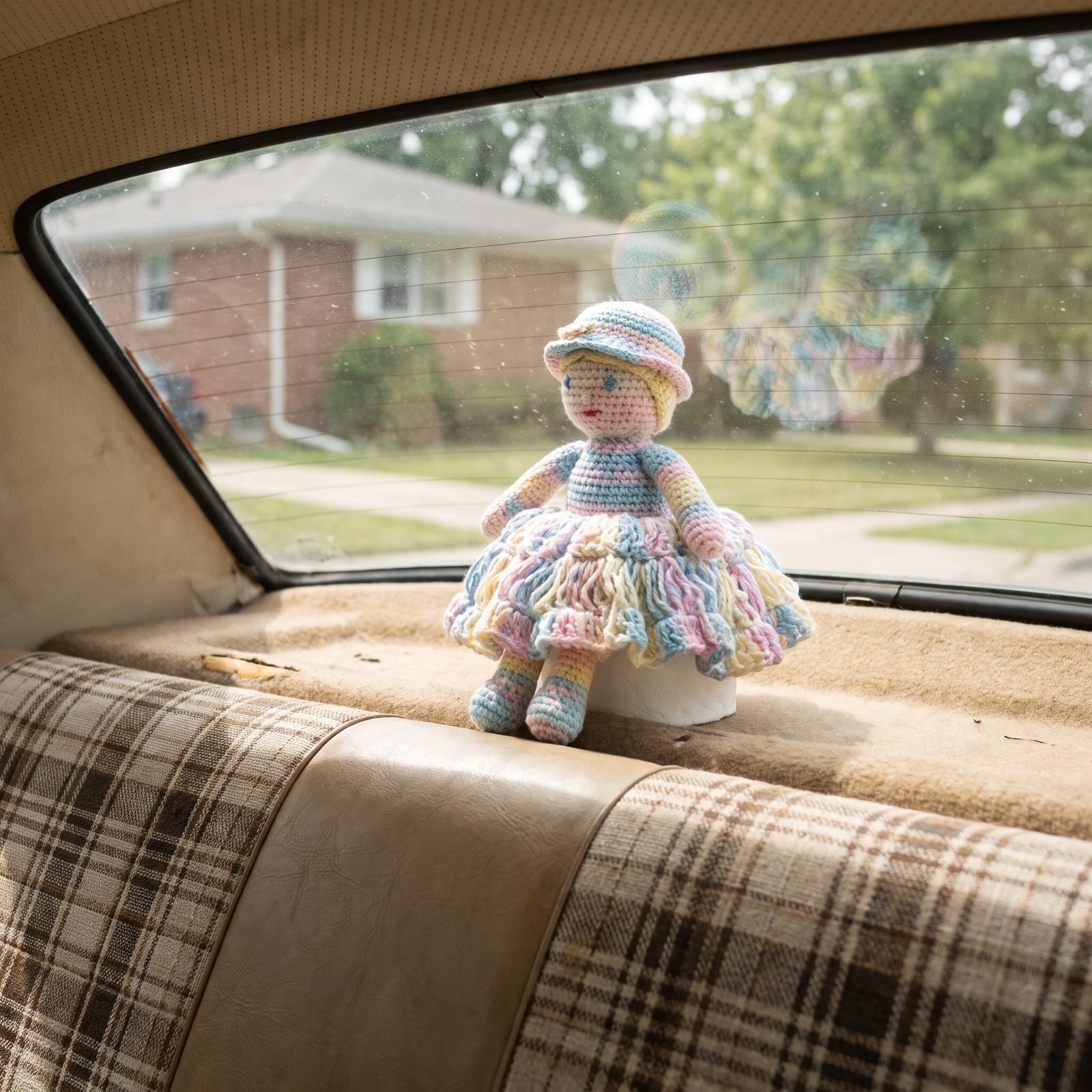
Somewhere along the way, cars got a crocheted mascot nobody can fully explain. A doll in a frilly skirt rode the parcel shelf, and under that skirt, hidden with great dignity, sat a spare roll of toilet paper.
Grandma made it. Grandma made several — one for the back of the car, one for the toilet tank, all matching. A strange thing to display in a rear window, and yet half the cars on the road had one waving its yarn skirt at the traffic behind.
You never asked why the toilet roll needed a disguise. You just accepted it, the way you accepted most of what Grandma did.
18. Clear Plastic Seat Covers That Stuck to the Back of Your Legs Every Summer
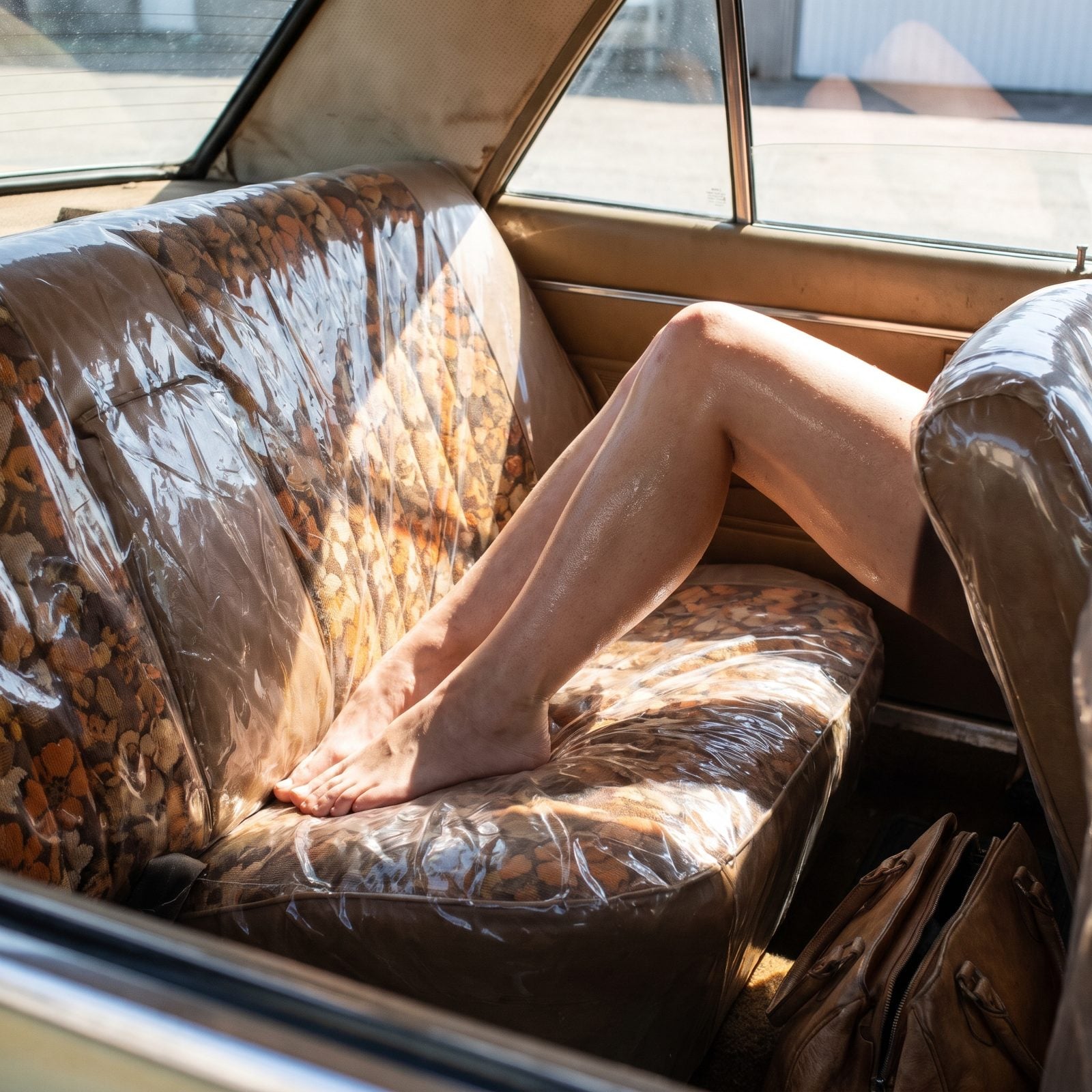
Grandma’s living room had the couch wrapped in it. Your uncle had the whole car done. The idea was sound: protect the good upholstery underneath so it would look factory-fresh on a resale day that never came.
In practice you sat on a sheet of hot vinyl that squeaked when you shifted and peeled off the backs of your thighs with a sound nobody enjoyed. Winters were worse. The plastic went stiff and cold and cracked at the corners while the seats underneath stayed pristine for decades, admired by no one, because the plastic never came off.
17. Wooden-Bead Seat Covers That Turned Every Commute Into a Massage Nobody Asked For
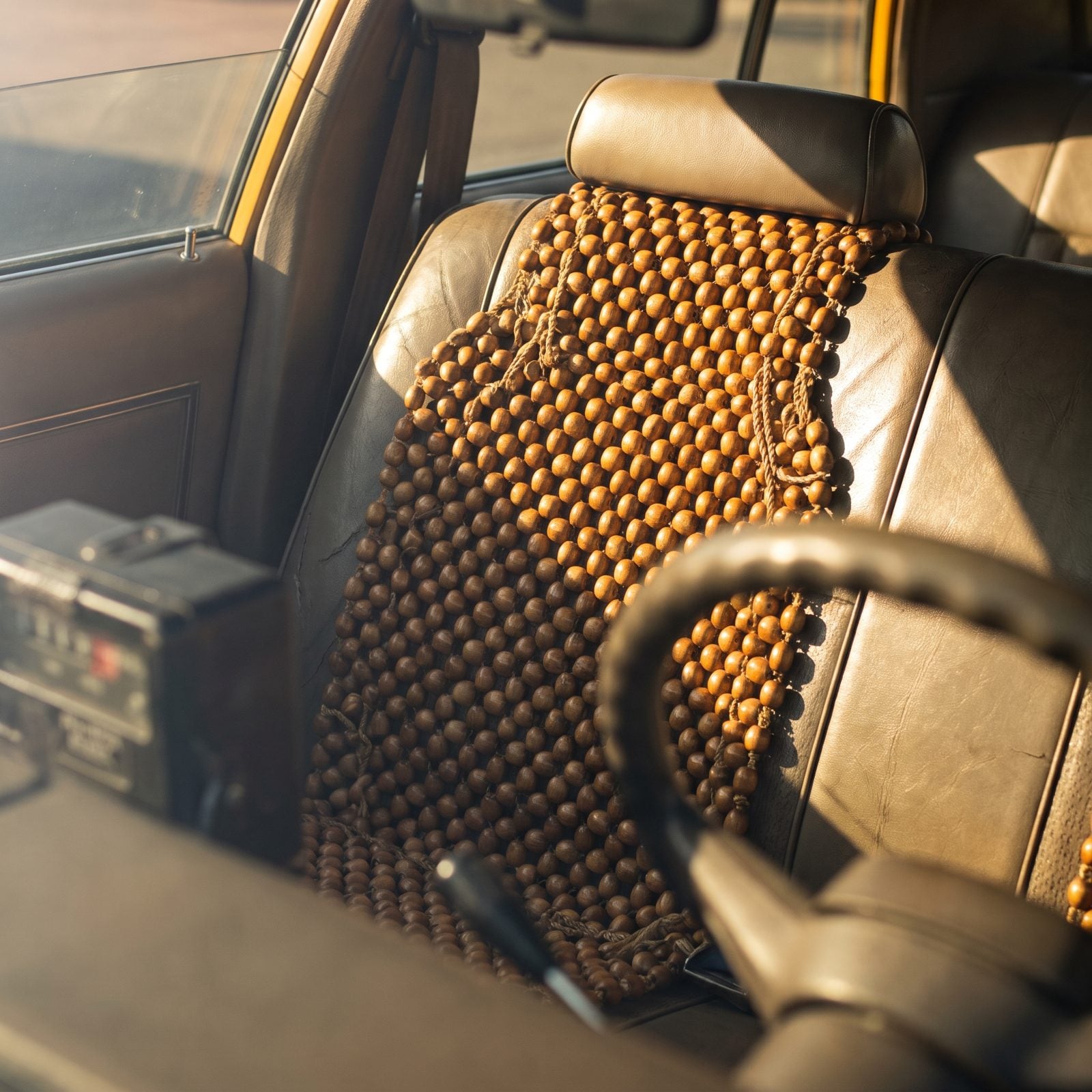
Cab drivers swore by them. The pitch was circulation and back support on long hauls, beads rolling under you to keep things moving. Sounded almost medical.
What you got was a constant low-grade clatter and the sensation of sitting on a sack of marbles. Hit a pothole and the whole cover shifted, launching you slightly sideways. Now, the beads did eventually turn smooth and warm, worn glossy by years of the same backside, and that part was oddly nice. The rest was you explaining to passengers why your seat looked like a giant rosary.
16. The One-Handed Steering-Wheel Spinner Knob, a.k.a. the Suicide Knob
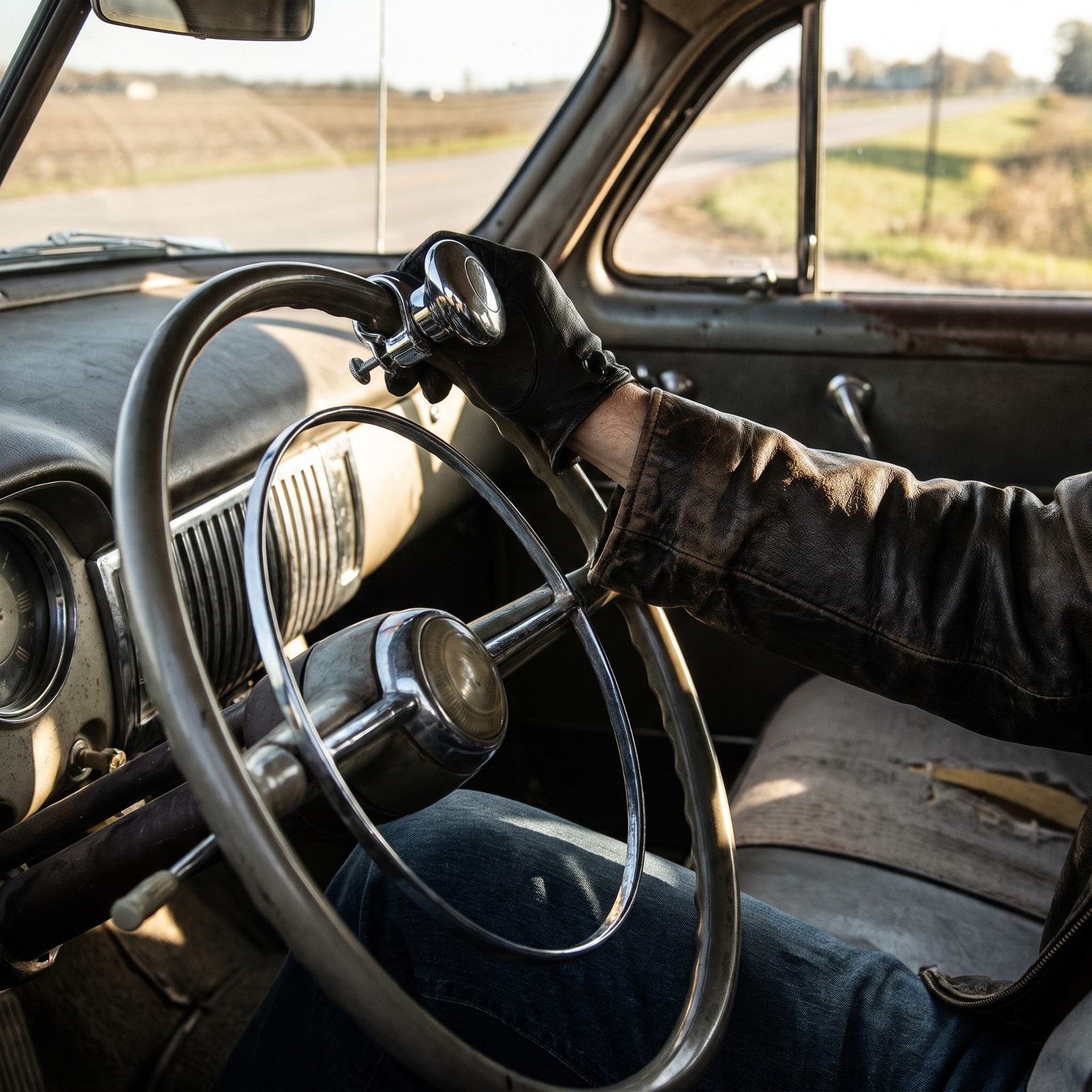
Clamp it to the wheel, grip the knob, and you could crank a tank-sized car through a three-point turn with one hand while the other hung out the window. Farmers loved them. So did anyone parallel parking a land yacht with no power steering.
The nickname tells you the rest. Lose control on a bump and that spinning knob became a propeller going the wrong way. Safety folks hated them, and eventually most states did too. Still — there was a swagger to steering a Buick with your fingertips on a chrome knob topped with a pin-up decal under a little plastic dome.
Thinking back to the knob on his first car, a 1950 Chevrolet, a longtime car owner writes that “These spinners were very popular during the 1950s before the advent of power steering.”
15. Chrome Chain Steering Wheels That Rattled Louder Than the Engine
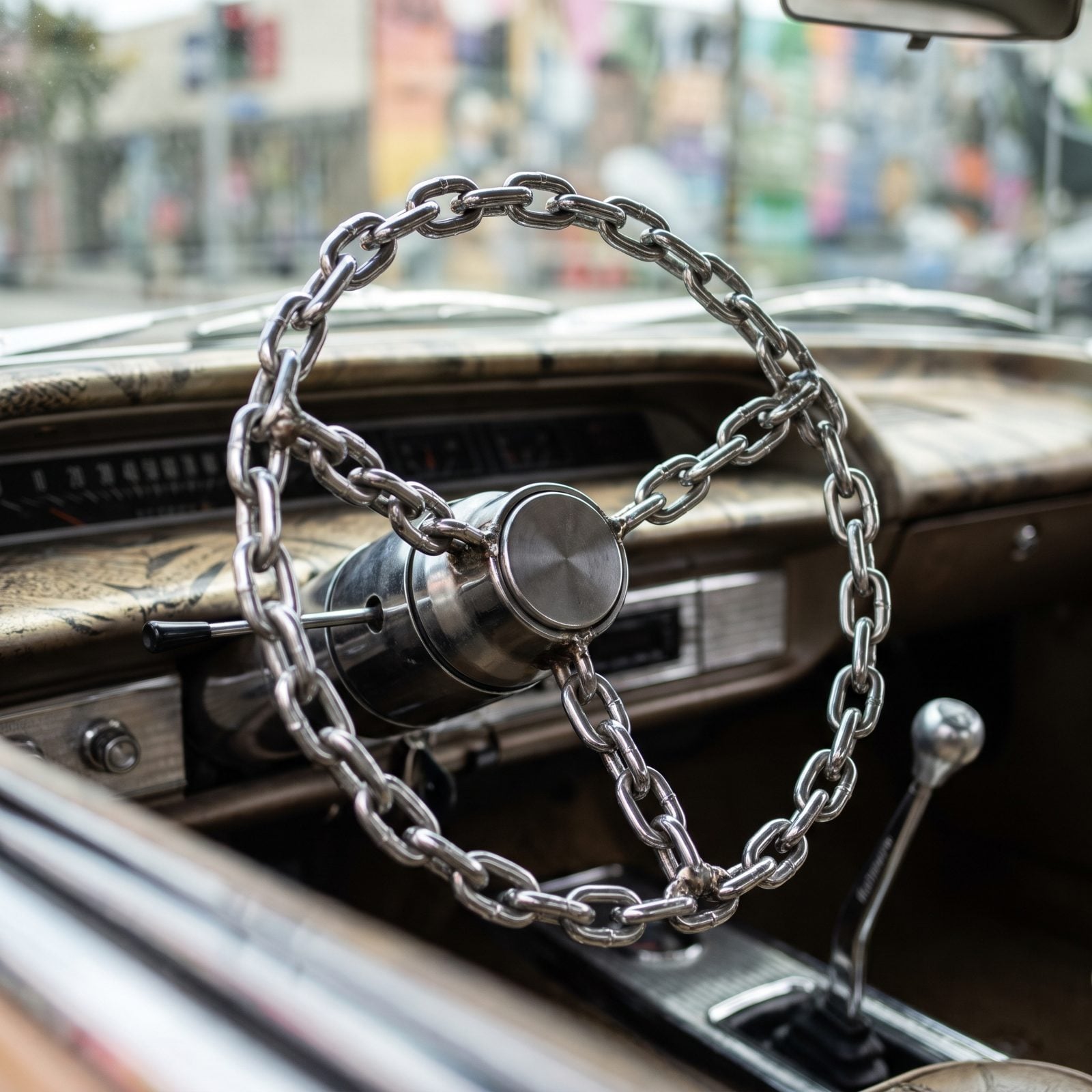
Pure cruising theater. A full steering wheel built from welded chrome links, big as a bus wheel, that screamed custom from across the parking lot. Lowrider guys ran them proudly.
They were awful to actually drive. The links bit into your palms, the huge diameter crowded your lap, and the whole thing jangled over every seam in the road. You didn’t buy one to drive to work. You bought one to roll slow down the boulevard on a Saturday night, windows down, so everyone could see the chrome — and on that one job, it delivered.
14. The Full-Width Vinyl Car Bra That Protected the Paint and Trapped Everything Else
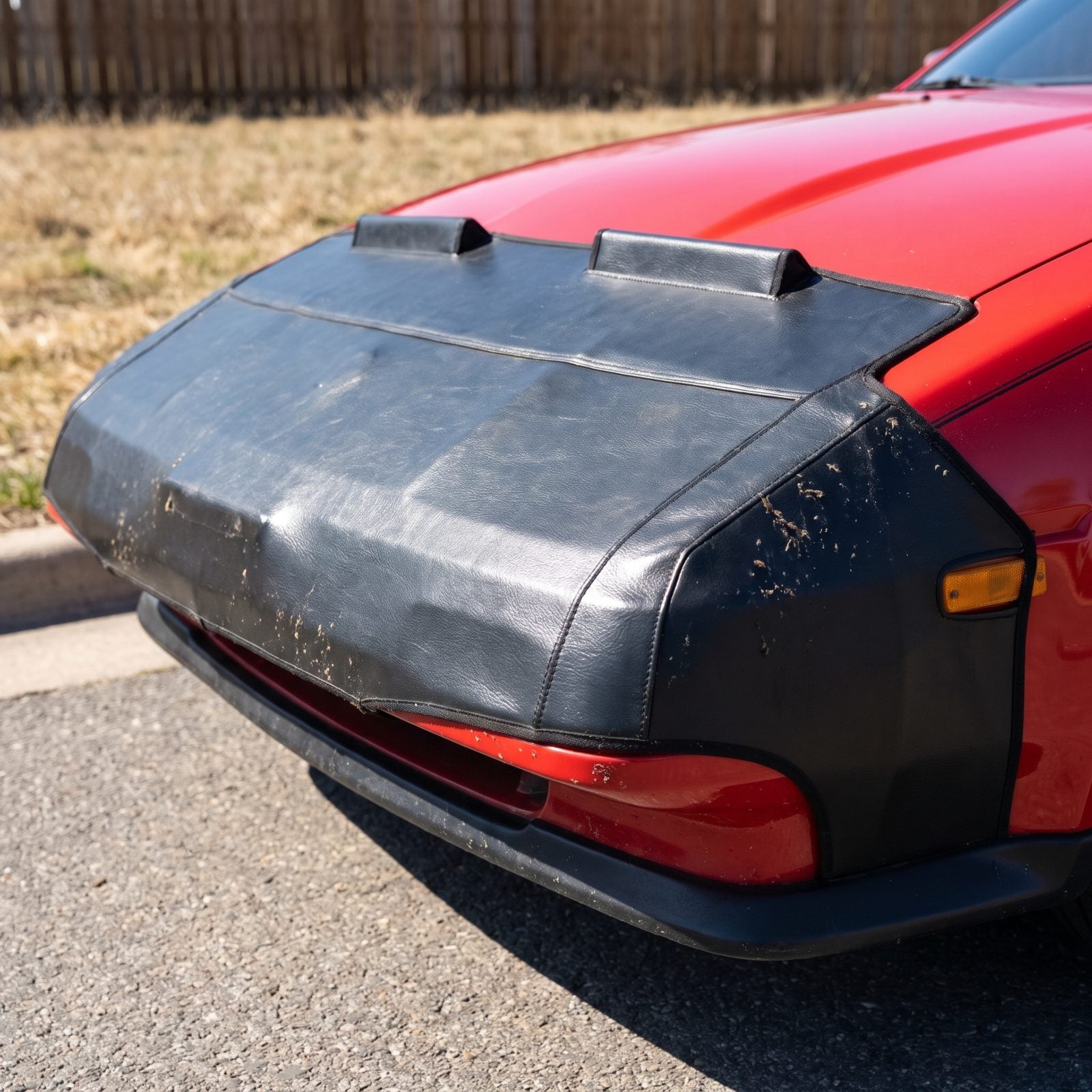
Sold as armor against rock chips on the highway — a black vinyl mask strapped across the nose of your sporty red coupe. Guys who babied their IROC-Z and their 5.0 Mustang wouldn’t drive without one.
The catch was legendary. Water got behind it. Grit got behind it. The bra rubbed the clear coat it was supposedly saving, and after a couple of summers you peeled it off to find a dull patch exactly its shape. It protected the paint it didn’t touch and quietly wrecked the paint it did.
Comparing old-school front-end masks with car covers, a ceramic coating installer warns that “This is the same issue with these leather and mesh bras – they get dirt trapped underneath.”
13. Plastic Eyelashes Over the Headlights, Because Your Car Needed a Personality
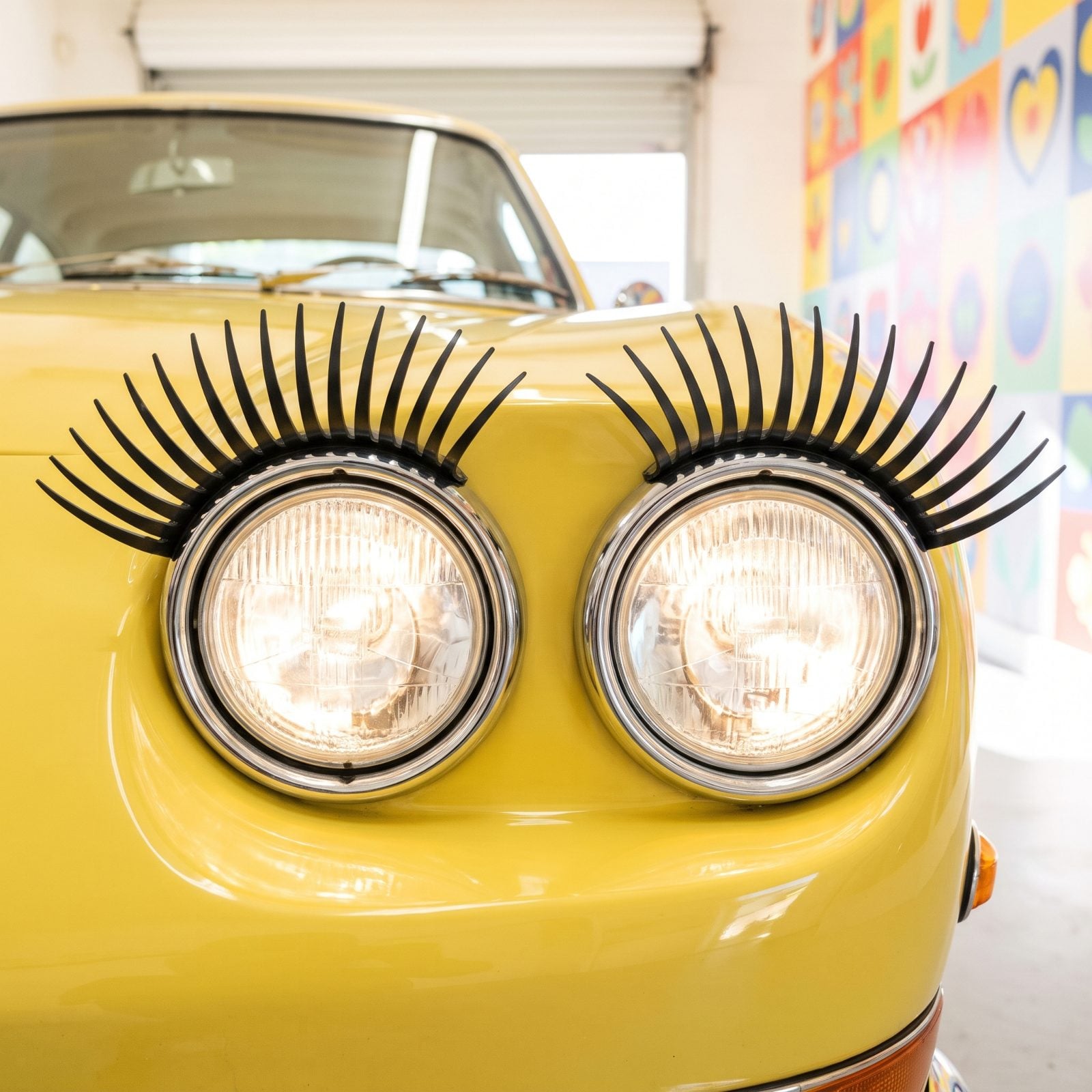
No comfort claim. No safety claim. Just a set of curved black plastic lashes stuck above each headlight so your car looked like it was batting its eyes at you.
They turned a round-eyed Beetle into something that seemed to flirt from the parking lot. People either found them adorable or gritted their teeth at the stoplight — no middle ground. The purest accessory on this list, because it promised nothing and delivered exactly that.
12. Stick-On Hood Scoops That Fed Air to an Engine That Never Saw It
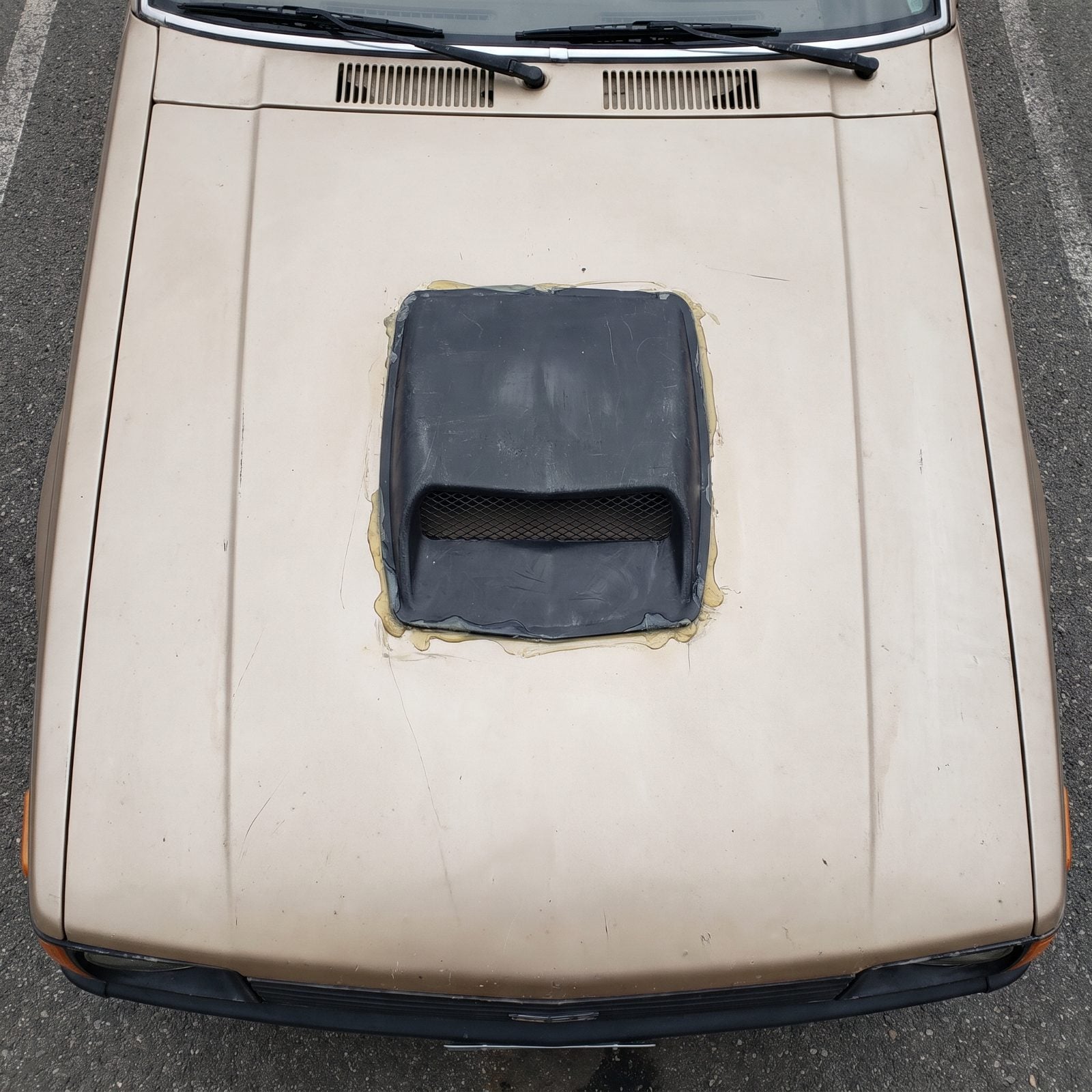
Real hood scoops fed cold air to a hungry carburetor. These were a hollow plastic shell you taped to a flat hood, sealed solid underneath, feeding air to absolutely nothing.
You could buy one at the parts counter for a few bucks, stick it on a four-cylinder commuter car, and from thirty feet it looked like it meant business. Up close? You could see the tape line and the fact that it was glued over a perfectly closed hood. It bought you the look of horsepower with none of the actual horsepower, and for a certain kind of Saturday, that was exactly enough.
11. Adhesive Chrome Portholes That Made Your Sedan Look Like a Luxury Yacht for $7
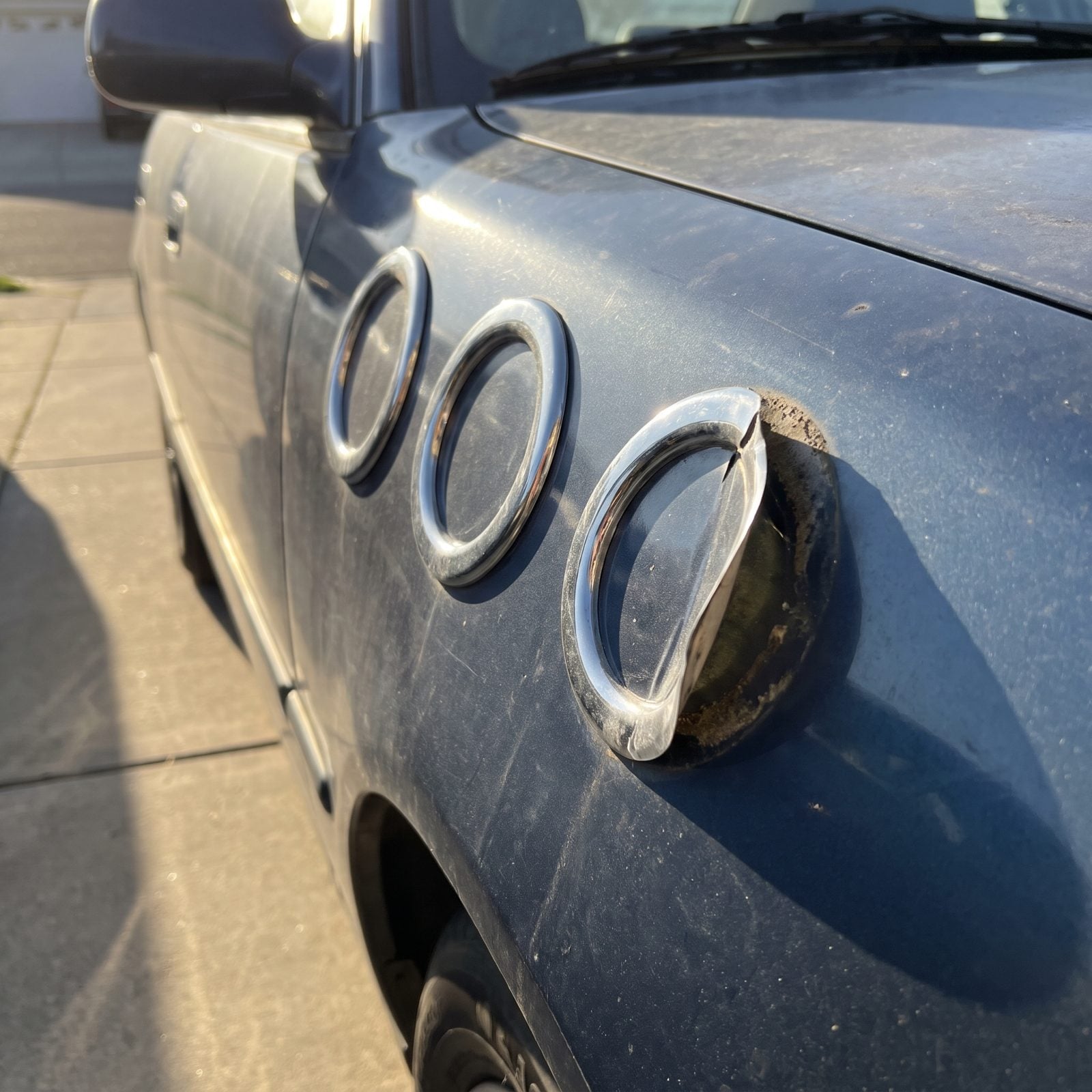
The expensive Buicks had those little portholes on the fender, a nod to old luxury. Everyone else wanted the look without the price tag of the car it came on.
So the catalog sold you a row of round chrome porthole rings with peel-and-stick backing. Slap three on each fender of your plain blue-gray Caprice and suddenly it was dressed up for Sunday. A few years later one would crumple like foil, peeling away to reveal a dark, dirty patch of rust and bare metal on the fender — a little ghost of your ambition.
Nobody was fooled, not really. But standing in the driveway with a chamois and a fresh set of chrome rings, you felt like your car had graduated to something finer. Sometimes the feeling was the whole reward, and that was enough.
10. Clamp-On Fake Dual Exhaust Tips That Bolted Onto a Single Pipe
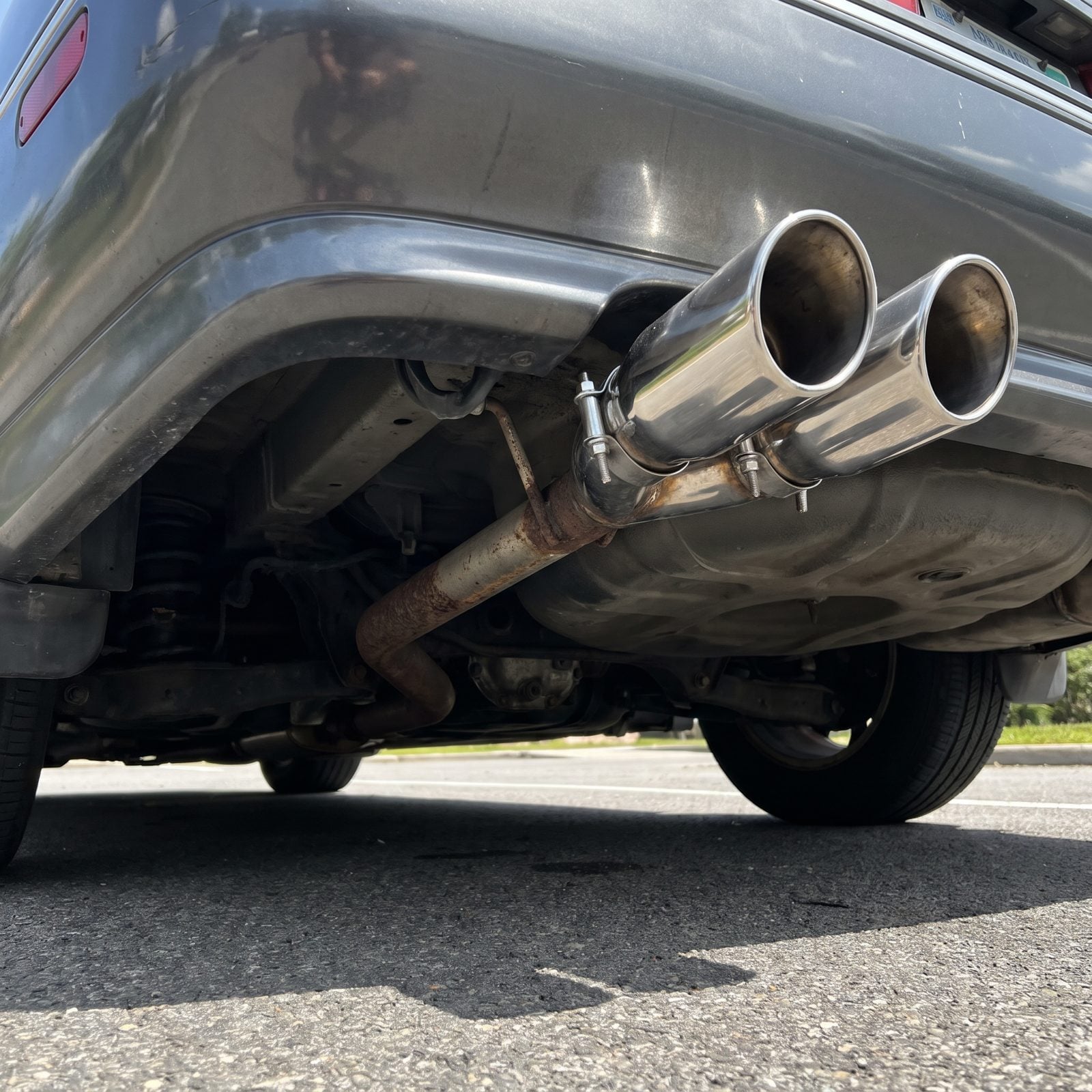
Dual exhaust meant a V8, and a V8 meant you were somebody. Your six-cylinder sedan had one skinny pipe poking out from under the bumper, which announced exactly what kind of somebody you were. The fix cost a few dollars and a screwdriver.
A twin chrome tip clamped over the real tailpipe, splitting that one skinny pipe into two fat barrels sitting side by side at the same corner. From behind it looked like serious hardware. Then you pulled away from the light, and both barrels puffed the same thin breath of exhaust, their insides going sooty together. Anybody crouched at the curb could read the whole story in the single rusty pipe feeding them both.
9. The Continental Spare-Tire Kit Bolted to the Back Like a Steel Donut
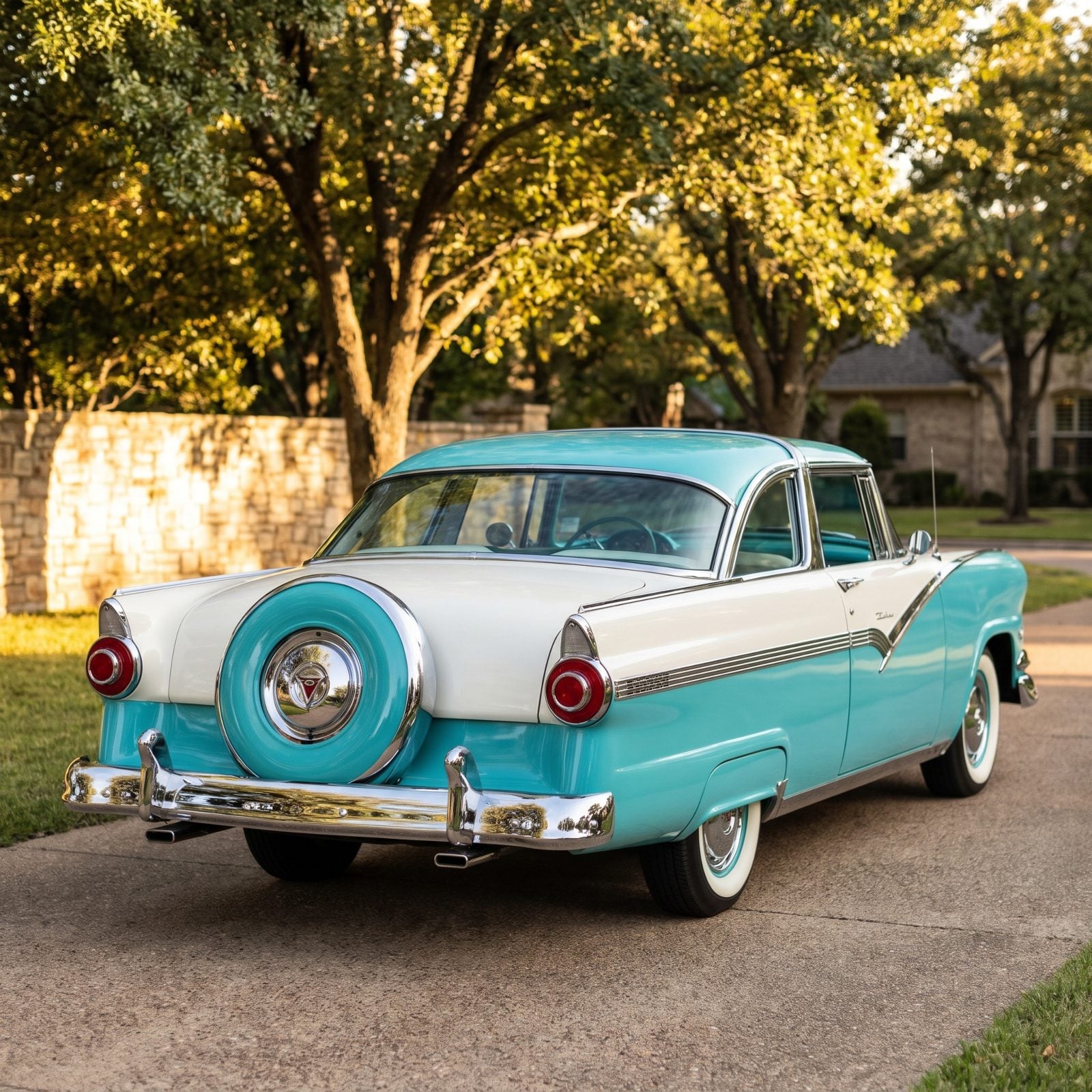
Nothing said class in the fifties like a spare tire riding outside the car in its own chrome-ringed, color-matched cover. The continental kit bolted onto the rear bumper, pushed it back a foot or so, and parked the spare upright behind the trunk lid like a trophy.
It made a Ford or a Chevy look longer, lower, and a whole tax bracket richer. It also added a big slab of overhang to back into things with, and getting into the trunk meant tilting the whole tire assembly out of the way first. Groceries became a two-step operation. Nobody complained, because the car looked like it belonged outside a country club.
Today, our readers still give cars that look like the 1950s or earlier more hearts than the other images in the same articles, 82% versus 76%.
8. Spinning Chrome Hubcaps That Kept Turning at the Stoplight
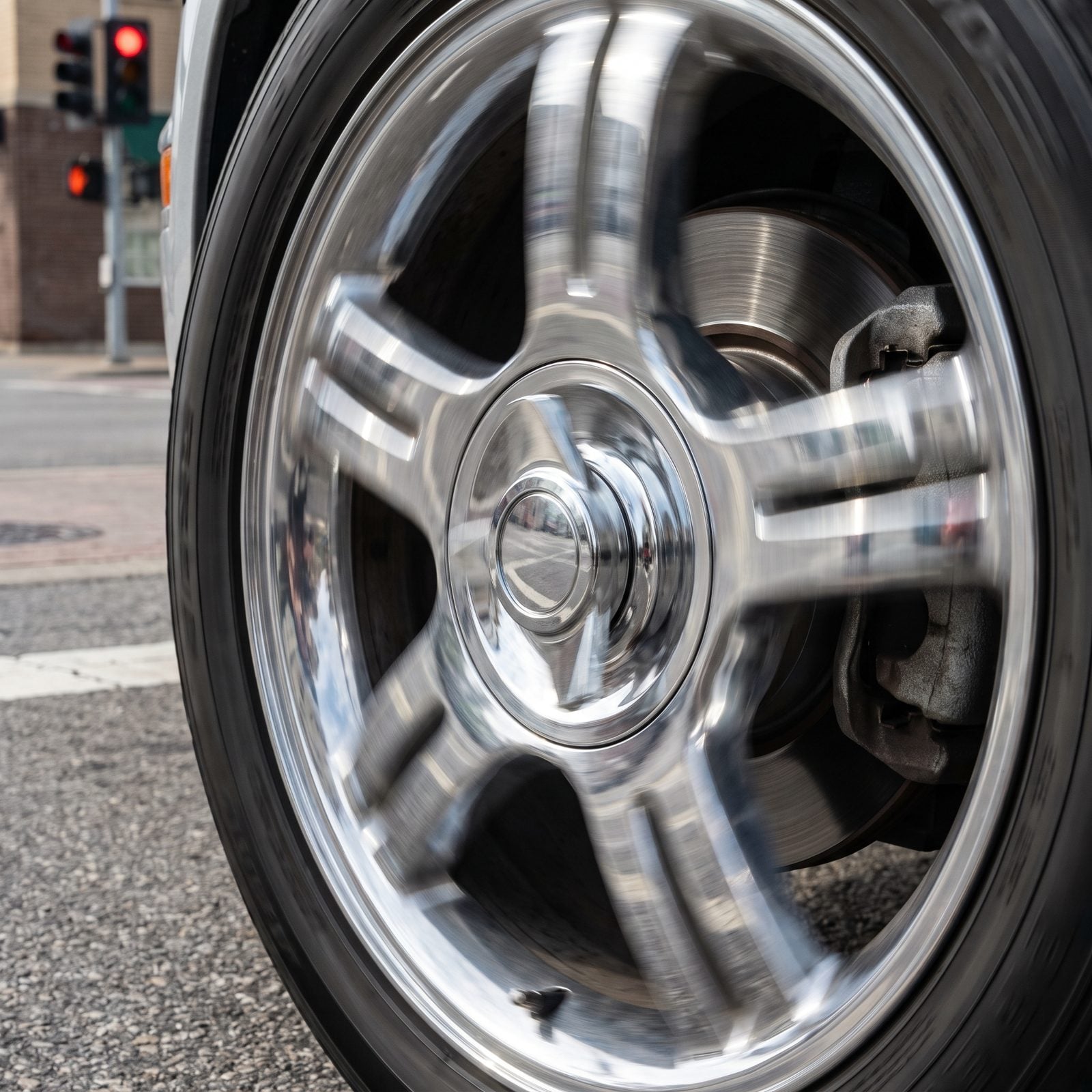
You rolled up to the red light, stopped, and your wheels kept going. That was the entire point. A spinner was a chrome disc mounted on a bearing over the wheel, so once it got rotating it kept whirling long after the car had come to rest.
For a stretch in the early 2000s, they showed up everywhere from music videos to the mall parking lot, flashing in the sun while the driver stared straight ahead like nothing unusual was happening. They were heavy, they were pricey, and they made a perfectly normal stop look like the car was still trying to leave. The trend spun out about as fast as the hubcaps did.
7. The Chrome Naked-Lady Mudflaps Behind the Rear Wheels
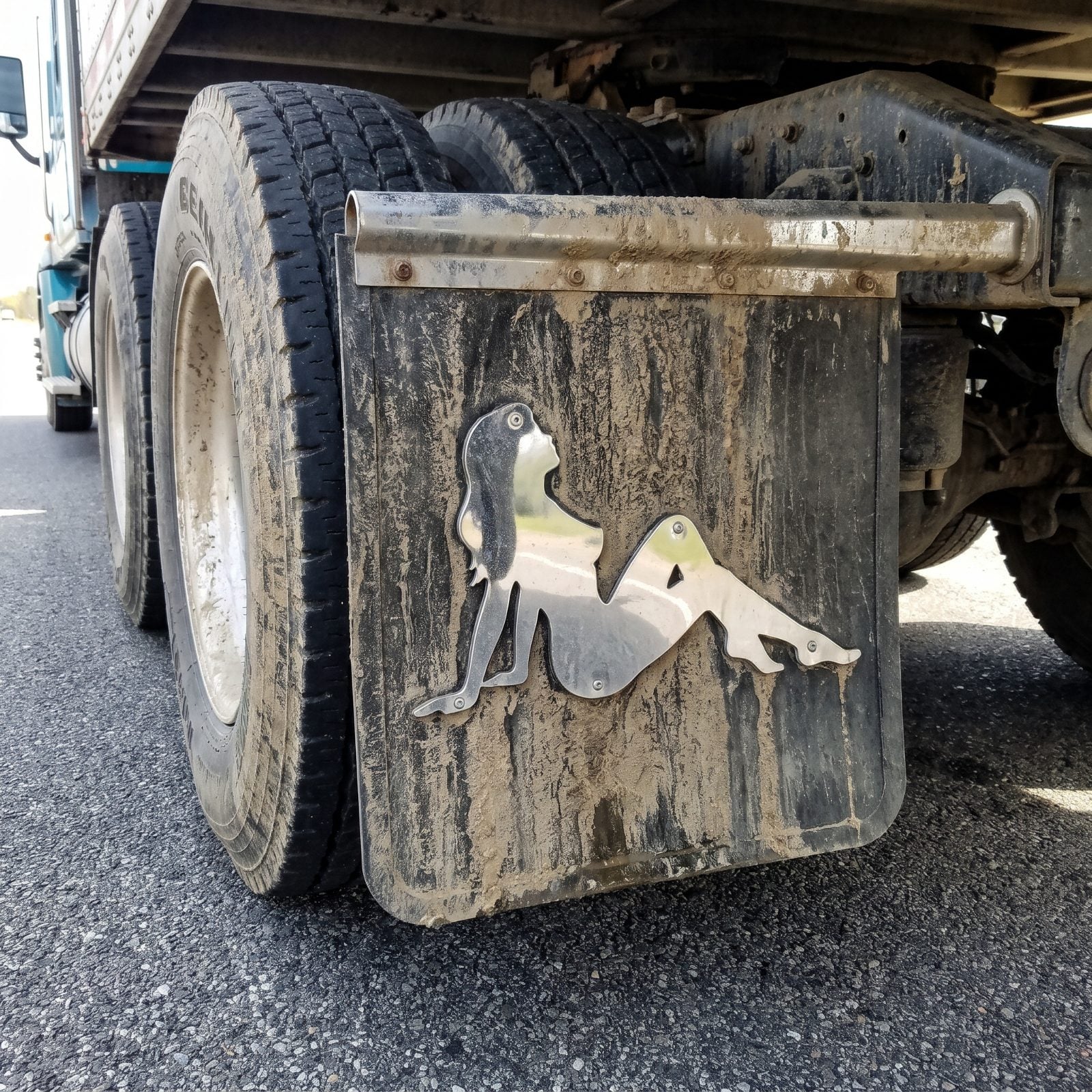
If you spent any time on the interstate behind a big rig, you knew her: the reclining chrome silhouette, hair flowing, one knee up, riding the mudflaps right behind the rear wheels. She was practically the trucker’s coat of arms.
Pickup owners grabbed her too, and before long she was hanging off half-ton Fords at every truck stop and county fair. The mudflaps did their actual job, keeping gravel and road spray off whoever was following. The chrome lady did a different job, which was letting the driver behind you know a whole lot about your sense of humor. These days she mostly turns up on vintage rigs and as an ironic sticker.
6. Novelty Rubber Truck Nuts Swinging From the Tow Hitch

There is no dignified way to describe these. A pair of rubber novelty testicles hung from the trailer hitch, swaying with every bump, sometimes in chrome, sometimes in a color chosen to match the paint job.
They were a big-pickup thing in the 2000s, a way of telling the minivan behind you that this truck had attitude. Plenty of drivers found them hilarious. Plenty of others found them offensive enough that bans were debated by lawmakers in at least one state. Either way, you never saw them on a pickup that was actually towing anything. The hitch was a display stand.
5. Peel-and-Stick Faux Woodgrain Side Panels
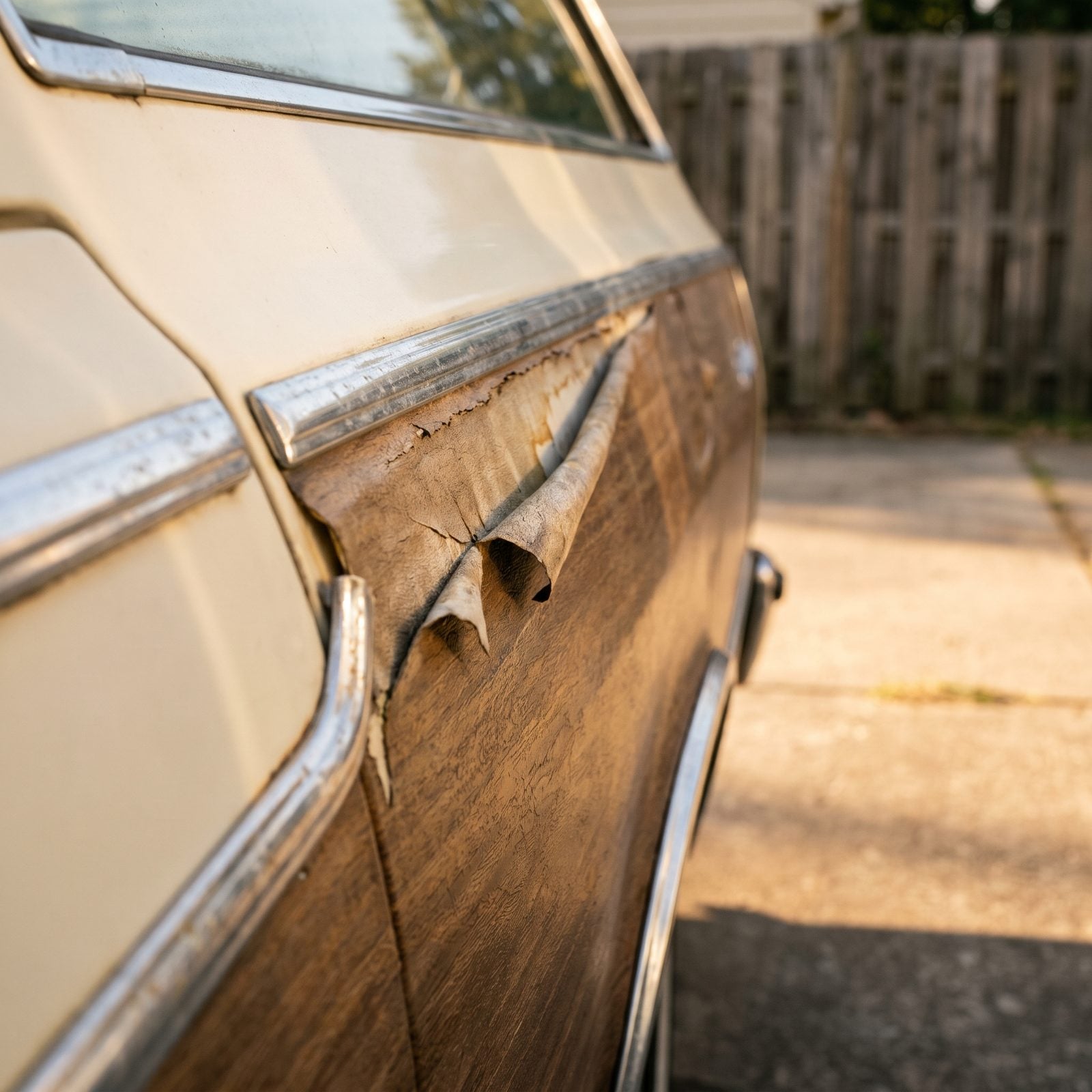
The factory woodie wagon was already a fake by the sixties, with sheet vinyl printed to look like wood and framed in trim. So the aftermarket figured, why not let everybody have one? Rolls of peel-and-stick woodgrain let you turn a plain station wagon or a compact into a little rolling den.
Getting it on without bubbles took the patience of a saint and a squeegee. Then came the sun. A few summers in, the grain faded to a pale orange, the edges lifted, and the corners curled up like old wallpaper. Car washes peeled off a strip at a time. By the end, your car looked less like a paneled wagon and more like a basement nobody had finished.
Fake or not, the look still lands with our readers: car photos with wood paneling got hearts 84% of the time, versus 74% for the other images in the same articles.
4. Decorative Landau Bars Glued to the Vinyl Roof
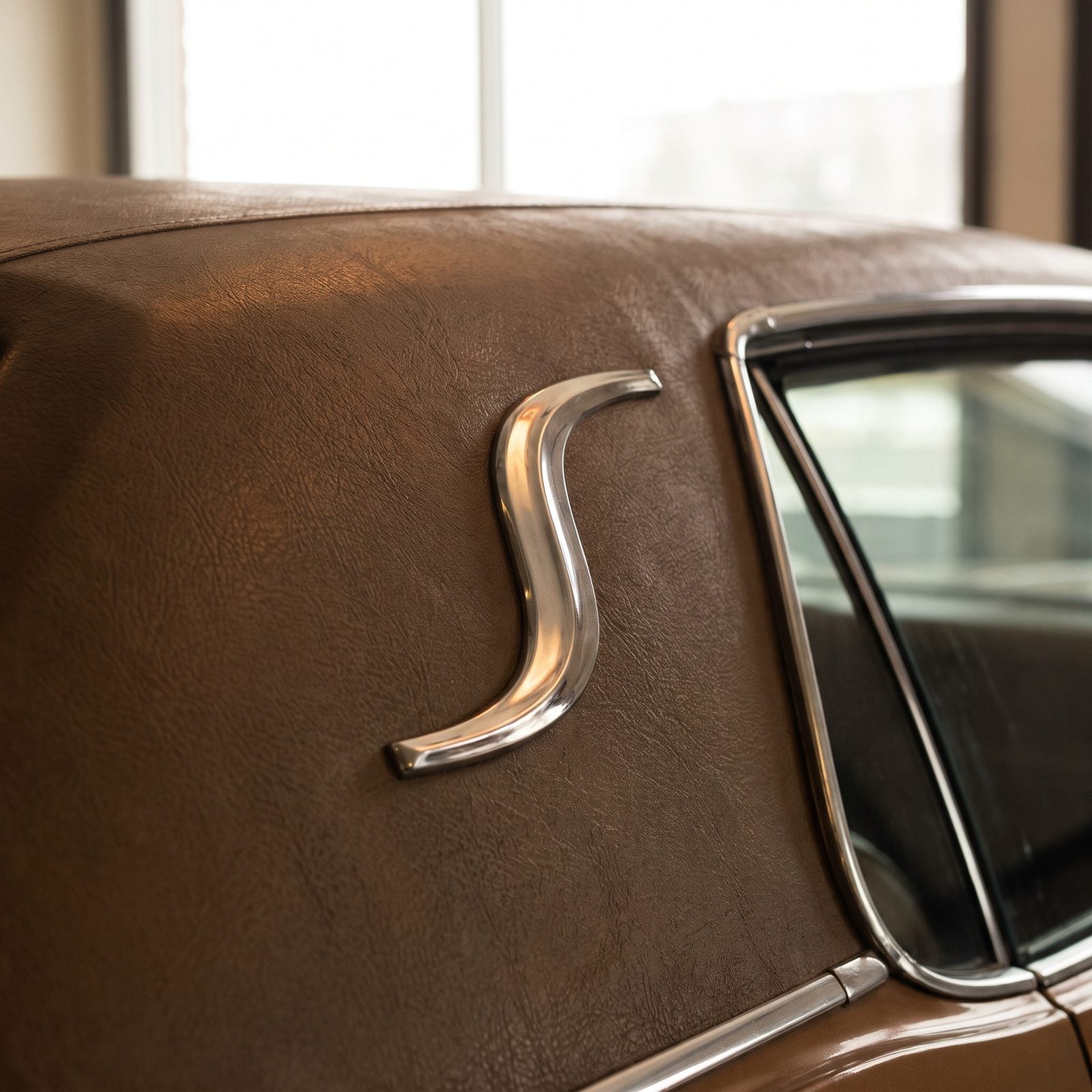
Horse-drawn landau carriages had folding tops, and the S-shaped hinges on the sides were what let them fold. A century later, someone decided a two-door sedan with a fixed steel roof needed the same hardware, purely for looks.
The seventies personal luxury coupe wore landau bars like jewelry: shiny chrome curves on the rear roof pillars, set against padded vinyl. If your car didn’t come with them, the parts store sold bars you could glue right onto the vinyl yourself. They hinged nothing and folded nothing. They just announced that your Monte Carlo had aristocratic ancestry it absolutely did not have.
3. Colorful Neon Underglow Tubes Beneath the Chassis
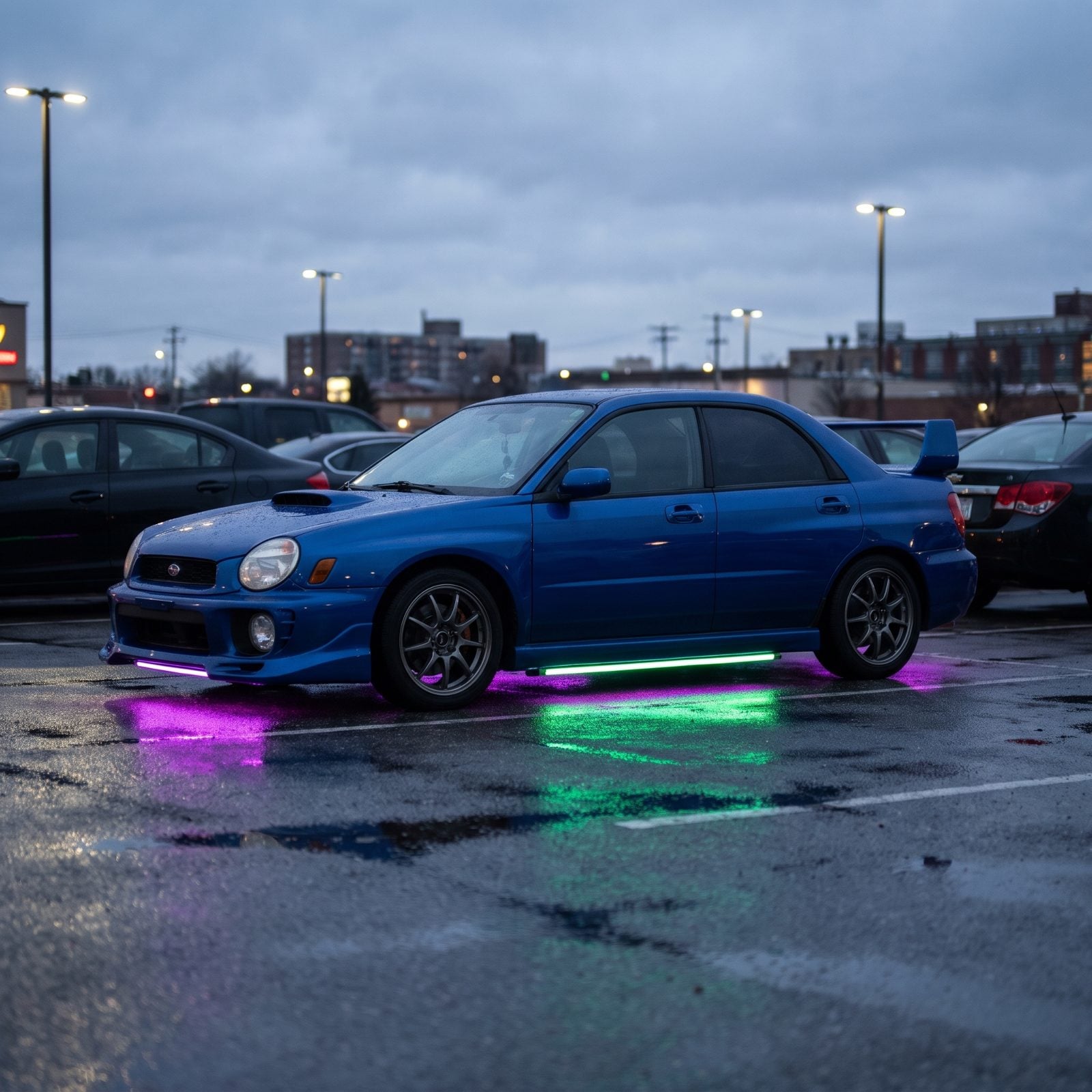
Park in the right lot on a Saturday night around the turn of the millennium, and the asphalt glowed purple, green, and electric blue. Neon tubes mounted under the rocker panels and bumpers lit up the ground beneath the car so it looked like it was hovering.
The tuner crowd loved it, and street-racing movies made it look essential. The glass tubes cracked on speed bumps, the wiring was usually a rat’s nest, and many states had rules about what colored lights you could show on the road, so plenty of drivers only flipped them on once they were parked. LED strips eventually replaced the fragile glass, but the glow still marks a very specific era of body kits and big wings.
2. The Scrolling LED Windshield Message Sign in the Rear Window
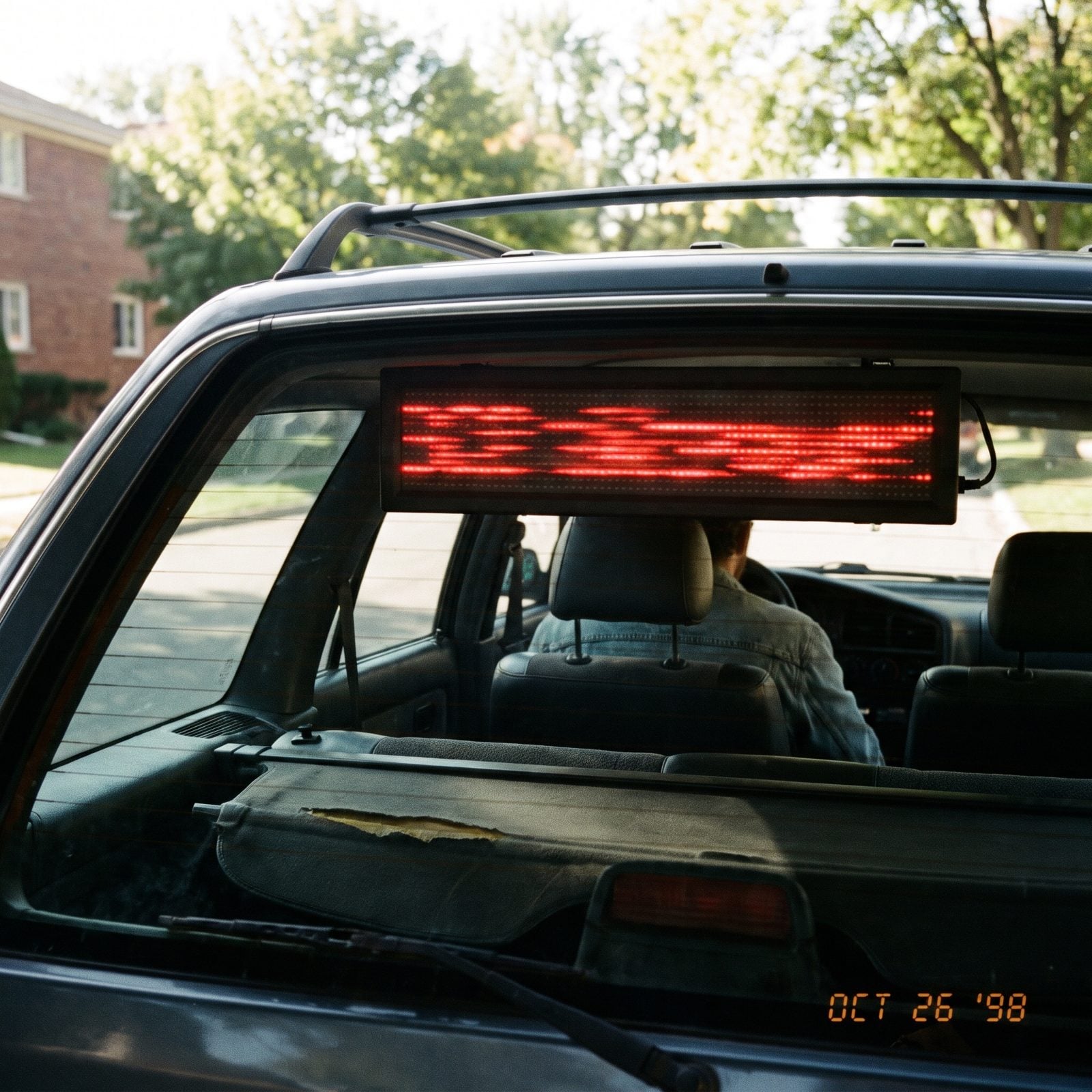
The bumper sticker said one thing forever. This sign said whatever you typed into it that morning. A strip of red LEDs suctioned to the rear window, programmable with a tiny keypad, scrolled messages at the car behind you: thank-yous, birthday wishes, a polite request to back off.
The appeal was obvious. You could finally talk to the driver tailgating you. The problem was just as obvious. Reading a scrolling message while driving is a fine way to rear-end the car displaying it, and the bright lights caught the attention of traffic officers in a hurry. Most ended up switched off, cord dangling, still stuck to the glass.
1. The Under-Dash Record Player That Skipped Every Time You Hit a Pothole
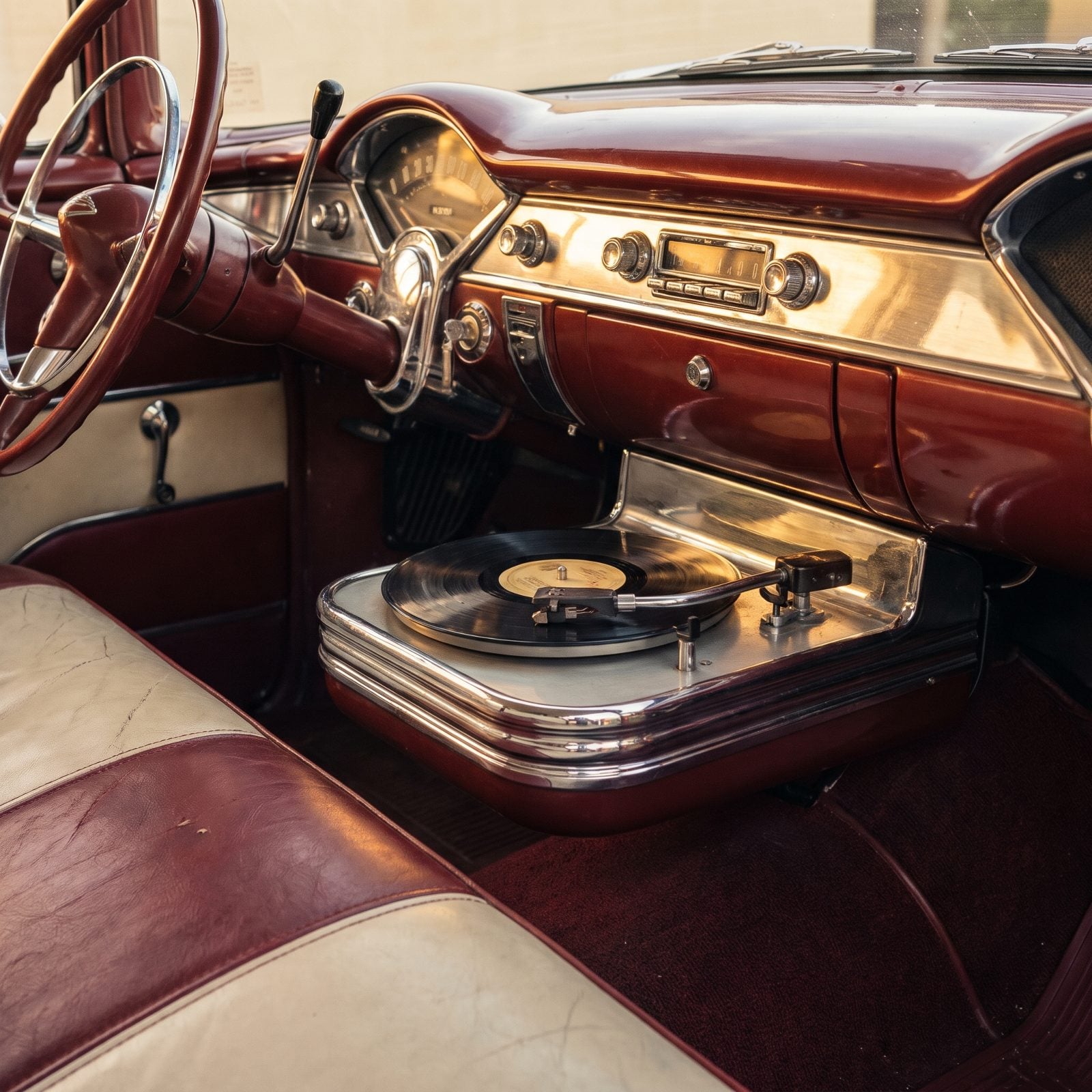
Chrysler actually sold this. Starting in 1956 you could order a Highway Hi-Fi in your Imperial or DeSoto — a record player bolted under the dash that spun special 7-inch discs at a crawling 16 2/3 RPM. Music on demand, years before anybody dreamed of a cassette.
Here’s the part the brochure skipped. That tonearm floated over a groove in a moving car, so one manhole cover sent your Mozart jumping three tracks. And you couldn’t play your own records anyway, only the handful Columbia pressed for the format. Good luck finding those at the five-and-dime.
Still, there was something almost touching about the whole misadventure. Somebody looked at a car and thought, you know what this needs? A living-room turntable. Wrong idea. Lovely instinct.
Chrysler offered the player from 1956 through 1959, but an automotive historian says “it never caught on—due mainly to poor reliability, high warranty costs, and the limited variety and distribution of the Highway Hi-Fi record catalog.”