You can still hear it. Not the engine — the jingle, the one that lodged itself in your skull somewhere around 1976 and never left, playing on a loop every time you pass a certain dealership or catch a whiff of old vinyl. The 70s sold cars with velvet voices and catchy songs, and the slogans outlived the cars themselves. Half of us bought a vehicle because a man in a tuxedo said three words very slowly. The ones below defined an era of television and flat-out refused to fade out.
Please note that some of the images in this article were created with the assistance of AI.
39. Chevrolet: “Baseball, Hot Dogs, Apple Pie and Chevrolet”
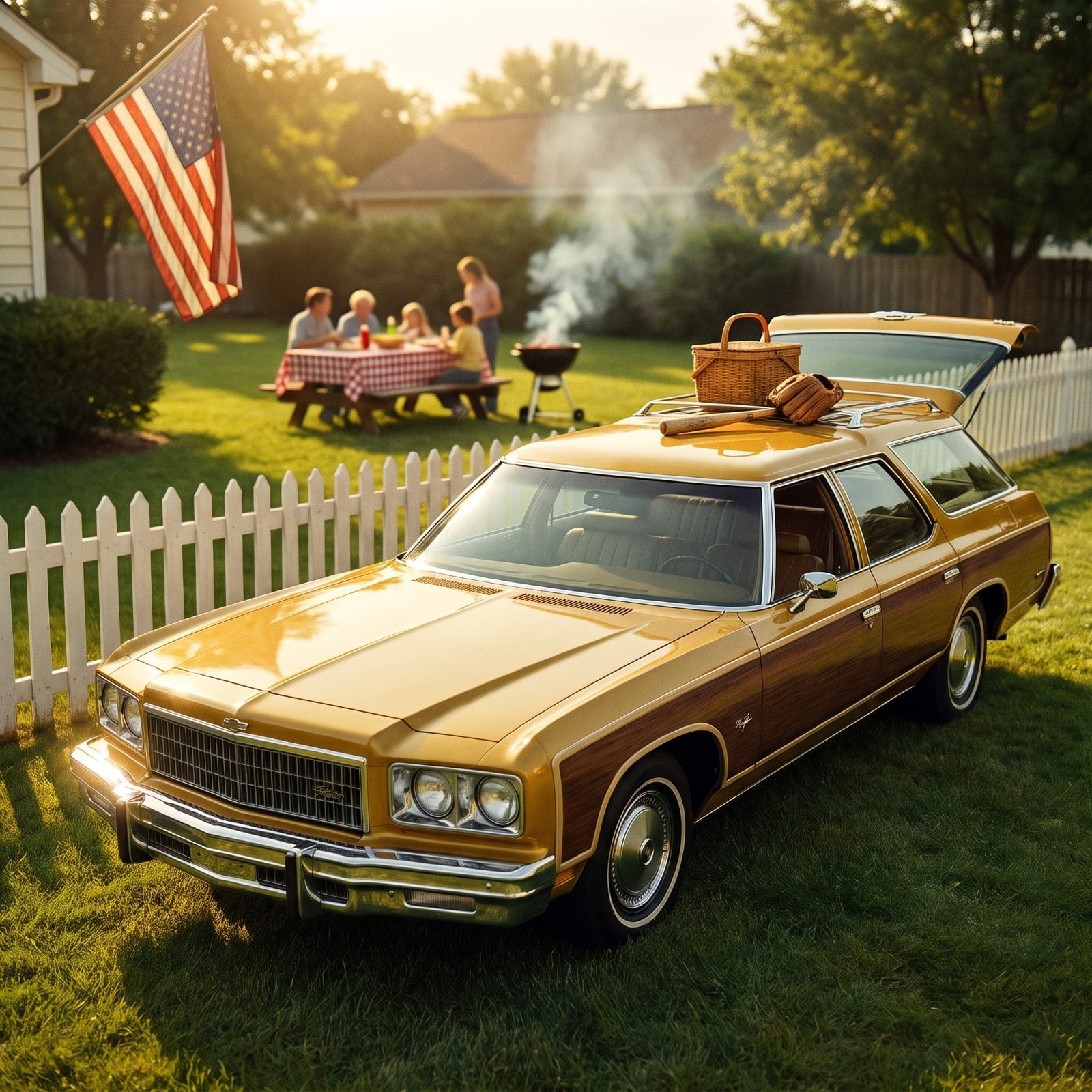
You know every word, even if you’ve never owned a Chevy. That jingle ran so often it stopped being a commercial and became a national anthem for people who liked ballgames and casseroles. Four things Americans supposedly loved, and one of them was a car company. Nobody blinked.
The genius was the pairing — wrap a brand in things nobody could argue with. Who’s against hot dogs? Who hates apple pie? By the time Chevrolet landed at the end of the list, your brain had already agreed to the first three, so it waved the fourth one right through.
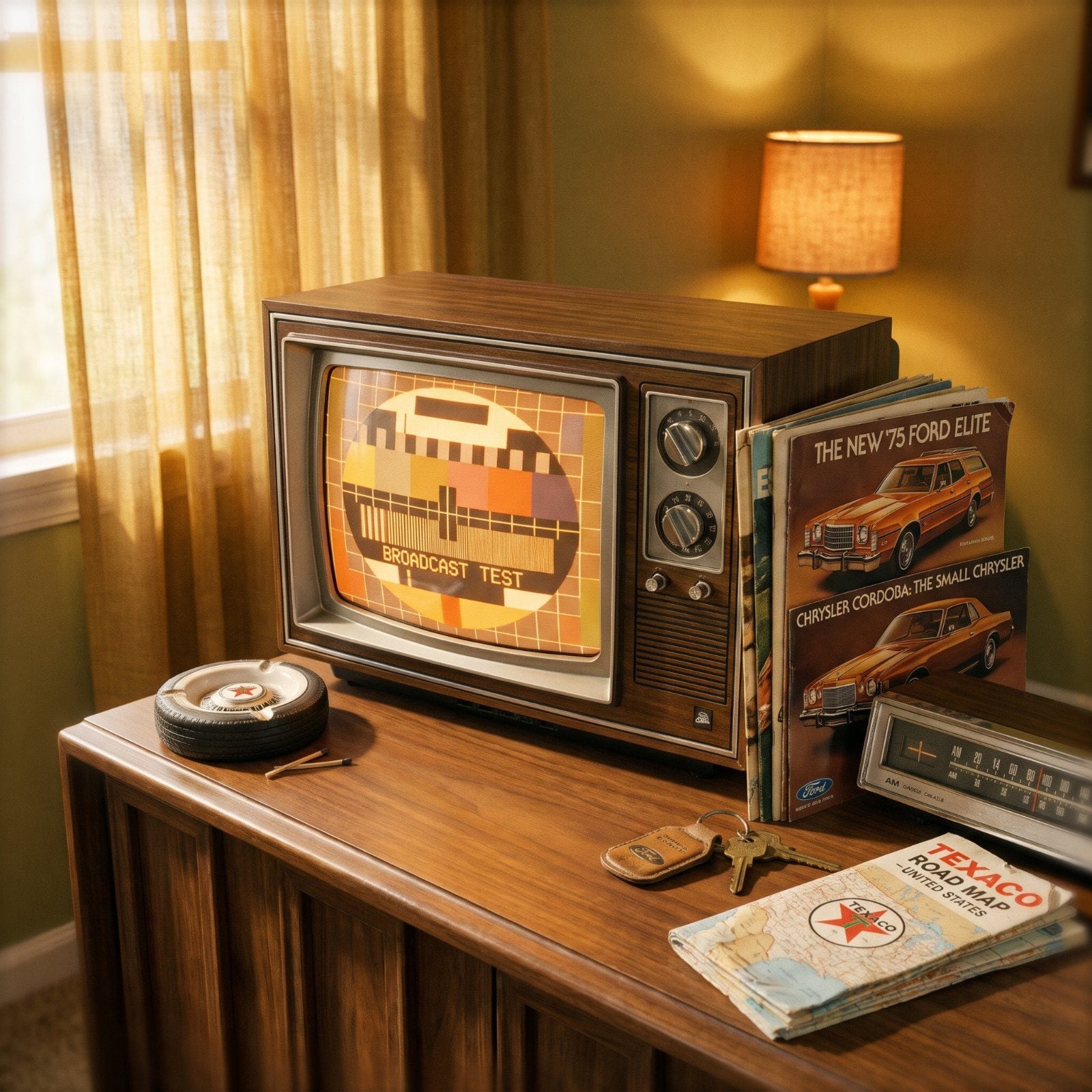
38. Chrysler Cordoba and the “Rich Corinthian Leather”

Three words, said slowly, with a theatrical pause, by a man whose voice could sell sand to a beach. “Rich Corinthian leather.” You could practically feel it through the TV screen.
Here’s the kicker everybody eventually learned: Corinthian leather was a marketing invention. There’s no special hide from Corinth. Chrysler made the phrase up, and it worked so well that people genuinely believed they were getting something exotic. The car was fine. The description was a performance.
And that’s the whole magic of it — a plush interior became aristocratic because somebody gave it a Latin-sounding pedigree and a slow delivery. I still think about this every time a mattress company calls foam “artisan.”
37. Toyota: “You Asked for It, You Got It, Toyota”
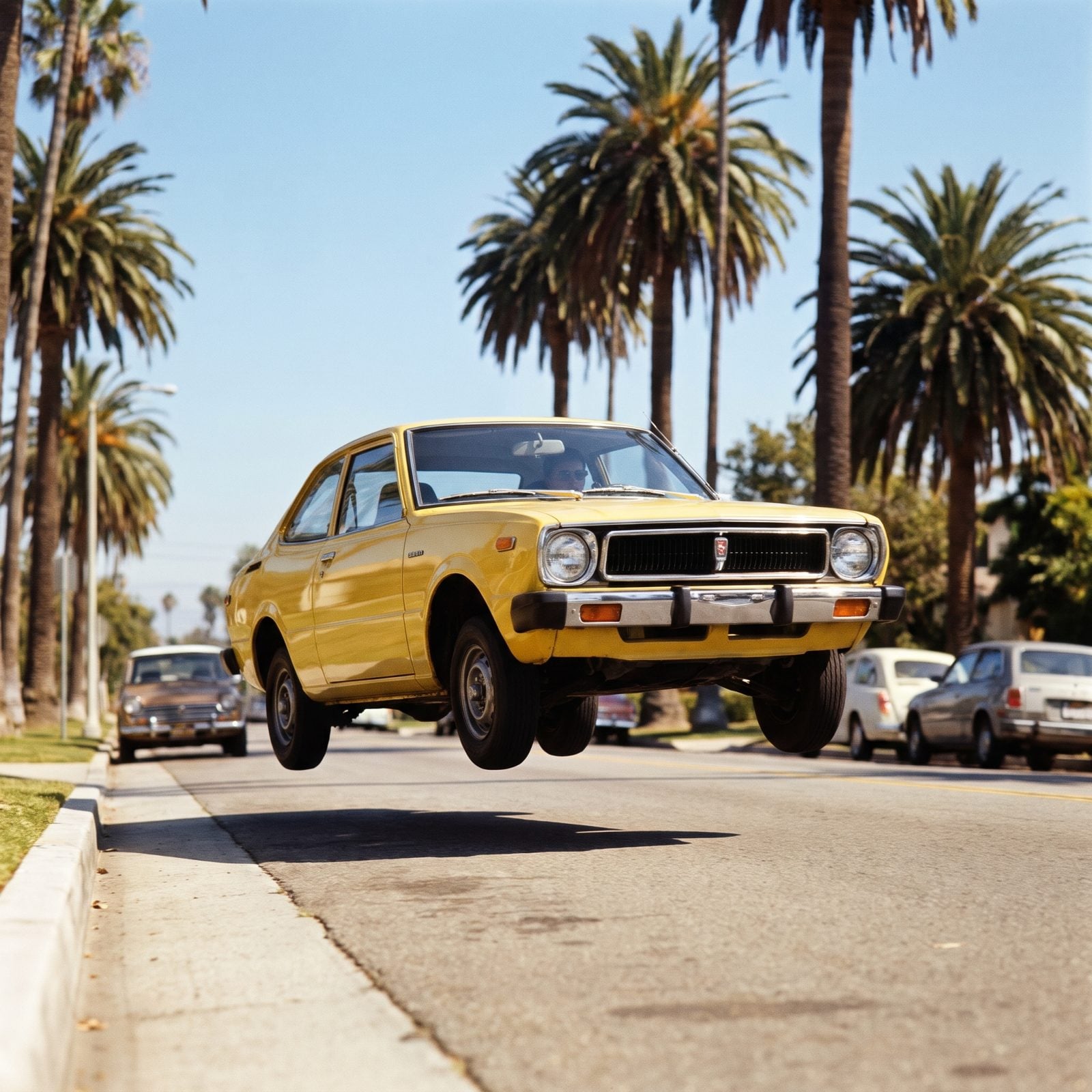
It bounced. The jingle literally bounced, and so did the cars in the spots — little compacts leaping into the air like they were delighted to exist. “You asked for it, you got it, Toyota.”
What made it land was the flattery buried inside. The line put you in charge. You asked, they delivered. It turned buying a sensible economy car into getting exactly what you demanded, which felt a lot better than admitting gas was expensive and the Corolla sipped it.
By the end of the decade that jingle was everywhere, and Toyota went from curiosity to household name on the back of it.
What Our Readers Say
- When Jalopy Talk readers love an old car photo and tap a reason, “nostalgic” comes out on top at 27%, just ahead of “body style” at 22%.
From Jalopy Talk reader polls and votes.
36. Ford: “Ford Has a Better Idea”
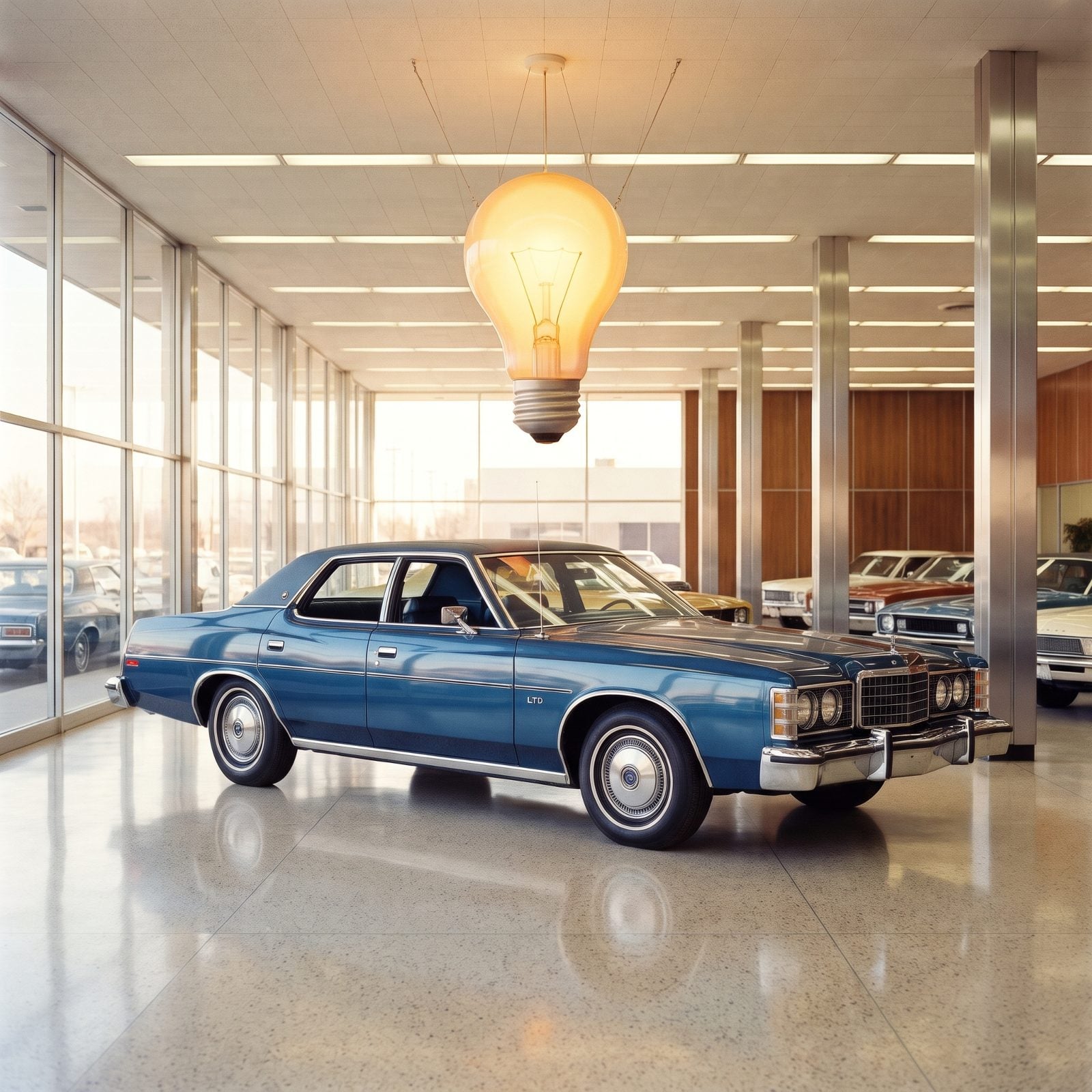
A single glowing lightbulb hanging over a deep blue Ford. That was the whole visual language, and it was perfect, because everybody already knew a lightbulb meant a bright idea. Ford didn’t have to explain a thing.
The slogan had been kicking around since the late 60s, but it owned the 70s airwaves. “Ford has a better idea” was confident without bragging. It didn’t say we’re the best — it said we think harder, and that felt trustworthy coming out of your console TV during the evening news.
The beauty was the open-endedness. A better idea about what? Safety, mileage, styling, whatever Ford wanted that week. The slogan was a frame you could hang any car on.
35. Hertz: O.J. Simpson Sprinting Through the Airport
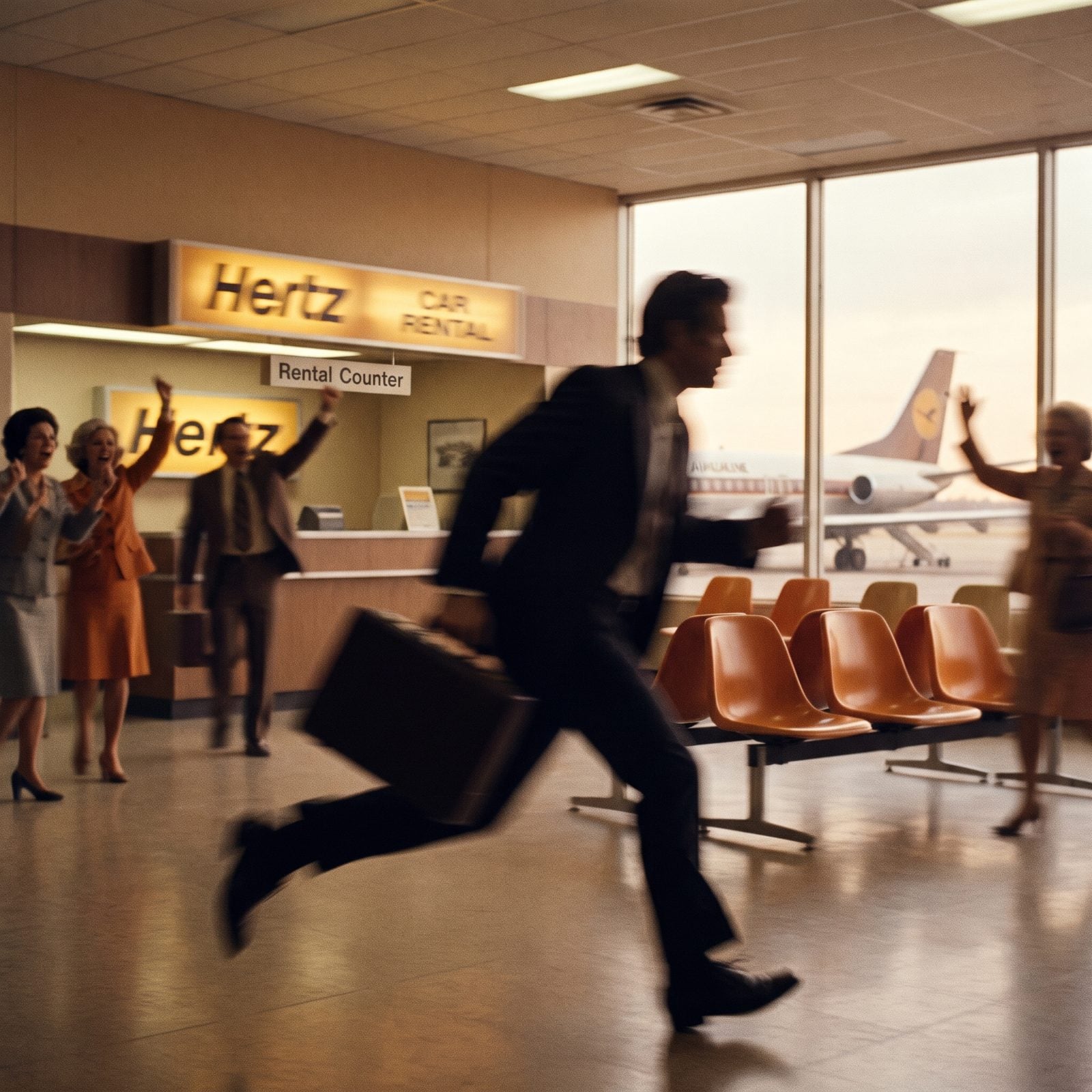
A man in a suit, sprinting through an airport, vaulting over luggage like the whole terminal was a football field. Before the name meant anything else, it meant a Hertz rental car waiting at the gate.
The campaign made renting a car feel like winning. Hertz wasn’t selling a sedan. It was selling the idea that you’d never stand in a line, never wait, never miss a flight — the athlete leaping the baggage carousel was a promise about speed and efficiency wrapped up in motion.
For a long stretch of the 70s it ranked among the most recognized ad campaigns on television, a rare time a rental-car pitch out-ran the cars themselves.
34. Buick: “Wouldn’t You Really Rather Have a Buick?”
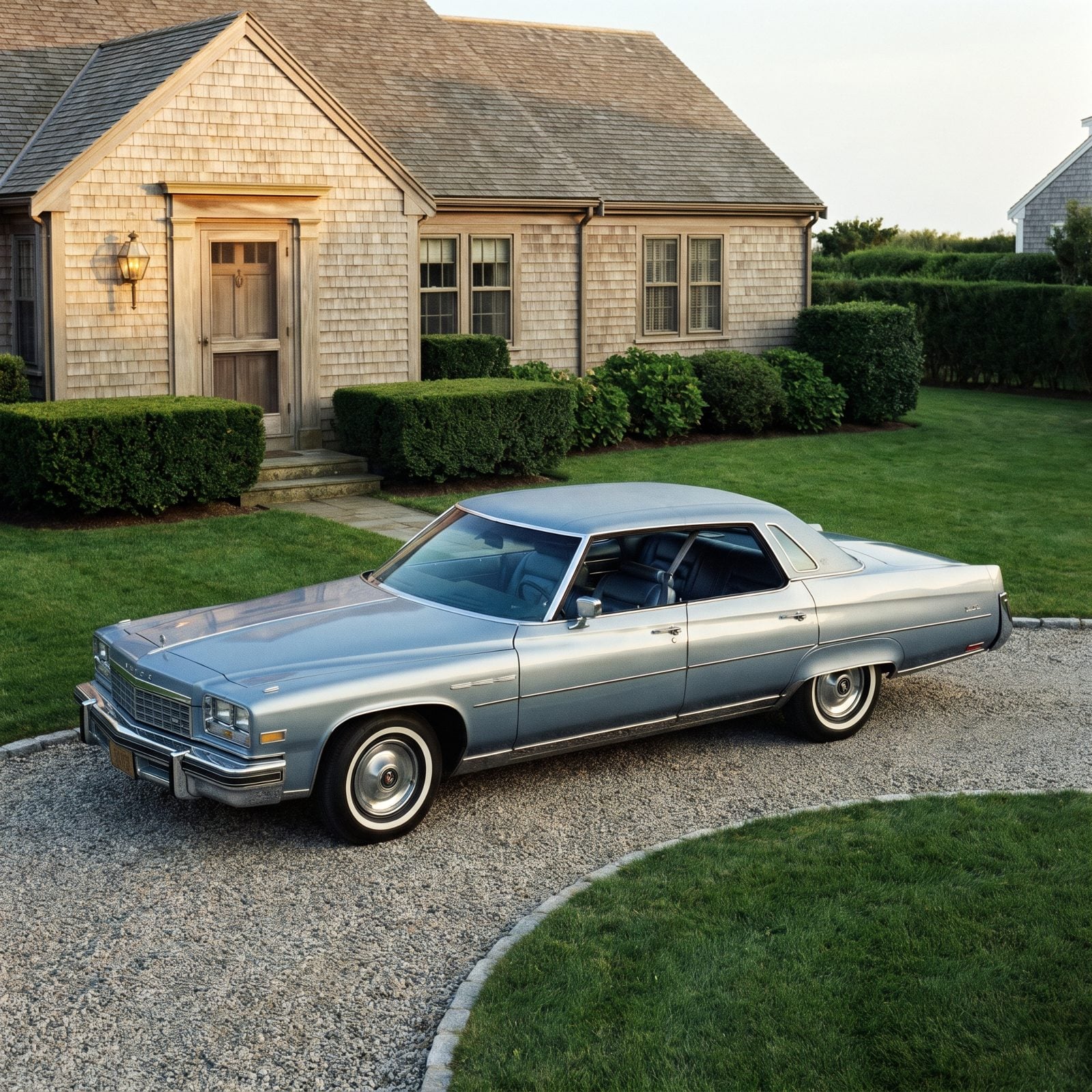
It asked you a question. Not stated a fact — asked. “Wouldn’t you really rather have a Buick?” And buried in that phrasing was the assumption that of course you would, you just hadn’t admitted it yet.
The word doing all the work is “really.” It implied that whatever you were driving now was a compromise, and deep down, past the budget and the practicality, your true self wanted the Electra in the circular driveway. It flattered your taste before you’d spent a dime.
Buick sat right between the everyman Chevy and the splurge of a Cadillac, and this line told you exactly who you were supposed to become.
33. Plymouth Volaré and That “Volare” Song
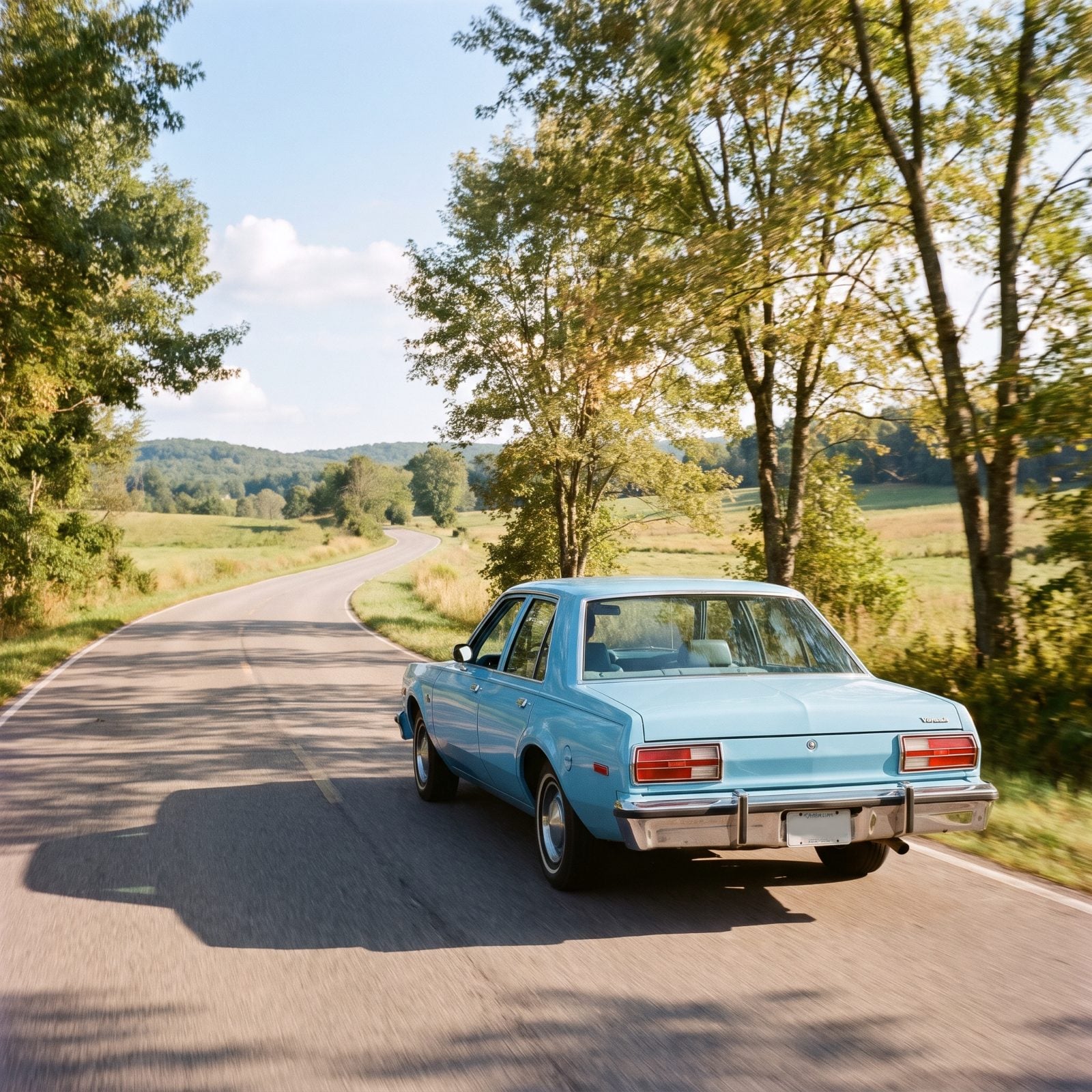
Somebody at Plymouth noticed the car’s name was one accent mark away from an Italian love song. So they did the only logical thing. They bought the song and set the whole campaign to it. “Volare, oh oh, cantare, oh oh oh oh.”
It was shameless and it was brilliant. The Dean Martin standard was already lodged in everyone’s memory, so Plymouth got instant familiarity for free. You heard the car name, your brain finished the melody, and suddenly a modest compact sedan felt like a trip to the Amalfi coast.
The car itself had its share of rust troubles, but that jingle floated above all of it. Fifty years later the song still pulls up the car for anyone who watched TV in 1976.
32. Texaco: “You Can Trust Your Car to the Man Who Wears the Star”
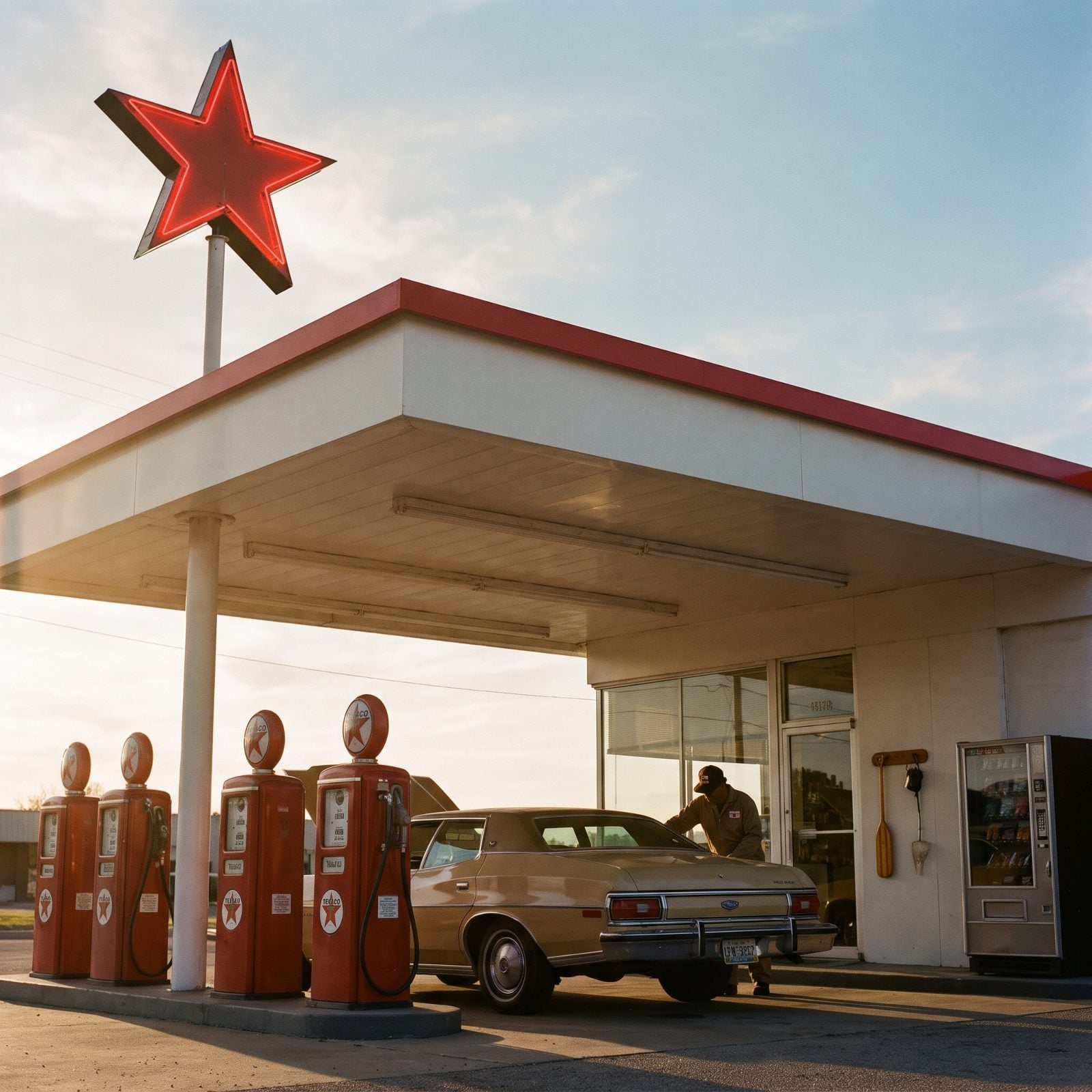
The star on the sign, the star on the pumps, and a jingle that made full-service gas feel like a handshake deal. “You can trust your car to the man who wears the star.”
What this sold wasn’t fuel — it was reliability in human form. The uniformed man who pumped your gas, checked your oil, and squeegeed your windshield became a symbol you could trust, and the whole brand hung on his coveralls and his cap.
When self-serve pumps took over, that promise quietly disappeared with the attendant. We traded the man who wore the star for a card reader and a receipt that may or may not print.
31. AMC Matador: “What’s a Matador?”
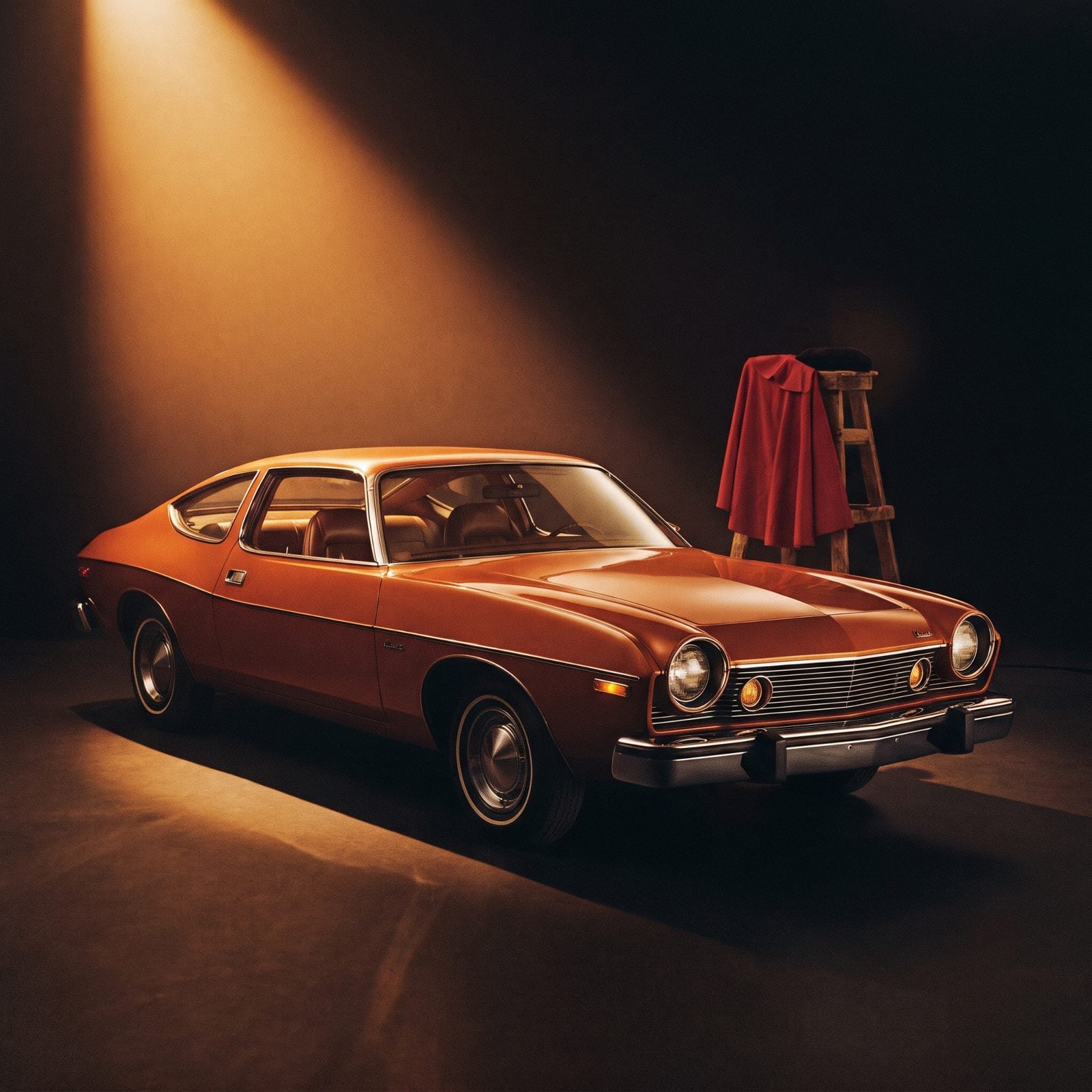
AMC leaned into a problem and turned it into the hook. Nobody knew what a Matador was, so the campaign just asked the question out loud. “What’s a Matador?” Then it answered with bullfighting flair, capes and all.
Smart move for an underdog brand. When you can’t out-spend Ford and GM, you make people say your product name by framing it as a mystery. Curiosity does the advertising for you. Every time someone asked the question, they said the car’s name.
The Matador coupe had wild styling to match the drama — those big oval headlights that looked like nothing else on the road in 1974.
30. AMC Gremlin: “Where’s the Rest of Your Car?”
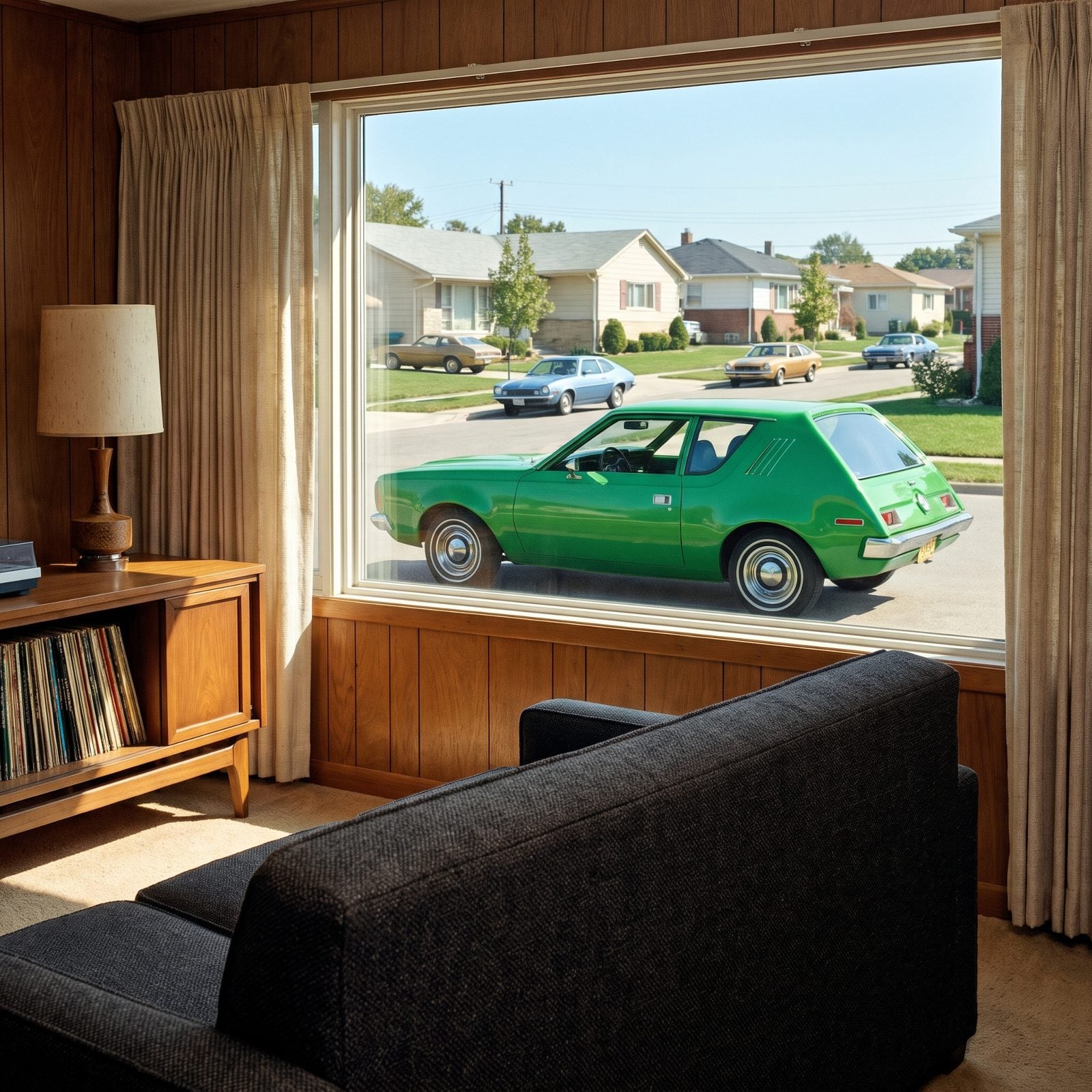
The Gremlin looked like someone took a sawzall to the back of a regular car, and AMC knew it. So instead of hiding the joke, the ads made it. “Where’s the rest of your car?”
That’s rare confidence. Poke fun at your own product before the public does, and the odd shape becomes a personality instead of a flaw. People didn’t buy the Gremlin despite its looks. A lot of them bought it because of the looks, chopped tail and all.
It was cheap, it was weird, and it was honest about being both. In an era of velvet voices and invented leather, that straight-faced self-awareness feels like the most charming pitch on this whole list. Where’s the rest of your car? Right there, and it’s smiling back at you.
Our readers seem to get the joke too: hatchback photos got hearts 45% of the time, versus 65% for the other images in the same articles.
29. Ford Granada: The Car That Dared You to Call It a Mercedes-Benz
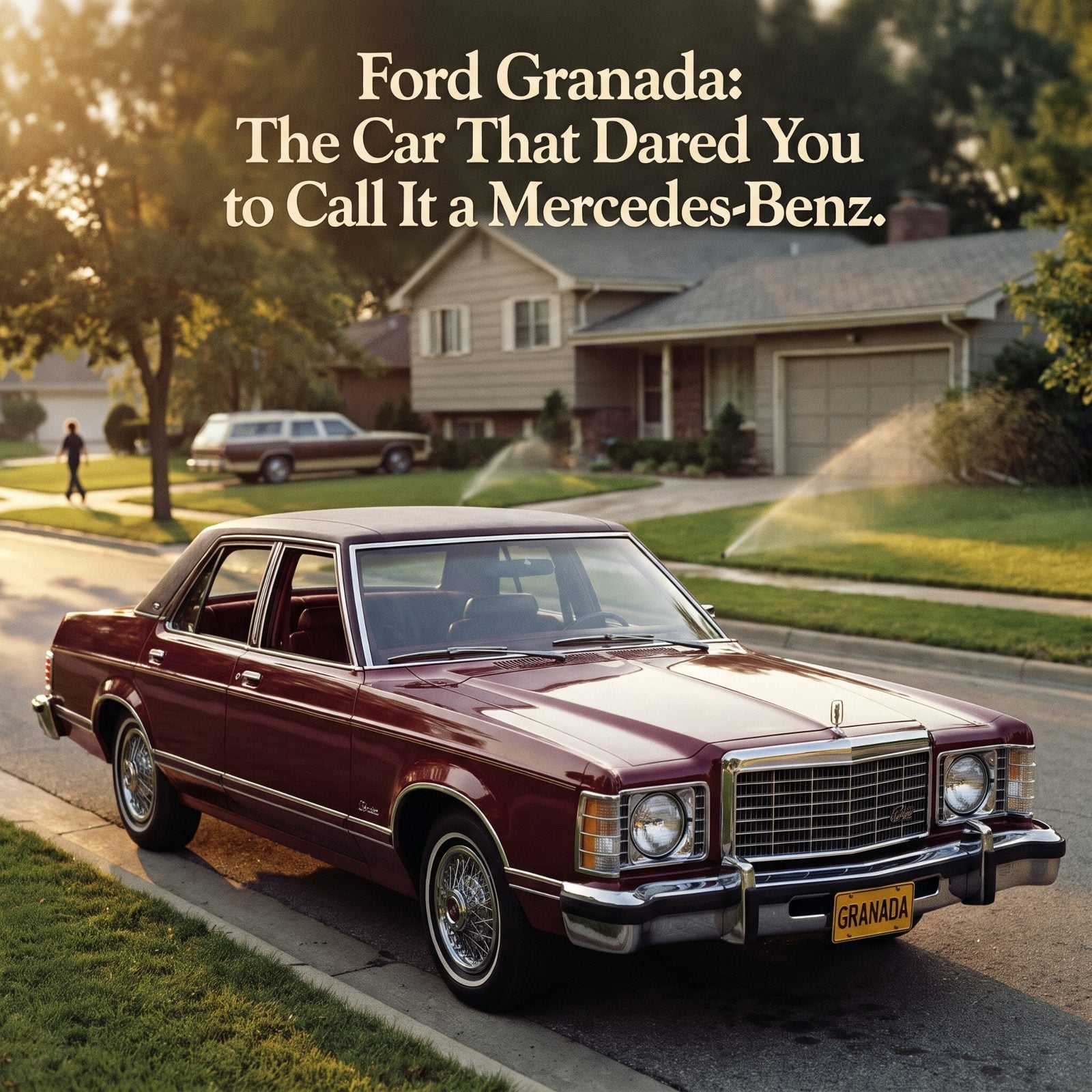
Ford had the nerve to park a Granada next to a Mercedes and ask you to spot the difference. That was the whole pitch. The commercials showed the two cars side by side while a narrator practically dared you to tell them apart, and for a few thousand dollars less you could have the look without the Stuttgart price tag.
It worked because it flattered you. Buy the Granada and you were in on the secret — the landau roof, the stand-up hood ornament, the formal grille, all of it borrowed from across the ocean and sold to a guy in Ohio who wanted to feel like he’d arrived.
28. Fram Oil Filters: “You Can Pay Me Now, or Pay Me Later”
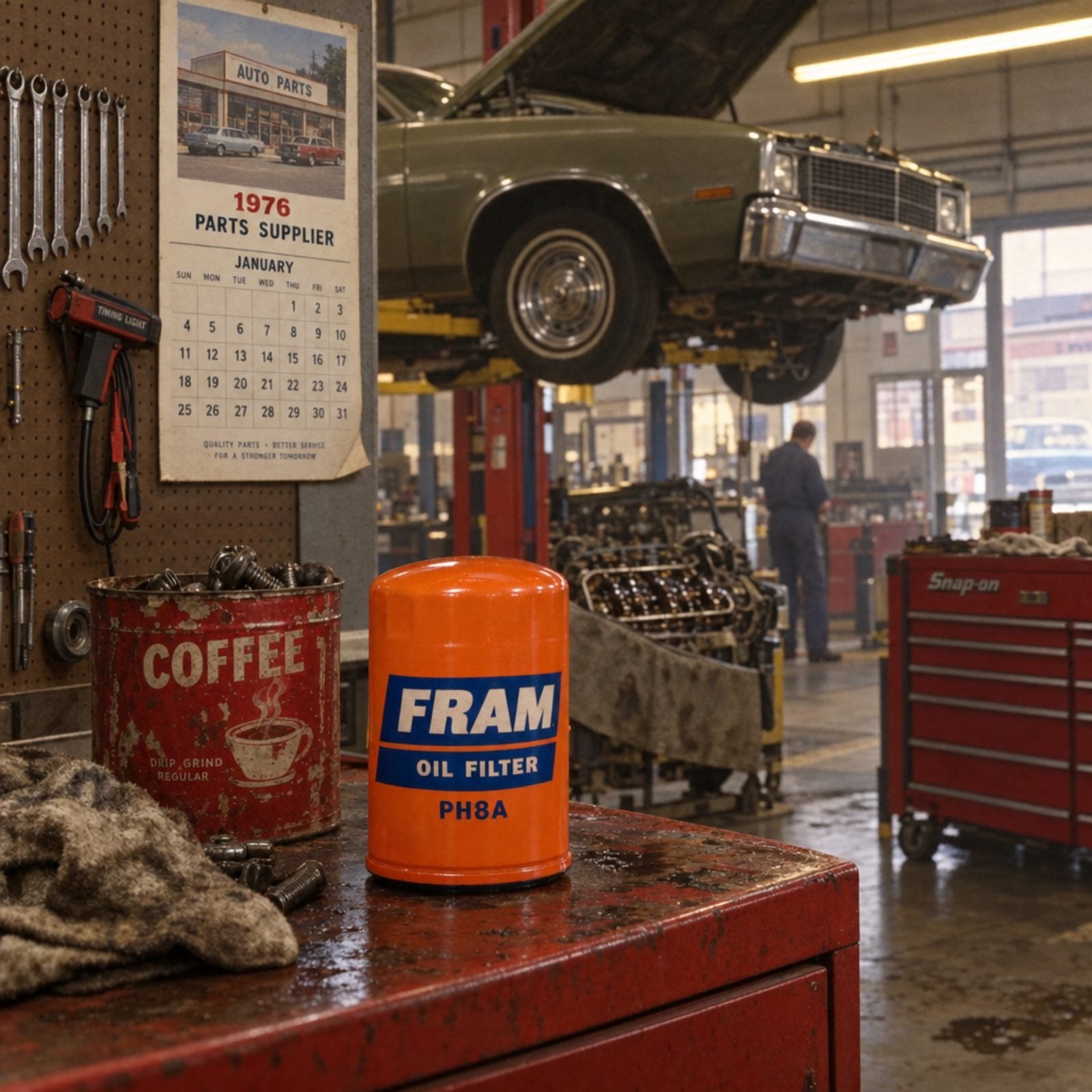
A cheap orange-and-blue Fram oil filter sits on a battered red workbench beside a rusty coffee can of bolts, while behind it a car with its hood up sits raised on a lift and a mechanic in coveralls works farther back in the shop. “You can pay me now,” the mechanic says. Long pause. “Or pay me later.” The open engine bay in the background makes the point like a judge handing down a sentence.
Nobody forgot that line, because it turned a four-dollar filter into a moral choice. Skip it today and you’re rebuilding the whole engine next spring — and the guy saying it had clearly watched that happen a hundred times.
The ad ran for years because it was basically true. A good filter is cheap insurance. Fram just managed to make you feel the regret before you’d even earned it.
27. Midas: “Trust the Midas Touch”
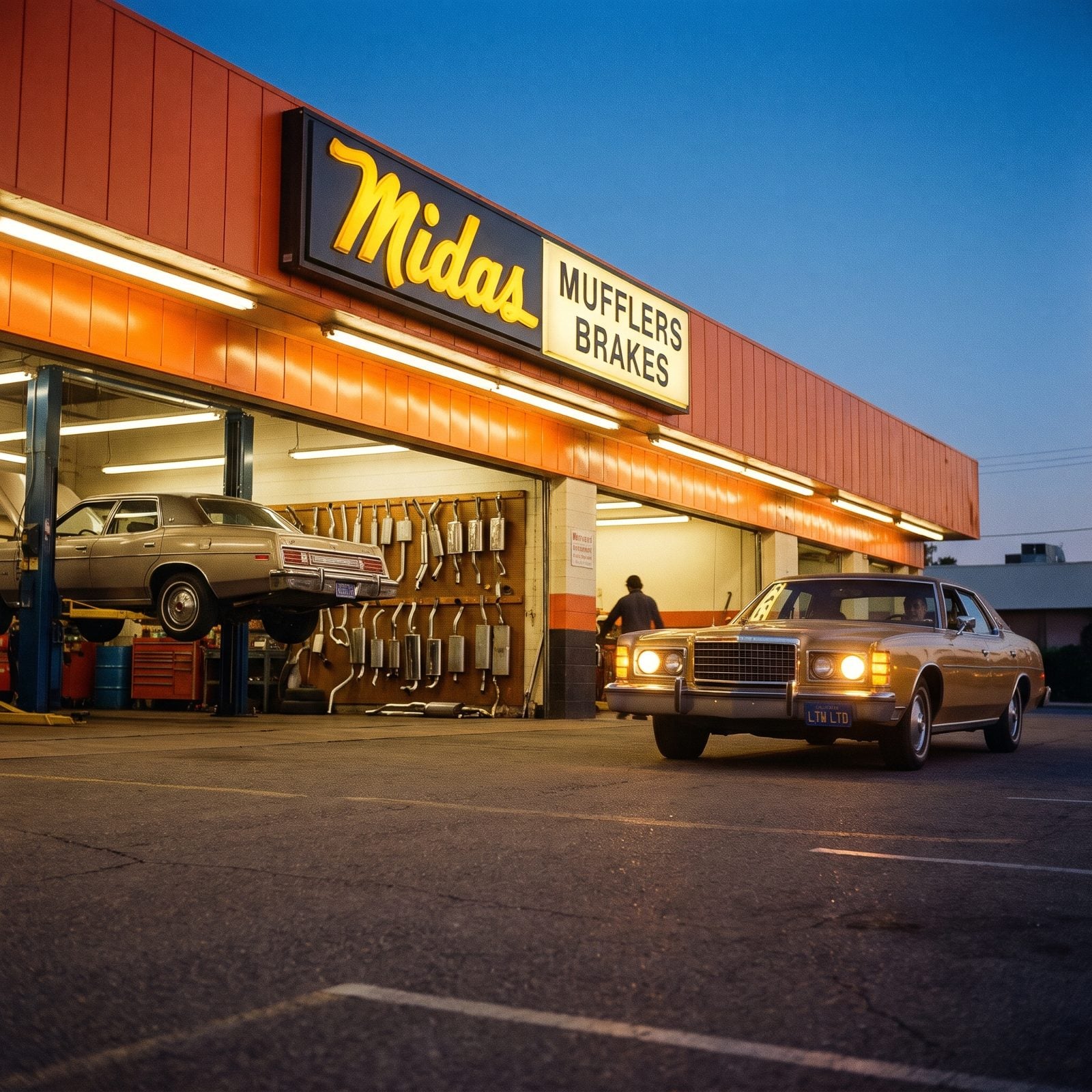
Four words that promised you wouldn’t get ripped off. “Trust the Midas Touch” leaned on the old King Midas fable — everything he touched turning to gold — and bent it into a promise about your exhaust system, of all things.
What made it stick was the implication underneath. Mufflers and brakes were exactly where a shady shop could invent problems you couldn’t see or hear. Midas built a national brand on being the place that wouldn’t do that to you.
26. BMW: “The Ultimate Driving Machine”
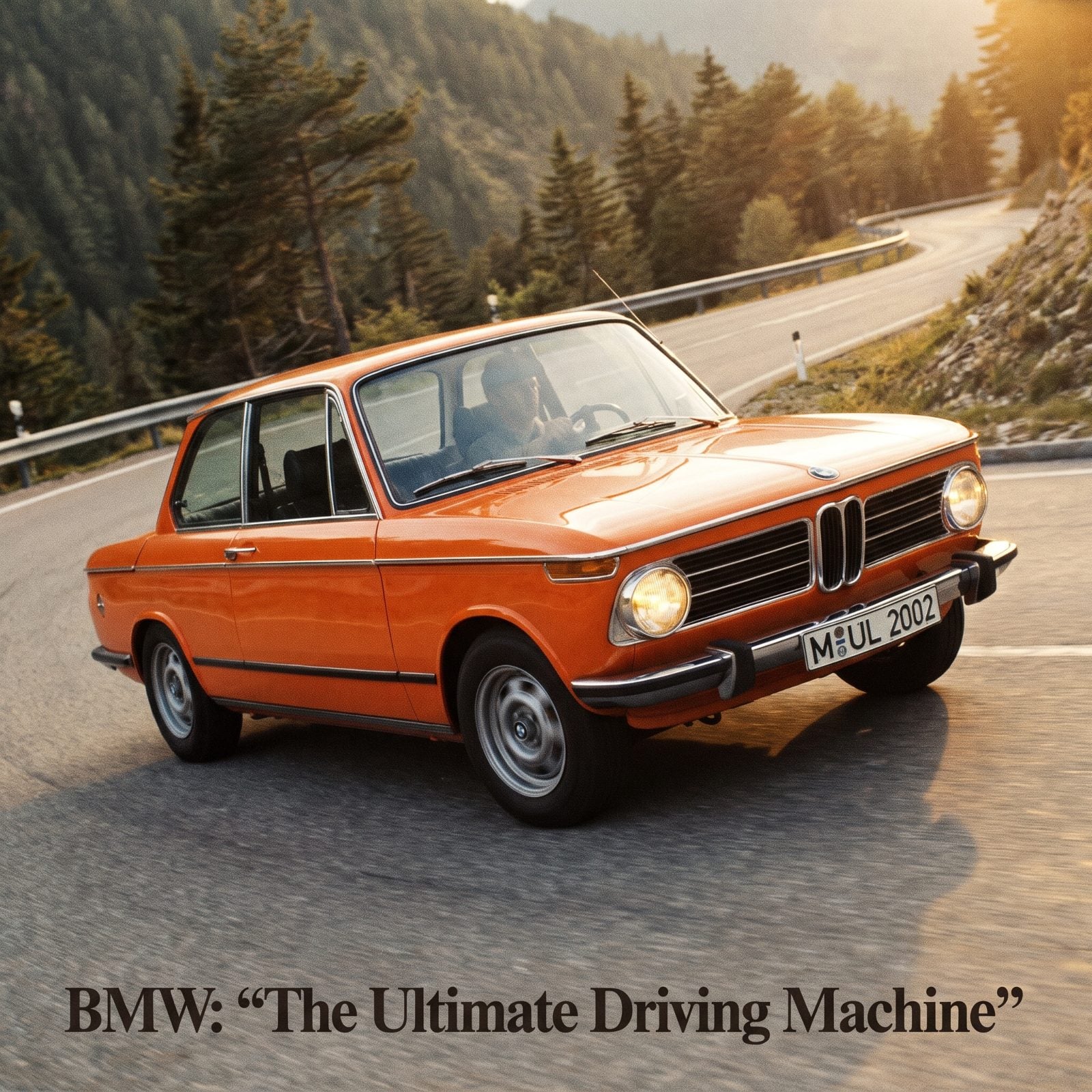
Most car ads in the ’70s sold you a living room on wheels. Plush seats, a quiet ride, a place to relax after the office. BMW walked in and sold the exact opposite — the car was for driving, and driving was the whole point.
“The Ultimate Driving Machine” landed in American ads around 1975 and it split the room cleanly. This wasn’t for the guy who wanted a Cadillac’s float. It was for the guy who wanted to feel the road coming up through his hands.
Four words that told you exactly who the car was for, and quietly told everyone else to go buy something softer.
25. Mercedes-Benz: “Engineered Like No Other Car in the World”
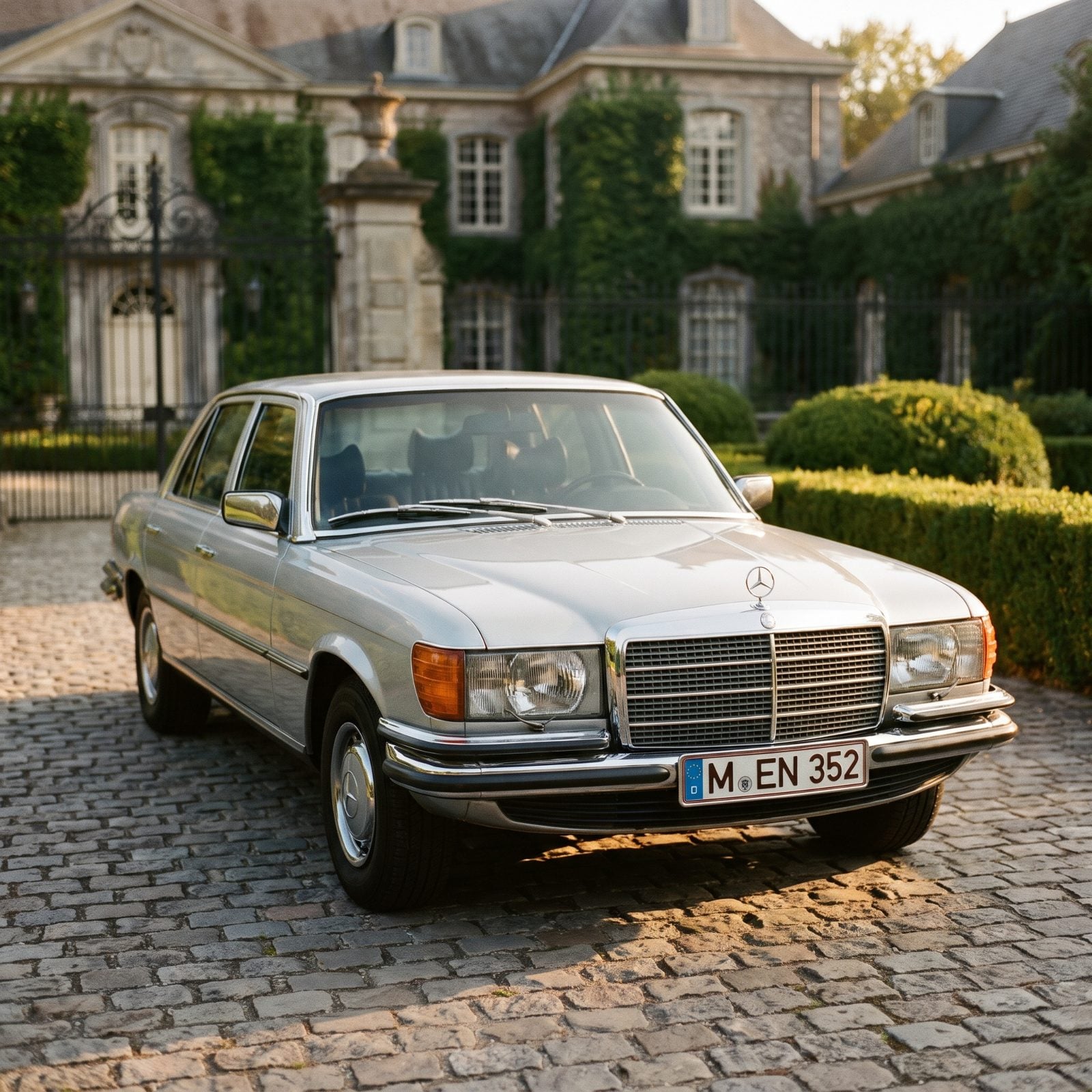
No jingle. No smiling family piling into the back seat. Just a slow narrator and the words “Engineered Like No Other Car in the World,” delivered with the confidence of a brand that genuinely believed every syllable of it.
The ads were almost boring on purpose. They’d walk you through crumple zones, braking tests, the way a door shut with a solid thunk you could practically feel in your chest. Mercedes was selling the opposite of fantasy — the feeling that nothing would ever go wrong.
24. Cadillac: “The Standard of the World”
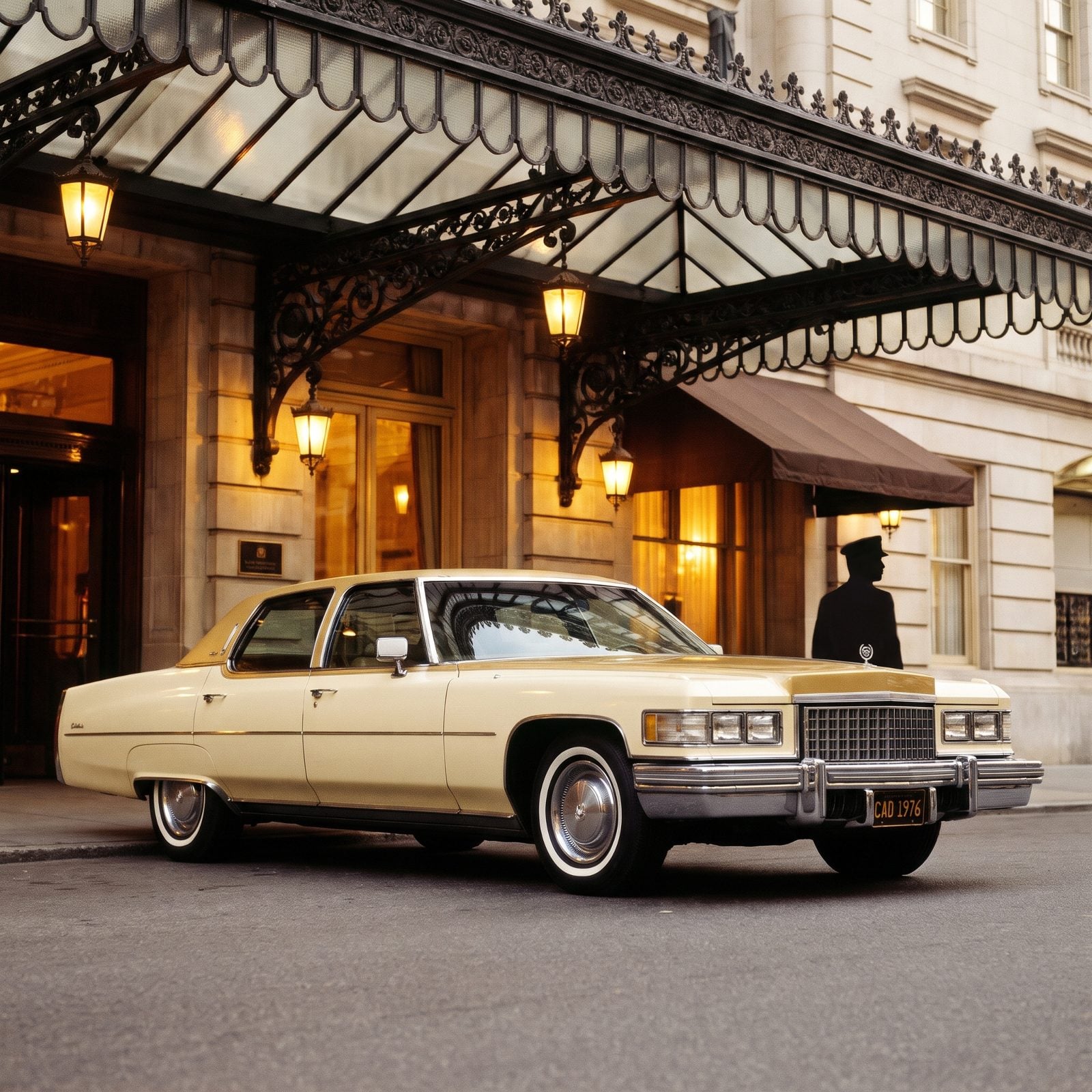
By the 1970s this slogan had been running so long it felt less like advertising and more like a fact of life. Cadillac had been “The Standard of the World” since before most buyers were born, and the brand wore it like an inherited title it never had to earn twice.
The whole pitch was that other luxury cars measured themselves against the Cadillac, not the other way around. For a generation that climbed from a Chevy to a Buick to a Caddy, that final badge meant you’d made it.
Then the imports showed up and started quietly reversing the arrow. But for most of the decade, parking a Fleetwood under a hotel canopy still said everything you needed it to say.
23. Oldsmobile: “Can We Build One for You?”
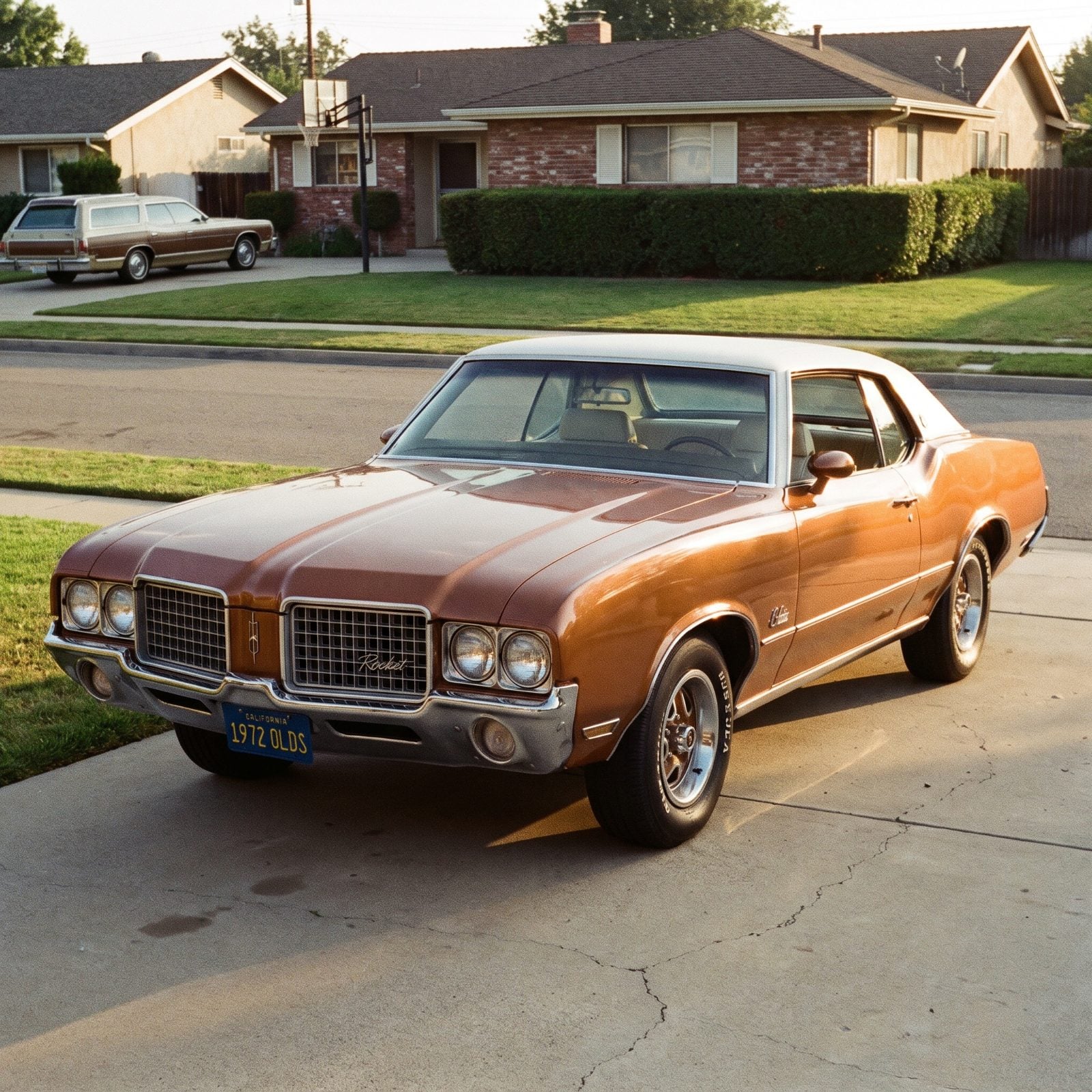
The line sounded like a question but it was really a handshake. “Can We Build One for You?” Oldsmobile essentially pulled a chair out and asked you to sit down, picture your Cutlass, and let them put it together.
It was friendlier than most of what Detroit was doing back then. No talk of beating the competition, no chest-thumping — just a warm invitation that treated you like a person worth building a car for.
22. Mercury: “At the Sign of the Cat”
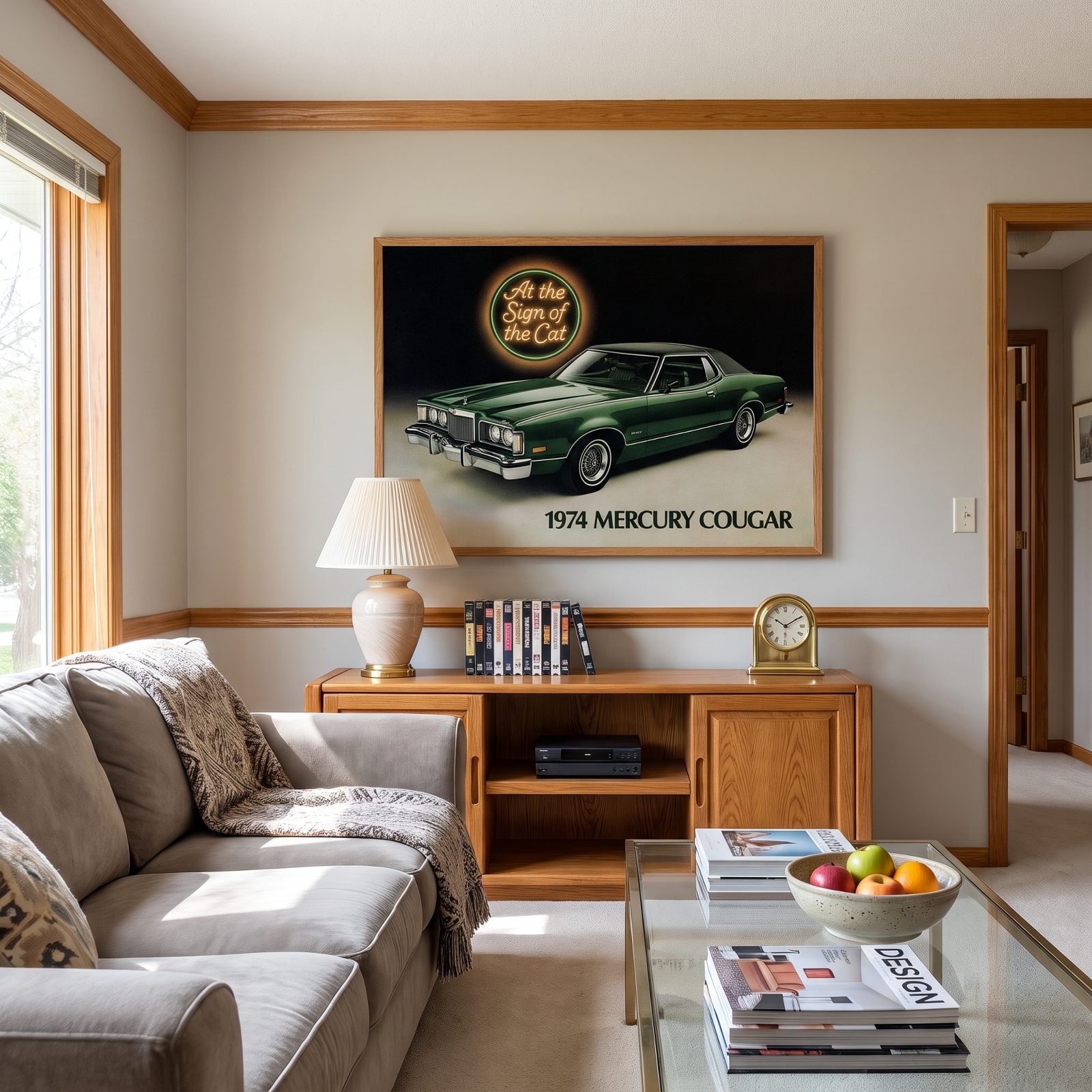
Mercury had a problem. Stuck between Ford and Lincoln, it risked being the brand nobody remembered. The cat fixed that.
“At the Sign of the Cat” tied the whole Lincoln-Mercury dealer network to the prowling Cougar emblem, and the ads leaned hard into the imagery — sleek, quiet, a little predatory. A car with some attitude for the man who wanted more than a plain Ford but wasn’t ready to spring for a Lincoln.
That cat became the brand’s whole personality for a stretch there. You’d see the sign glowing over a dealership at night and know exactly what lived inside.
21. AMC: “The Buyer Protection Plan”
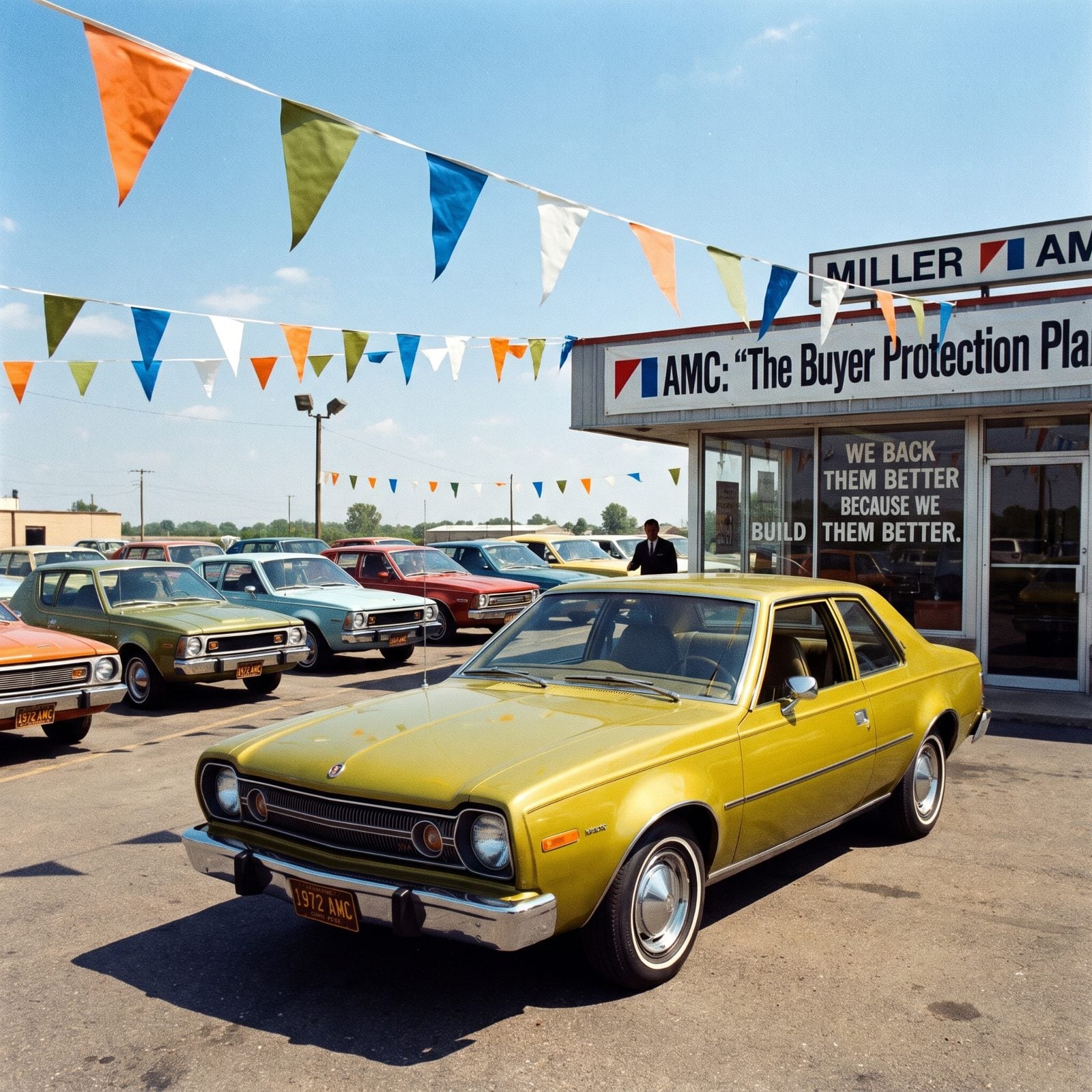
When you’re the smallest of the Big Four, you can’t win on prestige. So AMC won on trust. The Buyer Protection Plan promised to fix anything that broke in the first year, down to the smallest part, and to hand you a loaner if the repair ran overnight.
A genuinely radical idea for 1972. Detroit sold you the car and wished you luck. AMC said, in effect, we stand behind this thing — and we’ll prove it in writing.
20. AMC Pacer: “The First Wide Small Car”
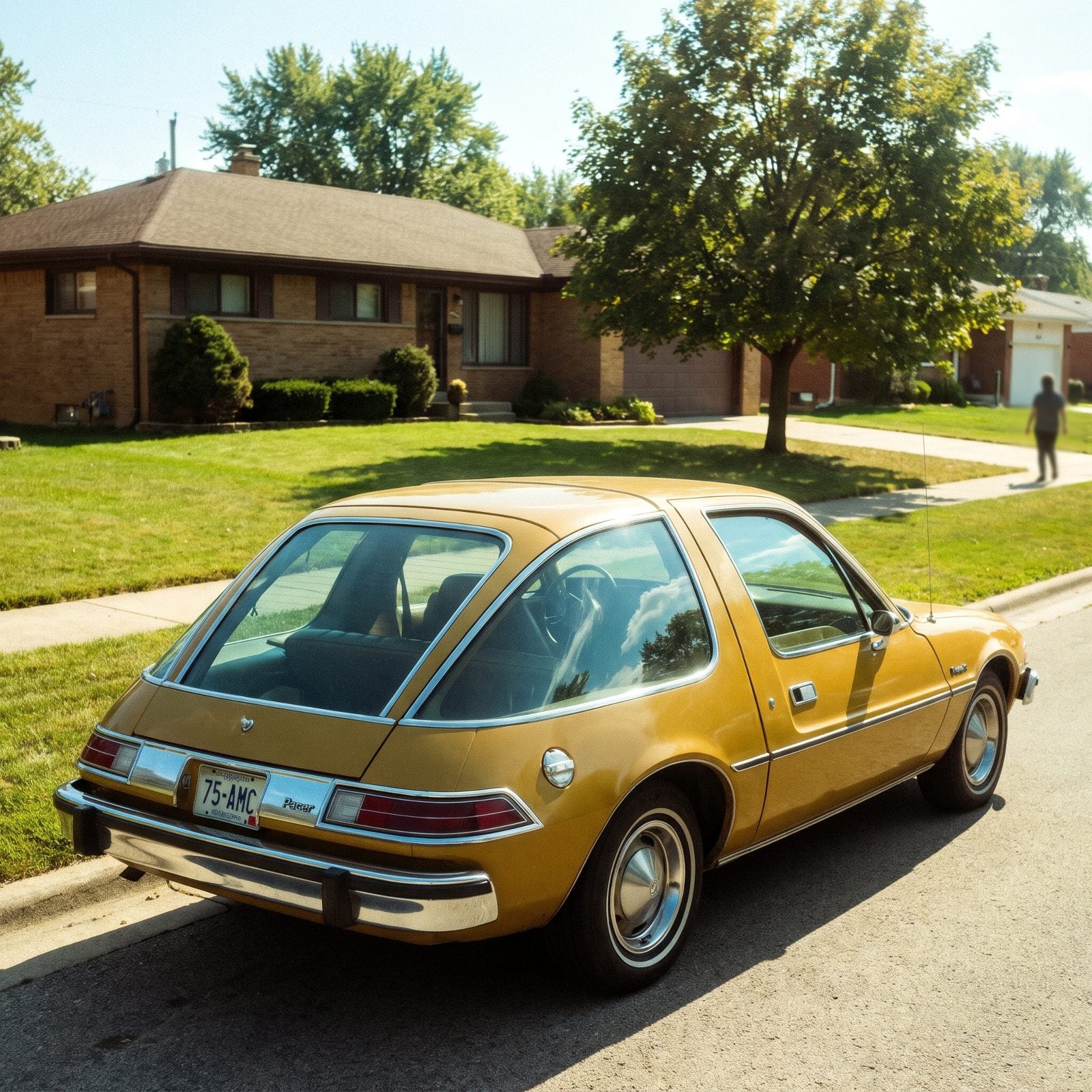
Every other small car sold itself as thrifty and tidy. The Pacer rolled up looking like a glass bubble off a sci-fi set and announced “The First Wide Small Car,” as if being wide was obviously the next step nobody else had thought of.
The pitch was genuinely clever. Small on the outside for parking and gas, but as wide as a full-size car inside, so you weren’t crammed shoulder to shoulder. Those enormous windows made the whole thing feel open and bright.
It became the most distinctive-looking car of the decade, for better and for worse. You could spot one from three blocks away. Whatever else you want to say about it — and people said plenty — nobody ever mistook a Pacer for anything else on the road.
19. Dodge and the “Adult Toys” Campaign That Sold Grown-Ups Permission
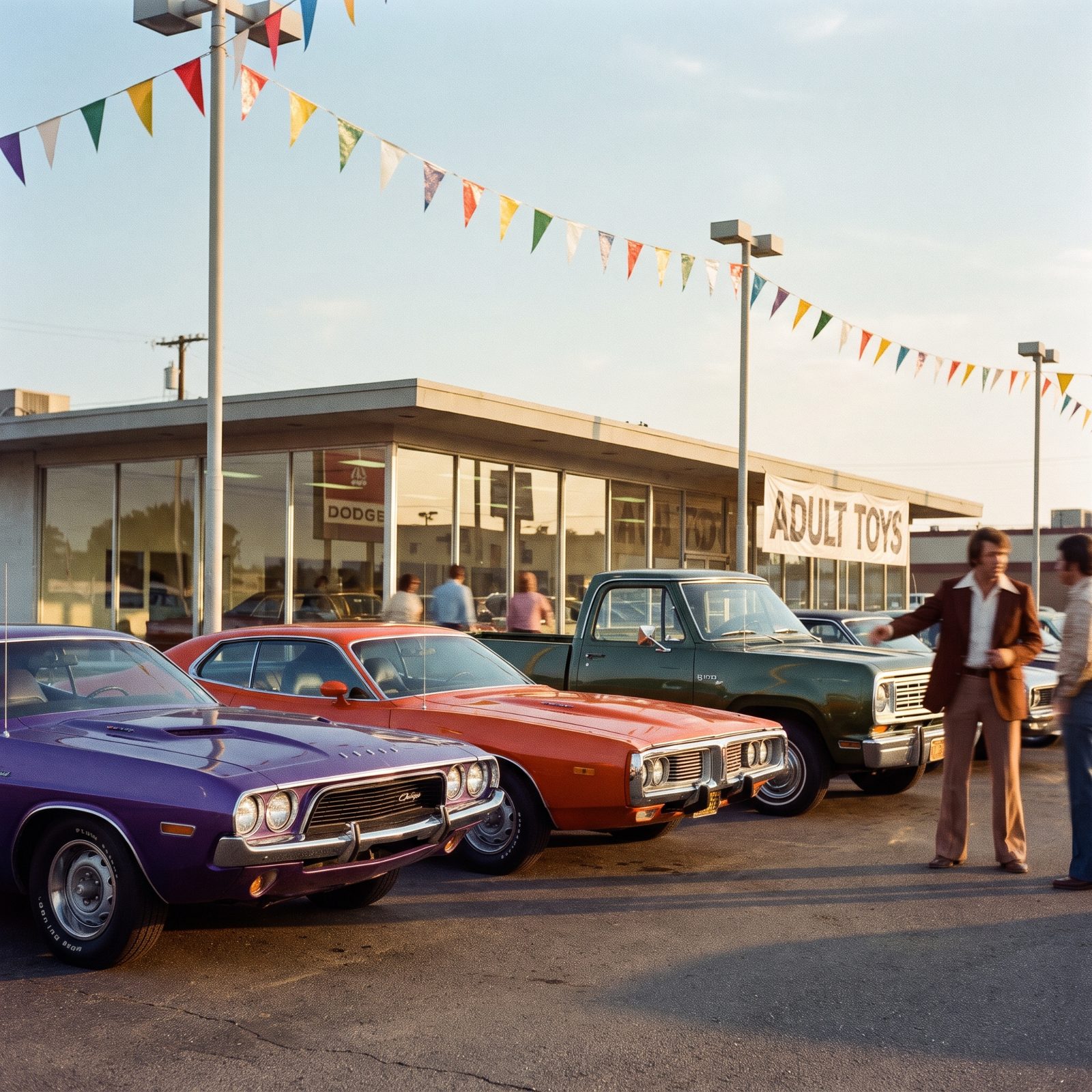
Dodge called them “adult toys,” and the whole pitch lived in that wink. Nobody needed a Challenger — that was the point. The campaign reframed the muscle car and the pickup as something you bought because you wanted to, not because the family hauler finally gave up the ghost one freezing morning in the driveway and left you stranded.
It landed because it flattered you. Buying a toy sounds frivolous. Buying an adult toy, though, sounds like a reward you earned, and clever people wrote that line knowing exactly which nerve they were pressing.
Grown-ups still want those toys: Jalopy Talk readers gave muscle car photos hearts 87% of the time, compared with 80% for the other images in the same articles.
18. “The Dodge Boys” and the Handshake That Came With the Keys
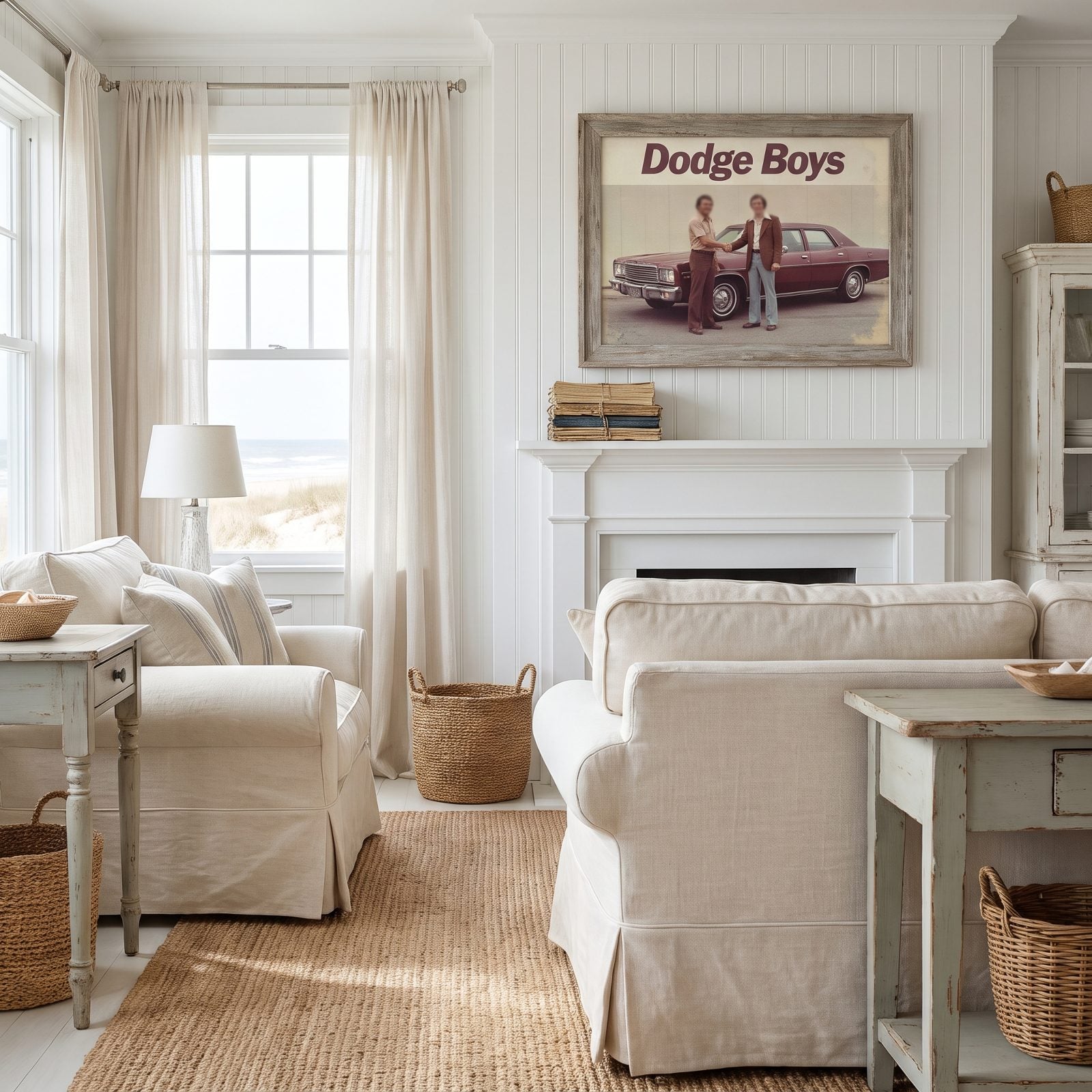
“See the Dodge Boys.” You heard it a hundred Saturdays, usually shouted by a local announcer over footage of a dealership waving at you like your own family. The genius was turning a faceless corporation into a crew of regular fellas who’d shoot you straight.
Why did it work? Buying a car is a trust problem, and people hate feeling fleeced. Calling the whole dealership “the boys” made the transaction feel like a favor between pals rather than a negotiation you were about to lose. One of the warmest pieces of ad language the decade produced, and it cost almost nothing to say.
17. Plymouth’s Rapid Transit System: When a Brochure Thought It Was a Rock Album
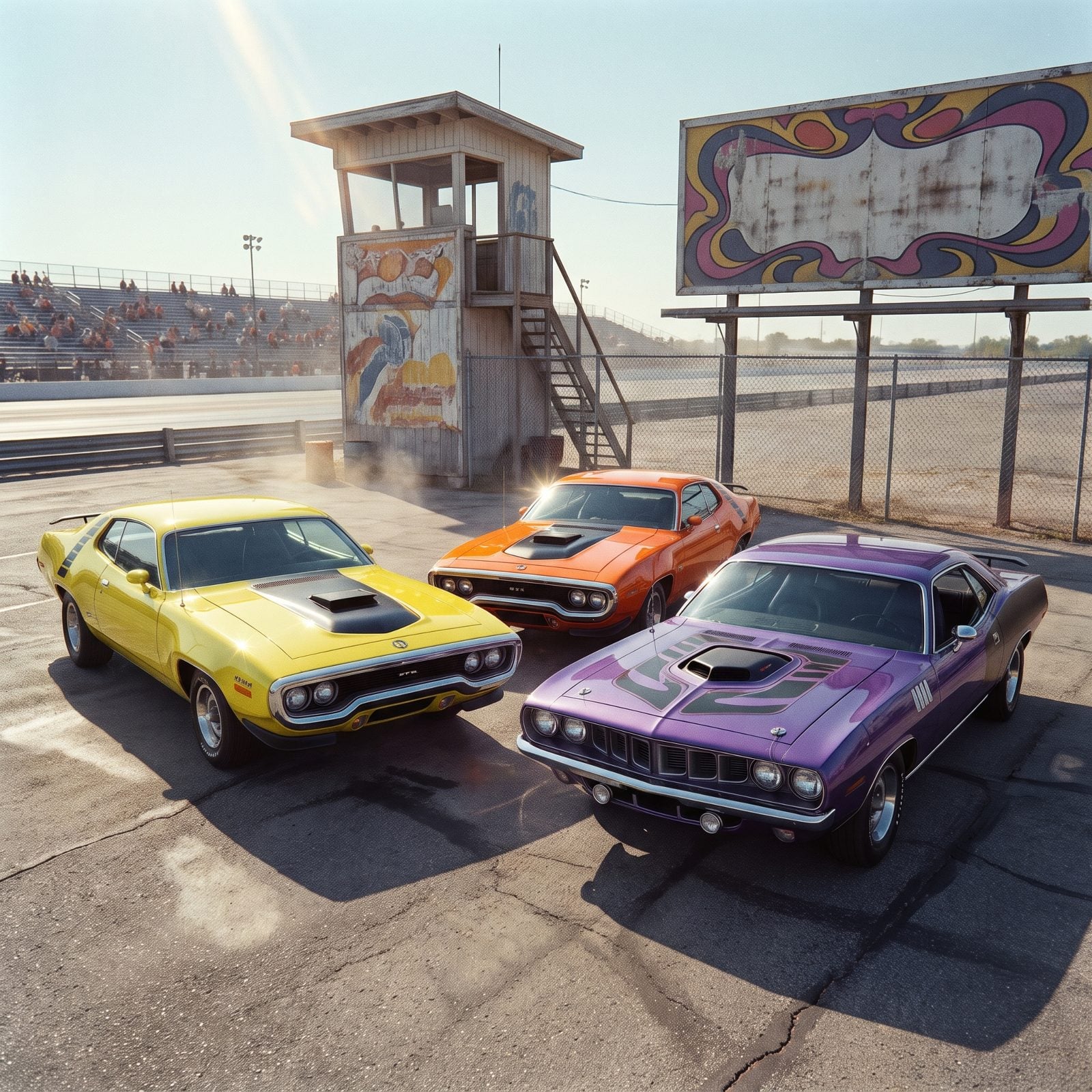
Plymouth tried to bottle youth culture and name it like a band.
The Rapid Transit System packaged the Road Runner, the ‘Cuda and the GTX as a kind of touring act — wild colors, a traveling custom-car show, and brochures that read more like liner notes than specs. Marketing aimed straight at the kid who taped posters to his bedroom wall.
Did it sell cars? Some. Did it make Plymouth feel like the hippest thing on four wheels for about two years? Absolutely. Then insurance rates and gas prices arrived and the whole party packed up.
16. The Plymouth Duster and the Cartoon Dust Cloud Nobody Could Forget
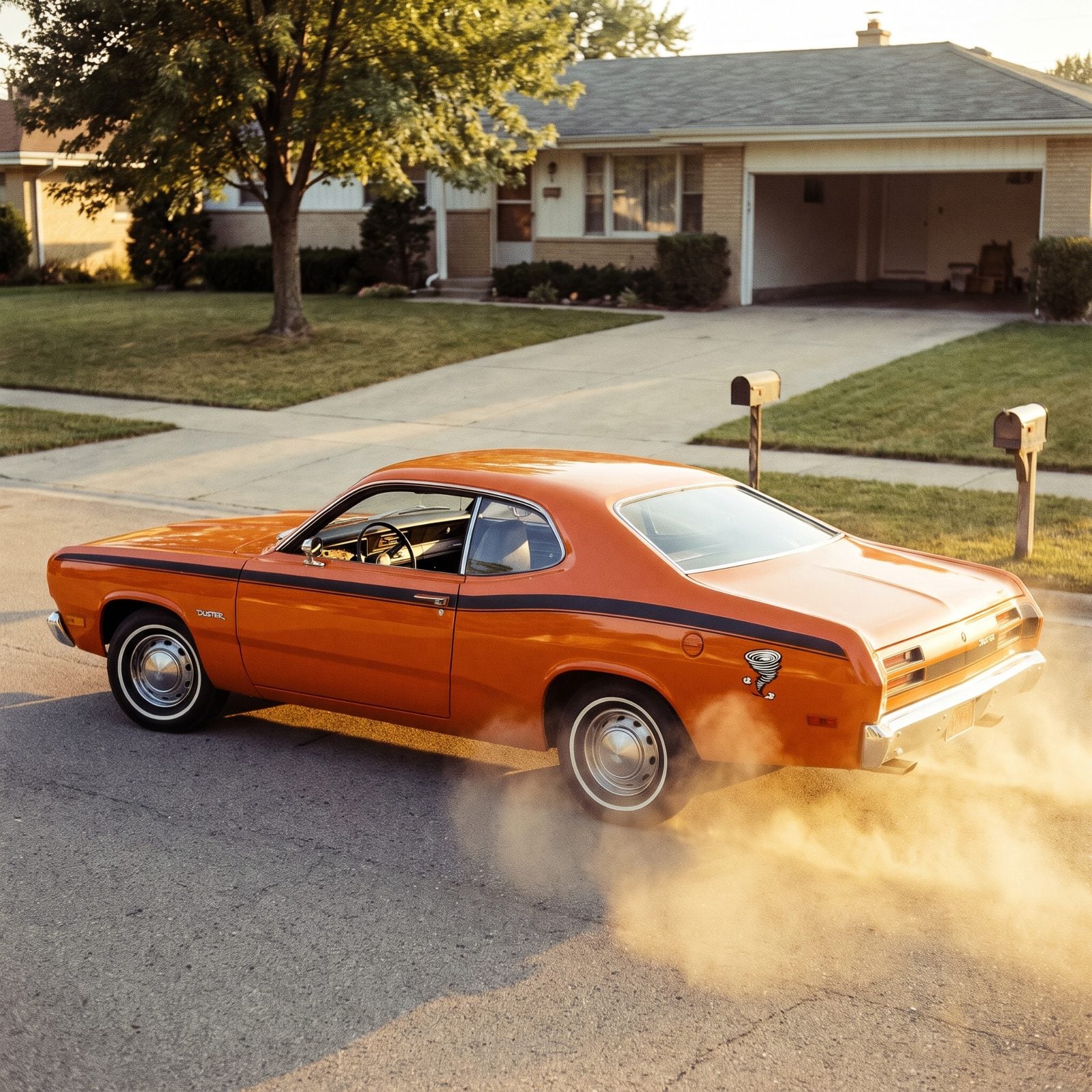
Plymouth handed the budget-friendly Duster a swirling cartoon dust-devil as its mascot, and suddenly a cheap compact had a wink and a personality all its own. The little whirlwind showed up on badges, on ads, and in that unmistakable animated spot where the dust cloud zipped around the screen like it owned the place.
Smart move. Economy cars are easy to make boring. The cartoon did the heavy lifting of saying “this one’s fun” without a single horsepower figure, and kids pointed at the badge. That’s half the battle right there.
15. Volkswagen’s “Lemon” and “Nobody’s Perfect”: The Ads That Admitted the Flaw
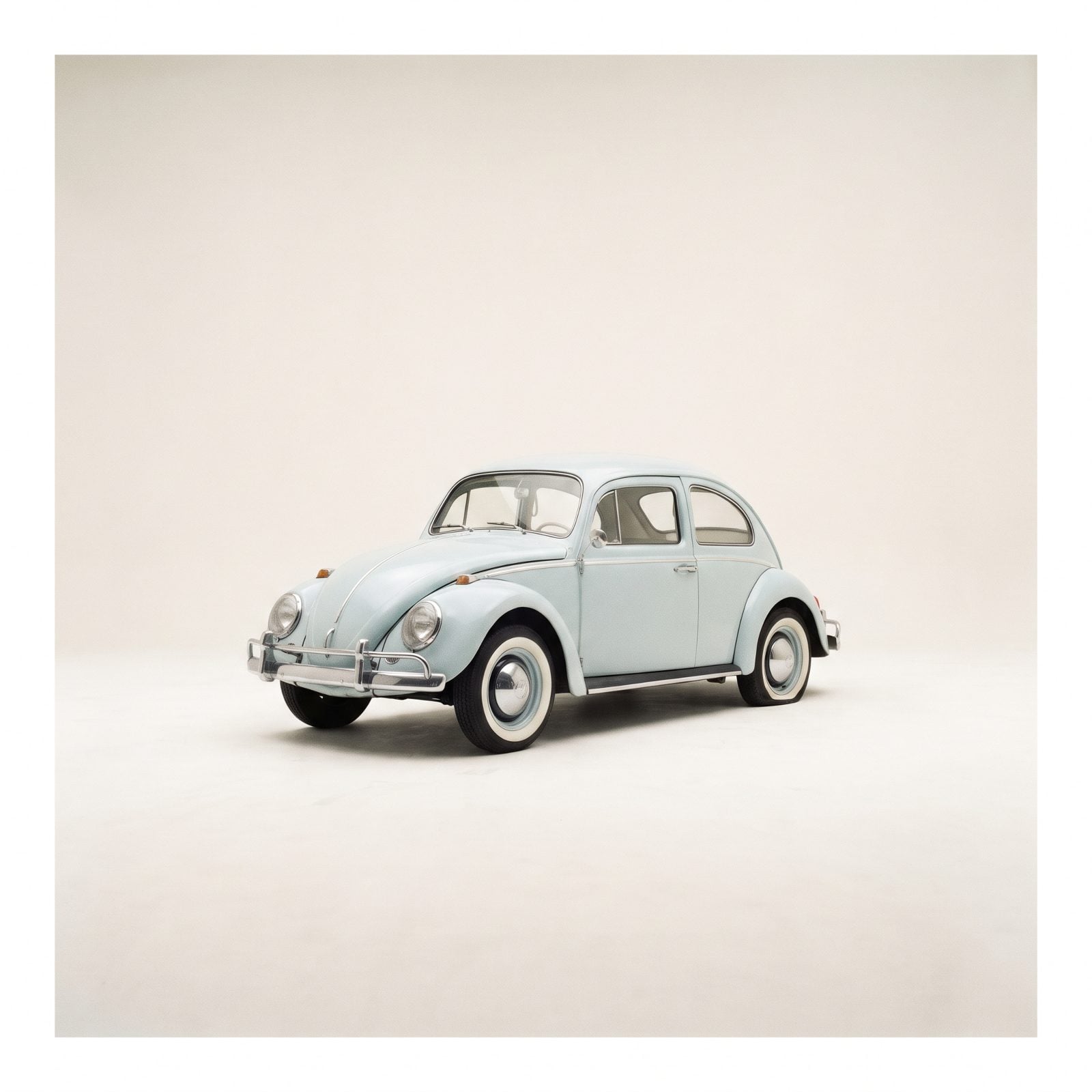
Volkswagen ran a full-page ad showing a Beetle and a single word: “Lemon.” The copy explained the car never made it to the showroom because an inspector caught a blemished chrome strip. The headline “Nobody’s Perfect” carried the same cheek. Admit the flaw, then flip it into proof of how carefully they built the thing.
This upended every rule in car advertising. Everyone else was shouting about power and prestige. VW whispered, got self-deprecating, and trusted you to be clever enough to get the joke — some of the sharpest copywriting the business ever produced, and I’ll defend that to anyone.
Admit the small flaw and the reader believes the bigger claim. That’s the oldest trust trick in the book, and VW ran it beautifully.
14. Fiat Strada: “Handbuilt by Robots” and the Jingle That Set Verdi to an Assembly Line
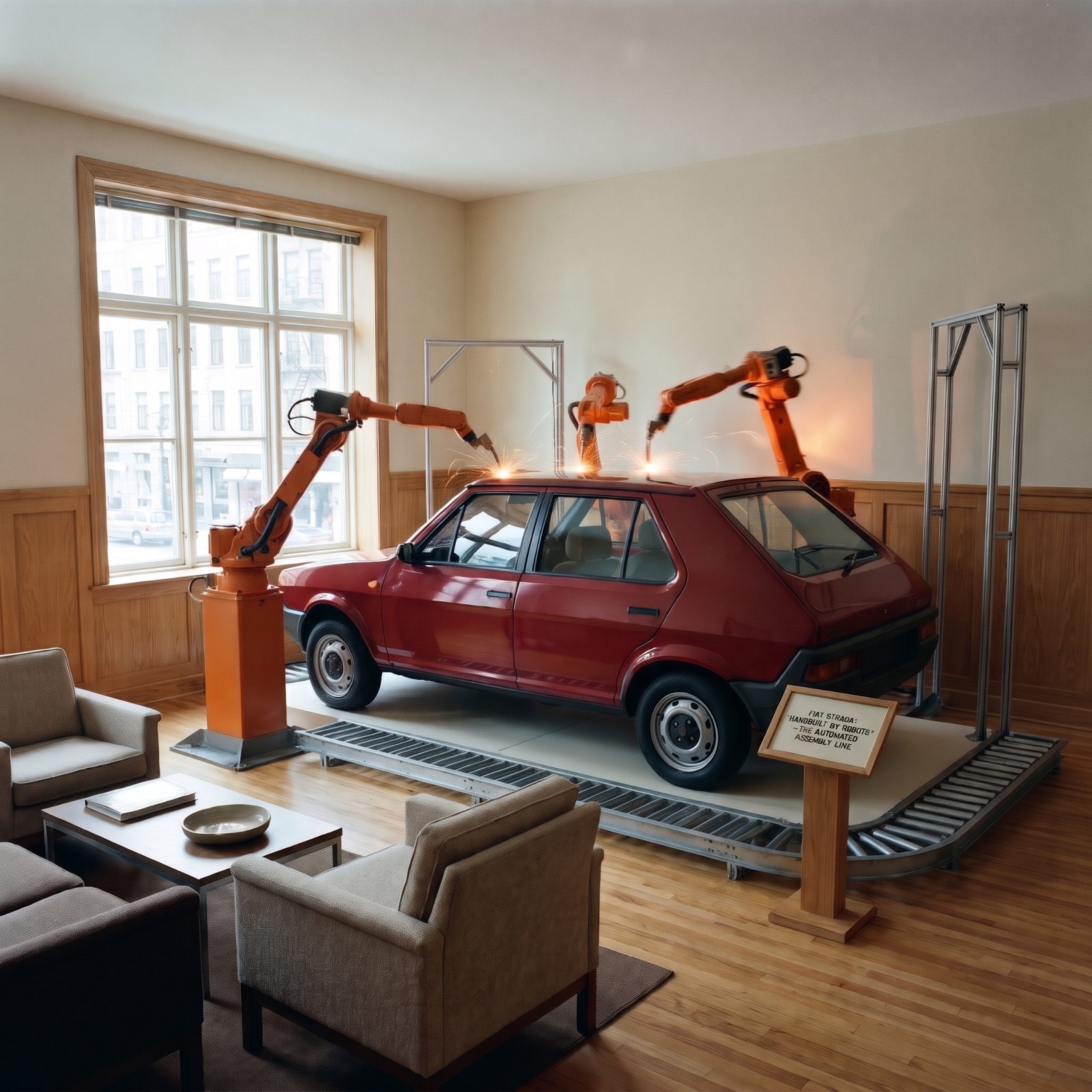
A car ad scored to opera — and it absolutely worked.
Fiat’s “Handbuilt by Robots” spot showed welding arms wheeling around the Strada while a soaring aria played, turning the cold reality of automation into something almost romantic. The slogan itself is a lovely contradiction: handbuilt and robots in the same breath.
British buyers had a running joke about Italian cars rusting. The campaign got ahead of it by implying machine precision had fixed all that. Whether the Strada actually held up is another story entirely, but the advertising was pure confidence.
13. Triumph TR7: “The Shape of Things to Come” and That Wedge Nobody Forgot
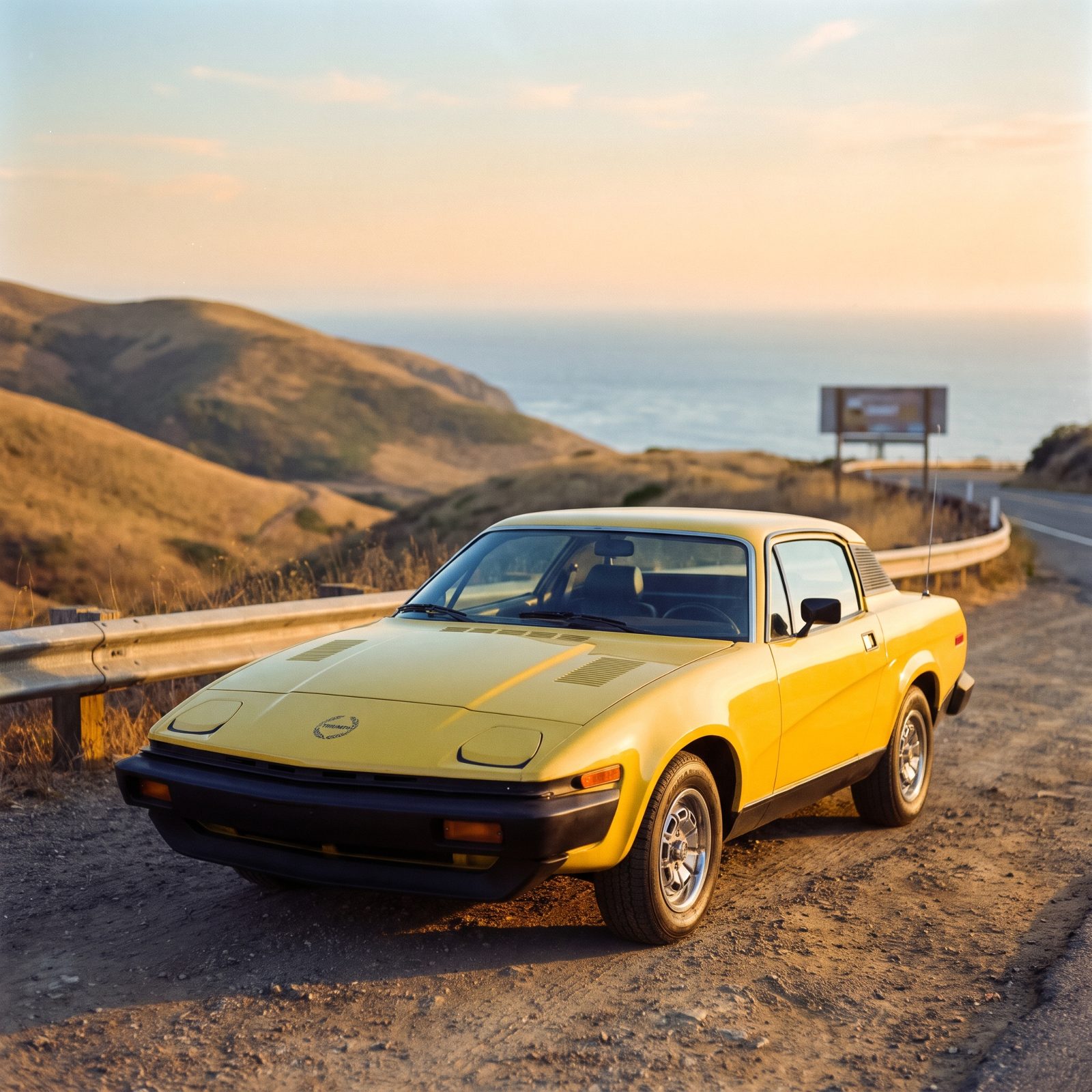
The TR7 arrived as a doorstop on wheels, and Triumph leaned all the way in with “The Shape of Things to Come.” That wedge profile split opinion hard. You either thought it looked like tomorrow or like a car somebody drew with a set square and a grudge.
The slogan was a promise that the sharp angles were deliberate, not an accident of the design office. Sometimes an ad’s whole job is telling you the weird thing is intentional, so you stop apologizing for liking it. For a certain kind of buyer in 1976, that was enough.
12. Mazda GLC: “Great Little Car” and the Acronym You Said Out Loud
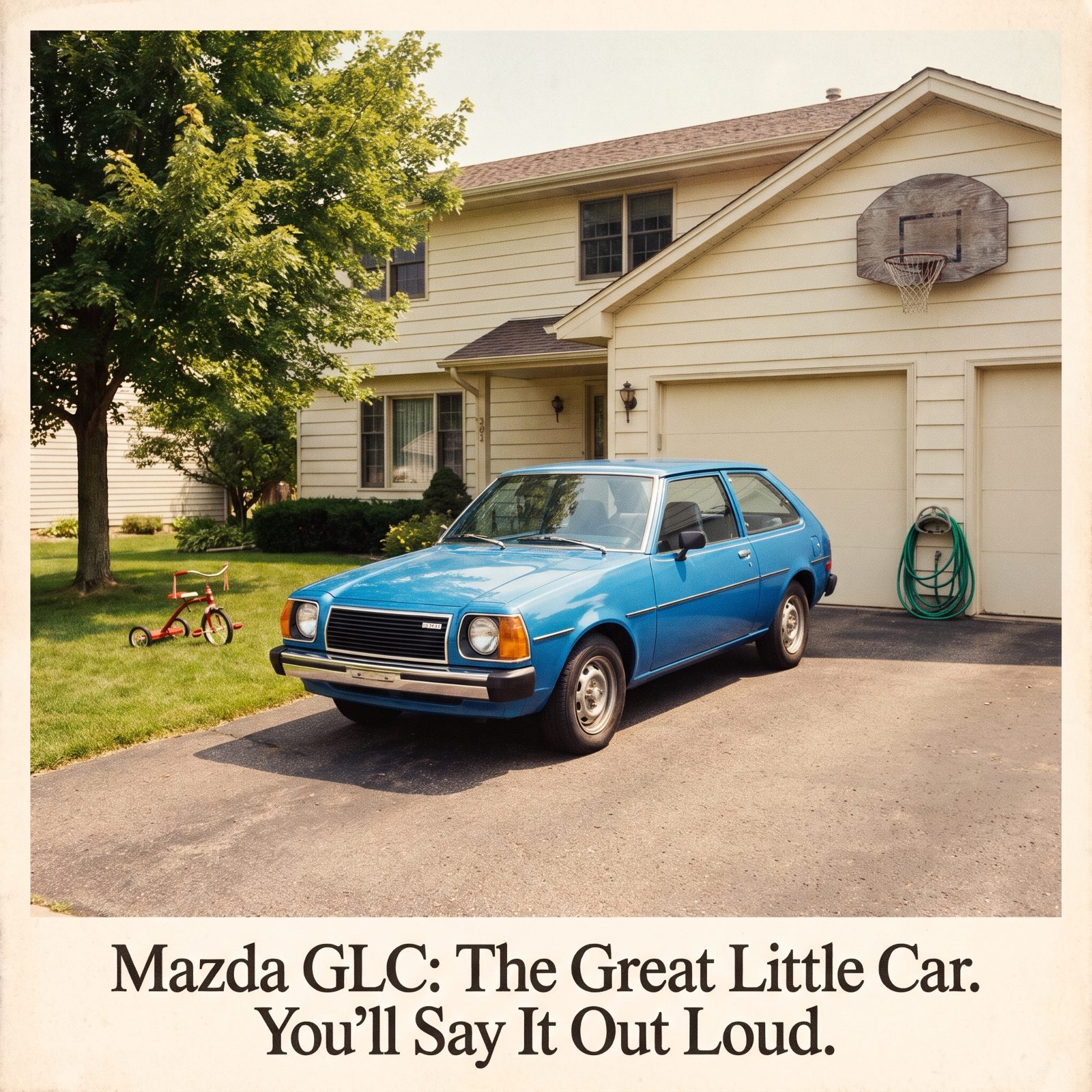
Mazda took a plain fact — Great Little Car — and turned it into GLC. Say the acronym and you’ve already said the pitch. That’s the kind of tidy that makes an ad team look like geniuses, even when it’s almost too obvious to count as clever.
The spots sold sensible charm: good mileage, no pretension, a car you’d actually like. In the gas-crunch years “little” stopped being an insult and started being the smart choice. Mazda read the room and named the car after the compliment it wanted you to pay.
11. Subaru: “Inexpensive, and Built to Stay That Way” (The Slogan That Shrugged)
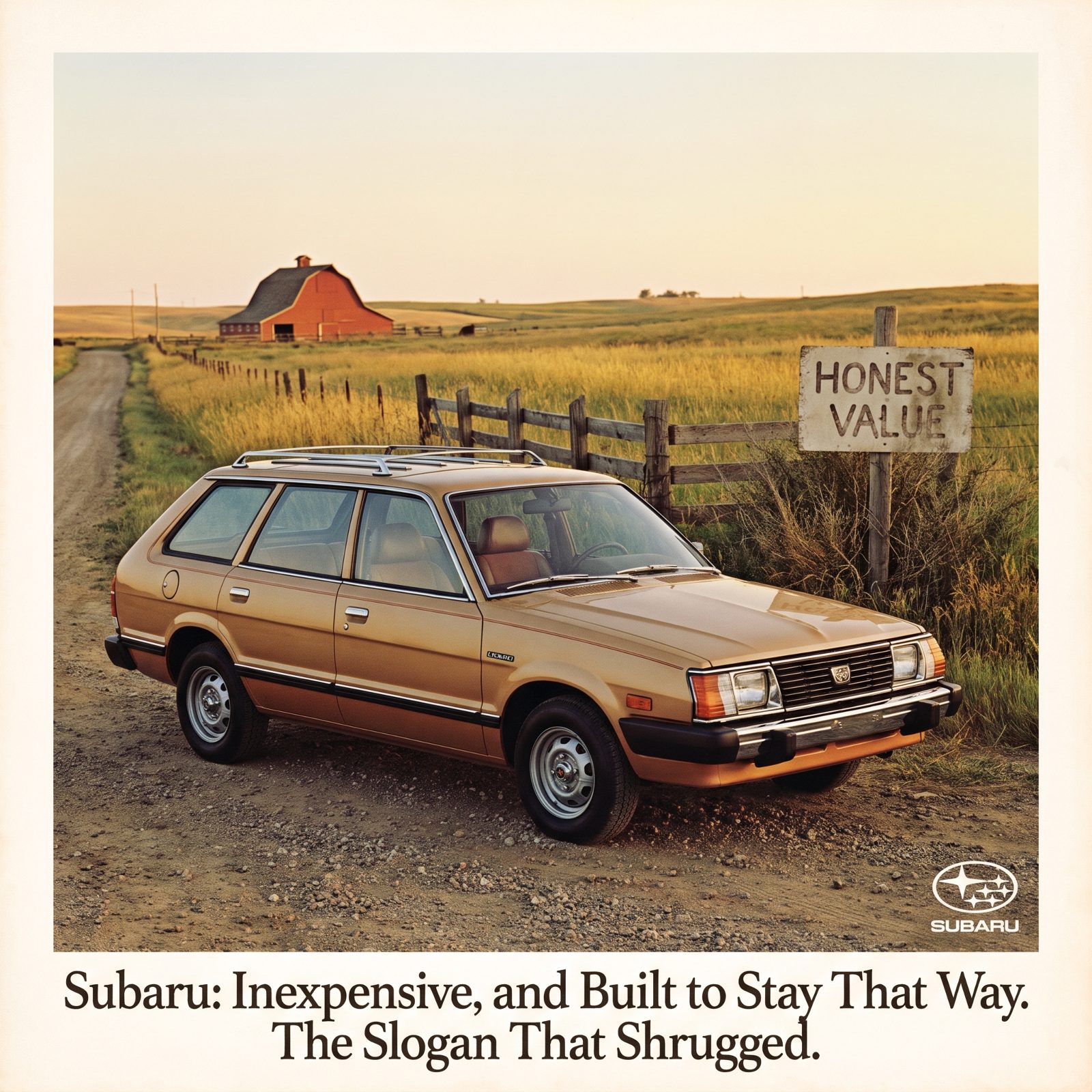
The most self-aware slogan of the decade, and the funniest.
Subaru’s “Inexpensive, and built to stay that way” admitted the car was cheap and then promised it would also stay cheap — meaning reliable and easy to keep running. It’s a line that shrugs at you, and the shrug was the whole charm.
No pretense about luxury. No promises of status. Just a plain deal stated plainly, which turned out to be exactly what a lot of practical buyers wanted to hear. Honesty as a sales tactic sounds simple. Watch how rarely anyone actually tries it.
10. Volvo: “The Car for People Who Think” and the Safety Flex That Felt Like a Compliment
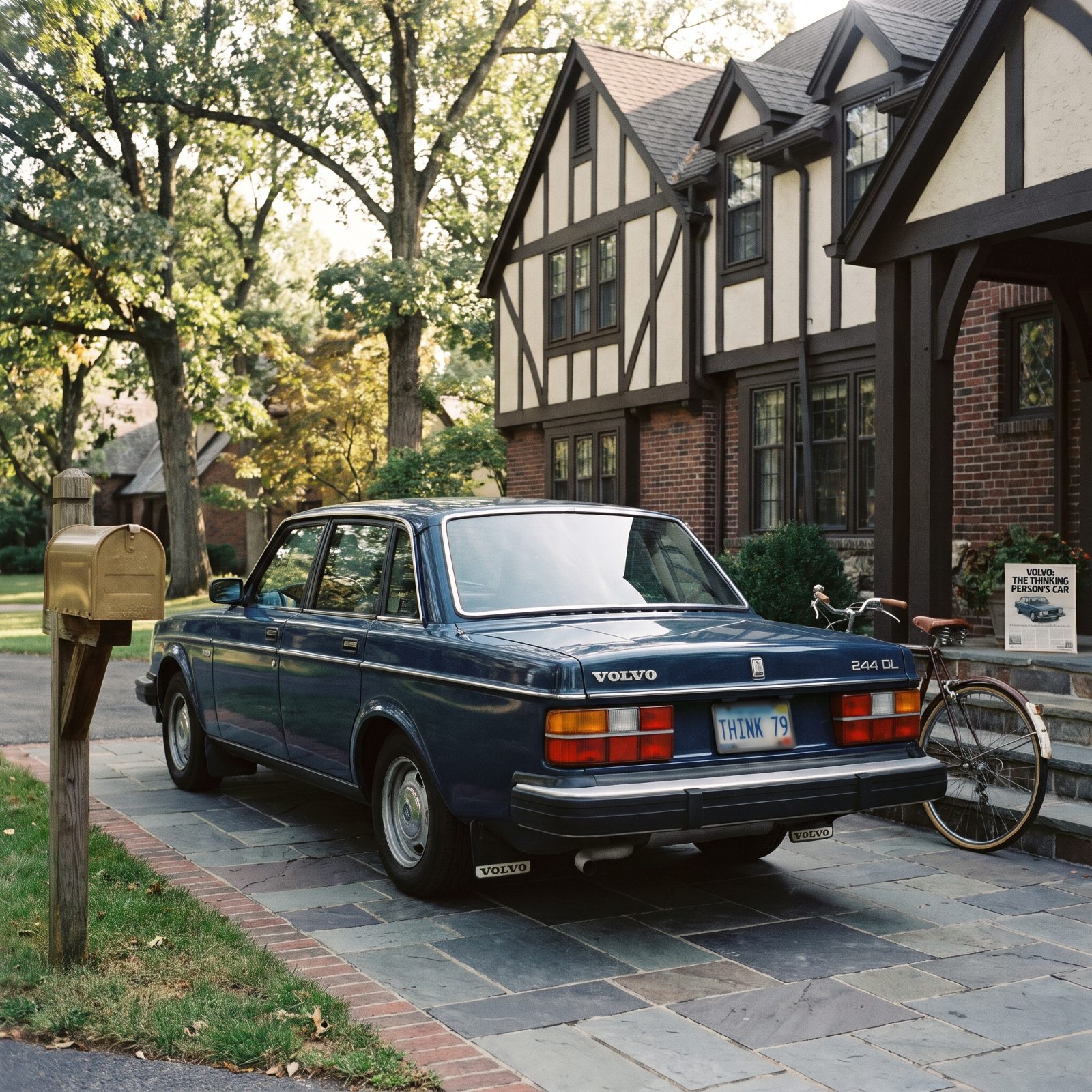
Volvo closed out the decade with a line that quietly flattered everyone who bought one: “The car for people who think.” Translation? The other cars are for show-offs, and you, friend, are too smart for that. Safety and durability became proof of your intelligence.
Bold positioning, that. You’re not selling a feature, you’re selling the buyer’s own self-image back to them at a markup. Pick a Volvo and you weren’t being cautious, you were being clever. And the brick-solid cars backed it up, which is why the slogan stuck for years after the ad money dried up.
9. Esso: Put a Tiger in Your Tank
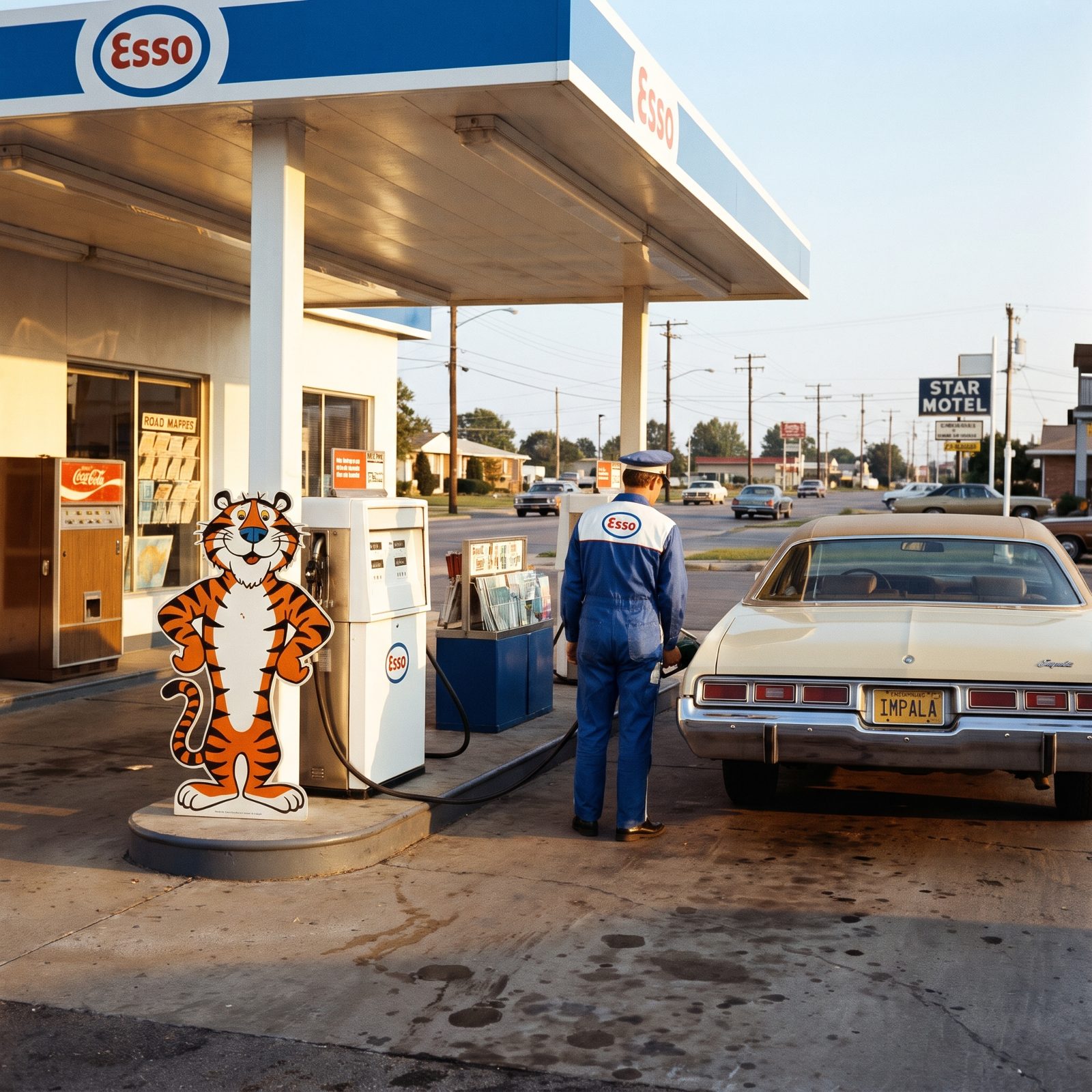
The tiger got there first. Before Exxon, before the orange and blue restyle, that grinning cartoon cat told half of America to put him in their tank, and half of America repeated it at the pump without a trace of irony. Kids got the plush tiger tail to tie on the gas cap. Dads got a slogan they’d quote for the rest of their lives.
What made it stick was how little it said about gasoline. It never promised better mileage. It sold you a feeling — a little extra power, a little mischief under the hood. You weren’t buying fuel. You were adopting an attitude for pocket change a gallon.
8. Exxon: We’re Exxon
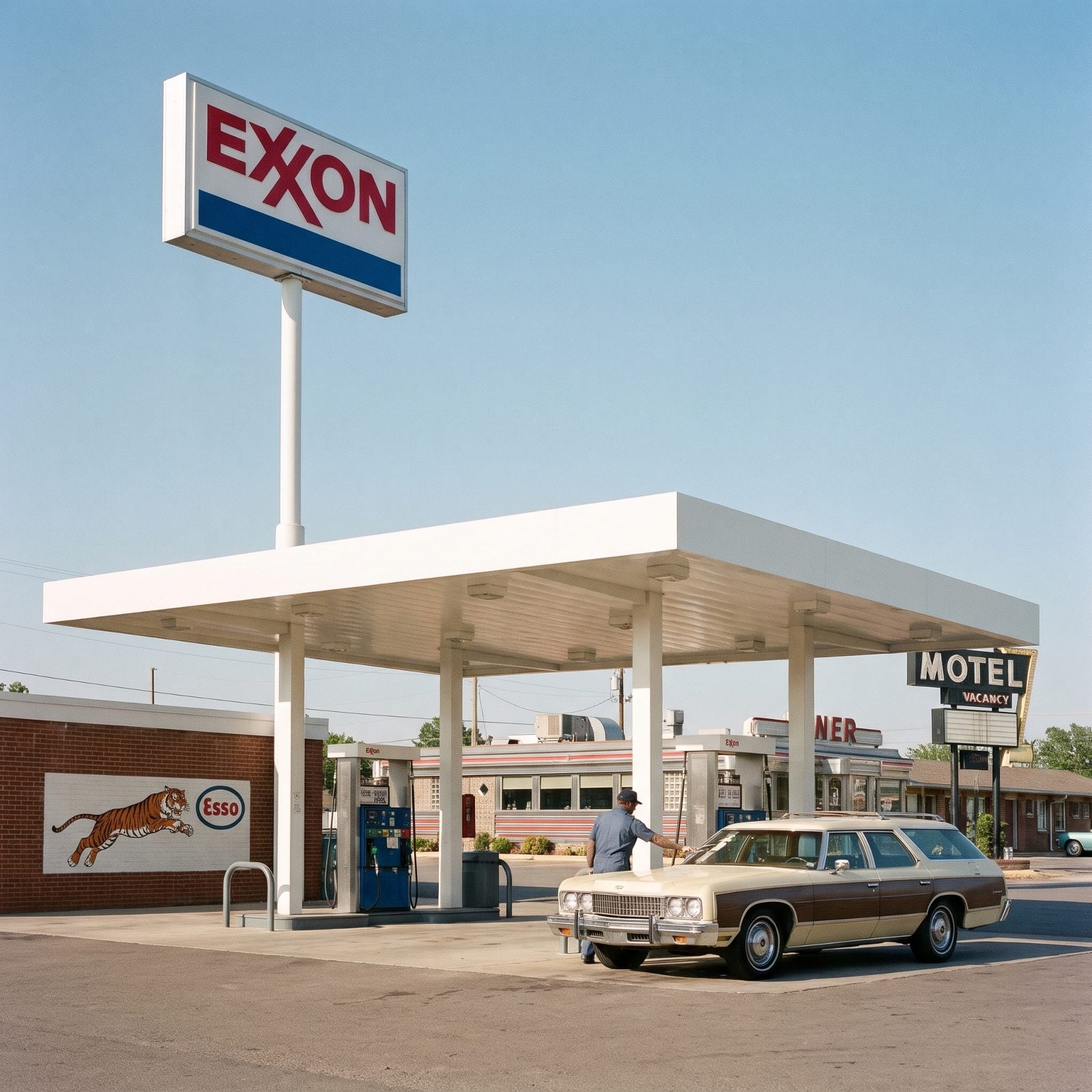
Imagine inventing a word that didn’t exist, then paying to teach a whole country to say it. That was the Exxon campaign. The company had been Esso, Enco, Humble — a tangle of regional names — and the ads existed mostly to hammer one name into your skull until it felt like it had always been there.
The spots stayed calm, almost reassuring, with their clean stations and friendly attendants and that double-X logo that looked like nothing else on the road. It worked because it didn’t try to be clever. It just repeated the name until the name was yours.
7. Shell: Come to Shell for Answers
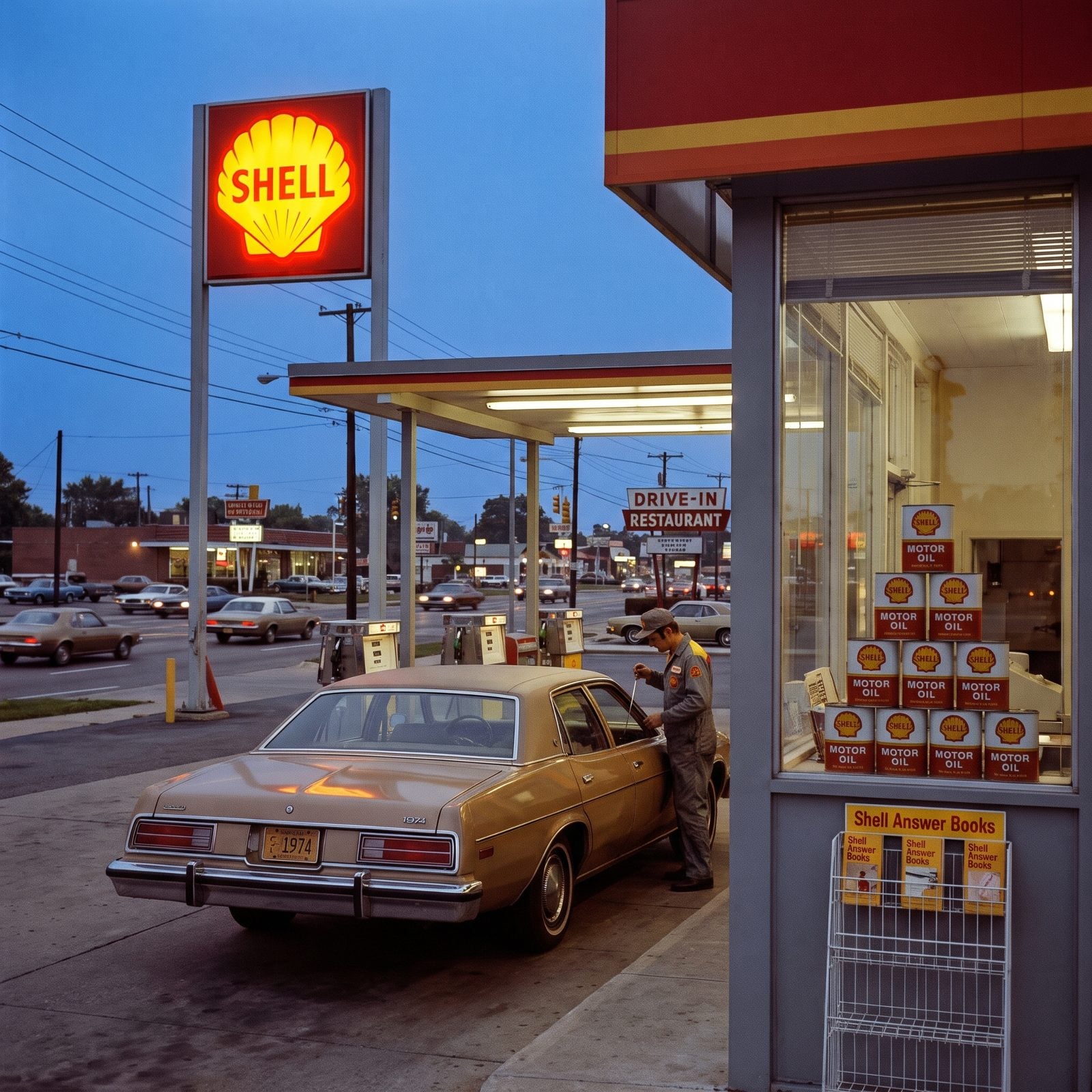
While everyone else sold power and speed, Shell sold homework. The campaign handed you little booklets at the pump: how to save gas, how to drive in snow, how to plan a car trip without ending up stranded on a shoulder somewhere. During the fuel crisis years that pitch landed hard, because suddenly everybody did have questions.
Smart read of the room, that. Gas lines were long and tempers were short, and here was a brand playing the calm adult who knew things. I still remember those booklets being genuinely useful, which is more than most advertising can claim.
6. Union 76: Go With the Spirit
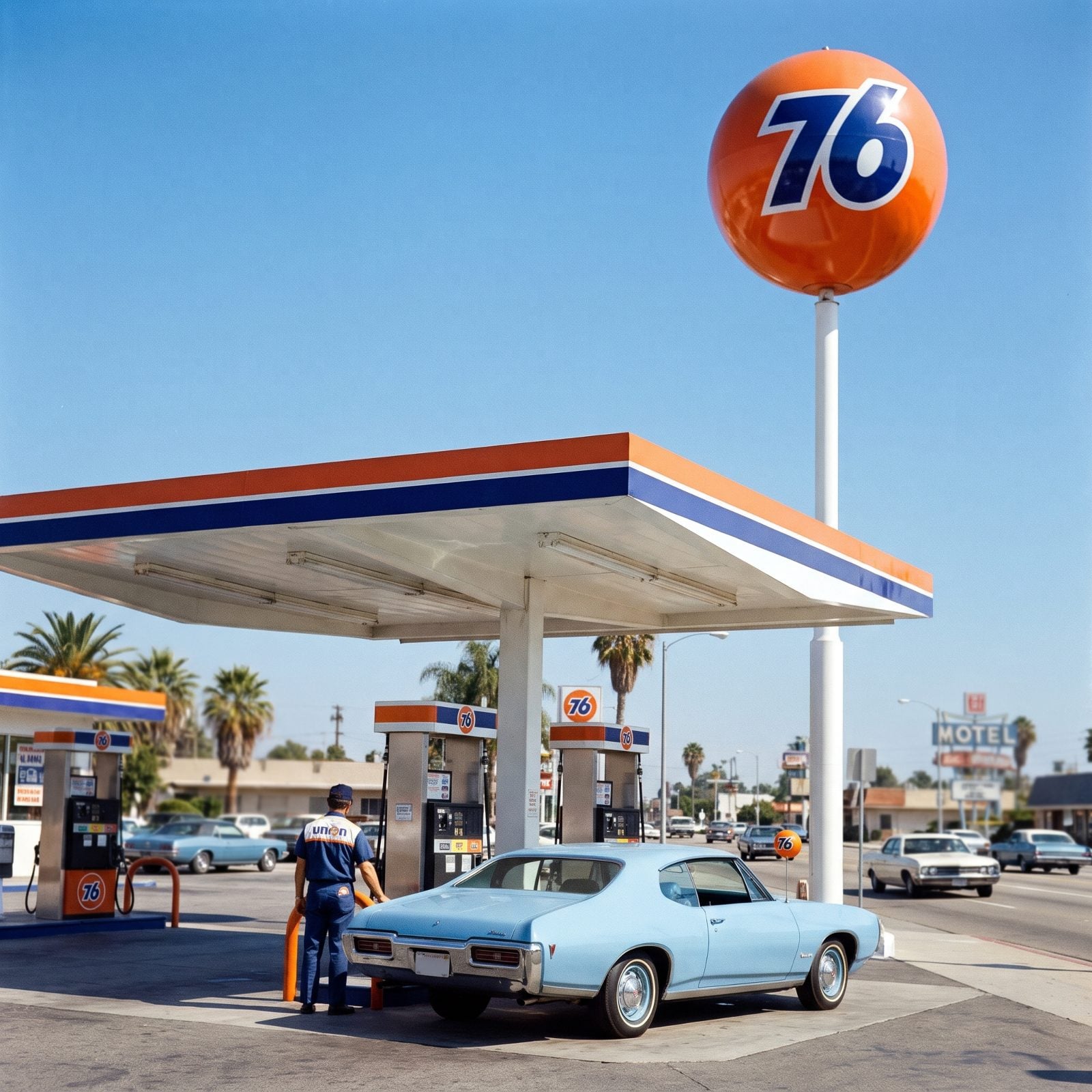
That orange ball. Even if the slogan slipped your mind, the ball never did. Stations handed out the little foam antenna balls by the thousands, and for a while every third car in the parking lot had one bobbing up there like a tiny orange planet.
The spirit angle was pure early-70s optimism — all sunshine and open highway and the sense that your tank of gas was somehow part of a bigger American good time. Corny? Sure. But you’d wander a crowded lot hunting for your car and that orange ball found it for you every single time.
5. STP: The Racer’s Edge
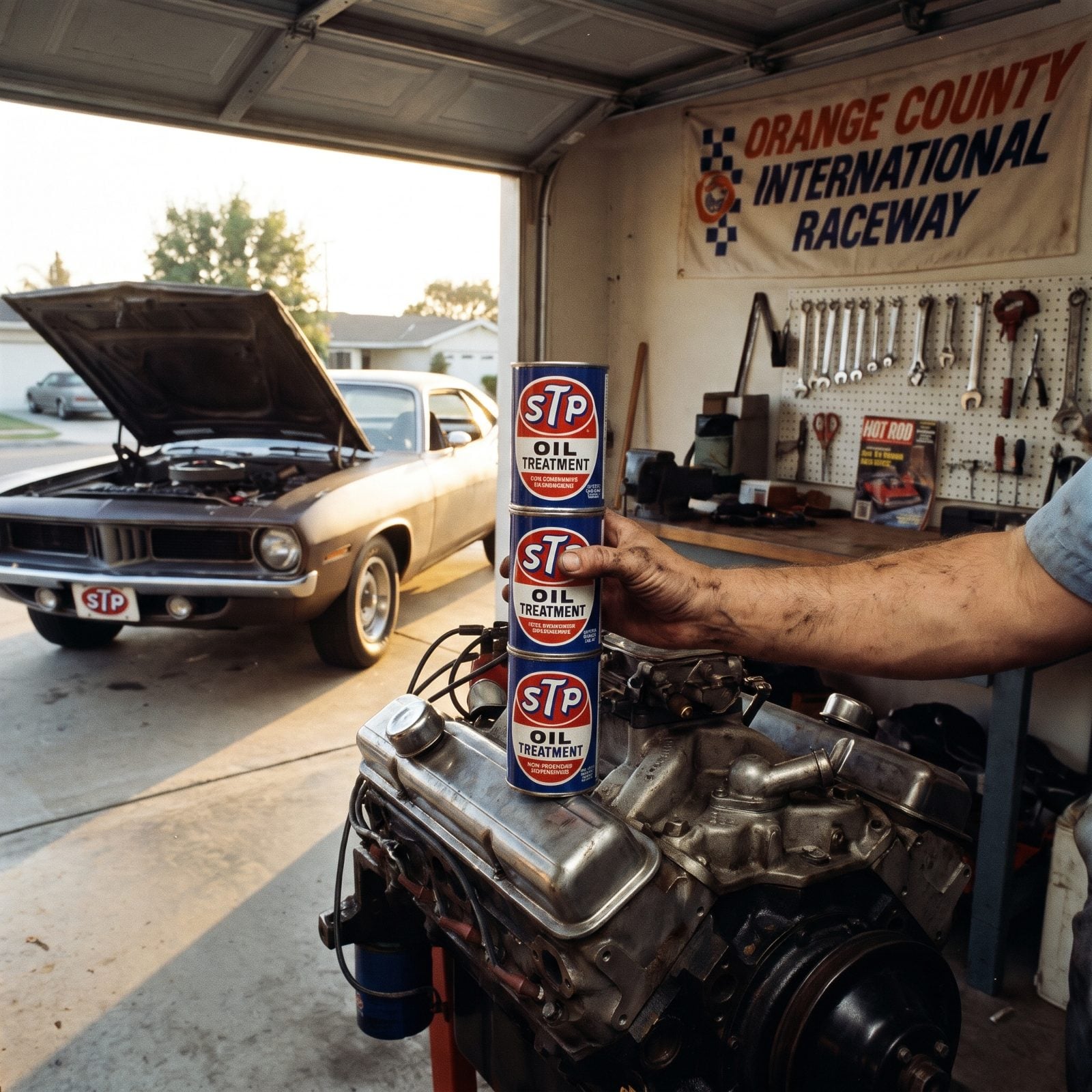
The racer’s edge wasn’t a product claim so much as a promise that you, out in your driveway, could buy a little piece of what the pros ran. STP wrapped itself around racing so tightly that the sticker became its own folk art. Kids put them on bicycles. The decal outlived the slogan by decades.
Richard Petty’s number 43 wore the colors, and that association did more than any jingle could. You didn’t need the ad to spell it out. You saw STP on a winning car and figured a buck or two of treatment couldn’t hurt your family wagon either.
4. Firestone: Where the Rubber Meets the Road
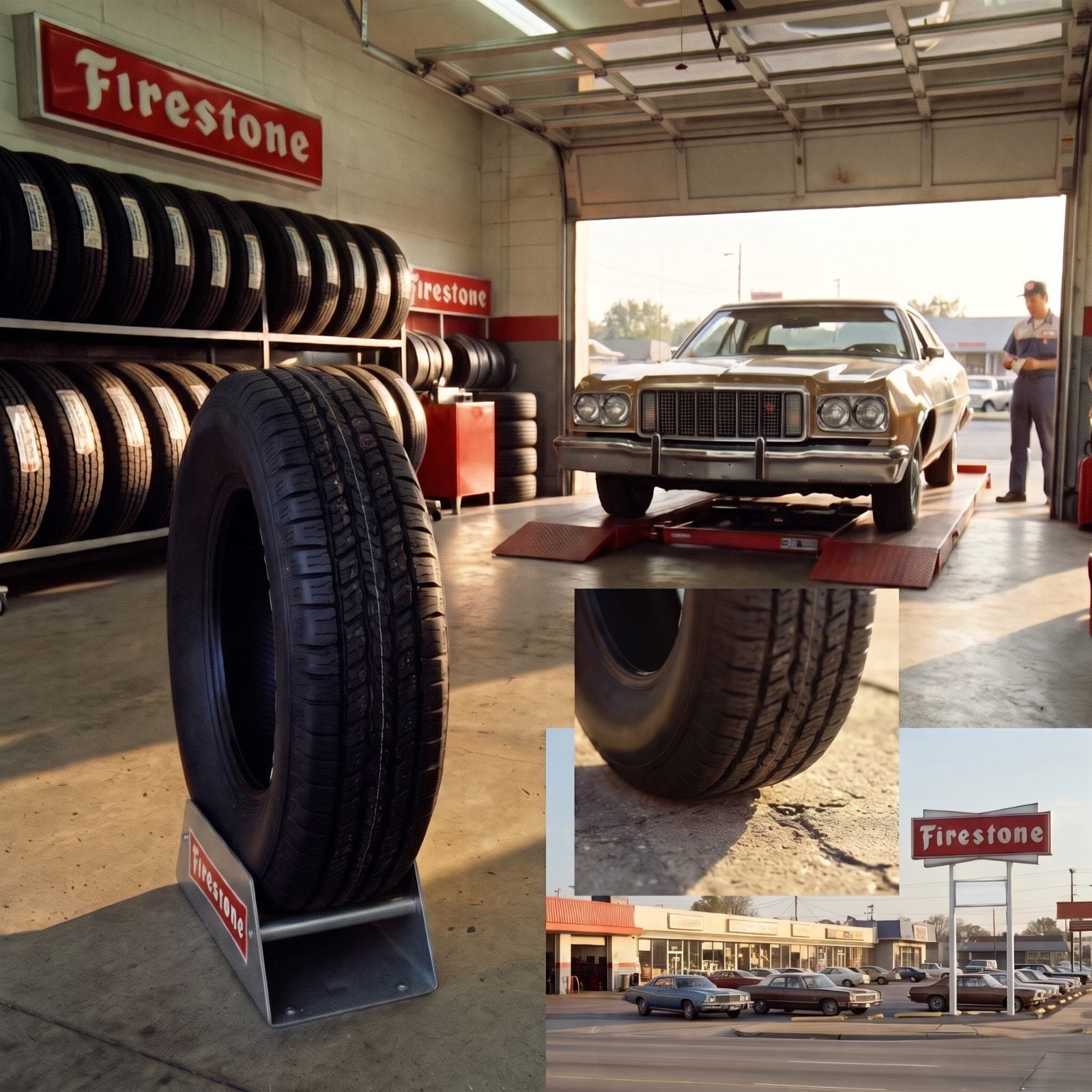
Some slogans are so plain they become permanent. Where the rubber meets the road said nothing fancy and everything important: this is the one part of the car that actually touches the ground, so don’t cheap out on it. The line escaped the ad entirely and turned into a figure of speech people still use when they mean the moment theory gives way to fact.
Firestone leaned on trust rather than flash. Clean stores, uniformed service writers, that red signage you could spot from the highway. Safety, dressed up as common sense — and it stuck because it happened to be true.
3. Goodyear: The Best Tires in the World Have Goodyear Written All Over Them
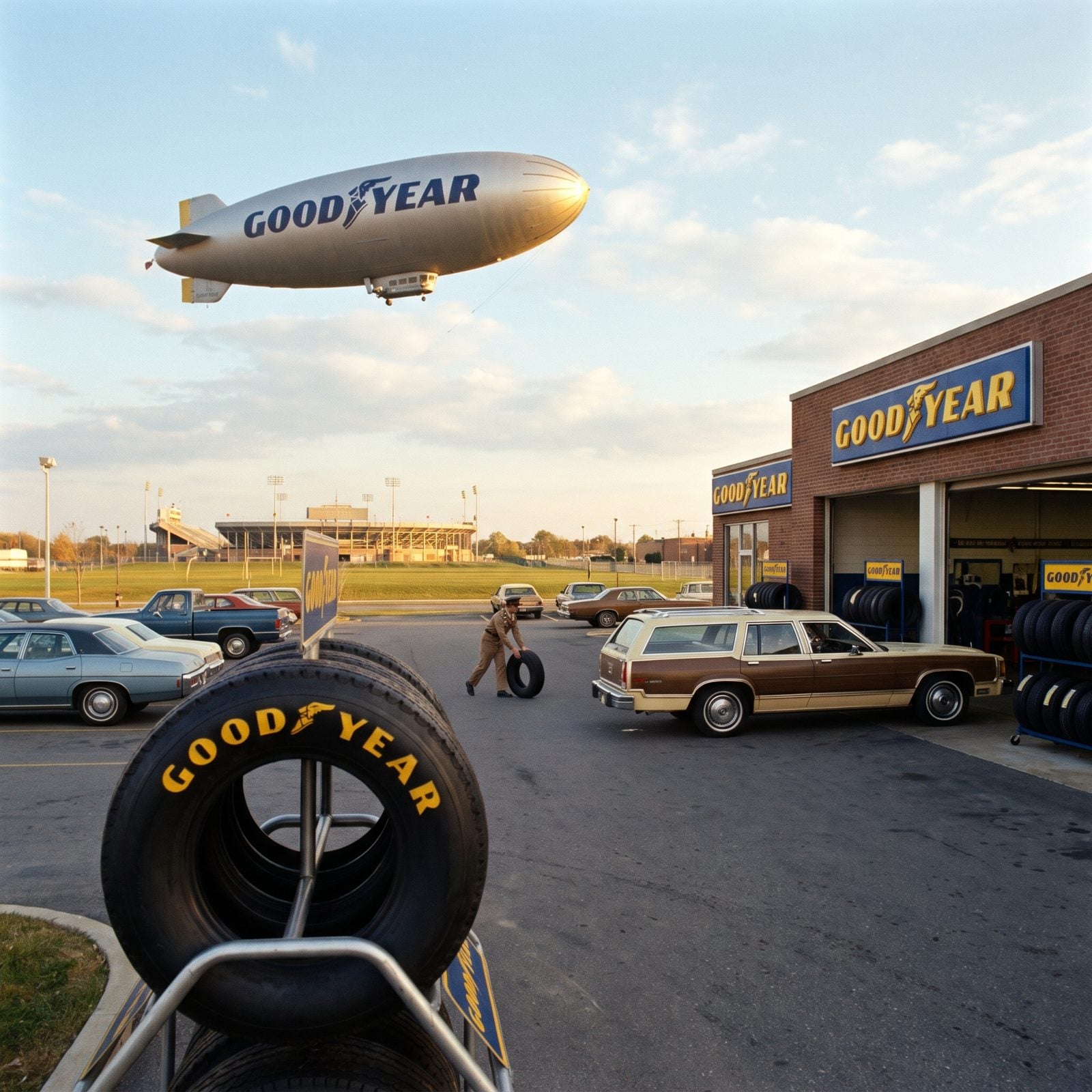
A slogan that long had no business working, and yet. The real genius was the blimp. Goodyear floated a silver airship over every big football game, and by the time the announcer finally said the name, the brand had already been drifting across your screen for three hours.
That written-all-over-them line sounded like the kind of thing a confident man says at a backyard barbecue — slightly too much but hard to argue with. Goodyear bought national presence the way nobody else did, hovering over America one Saturday at a time.
The blimp did the selling. The slogan just took the credit.
2. Avis: We Try Harder
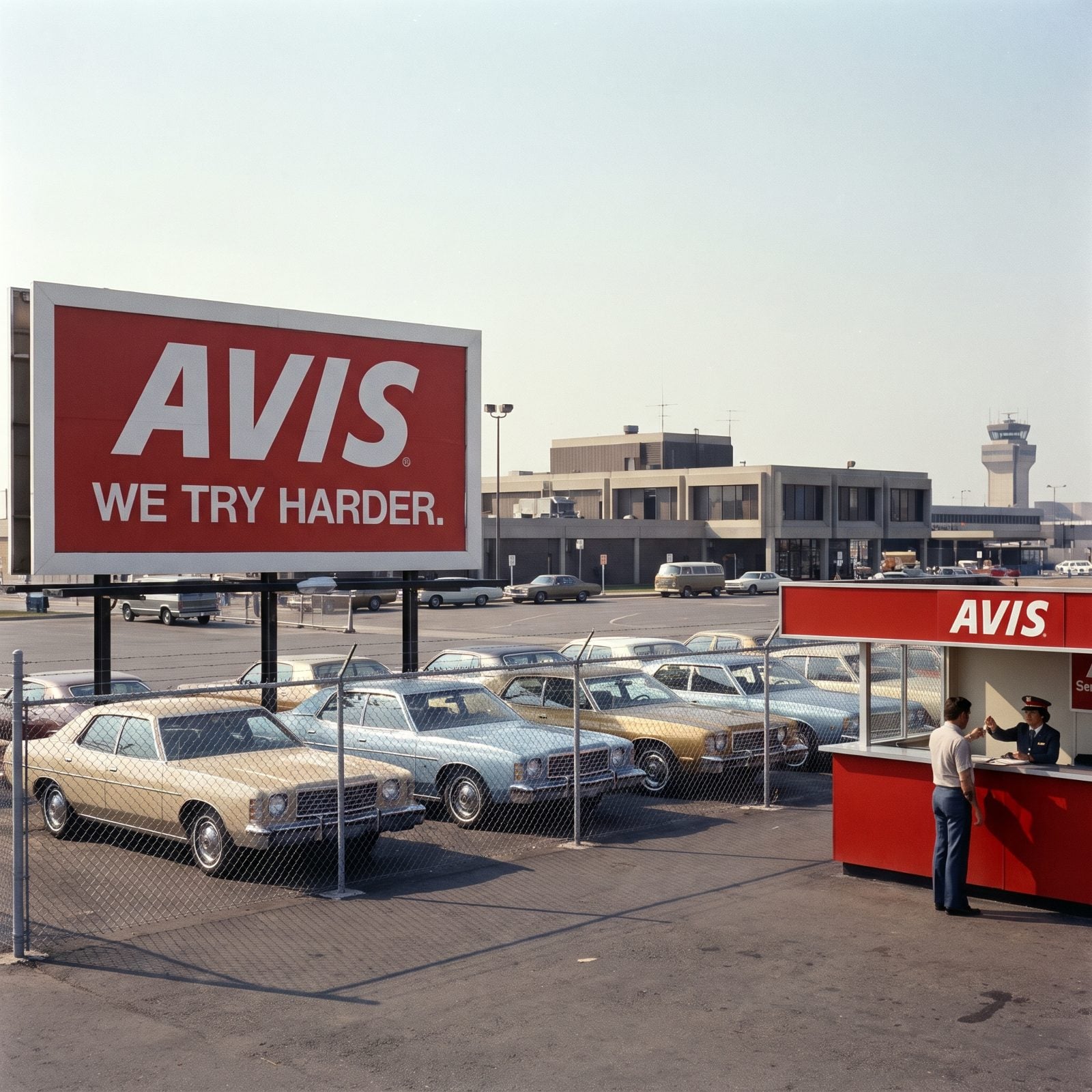
The boldest move in the bunch, and it had nothing to do with cars. Avis admitted out loud that it was number two. We’re only number two, so we try harder. Almost nobody confessed weakness in advertising back then. Avis made the confession the whole pitch.
It reframed being the underdog as a reason to trust them. The counter clean. The ashtrays emptied. The guy actually hustling because he had something to prove. Decades later business schools still teach the thing, which tells you how rare an honest ad really was.
1. AAMCO: Double A, Beep Beep, M-C-O
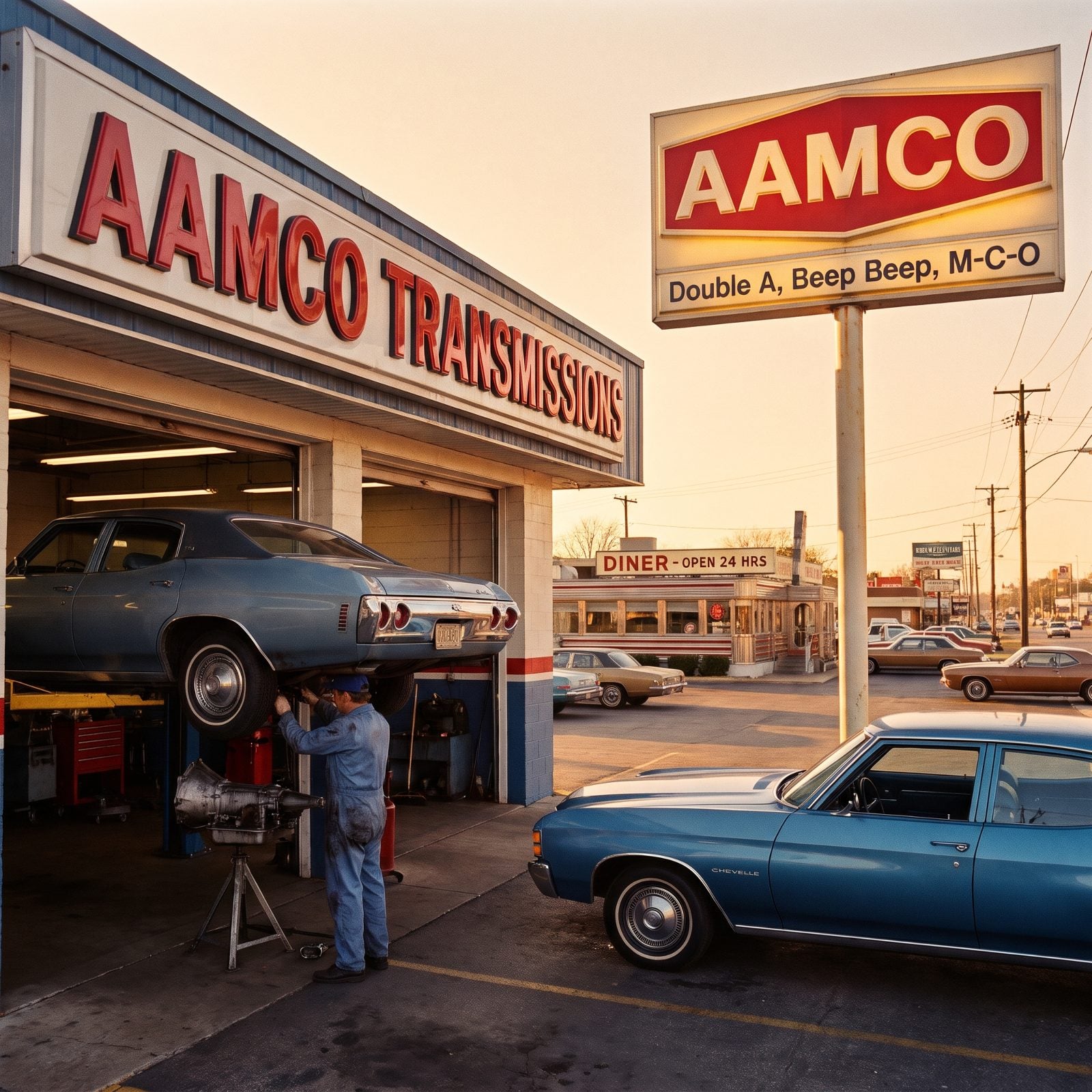
You can still sing it, can’t you. Double A, beep beep, M-C-O. The jingle spelled out the company name with a little horn honk in the middle, and it burrowed so deep that people who never once needed a transmission rebuilt knew it cold.
And that was the whole job. Transmission trouble hits maybe twice in a car’s life, so the ad didn’t bother selling you today. It just made sure that on the terrible morning your car wouldn’t shift, exactly one name surfaced in your panic. Honk and all.