
Would you like to save this?
The man who bolted fake wood to a two-ton station wagon believed he was selling you a yacht. For about fifteen years, nobody at the dealership laughed. A vinyl roof meant class, and a spare tire stuck on the trunk meant you had arrived. We bought all of it, waxed all of it, and parked it proudly in the driveway on Sunday. The styling tricks below once separated the sharp cars from the plain ones. Now they separate the chuckles from the wince. Every one of them was somebody’s pride and joy.
39. Faux Woodgrain Down the Sides of Wagons
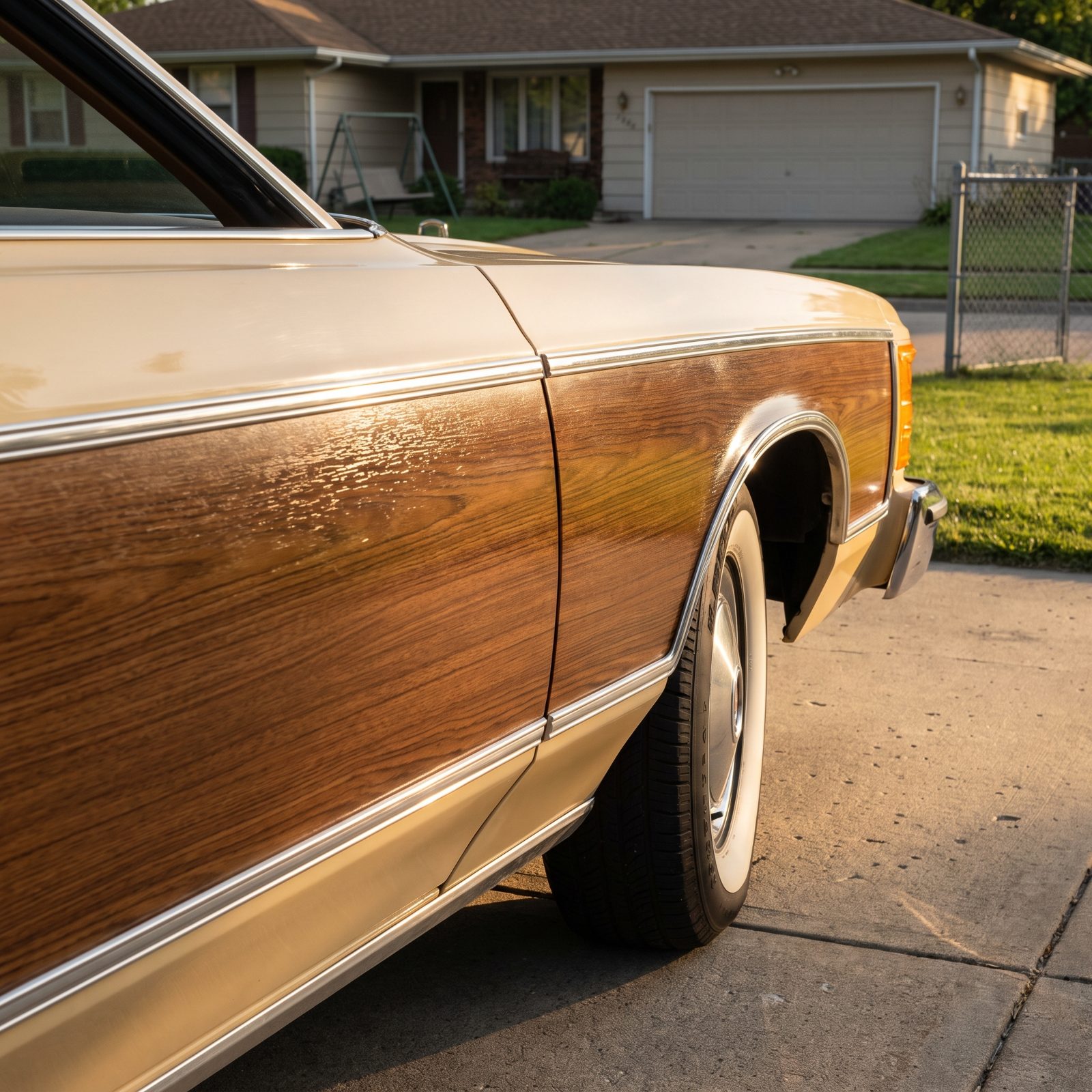
Nobody had built a real wood-bodied wagon since the early 1950s, and yet here was a 4,500-pound Ford wearing a printed photograph of lumber down both sides. The appliqué was vinyl. The frame around it was plastic pretending to be chrome, and up close you could watch the grain repeat itself every few feet like cheap wallpaper.
We loved it anyway. The woodgrain wagon meant family, meant vacation, meant a carload of kids in the way-back facing the car behind you. Nobody thought the wood was real. That was never the point.
38. Vinyl Roofs Made to Resemble Convertibles
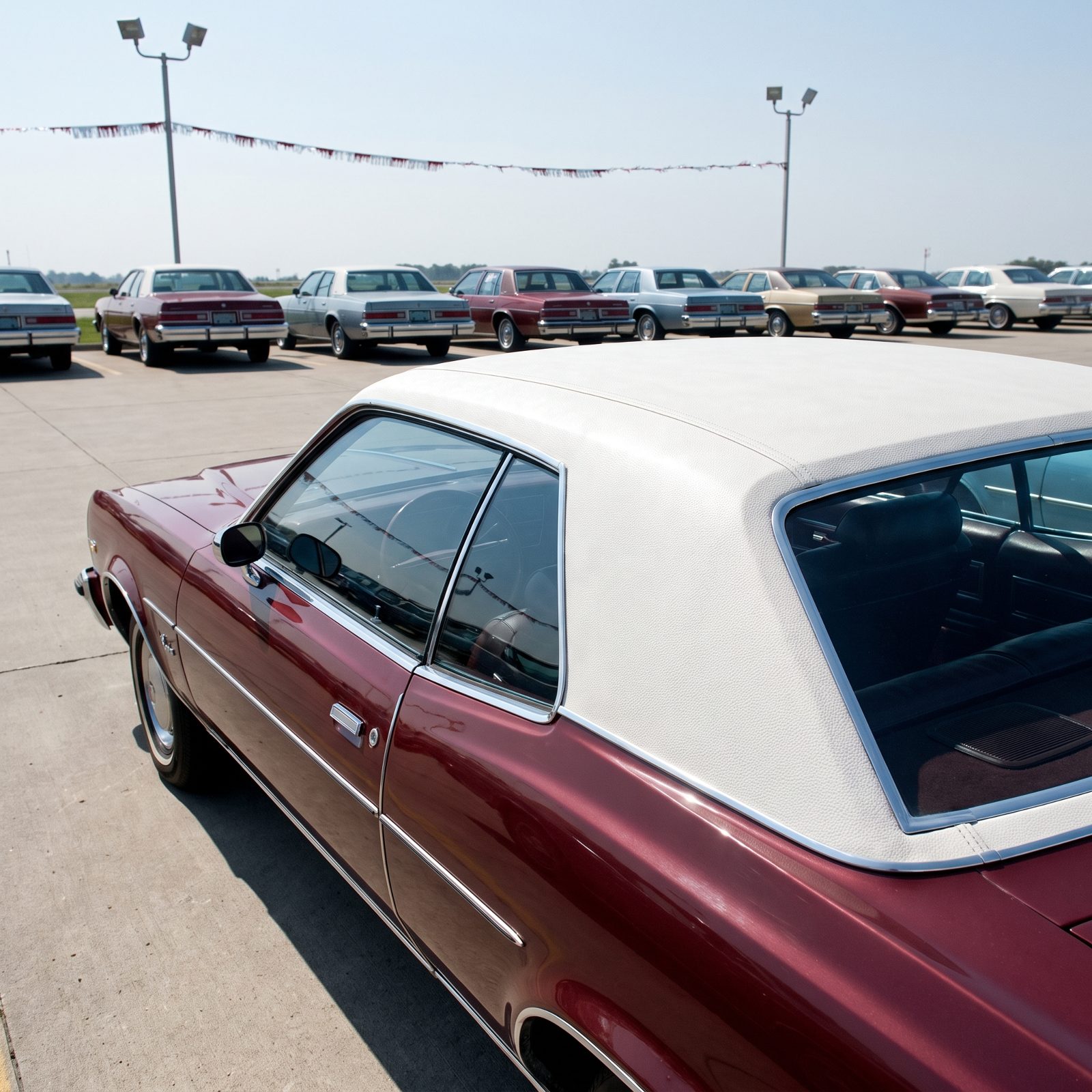
The whole idea was to make a solid steel roof look like it could fold down. It couldn’t. The vinyl was glued to the metal, grained to mimic canvas, and sometimes even handed a fake seam where the top would have creased.
It worked as a status flag for exactly one reason: everyone agreed to pretend. The vinyl roof said money. It also trapped water against the steel underneath, which is why so many of these cars rusted through at the roofline first. We paid extra for the option that rotted the car out from the top down.
37. Landau Bars on Ordinary Sedans
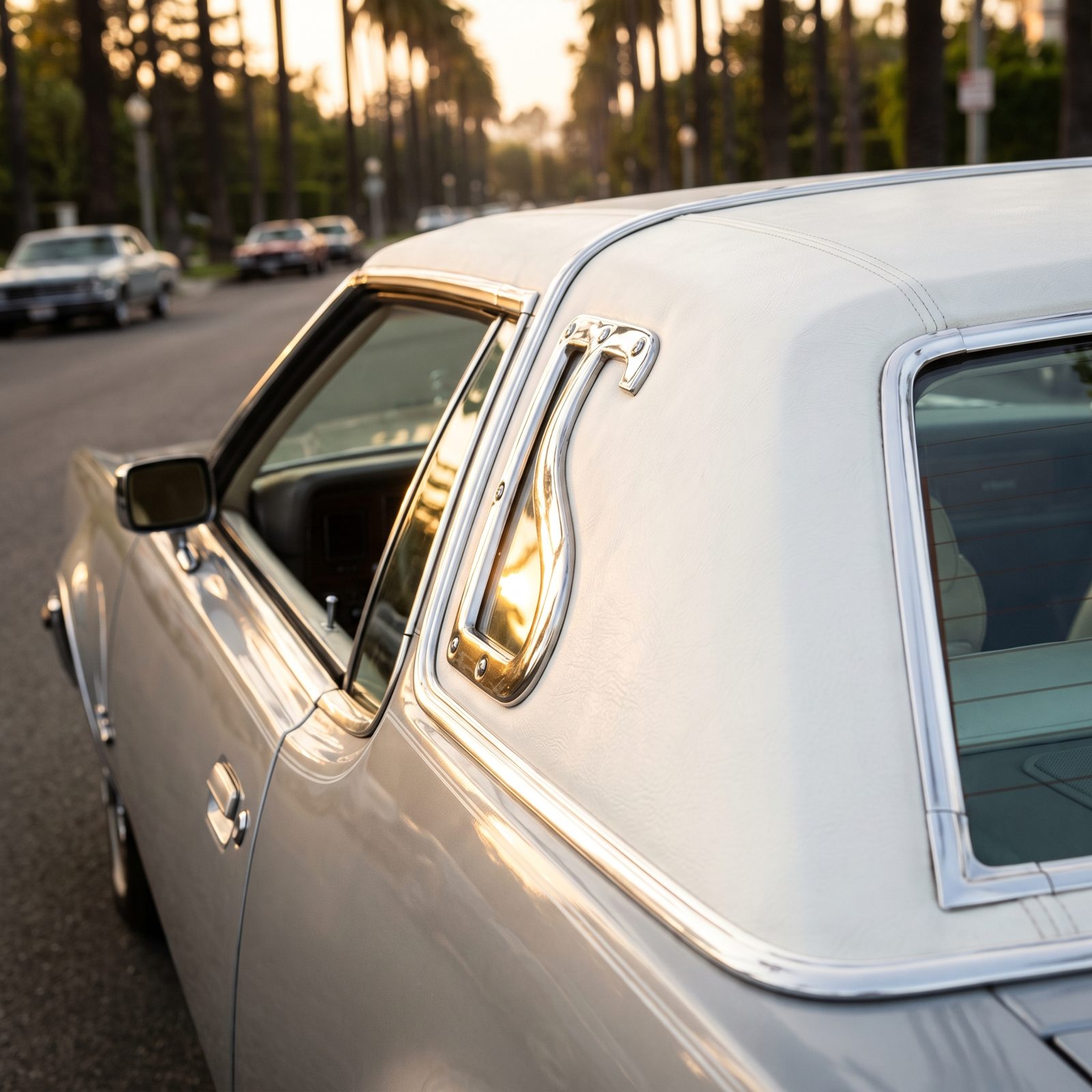
These were the little chrome S-curls bolted to the back pillar, and they did nothing.
On an actual horse-drawn carriage, a landau bar folded the leather top up and down. On a 1977 Cutlass it was a hunk of polished metal screwed to a vinyl roof that didn’t move an inch. Costume jewelry for the C-pillar, basically.
I’ll admit they looked sharp pulling into the church lot. They just happened to be solving a problem the car didn’t have, with a mechanism that connected to nothing.
36. Opera Windows Set Into Extra-Thick B-Pillars
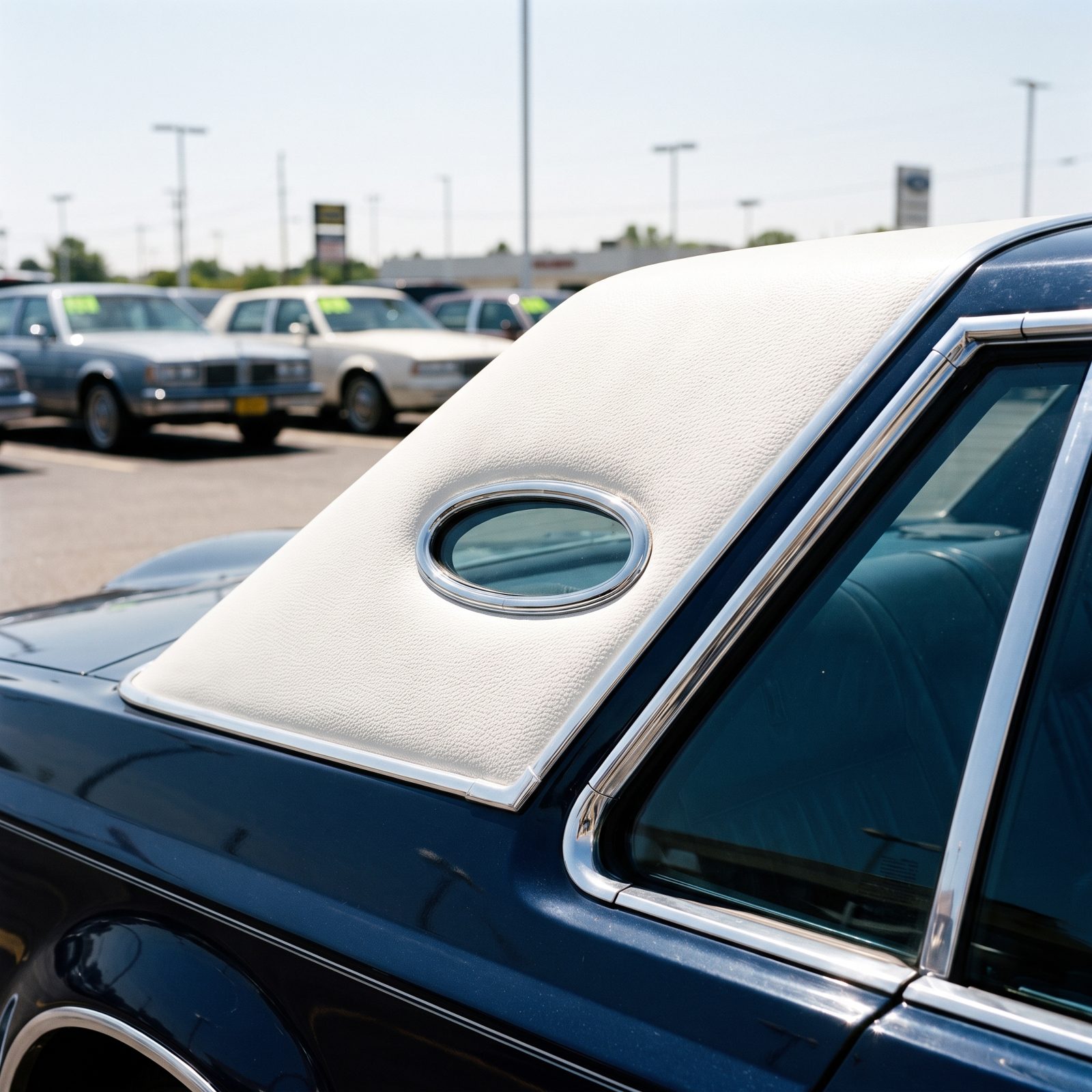
A window you can’t see much out of, set into a pillar so thick it eats your over-the-shoulder view. That was the opera window, and for a stretch there every luxury coupe in America had one.
They came from actual horse-drawn opera coaches, where a tiny window let passengers peek out at the theater crowd. By 1978 the “opera” was a Ponderosa parking lot. The little oval of glass sat marooned in a sea of padded vinyl, letting in almost no light and almost no visibility.
35. Externally Mounted Continental Spare-Tire Kits
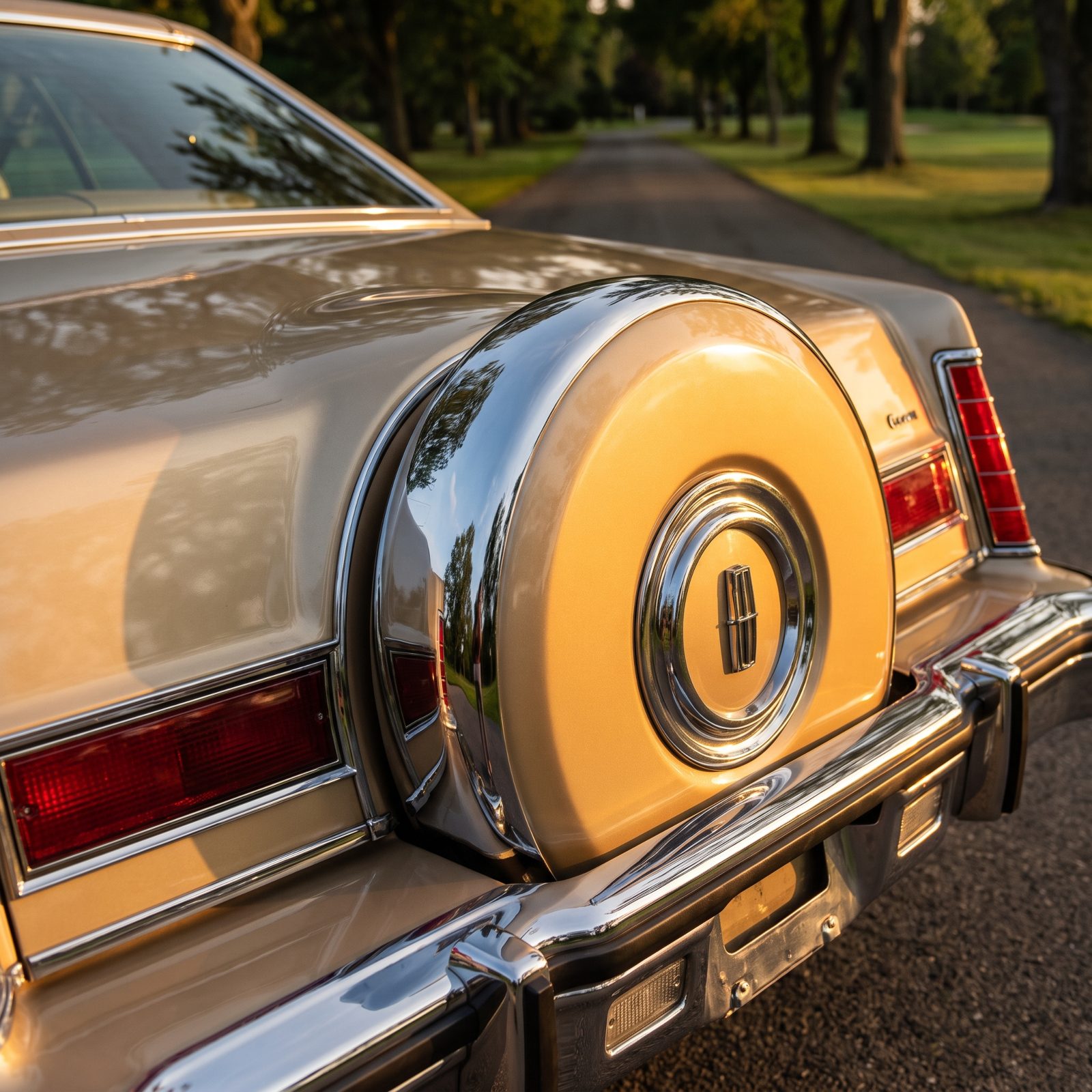
Somebody decided the back of the car needed a tumor, and we called it elegant. The Continental kit stuck the spare tire in a chrome-ringed hump bolted to the trunk lid, pushing the whole rear end out another foot.
The look traced back to the gorgeous 1940 Lincoln Continental, where it actually belonged. By the late 70s it was an aftermarket add-on glued to Grand Marquis and Monte Carlos, and it did three things: blocked the trunk, wrecked the parking, collected road grime in a spot you couldn’t reach. You still needed a jack to use the spare. Now you needed it with an audience.
34. Extra-Wide Whitewall Tires
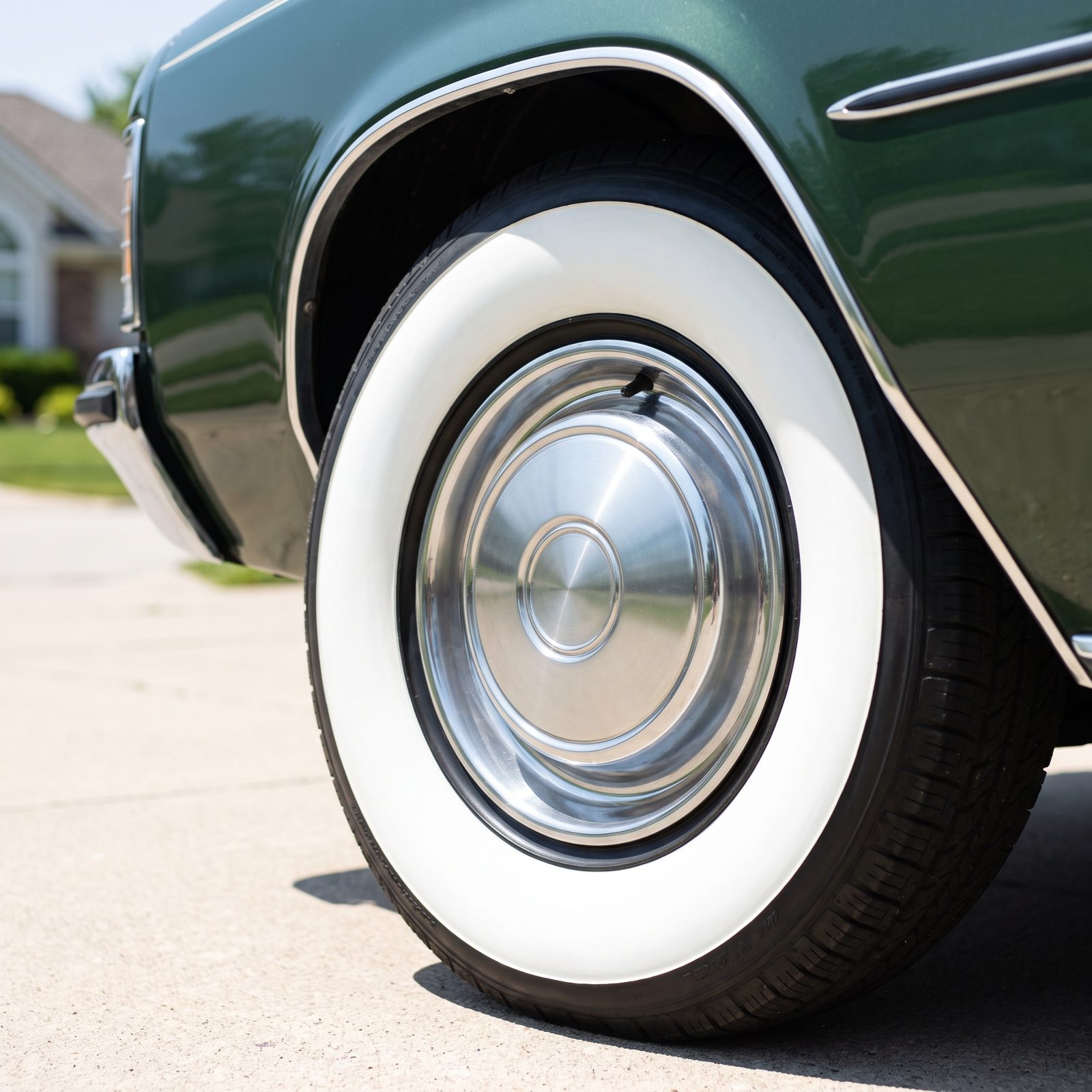
The band of white got wider and wider until the tire looked like it was wearing spats. A good inch and a half of bright white rubber, sometimes two, circling the wheel like a dress shirt cuff.
Keeping them that white was a Saturday ritual. SOS pads, a stiff brush, a bucket of soapy water, sore knuckles. Scuff one against a curb and you had a grey smear you’d be scrubbing for a week. We did it gladly. A dingy whitewall on an otherwise clean car was a confession.
33. Wire Wheel Covers With Tiny Center Locks
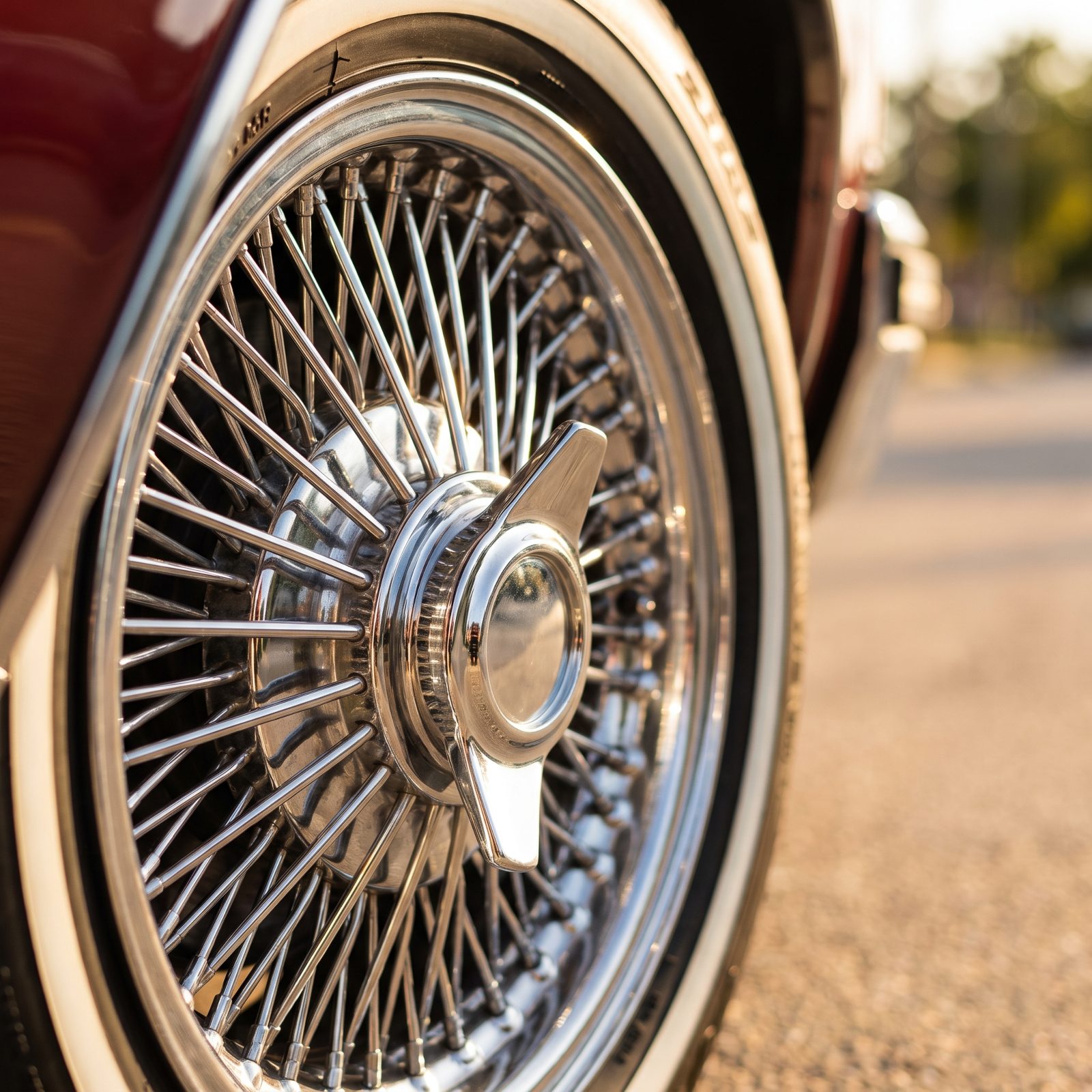
A full wire wheel is a beautiful, expensive, hand-laced thing. This was a plastic dinner plate pretending to be one.
The wire wheel cover clipped over a plain steel wheel and mimicked dozens of chrome spokes, right down to a little two-eared knock-off spinner in the middle. That spinner locked nothing. Glued, snapped, or screwed on as pure decoration.
Hit a pothole and the whole cover would pop off and go cartwheeling down the road behind you. You’d see guys walking back half a block to fish one out of a gutter. I’ve done it myself, and I wasn’t proud.
32. Chrome Fender Skirts Hiding the Rear Wheels
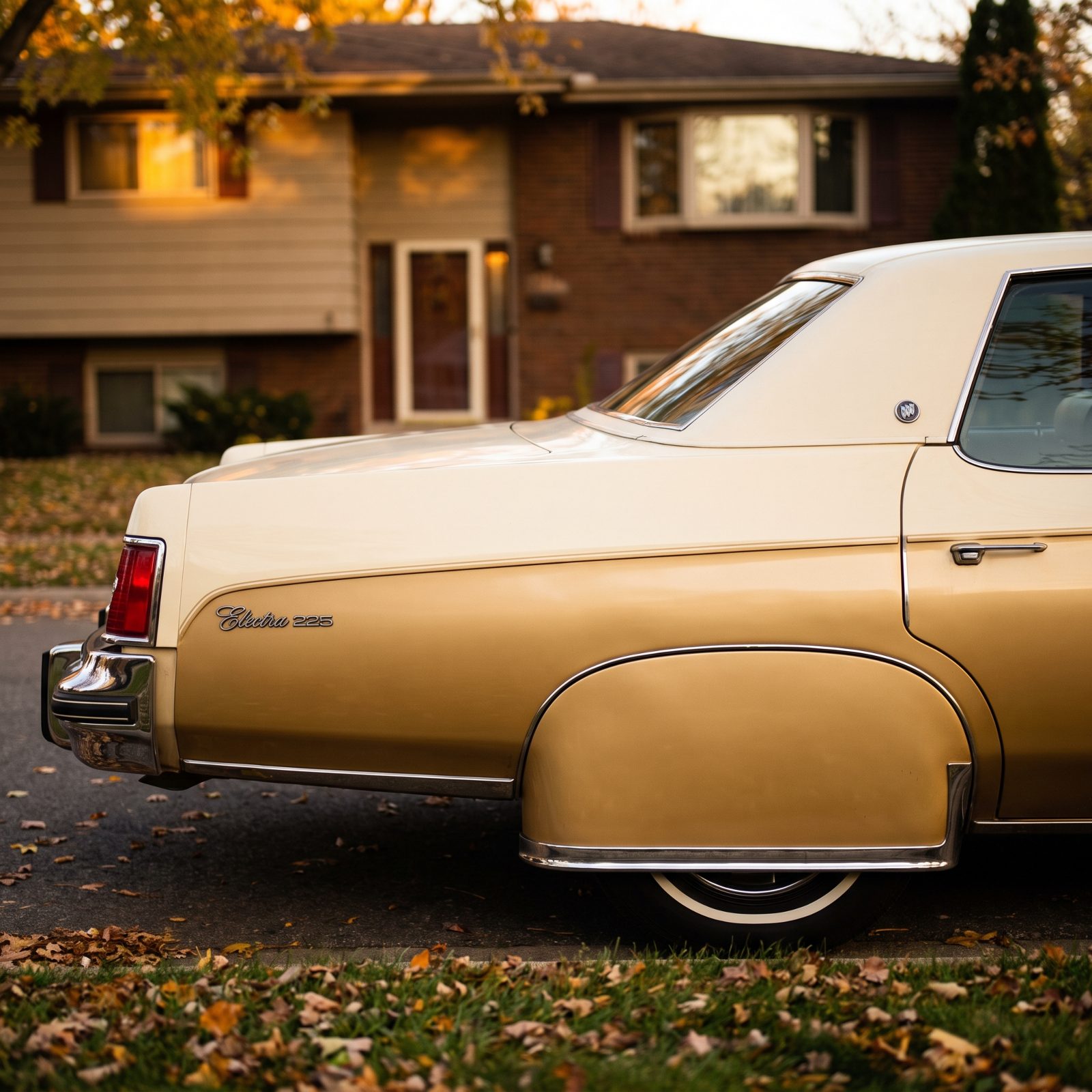
The styling case for fender skirts was real. Cover the back wheel, and the car’s flank becomes one long unbroken sweep, lower and sleeker, more ship than car. They looked genuinely good.
Then you got a flat. Now you’re kneeling in the gravel on the shoulder, fishing for the hidden latch, prying off a chrome panel just to reach the lug nuts. Half the time the latch was rusted or the skirt was dented against the tire. A design meant to look effortless turned a roadside flat into a wrestling match.
31. Coach Lamps Mounted to Sedan Exteriors
Would you like to save this?
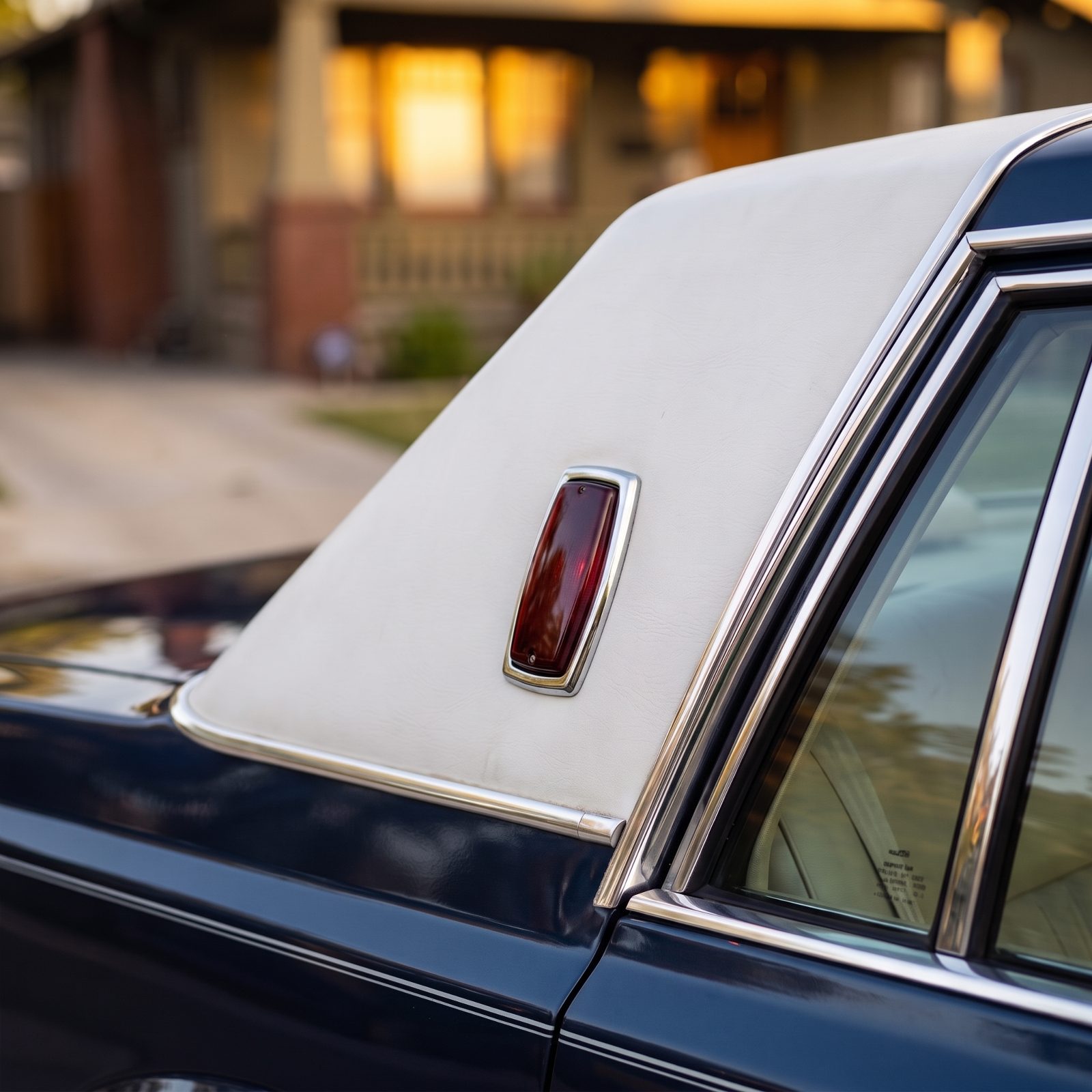
Bolted to the vinyl-covered back pillar sat a little chrome-trimmed lamp with a red lens. A coach lamp. On a horse-drawn carriage it held an actual flame so the footman could see at night.
On a Chrysler New Yorker it lit nothing and announced everything. The whole getup, landau bars plus opera window plus coach lamp, was a car dressed up as a carriage from a century earlier. We were driving around in costume and calling it the top of the line.
30. Portholes Added to Non-Buick Fenders
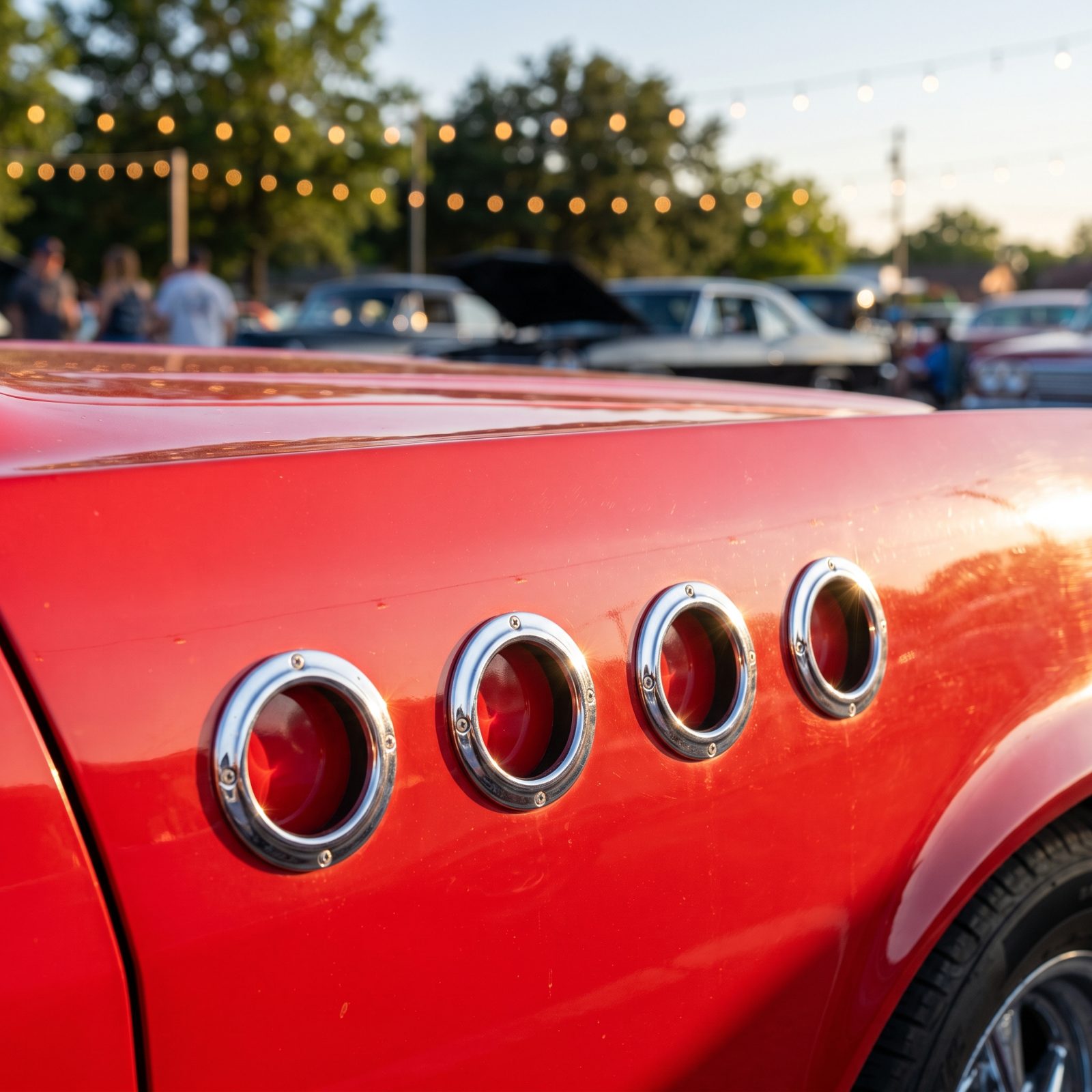
Buick earned its portholes. Those little round vents went back to 1949, a real design signature, and the number of them told you how much engine was under the hood. Three for the small cars, four for the big ones. People knew the code.
So naturally everybody else wanted the look without the pedigree. Aftermarket chrome porthole kits showed up at the parts counter, and suddenly Fords and Dodges and plain Chevys sprouted three fake vents per fender, bolted to sheet metal that vented nothing.
29. Dummy Spotlights Beside the Windshield
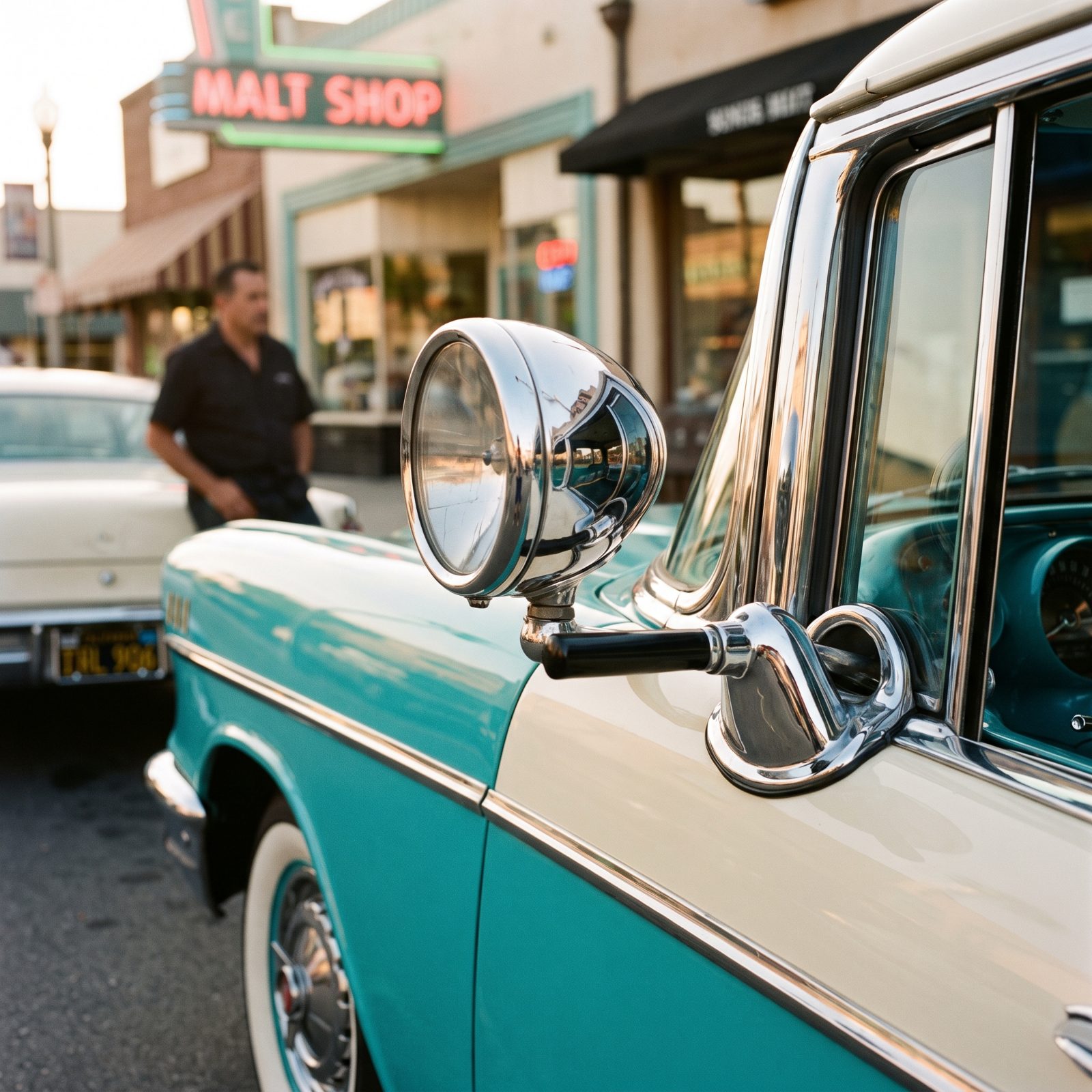
You’ve seen them on every tribute ’57 Bel Air parked at a cruise night: a chrome spotlight bolted to the A-pillar, handle poking into the cabin, lens catching the last of the afternoon sun. Once upon a time these things actually did something. Patrol cars used them to sweep a dark alley or light up a house number. On your neighbor’s two-tone cruiser, though? The bulb was long dead before he bought it, if it ever lit at all. Nobody minded. The spotlight said you were serious about looking the part, and that was enough. A working light would’ve just drained the battery anyway.
28. Oversized Hood Ornaments Used as Sight Lines
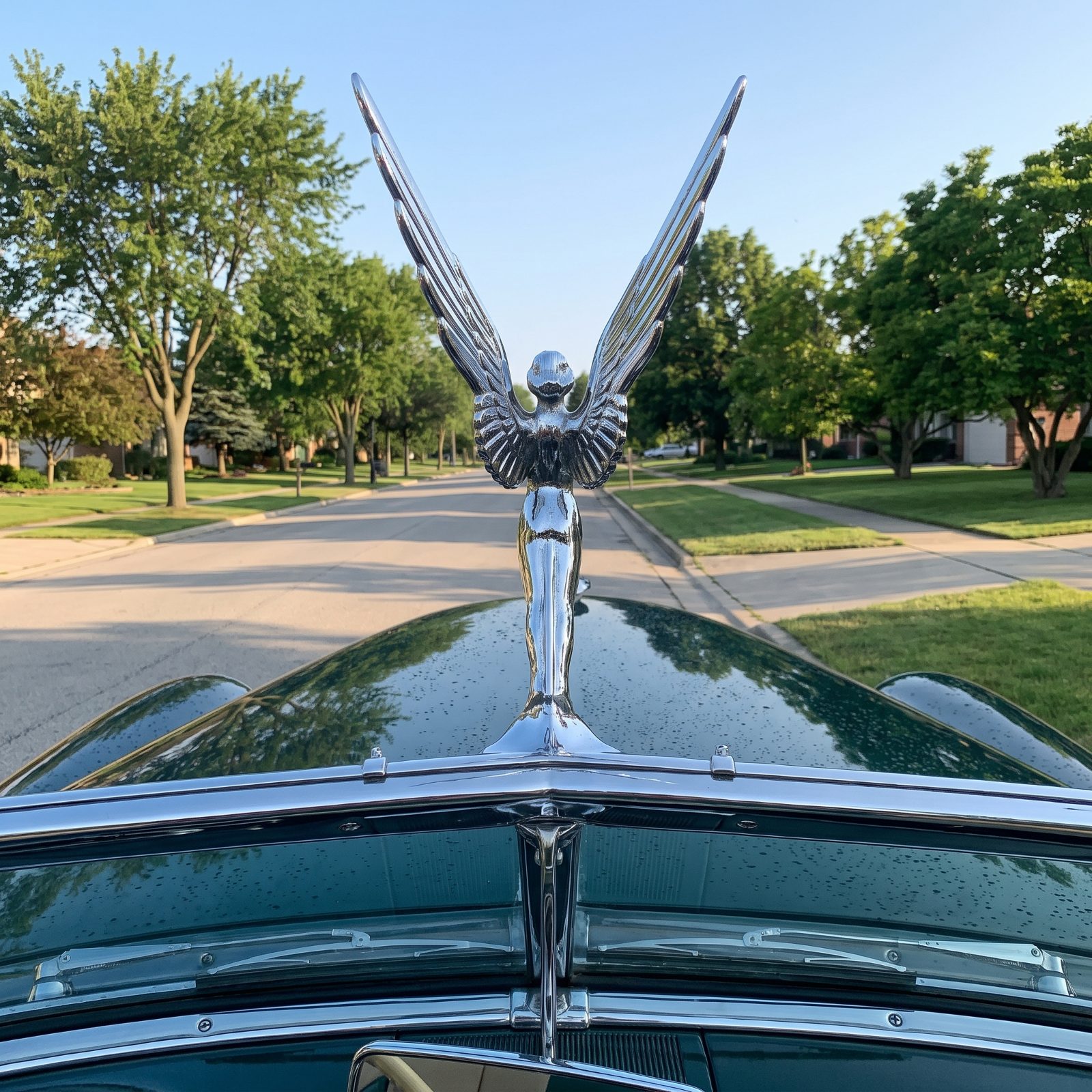
Here’s a trick your grandfather swore by. That big chrome flyer perched on the nose of his Cadillac wasn’t just jewelry, it was a gunsight. Line it up with the edge of the road and you knew exactly where the fender would land. Cars were long back then, boats of things, and the hood stretched out so far you couldn’t always tell where it ended. So the ornament doubled as aim. Over the years the figures got bigger and shinier and sillier, winged women and jet planes and leaping cats, until safety folks pointed out that a chunk of chrome that size was no friend to a pedestrian. The ornaments shrank, then vanished, then got folded into the hood where they couldn’t spear anybody. But for a good stretch of the century, your sense of direction rode on a hood mascot.
27. Curb Feelers Protruding From the Wheel Arches
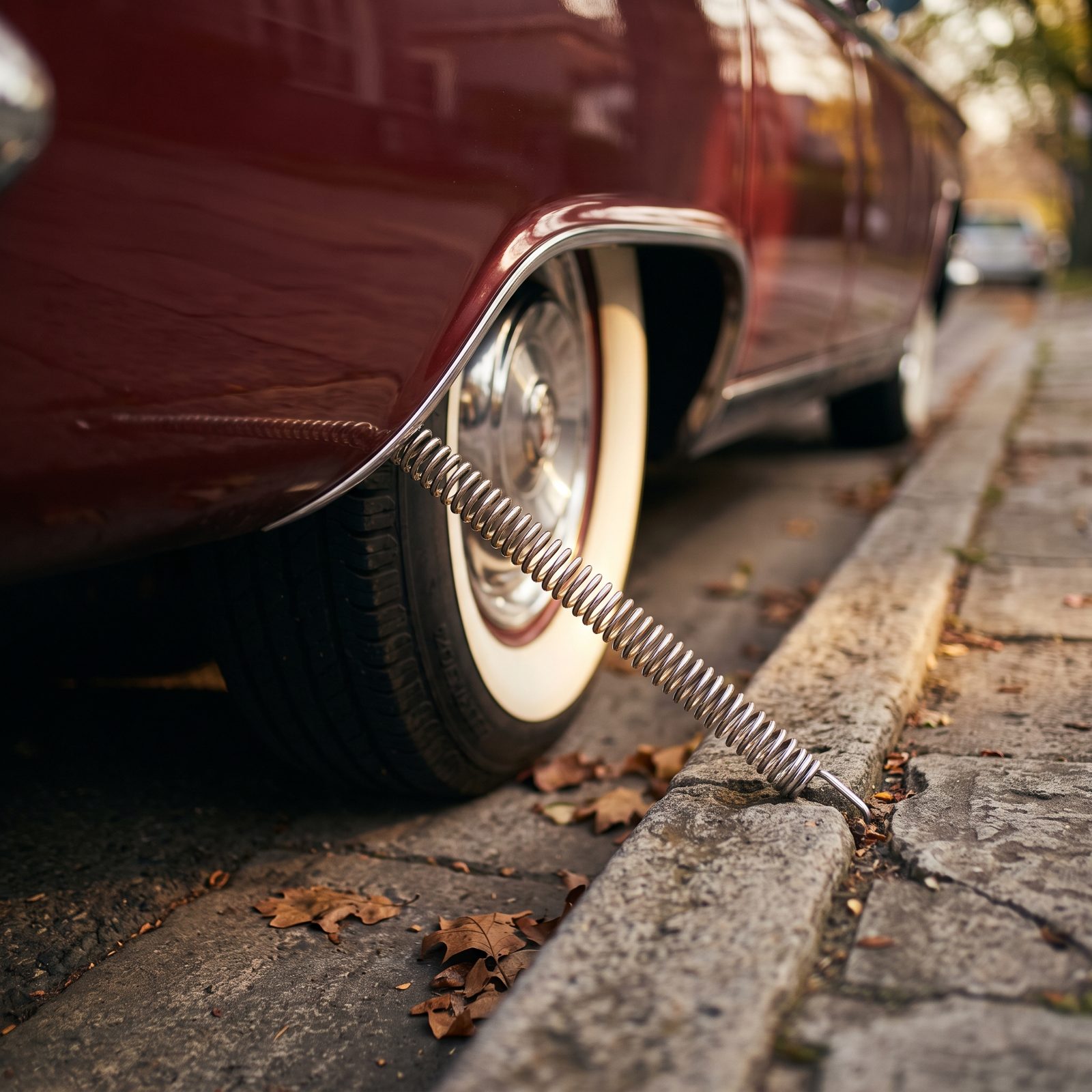
Now this one actually earned its keep. A curb feeler was a skinny coiled spring that stuck out from behind the whitewall, and when it scraped the concrete it buzzed just enough to tell you to stop before your fancy wide whites kissed the curb. Whitewalls were expensive. Scuffing one was a small heartbreak. So you ran a little chrome whisker off each side like a cat’s antenna and let it do the worrying for you. The downside? The feelers themselves scraped the curb constantly, which is the whole point, and after a season they’d be bent and squawking and half rusted. Charming little gadget, though. You don’t see them anymore, and parking sensors do the same job without the whisker. Less personality, if you ask me.
26. Static Straps Dangling Beneath the Rear Bumper
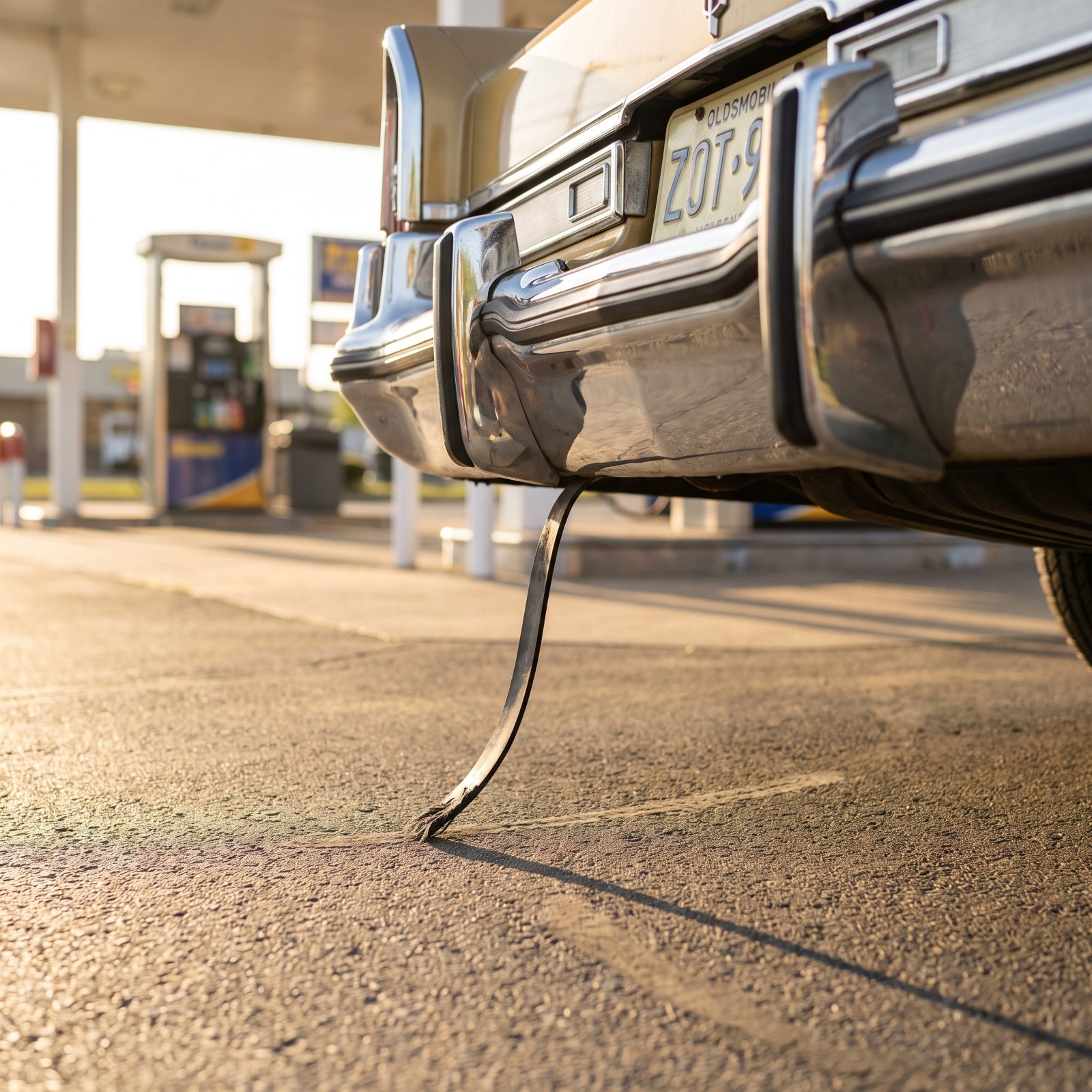
Ever notice a thin black rubber tail dragging behind an old land yacht and wonder what in the world it was for? That’s a static strap, and the idea was that it bled off the charge your car built up rolling down the highway, so you wouldn’t catch a zap stepping out. Some folks swore it cured carsickness too, the theory being that static made passengers queasy. Whether any of that held up is another matter. What the strap mostly did was drag along the pavement, wear itself down to a nub, and leave a faint scuff line everywhere you parked. Half the people who had them couldn’t tell you their purpose. They just came with the car, so there they stayed, flapping away underneath like a little rubber afterthought.
25. Power Antennas Rising From the Fender
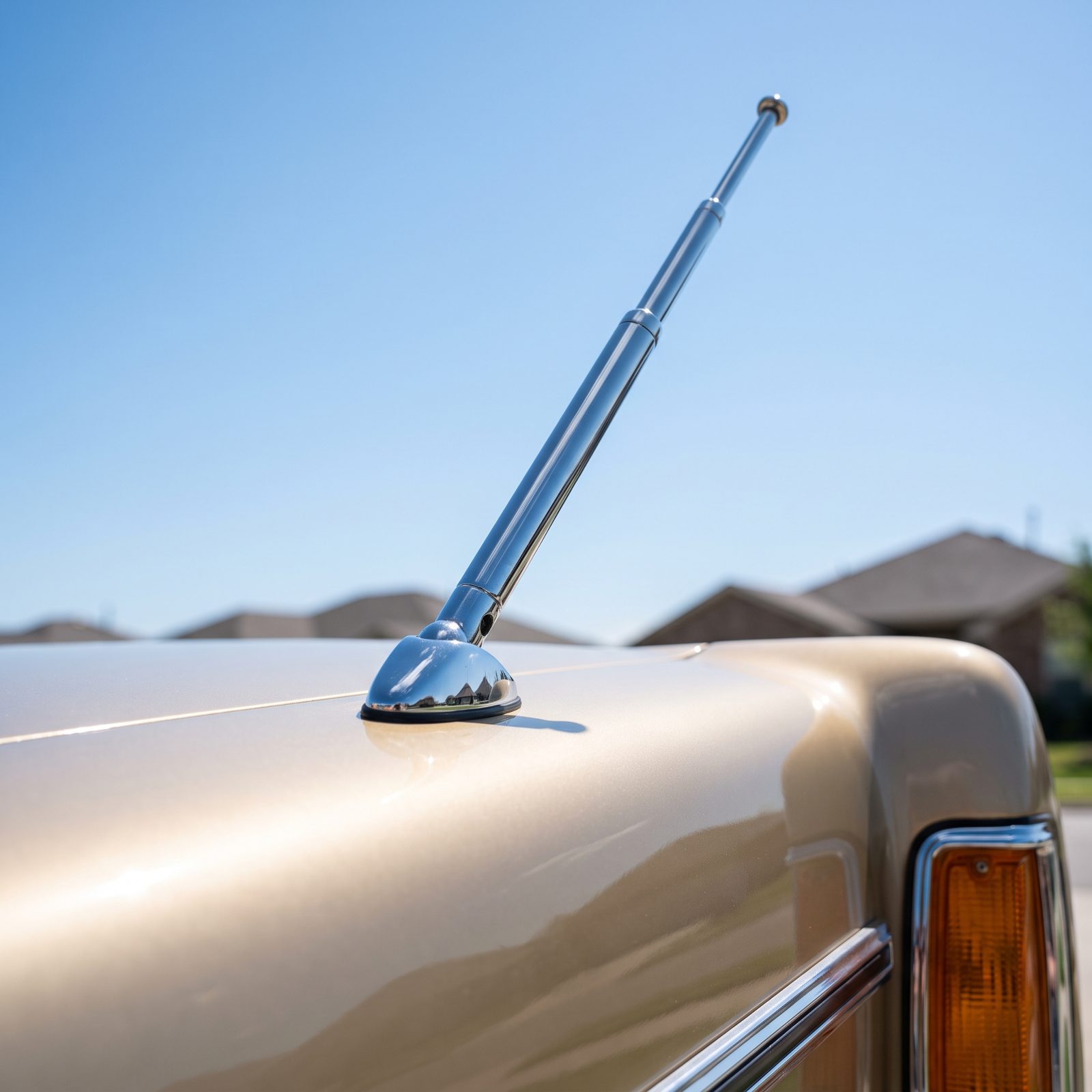
Flip on the radio and watch the magic: a chrome antenna climbing up out of the fender all by itself, segment by segment, humming as it went. It was a genuine thrill the first few times. No cranking a knob, no yanking a rod up by hand, just a flick of the switch and your reception rose from the bodywork like a little flagpole. Of course the thing jammed. Grit got in the gears, the mast bent, the motor whined and quit halfway up. Plenty of these cars rolled around with an antenna frozen at half-staff for years because fixing it cost more than anybody cared to spend on reaching a clearer AM signal. Still, when it worked, it felt like the future had arrived right there on your front fender.
24. Rear-Window Louvers That Darkened the Cabin
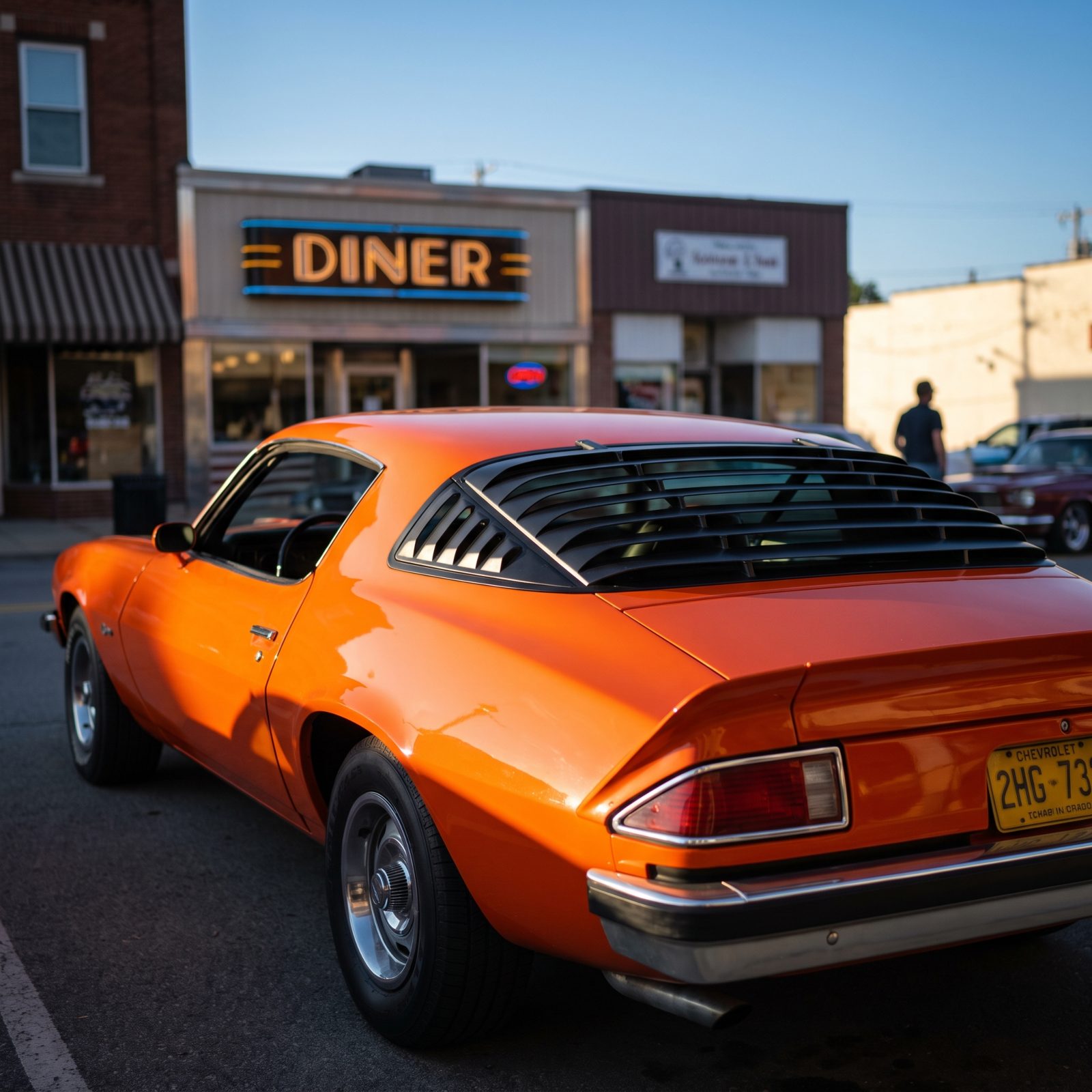
A set of black slats bolted over the back glass of a muscle car, and suddenly your ride looked meaner, lower, and ready to run. That was the pitch. Rear-window louvers borrowed the look straight off the exotic coupes of the day and bolted it onto anything with a sloping rear window. They did cut down on sun baking the back seat, give them that. But they also turned your rearview mirror into a view of nothing but horizontal bars, which was a fun surprise the first time you tried to back out of a crowded lot. You traded seeing behind you for looking fast. On a cruise-night Camaro parked at the curb, that was a trade plenty of guys made happily. Parked, after all, you don’t need to see where you’re going.
23. Headlight Blackout Covers With Narrow Slits
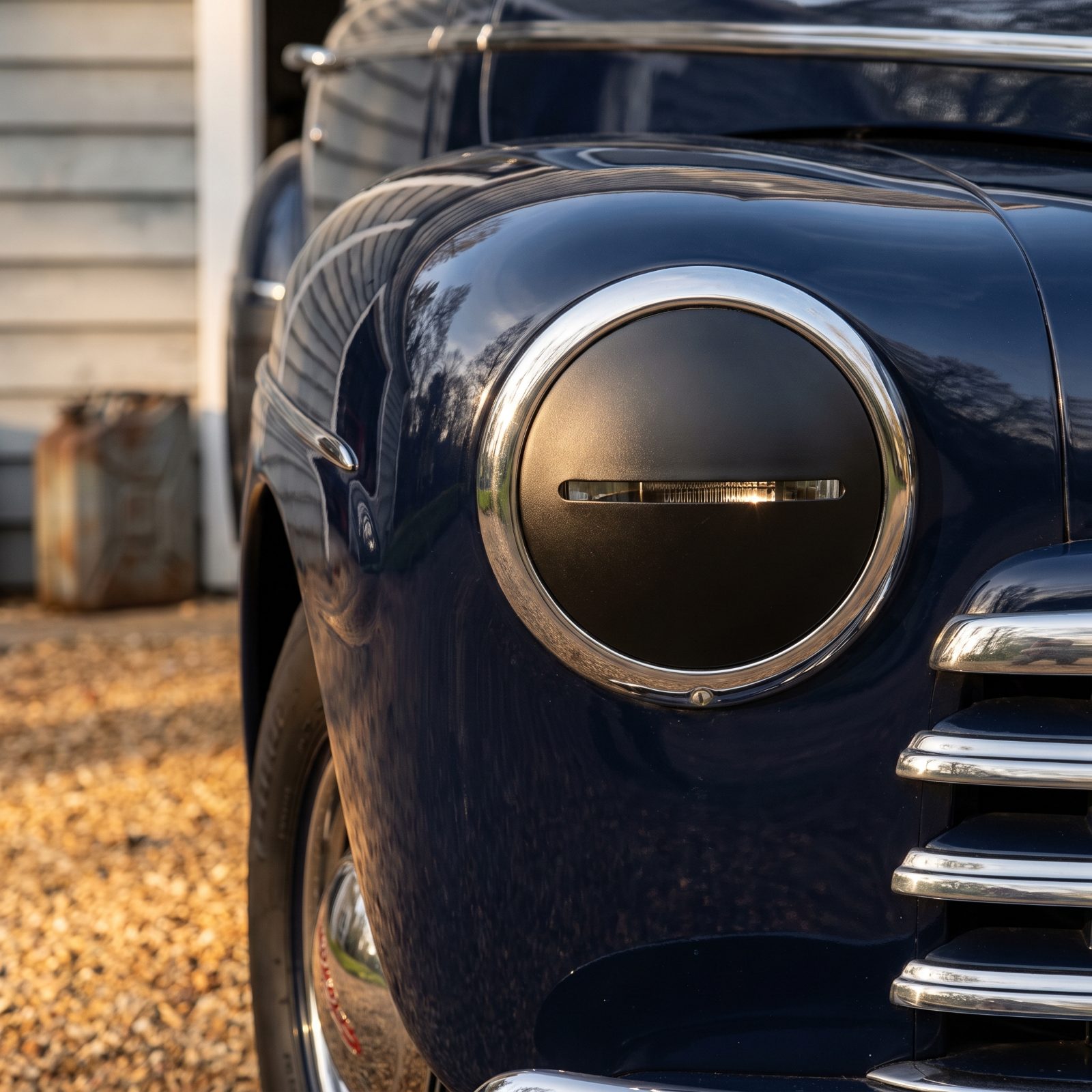
This one carries weight. During the war years, coastal towns went dark at night so enemy ships couldn’t spot the glow from offshore, and that rule reached all the way down to your family sedan. Drivers fitted metal caps over their headlights with just a thin slit cut across the middle, letting out barely enough light to keep from running into a ditch. You drove slow. You squinted. You hoped the fellow coming the other way had his slits aimed just as low. It was a grim, sober little accessory, nothing like the chrome showboating that came after. Look at one now and it reads almost sleek, almost intentional, like somebody designed a minimalist headlight on purpose. They didn’t. They were just trying not to be seen from the water.
22. Pop-Up Headlights on Otherwise Ordinary Coupes
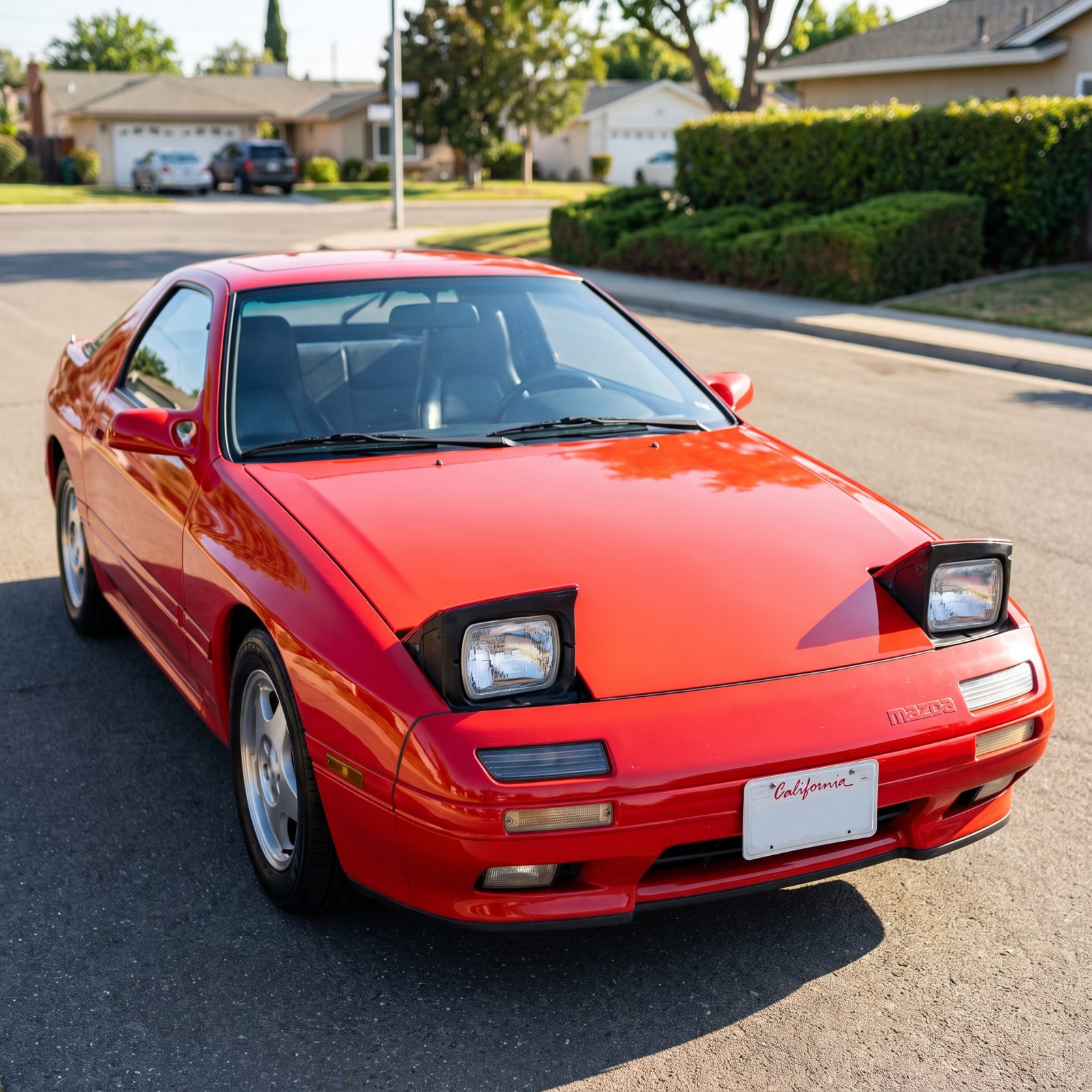
Few things delighted a kid in the back seat like watching the headlights wink up out of a smooth hood at dusk. Pop-ups let designers draw a long low nose with nothing poking out of it, then flip the lamps up only when you needed them. For a couple of decades they were everywhere, from pricey sports cars down to perfectly ordinary coupes trying to borrow a little glamour. The catch is they were motors and hinges and vacuum lines, and all of that breaks. One eye would stick halfway while the other saluted the sky, giving your car a permanent wink. Eventually crash rules made the whole mechanism a headache and they went extinct. A shame, honestly. A car that blinked awake had character no sealed-in LED strip will ever match.
21. Fake Side Exhaust Pipes
Would you like to save this?
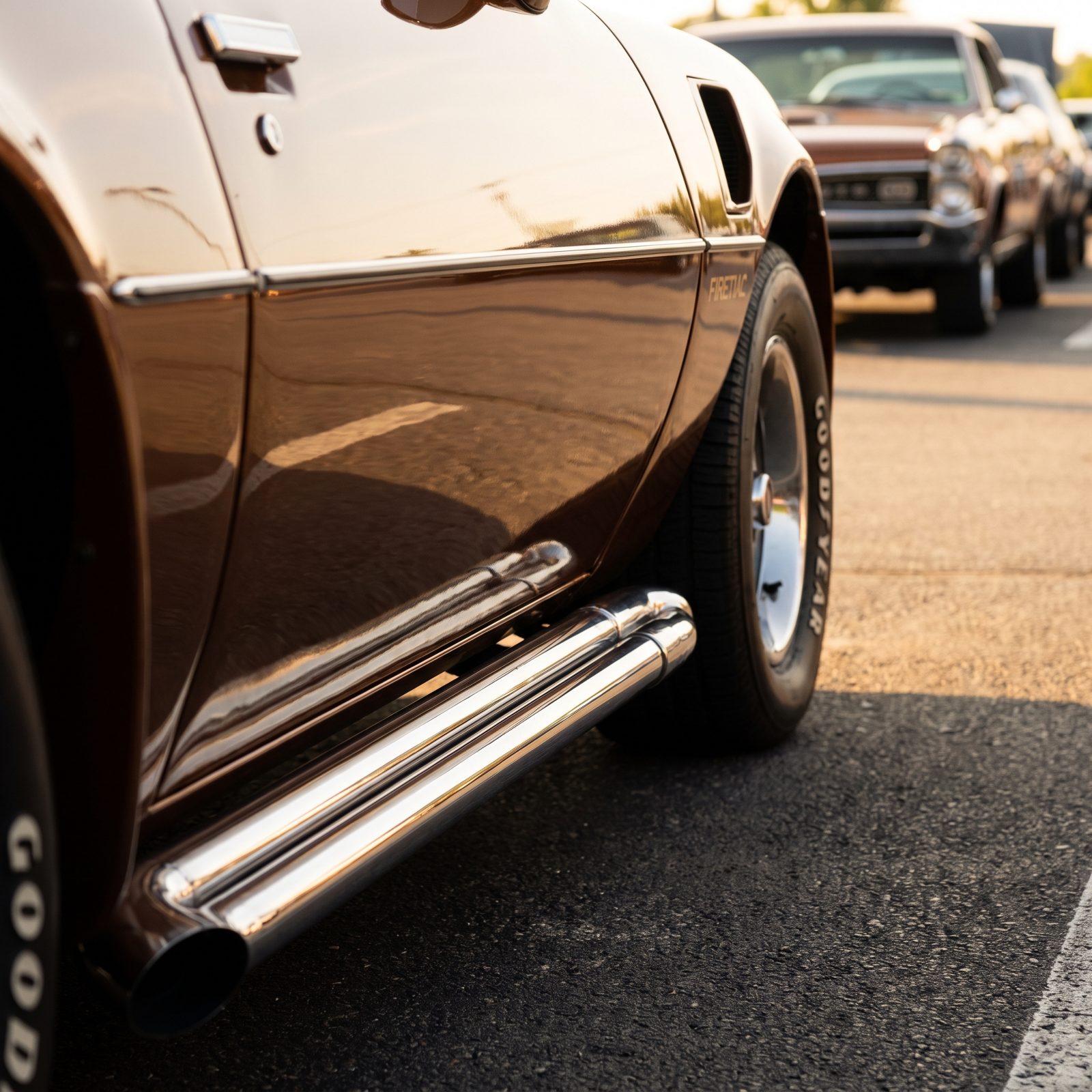
Let me set the scene. A bronze Firebird rolls into the lot, chrome pipes gleaming along the rocker panels, and everybody turns to look because surely that thing must roar. Then it idles past, quiet as a sewing machine, because those gorgeous pipes aren’t connected to anything. Side exhaust was the look of the day, borrowed from race cars and Corvettes that actually ran their gases out the flank. The bolt-on versions were pure costume jewelry, dummy tubes screwed to the body with the real muffler tucked out back where it always was. Did anybody fall for it? Not really. The point was never to fool you, it was to look like trouble while behaving itself. All bark, and not even real bark at that.
20. Chain-Link Steering Wheels
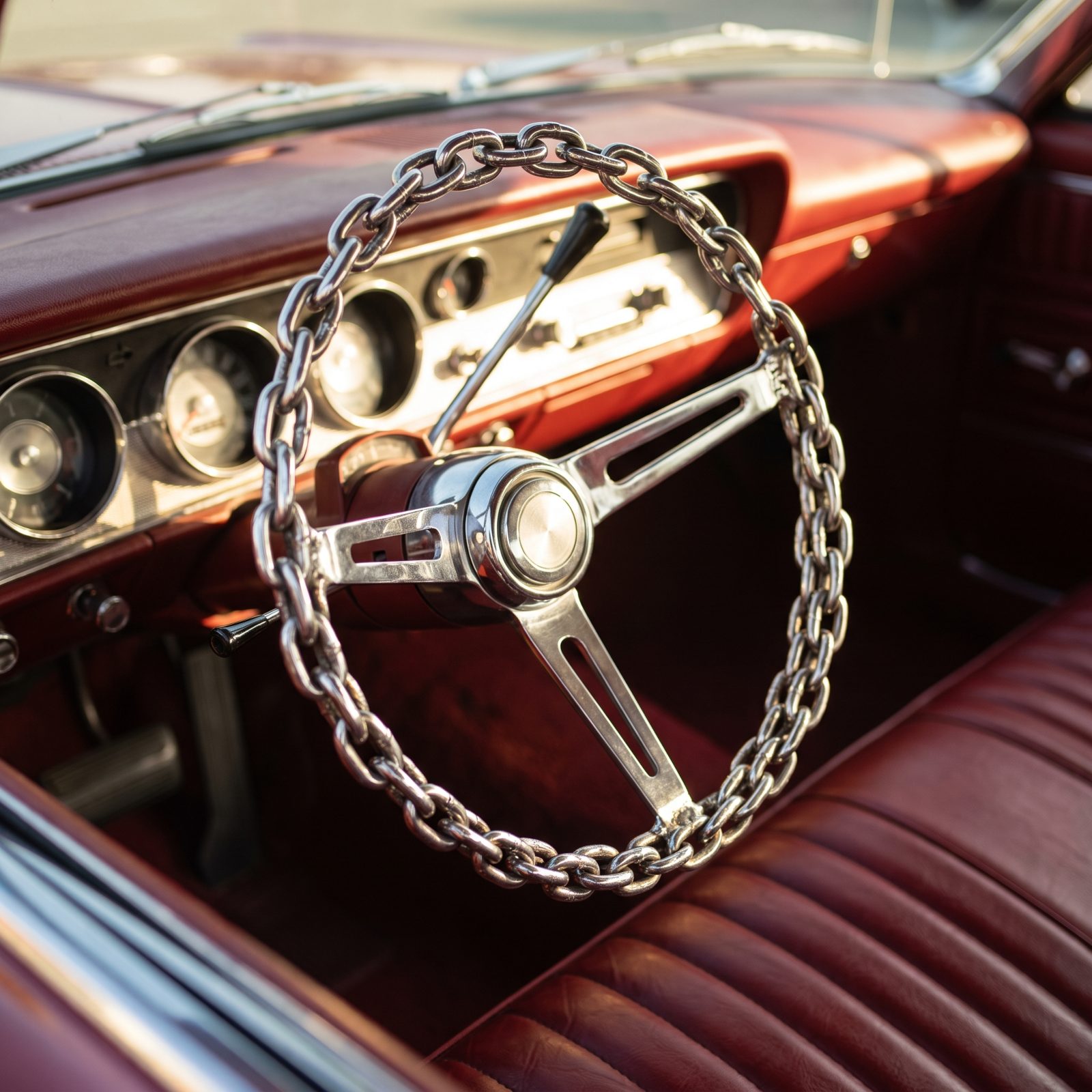
Over in lowrider country they did things their own way, and the chain-link wheel is proof. Somebody looked at an ordinary steering wheel and thought, what if the whole rim were welded-together chain, polished to a mirror and bolted to a chrome spider hub? It looked incredible. Daylight caught every link, the tuck-and-roll vinyl glowed red behind it, and no two were quite alike because each one was built by hand. Driving with it was another story. Grab that chain hard on a cold morning and it would pinch your palms something fierce, and good luck turning quick in a parking lot. But nobody put a chain wheel in their ride to drive it well. They did it so that when the door swung open at a show, people leaned in close and said, would you look at that. That reaction was worth every pinched finger.
19. Eight-Ball Manual Shift Knobs
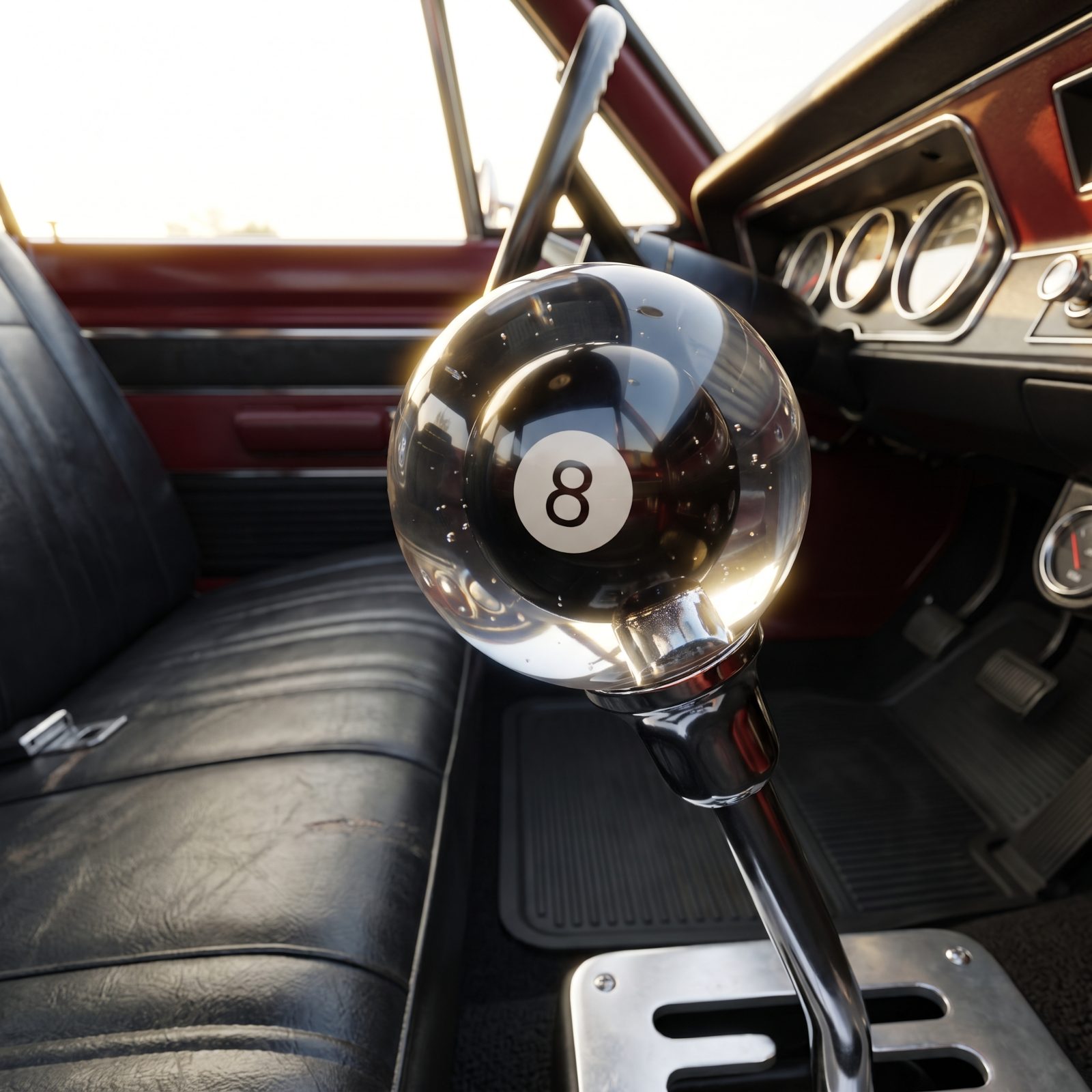
Every pool hall in America apparently needed its shifter represented in a muscle car. The eight-ball knob was the first thing a teenager bought after the car itself, usually before the car ran right.
It made no mechanical sense. The sphere was slick, your palm slid off it on a hard shift, and in July it got hot enough to brand you. Didn’t matter. It said something, and whatever it said was louder than any owner’s manual.
18. Foot-Shaped Chrome Accelerator Pedals
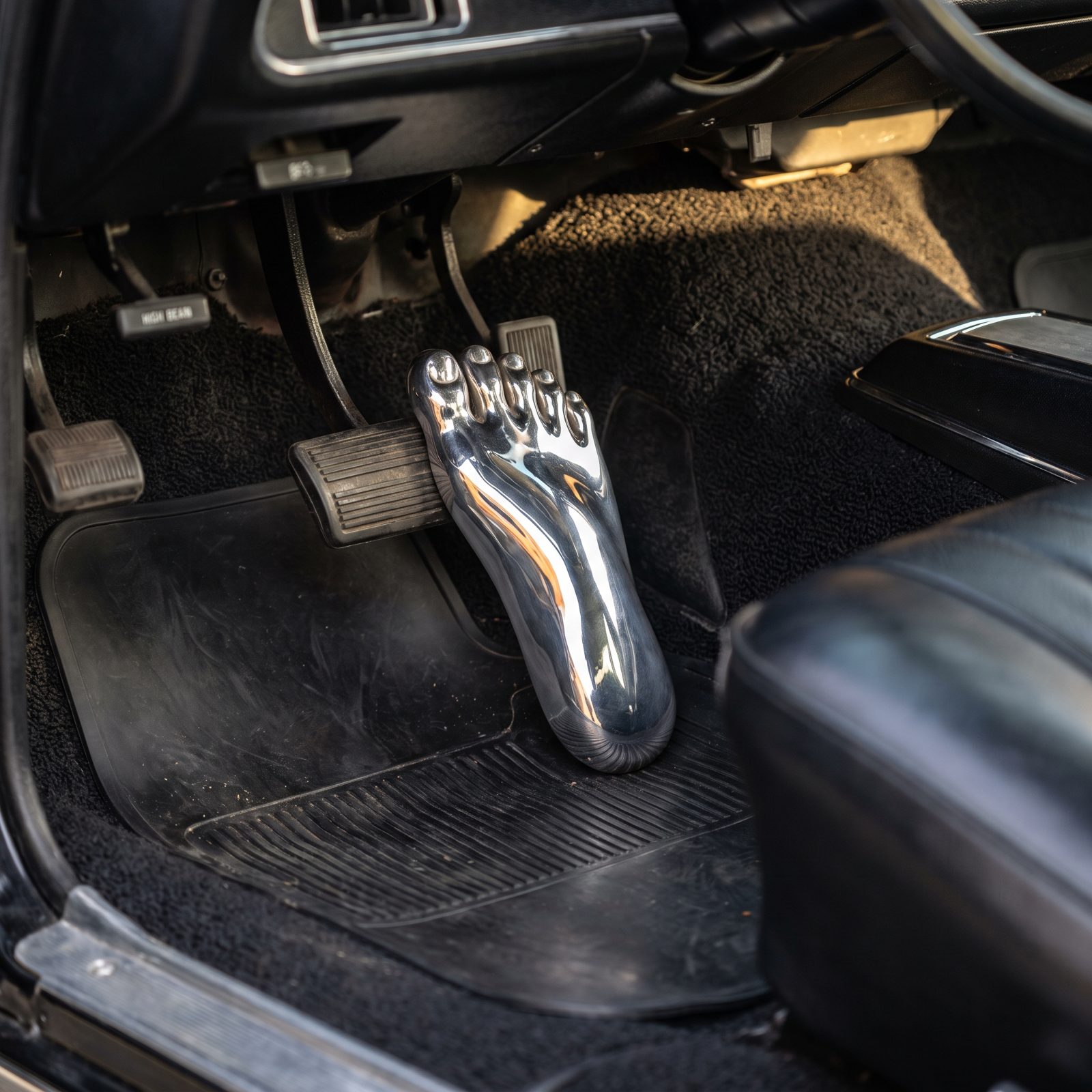
Somebody decided the gas pedal needed to look like a foot. Not a shoe. A foot, toes and all, cast in gleaming chrome and bolted over the perfectly good rubber pad that came from the factory.
The logic, if you can call it that: your foot goes there, so make it a foot. It gleamed in the footwell like a trophy nobody asked for, and every passenger clocked it within ten seconds of sliding in. Mission accomplished, I suppose.
17. Swiveling Suicide Knobs on Steering Wheels
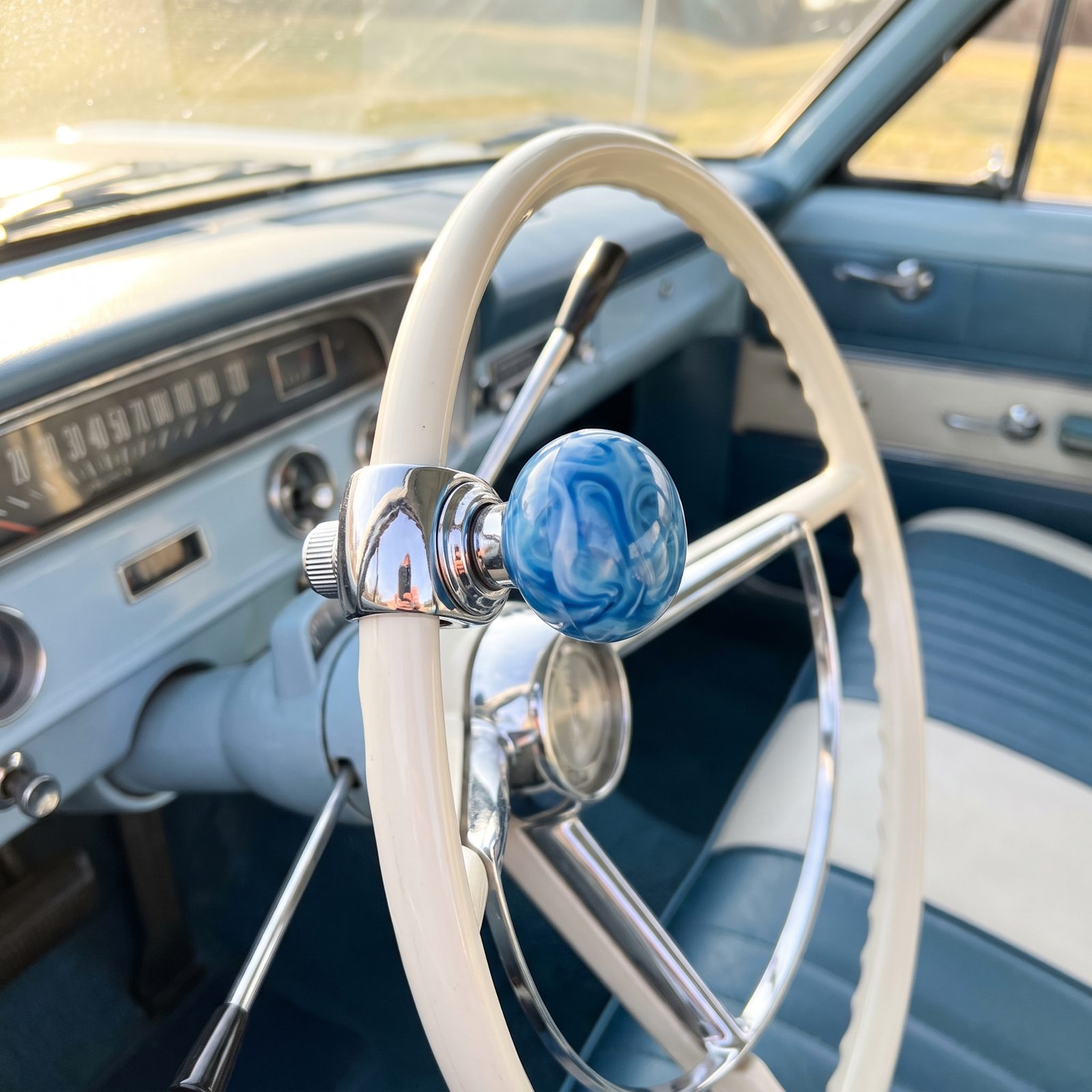
Picture the delivery driver with one wrist hooked on a marbled plastic ball, spinning the wheel lock to lock with a flick while the other arm hung out the window. That was the suicide knob doing its job.
It had a real purpose once, farm trucks, delivery vans, anyone muscling a wheel with no power steering all day. Then it became a style move. The nickname told you everything about what happened when you clipped something hard and the wheel spun that chrome mount into your forearm.
16. Fur-Covered Dashboard Pads
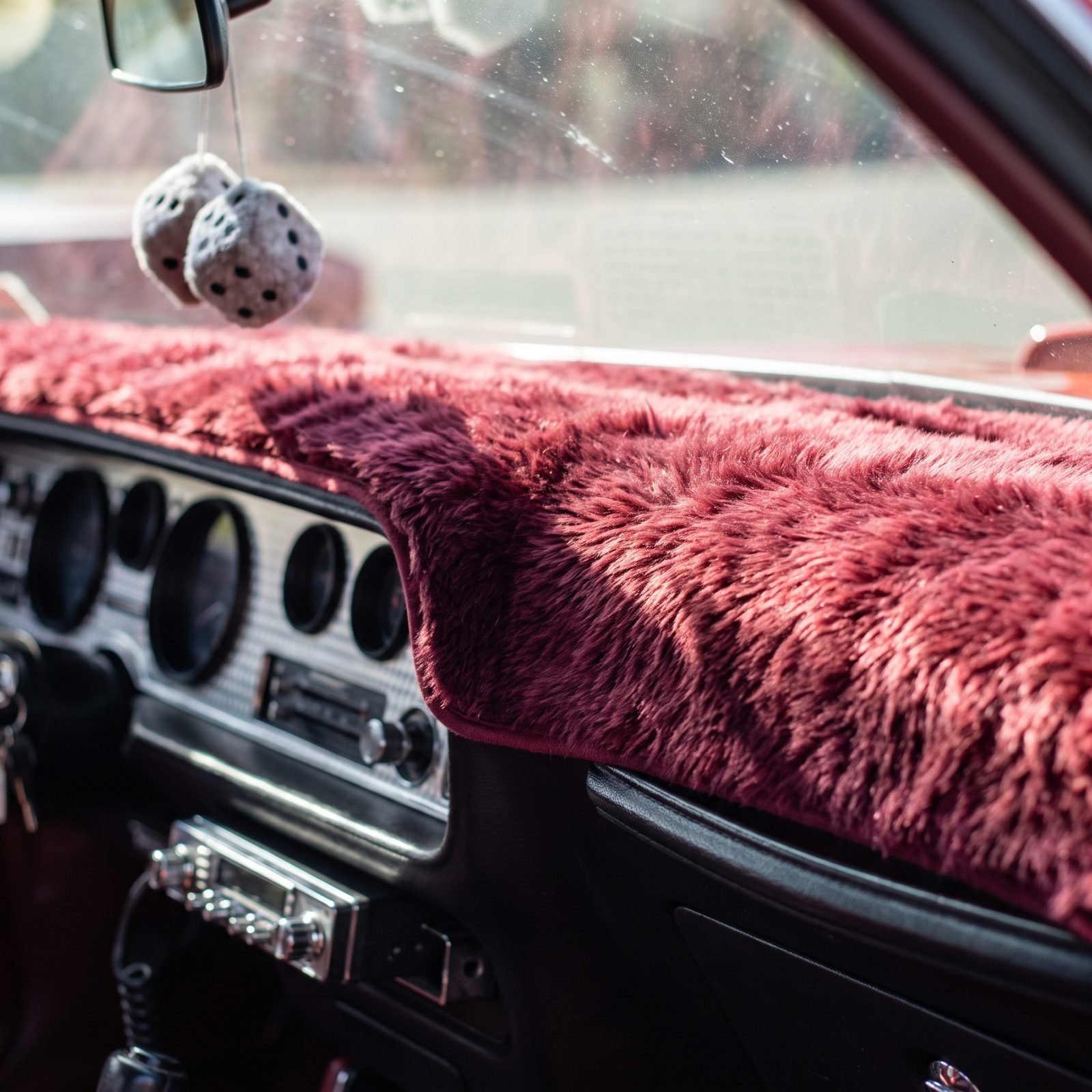
The fur dash was comfort cosplay for a car interior. Deep shag pile, usually burgundy or chocolate, stretched across the top of the dashboard like the car had grown a pelt overnight.
It did solve one real problem: glare bouncing off the dash top into the windshield on a bright day. Everything after that was pure decoration. It also collected every French fry, parking receipt, and cigarette ash the car ever saw, and vacuuming it was a lost cause from day one.
15. Shag Carpet Across the Floor and Doors
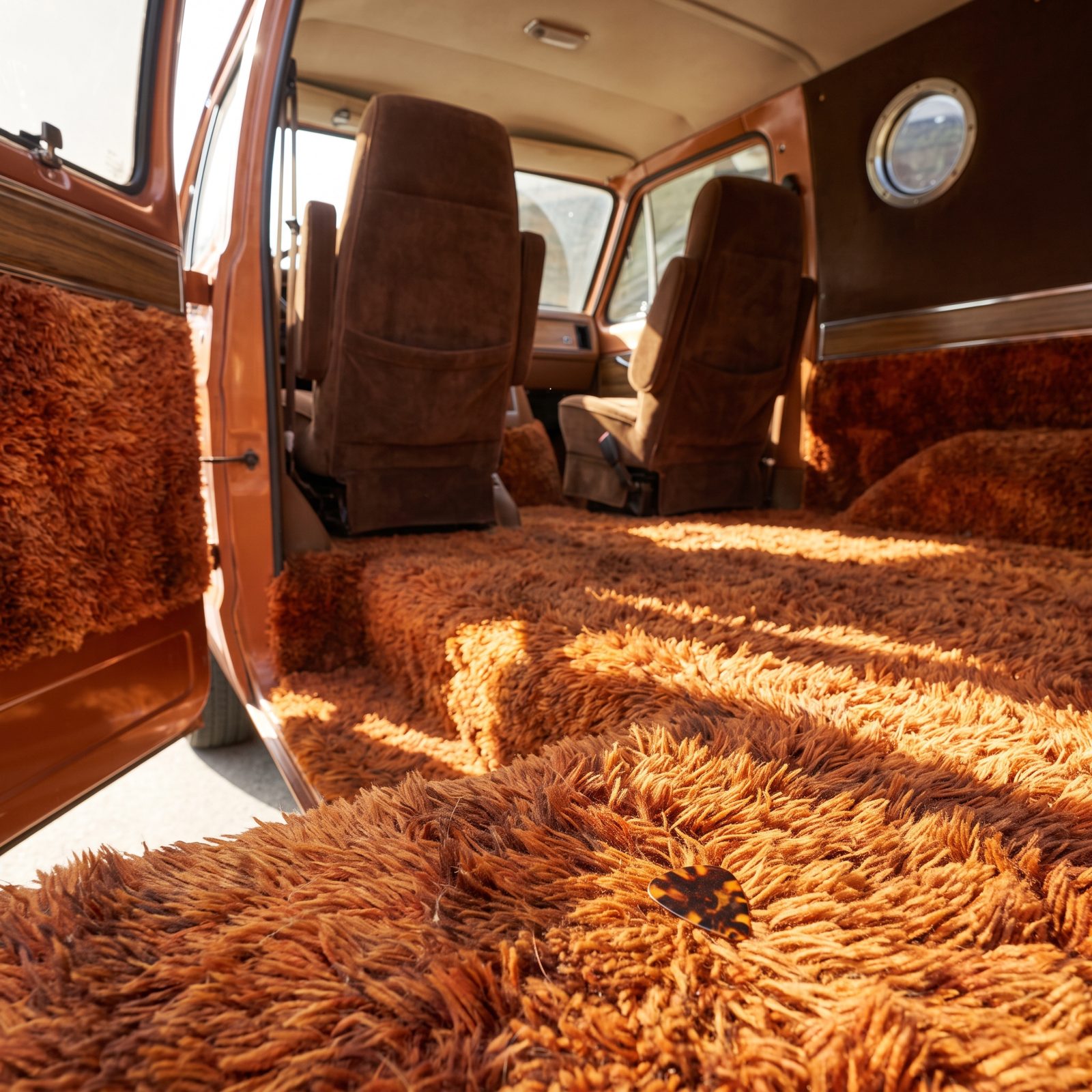
Shag didn’t stay on the floor where carpet belongs. It climbed the doors, wrapped the engine cover, and in a proper custom van it crept right up the walls until the whole interior felt like the inside of a shoe.
Orange and brown ruled, the deeper the pile the better. Warm, soft, good for muffling road noise. It also swallowed small objects whole and never gave them back. You dropped a quarter in a shag van and you considered it a donation.
14. Velour Seats With Diamond-Button Tufting
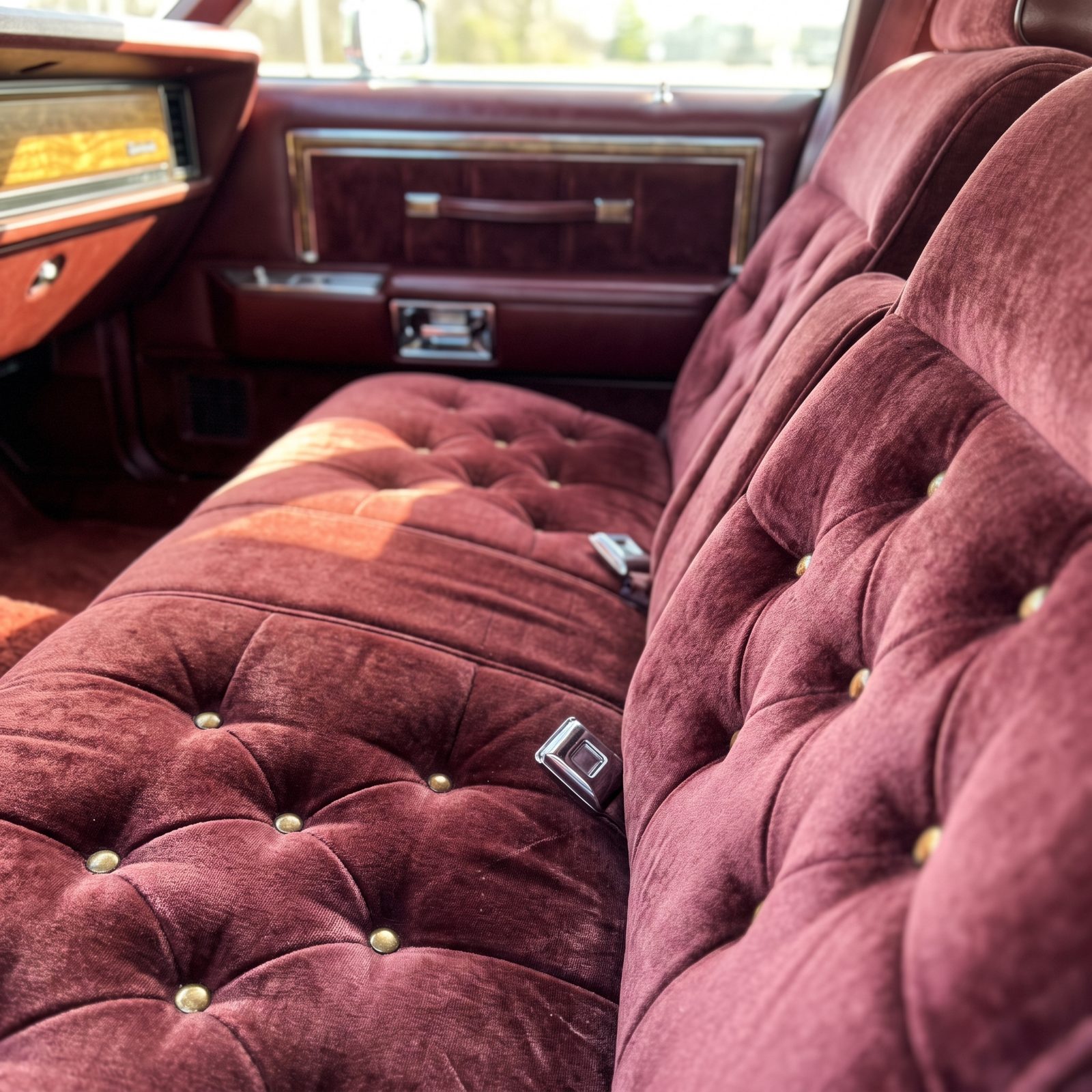
The 1970s decided a car seat should feel like a hotel lobby couch, and velour answered the call. Crushed, plush, button-tufted into fat diamonds, it turned the inside of a Lincoln or a Cutlass into a rolling parlor.
It felt wonderful in a showroom. In practice it held heat like a sponge holds water, showed every spill, and that directional nap meant your hand left a mark wherever it brushed. You spent half your drive smoothing the seat back to one color.
13. Wooden Beaded Seat Mats
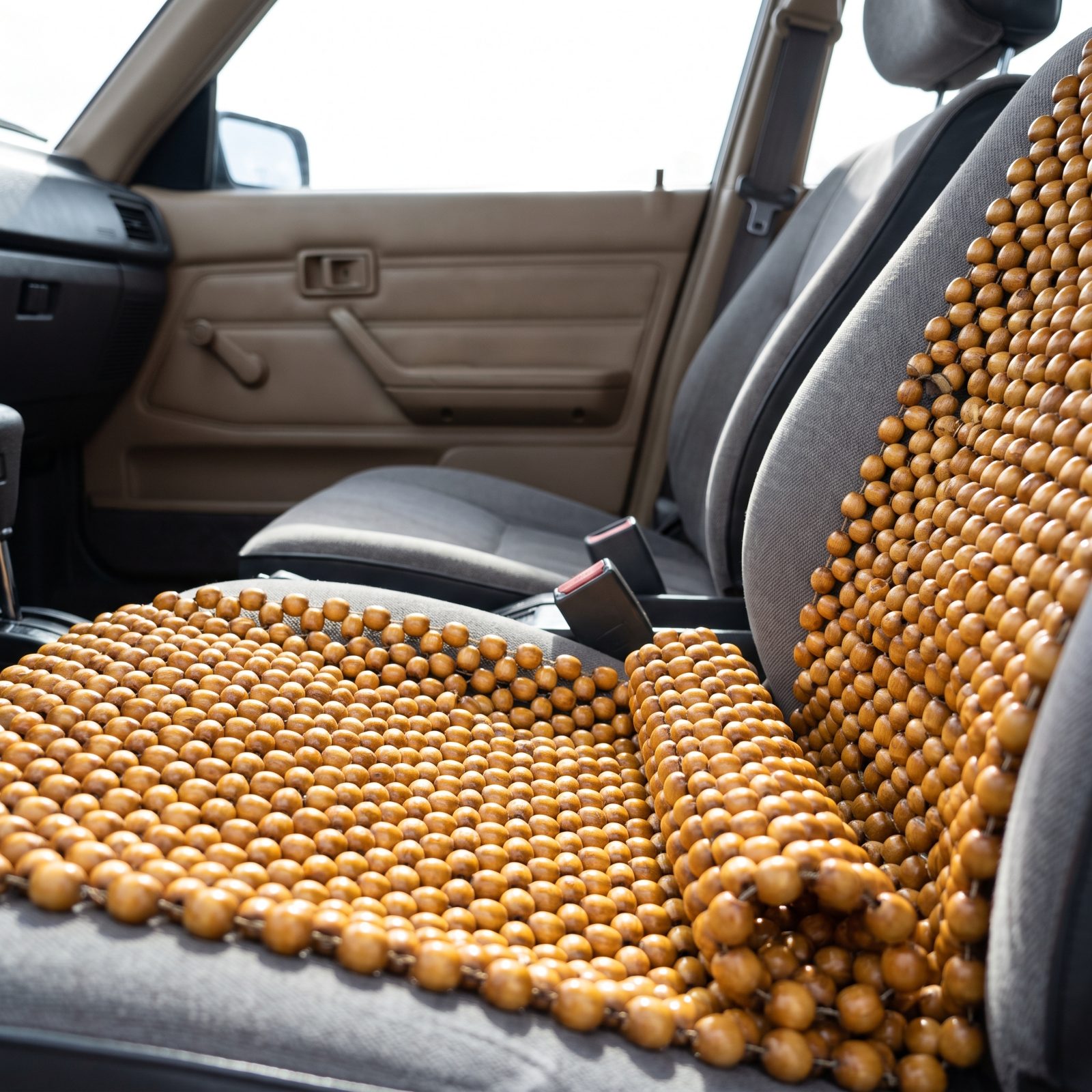
Taxi drivers swore by them, and for once the gadget earned it. The wooden beaded mat let air move between your back and the seat, which in a vinyl interior in August was closer to survival gear than decoration.
The catch was comfort. Those beads dug into your spine on a long drive, and if one popped off the string you felt its absence every single mile after. Still, you saw them in every cab and half the family sedans, rolling slightly under you with each turn.
12. Clear Plastic Covers Protecting the Seats
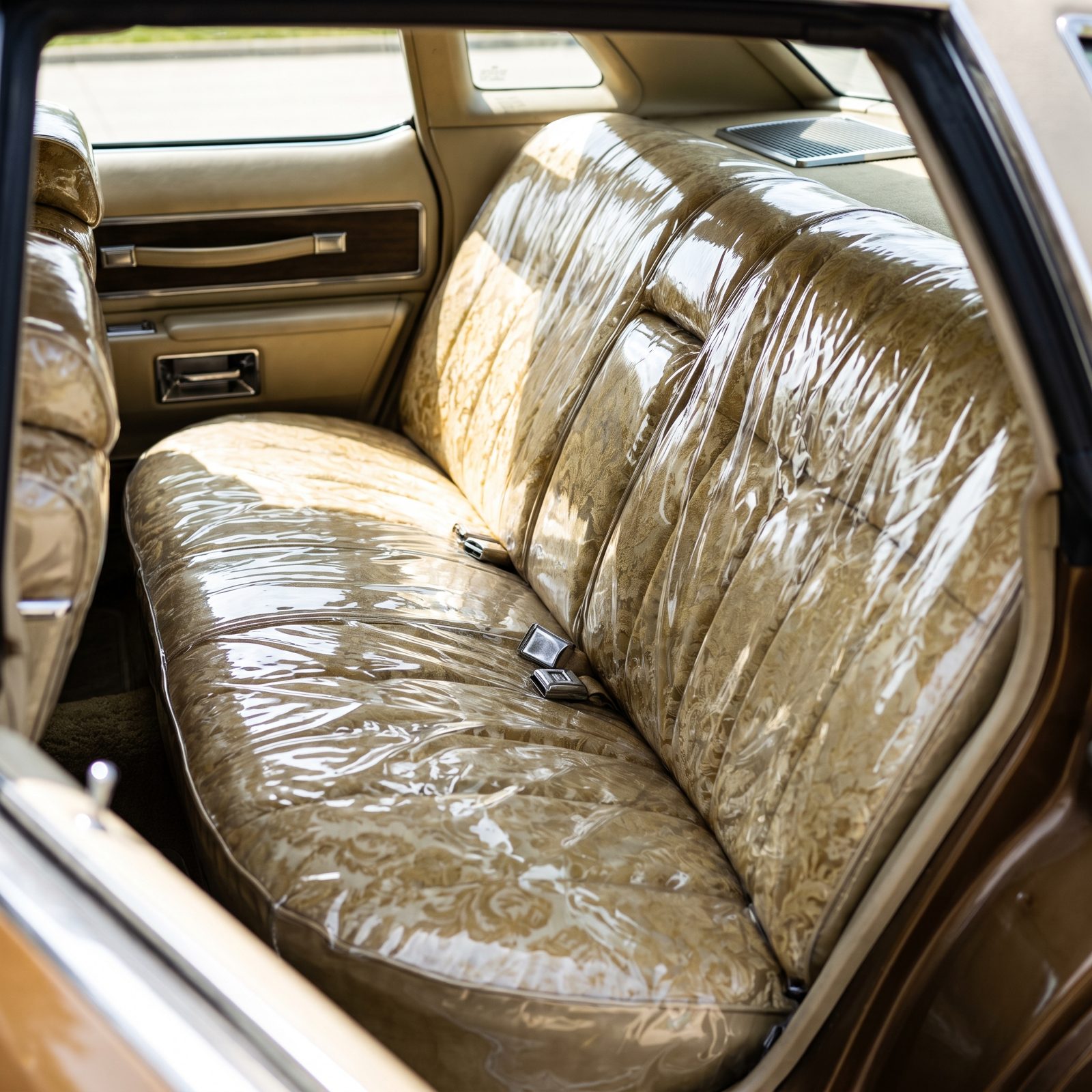
You knew the car. The upholstery underneath was pristine because nobody had ever actually touched it, and the plastic saw to that.
It was the thinking of a generation that grew up with nothing and refused to let the good seats wear out. The cover squeaked when you sat, it stuck to the back of your legs in shorts, and in winter it was a cold slab until the heater caught up. The seat it protected would outlast the car. That was the whole idea, and honestly, hard to argue with.
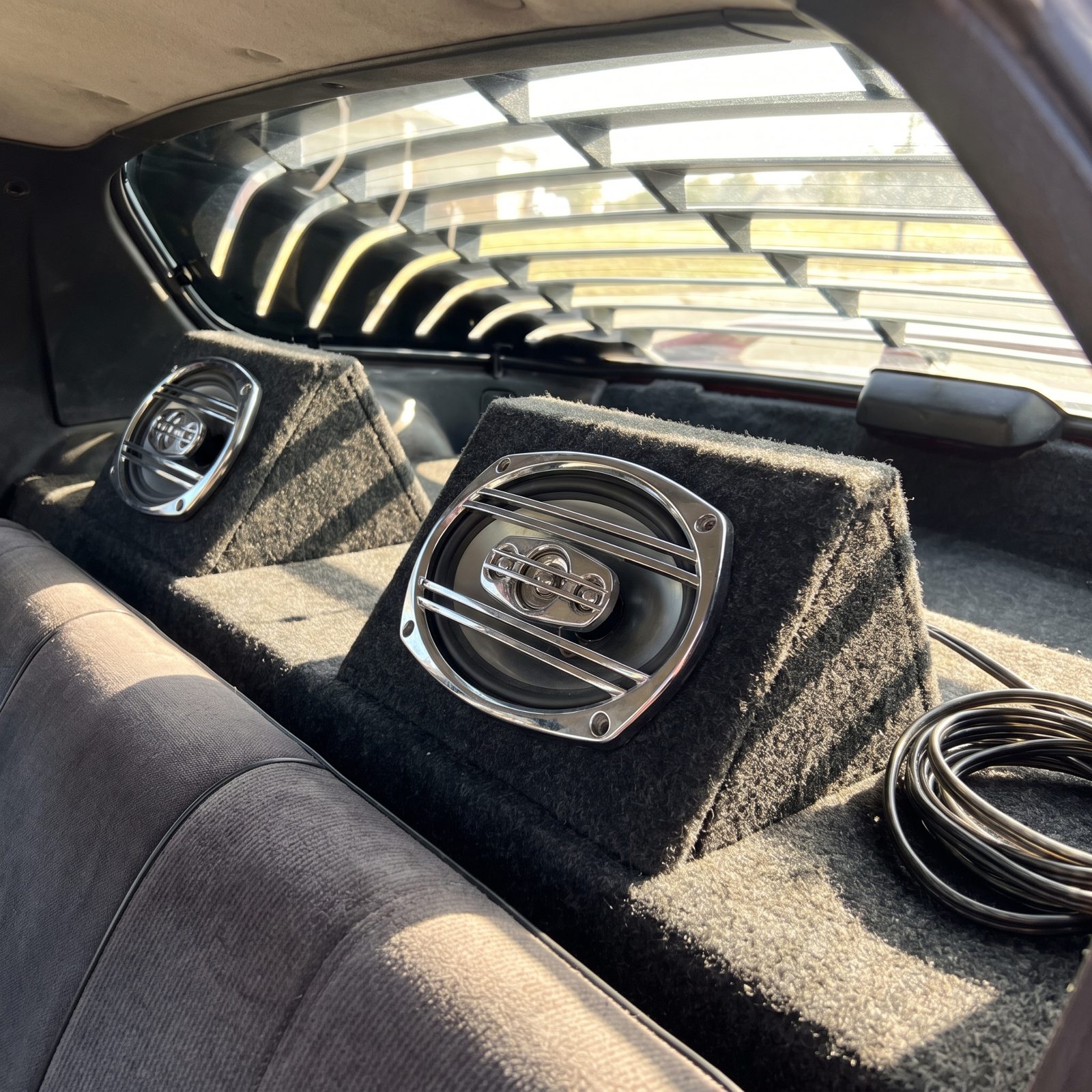
11. Rear Speakers Mounted in Furry Boxes
Would you like to save this?
The factory speakers were weak, so you bought 6x9s, and the 6x9s needed boxes, and the boxes got wrapped in leftover carpet to match the interior. By the end you had two fuzzy wedges perched on the back shelf, angled up at the rear window like they were aiming at the sky.
They thumped hard enough to blur the mirror on a bass line. They also slid around on hard turns, blocked half your rear visibility, and every passenger in the back seat got the drum solo straight to the base of the skull.
10. Graphic Equalizers With Towers of Sliders
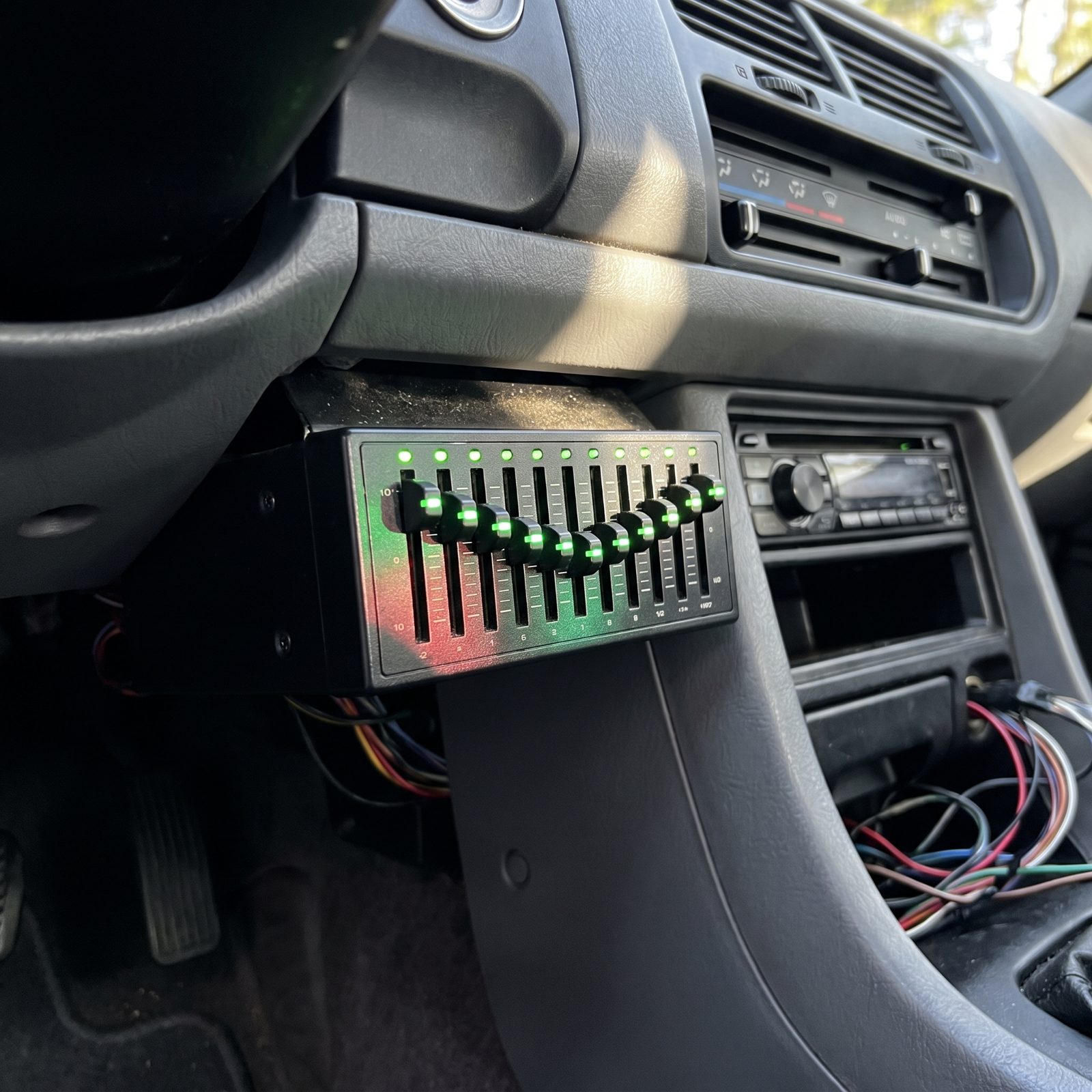
Ten sliders, each one glowing, each one promising command over a frequency band you could not name and could not hear. You arranged them into a little mountain range anyway, because a flat equalizer looked like you weren’t trying.
Half the fun was just the light show under the dash. The sliders drifted out of their nice symmetrical curve the second you hit a pothole, and the actual effect on the sound was usually a matter of faith. Didn’t stop anyone. The thing glowed green at night and that alone was worth the install.
9. Car Phones Bolted to the Center Console
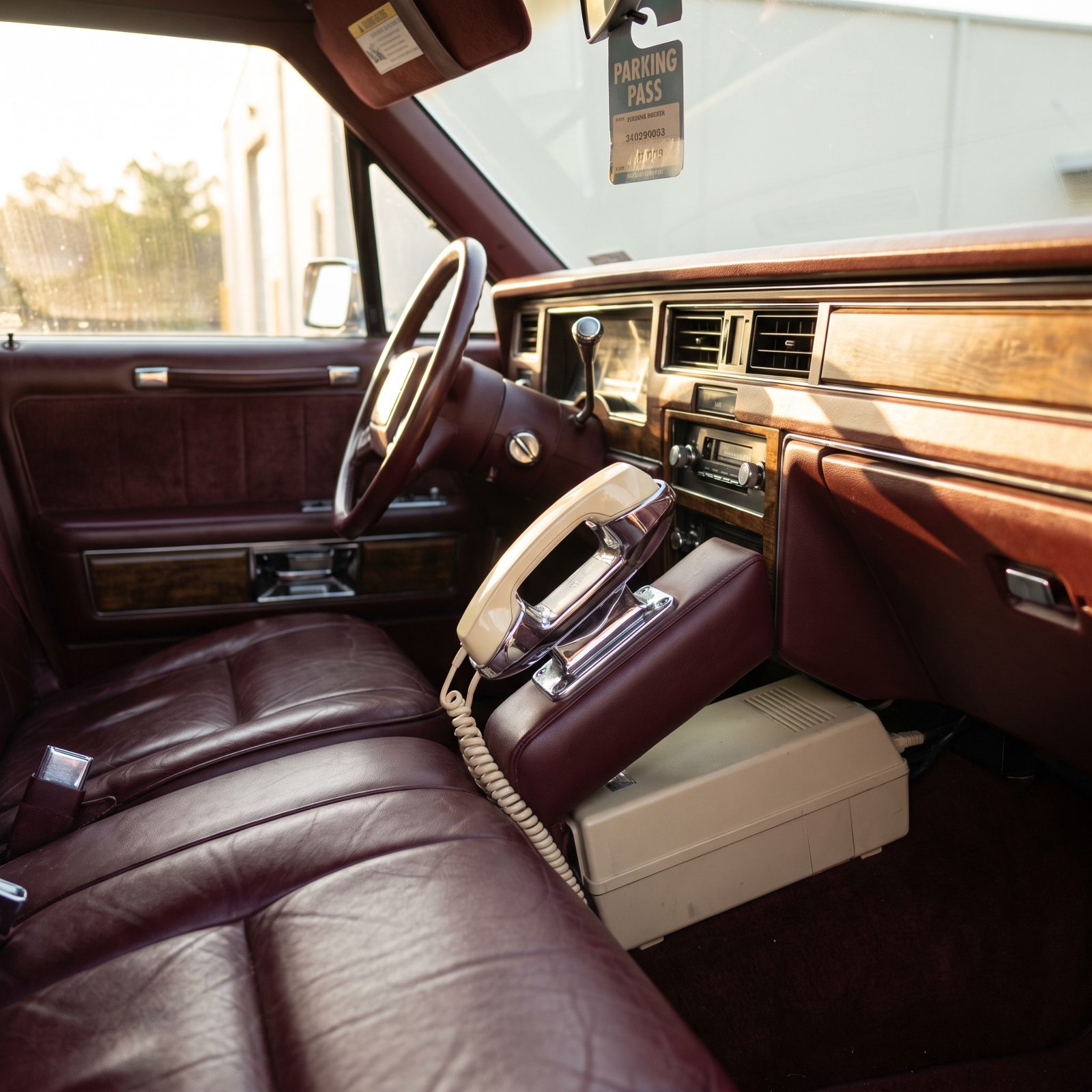
The size of it. That was the whole flex. A car phone in 1988 announced that you were a person who could not afford to be unreachable for the length of a commute, and it came with hardware to match the ego — a handset the weight of a brick, a base unit crammed under the seat, and a monthly bill that could make a grown man flinch.
You dialed by feel at a red light and shouted, because the connection was held together with hope. Then the whole category vanished the moment a phone fit in a pocket. Now the chrome cradle bolted to the console reads like a shrine to a status nobody remembers chasing.
8. Boomerang-Shaped Cellular Antennas Stuck to the Rear Glass
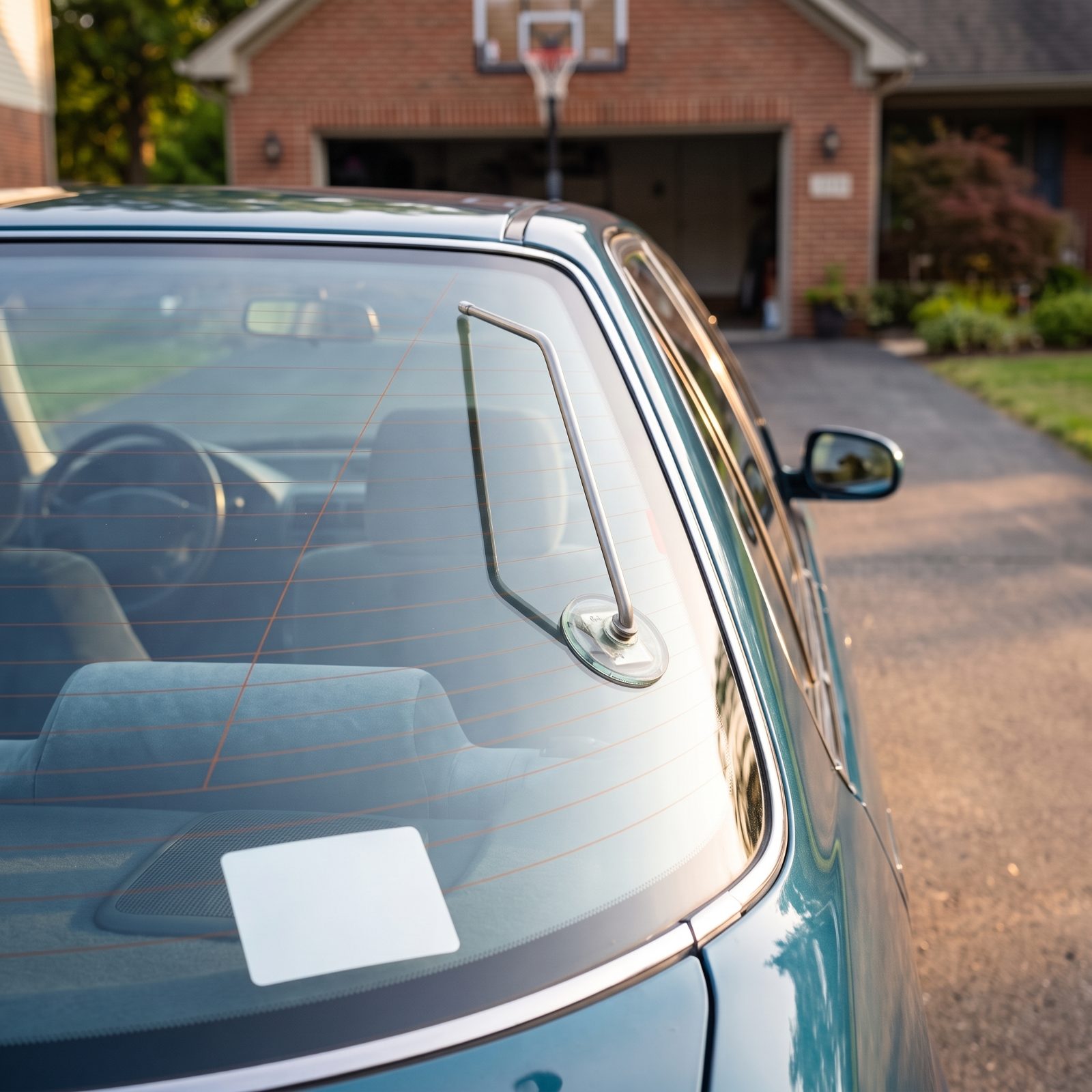
You stuck it to the outside of the rear glass and suddenly your Accord looked connected to something. Plenty of them weren’t connected to anything at all. That little silver wing became a styling cue that outlived its own function, announcing that this car might contain a phone even when it contained a cassette of Steve Winwood and nothing else.
Half were flat-out dummies, sold at the parts counter for people who wanted the look without the bill. I’ll admit I wanted one as a kid — which tells you everything about how well the fantasy worked.
7. The Cassette Holder Clipped to the Sun Visor
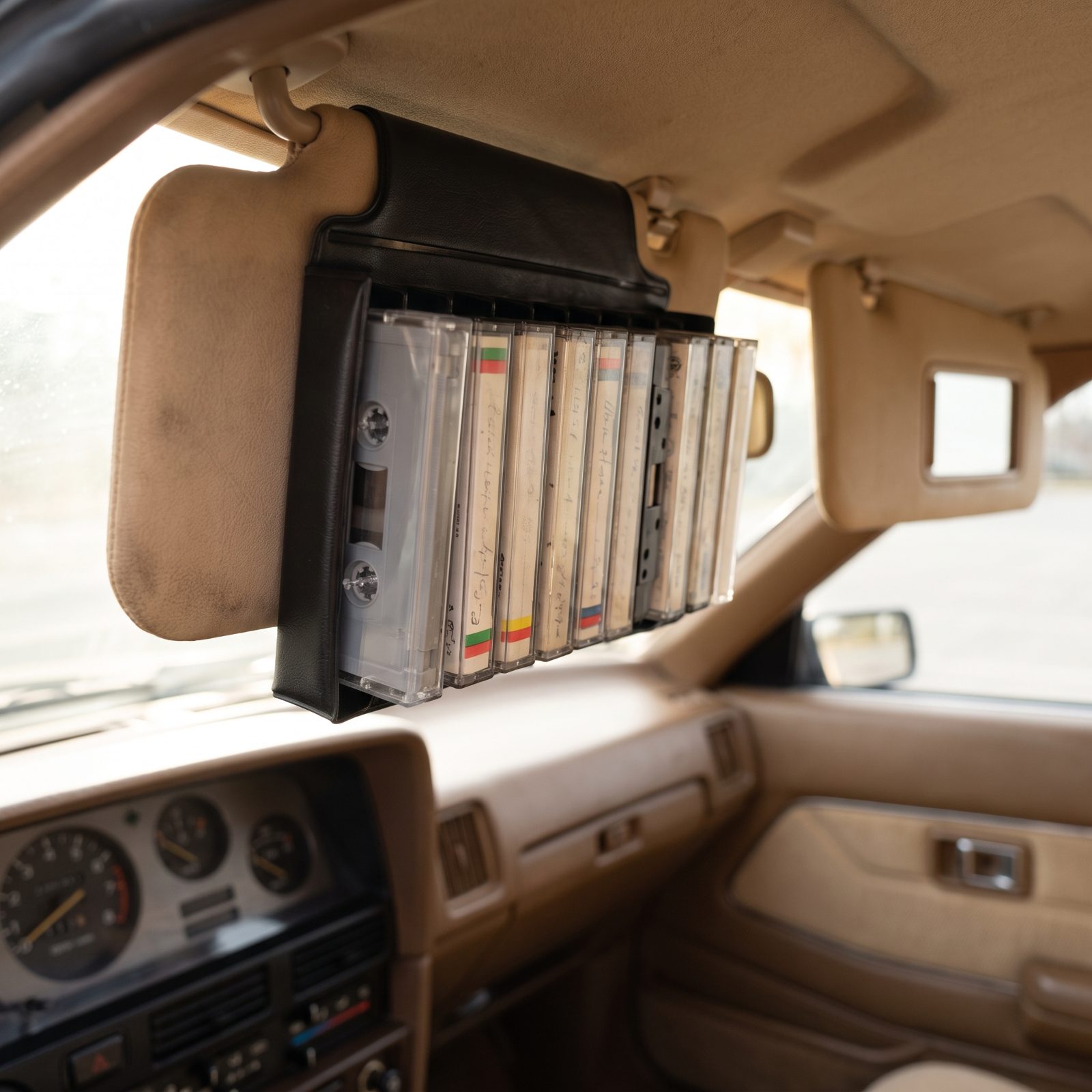
The thwack of it dropping down when you took a corner too fast. You clipped the vinyl holder over the visor, loaded eight of your best tapes spine-out, and drove around with your entire personality dangling over the windshield.
Practical for exactly one reason, absurd for every other. Hit a pothole and your whole catalog rained into the footwell at sixty. Yet there was a real tenderness to the thing — the handwritten labels, the mixtape somebody made you, the one tape you’d flip without looking. All of it disappeared into a plastic glovebox the day the CD changer moved into the trunk.
6. Neon Tubes Glowing Beneath the Chassis
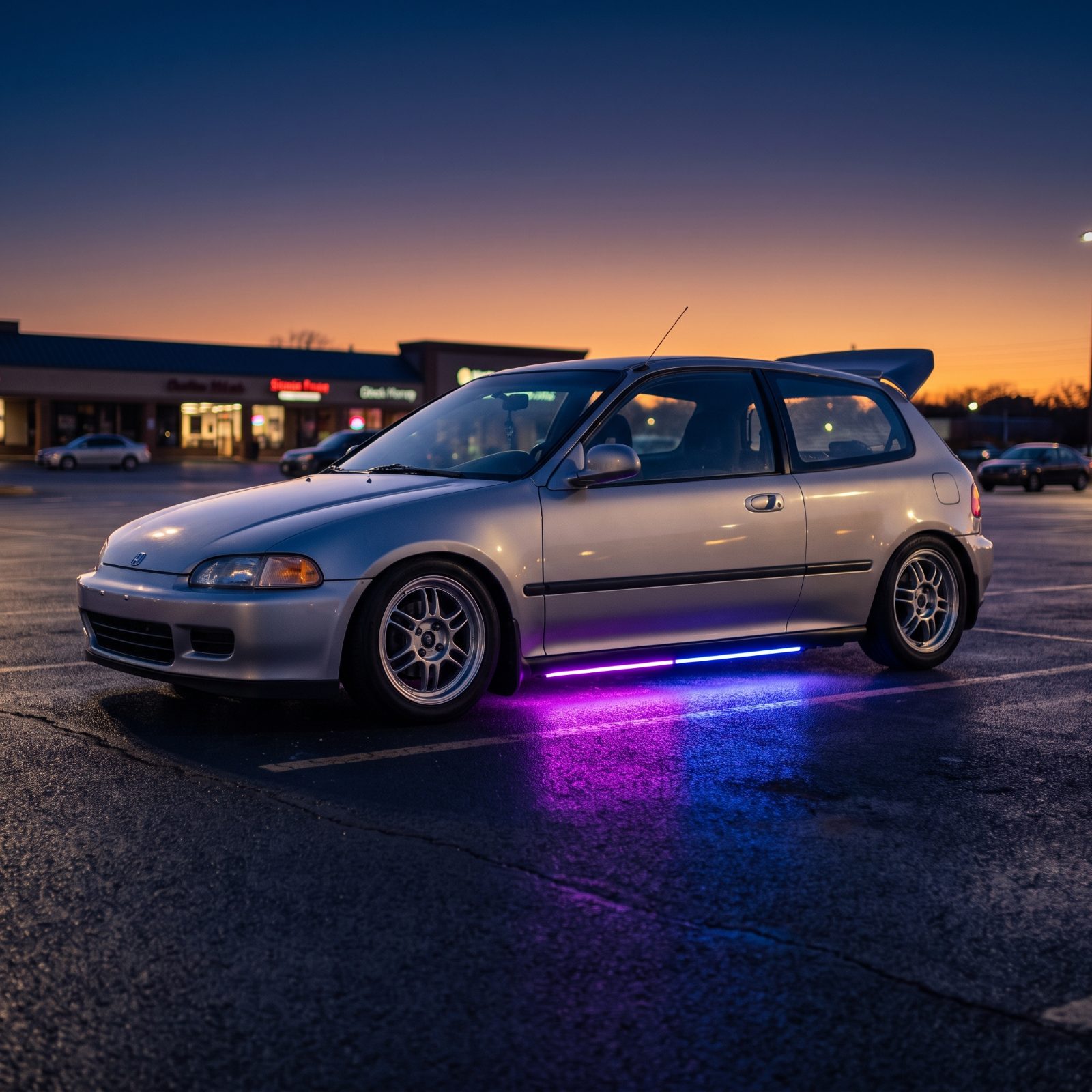
Roll into any 1995 parking lot after dark and there it was — a Civic hovering on a cushion of purple light, glowing underneath like a UFO that had gotten lost on the way somewhere cooler. The underglow kit promised speed. What it delivered was a light show and a traffic stop.
Cops hated them, insurance adjusters hated them, and the guy who installed his in the driveway with a crimp connector and a prayer loved them completely. For about three summers, the color of the tubes under your car mattered more than whatever engine happened to be in it.
5. Tribal Vinyl Graphics Clawing Down the Body
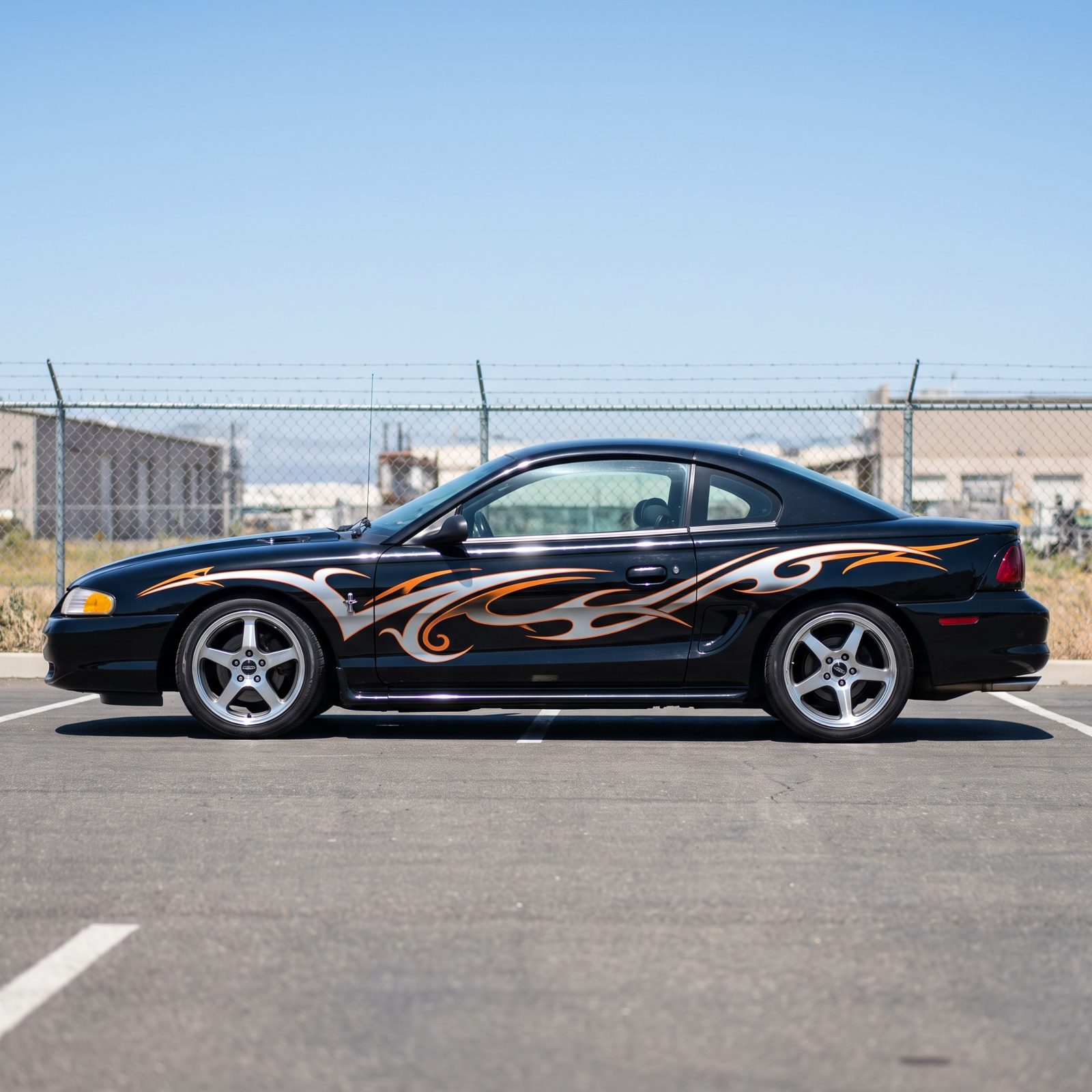
Somewhere around 1998, flames stopped being enough. The body shop started offering tribal — swooping silver hooks and spikes that clawed from the front fender clean back to the taillight — and for a few hundred bucks your Mustang looked like it had opinions.
They peeled. They faded orange in the sun. They left a ghost outline in the clear coat that outlasted the car itself, and every last one of them got applied with total conviction. That’s the part I actually miss: the complete absence of irony. Nobody put tribal graphics on a car as a joke.
4. The Windshield Banner Blocking the Top of the Glass
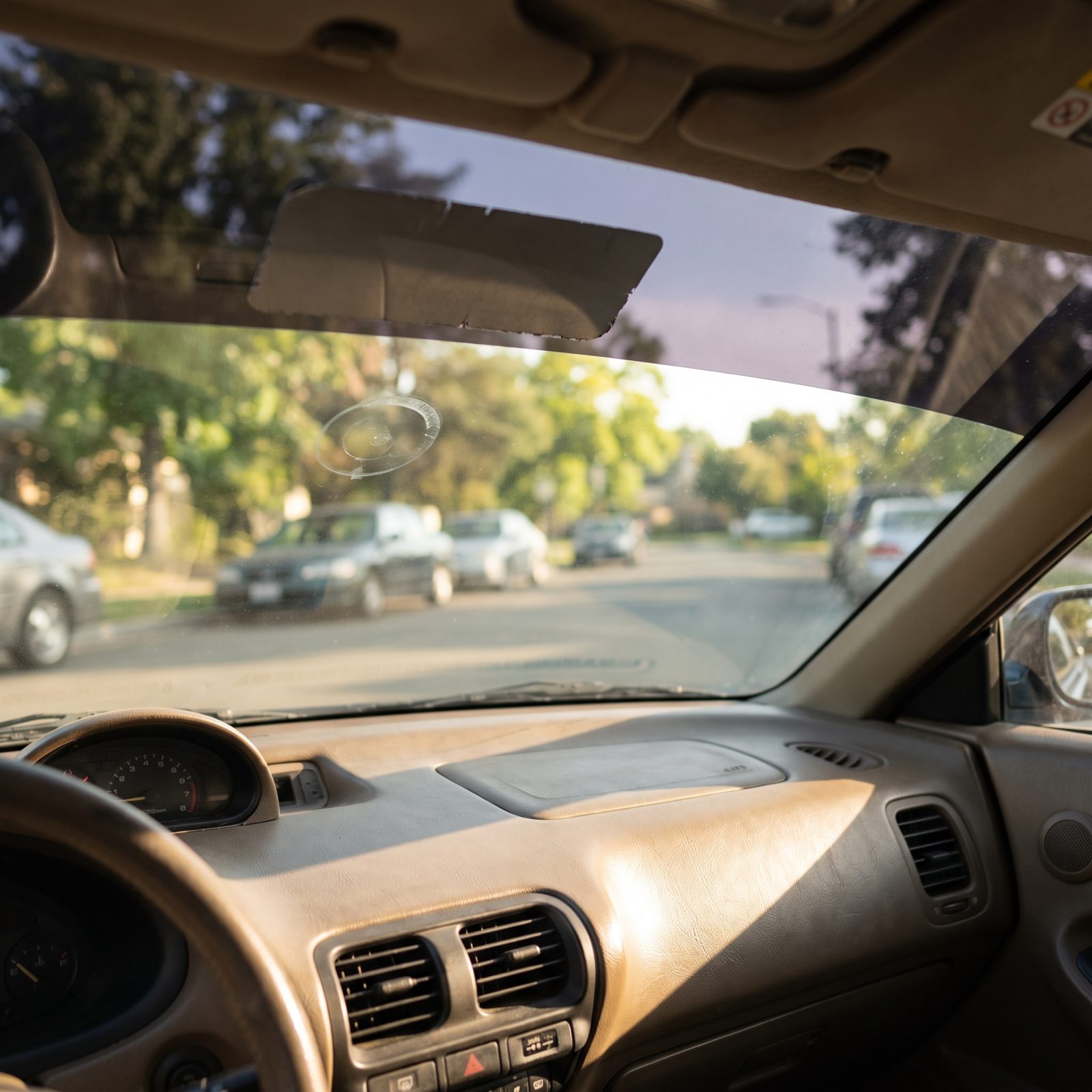
A strip of smoked vinyl across the top of the windshield, usually with the car’s make stretched out in a font nobody could read at speed. It did two things: made the car look lower, and cut your view of every traffic light you approached.
So you learned to lean forward at intersections, peering up under the banner to see if the light had changed. Worth it, apparently. The banner announced that you cared about how the car looked more than you cared about seeing the sky — and for a certain age, that was exactly the right trade.
3. Bug Deflectors Tall Enough to Pass for Riot Shields
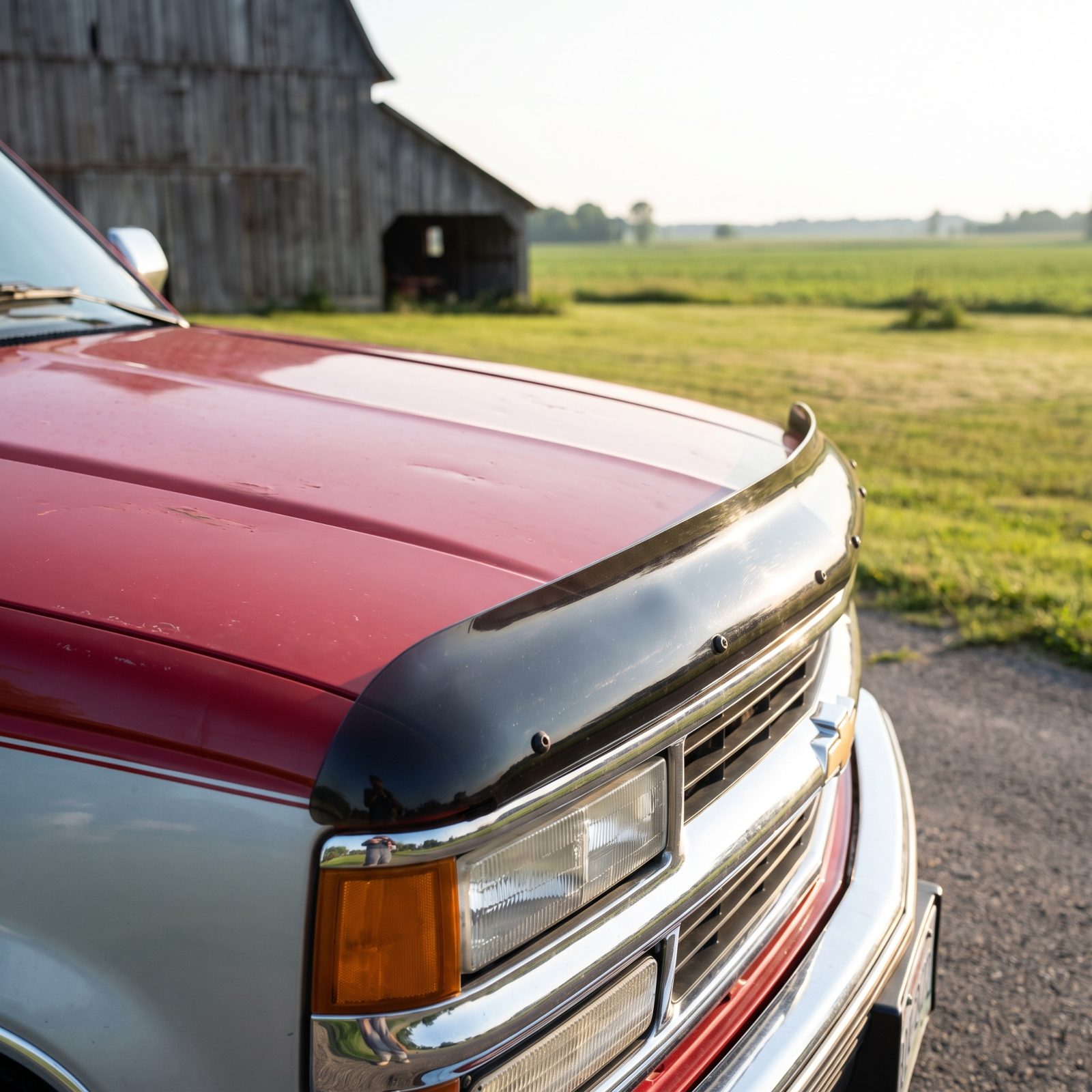
The idea was sound. Bugs hit the plastic, not the paint. Somewhere between that idea and the parts shelf, though, the deflector grew. By 1991 they stood off the hood like a riot shield — a dark acrylic slab you could see over the steering wheel, humming away at highway speed.
Half the trucks in any lot wore one. They turned amber with age and cracked along the mounting holes, and nobody ever took them off, because the paint underneath had faded to a different shade and pulling the shield just exposed the evidence. Practical, then permanent, then absurd.
2. The Nodding Dog on the Rear Parcel Shelf
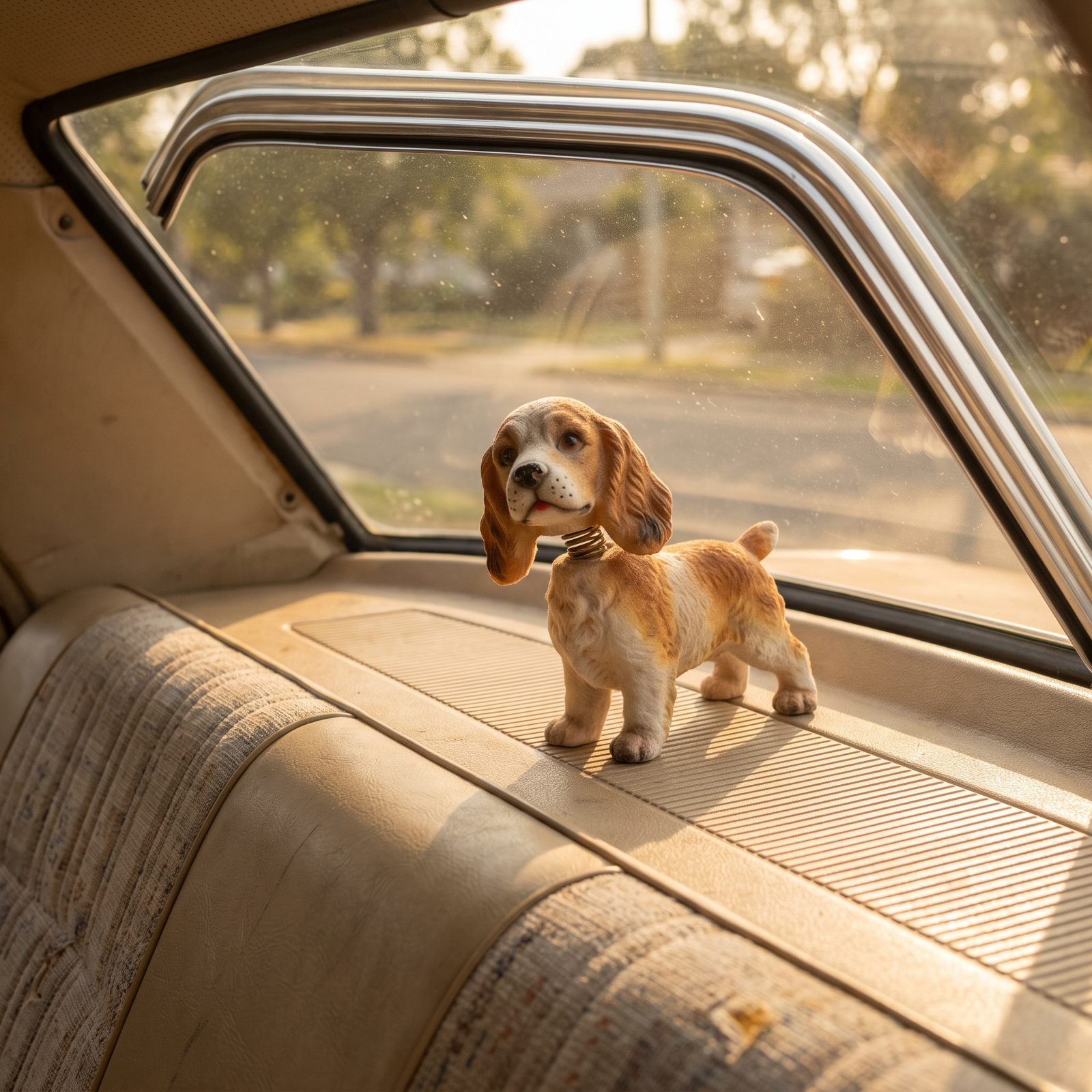
It nodded at every pothole and never stopped. The spring-necked dog on the parcel shelf — ears flopping, agreeing with the entire road behind you — was the universal sign of a well-loved family car in the 1970s.
Grandparents had them. Taxis had them. The dog faded in the back-window sun until its painted eyes went ghostly, and still it nodded. No function here to defend, none at all. It just sat back there and approved of everything, and I’d take one over a touchscreen any day of the week.
1. Fuzzy Dice Swinging From the Rearview Mirror
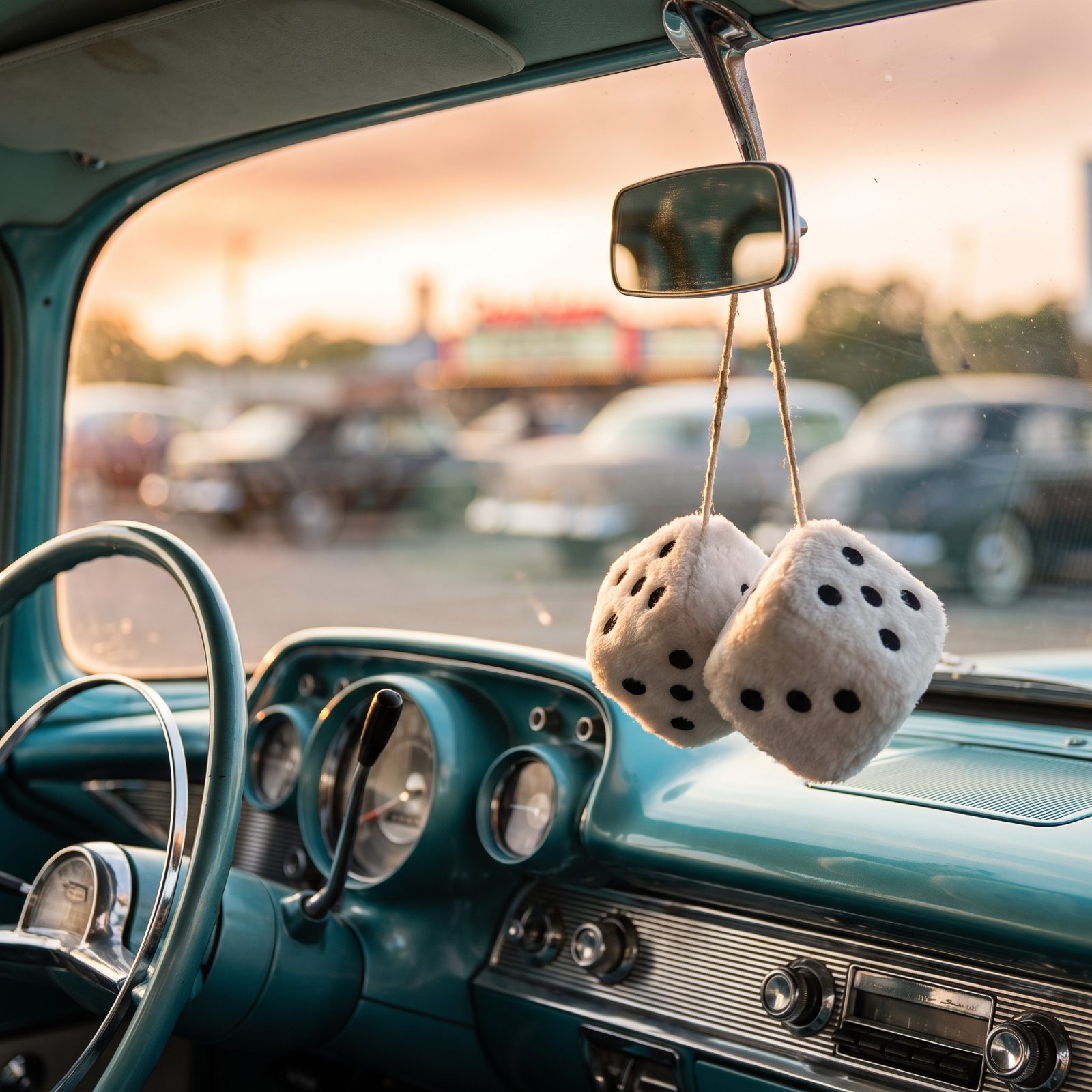
The one that started it all, and the one that refuses to die. Fuzzy dice came out of drag-racing lore in the 1950s — a plush wink from guys who literally gambled quarter-miles on the strip — and they’ve been swinging from mirrors ever since.
They block a corner of your view and serve no purpose whatsoever. They’ve survived decades of changing taste purely on charm, which is more than almost anything else on this list can claim. Every other gadget here got embarrassing and then got thrown out. The dice just kept swinging, and somewhere along the way they stopped being a gag and started being a signature.