
You could smell the wax before you saw the building. Warm water sheeting off a Galaxie’s hood, a kid in a paper cap wiping down the chrome with a chamois, the hiss of air hoses, and a radio playing somewhere behind the booth. A car wash in 1968 was a place with people in it. The modern version runs on cameras, screens, and a plate reader that knows your name before you roll down the window. We lined up both eras side by side. Here’s what changed.
Please note that some of the images in this article were created with the assistance of AI.
38. Service-Station Car Wash vs. Standalone Express-Wash Complex
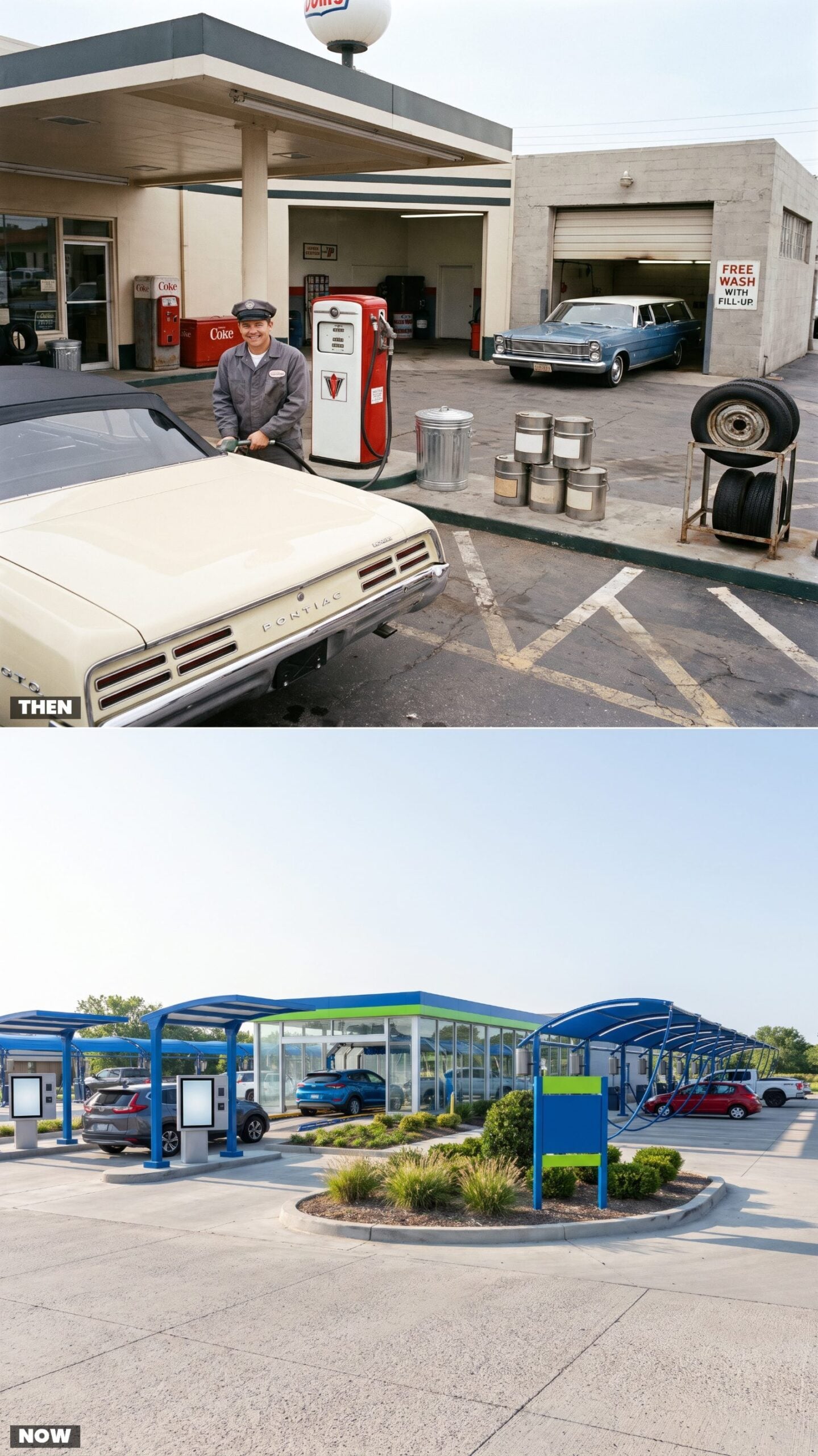
Washing your car in 1968 was a bonus, not a business. You filled the tank, the attendant checked your oil, and the wash came free with the fill-up. One bay, one roll-up door, tucked beside the pumps like an afterthought that happened to work.
The modern version stands alone and does exactly one thing. No fuel, no service, nobody checking your tire pressure. A tunnel, a wall of free vacuums, and pay lanes built to move cars through like an airport people-mover. Specialization made it faster. It also made it lonelier.
37. Forecourt Queue of Chrome Sedans vs. App-Guided Express Lane
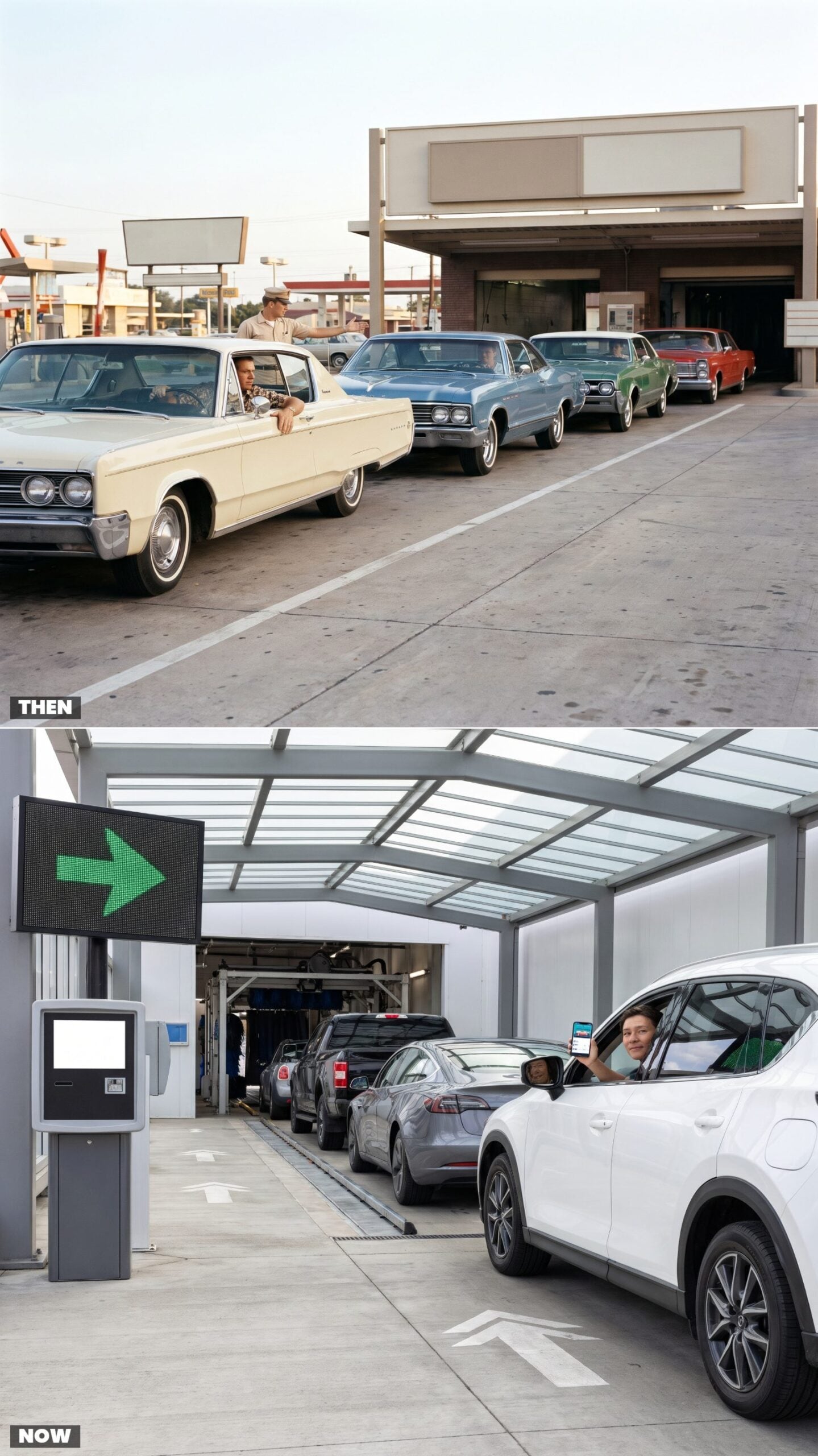
Saturday morning, the line snaked across the forecourt. Chrome bumpers, whitewalls, an attendant waving each car forward with a flick of the wrist like he was landing a plane. You rolled the window down, talked to the guy, maybe talked to the driver ahead of you.
Today the line is still there, but the choreography is gone. An LED arrow tells you to pull forward. The app already knows your plan. You stare at your phone until a conveyor grabs your tire and tugs you in. Faster, yes. Nobody’s waving at anybody.
What Our Readers Say
- In Jalopy Talk readers’ heart votes, car photos that look like the 1960s got hearts 87% of the time, compared with 80% for the other images in the same articles.
- When our readers loved a car photo and tapped a reason, “nostalgic” came out on top at 27%, ahead of body style and “would drive.”
From Jalopy Talk reader polls and votes.
36. Hand-Lettered Price Board vs. Digital Package Screen
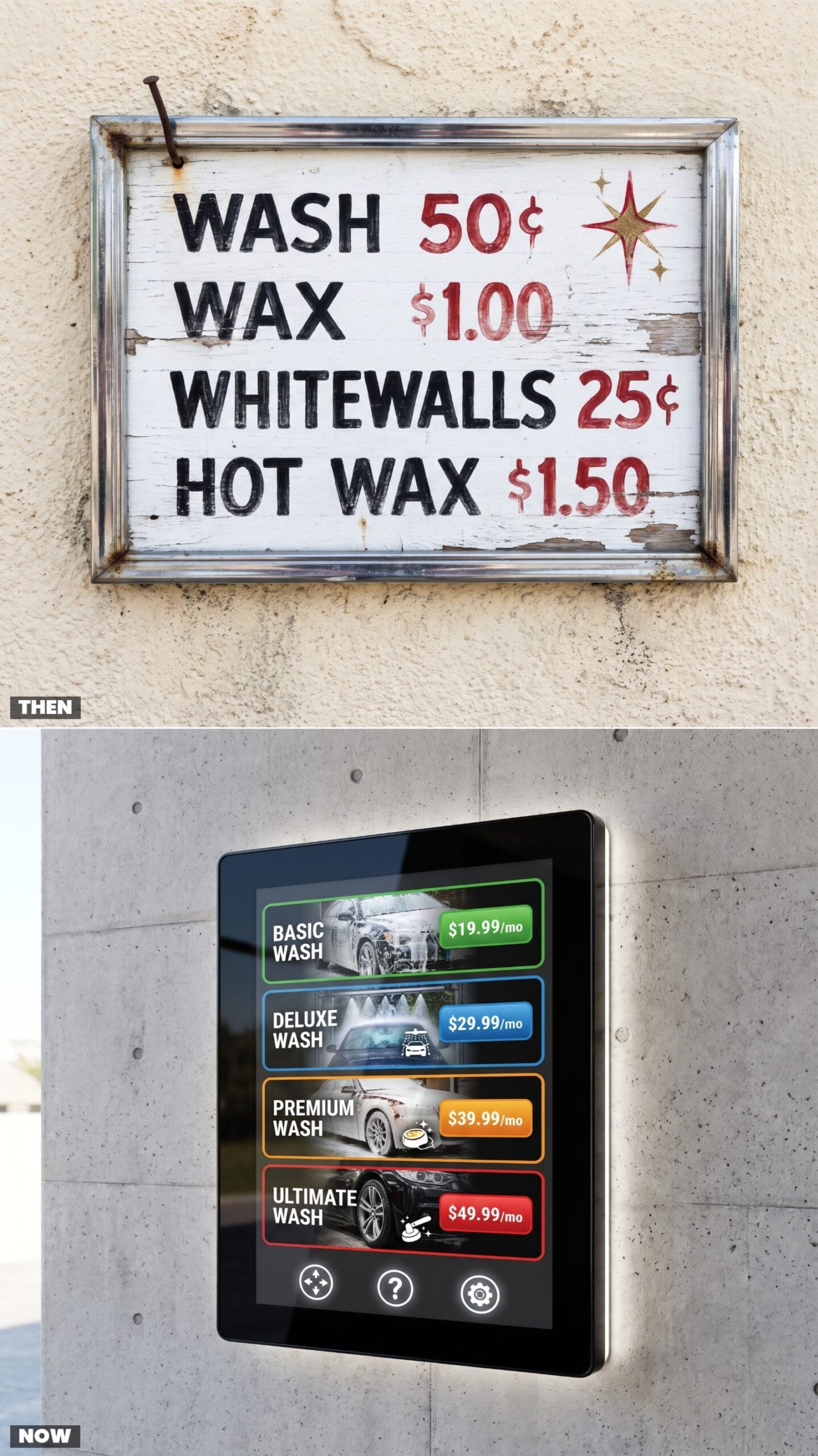
Someone painted that price board by hand. You can see it in the letters, the slight lean on the W, the red saved for the specials. Wash fifty cents, hot wax a buck fifty, whitewalls a quarter extra. Honest, legible, a little sun-faded.
The digital package screen glows now, color-coded tiers with photos and monthly prices that assume you’ll come back weekly. Slicker, and it updates itself. But a machine-set menu never leans the way a sign painter’s hand did.
35. Uniformed Greeter vs. Automated Entry Kiosk
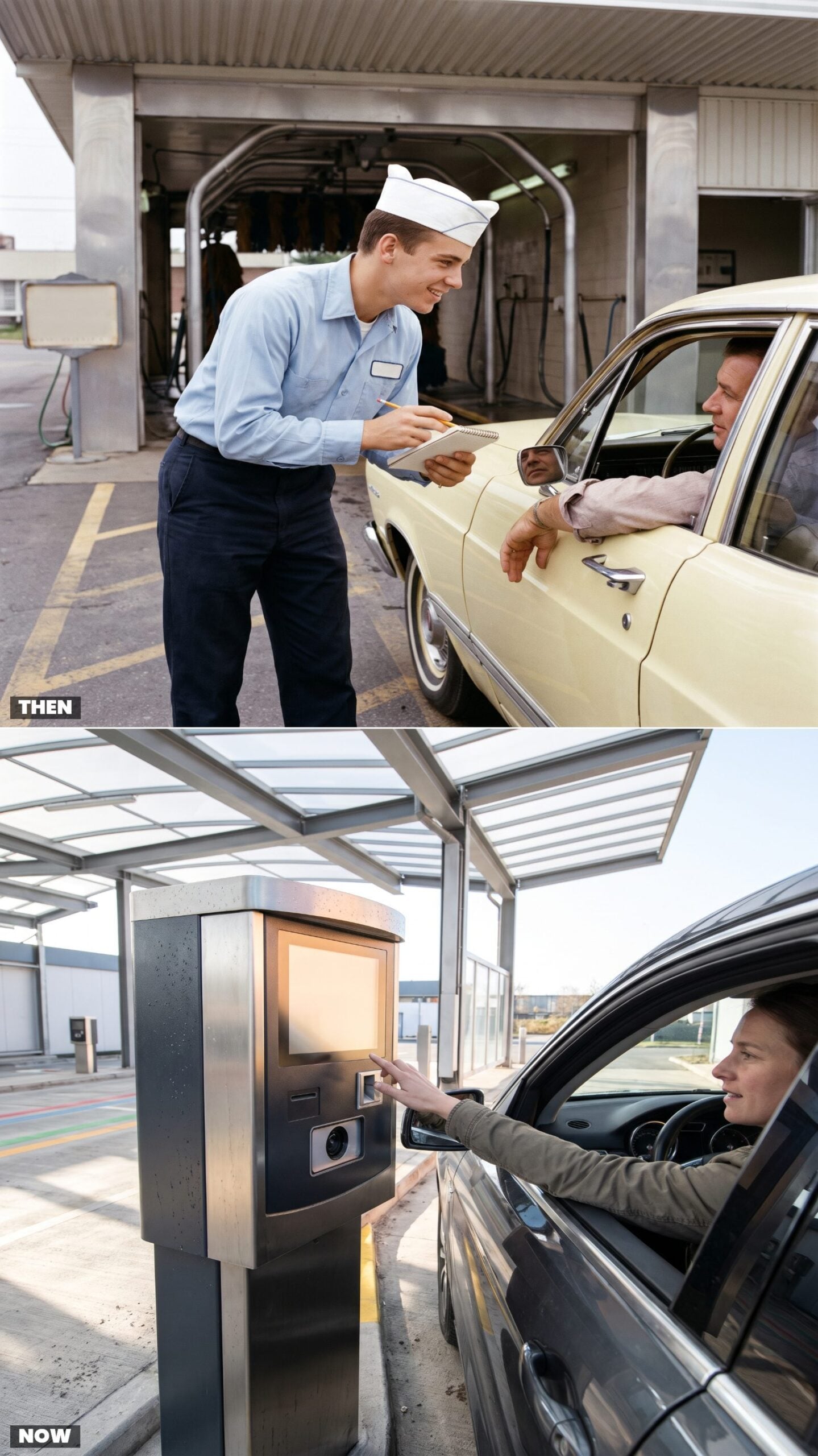
There used to be a person at the mouth of the wash. He leaned into your window, asked what you wanted, wrote it on a little pad, and maybe said something about your car. You were a customer, sure, but you were also just two people talking for thirty seconds.
A touchscreen on a pole took his job. It reads your plate, offers your packages, and never asks about the engine. Doesn’t call in sick, doesn’t remember you. Both a feature and a loss, depending on the morning you’re having.
34. Cashier Booth With Mechanical Register vs. Cashless Terminal
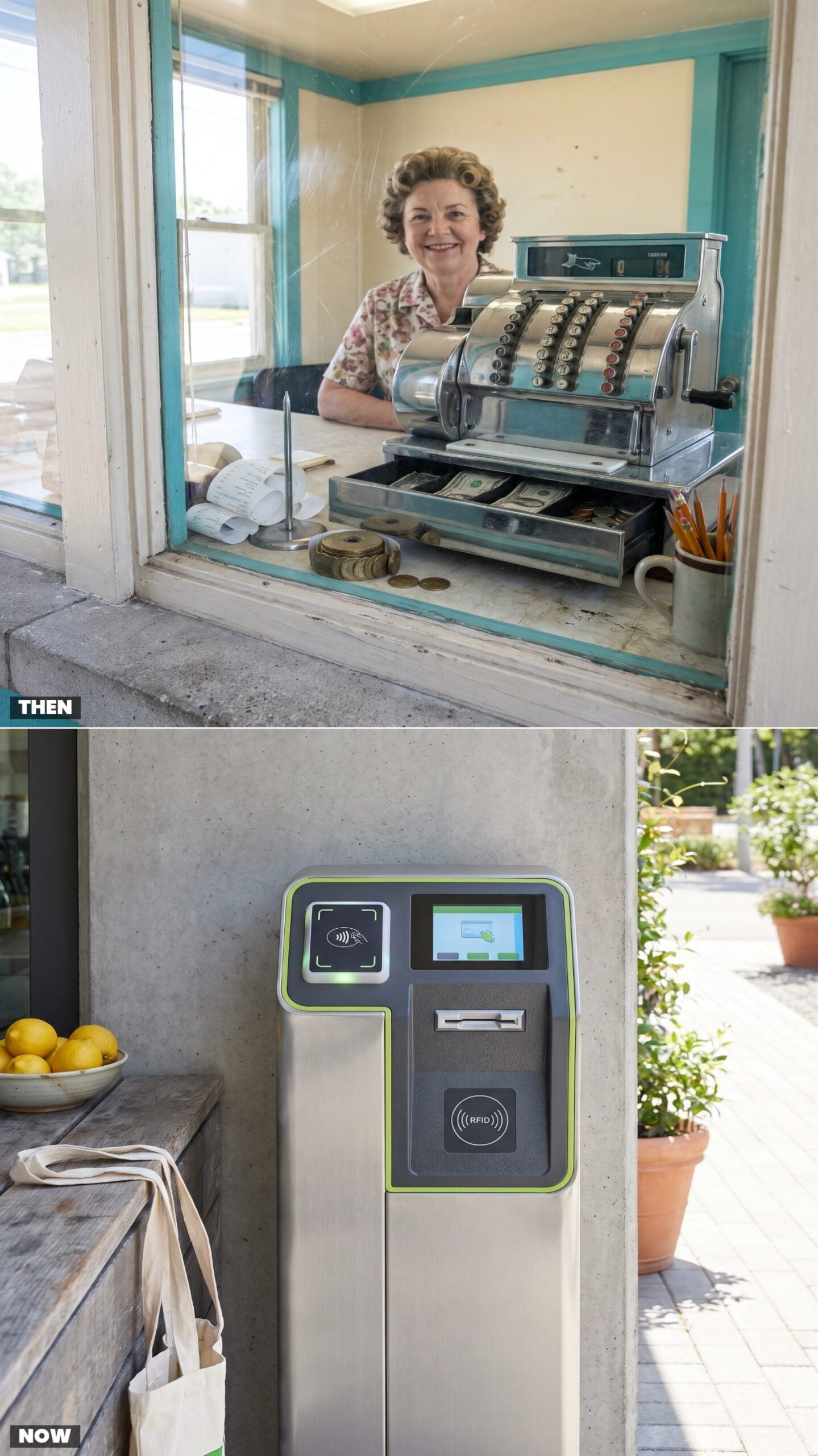
The booth had a person in it and a register that weighed about as much as a lawnmower. Chrome keys, a pull handle, a drawer that rang open with a bell. She made change, handed you a receipt off a spike, and probably knew the regulars by their cars before she knew their names.
Now the payment point stands empty. A weatherproof pedestal takes your tap, blinks, prints a receipt if you want one. No drawer, no bell, no change rattling into your palm. The money moves faster and the booth is gone, and with it the one person who recognized you.
33. Coin-Op Token Changer vs. Tap-to-Pay Station
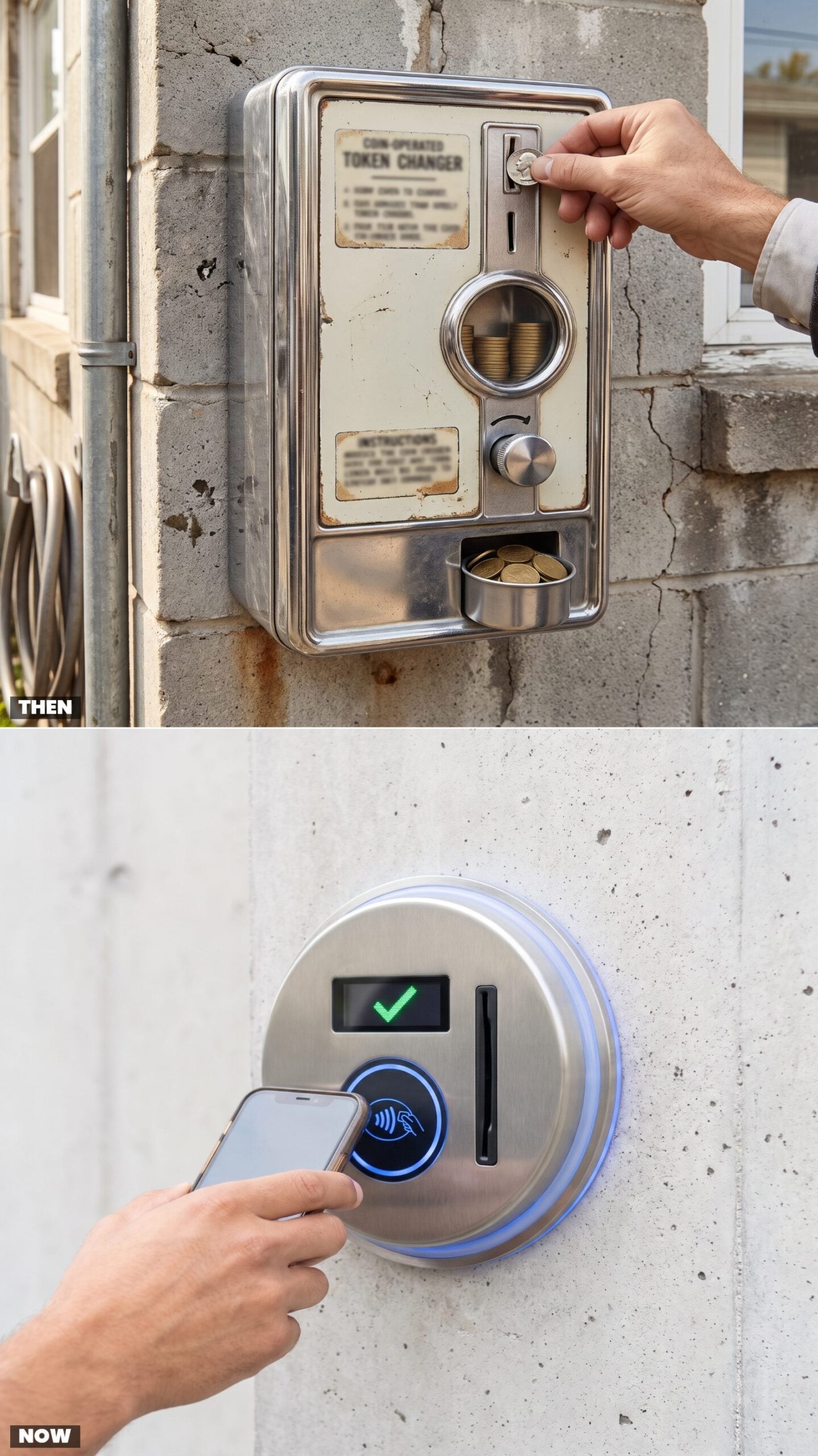
You fed it quarters and it dropped brass tokens into a cold metal cup. A whole ritual, really. Dig in the ashtray, straighten the coins, listen for the clink. The tokens went into the wand box or the vacuum, and if you ran short you walked back for more.
The tap station killed all of it. Phone to pad, green check, done. No coins, no tokens, no groping under the seat. It’s cleaner and faster, and I’ll admit I kind of miss the weight of a fistful of those little brass slugs.
32. Attendant Windshield Ticket vs. License-Plate Recognition Camera
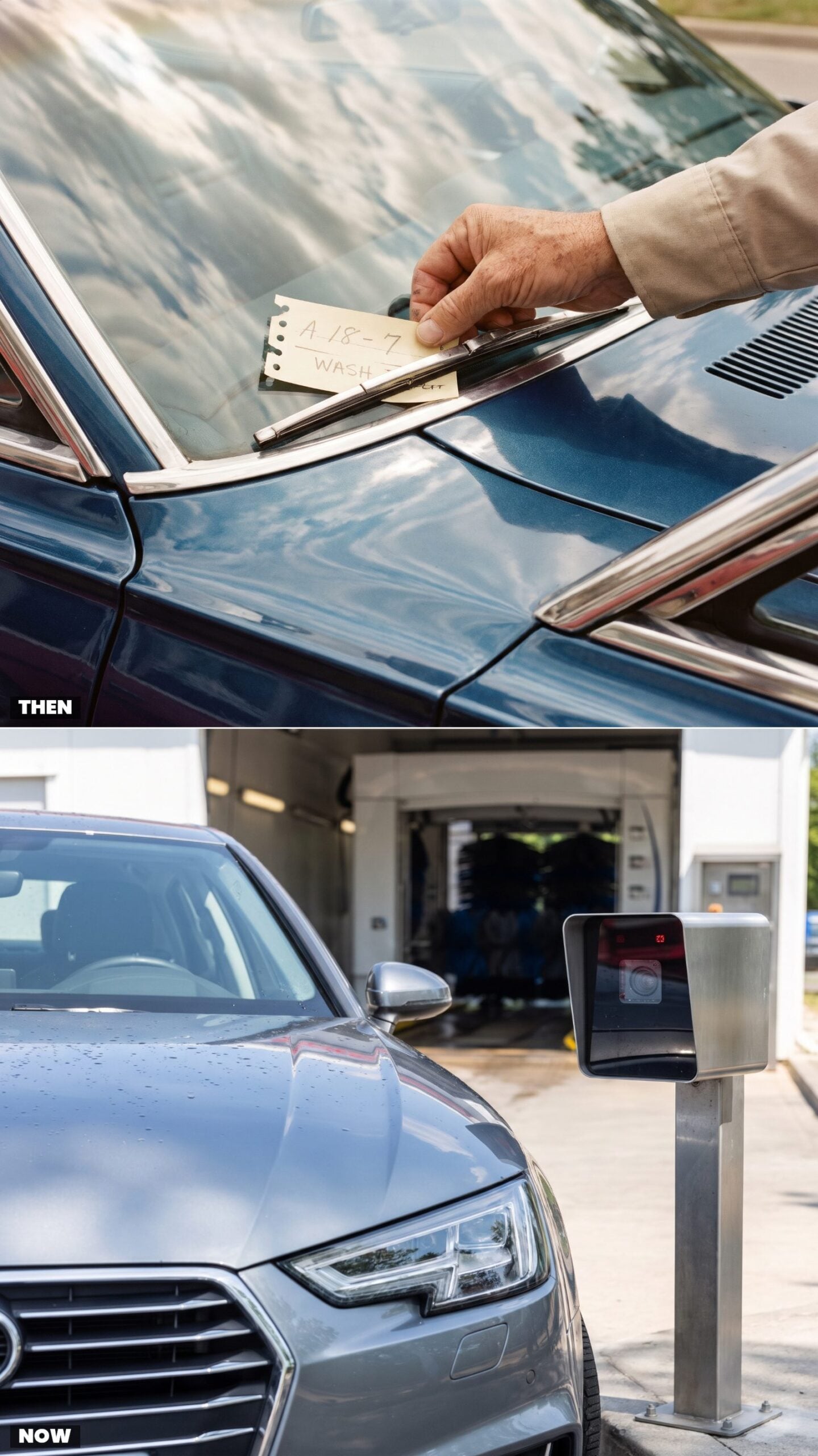
The attendant wrote your order on a stub and slid it under your wiper blade. That little torn ticket tracked what you’d paid for down the line, and you could watch it flap on the hood as the car crept into the bay.
A camera does the tracking now. It reads your plate before you’ve even stopped, pulls up your account, knows your package without a single piece of paper. Smarter, faster, and a touch unsettling the first time a wash greets you by license plate.
31. Punch-Card Loyalty Plan vs. Mobile Wash App
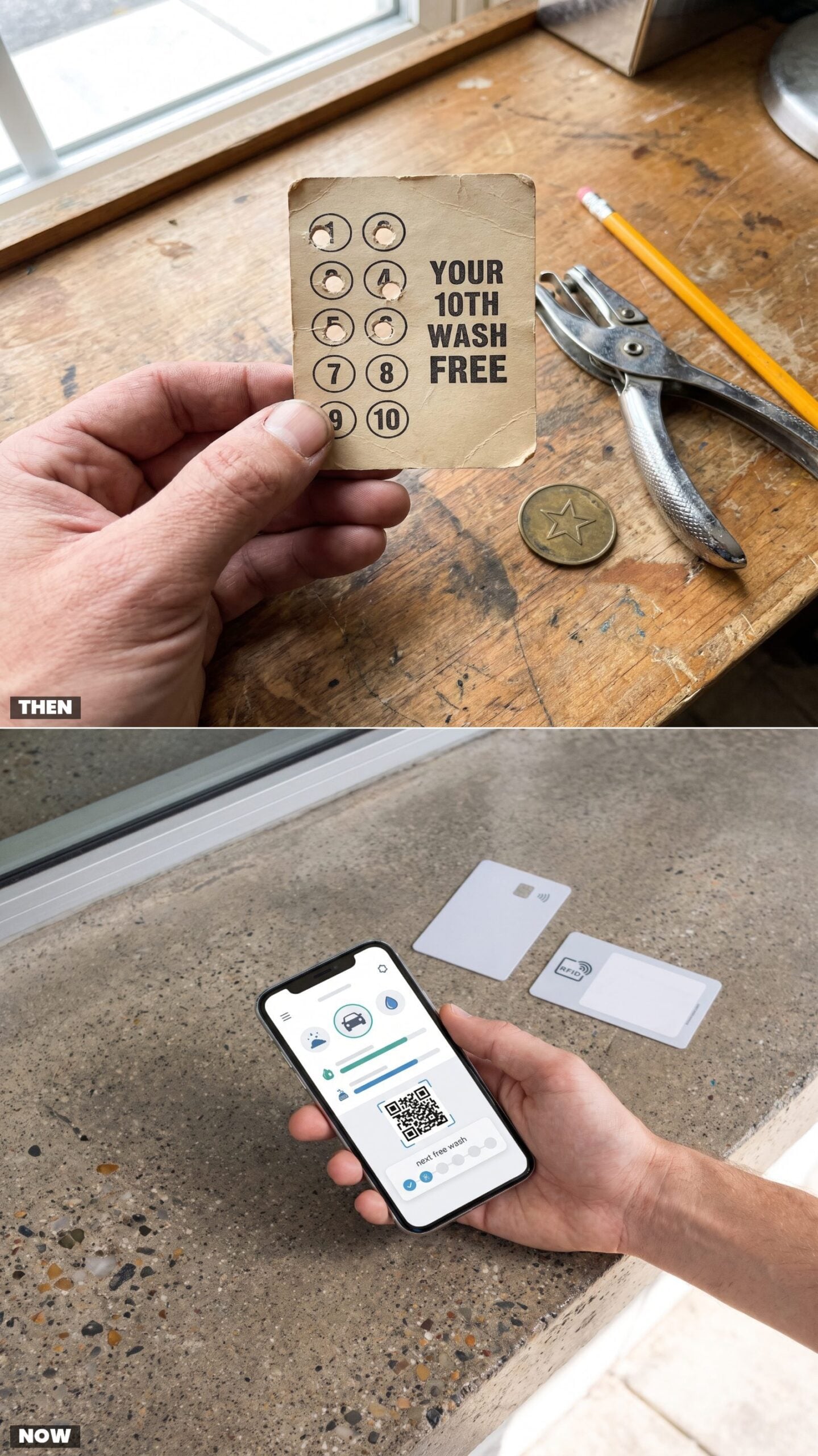
Loyalty used to fit in your wallet. A cardboard card, ten little circles, and a hole punch behind the counter that chewed one out every visit. Fill the card, get the tenth wash free. The thing got soft at the corners, and you always found it crumpled right when you needed it.
Now it lives in an app. A progress bar, a QR code, an unlimited monthly plan that charges your card whether you show up or not. It never gets lost in the laundry, which is the point, and it quietly bets that you’ll forget to cancel.
30. Presoak by Hand vs. the Chemistry Arch
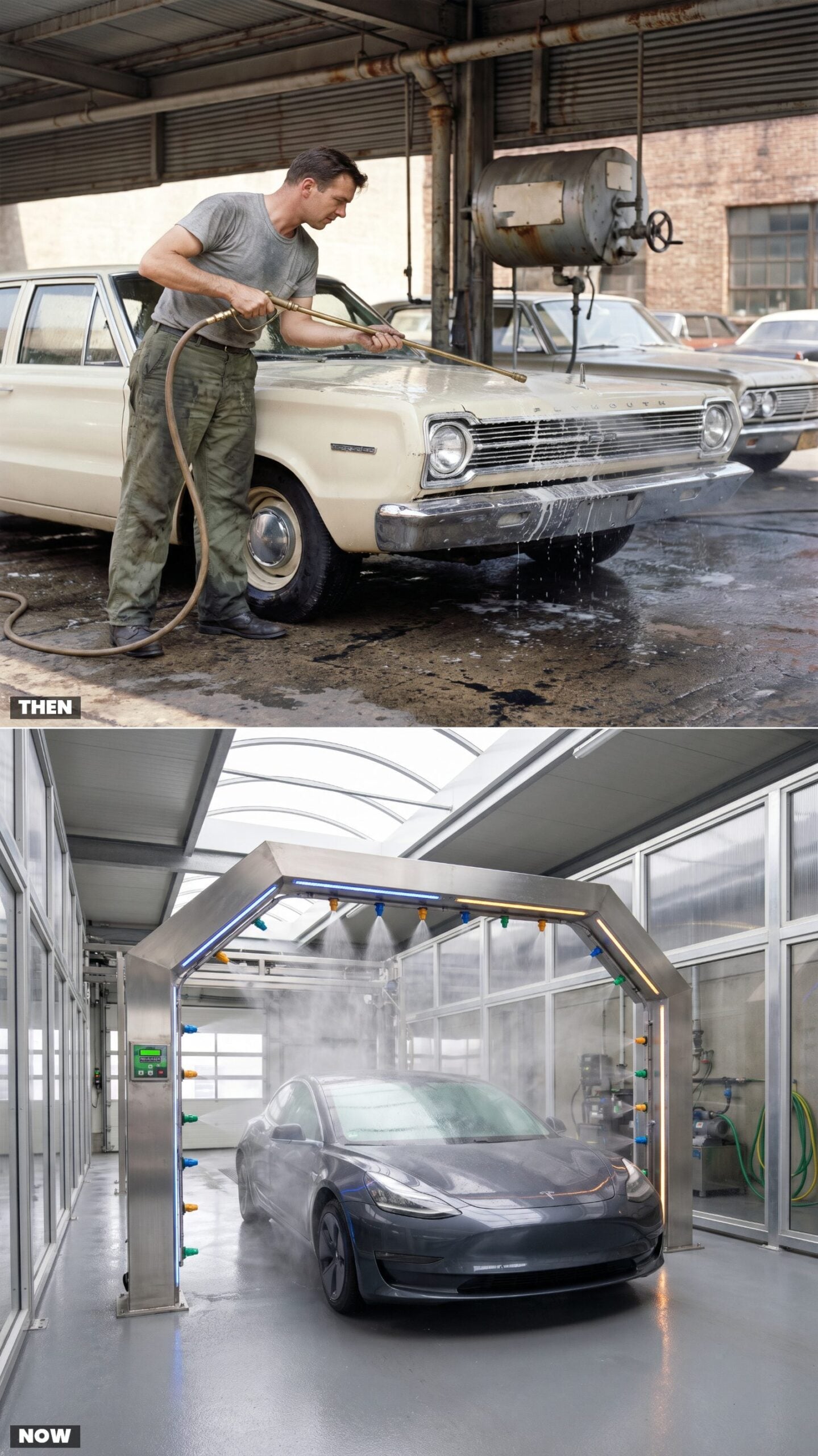
Presoak in 1968 was a guy with a wand and a feel for it. He’d hose down the grille and the lower panels where road grime collected, maybe double-hit a bug-splattered front end. The mix came from a drum on the wall with a hand valve, and the recipe lived in his head.
That instinct now lives in a computer. A stainless arch doses the exact chemical blend by the second, reading your vehicle length and adjusting flow. It never tires, never skips the back bumper, never has an off day. It also never notices the one spot that always needed extra.
29. The Long Bug Brush vs. the Bug-Prep Station
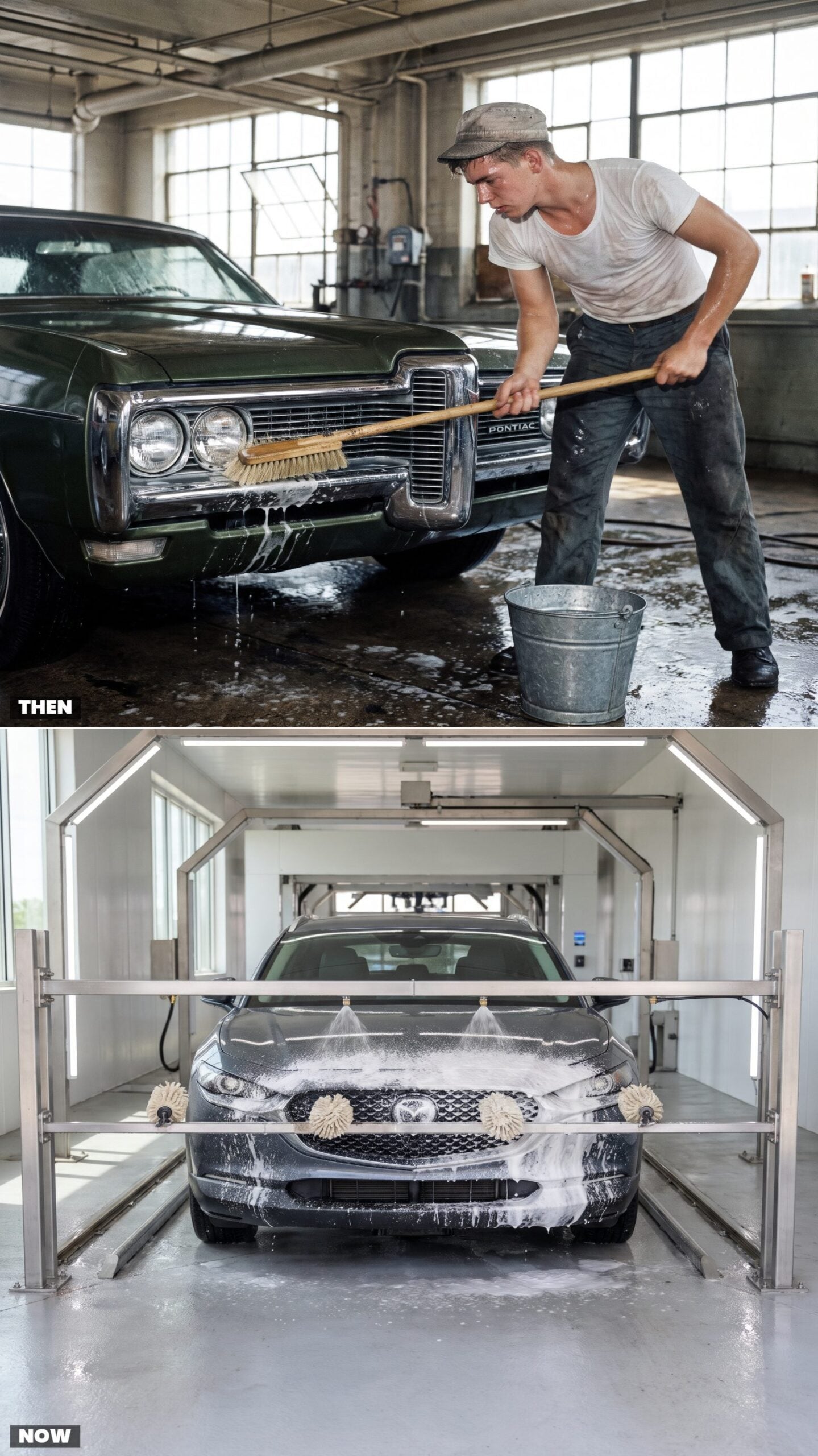
Love bugs on the front of a car are a special kind of stubborn, and in 1968 the only answer was elbow grease. An attendant with a long soft brush and a bucket would work the grille and headlights by hand, leaning in close, scrubbing until the dried carcasses finally let go.
Today’s tunnels have a station just for that. Foaming jets and gentle rotating foam mitts hit the front end with dedicated bug-removal chemistry before the main wash even starts. It’s thorough. It’s also missing the small satisfaction of watching a guy win a one-on-one fight with a summer’s worth of insects.
28. One Spinning Top Brush vs. the Roof That Reads Your Car
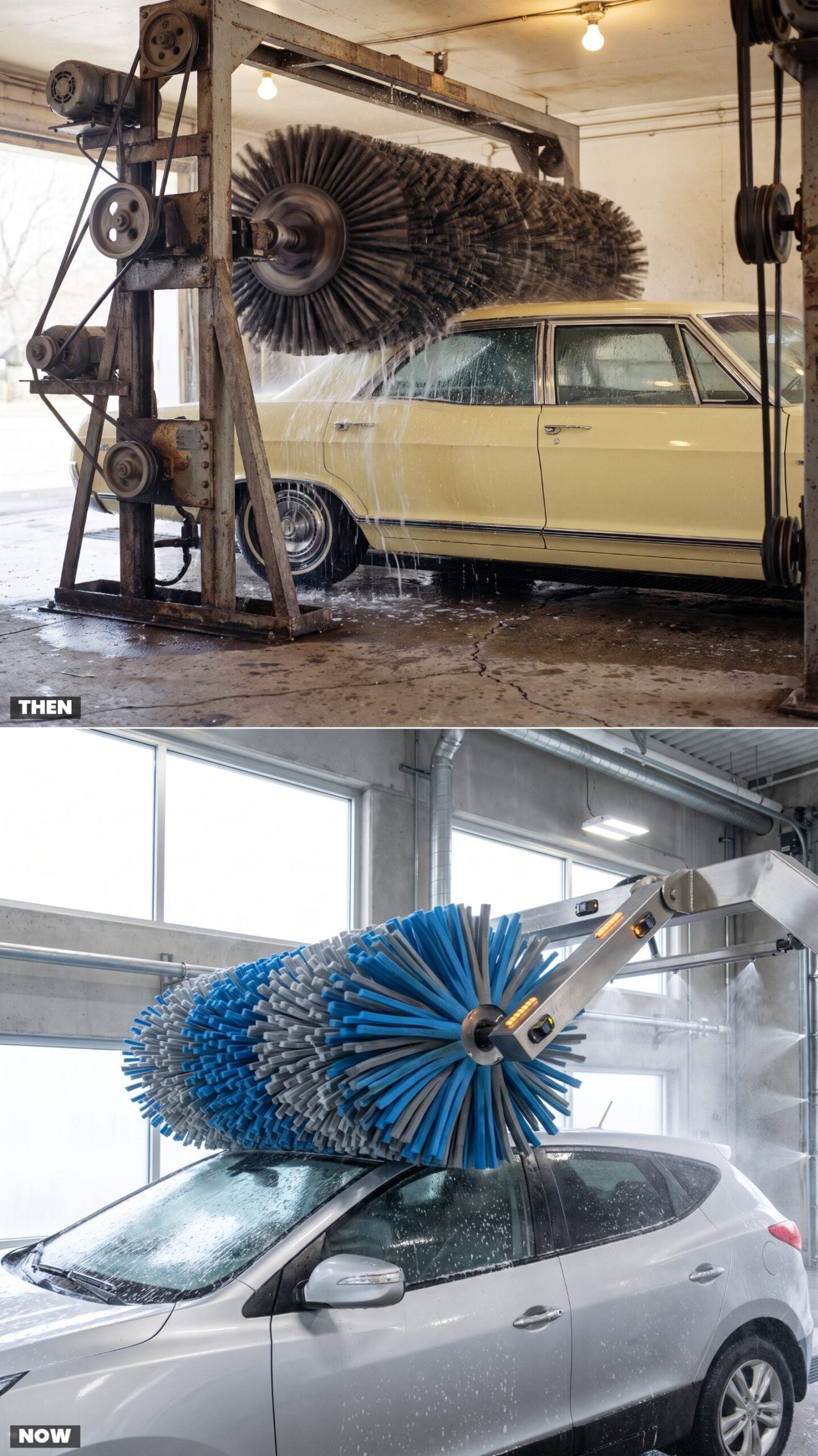
The top brush of 1968 was one fat spinning cylinder on a fixed frame. It cleaned the roof fine — as long as the roof was flat and the car was tall enough to reach it. Low cars got a love tap at best, and the stiff bristles weren’t shy about leaving swirl marks on the paint.
The modern version pays attention. Soft foam strips on a sensing arm follow the exact shape of your car, dropping into the dip of the windshield, riding up over the roofline, lifting at the trunk. It touches every contour because it can feel where the metal is.
27. Stiff Side Brushes vs. Soft-Foam Verticals
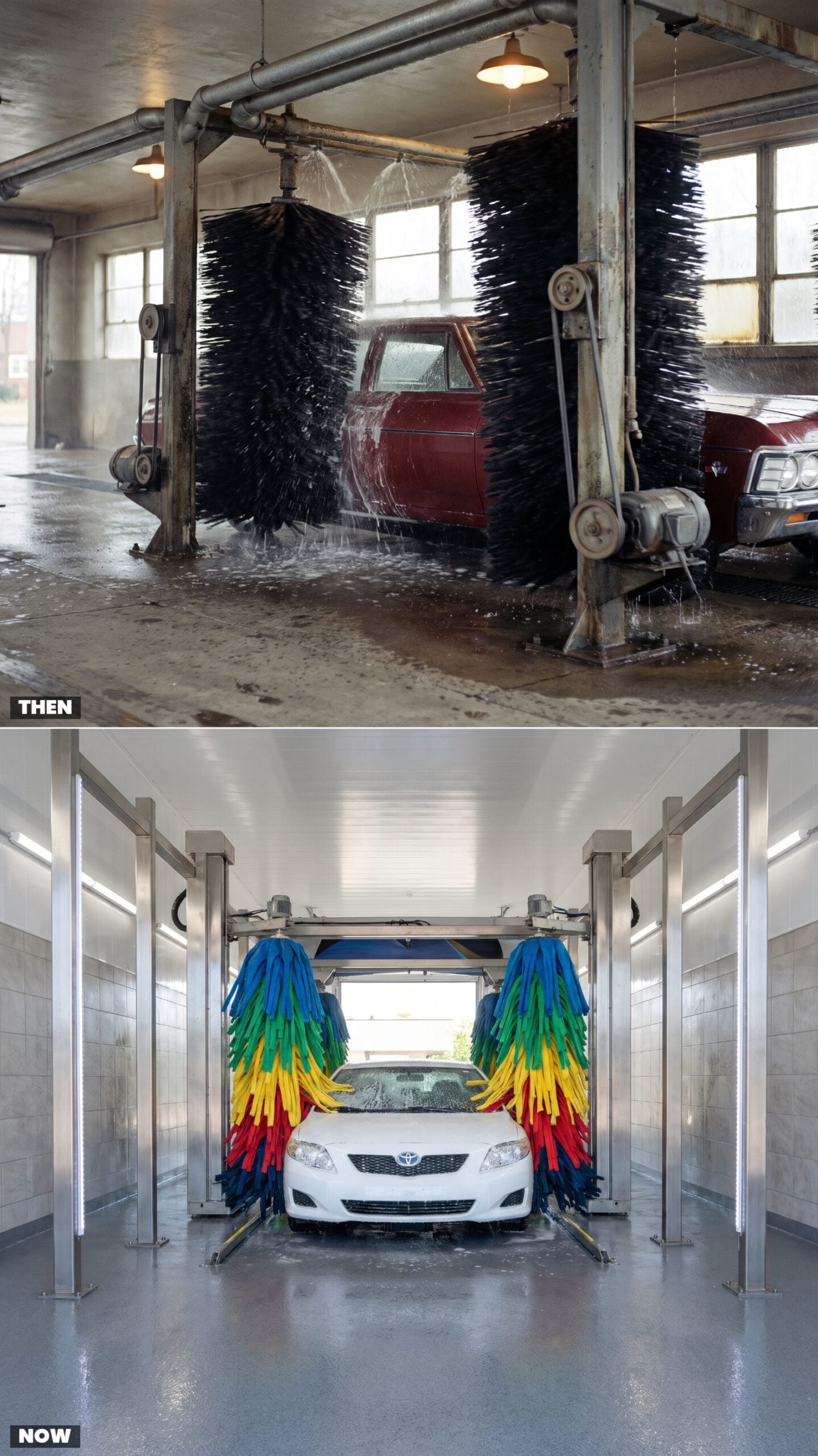
You remember the sound. The stiff side brushes of the old tunnels would slap and whip against your doors, a steady thwack-thwack-thwack while the whole car rocked a little. They cleaned, sure. They also scoured, and more than one owner found fresh fine scratches in the paint afterward.
Soft-foam verticals turned the slap into a caress. Tall strips of closed-cell foam and cloth drape over the panels instead of beating on them, cleaning the doors and quarter panels without the abrasion. Quieter, gentler, and your paint thanks you.
26. Plain White Suds vs. the Technicolor Foam Curtain
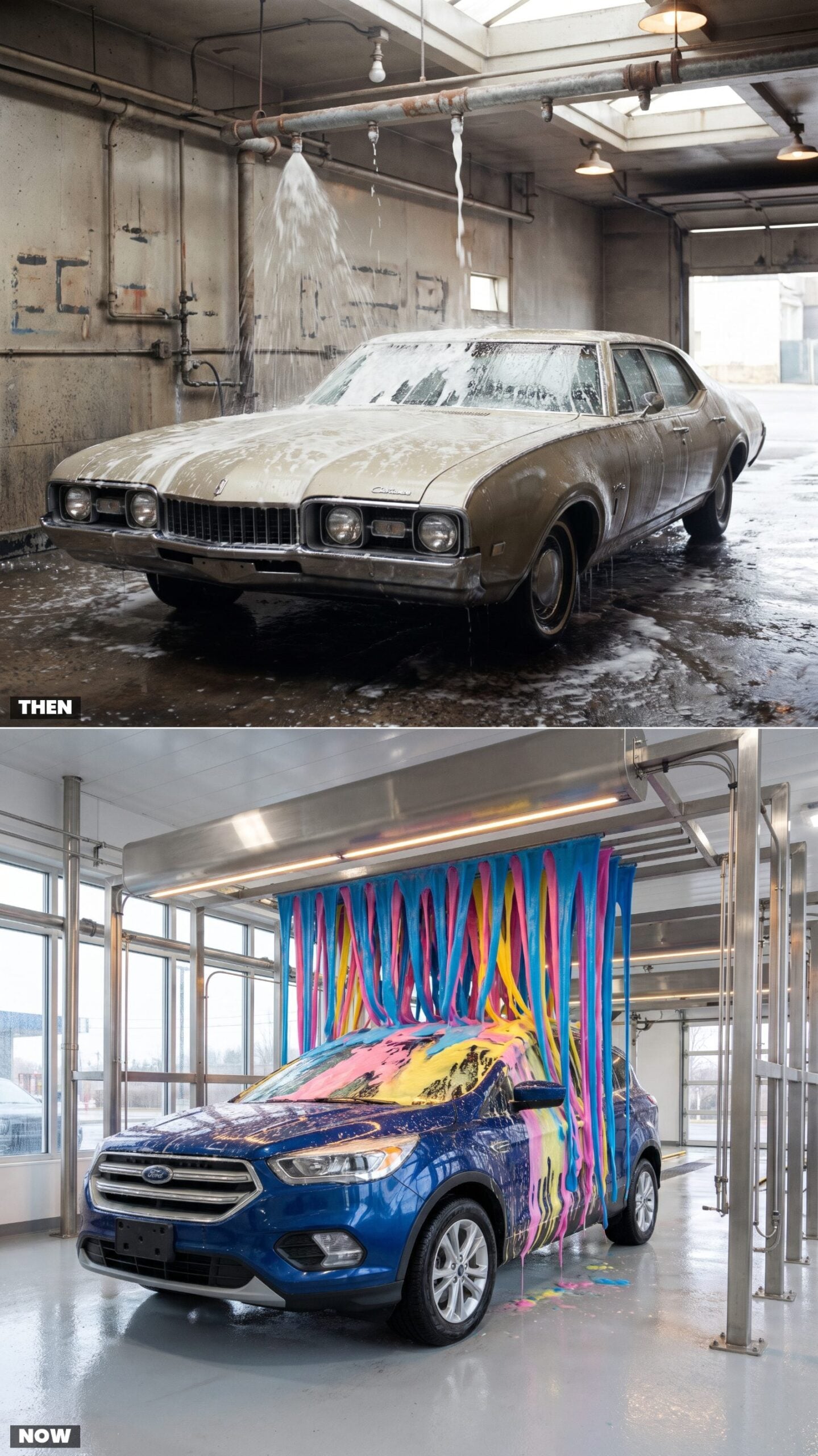
Detergent in 1968 was white. Plain, honest, white foam from a pipe with holes in it. It worked, it smelled faintly of soap, and nobody expected a light show from a car wash.
Then somebody realized the foam could sell. The triple-foam curtain pours blue, pink, and yellow in thick ribbons down your windshield, and kids in the back seat lose their minds every time. The cleaning difference is small. The experience difference is enormous, which is exactly why it exists.
25. The Basic Spray Pipe vs. High-Pressure Oscillating Jets
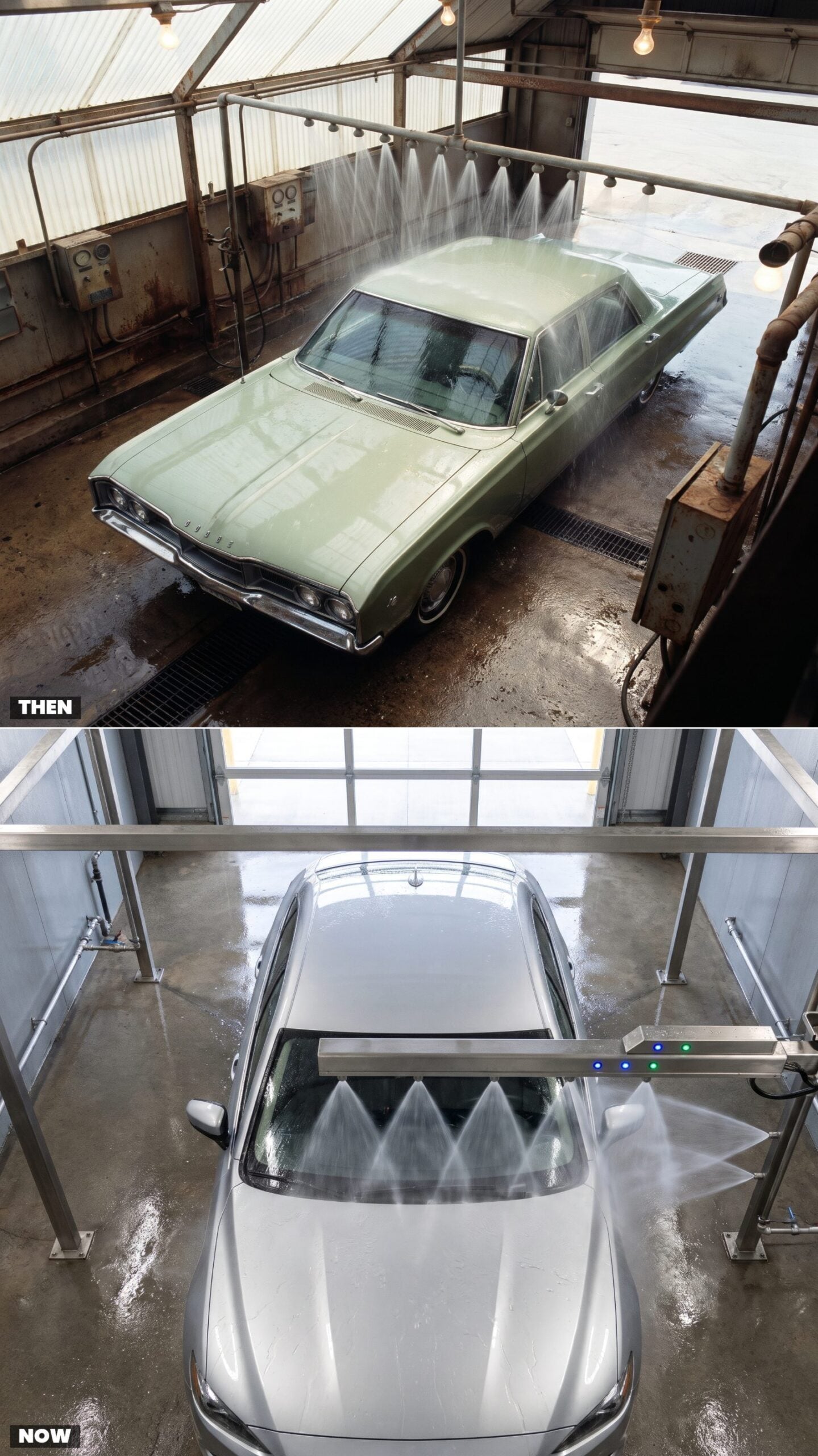
The 1968 rinse was gravity doing most of the work. A straight pipe with evenly drilled holes dribbled water across the car, enough to carry off the suds but not much more. For road film and baked-on grime, it leaned on the brushes to have done their job first.
High-pressure oscillating jets changed the math. A moving bar sweeps focused streams back and forth across every panel, hitting hard enough to blast grime out of trim gaps and badge recesses the old pipe never reached. Rinse and scrub in one pass, no bristles required.
24. Open Undercarriage Nozzles vs. the Programmed Chassis Wash
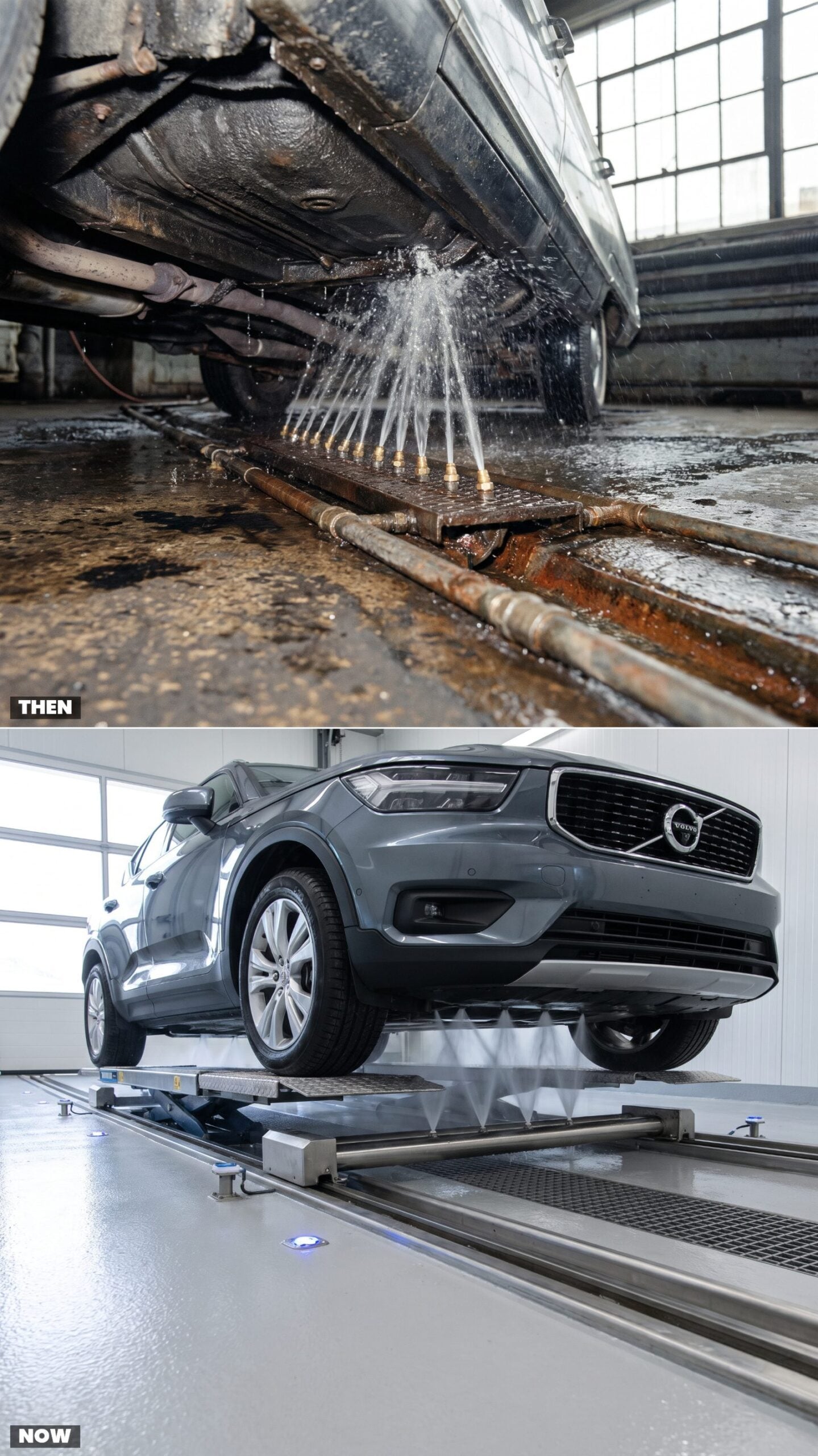
Undercarriage cleaning used to be a row of brass nozzles pointed at the sky. You rolled over them, water shot up, and whatever hit the frame hit the frame. Fine in theory, uneven in practice, and brutal on the equipment every winter when the road salt came through.
The programmable chassis wash actually aims. A moving under-body bar targets the suspension, the frame rails, the wheel wells where salt and mud like to hide, varying pressure and timing by vehicle. For anyone living where they salt the roads, this is the difference between a frame that lasts and one that rusts from the bottom up.
23. Knuckle-Scrubbed Whitewalls vs. Automated Tire Brushes
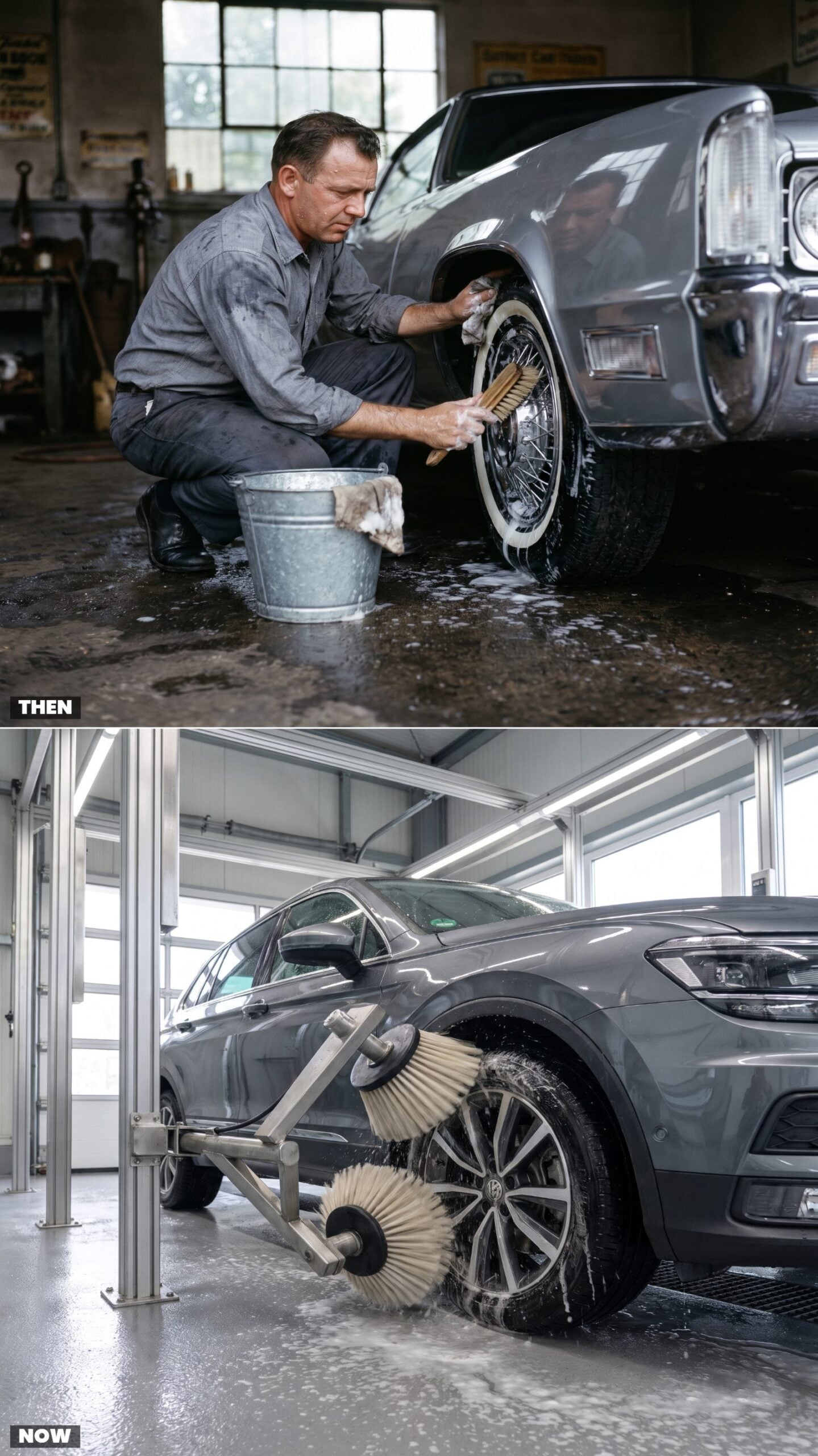
White sidewall tires were the status symbol of the era, and keeping them white was a job for a kneeling man with a stiff brush. He’d work special whitewall cleaner into the sidewall by hand, one tire at a time, rag in the other fist. Slow, thorough, and your Cadillac rolled out looking like the showroom.
Now a pair of rotating brushes on stainless arms handle it in seconds per wheel. They spin against the sidewall and the alloy as the car passes — no kneeling, no bucket, no cleaner-stained fingers. Nobody has scrubbed a whitewall by hand at a tunnel wash in a very long time, and the tires come out clean anyway.
22. Fresh-Water Final Rinse vs. Spot-Free Reverse-Osmosis Rinse
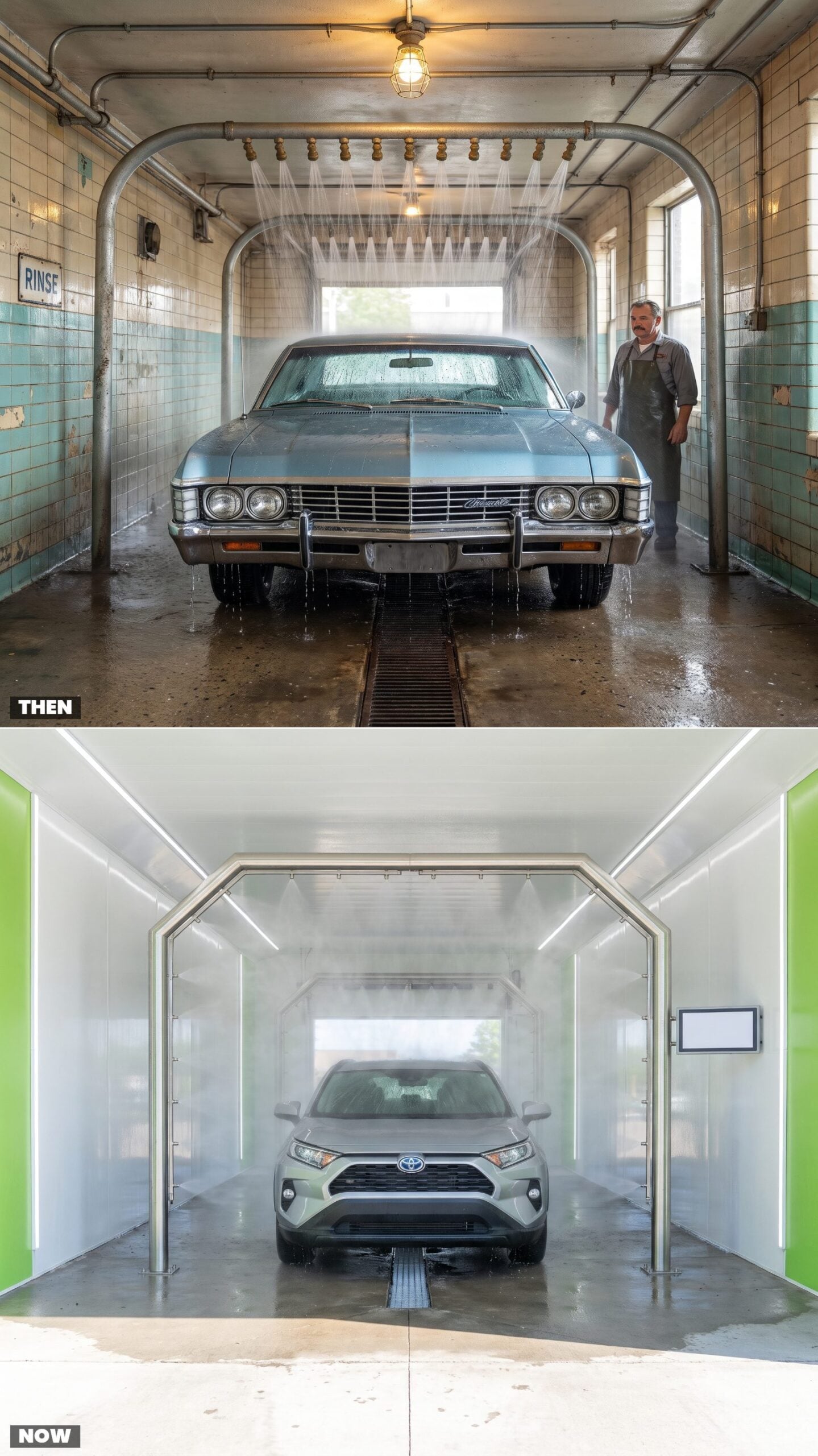
Back then the last pass was just city water out of a straight pipe, and it did the job until the car dried in the sun and you found every mineral spot it left behind. So you chased those with a chamois in the driveway an hour later, cursing.
Now the final rinse runs through reverse-osmosis filtration that strips out whatever causes spotting, so it sheets off the glass and leaves nothing. No towel. No water stains. The funny part? The cleanest stretch of the whole wash is the part nobody ever sees happening.
21. Simple Spray Wax vs. Illuminated Protectant Arch
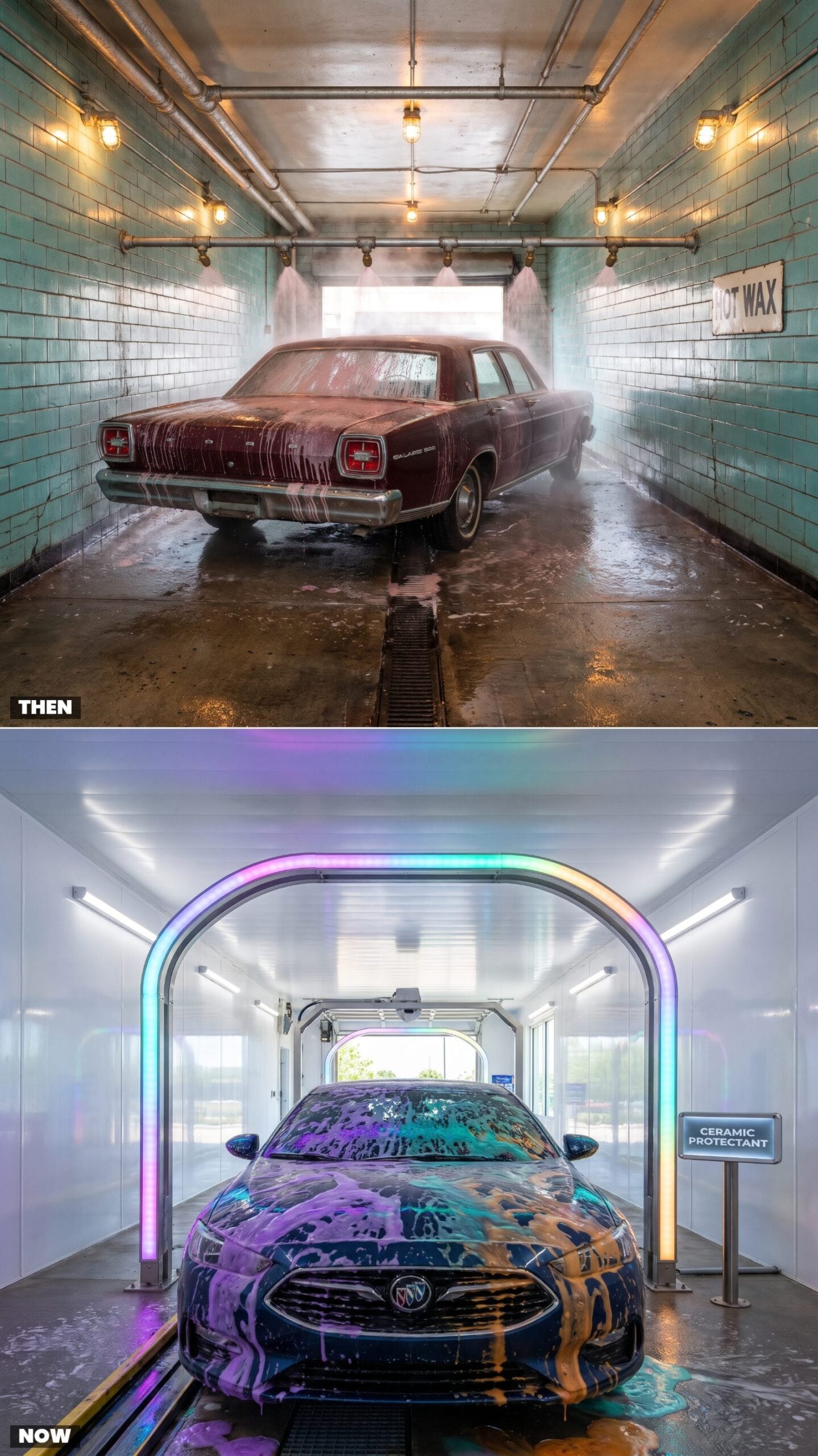
The wax arch in 1968 was a modest thing. A bar, a few nozzles, a mist of pink liquid that smelled faintly of carnauba and gave the paint a brief shine that mostly washed off in the next rainstorm.
Today’s protectant arches put on a whole light show. Colored foam in violet and teal clings to every panel while LEDs pulse overhead, and underneath all of it sits ceramic sealant that genuinely bonds to the clearcoat. Half of it is marketing theater, I’ll admit. But the foam outperforms the old pink mist, and watching it cascade down the windshield is good fun.
20. Walkaround Damage Check vs. Camera-Based Pre-Wash Inspection
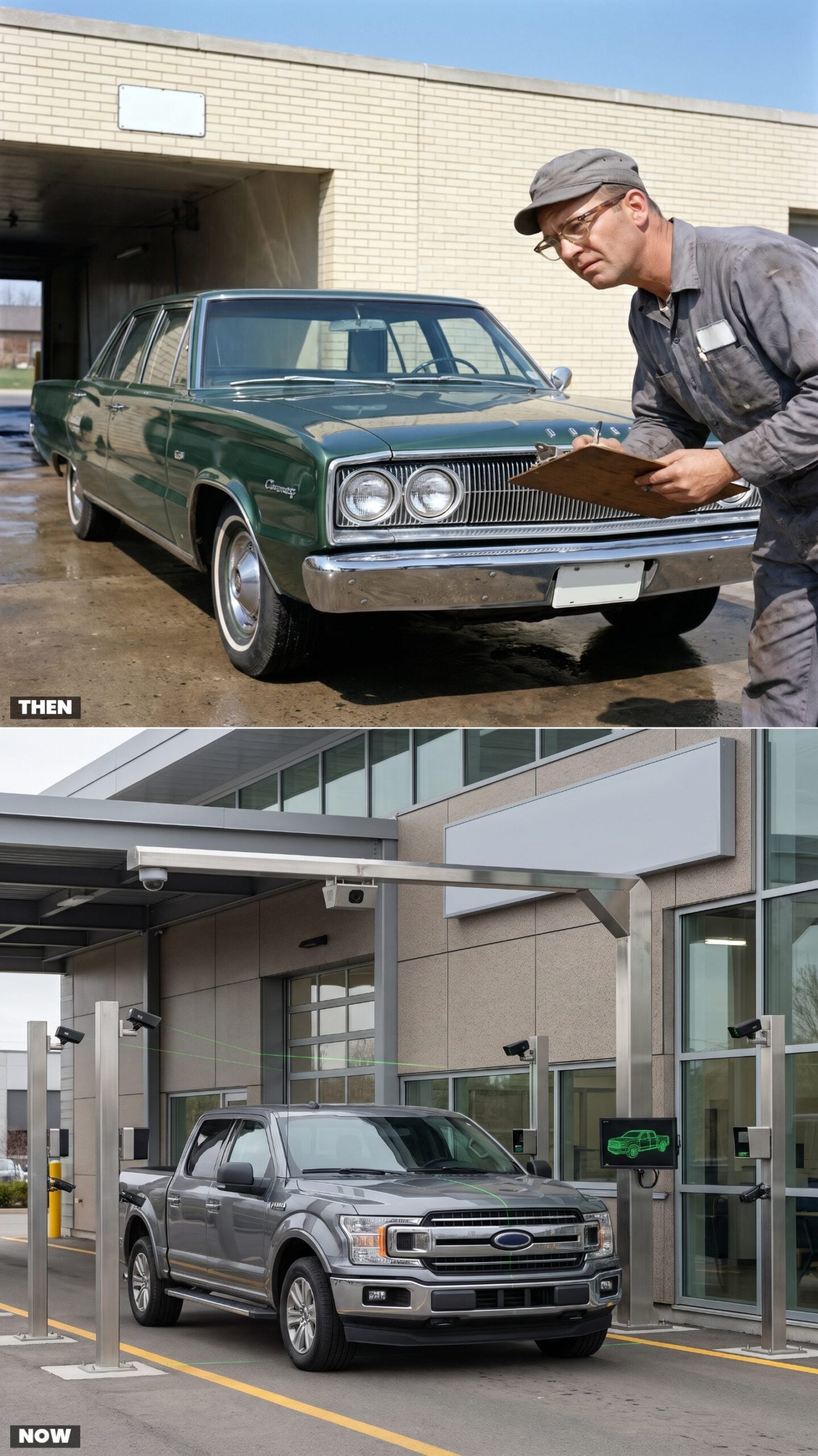
The old pre-wash check was a man with a clipboard and a trained eye. He walked the car, noted the dent you already had on the left quarter, and made sure nobody could pin damage on the wash that rolled in with you. Thirty seconds, all of it running on his judgment.
Cameras handle it now. A gantry scans the whole vehicle on the way in, logs every scratch, flags anything that might catch a brush. It never gets distracted and never argues with you about whose dent it was. Fewer disputes. Fewer handshakes too.
19. Muddy Pickup Pre-Rinse Pad vs. High-Clearance Truck Wash Lane
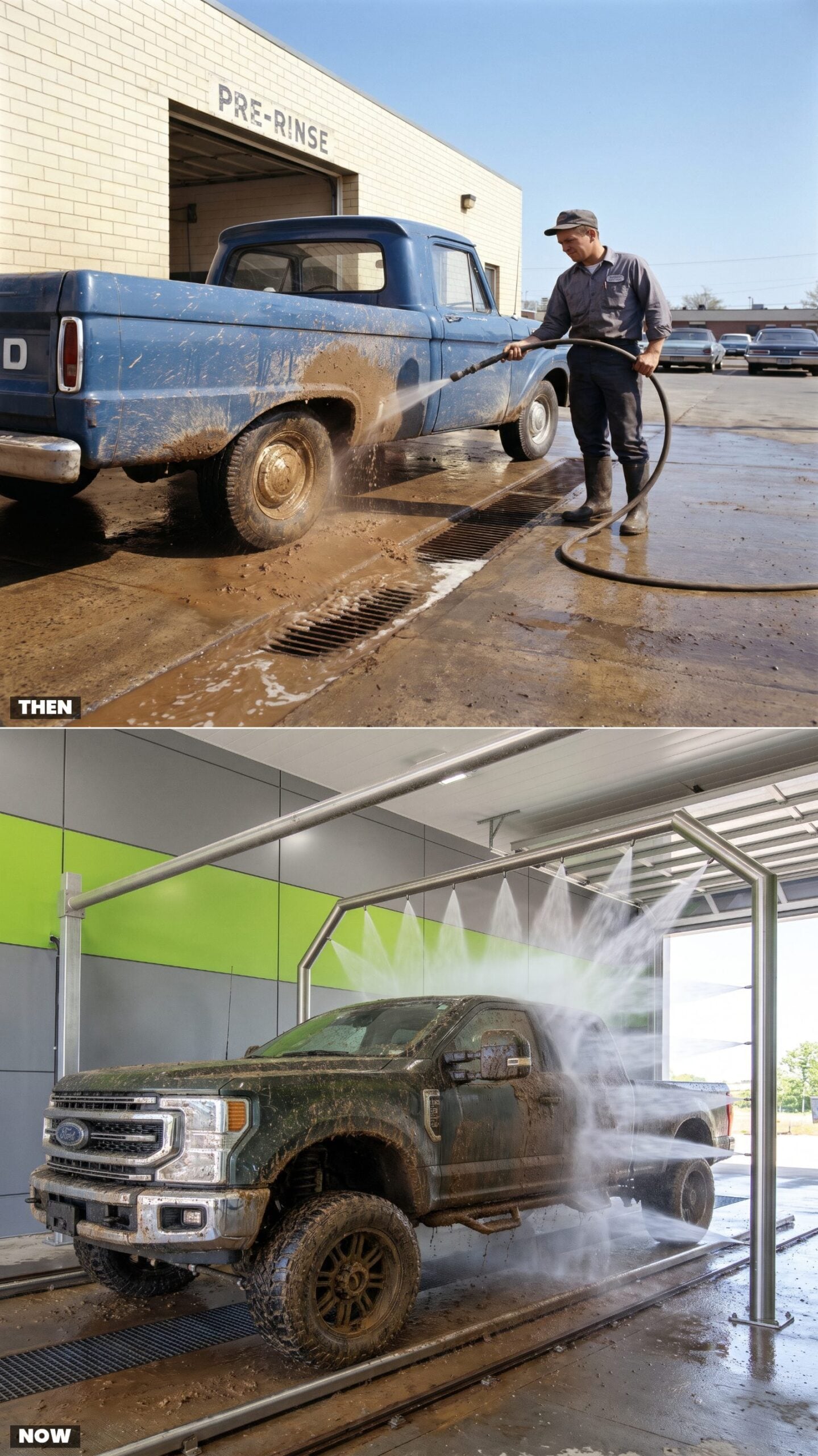
A farm truck coming off a dirt road in 1968 got the hose treatment first. An attendant knocked the worst of the clay off by hand on a sloped pad so it wouldn’t clog the tunnel, then waved you through. Wet, miserable work, and whoever drew that job went home brown to the knees.
Big trucks get their own lane now. Raised clearance bars, heavy undercarriage jets, enough room for a lifted dually to roll through without ducking. The machine takes the mud nobody ever wanted to touch by hand.
18. Coin-Operated Pressure Wand vs. Card-Activated Wash Gun
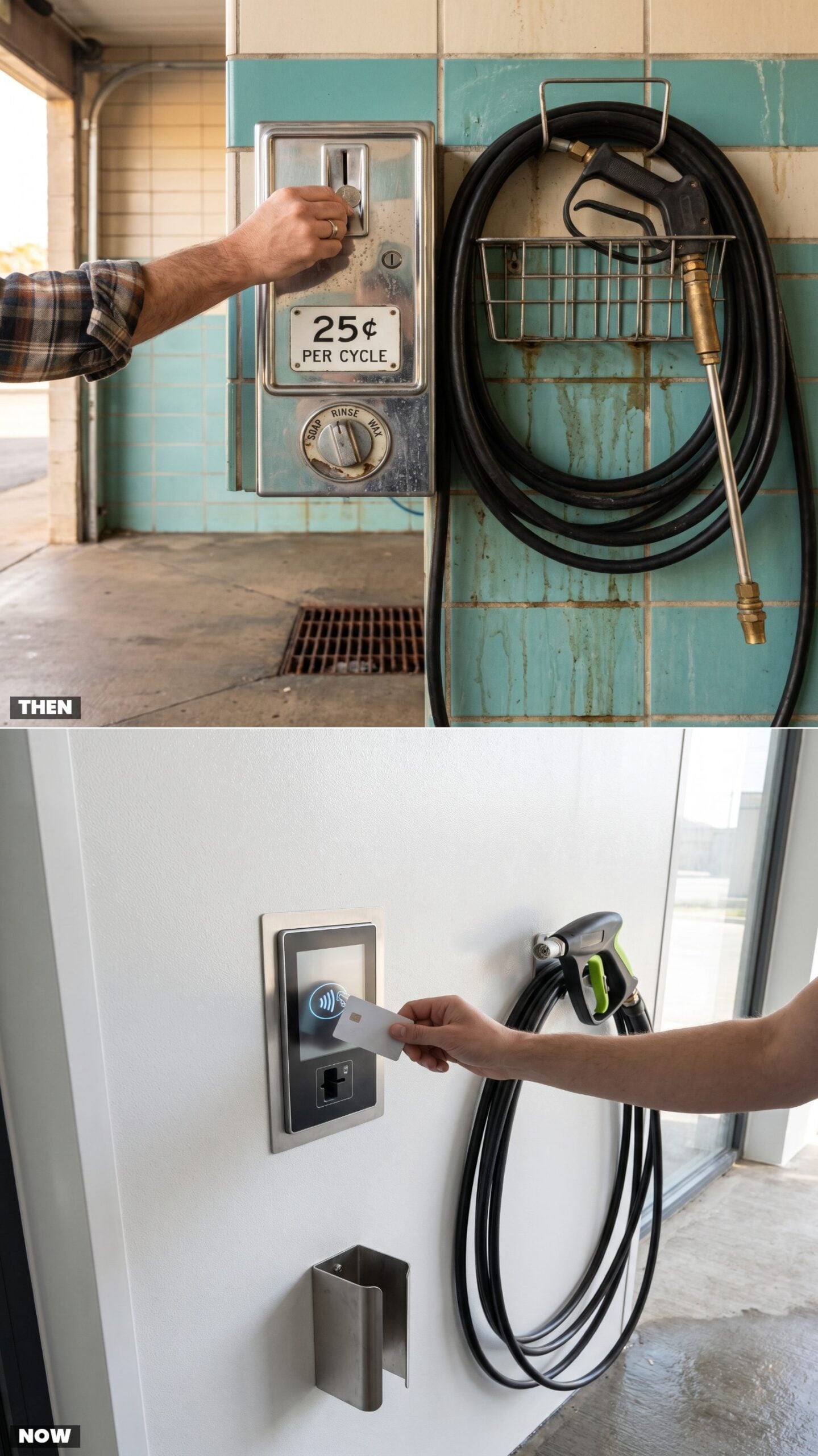
The quarter slot ran the whole show. You fed the chrome box, the pump kicked on, a little clock started ticking. Run out of time mid-rinse and you were sprinting across the lot for more change with soap still on the fender.
The modern wand takes a tap of your card and never stops to count coins. No fumbling in the ashtray, no change machine chewing up your dollar bill. Smoother, sure. But there was something honest about watching your money buy you exactly ninety seconds of pressure.
17. Soap Bucket and Brush vs. Metered Foaming Brush
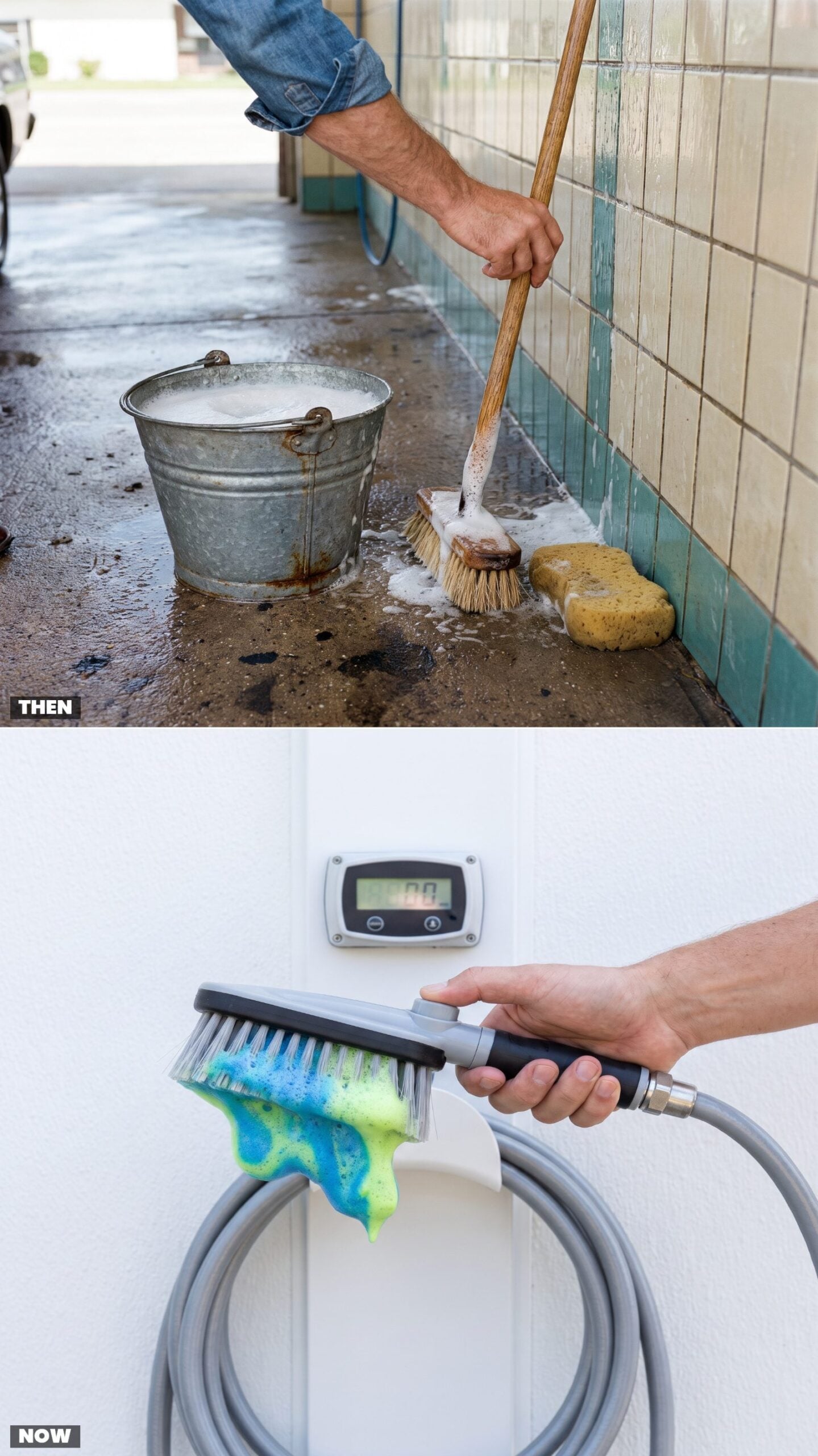
You scrubbed your own car with a bucket, a brush, and a sponge that smelled of last week’s detergent. The soap mixed however you mixed it, the bristles were whatever the bay owner bought cheap, and you put your back into it. A little pride went into that work.
The foaming brush meters the soap for you now. Push the button, the suds come through the bristles already mixed, a clock tells you how long you’ve got. Less elbow grease, less guesswork, no bucket of gray water to tip down the drain when you’re done.
16. Mechanical Bay Timer Dial vs. Digital Countdown Display
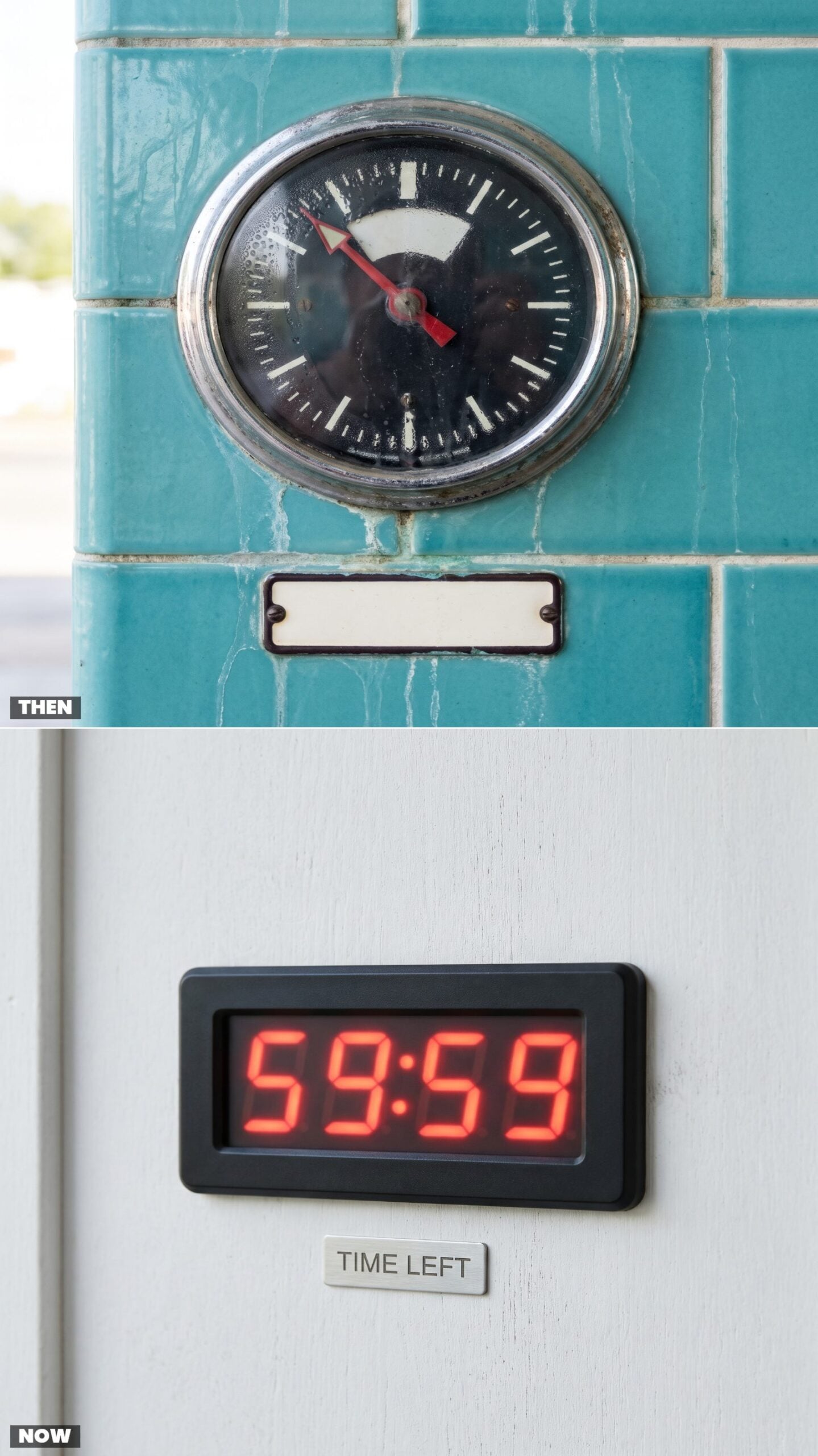
The old timer was a clock you could hear. A wound spring, a red needle sweeping toward zero, a faint tick you learned to race while you hit one last fender. When the needle hit the stop the water quit, and you always knew it was coming.
Now it’s glowing digits counting down in red. Precise to the second, impossible to misread, no ticking at all. Better information, worse suspense.
15. Glazed-Block Self-Serve Bay vs. Bright Composite Wall Panels
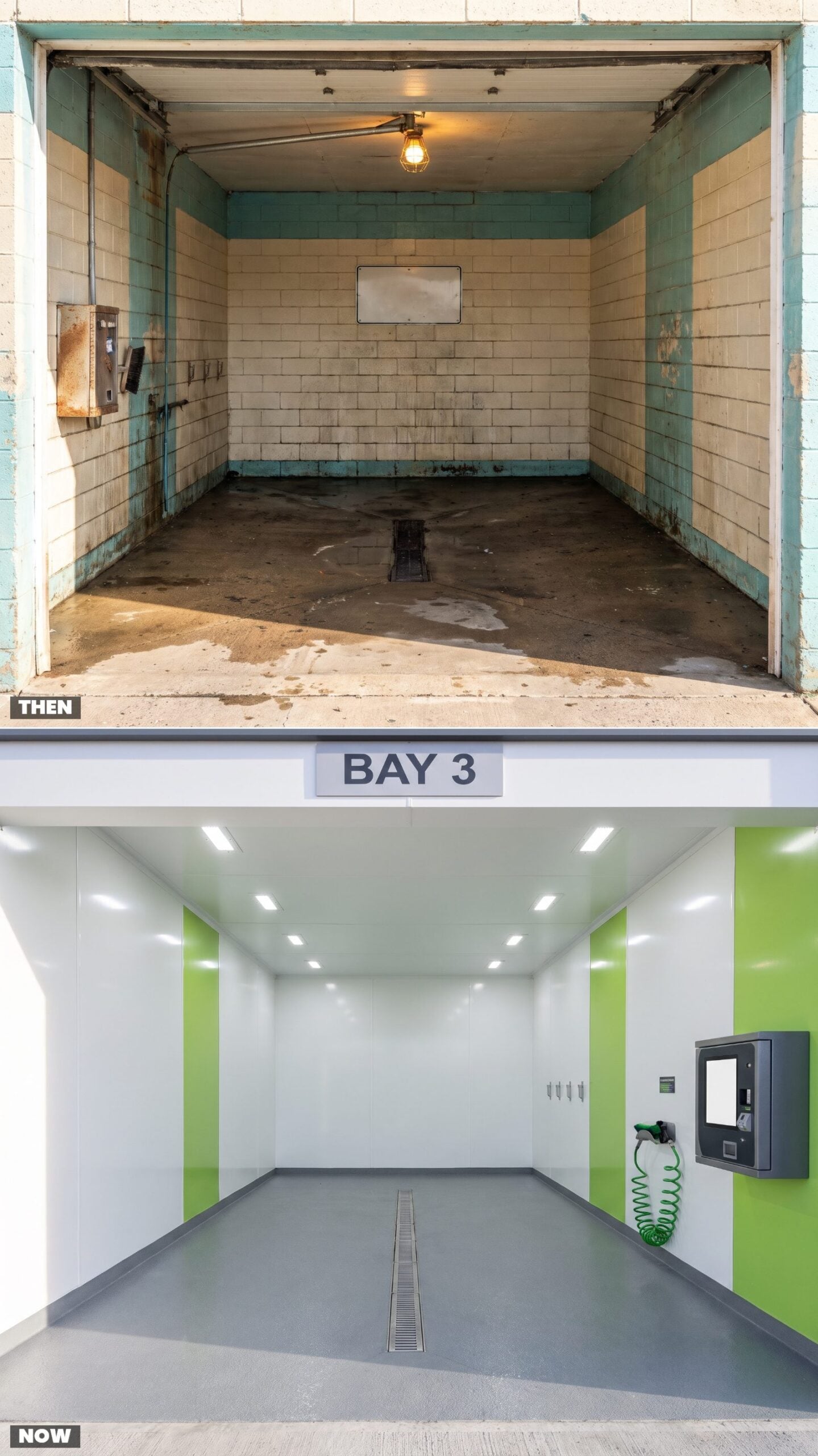
The bay itself tells the story. Glazed block in cream and turquoise, a bare bulb in a cage, a trench drain down the middle, corners chipped from years of bumpers that cut it too close. Built to last, and it looked like a garage because it was one.
The modern bay is composite panels in white and lime, epoxy floors, LED light that never flickers. Easier to clean, brighter, kinder to stand in on a cold morning. It also looks exactly like every other bay in every other town, which the old turquoise block never did.
14. One-Car Automatic Rollover vs. Smartphone-Activated In-Bay Wash
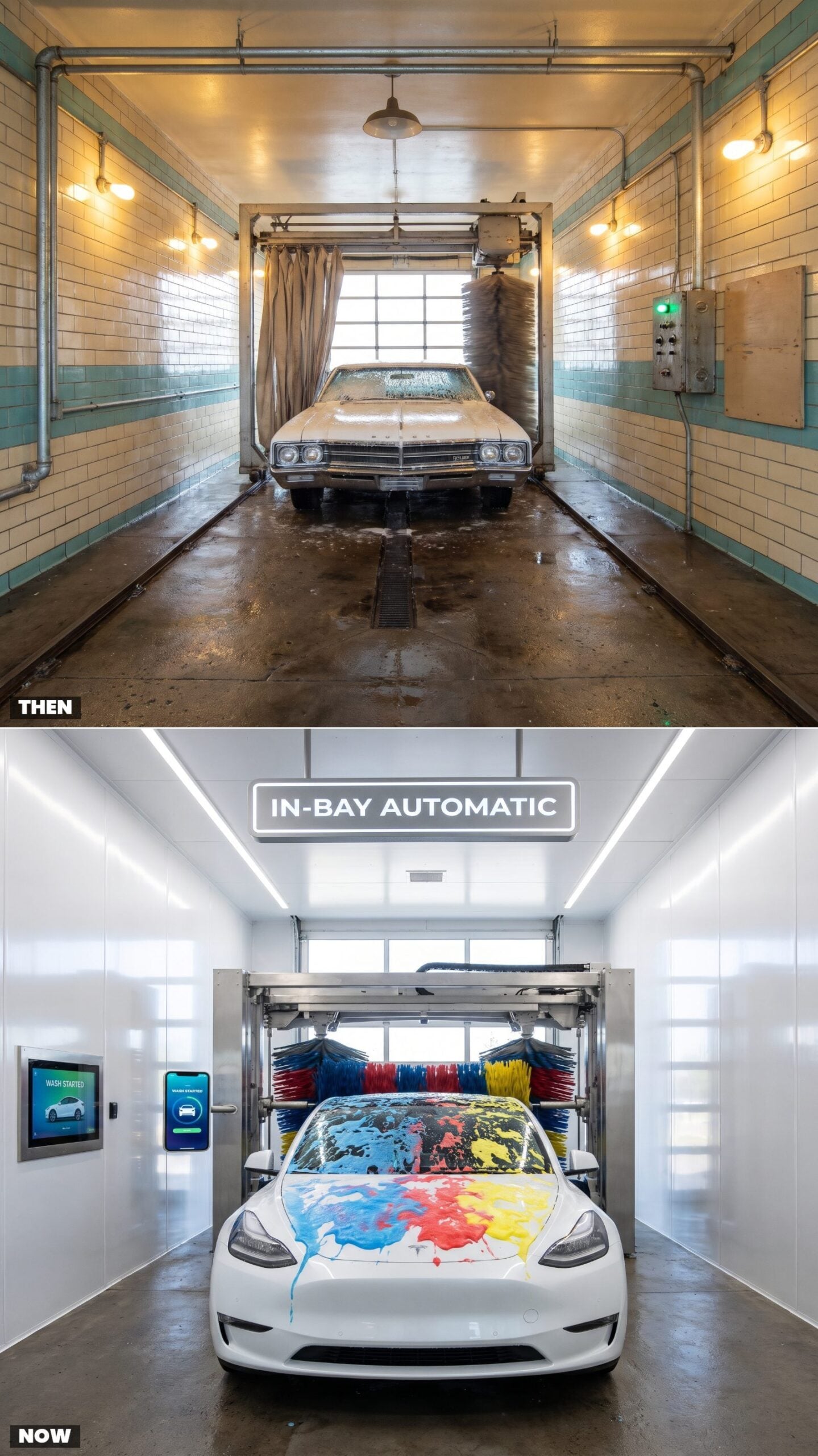
You pulled in, parked, hit the green light, and sat dead still while the machine rolled over you. The gantry crept forward on its rails, the cloth strips slapped the roof, and for ninety seconds you watched the brush swallow your windshield. First time through, half the family held their breath.
Same idea today, run from your phone. You tap the app, the gates open, the in-bay system wraps the car in foam and goes to work while you scroll your messages. The brush still rolls over you, but the whole thing’s over before you’ve turned the key off. The wonder’s gone. Convenience won.
13. The Cloth-Brush Gauntlet vs. The Laser-Guided Touchless Tunnel
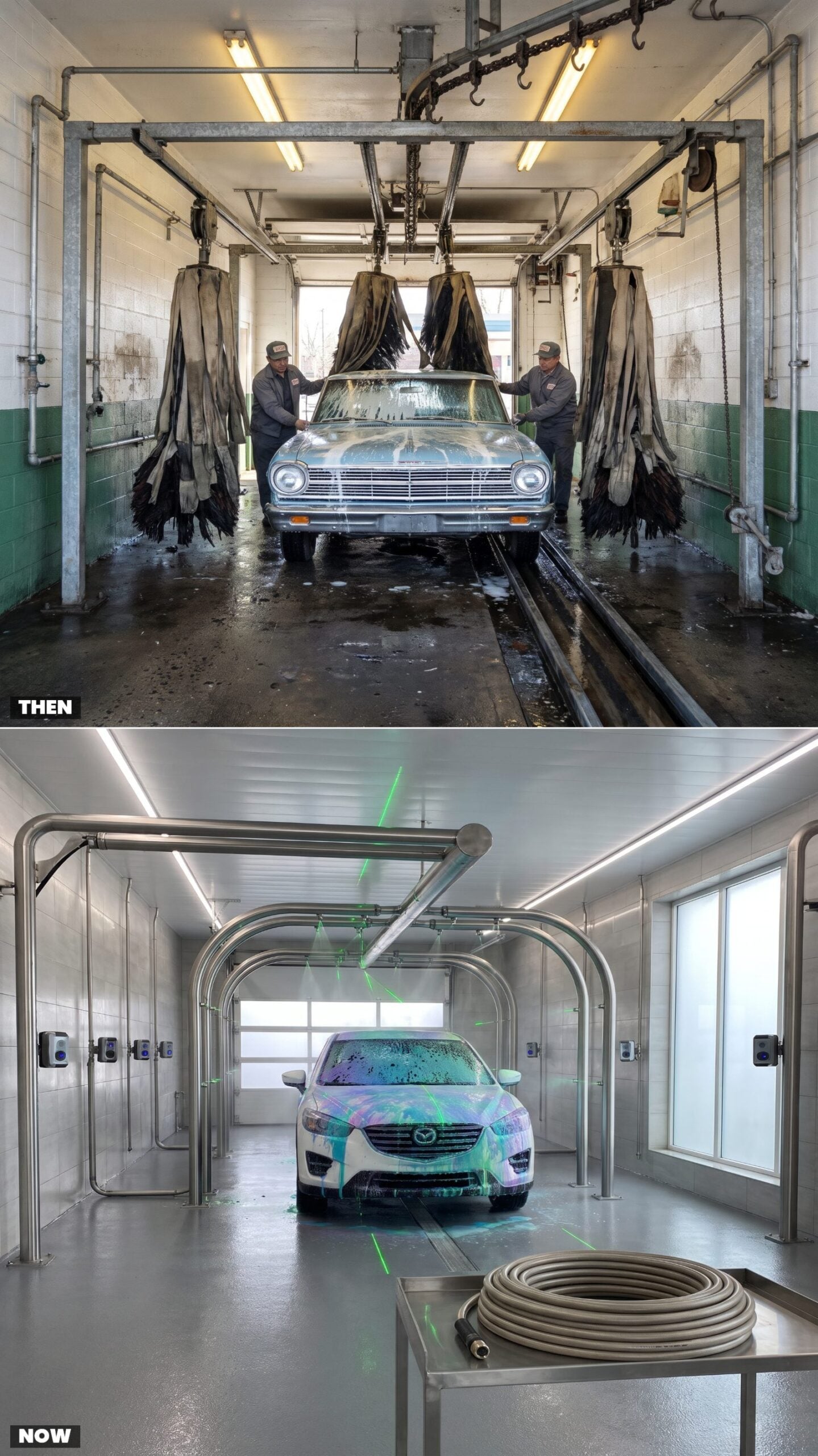
In 1968 the brushes touched everything, on purpose. Giant cloth rollers drooped from the ceiling, slapped your hood, dragged grit across your paint, and somehow nobody worried about it. The sound alone told you the thing was working.
The modern touchless tunnel never lays a finger on your car. Lasers measure the vehicle, high-pressure jets and foam do the scrubbing, and your clear coat lives to see another year. Quieter, gentler, and a little less fun, if we’re honest.
12. The Attendant With a Canister Vacuum vs. The Quarter-Fed Vacuum Plaza
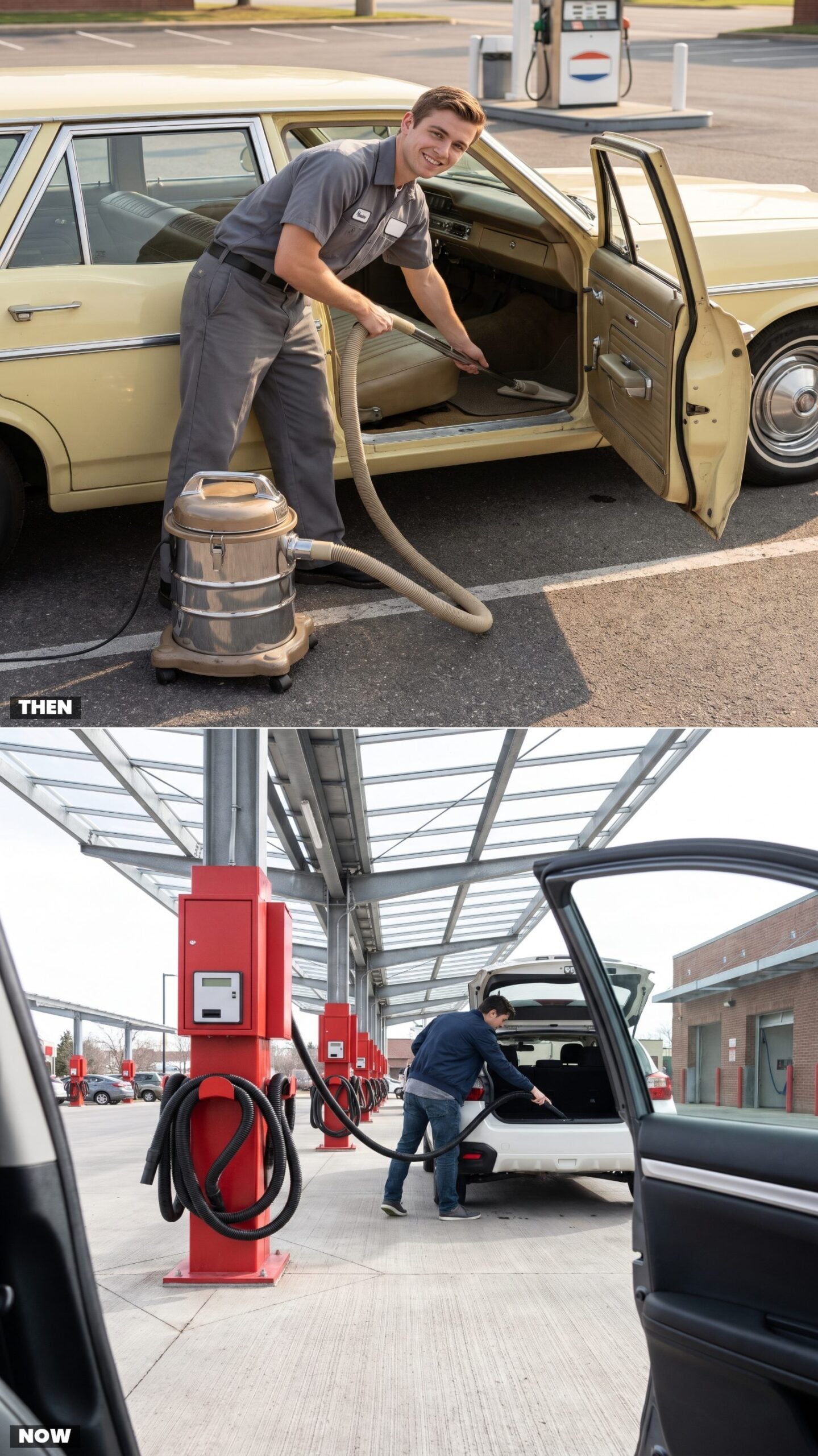
At a full-service wash in 1968, you didn’t vacuum your own car. Somebody did it for you, kneeling into the footwell with a canister unit the size of a mailbox, fishing bottle caps out from under the bench seat while you stood back and watched.
Now you do it yourself, under a steel canopy, at a bank of free-standing machines that eat your money or come bundled with the wash. More control, sure. But there’s a particular loneliness to vacuuming your own car while nine strangers do the exact same thing six feet away.
11. Floor Mats Beaten Over a Rack vs. The Automatic Mat Machine
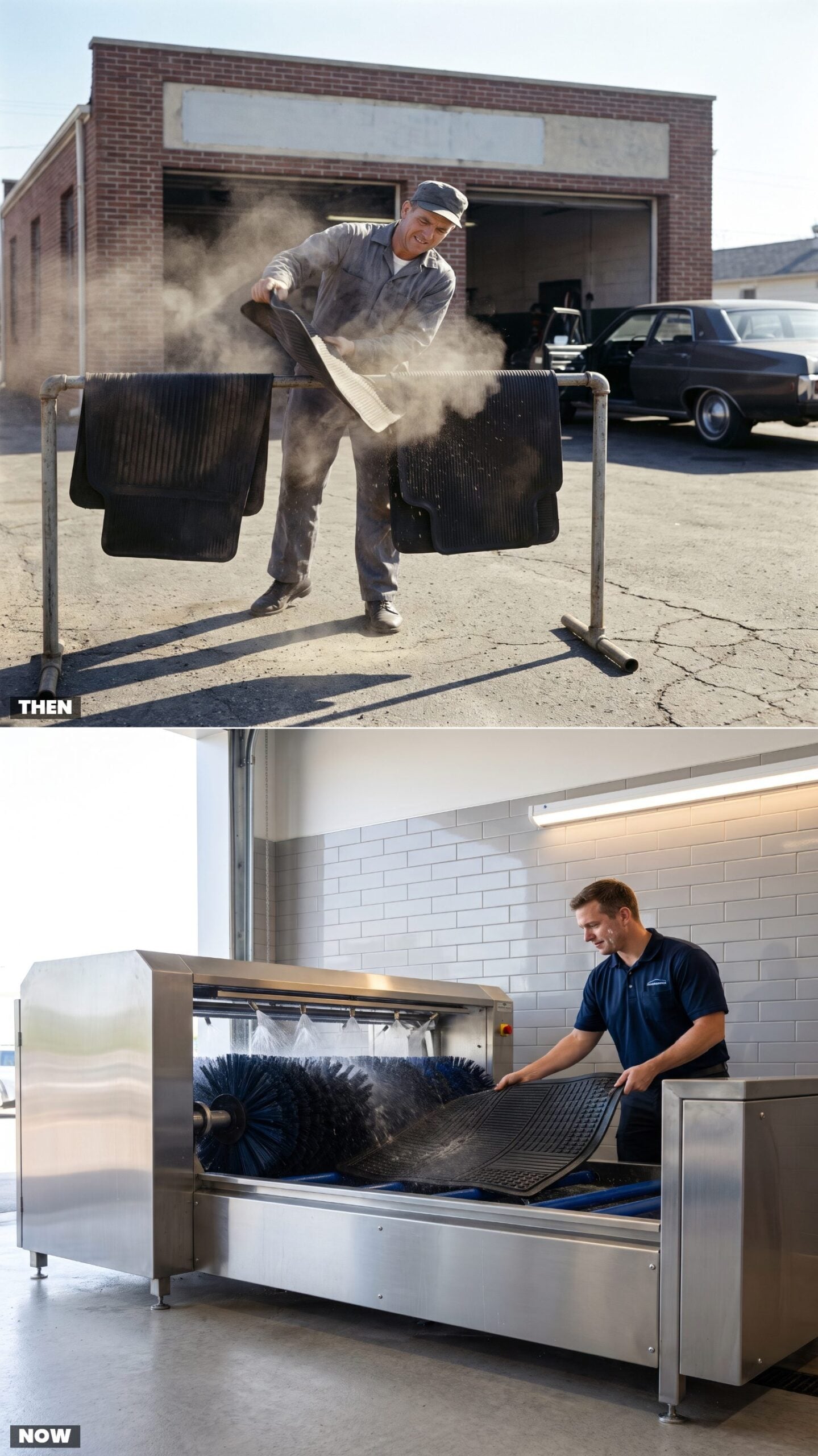
The mat got pulled out, slung over a pipe rack, and whacked until a small sandstorm came off it. Crude, loud, oddly satisfying. You could watch a season of road trips leave your car in about four hard swings.
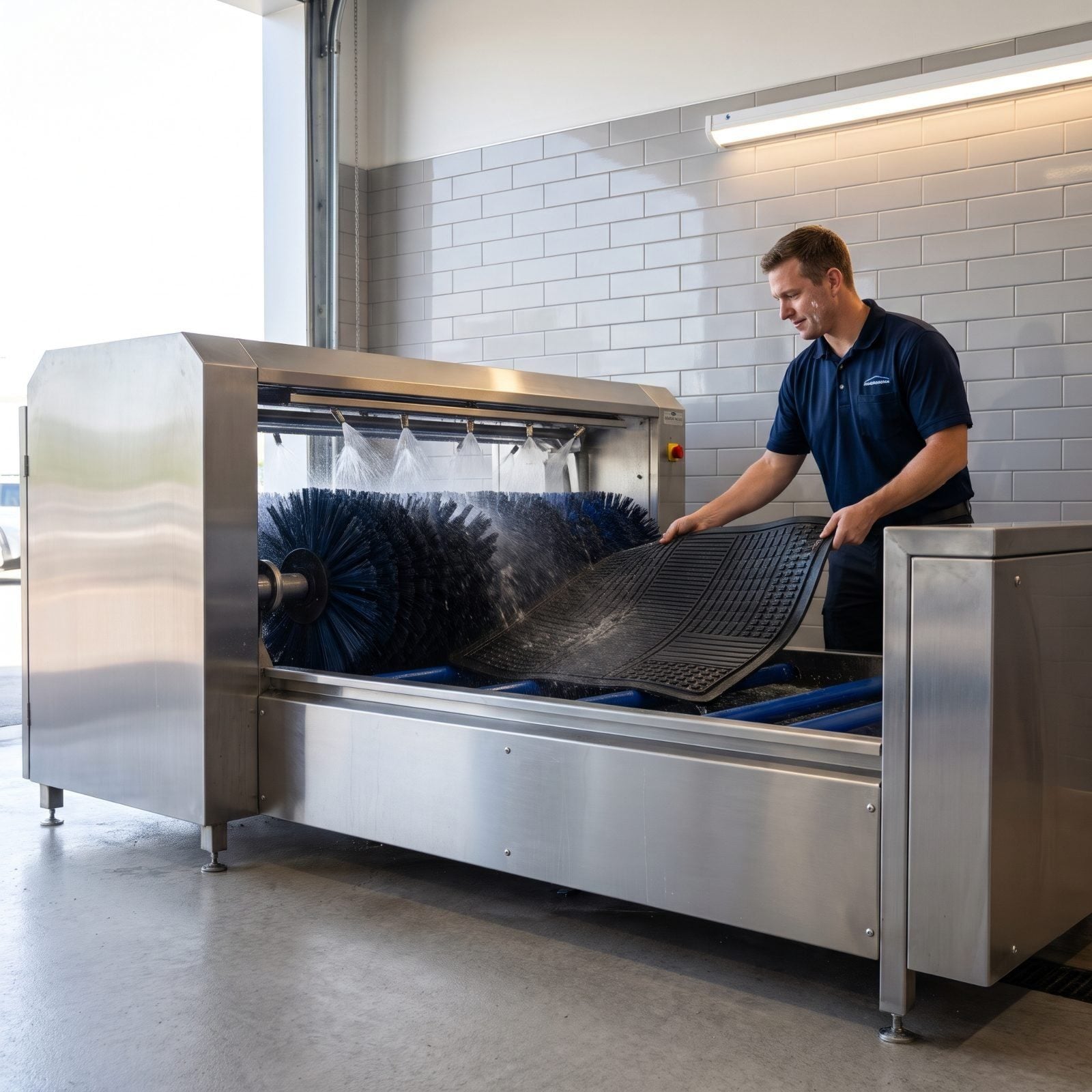
The modern version feeds your mat into a stainless machine that scrubs, rinses, and spins it clean between two rotating brushes. No dust cloud, no bicep workout, no theater, just a wet mat handed back to you and a tiny loss for anyone who liked the swing.
10. Emptying the Ashtray vs. Sanitizing the Cupholders
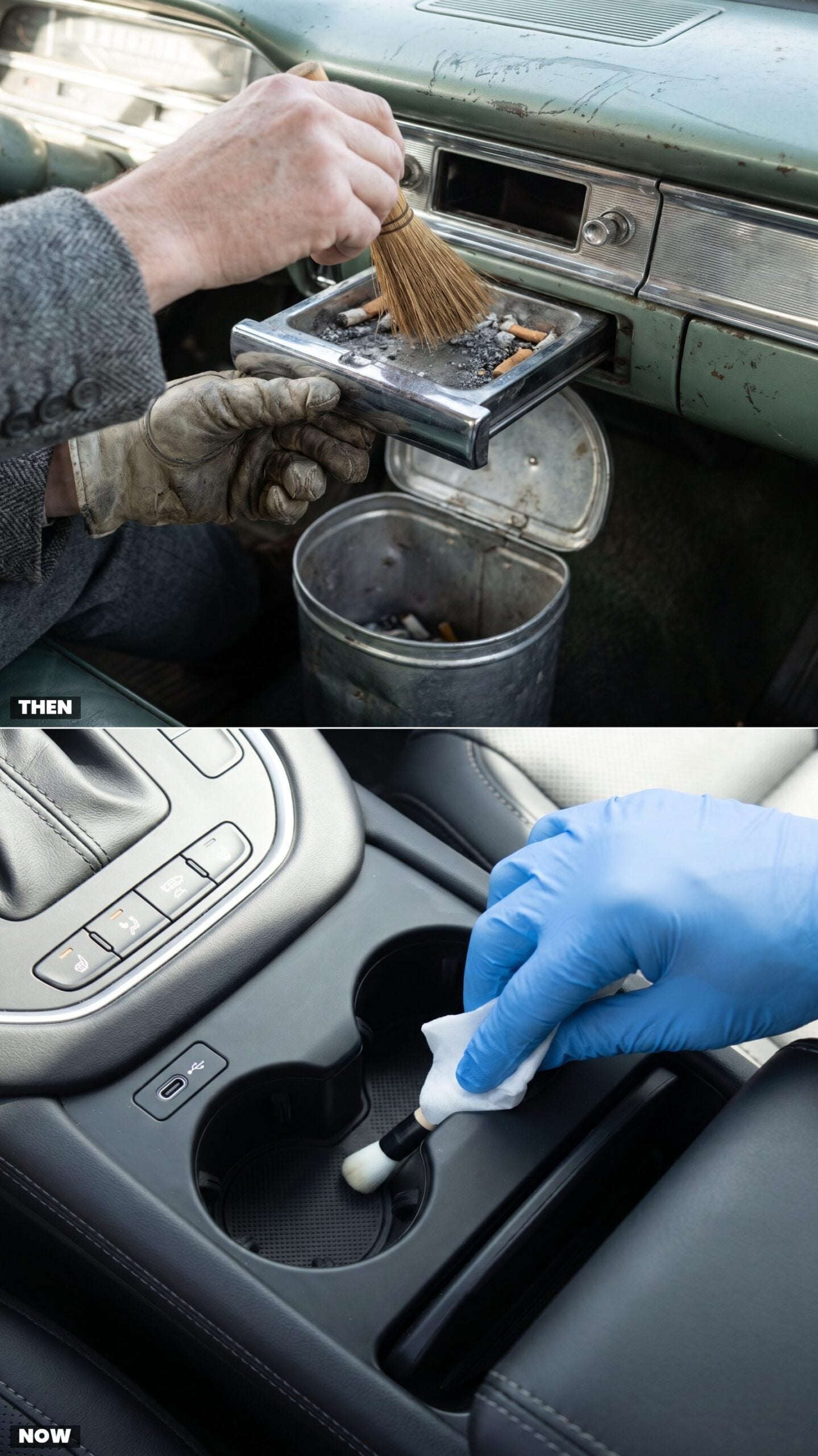
Every car had an ashtray, and emptying it was standard courtesy. The chrome tray slid out, got tapped into a pail, maybe a quick wipe, and slid back in smelling faintly of yesterday. Nobody blinked.
The ashtray is gone. In its place? Cupholders that have seen things, and a sanitizing swab to prove it. We stopped smoking in cars and started drinking coffee in them, so the sticky ring replaced the ash ring. The service adapted. The grime just changed flavors.
9. Hand-Polished Chrome vs. Plastic-Trim Protectant
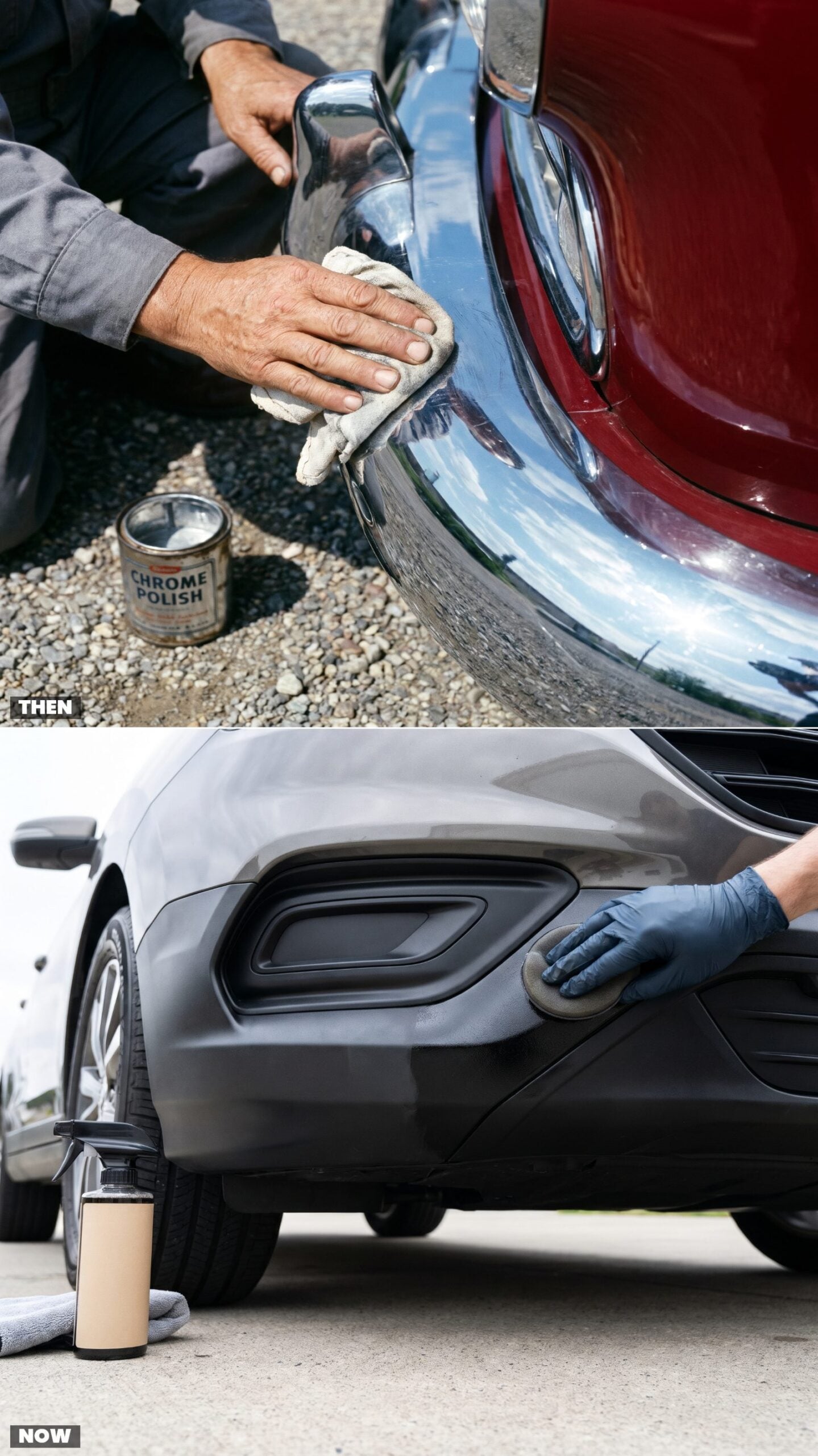
Chrome was the whole point of a 1968 bumper. Keeping it mirror-bright took a tin of polish, a cotton rag, and a slow wrist, and when you got it right you could see the sky curve across the metal. People noticed.
Modern cars traded chrome for plastic, and the ritual changed with it. You’re not buffing metal to a shine anymore. You’re feeding faded black trim a protectant so it stops looking chalky and grey. The goal flipped from dazzle to simply not looking tired.
Chrome asked you to make it shine. Plastic just asks you to keep it from looking dead.
Our readers still notice too: car photos with lots of chrome got hearts 83% of the time, versus 75% for the other images in the same articles.
8. The Curtained Hand-Wax Bay vs. The Climate-Controlled Detail Studio
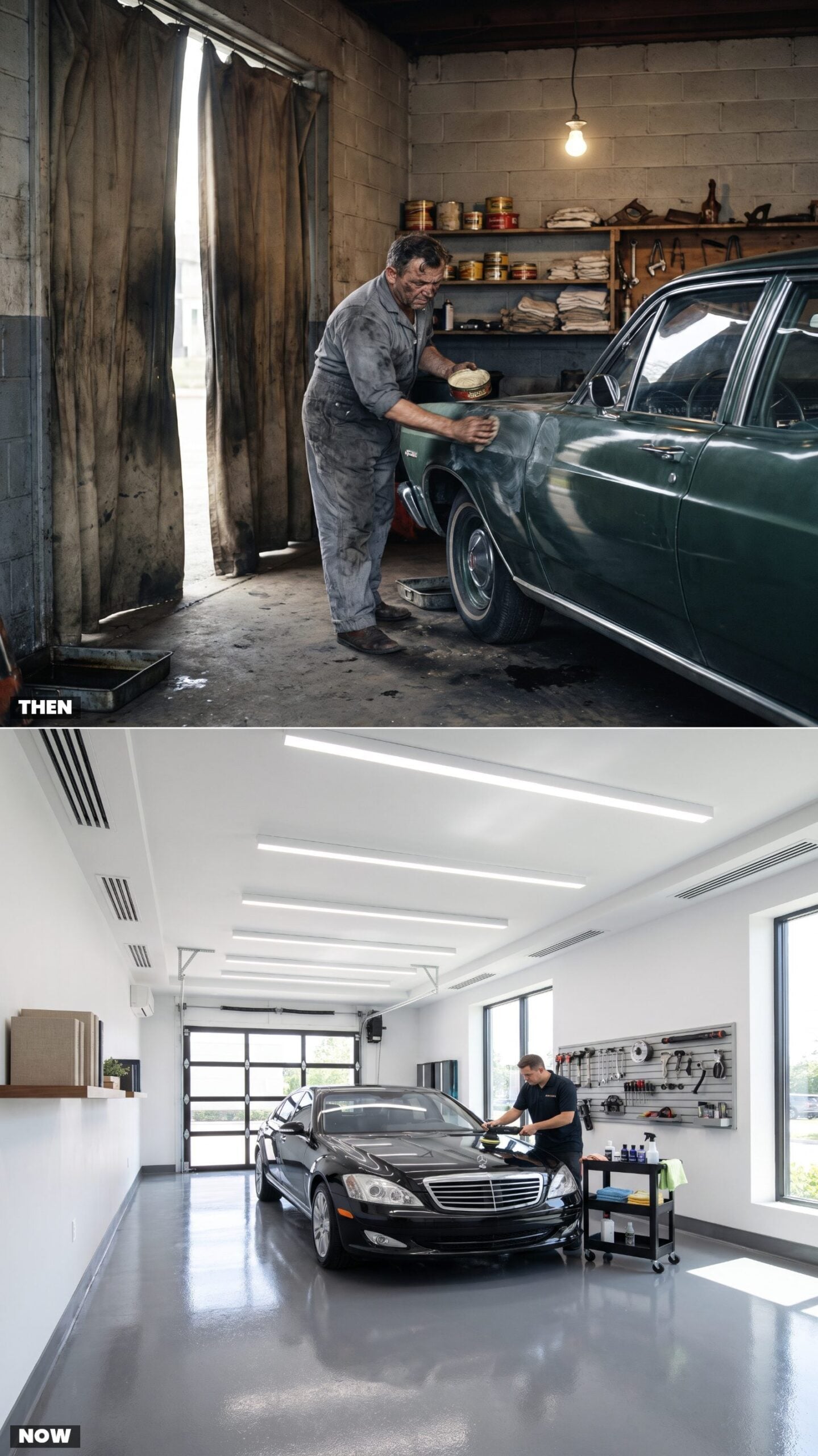
The wax bay was a humble place. Concrete block, a canvas curtain for a door, a hanging bulb, and a man doing slow circles by hand until the paste hazed over and came off to a deep shine. The whole thing smelled like carnauba and patience.
The modern detailing studio is sealed, lit, and filtered, because ceramic coatings and clear-coat correction need dust-free air and a controlled temperature. Dual-action polishers replaced the elbow grease. The result lasts longer and shines harder. It just doesn’t smell like anything anymore.
7. The Vinyl-Chair Waiting Room vs. The Wi-Fi Lounge
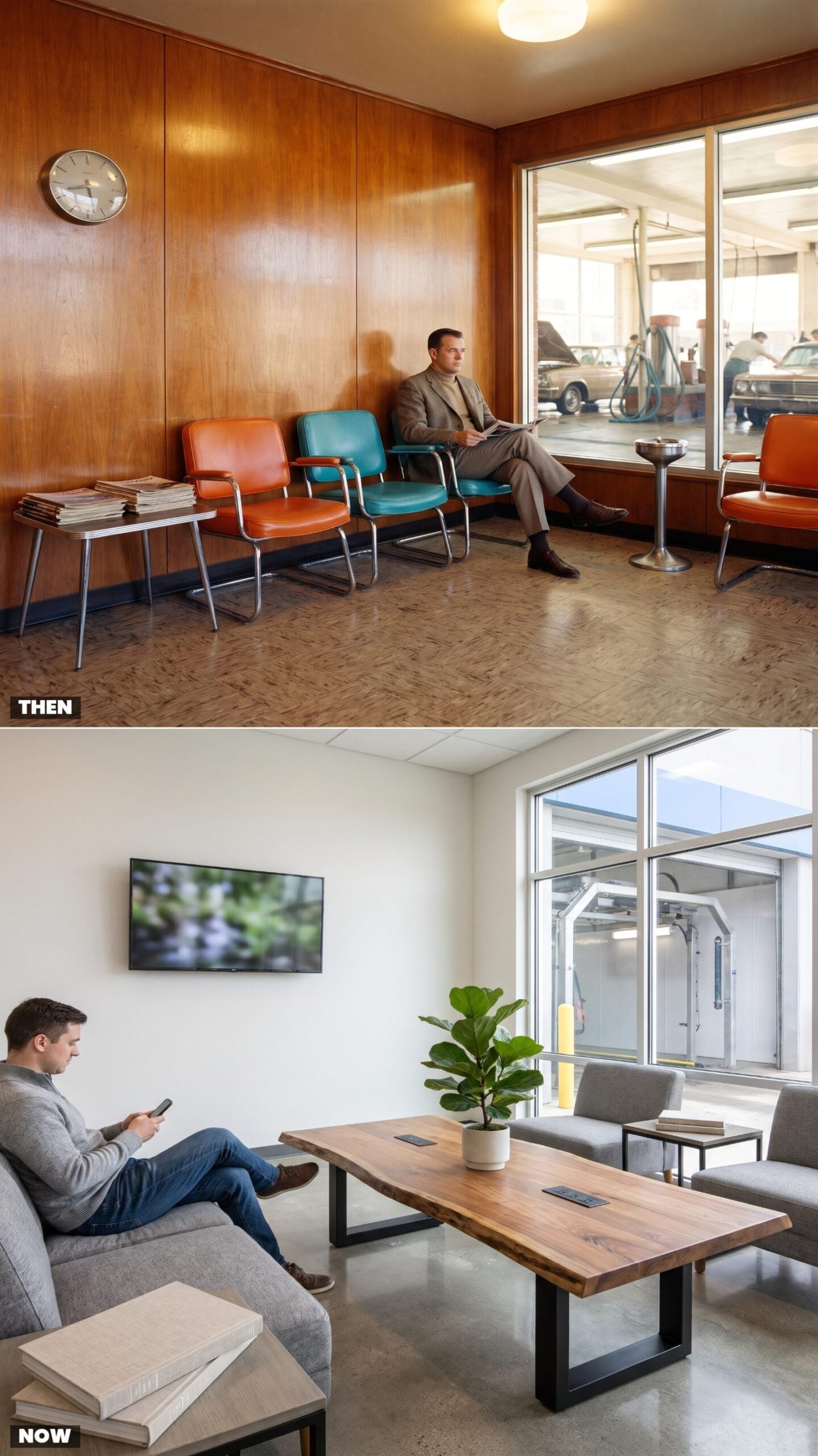
You waited on vinyl in 1968, in a bucket chair the color of a traffic cone, next to a standing ashtray and a stack of magazines three months out of date. The big window let you watch your car disappear into the suds. That was the entertainment.
The modern lounge has Wi-Fi, power outlets, a flat-screen, and a plant somebody actually waters. You still watch your car through the glass. You just do it with four bars of signal and a charged phone, which is either progress or the exact same afternoon with better seating.
6. The Percolator Coffee Corner vs. The Barista Beverage Station
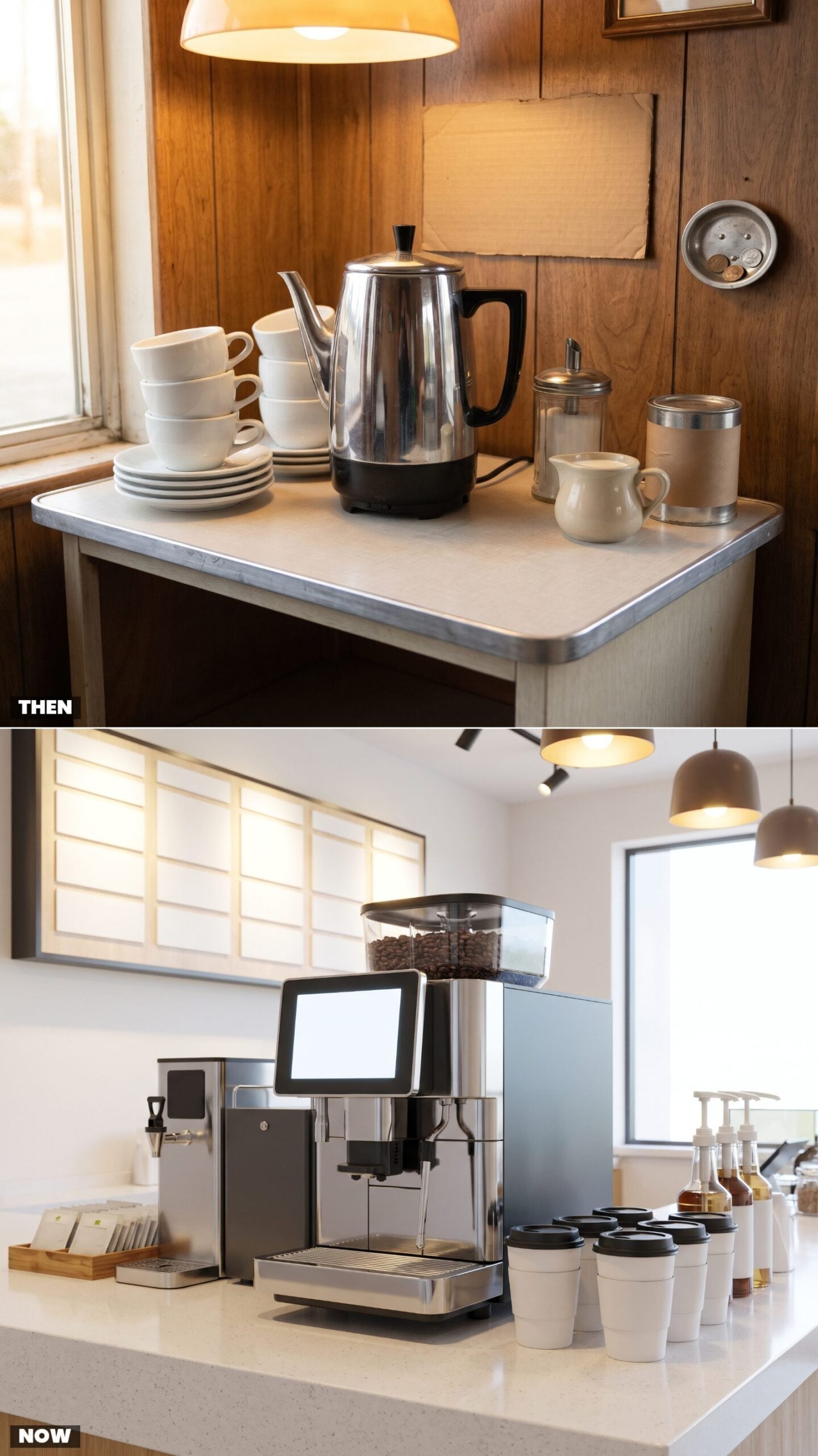
The coffee was free, bitter, and poured from a chrome percolator that had been bubbling since dawn. You drank it from a thin ceramic cup, stirred in powdered creamer, and didn’t complain, because nobody expected better.
Now there’s a bean-to-cup machine with a touchscreen, syrup pumps, and a paper cup with a lid for the road. You can pull a latte while your floor mats go through the washer. The coffee got dramatically better. Whether that makes the wait feel shorter or just more expensive is a question we’re still working out.
5. Exposed Pumps and Belts vs. Enclosed Modular Equipment Room
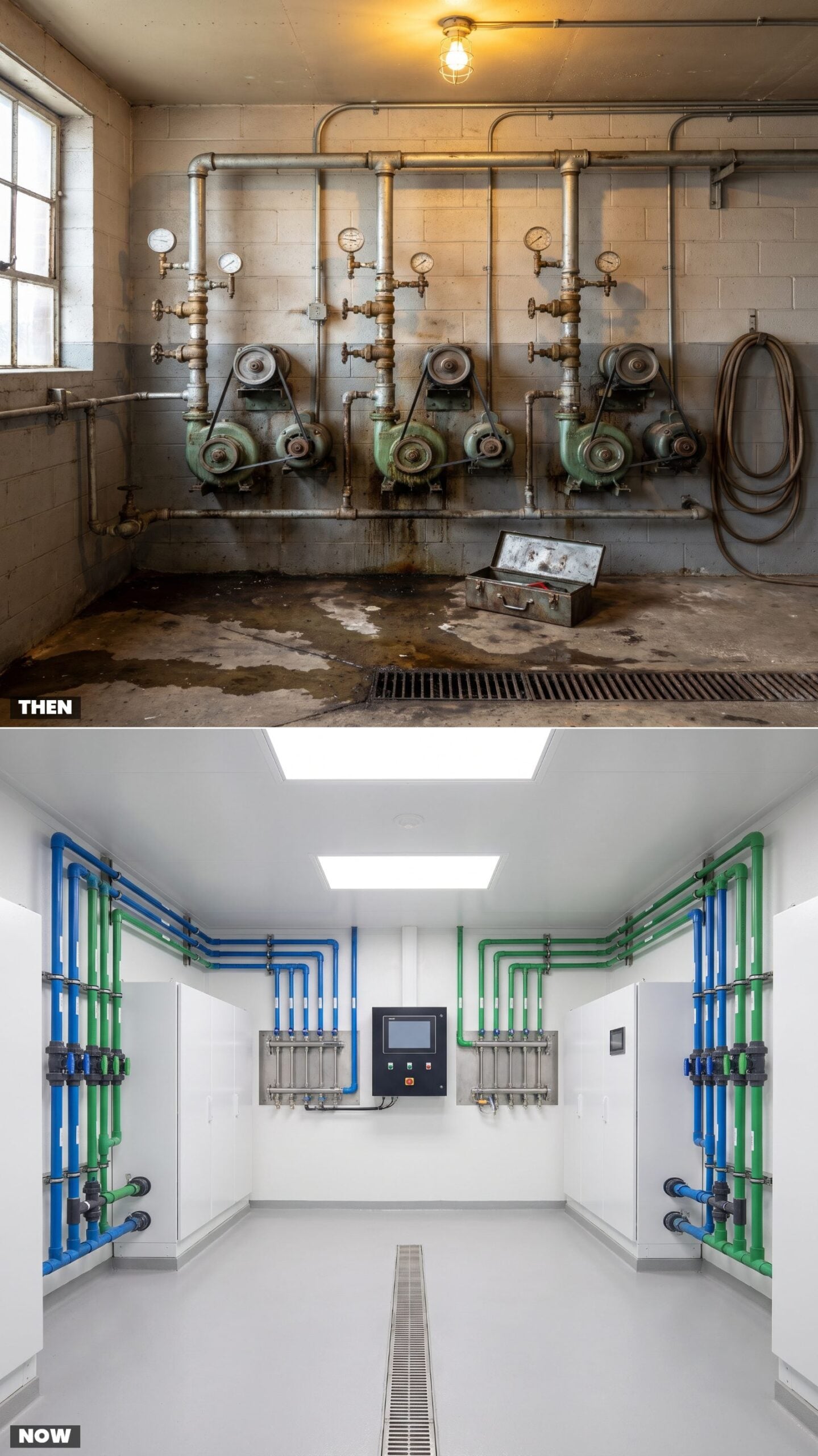
Step into the back of a 1968 wash and you saw everything. Pumps the size of beer kegs, rubber belts spinning out in the open, pipes threaded by hand across a cinderblock wall. Something broke, a guy with a wrench fixed it right there in the puddle.
The modern version hides all of it in a sealed modular room — pump cabinets, stainless manifolds, and a touchscreen that flags a problem before it fails. Cleaner, quieter, and a lot less likely to catch your sleeve on a moving belt.
4. Open Detergent Drums vs. Sealed Computer-Metered Chemical Containers
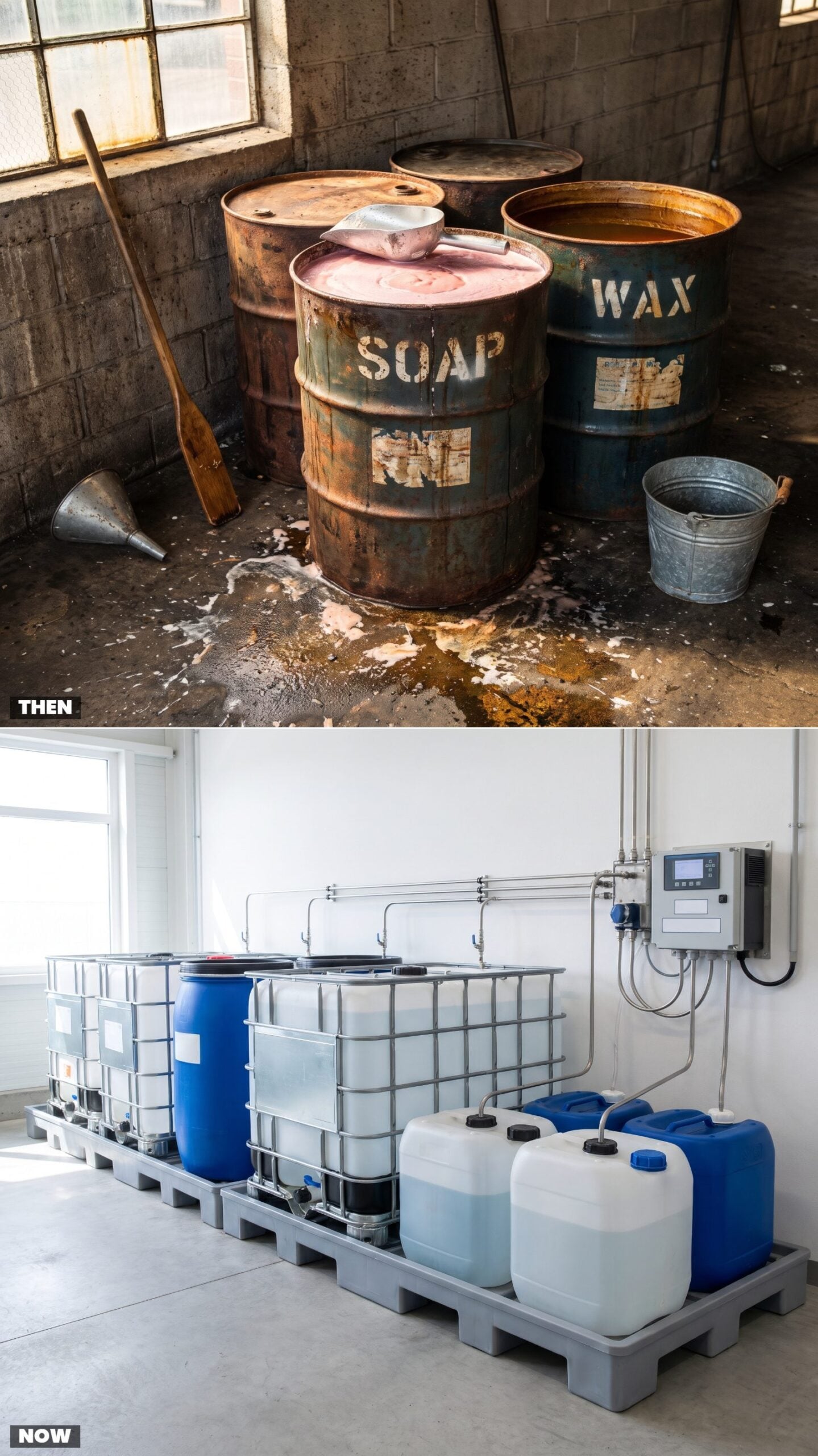
Chemistry in 1968 was a guy with a scoop. Open drums of soap and wax, a stir paddle, and whatever he figured was about right that morning. Too much and the car came out streaked, too little and it came out dirty. The whole operation ran on feel and a decent nose.
Sealed containers don’t guess. A computer meters each chemical to the ounce, matched to whatever wash package you bought, lids closed and fumes contained. Less waste, no splashing, and the car comes out the same every single time.
3. Daylight Business Hours vs. 24-Hour Automated Operation
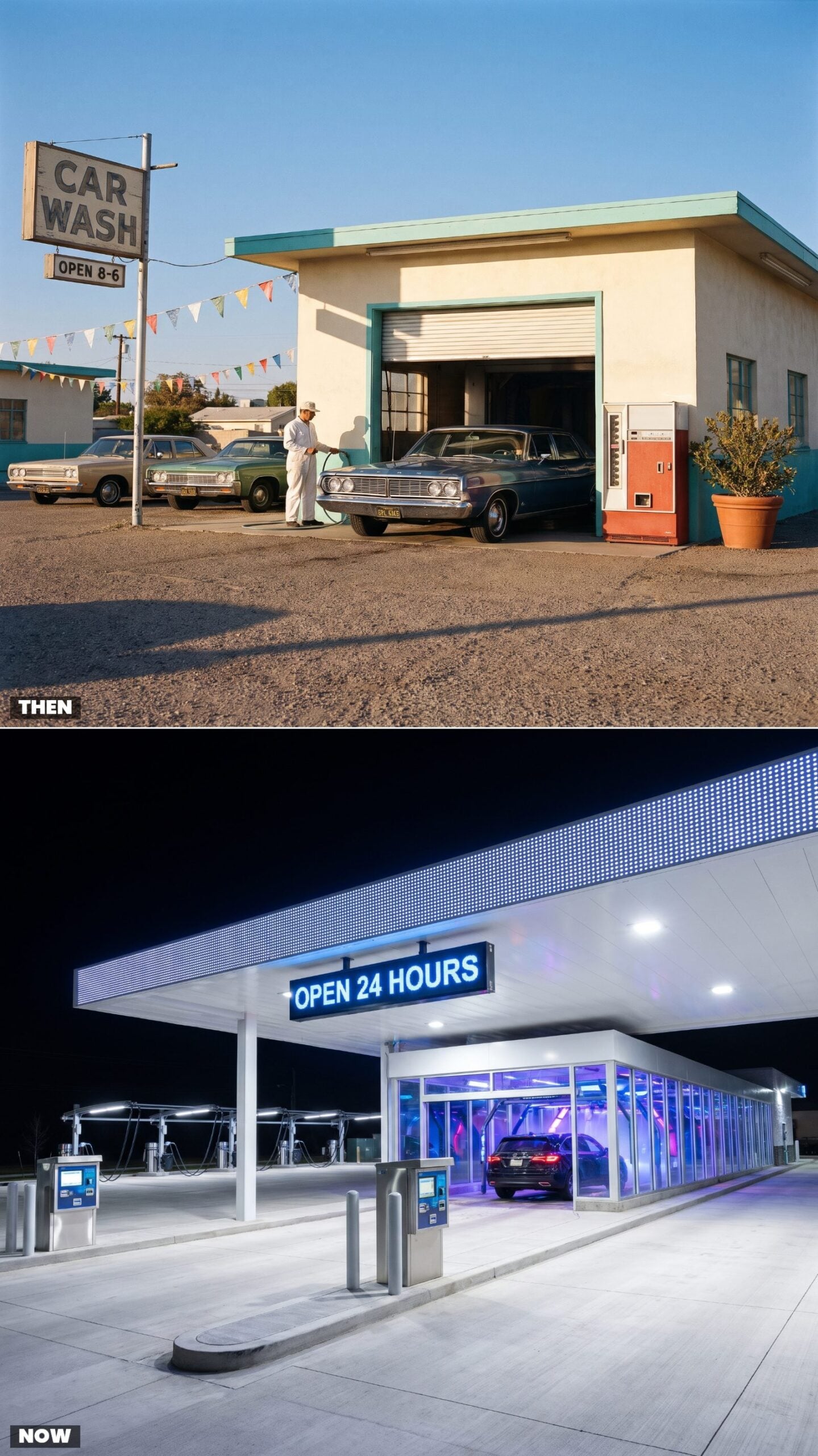
When the sun went down in 1968, the full-service wash closed. Hours were painted on a sign, usually eight to six, because the whole thing needed daylight and a crew to run. Miss it after work and you waited for Saturday.
The automated wash never sleeps. Pay kiosks, sensors, and a tunnel that runs itself let you wash the car at two in the morning if the mood strikes. No crew, no closing time, just your headlights and an empty lot.
2. Single Exit Lane vs. Multiple Finish-and-Vacuum Lanes
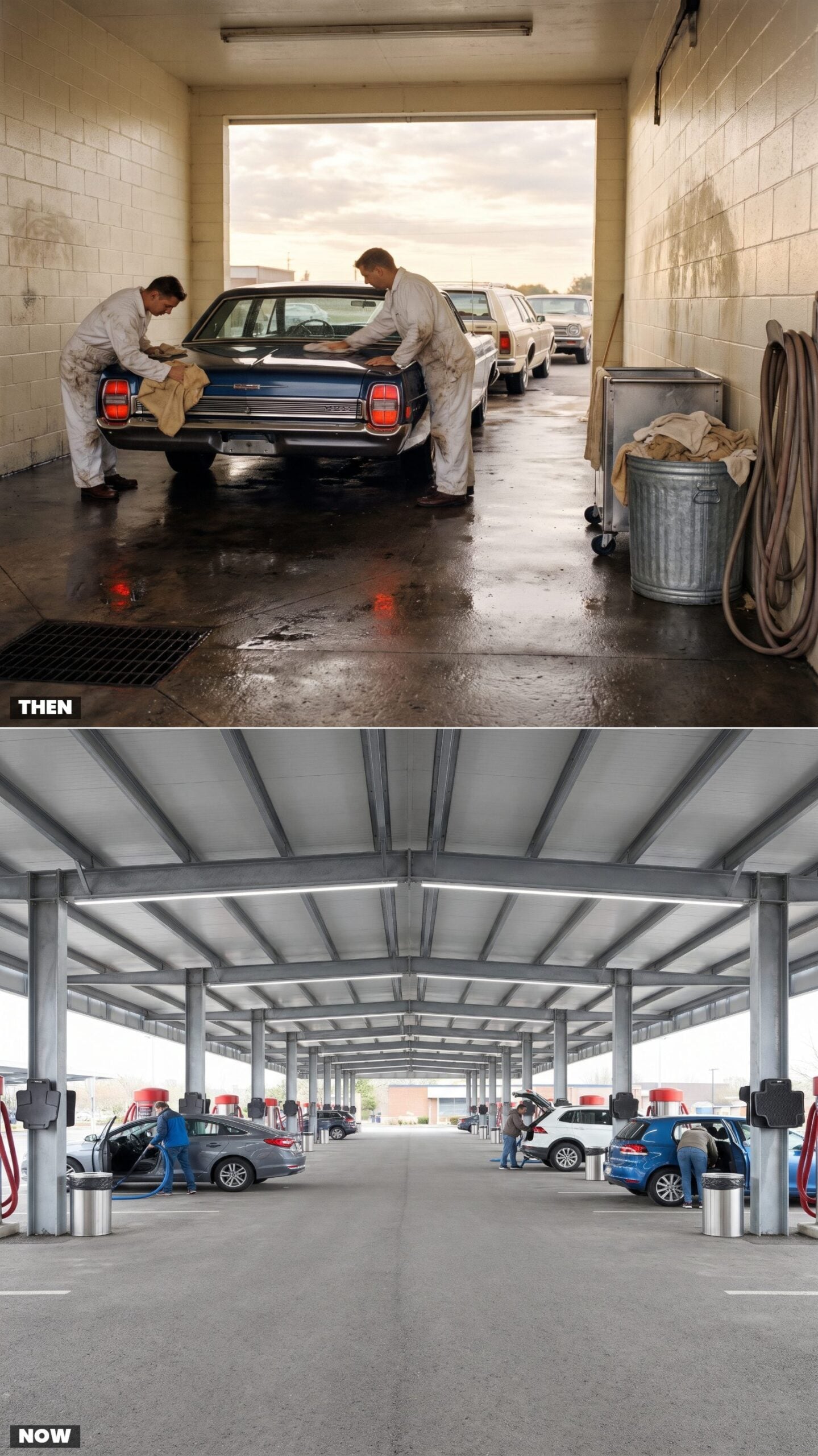
Everything in 1968 came out one door. A single exit lane, the crew swarming each car with chamois cloths, wiping glass and chrome by hand while the next two cars idled behind. Slow, personal, and the line backed up fast on a sunny Saturday.
Now the car rolls out into a spread of self-service vacuum lanes under a canopy, and you finish the job yourself. Free vacuums, your own mats, your own pace. More lanes, no waiting, and the only person touching your interior is you.
The old wash gave you a crew. The new one gives you a parking spot and a vacuum hose. Different trade entirely.
1. Fluorescent Tunnel Tubes vs. Color-Changing LED Light Show
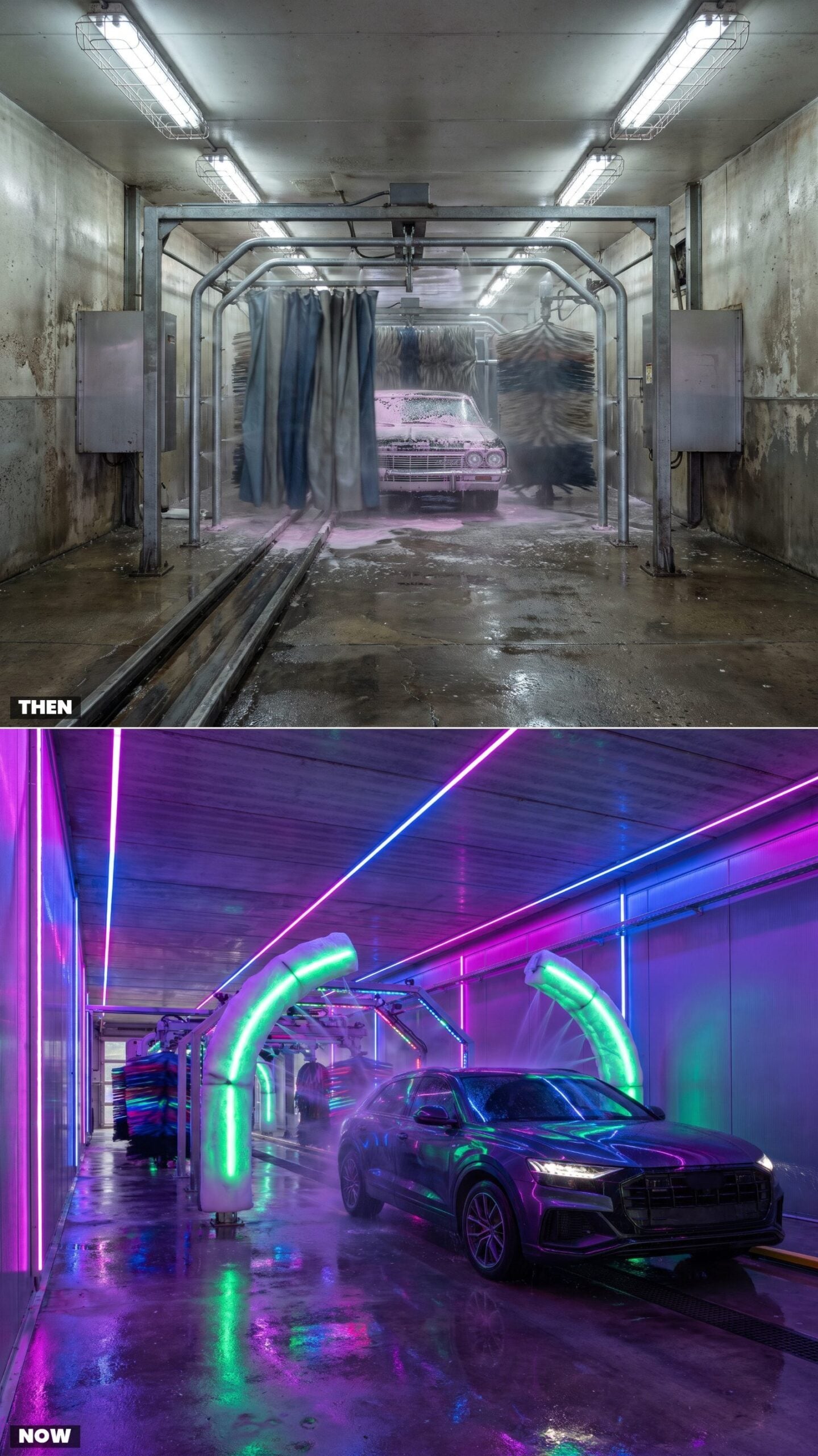
The 1968 tunnel was lit to see by, nothing more. Cold fluorescent tubes in wire cages threw flat white light on the brushes and the foam, and half the point was just keeping somebody from slipping on the wet track. Who thought of the inside of a car wash as a thing to look at?
The modern tunnel treats the wash like a ride. Color-changing LEDs wash the walls in purple and blue, the foam glows neon green, and the whole thing becomes a two-minute light show you watch through the windshield. Kids ask to go. That never happened in 1968.