
Would you like to save this?
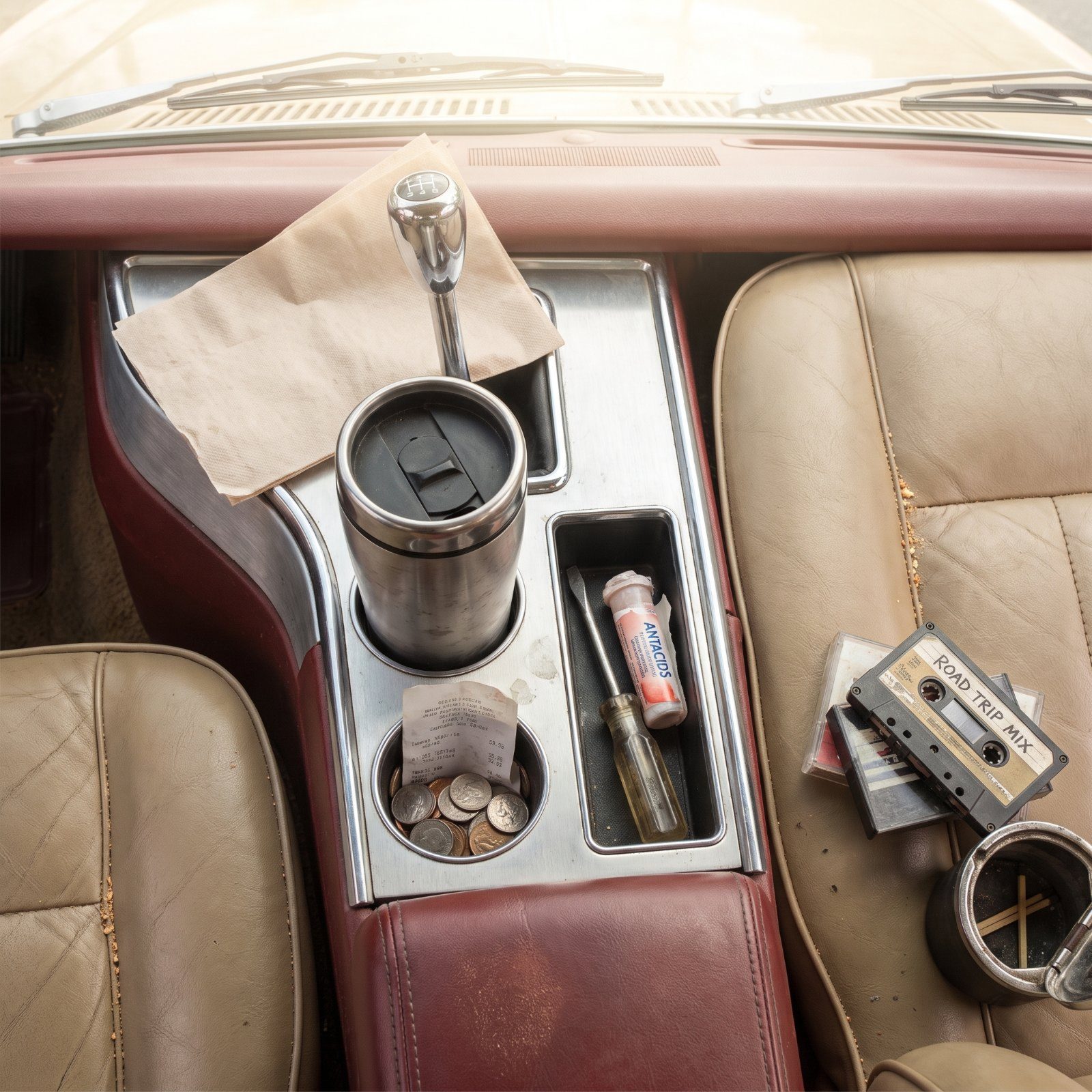
Open the console of any car that’s been driven for more than a year and you’re looking at a confession nobody meant to write. The stray receipts. The coins that never made it out. The napkin gone soft and gray behind the shifter. None of it was arranged. That’s exactly why it’s honest.
Autobiographical memory researchers have a term for this: the objects we keep without deciding to keep them are load-bearing. They hold moments we couldn’t file anywhere else. And the way a person organizes, ignores, or wears down that small tray between the seats tracks with how they handle nearly everything else in their life.
We pulled apart a pile of console details, from the full ashtray to the screwdriver that has no business being there, and asked what each one quietly gives away. Some are funny. One or two might sting. Keep going.
The One Thing Sitting in Every Cupholder That Tells You More About a Driver Than Their Whole Glovebox Combined
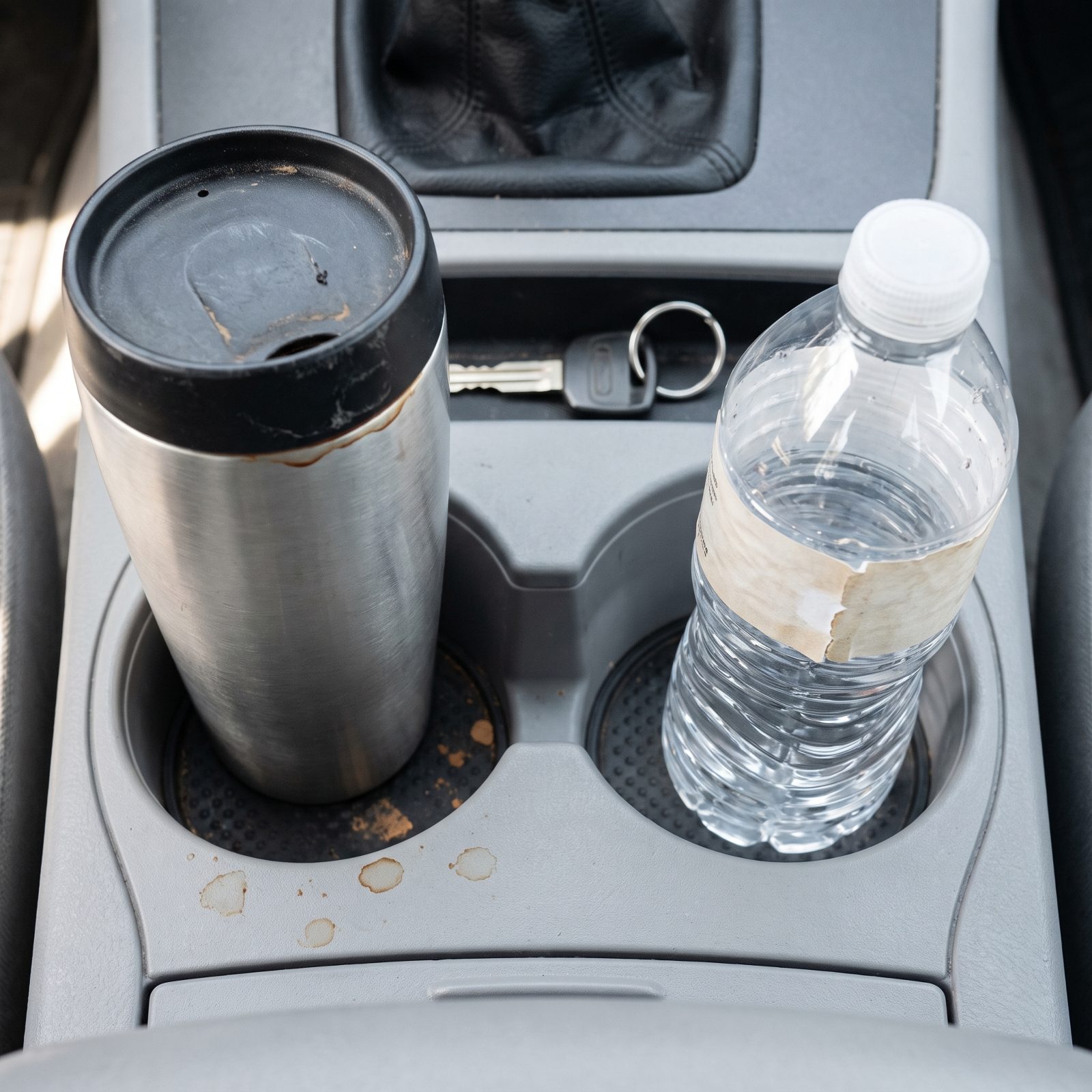
Look at the cupholder. Not what’s in it right now, but what’s always in it. The same travel mug with the lid that stopped sealing three years ago. The gas-station coffee, half gone, going cold. The sweating bottle of water that lives there permanently, a companion to every errand.
The cupholder is the one console feature the driver interacts with more than the radio, more than the vents, sometimes more than the wheel itself. What settles there settles by habit, not decision. And habit is the honest witness. A glovebox can be arranged for company. The cupholder never is.
The water-bottle driver reads as the one who plans for discomfort before it arrives. One preparedness guide puts it plainly: keeping water within reach is a small form of self-respect, a bet that you’ll need care even mid-errand. The cold-coffee driver tells a different story, one about mornings that got away from them. Neither is wrong. Both are true. The cupholder just doesn’t know how to lie.
Why the Handful of Crumpled Receipts Nobody Ever Throws Out Is Doing Quiet Psychological Work You Never Signed Up For
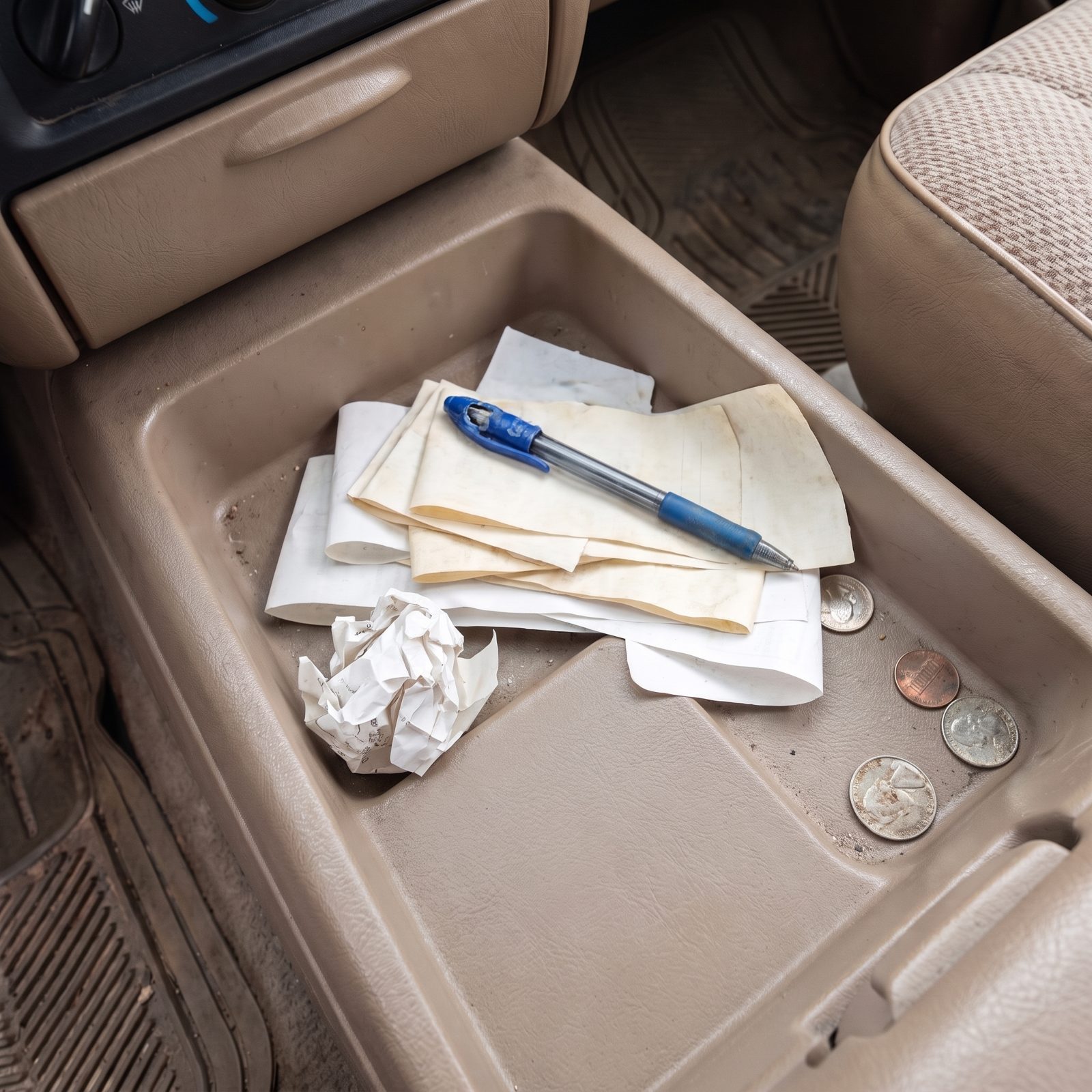
They breed in the open tray of the center console. Gas receipts gone thermal-paper yellow. A drive-thru slip. A parking stub from a hospital visit you’d rather not date. Nobody files them. Nobody reads them. And yet they don’t get thrown out either, week after week, year after year.
Here’s the part worth sitting with. That paper isn’t clutter in the way a stranger would call it clutter. Some of it is a physical trace of where you’ve been, and the brain treats objects tied to real events as anchors. Nostalgia, the research shows, runs on exactly this fuel. One study found that nostalgic recollection tends to gather around personal, momentous events rather than ordinary ones, and it raises meaning, optimism, and the sense of being connected to people who matter.
So the receipt from the diner two states over stays. Not because you’ll need it. Because throwing it out feels, faintly, like throwing out the afternoon.
What the Person Who Alphabetizes Their Console Cassettes Is Actually Managing (And It Has Nothing to Do With Music)
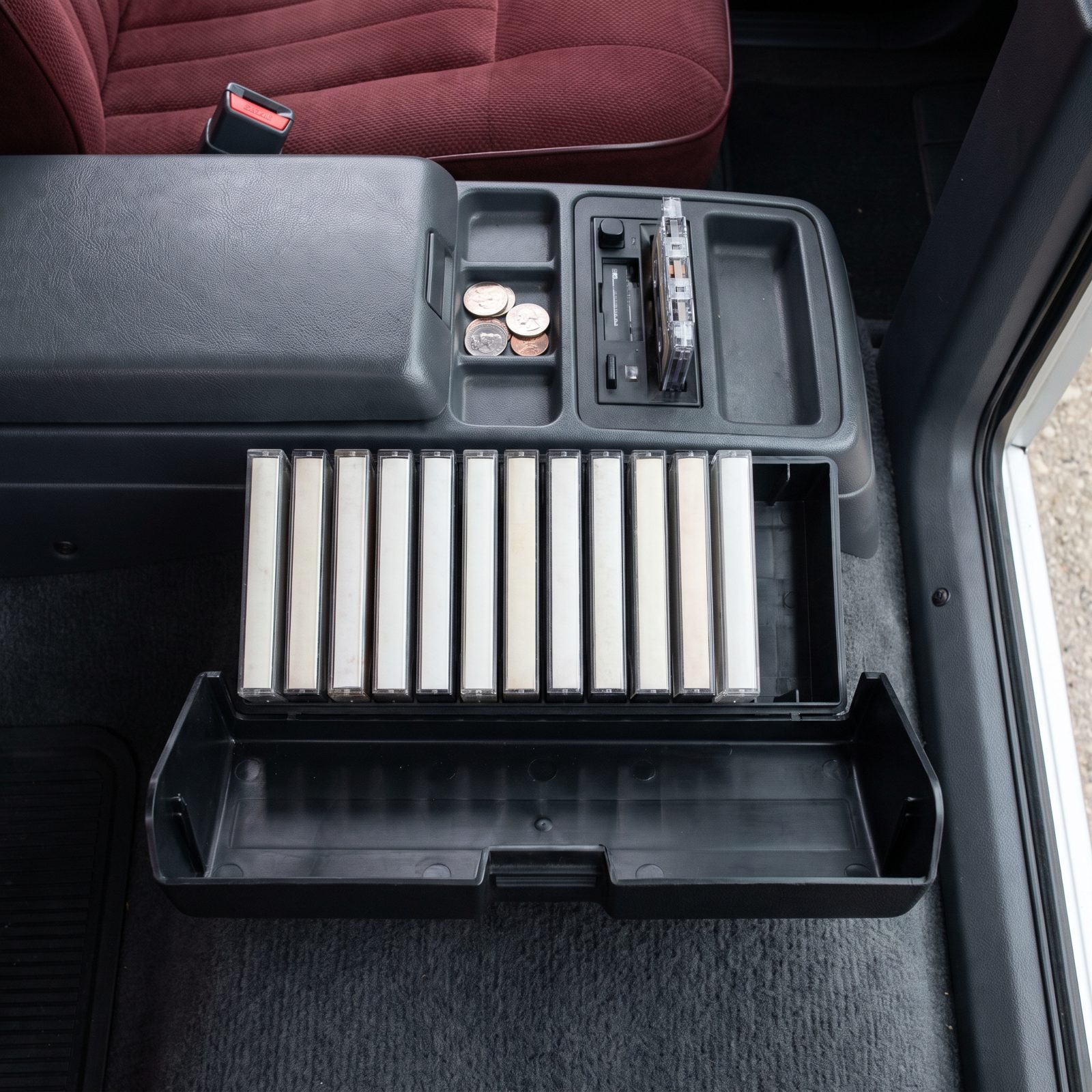
The cassette caddy that snaps shut with everything in order is not really about the music. Twelve tapes, spines out, arranged so the driver can find one at a red light without looking. It’s a small system, built and maintained on a schedule nobody assigned.
Watch what the ordering is actually doing. The road is the one place a life can’t be controlled. Traffic decides. Weather decides. The other driver decides. So the person who keeps the tapes in order is claiming the one square foot of the trip that answers only to them.
Developmental psychologists have a durable observation about this. One analysis notes that children who can’t control their wider environment learn instead to control the small physical spaces inside it. The habit outlives the childhood. It just moves into the car.
So the alphabetized caddy isn’t fussiness. It’s a grown-up version of a very old coping move. Order the tapes, and for the length of the drive, something holds still.
The Console Detail That Separates the Drivers Who Feel in Control of Their Lives From the Ones Just Trying to Get Through the Week
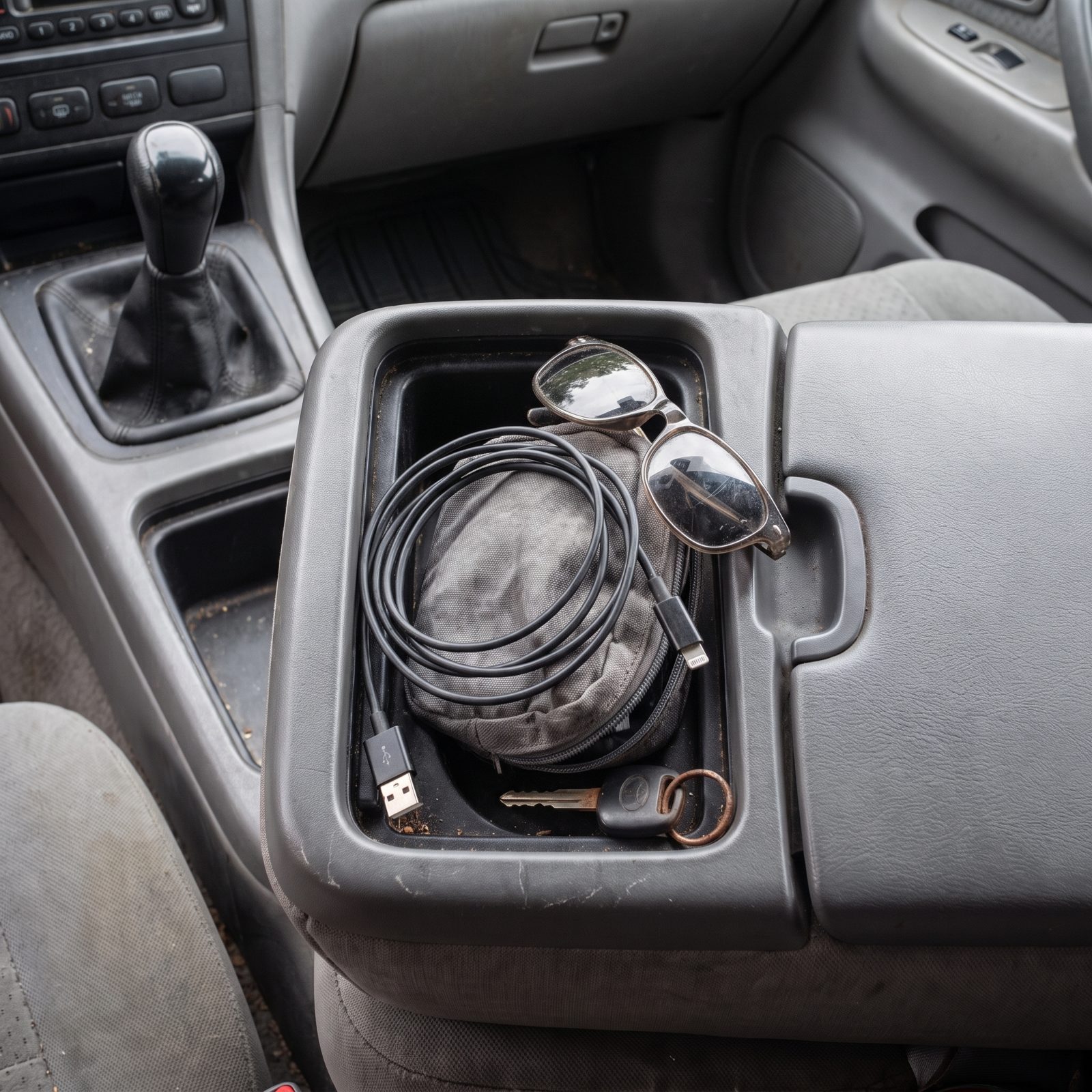
It comes down to whether the console has a system or just an accumulation.
A system looks like this: a phone charger with a permanent home, a spot for sunglasses, a small pouch for the things that matter. An accumulation looks like whatever landed there and stayed. The difference isn’t neatness. Plenty of tidy people are white-knuckling it, and plenty of relaxed people drive around with a controlled amount of debris.
The tell is intentionality. One preparedness guide makes a sharp point here: the reason a charger habit sticks isn’t the object, it’s that the object has a fixed home and doesn’t migrate back into the house. Small systems, the kind that still work on a rushed morning, are what separate the prepared from the perpetually surprised.
You can feel the difference reaching for something at sixty miles an hour. One driver’s hand goes straight to it. The other’s rummages. That two-second gap is the whole story. One person built the week. The other is being carried by it.
Why a Single Faded Fast-Food Napkin Tucked Behind the Shifter Can Bring Back an Entire Summer You’d Forgotten
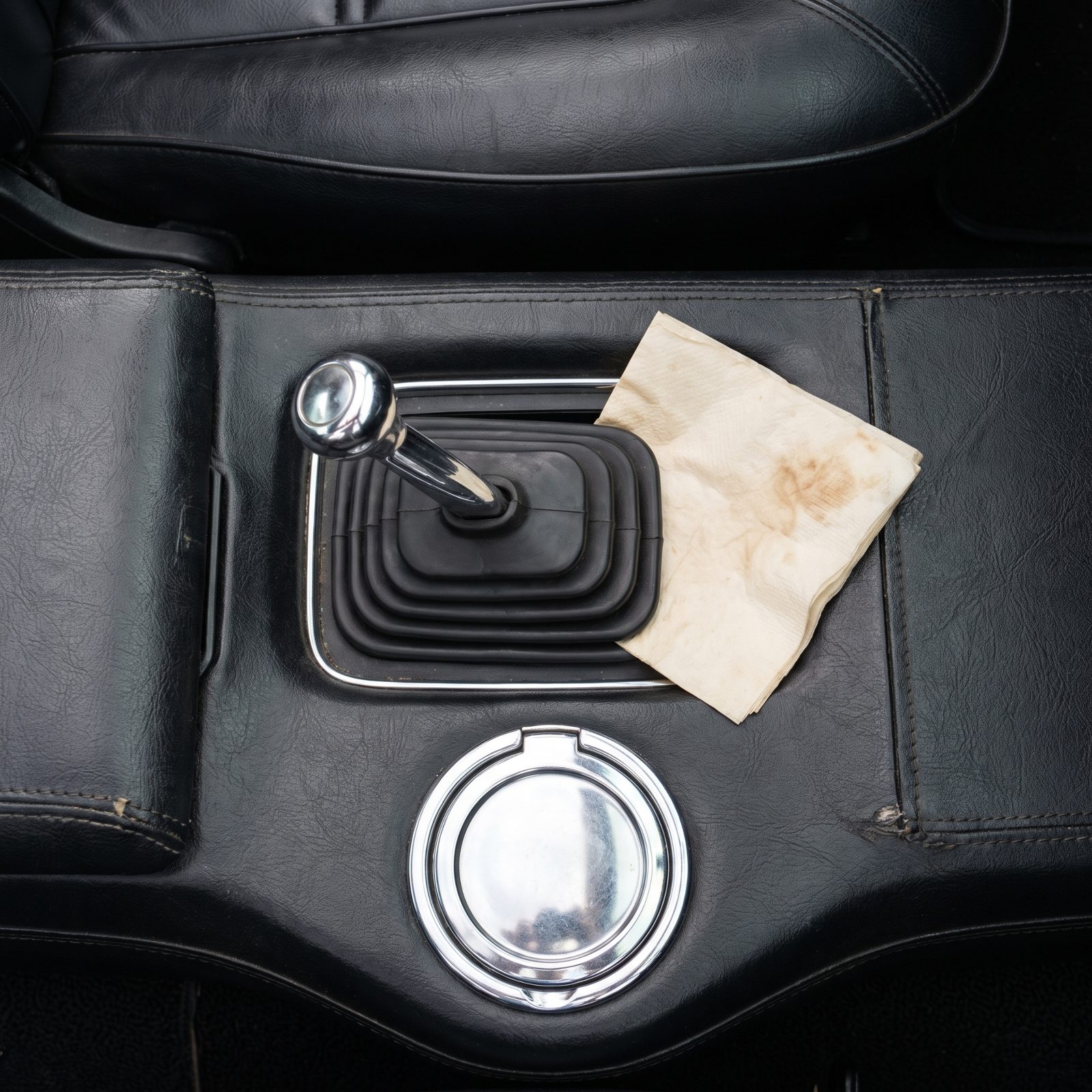
You find it wedged behind the shifter boot. A paper napkin, soft as cloth from age, a grease shadow at one corner. And before you’ve even thought about it, you’re seventeen again, windows down, the drive-in lot at dusk, the whole summer coming back in a single unasked-for wave.
The napkin itself is nothing. What it carries is a smell, and smell is the one sense wired almost directly into memory. Harvard Medicine magazine explains why: most senses route through the thalamus first, but the olfactory system sits right beside the amygdala and hippocampus, essentially hardwired into the brain’s memory and emotion centers. Odor-triggered memories reach back earlier in life and hit harder emotionally than anything a photo can do.
That’s why the napkin outperforms the photo album. A picture shows you the summer. The faint smell of old fries and vinyl puts you back inside it, heart rate and all.
The Coin Cup Situation That Reveals Whether Someone Grew Up With Money or Grew Up Watching It Carefully
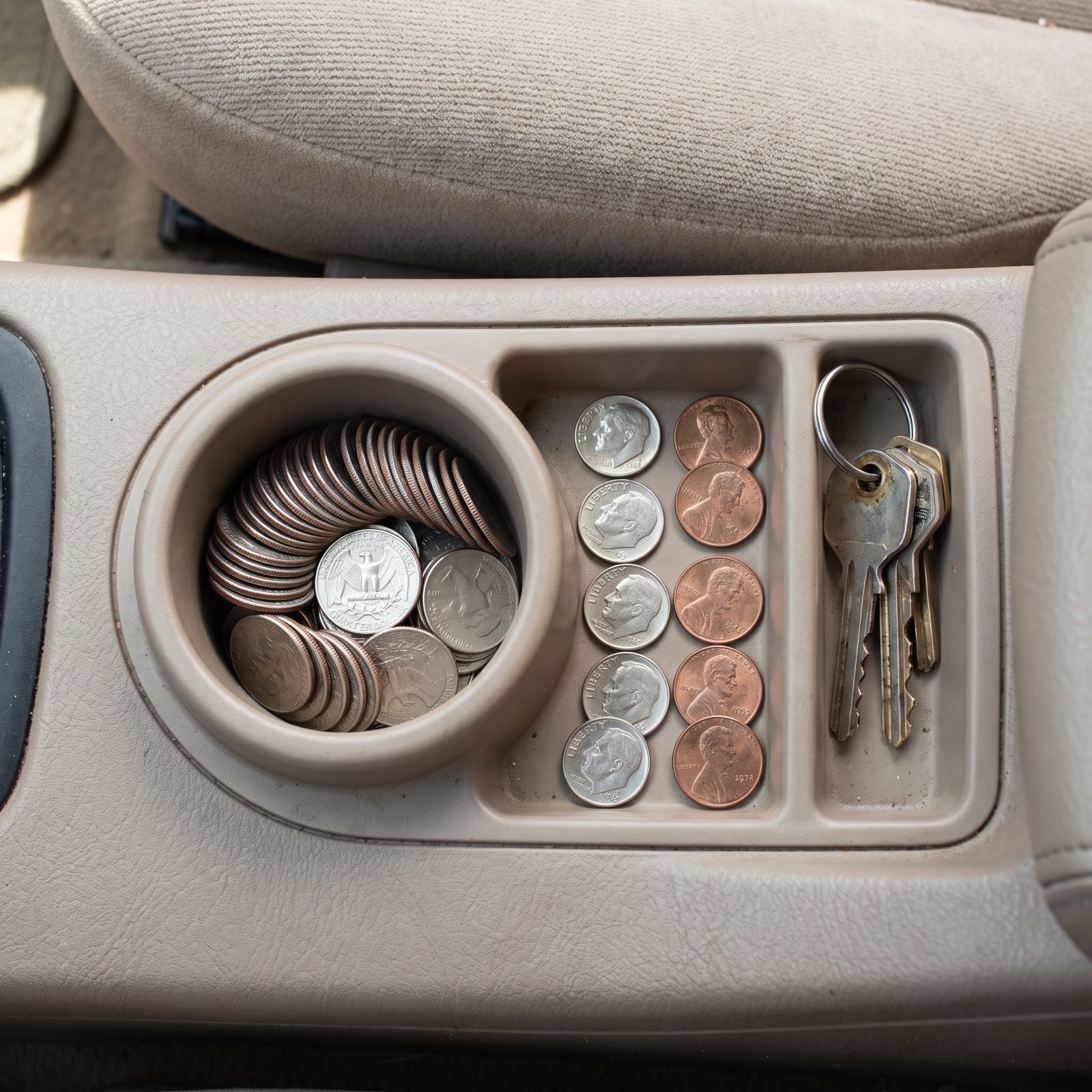
Open the little coin cup and you’re looking at a childhood.
One driver keeps it stocked. Quarters counted, sorted, ready for a meter or a toll, a small reserve against the small emergencies. Another lets loose change scatter across the console floor, coins under the mat, nobody bending to pick them up. The cup isn’t about how much money the person has now. It’s about what money meant when they were eight.
Our money habits set early and set deep. One financial-habits piece notes that most of our beliefs about money are formed by the time we’re eight years old, learned by watching the adults around us save and spend. A kid who grew up watching every dollar tends to keep the toll change ready without thinking. It’s not thrift. It’s a survival habit that never got the memo it could stand down.
The scattered-coin driver often grew up where loose change simply didn’t register as worth chasing. Same coins. Two completely different nervous systems looking at them.
What Your Choice to Leave the Ashtray Full, Empty, or Repurposed Says About How You Handle Everything Else
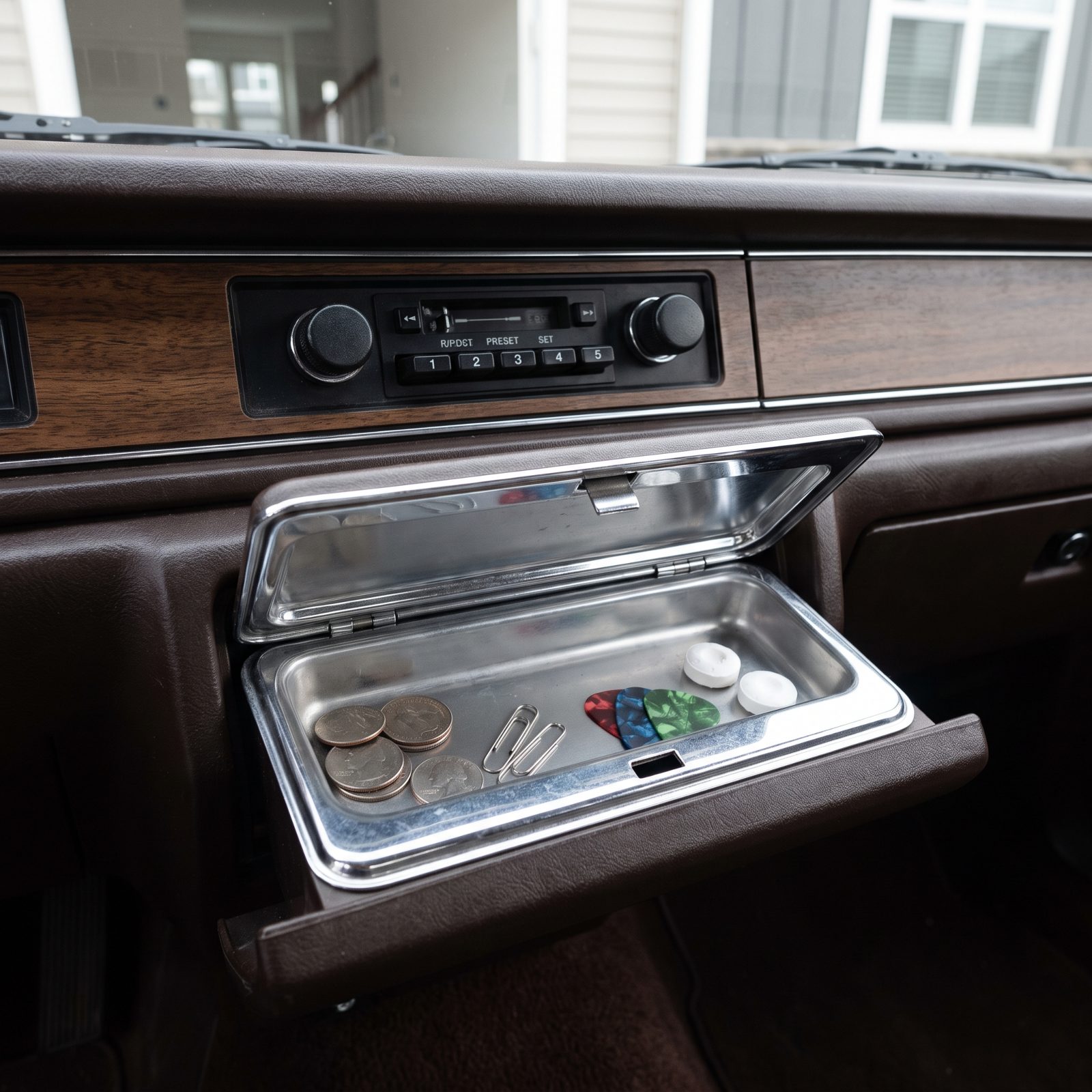
The old pull-out ashtray is a Rorschach test bolted into the dash.
Left full, it says the driver has made peace with a certain amount of accumulation, that emptying it ranks below every other thing competing for a Tuesday. Kept spotless, it says the opposite, a person who resets small spaces before they can build. And then there’s the third option, the most telling one: repurposed. The ashtray that now holds spare change, or paperclips, or a couple of guitar picks, or breath mints.
That last move is the interesting one. Repurposing an ashtray is a quiet act of adaptation, taking a fixture built for a habit you don’t have and bending it to a need you do. It’s the same instinct that reorganizes a garage or a life around what’s actually useful rather than what the design intended.
None of these is a character flaw. But how a person treats the one console feature they were never told what to do with says a fair amount about how they treat the rest of the undefined space in their days.
The Kind of Console Wear No Amount of Cleaning Hides, and the Personality It Quietly Confesses
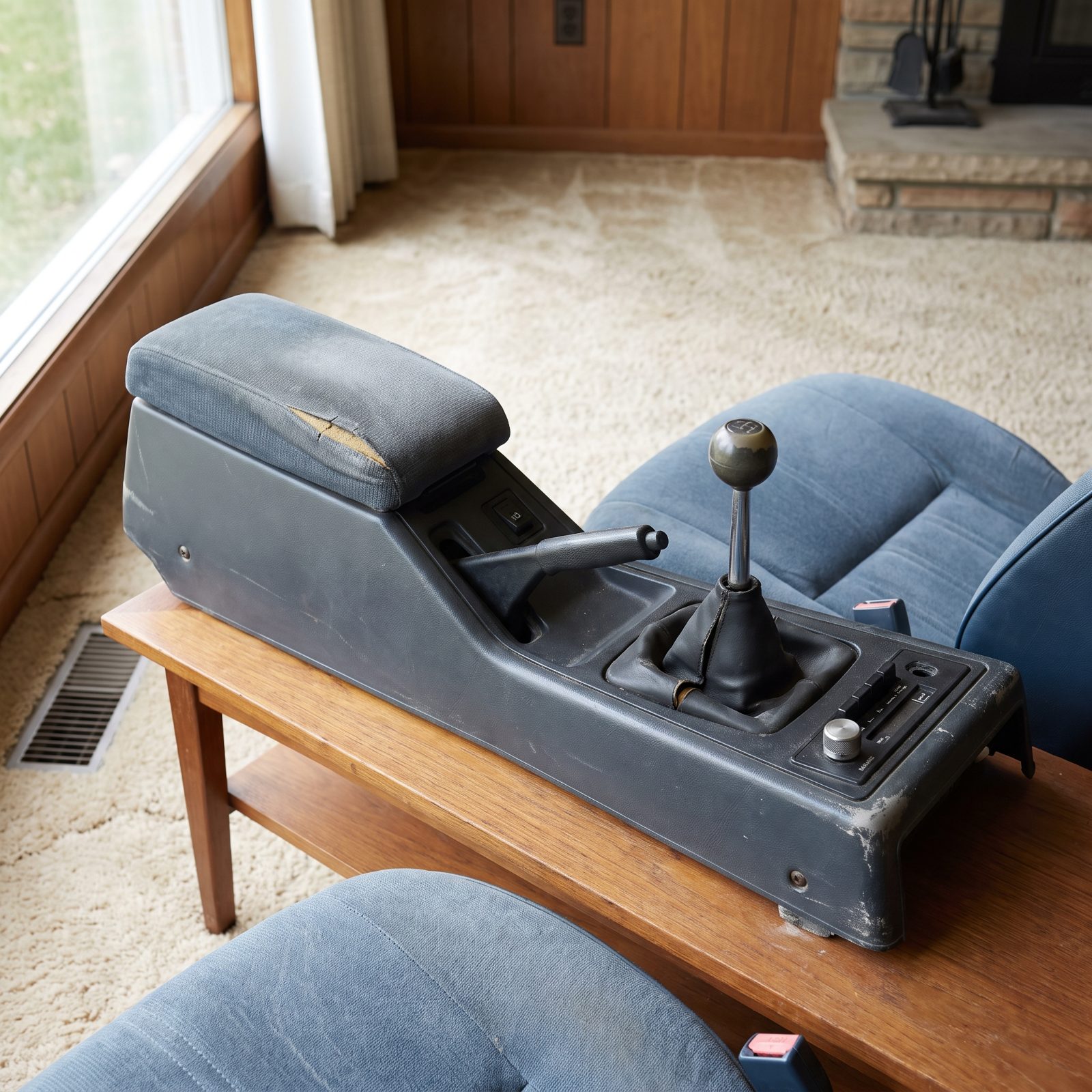
You can shampoo the carpets and wipe every surface, and one thing still tells the truth: the wear.
The shifter knob rubbed smooth and shiny on one side, worn to the shape of a right hand that’s made the same motion ten thousand times. The armrest padding flattened and cracked where an elbow has lived through a decade of commutes. The volume knob with the finish gone. These are the fingerprints of a life, and no detailer erases them.
What the wear confesses is repetition, and repetition is where the deepest memory lives. The specific drive you’ve made a thousand times is encoded in your body more firmly than a vacation from last year. The hand knows the shift pattern in the dark. That smoothed knob is a monument to it.
And here’s where it turns bittersweet, which is exactly the emotion the researchers say defines this territory. One research review describes nostalgia as fundamentally a bittersweet emotion, long recognized by ordinary people and researchers alike. The worn console is the physical form of that feeling. Every mark is a mile you can’t drive again, and proof you were there for all of them.
Why the Driver Who Keeps a Screwdriver in the Console Is Running on a Belief System, Not Just Preparedness
Would you like to save this?
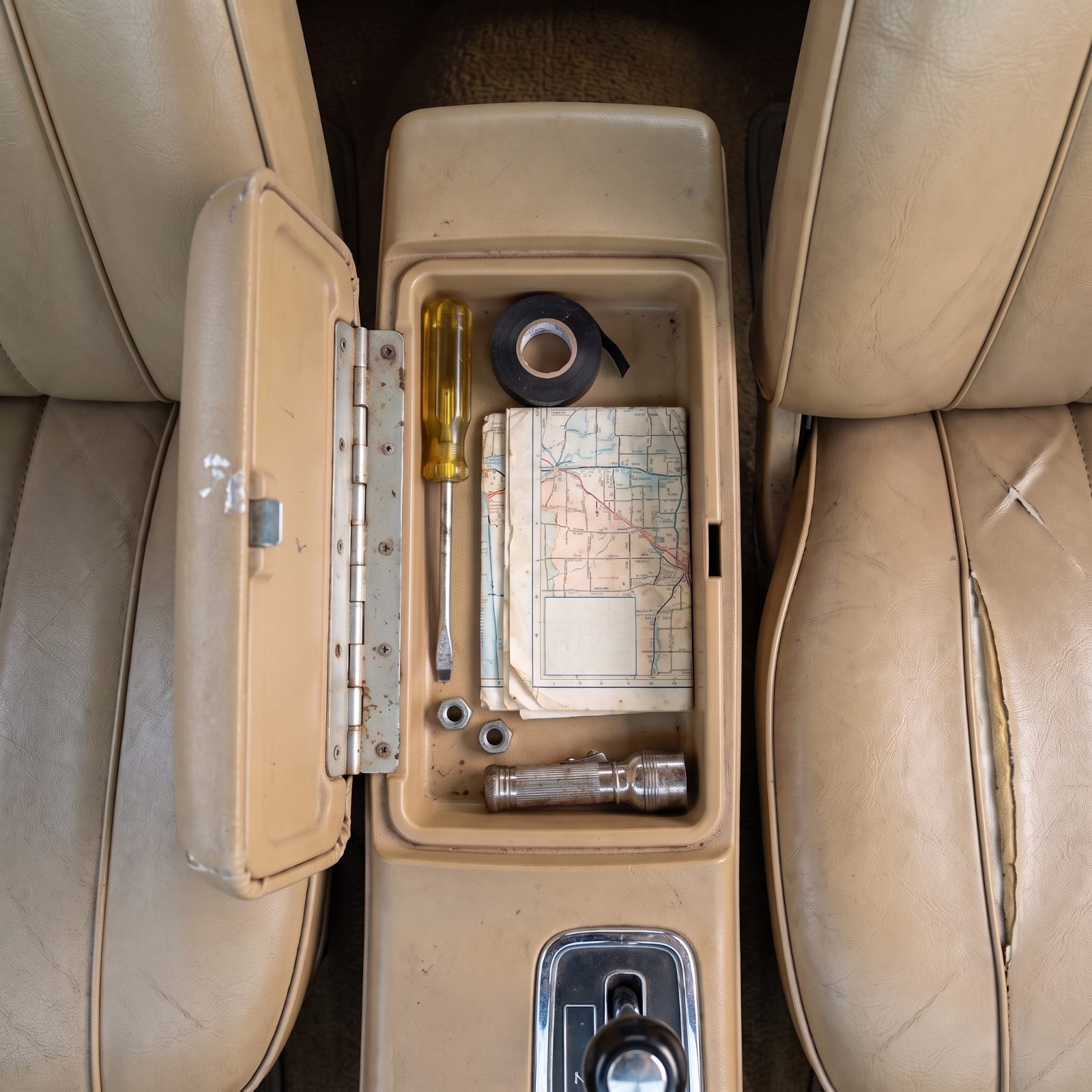
A flathead screwdriver rides in the console. Maybe a Phillips too, the yellow handle worn pale where a thumb has pressed it a thousand times. Nobody put it there for a reason they could name. It just ended up there, and then it stayed.
That screwdriver isn’t about fixing anything. Most of these drivers couldn’t tell you the last time they used it. It’s a posture. A quiet declaration that the world can be met with your own two hands and a little steel, the way a father met it in a driveway in 1971 with the hood up and the transistor radio going. Keeping the tool close is a habit, and habits like this tend to travel with a specific personality. Research summarized in a 2017 study on habitual tendencies ties a preference for structure and readiness to a deeper need for predictability, a way of quieting the fear that something will go wrong and no one will be able to handle it.
The screwdriver says: I can handle it. Even when the tool never leaves the tray.
The Emotional Reason Some People Cannot Drive a Car With a Cluttered Console (And Others Can’t Drive a Clean One)
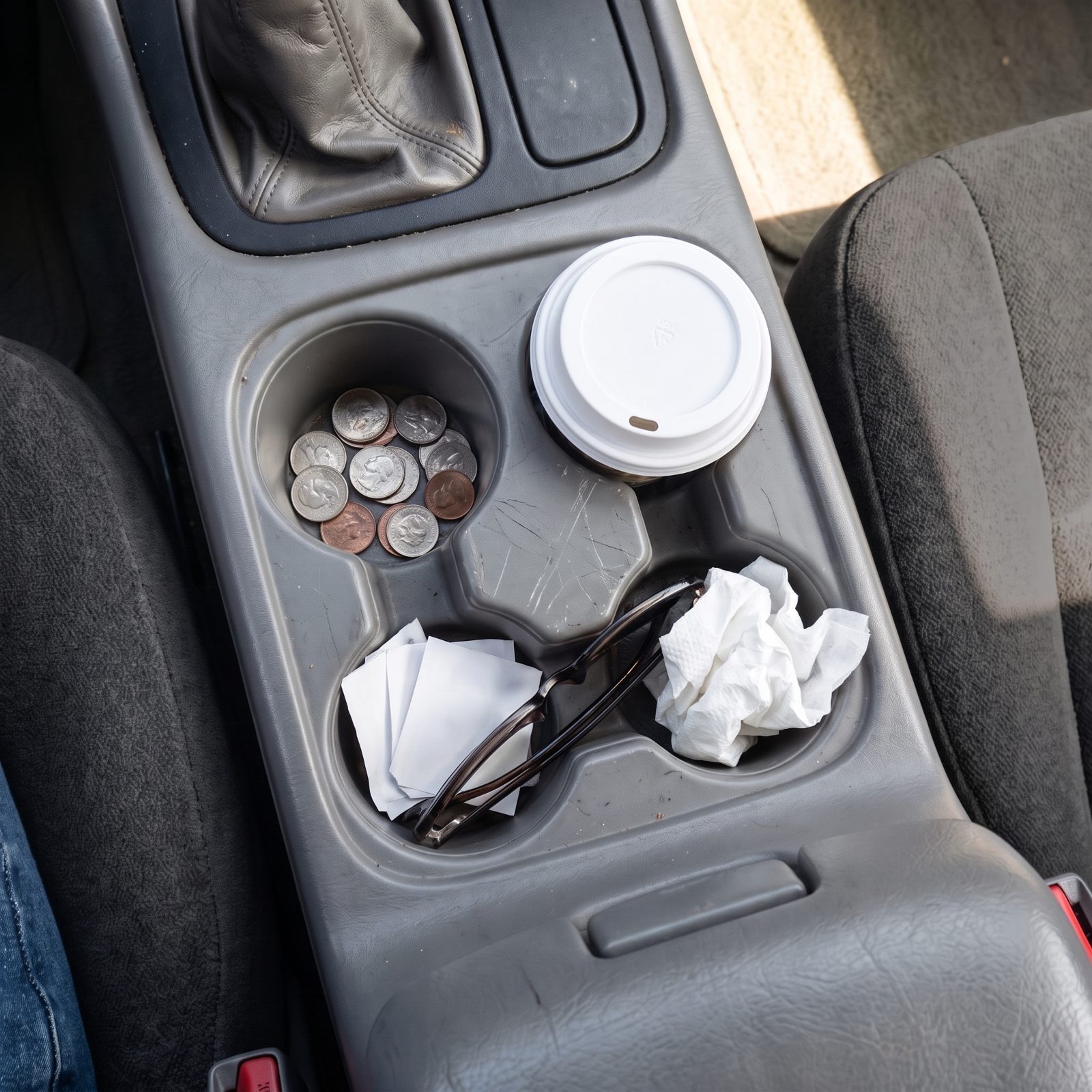
Two drivers. Same car, same commute. One wipes the console down at the gas station with a napkin and cannot leave a receipt in the cupholder overnight. The other lets the coffee lids and parking stubs and loose change build into a small geology of the week, and feels perfectly fine in it. Neither is right. But neither is random either.
The clean-console driver often isn’t just tidy. According to a widely-discussed piece on the developmental roots of the spotless car, children who couldn’t control their environment learned to control the small spaces they could reach. The car locks. Nobody leaves a cup in it without permission. It becomes the one room in life that stays exactly how you set it.
The comfortable-clutter driver reads the same evidence as a life fully in motion, kids and jobs and errands leaving their honest tide line. Research on how observers judge messy versus tidy spaces, described in a 2019 study in Frontiers in Psychology (Source), shows we assign whole personalities from these cues, often wrongly. The console isn’t the person. It’s just where the person set something down.
What the Half-Empty Roll of Antacids Wedged Between the Seats Is Really Telling You About a Life
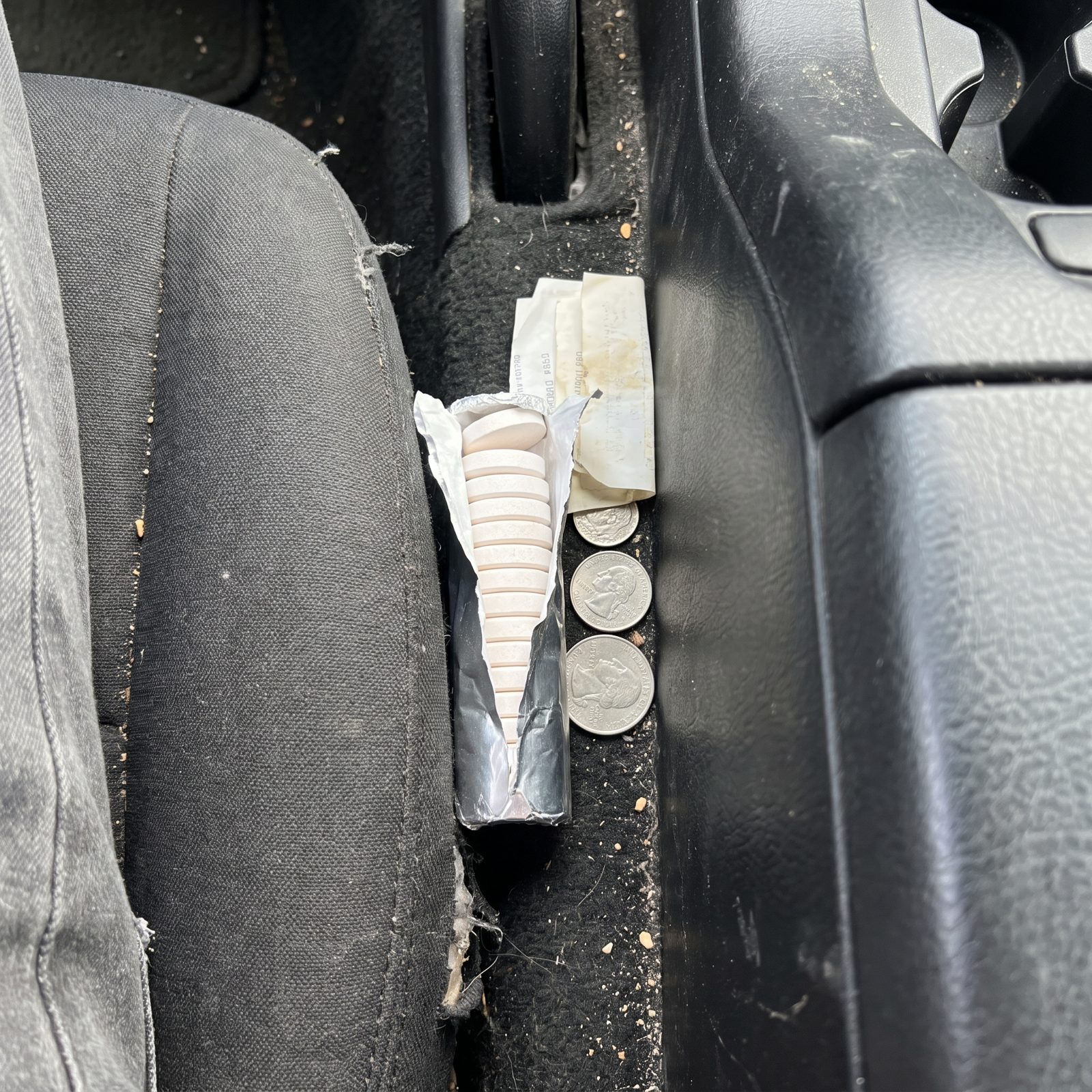
You’ve seen it. That roll of chalky tablets, the foil peeled back and folded over, jammed into the seam where the seat meets the console so it won’t roll around. Half gone. Been there a while.
It’s a small thing. It’s also a whole biography if you sit with it. A roll of antacids in the console isn’t a grocery choice, it’s a schedule. It says someone eats at odd hours, in the car, between stops. It says stress has a stomach. And the fact that it lives in the car and not the medicine cabinet means the discomfort shows up on the road, which usually means the road is where the work happens.
People keep certain objects close because those objects manage a feeling, not just a symptom. The habit of carrying familiar items to soothe low-grade unease is well documented. As one Psychology Today piece on anxiety and control (Source) lays out, we manage internal discomfort by managing our external environment, keeping the fix within arm’s reach. The antacids aren’t the problem. They’re the tell that the driver has been quietly carrying one.
The Console Object That Makes Grown Drivers Go Quiet When You Ask Why They Still Keep It
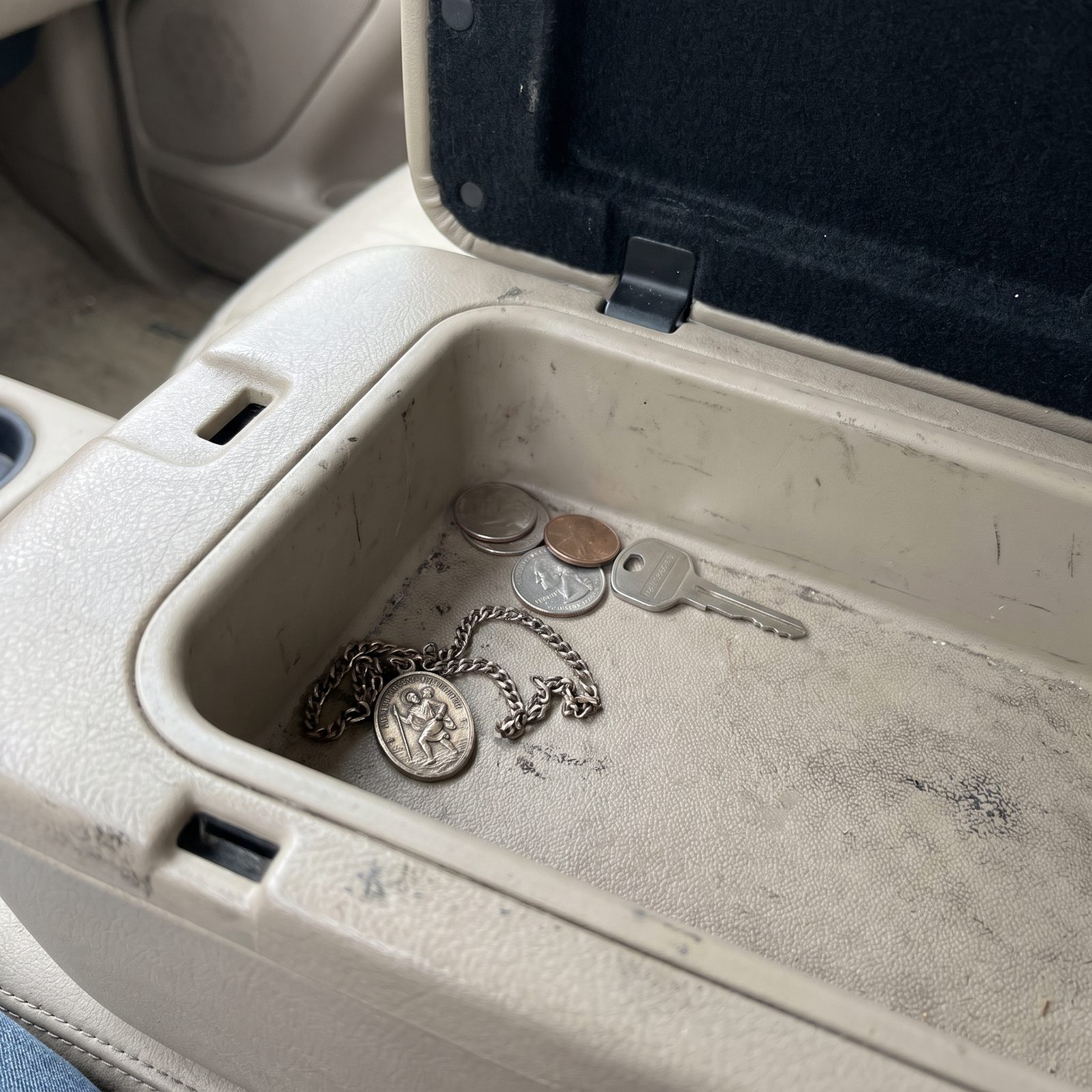
Ask about the little thing in the tray and watch the face change.
It’s usually not valuable. A St. Christopher medal gone dull at the edges. A single cufflink from a set long lost. A hardware-store key that opens nothing anymore. A poker chip. A child’s plastic figure the size of a thumbnail, faded to no color at all. Ask why it’s still there and the answer comes slow, if it comes.
These are the objects that stopped being objects. The brain doesn’t file them with the loose change. According to consumer researcher Russell Belk, writing in Scientific American (Source), we come to see our possessions as extensions of ourselves, as if our essence somehow permeates them. That’s why an identical replacement won’t do. The value was never in the plastic.
A car is the right kind of place for this. Private, mobile, yours. The console becomes a small reliquary you carry everywhere without meaning to. Someone gave it to you, or you had it the day something happened, and now moving it feels like moving them. So it stays in the tray, and you go quiet, because the honest answer is longer than the question expected.
Why the Way You Organize Your Console Matches the Way You Packed for Family Road Trips Decades Ago
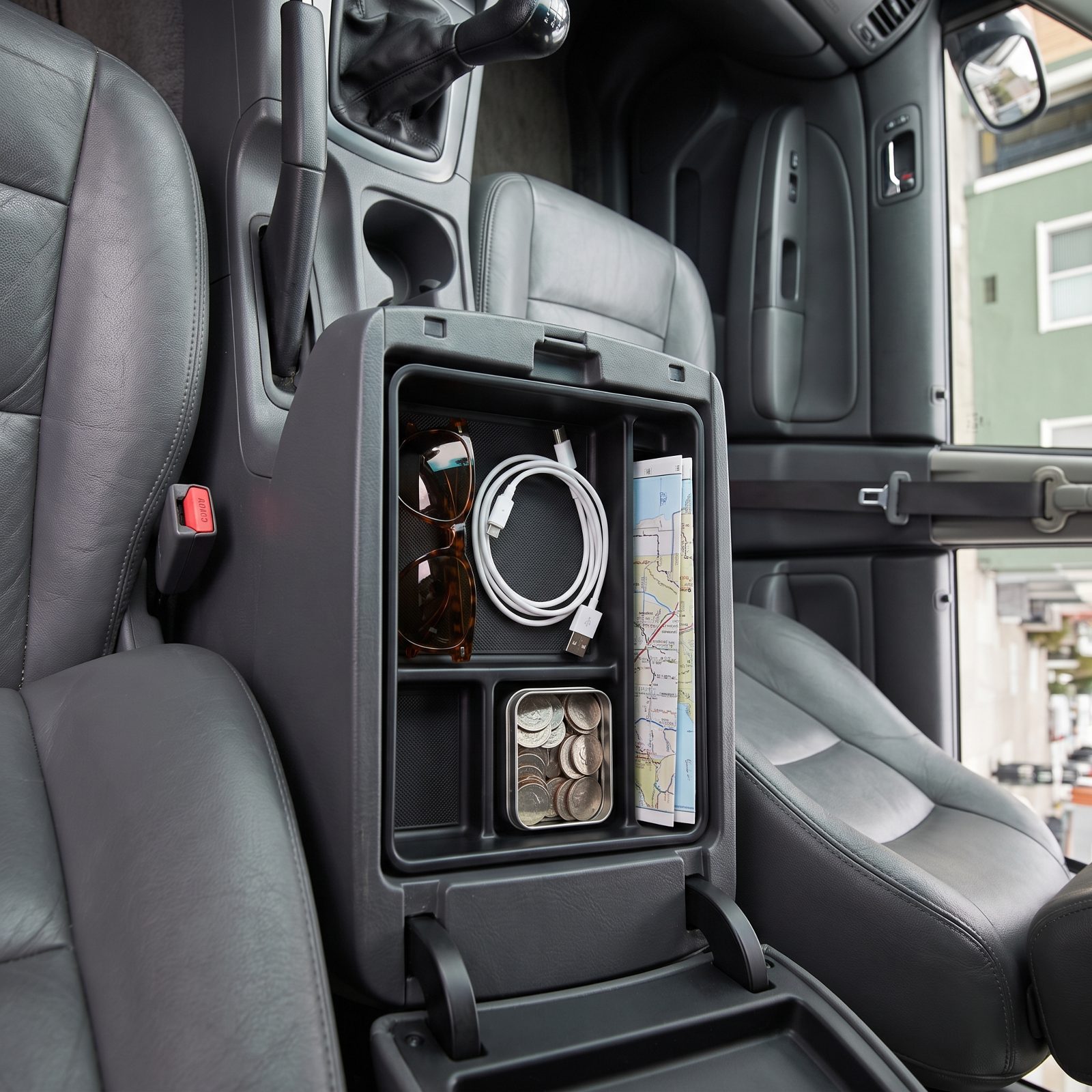
Some people slot the sunglasses in one spot, the charger cable coiled in another, the toll money in its own little cup. Everything has a home. Others open the console and it’s a drawer that happened to end up in a car. Neither approach arrived last year. Both are decades old.
Watch how someone loads a console and you’re watching how their family packed the wagon in 1974. The kid who saw the trunk mapped out, cooler behind the wheel well, suitcases stacked by day, snacks reachable without stopping, grew into the adult whose console has zones. The kid who watched everything get thrown in until the hatch barely shut grew into the driver who does the same. We inherit our systems before we know they’re systems.
There’s a reason the pattern holds. A Psychology Today piece on the psychology of packing (Source) ties how we organize our stuff for travel directly to whether we crave control or move on instinct. The console is just the smallest suitcase you own, packed the way you were taught to pack.
The Single Overlooked Surface That Shows Wear Faster Than Any Other Part of the Car, and What It Confesses About Your Hands
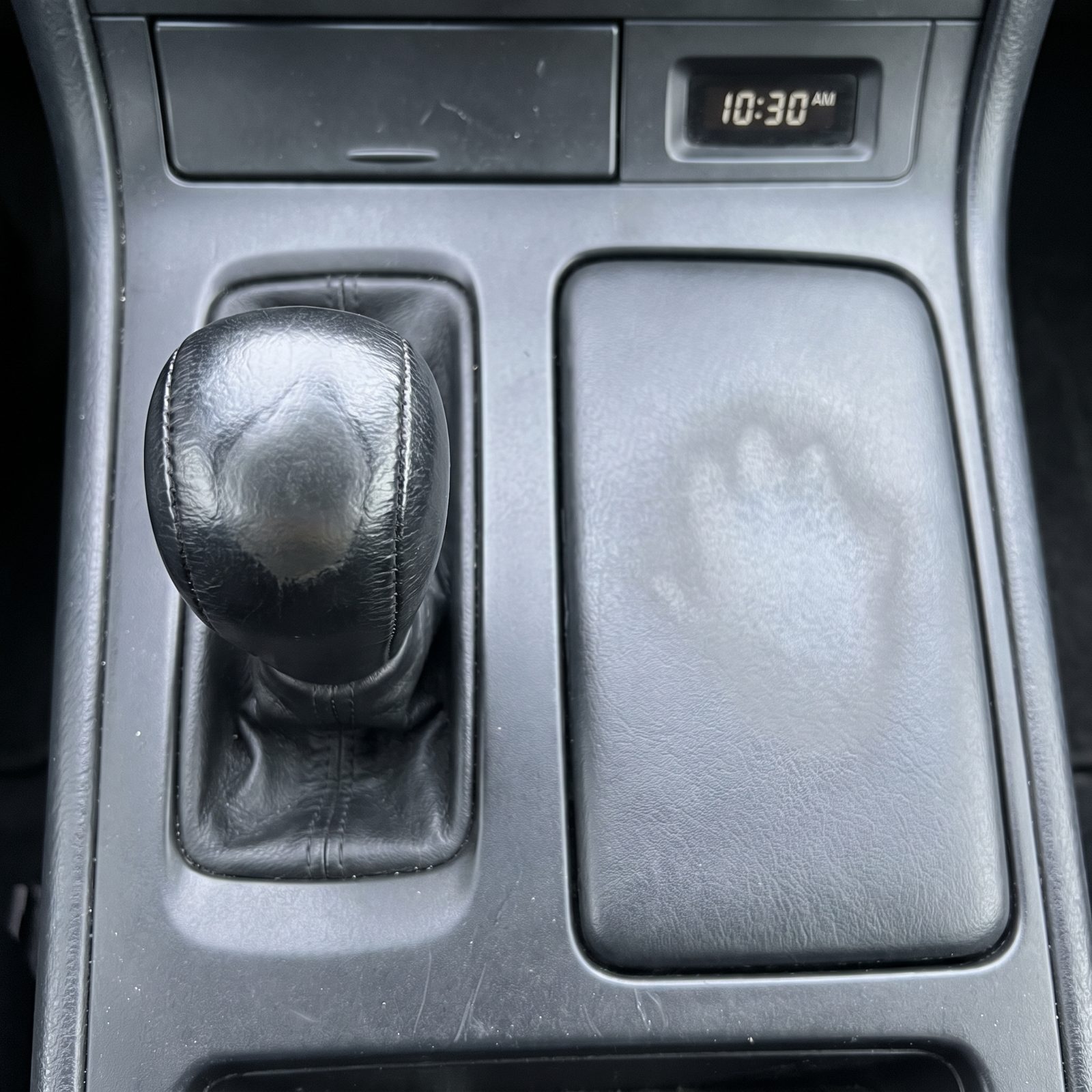
Not the steering wheel. Not the pedals. The shifter and the console lid where your right hand lives. That’s the surface that goes first. The finish rubs thin. The texture polishes smooth. A worn spot appears in the exact shape of a resting palm, and it tells you more about the driver than the odometer does.
Your hand doesn’t decide to go there. Procedural memory does. As Psychology Today explains, steering, shifting, and the automatic movements of driving are stored as “knowing how,” (Source) a kind of memory you can’t fully put into words. Your hand finds the shifter the way it finds a light switch in the dark. Thousands of repetitions, none of them conscious, all of them leaving a mark.
That polished patch is a record of every drive to work, every errand, every trip you don’t remember taking. The body wrote it down even when the mind didn’t bother. Run your thumb over the worn spot on an old car and you’re touching the ghost of someone’s right hand, in the one place they set it down ten thousand times.
What the Person Who Keeps the Owner’s Manual in the Console Instead of the Glovebox Is Telling You Without Words
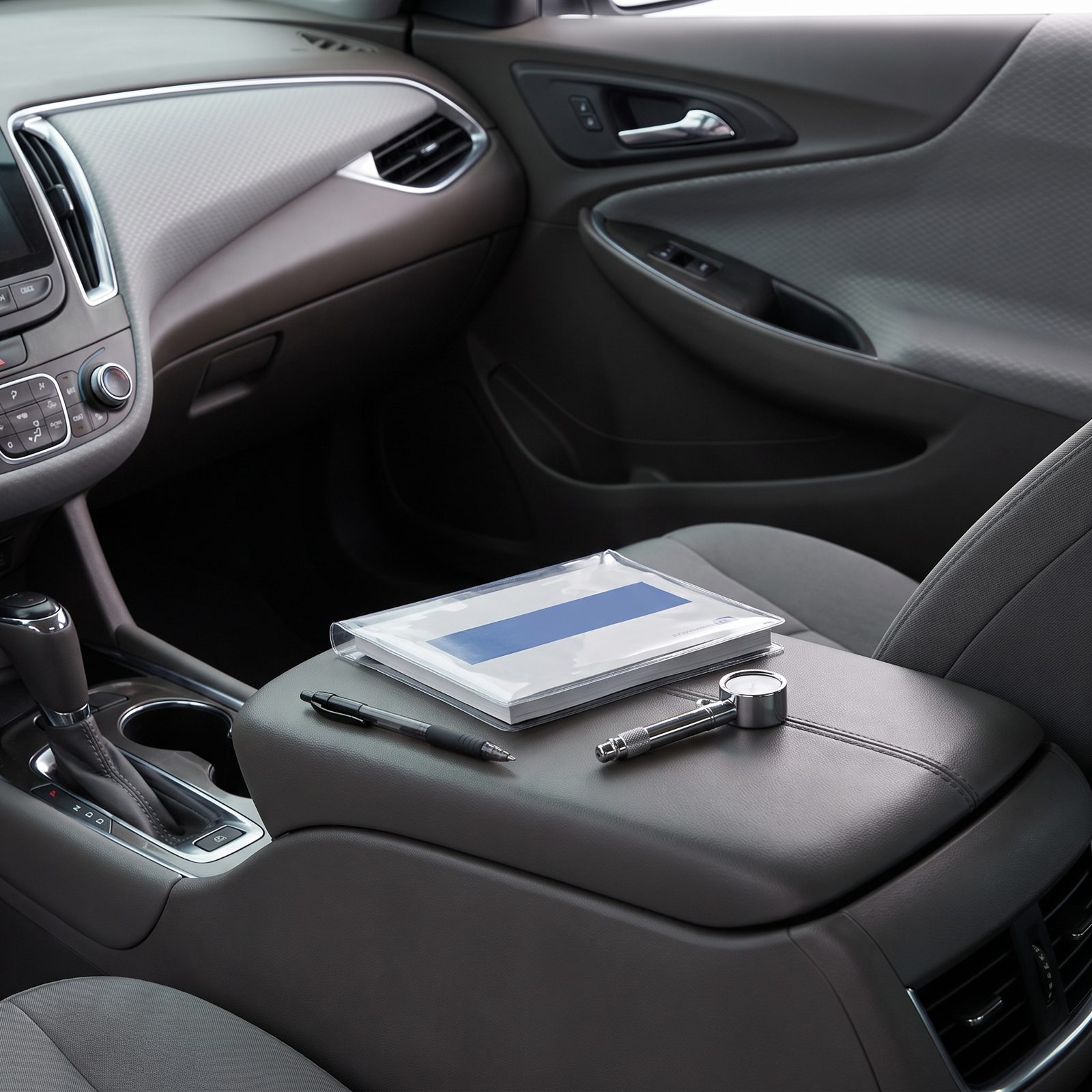
The manual belongs in the glovebox. That’s where it ships, that’s where the dealer leaves it, that’s where almost everyone forgets about it for the life of the car. So when you open a console and the fat little booklet is right there on top, still in its vinyl sleeve, sometimes with a corner dog-eared, you’re looking at a specific kind of driver.
This is the person who actually reads it. Who looked up the tire pressure, found the fuse chart, checked the towing capacity before they needed to. Moving the manual from the glovebox to the console is a small act, but it says the driver treats the car as a machine to be understood, not just operated. The booklet lives where the hand lands, because it gets used.
That reflex, keeping the reference close because you might need it, isn’t only about cars. Habit research described in a study on everyday habitual routines connects a strong need for structure and preparedness to a deeper wish for predictability. The manual in the console is a quiet way of saying: whatever this car does, I want to be the one who knows why. Alright. Respect to that driver.
The Bottom Line
Here’s what your console has been confessing all along: it’s a map of what you can’t put down. Every object you keep within arm’s reach, the receipt, the napkin, the manual you keep close, is something you’ve decided you might still need, from a version of yourself that hasn’t fully let go. Open your console tonight and pick up the one thing you can’t explain keeping; that’s the part of your life still asking for your attention.