
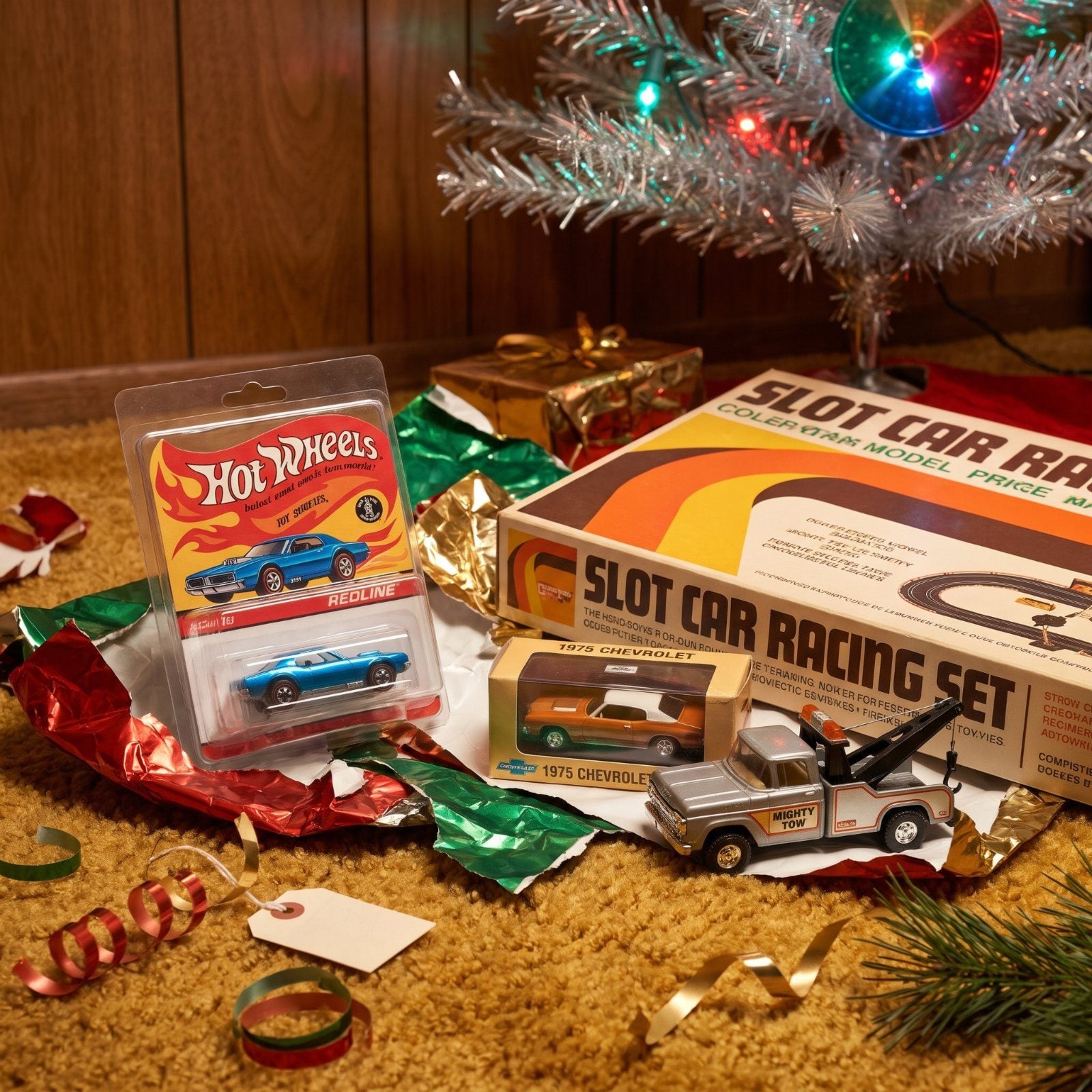
A kid tore the wrapping paper and the Hot Wheels blister pack hit the shag carpet, still sealed, the little die-cast locked behind its plastic bubble. Nobody thought twice about ripping it open. That’s the heartbreak and the fortune of it all rolled together. The toys that survived the morning untouched — packaging intact, instruction sheet uncreased — are the ones collectors chase now. What follows is a run through the automotive gifts that showed up under aluminum trees in the Me Decade, and why the sealed ones quietly became gold.
Please note that some of the images in this article were created with the assistance of AI.
49. The Hot Wheels Redline Die-Cast Car Still Sealed in Its Blister Pack
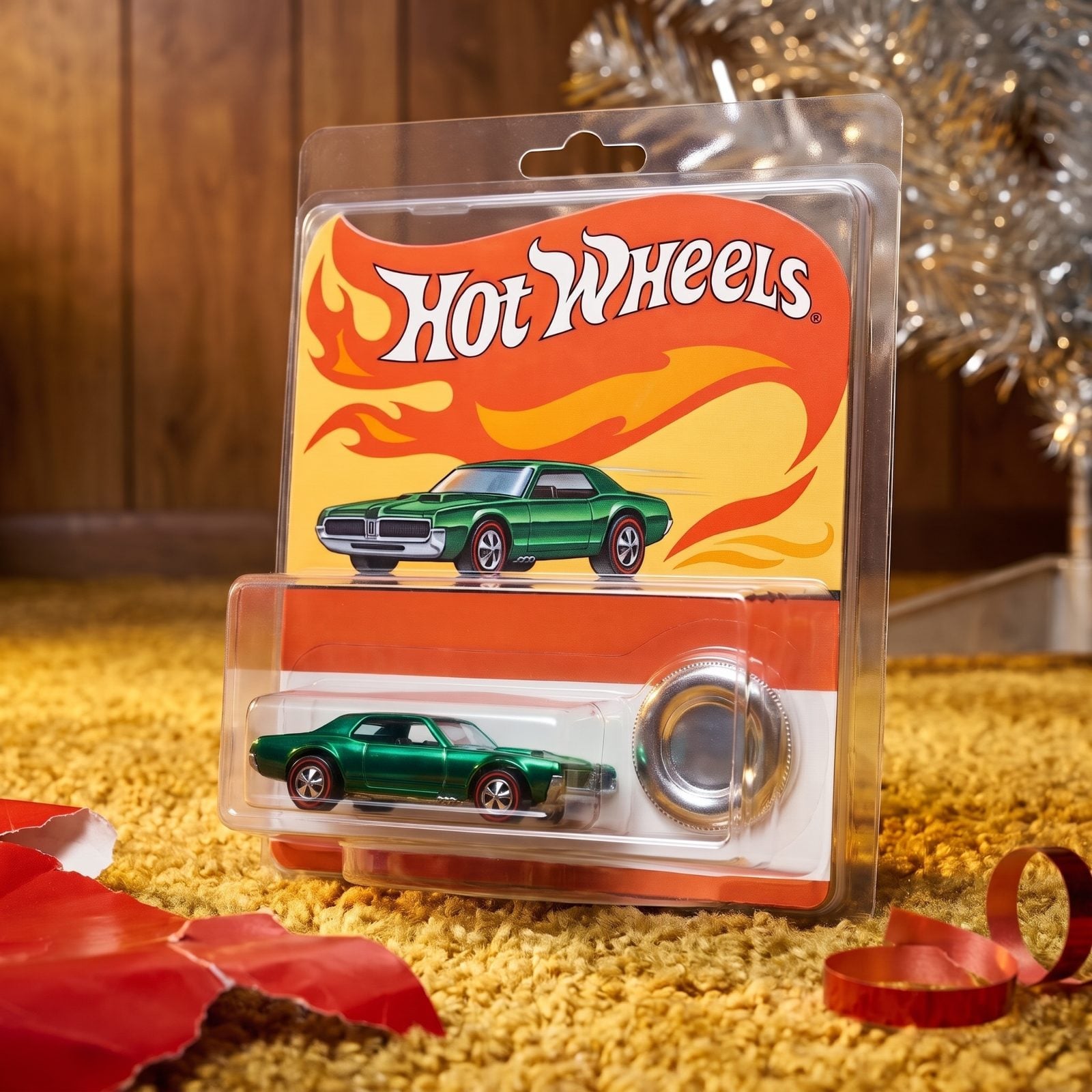
Mattel built these little cars to get smashed into baseboards and lost under couches, which is exactly why a sealed one commands what it does today. That Spectraflame paint — the iridescent candy finish — flaked the second it hit a hard floor. So a mint example behind unbroken plastic? A small miracle.
The redline wheels are the tell. Those thin red stripes ran from 1968 to 1977, and certain castings in certain colors have gone absolutely wild at auction. A purple Olds 442 or a pink Volkswagen Beach Bomb still in the bubble can hit house-down-payment territory for a handful of them.
48. The Aurora AFX Slot Car Racing Set With the Figure-Eight Track
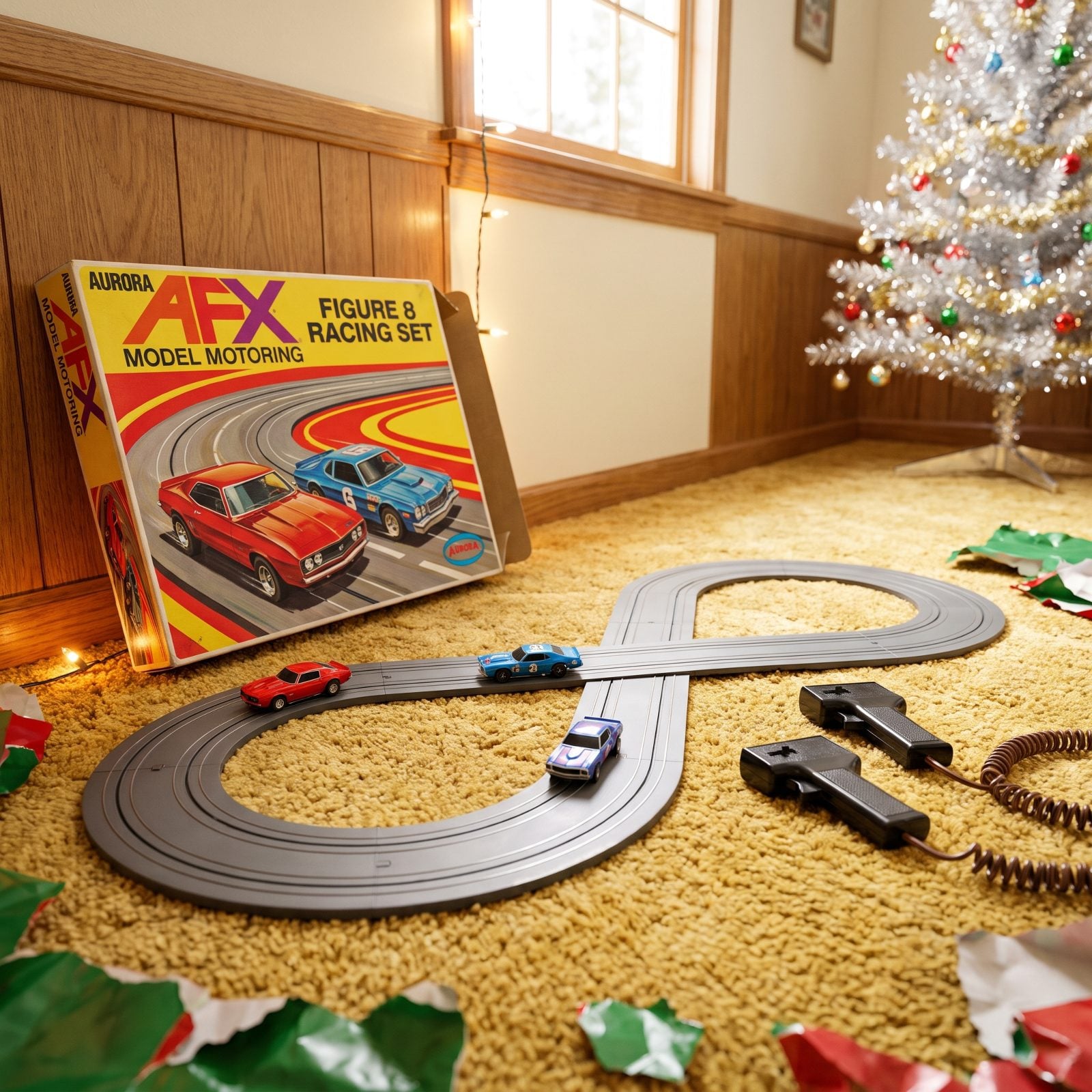
You plugged the transformer in, squeezed the trigger, and your car went flying off the first turn into the Christmas tree. Everybody did it. The AFX magnetic traction cars were faster and stickier than the old Thunderjets, and a kid learned the hard way why banking existed.
What collectors want is the complete boxed set — both controllers, the transformer, every track section, the car bodies uncracked. Loose track is worthless. The box and the completeness are the whole game.
47. The Dealer Promotional Scale Model Your Dad Got at the Showroom
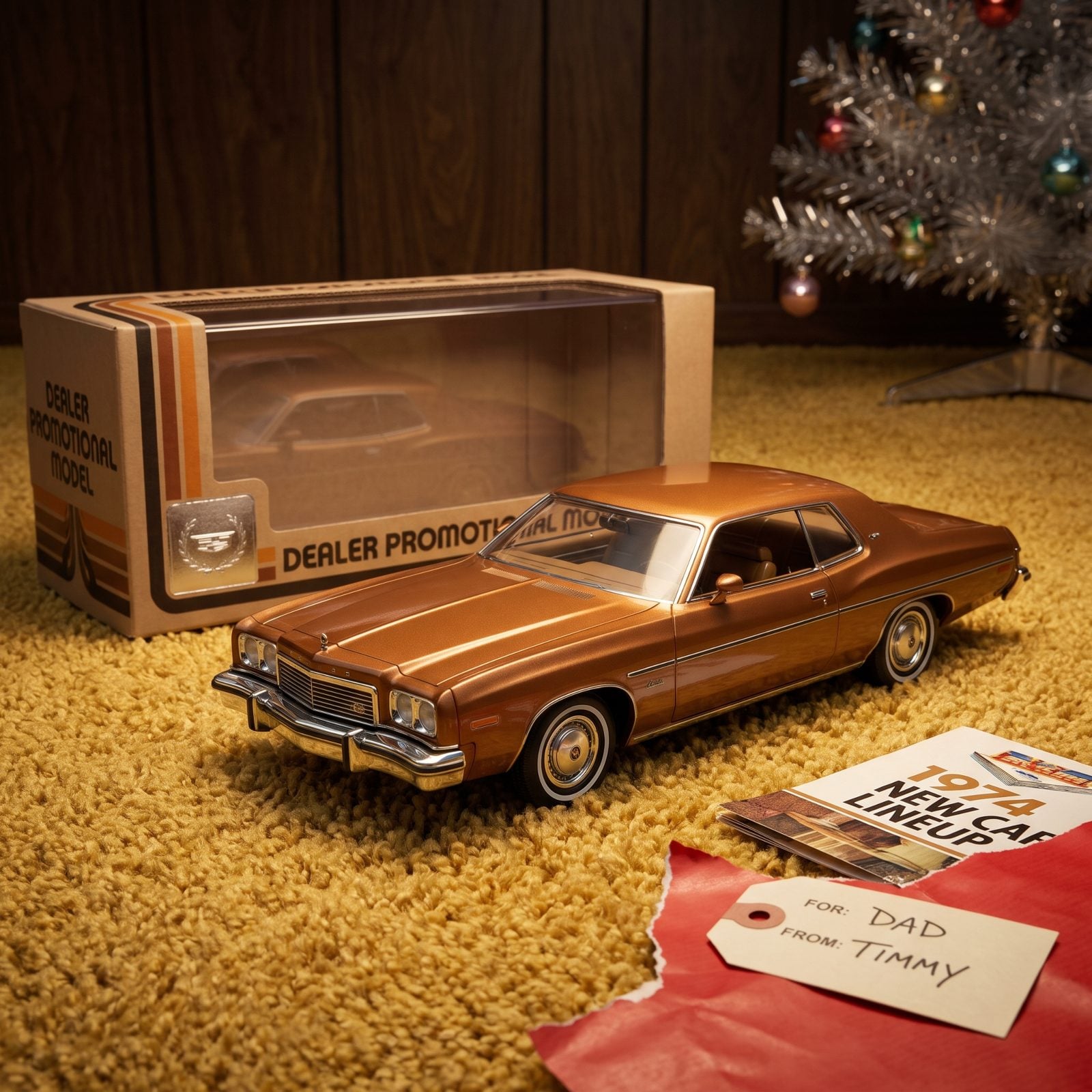
These weren’t sold in stores. The salesman handed one to the kid tagging along while Dad kicked tires, or they landed under the tree as a stocking-stuffer version of the real thing. Built by Jo-Han and AMT in the exact factory colors, they were rolling miniatures of whatever just hit the lot.
The paint matched the actual car, which is why collectors prize a specific hue on a specific body. Promos suffer a cruel fate called plastic fatigue, where the body slowly warps and cracks from the inside. Find a pristine one in its box, uncracked, and you’ve got something that gets rarer every year.
What Our Readers Say
- When Jalopy Talk readers loved a car photo and tapped a reason, “nostalgic” came out on top at 28%, just ahead of body style at 25%.
From Jalopy Talk reader polls and votes.
46. The AMT Annual-Series Plastic Model Kit You Were Afraid to Glue
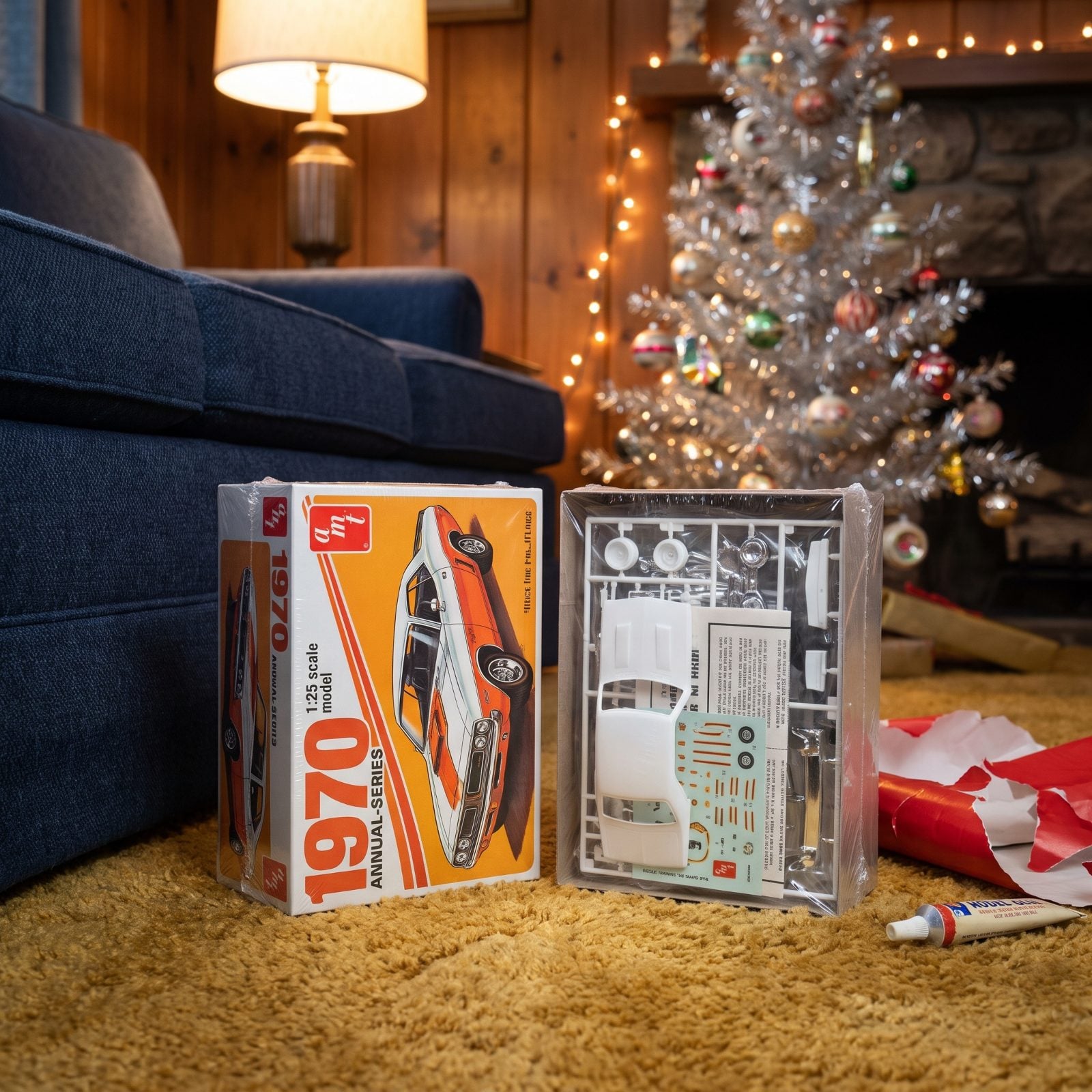
An unbuilt kit is worth more than a built one. Always has been. Feels backward until you think about it. The point of a model was to build it, so a sealed 1973 annual-issue kit with the shrink wrap intact, the decal sheet never touched, the chrome tree still untouched on its sprue, means somebody resisted the strongest temptation a 12-year-old boy ever faced.
AMT changed the tooling each year to match the current model, so the 1970 and 1971 versions of the same car are genuinely different kits. The sealed ones with factory shrink sit at the top of every want list, and an instruction sheet that’s present and uncreased adds real money on its own.
45. The Mattel Sizzlers Rechargeable Racer and Its Juice-Machine Charger
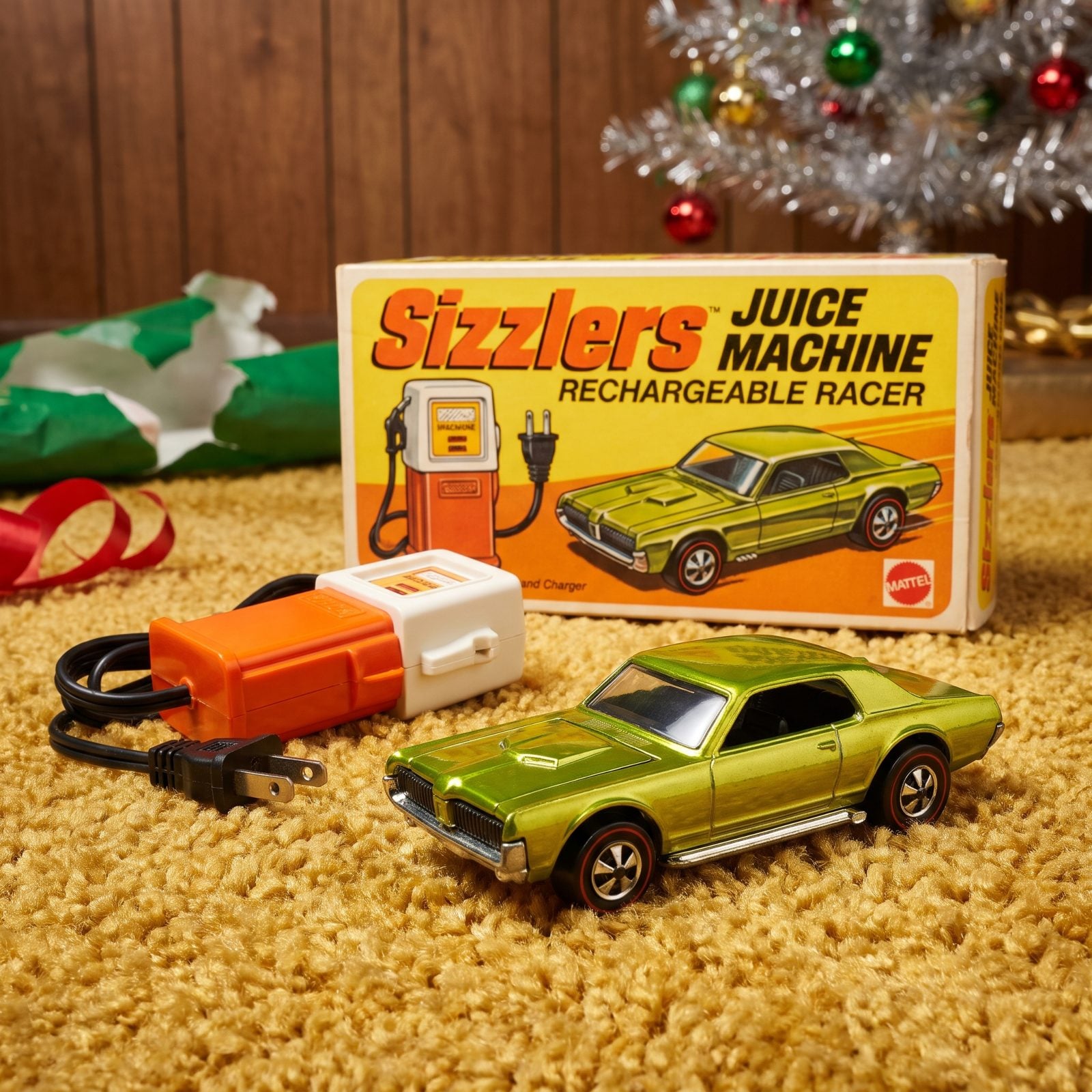
You jammed the car into the Juice Machine, pumped it a few times, and off it roared around the track under its own power. No controller, no wires — just a tiny internal battery and a loud little motor. A minute and a half of glory before it died and you charged it again.
The trouble is that battery. Nearly every surviving Sizzler has a dead, often leaked, internal cell that corroded the guts long ago. So a boxed set with an un-leaked car and the charger intact is scarce, and that’s precisely why collectors pay up for one that escaped the slow chemical rot.
44. The Kenner Smash-Up Derby Set Built for Beautiful Destruction
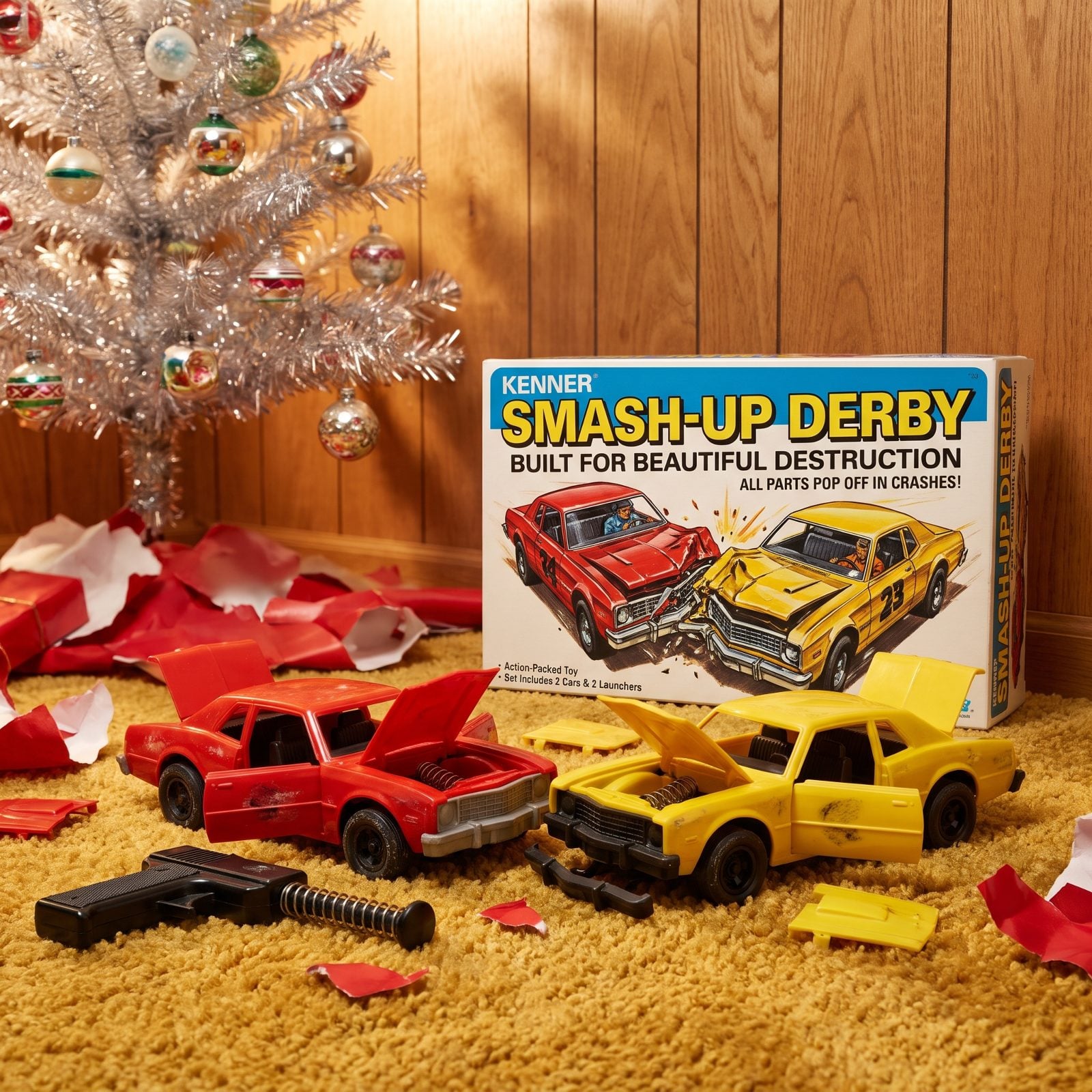
The whole premise was wreckage. You launched two cars at each other, they collided, and the hoods, doors, bumpers and fenders exploded off in every direction — then you snapped it all back together and did it again. Pure genius for a kid. Pure nightmare for a complete-set collector today.
Every blow-apart car came with a dozen loose pieces that scattered under the furniture and vanished for good. A boxed Smash-Up Derby with both cars, both launchers, and every single tab and panel accounted for is a tall order. And the box art alone, all that screaming crash energy, is worth having on its own.
43. The Renwal Visible V-8 Engine You Could Actually Turn Over
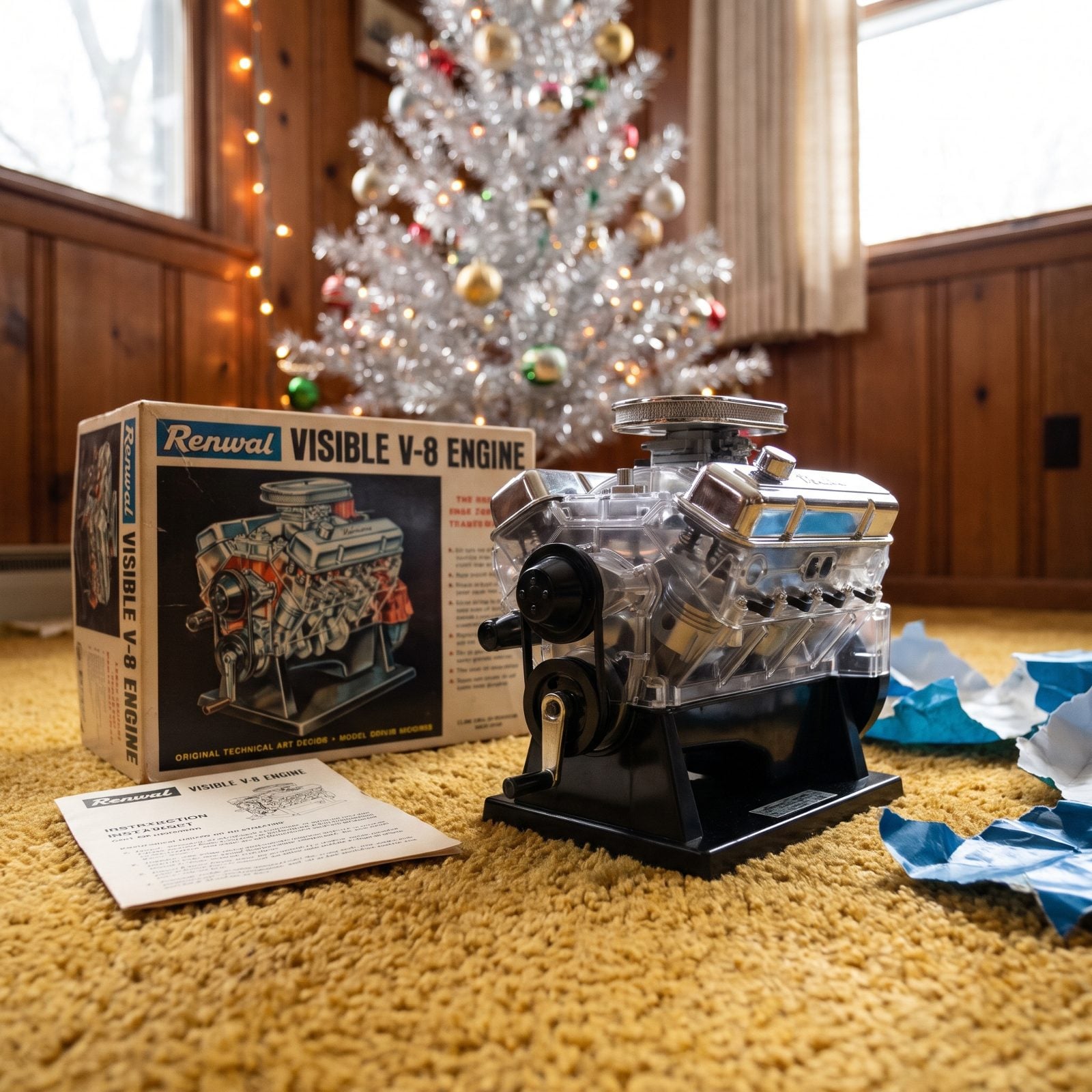
This was the gift for the kid who kept asking how things worked. Clear plastic engine block, moving pistons, a hand crank on the base, and a timed firing order you could watch happen in slow motion. Turn the handle and the whole thing came alive, an anatomy lesson in combustion.
Built correctly, with every piston firing in sequence, it taught more about an engine than a year of shop class. Collectors want either a sealed kit or a cleanly built example with its clear parts un-yellowed. That transparent plastic ambers with age, so a crystal-clear one that stayed out of the sun is the real prize.
42. The Tonka Pressed-Steel Tow Truck Built Like a Bank Vault
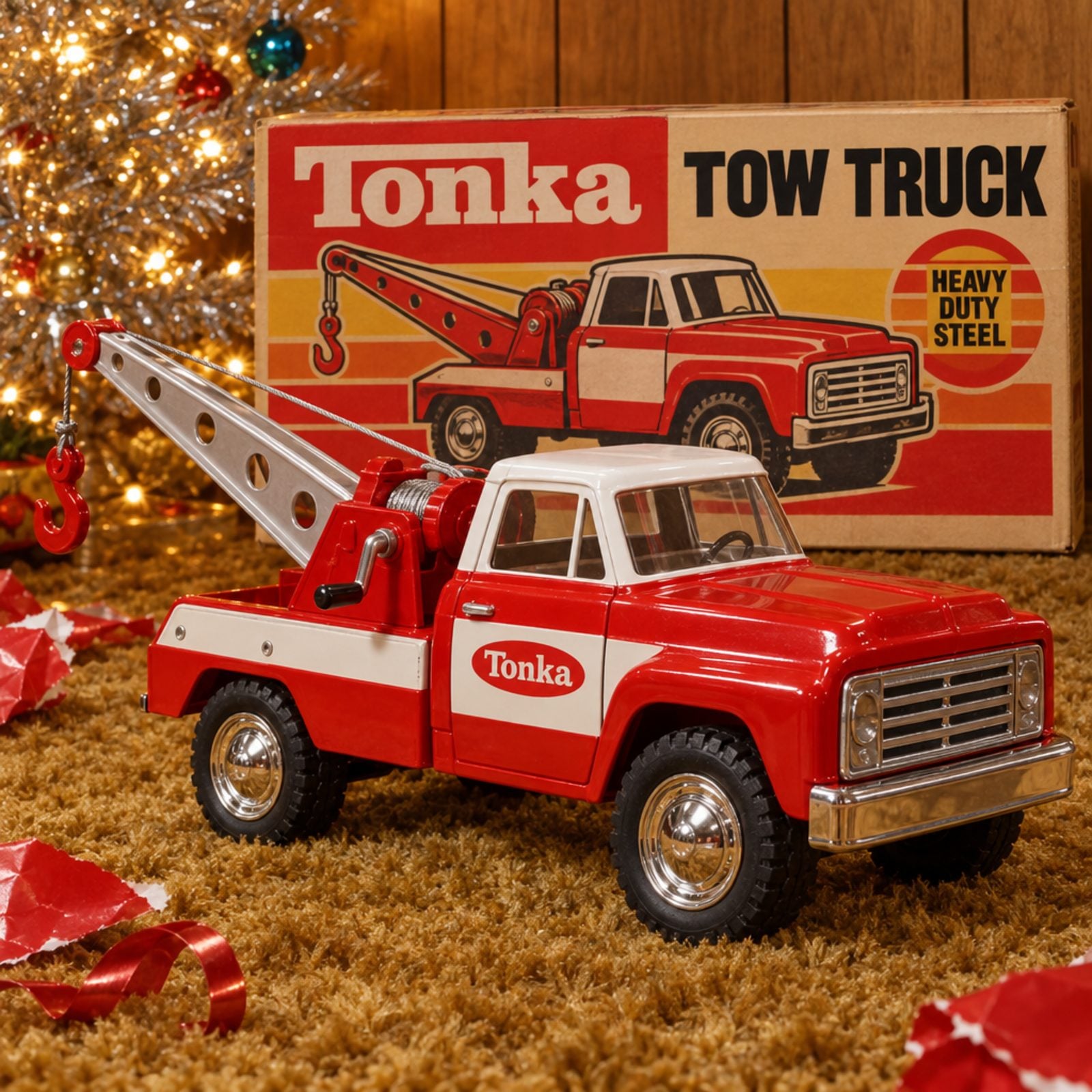
You could stand on a Tonka. Grown men did, just to prove a point. The pressed-steel body shrugged off drops down the basement stairs, trips to the sandbox, and years of hard service in the dirt pile out back. Few toys were made to outlive the kid who owned them, but this one managed it anyway.
The tow truck had the extra magic of a working boom and a hook that actually hoisted smaller cars. A mint example with un-chipped paint, straight chrome hubcaps, and its box is scarce precisely because these got used into oblivion. A beater sells for a little. A clean boxed one sells for serious money.
41. The SSP Ripcord-Powered Racer That Screamed Down the Hallway
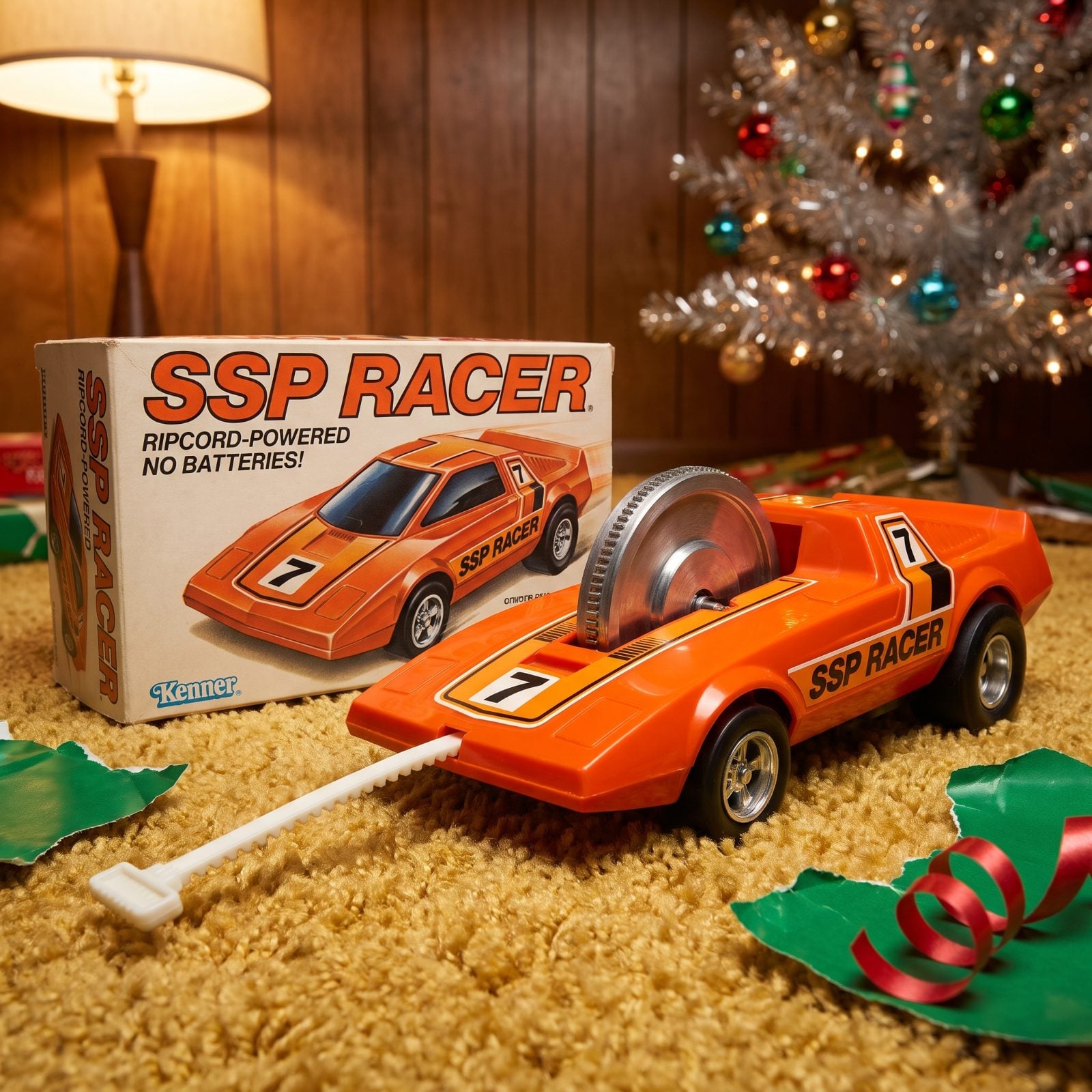
Thread the toothed ripcord into the slot, yank it hard, and that big exposed flywheel spun up to a high-pitched whine before the car tore off across the linoleum. The sound alone defined a certain kind of 1970s afternoon. The box billed it as a ripcord-powered racing car, and it delivered on the promise.
The ripcord is the catch. It was a consumable strip of plastic that frayed, snapped, and got lost, so a boxed ripcord racer with its original intact ripcord doesn’t turn up often. Collectors check for that strip first, then the flywheel spinning free and the decals still unpeeled.
40. The Steel Pedal Car With Real Chrome Hubcaps Under the Tree
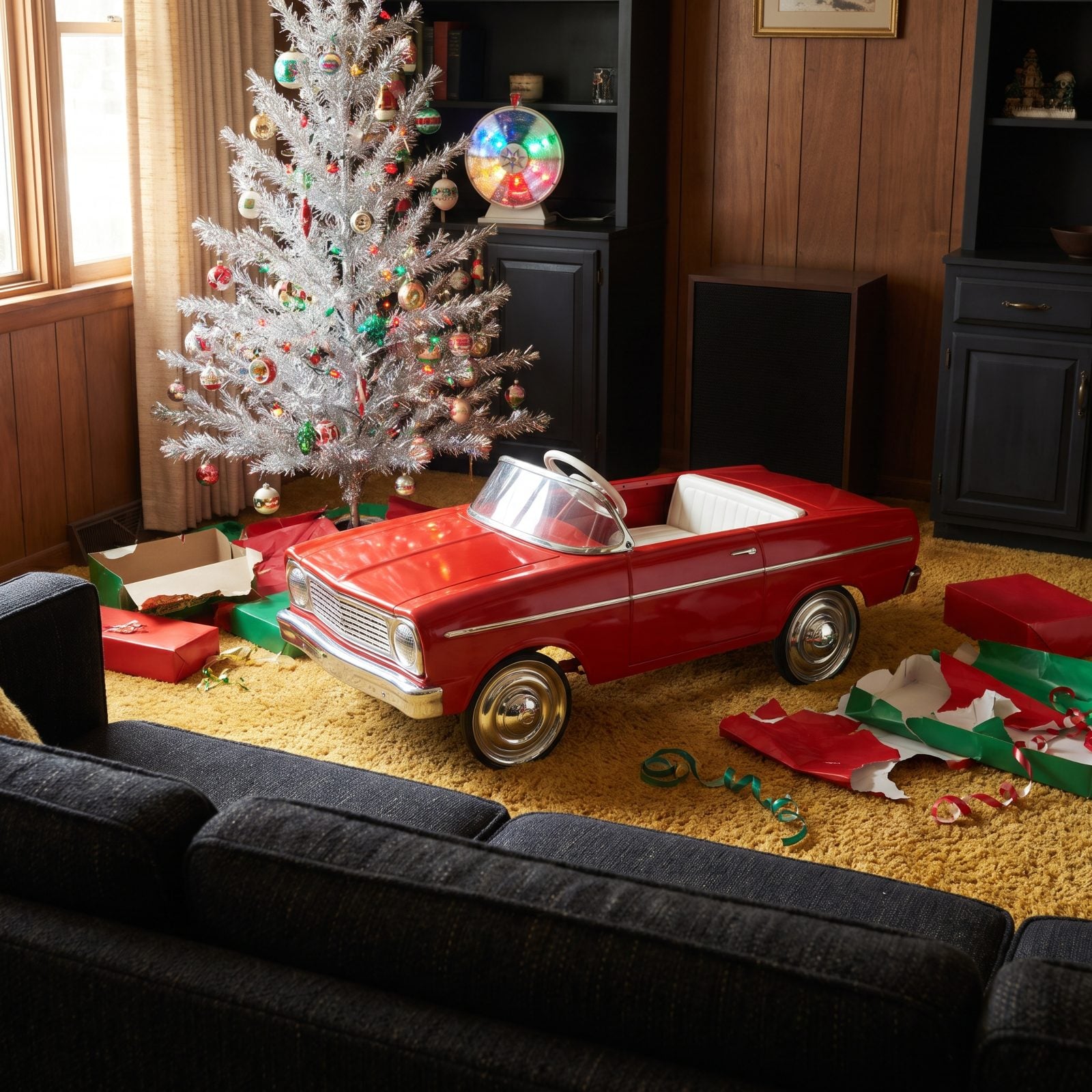
This was the gift that stopped the whole morning cold. A kid rounded the corner and there it sat — a steel pedal car, big as a wagon, parked by the tree with the chrome hubcaps catching the color wheel’s glow. No batteries. No wires. Just leg power and imagination down the sidewalk.
By the 1970s plastic was creeping in, which makes the late pressed-steel examples a kind of last stand. A restored one is handsome enough, but collectors pay the most for an unrestored survivor with original paint and chrome, straight bodywork, and all four hubcaps present. Those turn up at estate sales and make grown adults go quiet for a second.
Shiny trim still pulls people in: in our reader votes, car photos with lots of chrome got hearts 88% of the time, versus 82% for the other images in the same articles.
39. The Matchbox Service Station Playset That Smelled Like New Plastic on Christmas Morning
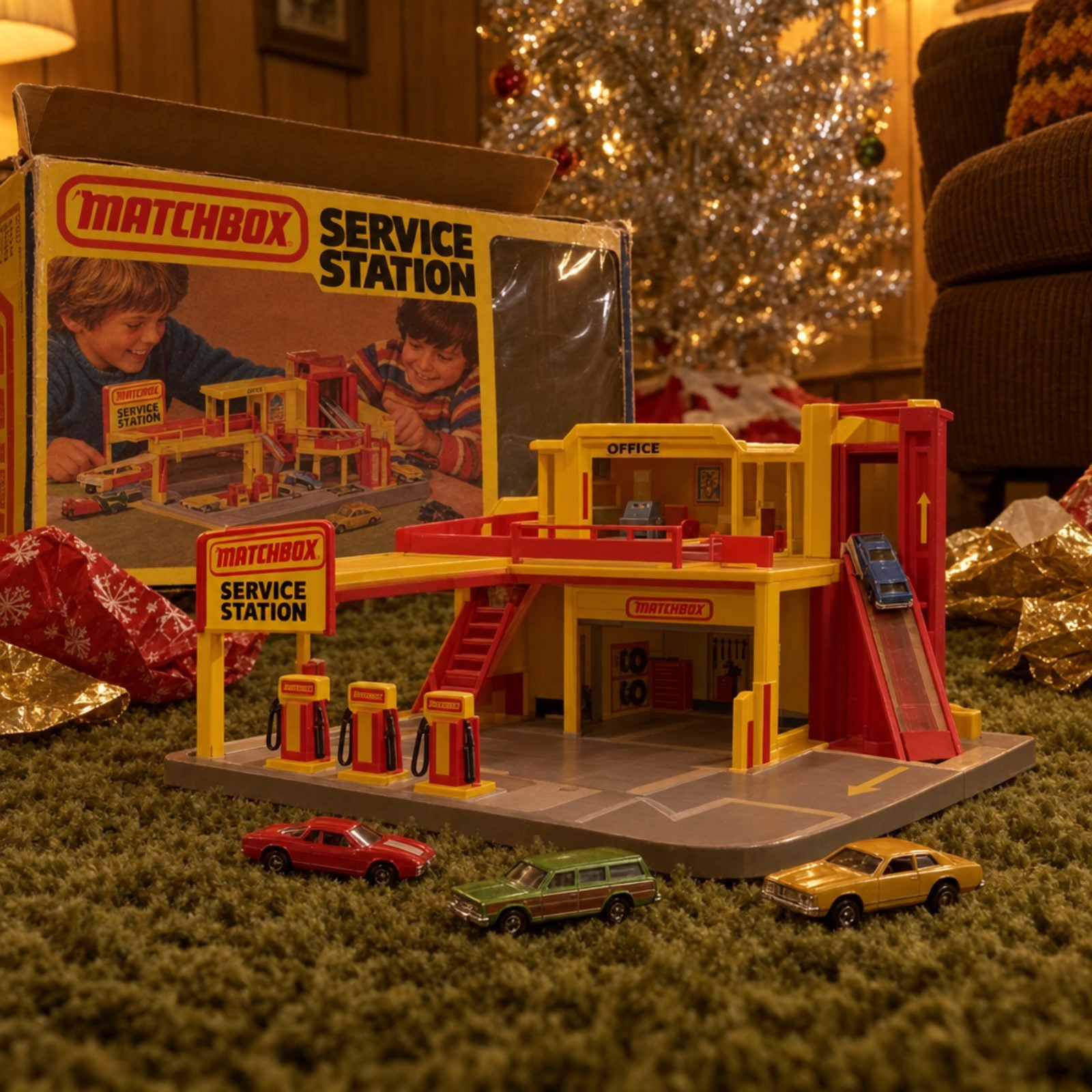
You remember the smell before anything else. New plastic, straight out of the box, sharp and sweet. The Matchbox garage had a ramp you cranked with a little lever, and the whole thing felt like somebody had just handed you your own tiny franchise.
Collectors want these sealed now. Good luck. Most got played to death — ramps snapped, little gas pumps lost to the couch forever — so a complete one with the original box and inner cardboard tray can pull real money.
38. The Hot Wheels Super-Charger Track Set With the Blue Battery-Powered Booster
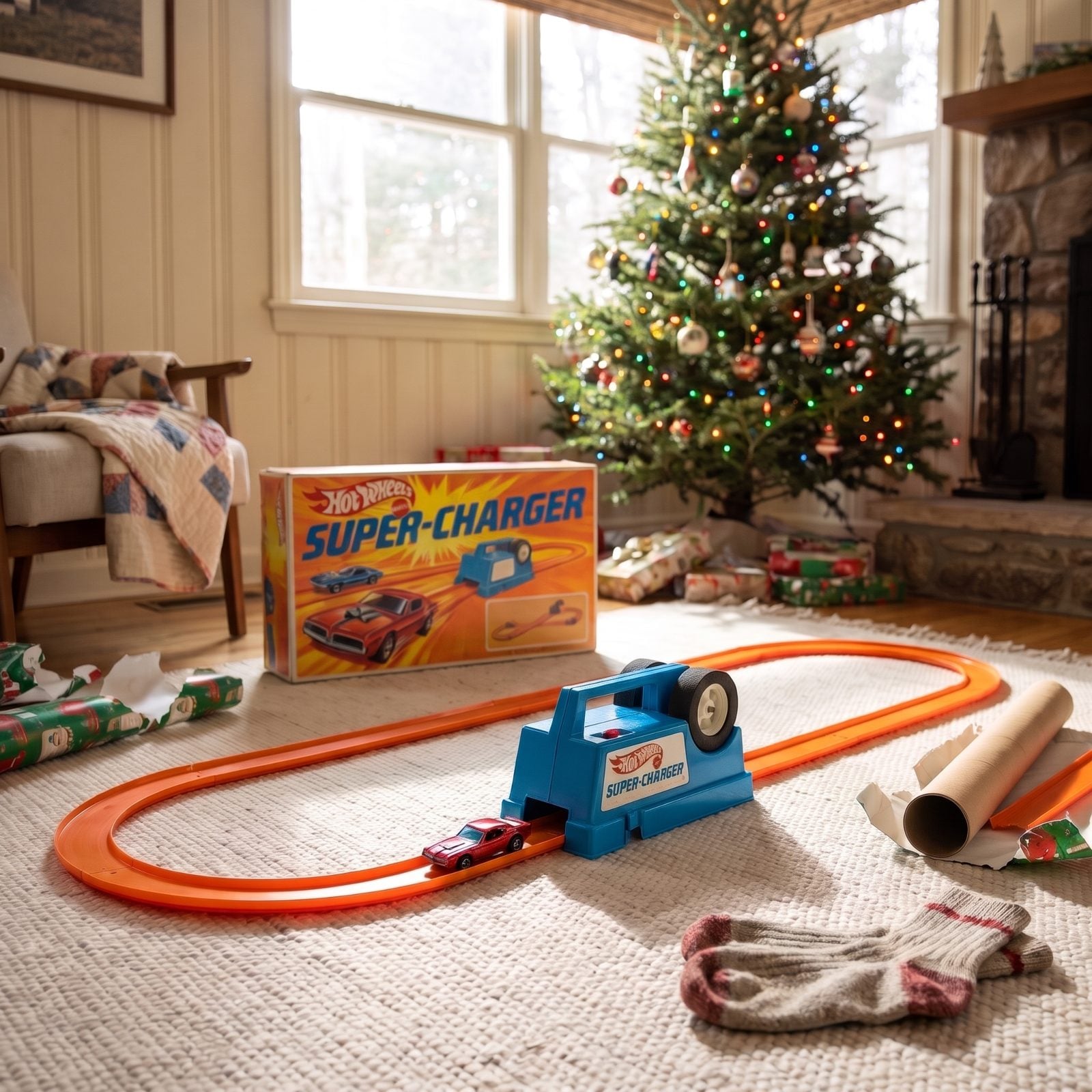
That blue booster box was the whole game. Its spinning foam wheels sat up on top of the housing while your car shot through the tunnel underneath and went screaming around the loop, and once a Redline got going you could run it for hours without touching it again.
The track yellowed. The foam wheels dried out and crumbled away. A working Super-Charger with supple wheels and an uncracked box is a genuine find today, which anybody who tried to resurrect a dead one already knows.
Half the fun was the sound. That whir-and-slap as the car hit the charger and took off.
37. The Mattel Auto Race Handheld With the Red Blips You Dodged Down a Dark Highway
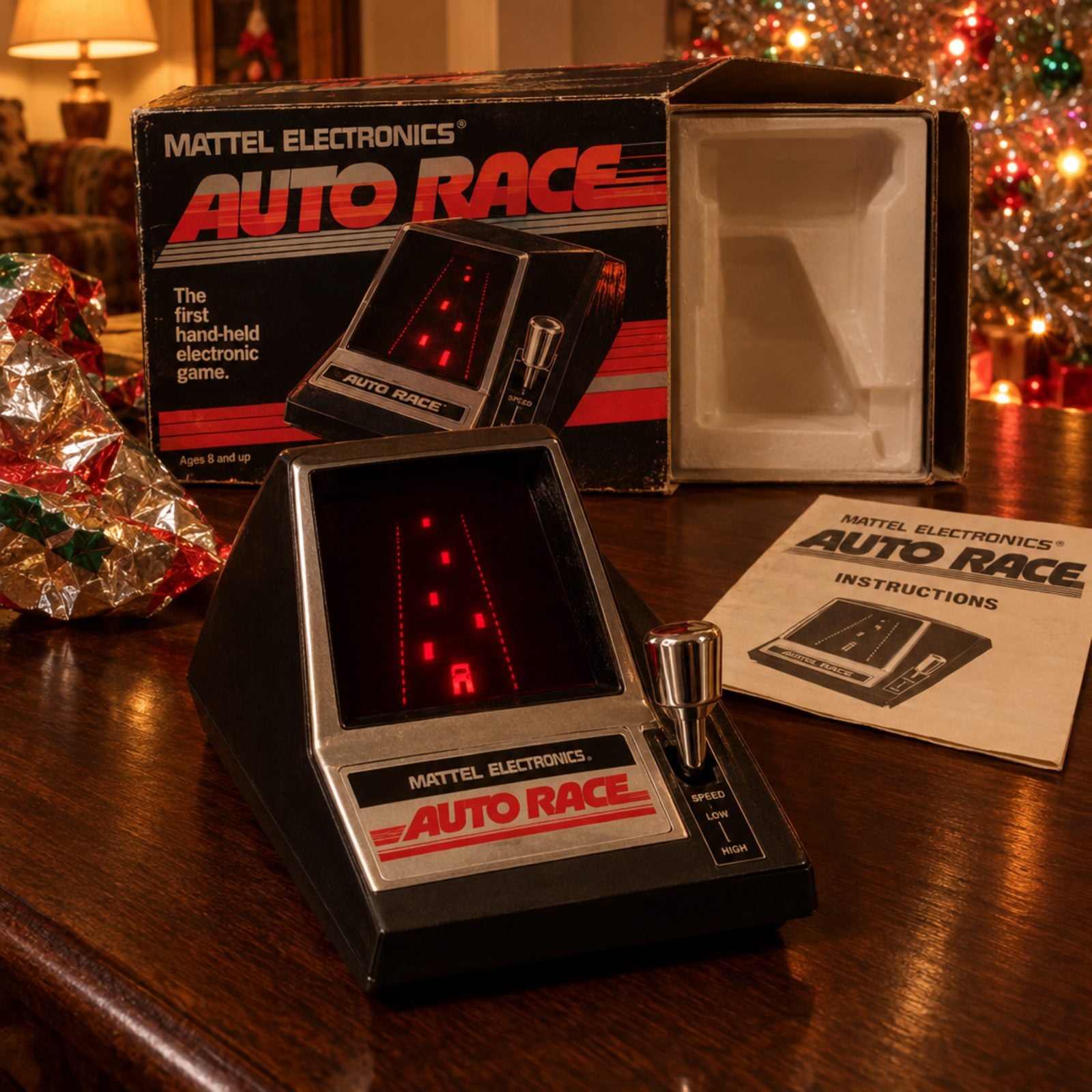
A few glowing red car outlines and your hand on a chunky side lever. That was the entire universe of Mattel Auto Race, and it hypnotized every kid who got one. You weaved your little red car past the oncoming cars and felt like you were really piloting something down a dark road.
This one matters more than most — it was an early electronic game, launched in 1976, a chunky wedge-shaped unit with a chrome shifter marked for low and high speed. Collectors chase it for that alone. Boxed, with the instruction slip and a working display, it sits right at the top of the early-electronics heap.
36. The 3M Speed Circuit Board Game Where You Planned Every Gear Shift on Paper
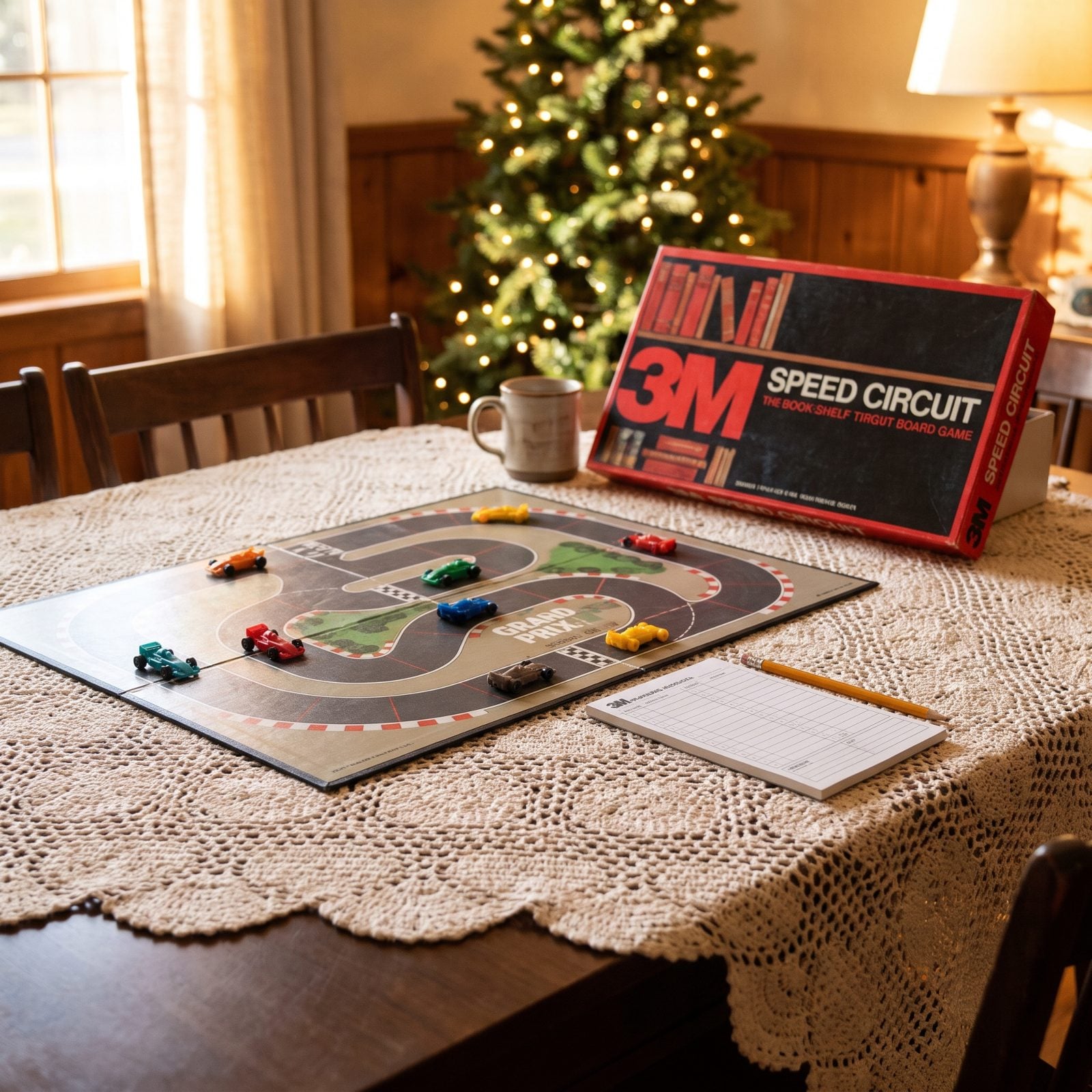
This was the thinking person’s race. No dice luck here — just you deciding when to shift up, when to brake into a corner, and whether you could hold your line without spinning off the apex. 3M built it for the family that wanted its gift to feel a little smart.
The gear-shift planning sheets are what always go missing. Find a complete copy with the pad intact and every car token accounted for, and you’ve got something the 3M bookshelf crowd will happily chase down.
35. The Fleer Automotive Trading Card Set You Flipped Through Before You Could Drive
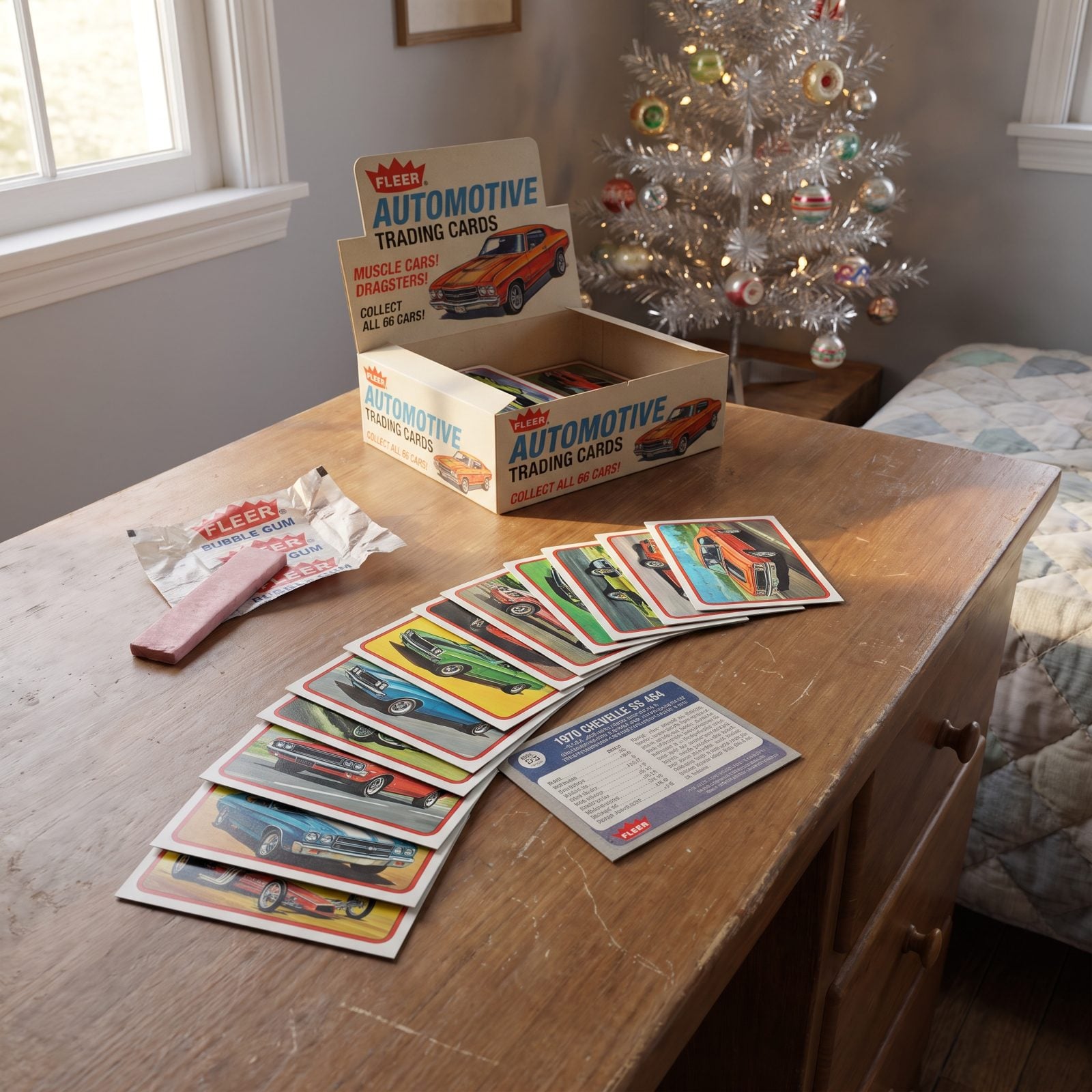
You knew the quarter-mile times before you knew long division. Fleer’s car cards came packed with that chalky pink gum roll that crumbled like drywall, and the gum stains it left on the first and last cards are practically a grading category now.
Nobody protected these. They went in bike spokes and under rubber bands. A clean, gum-free set with the cellophane wrapper and box survived against every single odd — which is exactly why hobbyists pay up for one.
34. The Banthrico Dealership Coin Bank Shaped Like the Car in the Showroom Window
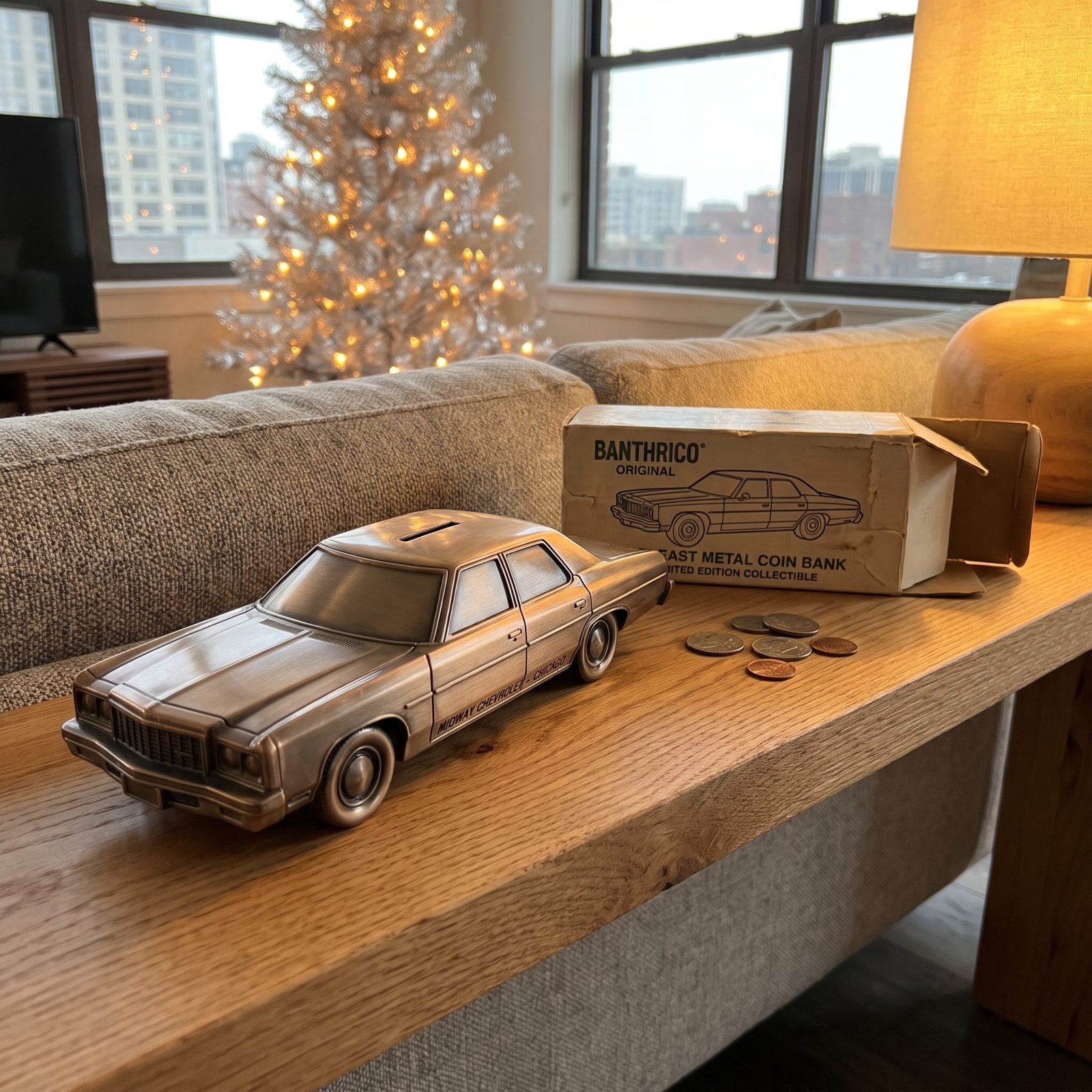
Dealers handed these out to keep their name on your kitchen shelf, and the trick worked. A chunk of pot metal shaped like the car on the lot, coin slot in the roof, dealership name stamped across the belly. Your dad probably walked out with one the day he signed for the new wagon.
Banthrico made thousands of variations. Collectors hunt by model, by finish, by dealership — and the ones still in their printed box, stopper plug intact underneath, are the real trophies.
33. The Jim Beam Automobile Decanter That Sat on the Bar and Never Got Opened
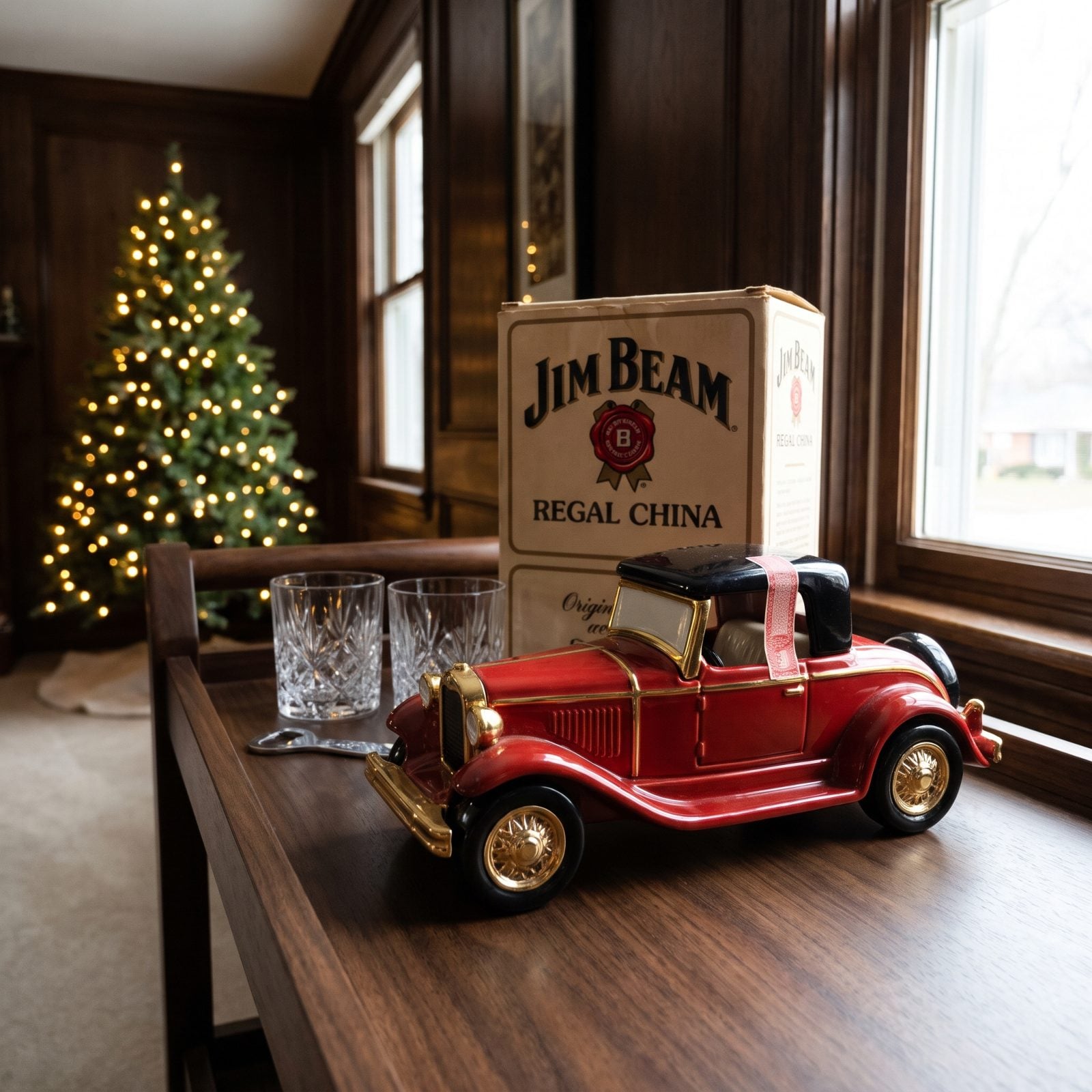
Grandpa got one every Christmas and never once poured from it. The Jim Beam car decanters were made to be looked at — a glazed ceramic roadster or coupe full of bourbon that would outlive the drinker, provided nobody cracked the seal.
And here’s the collector twist nobody expects. The value lives in the full, sealed state, tax stamp intact and box present. An opened one lost most of its worth the day somebody got thirsty. Full, sealed, boxed, from the Regal China runs — those are the keepers.
32. The Avon Car-Shaped Cologne Bottle From the Lady Who Rang the Doorbell
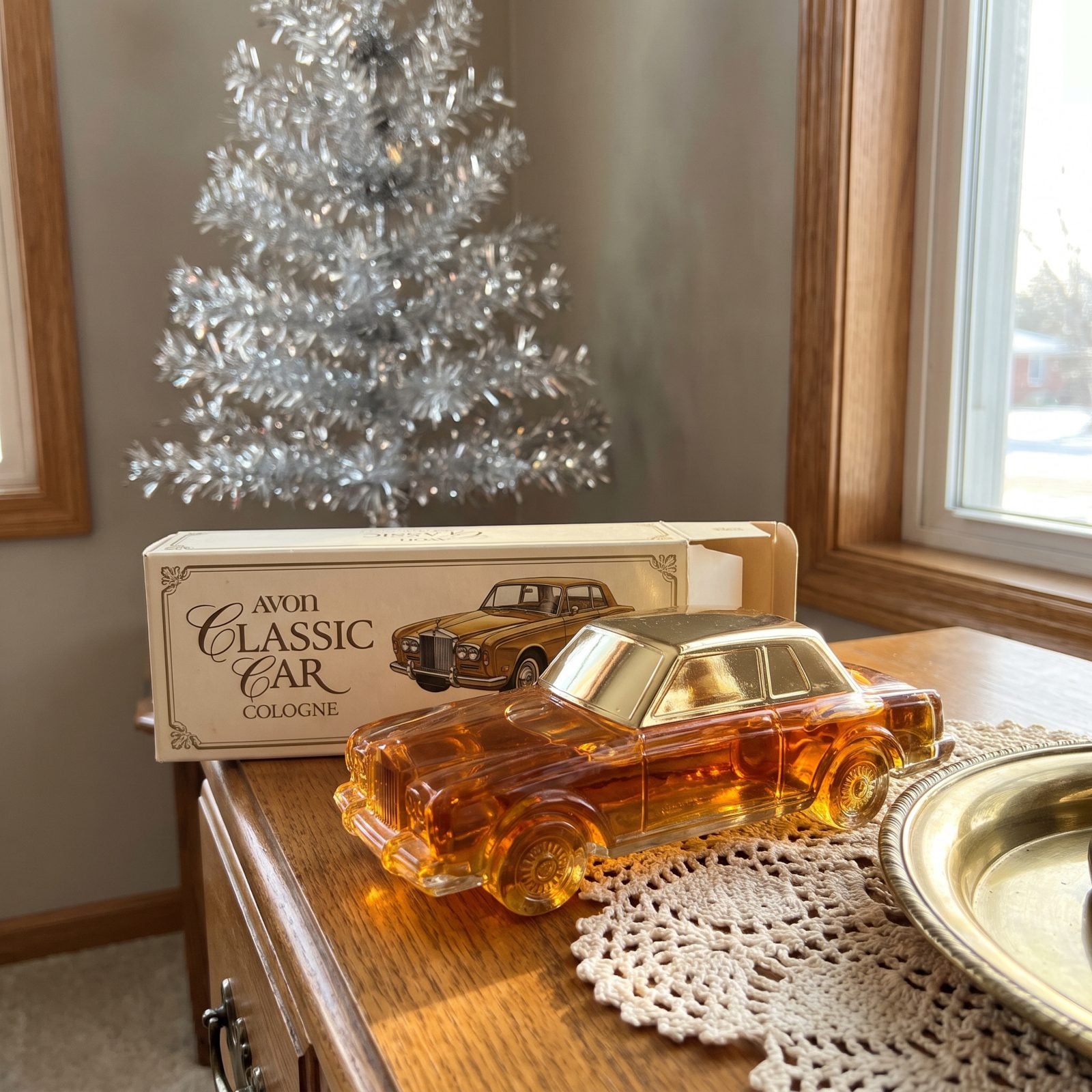
Avon turned cologne into a car collection. Those amber glass bottles shaped like antique autos landed under the tree because the Avon lady worked the whole neighborhood, and a man’s gift came in a little roadster you could line up on the shelf.
Most got drained and the glass kept, which is fine. Collectors want them full, gold cap on, box included. The scent inside is long gone anyway — it’s the shape, the tint of the glass, and the packaging that carry the value.
31. The Automotive Metal Lunchbox With the Muscle Car Printed Across the Lid
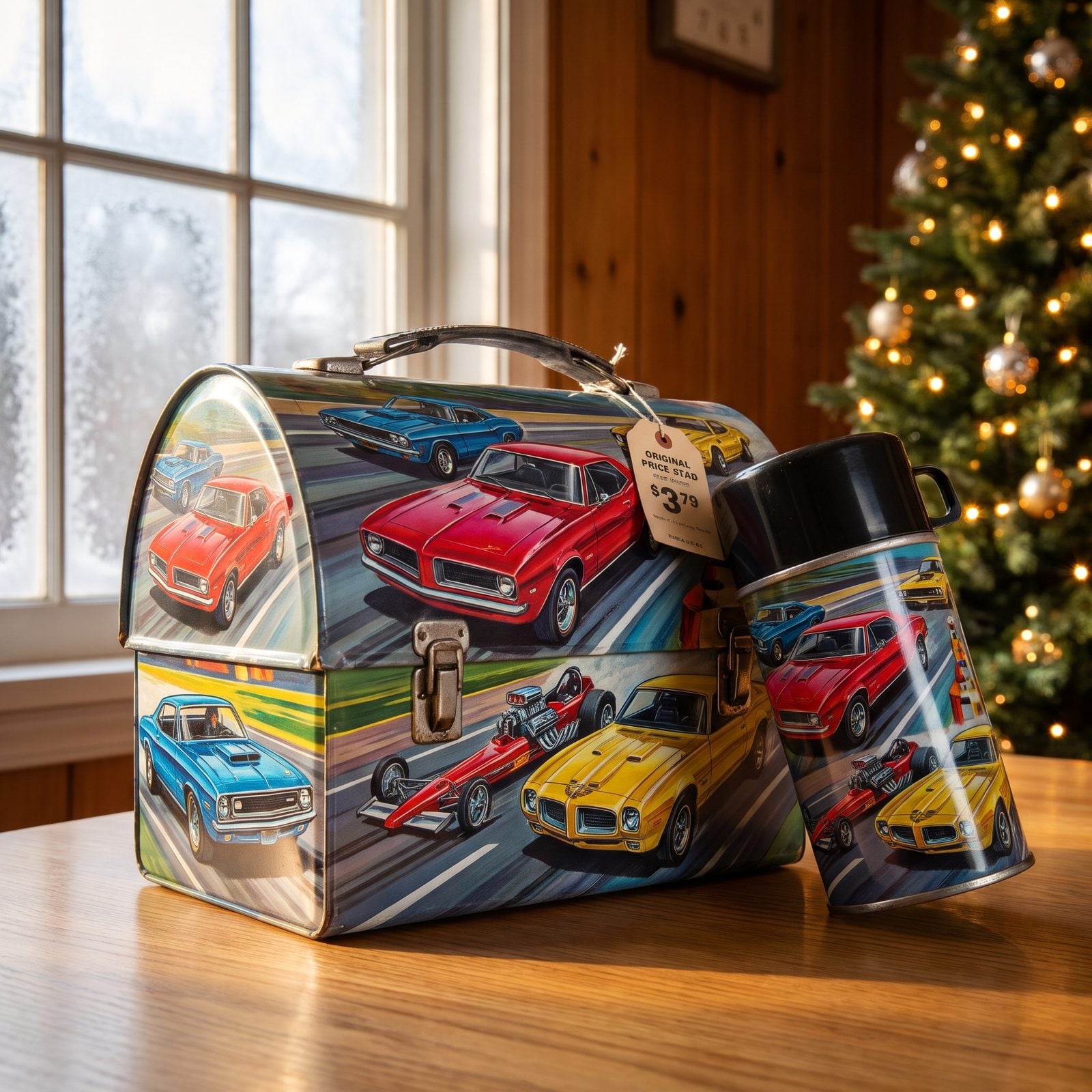
Opening a lunchbox under the tree meant you’d be the envy of the cafeteria come January. The embossed steel kind, muscle cars screaming across the lid, a matching thermos that clanked around inside — it took the daily beating and showed every dent to prove it.
That’s the problem for collectors. These got dropped, scratched, rusted. A clean lithographed box with the glass thermos unbroken and the lid free of dents and rust is scarce, and car-themed graphics pull a premium over most other designs.
30. The Dealership Lighted Wall Clock That Hummed in Every Garage in America
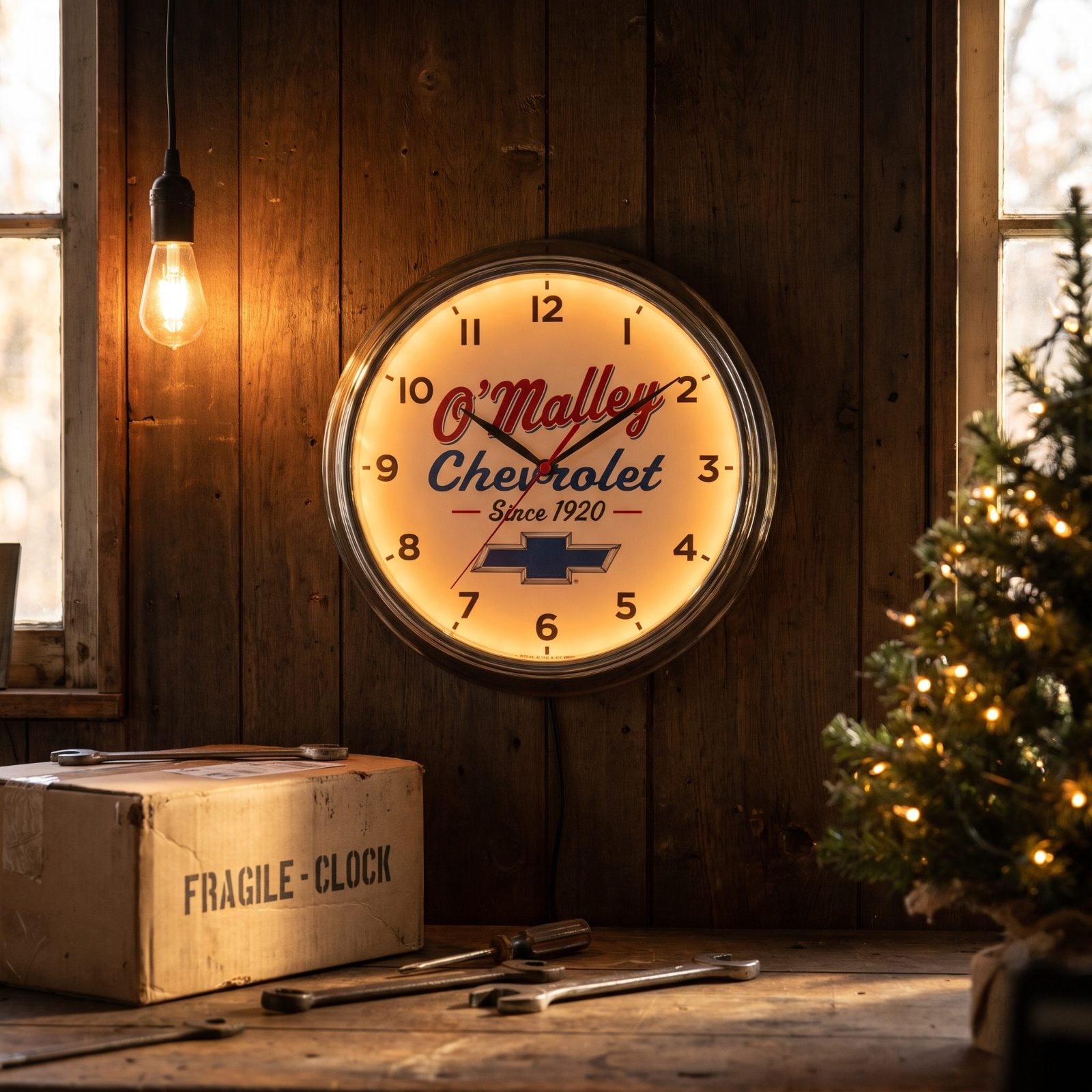
You could hear it before you saw it — that low electric hum of the lighted dealer clock glowing over the workbench while Dad changed the oil on a Saturday. Glass face lit from inside. Dealership name curved across the dial. Second hand sweeping smooth.
They hung in service bays and home garages for decades, so most got sun-faded, cracked, or burned out. A working one with the original glass, a glowing lamp, and a legible dealer name is the piece that finally makes a whole garage collection feel finished.
29. The Blacklight Muscle Car Poster That Glowed Over the Bedroom Dresser
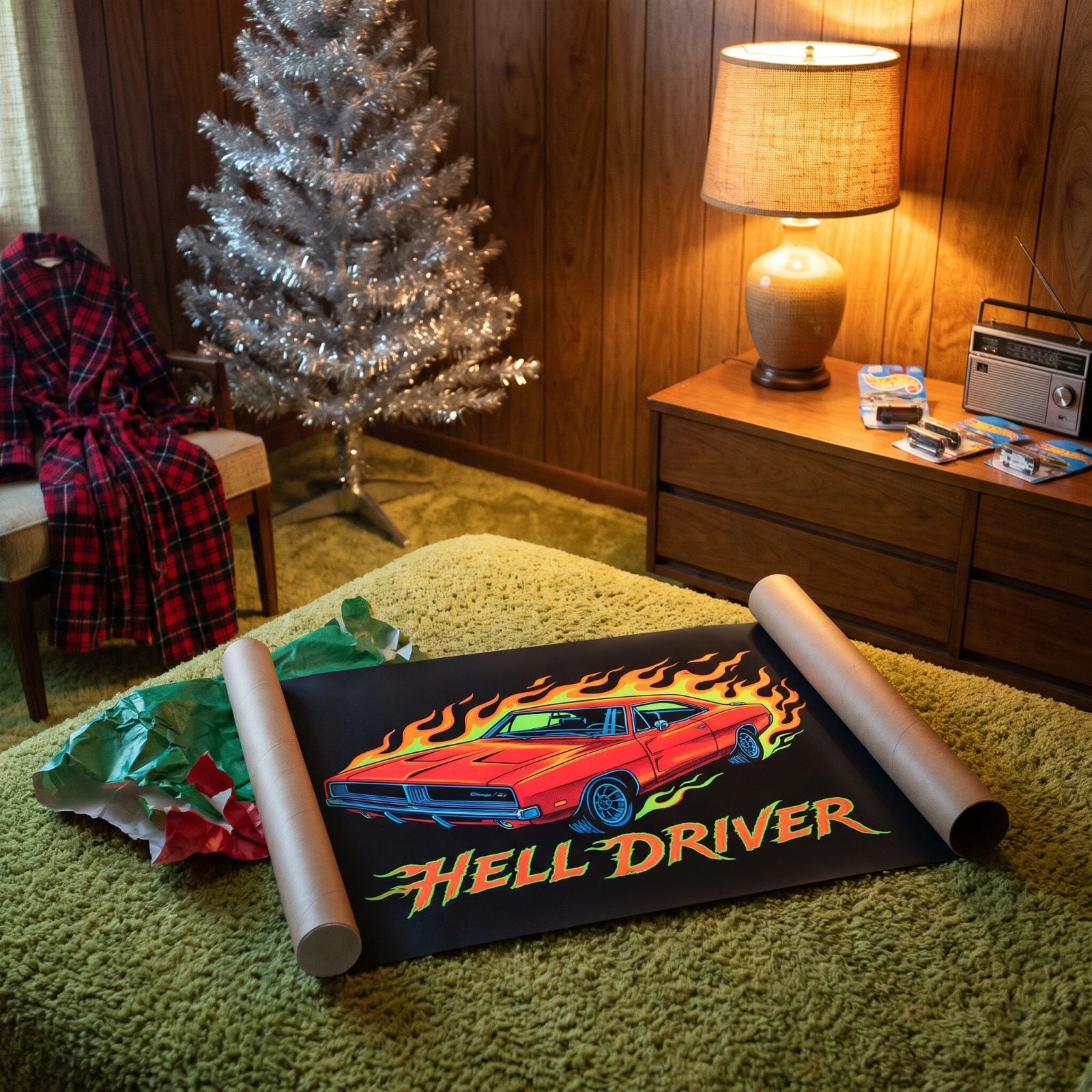
You’d tape it crooked over the dresser, flip on the blacklight bulb, and watch a Charger catch fire in colors that didn’t exist in daylight — day-glo orange flames, lime-green chrome, the whole thing humming purple under that eerie tube.
These came rolled in cardboard tubes under the tree, and the survivors are rare for a dumb reason. Everybody thumbtacked them. Four holes in the corners, sun-faded inks, a tear where it peeled off the wall during somebody’s move across town. A poster still flat and bright, never pinned? That’s the one collectors chase now.
28. A Gift Subscription to Hot Rod Magazine, Renewed Every Christmas
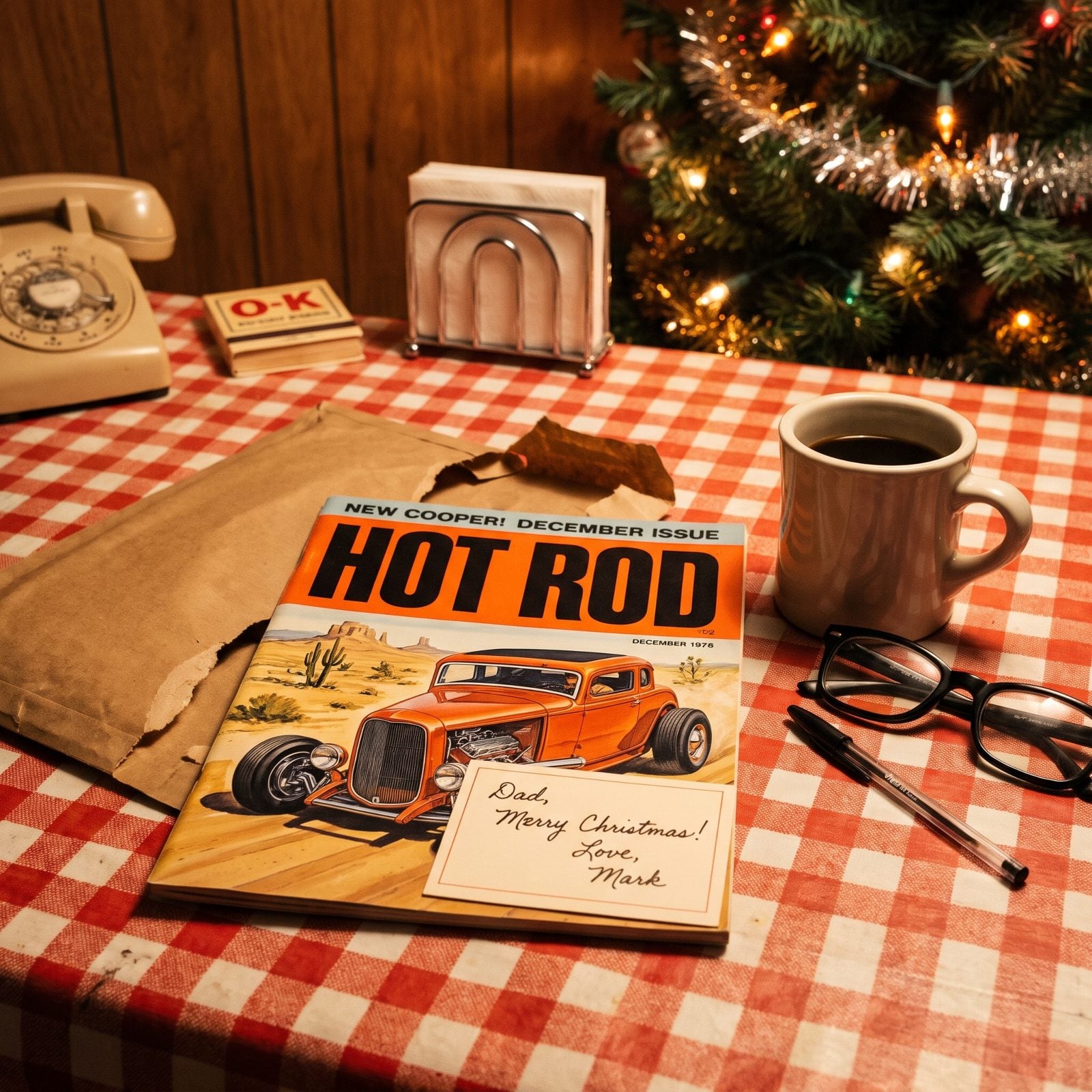
The magazine showed up all year, but the subscription itself was a Christmas thing. Somebody signed you up, the little card came in December, and then twelve months of glossy covers landed in the mailbox with your name on the label.
Collectors now hunt complete year-runs, and the ones worth chasing are the issues that never got read into oblivion. No coffee rings. No torn-out centerfold feature. Spine still tight. Most of these got pawed through on the workbench until the pages went soft, which is exactly why a pristine 1972 run fetches real money.
Plenty of these went out by the milk crate during garage cleanouts. Somebody out there still thinks about it.
27. The New-Car Dealership Brochure You Begged the Salesman to Hand Over
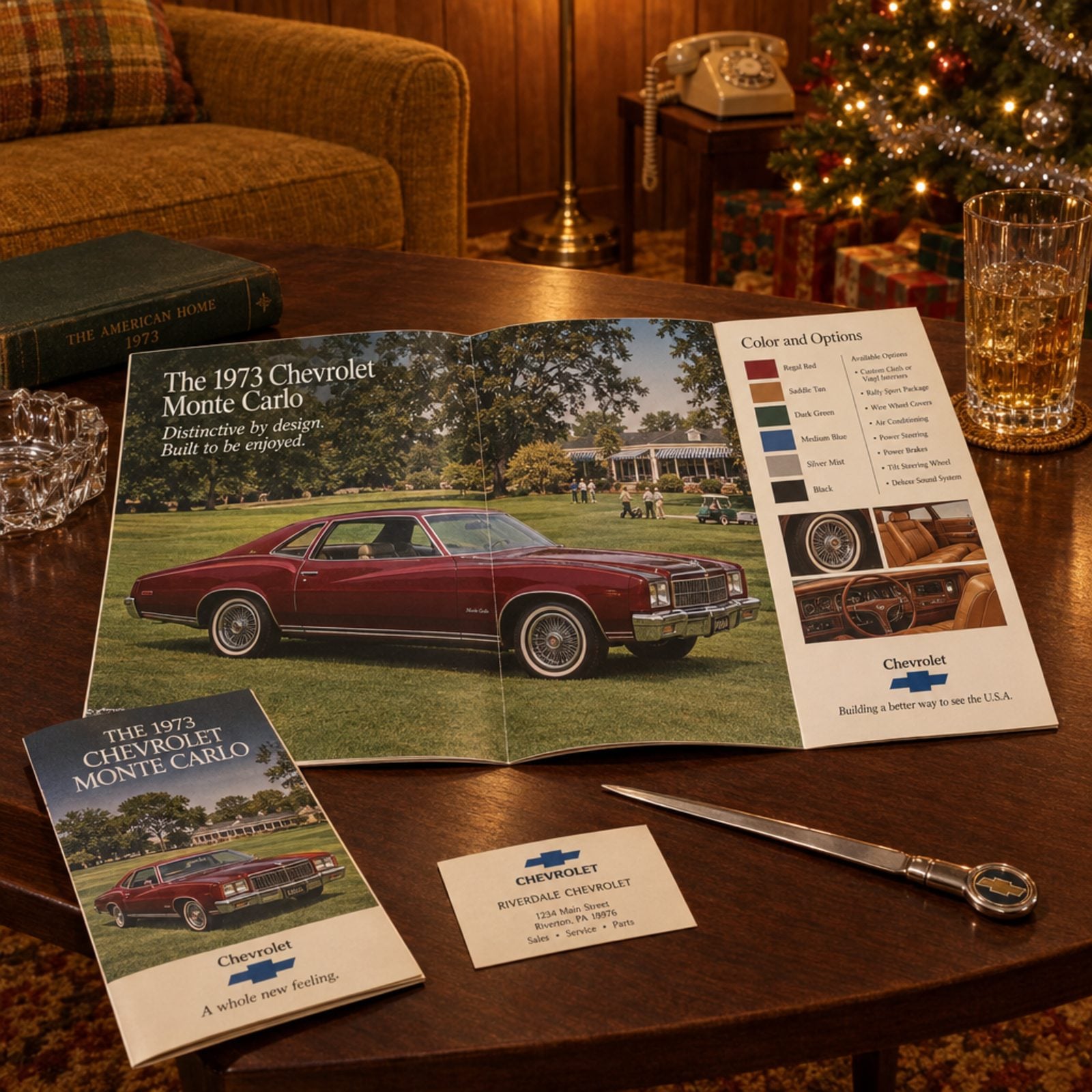
Nobody wrapped these. You walked into the showroom, stood too long by the car you couldn’t afford, and the salesman in the polyester blazer slid a brochure across the desk like it was nothing. Heavy paper. Foldout spreads. Color chips you studied for hours.
Collectors figured out something late: these were disposable marketing, printed by the thousands and tossed by the thousands, which makes a mint foldout for a 1970 Hemi car or a first-year Trans Am genuinely scarce. And the ones with the dealer’s rubber stamp still on the back tell a whole story about a town that probably doesn’t have that dealership anymore.
26. The Indianapolis 500 Souvenir Program, Saved Flat in a Drawer
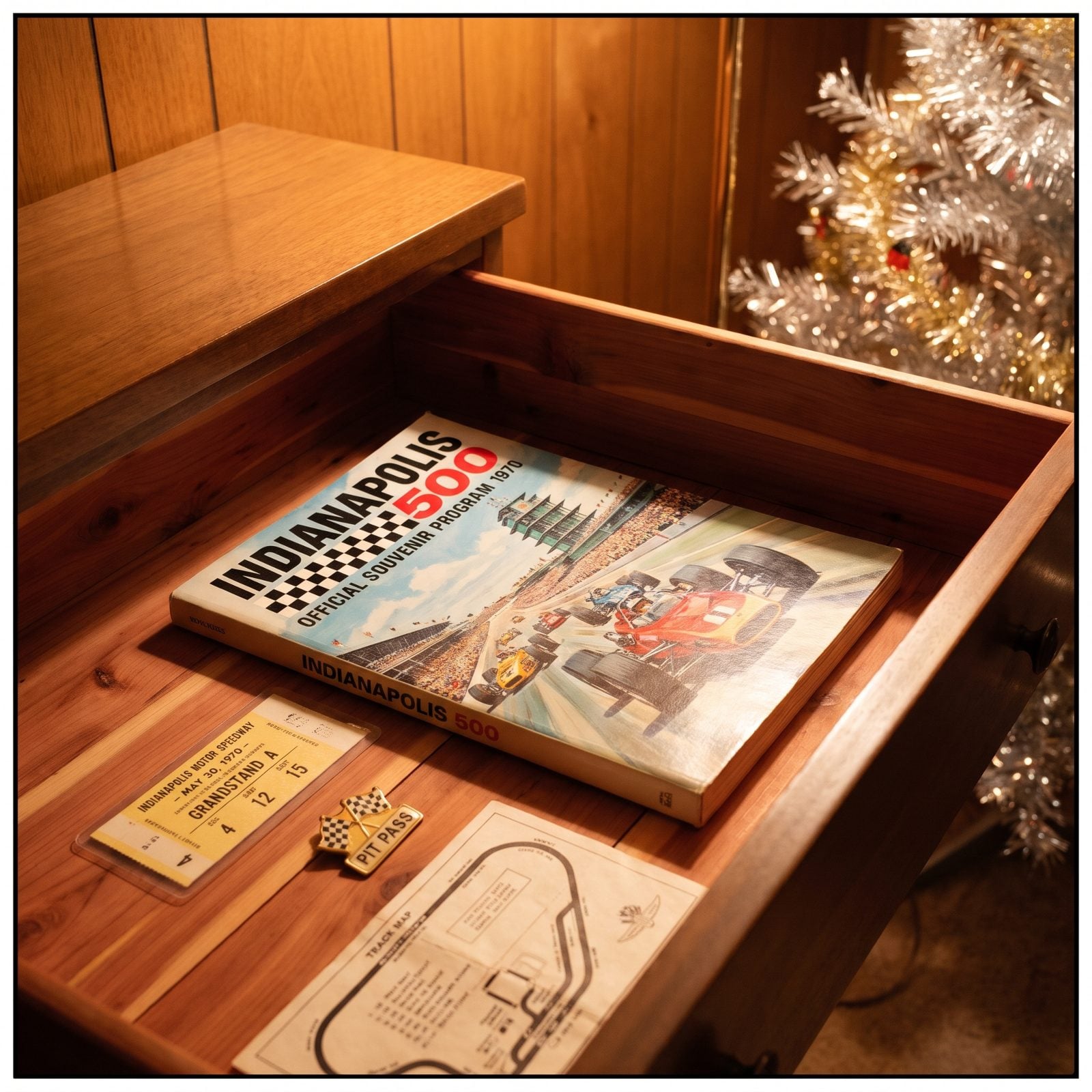
Somebody in the family drove to the race, or wished they had, and the program came home as the trophy. Thick as a paperback. That painted cover with the cars screaming toward the pagoda, the full driver lineup printed inside like a holy roster.
Slip one under the tree and it became a keepsake on the spot. The savvy few tucked theirs into a drawer flat and never looked back. Programs from the famous years — the Unser runs, the first wins for certain engines — command serious money when the cover’s clean and the staples haven’t rusted through.
25. The Illustrated World Encyclopedia of Cars, Heavy as a Cinder Block

This was the big-ticket book gift — oversized, glossy, so heavy it bent the branches when it sat under the tree before you tore into it. Every car ever built, it felt like, catalogued with a color illustration and a paragraph of breathless copy.
You read it on the floor by the heat register until the dust jacket went soft at the corners. And that’s the catch. Collectors want the dust jacket intact, the slipcase present, the binding tight, and a clean copy with everything still there is harder to find than you’d think — these got loved to pieces by kids who memorized every spec.
24. The Cobra 29 CB Radio, Chrome Mic and All
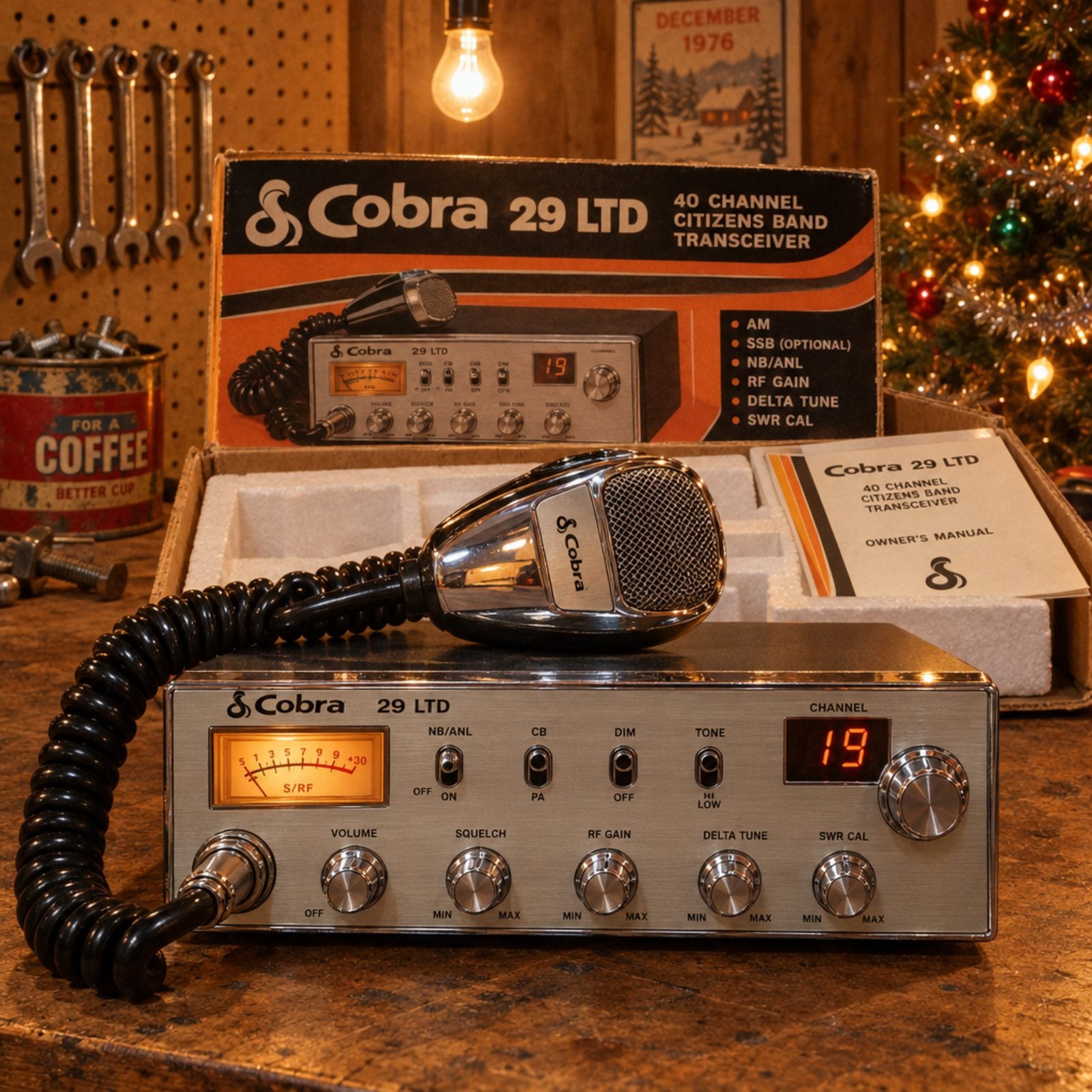
The CB boom hit hard around ’75, and by the next Christmas every dad, trucker wannabe, and teenager wanted one under the dash. The Cobra 29 was the one you bragged about. Chrome mic. A backlit meter that glowed amber when you keyed up, and a handle you picked for yourself and announced to strangers at seventy miles an hour.
What makes a boxed one valuable now isn’t just the radio. It’s the complete kit — the foam, the mounting bracket, the instruction sheet, the coiled mic with no cracks in the cord. Loose radios are everywhere. A sealed-feeling boxed unit is the grail.
23. The Original Fuzzbuster Radar Detector, Suction-Cupped to the Windshield
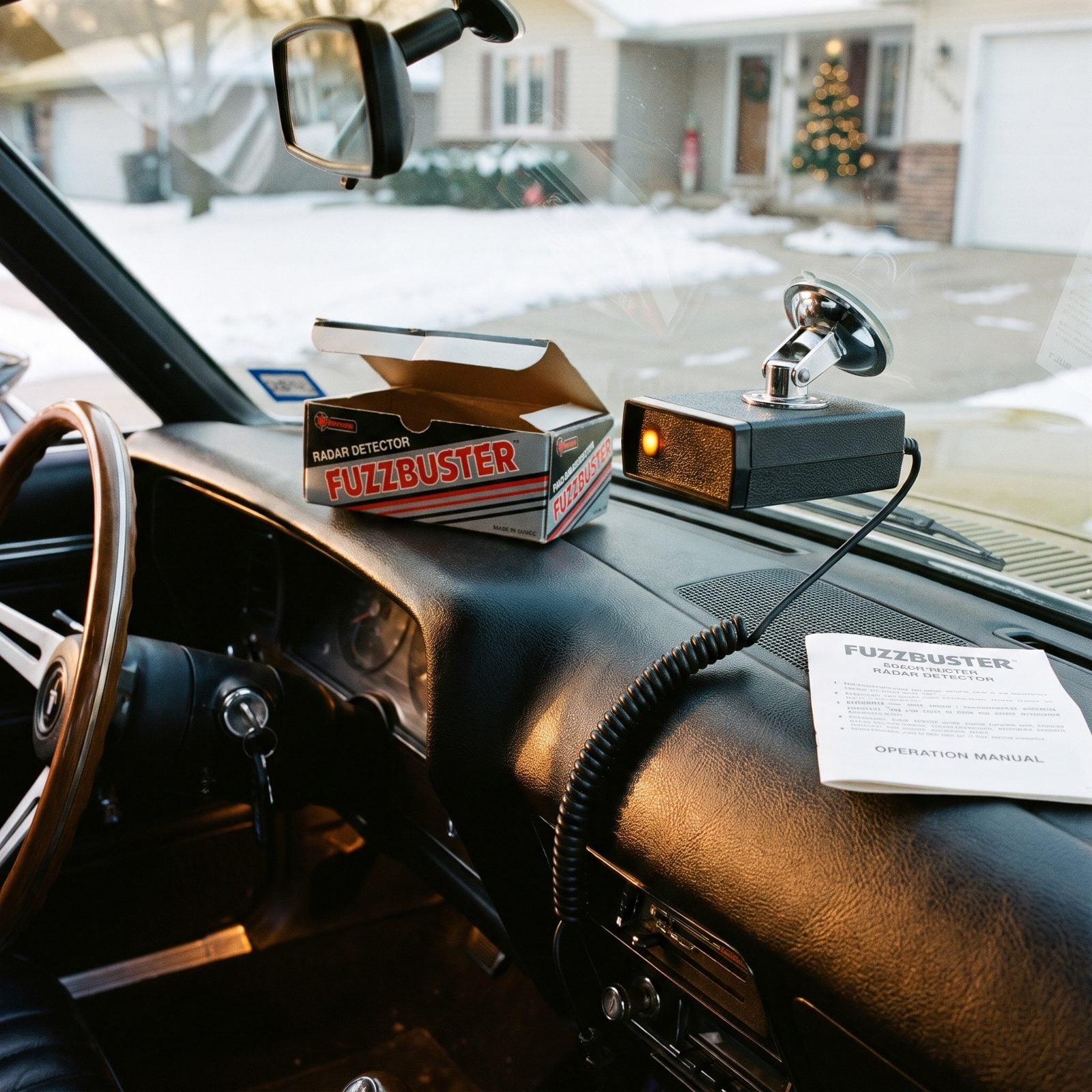
You stuck it to the windshield, plugged it into the lighter, and waited for that single amber light to flash and the thing to shriek. Half the fun was the paranoia. The other half was the name, which sounded exactly like what it did.
Early Fuzzbusters pull collectors in now partly for the camp and partly for the engineering history. A boxed one with the suction cup uncracked, the cord intact, and the box with its red-striped FUZZBUSTER lettering is a genuine find. These got left baking in hot cars and tossed the second a newer model showed up, so survivors in the box are thin on the ground.
22. The Craig Under-Dash 8-Track Player, Screwed In Christmas Afternoon
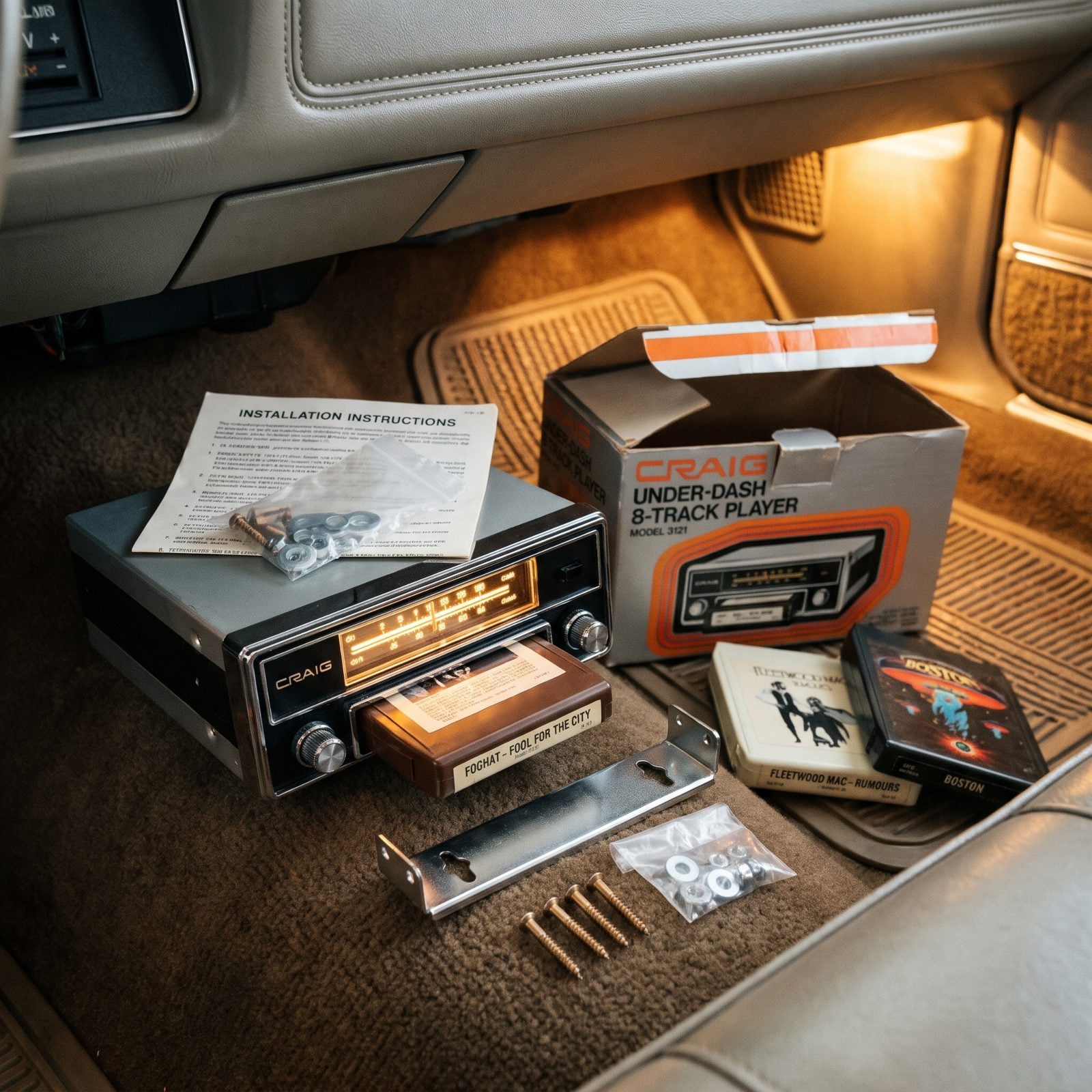
Christmas morning you unwrapped it. Christmas afternoon you were flat on your back under the dash with a screwdriver, running power to the fuse box, drilling into the metal bracket, cussing a little. Then the first cartridge went in with that satisfying mechanical chunk and the dome light dimmed the moment the music hit.
The Craig units had a reputation for sound, and boxed examples with the mounting hardware, the instruction card, and that slim chrome face unscratched are what people hunt. The players themselves are common. Complete-in-box — with the little bag of screws nobody ever kept — is the rare version.
21. Jensen Triaxial Car Speakers, the Upgrade Nobody Admitted They Wanted
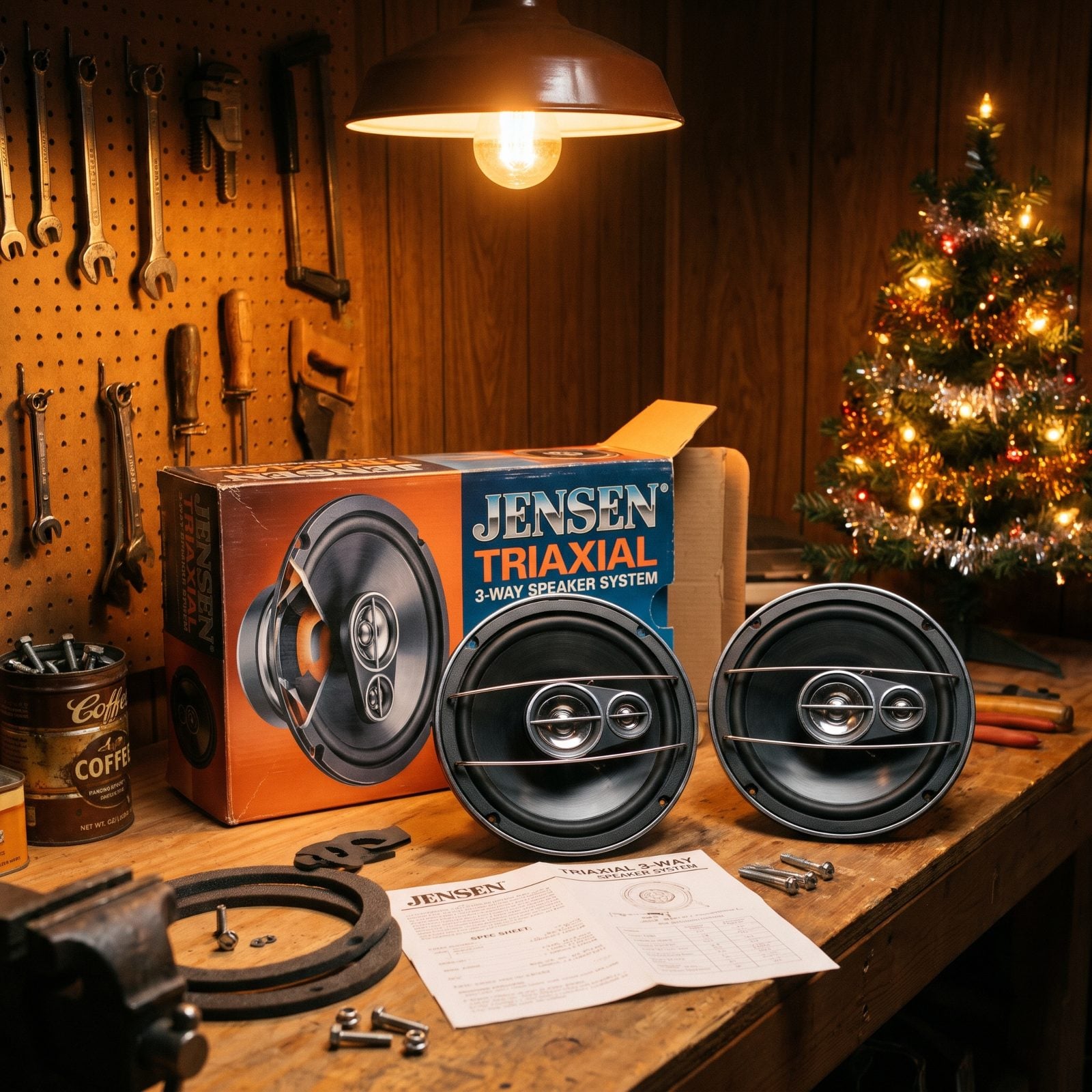
Factory speakers sounded like a transistor radio stuffed in a coffee can. Then triaxials showed up, three drivers in one, and suddenly the bass in the back seat could rattle your fillings. These were the parts-counter dream gift, the thing you circled in the catalog and hoped somebody noticed.
Boxed pairs are the collectible, with the gaskets, the grilles, and that cutaway-diagram packaging that made audio feel like rocket science. People installed these and chucked the box in the trash, so a sealed-looking pair with the orange-and-blue graphics intact is the one that moves at the swap meet.
20. The Sun Super Tach II, the Gift That Said Someone Took You Seriously
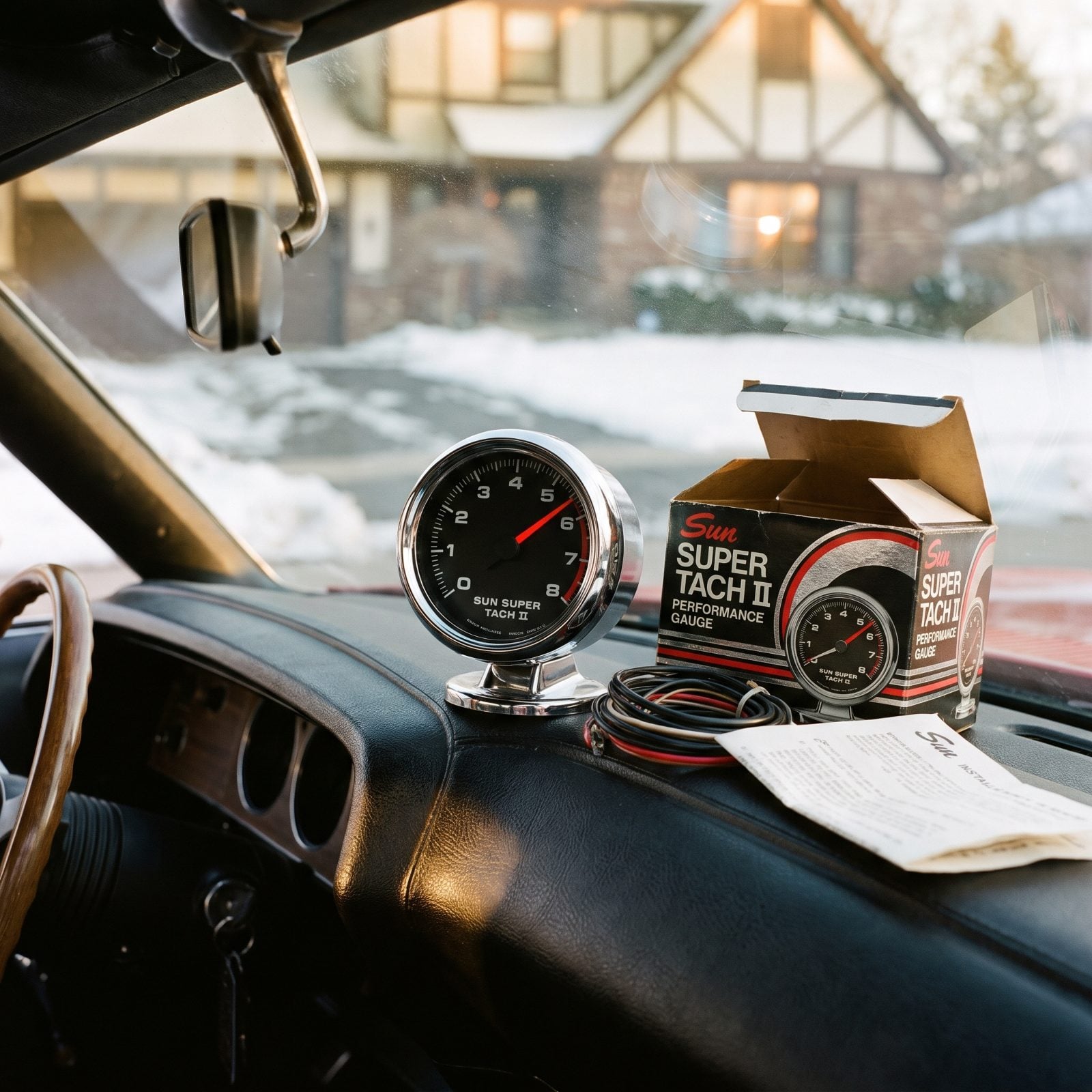
A tach under the tree meant somebody in your life had made peace with the fact that you were going to drive hard no matter what they said. The Super Tach II sat on its chrome pedestal up on the dash, big needle swinging toward the redline, and it turned any car into something you suddenly took more seriously.
The complete kits are what people prize: gauge, mounting bracket, wiring harness, install sheet, and that black-and-red box. Most got hard-wired in and the packaging vanished the same day. A boxed Super Tach II with everything present is the one that ends the hunt.
Of all the dash gear, this is the gift we’d most want to find still sealed. The chrome, the needle, the redline. The whole decade in one gauge.
19. The Chrome Three-Gauge Instrument Panel Still Taped Inside Its Styrofoam
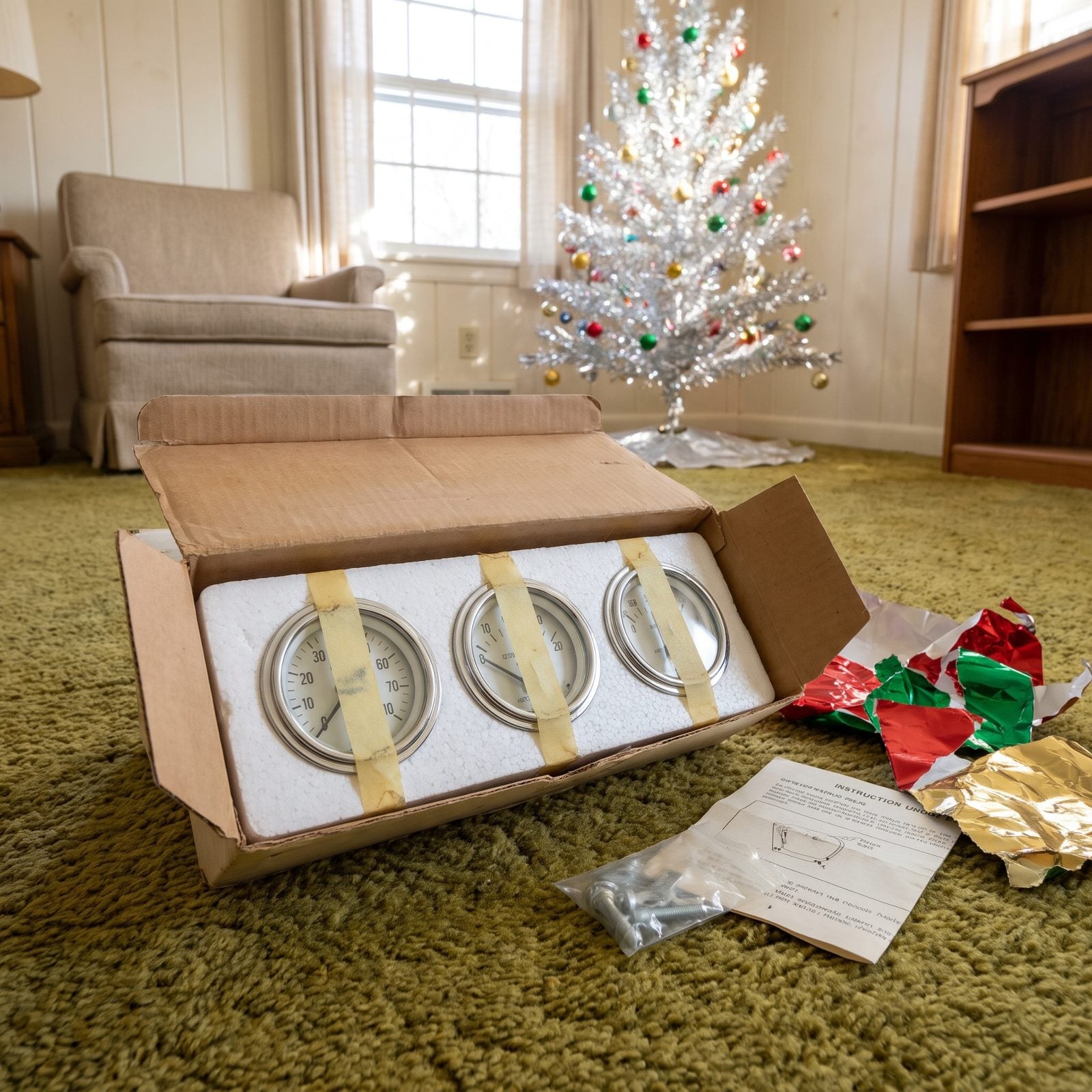
This was the box that meant somebody had been listening. Three separate round gauges, each in its own chrome bezel, ready to be mounted under the dash where your knee used to be. Open the lid and there they sat, nested in white Styrofoam with tape over the glass, a bag of bolts and the instruction sheet set out beside them.
Most kits got installed that same week, and decades of engine heat, dash sun, and swapped cars did the rest. A complete set still in its foam, with the hardware bag sealed and the instruction sheet folded once, is the version that pulls real interest. Clean, unfaded faces and untouched chrome bezels matter more than you’d think.
18. The Grant Wood-Rim Steering Wheel Nobody Wanted to Scratch
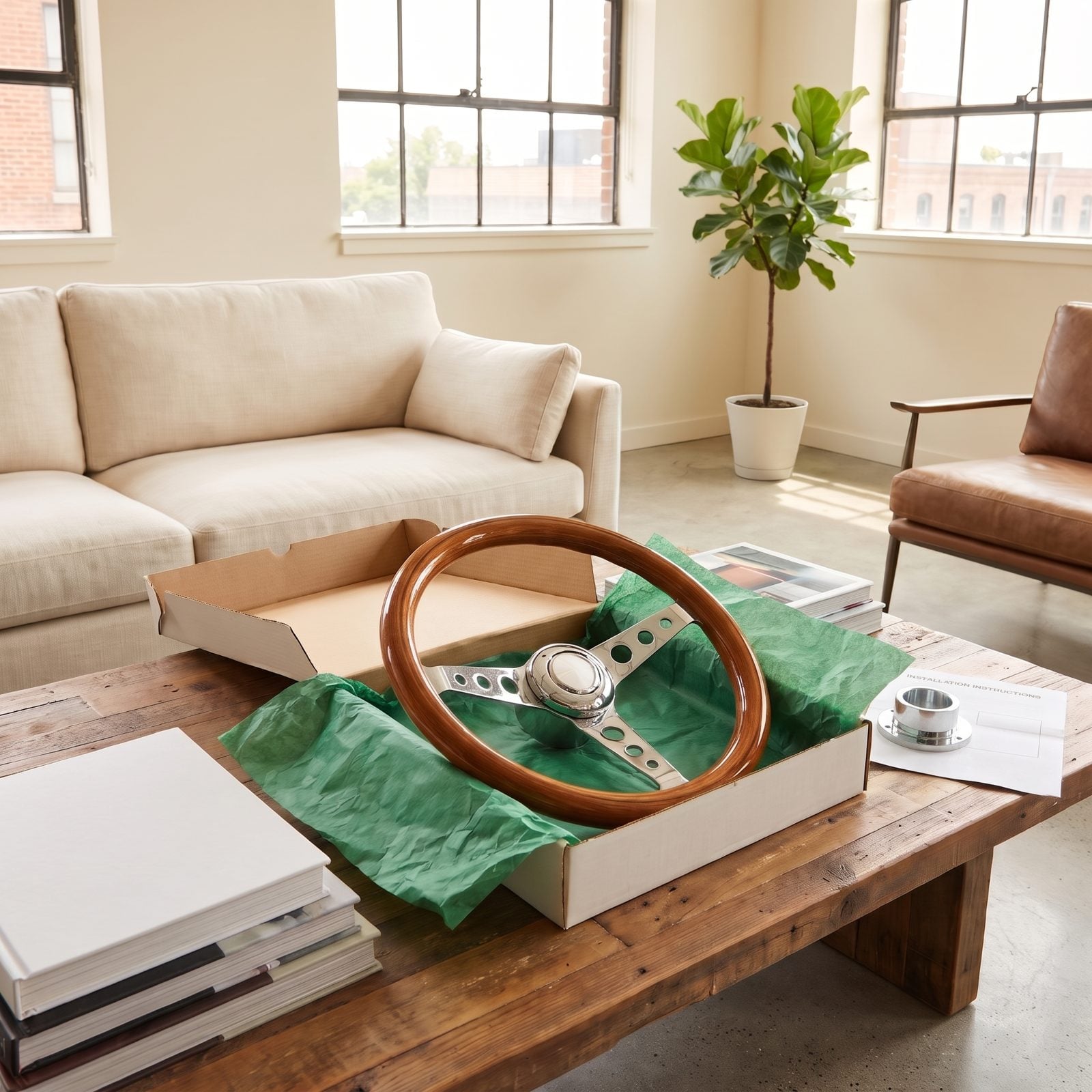
Grant steering wheels were the fastest way to make a family sedan feel like it came from somewhere in Europe. Polished wood rim, drilled chrome spokes, a center horn button that looked far more expensive than it was. Unwrapping one felt like unwrapping a promise that your car could be cooler than it was.
Installing it meant pulling the stock wheel and finding the right adapter hub, and plenty of kids stared at the box for weeks before working up the nerve. The wood took the hit over time, cracking and fading from hands and sunlight. An unmounted wheel with a glossy, unchecked rim and the original box is the one people still lean in to look at.
17. The Hurst T-Handle Shifter Knob That Felt Like Winning
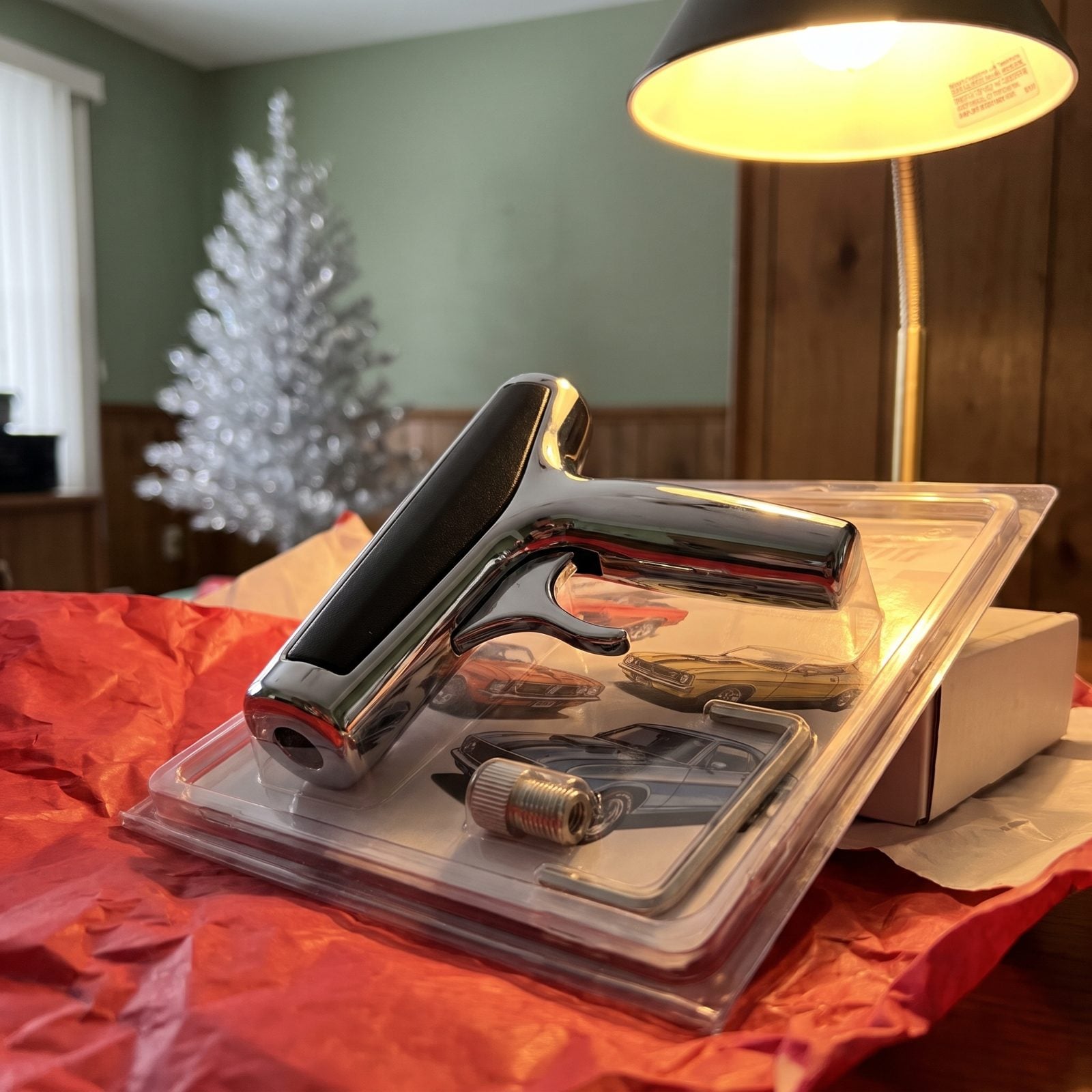
Hurst was the name that meant performance, period. Bolting a chrome T-handle onto the shifter turned a regular gear lever into something that looked like it belonged at the drag strip, and wrapping your hand around it felt like a win before the car even moved. The bright chrome and black grip did half the work.
These got grabbed, twisted, and sweated on for years, so the chrome pitted and the lettering wore away under palms. A boxed knob with bright plating still in its clear blister pack with muscle-car artwork holds real appeal for anybody restoring a muscle car interior. Genuine Hurst pieces are what collectors want, and they check the markings closely, because reproductions are everywhere.
16. The Mr. Gasket Barefoot Accelerator Pedal, Toes Cast in Chrome
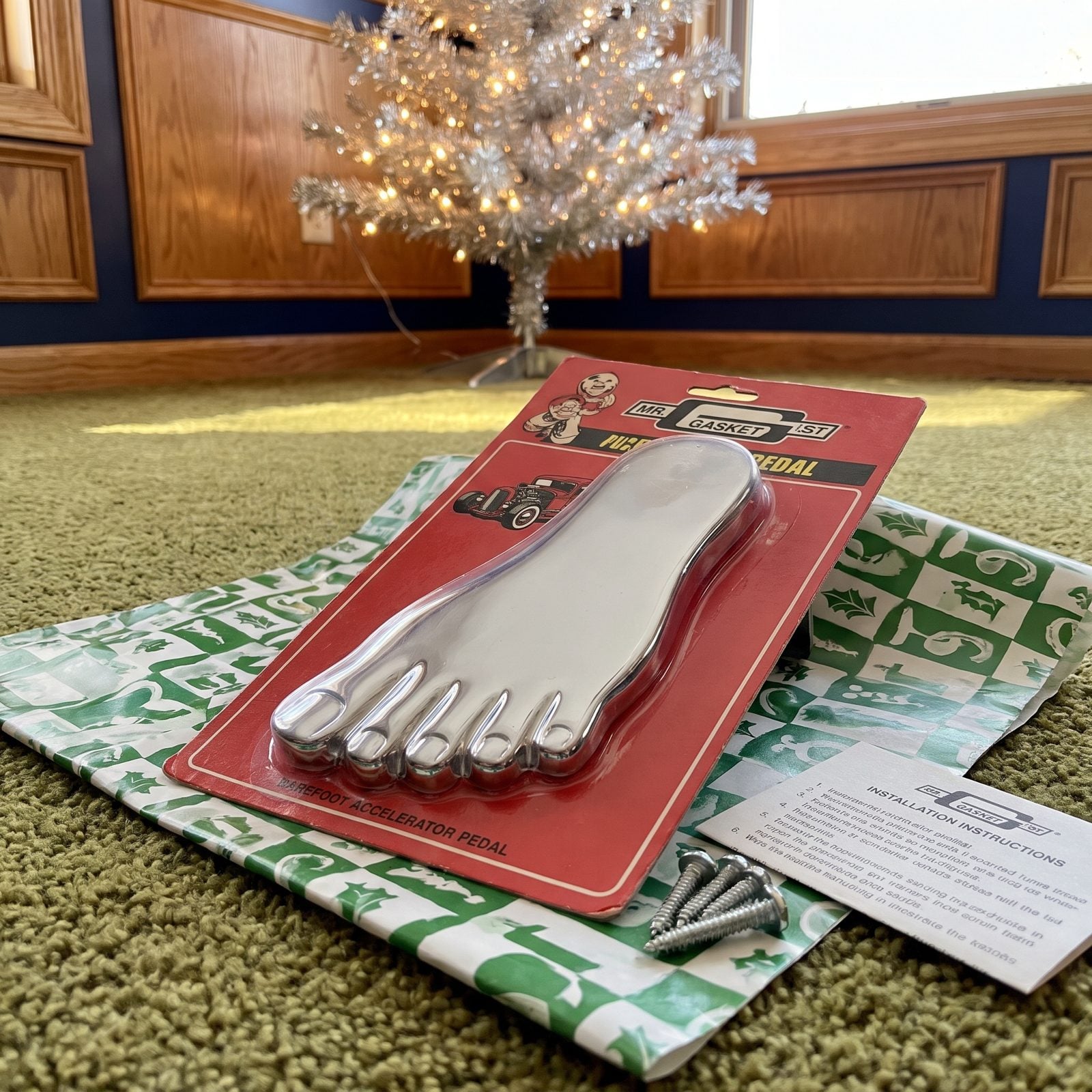
Nothing said seventies hot rod humor like a chrome bare foot where the gas pedal used to be. You literally put your foot on a foot. Mr. Gasket built a whole catalog around bolt-on personality, and the barefoot pedal was the piece that made every passenger look down and laugh.
It was a stocking stuffer that became a conversation piece, and most of them got bolted in and worn smooth by work boots. A carded original with the packaging intact and the chrome toes unscuffed is the find now. They sit right at the crossroads of kitsch and genuine period aftermarket history, which is exactly where collectors love to shop.
15. The Motorized Chrome Power Antenna Kit in a Box Full of Promise
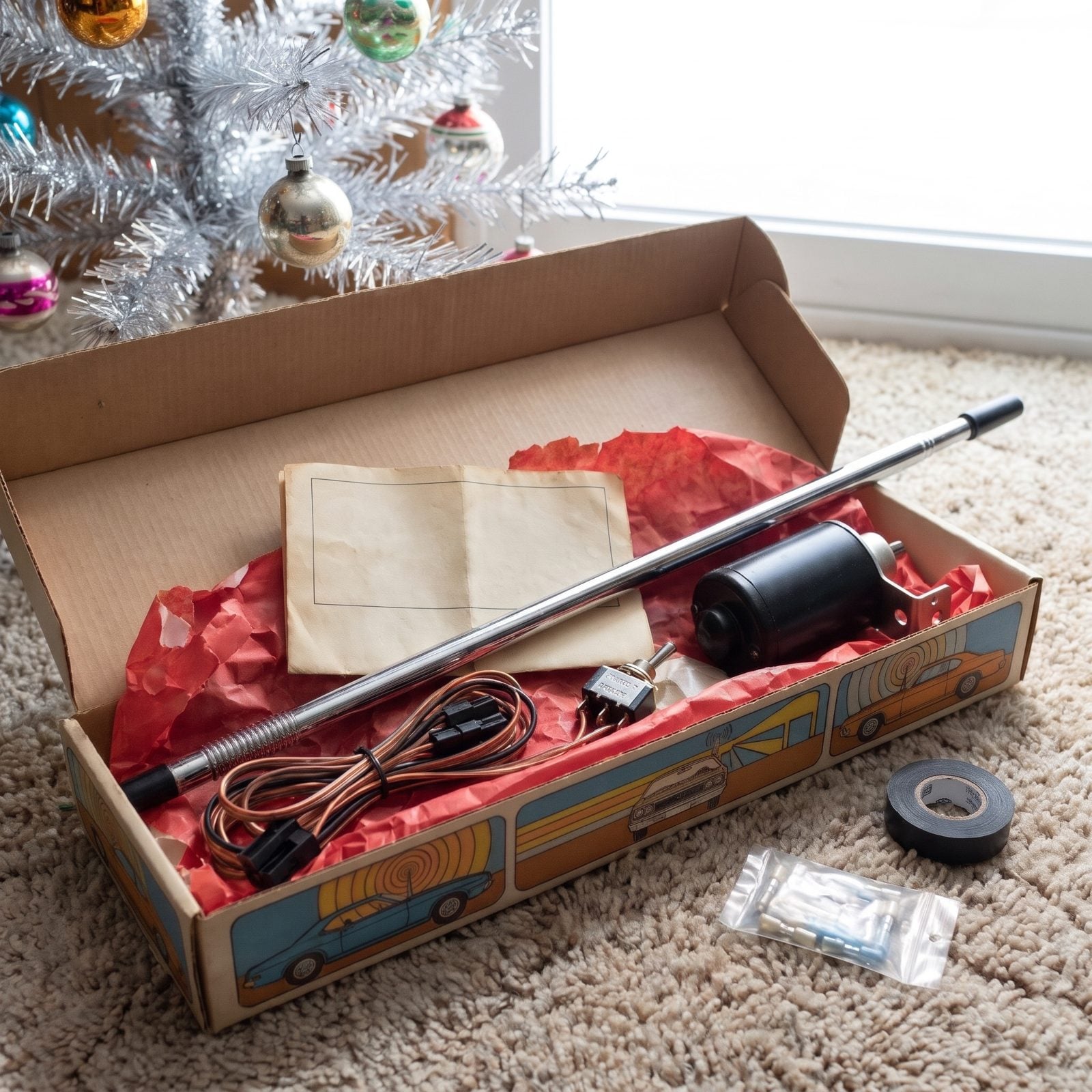
Flip on the radio and the mast rose out of the fender on its own. Turn it off and it slid back down. A power antenna was a luxury-car touch, and the aftermarket kit let you fake it on anything, provided you were willing to drill a hole in a fender and run wires under the dash on Christmas afternoon.
That installation scared plenty of people off, which is why some of these never left the box. Installed ones lived hard lives, with stripped nylon gears, bent masts, and car-wash brushes doing damage. A complete kit with the motor, telescoping mast, wiring, and paperwork all present is the one worth holding onto.
14. The Dashboard Compass That Swung on Every Turn
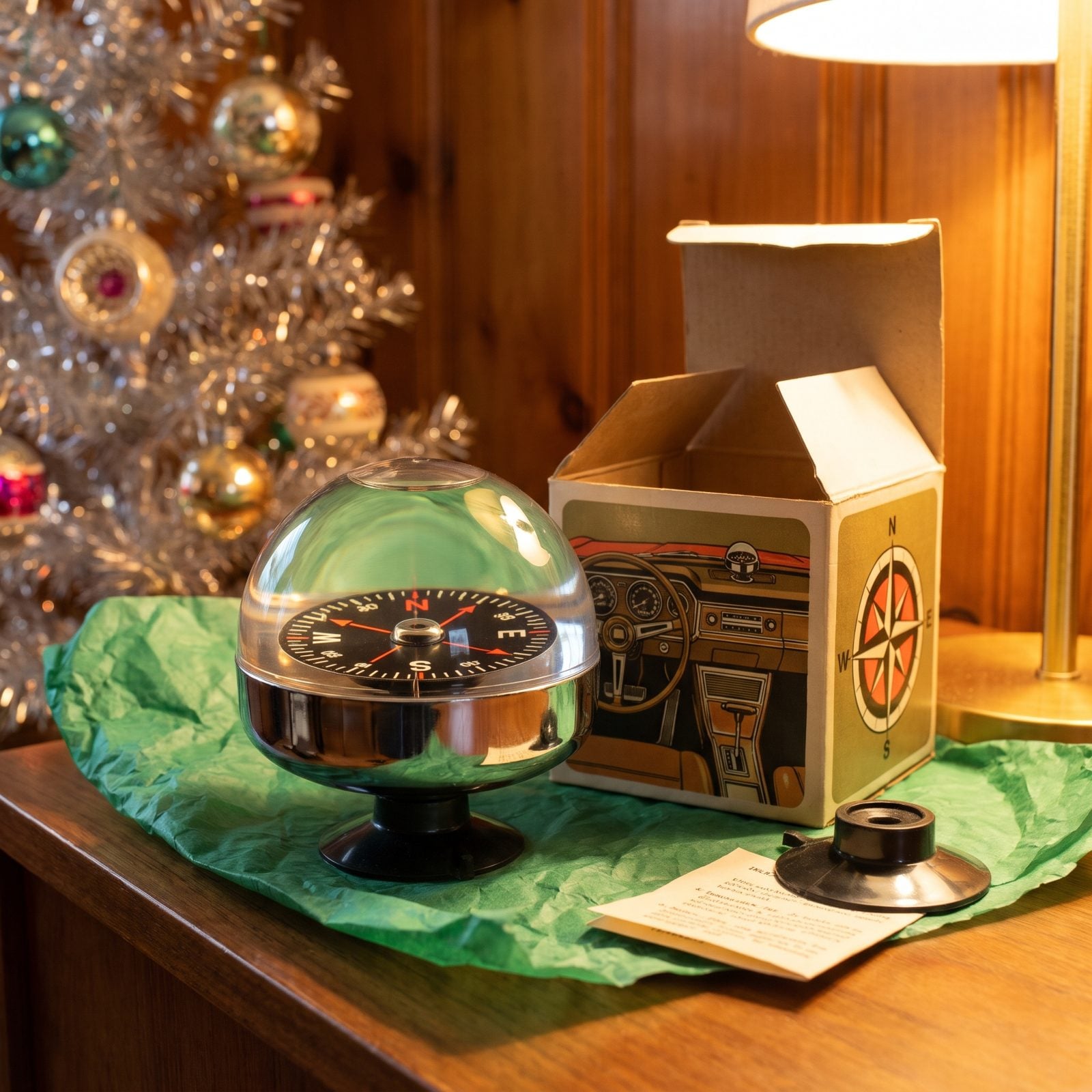
It sat on the dash on a little suction cup or sticky pad, a clear dome over a flat black dial with red arrow pointers that swung every time the car turned. Before anything told you where you were going, this told you which way you were facing. It was the classic gift for the driver who liked road trips and folded maps.
Sun and heat were hard on them. The fluid leaked, bubbles crept in, and the clear dome went cloudy. A compass with a clear dome and a dial with its pointers still moving freely is a small but satisfying grab, especially in period packaging with the illustrated dashboard on the front.
13. The Oversized Fuzzy Dice Begging for a Rearview Mirror
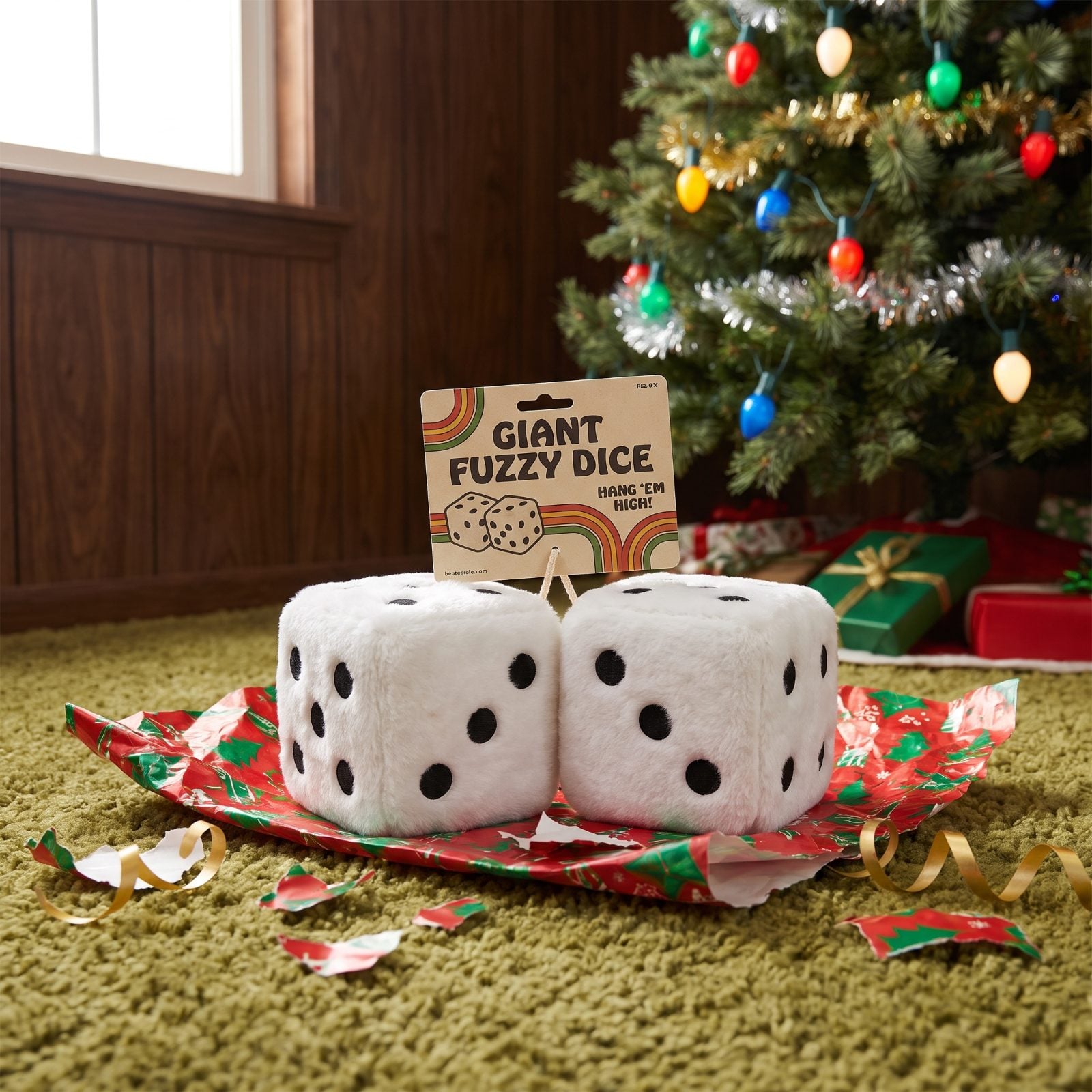
They were oversized, they were plush, and they were absolutely ridiculous, which was the whole point. Fuzzy dice hung from the rearview mirror carried a hint of fifties hot rod swagger, and the nostalgia wave of the seventies brought them roaring back. The gift box practically demanded a mirror to hang from.
Hanging in a windshield meant years of sun bleaching, so the bright reds and whites faded to sad pinks and grays. A pair still on the original header card, colors bright and fuzz unmatted, carries far more charm than any reproduction. The packaging art, usually loud and cartoonish, is half of what collectors are after.
12. The Diamond-Tufted Vinyl Seat Covers That Smelled Like a New Car
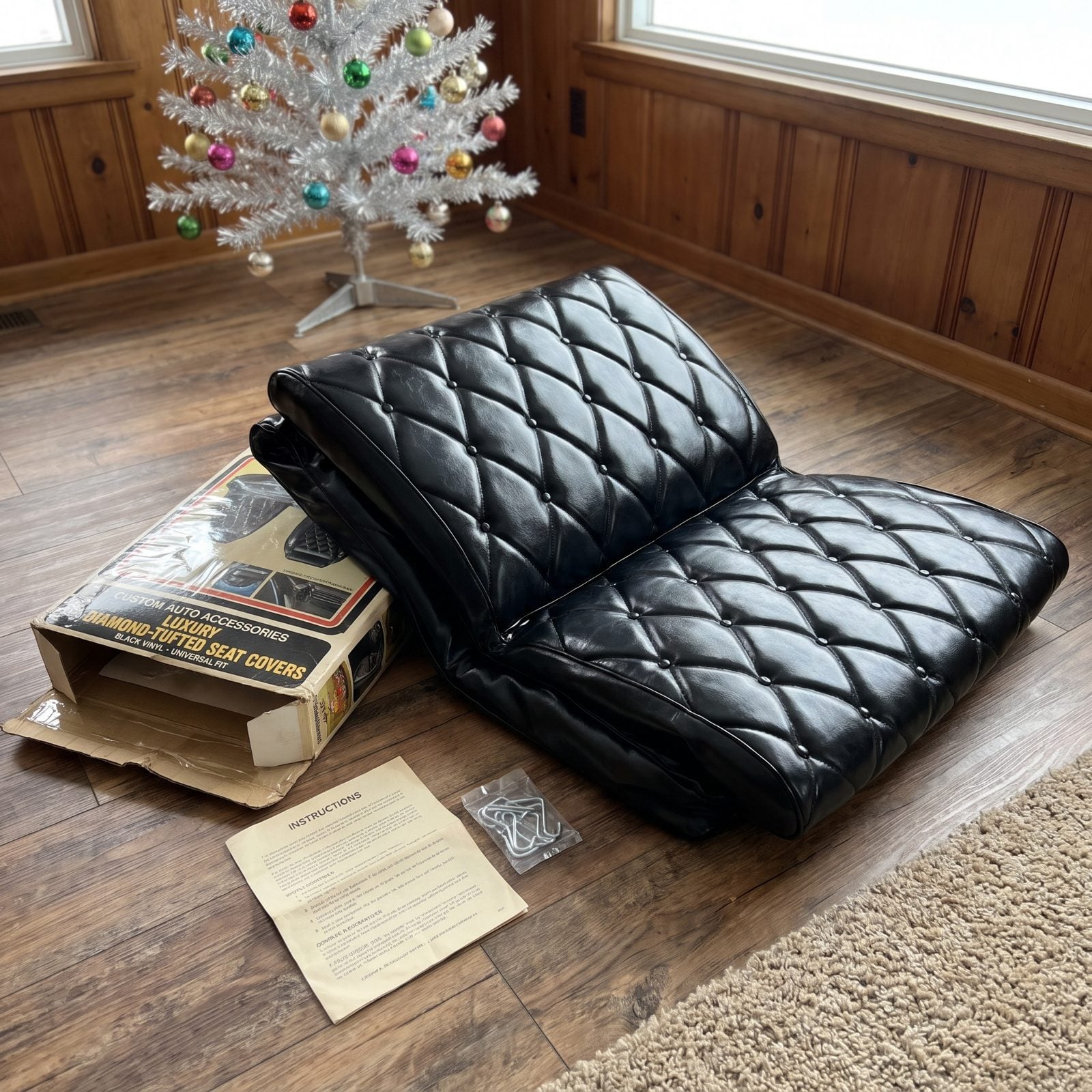
Slip them over a cracked bench seat and suddenly the old car smelled new again. Diamond-tufted vinyl seat covers were a department-store staple, sold in boxes with a glossy illustration of a shiny sedan on the front. Hooks, elastic straps, and a little wrestling did the rest.
They also scorched the backs of your legs every summer, which is why so many got split, torn, or tossed. Unopened sets in period colors like avocado, burgundy, or tan are surprisingly scarce. For anybody restoring a seventies interior to look exactly like it did, a sealed set is the real prize.
11. The Dealership License Plate Frame Everyone Kept Even After the Trade-In
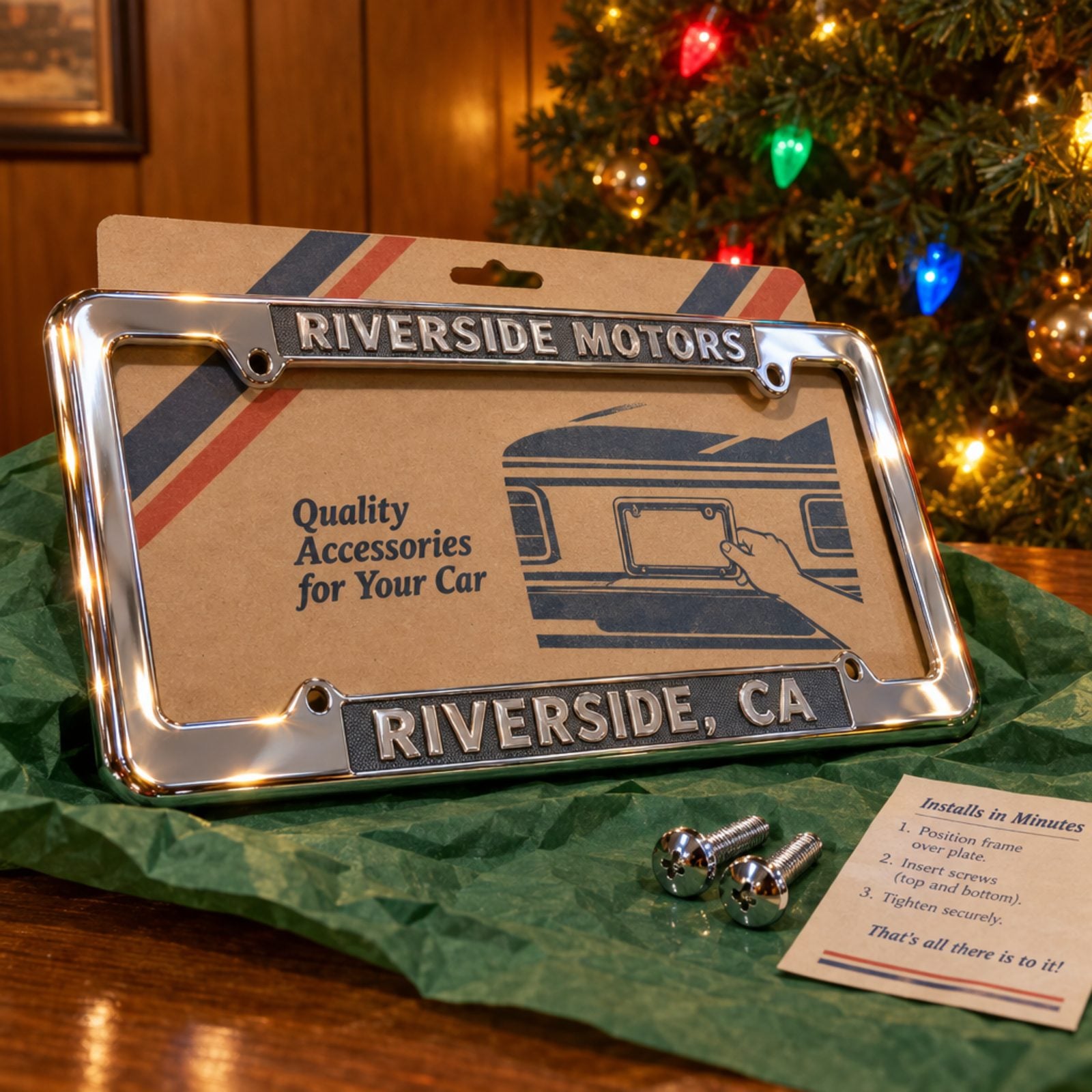
Dealers screwed these onto every car that left the lot, and somehow they outlived the cars themselves. Chrome or plastic, with the dealership name stamped across the top and the town across the bottom, a license plate frame was free advertising that people held onto out of habit or pride. Plenty ended up wrapped as gifts for the guy who remembered every car he ever bought.
Frames from dealerships that closed long ago, or brands that no longer exist like Plymouth, Oldsmobile, Pontiac, and AMC, carry a little piece of local history. Clean chrome and readable lettering matter most. Hang a wall of them in a garage and you’ve got a map of where everybody’s family once bought their cars.
10. The Enamel Automaker Key Fob That Jingled in Every Pocket
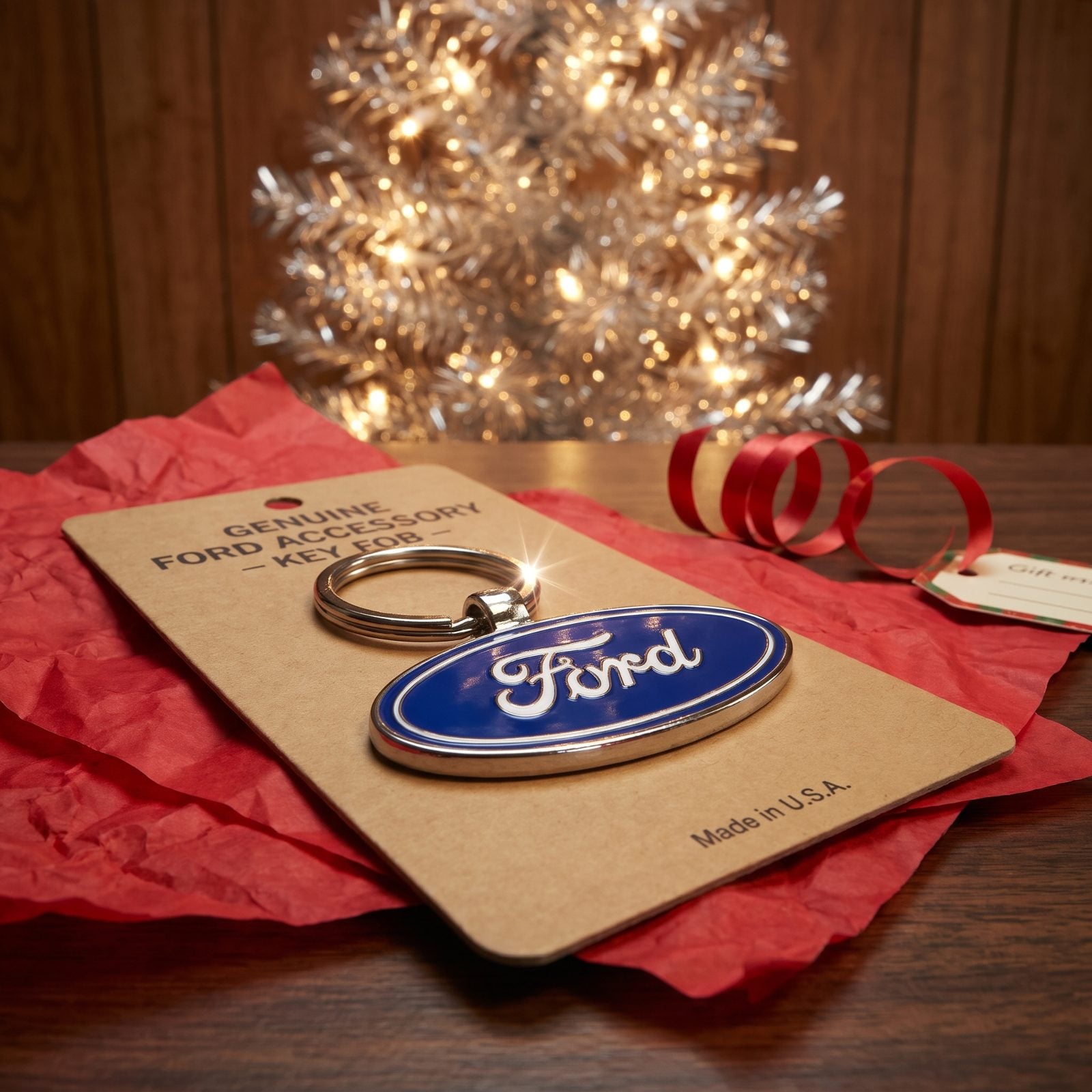
It came in a little box from the dealership or tucked into a stocking: a key fob with the automaker’s emblem in bright enamel. The Chevy bowtie, the Ford oval, the Pontiac arrowhead, the Mopar logo. It jingled with every step and announced which side you were on before you ever opened your mouth.
Keys lived in pockets, so the enamel chipped and the plating wore through. Fobs that stayed in the box, with sharp color and clean metal, are the ones collectors seek out. They’re small, cheap to start collecting, and a sneaky-good way into automaker memorabilia without needing a whole garage to store it.
9. The Satin Racing Jacket Stitched With Every Sponsor Patch From STP to Pennzoil
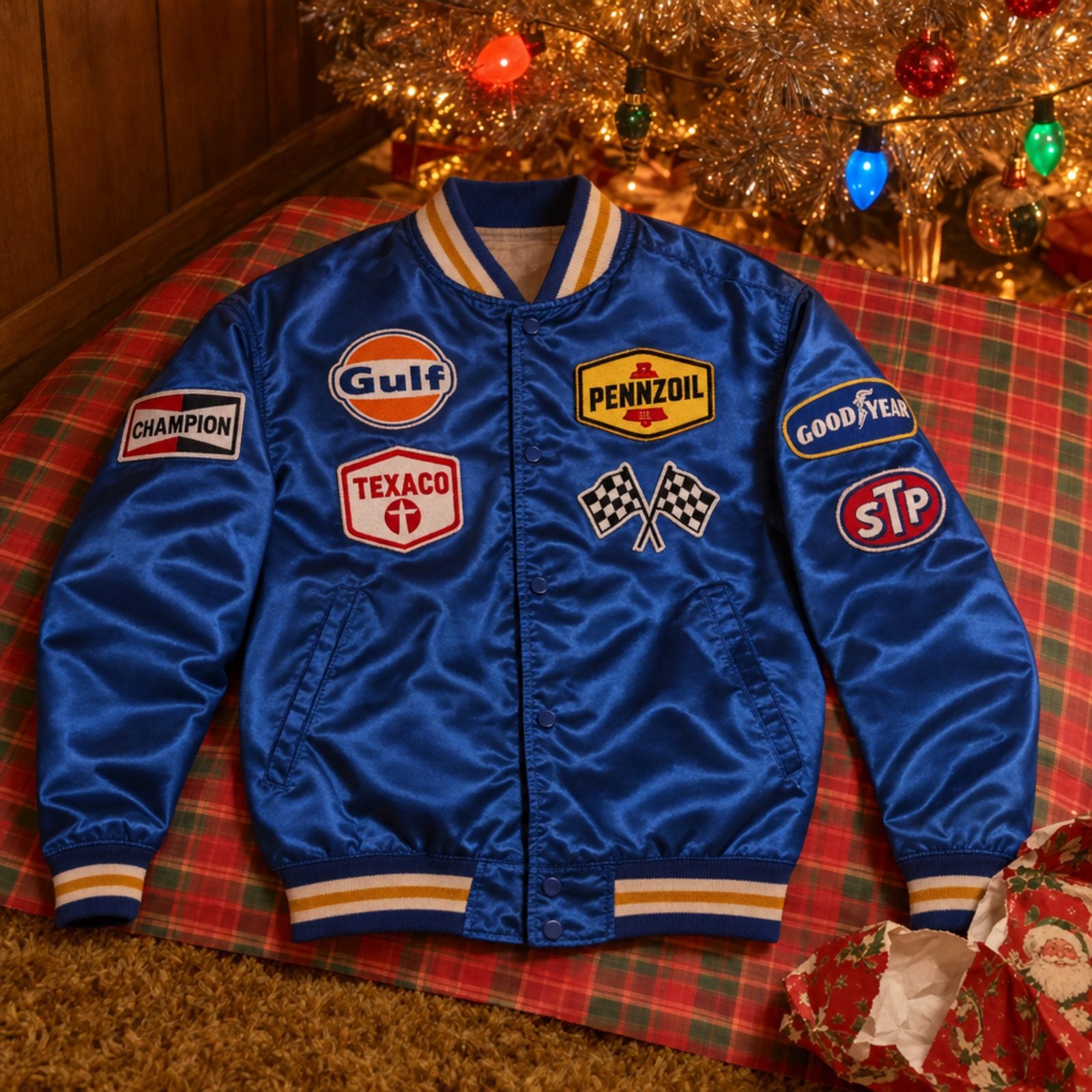
You knew a kid had a good Christmas when he came out of the house wearing one of these, sleeves still creased from the box. Satin racing jackets landed under a lot of trees in the mid-70s, and the good ones came loaded with sponsor patches before you ever handed over a dime.
The survivors with the lining intact and the embroidery still tight pull real money now, because collectors want the factory patches, not whatever somebody ironed on in a basement years later. A jacket that still has its original hang tag? That’s the find.
8. The Mechanical Racing Chronograph With the Tachymeter Bezel and the Three Subdials
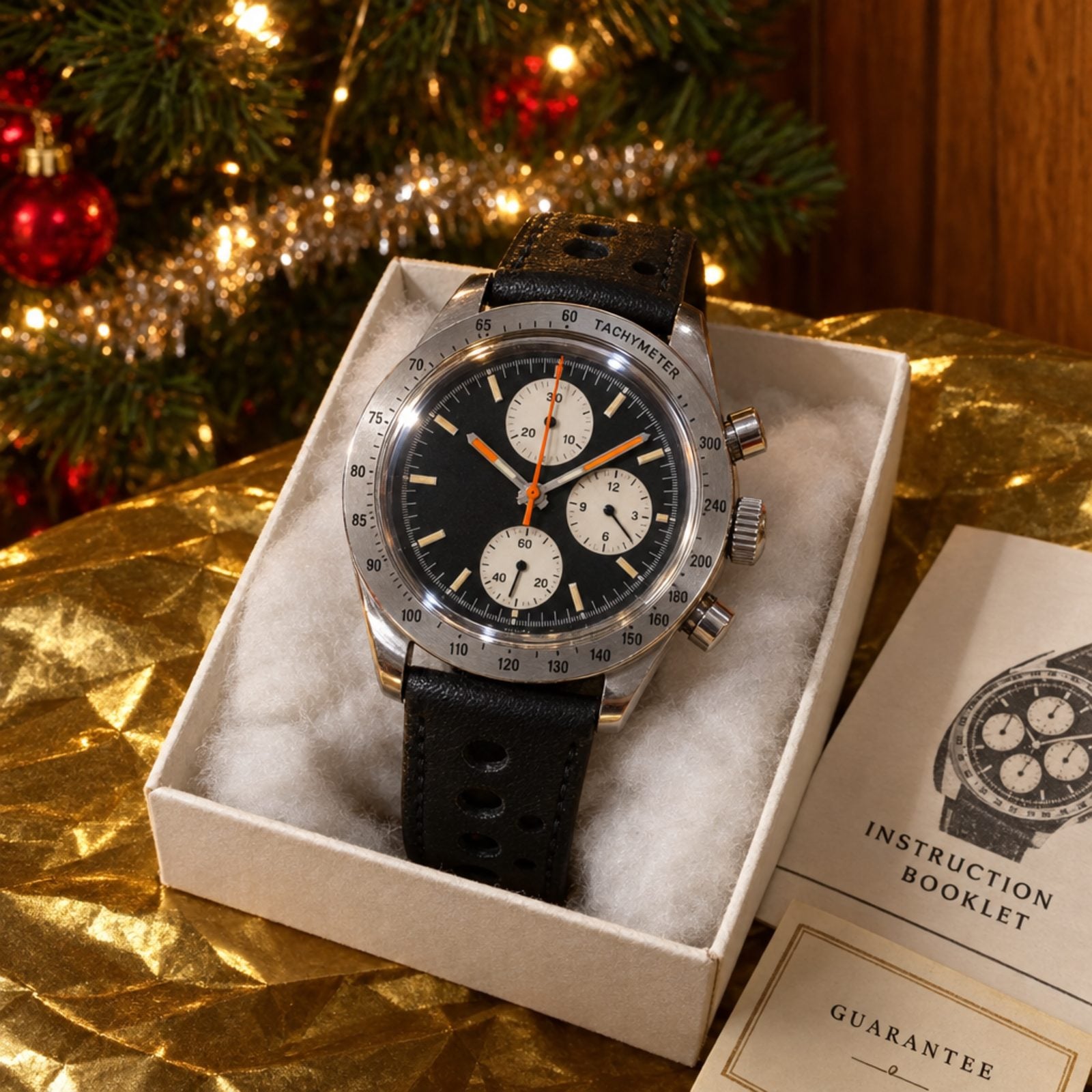
A racing chronograph told you somebody in the family figured you were growing up. The tachymeter bezel, the two or three pushers, the orange seconds hand sweeping across a black dial — it looked like something a driver would actually strap on before a race.
The mechanical ones are the keepers. No battery, just a wind-up movement that still ticks four decades later if it was treated right. Find one with the original box, the instruction booklet, and that little guarantee card tucked in beside it, and you’ve got the whole package a collector loses sleep over. The strap almost never makes it. The watch, cared for, does.
7. The Zippo Lighter Engraved With a Gas-Station Logo That Still Snaps Shut With That Click
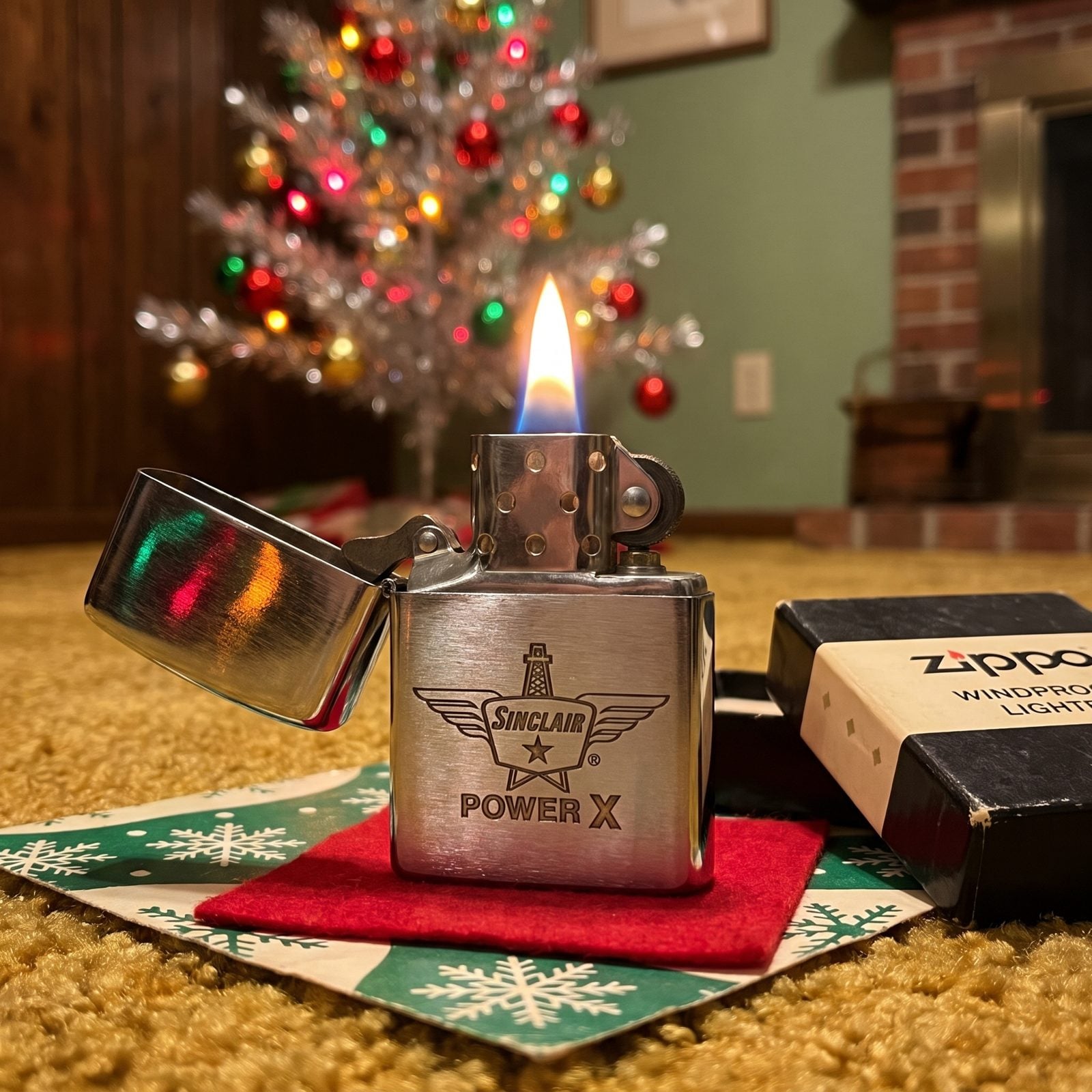
That click. You can hear it just looking at the picture — flip the lid, roll the wheel, catch the flame, snap it shut against your leg. A Zippo was the reliable stocking gift, and the ones etched with gas-station and oil-company logos are what people hunt for now.
A Sinclair dino. A Texaco star. A Shell pecten pressed into brushed chrome. Those started life as counter giveaways and promo handouts, which is exactly why the clean survivors are so thin on the ground.
6. The Simoniz Car-Wax Gift Kit With the Chamois, the Applicator, and the Can of Paste
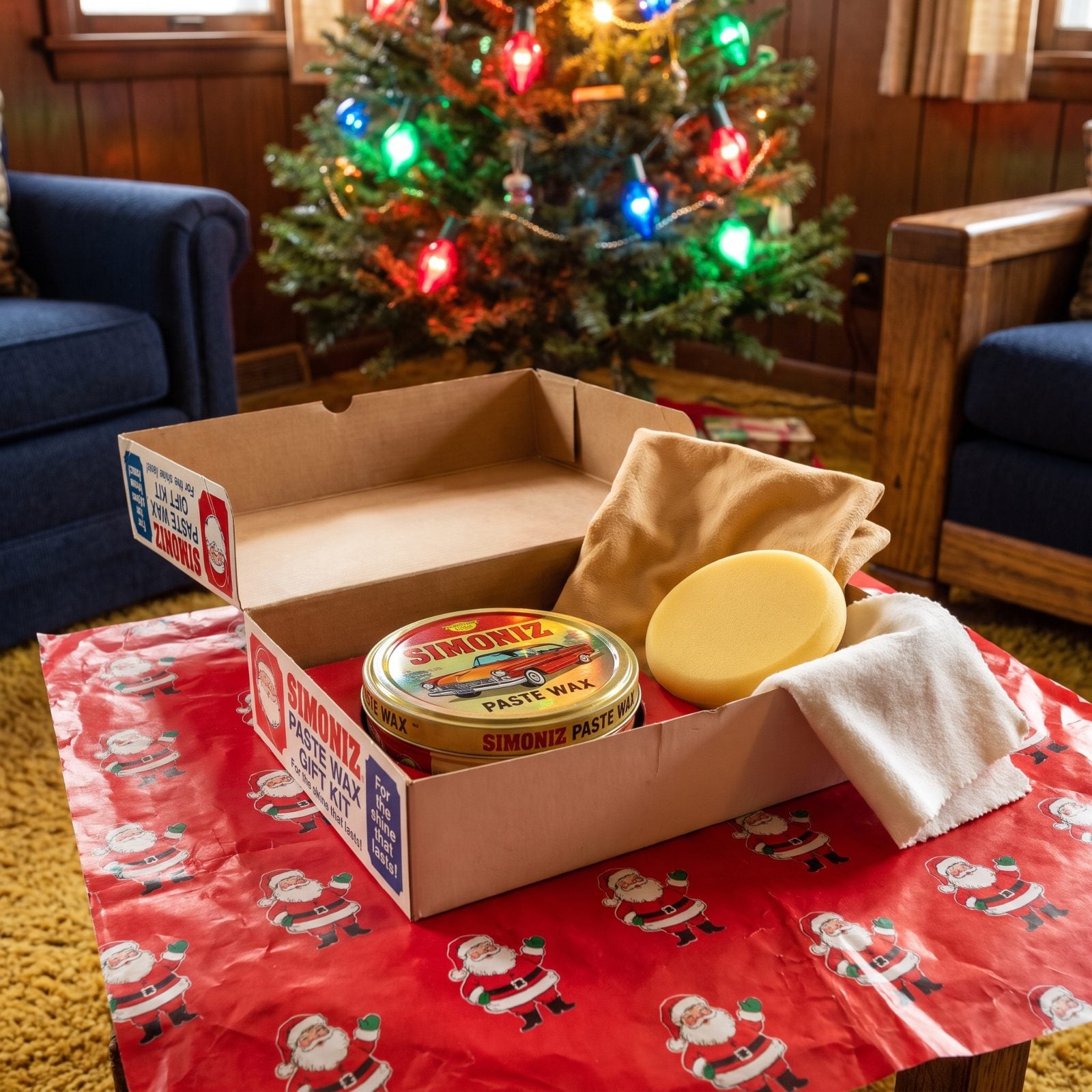
Every garage dad wanted one, and plenty of them found one waiting on Christmas morning. The Simoniz gift kit boxed up the whole Saturday wax ritual — the tin of paste, the foam applicator, a real chamois folded stiff in its sleeve.
Most kits got used, which is exactly why the sealed ones matter. A full tin, an unopened chamois, box graphics bright and uncreased. That’s a time capsule of a weekend habit nobody really does the same way anymore. You wiped on, let it haze, buffed it off by hand. No speed. Just a radio and an afternoon.
5. The Sears Roadside Emergency Kit That Lived in the Trunk for Fifteen Years
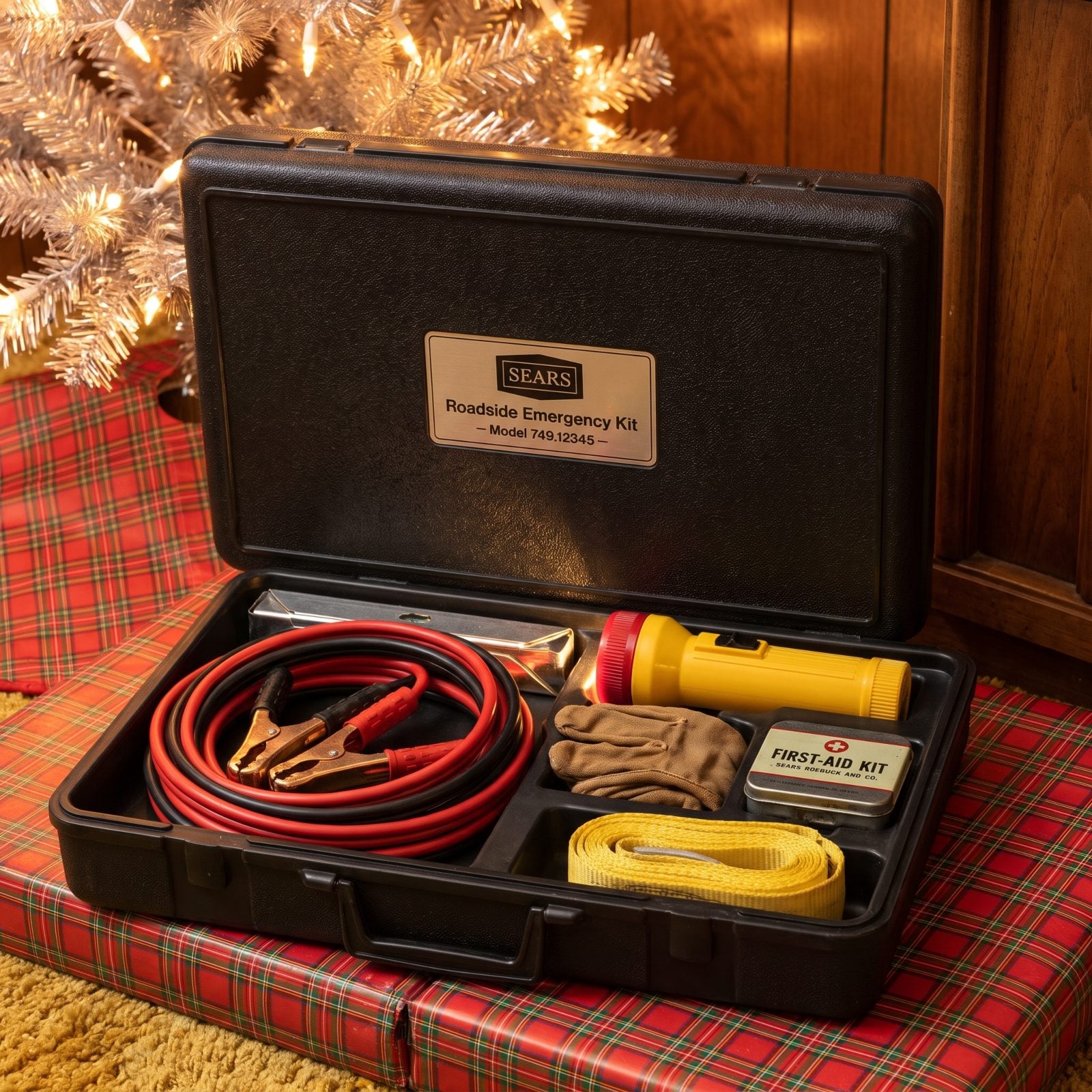
This was the practical gift — the one a father handed a kid heading off to college, or a new driver in the family. Sears packed them tight. Jumper cables, a folding reflector, a flashlight, work gloves, all seated in a molded case that snapped shut and rode in the trunk.
Fifteen years later it was still back there, gloves gone a little stiff, cables never once clamped onto anything. A complete kit with everything in its slot and the case graphics still clean turns out to be a surprisingly tough find. People raided the parts and lost them one by one.
4. The Red Metal Eagle Gasoline Can With the Flexible Pour Spout and the Screw Cap
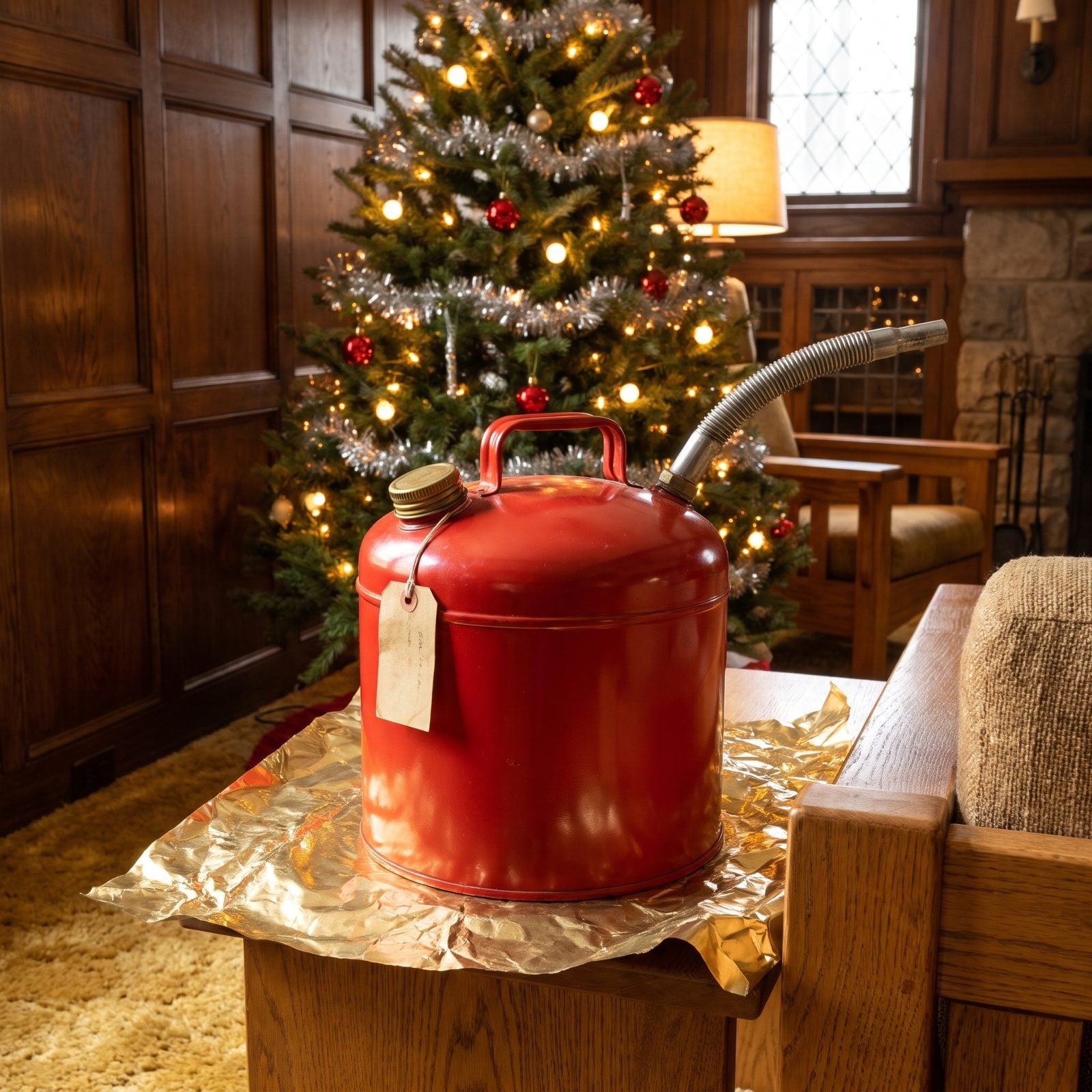
Red metal, rolled handle, that bendable spout that tucked back into the body when you weren’t pouring. The Eagle gas can was a workbench fixture, and it showed up wrapped under plenty of trees for the man who had a mower, a boat, or a second car always running low.
The galvanized-steel versions with the brass vent cap and factory-red paint are the prize. Rust-free, dent-free, spout still intact. Then plastic took over and these got tossed by the curb. The clean survivors sit on shelves now instead of garages.
3. The Craftsman Socket Set Snapped Into the Red Metal Case With the Molded Tray
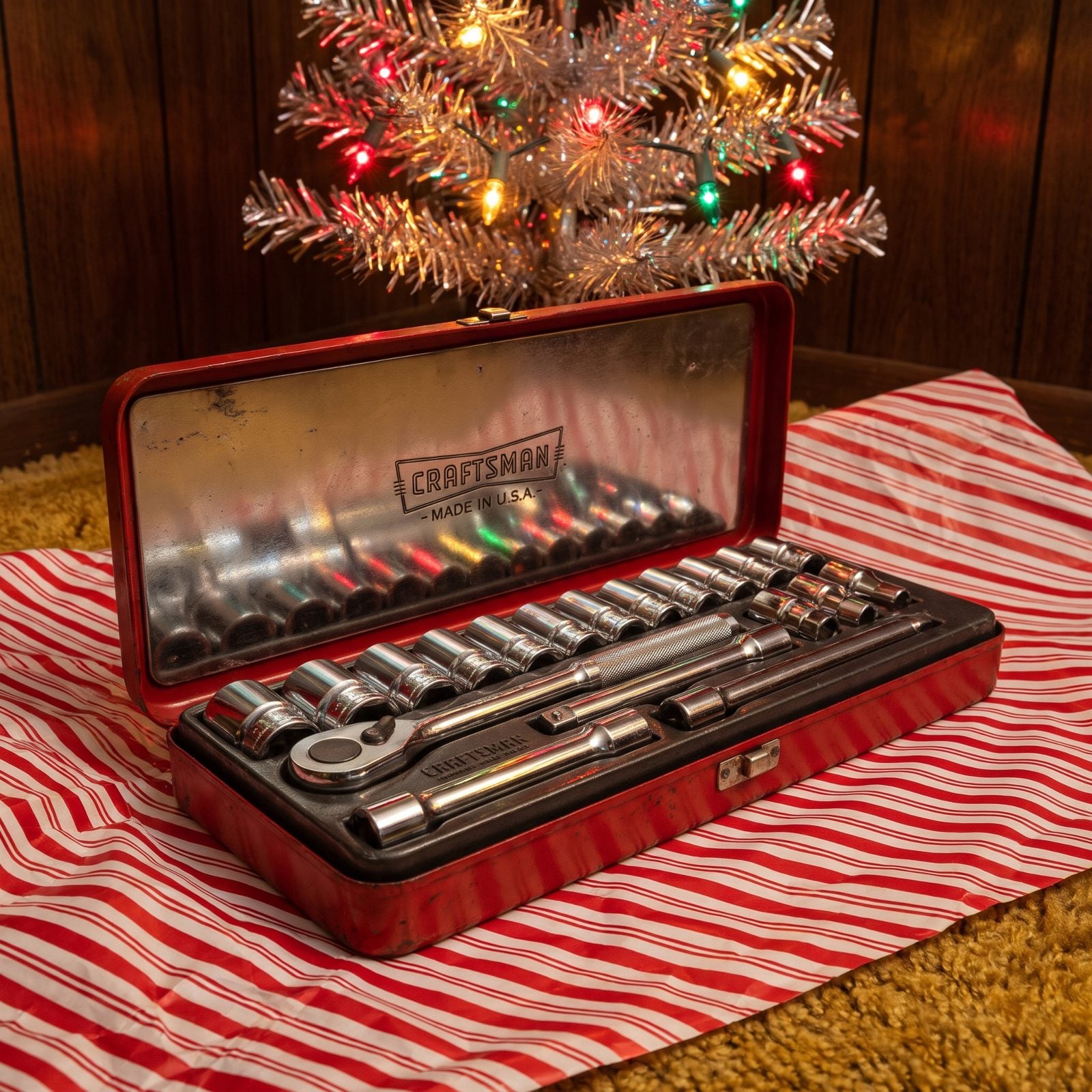
Nothing said Christmas in a working family like chrome in a red metal case. You opened the lid and there they all were, sockets seated in a molded tray, biggest to smallest, a ratchet laid in its own groove. You could practically see your reflection in them.
A full Craftsman set from the 70s — every socket present, the case paint bright, the molded tray uncracked — is a real collectible now. The missing-socket sets are everywhere; the complete ones, untouched since the paper came off, are what people pay for. These were the tools that got handed down, which is part of why finding a whole one still feels like a small miracle.
2. The Kennedy Cantilever Mechanic’s Toolbox That Folded Open Like an Accordion
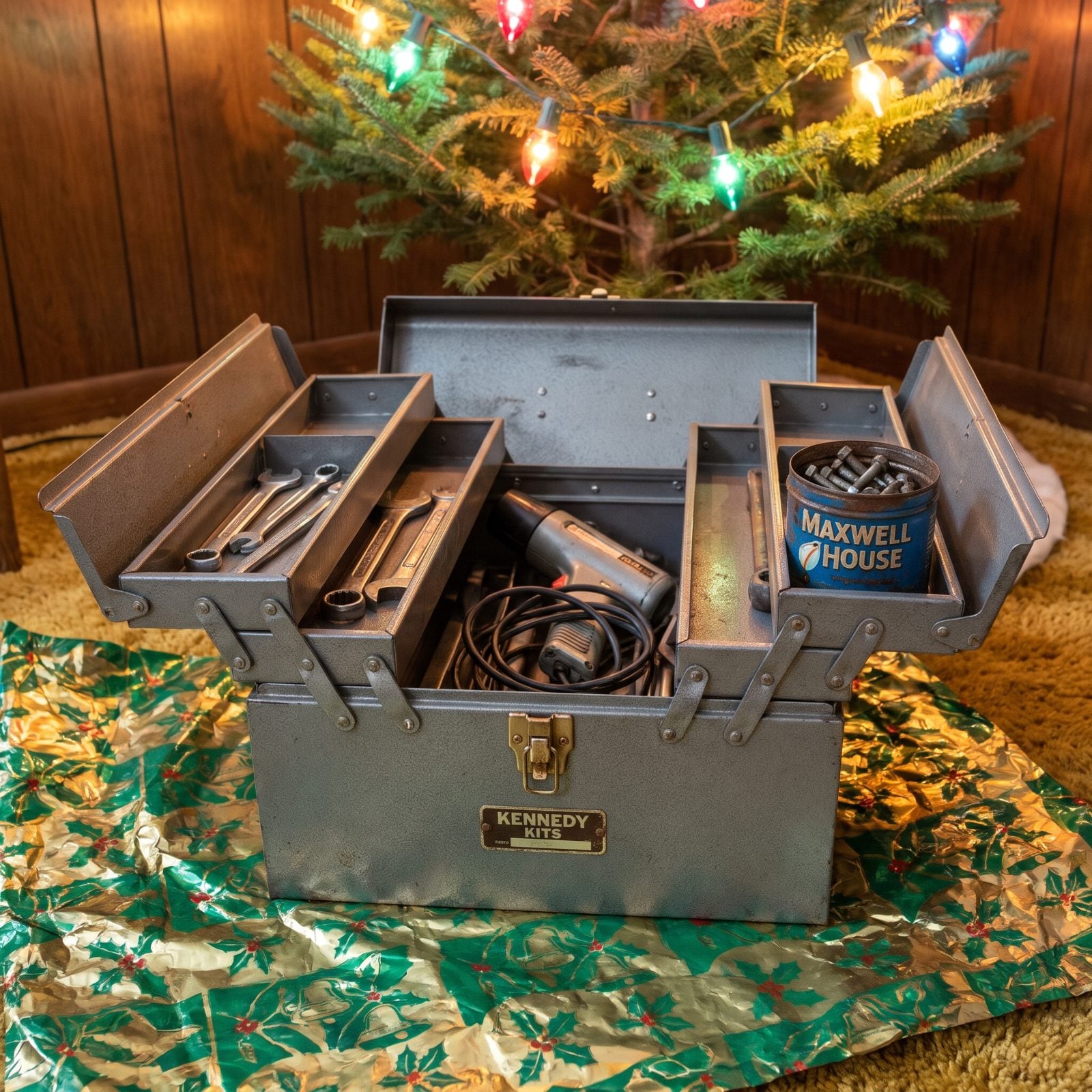
Pull the handle and the trays swung out on hinged arms, stacking up and out like an accordion. The Kennedy cantilever toolbox was the serious man’s gift — the one a father or father-in-law handed over when he’d decided you were a real mechanic now.
Hammertone-gray paint, brass latch, every tray lined with felt or stamped steel. It held a career. A clean one with the latch working, the arms square, and the original label plate still riveted on now lives in collector hands more often than in garages. These didn’t wear out. They just got full.
1. The Tamiya Porsche 934 Radio-Controlled Car That Was Half Model, Half Machine
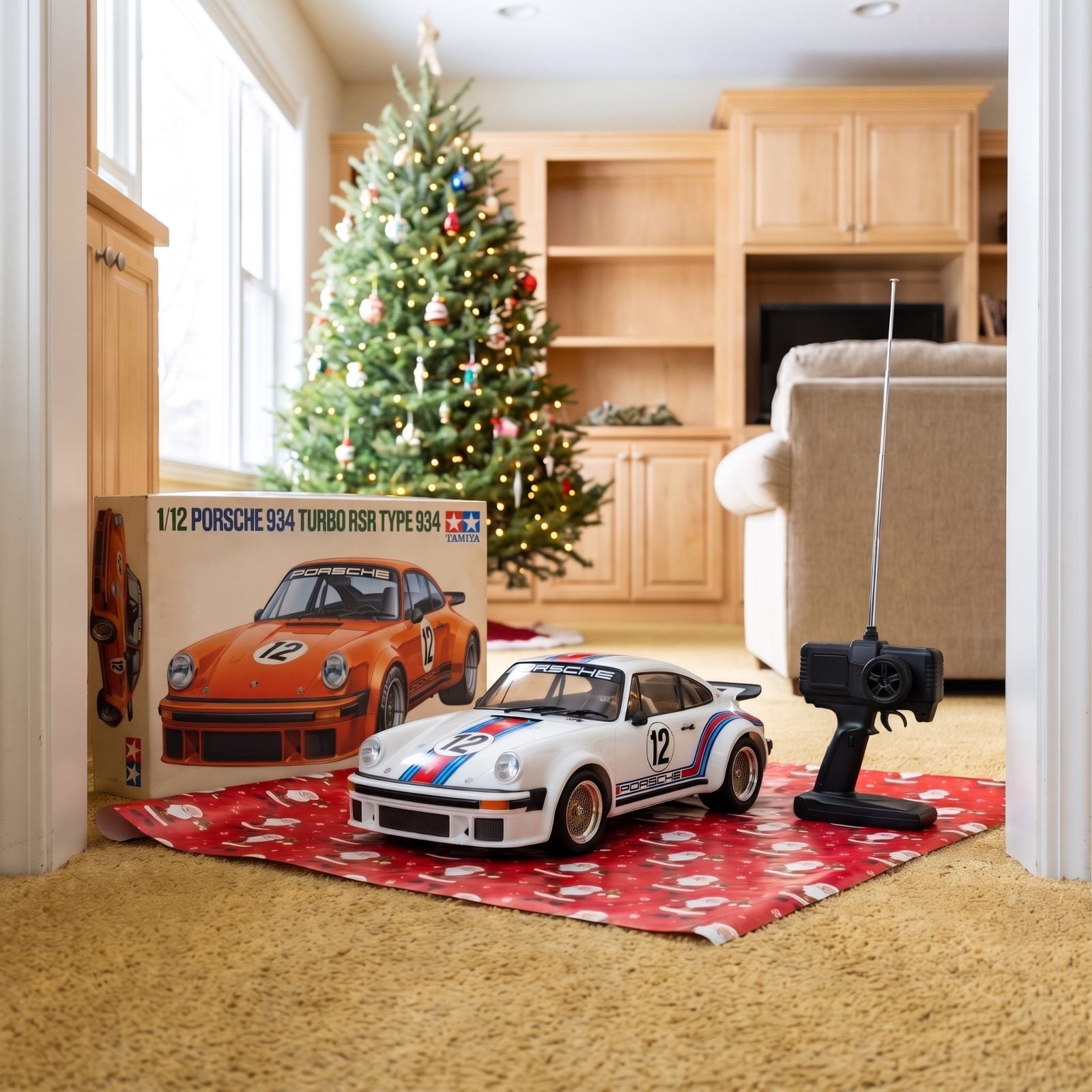
This was the dream gift, and more model than toy. The Tamiya Porsche 934 arrived as a kit you built — a bodyshell you painted, a chassis you assembled with real screws and a little grease. And then it actually drove, fast, on a pistol-grip radio.
Kids who got one Christmas morning often lost the next week to it at the kitchen table. The survivors with original box art, the unused decal sheet, and a clean build are serious collector pieces today. A boxed, unbuilt kit is the holy grail. Most got torn open the second the paper hit the floor, which is precisely why the sealed ones are so scarce.
Hold one and you’re holding the whole morning. The smell of fresh styrene, the instruction sheet folded in quarters, a parent kneeling on the shag helping thread the antenna wire.
The sports car appeal hasn’t faded either, since sports car photos got more hearts from Jalopy Talk readers than the other images in the same articles, 79% versus 65%.