
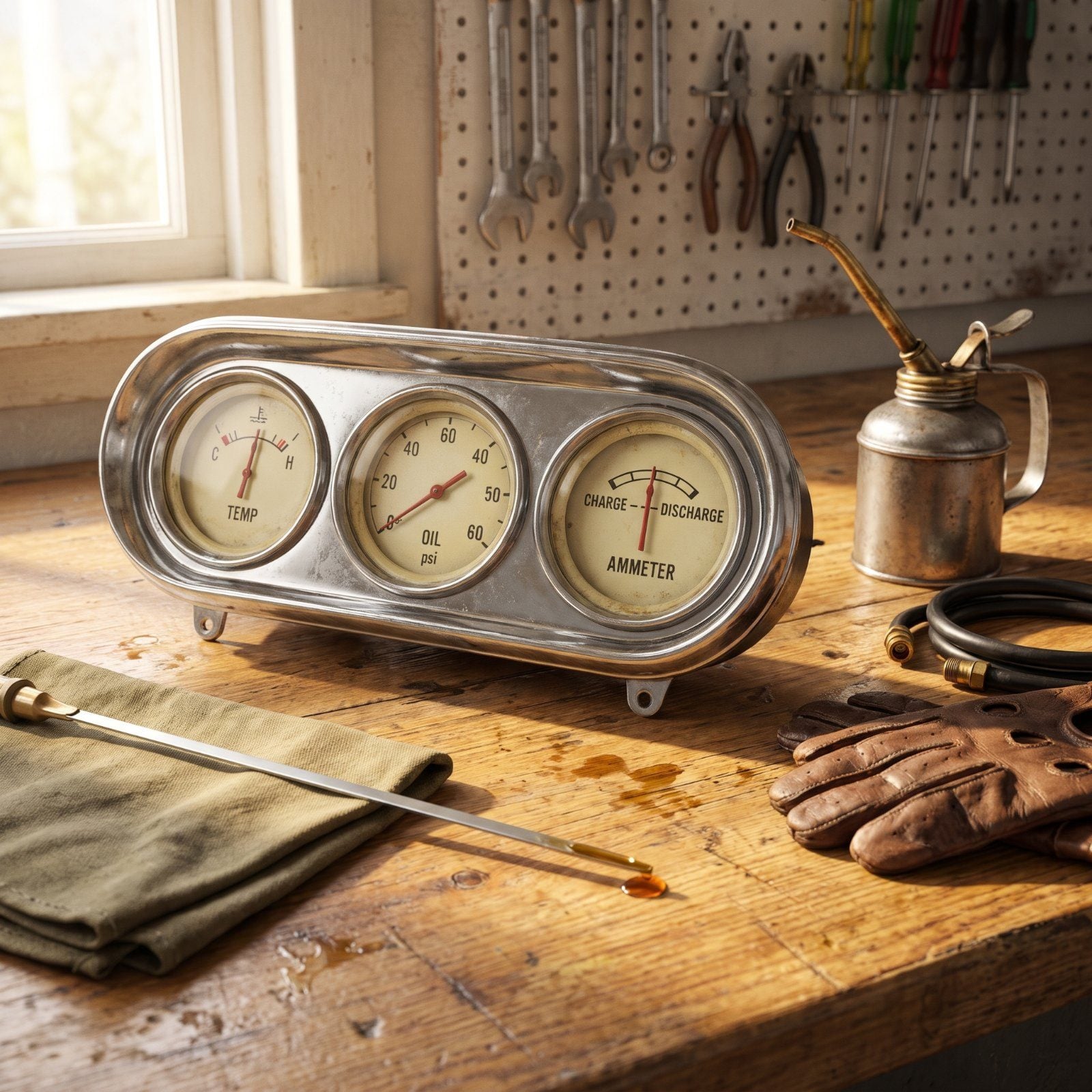
The real damage never arrives with a bang. It shows up slow, buried in the habits you repeat every day without a second thought — a cold throttle blip here, a skipped dipstick check there. Nothing dramatic enough to scare you, and that’s exactly the problem. The car soldiers on while the wear piles up where you can’t see it. These are the small, ordinary routines that put old iron in an early grave, and the fixes cost almost nothing but a little attention.
Please note that some of the images in this article were created with the assistance of AI.
41. Nursing an Overheating Engine Home Instead of Pulling Over
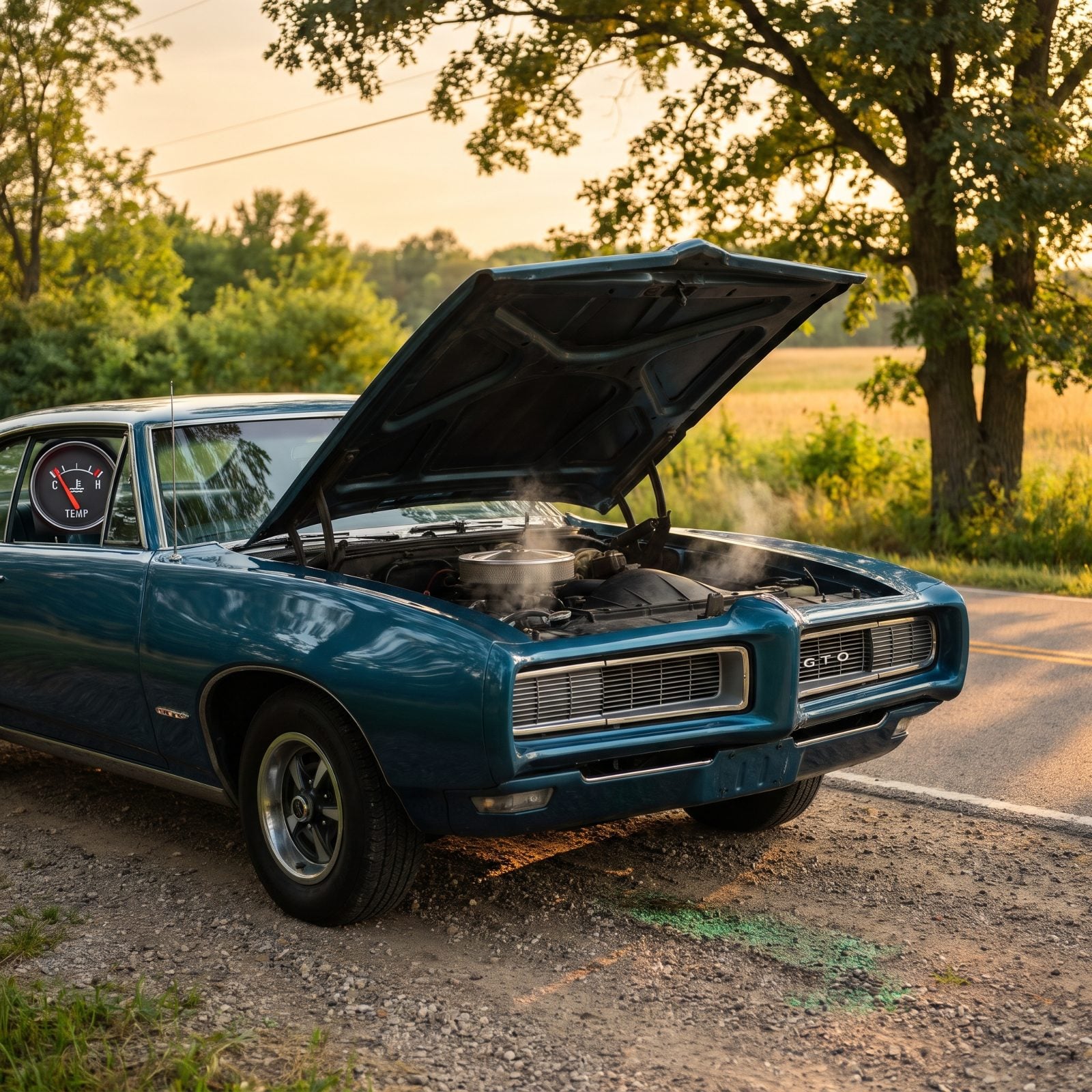
The needle swings hard over toward the ‘H’ end of the gauge and you figure you can make it the last few miles. You’re close, the car still pulls, so you keep your foot in it. That’s the moment the damage starts.
Aluminum heads warp, head gaskets let go, and a cast-iron block can crack clean between the cylinders when metal that hot meets the first splash of cool coolant. A $40 thermostat turns into a $4,000 engine, all because you wanted to dodge a tow.
Pull over the second the gauge acts up. Shut it down, pop the hood, and let it cool before you so much as touch the radiator cap. Carry a gallon of pre-mixed 50/50 coolant and a spare belt in the trunk, and figure out why it got hot before you drive another foot.
40. Blipping the Throttle Before the Oil Has Woken Up
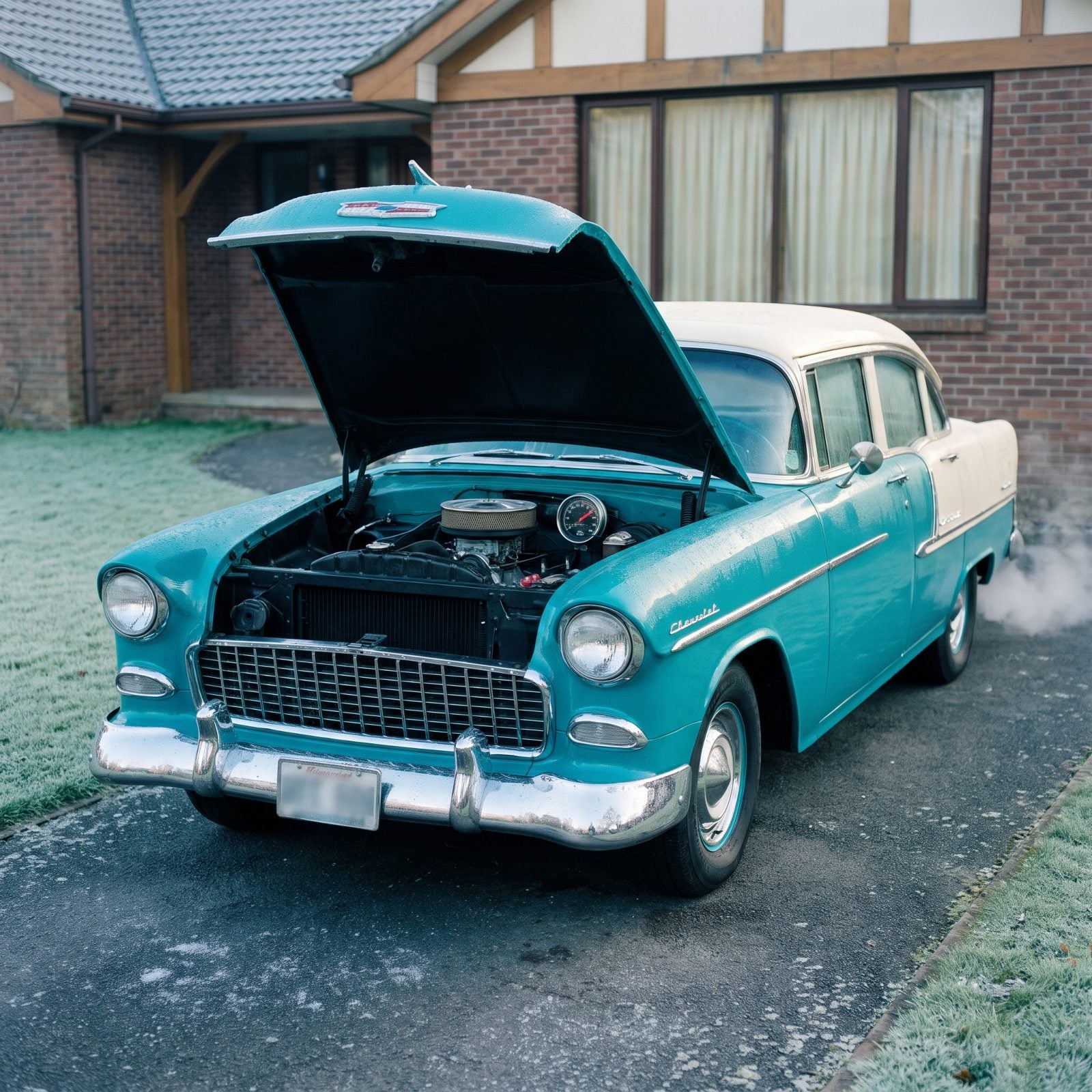
Cold oil is thick as cold honey. Fire up a car that’s sat all night and immediately rev it to hear that lovely exhaust note, and you’re spinning bearings and bores the oil pump hasn’t reached yet.
Those first few seconds run close to dry. Rings scuff, cam lobes and lifters take a beating, and over years of cold blips you grind away the very tolerances keeping an old engine alive.
Start it, let it settle to a smooth idle, and keep your foot off the gas for thirty seconds while oil pressure comes up. Drive away gently, revs under 2,500 until the temp gauge lifts off the peg. The engine will thank you with another hundred thousand miles.
39. Shrugging Off a Dropping Oil-Pressure Gauge
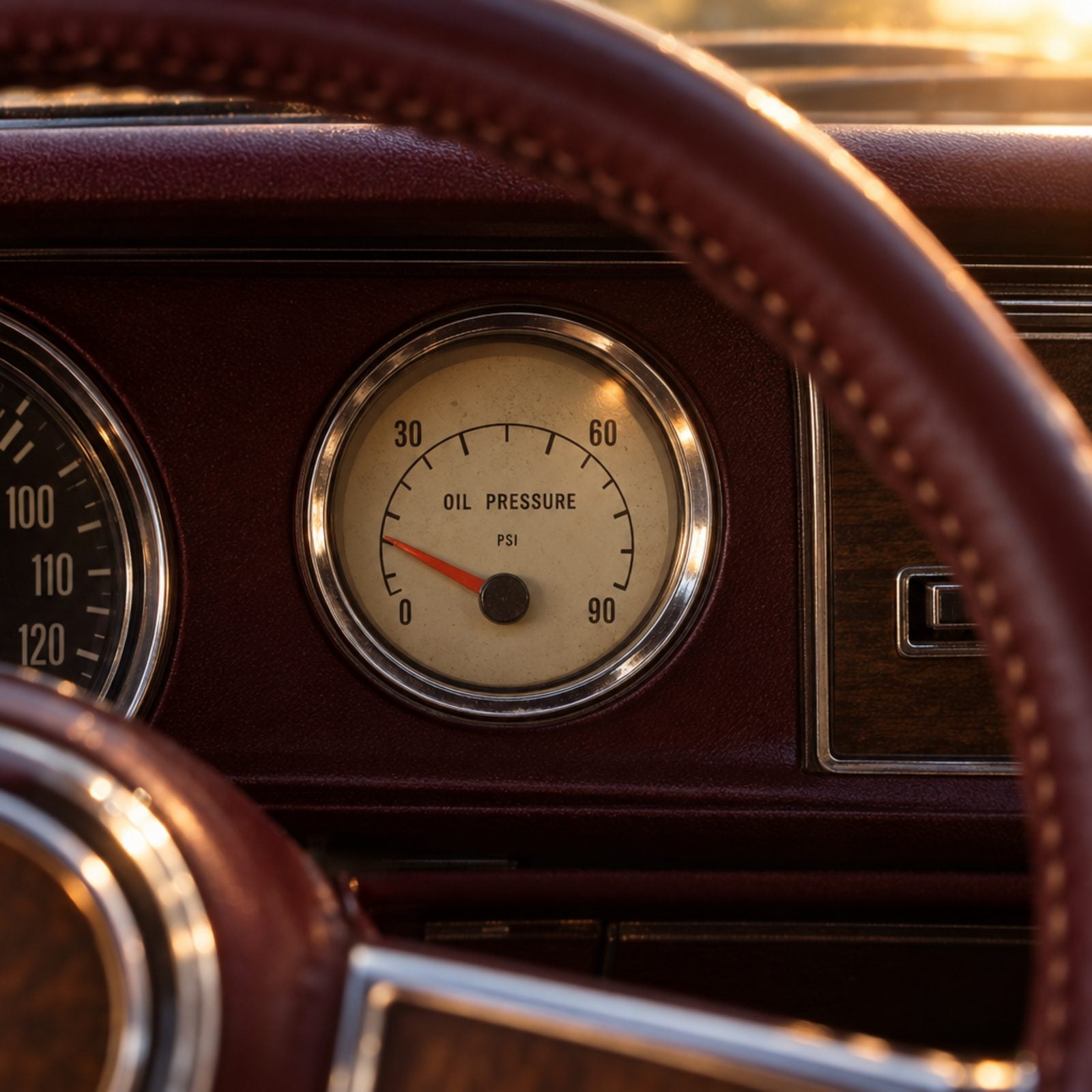
You notice the oil-pressure needle sitting a little lower than it used to, especially at a hot idle. The car runs fine otherwise, so you file it under “gauge’s probably tired” and drive on.
Falling pressure means oil isn’t getting where it needs to be — worn bearings, a tired pump, or a sticking relief valve. Ignore it and you’ll spin a bearing, and a weekend of worry becomes a complete rebuild.
Verify the gauge first with a mechanical test gauge screwed into the sending-unit port. Healthy for most older V8s runs roughly 10 psi per 1,000 rpm, so somewhere around cruising pressure up top and a good deal less at hot idle. Low numbers? Drop the pan and check the pump and bearing clearances before you lose the engine.
38. Telling Yourself That New Knock Is Just Old-Car Character
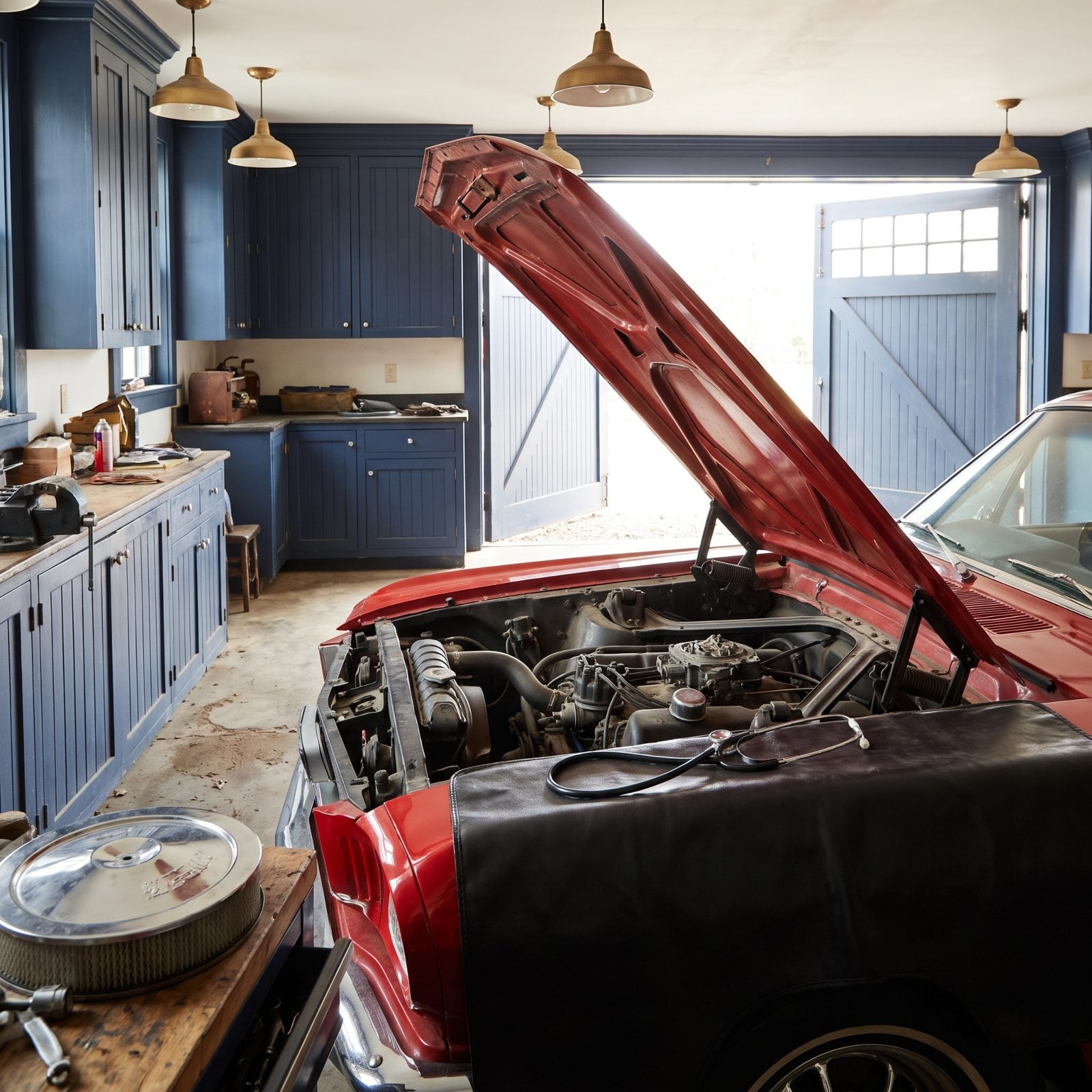
Every classic has its sounds. But a new tick, knock, or rattle that wasn’t there last month isn’t character — it’s a symptom. The trap is that old cars seem to give you permission to ignore everything.
A top-end tick can be a collapsed lifter or a loose rocker, cheap to fix now. A deep bottom-end knock that gets louder under load is a rod bearing on its way out, and that one takes the whole engine with it if you keep driving.
Chase the noise the day you hear it. A mechanic’s stethoscope, or just a long screwdriver held to your ear against the valve cover, timing cover, and block, will tell you plenty. Top-end tapping lives up high. A low, heavy thump that worsens with throttle lives down low — and that’s the one you never drive on.
37. Living on Three-Mile Errands That Never Let the Car Breathe
The car only comes out for the hardware store and Sunday breakfast — never enough distance to get properly hot. It feels gentle, like you’re saving the car. You’re not.
Short hops don’t burn off the water and raw fuel that collect in the oil and exhaust. That moisture turns to acid and sludge inside the crankcase, rusts the exhaust from the inside out, and leaves condensation pooling in the gas tank.
Give it a real run once a week — twenty minutes at the least, enough to push the oil temperature over 200 degrees and cook off the moisture. A highway on-ramp and a few miles at cruising speed does more good for an old engine than a month of two-mile crawls.
What Our Readers Say
- In Jalopy Talk readers’ heart votes, photos of restored, concours-condition cars earned more hearts than the other images in the same articles, 82% versus 76%.
- When our readers loved a classic car photo and gave a reason, “would drive” came up 19% of the time, behind “nostalgic” at 28% and “body style” at 23%.
From Jalopy Talk reader polls and votes.
36. Letting It Idle in the Driveway to “Warm Up” Before You Go
Old habit from old winters: fire it up, let it sit idling until the needle climbs, then drive. Feels responsible. It does the opposite of what you want.
An engine warms up two to three times faster under light load than sitting at idle. All that idle time washes the cylinder walls with extra fuel from the choke, dilutes the oil, and loads the plugs with carbon — while the engine barely gets warm at all.
Thirty to sixty seconds for oil pressure, then drive away gently. Easy throttle, low revs, no hard acceleration until the temp gauge reaches operating range. Driving it warm is faster, cleaner, and far kinder to the rings and bores.
35. Lugging a Big V8 in High Gear to Save Fuel
You’re in top gear doing 35, you press the pedal, and instead of downshifting you just lean on it harder and let the engine chug and shudder up to speed. Feels economical. It’s murder on the bottom end.
Lugging loads the crankshaft and rod bearings at low rpm with high cylinder pressure — exactly when the oil film is thinnest. You get pre-ignition, overheated bearings, and in bad cases a cracked piston ring land.
When you need power, let the engine spin. Drop a gear so the revs sit in a comfortable range before you ask for acceleration. If the car shudders or the exhaust note goes flat and heavy under throttle, you’re lugging it. Downshift and let it breathe.
34. Forgetting to Push the Manual Choke Back In
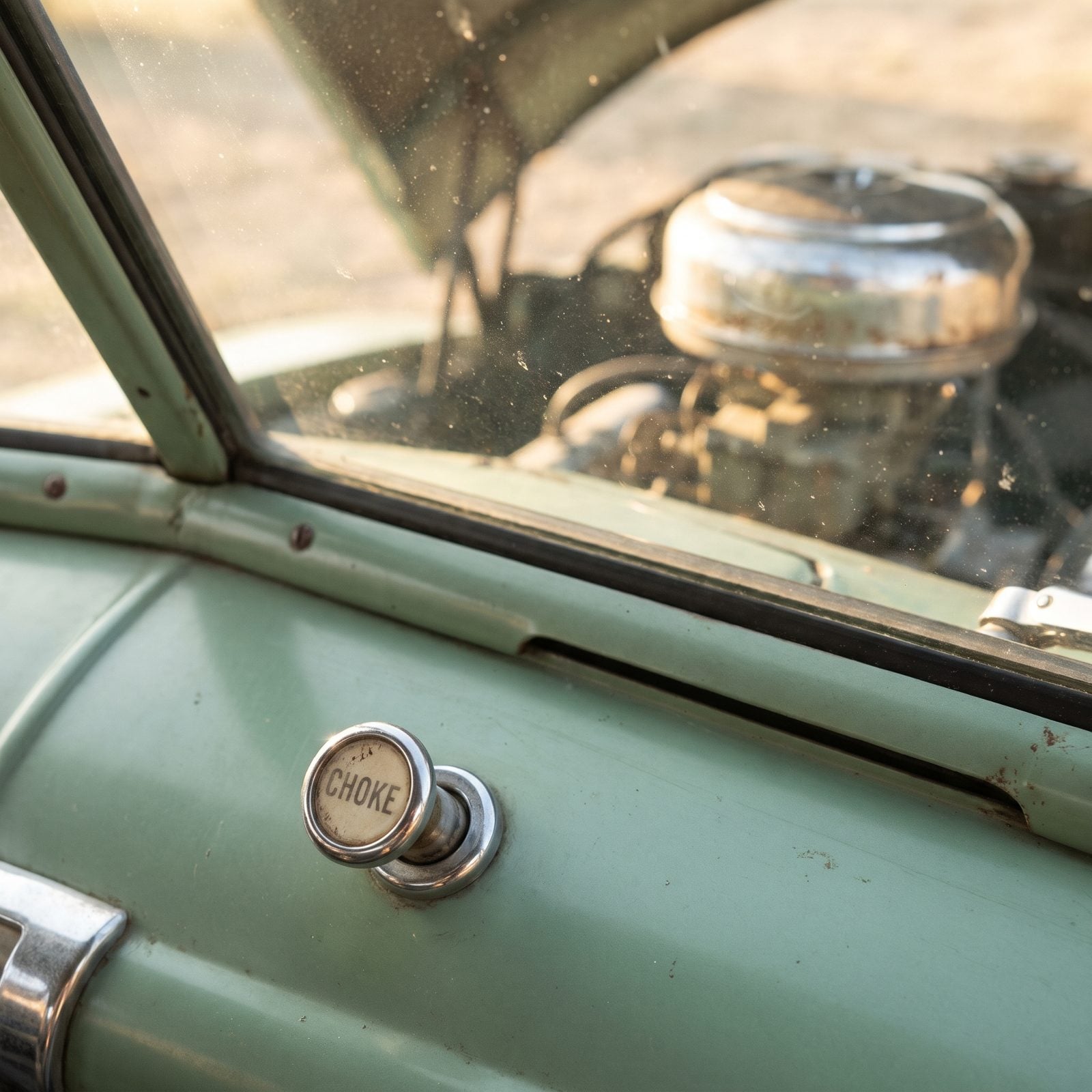
Cold morning, you pull the choke, the engine catches, and you drive off. Twenty minutes later it’s still half out because you got comfortable and forgot, and the engine’s been running rich the whole time.
A choke left on dumps excess fuel into warm cylinders. That raw gas washes the oil film off the bores, dilutes the crankcase oil, fouls the plugs, and gums the rings with carbon. Do it daily and cylinder wear piles up fast.
Push the choke in by stages as the engine warms. Within a minute or two it should run clean with the knob all the way home. Black smoke still coming out the pipe, or an exhaust that smells of raw gas? You’ve left it on too long, or your choke’s sticking.
33. Going Weeks Without Pulling the Dipstick
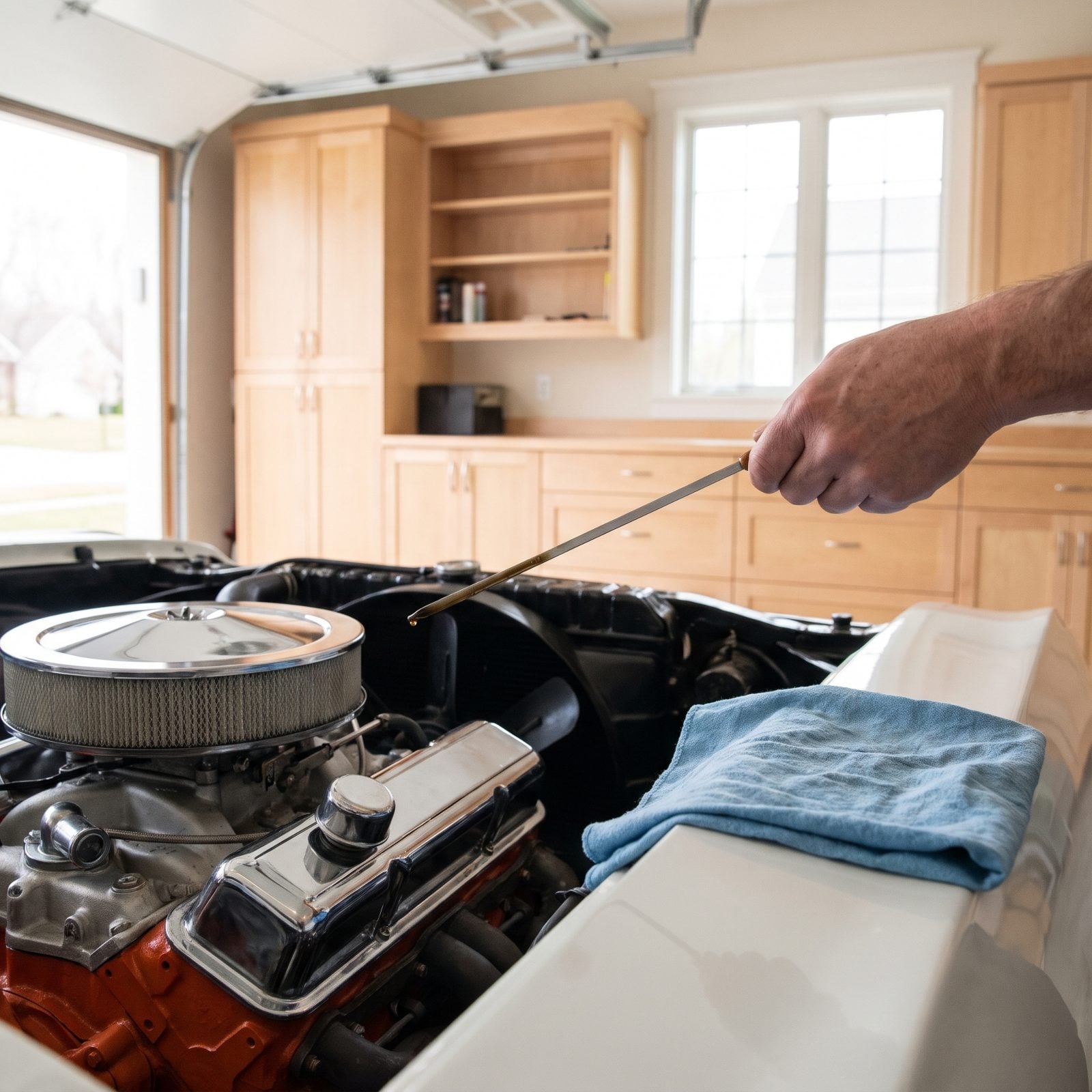
Modern cars trained us to trust the oil’s there until a light says otherwise. Old engines don’t play by those rules. Many of them burn or weep a little oil as a matter of course, and they won’t warn you until it’s too late.
Run an old V8 a quart or two low and you starve the bearings, overheat what oil’s left, and cook away the lubrication you’ve got. No warning light — just a knock one day and a tow the next.
Check it weekly, or every fill-up if the car’s a known oil user. Park level, shut off warm, wait a couple minutes for the oil to drain back, then pull the stick and read it. Keep the level at or near the full mark and stash a spare quart of the correct weight in the trunk. Ninety seconds, start to finish.
32. Stretching Oil Changes Because You Barely Drive It
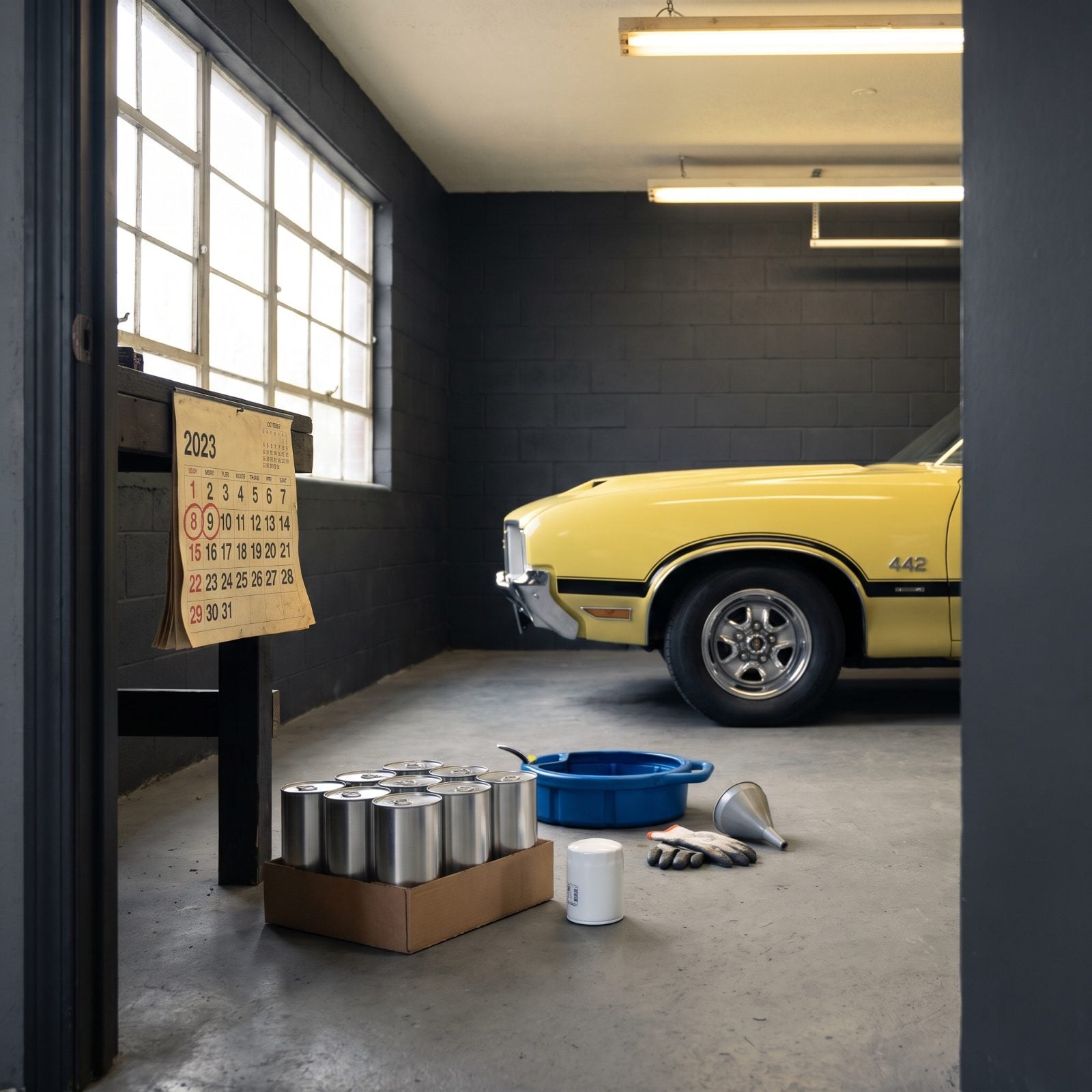
It’s not the miles. It’s the time. The car sees maybe fifteen hundred miles a year, so you figure one oil change every couple of seasons covers it. The odometer agrees with you. The oil doesn’t.
Oil degrades by the calendar, not just the odometer. Acids, moisture, and combustion byproducts build up and attack bearings and journals whether the car moves or not, and short-trip driving — which most classics live on — makes the contamination worse, not better.
Change it at least once a year no matter the mileage, twice if the car does lots of short runs. Use a quality detergent oil in the weight your engine was built for, often a 10W-30 or 20W-50 for older iron, and fit a fresh filter every time. Fresh oil is the cheapest insurance an old engine ever gets.
31. Using Low-Zinc Oil in a Flat-Tappet Engine
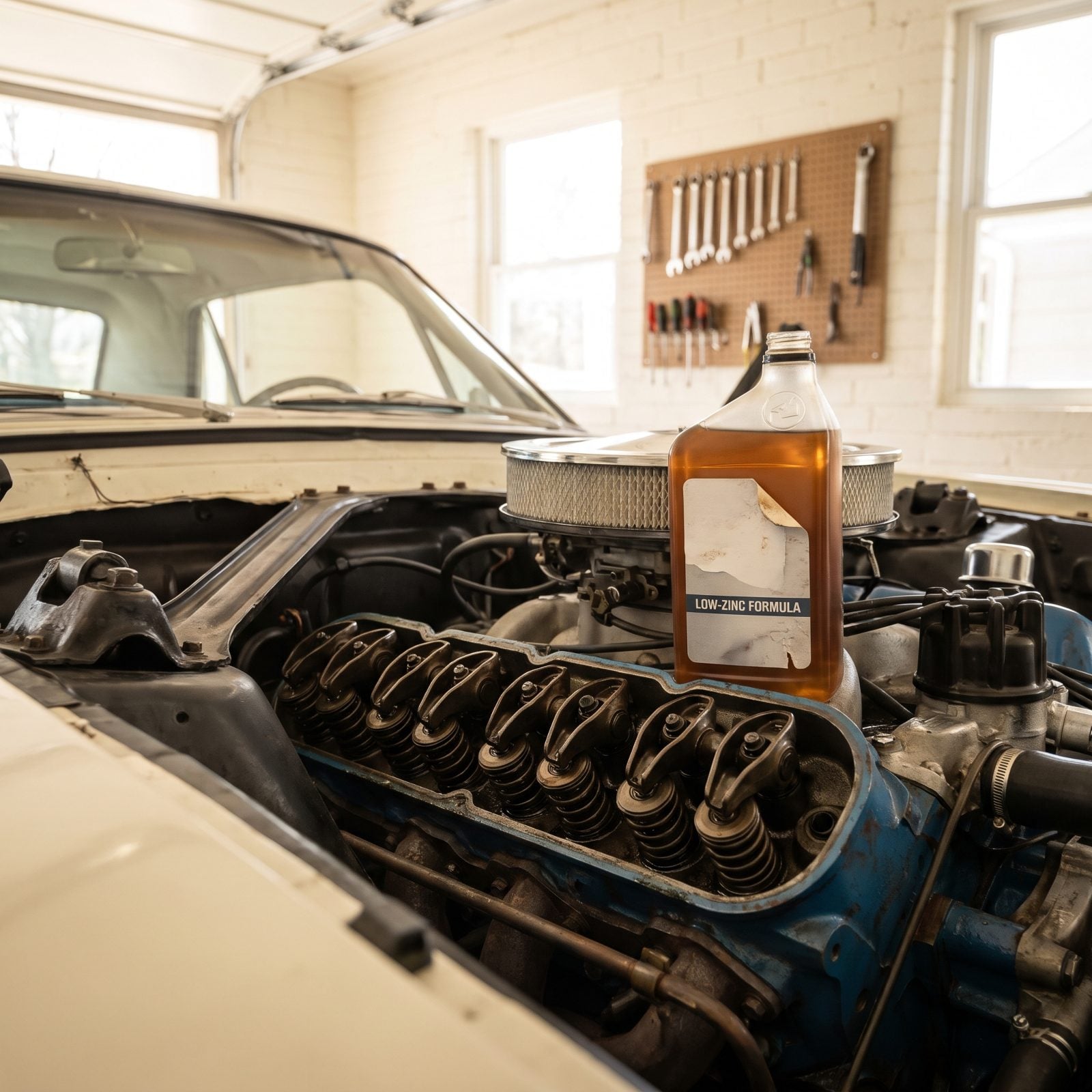
This one bites gearheads who grew up on modern oils. You walk into the parts store, grab whatever 10W-30 is on sale, pour it into your flat-tappet V8, and feel good about yourself. The problem stays invisible until it isn’t.
Modern API oils stripped out most of the zinc and phosphorus (ZDDP) to protect catalytic converters, and your flat-tappet cam needs that anti-wear film right where the lobe meets the lifter. Run the low-zinc stuff and the cam lobes wear flat. You lose lift. Eventually you’re pulling the engine for a cam swap you never budgeted for.
So run a high-ZDDP oil built for older engines — Valvoline VR1 or Driven HR-1, say — or drop in a bottle of ZDDPlus at every change. Look for at least 1,200 ppm zinc and your camshaft will keep soldiering on for the next hundred thousand miles.
30. Pouring in Stop-Leak Instead of Making a Repair
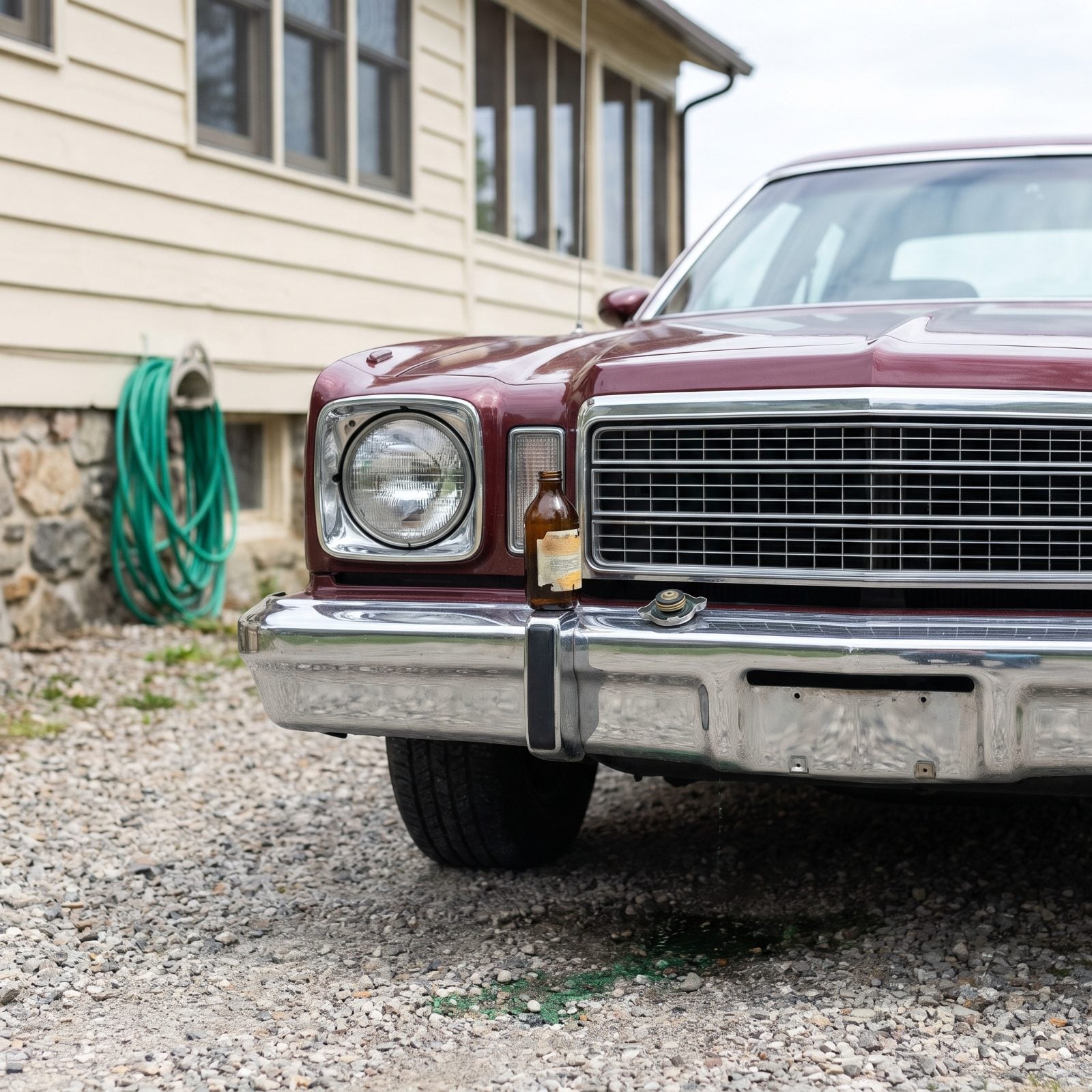
Stop-leak is a tow-truck product, not a maintenance product. It gets you home. It fixes nothing.
Those particles that plug a weeping core also love to settle in your heater core, clog the thin passages in the block, and choke the little tubes in the radiator that do the actual cooling. You trade a slow drip for a creeping overheat problem — the kind that surfaces two summers later on a back road with the temp gauge climbing.
Find the leak. A pressure test with a hand pump kit shows you exactly where it’s weeping in ten minutes, and a radiator re-core or a new hose costs less than the engine you cook by ignoring it. If you absolutely must use sealant to limp home, flush the whole system the moment you get there.
29. Filling the Cooling System With Straight Water
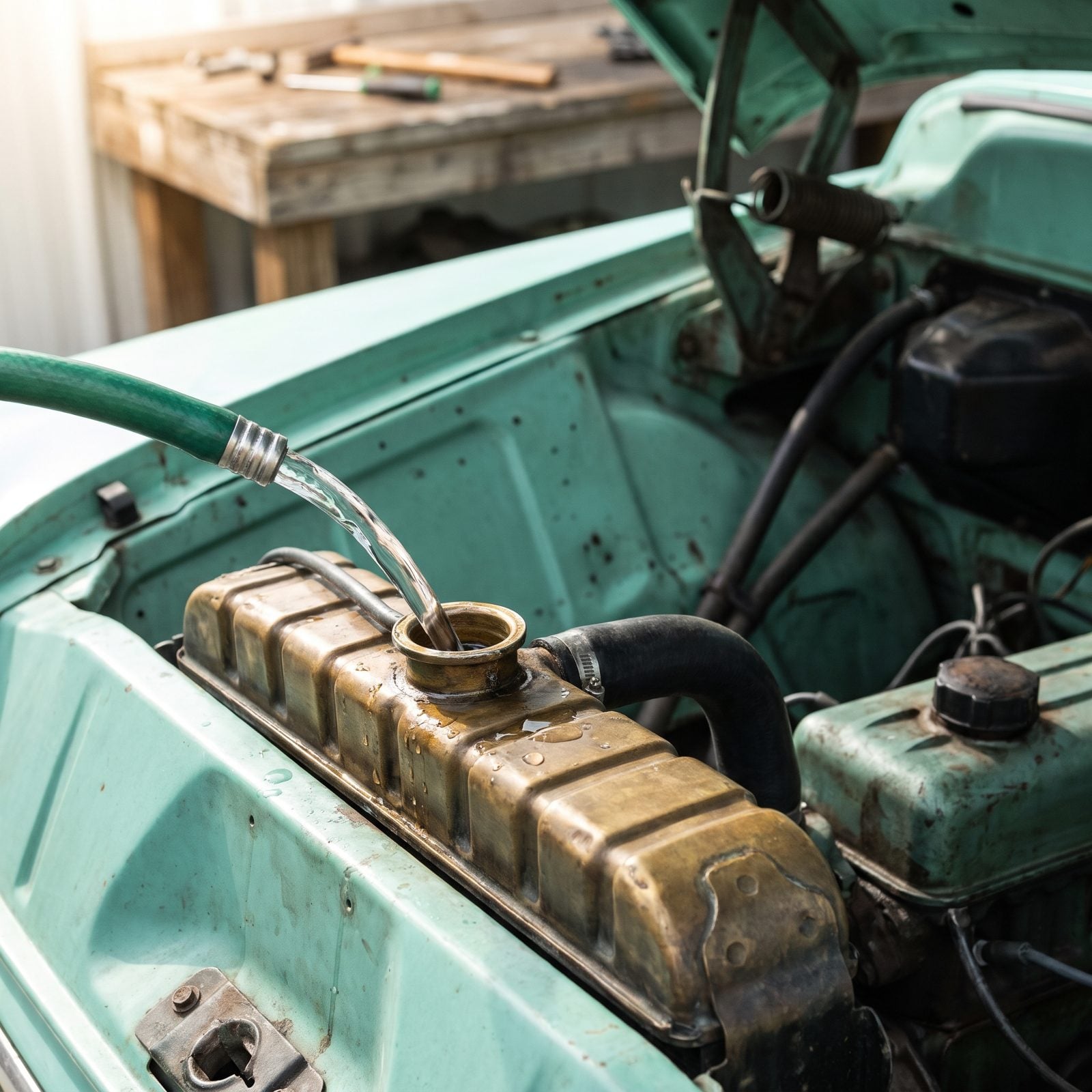
Topping off with the garden hose feels harmless. On a quick July fill, maybe it is. As a habit, it’s quietly rusting your block from the inside out.
Plain water carries no corrosion inhibitors, so it goes to work on your iron block, your water pump, and every cooling passage it touches. It boils lower than it should and freezes solid in winter, which cracks blocks right down the side. Straight water in an iron-block classic is a slow-motion rust factory, nothing less.
Run a proper 50/50 mix of ethylene glycol coolant and distilled water. That buys you the right boil point, freeze protection, and the additive package that keeps your block clean. Use distilled, not tap — otherwise you’re pouring minerals and scale straight into the system.
28. Never Flushing Old Coolant
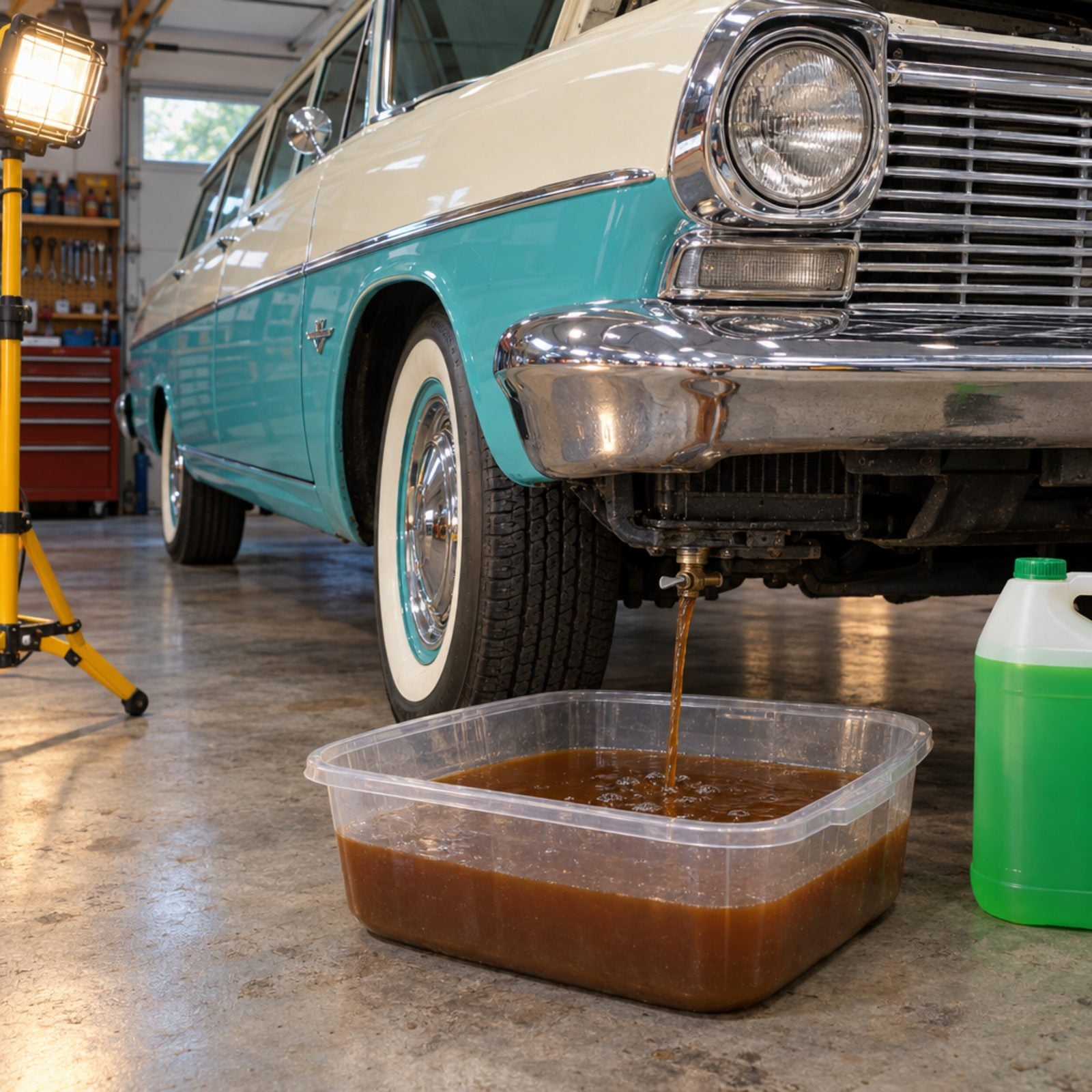
You know the look. You pull the radiator cap and the coolant that should be green or gold has gone the color of weak coffee. That’s not just old antifreeze — that’s acid.
Coolant’s corrosion inhibitors wear out in a few years, and once they’re gone the mix turns acidic and starts eating your water pump, your heater core, and the solder in your radiator. The brown color is literally your cooling system dissolving into the drain pan.
Flush and refill every two to three years, no excuses. Drain it, run a flush product or just clean water through it, then refill with fresh 50/50. Test it once a year with a cheap coolant tester or a pH strip — if it reads acidic, it’s already costing you parts.
27. Removing the Thermostat to Cure Overheating
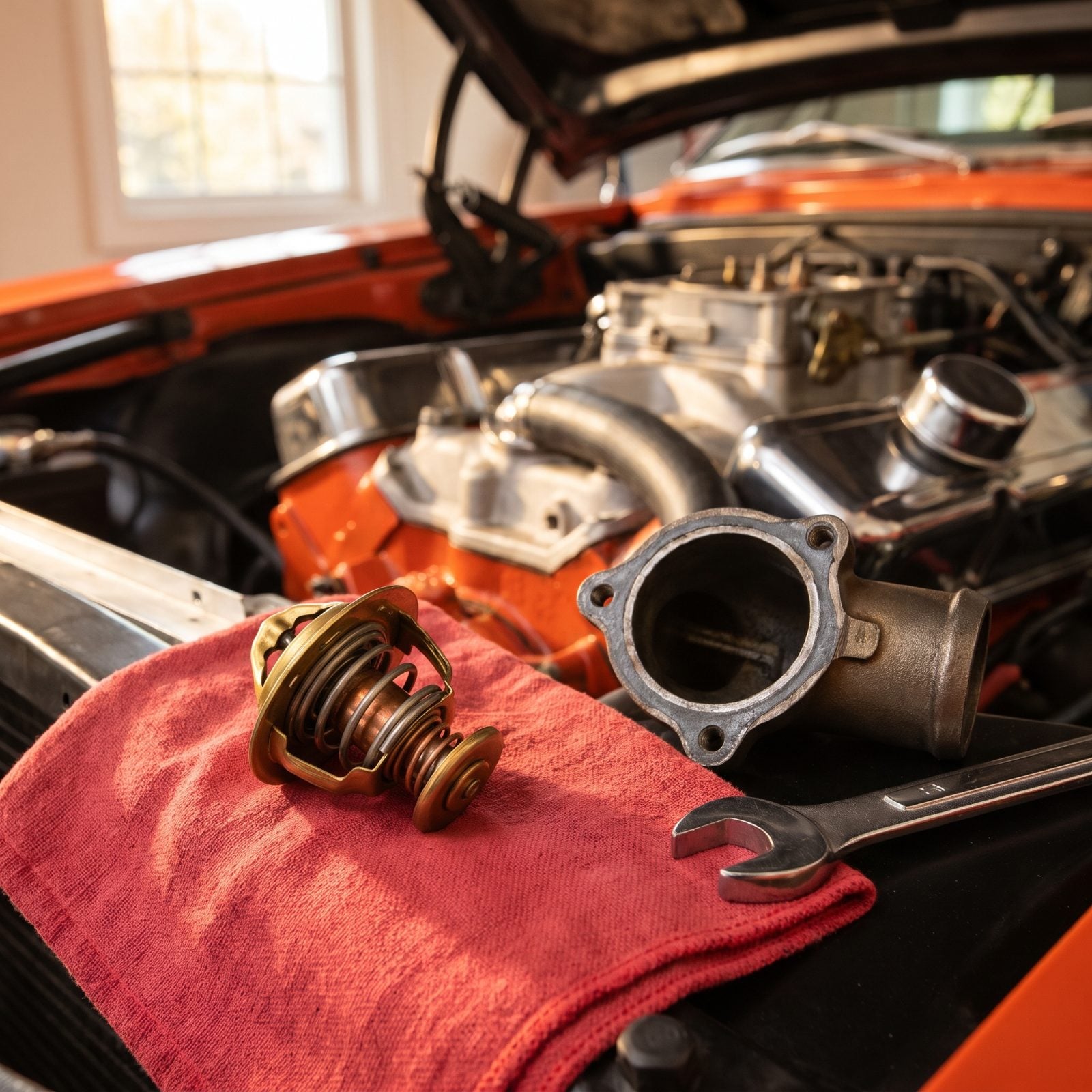
The logic sounds airtight. Engine runs hot, thermostat restricts flow, so yank it and let the coolant run free. I believed it once too. It’s backwards.
Pull the thermostat and coolant rockets through the radiator too fast to shed any heat, never slowing down long enough for the radiator to actually do its job. The engine runs hotter and more unevenly, and you also toss out the warm-up control that brings everything up to temperature — so it runs rich, washes the cylinders, and sludges the oil.
Fix the real cause. A clogged radiator, a slipping fan clutch, a weak water pump, or sloppy ignition timing is usually what’s cooking you. Put the correct-temperature thermostat back in — 180 or 195 degrees depending on your engine — and chase the actual fault.
26. Ignoring Swollen or Cracked Coolant Hoses
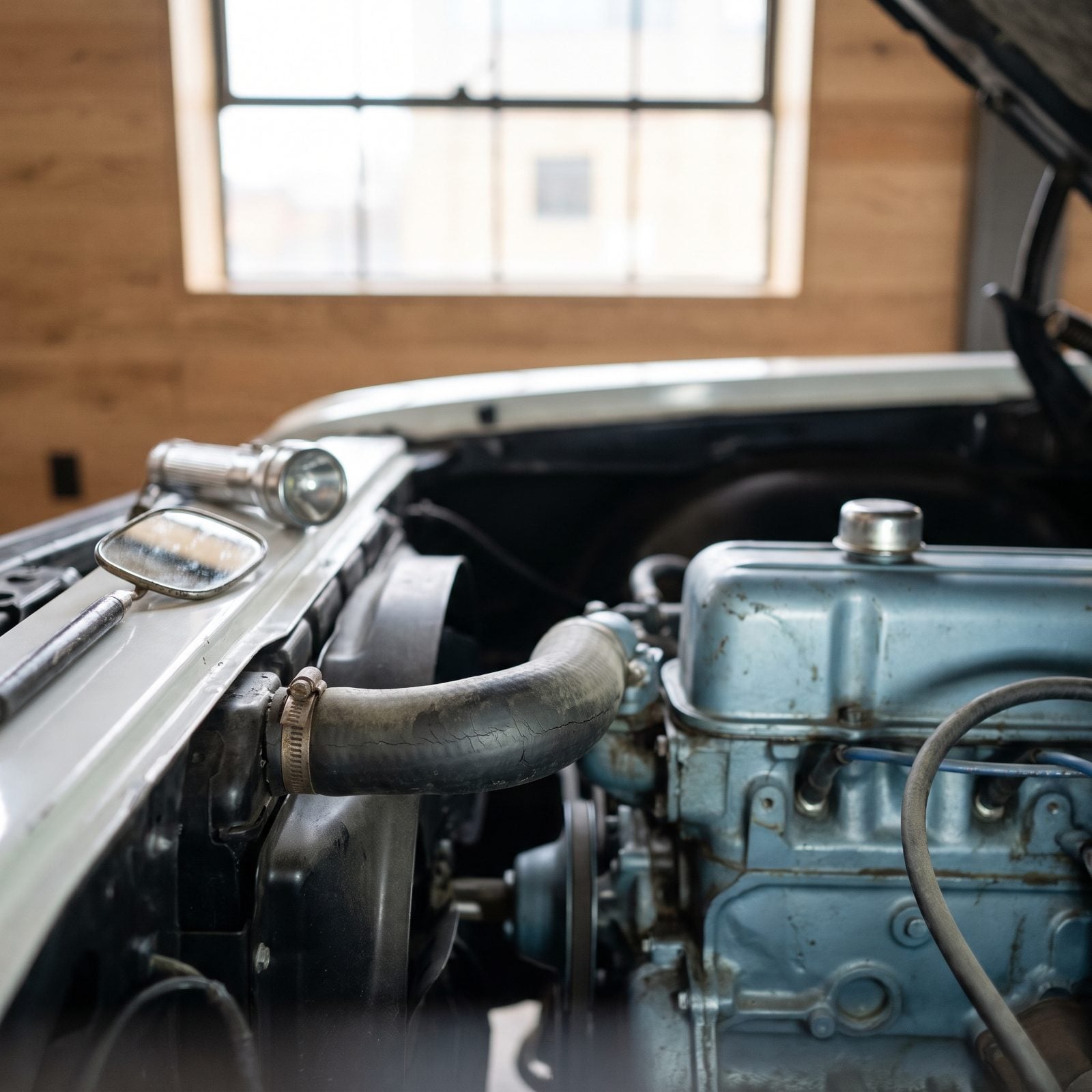
Squeeze the upper radiator hose on a cold engine. If it feels mushy, spongy, or gritty inside, it’s already gone — and if it’s rock hard and crazed with little cracks, same story.
Hoses fail from the inside out, so the one that looks fine on the outside can be delaminating where you’ll never spot it. When it finally lets go, it’s usually at highway speed in traffic, dumping your entire coolant charge and cooking the engine before you can pull over.
Replace hoses every five to seven years no matter how they look, and give every one a squeeze at each oil change. New clamps too — the constant-tension or quality worm-gear type. A fifteen-dollar hose beats a four-thousand-dollar engine every single time.
25. Overtightening the V-Belts
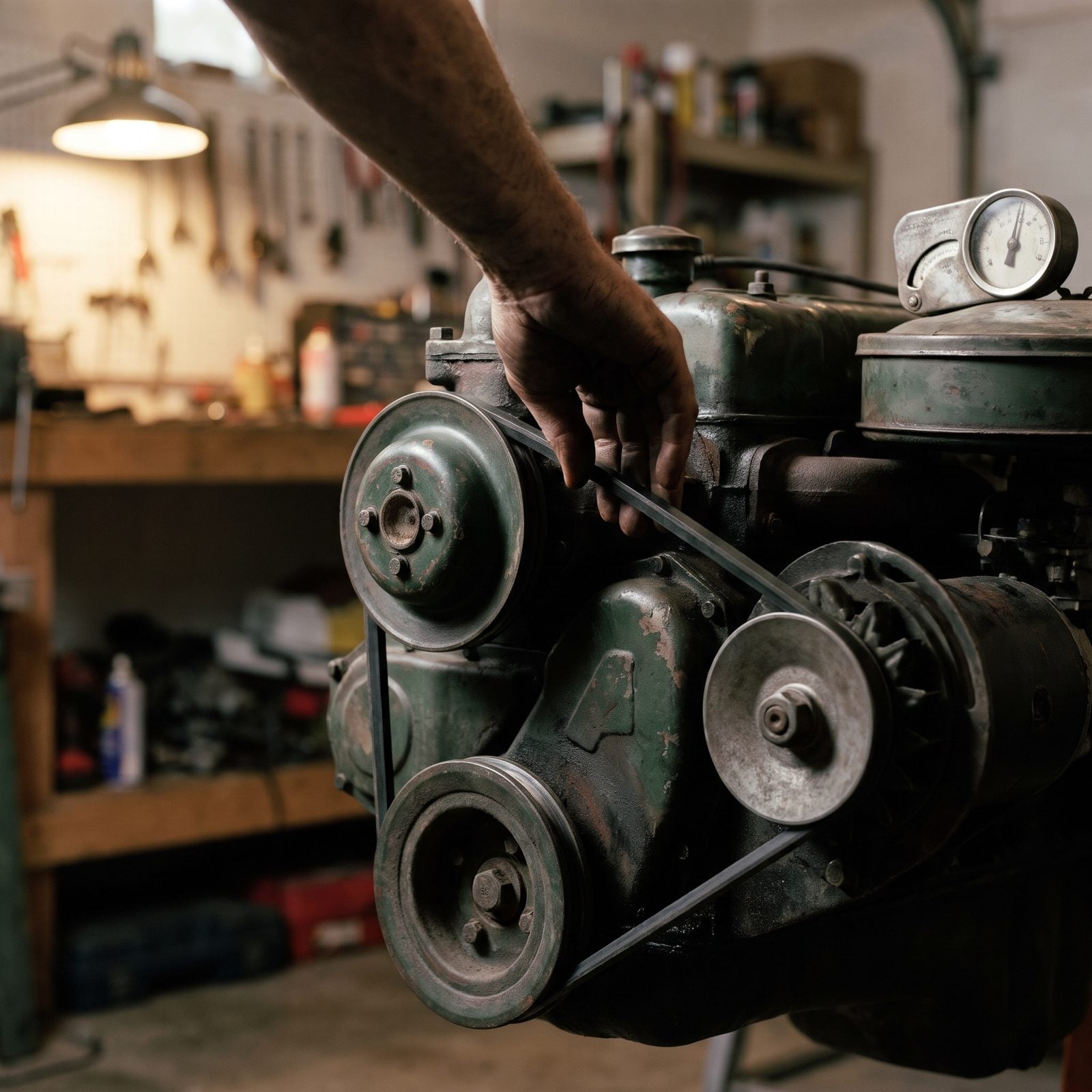
More feels right with belts. Snug is good, so bone-tight must be better. Nope — it’s the opposite.
A belt cranked too tight dumps a constant side load onto your water pump and alternator bearings, and those bearings were never built to take it. First you chase a mystery bearing whine, then a leaking water pump, then a wobbling pulley, all because the belt was strangling the shaft the whole time.
Set deflection, not maximum. On a belt running between two pulleys, press at the midpoint with moderate thumb pressure and look for about a half-inch of give. Can’t deflect it at all? Too tight. Slapping and squealing? Too loose. Split the difference and your bearings go the distance.
24. Habitually Running the Fuel Tank Near Empty
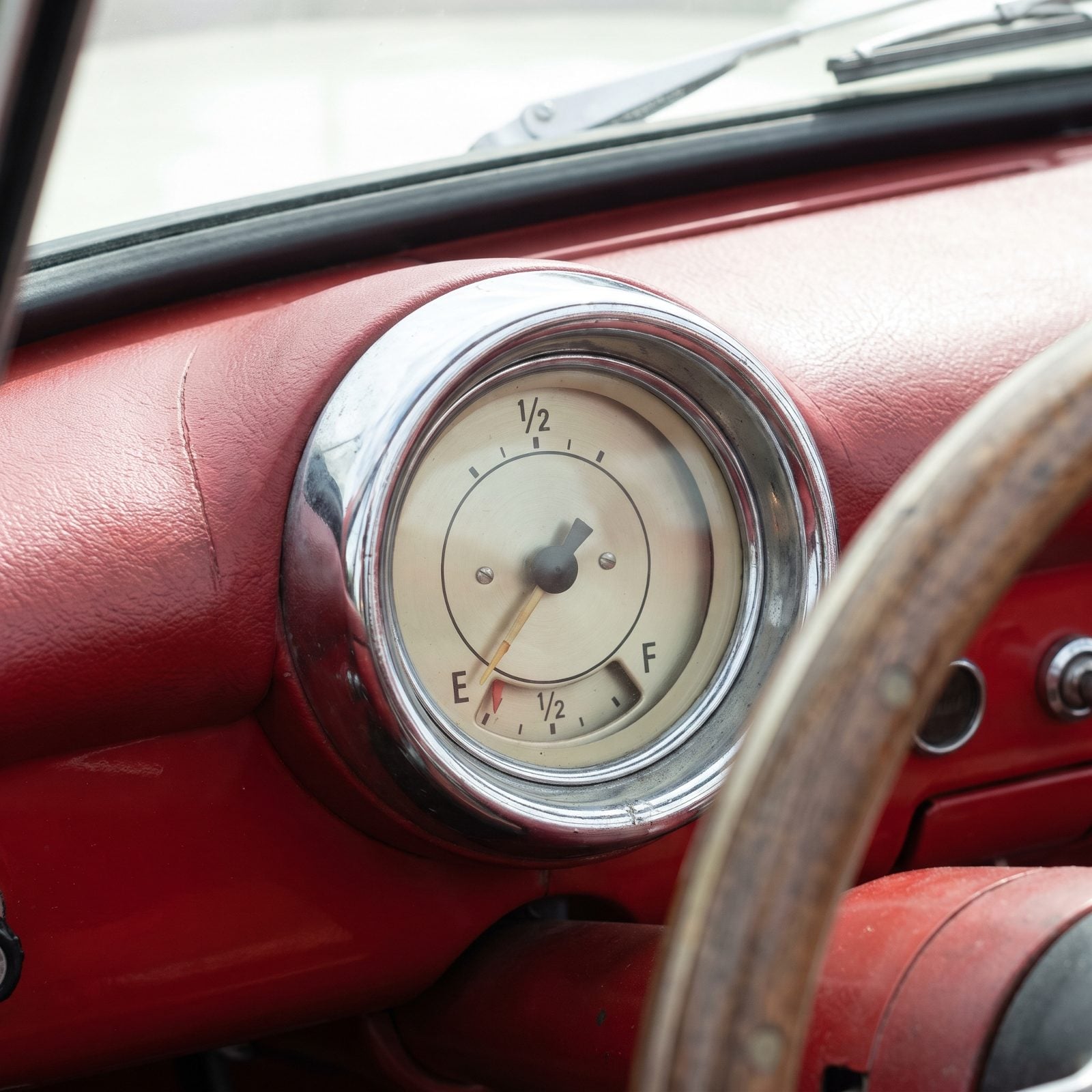
Running on fumes to the next fill-up is a young person’s game, and it quietly wrecks old fuel systems. In a modern car it’s merely risky; in your classic it’s expensive.
The fuel in your tank keeps the mechanical or electric fuel pump cool and lubricated. Run it near empty all the time and that pump gulps air, overheats, and dies early. The bigger villain is the gunk: decades of rust, scale, and sediment live in the bottom of an old tank, and a low fuel level draws all of it straight up into your lines, filter, and carburetor.
Keep it above a quarter tank, and treat half as your fill point. You’ll spare the pump, keep the sediment settled where it belongs, and cut the condensation that forms in the empty airspace above the fuel.
23. Letting Ethanol Fuel Attack Original Rubber Lines
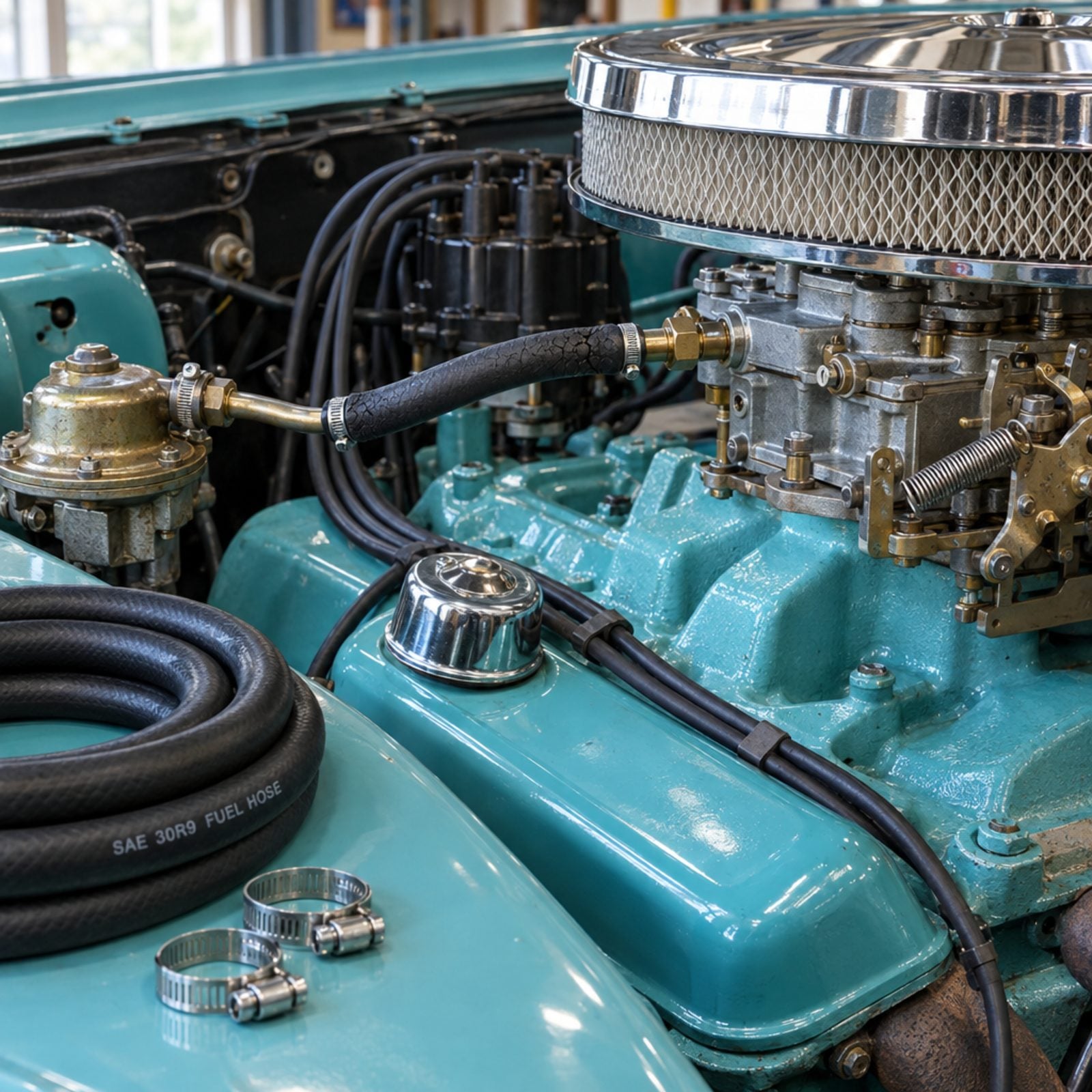
Pump gas changed under us. The ethanol they blend into modern fuel is hard on the soft parts your car rolled out of the factory with back in 1968.
Ethanol swells and breaks down old rubber fuel lines, carburetor float needles, and accelerator pump diaphragms. You end up with gummy hoses weeping at the fittings, a carburetor that floods, and — worst case — a pinhole fuel leak dribbling onto a hot exhaust manifold. That’s not a maintenance problem. That’s a fire.
Replace every rubber fuel line with modern ethanol-rated hose marked SAE 30R9 or R10. While you’re in there, rebuild the carburetor with an ethanol-compatible kit, the ones sold with viton or modern synthetic parts. And run a fuel stabilizer made for ethanol fuel if the car sits between drives.
22. Using Fuel With Too Little Octane for the Engine
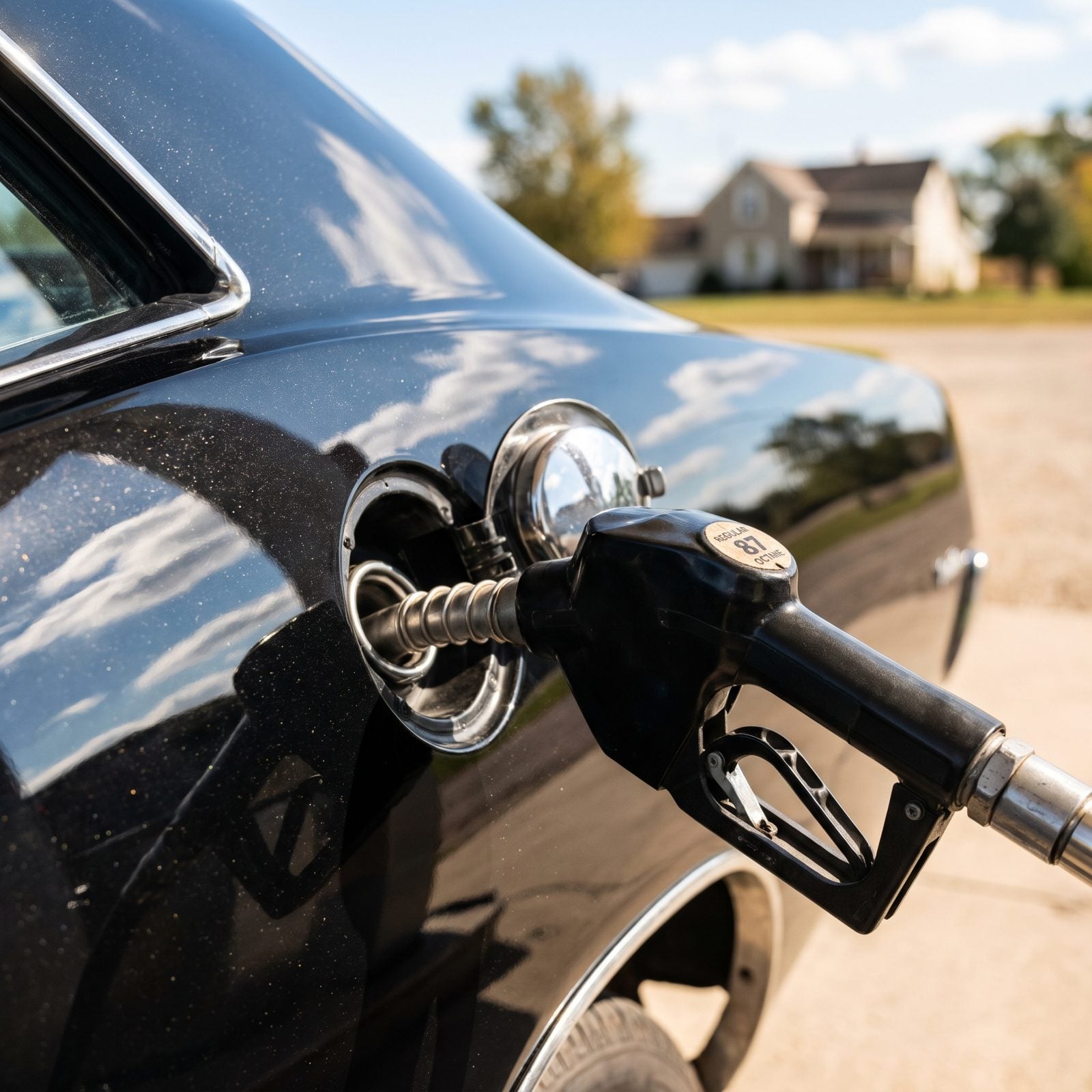
Your big-block was engineered for leaded premium that doesn’t exist anymore, running a compression ratio that craves high octane. Feed it 87 to save a few bucks a tank and you’ll hear the result — that light metallic rattle under hard acceleration. That’s detonation, and it’s hammering your engine with every pull.
Knock from low octane cracks ring lands, pounds rod bearings, and can burn a hole clean through a piston on a hot day under load. The pennies you save at the pump won’t cover one rebuilt engine.
Run the highest octane your station sells, 91 or 93, and add a lead substitute or octane booster if your engine carries high compression or non-hardened valve seats. Still pinging? Pull a couple degrees of ignition timing. An engine that runs quiet under load is an engine that lasts.
21. Driving With a Filthy Air Filter
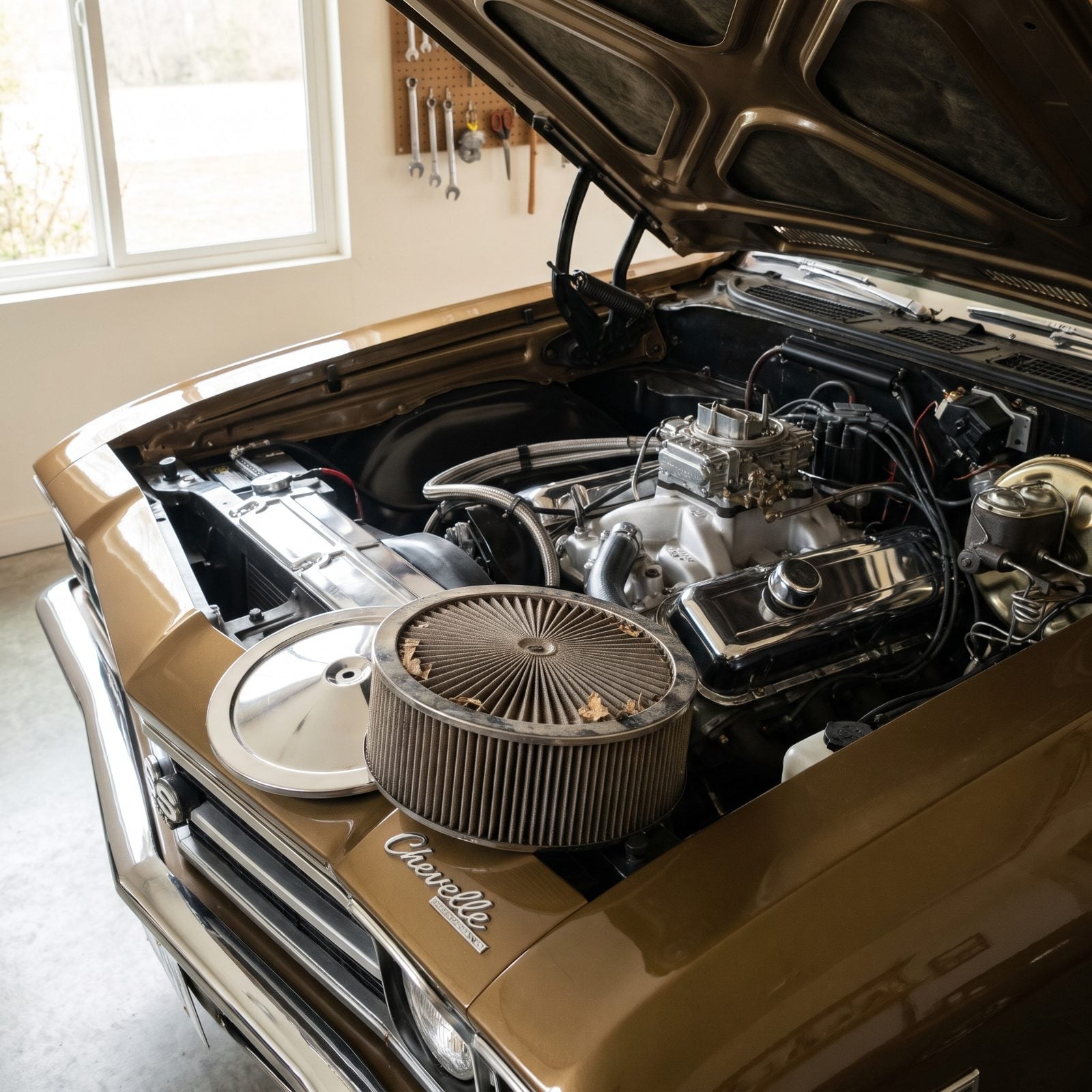
A clogged air filter looks harmless — it’s just paper. But a round element packed solid with road grit chokes the carburetor of the air it needs, so the engine answers by dumping extra fuel to compensate. You lose power, your mileage drops, and that rich mixture washes the oil film right off your cylinder walls.
Worst case? Raw fuel dilutes the oil in your pan and speeds up bore wear on a motor you can’t exactly run down to the parts counter and replace.
Pull the wingnut, lift the lid, hold the element up to a shop light. If you can’t see the bulb clearly through the pleats, it’s done. A fresh paper element runs a few dollars. Check it every oil change, and more often if you live on gravel roads.
20. Letting Ignition Timing Drift Out of Specification
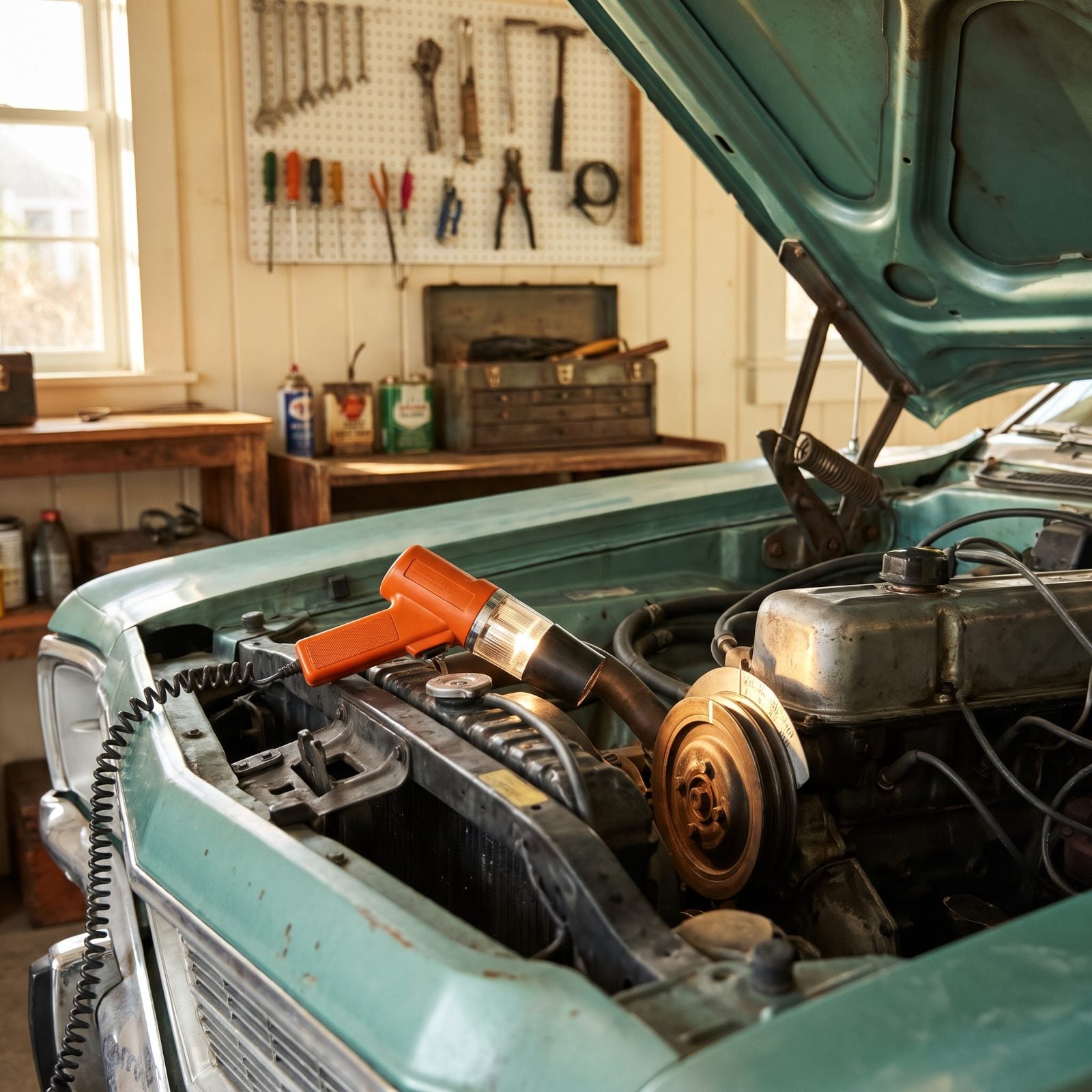
Timing creeps. Points wear, the distributor bushing loosens, vacuum advance diaphragms crack with age, and the number stamped in your factory manual slowly stops matching reality. It won’t announce itself. The car just runs a little hotter, pings a little under load, and gives back some throttle response you stop noticing because the loss comes on so gradually.
Too far advanced, and timing hammers the pistons and can burn exhaust valves. Too far retarded cooks the whole engine and dumps unburned fuel out the back.
Hook up a timing light, warm the engine, and set it to spec with the vacuum line plugged. Fifteen minutes, start to finish. Do it every tune-up and any time you’ve touched the distributor.
19. Riding the Clutch in Traffic

You know the habit: creeping along in stop-and-go, left foot resting on the clutch to keep the car ready to roll. Feels efficient. It’s quietly grinding money off the floor of your bellhousing.
A clutch that’s partly engaged slips, and slip means heat and friction wearing the disc, scorching the pressure plate, and glazing the flywheel. Replacing all three is a transmission-out job, and on many classics that’s a long afternoon flat on your back under the car.
Left foot flat on the floor between shifts. Fully out, fully in, nothing in between. In dead-stopped traffic, drop into neutral and let the pedal all the way up. Your knee will thank you and the clutch will outlive you.
18. Selecting Reverse Before the Car Stops
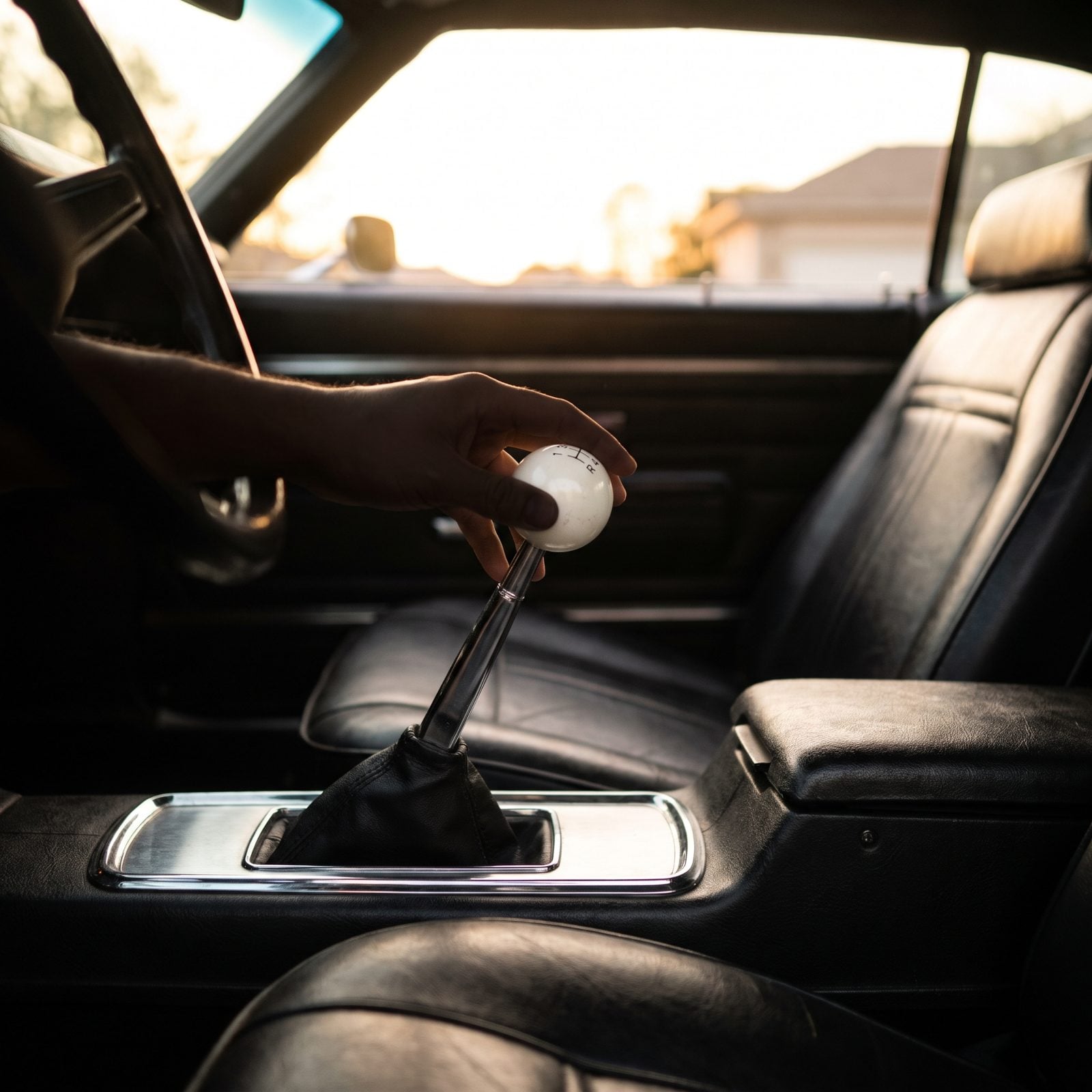
Most reverse gears have no synchronizer. Jam the lever into reverse while the car is still rolling forward, even at a crawl, and you get that ugly grind of gear teeth clashing against each other at odds.
Do it enough and you’ll chip reverse gear or round off the dog teeth — and suddenly backing out of your own driveway means a rebuild.
Come to a full, complete stop. On a manual, press the clutch, pause a beat, then select reverse. On an automatic, let the car settle and the trans drop fully into gear before you touch the throttle. That one-second pause is the cheapest insurance in your garage.
17. Using Gear Oil That Attacks Yellow Metals

This one bites people who figure newer is always better. Plenty of classic manual transmissions and some differentials ride on brass or bronze synchronizers and bushings — the yellow metals. Modern GL-5 gear oils are loaded with sulfur-phosphorus additives that chemically attack those soft alloys.
Run GL-5 where GL-4 belongs and you’ll corrode your synchros from the inside, turning crisp shifts into crunchy ones over a season or two.
Read your manual, then buy accordingly. For a yellow-metal gearbox, use a quality GL-4 gear oil in the correct weight, usually an 80W-90 or 75W-90. Differentials and limited-slips often want GL-5 plus a friction modifier. They are not interchangeable, no matter what the shelf price suggests.
16. Ignoring Transmission Fluid Drips
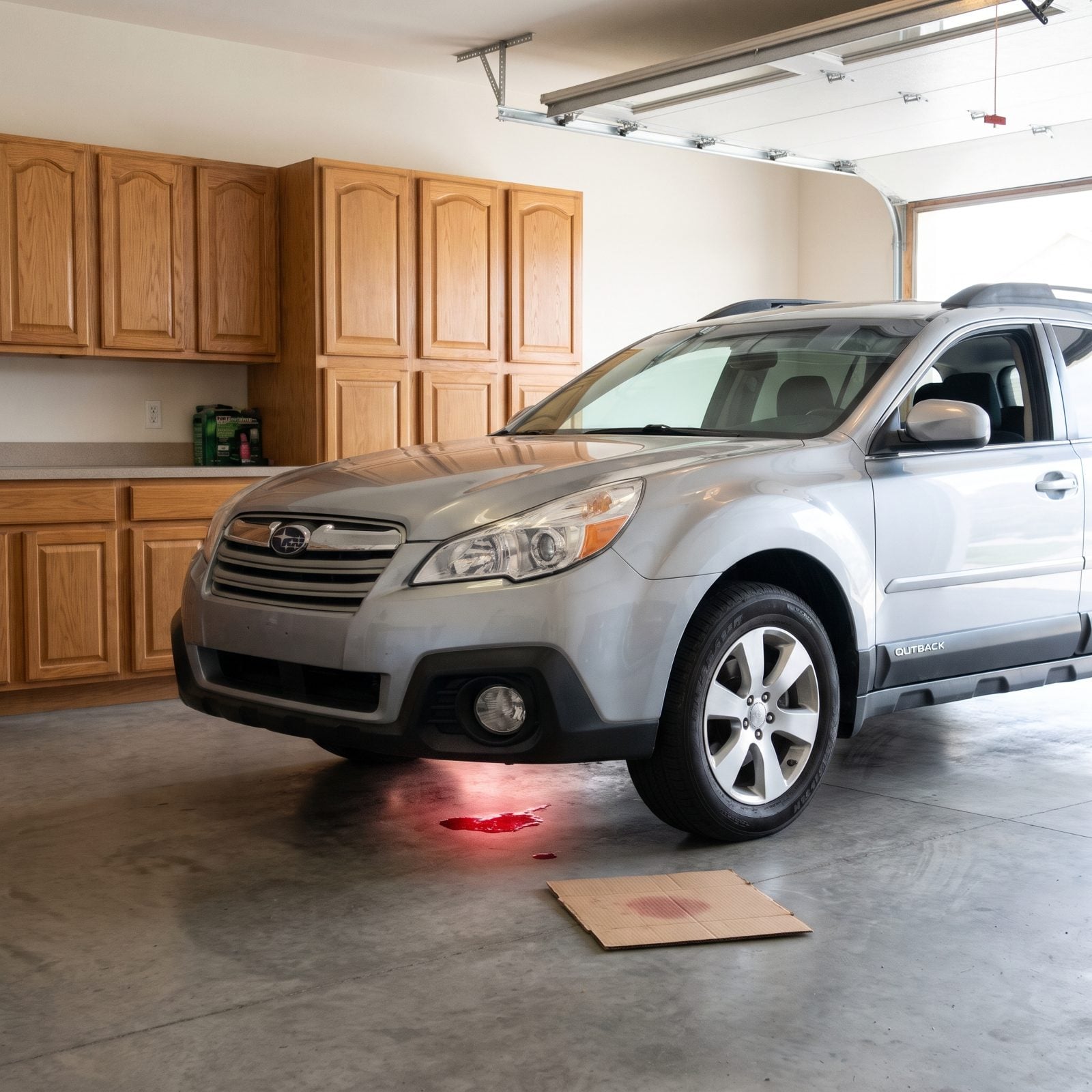
A red spot on the garage floor is a love note from your transmission, and most folks wipe it up and forget it. Bad move. Automatics live and die by fluid level, because that fluid is the hydraulic muscle applying the clutches and bands inside the case.
Let the level fall and the transmission slips, runs hot, cooks the friction material, and varnishes the valve body. A slow leak ignored all summer becomes a rebuild by fall.
Find the source. Pan gasket, cooler line, front seal, or a leaky dipstick tube are the usual suspects. Top it off to spec on level ground with the engine warm and in park, then fix the leak properly. Chasing the level with a quart every month isn’t a repair — it’s denial with a funnel.
15. Never Checking Differential Oil
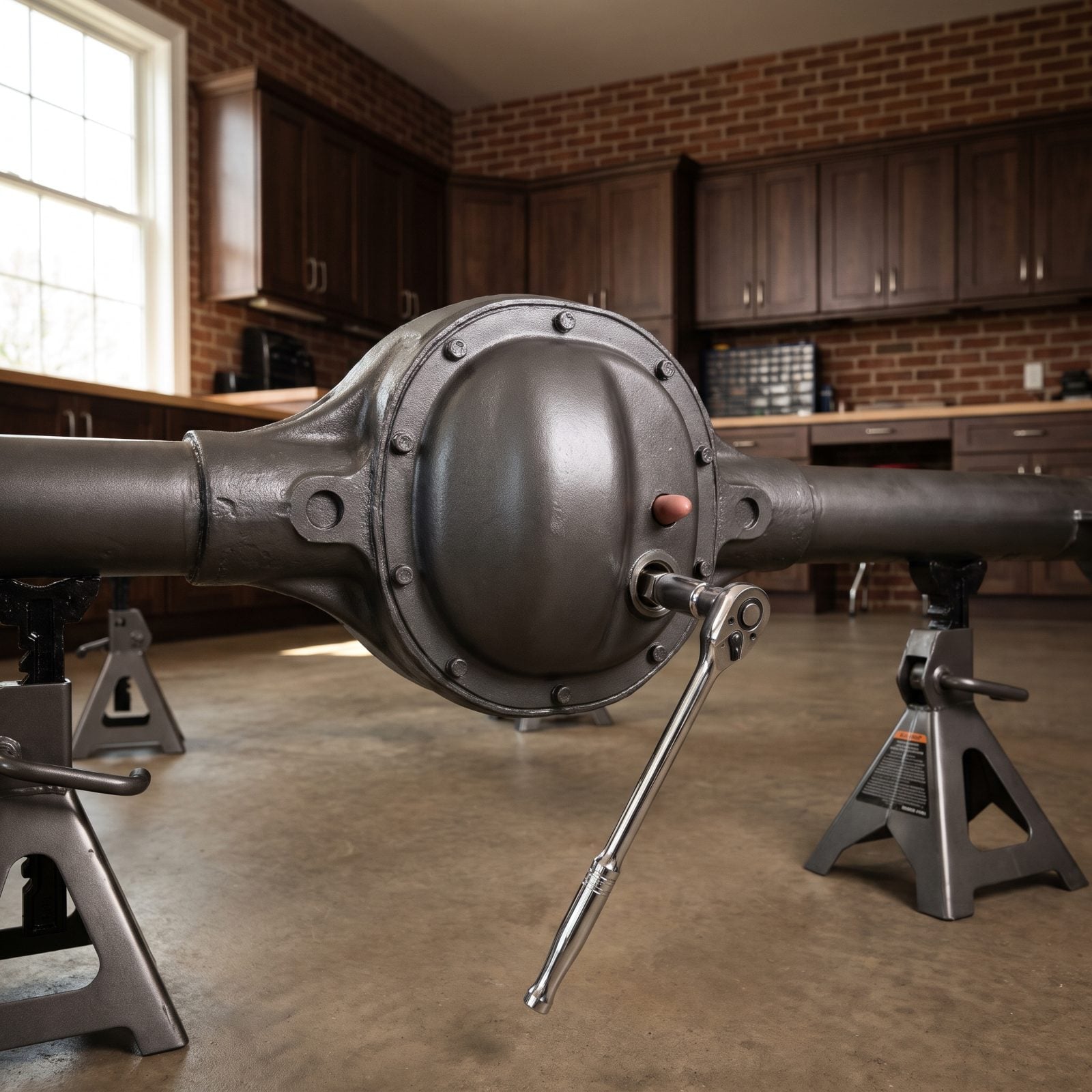
Nobody checks the differential. Out of sight under the rear, it just works, year after year — until the day it howls on deceleration and you learn what a ring-and-pinion costs.
Differential oil shears down over time, picks up water through the vent, and slowly loses its load-carrying film. Run it low or let it break down and the gears wear fast, and once the whine arrives it never leaves.
Pull the fill plug once a year. The oil should reach the bottom of the hole. If it’s low, dark, or smells burnt, drain it and refill with the correct gear oil — and add a friction modifier if you’ve got a limited-slip, or it’ll chatter on tight turns.
14. Leaving U-Joints and Slip Yokes Ungreased
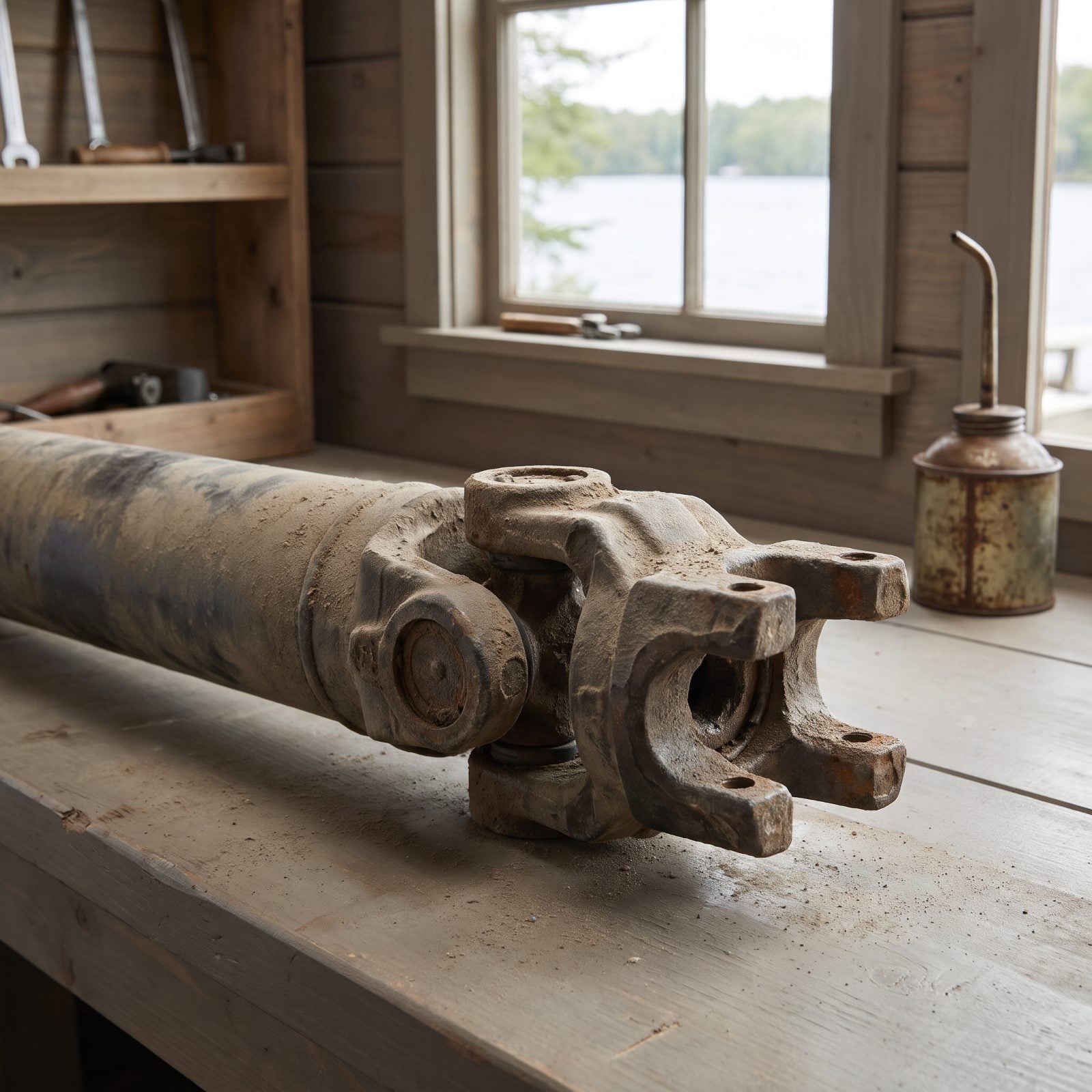
Most classics have grease fittings on the U-joints and sometimes the slip yoke, and most owners never touch them. Those tiny needle bearings inside each joint cap depend on fresh grease to survive the brutal, constant angle changes of a spinning driveshaft.
Let them run dry and the bearings gall, rust, and seize. First a clunk on takeoff. Then a vibration. Then a dropped driveshaft at speed, which is exactly as bad as it sounds.
Get under there with a grease gun every oil change. Hit each zerk until you see fresh grease purge past the seals, then wipe the excess. If your driveshaft has a greaseable slip yoke, hit that fitting too. Five minutes, two dollars of grease, and no roadside drama.
13. Never Replacing Moisture-Contaminated Brake Fluid
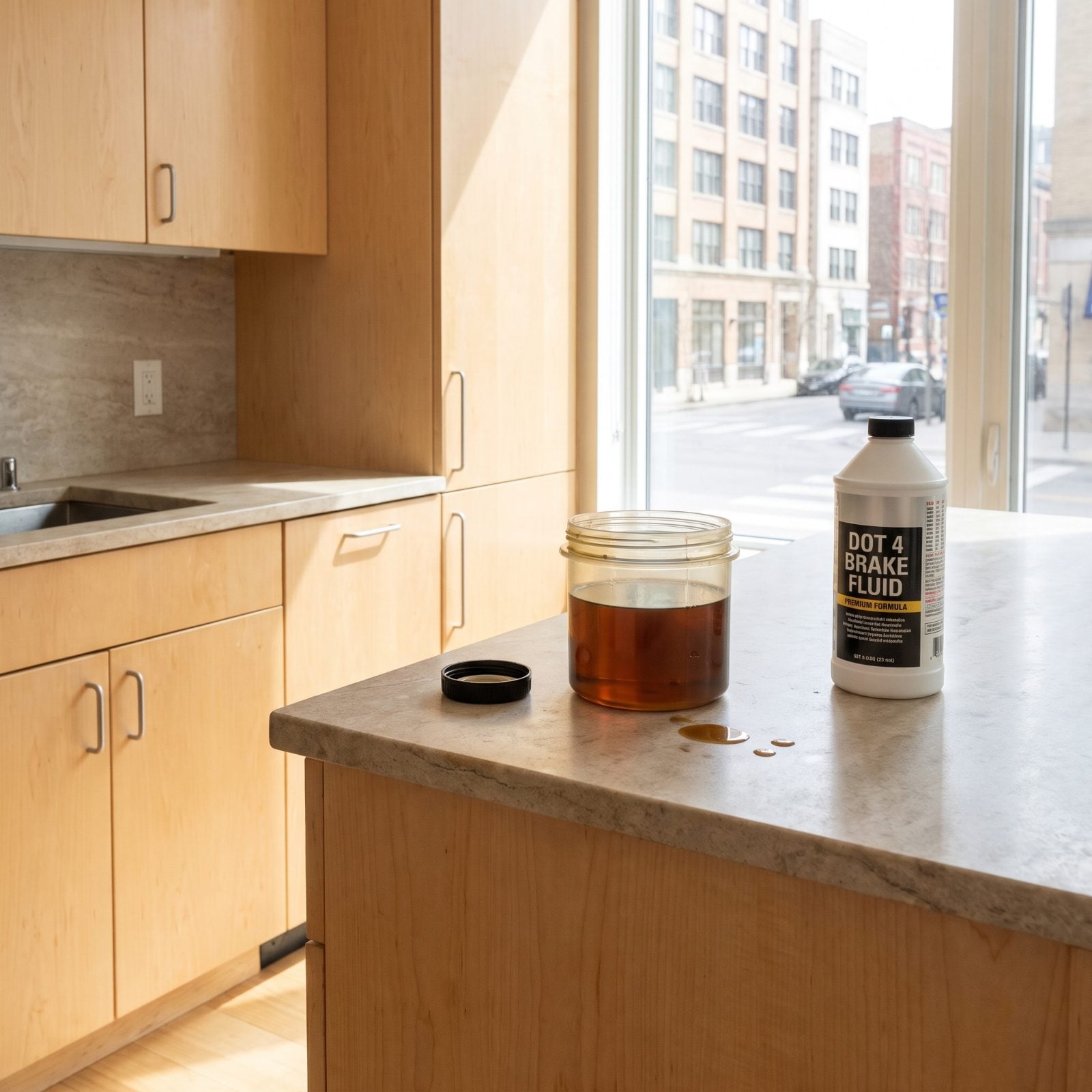
Brake fluid is hygroscopic — it pulls water straight out of the air through the seals and hoses, and that water does two nasty things. It corrodes the steel lines, wheel cylinders, and caliper bores from the inside, and it drops the boiling point.
Get the brakes hot on a long descent with old waterlogged fluid and the moisture flashes to vapor. Vapor compresses. Your pedal goes to the floor at exactly the wrong moment.
Flush the system every two years no matter how few miles you drive. Bleed clean, fresh fluid of the correct type through until it runs clear at every corner. On a car you trust your life to at speed, this isn’t optional maintenance.
12. Riding the Brakes Down Long Hills
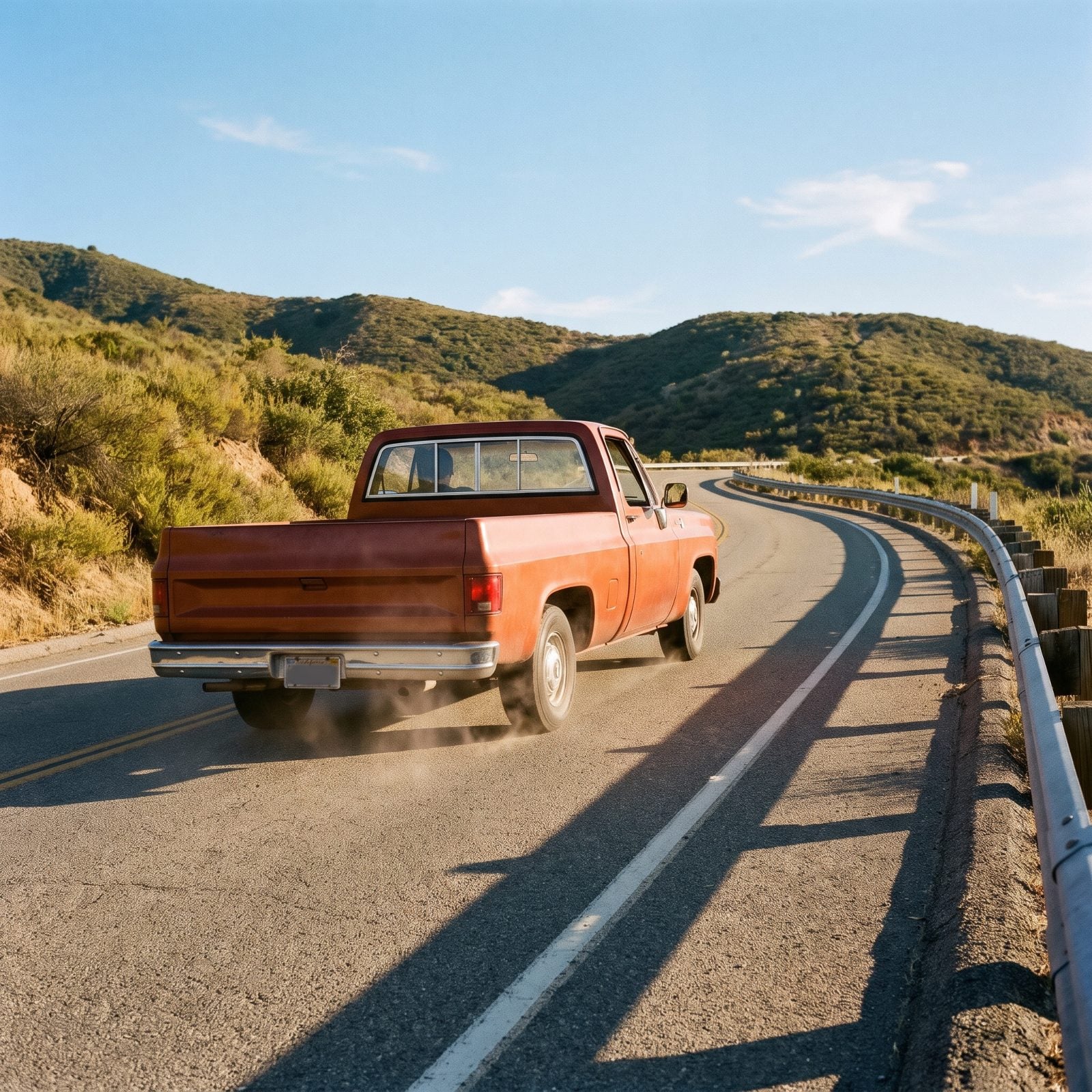
Drag the brakes the whole way down a grade and you build heat with nowhere to shed it. Pads glaze, rotors warp, drums expand, fluid cooks. On a long enough descent you reach brake fade, where the pedal stays firm but the car barely slows. Terrifying feeling. Completely preventable, too.
Let the engine do the work. Downshift before the hill, not after you’re already screaming down it. A lower gear holds your speed on compression, and you tap the brakes in short firm applications only when you need to scrub a little more, giving them time to cool between.
Your transmission was built to help here. Use it, and save the brakes for the one moment you really need them.
11. Ignoring a Brake Pull or Sticking Caliper
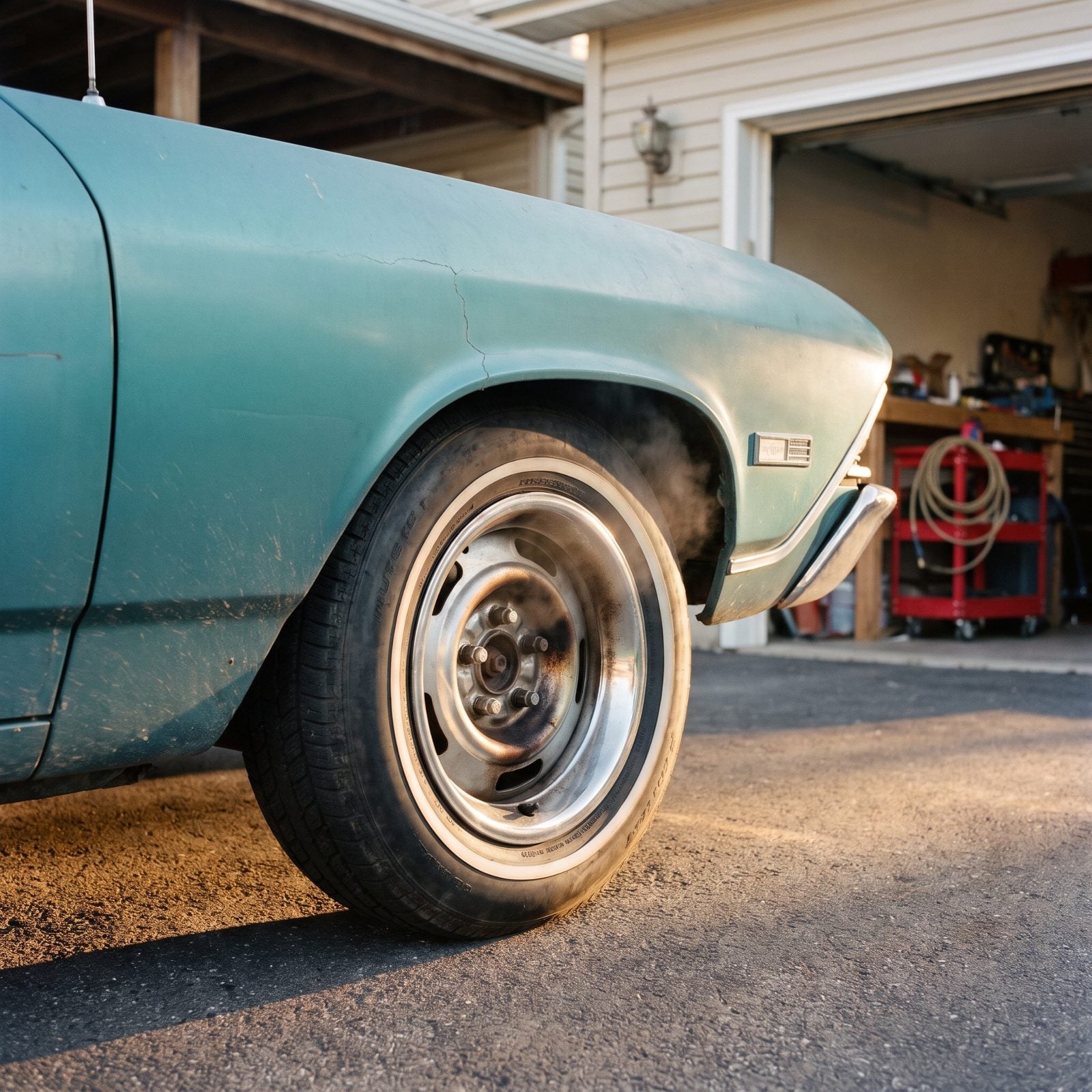
The car drifts a half-lane right under braking and you correct it without even thinking anymore. That little tug has become part of how the car drives — which it shouldn’t be.
A sticking caliper or frozen wheel cylinder keeps one brake partly applied all the time, and that pad never fully releases, so it cooks. You get glazed friction material, a warped rotor or scored drum, fluid that boils under hard stops, and a wheel bearing baking in heat it was never meant to see. Leave it and the whole mess spreads into a bigger, pricier repair.
So chase it now. Jack the car, spin each wheel by hand, and feel for the one that drags. Rebuild or replace the offending caliper or cylinder, flush the system with fresh DOT 3 or DOT 4, and bleed every corner. A rebuild kit costs less than a dinner out.
10. Driving on Underinflated Tires
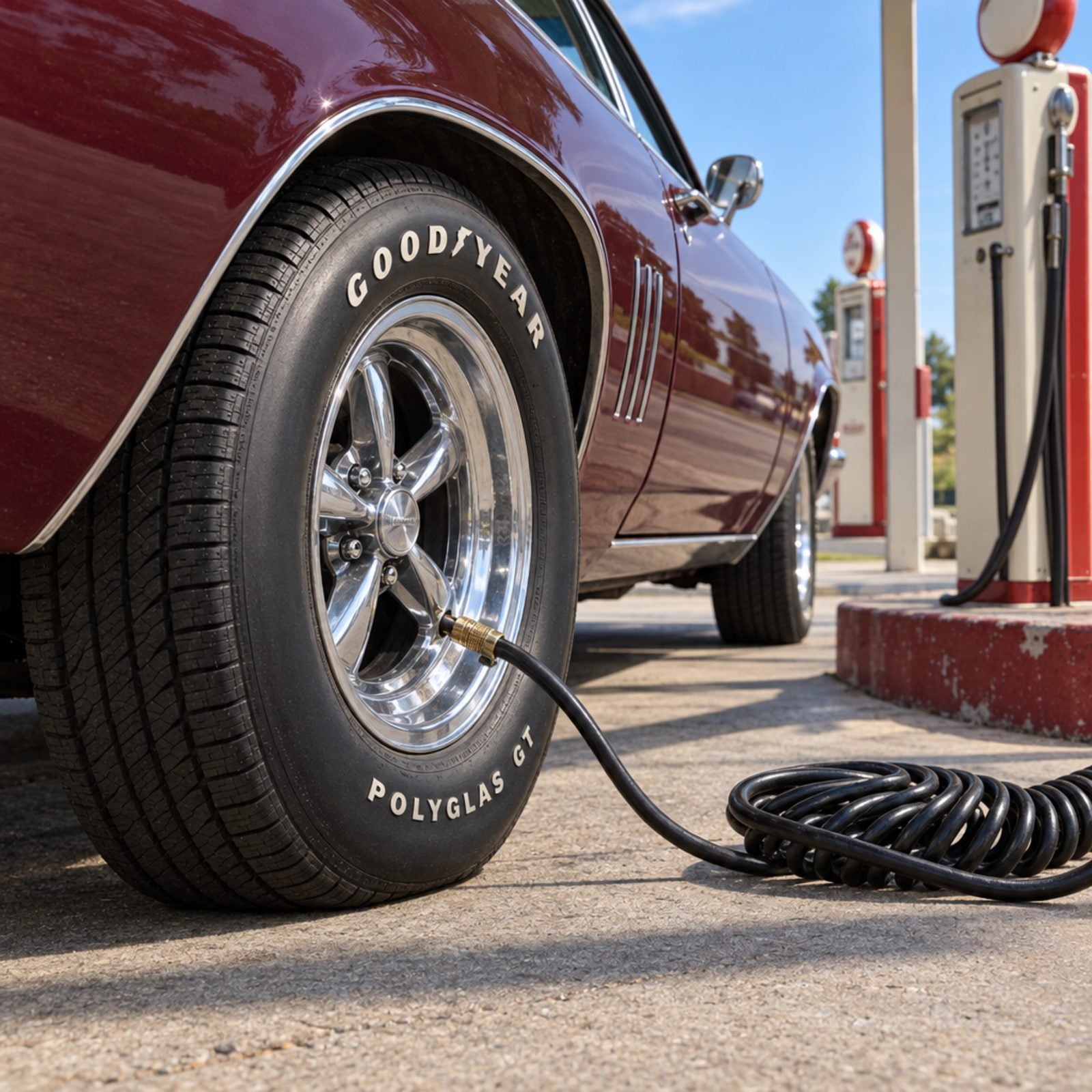
Classic tires lose pressure faster than you’d ever expect. Older rubber, aged valve stems, and cars that sit for a week between drives all bleed air quietly, the kind of slow leak you never catch. You eyeball it, it looks fine, you drive.
Run a tire five or eight pounds low and the sidewalls flex with every rotation. That flexing builds heat, and heat is what kills tires — you get cupped, feathered wear along the shoulders, soggy steering, worse mileage, and on a long hot highway run, real risk of a blowout. Airing back up later doesn’t undo it. The damage is permanent.
Buy a decent dial or digital gauge and leave it in the glovebox. Check all four cold, before you drive, once a week. Set them to the door-jamb or owner’s-manual spec, not whatever’s molded on the sidewall. That number is the tire’s maximum, not your target.
9. Trusting Tires That Look Good but Are Too Old
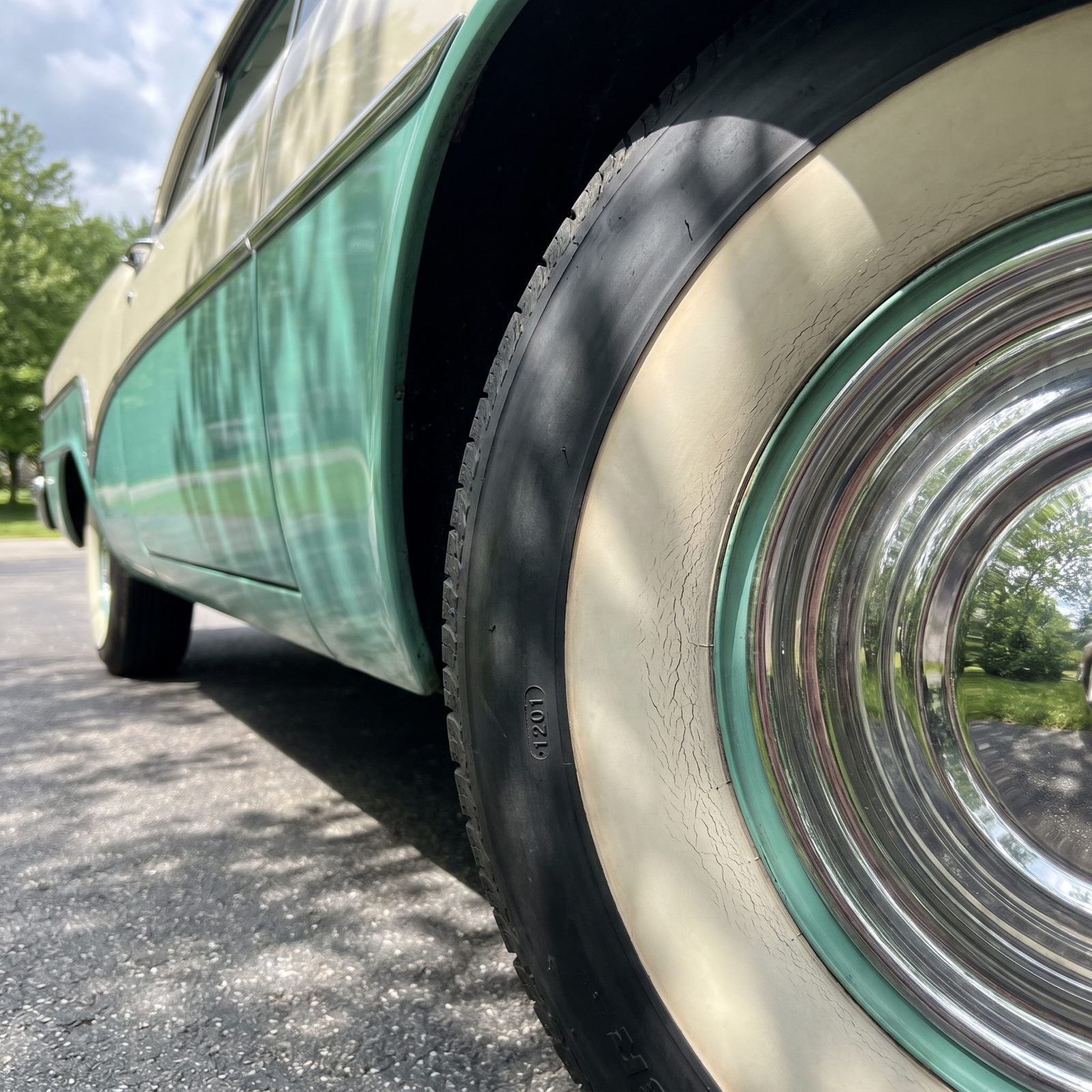
Tread depth lies to you. A tire that’s lived on a garage queen for twelve years can show a quarter inch of tread and still be unsafe, because rubber doesn’t wear out on a car that only sees a thousand miles a year. It ages out instead.
The oils that keep rubber flexible evaporate over time, and the casing goes hard and brittle whether the car moves or not. You’ll notice fine cracking in the sidewall and between the tread blocks first. Then one day the belt separates on the highway with zero warning. Plenty of gorgeous classics are rolling on tires older than the kid who parks them.
Find the DOT date code on the sidewall. The last four digits are the week and year of manufacture. Anything past six or seven years deserves a hard look, and past ten, replace it no matter how good the tread reads.
8. Ignoring Uneven Tire Wear and Bad Alignment
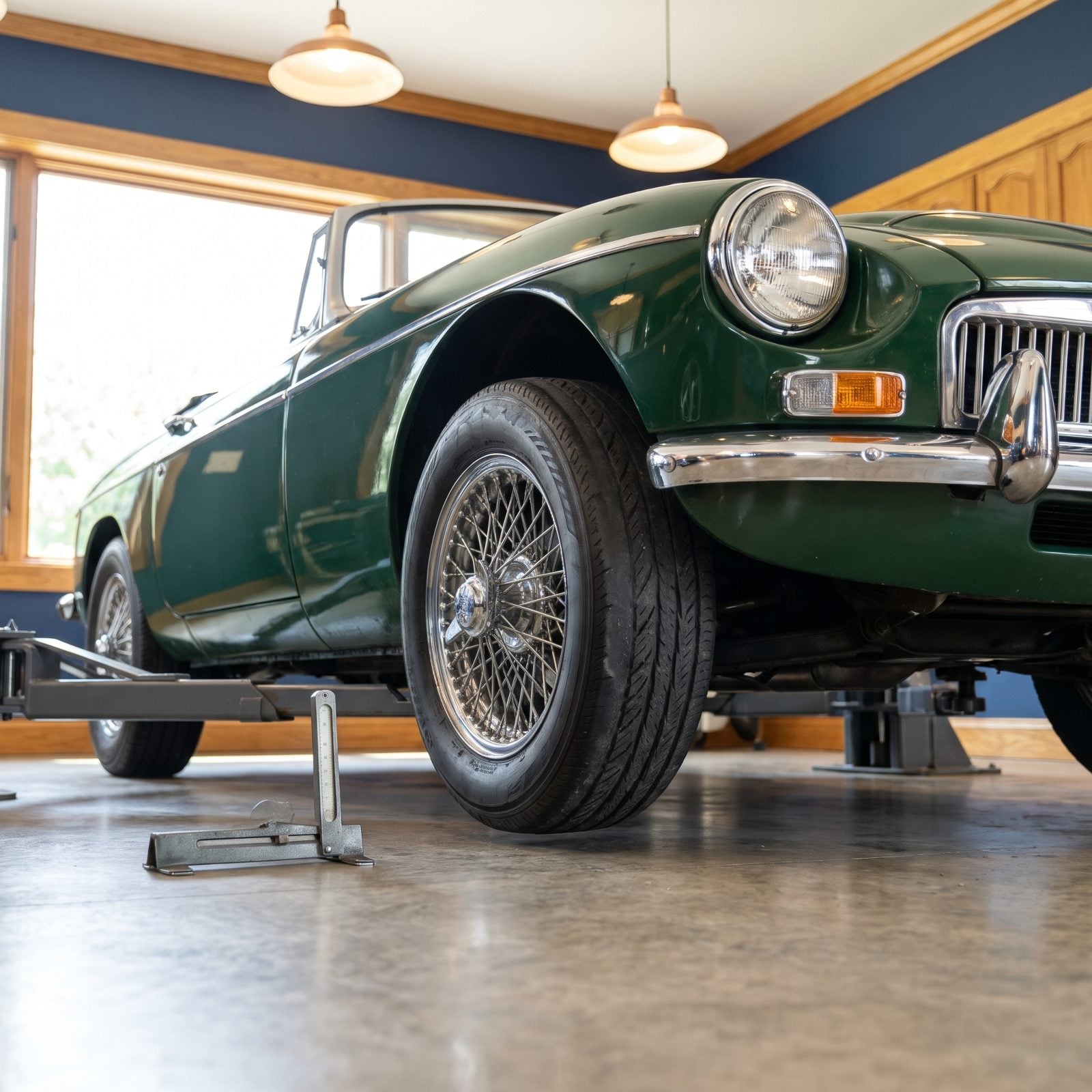
You rotated the tires, noticed the fronts were scuffed off on one edge, shrugged, and put them back on. The car drives straight-ish. Why bother?
Because that wear pattern is the car telling you the geometry is off. Worn-in idler arms, tired tie-rod ends, sagging springs, or a camber that drifted after a curb strike all shave rubber off one shoulder. You throw away a perfectly good tire in half its life, and meanwhile the loose steering components keep getting looser until something lets go at the worst possible moment.
Read the wear. Both inner edges gone usually means too much toe-out or worn tie-rods. One inner edge means camber or a bent part. Get the front end on a rack, have the shop check for play before they align, and replace the worn bushings and ends first. Alignment on top of worn parts is money set on fire.
7. Skipping Chassis Grease-Fitting Service
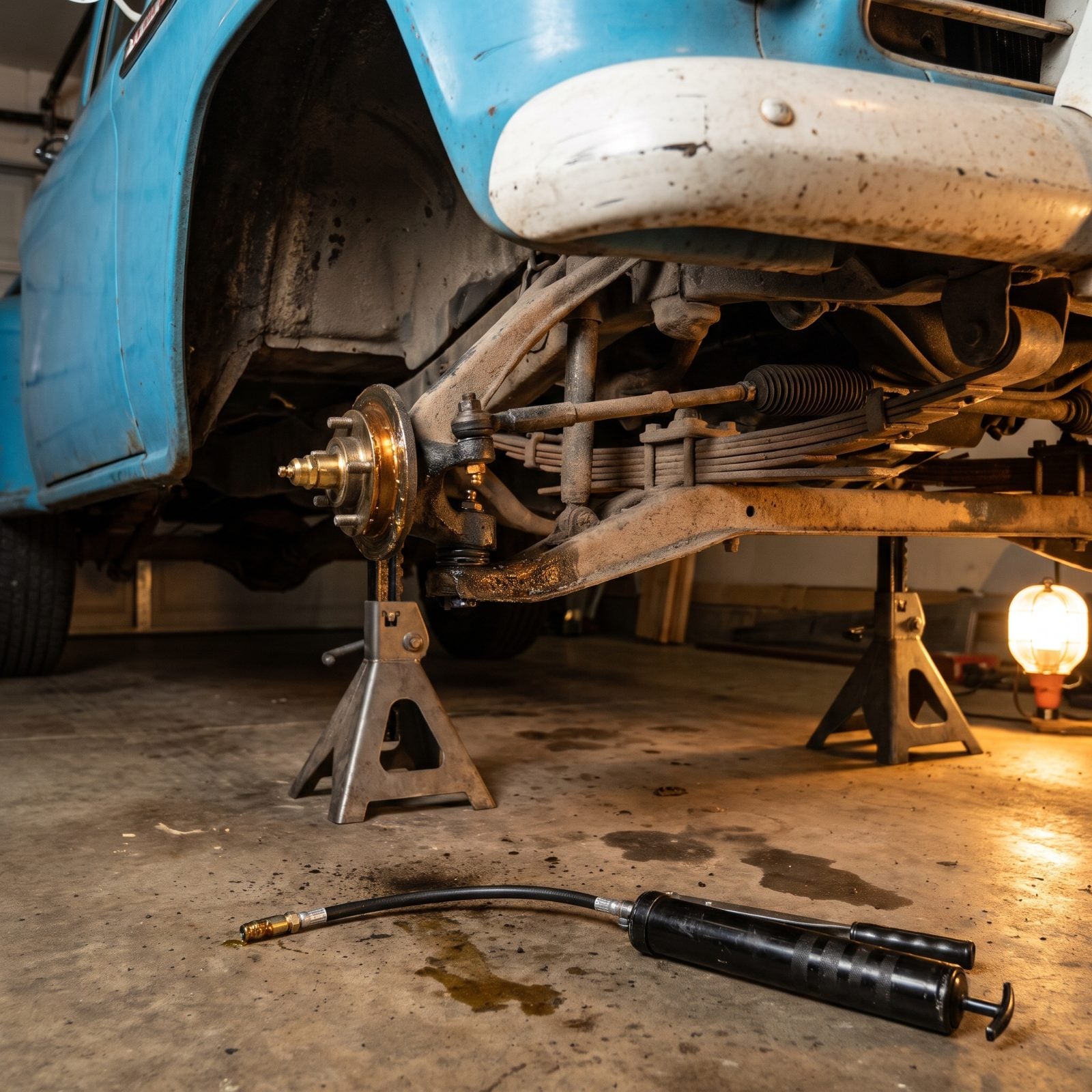
Most cars built before the mid-1970s have grease zerks scattered all over the front end, the steering linkage, the driveshaft. Modern cars sealed all that for life, so a whole generation of owners forgets the fittings even exist.
Skip them and the grease that’s in there turns to varnish and squeezes out, and metal rides on metal. Ball joints develop play, tie-rod ends click, the idler arm wobbles, and your careful alignment walks away within a few hundred miles. These parts were designed to be fed. Starve them and they wear out years early.
Get a cheap grease gun and a tube of quality chassis lube. Crawl under every oil change or every thousand miles, find all the zerks — a shop manual shows every location — wipe each one clean, and pump until fresh grease pushes out the old. Fifteen minutes, maybe a dozen fittings.
6. Parking the Car Over Grass or Bare Soil
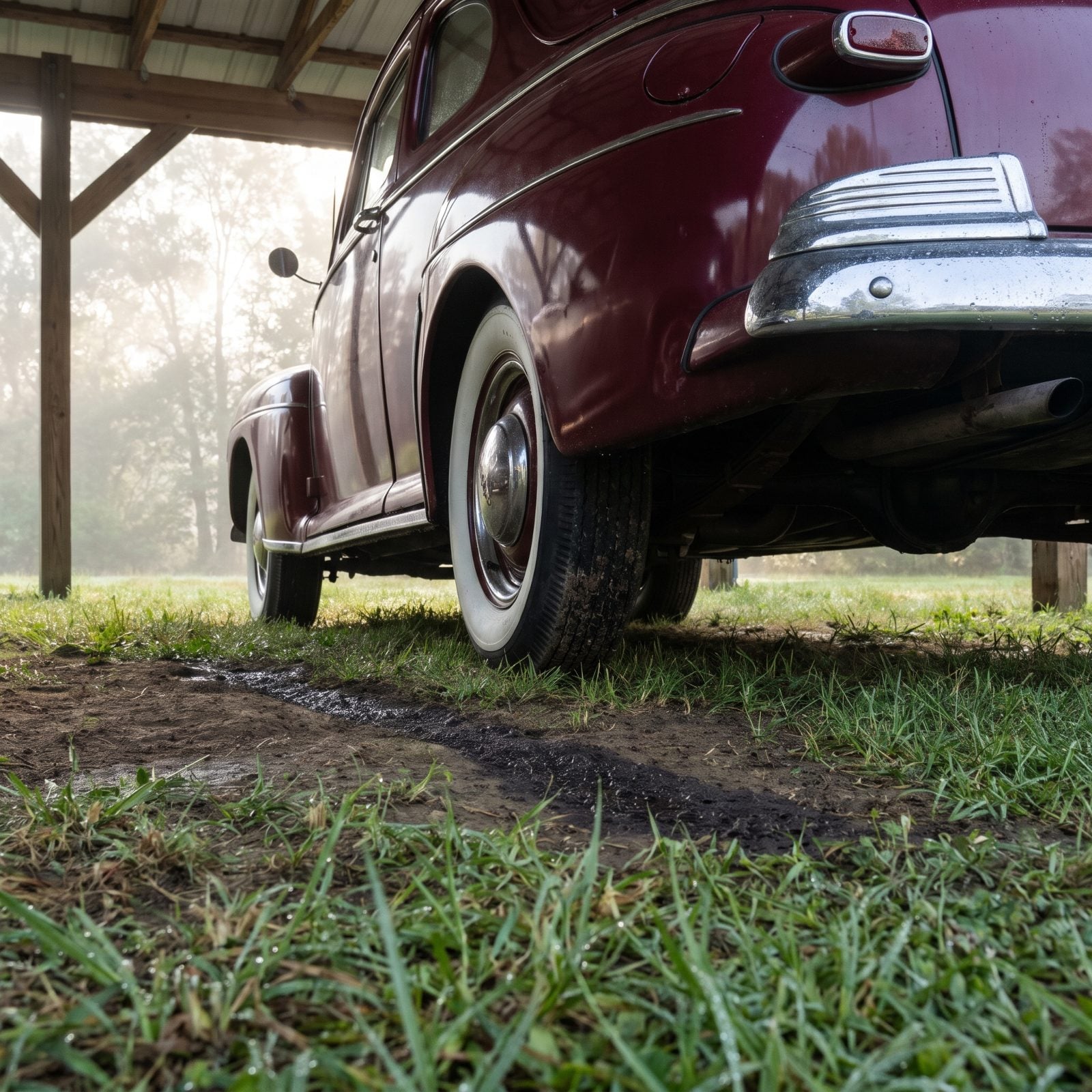
Grass and dirt breathe. Ground moisture wicks up out of soil day and night, and a car parked over it sits in a slow fog of humidity rising straight at its floor pans and frame rails.
That constant dampness is a rust factory. The underside never gets a chance to dry, condensation collects in box sections and seam pockets, and corrosion starts from the inside out where you can’t see it — until a floor pan goes soft under your heel. Dirt lots are the quiet killer of otherwise honest, dry-looking cars.
Park on a hard surface. Concrete or asphalt is ideal. If all you’ve got is a dirt or gravel spot, lay down a heavy polyethylene vapor barrier and put the car on top of it, or set the tires on patio pavers. The sheet stops ground moisture from ever reaching the steel.
5. Leaving Road Salt on the Undercarriage
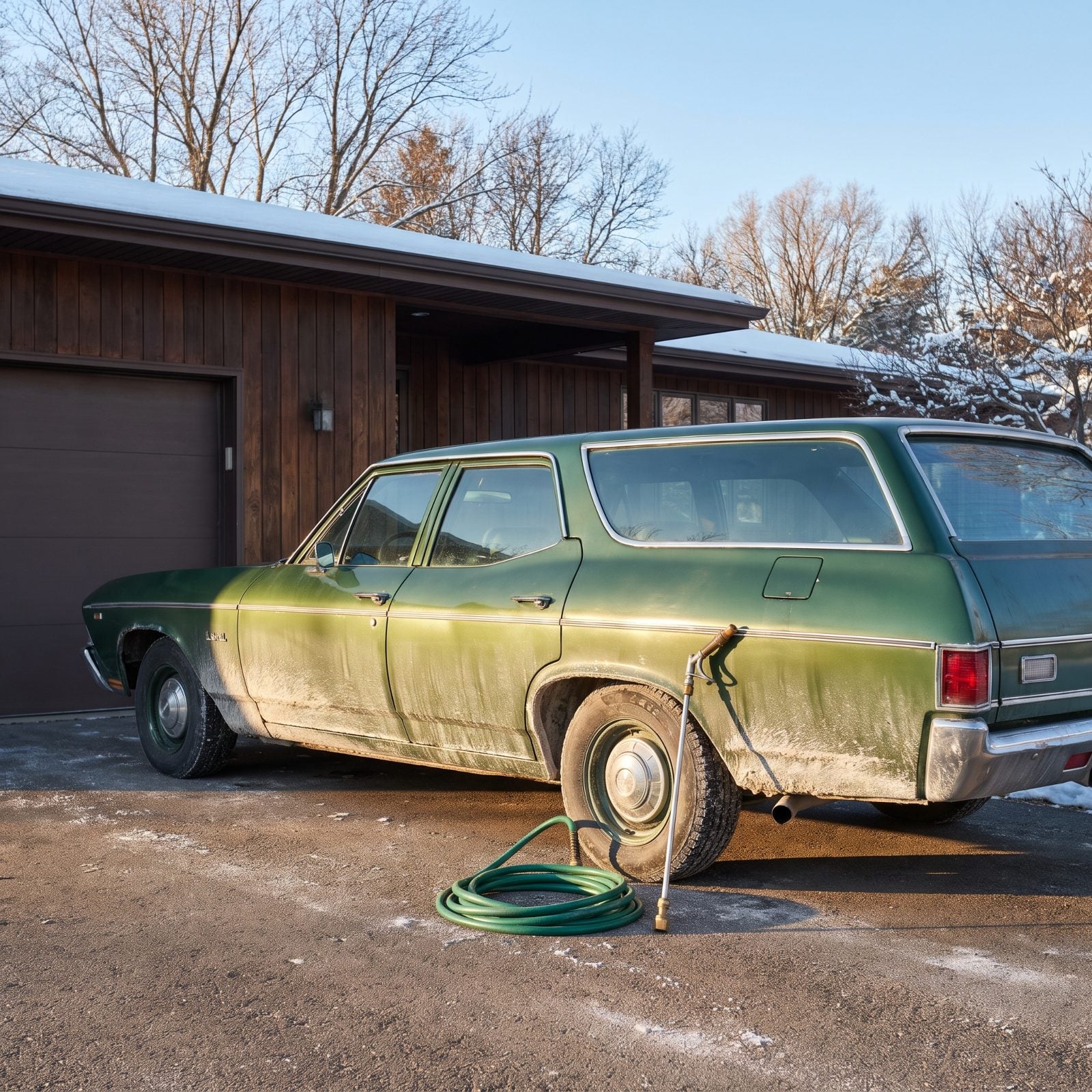
You drove the classic on a clear winter day, the roads were dry, and you parked it in the heated garage feeling smug. But “dry” roads treated with brine leave an invisible salt film on everything underneath.
That salt is hygroscopic — it pulls moisture right out of the air. So now it’s sitting on your frame and floor pans in a warm garage, staying damp and eating steel around the clock. A heated garage with a salted undercarriage corrodes faster than a cold one, and the rust blooms in the seams and crevices you can’t reach.
Rinse it off before it dries in. A plain garden hose with a wand that reaches up into the wheel wells and along the rockers does the job in ten minutes. Do it the same day. Better yet, if you love the car, keep it off salted roads entirely and save the winter miles for the beater.
4. Allowing Leaves to Block the Cowl Drains
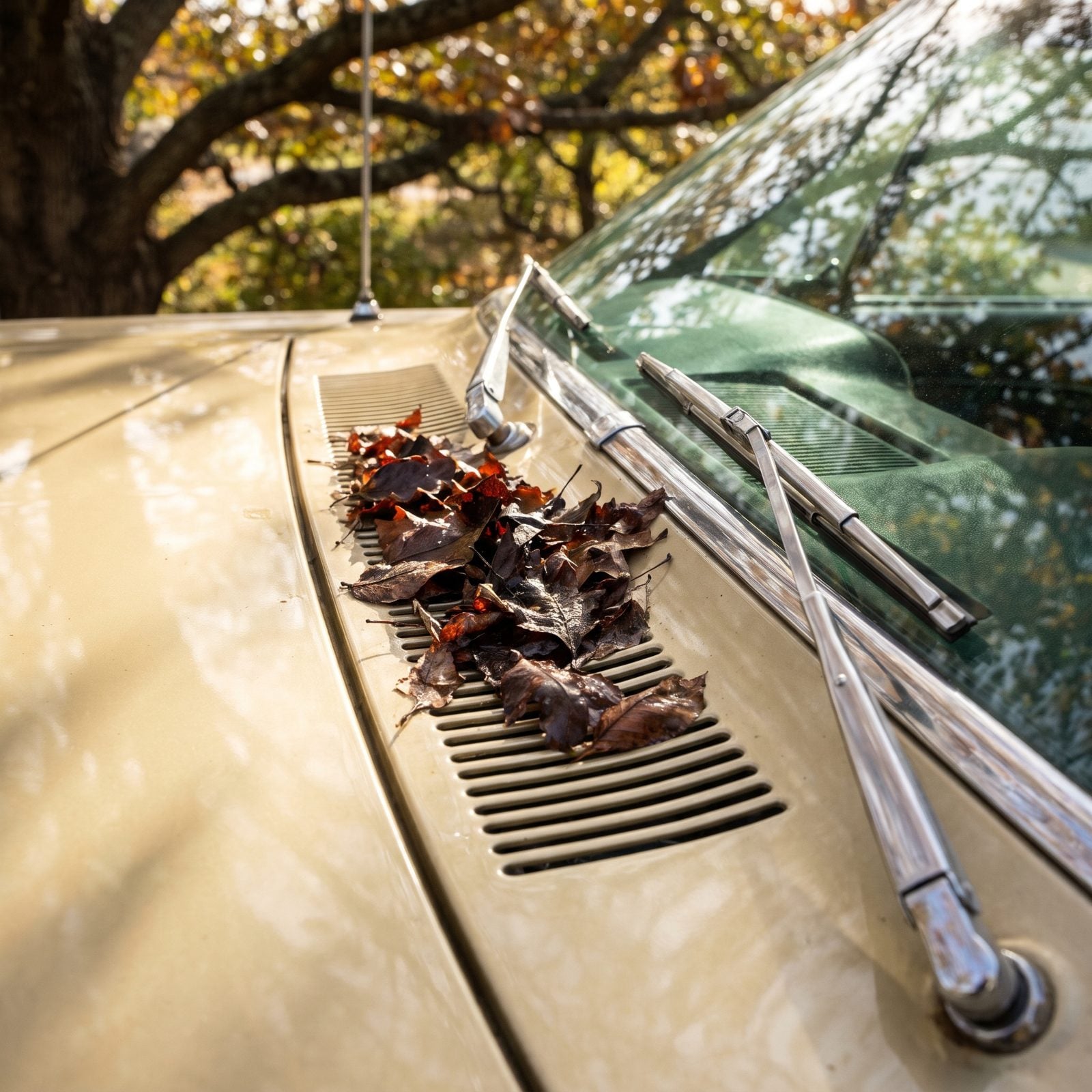
The cowl is the trough at the base of the windshield where the wipers live. It has drain holes that let rainwater run out the bottom, and those holes love to pack full of leaves, pine needles, and gritty debris.
When they clog, the cowl fills like a bathtub. Water backs up, finds the seams, and rots the cowl structure and firewall from the inside. On a lot of classics it also drips straight down onto the kick panels and front floor pans. The first sign is usually wet carpet and a musty smell — by which point the metal underneath has already been feeding on standing water for a good while.
Pop the hood each fall and scoop the cowl clean. Clear the drain holes with a soft wire or a blast from the hose and watch the water run out the bottom. Takes five minutes and saves a firewall.
3. Ignoring Corroded Battery Cables and Ground Straps
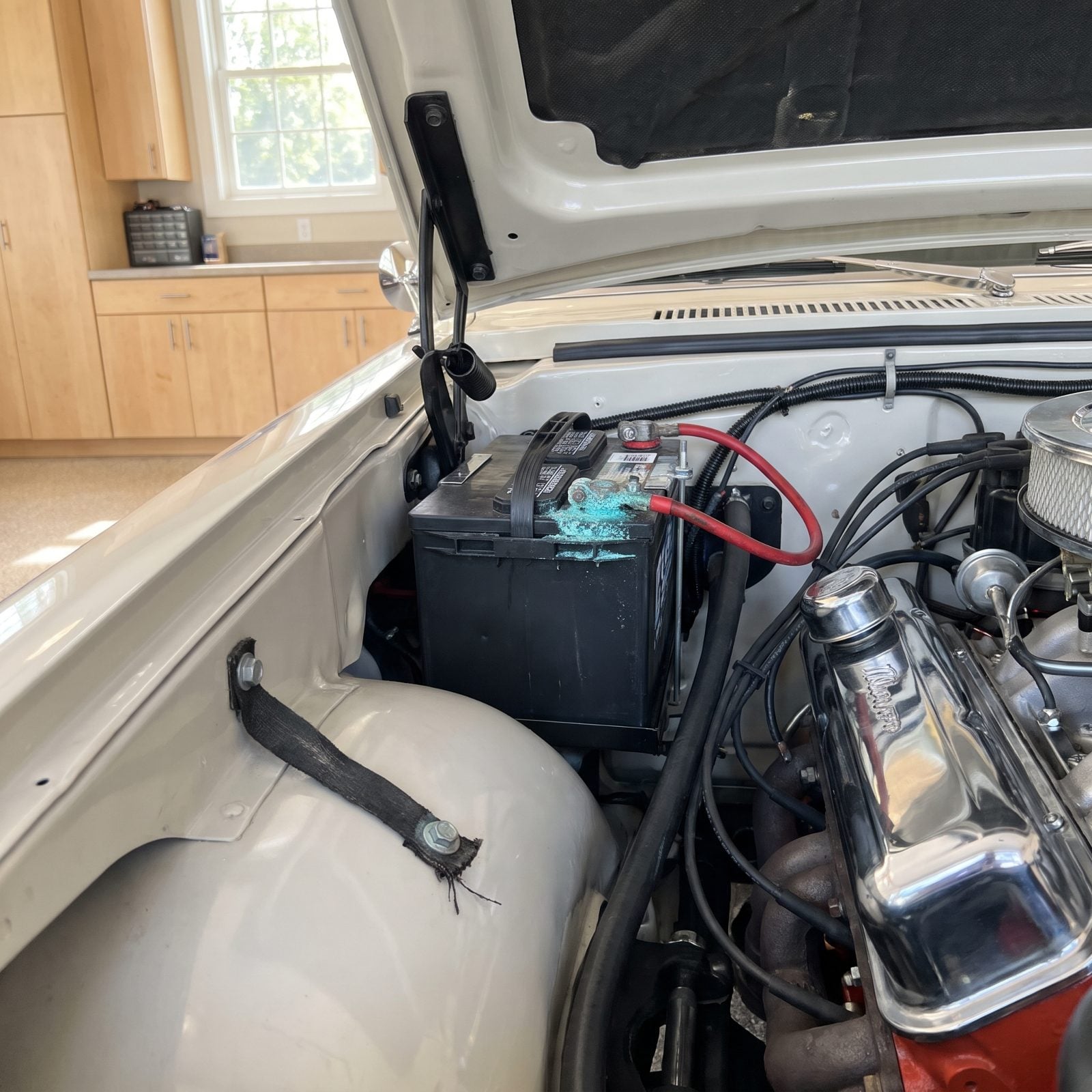
The car cranks slow, the lights dim at idle, and you’ve been meaning to throw a new battery at it. The battery’s probably fine. Look at the connections.
That fuzzy blue-green crust on the terminals is corrosion, and it’s a resistor sitting right in the main current path. It starves the starter, confuses the charging system, and makes the alternator work overtime to overcome the drop. The ground straps are even more often the culprit — a rusty, loose engine-to-frame or body ground causes gremlins people chase for months.
Pull the cables, scrub the terminals and clamps bright with a battery brush and a little baking-soda paste, and check every ground strap for corrosion and a tight bolt. Replace any cable that’s green inside the insulation or stiff. Coat the clean connections with dielectric grease or a felt washer so it doesn’t come back.
2. Overloading Original Wiring With Modern Accessories
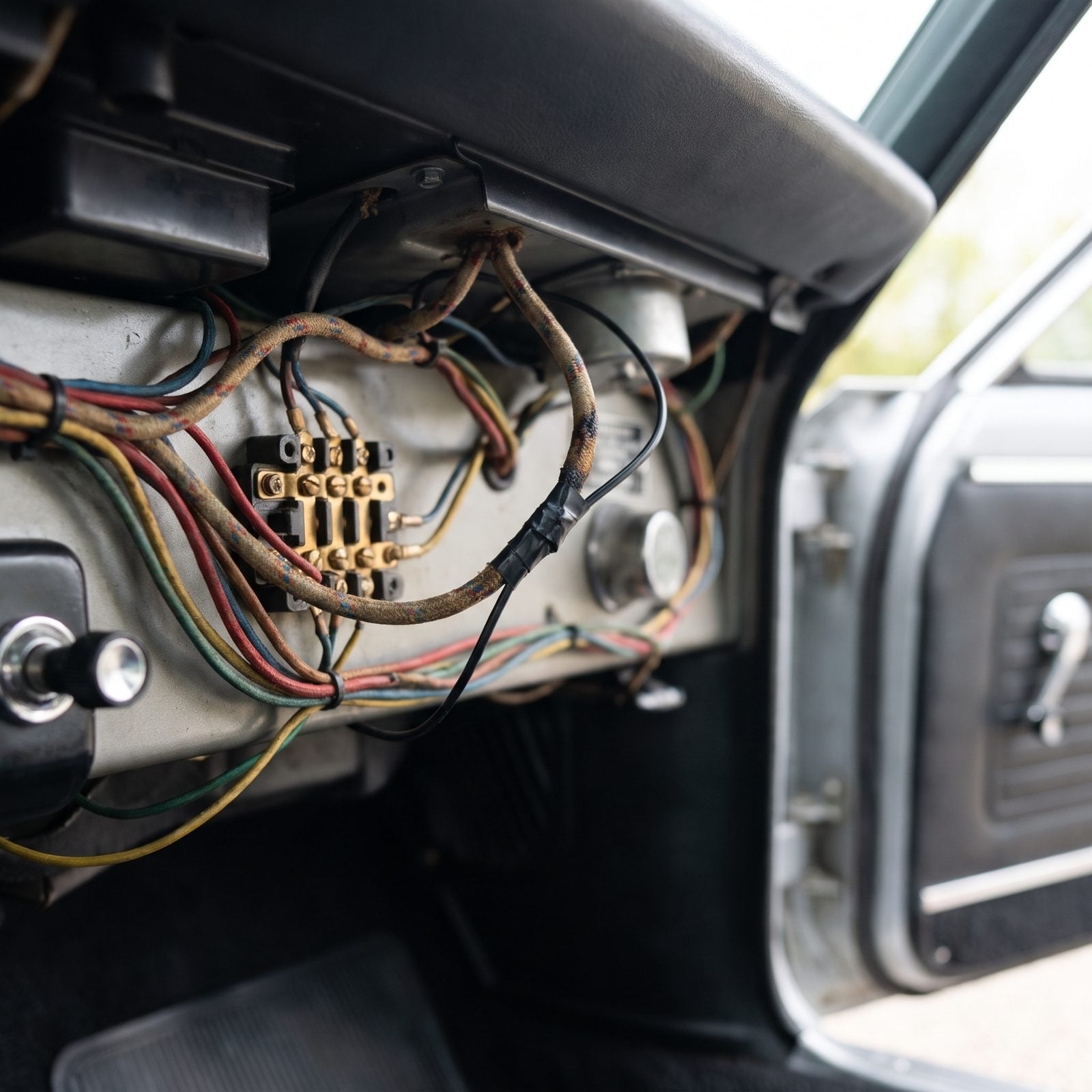
You added an electric fuel pump, a modern stereo, maybe a set of driving lights and a phone charger — all tapped into the nearest original circuit, because that’s where the wire was.
That wiring was sized in 1965 for 1965’s electrical load. Pile modern amperage onto a fifty-year-old circuit and the wire heats up inside its insulation, the old cloth or brittle plastic cracks and chafes, and eventually it shorts. Electrical fires in classics almost always start at an overloaded add-on splice, not the factory harness. It’s the most dangerous mistake on this whole list because the car doesn’t warn you first.
Give the new stuff its own path. Run accessories through a modern auxiliary fuse block fed directly from the battery through a relay, with each circuit fused for its own load. Use proper crimped or soldered connections and heat-shrink, never a quick-tap vampire clip. Then the factory harness goes back to doing only what it was built to do.
1. Replacing Blown Fuses With Foil or an Oversized Amp Rating to Keep the Lights On
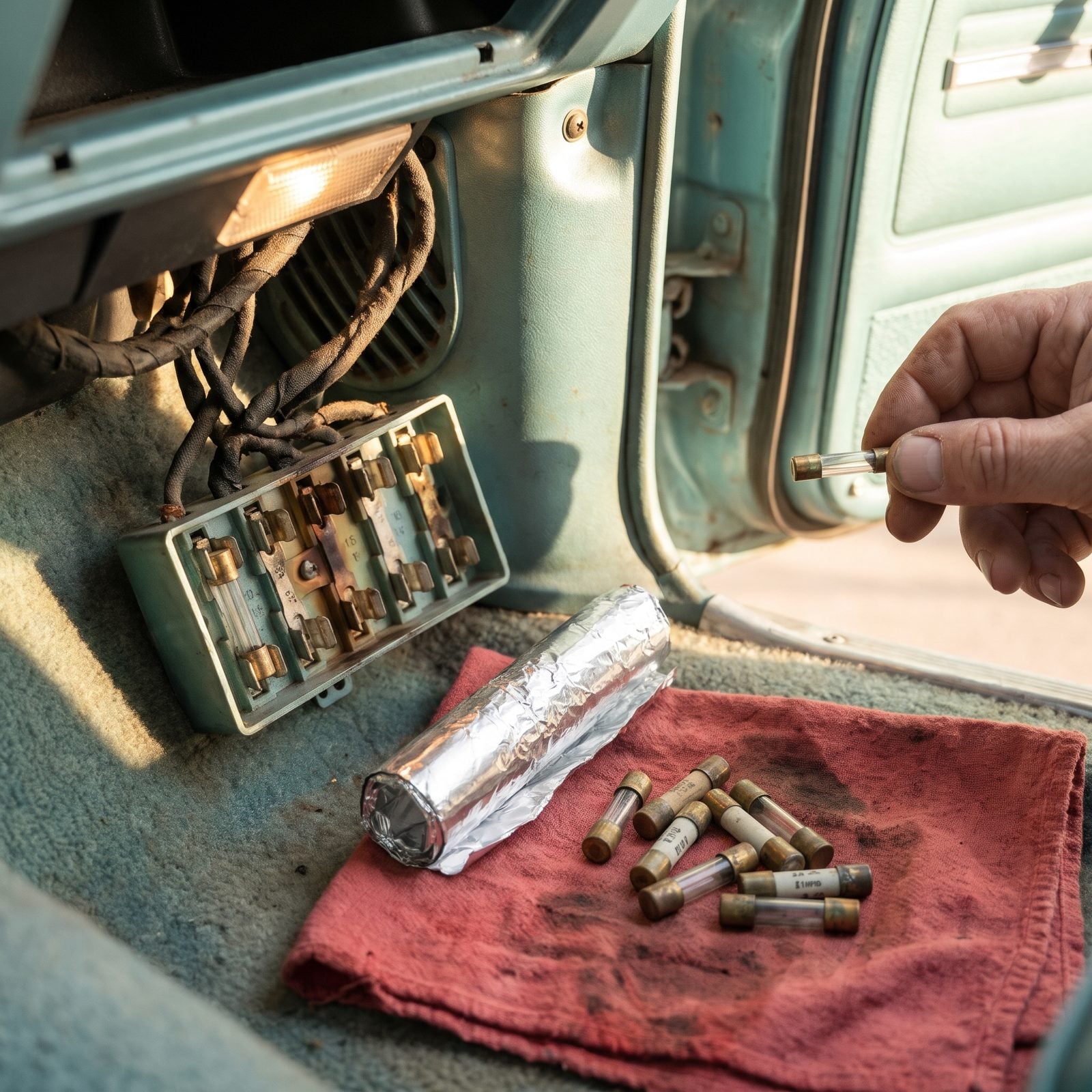
The brake lights quit on a Friday night, the parts store is closed, and there’s a roll of foil in the kitchen drawer. So the blown fuse gets wrapped, jammed back in the clip, and the lights come on. Problem solved. Except it isn’t.
A fuse is the cheapest part in the car and the only one built to die on purpose. It blows at its rated amperage because something downstream is pulling more current than the wiring can carry — that’s the whole job, and it’s doing it. Bridge it with foil or drop a 30-amp where a 10 belongs, and you’ve just nominated the next weakest link in the circuit to be the fuse instead. Which is usually a length of fifty-year-old cloth-wrapped wire buried somewhere behind the dash where you can’t see it, can’t reach it, and won’t smell it until it’s too late. It doesn’t blow clean the way a fuse does. It smolders. And plenty of underdash fires in old cars trace back to somebody who got clever with the fuse box on a Friday night.
Match the rating stamped on the old fuse. Nothing higher. Keep a cheap assortment of AGC glass tubes or SFE fuses in the glovebox, the exact amps your car calls for, and you’ll never be tempted by the kitchen drawer again. If a correct fuse blows again right away, good — it’s earning its keep. You’ve got a short. No amount of foil fixes a short. Chase the fault, not the symptom.