
The chrome was warm under your thumb by mid-afternoon. You’d push a preset button with a mechanical thunk, hear the needle drag across the dial, and catch the tail end of a song you’d been hunting for three red lights. A car radio in 1974 was a machine you operated, not a screen you poked. It had moving parts, a bulb you could replace, and a tone knob that actually did something. The ones below bring all of it back.
Please note that some of the images in this article were created with the assistance of AI.
36. Pull-Out, Push-In Mechanical Station Presets
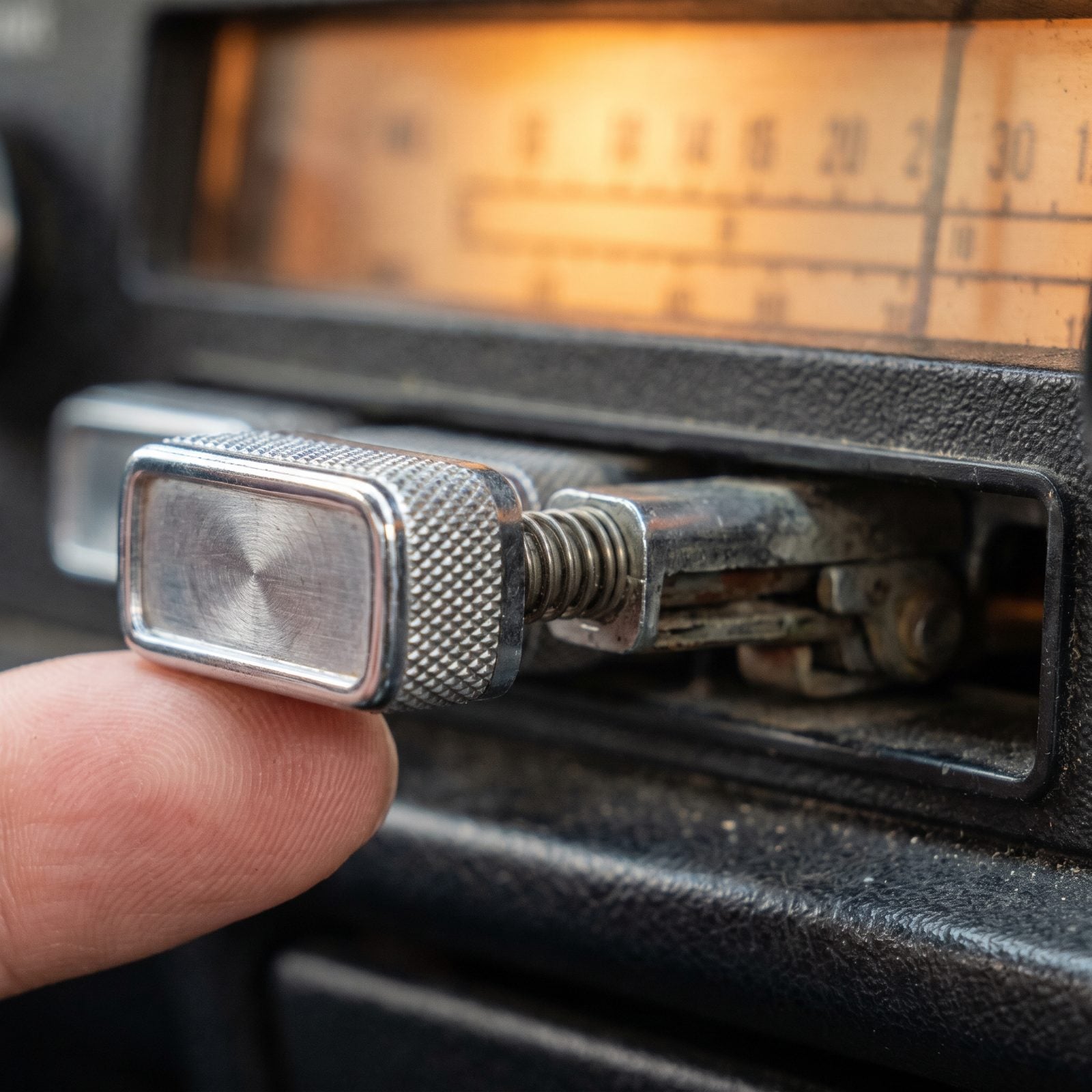
You didn’t tap a screen. You pulled the button all the way out, turned the dial to your station, then shoved it back in with a satisfying thunk that locked it there forever. That was it. Five favorite stations, set by hand, held by springs and levers.
The genius was that it worked without a drop of electricity. Pure mechanics, the button physically dragging the tuning hardware to the exact spot you’d set. Hit it blind at night and the needle slid home every time.
35. Signal-Seeking “Wonder Bar”
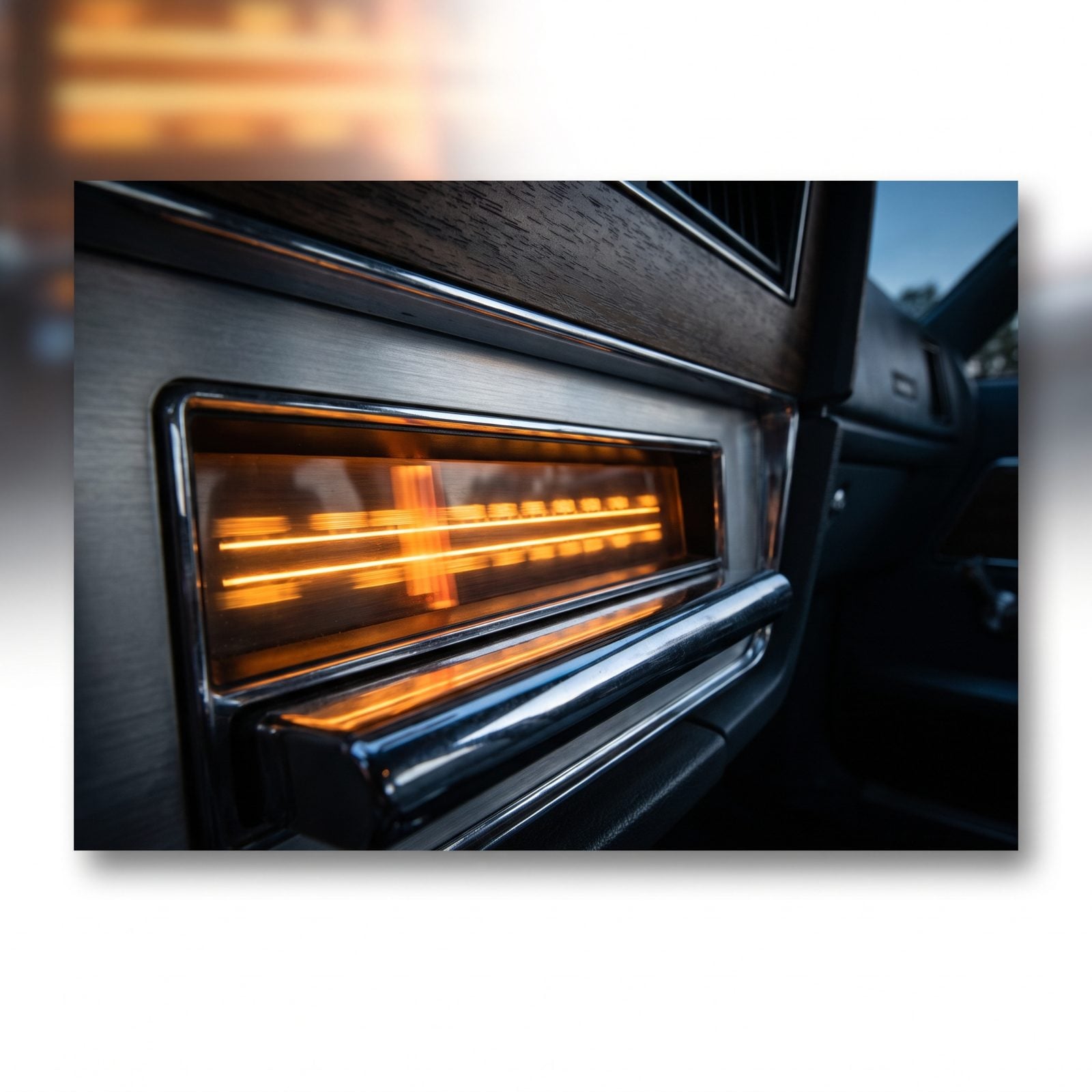
Press the bar and the needle took off on its own, hunting up the dial until it slammed onto the next clear station. Press again, it jumped to the next. You could sweep the whole AM band with one finger and never look down.
The name tells you how futuristic it felt. People called it the Wonder Bar because that’s genuinely how it seemed, a radio that found stations by itself. On a long night drive it was the closest thing you had to a copilot.
34. Floor-Mounted Switch for Seeking Radio Stations
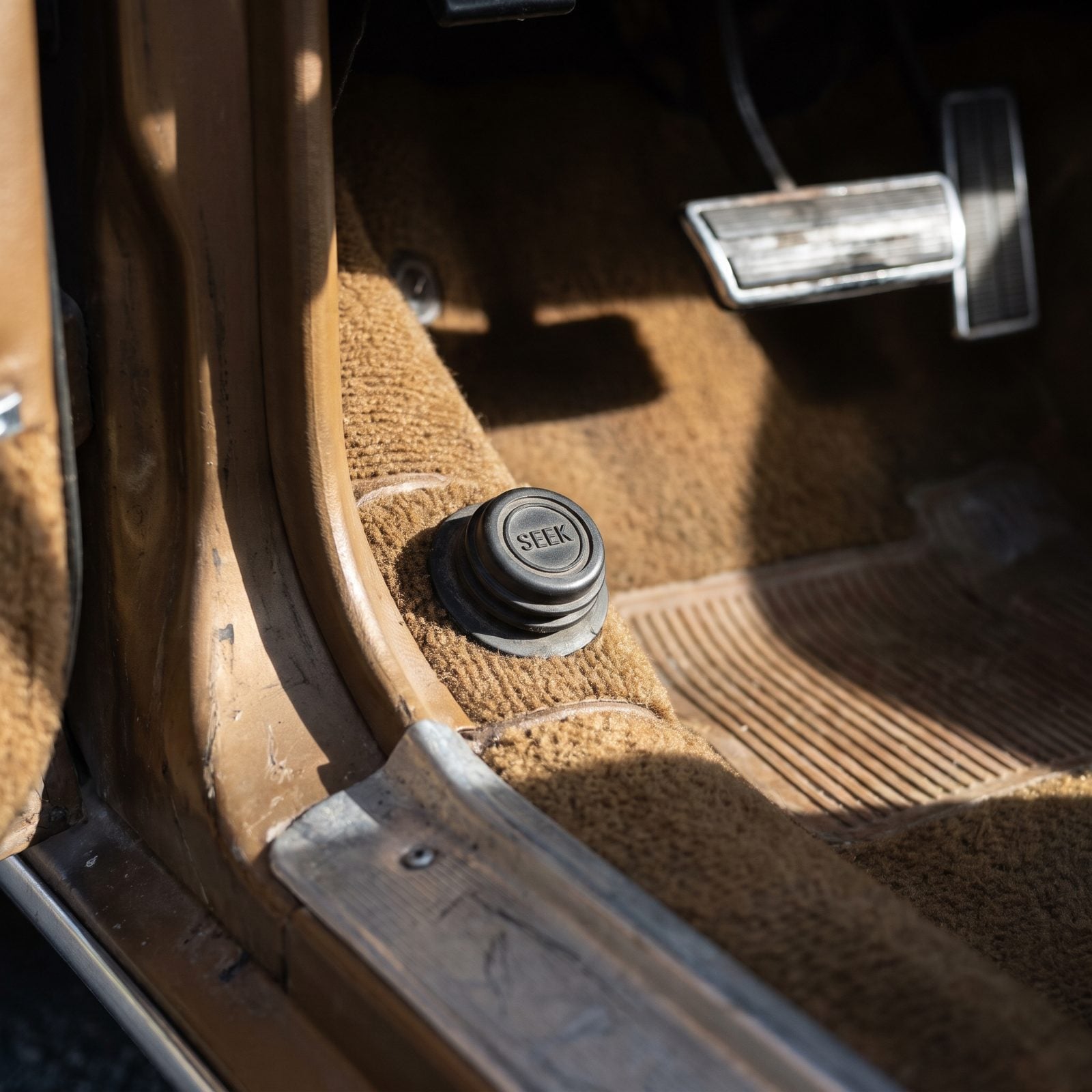
Before the seek control moved to the dash, some cars put it on the floor. A little rubber-topped button near your left foot, same spot the old headlight dimmer lived. Tap it with your toe and the radio jumped stations.
Both hands on the wheel, eyes on the road. For the time, that was a safety feature nobody made a fuss about. It just made sense. And half the drivers who had one probably forgot it was even down there until their shoe found it by accident.
33. Long Analog Frequency Dial With a Sliding Tuning Needle
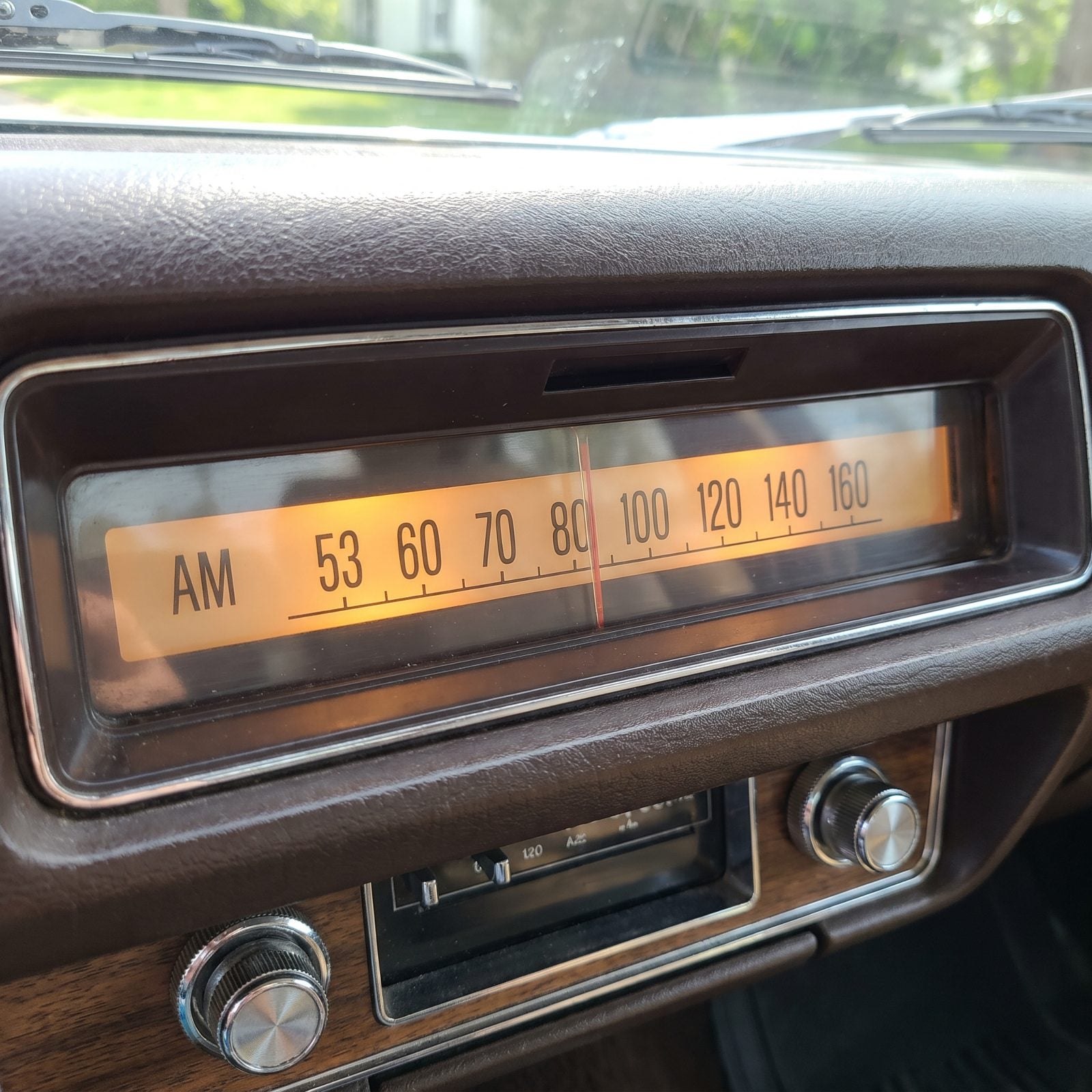
A glowing ribbon of amber light, a red needle drifting across it, the whole AM band laid out left to right like a tiny lit horizon. You tuned by watching that needle creep and listening for the static to clear.
There was a skill to it. Turn too fast and you blew past the station. Turn too slow and you lived in the hiss between channels. Finding that exact sweet spot, the tiny place where the voice popped into focus, felt like landing something.
32. AM Dial Marked 5, 7, 9, 11, and 14
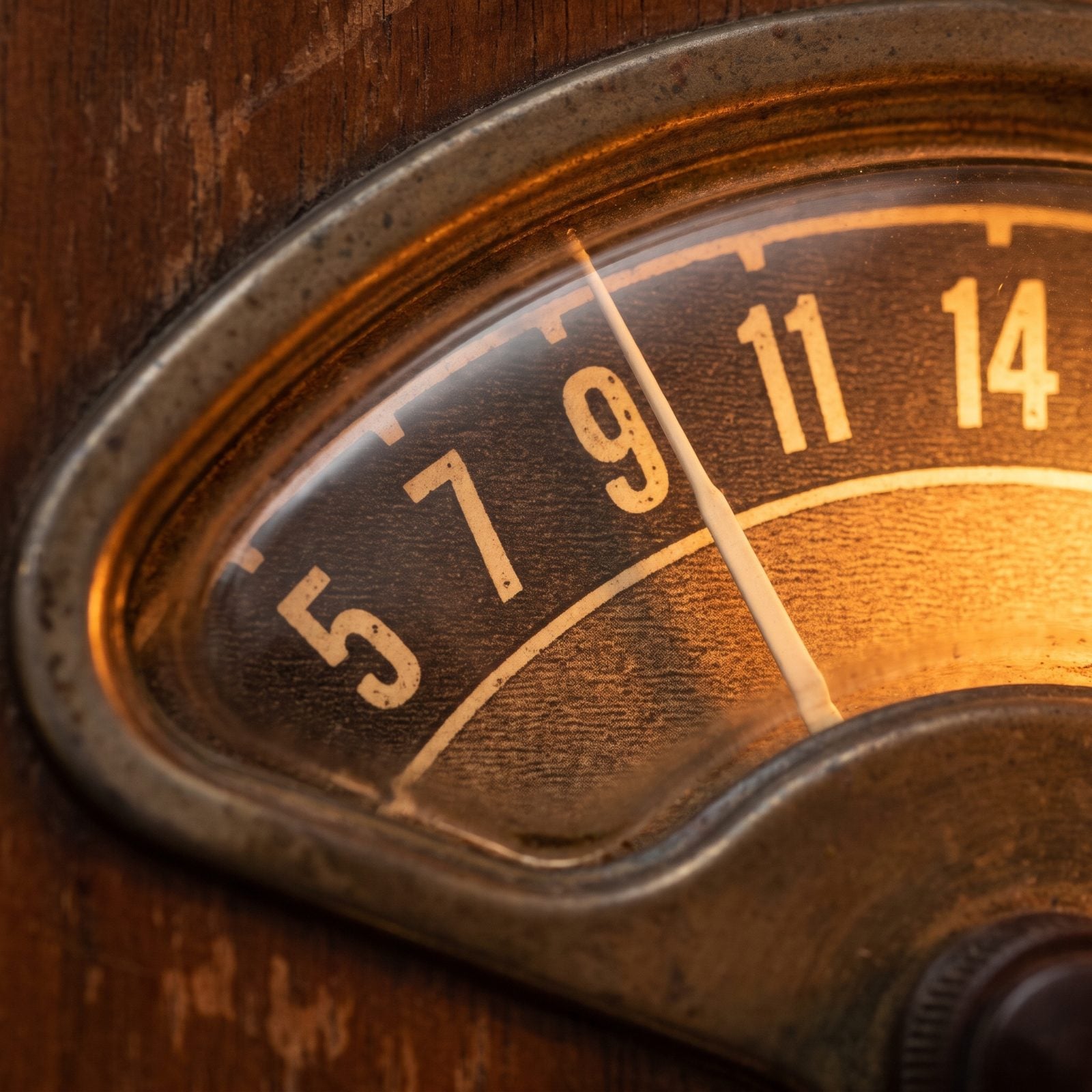
Here’s one that stumps people who didn’t grow up with it. The AM dial didn’t print the full numbers. It read 5, 7, 9, 11, 14, dropping the trailing zeros to save room, so 7 meant 700, 11 meant 1100, 14 meant 1400 kilocycles.
Everybody knew the code without being told. You just understood that your favorite station at “dial 10” was really 1000 on the band. Nobody ever explained it. You absorbed it the way you absorbed where the gas pedal was.
31. Chrome Two-Knob Radio Faceplate
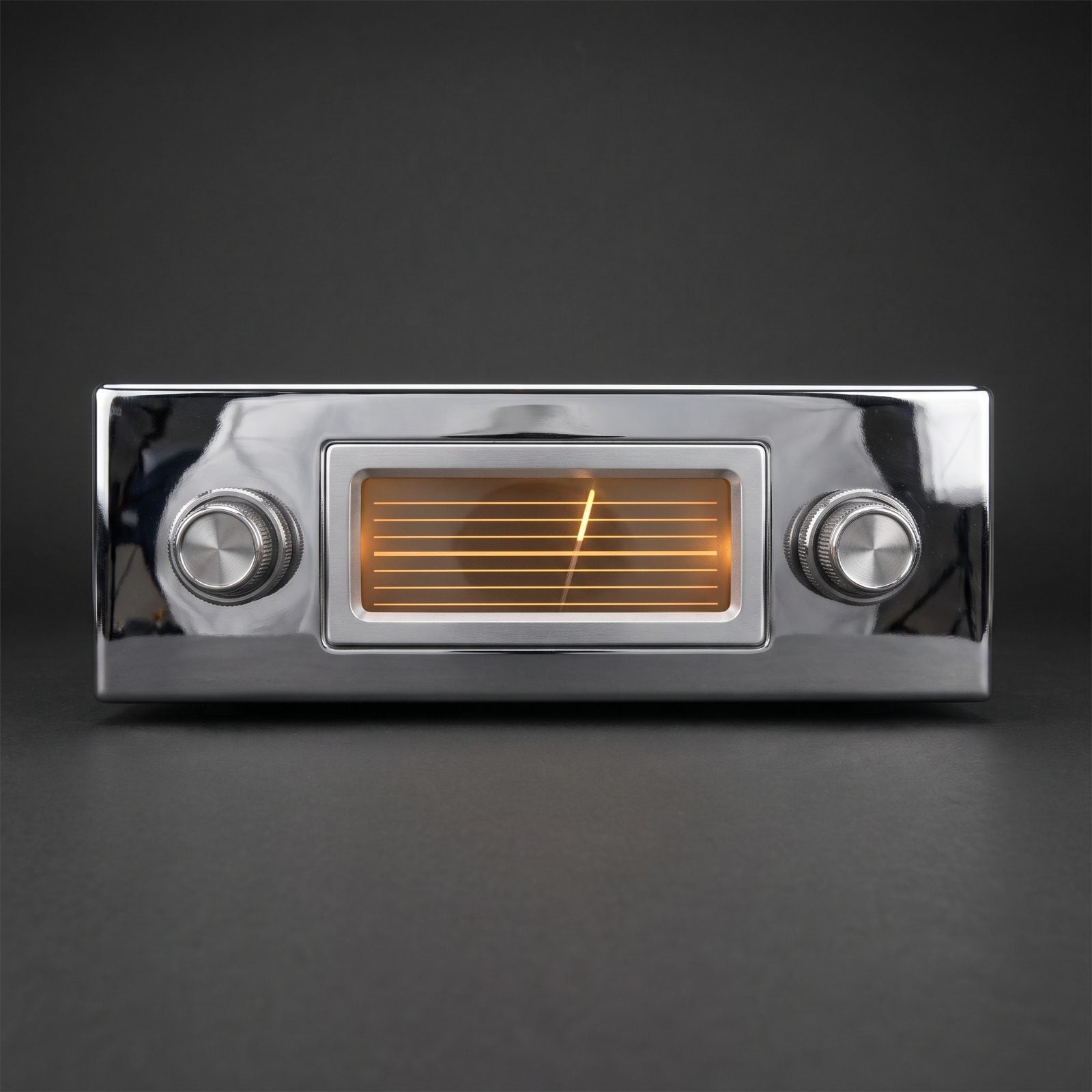
Two knobs. That was the whole interface. Volume left, tuning right, the dial glowing between them, and you could run the entire thing with two fingers and zero instructions.
Simplicity like that feels almost radical now. No menus, no modes, no pairing, no app. Twist left for louder, twist right to find a station. The left knob clicked the radio on as you turned it up, so the first notch past off always came with a little pop of life from the speaker.
What Our Readers Say
- When our readers loved a car photo and tapped a reason, “nostalgic” came out on top, ahead of body style and whether they would actually drive it.
- Cars with lots of chrome got more hearts from Jalopy Talk readers than the other photos in the same articles, 82% versus 75%.
From Jalopy Talk reader polls and votes.
30. Concentric Inner Knob for Tone Control
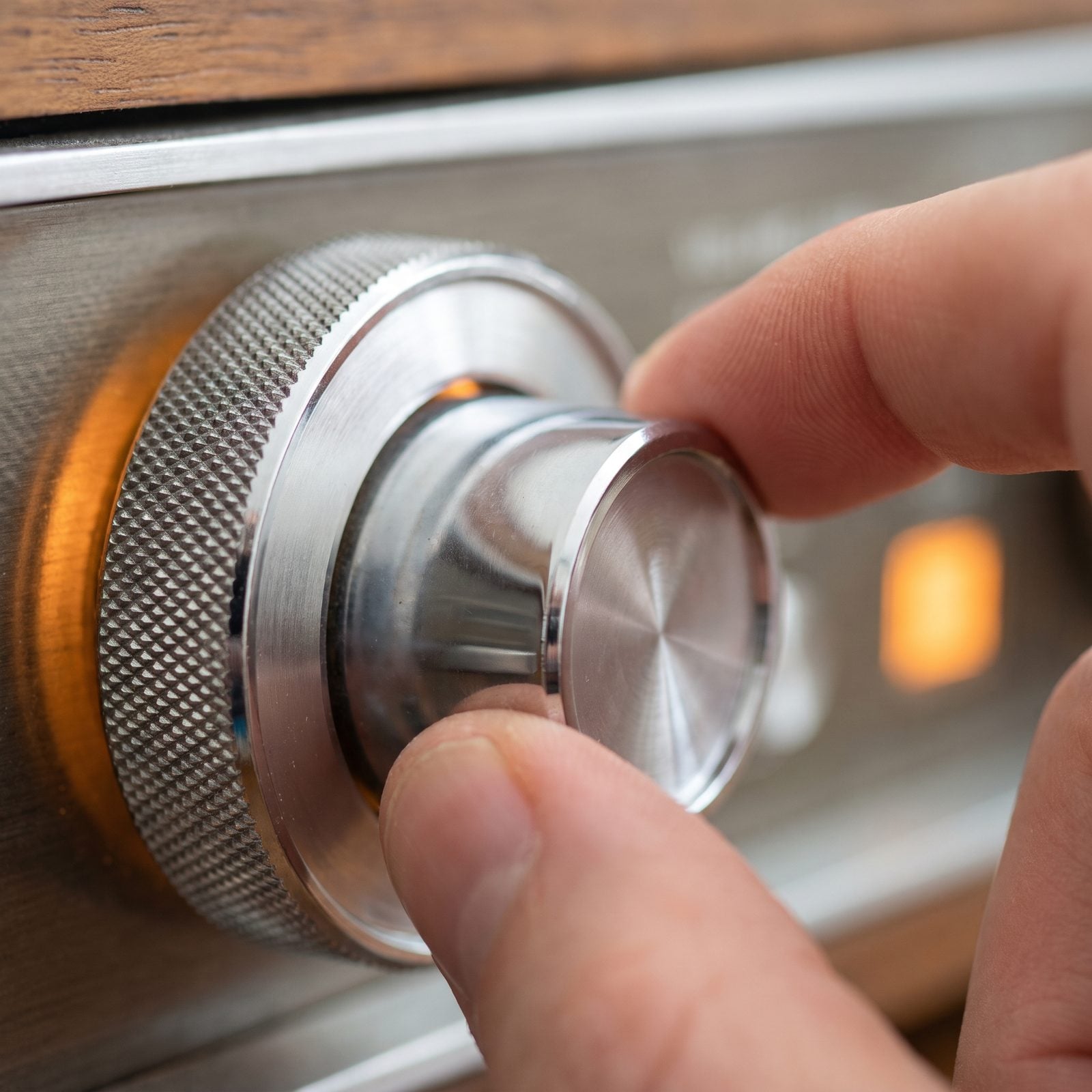
Look close at the volume knob and you’d spot a second, smaller knob tucked inside it. That inner ring was tone control. Turn it one way for more treble and the sound went crisp and bright. Turn it the other for bass, warm and round.
It was the only EQ most cars had. One knob, two directions, your whole sound profile. Country station at night, you’d roll it toward bass. AM news in traffic, you’d crisp it up to catch the words over the engine.
29. Local/Distance Reception Switch
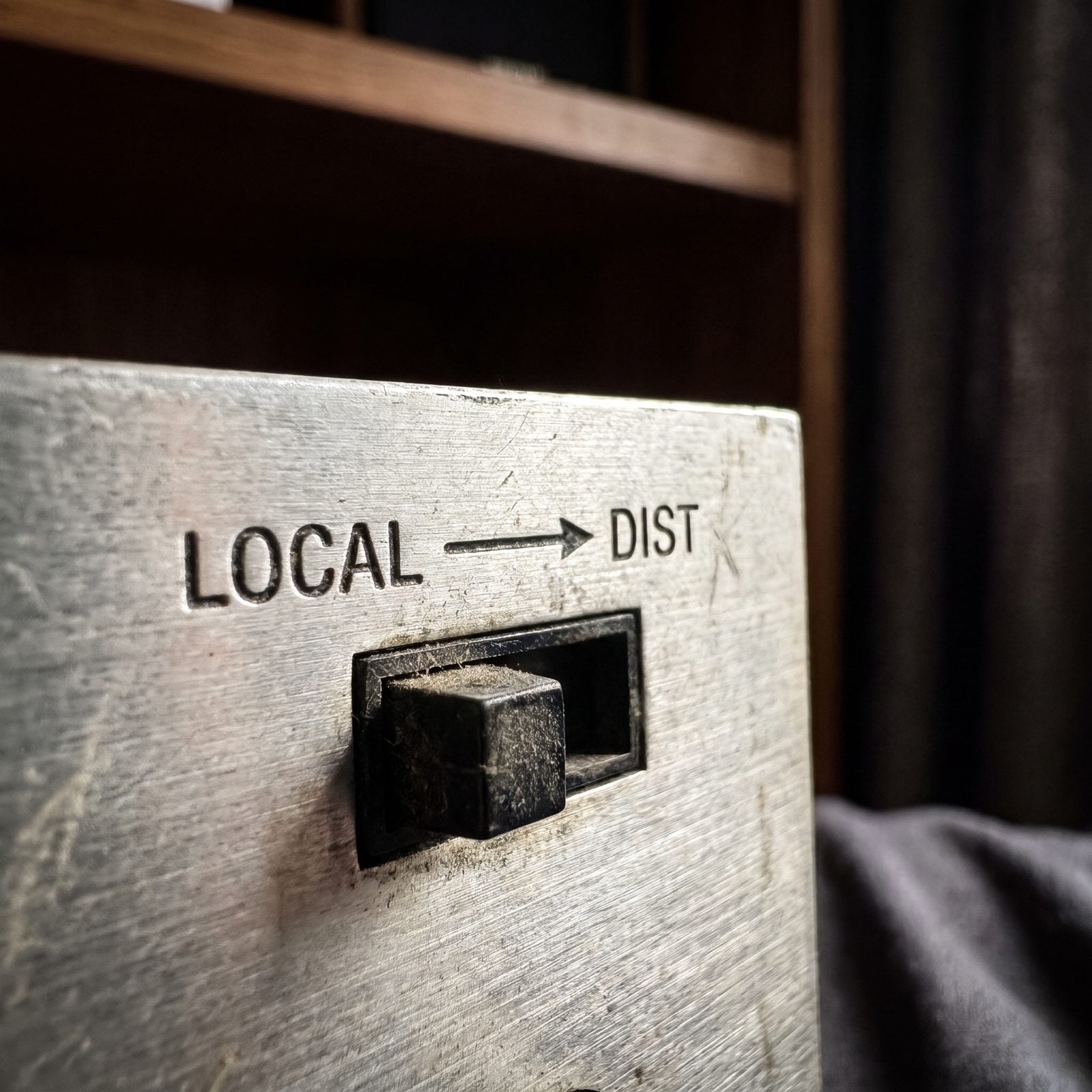
A tiny switch most people never touched, marked something like LOCAL and DIST. Flip it to local in the city and it cut the radio’s sensitivity so a dozen strong stations didn’t bleed into each other. Flip it to distance out on the highway and it opened up, reaching for faraway signals.
You learned to use it on road trips. Rolling into a strange town at dusk with static everywhere, you’d throw that switch and suddenly a clear station came through. Felt like a cheat code nobody told you about.
28. Glowing FM Stereo Indicator Jewel
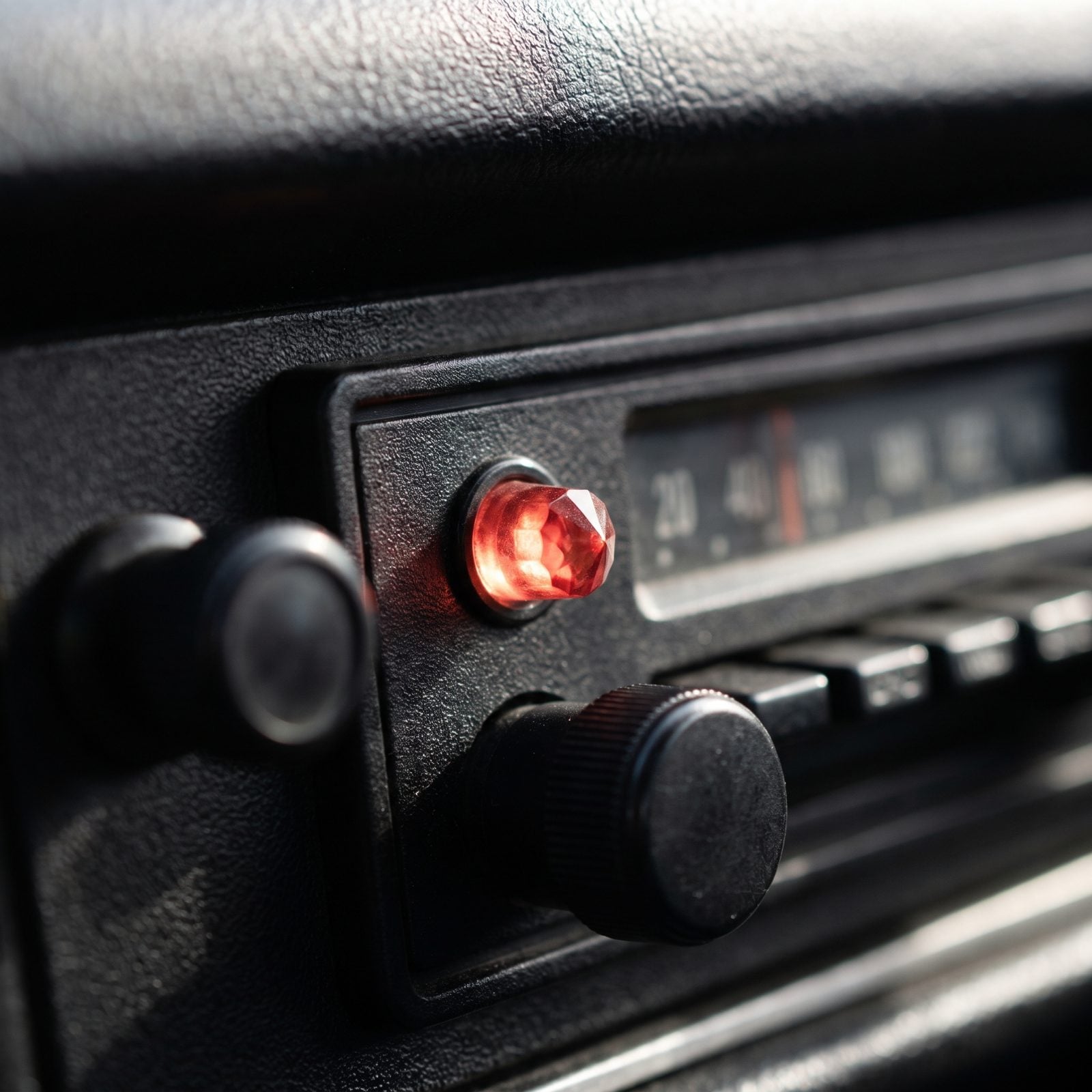
When your FM station came in strong enough for full stereo, a little jewel lit up. Red or amber, no bigger than a pencil eraser, glowing to tell you both channels were coming through clean.
Dumb luxury, really. The radio sounded the same whether that light was on or not. But watching it flicker to life as you pulled closer to the transmitter gave you a small thrill. It meant the good stuff was about to come through, both speakers, the way the song was meant to be heard.
27. The Factory Radio-Delete Plate Where the Music Should Have Been
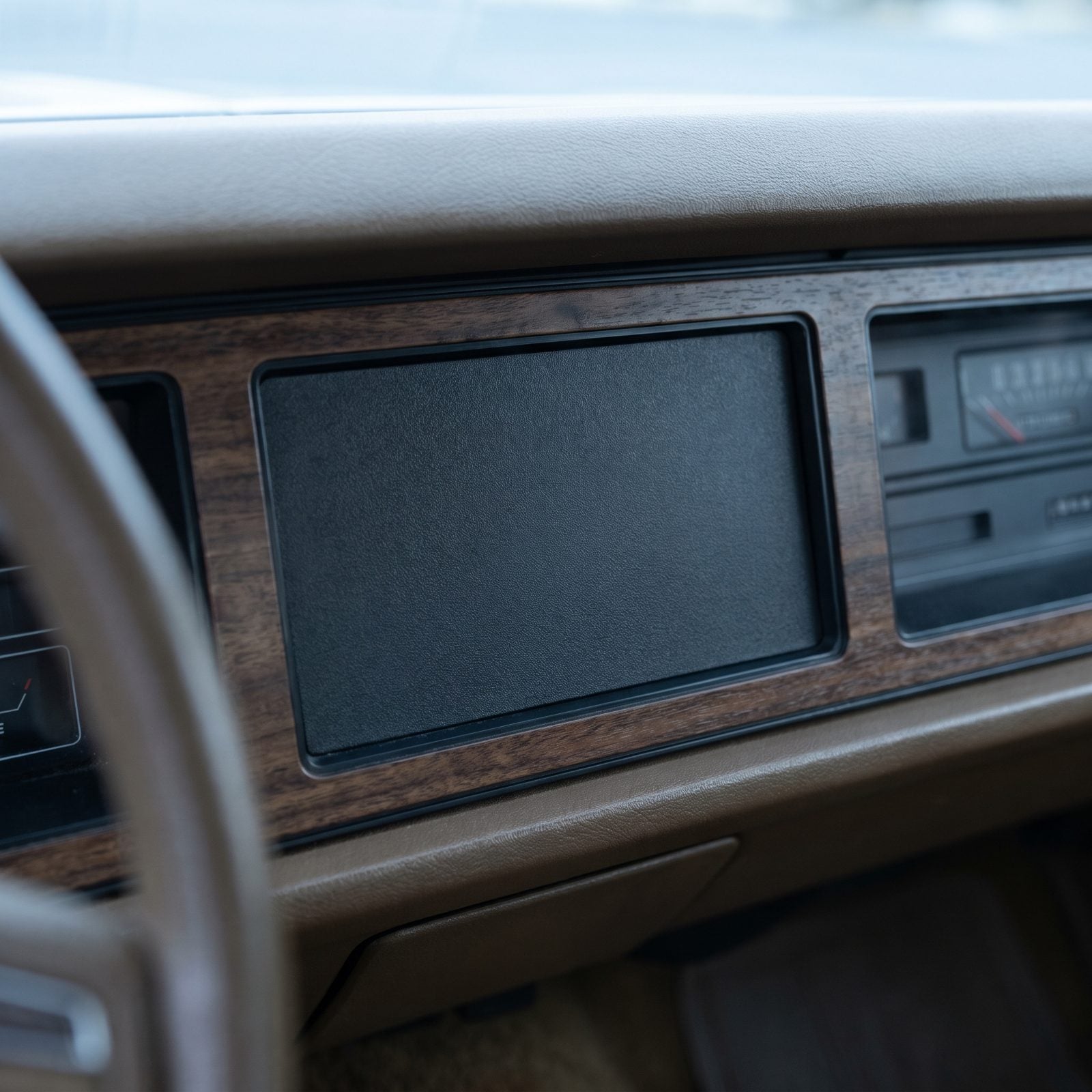
Somebody ordered this car without the radio. On purpose. The dealer checked a box, the factory bolted a flat plastic panel over the dash hole, and that was that.
You saw these on base-model pickups, on fleet sedans, on cars bought by people who figured they’d add a radio later and never got around to it. The delete plate just sat there — a little grey tombstone where the music should have been.
Every kid who rode in one stared at it the whole trip. There was something almost rude about a dashboard with nothing to do.
26. The Internal Dial Cord and Pulley That Moved the Needle
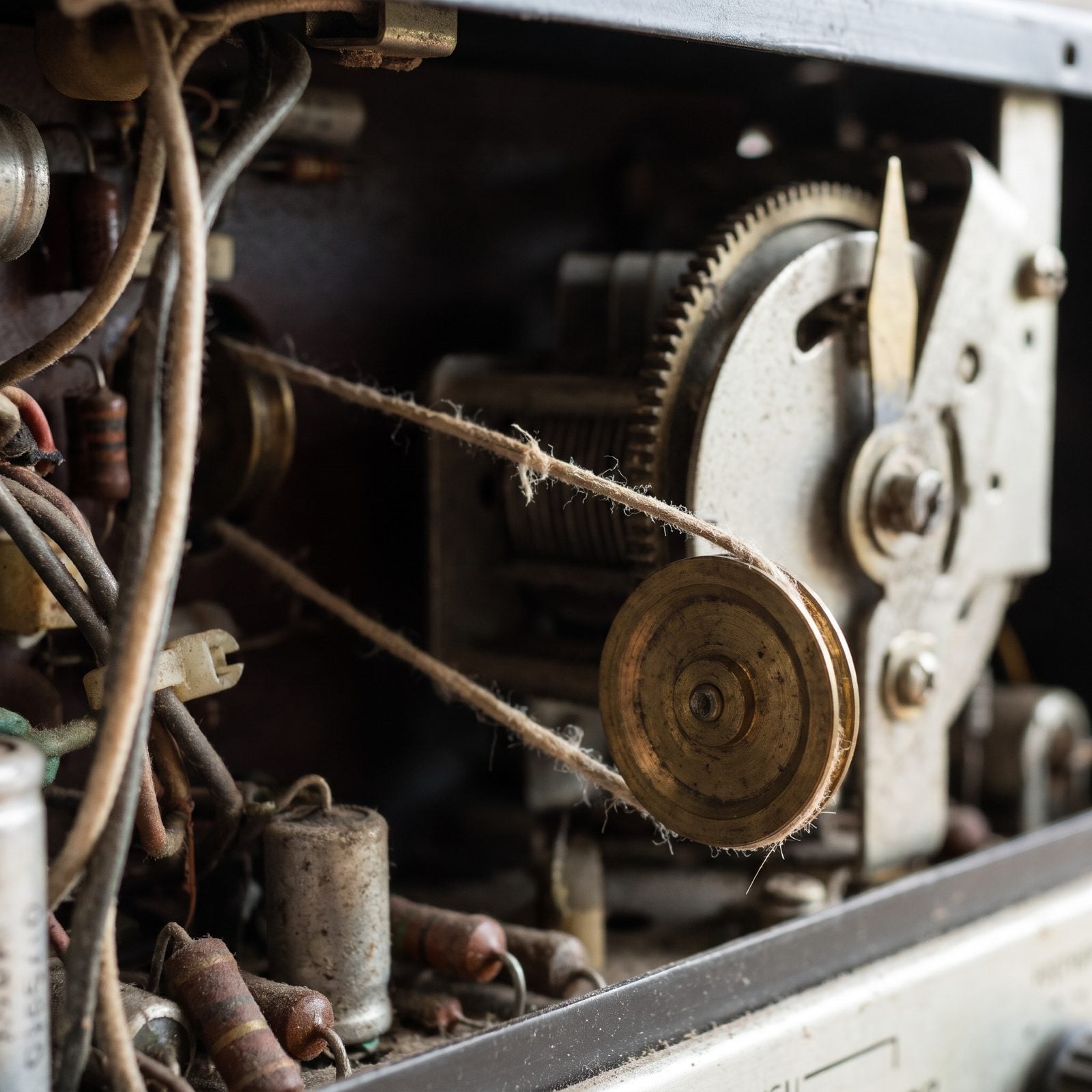
Turn the tuning knob and a little red needle slid across the dial. Felt like nothing. It was actually a miniature pulley system doing the work — a braided cord wound around a brass drum on the tuning shaft, routed through guide posts, held tight by a hairspring.
When that cord stretched or snapped, the needle went loose and floppy and pointed at the wrong station entirely. You’d land on what the dial swore was 101 and get a gospel broadcast from 94.
Rethreading the cord was a job for someone with patience and small fingers, which is why plenty of people paid a shop to do it.
25. The Manual Telescoping Fender Antenna You Twisted Up by Hand
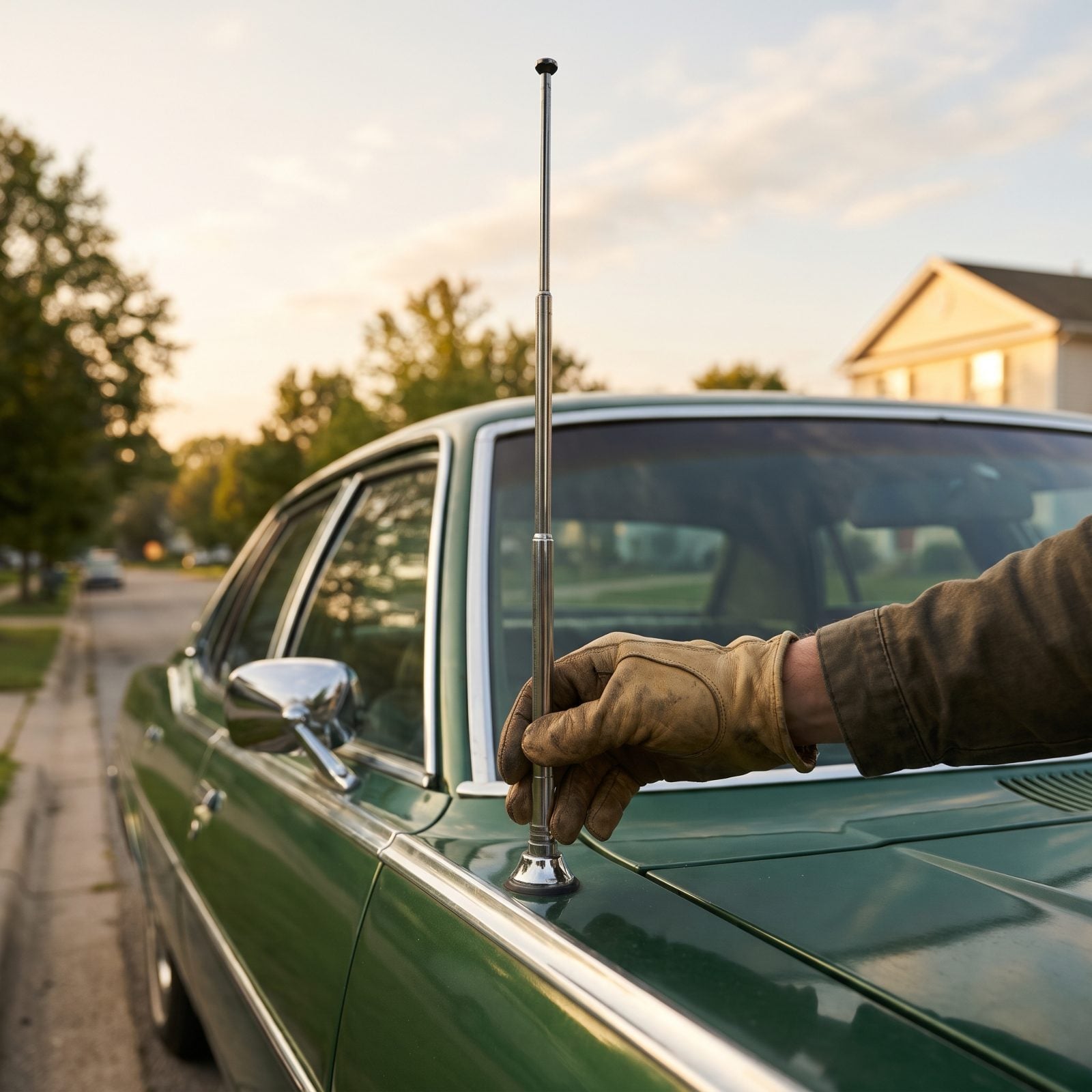
You rolled down the window and twisted it up before you pulled out of the driveway. Then you forgot to twist it back down, and the car wash bent it into a question mark.
The manual fender antenna was chrome, segmented, and permanently a little crooked. Half of them in any parking lot leaned at some angle, snapped by a careless hand or a low branch.
Reception depended on how far you bothered to extend it. In a hurry? Half a mast, half a signal. Full height caught the distant stations but whistled in the wind on the highway.
24. The Antenna Wire Baked Right Into the Windshield Glass

No mast at all on some cars. The antenna lived inside the windshield, a pair of hair-thin wires laminated into the glass, running up the pane near its edges. You only caught it when the light hit right and the copper lines glinted.
Looked like progress. It wasn’t, really. Reception came in weaker than a good fender mast, and a crack across the glass could kill your signal entirely. Replace the windshield, and the new installer had to splice the lead back in or you got static on every band.
Still, it meant one less thing for the car wash to bend.
23. The Dealer-Installed Under-Dash FM Converter for the AM-Only Car
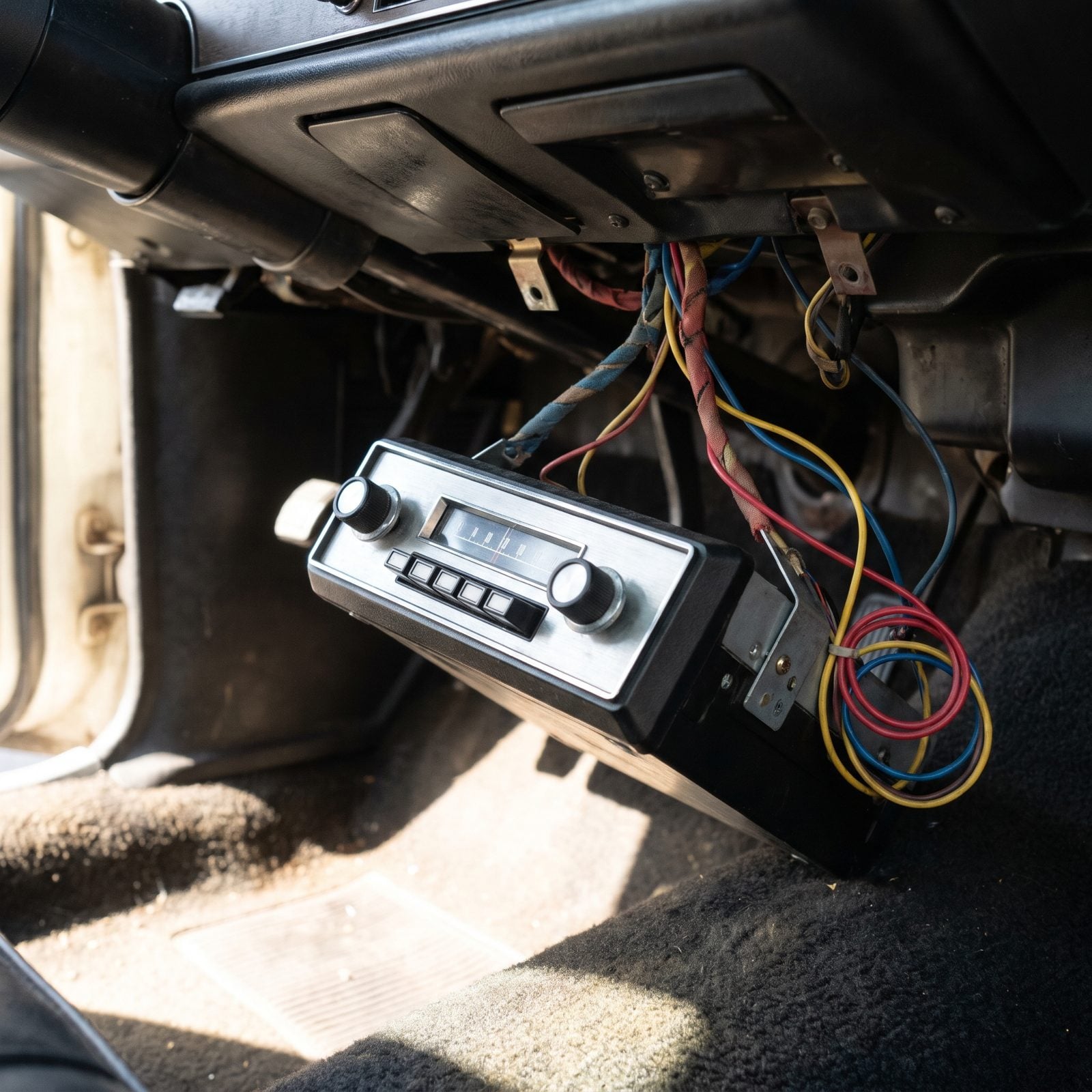
Your car came with AM only, and AM was fine until FM stations started playing music that didn’t fit between two ads for feed stores. The fix hung under the dash — a chrome-faced unit with two big knobs and five pushbuttons, wired in between the antenna and the factory AM radio.
Punch a button, turn the knob, and your AM-only car suddenly pulled in FM. Clunky as anything. Two knobs to find one song.
The dealer charged real money for the install, bolted the bracket somewhere your knee would eventually find it, and sent you off feeling modern. For about a year, anyway, until cassette decks made the whole arrangement look ancient.
22. The Slide-Out Anti-Theft Stereo Bracket You Carried Into the House
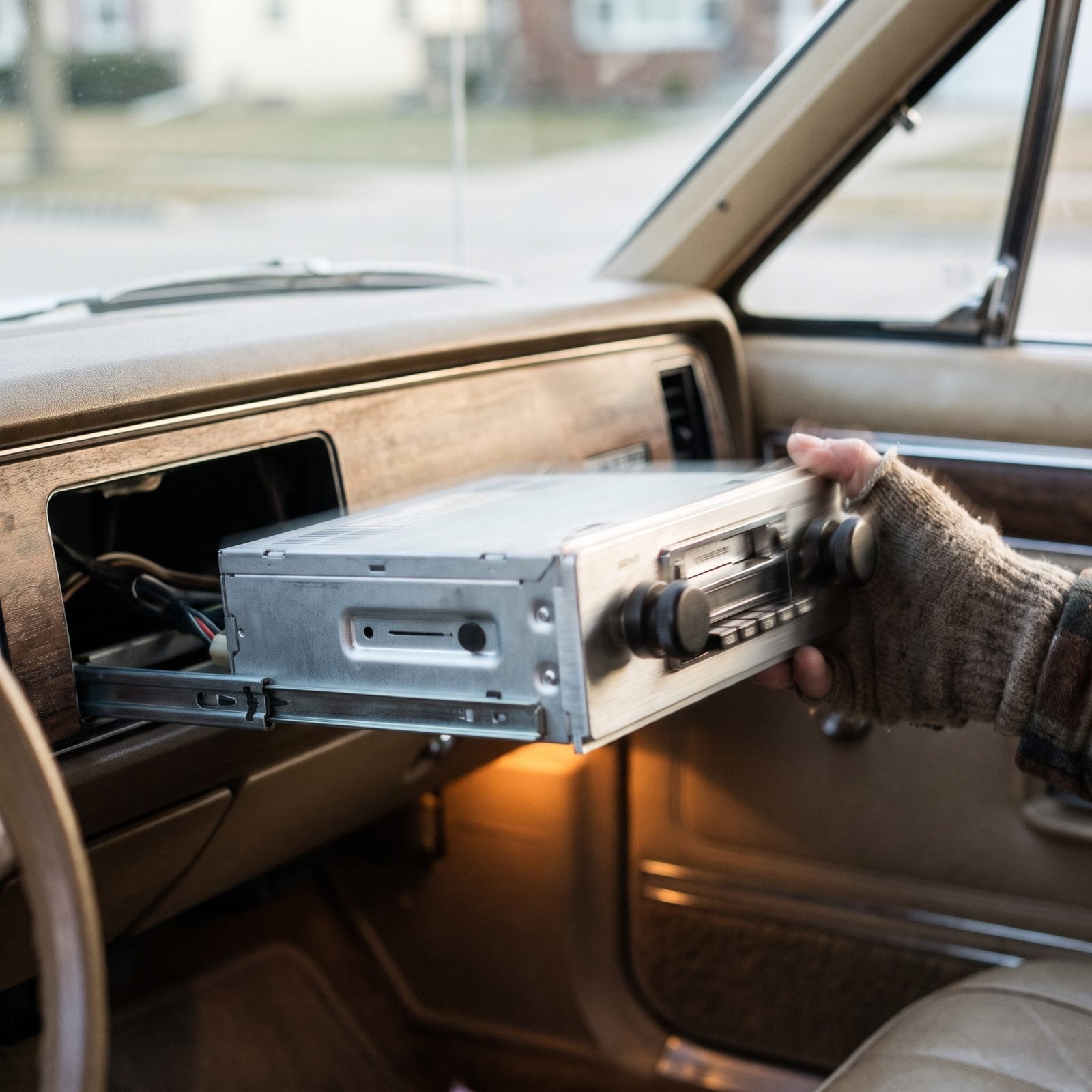
A good stereo in the 1970s was a target, so the smart ones rode in a slide-out bracket. Pull a lever, grab the faceplate, and the whole unit slid forward out of its cage on two chrome rails.
You carried it into the house every night. Into the restaurant. Into the movie. Grown adults walked around parking lots cradling their car stereo like a loaf of bread, because an empty cage in the dash was less tempting than a radio sitting there begging.
The rails bent. The locking lever jammed. And every so often you left the unit at home and spent the whole commute in silence, cursing your own caution the entire way.
21. The Single 4-by-10 Speaker Buzzing in the Center of the Dash
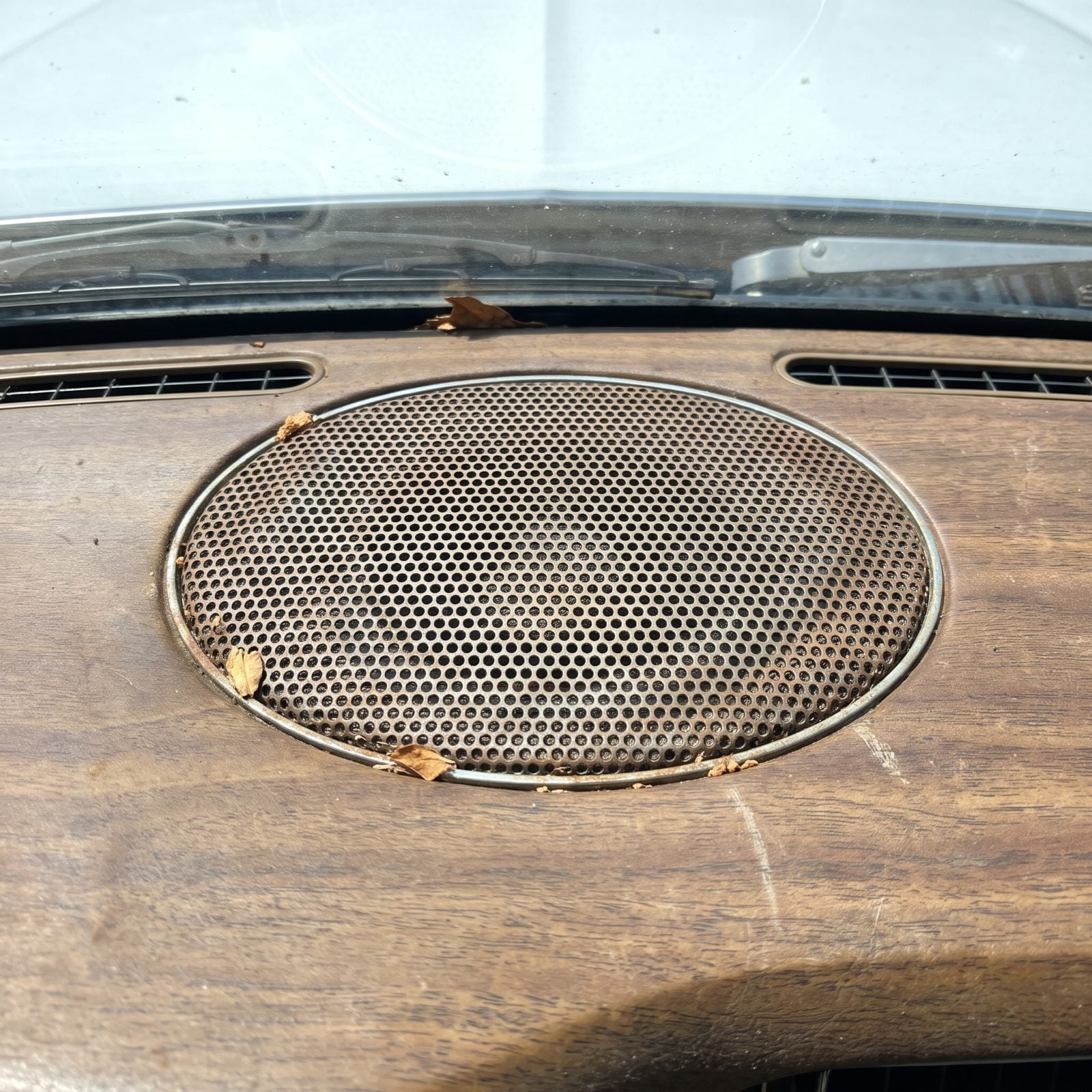
One speaker. Set into the wood-grain top of the dashboard right under the windshield, next to the defroster vents, firing up at the glass from the middle of the dash. That big round grille, filling most of the dash center, was the entire sound system on a lot of cars, with the tonal range of a telephone.
Crank it up and the paper cone buzzed, and some loose screw somewhere in the dash rattled along with the bass. Everyone learned the exact volume where their particular car started to vibrate.
Mono, of course. The word stereo on your radio was aspirational until you added a speaker in a door or the rear deck, which half of us eventually did with a drill and more confidence than skill.
For what it’s worth, cars with wood paneling earned more hearts from our readers than the other photos in the same articles, 84% versus 73%.
20. The Station Dropping Dead the Second You Hit the Overpass
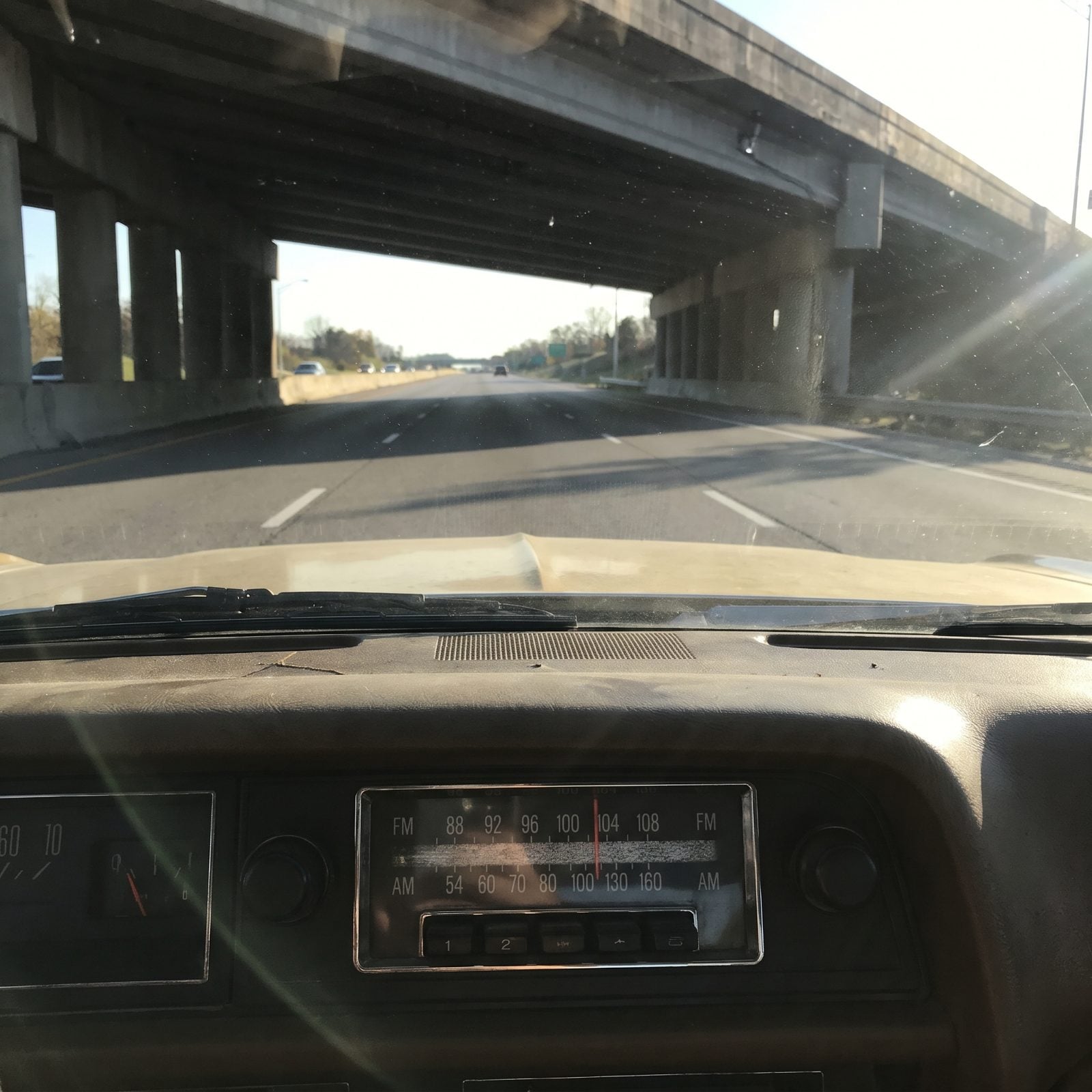
The best part of the song. Always the best part. You’re singing along, you hit the overpass, and the station dissolves into a wash of static for exactly two and a half seconds.
Then it came back, usually right as the good part ended. Concrete and steel swallowed the FM signal whole, and there was nothing to do but ride it out and hope the chorus survived.
In a river valley or between tall buildings it got worse. The signal faded, drifted, let another station bleed in over the top of yours. You’d twist the knob a hair, chasing it, and by the time you locked back on your exit was coming up anyway.
We lived with it because the alternative was silence, and silence on a long drive was the one thing nobody wanted.
19. The Chunky Plastic 8-Track Cartridge That Filled Your Whole Hand
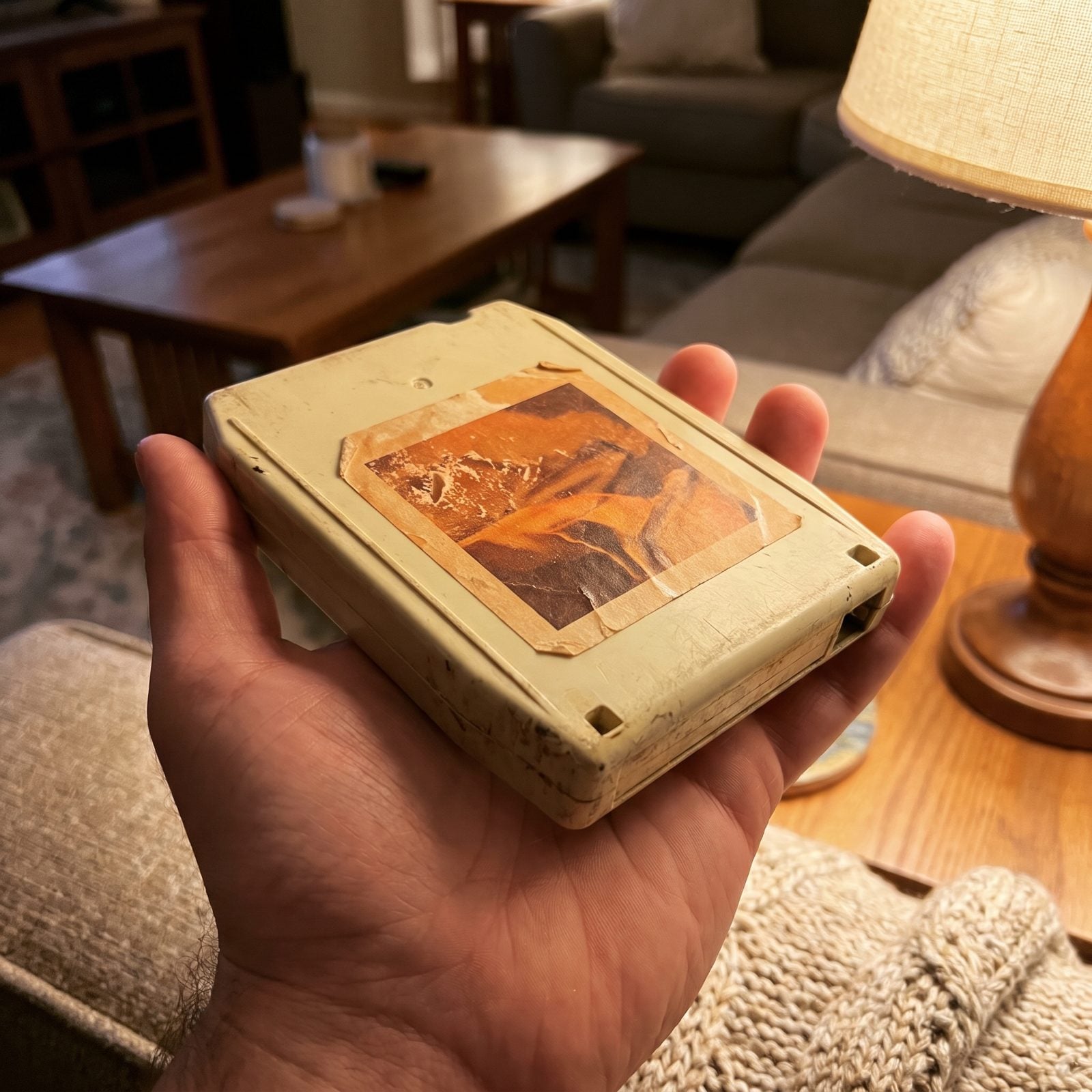
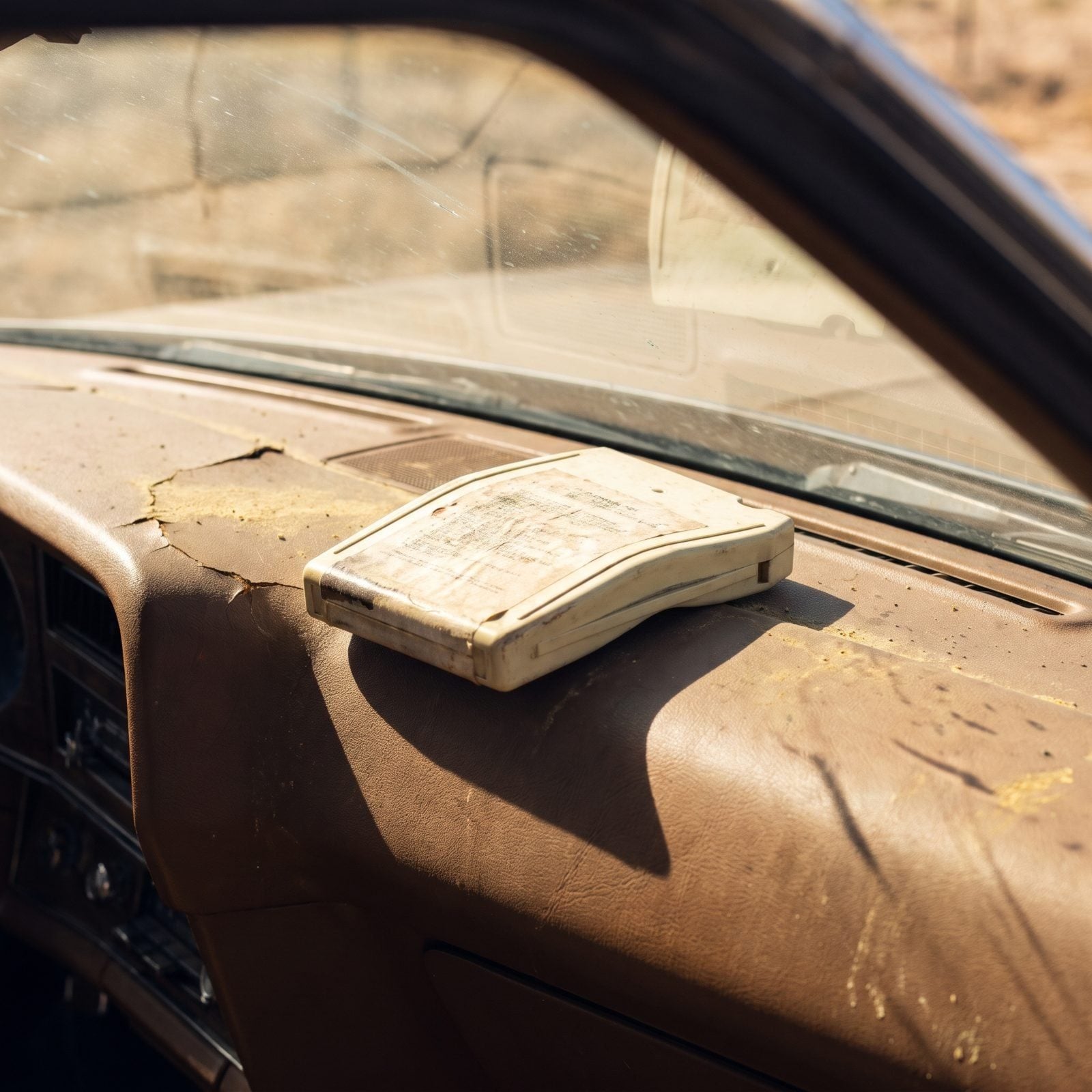
You could palm a cassette. An 8-track you held. The thing filled your whole hand, thick molded plastic with a heft to it, the kind of object that landed on the passenger seat with a solid thud instead of a flutter.
That bulk is why they lived loose in the car. Cassettes got their own neat little cases, but 8-tracks rolled around the footwell, slid under the seat on hard stops, and collected fast-food crumbs in the open end where the tape showed. You learned to blow the dust off before loading.
18. The Cartridge Left Sticking Halfway Out of the Dash
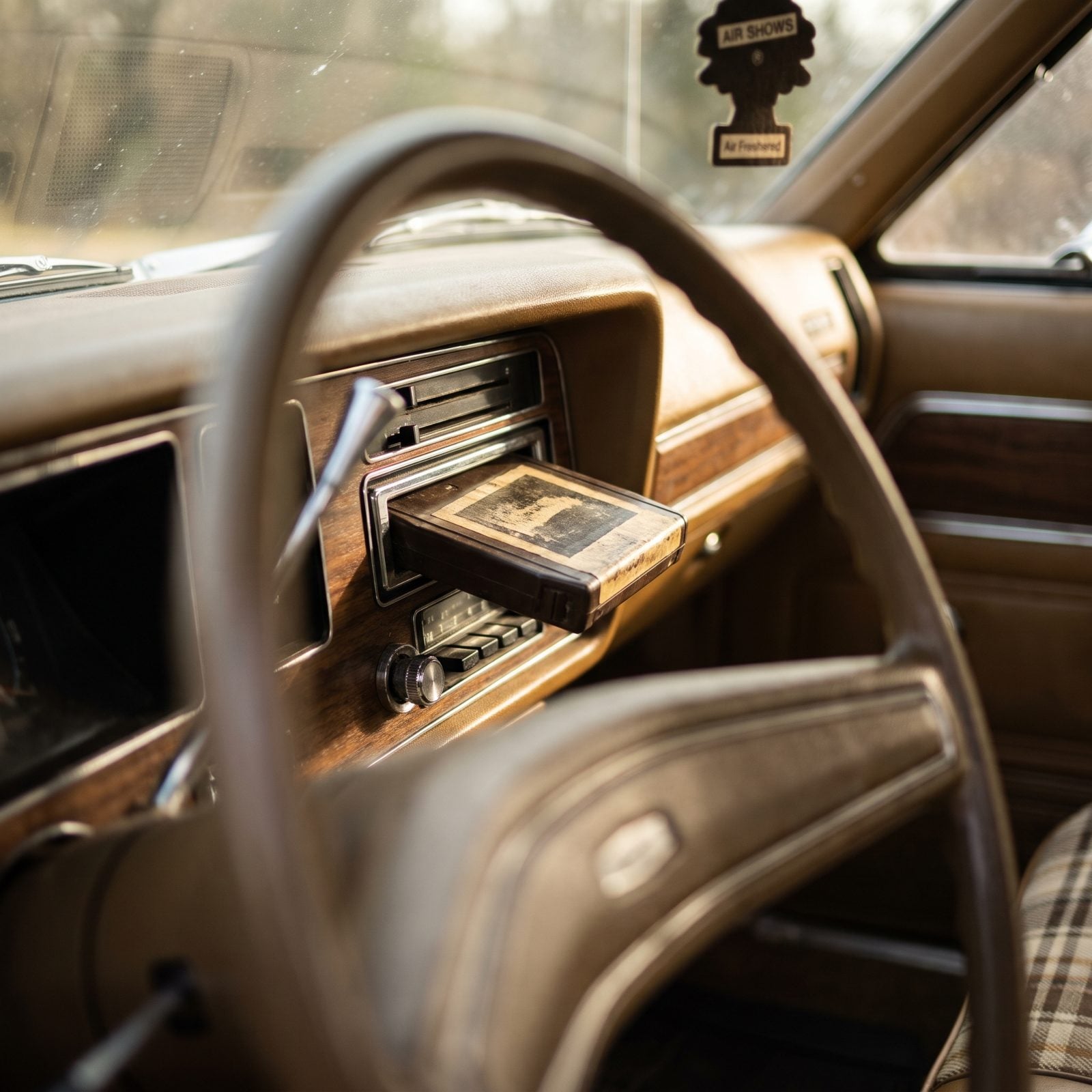
Halfway in meant paused. That was the trick nobody wrote in a manual — pull the cartridge out until it clicked loose but leave it dangling in the slot, and the music stopped without you losing your place entirely.
It was also how the thing sat for a week when you forgot about it, jutting out of the dash at a lazy angle, catching your knee every time you climbed out. A small plastic inconvenience nobody ever quite bothered to fix.
17. The Endless-Loop Tape With No Reels You Could See
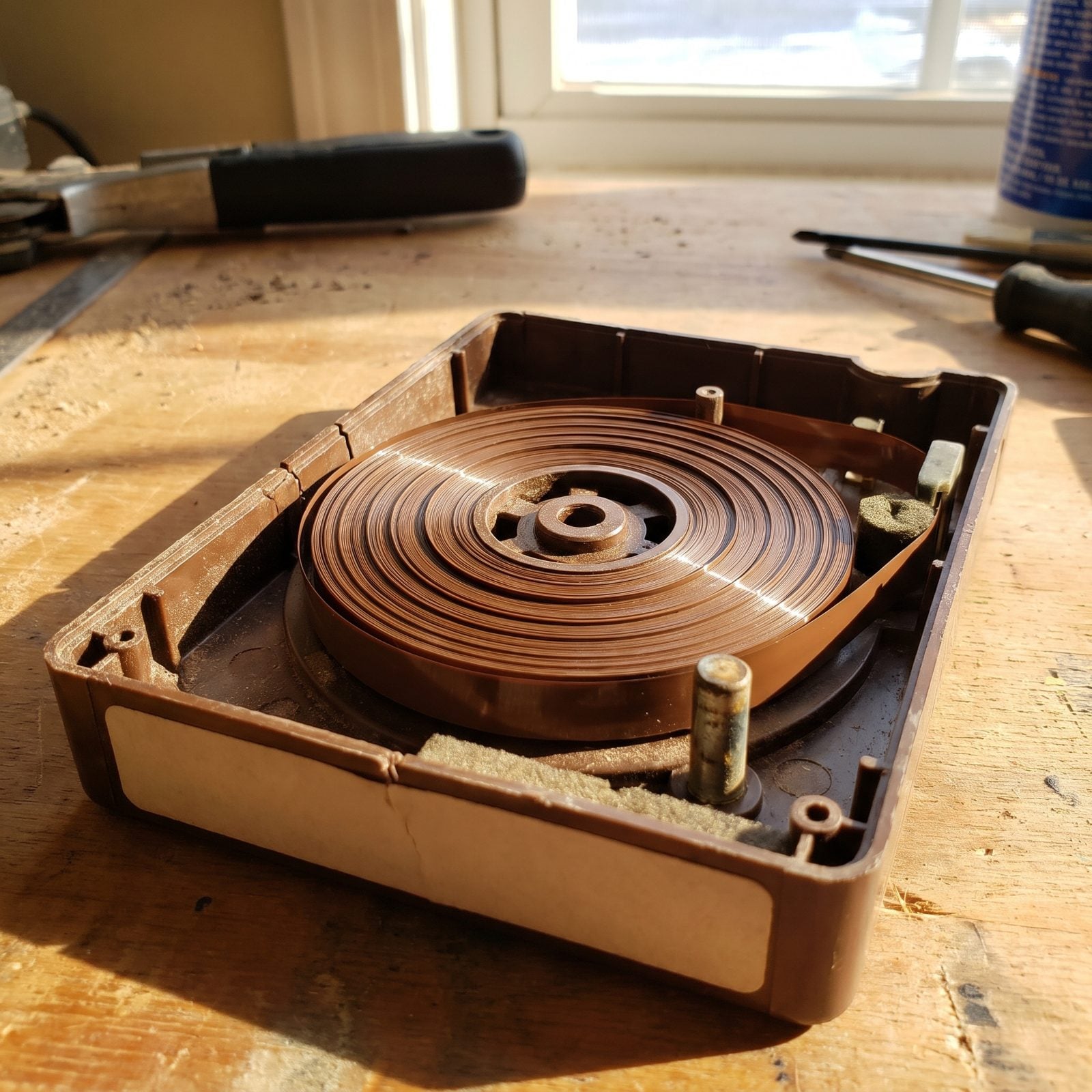
Crack one open and it made no sense. Where a cassette had two neat reels winding back and forth, the 8-track had a single flat spool of tape, pulled from the center and wound back onto the outside in one endless loop.
Graphite on the back of the tape let it slide against itself without binding. When that lubricant wore off, the loop started to drag, pitch wobbled, and you knew that cartridge was living on borrowed time.
16. The Four Program Lamps and the Manual Change Button
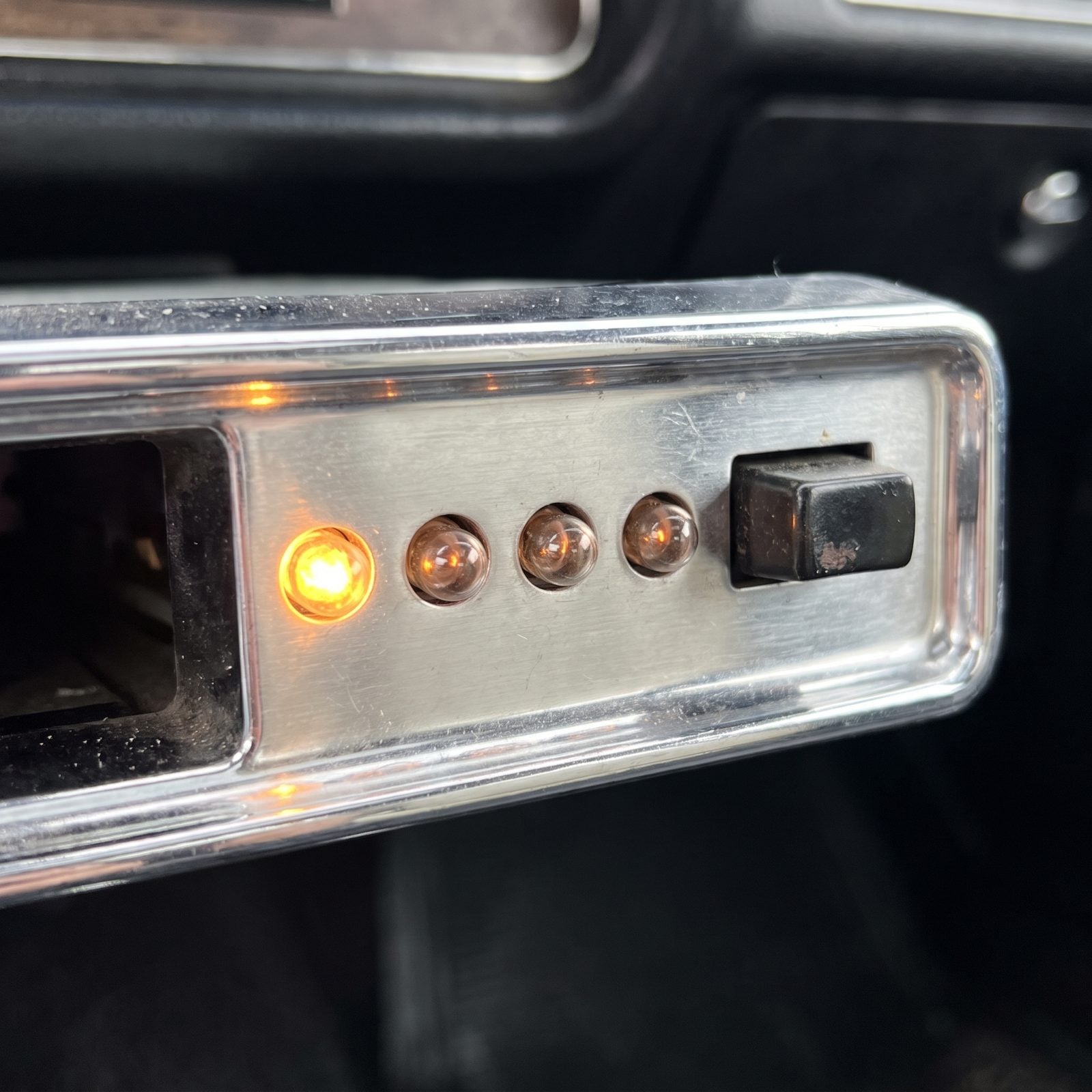
Four little lamps across the face, only one of them glowing amber, and that lit one told you where the loop had you. Want off program two and onto program three? You pressed the CHANGE button and the mechanism physically shifted the head up or down the tape with a mechanical thunk you felt in the dash.
That button got the most wear of anything on the player. Skip past a program you didn’t like, press it three more times to circle back, thumb it in the dark on a long drive. The center of mine was polished smooth.
15. The Sensing-Foil Splice That Triggered the Automatic Ka-Chunk
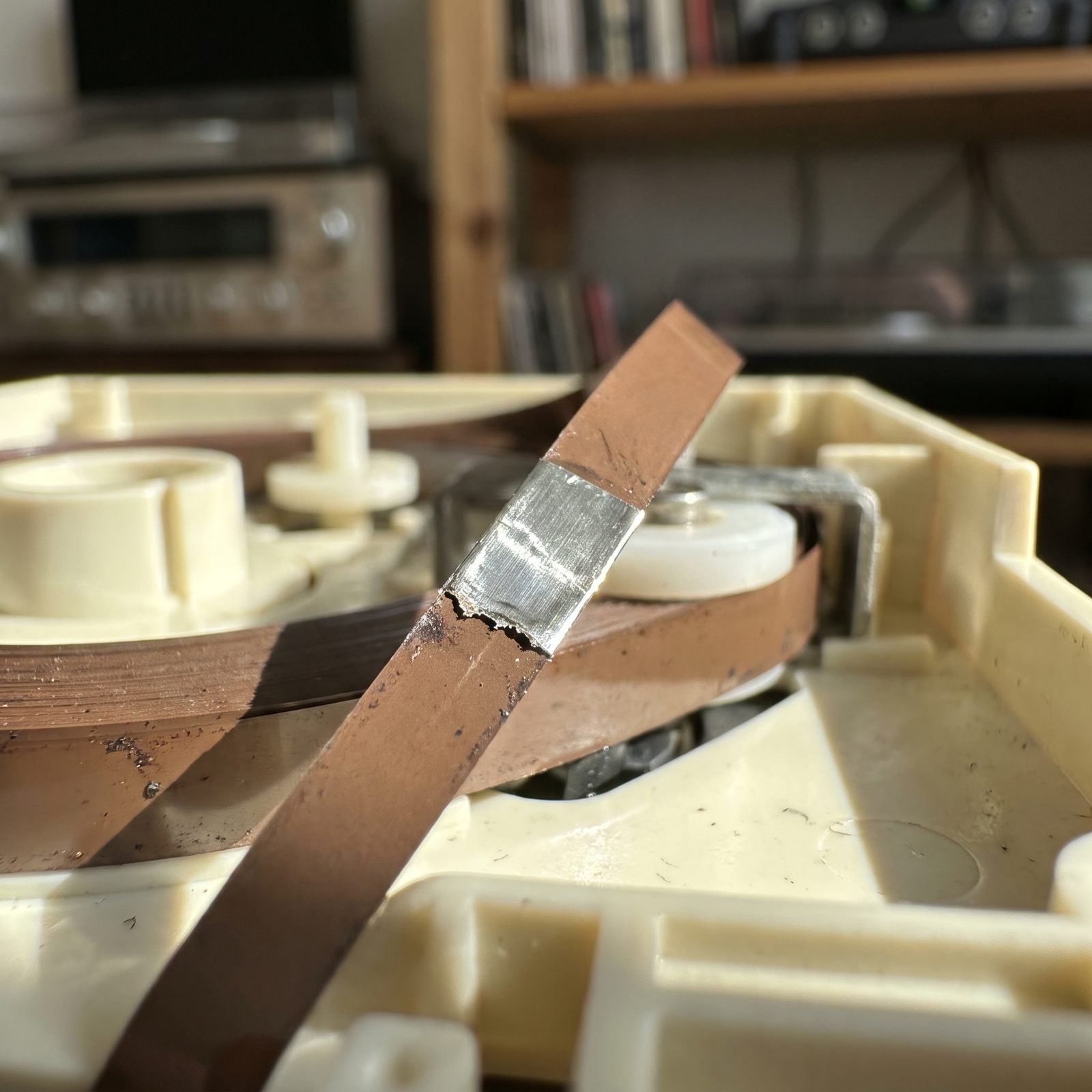
That clunk had a cause. Spliced into the loop, once per full revolution, sat a short strip of conductive metal foil. When it passed over a sensor it bridged two contacts and told the player to jump to the next program. Thunk. The head shifted, and a beat later the music resumed.
You learned to anticipate it. On a familiar tape you knew the ka-chunk was coming a second before it landed — the brief silence, the mechanical shift, then sound again, like the car itself clearing its throat.
14. No Rewind, and Often No Fast-Forward Either
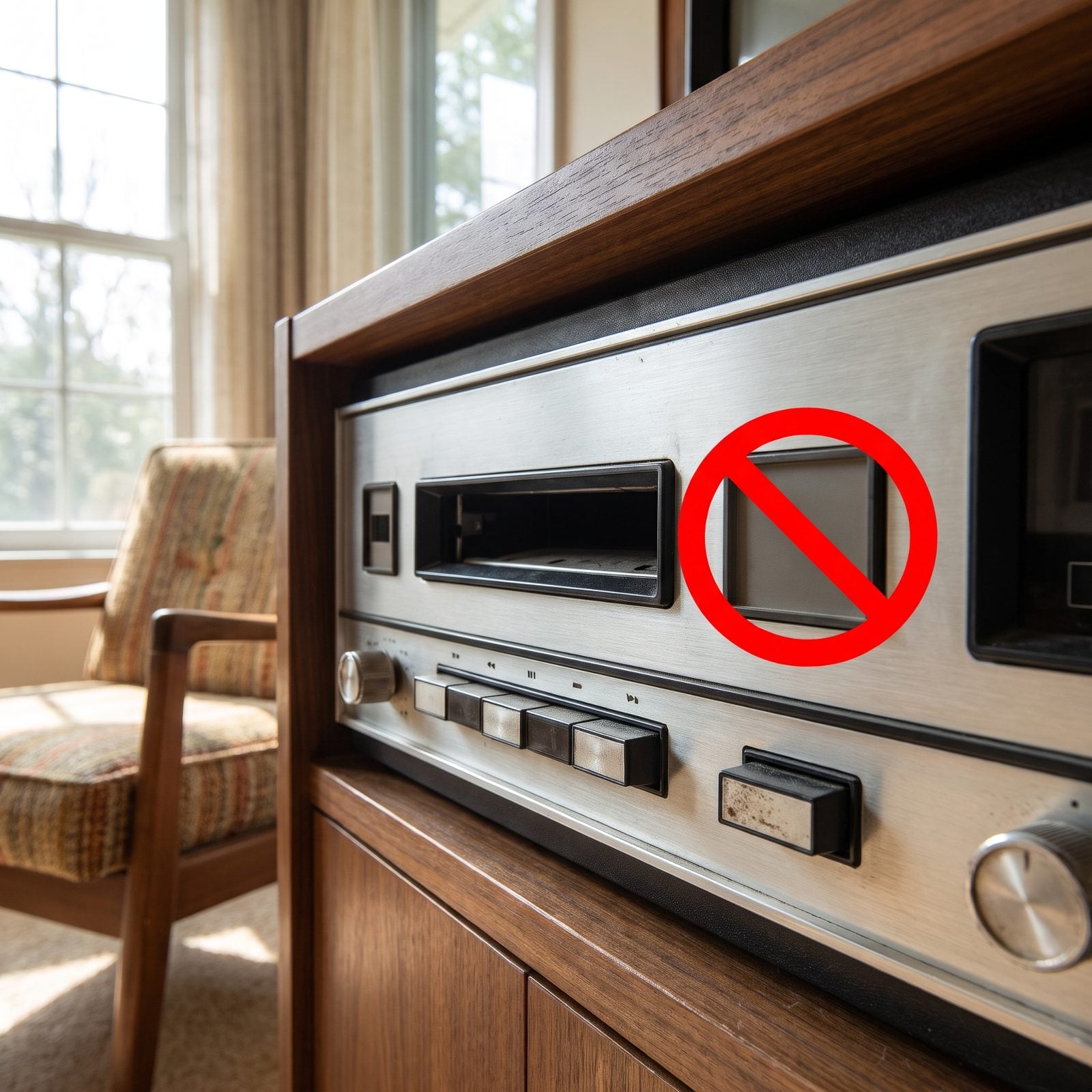
Want to hear that song again? Wait for it. Basic 8-track players had no rewind at all, and plenty of them skipped fast-forward too. Miss the first verse and your only option was to ride the loop all the way around until it came back.
Fancier units added a fast-forward that whined the tape along, but even when a faceplate sported a rewind arrow, you couldn’t go backward — the tape only ran one direction. Patience wasn’t a virtue in the car. It was built into the hardware.
13. Pulling the Cartridge Out by Hand to Eject It
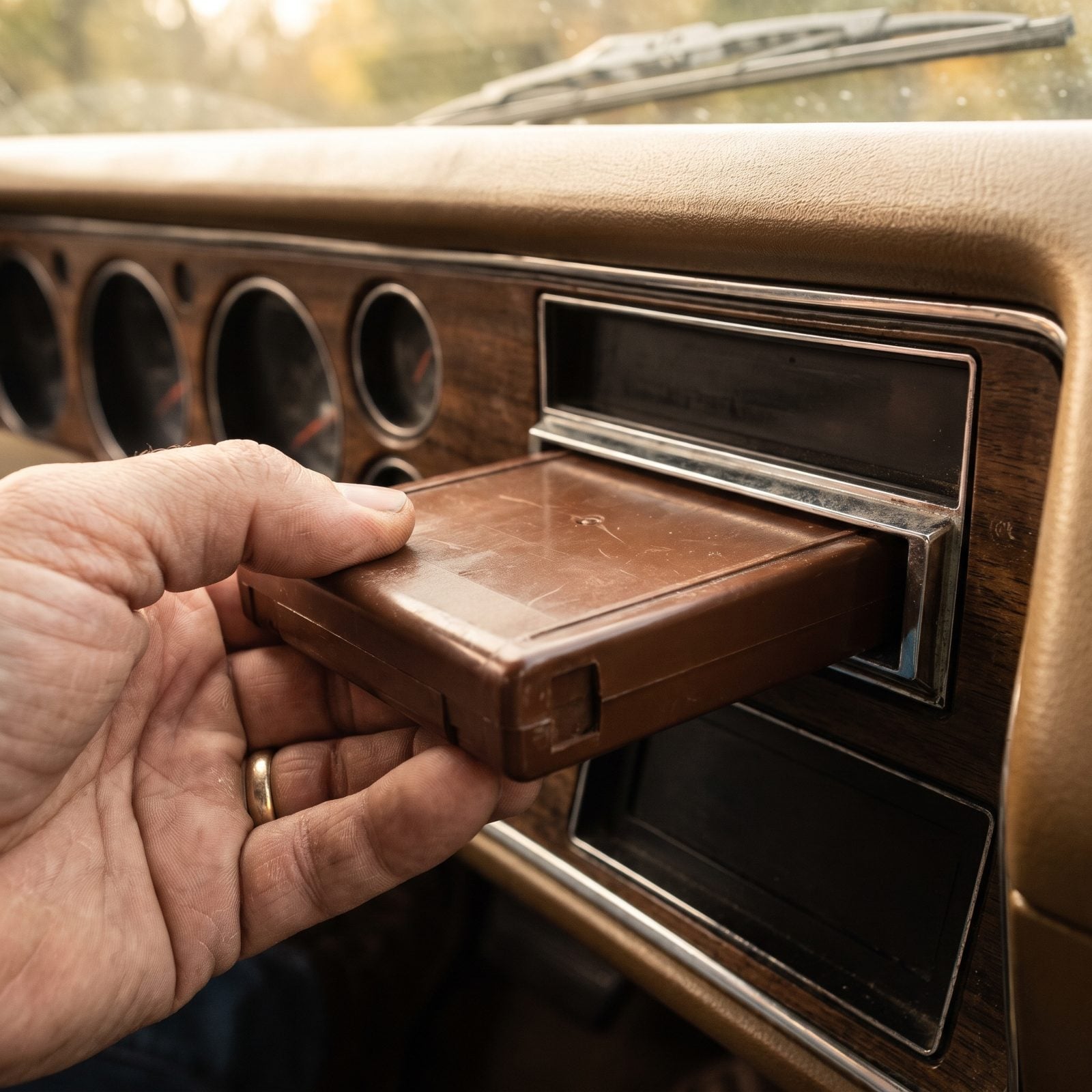
There was no eject button that sprang the thing out like a cassette deck did. You reached in, got a grip on the edge of the cartridge, and pulled it out yourself. Simple. A little crude. Reliable in the way a drawer is reliable.
The downside came when a tape jammed. You’d pull, feel resistance, pull harder — and sometimes the loop came with the cartridge while a tail of brown tape stayed behind, snagged in the mechanism. That’s where the screwdriver in the glovebox earned its keep.
12. The Pinch Roller and Pressure Pad Built Right Into the Cartridge
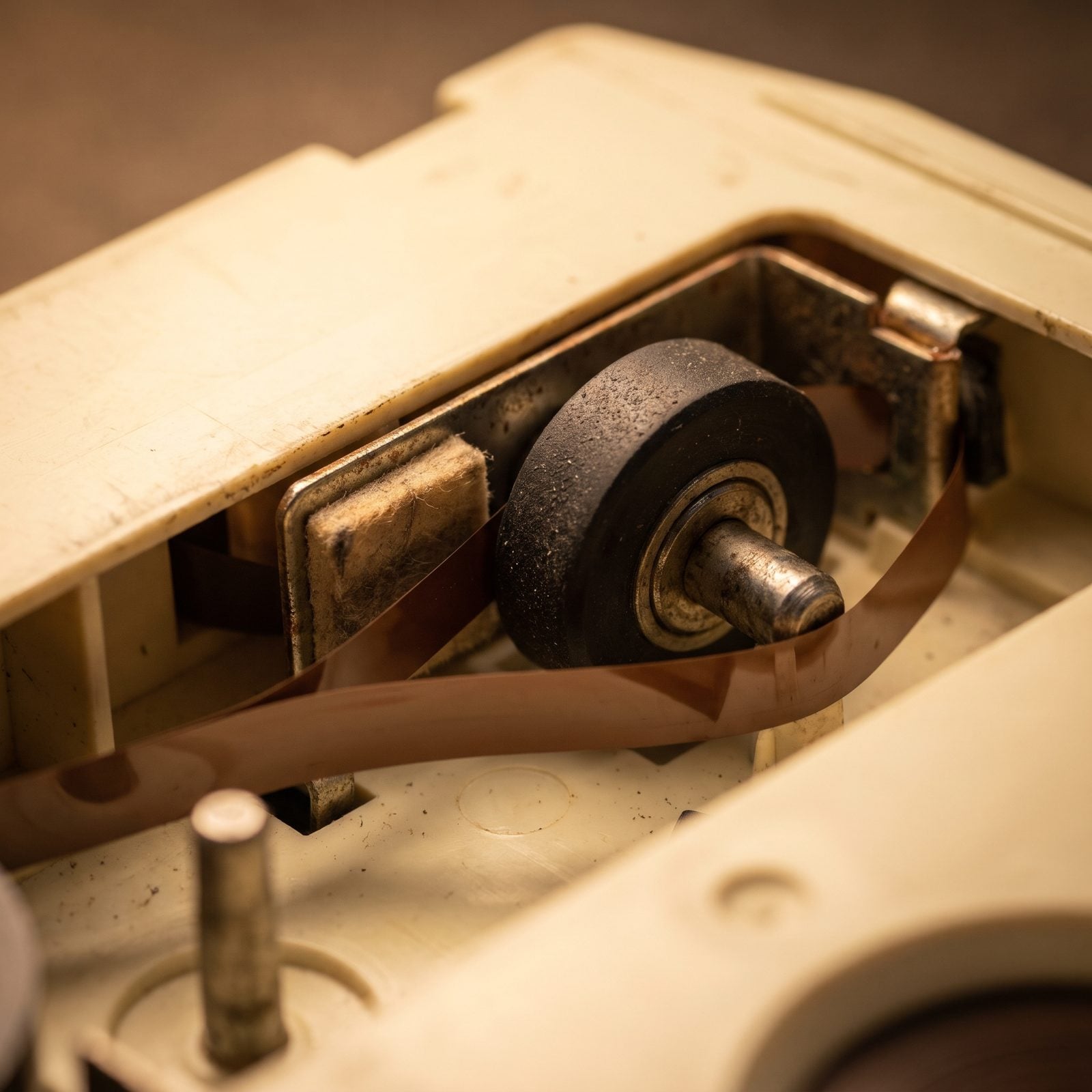
Here’s the clever, doomed part. On a cassette the deck held the pinch roller that drove the tape. The 8-track carried its own rubber roller and a felt pressure pad inside every cartridge, and the player just supplied a spinning capstan and a playback head.
Every cartridge was a little machine of its own. Which also meant every cartridge could fail on its own. That rubber roller aged, got sticky, flattened where it sat — and one summer a cartridge that worked fine in spring would grab the tape and chew it into a ribbon.
So you bought the music and the mechanism together, over and over. A strange arrangement. But for a good decade of driveways, drive-ins, and two-lane highways, it was simply how the car sang to you.
11. The Program 1, 4 Track List Printed on the Rear Label
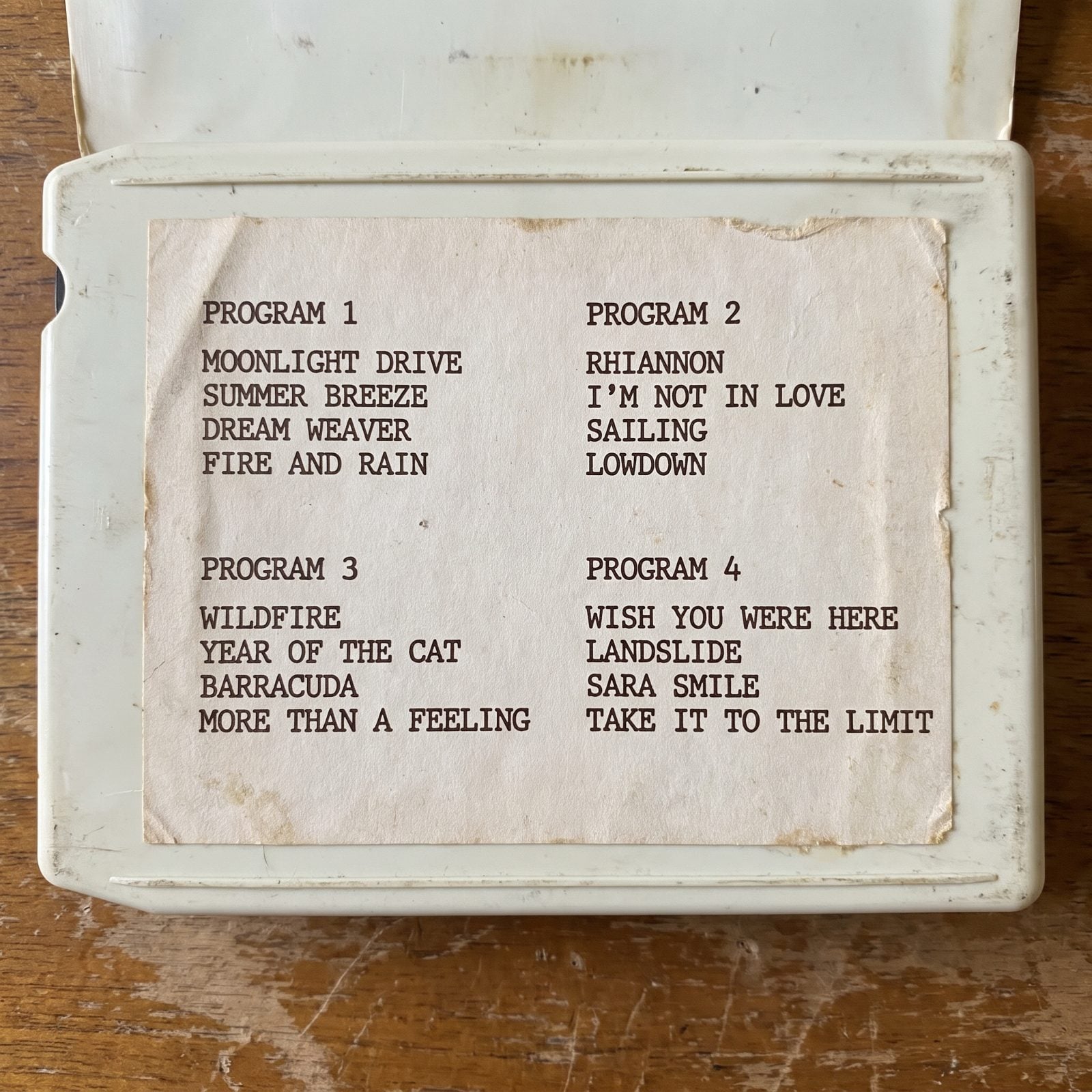
You flipped the cartridge over and read it like a menu. Four quadrants, Program 1 through 4, four songs apiece, typed in that squat little serif every label seemed to use. That rear label was your only map, because no display told you where you were. You just knew your song lived on Program 4, so you’d thumb the button until the indicator ticked over and hoped you landed close.
Half the fun was the labels going soft and brown at the edges, the ink wearing off from a thumb that landed in the same spot every time.
10. That Long Stretch of Dead Air at a Program’s End
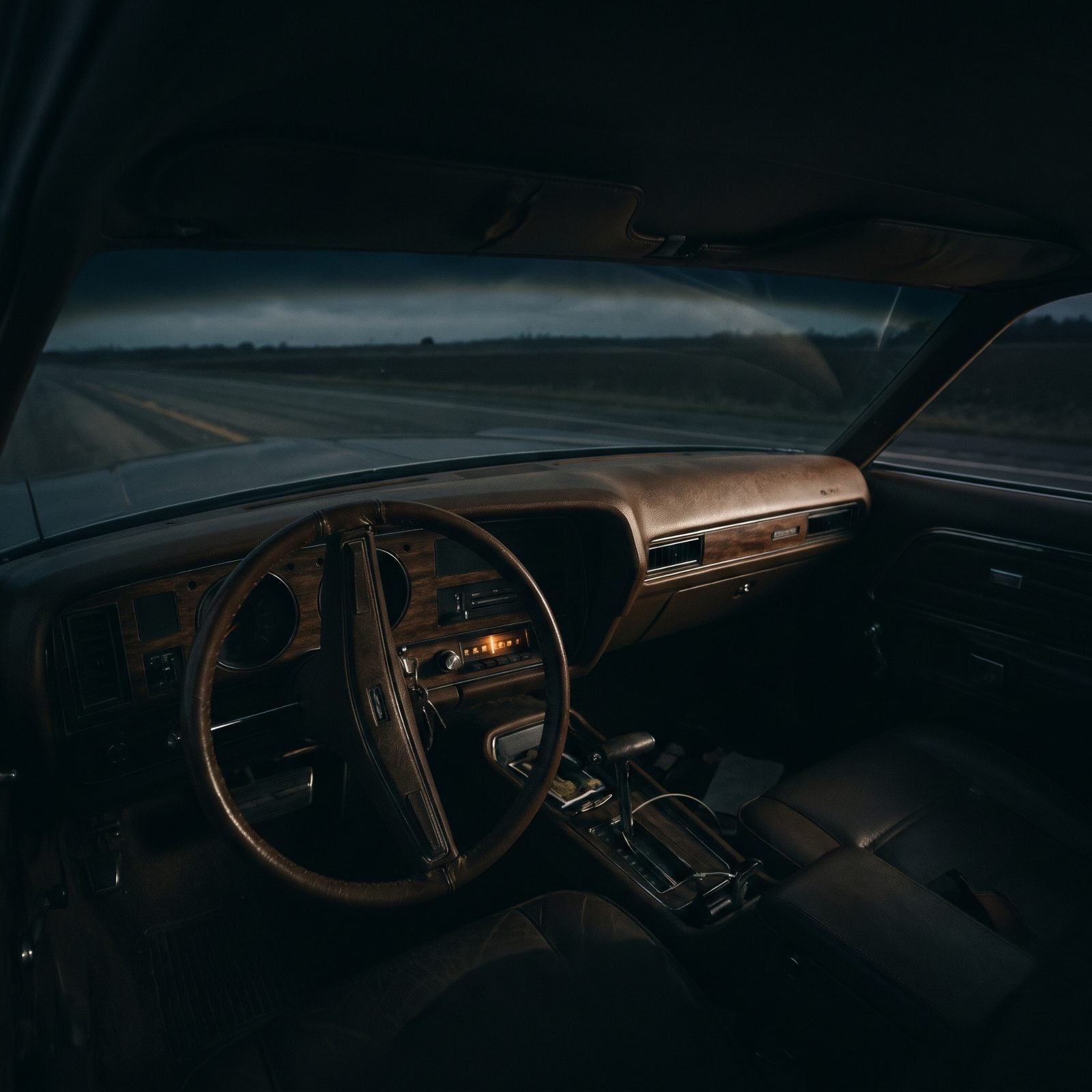
The song ended. Then nothing — just tape hiss and the hum of the road while the player decided whether it was done with this program. Those few seconds of silence felt endless when you were waiting to see if the music would come back or if the cartridge had quit entirely.
Then the mechanism clunked, the amber number jumped, and something started up mid-verse. You never knew what was coming. That little stretch of dead air was the format catching its breath.
9. The Faux-Leather Suitcase Full of 8-Tracks
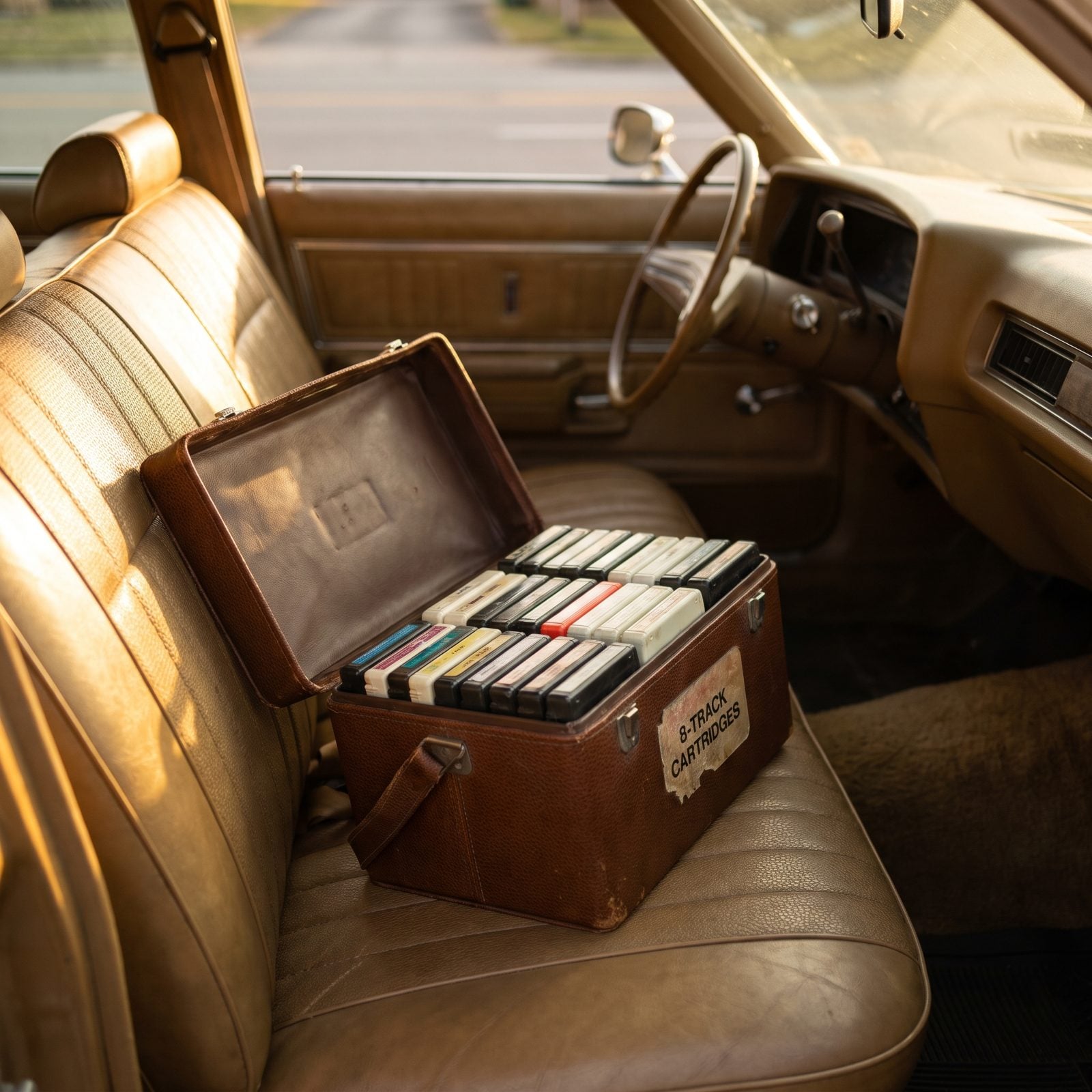
Every serious driver had one riding shotgun. A molded faux-leather case — usually that pebbled brown vinyl pretending to be the real thing, chrome snap latch, rows of cartridges standing at attention inside. It held maybe two dozen and lived on the passenger floor until a hard left turn sent the whole thing sliding.
Opening it on a road trip was a ceremony. You’d flip through the spines at a red light, pick your program, and feed it in before the light changed. The case rattled over every pothole, a little percussion section of plastic shells knocking together.
8. The Cartridge Shell Warped by Summer Heat
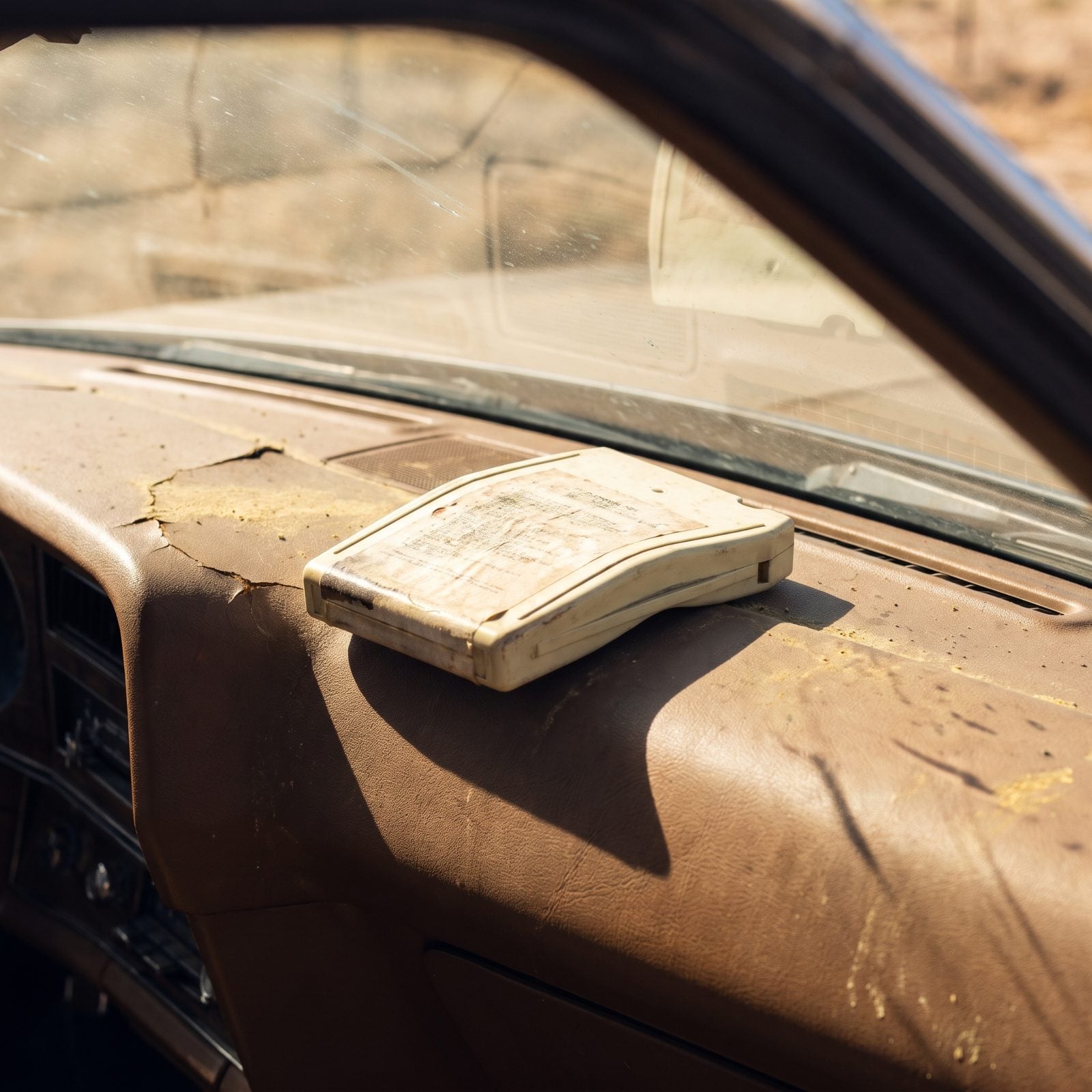
Leave a cartridge on the dash in July and it came back changed. The shell bowed, the corners lifted, and when you shoved it in the slot it dragged and wowed and sometimes wouldn’t eject at all. A parked car in summer was an oven, and the 8-track had no defense.
You learned fast to stash them under the seat or in that case — anywhere but the dash. A warped cartridge was a death sentence. The tape inside snagged on its own deformed housing and chewed itself up within a song or two.
7. The Matchbook Wedged Under a Cartridge to Stop Crosstalk
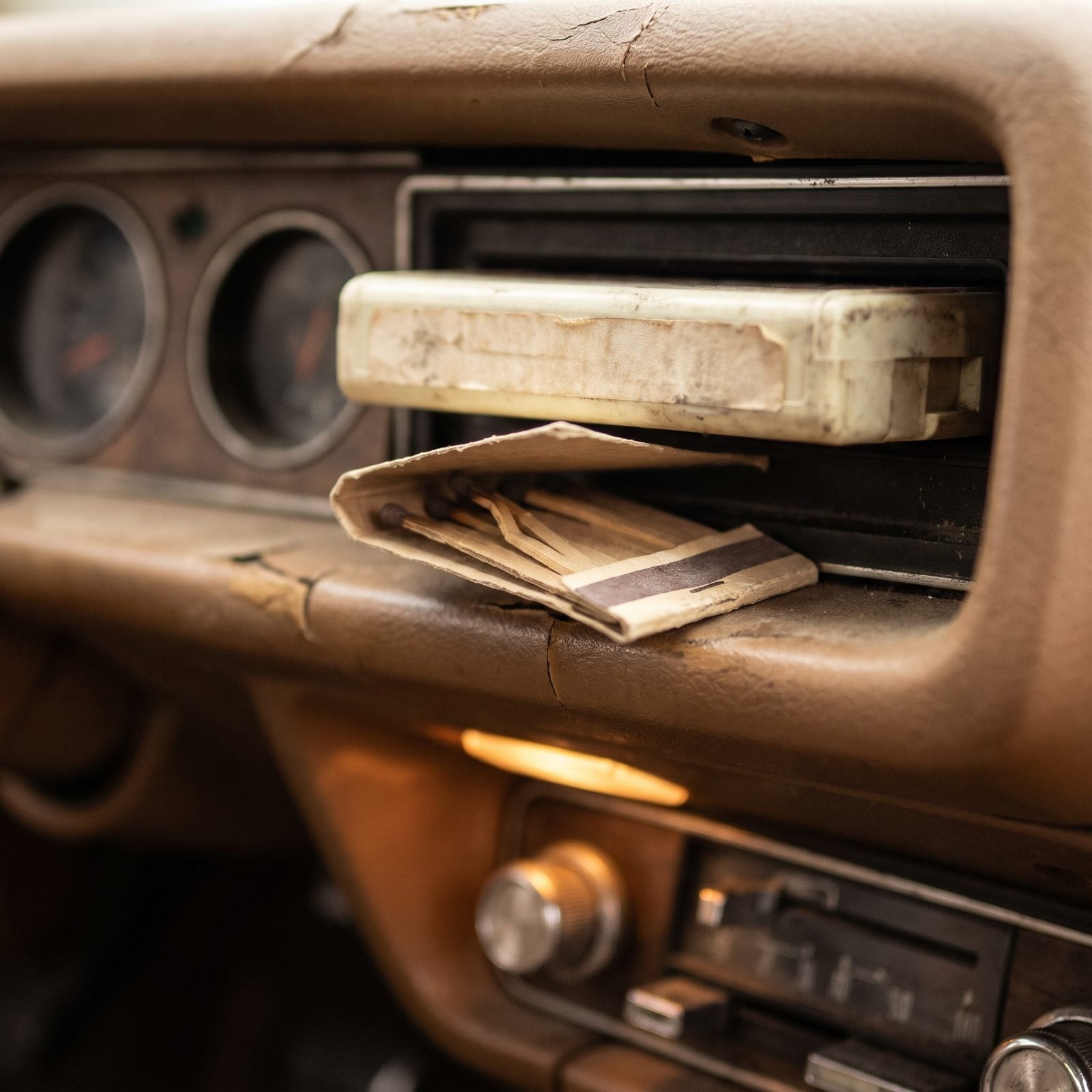
Here’s a trick nobody tells you about anymore. When the player’s slot wore loose and the cartridge sat at a hair’s angle, the playback head drifted off track and you’d hear two programs at once. The fix cost nothing — you folded a book of paper matches and wedged it under the cartridge to shim it level.
Every regular at the drive-in knew this. A matchbook from the diner, a cocktail napkin, a folded gum wrapper, whatever was in reach. The kind of roadside fix that made you feel like a genius for about eight seconds.
6. The Special Head-Cleaning Cartridge
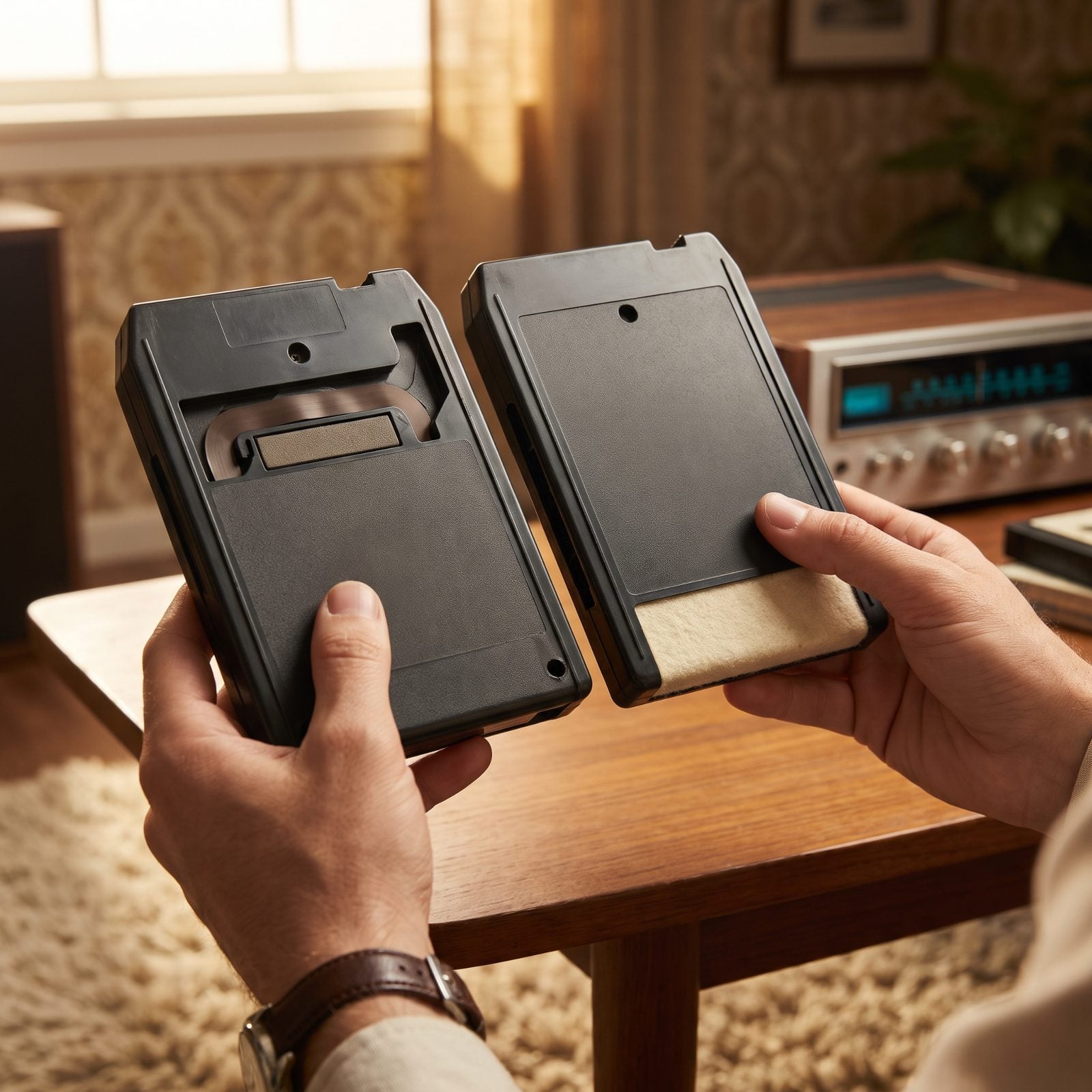
When the music started sounding muddy and far away, you reached for the cleaning cartridge. It looked like a real 8-track but had a felt pad where the tape should be, and sometimes a little bottle of fluid you’d dab on first. You’d feed it in, let it run a program, and the playback head got wiped clean of all the oxide gunk it had scraped off a hundred tapes.
You could buy them at the drug store rack, right next to the cartridges themselves. A small ritual, and a satisfying one — the next tape sounded like somebody opened a window.
5. The Tiny Playback-Head Alignment Screw
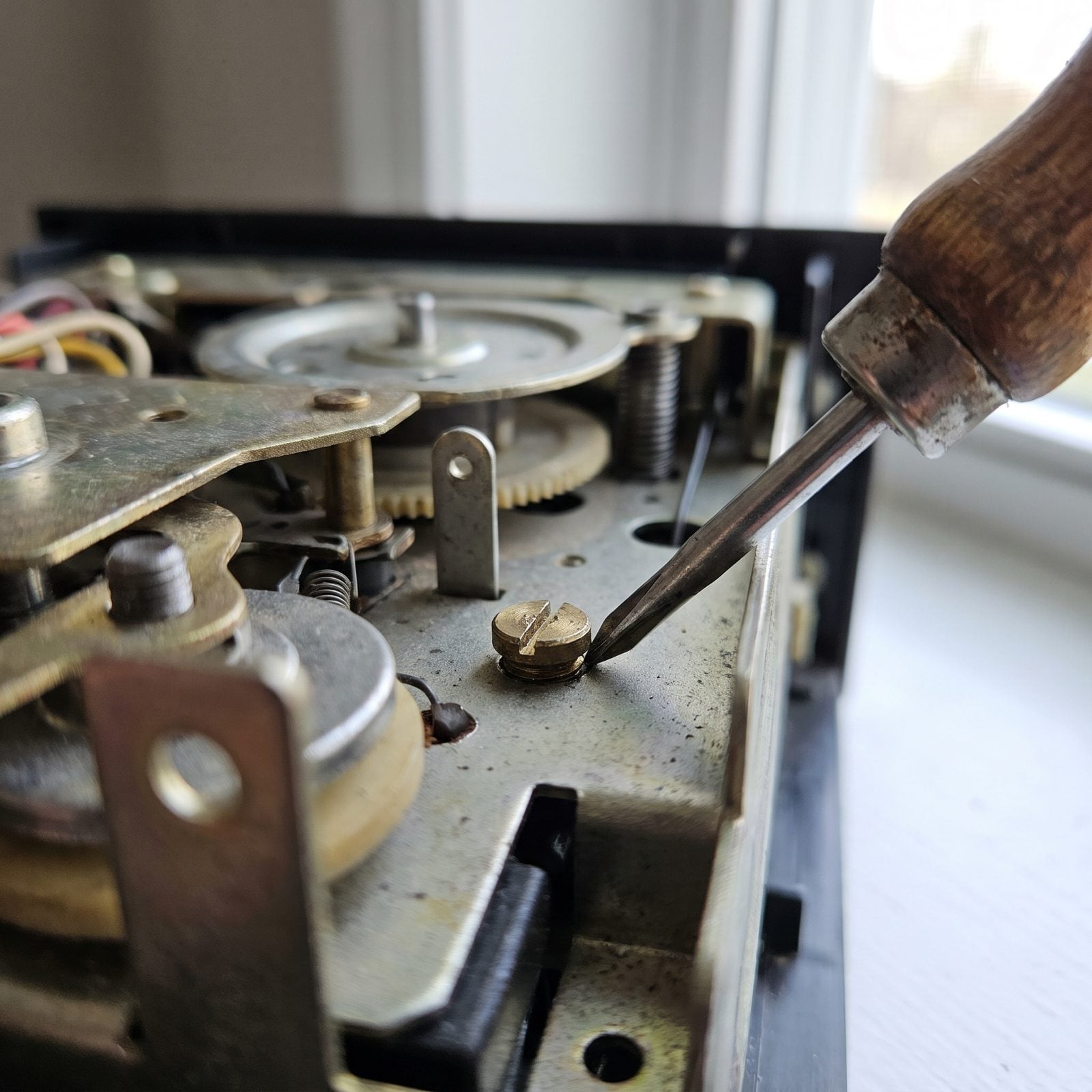
Deep inside the player, among the springs and gears, a slotted brass screw the size of a grain of rice sat on a brass bracket, and it controlled everything. Azimuth, the technical folks called it. Turn it a hair and the spring-loaded bracket shifted, squaring things up to meet the tape’s four stereo pairs square on; off by a whisker and your high end vanished into mud.
Most people never knew it existed. The ones who did kept a jeweler’s screwdriver in the glovebox and tweaked it by ear until the cymbals came back. That was the difference between a player that sounded like AM radio and one that actually sang.
4. Two Programs Bleeding Through at Once
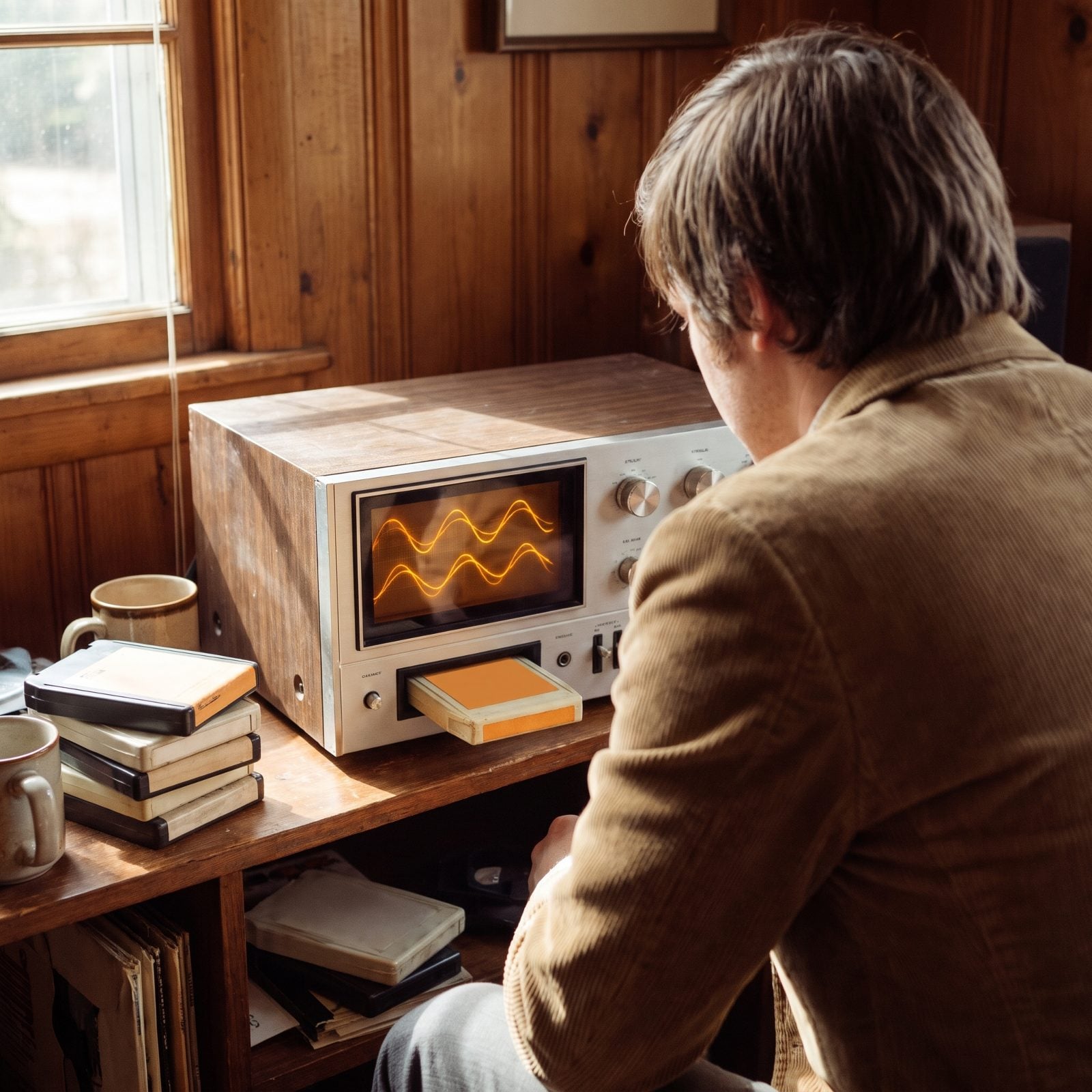
You know the sound. Your song playing clear as day, and underneath it, faint and ghostly, another song from a different program creeping through. Crosstalk. The head had drifted, or the cartridge sat crooked, and now two quarters of the tape played at once like a radio station wandering off frequency.
Sometimes a tap on the deck nudged things back in line and it faded. Sometimes it haunted the whole listening session. Either way you’d turn it up and sing louder, which is how we solved most audio problems back then.
3. Tangled Tape Spilling From a Cracked Cartridge

Every collection had its casualties. You’d pull a cartridge from the case and find a loop of brown tape hanging out of the slot like entrails, the shell cracked somewhere along the way, the whole thing a tangled mess. Nine times out of ten it was your favorite album. That’s just how it worked.
Some of us tried the pencil trick, winding the slack back in by hand, splicing a break with cellophane tape and a prayer. It rarely held. But you tried, because that cartridge held the summer, and you weren’t ready to throw the summer in the trash.
2. The Quadraphonic Q8 Cartridge and the Four-Speaker Dream That Didn’t Last
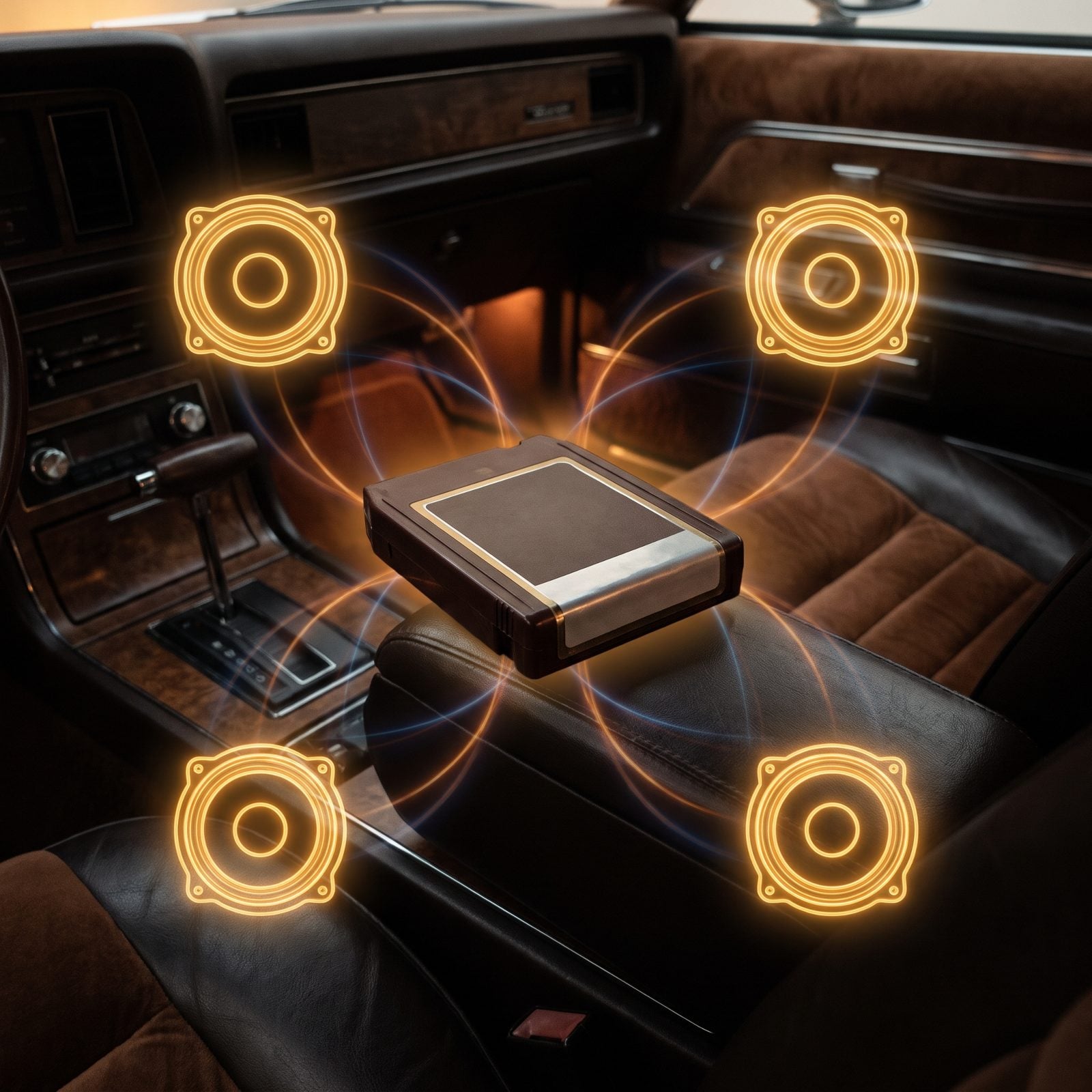
Two speakers sounded good. Four sounded like the future. Quadraphonic 8-track, sold as Q8, packed four separate audio channels onto the same endless loop, meant to wrap you in sound from the dash and doors of the car at once. RCA pushed the format hard starting in 1970, and for a few years the record store had a little rack of Q8 titles set apart from the regular stereo tapes.
The catch was the hardware. A Q8 tape needed a Q8 player, and to get four channels the cartridge used up twice the track space, so you got fewer programs than the usual four. A small notch in the shell told a quad deck to switch modes. Shove one into a regular stereo player and you’d only hear part of the mix. Most people never bought the special deck or ran wire for the extra speakers, the tapes cost more, and by the late 1970s the four-speaker dream had faded off the shelves.
Looking back at the four-channel craze, a custom home theater installer writes “The quadraphonic 8-track, branded "Quad-8" or "Q8," arrived in 1970 and gave a lot of people their first taste of music wrapping all the way around them.”
1. The Unlicensed Truck-Stop 8-Tracks With the Spelled-Wrong Band Names
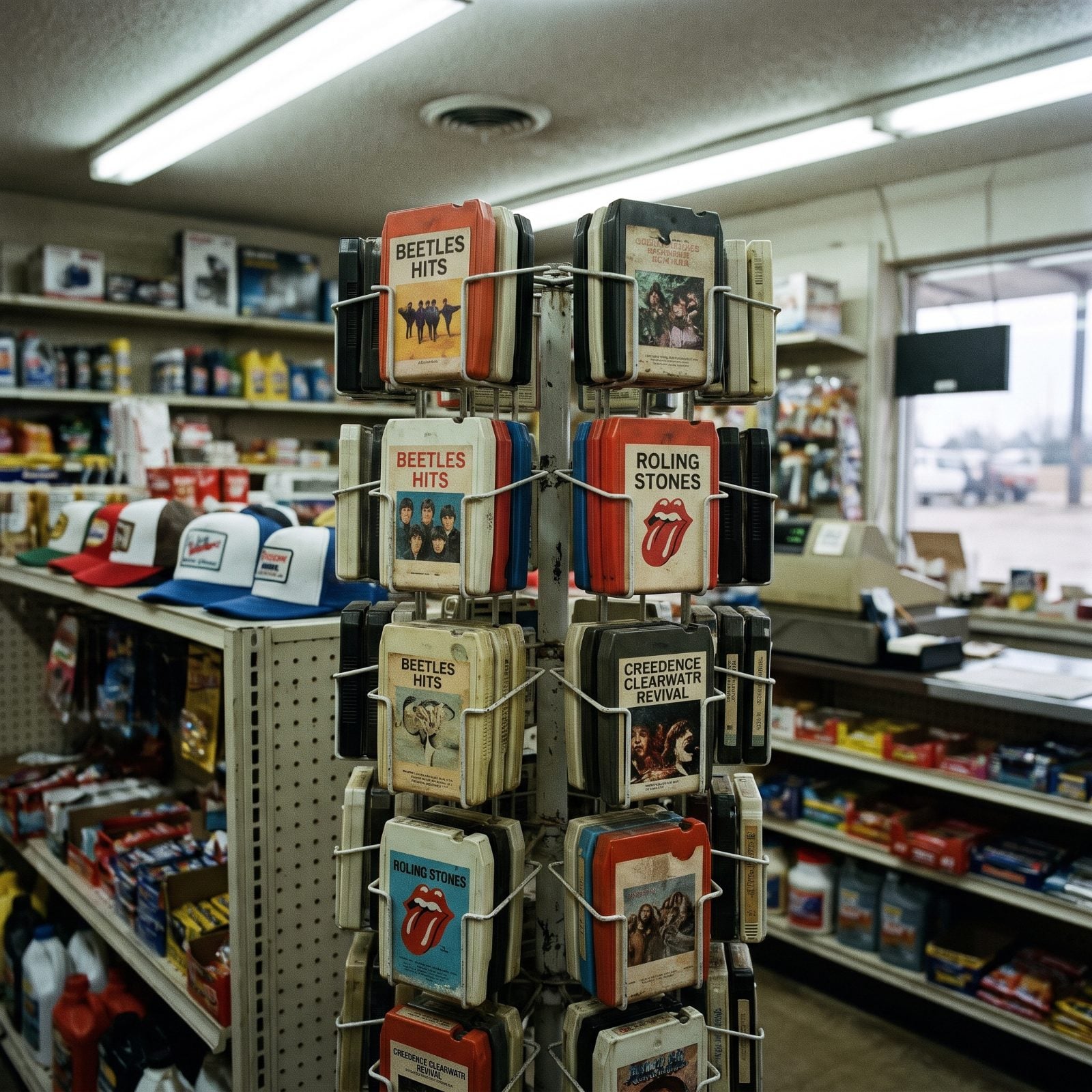
You found them in a wire spinner rack by the register at the truck stop, next to the beef jerky and the sunglasses. The prices were low, the labels were plain, and the band names were just a little off, a letter missing here, a word misspelled there, sometimes a photo on the front that had nothing to do with the music.
These were unlicensed copies, run off cheaply and sold wherever long-haul drivers and road-trippers stopped for gas. The sound was often thin and muddy, the track list on the label didn’t always match what came out of the speakers, and some tapes weren’t even the original recordings at all, just soundalike versions passed off as the real thing. You found out about forty miles down the interstate.