
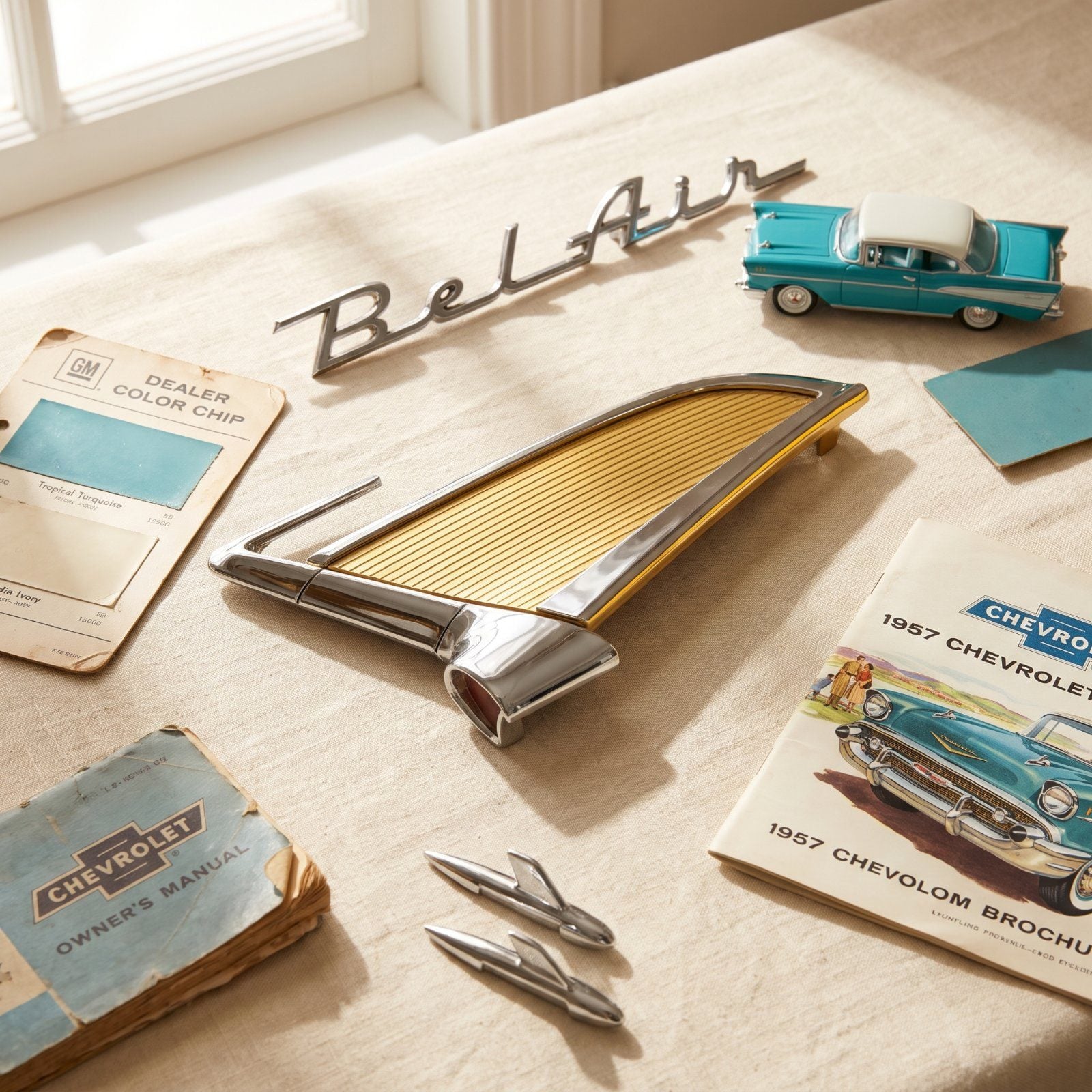
Park a 1957 Bel Air on a show field and watch grown men argue like it’s a bar closing. The fins. The gold. The color. That fuel door hiding in the fin trim nobody saw coming. Nothing about this car was quiet, and seventy years later nothing about it is settled. Every panel on that body made somebody mad and somebody else fall in love. What follows are the arguments that never end, the little details that turn a friendly judging table into a staredown.
Please note that some of the images in this article were created with the assistance of AI.
39. Were the 1957 Tailfins Beautiful or Excessive?
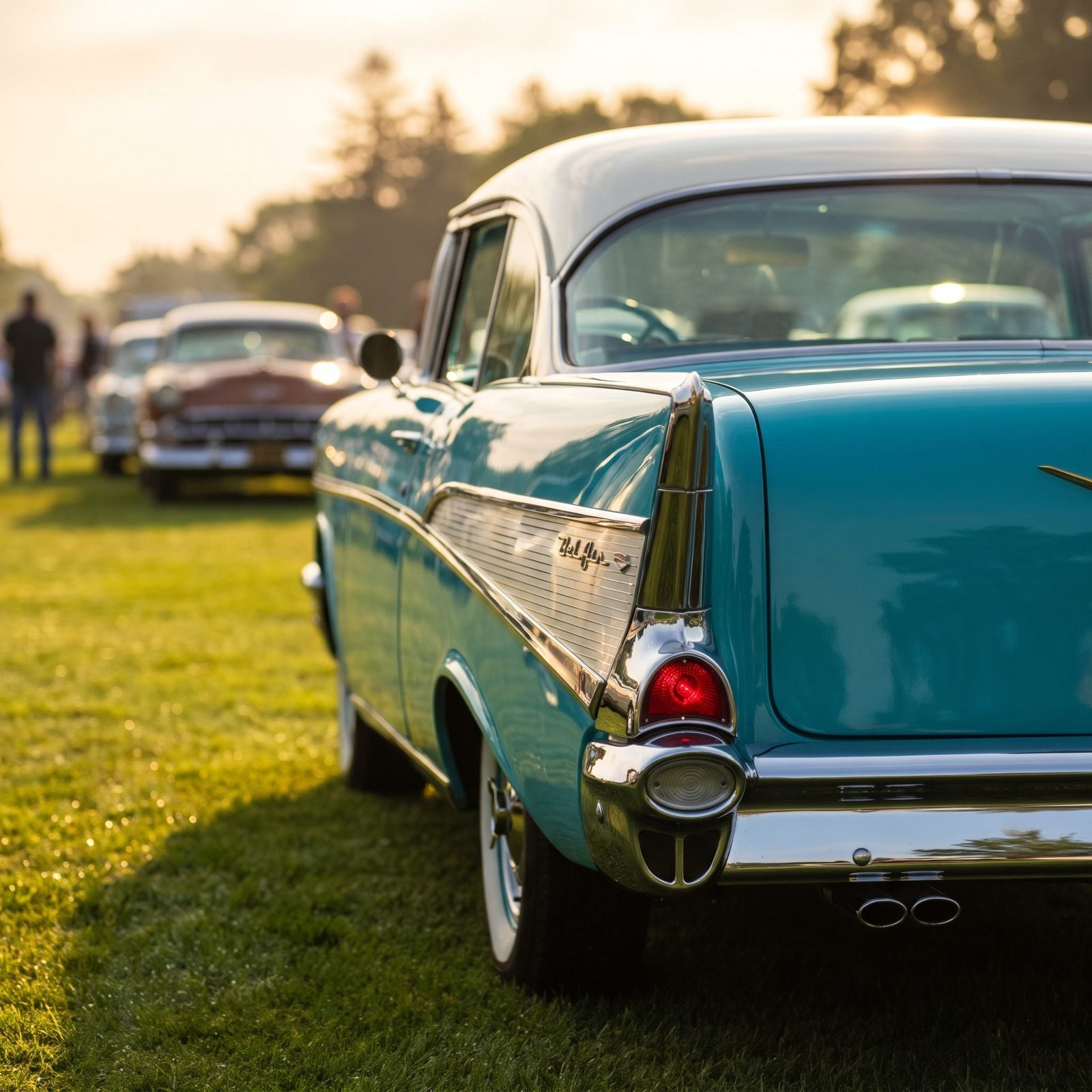
Stand behind a 1957 Bel Air and the fins look almost restrained next to the chrome cliffs Chrysler was about to unleash. That’s the whole argument. One camp calls them the most tasteful fins of the fin era, just enough lift to suggest flight without turning the trunk into a landing strip.
The other camp says a fin is a fin, pure decoration bolted onto a car that drove fine without it. Both sides are right, which is why nobody wins.
I’ll say it flat out. The ’57 fin is the best-proportioned fin Detroit ever made, and it knows when to stop. That alone makes it rare.
What Our Readers Say
- When Jalopy Talk readers loved a car photo and told us why, “nostalgic” was the top reason at 29%, ahead of body style at 24%.
- In our reader votes, cars wearing lots of chrome got hearts 87% of the time, compared with 81% for the other images in the same articles.
From Jalopy Talk reader polls and votes.
38. Is the Hidden-Taillight Fuel Filler Brilliant or Annoying?
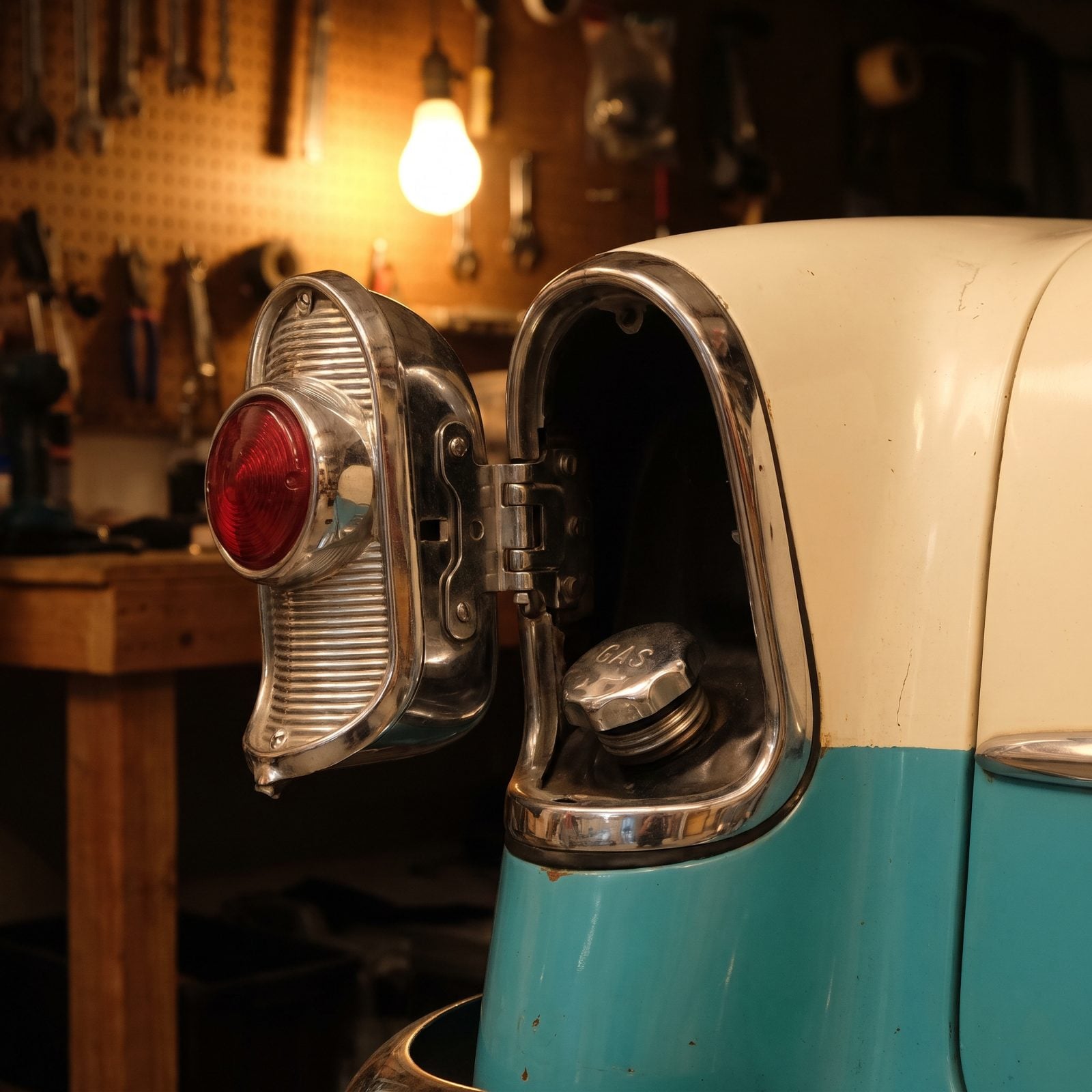
The chrome trim on the left fin swings open and there’s the fuel filler. First time you see it, it feels like a magic trick GM pulled off before anybody else bothered.
Owners split hard. Purists love the hidden drama, the way it keeps the quarter panel clean with no fuel door interrupting the line. The folks who drove these daily, back when they were just used cars, cursed it every time the hinge gummed up with road grime and refused to swing.
Stiff hinge. Scratched chrome from a careless gas-station attendant. That one fin panel that never sits flush again. Charming until it’s your car at a crowded pump with a line forming behind you.
37. Should the Anodized-Gold Quarter-Panel Inserts Look Bright or Subdued?
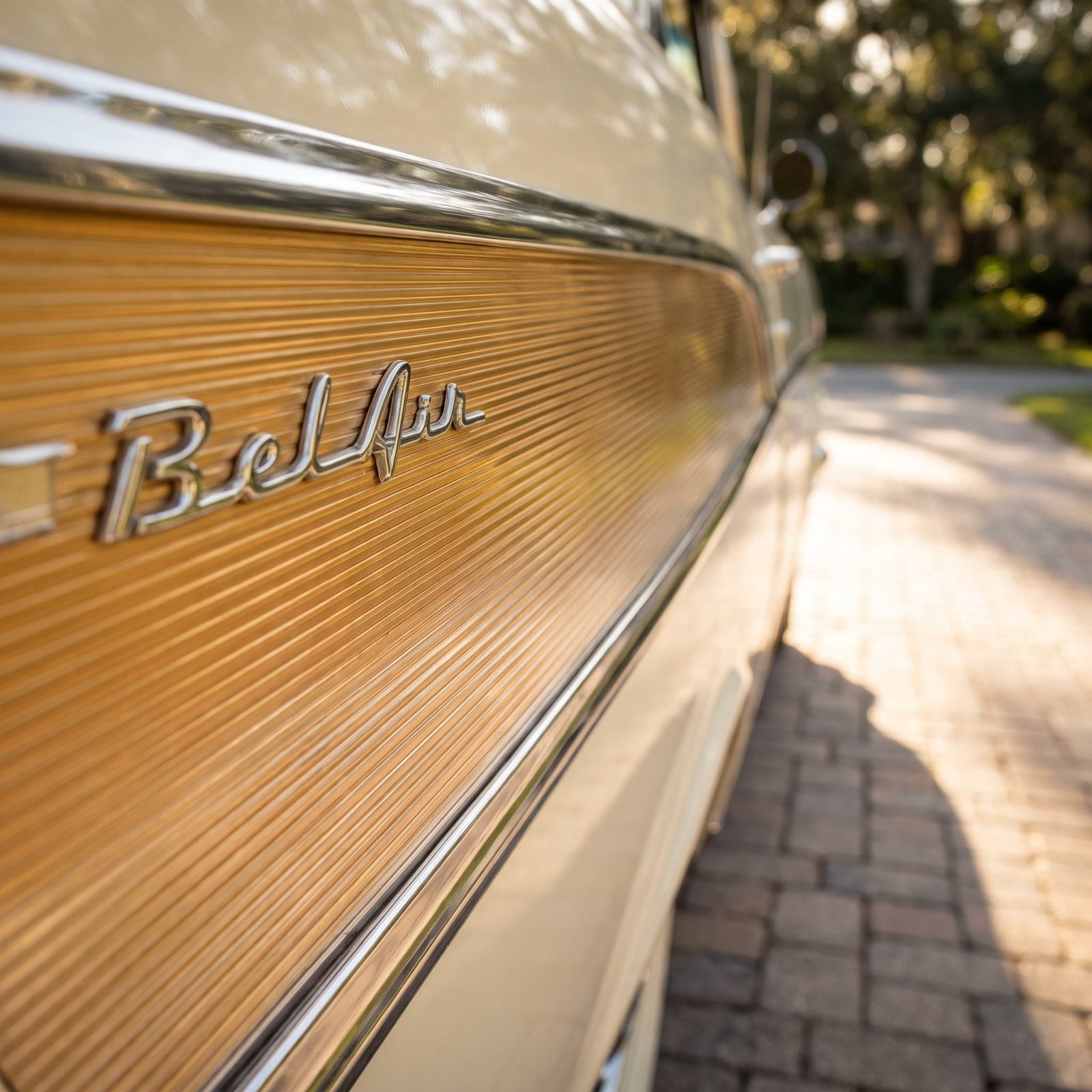
This is the detail that gets a whole restoration redone.
The ribbed gold insert on the rear quarter was anodized aluminum from the factory, a warm champagne tone. The saturated orange, brass-yellow insert shown here is the loud look a lot of restorers reach for. Get it too bright and the whole car tips into costume jewelry.
Judges at serious shows catch this from across the field. Too subdued and people assume it’s faded or wrong. Too flashy and it reads as a reproduction part that missed the mark. The factory split the difference, and matching that means hunting down correct anodizing. Not chrome. Not paint. Not a spray can.
36. Did the Wide Chrome Grille Improve the Bel Air’s Face?
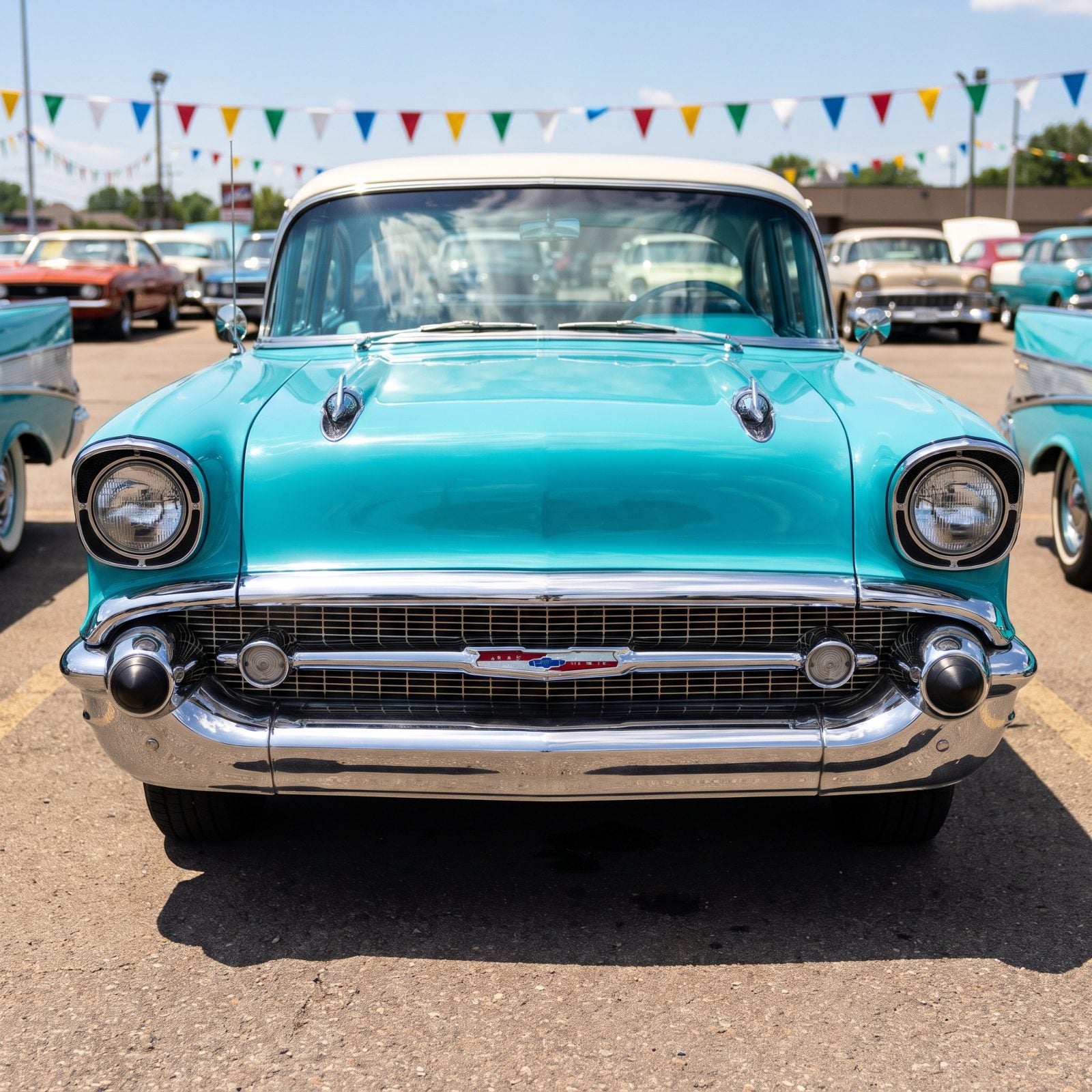
Chevrolet widened the grille for ’57 and dropped the parking lamps right into its ends, giving the car a broad, grinning face the 1956 model never had. Some see it as the single best change of the year, a front end that finally looks as expensive as the trim suggests.
Others think the wide grille made the Bel Air look heavier up front, like it gained weight in the jaw. There’s a case either way.
Park a ’56 and a ’57 nose to nose and the difference hits you in two seconds. One wants to be noticed. The other was content to be liked.
35. Do the Twin Hood Rockets Make the Design or Clutter It?
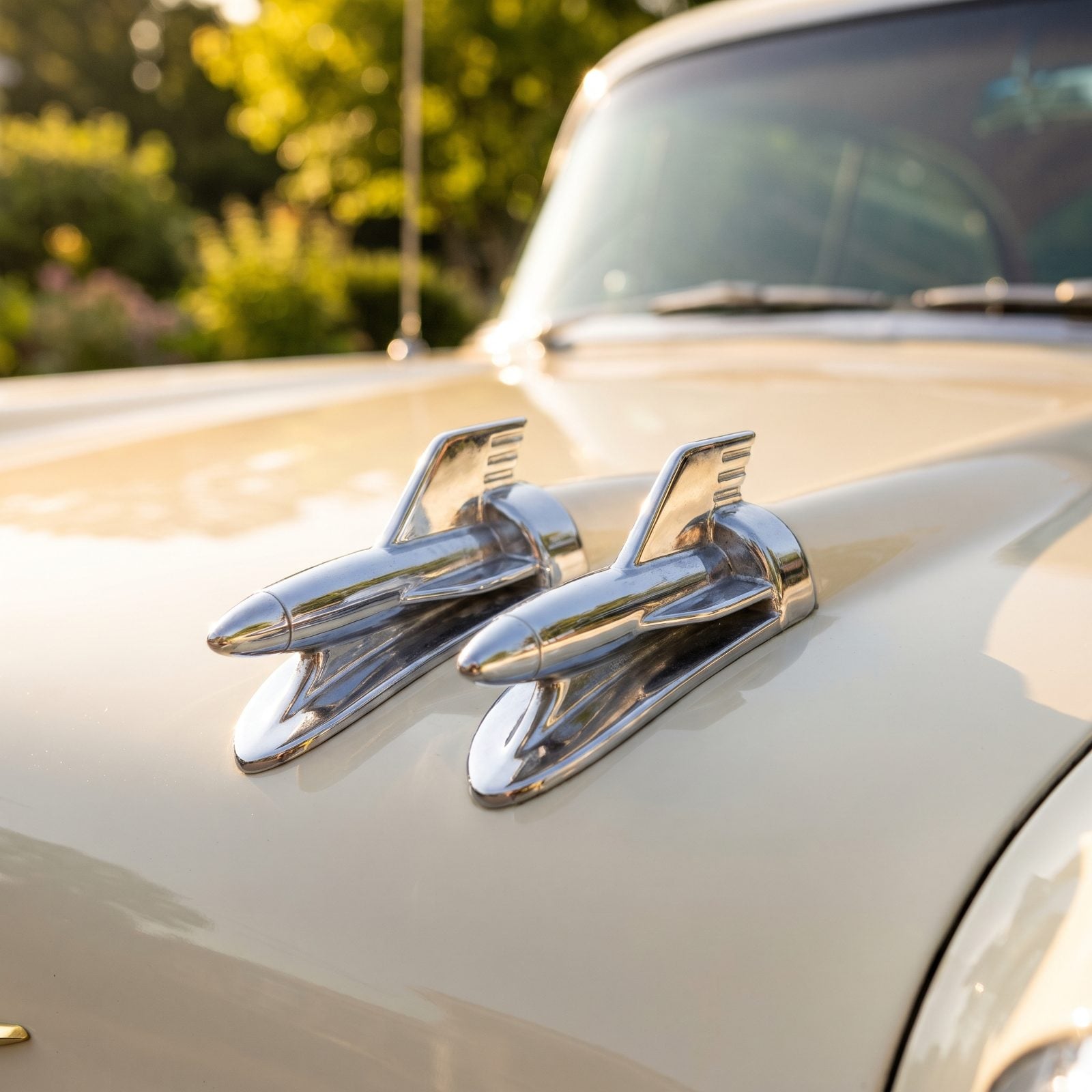
A pair of chrome rockets on the hood, aiming the car into the Space Race before anybody had reached space. Pure 1957 optimism.
Love them or lose them. Plenty of owners think the rockets are the exclamation point the whole design was building toward, jet-age confidence you can see from the driver’s seat. Others call them junk, a bit of bright trim fighting the hood’s clean line for no mechanical reason.
Me, I come down on the side of the rockets. A car this hopeful about tomorrow earned the right to wear one. Strip it off and the hood looks like it’s hiding something.
34. Are the Front Bumper Bullets True Dagmars?
Here’s where terminology turns into a fistfight.
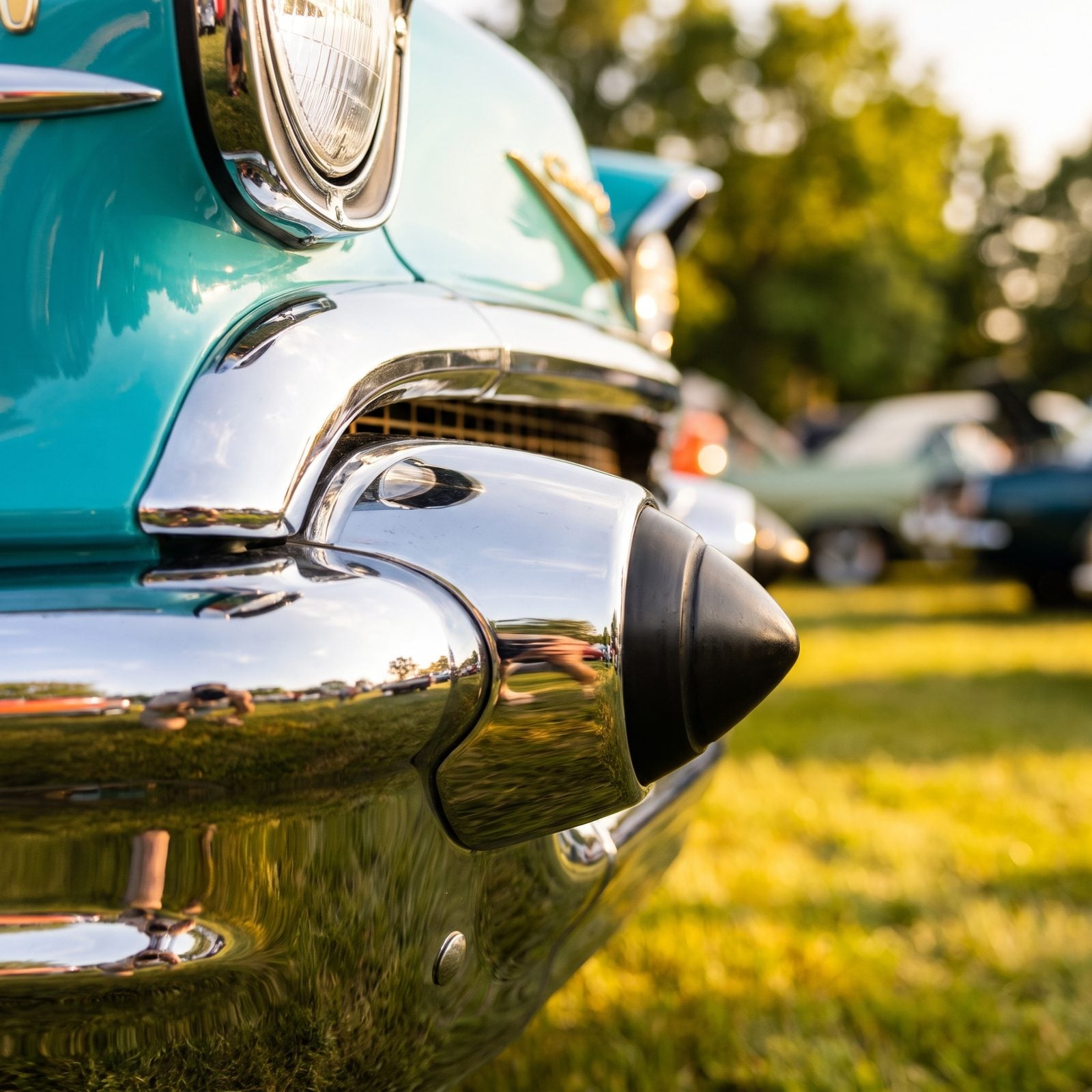
The conical chrome guards on the ’57 front bumper get called Dagmars by plenty of enthusiasts, after the exaggerated styling fashion of the era. Purists push back hard. True Dagmars, they’ll tell you, belong to Cadillac, and the Chevy pieces are just bumper bullets or overriders.
I’ll push back on the whole question. Call them what you want. What actually matters is whether they’re the correct conical shape with the right solid black rubber cone tip, because reproduction bumpers often botch the taper and a sharp judge catches it instantly.
The name argument is fun at the clubhouse. The shape argument costs points.
33. Is the Sweeping Side Spear the Car’s Best Styling Detail?
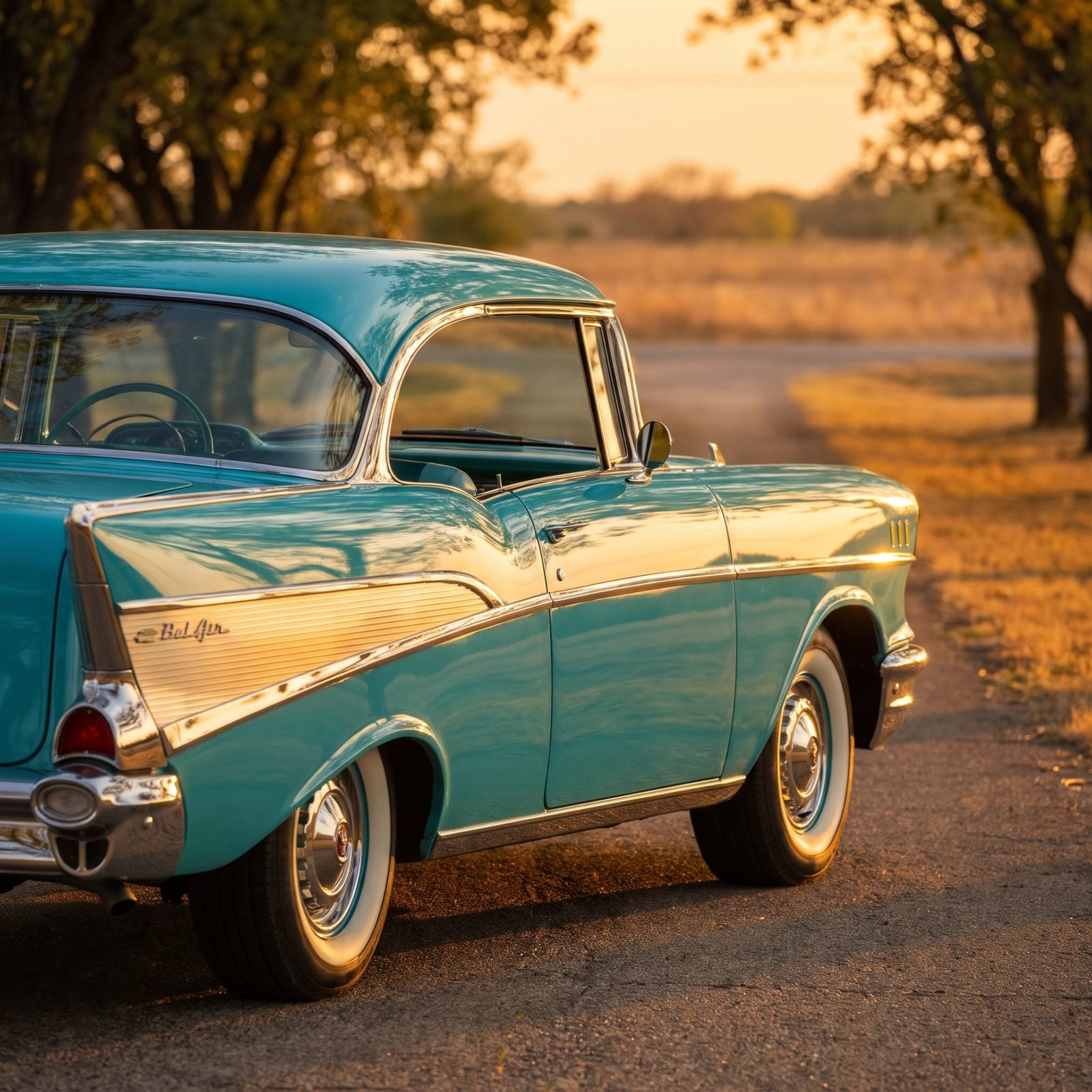
Run your eye along the side of a ’57 Bel Air from the headlight back. The chrome spear starts narrow at the front fender, dips, then widens into the gold insert at the rear like a river finding the sea. It’s the line that organizes the whole car.
Plenty of collectors call it the single best piece of styling on the thing, the detail that makes the two-tone paint work and gives the body its motion standing still. Hard to argue against.
Everything else, the fins and grille and rockets, is an accessory. The spear is the design.
Cover the spear with your hand and the Bel Air falls apart into a nice-looking box. Uncover it and the car moves again.
32. Where Should the Two-Tone Paint Boundary Actually Fall?
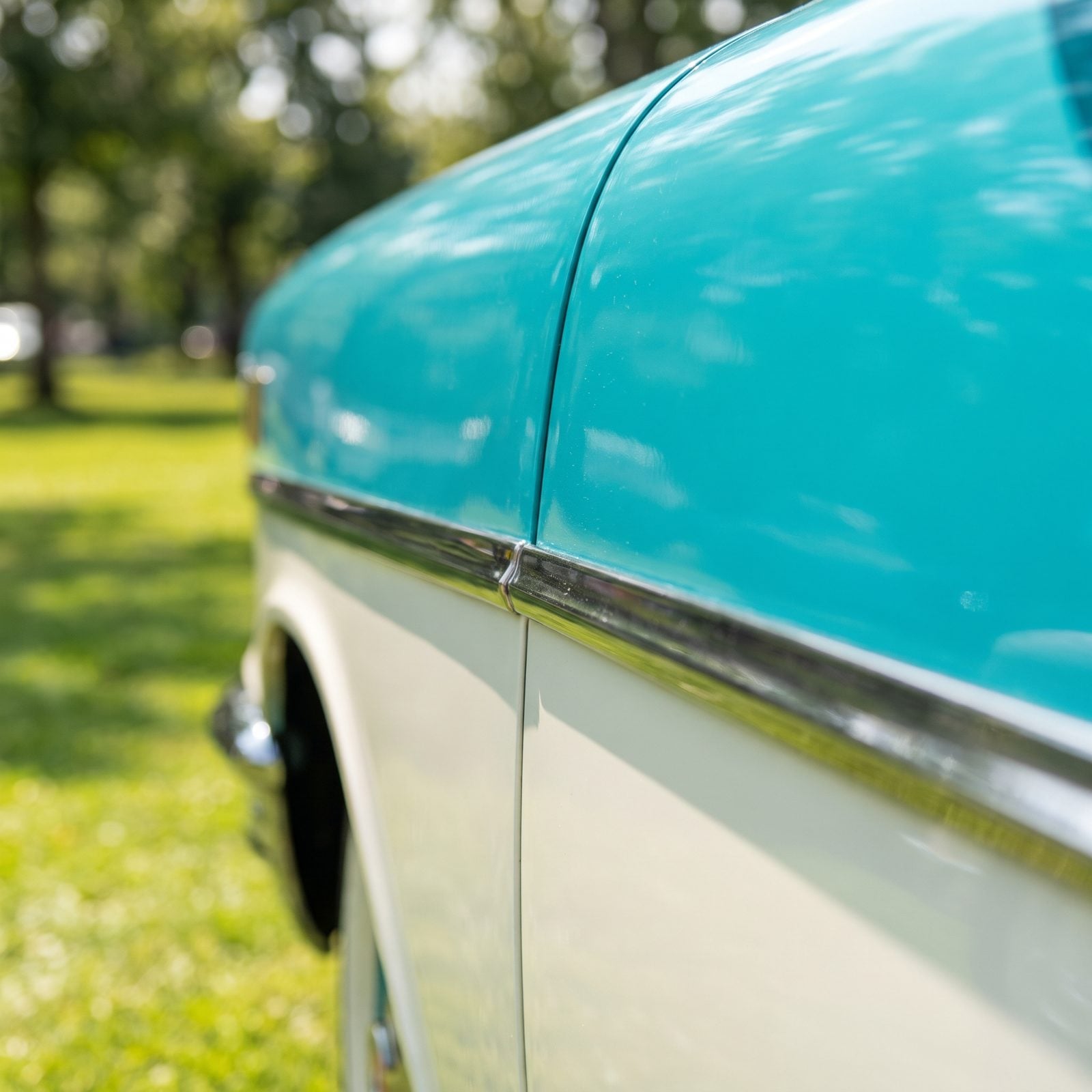
The factory ran the lighter color below the side spear and the darker body color above it, with the chrome trim capping the division. Simple. Then restorers start arguing about exactly where the roof color goes and how the trunk and fins get treated.
Some shops reverse the tones for drama. Some paint the whole roof the contrast color. Some fudge the boundary to flatter a repaint. And every one of those choices gets defended as period-correct by somebody who read a different brochure.
But the factory offered specific two-tone combinations and specific boundaries, and the paint codes tell you which. Guessing from a magazine photo is how you end up with a gorgeous car no serious judge will touch.
31. Is Tropical Turquoise the Definitive 1957 Bel Air Color?
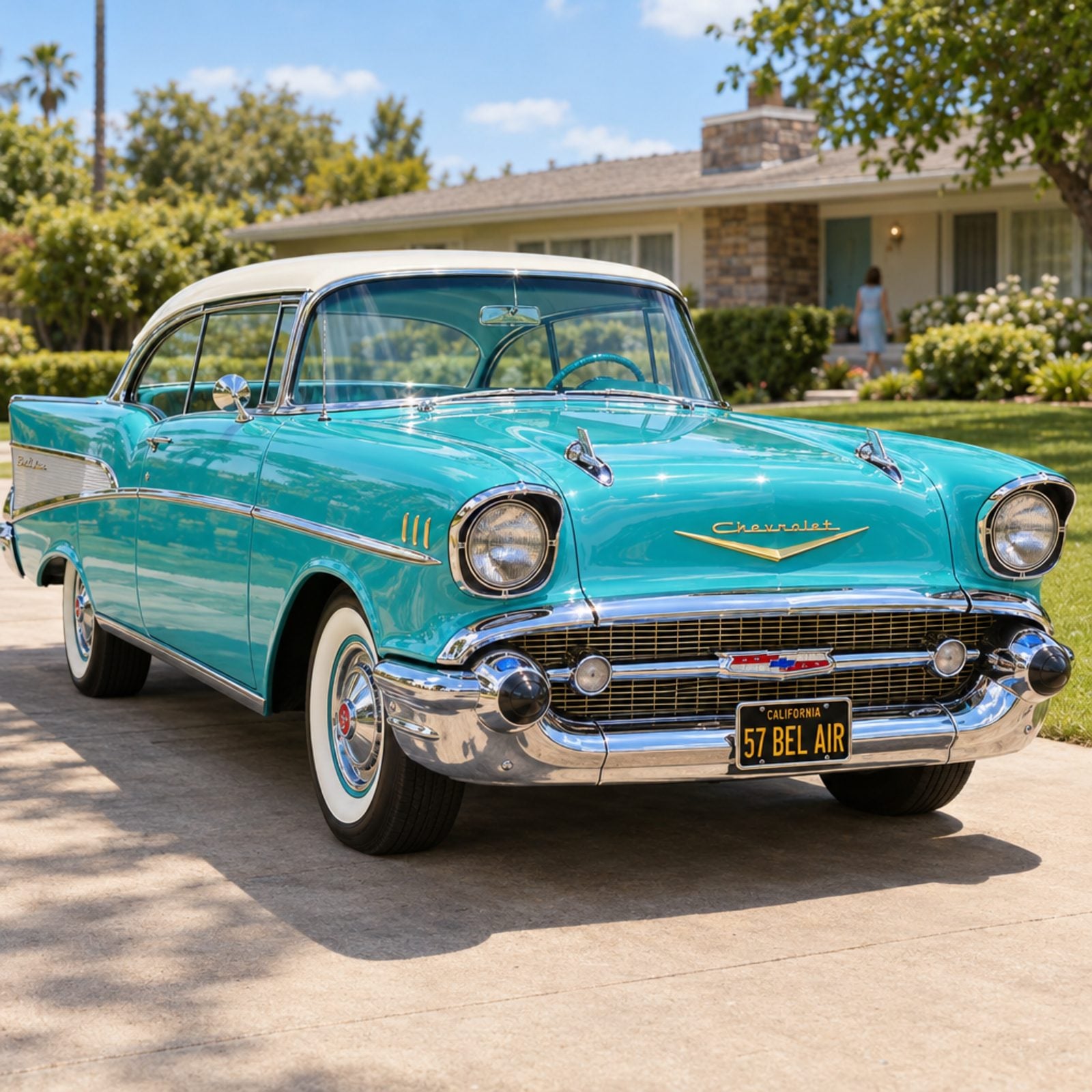
Say 1957 Bel Air out loud and most people picture turquoise over white. Tropical Turquoise with India Ivory became the car’s signature even though it was only one choice on a long color list.
Collectors who chase originality find that annoying. The ’57 came in Onyx Black, Harbor Blue, Matador Red, and a dozen others, and a black Bel Air is every bit as correct as a turquoise one. The turquoise just won the popularity contest and never gave the trophy back.
I love a turquoise car, and I’ll admit the obvious. It’s the one that photographs best, which in a car this good-looking is saying something. But the definitive color? That’s marketing memory, not history. The history is the whole chart.
30. Is the Convertible More Desirable Than the Sport Coupe?
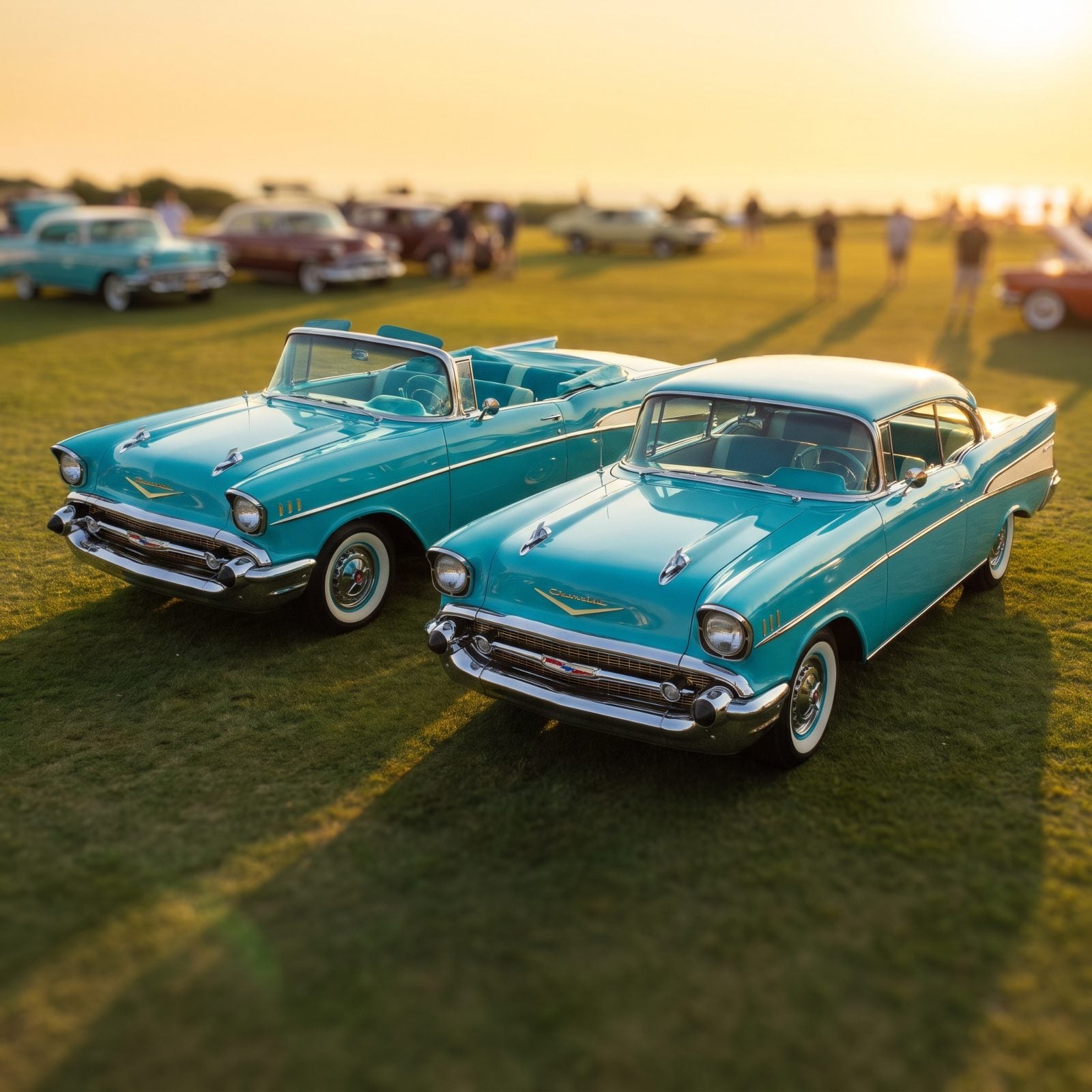
Money settles most arguments. This one it only inflames.
Convertibles were built in far smaller numbers, and scarcity plus top-down romance pushes their values well above the hardtop. At the auction block the convertible wins, say the people writing the checks, and that’s that.
Not so fast, say the Sport Coupe faithful. To a lot of eyes the pillarless two-door hardtop is the better-looking car. Cleaner roofline, tighter proportions, that long uninterrupted glass that made the ’57 look like it was already moving. You get the structure without losing the open, airy feel.
So which one you want depends entirely on whether you’re buying with your wallet or your eyes. The convertible costs more. The Sport Coupe might be the prettier thing in the driveway. Both camps think the other one is nuts, and they always will.
Our readers lean the same way as the auction crowd: convertibles got hearts 80% of the time, versus 72% for the other images in the same articles.
29. Does the Two-Door Sedan Look Better Than the Pillarless Hardtop?
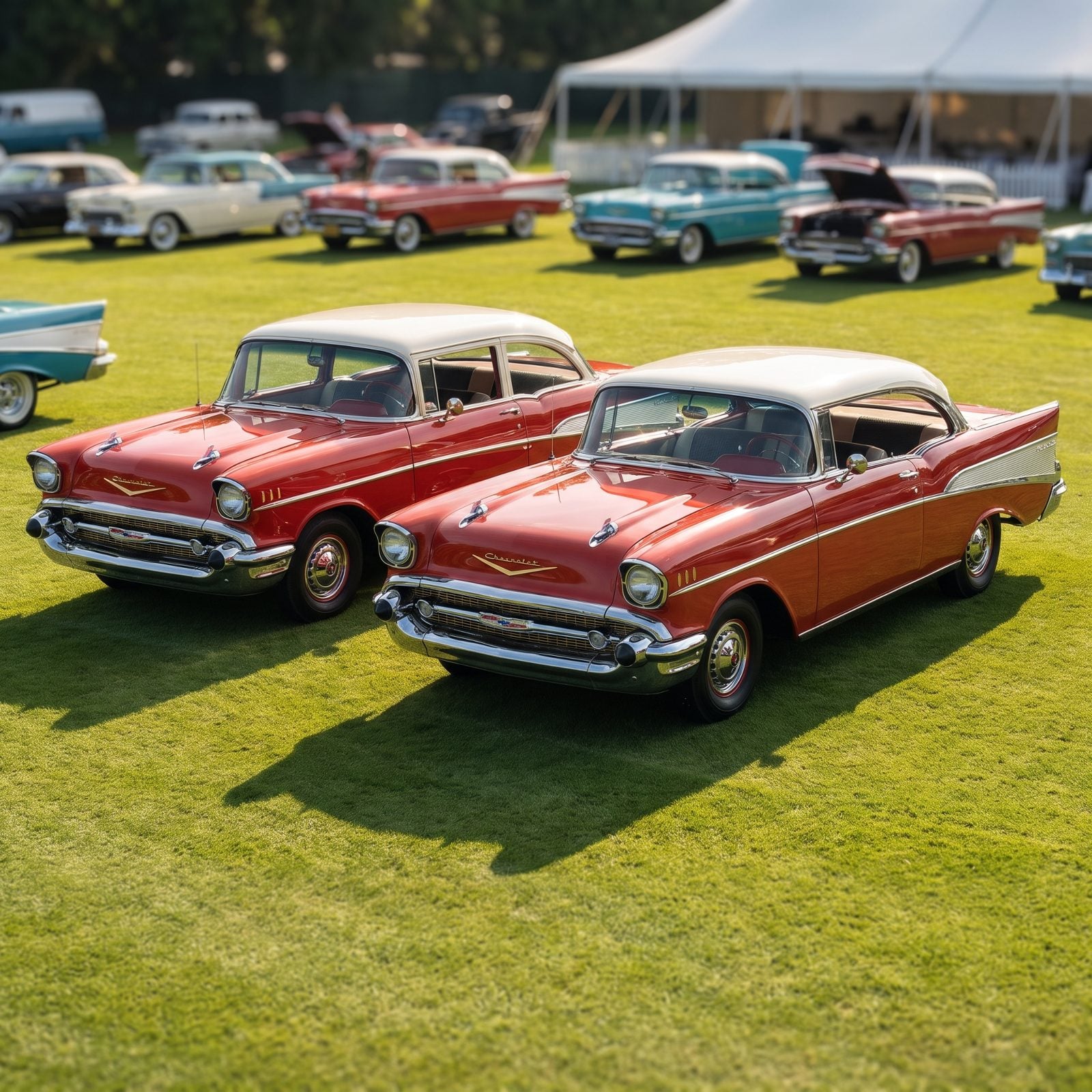
The pillarless Sport Coupe gets the magazine covers. Roll every window down and the roof floats over the body with nothing holding it up, which is exactly the look Chevrolet was selling. Plenty of collectors won’t even glance at anything else.
The two-door sedan crowd has a stubborn case of its own. The B-pillar and framed door glass give the roof a tighter, more upright stance, and the body feels a little more solid for it. Racers liked that stiffness and the lighter weight, and some people simply think the sedan’s proportions look more honest, a working car instead of a showpiece.
My take? Windows down, the hardtop wins every time. Windows up, park them side by side, and the sedan holds its own better than its price tag suggests. That gap in value is the best bargain left in the whole ’57 lineup.
28. Is the Nomad Truly a Bel Air or a Separate Model?
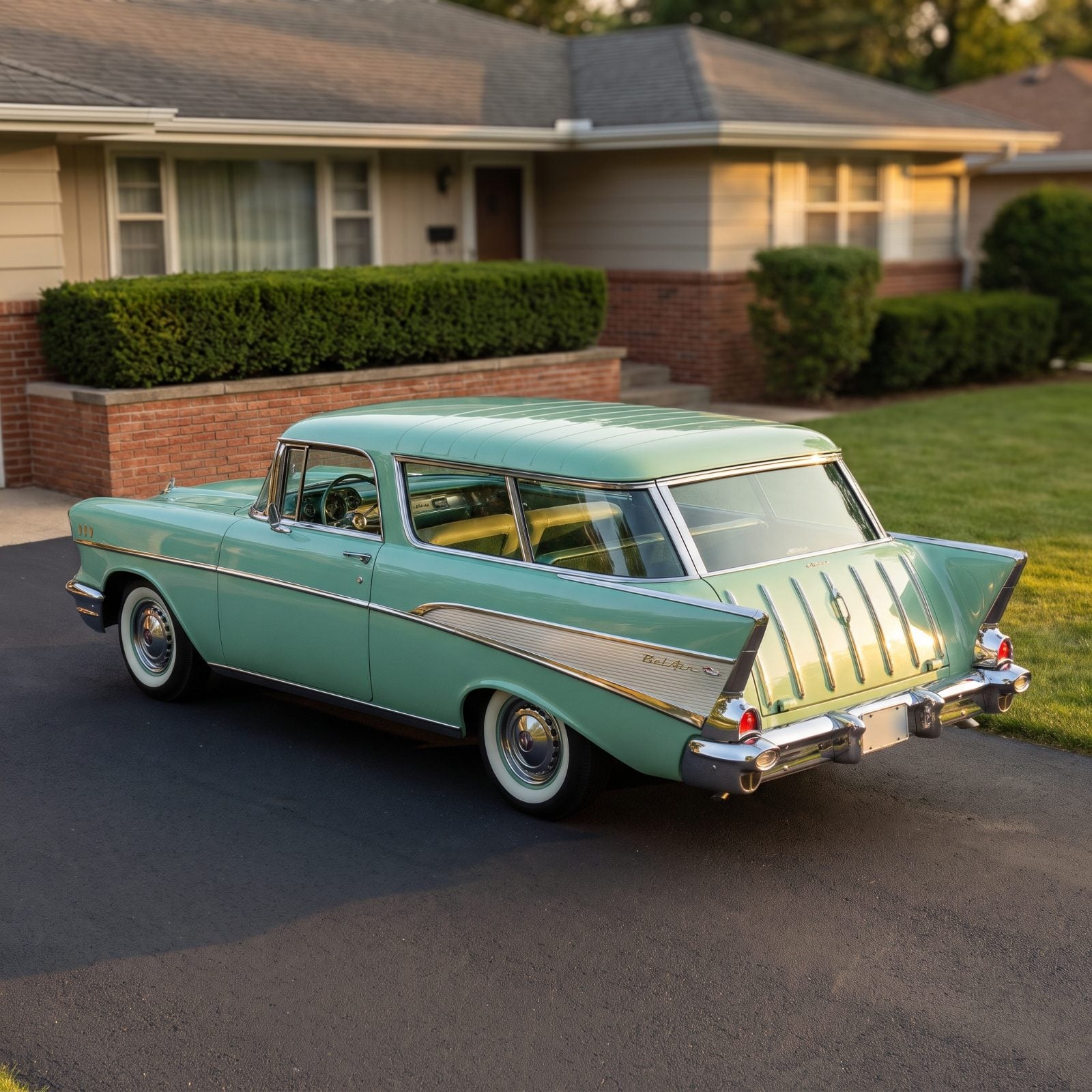
Chevrolet sold it as a Bel Air, trimmed it like a Bel Air, and coded it in the Bel Air series. So why does nobody call it a Bel Air? Because the Nomad never looked like anything else in the lineup. Two doors, a raked rear pillar, a ribbed roof, and a tailgate dressed in chrome strips. It was a sport wagon before anyone had a name for one.
Purists point to the paperwork and say the case is closed. Nomad owners point to the body and say the paperwork misses the point. The four-door Beauville wagon carried Bel Air trim too, and nobody confuses it with a Nomad.
Here’s where I land. On a registration, it’s a Bel Air. On a show field, it’s a Nomad, and it earned that.
27. Does a Continental Kit Enhance or Ruin the Rear Profile?
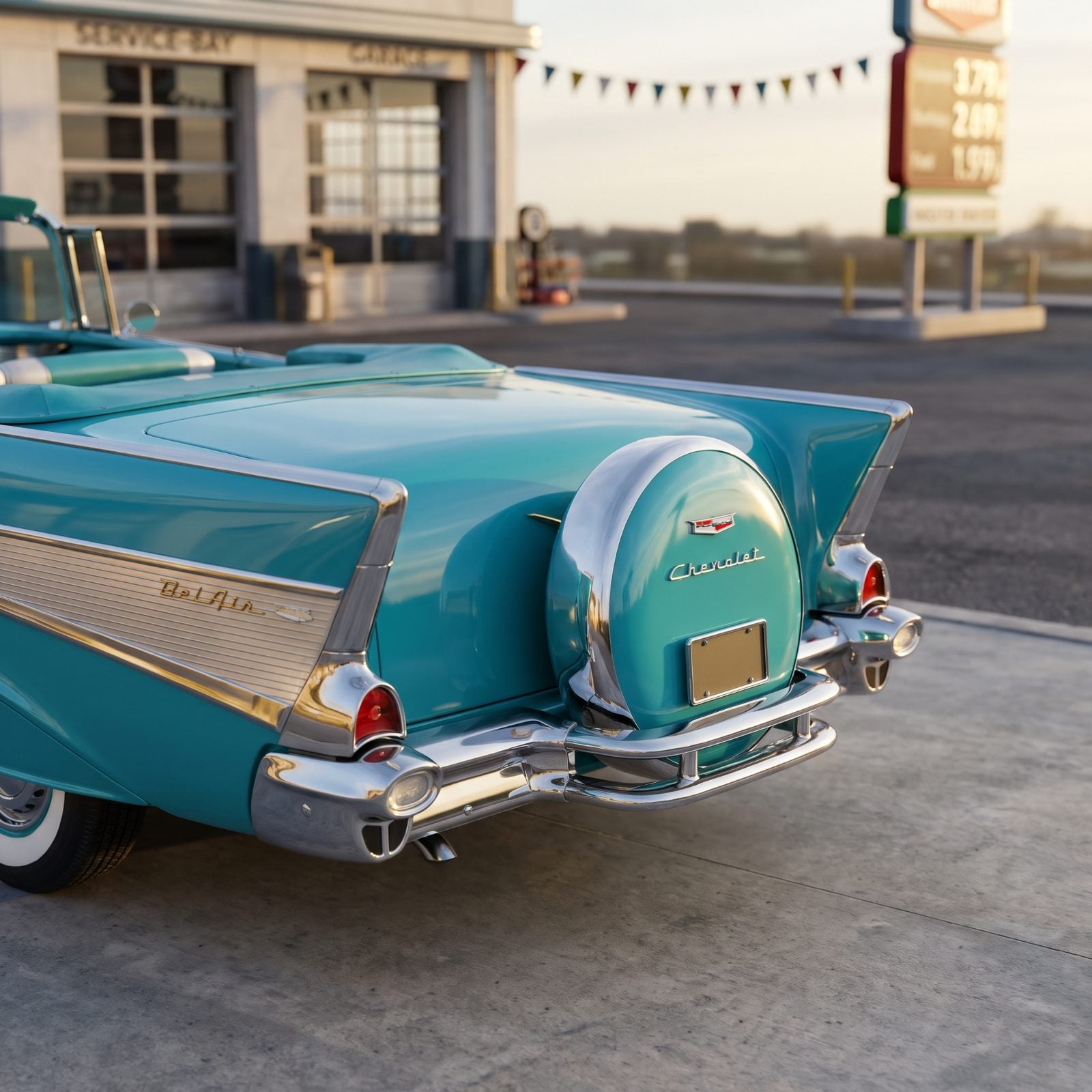
Bolt a Continental kit on the back of a ’57 and the car instantly grows longer, more formal, and a little more full of itself. The spare rides outside in a chrome-ringed housing, the bumper extends to cradle it, and the rear end suddenly looks like it belongs to something costing twice as much.
Fans love the period swagger. These kits were a genuine fifties fashion, and they freed up the trunk where the spare used to live. Critics see a rear profile buried under hardware. The fins were designed to be the last thing your eye catches, and a spare tire hanging off the bumper steals that job outright. There’s the practical gripe too, because the whole assembly usually has to tilt back before the trunk will open.
I’ll be honest. On a convertible with skirts and the right paint, it can work. On a clean Sport Coupe, it’s a hat on a hat.
26. Do Fender Skirts Complement the Fins or Hide Too Much?
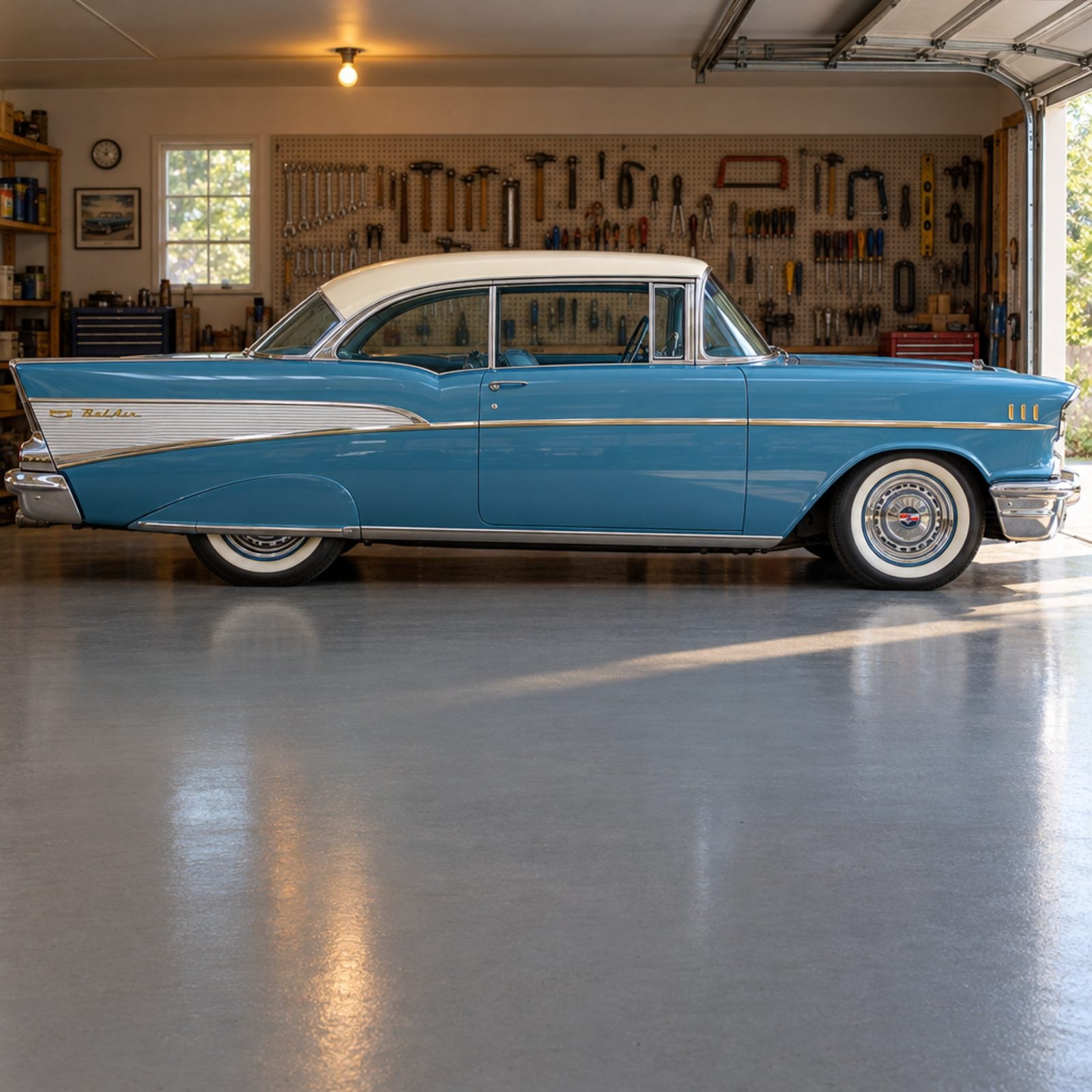
Chevrolet offered fender skirts for the ’57, and they change the car more than any other bolt-on piece. This one wears them, covering the rear wheel opening so only the bottom of the whitewall peeks out. With that opening covered, the body turns into one long, unbroken slab from door to fin, with the side spear running the full length uninterrupted.
That’s exactly why people love them. The car looks lower, longer, and faster parked than it does moving. The opposing camp says the skirts kill the balance between front and rear, hiding the wheel that visually anchors the fin and leaving the back half looking heavy. They also make tire changes a nuisance, which every owner figures out exactly once.
Skirts are a mood. Pair them with whitewalls and a two-tone and the car leans into full fifties cruiser. Leave them off and it reads sportier. Neither is wrong, but pick one look and commit to it.
25. Are Spinner Wheel Covers Essential to the Classic Look?
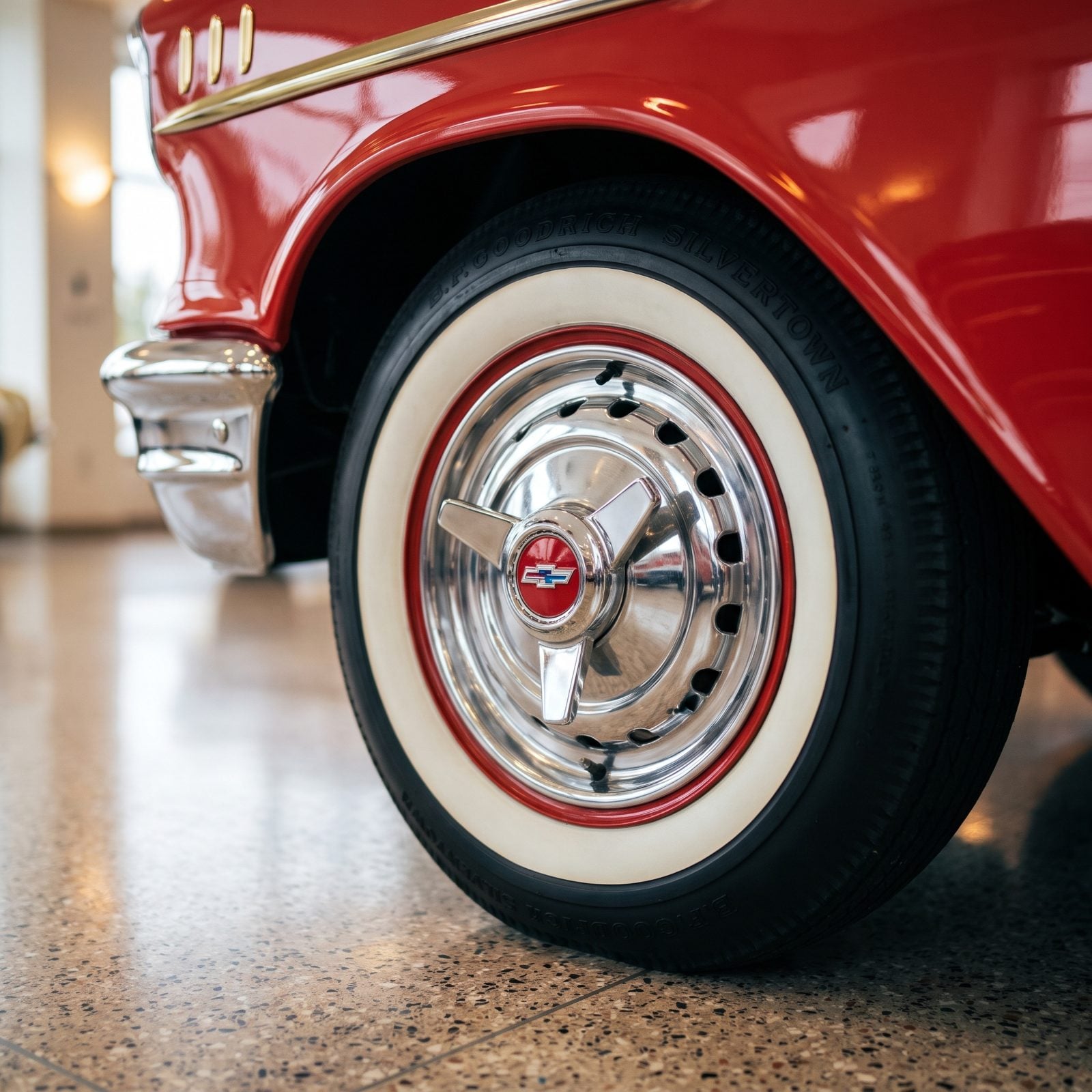
Ask someone to sketch a ’57 Bel Air from memory and they’ll draw spinners. That bar-and-hub look has become shorthand for the whole era, and a lot of people assume every Bel Air left the factory wearing them.
That’s where the argument starts. The Bel Air came with full wheel covers as standard, and the flashier spinner designs most people picture came largely through dealer accessories and the aftermarket. Some purists won’t allow them on a car claiming to be stock. Others say a period accessory is a period accessory, and a ’57 looks naked on the wrong covers.
What I know is this. The covers set the tone of the whole car more than most owners realize. Correct factory covers say restoration. Spinners say cruise night. Pick the story you want the car to tell and match the wheels to it, because the crowd reads them first.
24. How Wide Should Authentic Whitewall Tires Be?
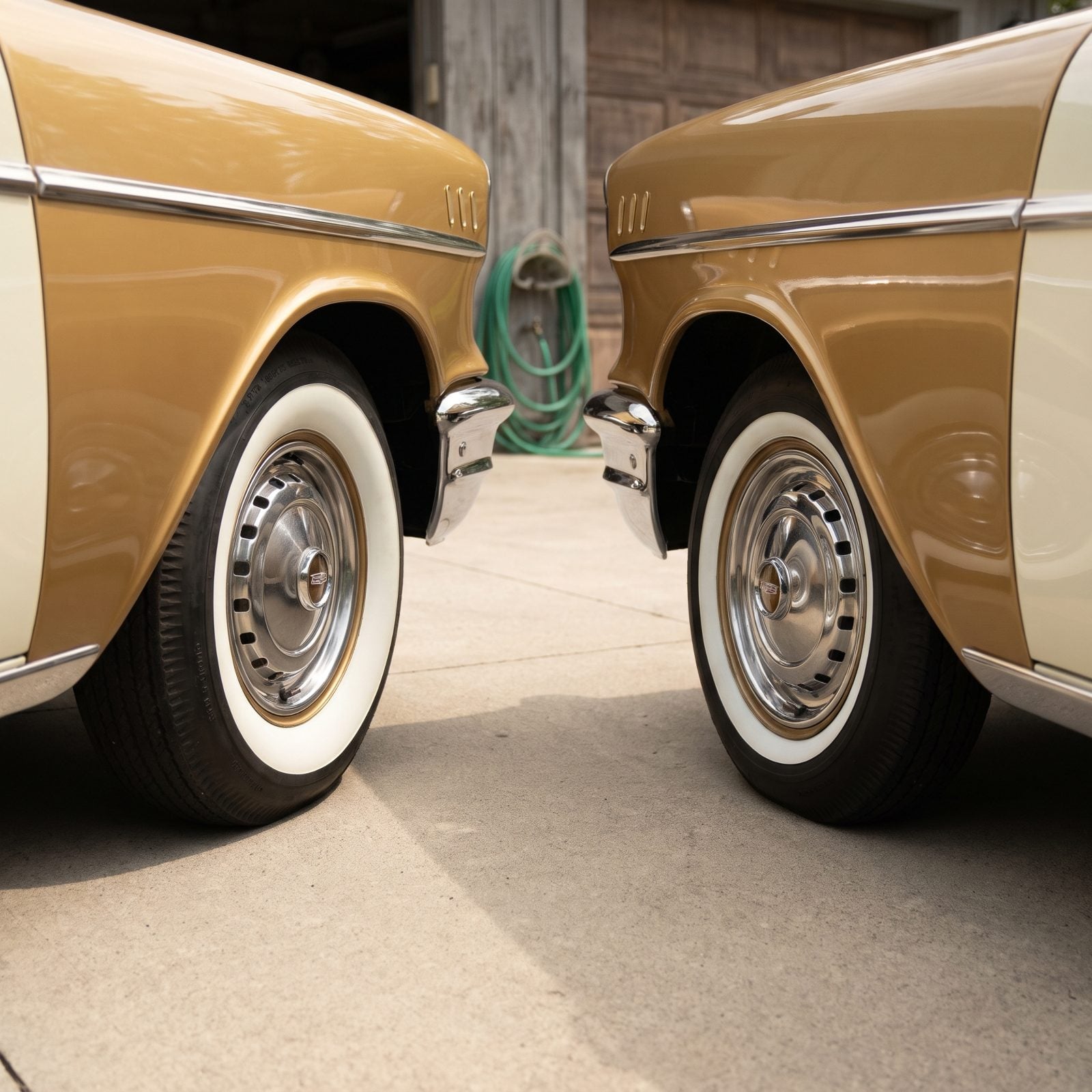
Few arguments get pettier, and few matter more to the judges. Whitewall width is one of the fastest ways to date a car, and the ’57 landed right in the middle of the shift from the fat whites of the early fifties toward the slimmer bands that took over later.
The ’57 also moved Chevrolet to 14-inch wheels, which shrank the tire’s sidewall and changed how any whitewall looks on the car. Go too wide and the tire screams earlier era. Go too narrow and it looks like a sixties car that wandered onto the wrong field.
Plenty of owners pick whatever width looks best to them and call it a day, and on a driver that’s fair. On a car headed for judging, research the correct width for the original tire size before you buy. Reproduction bias-ply tires exist for exactly this reason. Wide whites look great in photos, and a knowledgeable judge will clock the mistake from twenty feet anyway.
23. Should a Restored Bel Air Sit at Factory Ride Height?
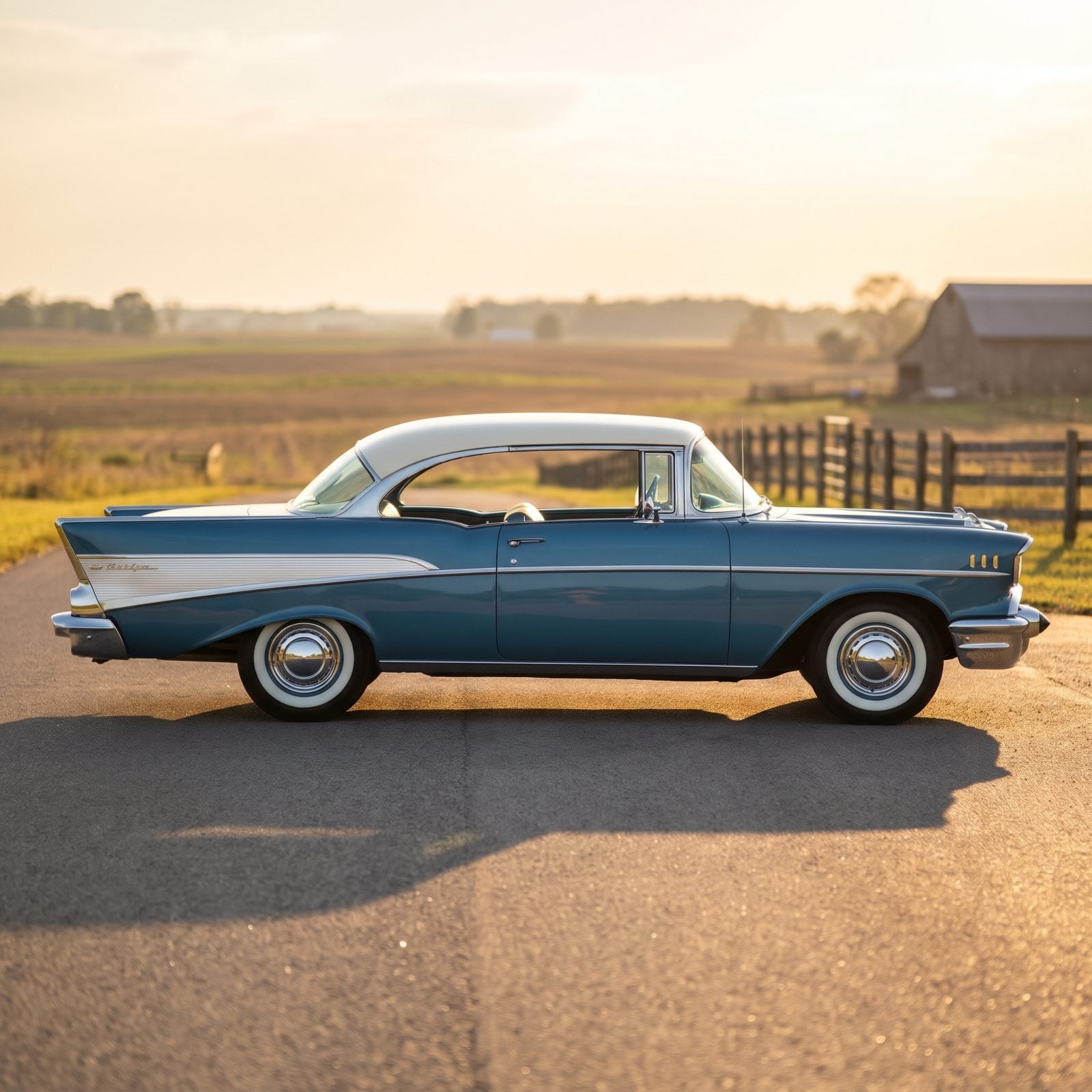
Factory ride height on a ’57 looks surprisingly tall to modern eyes. The tires sit with real air in the wheel wells, and the car floats like the family sedan it was built to be. Purists say that’s the point. Lower it and you’re showing off a car Chevrolet never built.
The other side has seven decades of hot rodding behind it. Dropped fronts, raked gasser stances, and slammed customs are all part of this car’s real history, and to them a stock-height ’57 looks like it’s standing on its toes.
There’s a practical wrinkle too. Seventy-year-old springs sag, so plenty of so-called factory stances are really just tired suspension. If you’re restoring, measure against factory specs instead of trusting what the car sits at today. If you’re building, go ahead and drop it. Just don’t tell the judges it’s stock.
22. Are Dual Rear Antennas Stylish or Merely Decorative?
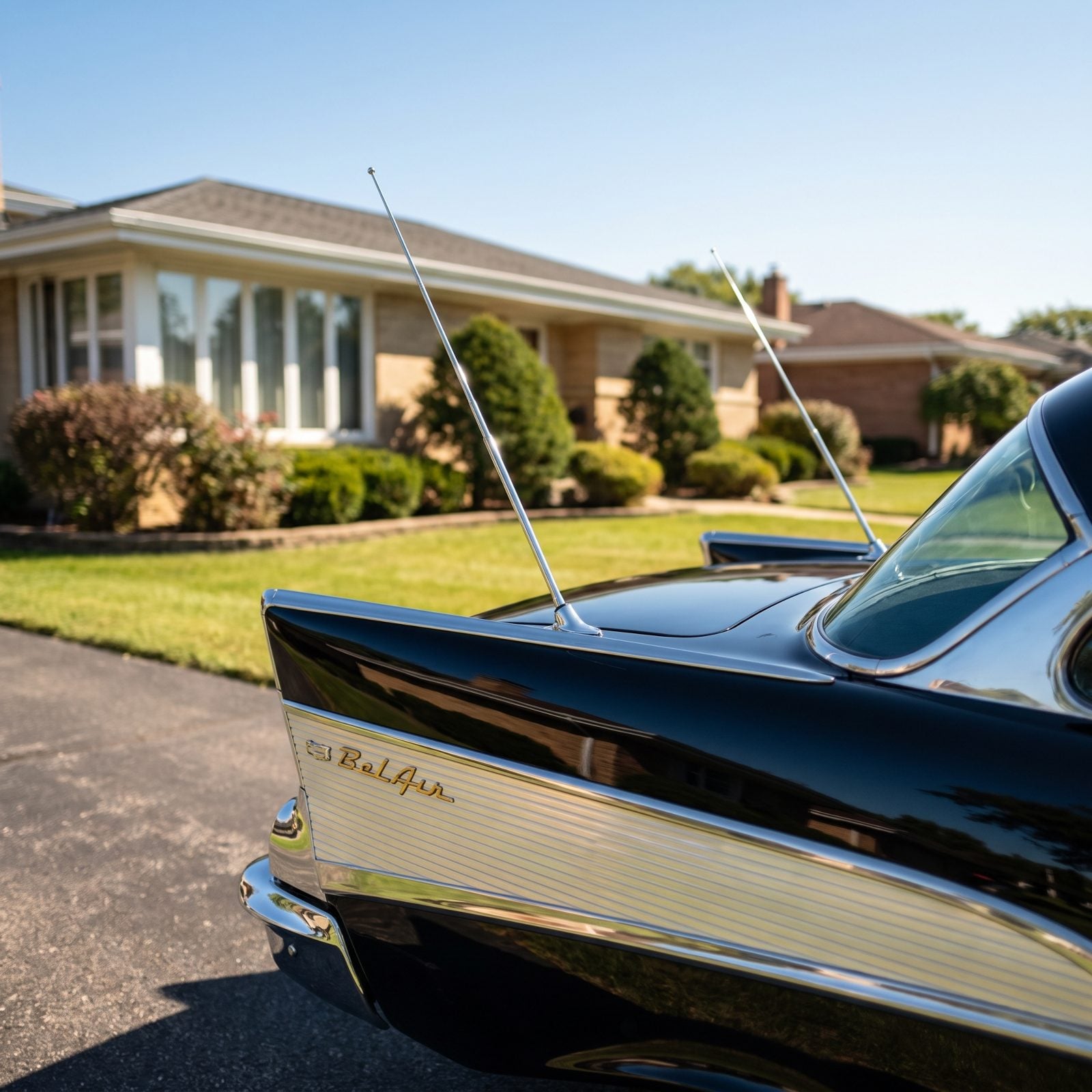
A pair of tall antennas rising off the rear fenders, one on each side, framing the fins like exclamation points. It’s one of the most fifties things you can put on a ’57, and dual rear antennas were a popular accessory for exactly that reason.
The catch is that they were often more about looks than reception. In many setups only one antenna was actually wired to the radio, while the other was there purely for symmetry. Critics call that the definition of decoration, hardware with no job but posing. Fans answer that the whole car is posing, and the antennas just finish the sentence the fins started.
I’m with the fans on this one, within reason. Dual antennas suit the long, finned rear end better than a lone stick on the front fender. Just accept that half of your setup is jewelry, and enjoy it for what it is.
21. Is the Dashboard Traffic-Light Viewer Charming or Gimmicky?
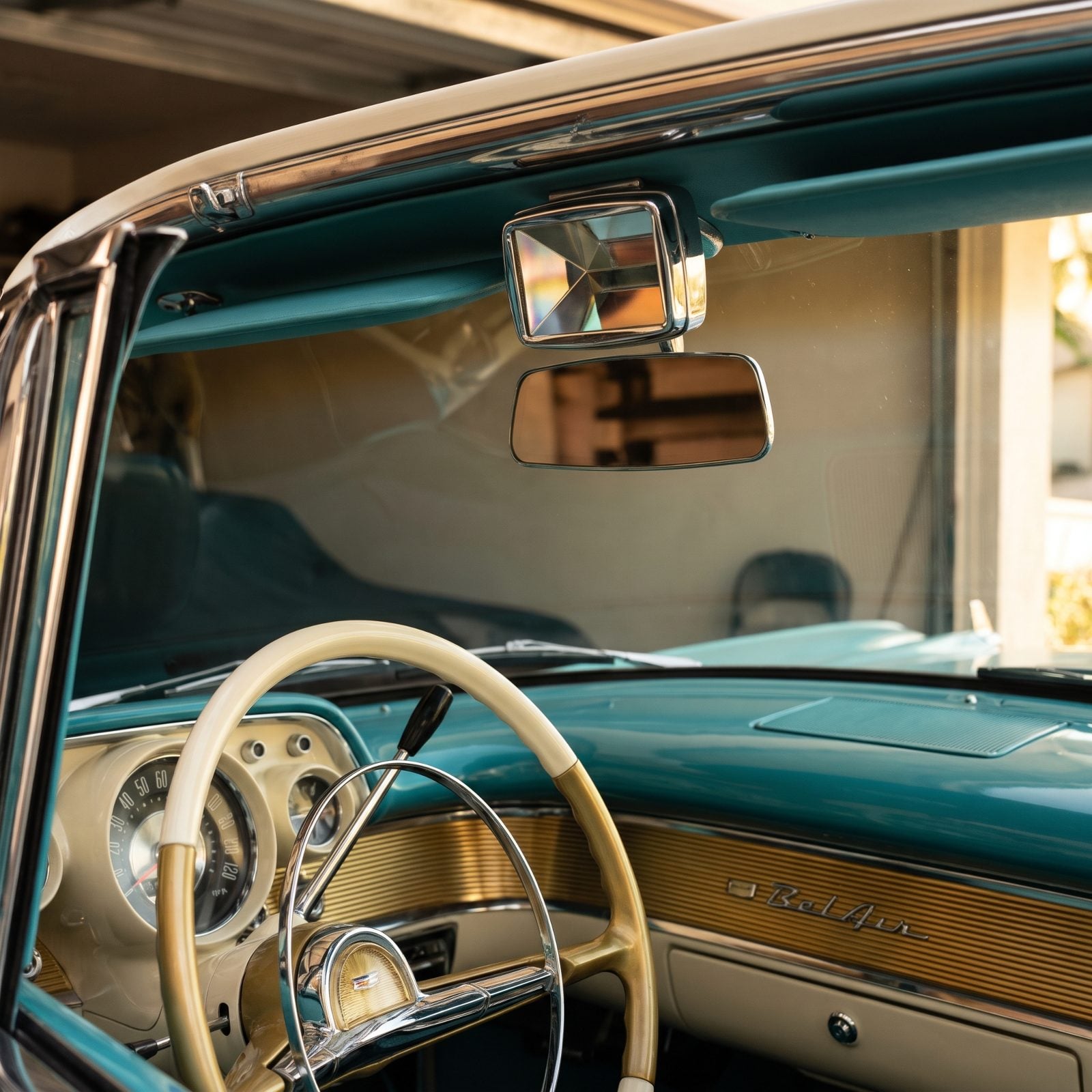
Pull up first at a red light in a ’57 and the signal hangs somewhere above your windshield header, out of sight. The traffic-light viewer fixed that with a small chrome-boxed prism perched on top of the dashboard, letting the driver watch the light change without craning forward into the glass.
It’s a clever little device, and it worked. That’s the charm camp’s whole argument. It solved a genuine problem created by the car’s own design, and it shows how seriously owners took their driving back then.
The gimmick camp sees a tacky chrome gizmo dangling above one of the best-looking dashboards Chevrolet ever drew. It breaks up the clean line of the windshield header and crowds the rearview mirror.
I’ll admit it wins me over every time someone demonstrates it. Gimmicks don’t usually earn their spot. This one does, at least at intersections.
20. Does the Under-Dash Tissue Dispenser Add Authenticity?
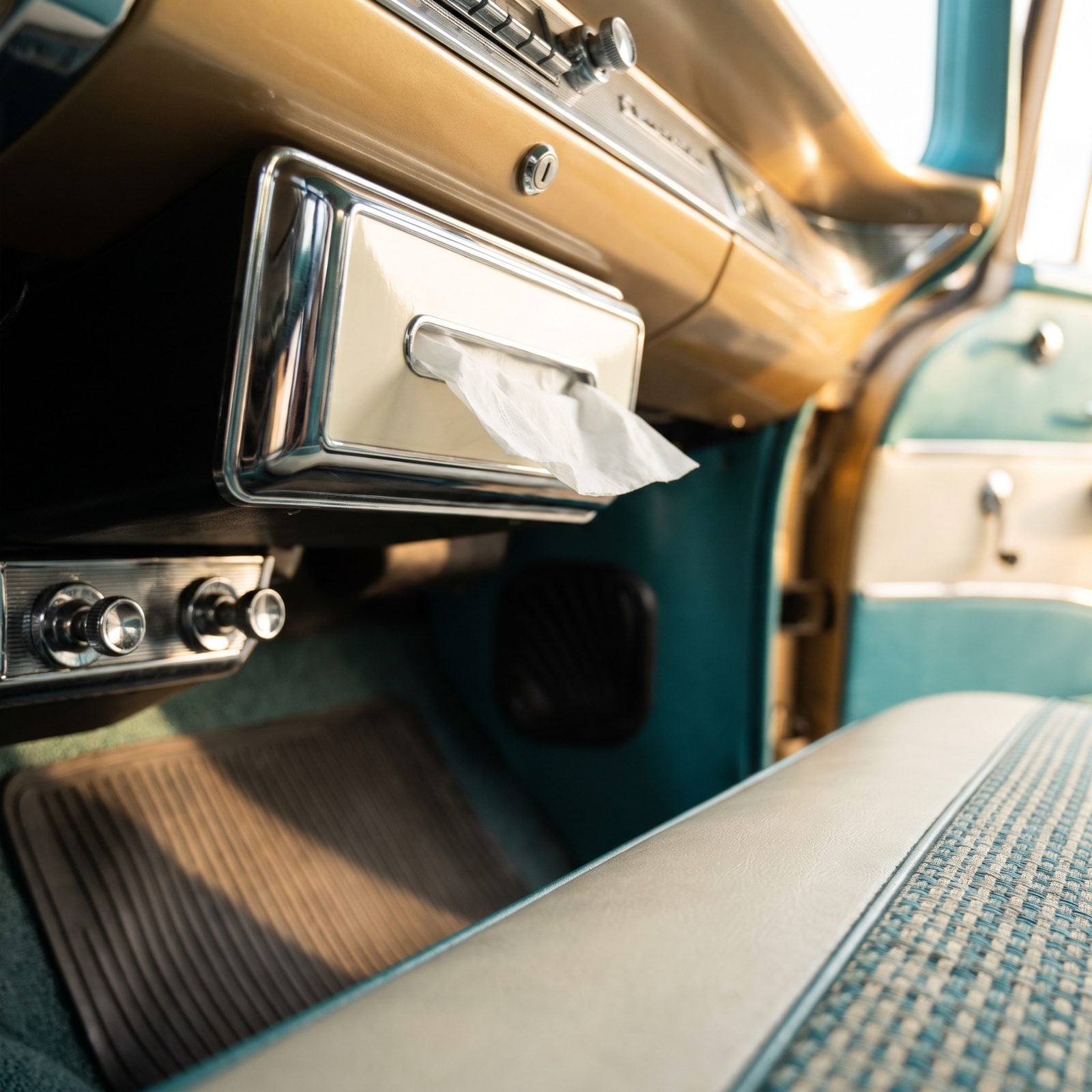
It bolts under the glovebox, holds a flat box of tissues, and does exactly one job. The under-dash dispenser was one of those small-ticket dealer add-ons nobody needed and plenty bought anyway, back when a new Bel Air was the family’s proudest possession and keeping it spotless was a matter of pride.
Collectors split on it hard. One camp calls it correct period flavor, proof that somebody actually accessorized this car in 1957 instead of pulling every option off a reproduction catalog. The others see a gimmick cluttering a clean dash, doing nothing a glovebox can’t.
Where do I land? A single genuine accessory like this reads as lived history. Load a dash with every novelty gadget at once and it reads as a checklist instead. Restraint gives it away. One tissue dispenser, mounted the way a careful owner actually would have, quietly dates the car — while six accessories crammed in together just date the restorer’s shopping habits.
Got the original box? Keep it. If you don’t, think twice before bolting one on just to tick a box. The best Bel Airs tell the truth about how they were used, not how thoroughly their owner could shop.
19. Is a Wonder Bar Radio Worth Restoring?
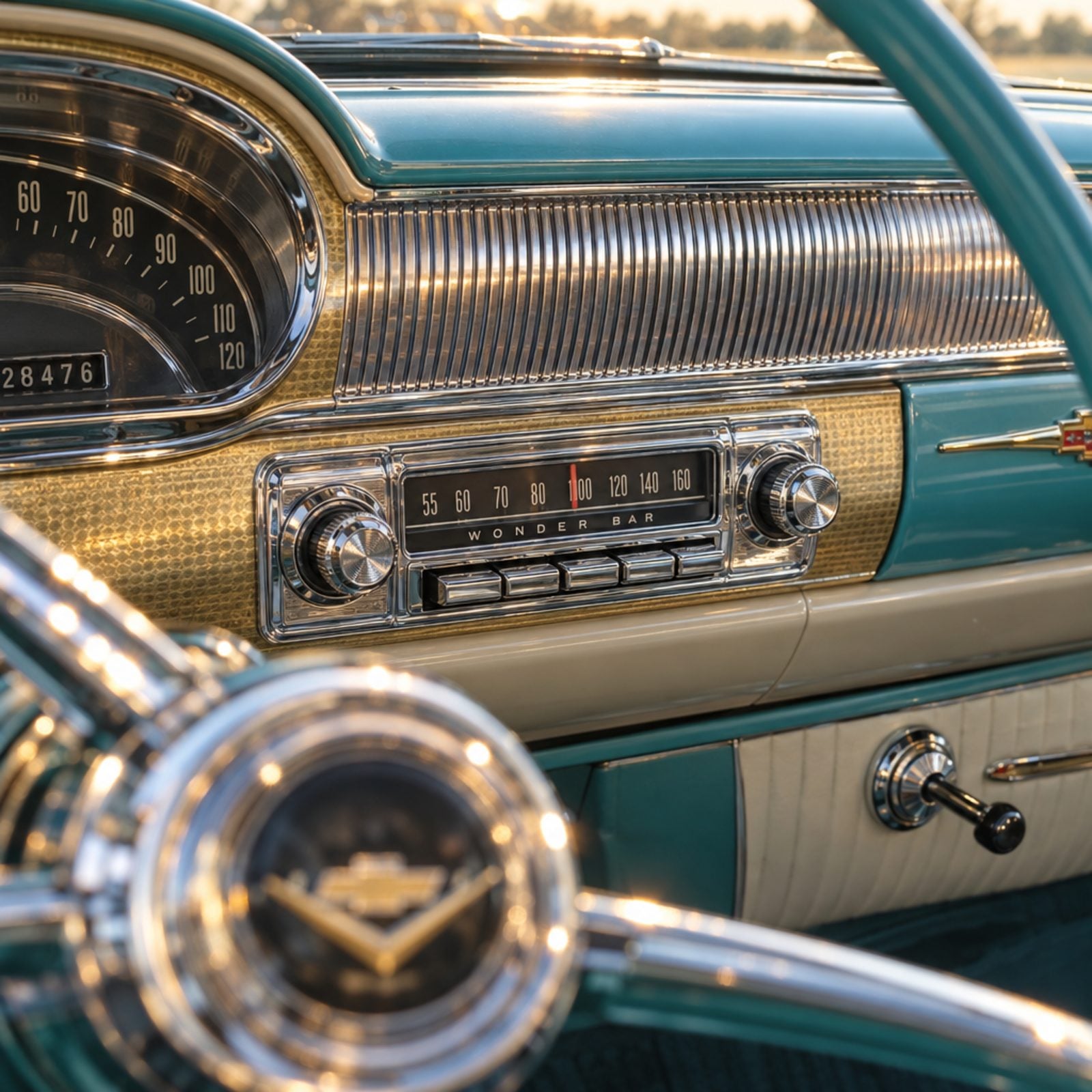
Press the chrome bar across the face of the radio and the Wonder Bar hunts for the next strong station on its own, a signal-seeking trick that felt like science fiction in 1957. It was a pricey option, and finding one in a car today still gets a nod from anyone who knows what they’re looking at.
The argument is about money and sense. A proper restoration means going through seventy-year-old electronics, mechanisms, and that dial, and the result still picks up AM and nothing else. Skeptics ask why anyone would pay that much to hear static between ball games.
The answer is that the radio sits dead center in the dash, and a working Wonder Bar is part of the experience of the car, not just its appearance. Many rebuilders can now hide modern inputs inside the original chassis, keeping the chrome housing and dial correct while the sound comes from your phone. That’s the compromise I’d take. Keep the original, make it work, and let the bar do its thing.
18. Does the Autronic Eye Belong on an Authentic Restoration?
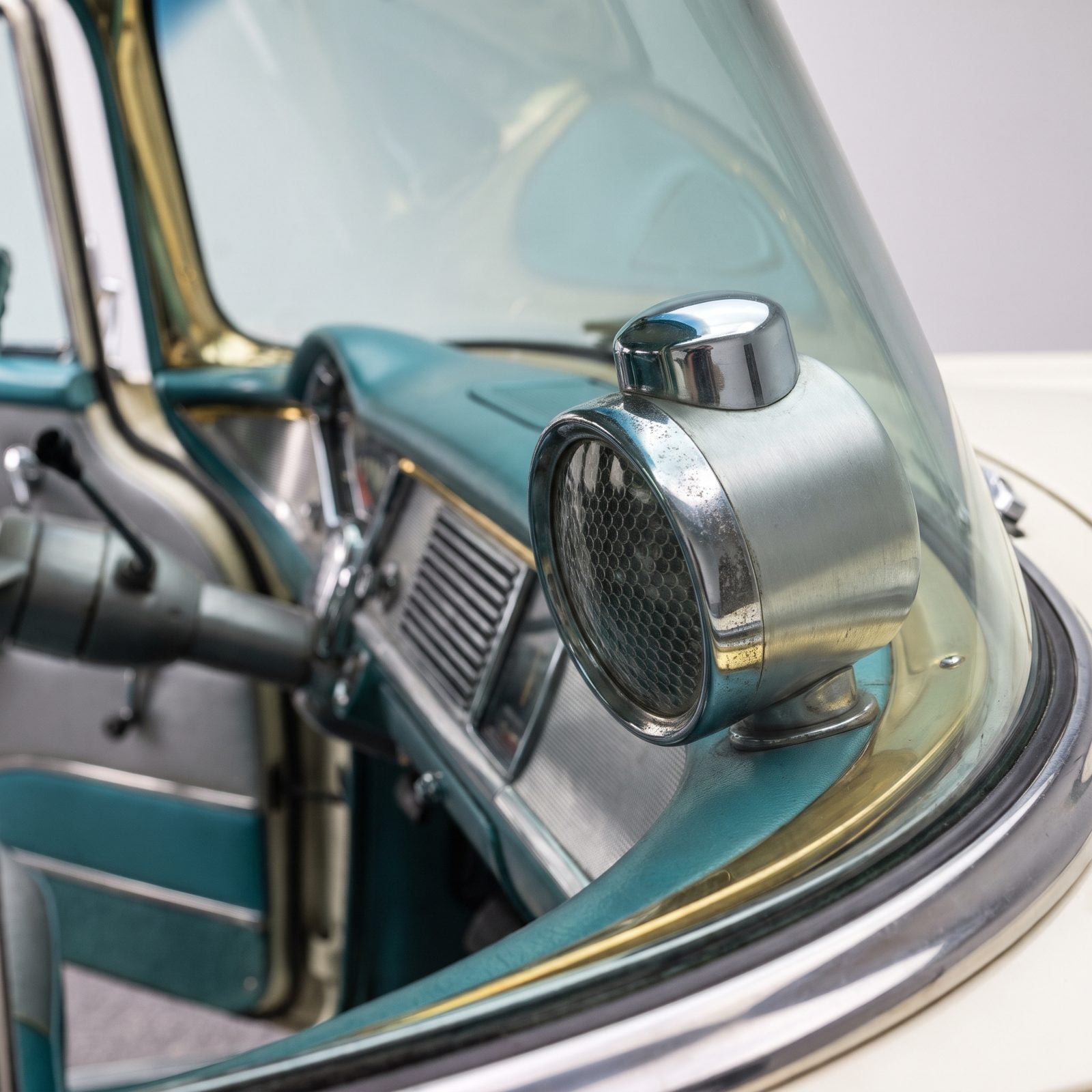
The Autronic Eye was a GM Guide Lamp gadget, a little photocell that perched on the dash, aimed forward through the windshield, and dropped your high beams when oncoming headlights hit it. The one pictured here has been swung around to stare back at the side glass, so it’s there for show, not for night driving. Space-age stuff in the fifties, and exactly the kind of thing that makes a show-field crowd lean in.
The trouble is the paper trail. It turns up most readily in the literature of GM’s pricier divisions, and the argument over whether it was ever a sanctioned factory or dealer item for a ’57 Chevrolet never really dies. Some owners swear their car came that way. Others say every one they’ve seen was transplanted from an Olds or a Pontiac in the decades since.
My take is simple. If the build paperwork, a dealer invoice, or the original owner’s records put one on the car, bolt it back on and enjoy the conversation. If all you’ve got is a swap-meet unit and a good feeling, leave it off. A gadget nobody can document doesn’t add authenticity. It just adds a question the judges will ask for you.
17. What Exactly Counts as Factory Air Conditioning?
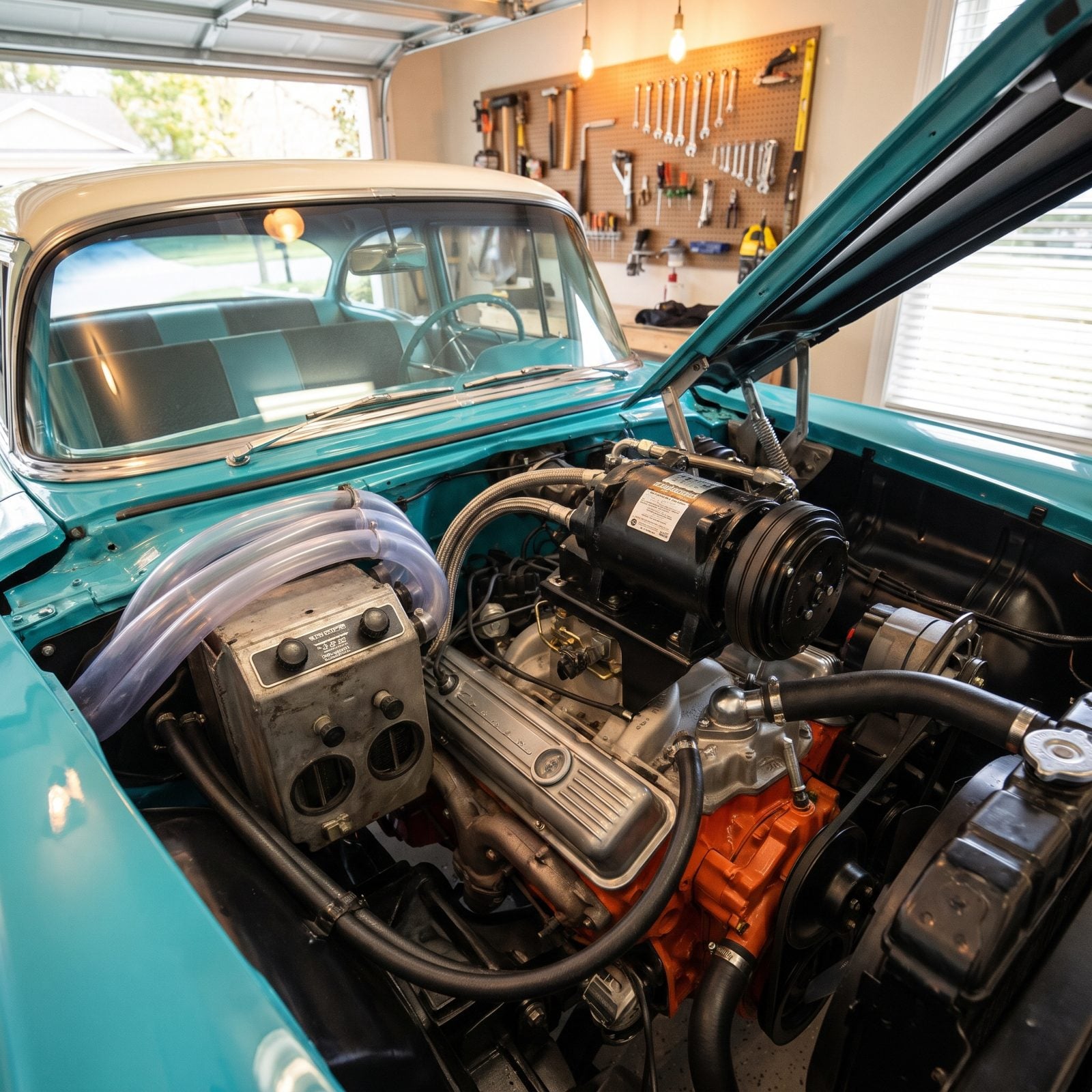
Say “factory air” at a Tri-Five show and you’ll start three arguments at once. The phrase sounds precise. It isn’t, at least not the way people throw it around.
Chevrolet did offer air conditioning installed at the factory in 1957, and it was a rare, expensive box to check on the order form. But plenty of period cars got their cold air at the dealership, from hang-on units, control knobs, round vents and all, bolted in under the dash after delivery. Those were genuinely of the era, sometimes sold by the same dealer who sold the car. Then there are modern retrofits styled to look old, which is a different animal entirely.
Purists draw the line at the assembly plant: if it wasn’t installed on the line and backed by documentation, it isn’t factory air. Others argue a dealer unit fitted in 1957 is just as original as the tissue dispenser under the glovebox.
Both have a point, but the money doesn’t care about feelings. Call a dealer unit what it is, call a retrofit what it is, and save “factory” for the cars that can prove it.
16. Is the Original Treadle-Vac Power-Brake System Safe Enough to Keep?
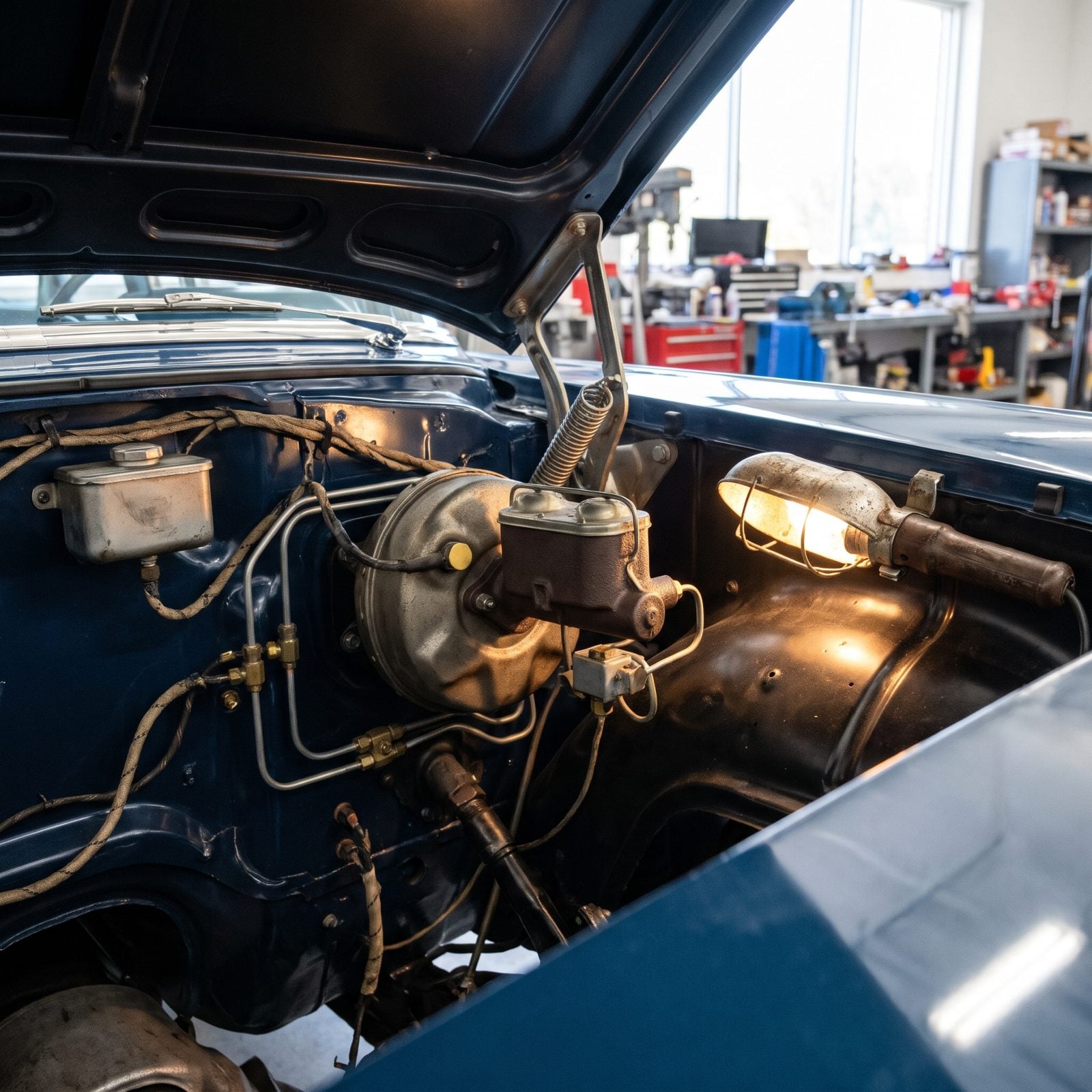
Power brakes on a ’57 meant the Bendix Treadle-Vac, a vacuum booster feeding four-wheel drum brakes through a single-circuit master cylinder. In 1957 that was a luxury. The car pictured has already gone the other way: a booster with a dual-reservoir, dual-circuit master cylinder and separate front and rear lines. Today it’s a debate about how much history you’re willing to trust with your life.
The concours crowd wants it kept, rebuilt to original spec, because swapping it out erases one of the car’s genuine period options. The drivers’ crowd points at the original single circuit and asks a fair question: if one line lets go, what stops the car? With that setup, possibly nothing. And drums all around fade under hard use in ways modern traffic doesn’t forgive.
There’s a middle path a lot of owners take. Keep and rebuild the Treadle-Vac for display and light cruising, or store the original parts safely and fit a dual-circuit system that can be reversed later without cutting anything.
I’d rather lose a few judging points than lose a fender at a stoplight. If the car gets driven in real traffic, the brakes should belong to this century even if everything else belongs to that one.
15. Did the Fuel-Injected 283 Really Produce One Horsepower per Cubic Inch?
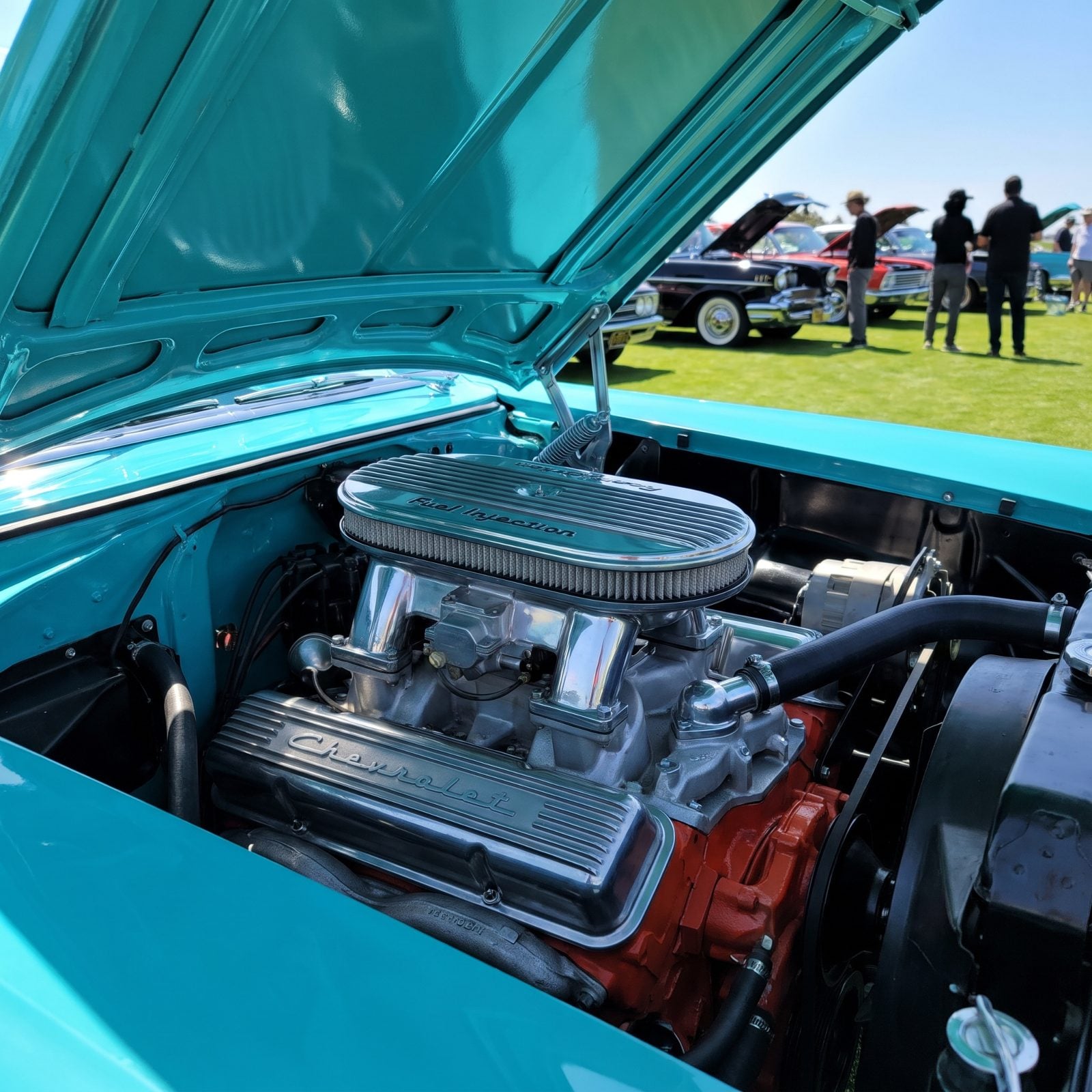
This is the claim Chevrolet hung its whole 1957 marketing reputation on. The top Rochester Ramjet fuel-injected 283, with solid lifters and high compression, was rated at 283 horsepower. One horse per cubic inch. Ad copy doesn’t get cleaner than that.
The skeptics have two angles. First, those were gross ratings, measured on a stand without the accessories and exhaust a real car carries, so the number on the road was lower. Second, some argue the figure was picked because it matched the displacement so neatly, not because the dyno landed exactly there.
The defenders counter that every manufacturer used gross ratings then, so the comparison stands, and that a well-tuned fuelie runs hard enough to make the debate feel academic.
Was it exactly 283 at the flywheel? Nobody can prove it now. Did it change how Americans thought about small V8s? Absolutely.
14. Is the 270-Horsepower Dual-Quad Engine Better Than the Fuelie?
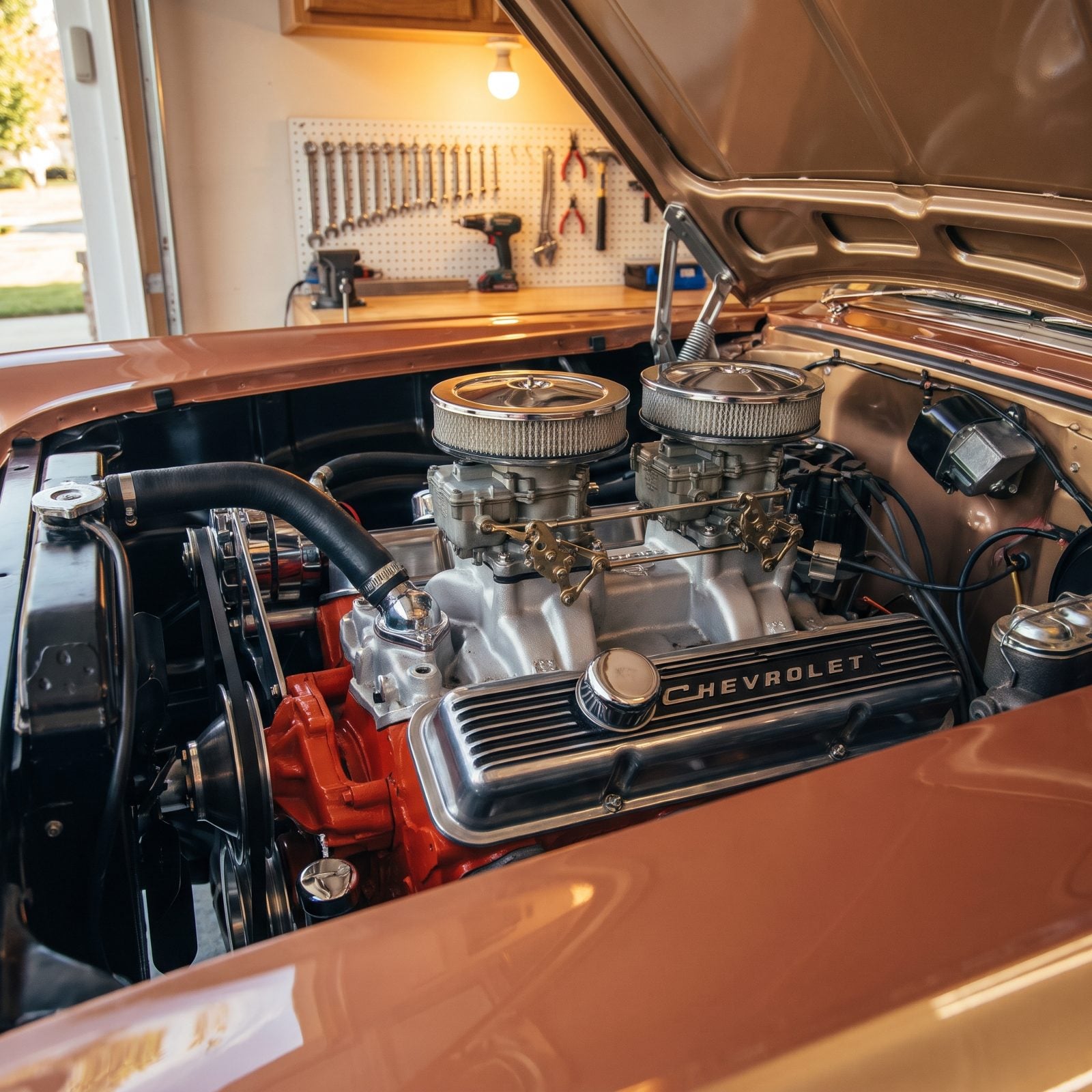
The fuelie gets the headlines. The dual-quad 283 gets the respect of people who actually had to keep these cars running.
With two Carter four-barrels and solid lifters, the top carbureted 283 was rated at 270 horsepower, close enough to the injected engine that the gap on the street came down to tune and driver more than hardware. And carburetors were something every corner mechanic understood in 1957. The Rochester injection unit, brilliant as it was, baffled plenty of shops and earned a reputation for being touchy when it wasn’t set up right.
So the argument splits along a familiar line. Collectors chasing value and bragging rights want the fuelie, full stop, because rarity and the injection badge drive the price. Owners who drive their cars often say the dual-quad car is the better daily companion: easier to tune, easier to find parts for, and nearly as quick.
Here’s where I land. The fuelie is the more important engine. The dual-quad is the more satisfying one to own. If I had to turn the key every weekend, I know which air cleaners I’d want to see under the hood.
13. Is the Blue-Flame Six-Cylinder Bel Air Unfairly Dismissed?
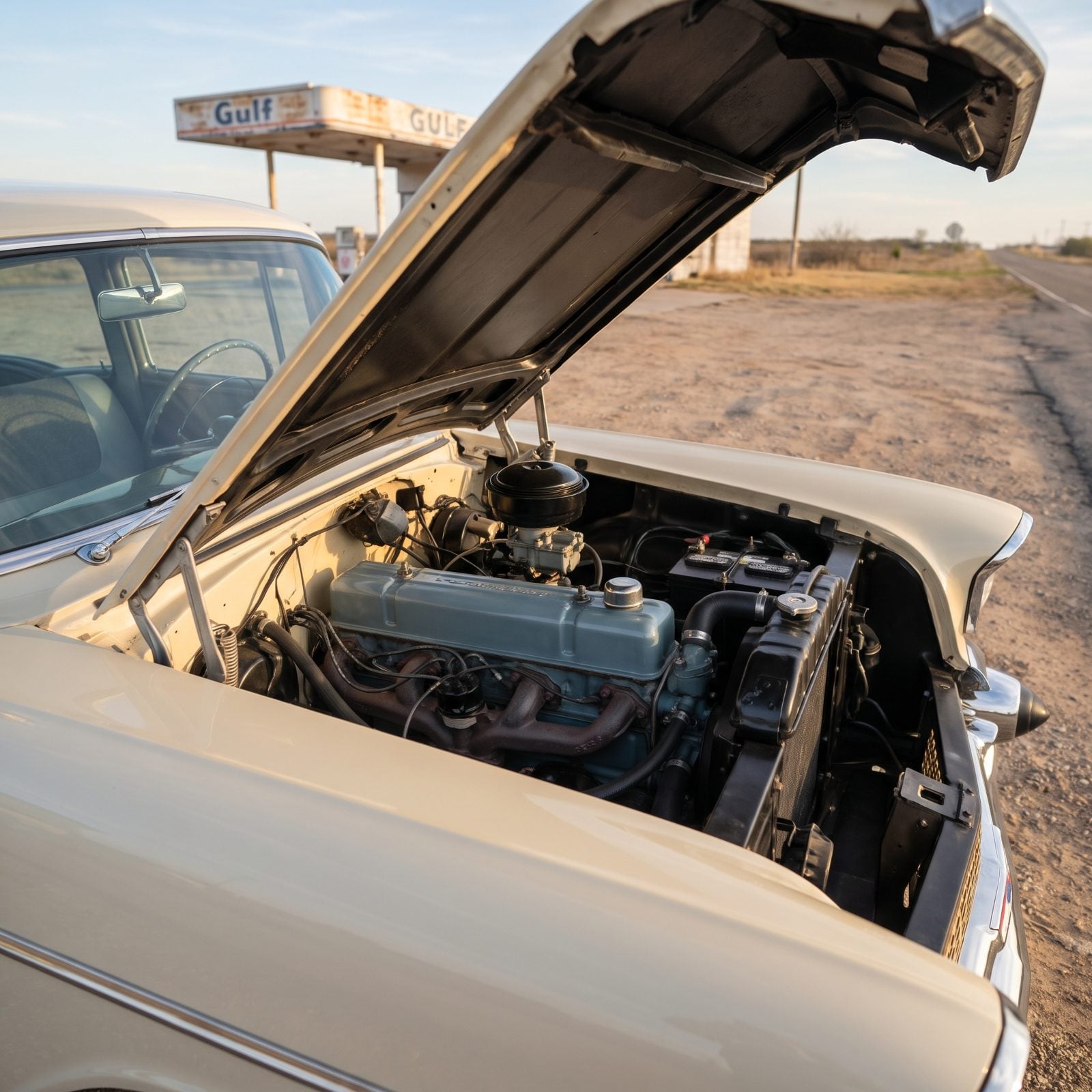
Walk any show field and the six-cylinder Bel Airs get the polite nod people give a cousin’s new boyfriend. Nice enough. Not really one of us.
That’s unfair. The 235-cubic-inch Blue-Flame six was rated at 140 horsepower for 1957, and it was smooth, durable, and cheap to run. Plenty of these cars were bought new with the six because a family wanted the Bel Air trim without paying for the V8, which makes a six-cylinder car an honest snapshot of how many ’57s were actually used.
The case against is obvious. The V8 cars are faster, more valuable, and wear the V-emblem that tells everyone what’s underneath. Swap a six for a 283 and most buyers will thank you for it.
But that’s exactly why the surviving original sixes are worth protecting. So many got converted over the years that an untouched one has become its own kind of rare. It won’t win a drag race. It might win the argument about what a real 1957 driveway looked like.
12. Was Turboglide Innovative or Simply Troublesome?
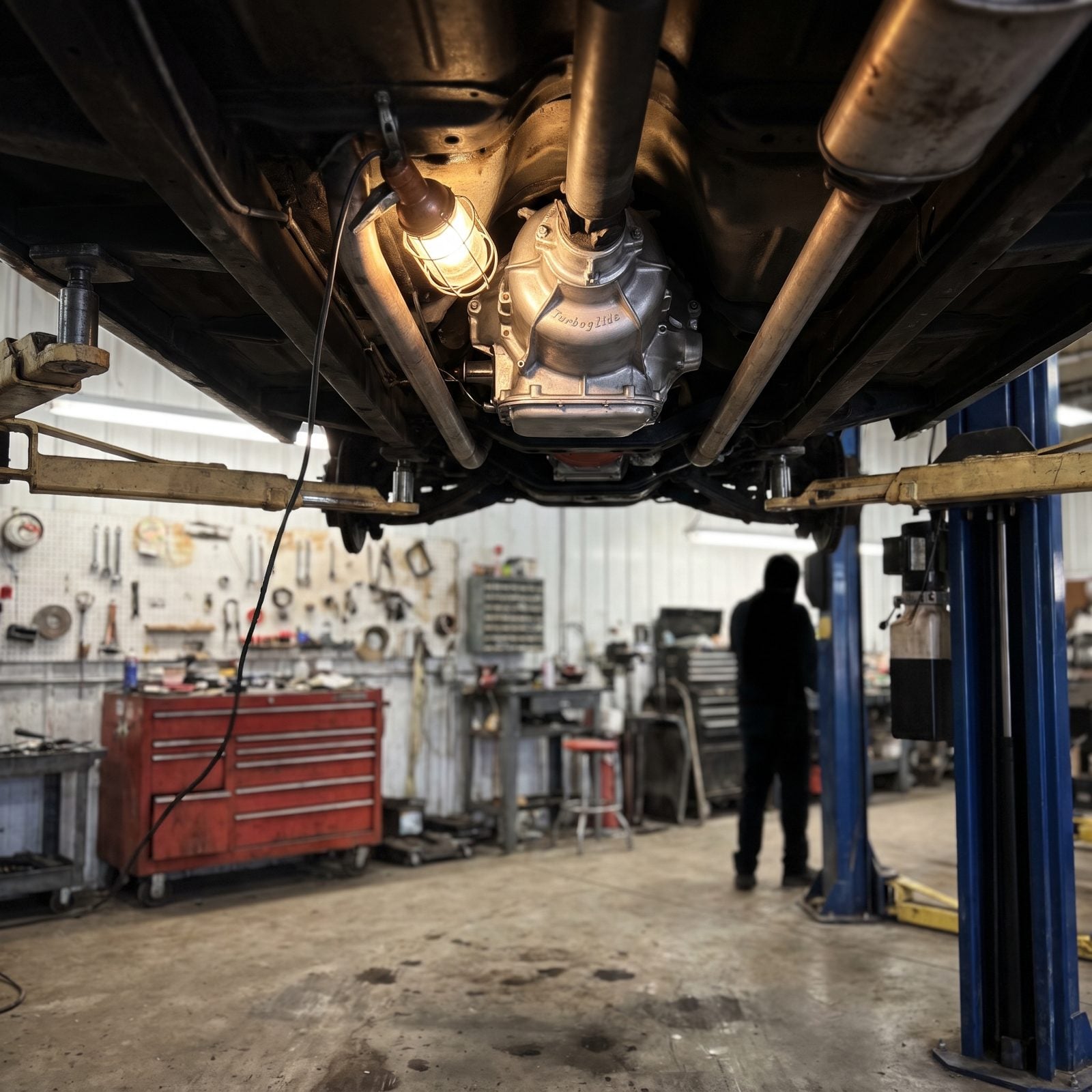
Turboglide arrived for 1957 as Chevrolet’s moonshot automatic, a triple-turbine design with no conventional shift points. Step on the gas and the car just pulled, one long, seamless surge. It even had a Grade Retarder position on the selector to help hold speed on long downhill runs.
On paper, it was decades ahead of its time. In service, it built a reputation for trouble. Shops weren’t familiar with it, repairs were costly, and the simpler two-speed Powerglide earned the trust Turboglide never quite did. Chevrolet dropped it after 1961, which tells you how the market voted.
Defenders say the failures were mostly about neglect and unfamiliar mechanics, and that a properly rebuilt unit drives beautifully. They have a point. Critics say a transmission that needs a specialist to stay alive isn’t innovative, it’s fragile.
I think both verdicts fit. Turboglide was a genuinely bold idea that showed up before the service world was ready for it. Find a ’57 with a healthy original unit and you’re looking at one of the most interesting drivetrains GM ever sold.
11. Is the Manual Overdrive Option the Best-Kept Secret?
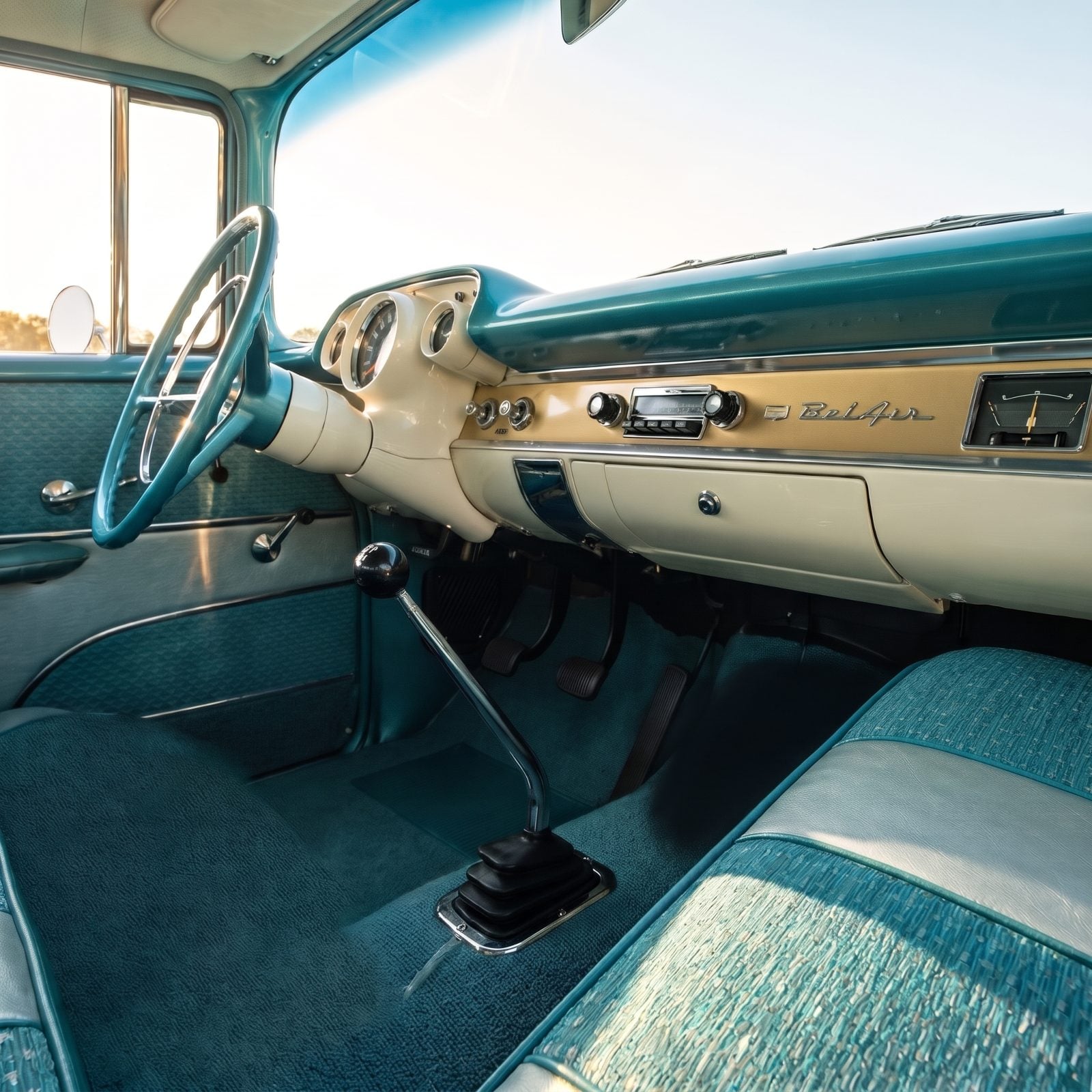
Everybody talks about Powerglide versus Turboglide. Hardly anybody brings up the three-speed manual with overdrive, and that’s a shame.
The Borg-Warner overdrive bolted behind the three-speed and dropped engine revs at cruising speed by roughly 30 percent. A separate control let the driver lock it out, and flooring the throttle kicked it down for passing. On the highway, it turned a buzzy ’57 into a relaxed long-distance car, years before anyone in Detroit was calling it fuel economy.
The reason it stays obscure is simple. It never got the glamour of the automatics or the muscle reputation of the close-ratio setups, and plenty of overdrive units were pulled out over the years when they acted up and nobody knew how to fix them.
For anyone who drives their Bel Air on real roads, though, an original overdrive car is a gem. It’s period-correct, it’s useful, and it gives you that satisfying click into the tall gear that no modern swap can fake. Find one that still works and you’ve found the smartest option on the order sheet.
10. How Should a Correct Dual-Exhaust Bel Air Sound?
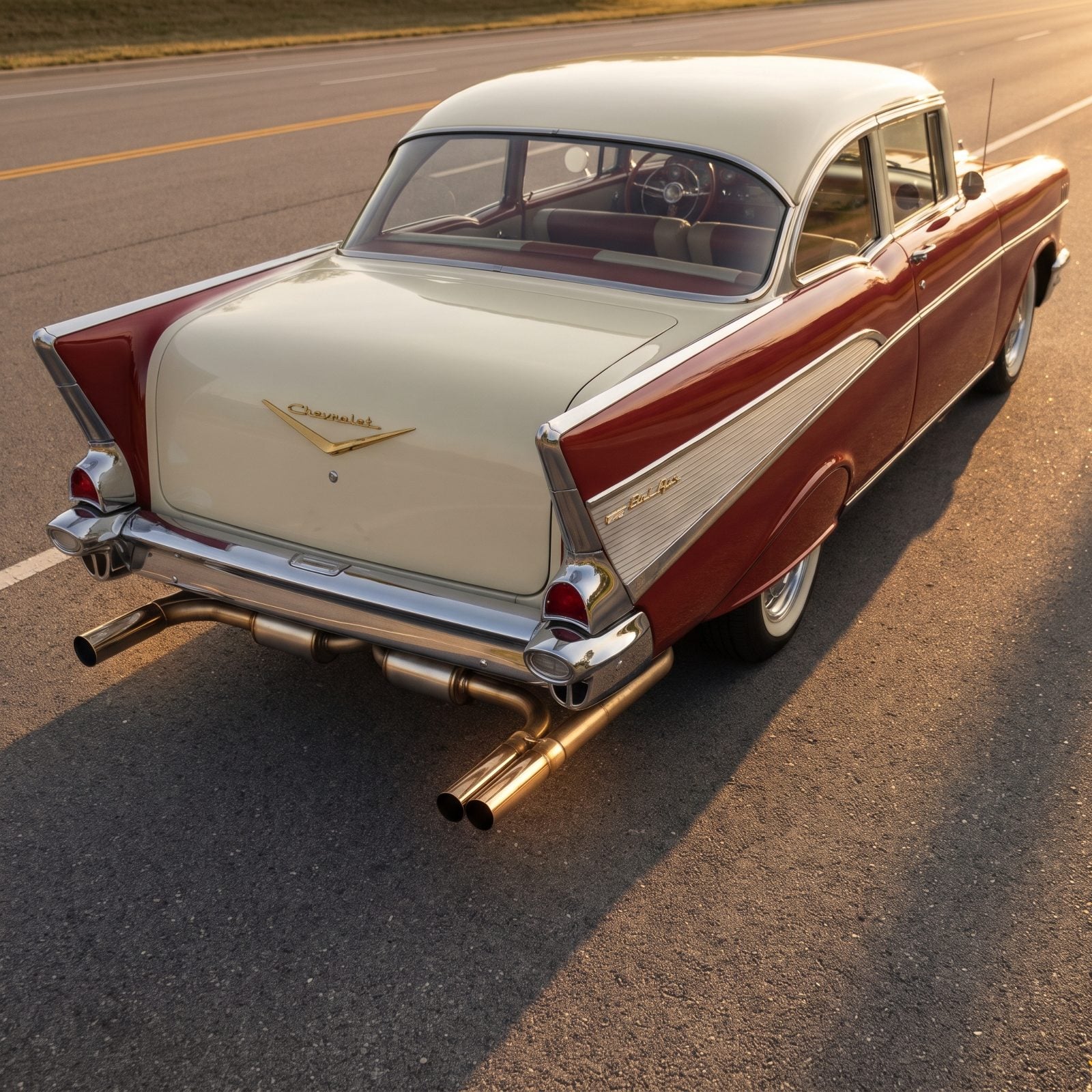
Ask ten owners what a ’57 should sound like and you’ll get ten impressions of a rumble, most of them borrowed from movies rather than from 1957.
Here’s the uncomfortable truth. Factory exhaust on these cars was civil. Chevrolet built a family car, and the stock mufflers were designed to keep the neighbors happy and the cabin calm. A correct dual-exhaust V8 Bel Air has a smooth, even burble at idle, more confident than loud. The hard, crackling bark people associate with the car came later, from owners bolting on aftermarket pipes like the ones on the car pictured here: brass-toned mufflers hanging below the bumper, one tip kinked out to the side and a doubled pair jutting well past the right corner. No restorer would call that correct.
That’s where the argument lives. Restorers chasing judging points want the muted, factory-style sound and correct mufflers. Others say a little extra voice is just as period-authentic, because that’s what so many owners did back then anyway.
I’ll split it this way. A show car should sound like the factory intended, even if it surprises the crowd. A driver can wear its period glasspacks proudly. Just don’t tell anyone a setup like the one pictured is how it left the assembly line.
9. Was the Black Widow a Genuine Factory Racing Model?
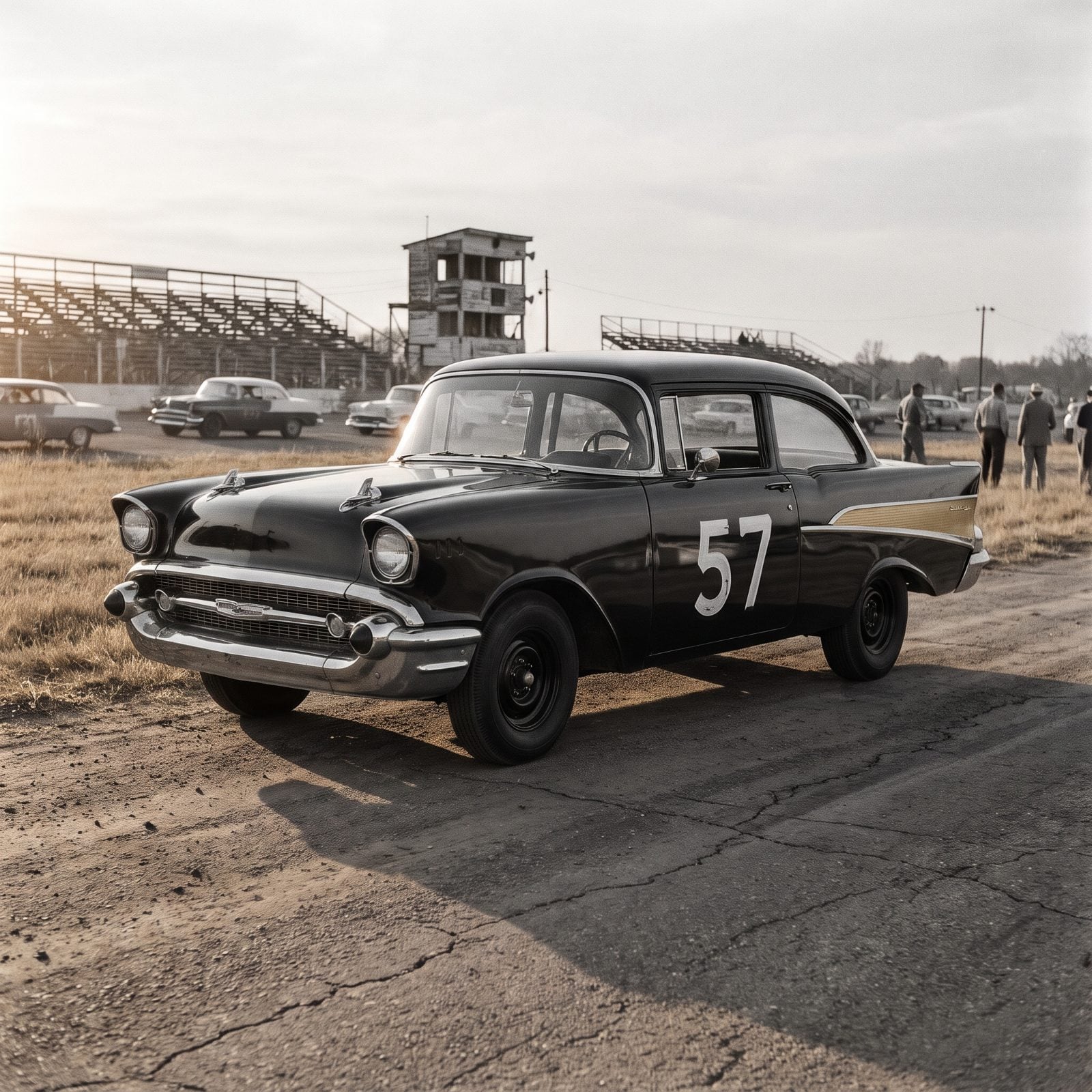
Strip a Tri-Five down to bare metal, bolt in a hot 283, and paint it the color of a casket. That was the Black Widow recipe, and it’s where every Bel Air argument over authenticity starts.
These cars were built under the Southern Engineering Development Company banner rather than on a regular assembly line, which is exactly why the fights never end. Chevrolet supplied a dealer parts package and a technical manual, then stepped back. So a “real” Black Widow is less a factory model than a kit assembled to spec. No VIN says Black Widow. That leaves the door wide open for recreations to walk in wearing the same clothes, and plenty have.
8. Which Crossed-Flags and Fuel-Injection Emblems Are Authentic?
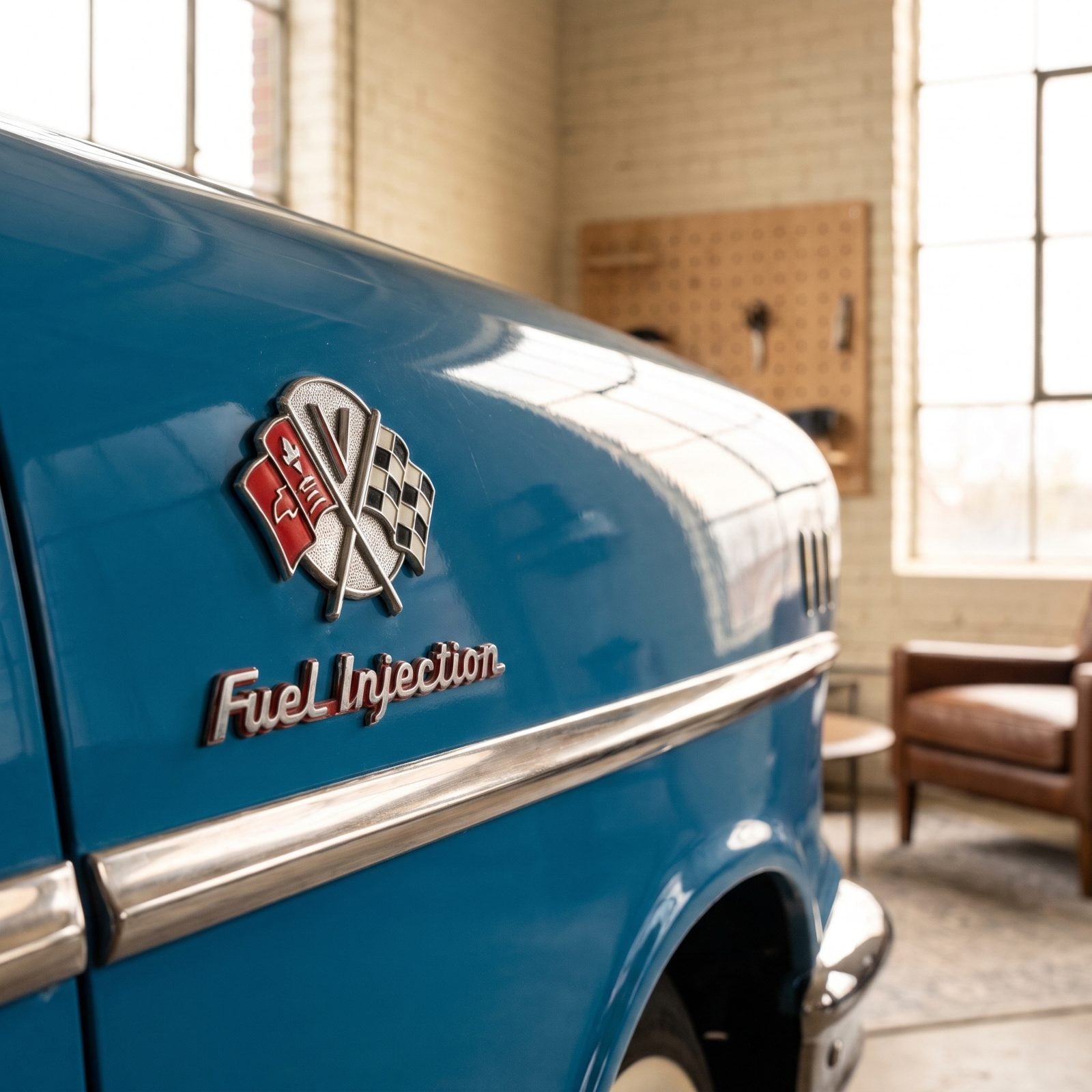
That little “Fuel Injection” script, shown here on a rounded blue panel, is the single most copied emblem in the Tri-Five world. Reproductions are everywhere, and plenty of them wear it proudly over a four-barrel carb.
Authentic Rochester fuel-injection cars carried the script badge paired with the crossed-flags emblem and the small V marking the V8. Genuine die-cast pieces have a weight and casting crispness that thin repop metal never quite manages. Hold one and you can feel it.
But the badge proves nothing on its own. Any amateur with a drill and a parts catalog can add the script. Real proof lives under the hood, in the correct Rochester unit, the right distributor, the matching linkage. Treat the emblem as an invitation to look closer, not a certificate.
7. How Much Can the VIN and Cowl Tag Really Prove?
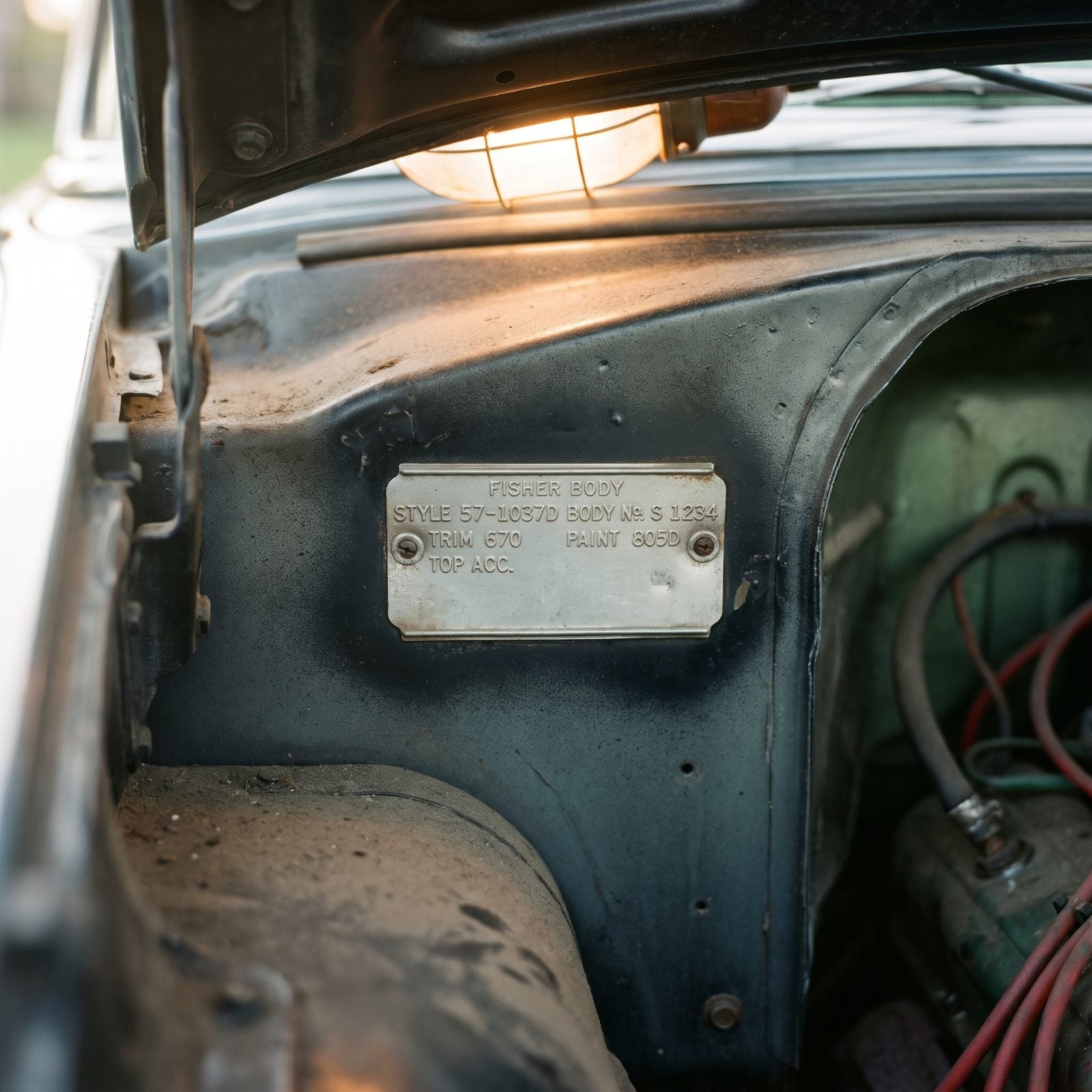
Collectors treat the cowl tag like a birth certificate. It isn’t one. It’s closer to a note the hospital pinned to the blanket, and notes can be swapped.
A Fisher Body cowl tag like this one carries the style number, body number, and trim and paint codes, while the VIN tells you the series, the plant, and the sequence. Together they confirm what the car left the line as. What neither proves is the drivetrain, because Chevrolet didn’t stamp matching engine numbers to the VIN in any way that survives casual forgery.
Six-figure sales have hinged on whether a tag’s fasteners looked disturbed. That’s how much weight the small stuff carries.
6. What Is the Correct Undercarriage Color and Overspray Pattern?
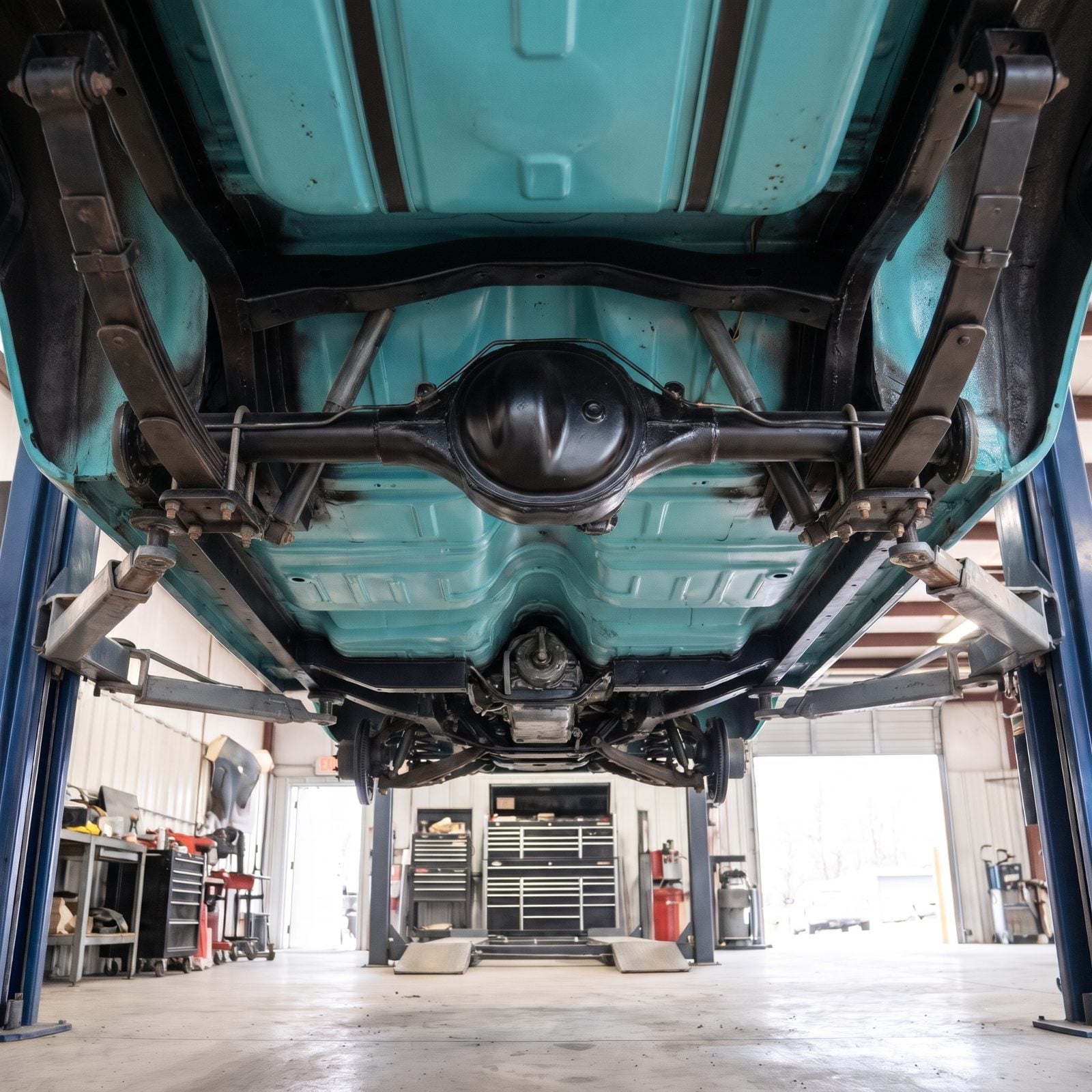
The bottom of a ’57 tells on its restorer faster than the top ever will. Over-restore the underside and it starts to look like a show that forgot how factories actually worked back then — fast, loud, and nobody fussing over a clean floor pan.
Chevrolet built these cars in a hurry. Body color sprayed onto the shell drifted across the floor pans and lower chassis as overspray, following the lazy arc of a gun moving down the line. Frames went on in semi-gloss black. Suspension pieces came through in a careless jumble of bare metal, gray, and black, depending on when and how they got coated.
A frame-off job that paints everything a uniform gloss black looks tidy. It also reads dead wrong to anyone who has spent time under a documented survivor. Keep the overspray messy. Messy is correct.
5. What Upholstery Grain and Stitching Best Match the Factory Interior?
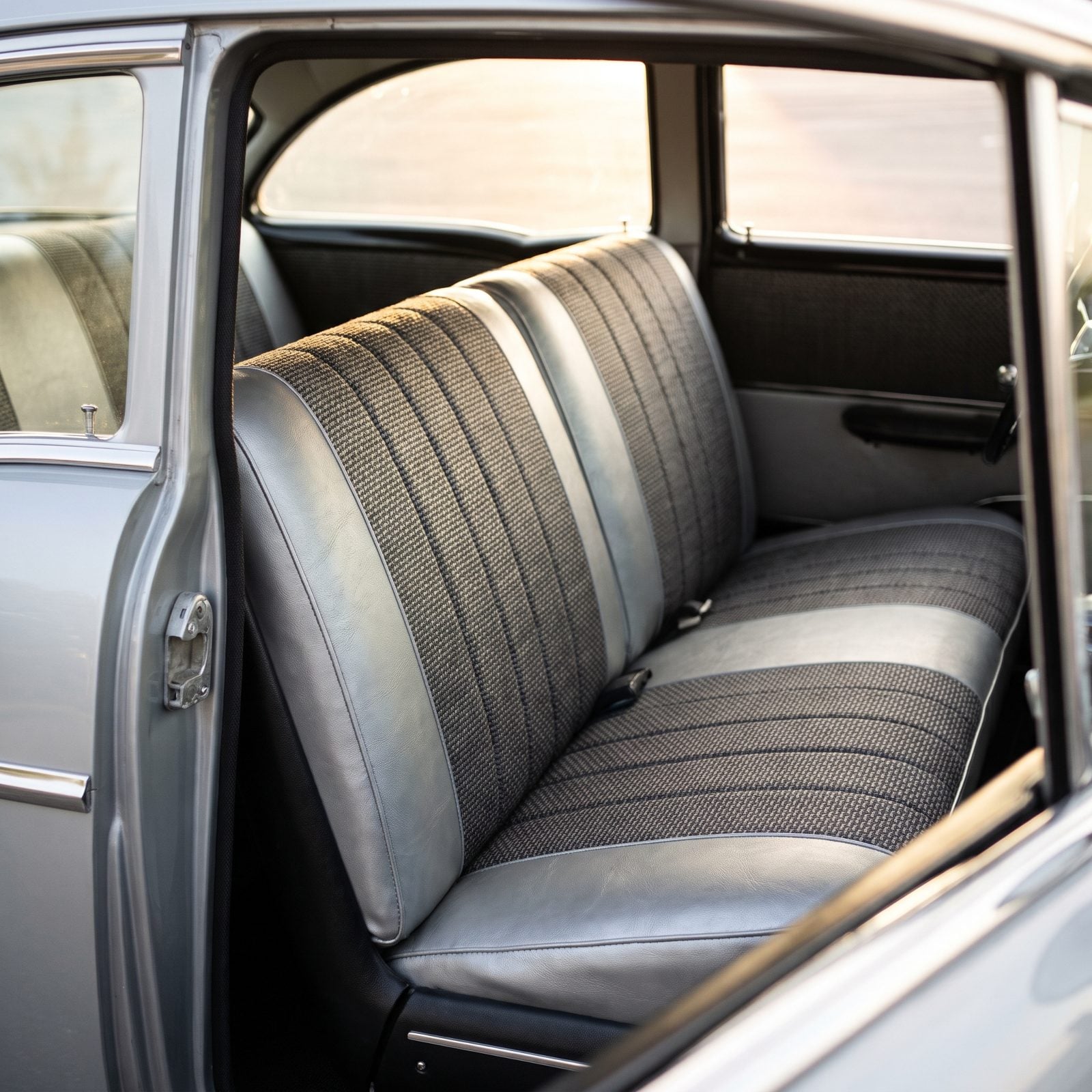
Run your hand across an original ’57 Bel Air seat and the grain tells a story cheap reproductions keep botching. Chevrolet used specific woven cloth patterns and vinyl grains, and the repro houses chase them at wildly different levels of accuracy.
The factory bench seats paired two-tone combinations with a particular insert pattern, and the stitch spacing ran consistent and machine-tight. Lower-grade kits get the color right and the weave wrong, or nail the vinyl grain and blow the stitch pitch. A trained eye reads it in a second.
Best matches come from the handful of suppliers who tooled their looms off documented originals. Costs more, sure. It also means the interior stops being the first thing a judge dings.
4. Which Steering-Wheel and Horn-Ring Details Are Commonly Restored Wrong?
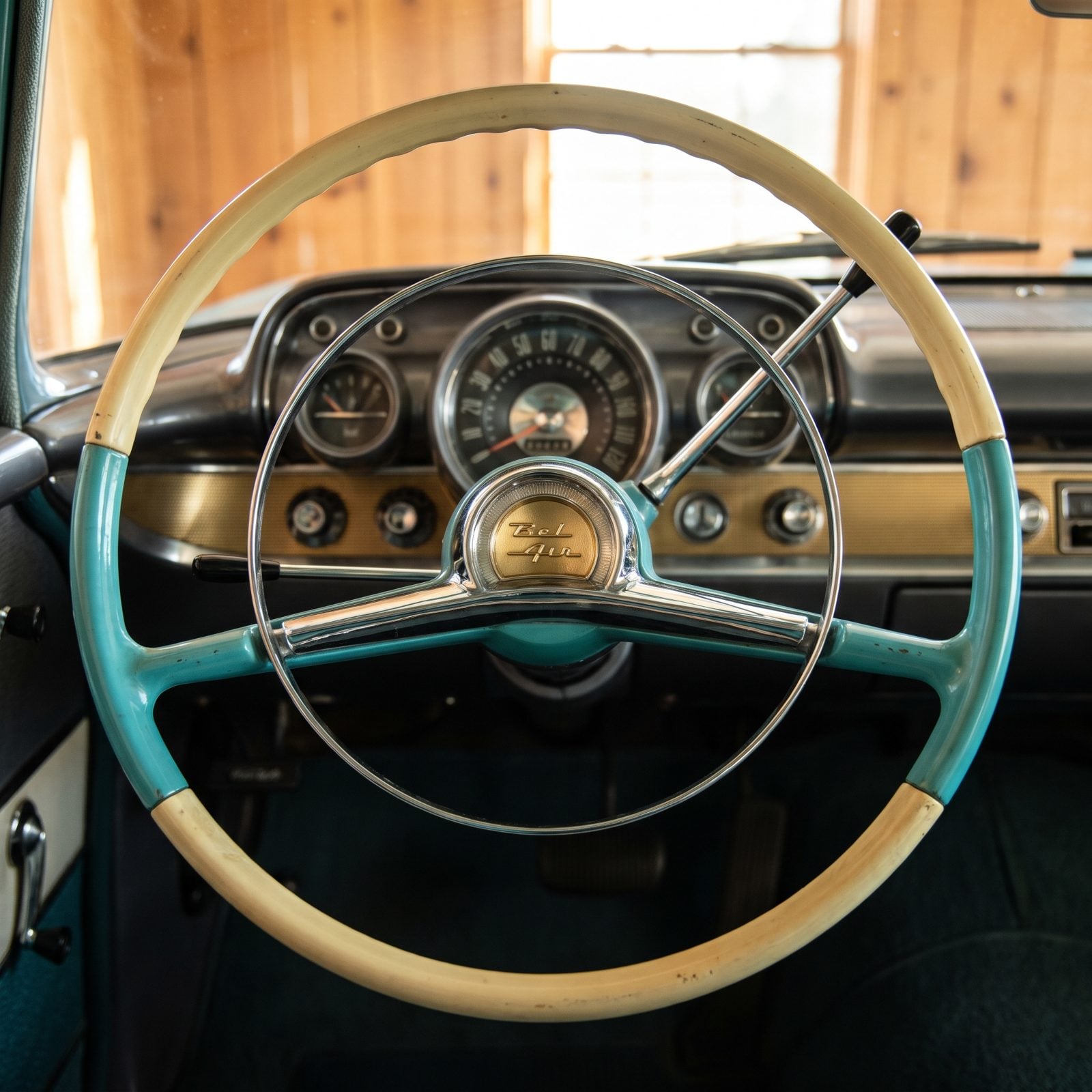
The horn ring is where good restorations go sideways. Small part, big visual job, and getting it wrong changes the whole feel of sitting behind the wheel.
Correct ’57 Bel Air wheels came with the full chrome horn ring, not a partial, and the center cap carried the specific Bel Air emblem. Restorers reach for whatever repop ring fits and end up with a chrome finish that’s too bright, a ring profile that’s too thin, or a plated plastic cap filling in for the right casting.
I’ll die on this hill. A correct horn ring does more for the dashboard than a thousand-dollar paint touch-up, because people notice their hands before they notice the hood.
3. Is Original Patina More Valuable Than Fresh Paint?
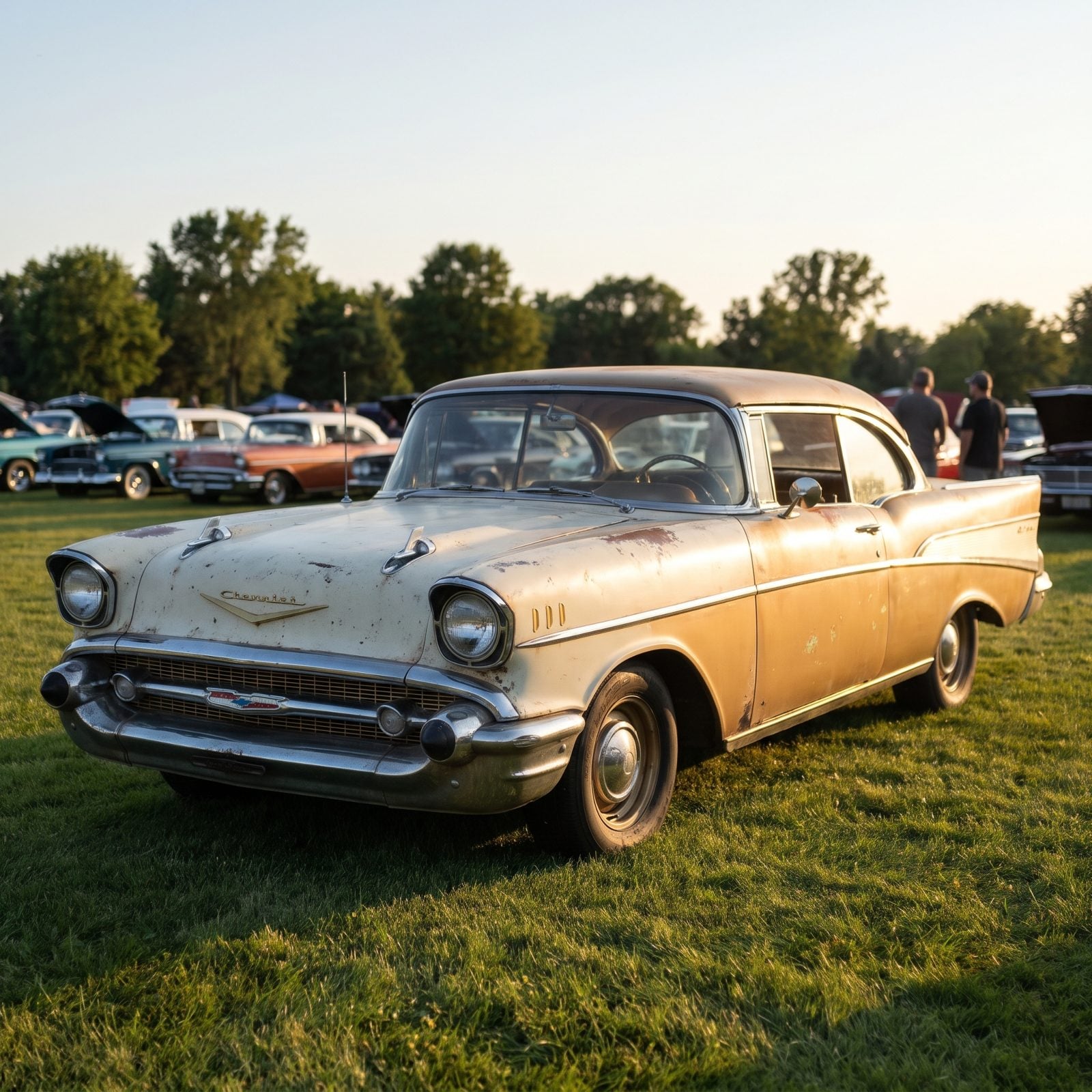
A perfect respray can lose to a tired old survivor, and that reversal still rattles folks who grew up believing shiny won the trophies.
You can repaint a car a hundred times. You can never make it original again. A genuine ’57 wearing its factory lacquer, original glass, and untouched interior documents itself in a way no restoration can match, because every panel is the real thing.
Patina has limits, though. Surface oxidation and honest wear are gold. Rust-through, flaking, and rot are just damage wearing a nicer word. The premium goes to cars preserved — not cars neglected into the ground.
Not everyone agrees, though: in our reader votes, concours-restored cars got more hearts than the other images in the same articles, 82% versus 76%.
2. Does an LS Engine Swap Destroy the Bel Air’s Character?
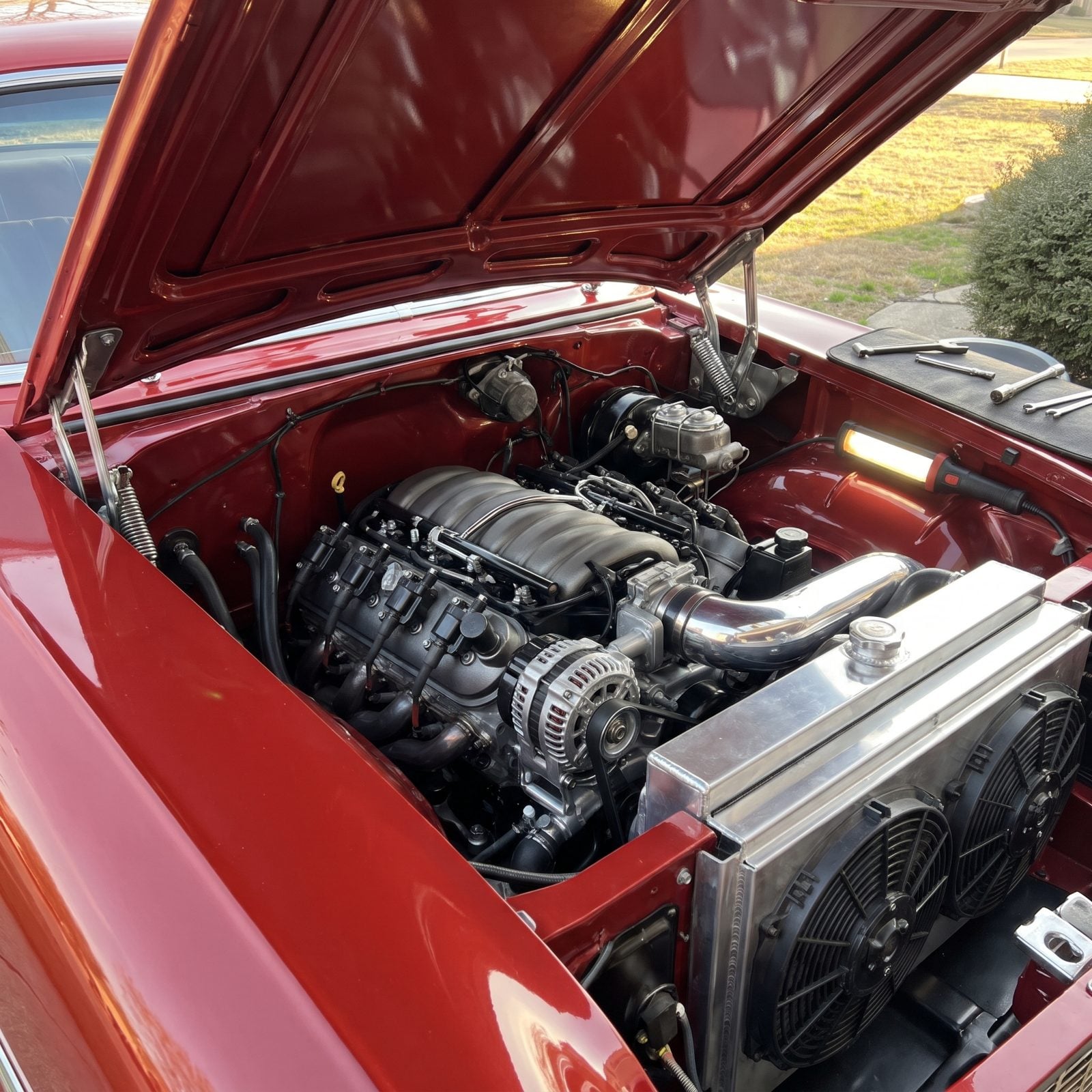
Drop an LS into a ’57 and half the car world nods while the other half quietly leaves the room. It’s the loudest quiet argument at any cruise night.
The case for it is simple. Modern power, modern cooling, modern reliability, and a car you can actually drive across a state without a toolbox and a prayer. The original 283 is a lovely engine, and a nervous one in traffic on a hot day.
The case against is harder to put into numbers. The 283’s lope, the carburetor’s cold-start ritual, the particular sound rolling off a ’57’s exhaust — that’s the car’s voice, and an LS speaks a different language entirely. A numbers-matching original also beats a swapped car at resale almost every time.
1. Is the 1957 Bel Air Really the Greatest Tri-Five Chevrolet?
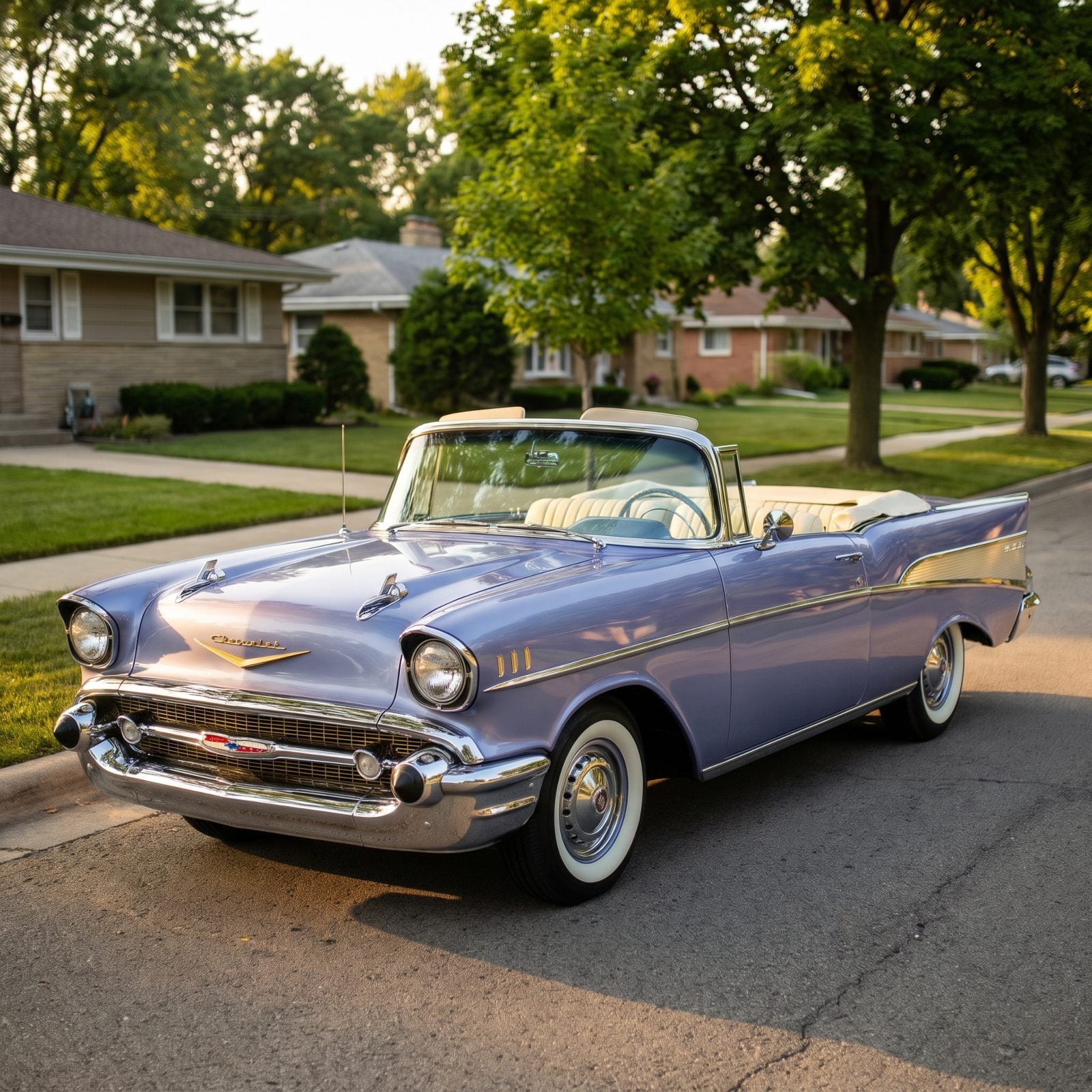
Ask a ’55 fan whether the ’57 is the greatest Tri-Five and watch the eye-roll. The debate has run since the cars were new, and nobody’s won it yet.
The ’57 earns its crown on styling. Those tailfins, the gold anodized grille, the chrome spears, the hooded headlights — it’s the most recognized American car shape of the decade, and the one every kid drew in the margins of a notebook. The ’55 purists insist theirs is cleaner and lighter, a better driver before the chrome got heavy. The ’56 crowd just wants to be remembered at all.
Here’s the honest answer. The ’57 is the most desired, the most reproduced, and the most argued over, which is its own kind of proof. Fame and greatness aren’t the same thing. But when a car has been the dream for seventy years, that difference stops mattering much.