
Would you like to save this?
Money was never the deciding factor. Two cars could roll off their respective lines the same year, cost about the same, haul the same groceries, and land in completely different places forty years later. One ends up in a club, a magazine spread, a shed full of spare parts kept by a guy who loves it. The other? A trivia answer. The difference comes down to character, timing, racing results, and one clever engineer whose work either caught fire or quietly didn’t. Here are the pairings that show exactly why.
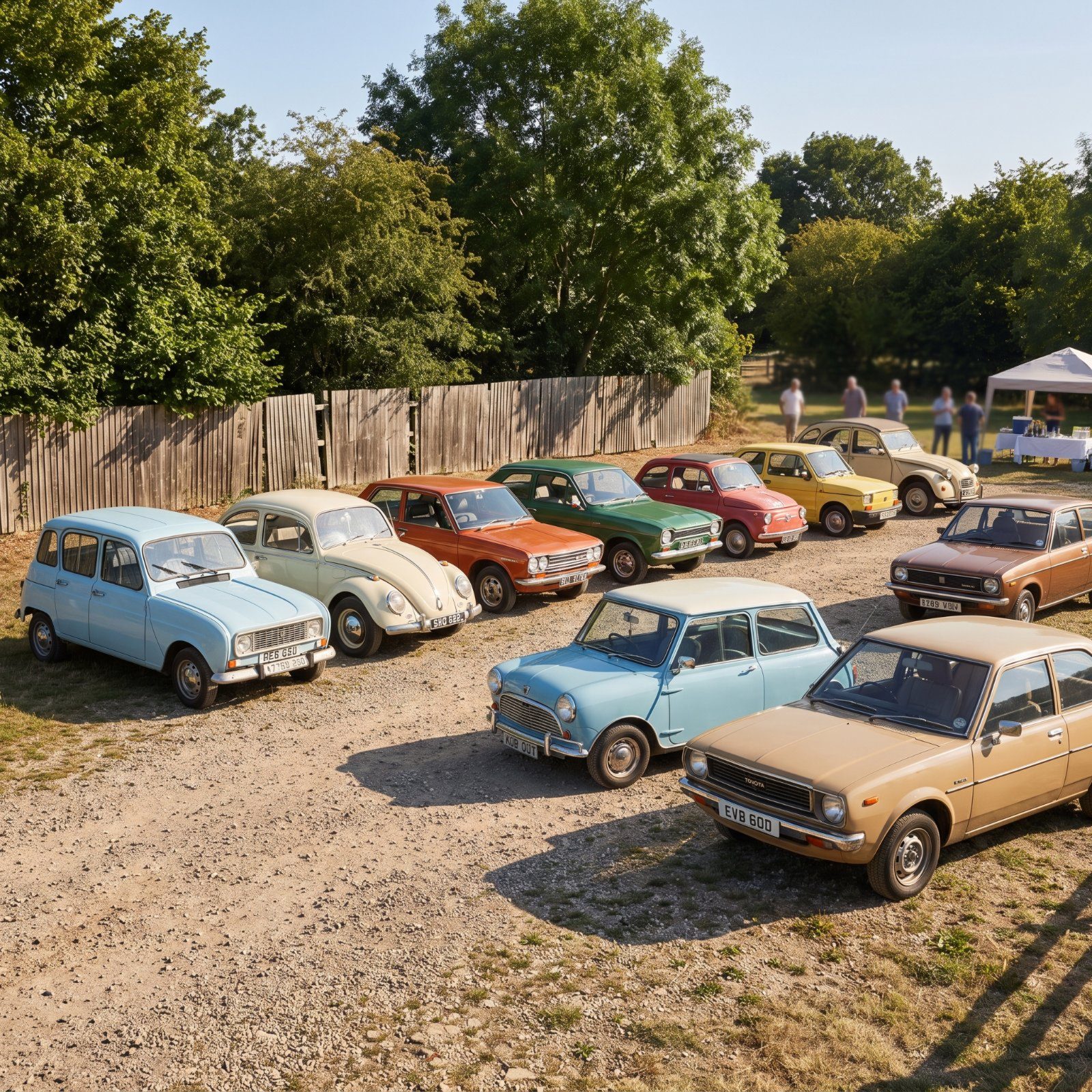
31. Volkswagen Beetle vs. Renault Dauphine: Personality Outlasted Practicality

Same idea, same era, same economy mission — rear engine, cheap to run, built for people who had never owned a car. The Dauphine actually outsold the Beetle in some markets early on.
Then rust happened. The Dauphine dissolved. Worse, it drove like it wanted to kill you, snap oversteer that road testers of the day did not forgive. The Beetle had the same tail-happy layout but somehow became beloved anyway, because it had a face. People named them. The Dauphine never earned a nickname that stuck.
30. Austin Mini vs. Hillman Imp: Racing Glory Beat Clever Engineering
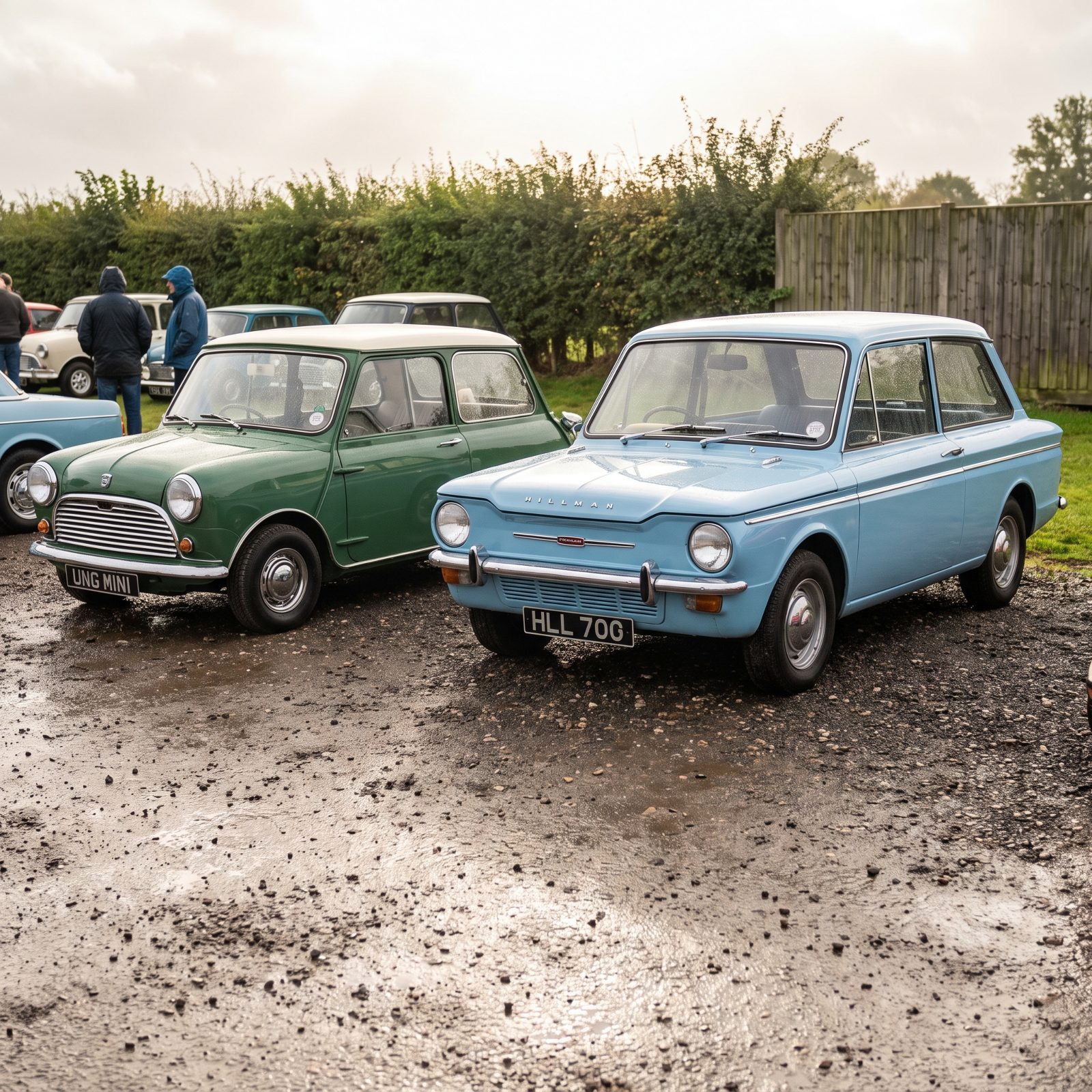
The Imp was the cleverer car on paper. Aluminum overhead-cam engine, opening rear window, better ride. Engineers loved it.
The Mini won Monte Carlo. Three times. That is the whole story right there.
You cannot buy the kind of fame that comes from giant Ferraris and Fords watching a box on wheels disappear up a snowy mountain road. The Mini became shorthand for the whole decade. The Imp became a quiz question for people who really know their small British cars, which is a small and lovely group, and I mean that.
29. Fiat 500 vs. Fiat 600: The Smaller Car Became the Cultural Symbol
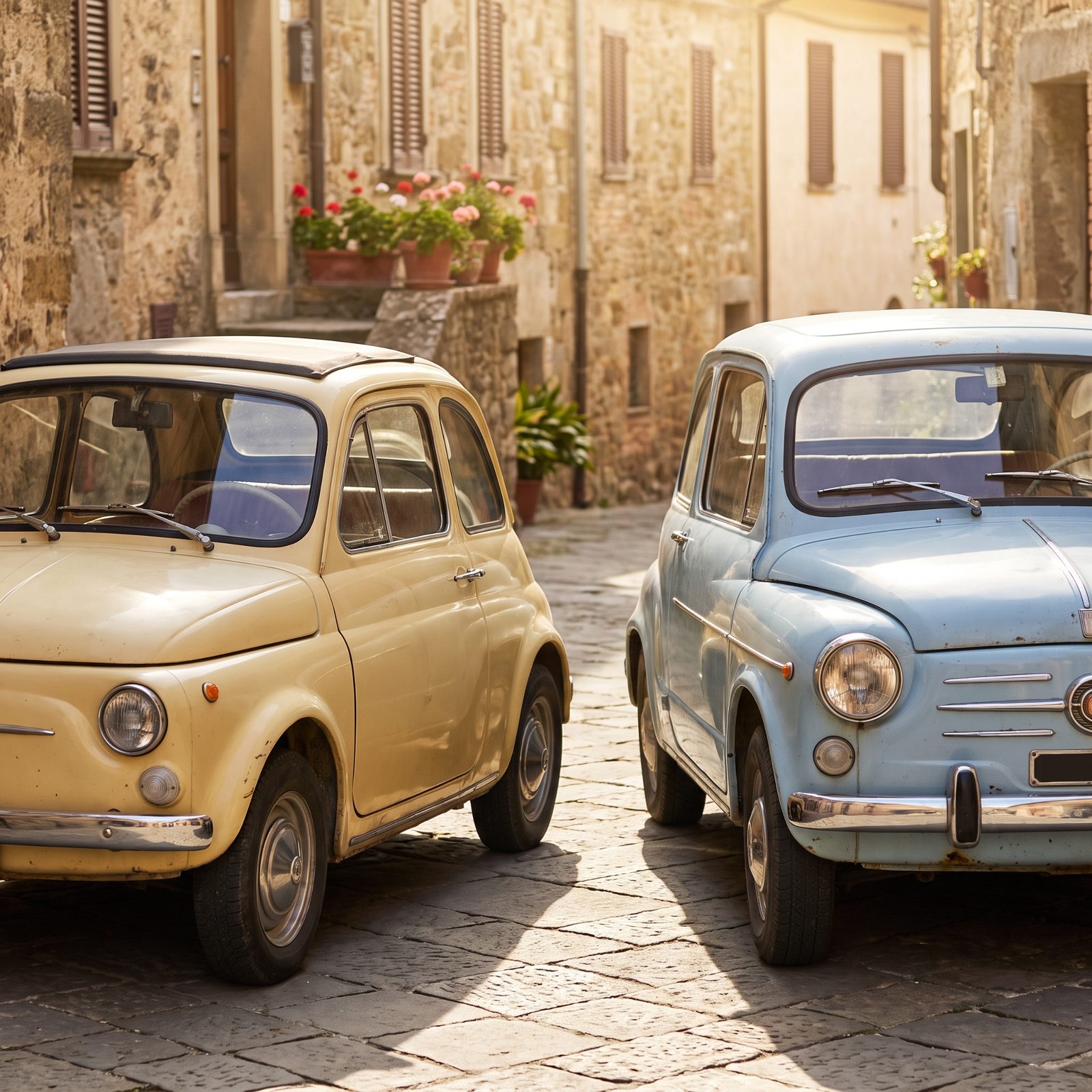
The 600 came first and was objectively the more usable car. Real back seats, a water-cooled engine, room for a family. It motorized postwar Italy before the 500 arrived.
Yet ask anyone to picture Italy on four wheels and they draw the 500. The little one won because it was impossibly small and impossibly charming, a car you could love the way you love a pet. Scooter-sized, scooter-priced, and it wears a face that still sells modern retro models sixty years on.
28. Honda Civic CVCC vs. Chevrolet Chevette: Innovation Beat Mere Affordability
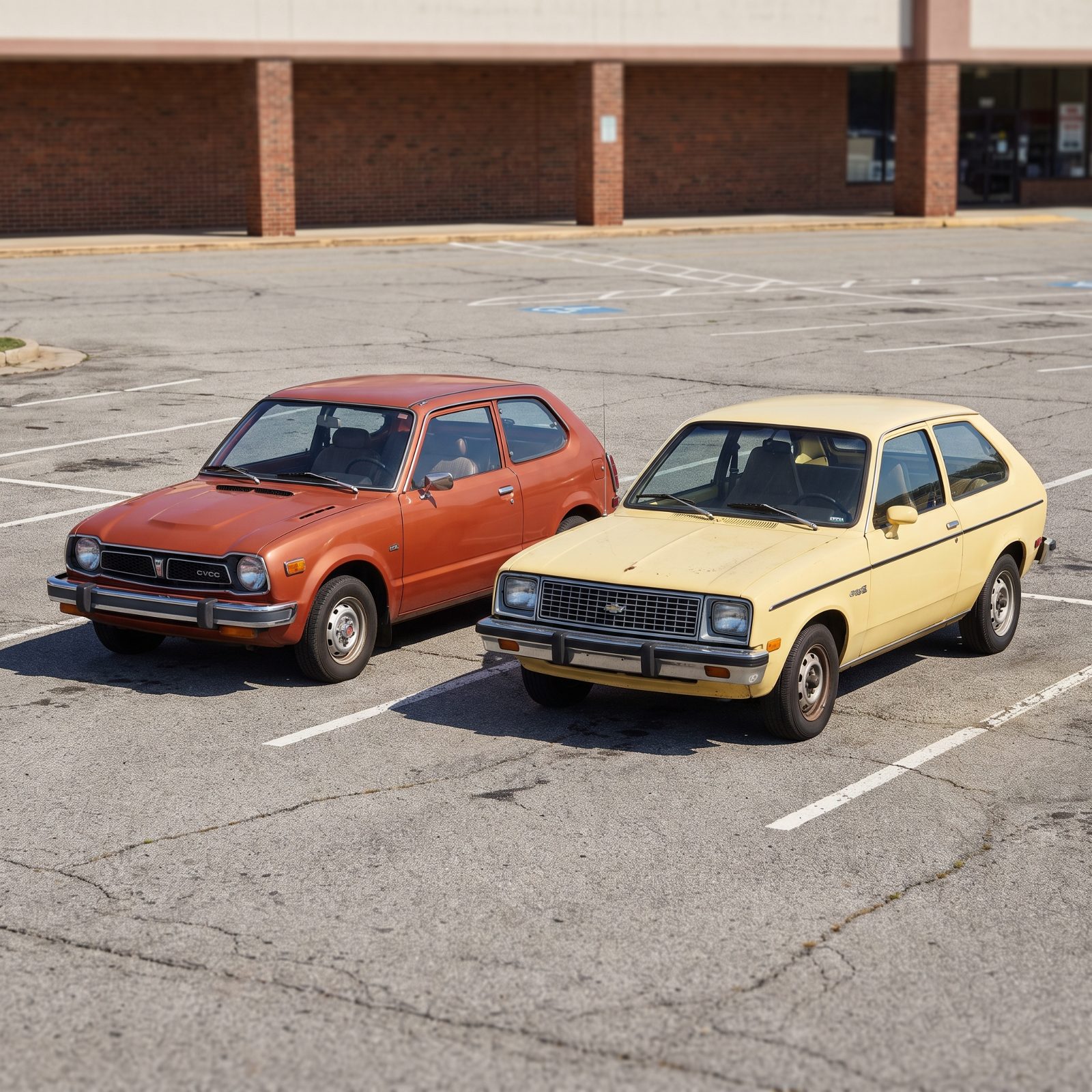
Both were cheap answers to the gas crisis. Only one had an idea inside it.
Honda’s CVCC engine met emissions rules without a catalytic converter, a genuinely smart piece of work that made the Civic feel like it came from the future. The Chevette just felt like a cost chart that learned to drive. Rear-wheel drive, too, which should have won hot-rodder hearts and somehow never really did.
The Civic launched a nameplate that still sells. The Chevette became the car you remember your aunt owning and nothing more.
27. Volkswagen Rabbit GTI vs. Dodge Omni 024: One Created a Recognizable Formula
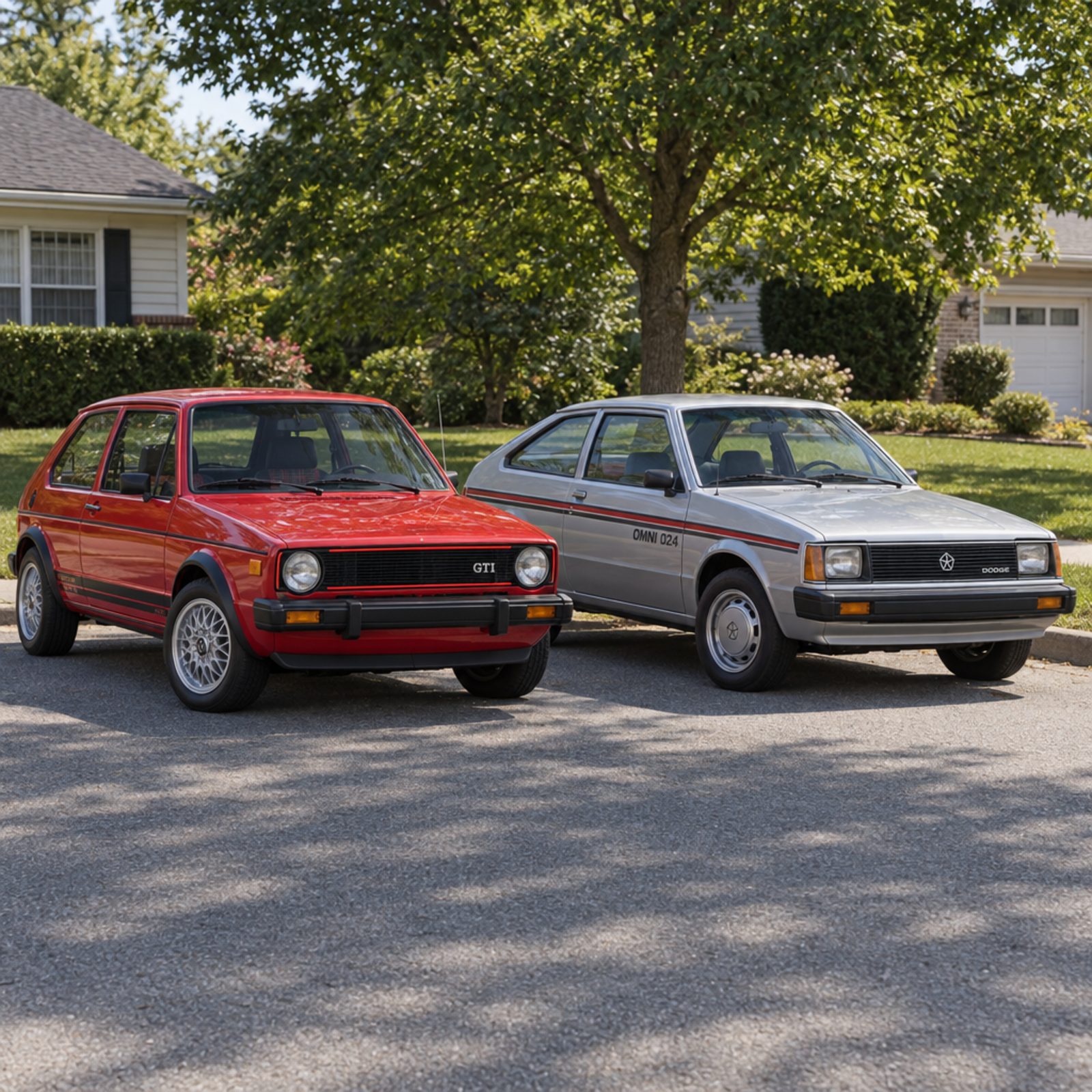
The GTI did something rare. It invented a genre and named it. Hot hatch. Two words that still move metal off a lot.
Light body, willing engine, plaid seats, no nonsense. People understood it instantly and they have wanted the recipe ever since. Every warm hatchback sold today owes it a drink.
The Omni 024 was a fine-looking thing, and Dodge even built a quick Shelby version later. But it chased the idea instead of defining it. Being first with a formula people can name beats being competent, every time. That is just how memory works.
Inventing the category beats winning it.
26. Peugeot 205 GTI vs. Renault 11 Turbo: Balance Outlived Raw Specifications
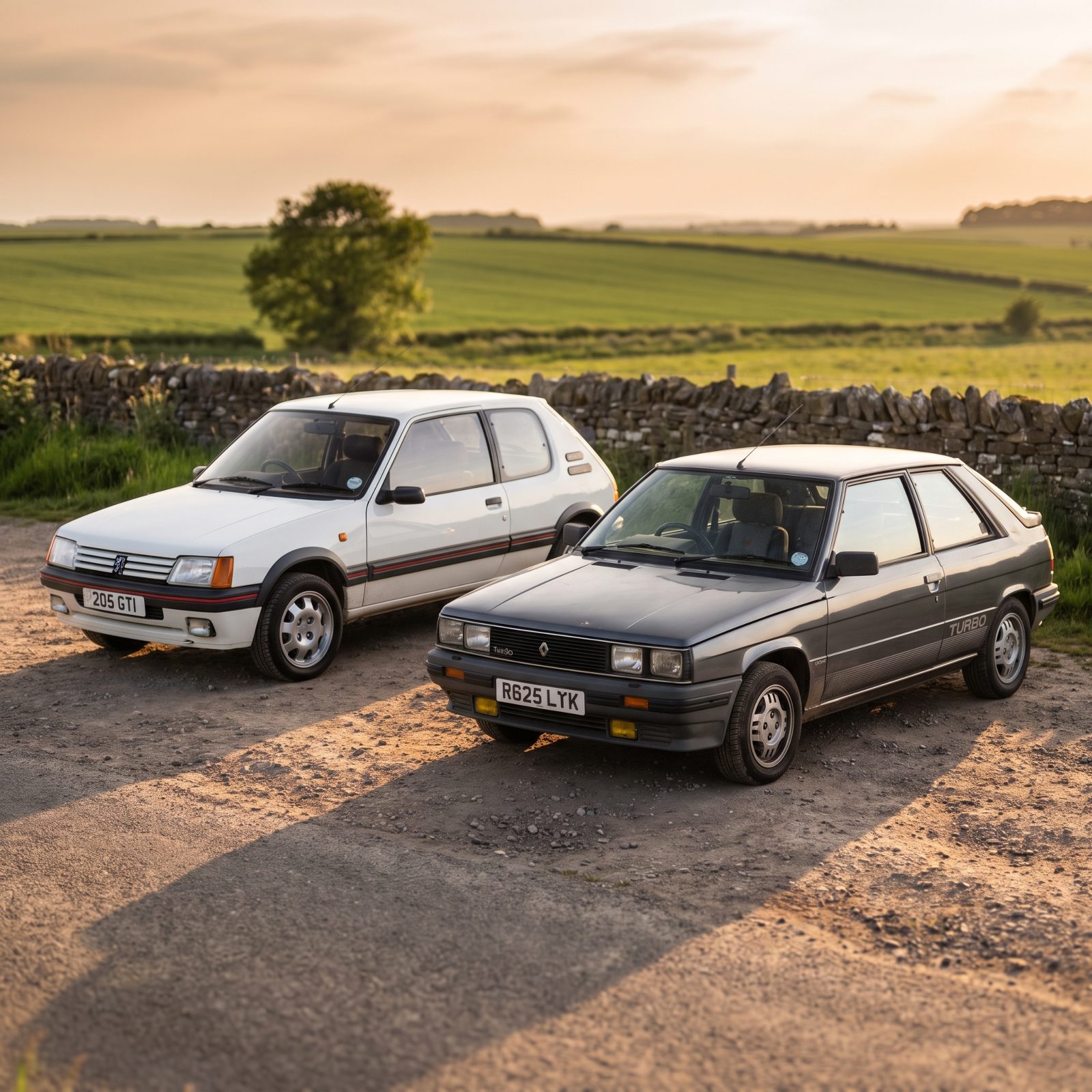
The Renault had the turbo, the headline number, the spec that sounded faster in the pub. The Peugeot had the chassis.
Drive a 205 GTI hard and it talks to you through the wheel, the seat, everything. It feels alive at legal speeds, a trick almost nobody manages. The 11 Turbo was quick in a straight line and vague everywhere else.
25. Toyota Starlet KP61 vs. Mitsubishi Tredia: Rear-Wheel Drive Attracted Future Tinkerers
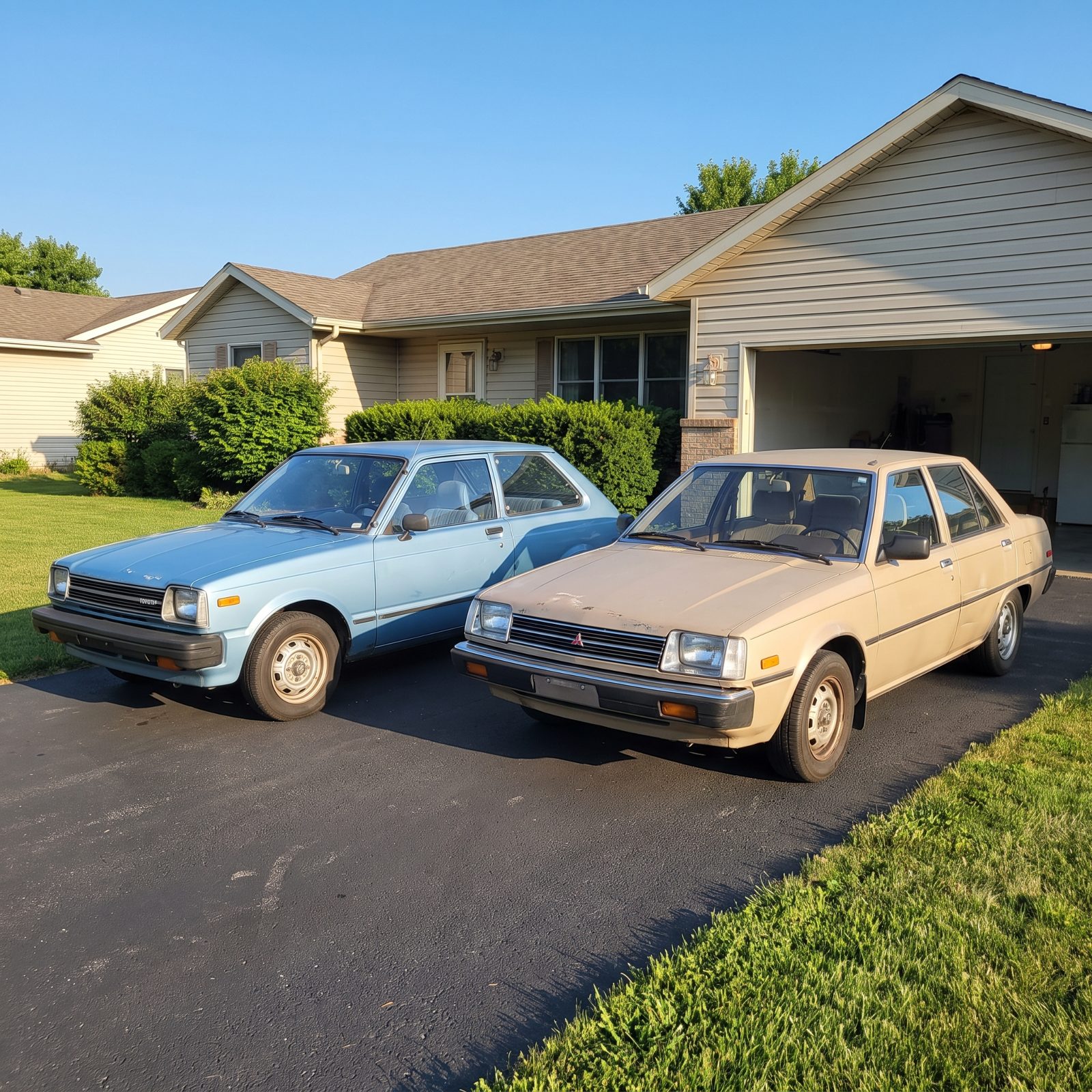
The Tredia was a perfectly sensible front-drive sedan. Sensible is where cars go to be forgotten.
The rear-drive Starlet KP61 became a tuner favorite because of what it offered a kid with a jack and a dream: a simple layout, a willing little engine, and a drivetrain you could swap and modify without a degree. Decades later the surviving ones changed hands among people who learned to wrench on them. Nobody ever hunted down a clean Tredia to drop a bigger engine into. The platform matters more than the brochure ever let on.
24. Nissan Sentra SE-R vs. Dodge Shadow ES: A Great Engine Created Credibility
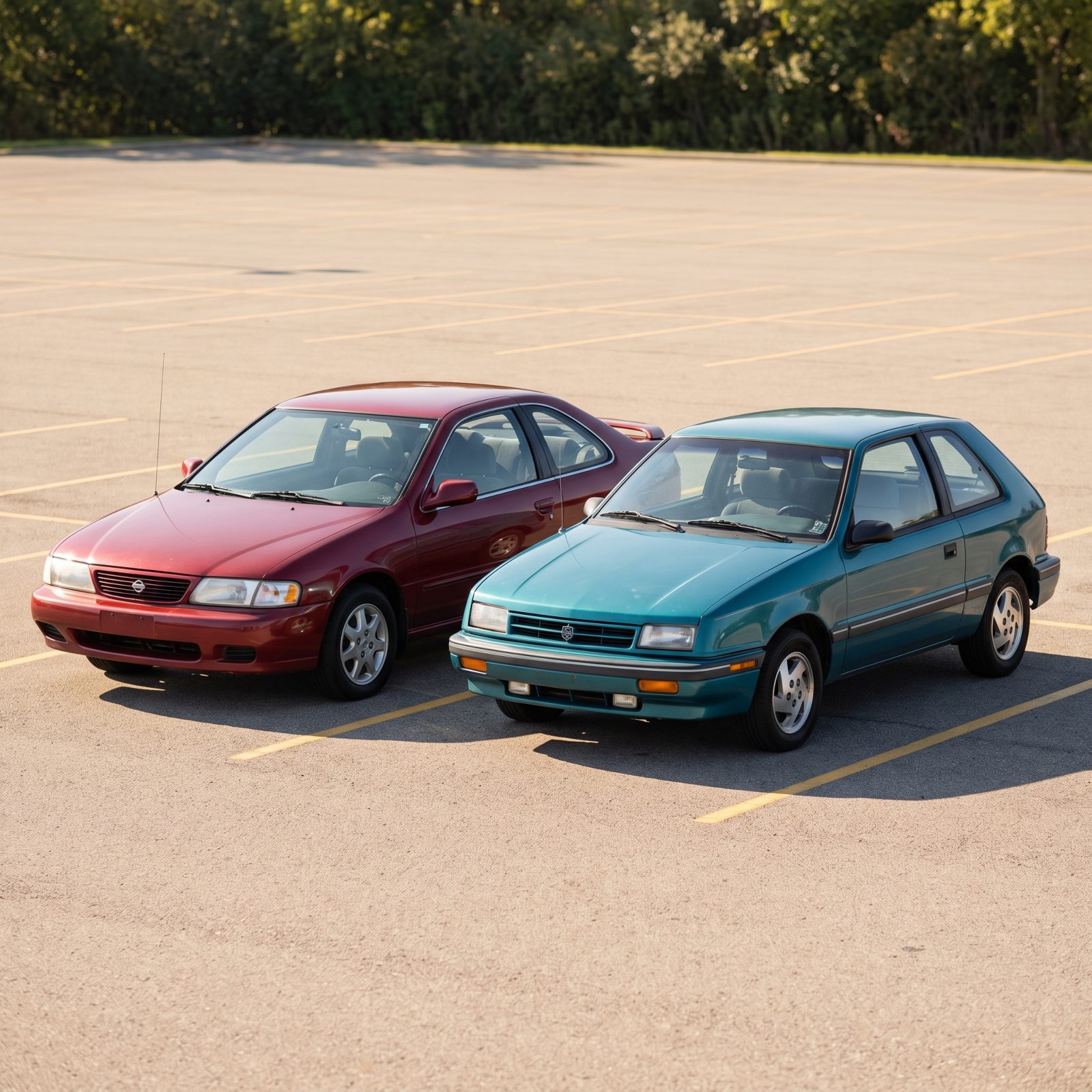
One engine built a reputation that outran the car around it. The SR20DE in the Sentra SE-R revved sweet, pulled hard, and refused to break. Enthusiasts talk about it the way they talk about far pricier motors.
The Shadow ES had turbo power and some real pace, but no engine people fell in love with by name. That is the whole difference. A great motor becomes a legend you can quote at a car meet. A merely good one becomes a used-car ad nobody saves.
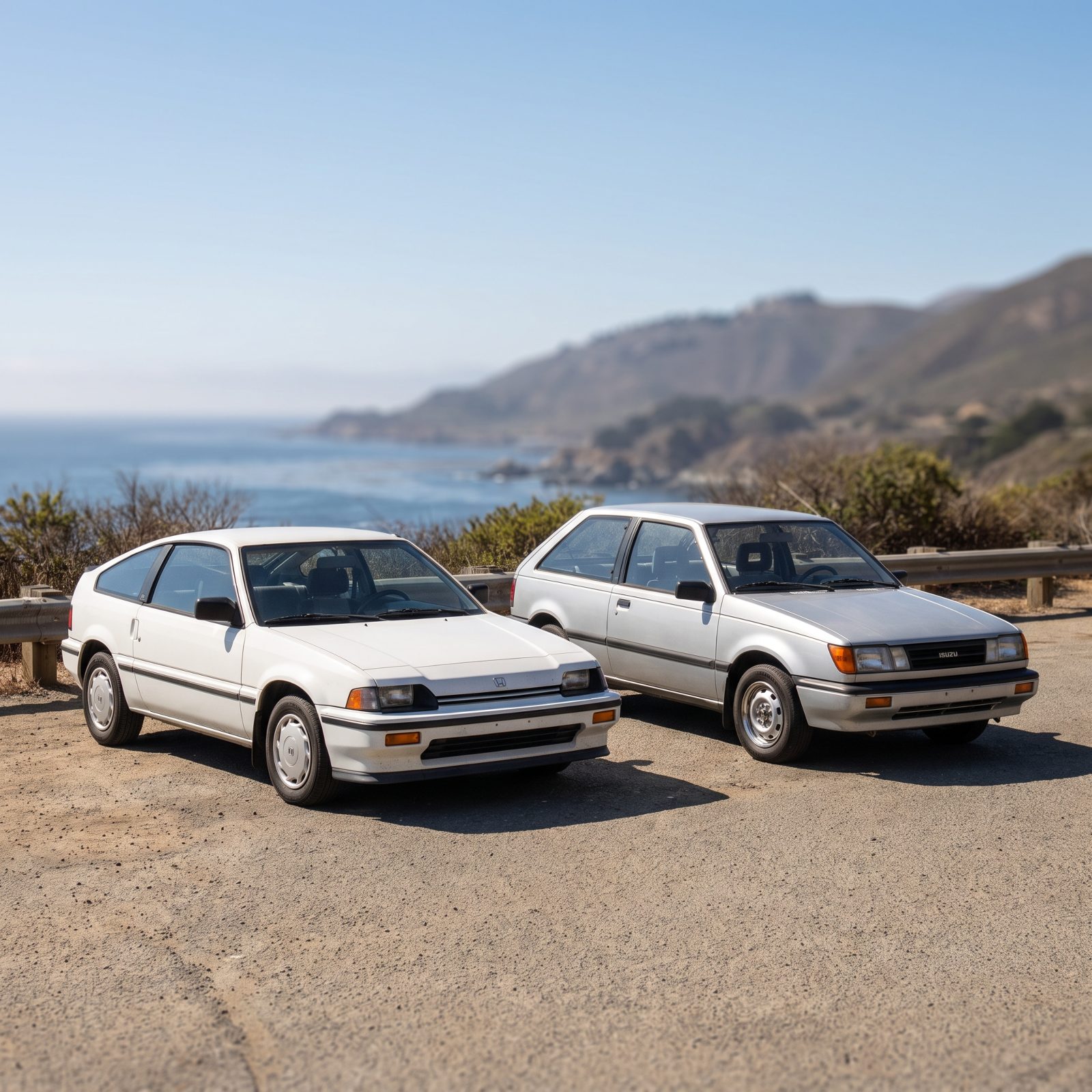
23. Honda CRX vs. Isuzu I-Mark: Efficiency With Style Proved Collectible
Would you like to save this?
Sipping fuel is not enough to make a car memorable. The I-Mark proved it. Economical, honest, and completely invisible.
The CRX did the same job while looking like a wedge of intent and driving like it meant it. Light, quick, shaped by someone who clearly cared. People kept them, modified them, and now pay real money for clean ones. Efficiency wrapped in a shape you actually wanted to look at — that turned out to be worth hanging onto. The I-Mark just quietly did its job and left.
22. Mazda RX-7 FB vs. Mitsubishi Starion: Simplicity Made the Rotary Coupe Approachable
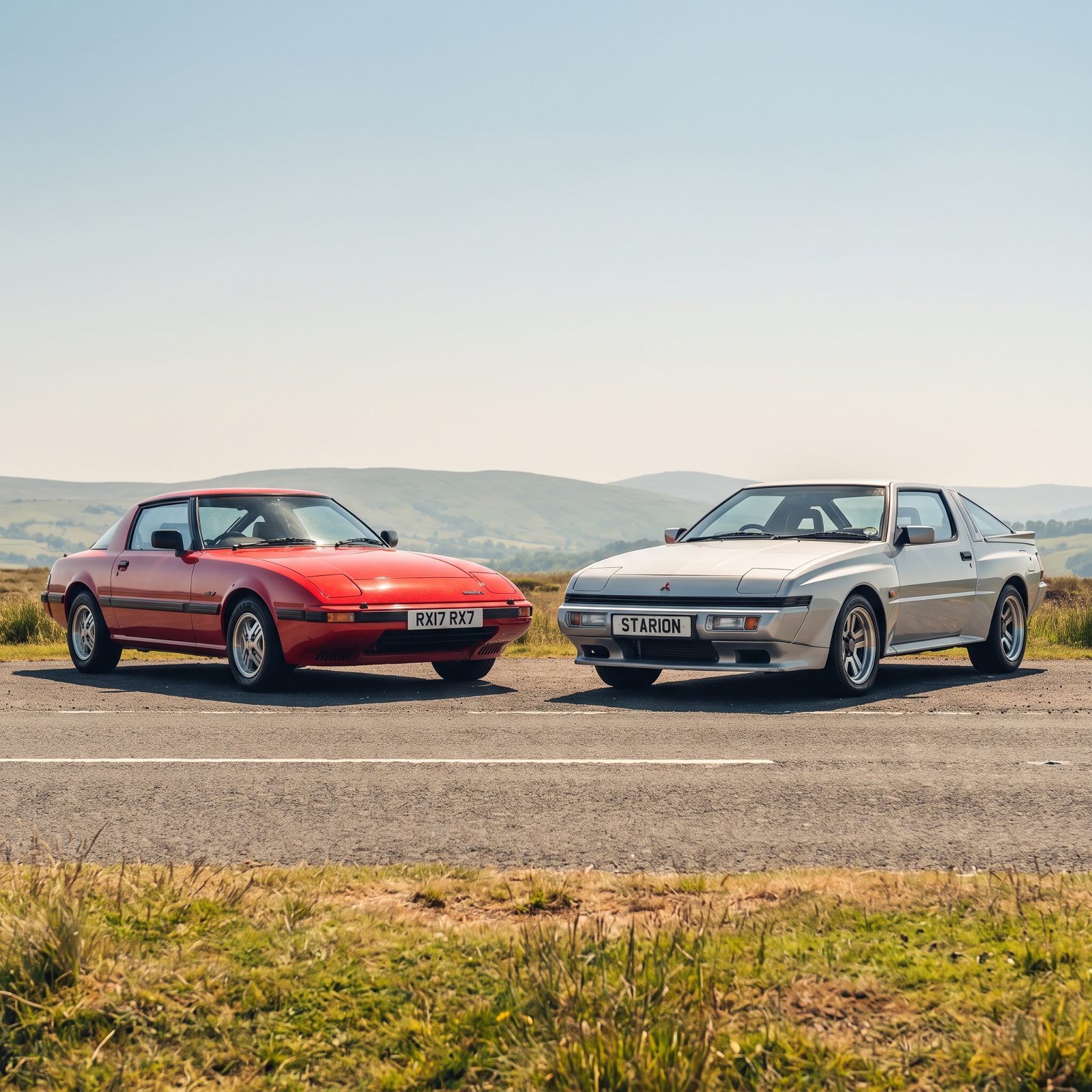
The Starion was turbocharged, aggressive, and genuinely fast. It should have been the one everyone remembers.
The first RX-7 won hearts by being light, cheap, and uncomplicated, a rotary sports car anyone could afford and a shocking number of people could learn to maintain. Low weight, pure balance, that strange smooth spinning engine. It gave a whole generation their first taste of a real sports car without the price tag to match.
Simplicity is underrated. The RX-7 made the exotic feel reachable, and reachable is what builds a following. The Starion asked more of you and fewer people answered. I’d still take the rotary, and I say that knowing exactly how often they need rebuilding.
21. Toyota MR2 AW11 vs. Pontiac Fiero: The Cheap Exotic That Started Every Morning
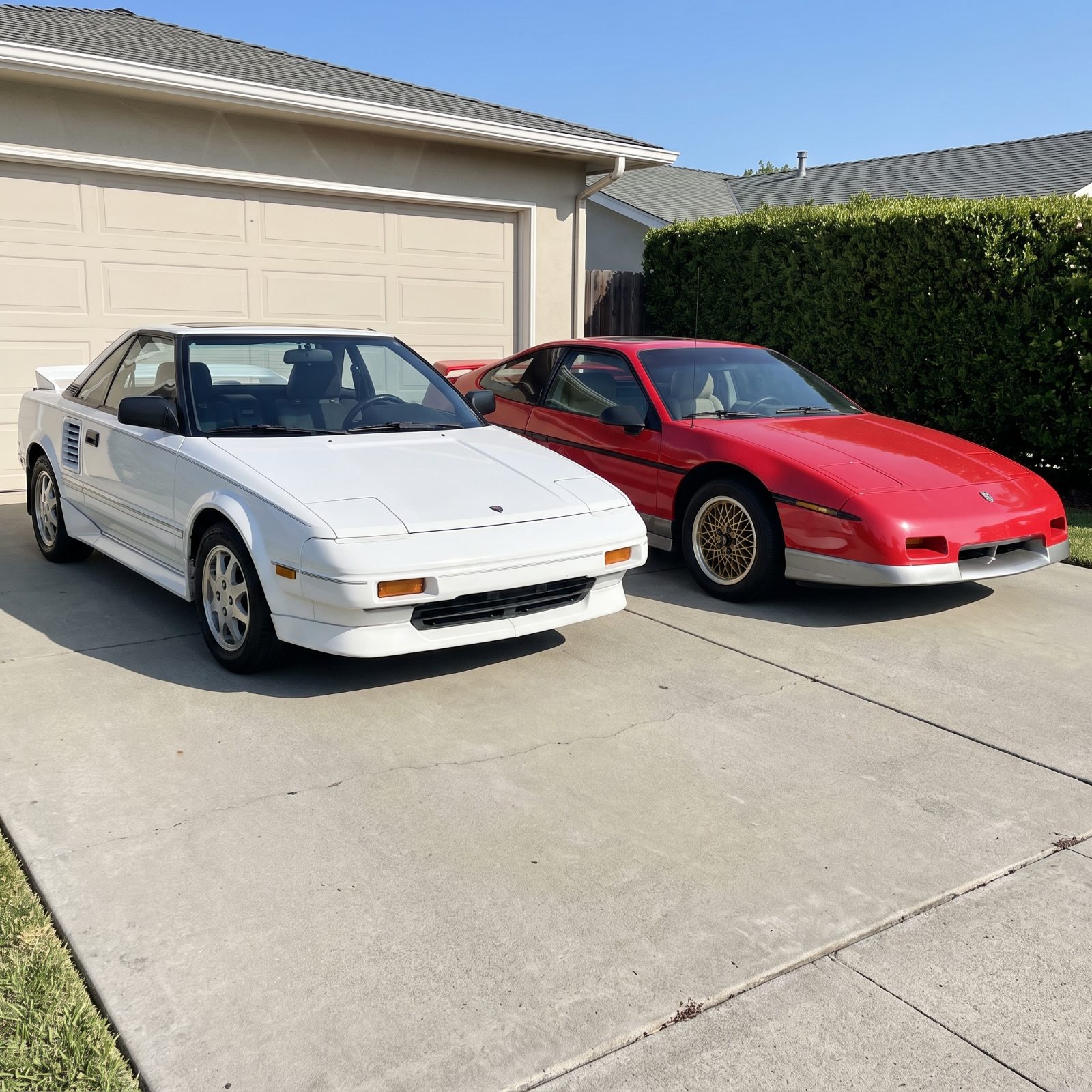
Both landed in 1984 as cheap mid-engine thrills for working men who wanted an exotic layout on a Chevy budget. The Fiero looked the part, and sometimes caught fire doing it. Those early 2.5-liter fours ran low on oil and cooked their connecting rods, and the reputation stuck even after Pontiac finally sorted the car out in its last year.
The MR2 did the unglamorous thing: it just kept running. That 4A-GE twin-cam would idle at a stoplight for thirty years without complaint, which is exactly why survivors still crowd weekend meets while a clean Fiero feels like a rescue mission.
20. Nissan 240SX vs. Ford Probe: Drifting Handed One Car a Whole Second Act
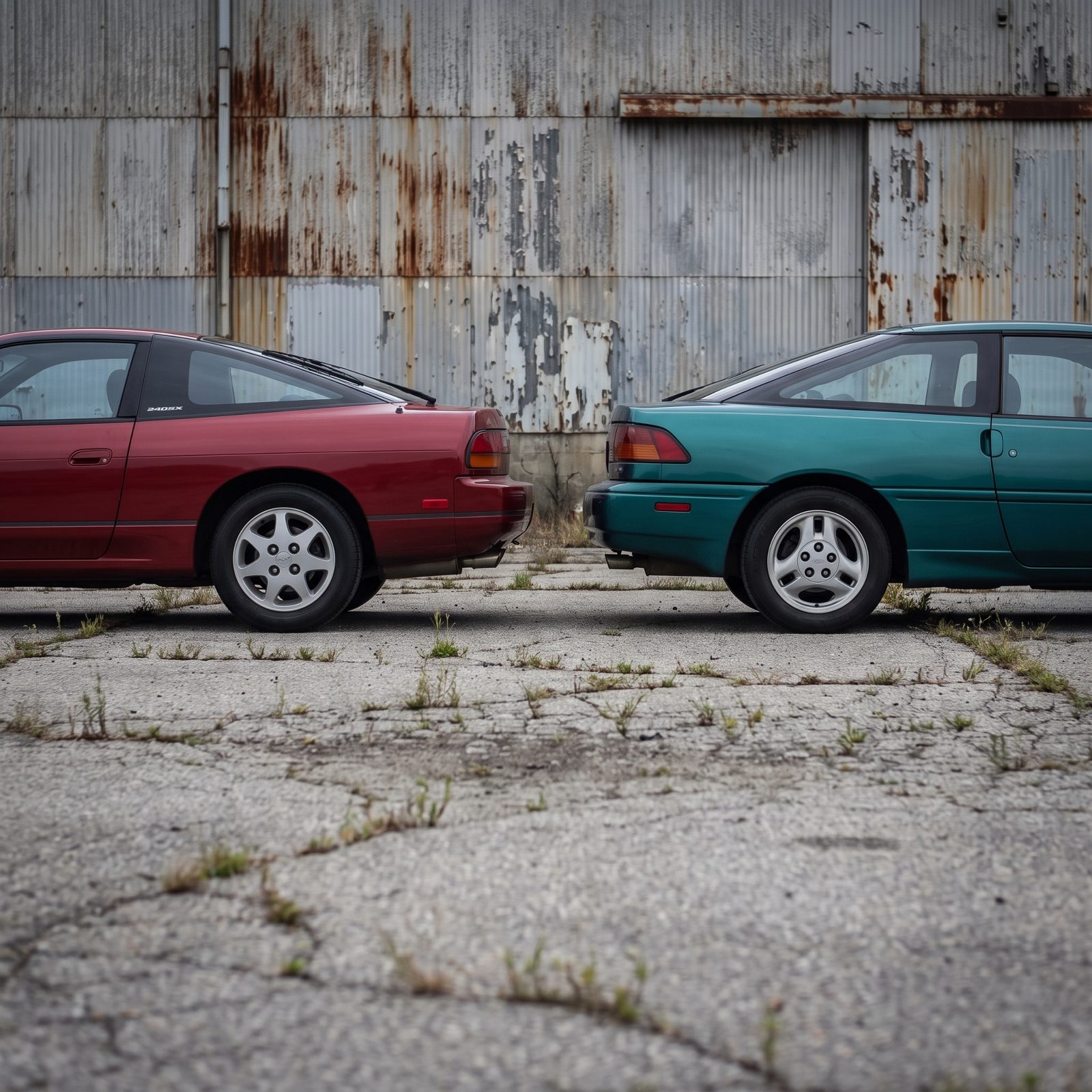
In spirit these two were close siblings, affordable coupes aimed at buyers who wanted something sporty for under twenty grand. The Probe handled well and sold in big numbers, then quietly slipped off into the used lots of history.
But the 240SX had something the Probe didn’t. Rear-wheel drive, a cheap and strong chassis, and a drift culture that fell head over heels for it in the 2000s. A forgettable Nissan became a cornerstone almost overnight. Clean stock examples now cost real money, mostly because so many got sacrificed sideways on back roads.
Front-wheel drive built a competent car. Rear-wheel drive built a legend.
19. Toyota AE86 Corolla vs. Nissan Pulsar NX: A Comic Book Made the Corolla Immortal
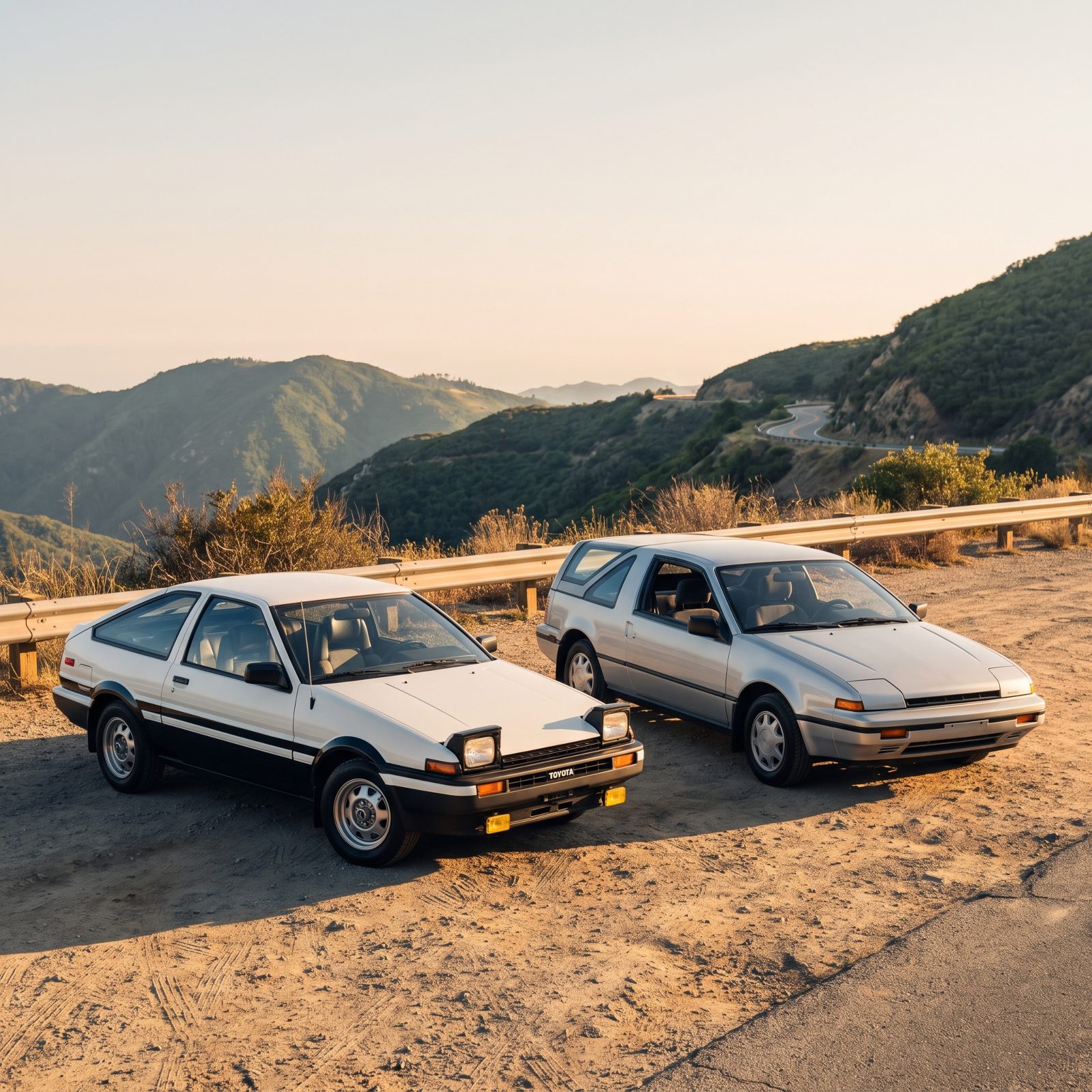
The AE86 was a cheap, lightweight, rear-drive Corolla that any sensible person in 1986 saw as nothing more than entry-level transport. Then Initial D turned it into the hero of a mountain-racing saga read by millions, and a boxy econo-coupe became sacred overnight.
The Pulsar NX had the weirder styling and those clever swappable rear sections. Genuinely odd, genuinely interesting. But no manga ever found it, so it drifted into the trivia pile while AE86 prices climbed to absurd heights.
18. Honda Civic Si vs. Geo Storm GSi: The Winner Had the Parts Catalog
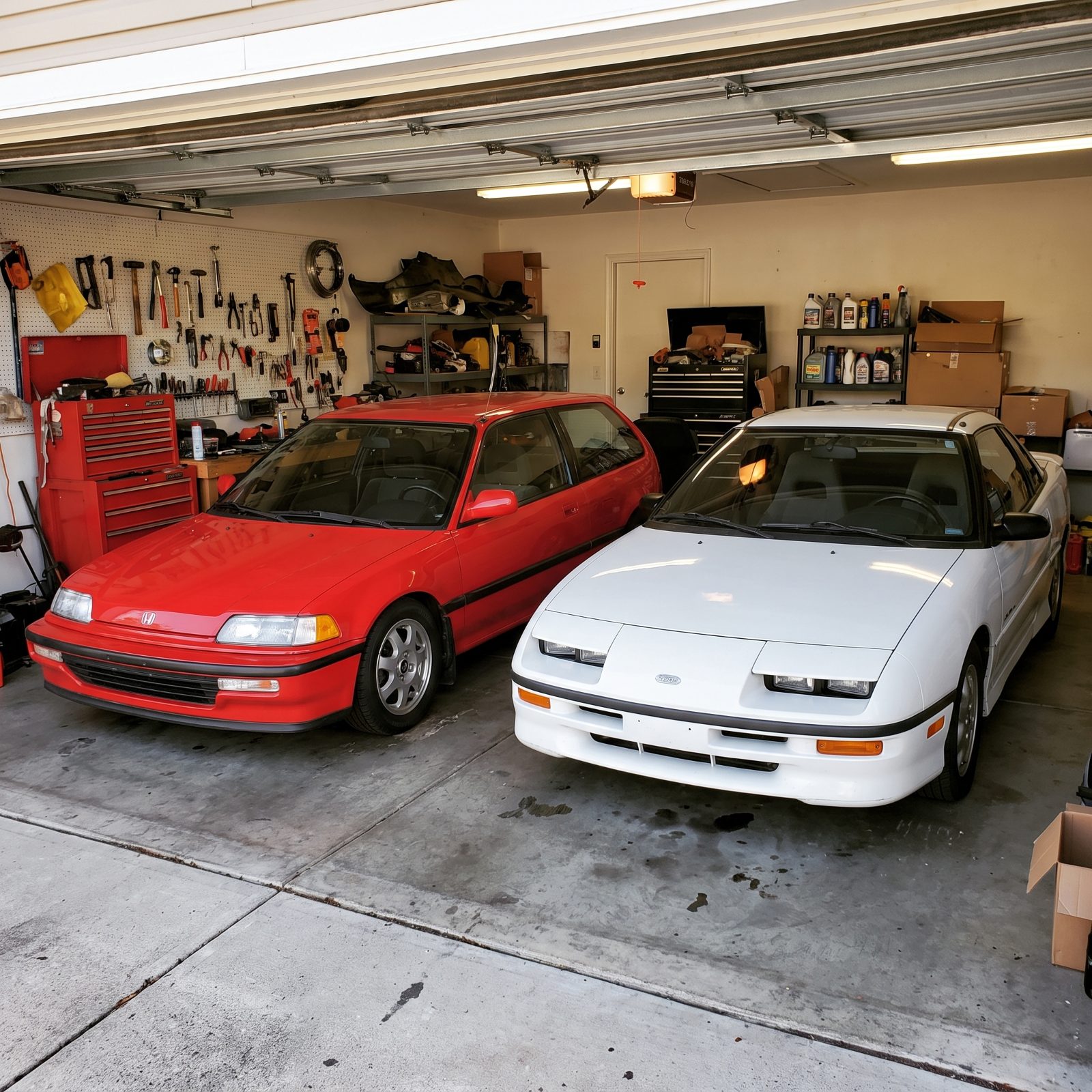
Both were peppy little front-drivers sold to young buyers who wanted fun on a paycheck. The Storm GSi was quick and willing, honestly entertaining in its day.
Then tuning culture showed up needing depth, and Hondas had it in spades. Decades of interchangeable engines, a flood of aftermarket parts, forums full of guys who knew every bolt by its head size. A broken Civic was a cheap afternoon fix. A broken Storm was a scavenger hunt. That deeper ecosystem turned the Si into a platform and left the Storm as a footnote.
17. Volvo 240 vs. Peugeot 505: When Being a Brick Became a Personality
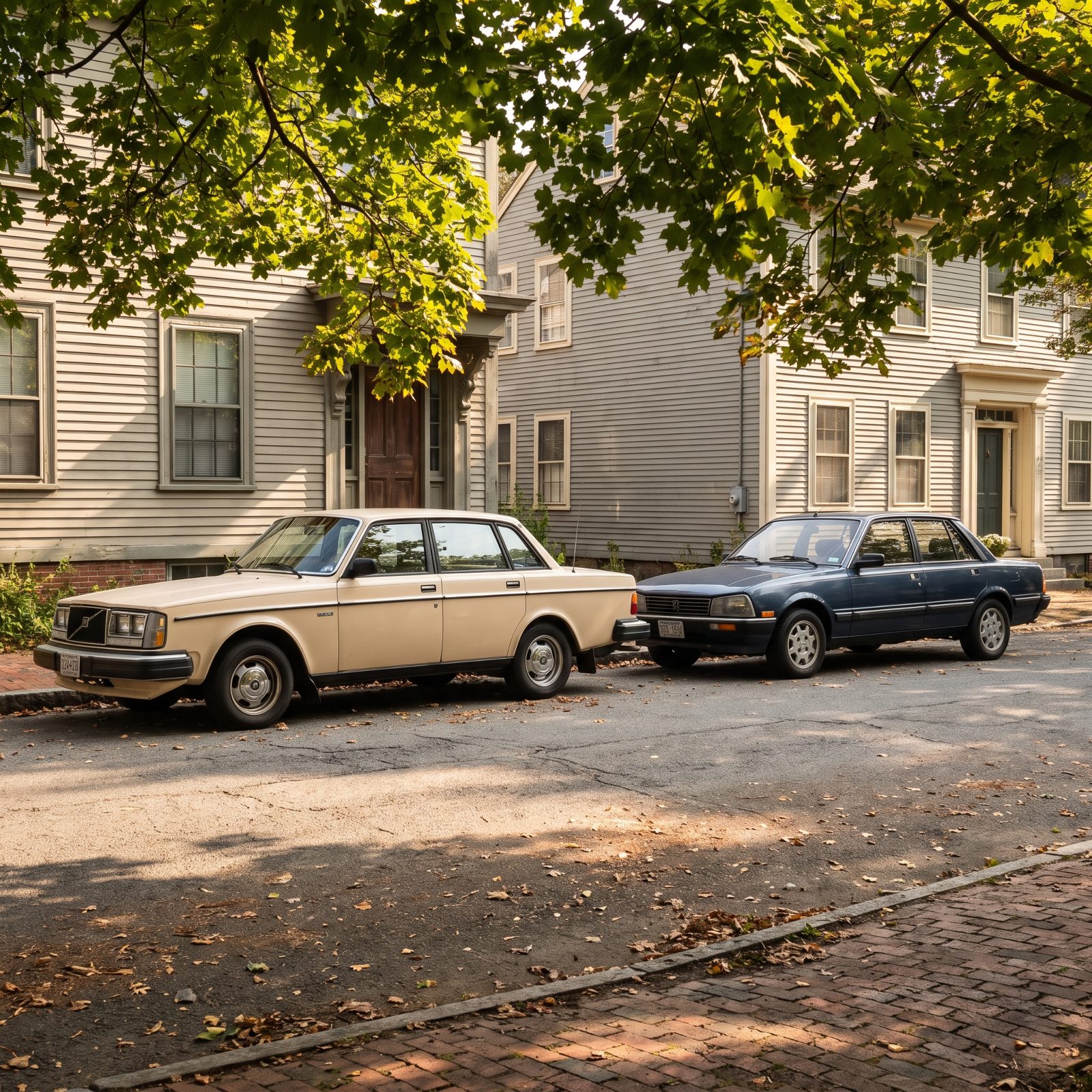
Boxy, sensible, built to outlast the mortgage. The 505 was arguably the more comfortable of the two, riding on suspension that French engineers obsessed over to the point of madness. It drove beautifully, then mostly rusted into memory on this side of the ocean.
The 240 made durability its entire identity. Three hundred thousand miles earned a shrug. Owners wore that toughness like a badge, and a whole tribe formed around keeping the slab-sided thing breathing. Parts stayed available, the community stayed loud, and the brick turned into a cult.
16. Saab 900 vs. Renault 25: The Car You Could Spot From a Block Away

Both were oddball executive hatchbacks with ideas. The Renault 25 was slippery and comfortable, a smooth highway cruiser that few Americans remember ever existed.
The Saab 900, though, had a shape nobody could mistake for anything else. The curved windscreen, the ignition down on the floor, the whole quirky logic of the thing. That strangeness bred fierce loyalty, and people didn’t just own a 900, they joined something. Tribal attachment keeps parts flowing and cars running decades past the point of reason.
You can’t build a cult around a car nobody recognizes.
15. BMW E30 3 Series vs. Merkur Scorpio: Why a Familiar Badge Gets Saved
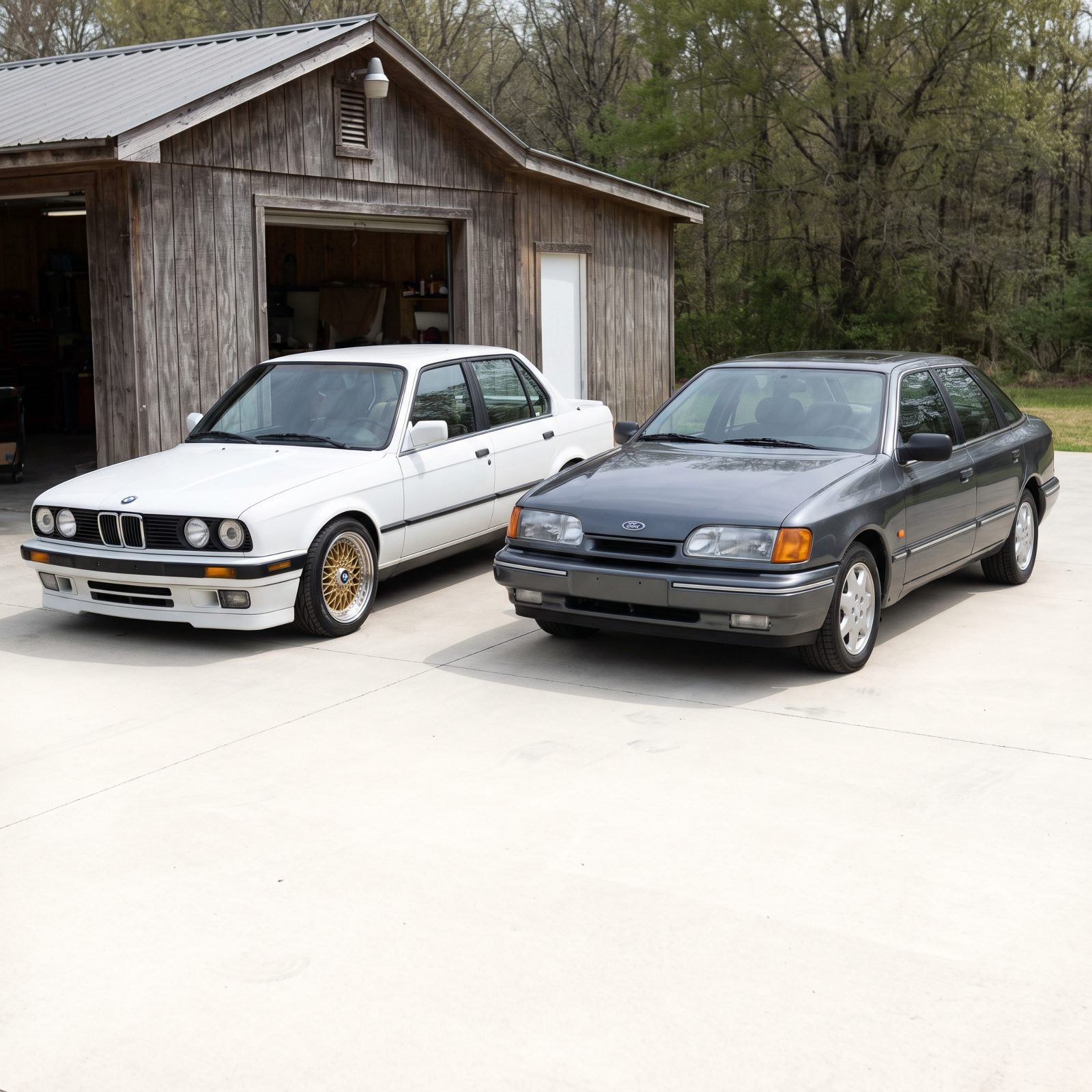
The Scorpio was a capable, well-equipped European Ford sold here under a badge almost nobody understood. When it broke, owners faced a desert of parts and knowledge, and the cars quietly vanished.
The E30 wore a badge everyone knew. Dealers, independent shops, forums, a bottomless supply of parts, all of it already waiting. Preservation gets easy when the whole world already speaks your car’s language. Familiarity isn’t glamorous. It’s just the difference between a restoration and a dead end.
14. Buick Grand National vs. Ford Thunderbird Turbo Coupe: The One That Looked Like Trouble

Under the skin these were cousins in concept, turbocharged coupes that moved fast in a decade of slow. The Turbo Coupe was genuinely sophisticated, mixing turbo power with a composed chassis, and it was the smarter package of the pair. Almost nobody talks about it now.
The Grand National was all black, all menace, the kind of car that looked like it would take your lunch money. That image did the heavy lifting. It became shorthand for sleeper muscle, and legends compound: values soared, the stories grew taller, and a solid Ford got left standing on the shoulder.
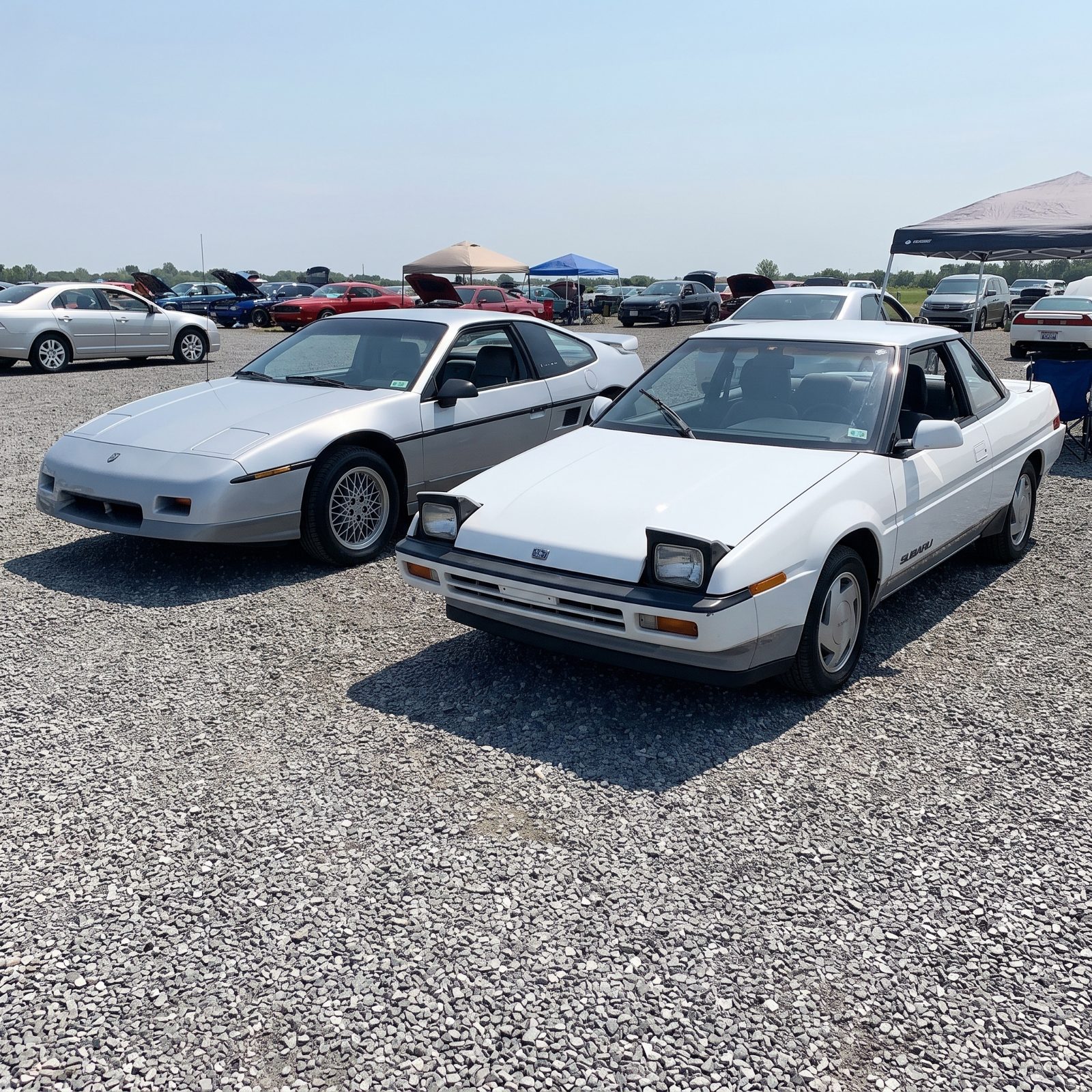
13. Pontiac Fiero vs. Subaru XT: The Community That Refused to Let Go
Would you like to save this?
Flawed cars, both of them. The Fiero carried its fire reputation around like an anchor. The XT had its wild wedge styling and complicated running gear that scared off anyone casual.
Here the deciding factor wasn’t the car at all. It was the people. Fiero owners organized early and never let up, swapping engines, trading fixes, keeping decades of knowledge pooled and alive. The XT drew admirers but never built that same self-sustaining support network. A dedicated crowd can drag a difficult car into the future. Without one, even a fascinating machine just slips away.
12. AMC Gremlin vs. Chevrolet Vega: Strange Looks Beat a Dissolving Engine
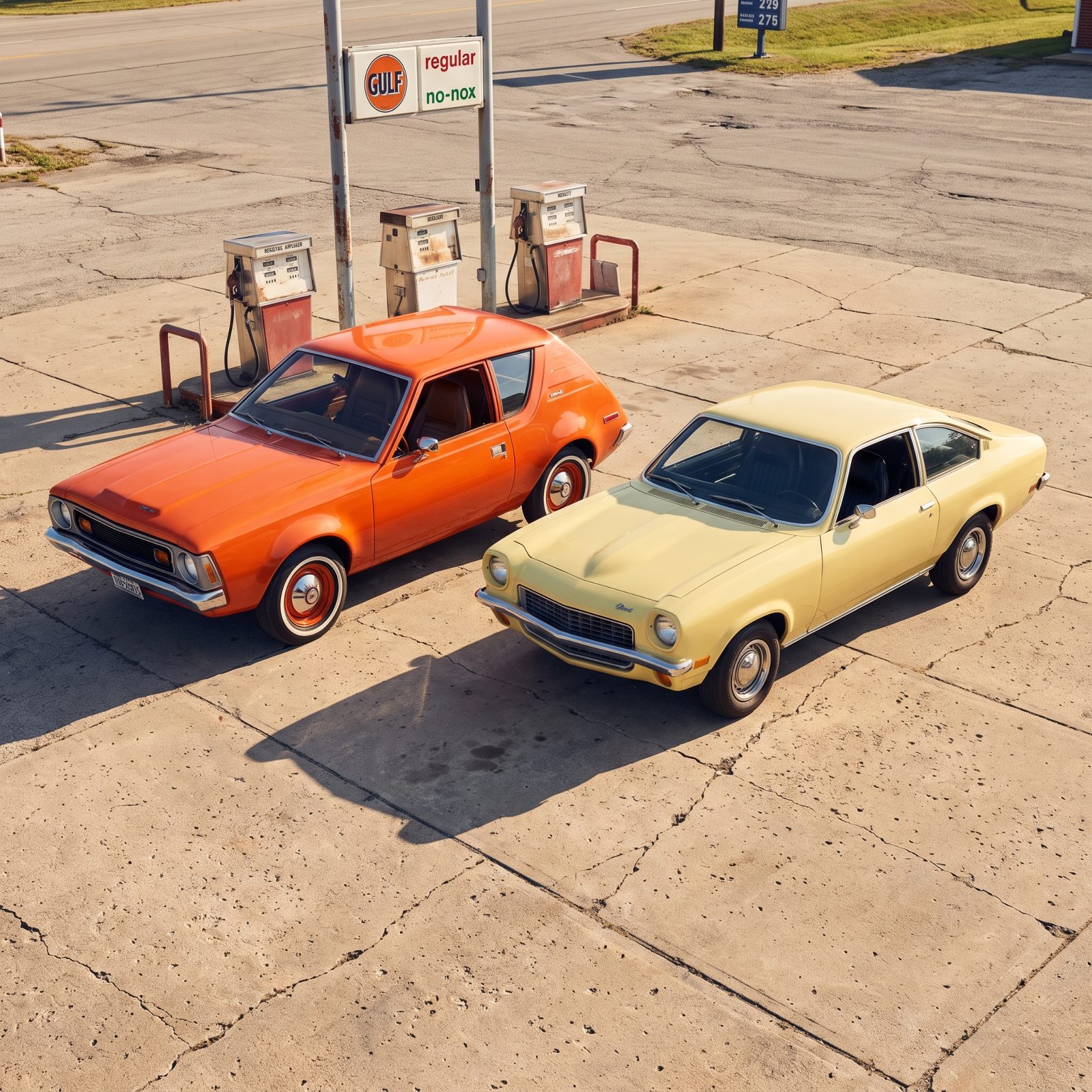
The Vega looked right. Clean, modern, well-proportioned, the kind of small car that should have cleaned up. Then its aluminum block warped, it drank oil like a frat boy, and rust finished whatever the engine left standing. Mechanical failure became its whole identity.
The Gremlin, on the other hand, looked like someone took a hacksaw to a sedan. People laughed at it then and they grin at it now. Odd styling ages into charm, while a reputation for self-destruction only hardens with time. The weird one became a beloved curiosity. The handsome one became a cautionary tale.
11. Chrysler K-Car vs. Chevrolet Citation: The Car That Saved a Company
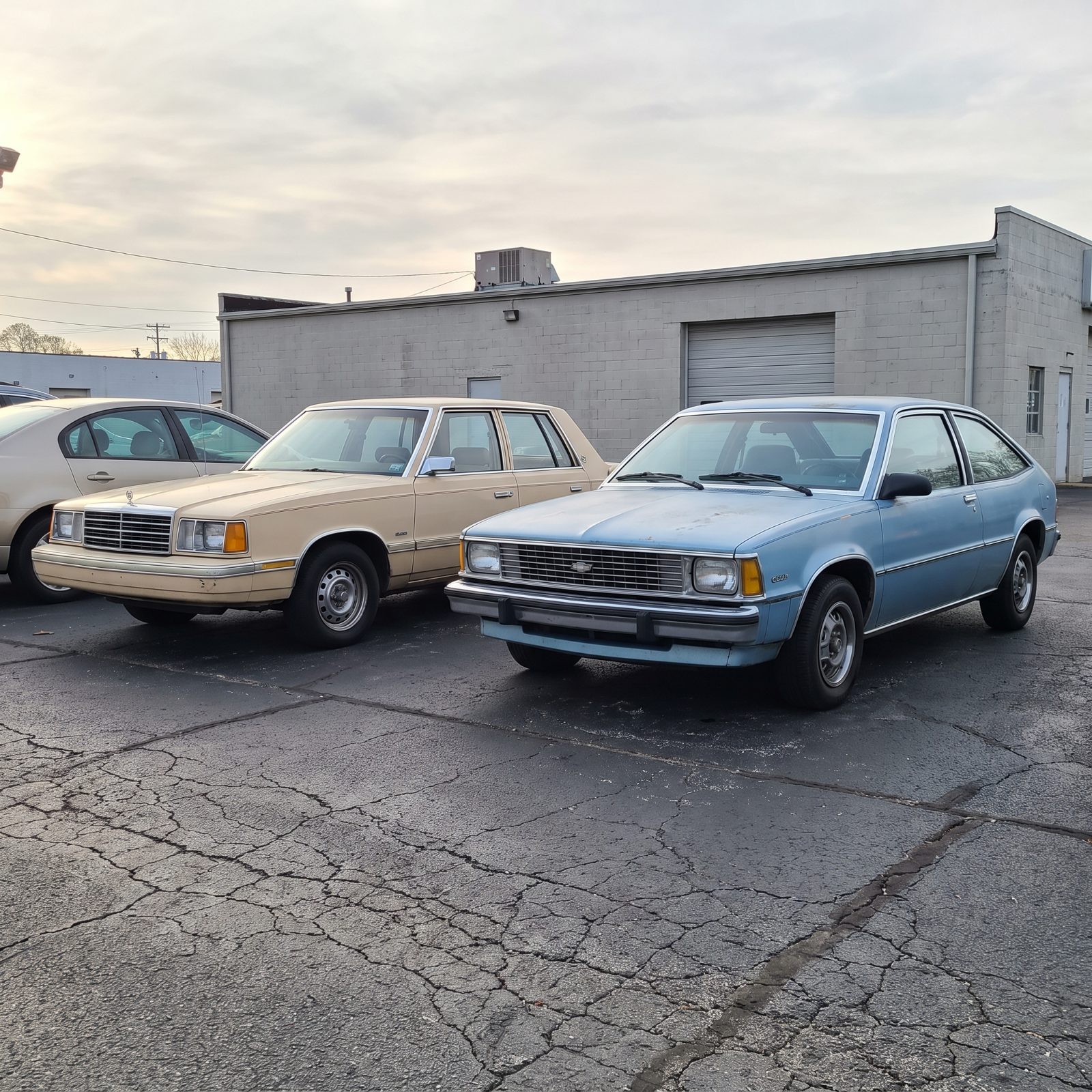
The K-car isn’t remembered because it was good. It’s remembered because Chrysler was circling the drain, took a government loan, and bet the entire company on a cheap front-drive box. That story gives the Aries and Reliant a spine, and every survivor still carries it.
The Citation went the other way. GM moved a flood of them, recalled them, then watched the reputation rot from brake trouble and steering gripes. No rescue, no underdog arc. Just a car that let people down and quietly vanished.
10. Dodge Omni GLH vs. Chevrolet Cavalier Z24: Shelby’s Name on the Fender
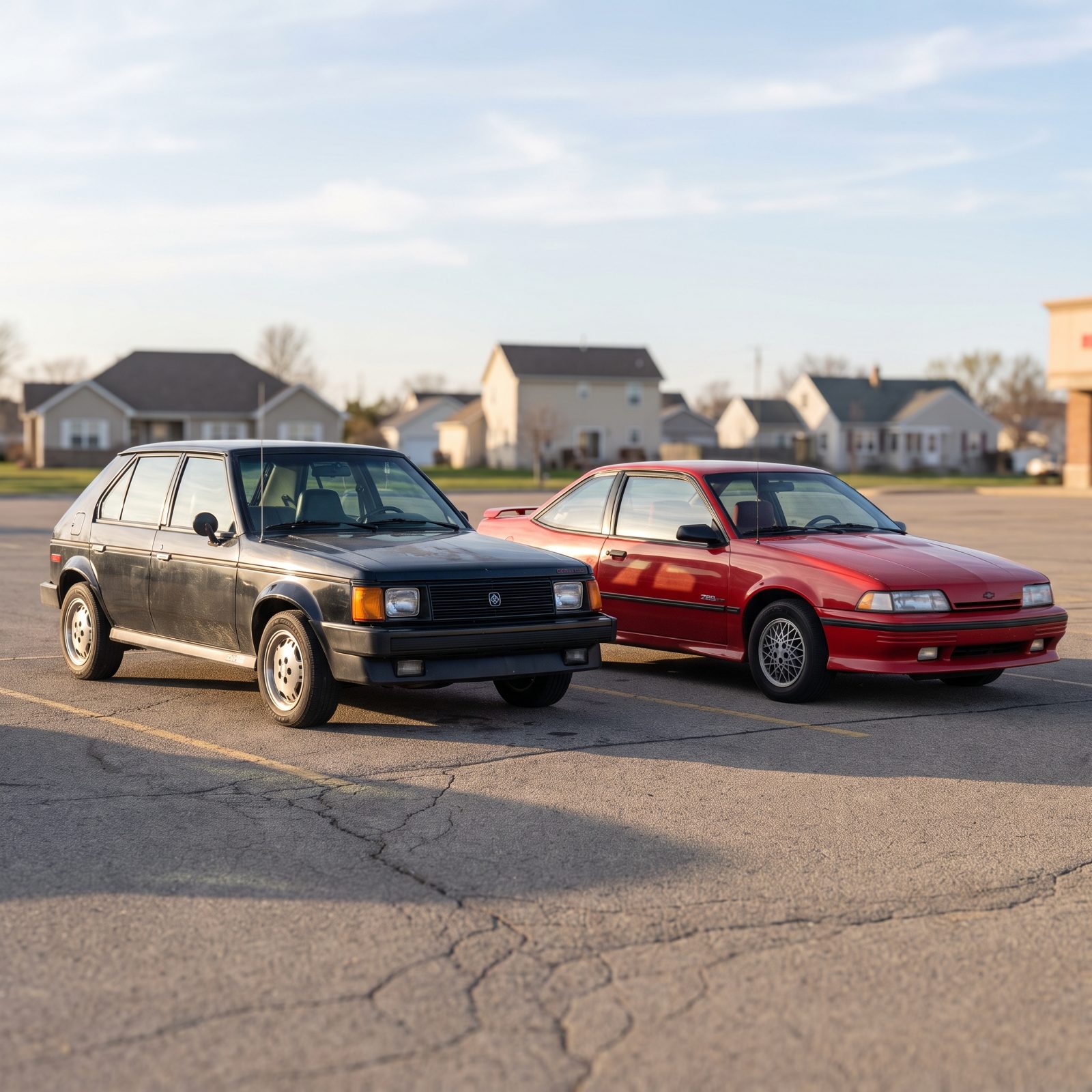
Carroll Shelby took a grocery-getter and made it bite. The Omni GLH — Goes Like Hell, and he actually said that — got a turbo, stiffer suspension, and the kind of backstory you can repeat all day at a swap meet. Shelby’s name on a cheap hatchback turned it into folklore.
The Cavalier Z24 was quicker, prettier, and sold in far bigger numbers. But nobody famous ever touched it. It was a trim package, not a legend, so it did its job and faded. The GLH became a thing people hunt for.
9. Geo Metro vs. Ford Festiva: The 50-MPG Badge of Honor
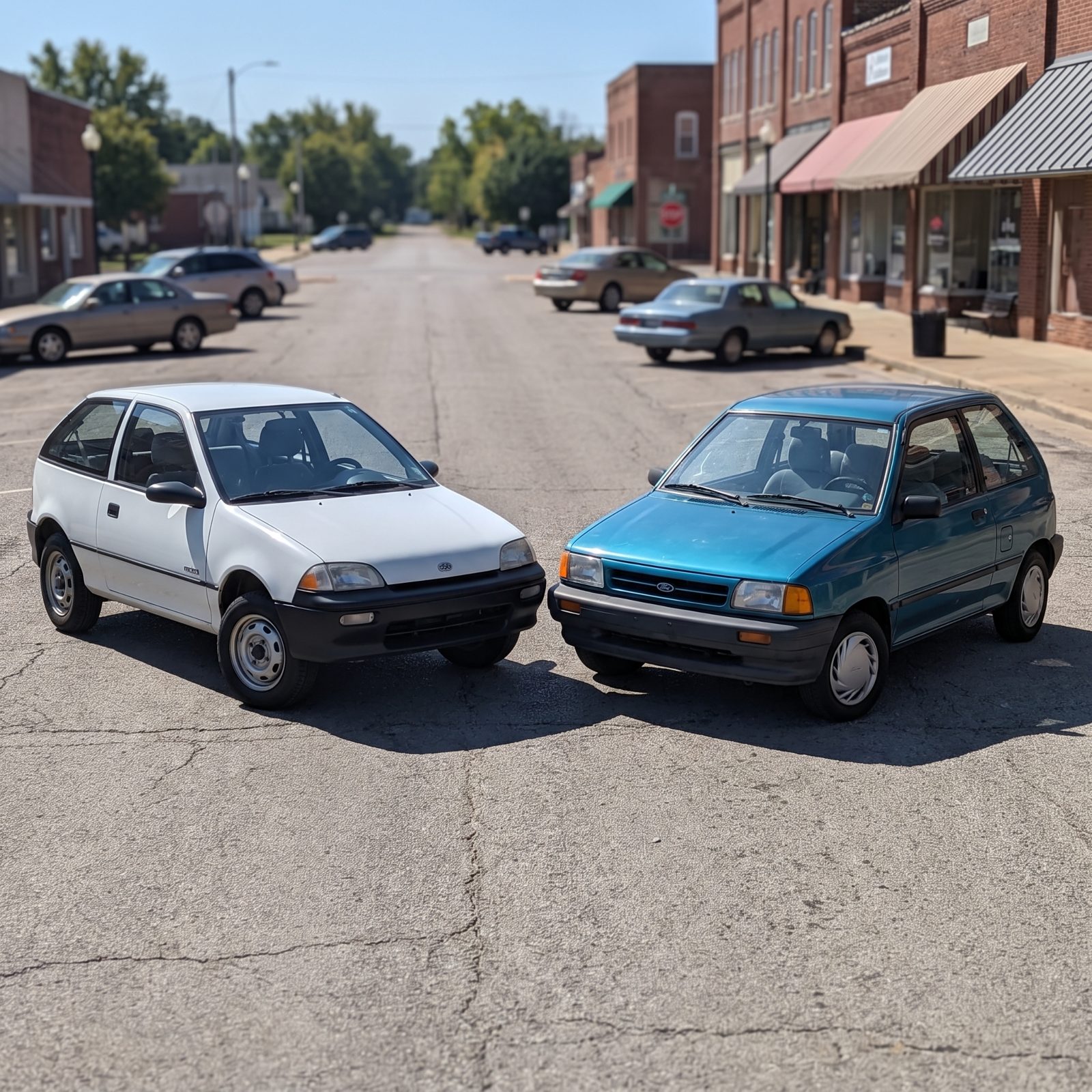
Gas spikes handed the Metro a second life it never earned new. The three-cylinder XFi could crack 50 mpg, and once pump prices climbed, that number turned into a personality. People brag about it now. There are forums.
The Festiva was just as thrifty and arguably built a touch better. It never got a mascot number, though. The Metro owns “the frugal car,” and the Festiva is the one you have to explain.
8. Suzuki Samurai vs. Daihatsu Rocky: Surviving the Scandal
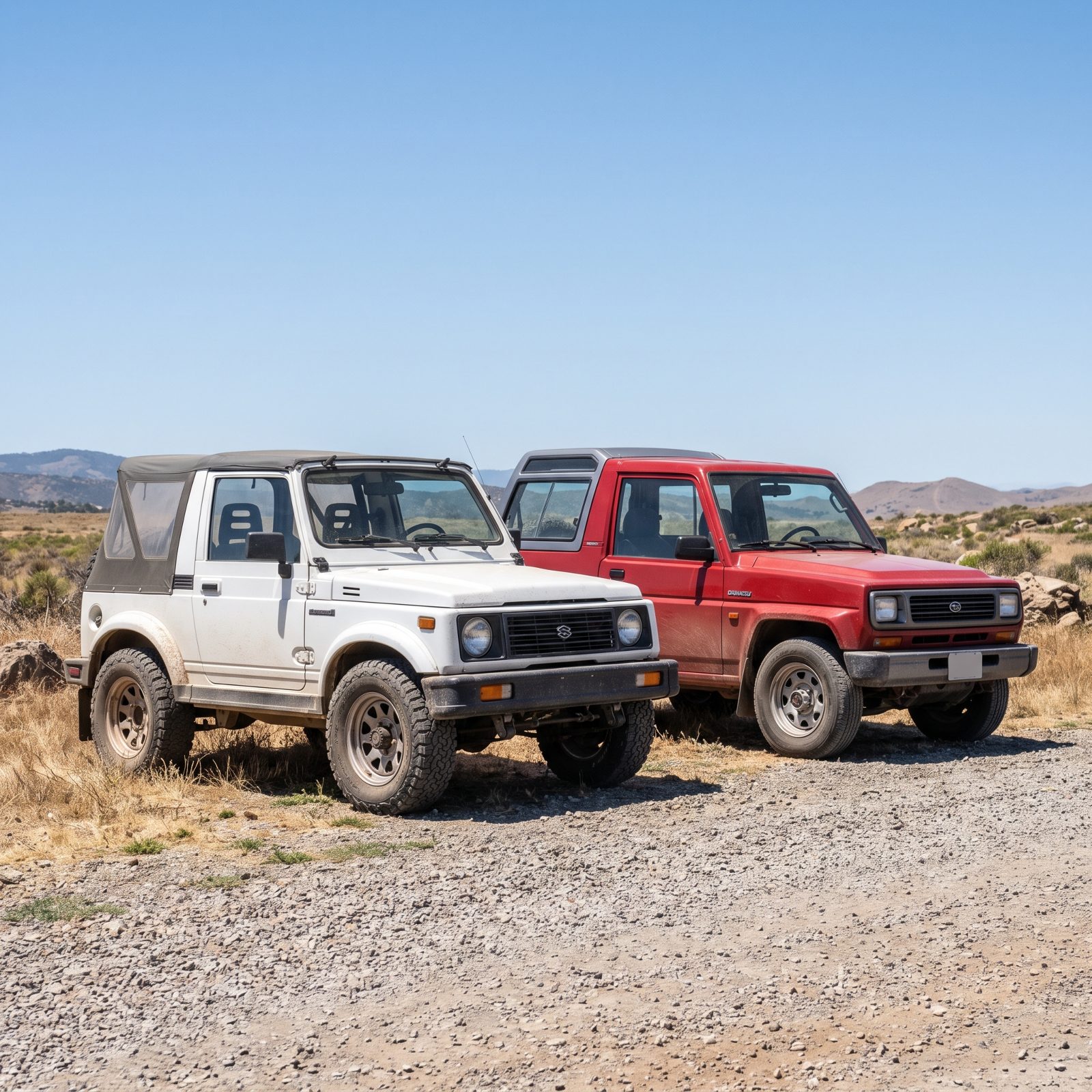
A magazine said the Samurai could roll. Suzuki fought it for years. You’d figure bad press would bury a cheap 4×4, but the opposite happened — the controversy made the Samurai famous, and famous keeps a cheap truck breathing.
The Daihatsu Rocky was a solid little rig that almost nobody argued about. No fight, no headlines, no cult following. It left the US market, dragged its parts network out the door with it, and now you barely spot one. The Samurai, scandal and all, is still clawing up hillsides on weekends.
7. Geo Tracker vs. Isuzu Amigo: Parts You Can Still Find
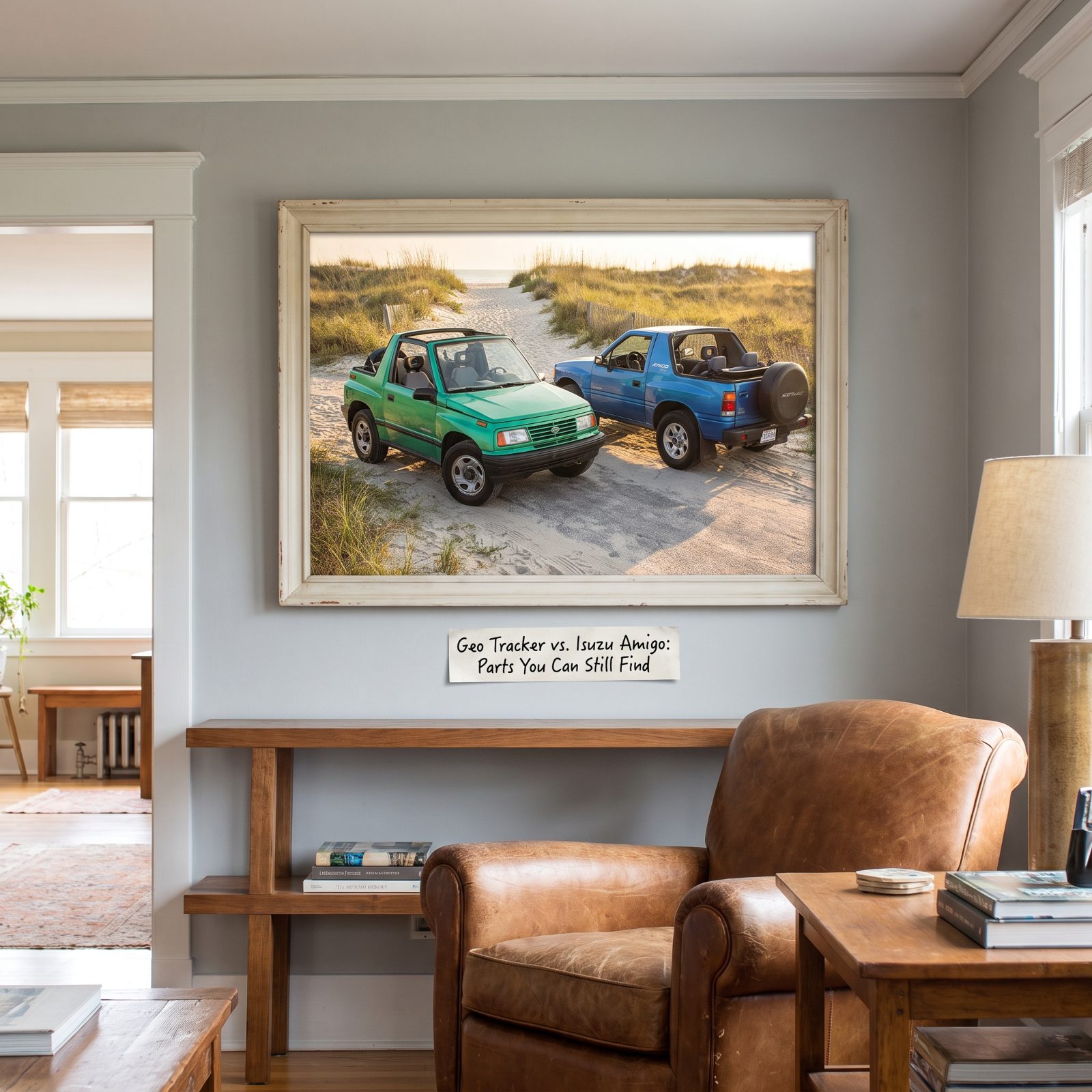
The Tracker shared guts with the Samurai and, later, the Suzuki Vitara. That matters more than it sounds. When a 4×4 is dead simple and its parts bins overlap three other vehicles, it stays fixable — and fixable cars survive while orphans don’t.
Honestly? The Amigo was the better-looking truck of the pair. But its parts network thinned out fast, and chasing a dead sensor on an orphan turns into a scavenger hunt. The Tracker kept rolling because you could keep it rolling cheap.
6. Jeep Cherokee XJ vs. Chevrolet S-10 Blazer: Built to Be Modified
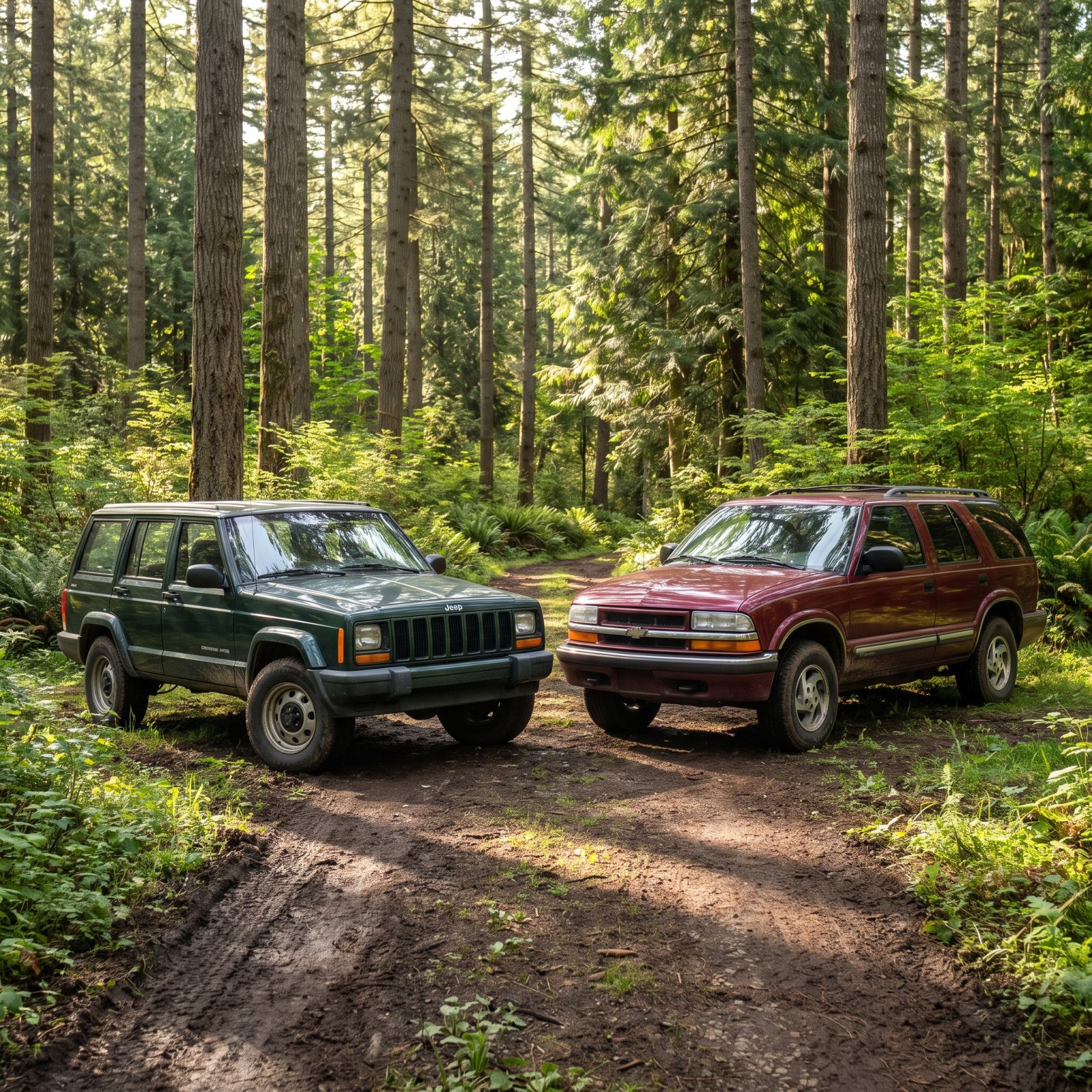
The XJ’s genius was its flat, boxy, overbuilt simplicity. Solid front axle, a 4.0 inline-six that just refuses to quit, and a body shape that welcomes every lift kit and bumper the aftermarket ever cooked up. It became a platform, not just a truck.
The S-10 Blazer sold well and did its work. No industry ever grew up around it, though. You modify a Cherokee because the whole world already did. You modify a Blazer alone, and alone gets expensive fast.
A cheap truck that invites modification doesn’t die. It just gets passed down and rebuilt.
5. Subaru BRAT vs. Volkswagen Rabbit Pickup: The Seats in the Bed
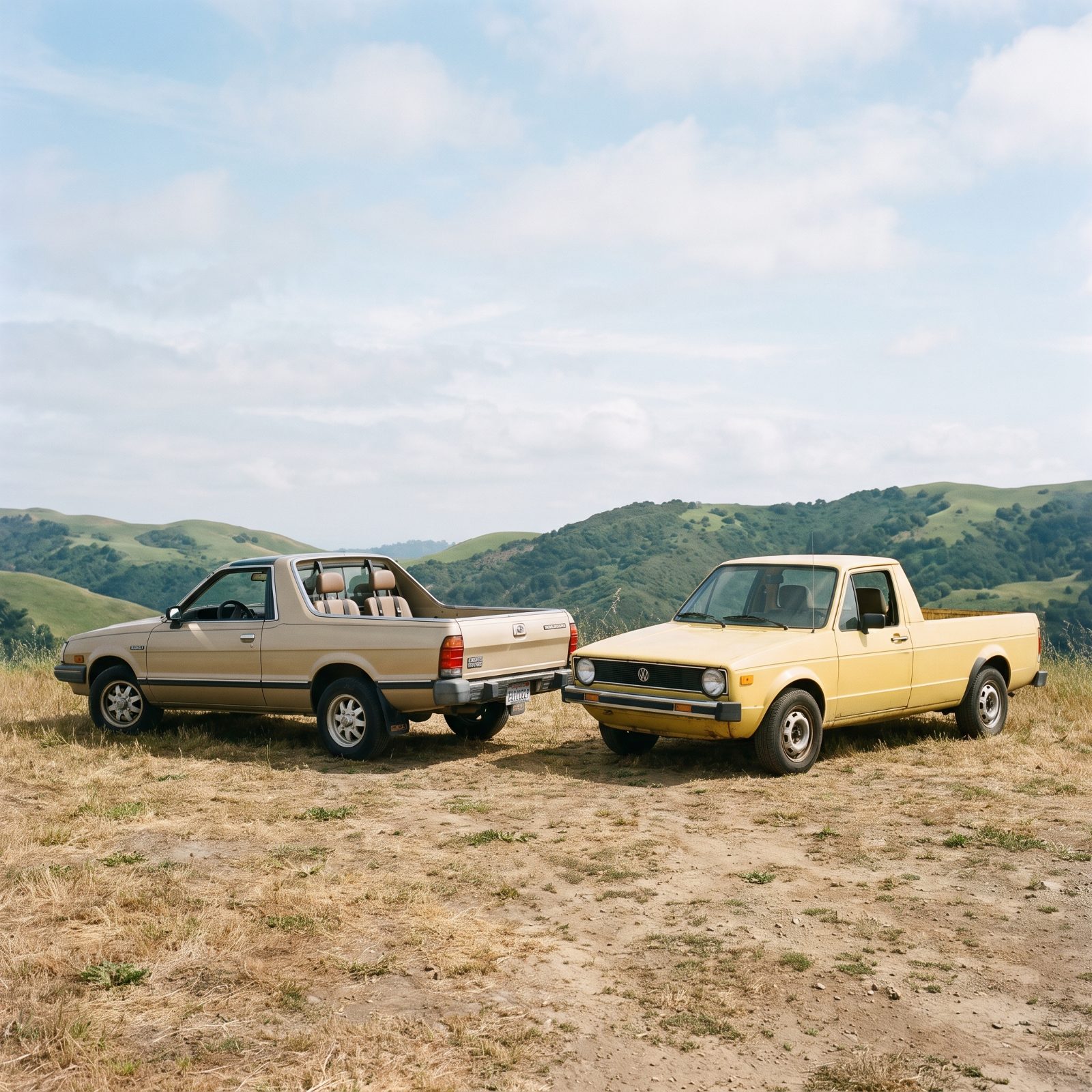
Subaru bolted two plastic seats into the bed of a little truck to dodge an import tax. That’s it. That’s the whole reason. And that absurd, mildly dangerous detail is exactly why people remember the BRAT and forget almost everything else about it.
The Rabbit pickup was the more sensible machine — efficient, useful, VW-tidy. Nobody tells a story about a sensible truck, though. They tell the story about the seats in the bed. Weird wins; sensible gets forgotten.
4. Škoda Favorit vs. Yugo Sana: The Car That Marked a Turning Point
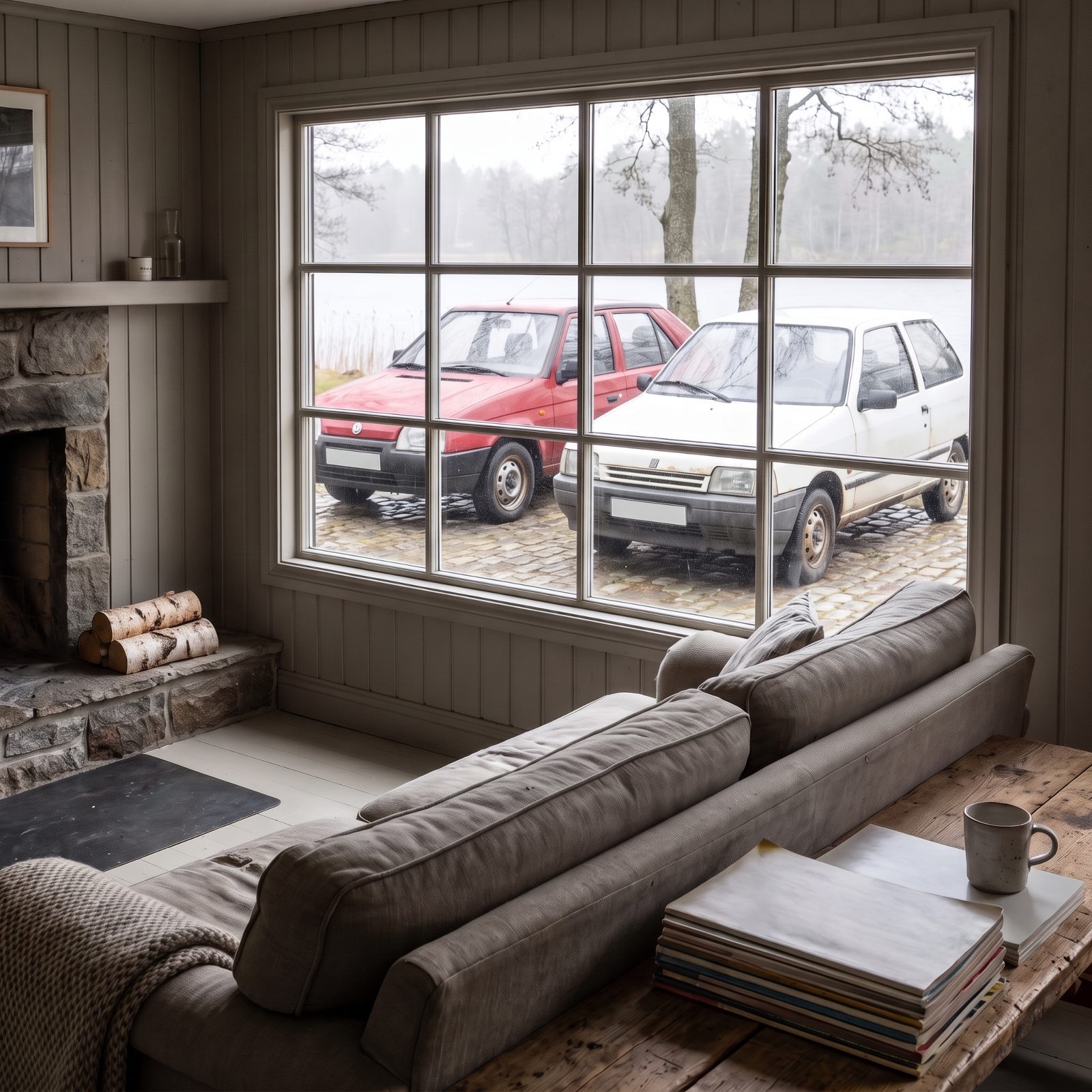
The Favorit was the last car Škoda built before Volkswagen bought in and turned the brand around. That makes it a marker, and people preserve markers. The car becomes the before-photo of a success story, and that kind of context is worth hanging onto.
The Sana had no such ending. Yugo was collapsing, war was coming to Yugoslavia, and the car got orphaned mid-sentence. No redemption, no corporate rescue, no reason to save one over the next. History handed the Favorit a purpose and left the Sana with nothing.
3. Daewoo Lanos vs. Kia Sephia: Two Cars With No Personality to Lose

Would you like to save this?
Let’s just say it plainly: neither of these earned a thing. The Lanos and the Sephia were competent, cheap, and utterly without character. No famous backer, no scandal, no weird detail, no number worth bragging about.
A cult car needs a hook — one quirk you can point at. Both of these were engineered to be forgettable, and boy, did they succeed. That’s no insult to the engineering. It’s simply why you’ll never find a club for either. Nothing to gather around.
2. Yugo GV vs. Hyundai Excel: When Being the Worst Made It Collectible
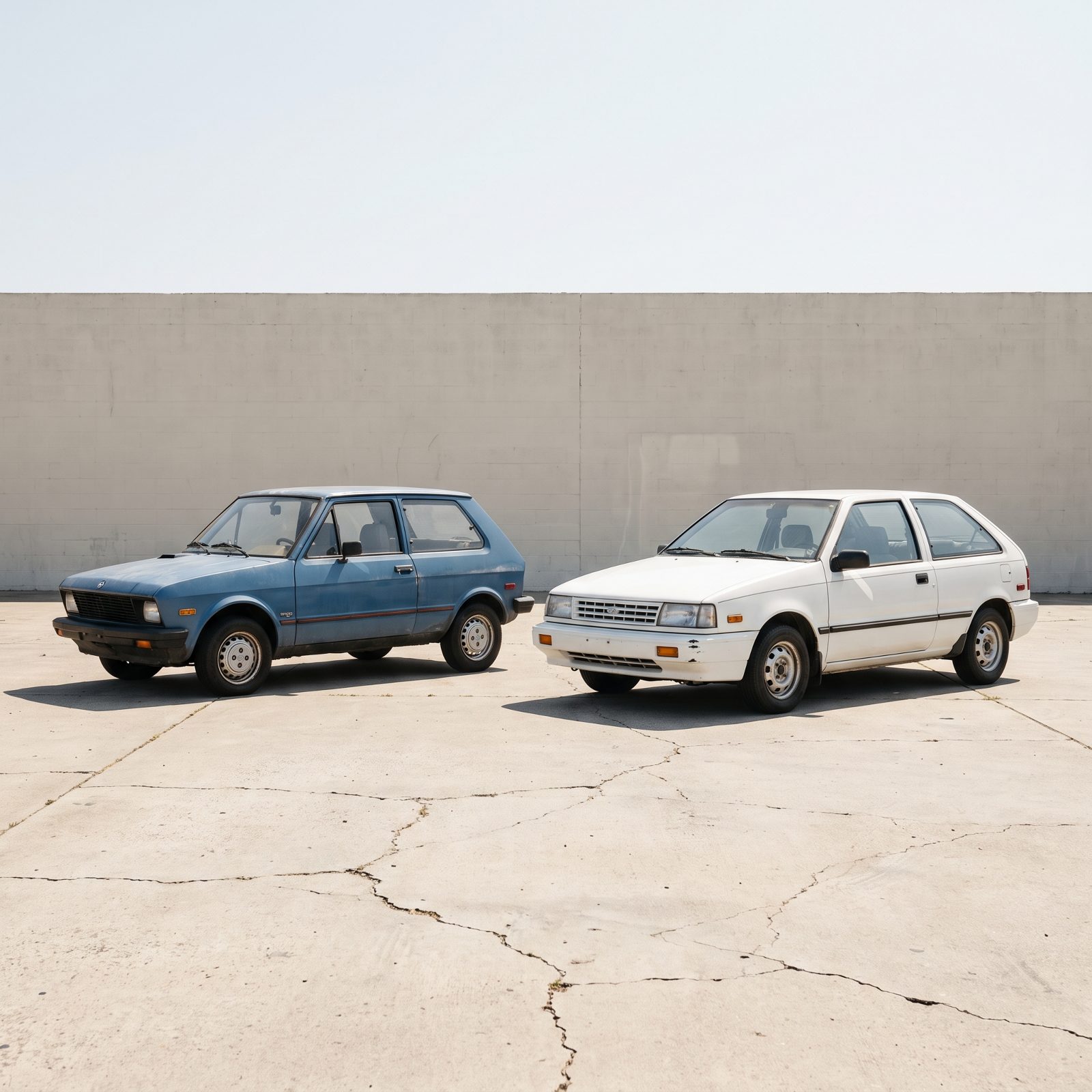
The Yugo became a punchline, and the punchline saved it. “Worst car ever sold in America” is a brutal review and a wonderful story. People collect it on purpose now, the way you’d frame a hilariously bad souvenir. Notoriety is its own kind of fame.
The Excel was the bigger disaster, just in slow motion. It sold huge, built Hyundai’s American foothold, then rusted and broke and dragged the brand’s name through the mud for a decade. But it was boringly bad rather than memorably bad. Hyundai recovered, improved, and left the Excel in the ditch.
1. Mazda MX-5 Miata vs. Mercury Capri: A Focused Mission Created a Movement
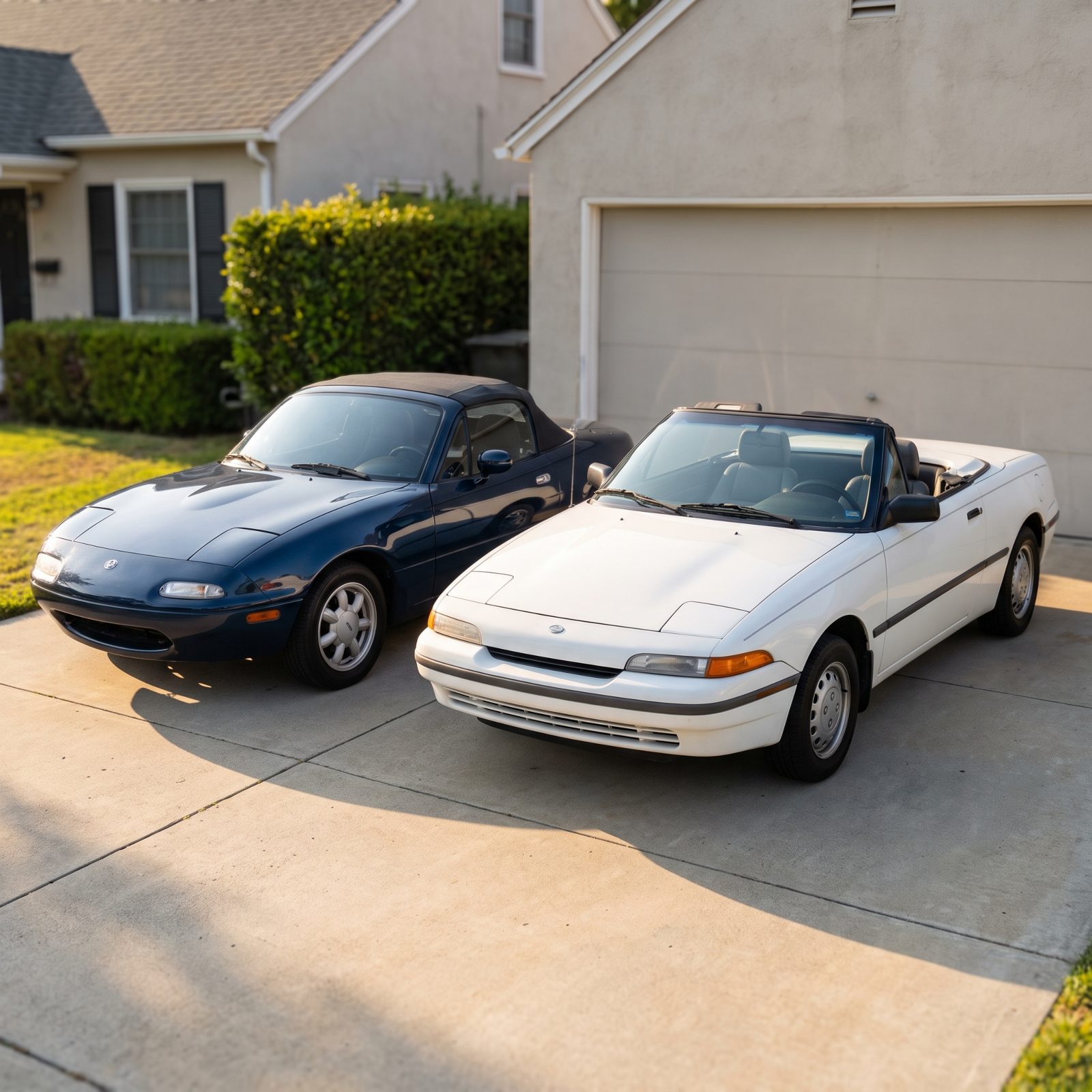
On paper these two should’ve been the same story. Both arrived around 1990, both small and cheap and open-topped, both aimed at the person who wanted a little fun without a second mortgage. One is still a thriving cult. The other is a trivia answer.
The Miata won because Mazda picked one thing and refused to flinch. Rear-wheel drive. A manual that snicks like a bolt-action, fifty-fifty-ish balance, curb weight under a ton. The engineers studied the old Lotus Elan and asked what it felt like, not what it measured, and that answer shows up every time you turn the wheel.
The Capri? Front-wheel drive, built on Mazda 323 bones through Ford’s Australian operation, and it drove like exactly that. Pleasant. Forgettable. It never had a mission, just a market slot to fill.
Thirty-some years on, parts for a Miata turn up everywhere, and every generation still drives like the first one promised. The Capri faded because nobody ever had a reason to keep one. That gap between a mission and a slot is the whole lesson, and it’s worth knowing before you spend a dime on anything with a soft top.