
Would you like to save this?
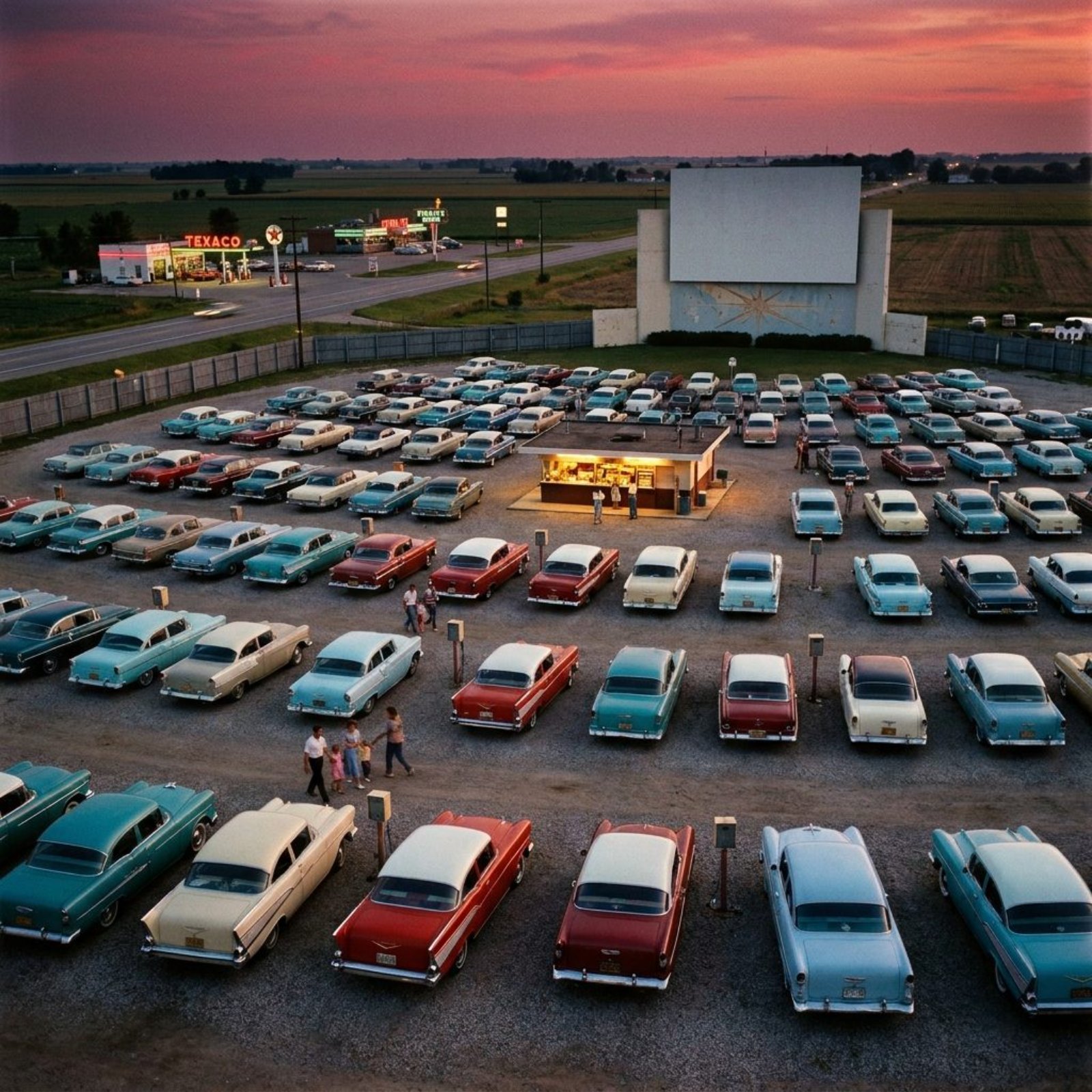
Gravel crunched under the tires before you saw the screen. A kid in the backseat had already spilled grape soda down his shirt while dad fished three crumpled dollars out of his wallet at the ticket booth. Projector still warming up. Speaker post waiting. Cicadas, exhaust, popcorn grease drifting over from the concession stand a hundred yards off — that was Friday night in 1965. The drive-in survived. Almost every ritual around it did not.
26. The Parking Lot: Chrome Sedans Then, Trucks and SUVs Now
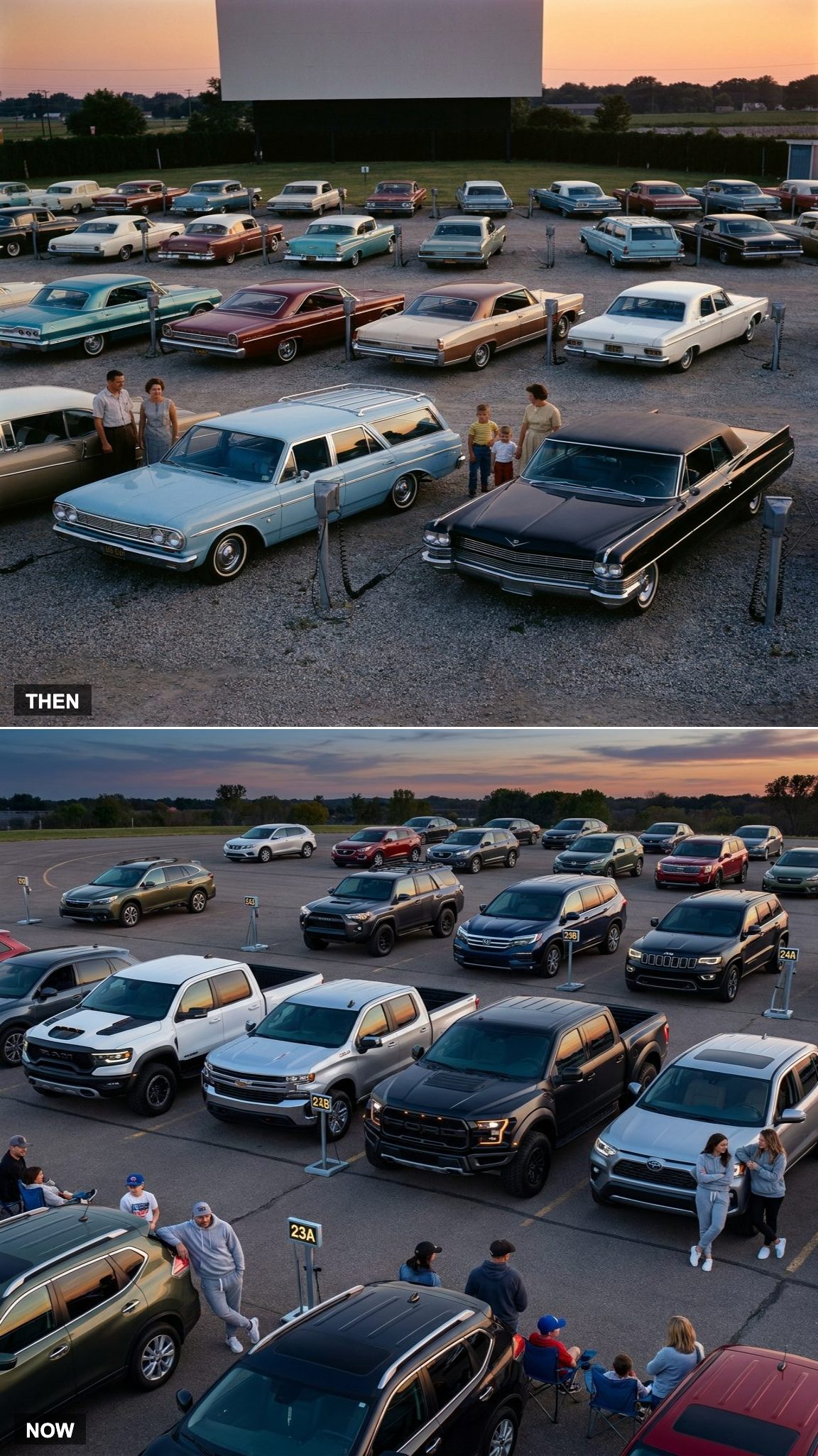
In 1965, the lot was a rolling showroom. Bench seats wide enough for four kids, tail fins catching the last of the sunset, chrome bumpers throwing back the concession stand light. Every car was a sedan or a wagon because that’s what families drove, and the drive-in was where families went.
Now the lot looks like a truck dealership after hours. Lifted pickups, three-row SUVs, the occasional crossover — nothing sits low, nothing has a bench seat, and the vehicle in front of you probably blocks the screen. That’s why theaters started asking trucks to park in the back rows.
25. The Sound: Window Speakers Traded for FM Radio
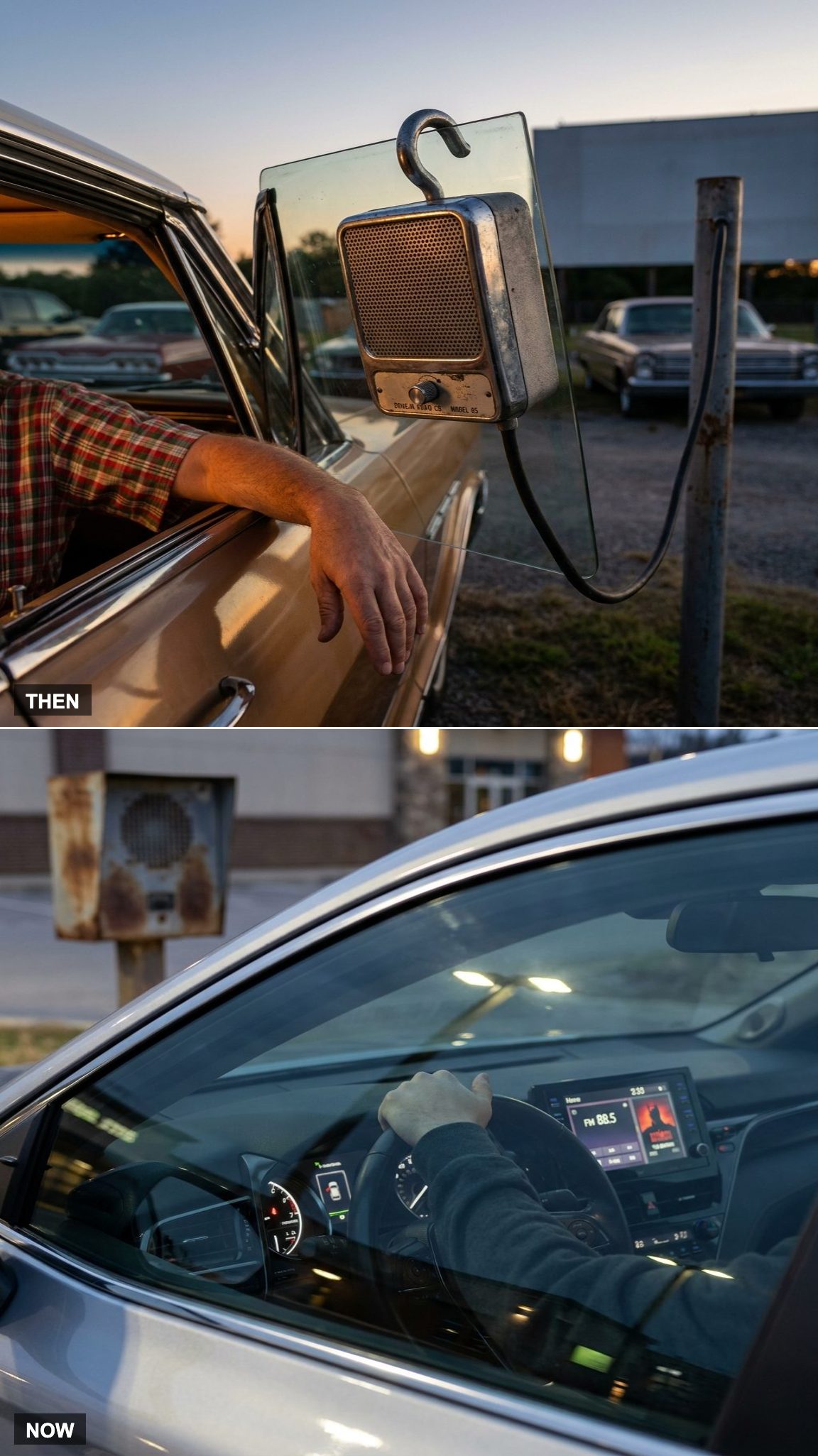
The speaker was hardware you had to remember. Roll the window down, hook it over the glass, twist the knob, and pray yours wasn’t the dead one. Half of them buzzed, a quarter didn’t work at all, and every summer somebody drove off with one still clipped to the window and tore the cable clean out of the post. Every drive-in kept a graveyard of them behind the concession stand.
Tune to 88.5 and the movie plays through your car stereo. Cleaner sound. Better bass. No buzz. Also no reason to roll the window down, which is part of why the whole night feels different now.
24. Kids Under the Screen: Playground Then, Backseat Now
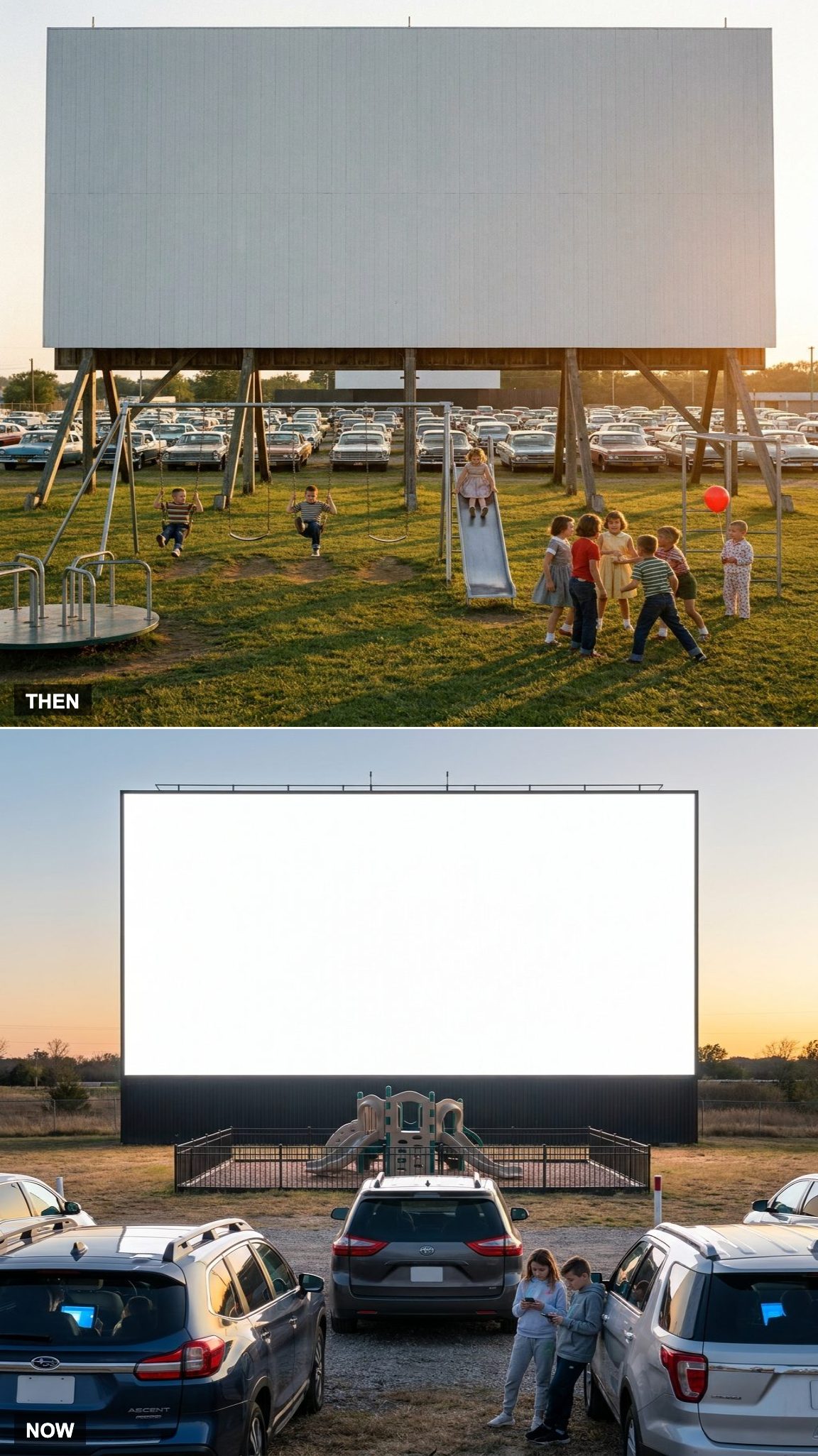
Show up at seven, movie starts at nine — two full hours of running around under the screen while your parents unfolded lawn chairs and unpacked the cooler. Every drive-in had swings, a slide, and usually a merry-go-round rusted enough to leave orange streaks on your palms. Kids in pajamas rode the swings until the projector clicked on.
The playgrounds are mostly gone. Insurance killed some, phones killed the rest. Those two hours before showtime now happen inside the car, on a tablet, with headphones on.
23. Double Features vs. the Single Show
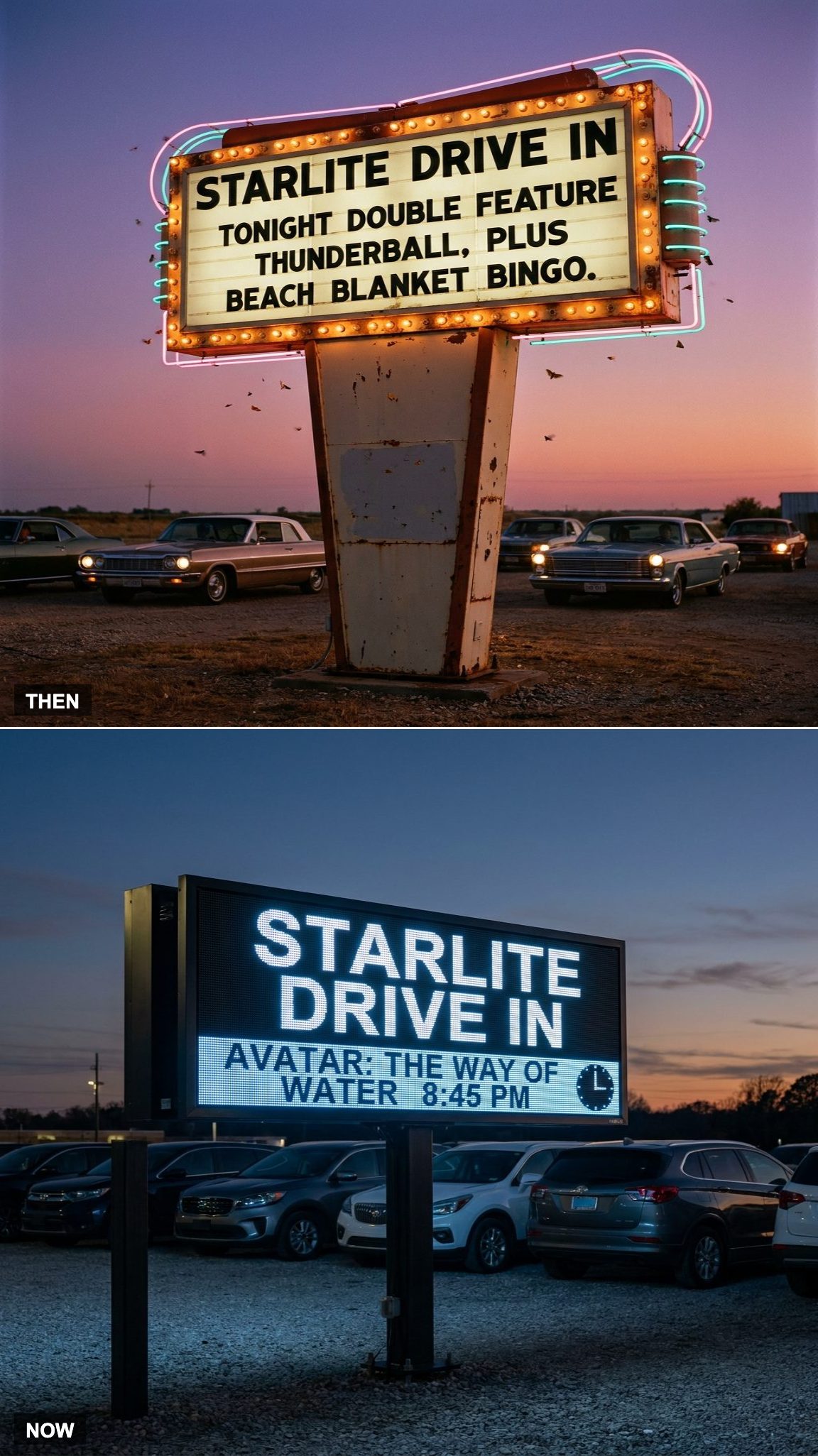
Two movies for one price. An A-picture and a B-picture, sometimes a cartoon between them, sometimes an intermission reel counting down the minutes until the concession stand closed. You didn’t drive home until midnight, sometimes later.
One film now. Costs went up, licensing rules changed, kids have school in the morning, and honestly not many adults want to sit in a truck cab until 1 a.m. anymore. Many surviving drive-ins still offer double features on selected nights, while others schedule one film or special-event programming.
22. Cash at the Booth vs. Tapping a Phone
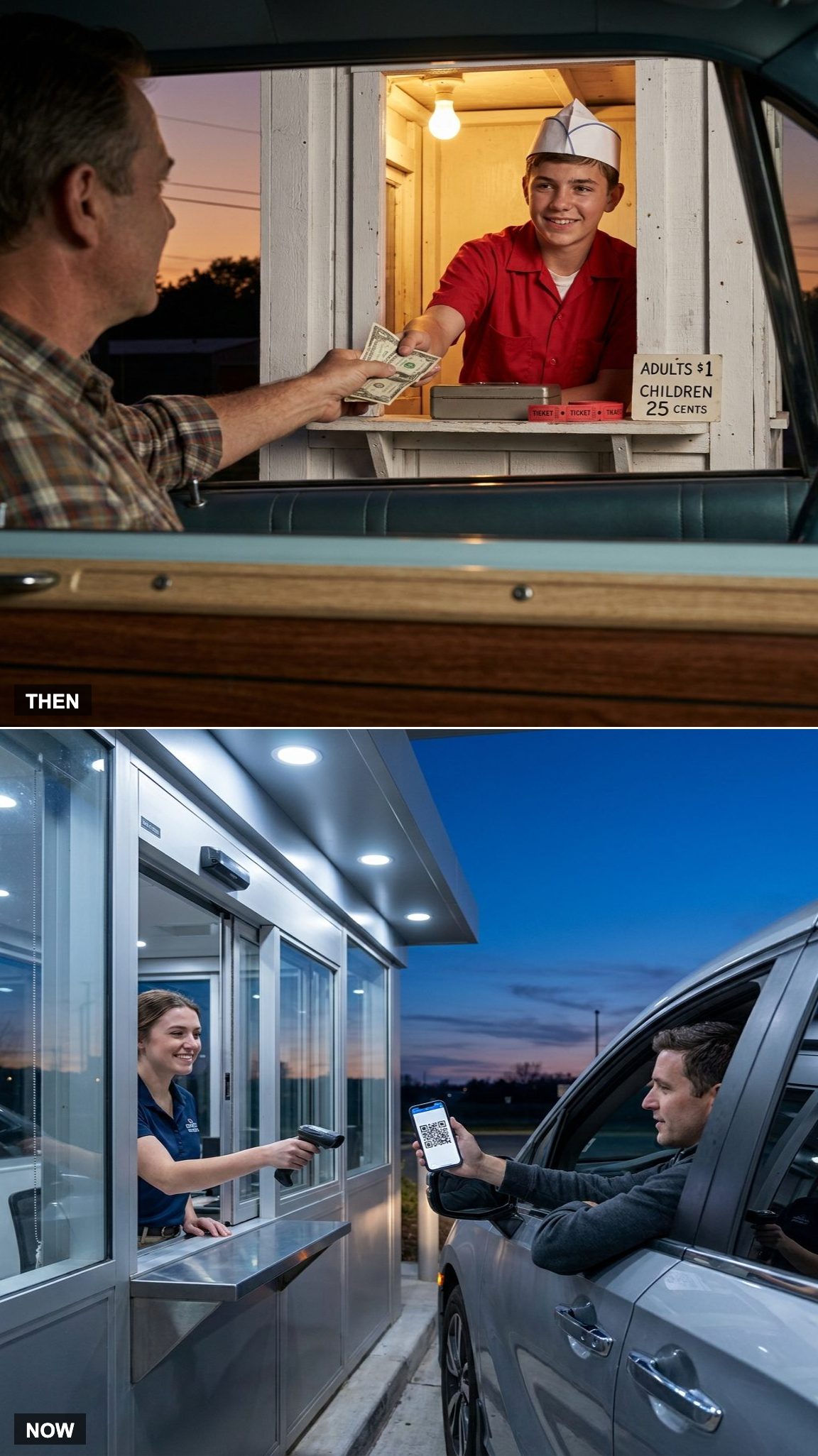
A dollar per adult, a quarter per kid, and the trunk didn’t count if you kept quiet about it. Everyone knew a kid or two was hiding in the back of the wagon under a blanket. The ticket kid knew too, and he rarely checked.
You buy online three days ahead now because the Friday show sells out. Confirmation email. QR code. Reminder text an hour before showtime. Faster and easier — and no room whatsoever for smuggling your cousins in under a picnic blanket.
21. The Station Wagon Loadout vs. the Quick Arrival
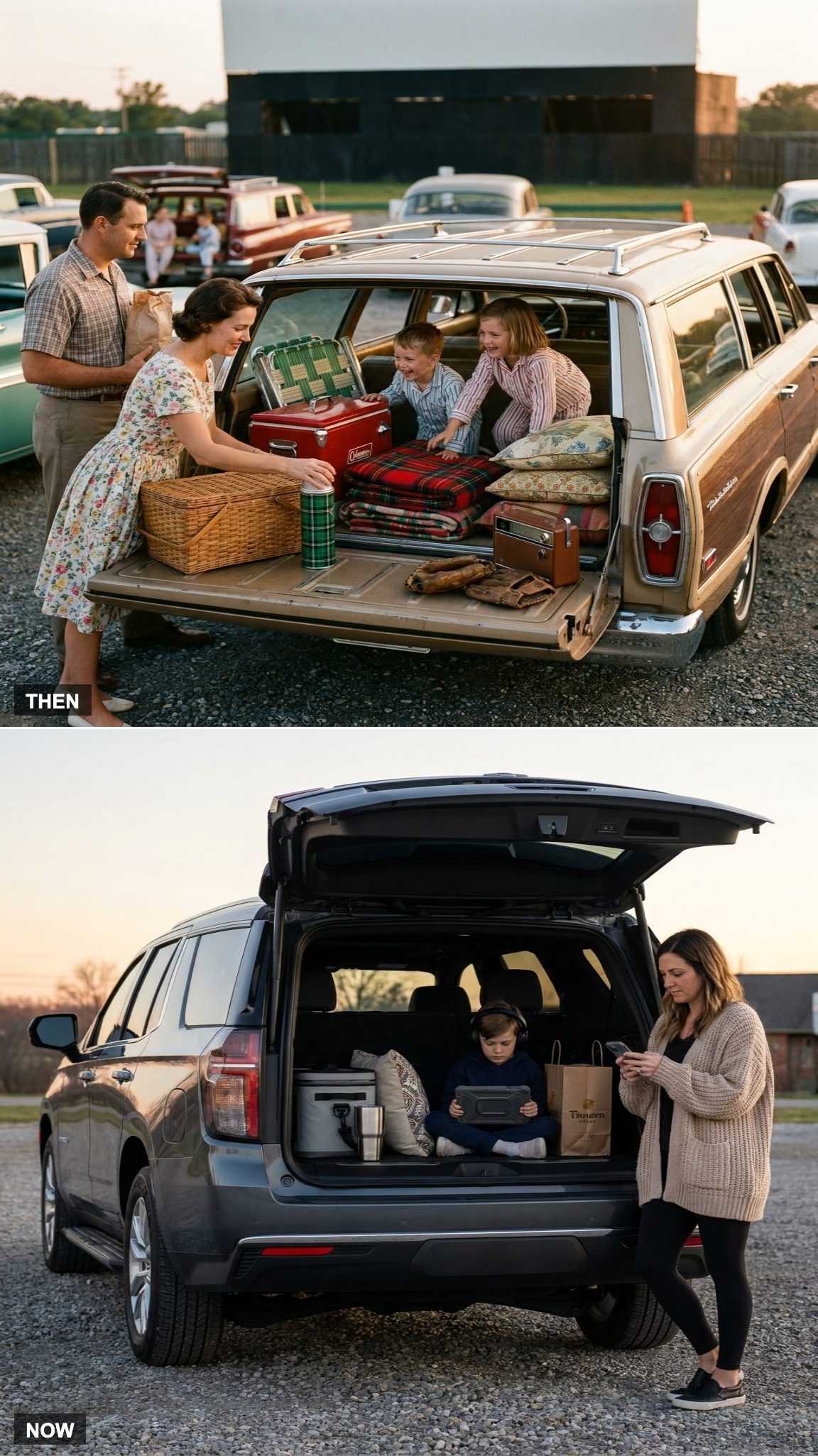
The station wagon was base camp — blankets, pillows, cooler full of RC Cola, paper bag of sandwiches mom made before you left, folding chairs for the grownups, and the back cargo area lined with quilts so the kids could stretch out. You arrived at 6:30 for a 9:00 show and every minute in between was part of the night.
People pull in at 8:45 now with a Yeti and an iPad. In and out. Nobody unfolds a chair anymore.
20. The Snack Bar Pilgrimage vs. the Cooler in the Trunk
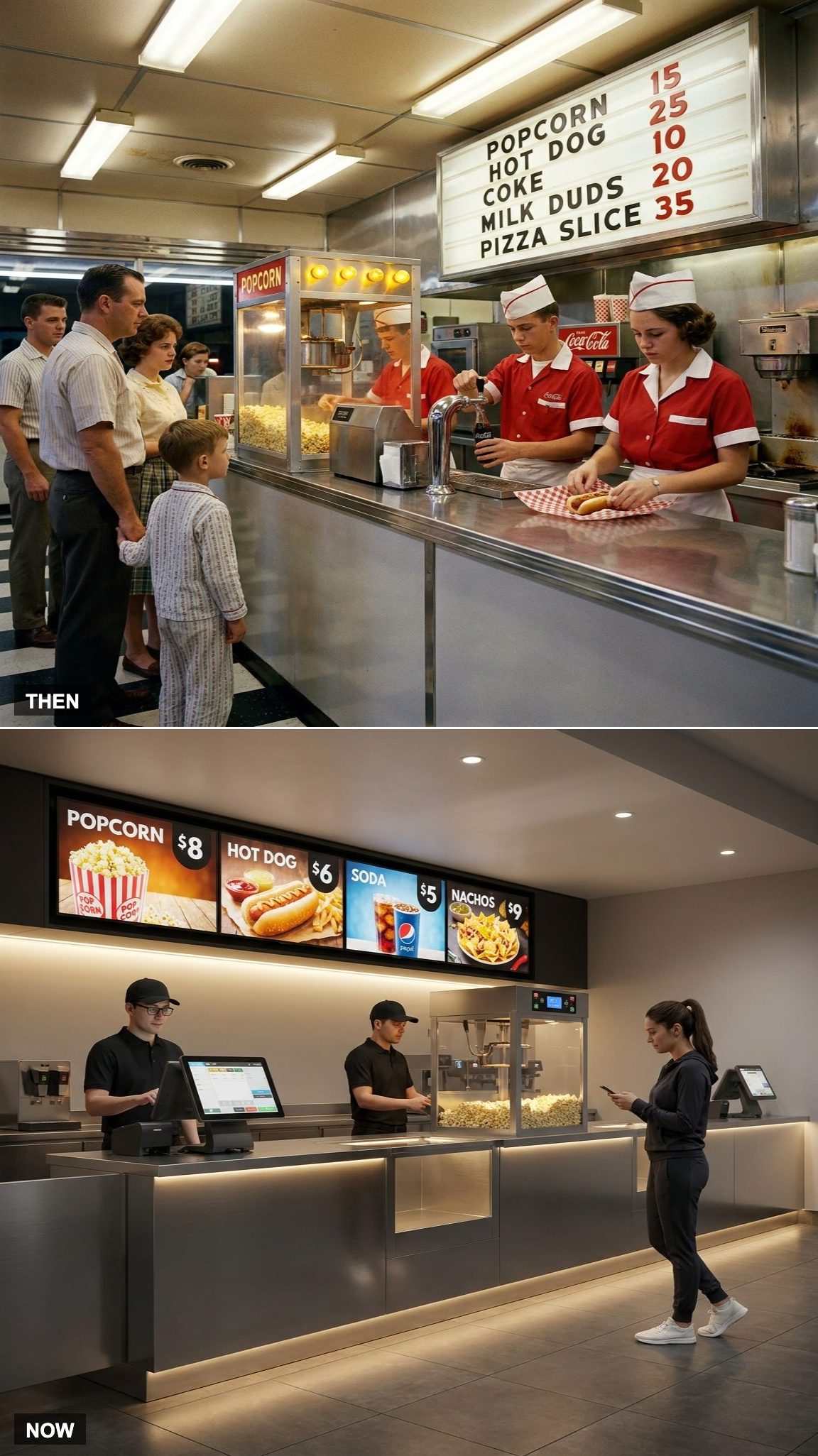
Half the reason to go was the concession stand. Popcorn popped on-site, hot dogs turning on the roller, orange drink burbling out of a plastic spigot bubble, Junior Mints and Sno-Caps in those little cardboard boxes with the tear tab on top. The walk to the concession stand between features was its own event.
Skeleton staff now. Half the cars in the lot brought their own snacks in a Yeti, theaters know it, and some allow it because fighting it is a losing battle. The stand still makes money. Nothing like it used to.
19. Neon on the Highway vs. LED at the Turn-Off
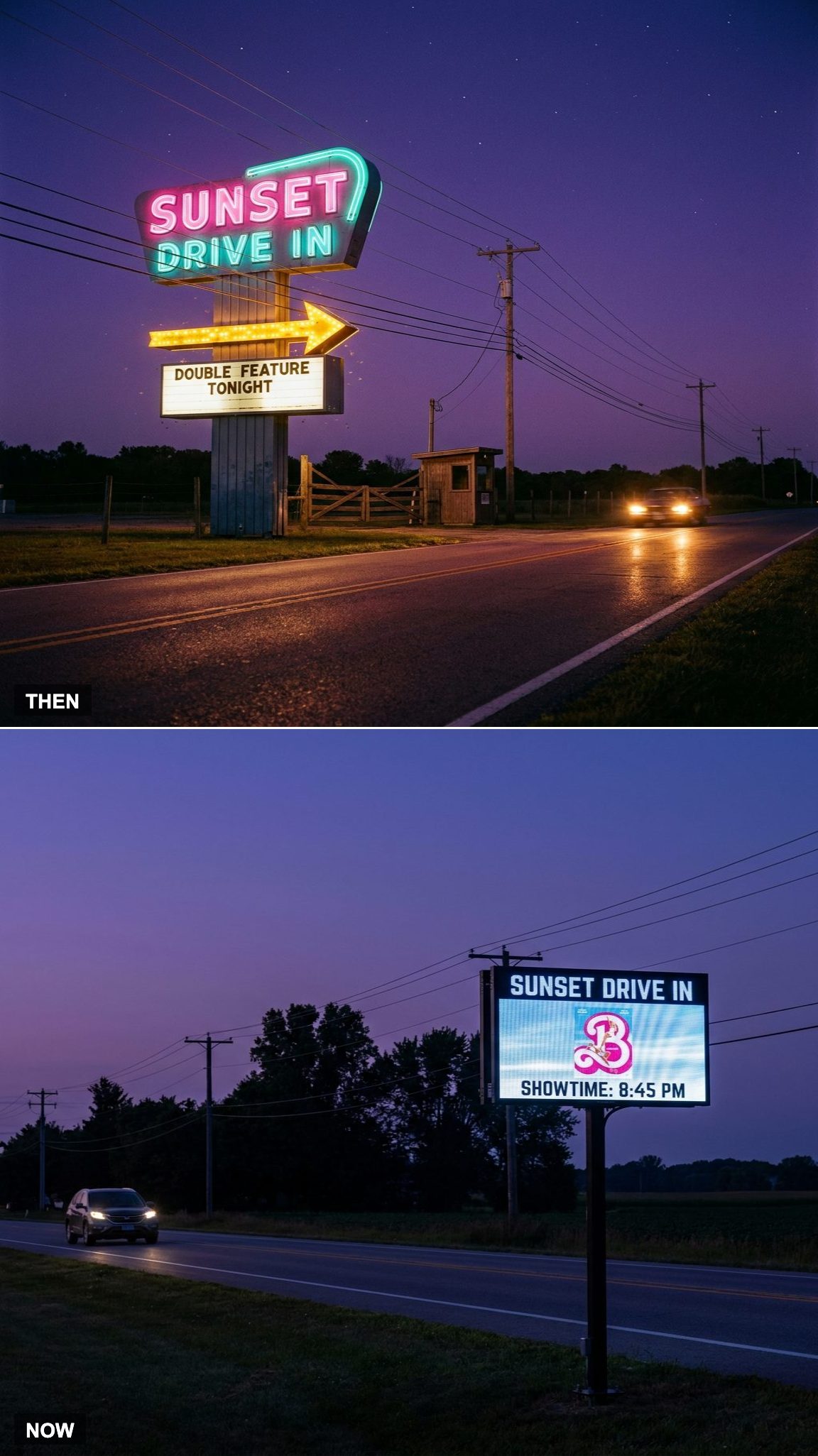
You saw the drive-in before you saw the drive-in. Ten miles out, coming up over a hill, the neon was already pulsing pink and yellow against the sky. Every drive-in had a sign that looked like a small Vegas hotel had wandered into a cornfield — tubes humming, bulbs flickering, moths finding their religion.
The signs that survived went digital. LED, programmable, weatherproof, cheaper to run, easier to read from the highway, and there’s nothing to fix when a bulb blows. Also nothing that stops you cold the way that old neon did.
18. Paper Stubs vs. QR Codes
Would you like to save this?
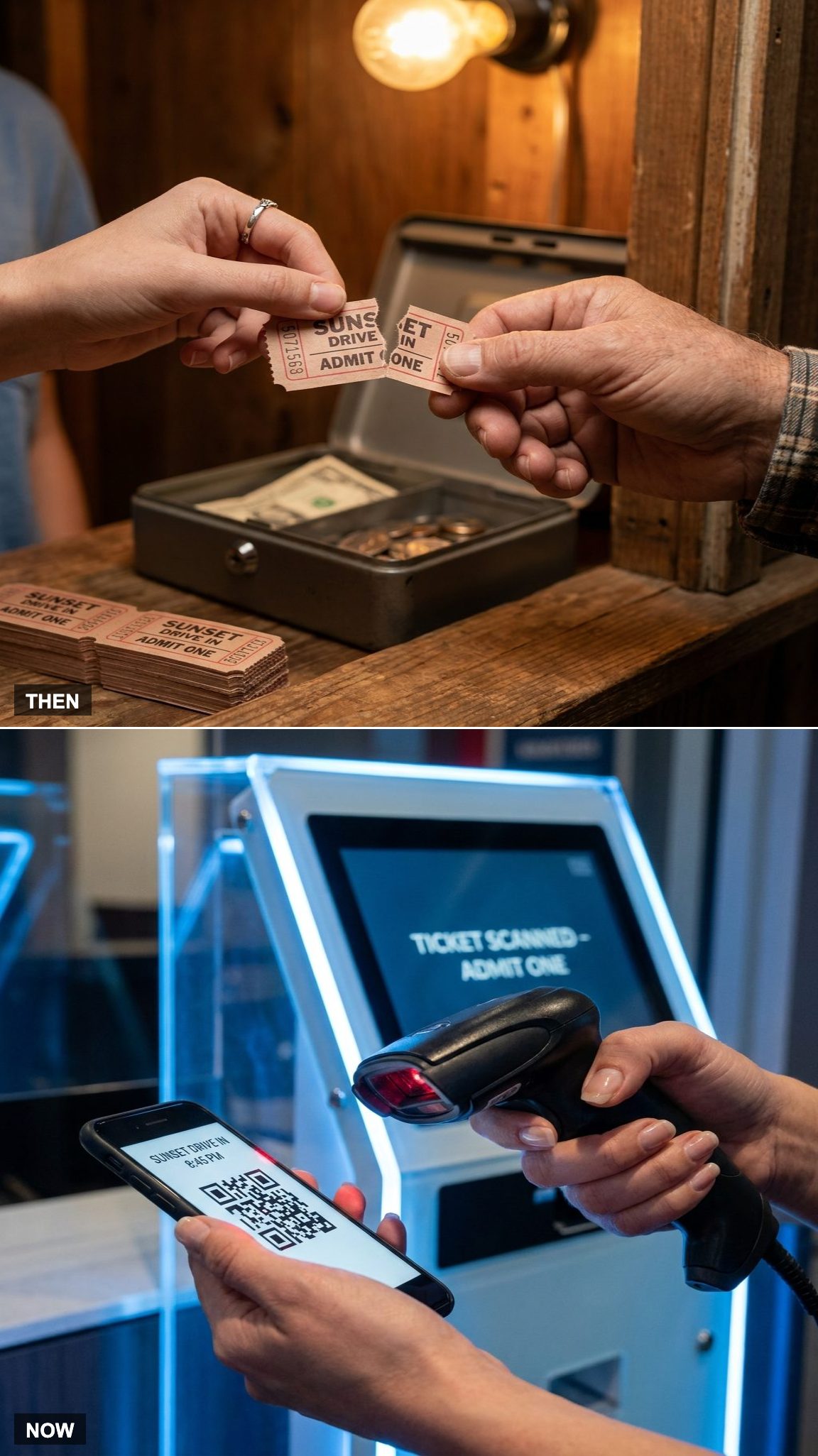
The satisfying rip of a paper stub was the first sound of the night. Half went in the attendant’s coffee can, half went in your dad’s shirt pocket, and the stubs ended up everywhere — glove boxes, wallet corners, sun visors, under the driver’s seat where you found one three years later and remembered a specific summer.
A QR code on a phone screen now. Efficient. Frictionless. Also nothing you can save. Nothing to find in a drawer twenty years from now that makes you stop what you’re doing.
17. Pajamas in the Backseat vs. Tablets Before Showtime
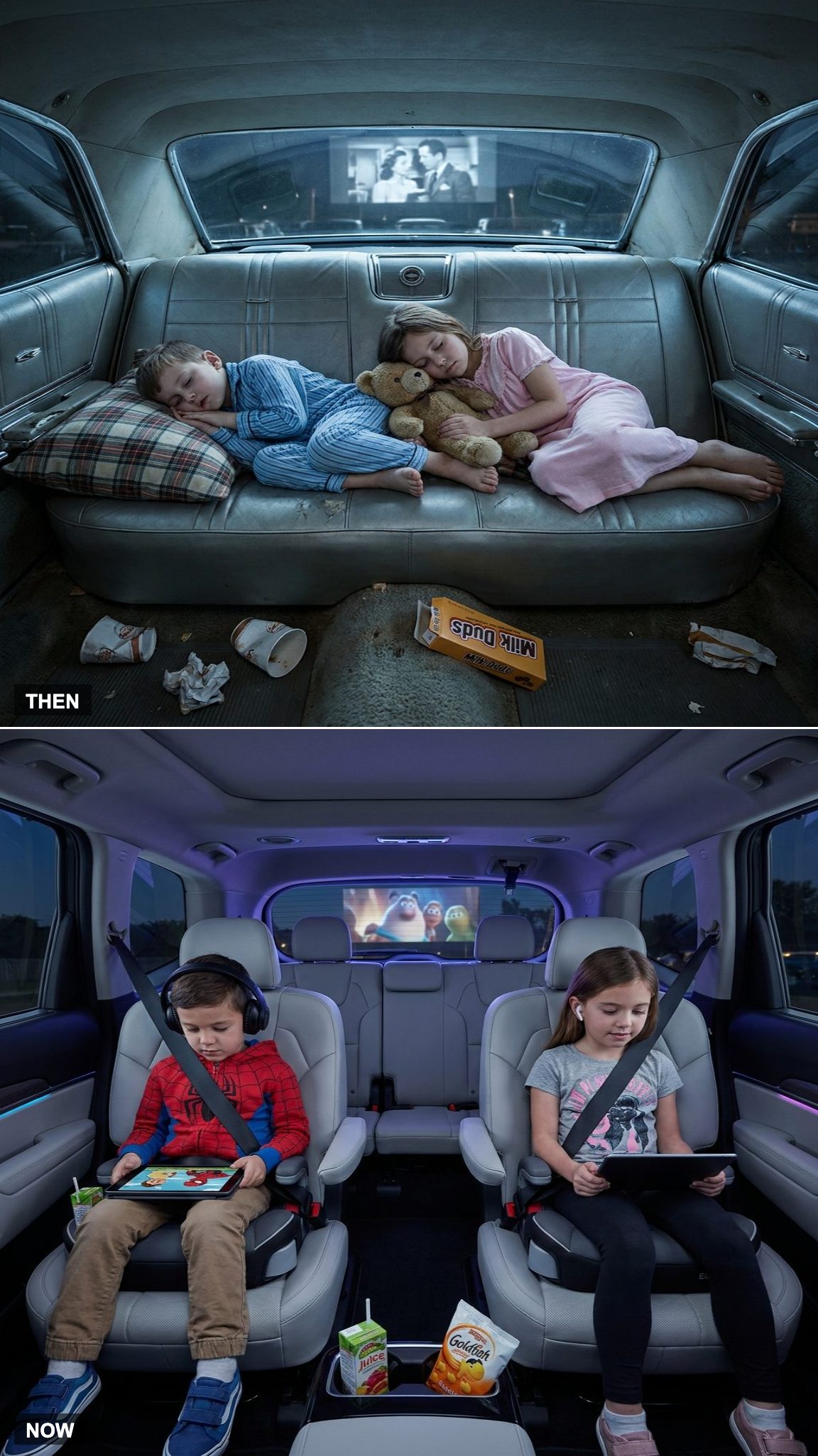
The plan never changed. Get the kids in their pajamas before you left the house so you could carry them straight from the car to bed when you got home. Half the backseat was blankets. Both kids were asleep by the end of the first feature. Nobody remembered driving home except the parents.
The kids have their own screens going before the movie even starts. Two shows playing at once — one on the big screen and one in the backseat. They aren’t asleep. They aren’t going to be. The pajamas stayed at home this time.
16. Convertibles Were the Front-Row Throne
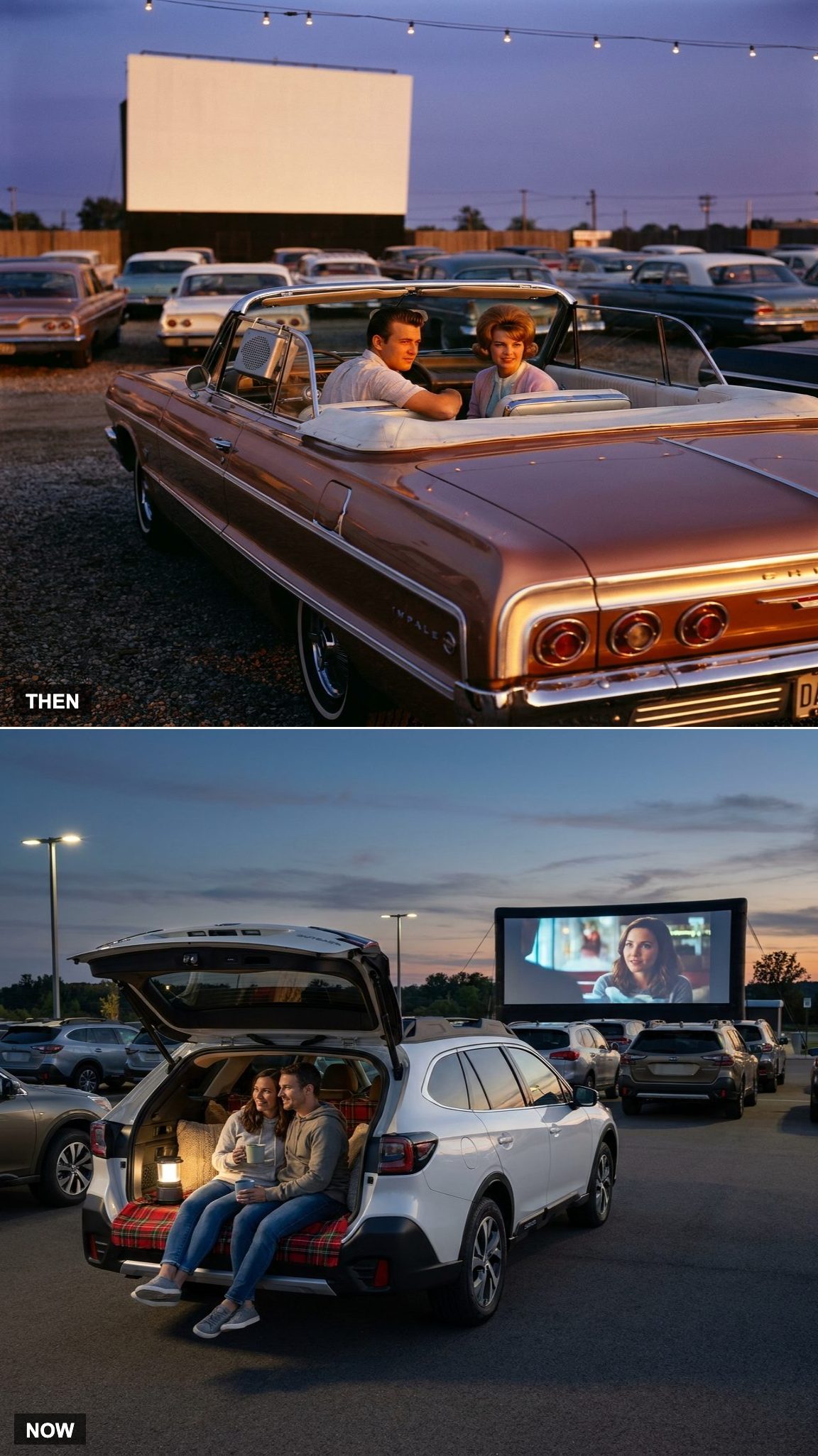
The convertible ruled the front row in 1965. Top folded down, seat backs reclined, whole sky above you and the screen filling the windshield’s absence. Bench seats meant you could stretch across them like a couch. Impala, Galaxie, Bonneville — every make had a droptop and every droptop had its moment at the drive-in.
Now the hatchback and the small SUV win the spot. Tailgate up, cargo area padded with blankets, feet dangling out the back over the bumper. The Outback and CR-V crowd shoved the chrome-bumper set aside sometime in the last twenty years. Comfort won. Style took the loss with grace.
15. The Intermission Reel Was Its Own Event
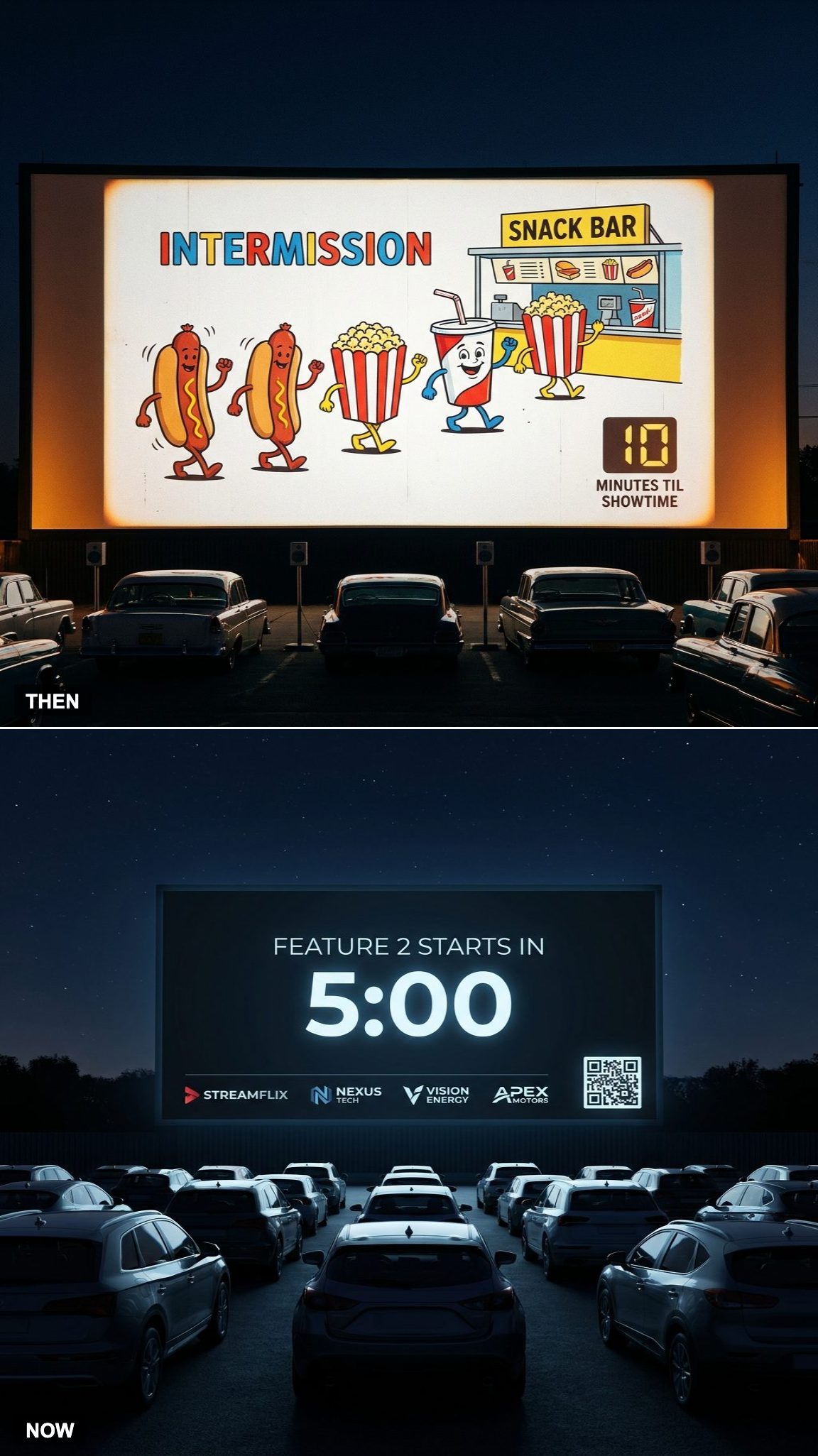
Dancing hot dogs. Singing popcorn boxes. A soda cup with tap shoes shuffling toward the snack bar while a countdown ticked away in the corner. The intermission reel was cheerful and slightly deranged, and it ran about ten minutes, which was exactly enough time to hit the restroom, order a burger, and get back before the second feature rolled.
Digital projection killed the reel dead. Most theaters now flip up a five-minute slide with a countdown timer and some sponsor logos, and a few skip intermission entirely because the second feature can just cue itself. Efficient, sure. Nobody ever hummed along to a QR code.
14. Film Projectors Clicked Through Every Reel
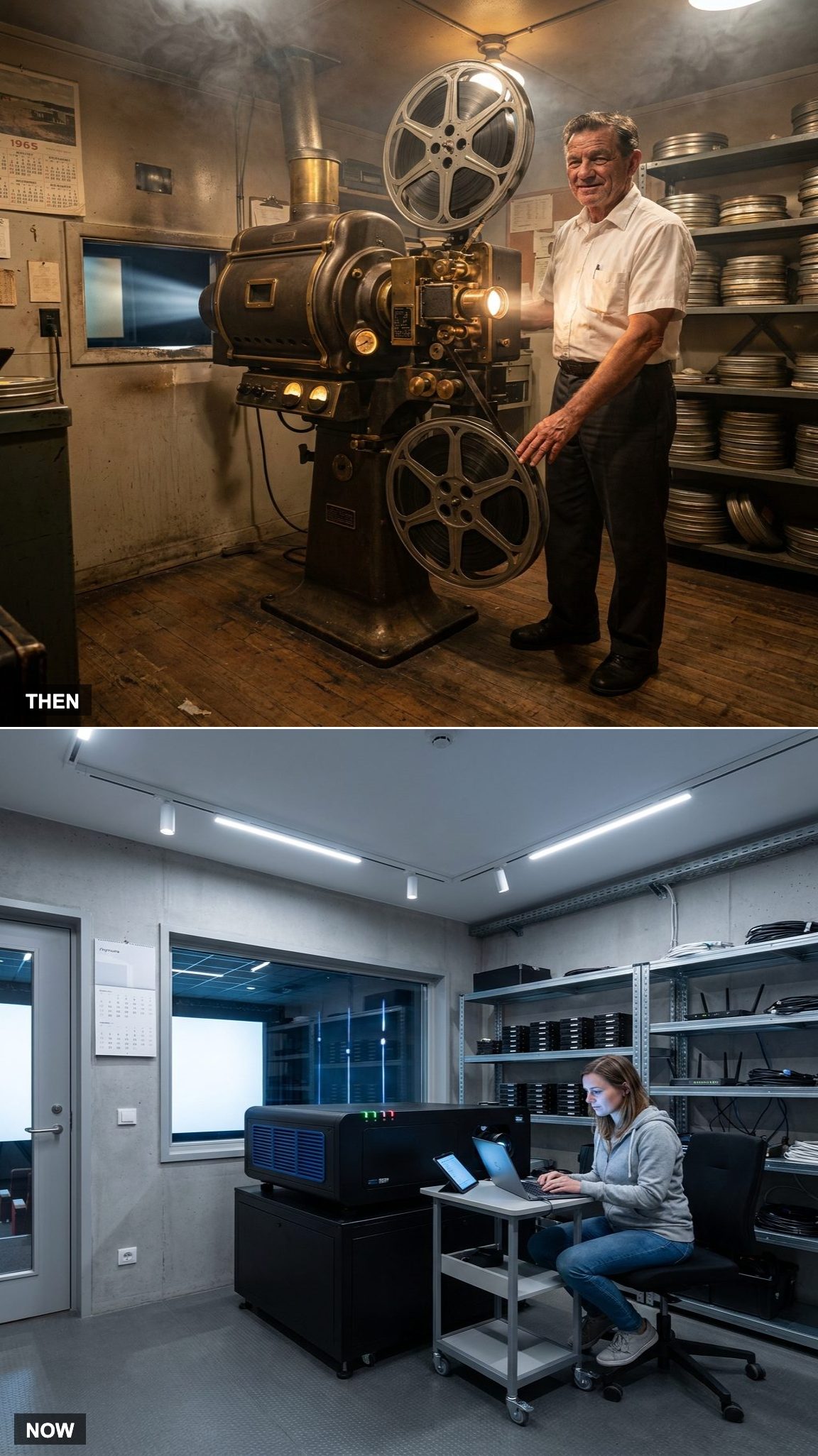
Two projectors, working in relay. When one reel ran out you’d catch the little cue mark burn into the corner of the frame and the second machine would fire up on the next reel. Miss the cue and the audience got a black screen and a chorus of car horns. The projectionist was half technician, half musician, keeping the show in rhythm.
Digital projection is a laptop and a hard drive. The whole feature loads once and plays. No reels, no cue marks, no cigarette burns punched into the corner of the frame. The picture is sharper. It is also, somehow, less alive.
13. Windshields Needed a Rag and a Rewind
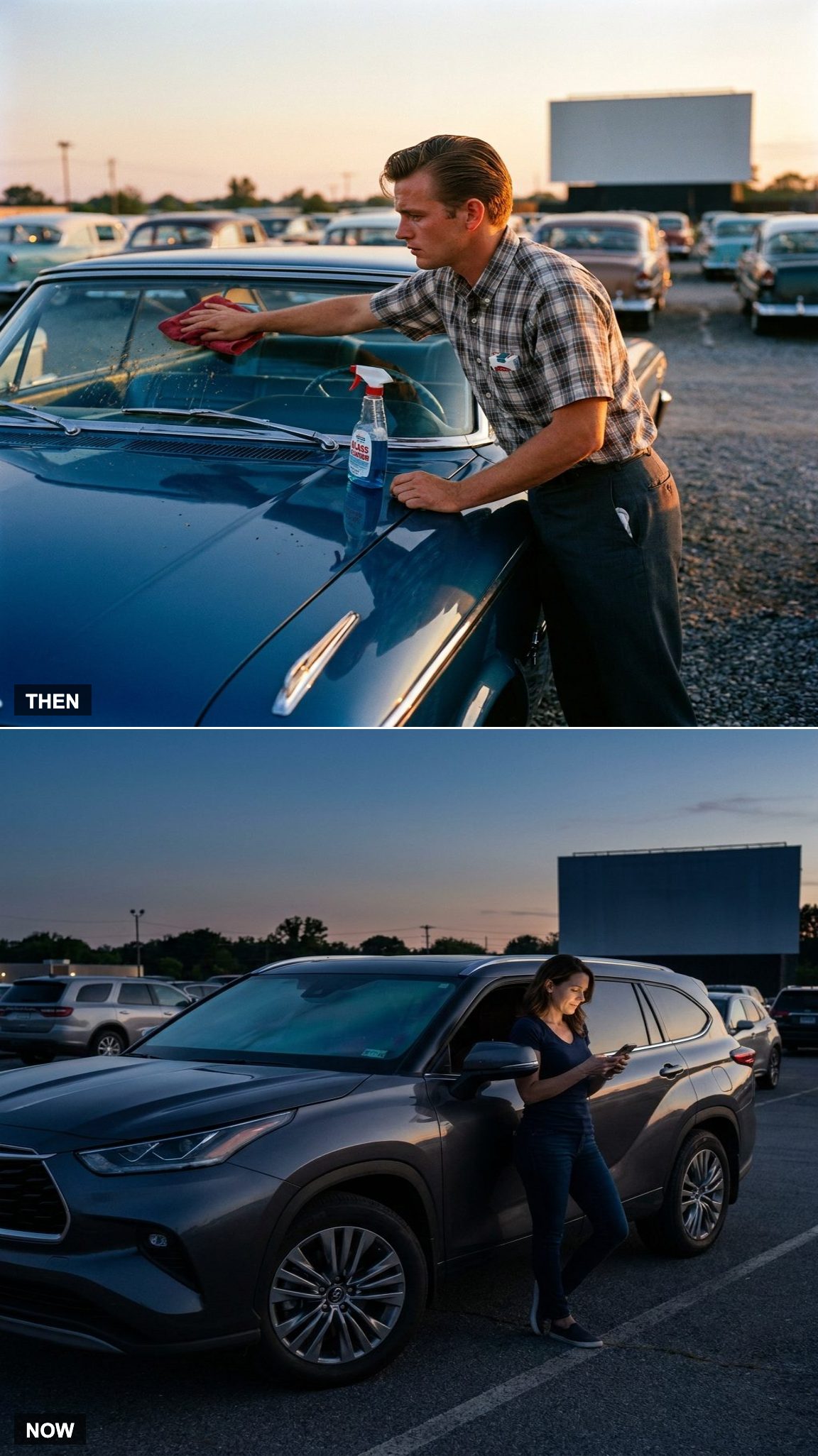
You pulled in an hour before showtime and the first ritual was the windshield. A summer drive of any distance meant a bug graveyard smeared across the glass, and the concession stand always sold Windex right next to the popcorn for a reason. Some folks kept a dedicated squeegee in the trunk just for drive-in nights.
Modern glass is treated. Cars are cleaner. Half the audience is watching from a tailgate anyway. The rag lives on in memory.
12. Blankets Went on the Hood, Not the Chair
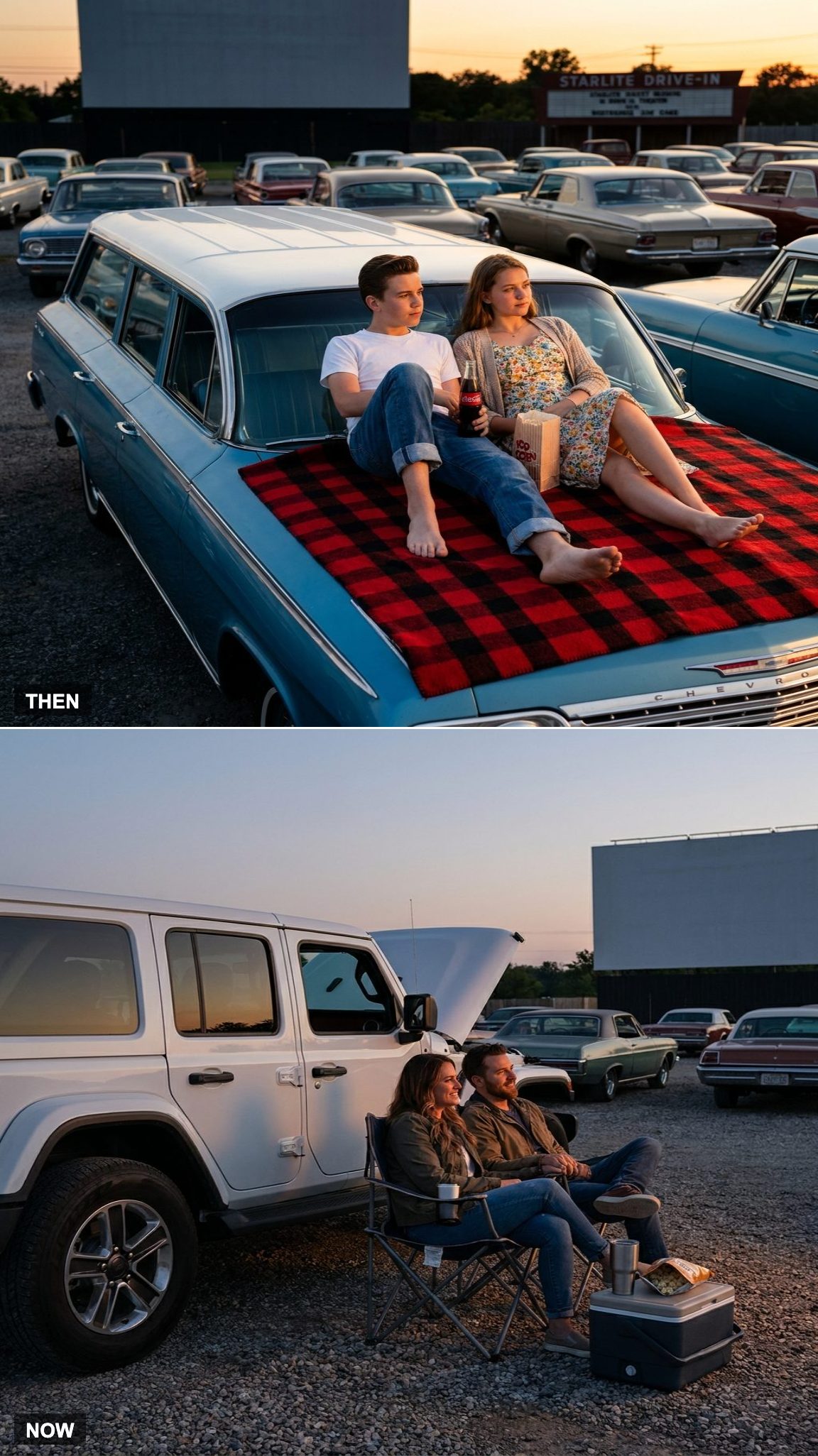
The hood of a full-size American car in 1965 was basically a couch — long, flat, warm from the drive over, big enough for two teenagers and a bag of popcorn. Throw a wool blanket across it and you had the best seat in the house. Lean back against the windshield and the whole screen was yours.
Modern hoods slope. They are shorter, curved, plastic-clad, and covered in sensors you probably shouldn’t sit on. So the blanket migrated to the folding chair beside the car. Some things a redesign takes away that no engineer ever meant to.
11. Friday Night Belonged to the Teenagers
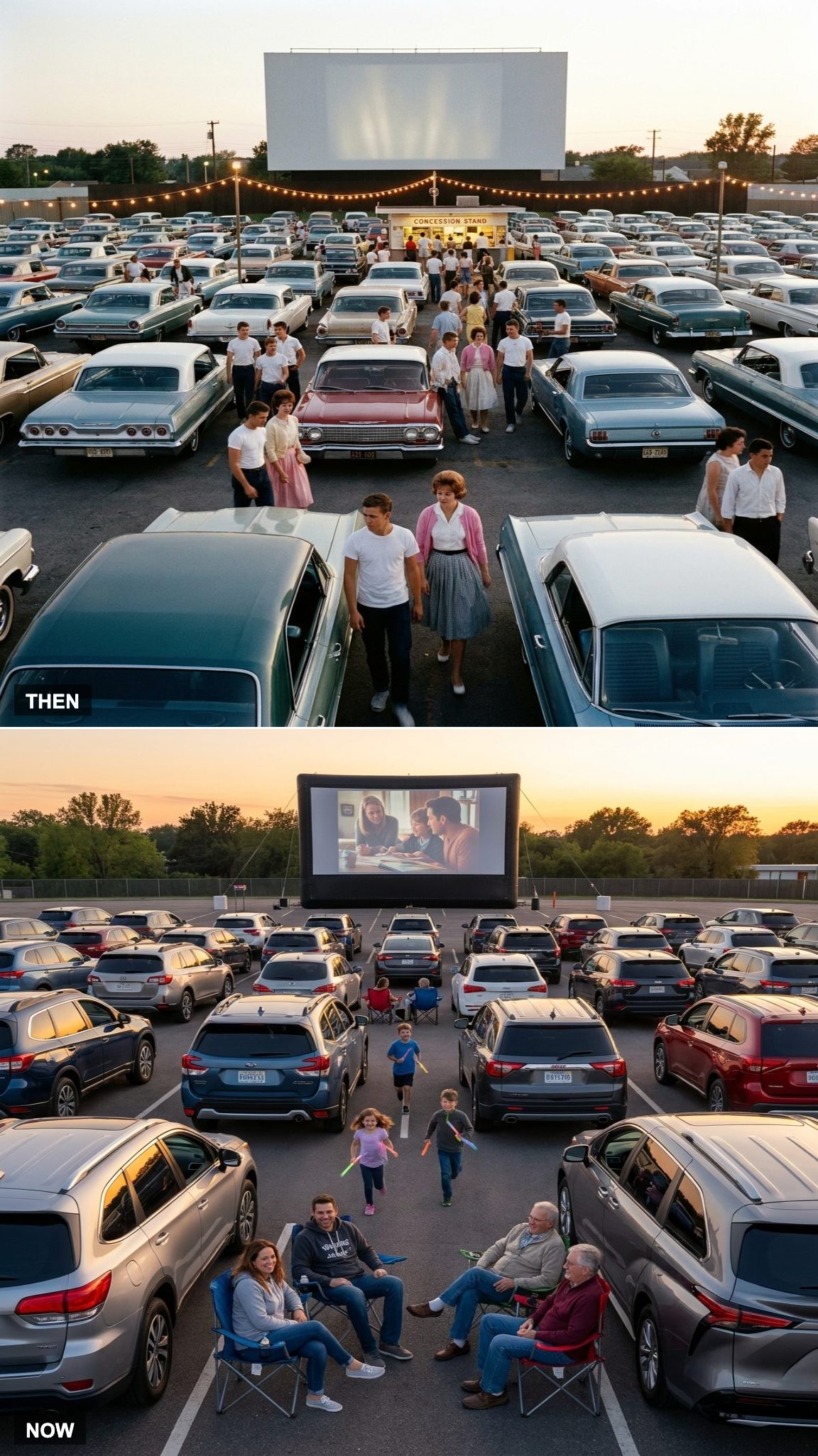
Friday night at the drive-in was the social event of the week if you were sixteen. Four to a car. You cruised the lot before parking, waved at the girls two rows over, and spent the first feature figuring out who was going to sit with who by the second. The movie was almost incidental.
The crowd looks different now. Families with kids in pajamas, couples in their sixties reliving something specific, the occasional carload of teenagers who found the place on TikTok. The scene is warmer and quieter. Nobody’s getting into trouble in row seven. Probably for the best. Probably a little sad, too.
10. Local Ads Played Between the Features
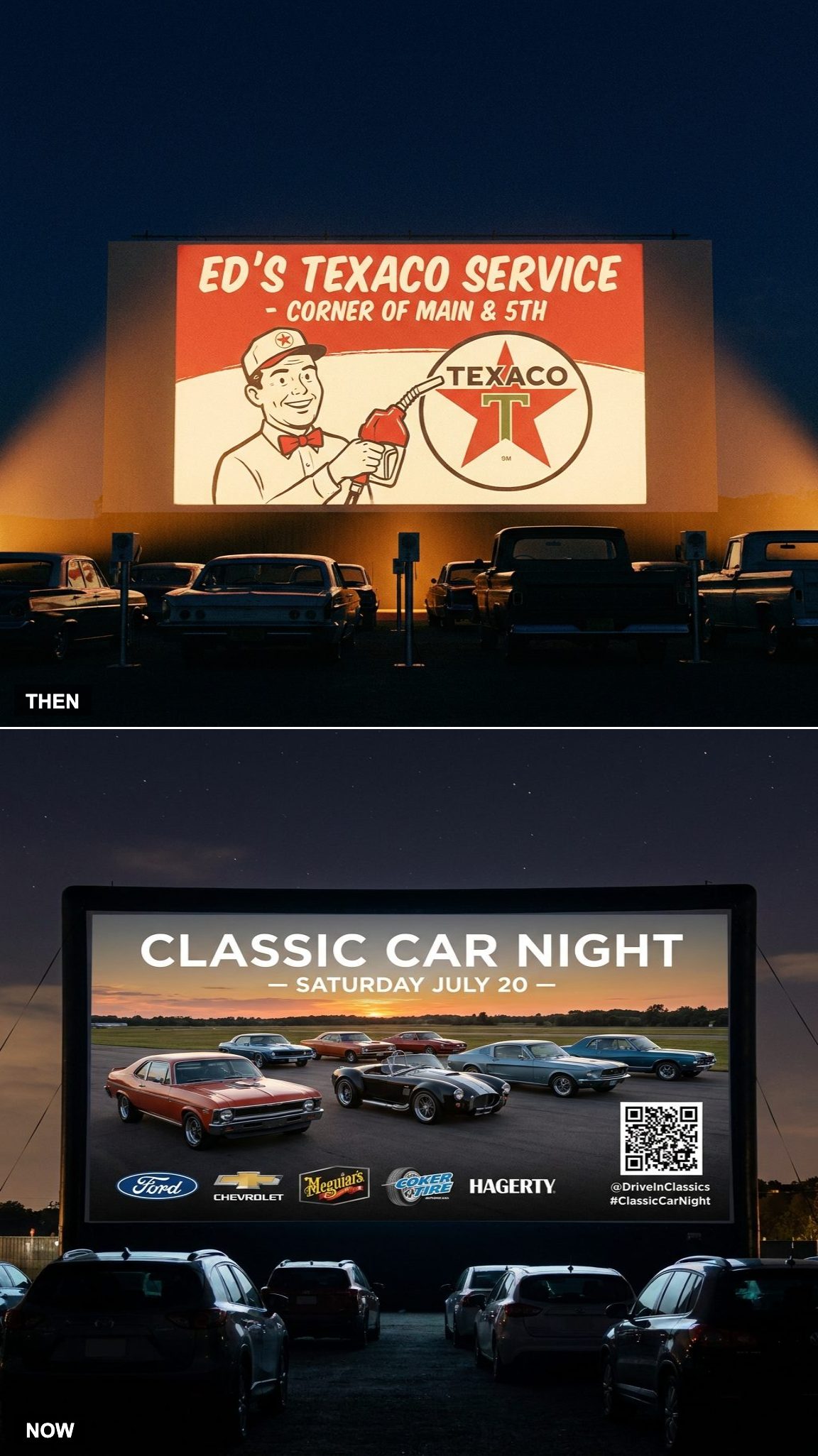
Between the first and second feature, the screen belonged to Main Street. Ed’s Texaco. Rita’s Diner. Miller Hardware. The ads were painted on glass slides or shot on cheap 16mm, and the cartoon mascots were always slightly off-model, which was half the charm. If you lived in town you recognized every business and probably knew who ran it.
The between-features slot now runs event promos and QR codes: classic car night, family flick weekend, follow us on Instagram. Sharper. Also all cut from the same template, because most of them literally were.
9. The Popcorn Bucket Was the Whole Menu
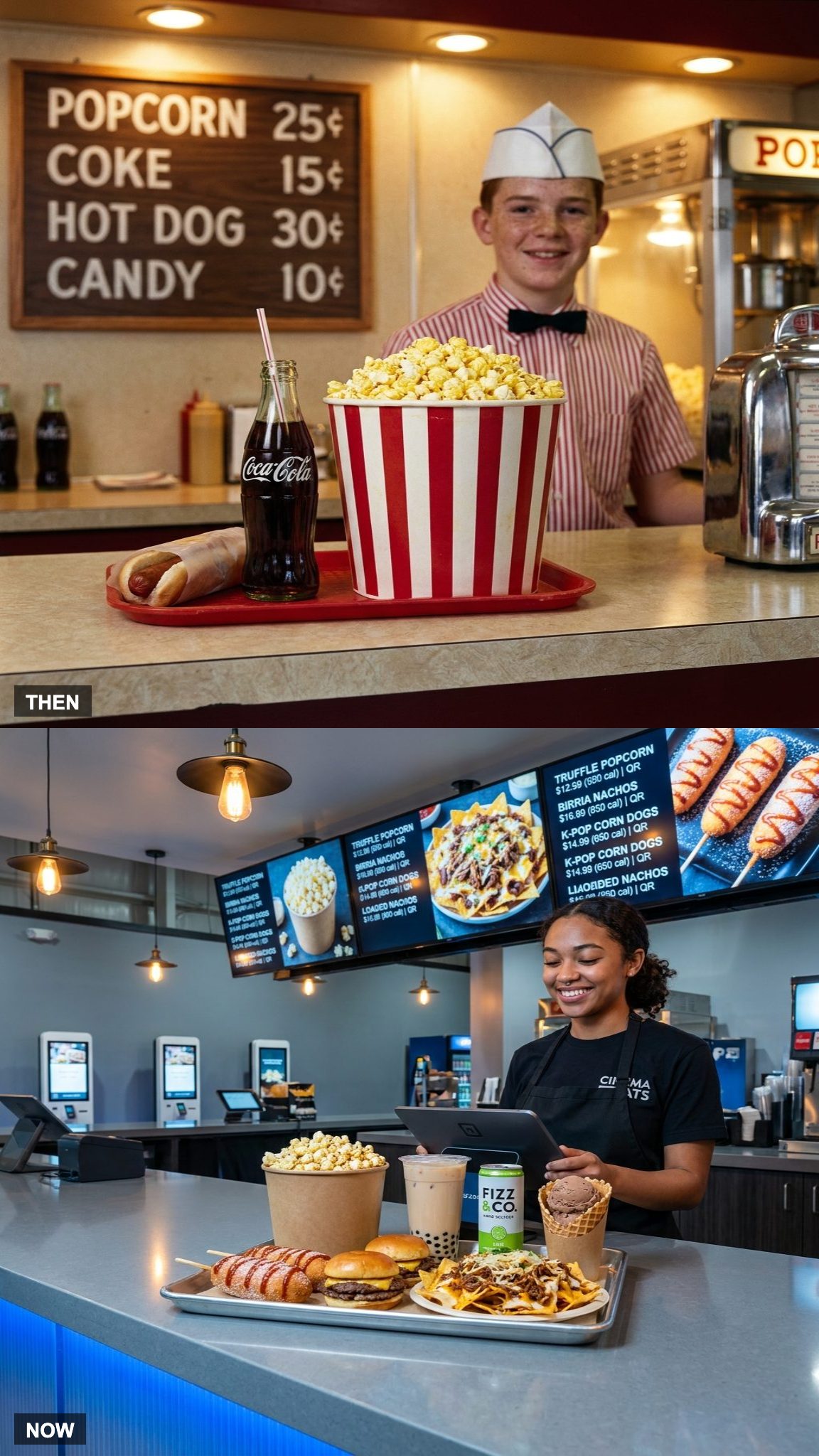
In 1965 the snack bar ran on four items and a hot plate. Popcorn in a red-striped bucket, a paper cup of Coke, a hot dog that had been rotating on rollers since sundown, and a box of Milk Duds tough enough to crack a molar. That was the menu, and nobody wanted more.
Walk into a snack bar today and the board looks like an airport food court.
Loaded nachos. Chicken tenders. Pretzel bites, funnel cake fries, three flavors of icee, gourmet popcorn dusted with seasonings a 1965 farmer wouldn’t recognize as food. The bucket got bigger. So did the soda. The line stretched halfway to the projector booth. Somewhere along the way a simple bag of popcorn stopped being enough on its own — which is a shame, because it was.
8. Cigarette Smoke Was Just Part of the Air
Would you like to save this?
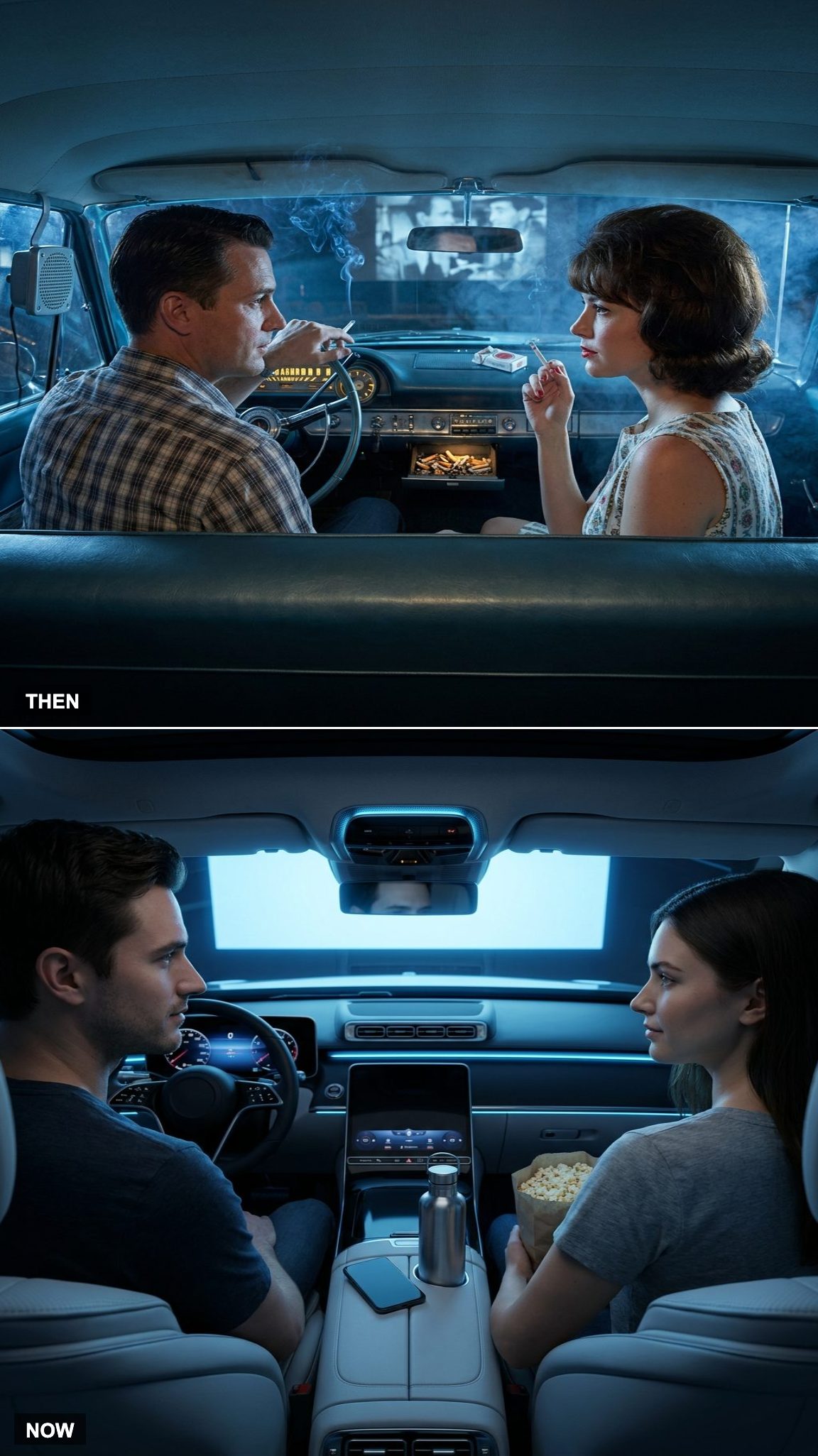
Roll into a drive-in in 1965 and the haze started before the projector did. Every third window had an elbow hanging out with a lit Lucky between two fingers. Kents, Winstons, Chesterfields. Smoke drifted across the lot in long slow ribbons, catching the beam from the projection booth like weather rolling in.
Nobody complained. Dash ashtrays came standard and were already half full by the time you parked, and the kids in the backseat breathed it the same way they breathed the June air off the corn.
Now? The lot smells like sunscreen and whatever somebody microwaved before leaving the house. A vape pen glows blue in a Subaru three rows over. That’s the extent of it.
7. The Newspaper Told You When to Show Up
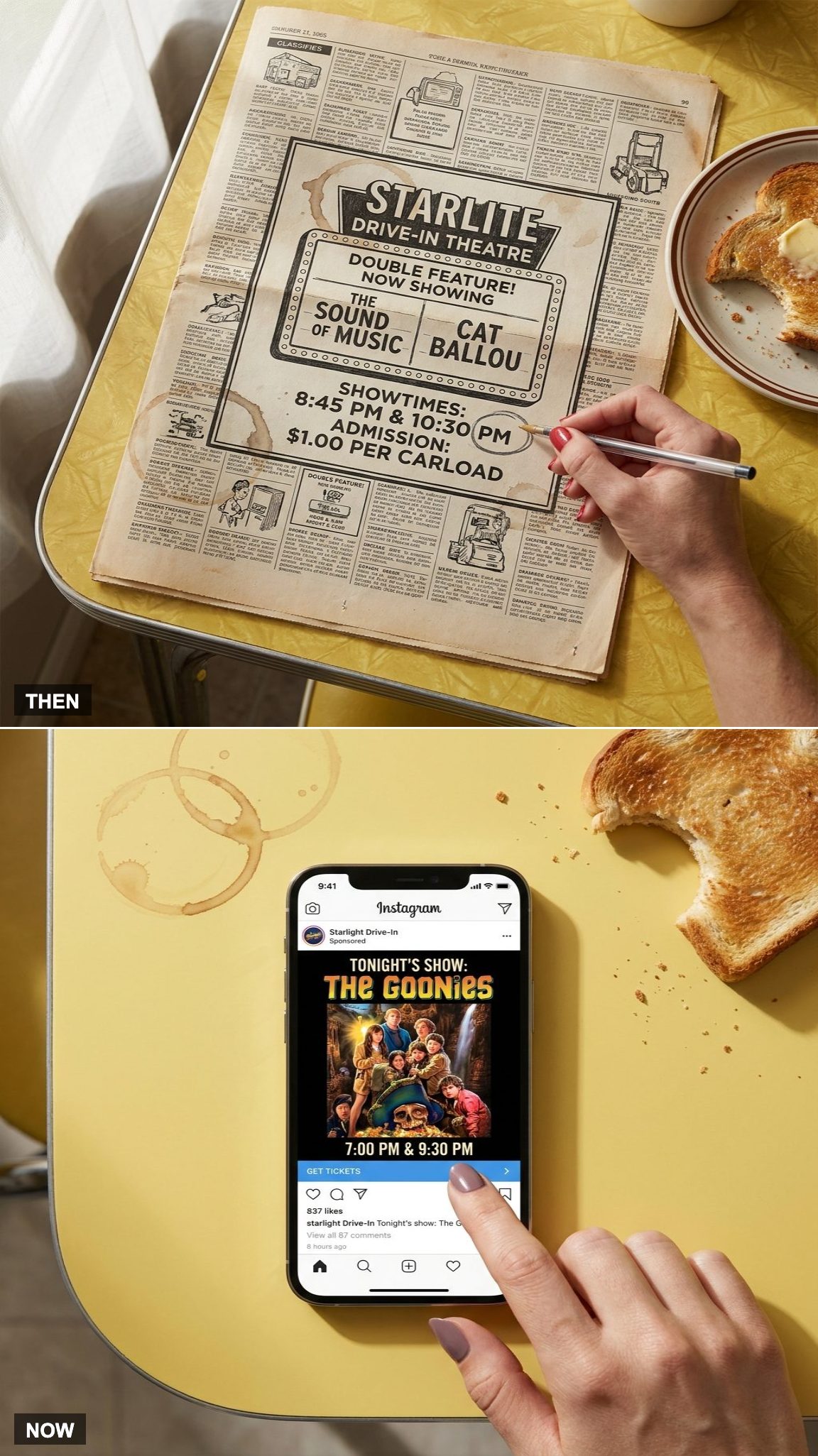
Sunday paper hit the porch and the movie section came out first. Somebody circled the drive-in ad, worked out whether the double feature was worth the trip, and taped it to the fridge with the corner of a Green Stamp.
Now the drive-in’s Instagram drops the weekly lineup on Monday afternoon and you tap, you buy, you get a QR code. Faster. More efficient, sure. Nobody’s arguing it’s more fun.
6. There Used to Be One in Every Town Worth Naming
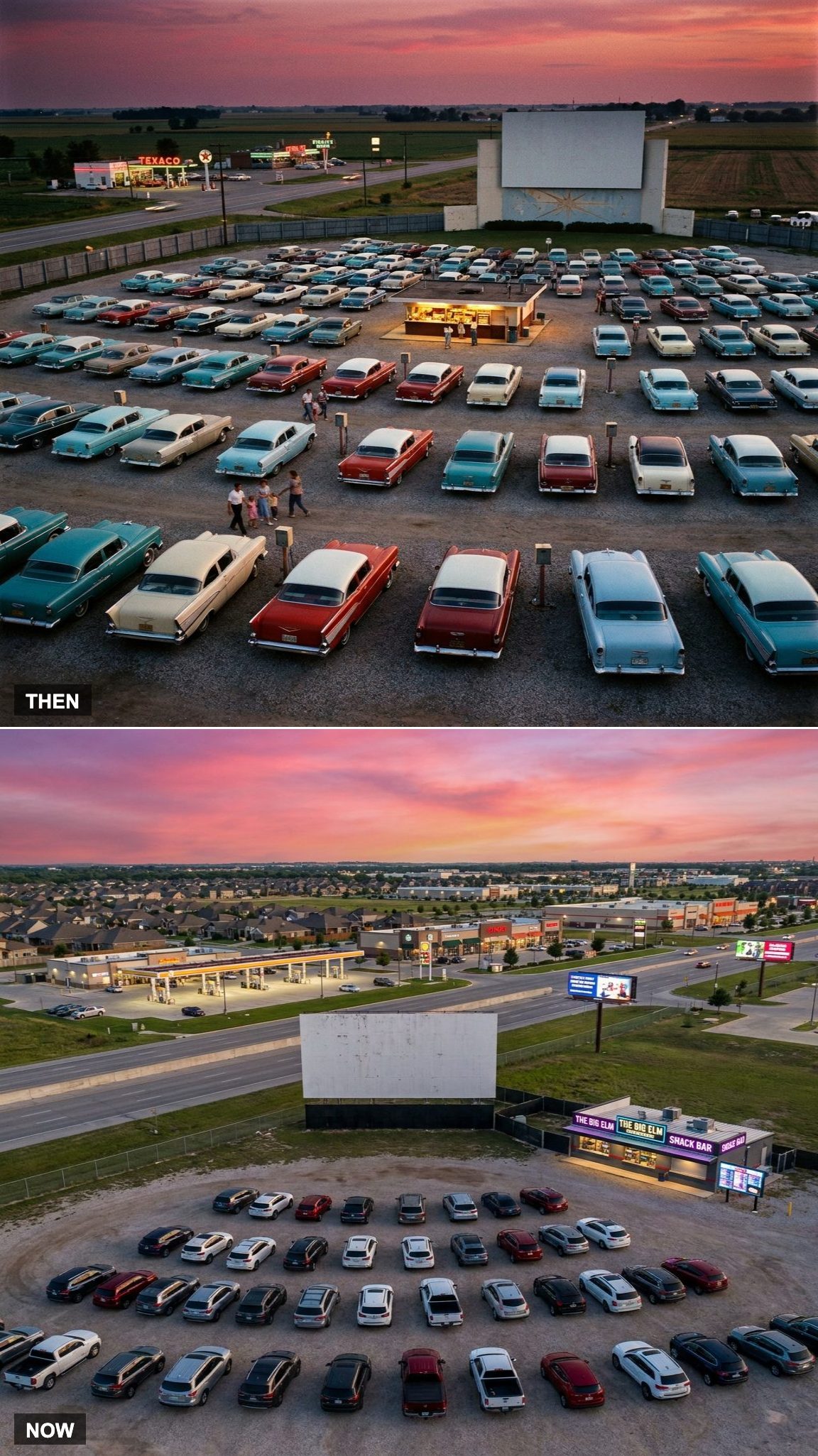
At the peak in 1958, more than 4,000 drive-ins operated across the country. By 1965, nearly every town of any size had one, and the ones that didn’t had a plan to build one. It was infrastructure. Like a bowling alley or a Dairy Queen.
Today fewer than 300 remain, and some counties don’t have any within a two-hour drive. The land got too valuable, the movies got too short, and the projection equipment upgrade to digital killed off the holdouts that had been running 35mm on borrowed time.
5. You Stayed Until the Screen Went Dark
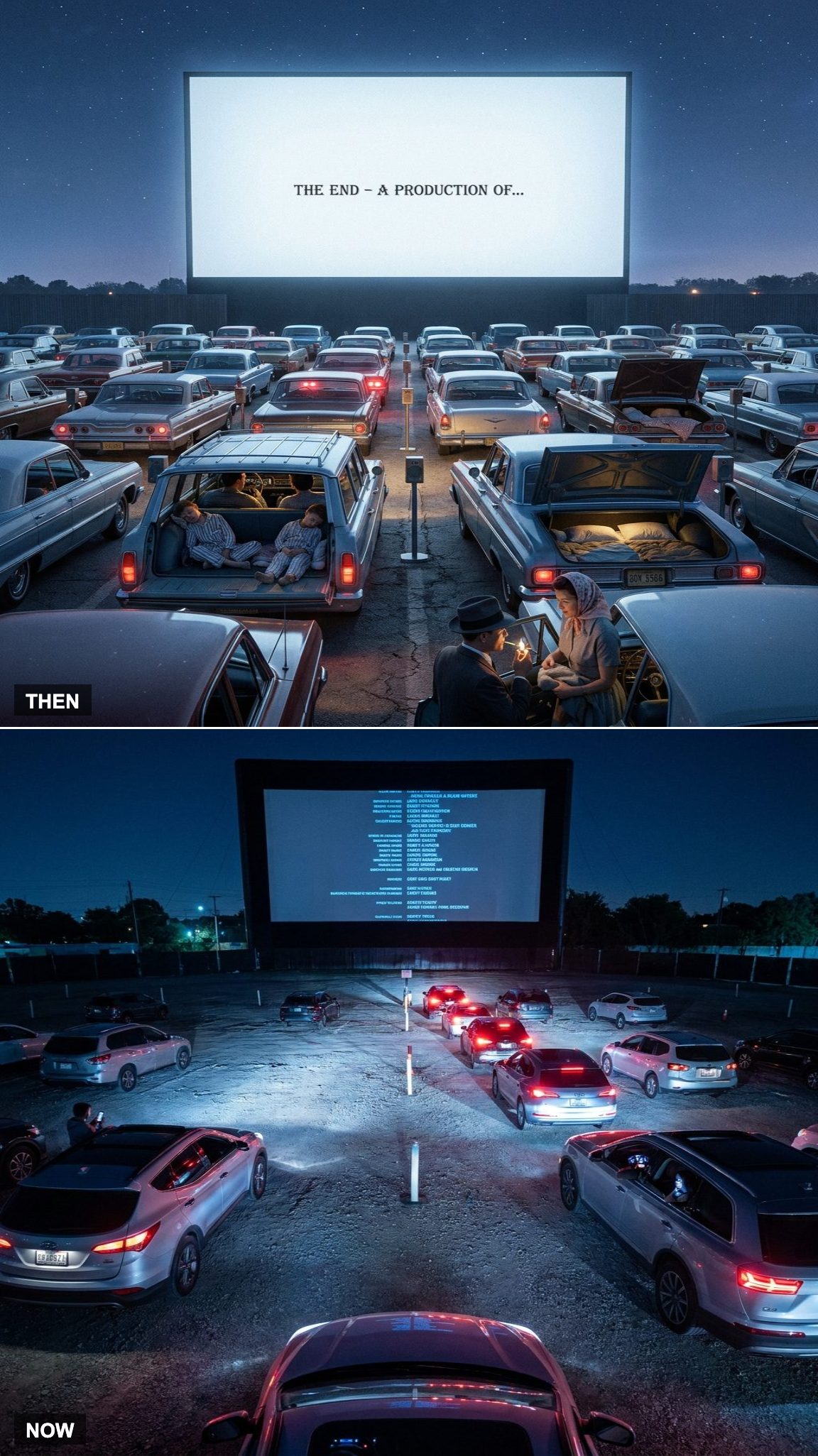
In 1965, leaving early wasn’t a thing. The second feature wrapped around one in the morning, credits rolled on a blank white rectangle, and the projector clicked off with a sound you could hear three rows back. Half the lot was already asleep by then — dads carrying kids from the backseat to the front, moms folding blankets, nobody in any particular rush to be anywhere.
Now? The movie ends and the parking lot empties before the credits finish their first scroll. Headlights snap on, gravel crunches, everyone’s got somewhere to be by ten thirty. The screen fades to black over an empty field. Staying until the end used to be the whole point of coming out. Now it’s an inconvenience.
4. The Car Was the Point, Not Just the Seat
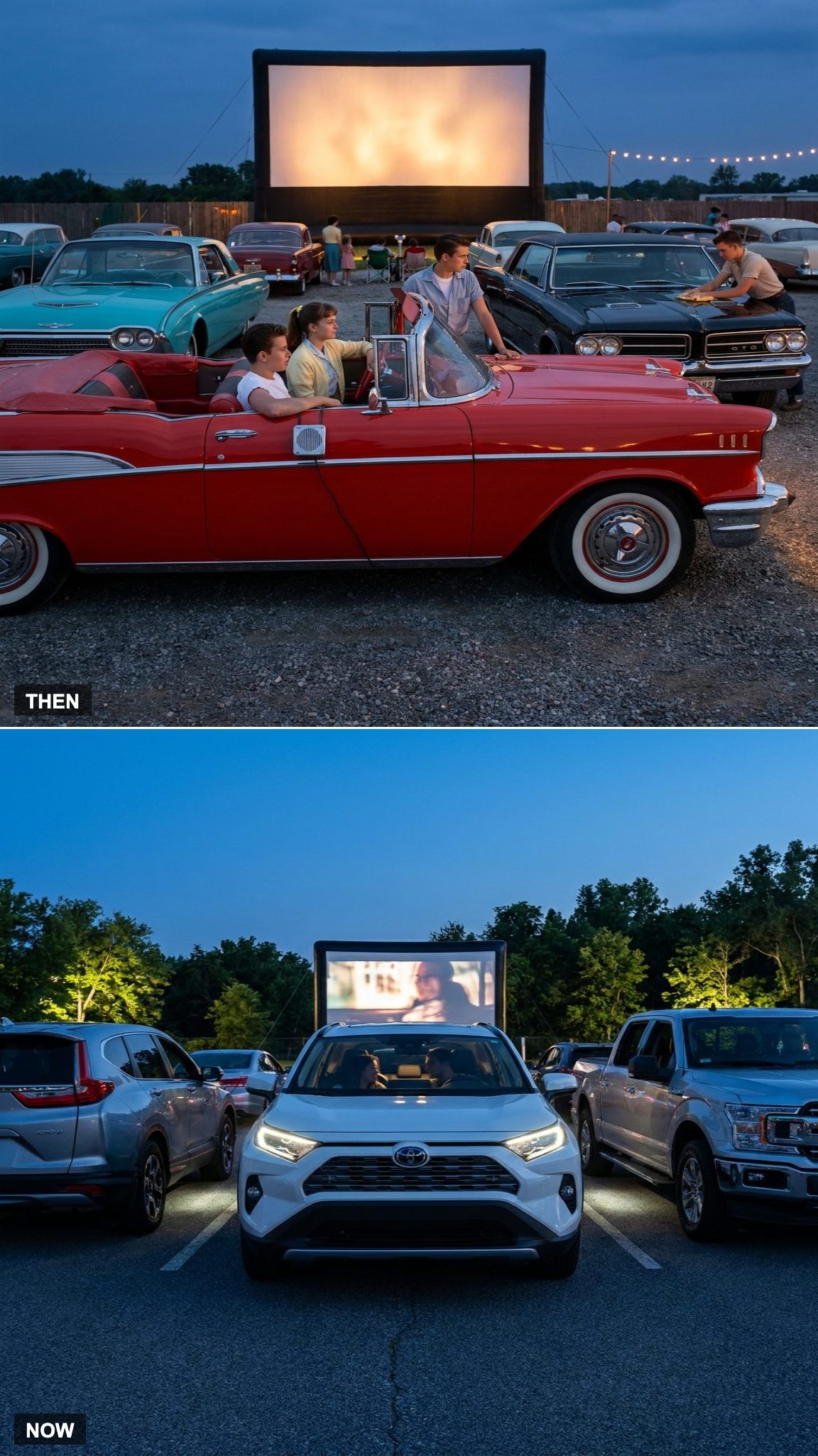
Half the show was the parking lot. Guys spent all week washing and waxing so their ride would look right pulling into the row, and you’d walk the aisles between features just to see what everybody drove in. The car told people who you were before you rolled the window down.
Now the vehicles are appliances with cup holders. Nobody parks a Camry to be seen, so the screen has to carry the entire night by itself. That’s a lot to ask of a movie.
3. A Whole Evening Under the Stars
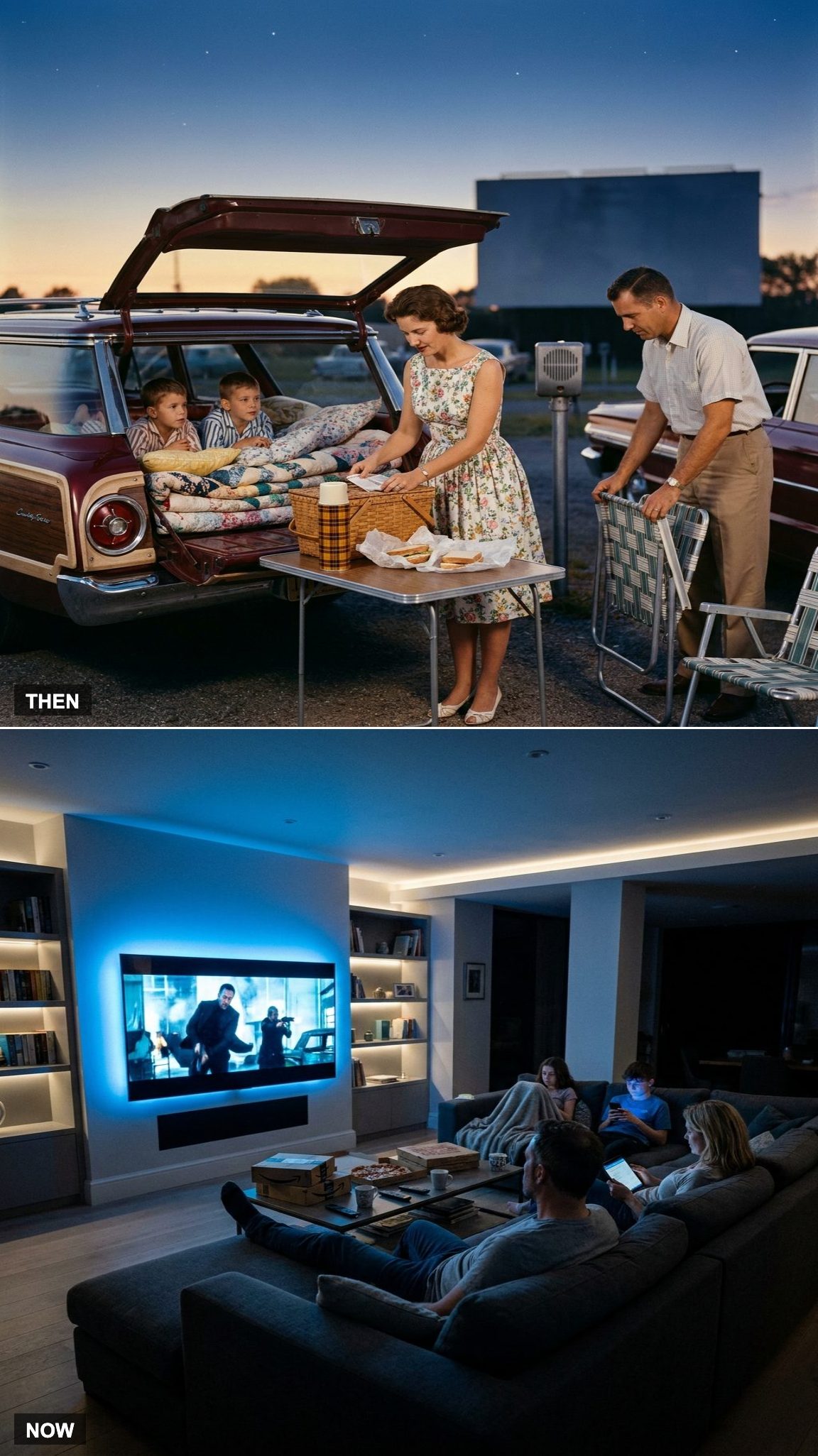
You got there at dusk, watched the sky bleed out over the screen, sat through a Roadrunner cartoon, then a first feature, an intermission with dancing hot dogs, and a second feature that let out past midnight. Four hours easy. The whole night was the event.
Now that same four hours is a subscription, a sectional, and three streaming apps you can’t decide between. The convenience is real. So is the loss.
2. The Whole Week Led Up to Friday Night
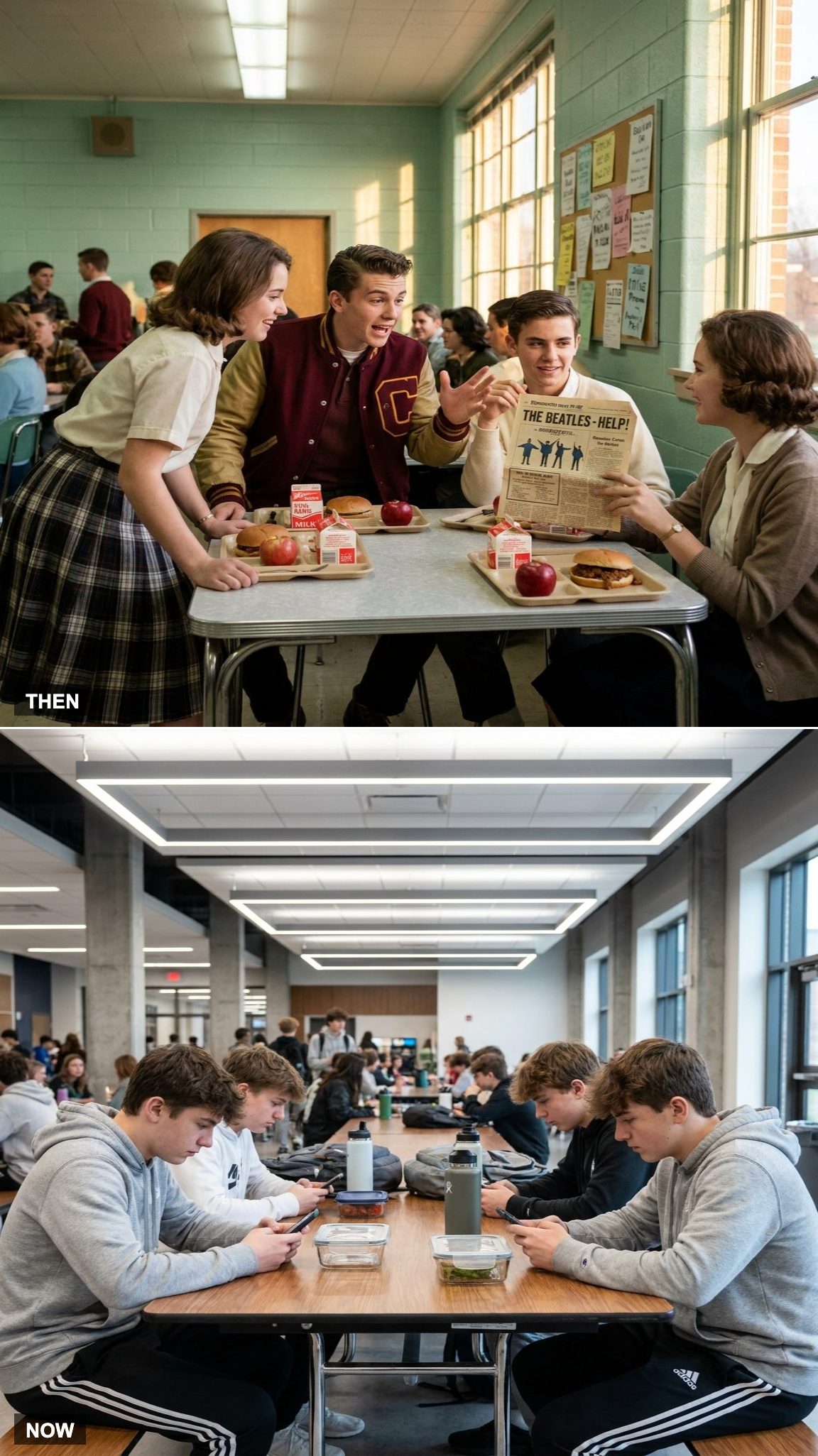
THEN: The countdown started Monday. Kids circled the newspaper ad taped to the fridge and argued over which picture to see. Then came four more nights of arithmetic homework, meatloaf dinners, and bedtimes that dragged. Dad washed the car Thursday after work. Mom planned the sandwiches and wrapped them in wax paper. By Friday afternoon the whole house was a coiled spring, and the drive-in was the only place on earth worth going.
NOW: Friday is a scroll. Someone opens an app around six, three people vote on a title, and the movie starts whenever the couch is ready. No countdown. No ad on the fridge. The week doesn’t build toward anything — it just ends, and then Monday shows up again.
The Psychology Behind This: Anticipation is half the pleasure. When anything is available any second, nothing is worth waiting for. And nothing waited for feels like much when it finally arrives.
1. It Was Summer Itself, Not a Rare Occasion
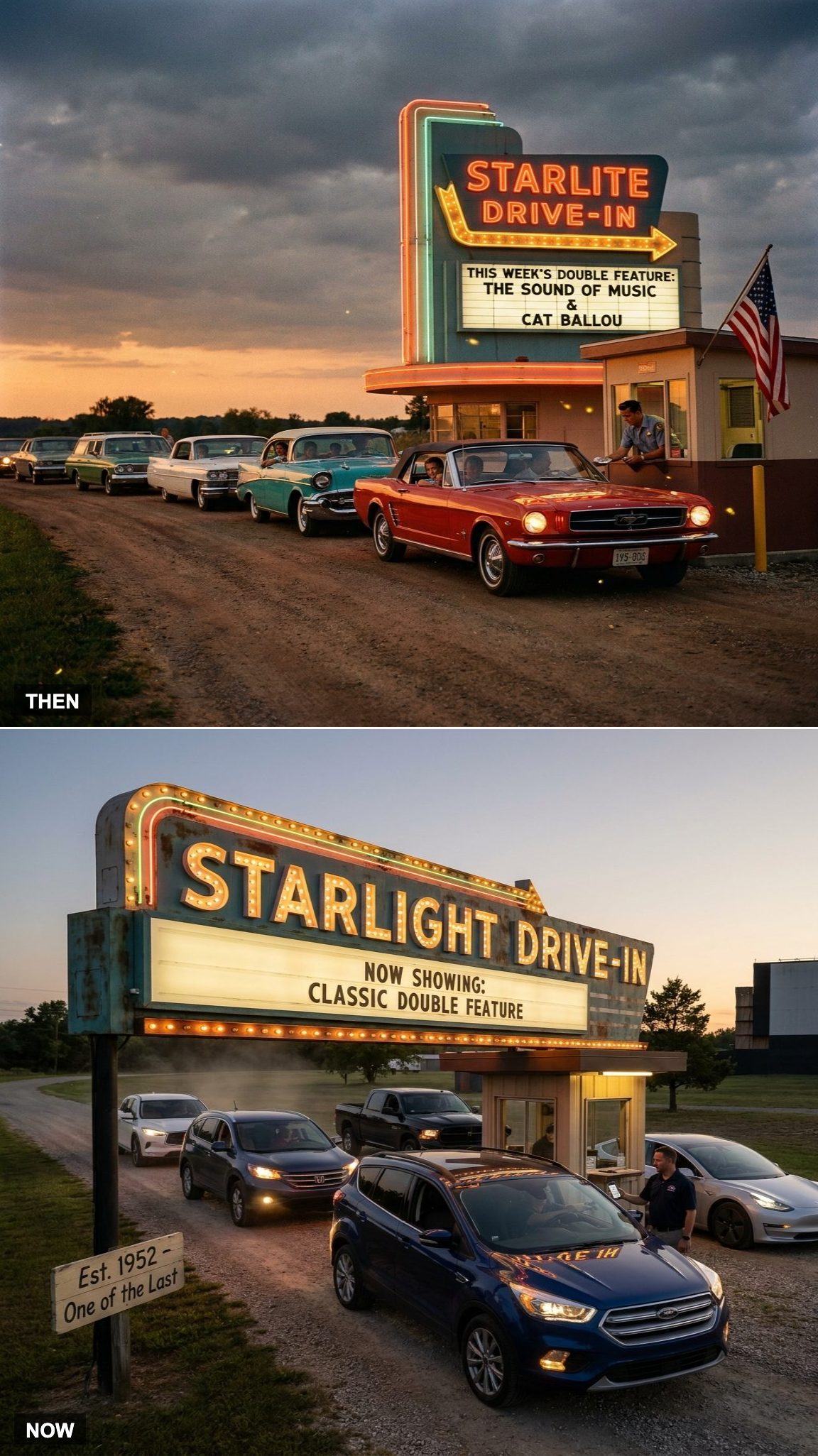
A drive-in Friday in 1965 was as ordinary as mowing the lawn. You went because it was summer and that’s what summer did. Nobody made a big deal of it, nobody took a picture.
The ones still standing are held up now by volunteers, preservation grants, and owners who refuse to sell to a developer. Going to one feels less like entertainment and more like a pilgrimage. Buy the ticket. Drive the extra hour. Order the popcorn. These places don’t stay open by themselves.