
Would you like to save this?
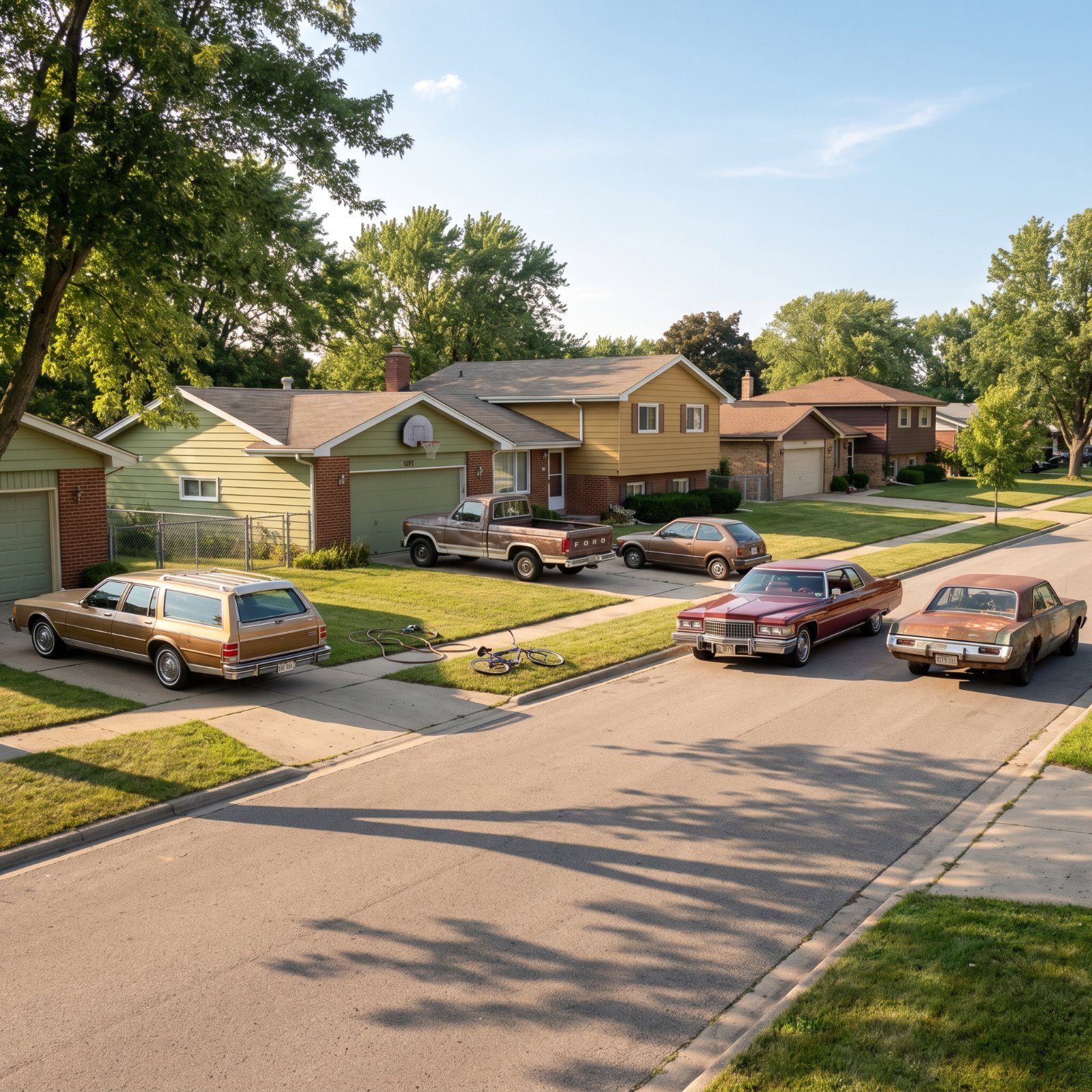
Park a Country Squire wagon and a backed-in pickup on the same block and you’ve told two completely different stories, and everybody on the street already knew both of them without saying a word. The car in the driveway was never just transportation. It was a confession left running in the open air.
Psychologists have a name for this. The vehicle you choose leaks the priorities you’d never announce out loud, and researchers have been reading those tea leaves since the 1950s. The spotless convertible that never moved on a Tuesday. The rust-spotted second car nobody fixed but nobody sold. Each one carried a small, honest signal about who lived there and what they were protecting.
Here are the driveway vehicles, and the quiet truths each one broadcast to anyone paying attention. A few of these will feel uncomfortably specific about your own family. That’s the point.
The Vehicle Sitting in a Driveway Says More About the Household Than the House Does (And Psychologists Figured Out Why Decades Ago)
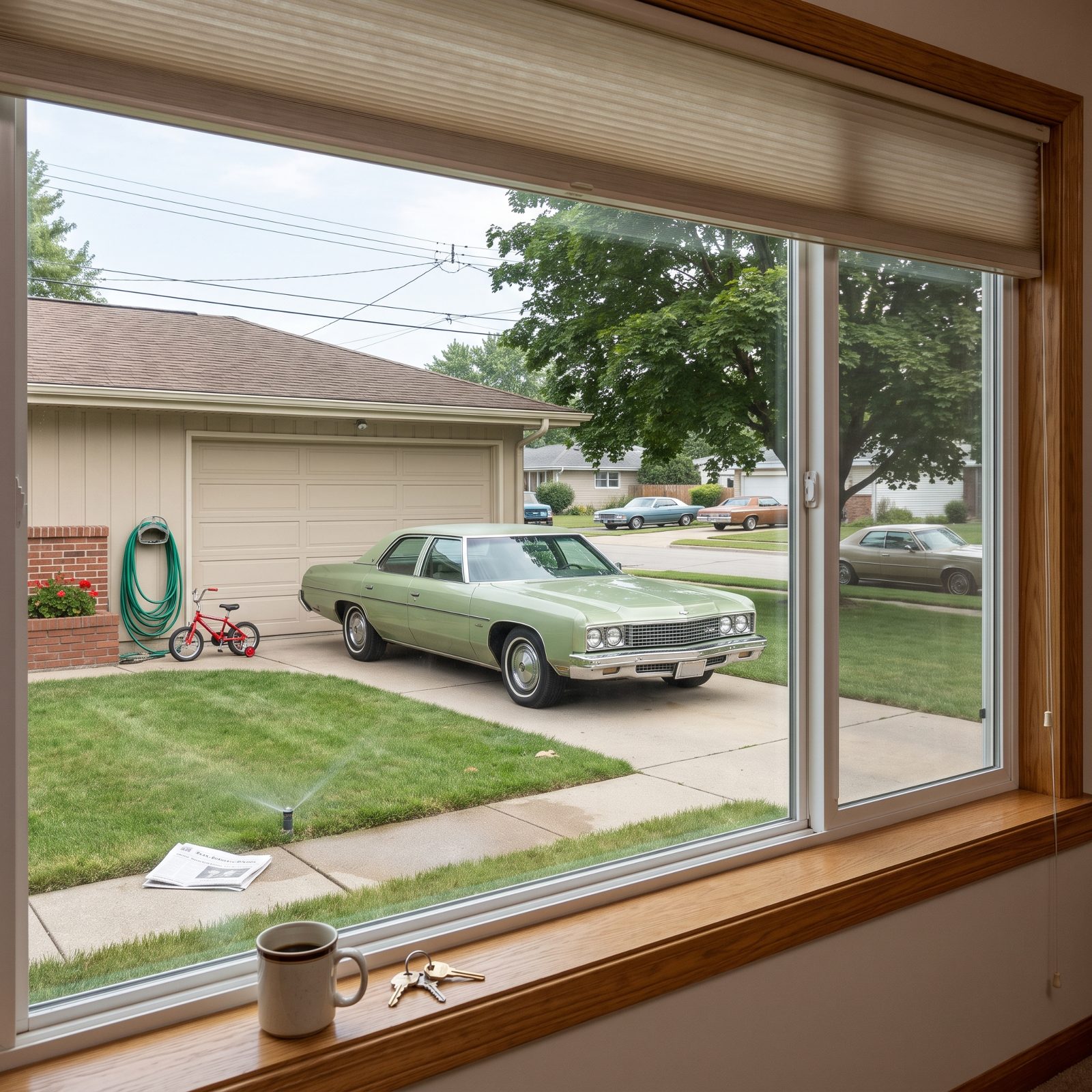
The house is a compromise. Location, budget, what was for sale that spring. The car in front of it is a choice, and choices talk.
Walk any block from 1968 or 1982 and you could read the households before you knew a single name. The wagon meant one thing. The bare-bones pickup meant another. The convertible under a cover meant a third. Marketing scholar Russell Belk laid out why in his 1988 paper for the Journal of Consumer Research, arguing that our possessions become genuine extensions of who we are, ranking in our sense of self somewhere just behind our own bodies. Source
A car earns that spot more than almost any object you own. You sit inside it for hours. You take it to funerals and first days of school. Psychologists call the phenomenon symbolic self-completion: we reach for objects that broadcast the person we believe we are, often without meaning to. Source
The One Wagon Every Suburban Cul-de-Sac Had Between 1965 and 1985 (And the Family Priority It Quietly Announced to the Whole Street)
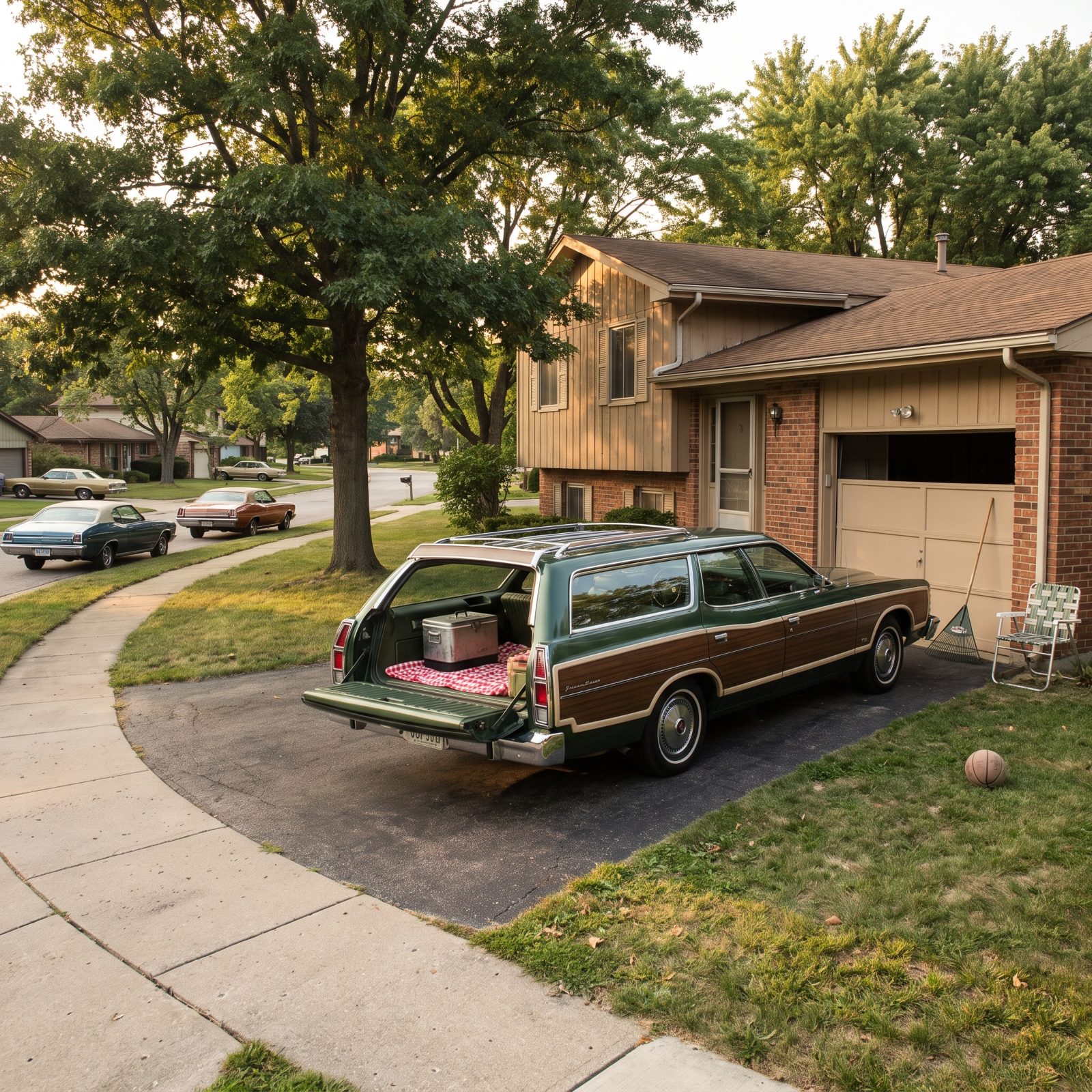
Nineteen feet of Ford Country Squire with fake wood down the flanks. You knew that car. Every street had one, engine big enough to haul the whole Little League team plus the cooler up a Sierra grade.
The full-size wagon ruled American suburbia for two decades, and it said one thing before the tailgate ever dropped: this household organized itself around the kids. The wagon rose with the postwar move to the suburbs, when tract housing spread across the outskirts of every city and Detroit built the family haulers to match. Source
A GM wagon could seat nine with that rear-facing third row, more than a lot of today’s SUVs pretend to offer. Buying one was a public admission that your Saturdays belonged to somebody four feet tall. And the buyers weren’t only families. Small-business owners loved them too, which meant the wagon in the drive could signal a carpool or a livelihood.
Why the Household With the Spotless Weekend Convertible Almost Never Drove It on Weekdays (And What That Split Revealed About Who Lived There)
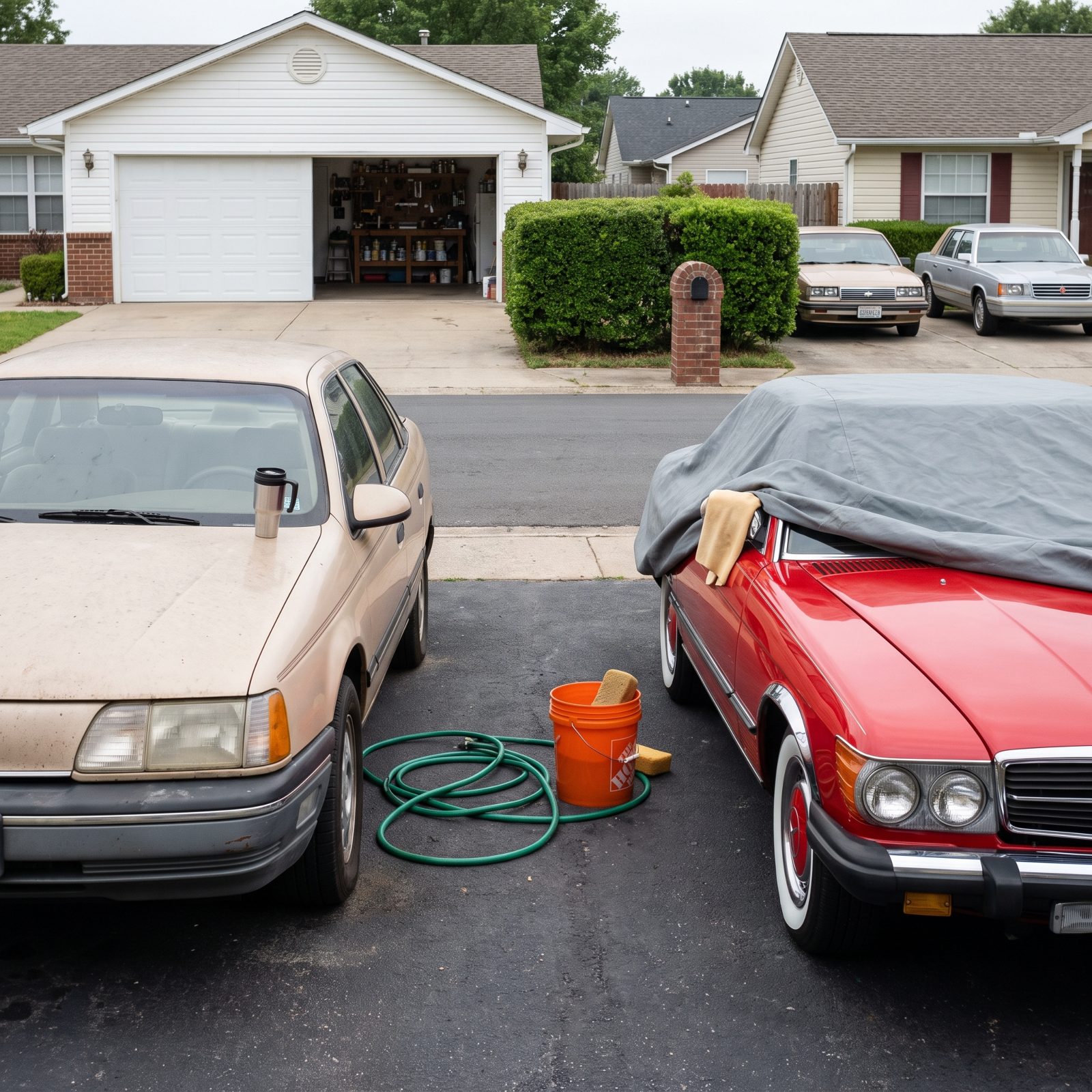
Two cars. One truth. A tired commuter sedan doing the daily grind, and a bright convertible under a tailored cover that only saw sun on Sundays.
That split isn’t laziness or waste. It’s a household keeping two selves alive at once. Belk’s extended-self research points to why some possessions get shielded from everyday use: the object carries a version of you that regular life would wear down, so you protect it. Source
Psychologists have a related idea worth chewing on. The car you fantasize about often reveals more than the one you actually drive, because the dream is free of budget, commute, and carpool duty. Source
The weekend convertible is that dream made real and kept on a shelf. The household wasn’t showing off. They were rationing the version of themselves that still wanted the top down and the road open, driving it out only when the week couldn’t touch it.
The Pickup Parked Nose-Out, Backed Into the Drive Every Single Time (And the Personality Trait It Broadcasts Without a Word)
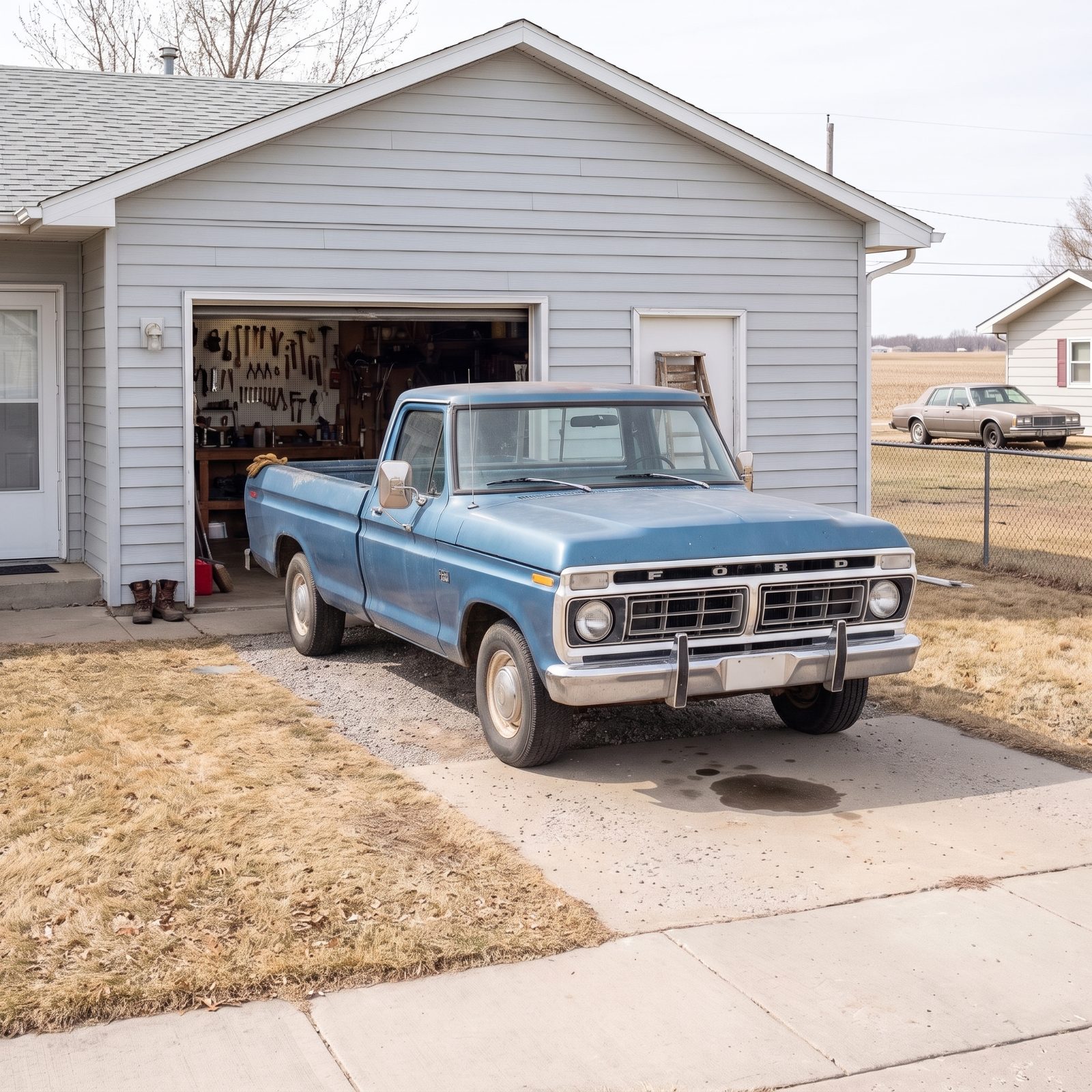
The truck in that drive faced the street. Tailgate to the garage, nose to the road, backed in with the same maneuver so many times it stopped being a decision.
Back-in parking is a small habit that carries a large signal: readiness. The person who backs in wants to pull out fast, load from the bed easy, and never get boxed in. It reads as planning and self-reliance, and those are the exact traits research links to truck owners, who tend to score as hardworking, dependable, and independent. Source
There’s a wider pattern here. A recent survey found most Americans believe a vehicle communicates a driver’s personality before he ever steps out of it, and condition and habits factor in as much as the make. Source
The nose-out truck isn’t posturing. It’s a person telling you, without a word, that he’d rather be ready than trapped.
The Muscle Car That Got Washed More Often Than the Kids Got Fed (And the Identity It Was Really Protecting)
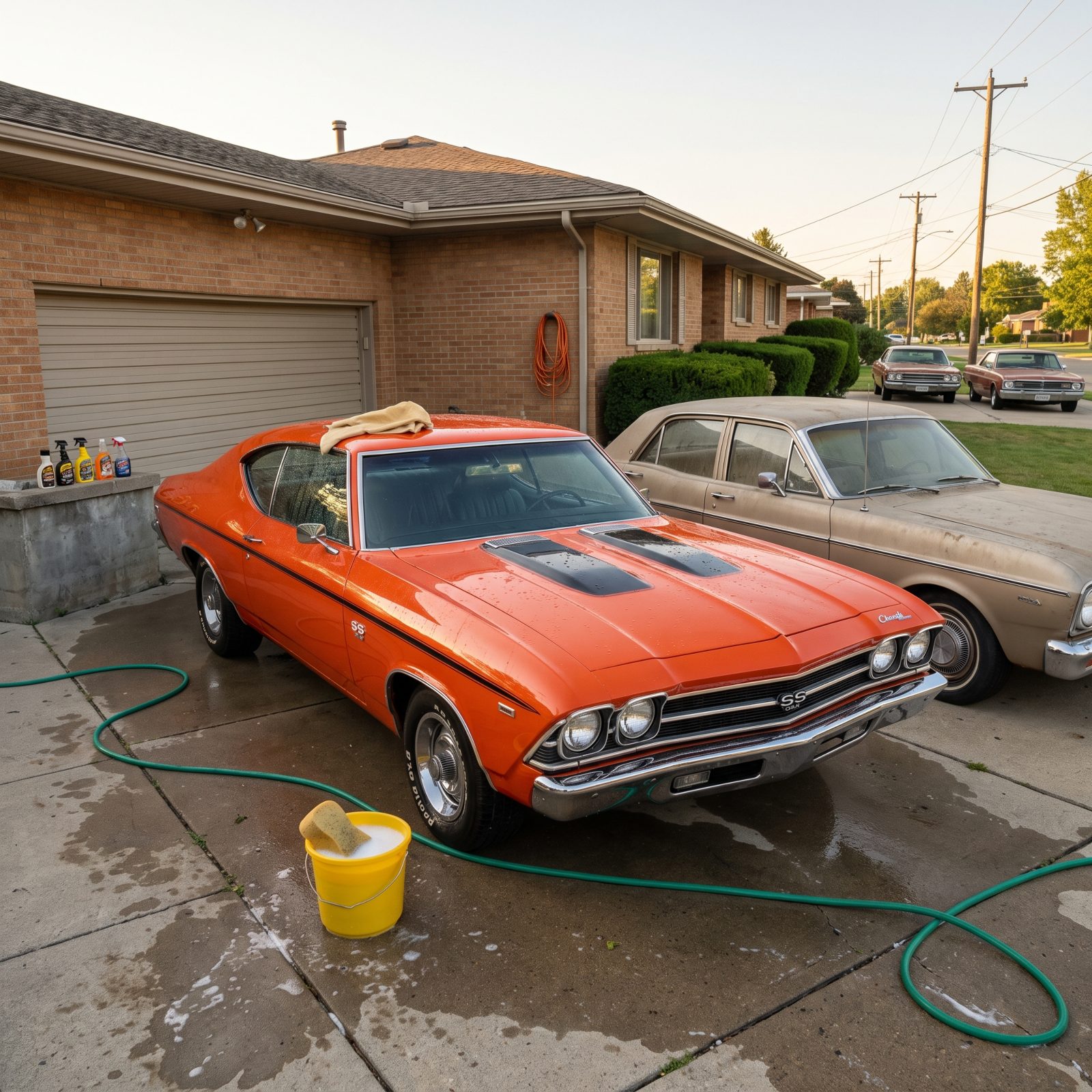
You knew the sound before you saw the car. And you knew the ritual: bucket, wax, chamois, Saturday after Saturday, that GTO or Chevelle gleaming while the family sedan sat filthy in the same driveway.
The obsessive care wasn’t about the paint. It was about the person the car stood in for. Belk’s work describes how we pour identity into certain possessions until harm to the object feels like harm to the self, which is why a scratch on the muscle car lands like a personal wound. Source
Cars sit unusually deep in that identity because we live so many hours inside them, which psychologists frame as an “extended identity” the vehicle carries on our behalf. Source
For a lot of men in the 70s, the muscle car held the younger, freer version of themselves. Waxing it every weekend was a way of keeping that guy alive while the rest of life got heavier.
The Import in the Driveway Everyone’s Neighbors Had an Opinion About in 1974 (And Why the Household That Chose It Saw Something Coming)
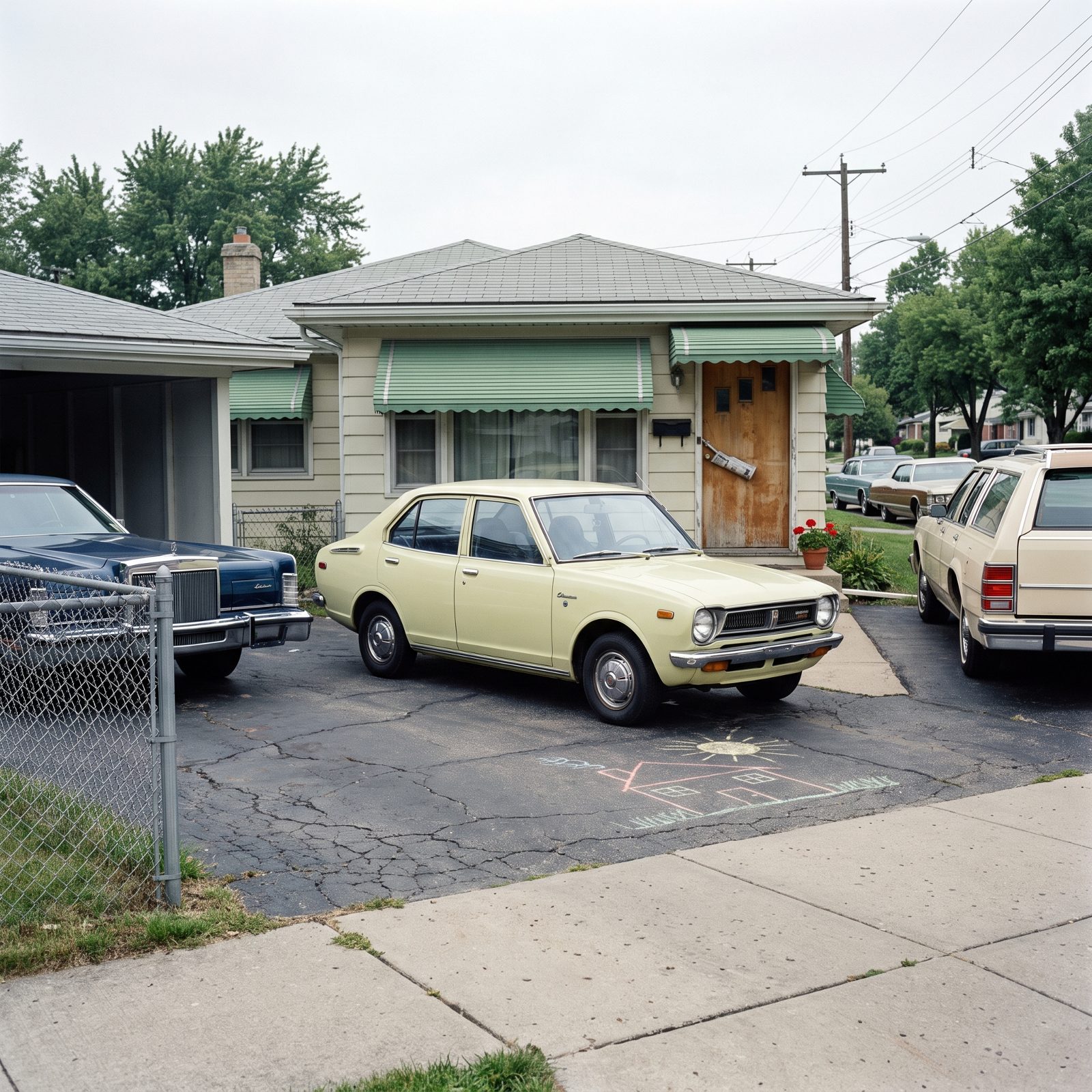
A little Datsun or Toyota parked between two Detroit sedans on a 1974 block, and half the street had a comment ready. For years, “made in Japan” was shorthand for cheap and disposable. Source
Then the 1973 oil embargo hit, gas lines wrapped around blocks, and the household with the thrifty import suddenly looked less like a contrarian and more like a prophet. The crisis pushed American buyers toward fuel-efficient cars almost overnight, and the Japanese automakers, already a decade ahead on small cars, were the ones ready to sell them. Source
The numbers tell the rest. Japanese market share in the U.S. climbed from roughly 3.7 percent in 1970 to 18.6 percent by 1981. Source
What did the early-adopter household see? Not the future exactly. Just a quiet willingness to value efficiency and good build quality over flag-waving, back when that took a little nerve on a Big Three street.
Why the Family That Owned Two of the Exact Same Sedan Wasn’t Being Boring (And What Repetition Actually Signaled)
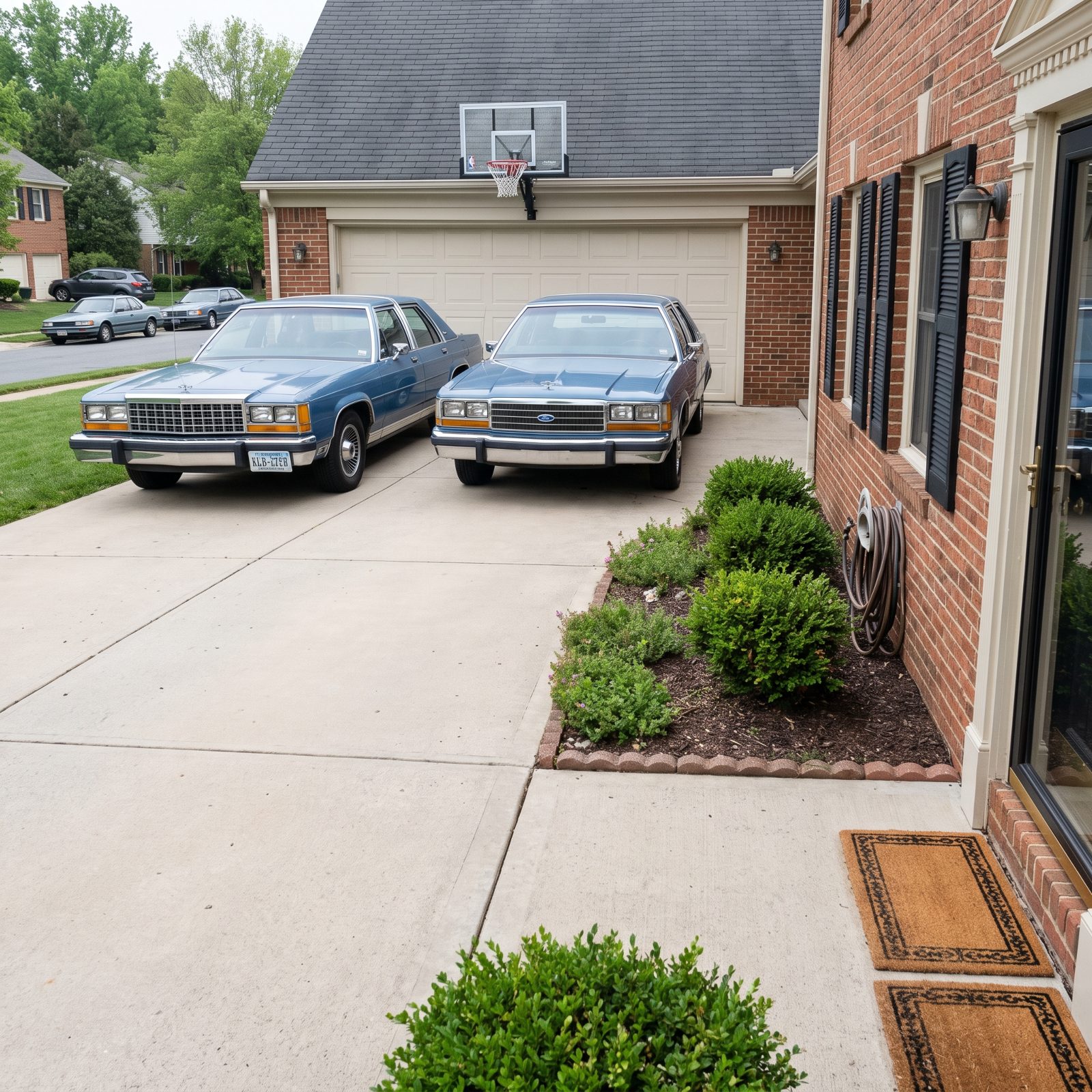
Two identical Buicks. Same model, sometimes the same color, side by side in one driveway. The block read it as unimaginative. It was closer to the opposite.
Buying the same car twice is a household saying: we found what works, and we’re not gambling. That’s a settled, low-neuroticism kind of confidence, the same trait cluster research ties to buyers who favor practical, dependable, mid-sized cars over flash. Source
There’s loyalty in it too. Once a possession gets woven into how a family runs its days, switching brands means switching a piece of identity, and that carries real psychological cost. Belk’s research frames possessions as instrumental to holding a stable sense of self together. Source
The matched pair wasn’t a failure of imagination. It was a household that had already done its thinking and trusted the answer enough to buy it again.
The Rust-Spotted Second Car Nobody Fixed But Nobody Sold (And the Quiet Loyalty It Stood For)
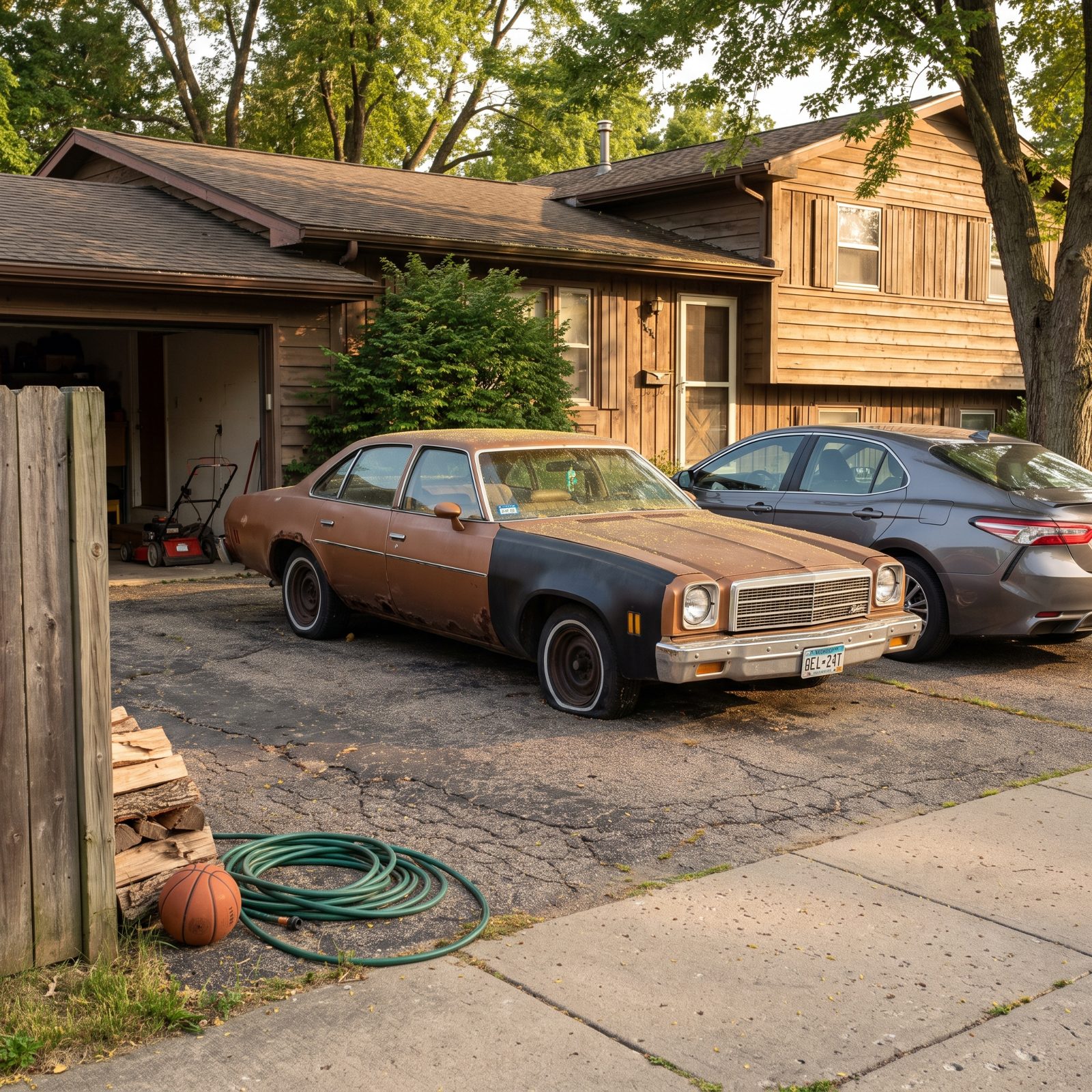
Rocker panels going to lace, a fender the wrong color, a car that hadn’t passed for new in a decade. Still it sat in the driveway, taxed and insured, nobody willing to let it go.
Every family had one. And the refusal to sell it had almost nothing to do with money. Belk’s extended-self research includes the striking case of a woman whose stolen bicycle felt like a theft of her memories, of a piece of her life. Source
The rusty second car held that same freight. It was the car that brought the first baby home, or the one a father taught three kids to drive in. Special possessions get anchored into the milestones of a life, and letting one go can feel like closing a chapter you’re not ready to close. Source
So it stayed. Not because it ran well. Because selling it would have meant selling a stretch of years, and no reasonable offer ever covered that.
The Van With the Curtains in the Back Windows and What It Told You About the People Inside It
Would you like to save this?
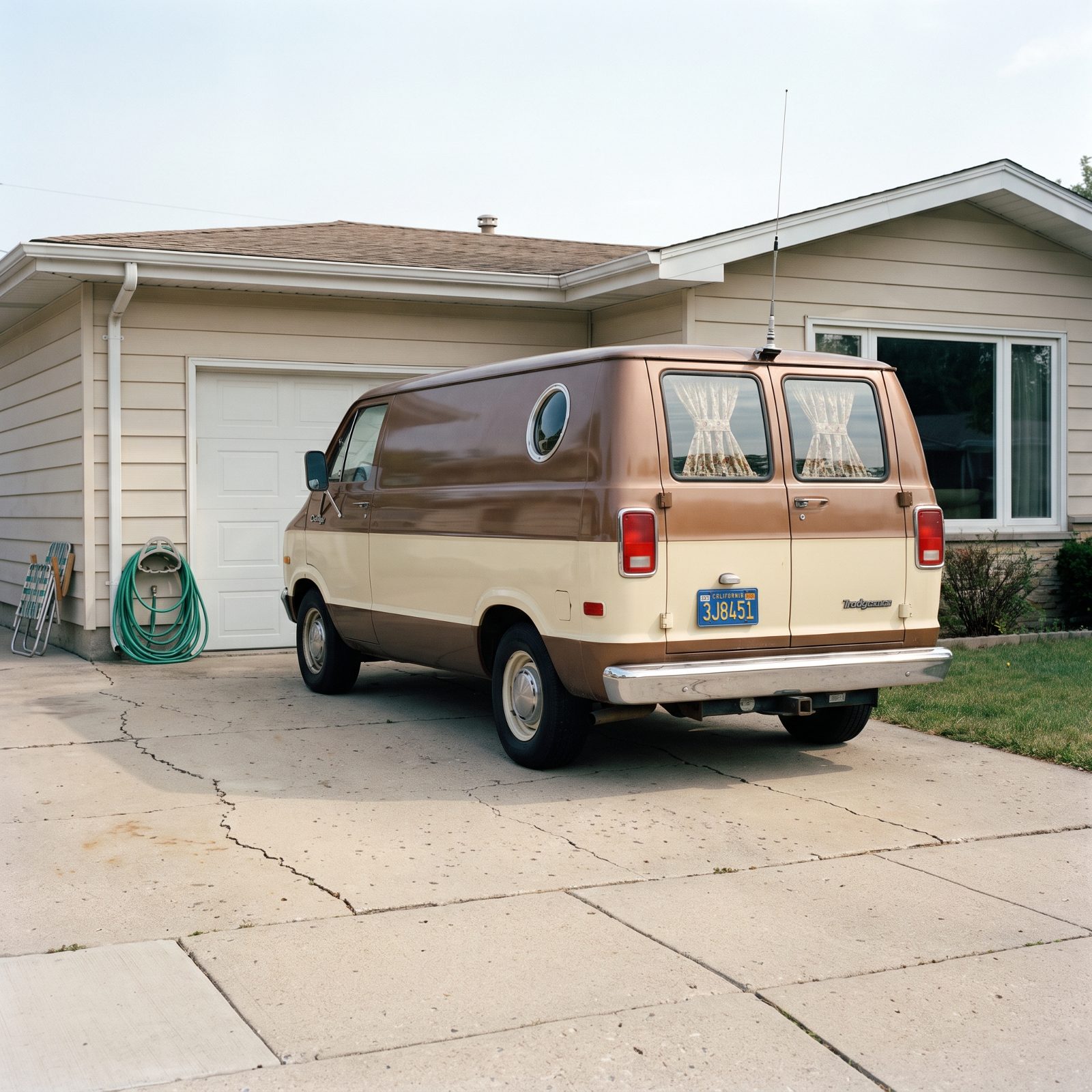
You knew it before you saw the driver. Shag-carpeted side panel, a porthole window shaped like a teardrop, and curtains. Actual curtains, gathered on a little rod, in the back windows of a 1977 Dodge Tradesman or a Chevy G-series. The custom van of the late ’70s wasn’t hauling plumbing supplies. It was a rolling declaration that the person who owned it treated a vehicle as territory, not transport.
Here’s the tell. Curtains say the inside of the van is a place you’re meant to be, not just travel through. A household that hung curtains in a van was a household that thought of the road itself as a destination, that valued privacy and comfort over the sober utility your neighbor’s four-door sedan announced. The whole custom-van scene ran on this idea. The vehicle as extension of the self, decorated the way you’d decorate a den. Psychologists call belongings part of the “extended self,” the boundary where identity bleeds into the things we own. Source
Why the Household With the Immaculate Garage and the Beater in the Driveway Confused Everyone (And What the Arrangement Actually Meant)
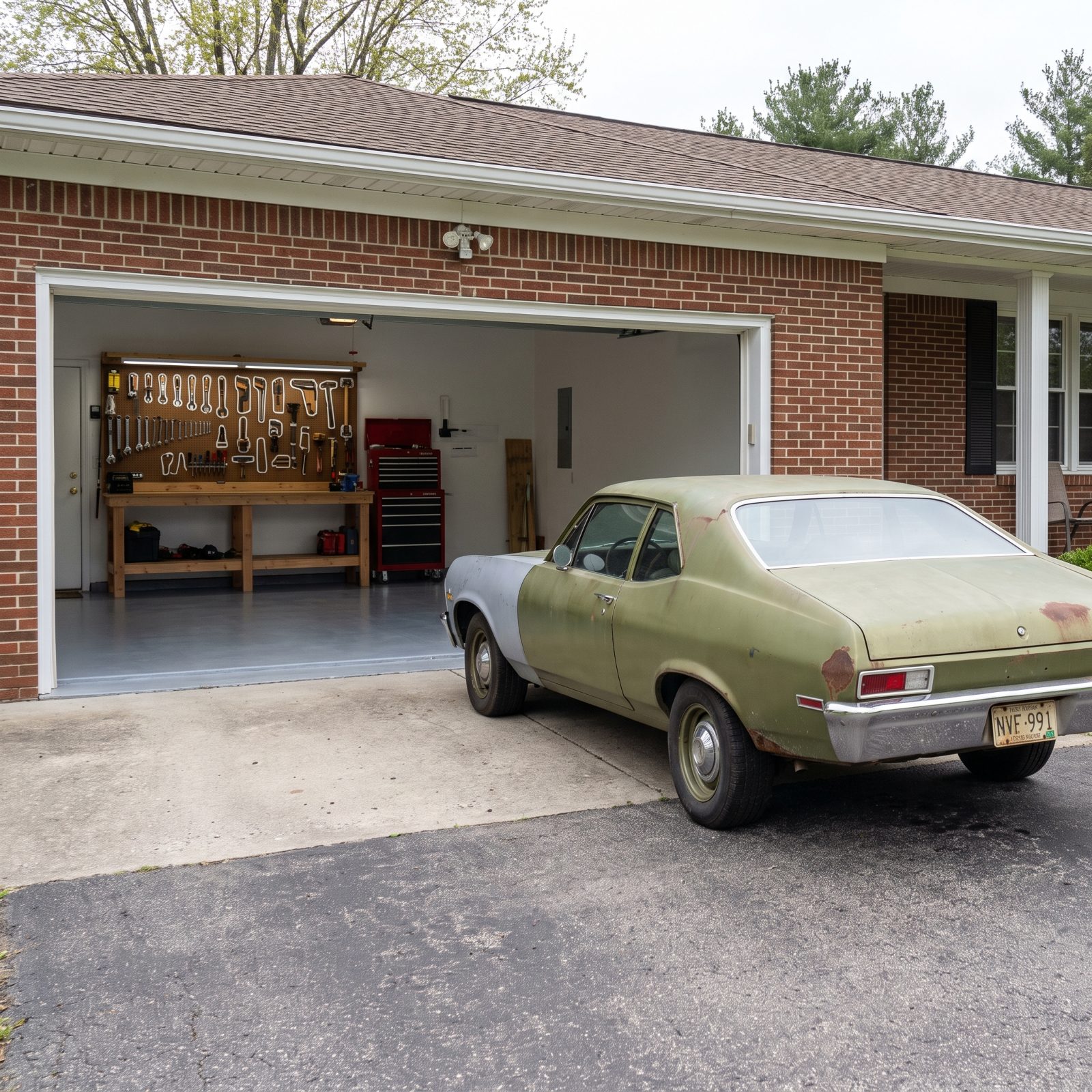
Walk past it and the math didn’t work. Garage door up, and inside: a floor you could eat off, pegboard with every wrench in its painted outline, a workbench cleaner than most kitchen counters. And parked out front, in the weather, a rusting ’72 Nova with a mismatched fender.
People assumed the beater was the family’s real car and the garage a shrine to some project that never got finished. Usually it was the reverse. The garage was the sanctuary. The pride. The place where a man who couldn’t control his commute or his boss could control every square inch of a 400-square-foot room. The Nova was just a car. The garage was identity made visible, and you don’t park a daily driver on your identity.
This is the “labor leads to love” effect at work. Research on the IKEA effect shows people value things more when they build or maintain them with their own hands, appraising them as nicer simply because of the effort invested. Source A garage that took years to organize becomes worth more than the cars it could shelter.
The Luxury Coupe That Was Always a Little Too Big for the Driveway It Sat In (And the Aspiration Psychologists Have a Name For)
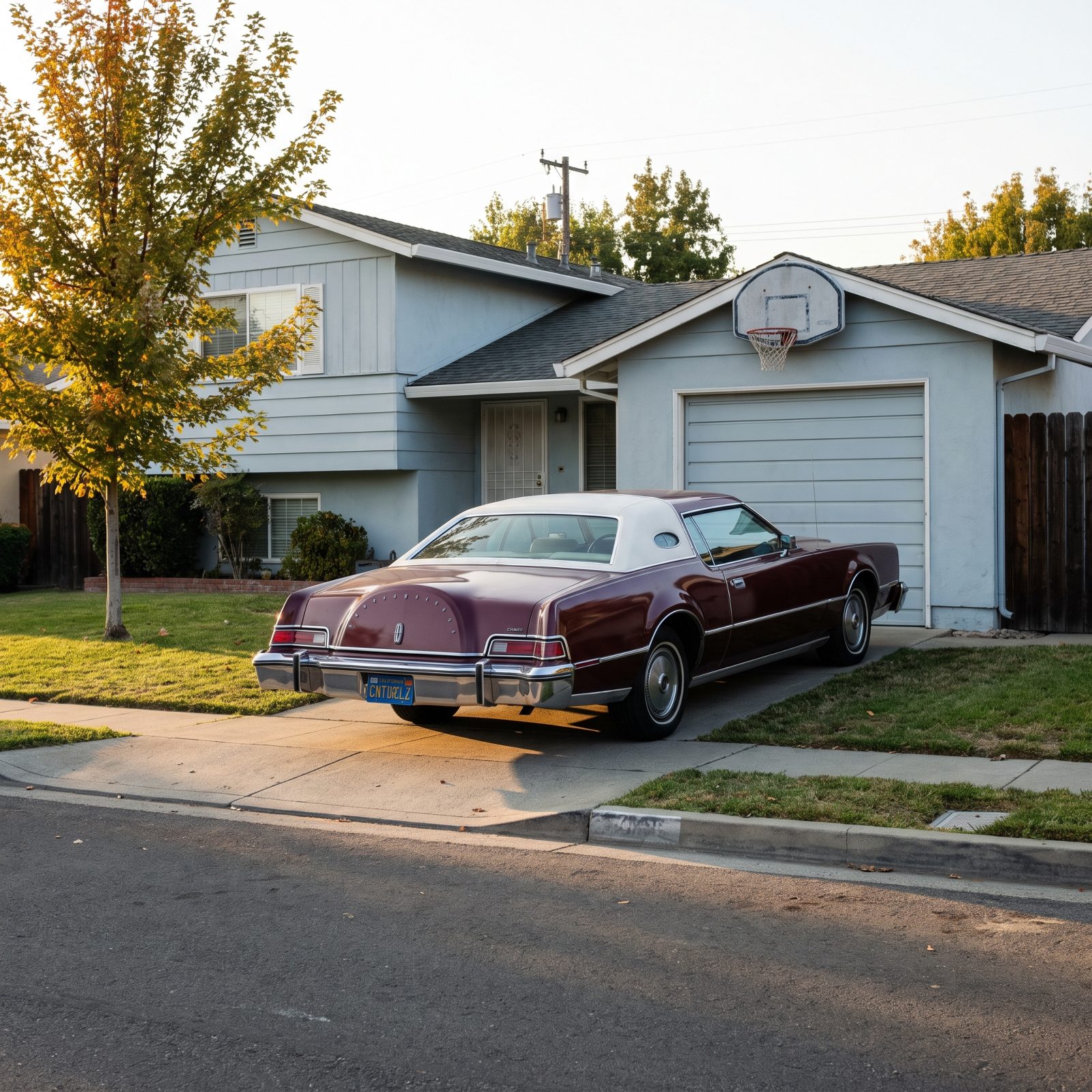
The Continental Mark IV didn’t fit, and that was the whole message. Twenty-plus feet of hood, vinyl roof, opera windows, and a driveway built for a compact. The rear bumper hung over the sidewalk. The neighbors noticed. The neighbors were supposed to notice.
The full-size personal luxury coupe of the 1970s, the Mark IV, the Coupe de Ville, the Grand Prix, often sat in front of a modest split-level, and the mismatch was the point. This is aspirational consumption. Buying the thing that signals the social position you want, not the one you currently occupy. Researchers describe it as identity construction mediated by the marketplace, where the object communicates a desired self rather than a functional need. Source
And here’s the quieter finding underneath it. Studies on conspicuous consumption suggest the real drive often isn’t feeling superior to the neighbors. It’s the search for a feeling of mere adequacy, a way to quiet private doubts about your own accomplishments. Source The coupe that was too big for the driveway wasn’t bragging. It was reassuring the person who bought it.
The Jeep Left Uncovered in the Rain on Purpose (And the Relationship to Control It Revealed)
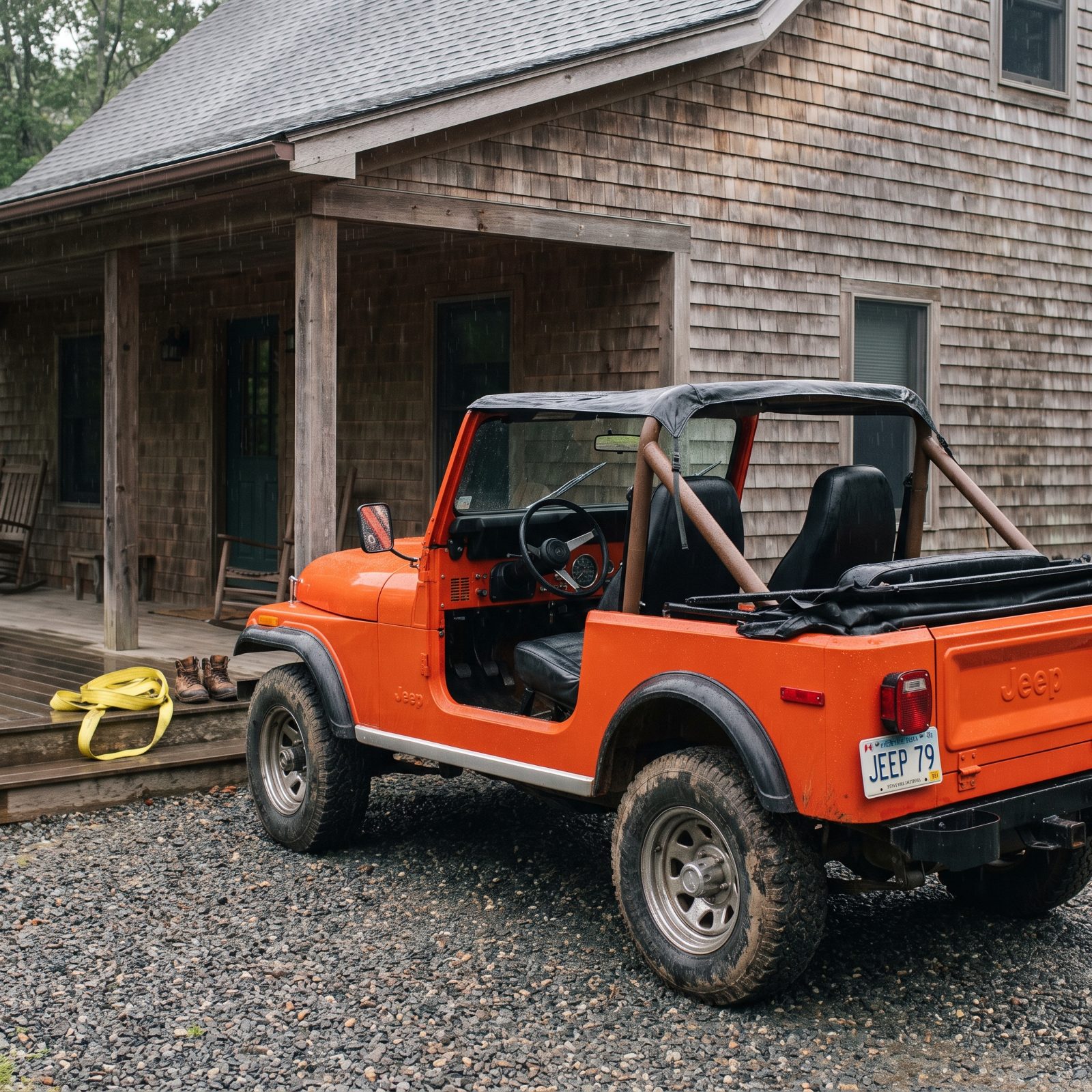
Doors off in June and left off. Soft top folded and forgotten in the garage. A CJ-5 or CJ-7 sitting in a downpour with the seats getting soaked, and the owner not lifting a finger about it. Every neighbor with a garaged sedan found this baffling.
It wasn’t neglect. It was a philosophy about vehicles, and by extension about control. The Jeep person chose a machine you’re supposed to expose, hose out, let weather. Vinyl seats, drain plugs in the floor, a body that expected mud. Covering it would have been a category error. The household that left a Jeep in the rain was announcing a comfortable relationship with mess, a willingness to let go of the polish-and-protect instinct that ran every other driveway on the block.
Compare it to product attachment, the emotional bond that triggers protection and care, the urge to shelter a thing from harm. Source The Jeep owner opted out of that entirely. The love was real. It just expressed itself as use, not preservation.
The Station-Wagon-to-Minivan Switch of the Mid-’80s That Marked a Whole Generation Changing Its Mind About Itself
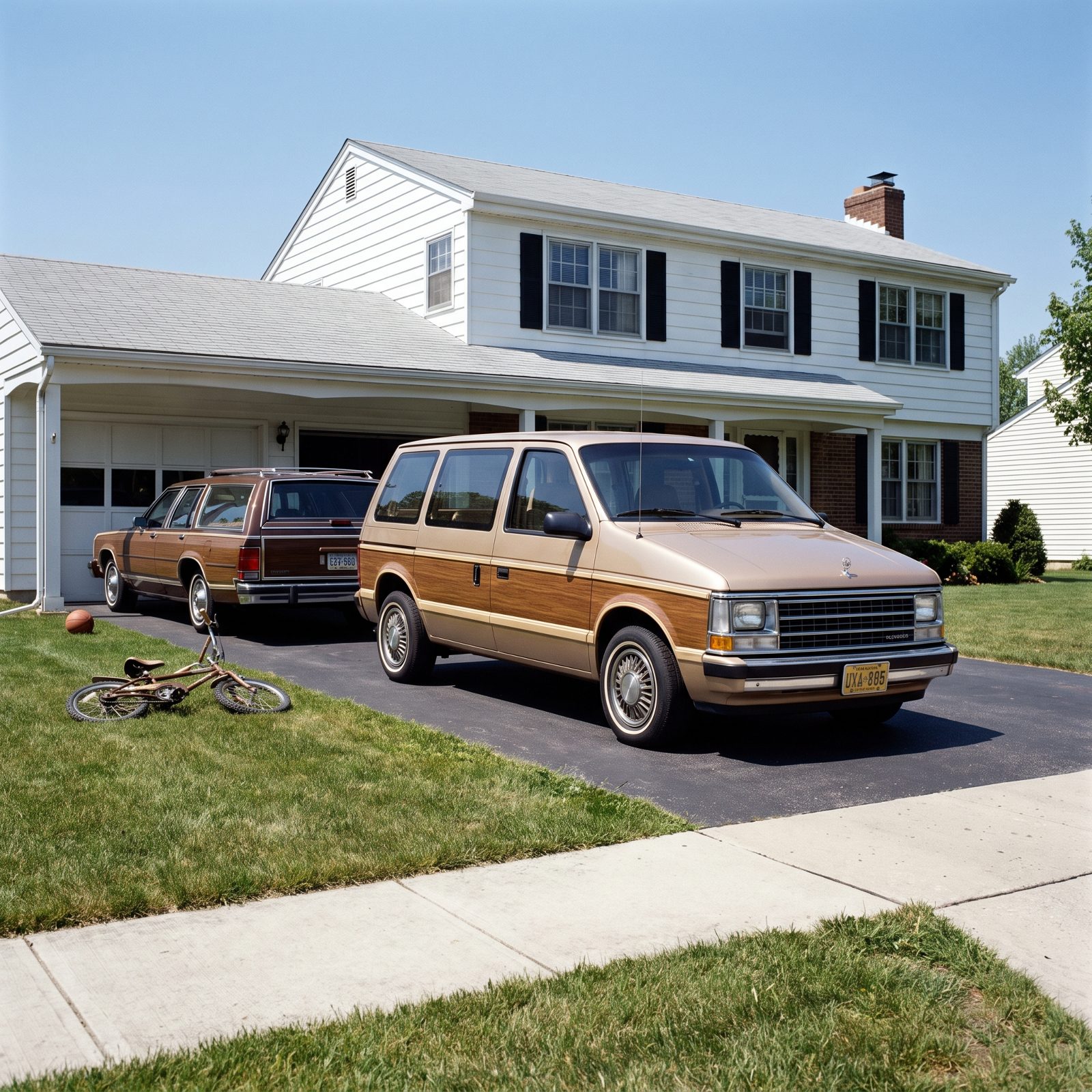
November 2, 1983. The first minivan rolled off Chrysler’s Windsor line, a Plymouth Voyager. Source By the next spring it was in showrooms, and a generation quietly fired the station wagon.
The wagon was the car boomers grew up in. Rear-facing third seat, fake wood paneling, dad at the wheel of the same land yacht his father drove. And that was the problem. Chrysler’s Lee Iacocca bet the company, a $660-million gamble, on the idea that young boomer parents wanted something roomier and more practical than the traditional family hauler they’d been raised in. Source He was right.
The switch wasn’t only about cargo space. It was a cohort declining to become its own parents. The minivan drove like a car, fit in a garage, and carried none of the wagon’s association with the decade everyone was trying to leave behind. Choosing it was a small act of generational self-definition, repeated in a few million driveways.
Why the First Car in the Driveway Said Something Different Than the Second Car (And Households Almost Never Realized It)
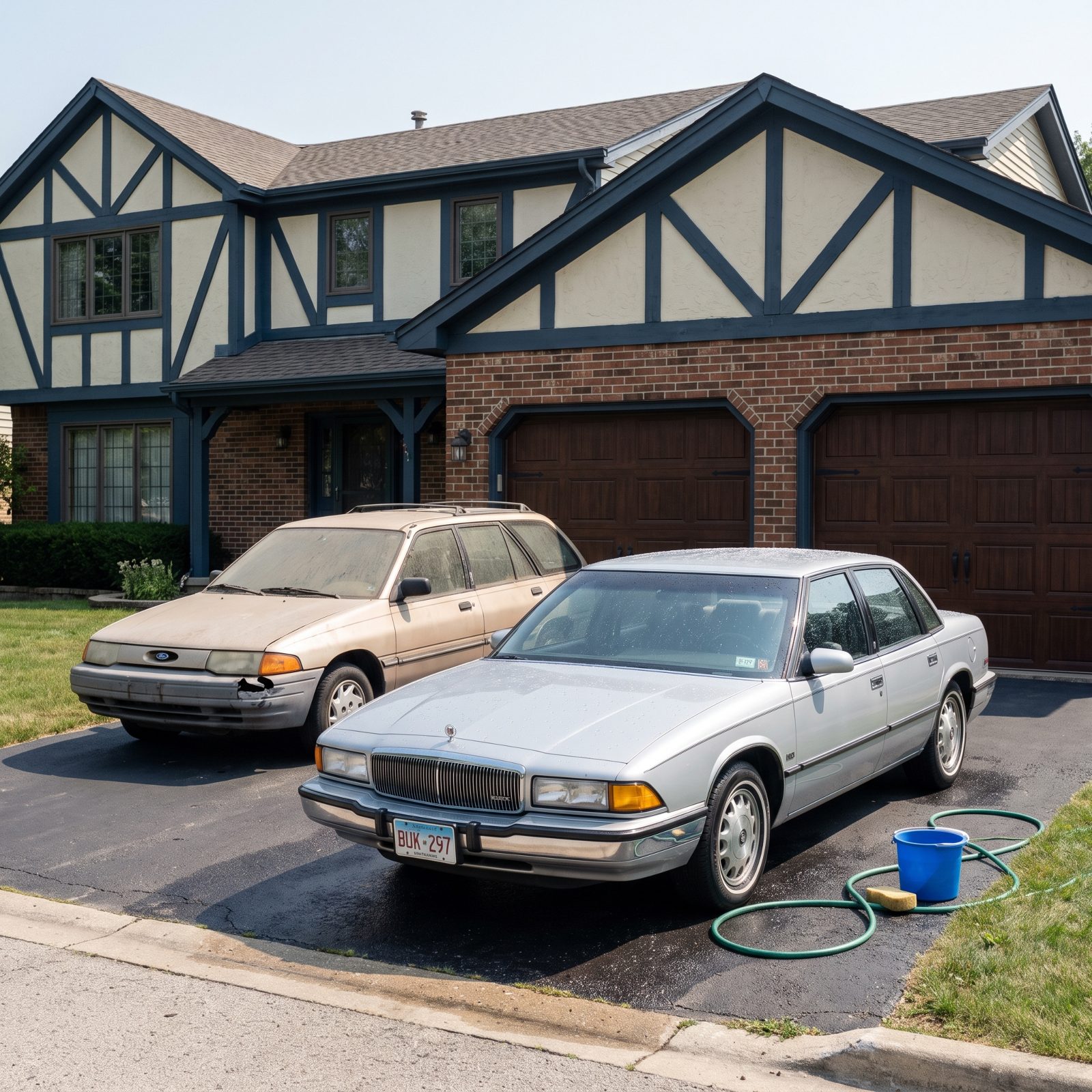
Every two-car household ran a quiet split. The first car, the one that faced the street, the one that got washed, was the public statement. The second car, tucked closer to the garage or half on the lawn, told the truth.
Think about a common 1988 pairing. A clean Buick Regal out front, and behind it a tired Ford Escort with a cracked bumper cover. The Regal was the face the household showed the neighborhood. The Escort was who actually ran the errands, hauled the kids, took the abuse. The first car answered the question “who do we want to be seen as.” The second answered “who are we when nobody’s grading us.”
Households almost never clocked this. But possessions work as a language, a non-verbal system communicating social standing and taste, and the two-car driveway was speaking in two registers at once. Source The gap between the first car and the second car was often the gap between aspiration and reality, parked eight feet apart.
The Vehicle a Household Kept Ten Years Too Long (And the Attachment Science That Explains Refusing to Let Go)
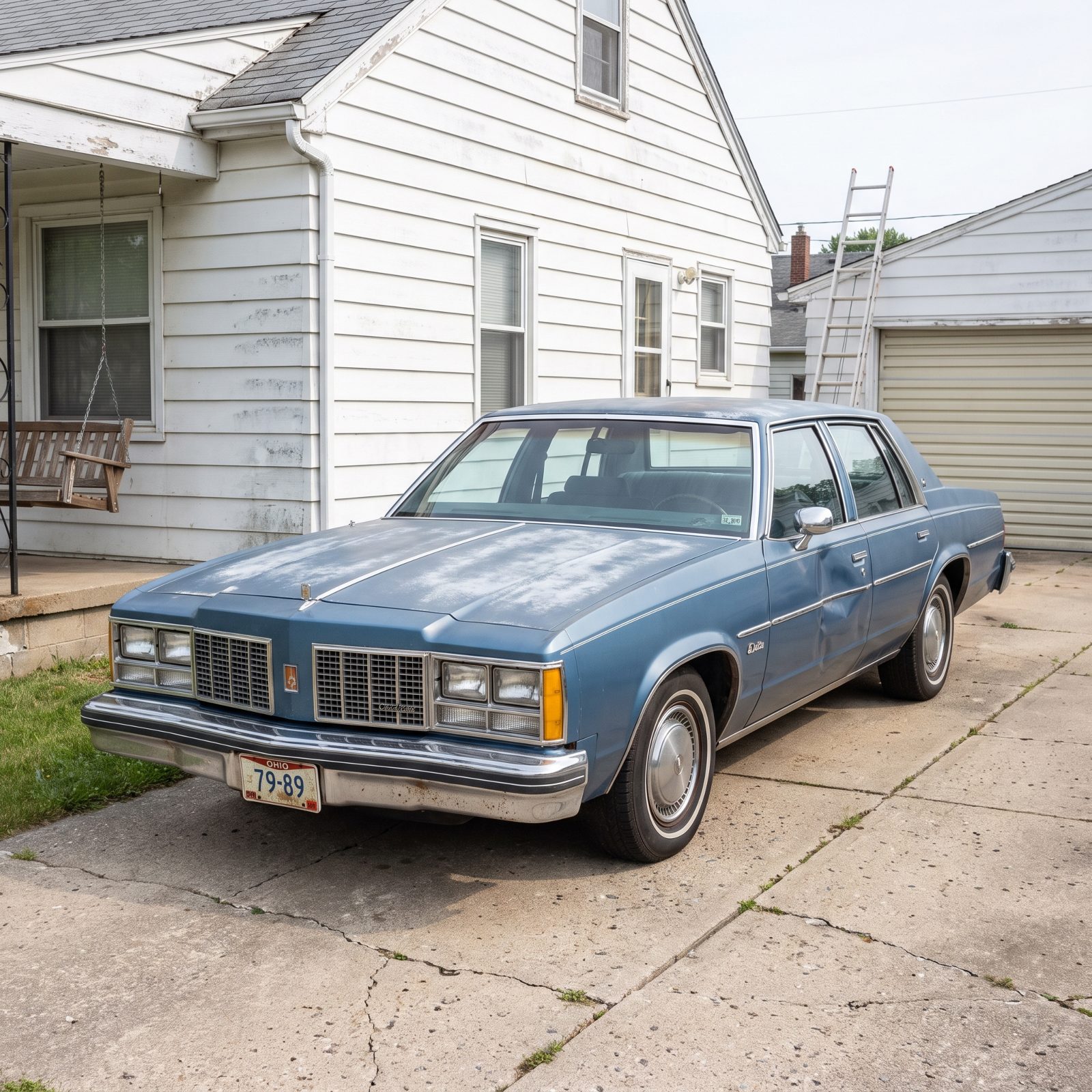
Everyone knew the car. The 1979 Olds Delta 88 still in the driveway in 1994, blue smoke on cold starts, a door that needed a shoulder, and a family that would not sell it. Offers came. “It’s not worth anything,” people said. The household kept it anyway.
There’s a name for this. The endowment effect, the finding that we place a disproportionately higher value on something simply because we own it, far above what any buyer would pay. Source The car isn’t worth more. It feels worth more, because it’s ours.
Underneath the economics sits loss aversion. We’d rather avoid a loss than gain something equal, which builds a kind of psychological inertia against ever letting go. Source And the car had absorbed a decade of life. The trips, the kids learning to drive, the funerals and the groceries. It had become part of the extended self, and selling it felt less like a transaction than an amputation.
So it stayed. Ten years too long by any spreadsheet. Exactly long enough by every other measure that mattered.
The Bottom Line
The car in the driveway was never about the car, it was a household’s self-image parked in plain sight, broadcasting what they valued, feared, and hoped to become before anyone said a word. Every choice, from the backed-in pickup to the coupe too big for the space, was an unguarded confession of identity that the owners themselves rarely noticed. Next time you pull into your own driveway, look at what’s sitting there and ask what it’s been telling the street about you all along.