
Would you like to save this?
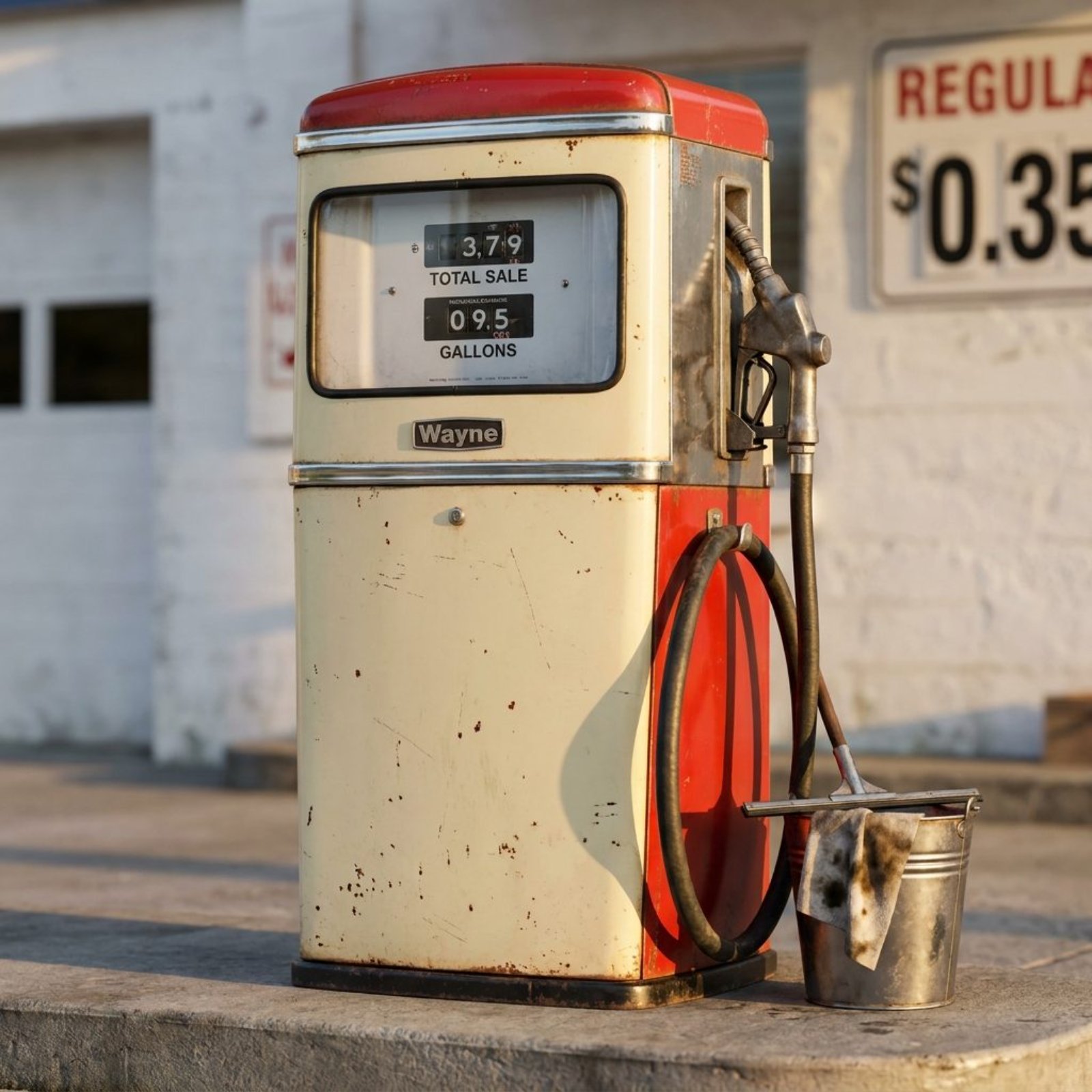
A bell dinged when your tires crossed the rubber hose in the driveway. Before you even shifted into park, someone in a pressed uniform was already walking toward your window, rag over one shoulder, asking how much and whether to check under the hood. You did not get out of the car. You did not touch a thing.
Please note that some of the images in this article were created with the assistance of AI.
More than fifty years later, that little ritual has been replaced by a card reader, a screen asking whether you want a receipt, and a row of pumps nobody is coming out to help with. The cars are better. The transaction is faster. But gas stations once did far more than sell fuel, and these 25 before-and-afters show how much disappeared along the way.
25. The Full-Service Fill-Up
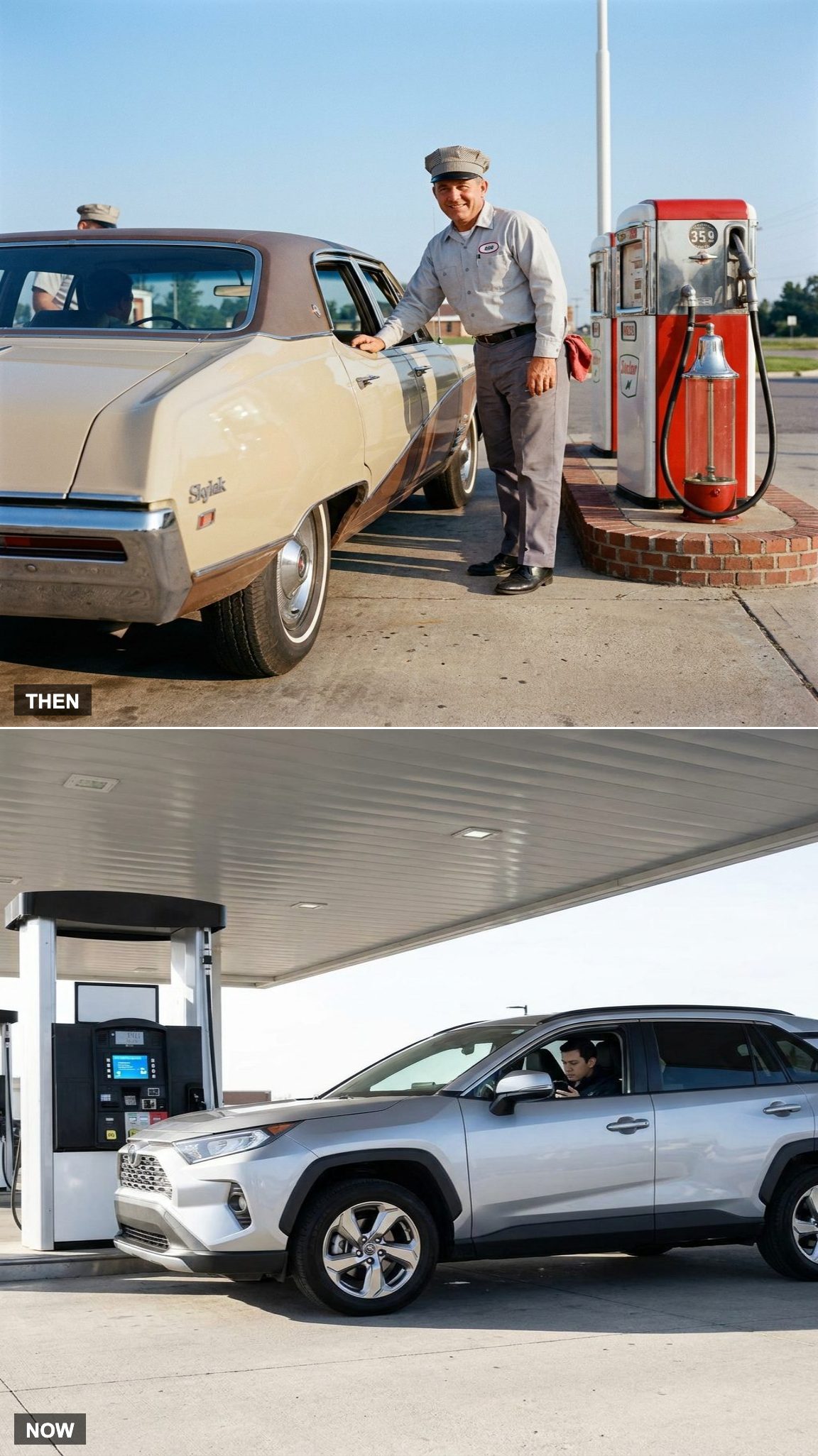
You rolled down the window, said “fill it up,” and that was your entire job. The attendant handled the rest while you sat there listening to the radio. On busy corners, a station might keep several uniformed attendants moving between the pumps, each one trying to reach the next car first.
Now you swipe, pump, and stand in the cold watching the numbers climb. Faster, yes. Lonelier too. Nobody asks how the car is running because nobody is there to ask.
24. The Windshield That Got Cleaned Whether You Asked or Not
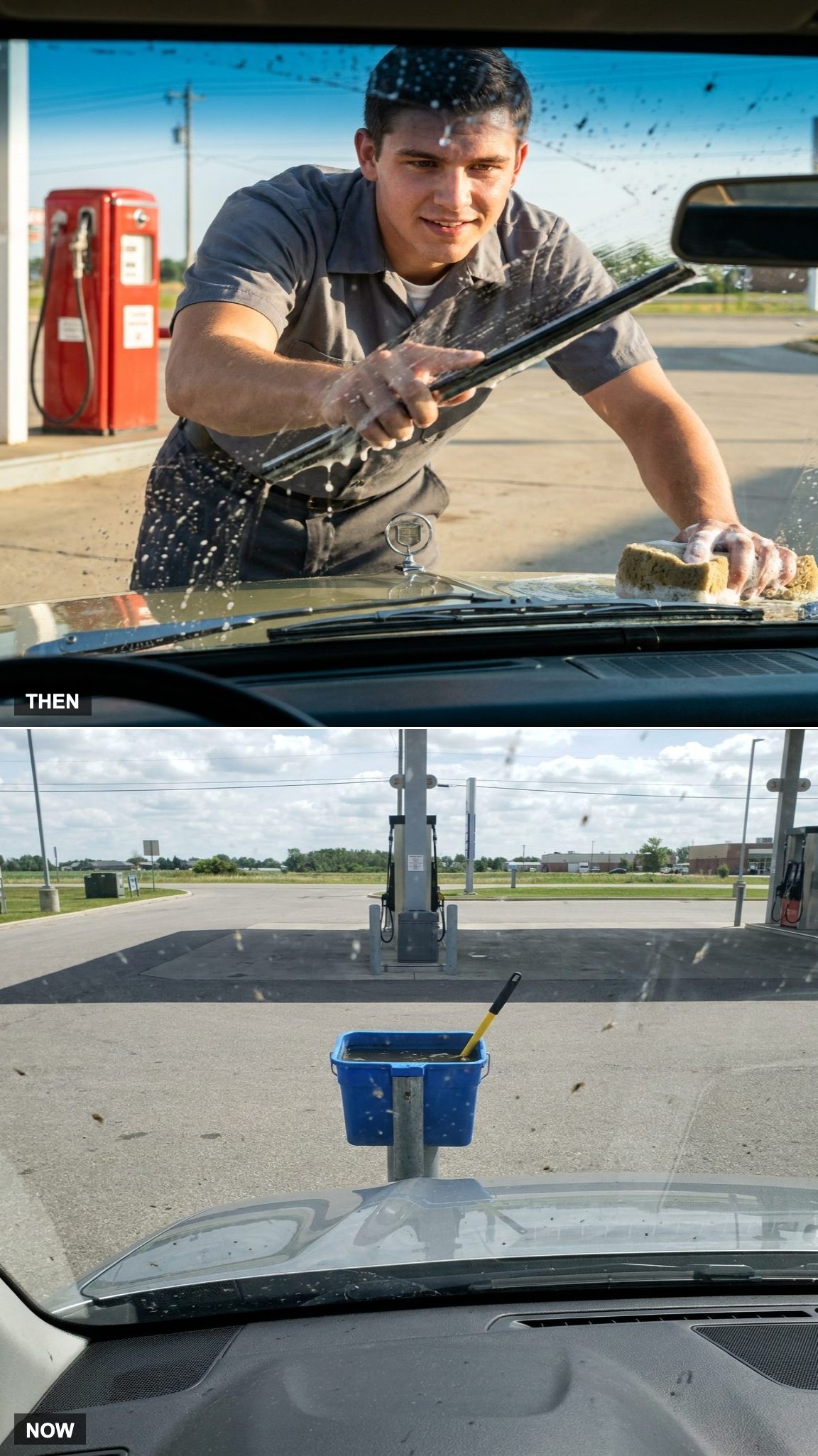
Bug season did not stand a chance. Pull in for five dollars of regular and your glass came out clear enough to see the drive-in screen from the highway. They did the back window too if you asked nicely.
Today there is a bucket. The water in it has been the same color since roughly the Clinton administration, and the squeegee sponge wears a permanent gray crust. So you do it yourself, badly, leaving one streak directly in your line of sight for the next four hundred miles.
23. “Check the Oil?” and Somebody Actually Did
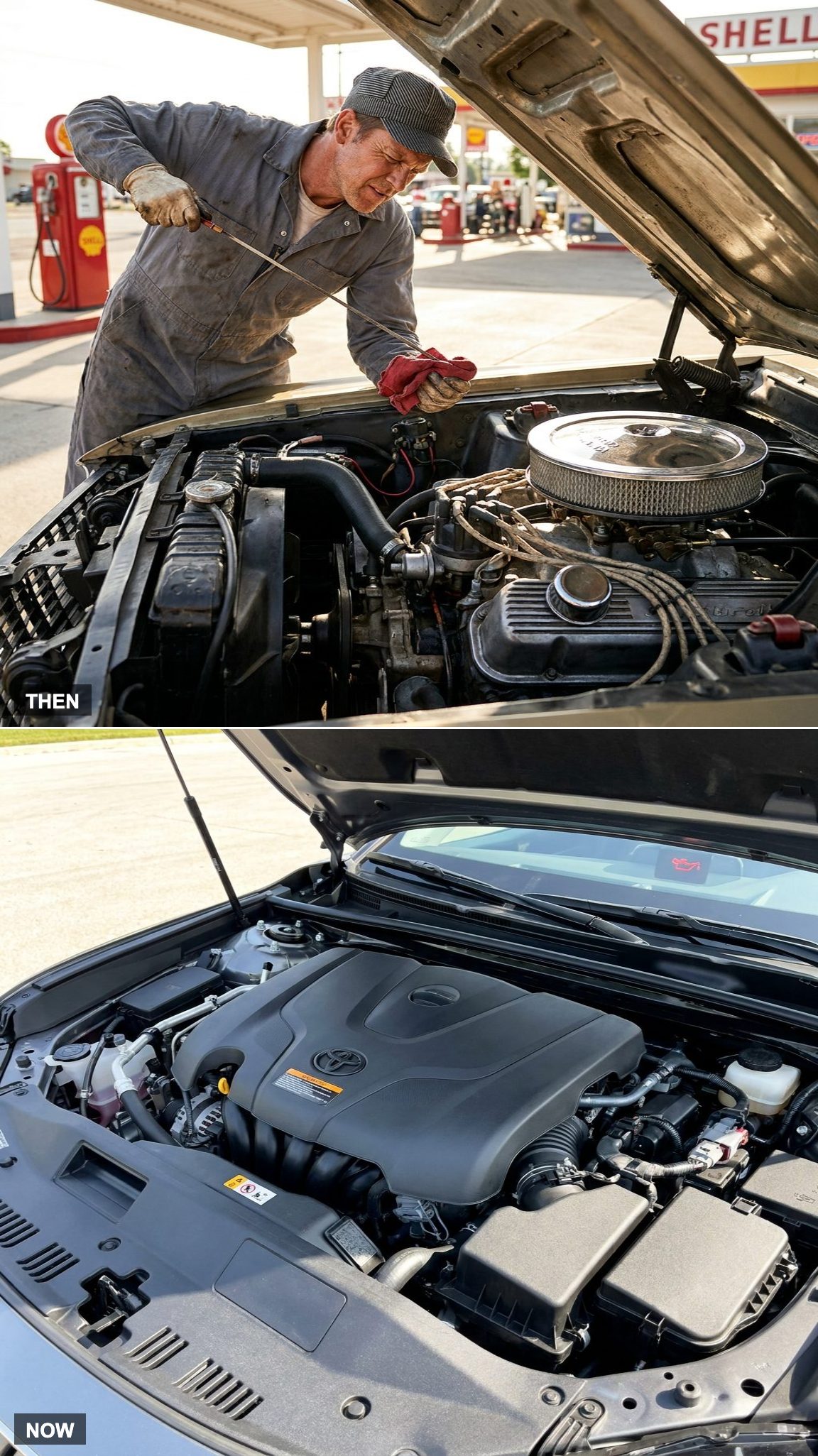
Nearly every stop came with the offer to look under the hood. The attendant pulled the dipstick, wiped it clean, checked the level, and let you know if the engine was running low. A quart of oil could be added before a small problem became an expensive one.
Many newer cars use electronic oil-level displays, oil-life monitors, or dashboard warnings. Useful, certainly. But a dashboard message does not lean into the window and say, “You might want to keep an eye on that.”
22. Free Air, and a Man to Read the Gauge
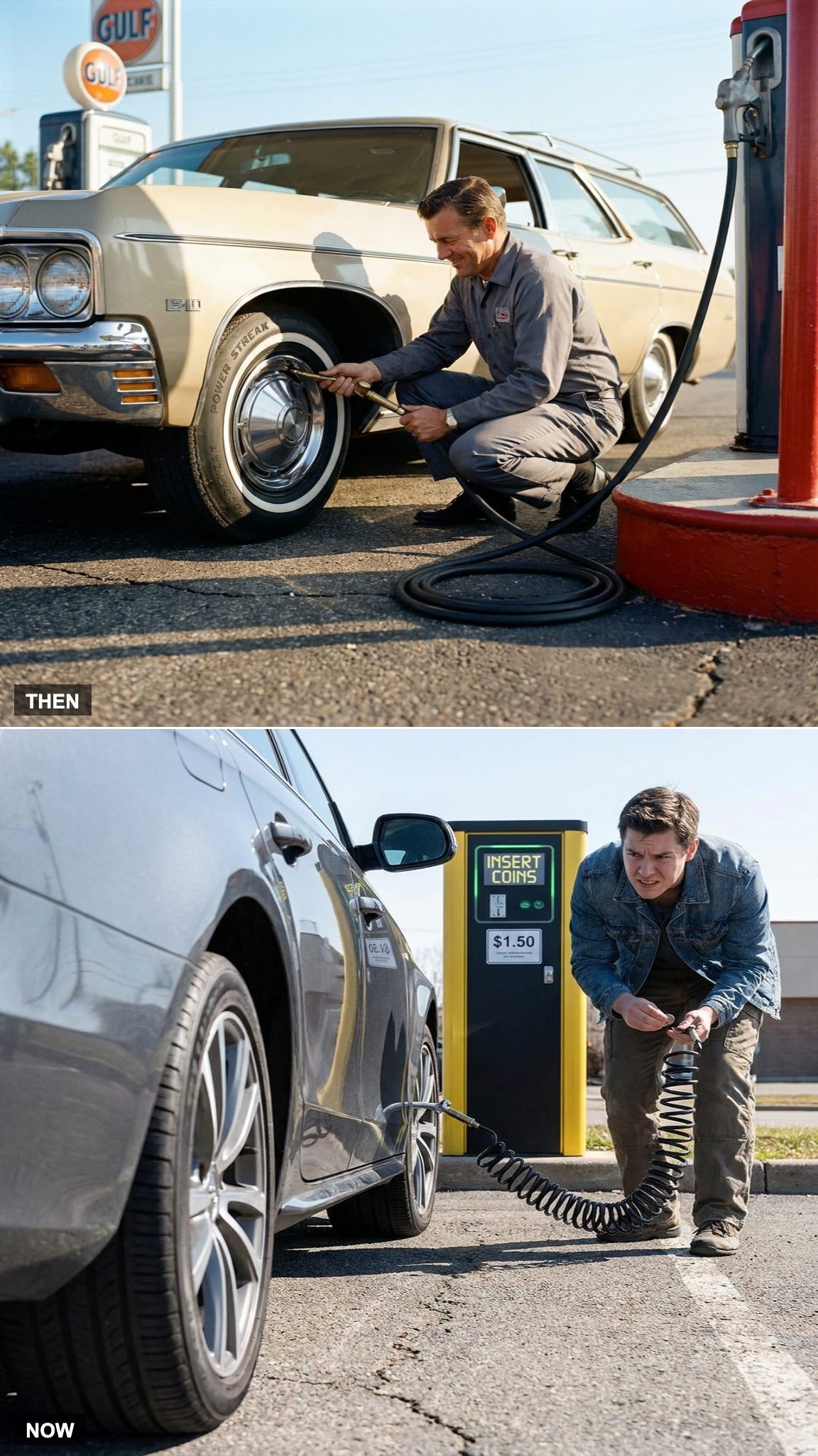
At many stations, air was free and somebody else handled it. The attendant knelt down, removed the valve caps, checked all four tires with a pocket gauge, and topped off whatever was low while you barely gave it a thought. That was the real luxury: not having to think about it.
The air machine now wants money, starts counting down before you have the hose uncoiled, and seems to stop the second you reach the last tire. You end up crouched on greasy concrete, racing a timer and wondering whether the built-in gauge can be trusted.
21. The Radiator Check Before the Temperature Needle Climbed
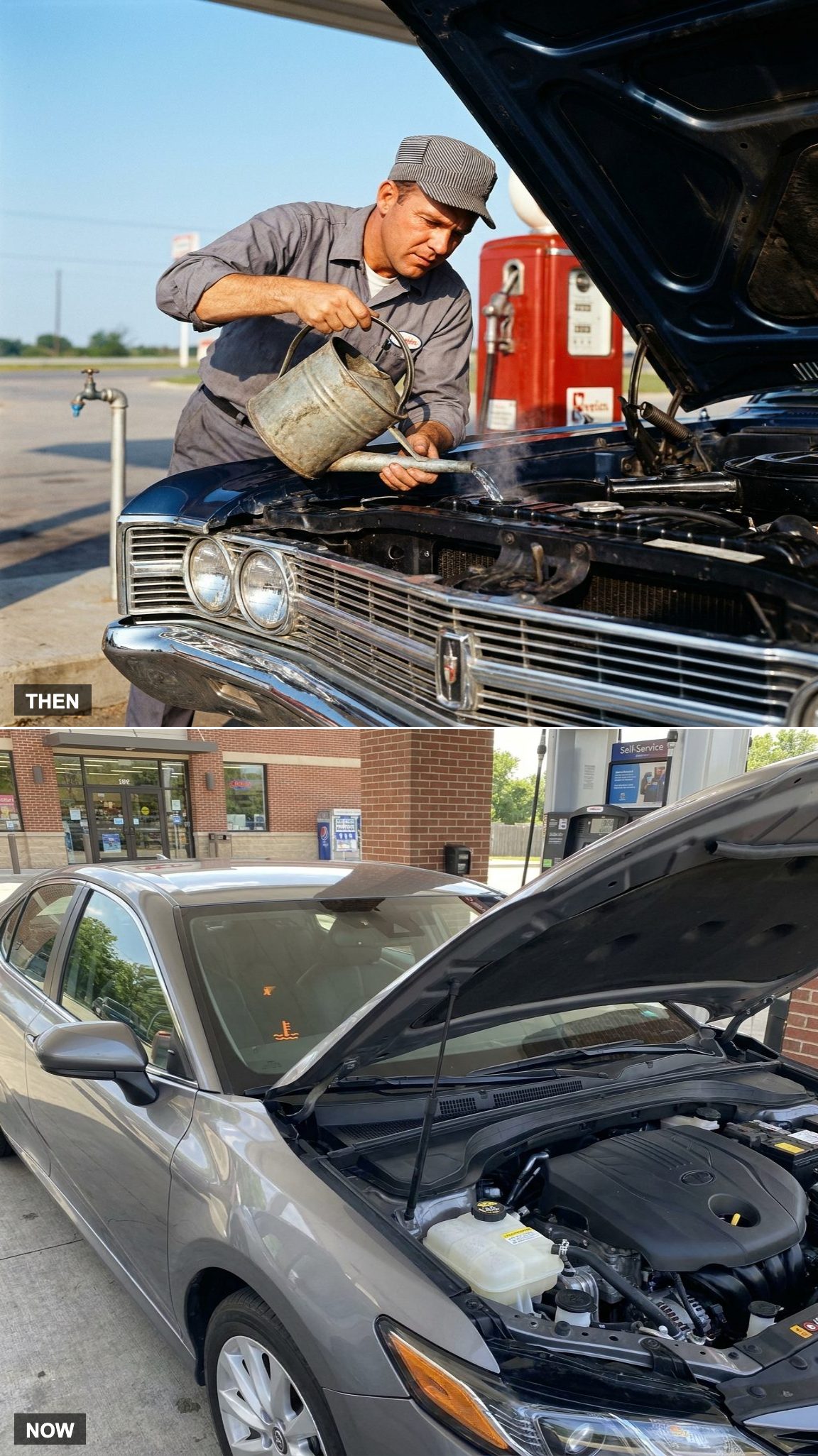
Older cars could run hot, especially in slow summer traffic, and station attendants knew the warning signs. Once the engine had cooled, the attendant looked for damp hoses, fresh leaks, a loose cap, or anything else that suggested the cooling system needed attention.
Modern systems lose less coolant and need less frequent attention, but they are not maintenance-free. The quick inspection simply no longer happens during a fuel stop. You usually discover the problem through a rising gauge, a puddle, a warning light, or a mechanic’s invoice.
The whole station was built around the idea that your car was somebody else’s problem for five minutes. That is the part that really disappeared.
20. The Attendant’s Uniform
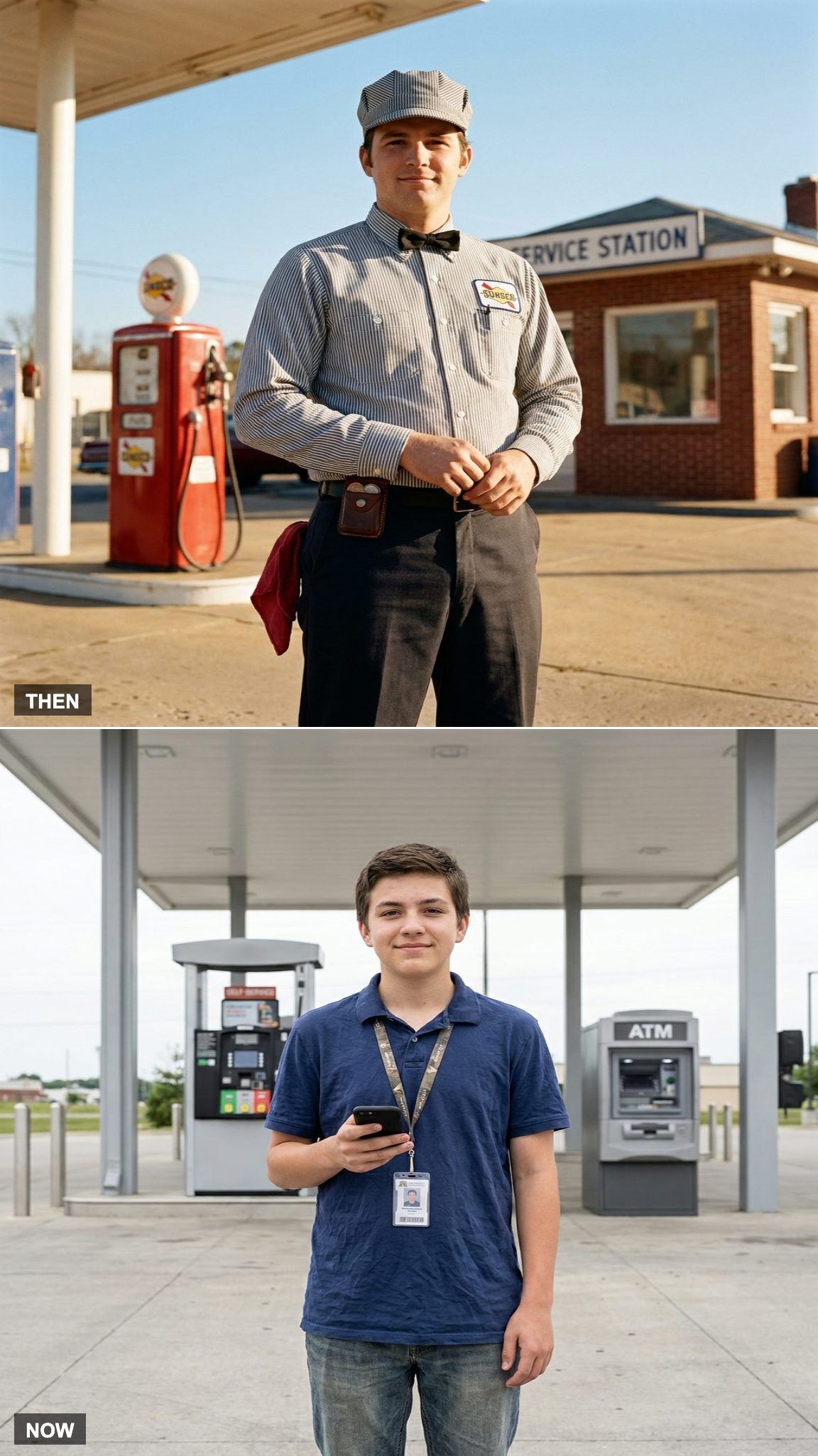
The uniform meant something. Pressed shirt, name patch, bow tie clipped straight, and a coin changer on the hip that clicked out your change in one smooth motion. The outfit said service before the attendant said a word.
The person inside the modern station works the register, watches the pumps, handles lottery tickets, refills the coffee, and keeps an eye on the roller grill. Fine work, honest work. Just not the same job, and definitely not the same bow tie.
19. The Clean Restroom With a Key on a Hubcap
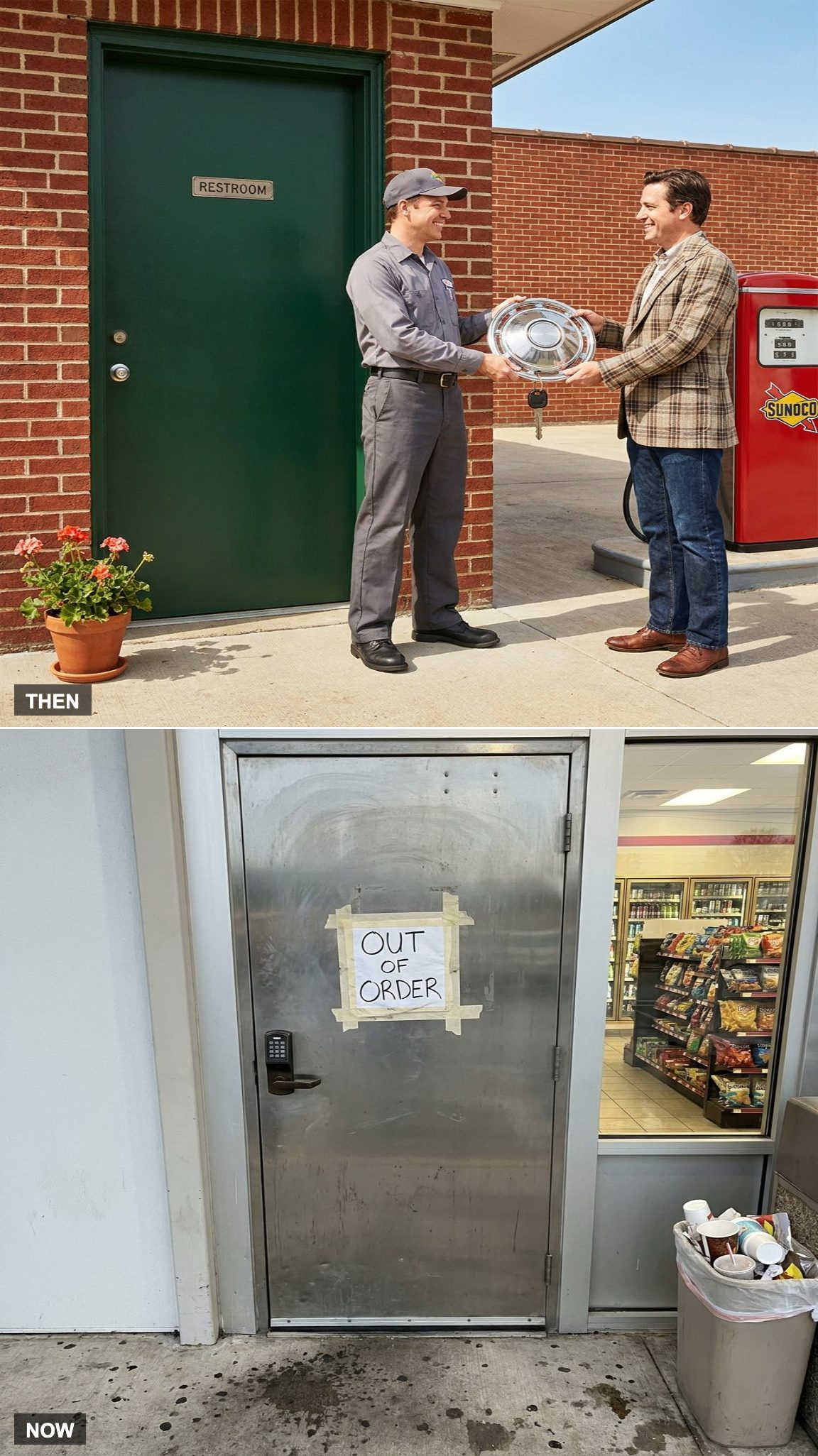
The restroom key came chained to a hubcap the size of a dinner plate so nobody could drive away with it. Odd system, certainly. But somebody cleaned those rooms because the station’s name was on the sign and a filthy bathroom could cost repeat business.
The hubcap key belongs in a museum now. What replaced it is a keypad, an “out of order” sign that has been hanging there since spring, and a floor you would rather not inspect closely.
18. The Mechanic in the Service Bay Out Back
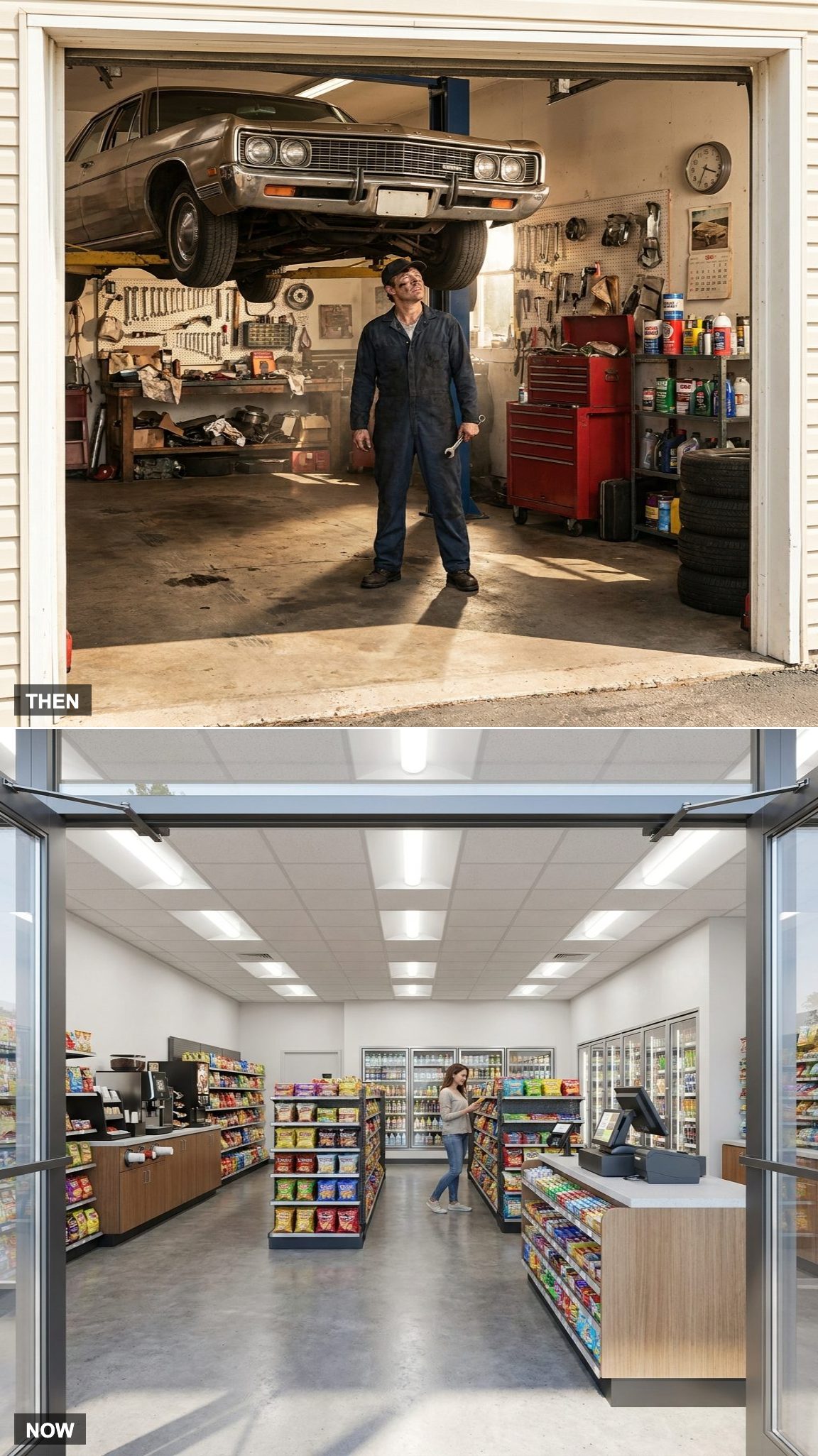
Behind the pumps sat a service bay with a lift and a mechanic who could actually fix your car. Brakes, exhaust, a water pump, a tune-up before a long trip. You bought gas and got the repair done in one stop, often by somebody you knew by name.
That bay is a coffee station now. The lift came out to make room for shelves, coolers, and hot food under heat lamps. The gas station and the repair shop used to be the same building. Splitting them apart may be the biggest change of all.
17. The Attendant Who Ran Your Change Out to the Car
Would you like to save this?
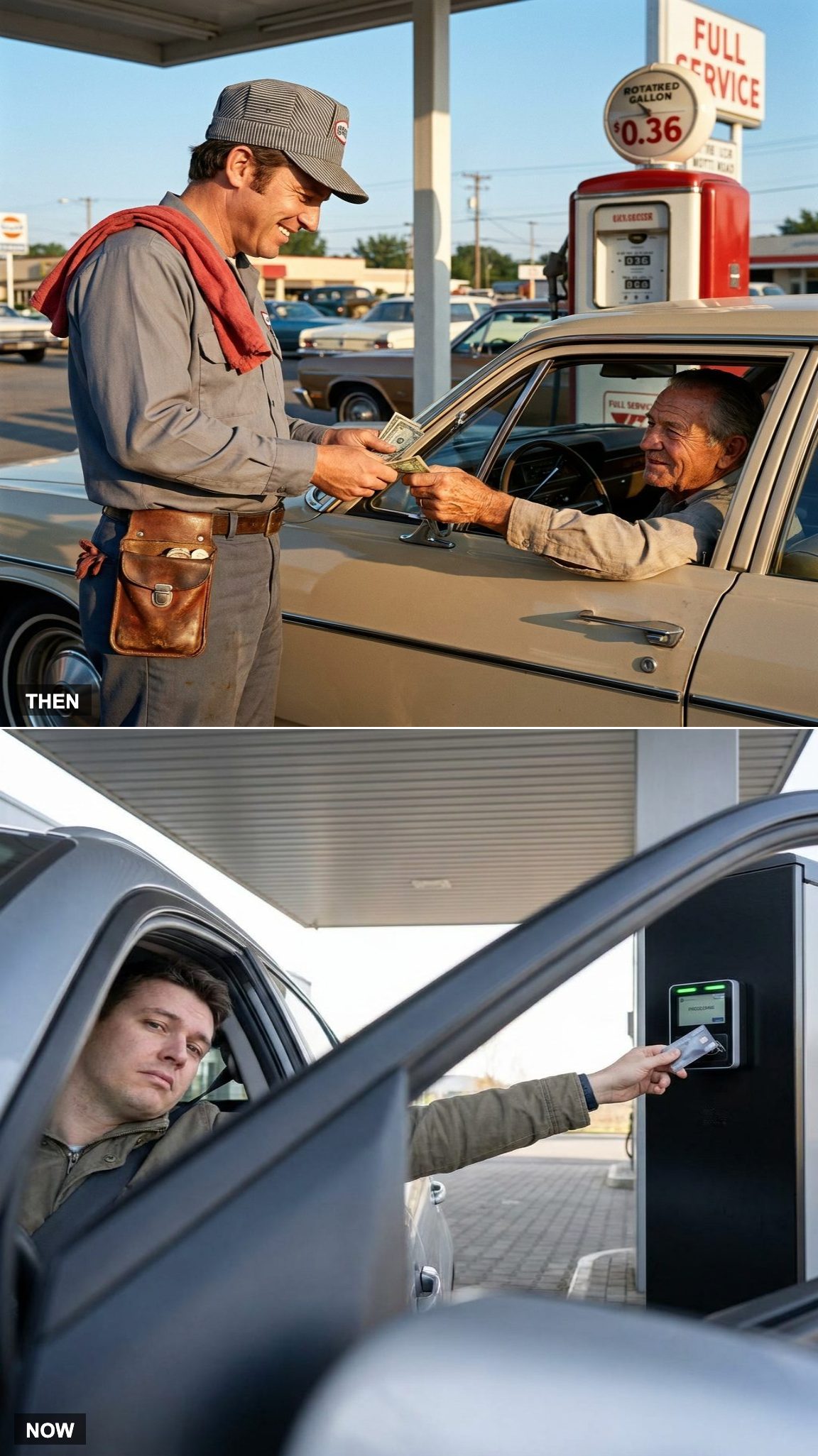
You handed over a ten and the change came back to your window, counted into your hand out loud—a dollar and some silver, followed by a face-to-face “thanks, come again.” The whole exchange took a minute and felt like a transaction between two people who might see each other again next week.
Tap the card, wait for the beep, drive off. At the pump, nobody counts anything back to you now. The money still changes hands. The little ceremony around it is gone.
16. Coolant Topped Off by Hand Before a Warning Light Took Over
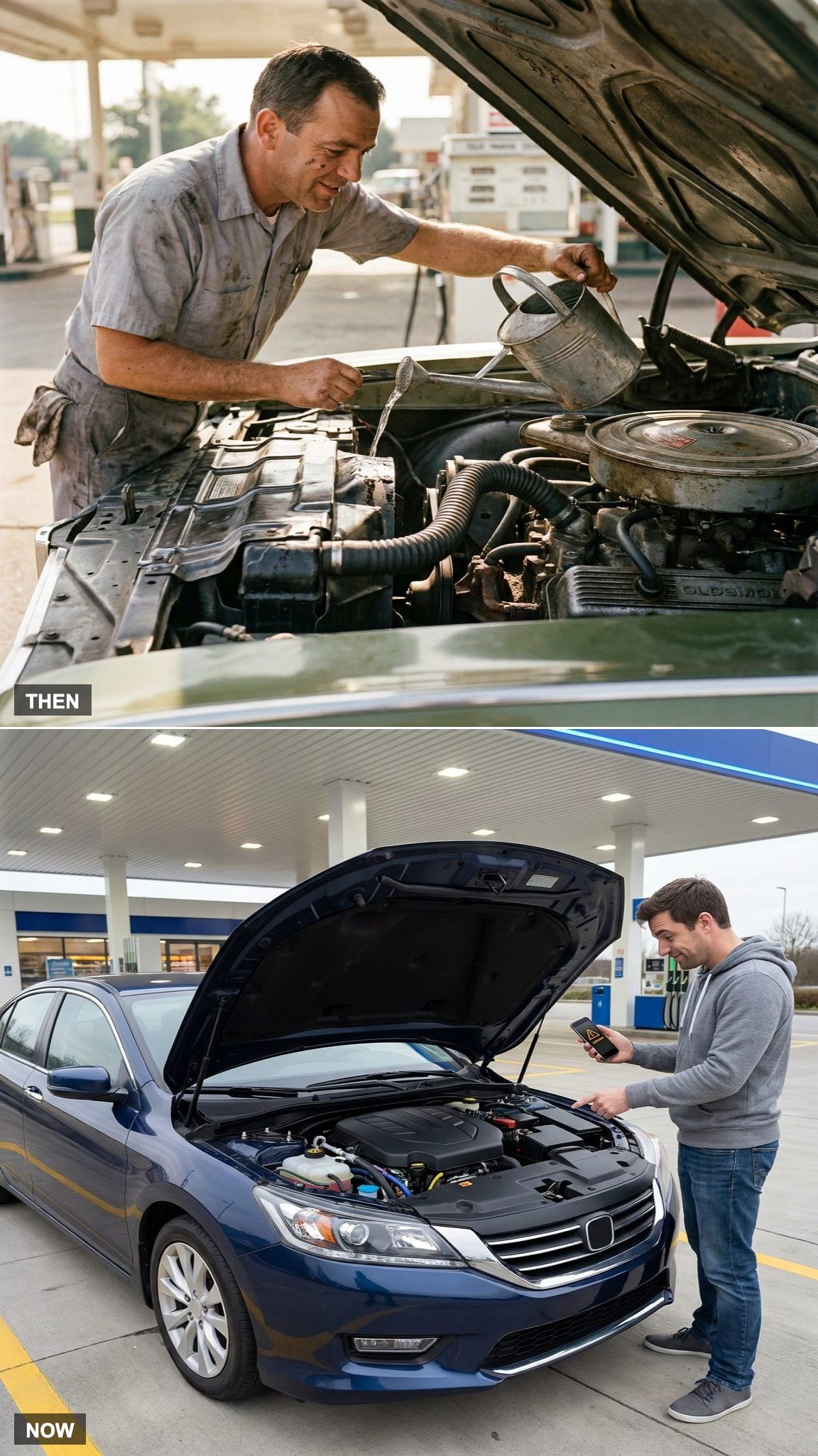
Once the engine was cool enough to open safely, the attendant checked the level and added water or coolant when the system was low. Out came a metal can with a long spout, and in went exactly what the radiator needed. No appointment, no diagnostic screen, no plastic bottle rolling around in the trunk afterward.
Modern cars usually place coolant in a translucent expansion reservoir, where the level can be checked without opening the radiator itself. Better engineering, certainly. But when something is wrong, the modern driver is often standing alone over an engine bay with a phone in hand, trying to decide whether a warning symbol means “drive home” or “do not move another inch.”
15. Under-the-Hood Inspections Nobody Asked For
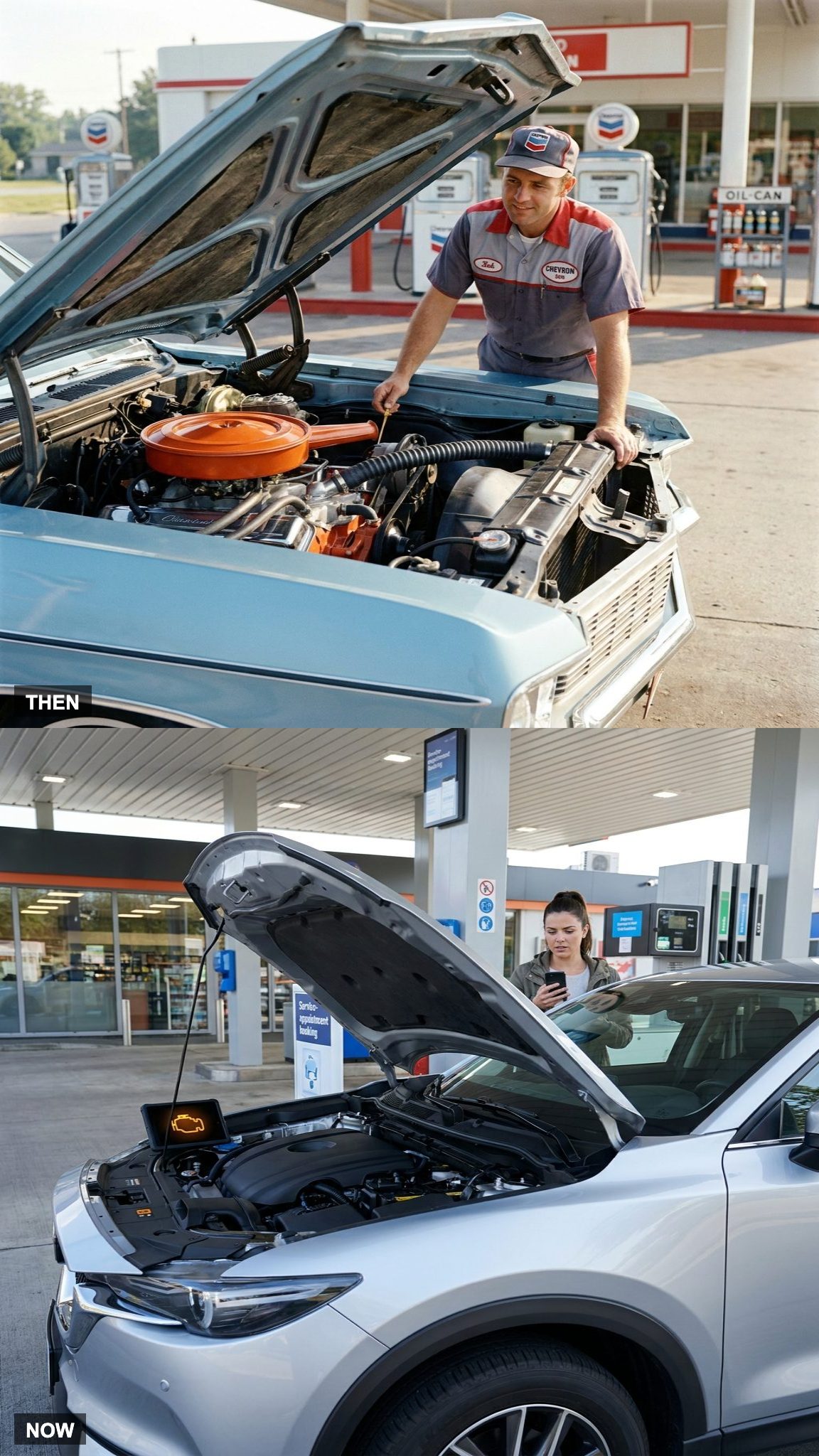
A full-service stop doubled as a quick visual health check. While the tank filled, an attendant glanced for leaks, loose battery connections, frayed wires, low fluids, or anything else visibly out of place. The inspection was not a substitute for a mechanic, but it could catch obvious trouble before it reached the highway.
Today the car handles part of the monitoring through sensors and dashboard alerts. What disappeared was the unscheduled human glance—the person noticing something the computer was never designed to watch.
14. Wiper Blades Replaced Right at the Pump
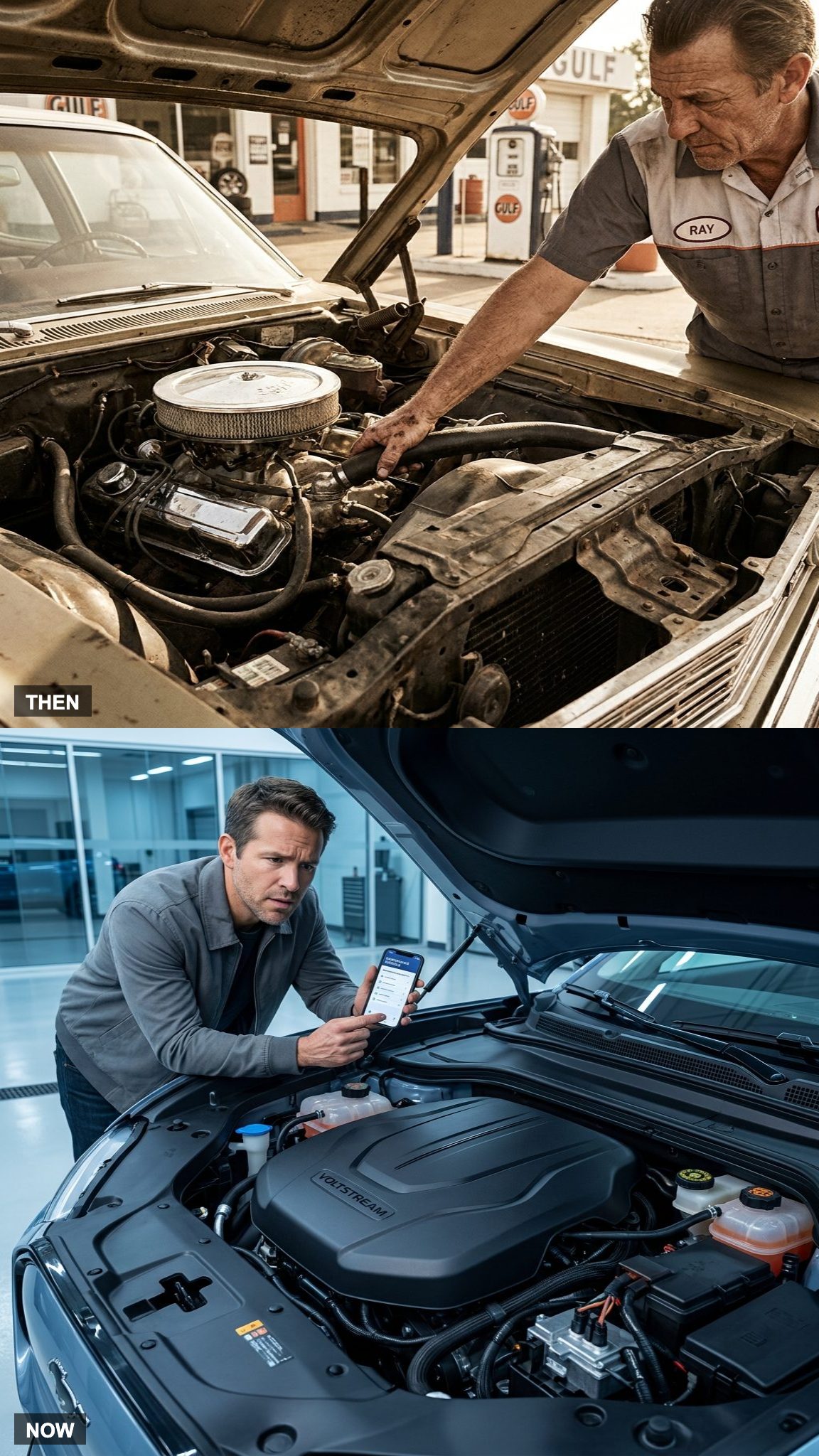
The attendant was already cleaning the windshield, so torn rubber and badly streaking blades were hard to miss. Many stations stocked common replacements behind the counter, and a new pair could be clipped on before the tank finished filling.
Now you discover the problem in the middle of a downpour, when one blade smears the glass and the other makes a noise like an angry goose. The replacement is available somewhere across town, in an aisle containing forty nearly identical packages and one tiny compatibility chart.
13. The Attendant Who Knew Your Name
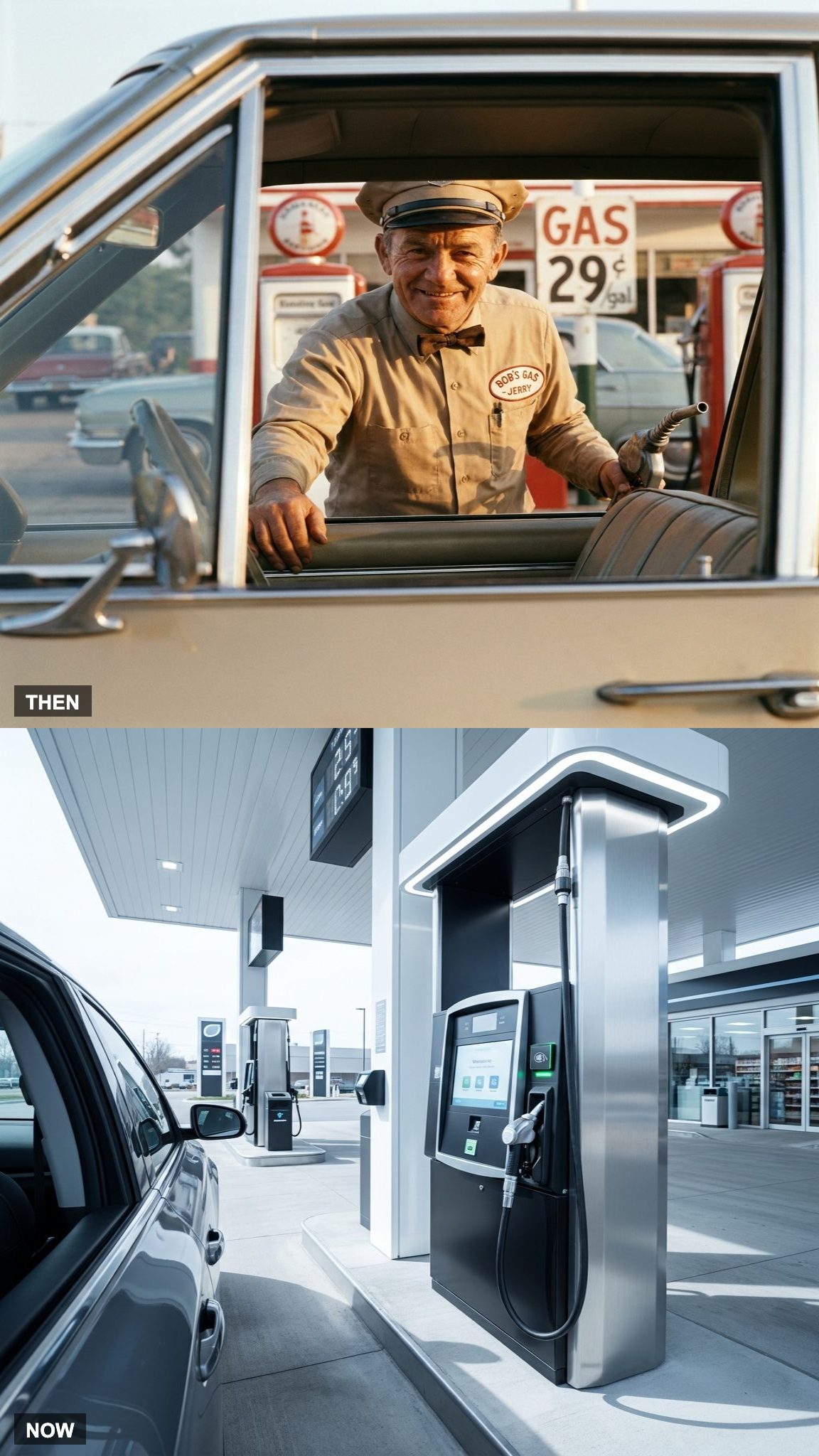
Pull in twice a week and the attendant knew your car, your name, and probably that the left rear tire had been losing a little air since spring. Fueling up was half errand, half neighborhood check-in.
The modern version is a card reader that greets you with a screen prompt and a beep. Efficient, certainly. But no machine ever leaned into the window to ask how your boy’s baseball season was going.
12. The Driveway Bell That Summoned Help
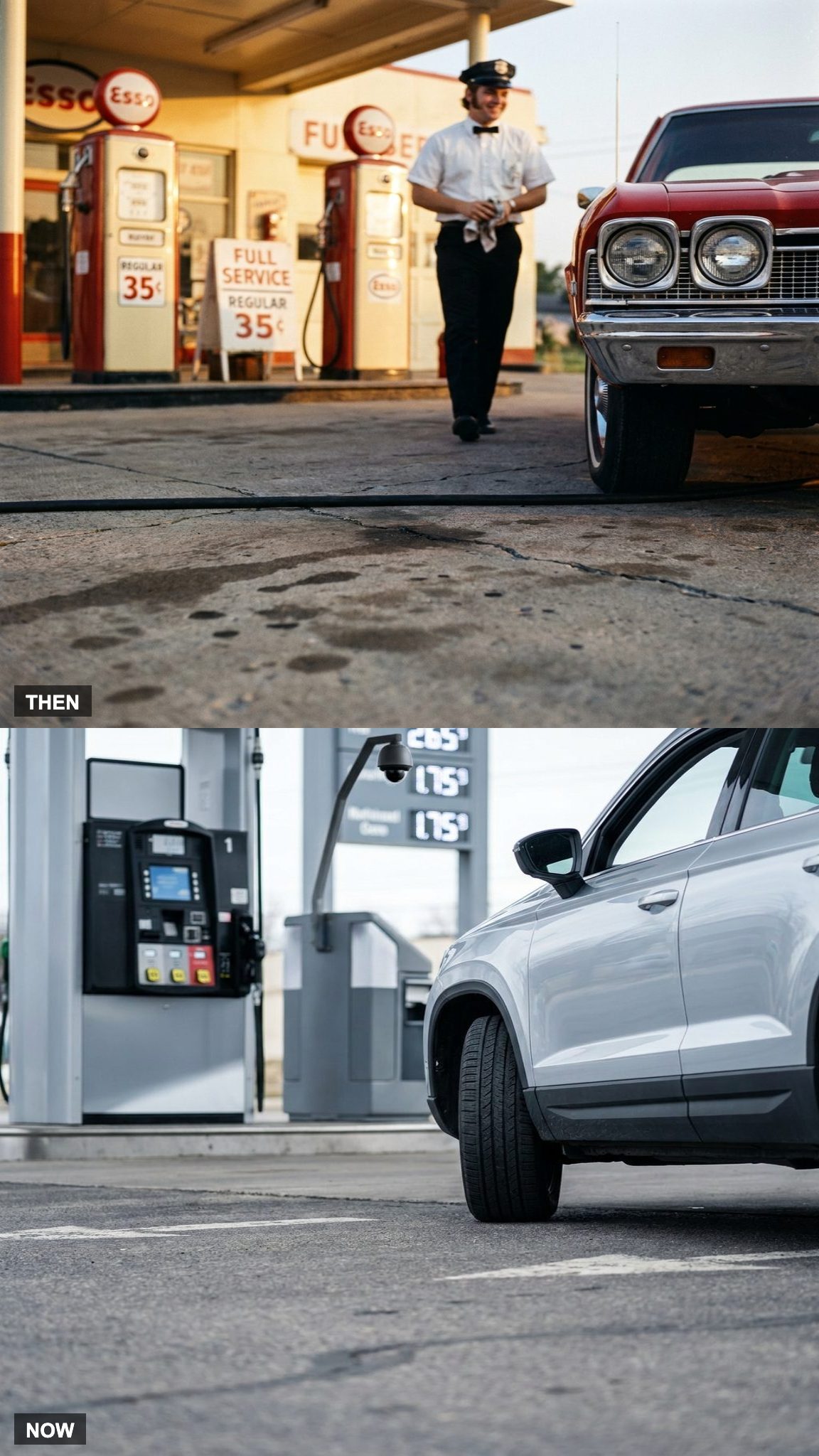
That black hose across the driveway did one simple job. Your tires rolled over it, a bell rang inside, and a human being appeared at the window seconds later. No app, no touchscreen, no need to attract anyone’s attention.
The bell is gone, and so is the person it called. Roll onto a modern forecourt and the only thing guaranteed to notice you is a camera.
11. Free Road Maps for the Asking
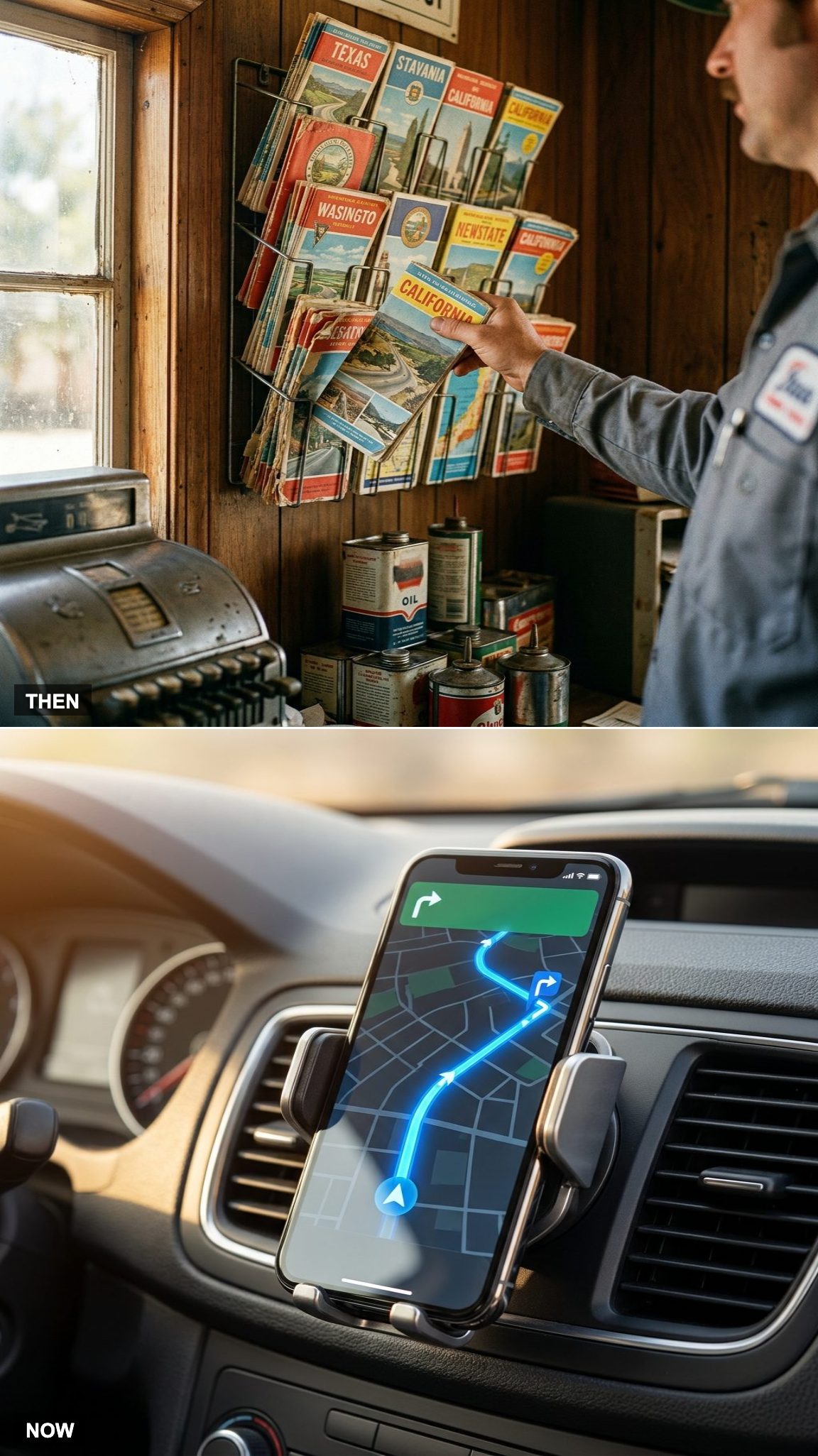
Stations often kept racks of branded road maps, and you took the one covering the state you were in or the state you hoped to reach. You spread it across the hood, traced the route with your finger, and folded it incorrectly for the rest of the trip while the entire family offered advice.
Now a phone on the dash tells you where to turn in a calm voice and reroutes without complaint when you miss it. Faster, no argument. But you rarely see the whole country laid out at once, and you do not wonder what lies down the side road because the phone has already decided you are not going there.
10. Trading Stamps Licked and Stuck After Every Fill-Up
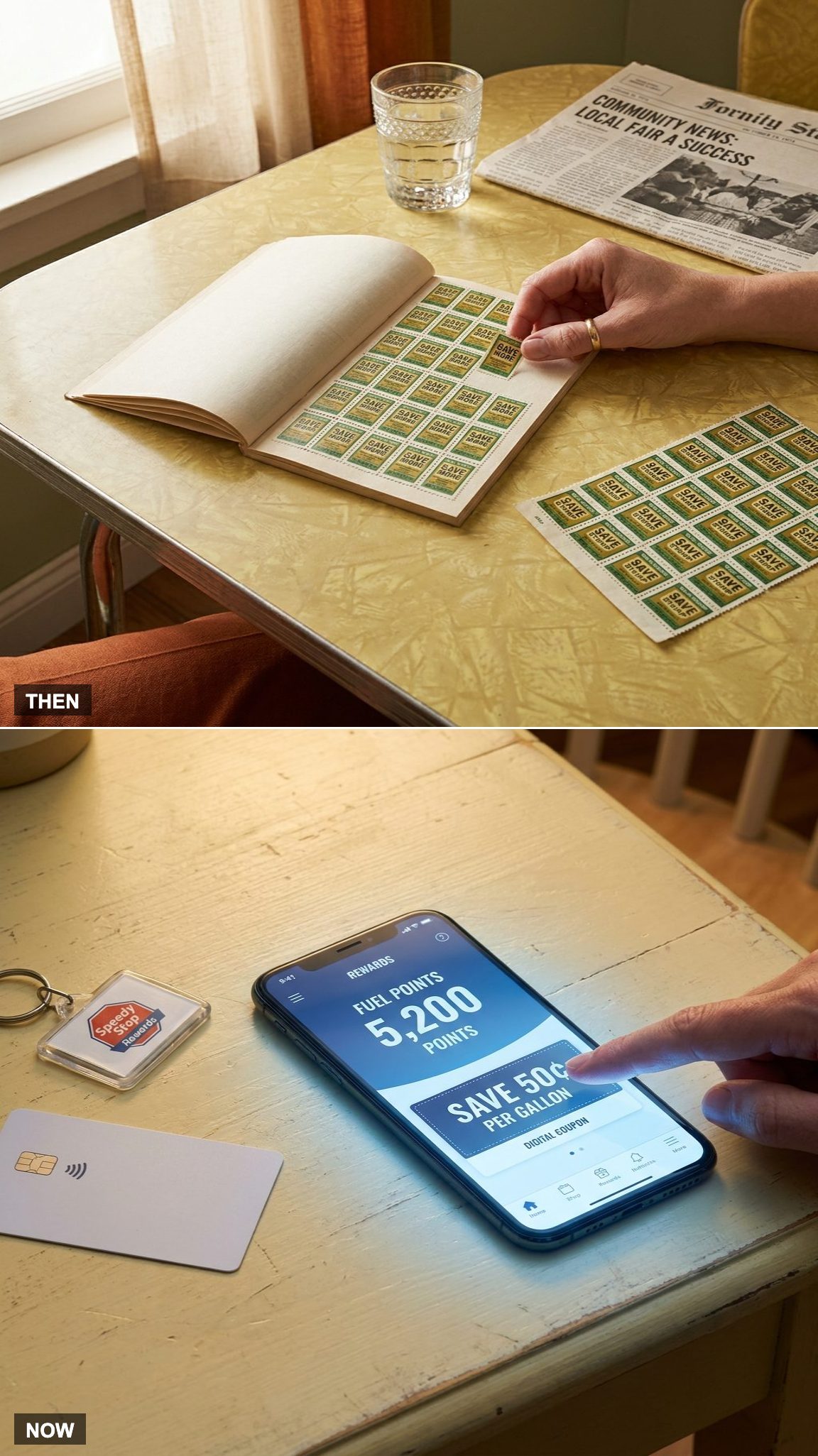
Fill the tank, get a strip of stamps. That was the deal. The attendant tore them off and handed them over, and home they went to a saver book kept in a kitchen drawer beside the rubber bands and spare fuses.
Children got drafted to lick and stick, and whole evenings vanished into the job. Now you tap a loyalty card, a number changes somewhere in an account, and nobody in the house ever touches a thing. Efficient. Quiet. Nothing to hold.
9. Free Cookware and Plates vs. a Coupon That Expires Friday
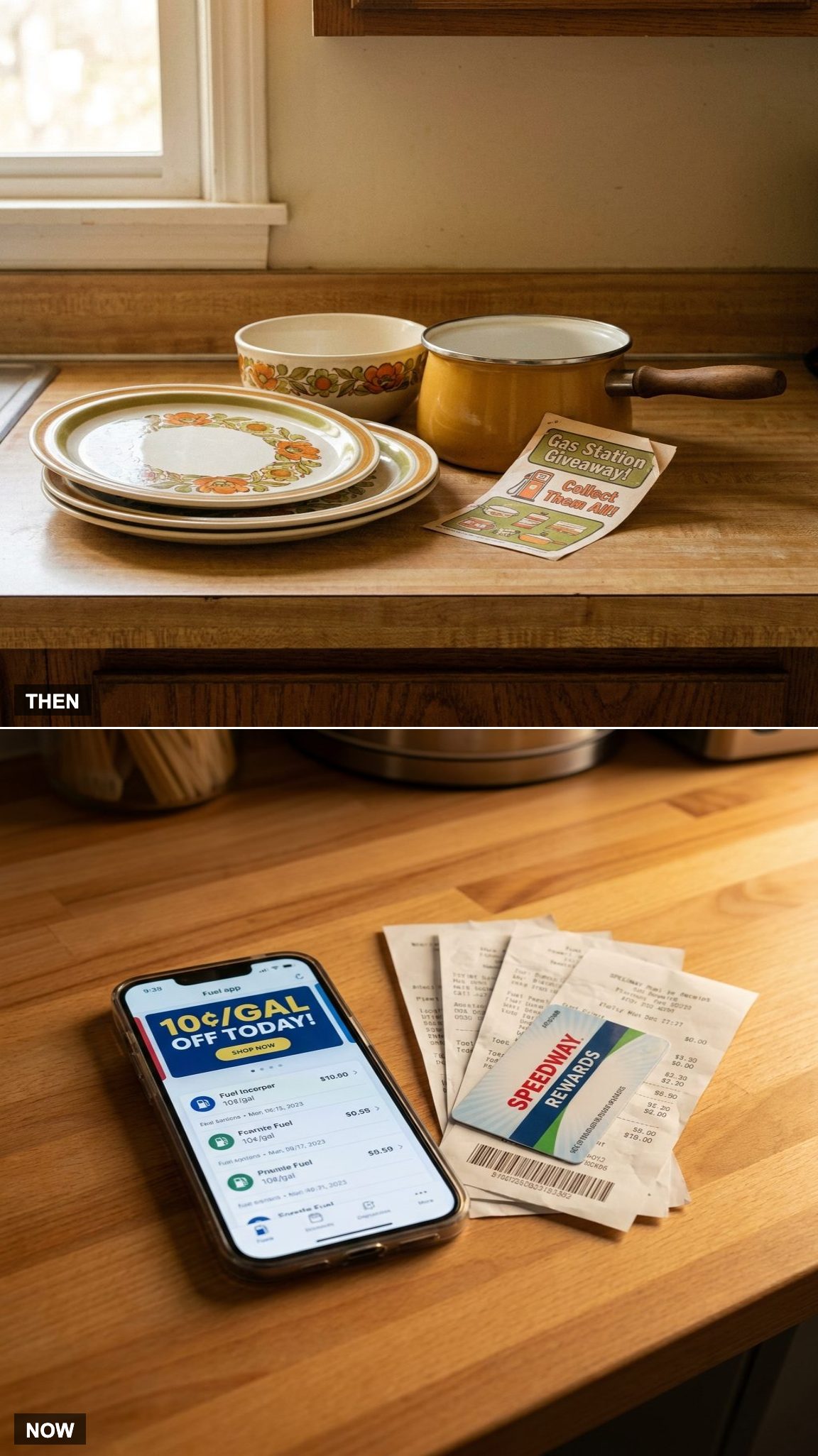
Some stations went bigger than stamps. Plates. Bowls. Glasses. A harvest-gold saucepan heavy enough to discourage an intruder. Families furnished half a kitchen by filling the wagon, and plenty of those dishes are still sitting in cabinets today, chipped around the edges and refusing to die.
The modern version is a discount code you save to your phone and forget before the weekend. It might knock two dollars off something, then disappear forever. Try handing that down when your child gets a first apartment.
8. Grease Jobs and Oil Changes While You Waited
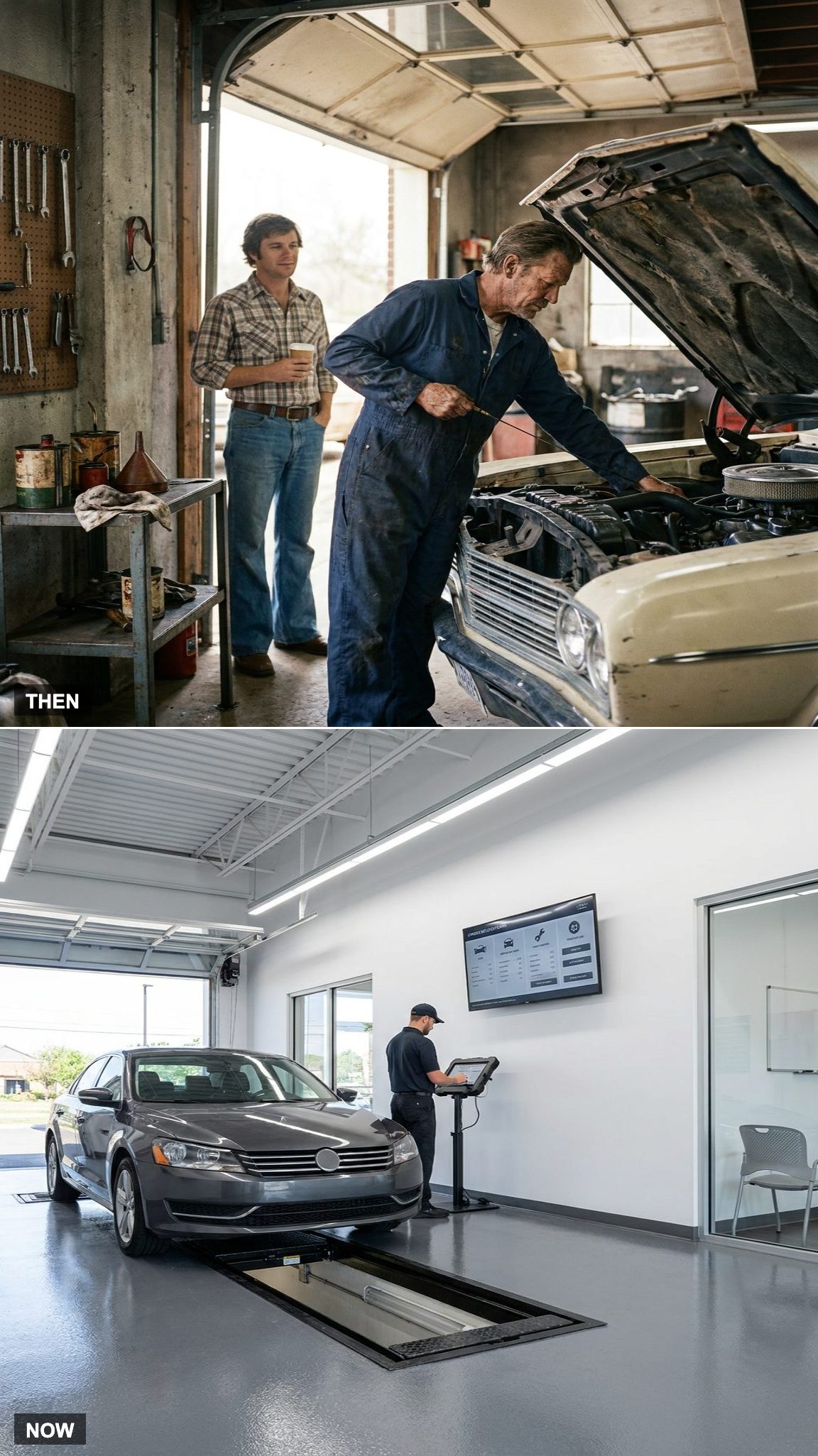
A gas station with a service bay could do more than glance under the hood. Oil changes, chassis lubrication, filter replacements, and minor adjustments happened while you waited, sometimes while the tank was being filled.
The modern quick-lube chain is faster and far more standardized. A tablet tracks the car, the technician follows a checklist, and an upsell arrives before the hood closes. The old station was less polished, but the person doing the work might also be the person who had been servicing your family’s cars for years.
7. Free Battery Testing at the Pump vs. Finding Out in a Parking Lot
Would you like to save this?
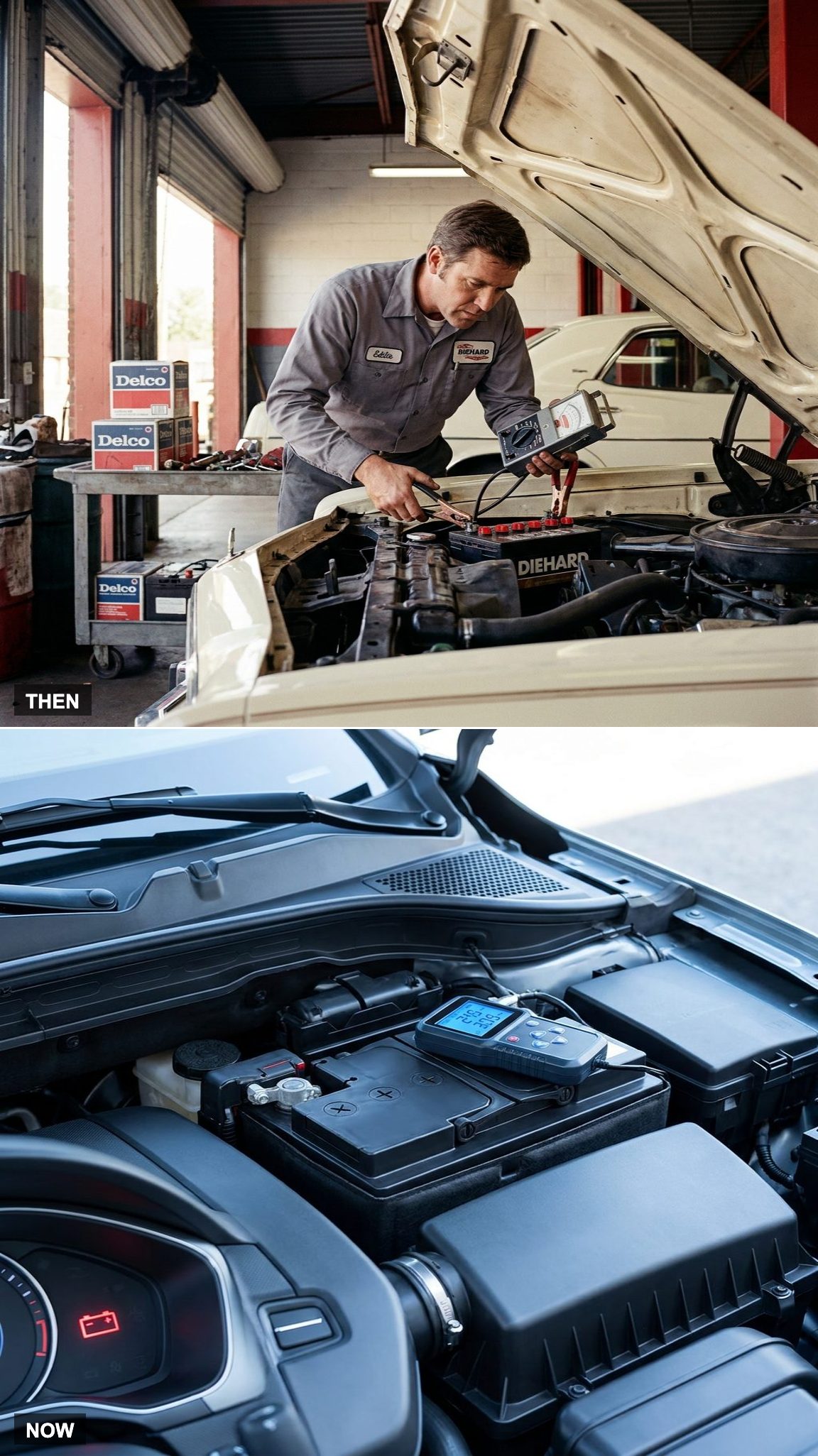
Cold morning, slow crank, and the attendant could bring out a load tester to check whether the battery was weak or the charging system needed attention. Older serviceable batteries also had removable caps, so the water level could be checked and topped up with distilled water when appropriate.
Modern cars may monitor voltage and charging performance, but a battery warning light does not reliably predict how much life the battery has left. Plenty of drivers still learn the bad news in a parking lot, phone in hand, wishing the problem had announced itself one stop earlier.
6. Fan Belts and Hoses Fixed Before They Left You Stranded
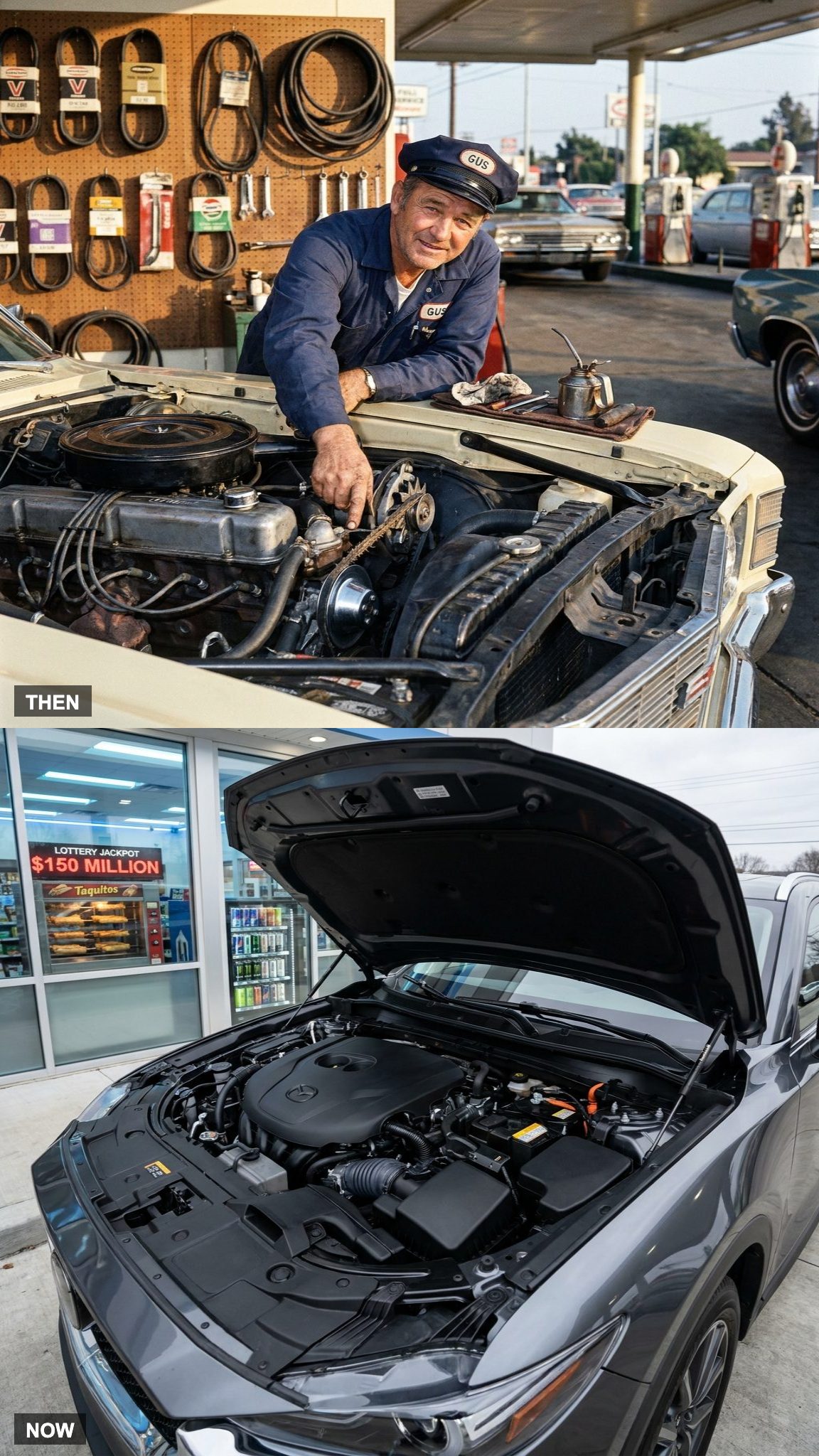
A frayed belt or swollen hose could turn into a five-minute conversation. The mechanic heard the squeal, opened the hood, pointed out the wear, and checked the pegboard for a common replacement. On the right car, the repair could be completed before you finished a cup of coffee.
Modern engine bays often hide belts, hoses, and pumps beneath covers or deep inside cramped compartments. The parts can still be replaced. What disappeared from most stations was the mechanic, the pegboard of common replacements, and the chance to have the job done before lunch.
5. Free Vacuum Stations Anyone Could Use
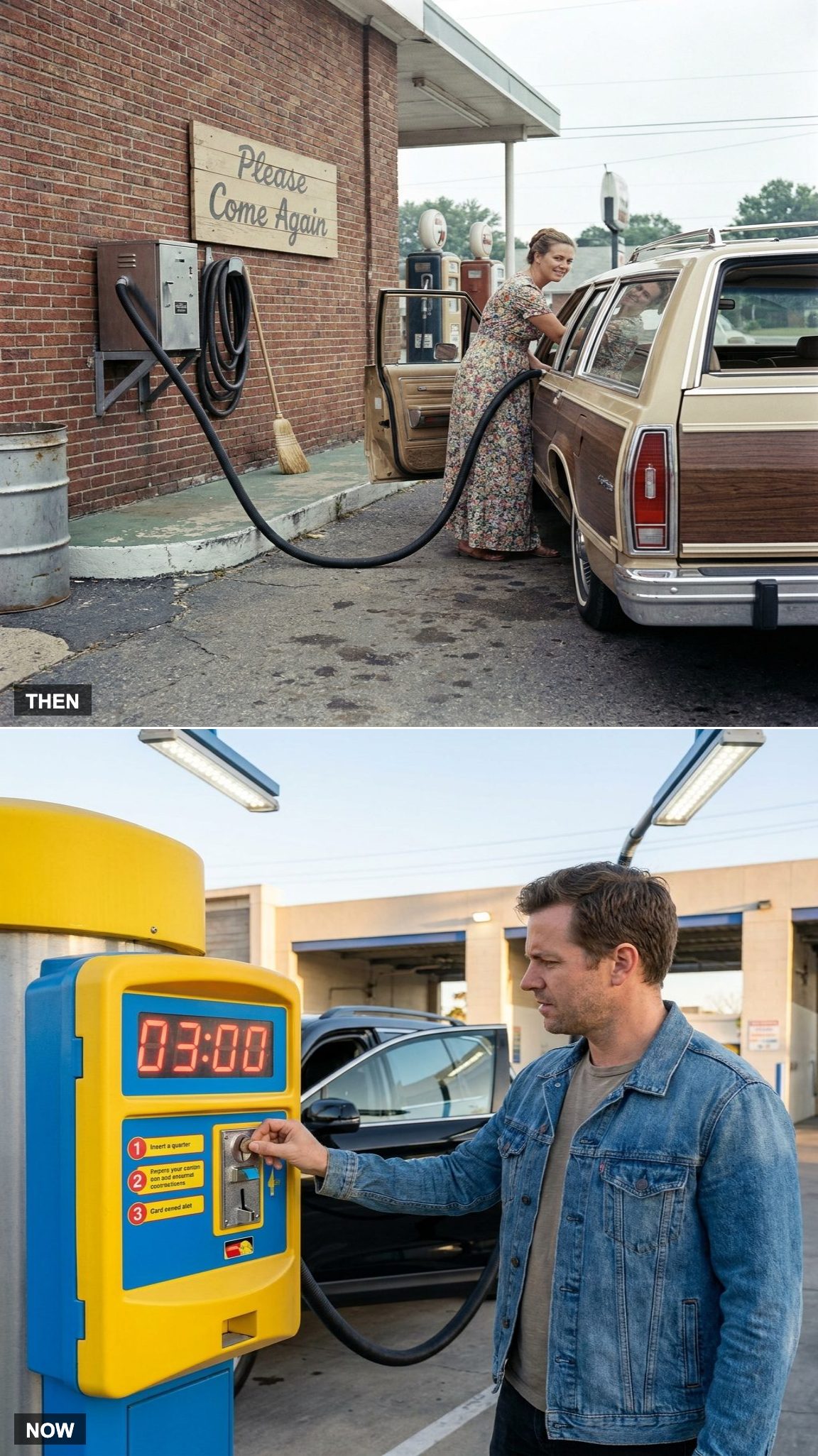
Some stations kept a complimentary vacuum along the side of the building. You pulled up, grabbed the hose, and chased sand and fry crumbs out of the mats while the tank filled. Keeping the car tidy was treated as one more reason to return.
The modern version is a plastic box with a payment slot and a countdown timer, and the suction always seems to fade just as you reach the passenger seat. You feed it more money and race the clock. Somewhere along the way, a courtesy became a timed transaction.
4. Careful Hand-Washing vs. the Automated Tunnel
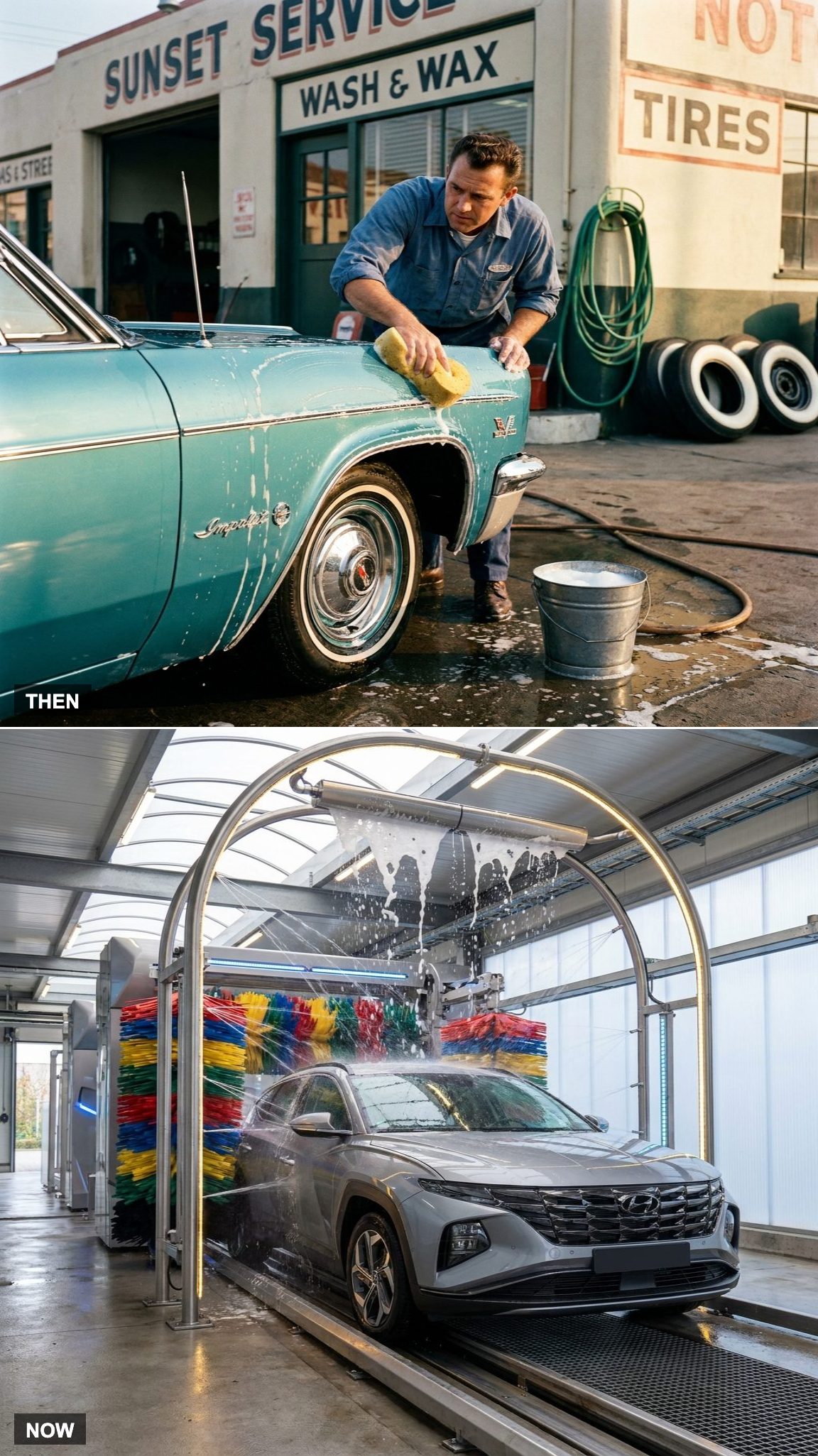
A hand wash meant somebody actually looked at the car. The person washing it noticed the bird mess on the roof, the tar along the rocker panel, and the spot behind the side mirror that machines often miss. Sponge, suds, rinse, then a chamois or towel to finish.
An automated tunnel is faster, and modern systems range from soft-cloth equipment to touchless jets. Poorly maintained contact brushes can leave fine swirl marks, while touchless washes sometimes miss the stubborn corners. You emerge cleaner either way, but not quite as personally looked after.
A machine washes the car. A person washed your car. That difference was everything.
3. The Pump That Sang While It Filled
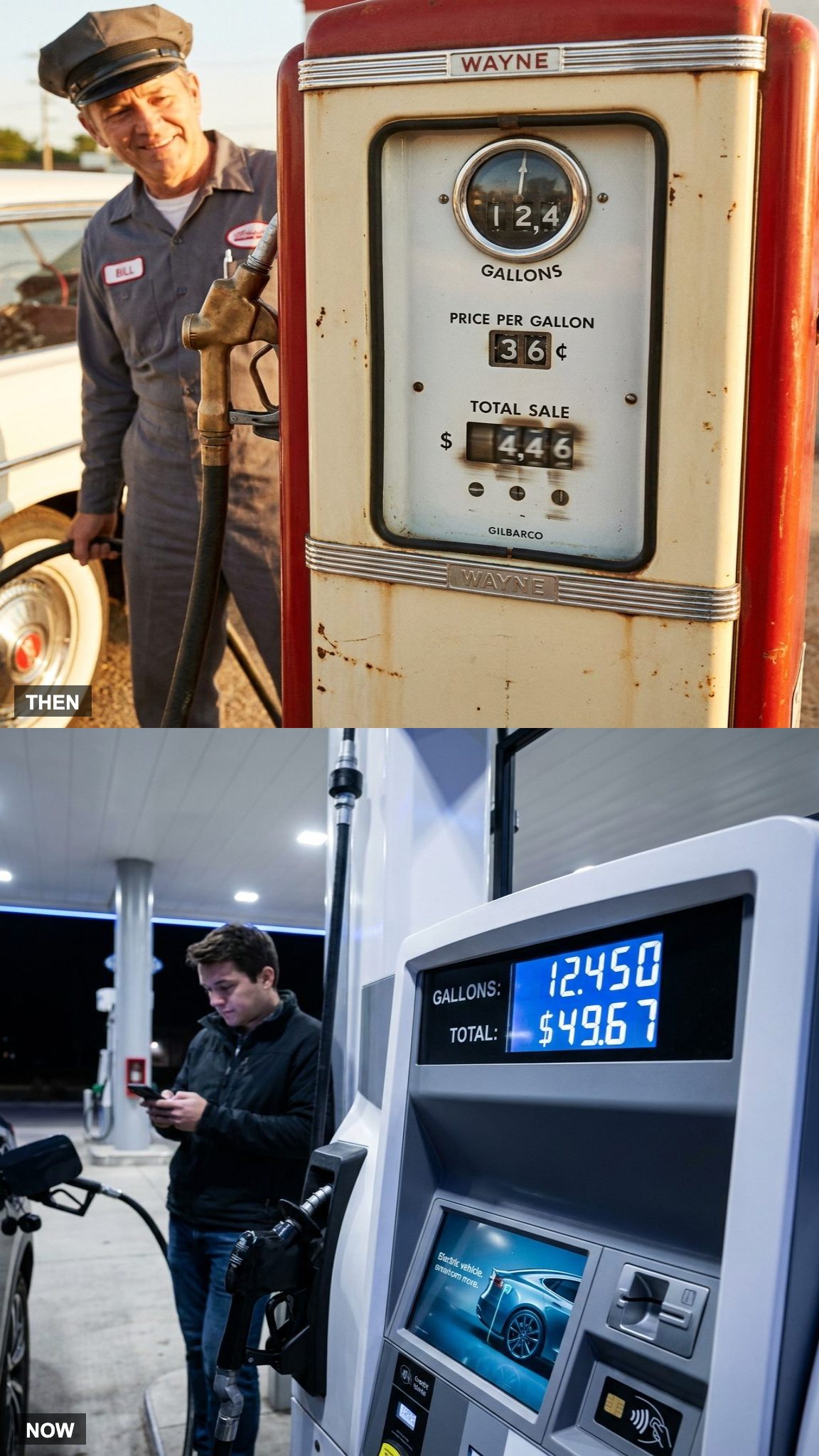
The old pumps made noise. Mechanical number wheels chattered as the gallons climbed, then slowed to a deliberate clunk-clunk-clunk while the attendant feathered the handle toward an even dollar. You could hear the transaction happening.
Today’s pump beeps, lights up a screen brighter than the sun, and asks three questions before dispensing a drop. Accurate, efficient, and almost completely forgettable.
2. Under the Canopy vs. Inside the Beige Box
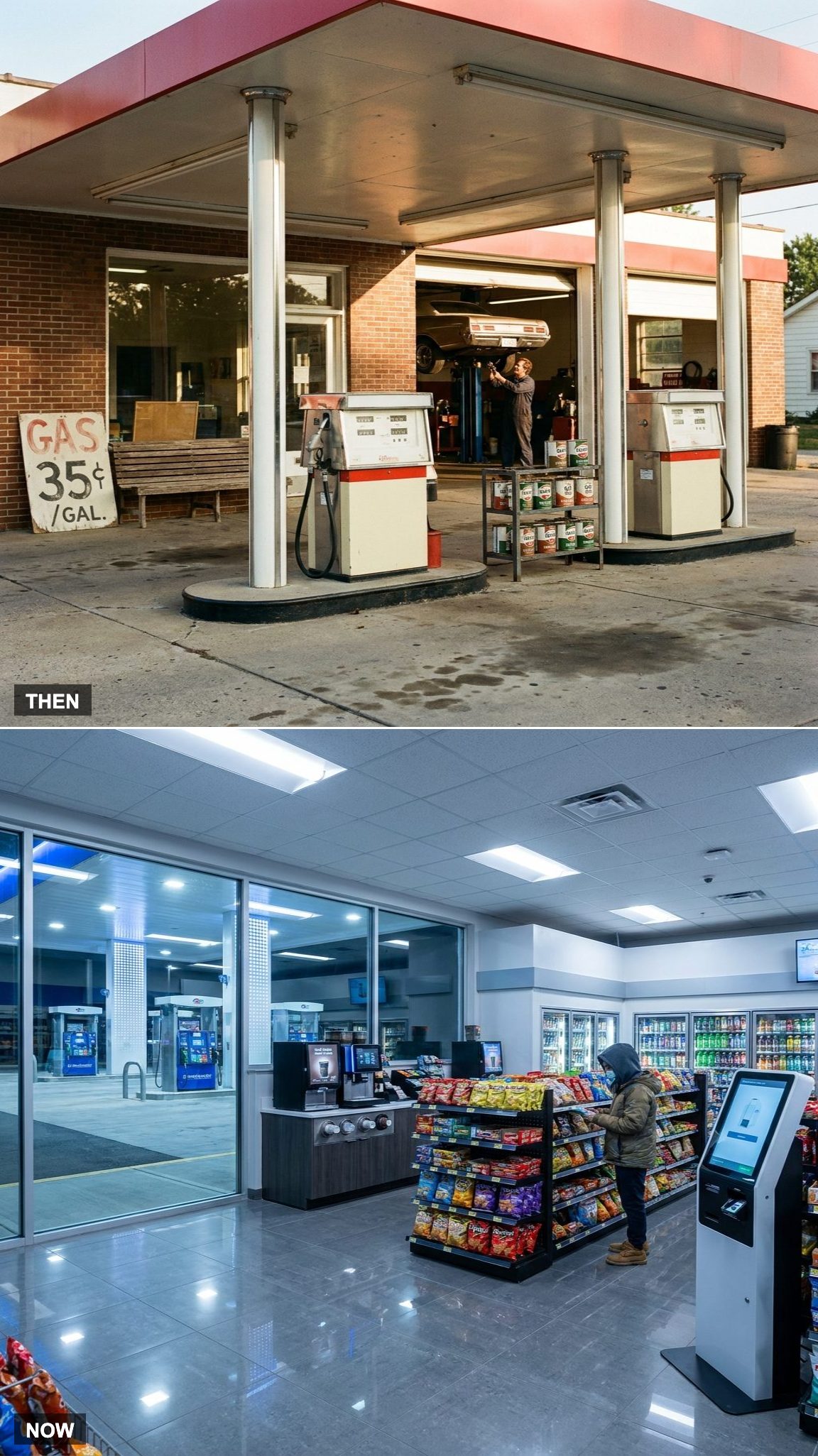
Stand under one of those old canopies and you got shade, the smell of motor oil and hot concrete, and the clang of a wrench carrying out from the service bay. The entire place was arranged around the car.
The modern version is built around the walk inside. Sixty feet of chips. A wall of energy drinks. Coffee, lottery tickets, phone chargers, and a roller grill turning beneath a heat lamp while the car waits outside.
1. The Final Once-Over vs. the Quick Getaway
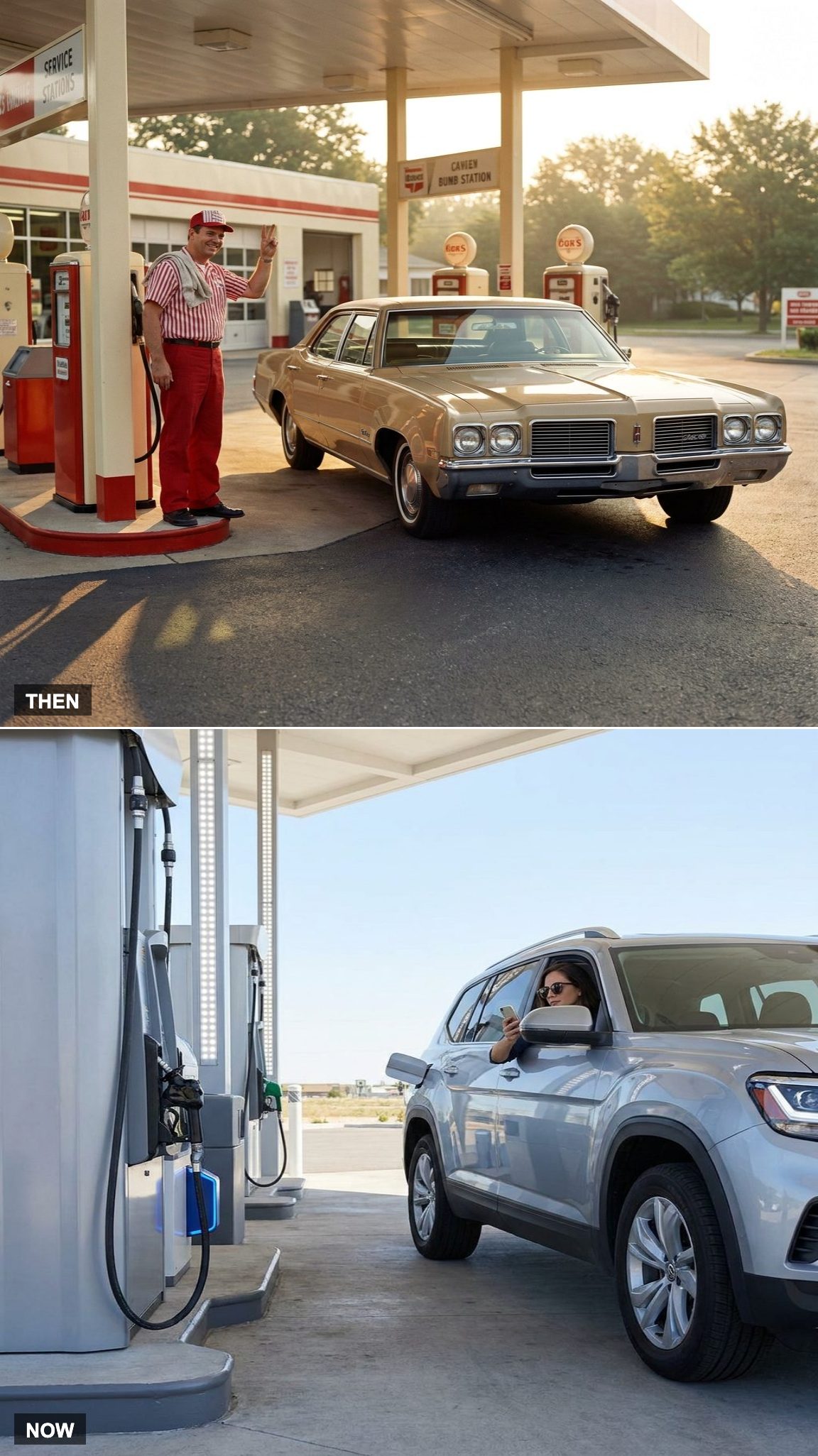
The send-off mattered. The attendant closed the hood, stepped back, gave you a wave, and watched as you eased into traffic. Leaving had a rhythm to it, a final small acknowledgment that the visit was over and the road was yours again.
Now everything ends the second the pump clicks off. You return the nozzle, tighten the cap, and merge back into the day without a backward glance. Nobody waves goodbye because nobody was ever there to.