
The sticker says fourteen grand. In the classifieds photo, a Wimbledon White ’66 coupe sits on a lawn in golden hour with the chrome catching light, and it looks like a deal. It isn’t. What you’re really putting money down on is a second car hiding inside the first one. The Mustang is honest in one cruel way: it rusts where you can’t see it, then charges you later. Here are the expenses nobody lists in the ad.
Please note that some of the images in this article were created with the assistance of AI.
39. The Cowl Vent That Rusts Where You’ll Never Look
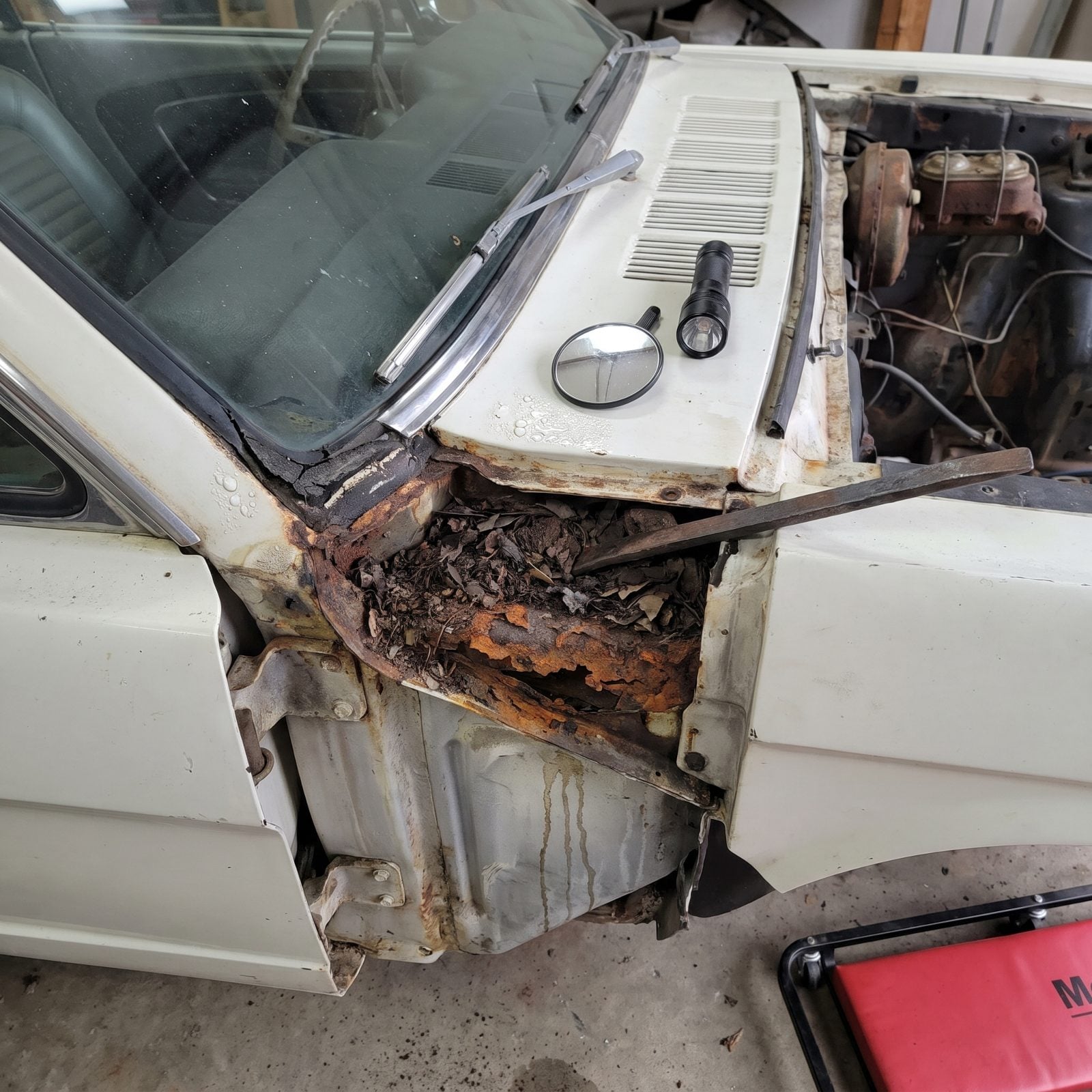
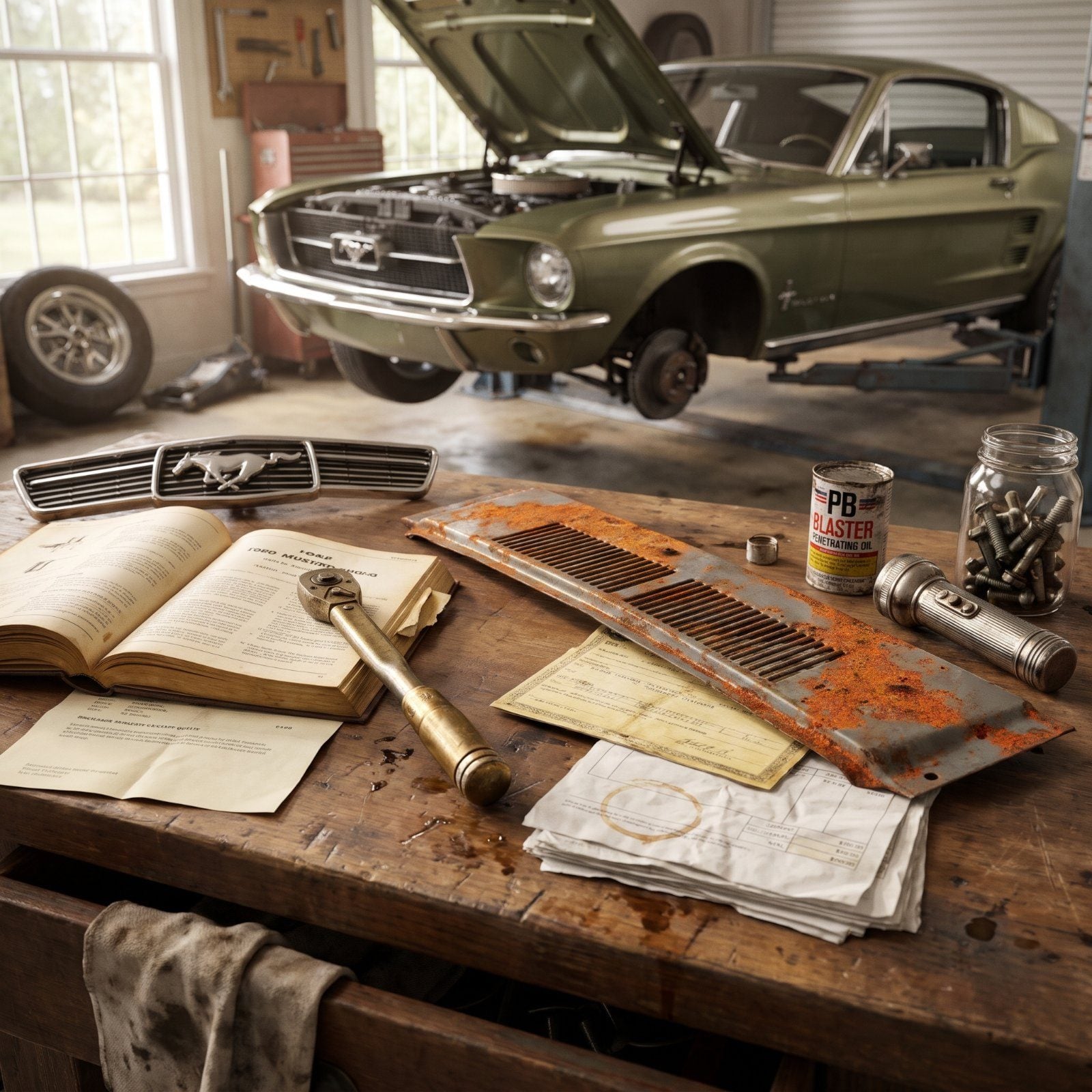
You won’t smell it until the first hard rain. Then water trickles down the inside of the kick panel, the carpet goes dark at the edges, and the floor underneath starts its quiet rot. Blame the cowl — that vented panel below the windshield that collects leaves, holds water, and eats itself from the inside out over fifty years.
The repair is miserable because the fix is buried. You’re pulling the windshield, cutting out the cowl top, patching the lower plenum, resealing, then repainting. A shop that does it right quotes you four figures before paint. A shop that does it wrong just seals the leaves inside and moves on.
38. The Prepurchase Inspection by Someone Who Knows Mustangs
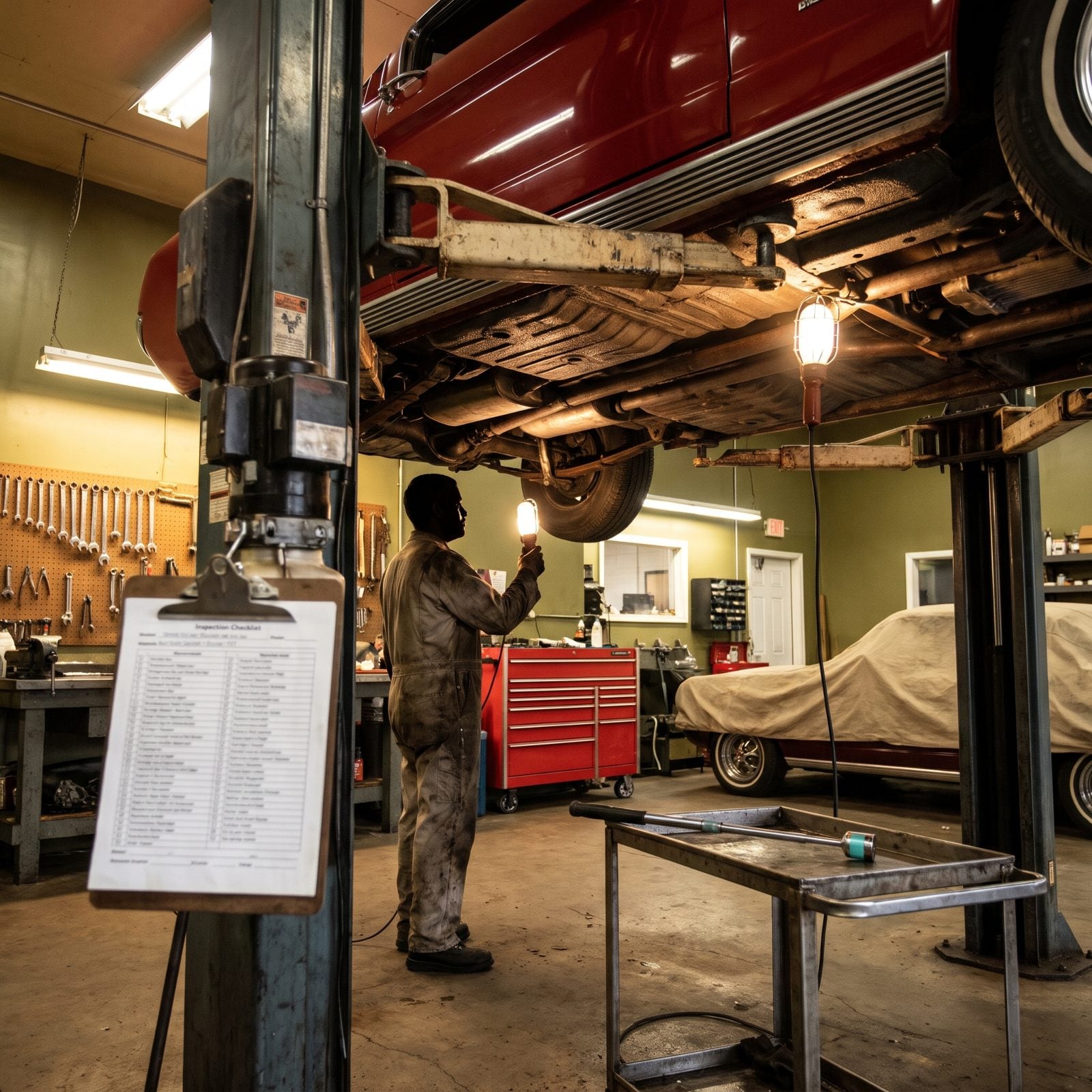
Pay someone a few hundred dollars to crawl under a car you haven’t bought yet. It’s the best money you’ll spend on the whole project, and most buyers skip it because they’re already in love.
A general mechanic checks the brakes and calls it a day. A Mustang specialist knows to tap the torque boxes, poke the floor pans through the carpet, check for a repainted-over VIN plate, and spot a clip job where someone grafted a front end from a wrecked donor. I’ve watched a gleaming driver fail inspection in four minutes flat.
37. Untangling a Title That Doesn’t Quite Match
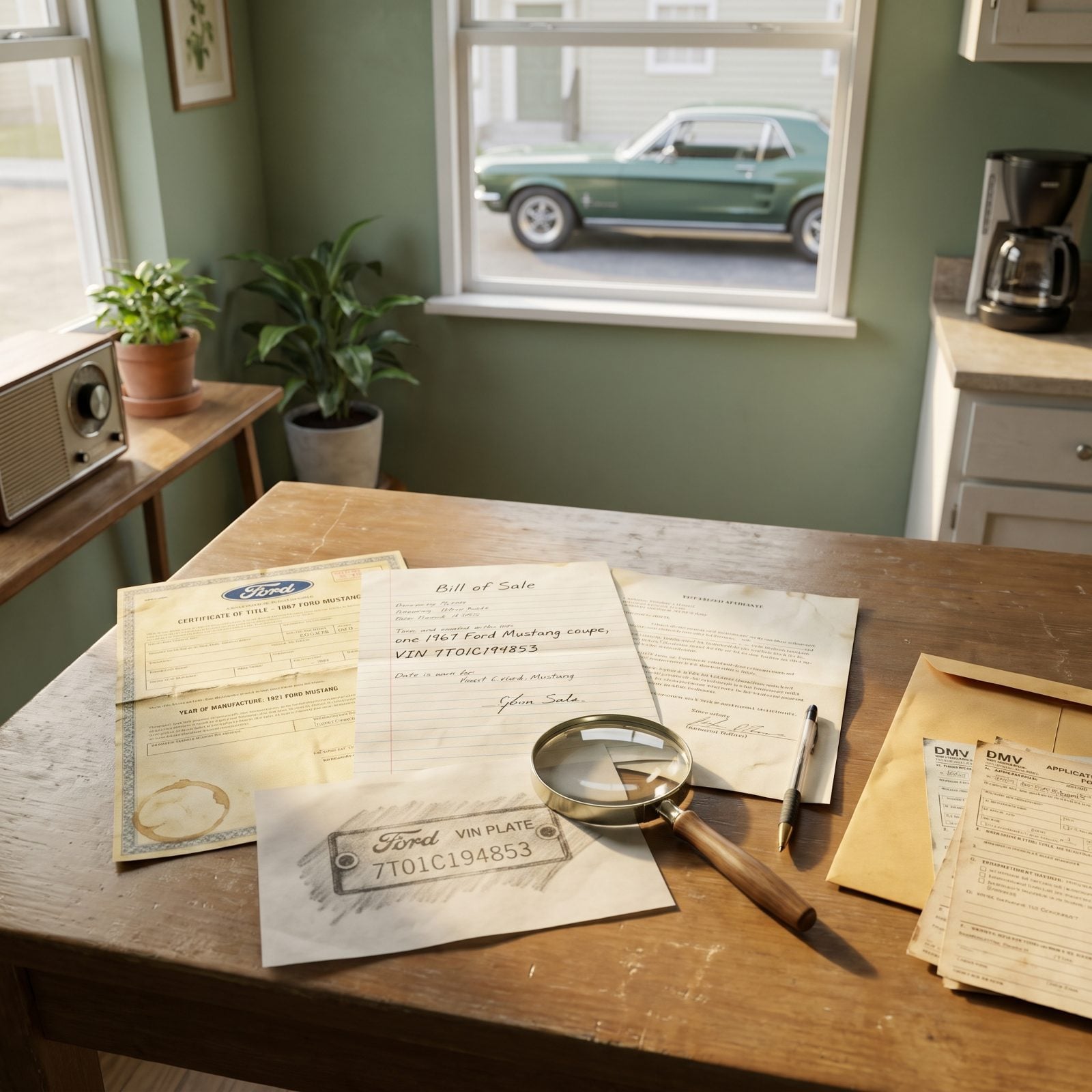
A Mustang with cloudy paperwork is a car you can admire but can’t legally drive.
Fifty years of swaps, barn sleeps, and estate sales leave trails. The title says the wrong color because somebody repainted it in 1981. The VIN on the door plate doesn’t match the fender apron stamping. Or there’s no title at all — just a handshake and a faded bill of sale from three owners back.
Fixing it means bonded titles, VIN verification appointments, affidavits, maybe a lawyer if the chain of ownership went cold. Budget a few hundred dollars and a few months of your life. Clear this before money changes hands, because a car you can’t register is a very expensive lawn ornament.
36. Enclosed Transport From Three States Away
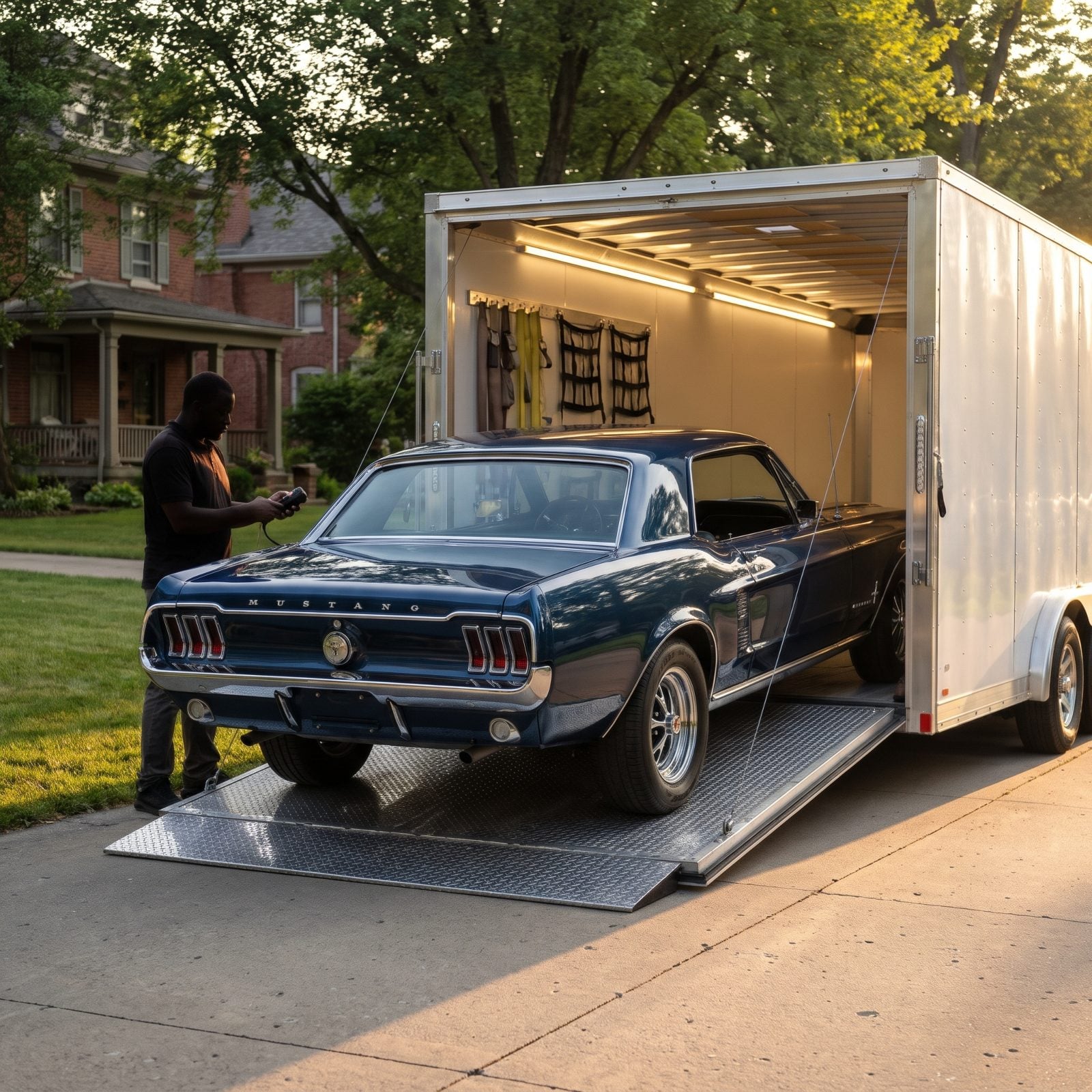
The best Mustang for your money is almost never the one twenty minutes down the road. It’s in Phoenix, or Carolina, or some dry corner of Texas where the floors didn’t rot. Which means it has to come to you.
Open transport is cheaper and tempting. Don’t do it for a fresh-paint car. Road grime, a kicked-up stone, and salt spray can undo work you haven’t even seen yet. Enclosed transport runs noticeably more — often well over a thousand dollars coast to coast — and it’s worth every penny when the car rolls off the ramp exactly as it left.
What Our Readers Say
- In Jalopy Talk readers’ heart vs thumbs-down votes, photos that look like the 1960s got hearts 87% of the time, compared with 78% for the other images in the same articles.
- Muscle cars also drew more hearts from our readers than the other images alongside them, 86% versus 80%.
From Jalopy Talk reader polls and votes.
35. Agreed-Value Coverage and the Appraisals That Keep It Honest
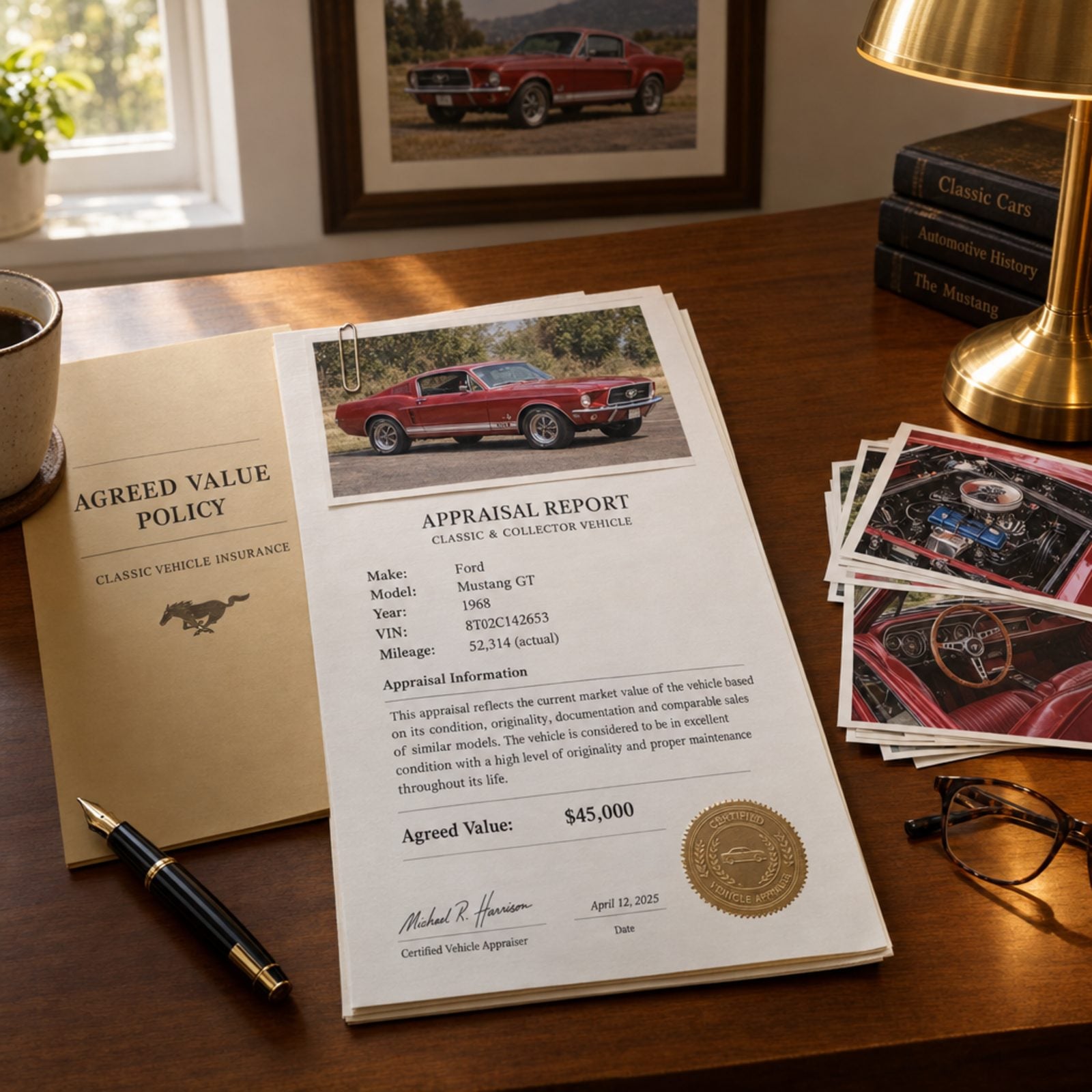
Your standard auto policy will total a restored Mustang at Kelley Blue Book for a plain ’66 coupe, an insult roughly the size of your restoration budget. What you need is agreed-value coverage, where you and the insurer settle on a number in writing before anything happens.
That number isn’t free to establish. A professional appraisal costs a couple hundred dollars, and classic policies often want it refreshed every few years as values climb. Skip the update and you’re underinsured again without knowing it.
The premiums themselves are gentler than you’d expect, because these cars sit in garages and get driven on Sundays. The appraisal is the line item people forget, right up until they need it most.
34. A Dry, Dehumidified Place to Keep It
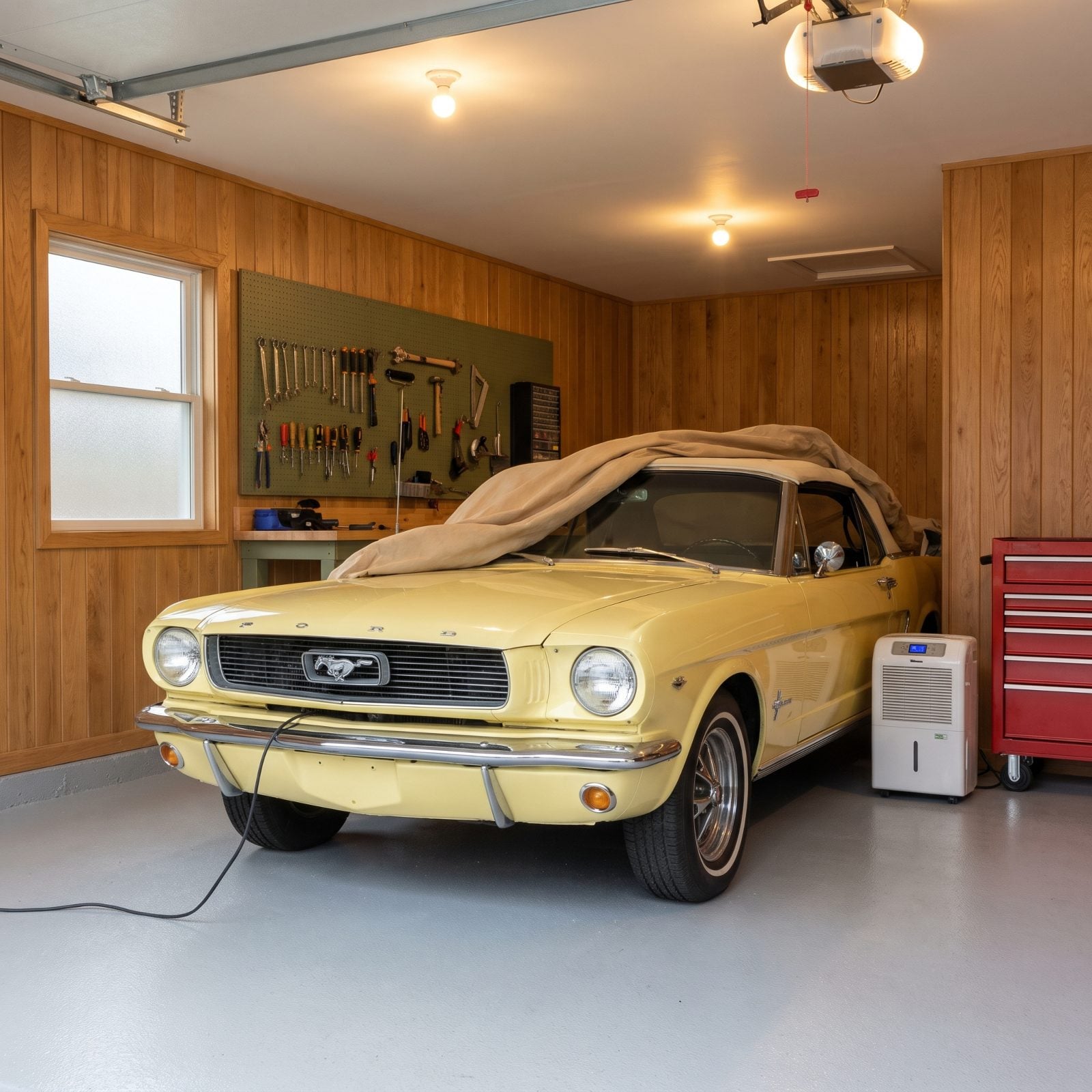
A Mustang stored in a damp garage rusts standing still. Condensation forms on bare metal overnight, works into the seams you just repaired, and starts the cycle over while the car sits under a cover looking safe.
If your garage floods, sweats, or shares a wall with the lawnmower and the pool chemicals, you need better. That might mean a dehumidifier running year-round, a climate-controlled storage unit, or a dedicated bay. Monthly storage fees add up to real money over a decade of ownership.
33. Front Frame Rails That Have Quietly Dissolved
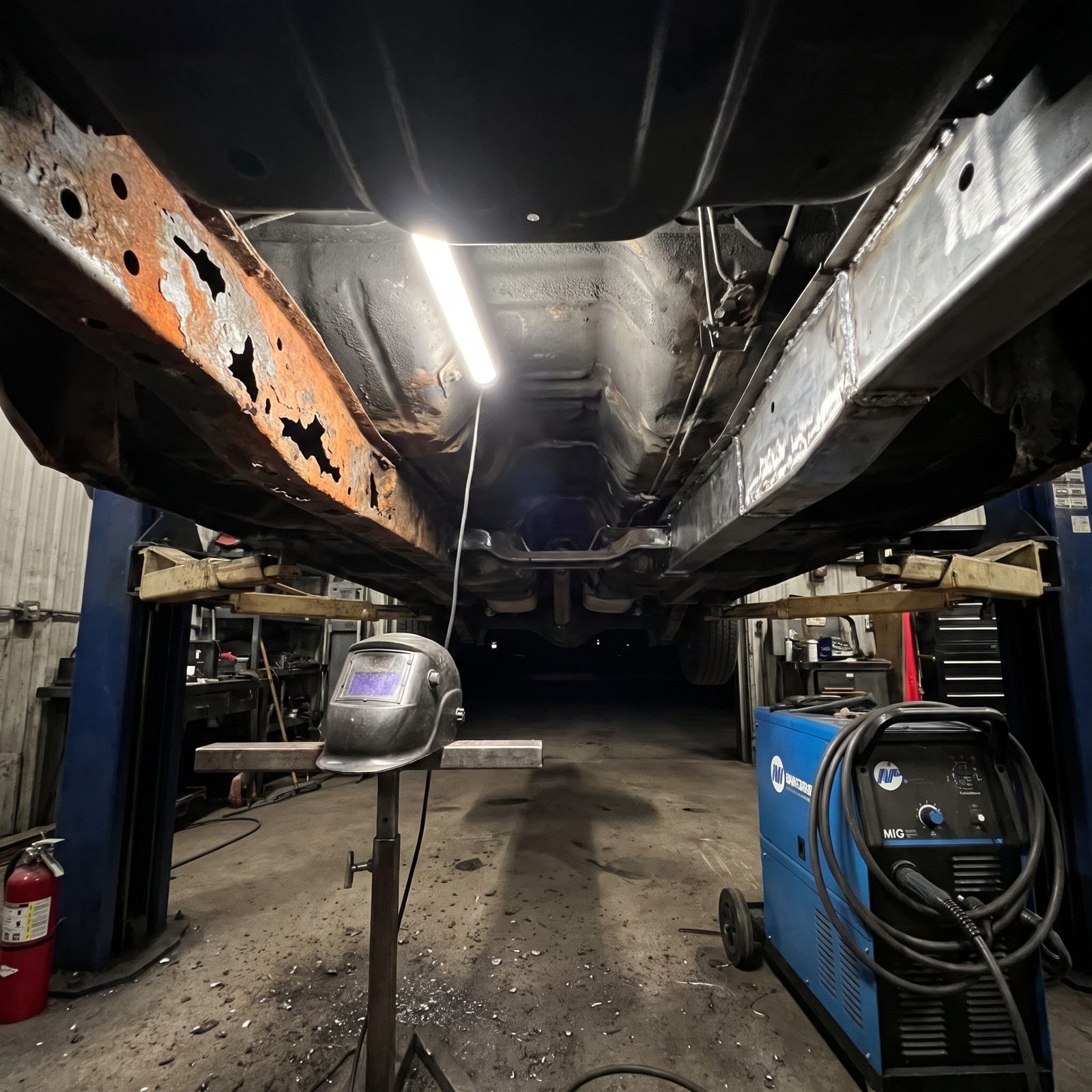
This is the one that stops being a hobby and becomes a structural project.
The front frame rails carry the suspension, the engine, and most of the crash load. On a rust-belt Mustang they corrode from the inside, so the outside looks fine until you poke a screwdriver through what should be solid steel.
Replacing them is serious fabrication. You cut out the rotten section, jig everything so the geometry stays true, weld in new rail, and get the alignment right so the car tracks straight. Labor-heavy welding work, and the bill climbs into the thousands fast.
32. Torque Boxes That Crumple Where the Unibody Twists
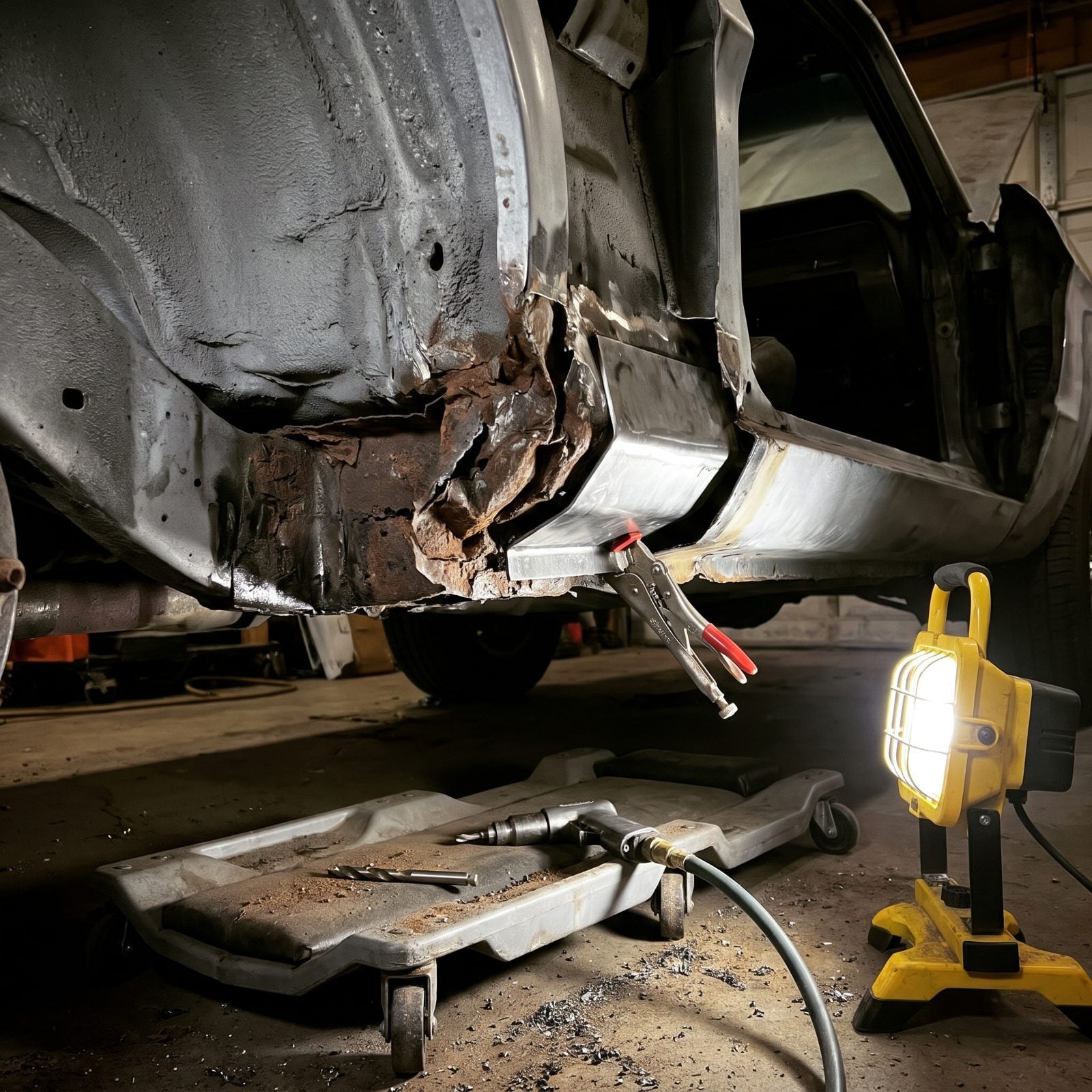
Torque boxes are small, roughly fist-sized boxed sections tucked where the floor, frame rail, and rocker all meet. Tiny part, enormous job — because everything structural converges on them. They handle the twisting force every time you corner or launch, and on convertibles and high-horsepower cars they take an even worse beating.
When they corrode or crush, the whole shell flexes. Doors stop closing right, gaps go uneven, and the car feels loose on the road. The fix? Drilling out factory spot welds, cutting out the old box, and welding in new ones with the body supported so nothing shifts.
31. Floor Pans Rotting Under Carpet That Looks Fine
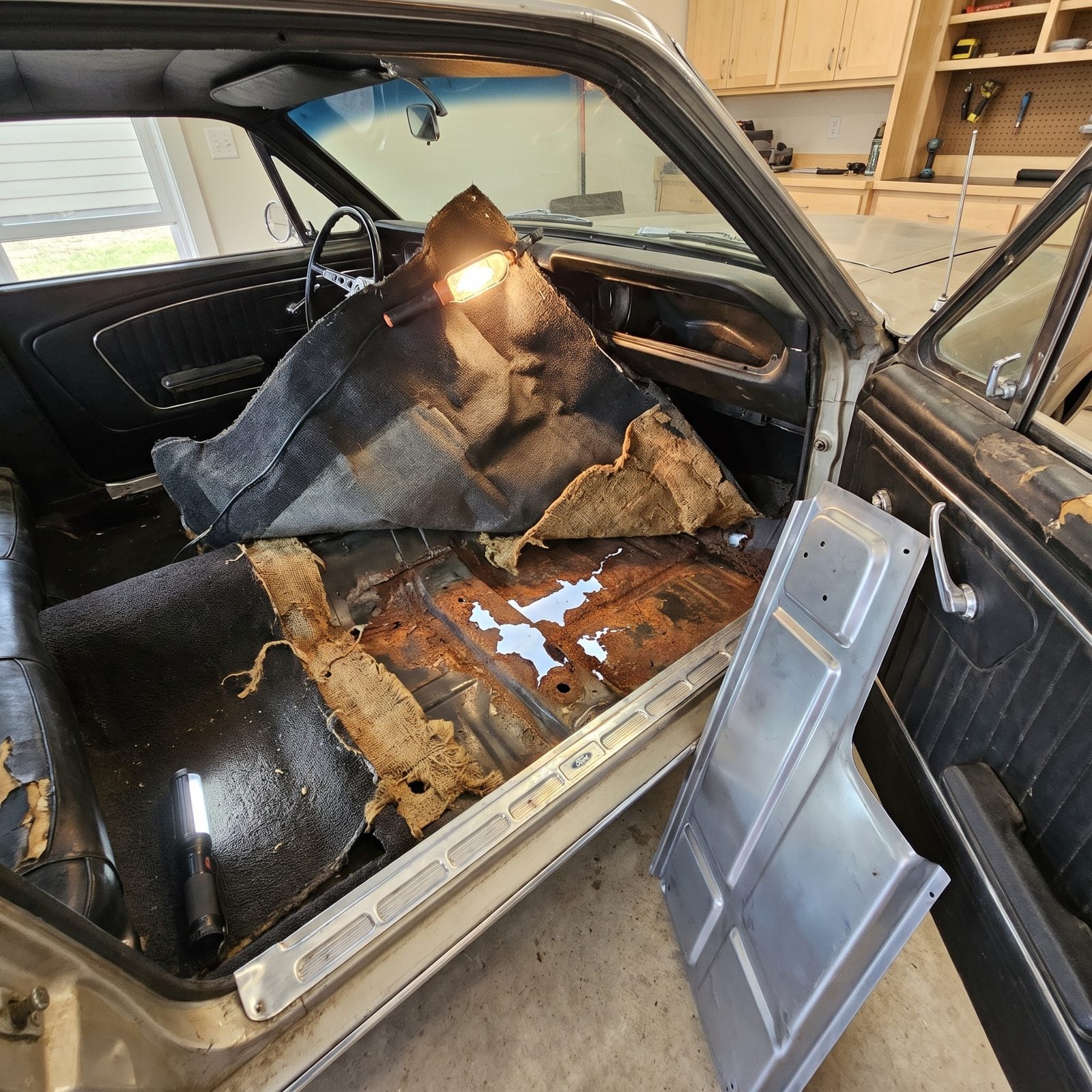
Lift the carpet. Always lift the carpet. A seller’s clean, color-matched carpet is the oldest trick in the book, because it hides the floor pans, and the floor pans are where a Mustang goes to die.
Water from a leaky cowl, a bad windshield seal, or a torn convertible top pools under the carpet and sits there for years. The pan rusts from the top down while the carpet stays dry and respectable above it. You find out when your foot nearly goes through to the pavement.
Replacement pans are cheap. The labor to cut, fit, weld, and seal them is not. And once the carpet’s up, you’ll usually find the problem didn’t stop at the floor.
30. Shock Towers That Crack Under the Weight of the Engine
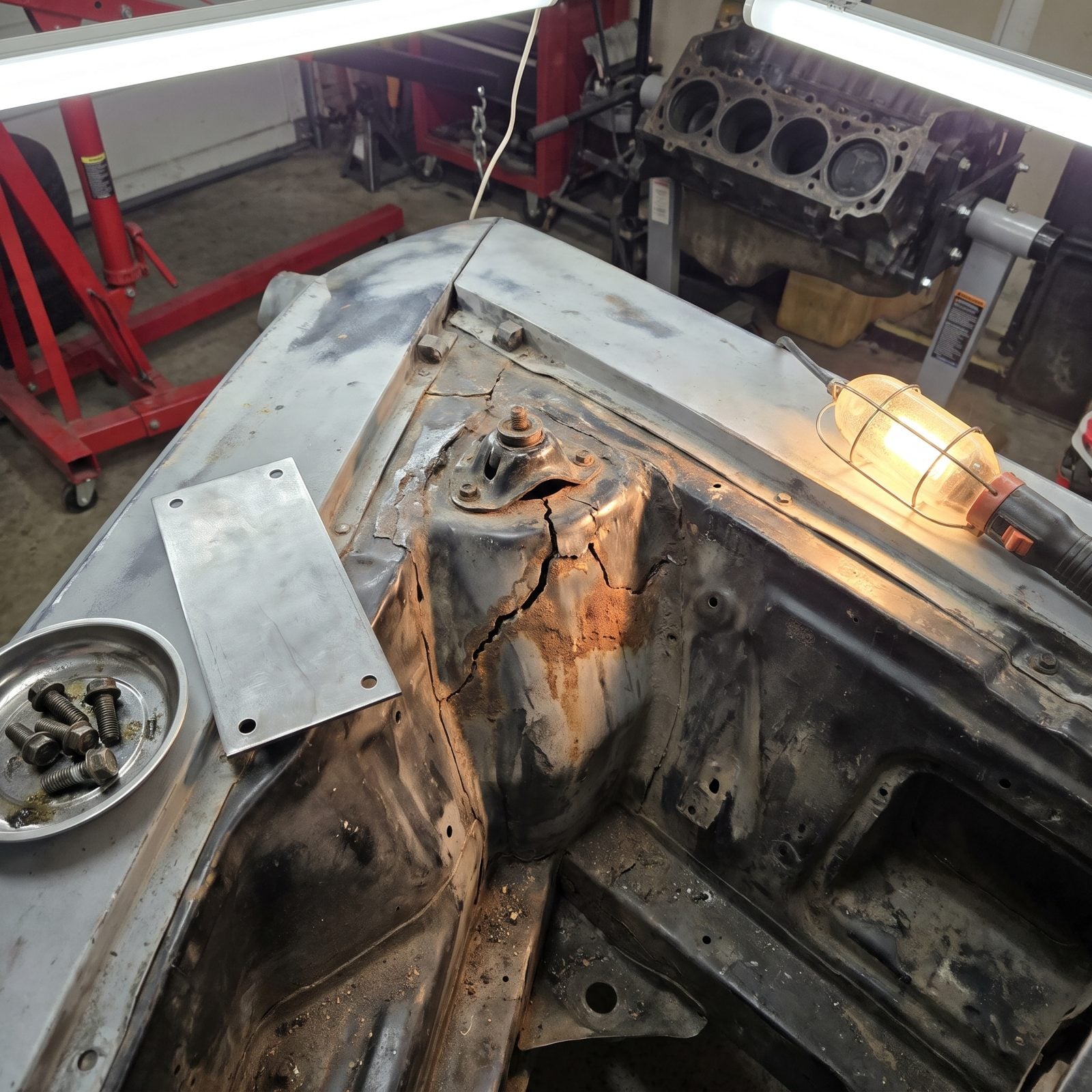
The shock towers hold the front suspension and carry the full weight of the engine pressing down through the springs, year after year. On these early Mustangs they crack. They distort. Big-block swaps and hard driving make it worse, and decades of road shock finish the job.
A cracked tower throws off your alignment, wears tires unevenly, and in bad cases shifts the whole suspension geometry. The fix ranges from welding and reinforcement plates on a mild case to cutting and replacing the tower on a severe one. Either way the engine usually has to come out first, which means you’re paying for the discovery and the repair.
Which is the real lesson buried under all of this. A 1960s Mustang doesn’t bill you once. It bills you every time you finally get a good look underneath.
29. Stripping Layers of Old Paint and Body Filler
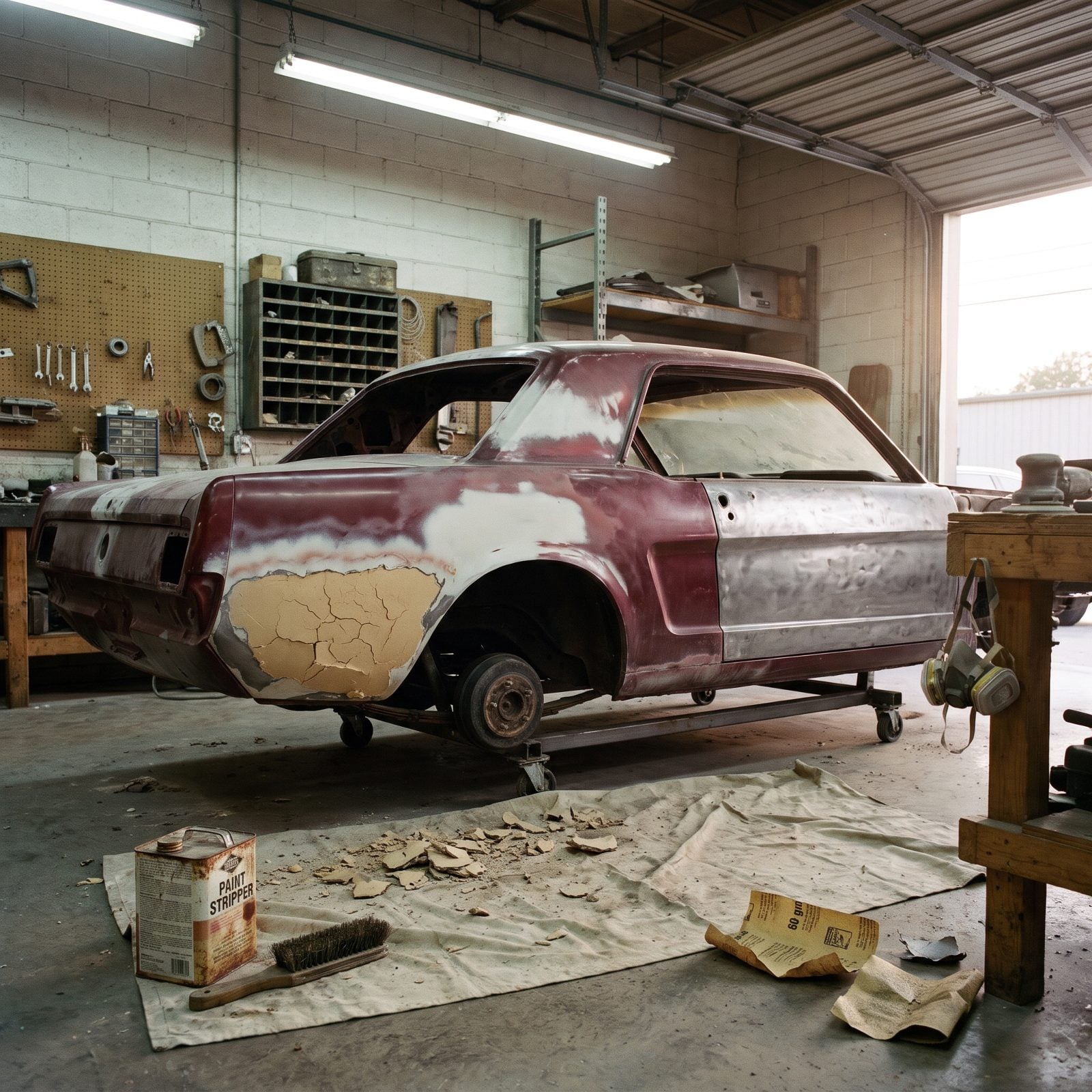
Everyone pictures the shiny finish. Nobody pictures the week it takes to get down to honest metal first. A ’66 coupe that looks solid under ten feet of garage light can hide a quarter inch of filler troweled over a dent somebody never fixed properly.
Strip it and you find out. Chemical stripper, media blasting, hours with a DA sander and 80-grit, and a respirator you actually have to wear — every gallon of stripper runs real money, and the filler you uncover means more labor, not less.
28. Hand-Fitting Poorly Made Reproduction Panels
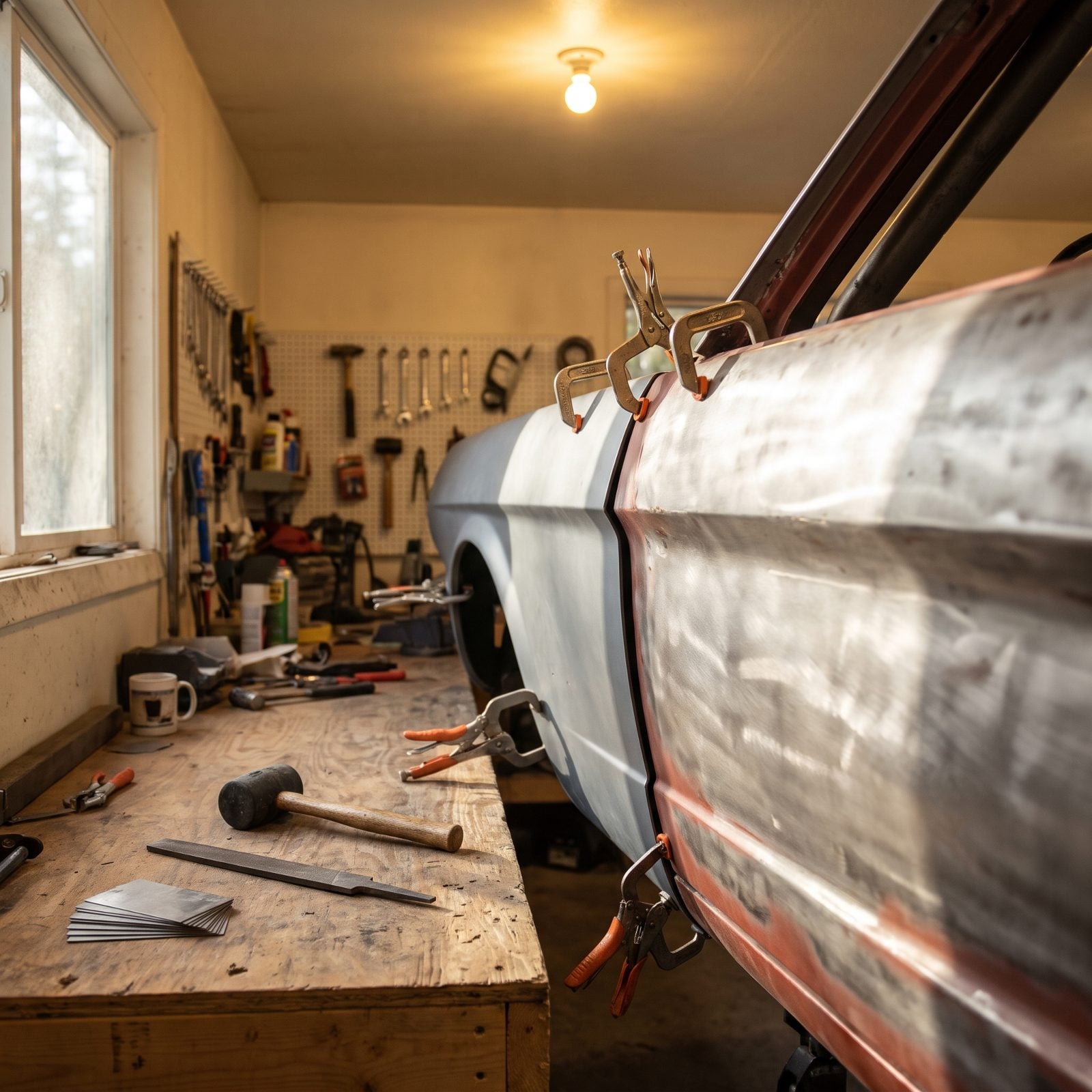
The catalog photo shows a perfect fender. The box that shows up on your porch shows you what tolerances really mean.
Reproduction sheet metal for a ’65 Mustang has gotten better over the years, but “bolt-on” is marketing language. The door gap won’t be right, and the body line won’t quite flow into the next panel. You’ll spend an afternoon with shims, a body file, and some choice words getting a fender to sit the way Ford had it sit sixty years ago.
Here’s the labor cost nobody quotes you. A panel might run a couple hundred dollars — making it actually fit is where the hours disappear, and if you pay a shop to do it, that’s the invoice line that makes people wince.
27. Primer, Sealer, Paint, and Clear-Coat Materials
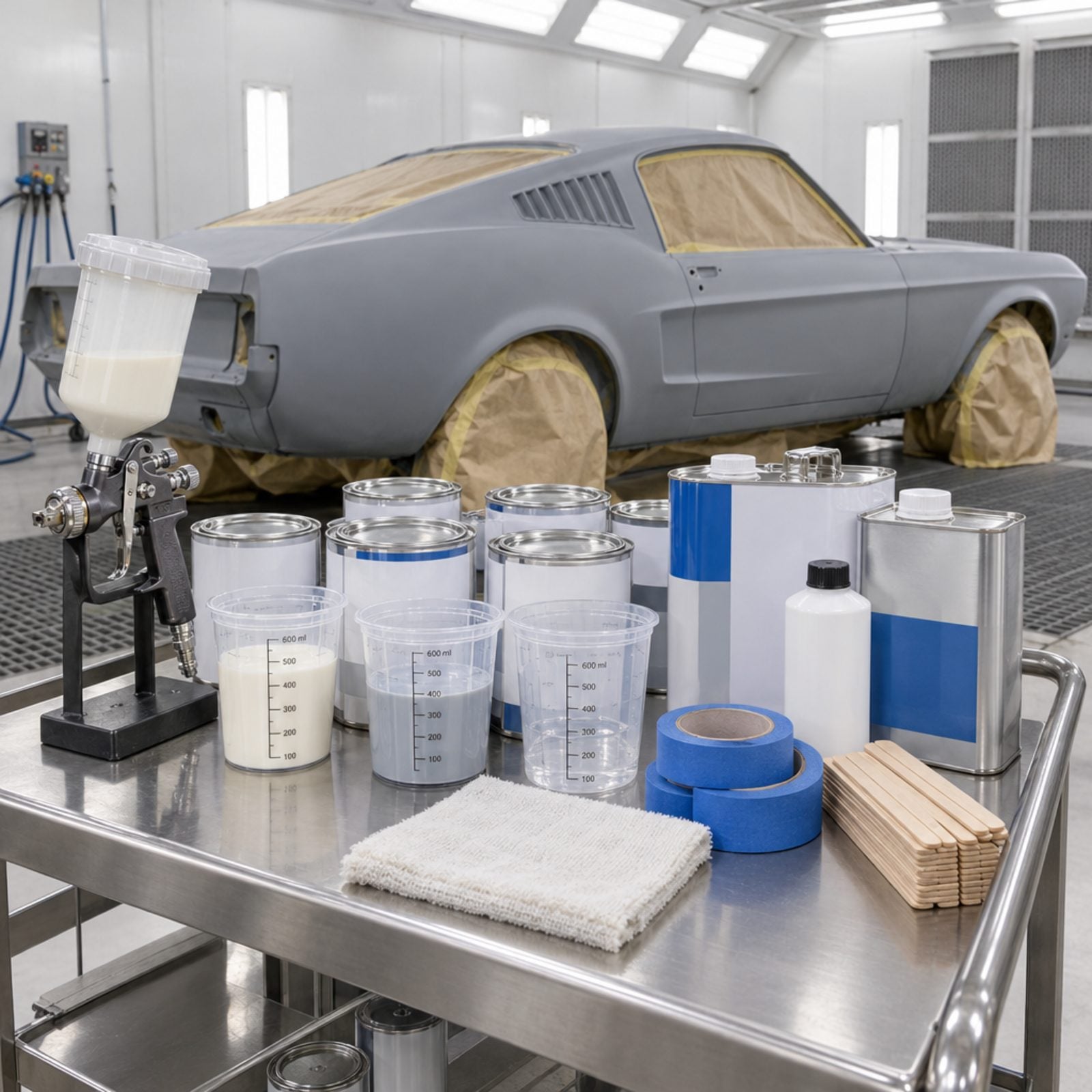
The paint itself is rarely the expensive part. The stuff you spray before and after it is.
Epoxy primer, high-build primer, sealer, basecoat, reducer, hardener, and clear. A proper job on a ’68 fastback layers all of it, and modern materials for a show-quality finish climb fast. Then add thinners, tack cloths, masking paper, and the cans you waste getting the gun dialed in.
People budget for a color and forget there are five products under and over it. A single-stage job costs less. A base-clear finish with real depth can run past what the engine rebuild did — I’ve watched it happen.
26. Replating Pitted Bumpers and Exterior Chrome
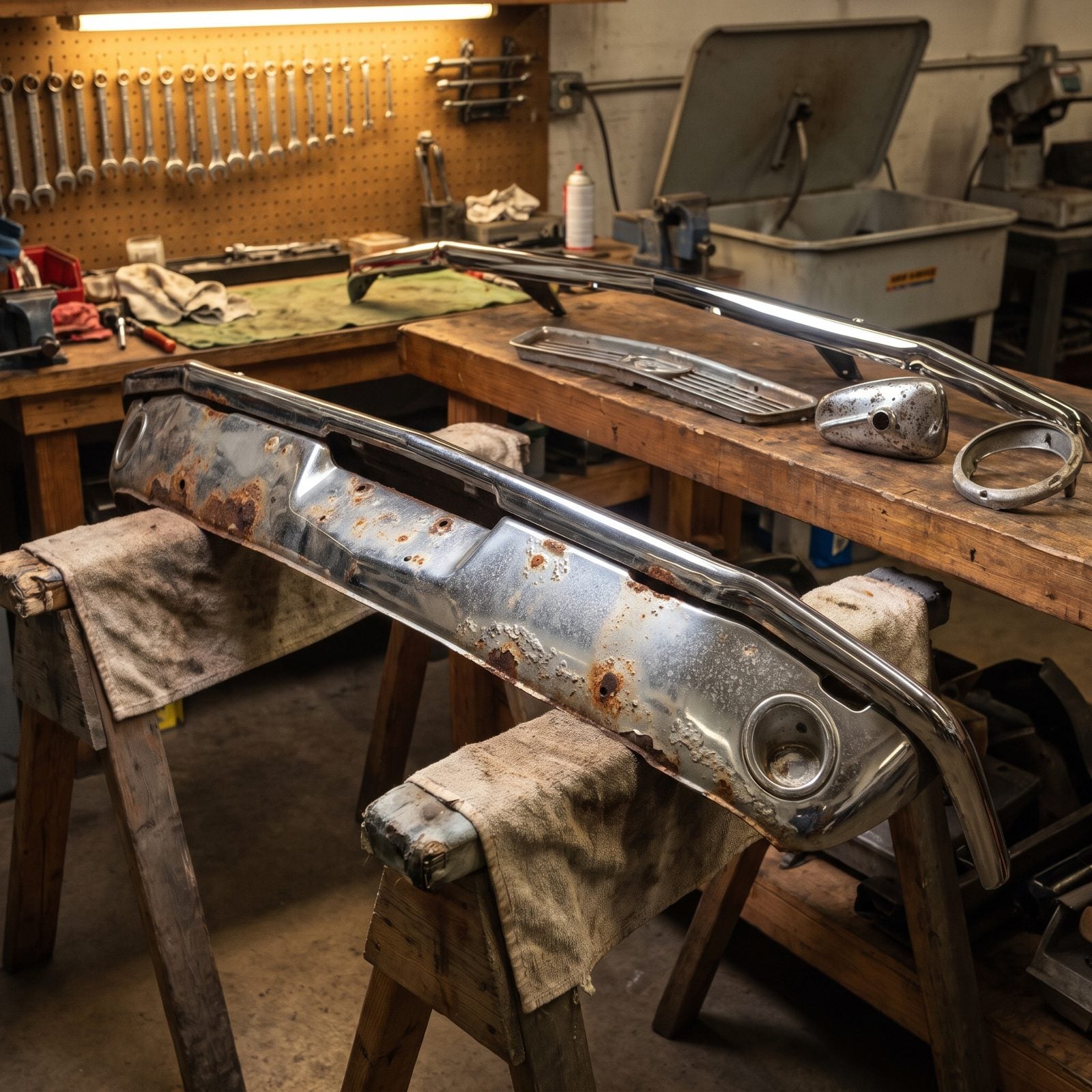
Chrome looks tough. It isn’t. Sixty years of road salt and moisture leave a ’67 bumper pitted like the surface of the moon, and no amount of polish brings it back once the plating is gone.
Replating is its own craft. The shop has to strip, copper-plate, polish, nickel, then chrome, and the pot-metal grille pieces and bezels are even fussier because they pit from the inside out. Each piece is a separate charge.
A front and rear bumper, grille moldings, and trim can rival the cost of your paint. I didn’t believe that until I added it up. Bright metal is quietly one of the most expensive things on the whole car.
For what it’s worth, our readers gave cars with lots of chrome more hearts than the other images in the same articles, 83% versus 75%, which may make the replating bill easier to swallow.
25. Replacing Every Hardened Weatherstrip and Seal
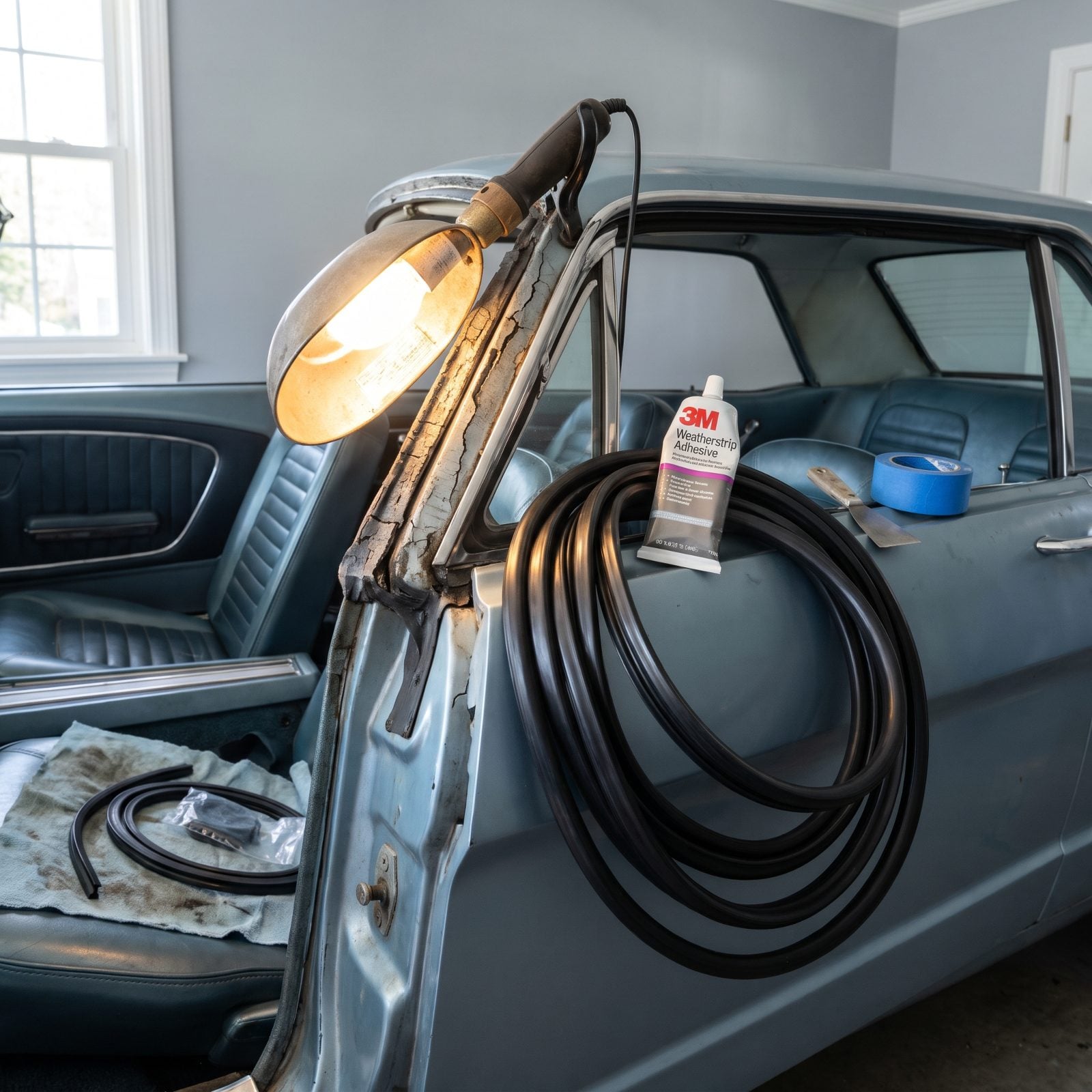
Open a door on an unrestored ’65 and you can hear it: the dry crackle of rubber that quit decades ago. Weatherstrip is the part everyone forgets until water pools in the footwell after the first rain.
Door seals, trunk seal, window run channels, cowl seal, vent window gaskets, windshield and backlight gaskets. None of it is pricey on its own. All of it together, plus the adhesive and the hours scraping old glue out of the channels, adds up to a surprising number.
24. A Complete Replacement Wiring Harness
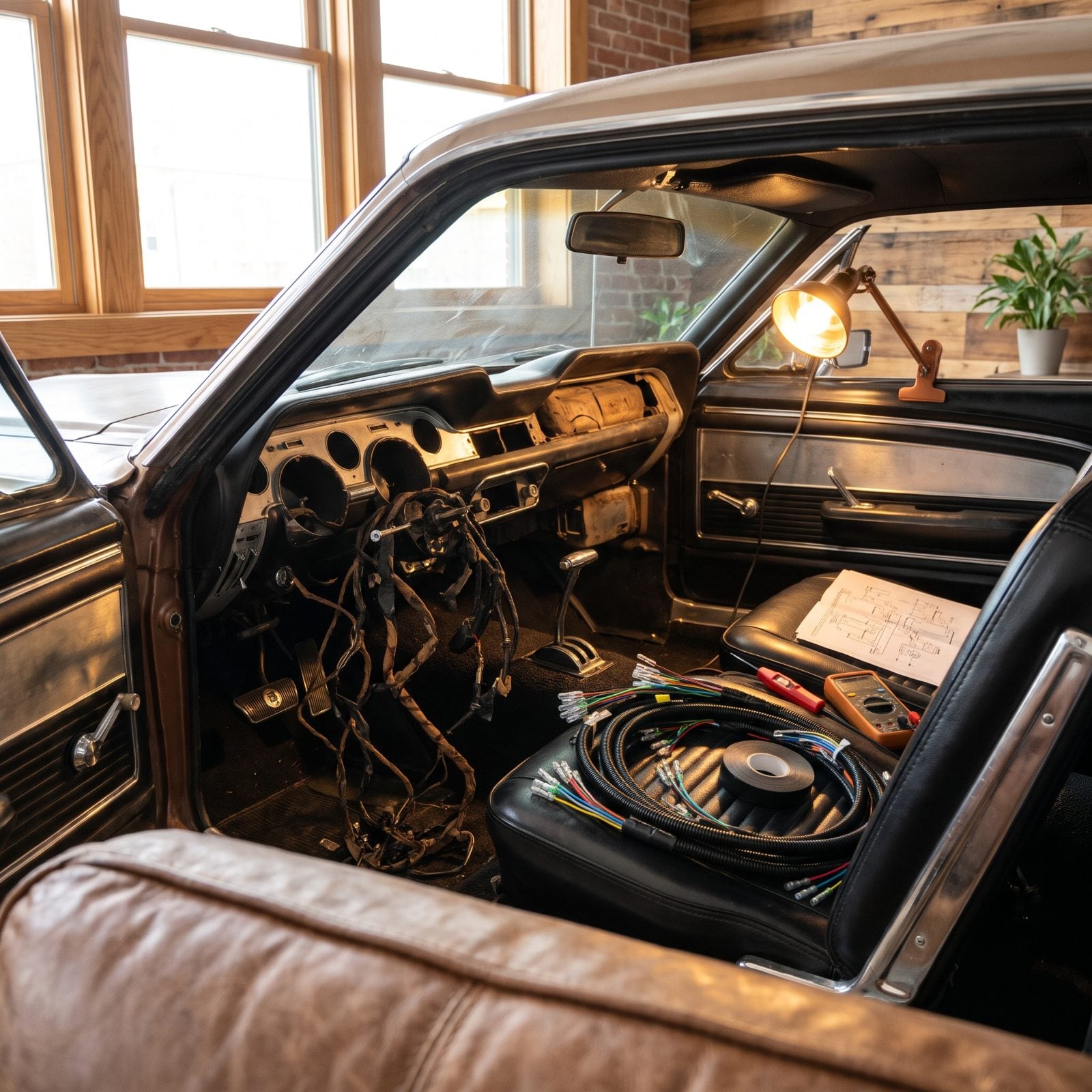
Fifty-year-old wiring is a slow fire waiting for a reason.
The insulation on a ’68 Mustang harness goes brittle, cracks, and shorts, and the previous three owners each spliced in their own fixes with electrical tape and a prayer. At some point you stop chasing gremlins and just replace the whole thing.
A full reproduction harness — under-dash, engine bay, and taillight sections — is a real chunk of money. The install is worse. Pulling the dash, routing every run, testing every circuit: that’s a weekend you don’t get back. But it’s the difference between a car you drive and a car you worry about.
23. A Rusty Fuel Tank Hidden Beneath the Trunk
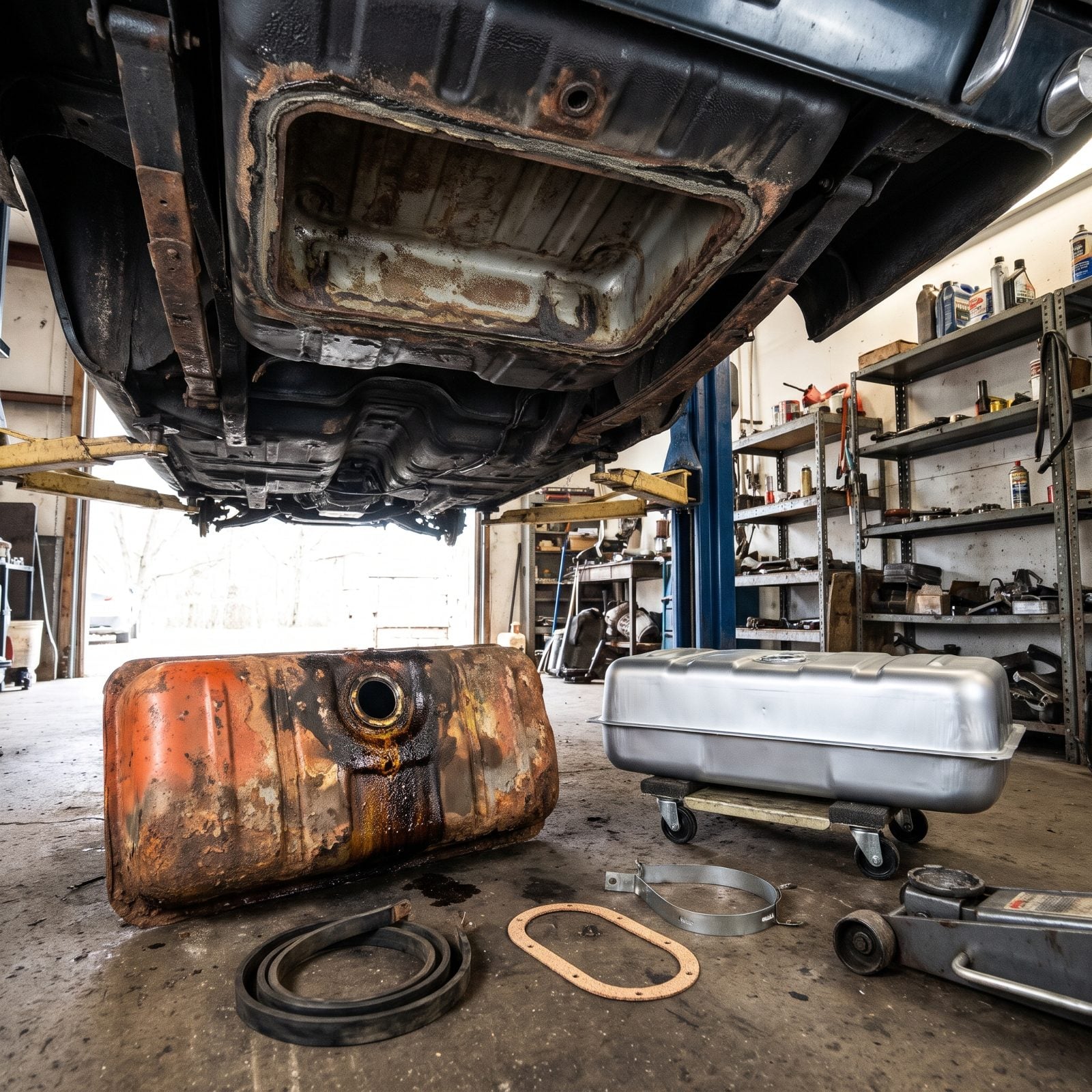
In a ’66 Mustang the gas tank is the trunk floor. Tidy design, sure — and also exactly why rust finds it. Condensation sits inside, scale builds up, and old gas turns to varnish that clogs everything downstream.
Drop the tank and you often find the straps rusted, the sending unit seized, and a layer of sediment that would have ruined a fresh carburetor in a week. A new tank, straps, sending unit, lock ring, and gasket is a modest parts bill with an immodest amount of crawling around underneath.
Nobody budgets for the tank. Everybody ends up replacing it.
22. Ethanol-Damaged Fuel Lines and Rubber Hoses
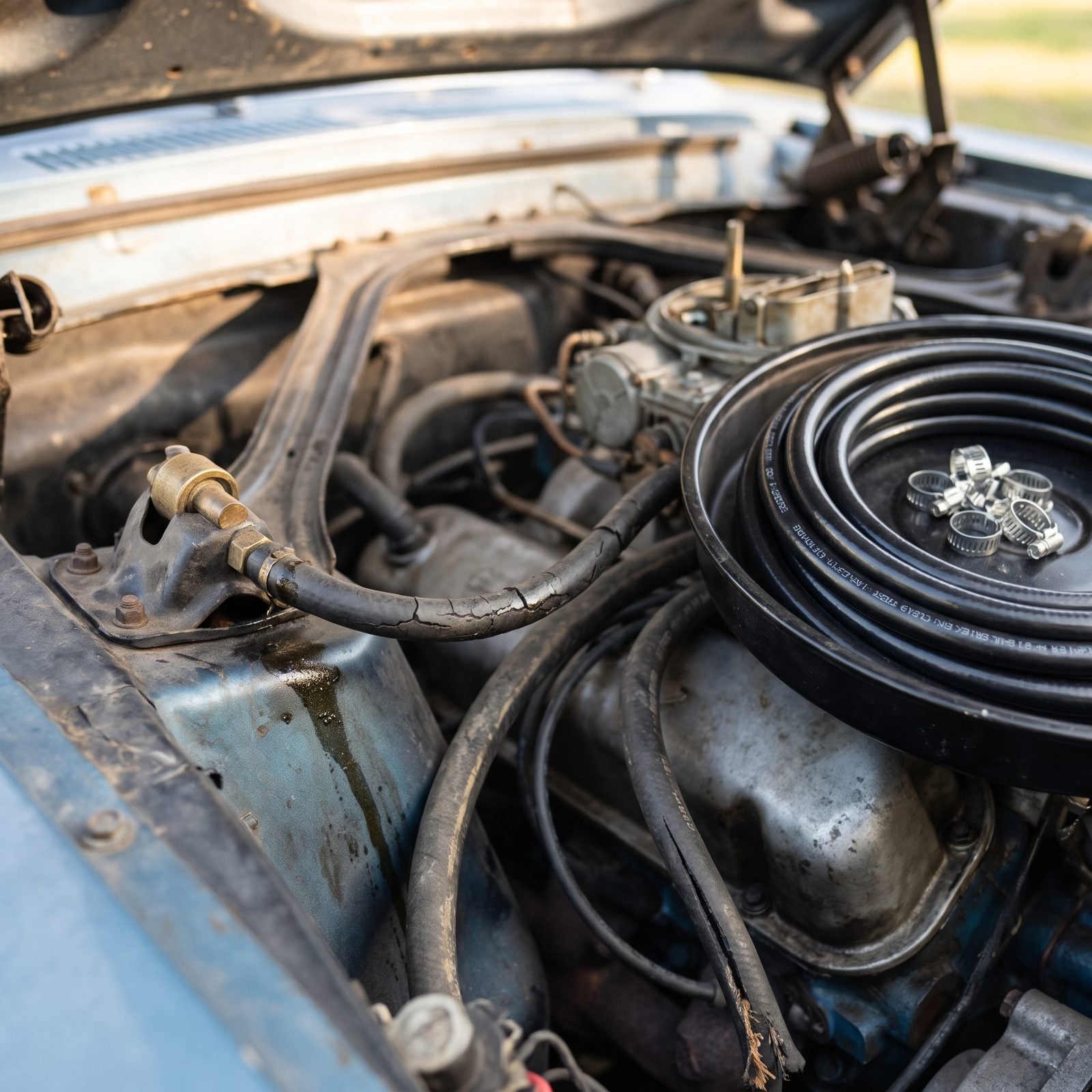
Modern pump gas has ethanol in it, and ethanol eats old rubber for breakfast. The fuel lines Ford fitted to a ’67 were never designed for it, so they harden, crack, and seep — sometimes onto a hot exhaust.
Once you start, you replace all of it. The hard line connections, the soft line to the carb, vacuum hoses, heater hoses, the lot. Ethanol-rated hose and a bag of clamps isn’t expensive. The peace of mind is the real purchase.
21. Carburetor Rebuilding and Repeated Tuning
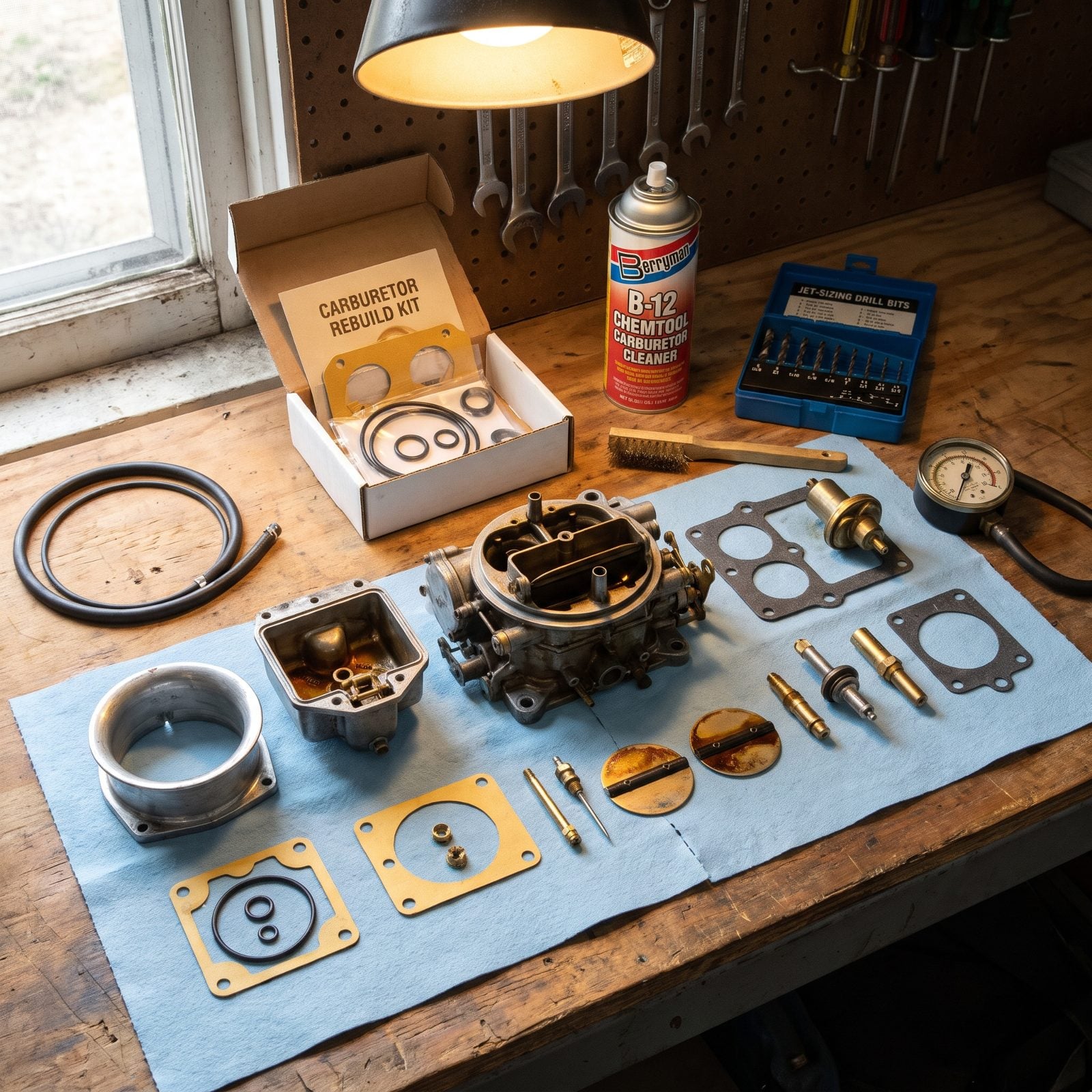
A carburetor is a thousand tiny calibrations pretending to be one part.
The four-barrel on a ’65 289 runs fine until it sits, and then the varnish in the passages turns it into a flooding, hesitating headache. A rebuild kit is cheap. Getting the thing tuned to actually run right is what eats weekends.
You set the float. Change jets. Adjust the idle mixture, the accelerator pump, the choke. Then it runs hot one day and you do half of it again. This is the trade-off for owning a car without a computer — it talks back, and you have to listen.
Budget for the kit once and the tuning time forever.
20. Radiator, Water Pump, Fan, and Hose Renewal
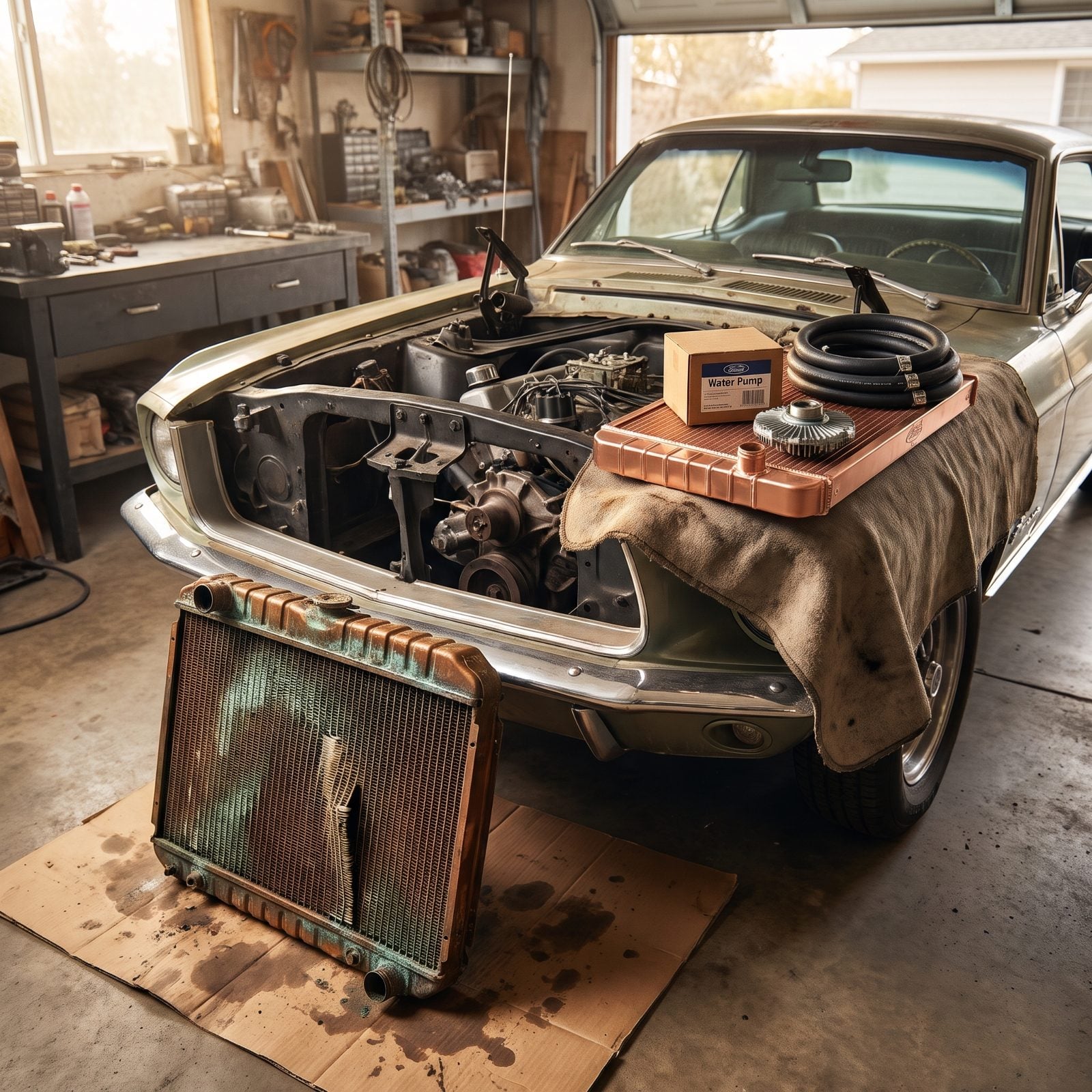
These cars ran hot when they were new. Sixty years later the cooling system is usually the thing standing between a drive and a cloud of steam on the shoulder.
A clogged radiator, a weeping water pump, a tired fan clutch, and hoses that have turned to chalk inside tend to go together. You rarely replace just one. Once the radiator is out, the rest is right there asking to be done while you’re in.
None of it is glamorous and none of it shows. But a Mustang that overheats in traffic every July isn’t a car you drive. It’s a car you make excuses about.
The parts that never show are the ones that decide whether you actually drive the thing.
19. A Leaking Heater Core Behind the Dashboard
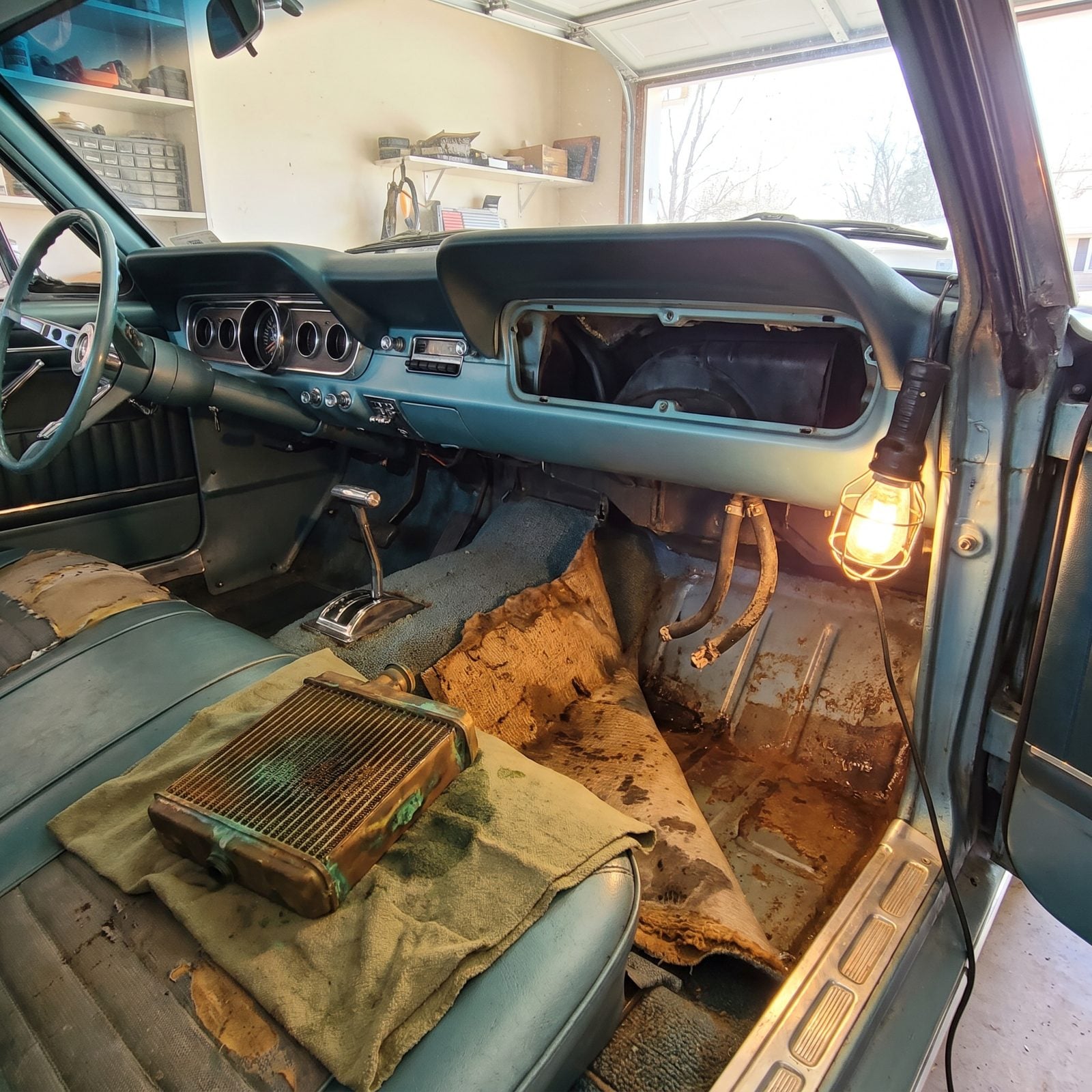
You smell it before you see it. Sweet, warm coolant fogging the inside of the windshield on a cold morning, and a damp patch on the passenger carpet that never quite dries.
The heater core on a 1960s Mustang lives buried behind the dash, and Ford didn’t design it to come out easily. The part itself is cheap. The labor to reach it is anything but. You’re into the glovebox, the vents, half the ductwork, and sometimes the whole heater box pulled off the firewall before you ever touch the thing. Budget a weekend if you do it yourself, a mortgage payment if the shop does.
18. Persistent Engine Oil and Rear-Main-Seal Leaks
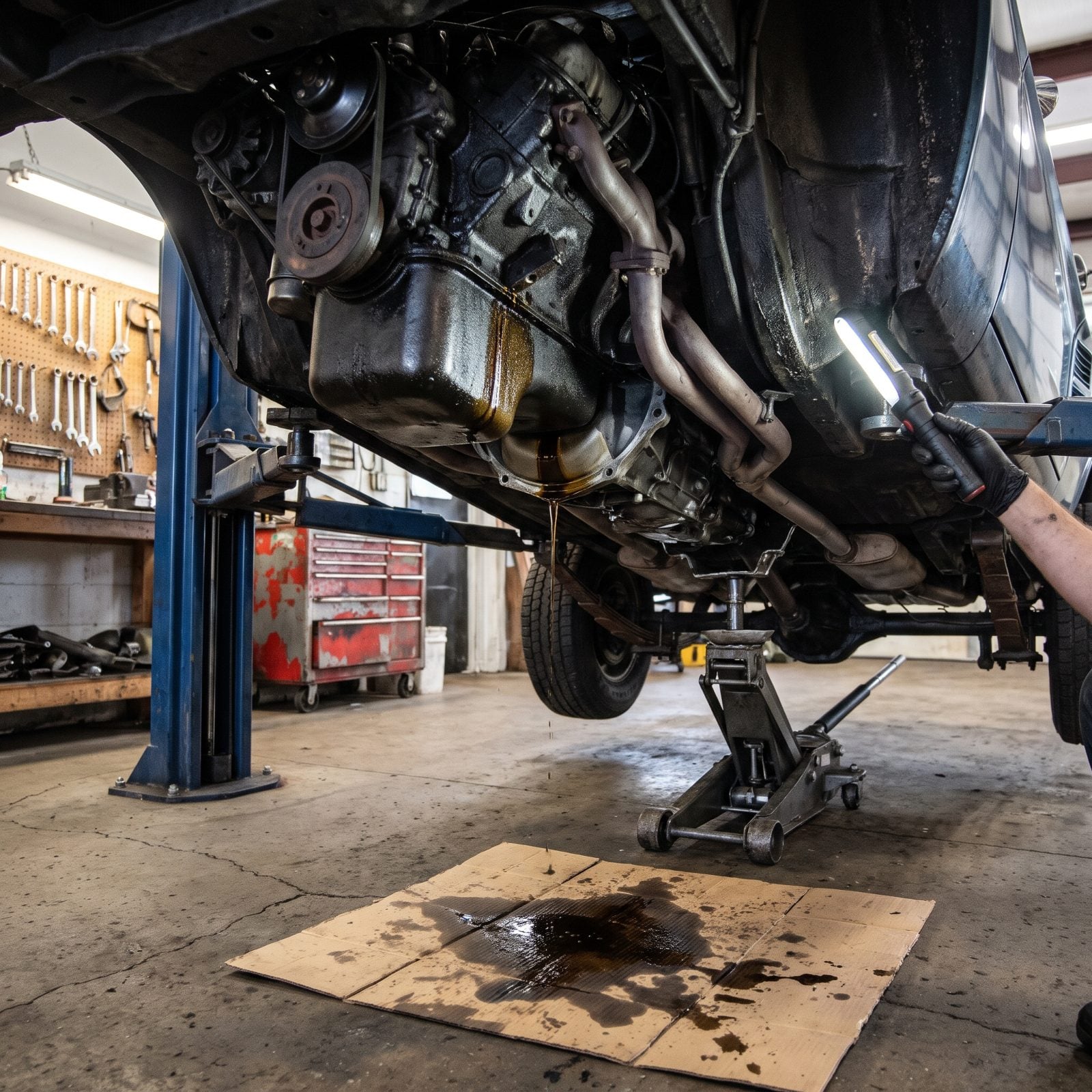
Every old Ford marks its territory. A spot on the garage floor, a haze on the exhaust, that faint burnt-oil smell after a long drive.
Small leaks from the valve covers or oil pan gasket are a cheap afternoon. The rear main seal, though, is the one that empties your wallet. On most 289 and 302 cars you’re dropping the transmission or pulling the engine just to reach it, and once you’ve committed to that labor, you’ve paid ten times over for a seal that costs peanuts. A lot of owners chase one leak, fix it, and then find the next one was only hiding behind the first.
17. Machine-Shop Charges During an Engine Rebuild
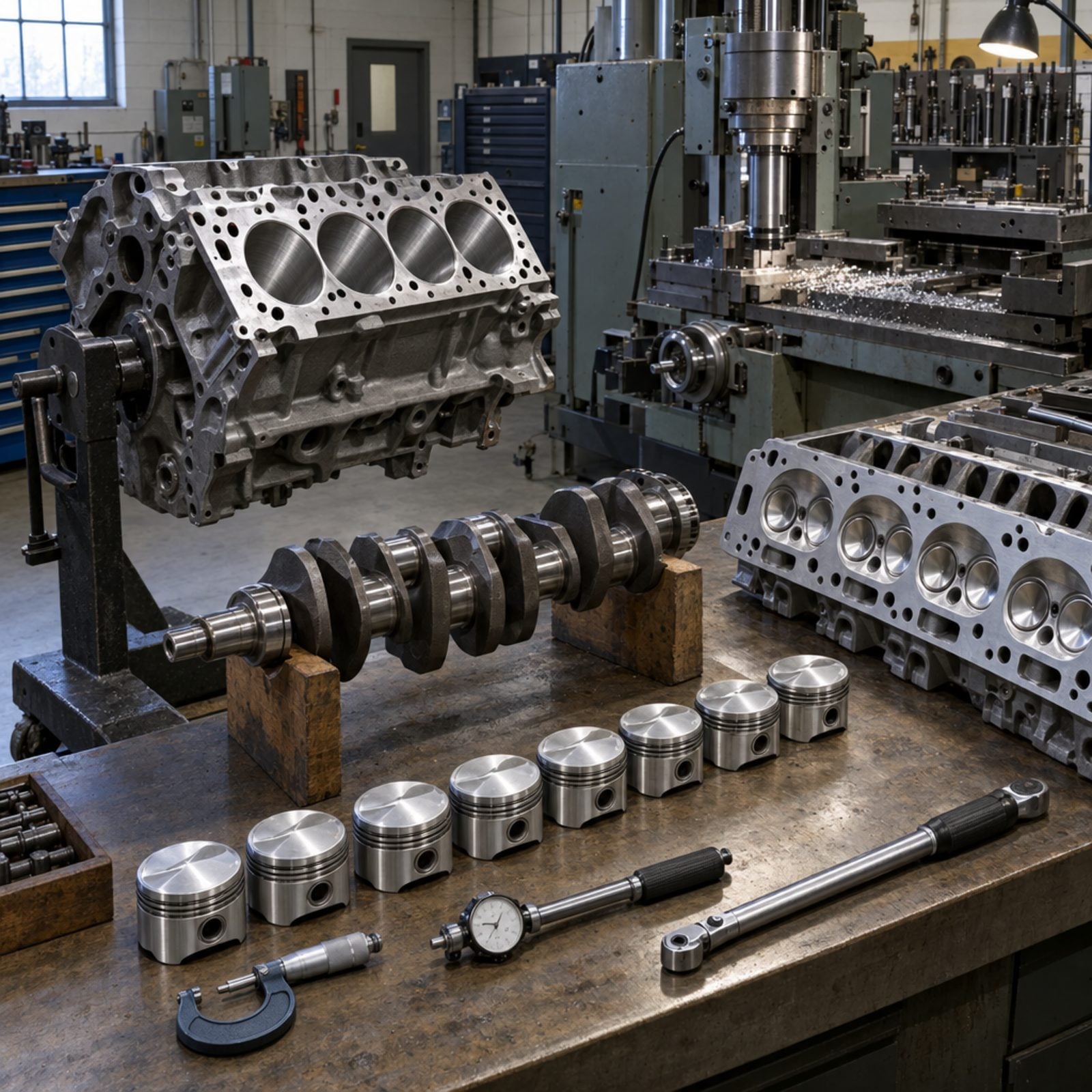
The engine looked fine on the dyno sheet the seller showed you. Then it came apart, and the machinist started talking.
This is where a rebuild quietly doubles. Hot-tanking the block, boring and honing, line-boring the mains. A valve job on the cast-iron heads, new seats, new guides. Turning the crank, resurfacing the heads and deck. Every operation is its own line on the invoice, and not one of them shows up in the glossy photos of a finished car. The parts you can price online in five minutes. The machine work? You won’t know until the shop calls with a number.
16. Automatic or Manual Transmission Rebuilding
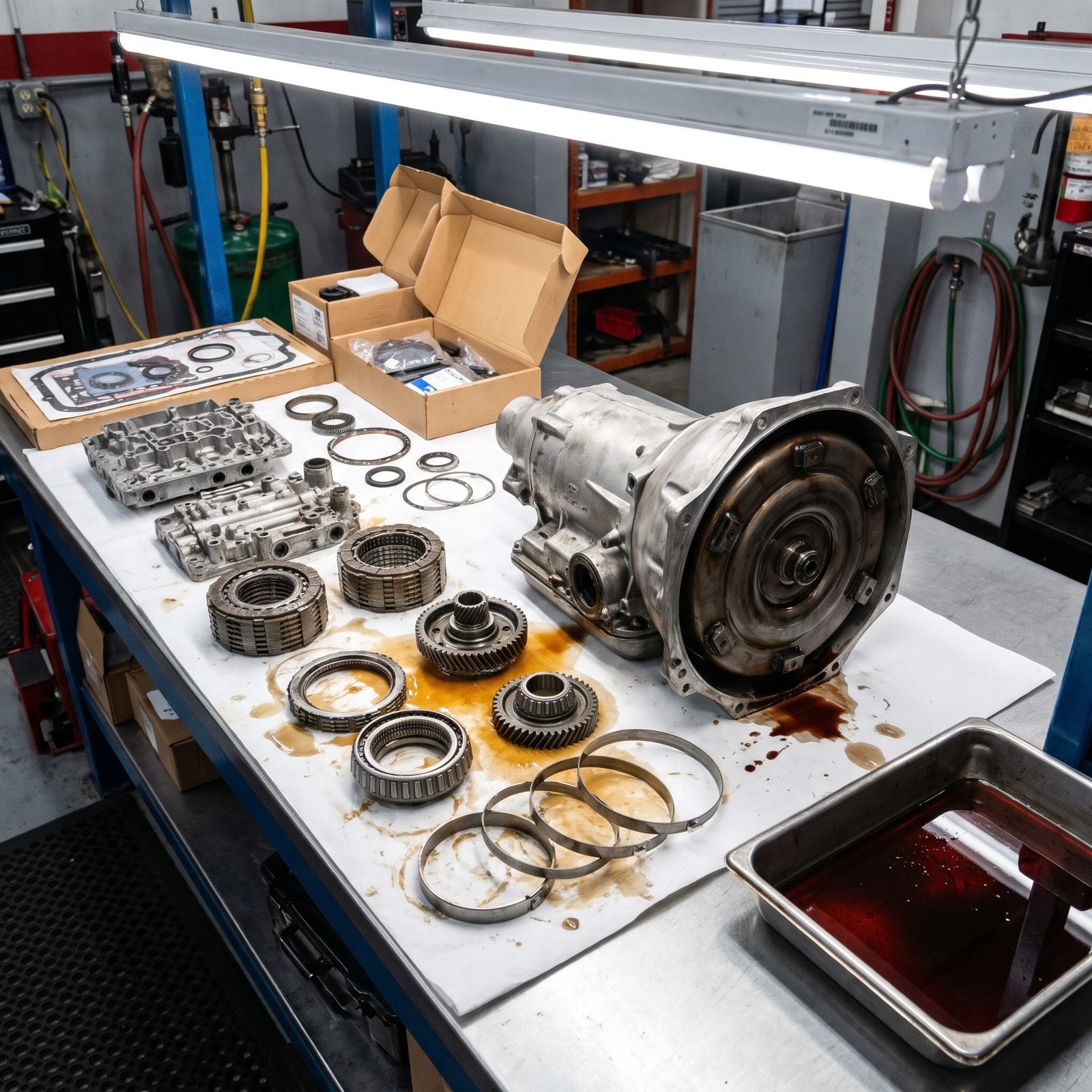
A slipping Mustang shudders on the one-two shift, or the clutch pedal goes soft and the gears grind coming into three-four. Either way the transmission is talking to you, and the conversation runs expensive.
Rebuilding a C4 automatic or a Top Loader manual is specialist work. Clutch packs, bands, seals, synchros, and a torque converter you probably ought to swap while you’re in there anyway. The shop takes one look at the burnt fluid and knows the whole unit cooked. Hardly anyone tackles this at home, which means the labor rate belongs to somebody else.
Burnt transmission fluid smells like a problem you cannot un-smell.
15. Differential Bearings, Seals, and Gear Setup
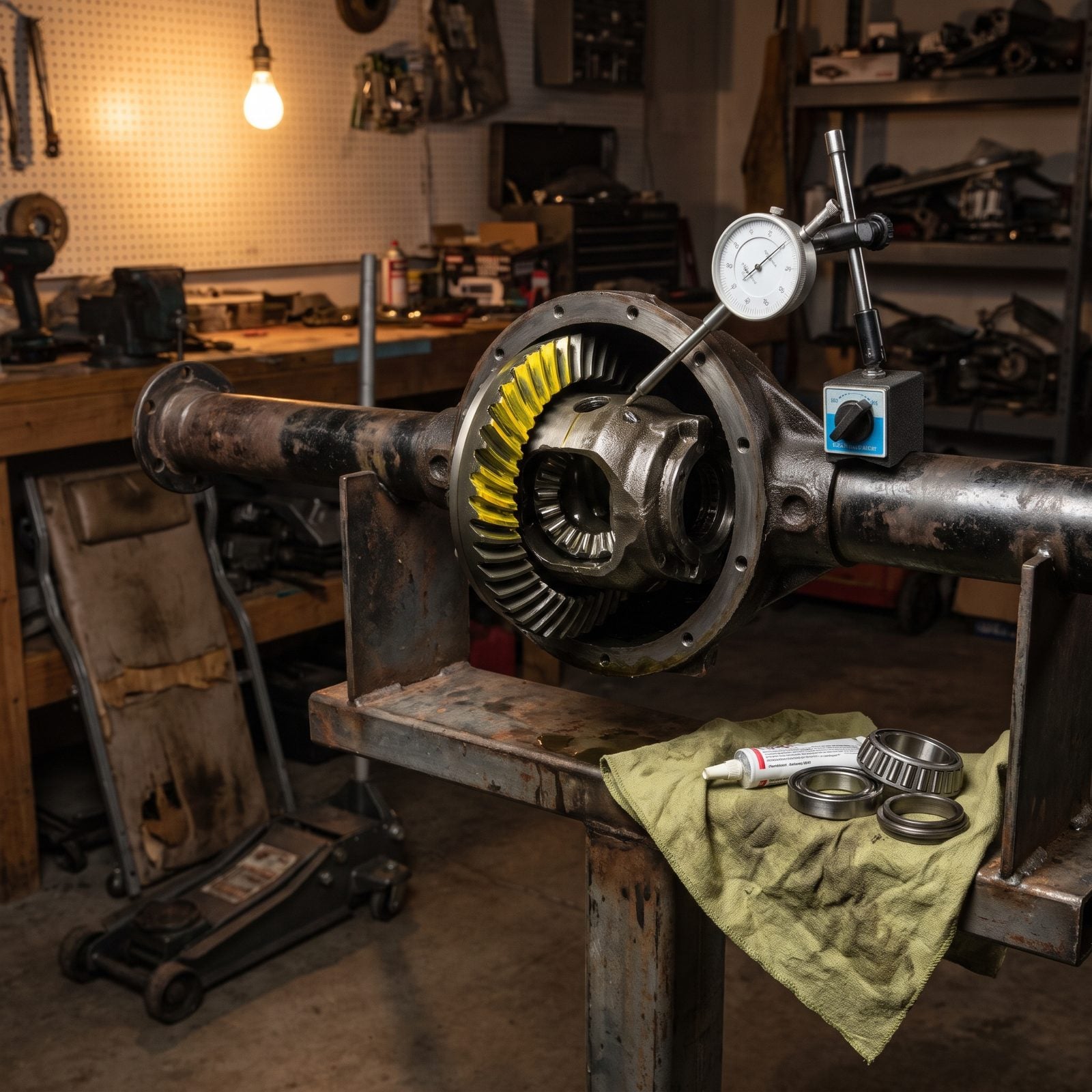
There’s a whine from the back of the car that climbs at forty and gets meaner on deceleration. That’s the differential, and it’s the repair most owners flat-out underestimate.
Fresh bearings and seals are cheap. Setting up the ring and pinion is where it humbles you. Backlash, preload, and the contact pattern all have to be dialed in by feel and measurement, and getting it wrong means tearing back in and doing the whole thing twice. Plenty of folks pay a specialist here for exactly that reason — the setup is an art, not a torque spec you can look up.
14. Rebuilding Four-Wheel Drum Brakes
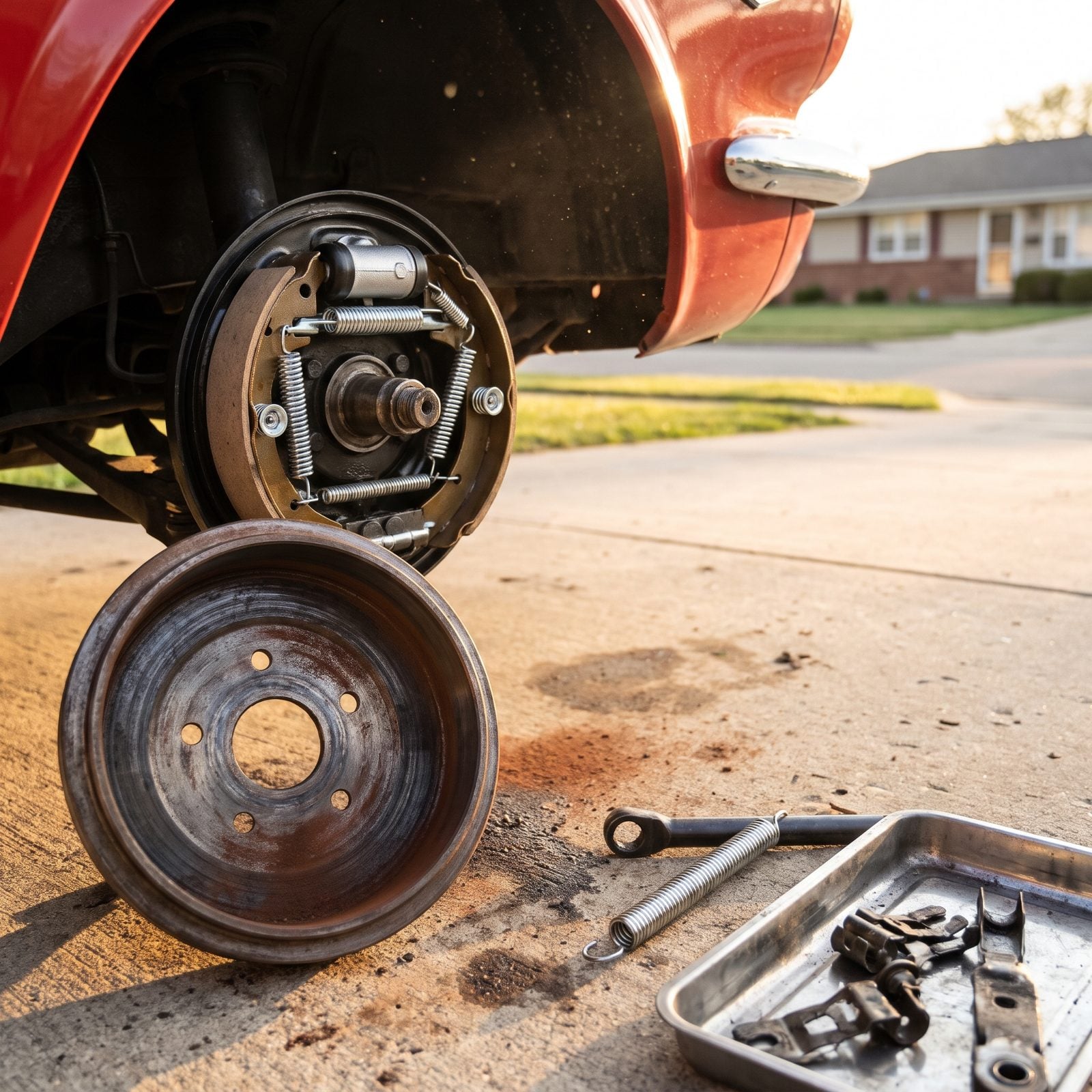
Drum brakes are a box of springs that all want to escape at the same moment. Ask anyone who’s rebuilt a set — they remember the one that went sailing across the garage.
Four corners means four wheel cylinders, eight shoes, two sets of hardware, and usually drums that need turning or replacing because the old ones are scored past spec. Add the flex hoses, which crack with age, and brake fluid that turned to swamp water sometime back in the Carter administration. None of it is costly on its own. All of it together, times four, adds up quicker than you’d think.
13. Converting the Single-Reservoir Master Cylinder
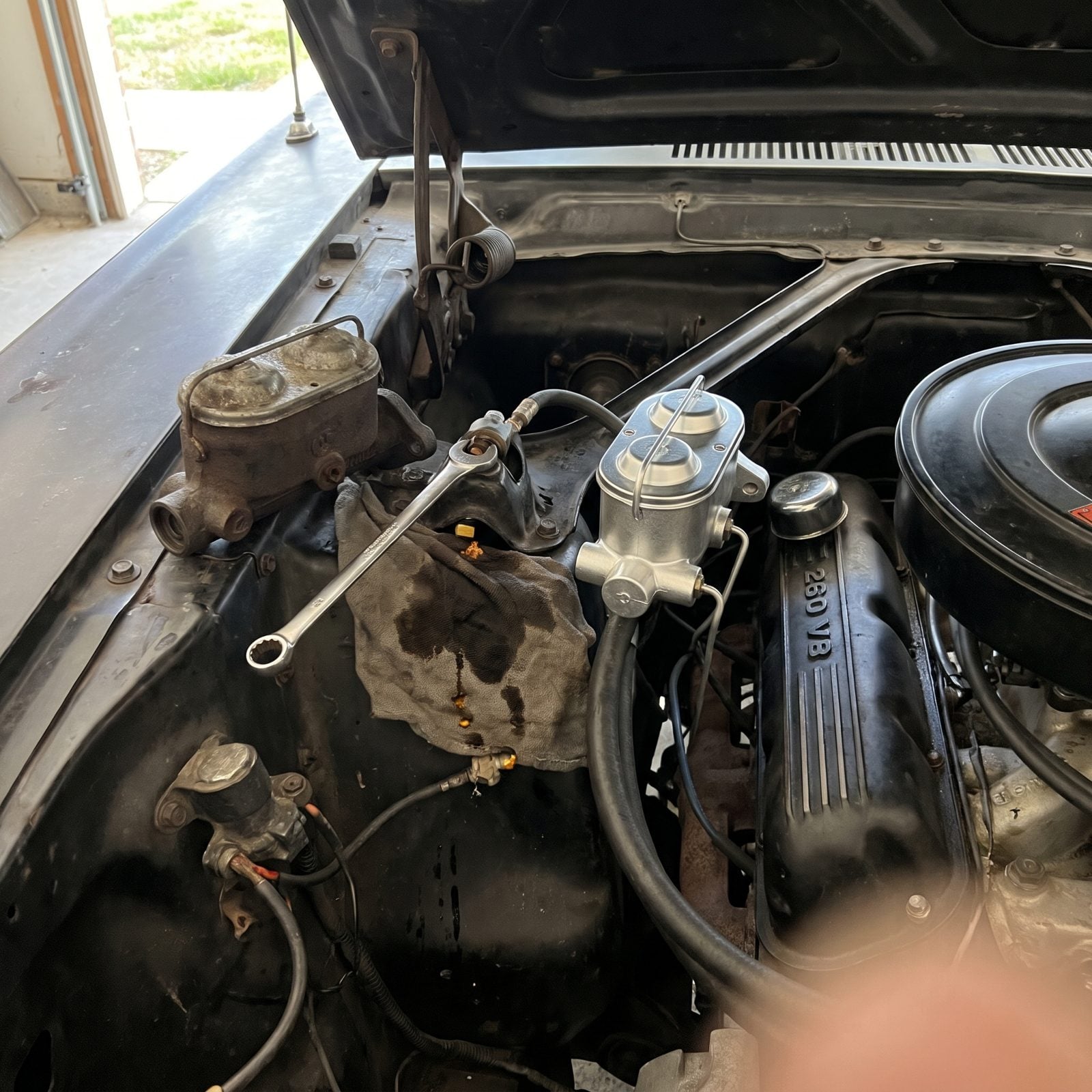
Early Mustangs left the factory with a single-reservoir master cylinder. One circuit for all four brakes. Spring a leak anywhere and the whole system goes at once.
Nobody budgets for this when they buy the car, because it works fine right up until it doesn’t. Converting to a dual-reservoir setup is about the cheapest meaningful safety upgrade you can make, yet it’s rarely just the master cylinder. You’ll often add a proportioning valve, new lines, sometimes a booster. It’s the sort of expense you talk yourself into after one white-knuckle stop.
12. Leaking Power-Steering Control Valves and Hoses
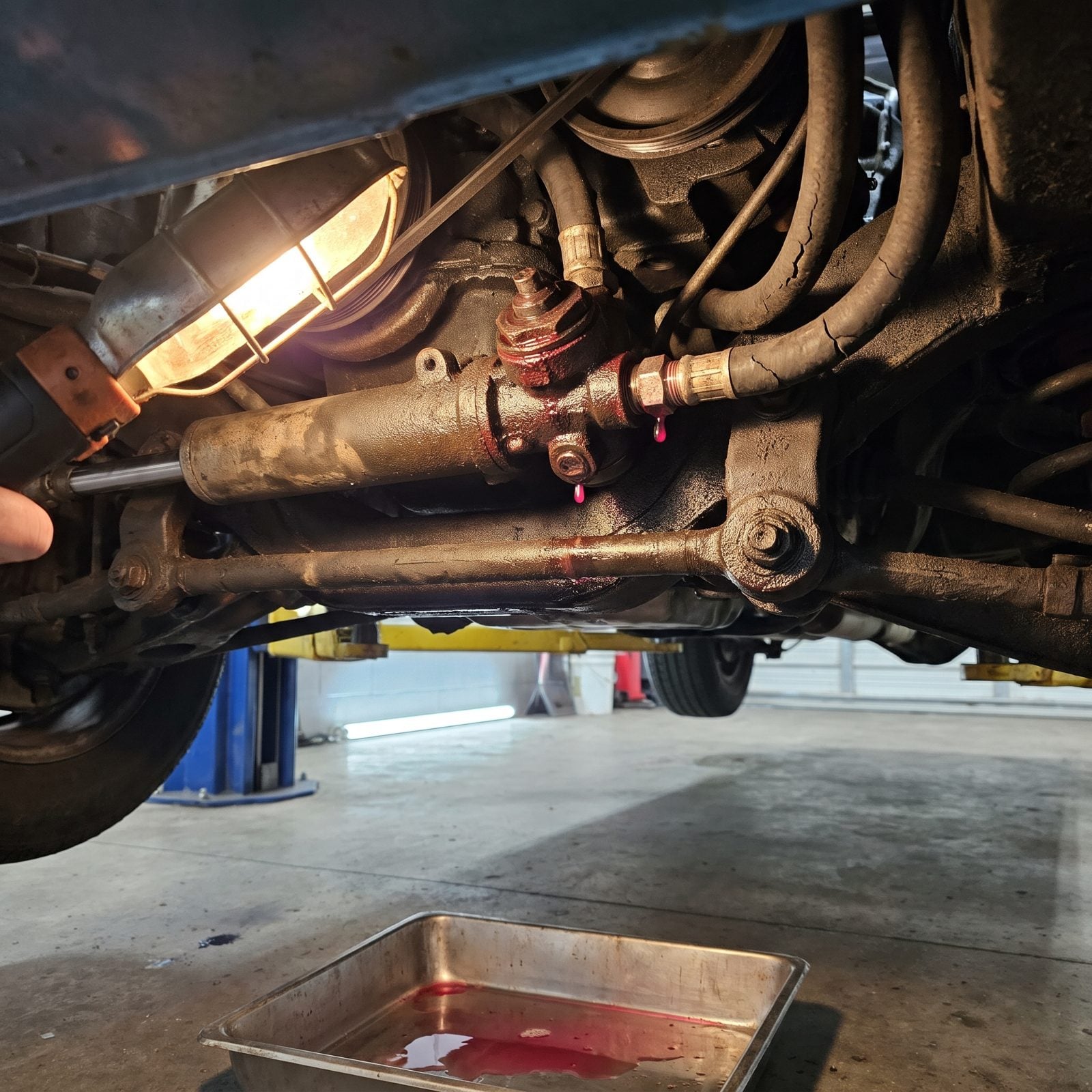
Follow the pink-red stain. On a factory power-steering Mustang it almost always leads to the control valve or the ram — those odd-looking pieces hanging off the steering linkage that no other car seems to bother with.
The hoses crack first, and those are a reasonable fix. The control valve is where things get fussy. Rebuilding or replacing it, bleeding the system, hunting down fittings that actually match — a quick job turns into a parts safari. These components sit ignored for years, right up until the fluid finds its way onto the exhaust and starts to smoke.
11. Steering Box, Idler Arm, and Tie-Rod Wear
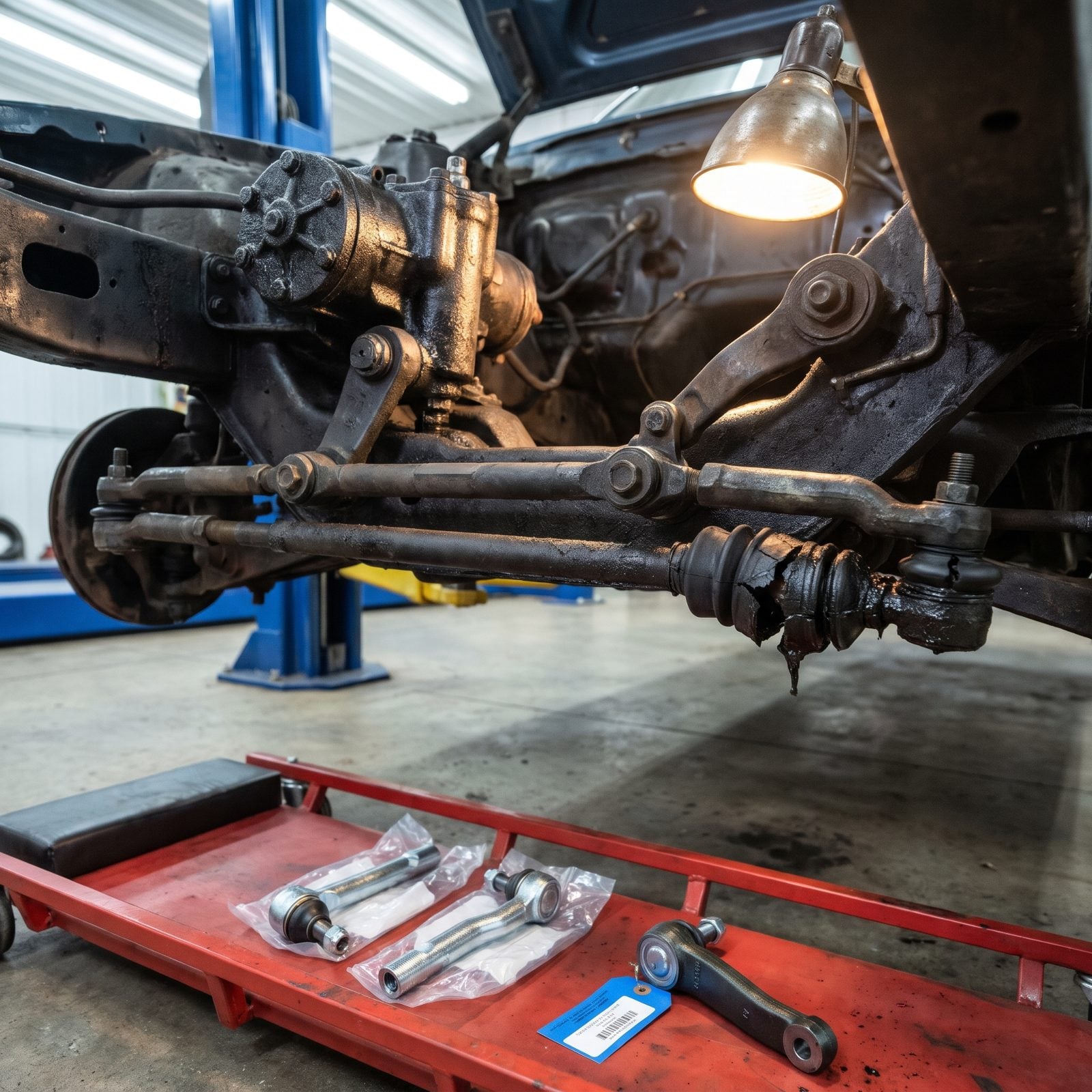
The car wanders on the highway. You correct, it drifts, you correct again, and an hour later your arms are worn out from fighting it. That’s slop in the steering, and it hides in a dozen little joints.
A worn steering box, a loose idler arm, tie-rod ends with cracked boots and grease long since dried out. Each part is modest money. The diagnosis is the real catch — all that play compounds, and you can’t tell which joint is the worst offender until you get under there and shake things by hand.
10. Front Coil Springs, Ball Joints, and Control Arms
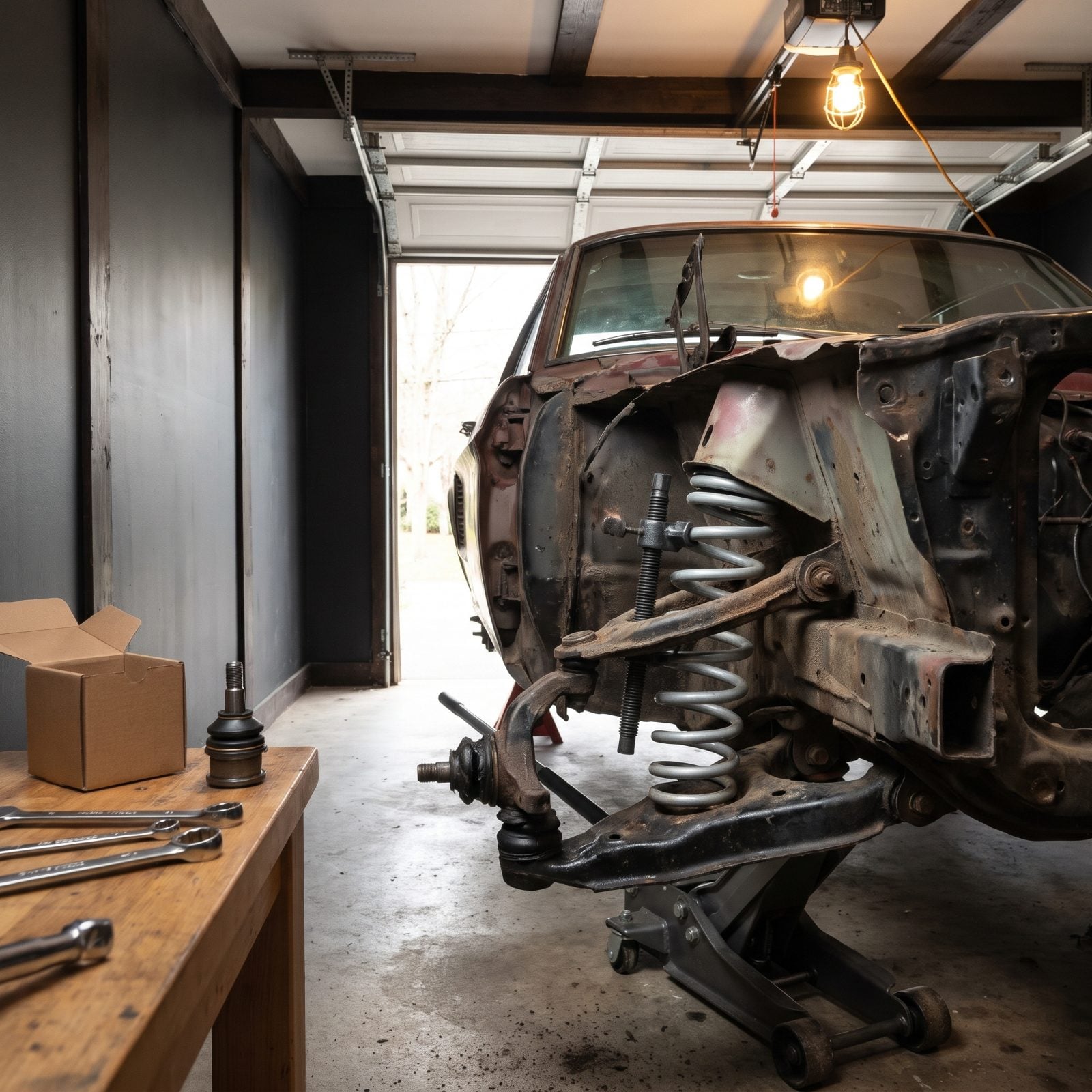
Sagging in the nose. A clunk over railroad tracks. The front end sitting lower on one side than the other, like the car’s leaning into a question nobody asked.
Front coil springs lose their height with age, ball joints wear through their boots, and the control-arm bushings crumble away to nothing. Doing this work means a proper spring compressor, with its rod running through the coil and gripping it top and bottom, not a lone rod clamped to one coil off to the side, and a healthy fear of the energy stored in a loaded coil. It rewards patience and punishes shortcuts, and that’s about all there is to say about it.
Here’s the part people overlook. You rarely replace just the springs. Once it’s apart, the ball joints and bushings are sitting right there, worn out, staring back at you. Do it once and do it all — or do it twice.
9. Period-Looking Tires That Age Out Before Wearing Out
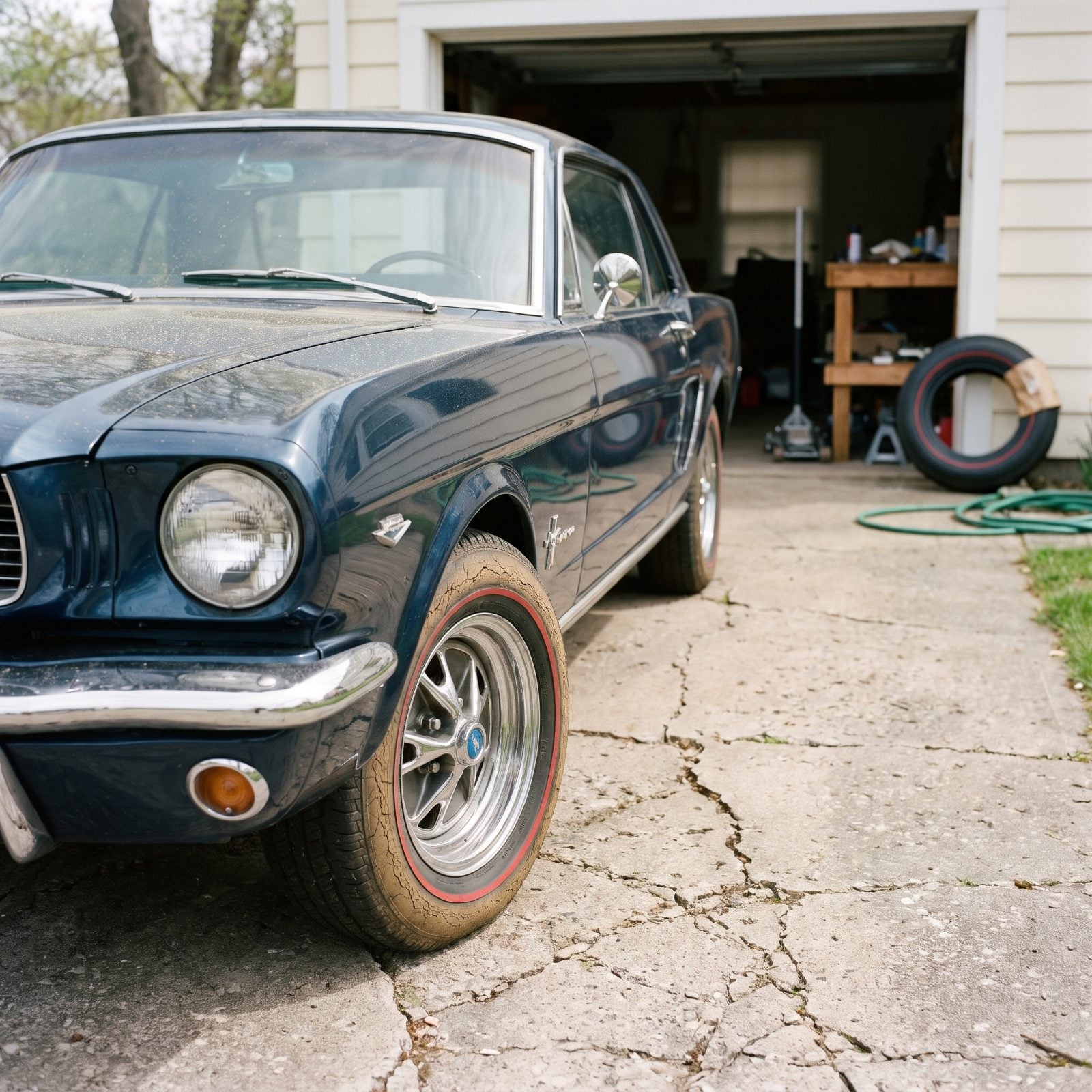
A ’60s Mustang that sees a couple thousand miles a year will never wear out its tires. It will age them out instead. Rubber hardens and cracks with time whether the car moves or not, and a tire with deep tread can still be old enough to let go on the highway.
Check the four-digit date code on the sidewall: week, then year. Many tire makers and safety groups recommend replacing tires after a set number of years regardless of tread, and that clock runs out fast on a weekend car. Period-correct looks make it worse. Reproduction bias-plies, redlines, and narrow whitewall radials are specialty products priced like it, so you end up buying a set every so often for a car that barely touched the first one.
8. Headliner Installation With the Glass Removed
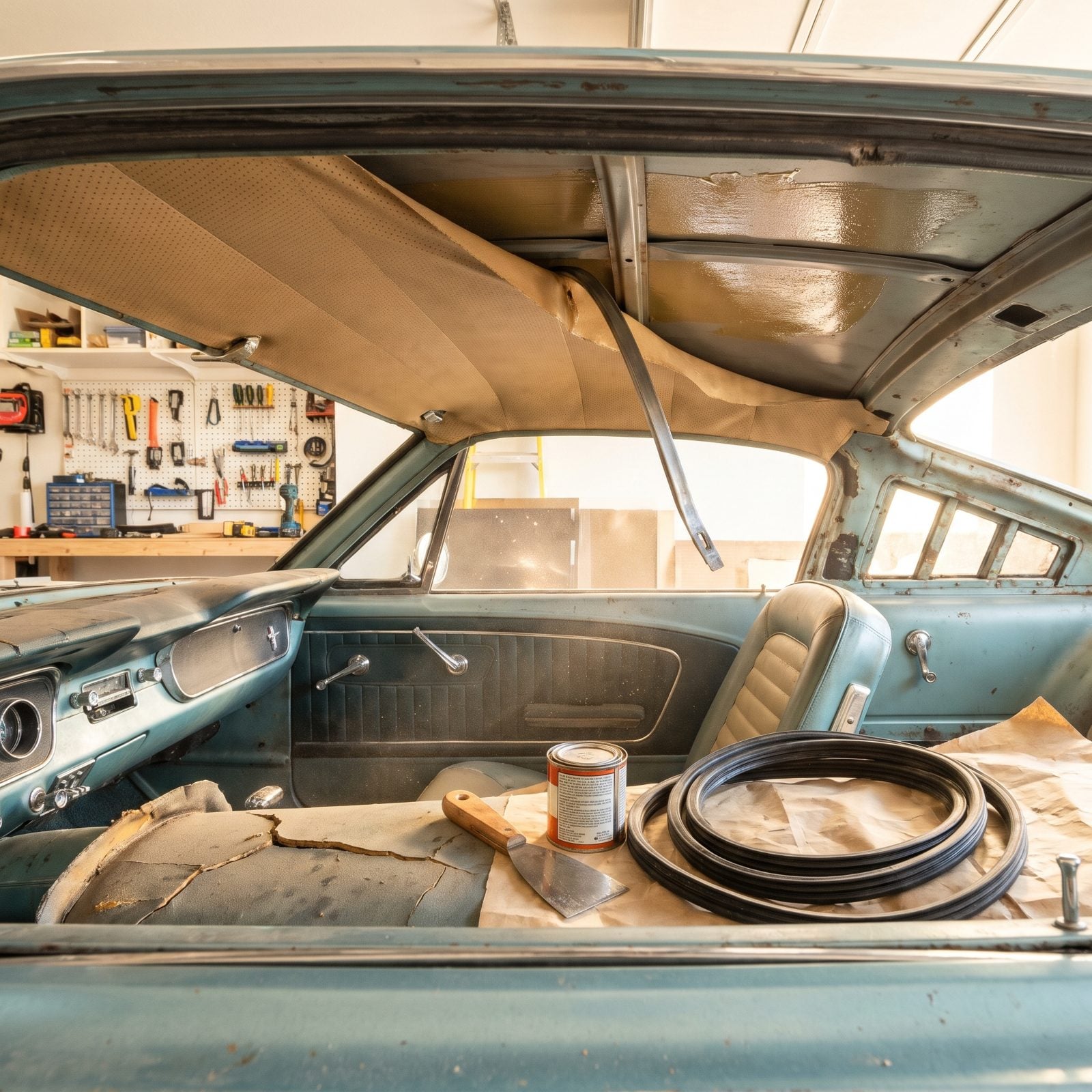
Sagging, water-stained headliners are standard on these cars, and replacing one sounds like an afternoon with some glue. It isn’t. On most ’60s Mustang coupes the headliner edges are glued down around the windshield and rear window openings, so a proper job means taking the glass out first.
That’s where the cost hides. Fifty-year-old glass doesn’t always come out in one piece, and an original windshield with factory markings is a hard thing to replace with something equally correct. Add the stainless trim clips that bend, the listing rods that have to go back in the right order, and a cabin full of contact-cement fumes. Plenty of owners decide this is one job worth paying a trim shop to do, and trim shops charge accordingly.
7. Repairing Factory Air-Conditioning Components
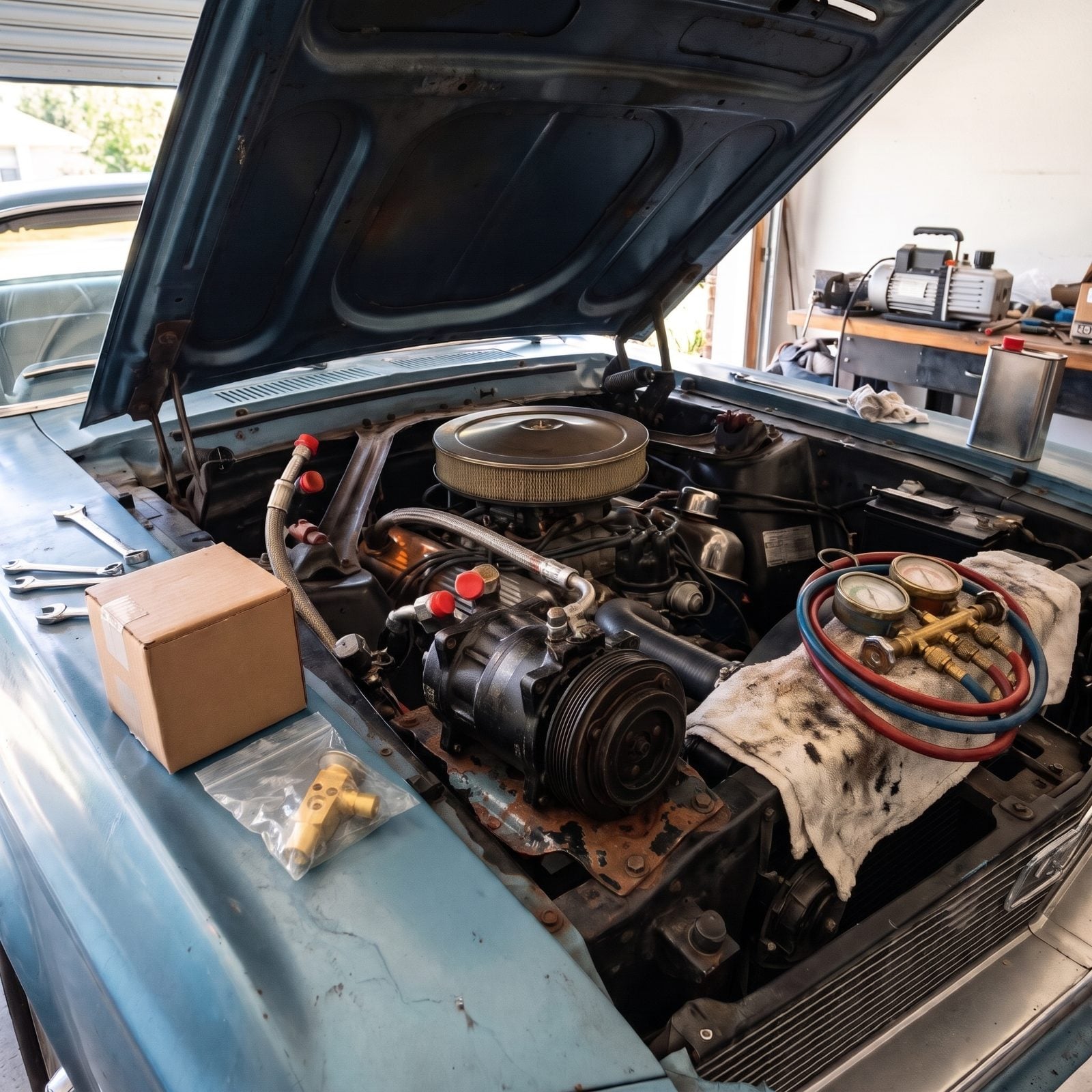
Factory air makes a vintage Mustang more desirable. It also makes it more expensive to keep alive. These systems were built around R-12 refrigerant, old piston-style compressors, and hoses and seals that have long since given up.
You have two roads, and both cost money. Keeping it original means rebuilding the compressor, replacing hoses, the drier, and the expansion valve, and sourcing R-12, which is no longer produced in the U.S. and is restricted for purchase. Converting to R-134a means flushing the system, swapping seals and fittings, and often accepting weaker cooling unless you upgrade the condenser too. Either way, a system that blows cold on a July afternoon is a project, not a recharge.
6. Convertible Top Fabric, Cylinders, and Hydraulic Lines
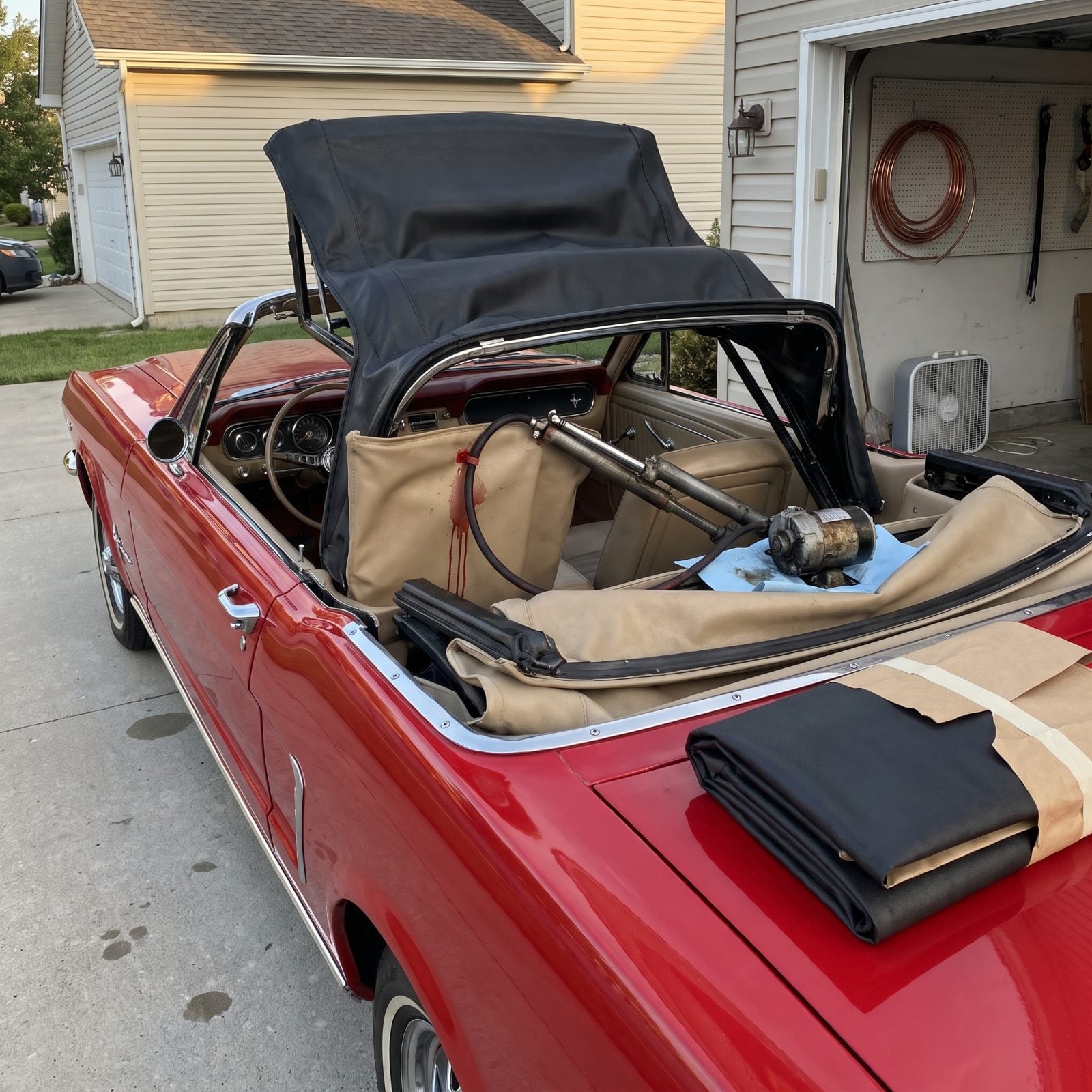
Dropping the top on a sunny day is the whole point of a convertible. Keeping that top working is a separate hobby. The fabric shrinks, the plastic rear window yellows and cracks, and the pads and tacking strips underneath rot right along with it.
Power tops add hydraulics to the bill. A pump, a long lift cylinder, and a set of lines that age just like every other rubber part on the car. When a cylinder seal fails, it can spray hydraulic fluid across fresh upholstery and new carpet. Then there’s frame alignment: a new top on a tired or bent frame won’t seal, won’t latch cleanly, and lets in the very rain you just paid to keep out.
Jalopy Talk readers gave convertibles more hearts than the other images in the same articles, 76% versus 70%, so the upkeep at least goes toward a body style readers warm to.
5. Premium Prices for Date-Coded Original Parts
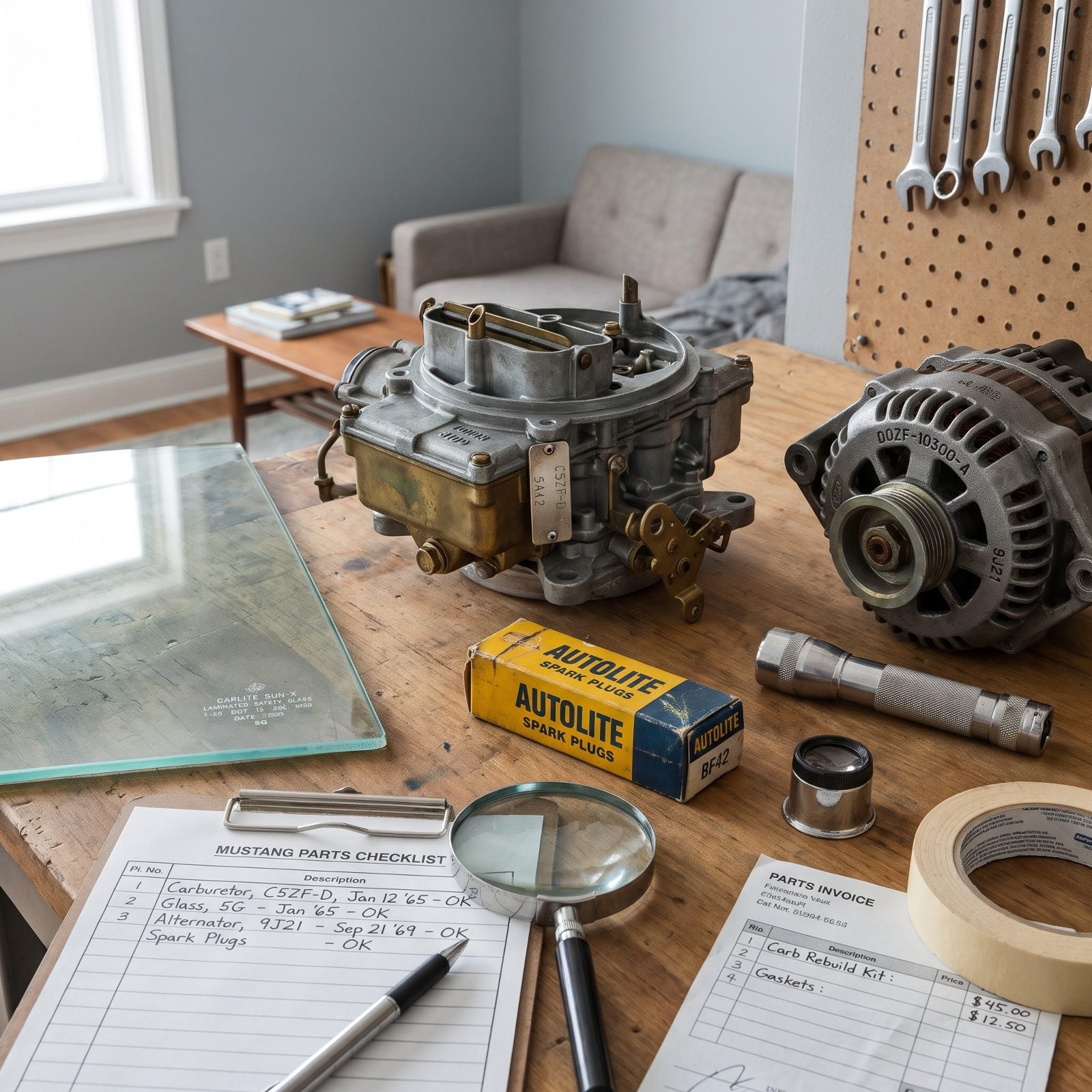
Original parts carry stamped part numbers and date codes, and serious collectors and judges check them. A carburetor, alternator, or distributor that carries a genuine factory part number and a legible period date code is worth far more than an identical-looking part that isn’t.
That’s how a fair price on a reproduction turns into a steep one for the real thing. New old stock in the original box commands a premium, and even used date-coded pieces get bid up at swap meets and online. If you’re chasing a numbers-matching, show-correct car, you’ll pay for authenticity on part after part, and you’ll pay extra for the ones that are getting harder to find every year.
4. Freight and Return Shipping for Poorly Fitting Parts
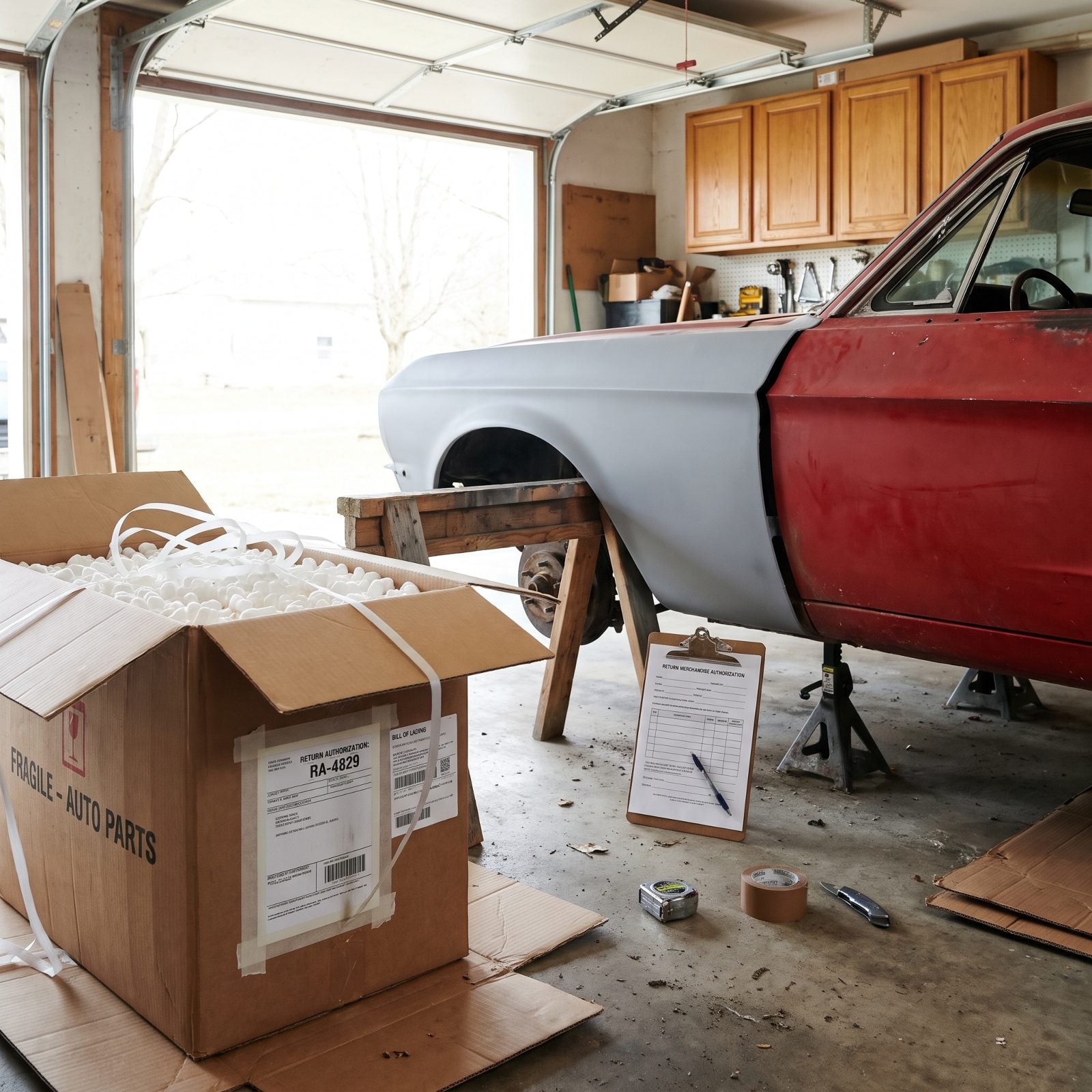
Small parts ship cheap. Sheet metal doesn’t. Fenders, hoods, quarter panels, and full floor pans are bulky, and many of them ship oversize or by freight, which can rival the price of the part itself.
The real sting comes when the panel arrives and doesn’t line up. Now you’re paying to box it back up, paying return shipping on something big and awkward, and sometimes eating a restocking fee on top. Then you pay freight again on the replacement and hope that one fits better. Panels that show up dented or creased in transit start the same loop, plus the time spent filing a damage claim.
3. Low Fuel Economy During Regular Driving
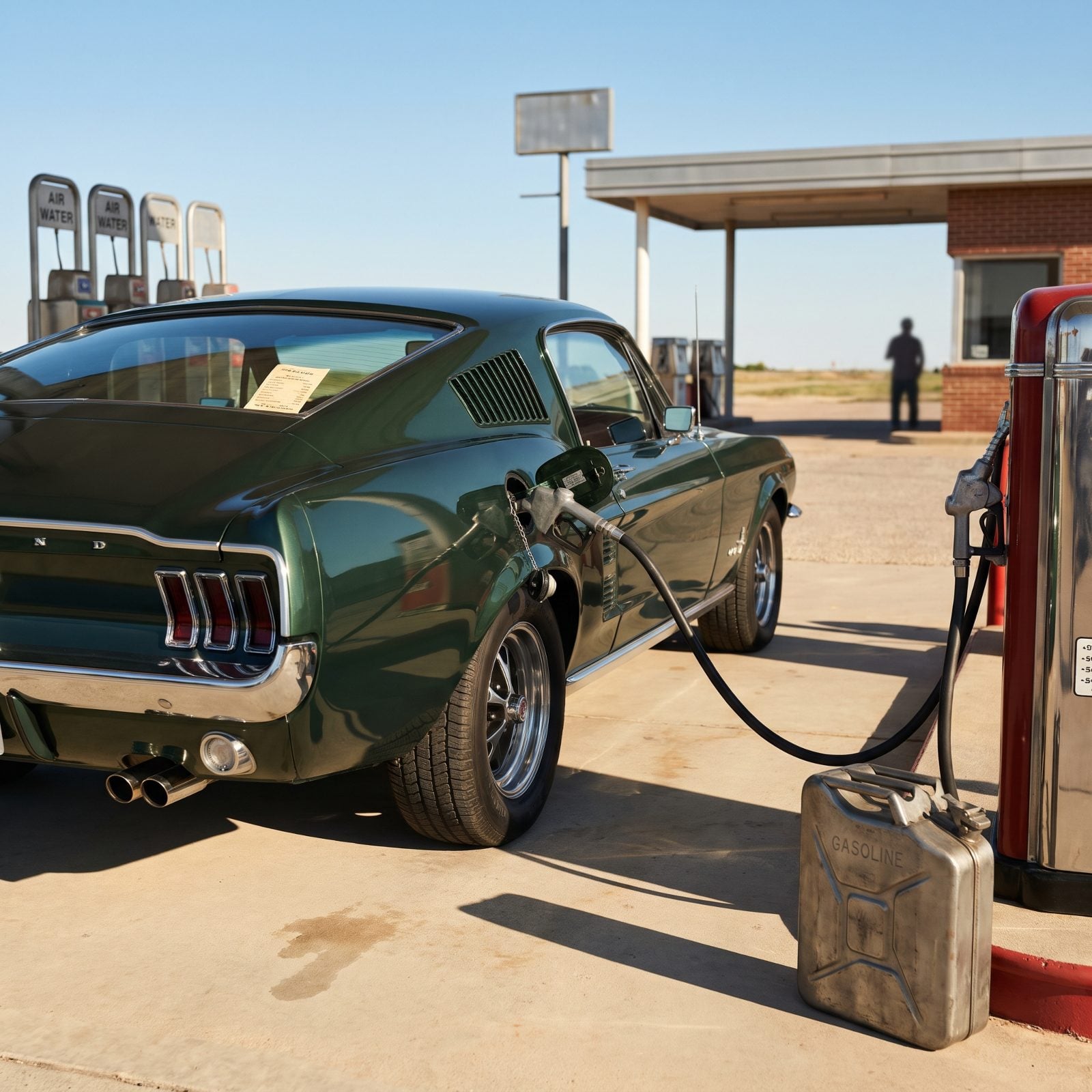
A carbureted V8 with no overdrive was built for cheap gas and short trips to the drive-in. Most 1960s Mustangs left the factory with three- or four-speed transmissions and no overdrive gear, so the engine spins hard at highway speed and drinks accordingly.
The fuel bill grows from there. High-compression engines often want premium, and many owners seek out ethanol-free fuel to protect old fuel systems, which usually costs more per gallon. A carburetor that’s slightly off tune burns even more. None of it matters much on a Sunday cruise. Drive it regularly and you’ll notice that every road trip in this car costs well over what the same trip costs in anything modern.
2. Usage Restrictions That Require a Second Daily Driver
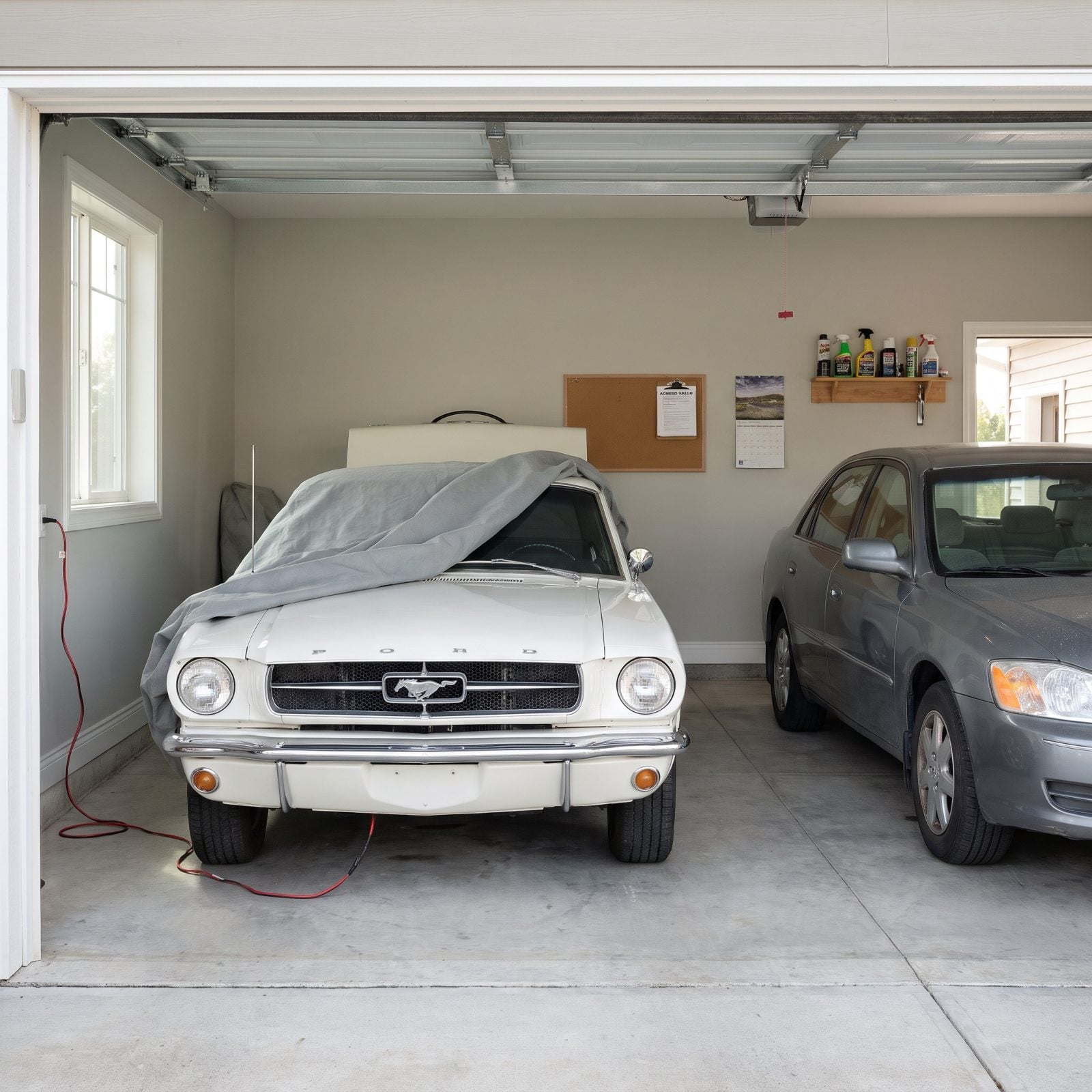
The cheap, generous classic-car insurance policy comes with fine print. Many collector policies limit annual mileage, prohibit using the car for commuting or errands, and require that every driver in the household have a separate regular-use vehicle.
Some states’ antique or historic plates carry similar limits, restricting use to shows, club events, parades, and occasional pleasure driving. So the Mustang can’t be your only car, even if you’d happily drive it every day. That means a second vehicle with its own payment, insurance, registration, and maintenance, a hidden cost that never shows up in the classified ad for the Mustang.
1. Resale Value Lost to Poorly Chosen Modifications
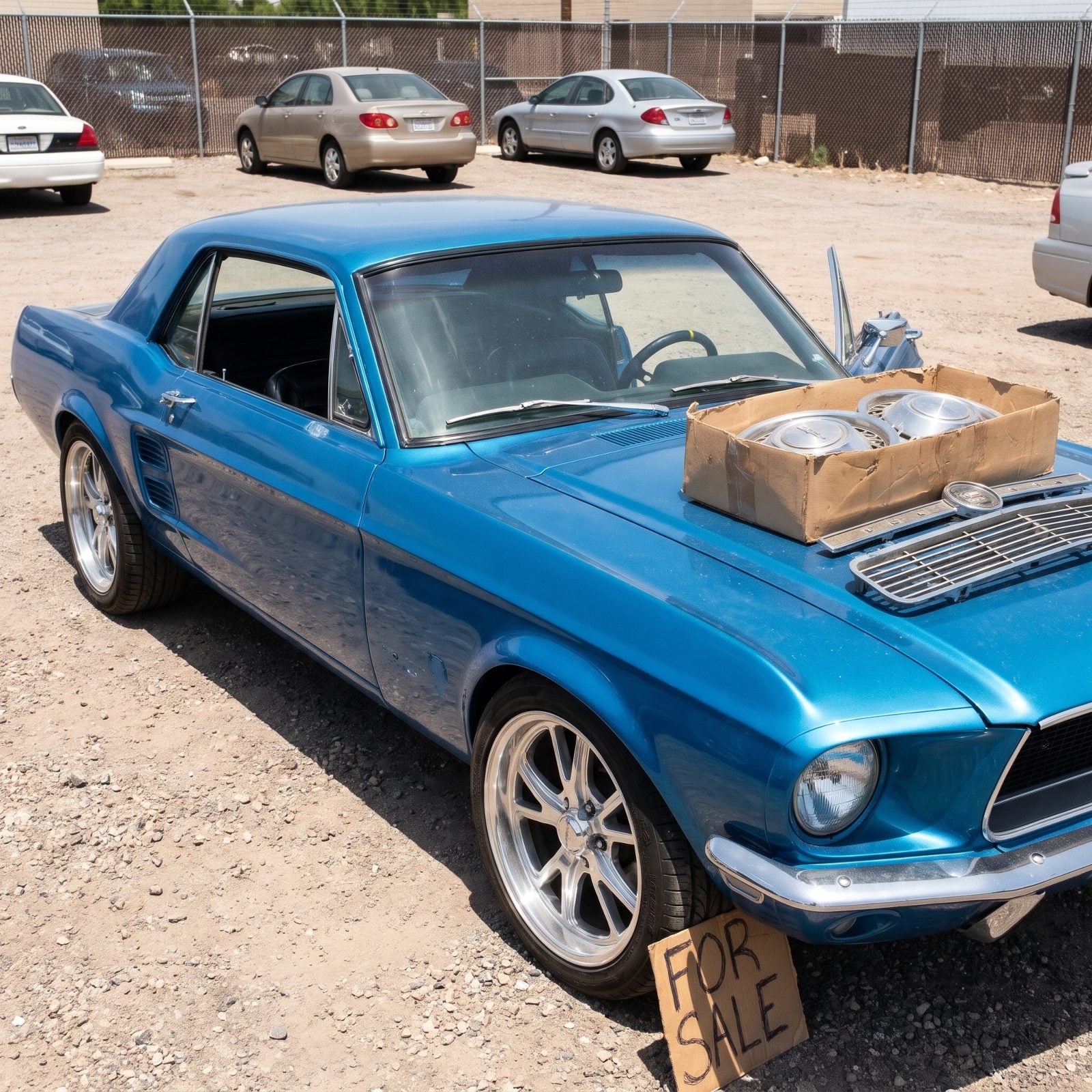
Every owner wants to make the car theirs. The trouble starts when “theirs” means cutting. A dash sliced open for a modern stereo, shock towers notched for a bigger engine, a firewall hacked for a swap, or holes drilled for gauges nobody else wants can knock real money off what the car is worth to the next buyer.
The market for these cars tends to reward originality and documented restorations. Bolt-on upgrades you can undo usually hurt far less than permanent changes, and the original parts you threw away are often expensive to buy back. A loud, trend-driven paint color or a mismatched engine swap may suit you perfectly and still narrow your buyer pool when it’s time to sell.