
Would you like to save this?
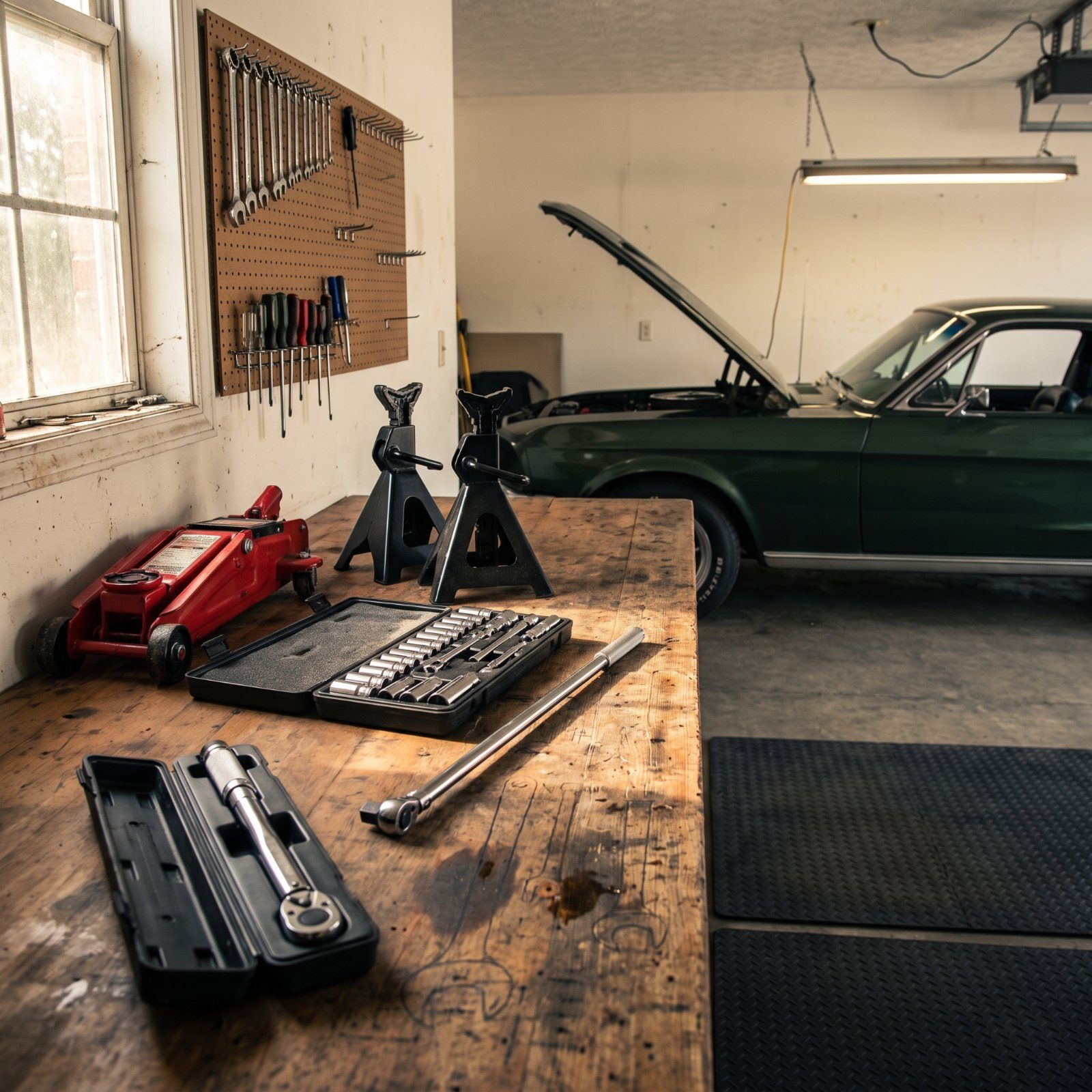
A garage stops being storage the day you can safely put a car in the air and crawl under it. That’s the line. Everything before it is just a driveway with a roof. The tools below aren’t the sexy ones, and nobody brags about jack stands at a cruise-in, but these are the ones that let you do an oil change at 9pm and swap a brake caliper on a Saturday without paying shop rates for work you could handle yourself. Buy them once, buy them right, and you’ll still be using most of them in twenty years.
31. A Quality Hydraulic Floor Jack That Won’t Creep Down
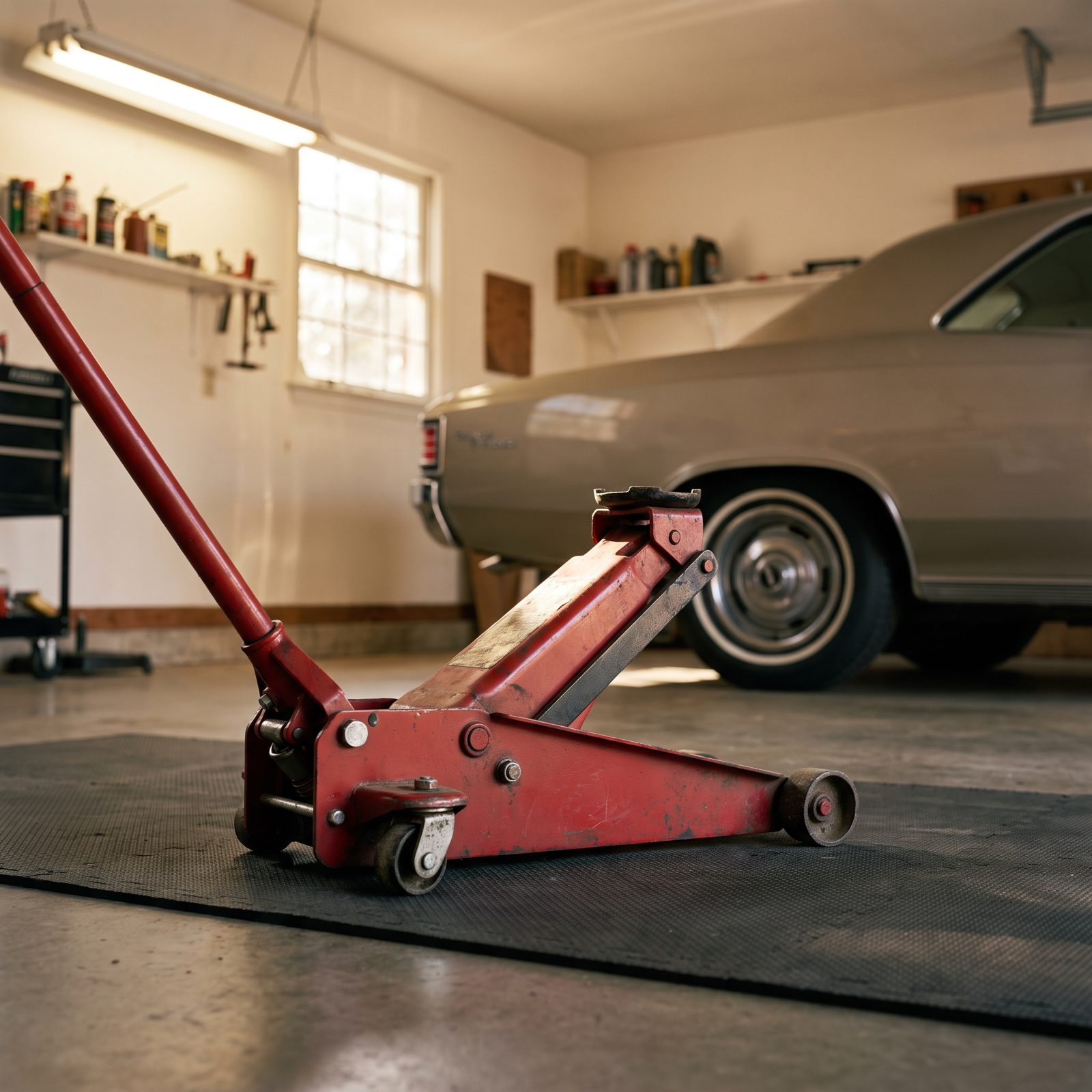
The cheap aluminum jack feels great in the store — light, easy to carry, half the price. Then it slowly sinks while you’re under the car, and suddenly the price makes sense in a way you won’t enjoy.
Spend on a steel jack rated well above your vehicle’s weight. You want a wide stance, a saddle that sits flat, and a seal that holds pressure without creeping. A rated two-ton gets most cars off the ground. Trucks want three or four.
30. A Matched Set of Jack Stands, Because the Jack Isn’t Enough
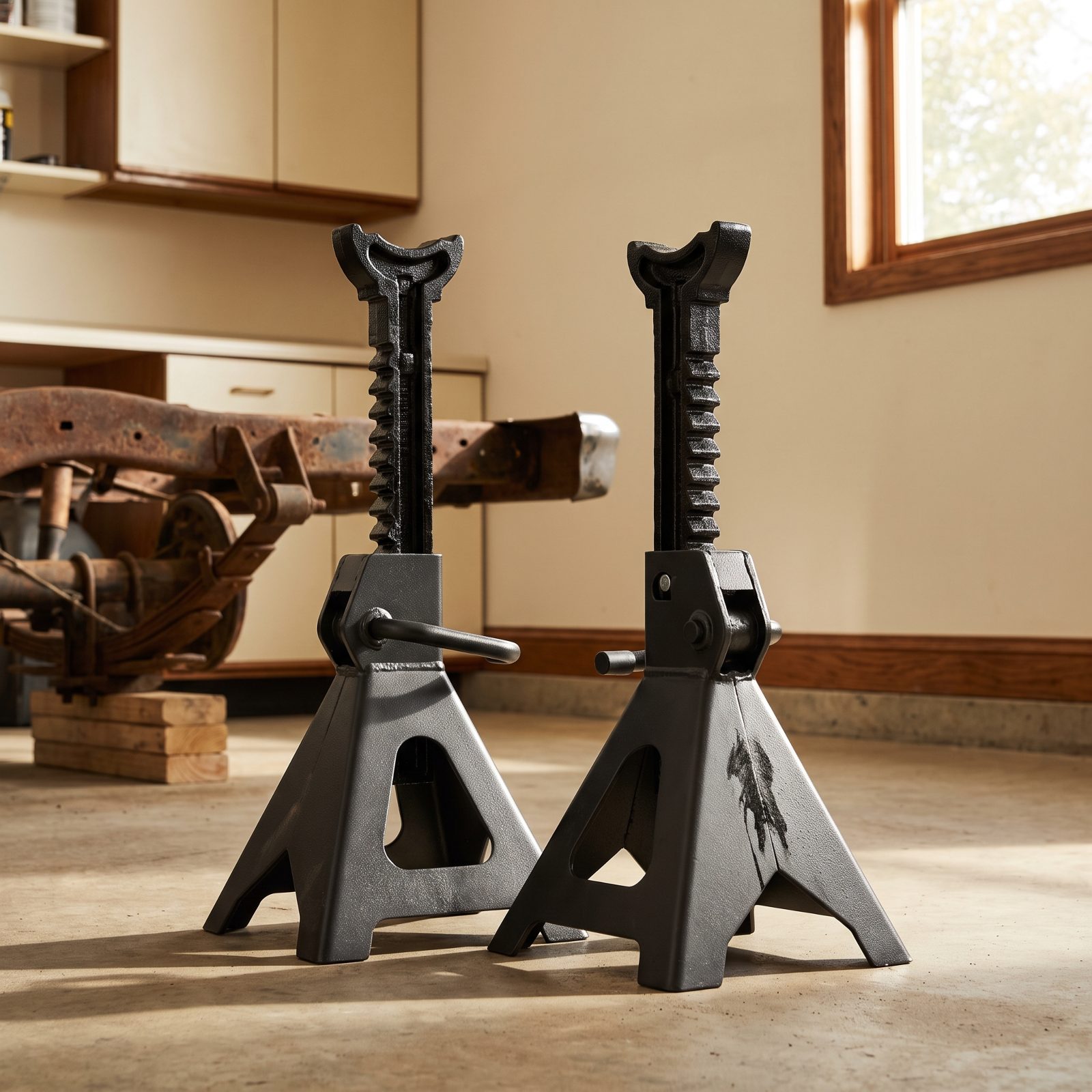
Buy them in pairs, set them to the same height, and place them under solid frame points — not the floor pan, not the exhaust, not whatever happens to be closest.
Jack stands are the one piece of garage equipment where we flat-out refuse to go cheap, and we say that as people who’ve bought plenty of cheap tools and lived to regret it. A set rated above your vehicle’s weight, with a positive locking pin instead of just a ratchet pawl, is the whole distance between a hobby and a hospital visit.
The jack puts it up. The stands keep it up. Learn which does which before you crawl under anything.
29. Rubber Wheel Chocks for the Wheels Still on the Ground
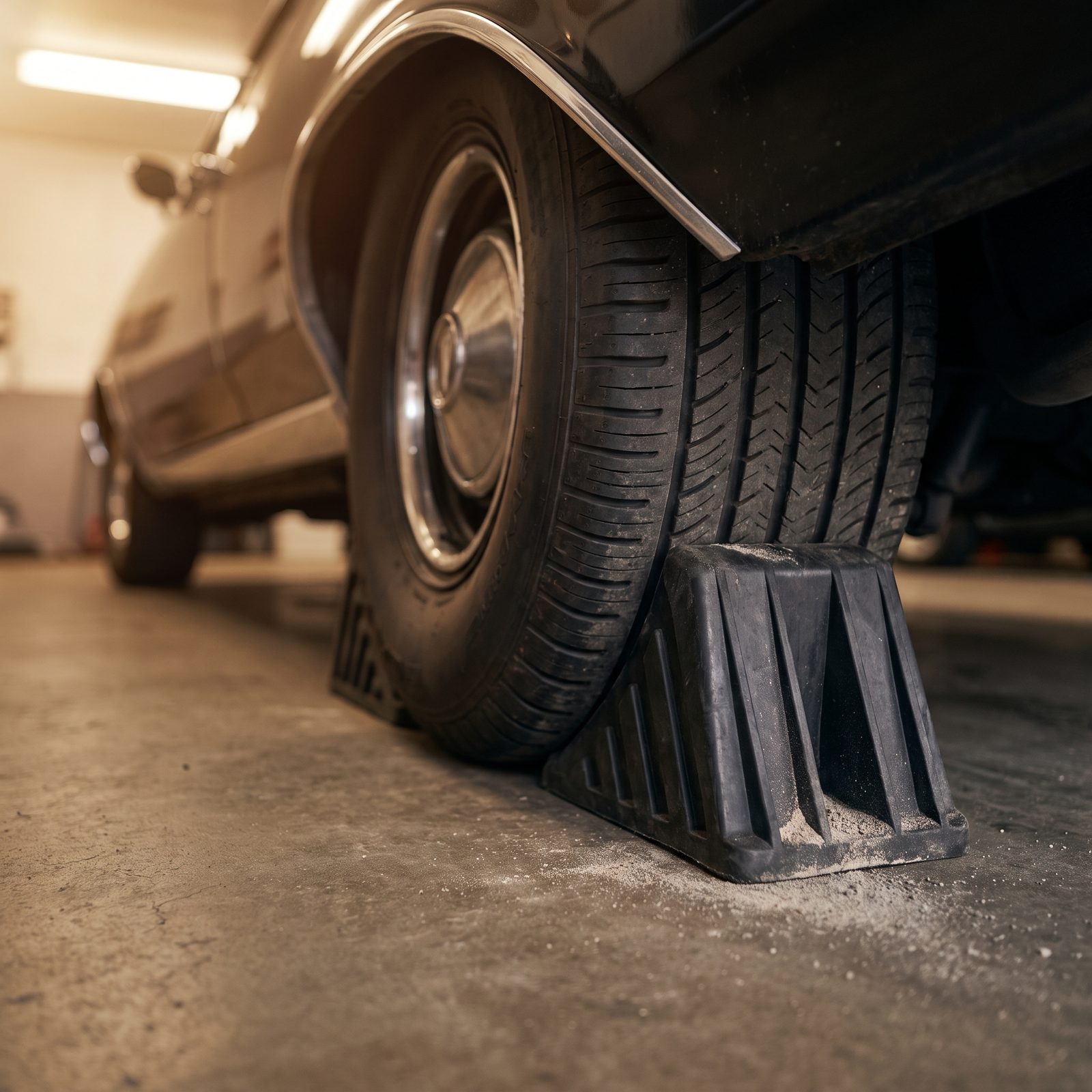
The least glamorous ten dollars you’ll spend in the garage. Also one of the smartest.
Lift one end of the car and the wheels at the other end become the only thing standing between a parked vehicle and a rolling one. So chock them — both sides of the tire if you’re on any kind of grade. A brick won’t do it. A scrap of 2×4 won’t either. Molded rubber wedges with a proper angled face bite the tread and stay put, and that’s what you’re paying for.
28. A Low-Profile Mechanic’s Creeper for the Long Jobs
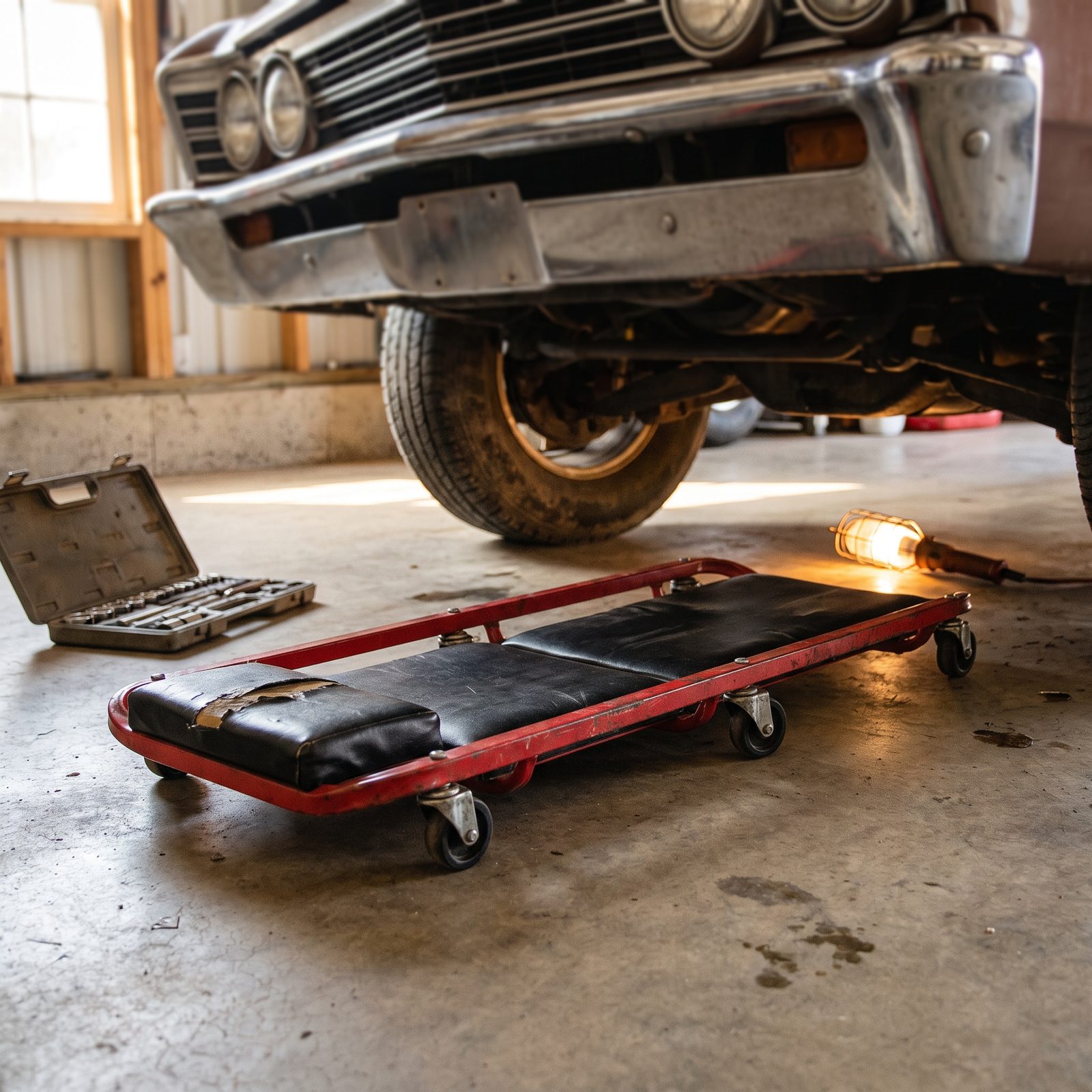
Your spine will thank you around the third hour under a car. Lying on cold concrete is fine for five minutes, but for a brake job it’s pure misery — and misery makes you rush, and rushing is how mistakes happen.
Get a low-profile model with real padding and smooth-rolling casters. The cheap plastic jobs catch on every seam in the floor and dump you sideways. A good one glides, holds your weight flat, and keeps your head off the concrete so you can actually see what you’re wrenching on.
27. A Complete Metric and SAE Socket Set in One Case
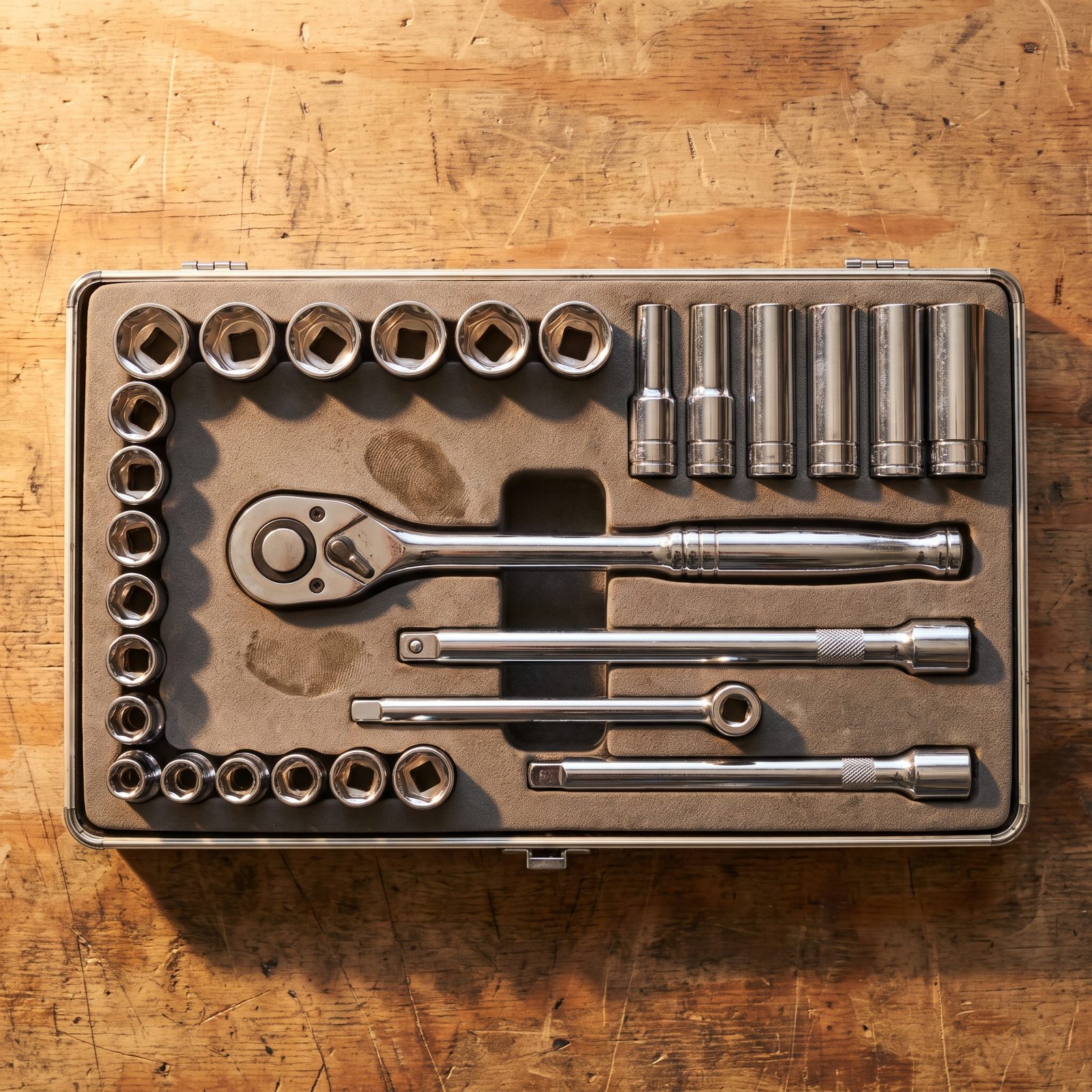
One set that covers both systems, or you’ll stop a job cold at the worst possible moment. American classics run SAE. Most of what came after runs metric. Plenty of garages have both parked side by side, so you want both ranges within arm’s reach.
A good set spans quarter-inch, three-eighths, and half-inch drives, with deep sockets and a handful of extensions. Six-point grips better than twelve-point on rounded or stubborn fasteners. Buy once from a brand with a lifetime warranty and you’ll be handing these down someday.
26. A Long-Handle Breaker Bar for Bolts That Fought You
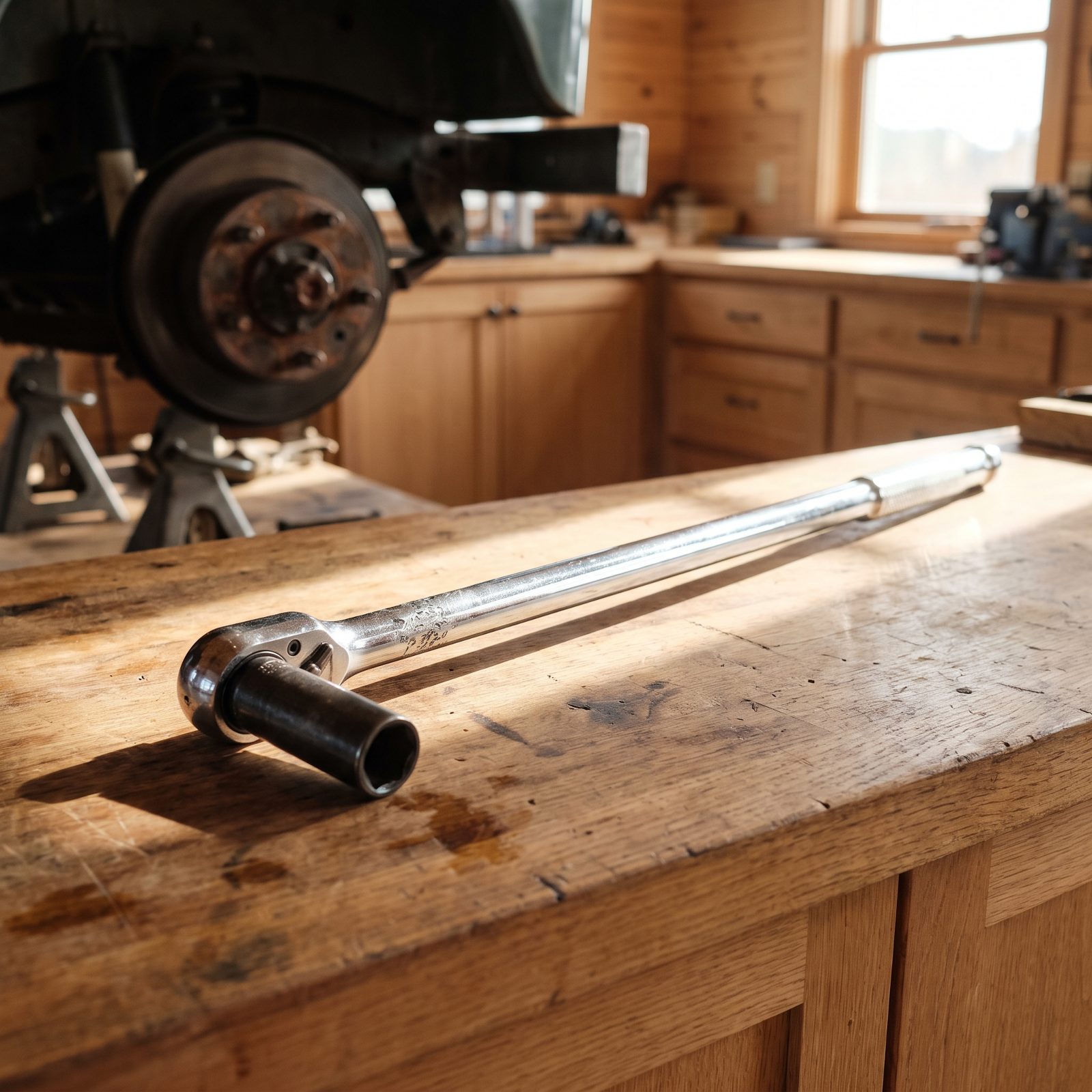
The first time a lug nut won’t budge and you grab your ratchet, you’ll bend the ratchet before the bolt moves. Those geared mechanisms inside hate heavy torque.
A breaker bar is just a long solid handle with a pivoting head — no gears to strip. The length gives you leverage, and leverage is what cracks loose a nut that’s sat torqued and corroded for fifteen years. Buy a long one. The extra inches do the work your arms otherwise would.
25. A Calibrated Torque Wrench That Clicks When It’s Right
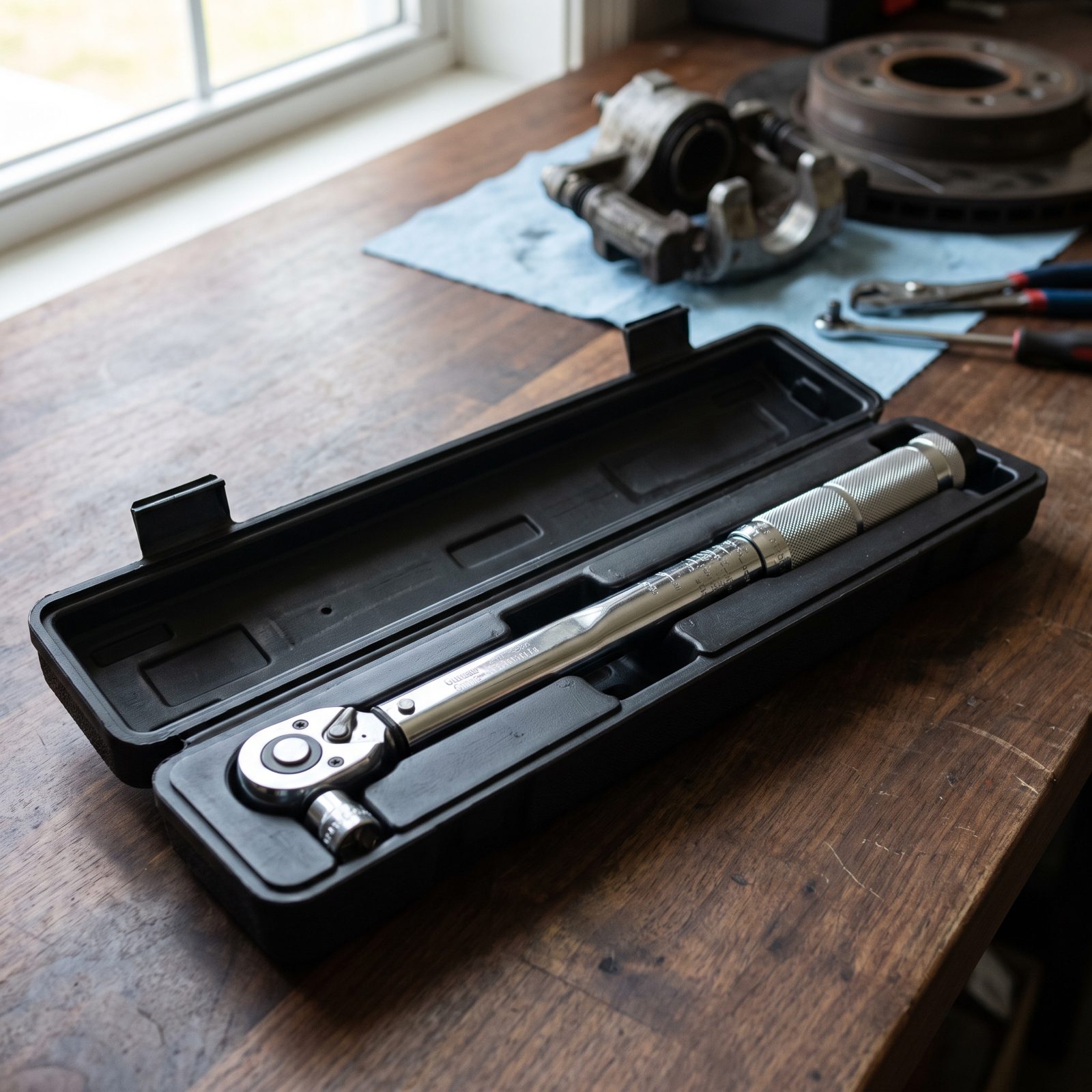
Guessing at torque is how wheels come loose and heads warp. Too tight snaps the bolt. Too loose and it backs out on the highway. The spec exists for a reason, and a torque wrench is how you hit it.
A click-type is plenty for home use — it clicks the moment you reach the set value. And here’s the part nobody tells you: back the setting down to its lowest number when you’re done. Leave that spring loaded under tension and it throws off the calibration over time.
24. A Set of Combination Wrenches for Where the Socket Won’t Reach
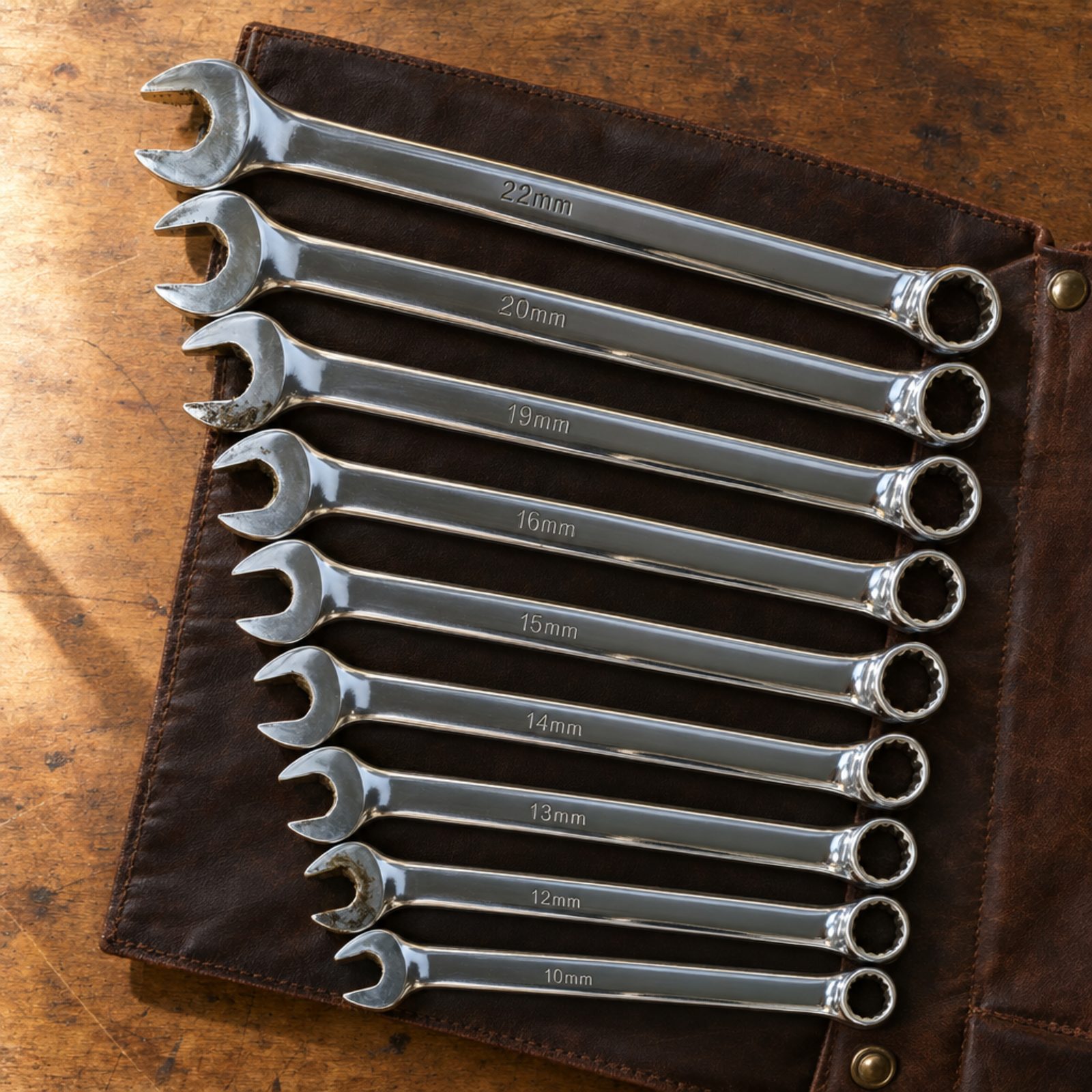
Sockets are faster, but they can’t get everywhere. There’s always some nut tucked behind a bracket where only a flat wrench fits.
Combination wrenches hand you an open end for speed and a box end for grip, same size on both. The box end wraps all six faces and won’t round off a tight fastener the way an open end will. Get a set covering the common small and mid sizes in both metric and SAE, and keep them somewhere you can grab the right one without digging through a drawer.
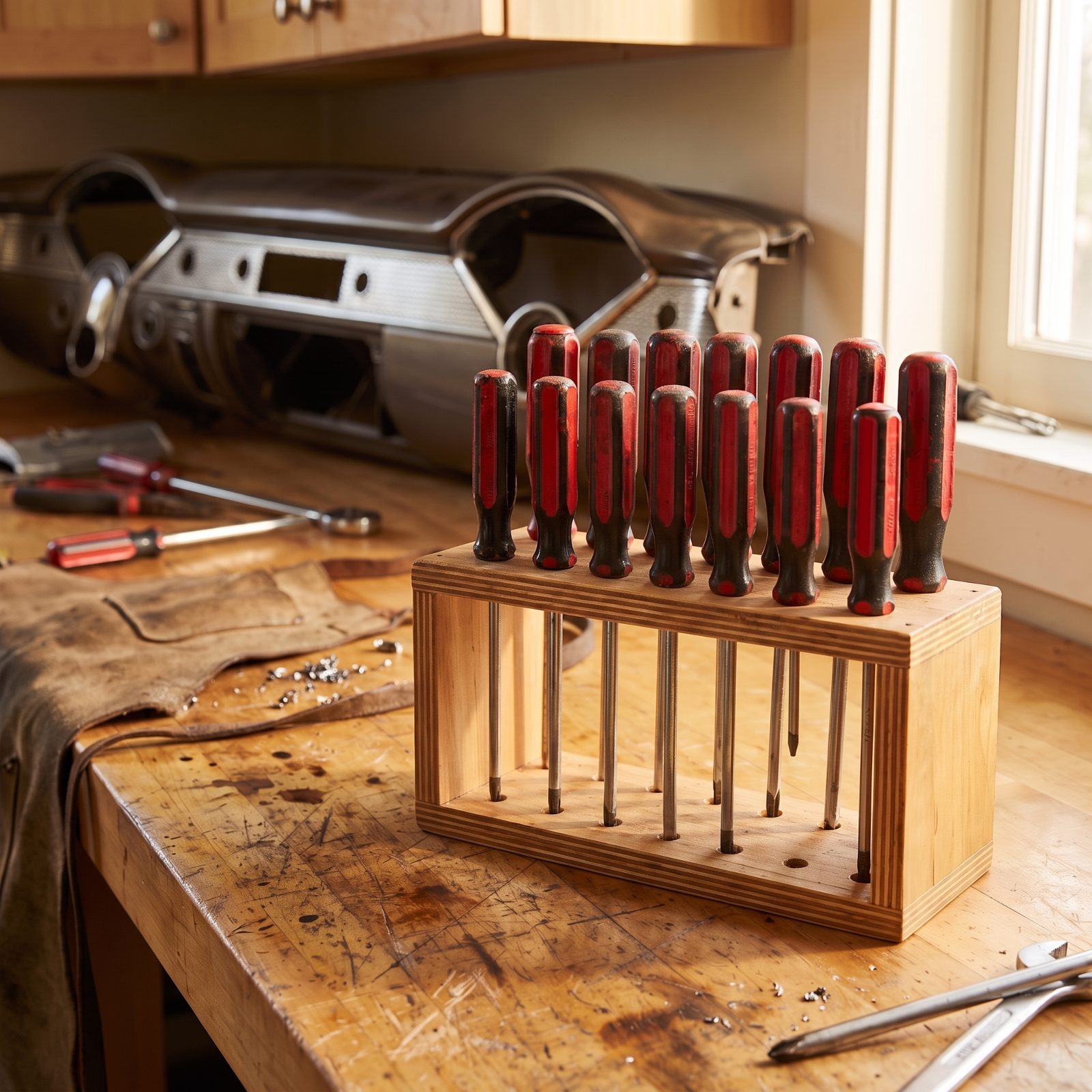
23. A Proper Screwdriver Set That Doesn’t Strip Every Screw
Would you like to save this?
The dollar-store screwdriver is a screw-stripping machine. Soft tip, slightly undersized, and it cams right out the instant you lean on it.
A good set matches the tip exactly to the screw head: Phillips, flathead, and more and more Torx for anything built in the last few decades. You want hardened tips, grippy handles, and a few stubby ones for tight spots. A magnetic tip saves you from fishing dropped screws out of the engine bay — and we’ve fished enough of those to call it essential.
22. A Locking Pliers Set for the Jobs Nothing Else Can Hold
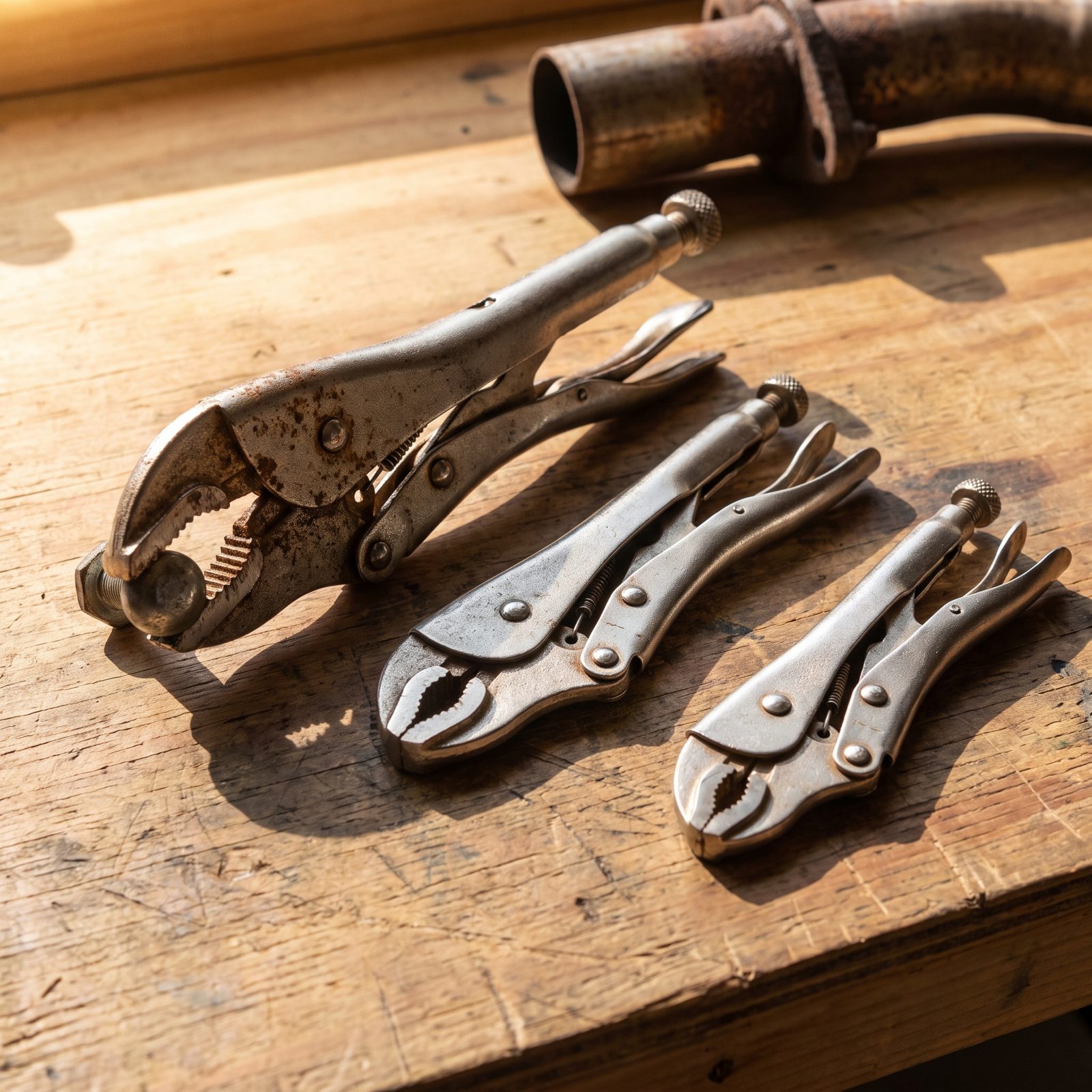
When a bolt head is rounded off, a nut is seized, or you just need a third hand that won’t let go, locking pliers earn their keep. They clamp down with a force your fingers can’t match, then pop free with a flick of the lever.
Get a few sizes — a small one for delicate work, a big one for the stubborn stuff. They’ll chew up any fastener you were hoping to reuse, so save them for the ones already headed to the trash. For everything else, they’re what rescues a job gone sideways. Keep a pair within reach and you’ll find a use before the week’s out.
21. A Dead-Blow Hammer That Won’t Mark Your Work
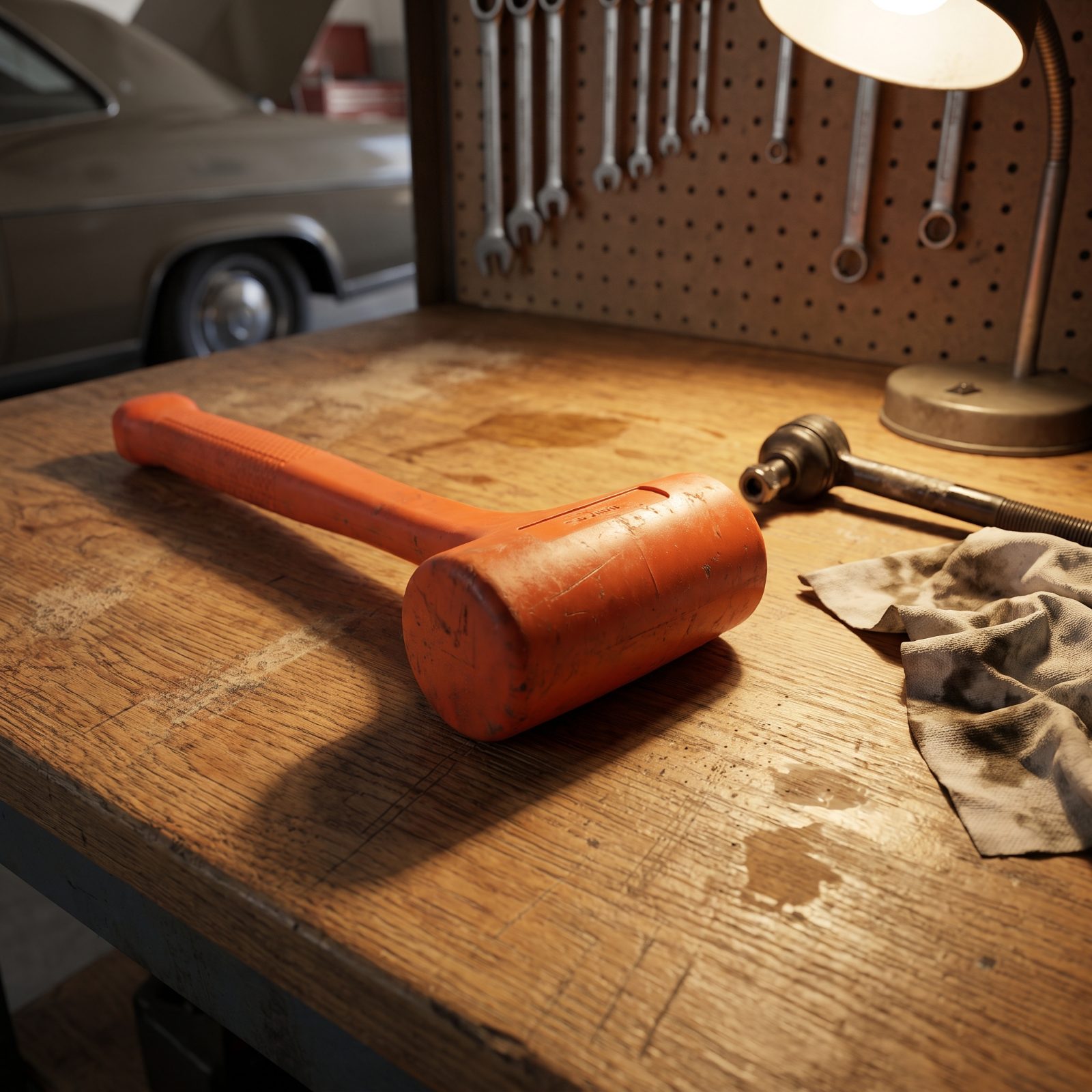
A regular hammer wants to bounce, and that bounce is where damage lives. A dead-blow hammer is filled with steel shot that slams forward on impact and kills the rebound, so all the force goes into the part instead of rattling back through your wrist and off into the paint.
You’ll reach for it seating ball joints, persuading a stuck brake drum, tapping a wheel hub free without peening the metal. The rubber coating lets you whack a finished surface and leave it unmarked. It’s the difference between convincing a part and abusing it.
20. An Impact Wrench Paired With Impact-Rated Sockets
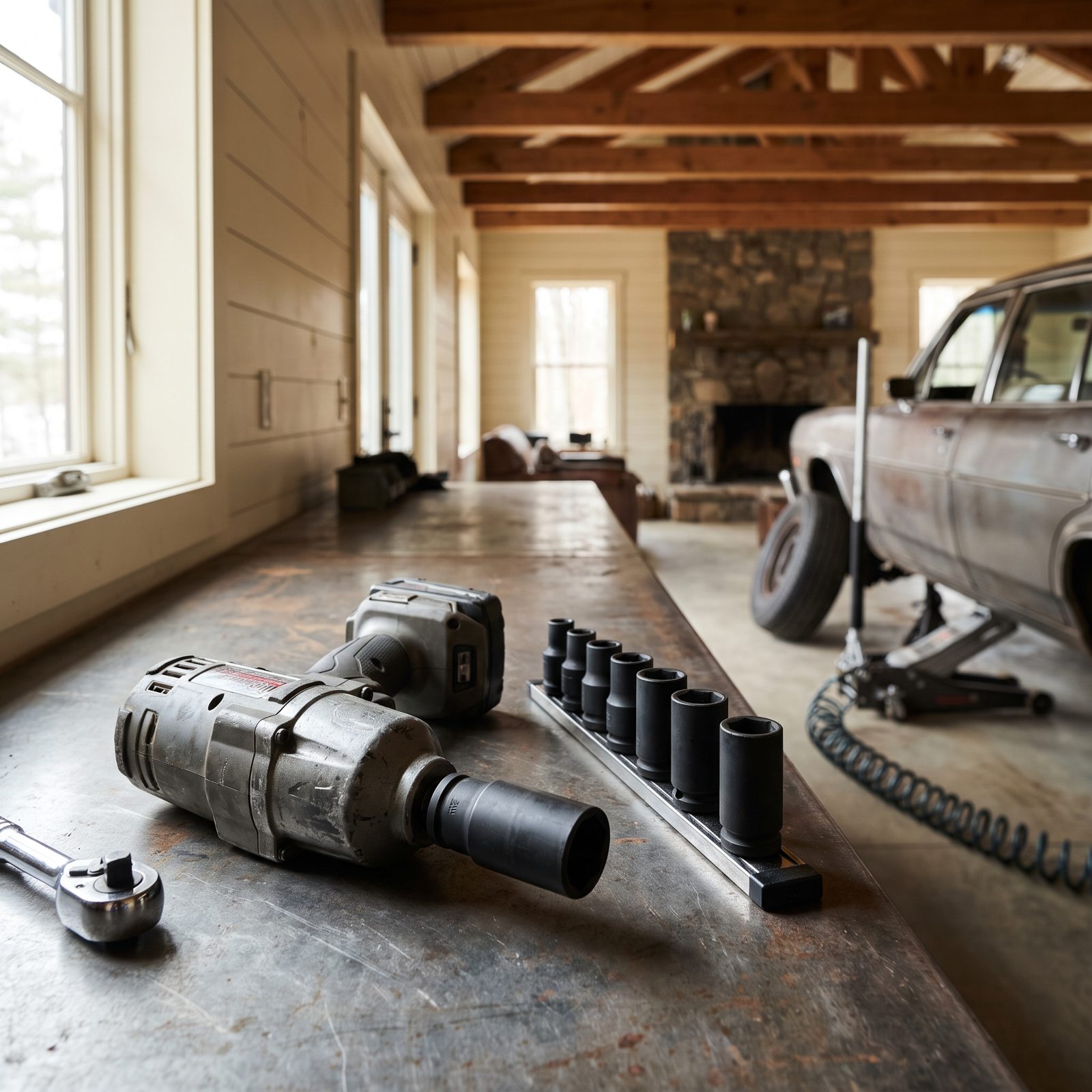
Here’s the rule nobody tells you until it’s too late: never put a chrome socket on an impact gun. Chrome is hard and brittle. Spin it at full torque and it can shatter, throwing shrapnel across the garage. Impact sockets are made of softer, thicker chromoly that soaks up the hammering instead of exploding.
With the right sockets, an impact wrench changes your whole relationship with lug nuts, crank bolts, and anything some shop gorilla torqued down last spring. The tire rotation that used to cost you a sweaty forty minutes now takes five. A cordless brushless model is plenty for home use and skips the air compressor entirely.
19. A Bench Vise Bolted Down Like You Mean It
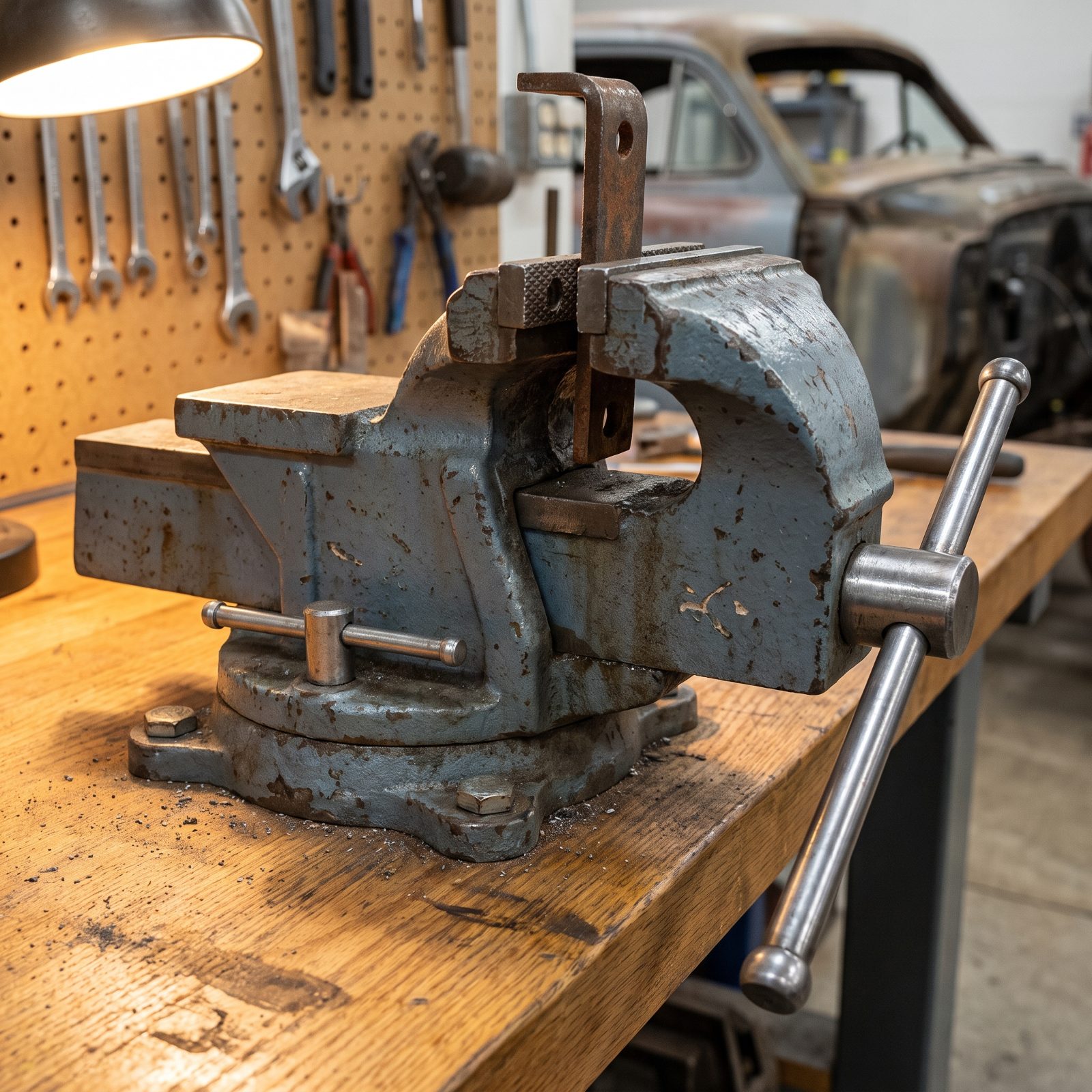
A vise is the third hand you’ve been wishing for every time a part needed holding while both of yours were busy. Pressing bushings, cutting threads, bending brackets, holding a stubborn fitting steady while you break it loose — it does the gripping so you can do the work.
Buy by weight. A four-inch cast-iron vise that tips the scale around thirty-odd pounds will outlive you. The lightweight ones flex and skip across the bench under load, which is worse than having none at all.
18. A Rolling Tool Chest That Follows You Across the Floor
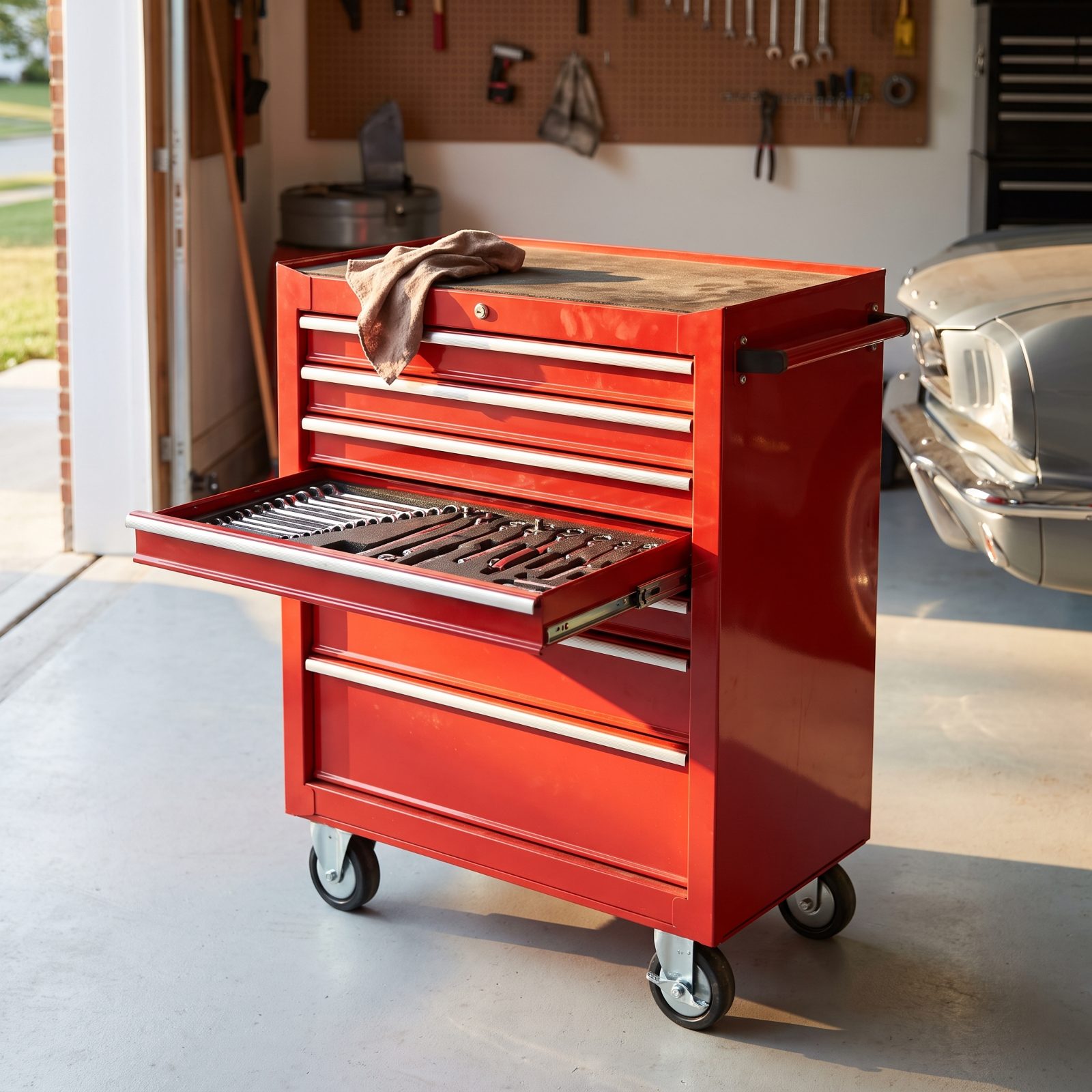
The tool you can’t find might as well not exist. A rolling chest solves the real headache of garage life, which isn’t owning tools — it’s finding them before you lose your temper.
Drawers on ball-bearing slides, one job per drawer, and casters that roll it right up to the fender where you’re working. No more forty trips back to the pegboard with greasy hands.
Don’t overbuy on day one. A mid-size chest you keep organized beats a giant one you let turn into a scrap heap. The organizing is the actual skill. The box just holds the result.
17. A Magnetic Parts Tray for the Bolts You’d Otherwise Lose
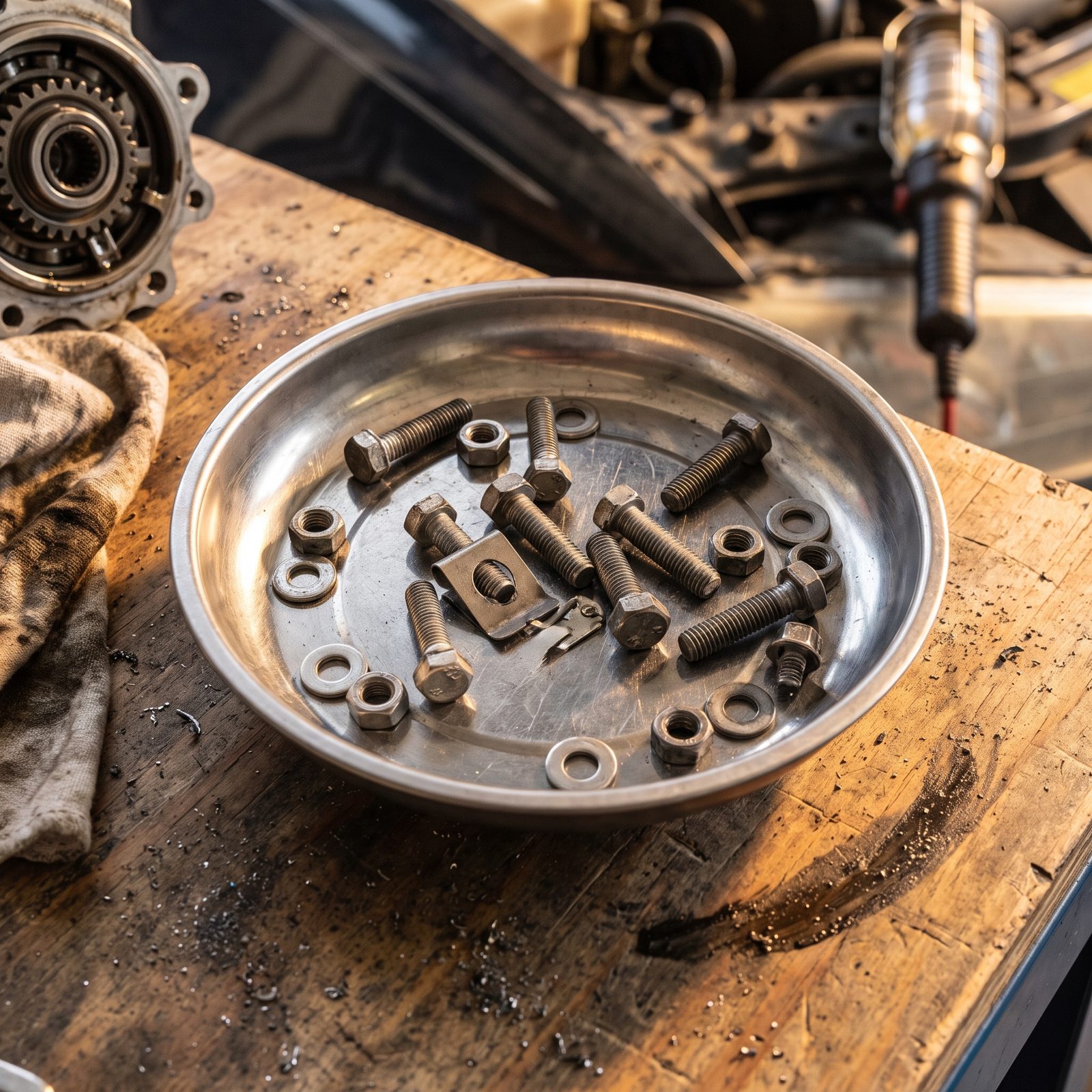
Every bolt you drop while leaning over a fender is gone. It finds the one crack in the garage floor, every single time. A magnetic tray ends that particular grief.
Drop fasteners in as you remove them and they stick. Tip the tray, bump the bench, catch it with your elbow — nothing scatters. When you reassemble, everything’s right there in the order you took it off. Cheap insurance against the single most maddening five minutes in any repair.
16. A Magnetic Pickup Tool for the Bolt That Fell Where You Can’t Reach
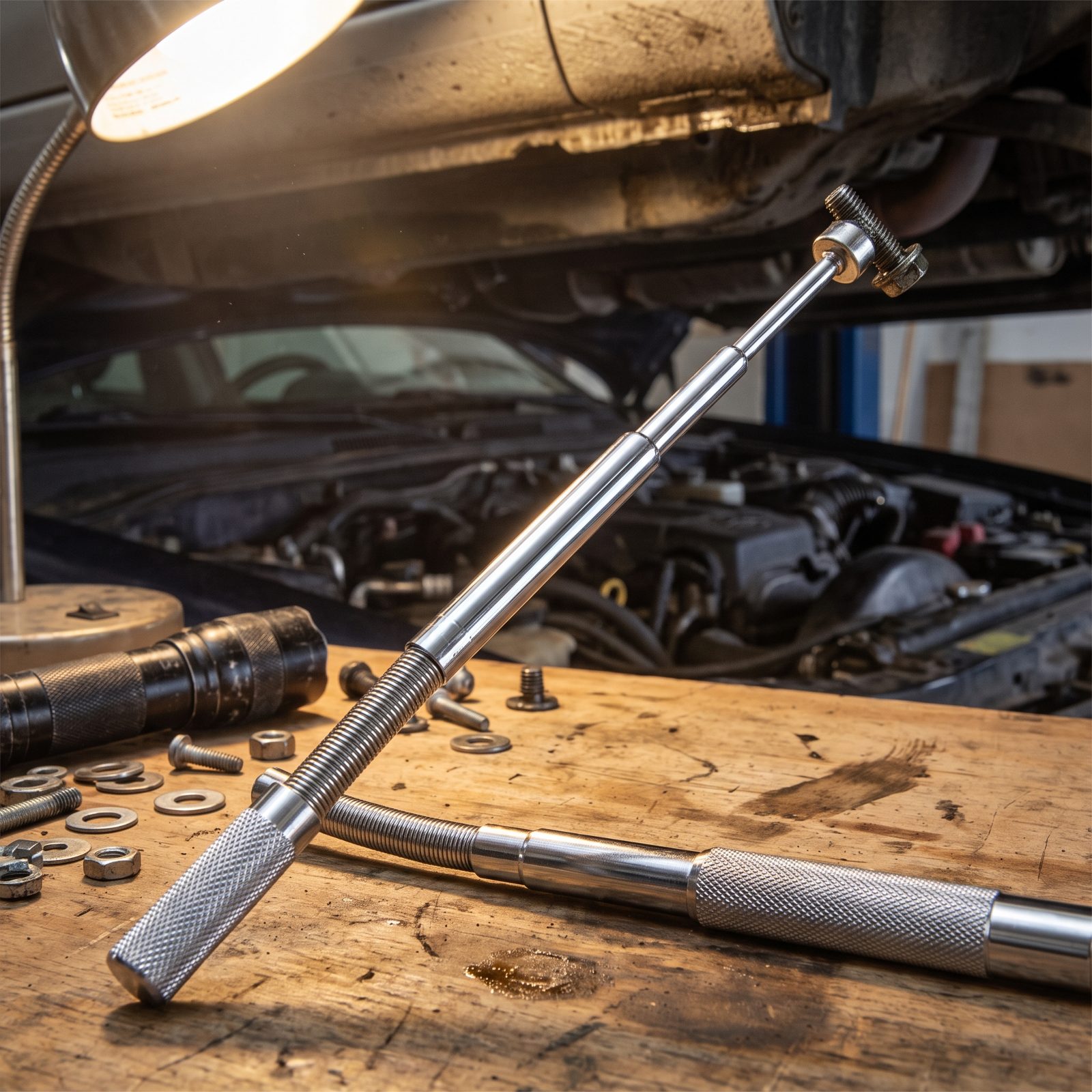
You will drop something into the engine bay. Not if. When. And it’ll land in the one spot your fingers can’t go and your eyes can barely see.
A telescoping magnetic pickup collapses to pocket size and extends two feet or more, with a flexible head that bends around obstacles. Fish out the lost bolt, grab a dropped socket off the floor beneath the car, retrieve the washer that rolled behind the manifold.
15. A Rechargeable Work Light That Puts the Beam Where You Are
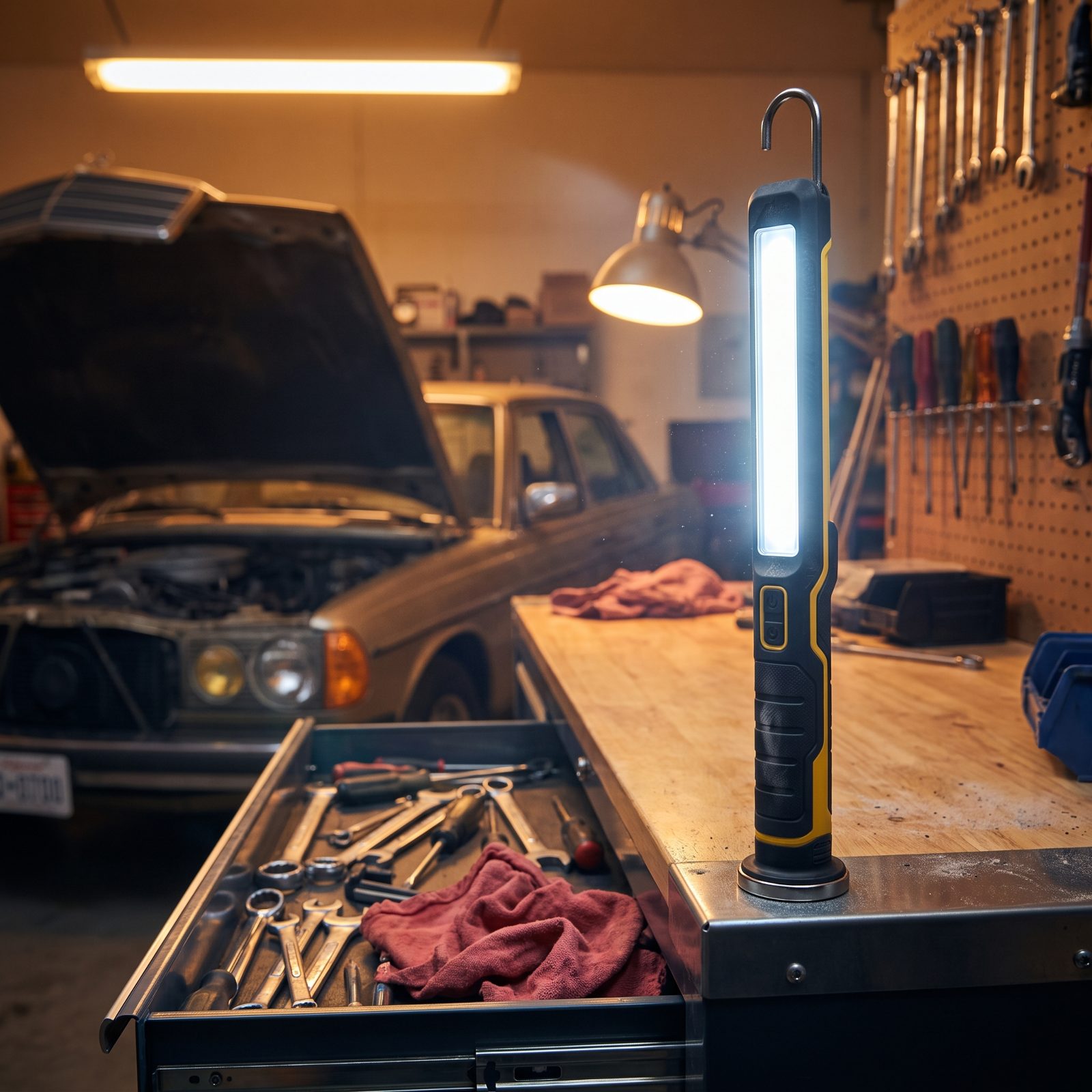
The overhead bulb in most garages lights the ceiling and your memory of the part you’re working on. Everything important happens in shadow. A dedicated work light fixes that.
Modern LED models run cool, last for hours on a charge, and come with hooks and magnetic bases so you can stick one to the underside of the hood and keep both hands free. Cold white light shows you cracked hoses and corroded terminals the warm old shop bulb would hide.
Get one with a flood for the whole area and a focused tip for peering into tight spots. You’ll wonder how you ever worked by feel.
14. A Portable OBD-II Scanner to Read the Car’s Mind
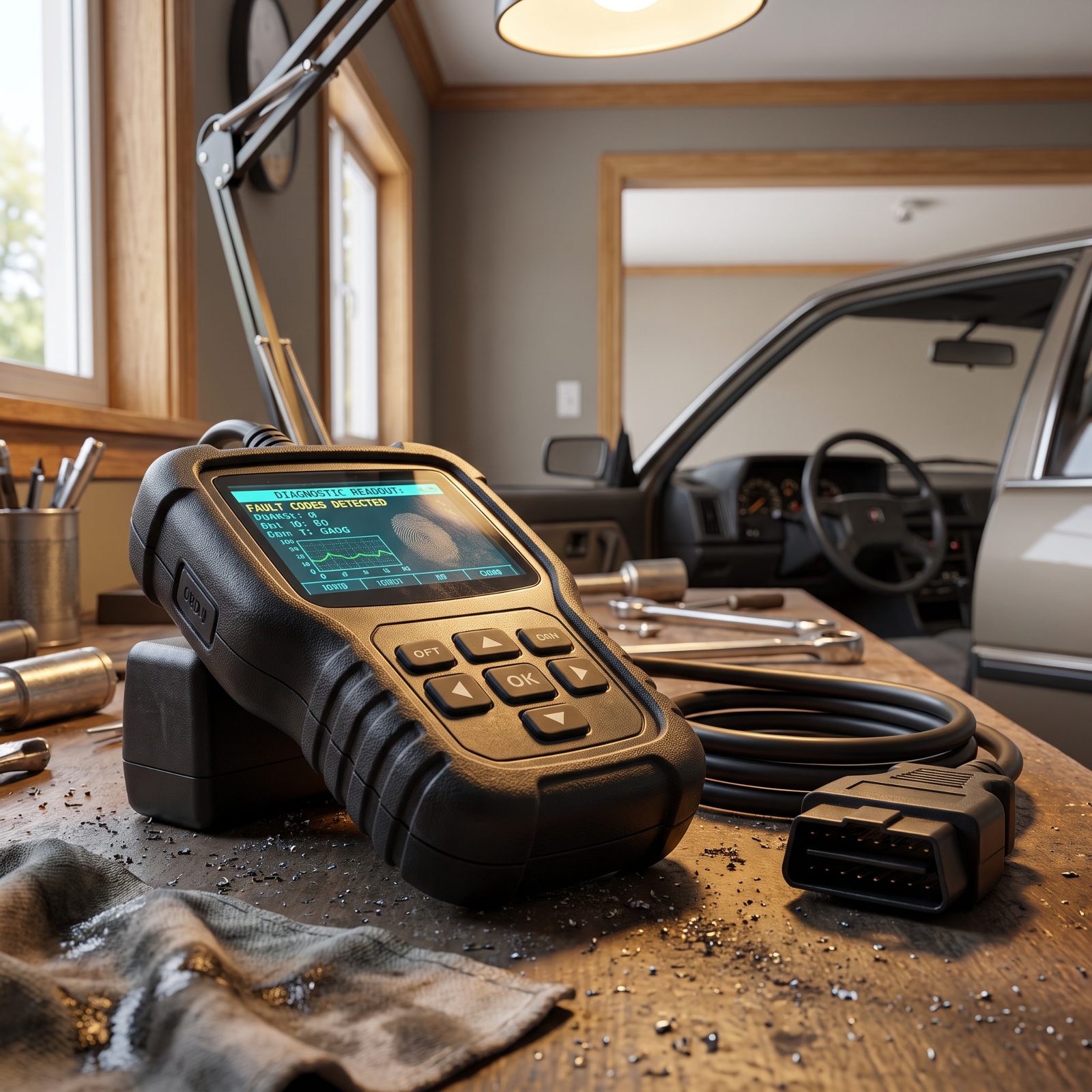
That check-engine light is not a mystery anymore. It’s a conversation, and an OBD-II scanner is how you join it. Plug into the port under the dash on any car built since the mid-nineties and read the exact trouble codes instead of guessing or paying a shop to tell you.
A basic reader pulls and clears codes for twenty bucks or so. Step up to a model with live data and you can watch fuel trims, sensor readings, and temperatures roll by while the engine runs. That’s the difference between replacing the wrong part three times and fixing it once.
13. A Digital Multimeter to Settle Electrical Arguments
Would you like to save this?
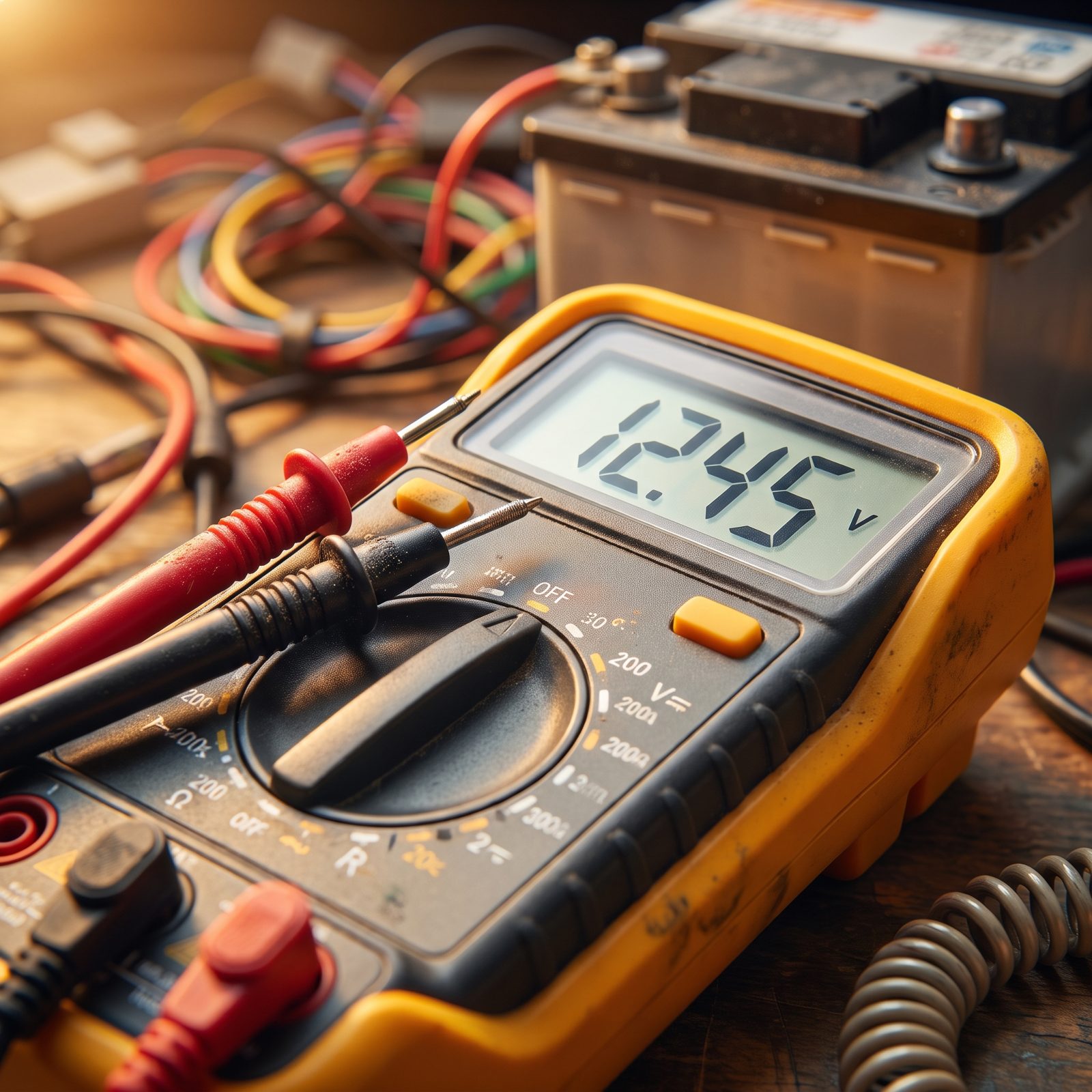
Electrical gremlins are the ones that make grown men sell perfectly good cars. A multimeter turns the invisible into numbers you can act on.
Is the battery actually charging? Is that fuse blown? Is the ground corroded, and why does the dash light flicker? A meter answers all of it by measuring voltage, resistance, and continuity, so you stop swapping parts on a hunch and start tracing the fault to its source.
You don’t need a lab-grade unit. A solid auto-ranging meter covers nearly everything a home garage throws at it. Learn to use the continuity beep and you’ll solve half your wiring problems in an afternoon.
12. A Battery Charger and Maintainer for the Car That Sits
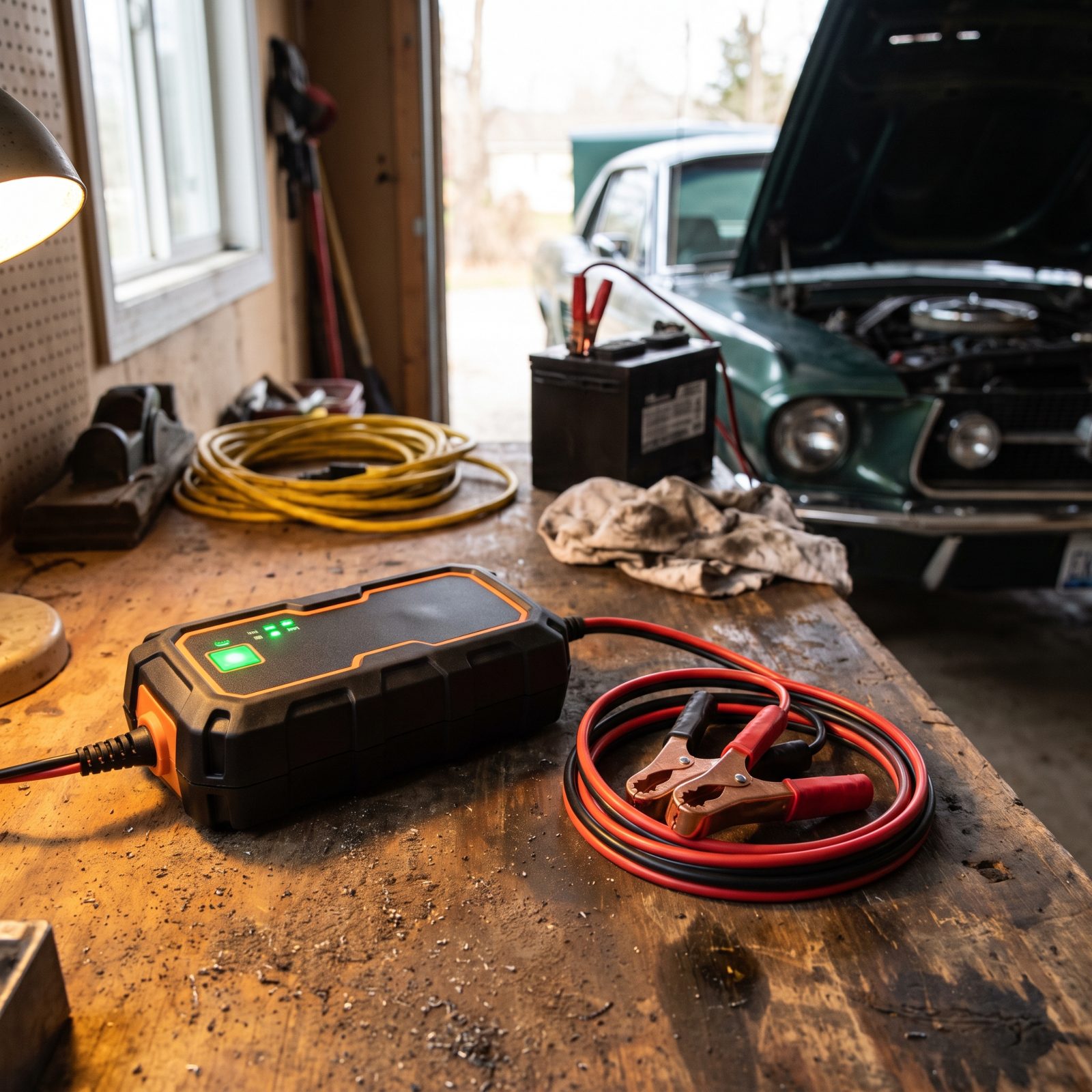
A car that sits is a car killing its own battery, slowly, while you’re not looking. The clock, the alarm, the memory in the computer all draw a trickle, and in a few weeks you’re staring at a dead one and reaching for jumper cables again.
A smart maintainer solves it. It tops the battery up and then backs off, holding it at full charge without cooking it. Leave it clipped to the weekend driver, the project car, the motorcycle that only sees daylight in July. Come spring, it fires on the first turn of the key.
11. A Lithium Jump Pack That Fits in the Glovebox
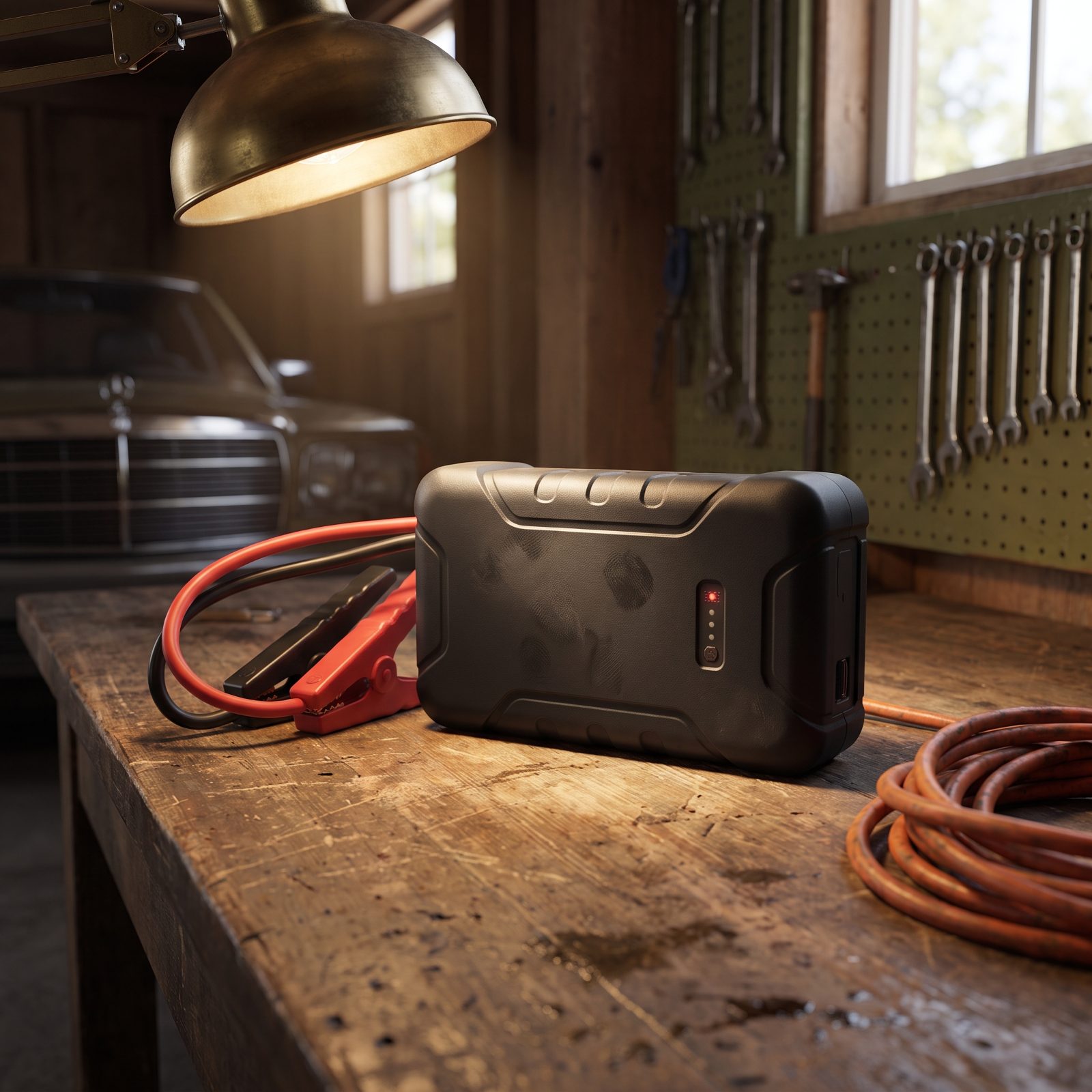
Jumper cables ask you to find a second car, flag down a stranger, and hope he knows which clamp goes where. A lithium jump pack asks for nothing. It lives in the glovebox, holds a charge for months, and starts a dead V8 off a battery the size of a paperback.
Buy one rated well above your engine size, because a pack that technically starts a four-cylinder will sulk on a cold morning. We kept cables in the trunk for years out of pure stubbornness, jumped exactly one car with them, then admitted the pack was better in every way.
10. A Tire-Pressure Gauge You Can Actually Read
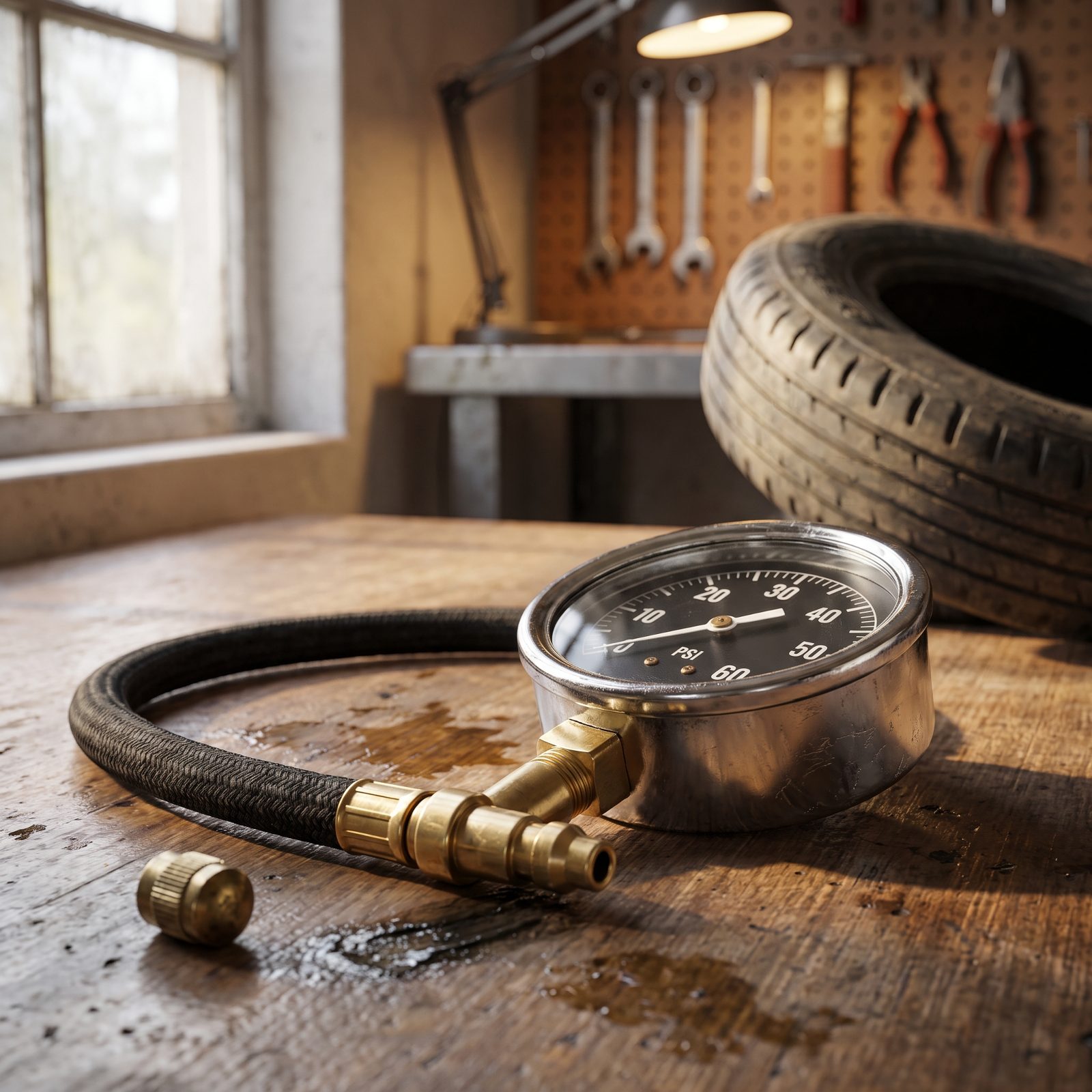
That pencil gauge rattling around your door pocket is wrong, and it’s been wrong for years. Stick types drift out of calibration and nobody notices, because nobody checks them against anything.
Get a dial gauge, or a decent digital one with a bleed valve so you can let a little air out without pulling the chuck off. Correct pressure is the cheapest handling and fuel upgrade on the car, and it’s free. You just have to actually look.
9. A Portable Air Compressor That Earns Its Corner
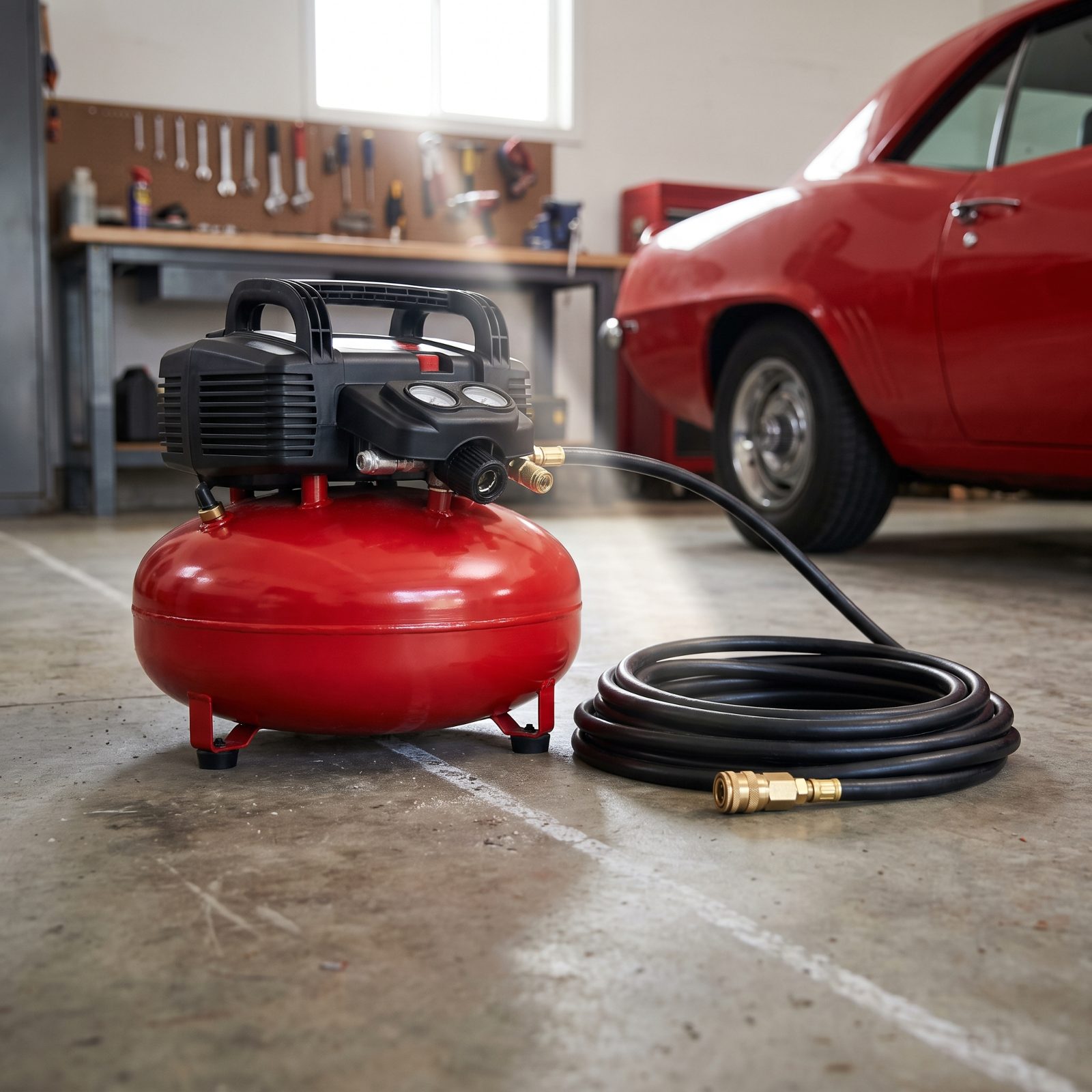
A small pancake compressor does more around a garage than almost anything else you’ll plug in. Run air tools, blow dust out of a drum brake, seat a tire bead, top off four tires in the time a plug-in inflator does one.
You don’t need a 60-gallon upright bolted to the wall. A portable tank that runs an impact wrench in short bursts covers most home jobs, and it moves when you need it to. Ours lives under the bench and comes out more weekends than it stays in.
8. A Tire Plug Kit for the Nail You Haven’t Found Yet
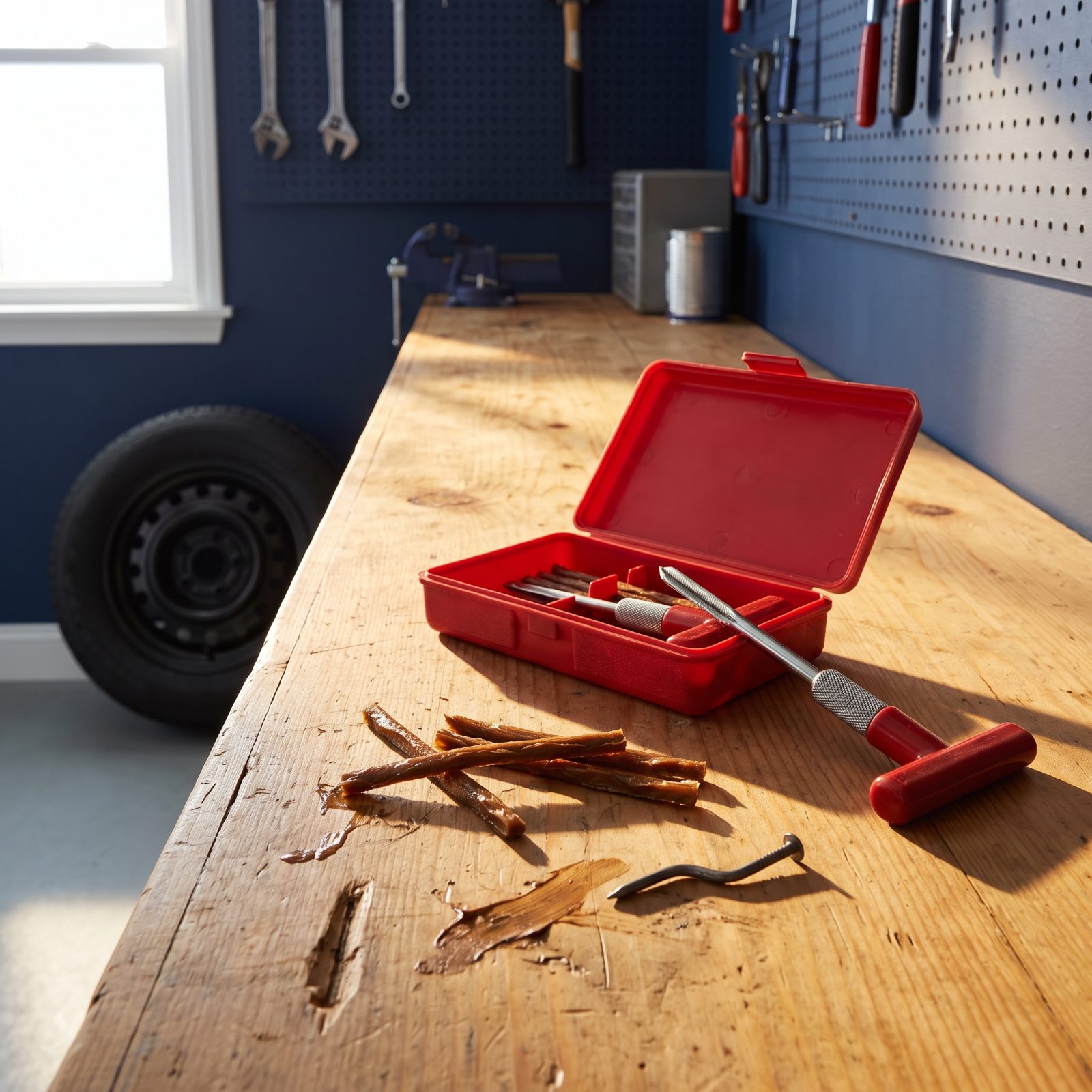
A screw in the tread doesn’t have to mean a tow truck and a wasted afternoon. A plug kit, a pair of pliers, and ten minutes gets most punctures sealed well enough to drive to a shop for a proper patch.
Keep the reamer and the insertion tool clean, and keep spare plugs around, because the rope strips dry out in the package faster than you’d think. A plug in the center of the tread is a fair repair. A plug in the sidewall is not, ever, and no amount of wishful thinking changes that.
7. A Drain Pan With a Sealed Spout That Doesn’t Betray You
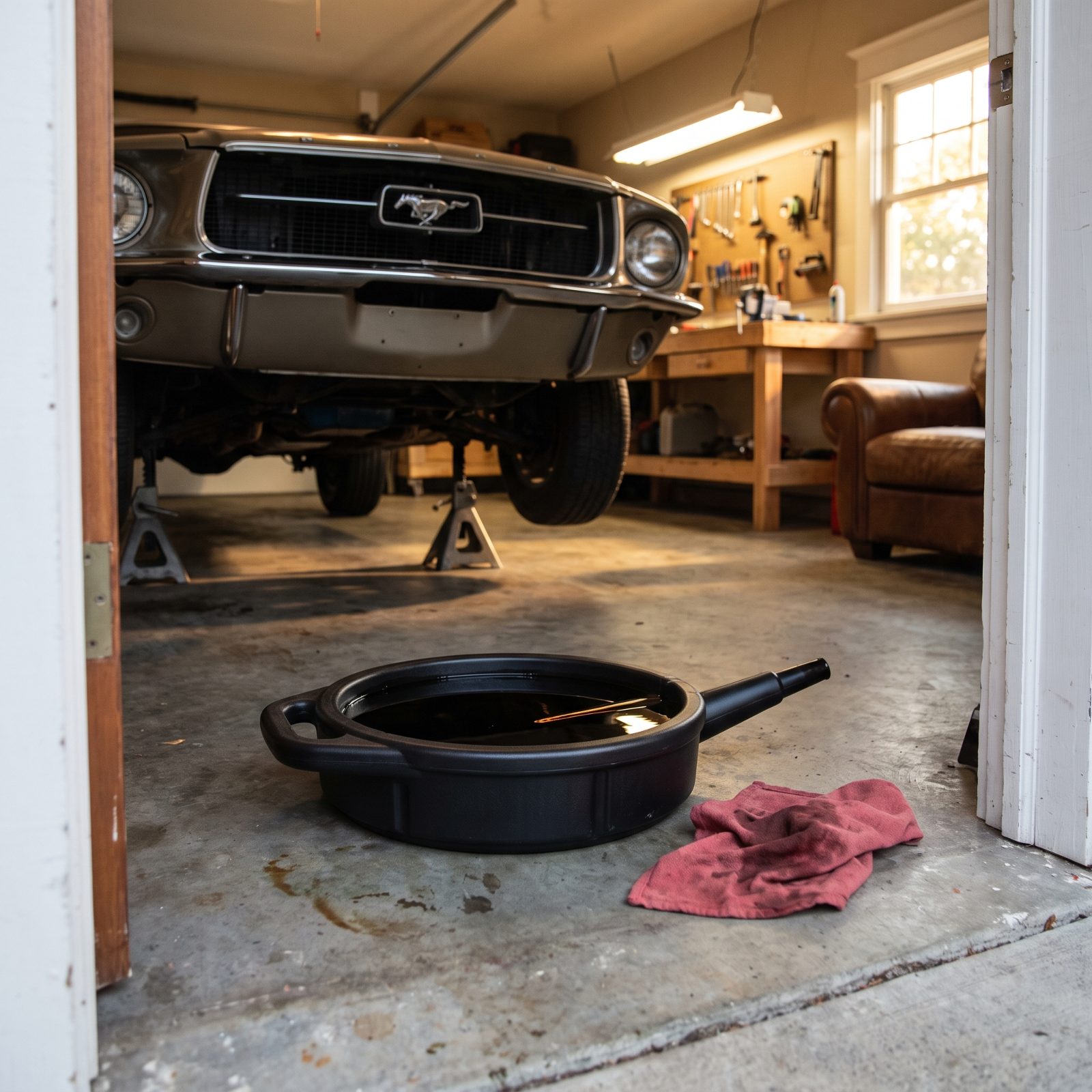
You’ve cleaned up the floor after an open tray tipped on the way to the recycling bin. Everyone has, once. You only do it once.
A flat drain pan with a screw-cap spout holds the old oil, seals it, and lets you carry it to the parts store without a trail of thirty-weight across the driveway. The low-profile shape slides under cars that don’t give you much room. It’s eight dollars of dignity.
6. A Wide-Mouth Fluid Funnel Set, One for Every Fluid
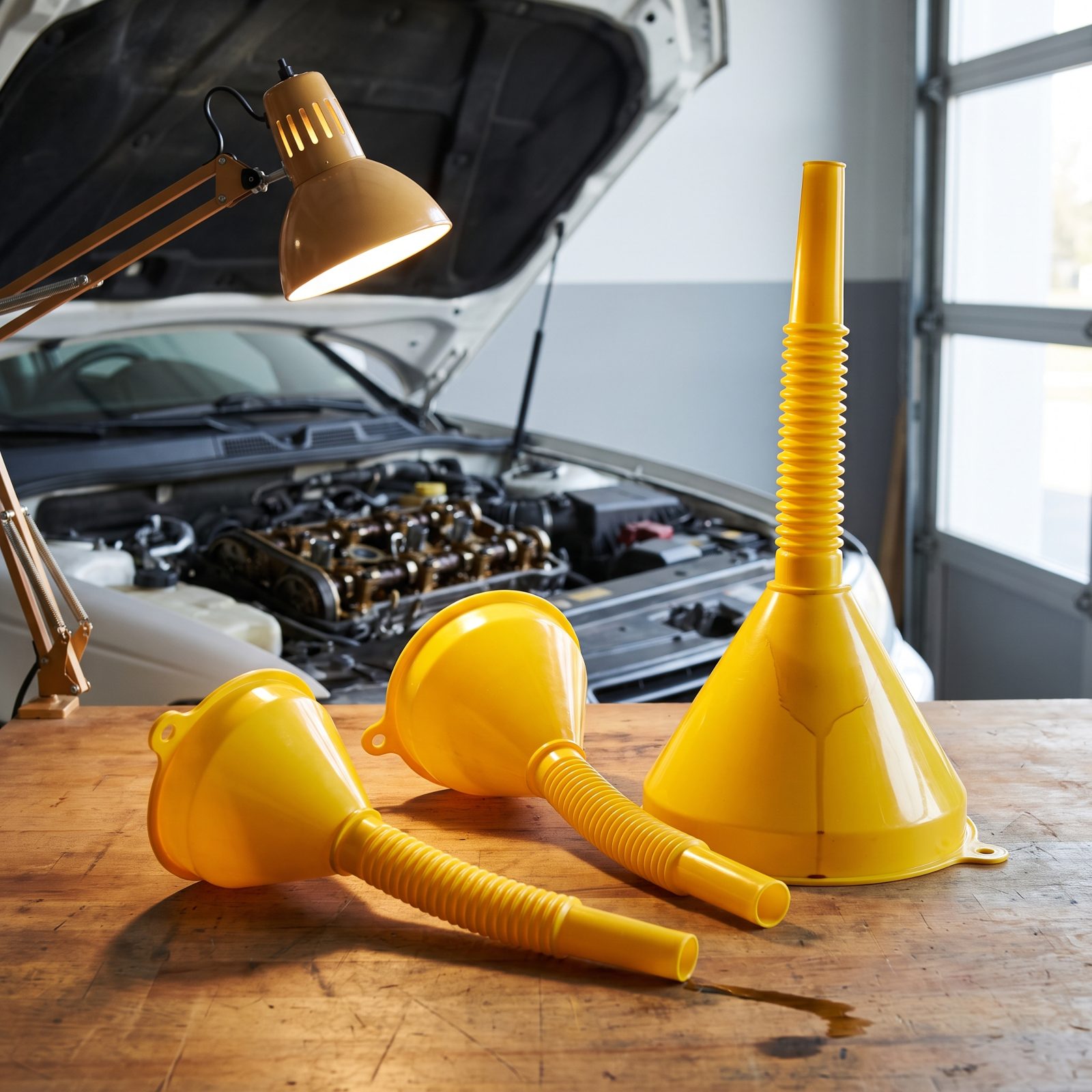
One funnel does not fit all, and the stain on your intake manifold is proof. A long flexible neck reaches the oil fill tucked behind the valve cover. A wide mouth handles coolant without spilling. A narrow one threads into the transmission dipstick tube.
Here’s the part nobody tells you: keep separate funnels for each fluid and label them. Pour coolant through a funnel that’s still got oil film in it and you’ve contaminated a system for the sake of not owning a second funnel. They cost less than a sandwich.
5. An Oil-Filter Wrench That Grips When the Filter Won’t Let Go
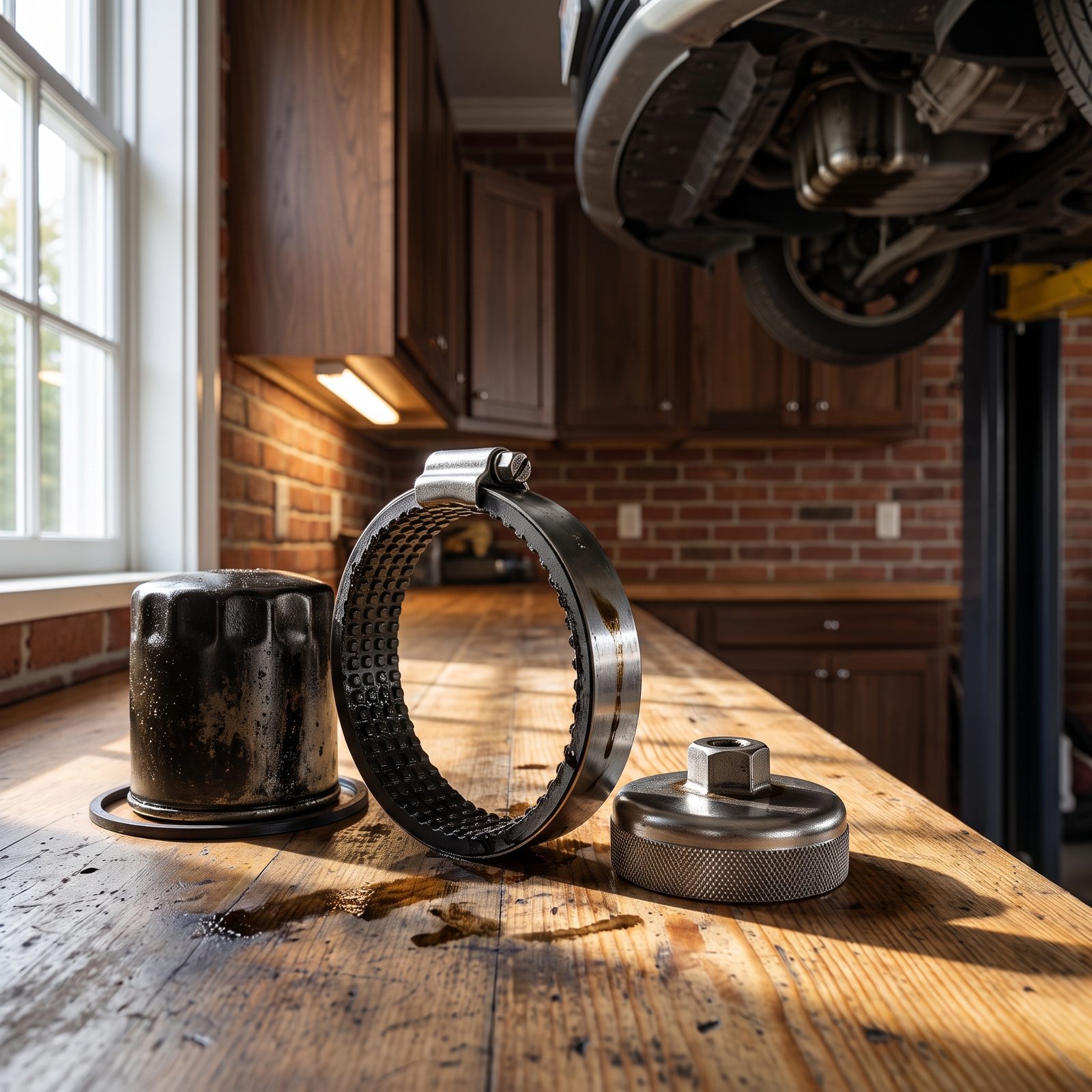
The last guy who changed your oil cranked that filter on like he was mad at it. Now it’s stuck, your hands are slick, and the engine’s hot.
A band wrench grips the whole filter body and bites harder the more you pull. A cup-style wrench that matches your filter size is cleaner, but you need the right one. Have both. And a pliers-type works in tight engine bays where nothing else fits. The right tool here is the difference between a ten-minute job and a stripped, gouged, cursing afternoon.
4. A Wet-Dry Shop Vacuum for the Mess You Make
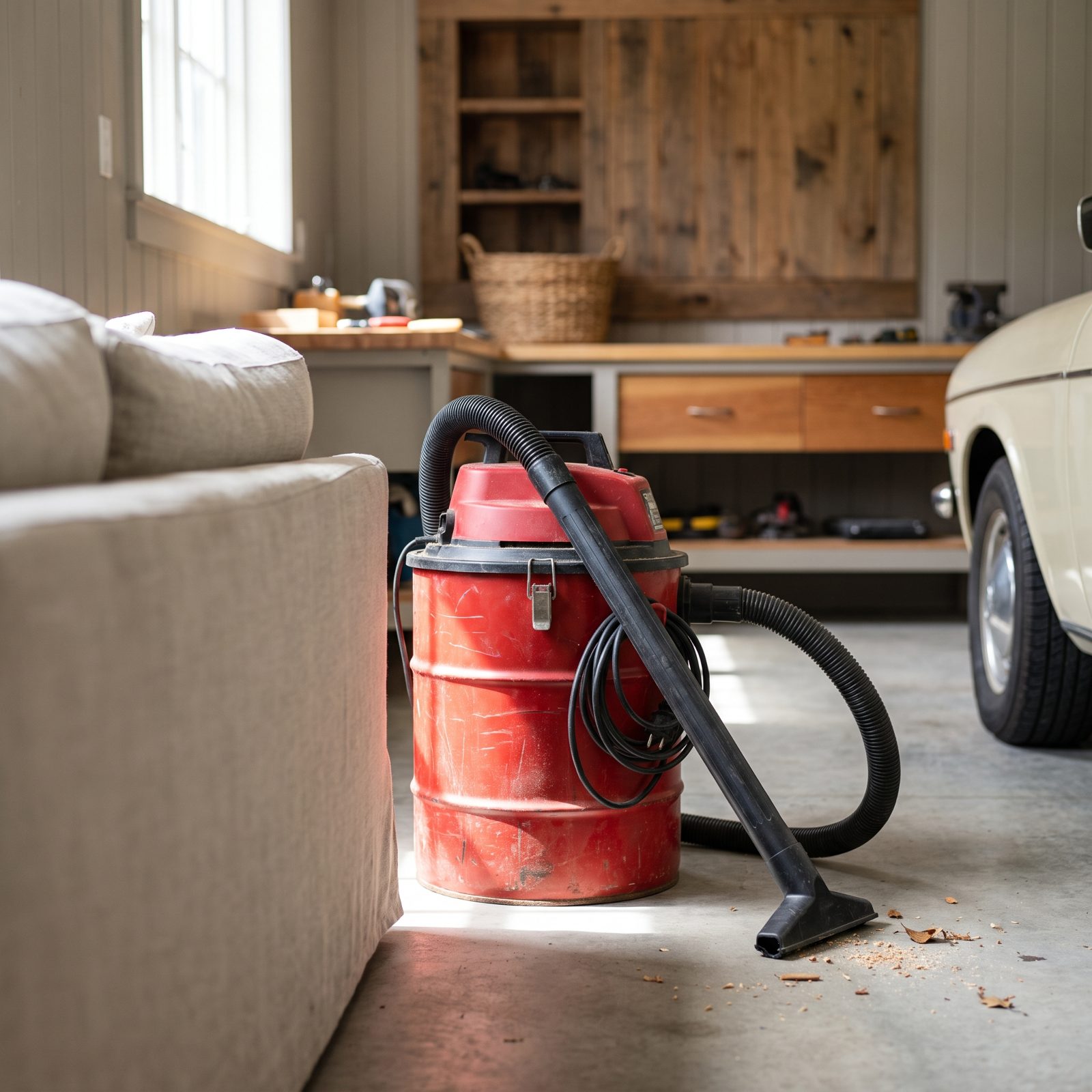
Sawdust, dropped screws, the half cup of coolant that missed the pan, the leaves blown into the garage every October. A shop vac handles all of it, wet or dry, which a household vacuum will die trying to do.
Get one with real suction and a tank you won’t fill every ten minutes. And the attachments matter more than people think. A crevice tool finds the washer that rolled under the bench, and nothing else will.
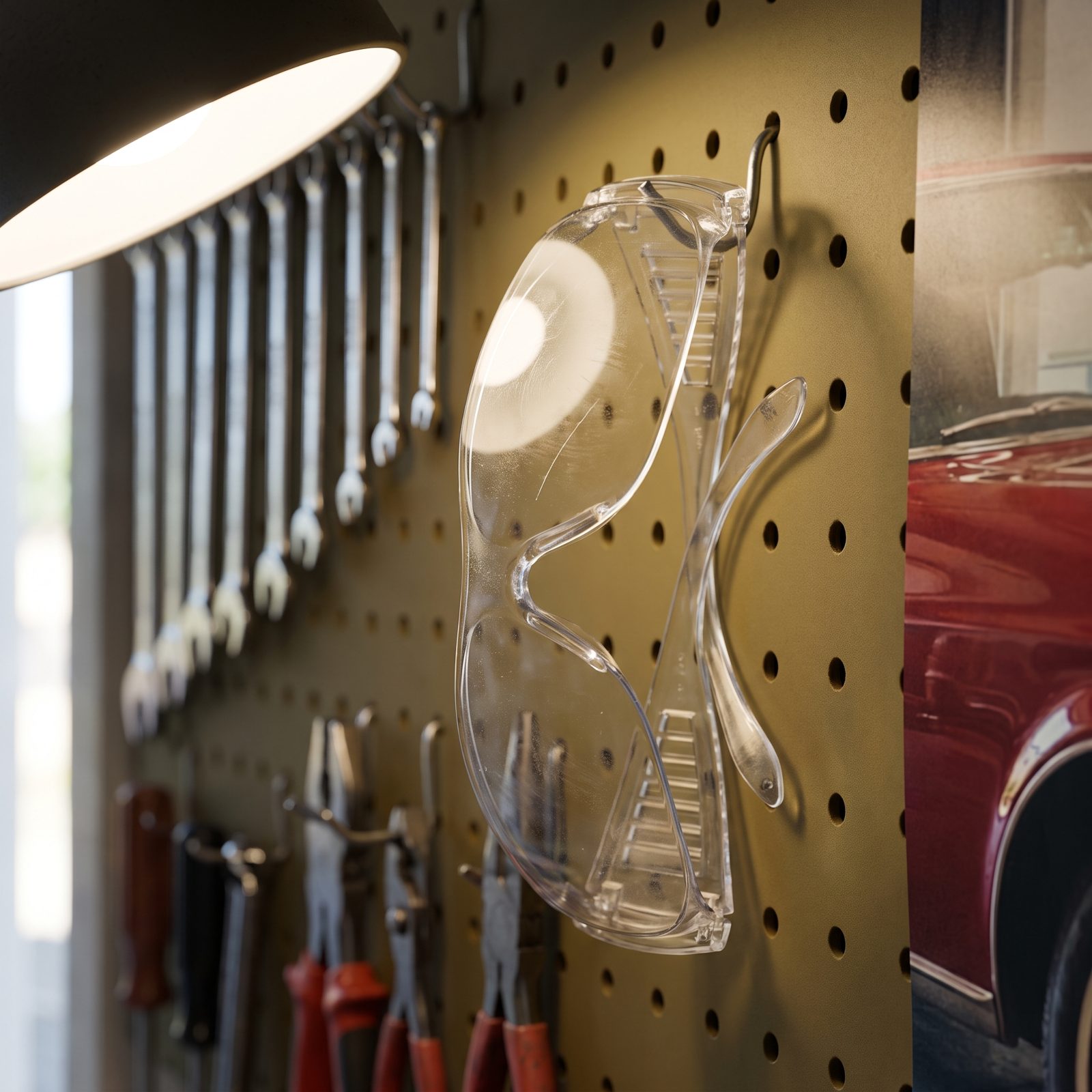
3. Safety Glasses You’ll Actually Keep On
Would you like to save this?
Safety glasses hanging on the pegboard do nothing. The ones on your face when the brake spring lets go do everything. There’s a reason every mechanic who’s been at it long enough wears them without thinking.
Grinding, cutting, blowing out a drum, working under a car where rust and dirt rain straight down onto your eyes. One flake of metal and you’re at urgent care wishing you’d spent the four dollars. Buy a few pairs. Keep one at the bench, one by the grinder. Cheapest insurance in the building.
2. A First-Aid Kit Stocked Before You Need It
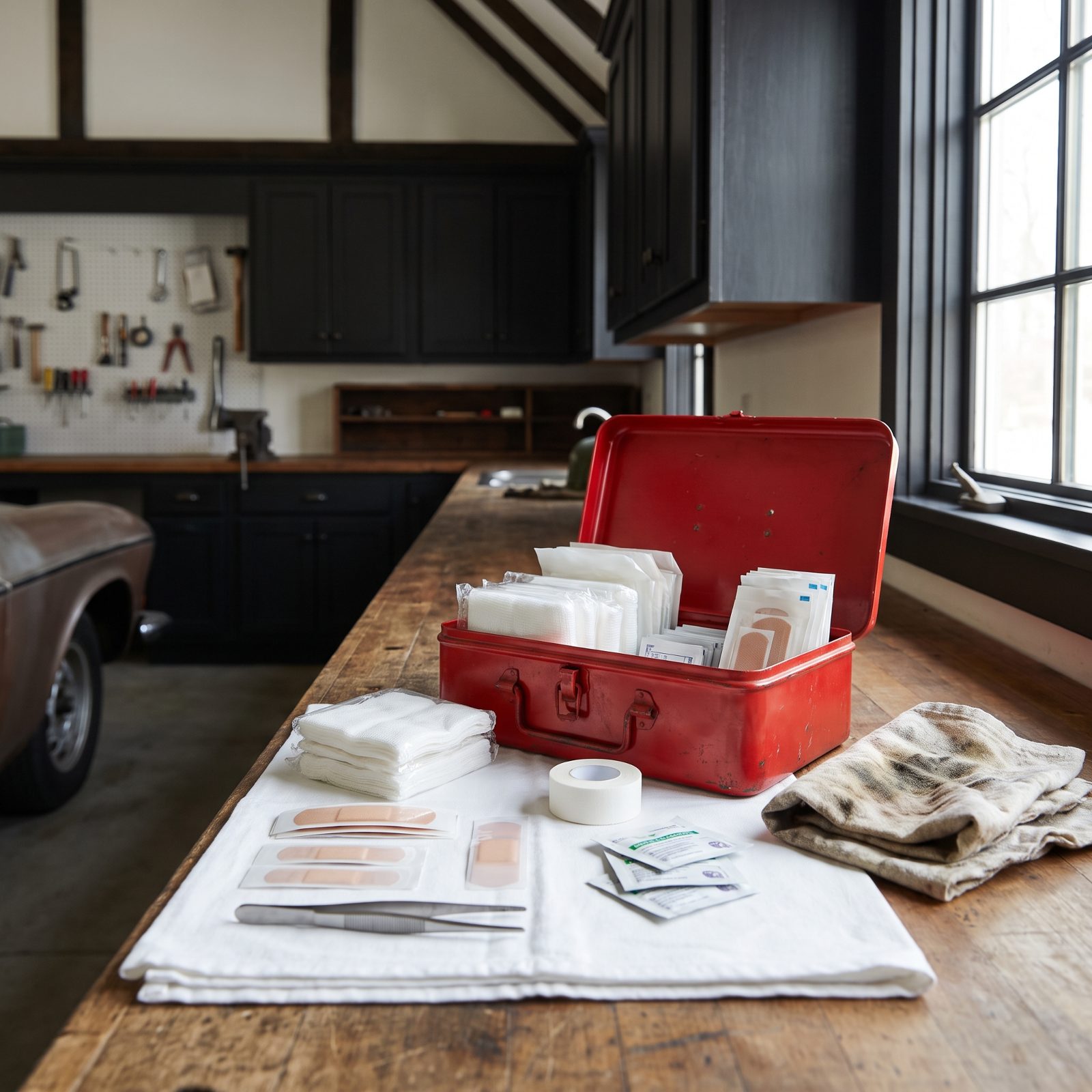
Knuckles and sheet metal have a bad relationship. Sooner or later a wrench slips and you’re bleeding on the valve cover, and the moment you’re bleeding is the worst possible time to go hunting for a bandage.
Mount a real kit on the wall where you can find it one-handed. Stock it for garage injuries, not paper cuts: butterfly closures, larger gauze, antiseptic, tweezers for the sliver of metal in your palm, burn gel for the exhaust you forgot was hot. Check it twice a year and replace what you’ve used.
1. A Fire Extinguisher Rated for Garage Use
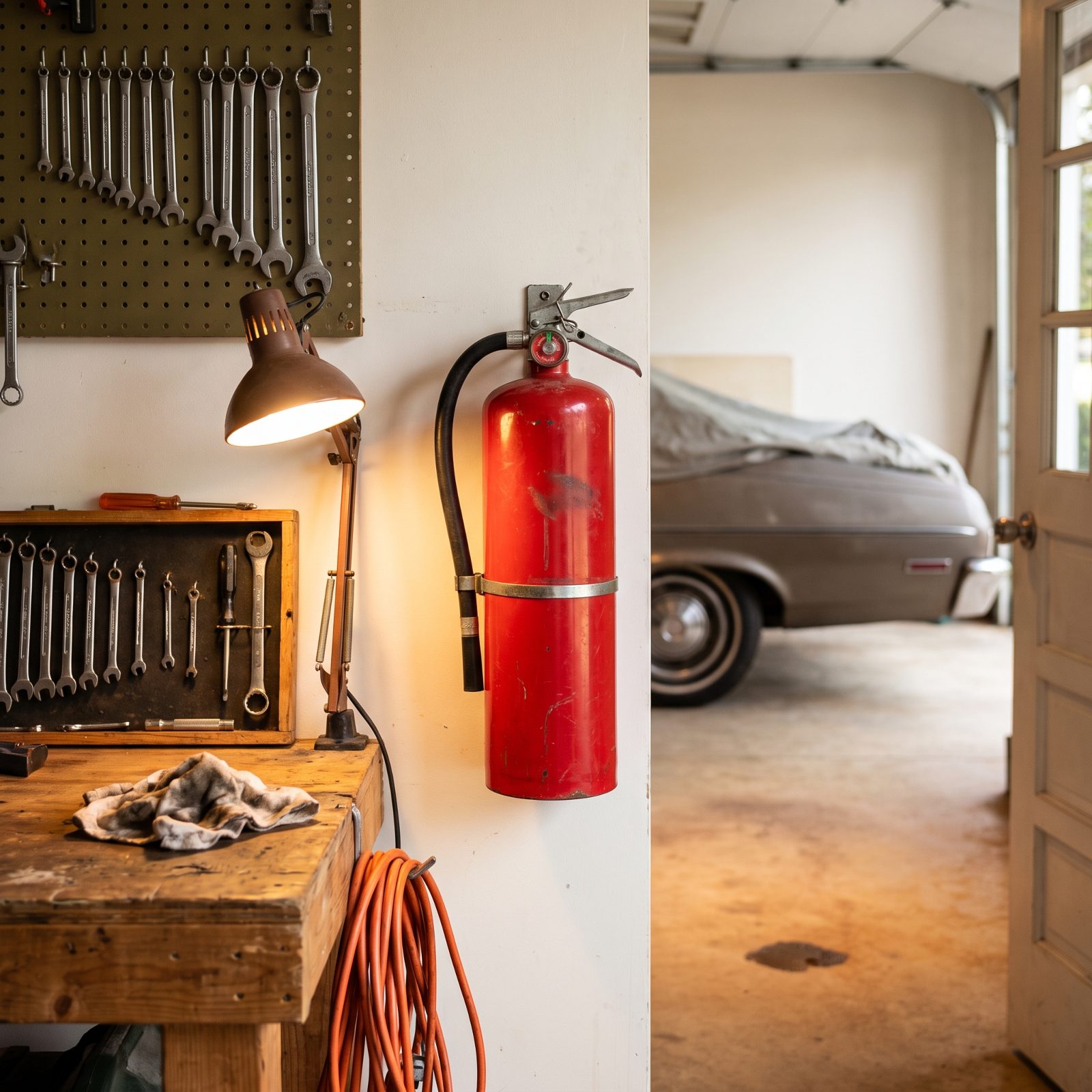
Most garages have a smoke detector and a prayer. That is not a fire plan.
Get an ABC-rated dry chemical extinguisher. It handles ordinary combustibles, flammable liquids, and electrical fires, and that last category trips people up more than you’d think. Think about what’s sitting in there right now: gasoline, a can of brake cleaner, a space heater nudged too close to a rag pile. A garage carries all three at once, and if you reach for a bucket of water on a gas fire you’ll just spread it.
Buy at least a 5-pound unit. Those cute keychain-sized ones burn through their charge before you’ve finished being scared. Hang it by the door at eye level — not behind the mower where you’ll never dig it out when it counts. And glance at the gauge needle every so often to make sure it’s still sitting in the green.