
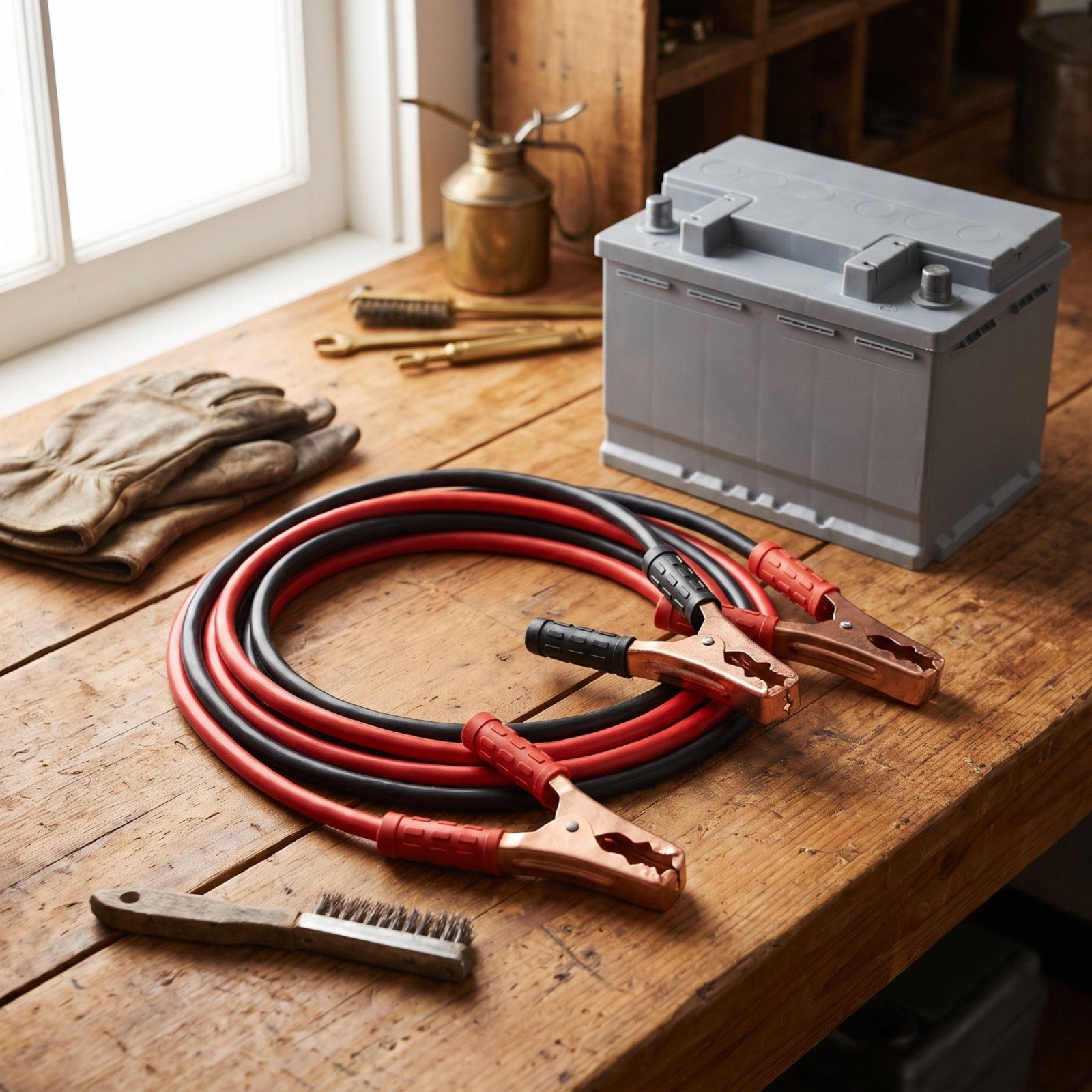
A dead battery on a cold morning turns smart people careless. The clamps are red and black, the other car’s already running, and you just want to get to work — which is exactly when the sparks fly, the fuse boxes fry, and somebody’s eyebrows go missing. Jump-starting is one of the oldest driveway rituals we’ve got. It’s also the one folks botch most. The mistakes below are the ones we’ve watched play out a thousand times, and the fixes take about the same effort as doing it wrong.
Please note that some of the images in this article were created with the assistance of AI.
33. Reversing the Positive and Negative Connections
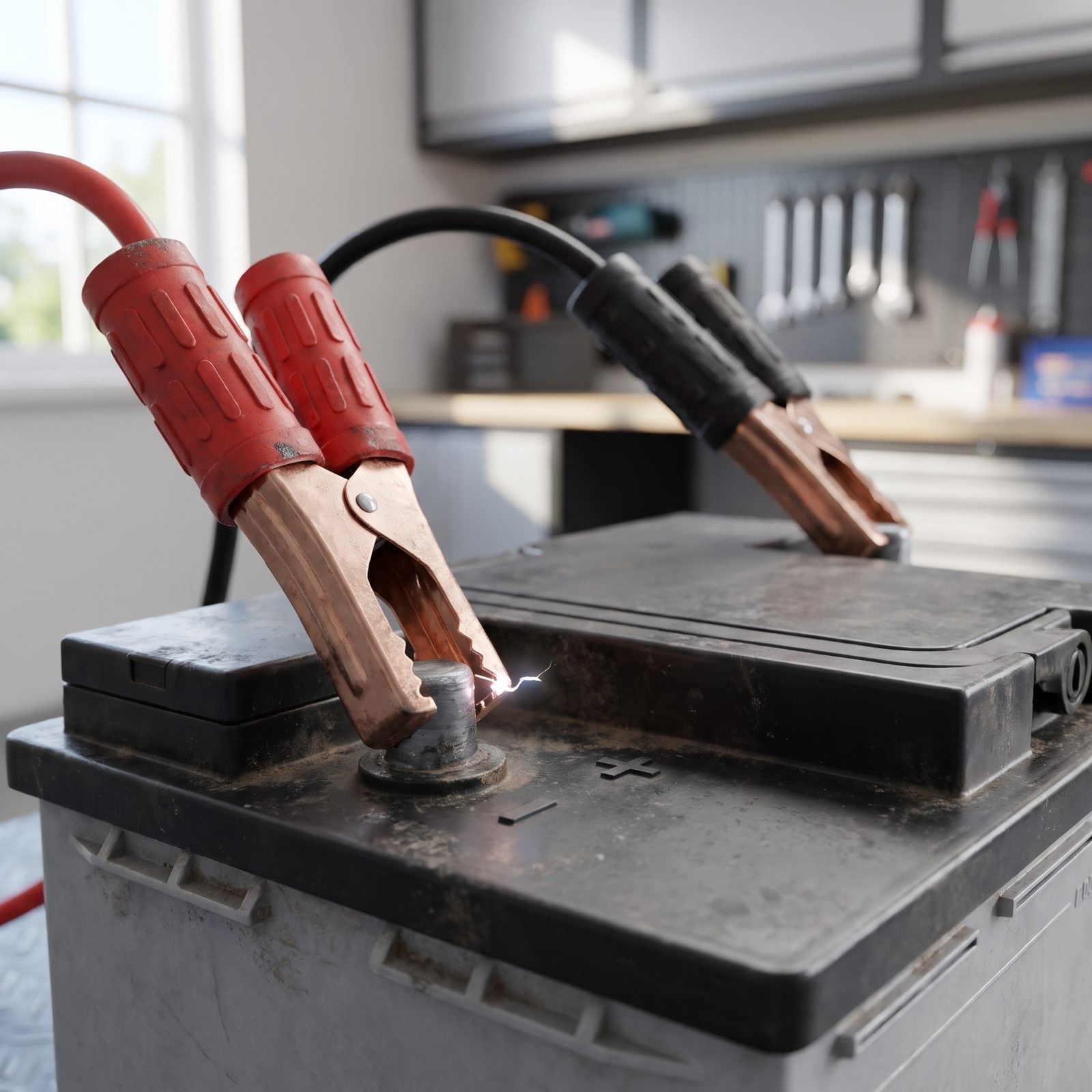
Red to the plus, black to the minus. Get it backwards and you reverse the current through two cars’ worth of electronics at once — a jolt that pops fuses, fries alternator diodes, scrambles the engine computer, and in the worst cases cooks the battery itself.
Before a single clamp touches metal, find the markings. Positive wears a plus sign and usually a red cover, negative wears a minus and sits on the chassis ground. Match colors to symbols, not to whatever post happens to be closer. And confirm it on both vehicles before you connect anything.
32. Trying to Jump-Start a Frozen Battery
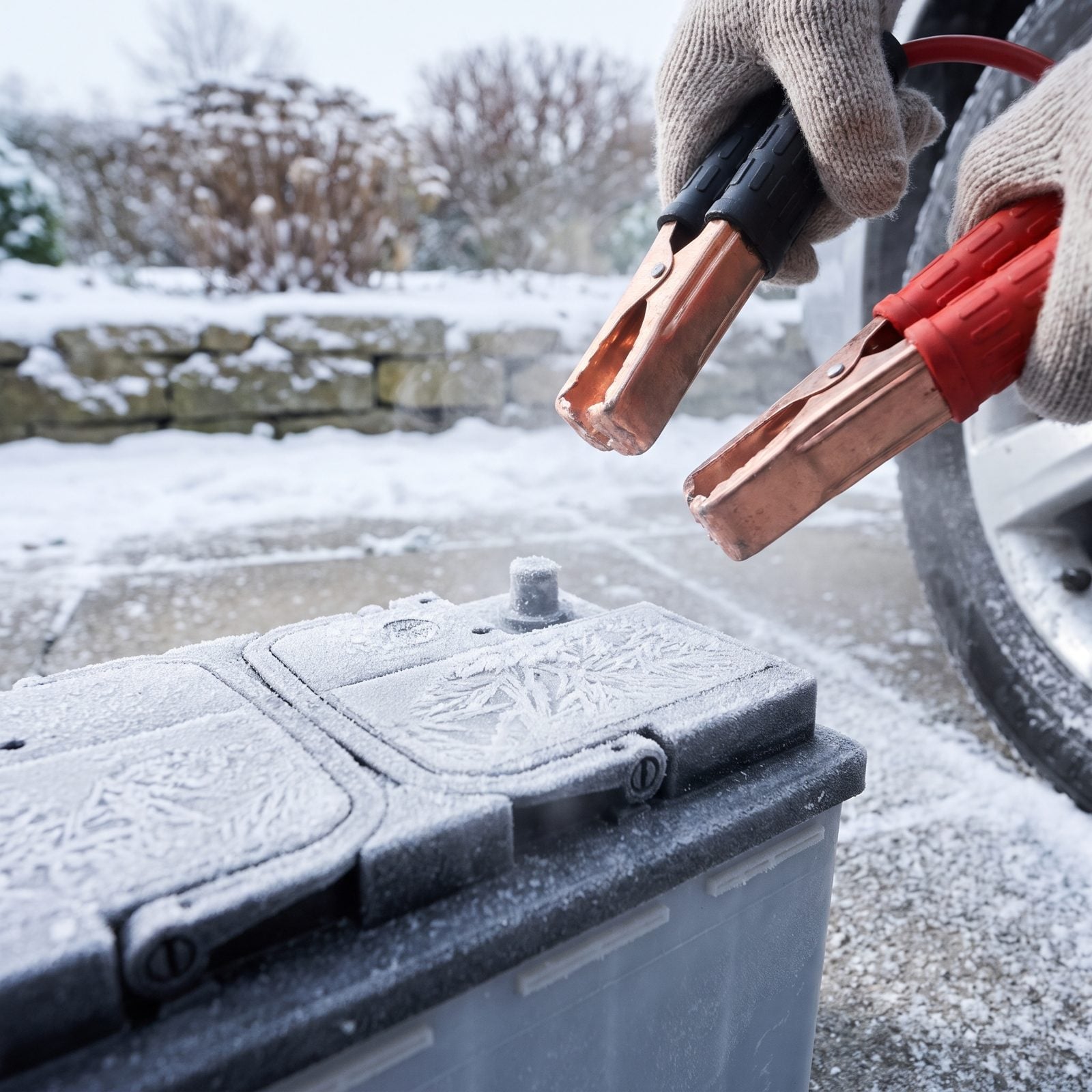
A battery sitting low on charge in subzero weather can freeze, and a frozen battery is a sealed container full of slush and gas with nowhere to go. Push a charge into it and the case can bulge or split, sending acid exactly where you don’t want it.
If the electrolyte froze, the sides may look swollen or the whole case feels oddly stiff and cold. Don’t boost it. Bring it somewhere warm and let it thaw completely first, ideally overnight above freezing. A healthy, fully charged battery won’t freeze until it’s bitterly cold out, so a frozen one is usually telling you it was already half dead.
31. Boosting a Battery That Is Cracked, Swollen, Leaking, Hissing, or Hot
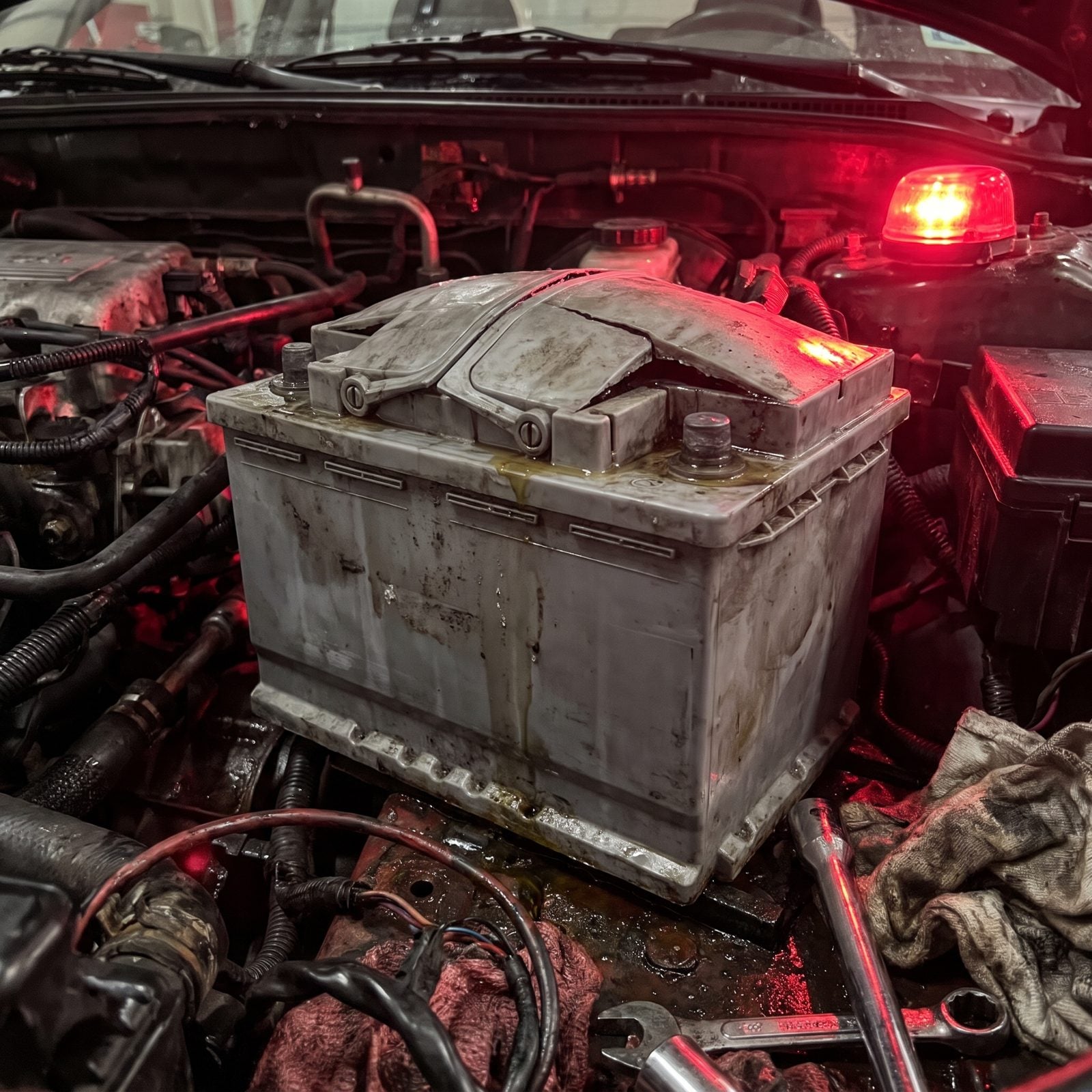
Give the battery a real look before you give it a jolt. A cracked case, a top domed up like a muffin, white crust creeping from a seam, a hissing sound, heat radiating off it — any of those means the battery is already in trouble.
Shoving a charge into a damaged, gassing battery is how a bad morning becomes a hospital trip. The hydrogen a stressed battery vents is flammable, and a cracked case can rupture under the load. None of this is worth saving a twenty-year-old core.
30. Jump-Starting Near a Fuel Leak or Gasoline Fumes
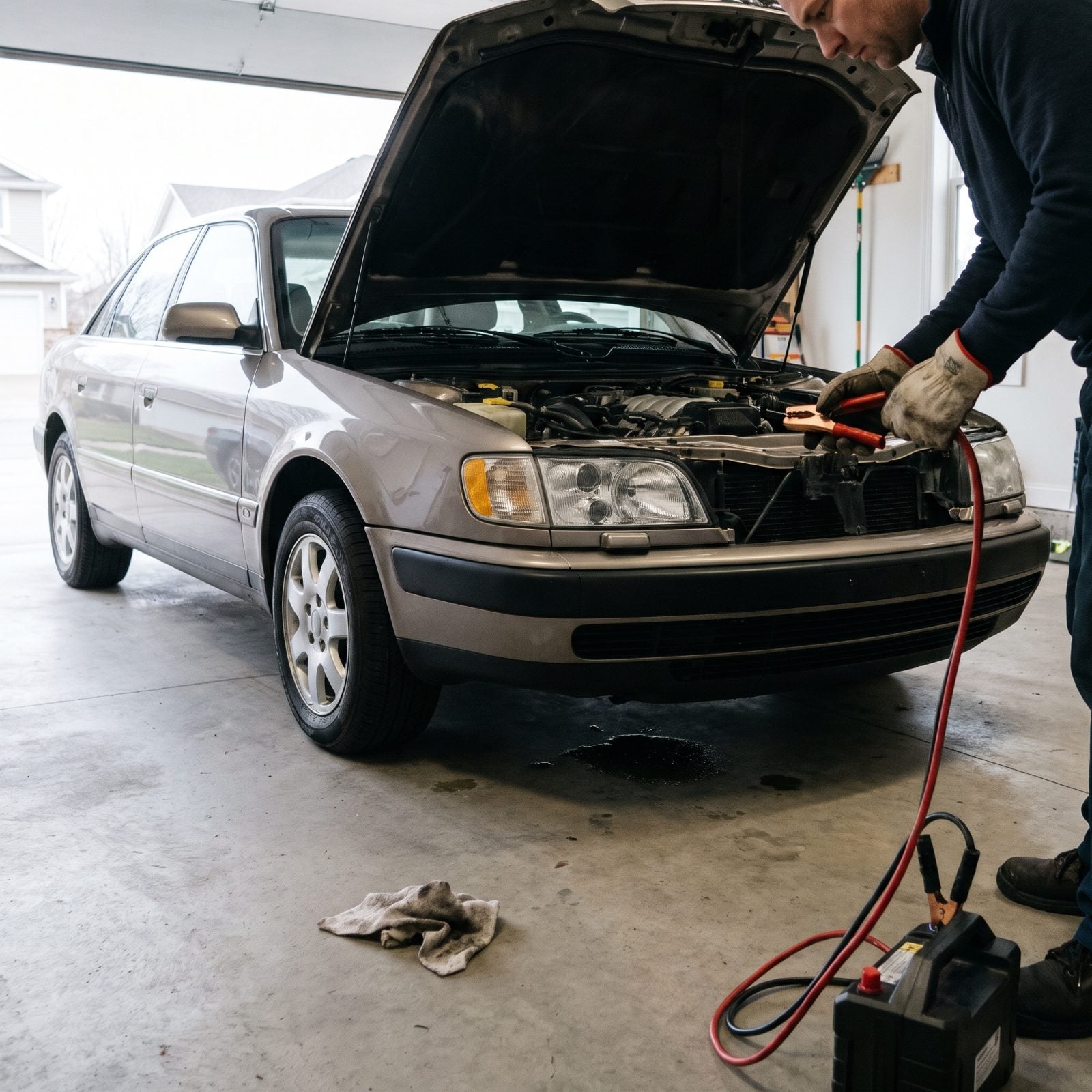
Gasoline vapor and a connection spark don’t mix, and every jumper clamp throws a little spark when it bites down. Smell fuel? Did the car die because of a fuel-system fault? Stop right there.
Figure out why the gas smells before you make a single connection. Never jump a car in a closed garage where fumes and hydrogen can pool — work outdoors or with the door wide open, keep the final black clamp away from the battery, and if there’s a visible leak, the cables go back in the trunk and the phone comes out.
29. Letting the Positive Clamp Touch the Vehicle Body
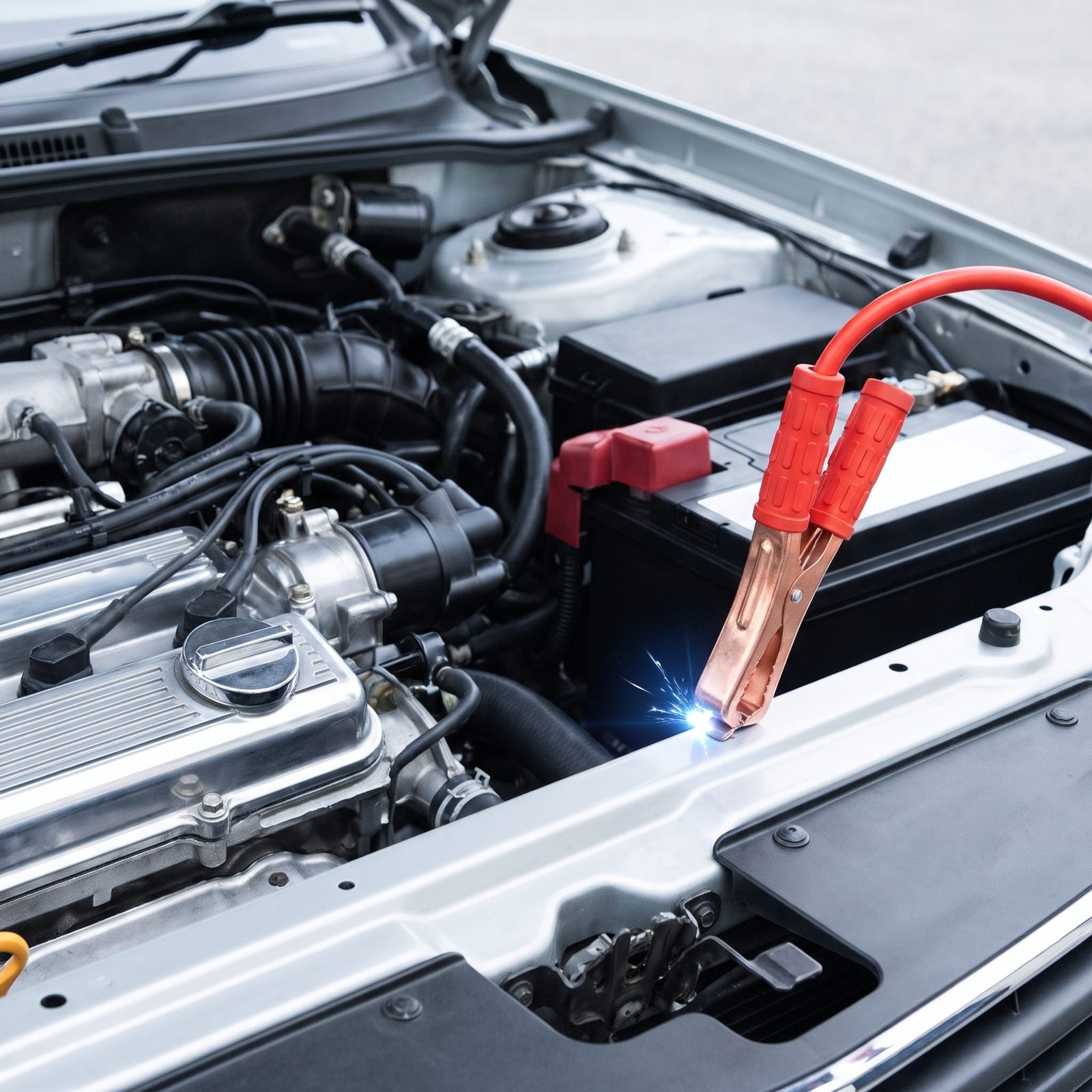
The positive clamp goes hot the moment the other end hits a live terminal. Let it flop against the hood latch, a bracket, or any bare metal and you’ve grounded it straight through the body — sparks, a nasty arc, and a real risk of fire.
Clamp the positive on first, seat it hard on the post so it can’t wander, and route the loose cable away from anything metal. Keep a hand on it until both ends are connected. When you disconnect, pull the positive clamp off last, and never let it dangle near the engine while the other end is still live.
28. Allowing the Jumper Clamps to Touch Each Other
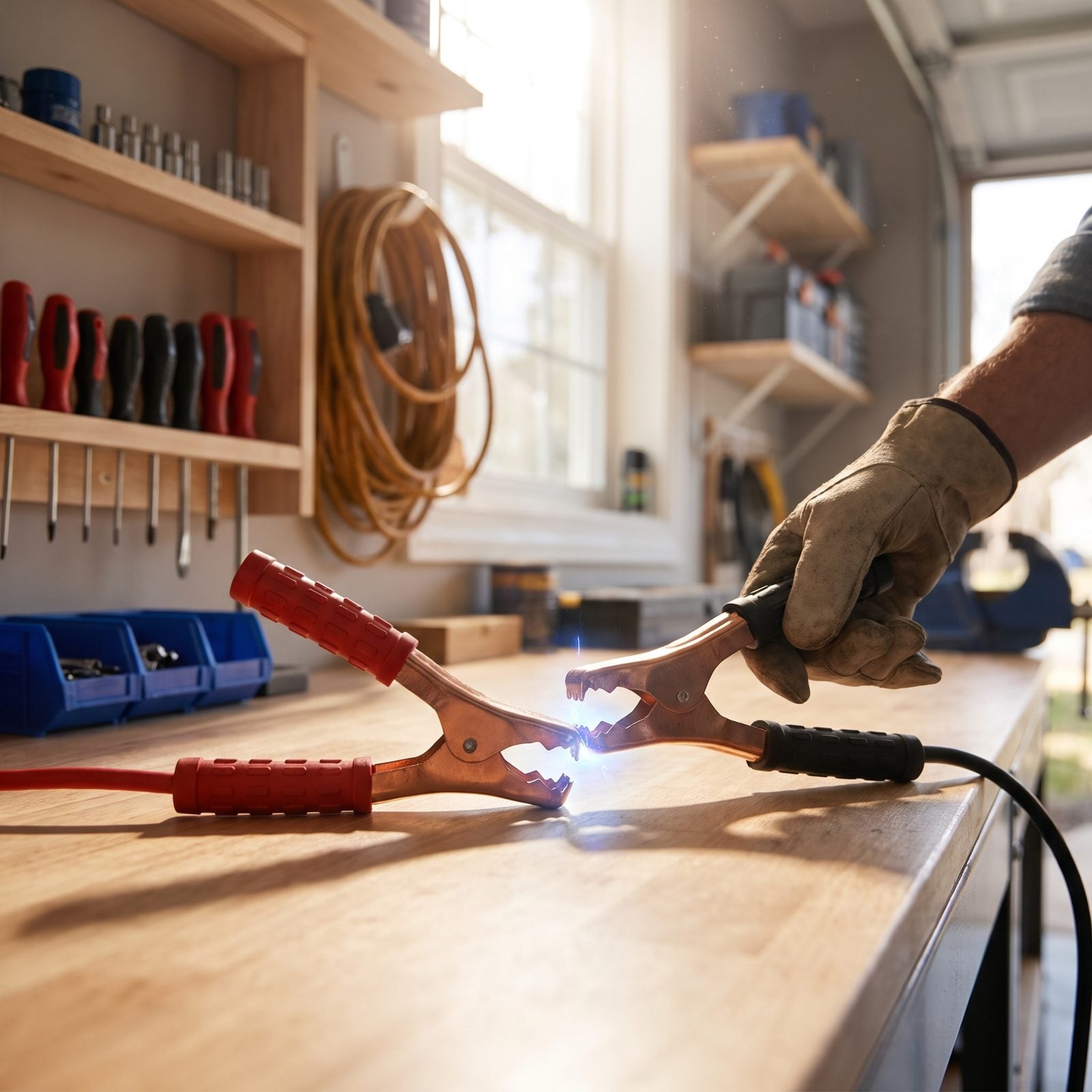
Once one pair of clamps is on a live battery, the other two are carrying current whether you’ve finished connecting or not. Clack the red and black ends together and you’ll get a shower of sparks and a direct short across the donor battery.
So treat the free ends like they’re always live. Set them apart, jaws facing away, never nested in the same hand. Connect in order so you’re only ever managing one loose clamp at a time, and keep the handles clear of each other the whole way through.
27. Using Cables With Exposed Copper or Cracked Insulation
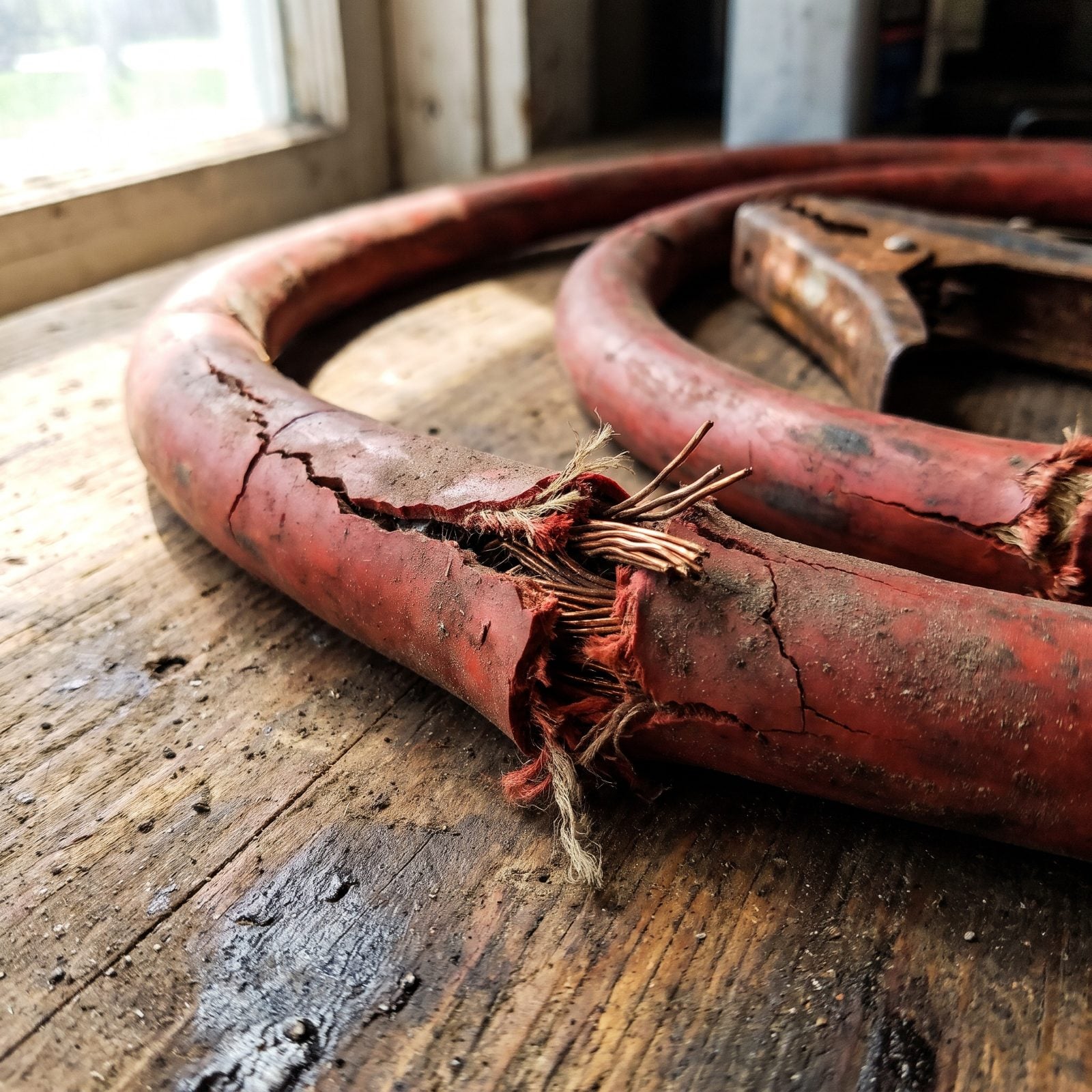
Thin, bargain-bin cables with cracked jackets and copper peeking through are a bad bet twice over. Exposed strands can short against the body or your hand, and skinny gauge can’t carry enough current to crank a tired engine anyway, so it heats up and the insulation softens.
Run your hand along the full length before every use. Brittle spots, cuts, bare copper — and that set retires. Buy heavy cable, four-gauge or thicker, with real copper strands and clamps that bite hard. Good cables last decades. Cheap ones let you down on the one morning you need them.
26. Connecting Vehicles With Different Electrical Voltages
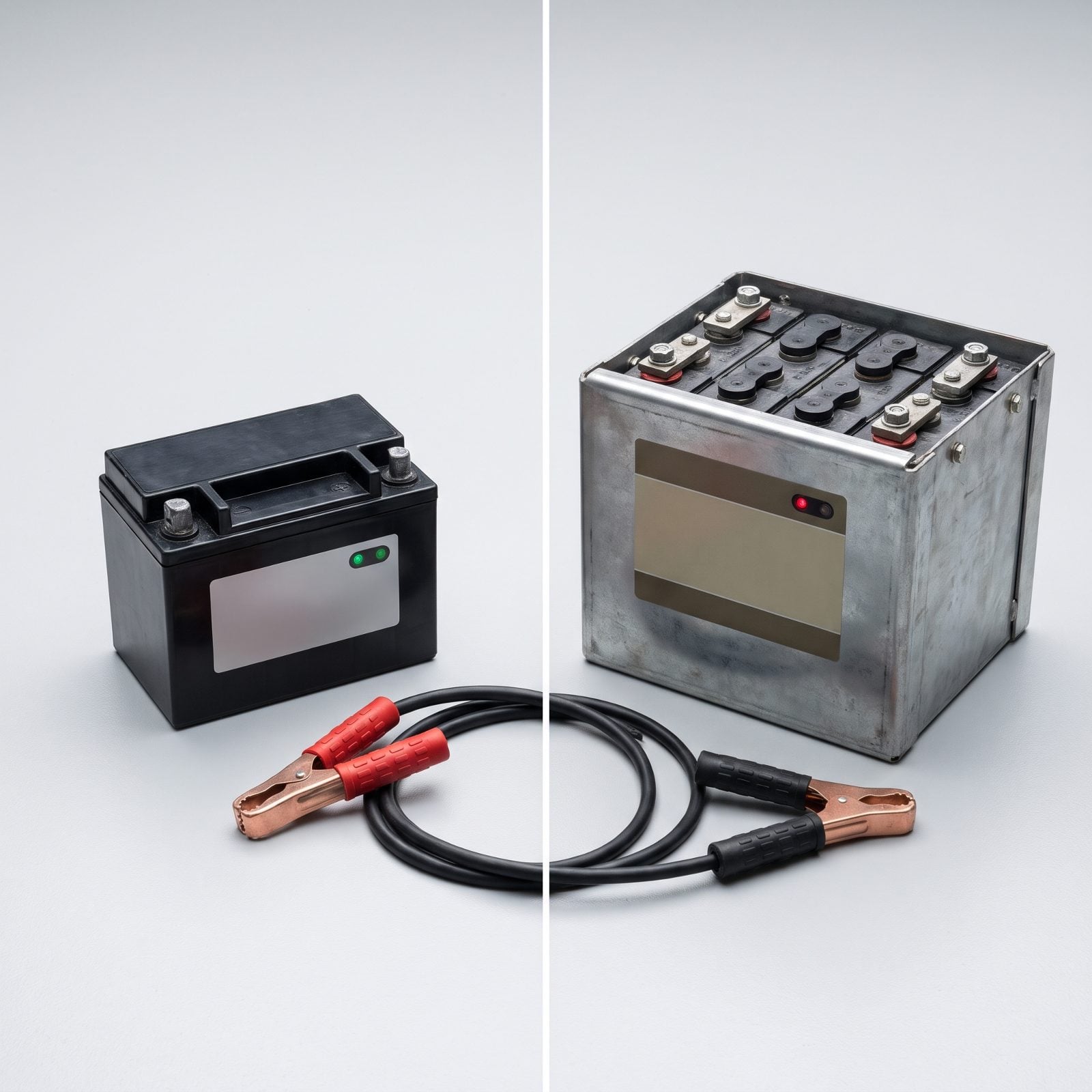
Most cars and light trucks run 12-volt systems. Not everything does, though. Some big diesels, older equipment, and heavy machinery run 24 volts, and bridging a 12-volt car to a 24-volt source blows fuses, cooks modules, and quite possibly the battery.
Check the voltage on both vehicles before the clamps come out. Match 12 to 12 and nothing else. The donor should be a running passenger vehicle of similar size, not a semi idling at the next pump.
25. Treating a Lithium Battery Like a Conventional Lead-Acid Battery

You pop the hood on a newer ride, see a battery, grab the cables, and clamp away like it’s a 1972 Buick. Trouble is, that flat black box might be lithium, and lithium absolutely hates getting the old lead-acid treatment.
A lithium battery runs a built-in management system that cuts power to protect itself. Hit it with a careless surge or the wrong charger and the board can brick, leaving you with a dead unit no amount of cranking will revive. Deep-cycle one the way you’d abuse a lead-acid battery and you’ve wrecked the cells for good.
So check what you’ve got before you touch anything. If it’s lithium, reach for a lithium-compatible red portable jump starter instead of cables off another car, and never trickle it on an old lead-acid charger. The owner’s manual tells you which chemistry you’re dealing with. Read it once, remember it forever.
24. Using an EV or Hybrid as a Donor When Its Manual Forbids It
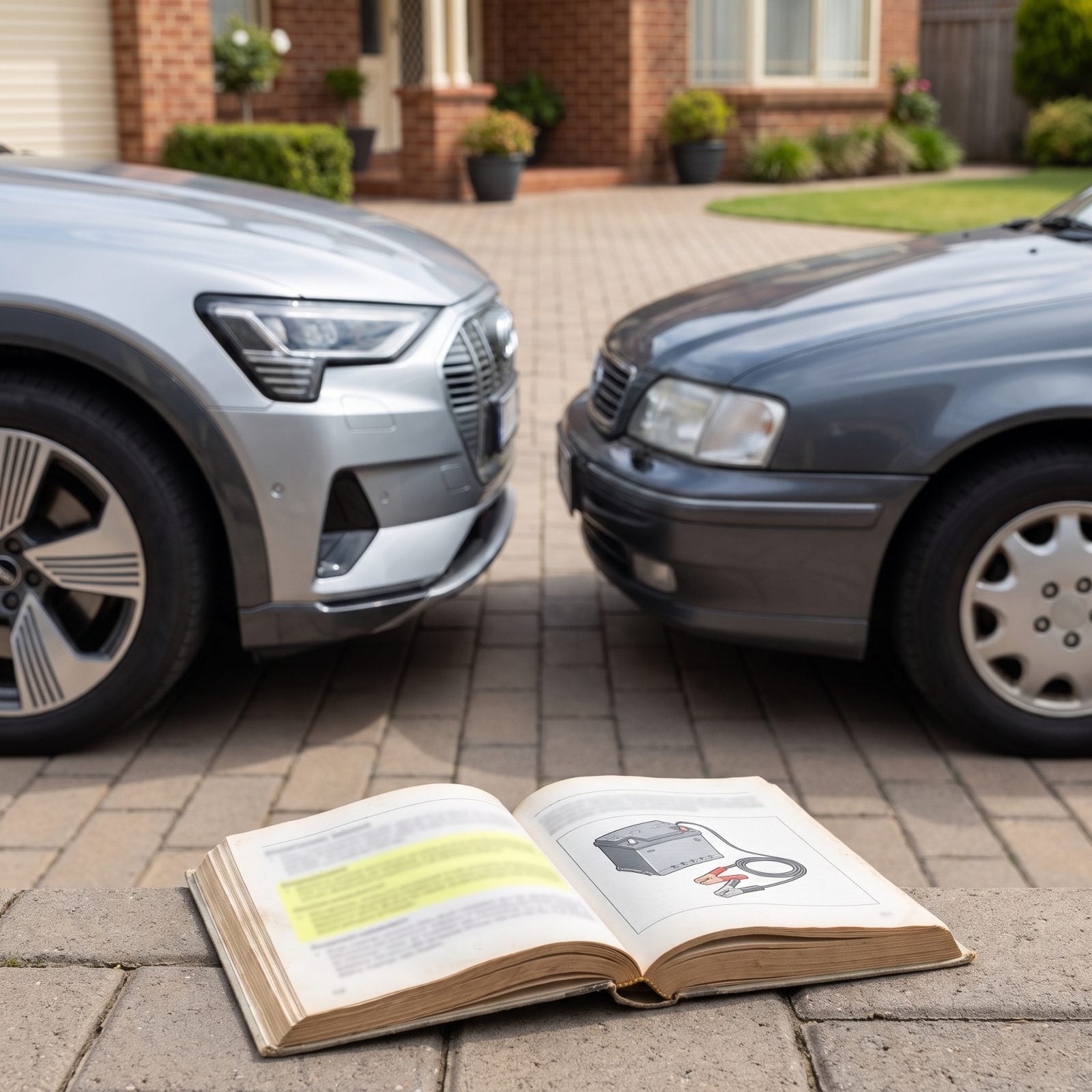
It feels logical. The electric car has a giant battery, so surely it can spare a few amps for your neighbor’s dead sedan. Flip open most EV and hybrid manuals, though, and you’ll find a flat no.
These vehicles route their 12-volt systems through sensitive DC-to-DC converters, not a fat pack sitting there ready to dump current on command. Pull cranking amps through that setup and you can cook electronics worth more than the dead car is. And the high-voltage pack? It isn’t even in the circuit you’re clamping onto.
An EV or hybrid can usually take a jump. Giving one is a different story. When in doubt, skip the car-to-car routine entirely and grab a standalone lithium jump pack — it isolates the whole mess and nobody’s converter gets fried.
Explaining why owners should never use a hybrid or EV to jump another vehicle, one hybrid repair shop owner says “The 12V battery is tiny and the DC/DC converter isn’t designed to dump that kind of current into a dead truck. You can strain or damage the converter”
23. Working in a Closed Garage With No Ventilation
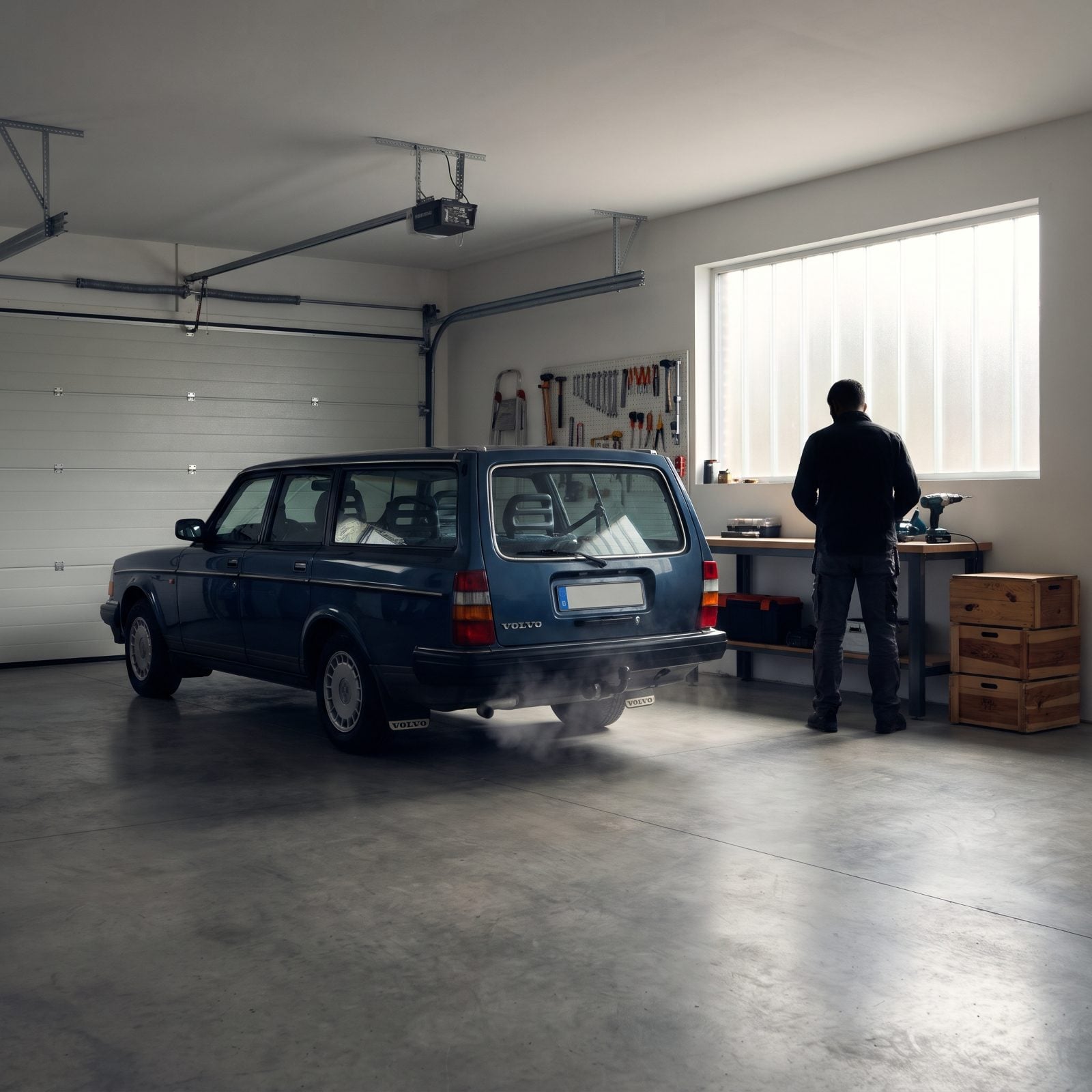
Cold morning, you’d rather not freeze, so you keep the garage door down and get to work. That closed box is exactly where a jump-start goes wrong in a way you never see coming.
A struggling lead-acid battery vents hydrogen gas, and a weak or overcharged one vents plenty of it. Trap that in a sealed garage, add a possible spark at the clamp, and you’ve basically built a small bomb to lean over. Running engines throw carbon monoxide into the mix too, which doesn’t announce itself any louder.
Roll the door all the way up before a single cable connects. Better yet, push the dead car out into the driveway. Fresh air carries the hydrogen off before it can pool, and your lungs get the carbon monoxide memo they’d otherwise never receive.
22. Jump-Starting Roadside Without Warnings or From the Traffic-Facing Side
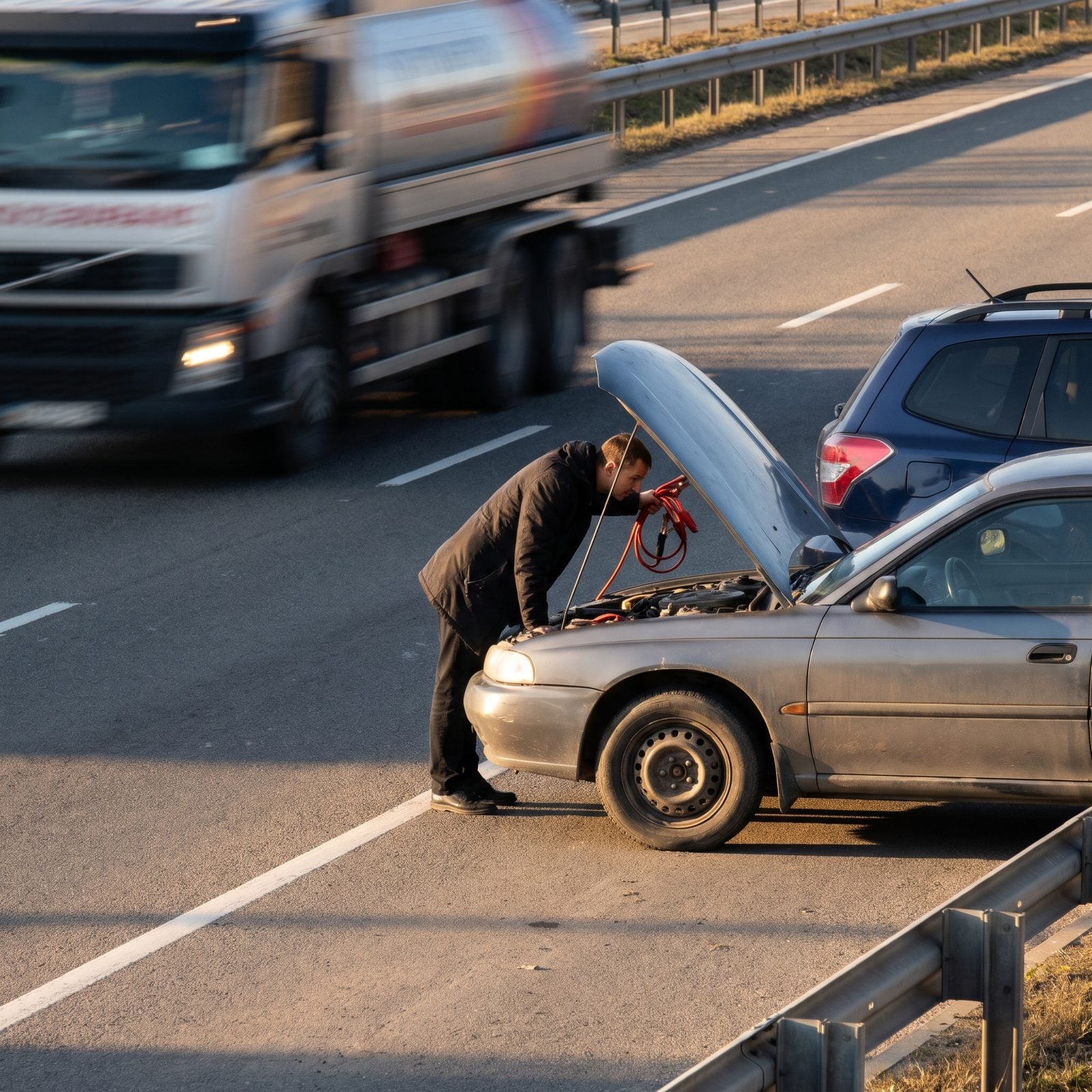
Battery quits on the shoulder, help pulls up, and everyone crowds around the fender nearest the whizzing traffic. That’s the worst spot on the whole roadside.
A car passing at seventy clips a mirror, and suddenly the person leaning into the engine bay is part of the wreck. With no warning markers out, the next driver doesn’t spot you until it’s too late to move over.
Get both cars completely off the pavement and onto the shoulder. Hazards on, both of them. Then drop a reflective triangle or a set of flares somewhere between thirty and a hundred feet back, depending on how fast the road runs, and do every bit of the clamping from the side facing away from traffic. A dead battery is a nuisance. Getting struck is permanent.
21. Leaving Either Vehicle in Gear or Without Its Parking Brake Set
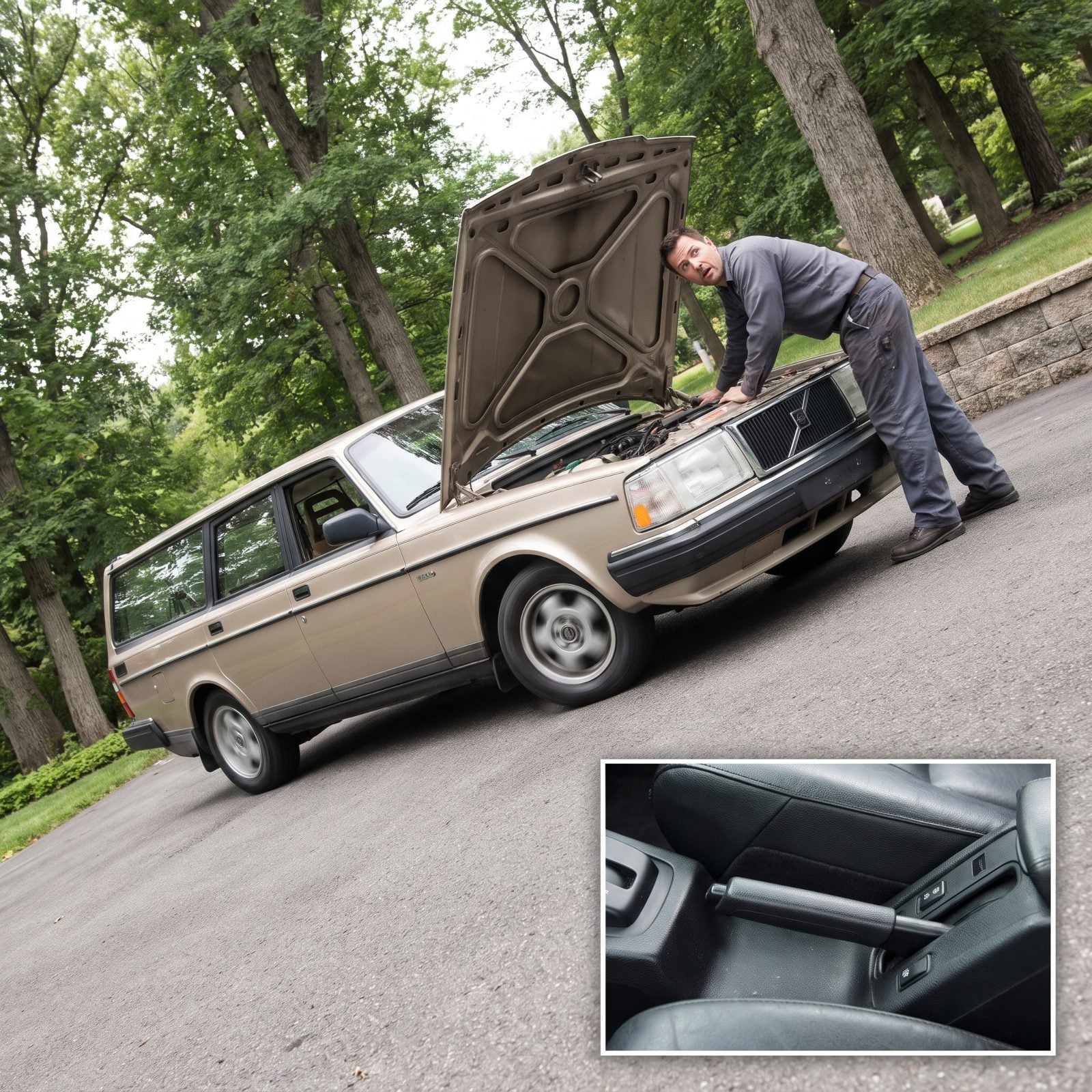
A running engine plus a car that isn’t locked in place is a rollaway waiting to happen. You’re bent over the engine bay, someone bumps the shifter, and now a loose car is rolling with you standing right in front of its bumper.
Automatics belong in Park, manuals in neutral, and the parking brake gets yanked tight. Leave a car on a sloped asphalt driveway with no brake set and gravity or an idle surge can roll it right off its spot. Or into you.
Set the brake first, before the hood even goes up. Confirm the transmission. Four seconds, and it’s the cheapest insurance you’ll buy all day.
20. Connecting the Cables While the Donor Engine Is Running
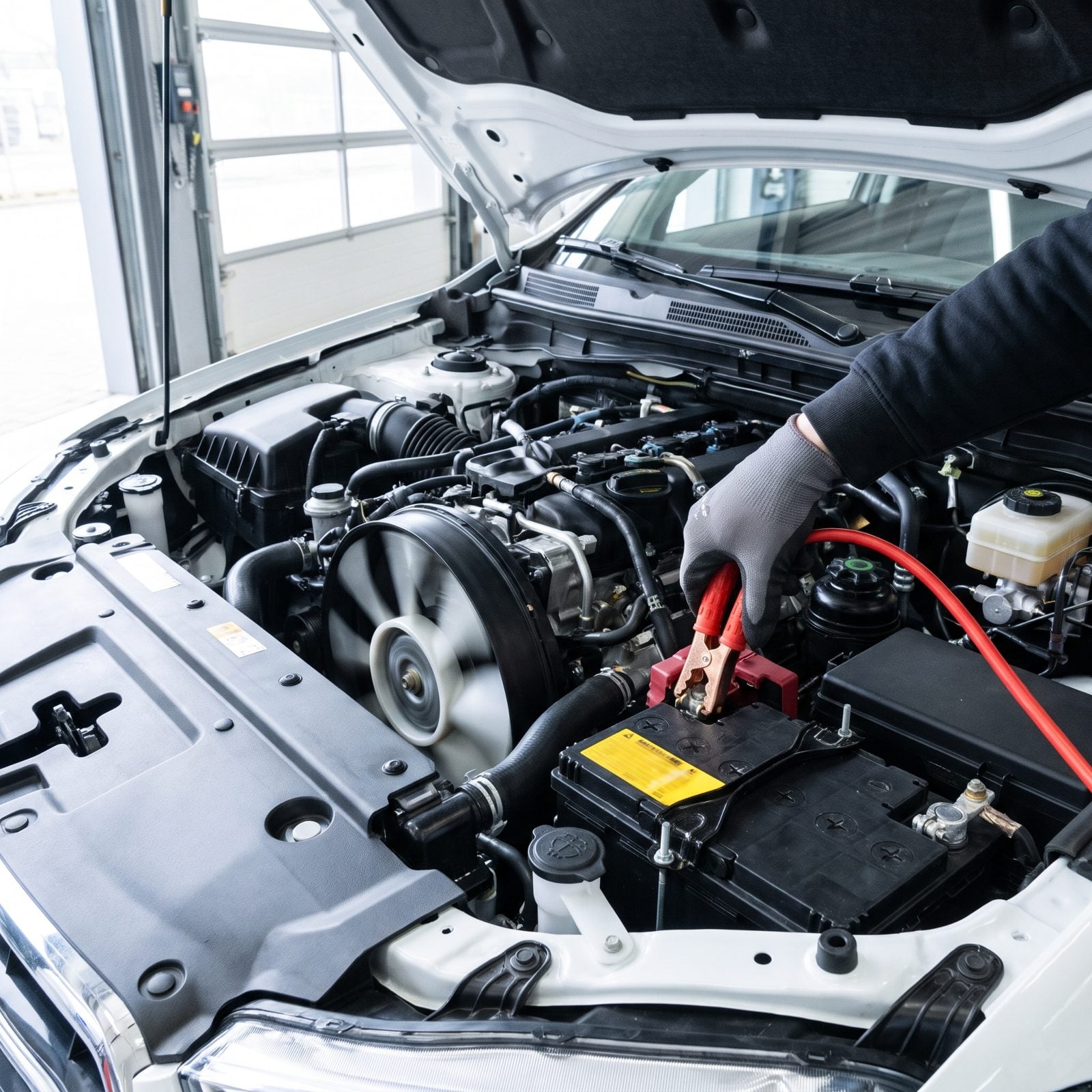
The instinct is to fire up the donor car first so it’s “ready to give.” But clamping cables onto a running engine invites the exact spark and surge you’re trying to dodge.
A running alternator puts out live voltage. Clamp onto that and you boost the odds of an arc right at the terminal, inches from a battery that may be venting hydrogen. It also shoves a surge through both electrical systems at the worst possible moment.
So connect every clamp with both engines dead quiet. Only once all four connections sit solid do you start the donor and let it idle a couple of minutes to feed the dead battery. Then crank the dead vehicle. Order matters here, and the order is cables first, engines second.
19. Clamping Directly to the Dead Battery’s Negative Post Instead of the Approved Ground
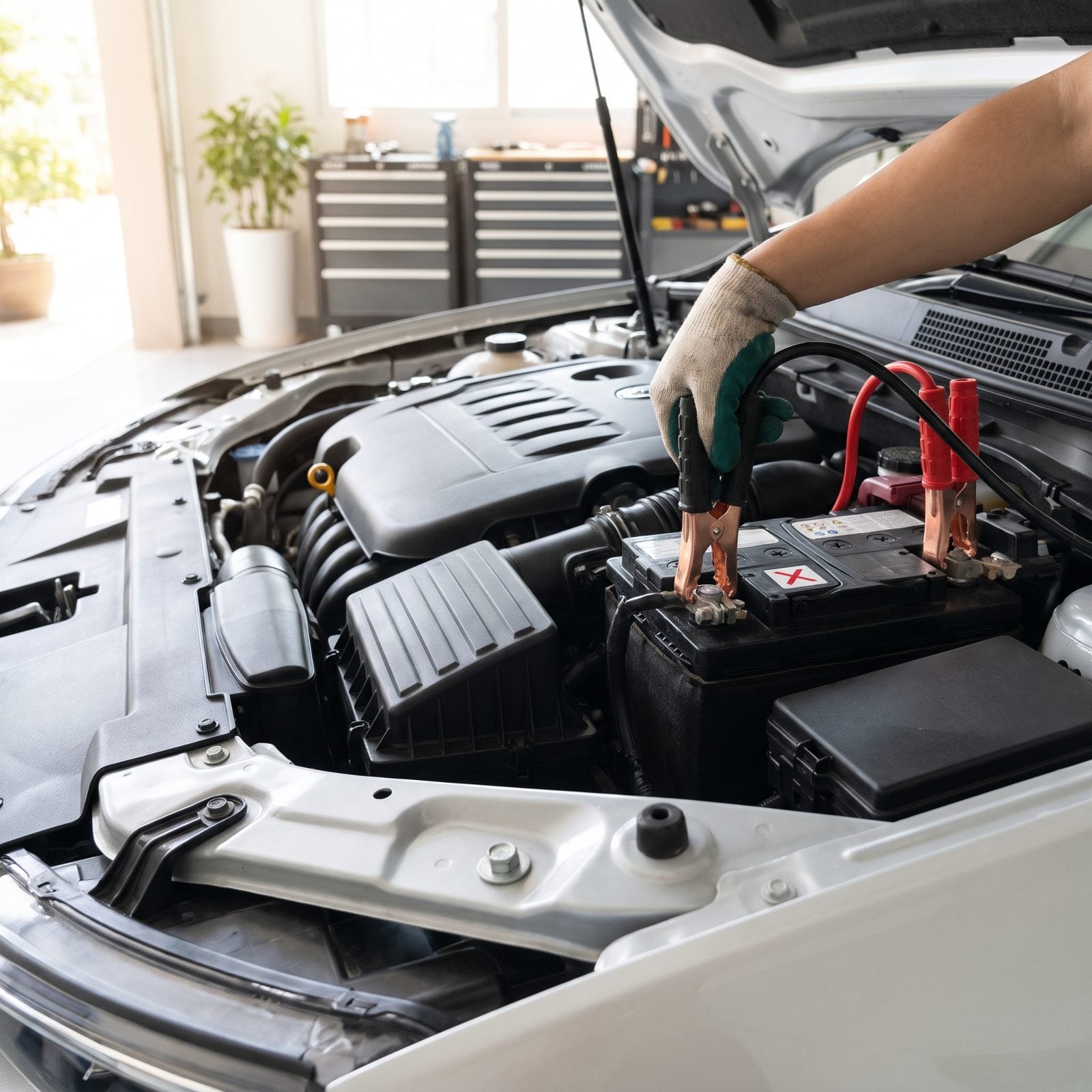
You’ve got the red clamps on the positive post, and the natural move is to finish by snapping that last black clamp onto the dead battery’s negative post. But that final connection is the one that throws the spark, and you want the spark as far from the battery as you can possibly get it.
The dead battery is the one venting hydrogen. Make the sparking connection right on top of it and you’re lighting a match over the fumes. It’s the single most common way a routine jump turns into a bang.
Run the last black clamp to a clean, unpainted bolt or bracket on the dead car’s engine block, well away from the battery. That grounds the circuit and sends the spark somewhere harmless. Then start the donor. Sequence it right and the whole thing is a non-event — which, let’s face it, is the entire goal.
18. Choosing a Painted, Rusty, or Greasy Grounding Point
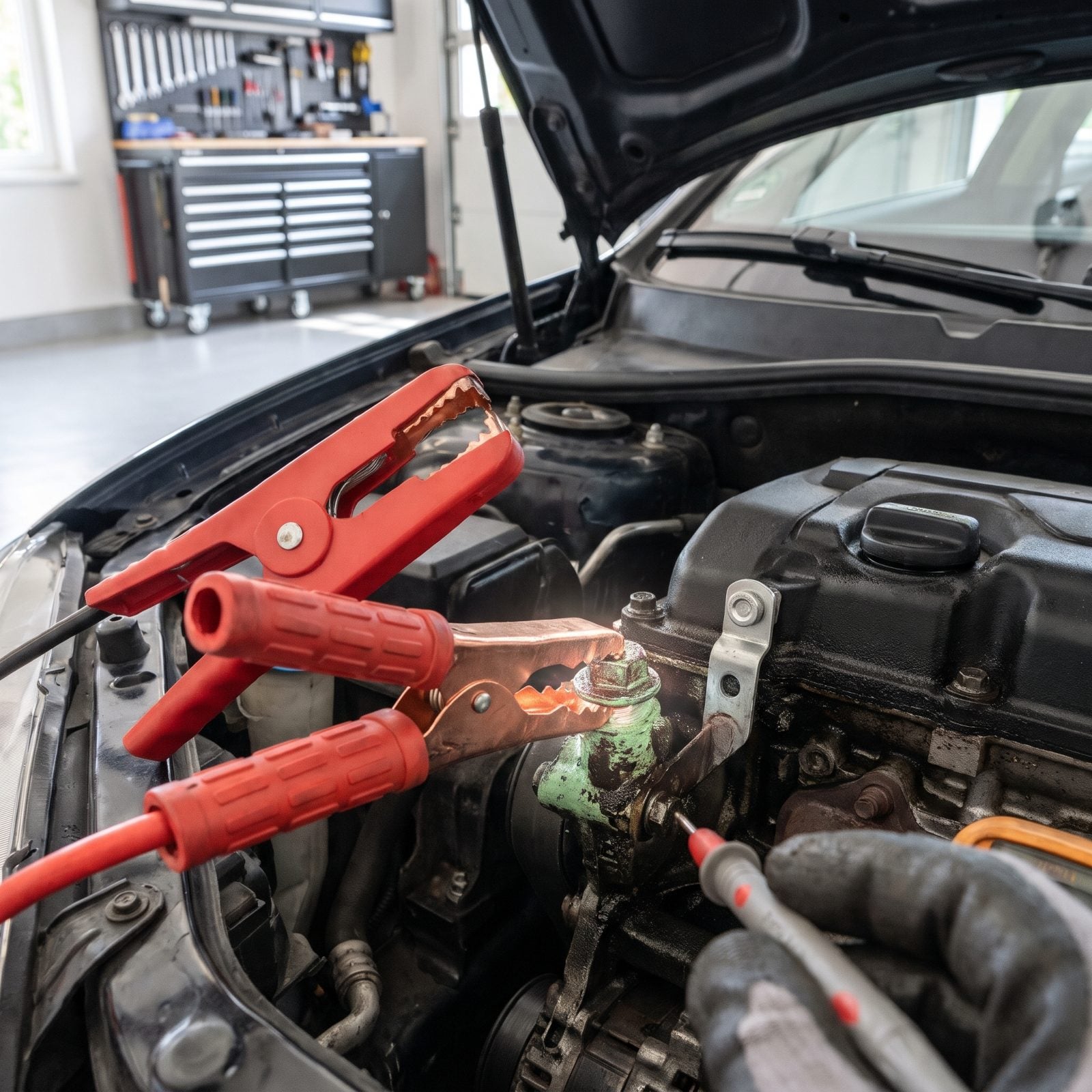
You pop the hood, grab the red-handled clamp (already a mistake, since red is positive and the black clamp is the one that goes to ground), and bite down on the nearest bolt. Trouble is, that bolt’s wearing factory paint, a film of grease, or twenty years of surface rust, and all three are insulators. The spark you want traveling cleanly to the frame fights through a lousy connection instead, so the jump either fails or throws heat where you don’t want it.
Find a bare, unpainted metal bracket or an engine lifting eye. Clean steel, solid bolt, nothing flaky. The ground clamp needs metal that actually conducts, as far from the battery as the cable allows.
17. Clamping Onto Loose or Heavily Corroded Terminals
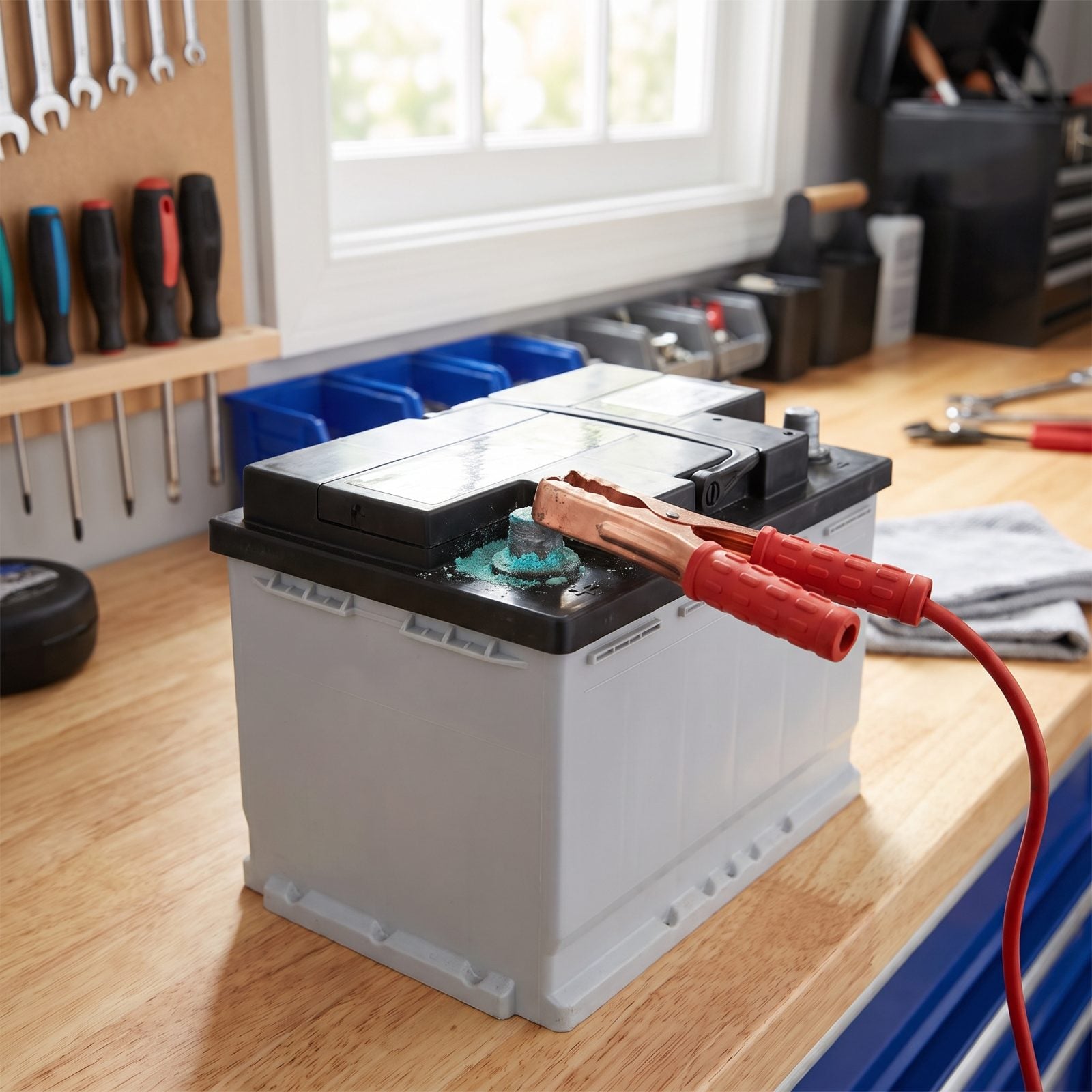
Fuzzy blue-green crust around the posts isn’t just ugly. It’s resistance. A clamp jawing down on corrosion, or a terminal that wobbles under your hand, grabs a fraction of the metal it should, and then you crank, nothing happens, and you blame the whole battery when the real culprit was a bad grip.
So before you clamp anything, wiggle each terminal. If it moves, snug the clamp bolt down. Scrub the posts with a terminal brush or a rag dipped in baking soda and water until you see clean lead, then attach. Good connections start at the surface.
16. Relying on Jumper Cables Too Thin for the Engine
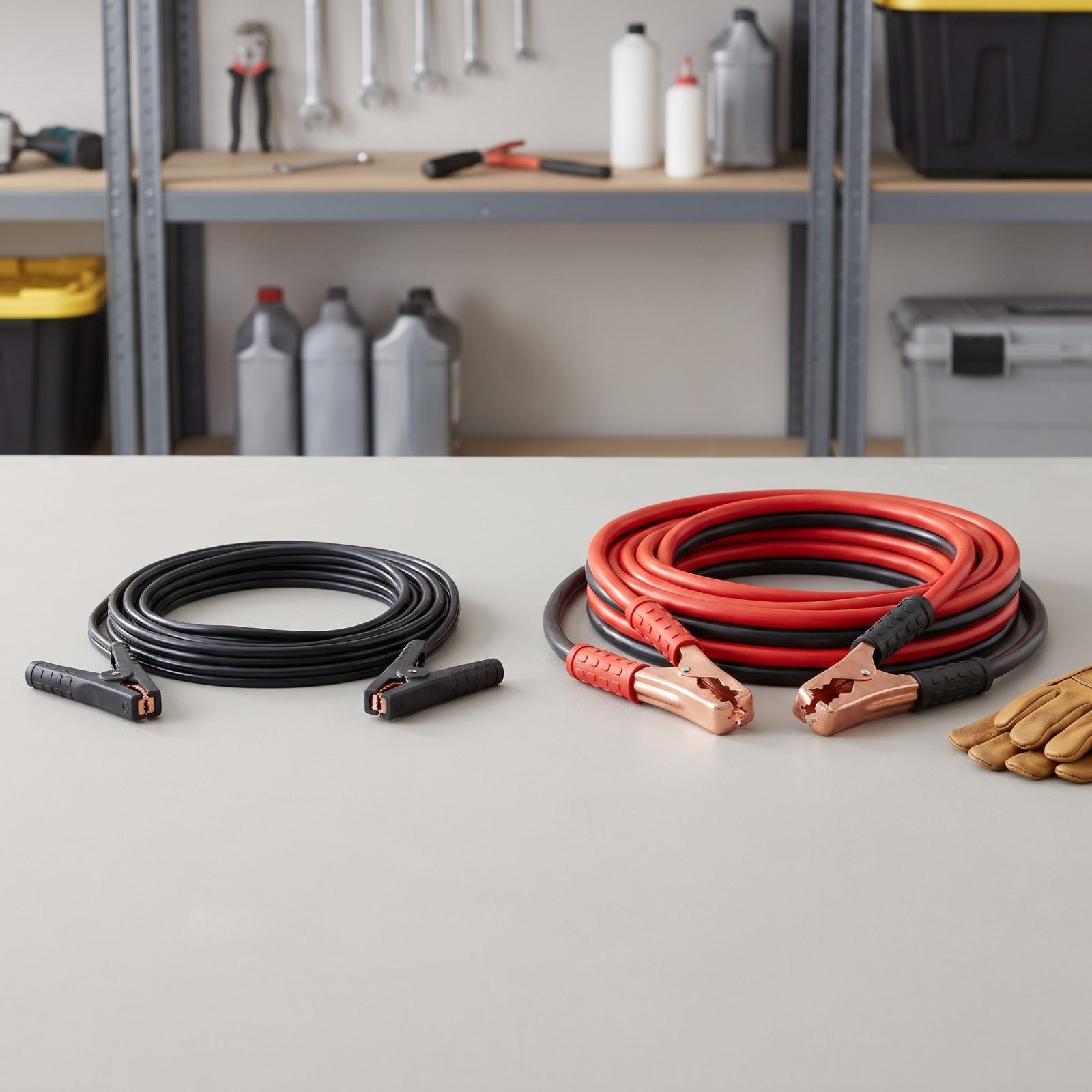
Thin cables are a quiet thief. Those bargain-bin sets with skinny wire and dime-store clamps can’t carry the current a V8 or a big diesel needs to spin over, so the energy turns into heat inside the cable instead of torque at the starter. You’ll feel the insulation warm up, watch the lights barely flicker, and go nowhere.
For most cars, 4-gauge cable with solid copper clamps gets it done. Trucks, SUVs, and anything with a big engine want 2-gauge or even 1-gauge. And length matters — longer cables mean more resistance, so skip the twenty-footers when ten will reach.
15. Closing the Hood on Jumper Cables or Booster Leads
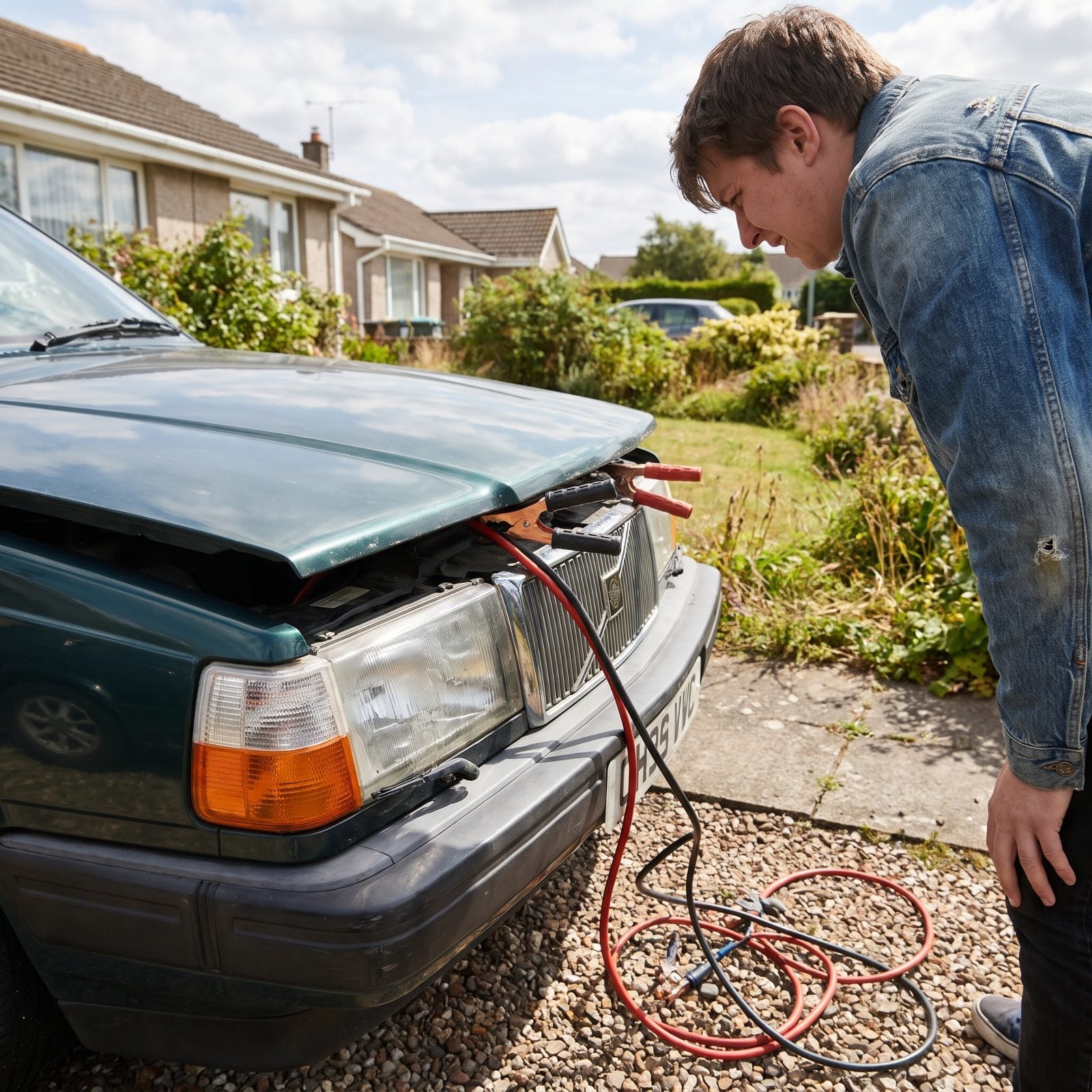
Sounds obvious until you’re in a hurry. You want the hood out of the wind, or you’re tidying up the scene, so you let it drop with the cables still draped over the edge. The hood’s weight pinches the insulation, and if it cuts through to the copper you’ve got a dead short across a live battery — sparks, heat, and a ruined cable in one motion.
Leave both hoods fully up, propped on their struts or rods, until every clamp is off. Run the cables out through the grille opening or over the fender, never across the lip where the hood seals. Hood stays open until the job’s done.
14. Putting Your Face Near the Battery for the Final Connection
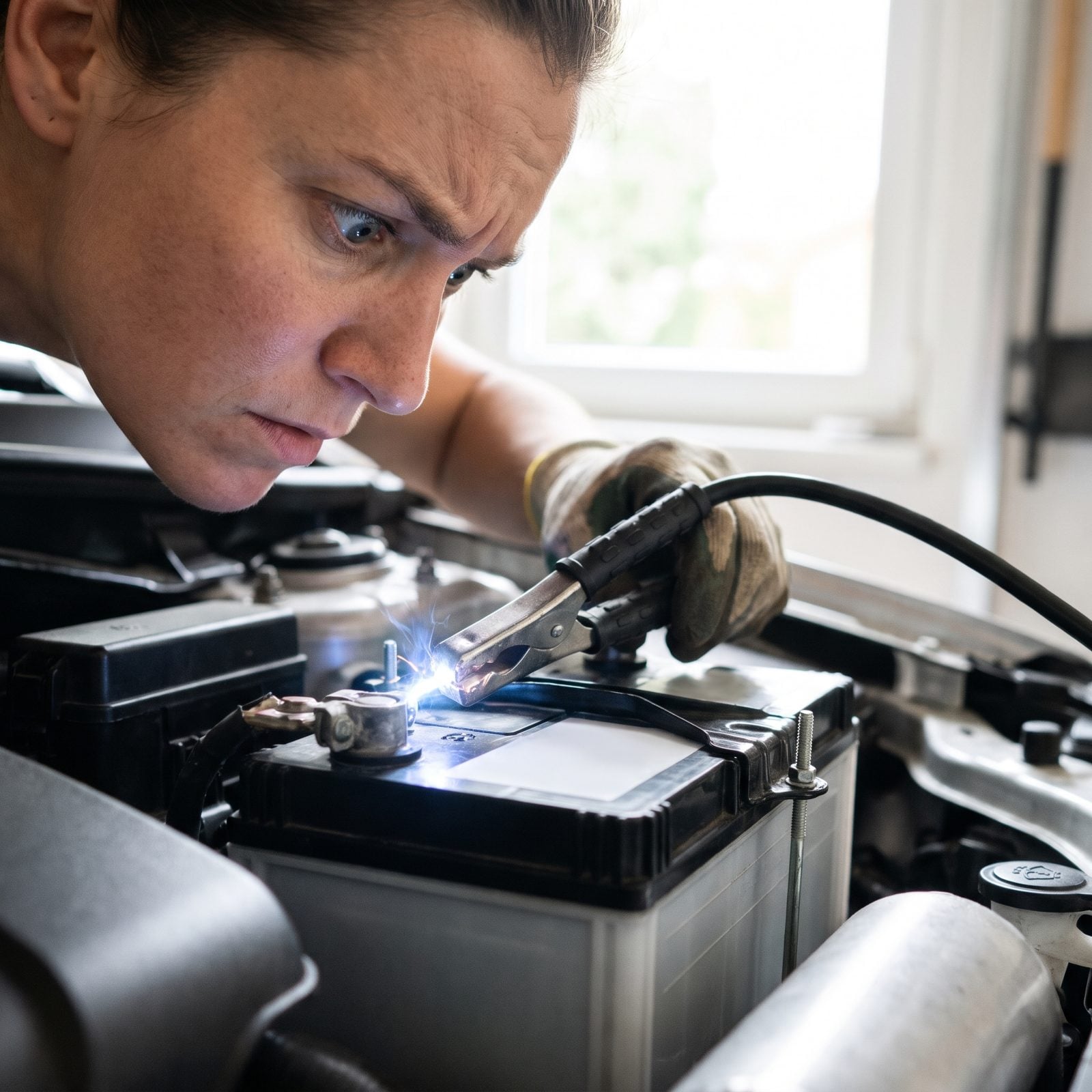
A dead battery can give off hydrogen gas. And that final connection, the one that completes the circuit, is the one that throws a spark. Lean in close to watch it and you’ve put your eyes right over the one spot where a spark meets flammable gas. Rare, sure. But when it goes wrong it goes wrong fast.
Make that last connection the smart way. Attach the final negative clamp to a bare ground point away from the battery rather than the dead post, keep your head back, and work at arm’s length. Safety glasses are cheap insurance.
13. Attaching the Four Clamps in the Wrong Sequence
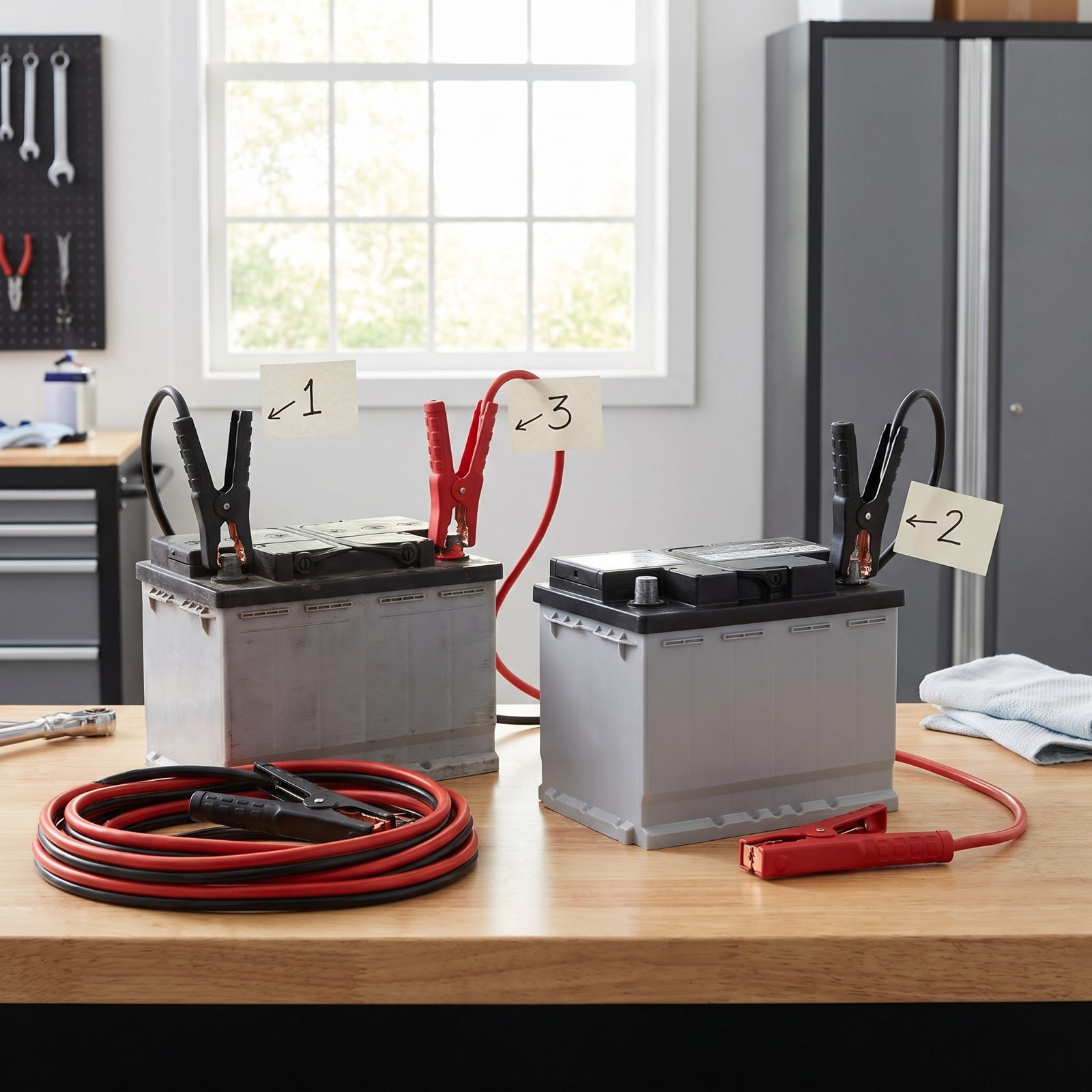
Grabbing clamps in a random order is how sparks happen at the worst moment, and how people reverse polarity without even knowing it. There’s a proven sequence, and it exists for a reason.
Here’s the order that works:
- Red clamp to the dead battery’s positive terminal.
- Red clamp to the good battery’s positive terminal.
- Black clamp to the good battery’s negative terminal.
- Final black clamp to a bare metal ground on the dead car, away from the battery.
To disconnect, reverse it exactly. The sequence keeps the spark-making final connection far from any battery, which is the whole idea.
12. Switching On a Booster Pack Before Its Clamps Are Secure
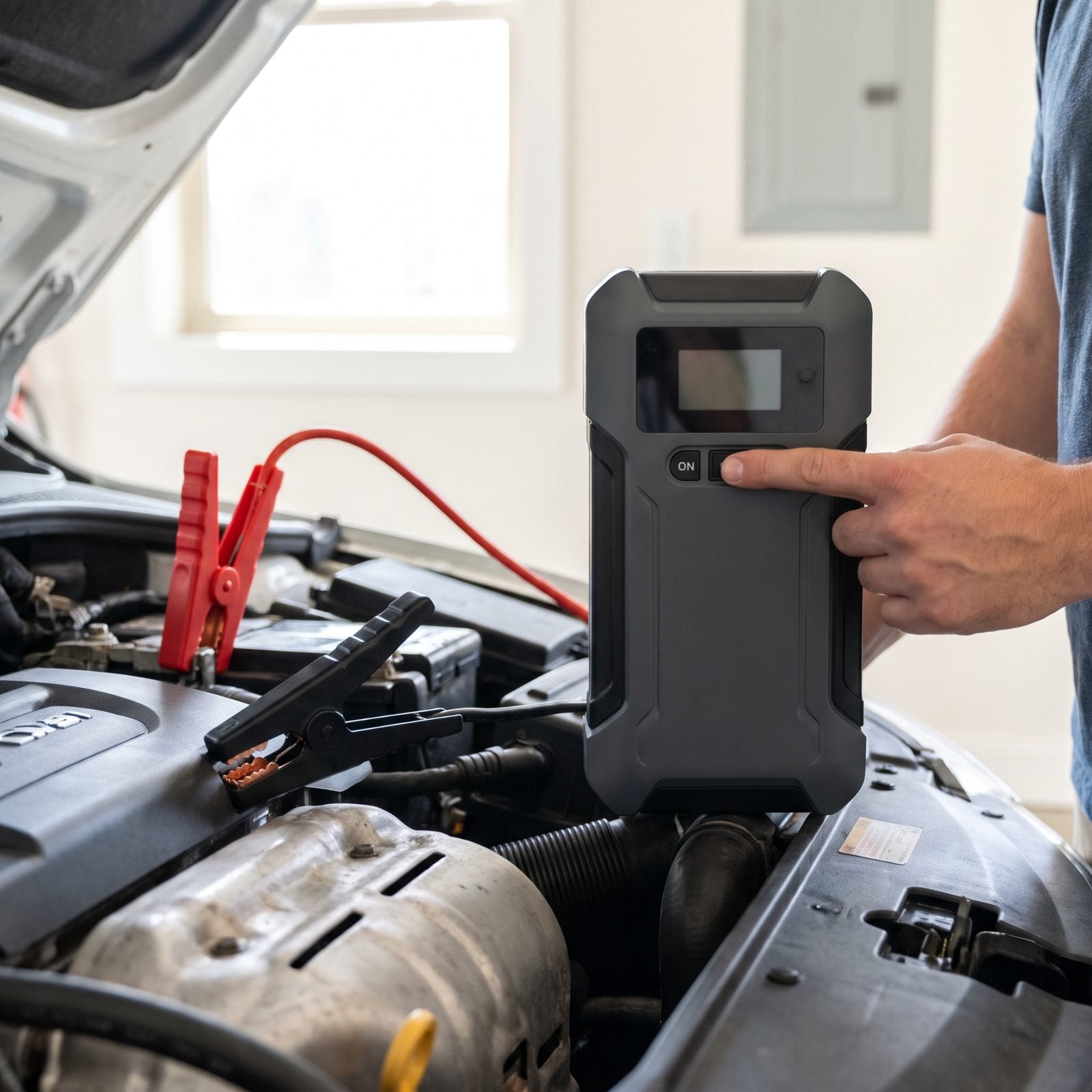
Booster packs make jumping a one-person job, which is great right up until you flip the unit on while a clamp is only half-seated. A loose clamp carrying live current arcs against the terminal, pits the metal, and can trip the pack’s safety cutoff — or, worse, weld itself for a second. Lots of flash, no fun.
Power the pack off first. Clamp the red lead to positive and keep the black lead’s clamp well away from it. Never let both jaws touch the same terminal or bracket, or you’ll short the leads. Confirm each jaw is biting hard, and give them a gentle tug. Only then do you switch the pack on and try the start. Order of operations keeps the spark out of your hands.
11. Activating Manual Override or Boost Mode Without Checking Polarity
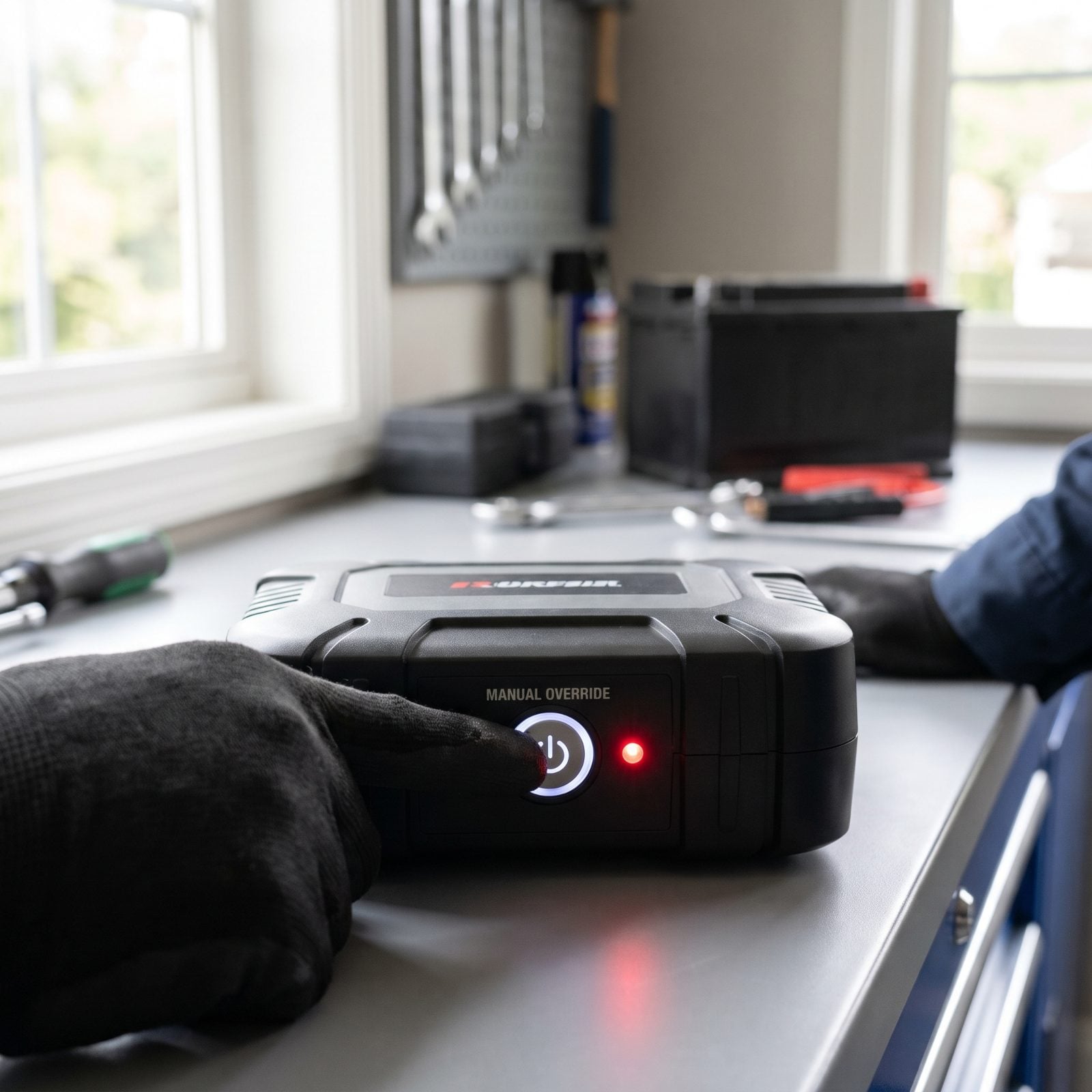
Smart booster packs have a safety brain. They check for reverse polarity and refuse to send power until the clamps are right — a wonderful feature. The manual override or boost button is there for deeply discharged batteries that confuse that brain. Hit it without confirming your clamps, though, and you’ve just bypassed the one thing guarding your electronics.
Reverse polarity through an override can fry the car’s computer, blow fuses, and cook the pack itself. So before you ever press boost, verify red on positive and black on negative or ground, then check the indicator light. Green means go. If you’re overriding, you’ve taken on the responsibility the safety circuit was carrying.
10. Cranking the Instant the Clamps Touch Down
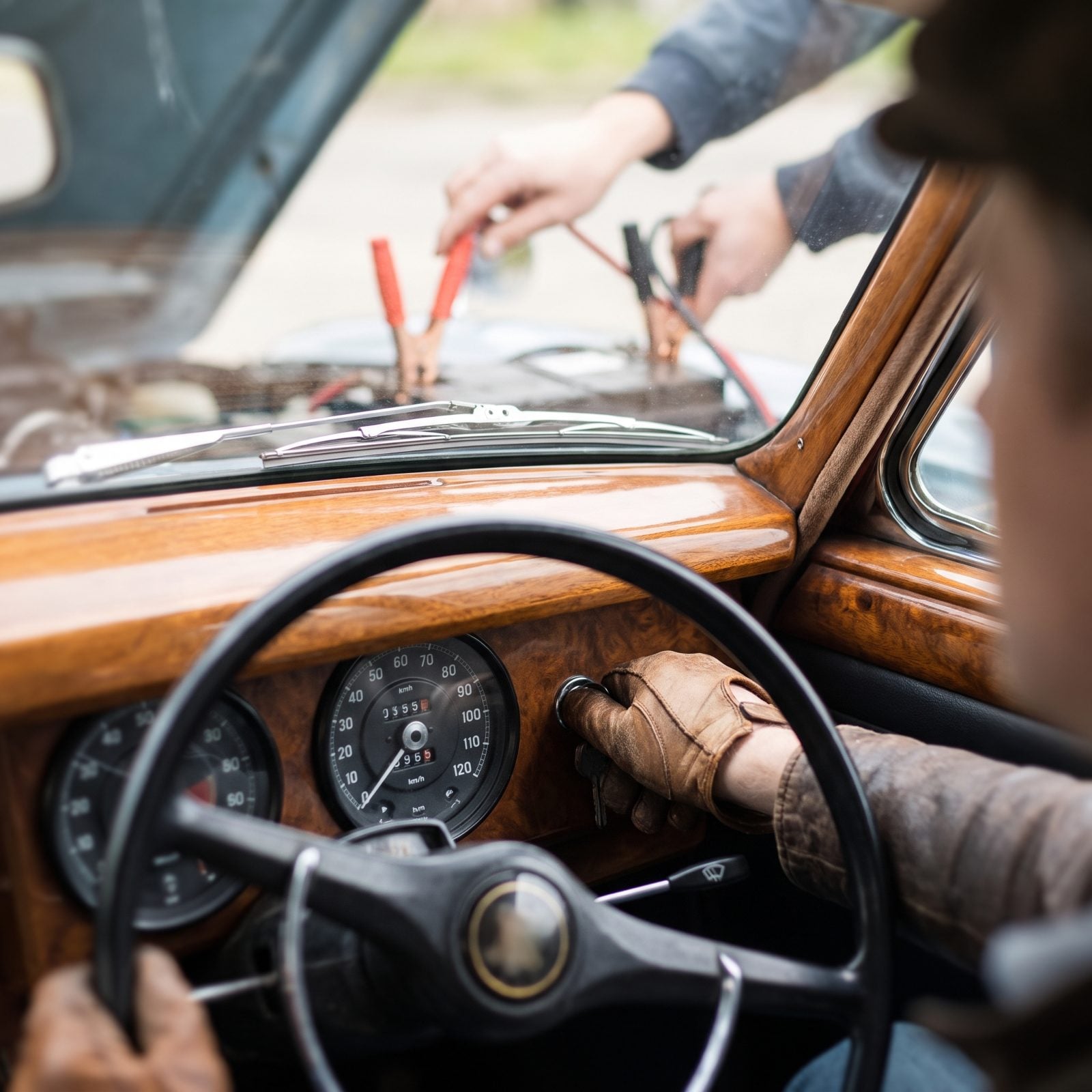
You hook up both cars and your hand goes straight for the key. Don’t. A battery sitting flat has next to nothing in it the second the clamps go on, so cranking right away drags everything straight from the good car’s battery through skinny clamps and warm cables — exactly when connections spark and voltage sags.
Give it two or three minutes. Let the support vehicle idle and push a little charge into the dead one first. With the donor engine running at a fast idle, current moves the right direction, and by the time you finally turn the key there’s actually something in the tank to help the starter.
9. Holding the Starter Down Until Something Smells Hot

Ten-second bursts, not marathons. Grinding the key for twenty or thirty seconds straight because the engine almost caught is how starter motors die young. That starter is a small electric motor pulling enormous current, and it sheds heat the whole time it spins. Hold it too long and the windings overheat, the solenoid contacts pit, and you’ve traded a dead battery for a dead starter.
Crank in bursts of roughly ten seconds. If it doesn’t fire, stop and wait half a minute or so before trying again — that pause lets the starter shed heat and lets the battery claw back a hair of voltage. And if three or four honest tries get you nothing, the problem isn’t cranking harder.
8. Grinding the Starter After the Engine Already Fired

The engine catches, it’s clearly running, and the hand keeps turning the key anyway. That awful metallic shriek is the starter gear getting flung back against a flywheel that’s already spinning fast. It’s the sound of teeth grinding off.
Let go of the key the second you hear the engine fire and hold. The starter’s only job was to get things turning, and once combustion takes over it needs to retract completely. Keep forcing it into a spinning flywheel and you’ll be shopping for a flex plate or ring gear — a transmission-out job on a lot of cars.
7. Assuming a Dead Battery When Something Else Is Wrong
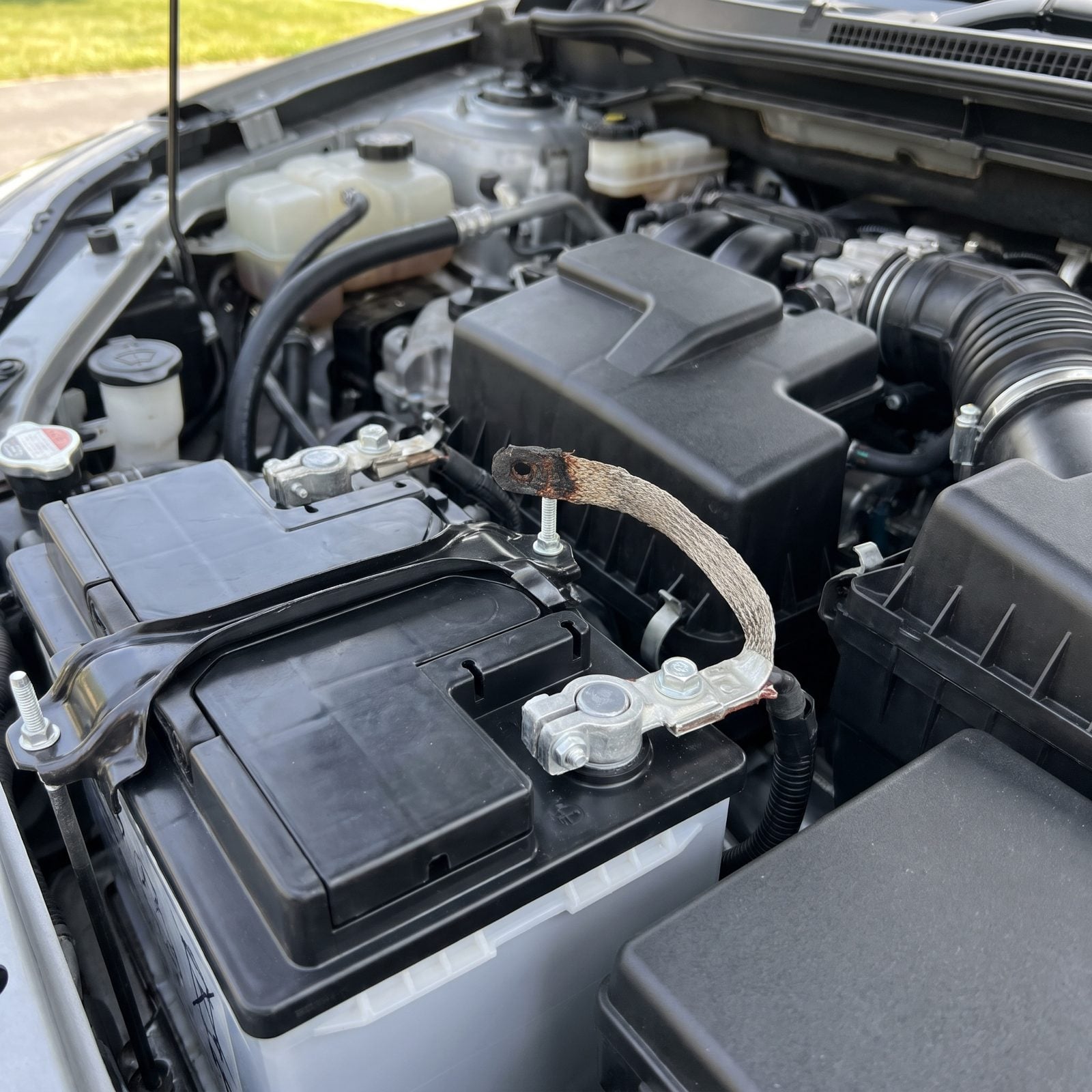
Every no-start gets blamed on the battery, and most of the time that’s a fair bet. Not always, though. A corroded ground strap, a failing starter, a bad ignition switch, or even a seized engine will all leave you turning a key to silence. Jumping a car that isn’t actually low on charge wastes your afternoon and teaches you nothing.
Spend five minutes with a cheap digital multimeter before you reach for cables. A healthy resting battery reads around 12.6 volts. Down near 12.0 or lower, it’s genuinely flat. But if it reads 12.4 and the car still won’t crank, your trouble lives somewhere else, and a jump won’t touch it.
6. Pulling the Cables Before the Revived Engine Settles
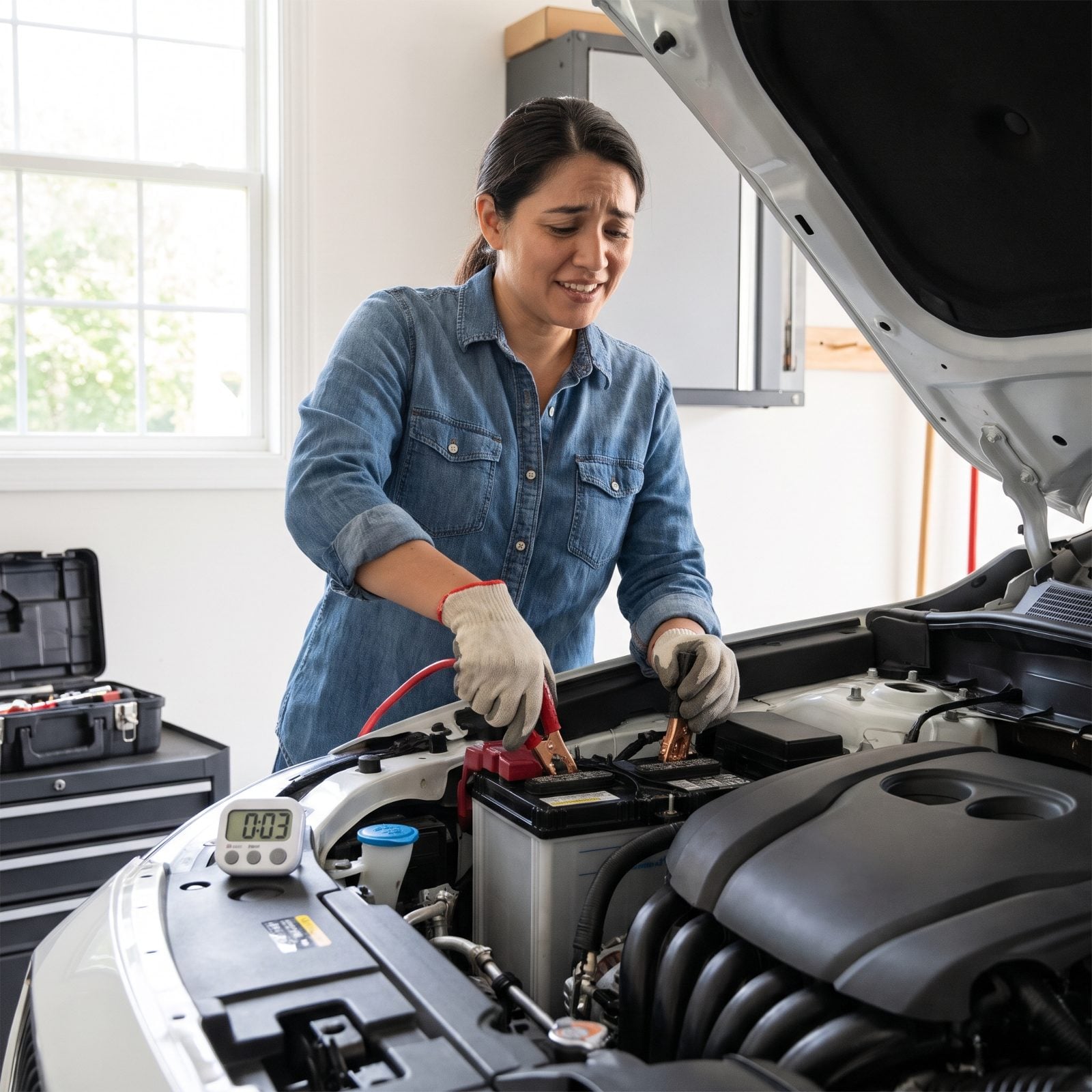
The engine turns over, you’re relieved, and the clamps come off a few seconds later. Too soon. A battery that was dead a minute ago is still nearly empty, and the alternator can only recharge it so fast. Unhook the support car while the revived engine is still finding its idle and it may stumble and stall the instant it loses that backup.
Let the newly started car run connected for a couple of minutes, until the idle smooths out and holds steady on its own. Only then remove the cables, and take them off one clamp at a time in reverse order, starting with the black ground clamp on the revived car.
5. Killing the Engine the Moment It’s Running

You got it running. Now leave it running. The urge to shut it off and congratulate yourself is the trap. That flat battery hasn’t recovered, so turn the key off now and there’s a good chance it won’t start again — back where you started, confused look and all.
Keep the engine running and let the alternator do its job. A car that just took a jump needs the charging system working for a while before the battery holds enough to crank on its own. Shut it off early and you’ve bought yourself a second round of cable-wrangling for no reason.
4. Shrugging Off the Battery or Charging Warning Light
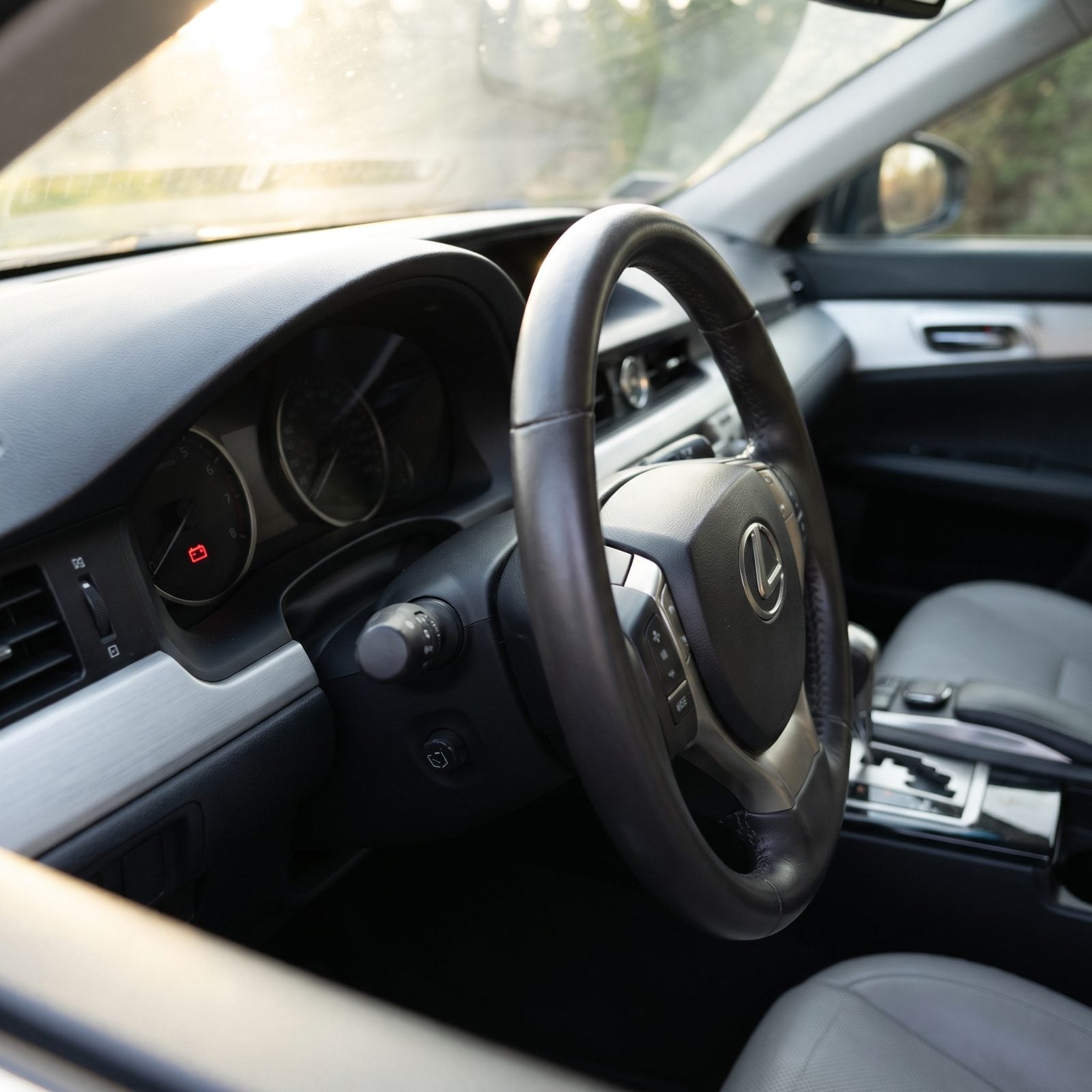
That little red or amber battery icon on the dash isn’t telling you the battery is low. It’s telling you the charging system isn’t keeping up — usually the alternator or the belt driving it. Ignore it and you’re running the whole car on the battery’s reserve, which empties in miles, not hours.
If that light stays lit after a jump, you don’t have a battery problem anymore. You have a charging problem, and no amount of jumping fixes it. Get somewhere you can park safely and have the alternator output tested before you end up stranded in a worse spot than the first one.
3. Jumping the Same Tired Battery Over and Over
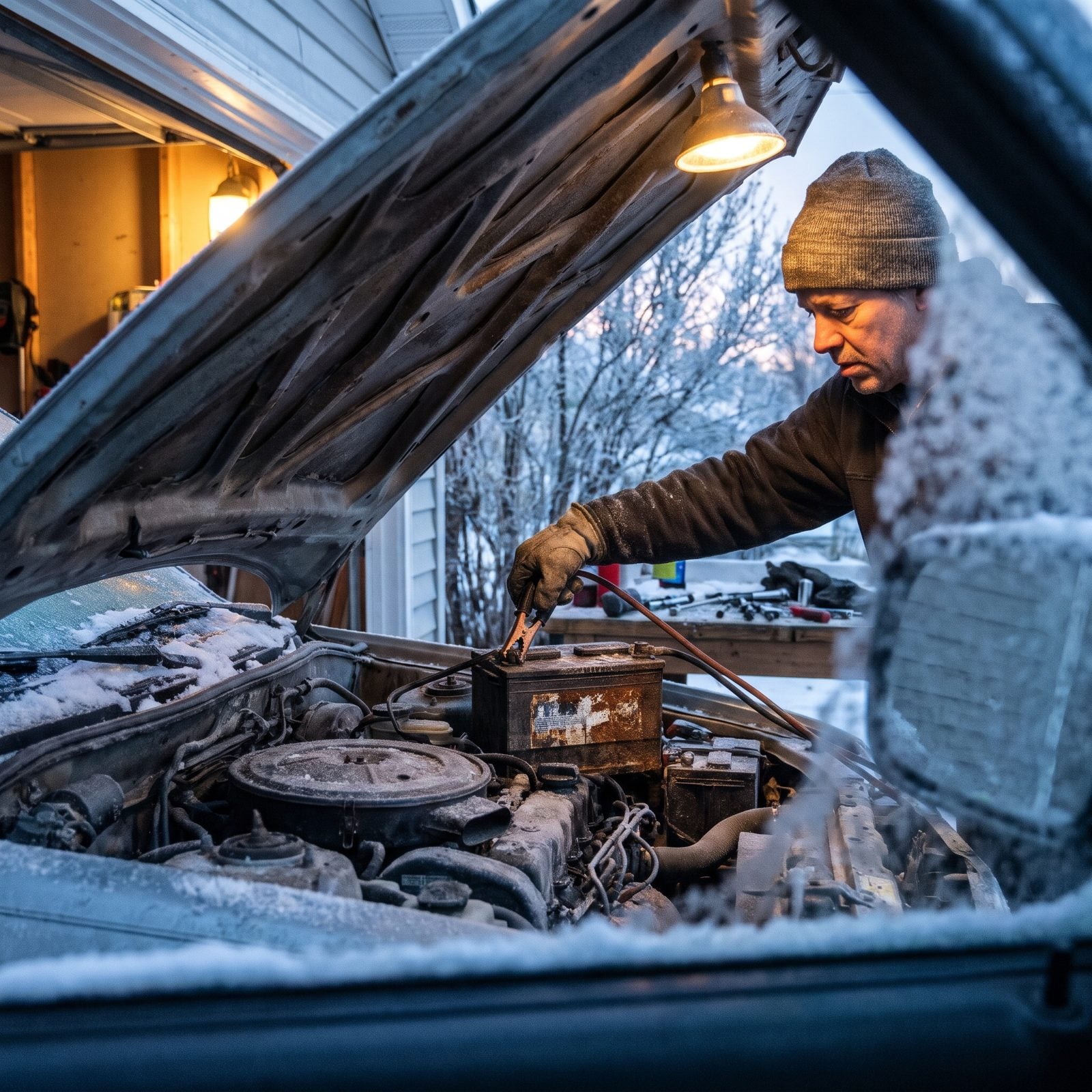
When a battery needs a jump every cold morning, it’s done talking. It’s shouting. A battery that won’t hold a charge overnight has a dead cell, sulfated plates, or it’s simply aged out — and no jump box on earth fixes that. Most lead-acid batteries give you a handful of years, fewer in brutal heat.
Crusty terminals, a swollen case, that rotten-egg whiff near the vents: all of it points one direction. Replacement. Keep jump-starting a battery like that and you’re not only delaying the inevitable, you’re leaning on your alternator to carry a load it was never meant to carry, which shortens its life too. Buy the battery. Walk away from the cables for good.
2. Pushing Through After a Clamp, Cable, or Battery Starts Smoking
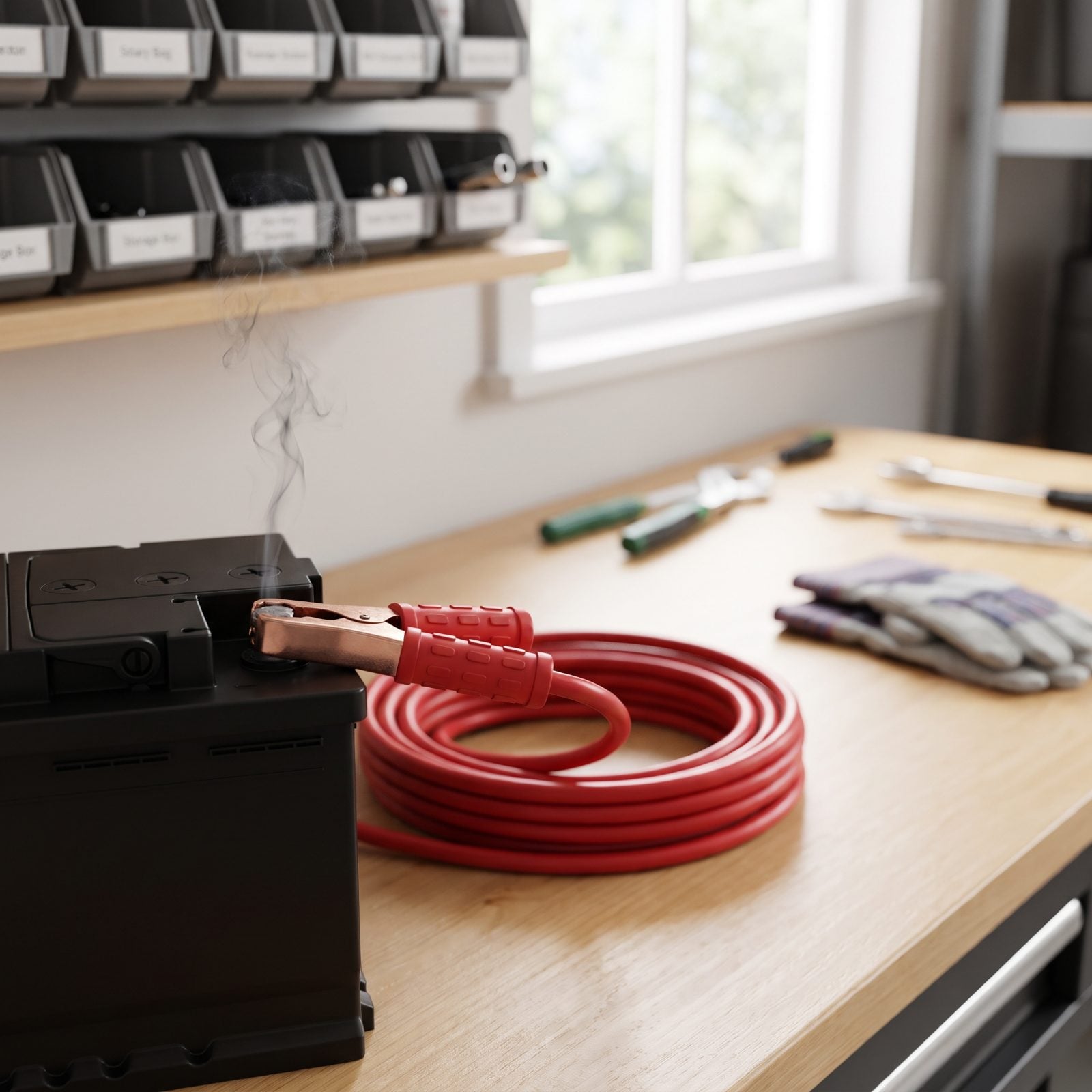
You hook up the cables, turn the key, and a thread of smoke curls off a clamp or the top of the battery. The temptation? One more crank, because you’re so close. Don’t. That smoke means current is going somewhere it shouldn’t, and it’s heating fast.
A smoking clamp usually means a bad connection arcing under load, or reversed polarity cooking a cable — while a smoking battery can mean an internal short or hydrogen venting, which is the setup for a genuinely ugly afternoon. Keep cranking and you’ll melt insulation, warp a terminal, fry an alternator diode, maybe crack a case.
Stop the second you see it. Kill both engines if one’s running, then pull the ground clamp first and work backward through the rest in reverse order. Let everything cool down before you check: clamps clean and tight on bare metal, polarity correct, cables not pinched anywhere. And a battery that’s bulged or hissing? That one gets replaced, not recharged.
1. Lighting a Cigarette or Working a Flashlight Flame Near the Terminals
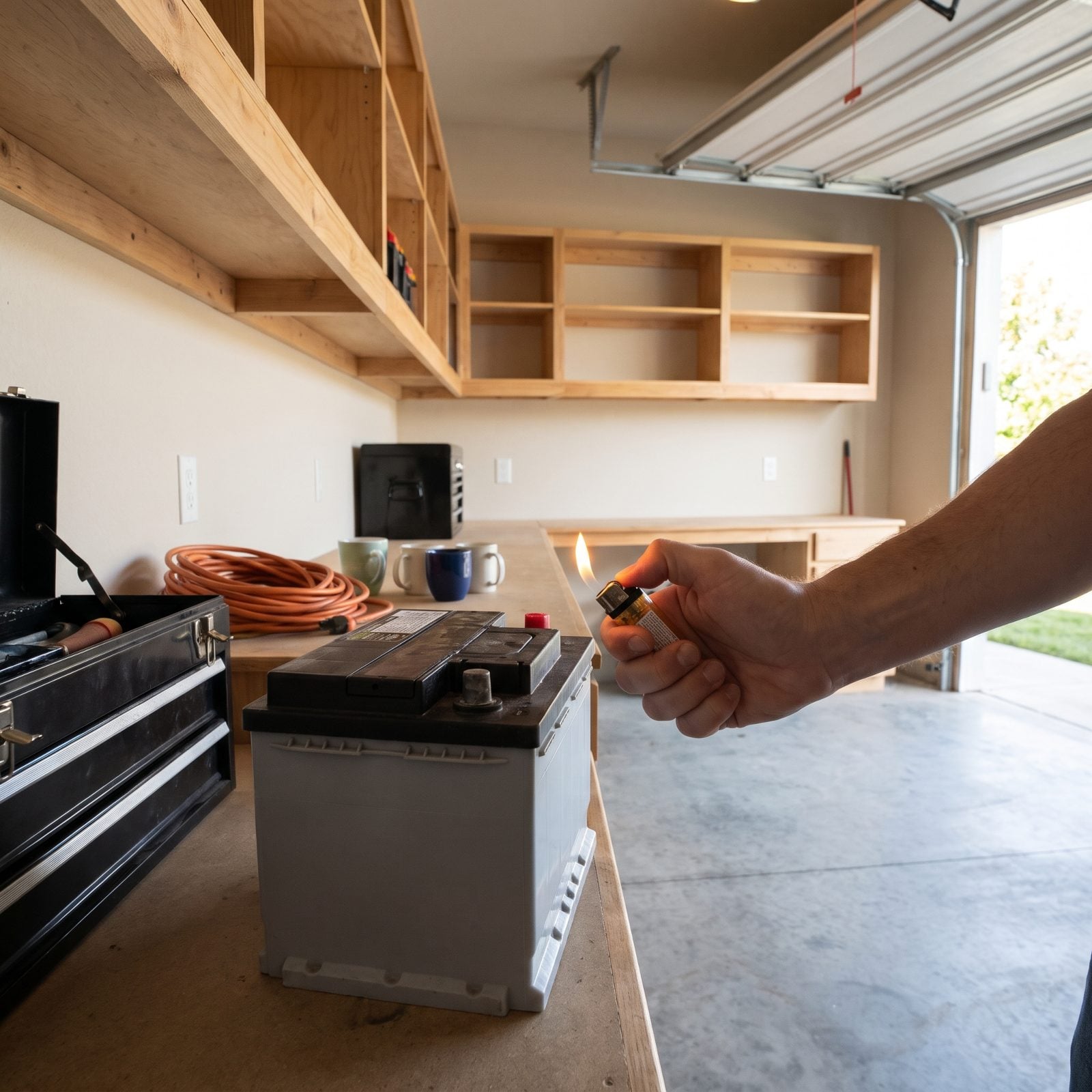
A charging or recently dead battery breathes out hydrogen, and hydrogen loves a spark. So lighting a smoke over the engine bay, or thumbing a lighter to see the terminals in a dim garage, is a bet you’ll lose eventually. The gas is invisible and odorless, pooling right where you’re leaning in.
It doesn’t take much. A stray flame, one careless spark off a clamp brushing bare metal, and a venting battery can flash and split wide open, throwing acid and casing. People have lost eyebrows over this. A few have lost a lot more.
Keep every flame out of the bay. Need light? Grab an LED work lamp or your phone’s flashlight — never a lighter. No cigarettes. No sparklers. Nothing burning within arm’s reach of the posts. And make the final cable connection on the dead car’s engine block or a solid chassis ground, well away from the battery, so any arc happens where there’s no gas waiting to meet it.