

The 3,000-mile sticker in your windshield is lying to you. It’s been lying for decades, and the quick-lube counter is banking on you not knowing that. Oil got smarter, engines got tighter, and the schedules changed right along with them. Most of the folklore rattling around in people’s heads — drain intervals, synthetics, dark oil, pressure gauges — is leftover from an era of straight-weight dino oil and carburetors. We dug into what actually breaks oil down, what those dashboard lights really measure, and where the old wisdom quietly went off the rails. Here’s the stuff worth un-learning.
Please note that some of the images in this article were created with the assistance of AI.
The 3,000-Mile Rule Died With the Carburetor
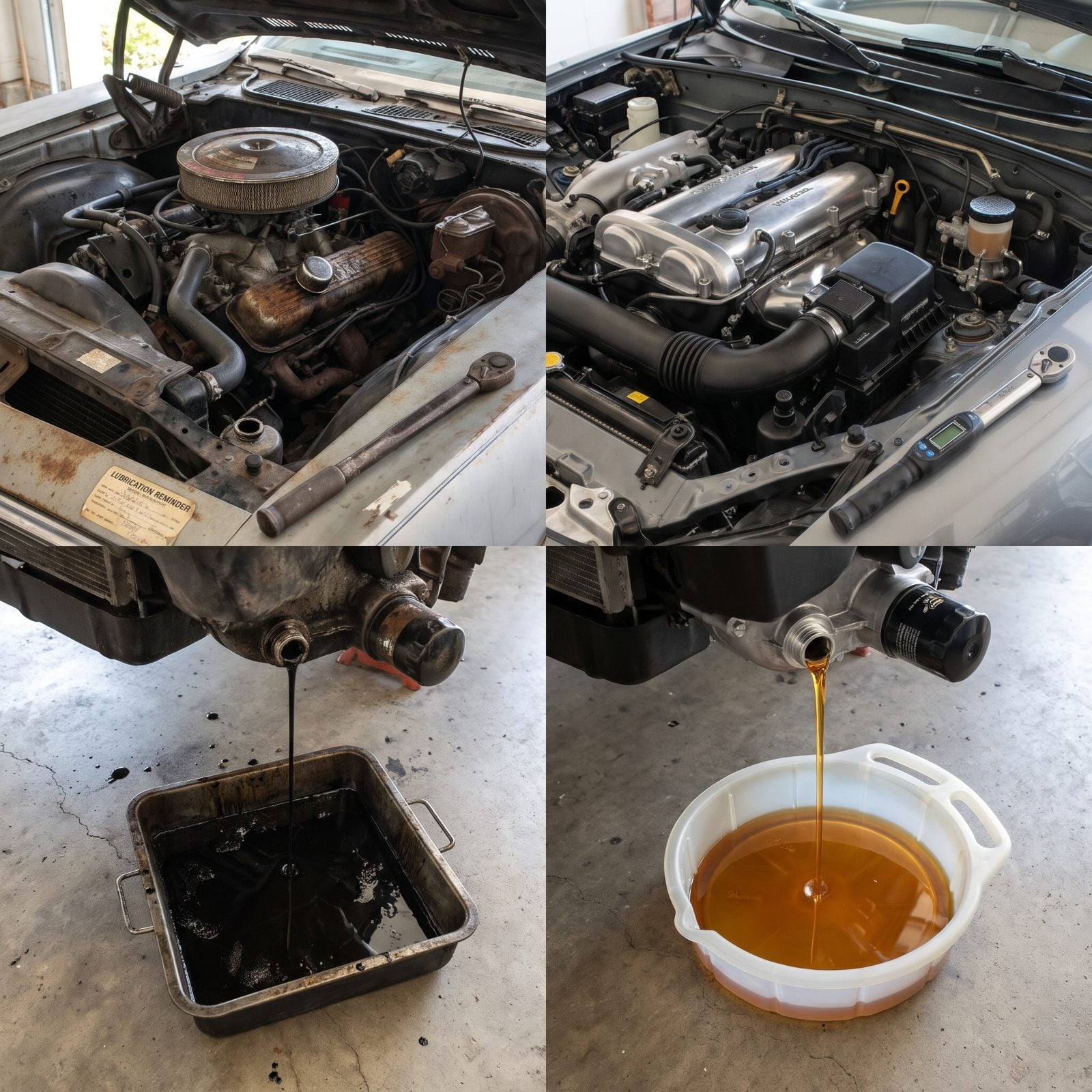
Three thousand miles made sense when your oil was straight 30-weight and your engine burned a little of the stuff just idling at a stoplight. That world is gone. Modern engines sip modern oil and routinely roll past 7,500 or even 10,000 miles, and plenty of carmakers print longer intervals than that right in the manual.
So why does the number stick around? Because it sells oil changes, plain and simple. Follow the figure your manual gives you — not the sticker some counter kid slapped on your glass.
Your Oil-Life Monitor Isn’t Dipping a Test Tube in the Pan

Here’s what people get wrong about that little oil-life percentage. It isn’t testing anything. No sensor is down there sniffing your crankcase for acid or soot. The computer runs an algorithm — counting engine revolutions, temperatures, cold starts, idle time, load — and estimates how worn the oil probably is.
Smart guess. Usually a good one too. But it’s a guess built on driving conditions, not a chemistry read. Tow heavy or crawl through traffic all summer and the monitor adjusts accordingly. What it can’t do is see a contamination problem it was never programmed to predict.
Highway Cruising Is the Easiest Life an Engine Gets

This myth runs backward. People figure steady highway speed must punish oil because the engine’s going flat out. But it isn’t working hard — it’s working steady, and steady is precisely what oil loves.
At cruising speed the engine hits full operating temperature and just holds it there, mile after mile. That heat cooks off the fuel and water that sneak into the oil and keeps condensation from pooling. A long highway run is about the kindest treatment a crankcase will ever see.
Short Trips Quietly Wreck Oil Faster Than Anything
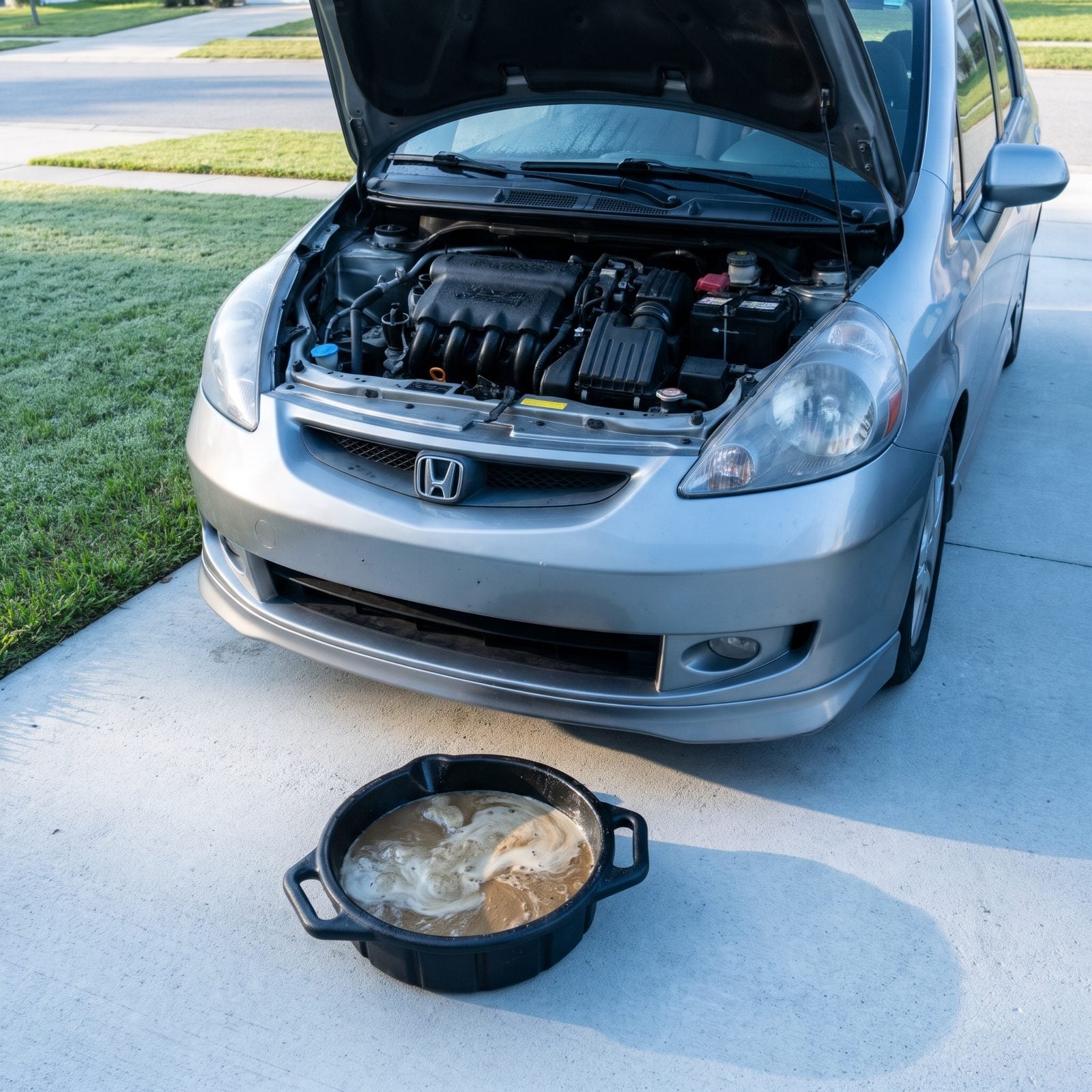
A two-mile run to the store feels harmless. It’s actually one of the worst things you can do to your oil, and nearly every mechanic will tell you so.
The engine never gets hot enough to boil off the condensation and raw fuel that pile up during a cold start. That moisture meets combustion byproducts and turns into acids and sludge. Do it twice a day for a year and your oil ages like it covered serious highway distance, even if the odometer barely budged. Classic case for a severe-service interval — no trailer required.
Idling in the Driveway Is Aging Your Oil Right Now
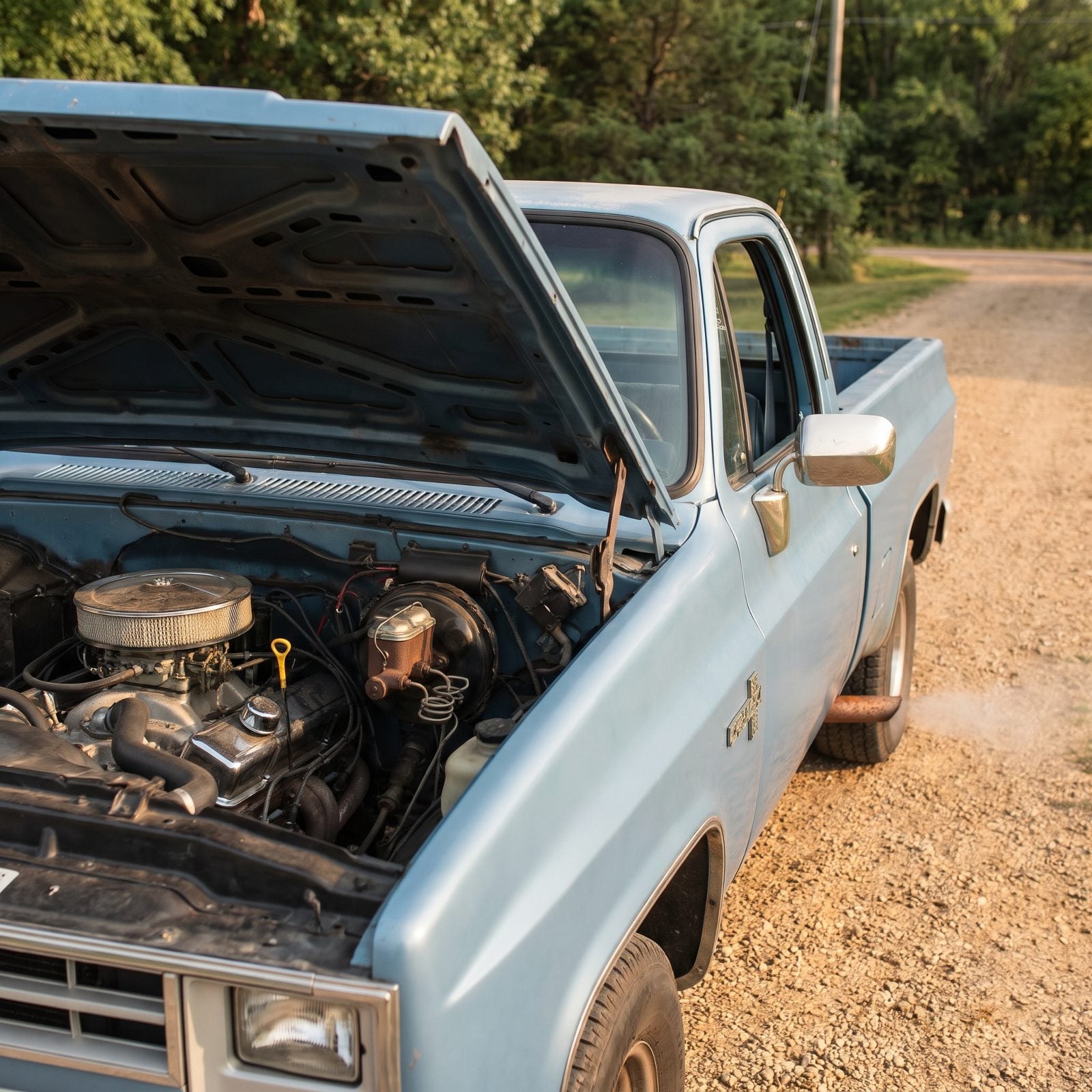
Idling counts as running time, wheels or no wheels. Plenty of folks figure an engine sitting at idle is basically catching its breath. Nope.
At idle the engine runs cool — often too cool to clear moisture — and fuel can wash past the rings and thin the oil out. Warm-up sessions on a cold morning, long drive-thru waits, the heater running while you dig for your wallet, it all stacks up. The odometer shows zero for all of it. Your oil begs to differ.
The Garage Queen Still Needs an Oil Change on the Calendar

Drive 2,000 miles a year and skipping oil changes for ages feels reasonable. Time breaks oil down whether the car ever leaves the garage or not.
Oil pulls moisture out of the air, additives settle and lose their punch, and acids from whatever little combustion did happen keep gnawing at metal. Most manufacturers list a time limit right beside the mileage figure — usually somewhere between six months and a year. For a low-mileage car, the calendar is the number that counts. Plenty of collectors have learned this the hard way, pulling dipsticks that looked more like weak coffee than motor oil.
Synthetic Isn’t a Magic 10,000-Mile Pass
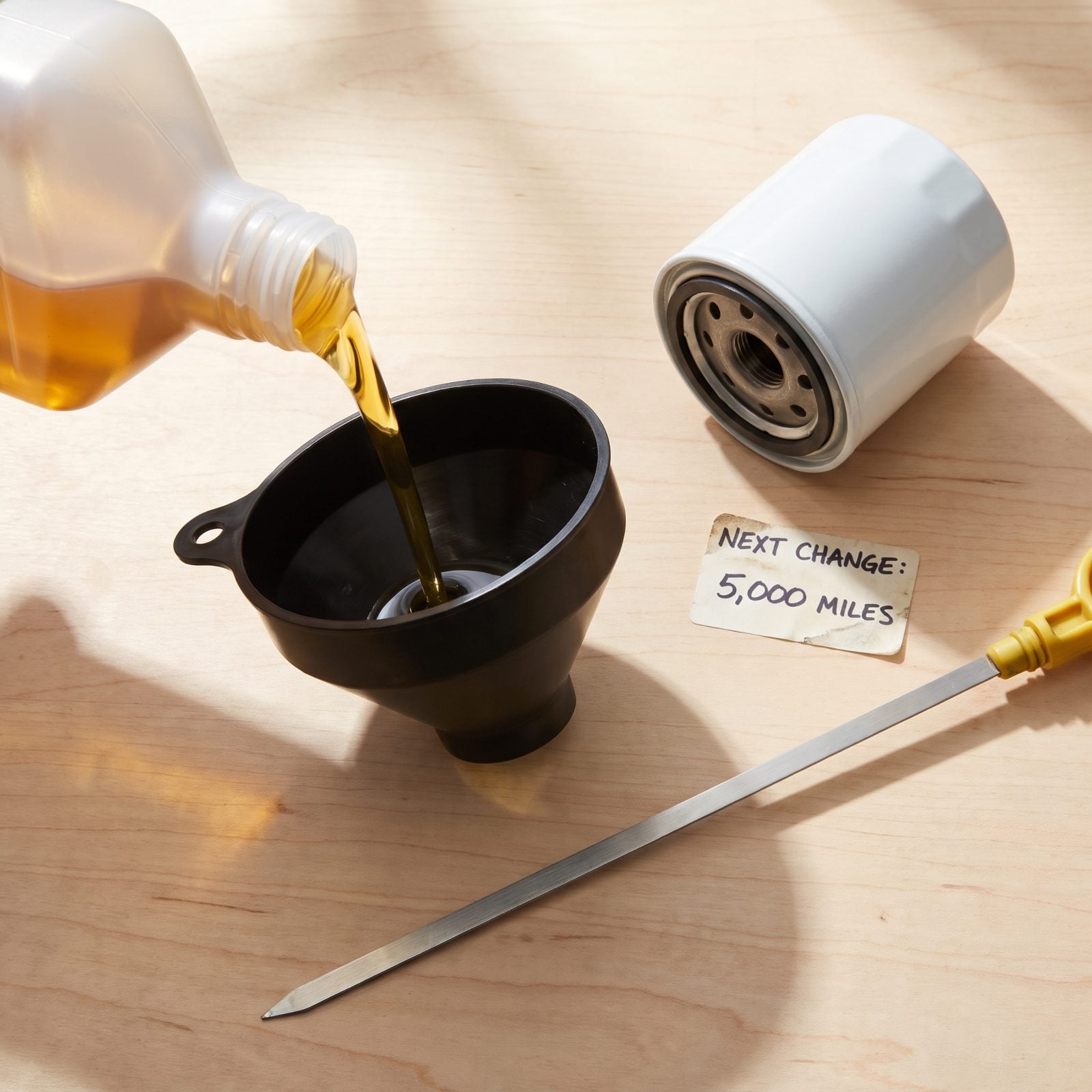
Synthetic oil is better, no argument. It shrugs off heat, resists breakdown, and flows when it’s bitter cold. None of that hands you a guaranteed ten grand between changes.
Your real interval comes down to the engine, the driving, and the oil’s own rating. Some synthetics are good for 7,500, some for 15,000, some longer still — every one of those numbers tied to specific conditions. Pour a long-life synthetic into a hard-idling delivery van and it’ll still age in a hurry. The bottle sets the ceiling. Your driving sets the number you actually get.
Severe Service Isn’t Just for the Trailer Crowd
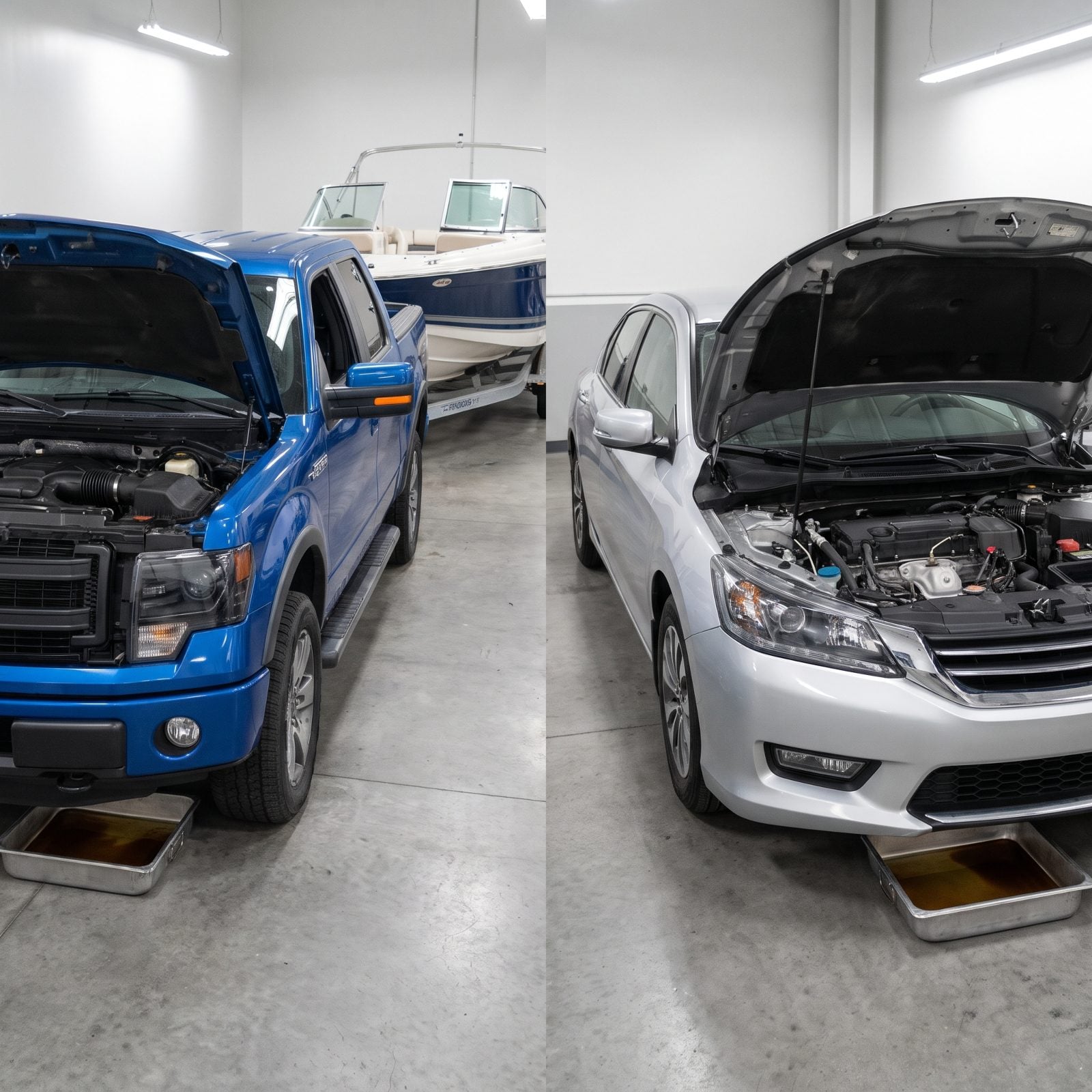
Flip to the back half of your owner’s manual and you’ll find a second, shorter maintenance schedule. Most people assume it’s reserved for folks dragging trailers up mountain grades. Wrong — and expensively so.
Severe service covers short hops, heavy idling, dusty roads, brutal heat or cold, and endless stop-and-go. Which is to say, how most of us actually drive. A six-mile crawl through city streets to work? Congratulations, you’re the severe-service driver, trailer or not.
The normal schedule is written for a driver who almost doesn’t exist: long, steady trips at full operating temperature, every time.
Dark Oil Is Doing Its Job, Not Quitting It
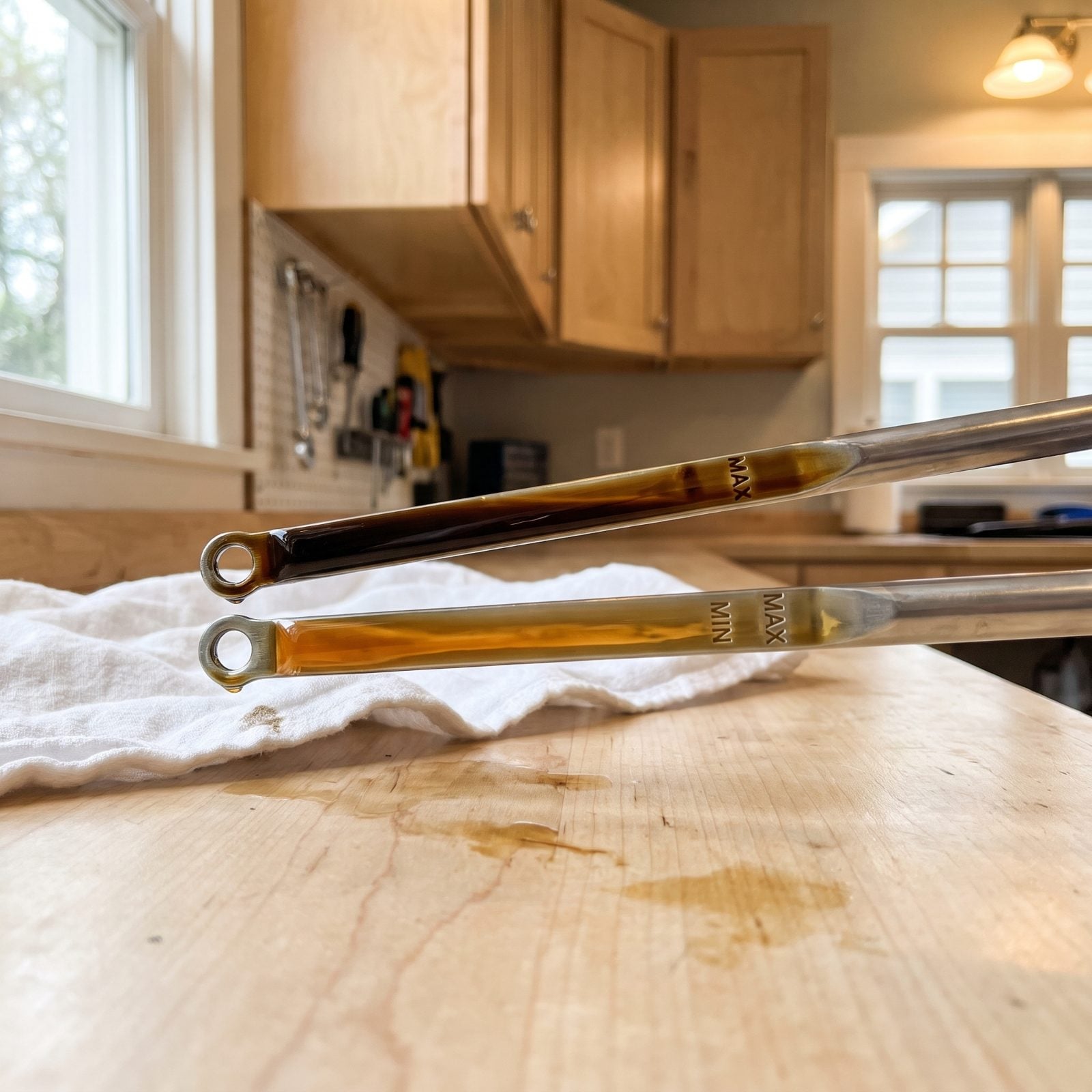
Pull the dipstick, see dark oil, panic. But color tells you almost nothing about whether the oil is finished.
Oil goes dark because detergent additives are grabbing soot and carbon and holding them in suspension, which is exactly their job. Clean-looking oil might actually mean weak detergents, or just an engine that burns remarkably tidy. On a healthy diesel or direct-injection motor, the darkening can start inside a few hundred miles. Real condition comes from an oil analysis, not from squinting at the stick.
The Oil-Pressure Gauge Measures Flow, Not Freshness
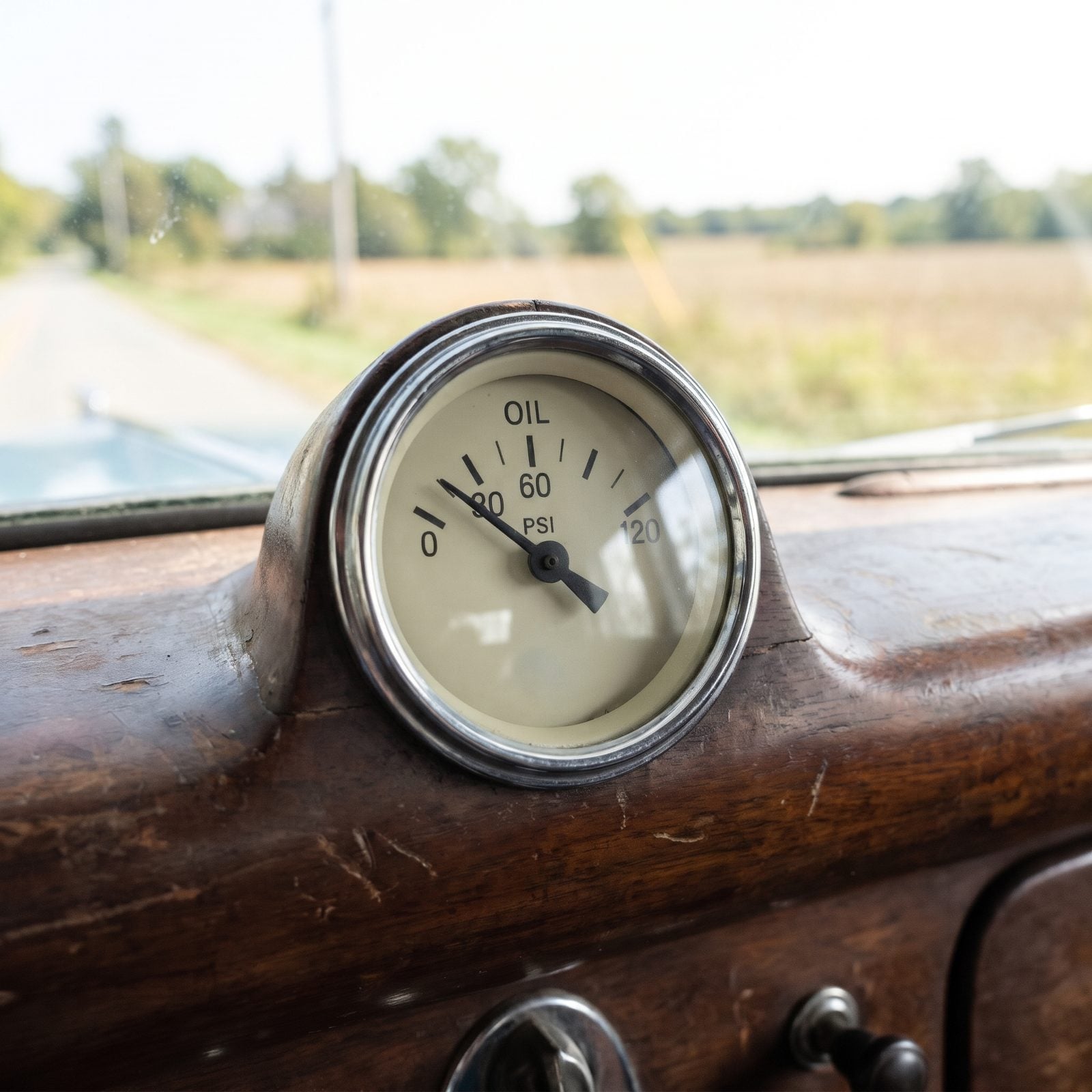
That pressure needle feels like a health readout for your oil. It isn’t. All it reports is that the pump is shoving oil through the engine at the right pressure — nothing about how worn or dirty that oil has gotten.
Pressure holds steady right up until something’s badly wrong: a failing pump, worn bearings, oil gone too thin from fuel dilution. And by then? The oil was shot a long time ago. A steady reading means the system is circulating, nothing more. Treat it as a clean bill of health and you’ll run an engine dry of real protection long before that needle ever drops to the bottom peg.
Myth 1: Synthetic Oil Will Spring a Leak in Your Old Engine
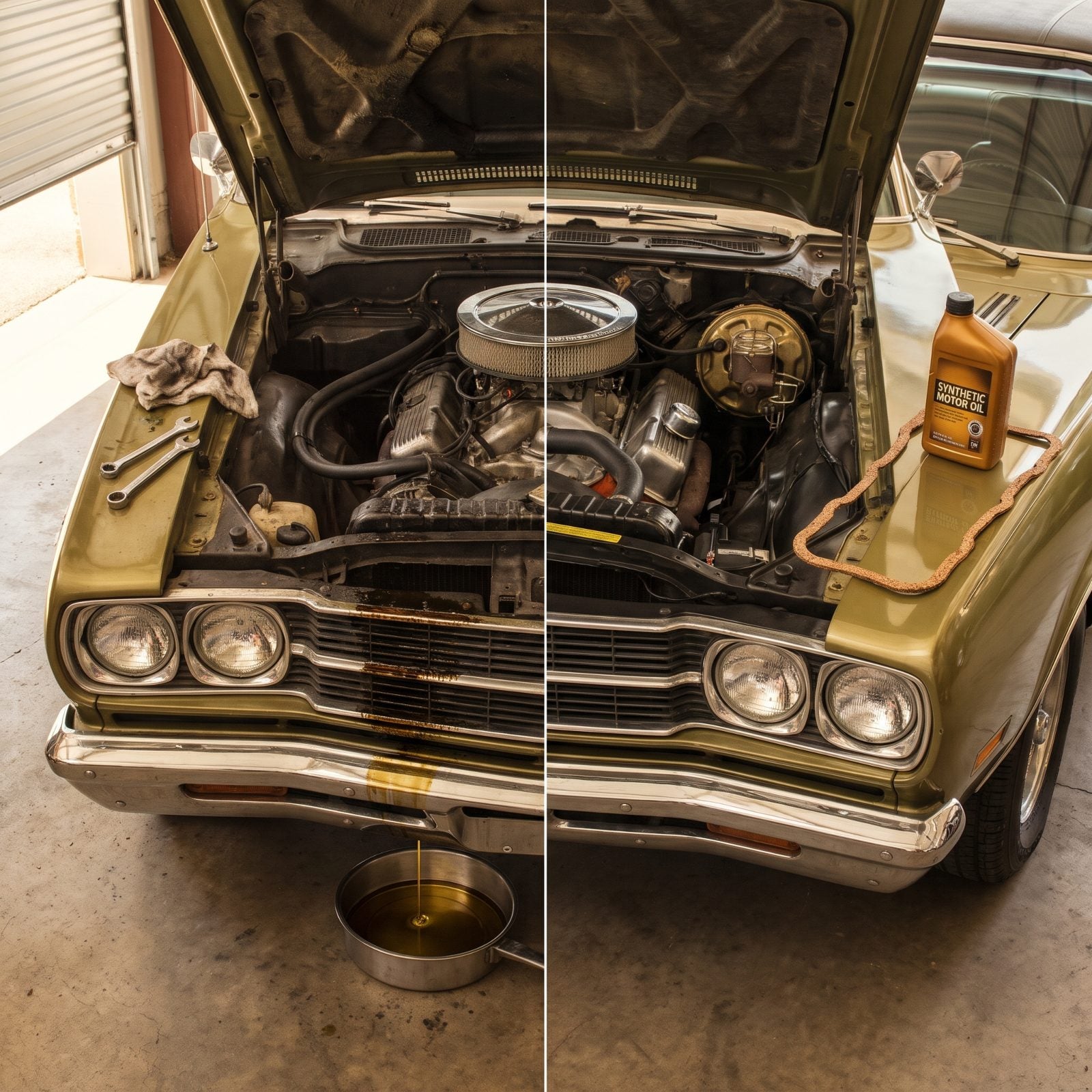
Synthetic doesn’t dissolve your seals. The myth comes from the early days, when some synthetics used ester-based chemistry that could shrink certain older gasket materials — a formulation problem fixed decades ago.
Here’s what actually happens. Synthetic flows better and cleaner, so it finds a seal that was already failing and barely held together by sludge. Switch over, the sludge thins, and the leak that was always coming shows up a little sooner. The oil didn’t cause it. It just found it.
Myth 2: Switch to Synthetic and You Can Never Go Back

This one has no mechanical basis whatsoever. Synthetic and conventional are fully compatible — run synthetic this change, conventional the next, and nothing inside the engine knows or cares.
The idea probably stuck around because folks figured switching back meant losing some protective coating the synthetic left behind. There is no coating. Oil is a fluid that drains out when you change it, and every drop leaves with the old filter.
Run what your budget and your manual call for. The engine files no complaint either way.
Myth 3: Synthetic Oil Makes Sludge Impossible
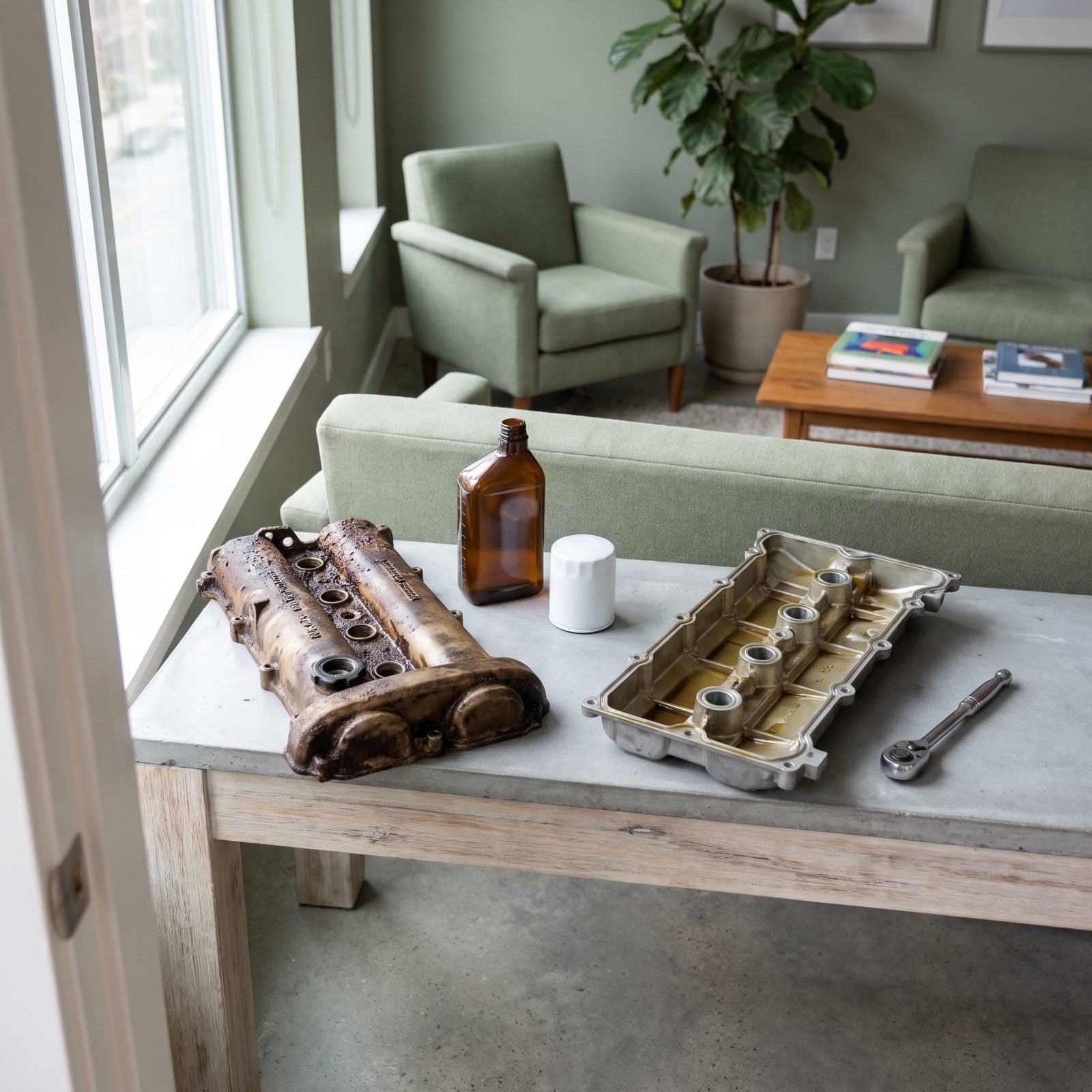
Synthetic resists sludge far better than conventional. It does not make sludge impossible. Those are two different claims, and the gap between them has wrecked plenty of engines belonging to people who stretched their intervals because they figured the good oil had them covered.
Sludge forms when oil breaks down from heat, moisture, and time. Short trips that never warm the engine fully are the worst offender, synthetic or not — skip enough changes on brutal stop-and-go driving and even top-shelf synthetic cooks into varnish.
Myth 4: A Synthetic Blend Is Always Half-and-Half

“Blend” sounds like a tidy fifty-fifty split. It isn’t, and there’s no rule saying it has to be.
A synthetic blend can run anywhere from a modest splash of synthetic base to a heavy majority, and the manufacturer isn’t required to print the exact ratio on the bottle. Two blends sitting on the same shelf can protect very differently.
Not a scam, just vague marketing. Want a known quantity? Buy full synthetic and stop guessing what’s in the jug.
Myth 5: All Full-Synthetic Oils Are Basically the Same Stuff

“Full synthetic” tells you less than you’d think. The base oils come from different processes, and the additive packages vary a lot from one product to the next. That’s where the real differences live — detergents, anti-wear compounds, friction modifiers, how long they hold up under heat.
Two bottles both marked full synthetic can post different wear numbers and different oxidation resistance. What actually matters is the API service rating and any automaker approvals printed on the bottle, not the word synthetic by itself.
Myth 6: You Must Switch to High-Mileage Oil at 75,000 Miles
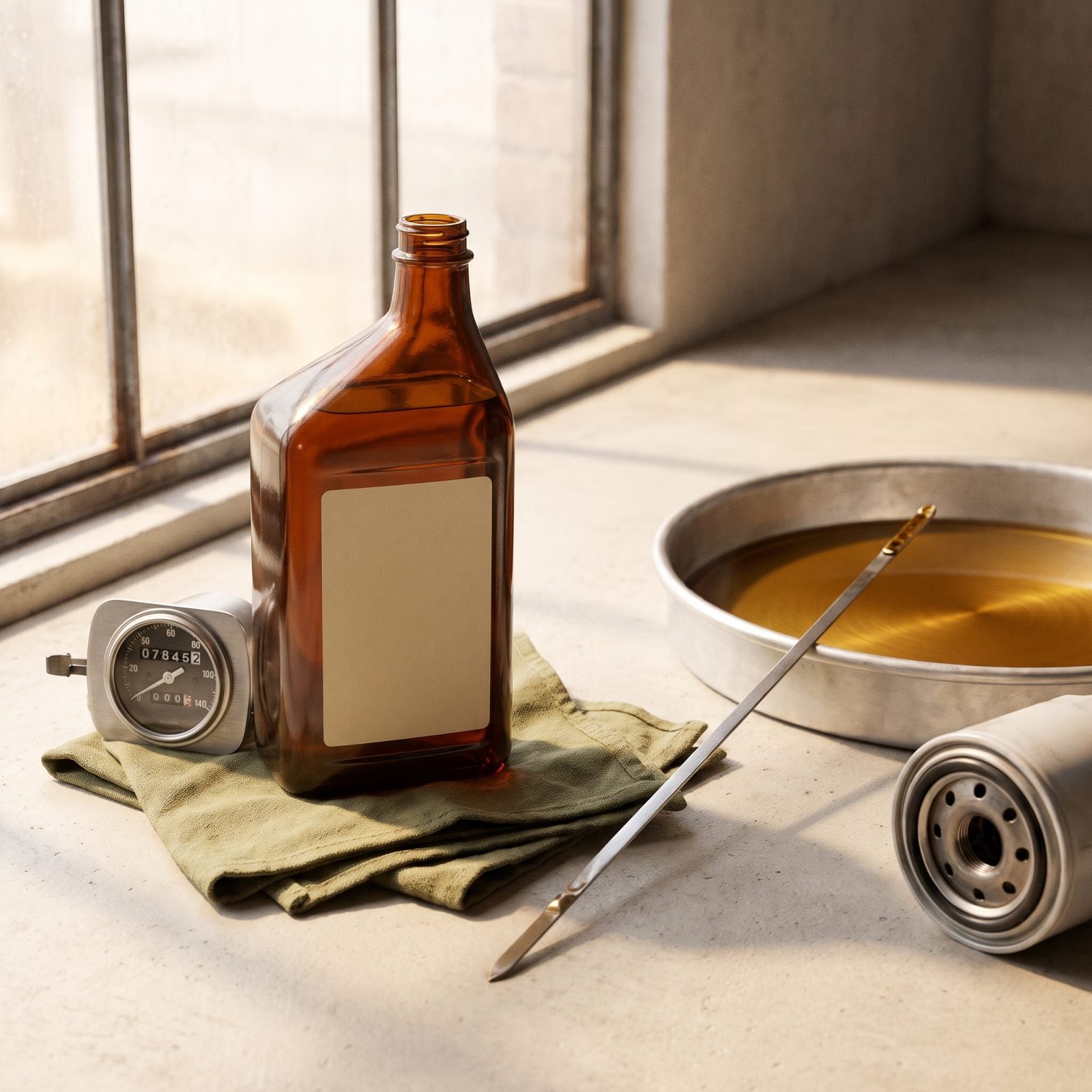
Seventy-five thousand is a nice round number somebody made up. No odometer reading exists where regular oil quits and high-mileage oil kicks in.
High-mileage formulas carry extra seal conditioners and sometimes a hair more viscosity to help worn engines that are burning or weeping a little oil. If your engine runs clean, stays full between changes, and leaves no spots on the driveway, you don’t need it at 75k or 150k.
Buy it when your engine shows a reason, not when the odometer hits a milestone.
Myth 7: High-Mileage Oil Fixes Old Seals for Good
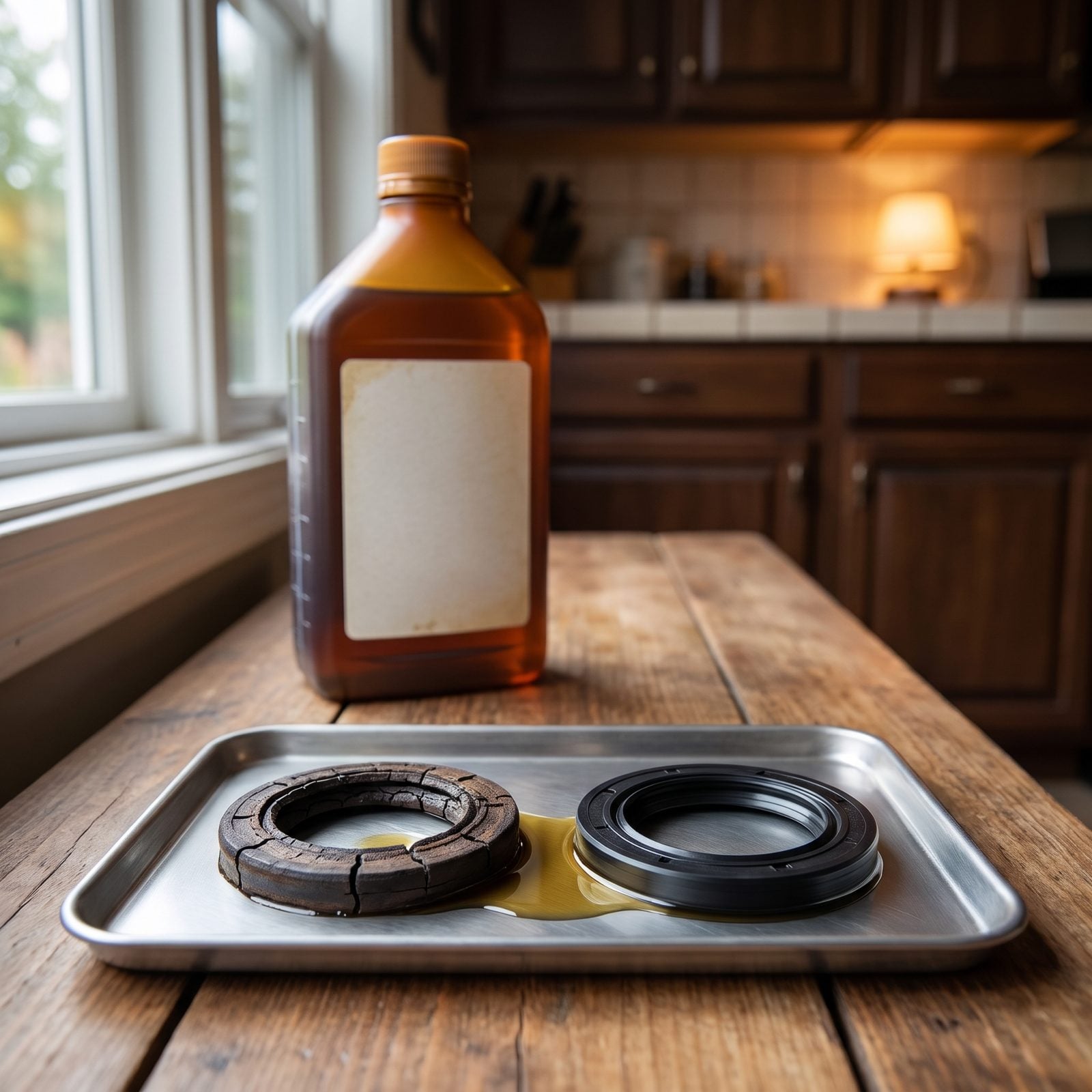
High-mileage oil conditions seals. It does not repair them. The additives help dried rubber swell back and stay flexible, which can slow or quiet a minor leak. That’s a treatment, not a cure.
A cracked or torn seal is a mechanical failure. No oil poured in the top is reaching down to glue it back together, and if the leak keeps coming after a few thousand miles on high-mileage oil, the seal needs replacing, full stop.
Mechanics see people pour bottle after bottle into a rear main seal that was flat gone. The oil was never the problem, and it was never going to be the fix.
Myth 8: You Have to Use the Automaker’s Own Brand of Oil
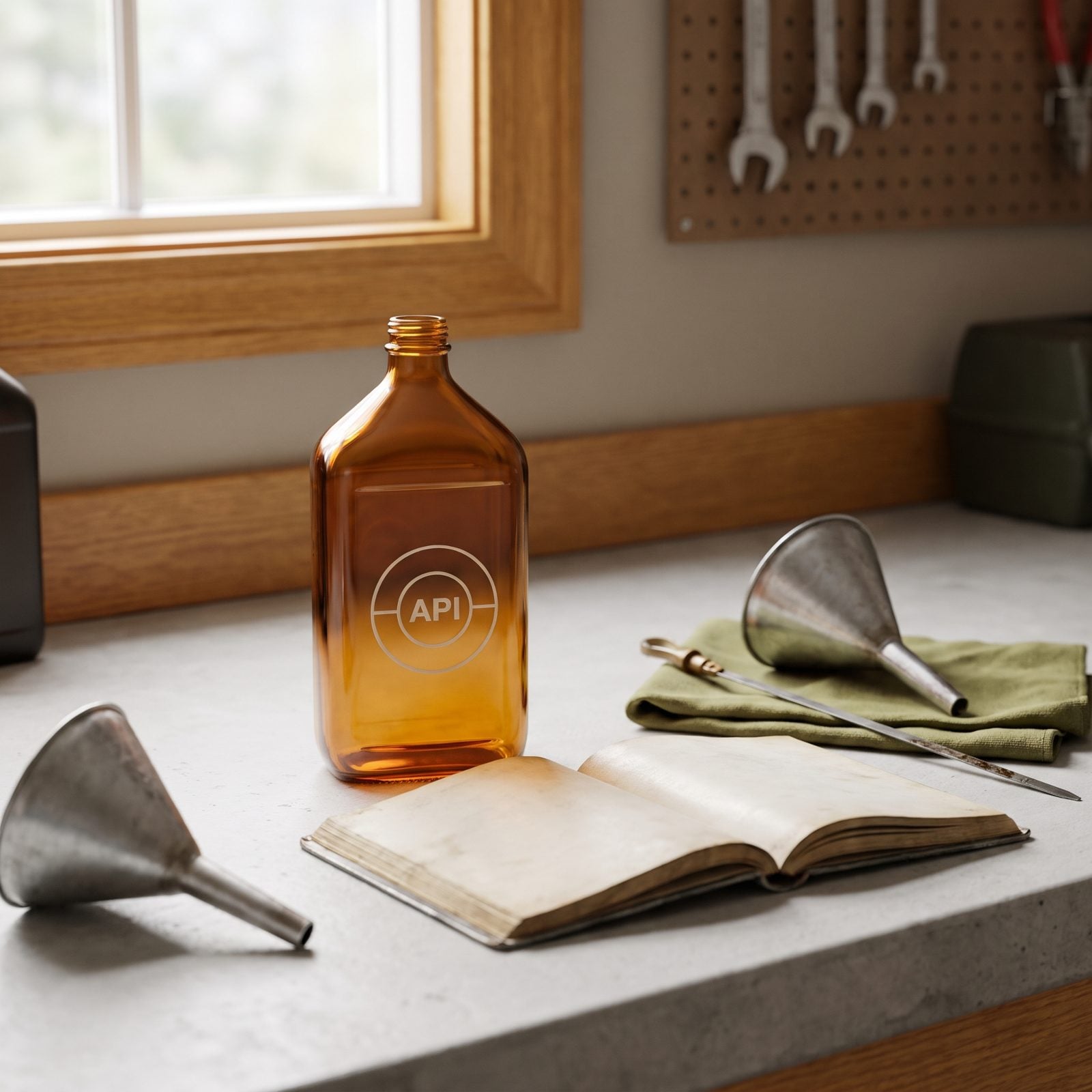
Dealers love this one. Any oil that meets your manufacturer’s specification protects your engine and keeps your warranty intact — that’s federal law, not a courtesy.
The spec is what counts, not the badge on the bottle. If your manual calls for a certain viscosity and a certain approval code, any oil carrying that approval qualifies. The automaker’s branded oil is usually just a major oil company’s product in a different jug.
Myth 9: Mixing Two Oil Brands Turns Into Sludge

Pour two brands of the same viscosity and spec together and nothing dramatic happens. Motor oils are built to a shared industry standard, and the additive packages are designed to get along — no curdling, no sludge, no chemical fight in your crankcase.
Topping off a quart low with whatever’s on the shelf is completely fine. Smarter, honestly, than driving around low because you couldn’t find your usual.
Where you’d want to be careful is matching the viscosity grade. That’s the number that counts, not the name.
Myth 10: Mixing Viscosities Wrecks the Engine on Contact

Add a quart of 5W-30 to an engine running 5W-20 and nothing grenades. The mixture settles into something between the two grades, and for a top-off in a pinch, that’s harmless.
The real issue is long-term and specific. Modern engines with tight tolerances and variable valve timing get calibrated for an exact grade, and running the wrong one as your steady diet can nibble at fuel economy and timing performance over time. One emergency quart of the wrong number won’t hurt a thing.
Get it right at your next full change. Panicking over a single mismatched quart is wasted worry.
That W in 5W-30 Has Nothing to Do With Weight

The W stands for winter. Not weight. That single letter has started more parts-counter arguments than anything else on the bottle.
A 5W-30 behaves like a 5-weight when it’s cold and a 30-weight once the engine warms up. The first number tells you how it flows on a frigid morning at startup; the second tells you how it holds up at operating temperature. Multigrade oil pulls off both tricks thanks to additives that keep it from thinning out too much when hot.
Knowing this changes how you read the grade. Lower first number, better cold starts. It’s a spec, not a trade name.
0W Oil Is Not Too Thin to Protect a Hot Engine
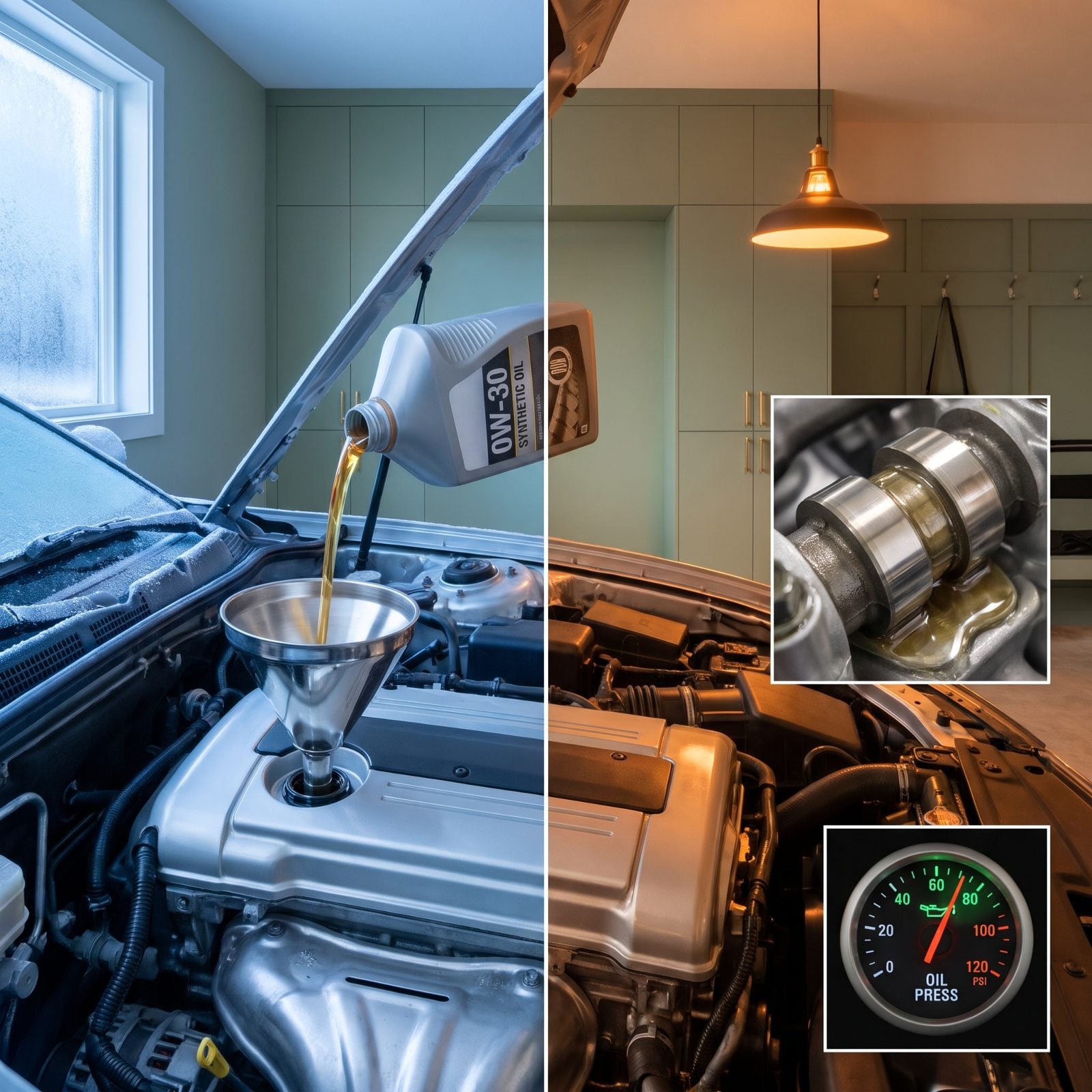
People hear 0W and picture water sloshing around hot bearings. That’s not what the number means.
A 0W-30 flows fast when cold — exactly when most engine wear actually happens, those first seconds before oil reaches the top of the engine. Once warm, that same oil protects like any other 30-weight, because the hot-temperature viscosity is set by the second number, not the first.
Modern tight-tolerance engines were designed around these thin cold-start grades. Fight the spec here and all you buy is more wear on cold mornings.
Thicker Oil Does Not Automatically Mean Better Protection
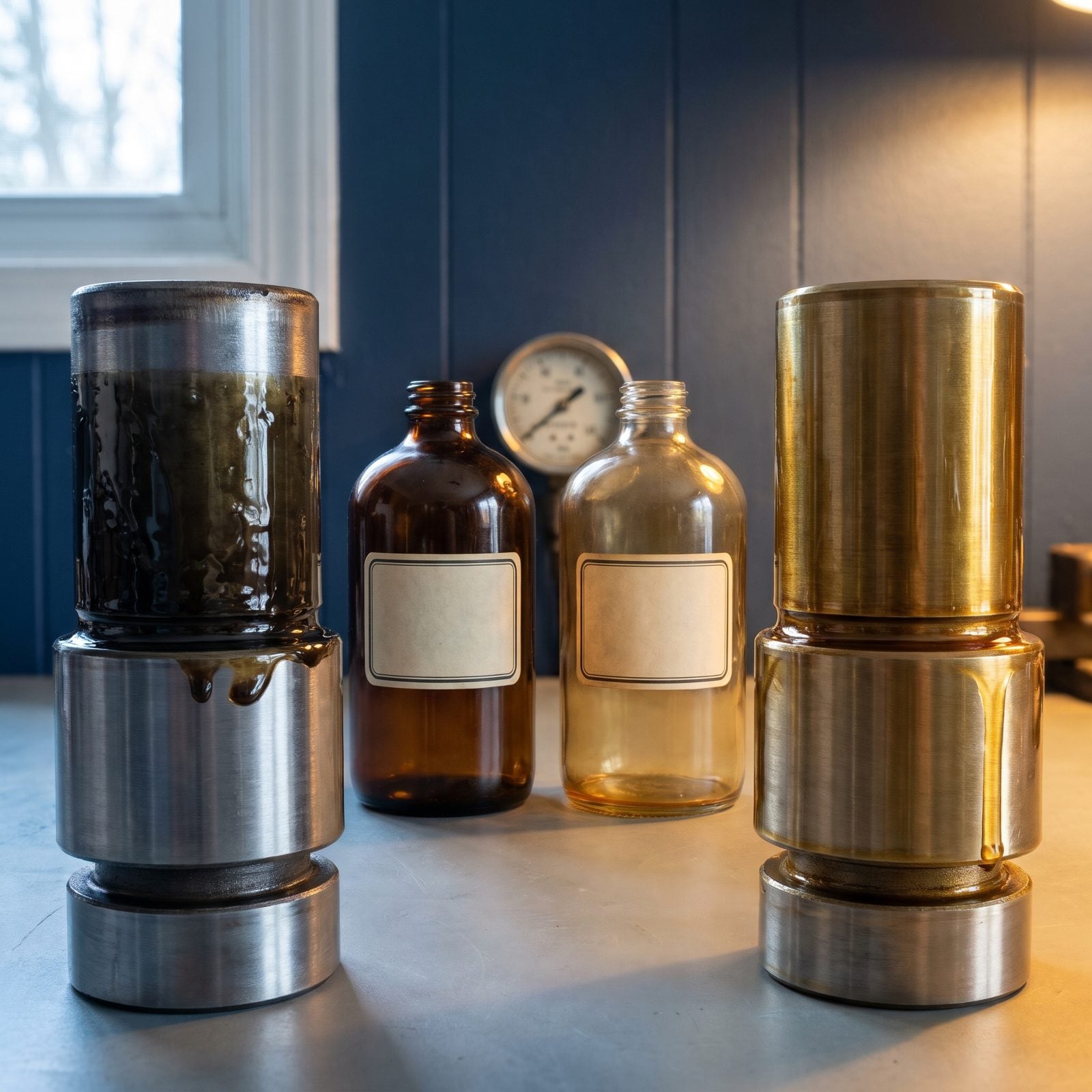
The logic sounds airtight. Thicker oil, thicker cushion, less wear. And it’s wrong often enough to matter.
Oil that’s too heavy for an engine doesn’t pump fast enough to reach the tight spots, especially at cold start and up top in the valvetrain. It runs hotter, robs a little power, and in some modern engines it starves the very parts it’s supposed to guard. Variable valve timing systems are especially fussy — they rely on oil flowing at a designed rate.
The engineers who built your engine ran the numbers on clearances you’ll never see. The grade buried on page whatever of the manual isn’t a figure they tossed out carelessly.
A Hot Climate Doesn’t Mean You Should Bump Up the Grade
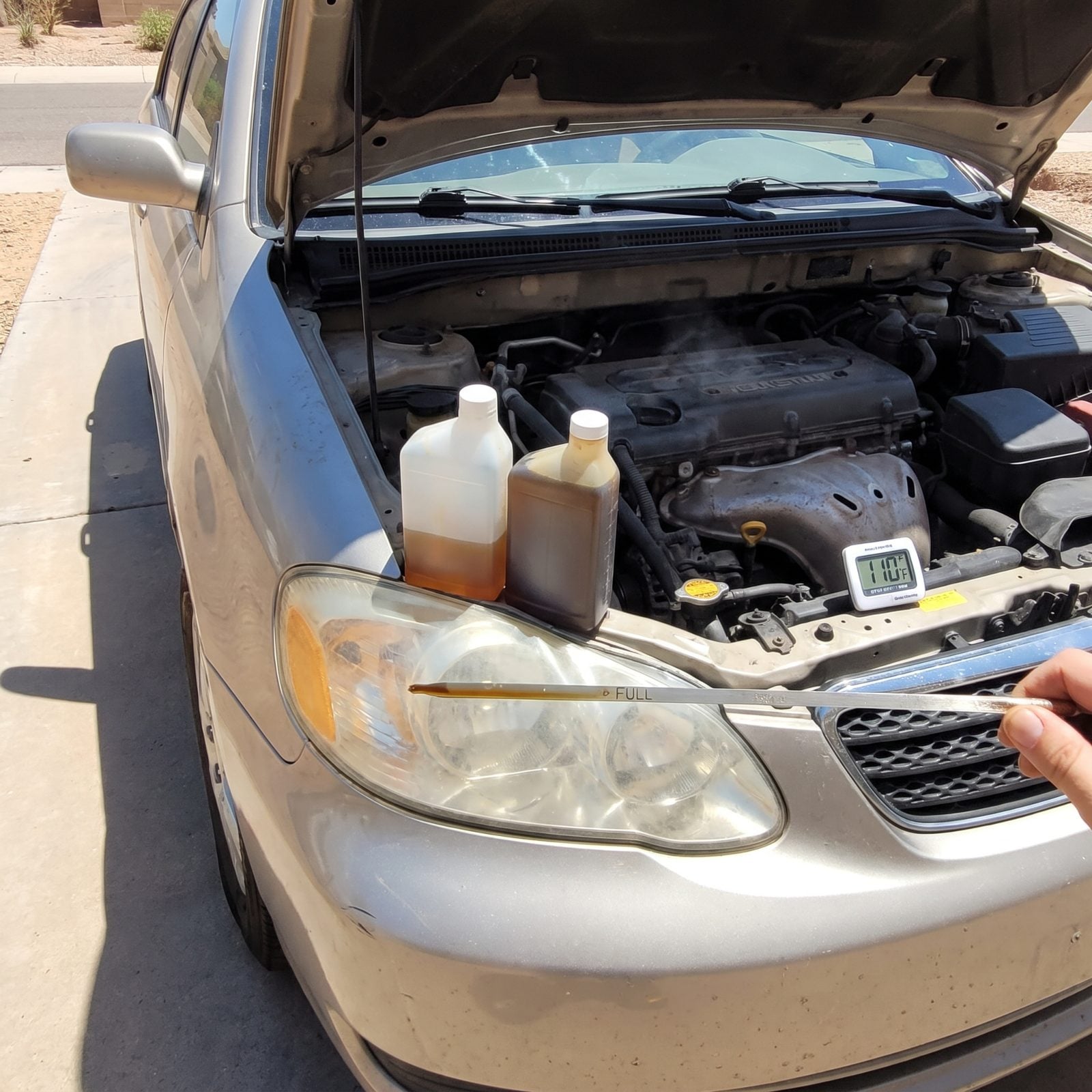
The old summer-grade habit dies hard, especially down south. Hotter outside, heavier oil, right? Not anymore.
Your engine runs at roughly the same operating temperature in Phoenix as it does in Portland, because the cooling system pins it there, and the oil’s hot viscosity is already chosen for that. What changes between climates is the cold-start grade — which is why northern drivers lean lighter, not why desert drivers should go heavier.
If the manual lists one grade for a wide temperature range, honor it. The manufacturer tested that oil in heat you’d never want to sit in.
Racing Oil Will Quietly Wreck Your Daily Driver
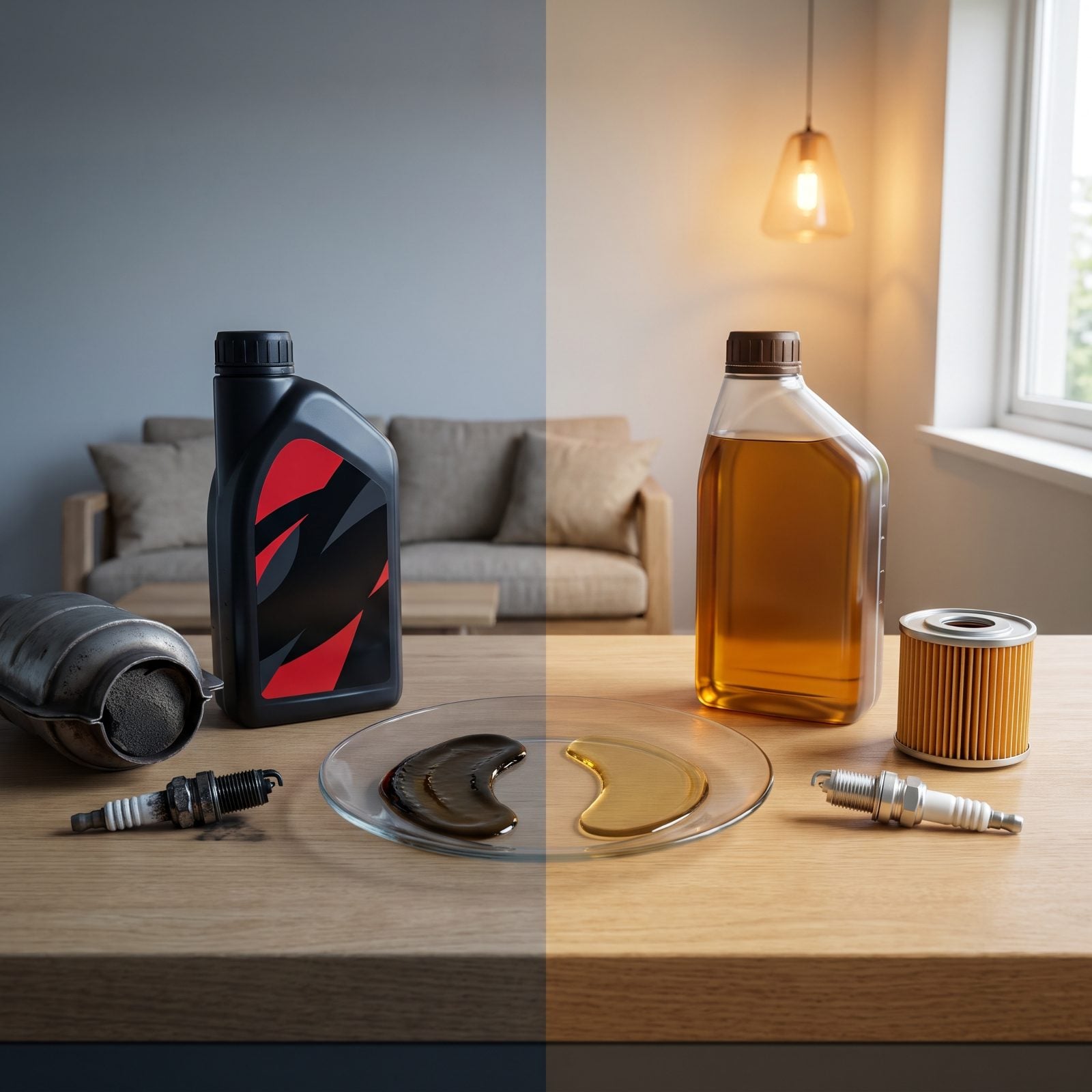
Racing oil feels like an upgrade. The bottle looks serious, the name promises performance, and on a street car it’s usually a step backward.
Plenty of racing oils skip the detergents and long-life additives your daily engine needs, because a race motor gets fresh oil constantly and never crawls through stop-and-go traffic. Run that oil for thousands of miles of commuting and sludge builds, seals suffer, and the high additive loads can foul your emissions hardware.
Race engines live hard and get torn down often. Yours needs to start cold, idle in traffic, and last a decade. Different jobs, different oil.
Diesel Oil Is Not a Free Upgrade for Your Gas Engine
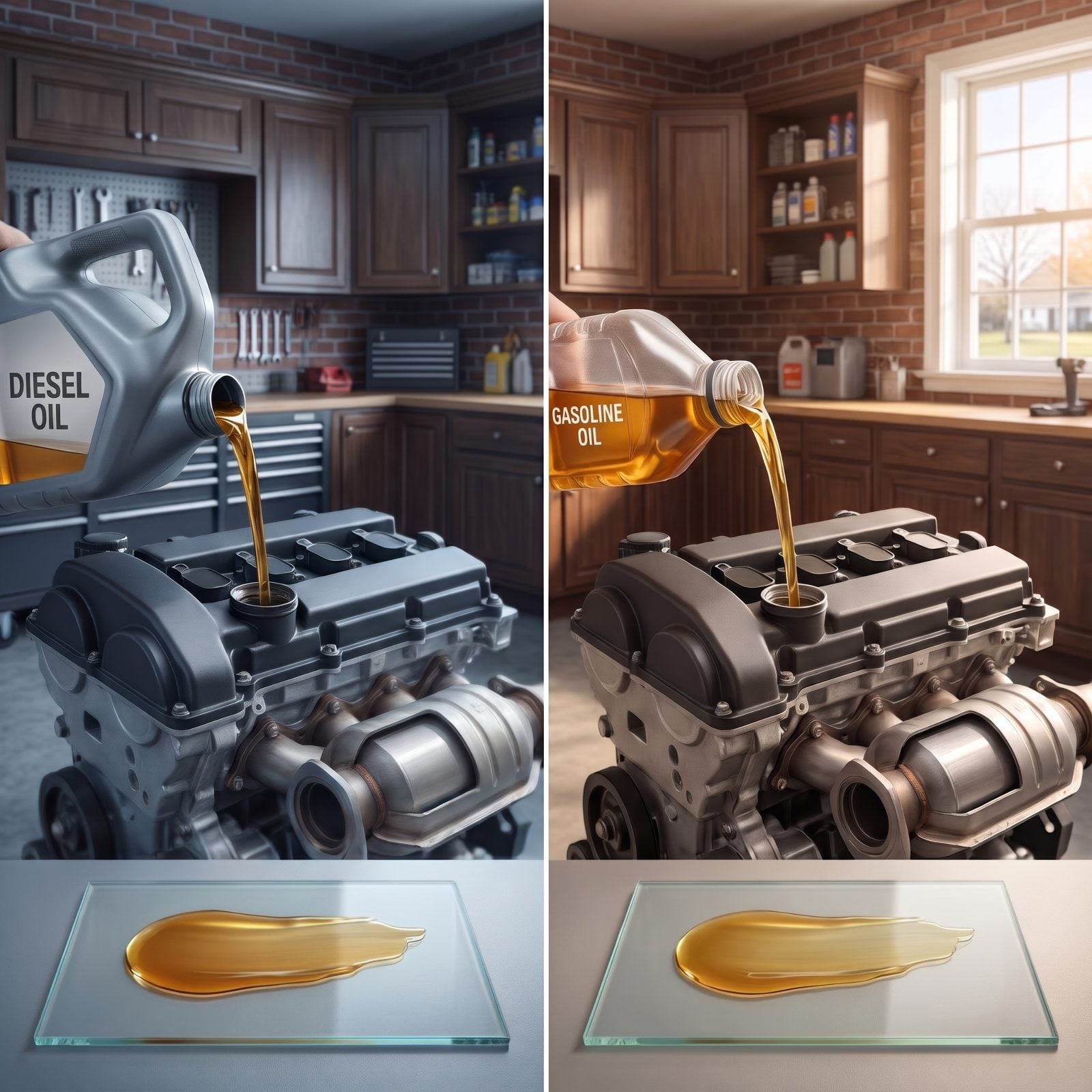
The internet loves this one. Diesel oil has more detergent, more zinc, so it must be better in anything. The myth keeps crawling back.
Diesel oils are built for the soot and combustion byproducts a diesel makes, with additive packages tuned for exactly that. Those higher additive levels — zinc and phosphorus especially — can foul the catalytic converter, clogging its honeycomb with black deposits, and the oxygen sensors on a modern gasoline car. On an old carbureted engine with no emissions gear, it’s less of a problem, but even then it’s no automatic win.
Match the oil to the engine it was formulated for. Borrowing from the diesel aisle solves a problem your gas engine doesn’t have.
Pouring Regular Car Oil Into a Wet-Clutch Motorcycle Is a Slipping Disaster

A quart’s a quart, the thinking goes. Not when your clutch bathes in it.
Many modern car oils carry friction modifiers that help fuel economy by letting surfaces slip a little easier — harmless in a car. But in a motorcycle with a wet clutch sharing oil with the engine and gearbox, those same modifiers make the clutch slip under load. You feel it as a bike that revs but won’t pull.
Motorcycle-rated oils are tested to a standard that keeps the clutch grabbing. Pour in the energy-conserving car stuff and you’re fighting your own transmission.
More Zinc Won’t Save a Modern Engine (And Hurts It)
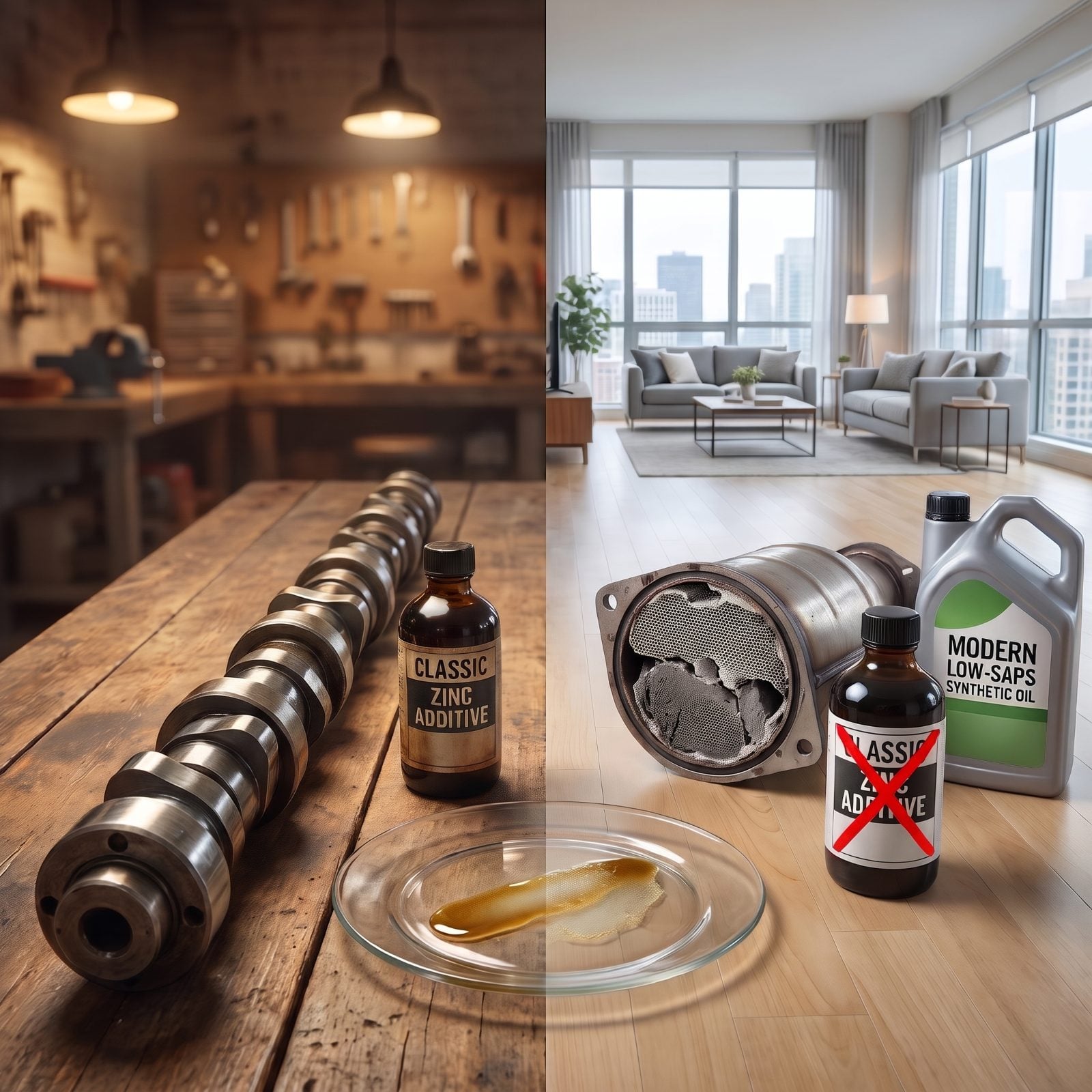
Zinc — ZDDP, if you want the initials — is the hero additive for old flat-tappet cams. Those vintage V8s genuinely need the extra anti-wear protection, and when modern oils dialed it back it caused real trouble for classic engines.
So people assume more is always better. It isn’t. On a modern engine with roller lifters and a catalytic converter, extra zinc does nothing helpful and slowly poisons the emissions system. Zinc and phosphorus coat the catalyst and kill its efficiency over time.
Right tool, right engine. Classic flat-tappet motor, go find the high-zinc oil or an additive. Modern engine, leave it alone — the spec already has what it needs.
An Engine Flush Every Oil Change Does More Harm Than Good
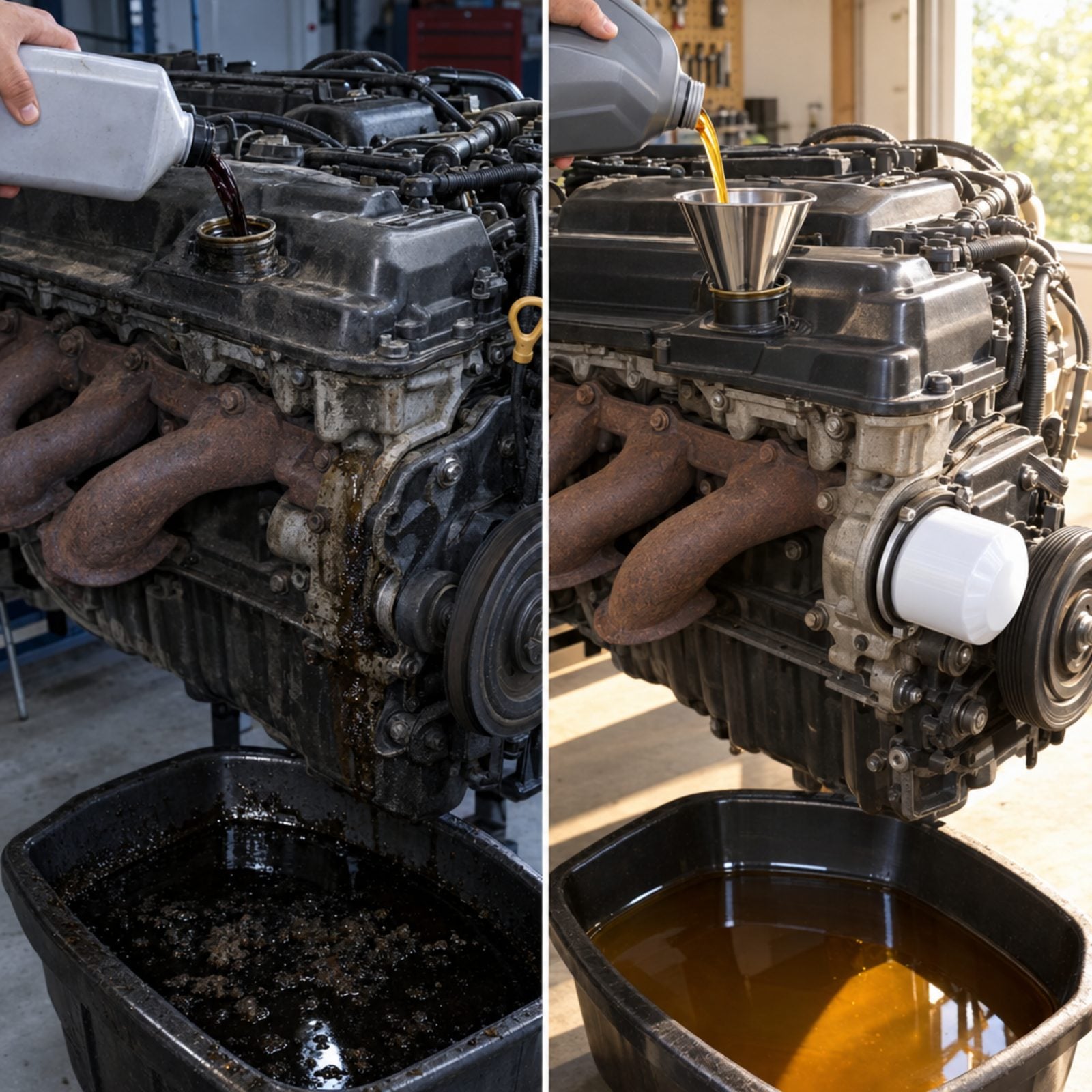
The flush add-on gets pitched at a lot of counters as a miracle fix: a sludge-caked engine dumping black gunk on one side, spotless golden oil pouring out on the other. On a healthy engine you’re already changing oil on schedule, so it’s a solution hunting for a problem.
On a neglected, high-mileage engine full of sludge, an aggressive flush can be worse. It loosens deposits that were quietly sealing tired gaskets, then sends the chunks tumbling through the oil passages. Shops have watched engines start leaking or knocking right after a flush broke loose years of buildup.
Change your oil on time and you don’t need to flush. If your engine’s a neglected mess, talk to a mechanic before you pour solvent into it.
Stop-Leak Additives Permanently Repair Engine Seals

Stop-leak in a bottle buys you time, not a cure. These additives swell the rubber so the gap closes, but that seal is still old, still hardened, still shrinking back the moment the chemistry fades or the engine cools off.
Mechanics use the stuff for one honest reason: to limp a tired engine along until a real repair makes sense, or to get a trade-in off the lot. On a weeping rear main seal it might quiet the drip for a few thousand miles. Then you’re right back under the car with the pan on the floor, same as before.
Modern Motor Oil Still Requires Aftermarket Additives

The oil in that jug already carries a full detergent and additive package, blended and tested to pass industry specs. Dump in a bottle of “engine treatment” and you’re not improving a finished formula — you’re betting your random chemistry plays nice with theirs.
Usually it does nothing. Sometimes it throws off the balance. Friction modifiers and anti-wear agents get dosed in precise amounts for a reason, and pouring in extra doesn’t help.
Topping Off the Crankcase Is Equivalent to Changing the Oil
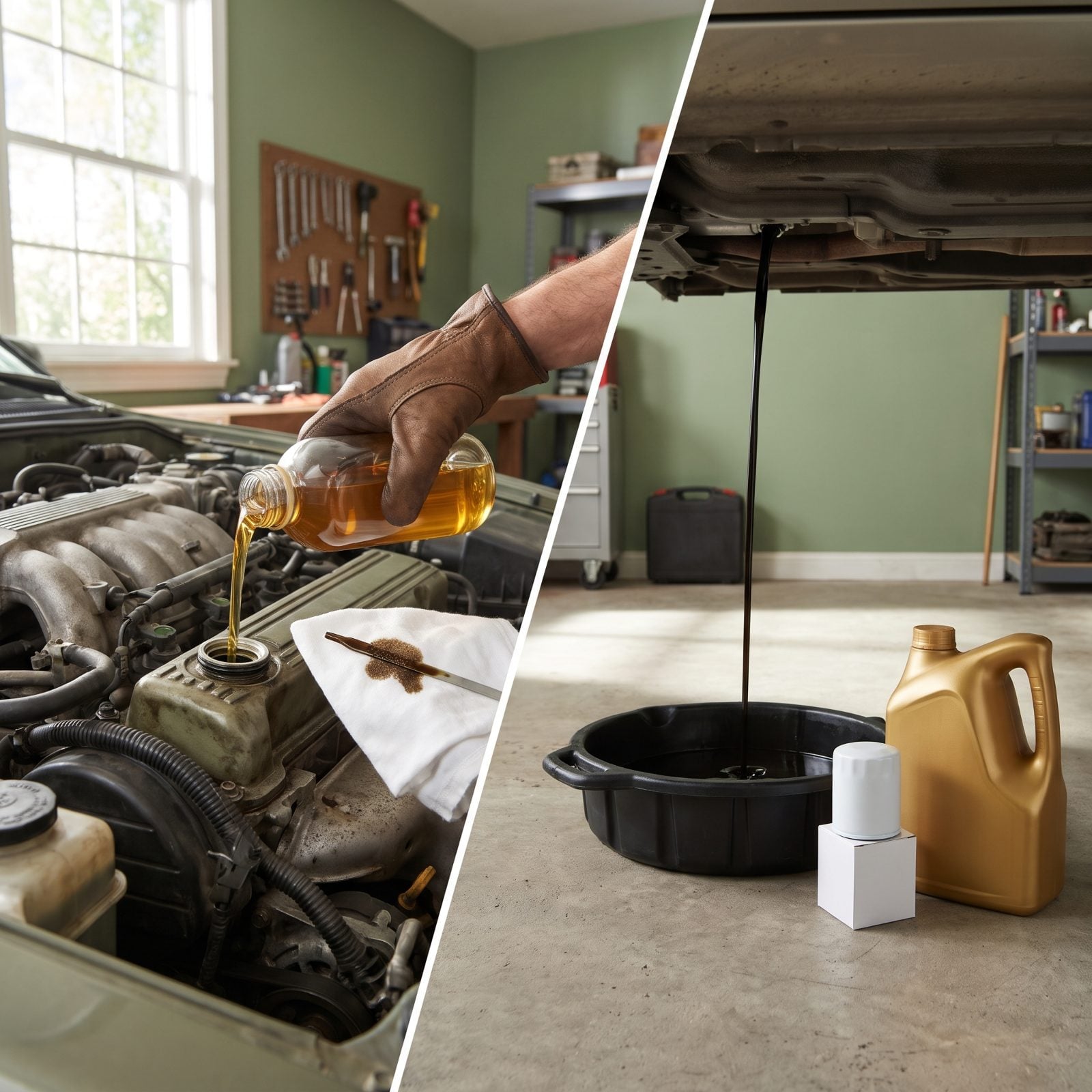
Adding a quart raises the level. That’s all it does. The rest of the sump is still full of the same cooked, contaminated oil, carrying weeks of combustion byproducts and fuel dilution and worn-out detergents.
Fresh oil poured on top of old oil just becomes old oil a little faster. The grit, the acid, the moisture — all of it stays put. Topping off keeps the engine lubricated between changes, but it’s no substitute for draining the pan and swapping the filter.
Overfilling an Engine With Oil Is Harmless

A quart over the line isn’t generosity. It’s a problem.
Fill too high and the spinning crankshaft dips into the oil and whips it into foam. Foamy oil has air in it, and air doesn’t lubricate anything. Pressure gets erratic, parts starve, and in bad cases the excess pushes against seals and gaskets until they give up and leak.
Check cold, on level ground, between the marks. Those marks aren’t a suggestion — somebody at the factory measured exactly how much oil that pan wants, and overshooting helps nobody.
A Dipstick Reading Is Accurate Even When the Car Is Parked on a Slope
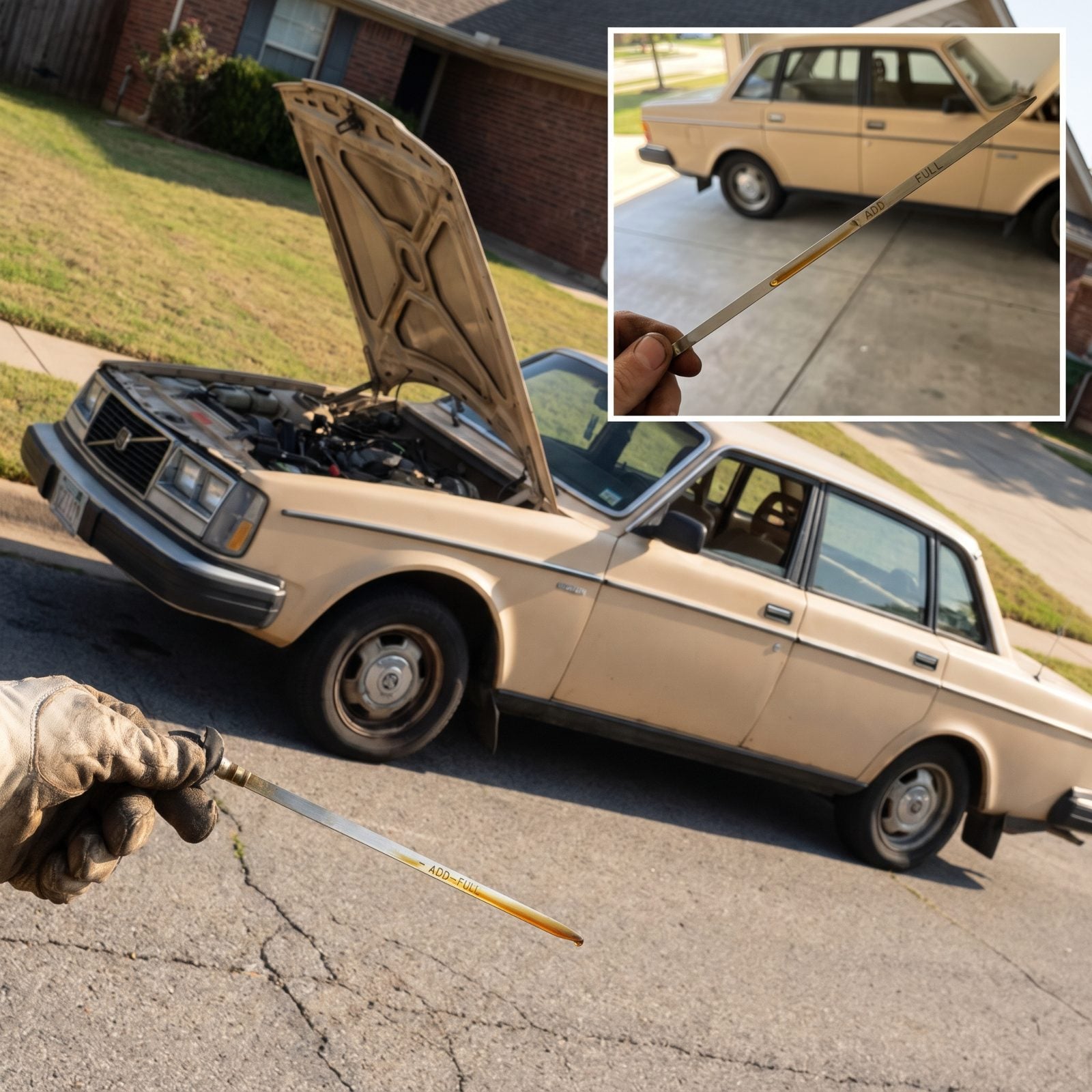
Oil pools to the low corner of the pan. Park nose-down and the dipstick tip sits in a shallow spot and reads low; park nose-up and it reads high. Either way you’re looking at a lie, and if you add oil to chase a false low reading, congratulations — you’ve just overfilled it.
Flat ground. Engine off a few minutes so the oil drains back. Wipe and re-dip. That’s the only reading worth trusting.
It Is Safe to Drive to a Repair Shop With the Oil-Pressure Light On
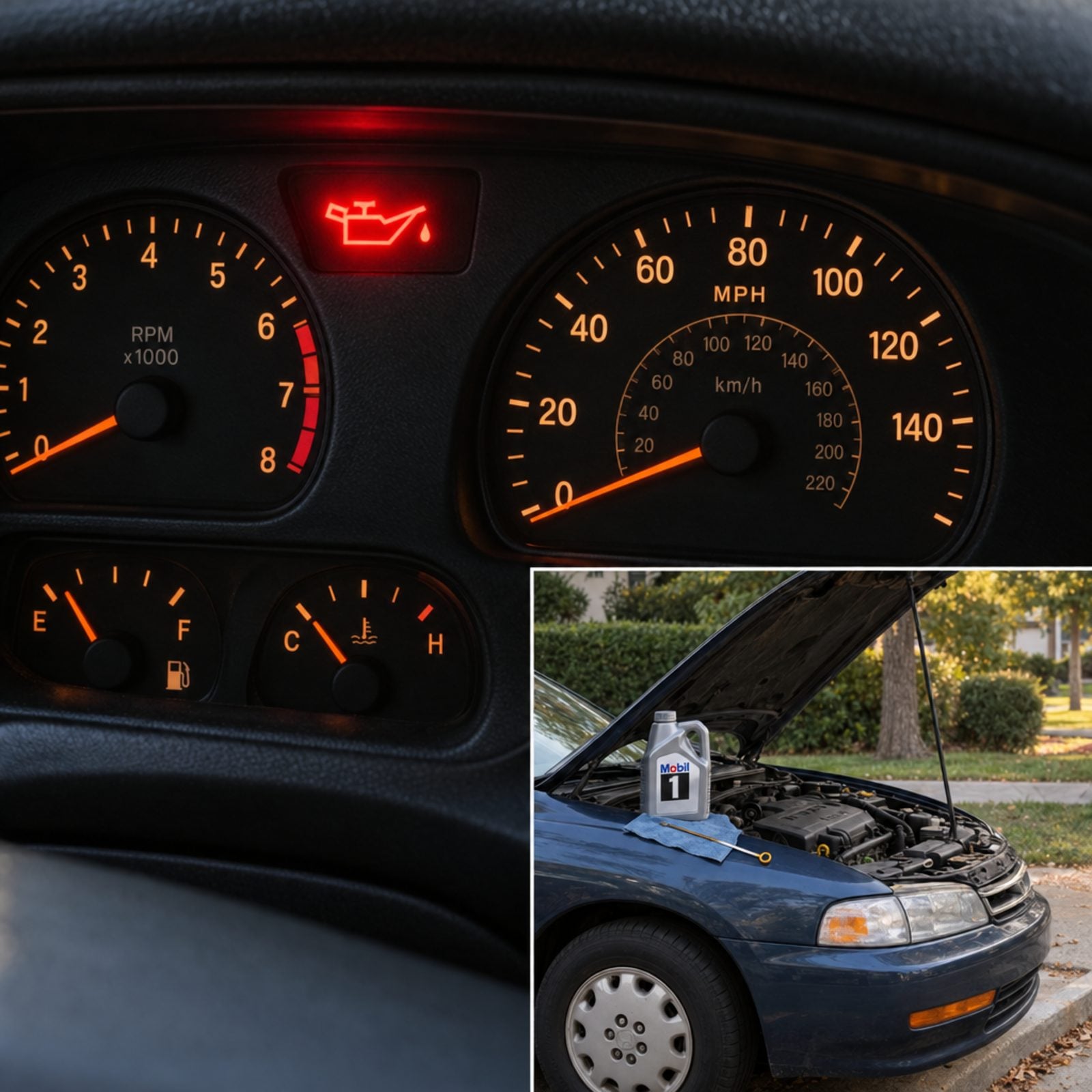
That red oil-can glow is not the “check oil soon” light. It means the pump isn’t pushing oil where it needs to go, and metal is grinding on metal with no film between the two.
Drive it “just a few blocks” and you can turn a cheap fix into a seized engine before you reach the corner. Bearings spin, the crank scores, and now you’re shopping for a long block.
Pull over. Shut it off. Check the level right there. If the oil is fine and the light stays on, that car rides to the shop on a flatbed, not under its own power.
An Engine Is Not Leaking Oil Unless It Leaves a Puddle
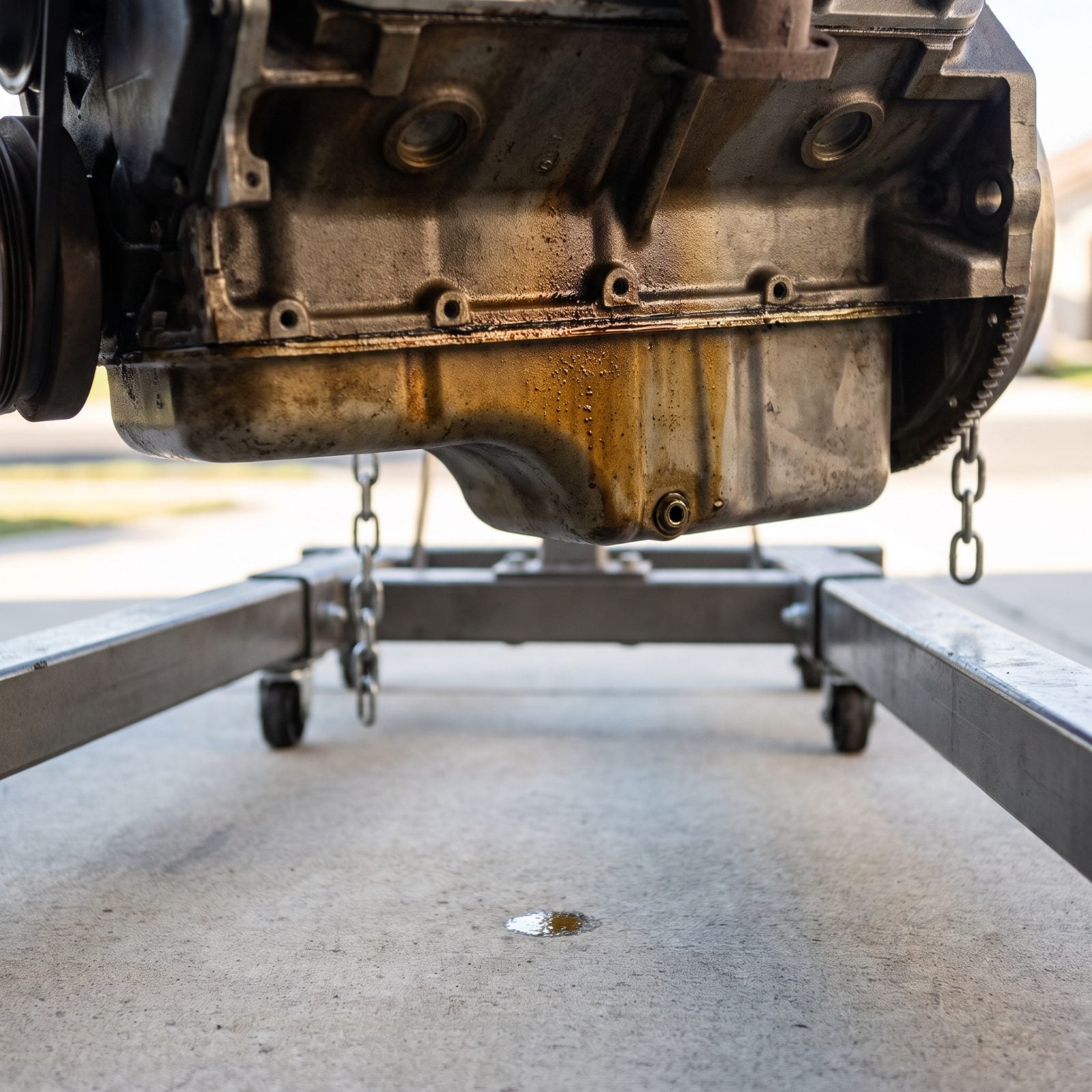
Plenty of engines leak long before they drop a spot you can spot on the floor. A slow weep coats the block, catches grime, and by the time a drip finally lands on the concrete, oil has been escaping for weeks. The puddle comes last, not first.
So a good mechanic hunts for the trail, not just the drip — the oily film on the block, the caked seam at the oil pan gasket, the amber streaks where fresh oil runs down the grimy pan. Clean the area, drive a week, look again. The leak shows itself.
All Oil Consumption Is Caused by Worn Piston Rings
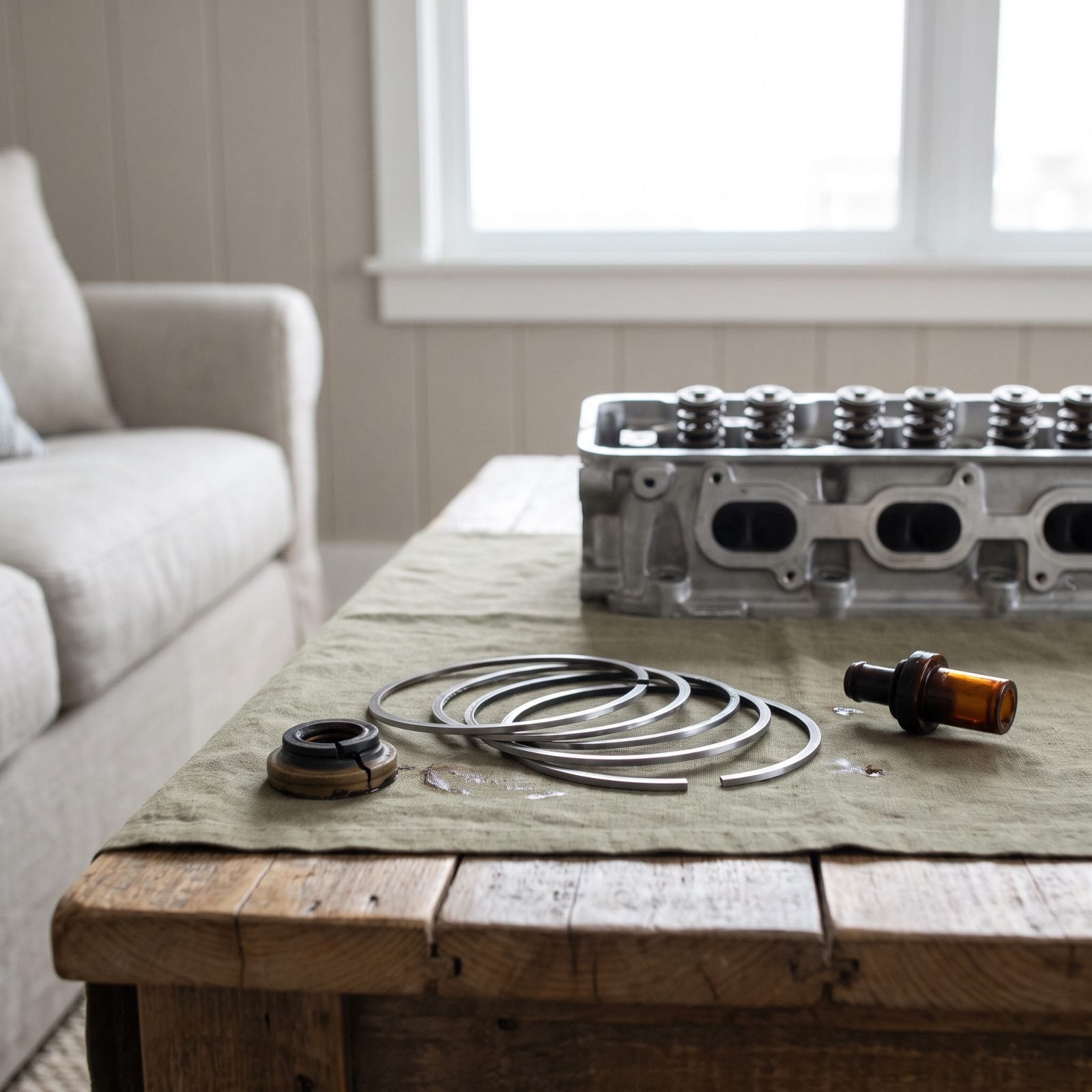
Rings get the blame because the story is simple. The truth has more suspects.
Oil disappears through worn valve-stem seals, a stuck PCV valve pulling it into the intake, a failing turbo seal, or just the wrong viscosity cooking off in a hot engine. Rings are one possibility, not the default diagnosis, and jumping straight to them costs you a teardown you may not need.
A sharp mechanic checks the cheap, common stuff first. A twelve-dollar PCV valve clears up a surprising number of “my engine burns oil” complaints, and nobody has to pull the pistons.
Blue Exhaust Smoke Is the Only Sign an Engine Is Burning Oil
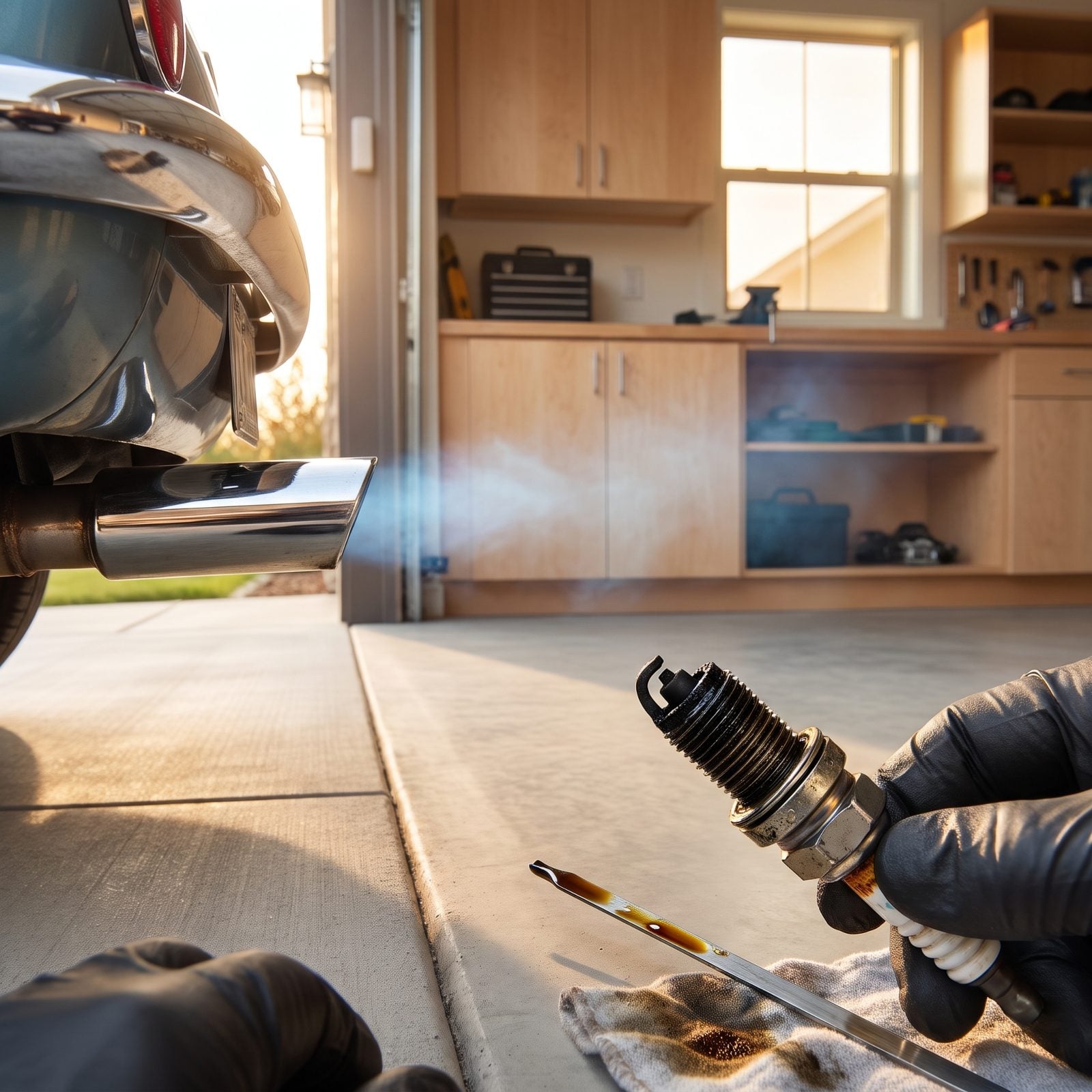
By the time you see a steady blue cloud, the engine has been burning oil for a good while. The early warnings are a lot quieter than that.
Watch the level drop between changes with nothing on the ground. Pull the plugs and look for oily, glazed deposits on the electrodes. Maybe you catch a whiff of hot oil at idle, or a puff of haze only on a cold start or hard throttle.
And here’s a wrinkle: a catalytic converter on a modern car can scrub that smoke clean, so you never see it at all. Trust the dipstick and the plugs before you trust your eyes on the exhaust.
An Oil Filter Captures Every Harmful Contaminant
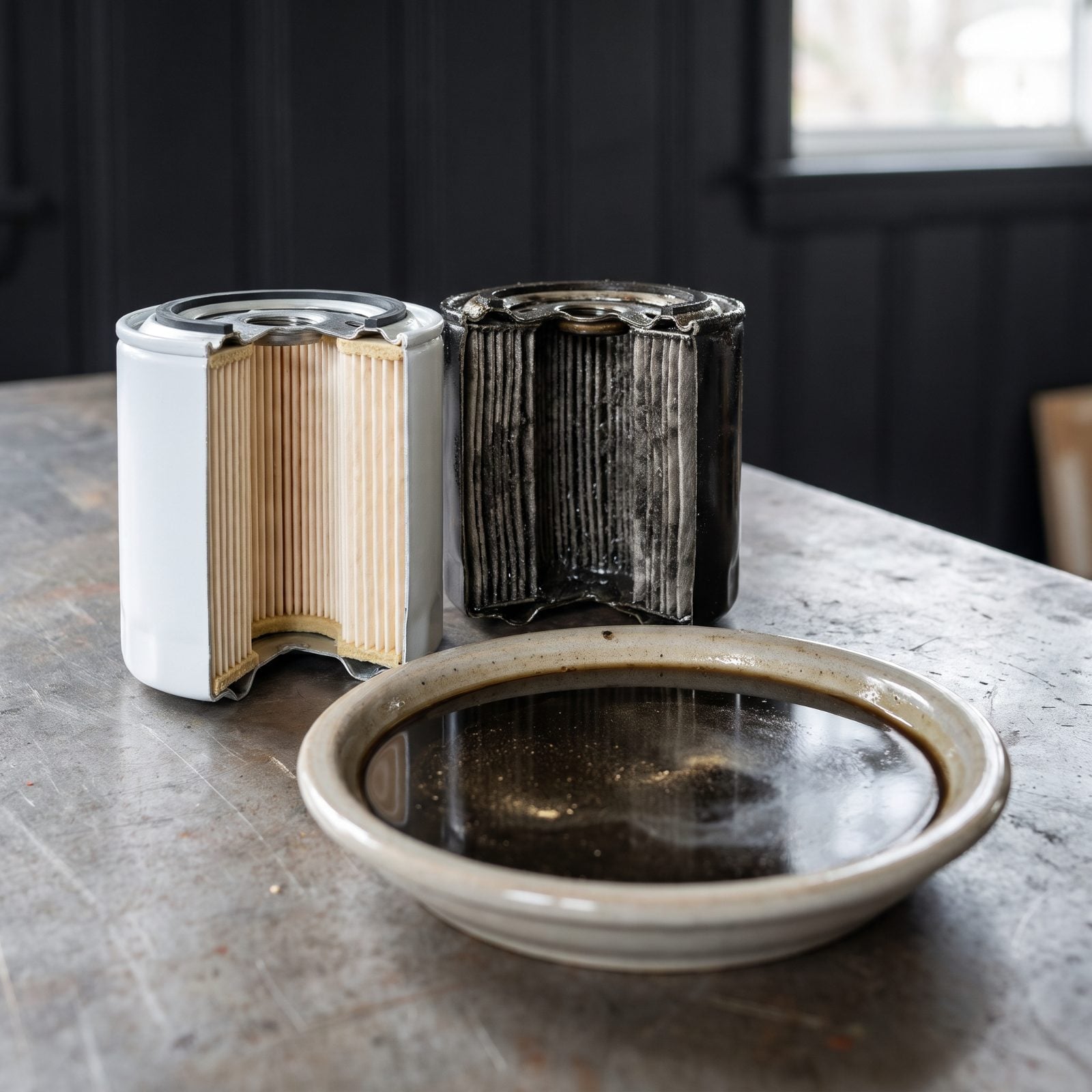
A filter catches what it can catch, which is the big stuff — metal shavings, carbon chunks, grit. The fine particles, the acids, the moisture, and the fuel that sneaks past the rings slip right through the media and keep right on circulating.
That’s the real reason you change the oil and not just the filter. The oil itself loads up with contaminants too small to trap, and no filter ever made scrubs them out. A fresh filter on tired oil is half a job.
Myth: Changing Your Own Oil Voids the Warranty
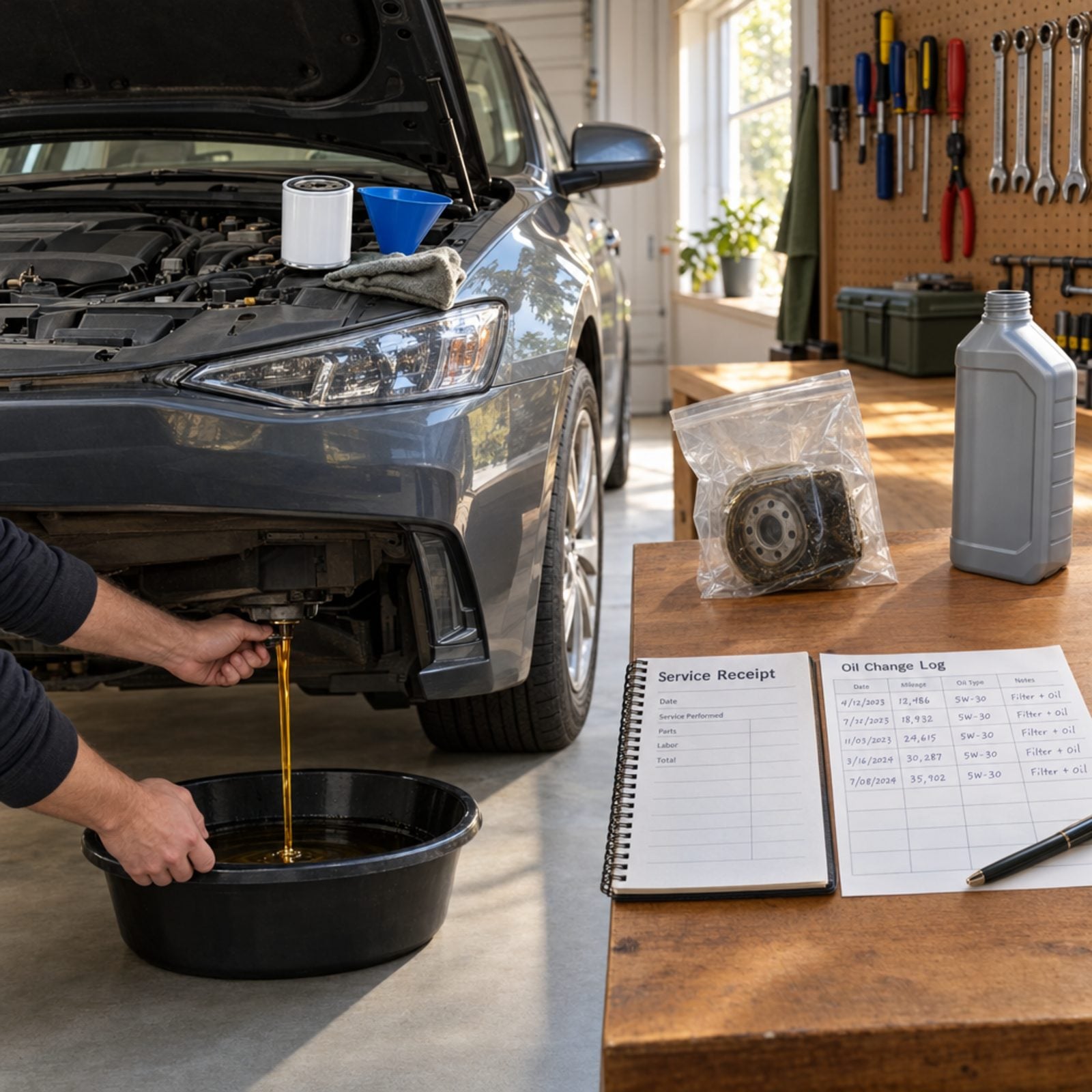
You cannot lose a warranty just for turning your own wrench. The Magnuson-Moss Warranty Act, on the books since 1975, stops a manufacturer from forcing dealer-only service as a condition of coverage. Do your own oil and you’re still protected.
Here’s the real catch, though. A dealer can deny one specific claim if they can prove bad maintenance caused the failure — wrong viscosity, a skipped interval, no records to show for it. So hang onto your receipts and keep a dated log. Save the old filter and the empty quart bottles until the job proves itself good.
Myth: Dumping Used Oil on Gravel Keeps the Dust Down
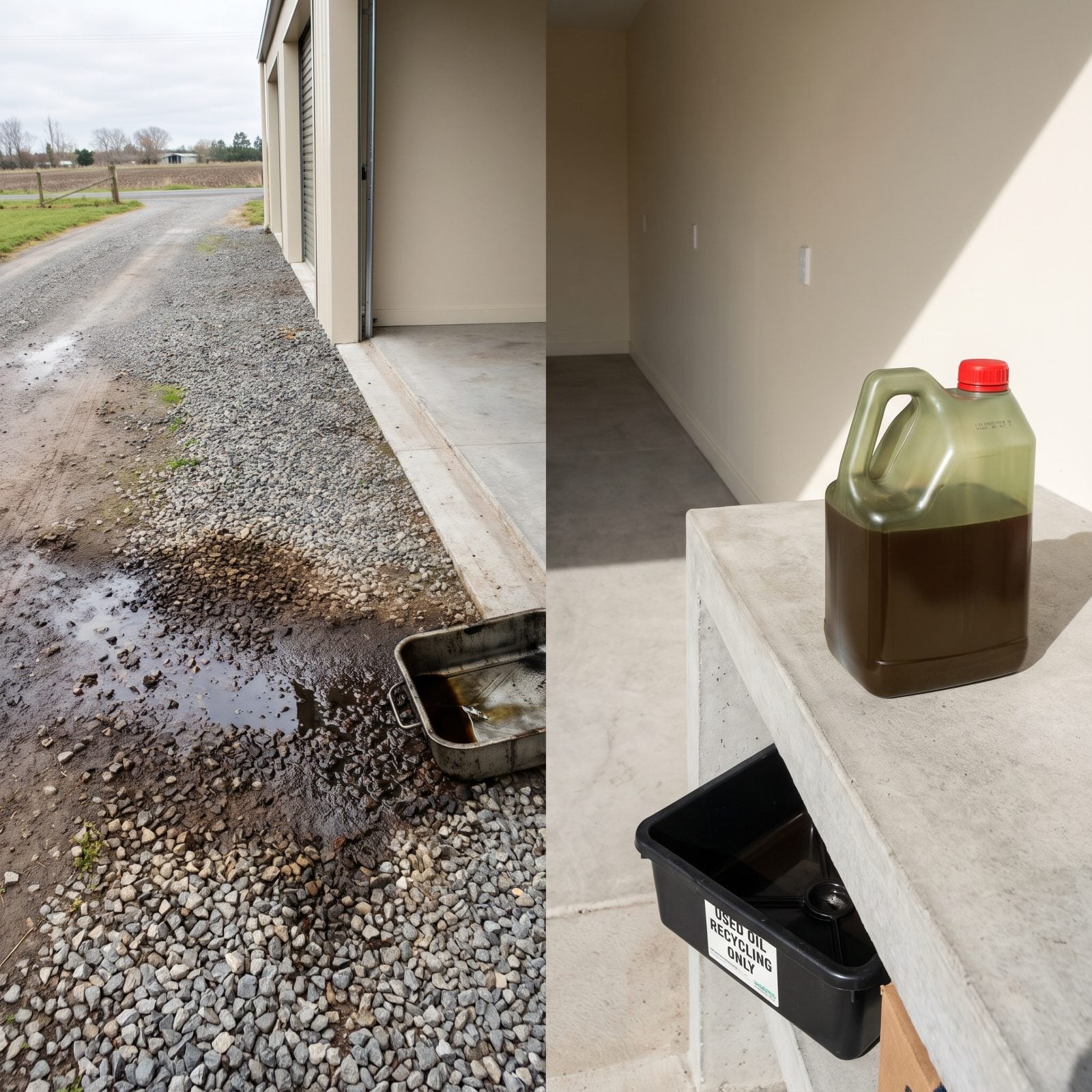
Pour a few quarts on the driveway and sure, the dust settles. The trouble shows up later, underground, where you’ll never see it.
Used motor oil carries lead, benzene, and heavy metals scraped off worn engine parts. A single oil change poured on gravel can foul a staggering amount of groundwater — one of the reasons dumping it is illegal in every state. It doesn’t evaporate. It travels. Into wells, storm drains, the water table, all of it.
And the fix? Boring and free. Most auto parts stores take your used oil back at no charge, plenty of them grab the old filter too. Drain it into a sealed jug, drop it off, walk away.