
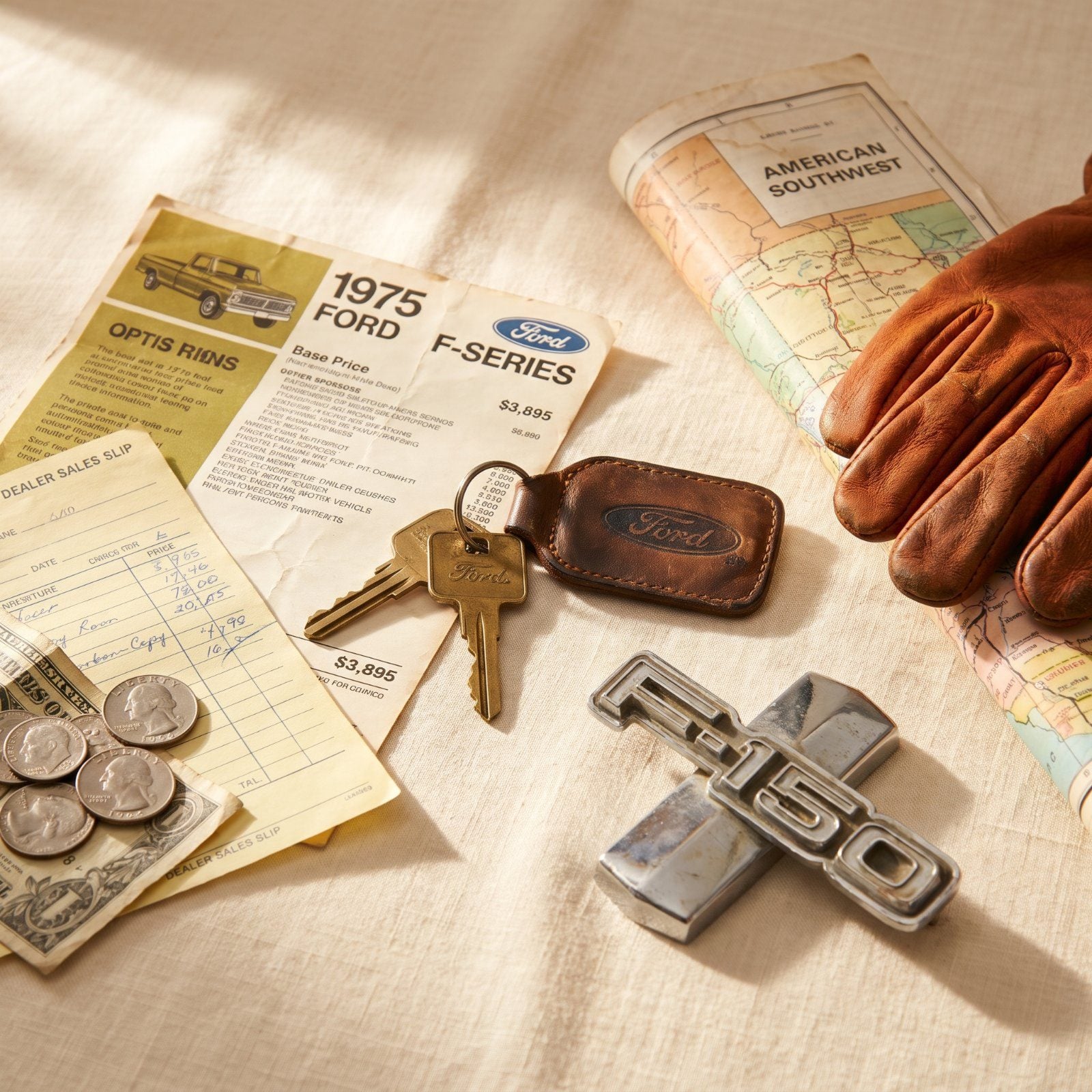
Three thousand dollars bought a brand-new Ford pickup off the lot in 1975. Not a down payment. The whole truck.
Please note that some of the images in this article were created with the assistance of AI.
Of course, the paycheck was smaller too. A factory hand pulled down a few bucks an hour, and gas had just crept past fifty cents a gallon with the oil embargo still fresh in everyone’s memory. So these numbers only sound like fantasy until you run them through the inflation machine. Let’s go price-shopping on a lot that closed down fifty years ago.
1975 Ford F-100 Styleside Short Bed: About $3,400 New
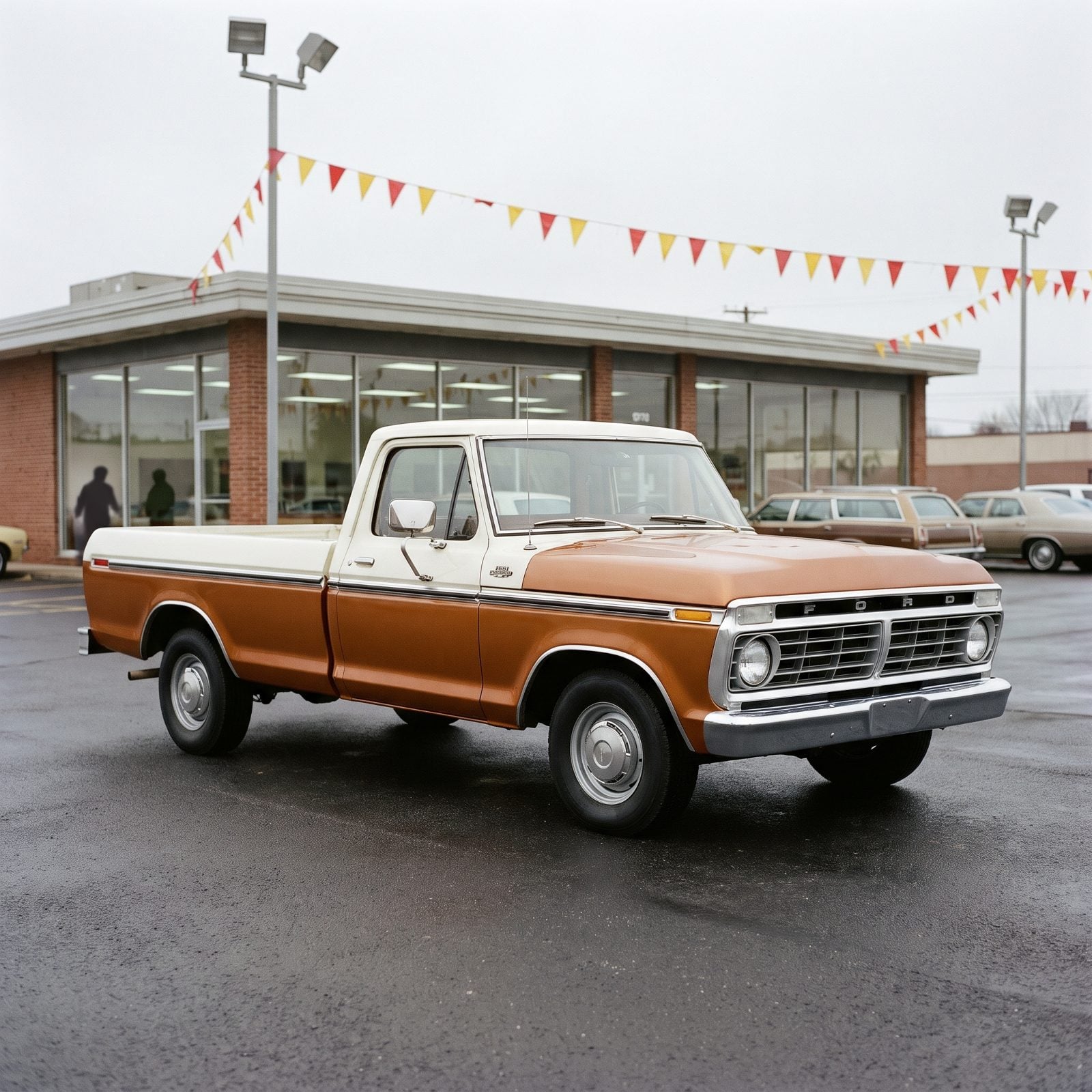
The truck most people pictured when they said “Ford pickup” in 1975. Base price on the F-100 Styleside short bed landed somewhere around $3,400, give or take options. Straight six, column shift, rubber floor, and a bench seat wide enough for three and a lunchbox.
At a few dollars an hour, that’s hundreds of hours at the clock. Call it a working year’s worth of Fridays. In today’s money you’re looking at somewhere near $20,000, which is a joke by modern truck-lot standards where that barely covers the tailgate.
1975 Ford F-100 4×4: Around $4,600 to Leave the Pavement
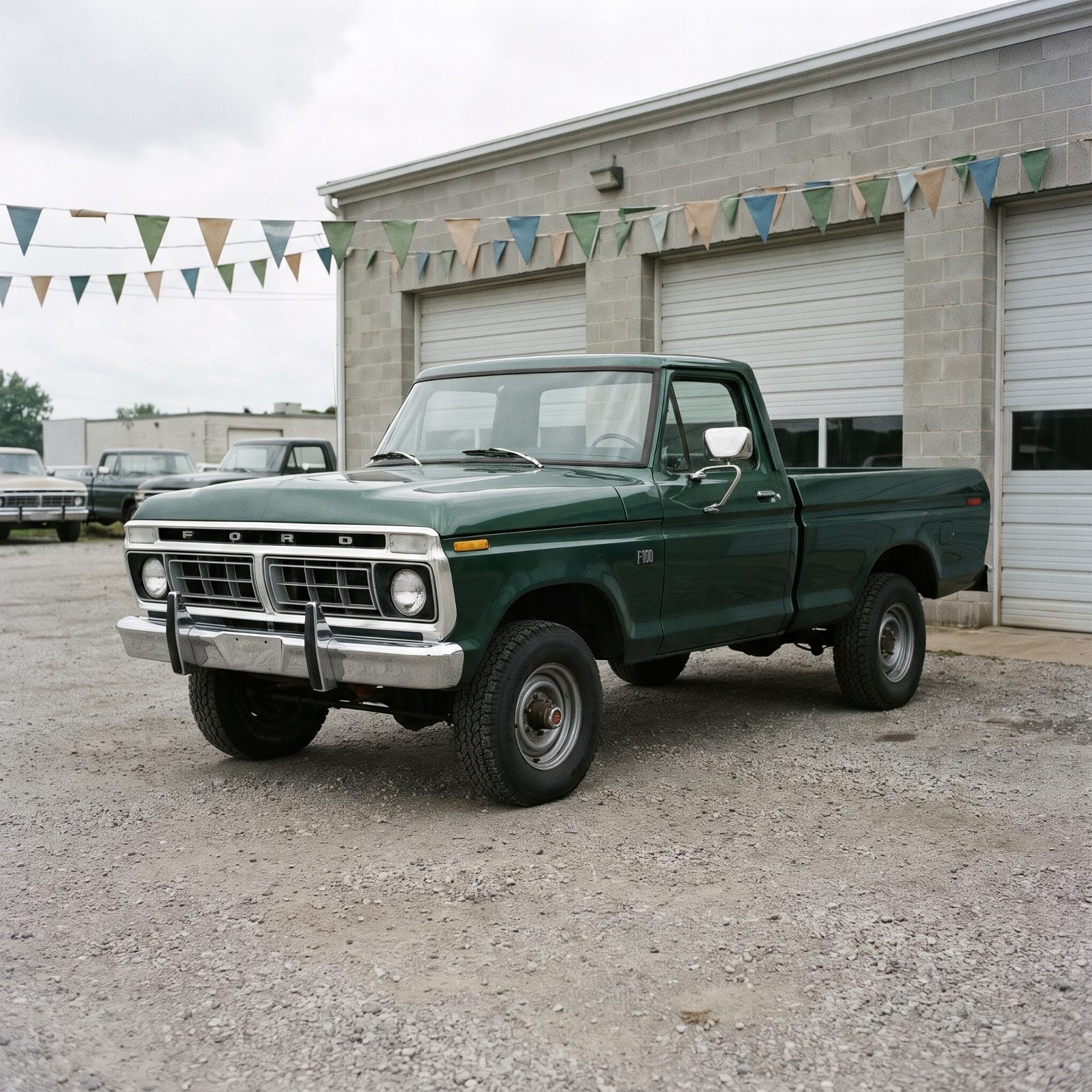
Adding four-wheel drive to the F-100 pushed the sticker up near $4,600, maybe more depending on how you spec’d it. That premium over the two-wheel-drive version was real money, and plenty of ranchers and hunters paid it without blinking.
Why so much? Transfer case, front axle, heavier suspension, taller gearing. Four-wheel drive was still half work tool and half luxury in 1975, nowhere near the default it later became. Run the inflation and you’re near $26,000 now, which still wouldn’t get you into a comparable 4×4 off any current lot.
1975 Ford F-100 SuperCab: Roughly $4,000 for a Back Seat Nobody Expected
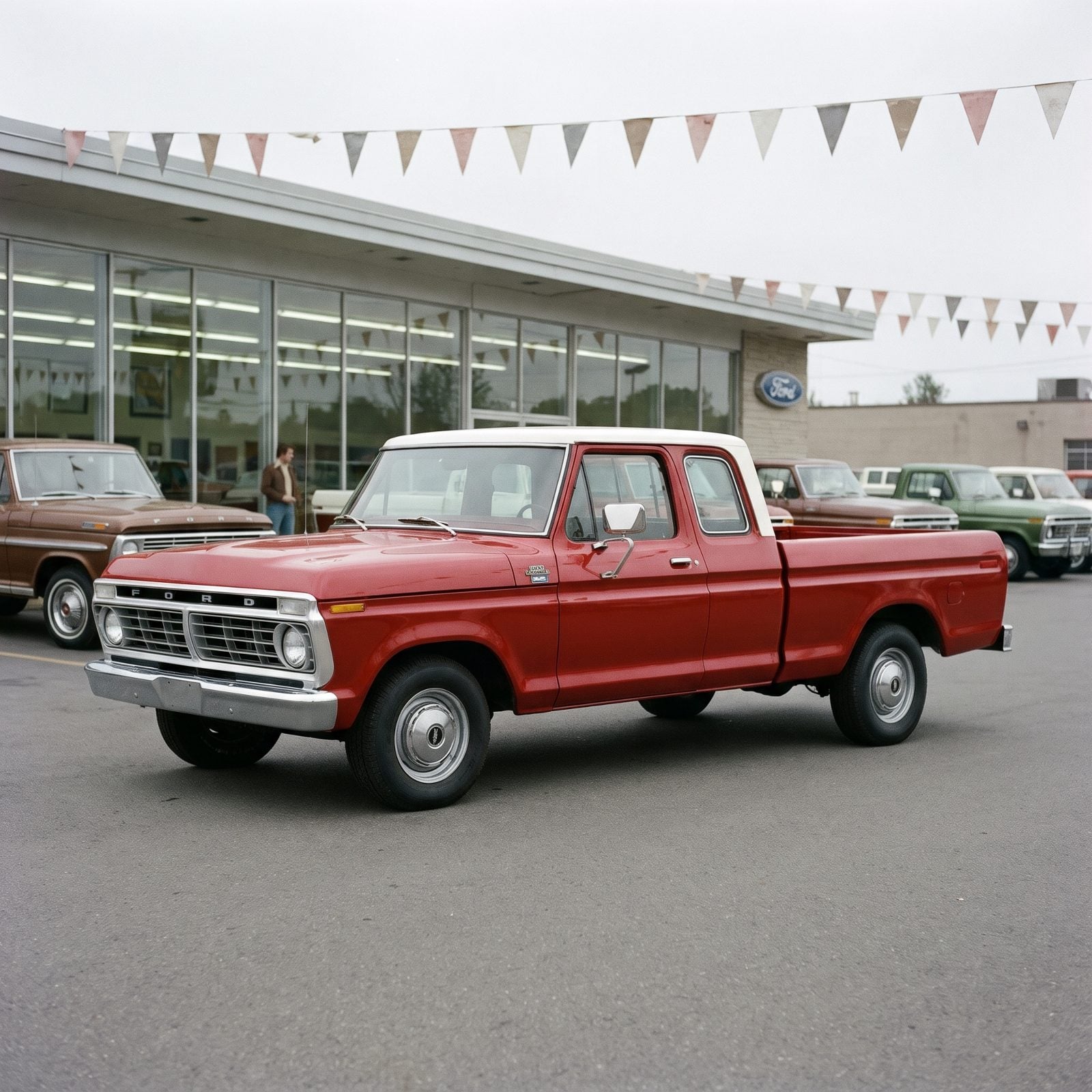
The SuperCab answered a simple question: where do you put the tools, the dog, and the second guy? Stretching the cab added a pair of jump seats and ran the price up to somewhere around $4,000.
That extra foot of cab felt like a genuine luxury. Buyers who hauled a crew, or just wanted dry storage behind the seat, happily paid the bump. Reads as quaint now, doesn’t it, a time when a back seat in a truck was a novelty worth advertising.
A covered space behind the seat used to be a selling point, not a given.
1975 Ford F-250 Flareside: About $3,900 of Honest Work
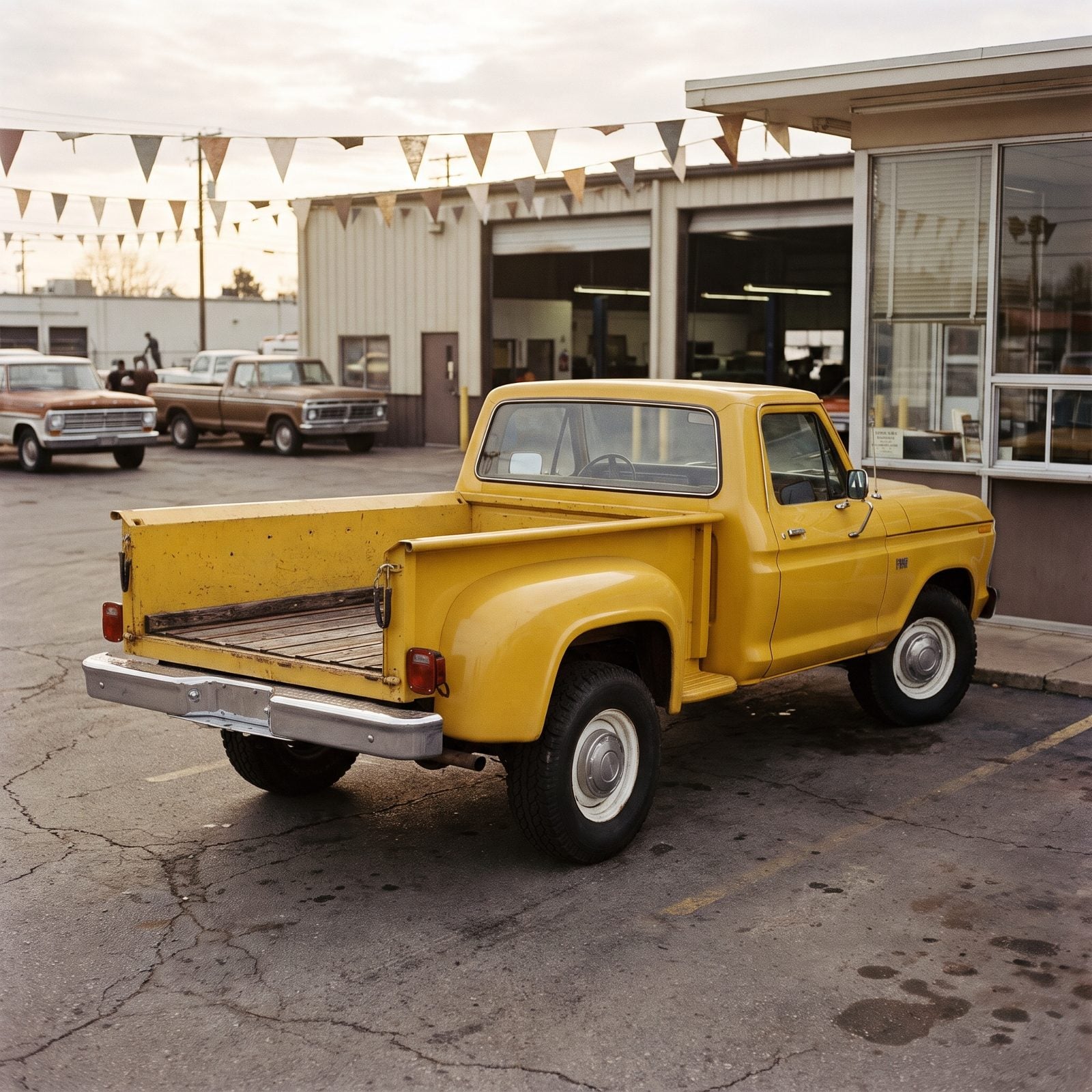
The F-250 was the working man’s Ford, heavier of frame and higher of payload than the F-100. Order it in Flareside trim, with those separate rear fenders and the step-up running boards, and the base sticker sat near $3,900.
The Flareside bed ran narrower than the smooth Styleside. Less handy for sheets of plywood, easier to reach into over the side, and farmers loved the step. In current dollars that’s roughly $22,000, for a three-quarter-ton truck that would outlast most of its owners.
What Our Readers Say
- When Jalopy Talk readers loved a vintage vehicle photo and tapped a reason, “nostalgic” came out on top at 29%, ahead of body style at 24%.
- In our reader votes, restored, concours-condition vehicles got more hearts than the other images in the same articles, 82% versus 76%.
From Jalopy Talk reader polls and votes.
1975 Ford F-350 Crew Cab: Near $5,200 for the Whole Family and the Load
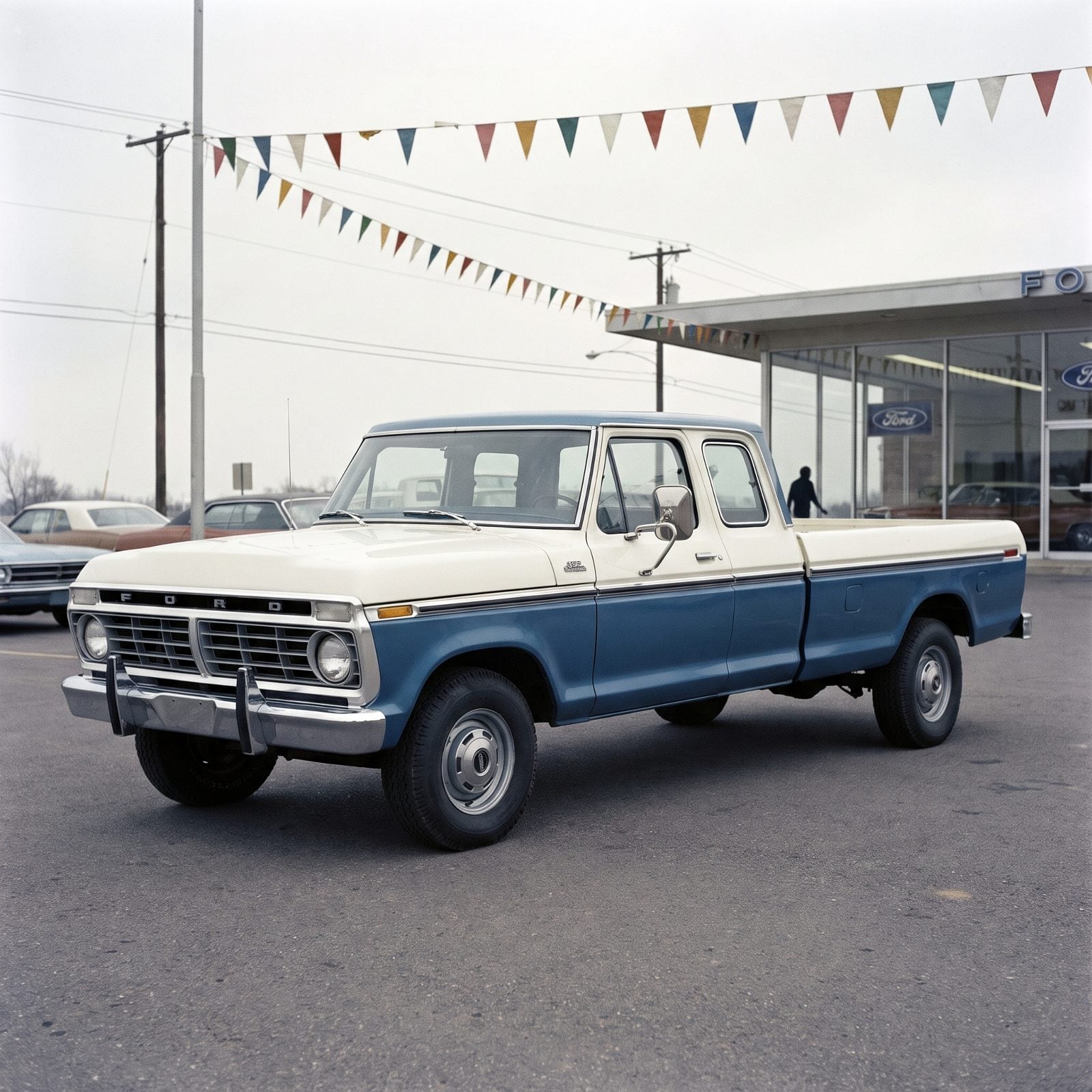
The one-ton Crew Cab was the big dog of the 1975 Ford lineup. Four doors, a full back seat, and a long bed capable of serious payload pushed the base price to roughly $5,200, and a well-optioned hauler climbed higher still.
A lot of truck for the era, aimed squarely at work crews, campers, and big families who needed to move people and cargo at once. In modern money it’s around $29,000. A new crew-cab one-ton today starts at more than twice that before you’ve added a single thing.
1975 Ford Courier: About $2,900 for the Little Import Fighter
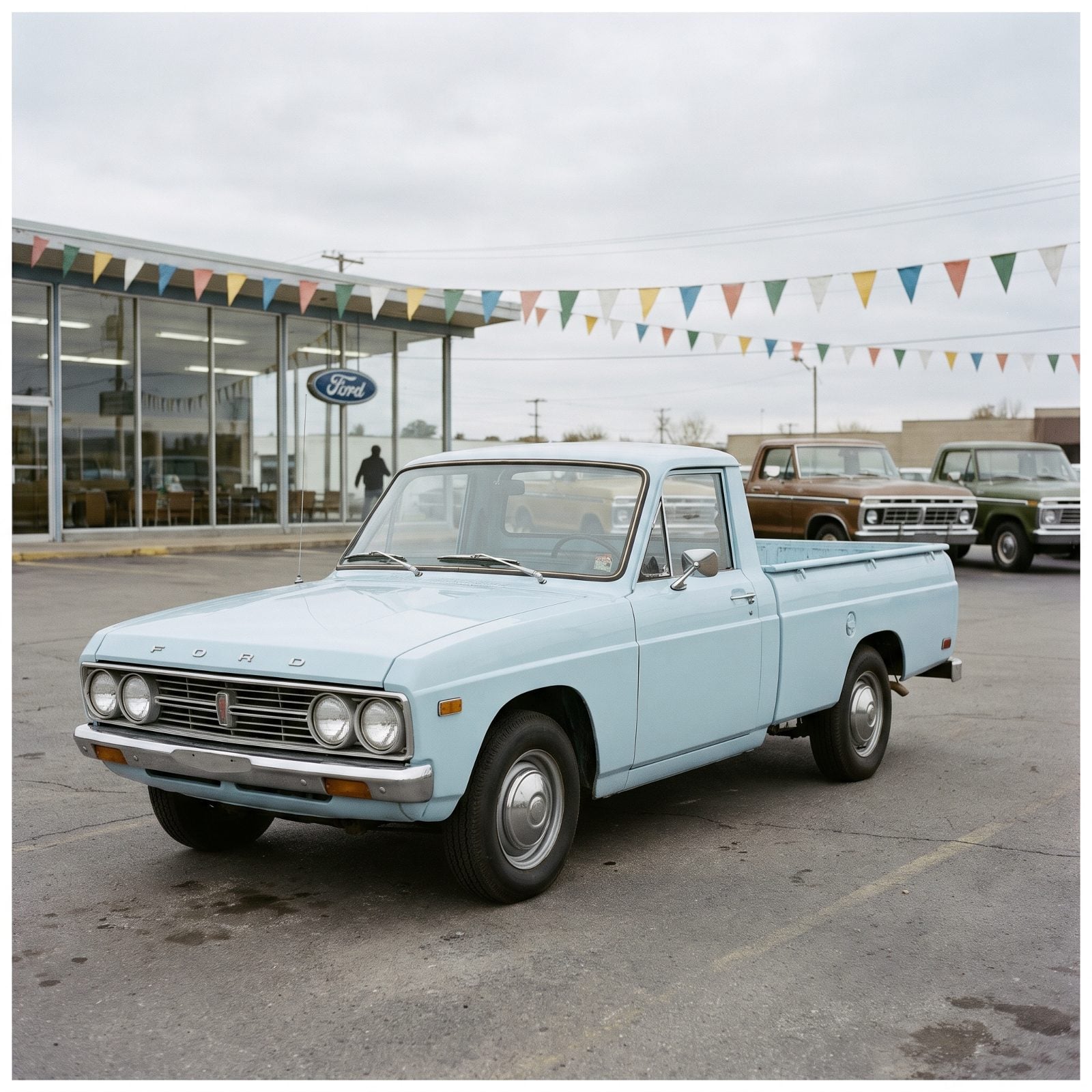
Not every Ford pickup was a V8 bruiser. The Courier was a small, Mazda-built mini-truck Ford imported to fight the Datsuns and Toyotas flooding in after the fuel crisis. Base price sat around $2,900, the cheapest way into a new Ford bed.
With gas fresh off its first real price shock, a compact truck that sipped fuel suddenly made sense. Buzzy and basic, but it moved. Roughly $16,000 in today’s money, and nothing new on the market comes close to that figure anymore.
1975 Ford Ranchero GT: Around $3,700 for Car Comfort and a Cargo Bed
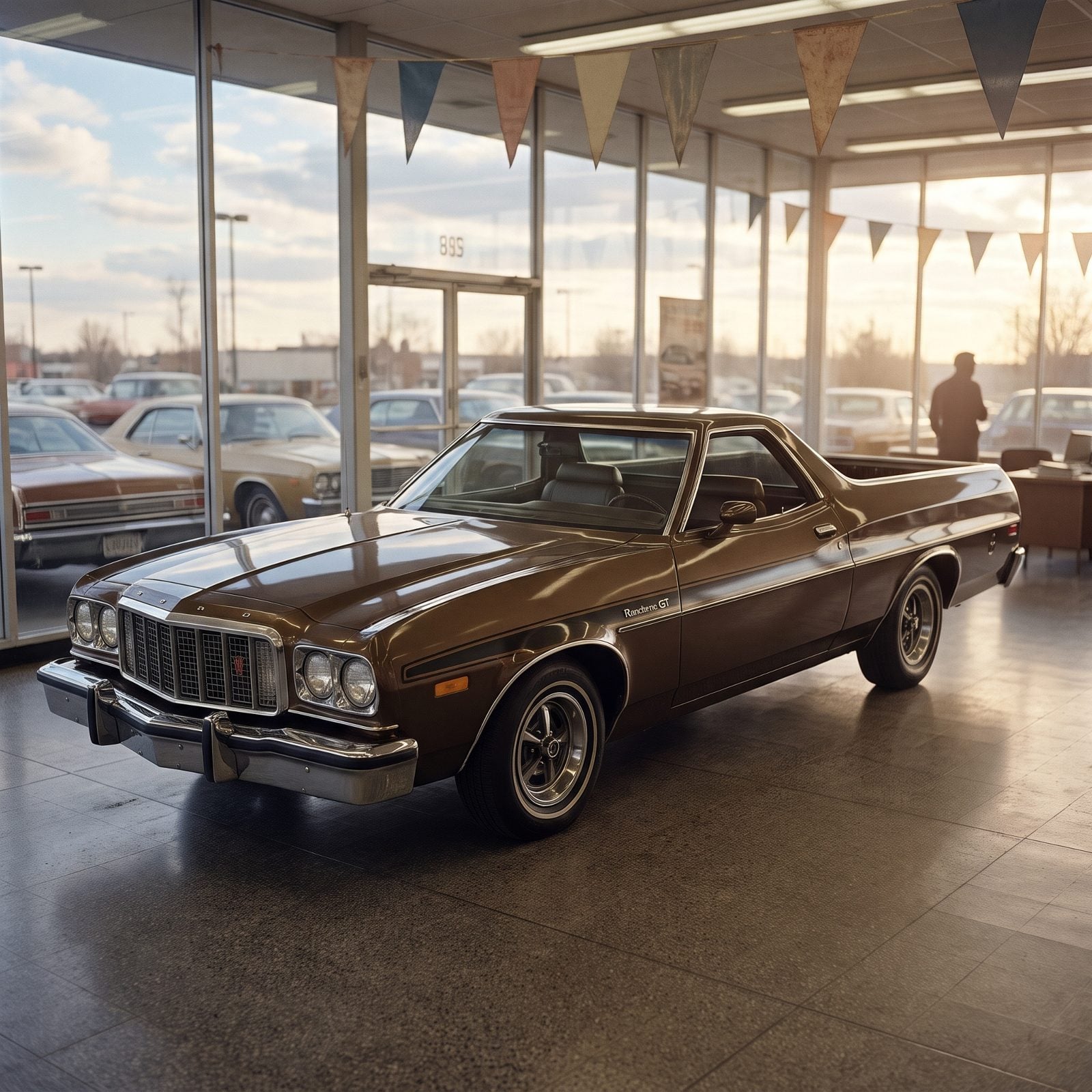
The Ranchero was never quite a truck and never quite a car, and that was exactly the appeal. Built on the Torino platform, it rode like a coupe but carried like a pickup. The sporty GT version ran near $3,700.
The GT package added stripes, a firmer feel, and a dash of attitude the plain Ranchero lacked. Folks who wanted something to haul the mulch on Saturday and cruise to the drive-in on Friday found their answer here. Around $21,000 adjusted, for a thing nobody builds anymore.
1975 Chevrolet C10 Fleetside Short Bed: About $3,300 of Bowtie Blue-Collar
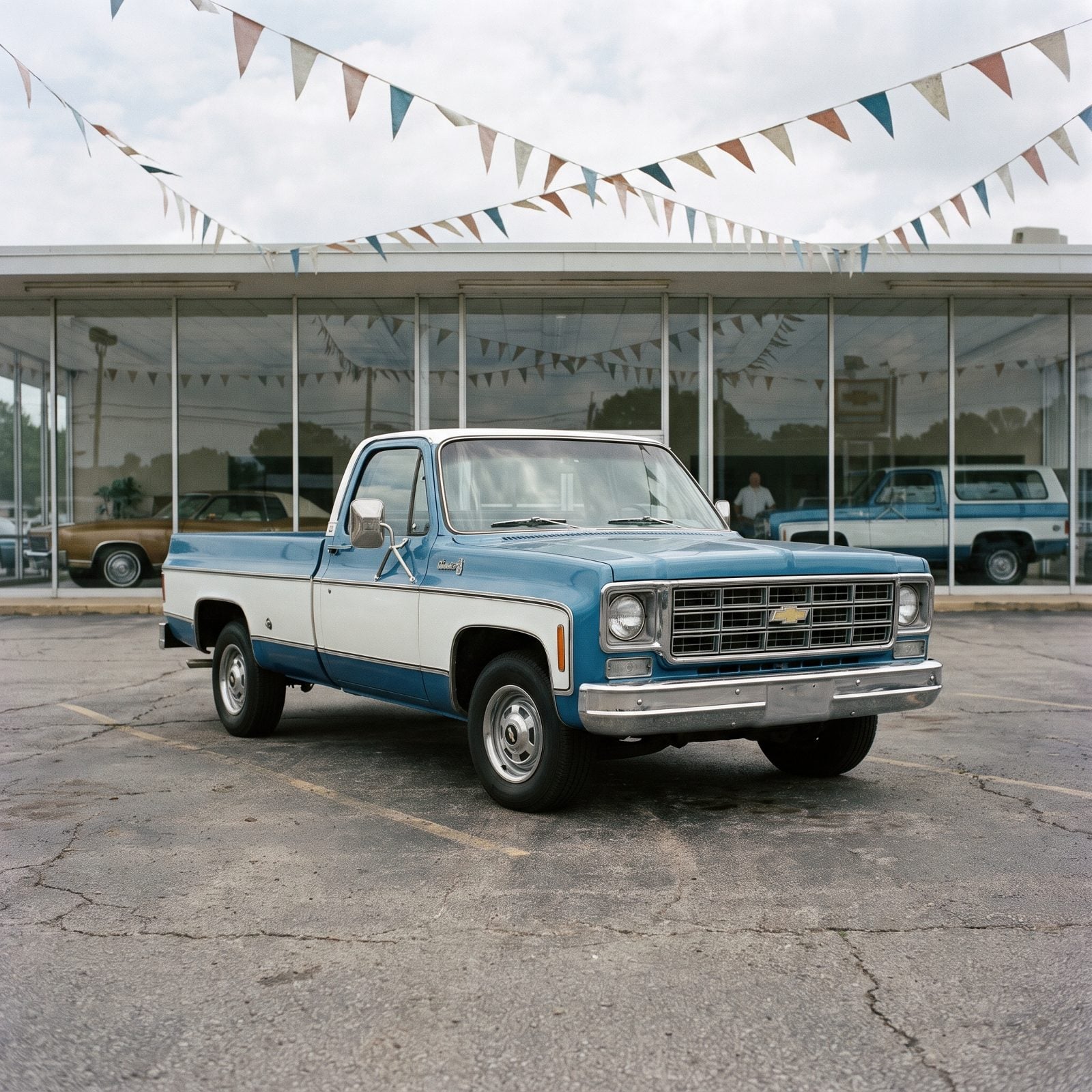
The Chevy that parked across the street from every Ford. The C10 Fleetside short bed was General Motors’ bread-and-butter half-ton, and its base price landed near $3,300, right in the thick of the F-100 fight.
That square-body shape would run for years and win a cult following decades later. In 1975 it was just a dependable work truck with a smooth bed and a straight six. Around $18,000 to $19,000 in today’s dollars. The resale market now would make the original owner weep with joy.
1975 Chevrolet C20 Camper Special: Near $3,900 Built for the Load
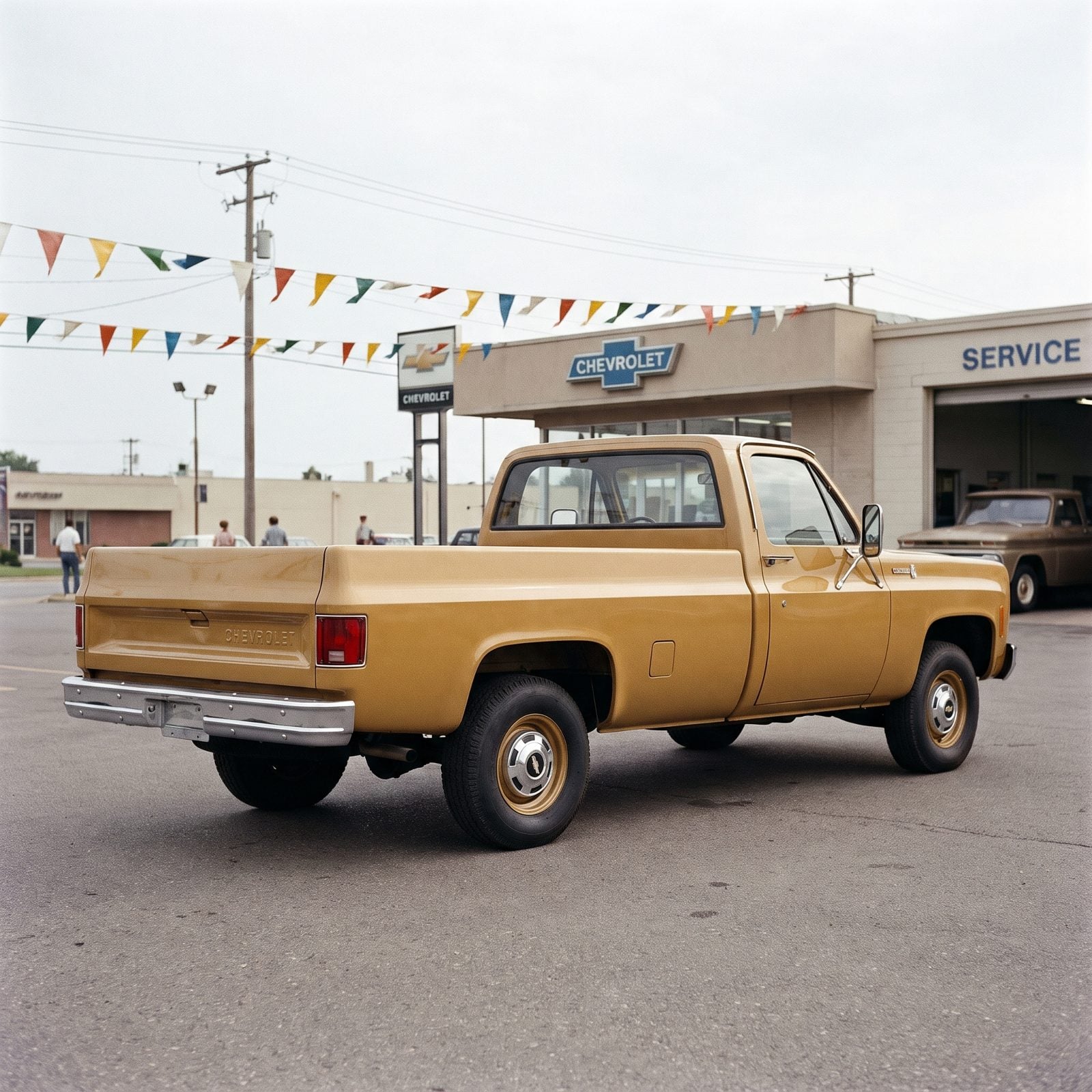
The Camper Special wasn’t a trim. It was a mission. Chevy built the C20 three-quarter-ton with a heavier frame, beefier springs, bigger tires, and those wide tow mirrors specifically to carry a slide-in camper on its back. Base price sat around $3,900.
This was the golden age of the pickup-and-camper vacation, when a family bolted a cabover unit to the bed and pointed the whole rig toward a national park. The Camper Special made it possible. Roughly $22,000 adjusted, for a truck put together to haul your bedroom down the interstate.
1975 Chevrolet C30 Pickup: About $4,200 for the One-Ton Workhorse
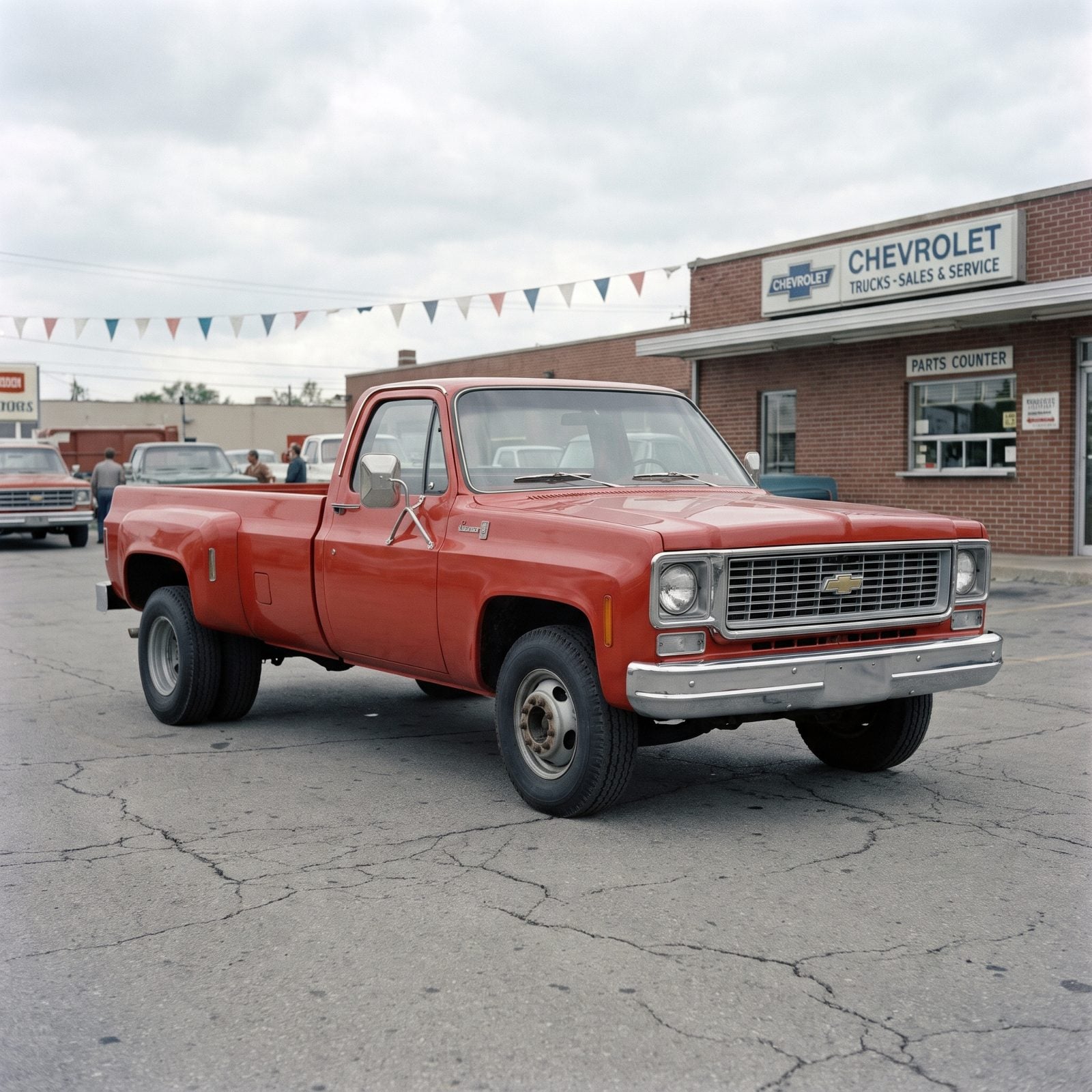
At the top of the Chevy pickup ladder sat the C30, the one-ton, the truck that showed up when the job got serious. Base price ran near $4,200, and with dual rear wheels and a big-block it climbed well past that.
These hauled firewood, towed trailers, and carried whatever the half-tons couldn’t. Built heavy, geared low, meant to work until they couldn’t. Around $23,000 to $24,000 in today’s money, which wouldn’t get you the steering wheel on a comparable new one-ton off a modern lot.
1975 Chevrolet LUV Mikado: The Little Isuzu That Cost About $3,300
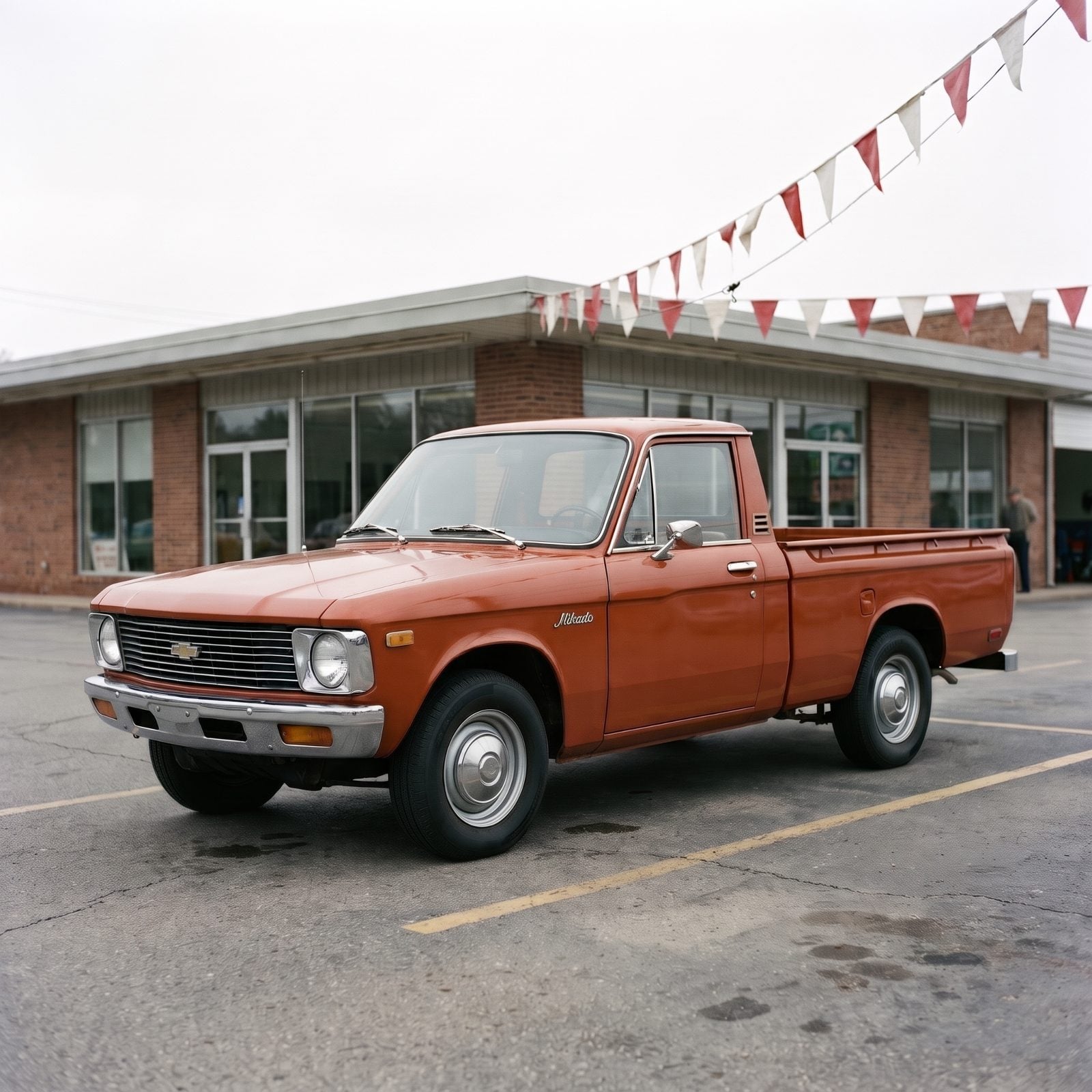
Chevy’s answer to the import invasion wasn’t built by Chevy at all. The LUV, short for Light Utility Vehicle, came out of Isuzu, the Japanese truck maker GM had bought a stake in. It wore a bowtie, sold through Chevy dealers, and in Mikado trim it stickered somewhere around $3,300.
Mikado was the dress-up package. Nicer upholstery, some sporty interior touches, and enough extra flash to make a little four-cylinder truck feel like a treat instead of a penalty box. With gas prices fresh off the embargo shock, a compact pickup that sipped fuel suddenly made a lot of sense.
Run it through the inflation machine and you land near $19,000 today. That’s real money for a small truck, but it bought you a mini-pickup with a Chevy dealer down the road to fix it.
1975 Chevrolet El Camino Classic: Car-Truck Comfort for Roughly $3,700
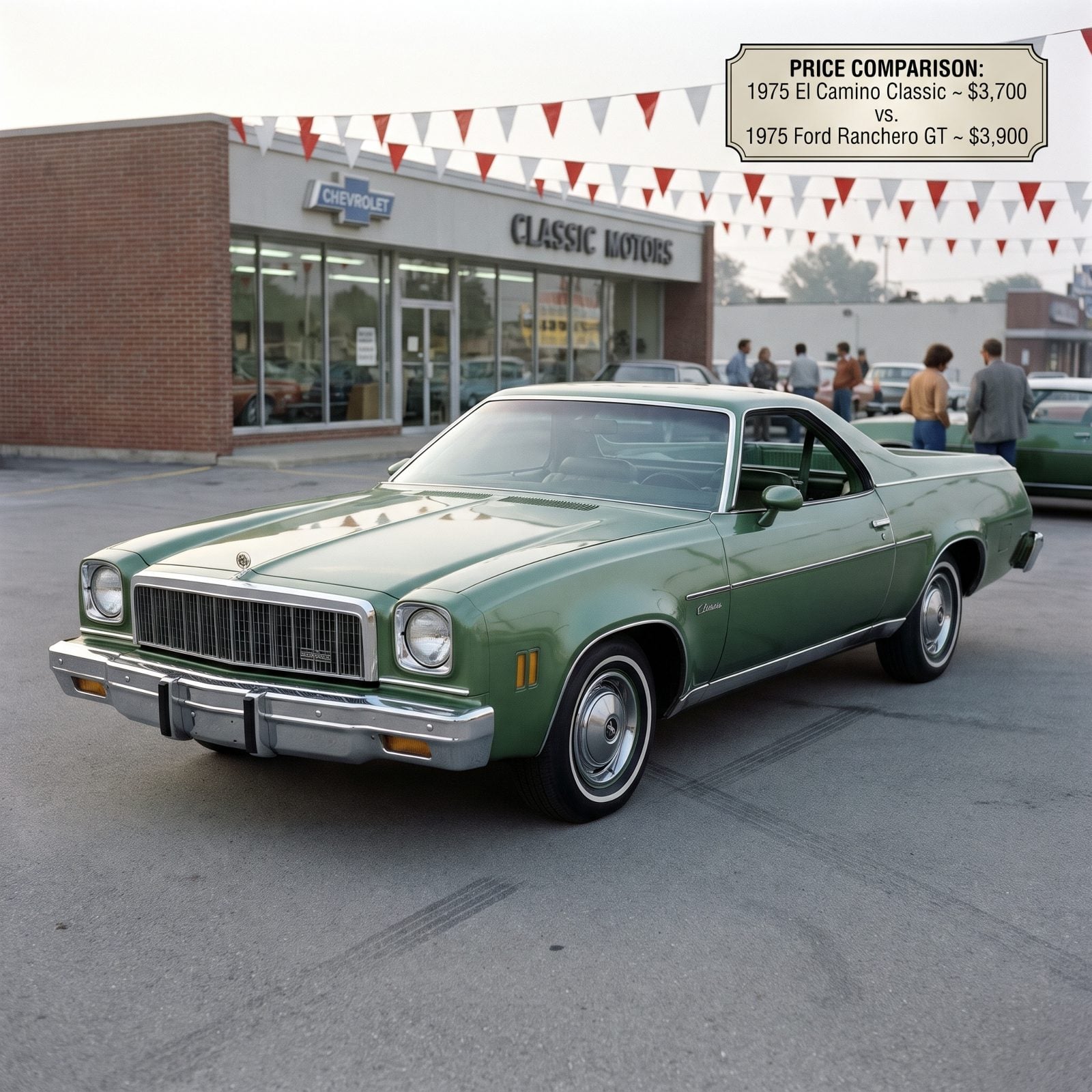
Some folks wanted a truck bed but couldn’t stomach a truck ride. For them, Chevy built the El Camino, and the upscale Classic trim ran roughly $3,700 to start in 1975.
Underneath, it shared its bones with the Chevelle, so you got car suspension, car seats and a car dashboard, with a cargo bed bolted on where the back seat should be. The Classic added brighter trim and a nicer cabin for buyers who hauled more golf bags than hay bales.
That’s about $21,000 in today’s dollars. Plenty of people paid it, because the El Camino let you tell yourself you’d bought something practical while driving home in what felt like a personal luxury coupe.
1975 GMC C15 Fenderside: The Stepside Workhorse Near $3,500
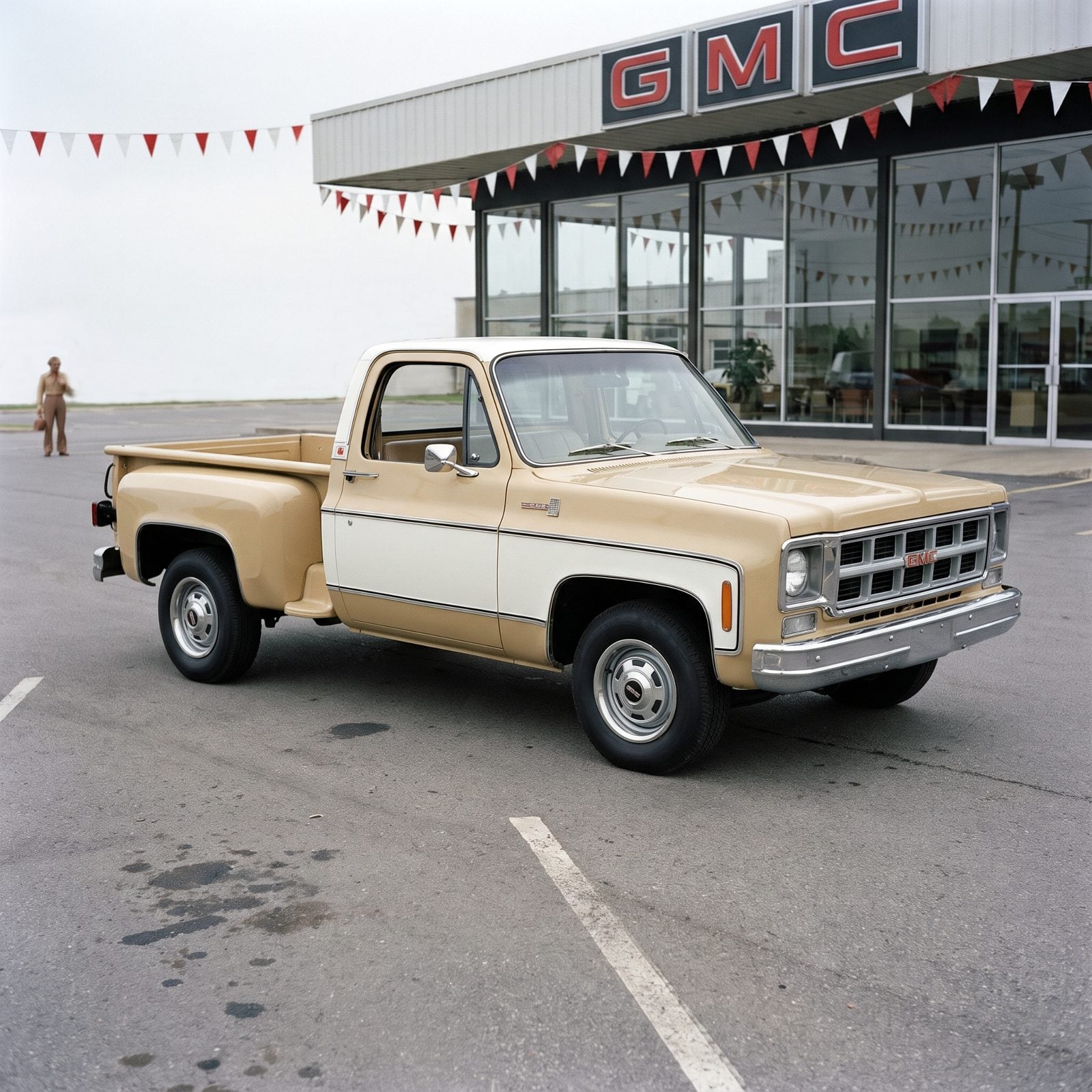
GMC’s version of the old-school stepside, sold to people who liked their trucks a little more serious. The C15 Fenderside carried a base price near $3,500, a touch above its Chevy cousin, which was pretty typical for the GMC badge.
Mechanically it was the same square-body half-ton you’d find at the Chevy store. Same cab, same frame, same engine choices. What you paid extra for was the grille, the nameplate, and a dealership that often sold big commercial rigs out back. That association carried weight with contractors and farmers.
Around $20,000 today. For a fendered bed with step plates you could stand on to reach the load, that’s honest money for an honest truck.
1975 GMC K15 Wideside: Four-Wheel Drive for About $4,400
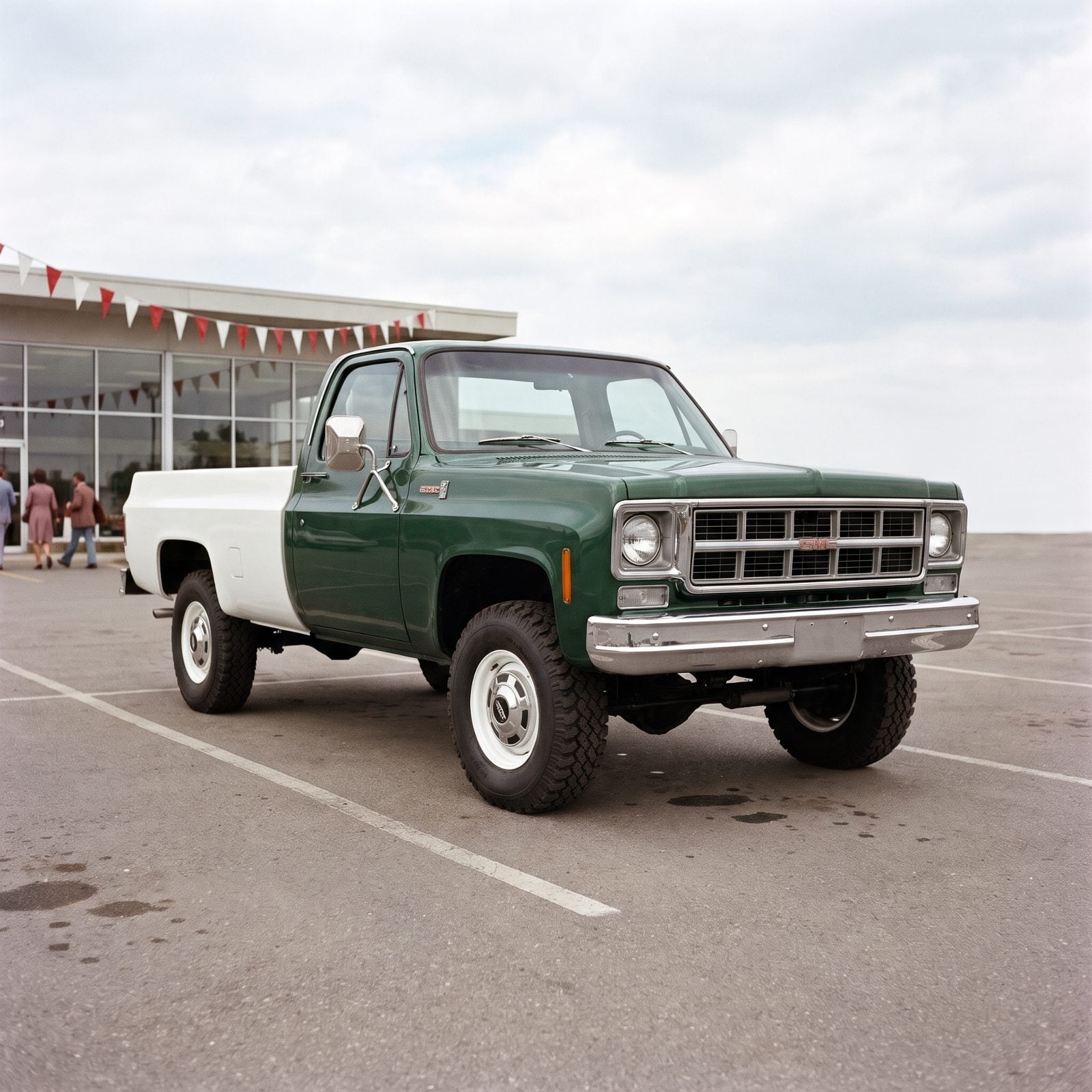
Swap the C for a K and GMC put power to the front wheels. The K15 Wideside was the four-wheel-drive half-ton, and it ran about $4,400 to start, a hefty jump over the two-wheel-drive version.
That premium bought a transfer case, a front driving axle and a taller stance that could actually get you to the back forty after a rain. Order a V8 with the automatic and you could get GM’s full-time four-wheel-drive system, which was a pretty modern idea for a 1975 farm truck.
In today’s money, that’s somewhere around $25,000. These days that wouldn’t buy you a four-wheel-drive pickup off any lot in the country, let alone a full-size one.
1975 GMC Sierra Grande Half-Ton: Dressed-Up Half-Ton Around $3,900
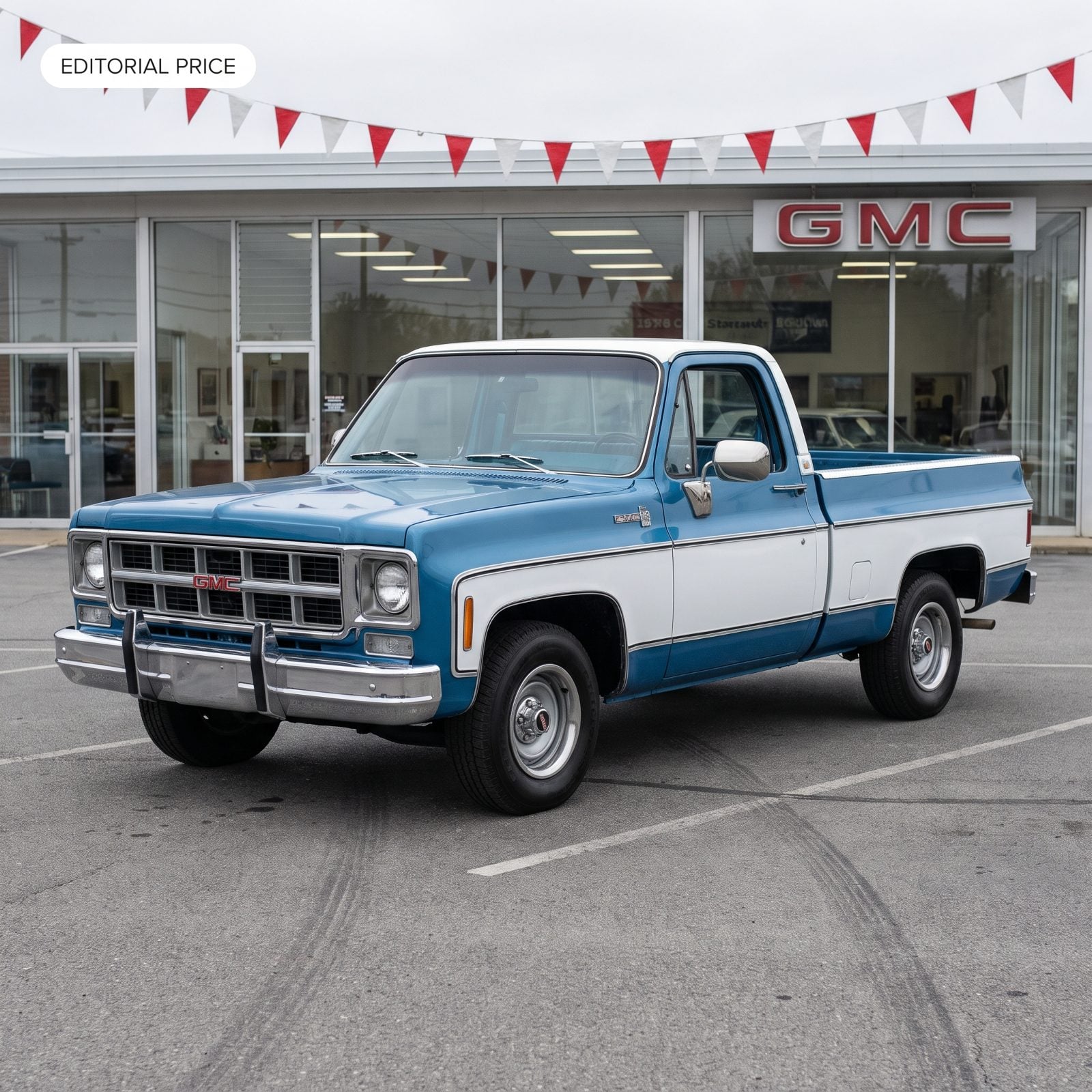
1975 was the year GMC started handing out Sierra names. The Sierra Grande sat in the middle of the new lineup, and a half-ton dressed in that trim came in around $3,900.
That bought you extra brightwork, a better-trimmed cab and enough comfort upgrades to make the daily drive feel less like punching a clock. It was the truck for the guy who used it for work all week and drove it to church on Sunday without apologizing.
Figure about $22,000 now. The square-body GMCs in upper trims have turned into hot collector pieces, so the original buyer’s mid-grade splurge looks pretty smart in hindsight.
1975 GMC High Sierra Three-Quarter-Ton: Heavy-Duty Comfort Near $4,600
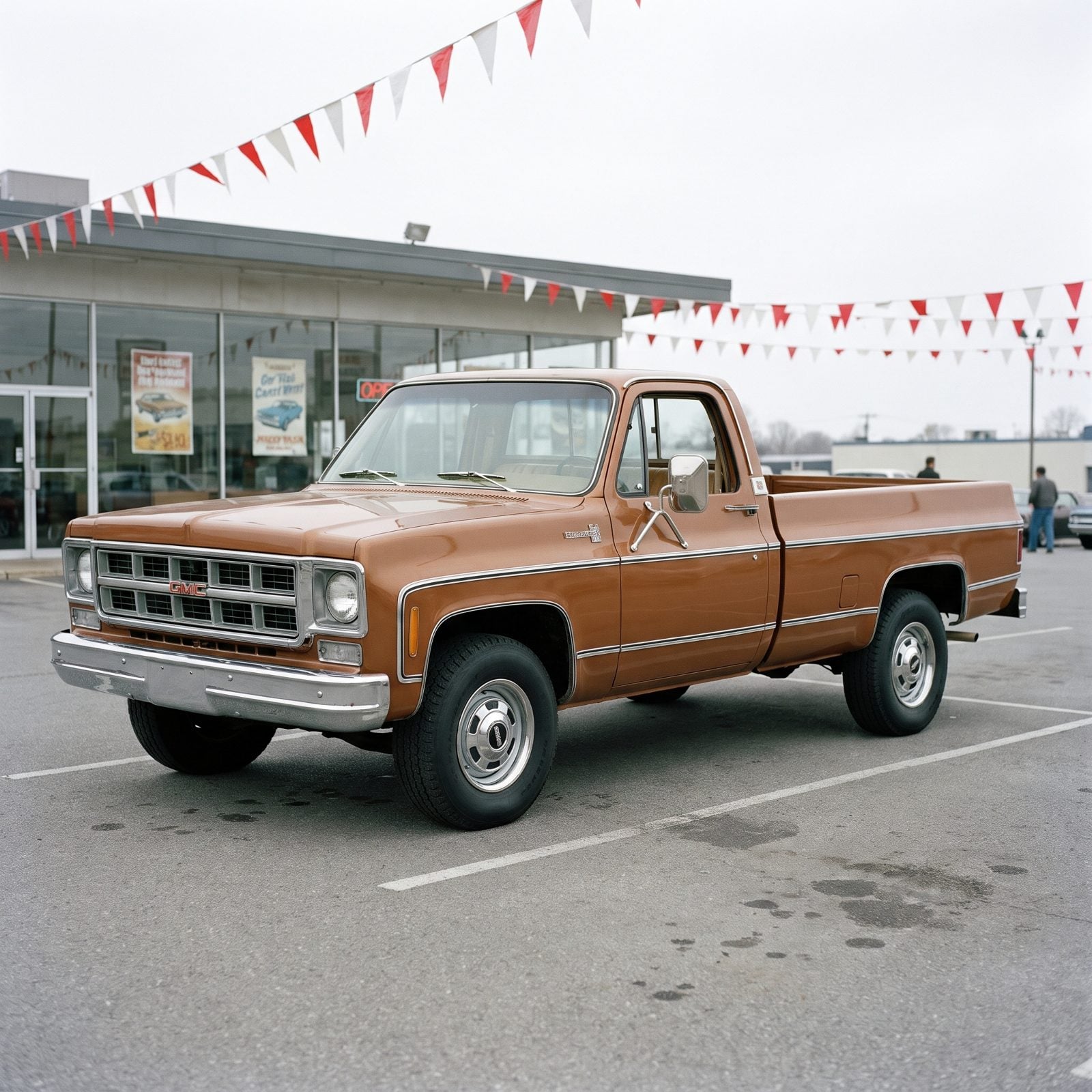
The High Sierra was GMC’s way of saying a three-quarter-ton didn’t have to feel like a punishment. Base price landed near $4,600 for this heavier-duty truck with a nicer cabin than most work rigs could claim.
The three-quarter-ton frame and springs meant real payload and real towing, the kind people needed for campers, trailers and loads of gravel. The High Sierra trim layered on the comfort and the chrome so you didn’t have to choose between capable and pleasant.
That’s roughly $26,000 in current dollars. Today a heavy-duty pickup with a decent interior can run more than double that, before you even look at the diesel option.
1975 GMC Sprint: The Badge-Engineered El Camino Around $3,800
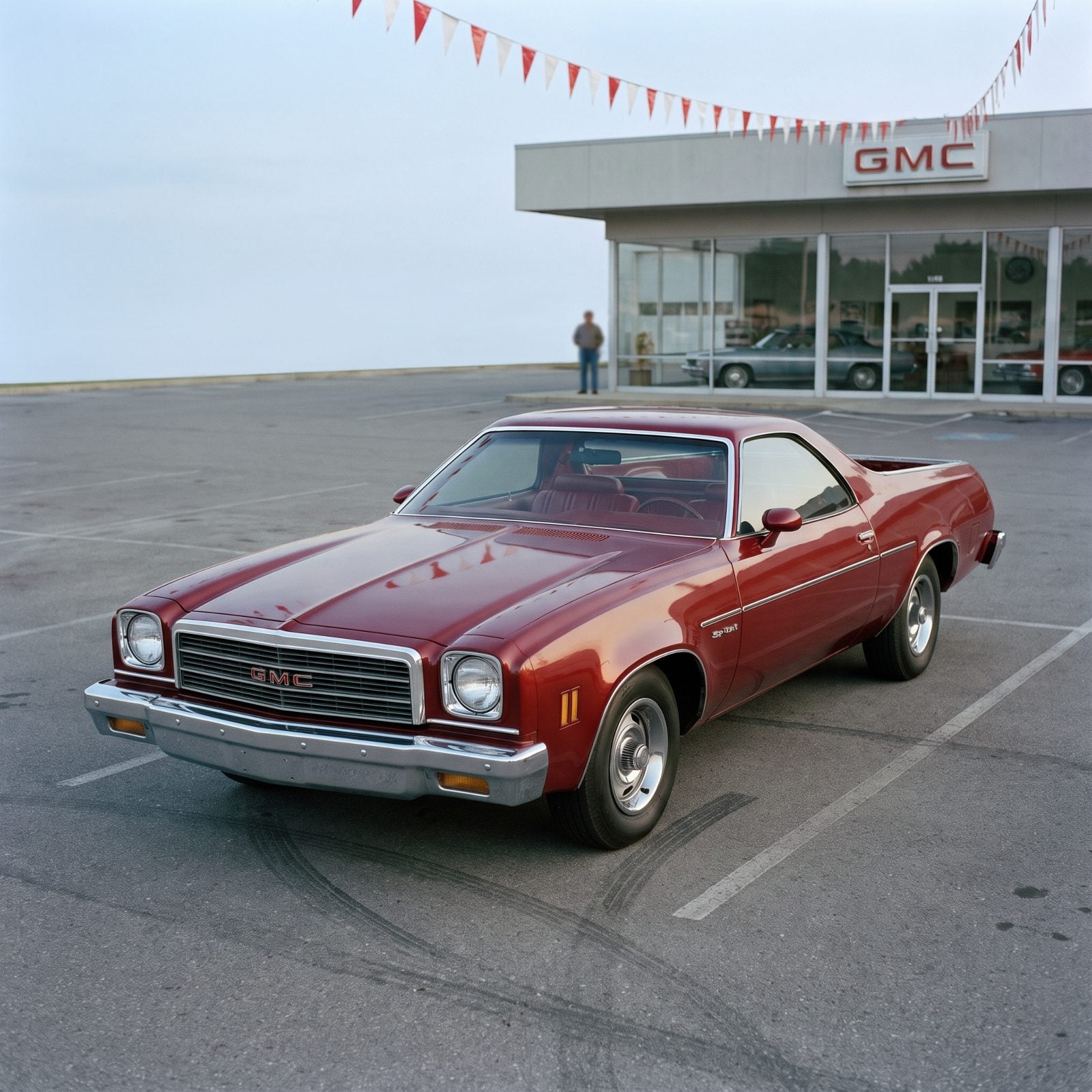
Same car-truck, different grille, slightly bigger price. The GMC Sprint was the El Camino wearing a GMC badge, and it rolled out of the showroom around $3,800.
Badge engineering was GM’s favorite game in the ’70s. The Sprint gave GMC dealers something sporty to sell alongside the big pickups, and it pulled in buyers who wanted the El Camino formula but liked the GMC name better. A sportier SP version was on the menu for anyone who wanted extra flash.
About $22,000 in today’s money. GMC renamed it the Caballero a few years later, which makes the Sprint name a short chapter worth remembering.
1975 Dodge D100 Sweptline Short Bed: Mopar Hauler Near $3,400
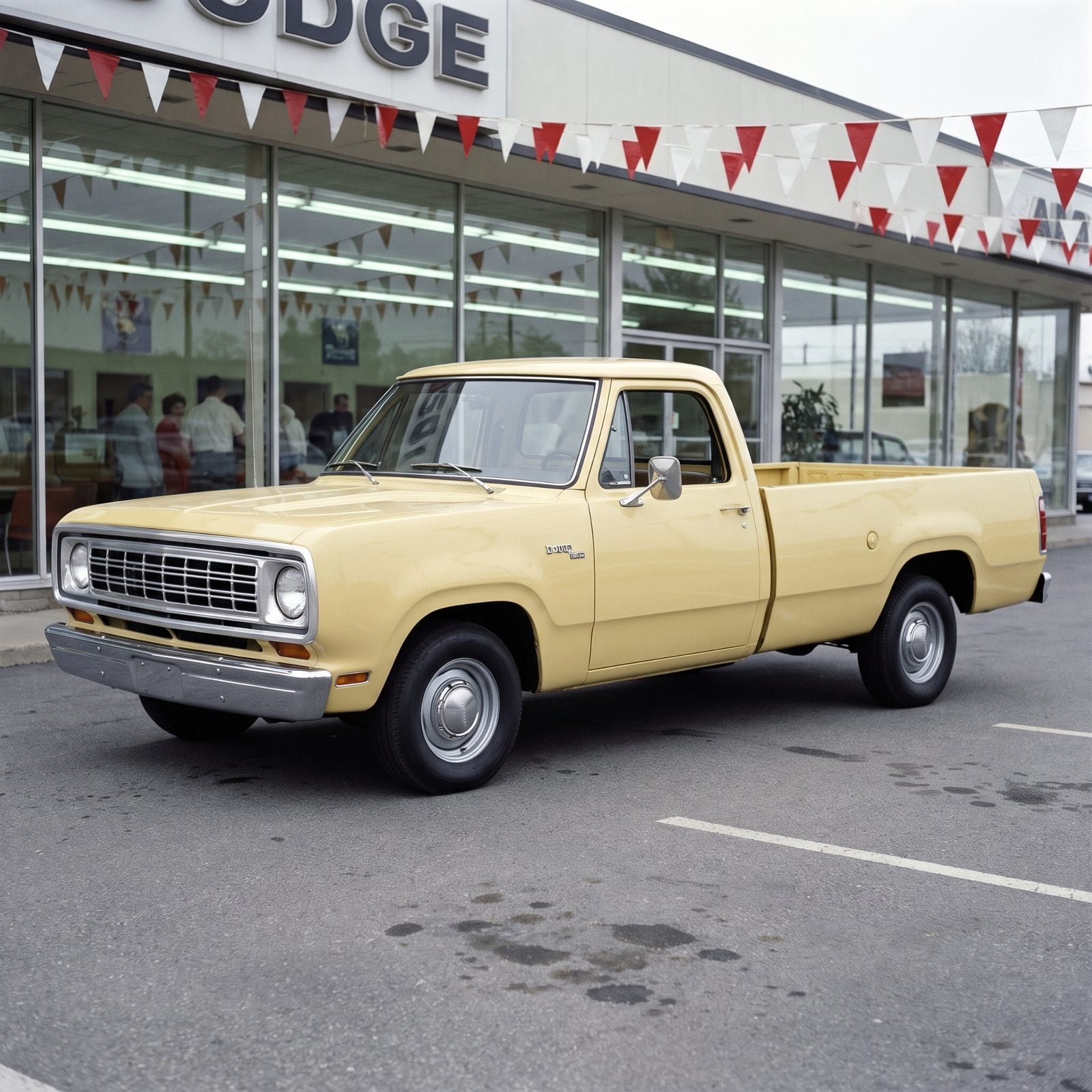
Dodge’s smooth-sided half-ton, the D100 Sweptline short bed, rolled off the lot for somewhere near $3,400. That put it right in the scrum with Ford and Chevy, dollar for dollar.
Sweptline was Dodge-speak for the flat-sided bed. The fendered stepside went by Utiline. Under the hood, the base engine was the famously stubborn Slant Six, an engine with a reputation for refusing to die no matter how badly you treated it. A 318 V8 waited on the option sheet if you wanted more grunt.
Call it about $19,500 today. Dodge always ran third in the pickup race back then, but plenty of these trucks outlived their Ford and Chevy neighbors.
1975 Dodge D200 Crew Cab: Six-Seat Three-Quarter-Ton Around $4,700
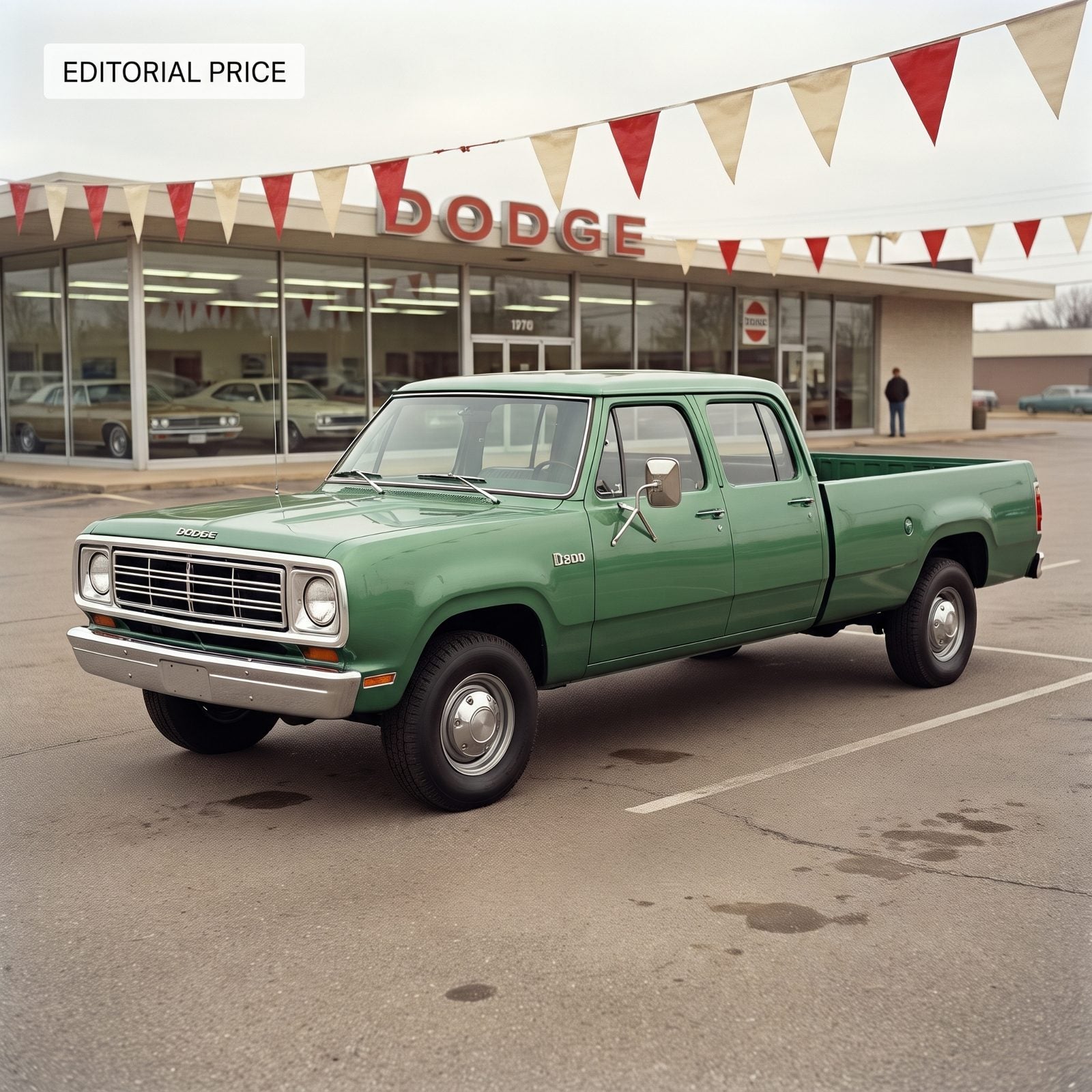
Dodge was doing four-door pickups long before it was cool. The company started offering a factory crew cab back in 1963, and by 1975 a D200 Crew Cab cost around $4,700.
Two full rows of bench seating meant six people could ride along, with a three-quarter-ton chassis underneath to carry the tools and tow the trailer. It was built for work crews, ranch hands and big families who needed one vehicle to do everything.
That’s roughly $27,000 in current dollars. Today crew cabs are the default on every truck lot. In 1975 they were oddballs, long and awkward to park, and the D200 Crew Cab was one of the trucks that proved the idea worked.
1975 Dodge D100 Adventurer Sport: The Loaded Half-Ton Around $4,100
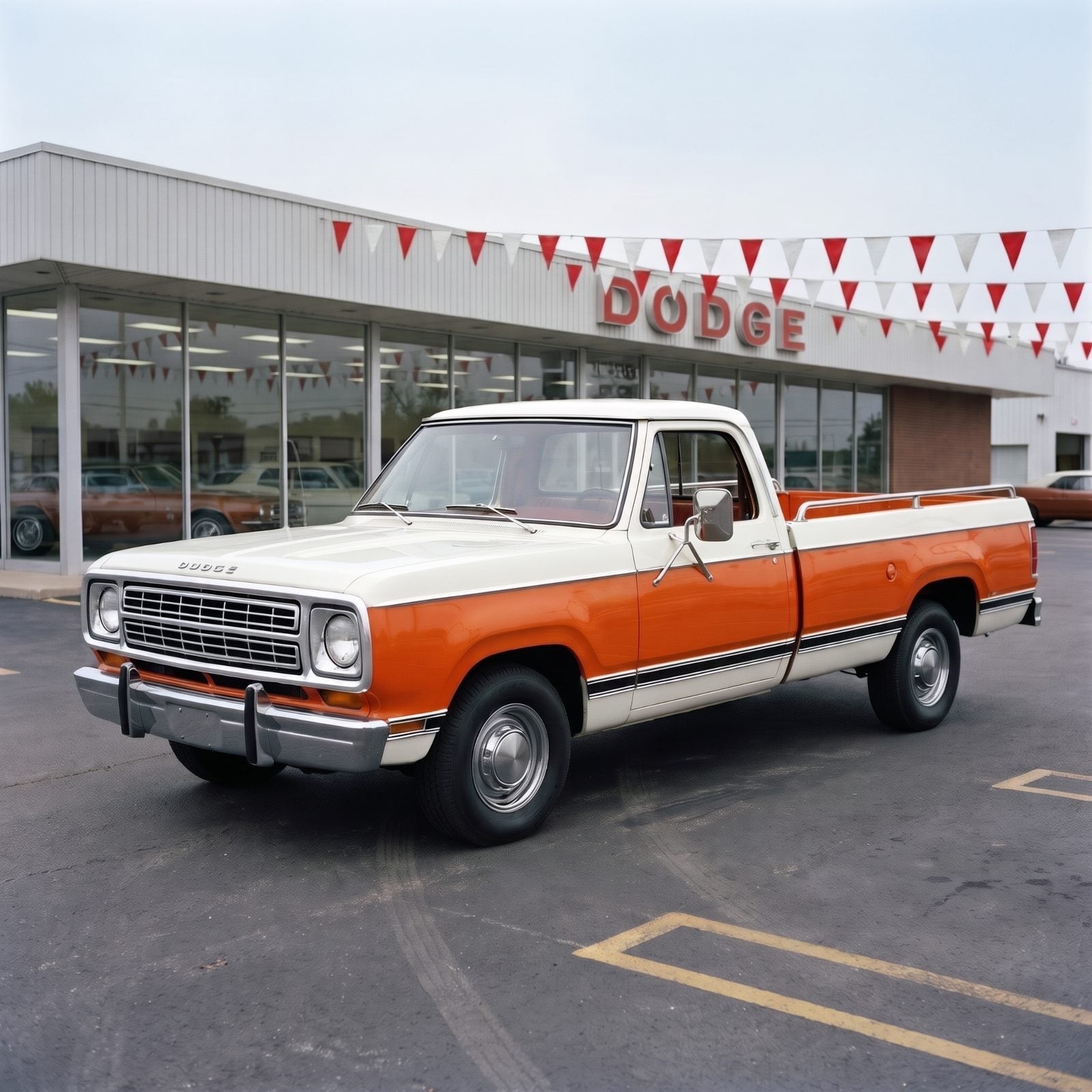
This was the Dodge that wore a tuxedo to the job site. The Adventurer Sport sat at the very top of the D100 ladder in 1975, stickering somewhere around $4,100 before anybody started checking boxes on the option sheet. Two-tone paint, bright moldings, and a cab that actually tried to be pleasant.
A guy pulling roughly $4.50 an hour was staring down around 900 hours of pay just to park one in the driveway. That’s a serious chunk of a working year. Buyers signed anyway, because a dressed-up half-ton told the neighbors you’d arrived without pretending you didn’t still get your hands dirty.
Call it somewhere north of $24,000 in today’s money.
Which, for a loaded half-ton, almost sounds like a steal — until you remember nobody was stretching the loan over 84 months back then. You paid it off and it was yours.
1975 Jeep J-10 Townside Short Bed: Around $4,000 Off the Lot
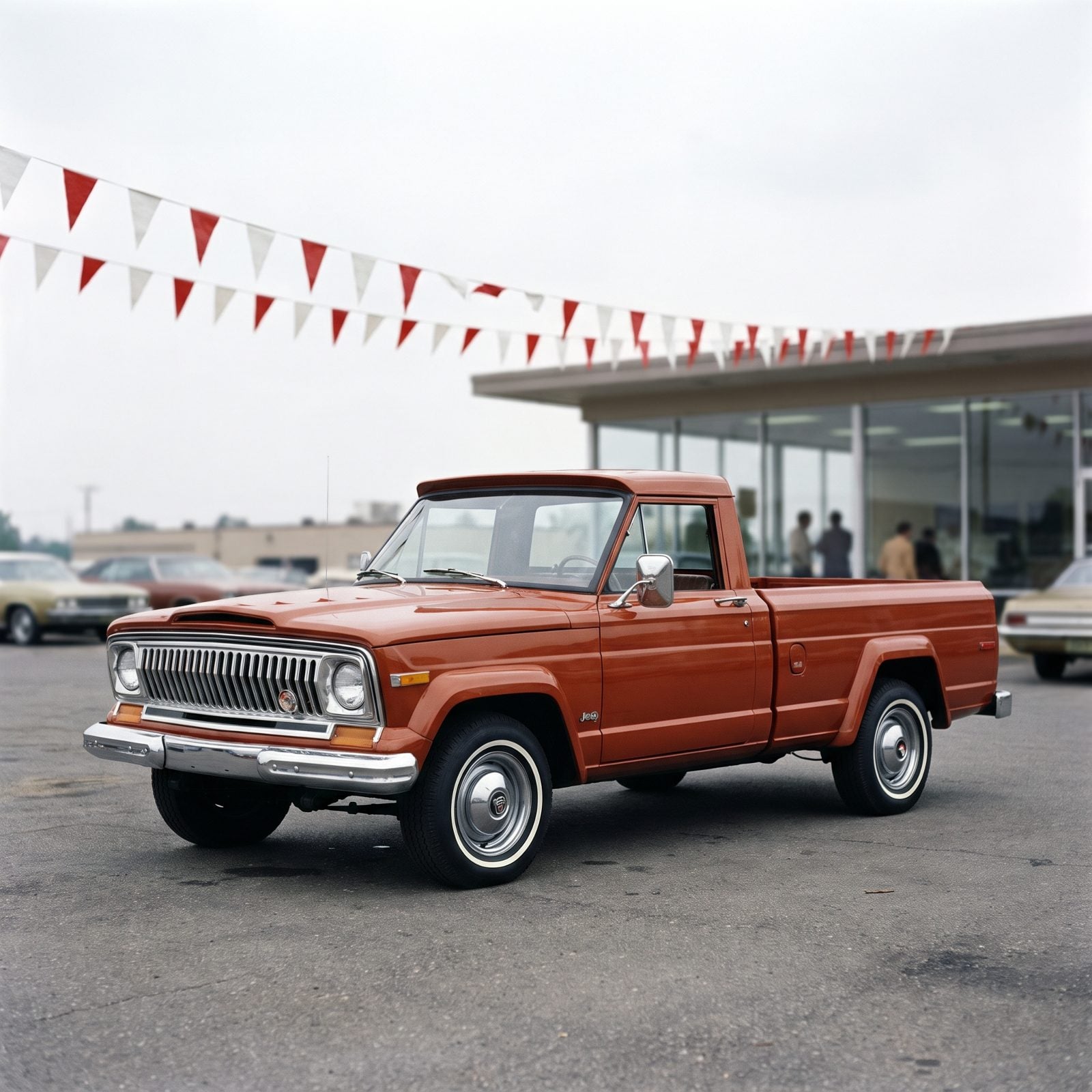
You could drive a brand-new J-10 Townside home for roughly $4,000 in 1975, give or take options. That was AMC-era Jeep at its most sensible: a half-ton with the straight-six and a smooth bed, built for people who actually hauled things.
Nobody called it cheap. They called it fair, and that distinction meant something when a working family stretched a paycheck across the whole thing.
1975 Jeep J-10 Thriftside: The Stepside That Cost Less Than You’d Think
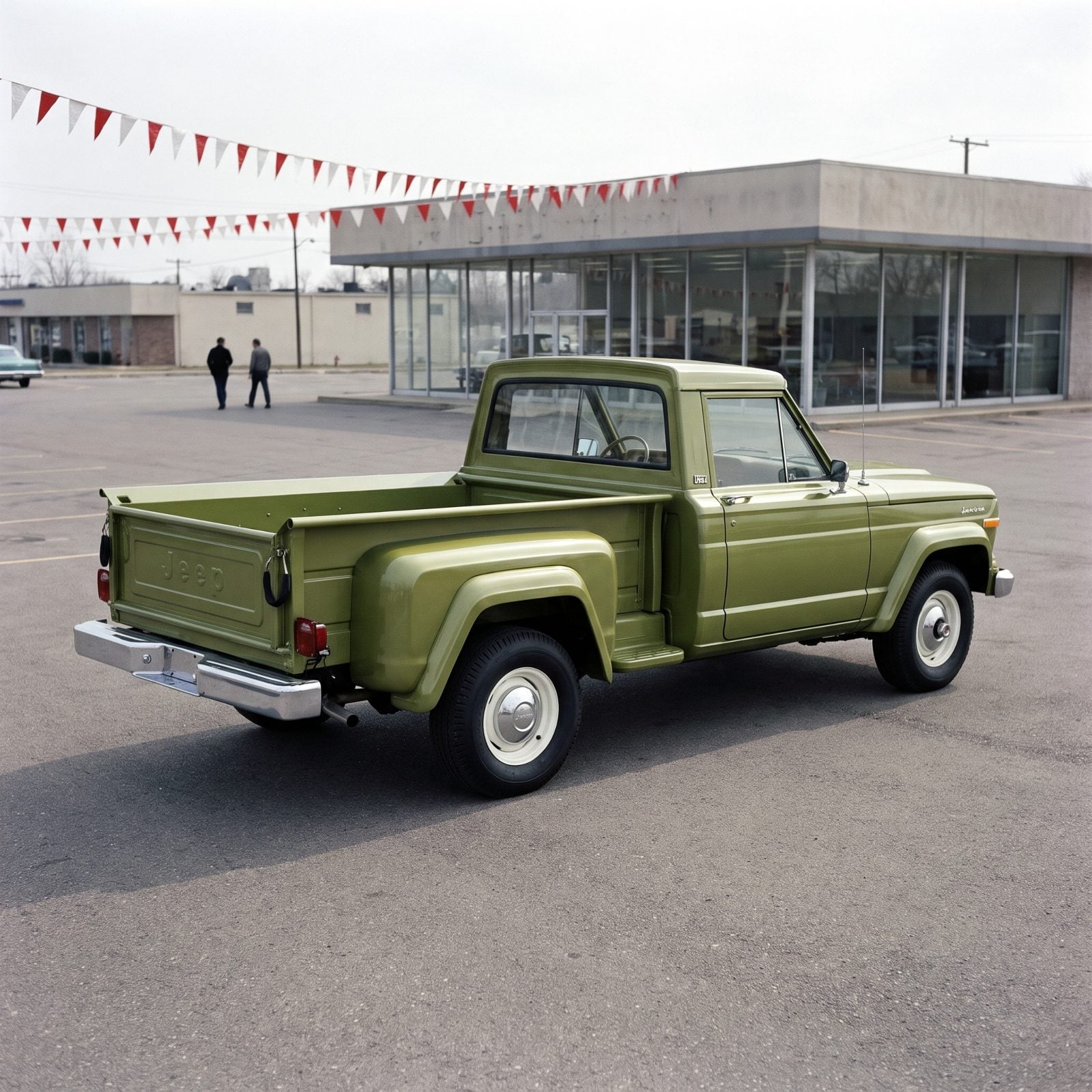
The Thriftside was the honest workhorse of the J-10 line, a narrow stepside bed with those exposed rear fenders and the little step behind the cab. Base price sat a notch under the Townside, closer to $3,900.
Here’s the odd part for modern eyes. The fancier-looking stepside often cost less than the smooth-sided Townside, because the Townside needed more sheet metal. Fashion and function traded places.
At a mechanic’s wage back then, you were still looking at a long summer of labor to earn it. A real purchase.
1975 Jeep J-20 Camper Truck: Heavy-Duty Hauling for About $4,800
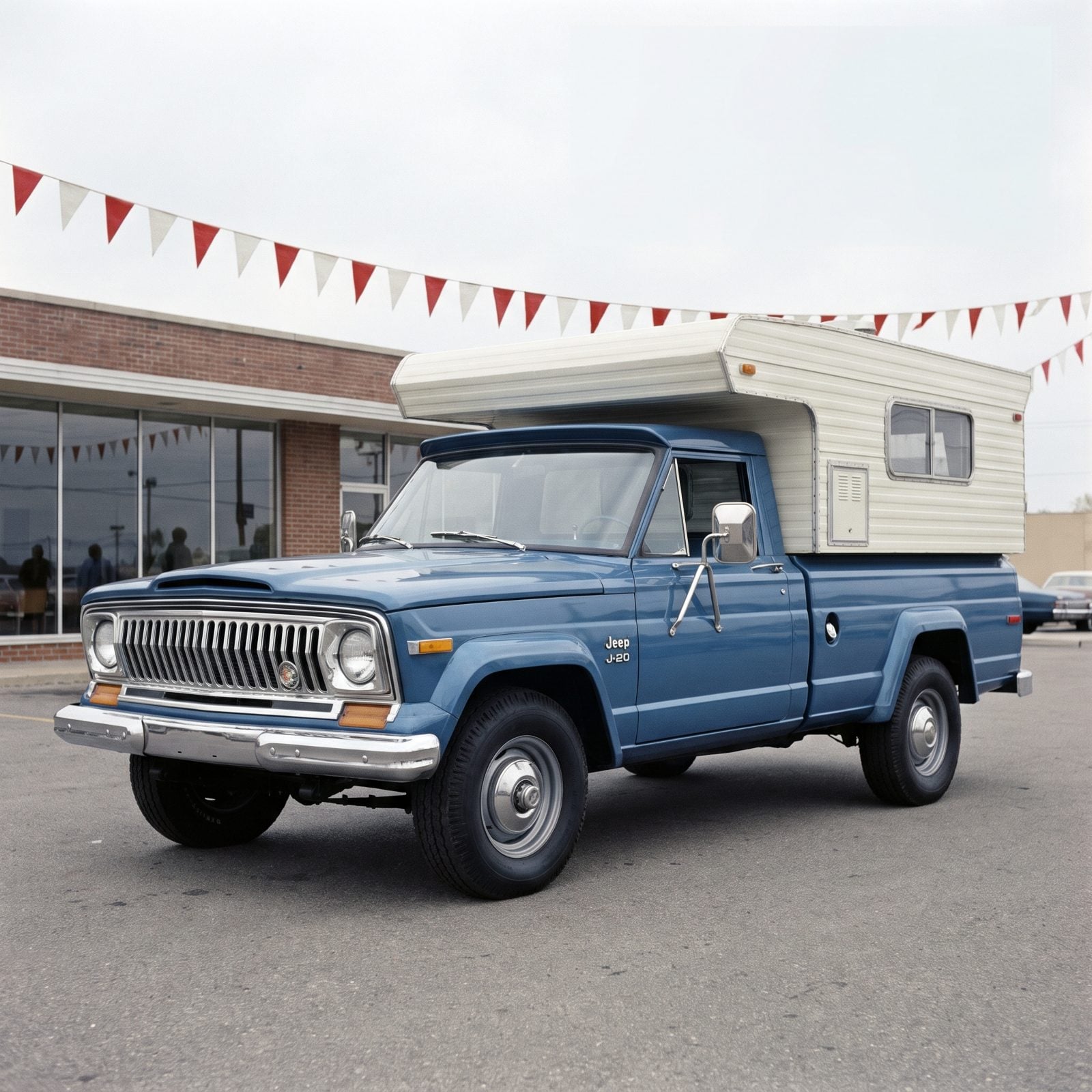
Step up to the three-quarter-ton J-20 with the camper setup and the number climbed to around $4,800. Heavier springs, bigger brakes, a stouter frame. This was the truck for folks slinging a slide-in camper and pointing the hood toward a lake somewhere.
That camper boom was real, and it refused to die quietly. Gas had jumped after the 1973 embargo, yet families still loaded up and drove anyway, because that’s what summer was for. The J-20 was built for exactly that kind of stubbornness.
1975 International 200 Travelette: The Crew Cab Hauler Near $5,500
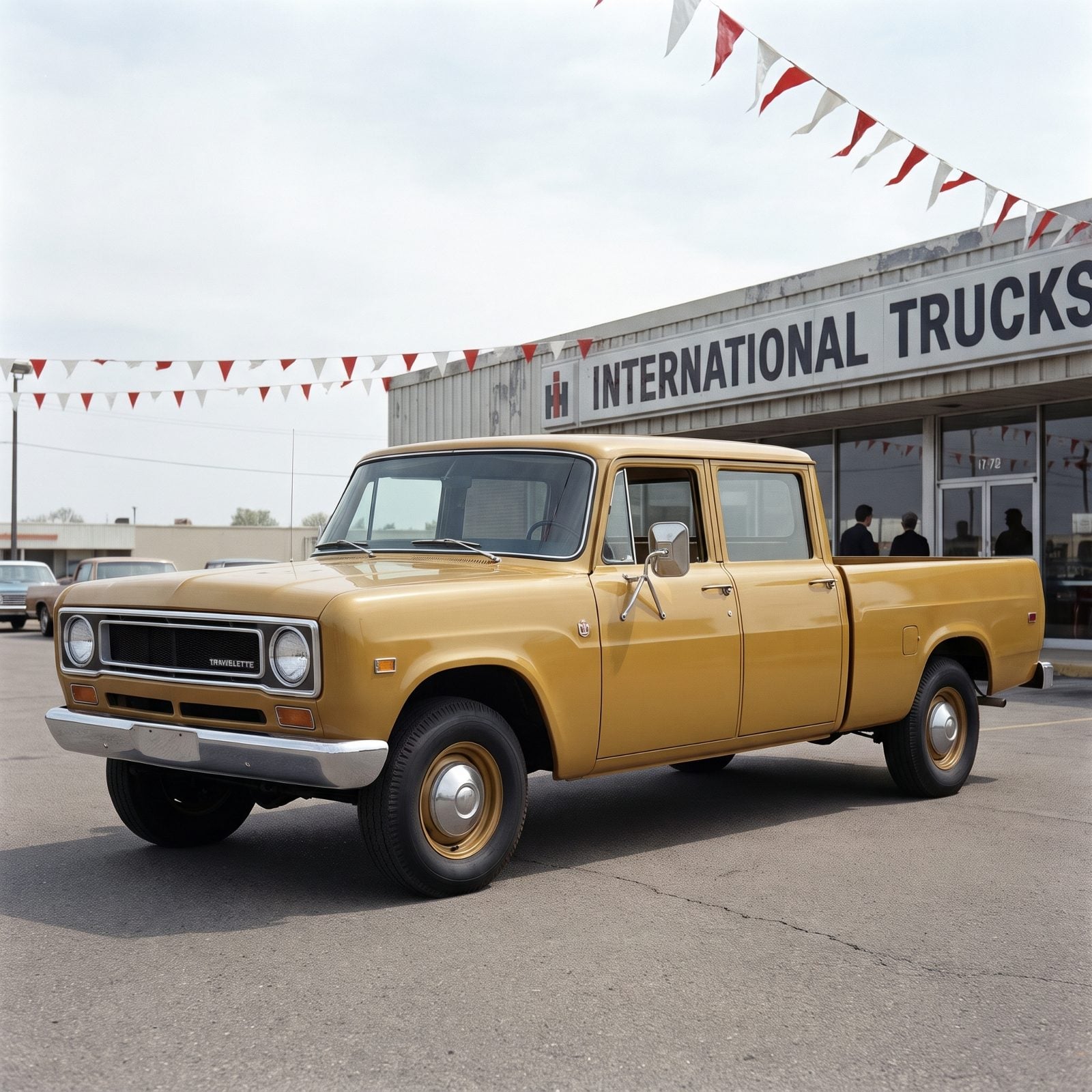
The Travelette was International Harvester’s four-door crew cab, and in 1975 it carried a base price up near $5,500, often higher once you added the heavy-duty bits buyers actually wanted.
International was the tractor company that happened to make trucks, and boy did it show. Overbuilt. Agricultural. Tough as a fence post. A full crew cab in 1975 was rare, serious equipment, mostly bought by work crews and ranches rather than families.
IH walked away from the light-truck business in 1980, which makes a surviving Travelette one of the last of a disappearing breed.
1975 Toyota Pickup: Import Simplicity for Roughly $3,100
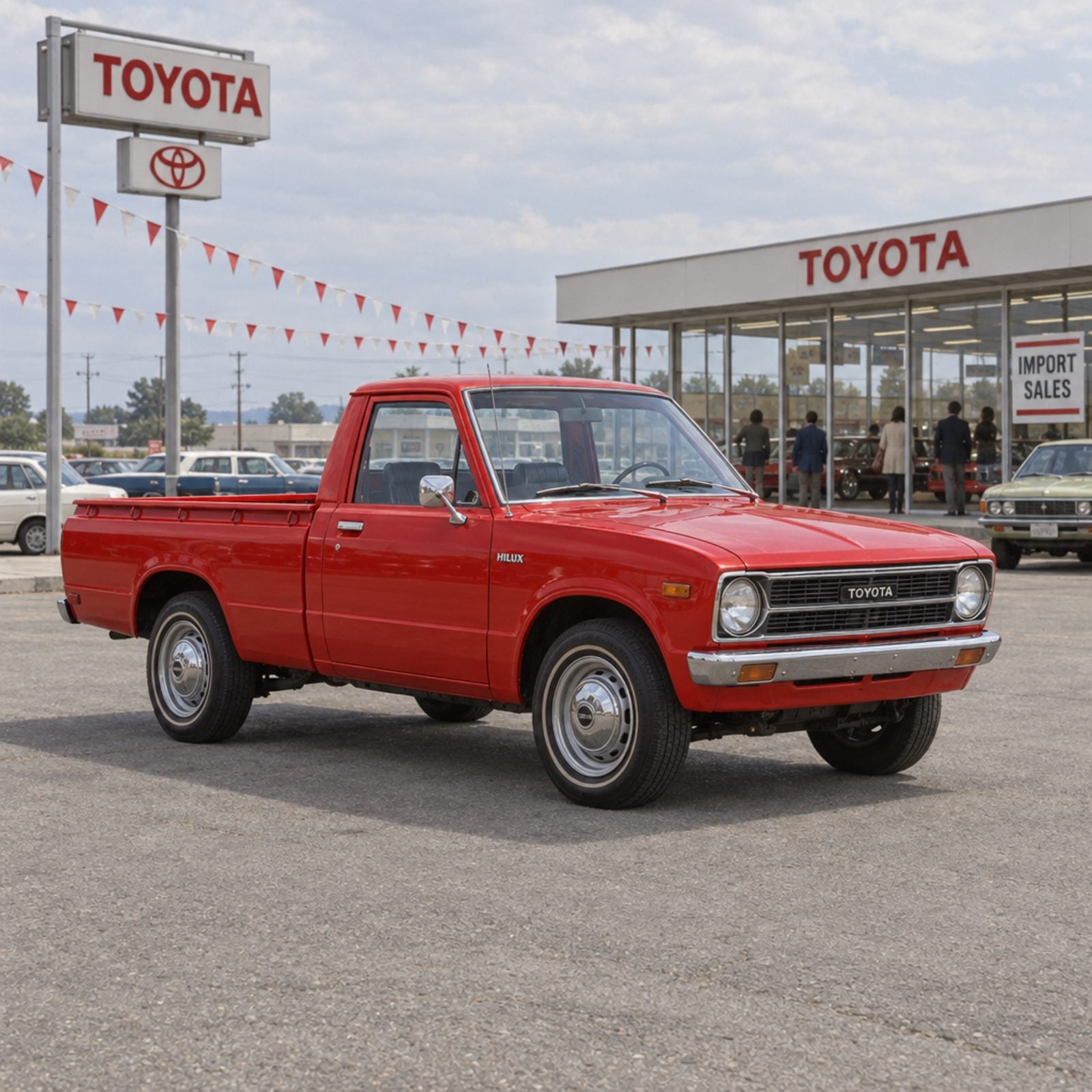
Around $3,100 put you in a brand-new Toyota, and buyers were starting to notice. Small, light, honest, and stingy with fuel at a moment when gas prices had everyone doing math at the pump.
Detroit mostly shrugged at these little imports in 1975. That was a mistake, and the sales charts would prove it within a decade.
1975 Datsun 620 Long-Bed Pickup: About $3,200 and Sneaky Practical
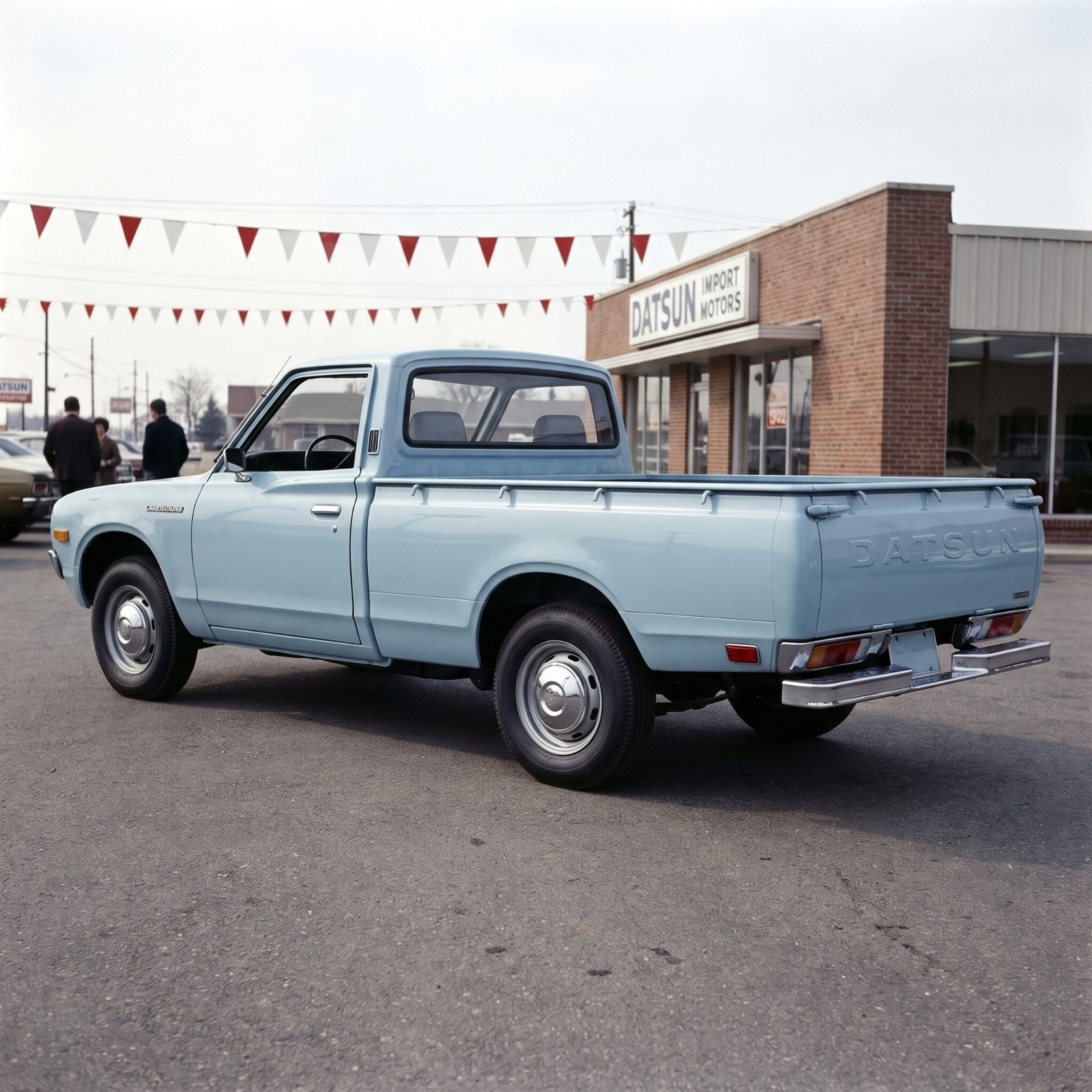
The 620 long-bed landed around $3,200 and pulled off a quiet trick: compact size, real cargo length. You got genuine utility without the thirst of a full-size half-ton.
Datsun leaned into the little-truck fight harder than most. That sculpted bedside crease and tidy cab made the 620 look a lot sharper than the price suggested.
When a fill-up still stung, a pickup that could sip fuel and still carry lumber was a smart buy. Plenty of tradesmen figured that out early.
1975 Mazda B1600 Pickup: The Underdog Import Around $3,000
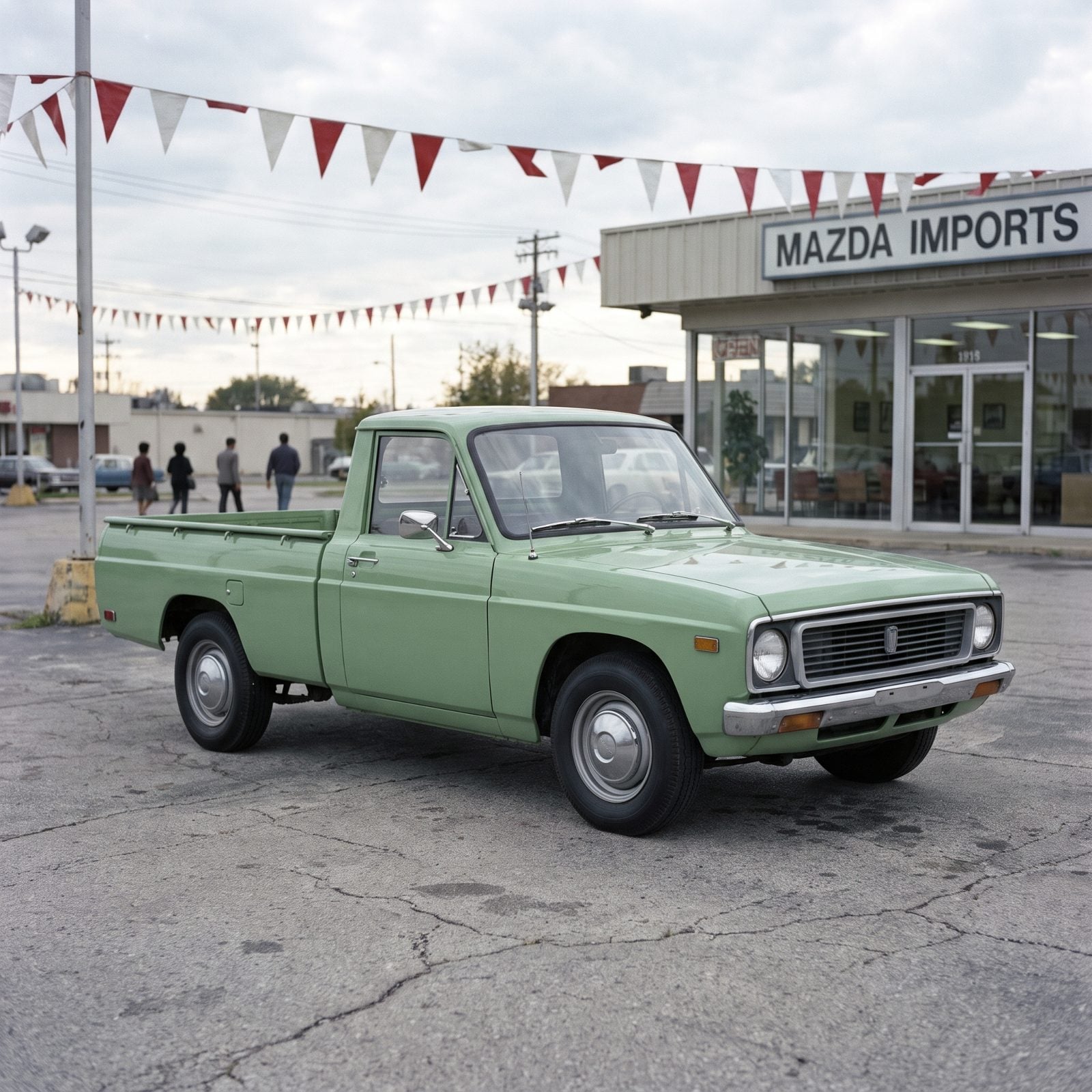
Mazda’s B1600 was the import most people forgot, and it slipped onto lots for roughly $3,000. Conventional piston engine here, no rotary, just a frugal little truck trying to crash the party Toyota and Datsun were already running.
It never got the name recognition. It got the job done anyway.
We have a soft spot for the overlooked ones. The B1600 proved you didn’t need a badge everyone recognized to haul a load of mulch on a Saturday morning. You needed a truck that started. This one did.
1975 Dodge W200 Power Wagon: Four-Wheel Muscle Near $5,200
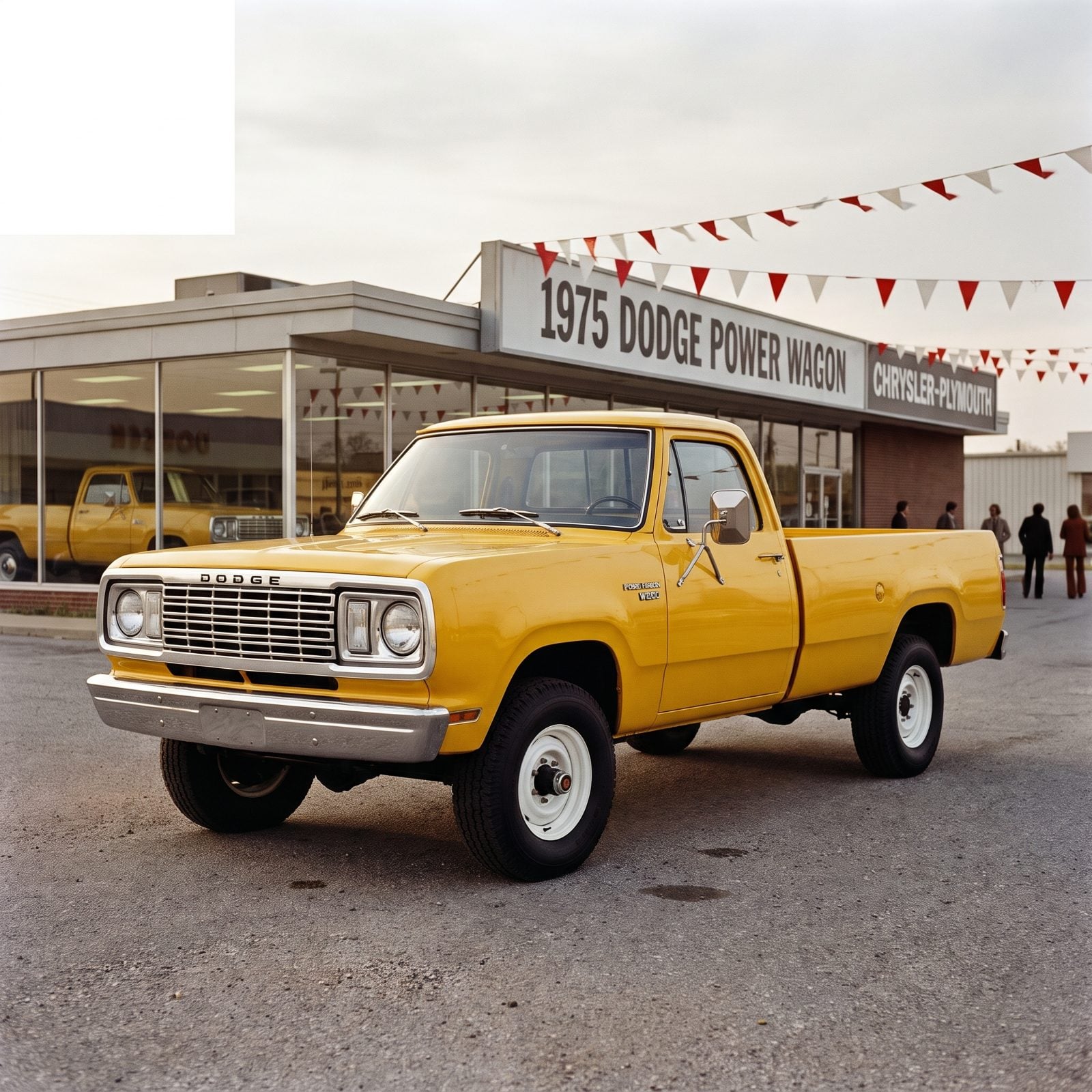
The W200 Power Wagon with four-wheel drive ran near $5,200 in 1975, and it earned every dollar. This was the burly three-quarter-ton, the truck that climbed out of mud that stopped everything else cold.
Four-wheel drive was still a specialty item then, not the default. You paid real money for it, and you bought it because you needed it, not because it looked good sitting in a driveway.
The Power Wagon name went back to the war. By 1975 it meant one thing: this truck does not get stuck.
In today’s money that base figure sits above thirty grand, and you still couldn’t buy the stubbornness factory-installed in one of these.
1975 Ford F-100 Ranger XLT: Dressed-Up Comfort Around $4,500
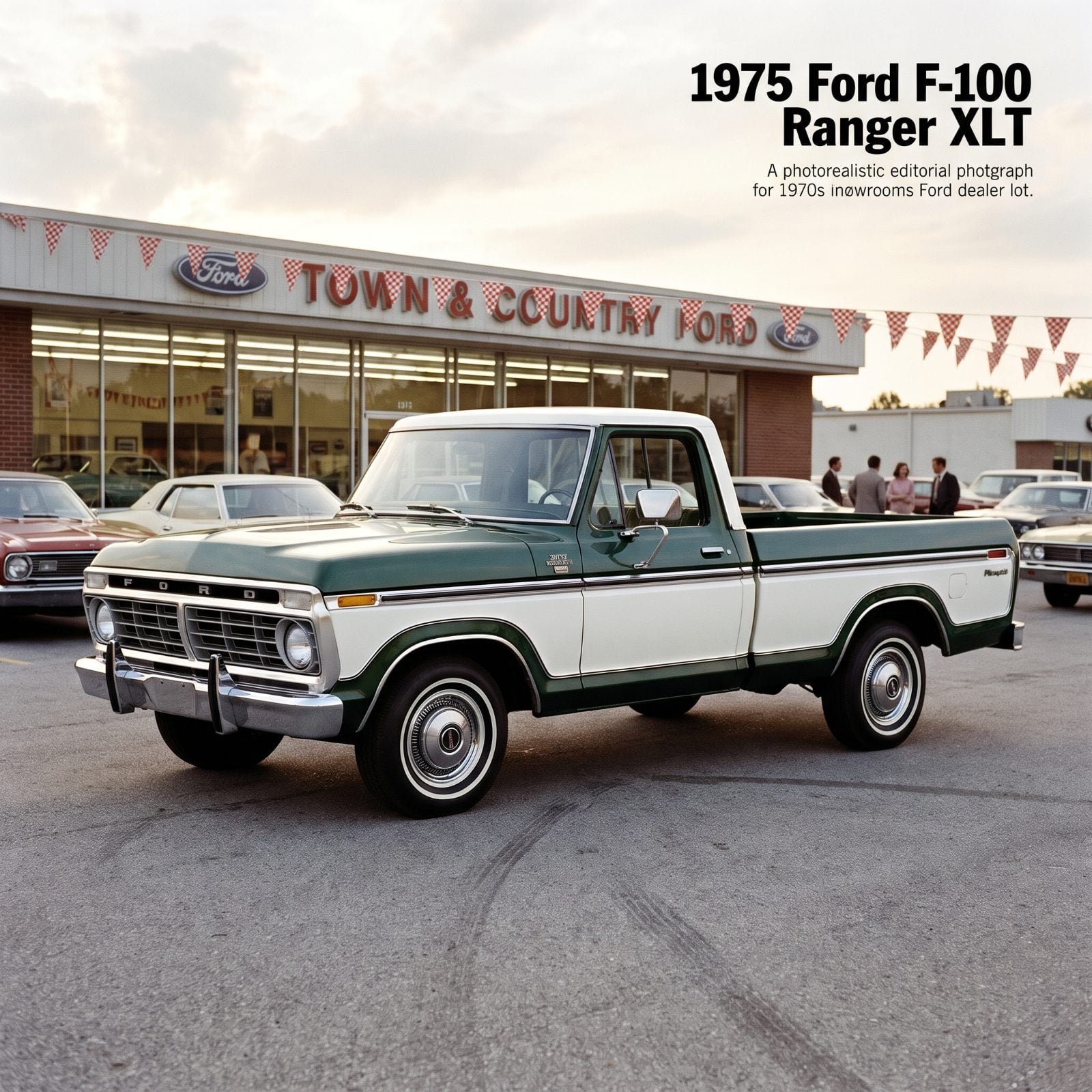
The Ranger XLT was Ford dressing up the F-100, and that polish pushed the price toward $4,500. Two-tone paint, chrome everywhere, a cab that treated you like you mattered. This was the truck for the guy who worked hard and wanted a little nice for once.
Trucks were shedding their tools-only image in the mid-70s, and the XLT package deserves plenty of the blame — or credit, depending on how you feel about carpet in a work vehicle.
Ford’s chrome strategy still lands with today’s crowd: our readers gave photos of vehicles with lots of chrome hearts 87% of the time, versus 81% for the other images in the same articles.
1975 Chevrolet C10 Stepside Long Bed: Classic Bowtie Hauler Near $3,700
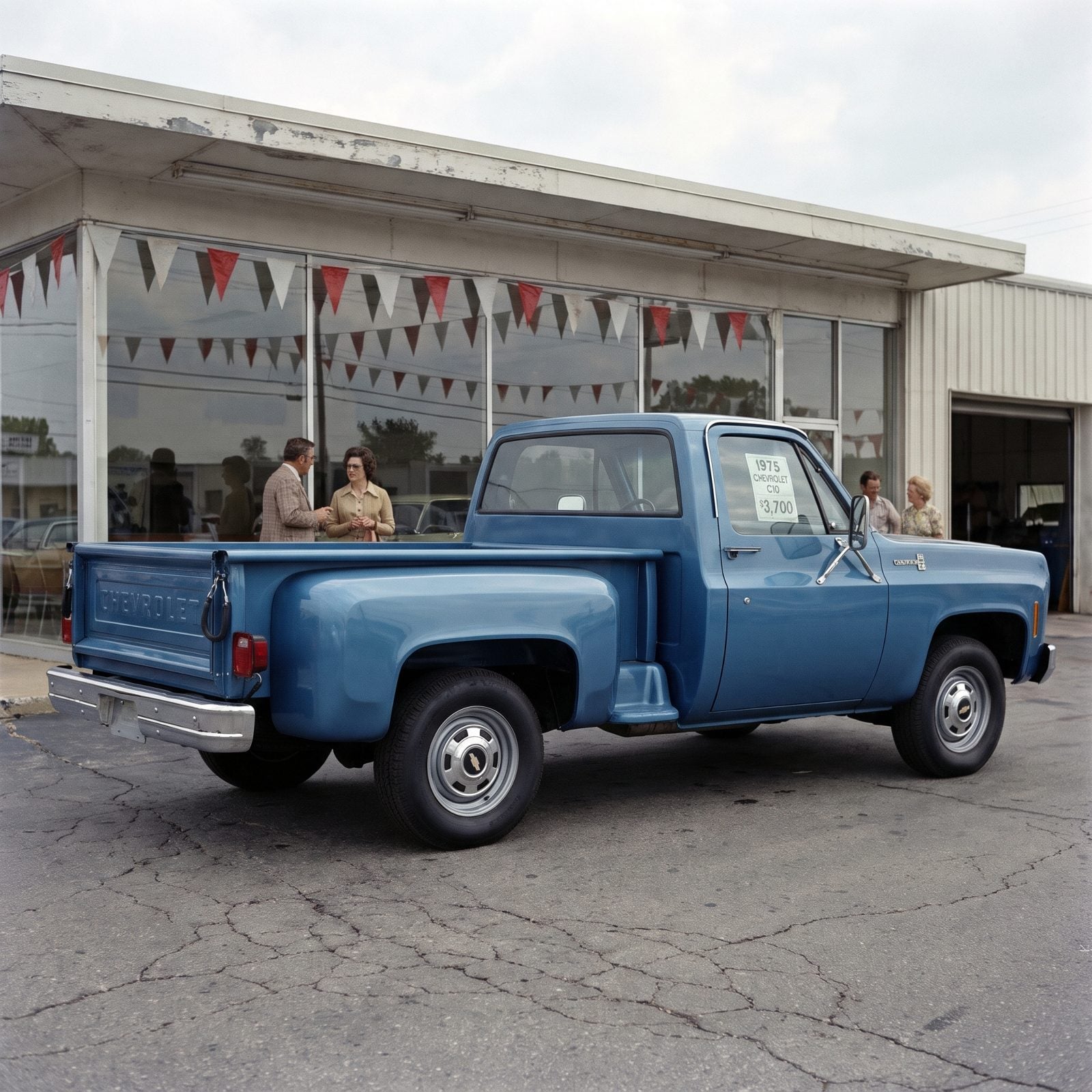
Chevy’s C10 stepside long bed sat around $3,700, and it’s the shape most people picture when they hear the word pickup. Those square-body lines, the exposed rear fenders, the step tucked behind the cab.
The long bed added real cargo length without making the truck a chore to drive, with plenty of room for a weekend’s worth of hauling. Practical and good-looking at the same time, which is rare in anything.
Let’s say it plainly: these are among the best-looking trucks Detroit ever built, and the fact you could roll one off the lot new for under four grand is almost insulting to anyone shopping today. A clean survivor now commands more than its original sticker in collector circles. Tells you everything about how well that design aged.
1975 Dodge D300: The Big One-Ton That Started Around $4,400
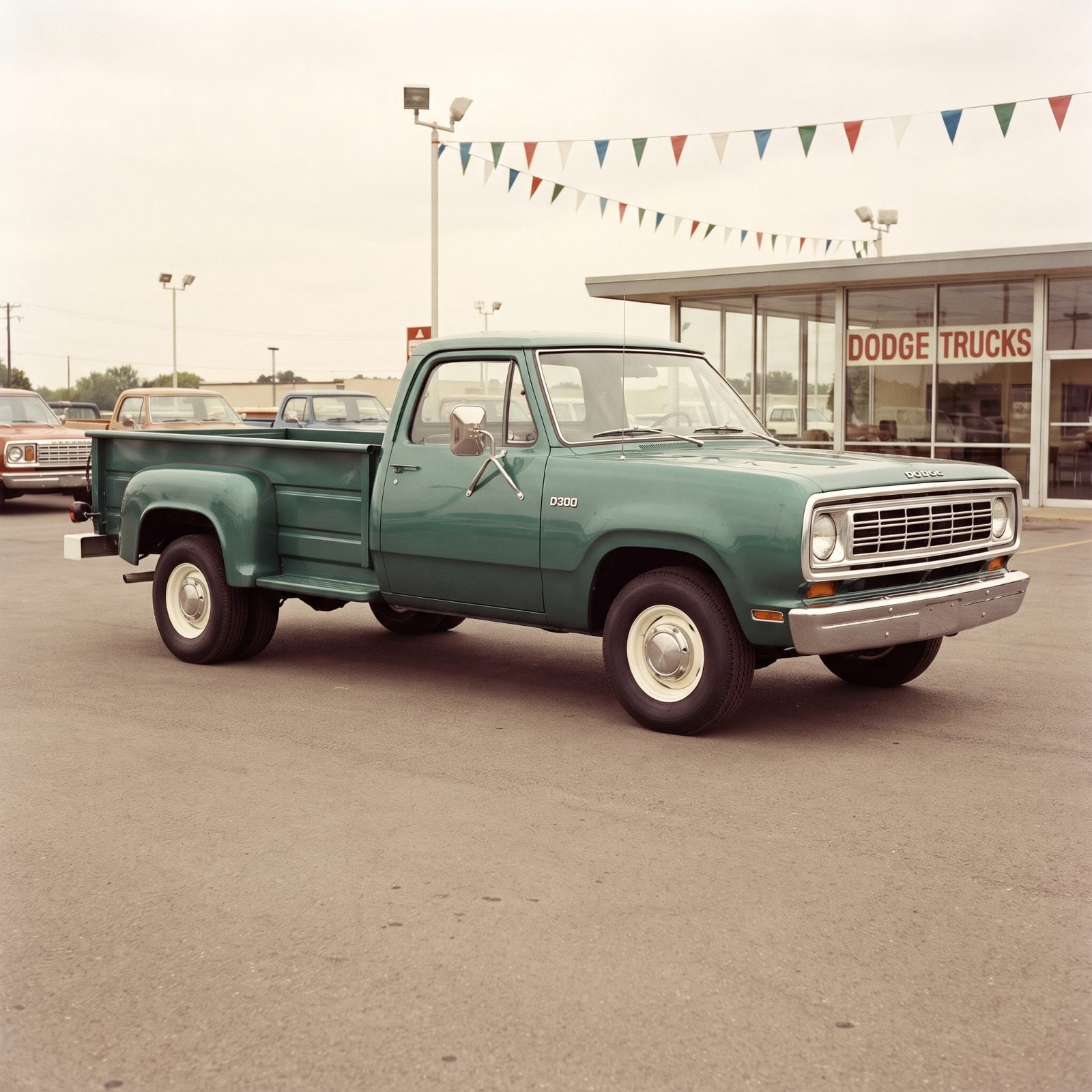
At the top of Dodge’s light-truck ladder sat the D300, a one-ton pickup that started around $4,400. This was the truck you bought when the half-ton was a joke and the three-quarter-ton was just barely enough.
Heavier axles, stiffer springs, and V8 options that ran right up into big-block territory. It was built for slide-in campers, big trailers, and loads that would have flattened a lighter truck’s suspension.
About $25,000 in today’s dollars.
Modern one-ton pickups now routinely sticker well past three times that. The D300 was a tool, plain and simple, and it was priced like one.