
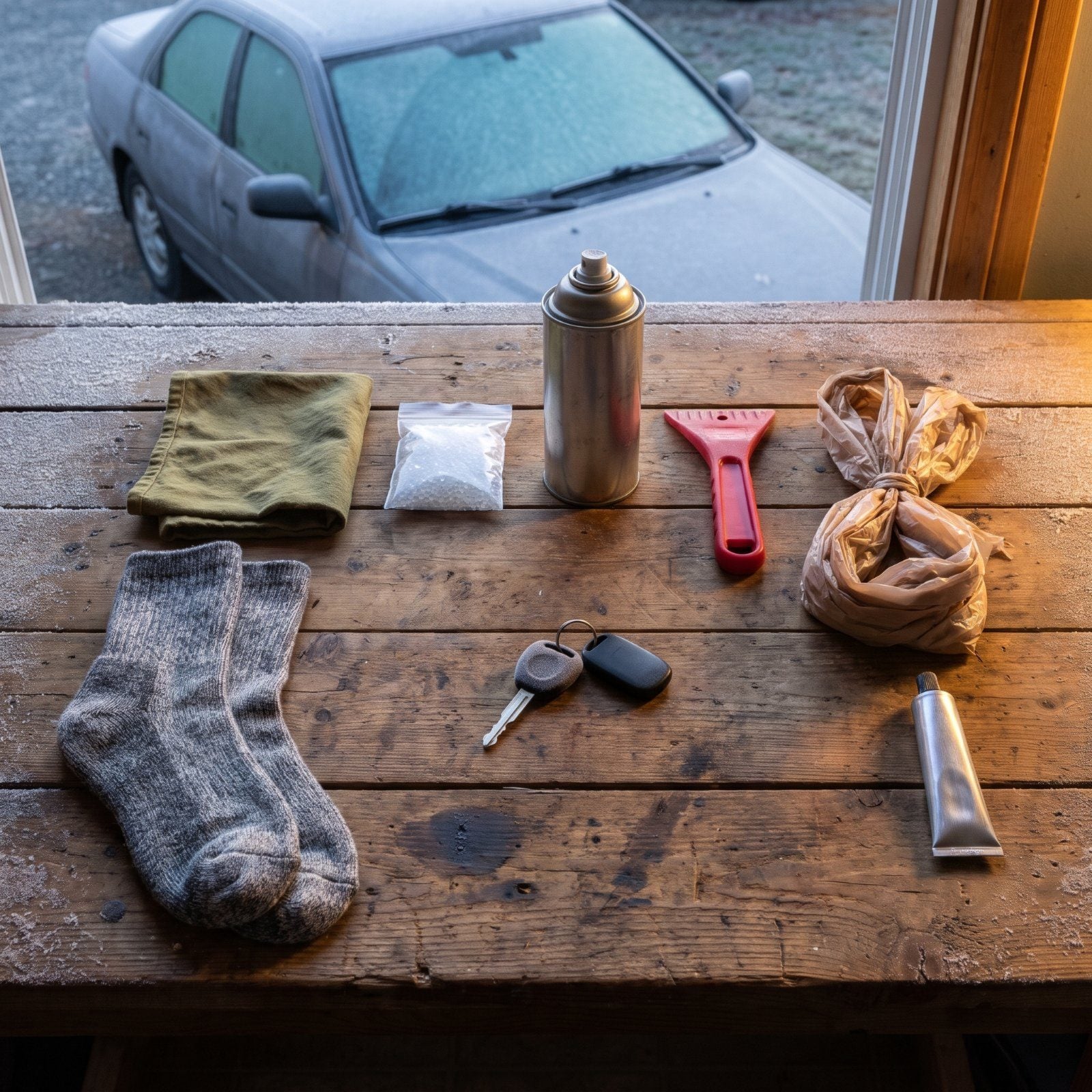
Nobody misses standing in a driveway at six in the morning, scraping a windshield with a credit card because the real scraper vanished sometime in October. We’ve all done it, fingers numb and breath hanging in the air, already late. Most cold-morning car misery comes down to a handful of problems you can outsmart for pocket change. No gimmicks. Just a few tricks that use what’s already in the garage, the junk drawer, or your coat pocket. Here are the ones that actually work.
Please note that some of the images in this article were created with the assistance of AI.
25. Slip Old Socks Over the Wipers Before Bed
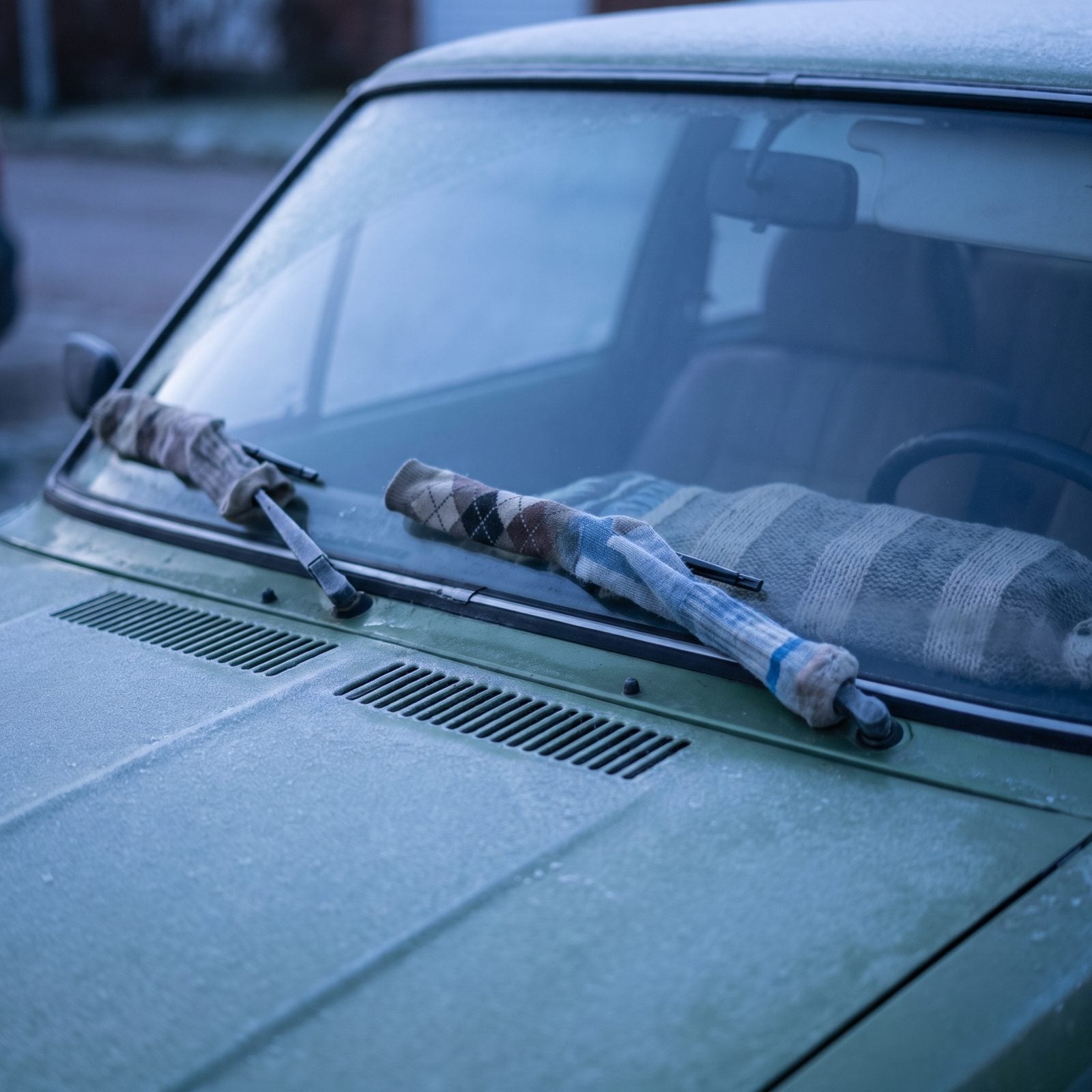
Wiper blades freeze flat to the glass overnight, and when you pull them off cold rubber you leave tiny tears you’ll pay for in streaks all season. So pull a long sock over each one and lay them back down, and the rubber stays dry and flexible until morning.
I used mismatched gym socks for years before I figured out wool holds up better than cotton in a hard freeze. Even lying flat on the glass, the sock sits between the rubber and the windshield so the blades aren’t sealed down by ice.
24. Bag the Side Mirrors So They Peel Clean
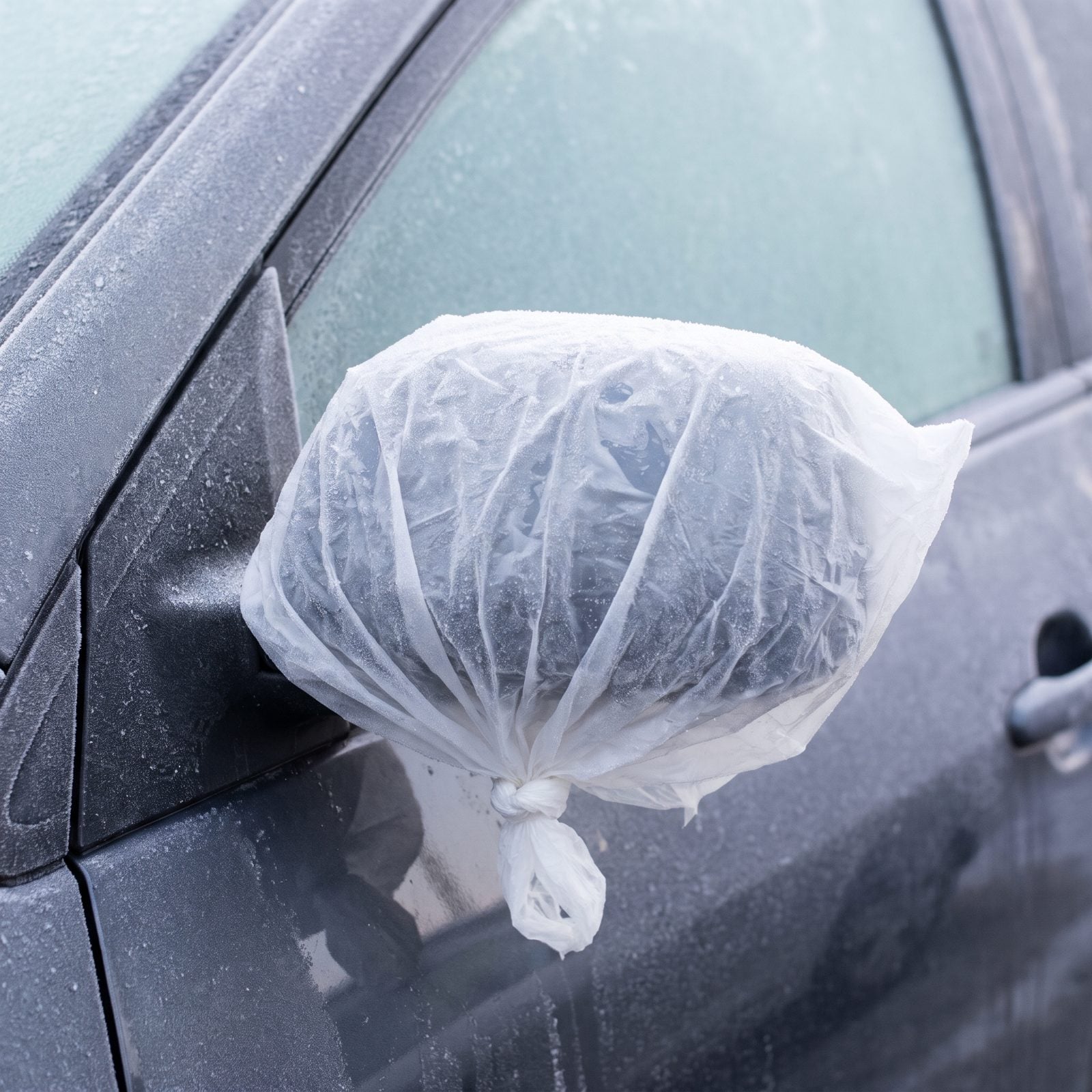
Mirrors ice over in a sheet, and dragging a hard edge across curved glass scratches it fast. Pull a plastic grocery bag over each mirror housing, snug it with a rubber band, and in the morning the glass underneath is clear the second the bag comes off.
Costs nothing. You already have forty of these bags balled up under the sink. Tie them tight, though, or a gust sends one into the neighbor’s yard overnight.
23. Stand a Cat-Litter Sock on the Dashboard
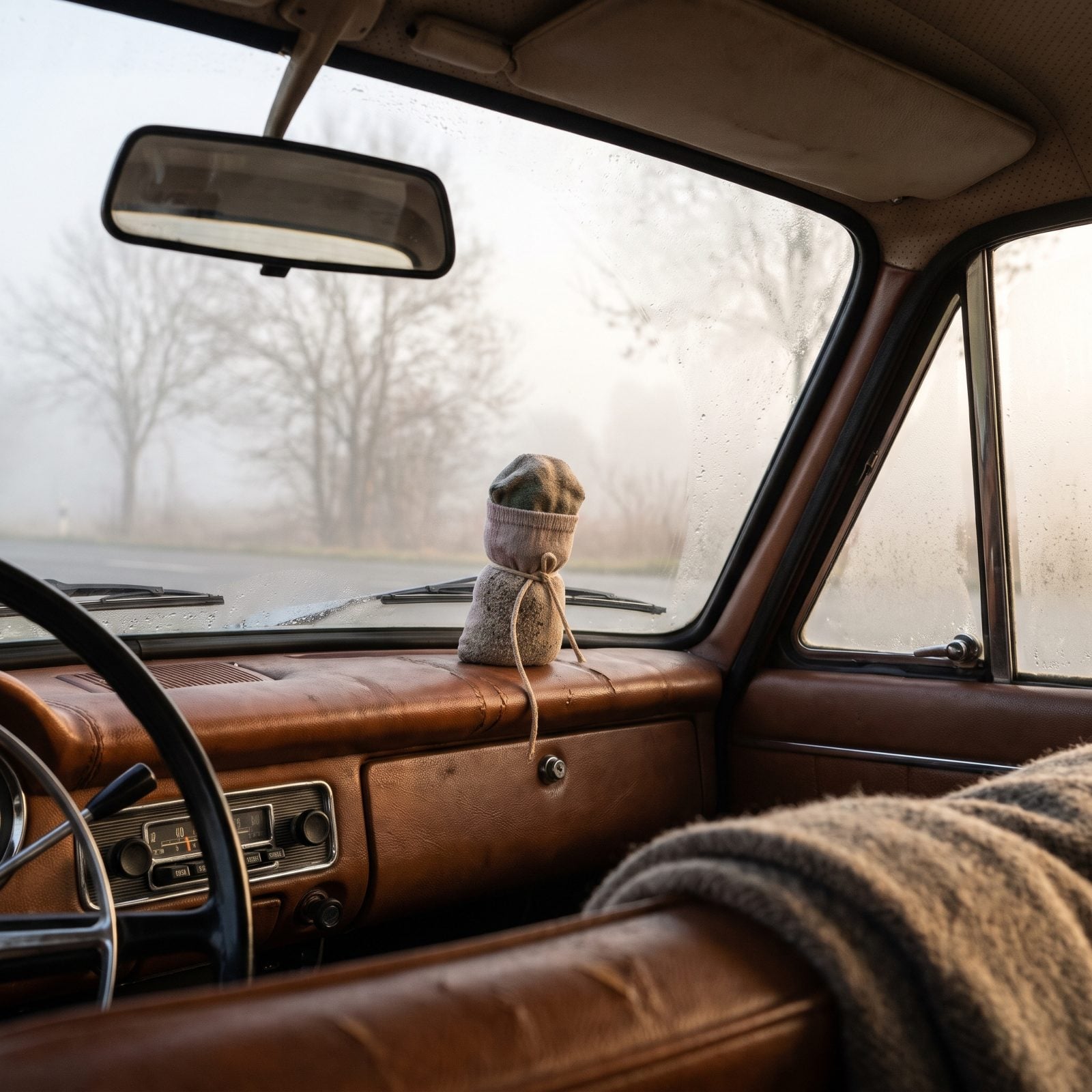
Interior fog comes from moisture trapped in the cabin, and silica cat litter drinks it up. Fill a sock with the little clear crystal kind, tie it off, and leave it on the dash or under a seat overnight.
The crystals pull water out of the air, so there’s less of it left to condense on cold glass come morning. Dump it out and let it dry on a windowsill every week or so and the same sock lasts the whole winter. Use the silica gel crystals, not the clay stuff, or you’ll just have a sock full of sand.
22. Pin a Frost Guard Under Your Doors
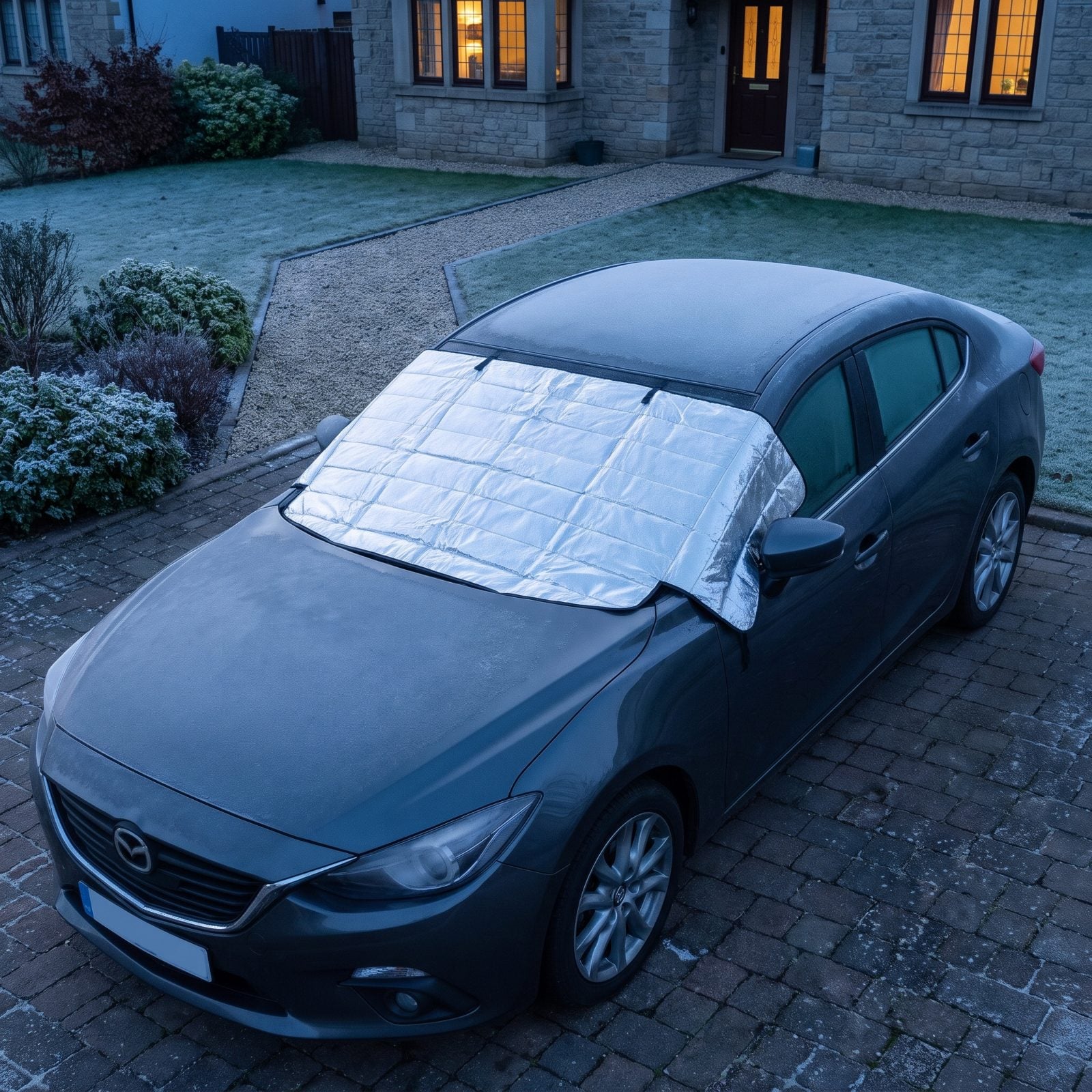
A windshield frost guard only works if the wind doesn’t flip it off at two in the morning. The fix is in how you anchor it: tuck the side flaps inside the front doors and shut them so they pin it to the glass, and secure the arm-like pieces at its corners.
Pinned in the doors and held at the corners, the cover can’t peel up, can’t slide, can’t take flight. Pull it off a dry windshield in the morning and drive. A cheap fabric cover runs a few dollars and spares you the scraper routine entirely.
21. Park Facing East and Let the Sun Do the Work
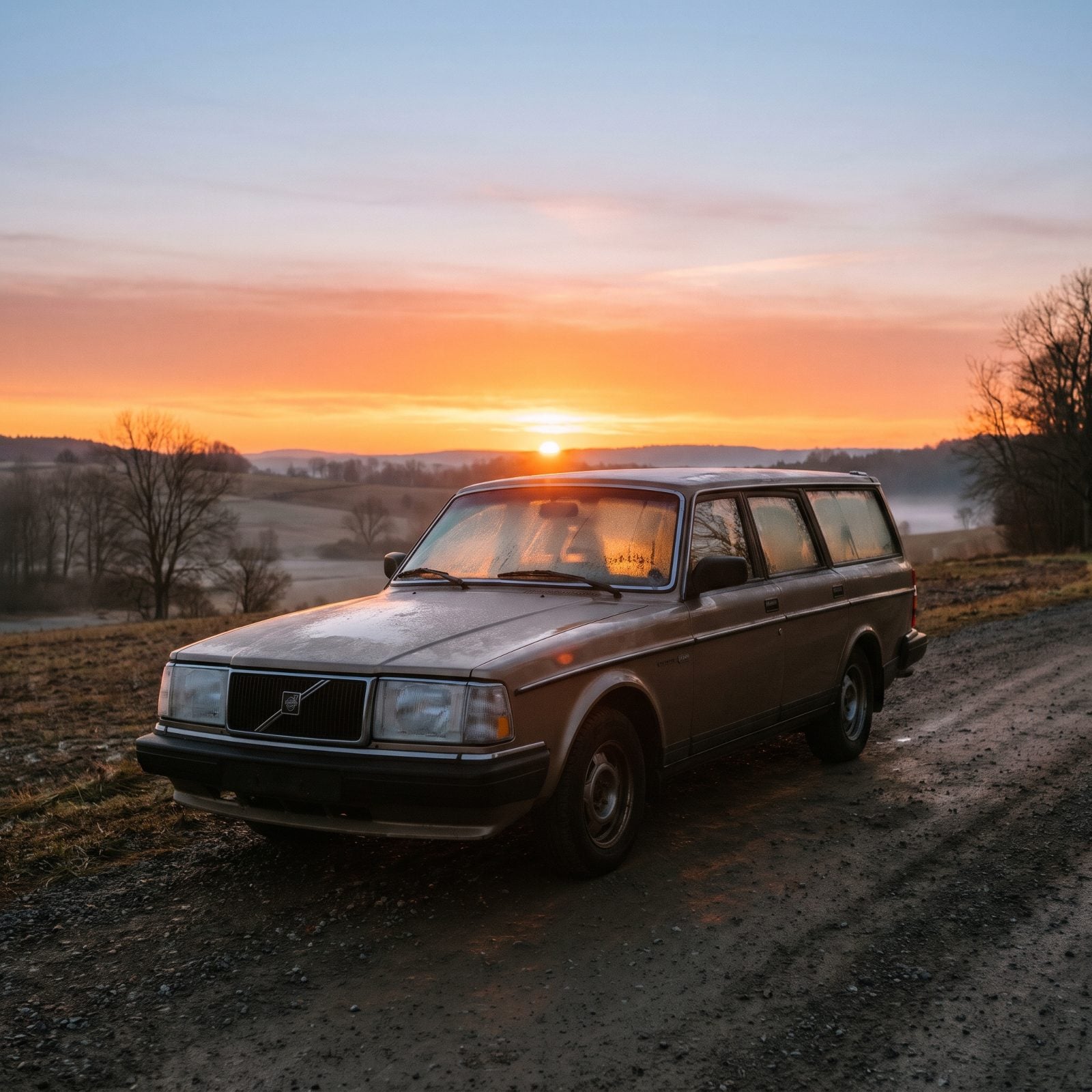
The cheapest defroster rises every morning for free. Park nose-west and the sun rises behind the car, leaving the hood and windshield in shadow, still frosted. Point the nose east when you park at night instead and the first low sun hits the windshield, loosening the frost there before you’ve finished your coffee.
It won’t clear a hard overnight freeze on its own. But on a light-frost morning it does half the work while you’re still inside, which is half less scraping for you. Park under the only tree in the yard and you’ve shaded yourself out of the one trick that costs nothing. Check where the sun comes up and aim accordingly.
20. Wipe Shaving Foam on the Inside Glass
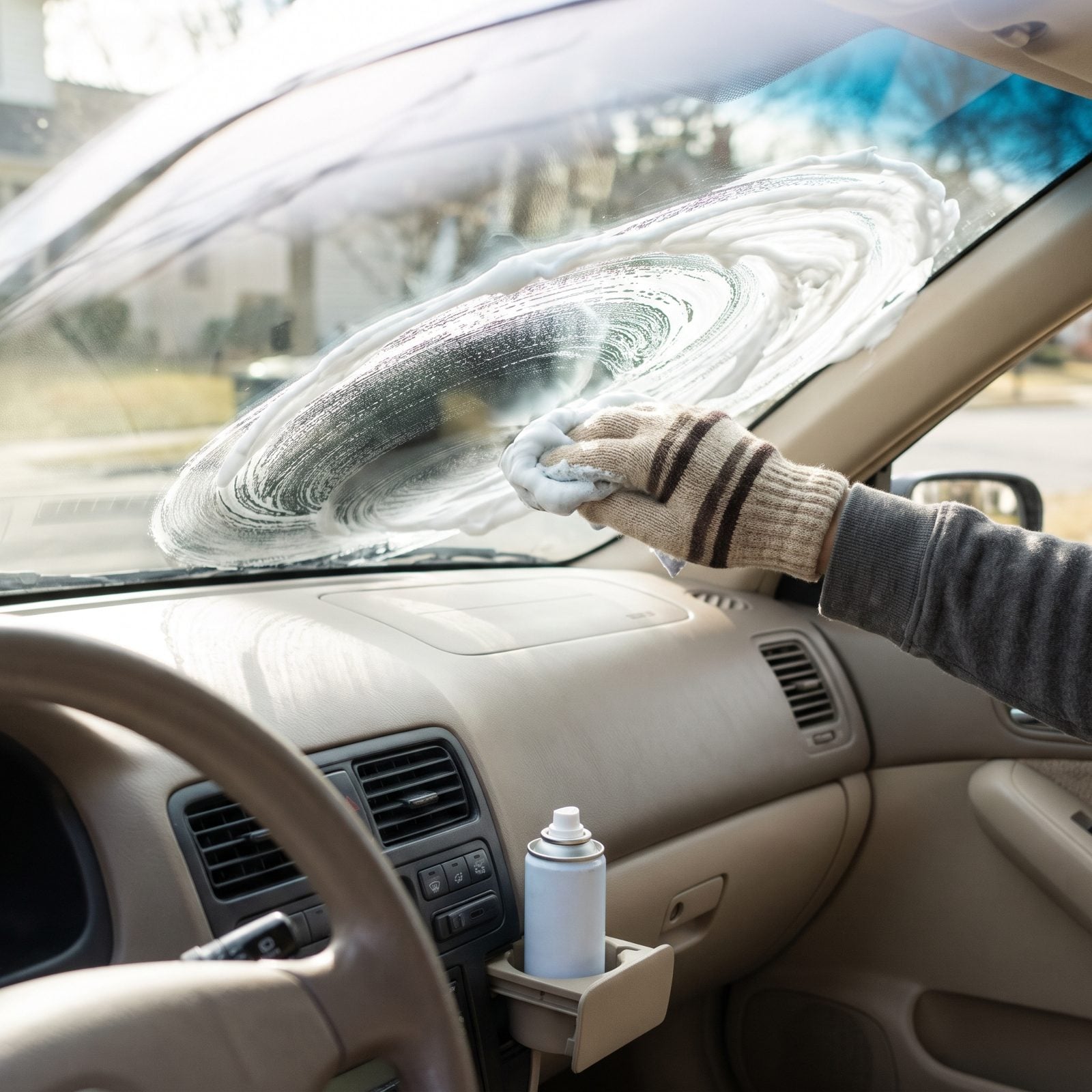
Plain shaving foam, the cheap drugstore kind, leaves the same anti-fog film the expensive sprays charge you for. Swirl a thick layer across a big patch of the inside glass with a knit mitten, then keep buffing with the mitten until it’s clear.
The residue stops condensation from beading up, so glass that would’ve fogged stays usable. Buff it properly, though. Leave it streaky and you’ve traded fog for smear, which somehow feels worse on a dark morning. Gel won’t cut it here, only the foam.
19. Back In Before the Driveway Turns to Glass
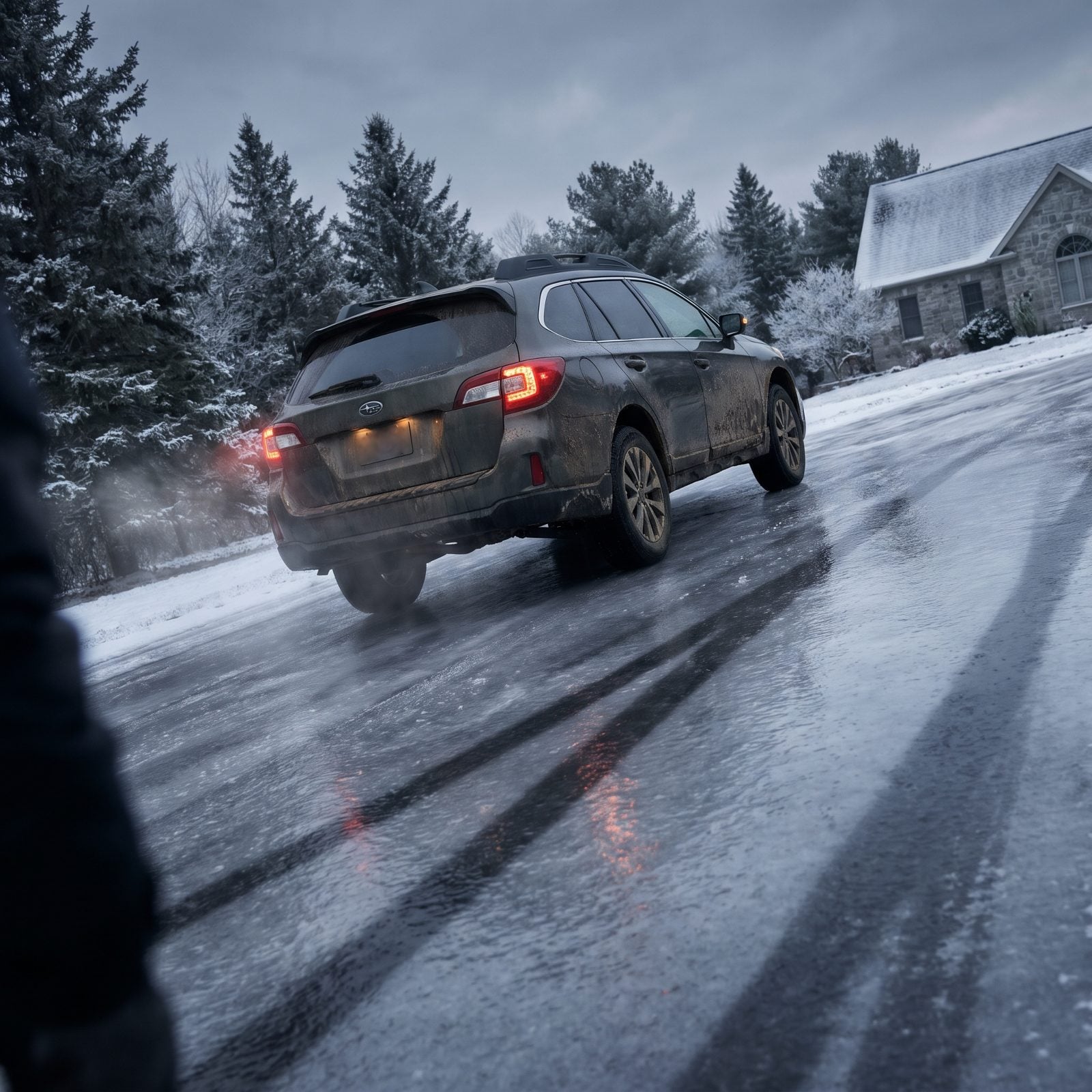
You’ve felt a car’s tires spin trying to climb a frozen driveway backward, wheels hunting for grip they don’t have. Back in at night, before the melt refreezes, and in the morning you pull forward and out instead of reversing up an ice rink.
Forward traction beats reverse traction on a slick slope almost every time, and you get a clean sightline onto the road when you leave. Do it the night before the freeze sets in. Trying to reposition on sheet ice at dawn is how you end up sideways in the hedge.
18. Run Silicone Along the Rubber Door Seals
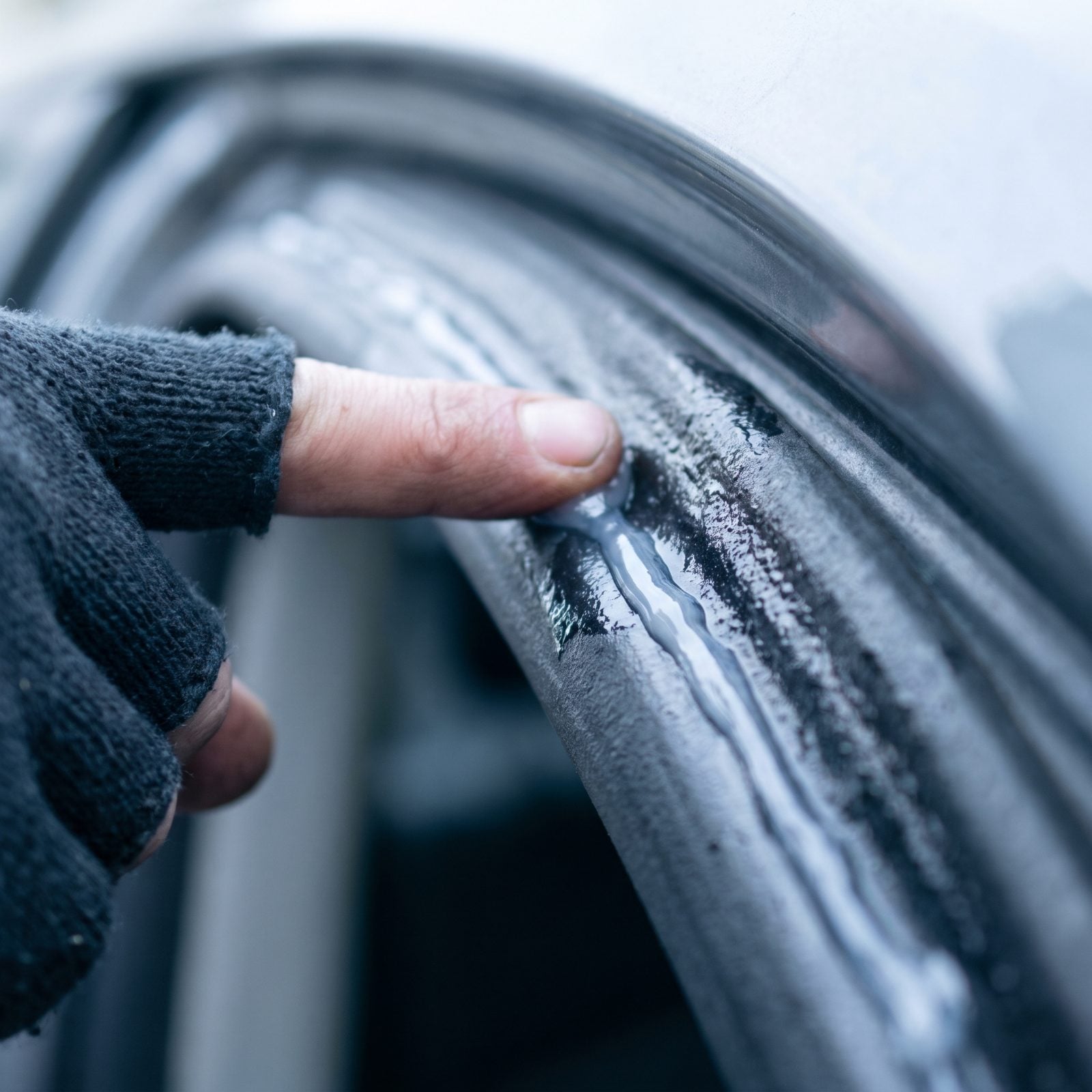
Doors freeze shut when moisture settles into the rubber weatherstripping and welds the seal to the frame. Wipe a thin coat of silicone spray onto that rubber with a rag, and water can’t soak in, so the door opens instead of fighting you.
Use silicone, not an oil-based product. Petroleum breaks rubber down over time and you’ll end up replacing seals that cracked years too early. A single tube lasts for seasons and takes five minutes to run across every door.
17. Carry Lock De-Icer in Your Coat, Not the Glovebox
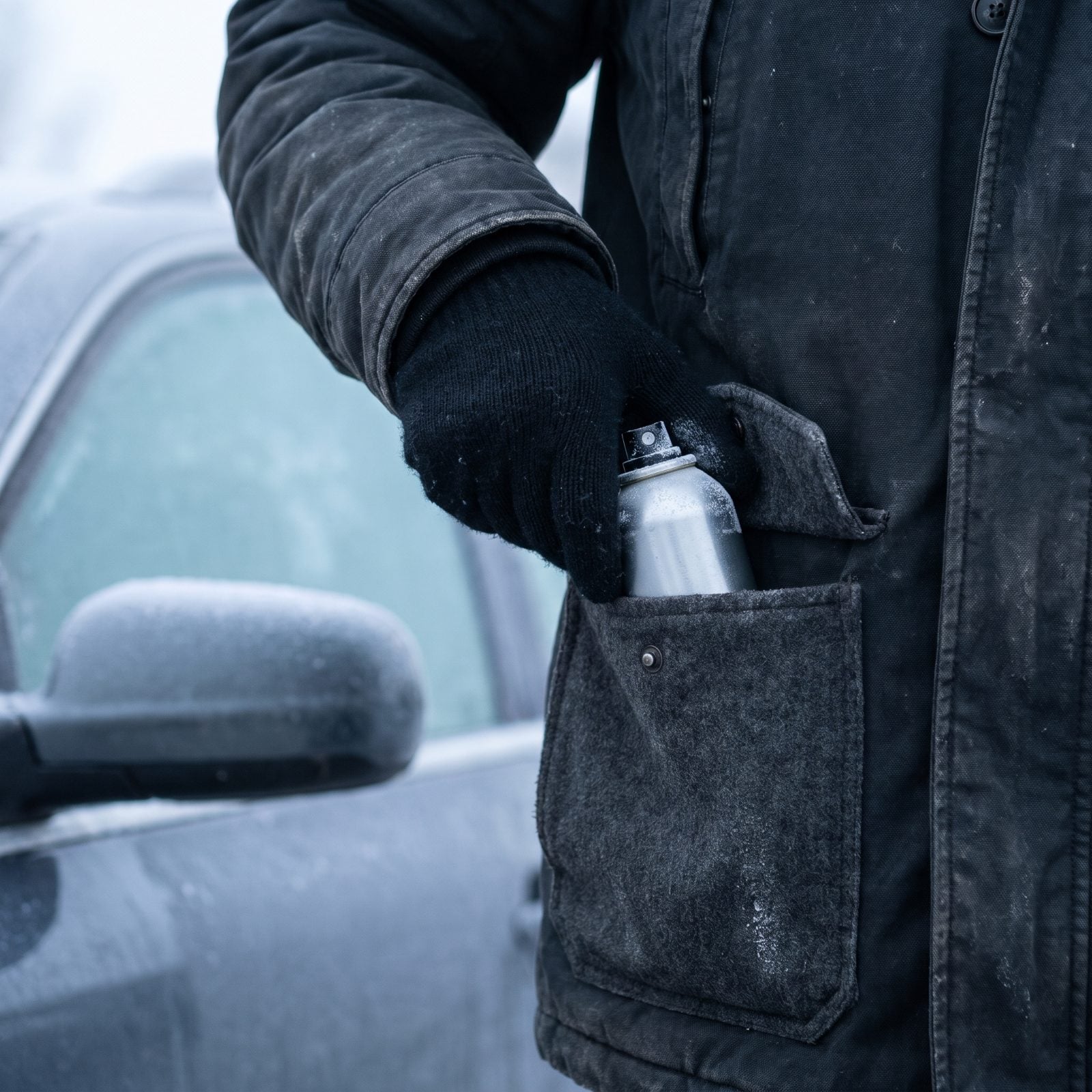
The cruel joke of lock de-icer? The one place it can’t help you is locked inside the frozen car. Keep it in your coat pocket, your bag, or on your house keys instead.
A frozen lock on a key-start car means the tube sitting in your glovebox does you no good whatsoever. A quick squirt into the keyhole from a tube in your pocket thaws it in seconds. Simple, cheap, and the kind of thing you only forget to do once.
16. Press the Door Shut, Then Pull the Handle
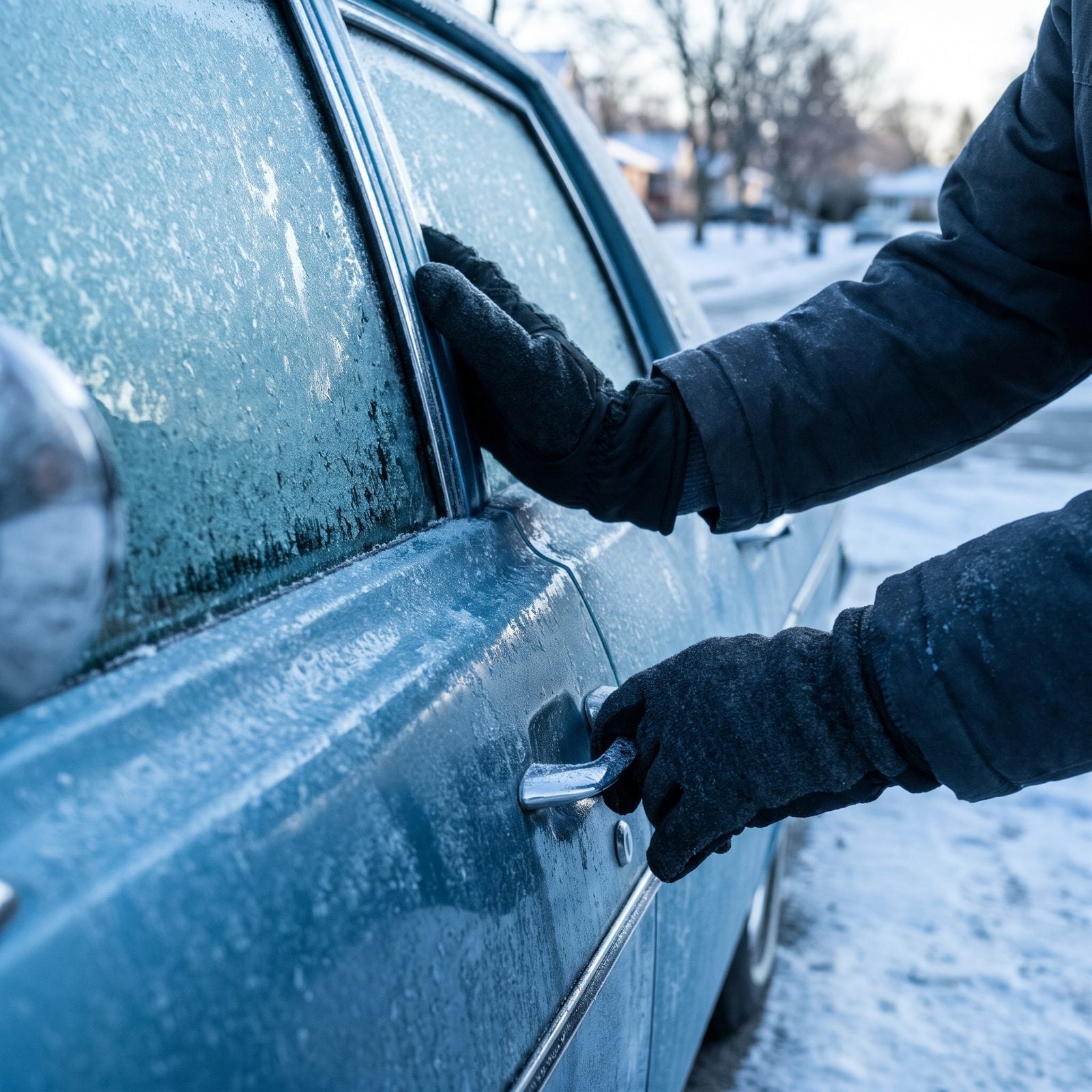
Yank a frozen door by the handle and you risk tearing the weatherstrip or snapping the handle clean off. Press firmly on the door panel first, in toward the frame, to crack the ice bond around the seal.
That little push breaks the frozen edge so the latch lets go without a fight. Work your way around the door if one spot won’t give. A cracked seal or a broken handle costs a whole lot more than the thirty seconds it takes to press before you pull.
When a customer called in a panic about a frozen door, an auto repair shop owner warned against yanking the handle and advised: “Push into the door with the side of your hip gently to see if that breaks any ice loose.”
15. Use a Plastic Card on Paper-Thin Frost
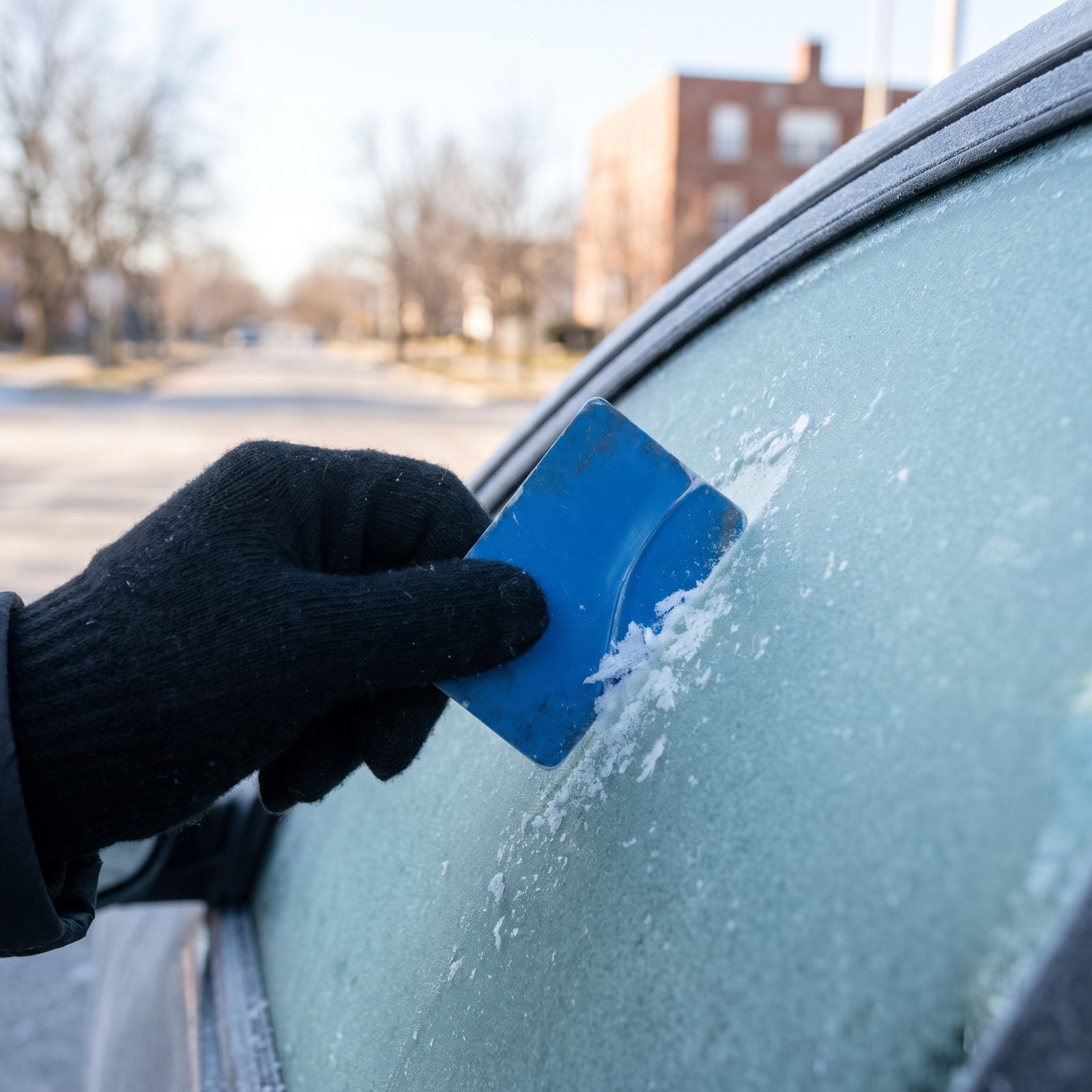
That expired gym card rotting in your glove box finally earns its keep on mornings when the frost is barely there. A credit card, a hotel key, anything stiff and flat with a clean edge, with its corner and short edge set against the glass, peels off a paper-thin coat in seconds.
Pressure and angle do the work here, not speed. Lead with the corner and short edge and push — don’t chop at it. On real ice the card just flexes and quits, so save it for the light stuff. I keep one wedged in the door pocket precisely because I used to forget my real scraper every single morning.
14. Store the Ice Scraper Inside the House
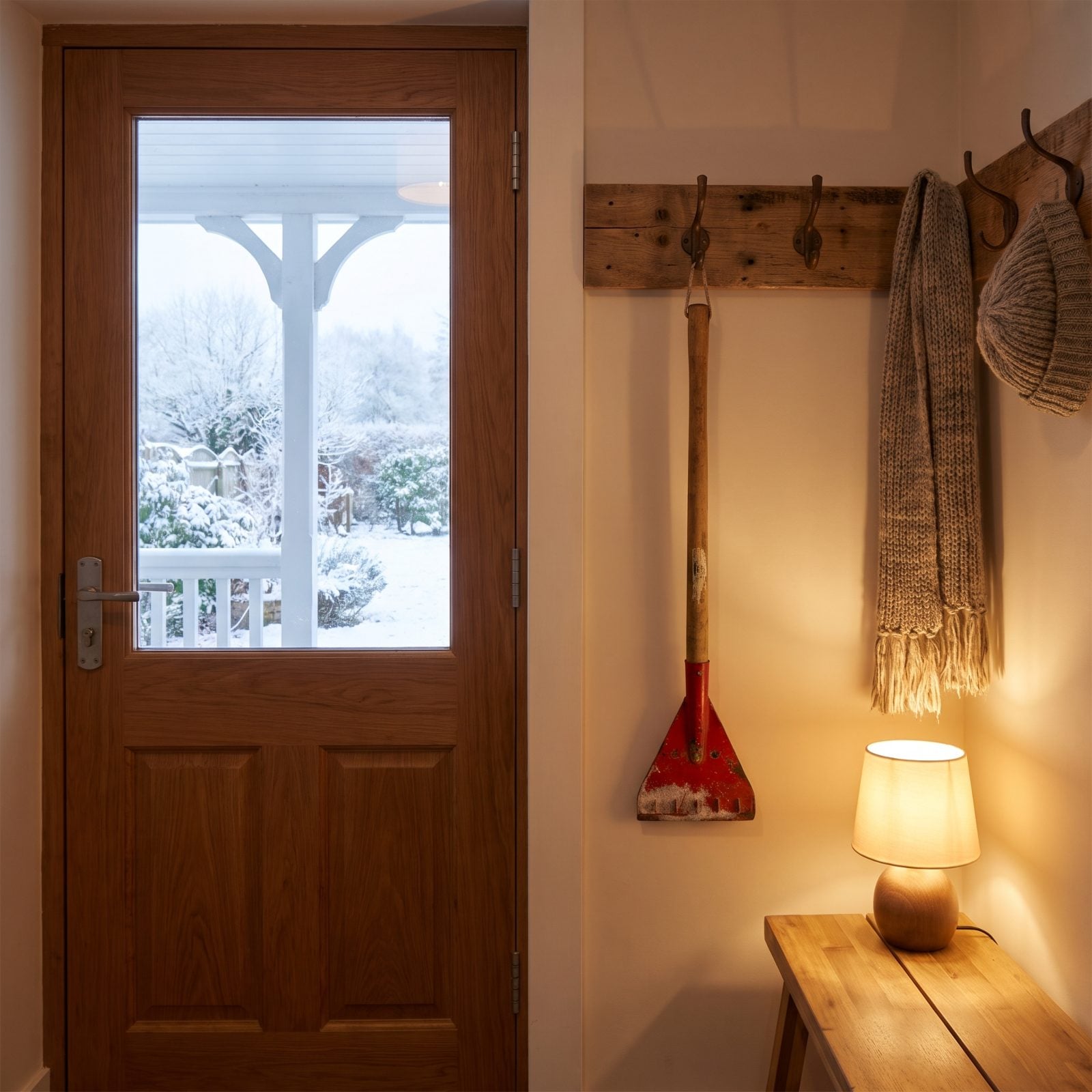
Keeping the ice scraper in the shed sounds smart until the one morning you actually need it and the shed door is frozen shut behind three inches of ice — at the far end of the very path you need to clear. And a long wooden handle left out in deep cold soaks up damp and freezes, splitting on the first hard chop.
Hang it on a hook by the door you walk out of. A dry handle won’t split, the toothed metal head is ready to bite into the ice on the step, the grip isn’t frozen to your palm, and you grab it on the way out the same way you grab your keys.
13. Clear the Fresh-Air Intake Below the Windshield
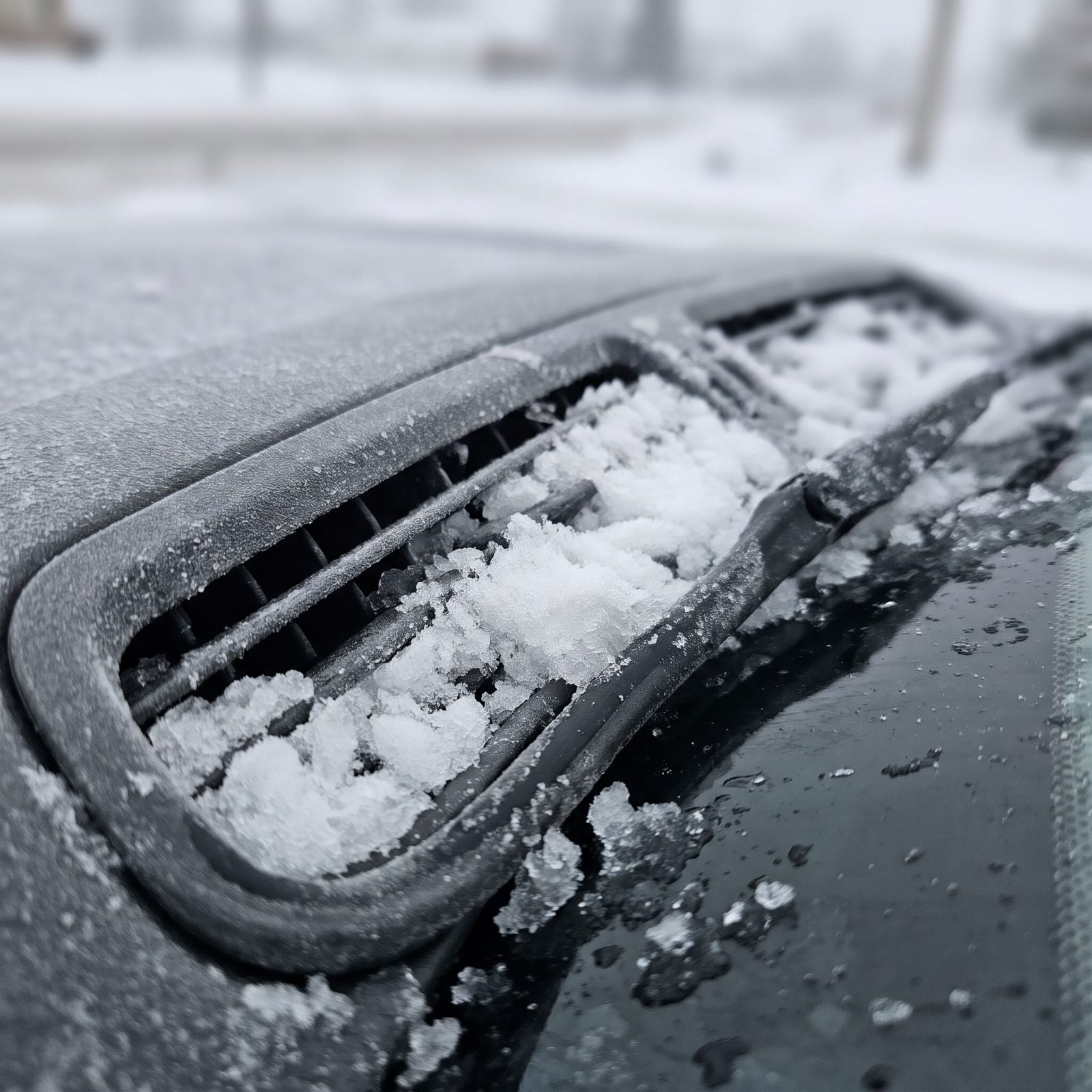
See that row of plastic slots at the base of your windshield, right where the wipers hide? That’s the fresh-air intake. Pack it solid with snow and your heater is suddenly trying to breathe through a plugged nose.
Weak airflow, slow defrost, foggy glass that won’t clear, a cabin that stays stale — all of it traces back to those buried vents, and almost nobody thinks to look. Scoop the snow out before you climb in and the warm air actually reaches the windshield the way it was meant to.
12. Run the Air Conditioner With the Defroster
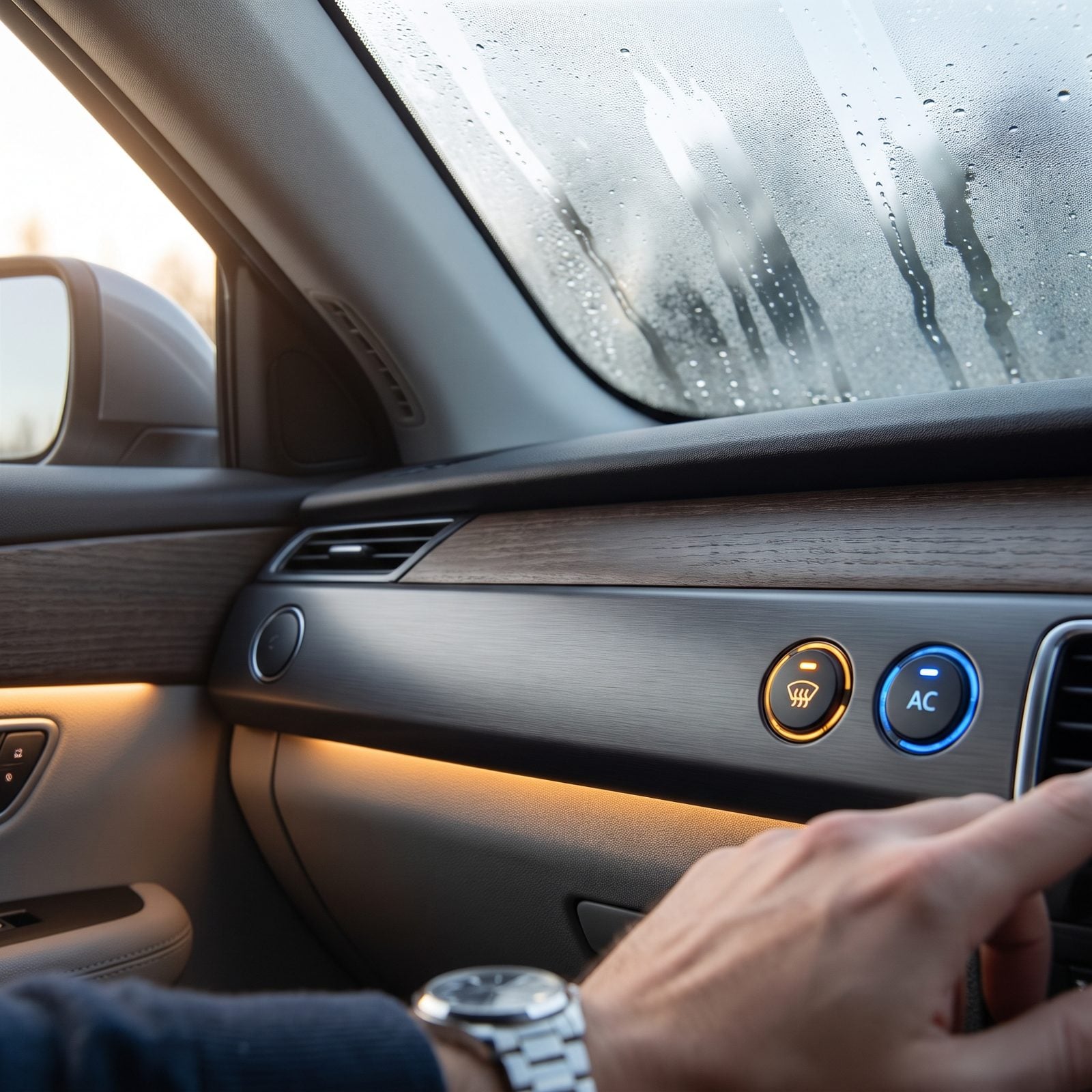
Push the defrost button and the A/C compressor often kicks on by itself, even in freezing weather. That’s no glitch. Air conditioning dries the air, and dry air clears fog off the inside of the glass far faster than hot air ever could alone.
If your car lets you add A/C to the defrost setting by hand, do it. Crank the temperature warm, aim it at the windshield, and let the system wring the moisture out of the cabin. You’ll watch the fog retreat instead of just smearing it around.
11. Shake Snow From Boots Before Getting In
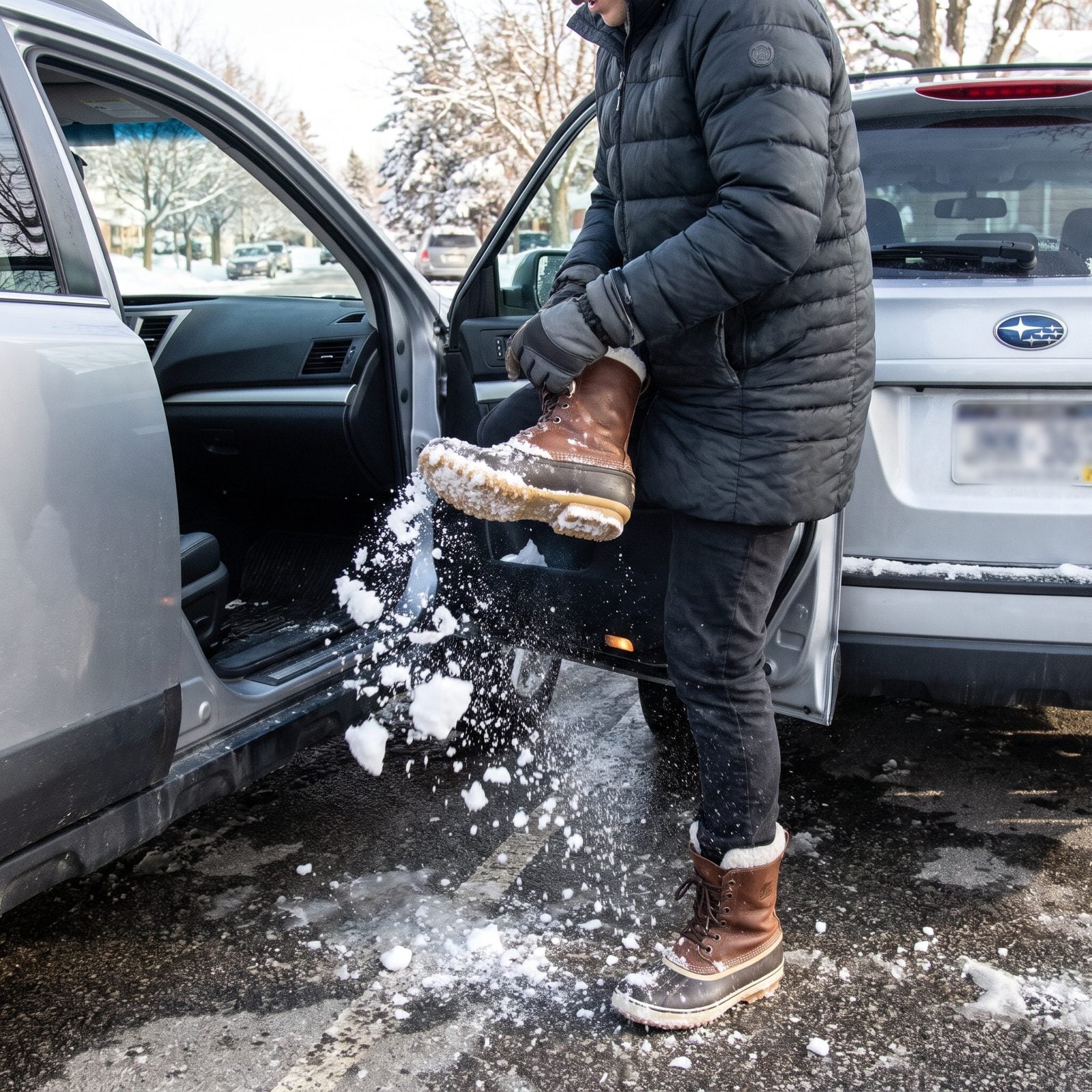
Every clump of snow you track onto the floor mat melts, evaporates, and winds up fogging your windows twenty minutes down the road. That water doesn’t vanish — it goes straight to the inside of your glass.
Knock your boots against the outside of the door sill before you swing your feet in — not against the inside door panel, which just sprays snow all over the trim and into the cabin. Ten seconds of stamping keeps gallons of slush out of the cabin over a winter. I didn’t buy it either, until I quit doing it one week and watched my windshield fog up like a steamed bathroom mirror.
10. Remove Wet Floor Mats Overnight
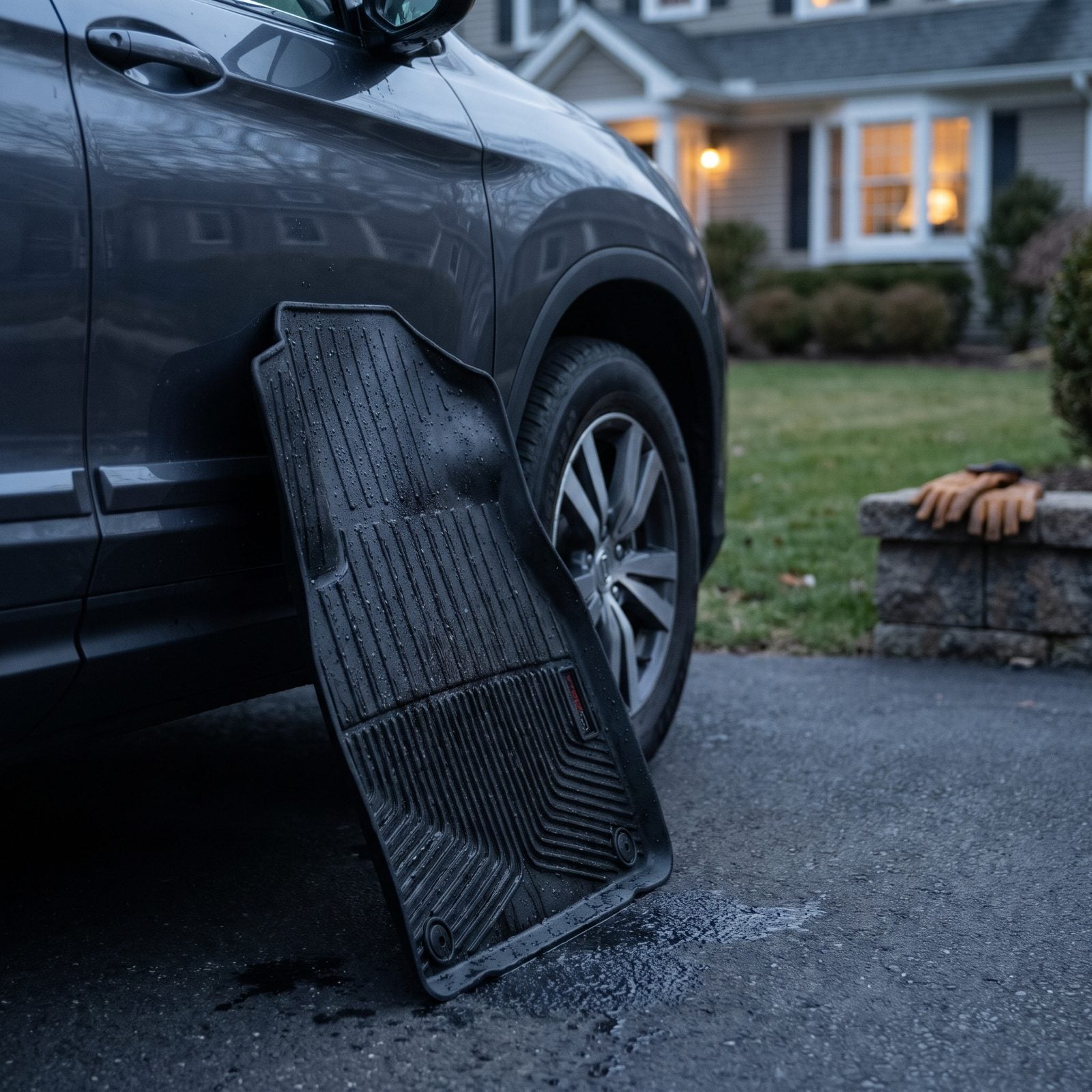
A waterlogged floor mat is a humidifier running all night inside your sealed car. By morning that moisture has coated every cold surface, and your first job of the day is wiping fog off glass that should’ve been clear.
So pull the front mats out when they’re soaked and stand them up somewhere dry. Garage, mudroom, back porch — anywhere the water can actually escape. Drop them back in come morning and the cabin starts the day dry instead of sweating.
9. Keep a Chalkboard Eraser for Interior Fog
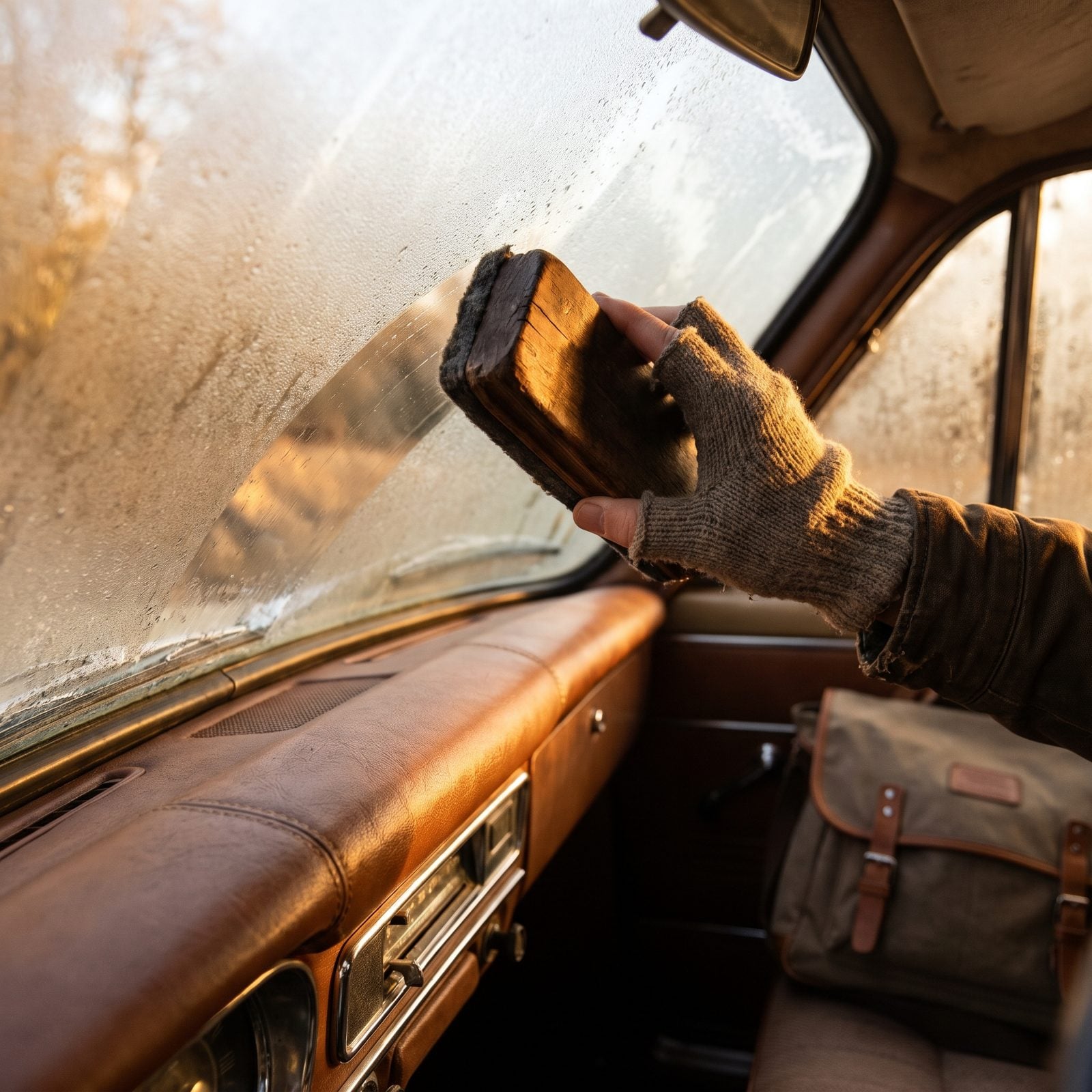
A felt chalkboard eraser is the old-timer’s fix for a fogged windshield, and it beats your coat sleeve every single time. The dry felt drinks up the condensation and leaves a clean, streak-free band where your hand would’ve just smeared the mess around.
Toss one in the door pocket. When the glass fogs at a stoplight and the defroster hasn’t caught up, a few quick passes clears your sightline. No streaks to catch oncoming headlights, no greasy hand-prints that fog right back over.
8. Clean Oily Film From the Windshield Before Winter
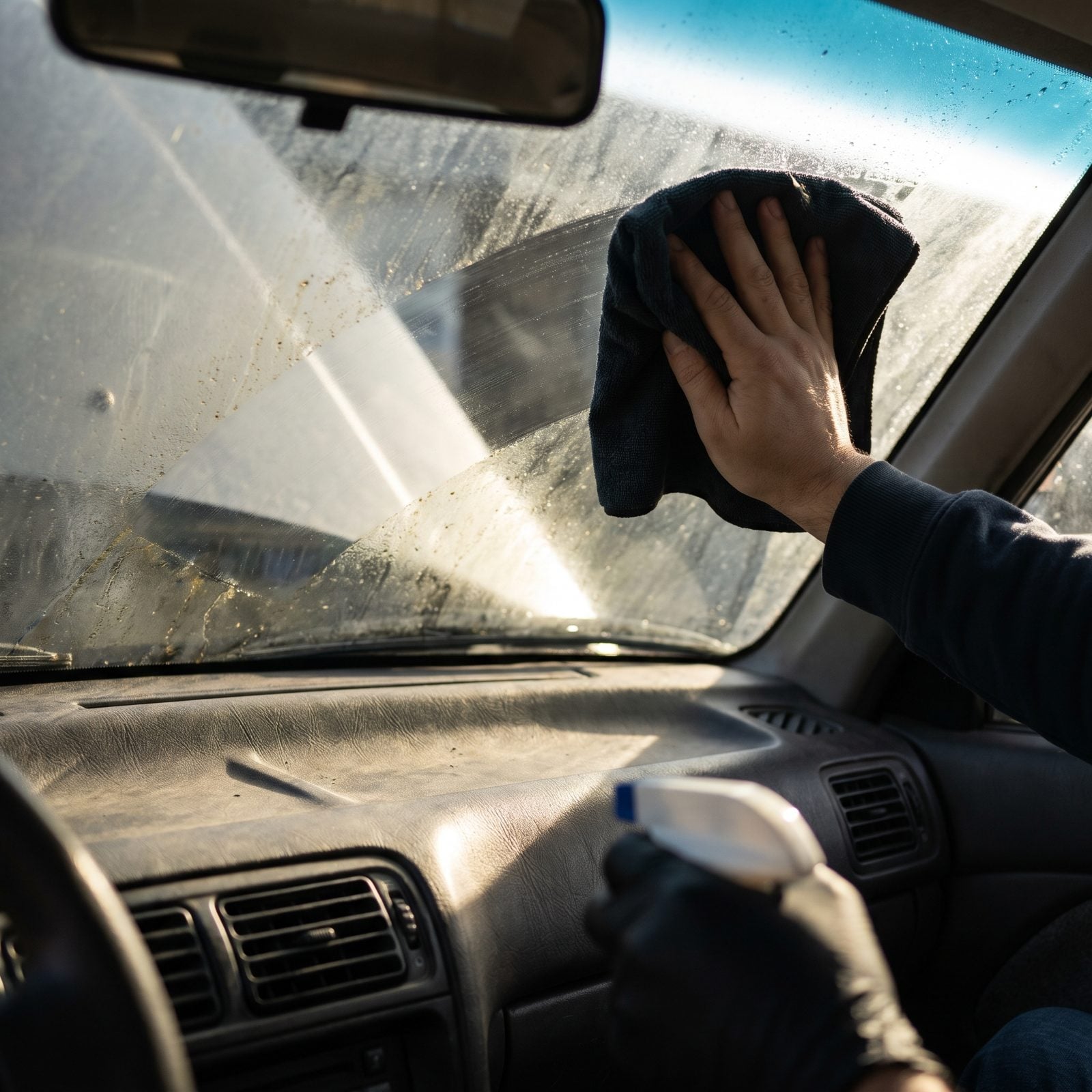
That haze on the inside of your windshield isn’t dirt — it’s film. Plastic dashboards and vinyl seats quietly give off a thin oily residue that settles on the glass over months. You never notice it until low winter sun or a set of oncoming headlights hits it, and suddenly you’re squinting through a greasy smear.
Oily glass fogs faster and clears slower, because moisture clings to the film instead of running off. Give the inside a proper scrub before the cold sets in. Glass cleaner, a dry microfiber cloth, worked until the squeak comes back — and your defroster has a whole lot less to fight all season.
7. Flush the Summer Washer Fluid and Refill With Winter Formula
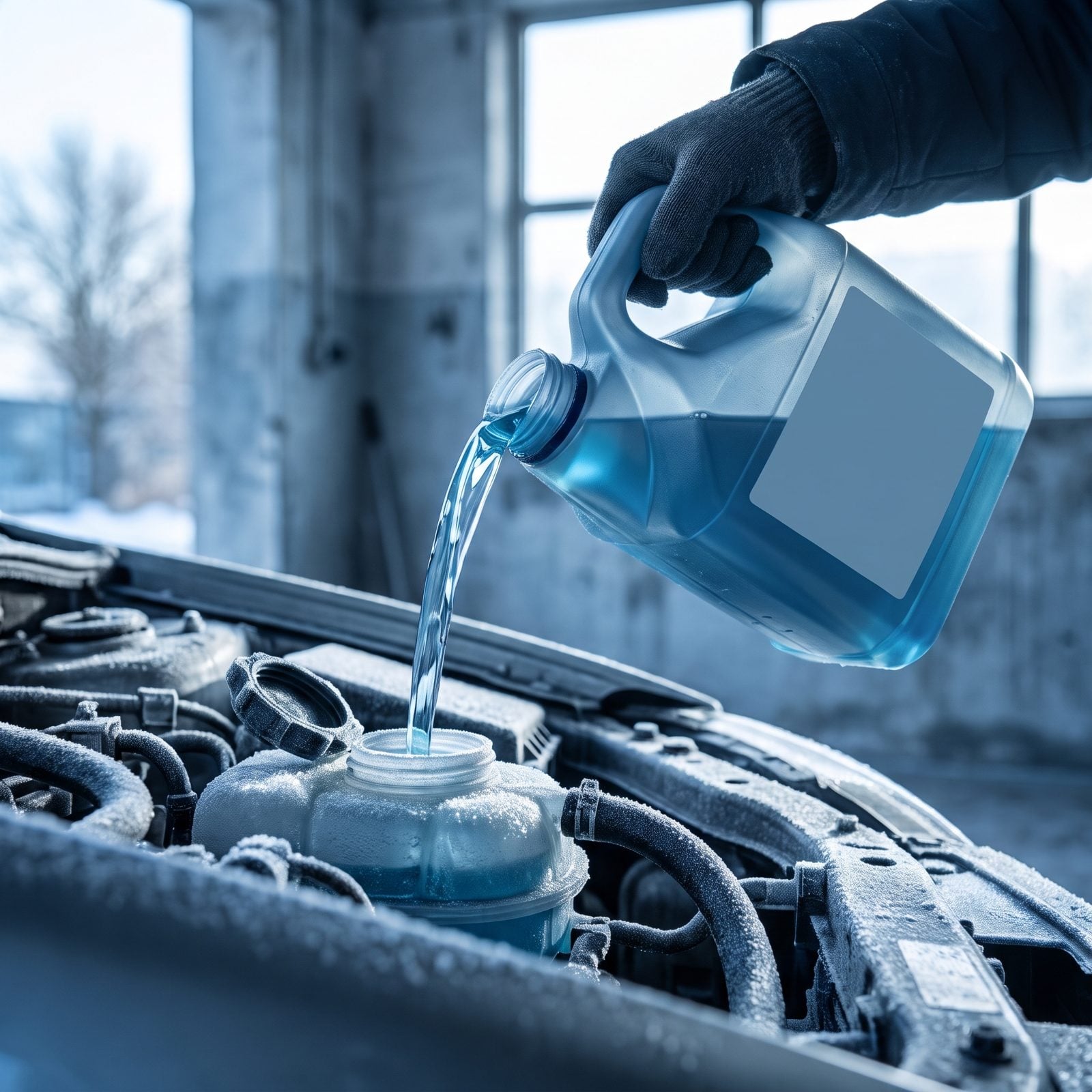
Summer washer fluid freezes solid in the reservoir, in the thin lines, and the second it touches a cold windshield — which is the exact moment you need the glass clear to spot a merging truck. Plenty of folks never swap it and then wonder why the nozzles do nothing in January.
Winter formula runs a few bucks a jug and handles well below zero. Run the old stuff low first, then top off with blue. Give the wipers a squirt in the driveway to push the new fluid all the way through.
6. Check Wiper Blades for Ice Before You Switch Them On
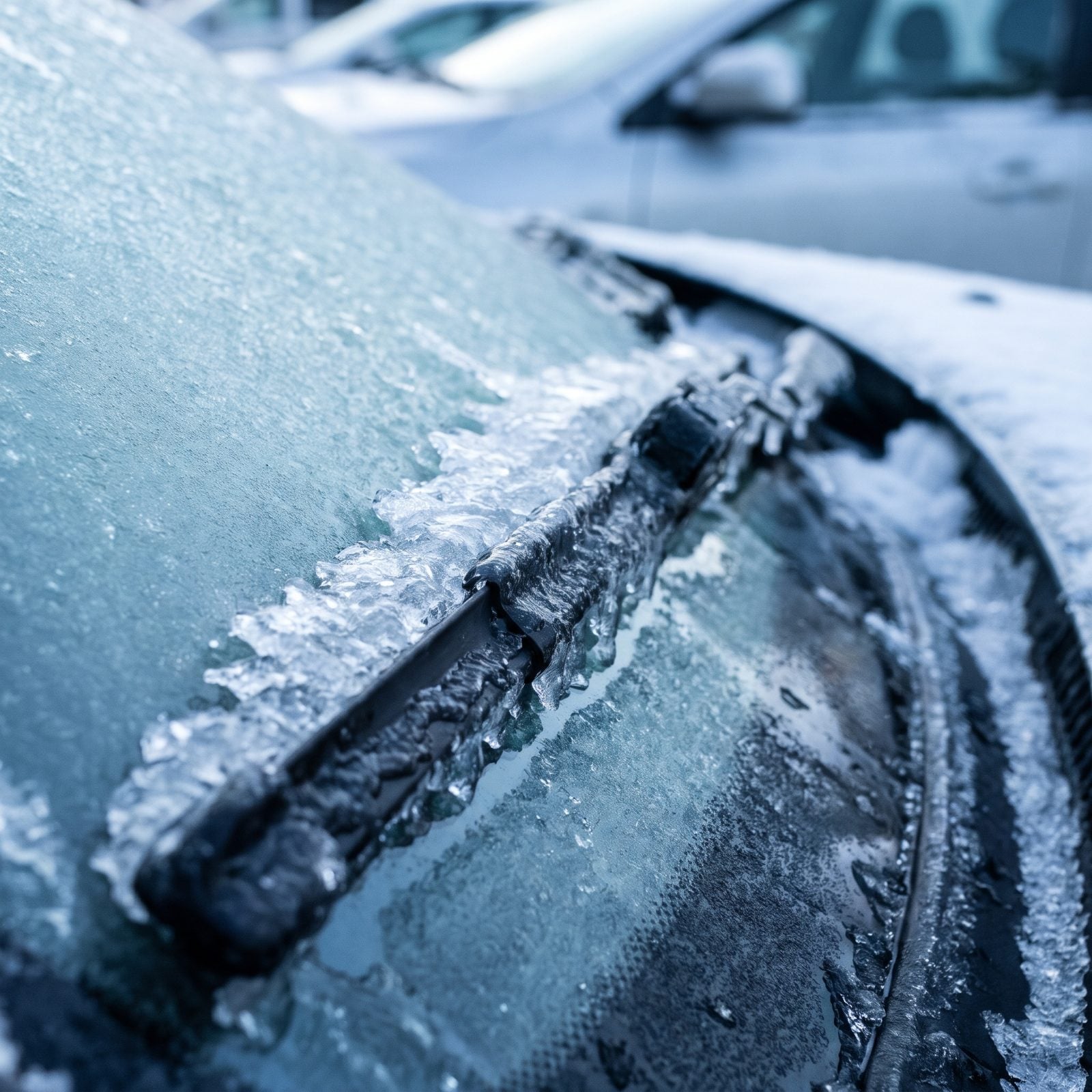
Frozen blades stuck to glass is how you shred good rubber. Flip the wipers on with the blade iced down and the motor strains, skips, or tears a chunk clean out of the edge — and now you’ve got a streaky blade for the rest of winter.
Lift each arm off the glass and feel the rubber before you touch the switch. If it’s crusted over, free it by hand or let the defroster soften it first. Thirty seconds of checking saves you a blade and a drive spent squinting through a smeared arc.
5. Sweep Snow Off the Roof With a Foam Broom
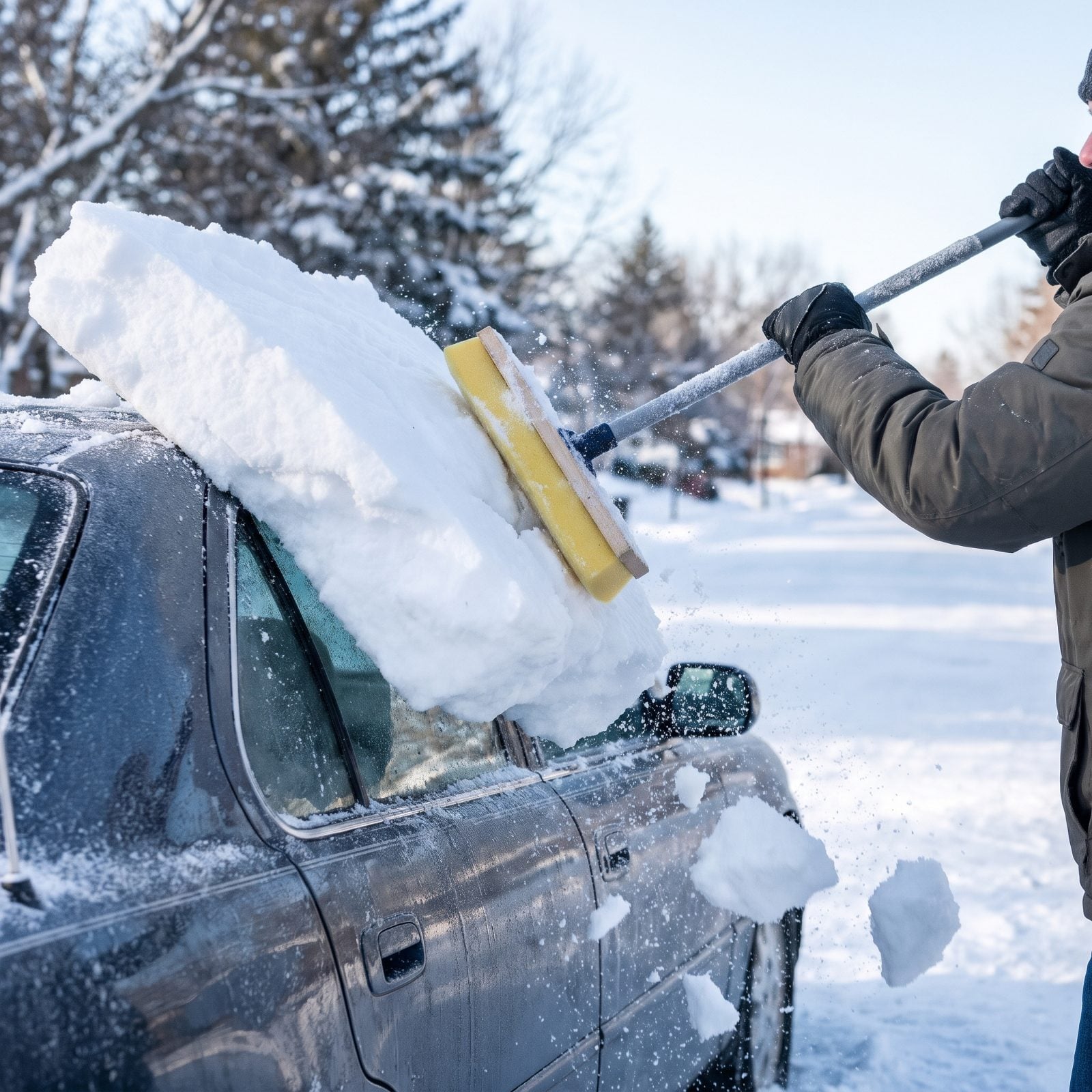
That snow slab on your roof is a hazard looking for a victim. Leave it and the first hard brake sends a sheet forward onto your own windshield, or it peels off at highway speed into the car behind you. Some states will ticket you for it, too.
A foam broom clears the whole roof without gouging the clearcoat the way a hard scraper or a stiff push broom will. Pull the snow toward you, work front to back, and don’t forget the trunk lid so nothing blows back onto your rear glass.
4. Blow Light, Powdery Snow Off the Car With a Leaf Blower
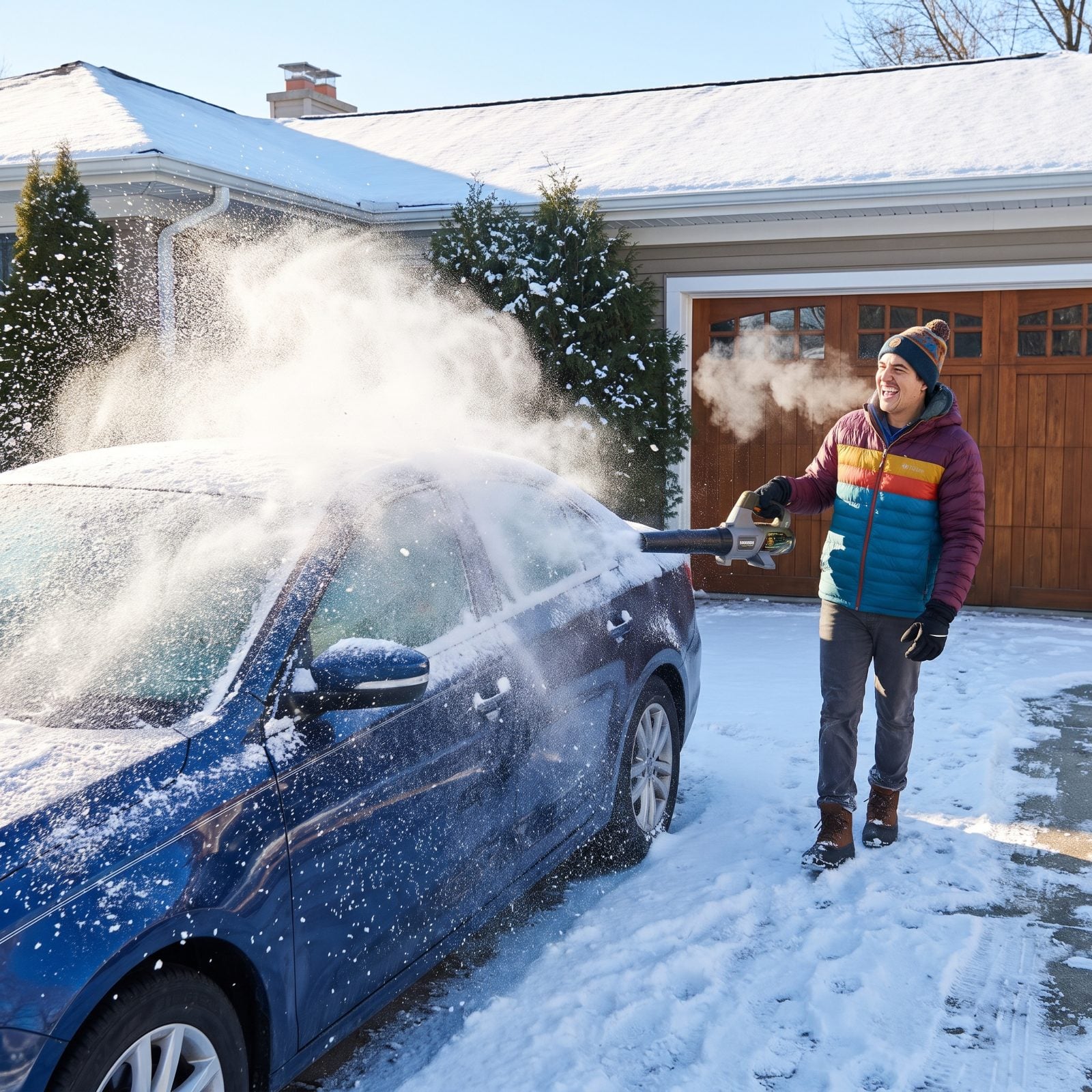
This one feels like cheating, and it absolutely is — in the best possible way. On the right morning — dry champagne powder, no melt, no crust — a leaf blower clears a whole car in under a minute. No scraping. No touching the paint. No wet gloves.
Catch is, it only works on genuinely light, dry snow. The second it’s wet, packed, or wearing a frozen skin on top, the blower just shoves it around and you’re back to the broom. So save it for the fluffy days, when you get to feel smug watching the neighbor swing an ice scraper.
3. Slide Cardboard Under Tires Stuck on Glare Ice
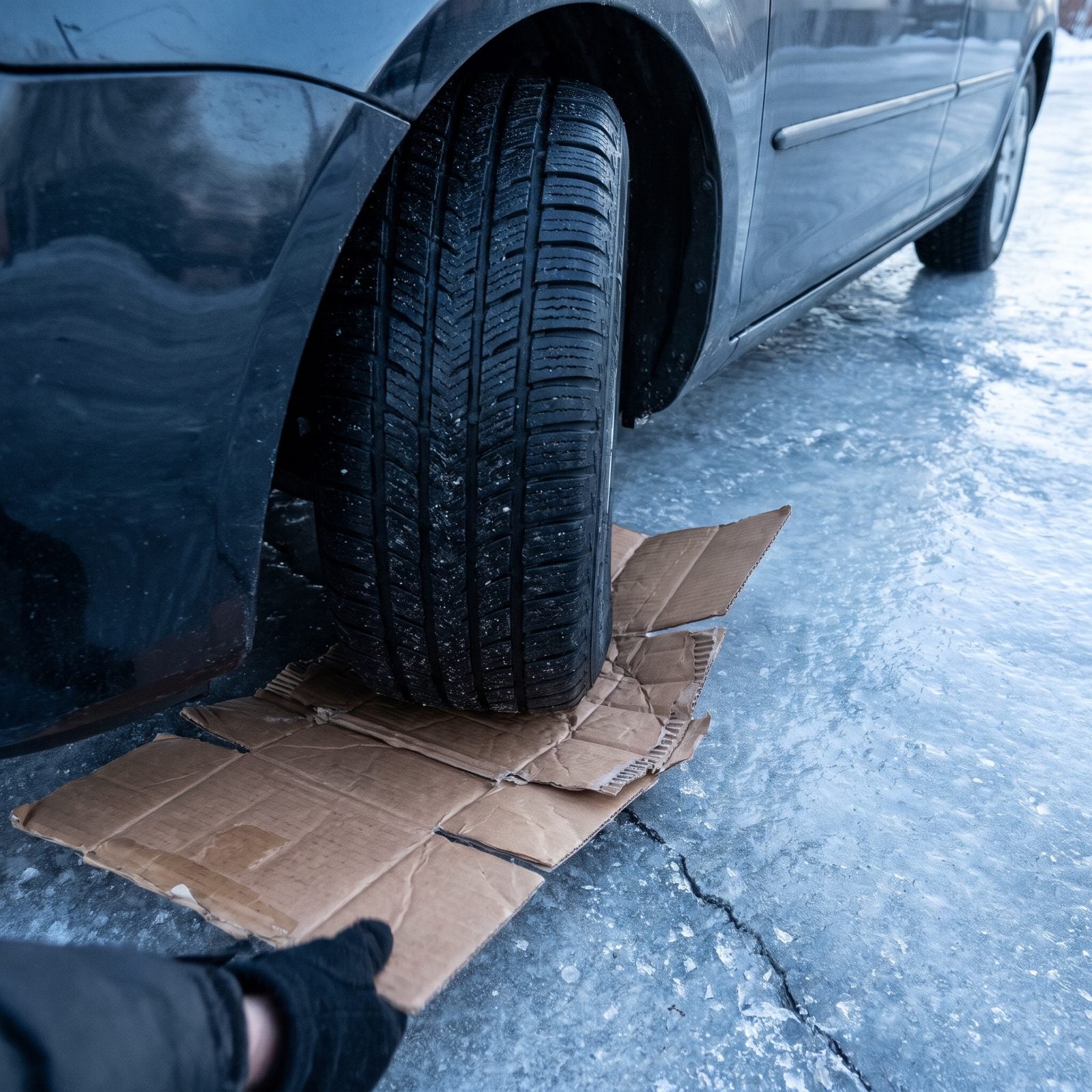
Glare ice gives your tires nothing to bite. The wheel spins, the car goes nowhere, and every spin polishes the ice a little smoother. Slip a flattened cardboard box, a floor mat flipped rubber-side down, kitty litter, or a scoop of sand under the drive wheels, and the tread finally gets something to grip long enough to roll off the slick patch.
Tuck it snug against the front of the tire in the direction you want to go. Then ease onto the gas — gently. Spin hard and you’ll fire the cardboard out behind you like a paper airplane. I’ve watched that happen more than once.
2. Rock the Car Free Without Spinning the Wheels
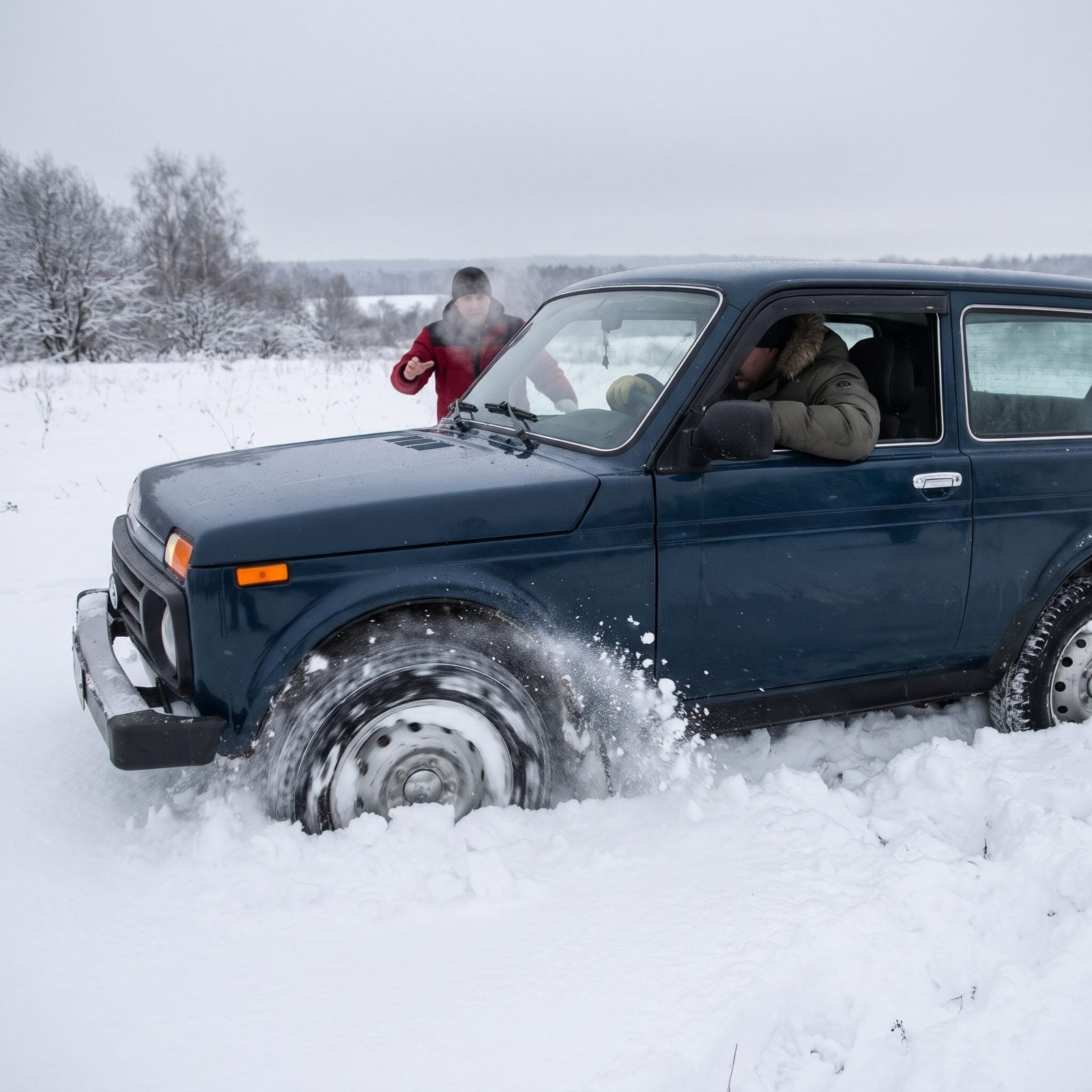
Flooring it, wheels spinning and throwing a big spray of snow, is the instinct, and it’s the worst thing you can do. Spinning wheels melt the snow, the melt refreezes to ice, and now you’ve built yourself a skating rink under every tire.
The trick is rocking. Ease forward gently, let the car roll back on its own, ease forward again into the little trench you’ve carved, going a bit farther each pass until the car climbs out. Shift between drive and reverse smoothly and stay off the throttle. Patience moves a stuck car. Rage just digs it deeper.
1. Straighten the Steering Before Pulling Out of Deep Snow
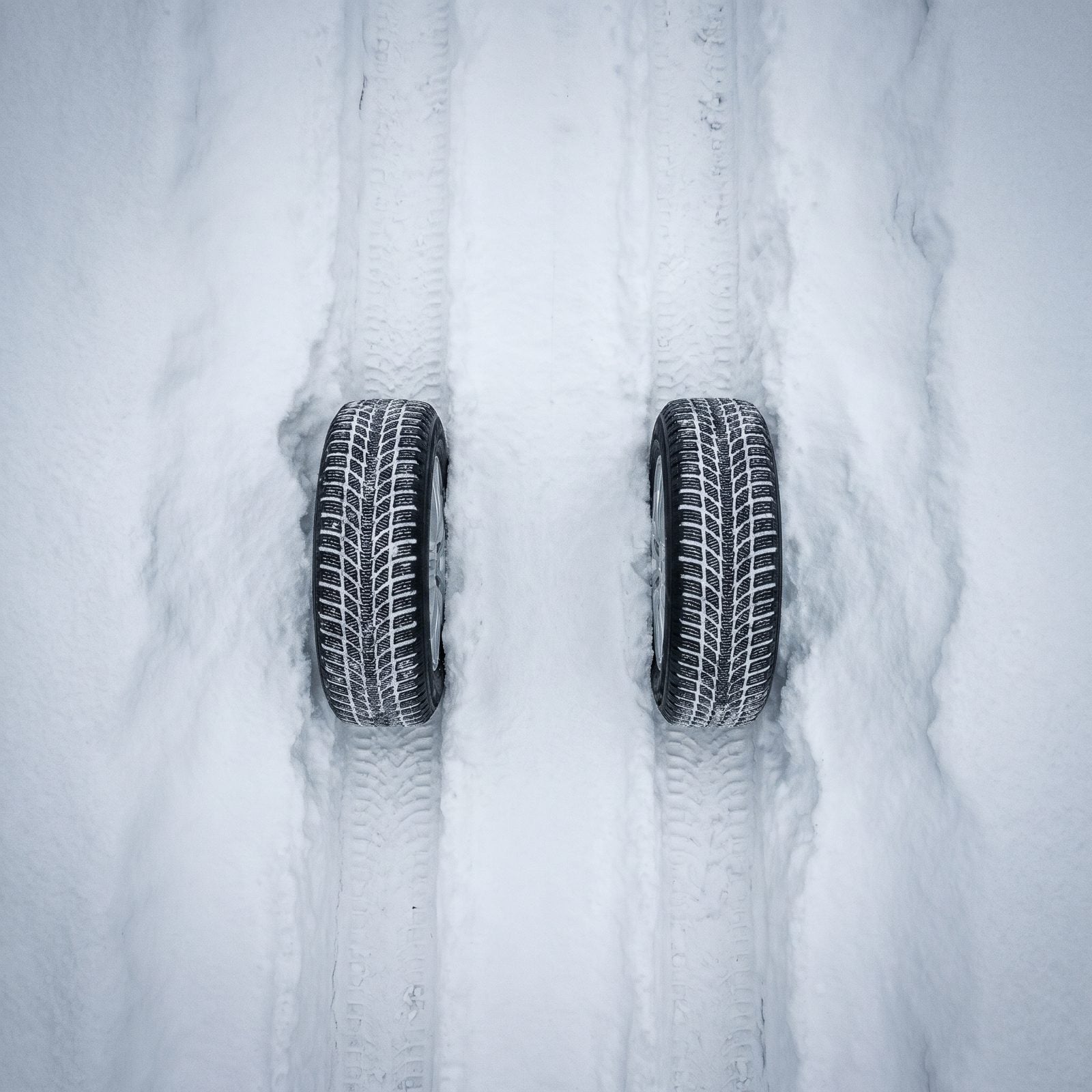
Turned wheels in deep snow are like trying to walk forward with your feet pointed sideways. The tire has to plow a wider path, and the snow fights every inch. Half the people stuck in a lot are stuck partly because the wheels sit cranked over.
Center the steering so the fronts point straight. Now the tires roll along their own narrowest line instead of shoveling snow off to the side. Pair that with a gentle rock and some cardboard under the drive wheels, and you’ll free most cars without anyone laying a hand on the bumper.