
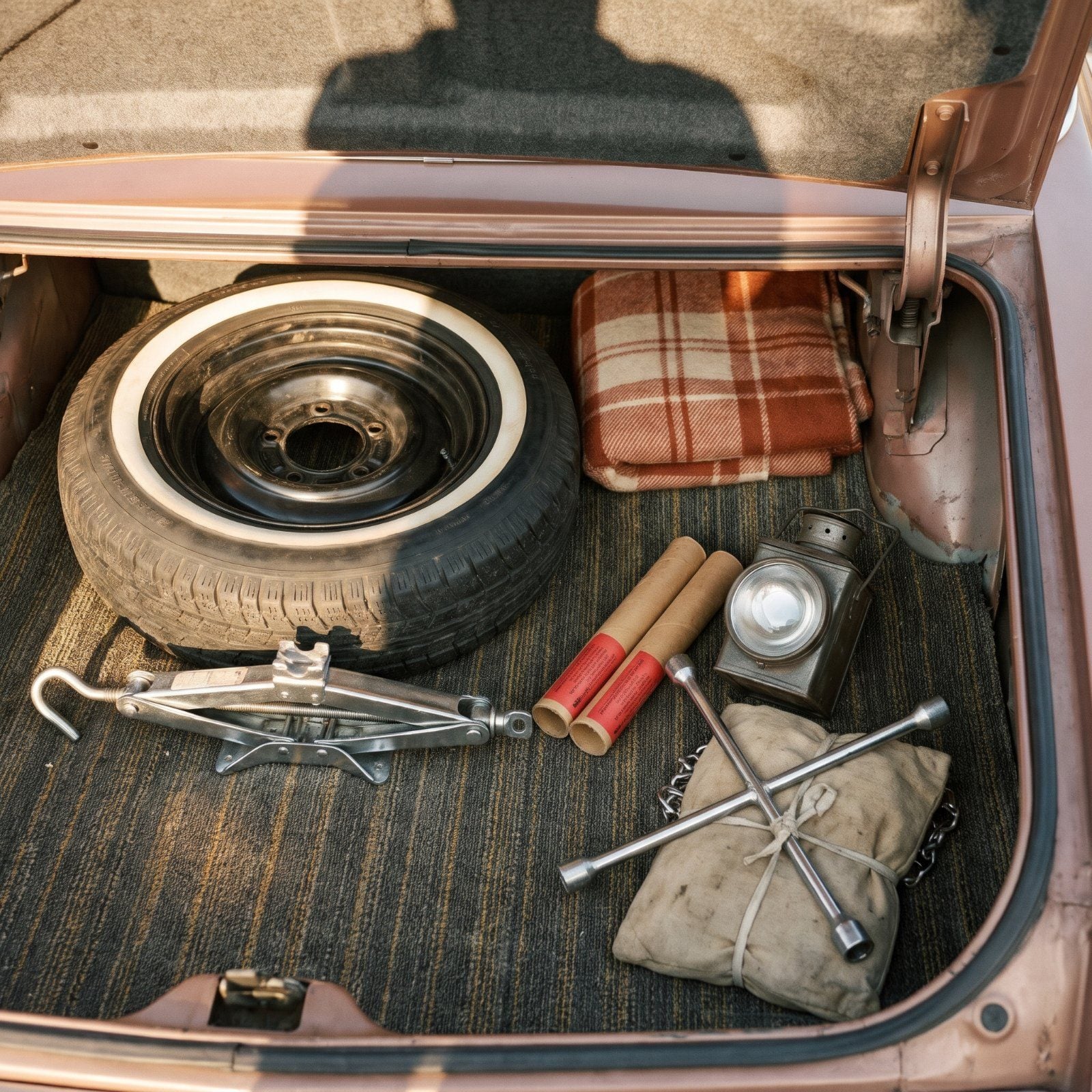
The trunk of a 1974 Impala smelled like rubber, cold steel, and a little spilled motor oil that never quite came out of the carpet. You knew every object in there by feel, because half the time you were reaching in blind on the shoulder of some two-lane road in the dark. The jack rattled, the flares rolled, and the wool blanket still carried the last campout. We hauled this stuff around for years and used most of it maybe twice. The list below will take you right back.
Please note that some of the images in this article were created with the assistance of AI.
36. The Full-Size Bias-Ply Spare With the Whitewall Nobody Ever Saw
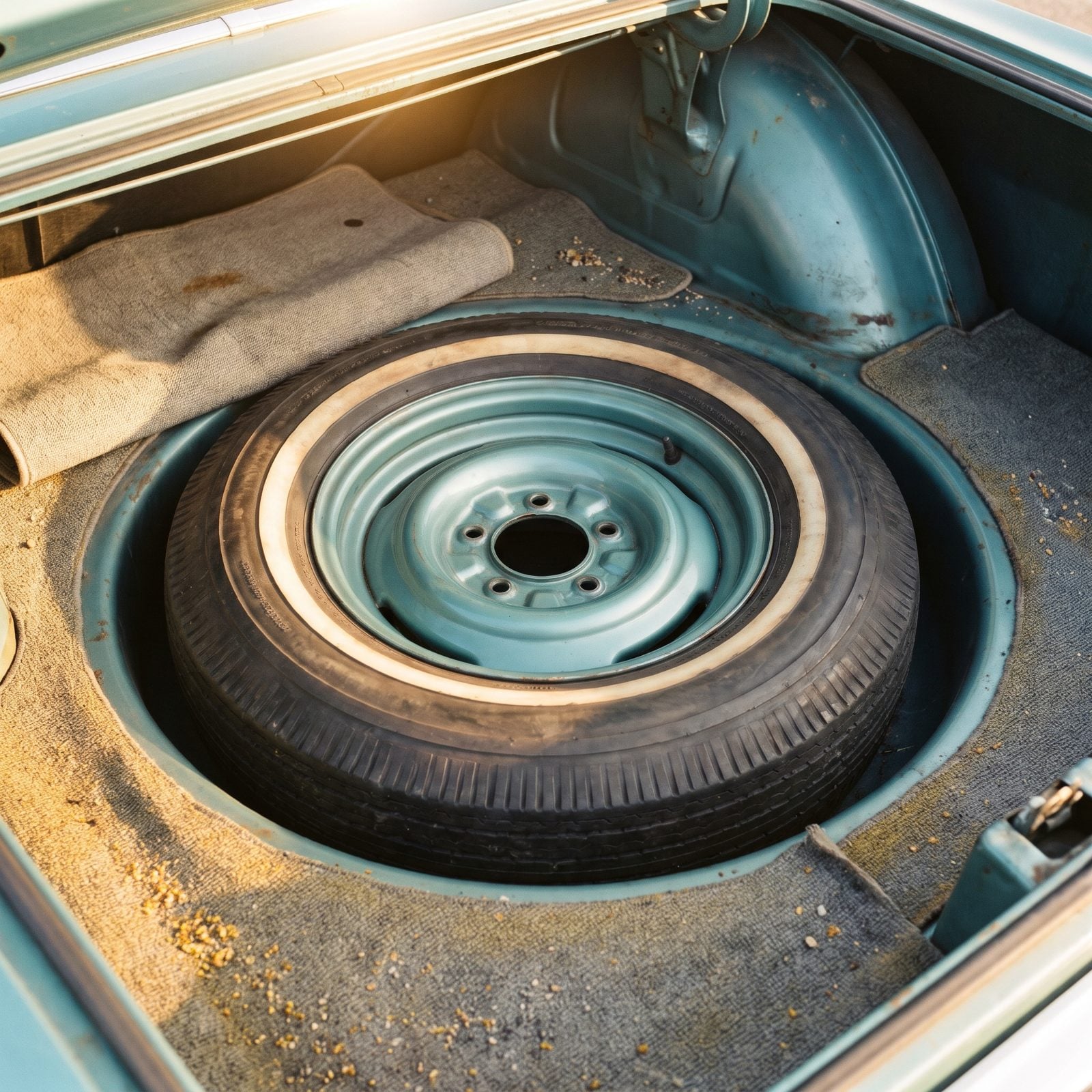
It was a real tire. Same size as the four already on the ground, same pressed-steel wheel, mounted up and ready to go. You dropped it into the well, let it settle where it landed, and forgot about it until the day a nail found you.
Bias-ply construction rode a little stiff and wore faster than the radials coming in, so nobody minded leaving one buried in the trunk for a decade. The whitewall was the funny part — you paid extra for a matching stripe on a tire that spent its whole life in the dark.
As a vintage tire company representative puts it, “tyres replicate the look, feel, and driving characteristics of the original period-correct tyres”
35. The Pressed-Steel Jack Base Plate That Kept the Whole Thing From Sinking
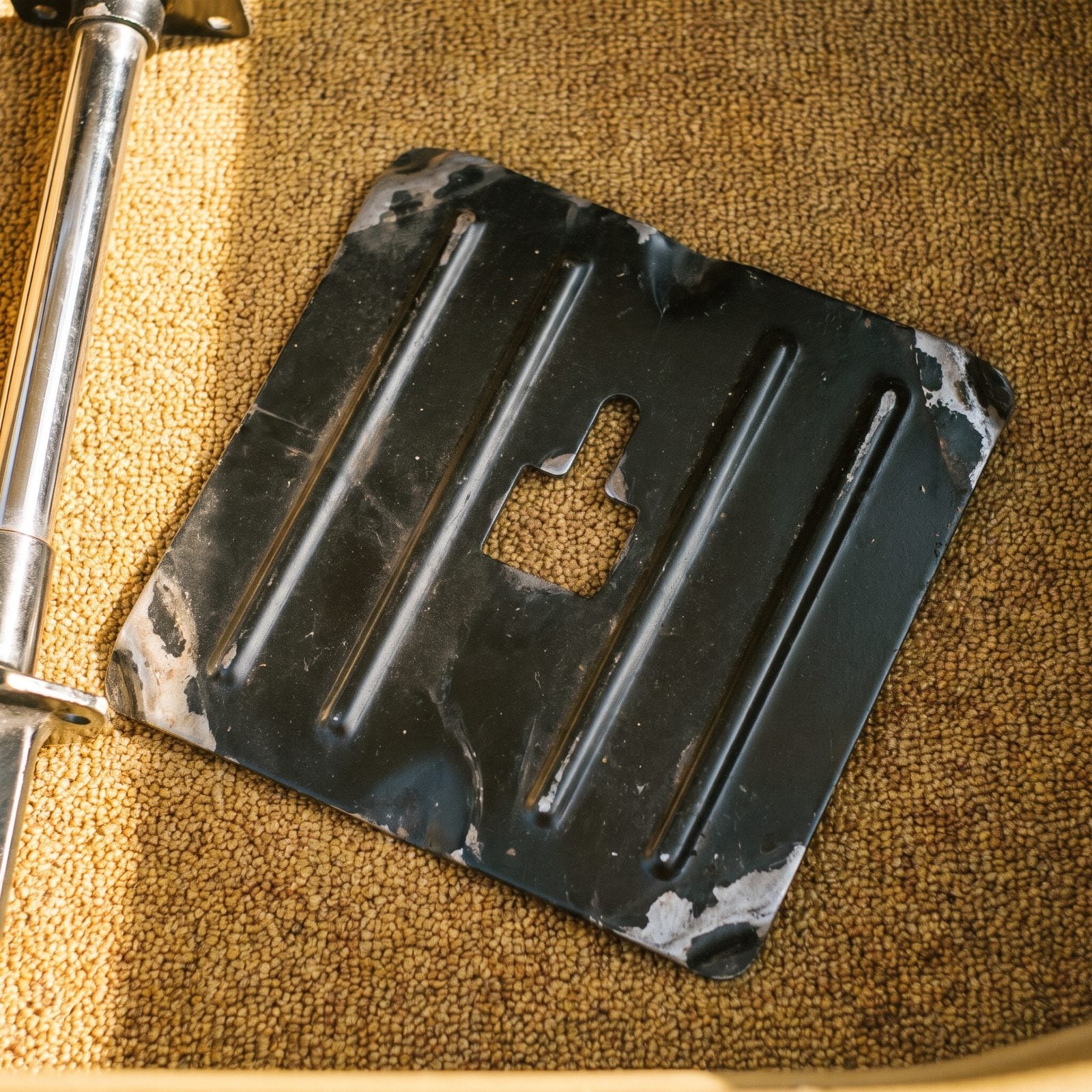
The unsung piece. A stamped square of black steel that slotted onto the foot of the jack so the whole rig didn’t punch a hole into soft shoulder gravel while you had two tons of Buick in the air.
On pavement you could skip it. But on a muddy shoulder after rain, forgetting it meant watching your car slowly tilt back toward the ditch. It usually lived loose in the trunk, rattling under everything, the one part you never noticed until the day it saved you.
What Our Readers Say
- When Jalopy Talk readers loved a car photo and tapped a reason, “nostalgic” came out on top at 26%, ahead of “body style” and “would drive” at 21% each.
From Jalopy Talk reader polls and votes.
34. The Four-Way Lug Wrench You Spun Like a Steering Wheel
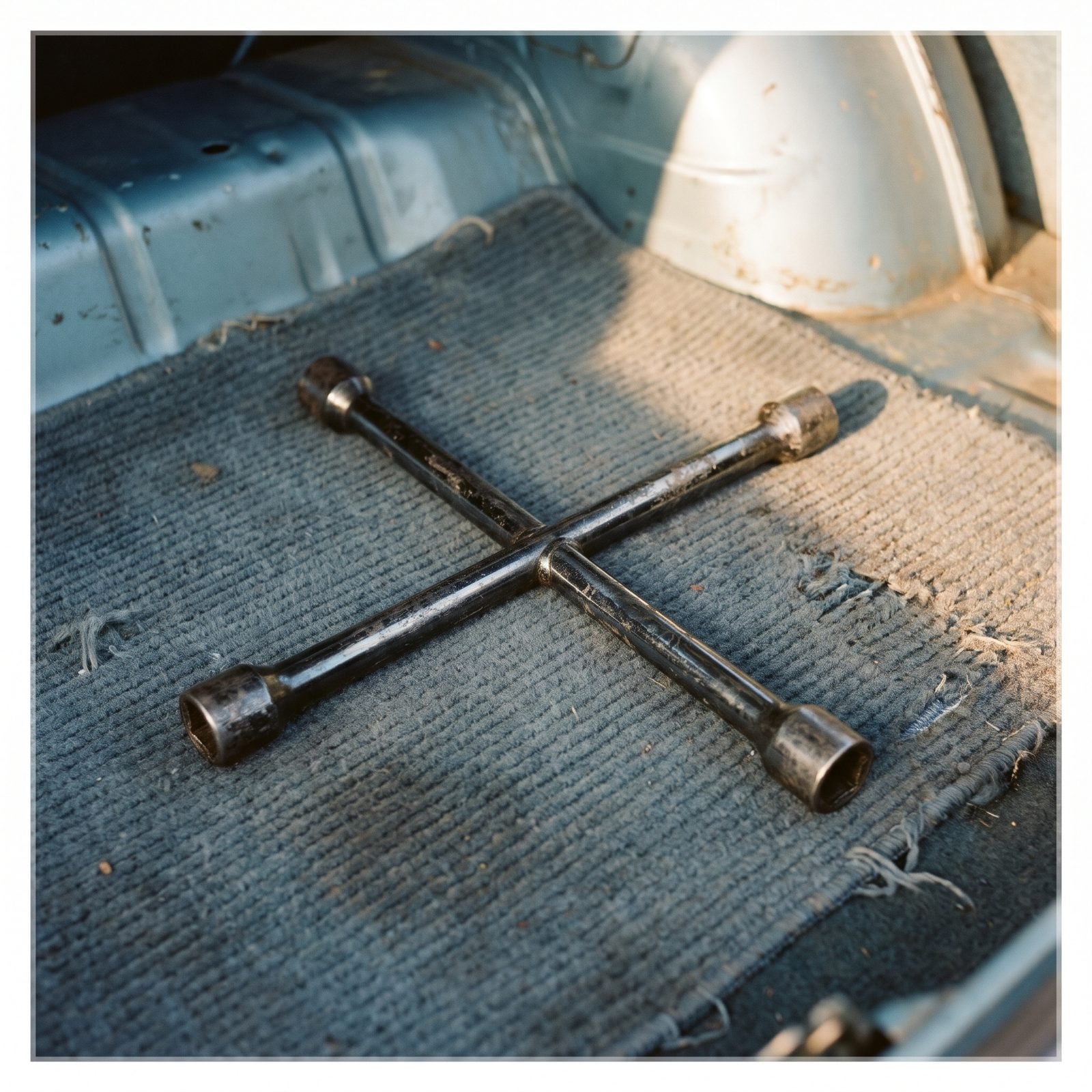
Nothing broke a stubborn lug nut loose like this.
The stamped wrench that came clipped in the trunk was fine for the showroom. The four-way was what you actually bought, because the cross shape let you put your whole body into it and spin the loose nuts off fast once they cracked free. Four sockets meant one wrench fit the family car, the pickup, and your brother-in-law’s import.
33. Tire Chains Coiled in a Canvas Sack That Smelled Like Winter
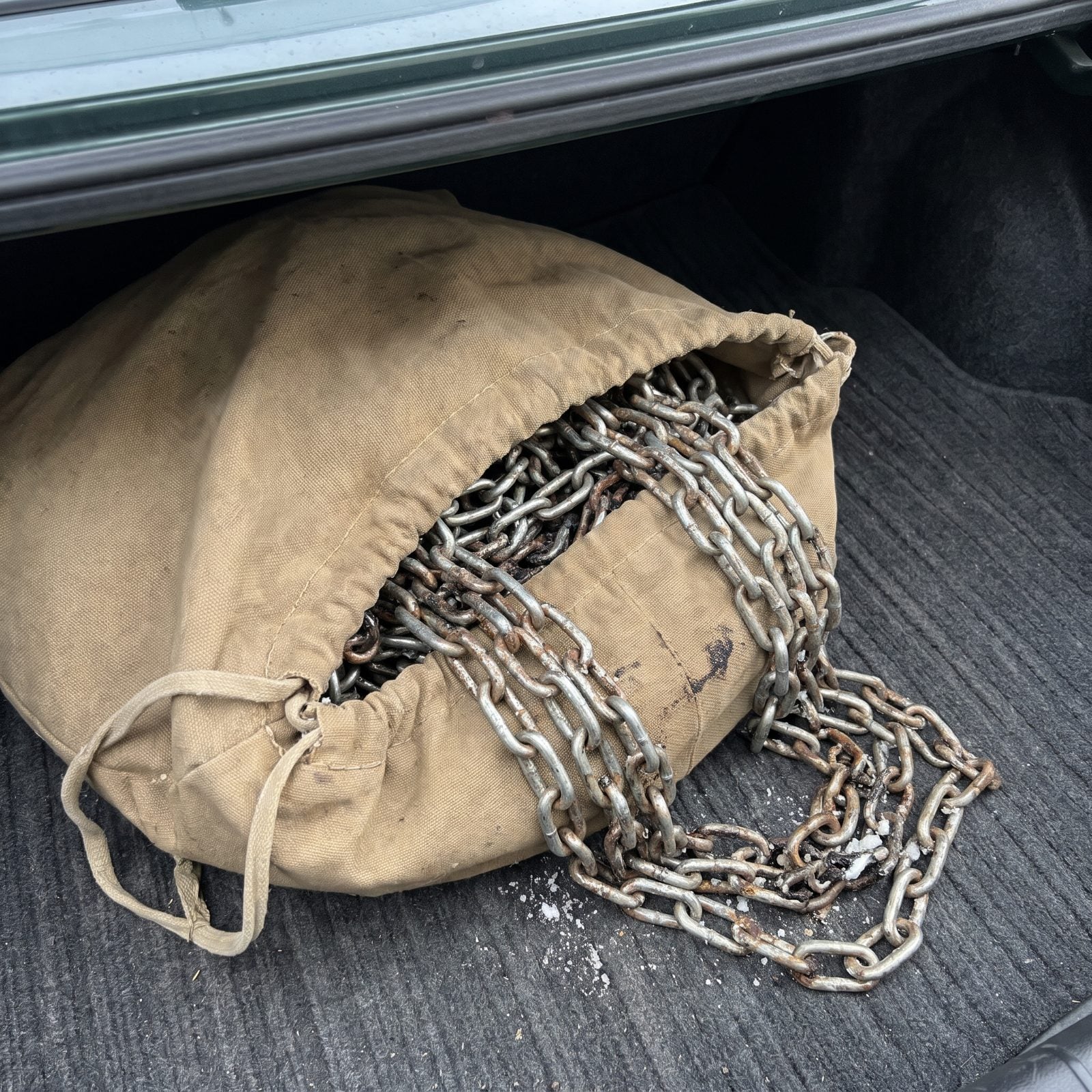
You pulled them out in October and prayed you wouldn’t need them, then spent twenty freezing minutes on your knees in a parking lot trying to remember which way the cross-links faced. Cold steel, numb fingers, the sack stiff from last year’s salt.
But chained up and rolling through snow that would’ve stranded everybody else? You felt like you’d gotten away with something. The canvas bag held the whole set, drawstring cinched, tucked in the corner where it left a faint rusty ghost on the carpet by spring.
32. A Burlap Bag of Traction Sand for the Day You Spun
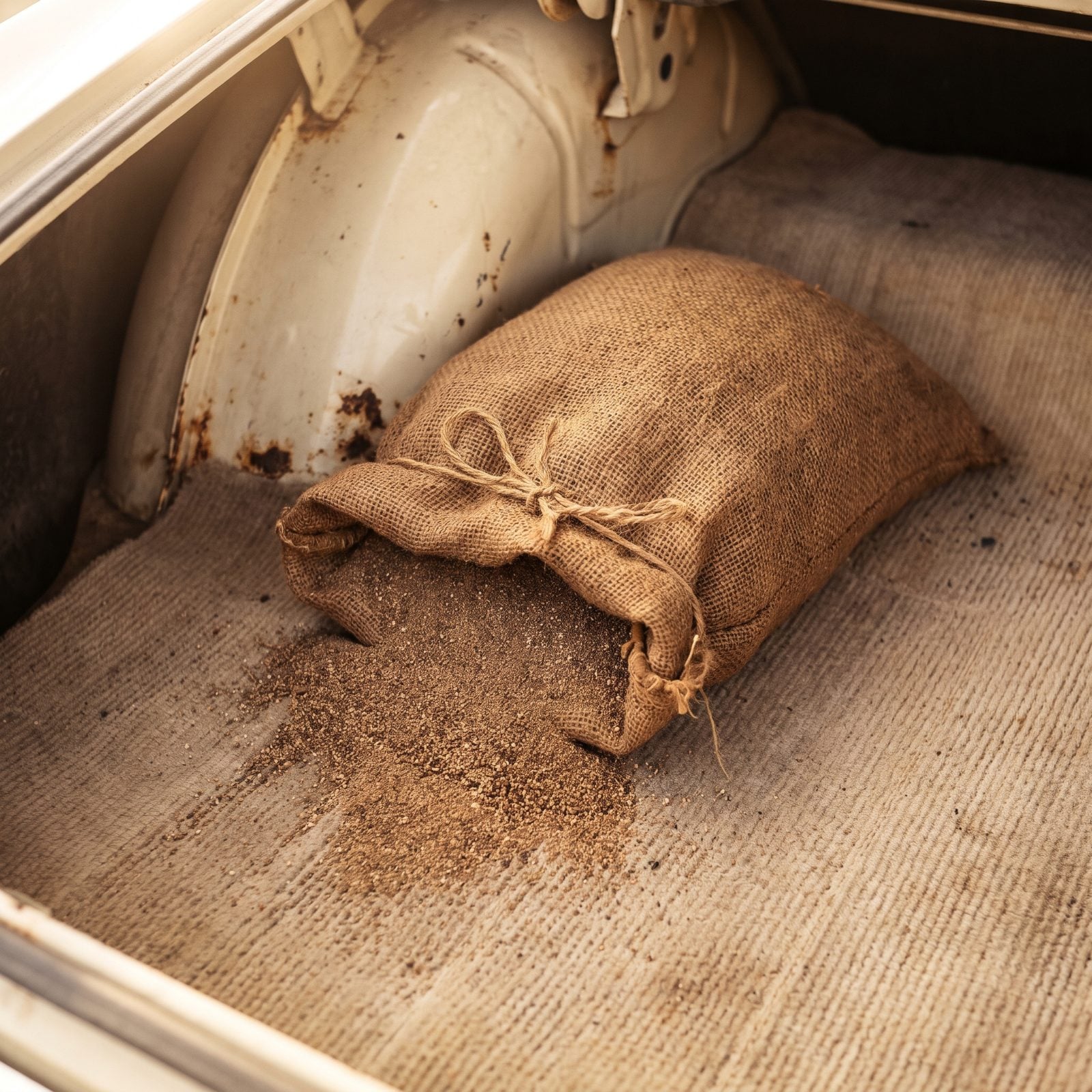
Two jobs, one sack.
Over the rear axle it gave a light rear-drive car enough weight to grip on ice. And when you did spin, you scooped a handful under the drive tires for the bite you needed to crawl out of a snowbank.
Some folks swore by kitty litter, some by sand, and everybody had an opinion they’d share with you in the hardware store parking lot whether you asked or not. The burlap always leaked a little, so there was a fine gritty layer in the trunk corner that never fully went away.
31. The Folding Metal Snow Shovel That Doubled as a Trenching Tool
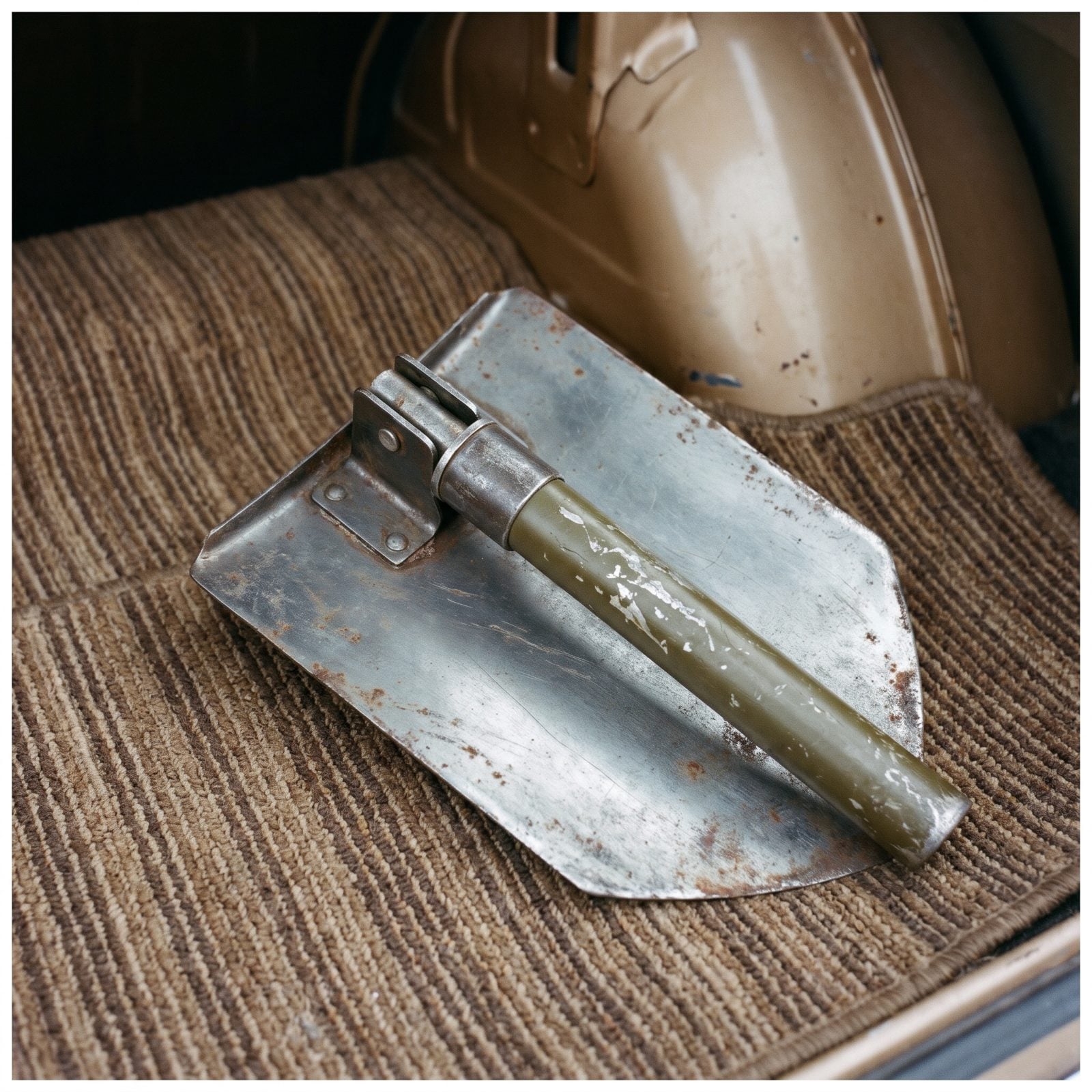
Half the ones in American trunks were Army surplus — that stubby folding entrenching tool with the olive handle and the hinge that locked the blade flat or at an angle. You could dig snow away from a stuck rear wheel or chop through the ice ridge the plow left at the end of the driveway.
It folded down small enough to live under the spare and never got in the way. Opening it in a hurry with cold hands was its own small battle — that wing nut always one turn tighter than your fingers wanted.
30. The Plaid Wool Blanket That Smelled Faintly of Every Campout
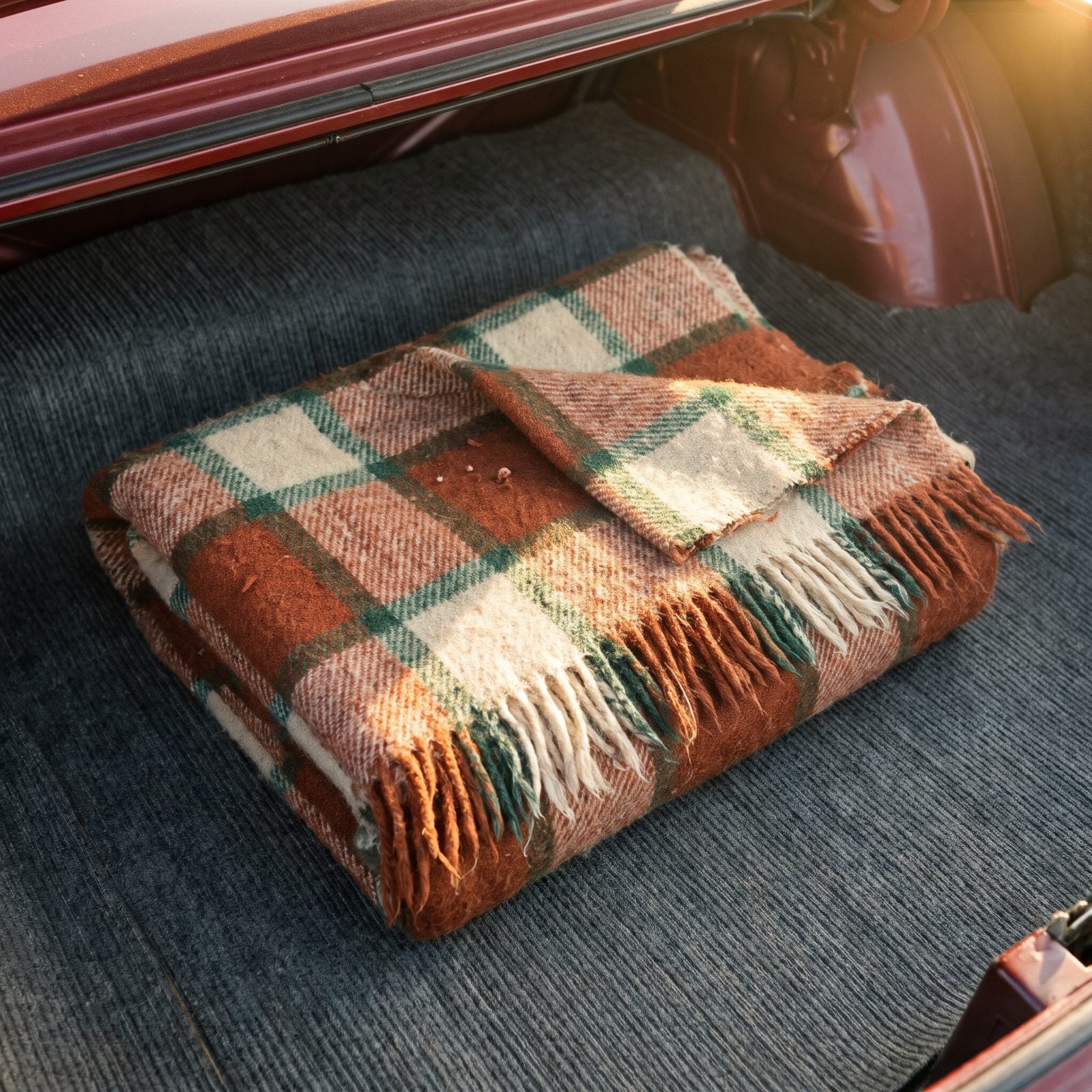
It was in the trunk for emergencies, officially. Unofficially it was the picnic blanket, the drive-in blanket, the thing you threw over sleeping kids in the back of the wagon on the long drive home.
Scratchy wool in a rust-and-cream plaid, fringed at the ends, warm even when it was damp. It carried the smell of campfires and station-wagon vinyl and a little bit of dog, no matter how many times it got washed. When a snowstorm actually trapped you, you were grateful it was there. The rest of the year it was just family.
The wagon still earns affection today: in our readers’ votes, station wagon photos got hearts 83% of the time, versus 78% for the other images in the same articles.
29. Cardboard-Tubed Highway Flares You Scraped Like a Giant Match
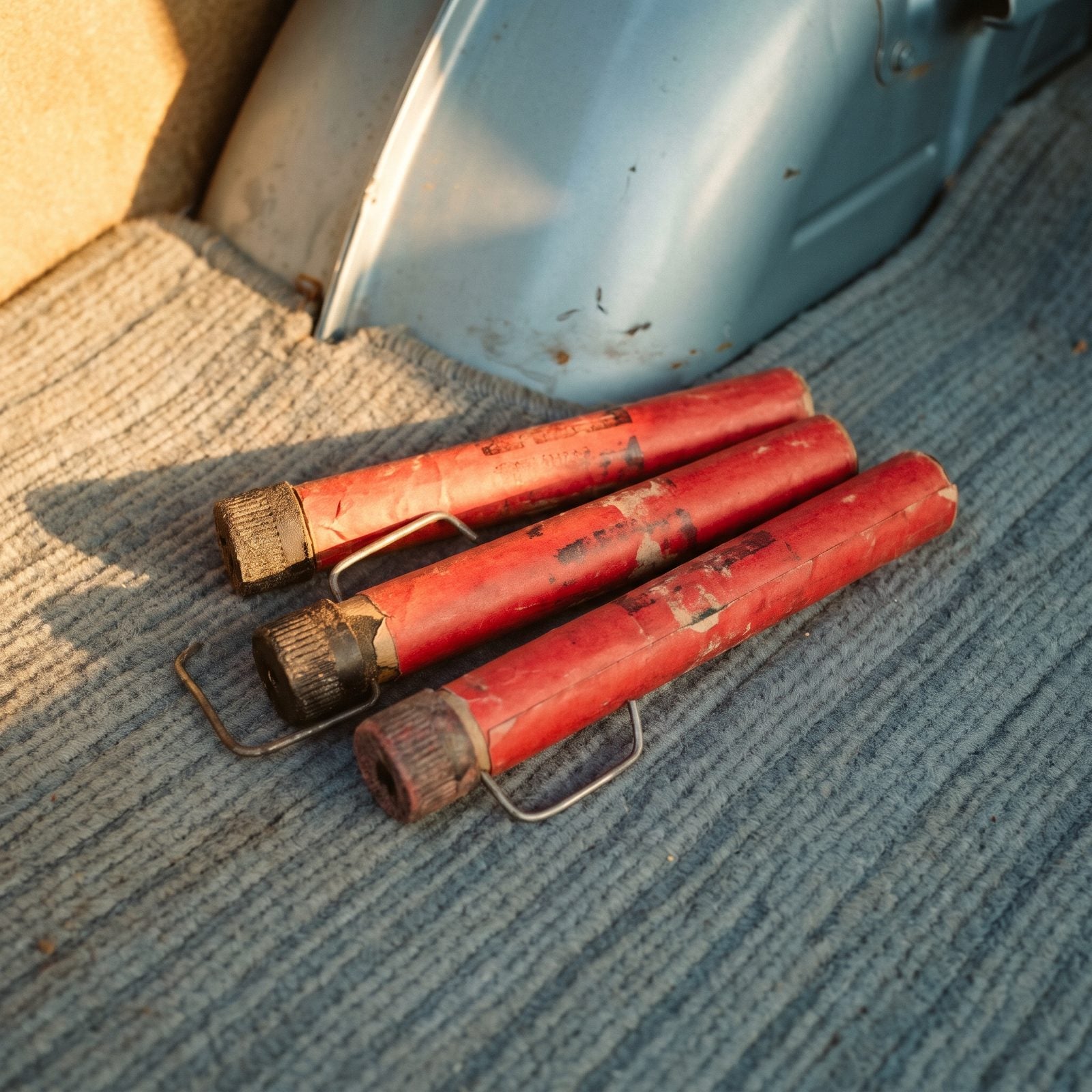
You pulled the cap, struck the end like a six-inch match, and it roared to life with a hiss and a shower of sparks.
Then you walked them back up the road behind your broken-down car, dropping one every fifty feet so the guy coming around the dark bend had a fighting chance to see you. They burned a furious red-orange, dripped molten slag onto the asphalt, and left that acrid sulfur smell in your nose for an hour.
You kept a few in the trunk because the one time you needed them — standing on a black shoulder at midnight — nothing else in the world would do.
28. The Heavy Six-Volt Lantern With the Big Square Battery
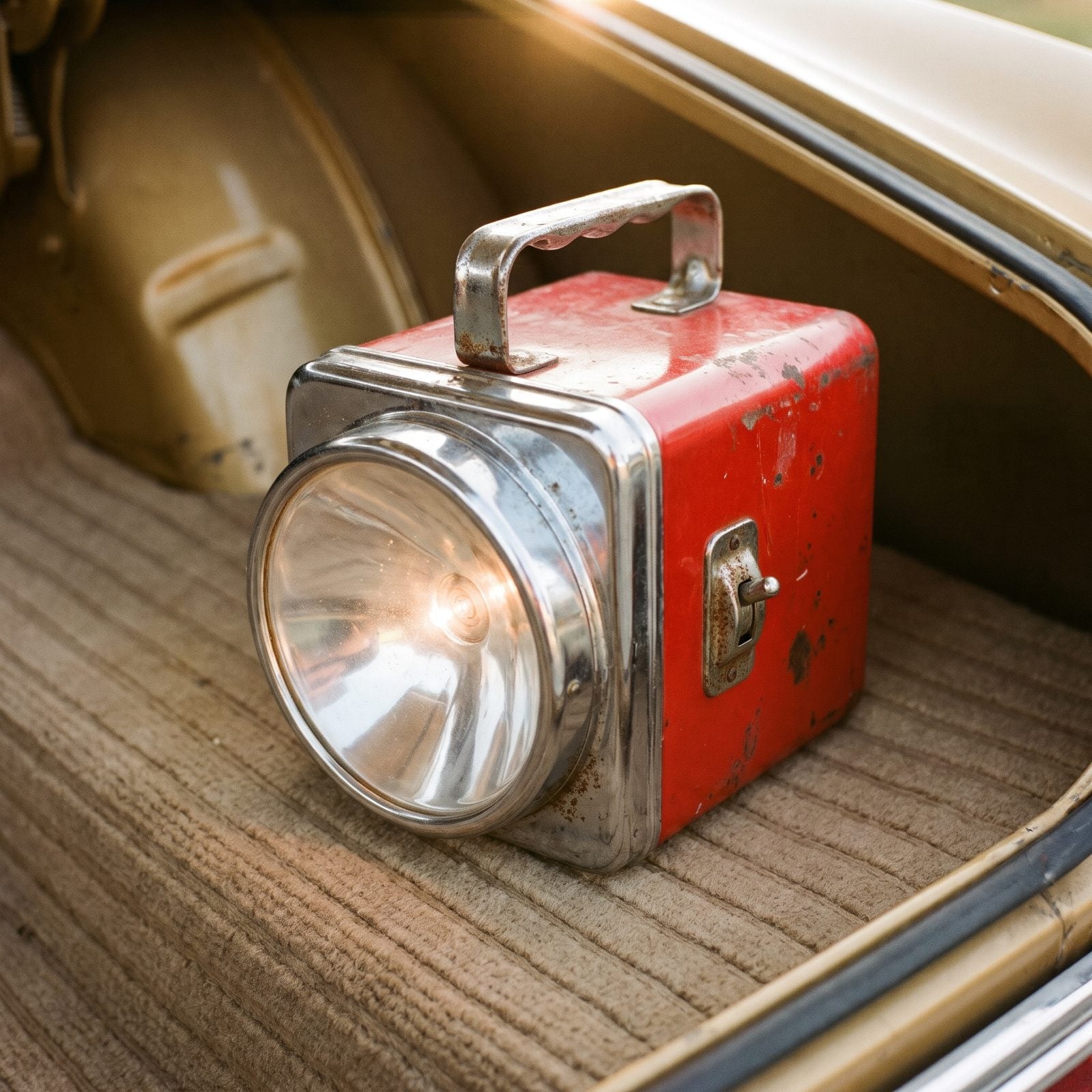
Boxy, heavy, with a handle on top and a round lens the size of a saucer — this was the light you reached for first. One big square six-volt battery, a switch that clicked with authority, and a beam that lit up the whole engine bay.
The catch was the battery. Let the lantern sit in the trunk unused for a year and you’d grab it in the dark for a weak amber flicker, maybe nothing at all. Still, there was something reassuring about its weight in your hand on a roadside at night. It felt like a tool that meant business, and most of the time it was. Alright — go check the battery in yours.
27. Heavy Jumper Cables With Bare Copper Clamps
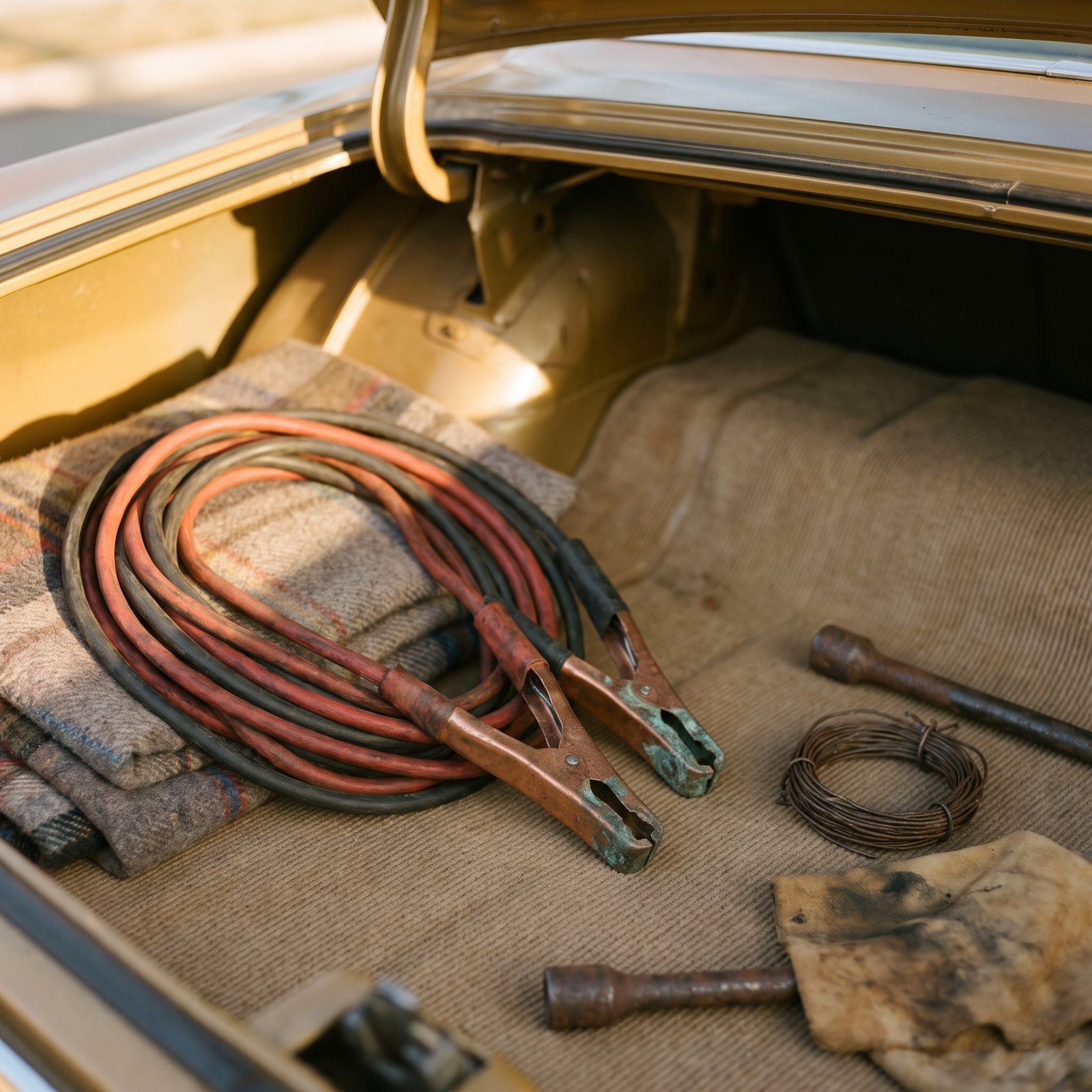
They came coiled in a figure eight that never stayed a figure eight. By the second winter they were a black rubber knot with jaws sticking out at odd angles, and untangling them on a frozen shoulder was its own little ordeal. The clamps were stiff spring-loaded alligator jaws with bare copper teeth, red handle grip on one, black on the other if you were lucky.
Everybody’s uncle had a theory about the right order to hook them up, and everybody’s uncle had a story about the spark that jumped when somebody got it wrong. You popped both hoods, nosed the cars together, and waited while the good engine idled. When the dead one finally turned over, you felt like a hero for about thirty seconds before you had to coil the things back up.
26. A Braided Tow Rope With Steel Hooks
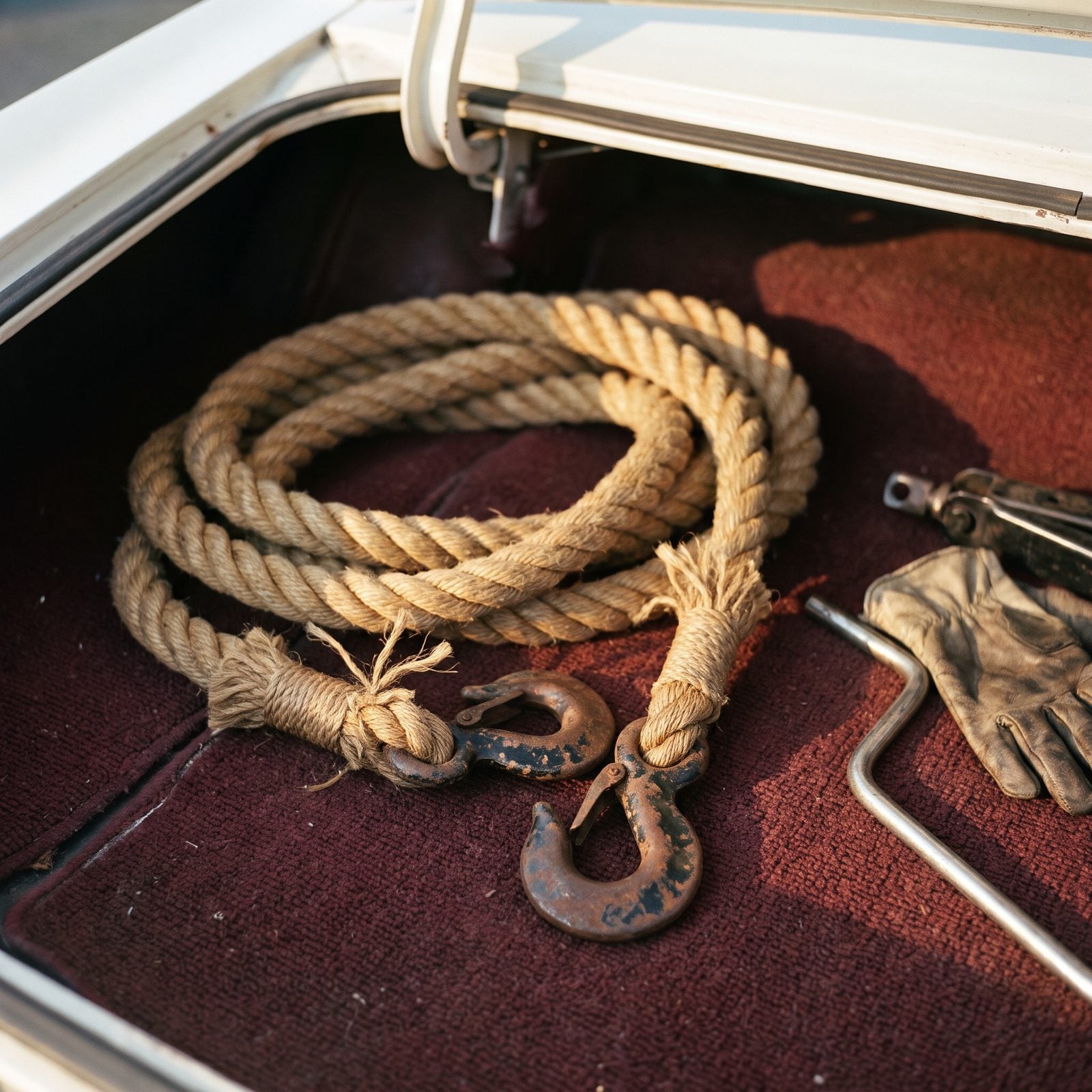
A thick twisted rope, usually natural-fiber manila laid in three strands, with a forged steel hook spliced into each end. You looped it around a frame member or bumper bracket, never anything that looked flimsy, and hoped the guy you were pulling knew what he was doing.
That last part mattered. With the engine off, power steering and power brakes turned to stone, so whoever sat behind the wheel of the dead car had to muscle every turn and stand on the pedal to stop. The rope stretched, then snapped taut, then stretched again. It pulled a lot of cars out of snowy ditches, and it towed more than a few home that probably should have waited for a real tow truck.
25. A Red Metal Gasoline Can
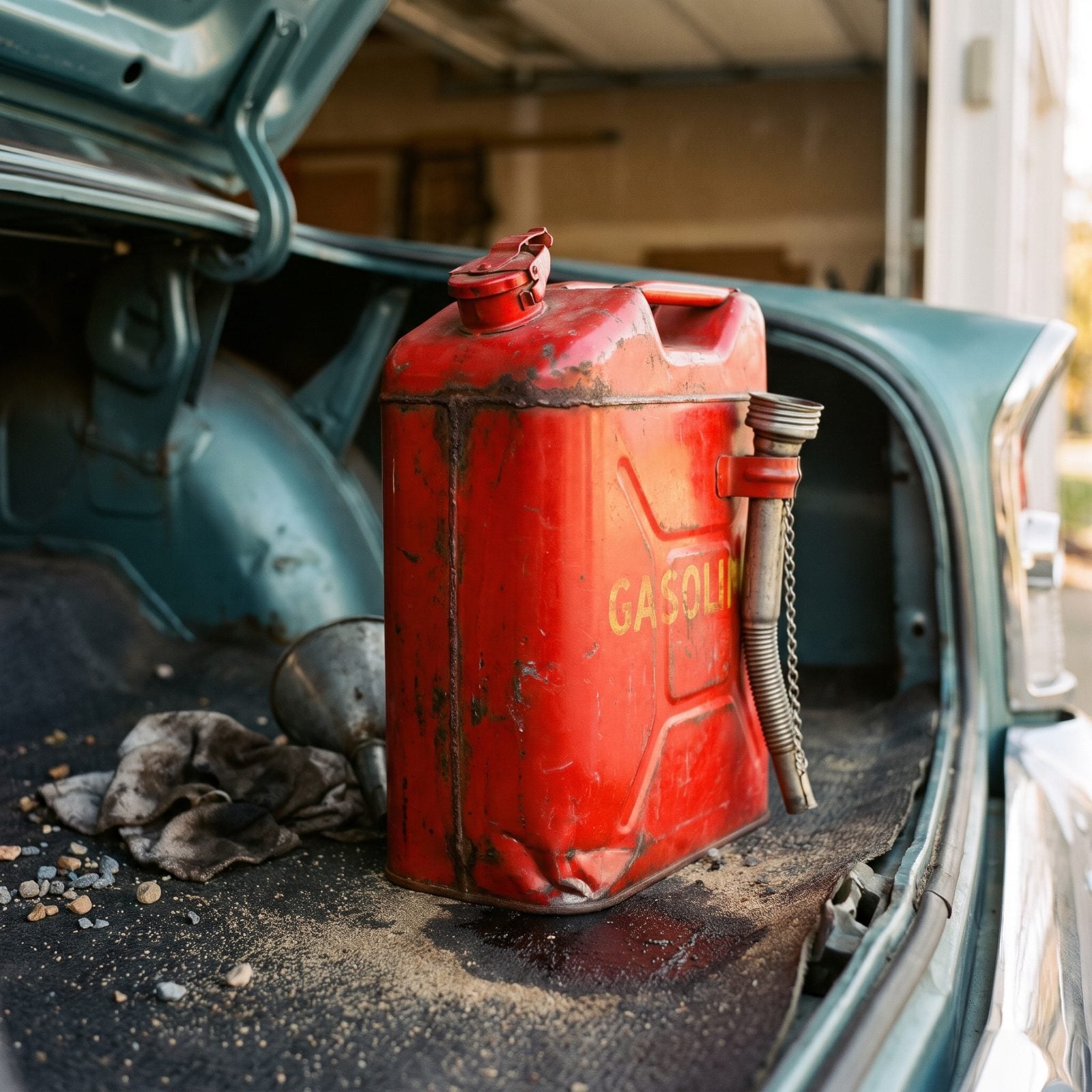
Painted steel, usually red, with a screw-on cap and a flexible spout that you stored backward inside the can or clipped to the side. Even empty, it brought a faint gasoline smell into the trunk that settled into everything nearby, including the picnic blanket.
Running out of gas was a real possibility when fuel gauges were vague and stations closed early in small towns. The ritual was always the same: coast to the shoulder, grab the can, and start walking. You came back a mile later with a sloshing gallon or two and a sore arm, poured it in through the spout, and pumped the gas pedal until the engine caught.
24. A Clear Vinyl Siphon Hose
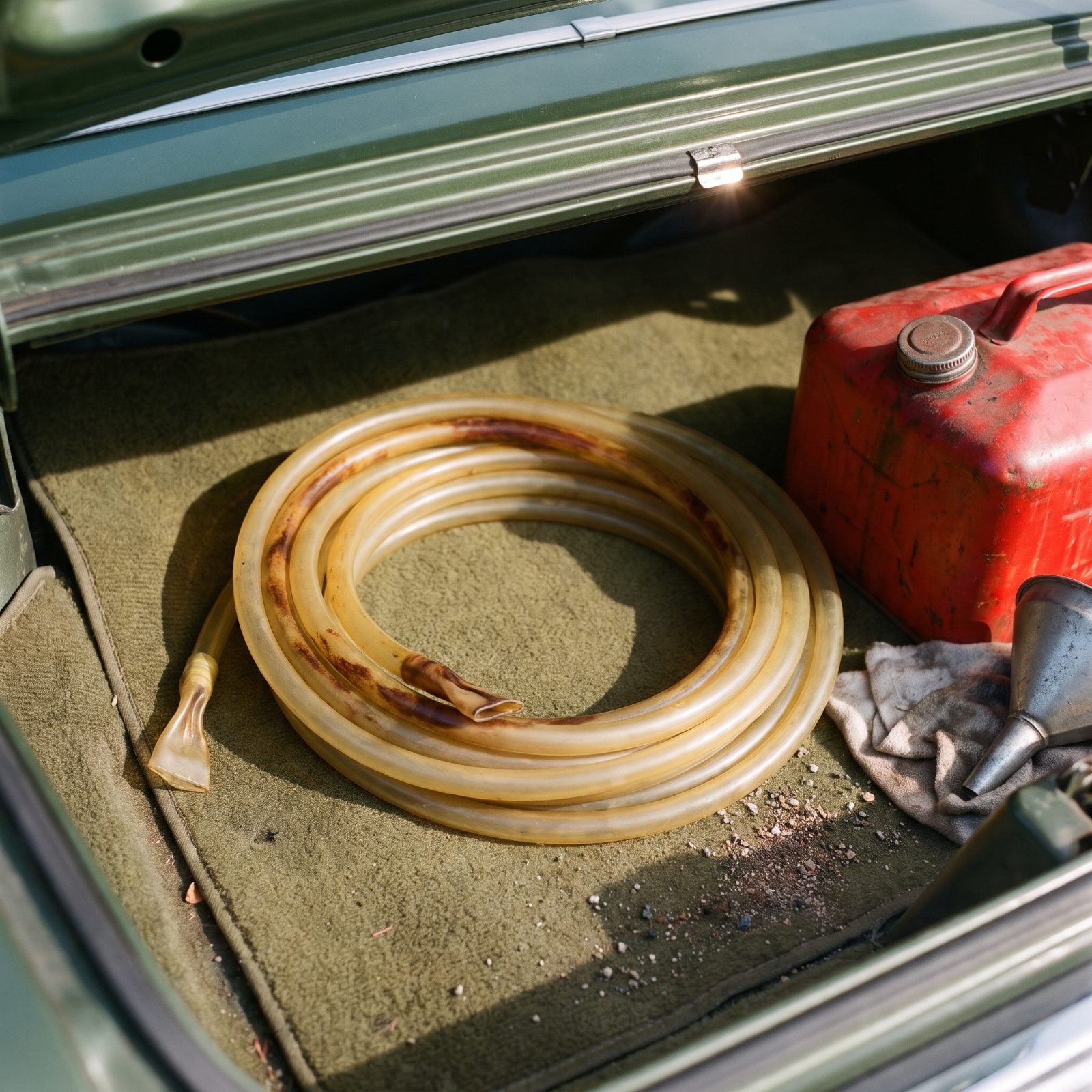
A few feet of clear vinyl tubing, coiled up and tossed in a corner. Its whole purpose was moving gasoline from one tank to another, usually from a friend’s car into yours, or from the lawn mower can into the station wagon.
The technique involved putting one end in the tank, the other end in your mouth, and drawing hard until the fuel came rushing down. Timing was everything. Pull a split second too long and you got a mouthful of high-test, followed by a lot of spitting and a taste that stayed with you all afternoon. Today’s cars have filler-neck valves and screens that make the trick hard to pull off, which is probably a blessing for everybody’s taste buds.
23. A Foot-Operated Tire Pump
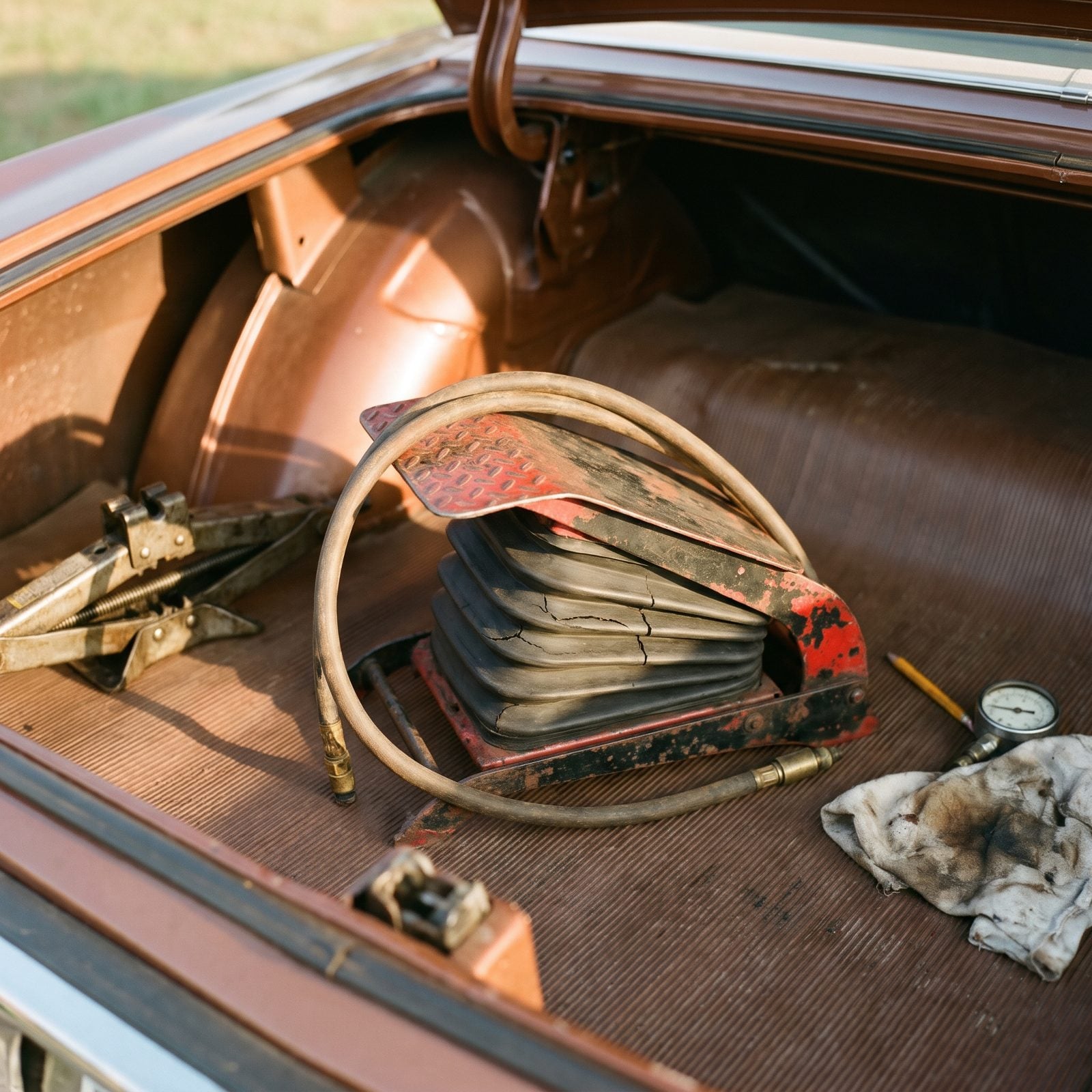
A big rubber accordion bellows in a red steel frame, with a hose that screwed onto the valve stem. You planted one foot on the base, stomped the bellows flat with the other, and checked a separate brass dial gauge to see it creep upward one pound at a time.
It was slow. Bringing a low tire up to pressure took a long, sweaty stretch of stomping, and the hose fitting leaked a puff of air every time you pulled it off. But the gas station air hose was miles away and this was right there. It also got borrowed for bicycle tires, beach balls, and air mattresses on every camping trip, which is mostly what kept it from rusting shut.
22. A Tire Patch Kit in a Metal Tin
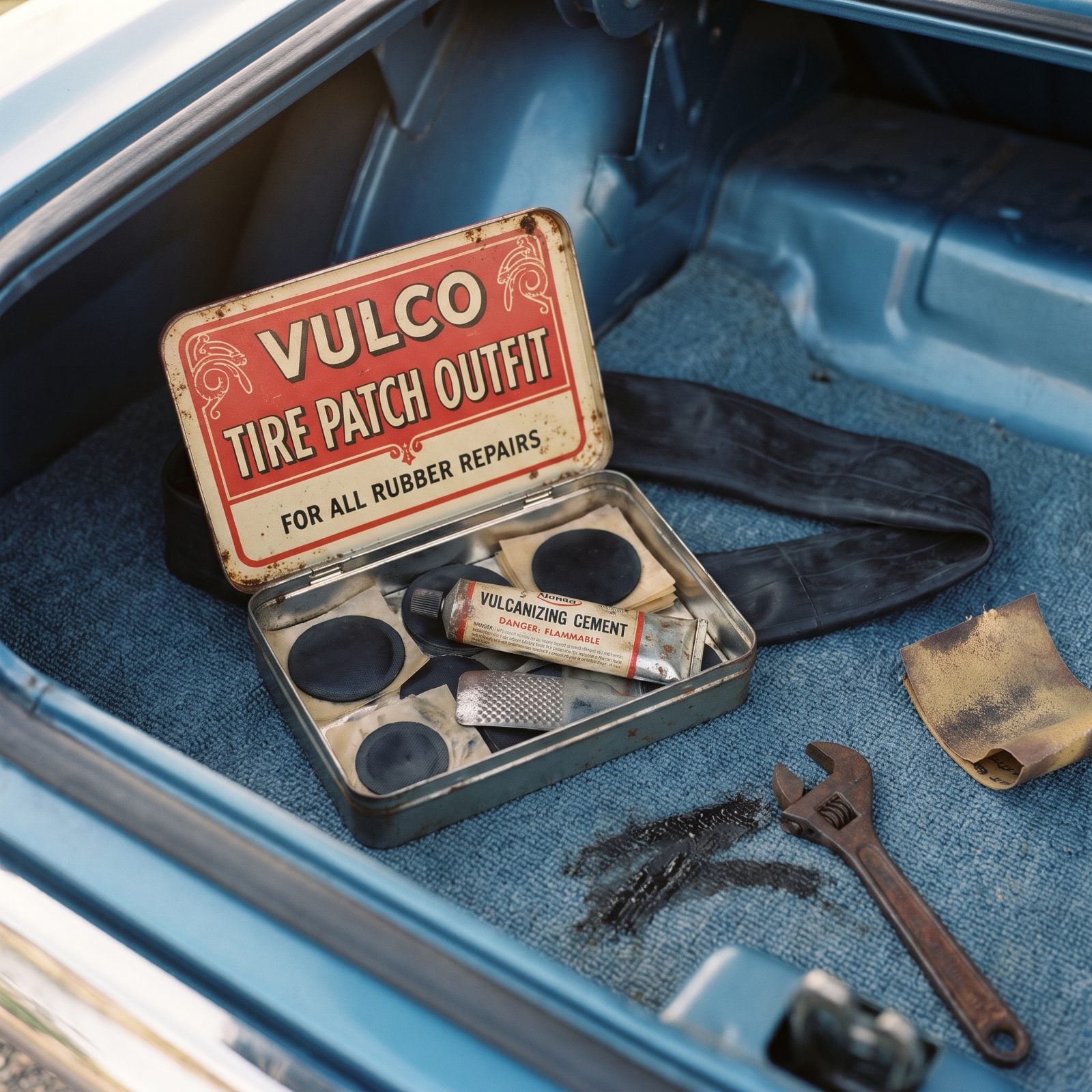
A flat, hinged tin roomy enough to hold a full kit, with a small handheld grater tool tucked inside for roughing up the rubber. Inside lived a tube of rubber cement, a stack of round and oval patches, and, depending on the brand, a few sticky rubber plugs for tubeless tires.
Truthfully, it saw more action on the kids’ bicycle tubes than on the family car. You scuffed the spot, smeared on the cement, let it get tacky, and pressed the patch down hard with your thumb. The cement tube almost always dried out between uses, so half the time you opened the tin and found a hard little brick of glue instead.
21. A Pencil-Style Tire Pressure Gauge
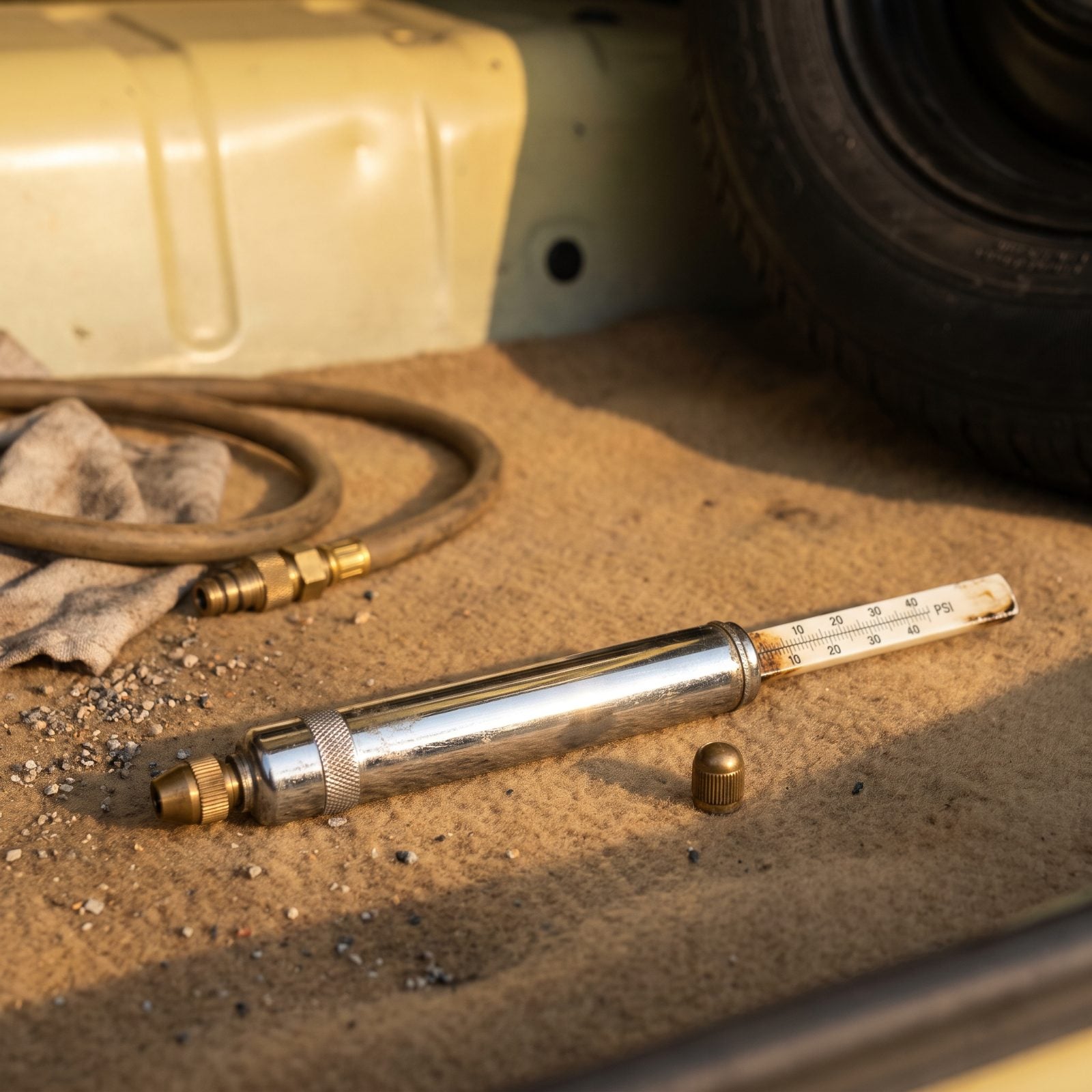
Chrome, a slim cylinder about the size of a fat pencil, with a pocket clip and a brass fitting on the end, small enough to toss in the trunk or the glovebox. You pressed the end onto the valve stem, heard a short hiss, and a little white calibrated stick slid out the back.
You read the number right where the stick stopped, then pushed it back in with your finger for next time. No batteries, no screen, nothing to break except the occasional bent tip. Full-service attendants often had their own and would check your tires without being asked, but having one of your own meant you could double-check them.
20. A Cardboard-Sided Quart of Motor Oil
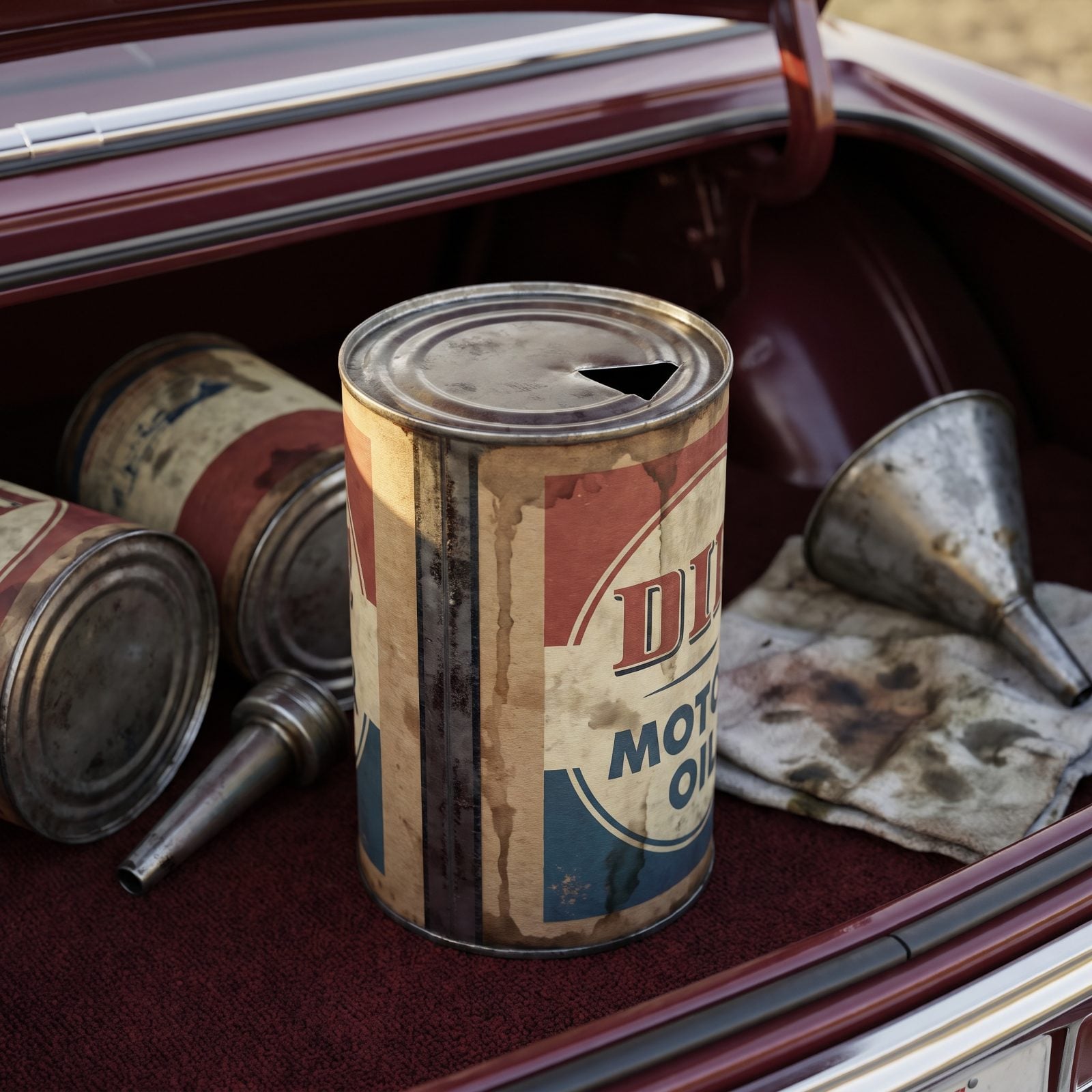
Motor oil came in cylindrical cans with cardboard-like sides and metal tops and bottoms. They were sturdy enough to stack, but if one got wet in the trunk the label would peel and the sides would soften into a sad, stained tube.
Plenty of 1970s engines burned a little oil between changes, so a spare quart was standard equipment. At the full-service pump the attendant pulled the dipstick, held it up for you to see, and said you were a quart low. You punched the top, poured it in, and tossed the empty back in the trunk. Plastic bottles with screw caps took over in the 1980s, and nobody missed the half-empty can sloshing around in back.
19. Antifreeze in a Metal Can
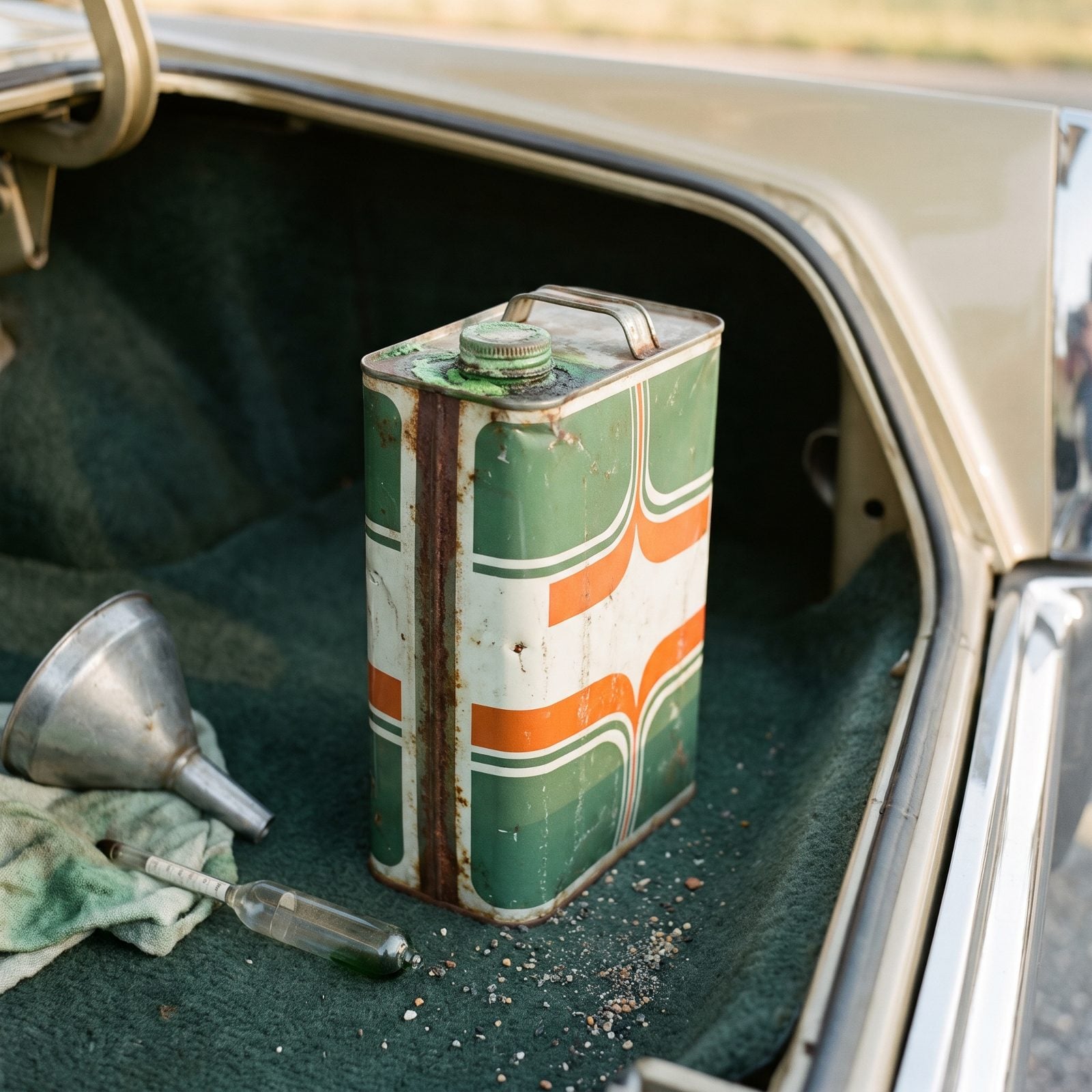
A gallon of bright green ethylene glycol in a painted metal can, the kind with a small screw cap on top and an arched carry handle standing upright across the top. Before winter hit, you mixed it with water, topped off the radiator, and checked it with a glass-tube tester marked with a printed graduated scale.
The spare can rode in the trunk in case a hose sprang a leak or the overflow ran low on a hot summer climb. It had a sweet smell that everyone remembers, and that sweetness is exactly what made spills so dangerous to dogs and cats. Careful families wiped up every drip in the driveway. When plastic jugs replaced the cans, the trunk lost one more thing that rang like a bell when you hit a pothole.
18. Windshield Washer Concentrate in a Glass Bottle
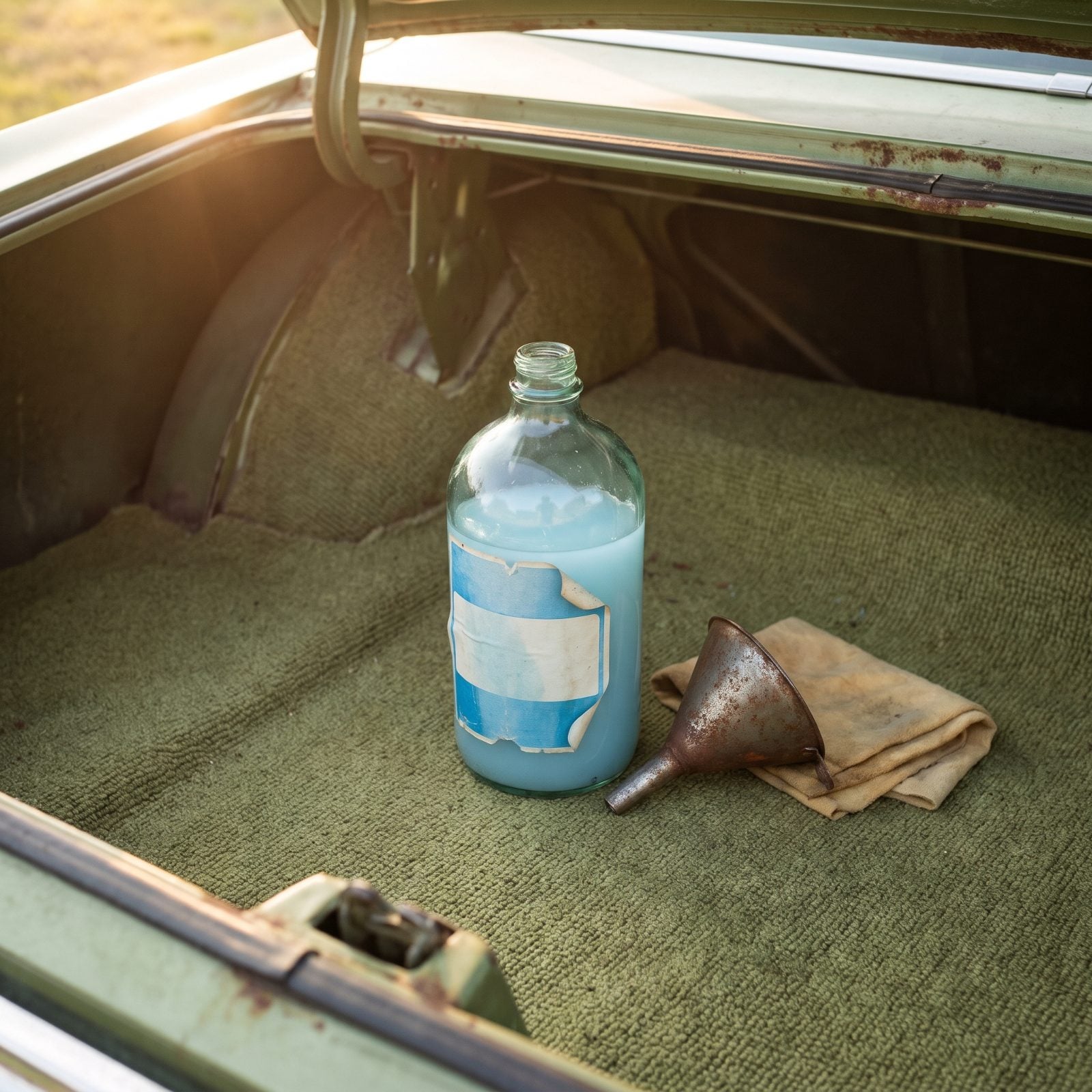
Washer fluid didn’t always come premixed and ready to pour. A lot of the time you bought a small glass bottle of blue concentrate, unscrewed the cap on the reservoir, glugged some in, and topped it off with water from the garden hose or the gas station’s spigot. Nobody measured. You eyeballed the color and called it good.
The bottle rode in the trunk wrapped in a rag so it wouldn’t crack against the jack. In winter the stakes went up, because a reservoir of plain water froze solid right when the salt spray off the road turned your windshield into frosted glass. Hitting the washer button and getting nothing but the hum of a pump straining against ice was a sound you only needed to hear once.
17. A Molded Spare Radiator Hose
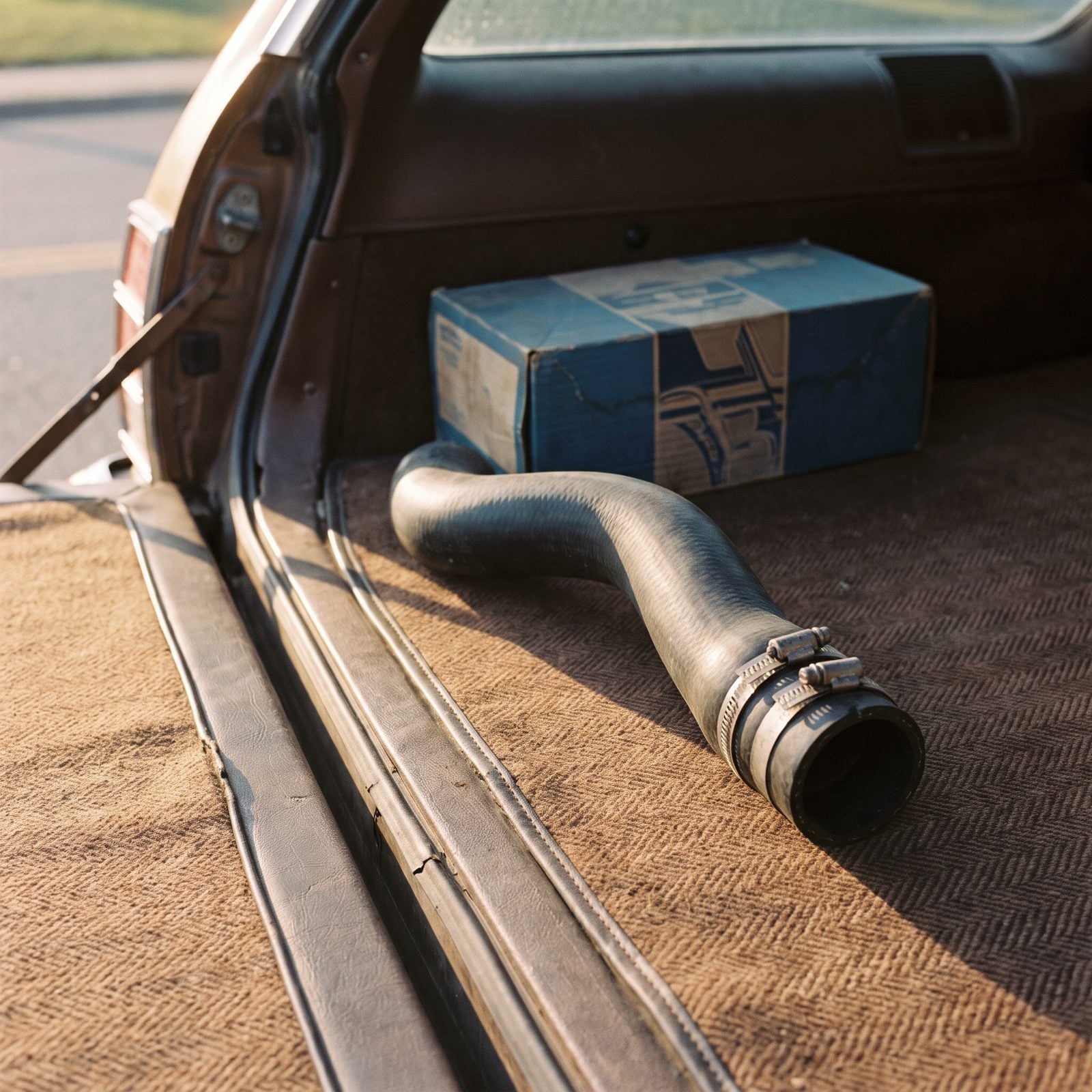
Steam rolling out from under the hood was the classic 1970s roadside picture, and nine times out of ten the culprit was a radiator hose that had gone soft, split, or blown loose at the clamp. The upper hose took the worst of it, sitting right in the path of the hottest coolant leaving the engine.
So the careful driver carried a spare, molded at the factory into the exact bends that fit that one engine, along with a couple of worm-gear clamps and a screwdriver to tighten them. You waited for things to cool, because grabbing a radiator cap on a hot engine was a lesson nobody repeated. Then you swapped the hose, topped off the coolant from that metal can, and got back on the road smelling faintly of sweet green steam.
16. A Boxed Set of Ignition Points and Condenser
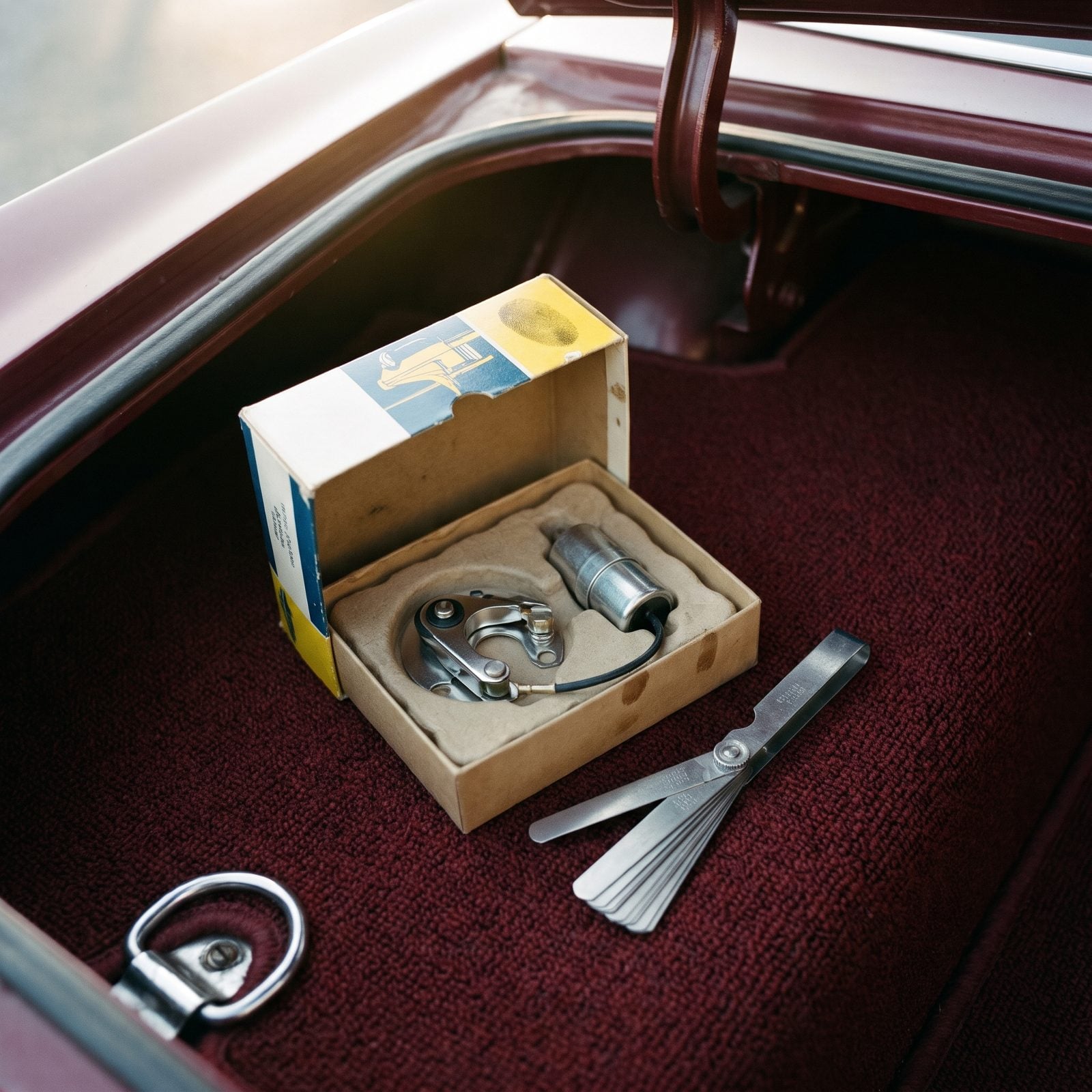
Inside the distributor, a set of breaker points opened and closed thousands of times a minute to fire the spark plugs, and the little plastic rubbing block that rode the cam wore down as the miles piled up. The gap drifted, the engine started missing and stumbling, and it was time for a tune-up.
The points and condenser came boxed together as a matched pair, and plenty of drivers kept a set in the trunk for the day the car began running rough far from home. Changing them was a driveway ritual: pop the cap, pull the rotor, swap the parts, set the gap, and hope you’d gotten it close enough that the car didn’t sound worse than when you started.
When worn points strand you, one veteran vintage-car mechanic says the lucky fix is to pull over, “replace the points with a spare set you have in your glovebox, use a matchbook or feeler gauge to re-gap them, and be on your way”
15. Spare Spark Plugs in Cardboard Sleeves
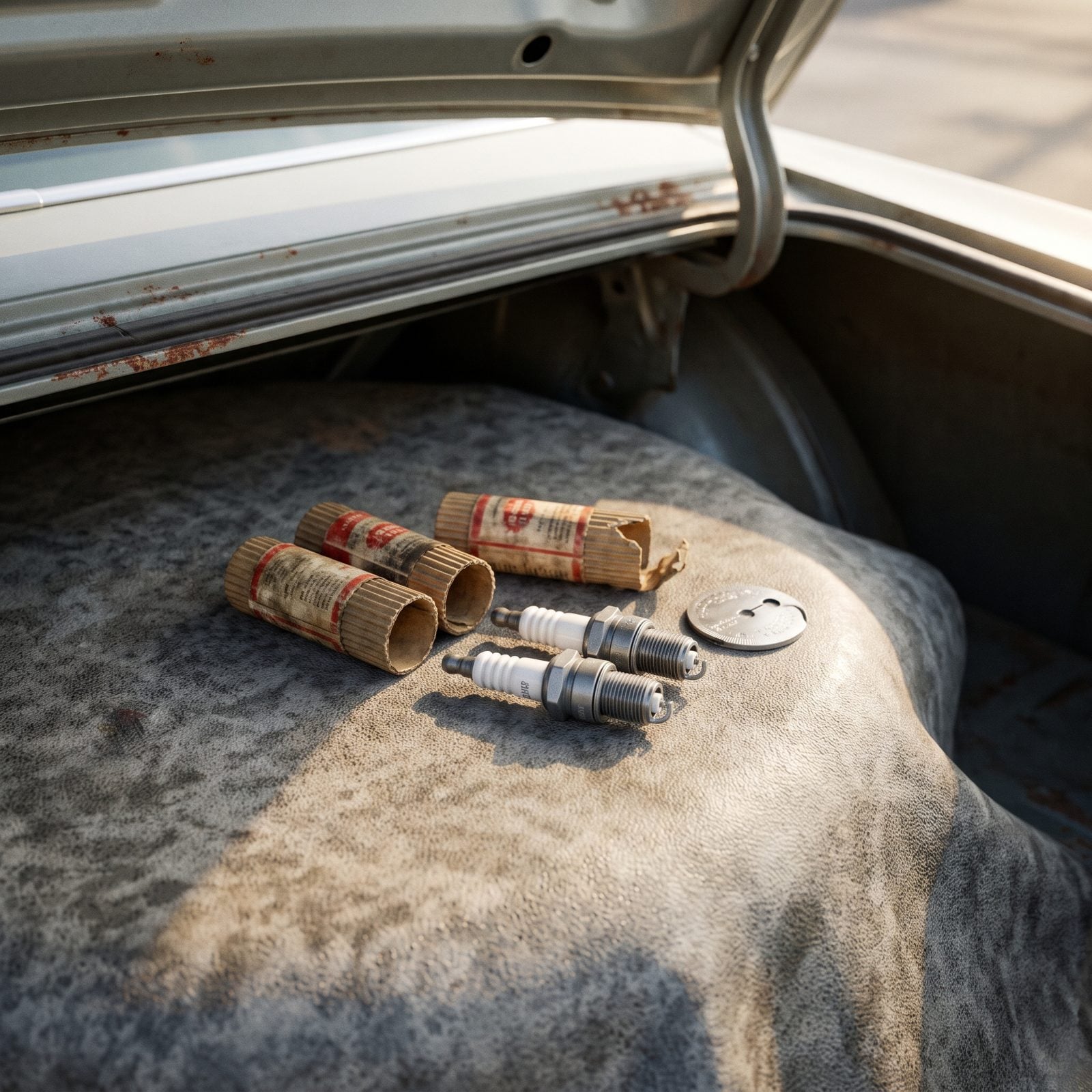
Spark plugs came one to a little corrugated cardboard tube, and once slid out they lay on the carpet with their porcelain insulators gleaming white. A spare set rode in the trunk because plugs back then fouled and wore out on a schedule you could feel. Leaded gas left deposits on the tips, and an engine with a bad plug coughed and hesitated like it had a head cold.
Changing them was the part of the tune-up even beginners could handle. You needed a plug socket with the rubber insert that gripped the porcelain, a gap tool to set the electrode, and the patience to pull one wire at a time so you didn’t scramble the firing order. Pulling an old plug and reading its color, sooty black or light tan, was how the old-timers diagnosed an engine before anybody plugged in a computer.
14. An Assortment of Glass Cartridge Fuses
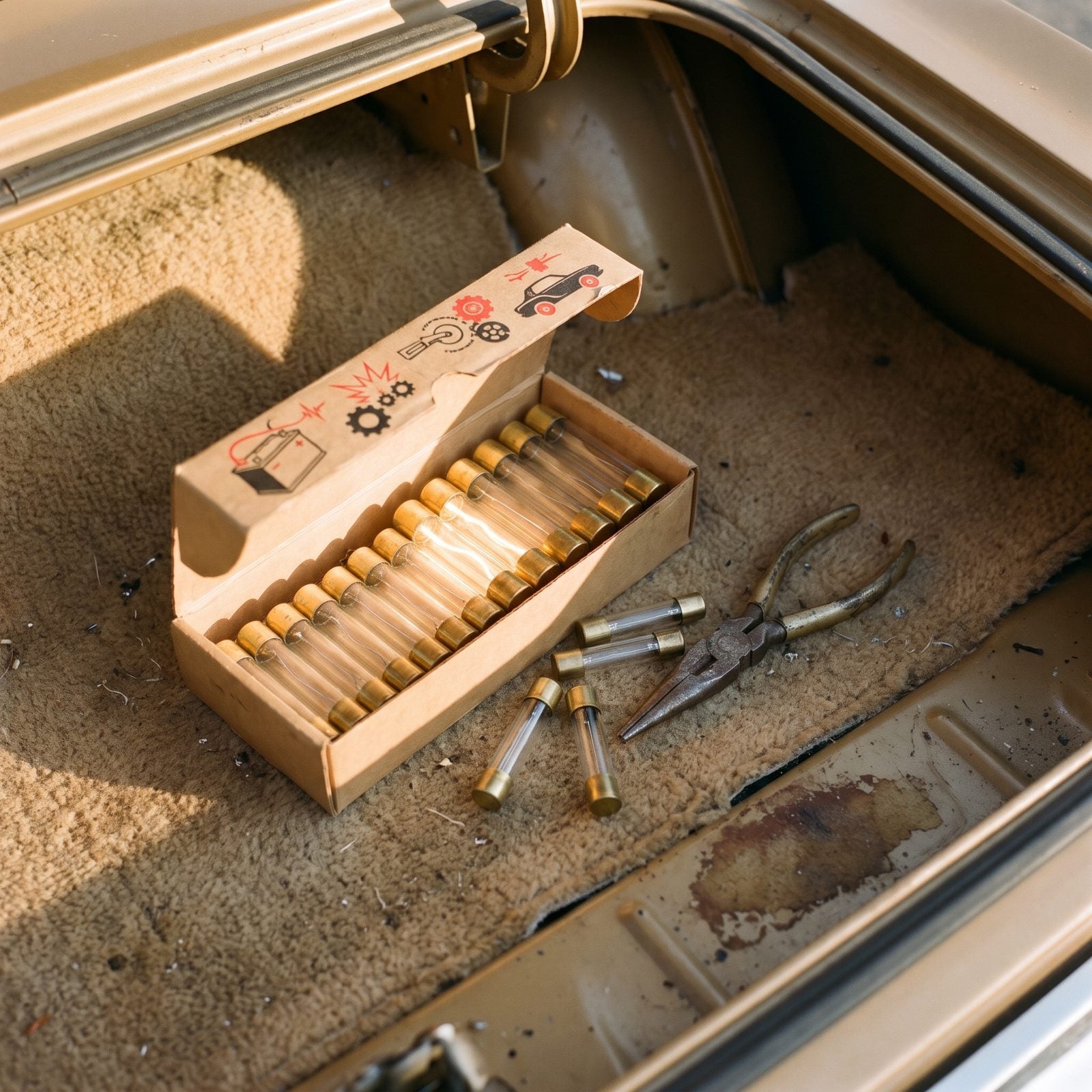
When the radio went dead or the taillights quit, the fix usually lived in a fuse block tucked up under the dash. The fuses were little glass tubes capped with metal on each end, and you could hold one up to the dome light and see the thin metal strip inside. Intact meant good. Broken or blackened meant you’d found your problem.
A small assortment of spares rode in the trunk or the glovebox, rattling around in a battered cardboard box, their plain brass caps giving no hint of the amp rating. Prying them out with a fingernail while lying upside down in the footwell was its own kind of yoga. And everybody heard about the guy who wrapped a dead fuse in gum foil to get home, a trick nobody sensible recommended, since a fuse is only there to burn out before your wiring does.
13. A Boxed Round Sealed-Beam Headlamp
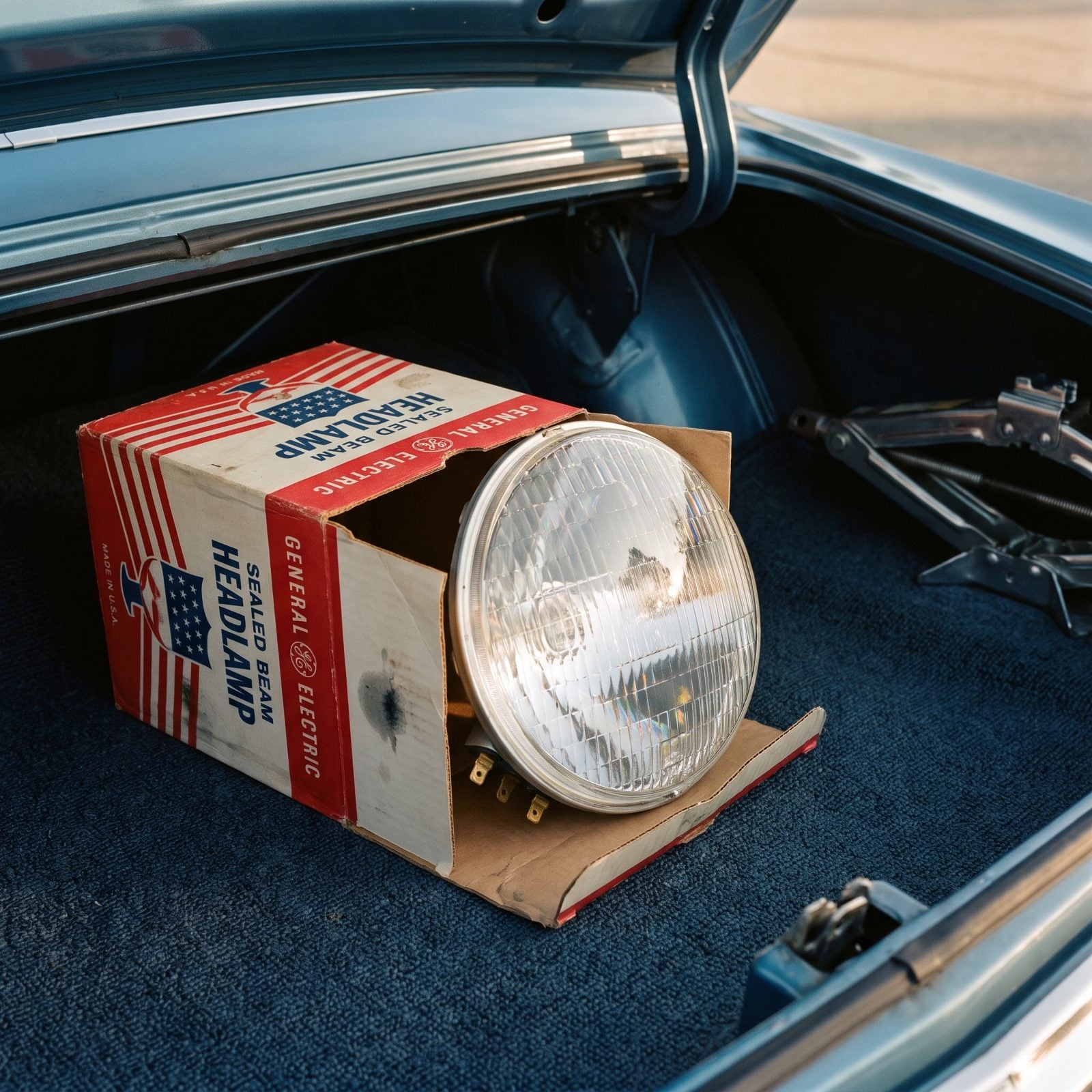
A 1970s headlight wasn’t a bulb you twisted into a housing. The whole round lamp was one sealed glass unit, lens, reflector, and filament all fused together, so when it burned out you replaced the entire thing. A spare rode in the trunk in its own cardboard box, packed snug so the glass wouldn’t shatter on the first pothole.
Swapping one meant backing out the little screws on the chrome trim ring, unplugging the three-prong connector, and pressing the new lamp into place. The adjusting screws you were told not to touch were right there too, and more than a few drivers ended up lighting the treetops after a roadside swap. Every car seemed to use the same few sizes, which is why any gas station could sell you one off the rack.
As one automotive history writer puts it, “With no serviceable parts inside, these units could not be repaired, only replaced”
12. A Spare Distributor Cap
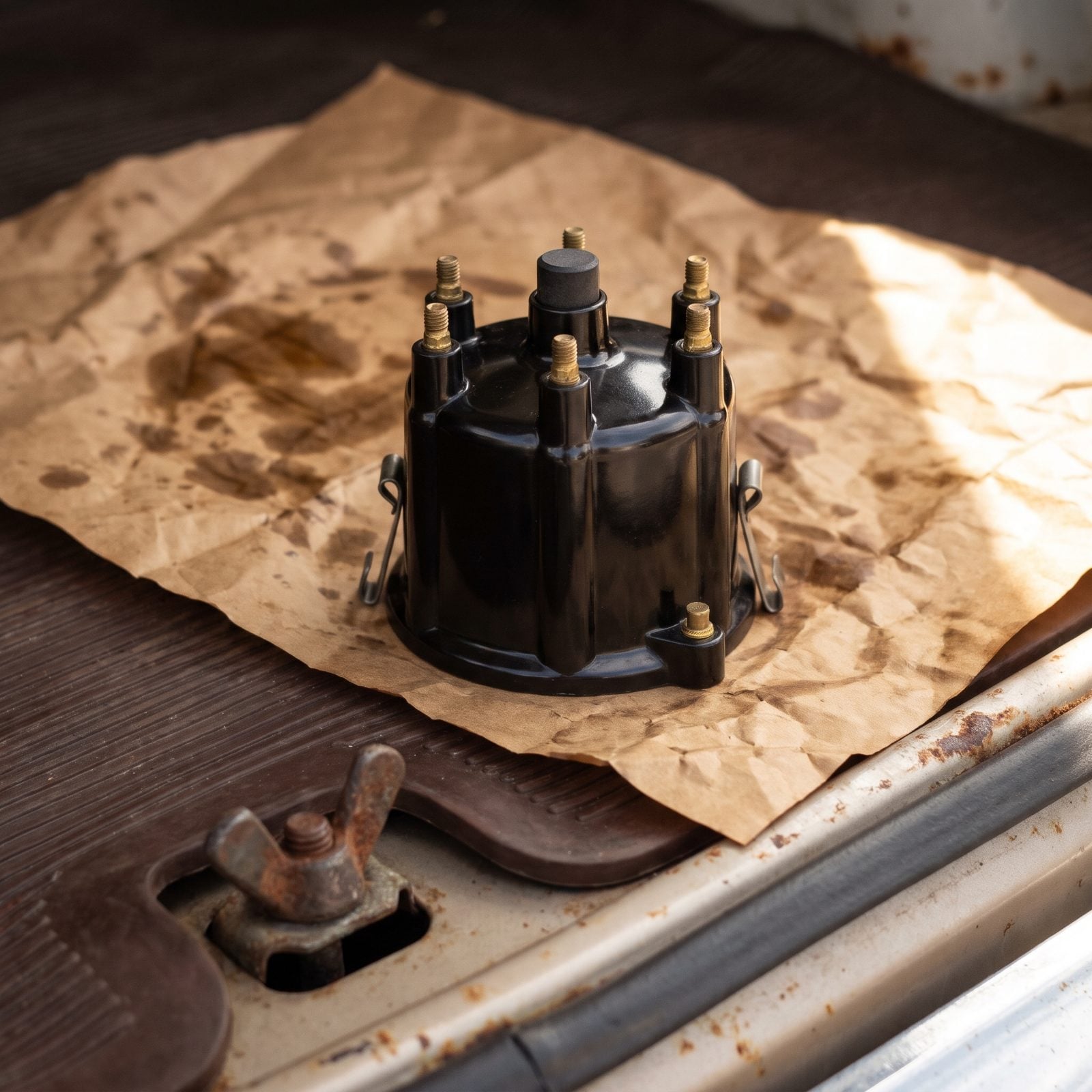
The distributor cap sat on top of the engine with the spark plug wires sprouting out of it like a crown. Inside, the spinning rotor passed current to contacts for each cylinder, and when the cap cracked, wore, or built up carbon tracks, the spark went wandering. Damp weather made it worse. More than one car refused to start on a rainy morning simply because moisture had found its way under that cap.
Drivers who’d been stranded once kept a spare. Changing it was simple if you were methodical: set the new cap next to the old one and move the wires over one at a time so the firing order stayed right. In a pinch, a quick shot of water-displacing spray under a wet cap got plenty of cars running again, which is how a lot of people first learned what that blue-and-yellow can was really for.
11. A Roll-Up Canvas Mechanic’s Tool Kit
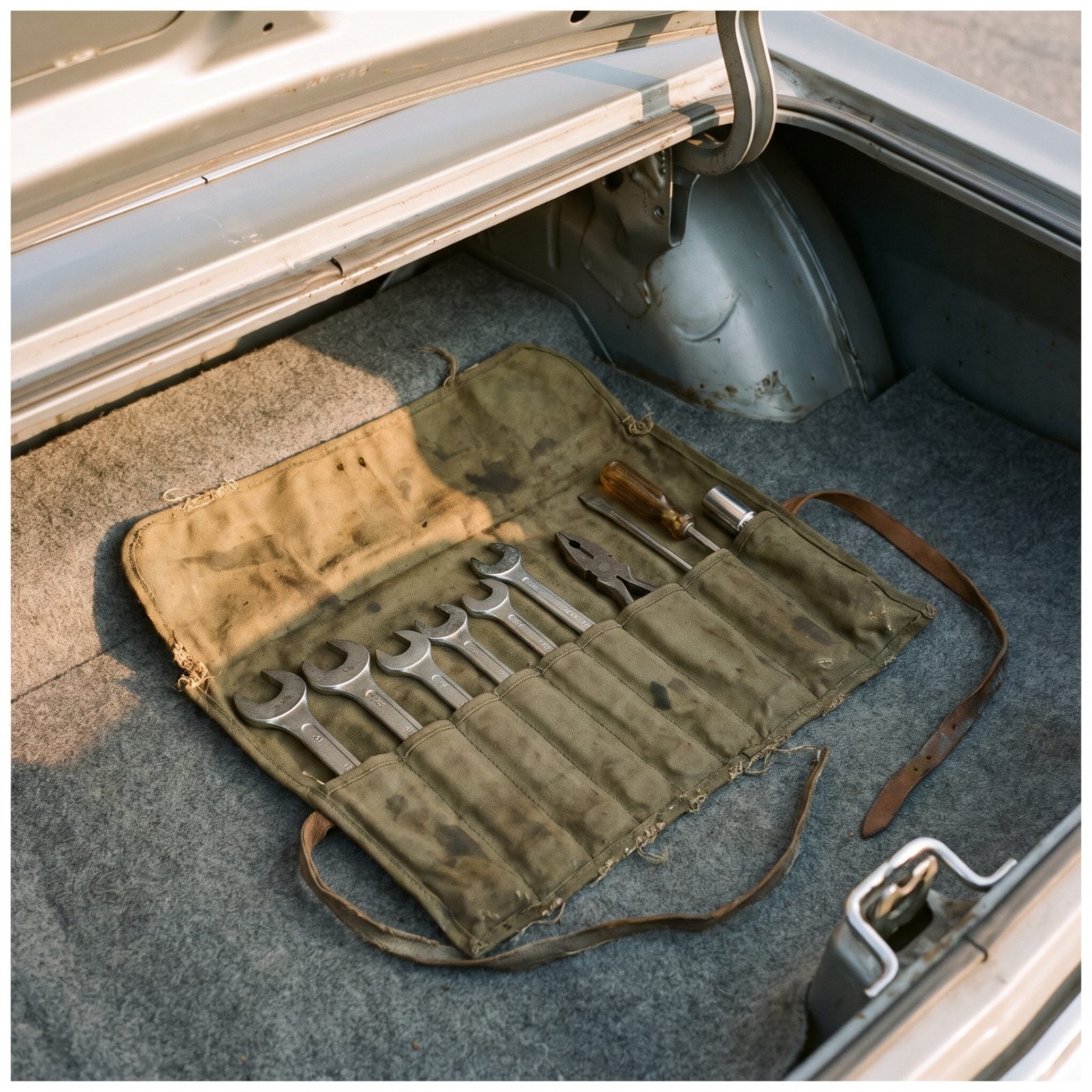
It looked like something a carpenter would carry: a heavy canvas wrap with sewn pockets, each one holding a wrench, a screwdriver, or a pair of pliers, all rolled up tight and tied with a strap. You flopped it open across the fender and every tool was right there in order, no digging through a rattling box.
Most of the wrenches were standard sizes, because American cars of the era were built that way, though imports were starting to teach everyone that metric sockets existed. The canvas got stained with oil and grease over the years until it was stiff in the corners and smelled like a garage. And when a tool went missing, the empty pocket told you about it every time you unrolled the thing.
10. A Coil of Baling Wire
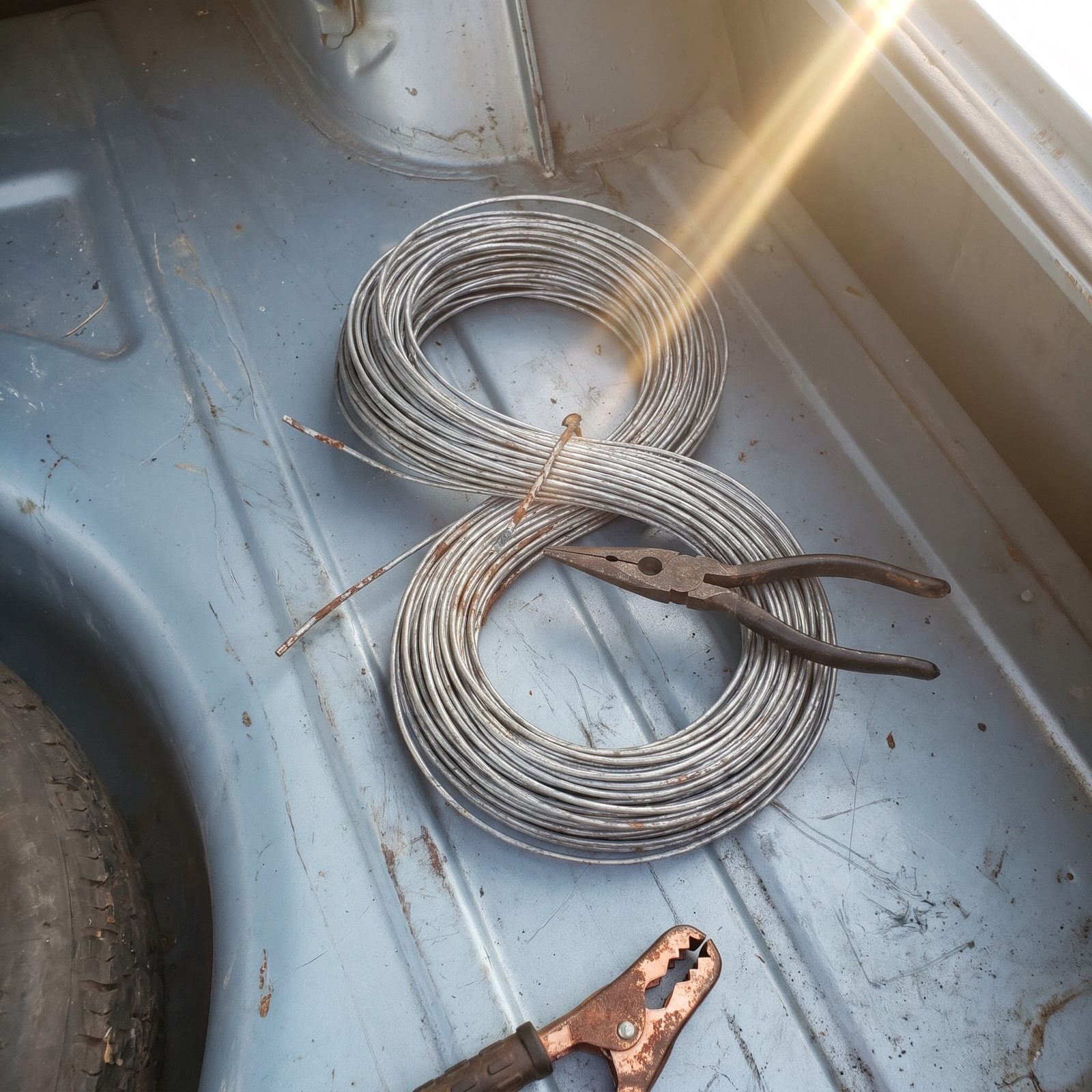
Every trunk had a loose coil of it, soft gray wire that bent by hand and held whatever you twisted it around. It came off a hay bale or out of a hardware store bin, and it fixed more cars than anybody would admit.
A rusted-out exhaust hanger meant a tailpipe dragging and sparking down the highway, and a few wraps of baling wire got you home. It held up loose mufflers, lashed down trunk lids over oversized loads, and secured a flapping heat shield. That’s where “held together with baling wire” came from, and on plenty of 1970s cars it wasn’t a figure of speech.
9. A Bundle of Greasy Shop Rags
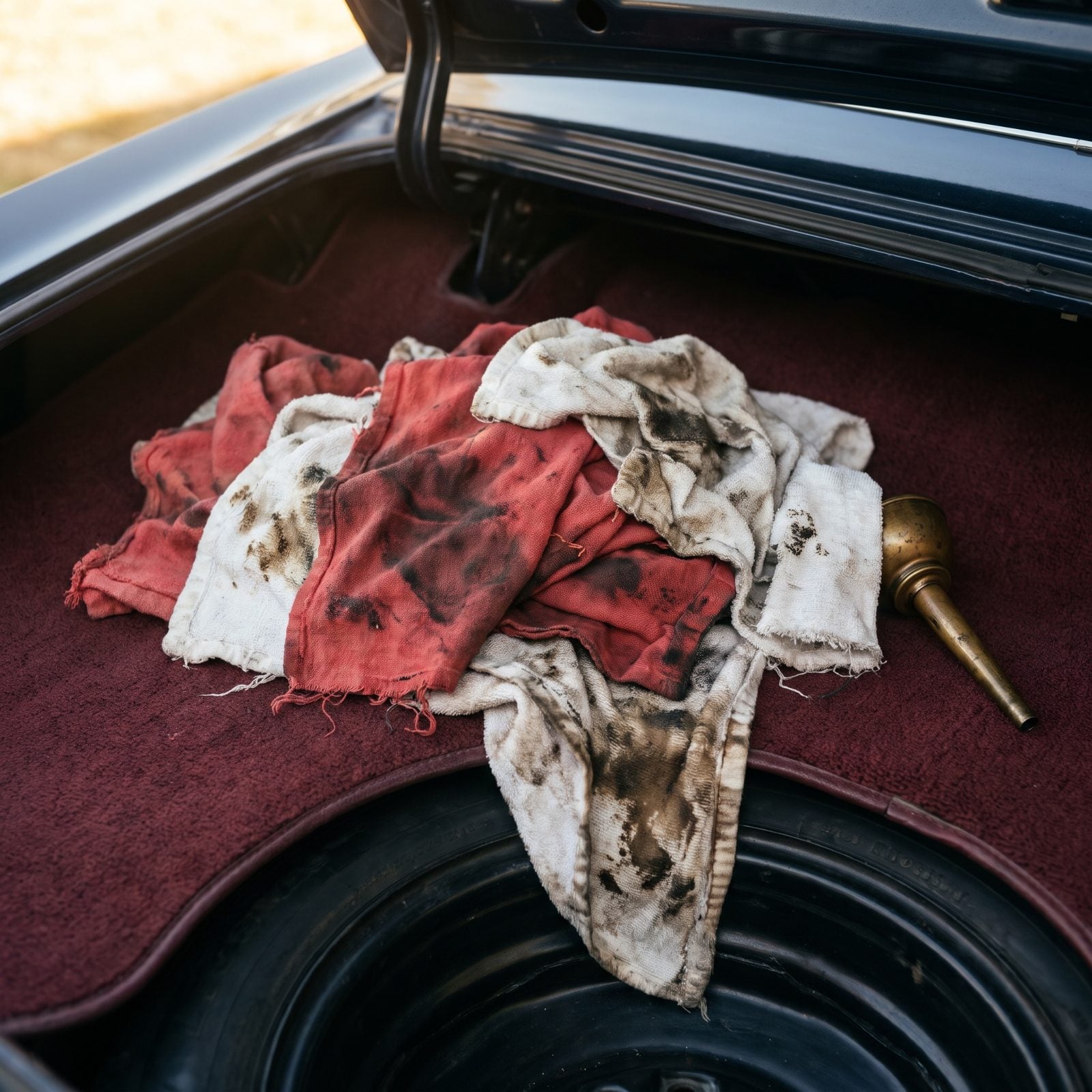
Some were real red shop towels lifted from a garage. Most were retired household goods: an old undershirt, a cut-up flannel shirt, a dish towel that had seen better days. They ended up stuffed in a corner of the trunk in a stiff, greasy wad.
You grabbed one to wipe the dipstick when you checked the oil at every fill-up, which people actually did. You grabbed another to hold a hot radiator cap or clean your hands after changing a tire. They were never washed and never thrown out, just added to, and the pile only got darker and smelled more like motor oil each year.
8. A Genuine Leather Chamois
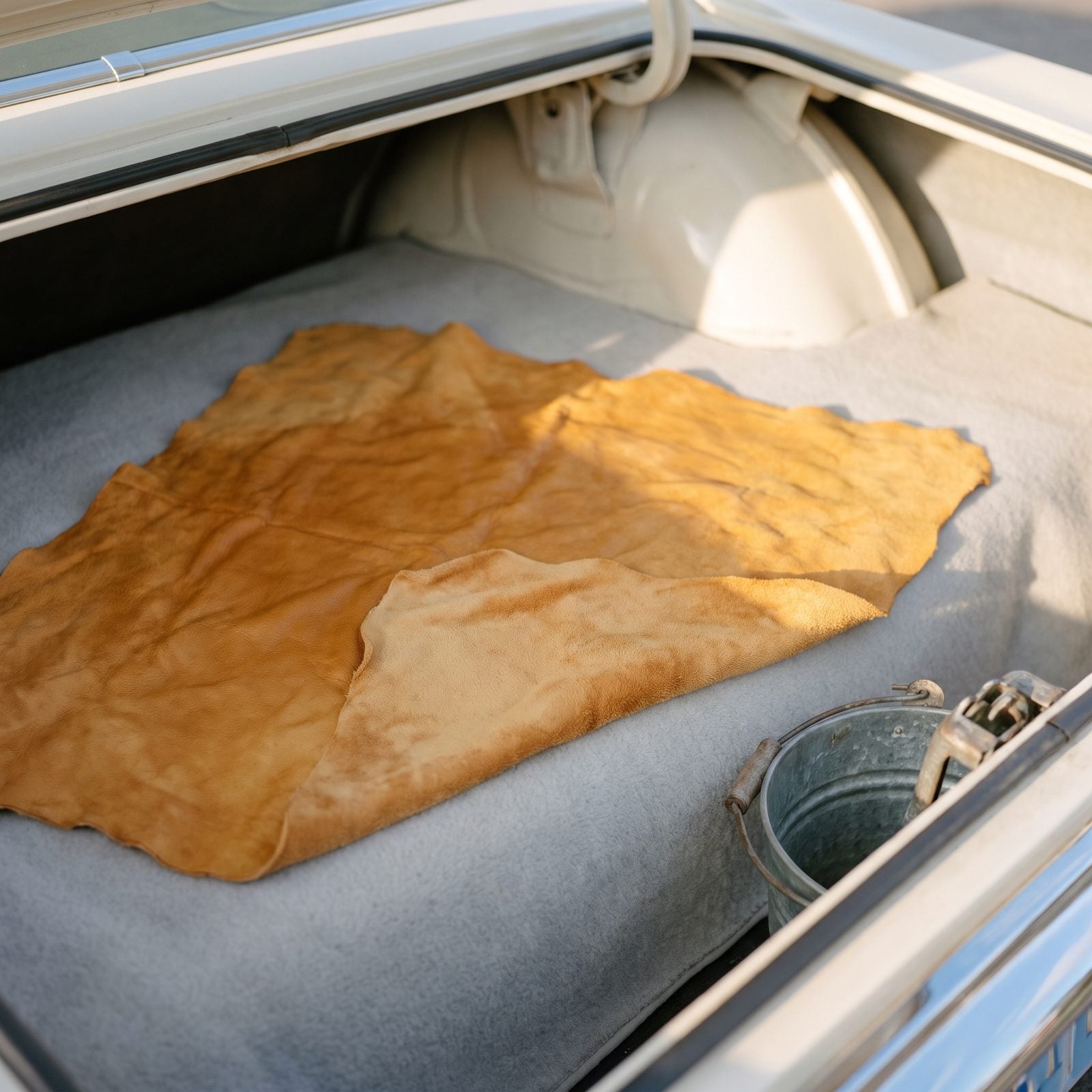
Real oil-tanned leather, soft and floppy when wet, and stiff as a sheet of cardboard if you let it dry out in the trunk. Plenty of people learned that the hard way and had to soak it in a bucket before it would bend again.
After the Saturday wash in the driveway, the chamois came out to pull the water off before it could leave spots. You wiped, wrung it out, wiped again, and the paint came up streak-free in a way a bath towel never managed. Careful owners kept theirs in a plastic tube or a coffee can so it stayed damp and ready. It was a small luxury, and a well-kept one lasted for years.
7. A Straw Car-Cleaning Whisk Broom
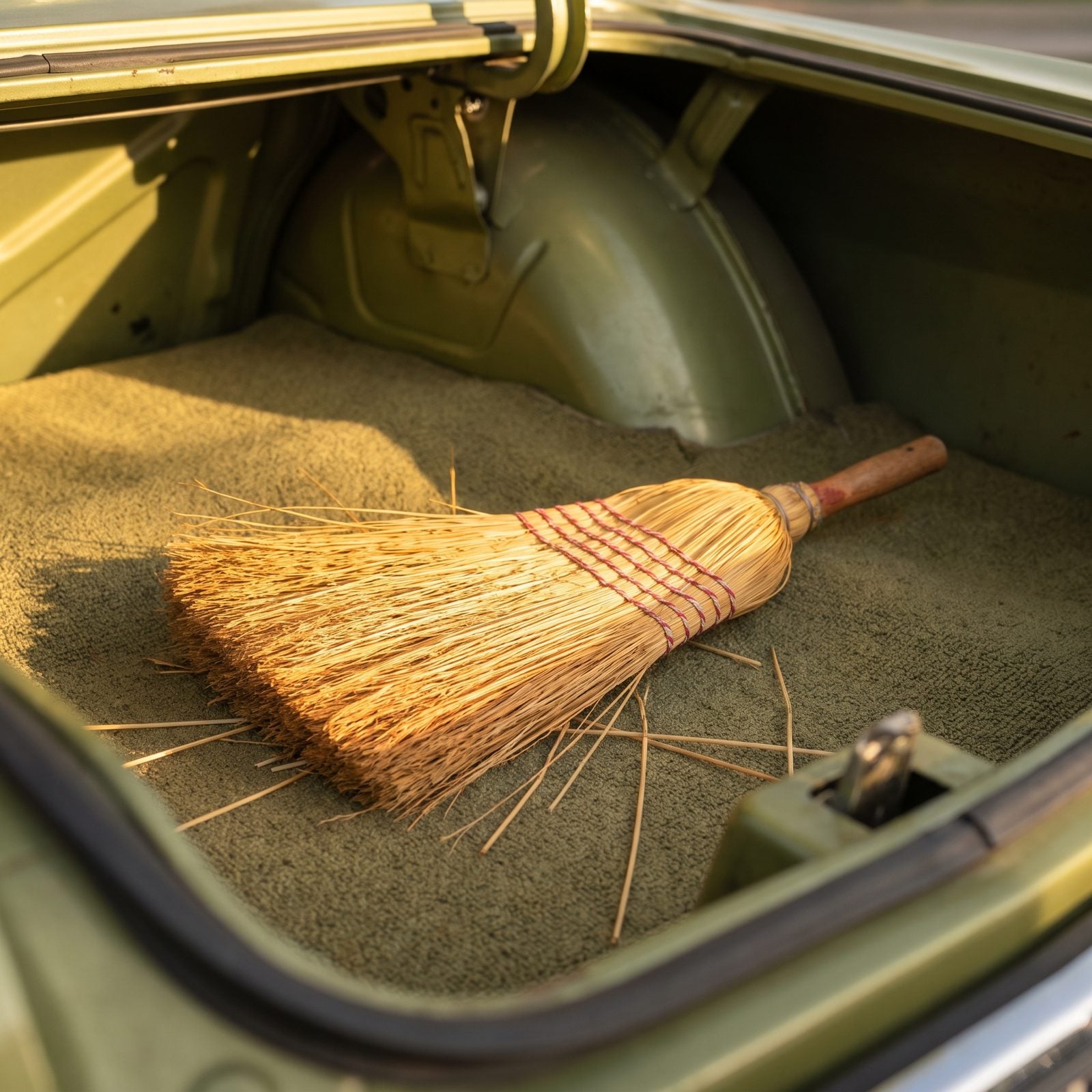
A short bundle of stiff straw bristles stitched together with colored thread, with a little loop at the end for hanging. It was the only vacuum most cars ever saw.
Carpeted floors and rubber mats picked up everything: beach sand, gravel, cracker crumbs, leaves tracked in from the yard. You pulled the mats out, slapped them against the bumper, and whisked the rest out the door opening onto the driveway. It also brushed snow off the seats when someone left a window cracked during a storm. The bristles splayed out and wore down unevenly over time, and nobody replaced one until it was practically a stub.
6. A Round Tin of Hard Paste Car Wax
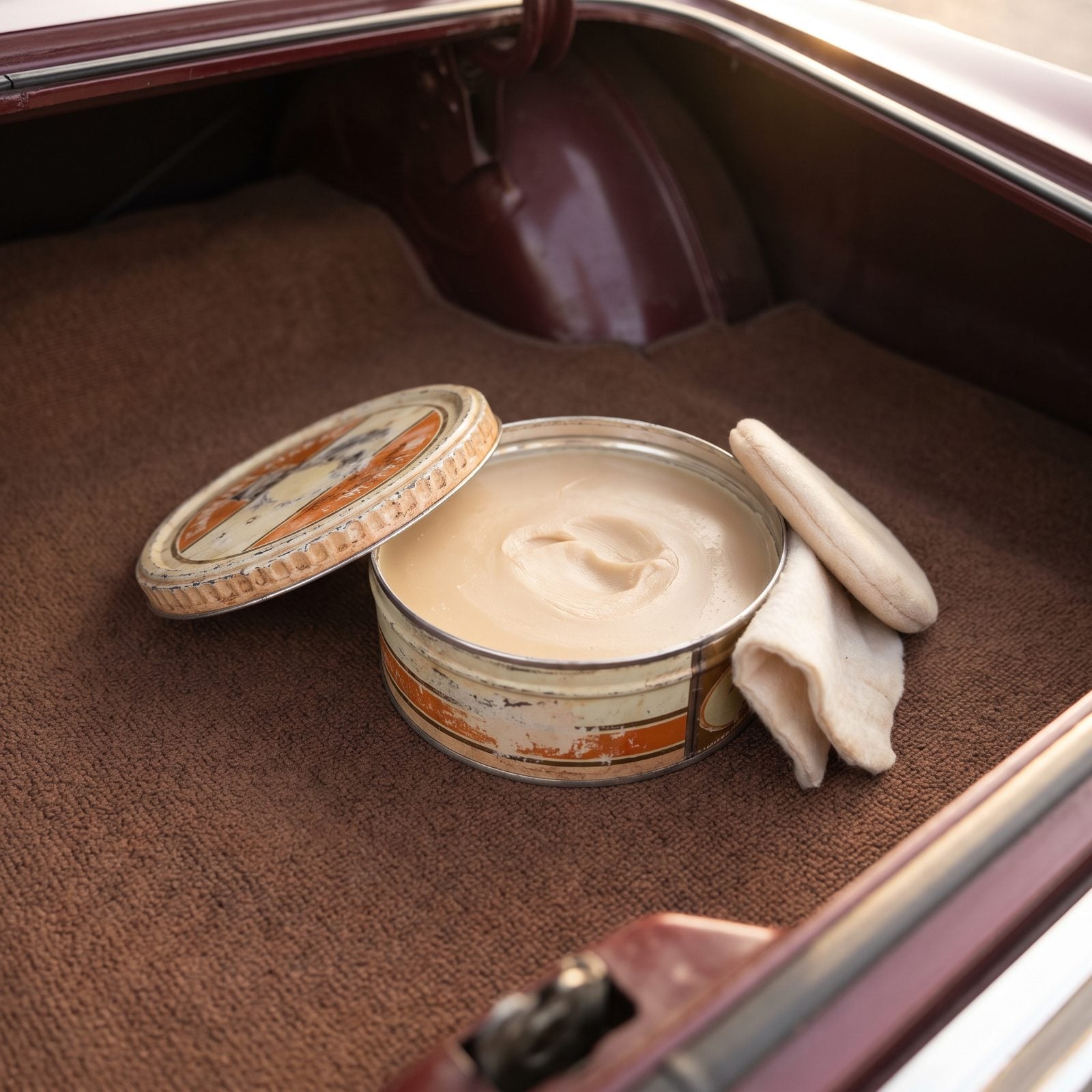
A flat round tin, a damp applicator pad, and a whole afternoon set aside. Hard paste wax took work, and that was the point. You rubbed it on in small circles, waited for it to haze over, then buffed until your arm ached and the paint looked deep enough to fall into.
The leftover white crust always ended up packed into the emblems, the trim seams, and the edges of the chrome script, where it stayed until the next wash. The tin rode around in the trunk with its lid getting harder to pry open every year. Single-stage paint of the era really did fade and chalk without it, so waxing was upkeep, not vanity.
5. A Bottle of Chrome Polish
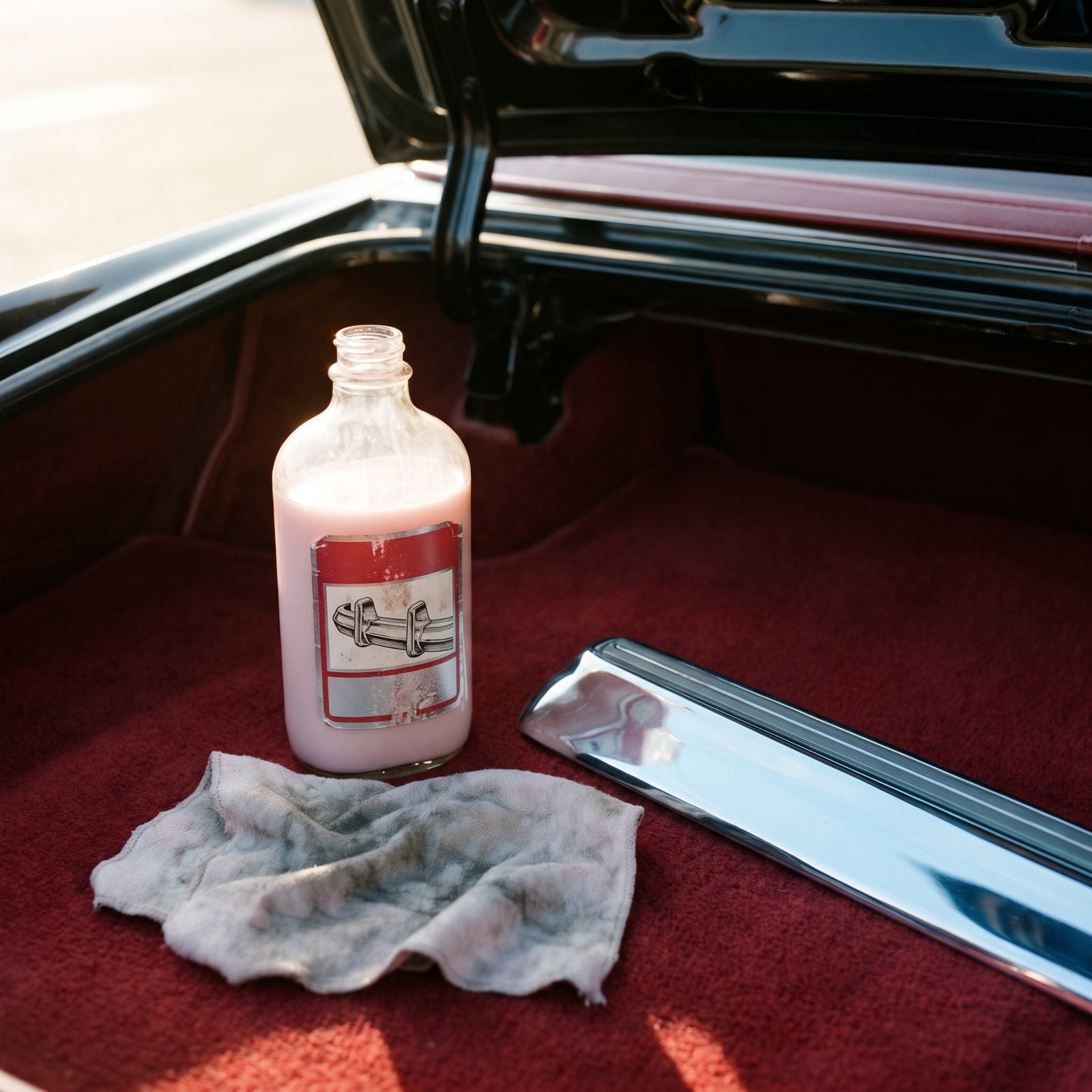
A 1970s car carried a lot of chrome, from big bumpers to grille bars, wheel trim, mirror housings, and door handles. Road salt and rain went after all of it, and the little orange freckles of rust showed up every spring.
A bottle of chrome polish and a rag brought most of it back. Hard cases got the old trick of crumpled aluminum foil dipped in water, scrubbed over the pitting until the shine returned. The bottle usually had a crusty cap and a drip stain down one side. As bumpers moved to painted plastic covers over the following decade, the chrome polish bottle mostly disappeared from trunks along with the bumpers it was meant for.
All that chrome still wins people over: our readers gave photos of cars with lots of chrome more hearts than the other images in the same articles, 82% versus 75%.
4. Free Service-Station Road Maps
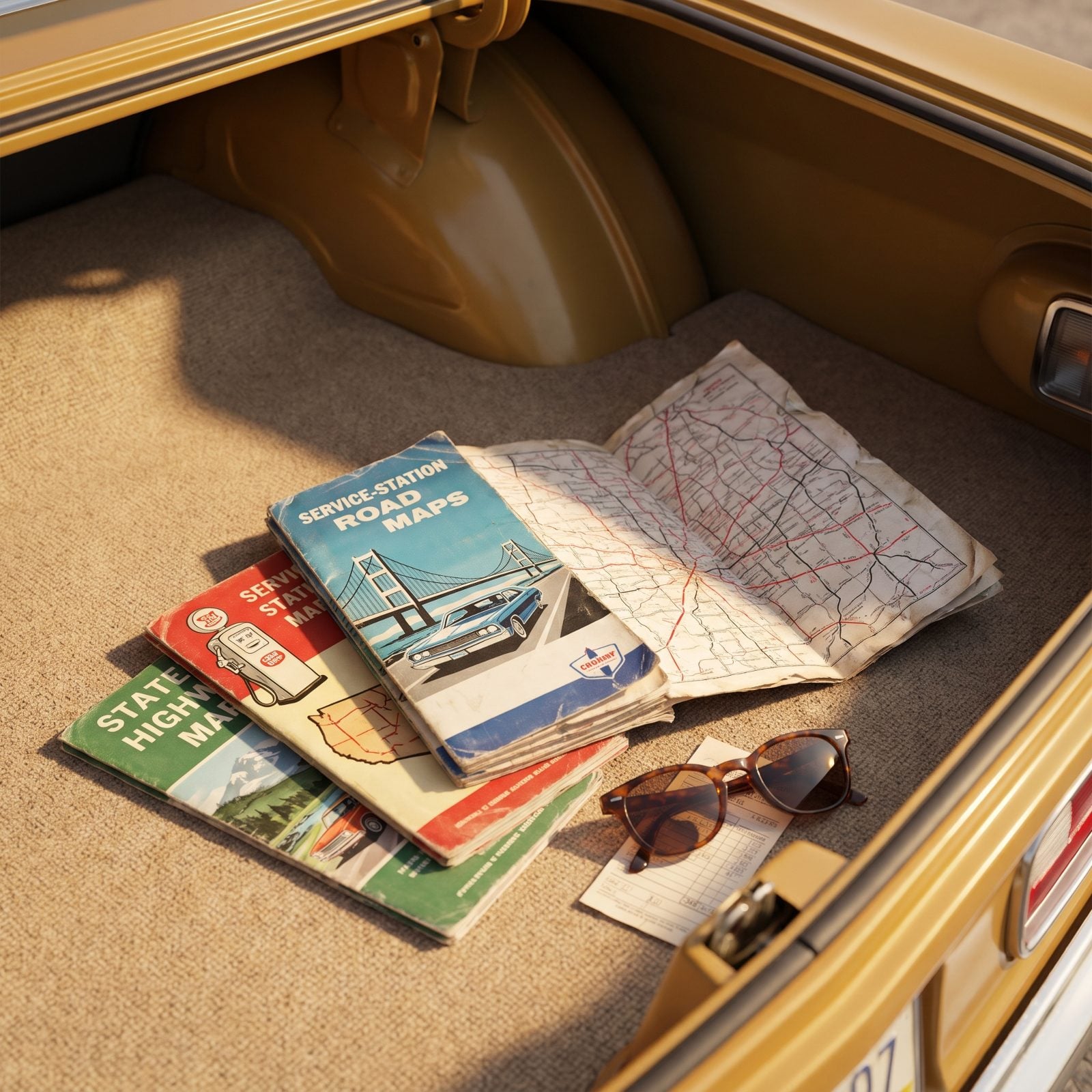
You pulled in for gas, and a rack by the door was filled with fresh state maps carrying the station’s logo. They were free. You took one for every state on the trip and a couple more for the neighbors.
They were big folded sheets that never went back along the original creases, so the trunk and glovebox were full of fat, dog-eared wads with split folds. Coffee rings, pencil routes, and a torn crease where Ohio used to be. They were outdated within a few years and nobody threw one away.
3. Brown Paper Grocery Sacks Folded Flat Under the Mat
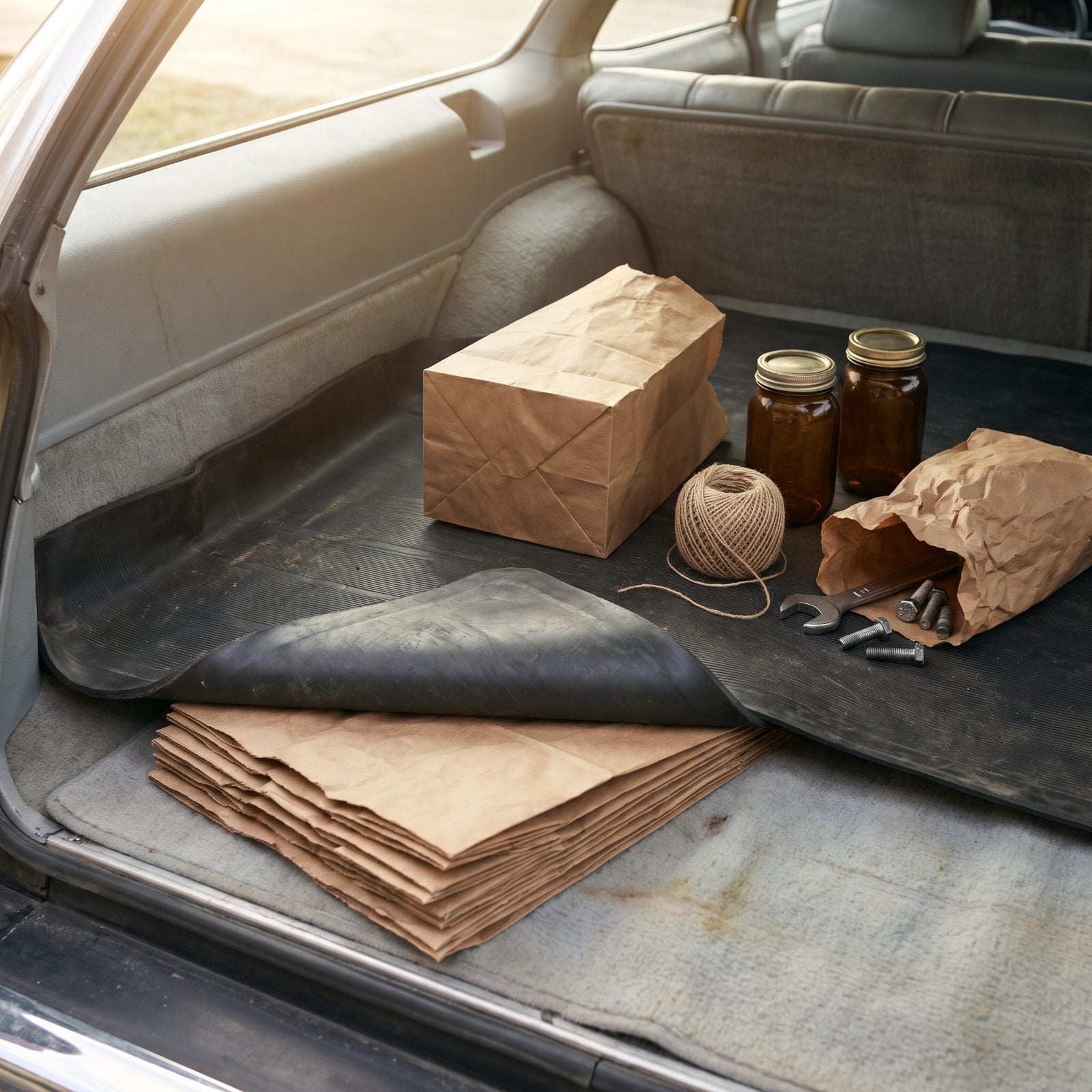
Plastic grocery bags barely existed yet, so the brown paper sack did everything. You carried groceries home in it, then it lived in the trunk folded flat, waiting for its second life — oil leaks soaked up by one, muddy boots stuffed in another, a birthday gift wrapped in the clean inside of a cut-open third.
They were plain flat-bottom sacks with no handles — you hugged them to your chest or gripped the folded top. The flimsy bags that came later never felt that solid. A good sturdy sack felt like something worth keeping, and most households kept a drawer of them at home and a few spares riding around in the car. Nobody thought twice about it — it was just how you did things, same as returning your milk bottles or saving rubber bands around the doorknob.
2. The Wooden Case of Returnable Soda Bottles Rattling in Back
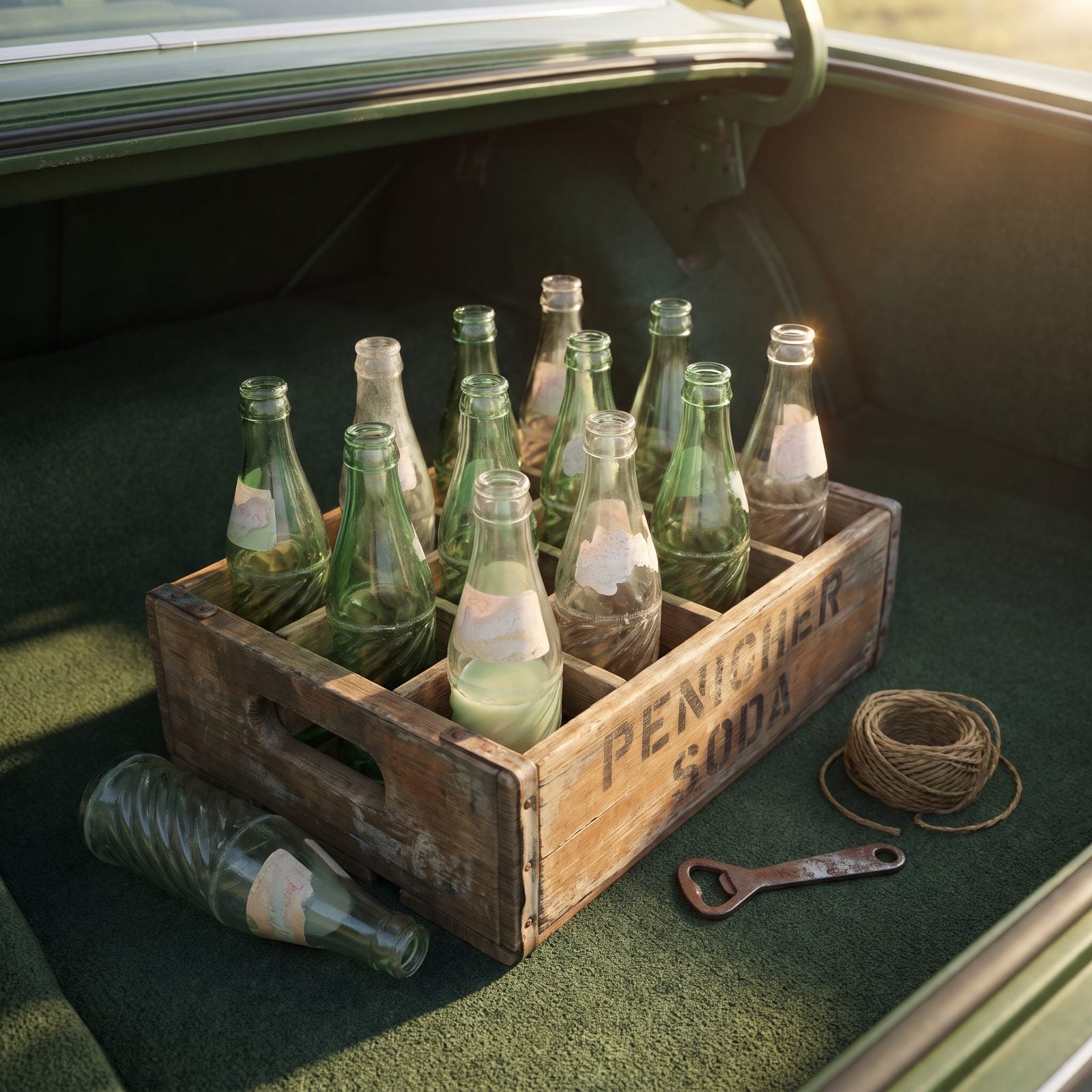
That rattle you heard pulling into the driveway was the deposit money talking. Glass soda bottles came with a few cents riding on each one, so you didn’t throw them out — you drove them back. The wooden crate held them upright in their slots so they wouldn’t shatter against each other on the way to the store.
Kids learned real fast that a full case of empties was worth a candy bar at the counter. You’d scrounge the trunk, the garage, the roadside ditch out front. The grocer took them back, handed over the coins, and shipped the bottles off to be washed and refilled for the next round.
1. The Steel-Bodied Picnic Cooler That Weighed a Ton Full
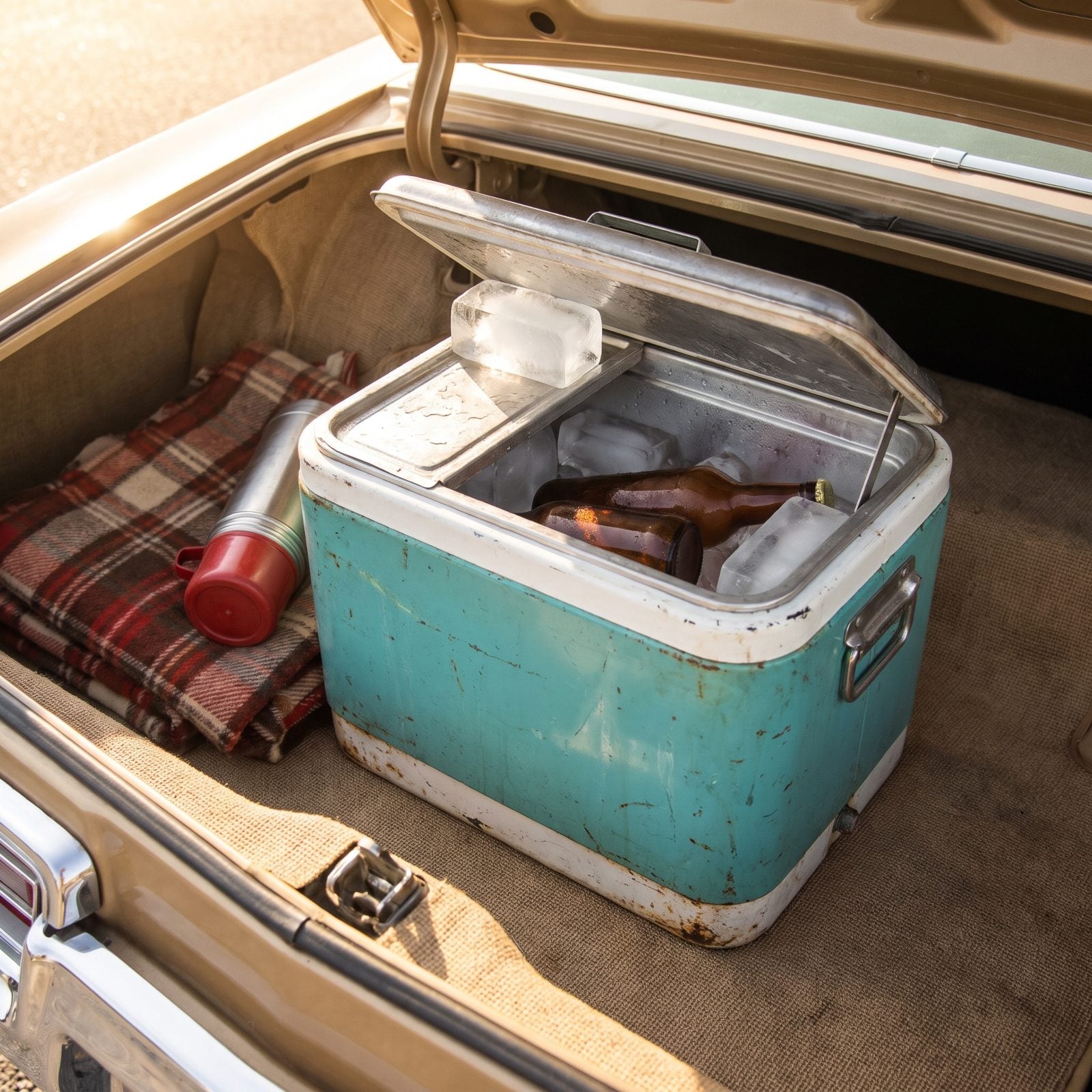
This thing was built like a toolbox and chilled like a meat locker. The steel-bodied cooler — usually turquoise or avocado enamel with a chrome latch — lived in the trunk from Memorial Day to Labor Day and came out heavy enough to throw off the car’s balance.
You packed it with a heap of ice cubes around the bottles, and if you loaded it right, the ice would last the whole drive to the lake and half the way home. The lid doubled as a seat. And that latch pinched your fingers at least once a summer, guaranteed.
Nobody replaced these because nobody could break them. The enamel chipped and the paint faded to a soft powdery turquoise, but the thing just kept working, drive after drive, decade after decade. Try saying that about the cheap foam coolers that came along to replace it — most of them cracked by the second August.