
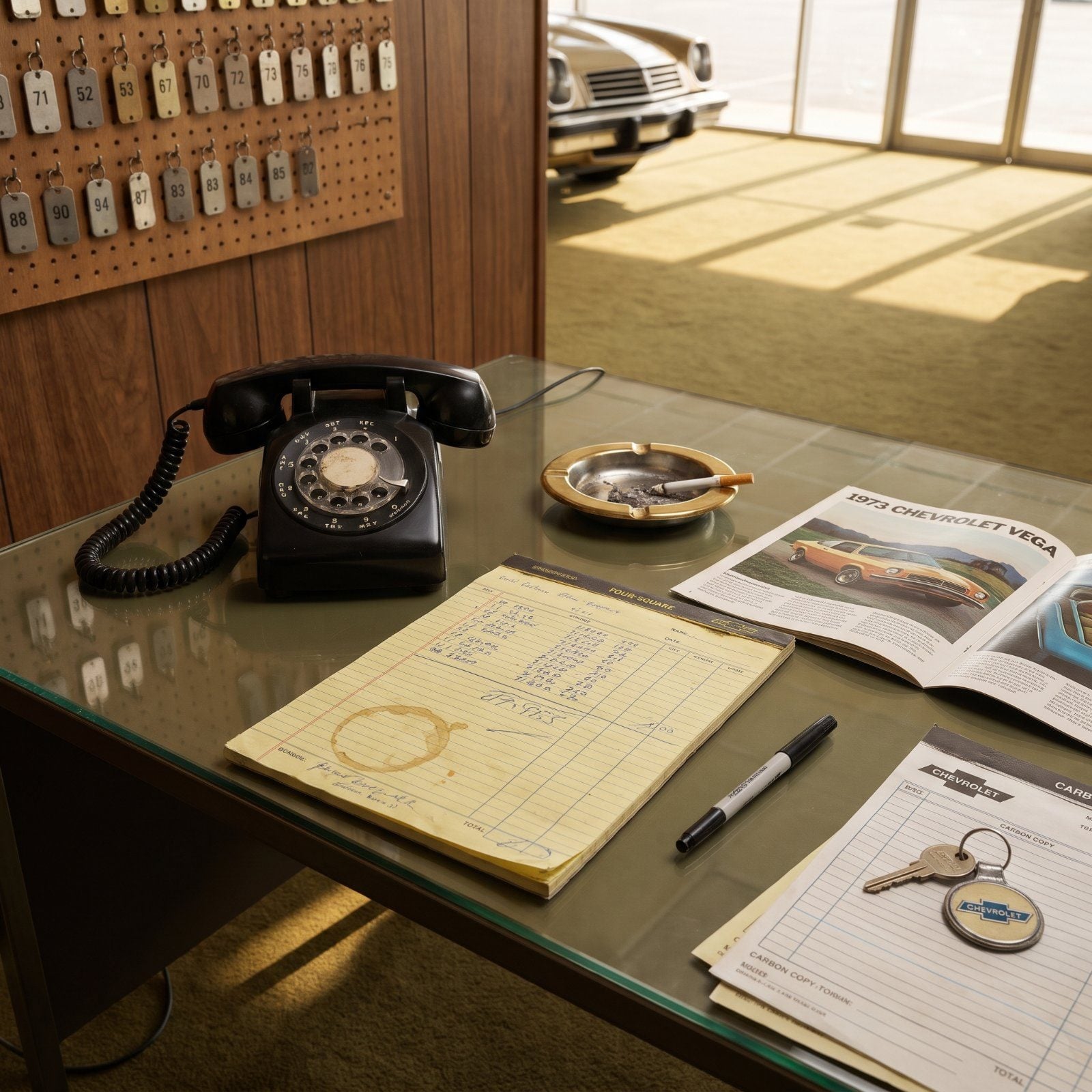
The coffee was burnt by noon and nobody minded. A salesman in a plaid sport coat waved you toward a vinyl chair, a rotary phone rang somewhere behind the glass, and the keyboard by the door jingled with tags for every Nova and Impala on the lot. It felt friendly. Some of it was.
Please note that some of the images in this article were created with the assistance of AI.
And some of it was choreography, worked out long before you ever walked in. The moves below separated the fair deal from the one you’d grind your teeth over for the next three years.
33. The One-at-That-Price Vega in the Newspaper Ad
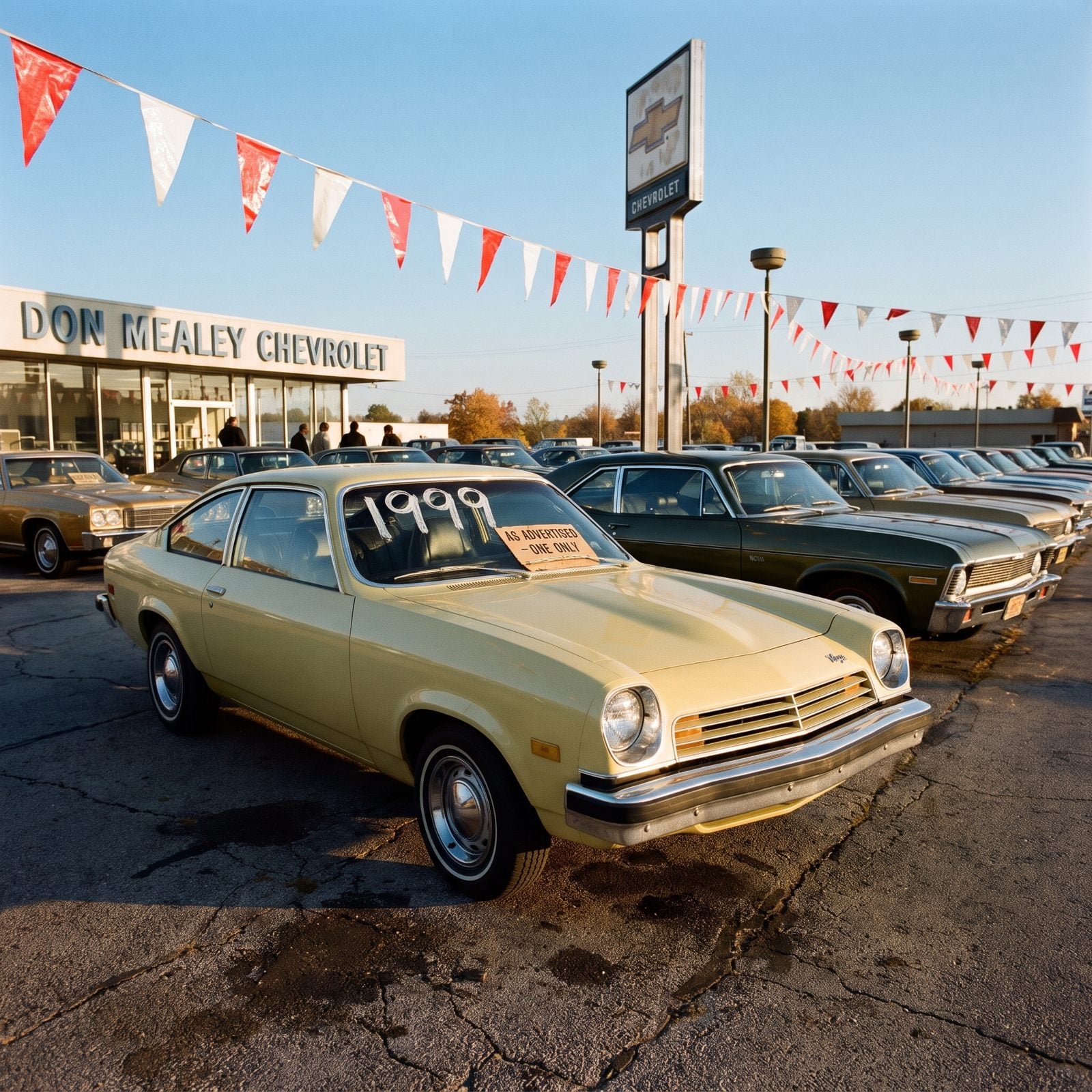
The Sunday-paper ad showed a Vega for a number so low it looked like a typo, way under anything else in town, and you circled it with a pen and drove over before church let out.
There was exactly one at that price. Stripped to the studs, a stick with no radio, hand-cranked everything, and often already sold or never really there. The whole point was to get your station wagon onto the lot. Once you stood on the asphalt, the salesman walked you right past the bait and toward the loaded Nova that carried the real markup.
32. Working You Through the Four-Square Shuffle

Four boxes on one sheet of paper. Sale price, trade value, down payment, monthly payment. The salesman kept your eyes bouncing between them like a shell game at a county fair.
Knock the monthly down, and he quietly stretched the term or shaved the trade. Win on the trade, and the price crept back up. Every box fed the other three, and only one person at that desk could see all four at once. It wasn’t you.
The trick wasn’t any single number. It was never letting you hold more than one of them in your head at a time.
31. Padding the Trade Allowance, Then Burying It in the Sticker
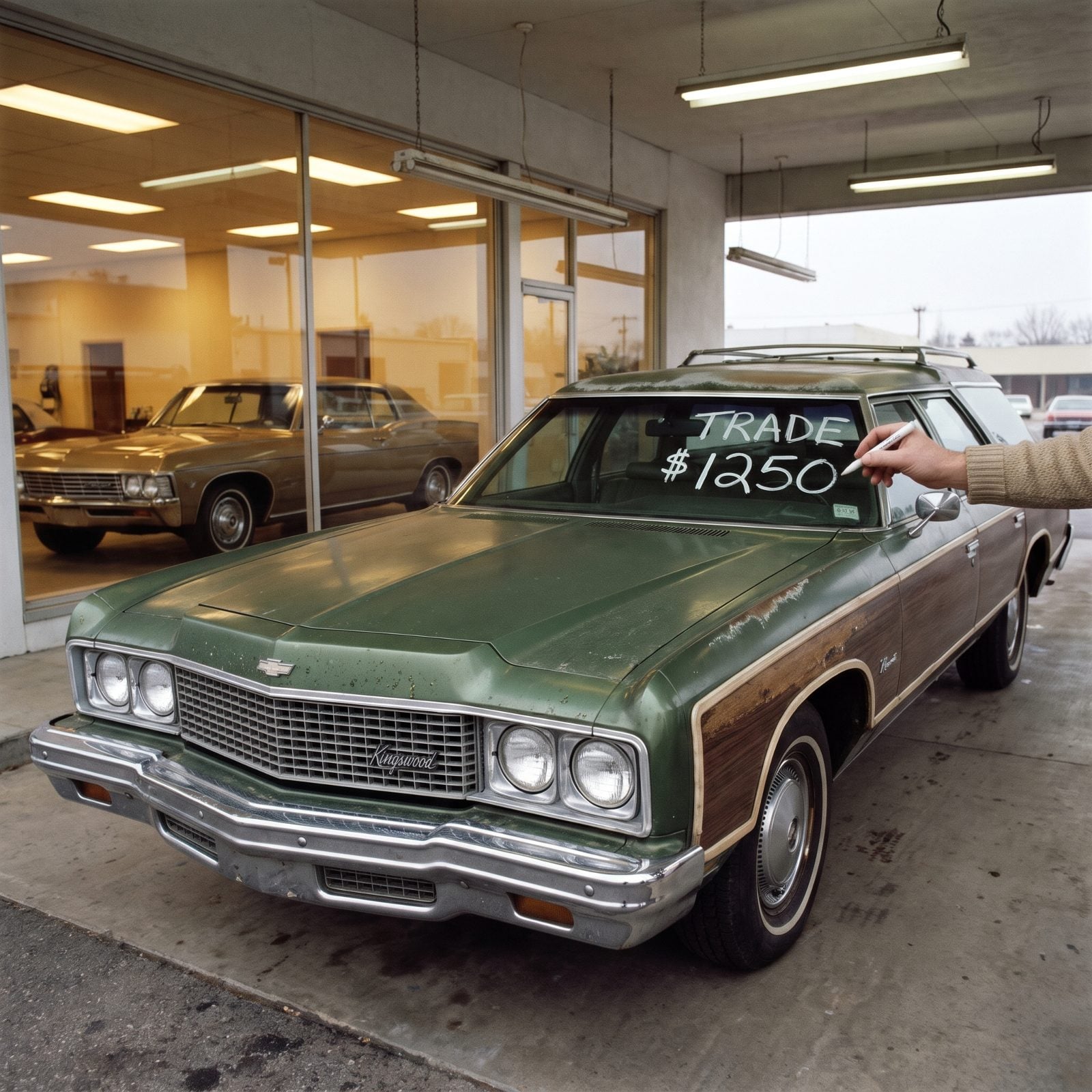
You wanted top dollar for the old wagon, and suddenly you got it. More than you dreamed. You drove home feeling like the sharpest trader in the county.
What nobody mentioned: the price of the car you were buying had quietly swelled by the same amount, sometimes more. That generous “over-allowance” was a gift you’d paid for yourself. It let the salesman brag about the trade while the real profit sat hidden in a sticker you never studied half as hard as you studied the trade number.
30. Holding Your Trade-In Keys Just Out of Reach

You handed over your keys so they could “appraise the trade.” Routine enough. Then the deal stalled, and somehow the keys never came back.
They were on the manager’s desk, or lost, or with the appraiser who’d stepped out for lunch. The message underneath was simple: you couldn’t leave without your car, and your car was now a hostage to the conversation. A gentle, polite kind of trapped.
What beat it was boring and ironclad. Don’t surrender the only set. Keep a spare in your pocket, or make them appraise the thing with you standing right beside it.
29. The Long Walk to the Sales Manager, Performed for Your Benefit
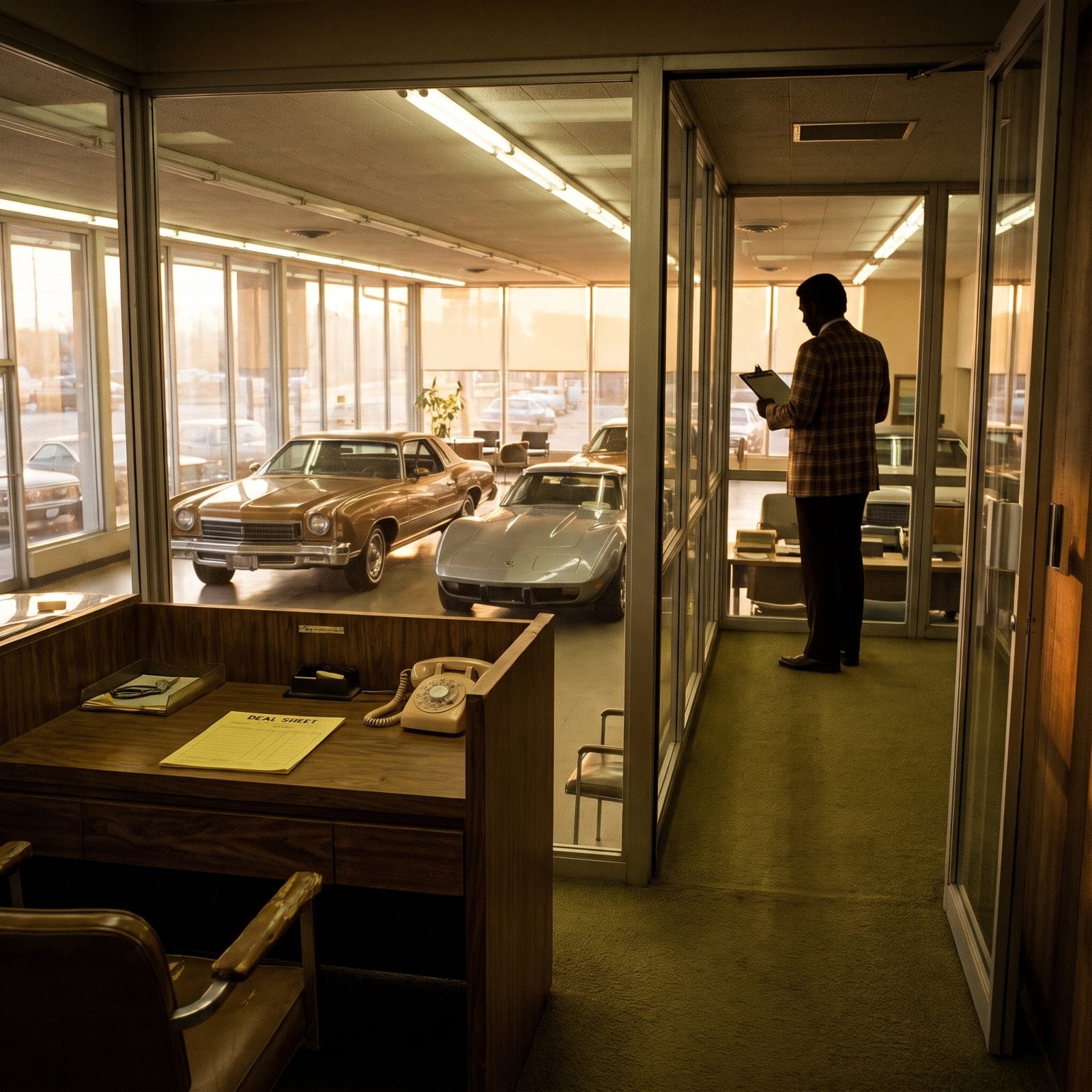
He always had to “check with the boss.” Off he went, up to the glass-walled tower above the floor, your offer in hand, leaving you to stew in the vinyl chair with coffee gone cold.
Sometimes he was genuinely checking. More often he was stretching his legs, lighting a cigarette, letting the clock do the heavy lifting. That wait softened you up. By the time he came back with a sad face and a “best we can do,” you were tired enough to take it. The manager was half a real person and half a character in a play staged just for you.
28. The Other Buyer Who Wanted the Exact Same Car
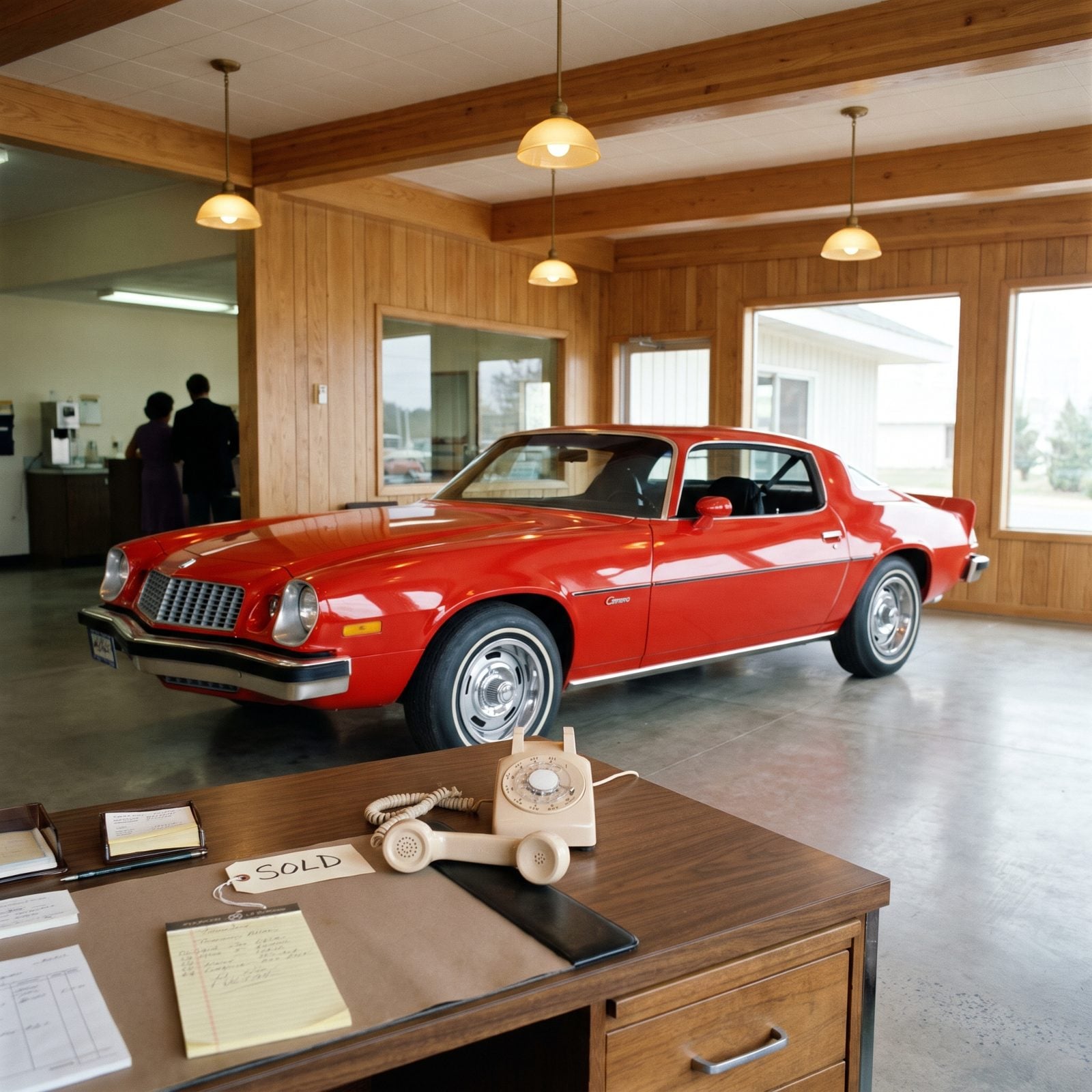
Right as you hesitated over the red Camaro, the phone rang. Or the salesman’s eyes flicked to a couple across the floor. “Funny thing, there’s another party real interested in this exact one. I’d hate for you to miss it.”
Maybe true. Usually invented. The phantom buyer existed to turn your careful deliberation into a race, because scarcity does strange things to a person. The moment you believe someone else wants the thing, you stop deciding whether you want it and start deciding whether you can bear to lose it.
What Our Readers Say
- When Jalopy Talk readers loved a car photo and told us why, “nostalgic” was the top reason at 27%, ahead of body style and “would drive.”
- In our reader votes, red and burgundy cars got hearts 80% of the time, compared with 72% for the other images in the same articles.
From Jalopy Talk reader polls and votes.
27. Selling the Chevy You Factory-Ordered to Somebody Else
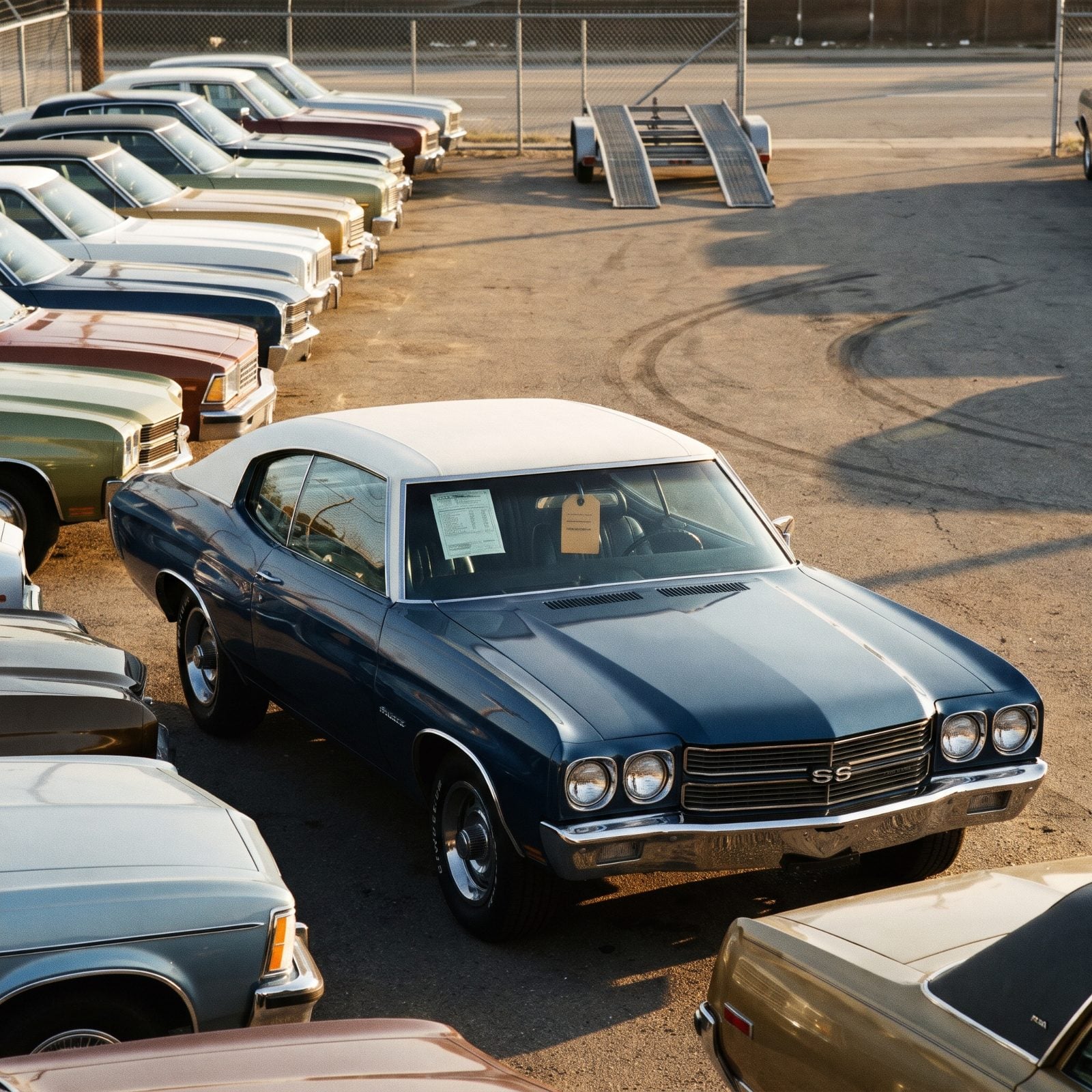
You ordered it the way you wanted it. Blue with the white top, the 350, the specific trim, weeks of waiting, a deposit down, your name on the order sheet.
Then it arrived. And a cash buyer or a quicker-closing deal walked in that same afternoon, and your car left the lot on somebody else’s plates. “Must’ve been a mix-up at the factory,” they’d say, offering to order another. Another long wait, and no guarantee the second one wouldn’t vanish too.
26. Pushing You to Take the Chevy Missing Half Your Options
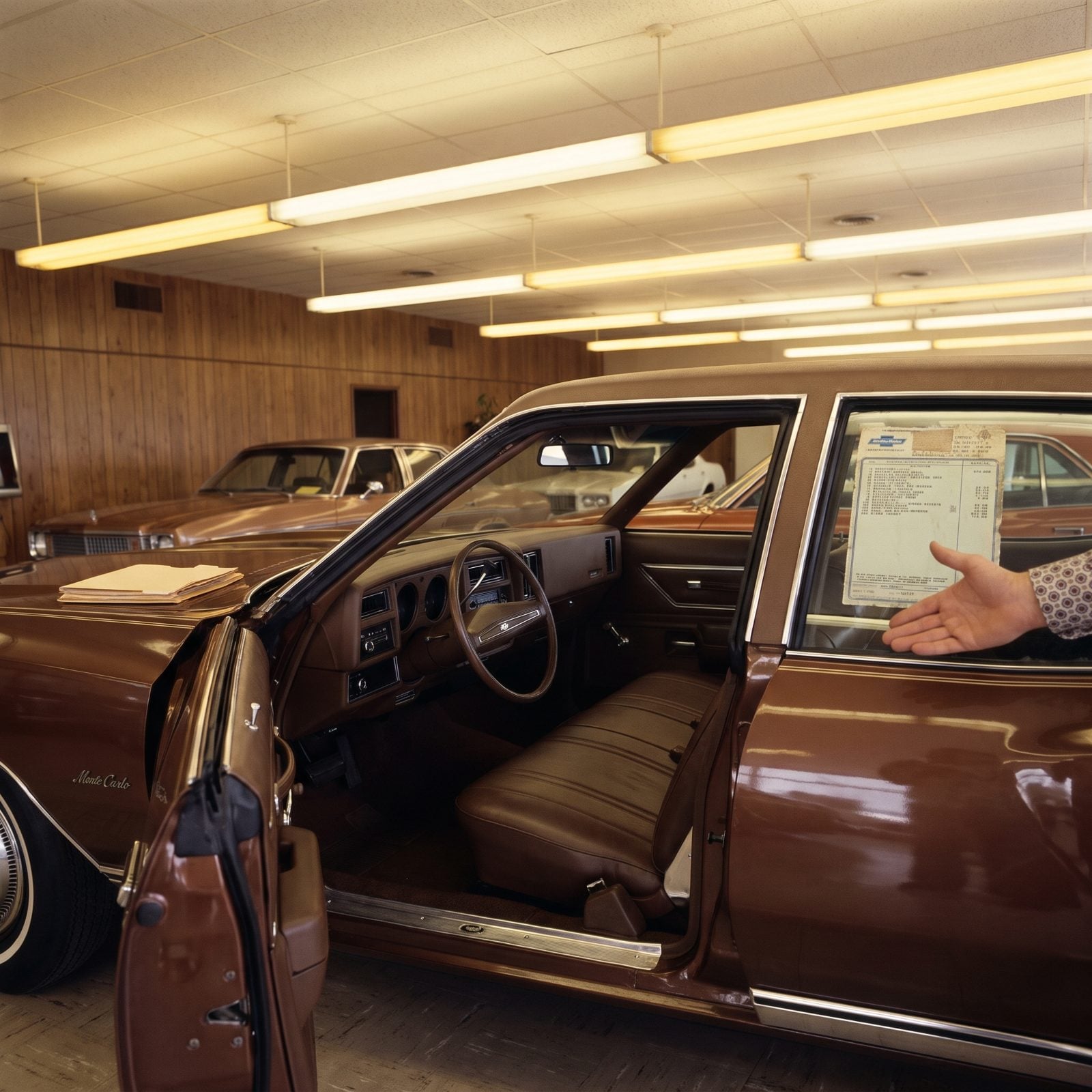
The car that showed up wasn’t the car you ordered. No air conditioning, wrong interior, and the radio sitting in the dash wasn’t the one you’d specifically asked for.
Instead of fixing it, the pitch pivoted. “You’ve waited this long, and honestly, who needs factory air with four windows? I can knock a little off.” The discount sounded generous. It rarely covered what the missing options were actually worth, and now you owned a compromise you never chose.
I’ll say the quiet part out loud. A small price break on a car short a couple hundred dollars of equipment isn’t a favor. It’s a markup wearing a smile.
25. Passing Off Last Year’s Leftover as the Current Model
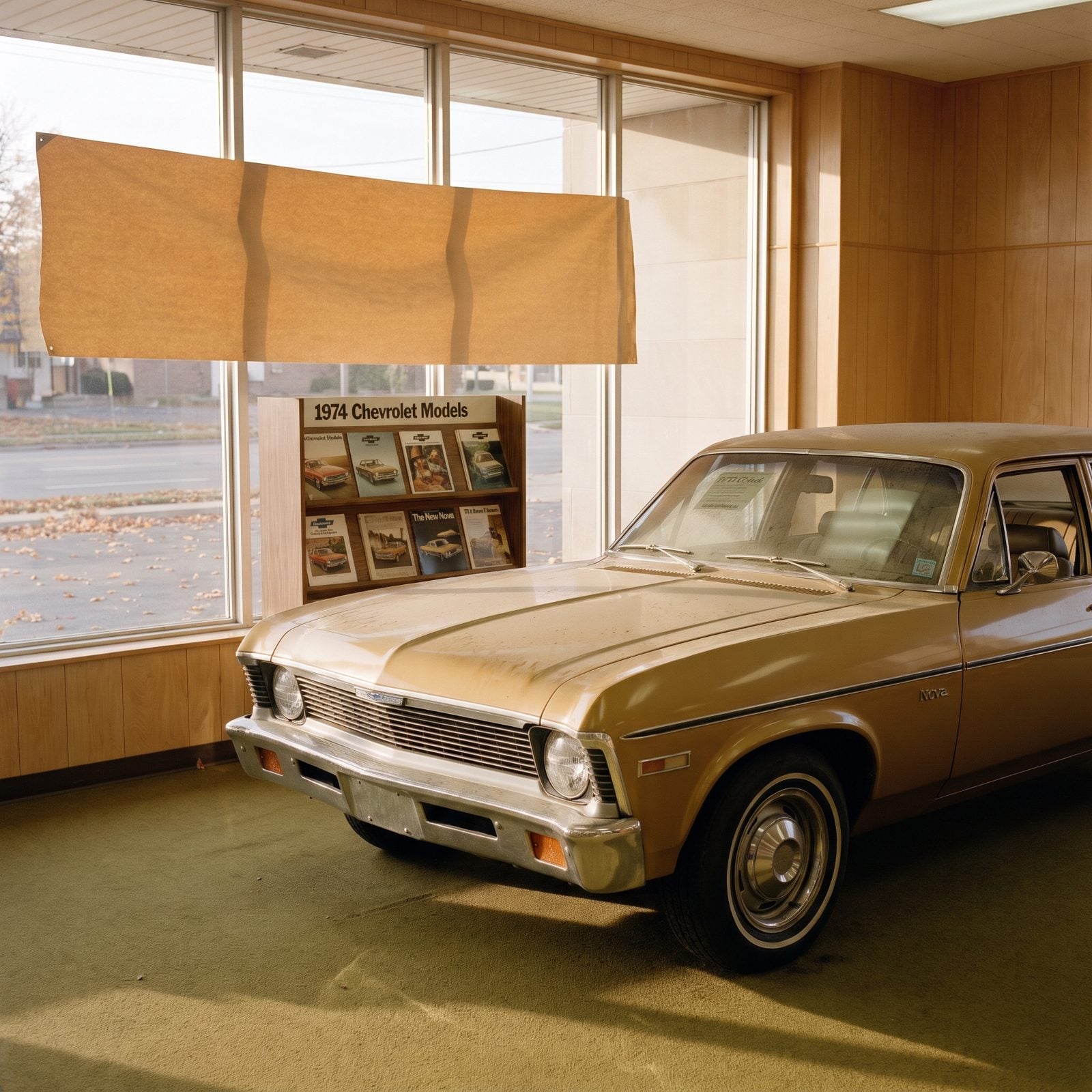
Fall rolled in, the new models landed, and that gold Nova had been sitting since spring. Same shape, nearly. Who’d notice?
When a current-year brochure rack sat right beside it, the year was no secret. A leftover can still look tempting in warm showroom light, even under a coat of dust in a room of wood paneling and stained carpet, but it’s already a year into its depreciation and worth real money less the day you drive off. The buyers who got burned fell for the paint and never asked to see the number stamped on the plate inside the door.
24. Selling the Sales Manager’s Demonstrator as Showroom-New
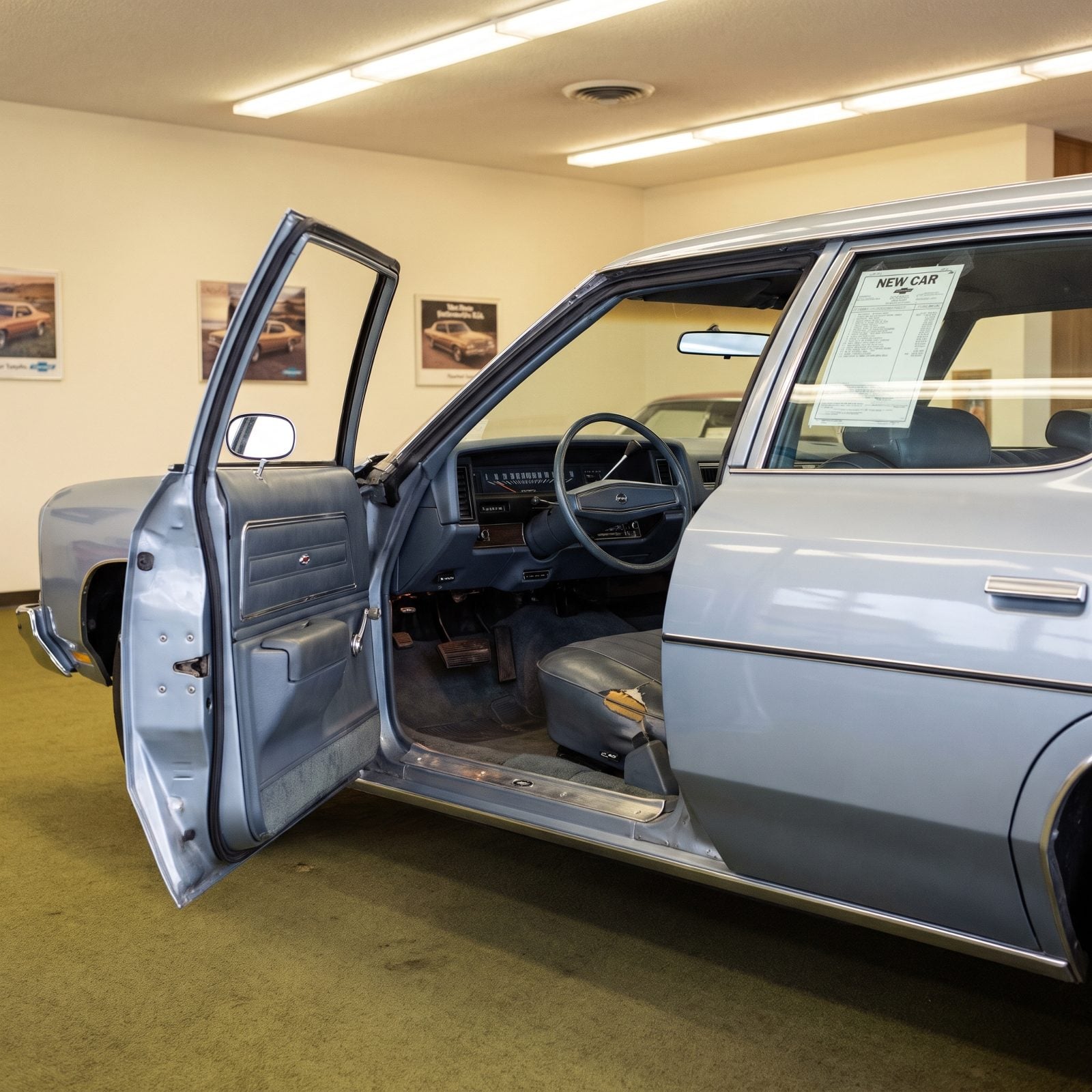
The Impala wore a full new-car sticker, and the paint still shone from a distance. What the salesman left out: the manager had been driving it for three months.
A demonstrator picks up miles, a scuffed pedal, a driver’s seat torn clean through to the yellow foam, a dented, chipped door jamb. Legally it could still be sold as new as long as nobody asked. So nobody asked. You paid new-car money for a car that had already lived a small life, and the only proof sat on the odometer if you bothered to read it.
23. Concealing Repaired Shipping and Lot Damage Under Fresh Lacquer
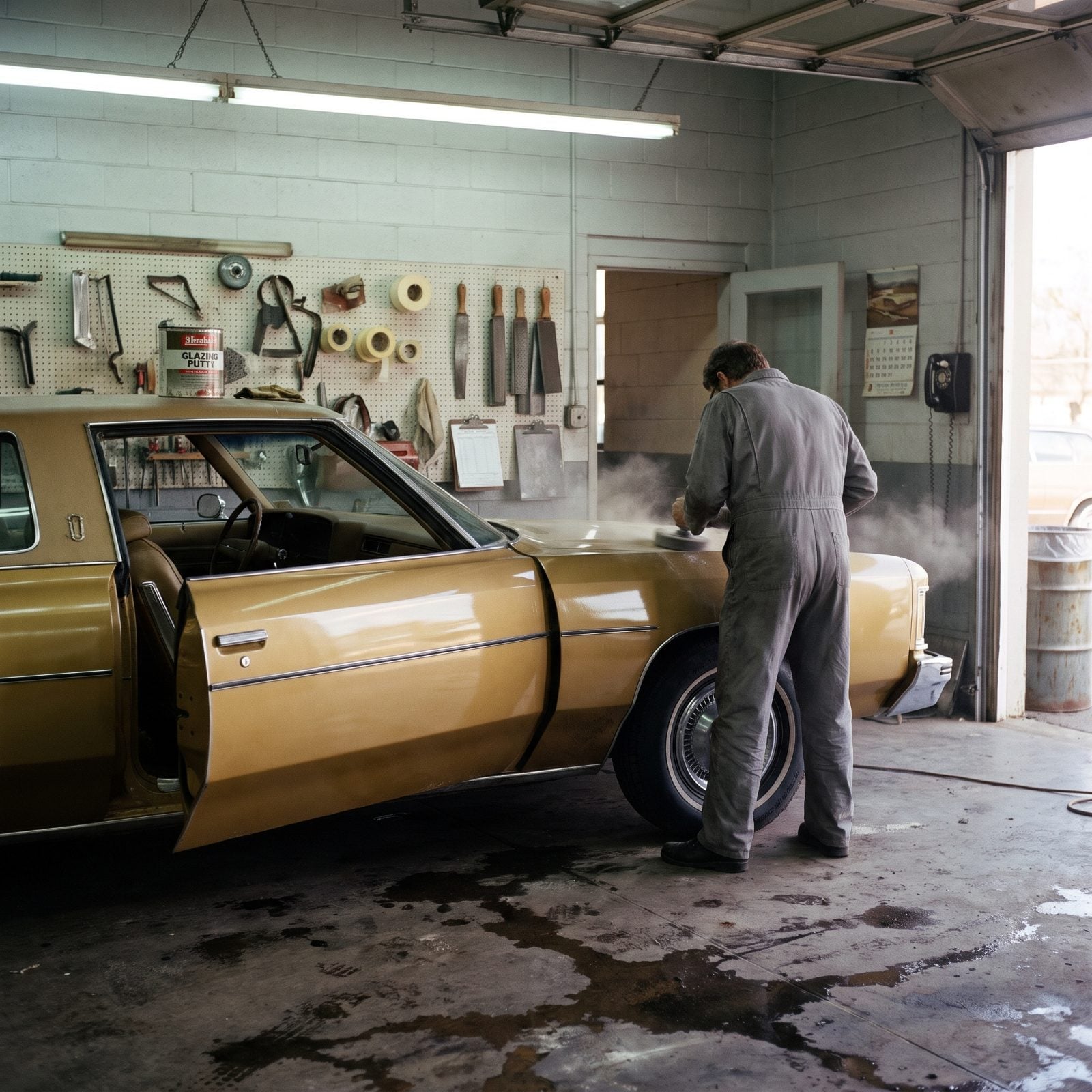
A new car isn’t supposed to have a story yet. But a fender clipped on the transport truck or a door dinged on a crowded lot had one already, and the body shop out back existed partly to erase it.
The giveaway was always the shine. A panel that had been sanded, filled, and resprayed came back glossier than the factory paint around it — a little too wet-looking under the showroom lights. Walk around a 1972 Nova in daylight and you’d catch the mismatch where the quarter panel didn’t quite agree with the door.
22. Swapping the Factory Tires for a Cheaper Set Before Delivery
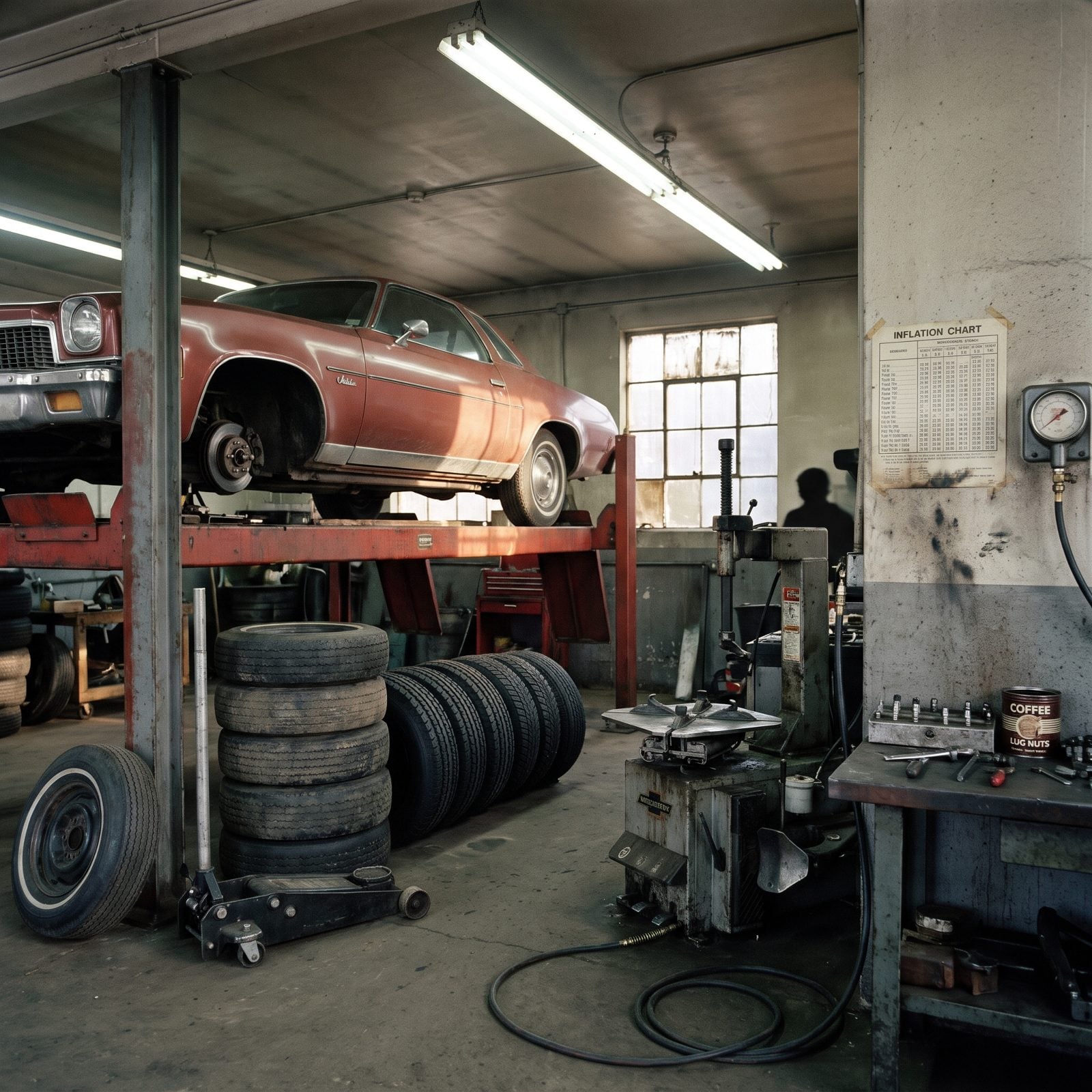
You paid for the tires that rolled off the assembly line. Sometimes you drove home on something else.
The move was quiet. A sharp customer’s car would get its good factory rubber pulled and swapped for a thinner, cheaper set before the keys changed hands, and the nice tires went back into inventory to be sold again — or bolted onto some used car up on the front line. Most buyers never knew. Tires all look black and round in a parking lot, and who memorizes the tread on a car they haven’t even bought yet.
It took a few thousand miles for the swap to announce itself. Usually as bald spots showing up far too early on a car that was supposed to be brand new.
21. Pulling the Factory Floor Mats, Then Selling Them Back to You
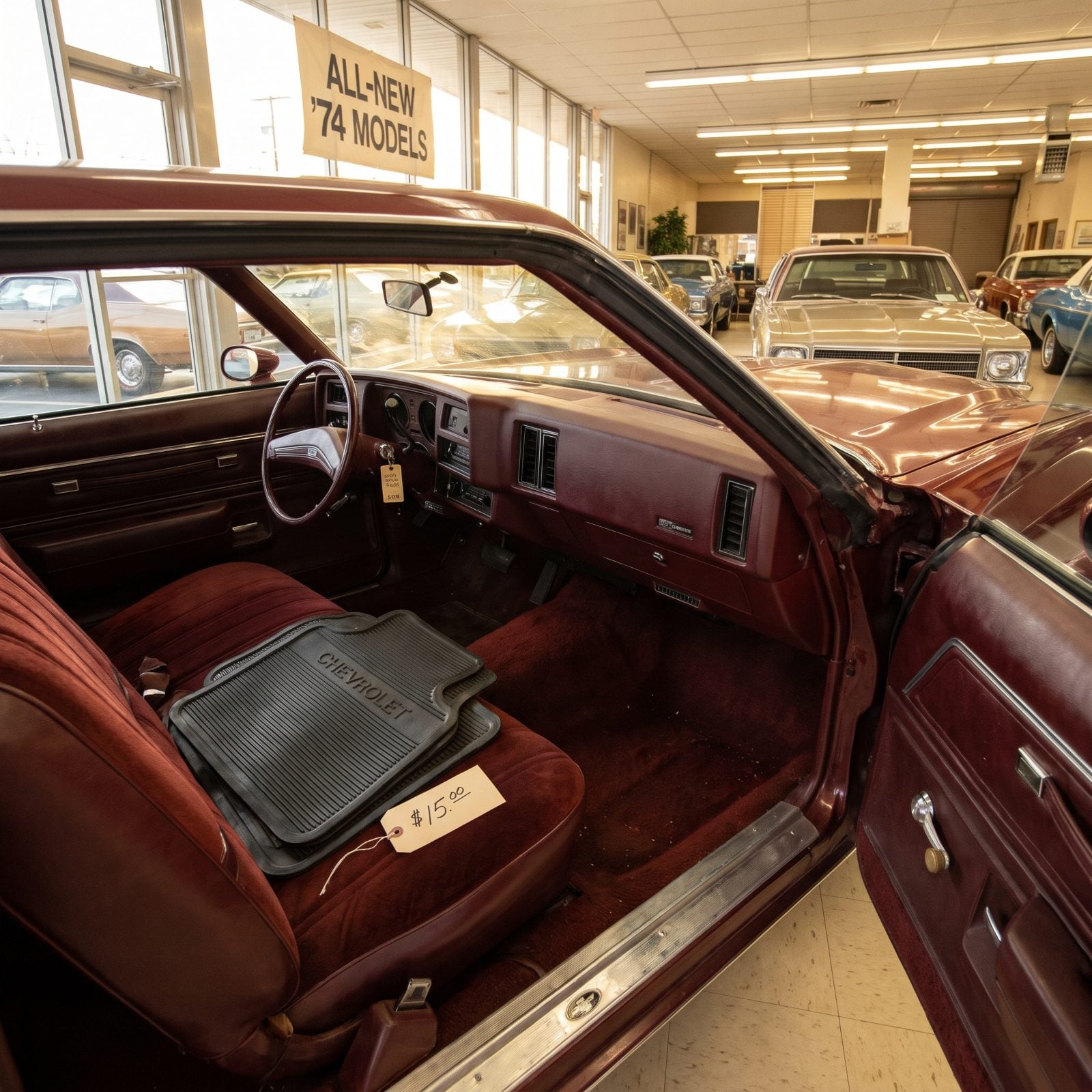
Open the door of your new car and the footwell was bare. Just carpet. The mats that came with the car were sitting on a shelf back in parts, and if you wanted them, well, that’d be extra.
A small thing, almost petty, which is exactly why it worked. Five thousand dollars for a car and you’re going to walk away over a set of mats? Nobody did. You grumbled, you paid the add-on, and off you went on floor mats you’d technically already bought once at the factory.
20. Billing You for Dealer Prep the Factory Had Already Paid
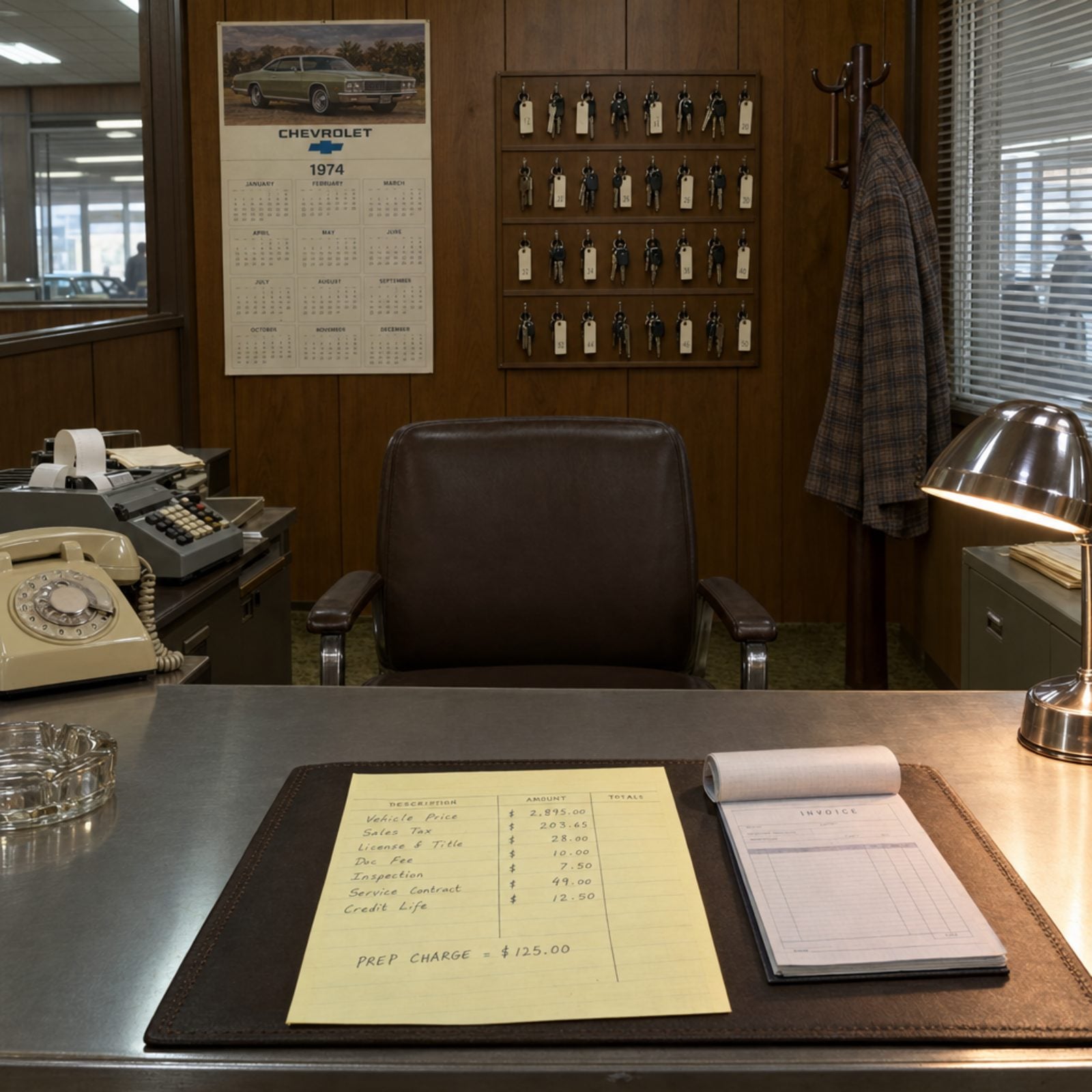
Somewhere on the deal sheet, written in ballpoint below the base price and the tax, sat a line for dealer preparation. Thirty dollars, fifty, sometimes more. It covered removing the shipping plastic, filling the fluids, washing off the road grime from the trip east.
Here’s the catch. The factory had already reimbursed the dealer for exactly that work — paid once by Detroit, then charged again to you. A tidy bit of double-dipping that looked perfectly at home sitting next to half a dozen other real fees.
Nobody questioned a line item on an invoice from a man in a tie behind a steel desk. That trust was the whole product.
19. Sliding the Destination Charge Onto the Bill a Second Time
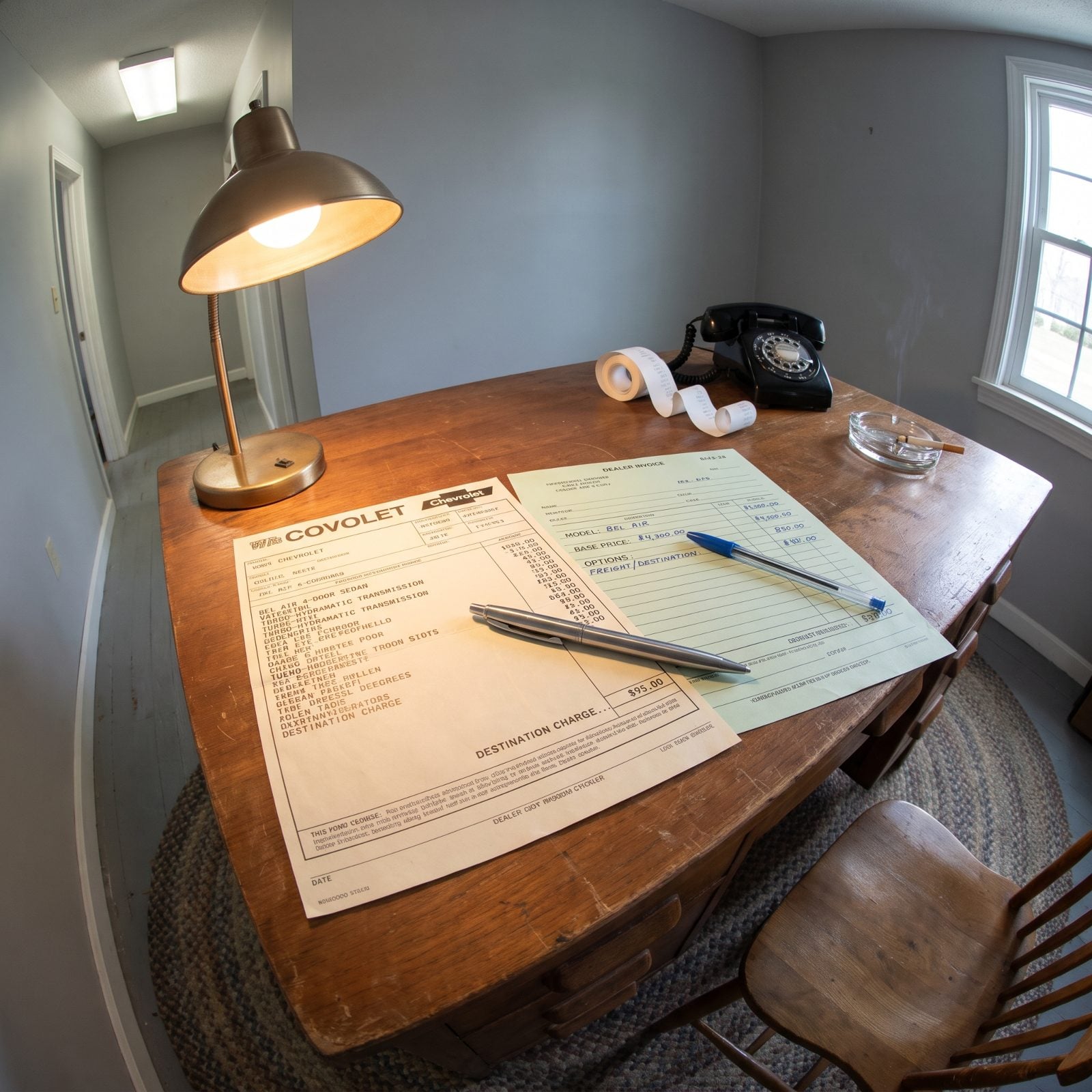
The destination charge was legitimate — the cost of trucking the car from the plant to the lot, printed right there on the Chevrolet cost sheet where you could see it.
Then it showed up again. A second FREIGHT/DESTINATION line, printed on the dealer’s own green worksheet, waiting among the numbers you were too overwhelmed to cross-check. Fill it in, and you’d be paying twice to ship one car.
18. Using the Gas Lines of ’73 to Justify a Markup at the Curb
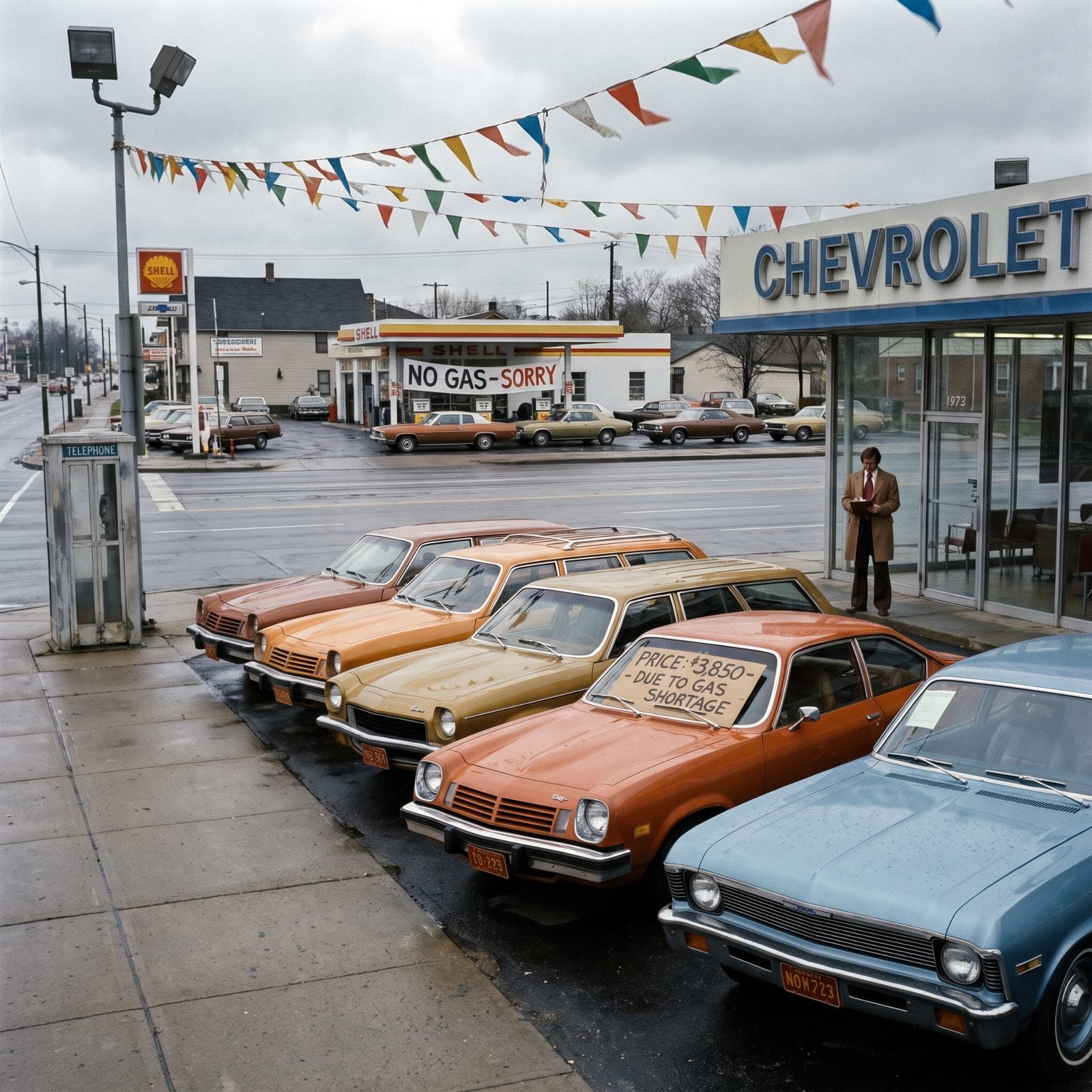
When the fuel crisis hit and the lines stretched around the block, the small thrifty cars suddenly became the hot ticket. A Vega that had been gathering dust was now the most wanted thing on the lot.
So the price went up. Right on the windshield sign, in fact — a “+$400 gas surcharge” scrawled under the price and justified with a shrug. Everybody wants an economy car right now, what can you do.
Shortage is the oldest lever in sales. Make a thing feel scarce and the buyer stops haggling and starts pleading. The gas crisis handed dealers that lever for free, and some of them yanked it hard.
17. Selling Thick Undercoating at a Margin That Defied Gravity
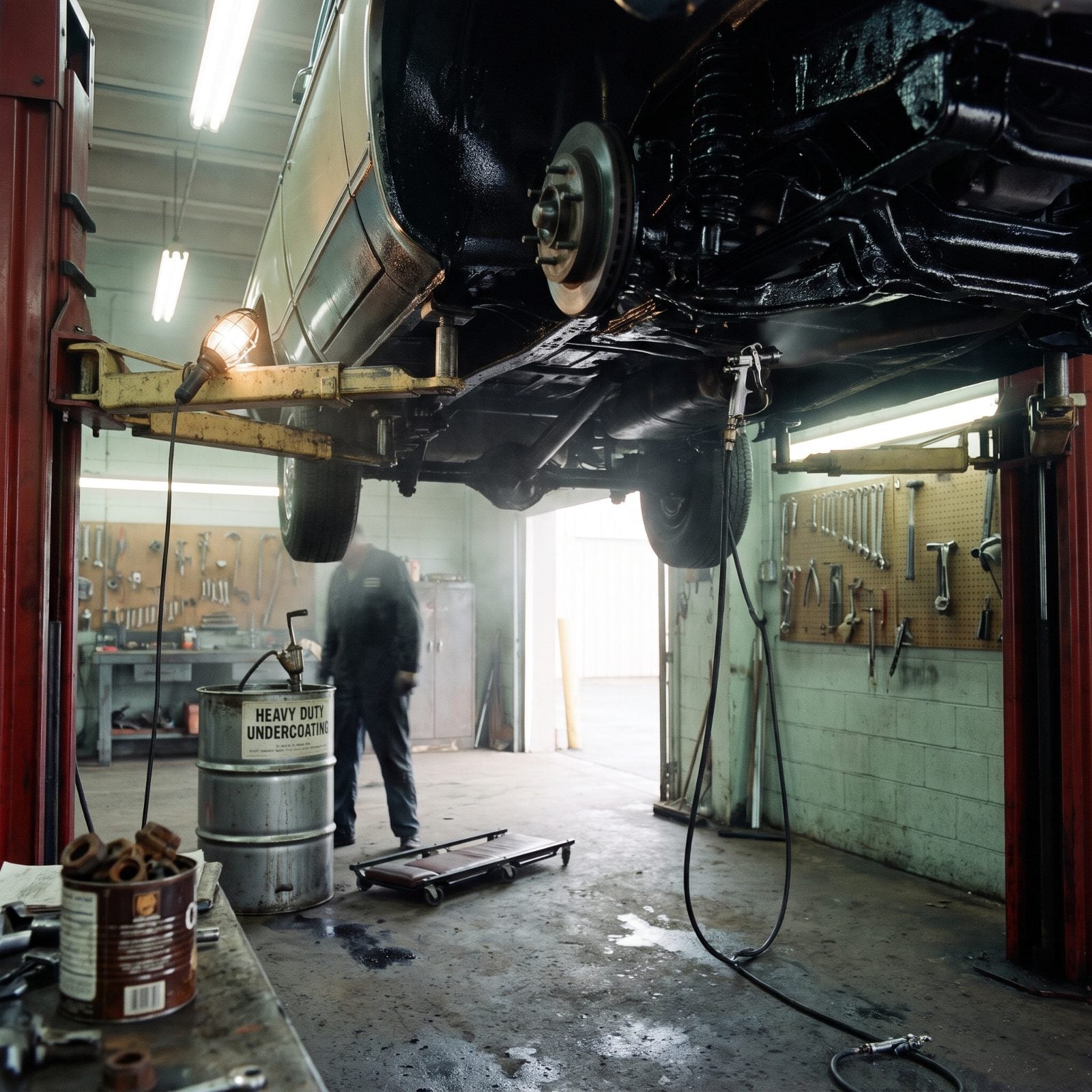
The pitch was fear, delivered warmly. Salt, rust, those brutal winters eating your frame from underneath. For a few extra dollars, the dealer would coat the whole underbody in thick black protectant and you’d sleep easy at night.
The material cost almost nothing. A drum of undercoating, sprayed on in twenty minutes, sold for a price that would make a jeweler blush. The margin wasn’t a markup. It was alchemy.
16. Turning a Dollar’s Worth of Pinstripe Into an Appearance Package
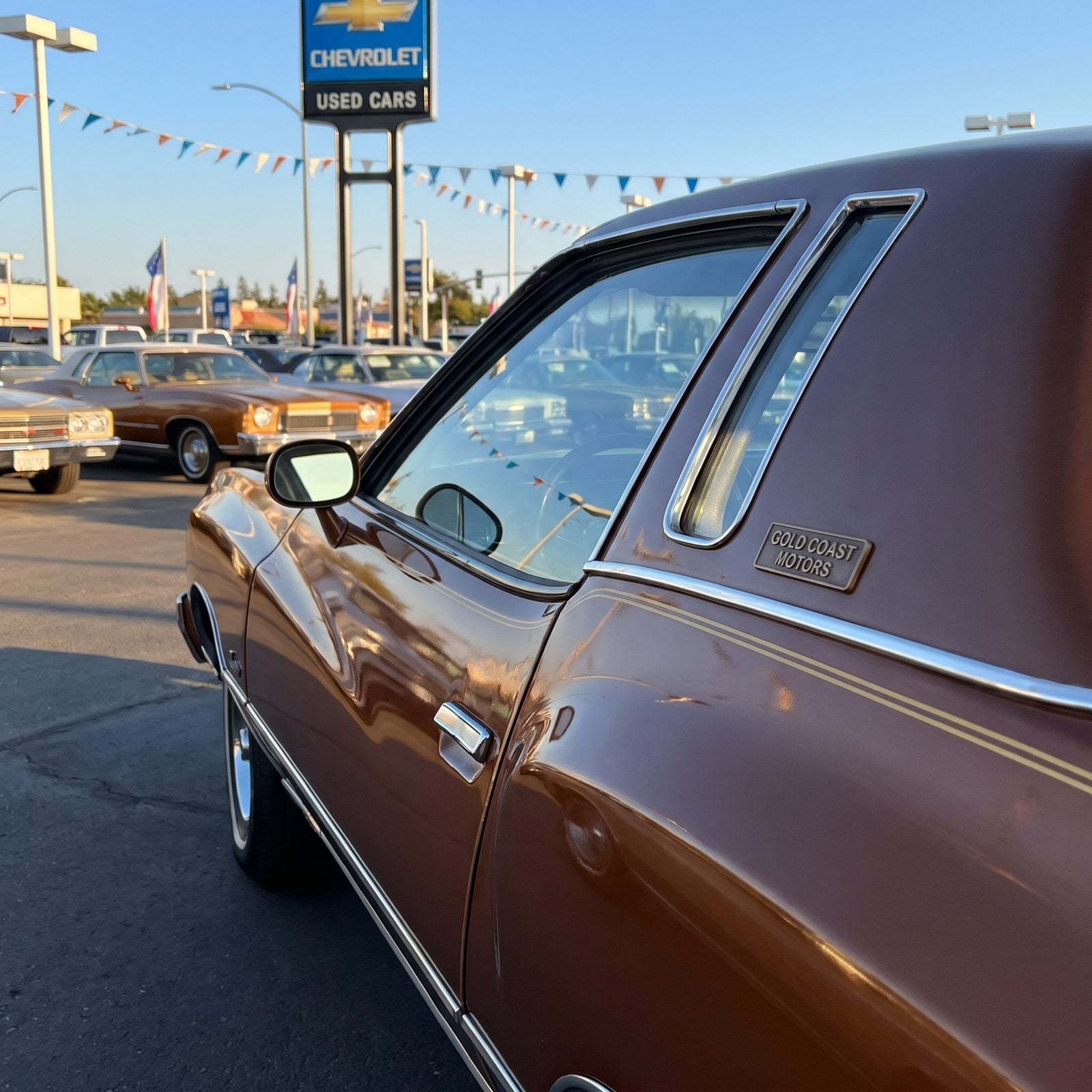
A roll of pinstripe tape cost pennies. Laid down by hand along the beltline of a Monte Carlo, it took one person twenty minutes and a steady wrist.
On the deal sheet it became something else. A sport appearance group, a custom trim treatment, a name that sounded like it came straight out of a factory brochure. A hundred dollars or more for a stripe and maybe a little badge screwed onto the fender.
What you were really paying for was the word package. It implied engineering, options, a whole bundle of real content. There was no bundle. There was a stripe, and a very good name for it.
15. Pricing a Dealer-Glued Vinyl Roof Like a Rare Factory Option
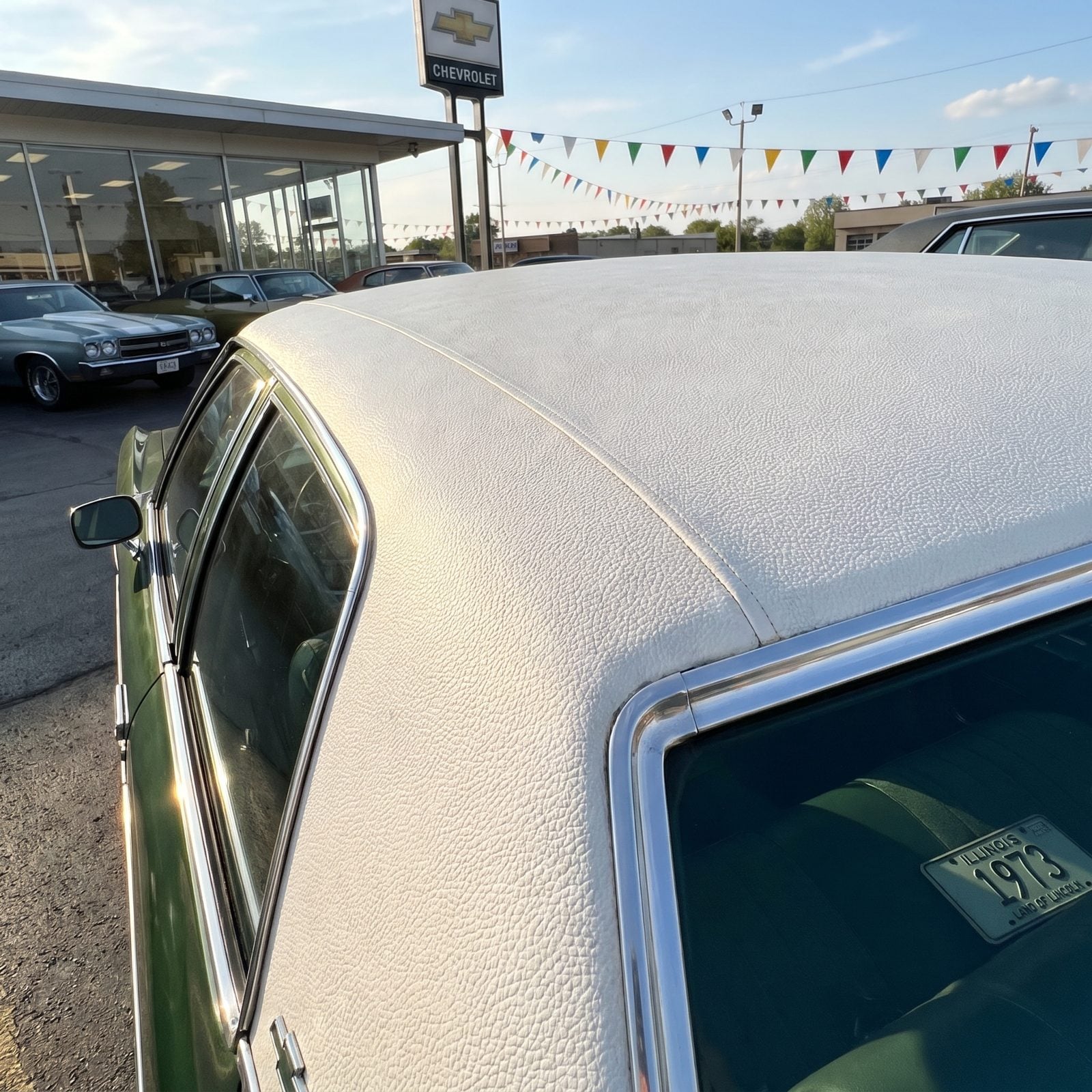
The vinyl roof was the status symbol of the decade. A padded top told the neighbors you’d stepped up, moved past the base model into something closer to luxury.
Plenty of them went on in the dealer’s own shop — a sheet of vinyl, adhesive, trim molding, installed by the same crew that did the undercoating. Factory-correct it was not. But on the paperwork it sat right up near the genuine factory option, sometimes above it, sold with a knowing nod toward exclusivity.
You paid luxury-tier money for shop-floor labor and a roll of textured material. The car looked the part at the country club, which was the entire point and most of what you actually got.
14. Calling the Aftermarket Radio Factory Equipment
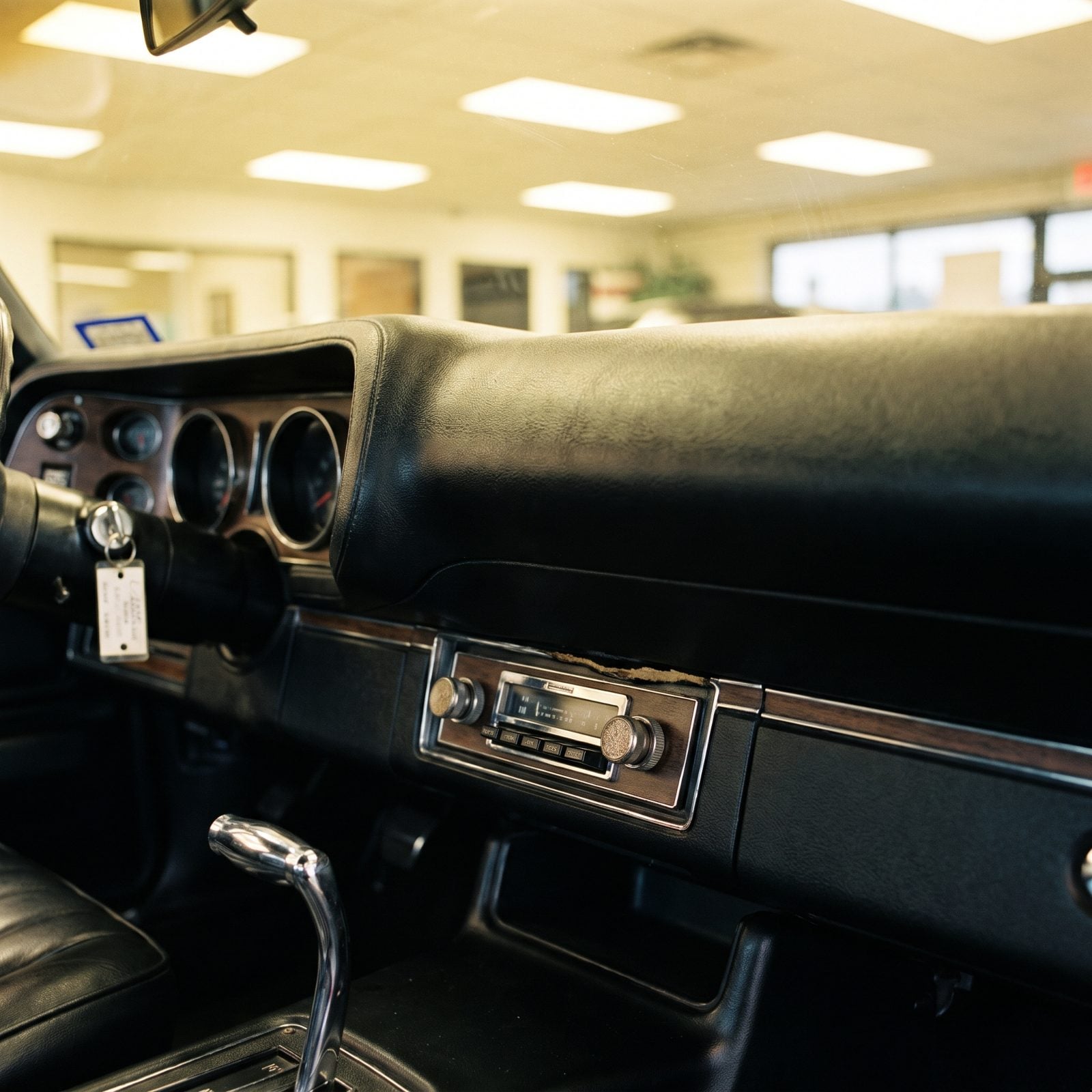
Sound was selling cars by the early seventies, and a good radio moved metal.
Some of those radios weren’t from the factory at all. An aftermarket unit got slotted into the dash opening, then described across the desk as factory equipment and priced to match the genuine Delco. The install gave it away if you bothered to look — a knob that didn’t match, a faceplate sitting a hair proud of the dash, a gap at one edge.
Most buyers heard music through the speakers and stopped investigating. The radio worked, the car was new, and the word factory did the rest of the convincing. You paid dealer-cost-plus-everything for a part bought wholesale and bolted in out back.
13. Passing Off Dealer-Installed Air Conditioning as Factory Air
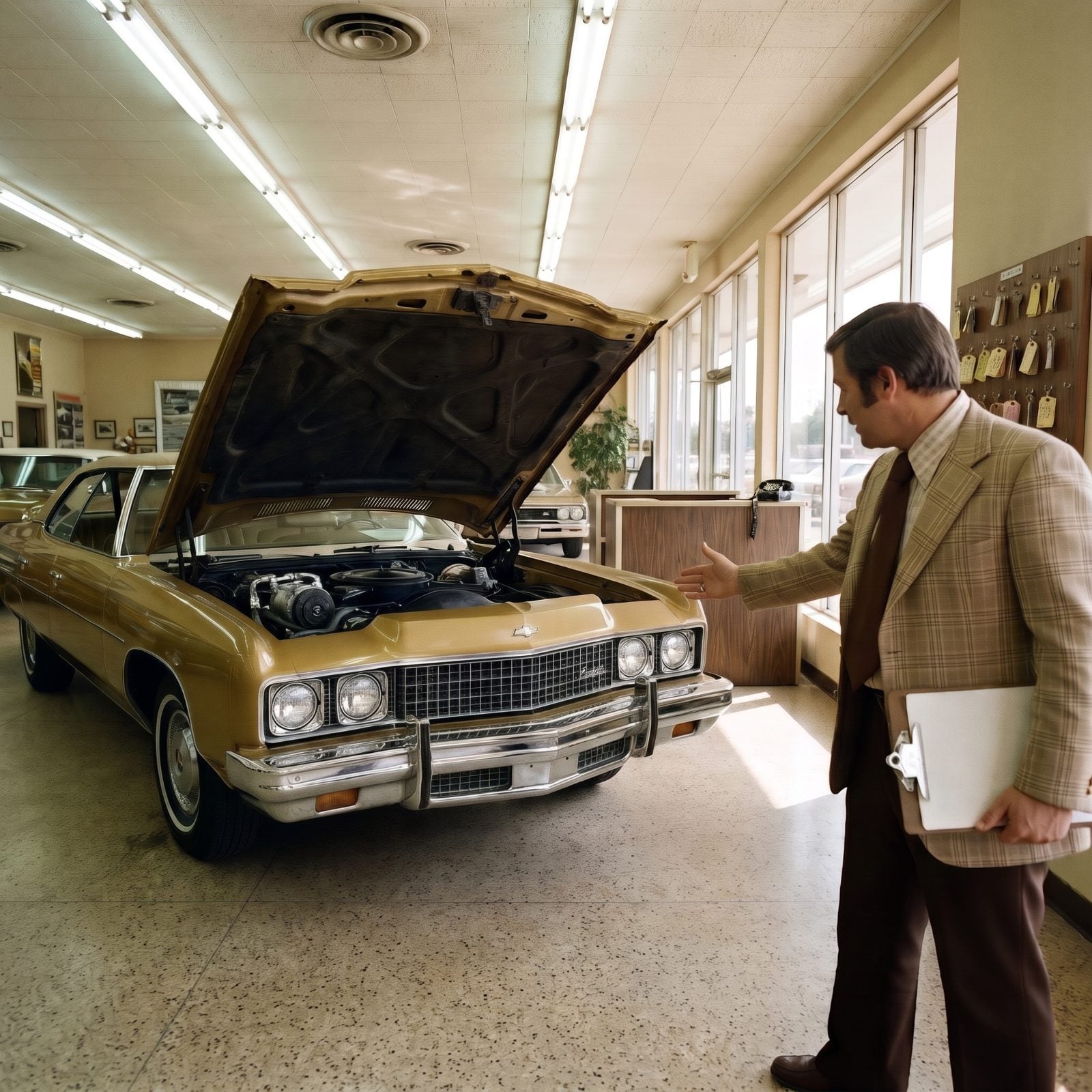
You could tell the difference if you knew where to look. Factory air pulled through the dashboard vents, while the dealer version was a separate box hung beneath the dash, tied in with hoses run through the firewall after the car rolled off the truck.
The markup was the whole game. A dealer could buy an add-on unit cheap, hook it up in an afternoon, then scribble “A/C” on the window sticker and let you assume the whole thing came from the plant in Flint. Same cold air, roughly. Not the same car, and definitely not the same resale down the line.
12. Adding SS Badges to an Ordinary Chevrolet
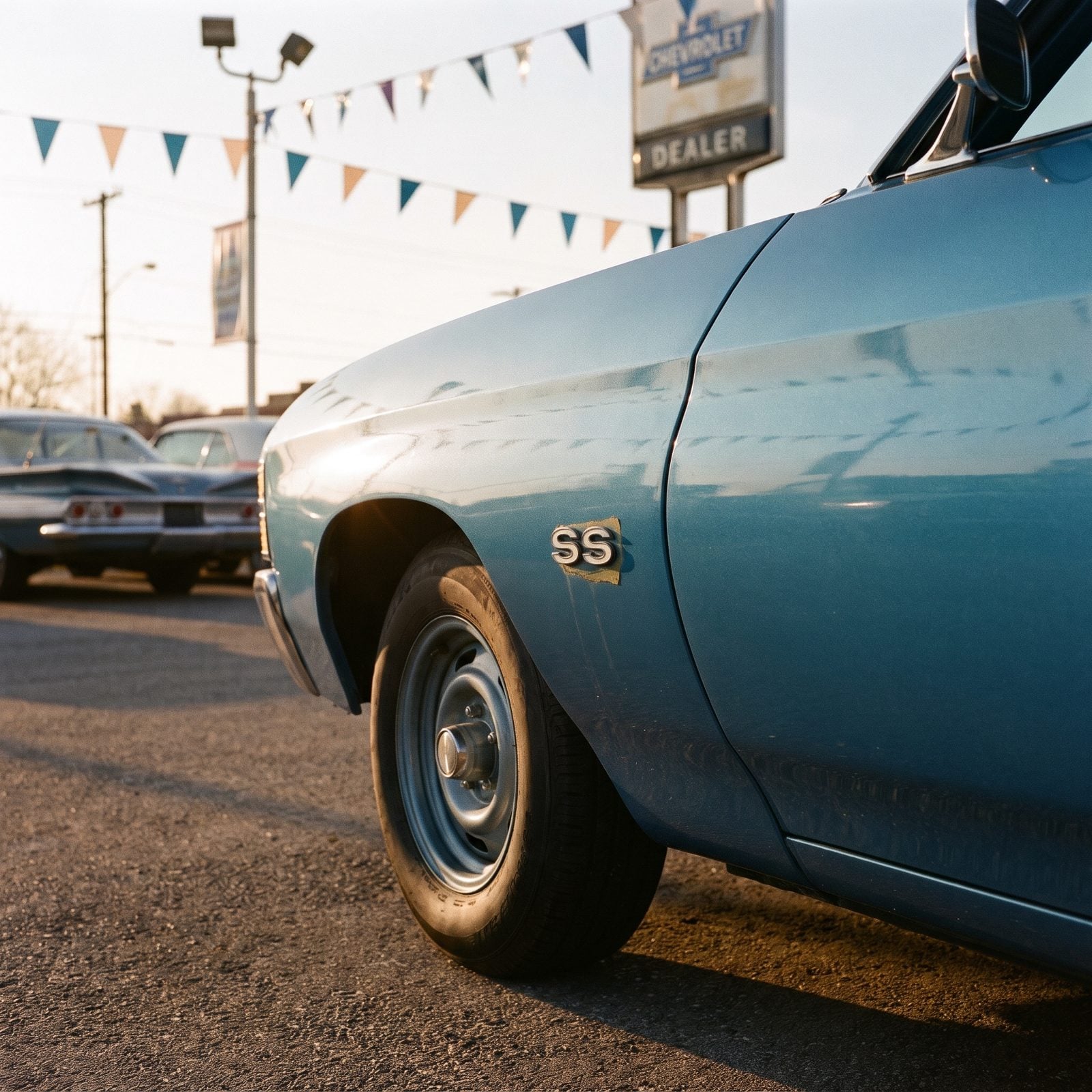
Three little letters could move a car off the lot a whole lot faster. SS meant Super Sport — the hot engine, the heavy-duty suspension, the badge the neighborhood kids recognized from two driveways away.
But badges are just chrome and glue. A base Chevelle or Nova with a tired small-block and skinny tires could wear those letters as easily as the real thing, so a sharp operator would pop them on, bump the price, and hope the buyer never checked the engine code against the trim.
The giveaway lived in the details nobody bothered to fake. Real SS cars carried specific suspension, specific gauges, specific wheels. A badge is cheap. The whole package underneath it never was.
Those letters still carry weight: muscle cars got hearts from our readers 86% of the time, more than the 80% for other images in the same articles.
11. Describing Third-Party Van Conversions as Factory Specials
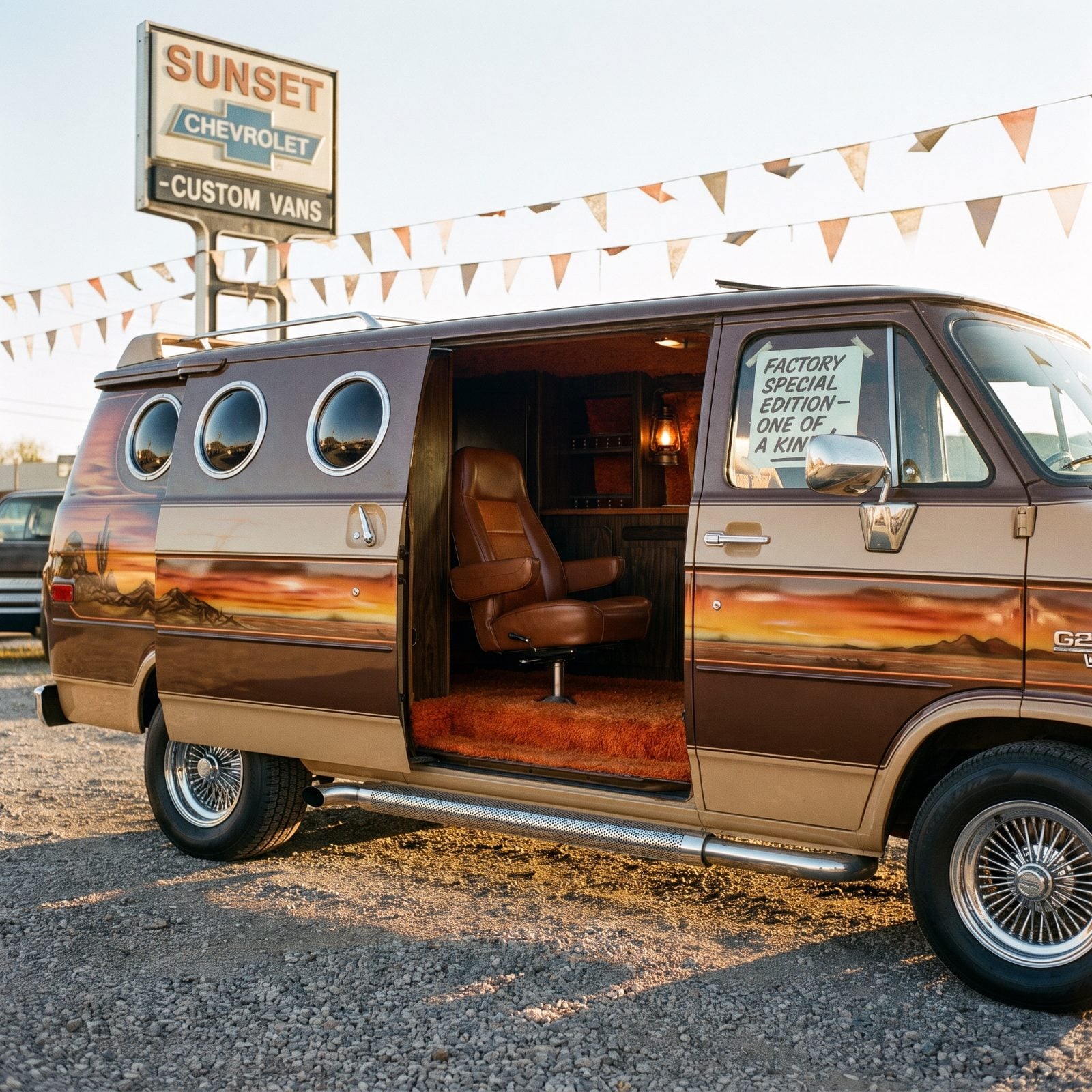
The van craze made everybody money, especially the dealer who blurred where Chevrolet stopped and the custom shop started.
Chevy shipped the van as a bare cargo box or a basic passenger model. An outside conversion house did the shag carpet, the captain’s chairs, the bubble windows, the airbrushed sunset down the flank. Good work, often enough. But it was their work, not the factory’s, and that distinction mattered when things went wrong.
A salesman calling it a “factory special edition” was selling you a story. The conversion warranty came from the converter, who might be out of business by the time the wood-grain started peeling, and the Chevrolet warranty covered the chassis and the drivetrain and nothing else.
10. Exploiting the Switch From Gross to Net Horsepower Ratings
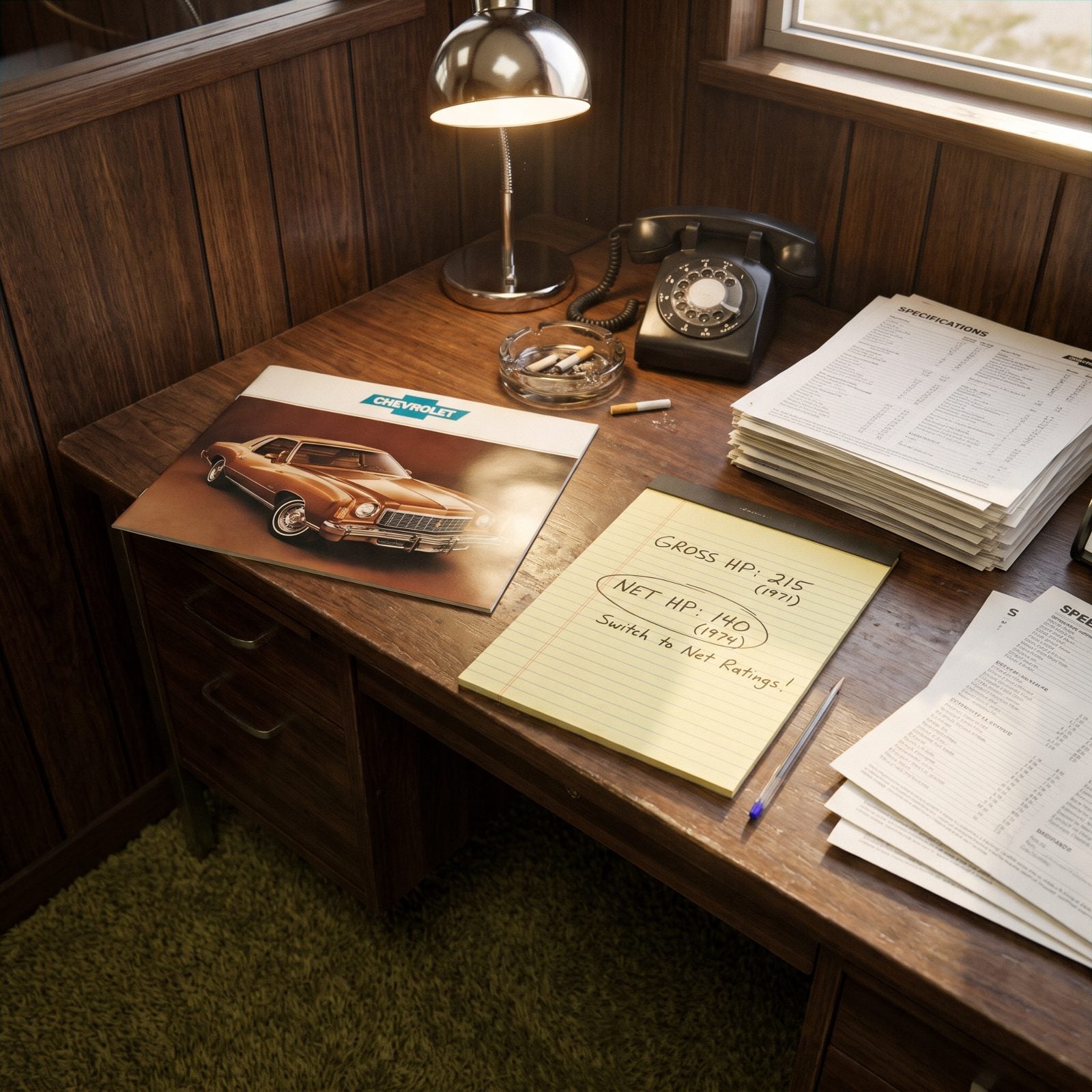
Horsepower got quieter in the early 70s, and it wasn’t only the smog gear doing it. Around 1971 and 1972 the industry shifted from gross horsepower, measured on a bare engine, to net horsepower, measured with all the accessories hooked up. The number on paper dropped hard even when the engine barely changed.
That gap was a salesman’s playground. Point at the older gross figure for the car you’re selling, compare it to the newer net figure for the competition, and suddenly the math flattered whatever happened to be sitting on the lot. Two different rulers, one quoted as if they measured the same thing.
9. Glossing Over Early Chevrolet Vega Rust Problems
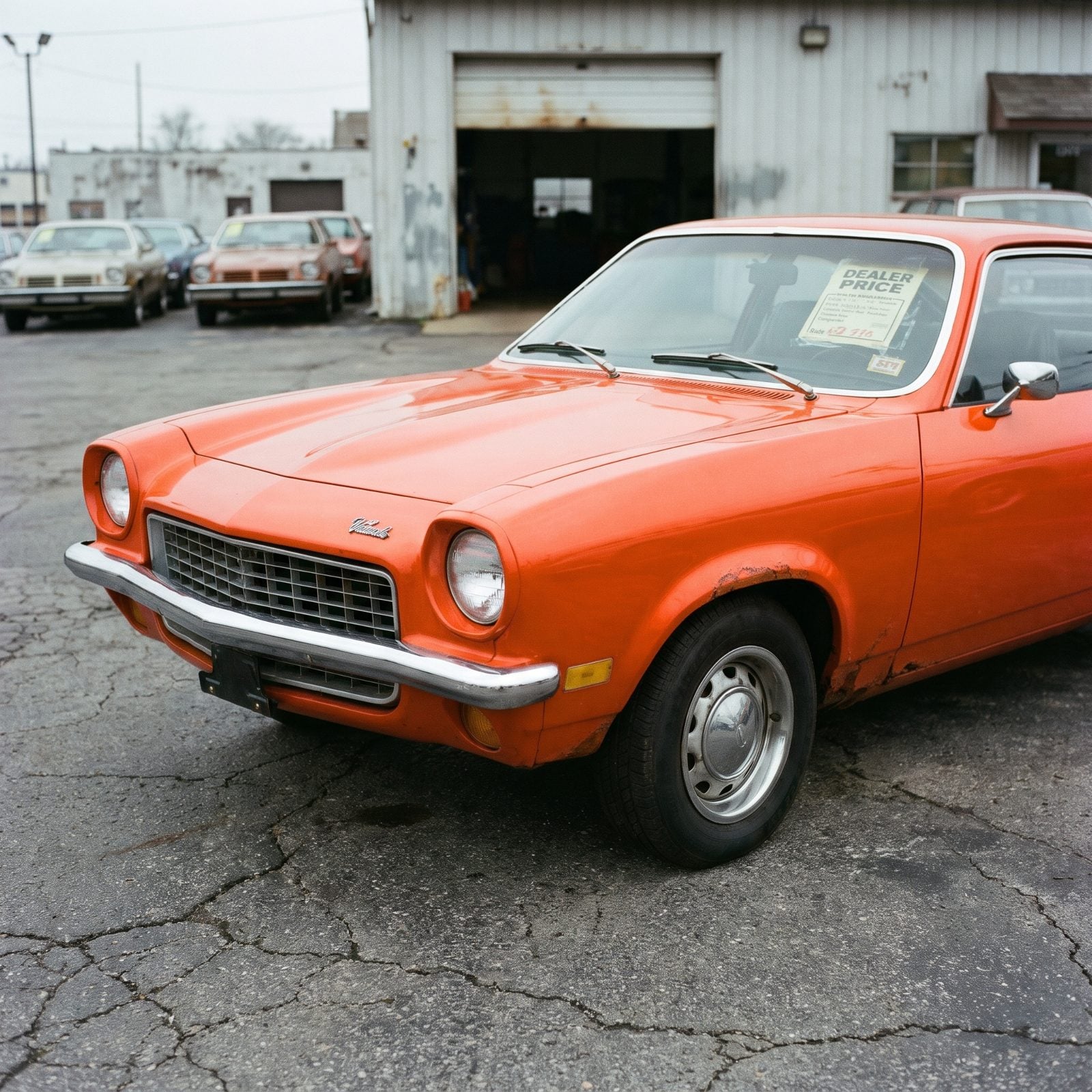
The Vega was supposed to be the little car that fought the imports. Light, cheap, zippy. On a sunny day on a clean lot, it looked like exactly that.
The early cars had a habit, though. The front fenders and the rockers rusted, sometimes alarmingly fast, and the aluminum engine ran into cooling troubles of its own. A dealer sitting on Vega inventory had every reason to steer your eyes up at the shine and away from the seams down low.
“Great on gas” was true. It just wasn’t the whole sentence — the rest of it included what the salt and the weather would do to those fenders a couple of winters down the road.
8. Retuning or Removing Emissions Equipment to Improve the Test Drive
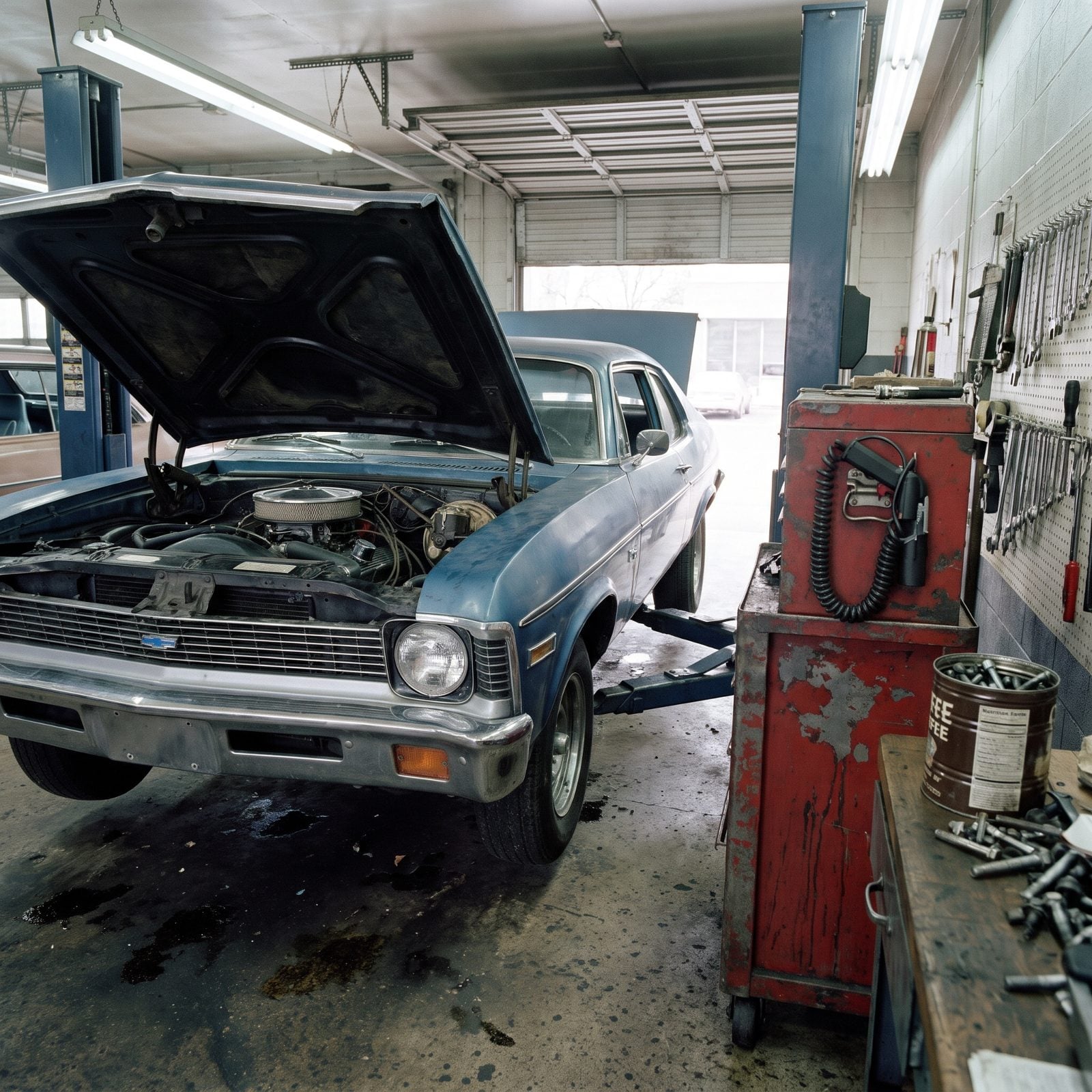
Those first emissions-controlled Chevys could feel strangled. The smog plumbing, the lean carburetor settings, and the retarded timing all did their job and sapped the pep in the process, and a customer coming off a late-60s car noticed the difference the second the light turned green.
So the test-drive car got some help it wasn’t supposed to have. Nudge the timing, pop a vacuum line, lean on the settings — the demonstrator suddenly felt alive. The one you drove home, set up legally, was a different animal entirely.
You weren’t crazy. You just drove two cars that were only pretending to be the same.
7. Claiming the Bank Required an Extended Warranty
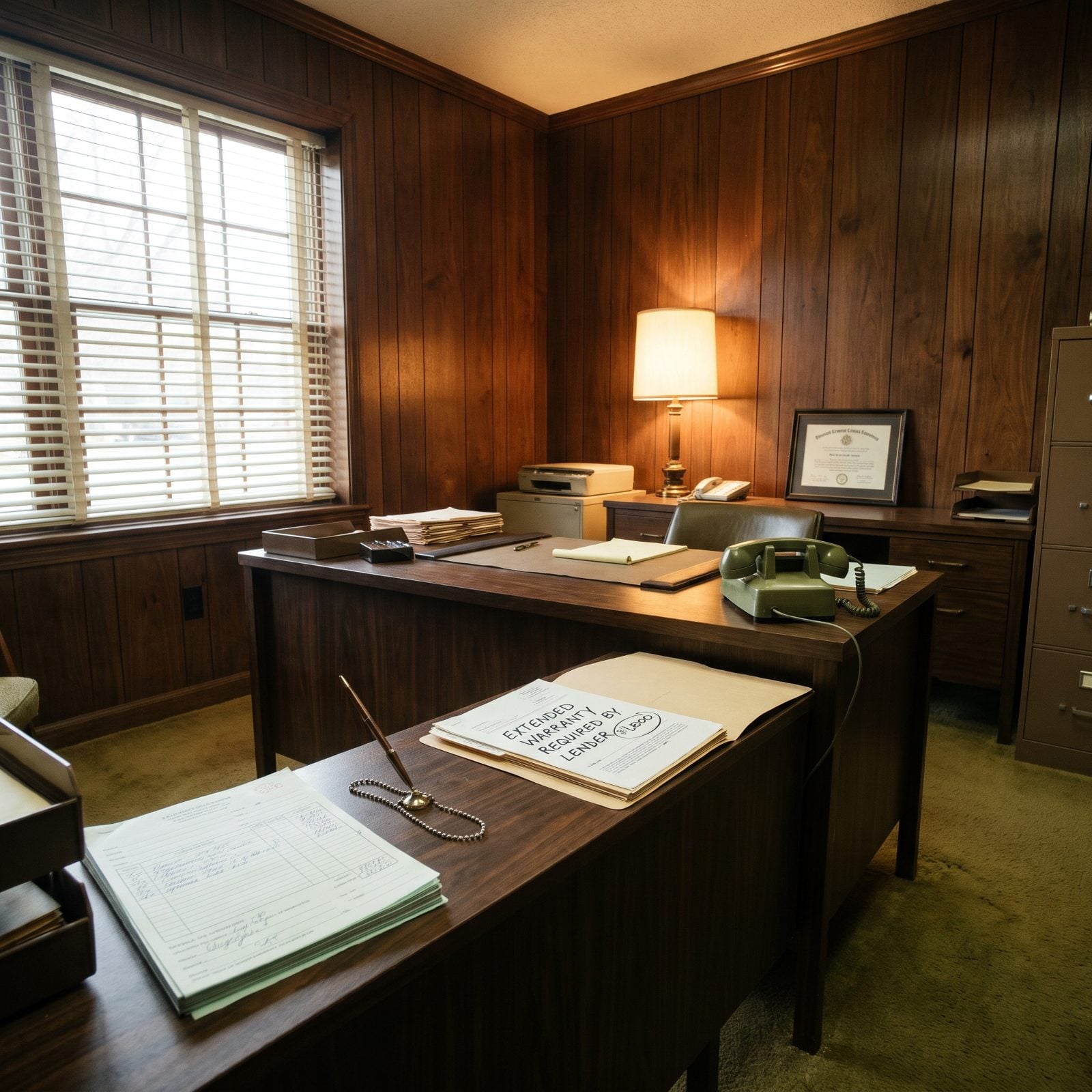
“The bank won’t approve the loan without the service contract.” That line did a lot of work in the back office, and most of it was a bald-faced lie.
Banks lend on your credit and the value of the car. Whether you buy an extended warranty is nothing to them, because that warranty puts money in the dealer’s pocket, not the lender’s. Dressing it up as a bank requirement turned an optional add-on into a condition you felt you couldn’t refuse.
Why did it land? Because you were tired. Two hours in that chair, the kids getting cranky, the deal almost done — one more form that “had” to be signed just didn’t feel worth the fight.
6. Packing Credit-Life Insurance Into the Loan
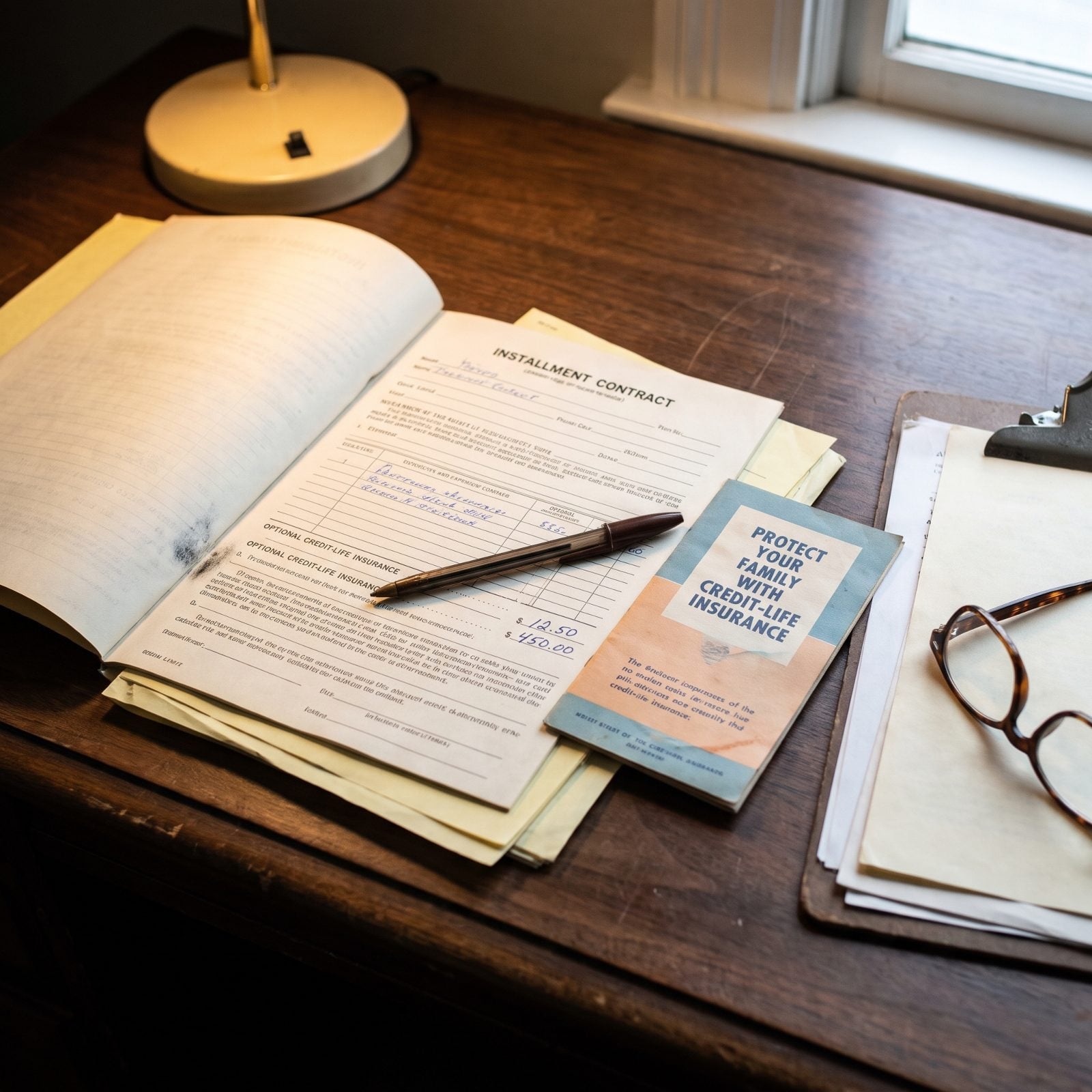
Credit-life insurance paid off your car loan if you died before it was. Fine idea in theory. The trouble was how it showed up in the contract — printed right there as “Optional Credit-Life Insurance,” talked up with a glossy “Protect Your Family” brochure, then written in at $12.50 and folded into the monthly payment.
The payment was the whole trick. By that point nobody in the office was shopping the sticker price; they were asking “what’s the monthly?” Even a clearly labeled $12.50 insurance line barely registered next to that number, and the premium often ran high for the thin coverage it bought.
5. Getting Buyers to Sign Partly Blank Finance Forms

Sign here, they said, and we’ll fill in the rest. The rate, the term, a figure or two left open — just a formality, you’re all set, the manager will finish it up.
Those blanks were the whole point. A signature on a contract with empty fields hands the other side a pen and a reason to use it, and the rate that gets written in after you leave isn’t always the rate you shook hands on across the desk.
Nobody fills in blanks in your favor. If a form had empty lines when the pen reached you, the smart move was to stop cold and ask why the blanks weren’t blanks yet.
4. Letting Buyers Drive Away Before Financing Was Truly Approved
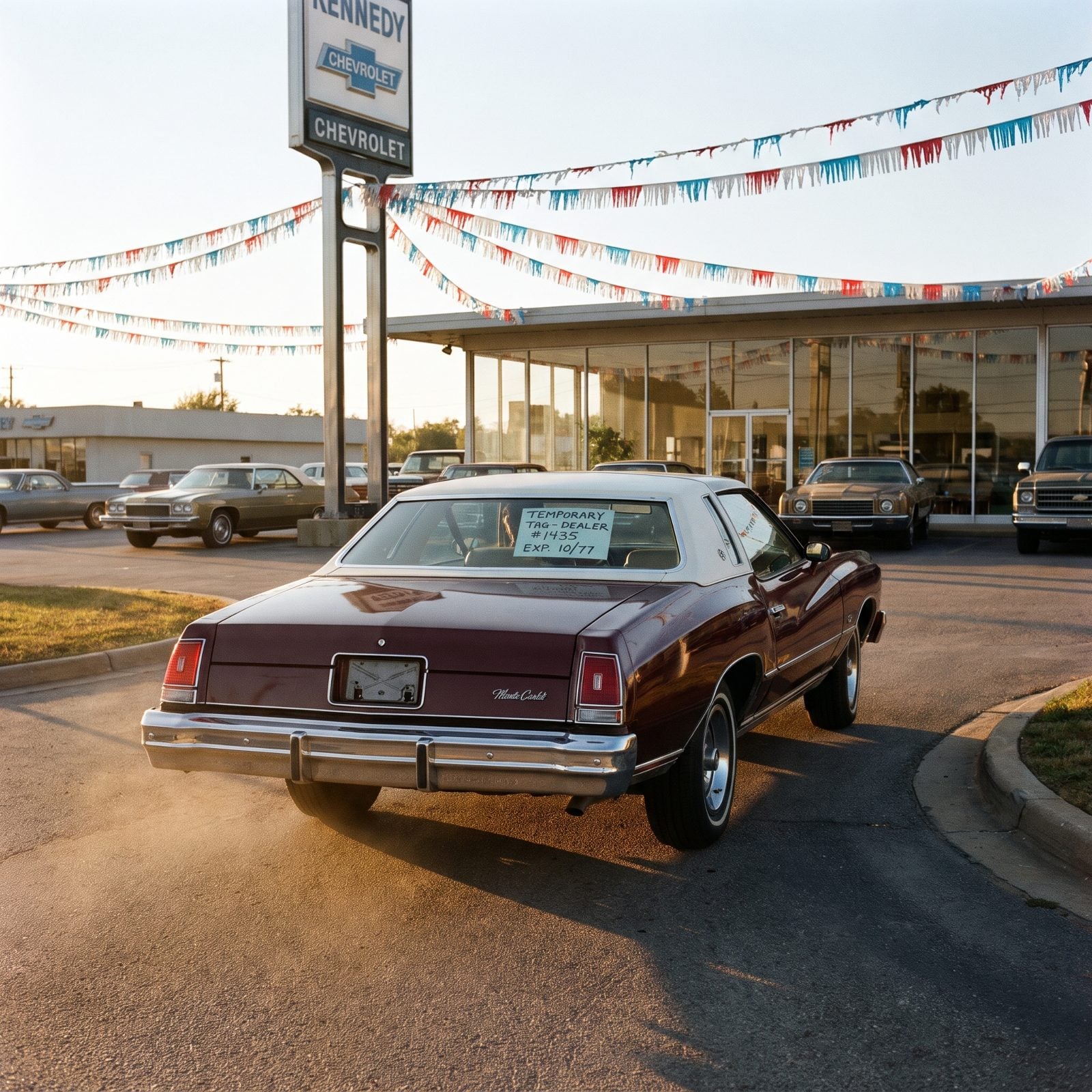
This was the quiet one, and the mean one. They handed you the keys, shook your hand, and waved you off the lot with the deal “basically done” — the paperwork, they’d say, just a day or two from final.
Then the phone rang. The financing “fell through.” Terrible news, nothing they could do, but the good news was they’d found you another loan. Higher rate. Bigger payment. Take it or bring the car back.
By then you’d shown the neighbors, driven it to work, started thinking of it as yours — and they knew every bit of that. The yo-yo worked because walking away from a car you’ve been driving for a week feels nearly impossible.
3. Presenting a Fleet or Rental Chevrolet as a Private Trade-In
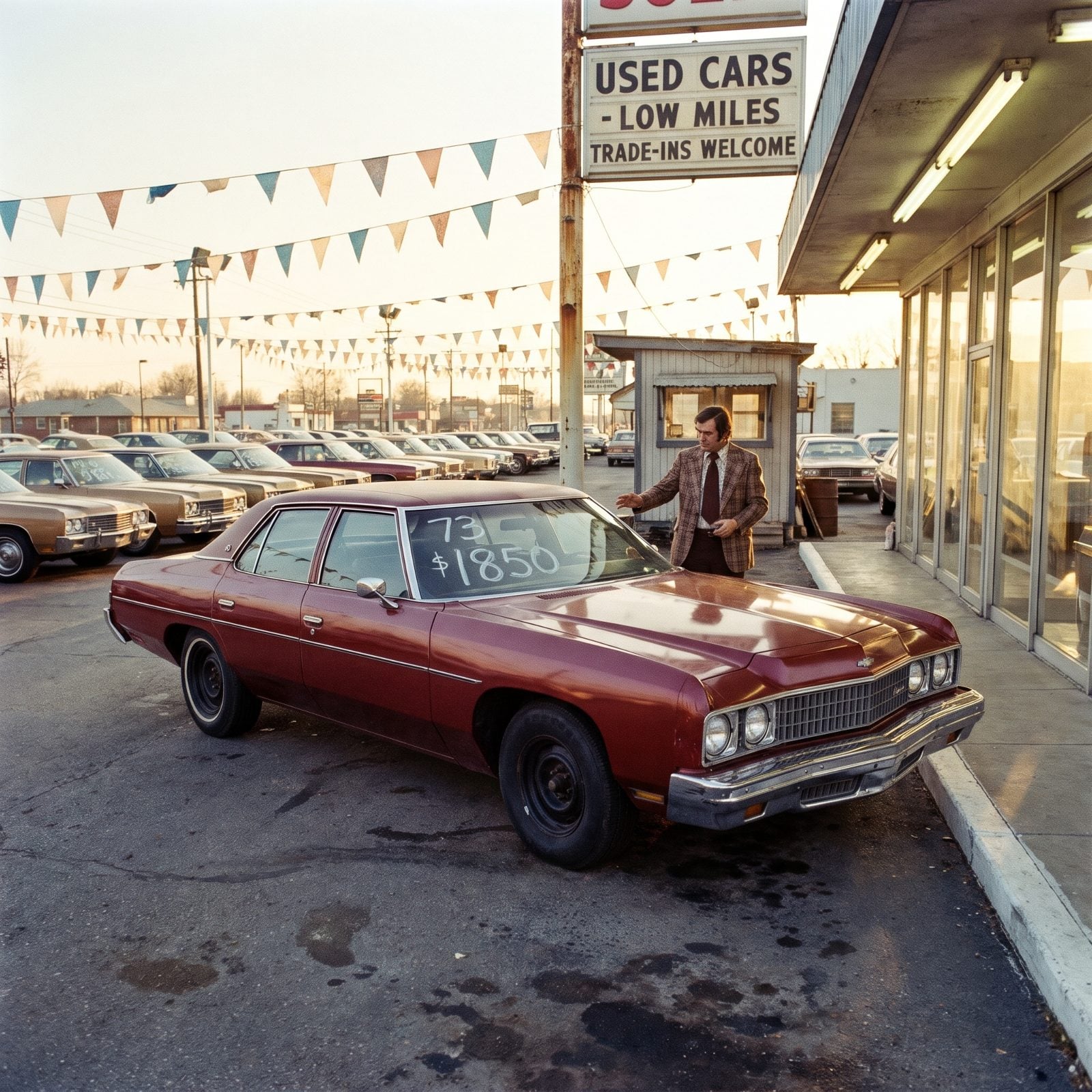
Fleet cars and rental returns came off the auction block by the dozen, all the same color, all the same mileage band, all worn smooth in the exact same spots. The trick? Park one between two genuine trades and let the buyer assume it had belonged to somebody down the street.
The tells were always there if you knew where to look. A whole row of matching Impalas in one shade. A back seat newer than the driver’s seat. A spare that had never once kissed pavement. One previous owner, the salesman would say, and technically he wasn’t lying — the owner was a rental company that ran it ragged for eighteen months.
2. Disconnecting a Warning Lamp Before the Test Drive
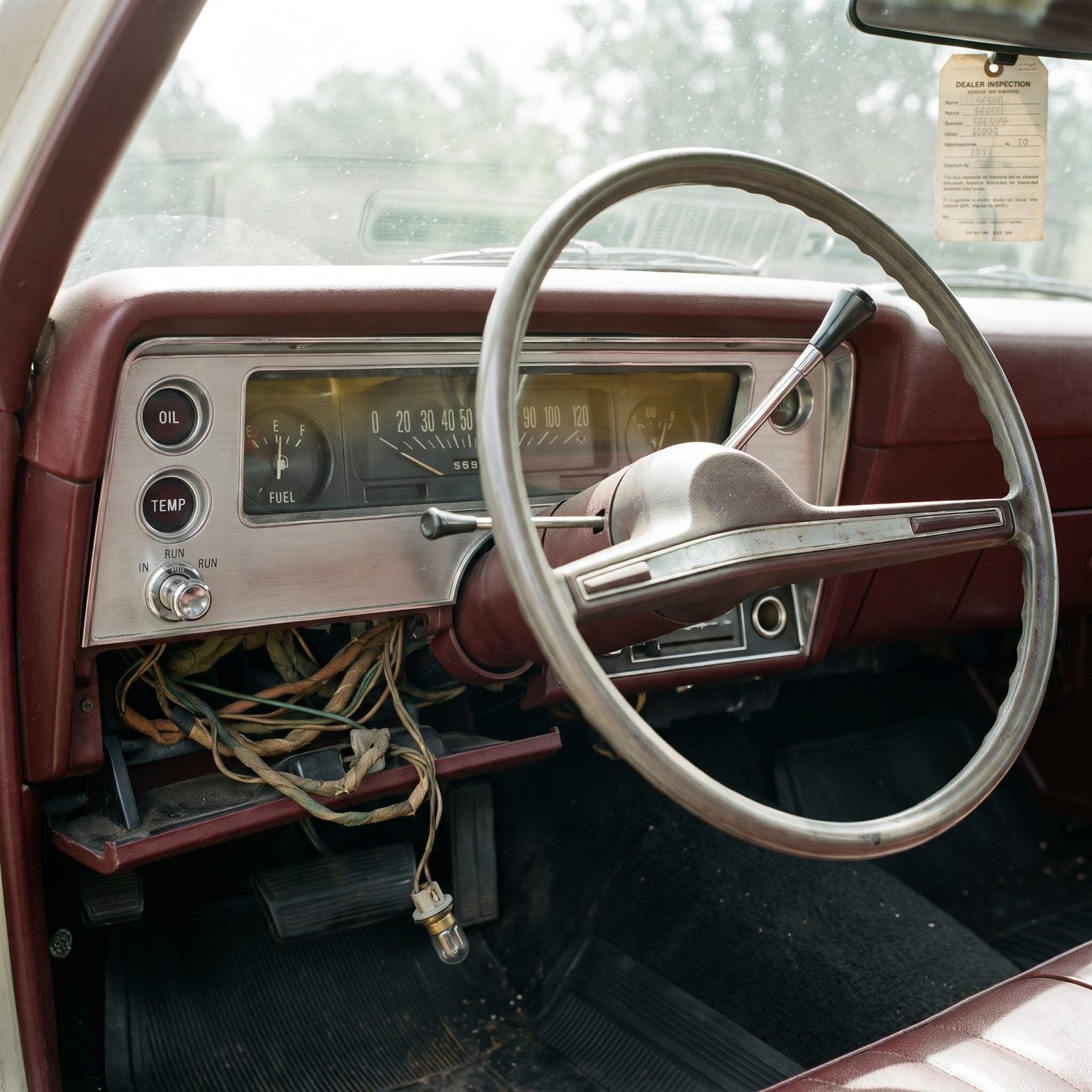
You remember that little red oil lamp flickering to life every time you turned the key. On an honest car it blinked, then faded as the pressure came up. But on a car hiding a problem, the simplest fix was no light at all.
Pulling a bulb from its socket under the dash took about thirty seconds. The buyer turned the key, saw a clean cluster, and read it as a healthy engine. Meanwhile the warning that would have told the truth sat dead in a service-bay drawer.
And the fault was still there. Oil pressure still low, or coolant still creeping hot. The only thing that changed was whether you found out before the money left your hand — or six weeks later, stranded in some gas station lot.
1. Rolling Back the Odometer on a Used Chevrolet
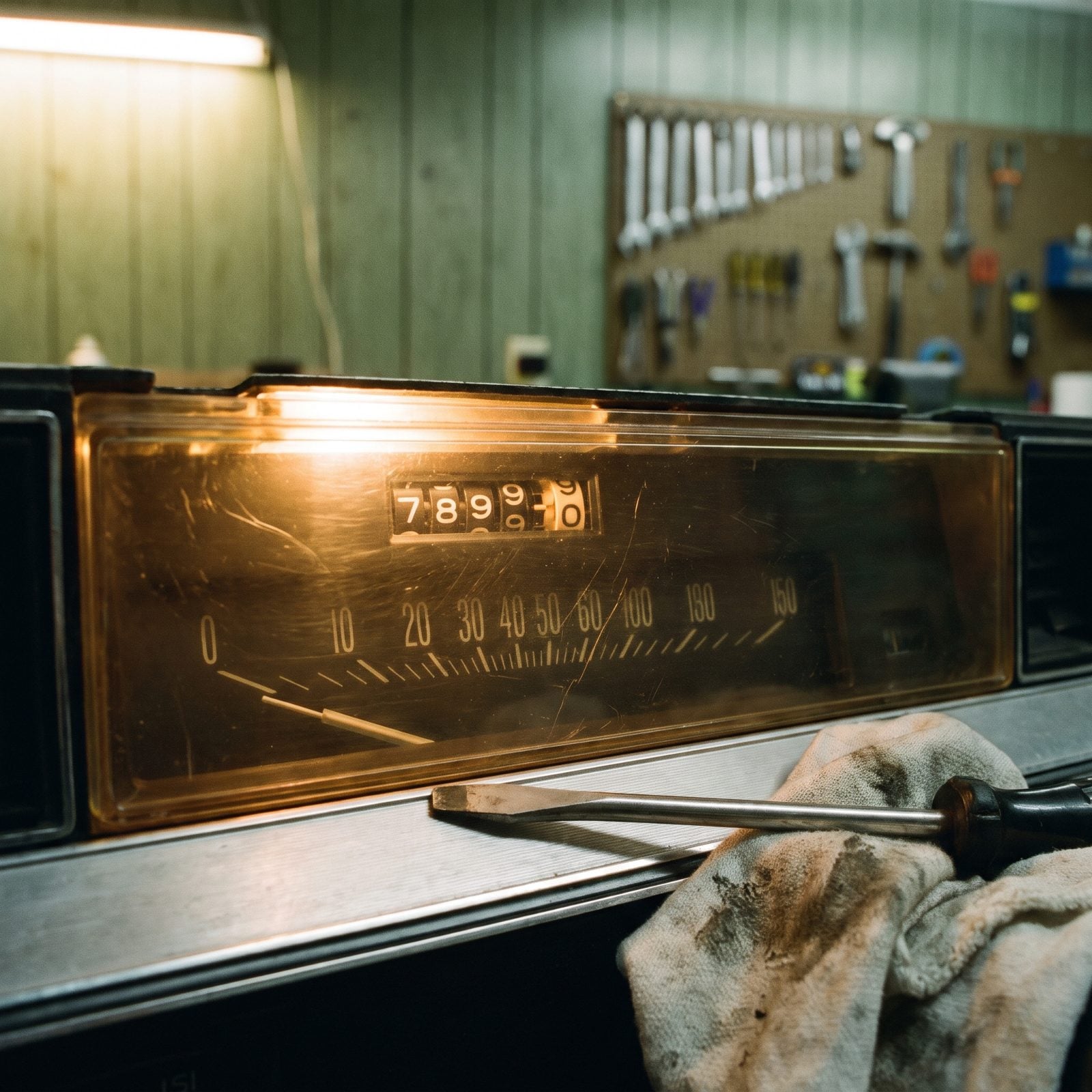
Thirty thousand miles on a car that had clearly done ninety. The number drums told one story while the sagging driver’s seat, the shiny brake pedal, and the worn gas pedal rubber told a very different one.
Mechanical odometers spun on a cable, and a cable turns both directions. A few minutes with the cluster out and the right tool, and a tired highway Monte Carlo read like a garage-kept cream puff. That number in the window was the whole pitch — and everybody knew to look at the number in the window.
But a rolled-back odometer could never fake the wear. Pedals go smooth under years of a foot. The steering wheel turns slick on the left where a hand always rides. Seat springs surrender on the driver’s side first. The number lied. The car didn’t.