
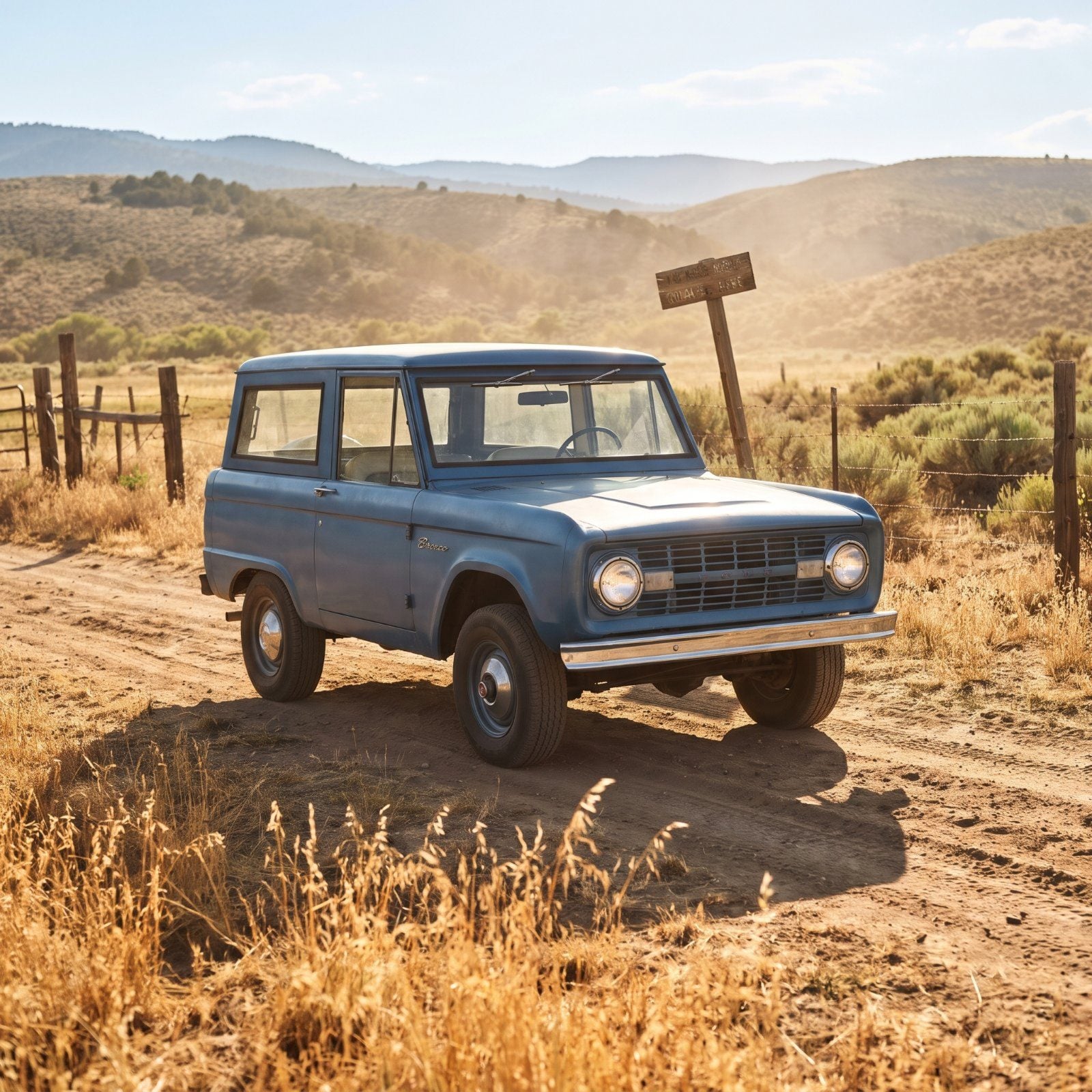
The eyebrow grille gave it away before anything else. Round headlights, a flat steel nose, tires skinny enough to look almost shy, and a stance that said this little truck had somewhere steep to be. Ford dropped the Bronco into a world owned by Jeep and watched it climb. What follows are the engineering calls, body choices, and dealer-lot decisions that turned a boxy little short-wheelbase truck into something ranchers, hunters, and weekend trail runners never forgot.
Please note that some of the images in this article were created with the assistance of AI.
The Development Code G.O.A.T. Actually Meant “Goes Over Any Terrain”
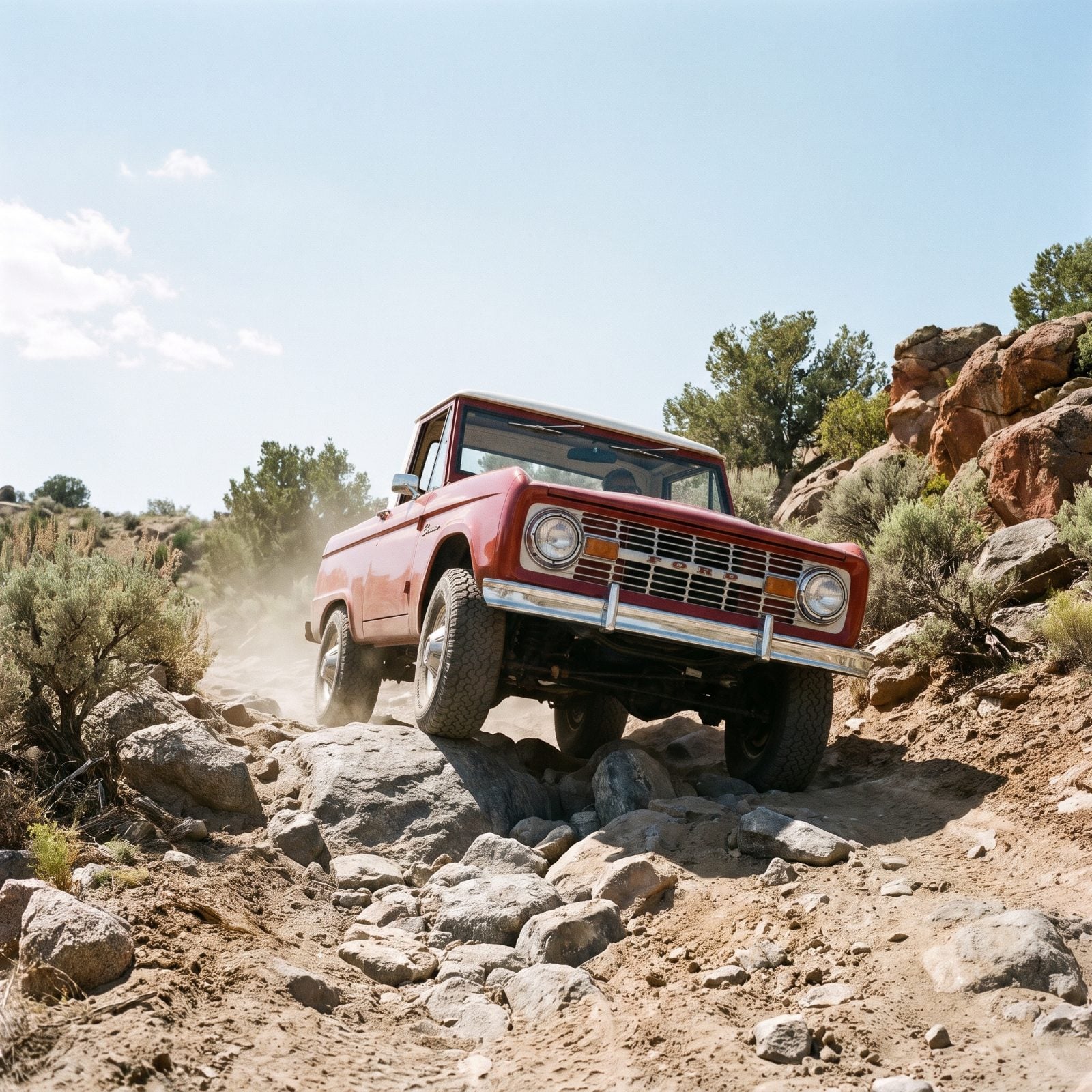
Before it was the Bronco, it was the G.O.A.T. Inside Ford, the project carried that code, and it stood for “Goes Over Any Terrain.” Not a marketing wink — an engineering mandate scrawled across the early development paperwork.
You can feel that brief in every first-year choice: the grille, the stance, the skinny tires meant to dig instead of float. Ford wasn’t building a soft suburban cruiser and hoping it could handle dirt. They started at the dirt and worked backward.
Ford Built the Bronco to Take On the Jeep CJ-5
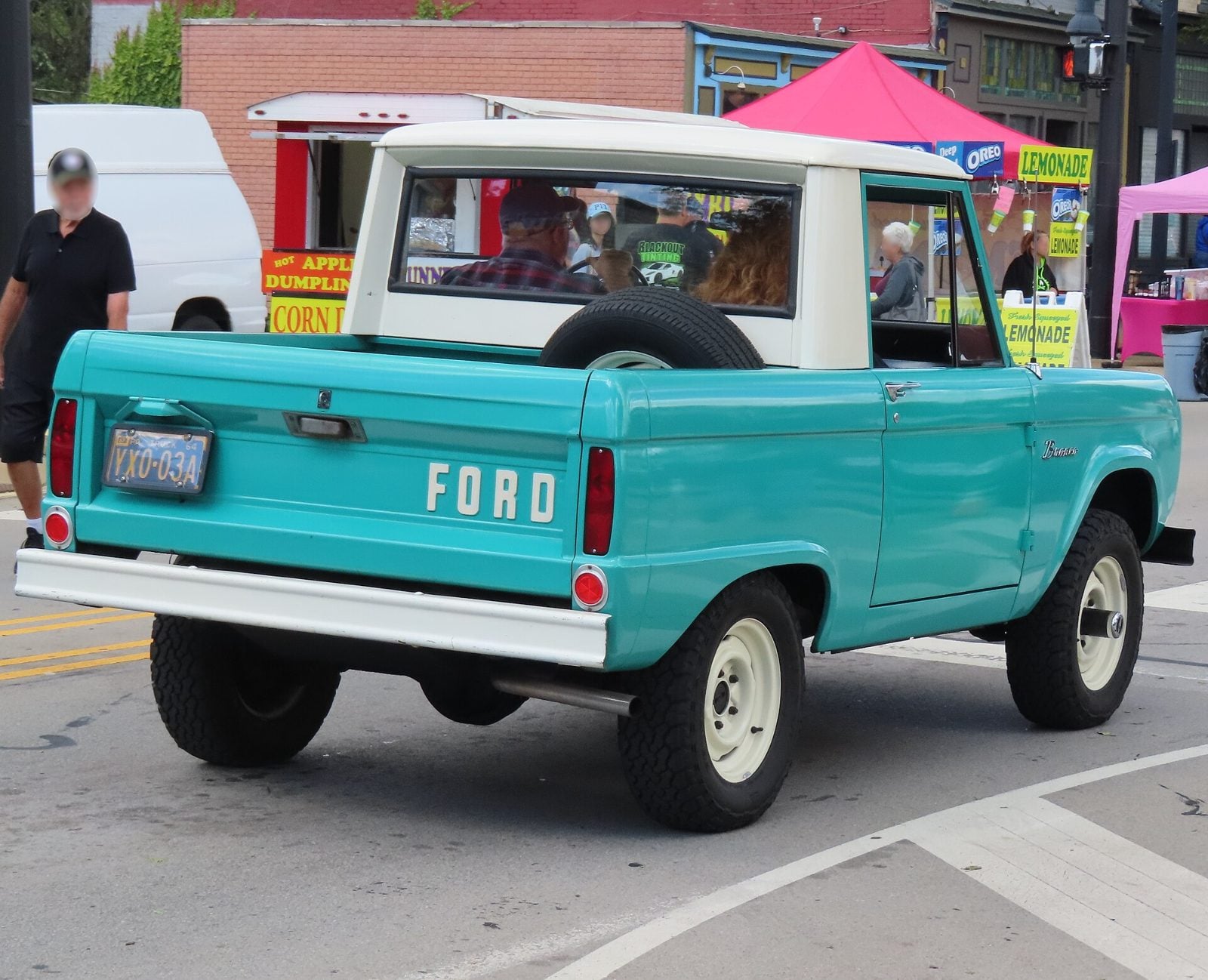
Photo: MercurySable99, CC BY-SA 4.0, via Wikimedia Commons
The Jeep CJ-5 owned the little-4×4 market, and Ford wanted in. The Bronco was the answer, aimed square at the Jeep but built with a few more manners.
Where the CJ was raw and utilitarian, the Bronco offered coil-spring front suspension and a slightly more civilized ride without giving up the climb. It was still spartan — you could order one with almost nothing on it. But it rode better over washboard, and that difference mattered to anyone who spent all day on a ranch road.
What Our Readers Say
- When Jalopy Talk readers loved a photo and tapped a reason, “nostalgic” came out on top at 27%, followed by body style at 22% and “would drive” at 19%.
From Jalopy Talk reader polls and votes.
Four-Wheel Drive Came Standard, Not as a Pricey Add-On
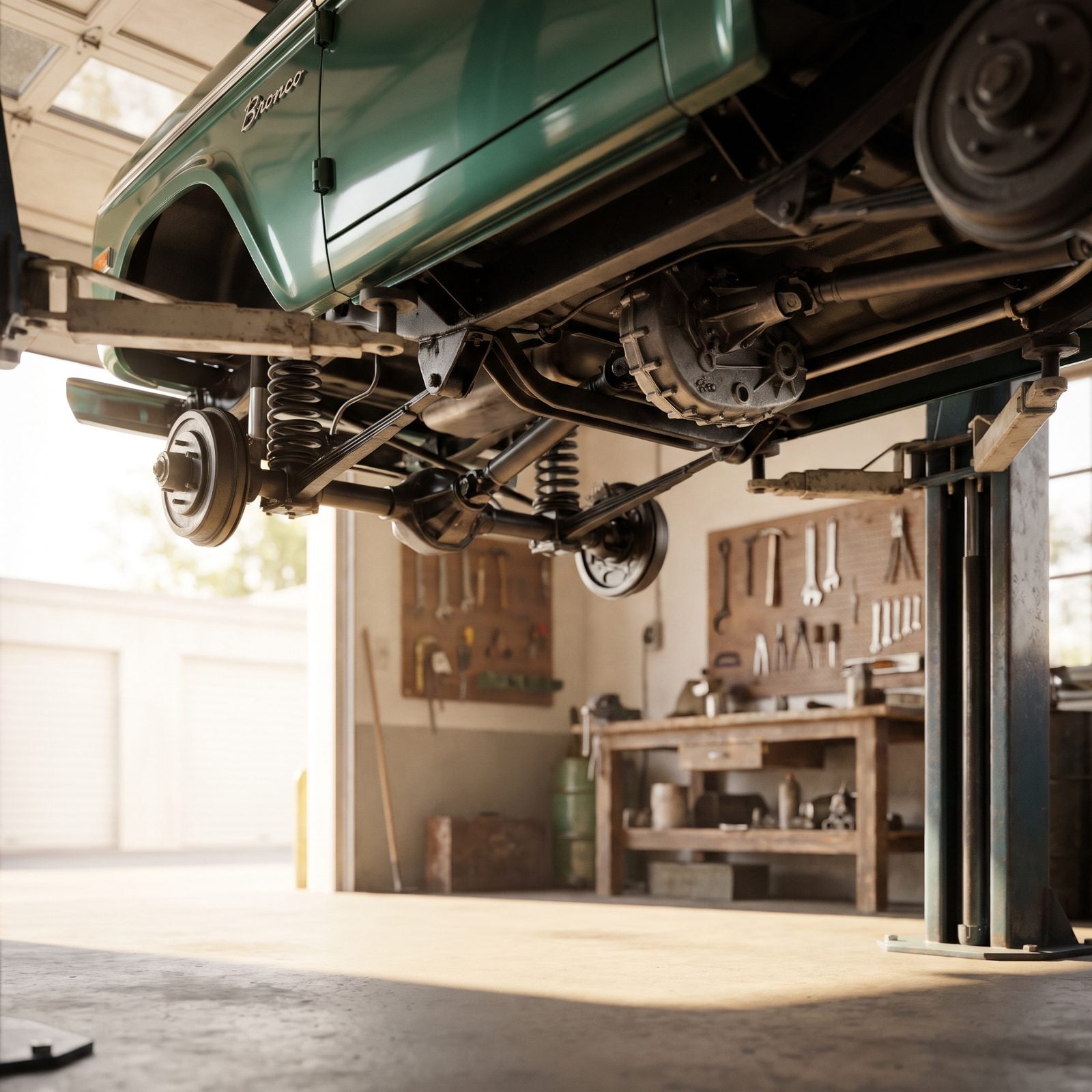
No checkbox. No upsell. Four-wheel drive was simply how the Bronco came.
Ford gave every 1966 Bronco four-wheel drive right from the factory, so the capability wasn’t an expensive afterthought bolted on at the dealer. You bought a Bronco, you got the capability to climb.
Sounds obvious now. In 1966 it was a declaration — Ford telling buyers this truck existed for the trail, not for looking the part in a driveway.
The Compact 92-Inch Wheelbase Made It Dance on Tight Trails
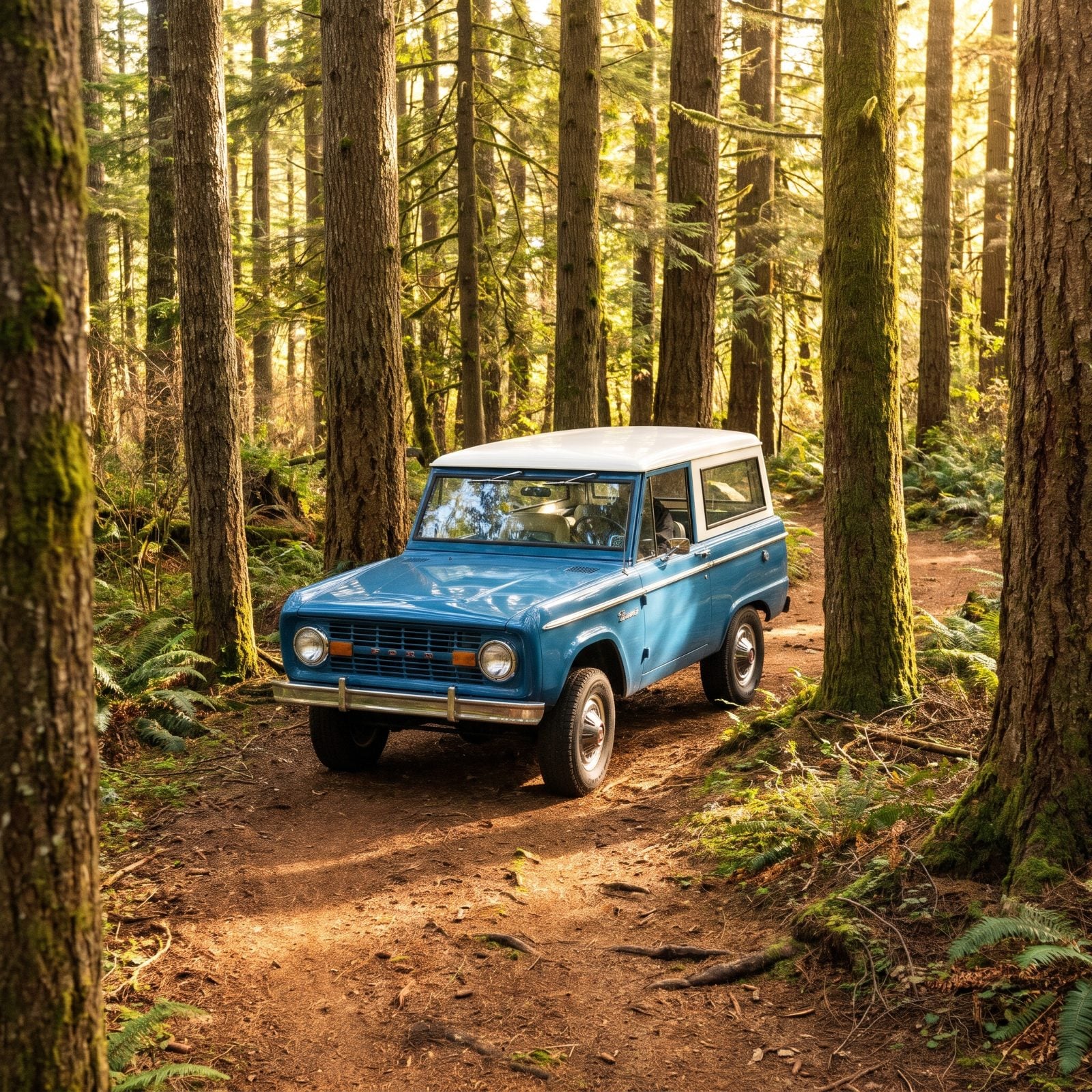
Ninety-two inches between the axles. That short span is why the Bronco could tuck into switchbacks and tight forest two-tracks that left longer trucks backing up and cursing.
A short wheelbase has a downside on the highway, where it rides busier. But drop it onto a rutted ranch path and the trade pays off instantly. The Bronco pivots where it needs to and doesn’t hang its belly on the crest of every rise.
Short Overhangs Let It Crawl Over What Longer Trucks Hit
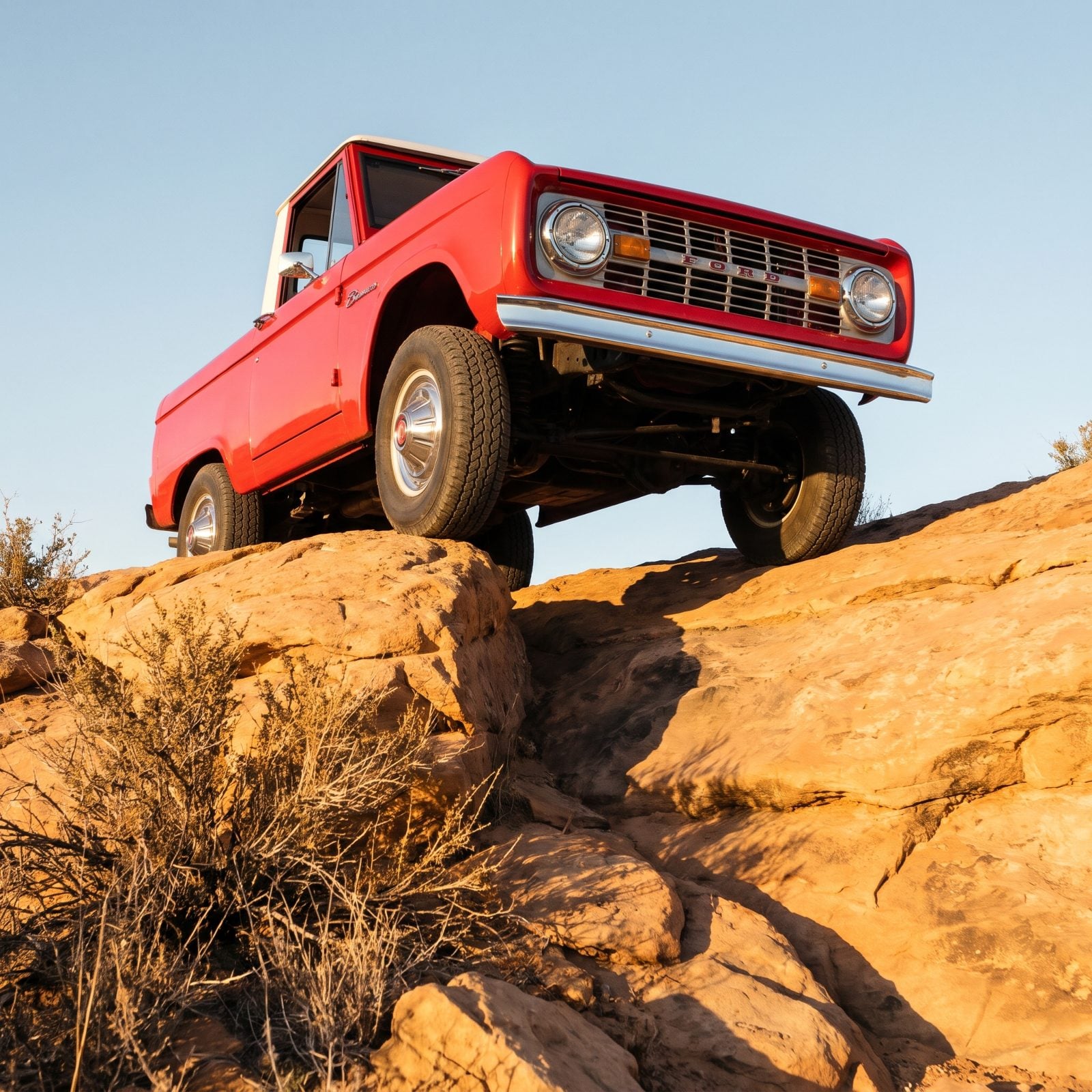
Look at how little truck sits past the front wheels.
That stubby front overhang gave the Bronco a steep approach angle, so it could nose up to a rock ledge and start climbing instead of punching its bumper into the base of it. Same story out back, where the short rear let it drop off a crest without dragging.
Designers who had never touched a trail might have stretched the body for looks. The Bronco crew kept it short on purpose, and the trucks that followed it over obstacles learned why.
A Narrow Body Slipped Down Trails That Pinched Wider Trucks
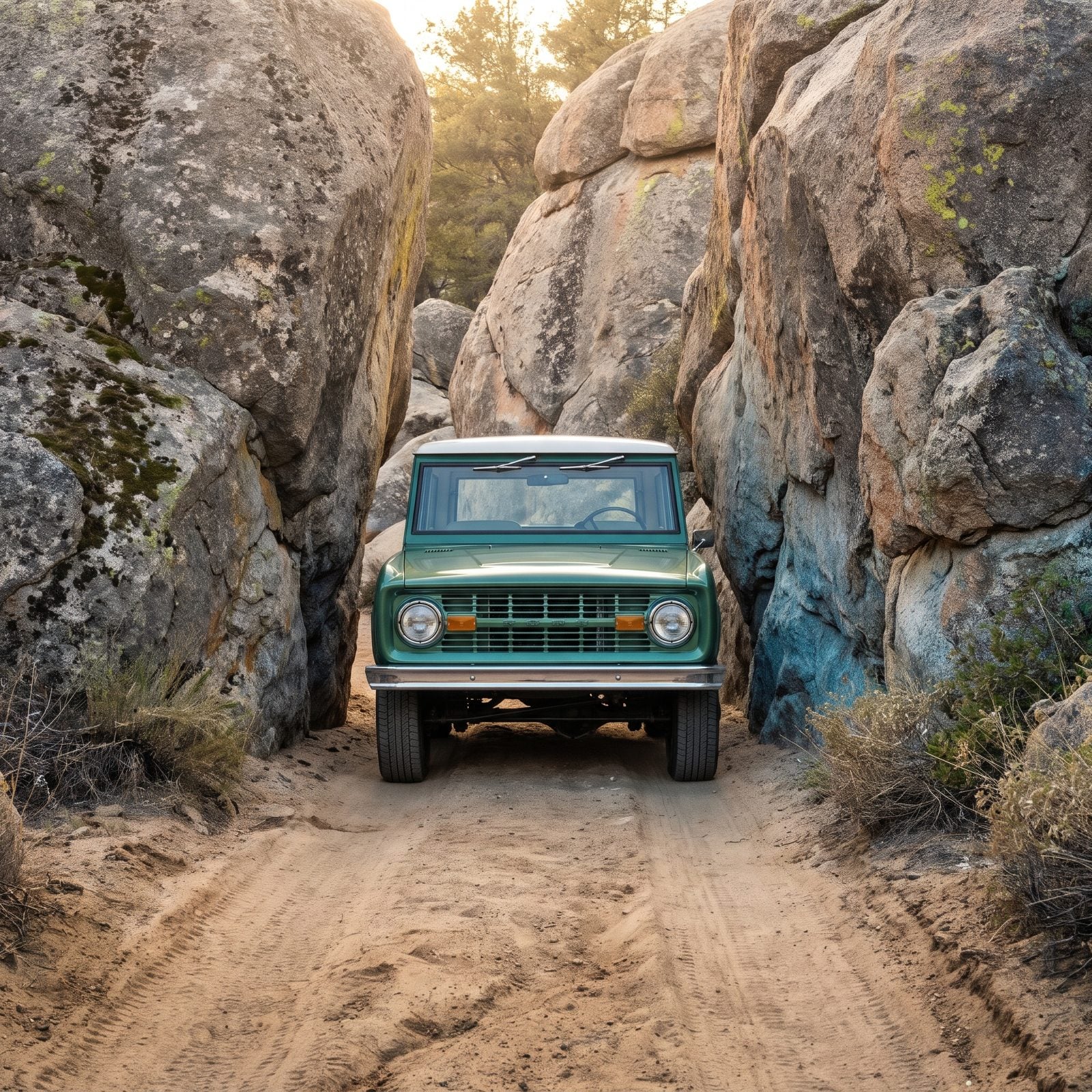
The Bronco was built narrow, and narrow wins where the rocks close in. A tight gap between two boulders is a go for one truck and a three-point turn for another, and width is the whole difference.
On overgrown ranch tracks and old logging trails, that slim steel body meant fewer scraped fenders and more trails that stayed open to it. You didn’t have to pick your line around the body. The body already fit.
Generous Ground Clearance Kept the Undercarriage Off the Rocks
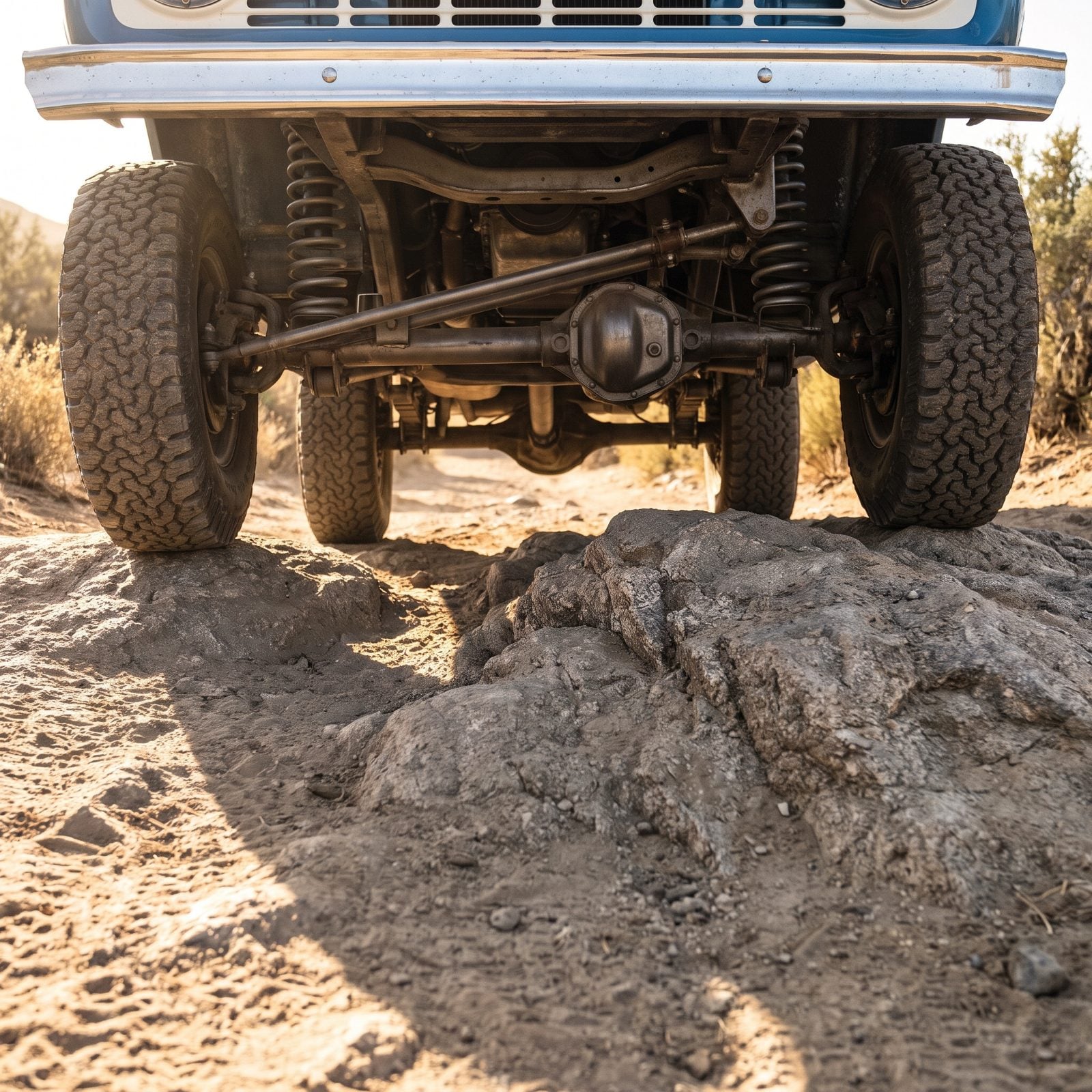
Clearance is the difference between a scenic drive and a tow strap.
Ford gave the Bronco enough daylight under the frame and axles to clear the rocks and ruts that would have hung up a lower vehicle. That solid front axle rode high, and the whole belly sat where it could pass over trouble instead of plowing into it.
Anyone who ever heard the ugly crunch of a skid plate meeting granite understands why this mattered more than horsepower on a bad trail.
A Tight Turning Circle Earned Its Keep on Switchbacks
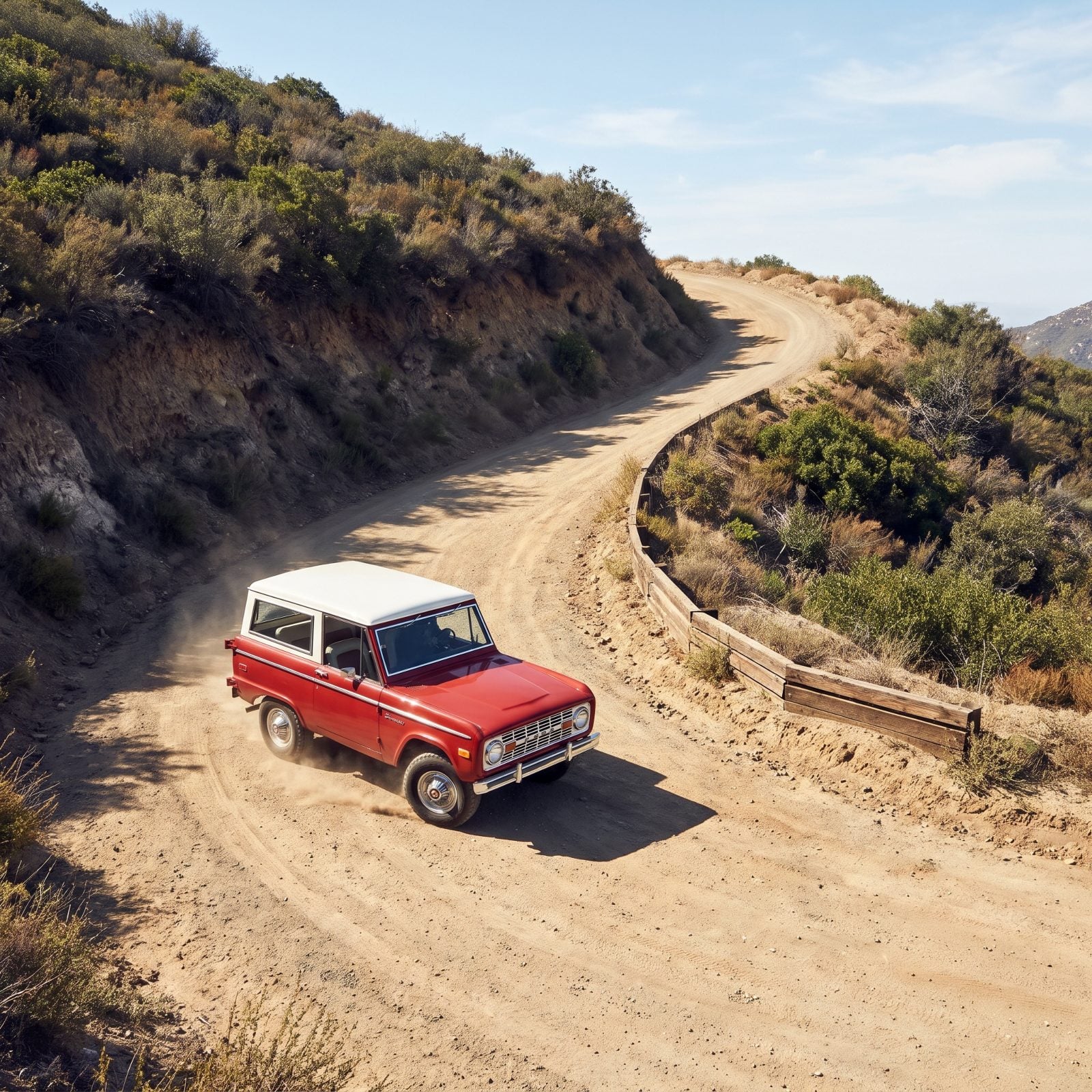
A short wheelbase and quick steering gave the Bronco a tight turning circle, and that paid off every time a trail doubled back on itself.
Switchbacks punish long trucks. The Bronco could wheel through a hairpin in one clean arc where a bigger rig had to stop, reverse, and try again on a drop-off you’d rather not stare at. Less fuss. More trail behind you before lunch.
A Lightweight Body Floated Over Soft Ground
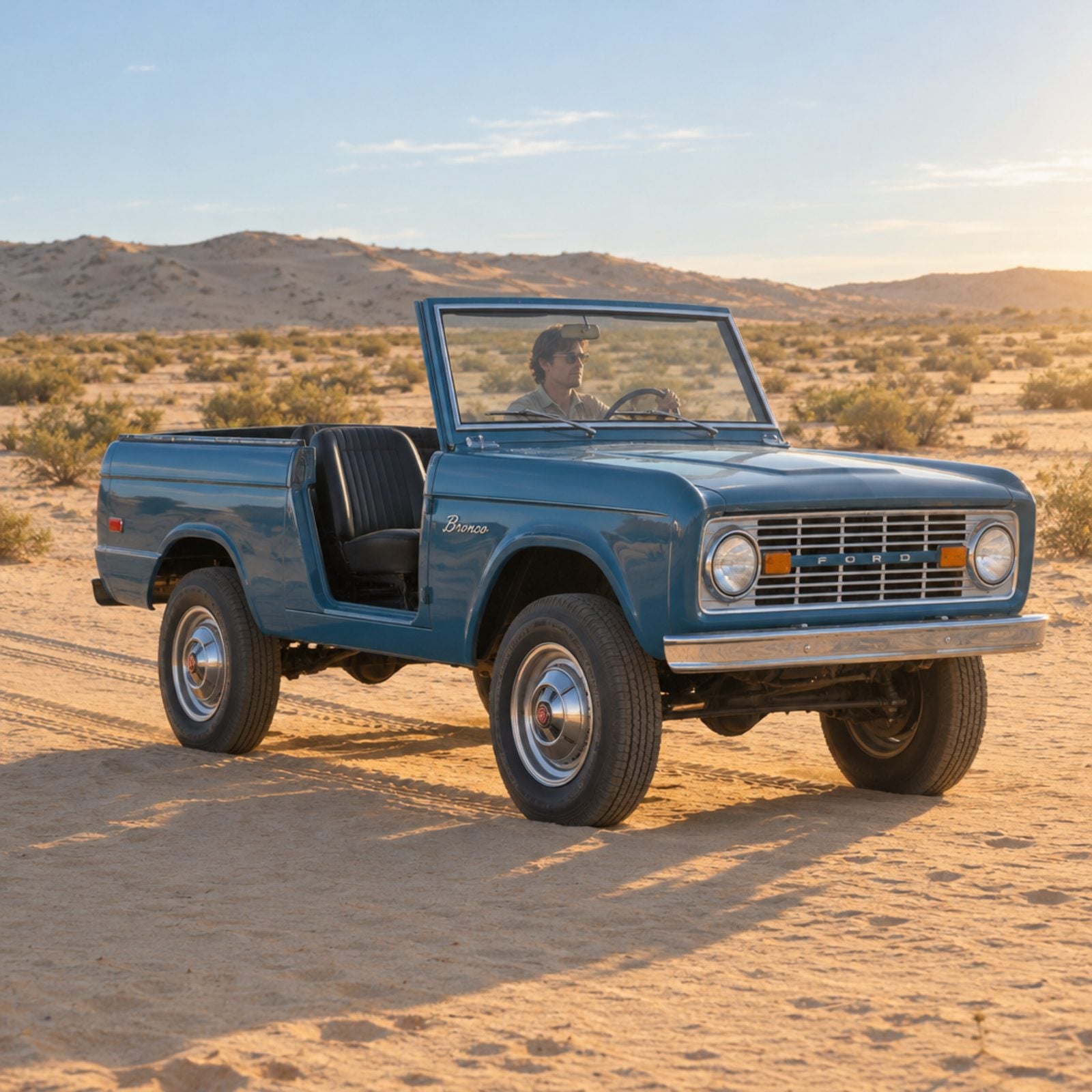
The Bronco didn’t carry much fat, and that mattered on soft stuff — sand, mud, loose desert dirt. A lighter truck sits on top of the surface instead of sinking into it.
That low weight showed up early in competition, too. The Bronco found its footing where heavier machines bogged and spun, and it did it on modest power because it wasn’t asking the engine to haul extra pounds through the muck.
The Separate Ladder Frame Was Built to Be Beaten On
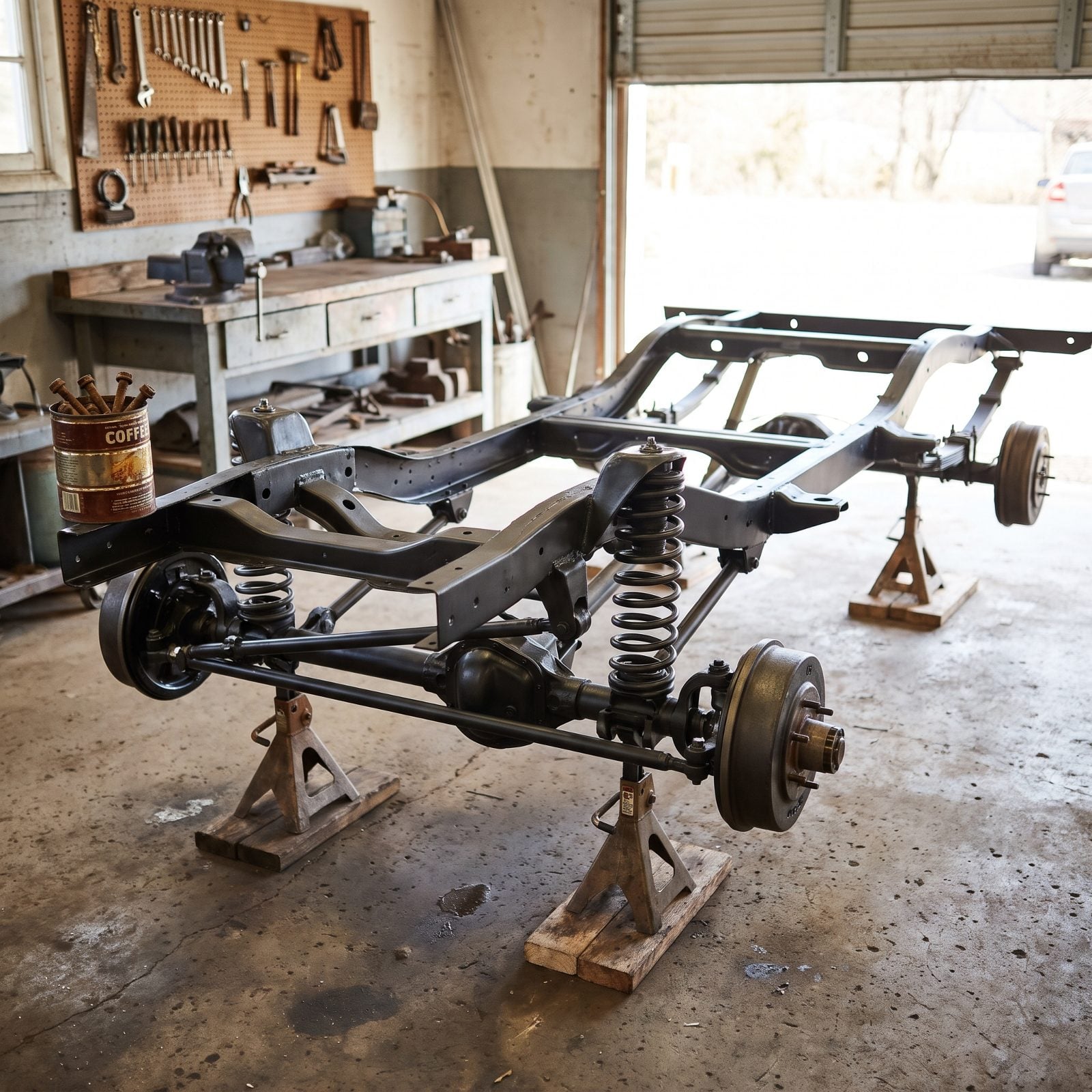
Under all of it sat an honest ladder frame, and that’s the part that let the Bronco take a pounding.
Body-on-frame construction put a tough boxed-steel structure between the ground and everything else. Twist it, flex it, drop it off a ledge — the frame soaked up the abuse while the body rode along on top.
Which is why so many first-year Broncos are still out there climbing. The frame was built for hard use and it meant it. You can wear out an engine. A good frame just keeps showing up.
Coil Springs Gave the Front Axle Unusual Flexibility
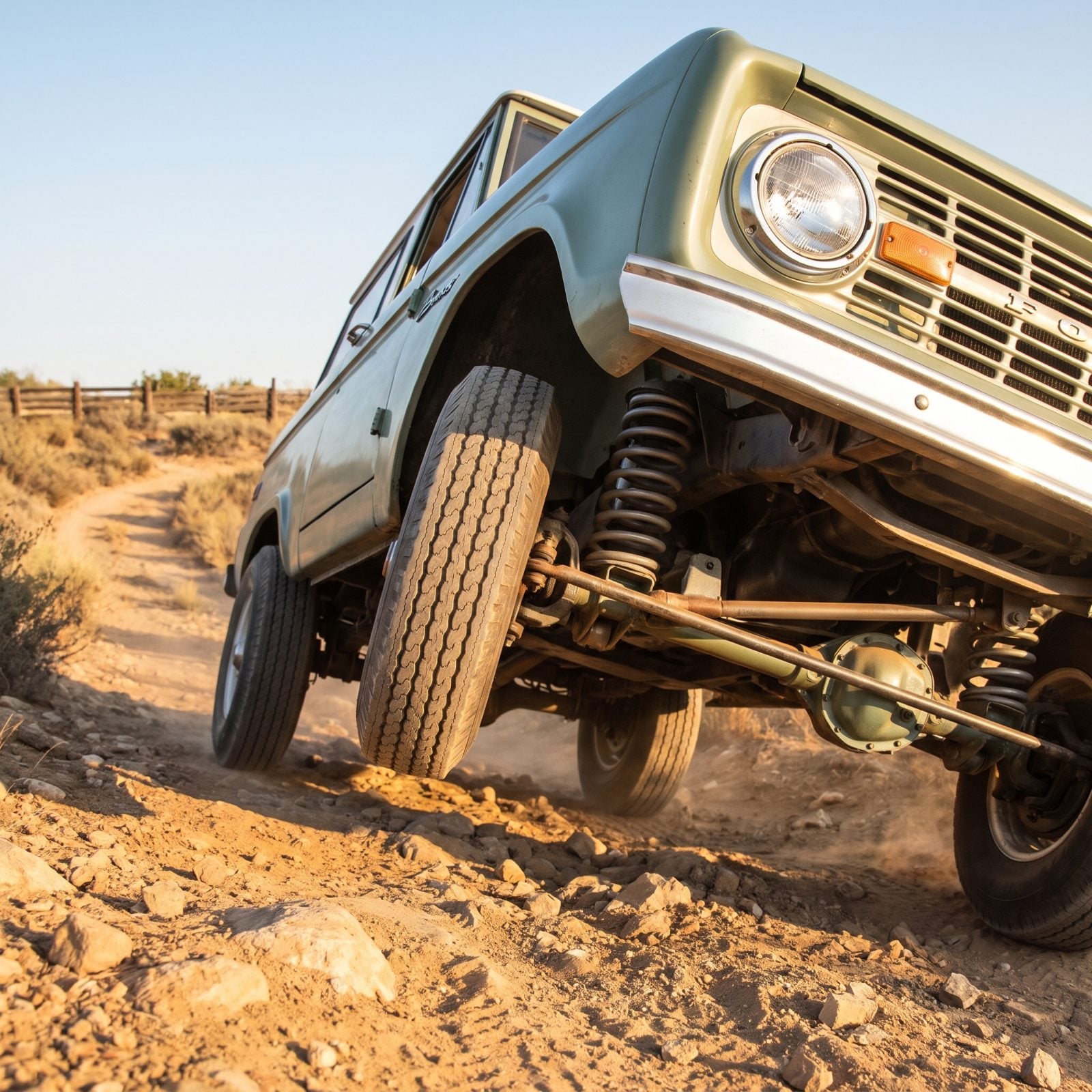
Before the Bronco, a compact four-wheeler meant leaf springs front and rear, plus a ride that rattled your fillings loose. Ford did something different. Up front went coil springs, long and progressive, letting that solid axle droop and climb over terrain that would stop a leaf-sprung rig cold.
The payoff showed up on a rocky grade — one wheel reaching for sky, the other hunting for grip, the whole front end flexing instead of hopping. Rode better on the highway too, which mattered plenty when the Bronco doubled as the family rig during the week.
Long Radius Arms Located the Front Axle
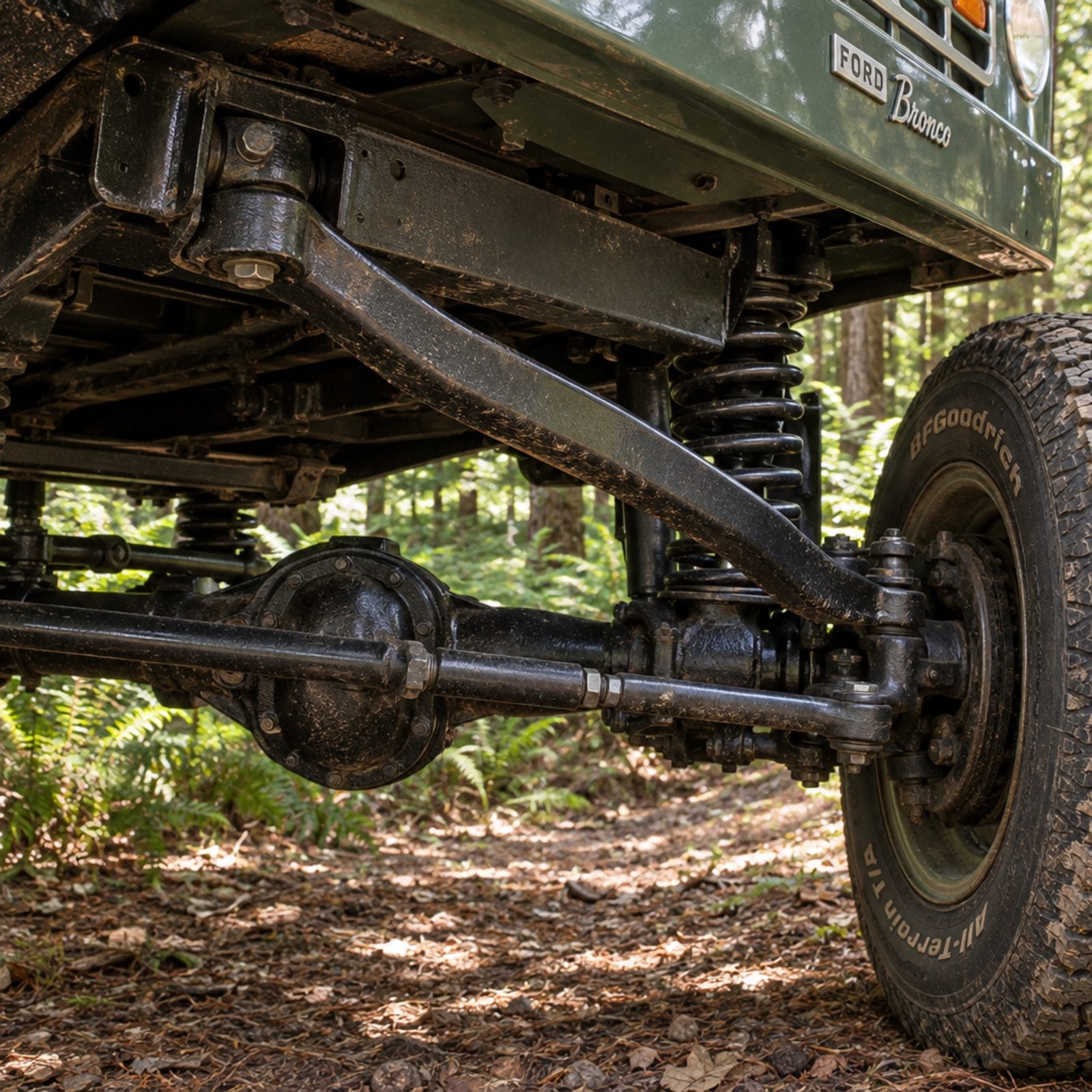
Coil springs can’t do the job alone. Something has to tell the axle where to live when you hit the gas, the brakes, or a ledge. Ford’s answer was a pair of massive, sweeping radius arms that curve upward from the axle housing, near the knuckle, to a stout frame bracket, with a track bar handling the side-to-side.
Simple, strong, forgiving. Because those beefy arms tied the axle so firmly to the frame, its motion stayed predictable through its whole range of travel, so the front end held planted instead of wandering on a washboard road. Decades of owners have traced the Bronco’s good manners straight back to this layout.
Rear Leaf Springs Supported Loads and Rough-Terrain Work
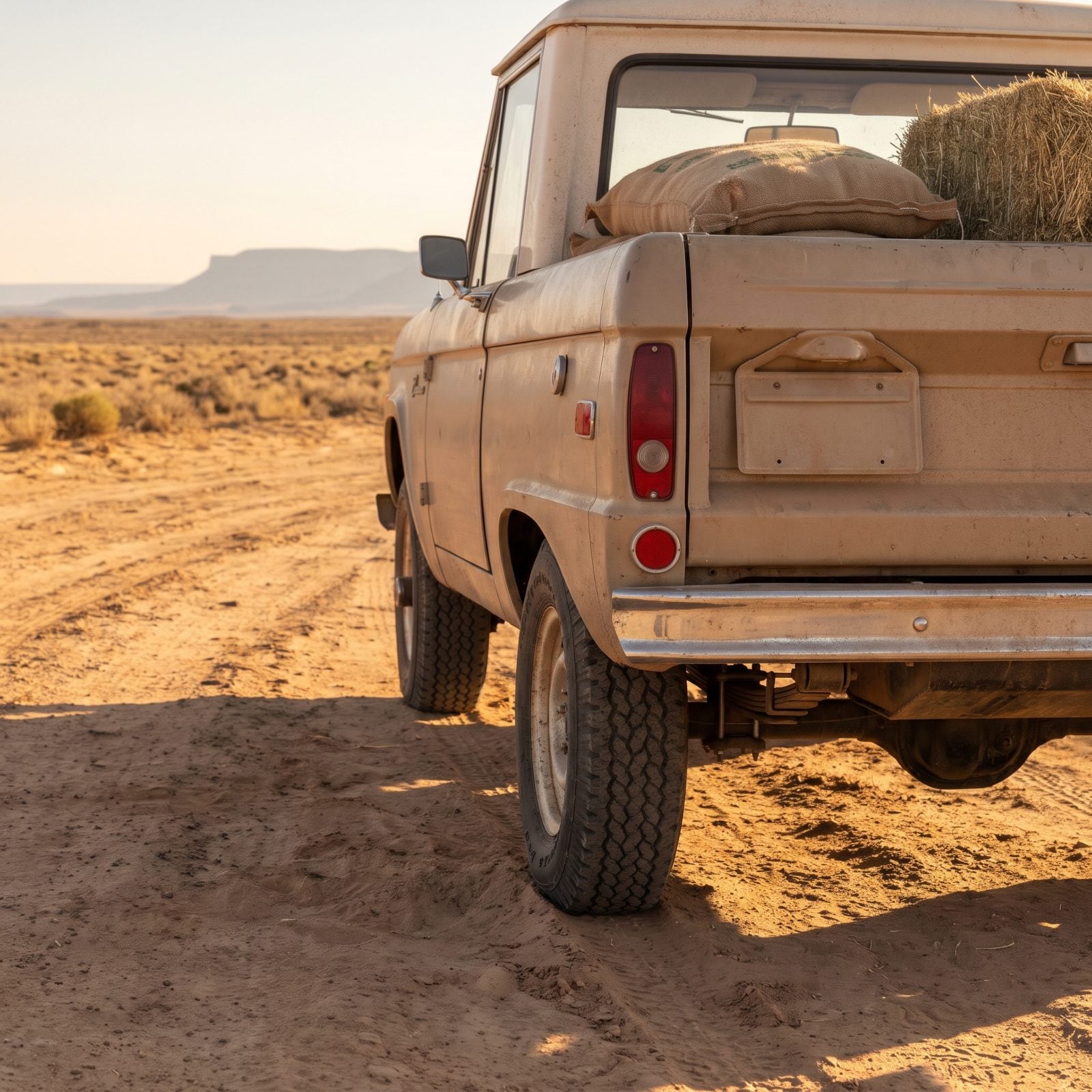
Out back, Ford kept things conventional, and for good reason. A multi-leaf spring pack under the rear axle handled weight the way coils never could. Load the bed with fence posts, feed sacks, or a week’s worth of camping gear and the leaves flattened out and carried it without complaint.
That blend is what defined the early Bronco: coils up front for travel and ride, leaves in the rear for load and grit. Ranchers figured it out fast. You could work it all week and still drive it to church on Sunday without your spine filing a complaint.
The Dana 30 Front Axle Put Power to Both Front Wheels
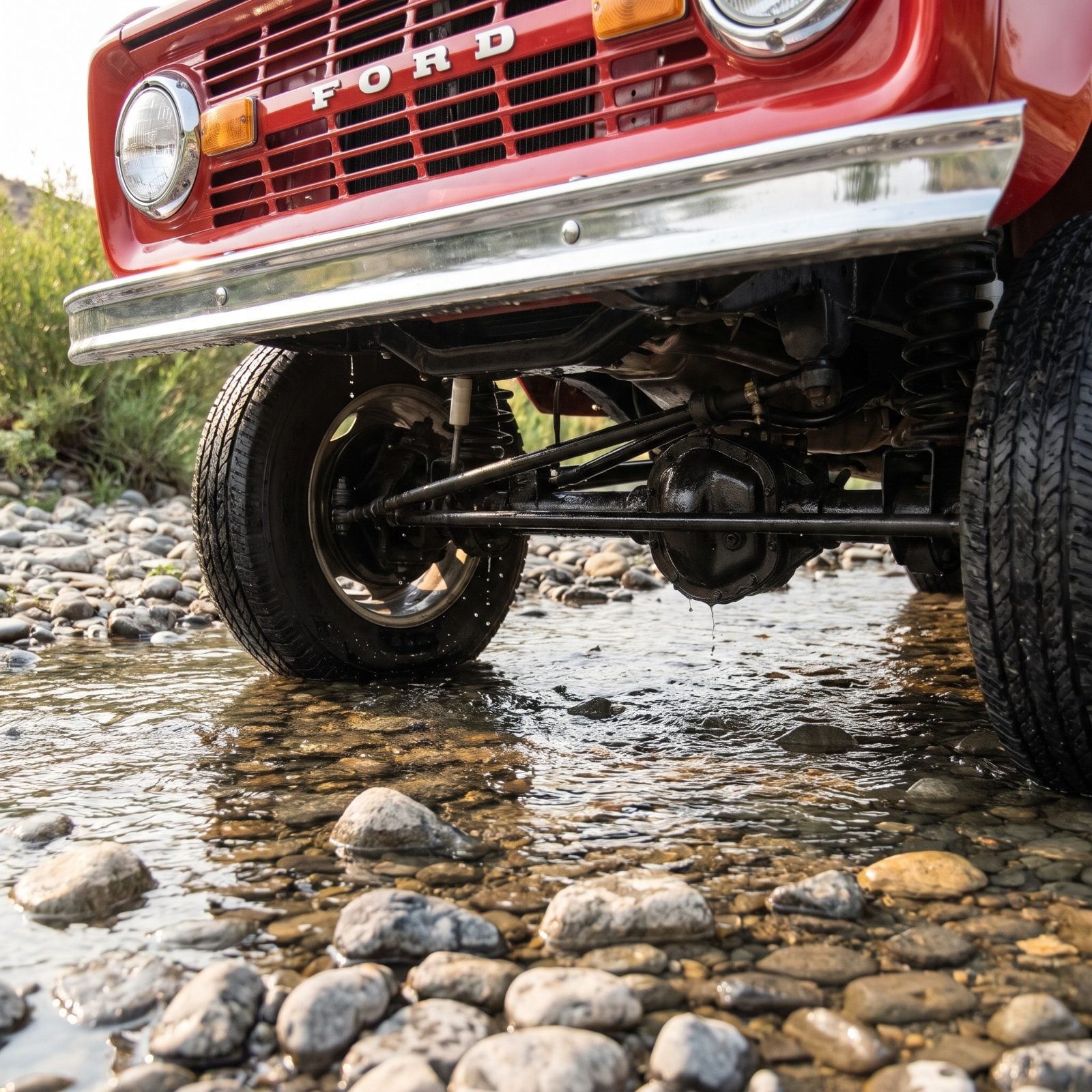
This was the heart of the whole promise. A Dana 30 solid front axle meant the front wheels could pull, not just steer. Dig a rear tire into mud and the Bronco didn’t quit — it called on the front axle and clawed its way out.
For a light rig the Dana 30 made good sense: strong enough for the Bronco’s weight, compact enough not to drink fuel. It gave the truck the real four-wheel-drive credential that set it apart from the car-based wagons of the day. When the going turned ugly, this axle was why you kept moving.
Ford’s 9-Inch Rear Axle Became a Durability Icon
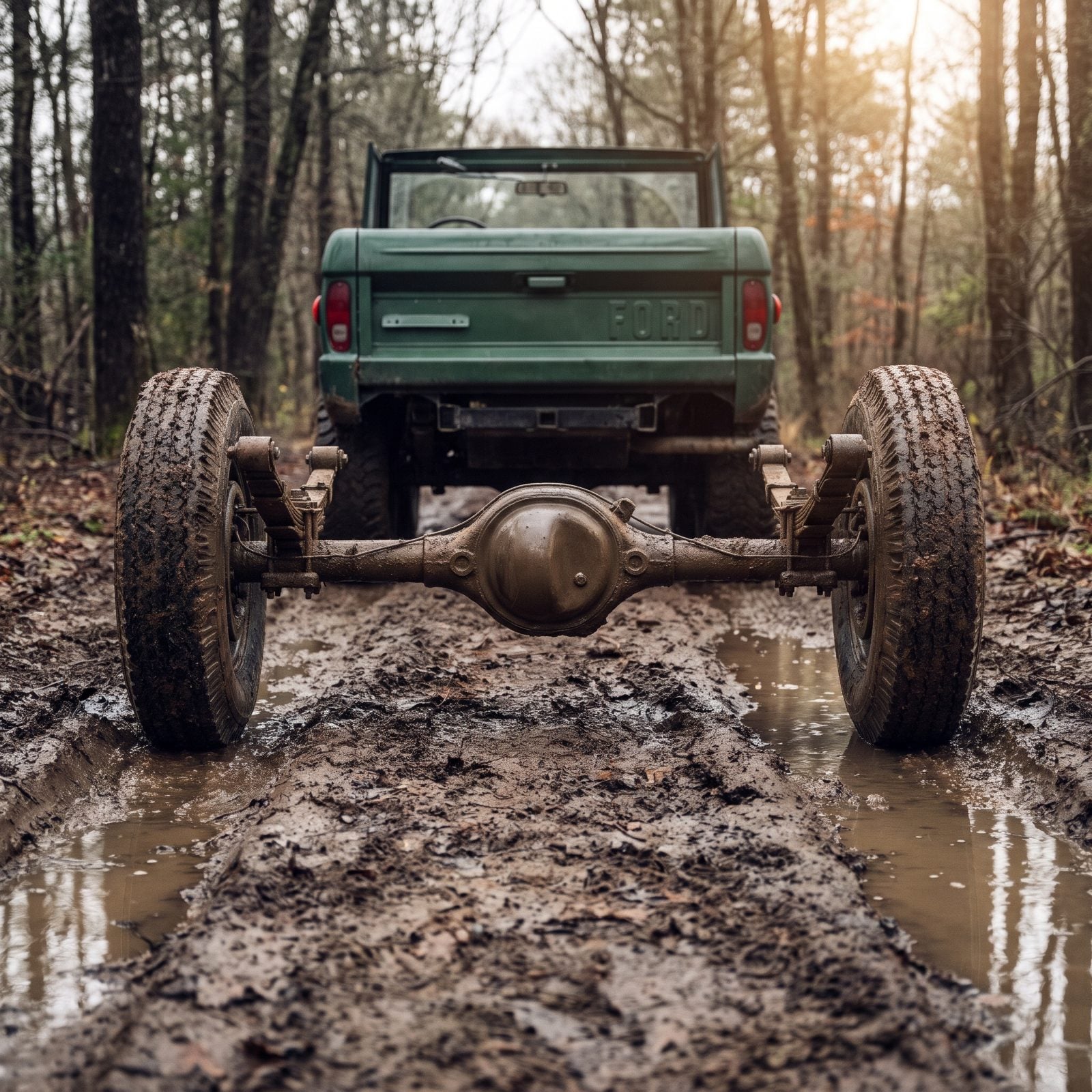
Some parts earn a reputation that outlives the vehicle they came in. The Ford 9-inch rear axle is one of them. That drop-out center section that pulls from the front of the housing — the pumpkin — became shorthand for nearly indestructible among hot-rodders and off-roaders alike.
Under the first-year Bronco it did quiet, dependable work, taking abuse on rock and mud and washboard without a word. And here’s the proof it stuck: people still hunt down 9-inch housings for everything from drag cars to rock crawlers, which tells you Ford got something right in 1966. Overbuilt, maybe. Nobody ever complained about that.
Manual Locking Front Hubs Let Drivers Disengage the Front Axle
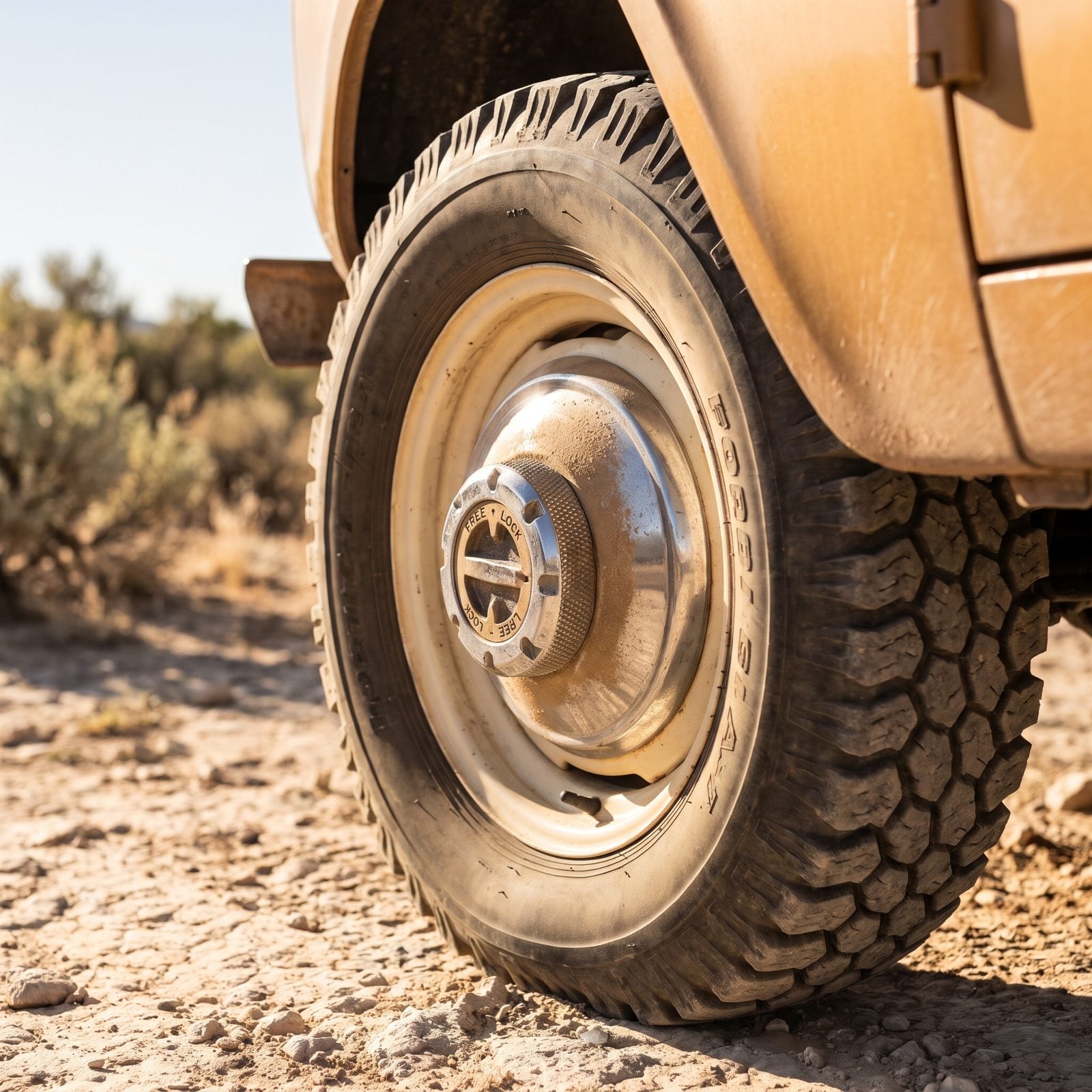
Climb out, crouch at each front wheel, twist the hub dial to LOCK. That little ritual told you the day was about to get interesting.
Manual locking front hubs let the Bronco’s front axle spin free on the highway, saving fuel and wear when you didn’t need the extra traction. Reach the trailhead, lock them in, and both front wheels stood ready to pull. A small, honest piece of engineering you worked with your own two hands.
The Dana 20 Transfer Case Supplied High and Low Ranges
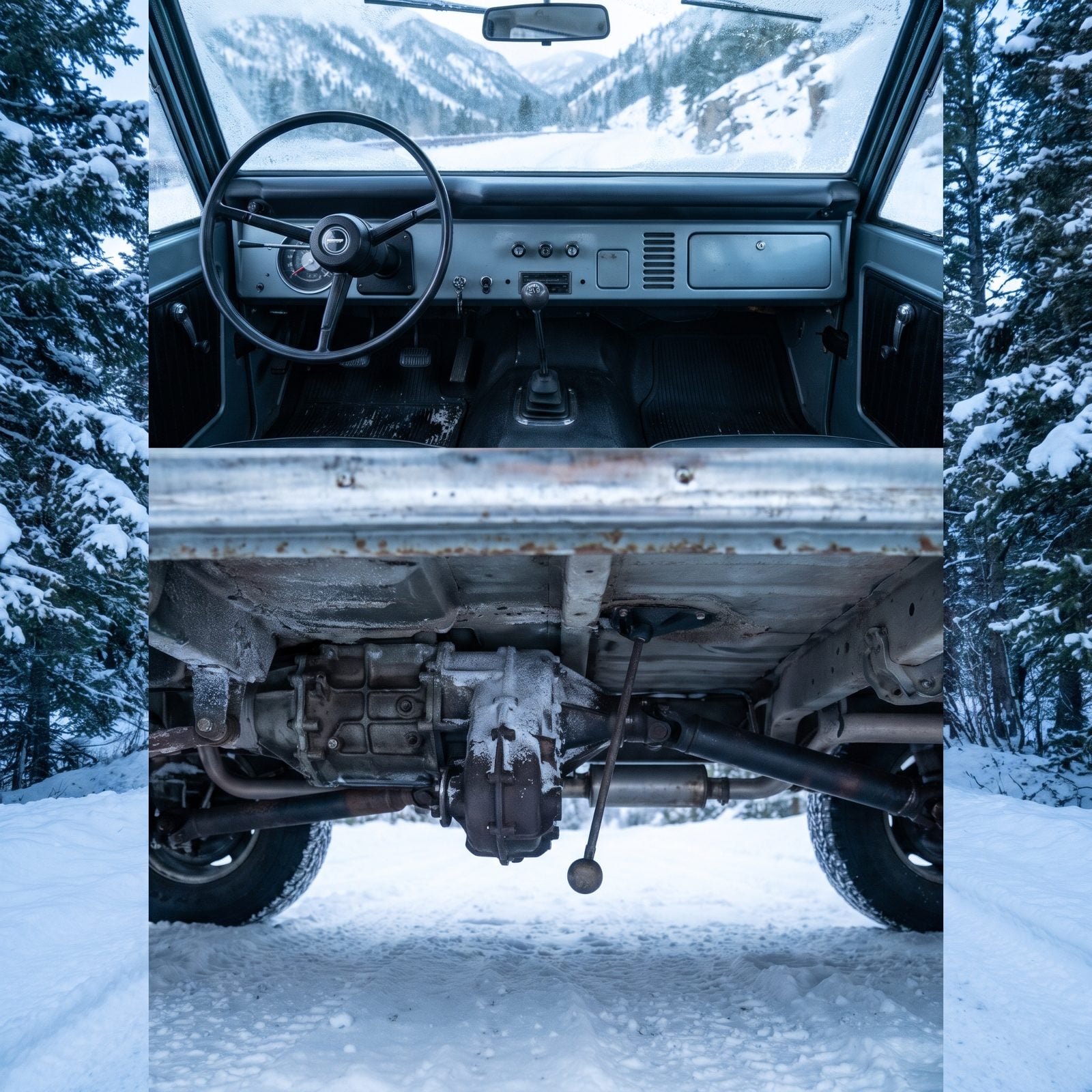
Pull the transfer case lever and the whole character of the truck changed. The Dana 20 transfer case gave the Bronco two-wheel high, four-wheel high, and the crawler gear that mattered most — four-wheel low.
Low range multiplied torque dramatically, letting the Bronco creep up a rock face or grind through deep snow at walking speed without roasting the clutch. High range took care of loose dirt and the trail runs where you wanted momentum. One lever, a world of difference, and no computer deciding any of it for you.
Its 170-Cubic-Inch Inline-Six Favored Low-Speed Torque
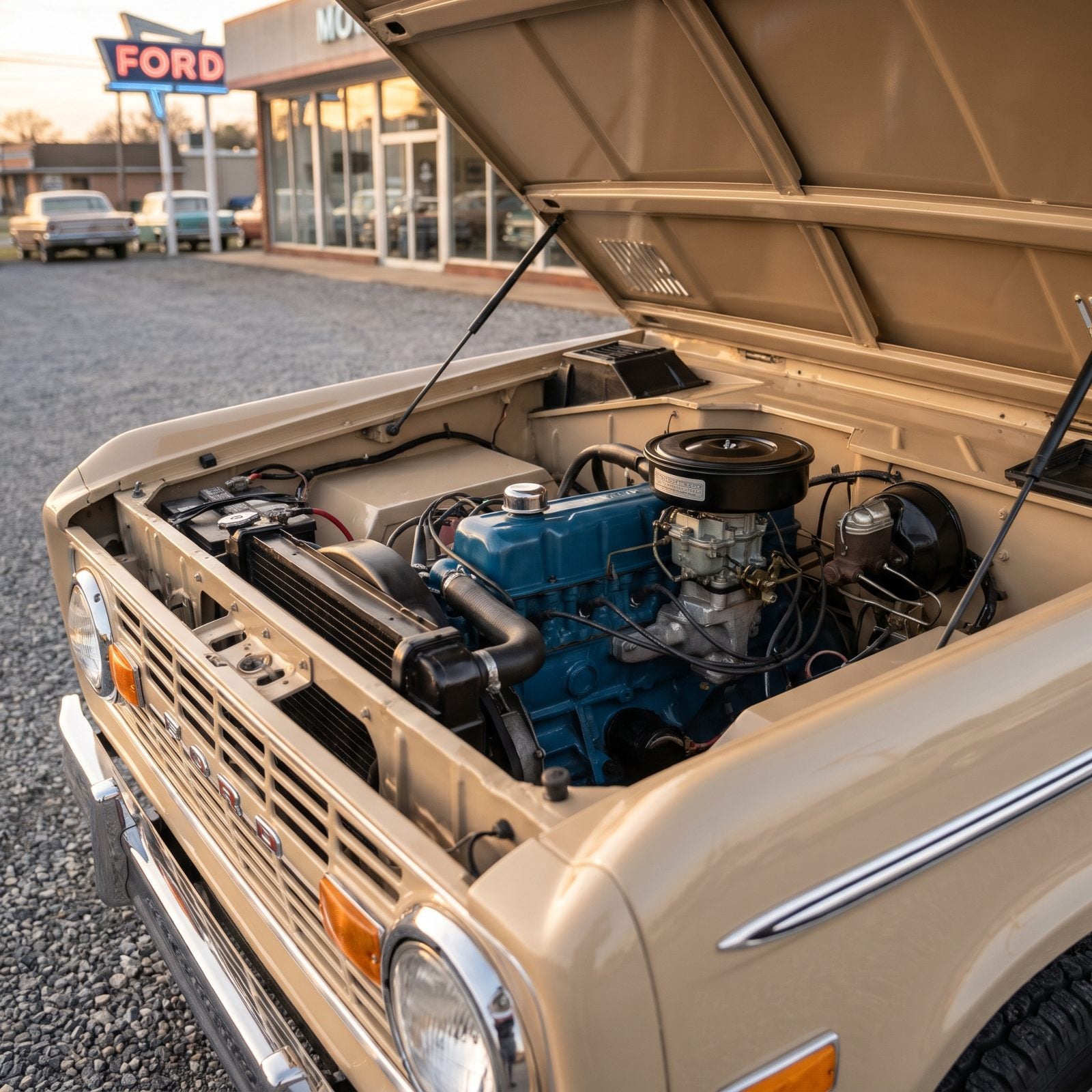
The base engine wasn’t fast, and it was never meant to be. The compact inline-six under this hood made its living down low, where a four-wheeler actually works — pulling a trailer up a grade, crawling over rock, lugging through sand without stalling.
This was the kind of motor you could fix with a wrench and a coffee can of parts. Simple, tough, thrifty on fuel. Plenty of ranch Broncos ran this six their whole lives and asked for nothing more than oil, points, and the occasional carb clean.
The Optional 289 V8 Added Serious Power
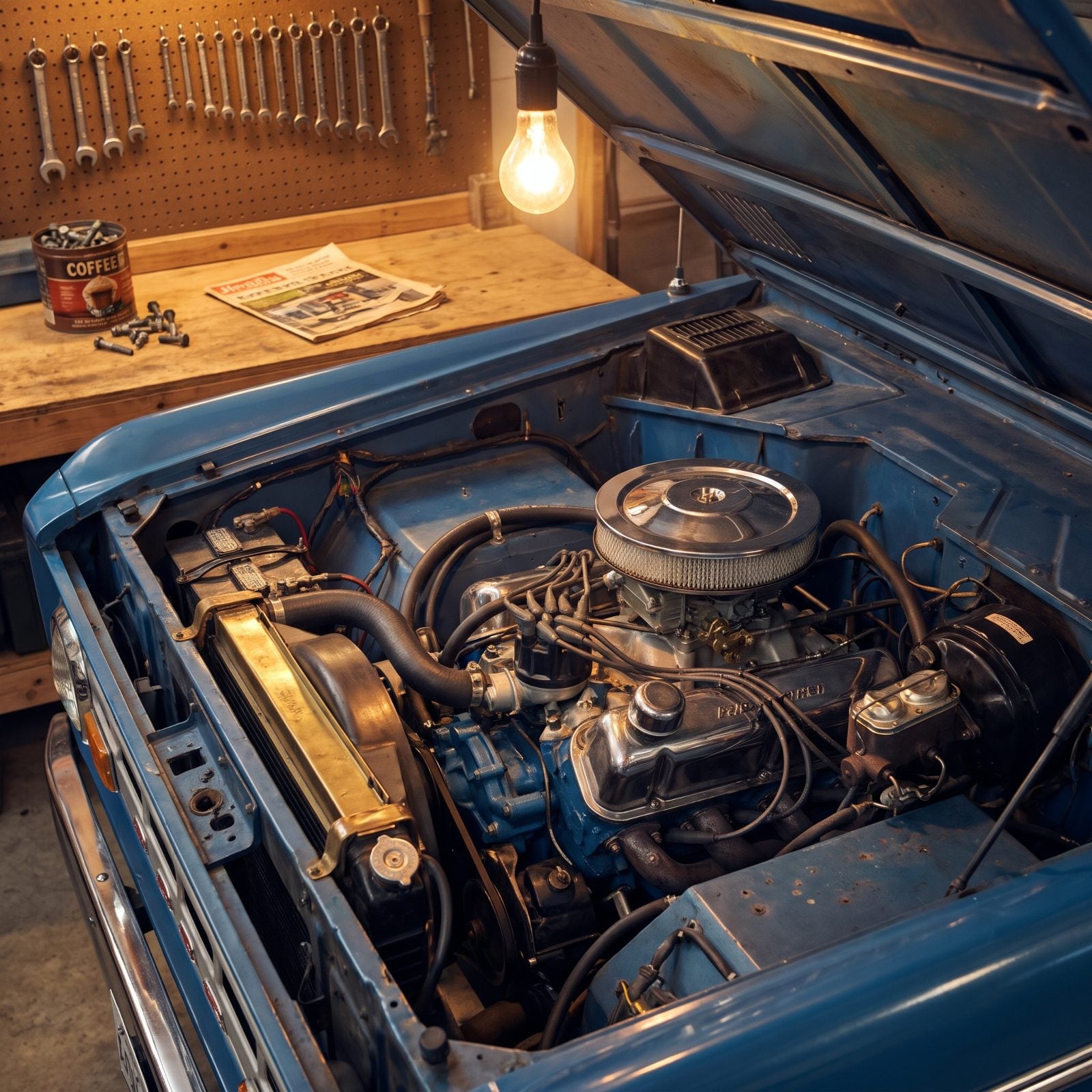
Partway through the first year, Ford gave the Bronco what enthusiasts had been itching for: the 289 V8. Same small-block family that made the Mustang sing, dropped into a short-wheelbase four-by-four.
Suddenly the Bronco had muscle to go with its manners. More torque for the hard pulls, real speed on the open road, and a V8 note that turned heads at the trailhead. This is the engine most people picture when they think early Bronco, and it’s the one that pushed the little truck from capable to genuinely quick.
A Three-Speed Manual Kept the Driveline Simple
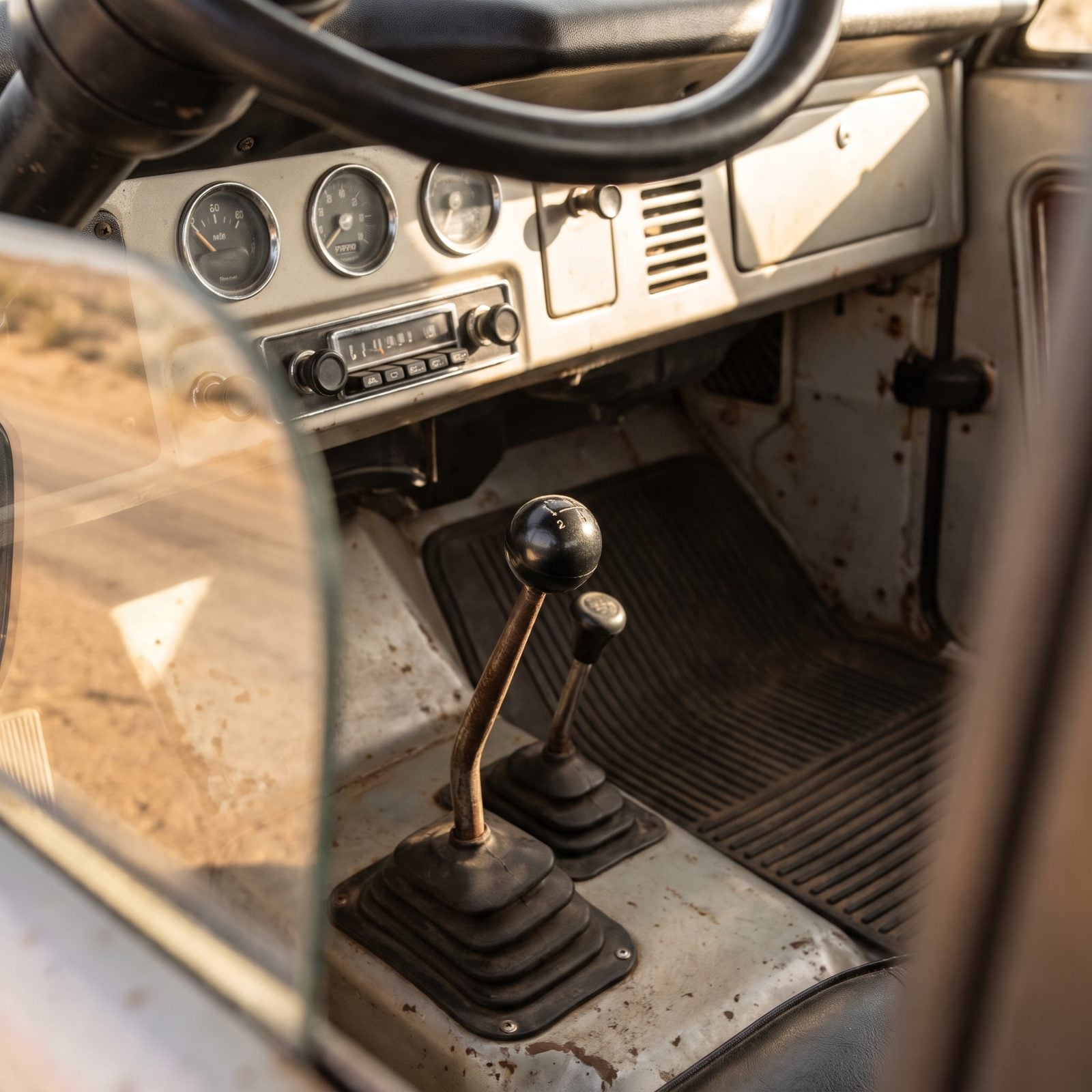
Three forward gears, one lever, no mystery. The standard three-speed manual matched the Bronco’s whole philosophy — do the job, nothing fancy, nothing to break.
You rowed through the gears with your hand on a round knob, the transfer case lever sitting right alongside, and that was the whole of the complexity. It paired naturally with the torquey six and handed the driver direct control over everything. No slushbox, no second-guessing. Just you, the clutch, and whatever the trail threw at you.
Simplicity like this ages well. A driveline you understand completely is a driveline you can trust a long way from the nearest shop — and that’s a kind of freedom the gauges never list.
The Column-Mounted Shifter That Cleared the Whole Front Floor
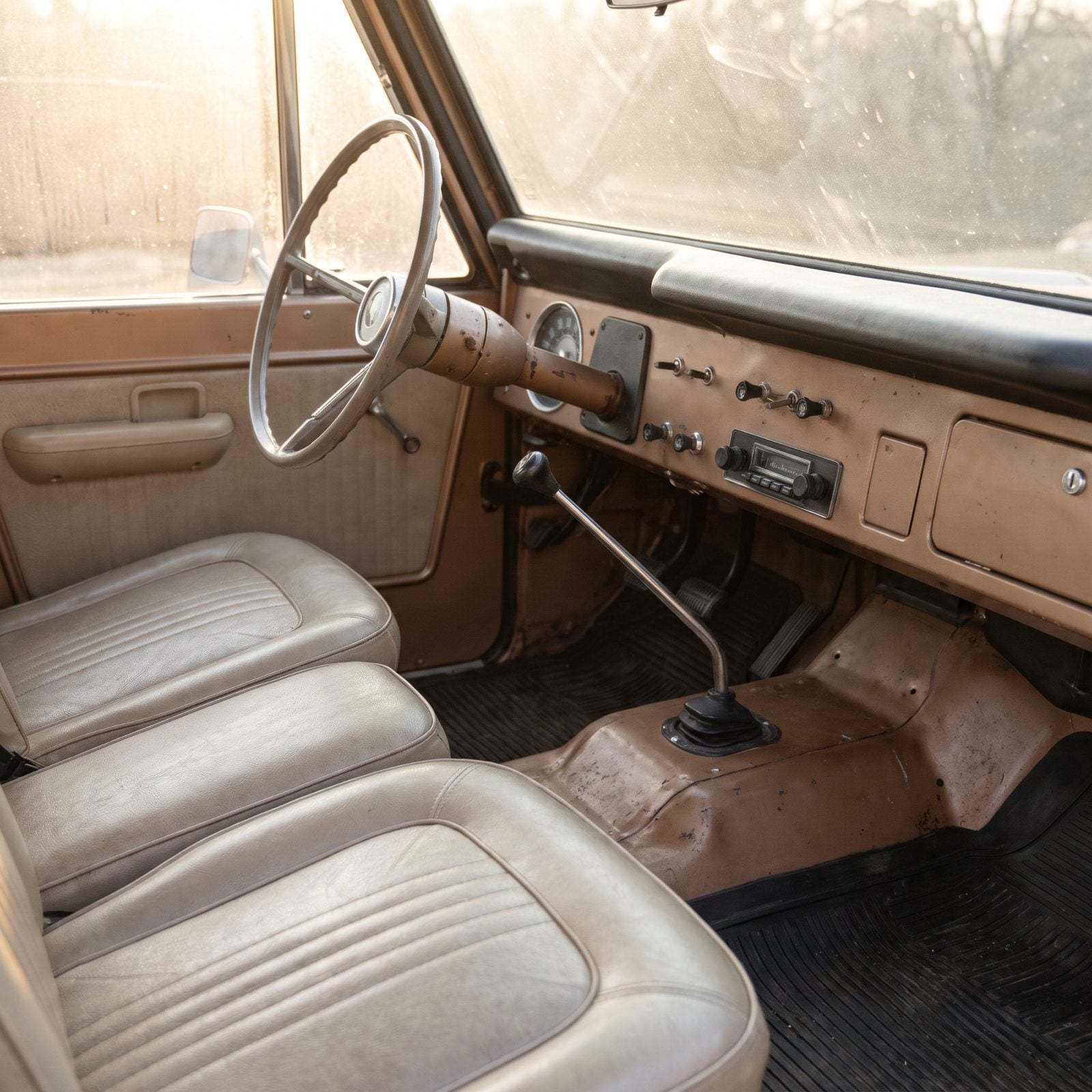
Look down and the first thing you notice is what isn’t there. No console, no long stick rising from the transmission tunnel. Ford put the three-speed shifter up on the steering column, and that one decision shaped the whole front floor of the Bronco.
It mattered more than it sounds. A third passenger only had to work around the tunnel hump, and gear, groceries, a thermos — all of it had room to ride on the floor. The transfer case lever and the floor controls that came later would clutter things up even more. With the shifter up on the column, the cabin felt open.
Three Body Styles Rolled Out the Same First Year
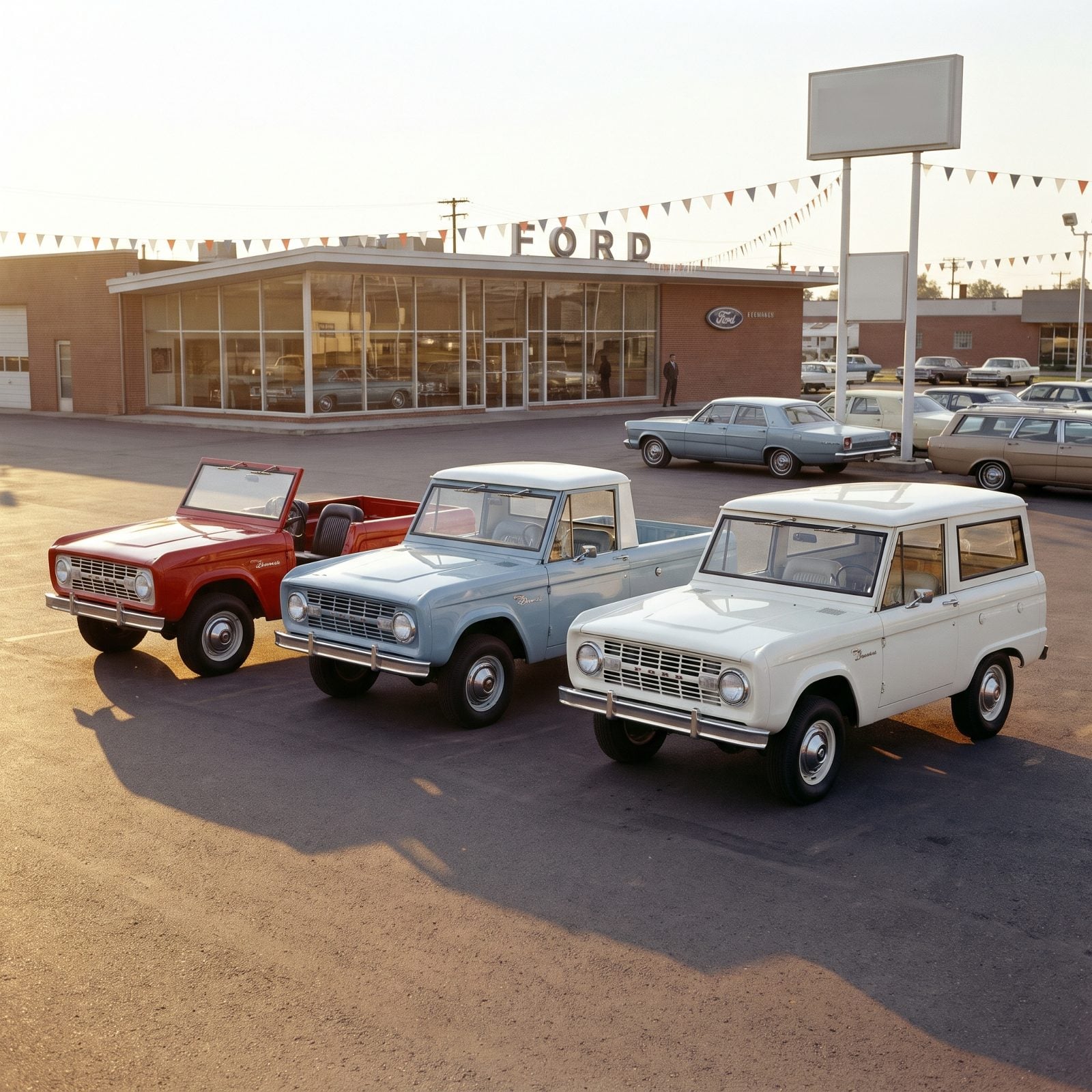
Ford didn’t hedge. The Bronco arrived in 1966 as three separate vehicles sharing one chassis: the open Roadster, the Sports Utility half-cab pickup, and the enclosed Wagon.
That was a bold spread for a brand-new nameplate. A rancher could buy the pickup, a weekend hunter could buy the Wagon, and anyone chasing the cheapest, most stripped machine on the lot could drive off in the Roadster. One platform, three answers.
Most of us remember the Wagon because it’s the one that stuck around in the public imagination. But on a 1966 dealer lot you could line up all three and see how different the same truck could look.
The Roadster Was the Bronco Stripped to Its Bones
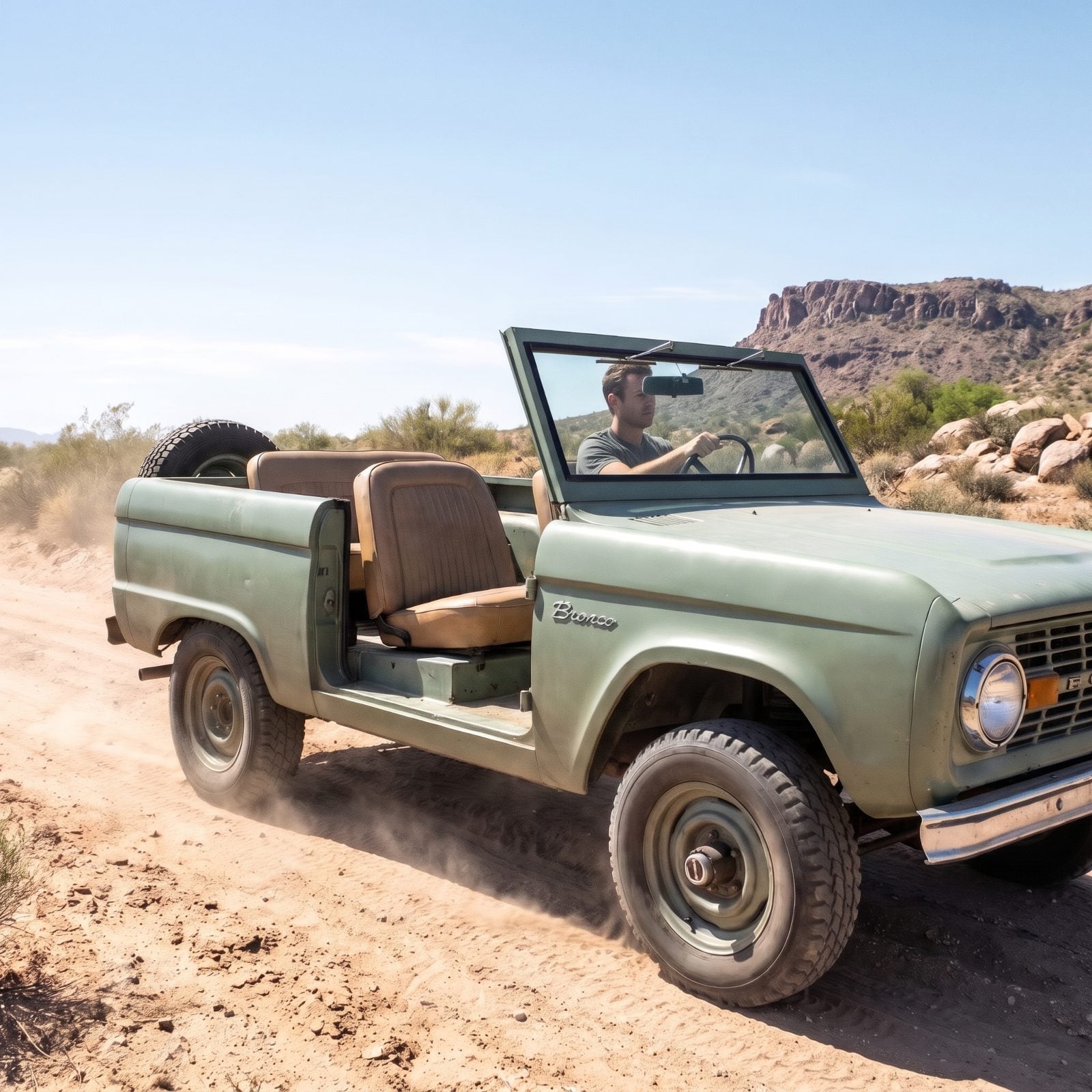
No doors. No roof. Barely a windshield if you folded it flat. The Roadster was the Bronco with everything optional left in the box.
It was the cheapest way into the lineup and the purest expression of what the truck was for. You sat in the weather, wind came at you from every direction, and there was nothing between you and the trail except a seat and a steering wheel.
Buyers didn’t flock to it, which is exactly why a surviving 1966 Roadster is a rare thing now. The market wanted doors. But if you ever wondered what Ford thought a bare-minimum off-roader looked like, this was the answer, with no apologies attached.
Open-top cars do well with our readers too: convertibles got more hearts than the other images in the same articles, 77% versus 70%.
The Fiberglass Door Inserts Made the Doorless Look Deliberate
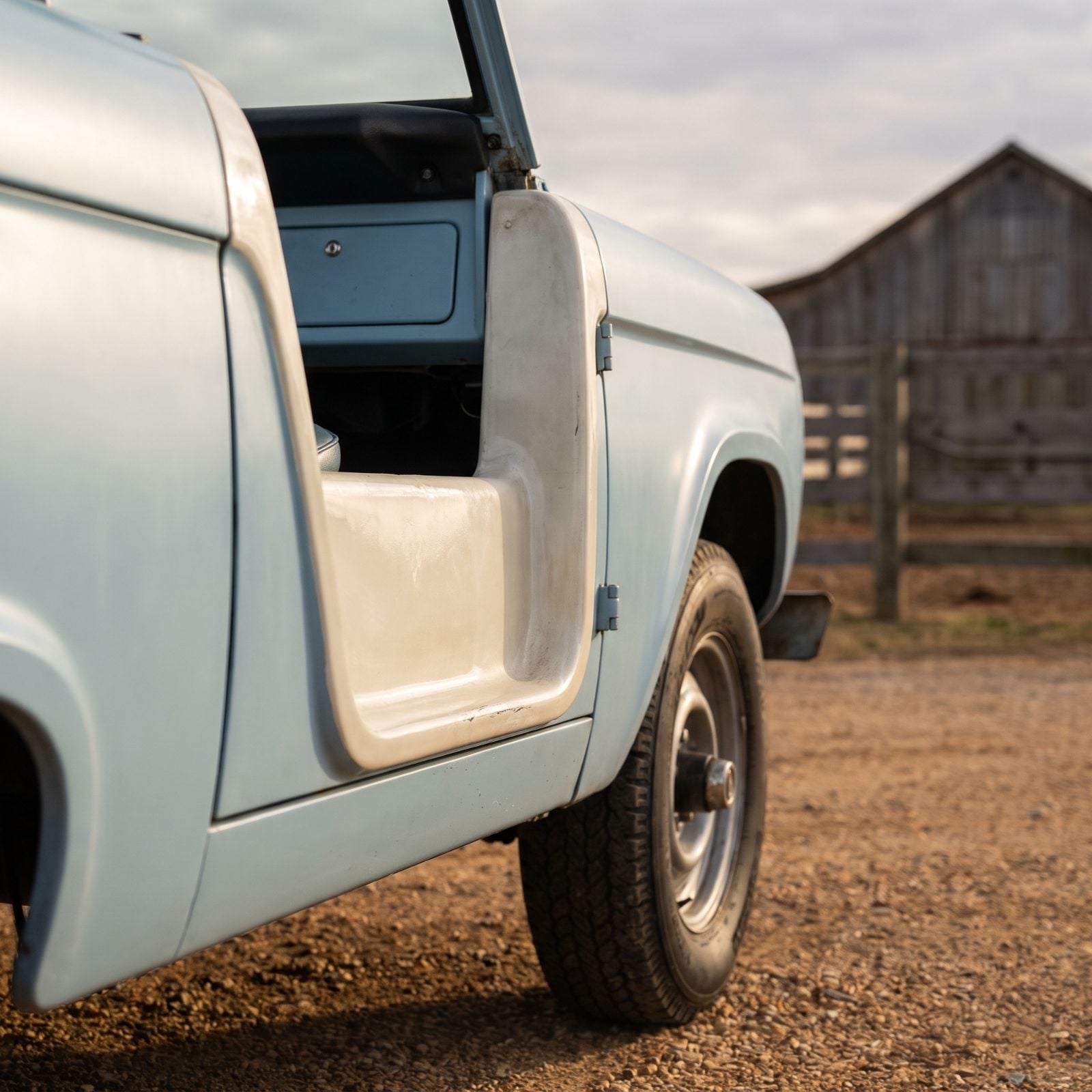
Here’s the clever part. The Roadster wasn’t just a Bronco with the doors torn off. Ford fitted molded fiberglass inserts along the lower door openings, giving the open sides a finished edge instead of a raw gap.
It kept the look intentional. The body line stayed clean, the opening had a defined lip, and the whole thing read as a design choice rather than a parts-bin shortcut.
The Sports Utility Half-Cab Was a Compact Pickup Underneath
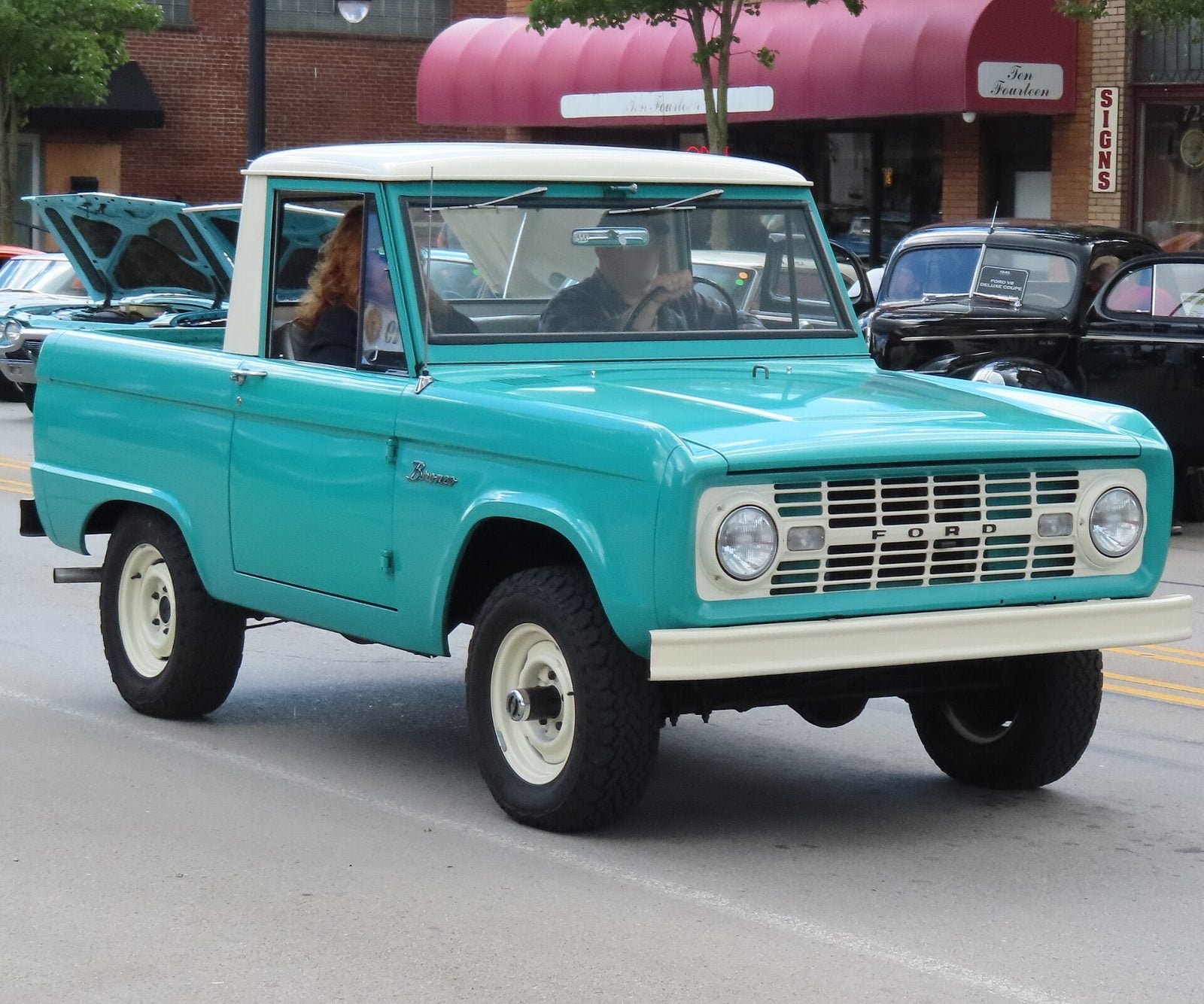
Photo: MercurySable99, CC BY-SA 4.0, via Wikimedia Commons
Chop the roof behind the front seats, open up the back, and the Bronco turned into a small pickup. That was the Sports Utility, and it earned its keep.
The short cab sheltered two people. Everything behind them was open bed, ready for fence posts, feed sacks, a toolbox, whatever the day demanded. For a ranch or a farm it made more sense than the Wagon, because you could toss dirty, awkward loads in the back without fussing over an enclosed interior.
It’s the body style people forget, and it’s probably the one that did the most actual work in 1966.
The Wagon Closed Everything In for All-Weather Duty
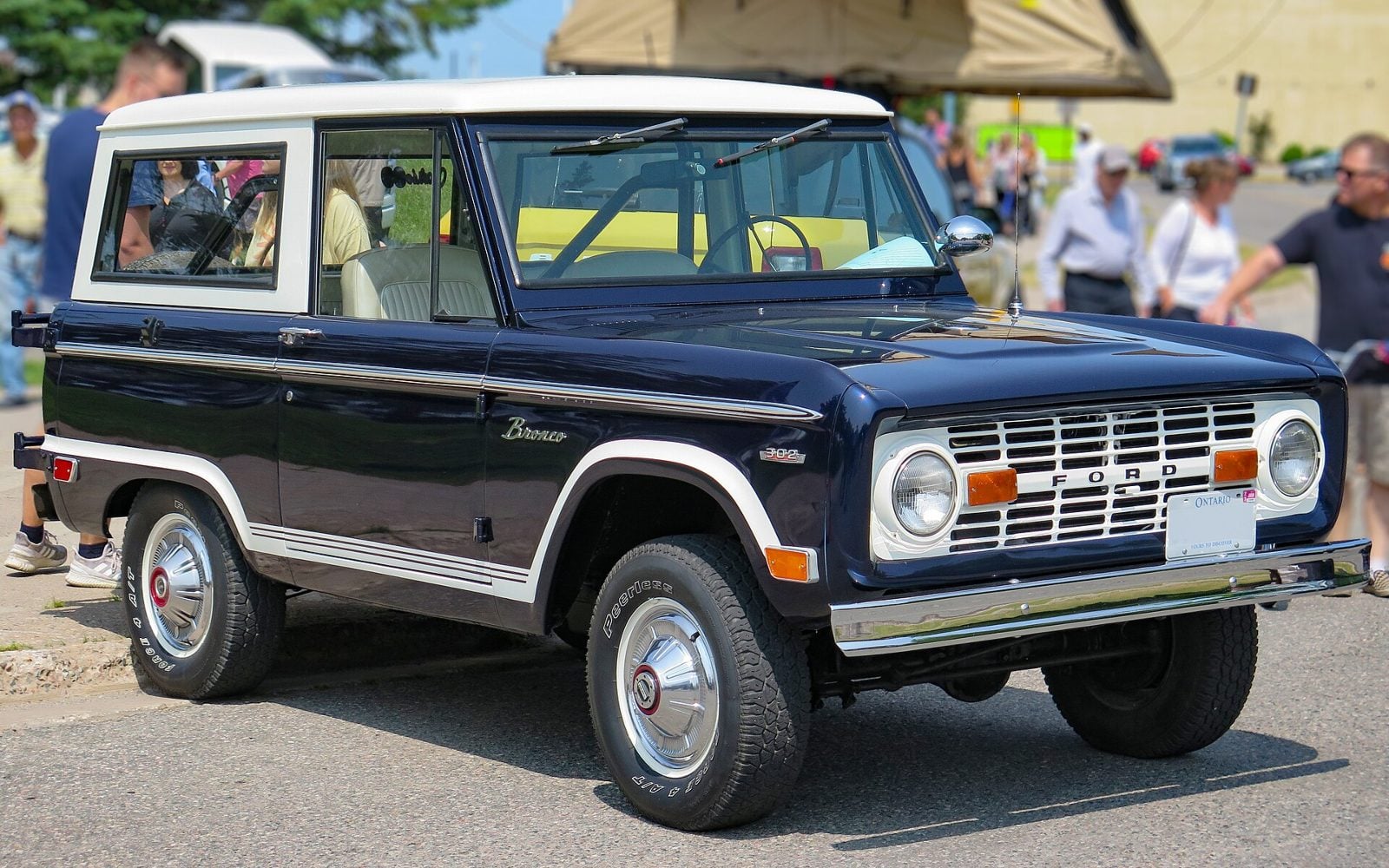
Photo: Elise240SX, CC BY-SA 4.0, via Wikimedia Commons
The Wagon was the Bronco you could live with year-round. Full hardtop, side glass, a sealed cabin that kept the rain, snow, and wind on the outside where they belonged.
That changed who bought the truck. Suddenly it wasn’t just a fair-weather play toy — a family in a cold climate could run errands, haul kids, and still point the thing up a muddy grade on the weekend.
This is the shape that lodged itself in most people’s memory, and for good reason. It did everything the other two body styles did, and it kept you dry doing it.
Our readers have a soft spot for the wagon shape in general, with station wagons drawing more hearts than other images in the same articles, 86% versus 81%.
The Wagon’s Roof Came Off With a Wrench
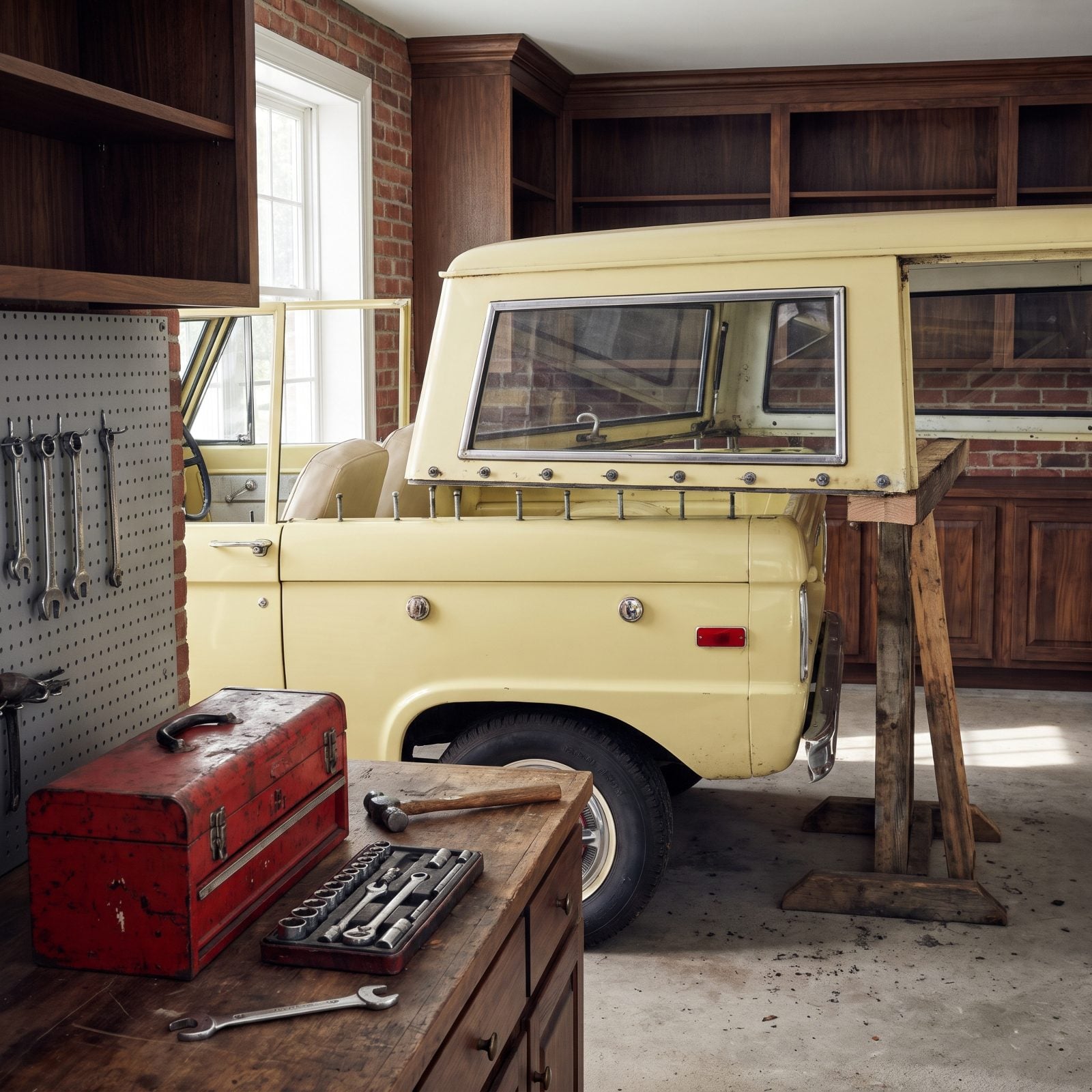
The Wagon’s roof wasn’t welded on. It bolted down, so a few turns of a wrench and some patient lifting could leave you with an open-top Bronco on a warm Saturday.
That flexibility was what made it worth owning. Weatherproof in January, open to the sky in July, all from one truck. You weren’t locked into the body style you bought.
The Liftgate and Fold-Down Tailgate Gave You Two Ways In
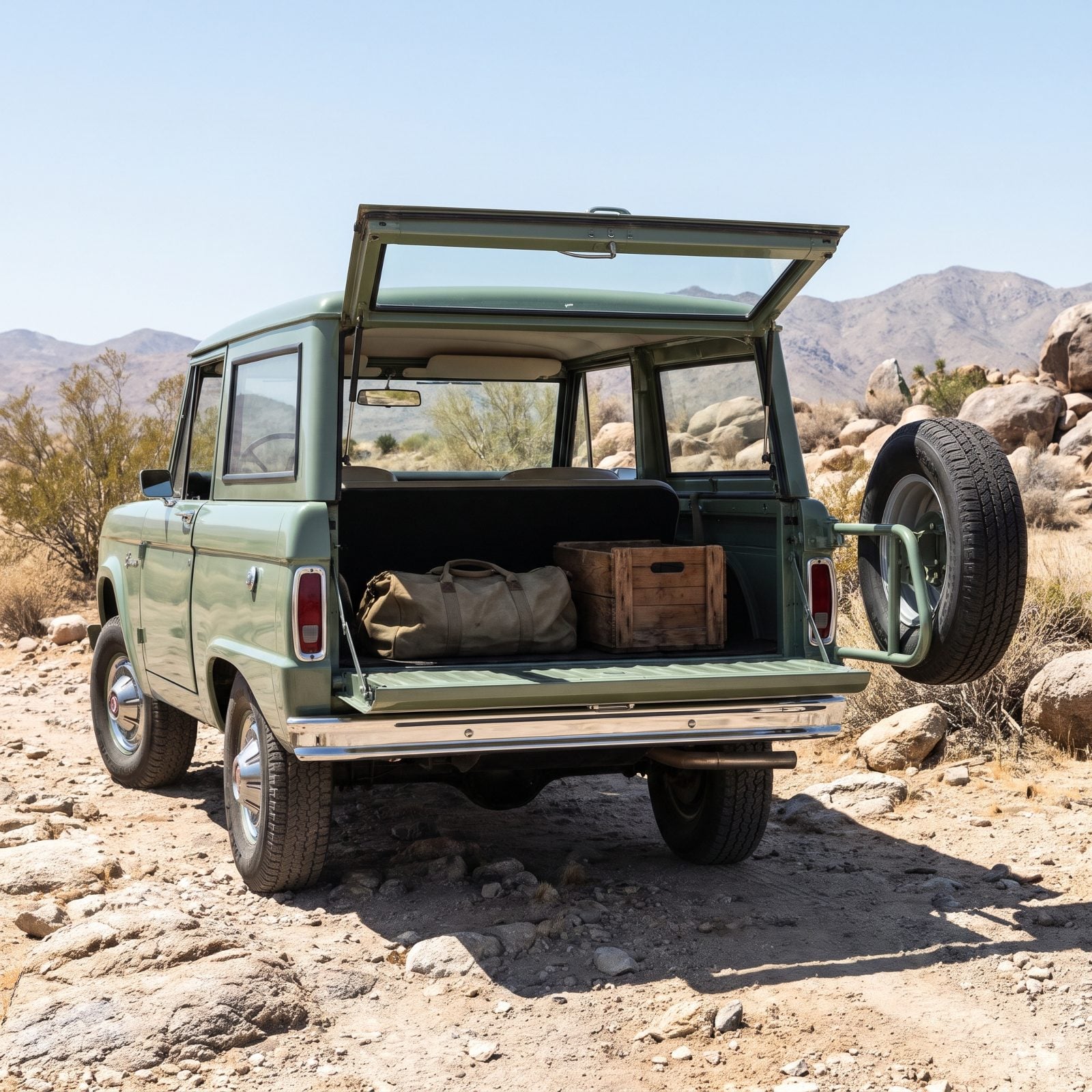
Around back, the Bronco gave you options. The glass liftgate swung up, the tailgate dropped flat, and between the two you got at the cargo area however the moment called for.
Quick grab? Lift the glass and reach in. Loading something long and heavy? Drop the tailgate and slide it across the flat shelf. Need a place to sit and pull your boots on at the trailhead? The tailgate had that covered too.
It’s a small thing until you’ve wrestled gear into a vehicle with only one awkward opening. Then you appreciate exactly how much two-piece rear access was worth.
Flat Body Panels Meant Trail Dents Weren’t the End of the World
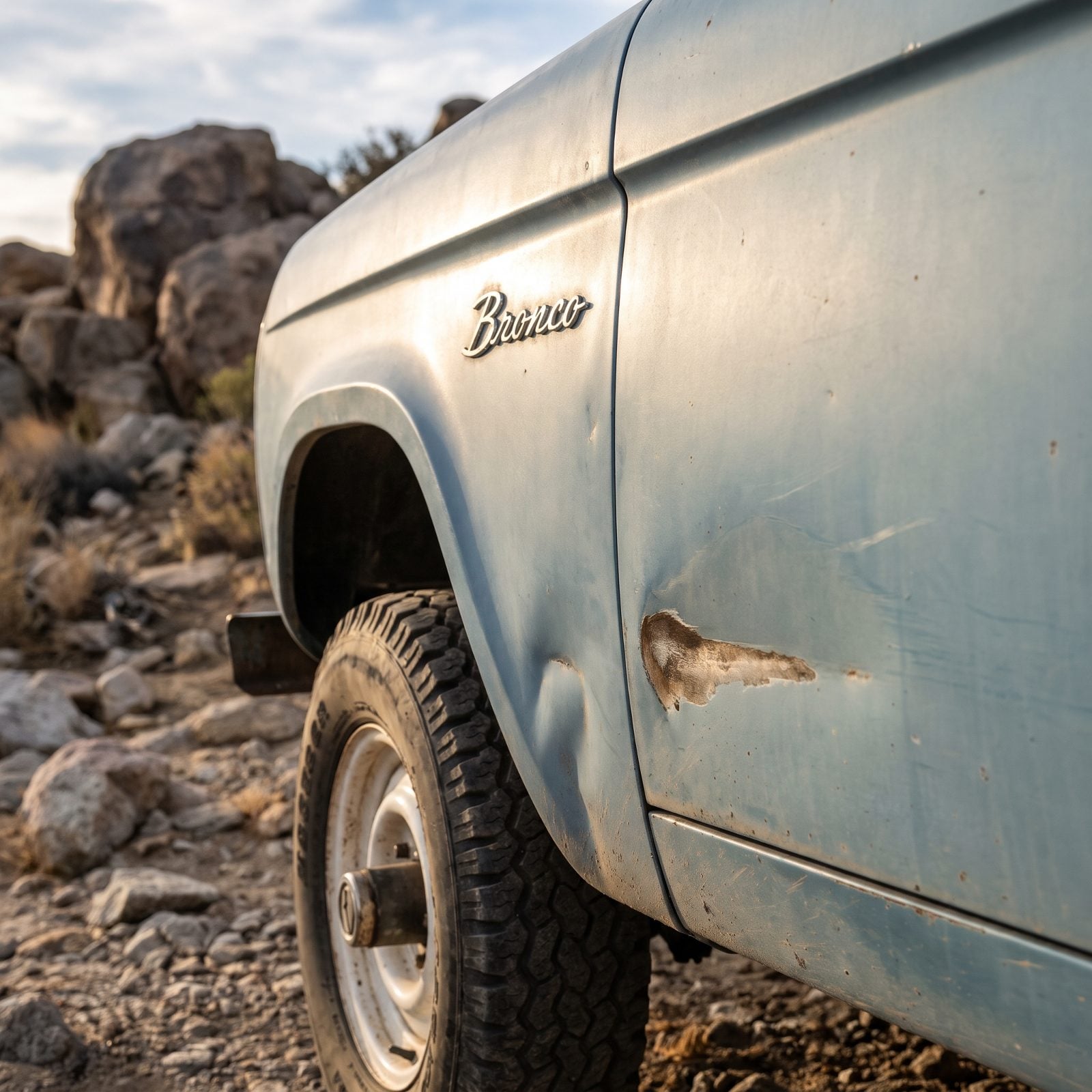
Scrape a Bronco against a rock on a tight climb and you’d probably leave a mark. But those flat, slab-sided panels were forgiving in a way curvy bodywork never is.
A dent in a flat steel panel can be worked back out with basic tools. There’s no complex contour to match, no sculpted character line to ruin. A guy with a hammer, a dolly, and a free weekend could set most of it right in the home garage.
Simple shapes don’t just look rugged. They repair like it too.
And none of that was an accident. Ford built the Bronco to be used hard and fixed cheap, and the body geometry backed up the promise.
The 1966 Eyebrow Grille Was a One-Year Face
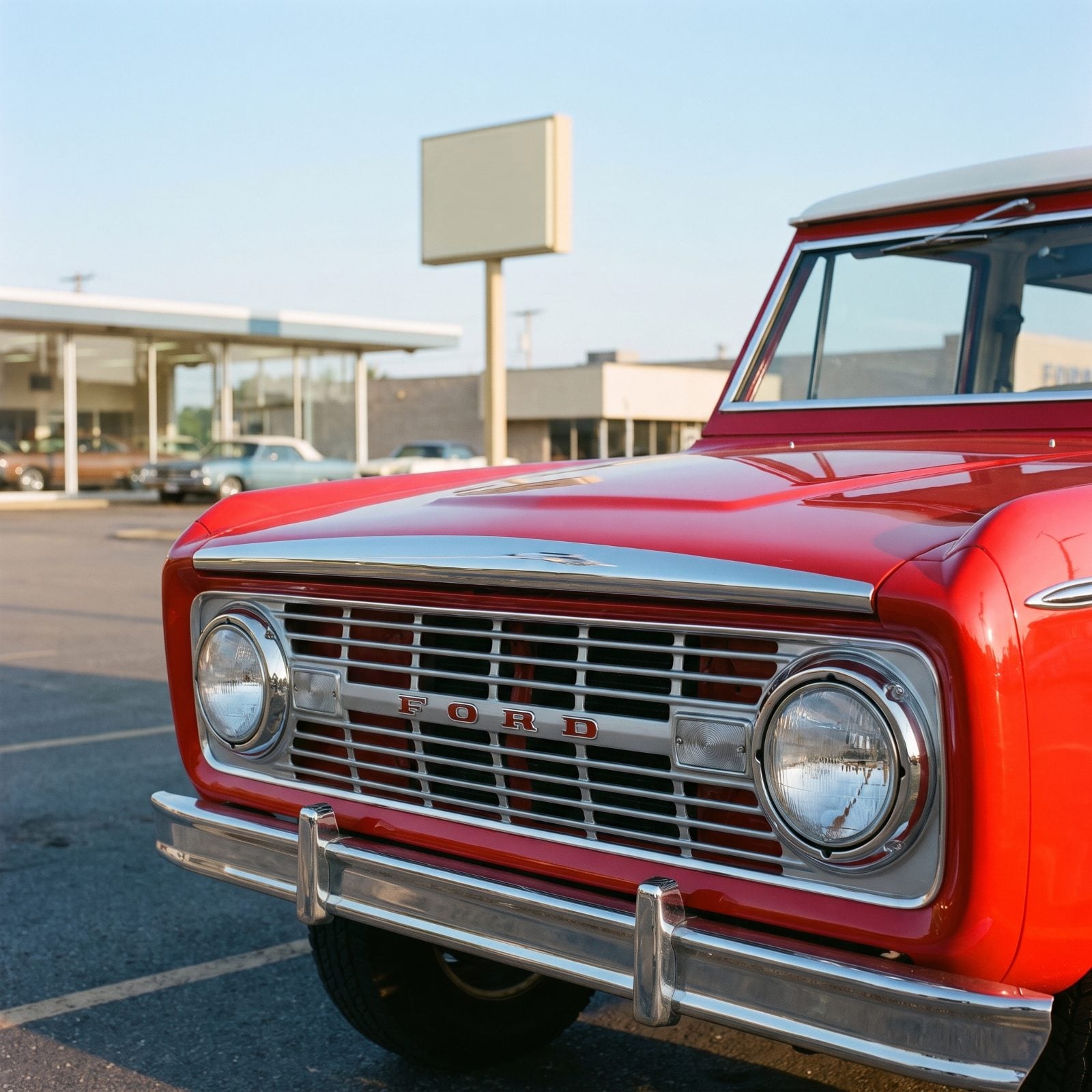
Every first-year car has one tell, the detail collectors chase decades later. For the Bronco it’s the eyebrow grille, that subtle raised brow running across the top of the grille above the round headlights.
Ford used it only in 1966. The following years brought changes, and the eyebrow quietly vanished — which is why it became the thing that identifies a true first-year truck at a glance.
It’s a small piece of stamped trim. It’s also the Bronco’s original face, and it only wore it once.
Overhead Vacuum Wipers: The Quirk Nobody Forgot
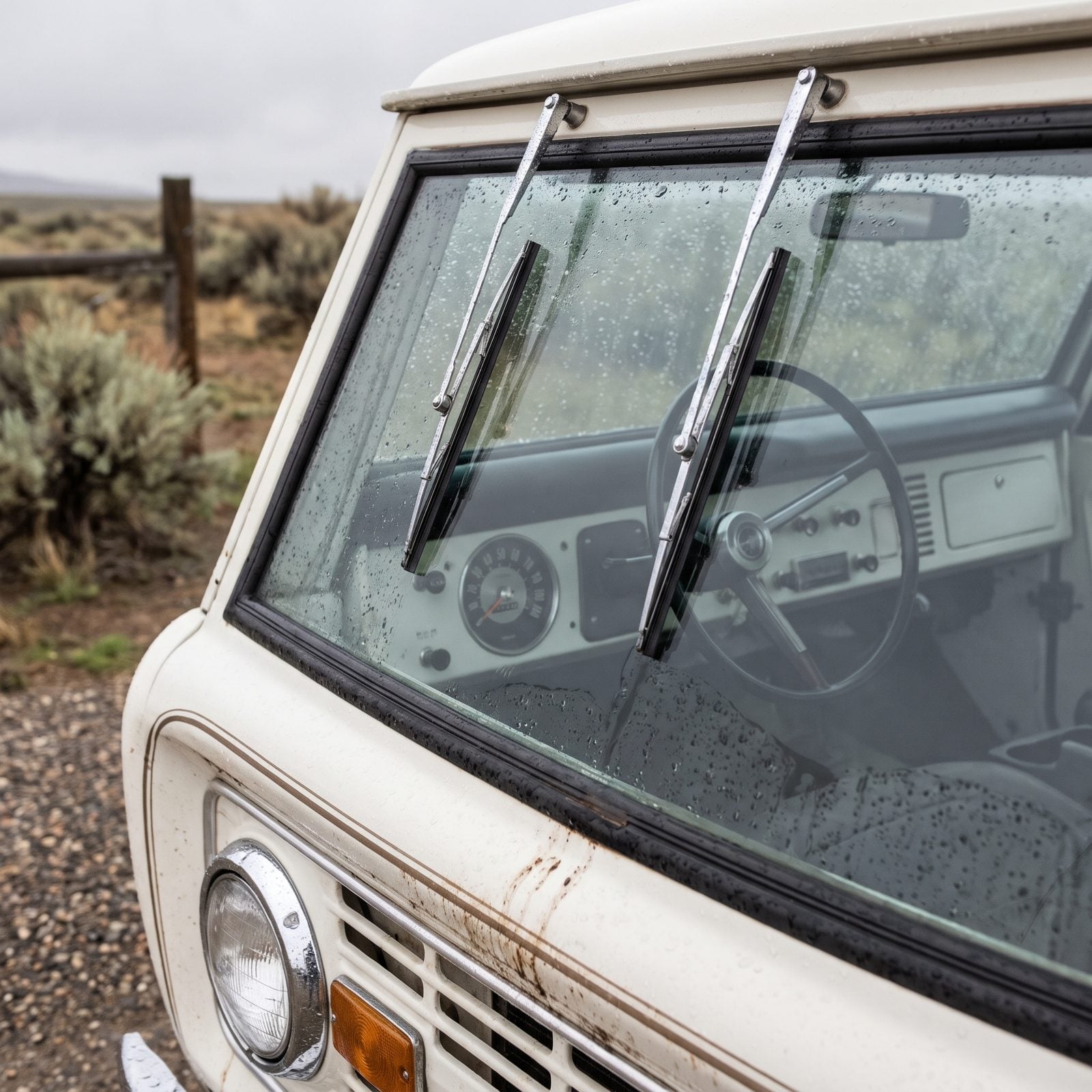
Flip on the wipers in an early Bronco and they clawed down from the top of the windshield instead of sweeping up from the bottom. Vacuum-powered, hung off the header. Looked backwards the first time you saw it, and it worked fine right up until you climbed a grade and floored it.
That was the catch. Get hard on the throttle and engine vacuum dropped, so the blades slowed to a crawl in the exact downpour you needed them for. Every early Bronco owner learned the same trick: lift off the gas a touch to buy yourself one clean swipe across the glass.
Rubber Floors: Built to Be Hosed Out
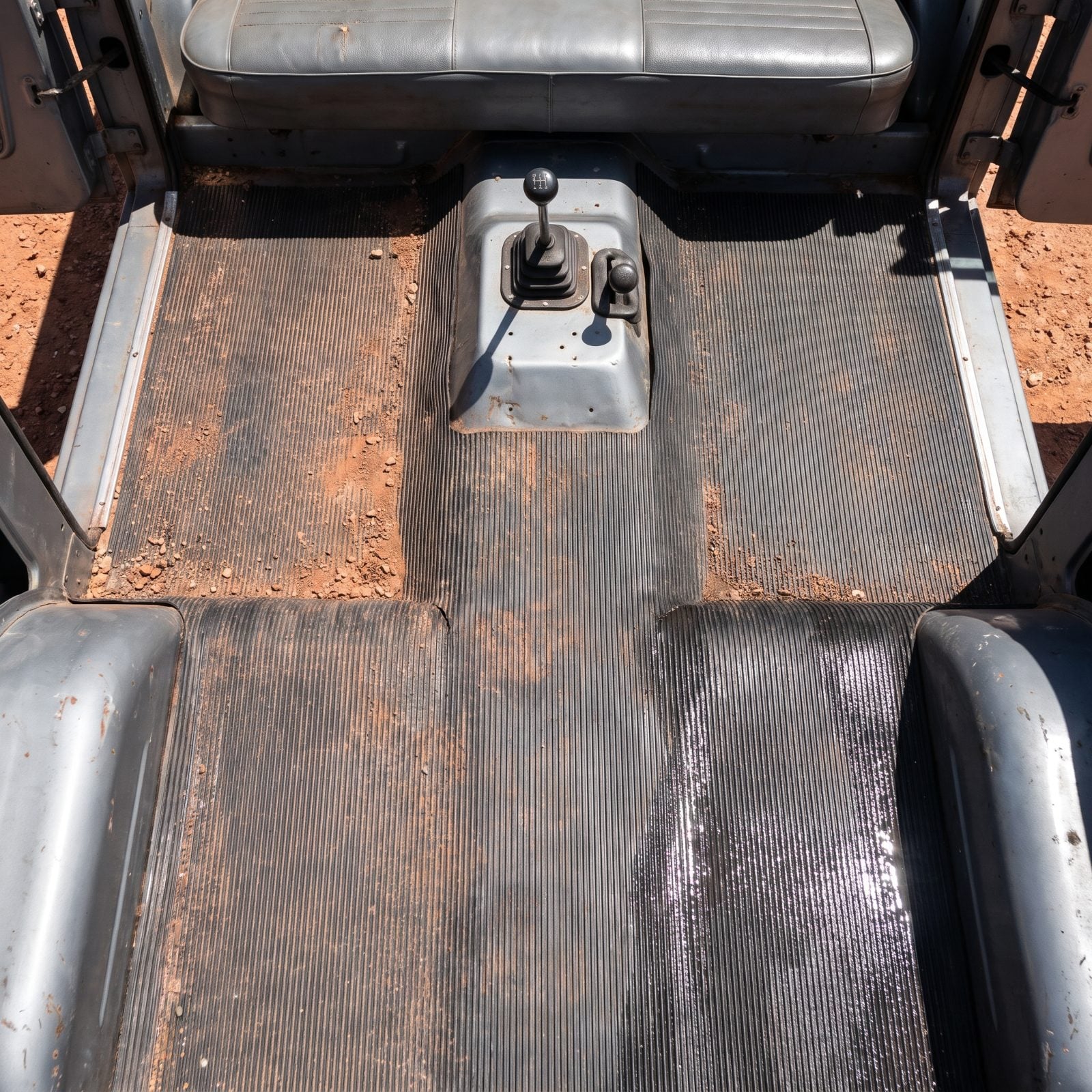
No carpet. None. The first-year Bronco came with a rubber floor you could aim a hose at, and that was deliberate.
Spend a Saturday crossing a muddy pasture or wading a creek, and the cabin filled with the same grit the tires were throwing everywhere. Carpet would’ve held all of it like a sponge. Molded rubber let you open the doors, sweep out the gravel, and rinse the rest straight down the drain holes, then dry it in the sun and climb back in.
Ford knew exactly who was buying these. Not commuters. People who came home dirty.
Big Glass, Short Hood, Nothing Hiding the Trail
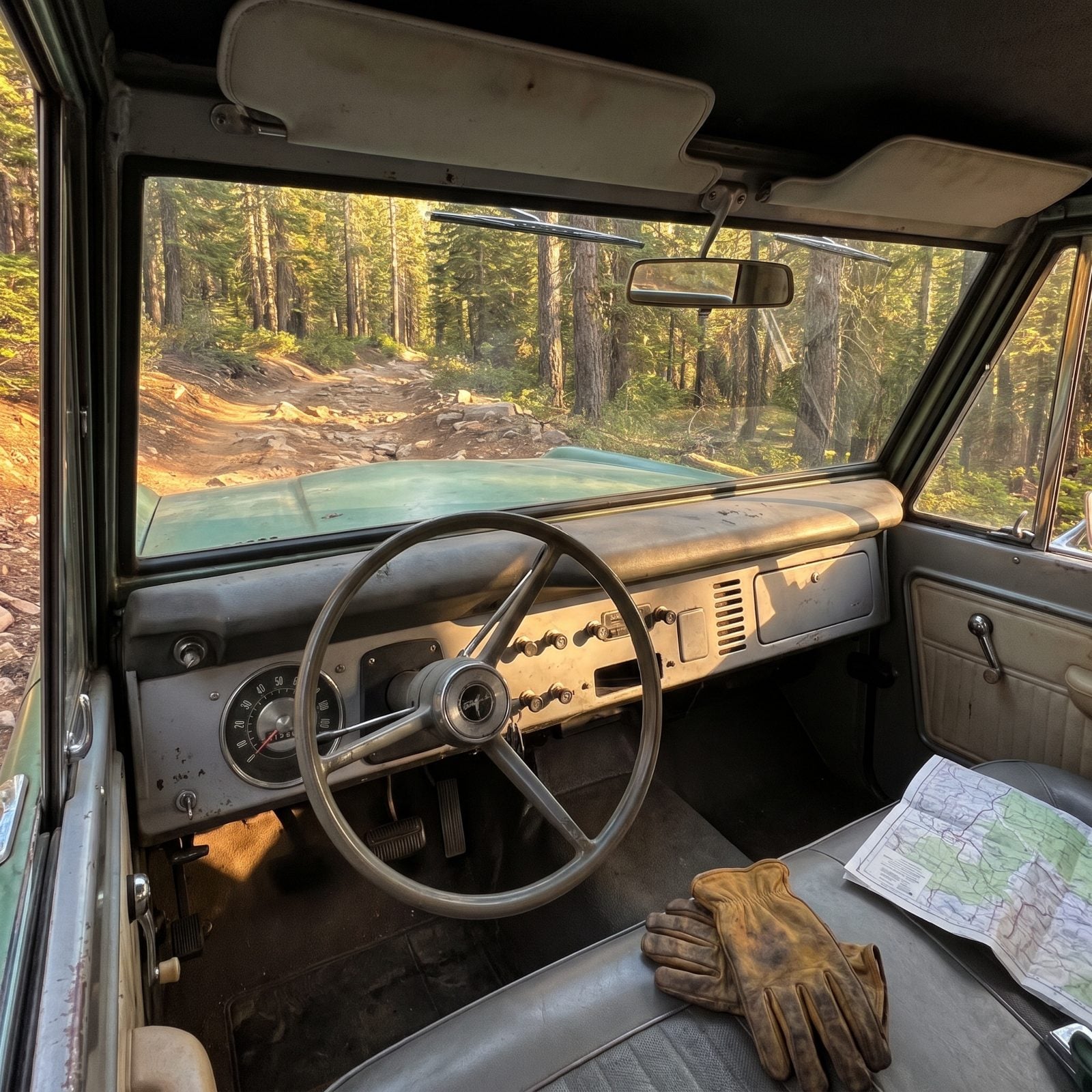
Sit in an early Bronco and the first thing that hits you is how much you can see. Tall upright glass, thin pillars, and a short flat hood that falls away right in front of you.
That geometry earned its keep when the trail turned ugly. Creep up to a ledge of rock and you could actually place the front tires by eye, no guessing where the sheet metal ended. And those big side windows? They meant you spotted the stump, the drop-off, the second rig behind you without ever craning your neck.
The Swing-Away Spare That Saved Your Cargo Floor
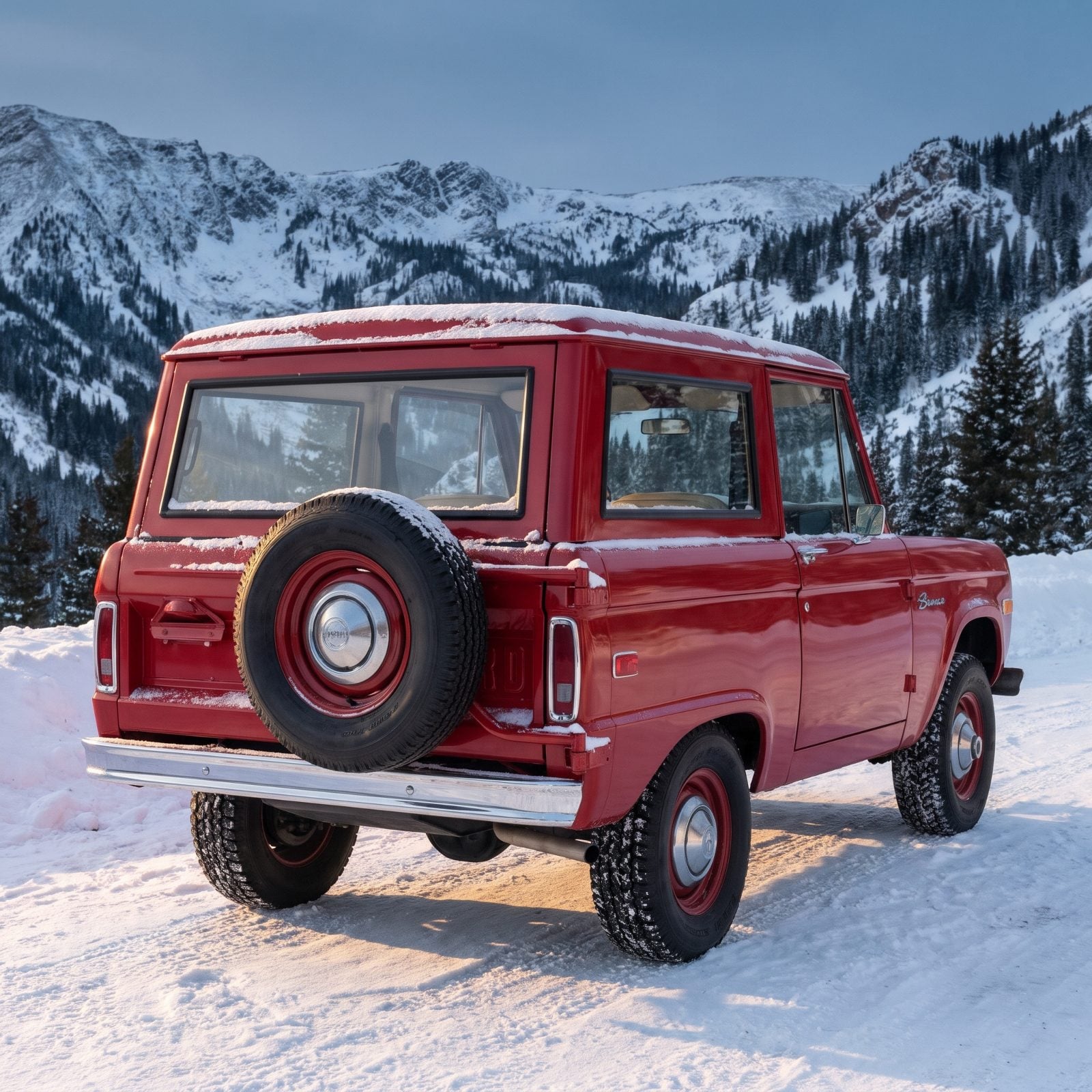
Cargo room in a compact 4×4 is precious, and a spare tire lying flat in the back eats a chunk of it. Ford’s answer hung the spare off the body on a swing-away carrier instead.
Swing it clear, drop the tailgate, and the whole load floor stayed open for gear, firewood, a cooler, or a buck you were hauling out of the hills. No more shuffling a greasy tire every single time you wanted something from the bottom of the pile.
Small thing. The kind of small thing that turns a short-trip rig into one you’d actually pack for a week.
A Front Winch Meant You Could Dig Yourself Out
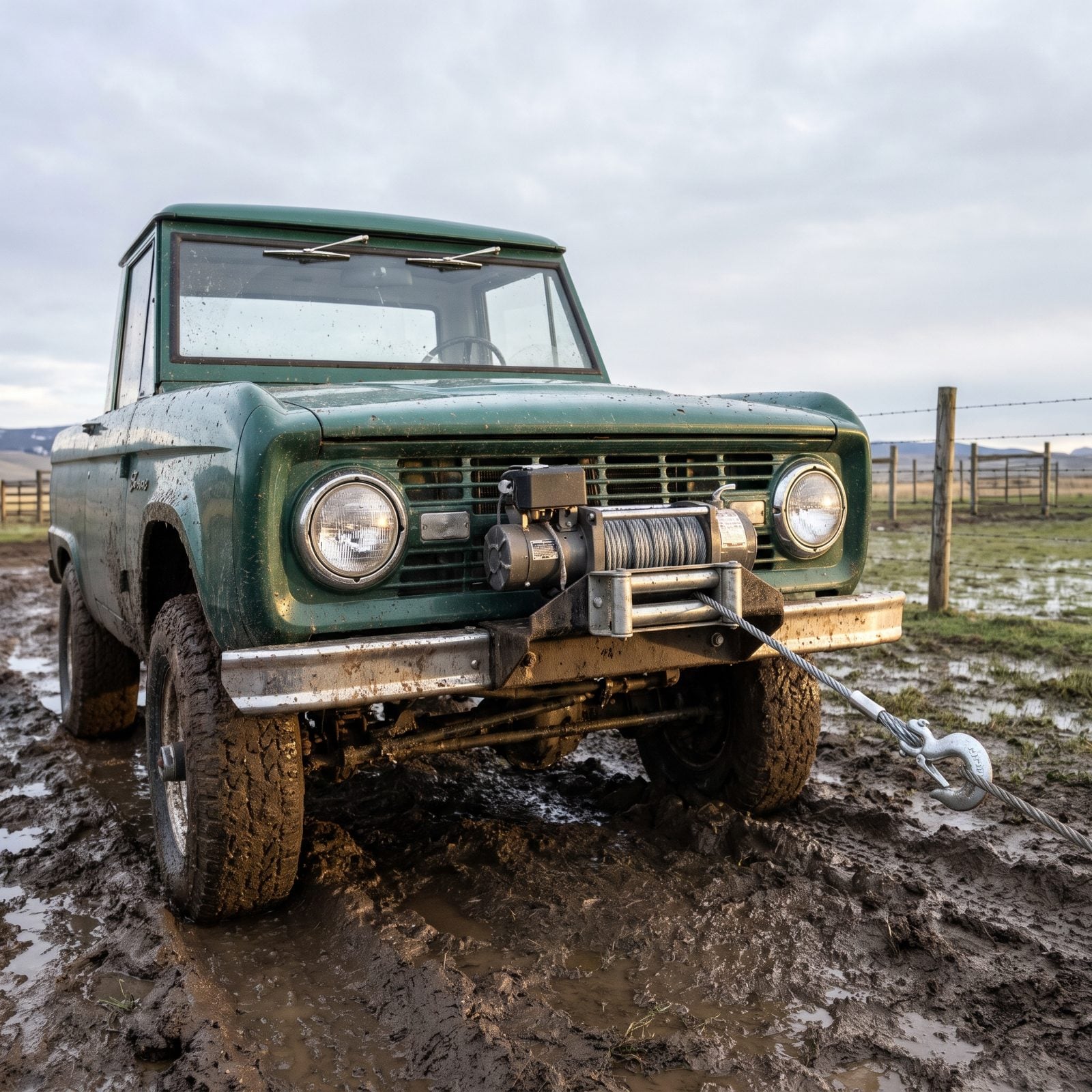
Get a short-wheelbase 4×4 far enough out, and eventually you bury it. The optional front winch was Ford’s way of saying: figure it out yourself.
Run the cable to a tree or a fence post, pick a solid anchor, and crank or power yourself out of the mud you had no business driving into. No cell phone. No tow truck for forty miles. Just you, a steel cable, and a little patience.
Picture it: alone at the back of a ranch at dusk, sunk to the axles. Without a winch, that’s a long cold walk home. With one, it’s a ten-minute delay and a story you tell later. That difference sold a lot of winches.
Simple Enough to Fix With the Tools You Had
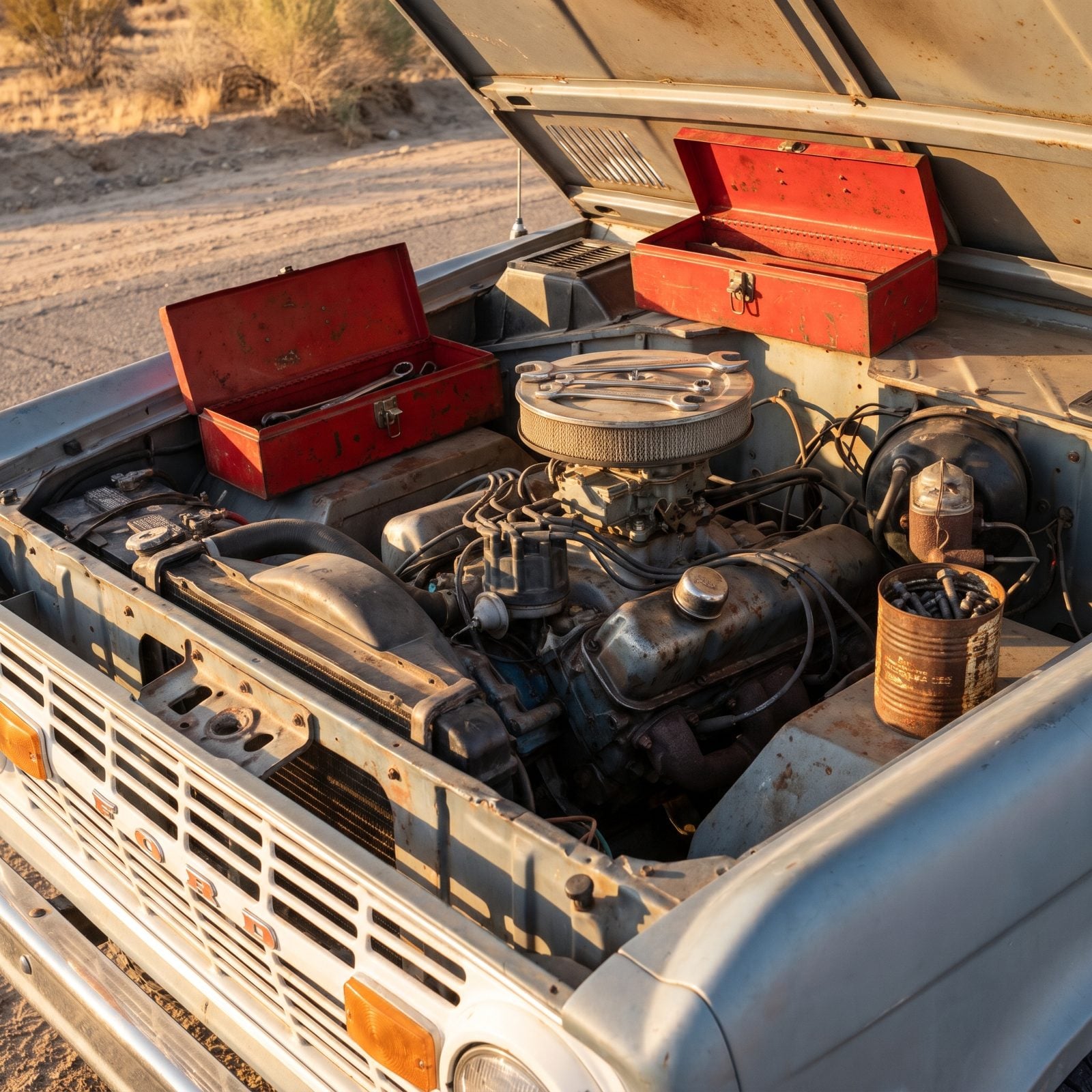
Pop the hood on an early Bronco and there’s air around everything. The six or the small V8 sat high and open, carburetor on top, distributor right where your hand already was.
That mattered miles from any shop. A fouled plug, a loose wire, a carburetor that needed a tweak, you sorted it on the shoulder with the wrenches in the box and whatever daylight was left. Nothing sealed, nothing requiring a special tool, nothing you couldn’t reach with greasy fingers.
Bill Stroppe Took the Bronco to Baja and Won Believers
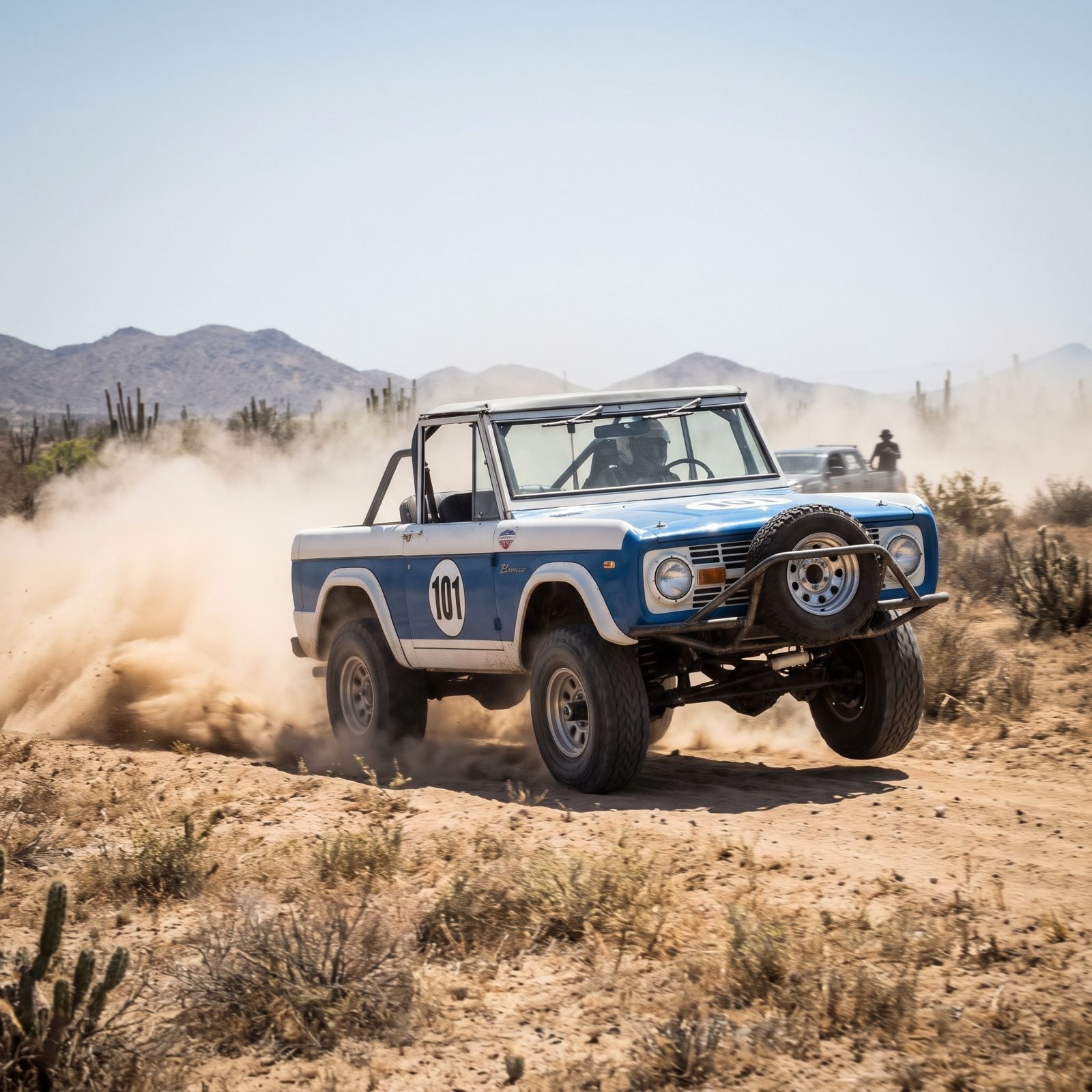
A truck earns its reputation by surviving something brutal. For the Bronco, that something was the Mexican desert.
Bill Stroppe was a West Coast racer and engineer, and he took the little Ford and ran it hard through the punishing Baja events of the late 1960s. Heat, rocks, washboard, and hundreds of miles that chewed up lesser rigs. The Bronco kept finishing, and now and then it won outright.
Those results did more for the truck’s image than any brochure ever could. A showroom buyer might never run Baja himself, but knowing the same basic rig had done it? That was enough. Stroppe’s desert campaigns turned a handy ranch vehicle into a machine with a genuine competition pedigree.
The Shape They Got Right the First Time, Kept Until 1977
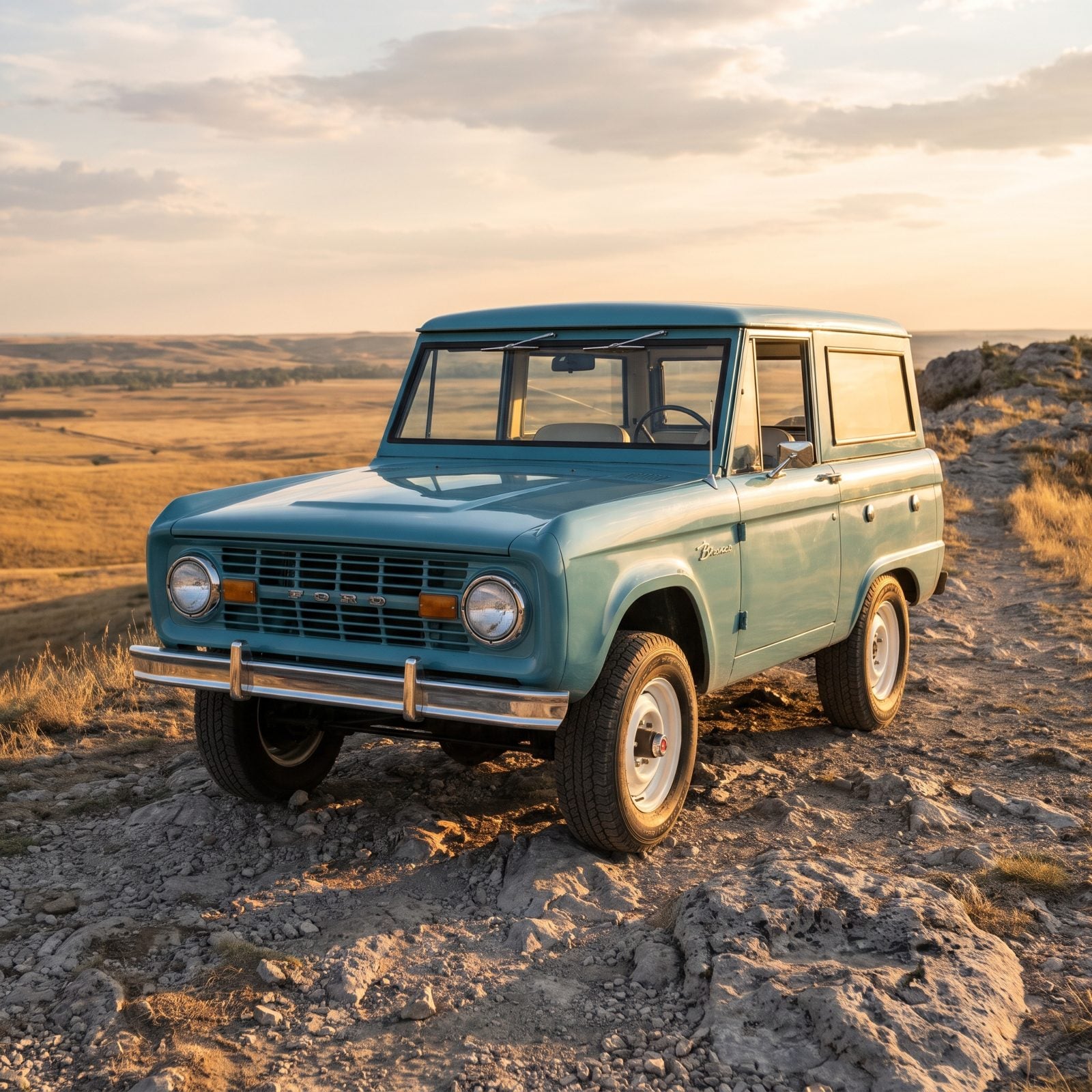
Some designs get fussed with every single year. This one didn’t need it.
The flat eyebrow grille, the round headlights, that compact upright body with its short overhangs and tall glass. Ford nailed the proportions in 1966 and basically left them alone clear through 1977. Twelve model years on the same honest silhouette, which is a strange kind of discipline for Detroit.
Staying power like that says something. A shape that survives over a decade without a redesign isn’t luck. It’s correct. Park a first-year beside a mid-seventies model and the family resemblance jumps right out at you, because nobody ever found the core idea needing a fix.
They got the drawing right before the first one ever rolled off the line.
1966: The Year a Name Was Born That Wouldn’t Quit
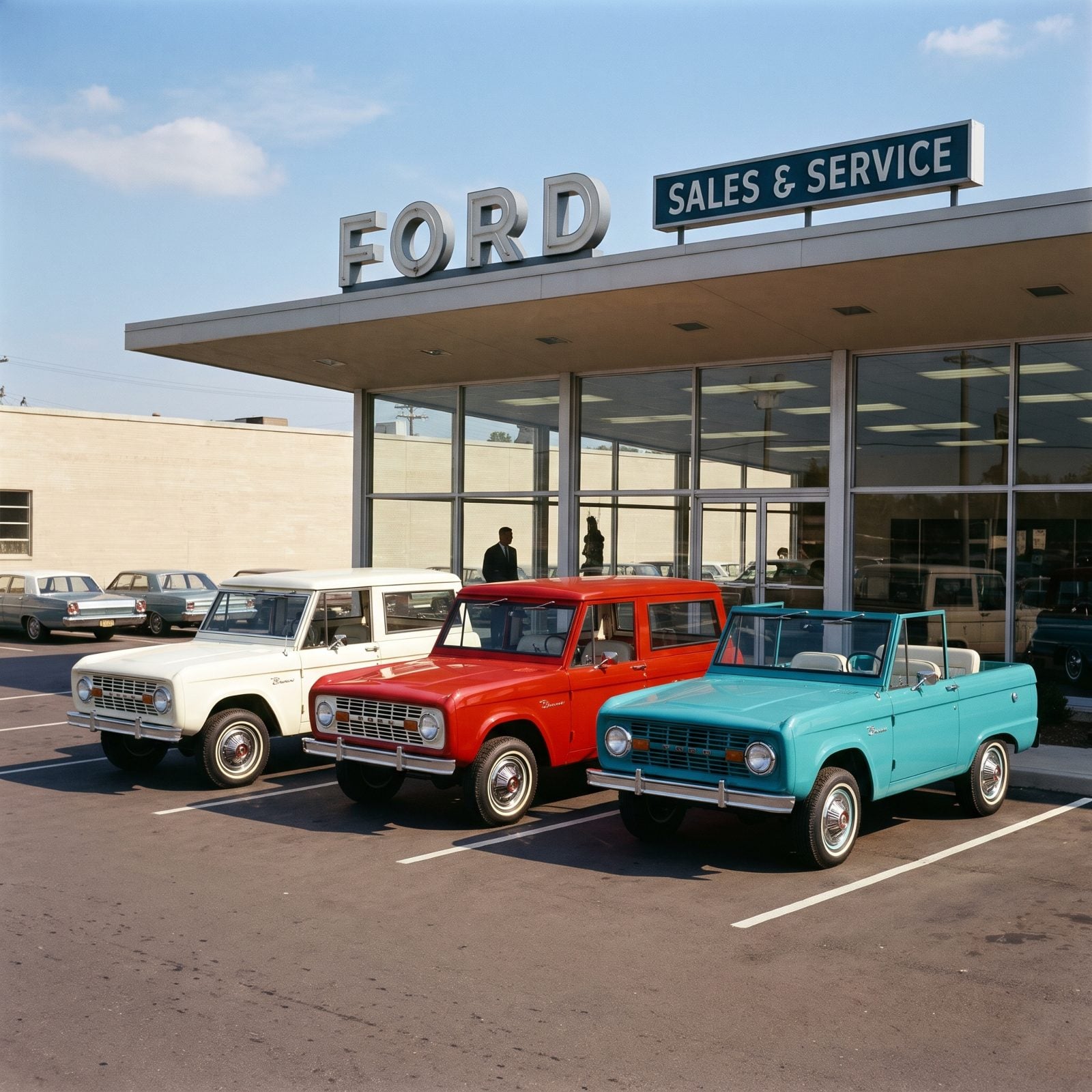
When the first Broncos rolled onto dealer lots in 1966, nobody browsing them had any idea they were looking at the start of something still a household name sixty years on.
You could order it three ways. An open Roadster, a Sports Utility pickup with a short bed, or the closed Wagon most folks picture now. One compact platform, three honest body styles, built for people who needed a vehicle to do real work and still get them to town on Sunday.
The name stuck because the truck delivered on it. Through six generations and a long quiet gap, the Bronco badge kept on meaning capability, and every bit of that traces back to these first steel-bodied rigs easing out of the factory under a 1966 sky. A good first impression is awfully hard to improve on. Ford made one here.